Author: Lucas Planeta Exo

  • Route of Emotions in Brazil: itinerary, map, and best time to visit in 2026

    Route of Emotions in Brazil: itinerary, map, and best time to visit in 2026

    Map, how many days you need, and how to travel the route that connects Lençóis Maranhenses (MA), Delta do Parnaíba (PI), and Jericoacoara (CE)

    The Route of Emotions is the tourist itinerary that links three of the most sought-after destinations in northeastern Brazil: Lençóis Maranhenses (MA), Delta do Parnaíba (PI), and Jericoacoara (CE). It spans hundreds of kilometers across 14 municipalities and 3 states in a single trip, featuring sweeping dunes, rainwater lagoons, dense mangroves, and pristine beaches.

    In 2024 alone, the route welcomed 496,705 visitors registered via digital vouchers, generating an estimated R$ 83.1 million. In July of that same year, the Lençóis Maranhenses National Park was declared a UNESCO World Heritage Site — the 24th Brazilian site to make the list.

    Want to know how to organize this trip? PlanetaEXO, an ecotourism platform specializing in Route of Emotions tours, has prepared a complete guide with everything you need to know for a smooth, unforgettable experience. Check it out below!

    Table of contents:

    1. What is the Route of Emotions and why does it exist?
    2. Map of the Route of Emotions
    3. How to get there and logistics between destinations
    4. What is the best time to do the Route of Emotions?
    5. What to expect from each part: Lençóis, Delta do Parnaíba, and Jericoacoara
    6. How many days are ideal to do the Route of Emotions?
    7. Route of Emotions Packages
    8. Accommodation on the Route of Emotions itinerary
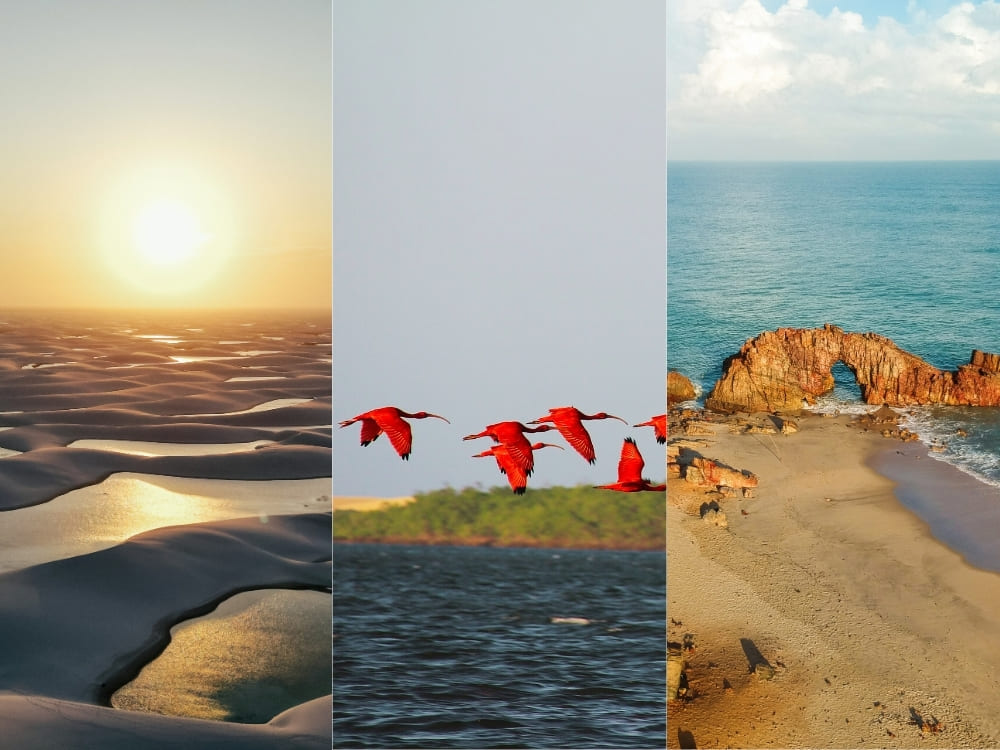
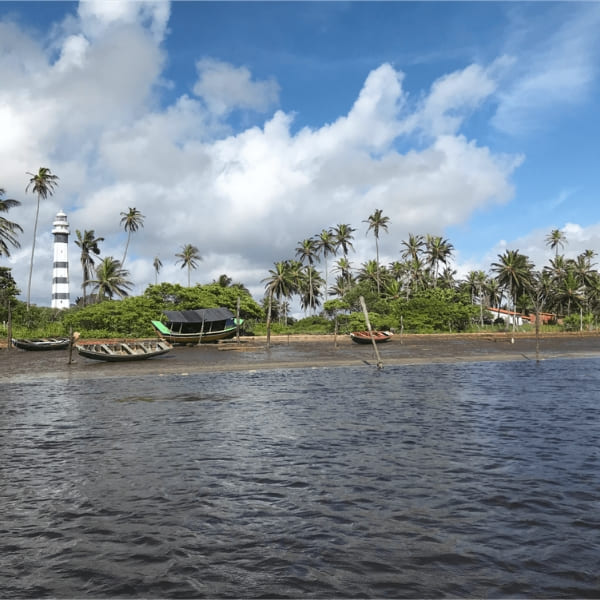
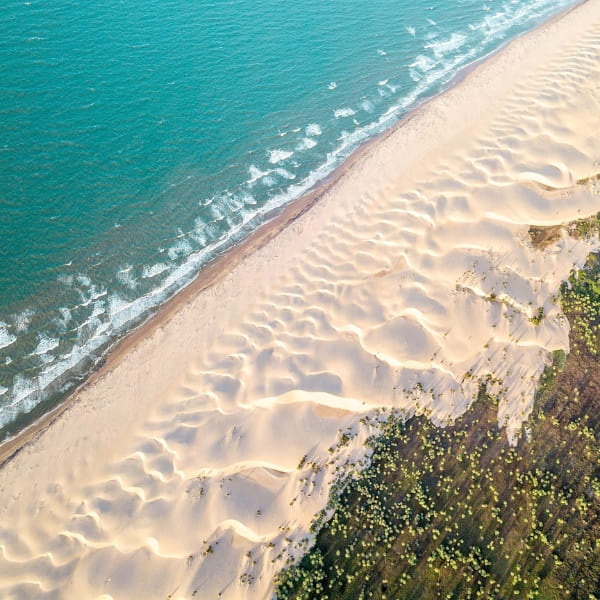
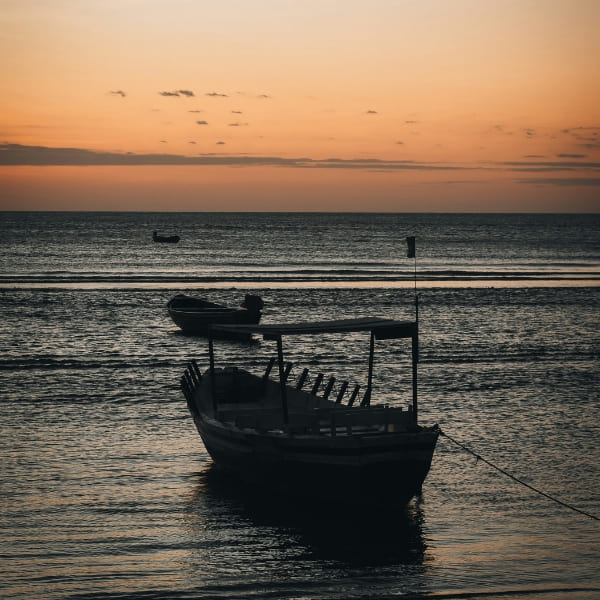
    Three vertical panels showing red ibises flying, vast sand dunes at sunset, and the Pedra Furada rock formation on the beach.
    .

    What is the Route of Emotions and why does it exist?

    The Route of Emotions is the official name of the tourist itinerary that connects the northeastern coast of Brazil (Maranhão, Piauí, and Ceará) across 14 municipalities spread over roughly 900 km of coastline.

    The project was launched in 2005 by Sebrae Nacional (Sebrae (Brazilian Micro and Small Business Support Service) is a private, non-profit organization established to foster entrepreneurship and the development of small businesses in Brazil.)  in partnership with the Ministry of Tourism (MTur) and state-level branches. The goal was to structure regional tourism by integrating three spectacular destinations that, until then, were largely visited in isolation.

    According to Sebrae, the itinerary has injected over R$ 670 million into the local economy since 2009. By December 2025, it celebrated 20 years of tourism success, economic growth, and international recognition.

    Map of the Route of Emotions

    The Route of Emotions map crosses 14 municipalities across three states, hugging the coastline the entire way. The order in which you visit depends on your starting point — São Luís (MA) and Fortaleza (CE) are the two main gateways. At PlanetaEXO, the adventure typically begins in Maranhão.

    • Maranhão (5 cities): Santo Amaro, Barreirinhas, Paulino Neves, Tutóia, and Araioses.
    • Piauí (4 cities): Ilha Grande, Parnaíba, Luís Correia, and Cajueiro da Praia (Barra Grande).
    • Ceará (5 cities): Chaval, Barroquinha, Camocim, Jijoca de Jericoacoara, and Cruz.

    The route’s three main hubs are Barreirinhas (gateway to Lençóis), Parnaíba (gateway to the Delta), and Jijoca de Jericoacoara (gateway to the Ceará park). The remaining municipalities serve as scenic crossing points, alternative bases, or technical stops between the major landmarks.

    How to get there and logistics between destinations

    By air

    The two main airports servicing the Route of Emotions are São Luís (SLZ) in Maranhão and Fortaleza (FOR) in Ceará — most itineraries start at one and end at the other to avoid backtracking. You can also fly directly into Parnaíba (PHB), Piauí, and Jericoacoara (JJD), Ceará.

    Beyond commercial flights, Azul Conecta (Azul’s regional charter branch) operates a nine-passenger Cessna Caravan connecting Fortaleza, Jericoacoara, Parnaíba, Barreirinhas, and São Luís about three times a week.

    While each stretch takes 3 to 6 hours by road, these scenic flights take an average of 45 minutes to 1 hour. It’s the fastest — though most expensive — way to cover the route.

    By road

    This is the most common way to travel between the destinations. While some adventurers choose to rent a car and drive themselves, the vast majority of tourists rely on transfer services (shared or private). This seamless logistics approach is built into PlanetaEXO’s Route of Emotions itineraries.

    Distances per segment:

    • São Luís → Barreirinhas: 260 km / 4–5 hours by transfer.
    • Barreirinhas → Tutóia: ~100 km / ~3h, passing through Paulino Neves.
    • Tutóia → Parnaíba: 120 km, usually involving a boat crossing through the Pequenos Lençóis.
    • Parnaíba → Jericoacoara: ~270 km / 5–6h, passing through Camocim.
    • Jericoacoara → Fortaleza: ~300 km / ~5h.

    👉 Learn more about how to get to Lençóis Maranhenses

    What is the best time to do the Route of Emotions?

    The best time to do the Route of Emotions is between late June and early September, when the lagoons in Lençóis Maranhenses are brimming with water and the climate across all three regions is drier.
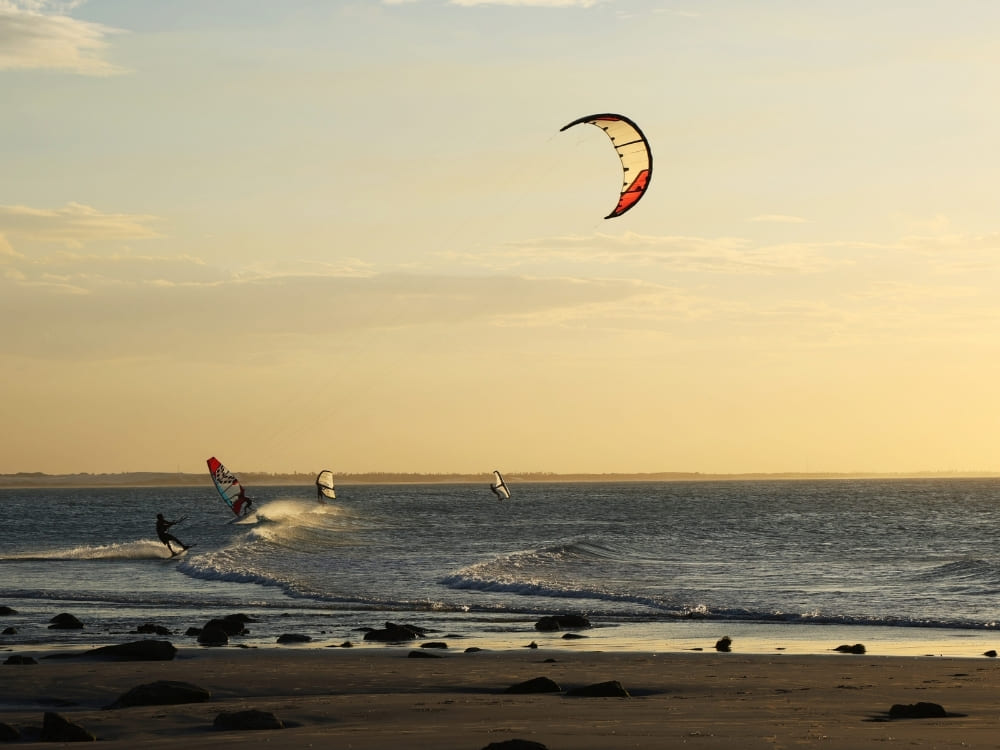
    Silhouettes of people kitesurfing and windsurfing on ocean waves near a sandy beach during a golden sunset.
    .

    Practical calendar:

    • January to May: Rainy season. The lagoons begin to form and fill up progressively. Road access to certain areas may be temporarily affected.
    • June to August: The peak season for full lagoons. This is high season, so be sure to book your accommodation 3 to 4 months in advance.
    • September: The lagoons still hold a good amount of water, but you’ll find fewer crowds and better prices.
    • October to December: In Lençóis, the lagoons shrink significantly, and some dry out completely. However, this is when Jericoacoara experiences the best winds of the year for kitesurfing and windsurfing, with consistent gusts from July through January.

    Average temperatures hover between 25 °C and 32 °C (77 °F to 89 °F) year-round across all three destinations. The main variables are simply the water levels in the dunes and the wind intensity in Jeri.

    👉 Read more about the best time to visit Lençóis Maranhenses

    What to expect from each part: Lençóis, Delta do Parnaíba, and Jericoacoara

    Lençóis Maranhenses, Maranhão

    Spanning 1,550 km², the Lençóis Maranhenses National Park is globally famous for its sweeping white sand dunes and thousands of crystal-clear lagoons formed purely by rainwater.
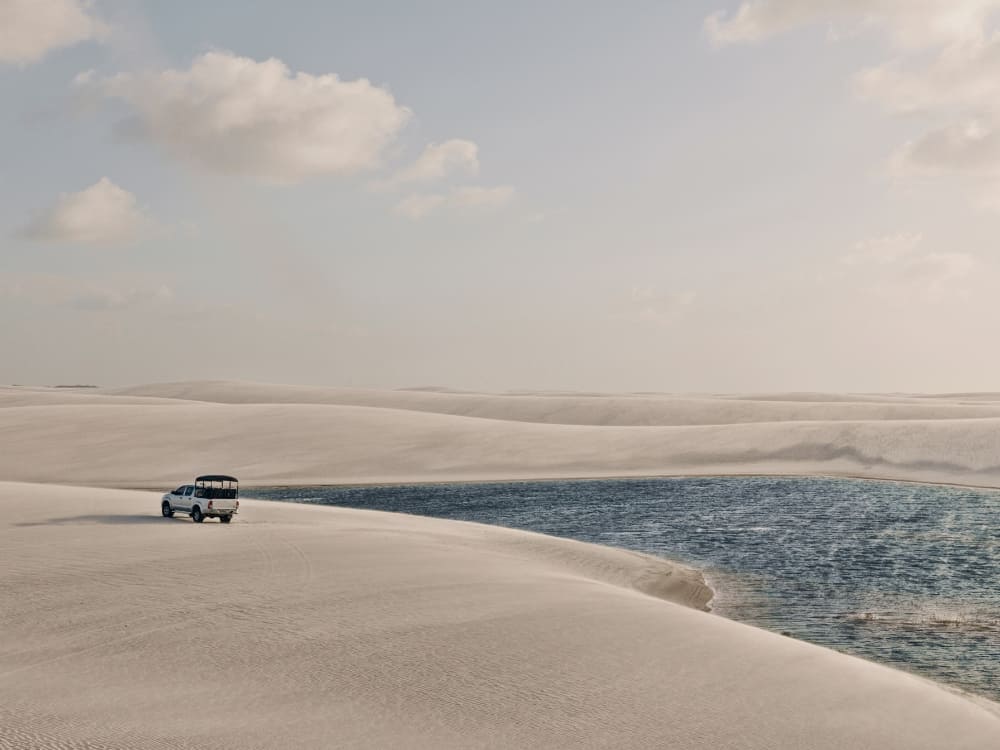
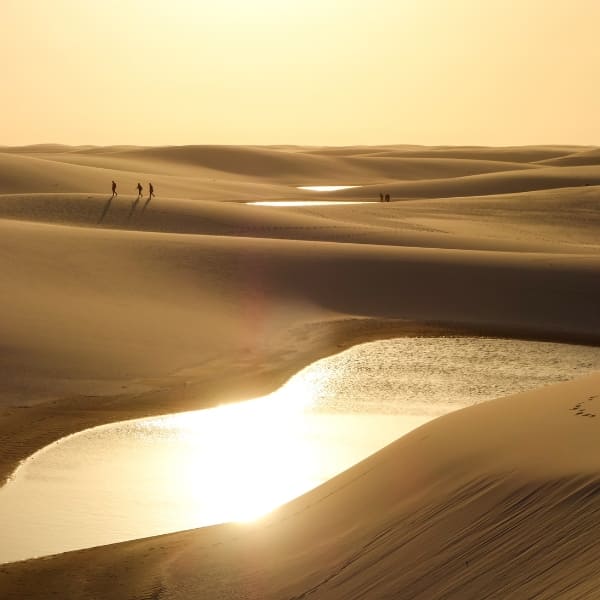
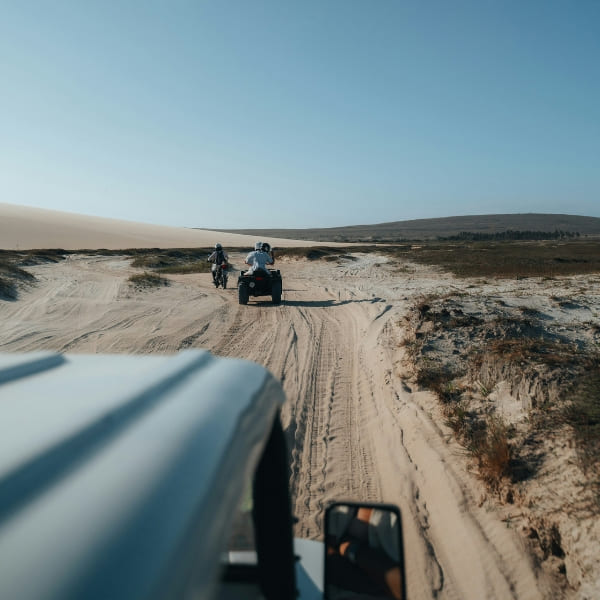
    A white 4x4 tour vehicle driving across vast white sand dunes next to a bright blue lagoon.
    .

    Surrounded by the base towns of Barreirinhas, Santo Amaro, and Atins, the primary activities include hiking or taking 4×4 tours through the dunes, swimming in the lagoons (Lagoa Azul, Bonita, Gaivota, Betânia, etc.), cruising down the Preguiças River, and visiting local villages (Mandacaru, Vassouras) and Atins Beach.

    Delta do Parnaíba, Piauí and Maranhão

    The Delta do Parnaíba is the mouth of the Parnaíba River, nestled between the states of Piauí and Maranhão. It is the only open-sea delta in the Americas and the 3rd largest in the world, covering around 2,700 km² across more than 70 islands.
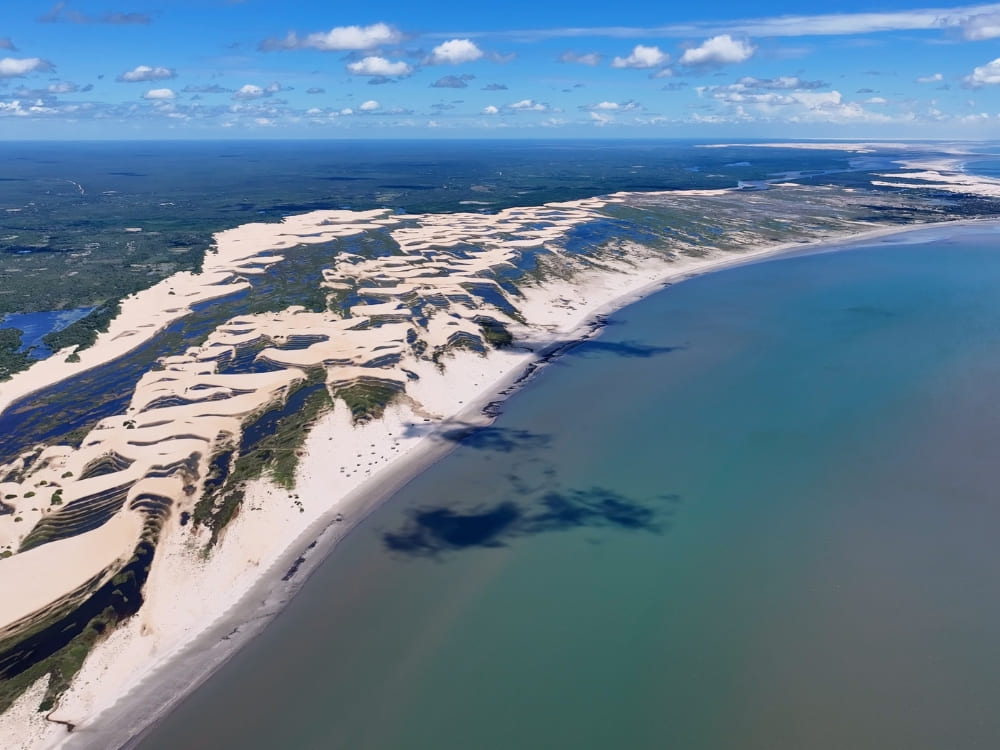
    Aerial perspective of the Delta do Parnaiba showing the river branching into the ocean alongside large coastal sand dunes.
    .

    The classic tour sets off from Parnaíba (PI) via speedboat or catamaran, navigating the five river branches — Igaraçu, Canárias, Caju, Melancieiras, and Tutoia — until reaching Porto dos Tatus, the beating heart of the route. Once there, highlights include exploring the Morro do Meio dunes and visiting the Canárias Islands and Pontal Beach.

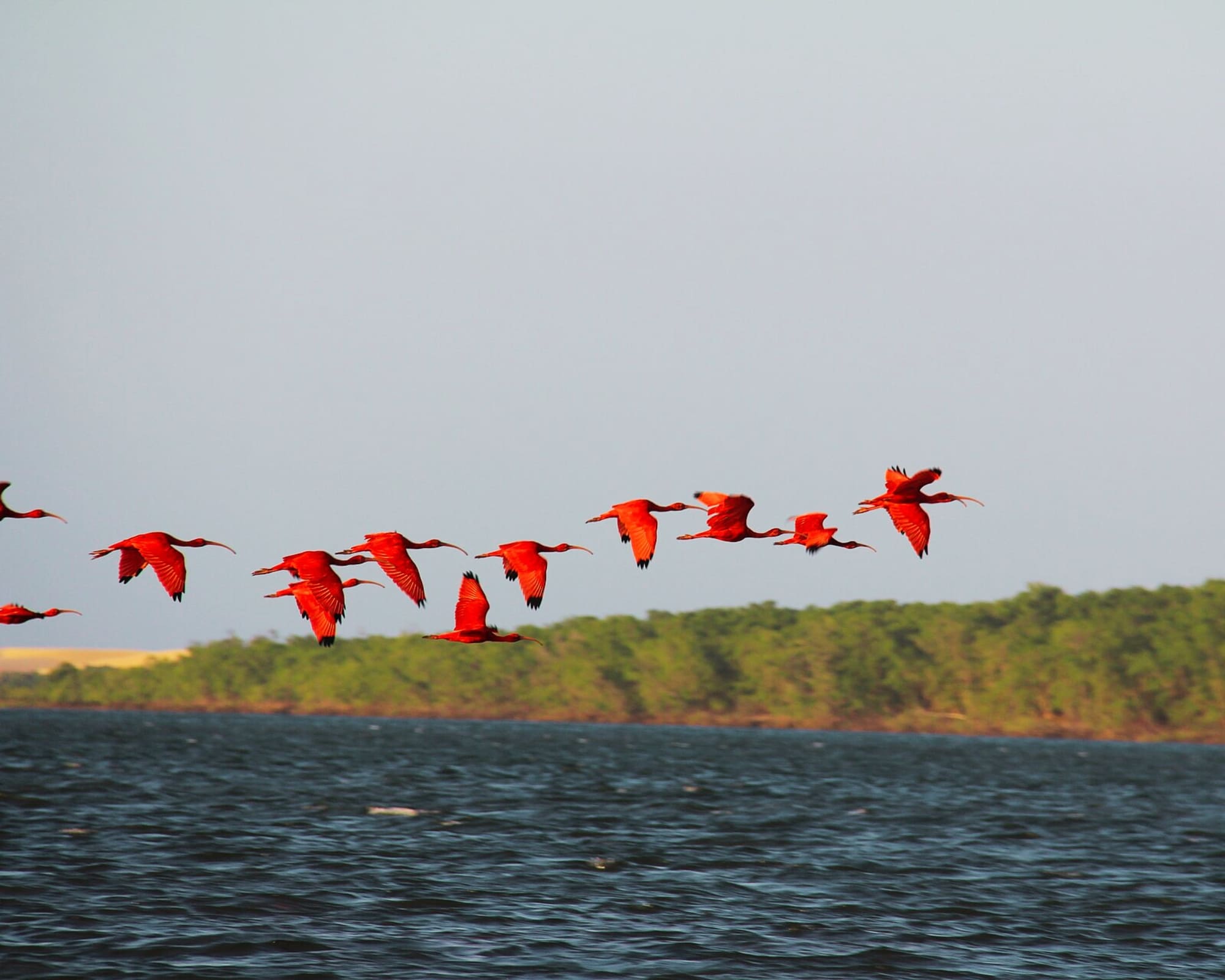
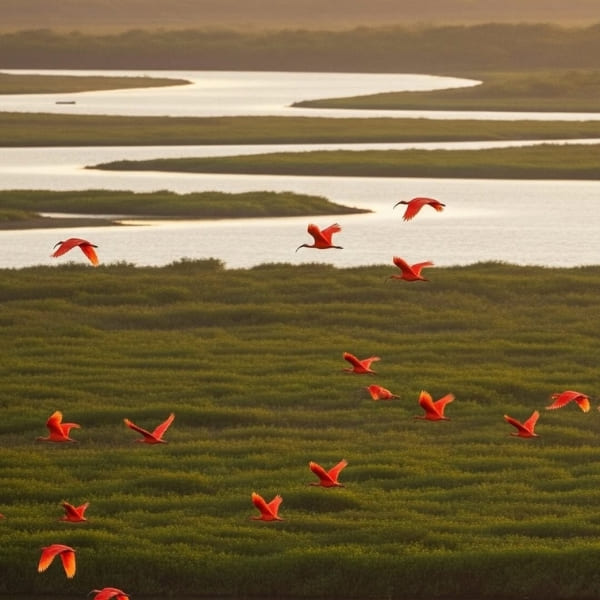
    The flocking of the scarlet ibises (Revoada dos Guarás) is absolutely unmissable. In the late afternoon, speedboats depart from Porto dos Tatus toward islands wrapped in dunes and mangroves. From the water, you can watch hundreds of vibrant scarlet ibises returning to roost, painting the sky red with their feathers. It’s an unforgettable sight.

    Jericoacoara, Ceará

    Before you even arrive at the Jericoacoara National Park (88.8 km²), the route treats you to other jaw-dropping spots in Ceará, including the Coreaú River, Ilha do Amor (Island of Love), and the raw beaches of Tatajuba and Guriú.
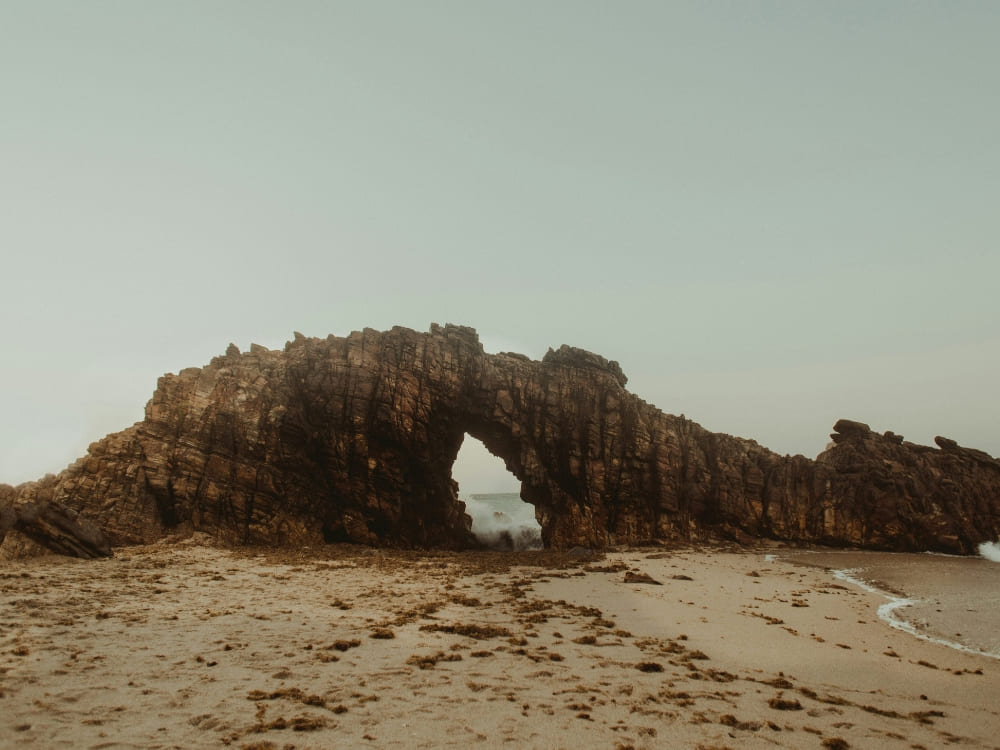
    A large, rugged rock formation featuring a natural arch on a sandy beach beside the ocean, known as Pedra Furada in Jericoacoara.
    Photo: Jonathan Borba

    Once in Jeri, a few experiences are practically mandatory: lounging at the iconic beaches (Lagoa do Paraíso, Preá, Principal, Barrinha), visiting Pedra Furada and the Buraco Azul, tearing across the sand in a buggy, and enjoying the laid-back nightlife in the sandy streets of Vila de Jericoacoara.

    How many days are ideal to do the Route of Emotions?

    Trip duration depends entirely on your pace and interests, but generally, the Route of Emotions takes between 6 and 13 days. Naturally, the longer you stay, the deeper and more immersive the adventure becomes.

    • 6 days: 2 days per destination + travel/arrival days. (A fast-paced highlights reel).
    • 10 days: 3 days per destination + extra time to explore Atins, Barra Grande, or Camocim.
    • 12 days or more: The sweet spot. Enough time to comfortably hike the Lagoa Bonita Circuit, watch the sunset in Mandacaru, and tackle the eastern route of Jericoacoara without feeling rushed.

    Route of Emotions Packages

    Travel with PlanetaEXO to discover some of Brazil’s most beautiful landscapes along the Route of Emotions!

    PACKAGE HIGHLIGHTS STARTING PRICE
    Route of Emotions – 6 days Lençóis Maranhenses (dunes, lagoons, Preguiças River, Atins Beach, and villages of Vassouras and Mandacaru); Delta do Parnaíba (Parnaíba, Porto dos Tatus, Morro do Meio, flocking of the scarlet ibises); Jericoacoara (Principal, Preá and Lagoa Paraíso beaches, Lagoa Azul, Buraco Azul, Pedra Furada, sand buggy). US$ 1,490
    Route of Emotions – 10 days Lençóis Maranhenses (dunes, lagoons, Mirar das Estrelas, Preguiças River, Ponta do Mangue, Canto do Atins); Delta do Parnaíba (flocking of the scarlet ibises, Barra Grande, Camocim); Jericoacoara (Principal, Preá and Lagoa Paraíso beaches, Lagoa Azul, Buraco Azul, Pedra Furada, sand buggy). US$ 2,100
    Route of Emotions – 13 days Lençóis Maranhenses (dunes, lagoons, Santo Amaro, Ponta Verde, Barreirinhas, Mirar das Estrelas, Preguiças River, Canto do Atins, villages of Vassouras and Mandacaru); Delta do Parnaíba (flocking of the scarlet ibises, Barra Grande, Camocim); Jericoacoara (Principal, Preá and Lagoa Paraíso beaches, Lagoa Azul, Buraco Azul, Pedra Furada, sand buggy). US$ 2,590

    *Per person, based on double occupancy in group departures. Prices may vary depending on the season and availability. Exchange rate as of May 21, 2026; subject to change.

    Accommodation on the Route of Emotions itinerary
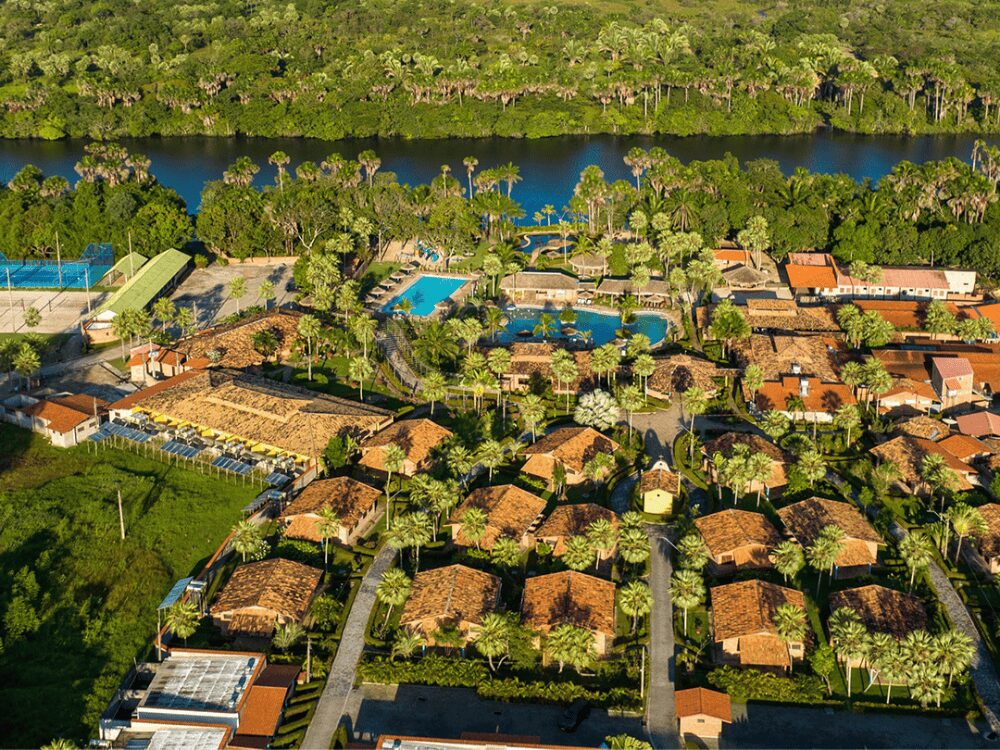
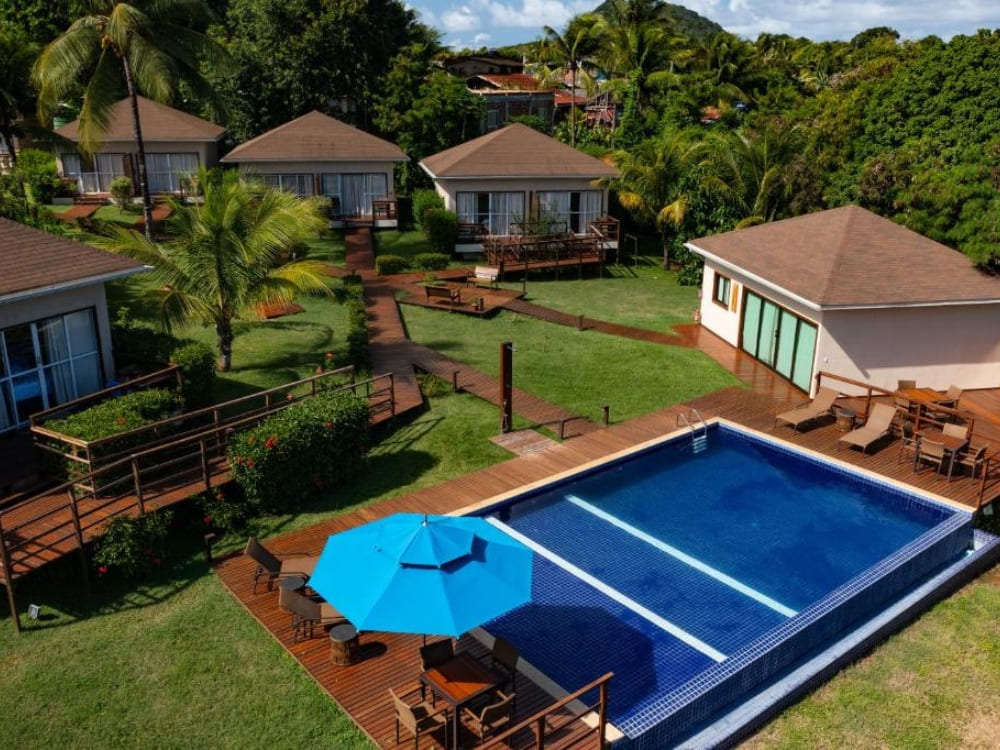
    Aerial view of a lush resort complex featuring red-roofed buildings and blue swimming pools nestled beside a wide river.
    Photo: Porto Preguiça Resort

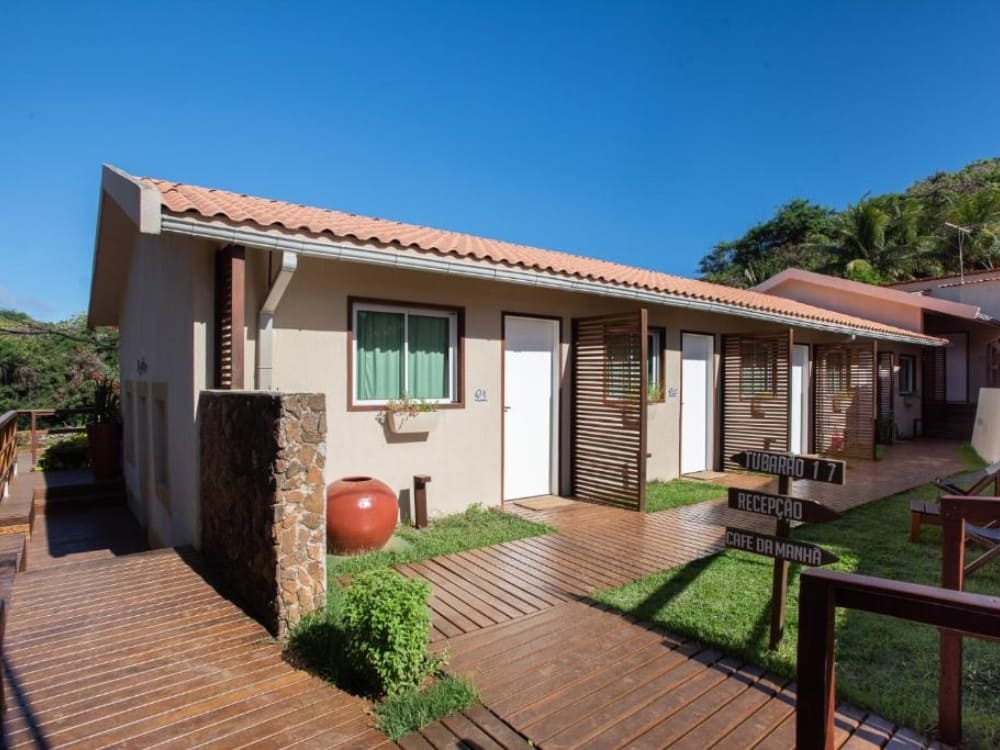
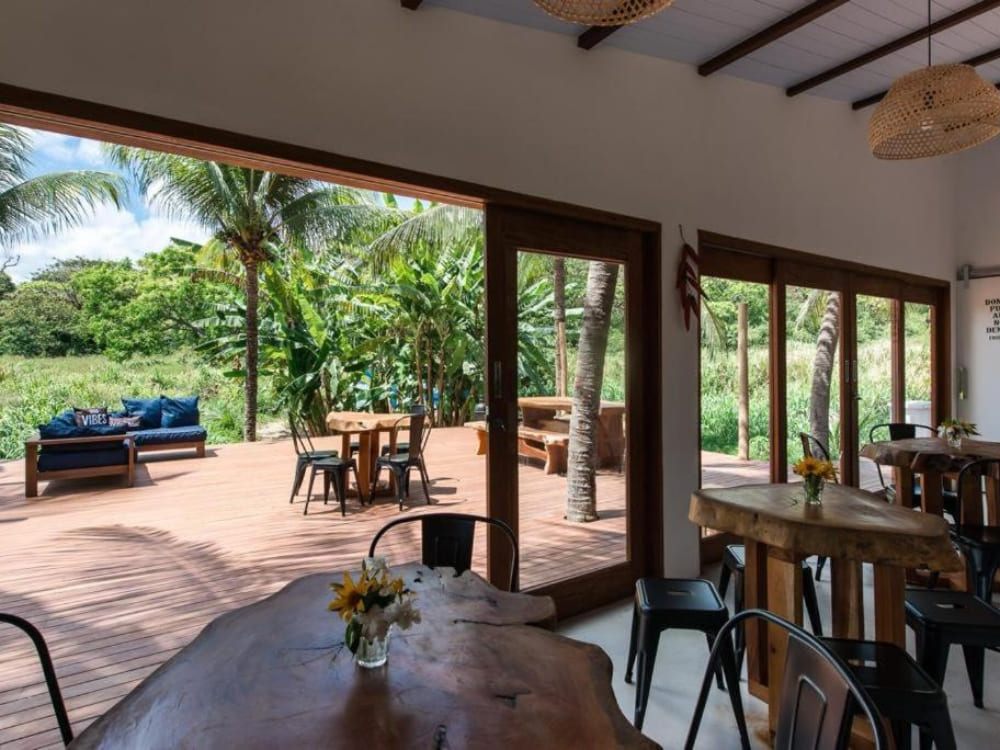
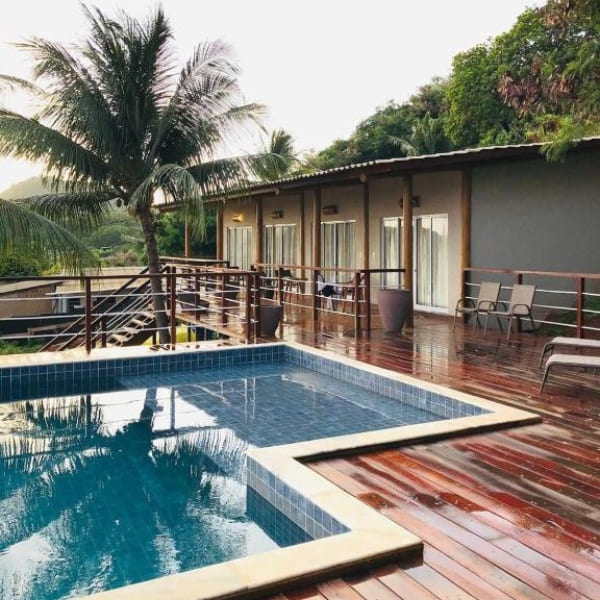
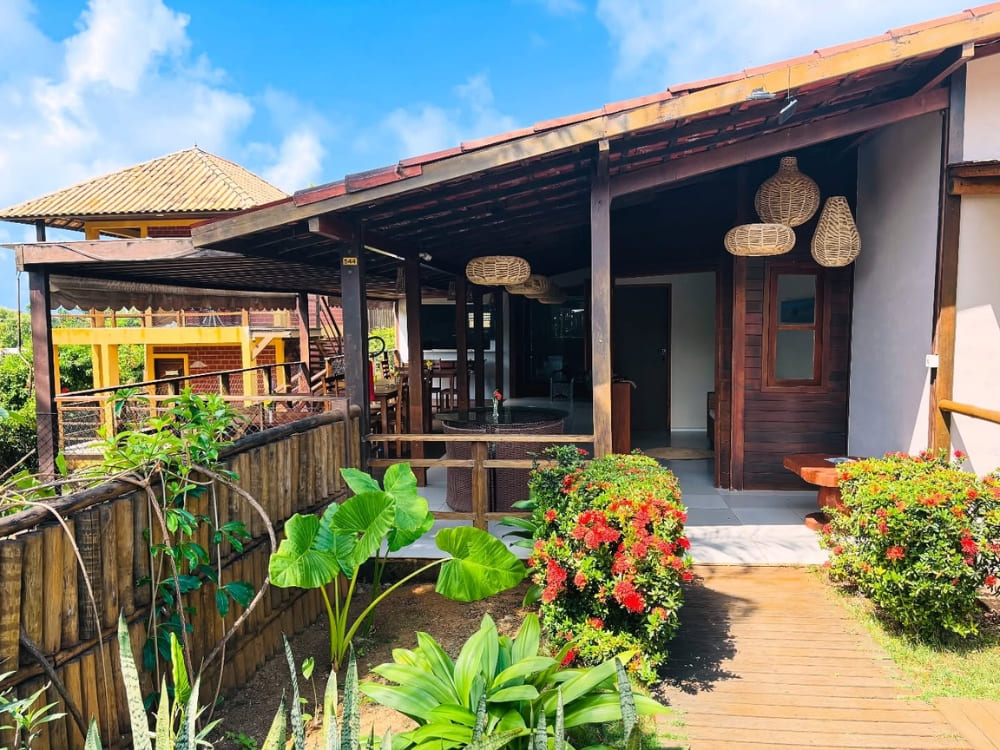
    The accommodation experience is as dynamic as the trip itself, transitioning across three different states and vibes. Check out PlanetaEXO’s top hotel and pousada recommendations for Lençóis Maranhenses, Delta do Parnaíba, and Jericoacoara!

    Lençóis Maranhenses (Barreirinhas, Maranhão)

    Delta do Parnaíba (Parnaíba, Piauí)

    Jericoacoara (Jijoca de Jericoacoara, Ceará)

    Embark on the PlanetaEXO Route of Emotions itinerary

    Now that you know what the Route of Emotions is, have mapped out the geography, and figured out the best time and logistics, there’s only one thing left to do: lock in your dates and start packing!

    PlanetaEXO is a premier ecotourism platform offering seamless Route of Emotions tours and specializing in fully-guided Lençóis Maranhenses tours. We work exclusively with accredited local operators in each destination, ensuring authorized transfers, certified expert guides, and hand-picked, comfortable accommodations. Contact us today!
  • Chapada Diamantina Waterfalls: Best Trails and Hidden Gems

    Chapada Diamantina Waterfalls: Best Trails and Hidden Gems

    Discover the waterfalls that shouldn’t be missed on your trip to Chapada Diamantina National Park!

    The waterfalls of Chapada Diamantina are some of the best known and most beloved in Brazil. To reach them, travelers hike along trails that cross mountains, deep valleys, ancient caves, gorgeous vegetation, and breathtaking vistas.

    Have you ever thought about finishing a hike by swimming in a natural pool surrounded by cliffs? Or standing at a viewpoint where more than twenty waterfalls cascade at once? In Chapada Diamantina, these aren’t distant dreams—they’re real experiences waiting for you!

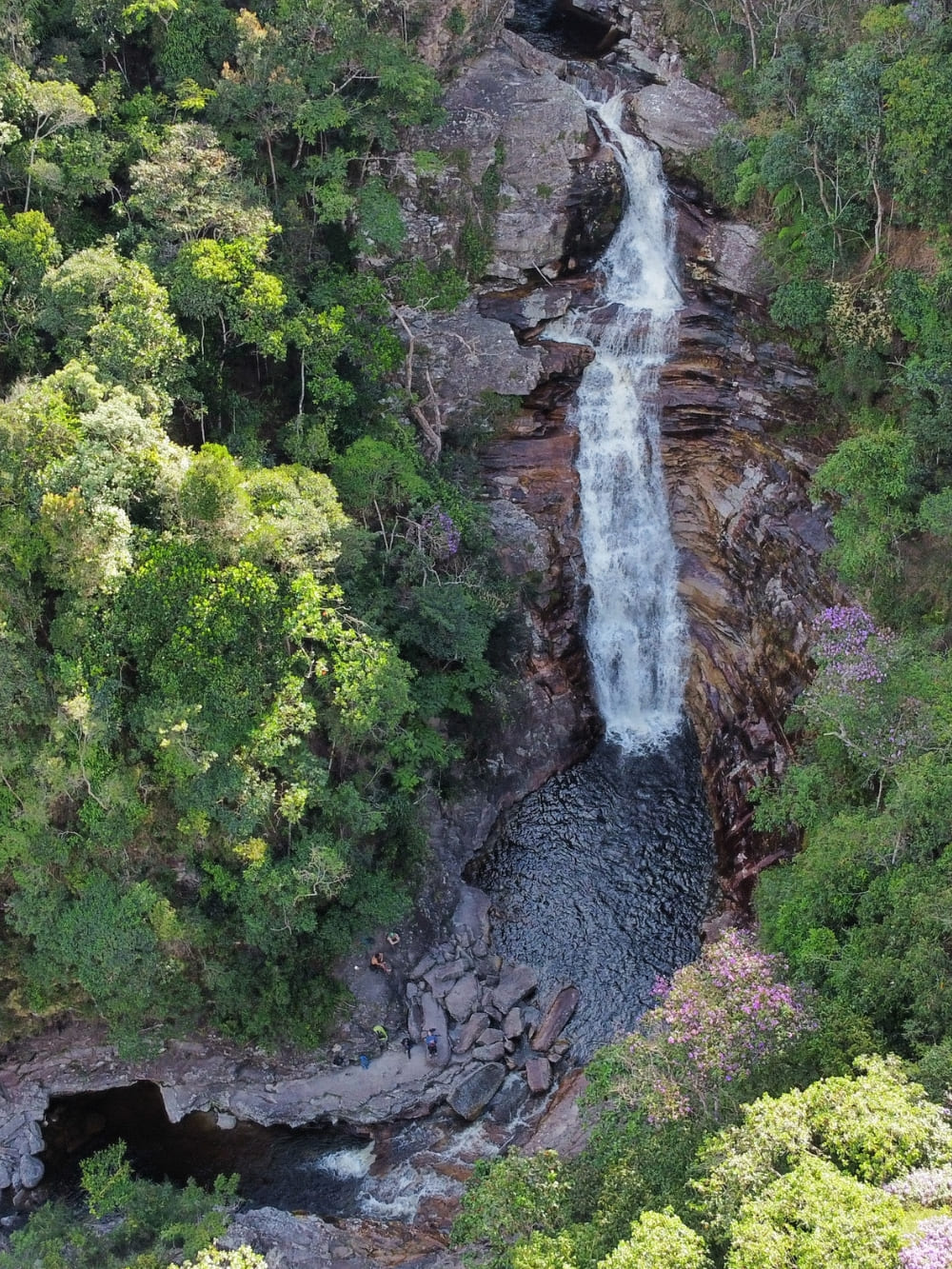
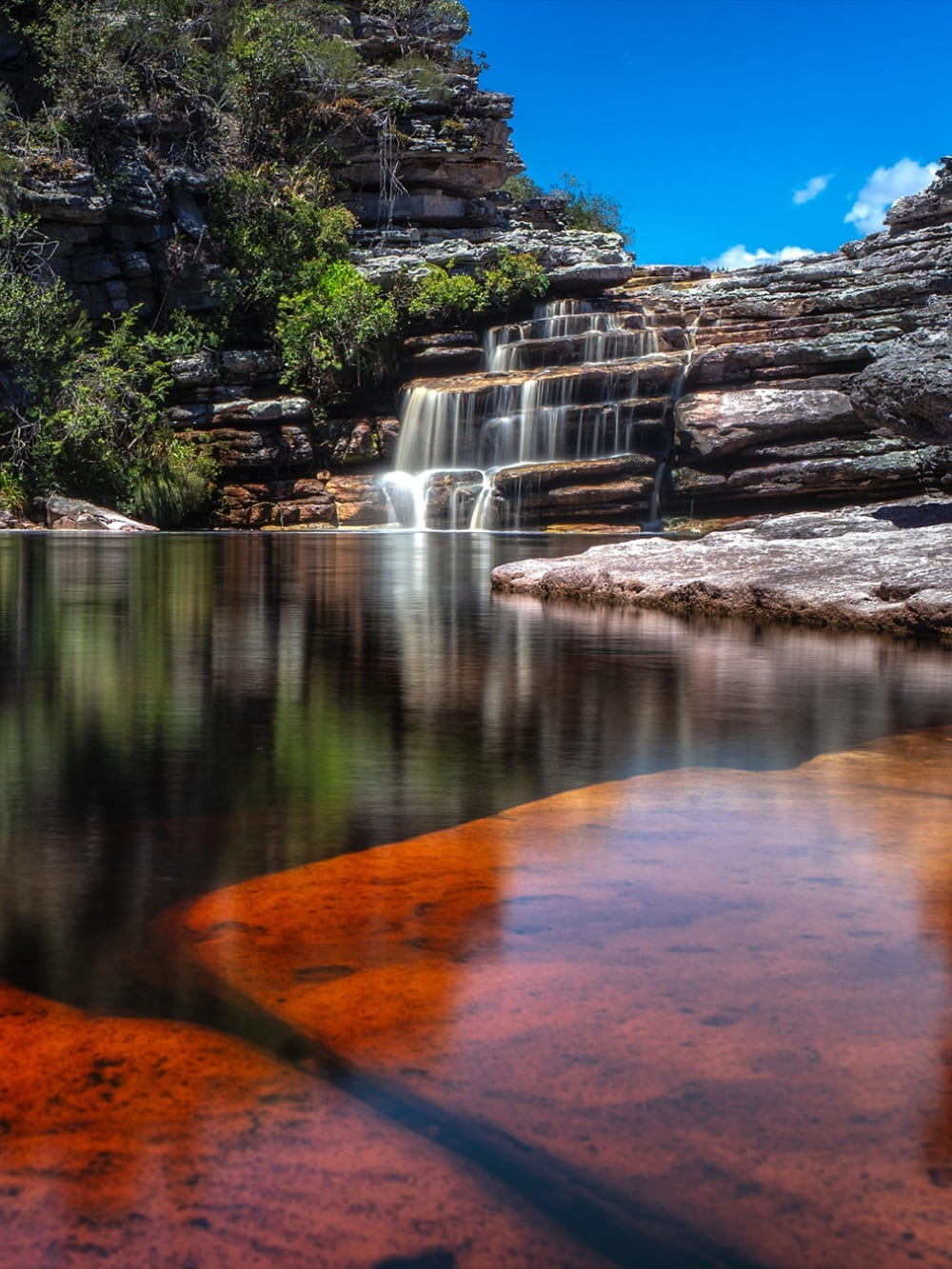
    A cascading waterfall flowing into a calm natural pool with red rocks in Chapada Diamantina National Park.
    @brunoononogaki

    If you’re planning an adventure in one of the best trekking destinations in the world, PlanetaEXO, an ecotourism platform specializing in Chapada Diamantina tours, has put together a list of waterfalls you just can’t miss during your trek. Check it out below!

    Cachoeirão Waterfall 

    Cachoeirão is one of Chapada’s most iconic sights. During the rainy season, over 20 streams plunge from around 280 meters high, creating a spectacular curtain of water. From above, you’ll see Vale do Pati stretching far into the distance, framed by steep mountains. 

    From below, the perspective is completely different: pools of dark water reflect the canyon walls while the falls crash down in front of you. 

    How to get to Cachoeirão?

    Cachoeirão lookout

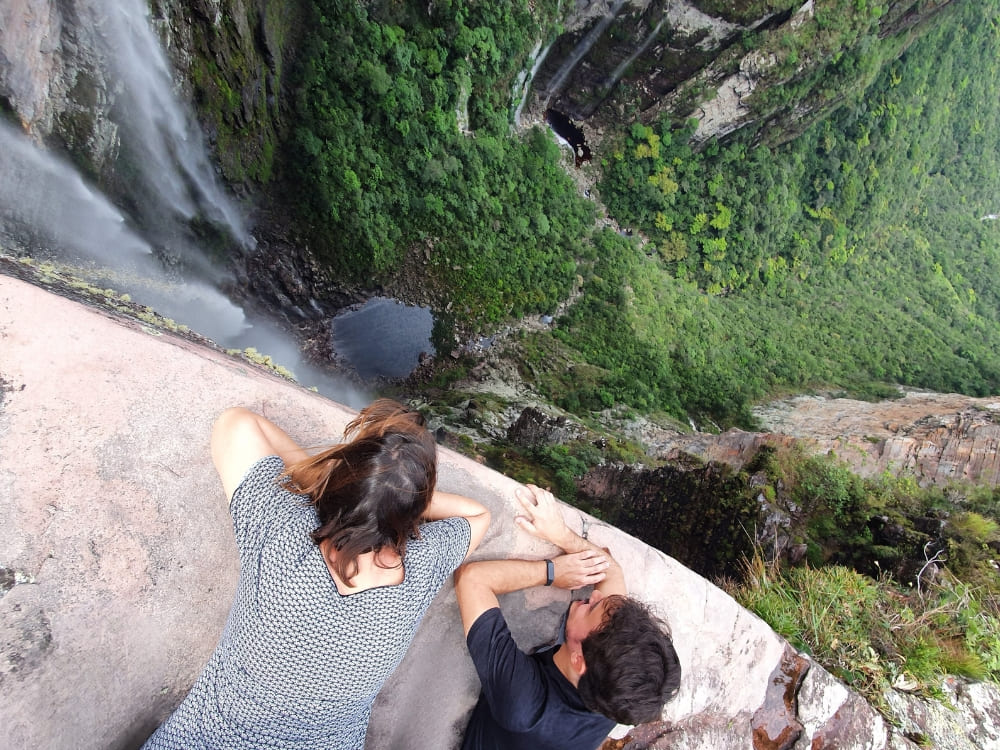
    The upper viewpoint is included in the 3-day Chapada trek. To get there, hikers usually start in the village of Guiné entering Vale do Pati through steep mountain trails. The path involves climbs, river crossings, and several hours of trekking before reaching the cliff edge with panoramic views of the valley and the waterfalls.

    Two hikers look down from a high cliff edge at Cachoeirão Waterfall plunging into the deep green Vale do Pati canyon.
    .

    Cachoeirão base

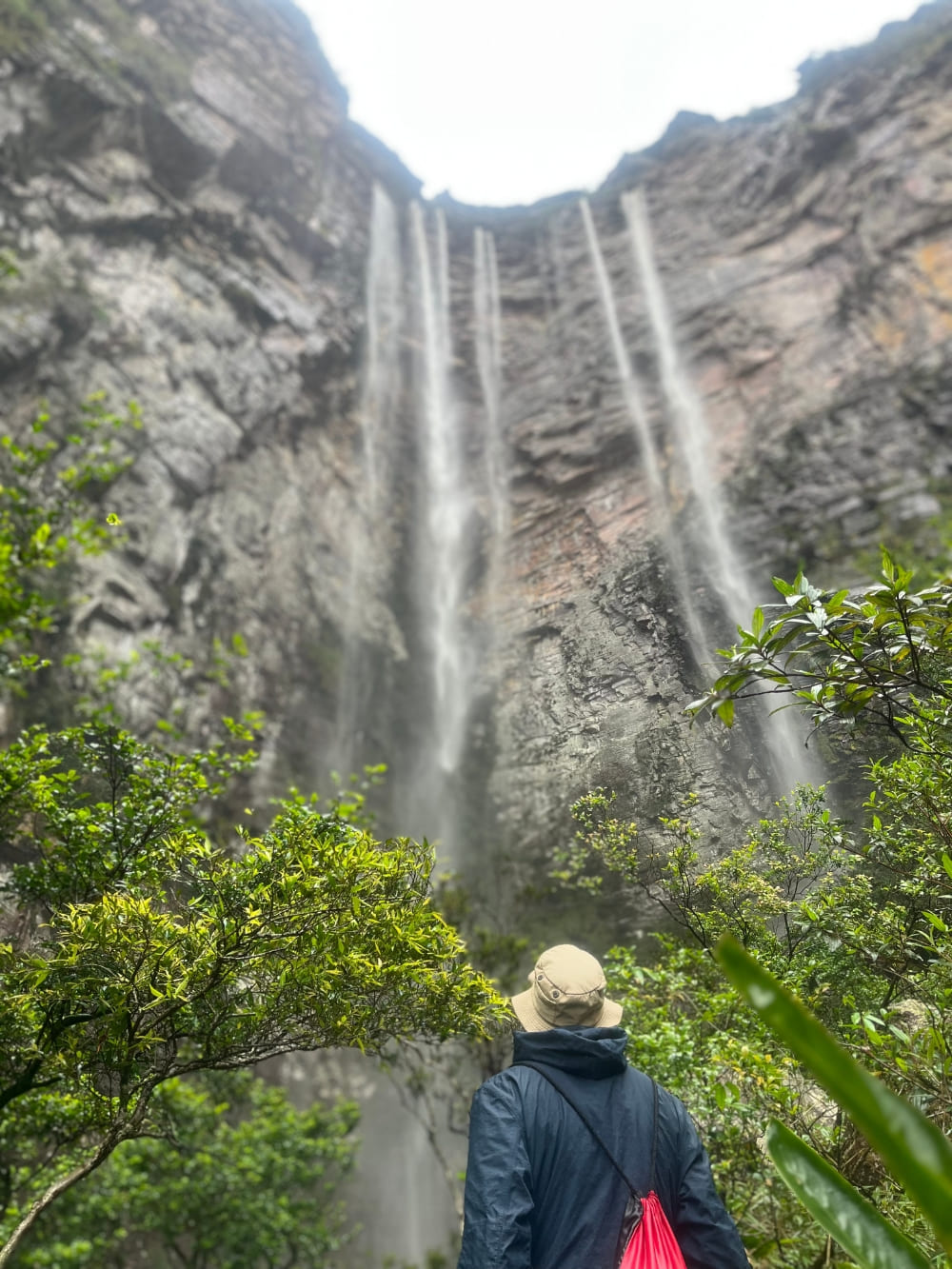
    The base is part of the 5-day Vale do Pati route. This trail is longer and more demanding, leading deep into the canyon. The hike passes through dense vegetation and rocky terrain before arriving at the pools directly beneath the falls, where you can swim and admire the cascades from below.

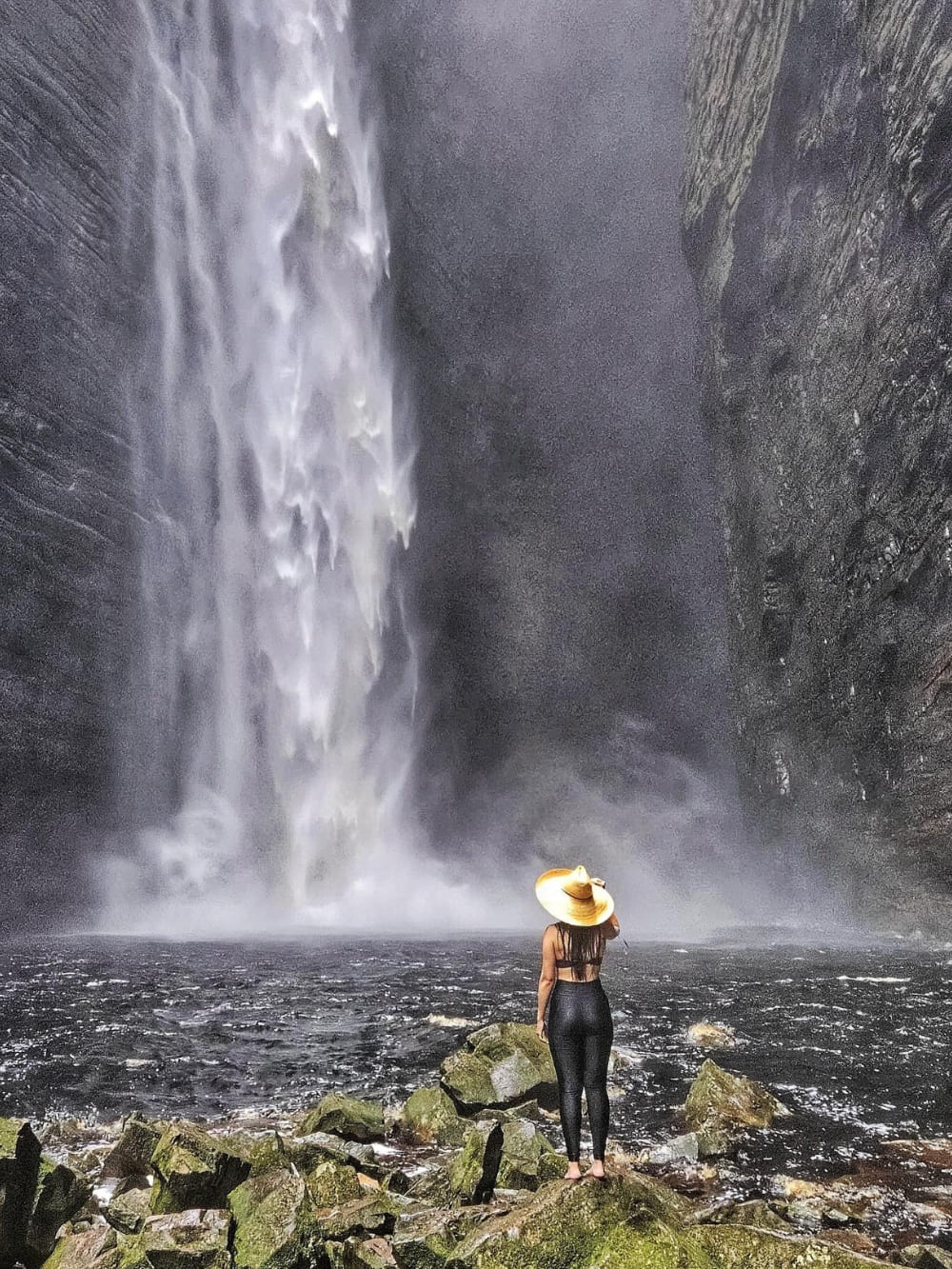
    A hiker wearing a hat and jacket looks up at the towering 280-meter water streams of Cachoeirão Waterfall from its rocky base.
    .

    👉 Read more: How to Get to Chapada Diamantina National Park?

    Funil Waterfall

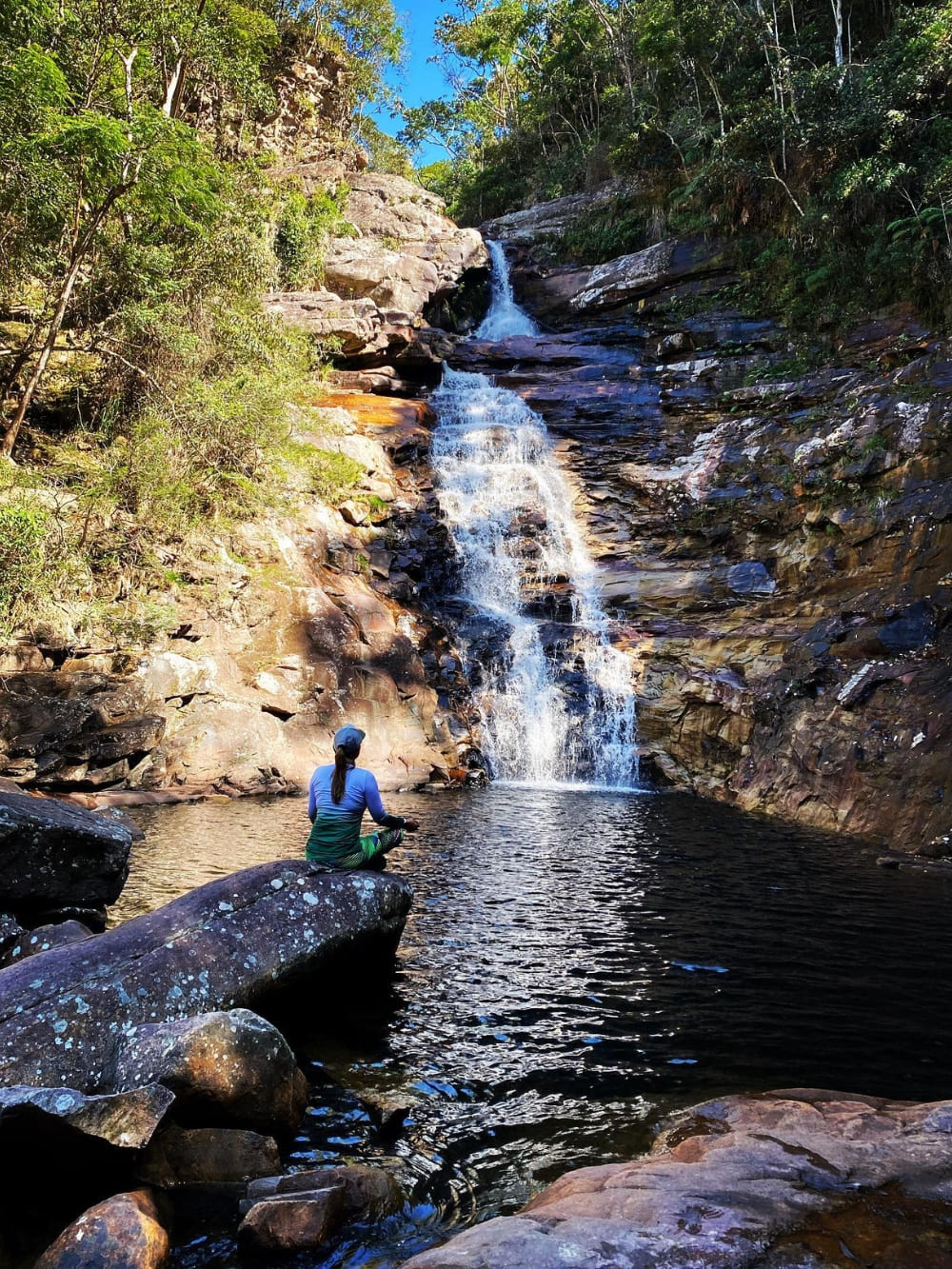
    Surely one of the best hidden waterfalls in Brazil, Funil has a drop of around 20 meters, which tumbles into natural pools surrounded by dense greenery, creating a calm retreat in the middle of a stunning valley. Its quiet beauty makes it a highlight for travelers seeking less crowded spots.

    A woman sits on a rock near the calm natural pool of Funil Waterfall, a 20-meter drop surrounded by dense green vegetation.
    .

    How to get to Funil?

    Commonly accessible on multi-day treks through Vale do Pati, usually starting from Guiné or Vale do Capão. The trail includes river crossings and forest paths, often combined with stops at Angélica Waterfall.

    Buracão Waterfall 

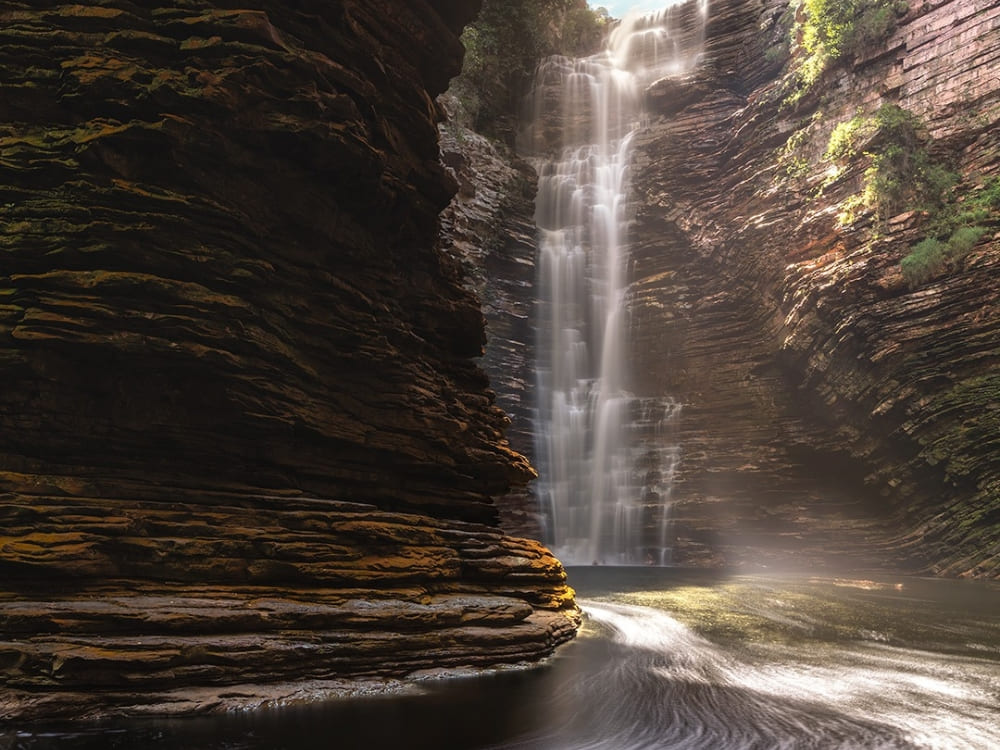
    Buracão is often considered the most adventurous waterfall in Chapada Diamantina. Its 85-meter drop is hidden inside a narrow canyon—a “buracão,” which means “big hole” in Portuguese. To reach it, you swim or float through the gorge until you find yourself directly at its base. Not every waterfall lets you feel this close to such raw power!

     Buracão Waterfall drops 85 meters inside a narrow rocky canyon with layered walls, ending in a dark natural pool.
    @brunoononogaki

    How to get to Buracão?

    Near Ibicoara, Buracão is reached by a 3 km guided hike through forest and rocky trails. Even with its remote access, it’s among the most visited falls.

    👉 Explore the adventure: 6-day Ultimate Chapada Diamantina Hike

    Fumaça Waterfall 

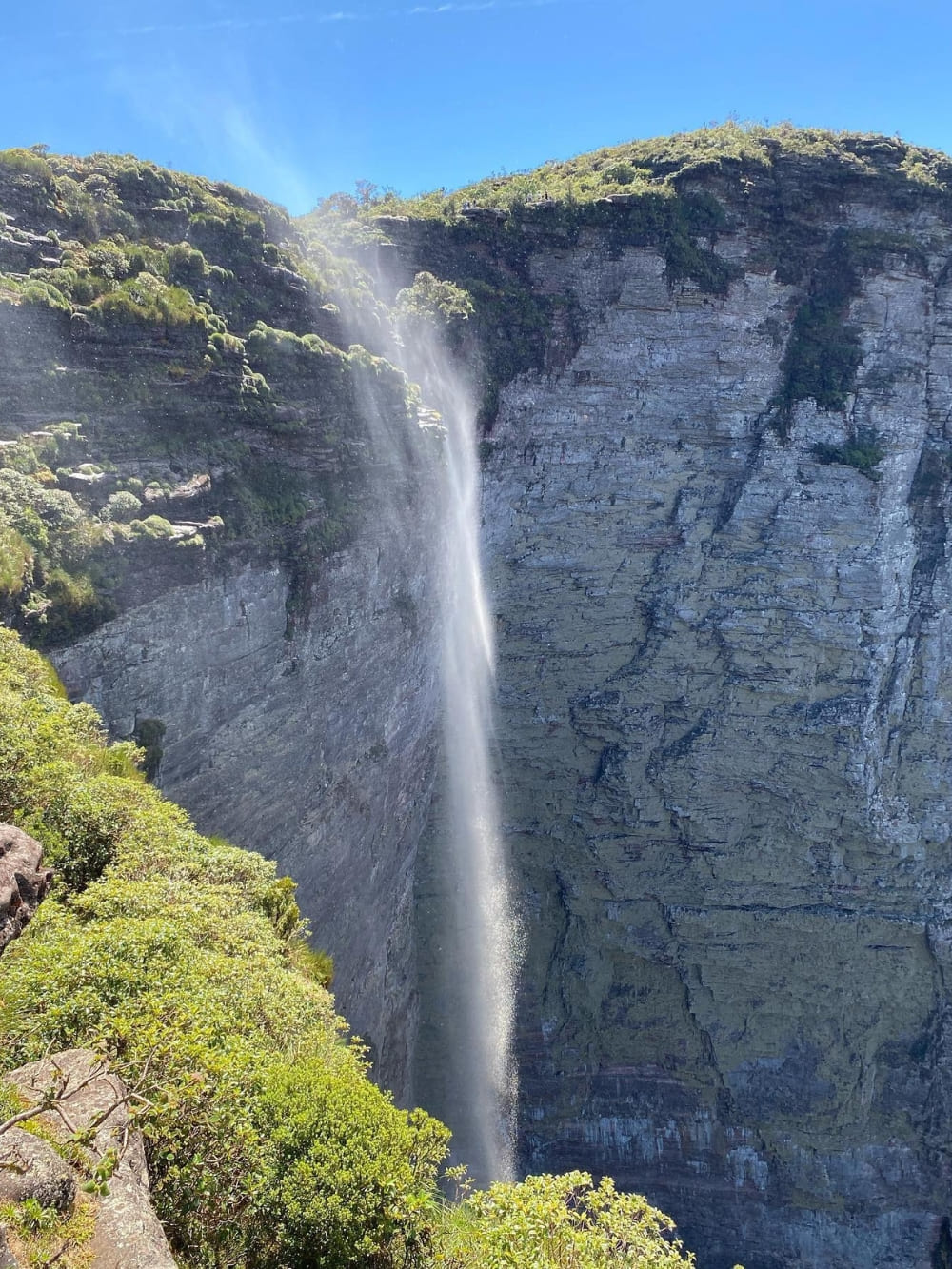
    At 340 meters, Chapada Diamantina’s Fumaça Waterfall is the third-highest in Brazil, right after Neblina Waterfall (450 m) in Rio de Janeiro and El Dorado in the state of Amazonas.

    Seen from above, the water is so thin it evaporates before touching the ground, creating its smoke-like effect. For those who want a tougher challenge, the hike to the base is demanding but reveals a completely different view.

    The 340-meter Fumaça Waterfall flows over a steep cliff, with its water turning into a smoke-like mist before reaching the bottom.
    @estreladalvadiamantina

    How to get to Fumaça?

    Fumaça Waterfall lookout

    The trail starts in Vale do Capão and follows a 6 km path across rocky plateaus and viewpoints until reaching the cliff’s edge. Usually done as a half-day hike, it’s the most popular way to see the waterfall.

    Fumaça Waterfall base

    Access begins near Lençóis, following the Ribeirão River and steep forested sections before reaching the base. Lasting 3 to 4 days, the trek is wild and challenging. Considering the trail with steep climbs, technical sections, and isolated campsites, excellent physical fitness and the assistance of a professional guide are necessary.

    👉 Explore the adventure: 7-day Chapada Diamantina Trip

    Mosquito Waterfall 

    Mosquito is one of the most inviting waterfalls in the entire Chapada Diamantina National Park. The 60-meter cascade drops into a wide pool that is perfect for swimming. The name originates from the region’s mining past, when miners used to call small diamonds found in the water “mosquitoes.”

    A woman stands on a rock stretching her arms at the base of the 60-meter Mosquito Waterfall, surrounded by a wide swimming pool.
    @laneferraz

    How to get to Mosquito?

    Located about 40 minutes from Lençóis, access is straightforward: a drive along a dirt road followed by a short descent on a marked trail (around 20 minutes). Local guides are recommended, especially during the rainy season when the path can be slippery.

    Samuel Waterfall 

    Samuel is also one of the tallest waterfalls in Chapada Diamantina, with a drop of around 100 meters. Hidden in a forested area near Andaraí, it offers a spectacular fall surrounded by lush vegetation and rocky walls.

    Although not as famous as Fumaça or Buracão, Samuel is a rewarding stop for those seeking impressive scenery in a quieter, less-visited spot.

     The tall Samuel Waterfall cascades down massive rocky walls into a dark pool, surrounded by lush forest near Andaraí.
    @pablofotografias

    How to get to Samuel?

    Reach Samuel Waterfall via the old mining roads near the Roncador region. The trek is long and demanding: 18 km round-trip (around 3 hours each way through dense forest, river crossings, and light rock scrambling).

    Fumacinha Waterfall

    Fumacinha is one of Chapada’s most remote and dramatic waterfalls, with a vertical drop of around 100 meters inside a narrow canyon. The setting is wild and imposing: towering rock walls, a dark cave at the base, and the constant roar of water make it a truly unforgettable sight for those who can endure the long journey.

    A hiker wearing a hat stands at the edge of a dark pool, looking up at the dramatic 100-meter vertical drop of Fumacinha Waterfall inside a narrow canyon.
    @alicesantos.nutri

    How to get to Fumacinha?

    Near Ibicoara, Fumacinha is reached by a challenging 18 km round-trip trek featuring river crossings, boulders, and forest sections. Due to its difficulty, hiring a local guide is highly recommended. One of the best waterfall hikes in Brazil for adventurers who love a challenge!

    Herculano Waterfall 

    Herculano is far from the main tourist routes, making it a true off-the-beaten-path destination. With rugged 100-meter-high cliffs and a large pool at its base, it’s the kind of place where you can enjoy the wilderness in peace.

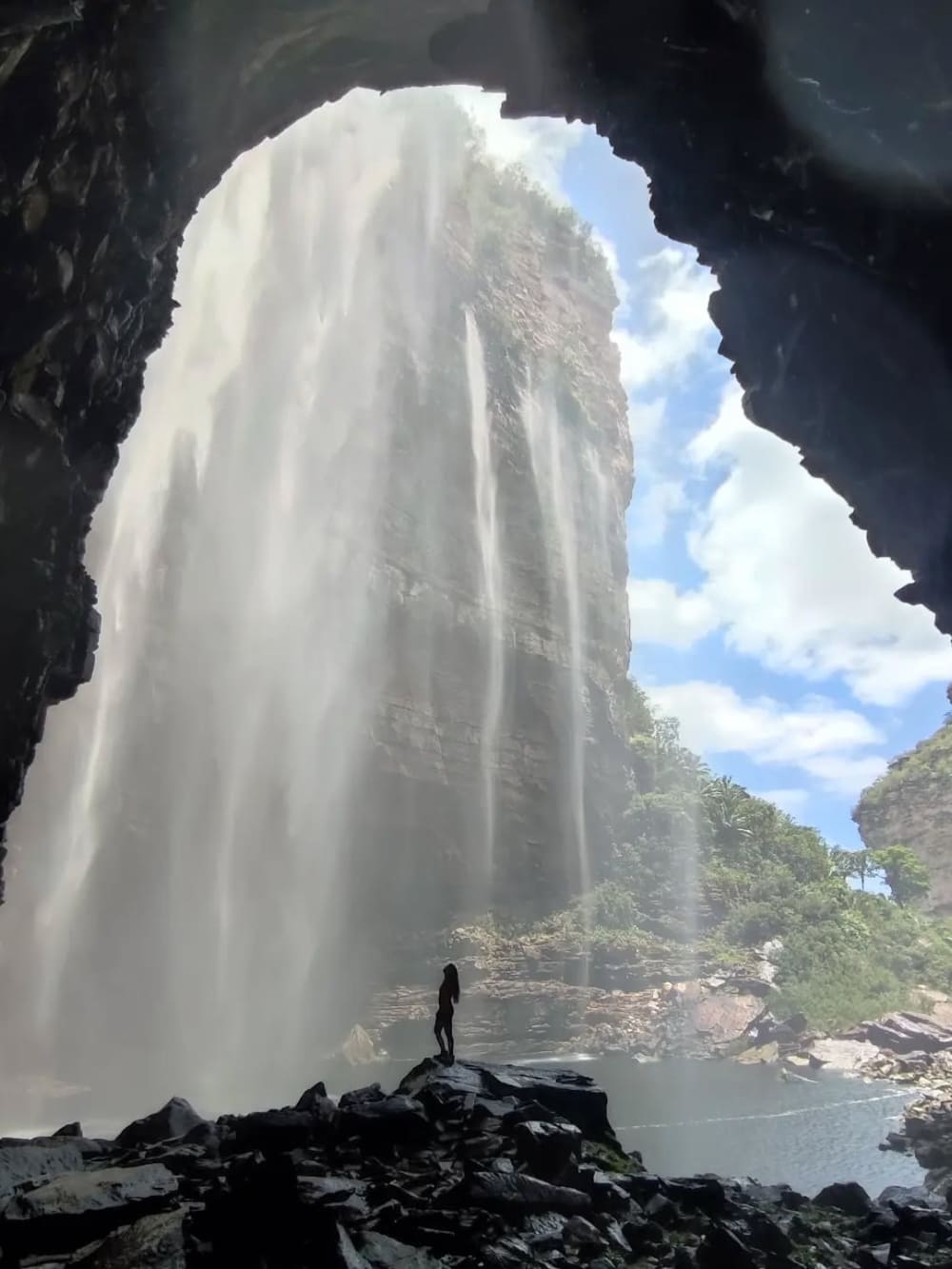
    A silhouette of a person standing on rocks near a dark cave entrance, looking out at the rugged 100-meter cliffs of Herculano Waterfall.
    @poliana_barbosa_guia

    How to get to Herculano?

    Located near Andaraí, Herculano requires a guided hike through little-marked forest trails and river crossings. The route isn’t signposted, which is why hiring a professional is so important. The trek is moderate in length but remote, adding to the feeling of isolation and exclusivity.

    Encantada Waterfall 

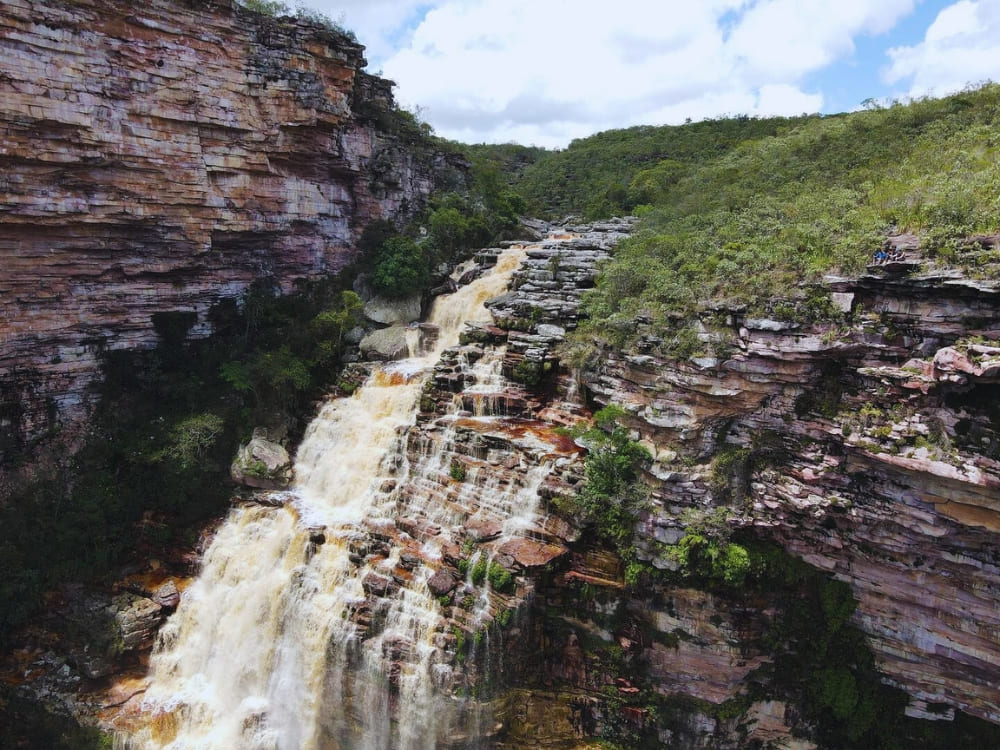
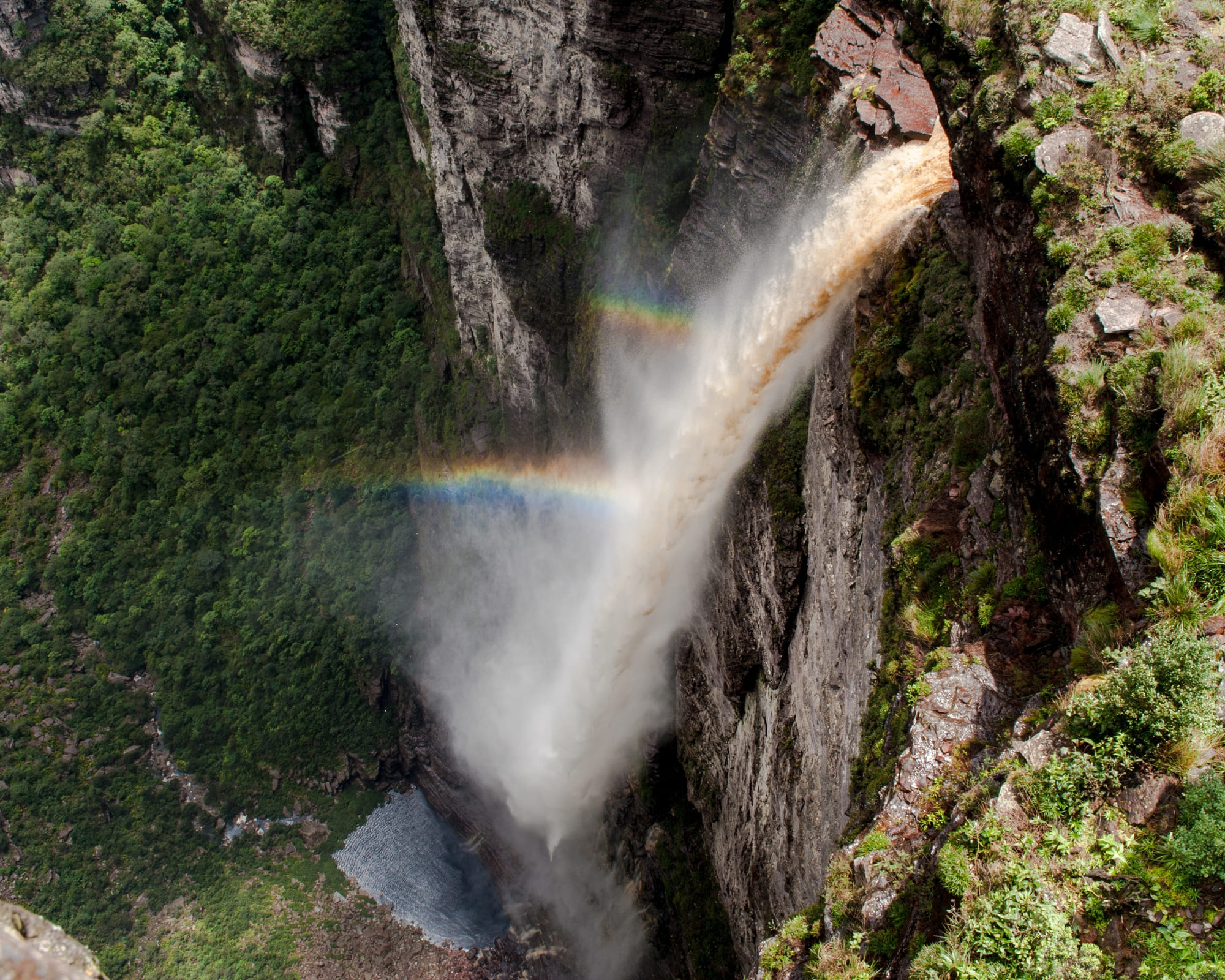
    One of the most spectacular waterfalls in Chapada Diamantina, Encantada has an impressive drop of around 230 meters. The water plunges into a deep canyon, often creating rainbows when the sunlight hits the mist. 

    Its remote location means it’s far less visited than other waterfalls, but for those who make the journey, the view is absolutely breathtaking, especially during the rainy season, when the water flow is the strongest.

    The 230-meter Encantada Waterfall plunges over flat, terraced rocky ledges into a deep canyon near Itaetê.
    @anderson_liiima_bunenen_

    How to get to Encantada?

    Located near Itaetê, access requires a guided hike through forested trails and rocky terrain. The trek can take several hours and is considered moderately difficult, but the reward is one of the most impressive views in the entire national park.

    Sossego Waterfall 

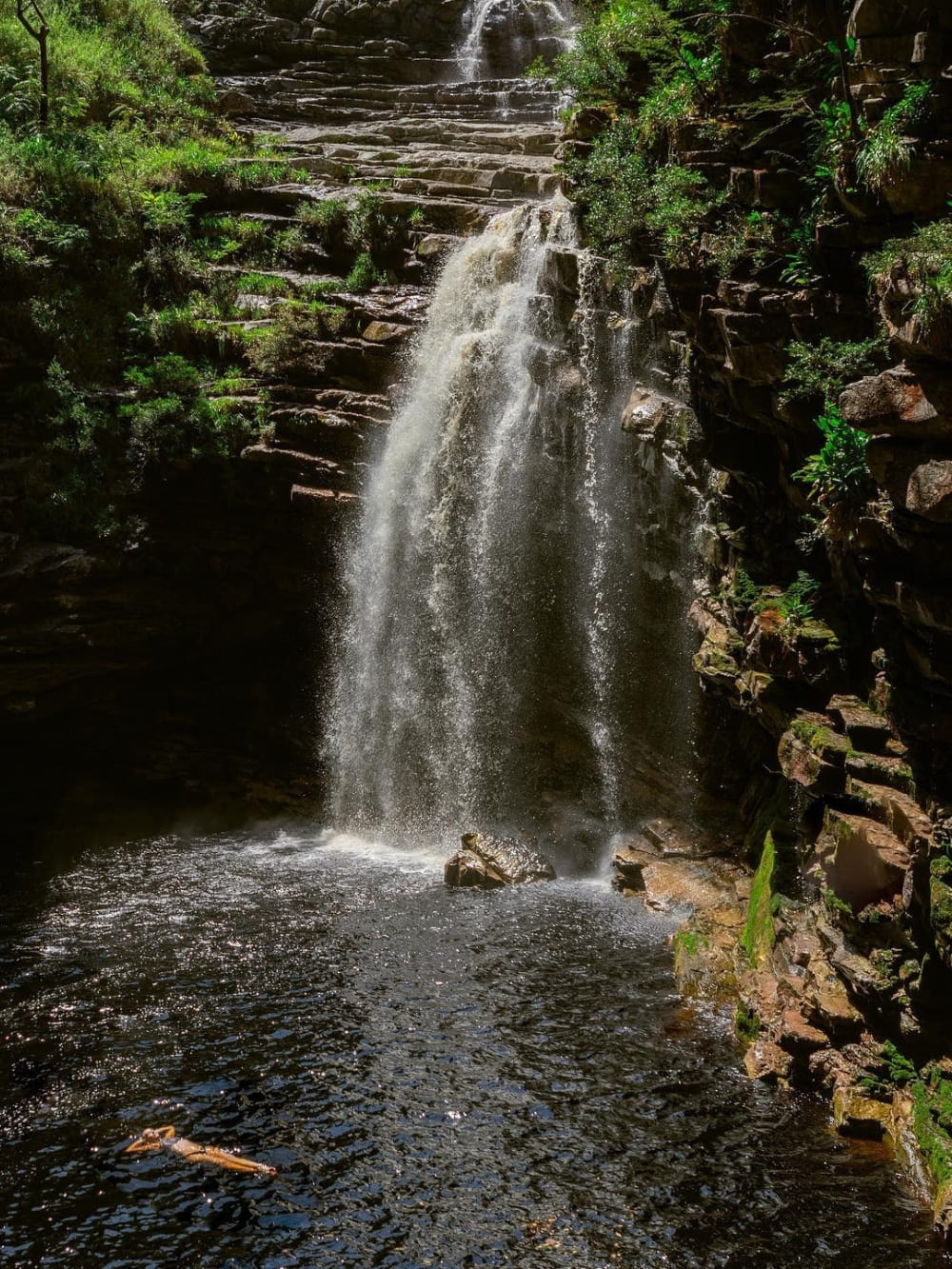
    True to its name, Sossego (“tranquility”) is a peaceful 20-meter waterfall that forms a natural pool surrounded by boulders. The trail itself is part of the adventure, passing smaller cascades and rocky sections before reaching the final fall. Many hikers also stop at Ribeirão do Meio, known for its natural waterslide, on the way back. It’s one of the best waterfall trails in the area!

    A person swims in the peaceful, dark natural pool at the base of the 20-meter Sossego Waterfall near Lençóis.
    @lilianflorio

    How to get to Sossego?

    From Lençóis, it’s a 7 km hike (around 3 hours each way) along the Ribeirão River, with stretches over rocks and stream crossings. Trekking with a local guide is advised!

    Mixila Waterfall 

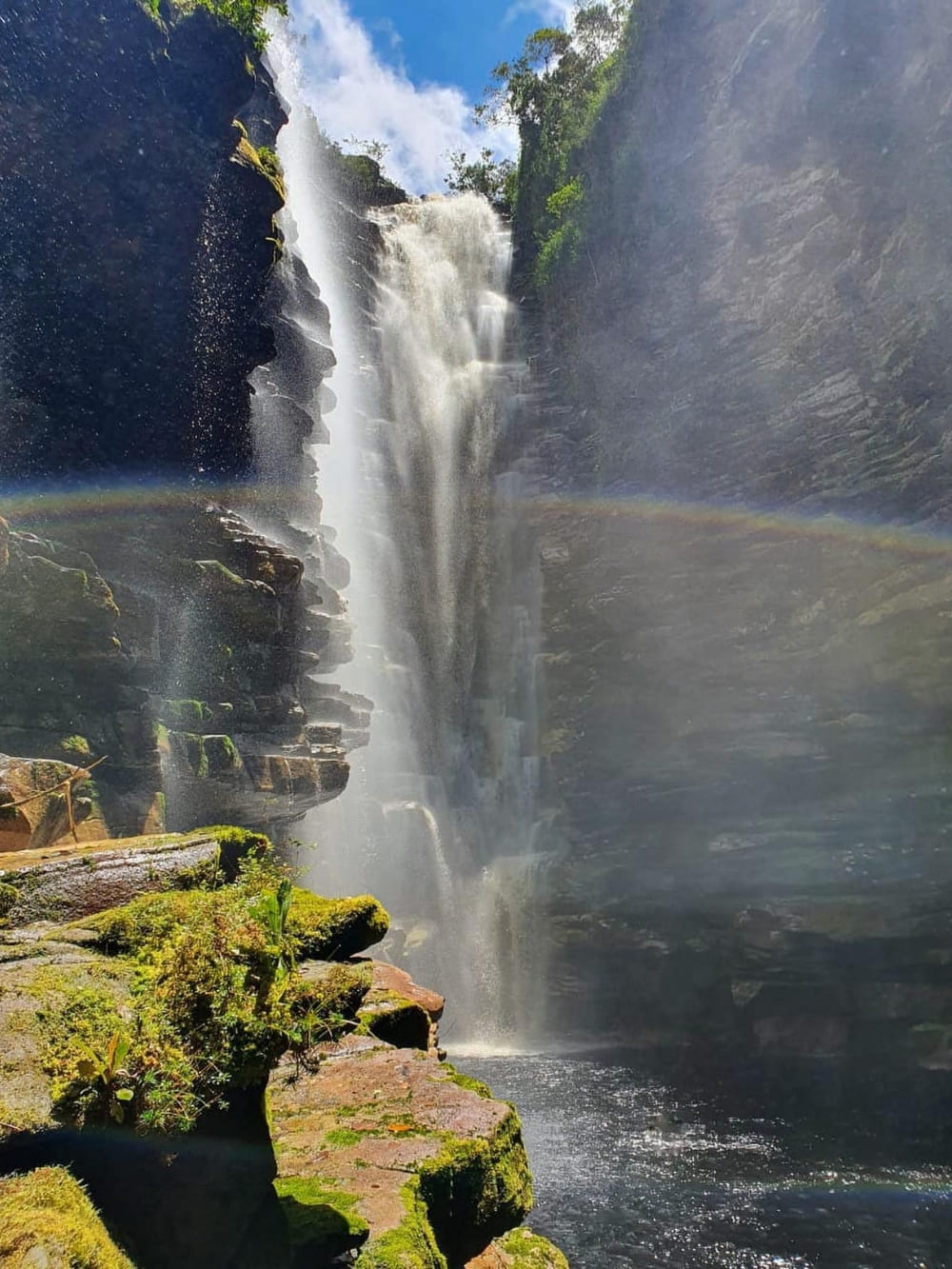
    With a dramatic drop of about 80 meters inside a narrow canyon, Mixila is a waterfall for true explorers. Getting to it is an adventure in itself: the path includes stretches of river trekking and, in some cases, light rappelling. Its remote location and low visitation keep the atmosphere wild and pristine.

    A bright rainbow forms in the mist of Mixila Waterfall, an 80-meter drop hidden deep inside a narrow rocky canyon.
    @taynaguiasaothome

    How to get to Mixila?

    From Lençóis, Mixila is reached on a full-day or two-day guided hike, following the Capivari River. The route includes smaller falls such as Capivari and Poção along the way. Due to its technical sections and river crossings, going with a guide is strongly recommended.

    Swimming in the Waterfalls

    If you’re wondering whether you can swim in the waterfalls, the answer is a definite yes—but it depends. 

    Many waterfalls featured in this article have natural pools suitable for swimming, though some are best appreciated only from viewpoints or due to difficult access. To ensure a smooth, safe trekking experience, stick to our suggestions:

    • Buracão: swim or float through the canyon and reach the pool at its base.
    • Mosquito: a large natural pool ideal for a refreshing dip.
    • Sossego: a calm basin surrounded by rocks; great for a break.
    • Mixila: deep pools along the canyon for adventurous swimmers.
    • Cachoeirão (from below): pools at the base of the canyon, though access requires a longer trek.
    • Fumacinha: natural pool inside the canyon, though the water is usually very cold.
    • Herculano: large, deep pool at the base, perfect for a swim.
    • Samuel: a pool formed by its tall drop, suitable for swimming after the hike.
    • Funil: beautiful cascades with a large pool at the base, ideal for swimming.
    • Encantada: requires a rigorous, technically demanding canyon trek.

    Better appreciated from viewpoints:

    • Cachoeirão lookout: panoramic viewpoint only.
    • Fumaça lookout: famous for its “smoke effect,” no pool access.

    Keep in mind: be cautious with slippery rocks and strong currents, and follow your guide’s recommendations to ensure your safety!
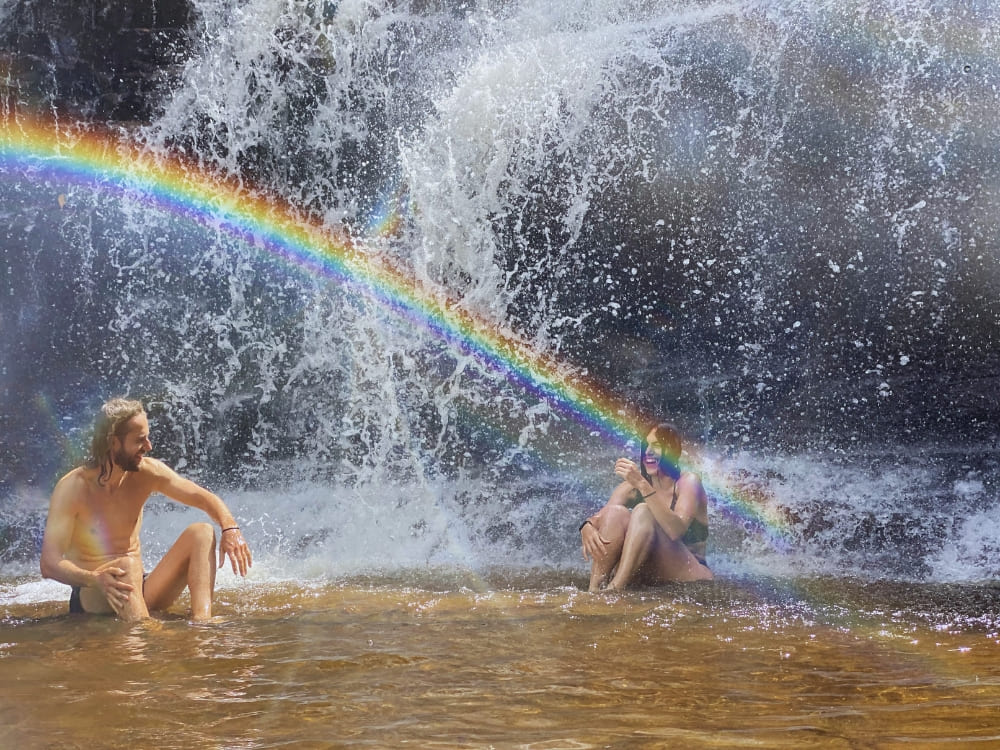
    Two travelers relax in the shallow golden waters of a Chapada Diamantina waterfall pool, with a vivid rainbow shining across the mist.
    .

    Why is the Water Dark?

    The dark, tea-colored waters of Chapada Diamantina come from tannins released by leaves and organic matter along the rivers. It’s a natural feature, not pollution, which means the water is totally safe for swimming. 

    Depending on the depth and light, the water can appear golden, amber, or almost black, giving the pools a mysterious beauty. The sandy rock formations in the region act as natural filters, keeping it clear of impurities.

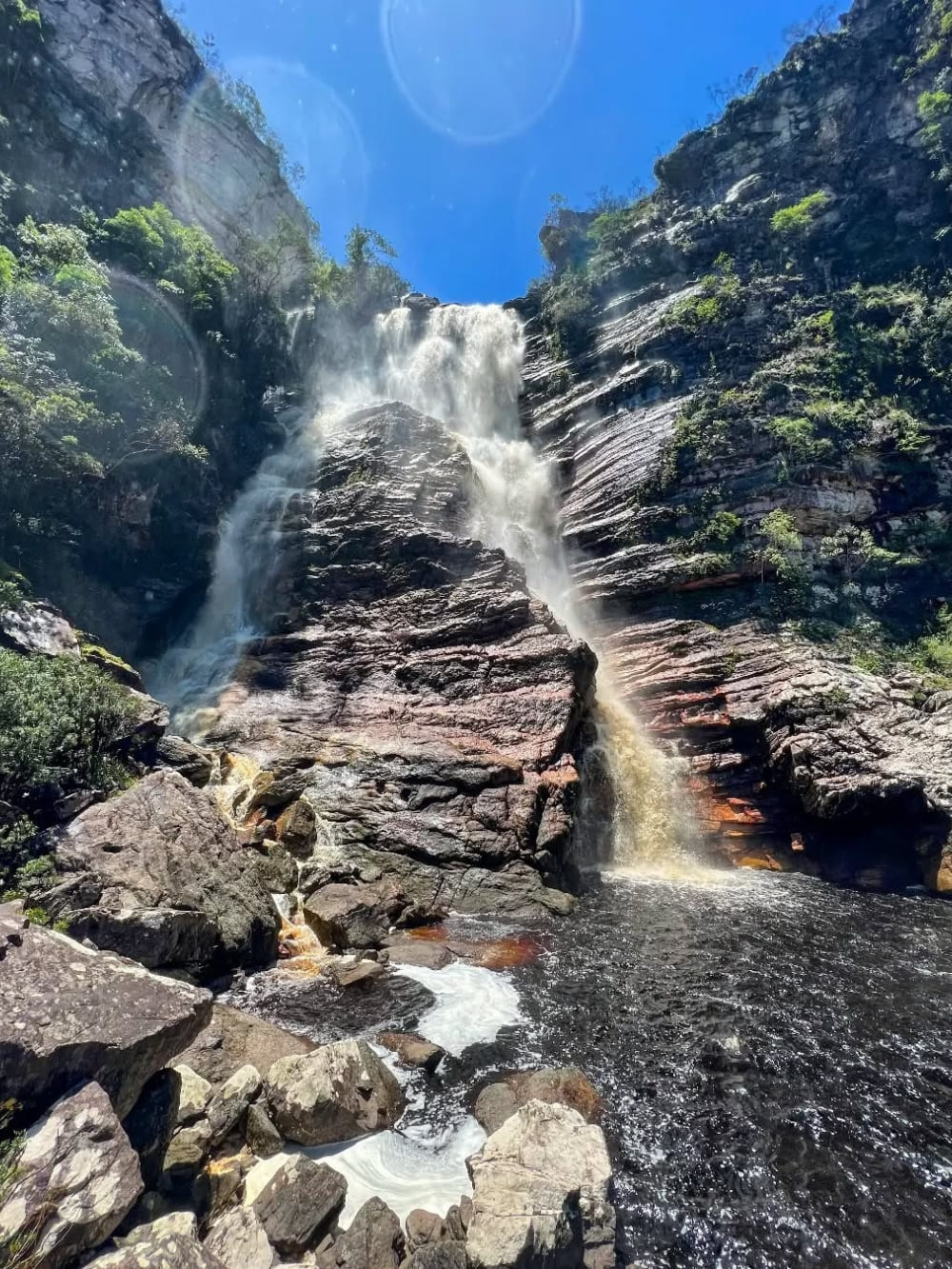
    An aerial view of a powerful waterfall dropping down stepped rocks into a dark, tea-colored pool, surrounded by dense green forest.
    .

    👉 Read more: 10 Travel Tips for Chapada Diamantina

    Are the Waterfalls in Chapada Diamantina Cold? When is the Best Time to Visit?

    Since the rivers are mountain-fed, most waterfalls stay cold year-round. After a long hike in the sun, a refreshing dip becomes part of the adventure!
    • Dry Season (May–September): easier trails, but some waterfalls lose volume.
    • Rainy Season (November–March): waterfalls are powerful and photogenic, but trails can be slippery.
    • Post-Dry (April–May & September–October): offers the best balance; good water flow and accessible hikes.
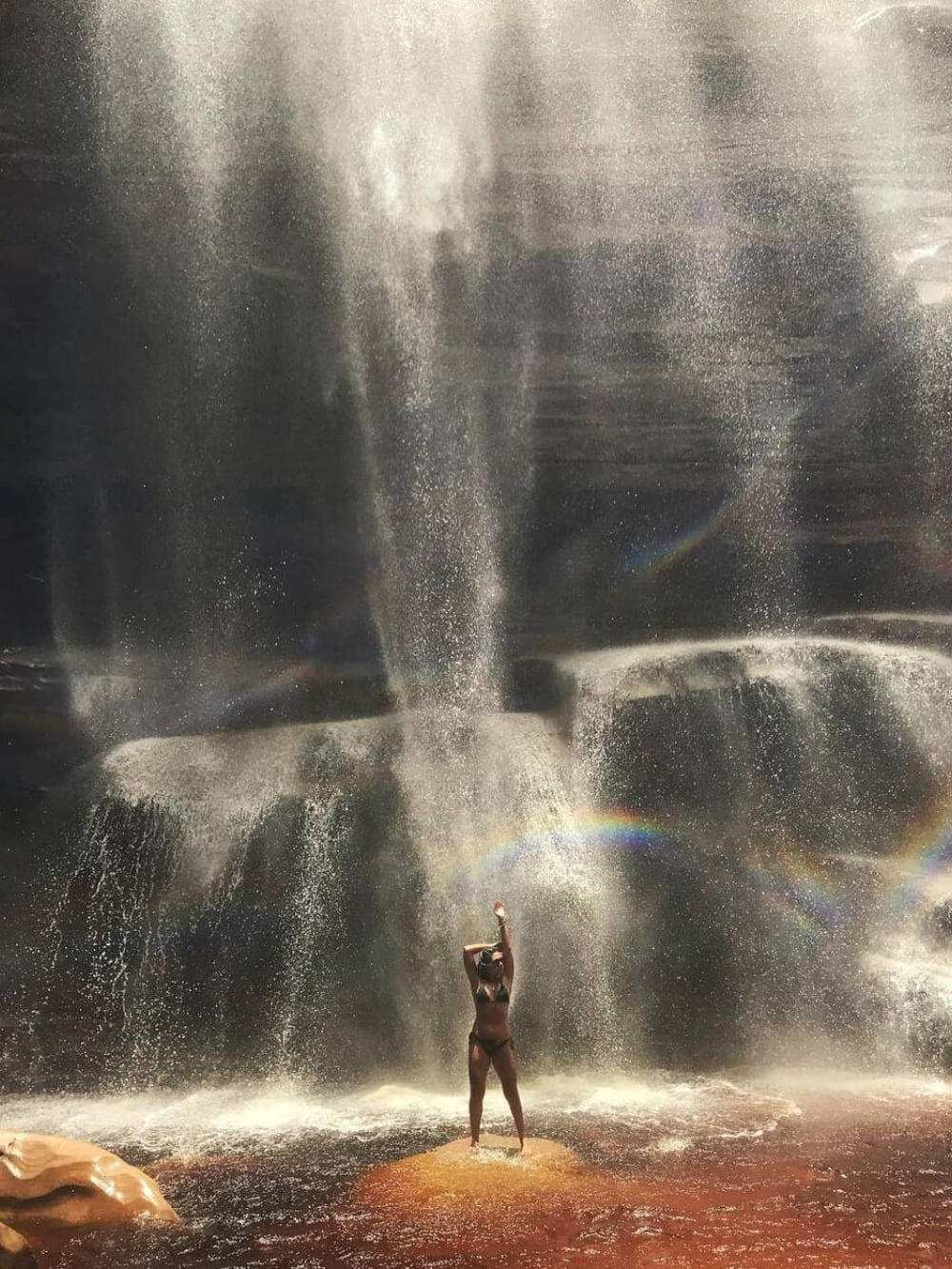
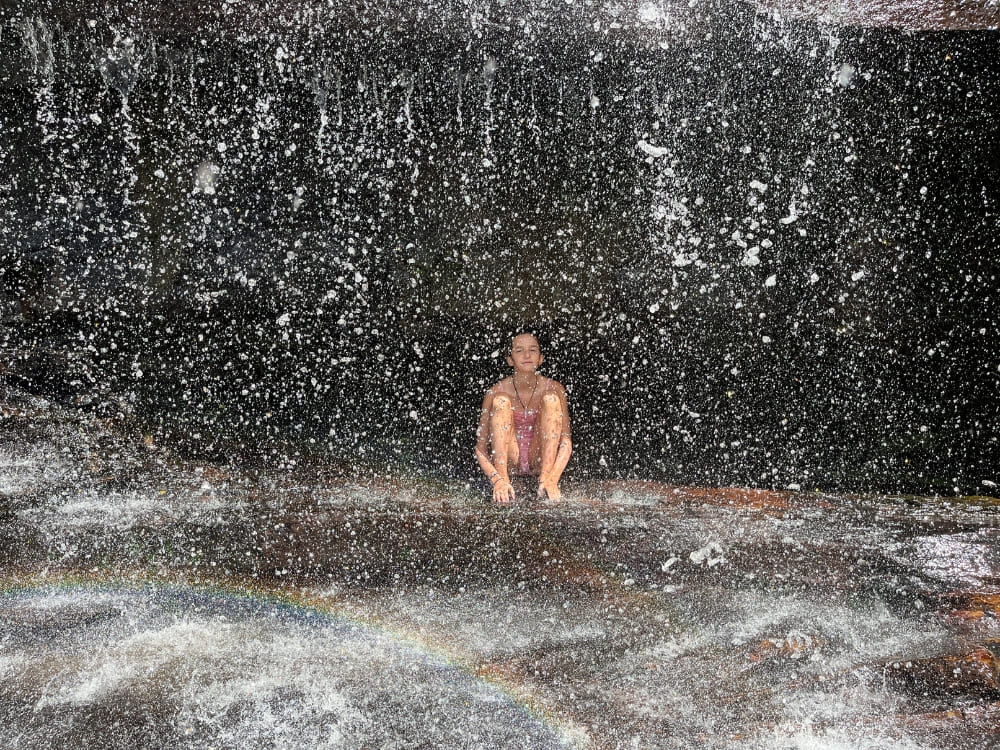
    A person sits against a dark rock wall, enjoying a refreshing shower under the cascading cold waters of a mountain-fed waterfall.
    .

    👉 Read more: When is the best time to visit Chapada Diamantina?

    Visit the Best Waterfall Hikes of Chapada Diamantina with PlanetaEXO

    At PlanetaEXO, an ecotourism platform specializing in Chapada Diamantina tours, our adventures go beyond sightseeing. By traveling with us, you support responsible tourism that protects nature and empowers local communities.

    Our local operators not only know the trails, but they also share stories, traditions, and knowledge to show you just how rich the national park actually is. Contact us now!

  • 10 Fascinating Facts About Jaguars and Why Brazil Is Their Stronghold

    10 Fascinating Facts About Jaguars and Why Brazil Is Their Stronghold

    A current look at the largest cat in the Americas: its bite, its range, its newly recorded meow, and why the Pantanal remains the best place on Earth to see one in the wild

    The jaguar (Panthera onca) is the largest cat in the Americas and the third largest in the world, after the tiger and the lion. With their gold-and-black fur, penetrating gaze, and dominant charm, this is surely one of the animals that inspires the most fascination wherever it goes, especially in the Pantanal, where their presence is greater.

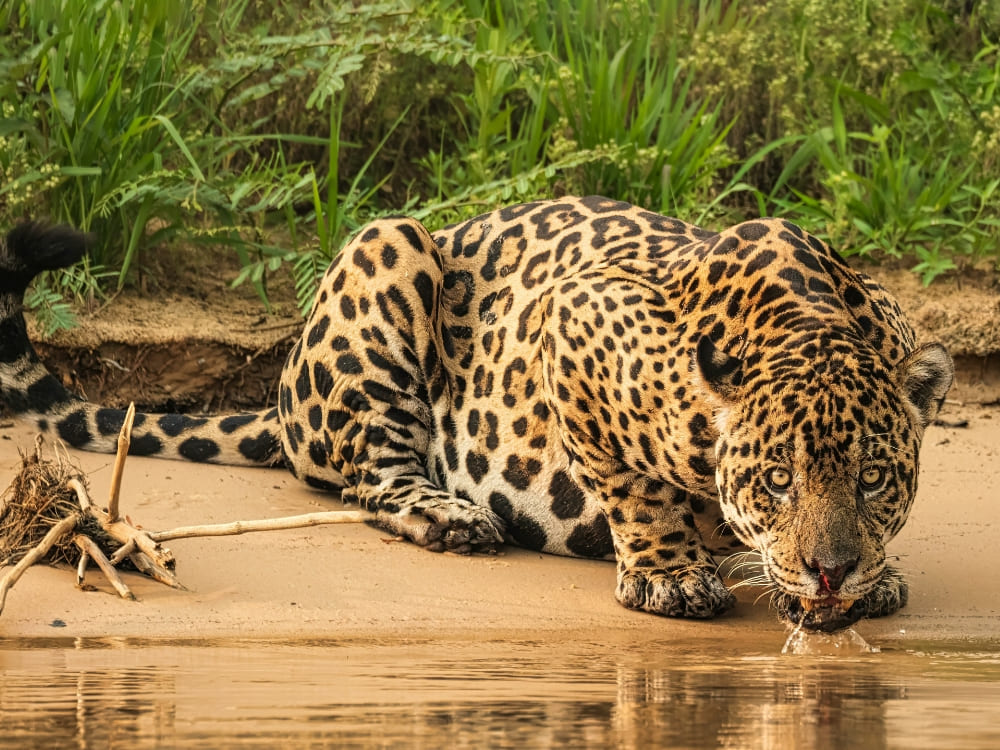
    A spotted jaguar crouches on a sandy riverbank to drink water in the wild.
    Photo: Joanne de Graaff

    In the wild, they live 12–15 years on average and up to 23 in captivity. They are solitary, mostly active at dawn, dusk, and night, and sit firmly at the top of their food chain as apex predators.

    PlanetaEXO, an ecotourism platform specializing in Pantanal tours, has put together 10 jaguar facts that will make you fall even harder for them—and make you crave seeing them up close. See below!

    1. Largest Cats in the Americas

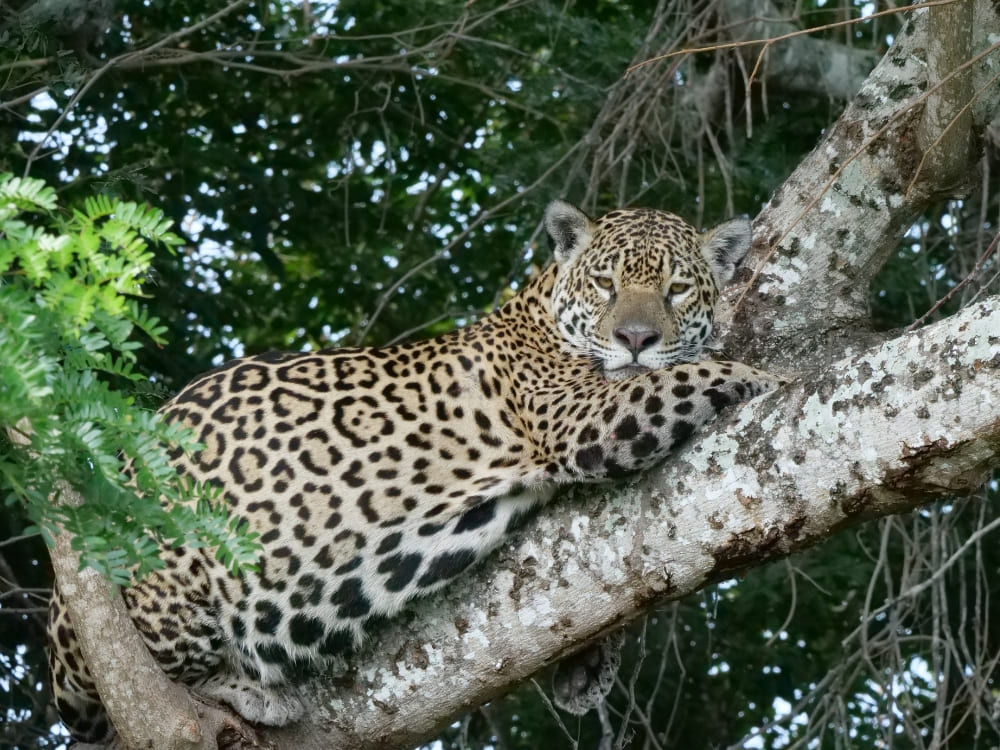
    Among the eight species of wild cats in the New World, the jaguar is the heaviest, strongest, and most muscular. Pantanal males are the upper end of the species—verified weights up to 158 kg, with shoulder height around 75 cm. For comparison, a male puma rarely exceeds 100 kg, and an ocelot tops out around 16 kg.

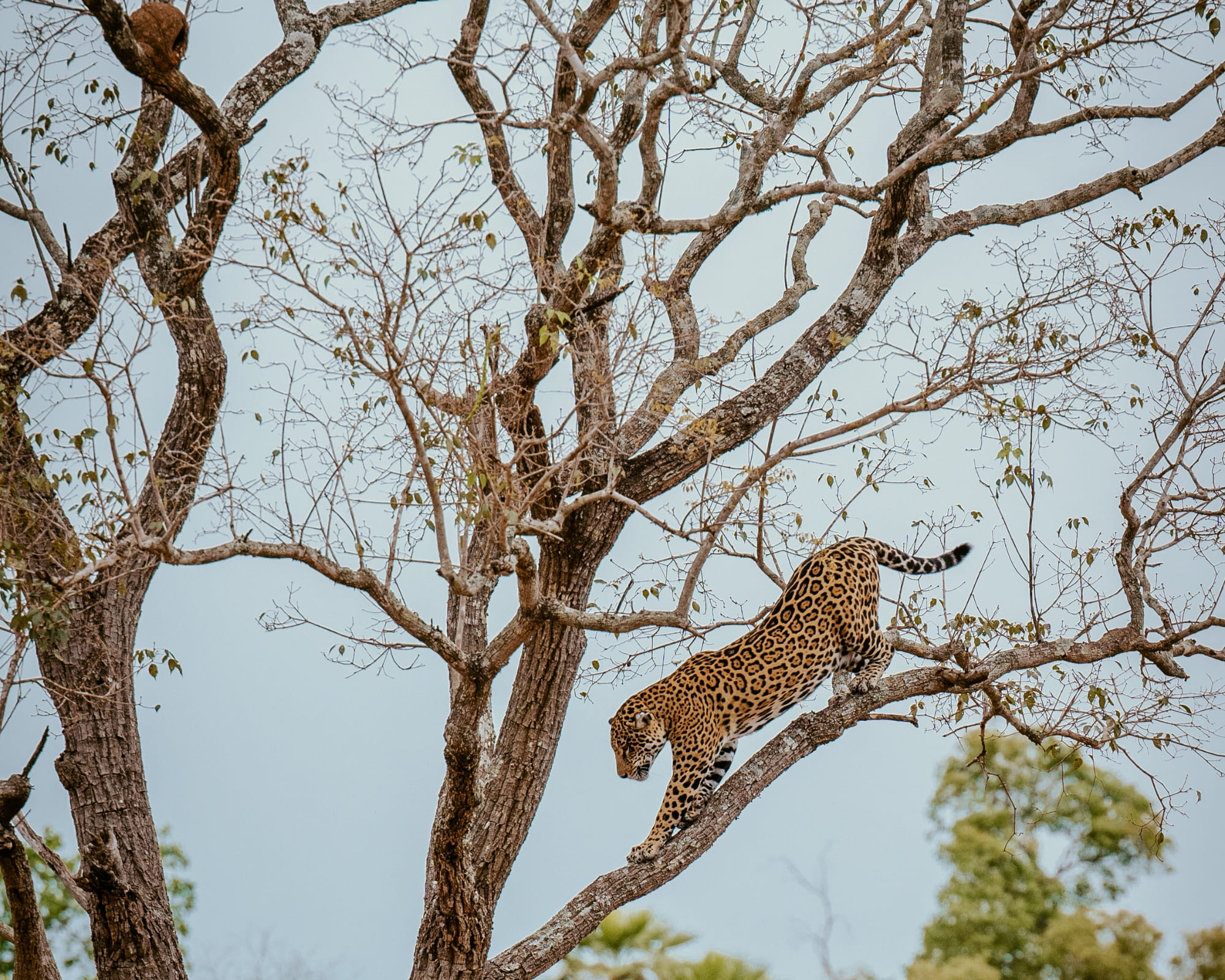
    A large jaguar rests its head on its paws while lying on a tree branch, displaying its unique rosette coat pattern.
    .

    Globally, only the tiger and the African lion outweigh them. Among living big cats, the jaguar is also the stockiest in build—short-limbed, deep-chested, and built for ambush rather than chase. That body plan is one of the reasons jaguars in Brazil can drag prey twice their weight up a tree or into the water.

    2. The Strongest Bite of Any Big Cat (Relative to Body Size)

    A 2012 study in The Anatomical Record compared bite mechanics across nine big cat species and found the jaguar produces the highest bite force in proportion to body size. Guinness World Records lists the jaguar’s bite force quotient at the top of any extant big cat.

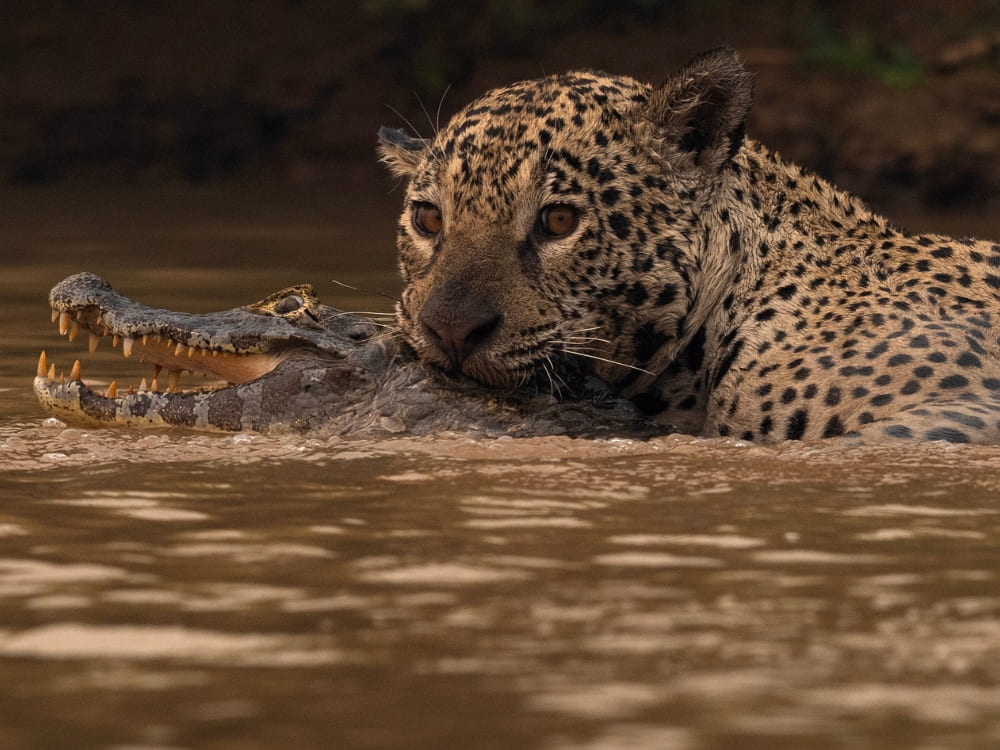
    A powerful Pantanal jaguar swims in muddy water while holding a hunted caiman in its strong jaws.
    .

    In raw numbers, a 100-kg jaguar bites with roughly 503 kg of pressure at the canines and around 705 kg at the carnassial teeth—about 1,500 PSI (pounds per square inch) total. That’s nearly double a tiger’s bite force despite the jaguar being significantly smaller.

    The function follows the form. Jaguars are one of the few predators that kill by piercing the skull of their prey directly, rather than suffocating it. The bite also goes through caiman armor and turtle shells—a niche almost no other big cat can fill.

    👉 Read more: When is the Best Time to Visit the Pantanal?

    3. Like a Fingerprint, Each Jaguar’s Rosettes are Unique

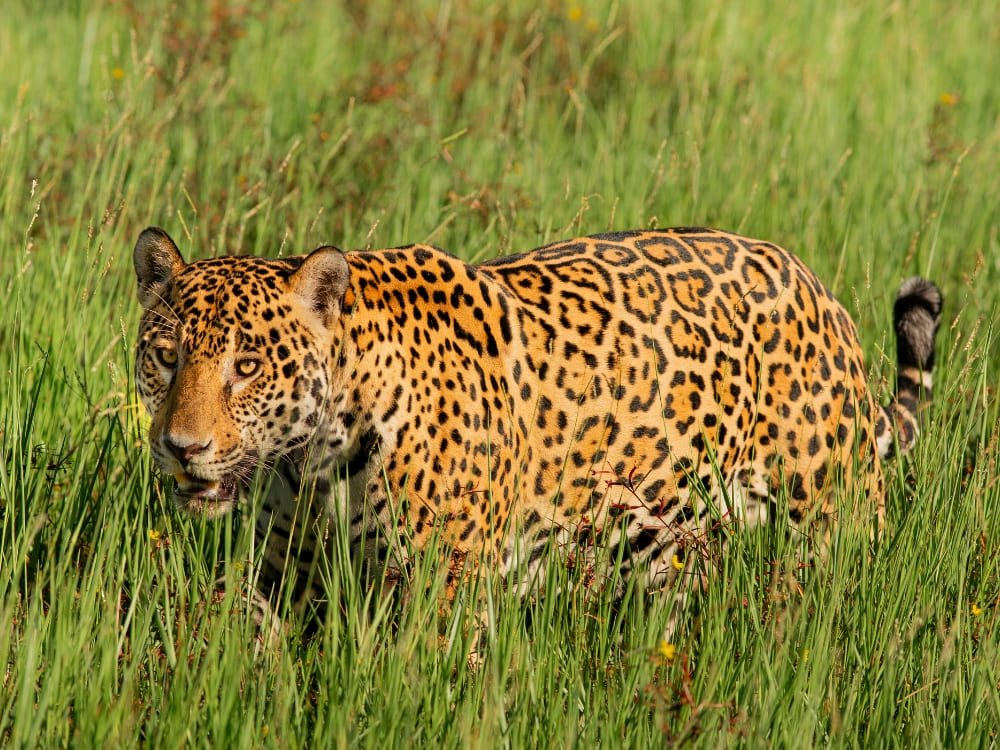
    Every jaguar carries a coat pattern that no other jaguar shares. The arrangement, size, and spacing of the rosettes (rose-shaped markings with small spots inside) vary from individual to individual across the entire body—flanks, shoulders, hips, and tail. Even melanistic jaguars carry these patterns, visible as “ghost rosettes” in bright light.

    A spotted jaguar with gold-and-black fur walks stealthily through tall green grass.
    Photo: Matias Ternes

    That uniqueness is how field biologists do their work. Camera-trap projects across the Amazon and Pantanal photograph each cat that walks past, then use pattern-recognition software (like HotSpotter) to match new images against catalogs of known animals. 

    Top-rank match accuracy on high-quality images runs 85–99%; on poor-quality images, it drops to 28–52%. The same method underpins most modern Pantanal jaguar density estimates.

    4. They Once Roamed From California to Argentina (and Lost Half of That Range)

    At the turn of the 20th century, jaguars occupied an estimated 19 million km² stretching from the southwestern United States through Central America and most of South America down to northern Argentina. Today, the IUCN reports the species occupies only 51% of that historic range—the rest is lost to hunting, ranching, and habitat conversion.

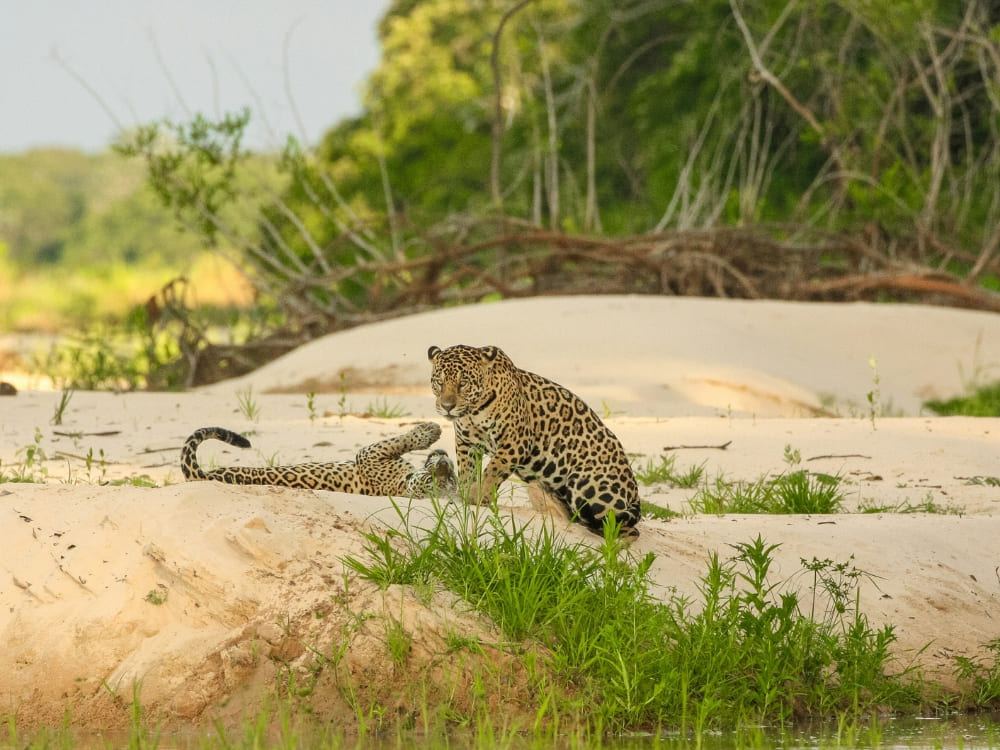
    Two jaguars sit together on a white sandbank surrounded by green vegetation during a Pantanal jaguar safari.
    Photo: David Waite

    In the U.S., verified records once placed jaguars in Southern California, Arizona, New Mexico, Texas, and Louisiana. The last confirmed Texas jaguar was shot in 1948 near Kingsville. In Arizona, the last documented female was killed in the White Mountains in 1963

    By the late 1960s, no breeding population remained inside U.S. borders. El Salvador lost its jaguars entirely. In northern Argentina, populations dropped to a fraction of their original numbers.

    Occasional male jaguars still cross from Mexico into Arizona and New Mexico—and camera traps have confirmed a handful since 2011—but no resident U.S. breeding population exists nowadays.

    👉 Read more: How to Get to the Pantanal, Brazil

    5. Today, Brazil Holds the World’s Largest Jaguar Populations

    The species’ current range covers 18 countries: Argentina, Belize, Bolivia, Brazil, Colombia, Costa Rica, Ecuador, French Guiana, Guatemala, Guyana, Honduras, Mexico, Nicaragua, Panama, Paraguay, Peru, Suriname, and Venezuela. Brazil sits at the center of it.

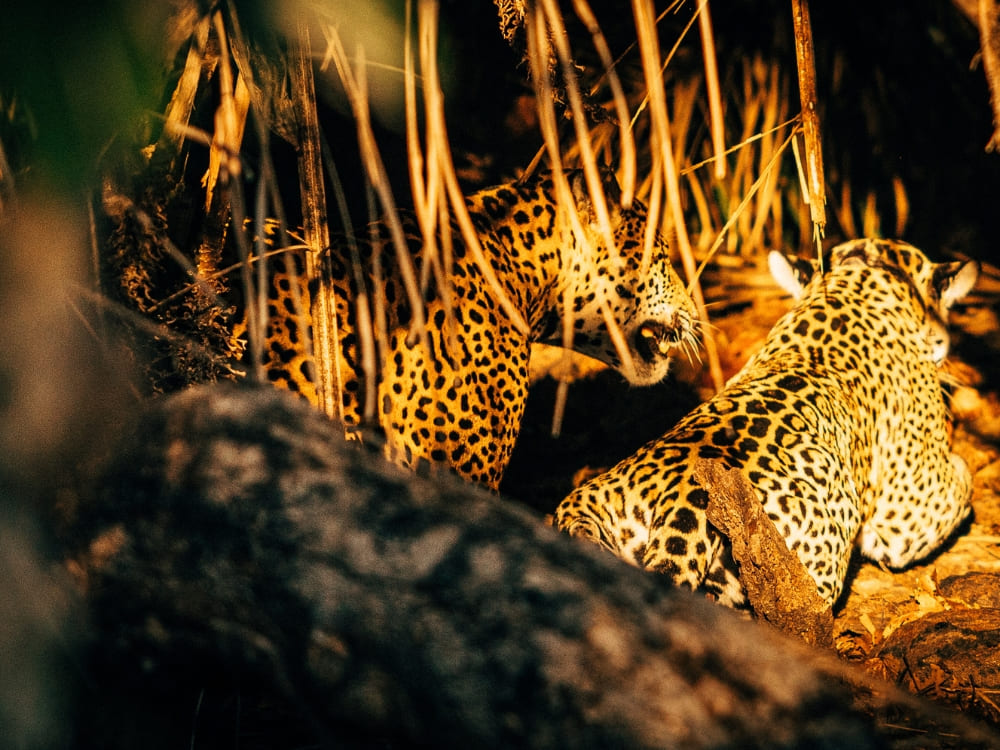
    Two jaguars sit together in the dark, illuminated through dry brush and tree branches during a night viewing.
    Photo: Felipe Castellari

    A study published in the scientific journal Biological Nature in 2025 revealed that an estimated population of 6,389 jaguars lives across 22 protected areas and indigenous lands in the Amazon.

    Even so, within Brazil, the Pantanal is the showcase. The world’s largest tropical wetland holds the densest jaguar population on record—up to 12.4 individuals per 100 km² in the northern Pantanal, with total estimates between 4,000 and 7,000 cats.

    That’s why nearly all serious jaguar watching happens in this area. The combination of open floodplain, abundant prey, and well-developed riverboat infrastructure makes sightings far more likely than in any other biome.

    👉 Read more: Where is the Best Place to See Jaguars in the Pantanal?

    6. Amazon Jaguars Are Smaller and Far Harder to See Than Pantanal Jaguars

    Although the Amazon hosts the largest jaguar population on the planet, the cats themselves are smaller than their Pantanal cousins. Central American jaguars can be roughly half the size of Pantanal animals, while Amazon jaguars sit in between.

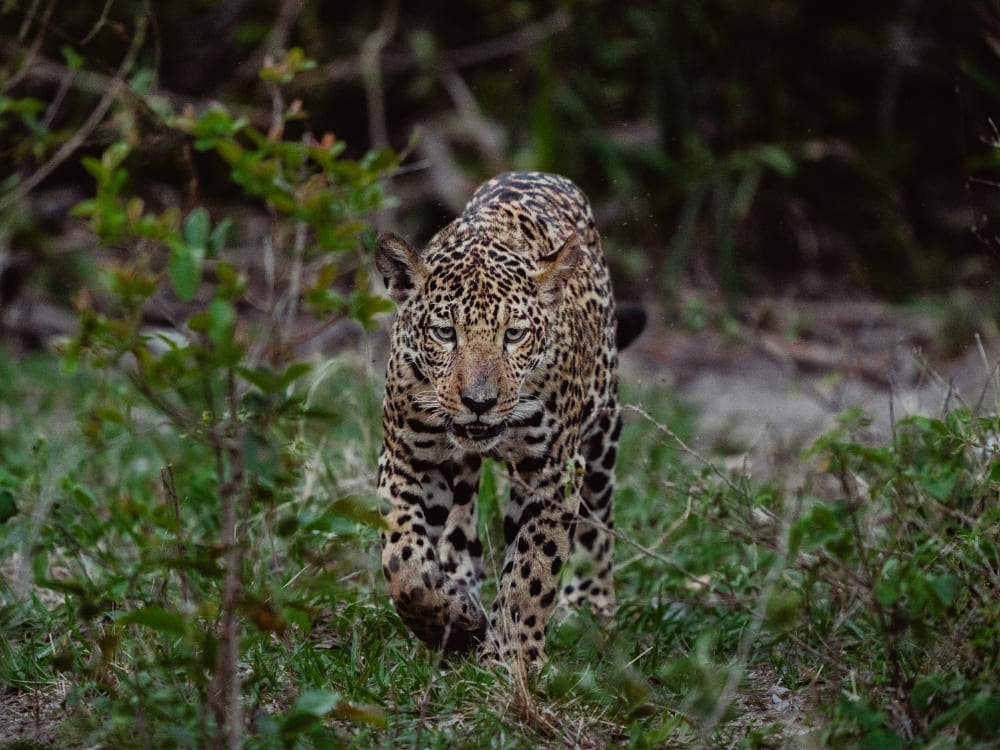
    A muscular jaguar looks directly forward while walking through dense green shrubs and foliage.
    Photo: Donal Boyd

    The likely reason is prey. Open habitats like the Pantanal hold higher densities of large ungulates (capybara, peccary, marsh deer, etc.), so cats grow bigger. Dense rainforest holds smaller prey and forces cats to range over much larger territories—female home ranges of about 15.3 km² in the Pantanal expand to 53.6 km² in the Amazon.

    That same density gap is why sightings are so different. Pantanal jaguars come to the riverbank to hunt, rest, and drink water in plain view. Amazon jaguars move through closed canopies, often near the ground, and most photographs of them are from camera traps.

    Even on multi-day trips, wildlife encounters in the Amazon are possible but should be considered uncommon.

    👉 Read more: Pantanal or the Amazon – Which One Should You Choose?

    7. Jaguars Actually Meow

    Until recently, jaguar vocalizations in the wild were generally divided into roars, growls, grunts, hisses, and the species’ signature “saw” call—a low, rasping sound that resembles wood being cut. Meowing was assumed to be a captive-only behavior.

    Then a research team led by the University of Salford published a paper in the journal Behaviour documenting three audio recordings of free-ranging female jaguars in southern Brazil, in the state of Paraná, producing high-pitched, short, repetitive meows—much closer to a domestic cat than to anything previously associated with the species.

    Two clips appear to show a mother searching for her cub; a third captures a one-year-old female possibly calling for her mother. Listen below:

    8. “Black Panthers” in the Americas Are Melanistic Jaguars (Same Species)

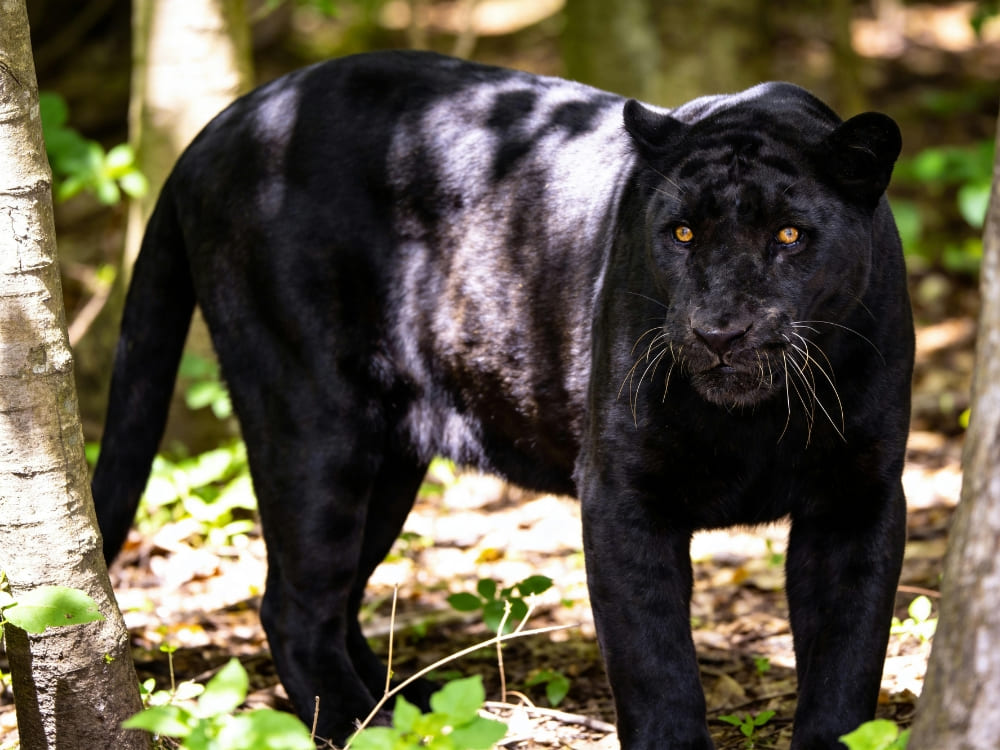
    In the Americas, every “black panther” you have ever seen photographed is a melanistic jaguar with an excess of dark pigment—the same species (Panthera onca). In Africa and Asia, the equivalent is a melanistic leopard.

    A melanistic jaguar with dark fur and visible ghost rosettes stands among trees in a forest environment.
    @yglmmes

    The genetics differ between the two species. In jaguars, melanism is caused by deletions in the MC1R gene and is conferred by a dominant allele; in leopards, the same trait is recessive. Either way, the underlying rosettes remain visible in strong light. Black jaguars can be born in the same litter as spotted siblings.

    Melanistic jaguars appear most often in dense tropical forests, which suggests the trait offers an adaptive advantage in low-light environments. Estimates put the share of melanistic jaguars in the global population somewhere around 10%.

    9. Jaguars are the Best Swimmers Among the Big Cats

    Most big cats avoid deep water, but jaguars are the exception. Broad paws, dense musculature, and a comfort with submersion make them the most aquatic of the world’s big cats.

    In September 2025, a study led by biologist Leandro Silveira and colleagues, posted as a preprint on bioRxiv, documented the longest jaguar swim ever recorded: roughly 2.48 km across an artificial lake at the Serra da Mesa hydroelectric reservoir, in the state of Goiás. According to the researchers, the distance was traveled to explore the territory, probably to find mates.

    The hunting side of that talent is even more interesting. In the Pantanal, recent footage from the Jaguar Identification Project has captured cats hunting underwater—a male, Ousado, diving beneath the surface to ambush a caiman from below. This behavior is uncommon to observe but consistent with what guides and boatmen on the Cuiabá River have reported for years.

    All of this reinforces a point made earlier: when the Pantanal floods, jaguars don’t retreat. They follow the prey into the water, where their bite, patience, and swimming all converge into something no other big cat can do.

    10. Mesoamerican Civilizations Worshipped Jaguars as Gods

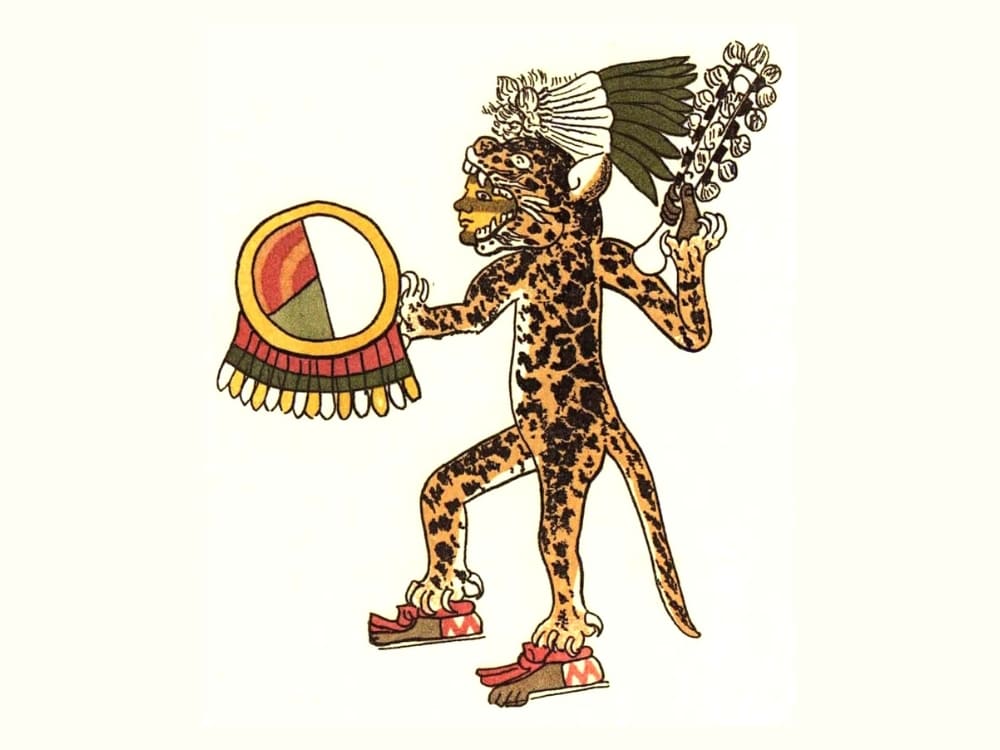
    Long before they were a conservation story, jaguars were a religious one. Across more than two thousand years of Mesoamerican history, every major civilization placed jaguars at the center of its cosmology.

    A historical Mesoamerican illustration depicting a figure dressed as a jaguar warrior with a shield and headdress.
    .

    Olmec: Produced the earliest known iconography, depicting hybrid “were-jaguar” figures with feline and human features.

    Maya: The religion included multiple jaguar deities; one of the Hero Twins, Xbalanque, has skin patched with jaguar fur and is associated with the underworld.

    Aztec: The god Tezcatlipoca’s animal counterpart was the jaguar, and in jaguar form, he became Tepeyollotl (Mountainheart), a deity of caves, earthquakes, and night.

    The symbolism wasn’t random. The jaguar’s strength, its night vision, its comfort in both trees and water, and its habit of resting in caves all mapped onto ideas about power, fertility, and the ability to move between worlds.

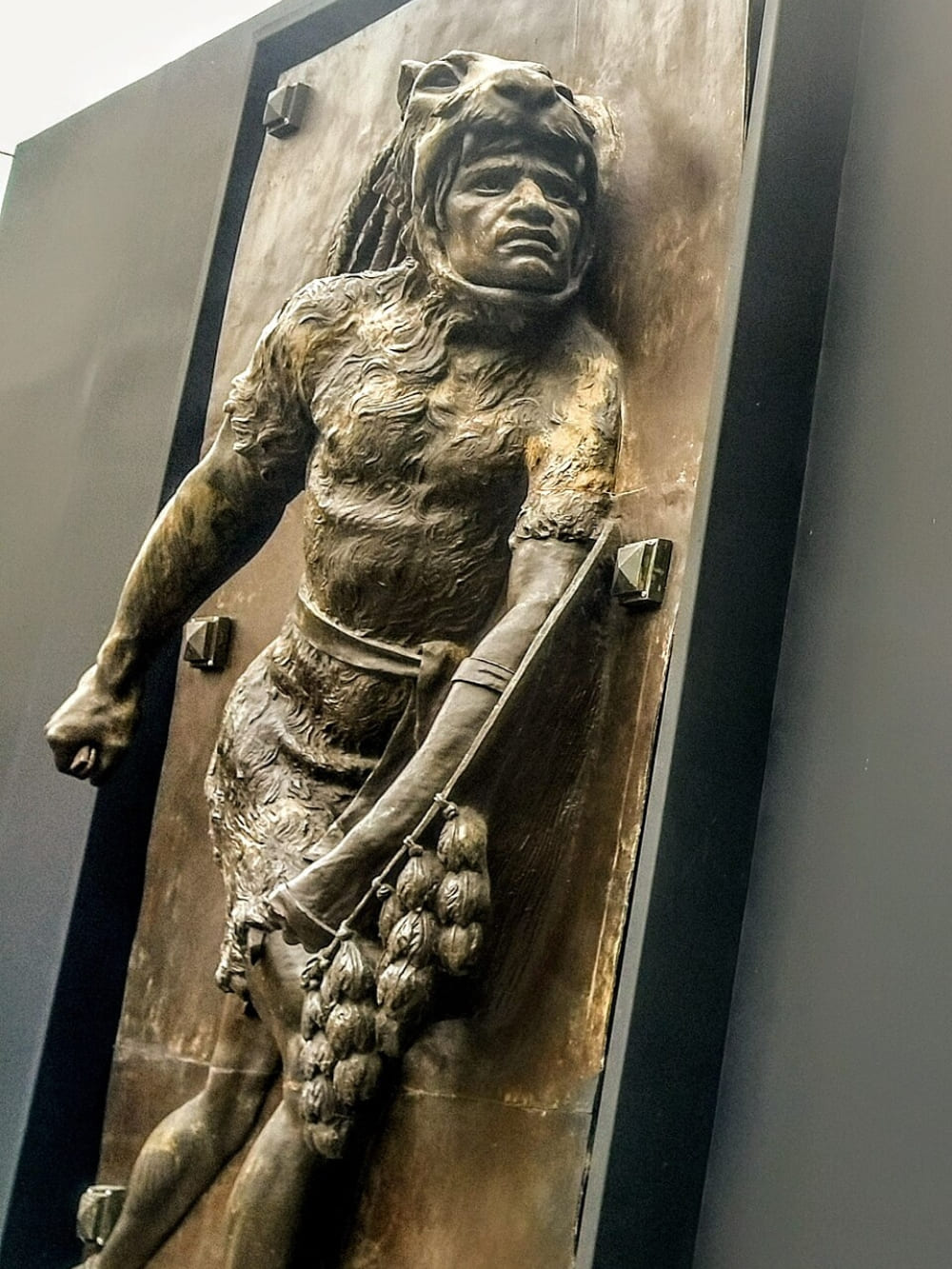
     A bronze relief by Jesús Fructuoso Contreras depicting Cacamatzin wearing a jaguar pelt as a warrior.
    Bronze relief by Jesús Fructuoso Contreras depicting Cacamatzin as a jaguar warrior

    Aztec rulers wore jaguar pelts; Maya kings sat on jaguar-skin thrones. The cat has held this status in human imagination almost as long as it has held the top of the food chain.

    Bonus: How and where to see jaguars in the wild

    If after reading these facts about jaguars you want to look one in the eye, the answer is short: join a Pantanal safari in the dry season. Between roughly June and October, water recedes, prey concentrates along the rivers, and jaguar sightings reach their statistical peak, especially in Porto Jofre, Poconé, in the north.

    It is also possible to spot them in the Southern Pantanal, but only on the grounds of Caiman, an ecolodge that works with the Onçafari Project to incorporate ecotourism into animal conservation.

    PlanetaEXO offers tours that feature Pantanal jaguar safaris. Check them out below!

    TOUR HIGHLIGHTS DURATION STARTING PRICE*
    Pantanal Jaguar Budget Safari Budget-friendly, wildlife safari focused on jaguars, boat tours, hiking. 4 days R$ 9.700

    US$ 1,900

    € 1.640

    Pantanal Luxury Safari at Caiman The only place in the Southern Pantanal where jaguars are spotted, luxury accommodation, hiking, canoeing. 4 days R$ 16.700

    US$ 3,285

    € 2.825

    Pantanal Jaguar Safari in Porto Jofre, Cuiabá Jaguar-focused boat safaris, sighting of other species (capybaras, giant anteaters, native birds, etc.), hiking. 4 days R$ 13.785

    US$ 2,710

    € 2.330

    Pantanal Jaguar Photography Tour Boat safaris for jaguar watching, local guides specializing in wildlife photography, hiking. 6 days R$ 19.280

    US$ 3,790

    € 3.260

    *Per person, based on double occupancy in group departures. Prices may vary depending on season and availability. Exchange rate as of May 20, 2026; subject to change.

    Spot jaguars in the wild with PlanetaEXO

    Now that you know so many incredible facts about jaguars, it’s time to see them with your own eyes! PlanetaEXO, an ecotourism platform specializing in Pantanal tours, can help with the planning of your wildlife trip to Brazil.

    We work with the best local operators to ensure safe, fulfilling, and responsible travel to spot jaguars and other animals in the wild. With tailored itineraries, comfortable accommodations, and transportation support, you’ll experience the vacation of your dreams. Contact us now!

  • Is Manaus Safe? A Guide for Travelers Heading to the Amazon, Brazil

    Is Manaus Safe? A Guide for Travelers Heading to the Amazon, Brazil

    Discover the best practices for a safe and smooth passage through Manaus, the gateway to travel in the Amazon Rainforest

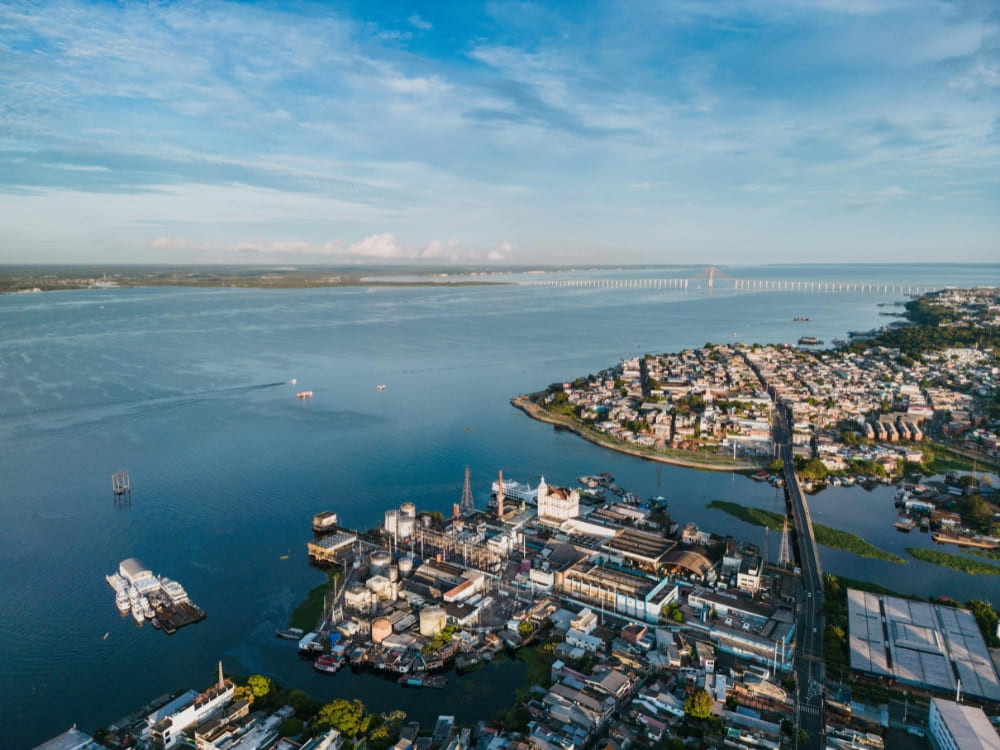
    Minutes before landing at Eduardo Gomes International Airport in Manaus, Amazonas, travelers see from their window seat a contrasting view: two of the largest tributaries of the Amazon River forming the fascinating Meeting of the Waters—a stretch where the dark and muddy waters of the Negro and Solimões rivers run side by side without mixing—and a city of 2.3 million people built on a plateau at the edge of the world’s largest rainforest.

    Aerial view of Manaus, Amazonas, showing the city's port, residential neighborhoods, and the expansive river with a long bridge in the distance.
    Photo: K

    Most travelers don’t stay long. The capital is a layover with a purpose—one or two nights between the airplane and the riverboat or jungle lodge that brought them to Brazil in the first place. Headed to the Amazon Rainforest, many tourists ask a simple question: is Manaus safe?

    The answer is yes, but there are a few elements to consider. PlanetaEXO, an ecotourism platform specializing in Amazon Rainforest tours in Brazil, explains it all right below.

    Manaus is safe for tourists, but it’s important to be careful

    Manaus is a major Brazilian city that requires the same awareness any large urban destination demands. Tens of thousands of foreign travelers pass through every year, and the overwhelming majority leave without incident because they made the right small decisions.

    The Teatro Amazonas opera house featuring a colorful dome and pink facade in the Centro Histórico of Manaus.
    Photo: Lucia Barreiros Silva

    The capital of Amazonas is a working tropical city with neighborhoods that are perfectly fine and a few you have no reason to enter. If you stay where tourists stay, move how locals move, and avoid the obvious mistakes, the city is calm, sweltering, and surprisingly easy.

    Where to stay (and where to walk): a neighborhood map

    For travelers heading to the Amazon, only a handful of neighborhoods matter:

    • Adrianópolis: Manaus’s upscale residential and shopping zone, full of hotels and the Amazonas Shopping mall. Quiet, well-policed, low-risk day or night.
    • Ponta Negra: riverside neighborhood with hotels, restaurants, and a busy waterfront promenade in the evenings. Police presence is heavy. Probably the most pleasant base for a one- or two-night stay.
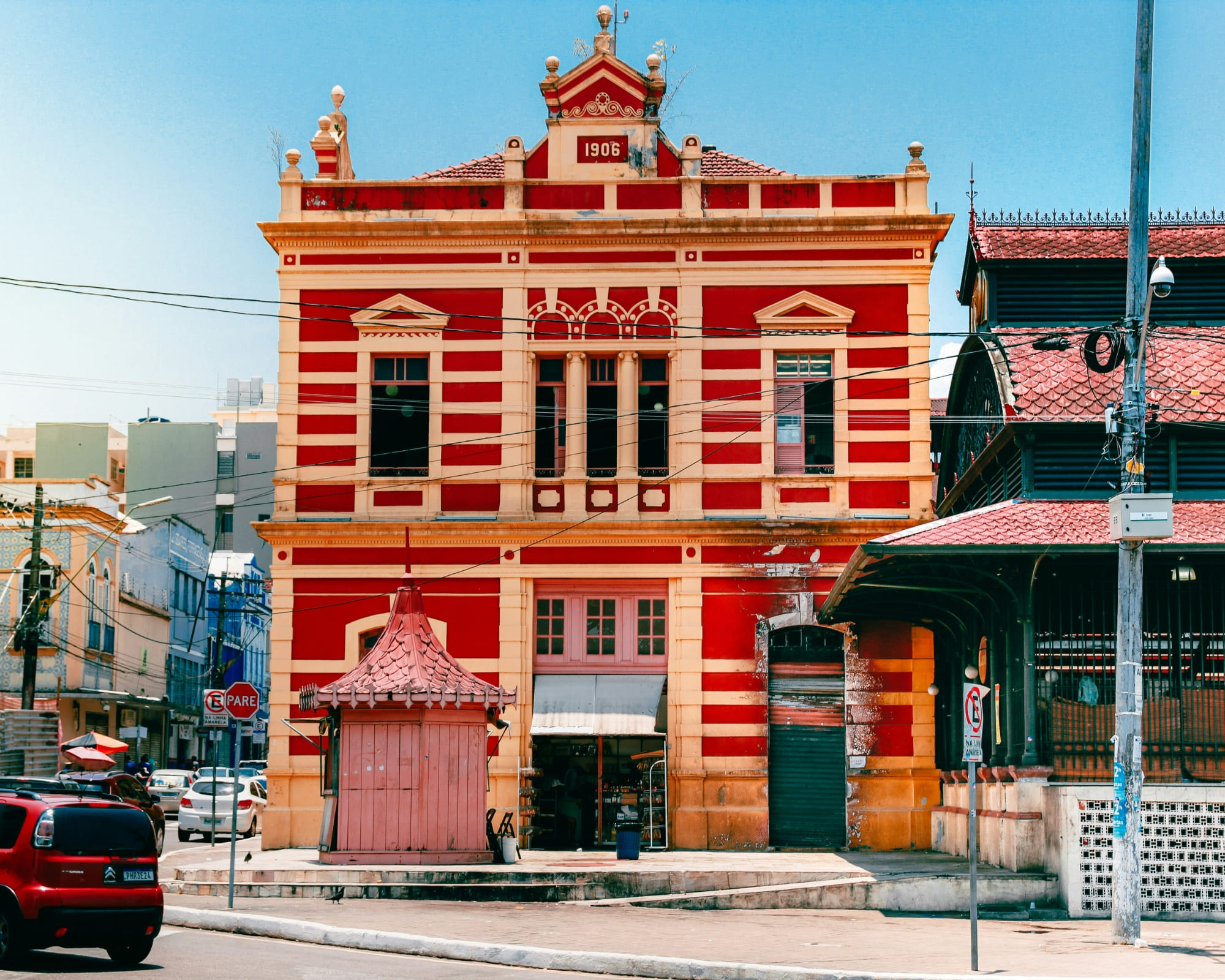
    • Centro Histórico: the historic center, home to the famous Teatro Amazonas opera house and the Mercado Adolpho Lisboa. Worth a visit during the day. Empties out and gets edgier after dark; try not to linger past 8 PM.
    • Vieiralves: a small, lively grid of restaurants and bars, popular with locals and expats. Safe in the evening.
    • Dom Pedro: quieter residential area, decent for a low-key stay.
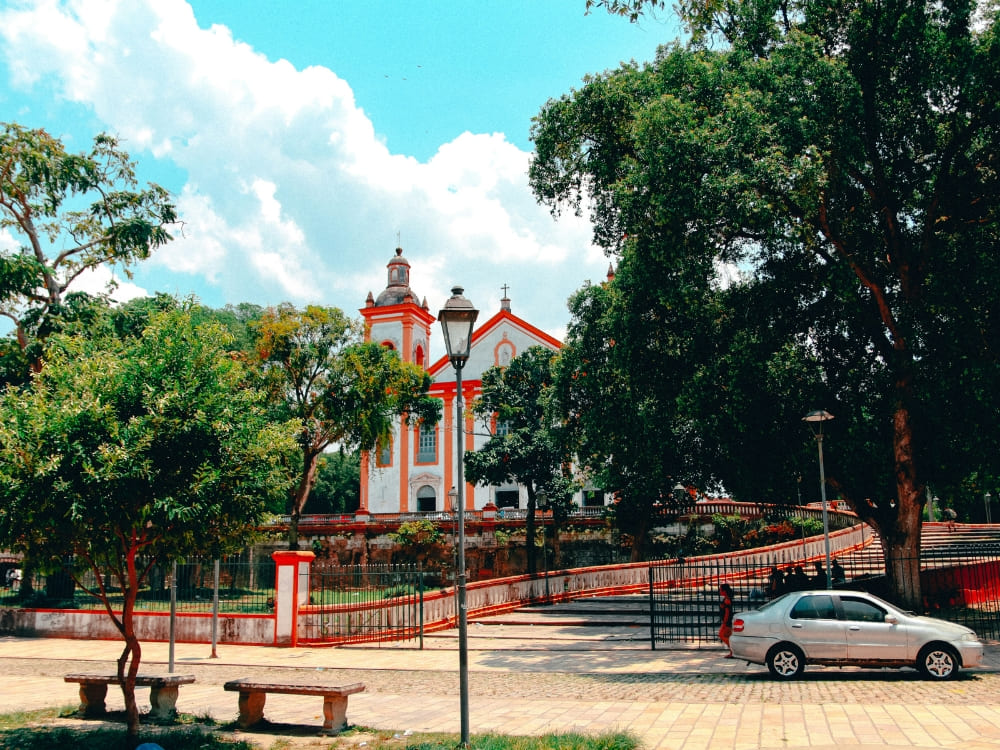
    White and orange historic church with a curved ramp surrounded by green trees in a quiet Manaus city plaza.
    Photo: soybreno

    Areas to keep off your map: Compensa, São José Operário, the Eastern Zone outside the tourist corridor, and any of the city’s favelas. There is no tourist reason to go to these places, and Google Maps will not warn you. If your driver suggests “a shortcut” through any of them, decline.

    👉 Read more: How to get to the Amazon Rainforest in Brazil?

    The 5 most common scams targeting Amazon-bound tourists

    Overall, Manaus is safe to visit, but as the city’s economy is mostly built around the Amazon, so are the scams. They’re usually aimed at people in transit who are tired, jet-lagged, and pre-committed to a jungle experience.

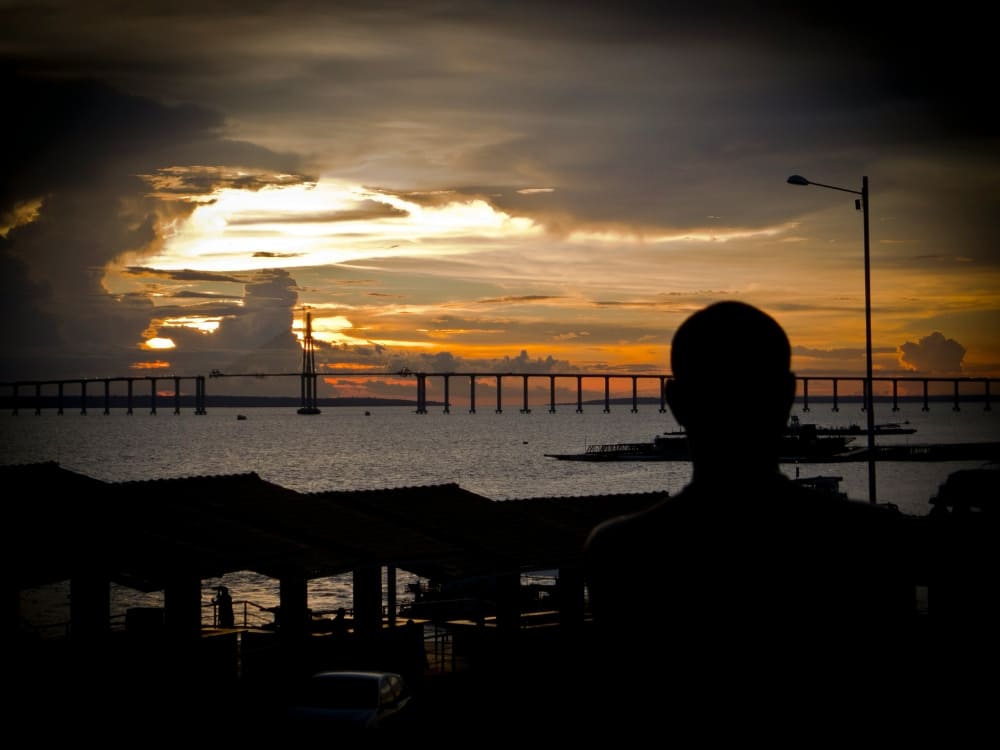
    Silhouette of a traveler watching the sunset over the Amazon River from Manaus, the gateway to the rainforest.
    Photo: Gustavo Nacht

    The arrivals-hall “tour guide”

    A friendly English-speaker at the airport offers a discounted Amazon tour, sometimes with a printed flyer. The “lodge” is real or imaginary. Either way, you pay cash up front, and the experience is promised to be wildly different from what was sold. Don’t fall for it and always pre-book your tour with a registered operator before you fly.

    Unlicensed taxis from the airport

    Drivers approach you inside the terminal offering “official” rides at three times the meter rate. The licensed taxi rank is outside, marked, and uses fixed rates by zone. Avoid any problems by using Uber or 99 (Brazil’s local ride app).

    Currency exchange “favor”

    Someone in the historic center offers to exchange dollars at a great rate. Half the bills are counterfeit. Say no and only use ATMs at branded banks (Bradesco, Banco do Brasil, Itaú).

    Mercado Adolpho Lisboa pickpocket

    Pickpocketing is universal. From Paris and Milan to Manaus, this is a problem for tourists. The Mercado Adolpho Lisboa, a beautiful 19th-century covered market, is one of the favorite spots for pickpockets in the capital of Amazonas.

    Pay attention while walking, leave your most valuable belongings in the hotel safe, and keep your wallet, cell phone, and documents in crossbody bags or fanny packs.

    Phantom riverboat tickets

    Informal touts at the Manaus port sell tickets to slow boats heading up-river. Some are legitimate; some take your money and disappear. Buy from the official ticket office or through your tour operator.

    Getting around: Uber, 99, taxis, and the airport-to-hotel reality

    The airport (Eduardo Gomes International, MAO) sits about 14 km north of the historic center. Three reliable ways to move from there:

    • Uber or 99: both work in Manaus and at the airport. Estimated cost from MAO to Ponta Negra: R$50–80 (US$10–16). The app shows the driver’s plate, photo, and route. Verify before getting in.
    • Licensed airport taxis: fixed-rate, paid at a kiosk inside the terminal before you exit. Slightly more expensive than Uber but transparent.
    • Pre-arranged transfer: most reputable Amazon tour operators include or offer airport pickup. The driver waits in arrivals with your name on a sign. Confirm name, phone, and vehicle plate by message before flying.

    Inside the city, Uber and 99 are dramatically safer and cheaper than flagging cabs on the street. Use them at night without hesitation.

    Walking is fine in Adrianópolis and Ponta Negra during the day. After 9 PM, use a ride-share for any distance more than a couple of blocks. 

    Health: yellow fever, mosquitoes, and other important information

    If you’re wondering if Manaus is safe to visit, you should also think about your well-being. Considering its location in the equatorial Amazon basin, some health aspects are inevitable.

    Vaccines

    Unlike other South American countries, Brazil doesn’t require foreign travelers to be vaccinated for yellow fever, but it is highly advised—especially if you’re traveling to the Amazon or have plans to visit the rainforest in Bolivia, Colombia, Ecuador, or Peru. Get it at least 10 days before travel. It’s a single dose for lifetime protection!

    Just for safety, arriving in Manaus with a complete vaccination schedule for diphtheria, tetanus, polio, rubella, measles, and hepatitis A/B is recommended.

    Mosquitoes

    The Aedes aegypti mosquito carries dengue, Zika, and chikungunya in Manaus year-round. The malaria-carrying Anopheles is more relevant once you’re in the deep forest.

    Use a repellent with 30% DEET or 20% picaridin, wear long sleeves at dawn and dusk, keep your windows closed at night, and sleep under mosquito nets.

    Be careful with the heat

    The heat itself is a safety issue. Manaus runs 30–34°C (86–93°F) with 80%+ humidity. Heatstroke and dehydration can cause more trouble than the possibility of crime. 

    Stay hydrated, use sunscreen (SPF 30+), cover your head with caps and hats, wear light clothing, and don’t spend too much time in the sun.

    👉 Read more: When is the best time to visit the Amazon Rainforest in Brazil

    Picking a legitimate Amazon tour operator

    Safety in Manaus increases when you travel with competent, reliable professionals. While planning your trip to the Amazon, choosing a good tour operator is the key to a successful vacation.

    Red flags to walk away from

    • The “operator” is an individual, not a registered company. Ask for a CNPJ (Brazilian company tax ID).
    • They want full payment in cash, in advance, with no formal receipt.
    • They can’t show you a current operating license from Cadastur (Brazil’s Ministry of Tourism registration).
    • The contact is a personal WhatsApp number, and there’s no real website.
    • The price is dramatically below market—Amazon tours in Brazil are not exactly cheap. Three-day all-inclusive lodge experiences from Manaus typically run US$400–1,200 per person depending on the standard.
    • They get aggressive or start to sound confused when you ask follow-up questions.

    Green flags

    • Reviews on TrustPilot, TripAdvisor and Google going back several years.
    • Listed in Cadastur. Easy to verify.
    • Insurance details disclosed up-front.
    • Clear written itinerary with named accommodations.
    • Booking handled by a real travel platform with refund policies.

    This is the layer where PlanetaEXO operates. We’re a registered ecotourism operator running curated multi-day experiences in the Brazilian Amazon. If you’re heading to the rainforest and don’t yet have your tour locked in, we’ll save you the airport-arrivals-hall scramble.

    The bottom line: as long as you know what to do, Manaus is safe and totally enjoyable

    Every place has problems, but they don’t necessarily overcome the good parts. Manaus is the main gateway to the rainforest, serving as a temporary base for people staying at a jungle lodge or joining an Amazon river cruise.

    The city is safer and calmer than its reputation suggests (which can be said for Brazil as a whole), warmer than you might anticipate, and entirely manageable with two days of planning before you fly.

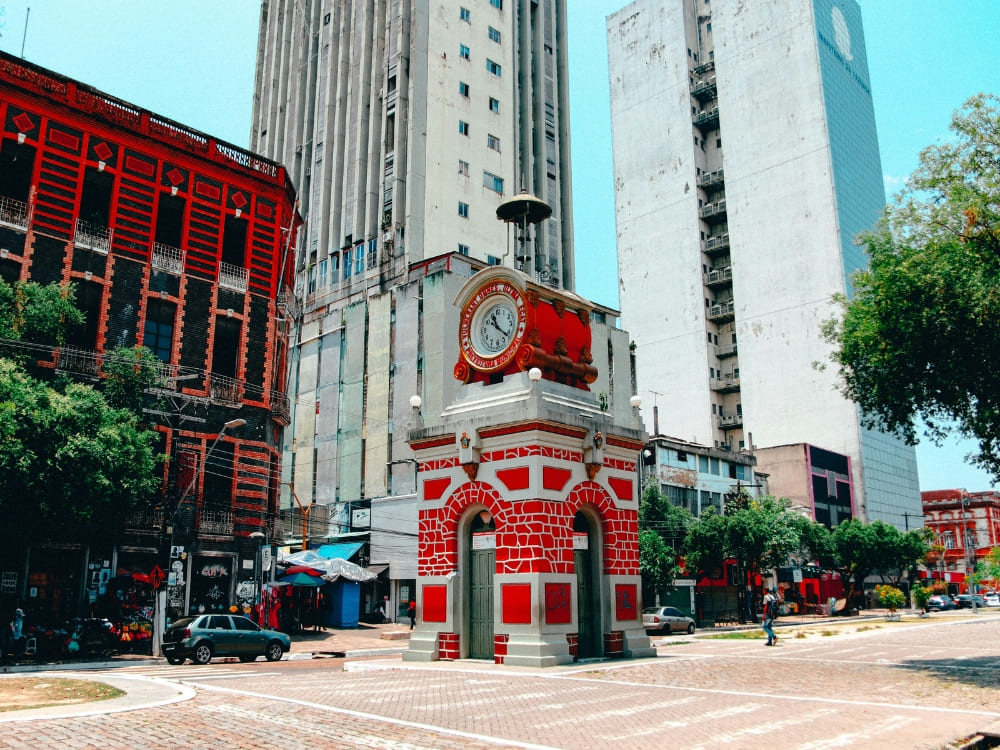
    Historic red and stone clock tower standing in a city square against a backdrop of modern tall buildings in Manaus.
    Photo: soybreno

    If you stay in certain neighborhoods, use the right transport, watch out for pickpockets, and book your tours beforehand with reliable professionals, Manaus will treat you just right. In fact, the capital of Amazonas has much to offer: rich history, delicious food, gorgeous landscapes, and incredibly friendly people.

    Still have questions? Check the answers below!

    Is Manaus safe to visit at night?

    Inside the well-policed tourist neighborhoods (Ponta Negra, Adrianópolis, and Vieiralves), Manaus is reasonably safe in the evening. The historic center empties after 8 PM and is best avoided after dark. Use Uber or 99 for any nighttime movement.

    Is Uber safe in Manaus at night?

    Yes. Uber and 99 are the recommended way to move around Manaus after dark, including from the airport. Both apps verify drivers and track rides.

    Is Manaus dangerous for solo female travelers?

    Manaus is no more dangerous for solo women than other large Brazilian cities. The same precautions apply: stay in tourist neighborhoods, use ride-sharing at night, dress in lightweight casual clothing, and avoid drawing attention with expensive jewelry or visible cameras.

    What should I avoid in Manaus?

    Avoid Compensa, São José Operário, and any favela, as well as accepting tour offers from people in the airport arrivals hall, exchanging currency on the street, and carrying your passport when you don’t need it (use the hotel safe).

    Is the Manaus airport safe?

    Yes, Eduardo Gomes Airport is well-secured. The risk window is the meet-and-greet area outside, where unlicensed taxi drivers and informal “guides” approach arrivals. Walk past them and use the official taxi rank or your booked transfer.

    How safe is the Amazon rainforest itself?

    The rainforest is statistically safer than the city. Once you’re with a registered operator at a licensed lodge, you’re in a controlled environment. The risks shift — they’re now about staying hydrated, listening to your guide, and respecting wildlife at a distance.

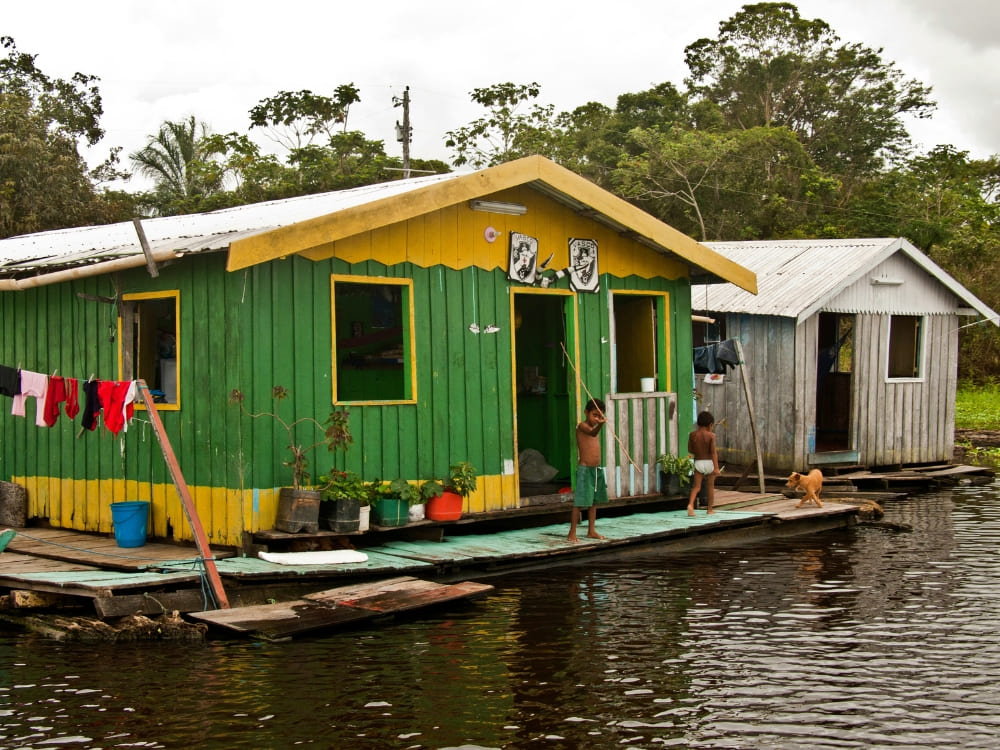
    Children standing outside a vibrant green and yellow floating house on the waters of the Amazon River.
    Photo: Gustavo Nacht

    Traveling to the Amazon from Manaus with PlanetaEXO

    PlanetaEXO, an ecotourism platform specializing in Amazon Rainforest tours in Brazil, works every day to make your trip easier, fulfilling, and sustainable.

    From Manaus to a jungle lodge or a river cruise, we take care of all the details for your vacation, including transfer options and tailor-made itineraries. Contact us now!

  • The Amazon River, Brazil: A Guide to the World’s Greatest River

    The Amazon River, Brazil: A Guide to the World’s Greatest River

    Understand the importance of the world’s largest river regarding ecological balance, cultural preservation, and ecotourism

    Brazil’s Amazon River is a continent-spanning hydrological system that determines weather patterns as far away as Texas and the Sahara. Its sheer size and great importance to the ecosystem make it a key element to the Earth’s balance.

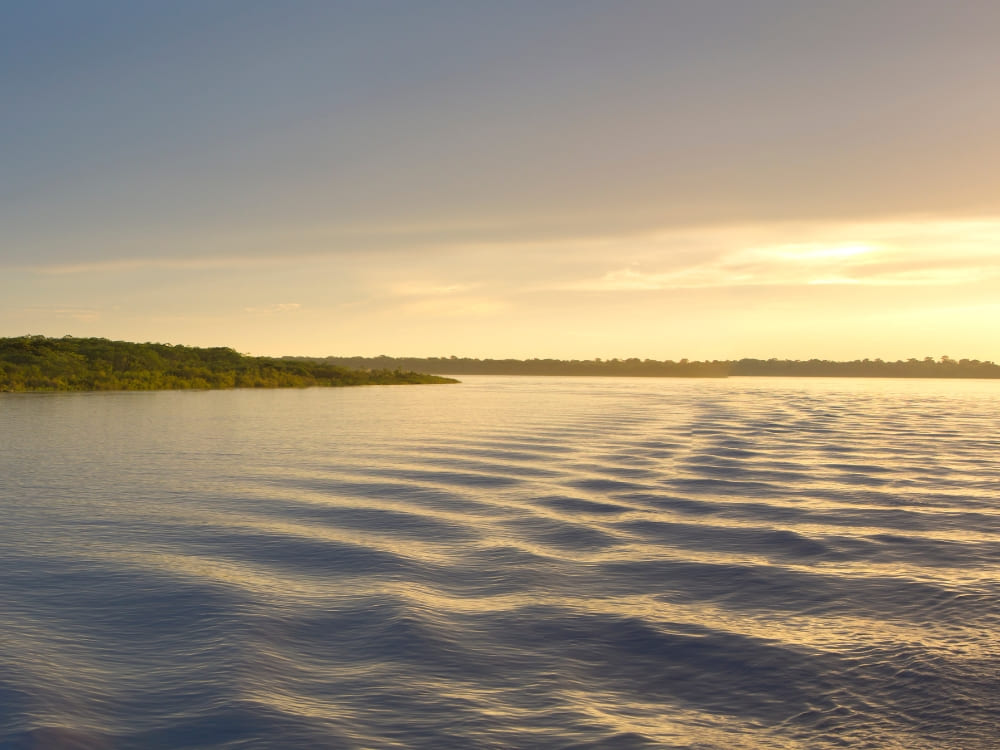
    Photo taken from inside the Amazon River with the sun shining on the water.

    As a central point of the Amazon Rainforest, the river directly affects the economy and the local culture. Millions of people depend on its waters to make a living and to preserve a rich heritage of traditions belonging to groups who have lived in the region for hundreds of years.

    PlanetaEXO, an ecotourism platform specializing in Amazon Rainforest tours in Brazil, has been running trips on the Amazon River Basin for years. To help you understand more about it, we’ve created a guide covering aspects of its geography, seasons, wildlife, and much more. Check it out below!

    The Amazon River by the numbers

    For a long time, the Nile River in northeastern Africa was considered the longest river in the world. However, in July 2008, a study published by Brazil’s National Institute for Space Research (INPE) found that the Amazon River is the longest waterway on the planet.

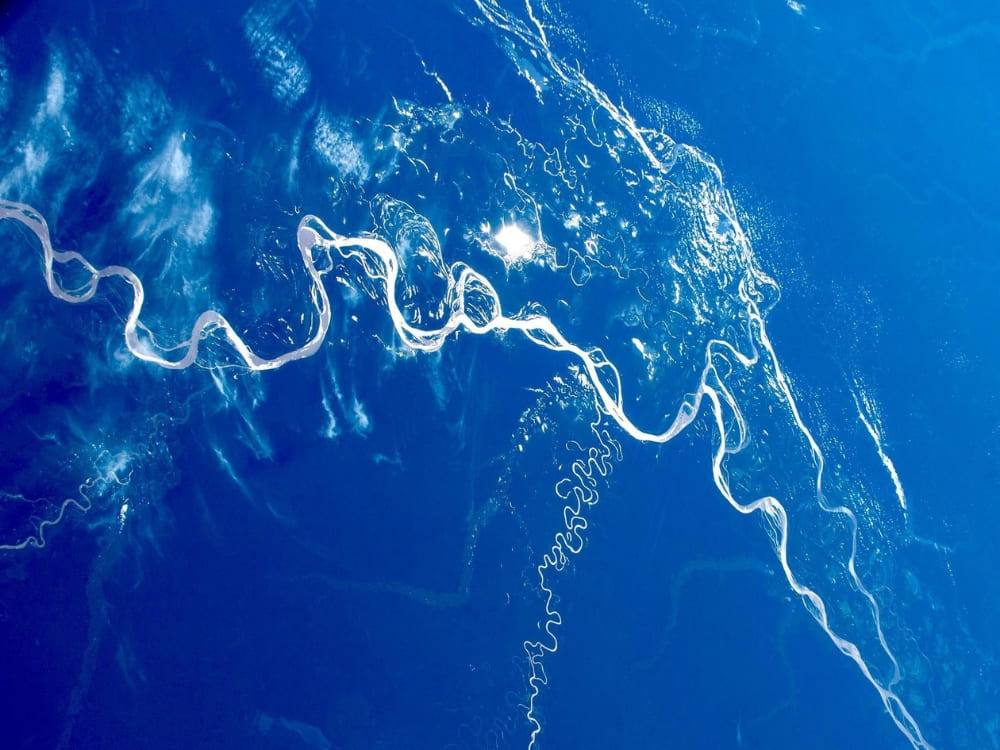
    Satellite view from space showing the extensive winding path of the Amazon River.
    Photo: Oleg Artemiev

    With the help of satellite imagery and remote geoprocessing technology from the Brazilian Space Program, INPE concluded that the Amazon is 6,992.06 km long, while the Nile extends itself for 6,852.15 km—a difference of 140 km.

    Here are other impressive numbers:

    • Discharge: around 209,000 cubic meters per second—roughly one-fifth of all the fresh water flowing into the world’s oceans. The next-biggest river (the Congo) discharges about a quarter as much.
    • Width: varies from 1.6 km in the dry season to over 40 km in some flooded sections during peak rains. Average width through the Brazilian stretch sits around 8–12 km.
    • Depth: averages around 50 meters and reaches 100 meters in places—deep enough for ocean-going ships to navigate to Manaus, 1,500 km inland.
    • Tributaries: more than 1,100, of which seventeen are themselves over 1,500 km long. The Rio Negro, which meets the main channel at Manaus, is the world’s largest blackwater river.
    • Basin: The Amazon River Basin covers 7 million km² across nine countries—approximately 40% of South America. Brazil holds about 60% of it.

    👉 Read more: 15 Facts About the Amazon Rainforest in Brazil

    Where the Amazon River begins and where it ends

    While the Amazon River is located in Brazil, various expeditions conducted by INPE, the Peruvian Military Geographic Institute, the Brazilian National Water and Sanitation Agency (ANA), and the Brazilian Institute of Geography and Statistics (IBGE) have found that its source starts at roughly 5,200 meters above sea level in the Peruvian Andes—at a small glacial stream called the Apacheta, on the slopes of Nevado Mismi.

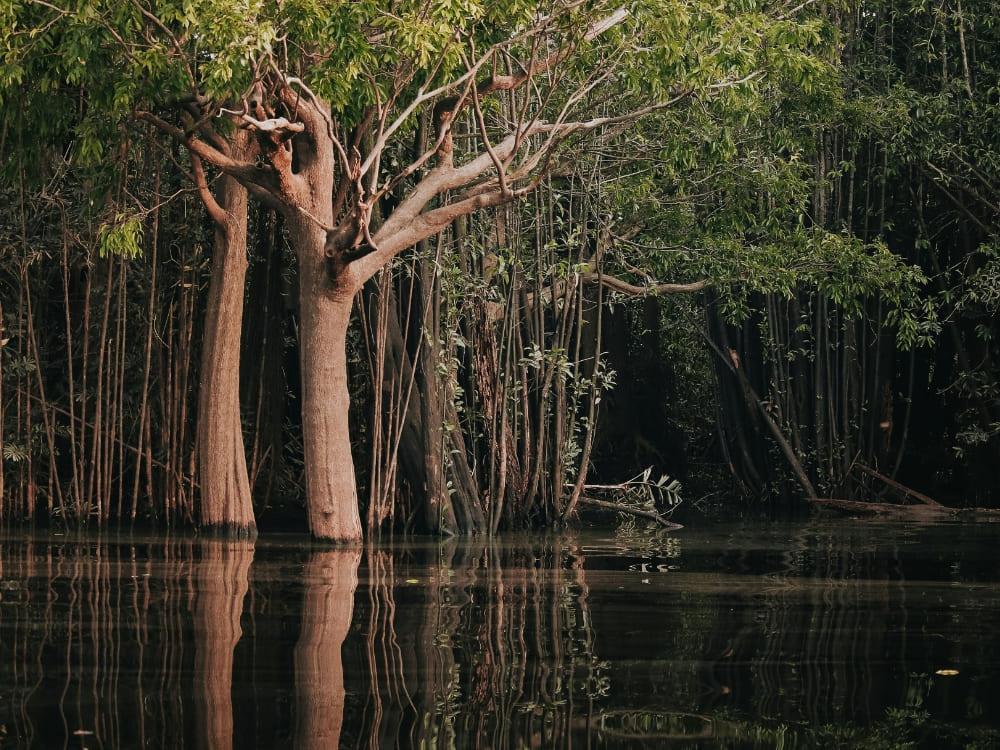
    Trees with submerged trunks standing in the dark waters of an Amazon River flooded forest.
    Photo: Jean Gc

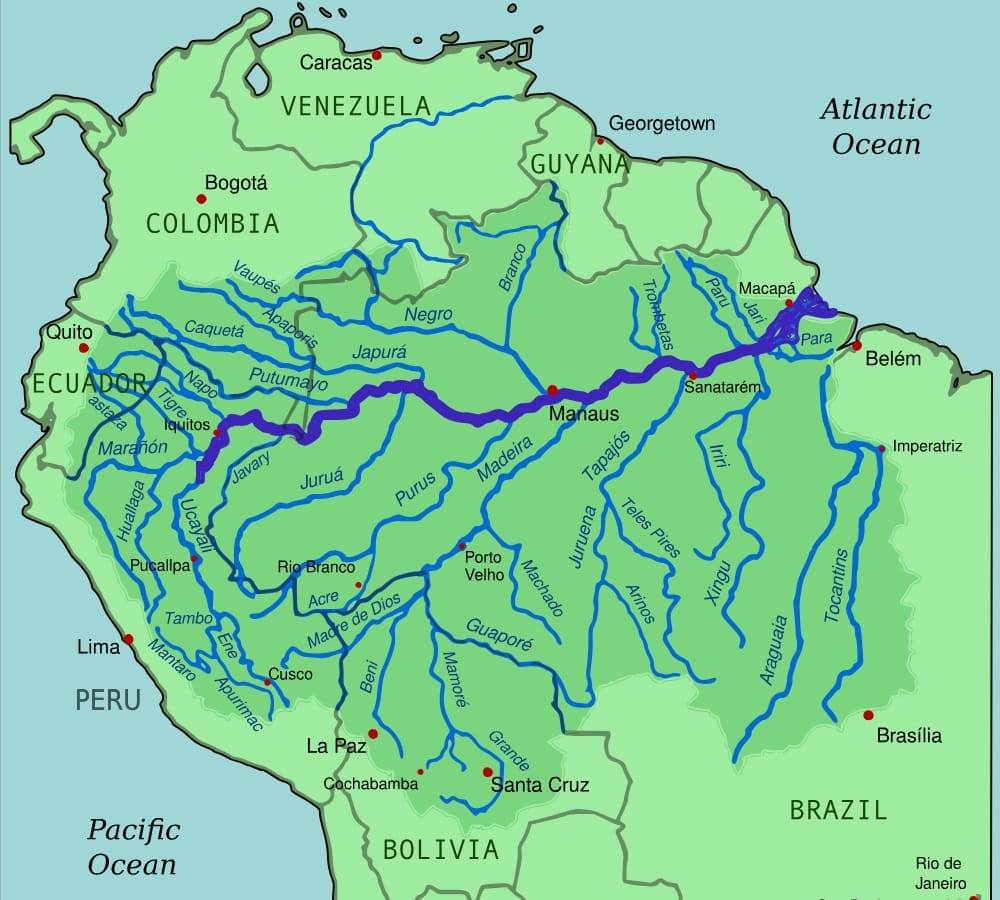
    The water travels east, gathers tributaries, becomes the Marañón, then the Solimões as it crosses into Brazil, and finally, at Manaus, meets the dark Rio Negro and is renamed simply the Amazon for its final 1,500 km.

    It empties into the Atlantic Ocean at the equator on Brazil’s northern coast, between the states of Pará and Amapá. The mouth is so wide (330 km) that an entire island the size of Switzerland (Marajó Island) sits inside it.

    The ocean current pushes the river’s freshwater plume outward for over 200 km into the Atlantic; sailors used to know they were close to South America when they hauled up buckets of fresh water from the open sea.

    To help you visualize such magnitude, see the map of the Amazon River below:

    Map of South America highlighting the Amazon River Basin and its main tributaries across the continent.
    .

    The Amazon River’s two seasons: high water and low water

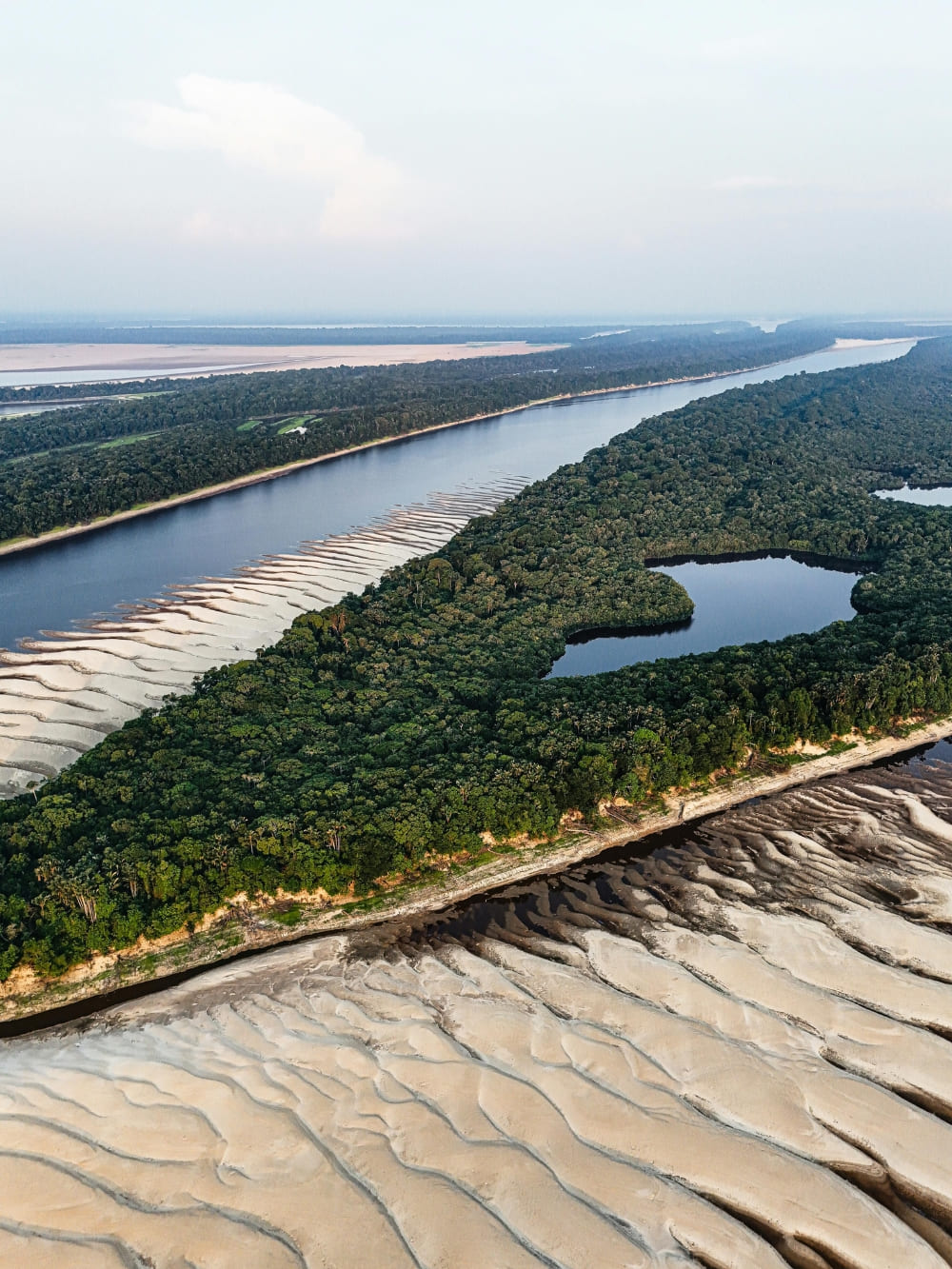
    The Amazon Rainforest has no real winter and summer but a wet season (roughly December to May) and a dry season (June to November). Naturally, the river swells and shrinks dramatically between them.

    Aerial view of the Amazon River during the dry season showing exposed sandbanks along the forest edge.
    Photo: Gustavo Denuncio

    High water (December–May): the river rises 10–15 meters above its dry-season level. Vast areas of rainforest flood, creating the unique igapó (flooded forest) ecosystem where you can canoe between the trunks of standing trees. Wildlife concentrates in the canopy.

    Low water (June–November): rivers drop, beaches appear, animals concentrate around shrinking water sources, and visibility on land hikes is much better.

    👉 Read more: When is the Best Time to Visit the Amazon Rainforest in Brazil

    Wildlife of the Amazon River in Brazil

    The Amazon holds an estimated 30% of the planet’s known species—and possibly the same again, still undocumented. The river itself is home to some of the most distinctive of them.

    What surprises most travelers isn’t just the wildlife inventory but also how the Amazon River makes it visible in ways no rainforest interior can. In a few minutes, the river reveals more than a multiple-hour jungle hike. This is the central reason most tours are water-based: the river is the corridor through which life moves.

    Pink river dolphins

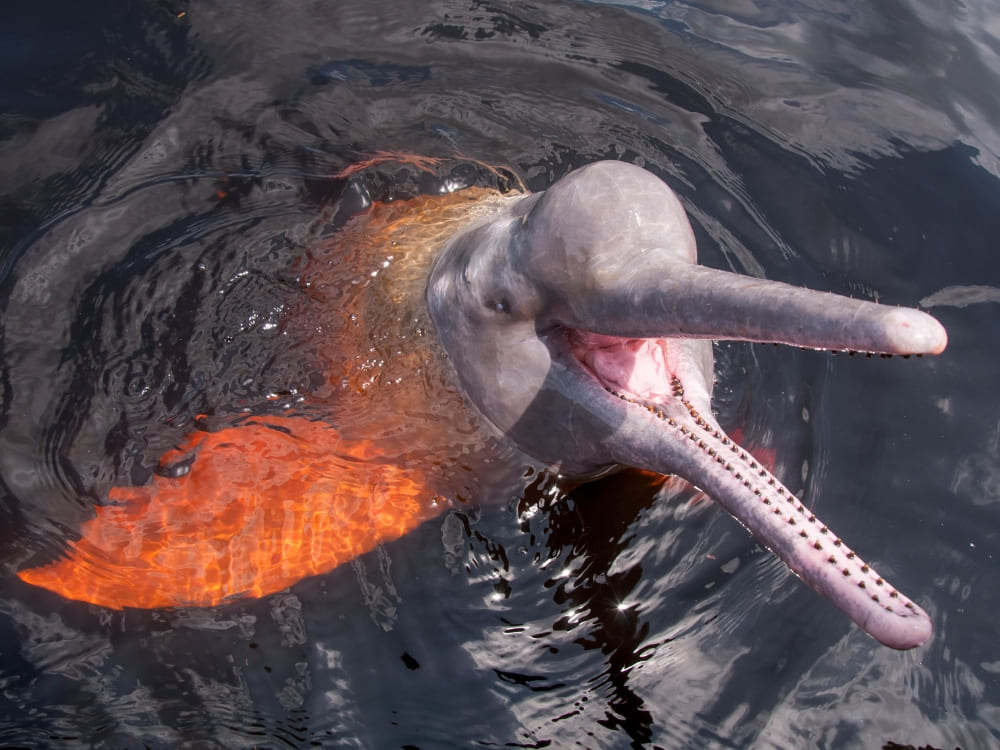
    A pink river dolphin swimming with its head above the dark waters of the Amazon River.
    .

    Larger and more curious than their ocean cousins, Amazon river dolphins (botos-cor-de-rosa) are born gray and turn pink with age. With a friendly, curious personality, they surface near boats out of pure interest and often interact with humans.

    Black caimans

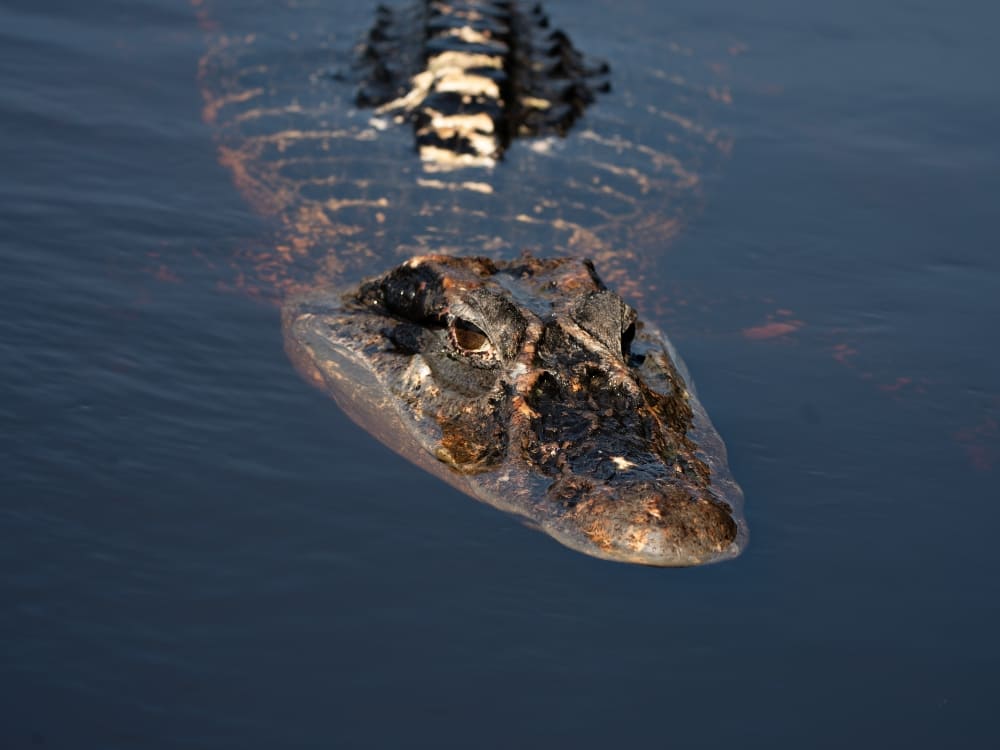
     A black caiman swimming near the surface of the Amazon River.
    Photo: Marcelo Bonifácio

    Solitary and mysterious, the black caiman is the Amazon’s apex aquatic predator, growing up to 5 meters. A major attraction for nighttime spotlighting tours, they’re easily spotted at night by their orange eyeshine.

    Anacondas

    A large green anaconda coiled up resting in the Amazon Basin.
    .

    The green anaconda is the world’s heaviest snake, found in the slow-moving channels and oxbow lakes of the basin. Mostly seen in dry season when water levels expose them.

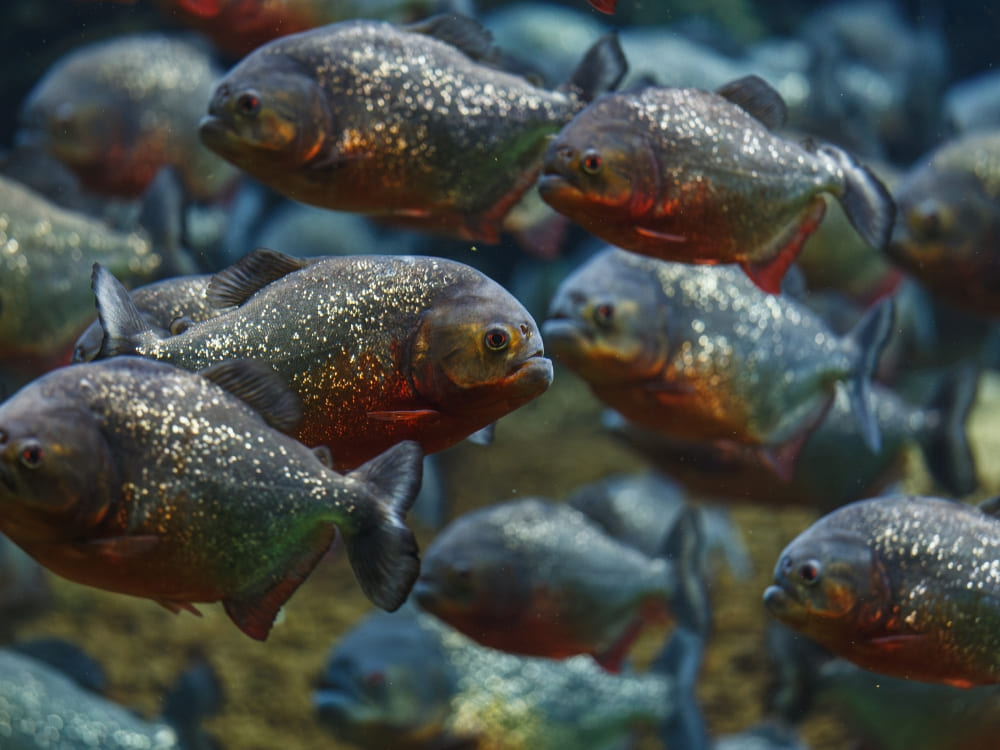
    Piranhas

    A school of red-bellied piranhas swimming underwater in the Amazon River.
    .

    Less terrifying than the movies suggest, most species of piranhas are scavengers—the genuinely aggressive red-bellied piranha is real but accounts for a fraction of the genus. As one of the most traditional ingredients in Amazonian cuisine, they are incorporated into daily meals, mainly in stews.

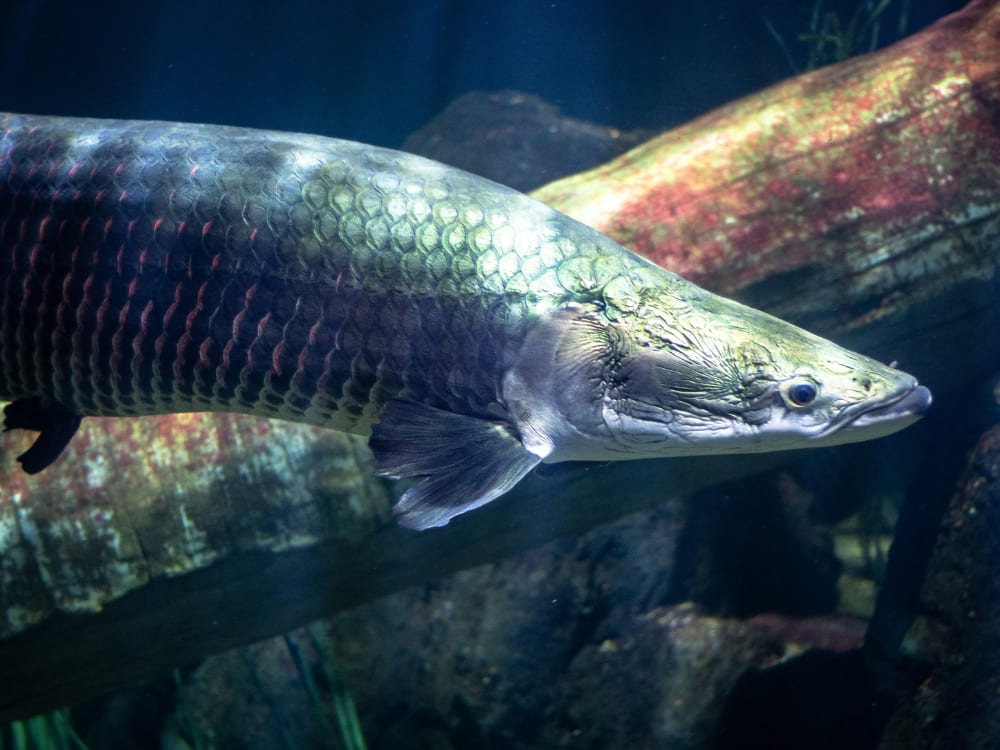
    Pirarucu

    A large pirarucu fish swimming underwater in the Amazon region.
    Photo: Joshua J. Cotten

    One of the world’s largest freshwater fish, growing to 3 meters and 200 kg. Being air-breathing, it has to surface every few minutes. A staple food in the region and now carefully managed.

    👉 Read more: 15 Amazon Animals – Unravel the Wildlife in Brazil

    The people of the Amazon River

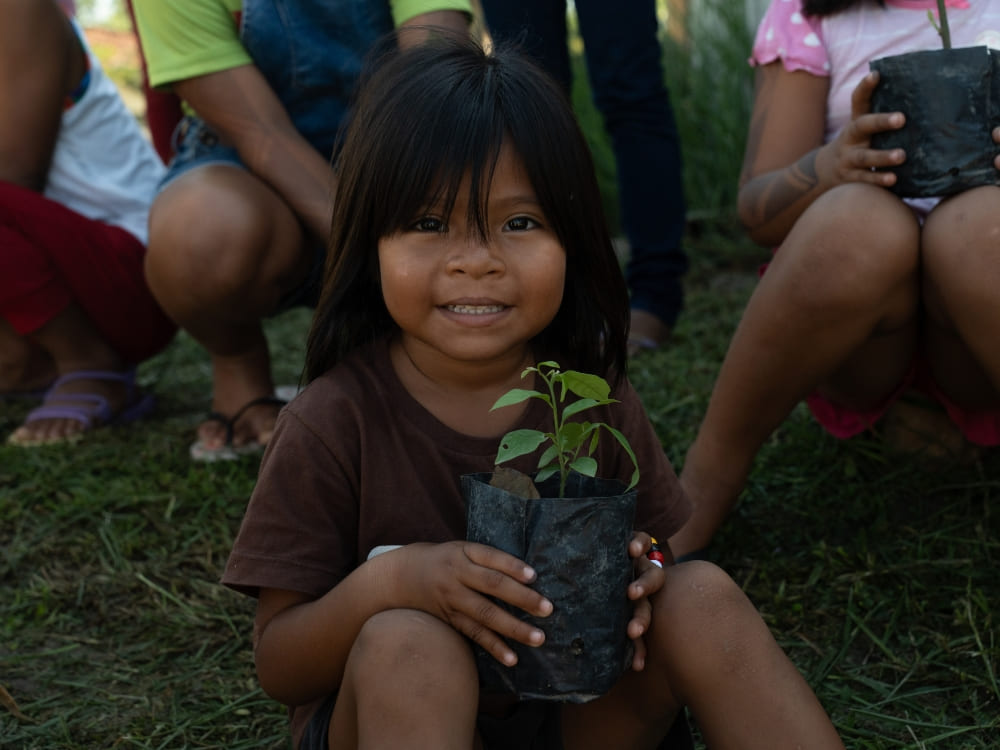
    More than 30 million people live in the Amazon River Basin across Brazil, Bolivia, Colombia, Ecuador, French Guiana, Guyana, Peru, Suriname, and Venezuela; the largest concentration is along the river itself and its main tributaries.

    A smiling child from an Amazonian riverside community sitting on the grass and holding a small potted plant.
    Photo: Isadora Sá

    Roughly 3 million belong to indigenous groups, including the Yanomami, Kayapo, Tikuna, and Munduruku—speaking more than 240 distinct languages.

    Many communities are small ribeirinho (riverside) settlements of caboclo people, descended from indigenous and Portuguese ancestry, living from fishing, farming small floodplain plots, and harvesting forest products like açaí and Brazil nuts.

    To ensure that indigenous and riverside communities are properly valued, tourism operators truly committed to sustainable practices lead tours that respect traditions, establish boundaries, and share profits fairly. This way, Amazonian culture can be shared and enriched responsibly and in a balanced manner, avoiding conduct that puts the community and the environment at risk.

    How to experience the Amazon River in Brazil

    There are four practical ways most travelers experience the river. The right one depends on your comfort level, time, and budget.

    Amazon River Cruises

    Multi-day cruises move you through the river system aboard a small ship with cabins, meals, and a daily program of guided excursions. This is the most efficient way to see distance—you cover stretches of river that no lodge can reach. Comfort ranges from rustic to luxury Amazon river cruises in Brazil.

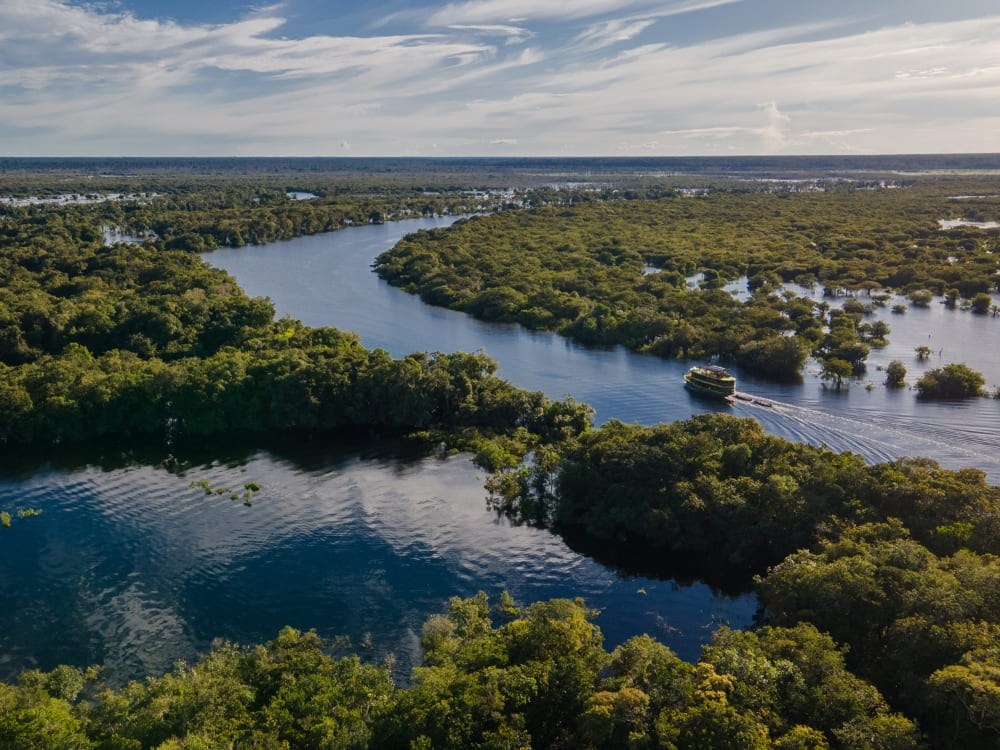
    A riverboat cruising through the winding waters of the Amazon River surrounded by lush rainforest.
    .

    👉 Read more:

    Jungle Lodges

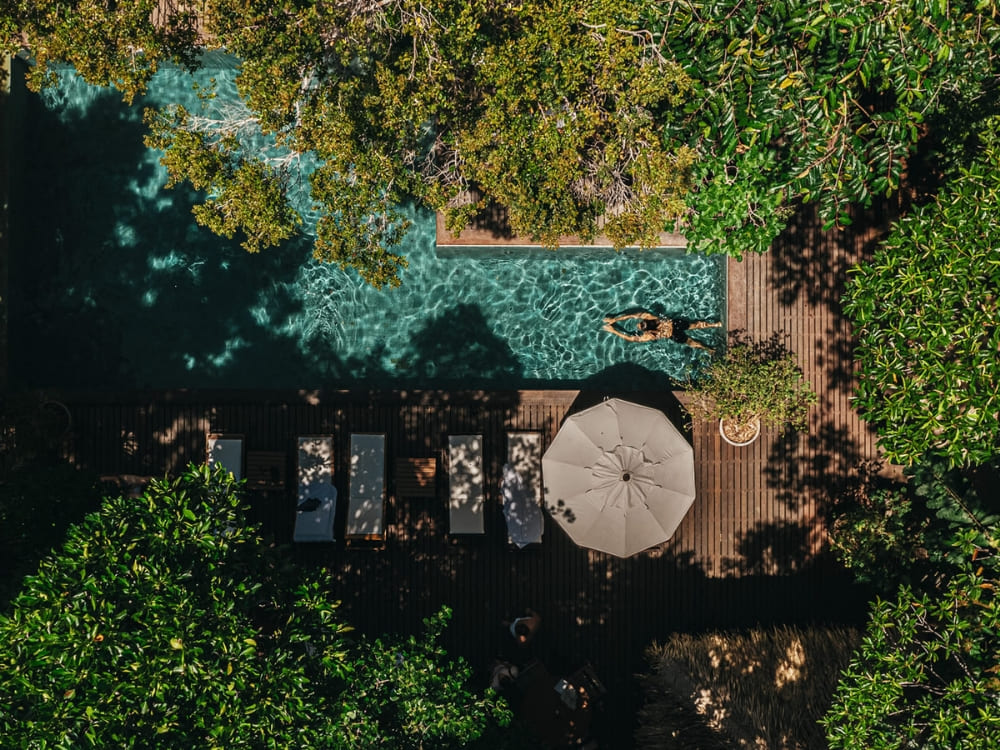
    Jungle lodges sit on tributaries off the main river and use small boats for daily excursions, providing great accommodations, a variety of leisure spaces, and premium services—just like any high-rated hotel.

    You unpack once and explore one stretch of rainforest deeply. Best for travelers who want to settle in! 

    Aerial view of an Amazon jungle lodge featuring a swimming pool and wooden deck surrounded by dense trees.
    Photo: Felipe Castellari

    👉 Read more: Best Amazon Jungle Lodges in Brazil

    Kayak and Small-Boat Expeditions

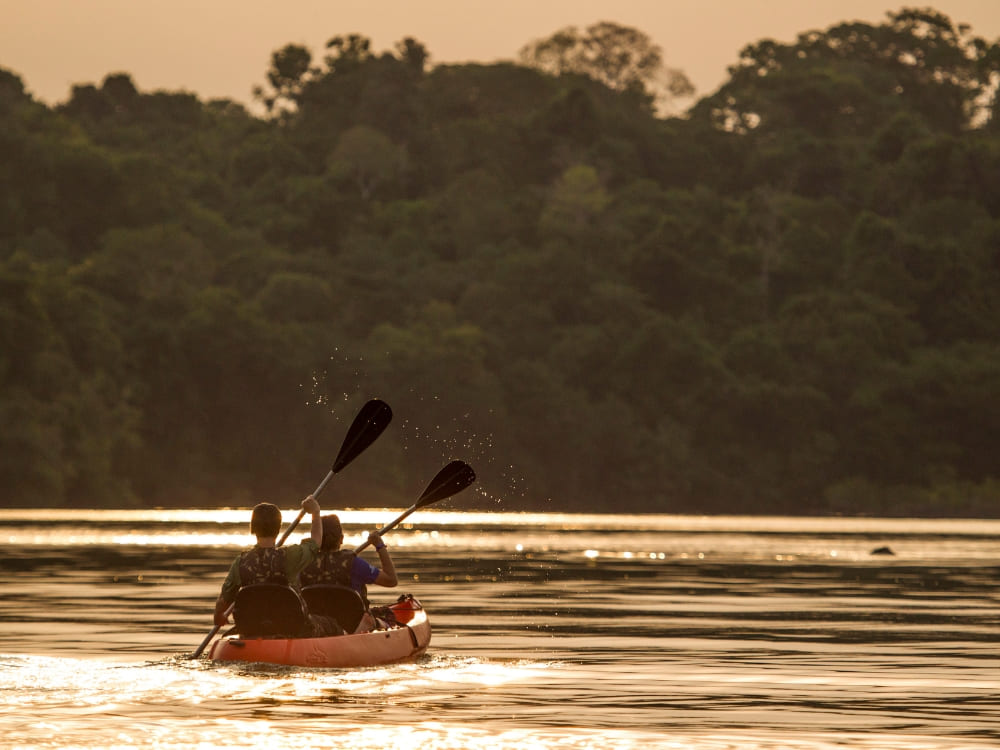
    Active travelers who want intimacy with the river can paddle smaller tributaries with a guide. Less wildlife distance, more physical engagement. 

    Two people paddling a kayak on the Amazon River during a golden sunset.
    Photo: João Marcos Rosa

    👉 Explore the adventure: 4-day Amazon Kayak Tour Brazil

    Day Trips and Short Stays from Manaus

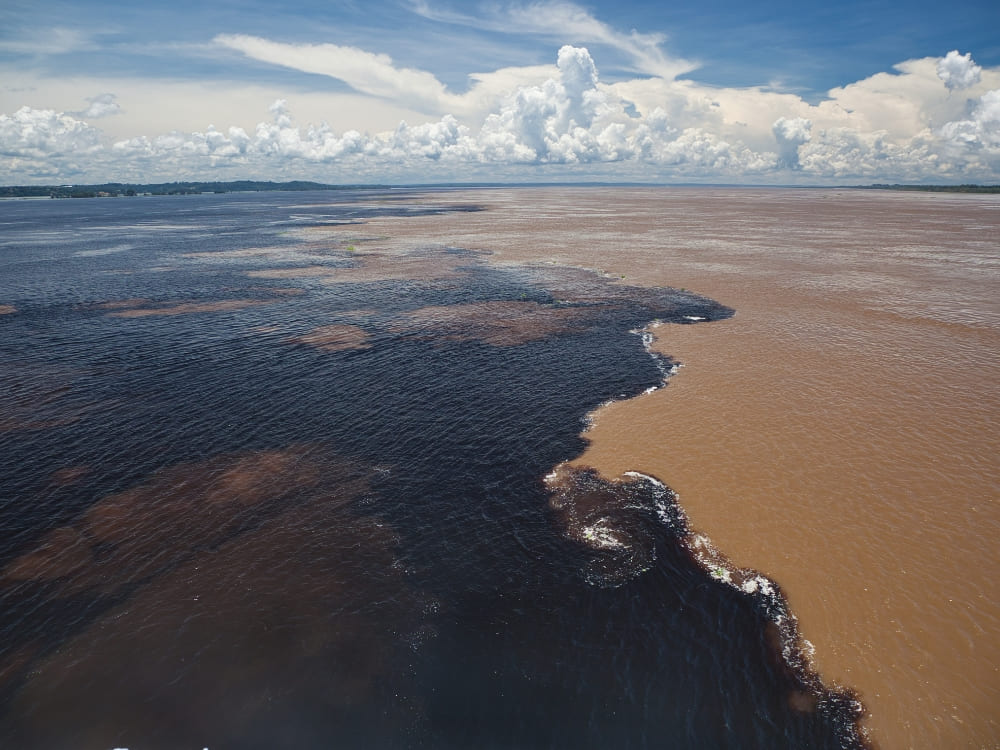
    If you only have one or two days, day trips from Manaus, capital of the state of Amazonas, reach the Meeting of the Waters—where the black Rio Negro meets the muddy Solimões—and small communities downstream. Worth doing even if you’re staying in a lodge!

    Aerial view of the Meeting of the Waters where the dark Rio Negro flows alongside the muddy Solimões River without mixing.
    .

    👉 Explore the adventure: 3-day Amazon Jungle Tour from Manaus

    Everything You Need to Know about the Amazon River, Brazil

    Given its vital role for Brazil, South America, and global ecological stability, the Amazon River is a complex system that naturally generates many inquiries. PlanetaEXO addresses several of these key questions below.

    A colorful sunset reflecting on the calm waters of the Amazon River bordered by the rainforest.
    .

    How long is the Amazon River?

    6,992.06 km (4,344 miles), making it the longest river in the world in terms of length and water volume.

    How deep is the Amazon River?

    Average depth is around 50 meters; maximum recorded depth exceeds 100 meters in places. 

    How wide is the Amazon River?

    It varies from 1.6 km in the dry season to over 40 km in the flooded wet season. The mouth of the Atlantic is 330 km wide and contains an island the size of Switzerland.

    In which country is the Amazon River?

    It crosses Peru, Colombia, and Brazil, with about 60% of its course in Brazilian territory. The basin extends across nine countries: Brazil, Peru, Colombia, Venezuela, Ecuador, Bolivia, Guyana, Suriname, and French Guiana.

    Is the Amazon River safe to visit?

    For travelers on guided trips with registered operators, yes. The rainforest itself is statistically safer than most cities. Standard precautions apply for the gateway city Manaus.

    👉 Read more: Is Manaus Safe? An Comprehensive Guide for Travelers Heading to the Amazon

    Why is the Amazon River important?

    The Amazon River Basin produces an estimated 6–9% of the world’s oxygen, regulates rainfall across South America, and stores roughly 120 billion tonnes of carbon in its forests. 

    Its discharge into the Atlantic influences ocean currents and global climate. Practically, it sustains the world’s most biodiverse ecosystem and directly supports tens of millions of people.

    Can you swim in the Amazon River?

    In some places, yes. The dark waters of the Rio Negro are largely free of piranhas and caimans in their main channel and are commonly swum during cruises and lodge stays.

    The muddy Solimões/Amazon main channel is a different story; locals don’t swim there, and neither should you. Always follow your guide’s lead.

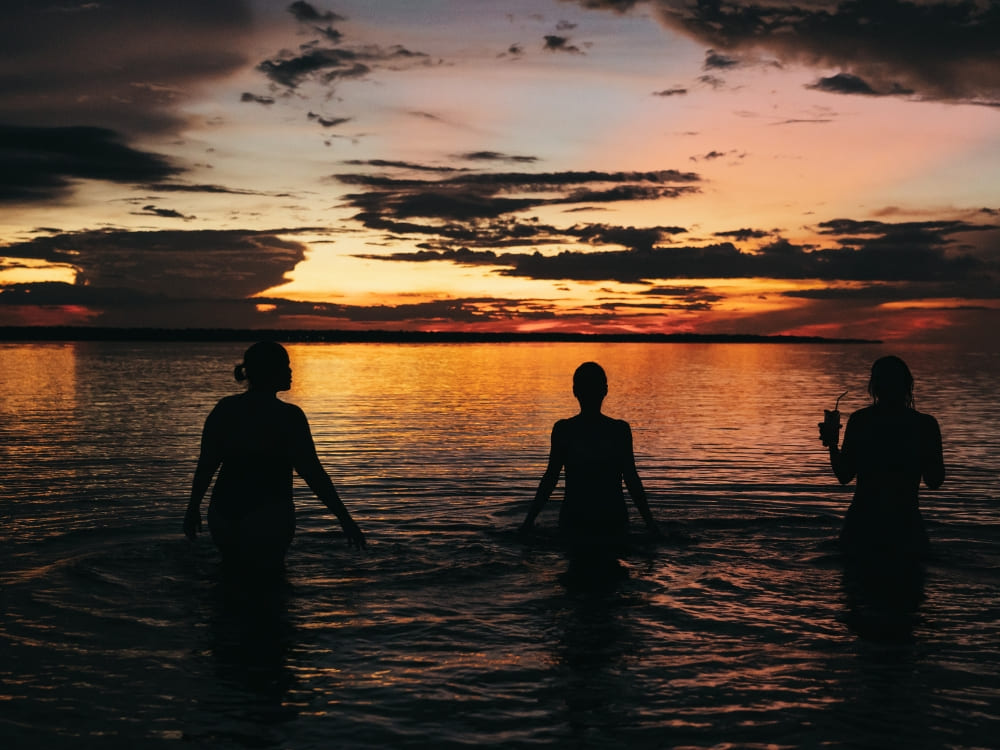
    Silhouettes of three people standing waist-deep in the waters of the Amazon at sunset.
    .

    Visit the Amazon River in Brazil with PlanetaEXO

    If you’ve made it this far, you’re not just researching for school—you’re probably trying to plan a trip. Luckily, PlanetaEXO, an ecotourism platform specializing in Amazon Rainforest tours in Brazil, can help you with that!

    In partnership with the best local operators out there, we design tailored itineraries that cater to all your preferences and needs, taking care of bookings, transfer options, and everything you need for an unforgettable trip. This way, all you have to do is enjoy the Amazon’s beauty. Contact us now!

  • Beyond the Mountains of Nepal: A Journey of Connection with Mother and Son

    Beyond the Mountains of Nepal: A Journey of Connection with Mother and Son

    How an expedition to the Himalayas strengthened the bond between Mila and Lorenzo Ricetti

    Motherhood is often described as a journey, but for Mila Ricetti (56) and her son Lorenzo (24), it materialized into a literal expedition across the rustic landscapes of Nepal with the Mardi Himal trek in the Annapurna region—a route that invites a profound introspection in the face of the Himalayas’ grandeur.

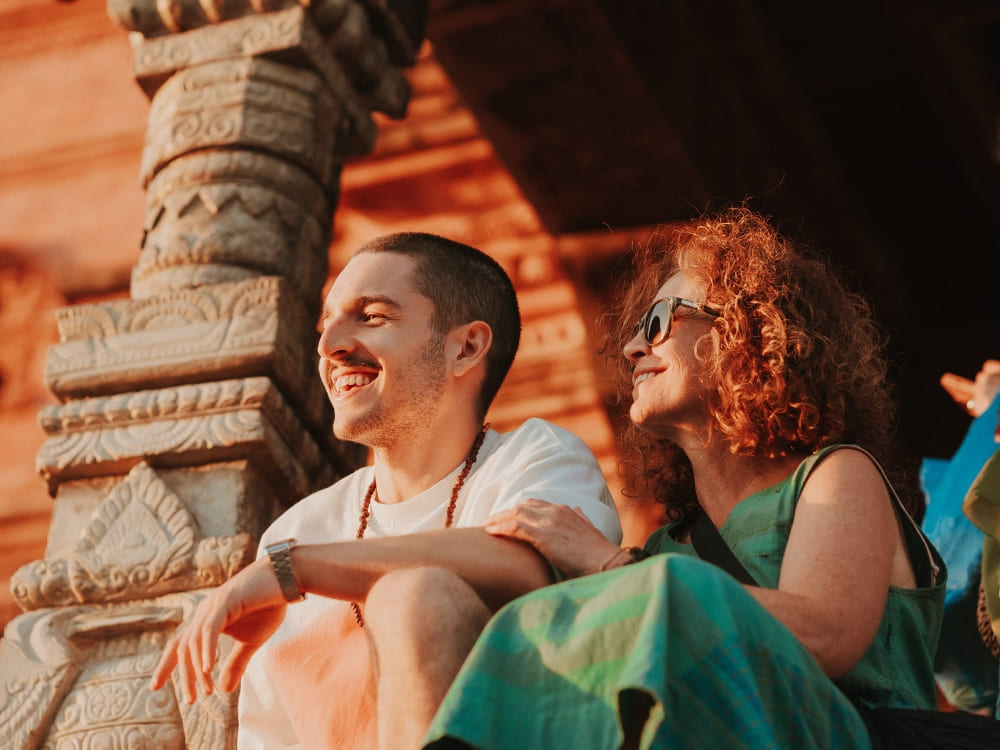
    Mila Ricetti and her son Lorenzo smiling and sitting together at a historic brick temple during their ecotourism expedition in Nepal.
    Photo: CJ

    Mila already had a yoga retreat planned. To celebrate Lorenzo’s graduation from law school and the new chapter in his life, they altered the schedule to include trekking. With the support of PlanetaEXO in organizing the logistics, mother and son traded traditional graduation parties for the silence of high altitudes.

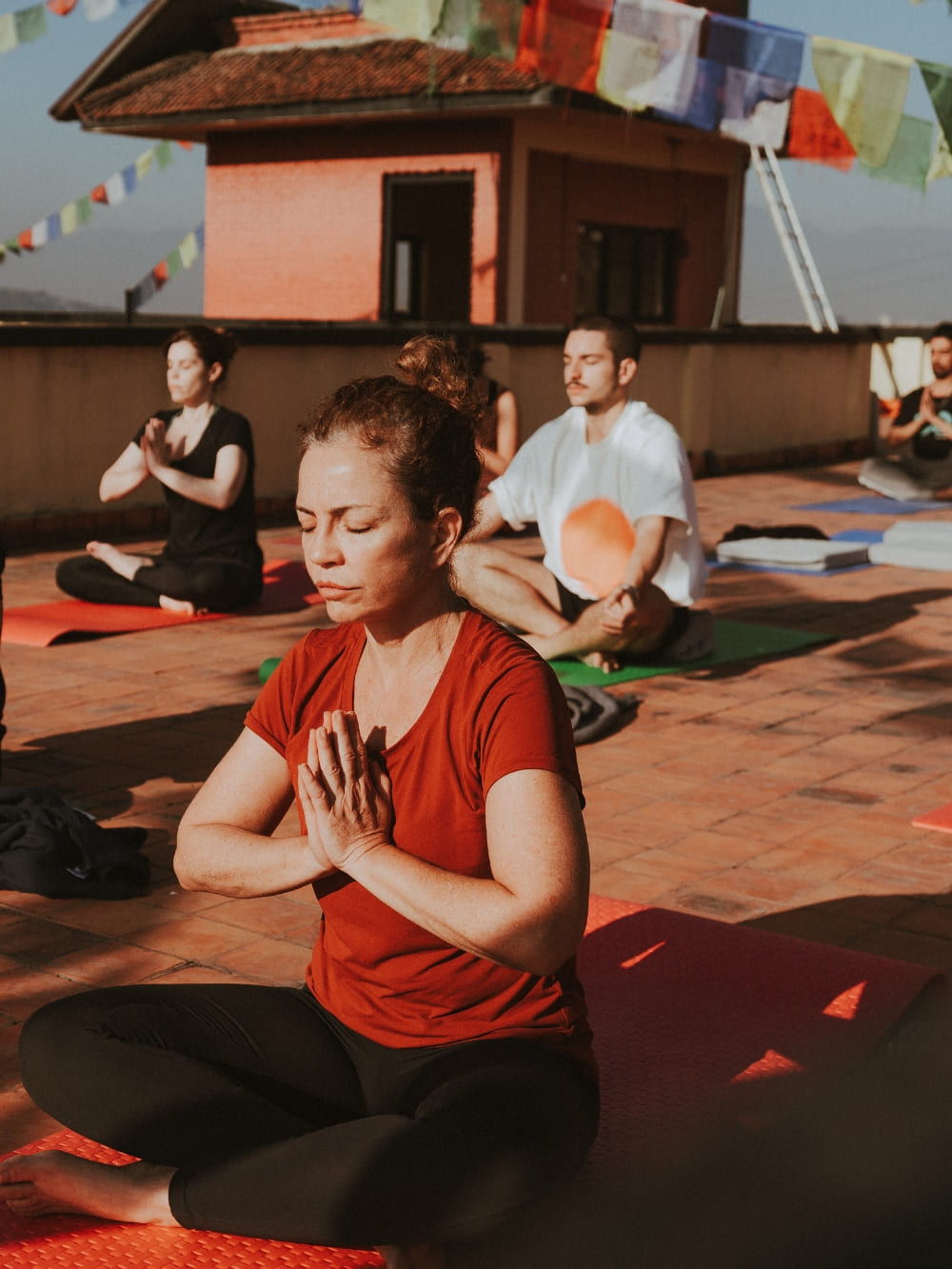
    Mila Ricetti and Lorenzo practicing yoga and meditating with a group on a sunlit rooftop decorated with prayer flags during a retreat in Nepal.
    Photo: CJ

    Together, they were able to connect even more in one of the most beautiful and enigmatic settings in the world.

    The Beauty of the Path

    In Nepal, spirituality isn’t found only in temples but in the very rhythm of the walk and the spectacular views from the mountaintops after a long trek.

    “We woke up at 3 a.m. to climb the mountains and watch the sunrise,” Mila recalls.  I didn’t think I’d make it in time, but I went at my own pace, and it worked out. It was beautiful and very emotional.”

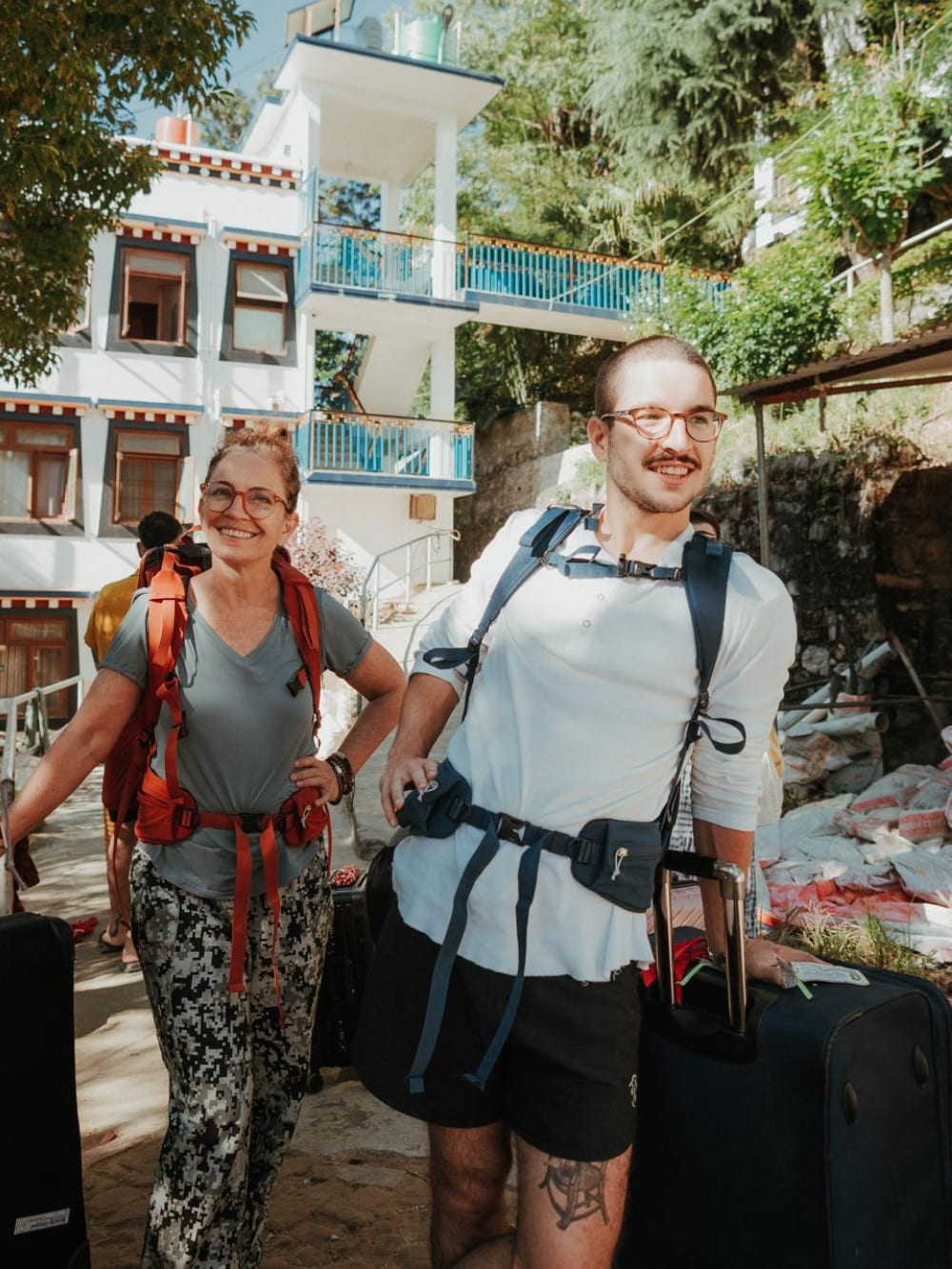
    Mila and Lorenzo wearing trekking backpacks and smiling as they prepare for physical endurance on the Mardi Himal trek in Nepal.
    .

    The starlit sky that seemed low enough to touch, the frozen darkness, and the snowy peaks covered with golden sunlight made that moment a rich, unforgettable exchange where the silence between one step and the next spoke louder than a thousand words—especially in such good company.

    👉 Read more: Women over 50 Shatter Stereotypes and Prove that Adventure Has No Age Limit

    A New Dynamic on the Trail

    Traveling to Nepal demands physical endurance and mental preparation. For Mila and Lorenzo, the challenges of the harsh terrain acted as a catalyst.

    The trip marked a clear transition from traditional “family vacations” to a shared experience between two adults. The simple act of walking side by side for hours on end created a safe space for dialogue and mutual observation.

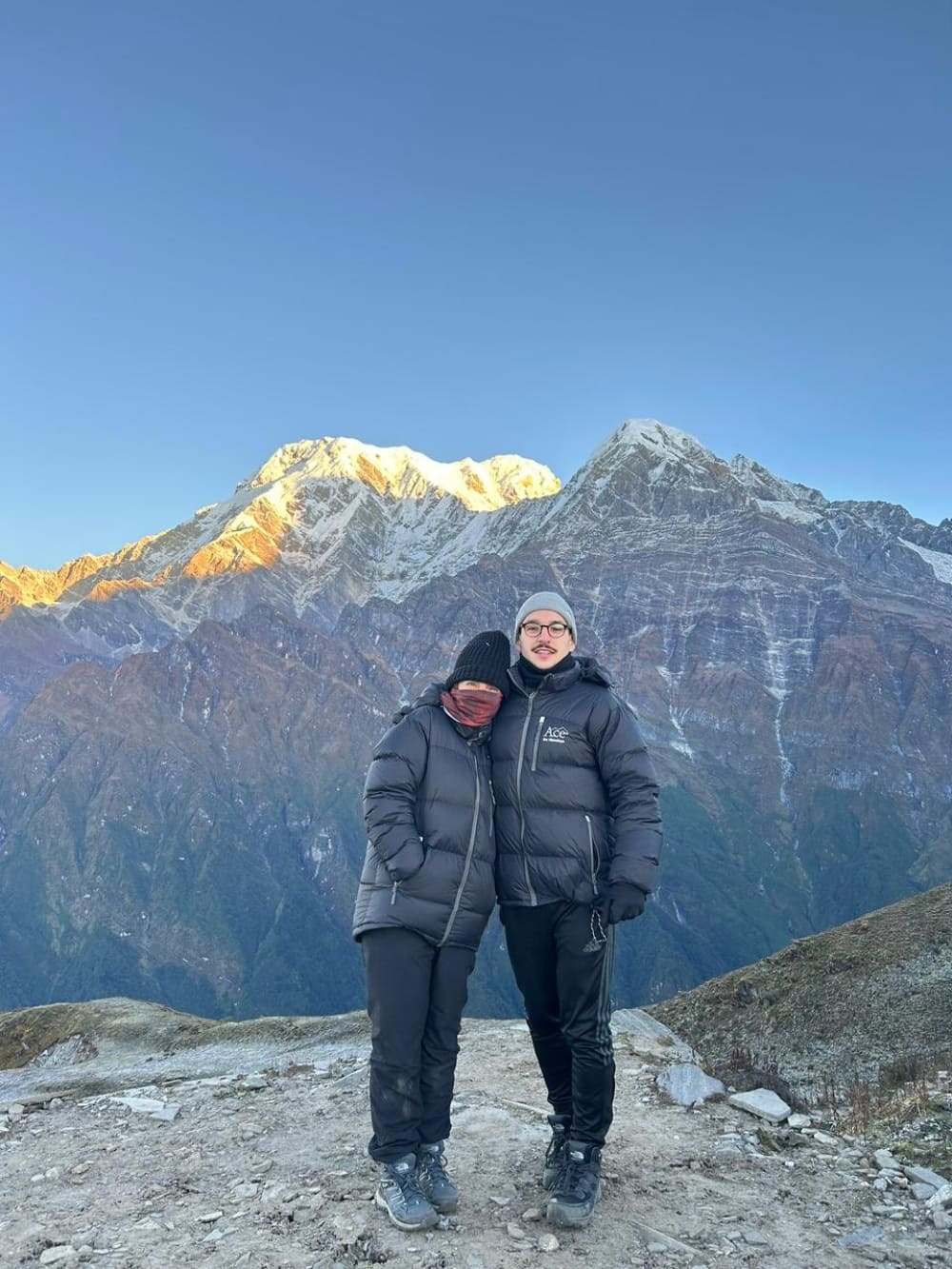
    Mother and son Mila and Lorenzo wearing heavy winter gear and embracing in front of the snowy Himalayan peaks after an early morning climb.
    .

    “It was wonderful to have this companionship above all else, helping each other out and solving problems together. It was a great experience of maturation for our relationship,” Lorenzo shares. 

    For Mila, the immersive environment provided an uninterrupted space to appreciate the present moment and, most importantly, the presence of Lorenzo in a new light. “It was an intimacy with the surroundings, with myself, and with my son by my side. Everything felt so perfect; I was worry-free and incredibly happy.”

    Strength in Vulnerability and Mutual Inspiration

    Facing the altitude, the cold, and the physical exhaustion required a level of trust that is only forged in adversity. Mutual support became vital as they found strength in giving each other space to deal with their own limits: Mila’s cardio limitation and Lorenzo’s fear of heights during the steep descents.

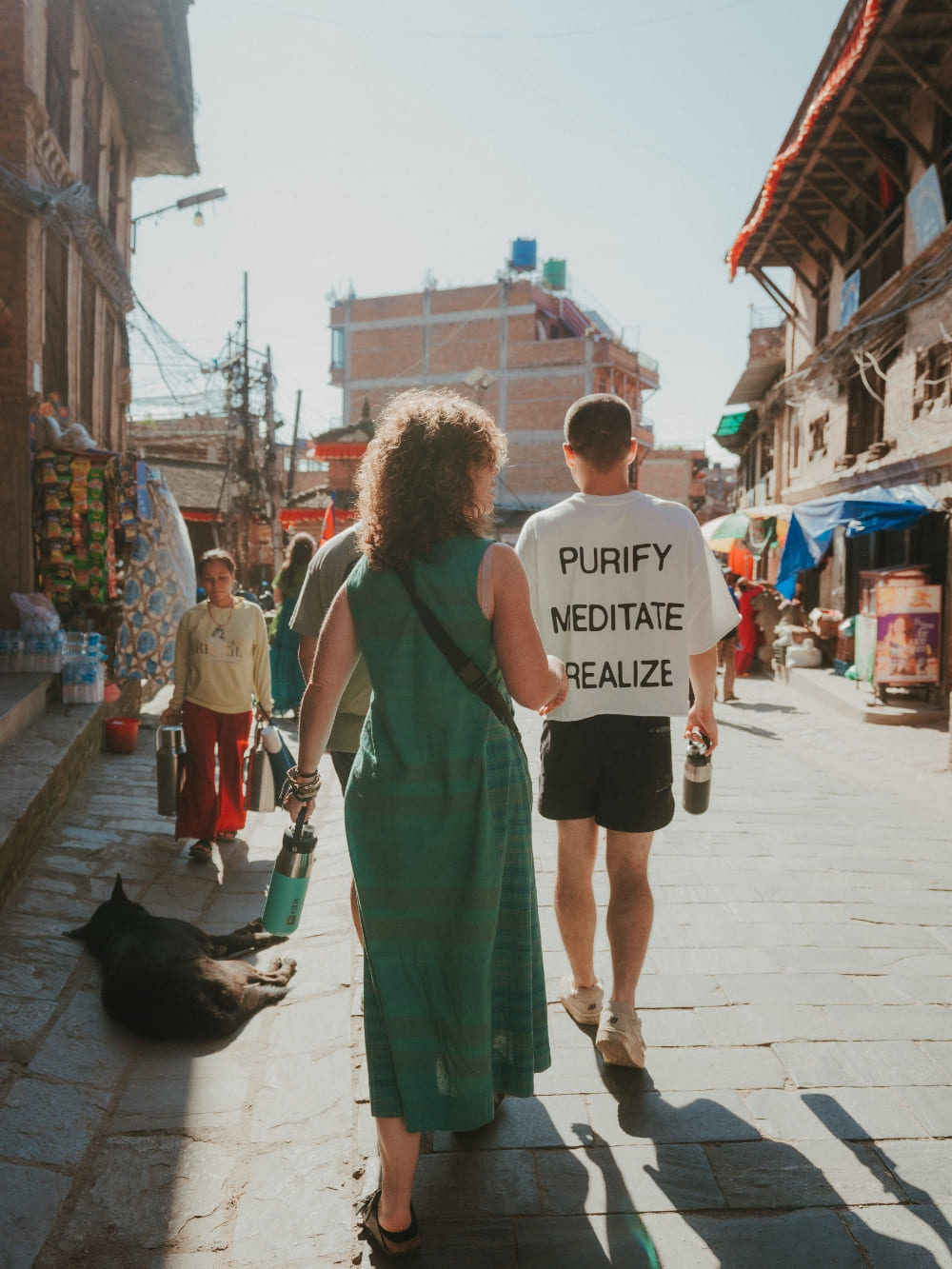
    Mila and Lorenzo walking side by side down a sunny street in Nepal, with Lorenzo wearing a t-shirt that says purify, meditate, realize.
    Photo: CJ

    “I realized there was nothing I could do to change the situation, so I just focused on doing what I could to get through it. And then, she followed right after,” he says, recalling that both had their individual experiences and how they met halfway.

    Seeing her son navigate these obstacles changed Mila’s perspective. It was no longer about protecting him from every danger, but about respecting each other’s space and acting as true partners.

    👉 Read more: 10 must-visit global destinations for sustainable travel in 2026

    A Legacy of Admiration

    Reflecting on Mother’s Day and the meaning of sharing this path, Mila and Lorenzo’s story serves as a reminder that the greatest gift one can give a child is presence and example. The trip to Nepal anchored even more their already-loving relationship.

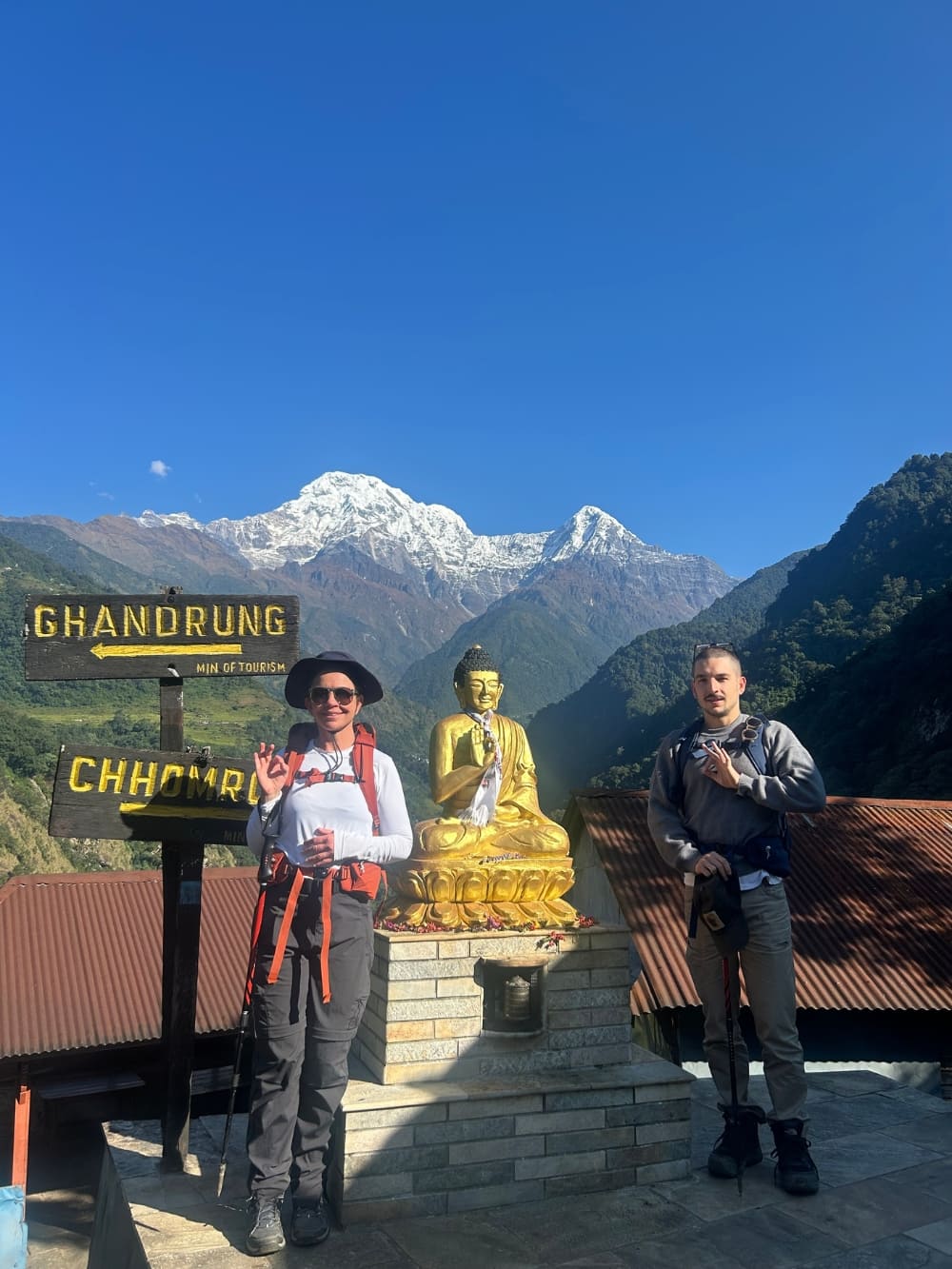
    Mila and Lorenzo beside a Buddha statue and trail signs during their sustainable trek in Nepal.
    .

    For Lorenzo, the journey was also a moment to acknowledge the foundation his mother built over the years, allowing him to become the man he currently is. “What I admire most is the way she raised me. Her believing in herself was essential. If she hadn’t made the choices she made the way she did, we probably wouldn’t be where we are today.” 

    In the end, Nepal was just the setting, but the true destination was the deep and mature connection between mother and son.

  • Earth Day: 10 Transformative Conservation Projects in Brazil

    Earth Day: 10 Transformative Conservation Projects in Brazil

    In celebration of Earth Day, observed on April 22nd, we have selected 10 impactful initiatives that combine biodiversity conservation with the sustainable development of Brazilian communities.

    To celebrate Earth Day, PlanetaEXO, a platform specialized in ecotourism and responsible travel, highlights the work of organizations at the forefront of environmental protection in Brazil. The country, home to the world’s greatest biodiversity, faces growing climate challenges, making support for these ecosystems more urgent than ever.

    Drawing on its mission to connect travelers with positive-impact experiences and inspired by this year’s Earth Day theme (“Our Power, Our Planet”), PlanetaEXO has compiled a special selection of the top 10 initiatives for the preservation of fauna, flora, and the socioeconomic development of local communities in Brazil.

    “Initiatives aimed at protecting wildlife and traditional communities are imperative to ensure our biomes survive issues like global warming and deforestation. At the same time, responsible tourism acts as a fundamental tool, as it increases public awareness and directly boosts the local economy,” says Lucas Ribeiro, founder of PlanetaEXO.

    Check out 10 essential conservation initiatives in Brazil now:

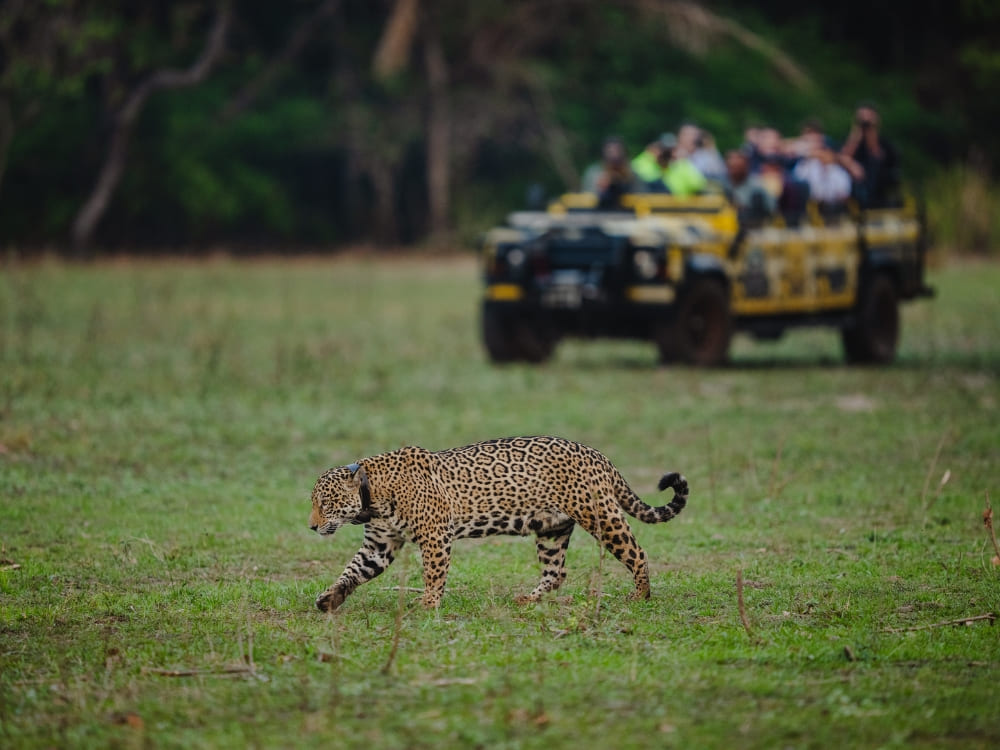
    1. Onçafari Project (Mato Grosso do Sul)

    A pioneer in biodiversity conservation, Onçafari focuses on raising awareness about Jaguars and promoting ecotourism as a sustainable income-generating alternative. In the Pantanal, it conducts research, environmental education, and the reintroduction of animals into the wild.

    A jaguar walking across a grassy plain in the Pantanal while a group of tourists watches from a yellow safari vehicle as part of the Onçafari Project.
    Photo: Donal Boyd

    How to help: Support by visiting the Caiman Refuge through responsible tourism, following the project’s activities on social media, or making a direct donation.

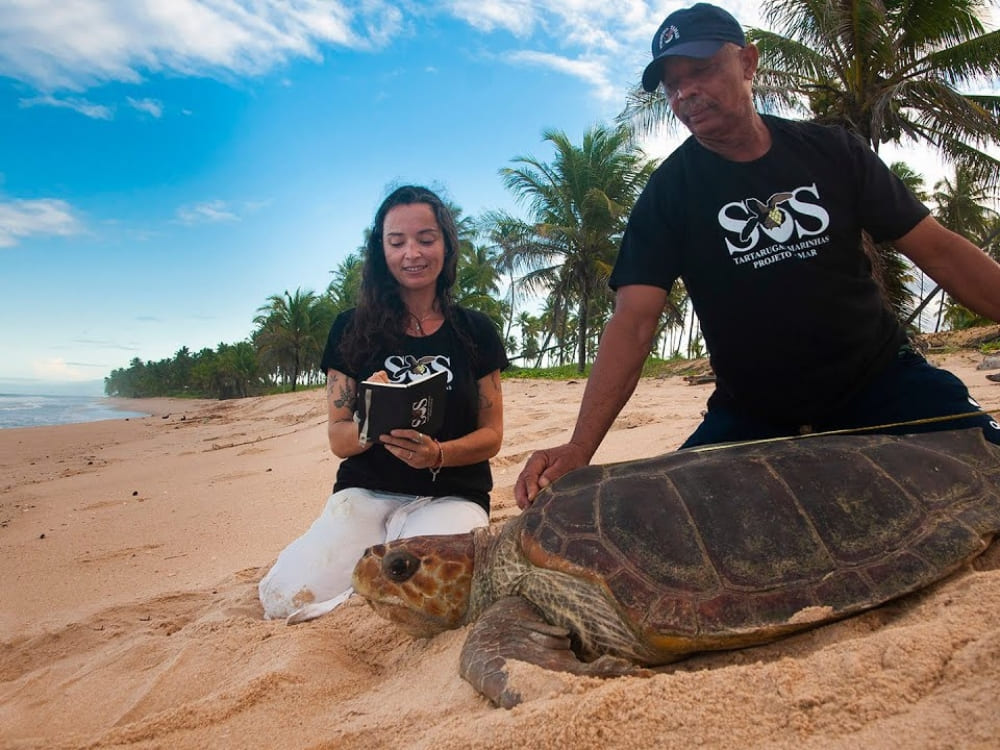
    2. Tamar Project (Brazilian Coast)

    Internationally recognized, the Tamar Project has worked for decades to protect sea turtles in vital coastal areas. It combines scientific research, beach monitoring, and social inclusion for communities along the Brazilian coast.

    Two researchers on a sandy beach measuring a large sea turtle with a tape measure, highlighting the Tamar Project's efforts to protect marine life.
    .

    How to help: Visit the project’s visitor centers in Santa Catarina, São Paulo, Espírito Santo, Bahia, Sergipe, and Pernambuco (Fernando de Noronha) and buy official products in physical and online stores, or contribute with donations to the Tamar Project Foundation.

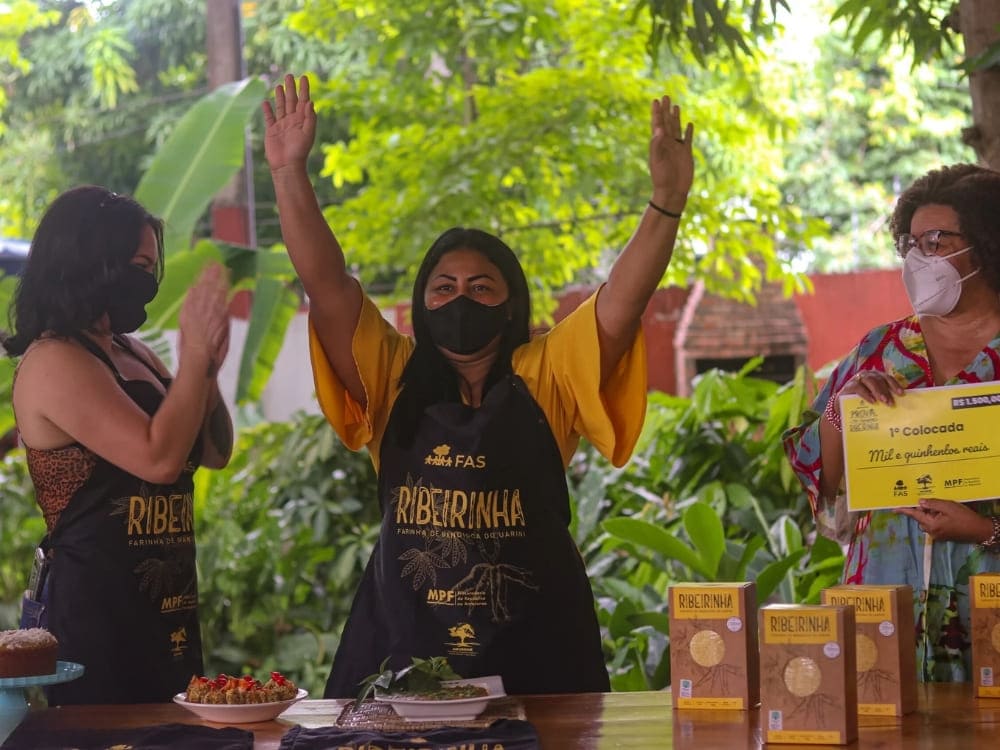
    3. Sustainable Amazon Foundation – Pensa Program (Amazonas)

    The Sustainable Amazon Foundation (FAS) combats social vulnerability in the Amazon through the Sustainable Entrepreneurship and Business Program (Pensa). The focus is on community-based tourism in Conservation Units, transforming the standing forest into an economic asset that has already generated millions in income for riverside communities.

    A woman wearing a black apron with FAS Ribeirinha branding raises her hands in joy, standing alongside others celebrating the Sustainable Amazon Foundation's program.
    .

    How to help: Prioritize community-based tourism itineraries in the Amazon operated by FAS partner communities and support the institution through donations for forest education and health projects.

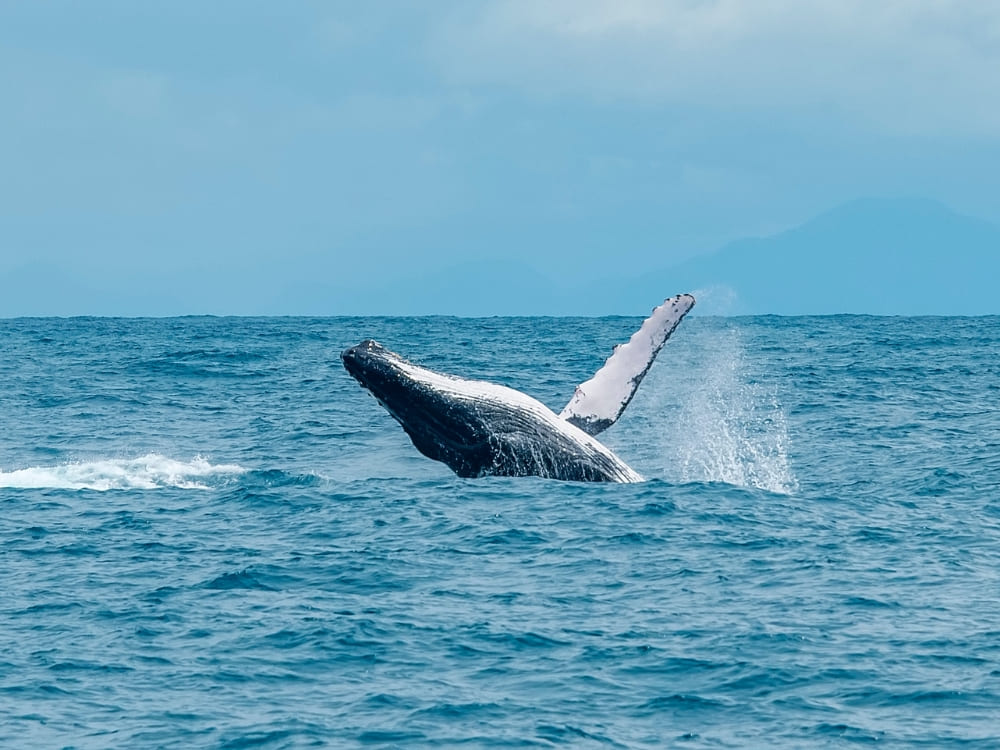
    4. Humpback Whale Project (Bahia and Espírito Santo)

    Working in the species’ main nurseries in the South Atlantic, this initiative blends science with the promotion of sustainable whale watching, generating local income without harming the animals’ life cycle.

    A large humpback whale breaching the ocean surface with its pectoral fin raised against a clear blue sky, showcasing marine life in Bahia.
    .

    How to help: Participate in sustainable whale-watching expeditions with accredited partners or purchase official institution products.

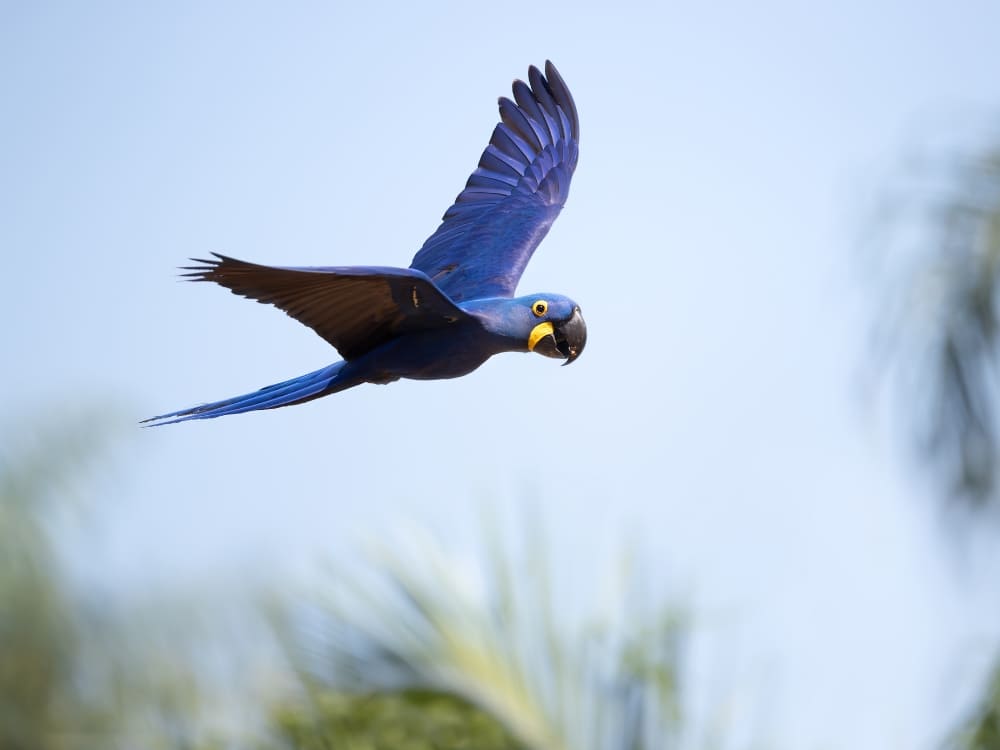
    5. Hyacinth Macaw Institute (Mato Grosso do Sul and Mato Grosso)

    A success story where science saved a species from extinction. Through the monitoring of natural and artificial nests, the project has allowed the population of Hyacinth Macaws to grow significantly in the Pantanal biome.

     A vibrant blue Hyacinth Macaw in mid-flight with its wings spread wide against a bright sky in the Pantanal biome.
    .

    How to help: Symbolically adopt a nest or chick, buy official brand products, or make donations through the institute’s official website.

    6. Spinner Dolphin Project (Pernambuco)

    Based in Fernando de Noronha, it has worked for over 30 years in the research and protection of spinner dolphins. It is fundamental to ensuring that tourism on the island occurs without interfering with the natural behavior and rest of these cetaceans.

    A spinner dolphin leaping high out of the blue ocean water, splashing as it rotates, protected by the Spinner Dolphin Project in Pernambuco.
    .

    How to help: Strictly follow the Marine National Park rules when visiting Noronha, visit the project’s Visitor Center, or make direct donations.

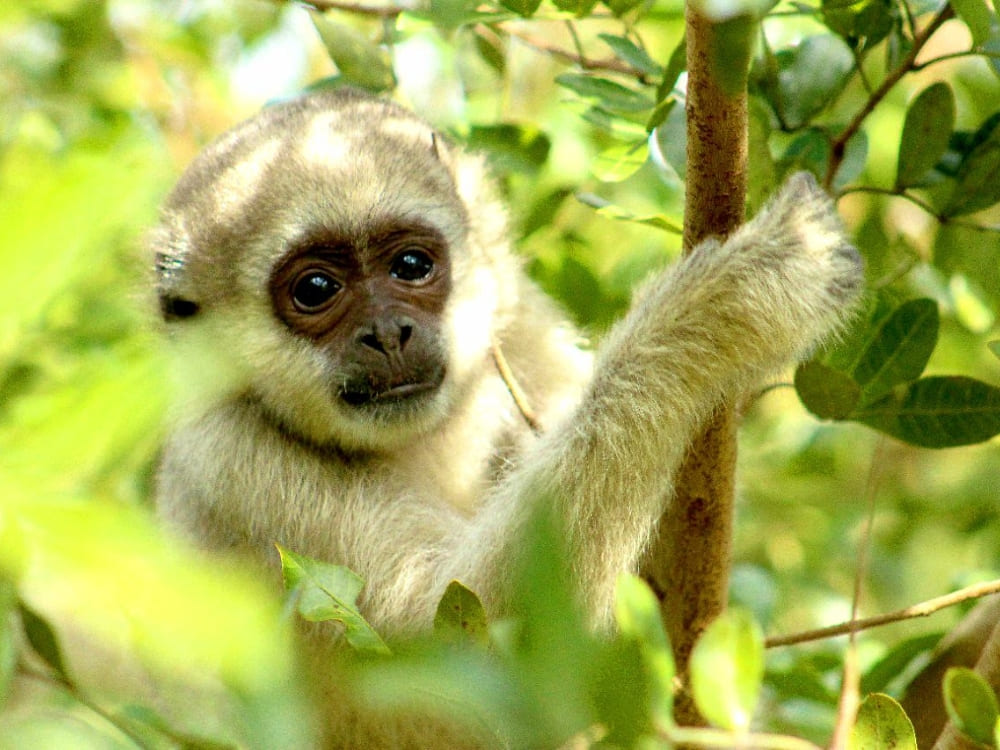
    7. Ibiti Project (Minas Gerais)

    Focused on Atlantic Forest regeneration and regenerative tourism, the project reforests degraded areas and protects native fauna—most notably the Northern Muriqui—in total harmony with the villages in the Ibitipoca region.

     A light-furred Northern Muriqui monkey resting among green tree branches in the Atlantic Forest, protected by the Ibiti Project in Minas Gerais.
    .

    How to help: Practice regenerative tourism by visiting the project and prioritize the consumption of sustainable products produced by the local community.

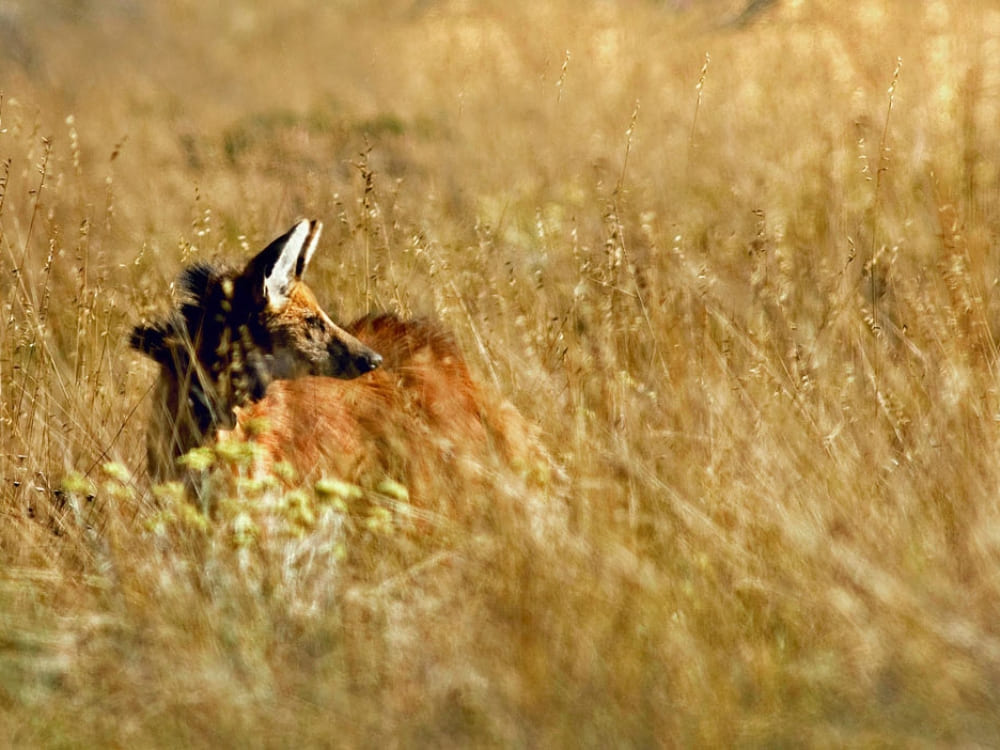
    8. Lobos da Canastra Program – Pró-Carnívoros Institute (Minas Gerais)

    Operating in the Serra da Canastra, this project focuses on protecting the Maned Wolf, monitoring animals and working with rural producers to mitigate conflicts and promote peaceful coexistence in the Cerrado.

     A Maned Wolf with its distinct reddish-brown fur partially hidden while standing in tall, dry grass in the Cerrado biome.
    Photo: Adriano Gambarini

    How to help: Spread the word about the project’s educational campaigns (such as “I am a friend of the wolf”) or make donations through the Pró-Carnívoros Institute website.

    9. Mateiros Artisans Association (Tocantins)

    An emblematic example of conservation through sustainable use, the association acts as a guardian of the Cerrado in Jalapão. The harvest of Golden Grass (Capim Dourado) is conducted under strict regulations that respect the plant’s seeding cycle, ensuring ecosystem regeneration and income for quilombola communities.

     A group of women standing in a lush green field under a cloudy sky, holding up woven handicrafts made from Golden Grass in the Jalapão region.
    Photo: Loiro Cunha

    How to help: Support community-based tourism when visiting Jalapão and purchase original handicrafts with a seal of origin, respecting the official harvest period.

    10. “Na Rota do TamanduAÍ” Project – Tamanduá Institute (Maranhão)

    Operating in Lençóis Maranhenses, this project studies and protects the Silky Anteater, the smallest anteater species in the world. The initiative trains local communities in sustainable ecotourism as an alternative to social vulnerability and environmental degradation.

    A small, light-brown Silky Anteater clinging to a thick tree branch with a blurred green forest background in Lençóis Maranhenses.
    .

    How to help: Opt for community-based guides and itineraries in Lençóis Maranhenses and support the environmental education campaigns of the Tamanduá Institute.

    Earth Day 2026 Celebrates the Power of Individuals in Environmental Advocacy

    Since 2009, a UN resolution has established April 22nd as International Mother Earth Day or Earth Day, an international date created to raise awareness about the importance of environmental preservation and to encourage concrete actions against issues such as pollution, climate change, and biodiversity loss.

    The celebration began in the United States in 1970, long before official recognition by the United Nations. Today, Earth Day mobilizes millions of people worldwide.

    The 2026 theme, “Our Power, Our Planet,” celebrates the power of individuals and community mobilization in environmental defense. Learn more about the date and global mobilization at the official website EarthDay.org.

    Support Brazilian Conservation Through Ecotourism with PlanetaEXO

    PlanetaEXO is a platform dedicated to responsible ecotourism, connecting travelers to authentic nature experiences and strengthening community initiatives across Brazil. The company works in partnership with local communities, guides, and conservation projects to promote travel that values culture, biodiversity, and sustainability.

  • Where to stay in Fernando de Noronha?

    Where to stay in Fernando de Noronha?

    Discover the main neighborhoods and best accommodations across different categories in Fernando de Noronha

    Don’t know where to stay when you’re diving in Fernando de Noronha? This paradisiacal island has several accommodation options, from luxury hotels to modest guesthouses.

    When choosing the best option for you, it’s important to consider some aspects, including budget, desired comfort level, and proximity to the central neighborhoods, beaches, viewpoints, and other tourist attractions. In any situation, the recommendation is always the same: book as soon as possible to guarantee the best rooms and prices!

    Golden sunset over the Morro Dois Irmaos rock formations, a famous landscape near hotels in Fernando de Noronha.
    .

    To help you plan your trip, PlanetaEXO, an ecotourism platform that offers Fernando de Noronha scuba diving packages, has created a guide with accommodation options in different categories. See below!

    Neighborhoods in Fernando de Noronha

    Despite its abundant natural beauty, Fernando de Noronha is small, covering only 26 km² and comprising 13 officially mapped neighborhoods. Hotels are located throughout the entire island, but some areas stand out:

    • Vila dos Remédios: The center of Noronha, with many restaurants and bars, is also conveniently near the beaches of Meio, Cachorro, and Conceição.
    • Floresta Velha: Located close to Vila dos Remédios, it’s a quiet and tree-lined neighborhood with a privileged view of Morro do Pico.
    • Floresta Nova: One of the newest neighborhoods on the island, it’s right next to Floresta Velha and has excellent access to Cachorro and Meio beaches.
    • Vila do Boldró: Situated near Boldró Beach and the Tamar Project, it’s perfect for those seeking tranquility. Fortinho do Boldró, a viewpoint built by the Portuguese in the 18th century, is one of the region’s major attractions.
    • Vila do Sueste: In the south of the island, the neighborhood is renowned for its proximity to Sueste Beach and for housing some of the most luxurious hotels in Fernando de Noronha.

    👉 Read more: How to get to Fernando de Noronha, Brazil?

    Luxury hotels in Fernando de Noronha, Brazil

    Considered one of the most sophisticated destinations in Brazil, Fernando de Noronha boasts several luxury hotels that prioritize experiences with maximum comfort and personalization.

     Luxury hotel deck featuring a swimming pool and comfortable lounge chairs facing the iconic Morro do Pico in Brazil.
    Photo: Hamares Boutique Hotel

    These types of accommodations are characterized by elegant architecture and decor, spacious rooms with privileged views of the island’s most beautiful landscapes, a variety of common areas, guided activities, and premium services.

    Pousada Corveta

    Pousada Corveta stands out for its contemporary design and exceptional proximity to the island’s main historical sites and restaurants. The inn combines modern sophistication with a cozy atmosphere, featuring a high-end restaurant on-site that serves refined local cuisine.

    The accommodations are divided into categories like Superior and Deluxe, offering clean, minimalist decor with premium linens, smart TVs, and air conditioning. Common areas include a charming reception lounge and an outdoor deck where guests can enjoy the island breeze while being steps away from the vibrant local life.

    Modern exterior of Pousada Corveta with a metal sign, wooden walkways, and tropical plants, highlighting where to stay in Fernando de Noronha.
    .

    Address: R. São Miguel, 342 – Vila dos Remédios

    Pousada Mirante

    Renowned for its breathtaking panoramic views of Boldró Beach (150 m away) and the iconic Morro do Pico, Pousada Mirante’s main differentiator is the sunset experience, arguably one of the best on the island, which guests can enjoy directly from the property’s extensive wooden decks and lookout points.

    Modern exterior of Pousada Mirante featuring a long rectangular swimming pool, sun loungers, and wooden pergolas, highlighting premium hotels in Fernando de Noronha.
    .

    The rooms are designed to blend into the natural landscape, often featuring private balconies with hammocks that face the ocean. The common areas emphasize relaxation, with a focus on open-air spaces, a rustic-chic breakfast area, and a deep connection with the surrounding ecological preserve.

    Address: R. Eurico Cavalcanti de Albuquerque, s/n – Vila do Boldró

    Nannai Noronha

    Nannai Noronha offers a boutique luxury experience focused on sustainability and elegance. Located near Sueste Bay, it provides a sanctuary of privacy and silence. Its standout feature is the personalized service and the seamless integration of high-end architecture with the island’s raw nature.

    The accommodations are spacious bungalows built on stilts to minimize environmental impact and apartments facing the garden. The common areas include a signature restaurant, TiaTê, and an infinity pool that overlooks the turquoise waters, providing an atmosphere of absolute exclusivity.

    Couple in white bathrobes relaxing on the private deck of a rustic thatched-roof bungalow with views of Morro do Pico at a top hotel in Fernando de Noronha.
    .

    Address: BR-363 – Vila do Sueste

    👉 Read more: 10 Luxury Ecolodges in Brazil: Sustainable Tourism and Premium Services

    Pousada Maravilha

    A symbol of luxury in Noronha, Pousada Maravilha features an infinity pool that seems to merge with Sueste Bay (50 meters away). The service is highly personalized, aiming to provide a seamless blend of comfort and natural beauty for discerning travelers.

     Wooden deck with comfortable lounge chairs beside an infinity pool overlooking the ocean and Morro do Pico at a hotel in Fernando de Noronha
    .

    The accommodations consist of sophisticated apartments and private bungalows, the latter offering private hot tubs on spacious balconies with unobstructed sea views. Common areas include a renowned gourmet restaurant and a wellness center, all designed with wide-open structures to maximize the stunning vistas.

    Address: BR-363, s/n – Vila do Sueste

    Pousada Morena

    Pousada Morena is only 850 meters away from Praia da Conceição and Vila dos Remédios, also offering a spectacular view of the Morro do Pico. One of its main highlights is the infinity-edge pool and the complete spa facilities, including a sauna and hydrotherapy, which provide a resort-like feel within a boutique setting.

    The rooms and bungalows are elegantly decorated, many featuring private balconies with hammocks and views of the Atlantic. The property boasts lush gardens and a breakfast area where guests can enjoy regional delicacies while watching the island’s famous sunrise.

    Aerial view of Pousada Morena featuring dark-roofed cabins, a central blue swimming pool, and hot tubs surrounded by lush forests in Fernando de Noronha.
    .

    Address: R. Nice Cordeiro, 2600 – Floresta Velha

    Hamares Boutique Hotel

    Hamares Boutique Hotel stands out for its modern, clean architecture and a fresh, “new-luxury” feel. Only a short walk away from Praia do Meio and near attractions like the Shark Museum and Santo Antonio Fort Ruins, it offers a sophisticated base for travelers who appreciate design and comfort.

    The suites are bright and airy, equipped with high-end mattresses, coffee machines, and modern bathrooms. The common areas include a beautiful central pool area surrounded by sun loungers and a bar that serves artisanal cocktails, creating a perfect social hub after a day of exploring.

    Woman wearing a straw hat relaxing on a wooden deck by an infinity pool with a stunning view of Morro do Pico at a luxury hotel in Fernando de Noronha, Brazil.
    .

    Address: R. Amaro Preto, 472 – Floresta Velha

    Mid-range accommodations in Fernando de Noronha

    When looking for where to stay in Fernando de Noronha, many tourists focus on the balance between comfort and fair prices.

    Cozy hotel room featuring a double bed, a single bed, and an open doorway leading to a sunny outdoor balcony in a Fernando de Noronha accommodation.
    Photo: Pousada Germana

    Mid-range guesthouses and hotels offer excellent cost-efficiency for couples, families, and larger groups in terms of rooms, activities, and services provided. A bit simpler than luxury accommodations, but still featuring everything you need for a lovely lodging experience.

    👉 Read more: When is the Best Time to Dive in Fernando de Noronha, Brazil?

    Pousada do Vale

    Pousada do Vale is an eco-friendly oasis known for its lush tropical gardens and its commitment to sustainability, including an on-site organic orchard. A unique highlight is the spa with holistic therapies and relaxing massages.

    The accommodations range from cozy standard rooms to more spacious suites, all decorated with regional art and wooden accents. Common areas are centered around nature, featuring a swimming pool and a restaurant that often uses ingredients harvested from the inn’s own garden.

    Swimming pool surrounded by dense tropical forest and lounge chairs at a sustainable pousada in Fernando de Noronha.
    .

    Address: R. Pescador Sérgio Lino, 18 – Jardim Elizabeth

    Pousada da Germana

    Located in the historic Vila dos Remédios, Pousada da Germana is a traditional favorite known for its warm hospitality and “home away from home” feel. Its main advantage is the unbeatable location, allowing guests to walk to the island’s best beaches like Praia do Cachorro and Praia do Meio in just a few minutes.

    The rooms are functional, clean, and comfortable, equipped with all essential amenities like air conditioning and minibars. The common area is dominated by a cozy breakfast room where a rich, homemade buffet is served, reflecting the authentic charm of a hotel in Fernando de Noronha.

    Address: R. Mestre Gouveia, s/n – Vila dos Remédios

    Pousada Tubarão

    Rustic and authentic island experience with a focus on practicality and a welcoming environment. Pousada Tubarão is well-regarded for its helpful staff and the lovely garden setting that provides a peaceful retreat despite its central location.

    The rooms are functional and air-conditioned, featuring traditional decor that captures the spirit of Noronha. Guests can enjoy a shaded outdoor patio and a shared lounge area where breakfast is served, making it an excellent choice for those seeking a balance of comfort and value.

    Wooden walkway leading to rustic guesthouse rooms with white doors and small gardens in Fernando de Noronha.
    .

    Address: R. São Miguel, s/n – Vila dos Remédios

    Pousada Lua Bela

    Pousada Lua Bela has excellent infrastructure and a family-friendly environment. The property is spacious and well-located, offering easy access to both the beaches (Cachorro and Conceição) and the village.

    Accommodations include both standard rooms and bungalows, providing options for couples and families alike. The common areas are well-maintained, featuring a swimming pool and a large breakfast hall that offers a wide variety of local fruits and traditional Brazilian breakfast items every day.

    Address: R. Amaro Preto, 113 – Floresta Velha

    Basic accommodations in Fernando de Noronha

    If your budget is limited or if you intend to spend most of your day outdoors enjoying the island’s natural beauty, the best hotels in Fernando de Noronha for your travel style are the most affordable.

    Open-air common area of a hostel with a rustic wooden table and wide doors showing lush vegetation in Fernando de Noronha.
    .

    These guesthouses are simple and functional, offering modest (but clean and cozy) rooms and basic services. The locations may be a little further from the center of Noronha or the main tourist attractions, but nothing that a few minutes’ walk won’t solve.

    👉 Read more: Best Diving Spots in Fernando de Noronha

    Pousada Ilha Bela

    Charming and intimate, Pousada Ilha Bela is a guest house that prides itself on a personalized experience. Its differentiator is the quiet, secluded feel it offers while still being within reach of the island’s main attractions, making it popular for couples seeking a romantic getaway.

    The suites are tastefully decorated with a focus on light colors and natural textures, creating a serene environment. The common areas include a cozy deck and a breakfast area where guests are treated to individualized service and freshly prepared local dishes.

    Charming guesthouse exterior featuring a covered porch, wooden pillars, and a green tropical garden in Fernando de Noronha.
    .

    Address: Alameda das Amendoeiras, 544 – Centro

    Pousada Canto do Boldró

    Situated only 100 meters from Boldró Beach, Pousada Canto do Boldró is a favorite for surfers and nature lovers. Its main highlight is the proximity to the Tamar Project visitor center and the best surf breaks on the island, offering a more adventurous and localized experience.

    The accommodations are simple, rustic, and practical, designed for guests who spend their days exploring the outdoors. The common areas include an outdoor patio and a breakfast room that provides a friendly setting to exchange tips with fellow travelers.

    Address: Alameda do Boldró, 190 – Vila do Boldró

    Pousada Lenda das Águas

    Pousada Lenda das Águas has a colorful, artistic vibe in the peaceful Floresta Nova neighborhood. It stands out for its excellent cost-benefit ratio and the friendly, laid-back atmosphere that captures the “pousada” essence perfectly.

    The rooms are vibrant and comfortable, often decorated with local crafts and paintings. The common areas feature a beautiful garden and a communal terrace where guests can relax in hammocks.

    Illuminated rustic pousada exterior at dusk with tropical flowers and a welcoming atmosphere in Fernando de Noronha.
    .

    Address: Alameda dos Cajueiros, 600 – Floresta Nova

    Pousada Recanto Noronha

    Pousada Recanto is a cozy, family-run establishment located near Praia do Meio and Santo Antônio Port. It distinguishes itself through its tranquility and the lush greenery that surrounds the property, providing a very private and silent environment for its guests.

    The rooms are comfortable and maintain a classic island style with wooden furniture and essential modern comforts. The common spaces include a pleasant shaded garden and a breakfast area that feels like a private terrace, perfect for a slow start to the day.

    Address: R. da Consolação, 118 – Vila dos Remédios

    Noronha 350

    Noronha 350 blends comfort and rustic charm, offering both private suites for maximum privacy and modern shared dormitories. The property stands out for its inviting common areas, including a fully equipped guest kitchen and lush outdoor spaces designed for relaxation and integration with the island’s nature.

    Guests start their day with a fresh breakfast served in a serene setting surrounded by greenery. With a focus on personalized hospitality, the hostel provides the perfect balance of convenience and well-being.

    Woman having breakfast in Noronha
    @noronha350

    Address: R. Primavera, 105 – Vacaria

    Aloha Noronha

    Aloha Noronha operates with a spirit of adventure and integrated tourism services. Well-known for  the “lifestyle” experience, it often assists guests with curated island tours and activities, making it ideal for active travelers.

    The guest house features modern, clean rooms with a youthful and energetic vibe. Common areas are designed for social interaction, featuring bright decor and comfortable spots to plan the next day’s trekking or diving adventures.

    Address: R. Amaro Preto, 487 – Floresta Velha

    Planning your trip with PlanetaEXO

    Don’t want the hassle of booking hotels in Fernando de Noronha, hiring instructors for diving activities, and dealing with all the logistics of planning a trip? Then you’re in the right place!

    At PlanetaEXO, an ecotourism platform that offers Fernando de Noronha scuba diving packages, we take care of everything you need for a smooth and unforgettable trip, including accommodation, itineraries, transfers, and much more. Contact us now!

  • A Father and Daughter Expedition Through the Waters of Fernando de Noronha

    A Father and Daughter Expedition Through the Waters of Fernando de Noronha

    Meet Jean and Mailys, a French father and daughter who dove into the beauty of the crystal-clear seas of Fernando de Noronha.

    Some trips are taken to see the world, while others are meant to reconnect with those we love. For Jean Laprevotte (60), a Frenchman who has called São Paulo home for just over two years, the journey to Fernando de Noronha was the perfect chance to cross an iconic destination off his Brazil bucket list.

    But his motivation went beyond simple tourism. In early 2026, he and his daughter, Mailys (26), embarked on this adventure to celebrate a major milestone: her completion of a master’s degree in Marine Biology.

    Father and daughter taking a selfie on a rocky beach with the Morro Dois Irmãos rock formations and the ocean in the background.
    .

    To turn this celebration into a deep and authentic experience, Jean relied on the assistance of PlanetaEXO, an ecotourism platform specializing in trips to Fernando de Noronha, bridging the gap between the family’s wishes and the magic of the archipelago.

    The Magic of a Wild Island

    Upon arriving in Noronha, what first captivated Jean was the impressive state of preservation. “It is a place of wild beauty, very well preserved. What I found most incredible is that there are no buildings on the beachfront; it is nature that truly speaks there.

    Scenic coastal view of Fernando de Noronha featuring turquoise waters, a sandy cove, and the Morro Dois Irmãos rock formations framed by green vegetation.
    .

    Unlike other destinations, the scenery in Fernando de Noronha is dictated by the horizon. Without the distractions of the typical busy city routine, Jean and Mailys could dedicate themselves to what truly mattered: walking the trails and observing the local wildlife—from curious crabs to majestic birds crossing the clear, sunny sky.

    Diving Into Mailys’ World

    Given Mailys’ specialization in Marine Biology and her focus on corals and reef fish, the father-daughter dynamic was reversed underwater. It was she who guided Jean through the rich biological diversity of the islands of Noronha.

    “For my daughter, who has already gone diving in Barbados, the Dominican Republic, and the Seychelles, Noronha was one of the most interesting places she has ever seen,” notes Jean.

    Together, they explored the deep blue and encountered sharks, turtles, rays, and octopuses. For the father, seeing his daughter’s passion up close was the greatest gift. “The experience allowed for a shared journey and was very positive and relevant to my daughter’s profession. It was a moment of mutual discovery.

    Two scuba divers exploring a rocky seabed while observing a reef shark swimming below them in the clear blue water.
    .

    👉 Read more: What is the best time to dive in Fernando de Noronha?

    Connections That Transcend Tourism

    The most striking element was not just what they saw, but how they lived those moments. One of the highlights was the direct contact with local conservation efforts.

    “Seeing my daughter talking and exchanging experiences with a biologist working on dolphin observation was something very special. It brought professional and human meaning to the trip,” said Jean, impressed by the receptivity of the island’s professionals and the knowledge exchange they had with Mailys.

    He returned to São Paulo with a positive perception of the preservation model adopted in Fernando de Noronha. “They take conservation seriously, limiting plastic and protecting species. It is an example that stays with you.”

    Father and daughter smiling for a selfie at a viewpoint overlooking the turquoise ocean and the iconic Morro Dois Irmãos rock formations.
    .

    👉 Read more: 10 fun facts about Fernando de Noronha

    The Legacy of the Experience

    More than just a diving trip, Jean and Mailys’ journey was an opportunity to celebrate achievements and strengthen bonds.

    Through PlanetaEXO’s curation, they returned home with renewed spirits and the certainty that the ocean will always be the place where they reunite—a perfect frame for a father’s pride and a marine biologist’s bright curiosity against the backdrop of the vast ocean.

  • 10 Facts about Vale do Pati, Brazil

    10 Facts about Vale do Pati, Brazil

    Looking for an experience in Brazil’s Vale do Pati, the trekking hub of Chapada Diamantina? Learn all about it before booking your trip!

    Amidst Chapada Diamantina National Park, in the state of Bahia, Vale do Pati is a dream destination for trekkers all over the world. Hiking trails, waterfalls, rock formations, and beautiful landscapes make this the perfect place for travelers seeking adventure and full immersion in nature.

    Want to learn more about this fantastic place? PlanetaEXO, an ecotourism platform specializing in Chapada Diamantina tours, has put together 10 facts about Vale do Pati. Check them out below!

    1. Thousands of Football Fields Can Fit Inside Vale do Pati

    Chapada Diamantina National Park ranges over 152,142 hectares—bigger than Hong Kong, Singapore, and Malta—while Vale do Pati’s total area is 12,300 hectares.

    Let’s put it in easier terms: Vale do Pati is as big as 17,227 football (soccer) fields!

    Two hikers sit on a rocky cliff admiring the vast, green expanse of Vale do Pati in Chapada Diamantina National Park.
    .

    👉 Read more: How to Get to Chapada Diamantina National Park?

    2 – The Downfall of the Coffee Cycle and The Rise of Ecotourism

    The soil in Vale do Pati is known for excellent coffee harvests. In the heyday of the coffee cycle—one of Brazil’s most important economic eras—during the 19th century, over 400 families lived in the area. There was a school, a church, and a city hall.

    Scarce workforce and soil exhaustion caused by mass production prompted the downfall of the coffee cycle in 1930. Consequently, Vale do Pati was abandoned until the late 1970s. In 1985, the region was incorporated into the national park, but this time, only ten families called Pati their home. 

    To this day, locals make a living from ecotourism activities, offering their own homes as a safe place for backpackers to rest.

    3. Authentic Stay Experience in Vale do Pati, Brazil

    One of the most relevant facts about Vale do Pati is that this is a remote location, which means there are no hotels, lodges, buildings, or stores. If you’re planning your vacation to this part of Chapada Diamantina, keep in mind that you’ll stay in the locals’ houses—the very same ones we’ve mentioned before.

    The accommodations are modest but still cozy and very clean. The authentic stay experience also includes home-cooked meals. If you’re interested in eating typical Brazilian food made by people who know everything about it, this is your chance!

    By staying in the natives’ homes, you’ll get the full experience of what it’s like to live in nature. This is the perfect opportunity to fully immerse yourself in Bahia’s culture, learn all about your hosts’ day-to-day life, and support the local communities to make a living in a sustainable, dignified way.

    Modest local houses equipped with solar panels sit in a lush green valley beneath a colorful sunset sky in Vale do Pati.
    .

    👉 Read more: Where to stay in Chapada Diamantina?

    4. Best Trekking Destination in Brazil

    Brazil’s Paty Valley is a popular ecotourism destination due to its great trekking conditions. In 2010, the Ministry of Tourism nominated it the best hike in the country and one of the top circuits on the planet.

    Hiking here is a given to reach pretty much all the iconic attractions of the national park. The good news is that there are options for expert hikers or people with no experience in this type of excursion. The trick is asking your tour guides for recommendations that fit your skills and desired itinerary!
    5. Waterfalls in Vale do Pati

    The waterfalls in Vale do Pati are breathtaking and are considered essential parts of the trekking circuits. If you don’t bathe in a waterfall after a long hike, you’re not enjoying your vacation right!
    Cachoeirão: Its nearly 300-meter fall boasts several smaller waterfalls during the rainy season. To get the full experience, hike on the top side to catch the amazing view of the falls surrounded by mountains and vegetation. Then, explore closer to the well at the bottom.

    Cachoeira dos Funis: Fairly small, the 30-meter fall that pools into a natural well at the base is the perfect place to cool off and relax.

    A hiker stands on a boulder looking up at the towering Cachoeirão waterfall cascading down steep, rocky cliffs.
    .

    👉 Read more: Chapada Diamantina Waterfalls: Best Trails and Hidden Gems

    6. Atlantic Forest

    Vale do Pati is one of the few places in Chapada Diamantina where there still are remnants of the Atlantic Forest, while most of the park is covered by the Caatinga and Cerrado flora, which proves the richness of the region’s biodiversity. 

    The Atlantic Forest features unified treetops that create plenty of shade and humidity, dense vegetation, and a great diversity of mammals, birds, insects, reptiles, amphibians, and fish.

    7. Stunning Lookouts

    Vale do Pati is beautiful everywhere, but there are two specific lookouts that provide stunning panoramic views of Chapada Diamantina: Morro do Castelo and Mirante do Pati.

    At 1600 meters high, Morro do Castelo is the highest point of the national park. To get there, visitors have to face a steep climb and hike around a cave (Gruta da Lapinha).

    A hiker stands on a rocky edge framed by tree branches, looking out over the green valley toward the flat-topped Morro do Castelo.
    .

    To arrive at Mirante do Pati (1400 meters high), the hike kicks off from Guiné, a small town with great access to Chapada. After passing through rocky paths, open fields, and the banks of the Rio Preto, you’ll reach the lookout.

    The journey isn’t easy, but the beautiful views of pristine nature are the reward you need to stay motivated!

    8. A Paradise for Nature Junkies

    Although Chapada Diamantina offers hundreds of breathtaking landscapes, Vale do Pati is, undoubtedly, a true scene stealer. The amazing views, waterfalls, caves, and hiking trails make it one of the most beautiful and unique places in Brazil.

    Vale do Pati gathers everything a backpacker looks for in adventure, including isolation from the outside world, complete disconnection from digital devices, and a new perspective on what Mother Nature is capable of.

    👉 Read more: When Is The Best Time To Visit Chapada Diamantina?

    9. Sustainable Way of Life

    National parks aim for the conservation of natural resources. In other words, things work a little differently on their premises.

    In Vale do Pati, most electric/electronic devices are powered by solar energy, including cellphones, batteries, and lamps. Refrigerators run on gas and showers are cold—which, considering the warm temperatures of Chapada Diamantina, is totally fine.

    Most supplies (food, household goods, solar panels, etc.) arrive in Vale do Pati on horseback, carried by donkeys or even by the locals themselves. No cars making noise or polluting the air!

    10. Zero Internet Connection

    The last fact about Vale do Pati is that there is no internet connection along the trails and in the more isolated areas of the national park. While some residents may offer Wi-Fi, unstable connections are not uncommon.

    A backpacker sits on a jagged rock ledge enjoying a panoramic view of the steep cliffs and pristine green valleys of Vale do Pati.
    .

    Chapada Diamantina is all about nature and human connections. You’ll have everything you need while you’re there—beautiful views, gorgeous waterfalls and underground lakes, several kilometers of hiking trails, cozy accommodations, and interactions with amazing people. 

    You won’t even miss scrolling on your phone!

    Traveling to Vale do Pati, Brazil, with PlanetaEXO

    Now that you know all the important facts about Vale do Pati, it’s time to visit this fascinating destination!

    PlanetaEXO, an ecotourism platform specializing in Chapada Diamantina tours, is here to help you book the vacation of your dreams, from tailor-made itineraries to transfer options and accommodations. Contact us now!