Author: Lucas Planeta Exo

  • 10 facts about Lençóis Maranhenses National Park, Brazil

    10 facts about Lençóis Maranhenses National Park, Brazil

    One of the most beautiful destinations in Brazil is also one of the most interesting. Discover amazing facts that will make you fall in love with Lençóis Maranhenses National Park!

    Spanning 1,550 km² (155,000 hectares), Brazil’s Lençóis Maranhenses is a protected area in the northeastern state of Maranhão that features a surreal mix of white sand dunes, seasonal freshwater lagoons, mangroves, and remote fishing villages.

    At first glance, it looks like a typical desert, but here’s your first fact about Lençóis Maranhenses National Park: its almost supernatural beauty holds secrets that reveal the complexity of nature and the exclusivity of phenomena that occur in the sand dunes of Brazil—and nowhere else in the world.

    Curious to learn more? PlanetaEXO, an ecotourism platform specializing in Lençóis Maranhenses tours, has put together 10 facts about this fascinating destination. Check them out below!

    1. It’s not actually a desert

    Brazil doesn’t have deserts like the Sahara, but it does have Lençóis Maranhenses, a desert-like area formed by vast sand dunes, high biodiversity, and almost 2,000 mm of annual rain—more than entire cities like London and Berlin.
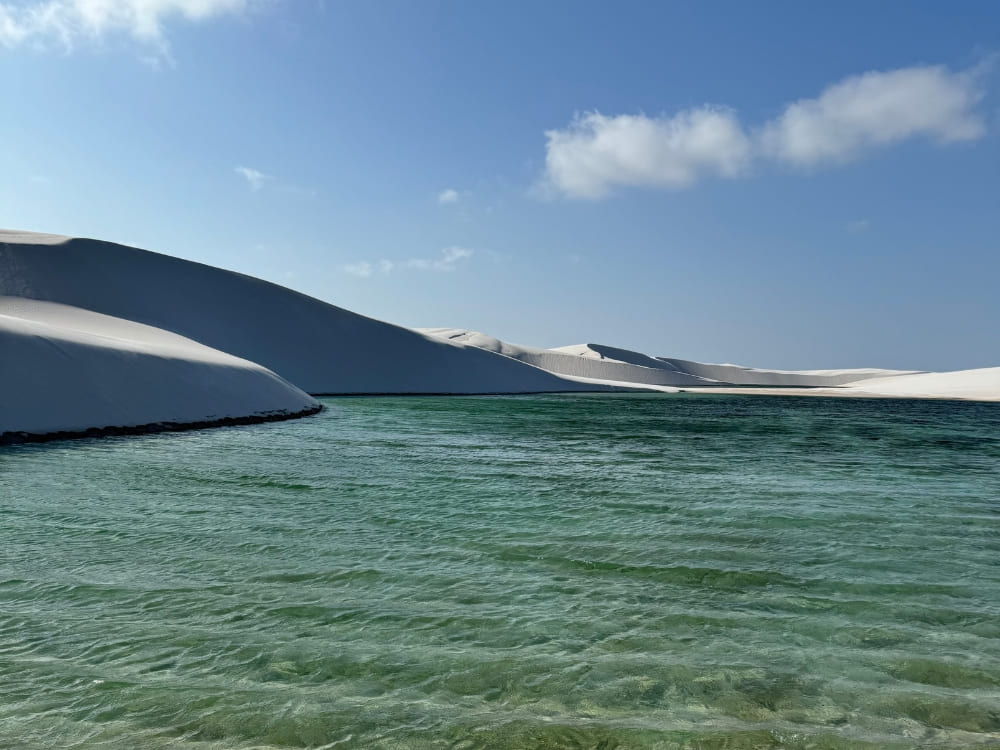
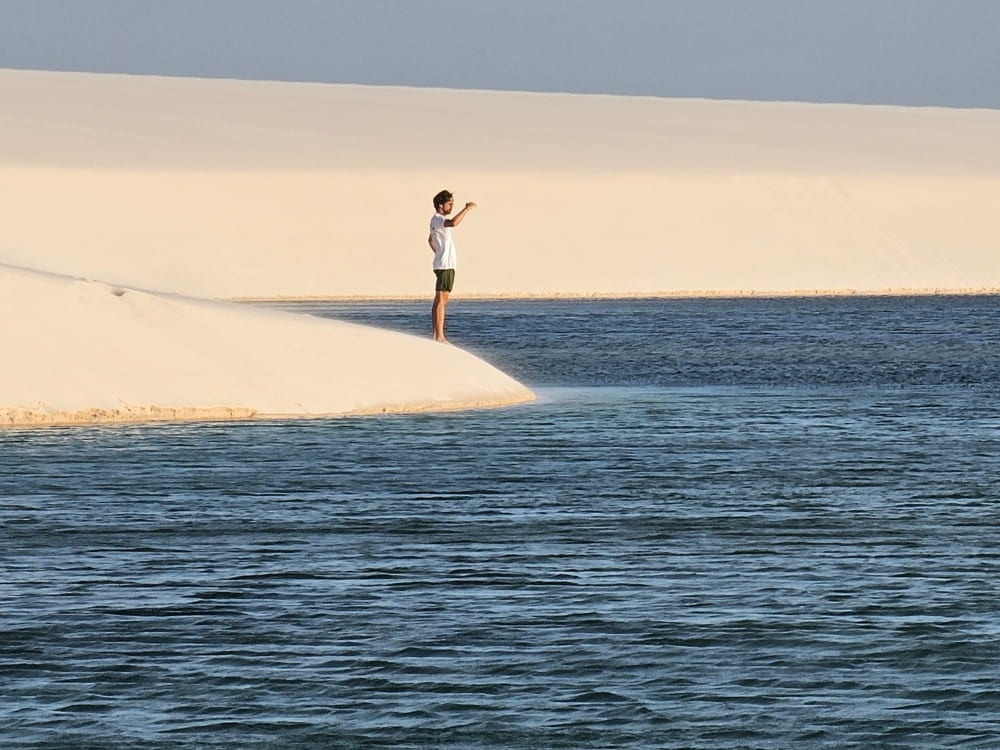
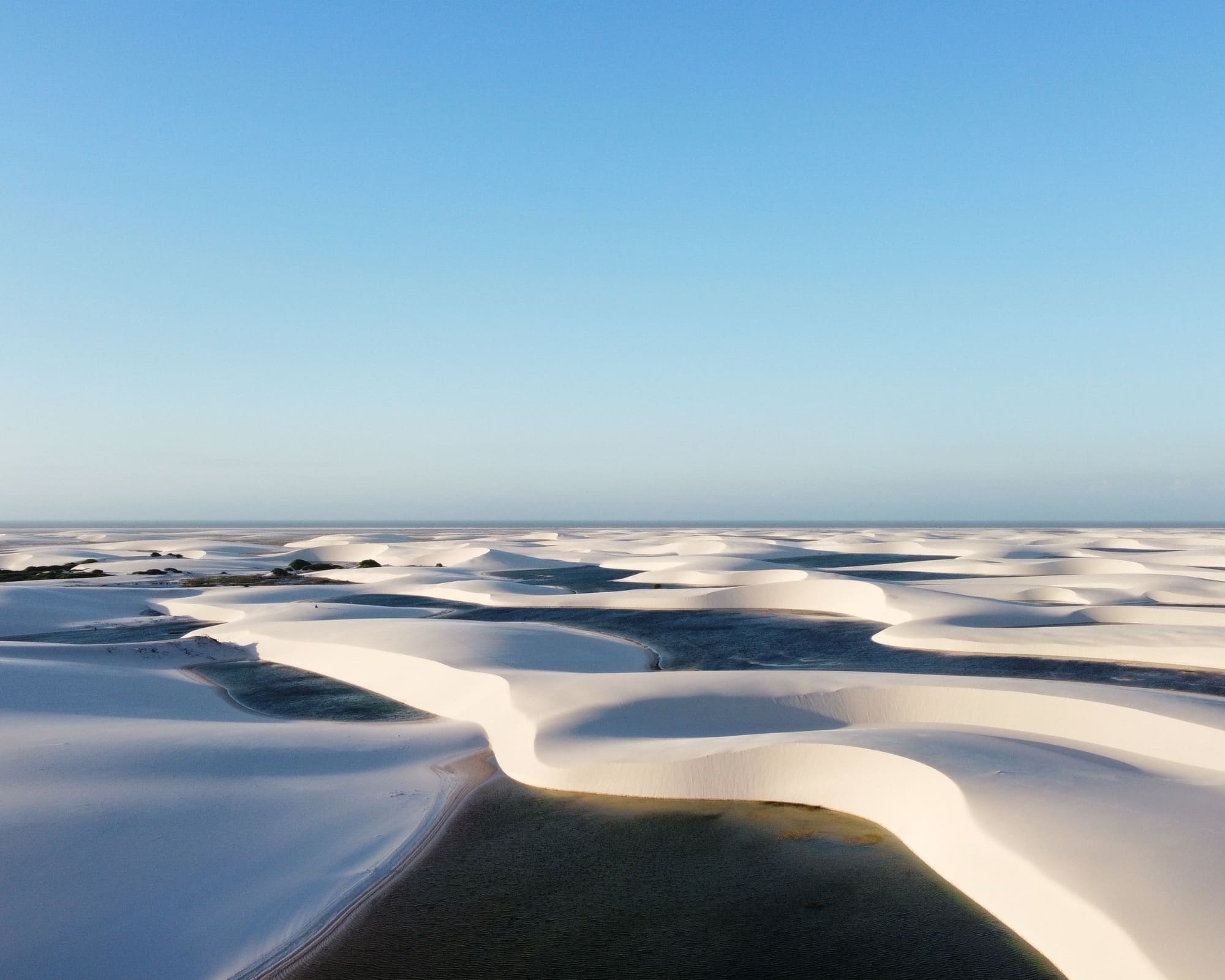
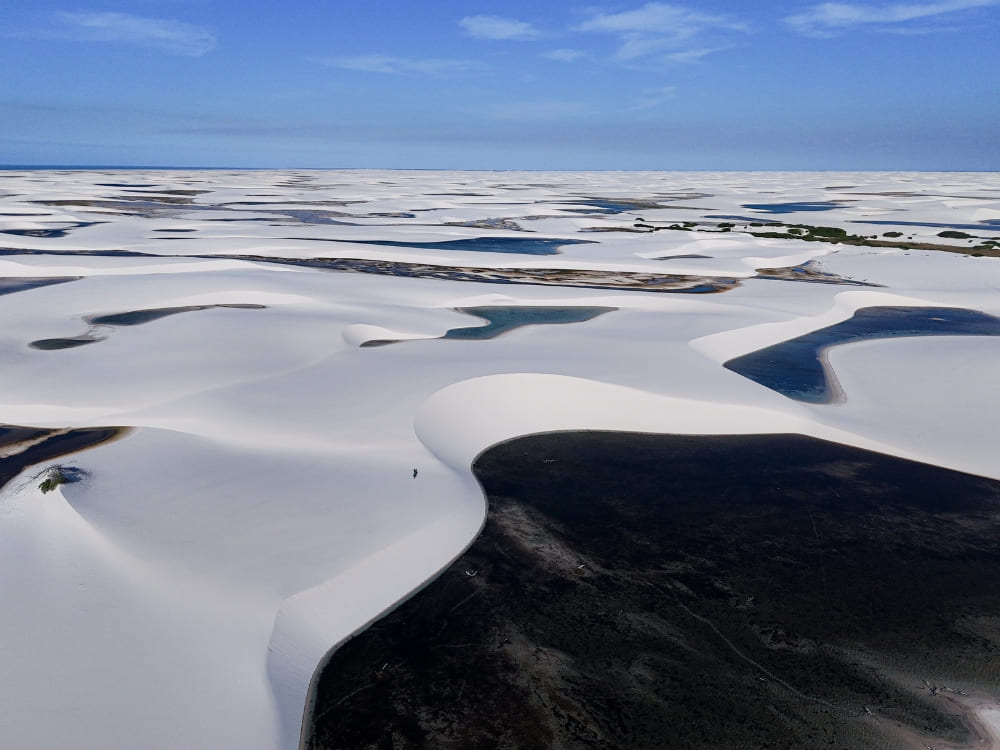
    Extensive white sand dunes meet a seasonal crystal-clear green lagoon in the Lencois Maranhenses National Park.
    .

    As a wet desert, Lençóis’ intricate environment involves meteorological and geological factors that have been occurring for thousands of years.

    👉 Read more: How Are the Dunes and Lagoons in Lençóis Maranhenses Formed?

    2. Timing is everything when you visit Lençóis Maranhenses

    One of the key facts about Lencois Maranhenses National Park is that the landscape changes dramatically with the seasons.
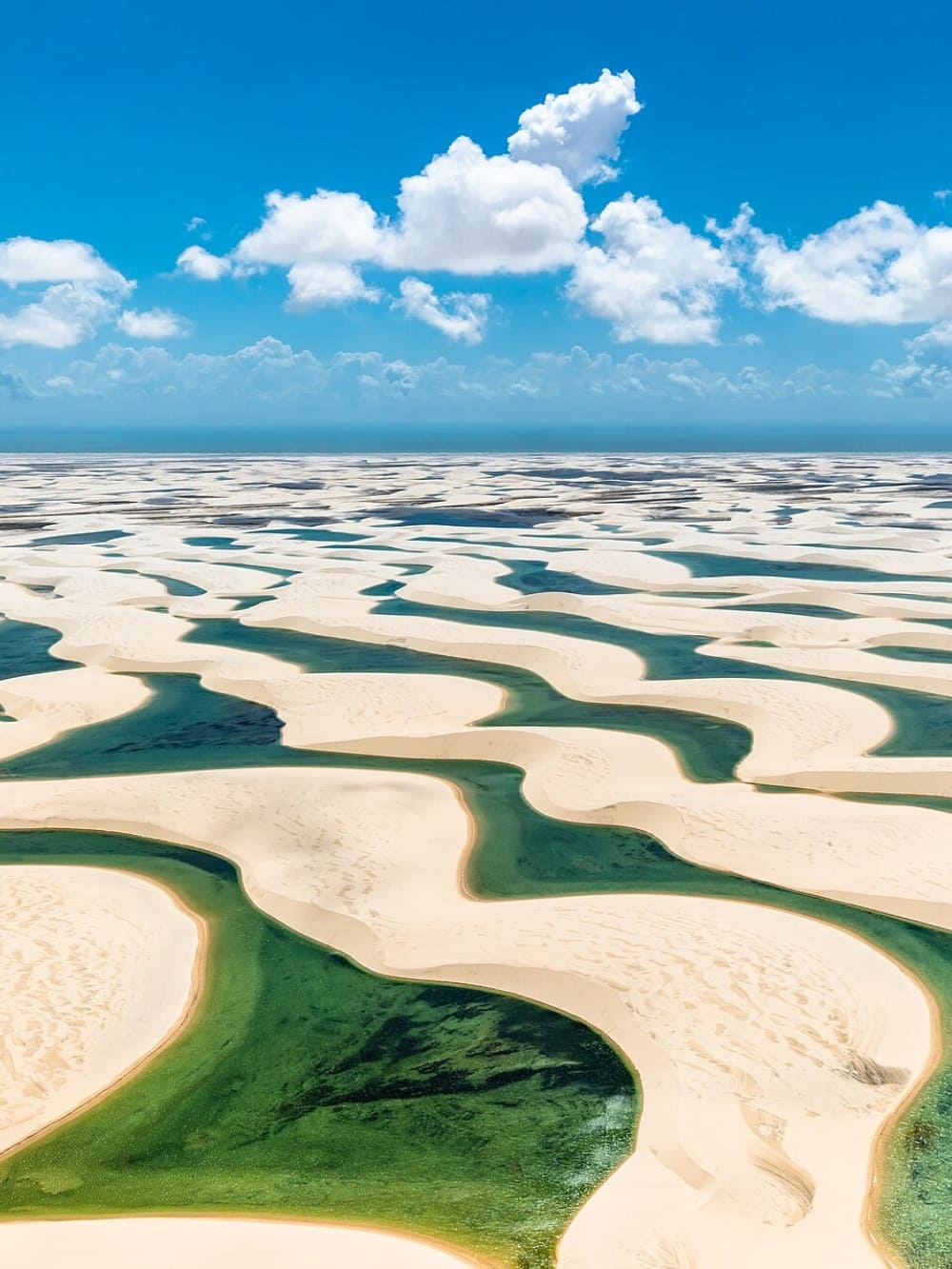
    Aerial view of white sand dunes and freshwater lagoons stretching across the Lencois Maranhenses landscape under a blue sky.
    Julius Dadalti

    From February to April, the rains fill the dunes with freshwater lagoons. Between May and September, they’re at their peak, perfect for swimming and photography. By September, many begin to dry up, revealing a significantly more arid terrain.

    No matter the month, traveling to Lençóis is worth your while. Each season offers a different way to experience this jaw-dropping destination, from lagoon-filled hikes to dune crossings under wide, open skies.

    👉 Read more: When is the best time to visit Lençóis Maranhenses?

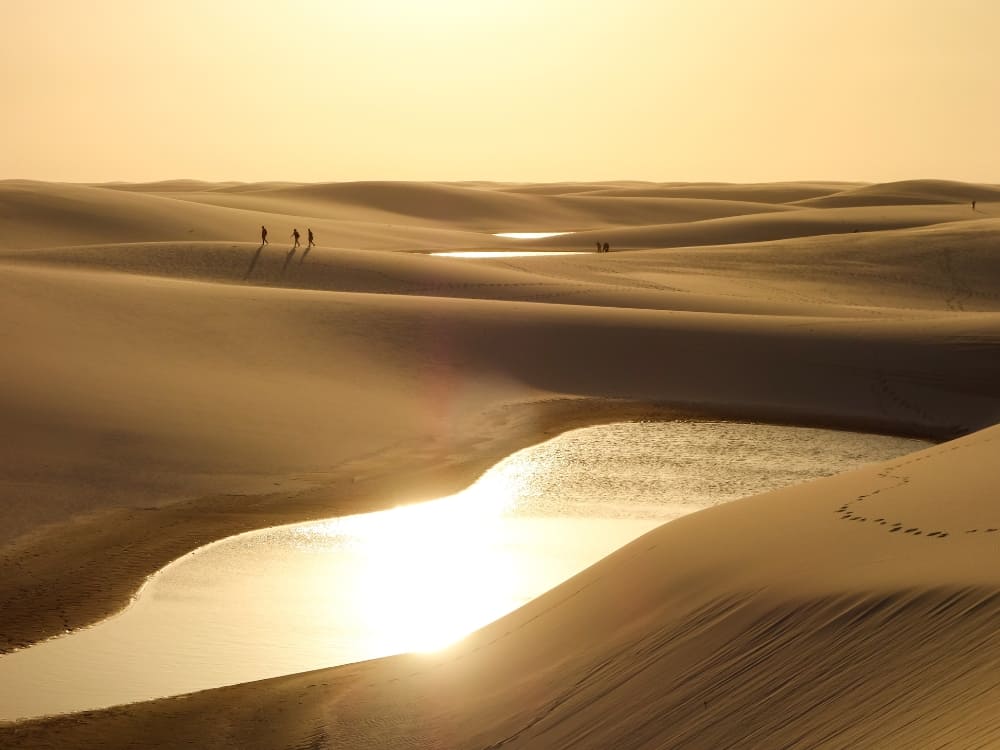
    3. The dunes can reach up to 40 meters high

    If you’re wondering just how massive Brazil’s sand dunes can get, Lençóis Maranhenses will surprise you.
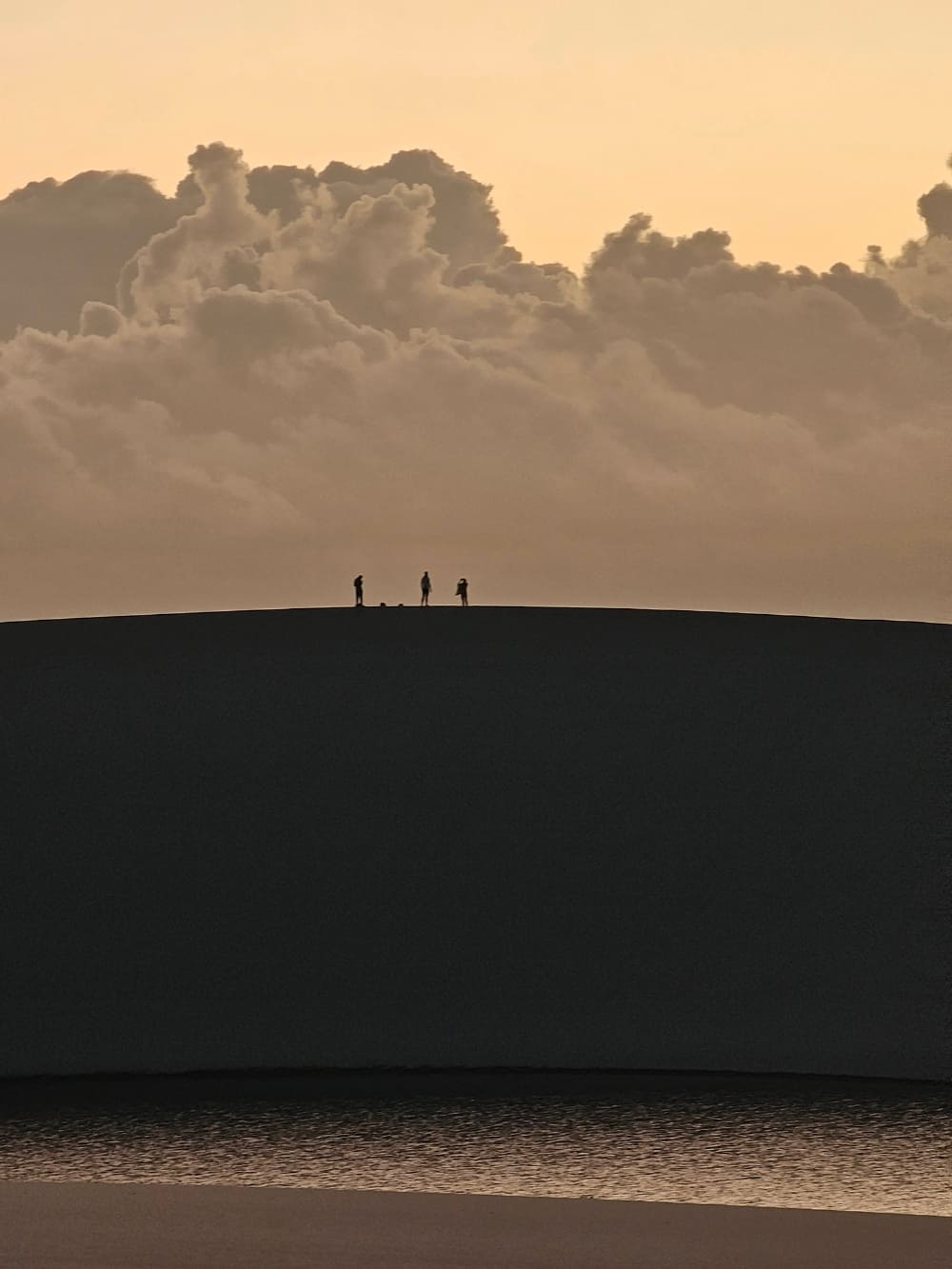
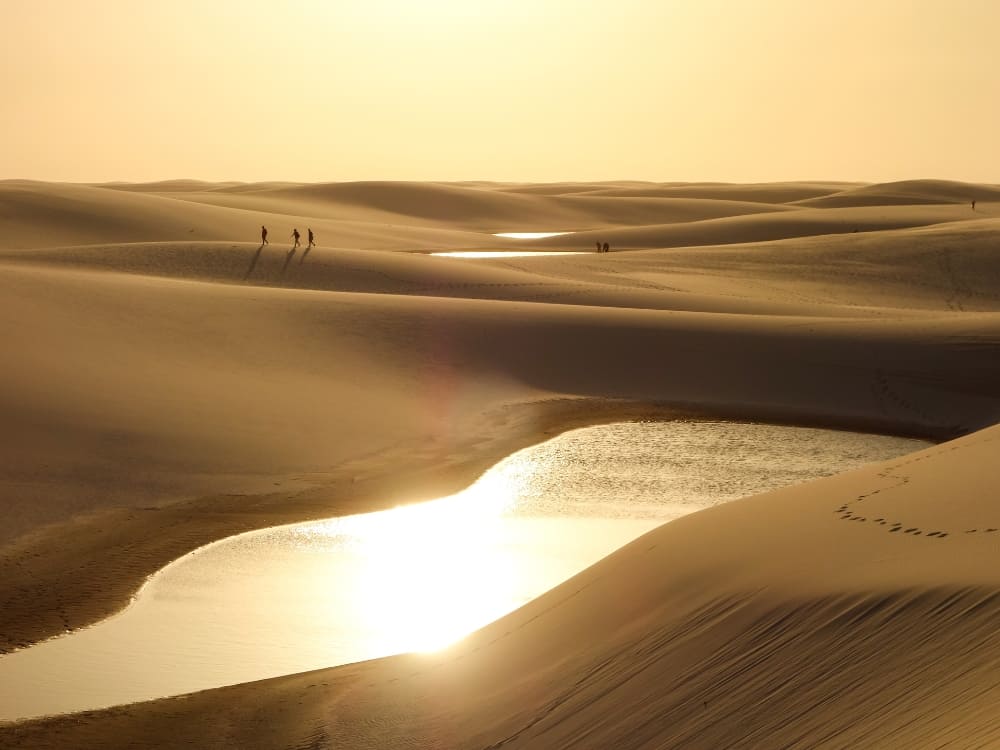
    Silhouettes of three people walking on top of a sand dune in Lencois Maranhenses during sunrise, with clouds in the background.
    .

    Some dunes rise up to 40 meters, the equivalent of a 10-story building. Walking across them feels like stepping into another world. The sand is fine, pale, and soft underfoot, while each step reveals sweeping views of blue and green lagoons nestled in the valleys below.

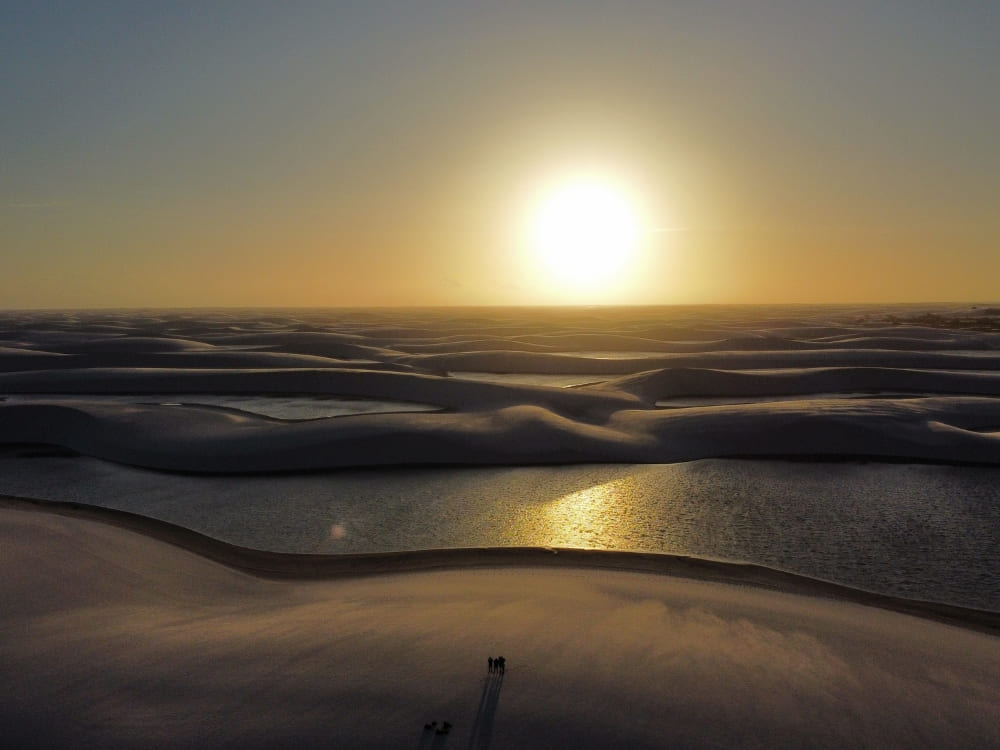
    It’s physically demanding but visually rewarding, especially during sunrise or sunset, when the light paints the dunes in golden hues.

    4. Some lagoons have fish

    Did you know there’s fish in Lençóis Maranhenses? According to scientific studies, some of the 36,000 lagoons across the national park are inhabited by wolf fish. During the dry season, they bury themselves in the mud and enter a state of dormancy that only ends when it starts to rain once again.
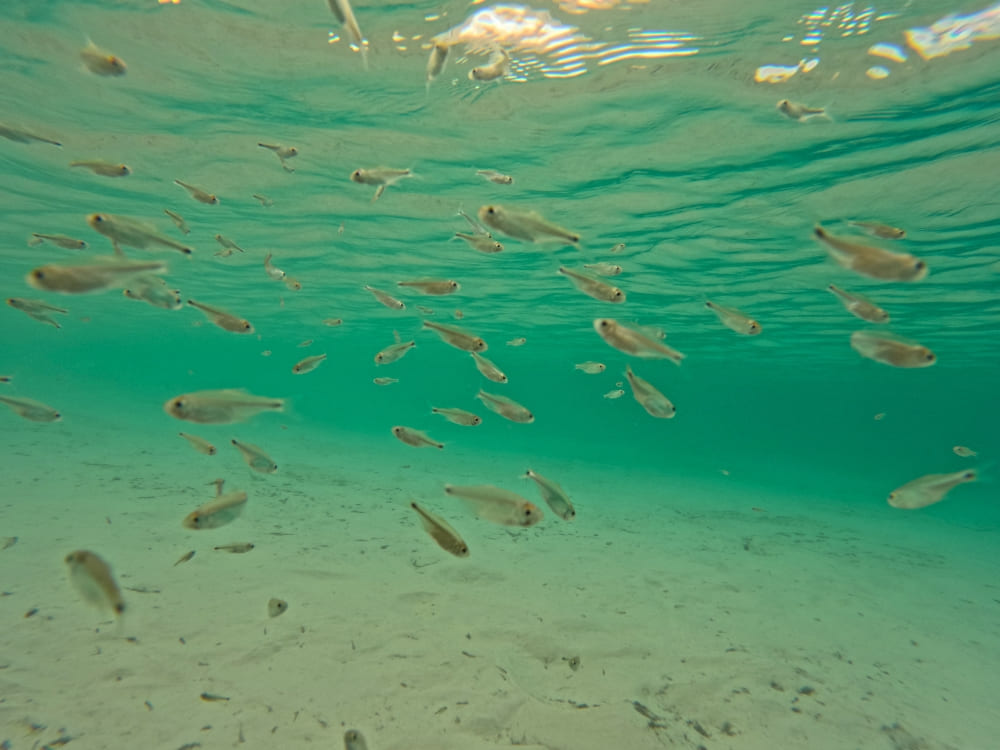
     School of small silver fish swimming in the clear, turquoise water of a freshwater lagoon in Lençóis Maranhenses.
    Photo: Isadora Sá

    This natural adaptation demonstrates how the dunes are extremely rich in terms of biodiversity, proving that resilience is an intrinsic part of environments driven by the complexity of nature.

    5. Access points

    There are three main gateways to Lençóis Maranhenses, Brazil: Barreirinhas, Santo Amaro, and Atins.
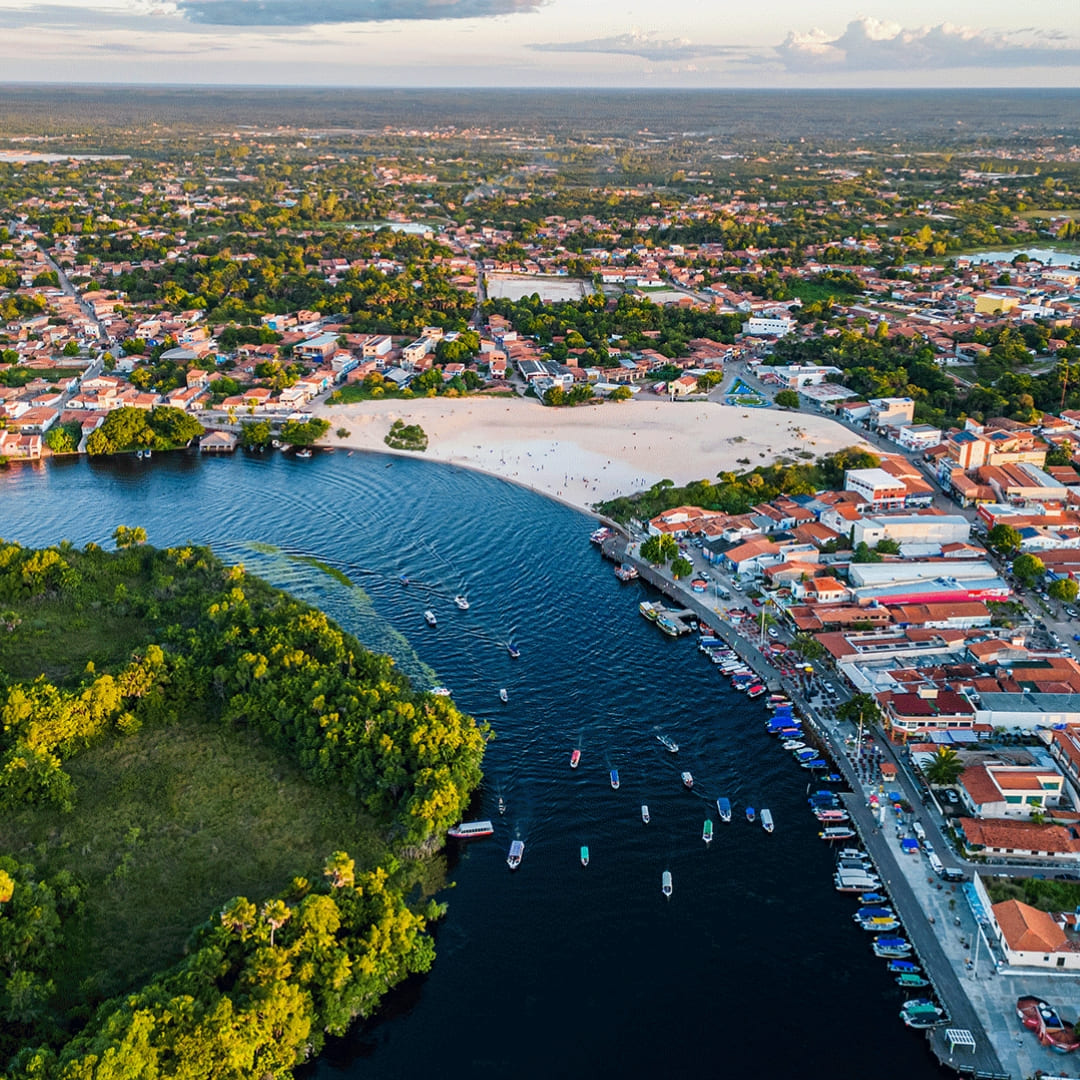
    Barreirinhas Lencois Maranhenses acess

    Barreirinhas is the most developed, offering daily tours, river transport, and great infrastructure. Santo Amaro is quieter, with easier access to some of the most stunning lagoons, perfect for travelers who want to avoid crowds. Atins is remote and laid-back, popular with backpackers and kite surfers.

    Each base city offers a different way to explore this unique region, whether you’re seeking convenience, immersion, or solitude.

    👉 Read more: How to get to Lençóis Maranhenses?

    6. Hollywood famous

    While Lençóis Maranhenses is not as famous as the Amazon Rainforest or the Pantanal, it’s not an unknown destination. In fact, it’s Hollywood famous.

    Aerial view of one of the gateway cities, showing a dark river with small boats meeting the extensive sand dunes.
    Marvel

    The park’s surreal landscape of white sand and rain-filled lagoons was featured in Avengers: Infinity War, representing Vormir, the fictional planet where the powerful Soul Stone is hidden. The scenes were shot in Atins, one of the base cities of Lençóis.

    7. The area has been inhabited for centuries

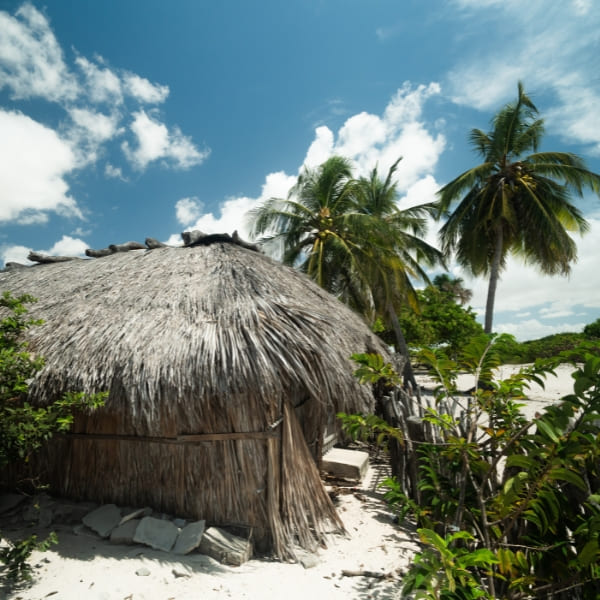
    While it might look untouched, Lençóis Maranhenses National Park has a long human history. Villages like Queimada dos Britos and Baixa Grande, located deep within the dunes, have been inhabited for generations.
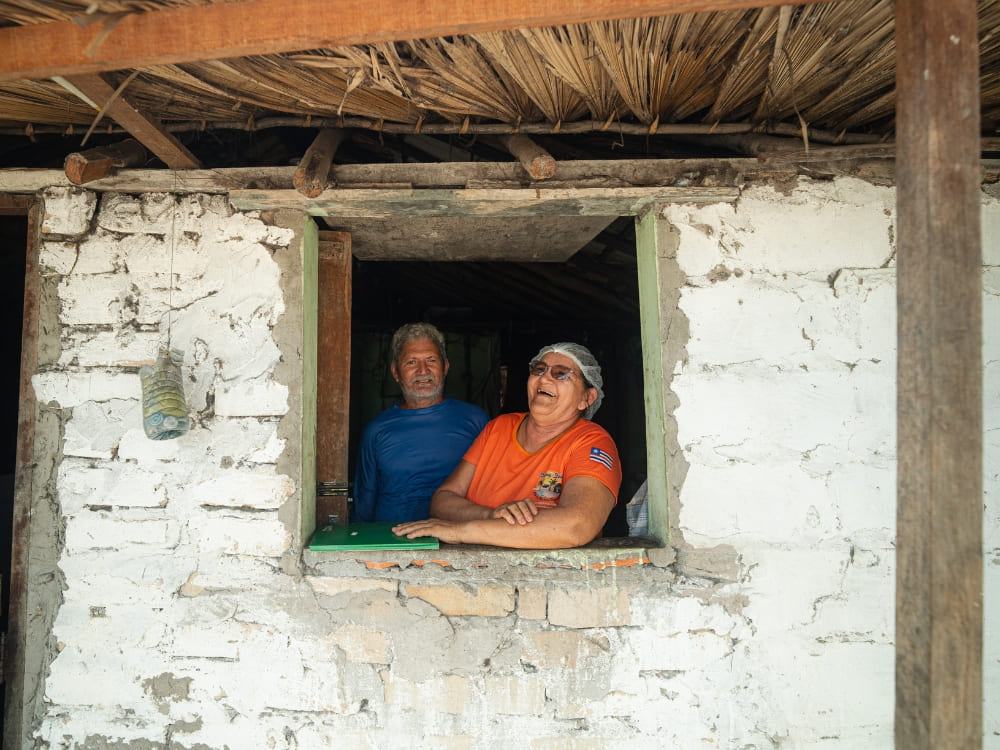
     A smiling older man and woman look out the window of a rustic, white-washed house with a thatched palm roof in Lençóis Maranhenses.
    Photo: Isadora Sá

    The families there live in harmony with the environment, depending on small-scale agriculture, fishing, and, in recent years, sustainable tourism. Their presence adds cultural depth to the region, showing that Brazil’s sand dunes are not just a pretty background but a living, breathing community space.

    8. Recognised by UNESCO as a World Heritage Site

    In 2024, Lençóis Maranhenses National Park received one of the highest recognitions on the planet: it was officially declared a UNESCO World Heritage Site.

    Facts about Lencois Maranhenses UNESCO

    This status highlights not only its surreal beauty but also its ecological importance and the need for long-term preservation. With its rare combination of vast white dunes, seasonal rainwater lagoons, mangroves, and traditional communities, the park stands out as a global landmark of nature and culture.

    9. Not just sightseeing: plenty of adventure

    Although they possess a stunning beauty, the Lençóis Maranhenses in Brazil are not merely a backdrop for contemplation and photos worthy of spotlight on social media.
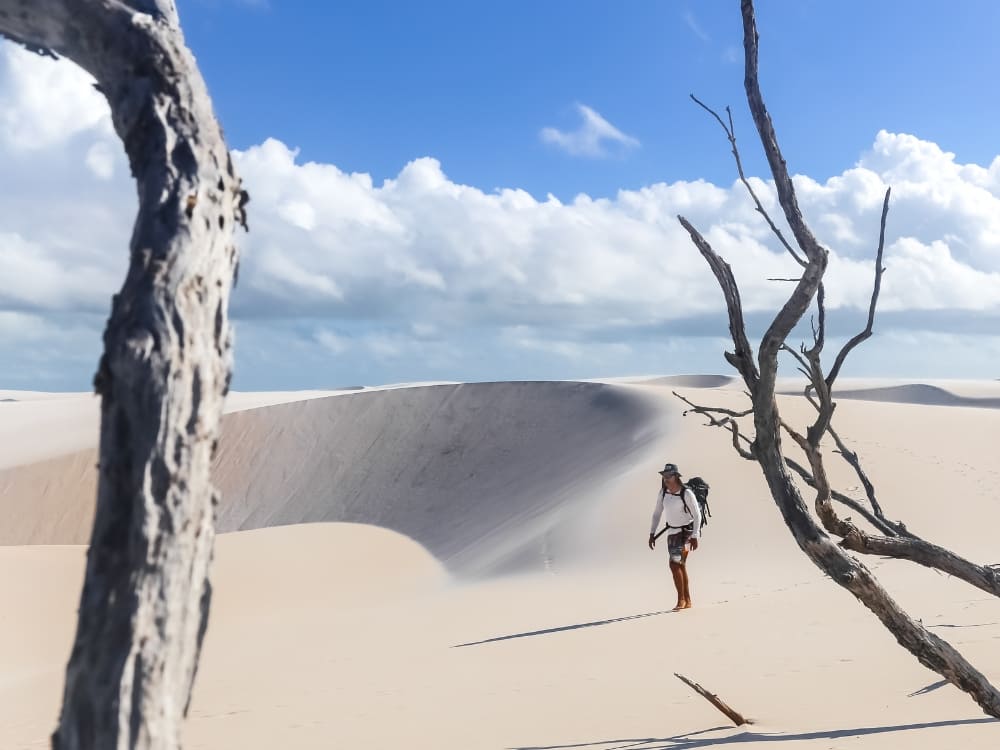
    10 facts about Lencois Maranhenses Brazil adventure
    Ma Rabelo

    As an ecotourism destination, the national park offers many adventures beyond swimming in the lagoons, such as multi-day treks—which also include overnight stays in the homes of local residents—4×4 expeditions, boiacross or boat tours on the Preguiças River, and kitesurfing at Atins Beach.

    10. You’ll probably lose your sense of direction

    Among the most surprising facts about Lencois Maranhenses is how easy it is to lose your bearings once you’re deep inside the park. The landscape repeats itself in every direction, endless hills of white sand with no roads, signs, or clear landmarks

    10 Facts about Lencois Maranhenses

    That’s why guided tours are highly recommended—not only for safety but also to ensure visitors actually reach the lagoons and remote villages. Venturing into the park without a professional guide is not advisable.

    Getting a bit disoriented, however, is part of the charm. Many travelers say that’s when the magic begins, when you stop trying to control the journey and let the scenery take over.

    Delve into Lençóis Maranhenses National Park with PlanetaEXO

    Ready to be enchanted by the paradisiacal landscapes of Lençóis Maranhenses in Brazil?

    PlanetaEXO is an ecotourism platform that specializes in Lençóis Maranhenses tours. When you travel with us, we connect you with the best local operators to ensure an unforgettable vacation. From bookings to tailor-made itineraries, our team is always ready to help. Contact us now!

  • When is the Best Time to Dive in Fernando de Noronha, Brazil?

    When is the Best Time to Dive in Fernando de Noronha, Brazil?

    Find out when is the best time to dive in Fernando de Noronha’s, with calm year-round conditions in the Inner Sea and exciting adventures in the Outer Sea during the swell season.

    Fernando de Noronha, an archipelago off the northeastern coast of Brazil, is renowned as a diver’s paradise. It’s easy to see why this UNESCO World Heritage Site is on the bucket list of divers worldwide, with its crystal-clear waters, marine life, and underwater landscapes. One of the most frequently asked questions by divers planning their trip is: “When is the best time to dive in Fernando de Noronha?”

    The answer isn’t entirely straightforward, as Fernando de Noronha has great diving conditions all year round. However, seasonal changes in weather, sea conditions, and water visibility can affect the overall experience. Let’s look at the details to help you plan the perfect trip:

    Fernando de Noronha Island
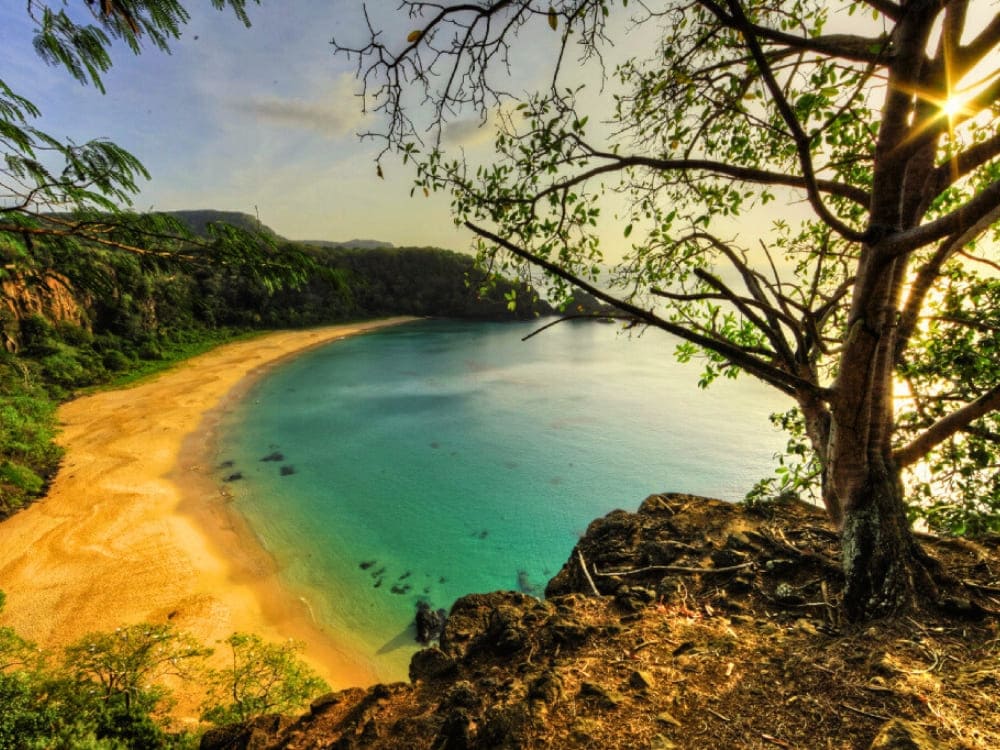
    Baia do Sancho is one of the world’s 50 top beaches

    Table of Contents:

      1. Year-Round Diving Conditions
      2. Seasonal Variations in Fernando de Noronha
      3. Wind and Sea Conditions
      4. Swells and Seasonal Waves
      5. Best Time to Dive: March to July
      6. What Awaits Underwater?
      7. Diving Highlights by Season

    Year-Round Diving Condition in Fernando de Noronha

    One of the reasons Fernando de Noronha is such a popular diving spot is that the conditions are pretty much the same all year round. Thanks to the tropical climate, the archipelago enjoys great water conditions throughout the year. The average water temperature is around 27°C (80°F), which is just right for diving without a heavy wetsuit.

    Visibility is between 25 and 50 meters (82 to 164 feet), which offers incredible views of the underwater world.

    On top of that, Fernando de Noronha is home to a protected that supports local ecosystems. Divers can expect to see all kinds of marine life, including turtles, reef sharks, rays, eels, and different species of fish. Spinner dolphins are a common sight and a highlight for many visitors.

    Diving in Fernando de Noronha
    Photo: All Angles

    You can dive year-round, but the archipelago experiences seasonal variations that affect wind, waves, and visibility. These variations may affect the quality of dives and determine which areas of the island are more suitable for diving during specific months.

    👉 Curious about Fernando de Noronha? Discover 10 interesting facts about this Brazilian island paradise.

    Seasonal Variations in Fernando de Noronha

    “Mar de Dentro” (Inner Sea) and “Mar de Fora” (Outer Sea) provide distinct diving experiences for visitors to Fernando de Noronha.

    Mar de Dentro, to the left of Ilha do Meio and facing the mainland—though still distant—is more sheltered and offers consistently stable conditions year-round. This makes it an excellent spot for diving, with minimal swell and reliable visibility.

    In contrast, Mar de Fora, located on the right side of the island, is more exposed to natural elements, making its conditions less predictable. Wind and swell can fluctuate, creating navigation challenges and reducing usability, but diving is still possible during calmer periods.

    Diving Spots in Fernando de Noronha
    Diving Spots in Fernando de Noronha

    Dry Season (August to February)

    When it comes to diving seasons, August to February marks the dry season, with stable weather, minimal rainfall, and excellent diving conditions.

    Visibility is at its peak from August to mid-October, making it ideal for underwater photography and exploring deeper sites.

    However, from mid-October to February, is the “wave season”. During this time, swells and strong waves can affect the Inner Sea, the side of the island that faces the Brazilian coast.

    These swells may stir up the water, reducing visibility and making the sea more agitated. For divers, this can mean adjusting plans and focusing on sites along the Outer Sea, which tends to remain calmer during this period.

    When is The Best Time to Dive in Fernando de Noronha

    Rainy Season (March to July)

    The rainy season, from March to July, brings increased rainfall, especially between April and June. Surprisingly, this period often features calmer seas and excellent visibility underwater, as the rain primarily affects surface waters.

    This season is particularly recommended for divers looking to explore both sides of the island without being limited by weather, offering a unique opportunity to experience Fernando de Noronha’s remarkable underwater world.

    Rainy Season is highly recommended for divers who prioritize calm seas and clear visibility. This season provides a unique opportunity to explore a wider variety of dive sites without being limited by weather or sea conditions.

    When is the Best Time to Dive in Fernando de Noronha
    Photo: @gz_mergulho

    Wind and Sea Conditions

    Sea conditions in Fernando de Noronha change a lot depending on the time of year. Strong winds can make the water agitated and make it harder to see.

    The months with the strongest winds are August and September, as well as late December and January.

    • August and September: stronger winds can make the seas a bit choppier, especially on the side of the island facing the Inner Sea. Visibility might be a little reduced, but experienced divers can still enjoy the challenge and discover Noronha’s unique underwater ecosystems.
    • December and January: wind patterns heighten sea agitation on the Inner Sea. Divers are typically redirected to the Outer Sea, where conditions are more stable. Fernando de Noronha’s ability to adapt is one of its key advantages, ensuring that diving remains possible even during less favorable conditions.

    Swells and Seasonal Waves

    From November to February, a phenomenon known as the “swell” occurs, bringing large waves formed offshore. This movement, which can last for a day or two, stirs up the seabed of Mar de Fora, reducing visibility temporarily.

    However, it also creates unique opportunities for diving in the Outer Sea, as the period often provides favorable conditions for exploration in this area.

    Swells create opportunities to explore dive sites that might otherwise be overlooked. For adventurous divers, these conditions can be exciting, adding an element of unpredictability to the experience.

    spinner dolphins

    Best Time to Dive: March to July

    If you’re looking for the most tranquil and predictable diving conditions, the period from March to July is the best time to dive in Fernando de Noronha. During these months, both the Inner and Outer Sea sides of the island are generally calm, allowing divers to access the full range of dive sites.

    Water visibility is excellent, and the absence of strong winds ensures smooth entries and exits.

    This period is particularly well-suited for novice divers or those looking for a relaxing underwater experience. It’s also a great time for photographers, as the clear waters and abundant marine life provide endless opportunities for stunning shots.

    Diving in Fernando de Noronha


    What Awaits Underwater?

    No matter when you visit Fernando de Noronha’s underwater world is sure to impress. Here’s what you can expect:

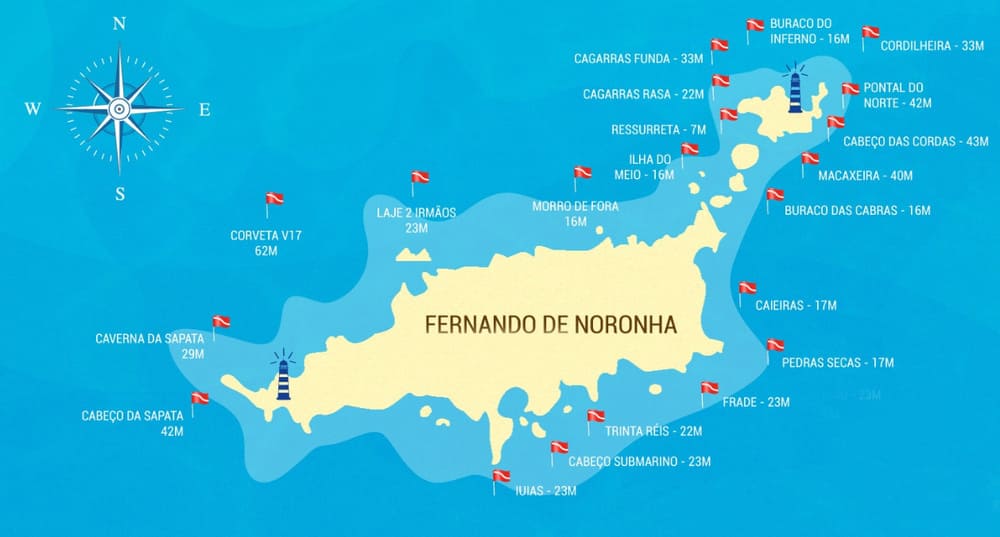
    There’s something for everyone on the island: from colorful reefs and coral gardens to deep shipwrecks and underwater caves. Some of the most popular sites include Cabeço da Sapata, Pedras Secas, and Buraco das Cabras.

    You’ll see a lot of marine biodiversity, such as sea turtles, reef sharks, rays, moray eels, fish, and much more. Noronha’s waters are teeming with life. The archipelago is also famous for its spinner dolphins, which can often be seen leaping and twirling near the surface.

    The Marine Park’s strict conservation measures guarantee that the dive sites stay vibrant. This dedication to sustainability makes the experience better for divers and helps protect the archipelago’s ecosystems.

    When is The Best Time to Dive in Fernando de Noronha
    Photo: Thiege Rodrigues


    Seasonal Diving Conditions: Summary Table


    Season Conditions Best Diving Areas
    March to July Calm seas on both Inner and Outer sides, excellent visibility, ideal for all divers. Inner and Outer Sea dive sites
    August to September Windy season, with some agitation, and suspended particles reducing visibility slightly. Outer Sea is generally better sheltered.
    November to March Swells and strong waves are possible, but often brief (1-2 days). Outer Sea offers better conditions during this time. Outer Sea sites like Cabeço da Sapata.
    December to January The Inner Sea is more agitated, but the Outer Sea remains calmer. Divers may need to adjust sites depending on conditions. Outer Sea dive spots.


    Plan Your Dive Adventure

    Now that you know the best time to dive in Fernando de Noronha, why not start planning your trip? Check out PlanetaEXO’s packages for diving experiences that let you explore the archipelago’s incredible underwater world.

    Whether you’re a beginner or a seasoned diver, Fernando de Noronha promises an unforgettable adventure!

  • Earth Day: 5 positive impacts of ecotourism

    Earth Day: 5 positive impacts of ecotourism

    April 22 is International Earth Day, a date that reinforces the importance of rethinking our relationship with natural resources.

    In a scenario of excessive consumption and environmental degradation, tourism also needs to be rethought. According to the World Travel and Tourism Council (WTTC), the travel industry is responsible for around 8% of global greenhouse gas emissions (2023 data).

    However, tourism, if well planned, can be part of the solution. It is in this context that sustainable ecotourism stands out. “Ecotourism, when done responsibly and with the involvement of local communities, can generate income without destroying ecosystems. It turns visitors into conservation allies”, says Lucas Ribeiro, founder of PlanetaEXO, a global ecotourism platform.

    That’s why initiatives that involve local communities and respect the limits of ecosystems are more effective in preserving nature and building sustainable economic alternatives.

    In this Earth Day, here are five positive impacts of ecotourism:

    1. Conservation of biodiversity

    Ecotourism encourages the preservation of natural areas by generating economic value associated with conservation. Destinations that previously faced deforestation, hunting and illegal mining now see the protection of biodiversity as an ongoing and legitimate source of income.

    Caiman - Pantanal
    Photo: Felipe Castellari

    2. Strengthening local communities

    By employing guides, artisans, small producers and owners of family-run lodges, ecotourism distributes income in a decentralized way. “This model helps keep people in the territory, with dignity and protagonism”, explains Lucas Ribeiro.

    positive impacts of ecotourism
    Photo: Aurelie-Poilleux

    3. Environmental education

    Ecotourism trips offer direct learning experiences with nature and local knowledge. Visitors get to know the environmental challenges of each region and return home more aware of their role as citizens.

    Cristalino Lodge - Amazônia
    Photo: João Paulo Krajewski

    4. Stimulating the circular economy

    The logic of “consuming local” is central to ecotourism. Food, transport and typical products are prioritized, strengthening short production chains and reducing the carbon footprint associated with the trip.

    Cerrado Rupestre - Jalapão
    Photo: Clovis Cruvinel

    5. Reconnecting with the planet

    More than just a style of travel, ecotourism invites us to change our mentality: to get out of the consumption mode and into a more attentive rhythm, more sensitive to the rhythms of the earth. In times of environmental urgency, this attitude becomes a political gesture.

    Lençóis Maranhenses
    Photo: Paraíso do Caju

    Sustainability

    In biomes under severe pressure – such as the Amazon and the Pantanal – the positive impacts of ecotourism have proved to be a concrete alternative to the advance of predatory activities such as deforestation, mining, and uncontrolled tourism.

    More than just a walk in the middle of nature, this type of tourism invites reconnection: with the environment, with traditional ways of life, and, above all, with the limits of the planet. In times of climate emergency, water scarcity, and accelerated ecosystem degradation, this reconnection is no longer an individual choice. It is a collective need, urgent and unavoidable.

    Read more:

  • How many days should you spend in Chapada Diamantina?

    How many days should you spend in Chapada Diamantina?

    A visit to Chapada Diamantina is not just about refreshing yourself at waterfalls or gazing at viewpoints. It’s about exploring the wide range of landscapes that make this region one of the most unique in Brazil.

    How many days you should spend in Chapada Diamantina National Park depends on your travel style and goals, whether you’re looking for scenic hikes, multi-day trekking adventures, or just a short nature escape in the Vale do Pati. But to truly experience the national park and its variety of trails, canyons, and remote valleys, it’s recommended to stay at least 3 full days, with 5 to 7 days being ideal.

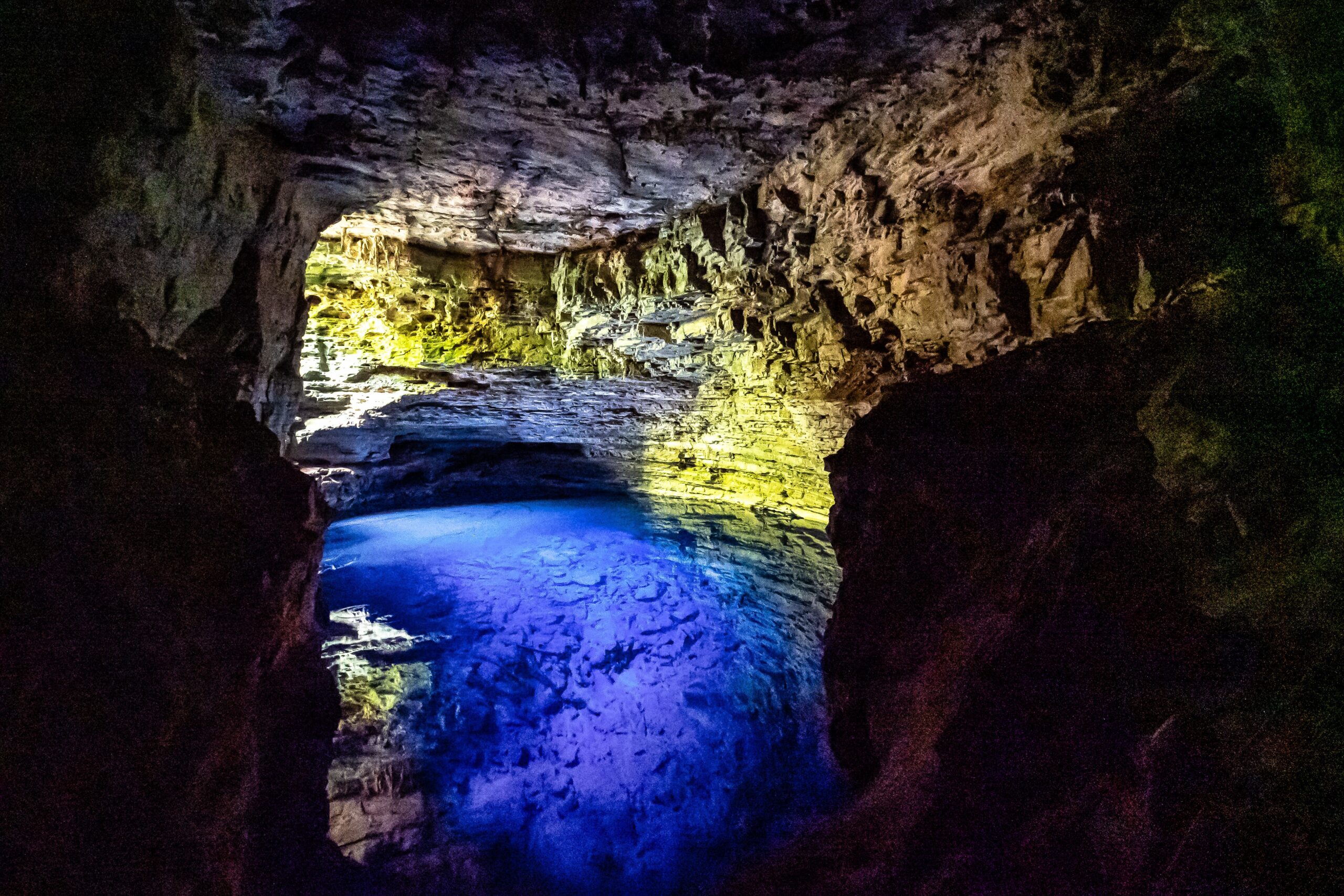
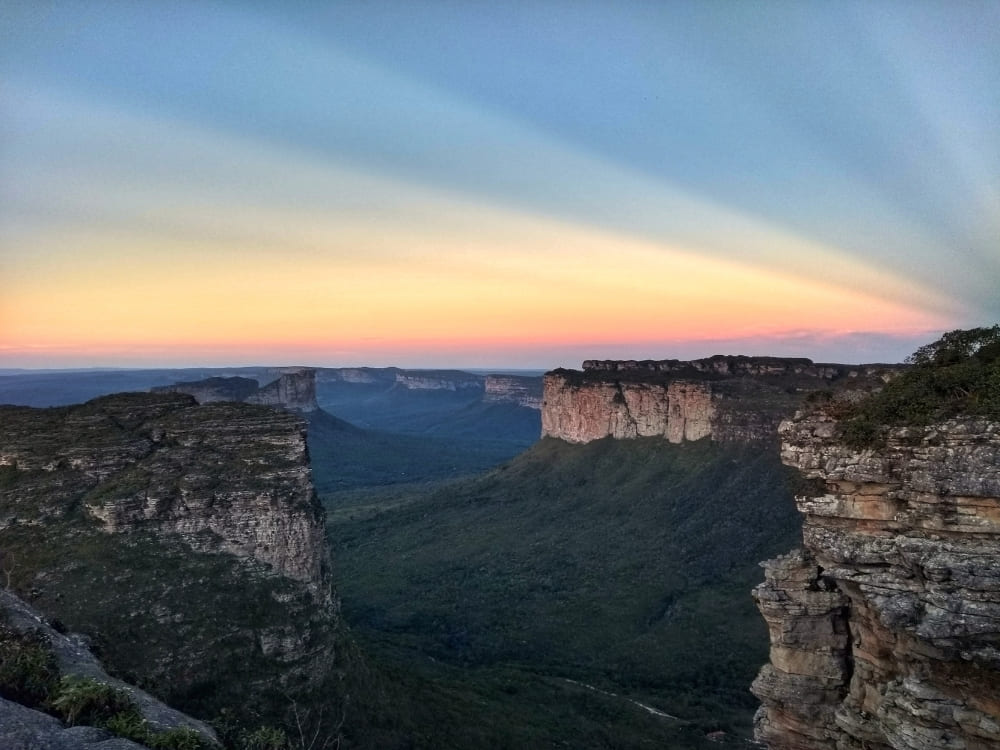
    Chapada Diamantina covers over 38,000 square kilometers, stretching across central Bahia. A 3-day trip will give you a first impression, perhaps a hike to Cachoeira da Fumaça, a sunset at Morro do Pai Inácio, and a swim in the Poço Azul and Poço do Diabo. We should also mention that, although swimming is not allowed, it’s still a beautiful visit to the Poço Encantado. But with 5 to 7 days, you can explore more remote areas like Vale do Pati, discover hidden waterfalls, and experience the contrasting landscapes that make Chapada so unique.

    At PlanetaEXO, we specialize in ecotourism in Brazil and offer curated travel packages in Chapada Diamantina. This guide will help you understand what’s possible depending on how many days you have.

    sunset-morro-do-pai-inacio
    Photo: Agata Fetschenko


    What Determines How Long You Should Stay in Chapada Diamantina?

    Before deciding how many days to spend in Chapada Diamantina, it’s important to consider a few factors that will shape your experience:

    Logistics

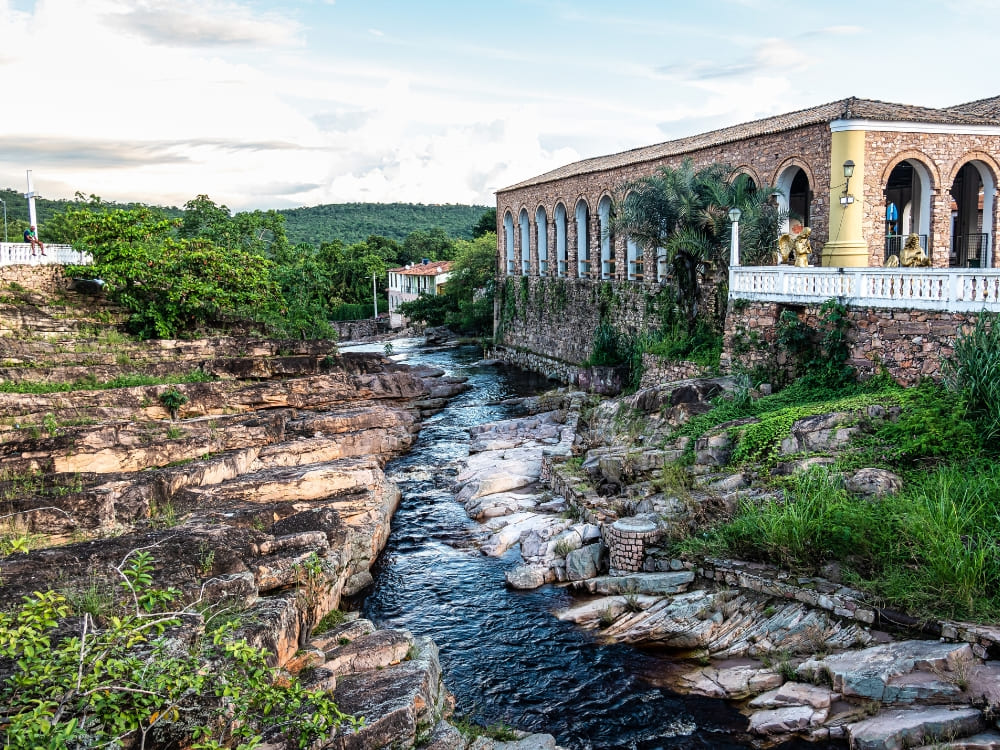
    Chapada Diamantina is a remote region in the heart of Bahia, knowing how to get there is essential for a good experience. The most common access point is Salvador, with daily buses and private transfers to Lençóis, the main gateway town. The journey from Salvador to Lençóis takes around 5 to 6 hours by road. If you’re planning to explore areas like Vale do Capão, Igatu, or the Pati Valley, expect additional transfer times on smaller roads and hiking trails.

    For this reason, many travelers choose to spend their first and last nights in Lençóis to avoid tight connections and rushed transfers. It’s also worth factoring in that bus schedules and road conditions can affect arrival times, especially during the rainy season. Planning with some flexibility can make your overall experience smoother and less stressful.

    Lençóis - Chapada Diamantina
    Photo: Rudolf Ernst

    Season and Weather

    When traveling in nature, the time of year can shape your experience. That’s why knowing the best time to visit is important. The dry season, from May to October, offers more stable weather and better trail conditions, making it ideal for longer hikes like the Vale do Pati trek. From November to April, during the rainy season, waterfalls are fuller, and the landscapes turn greener and more vibrant. However, trails can get slippery, and access to certain areas may be limited after heavy rains.

    Another seasonal factor is the impact on specific attractions. During the dry months, crystal-clear river pools and viewpoints with wide visibility are the highlight. In contrast, during the rainy season, the main attraction is the sheer force of the waterfalls, especially sites like Cachoeira da Fumaça and Cachoeirão. Whatever the season, it’s always good to check local trail conditions before setting out, especially for longer treks.

    How many days should you spend in Chapada Diamantina
    Photo: @deborahbannach

    Your Travel Style and Pace

    Chapada Diamantina offers challenges and rewards for travelers of all ages. Although the region requires a certain level of physical effort, everyone can enjoy it in their own way. Say you are looking for a slow and immersive experience. If that’s your case, spending several days inside the Pati Valley, 5 to 7 days, is recommended. But if your goal is to see the main highlights without committing to multi-day trekking, a 3 to 4-day stay based in Lençóis is a good option.

    It also helps to think about which type of landscape interests you most. Chapada Diamantina offers a surprising variety, from table-top mountains and high-altitude plateaus to canyons, caves, and underground lakes. Whether your focus is hiking, photography, swimming in waterfalls, or just enjoying the scenery, your interests will play a big role in defining how many days you’ll want to stay.

    Waterfall Chapada Diamantina
    .

    Best Chapada Diamantina Tours

    If you’re still unsure whether a 3-day tour is the right choice or which region of Chapada Diamantina you should explore, comparing your travel options can help you decide.

    At PlanetaEXO, we’ve handpicked a selection of the best Chapada Diamantina adventures. From multi-day treks in the Pati Valley to shorter hiking tours and scenic day trips, all our itineraries are curated for their quality, local knowledge, and authenticity.

    Get to know what each Chapada Diamantina tour has to offer and find the one that matches your time and travel style.

    # of Days Tour Name Highlights
    3 Days Vale do Pati Trek Chapada Diamantina 3 Days For those short on time but determined to experience the essence of Vale do Pati. A compact itinerary with long hiking days and little room for stops.
    Chapada Diamantina Tour 3 Days A comfortable, hotel-based tour with short hikes and vehicle-supported transfers between some attractions.
    4 Days Pati Valley Hike Chapada Diamantina 4 Days A more relaxed alternative to the 3-day trek, with shorter daily hiking distances and extra time at areas like Morro do Castelo Cave and Calixto Waterfall
    5 Days Chapada Diamantina Trek Vale do Pati 5 Days The full, classic crossing of the Pati Valley. Ideal for those who want to cover the entire route, visiting all areas without skipping sections.
    6 Days 6-Day Ultimate Chapada Diamantina Hike For experienced hikers wanting variety and challenge. This itinerary goes beyond Vale do Pati, combining different regions, longer distances, and more demanding daily hikes.
    7 Days Chapada Diamantina Trip 7 Days Ideal for families or travelers looking for variety without committing to long treks. A combination light hikes, cultural visits, and natural attractions spread across the park.
    Photo: Guillaume Leman

    👉 Before you go, read our 10 Travel Tips for Chapada Diamantina and make the most of your trip

    Ready to explore Chapada Diamantina? Let us help you!

    Whether you’re looking for a multi-day trek through the Pati Valley, day hikes to waterfalls and viewpoints, or a mix of caves, canyons, and local culture, PlanetaEXO can help you plan the perfect trip based on how many days you have in Chapada Diamantina.

    We work directly with expert local guides and partner only with responsible operators who share our commitment to sustainability and community support. From hiking through remote valleys to discovering hidden waterfalls and sleeping in local homes, we’ll help you experience Chapada in an authentic, low-impact, and unforgettable way.

    👉Send us a message and let’s start planning your Chapada Diamantina adventure today!


    Read more : 

  • 8 conservation projects in the Amazon to support in 2025

    8 conservation projects in the Amazon to support in 2025

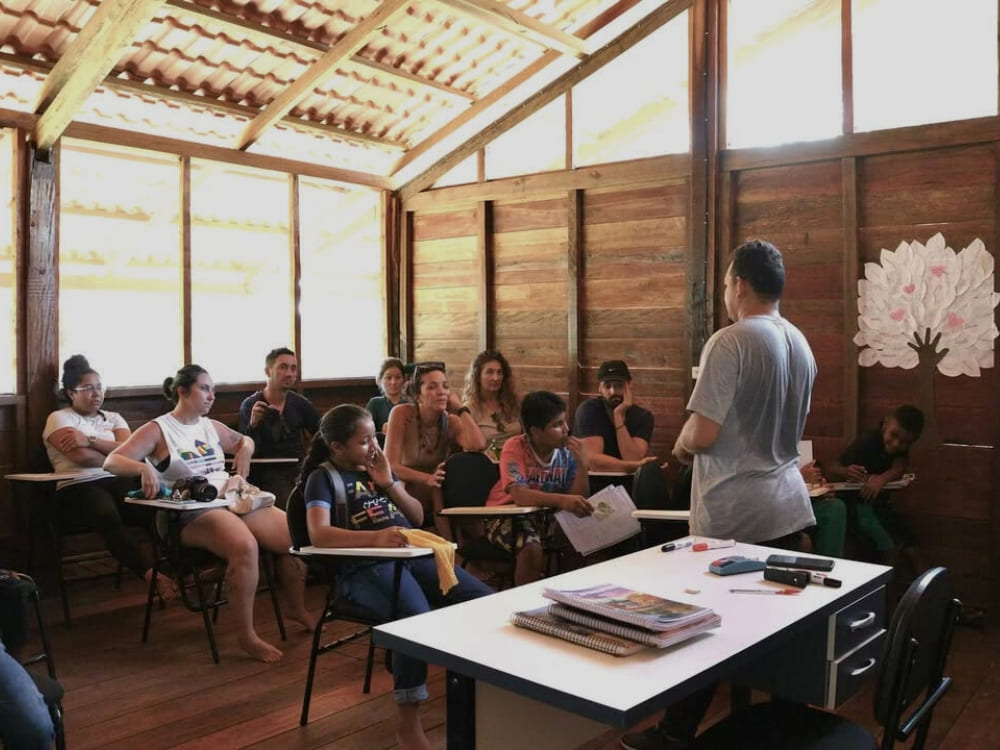
    Environmental education, income generation for local communities, reforestation, and ecotourism practices are some of the actions taken by various non-profits in the Brazilian Amazon

    The Amazon is the largest rainforest in the world, covering a total area of 6.74 million km², while the Brazilian territory spans over 4.2 million km². An ecosystem this big can only mean equally big effects on the planet’s balance and natural life.

    8 conservation projects in the Amazon to support in 2025 (4) (1)

    Housing millions of different species of animals and plants, the forest is responsible for up to 16% of freshwater in the world, and it also plays a huge role in carbon sequestration – the process of capturing and storing carbon dioxide (CO2) from the atmosphere, which prevents climate change.

    All of this, however, is under threat. According to the National Institute for Space Research (INPE), deforestation in the Amazon reached 4.315 km² from August 2023 to July 2024 – a smaller area when compared to the same period in 2022, but a concerning number nonetheless.

    8 conservation Projects in the Amazon - Alter do Chão Brigade (2) (2)
    Photo: @guardioes_ti_kumaruara

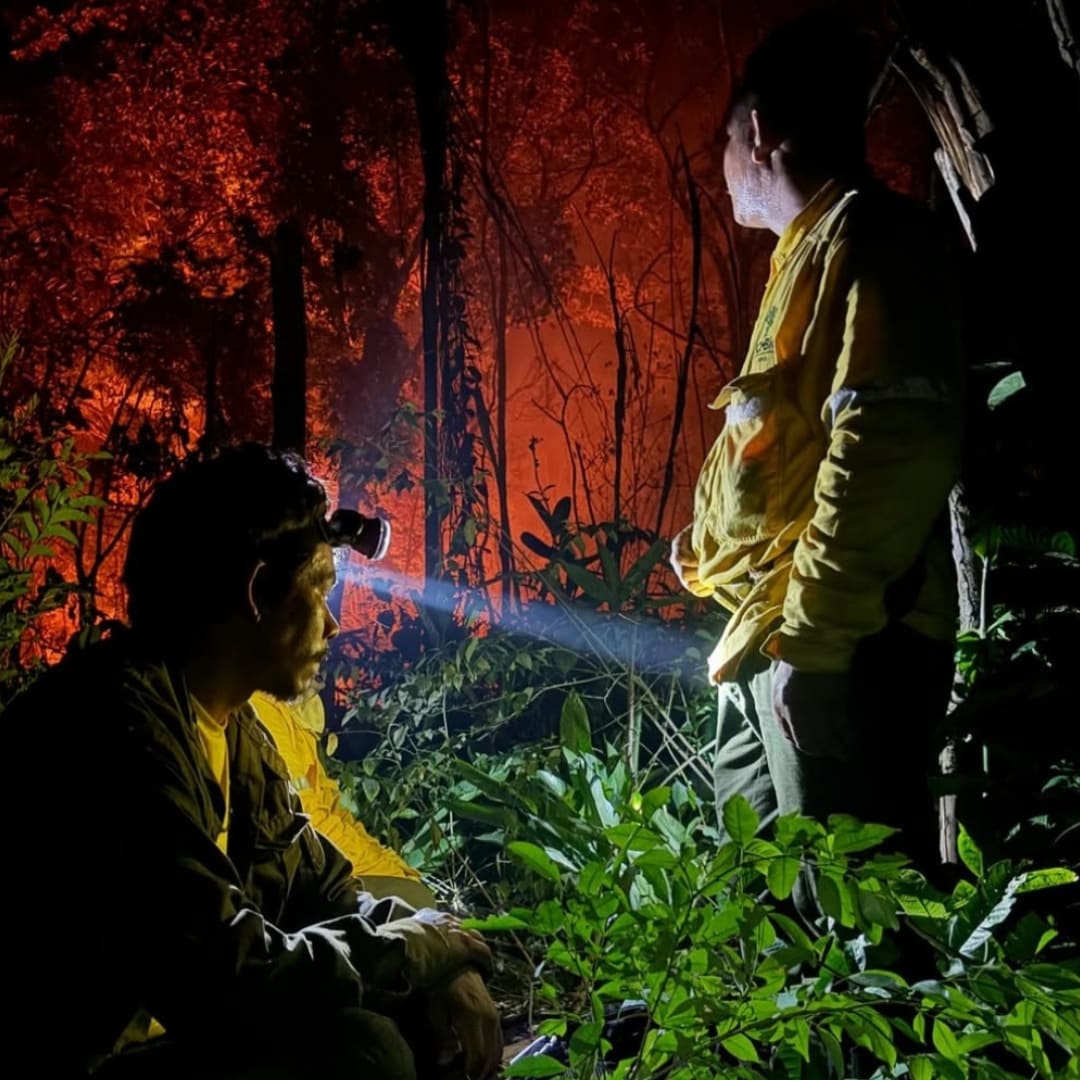
    Forest fires are likely the biggest current danger. The Amazon Rainforest faced the largest amount of fires in the last seventeen years, concentrating 50.6% of Brazil’s fires. INPE estimates there were 137,538 heat outbreaks in the Amazon up until December 2024, including fires (controlled or not) and full-on forest fires.

    The consequences are dreadful: temperatures rising, longer droughts, lower rivers, animals dying, poor air quality, and people who depend on the forest to survive losing their homes and primary sources of income. To prevent these terrible repercussions, local communities engaged on these Amazon Rainforest conservation projects work tirelessly to protect what many call “the lungs of the Earth”

    1 – Amazon Entrepreneurship and Sustainable Business Program (Pensa)

    Resources that can only be found locally, exquisite nature that attracts tourists from all over the world – which proves that ecotourism activities are powerful conservation solutions –, and local groups willing to learn and undertake are some of the factors that make the Amazon Rainforest a promising place for sustainable entrepreneurship.

    Amazon Rainforest Conservation Projects – Sustainable Amazon Foundation (FAS) (1)
    Photo: Emile Gomes

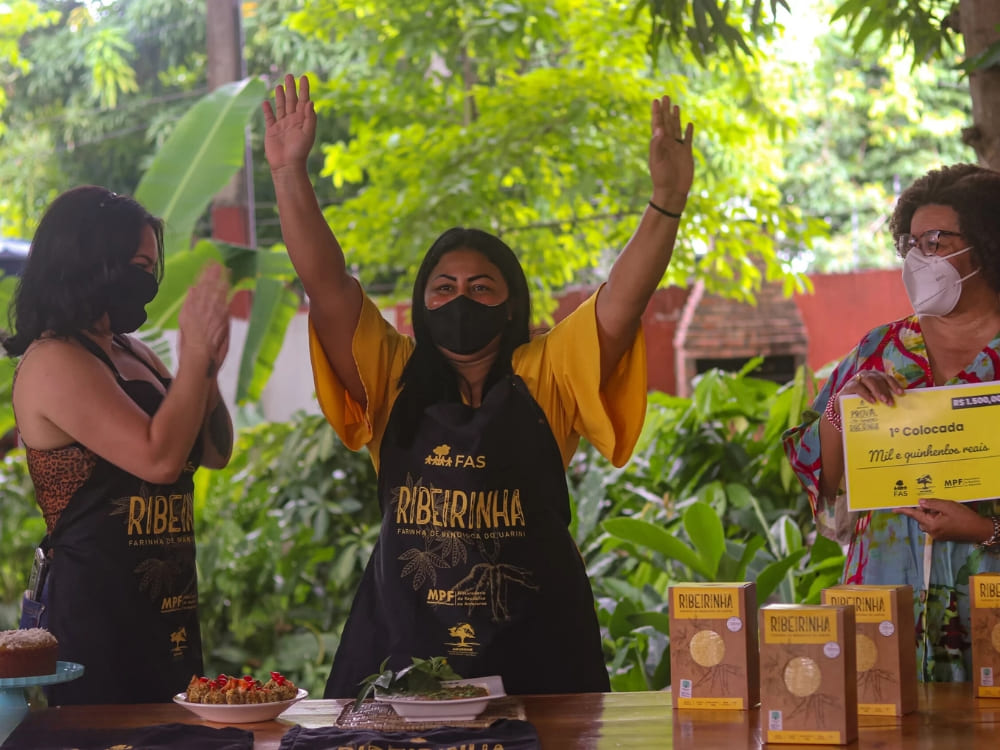
    The Sustainable Amazon Foundation (FAS) fights social vulnerability with the Amazon Entrepreneurship and Sustainable Business Program (Pensa, the acronym in Portuguese). By combining social technology to train entrepreneurs, the program has supported over 583 communities in 16 Conservation Units (CUs).

    In 2023, 62 sustainable ventures were supported by FAS and 323 people gained new skills. The average income of families benefited by Pensa increased in 19%, while the total revenue from community-based tourism ventures raised R$ 5 million. Learn more and make your donation.

    Ecotourism in the Amazon Rainforest - A Solution to Deforestation
    Roberto Brito, founder of “Projeto Draft”.

    2 – Almerinda Malaquias Foundation (FAM)

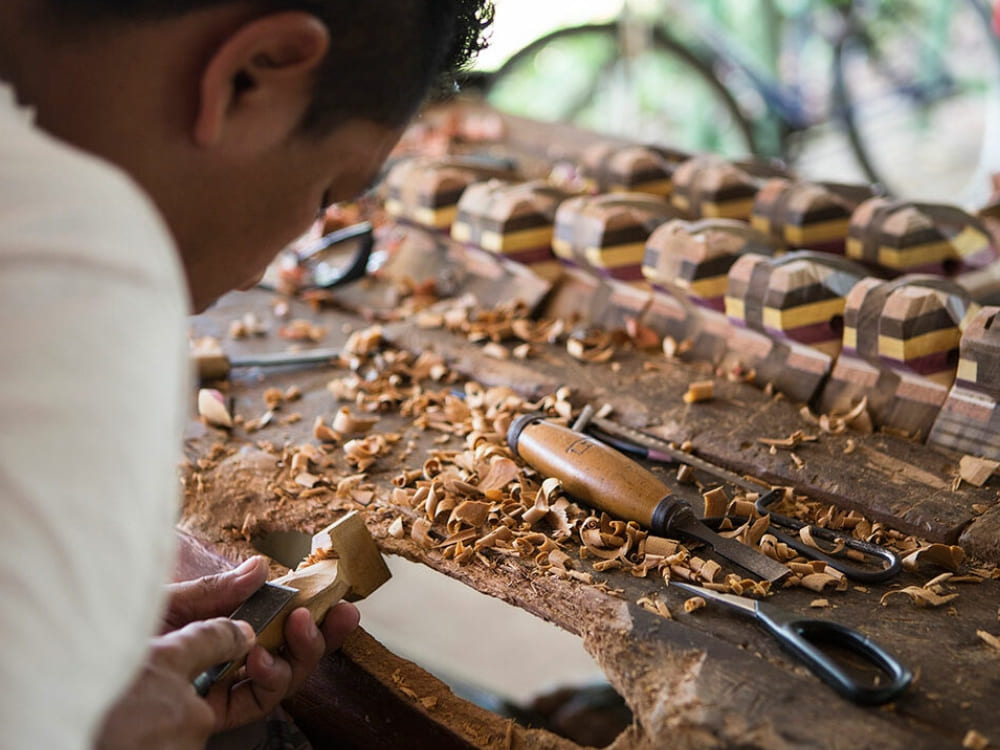
    Almerinda Malaquias Foundation (FAM) is a non-profit based in Novo Airão, in the state of Amazonas, whose activities are focused on three aspects: 

    • Income generation: training of professionals for craftsmanship and soap production
    • Environmental education: for local children and teens to learn more about their home, as well as economic alternatives for sustainable development
    • Ecotourism: eco-friendly travel practices as a tool to boost education and work opportunities

    In 2024 alone, FAM has helped 190 people enroll in school45 families generate income and has tended to ten riverside communities regarding education and funding.

    Educação Ribeirinha Katerre - Amazon Conservation Projects (1)
    Photo: @expedicaokaterre

    To help FAM change lives, Expedição Katerre and Mirante do Gavião Amazon Lodge and act as sponsors. Both specialize in ecotourism, with Katarre offering some of the best river cruises in Brazil.

    You can support FAM by buying their beautiful handmade products or making a donationLearn more on their official website or social media profile.

    Amazon Rainforest Conservation Projects - Almerinda Malaquias Foundation (FAM)
    Photo: Fundação Almerinda Malaquias Foundation (FAM)

    3 – Mamirauá Institute

    In 2024, severe droughts were the biggest concern regarding the Amazon. Many non-profits took action to try to reverse the effects caused by the lack of rainfall, with Mamirauá Institute for Sustainable Development (IDSM), founded in 1999, in the forefront of the actions.

    By pushing scientific recommendations to the authorities, this Amazon Rainforest conservation project offered educational support to local communities, came up with different methods to better access to drinking water, and worked throughout the entire year to minimize the consequences of this uncharacteristic dry period.

    Ações Seca 2024 Marimaua Amazonia - Amazon Conservation Projects
    Photo: Caroline Reucker

    Ecotourism is also a big player. Uakari Lodge is situated in the middle of the Mamirauá Reserve, safely built on stilts in Lake Tefé. Besides providing total immersion in the forest, the lodge is an important asset for environmental awareness and scientific research.

    Activities promoted by Uakari, like wildlife watching, have been greatly useful to collect data about uakari monkeys – the inspiration for the lodge’s name –, which helps scientists and biologists to understand this species and bring forth effective ways to protect them and the Amazon as a whole. A scientific article by this particular subject was published in 2021.

    Learn more about this drought prevention project and make a donation online if you can.

    Ações Seca 2024 Marimaua Amazonia - Amazon Conservation Projects
    Photo: Miguel Monteiro

    4 – Amazon Boto Expedition

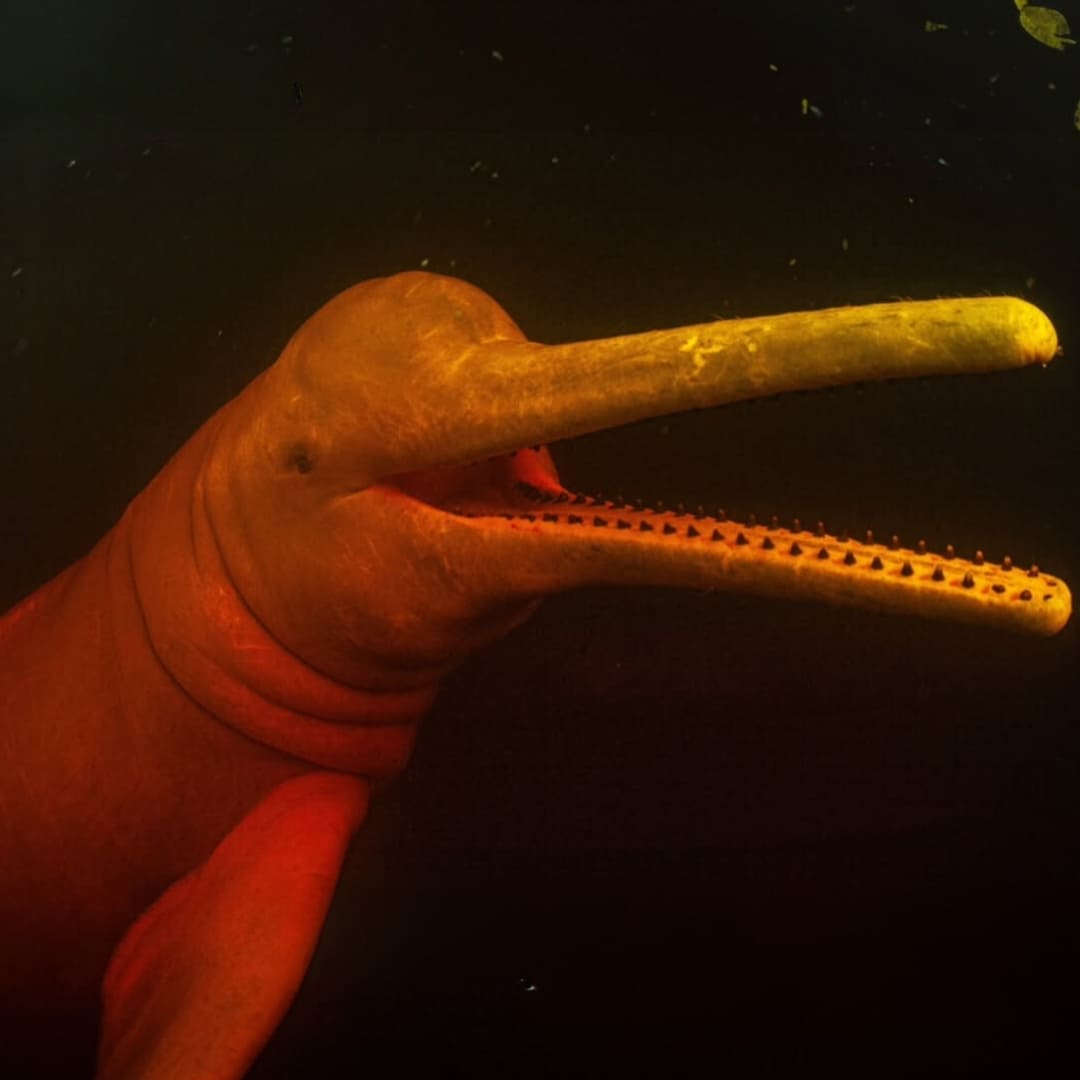
    Since 2021, the Amazon Boto Expedition project has been working to monitor and investigate the protection of pink Amazon dolphins while also implementing a long-term study about the population of these animals to deepen the knowledge about the species and find active ways to protect them.

    Amazon Rainforest Conservation Projects - Sea Sheperd Brasil
    Photo: @seasheperdbrasil

    The project is led by Sea Shepherd, an international non-profit marine conservation organization founded in 1977 in Vancouver, Canada. The Brazilian branch is set on helping the Amazon river dolphins. Anyone can donate R$ 1 per day to support this incredible initiative. More information here.

    5 – Alter do Chão’s Forest Fire Brigade

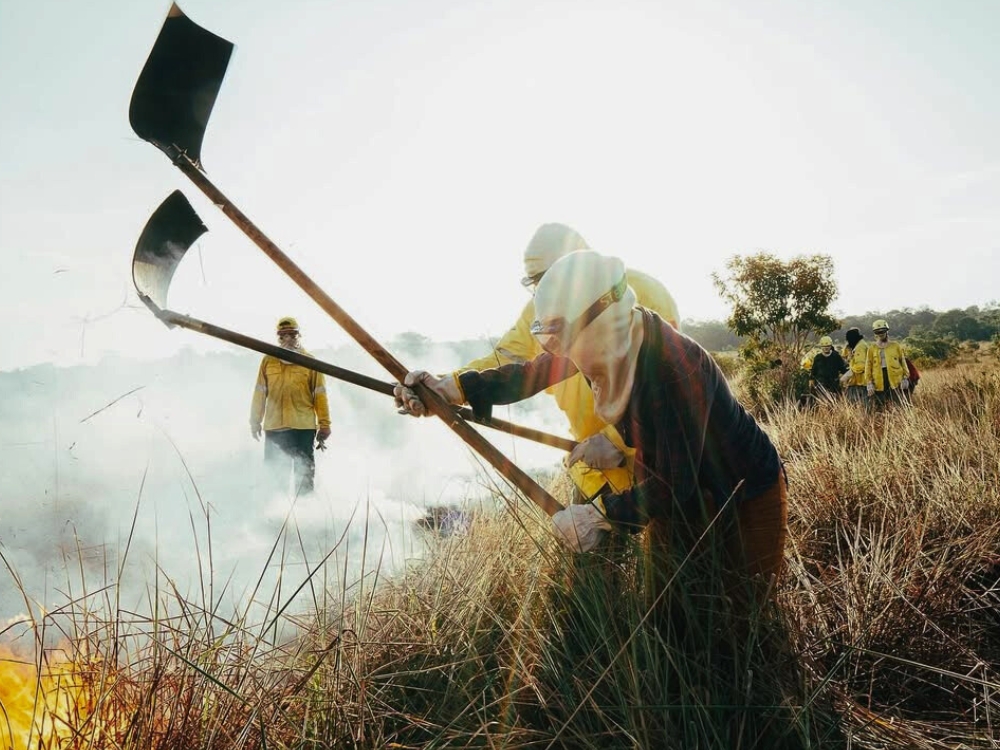
    Based in Alter do Chão, Pará, the Forest Fire Brigade is a non-profit organization founded in 2019. This Amazon Rainforest conservation project believes that fighting fires is actually a last resource, as it is possible to prevent and control fire spread altogether through environmental education and collective efforts – both from the civil society and the authorities. 

    Brigada do Alter - Amazon Conservation Projects
    Photo: @_fotografia23_

    By protecting the local fauna and flora, as well as the Indigenous population in the Lower Tapajós River area, the initiative serves as a model for new volunteer brigades not only in the Amazon but also in other Brazilian biomes (Atlantic Forest, Caatinga, Cerrado, Pampas and Pantanal).

    See more information about the Alter do Chão’s Forest Fire Brigade on their official website or social media profile, and show your support.

    Brigada do Alter - Amazon Conservation Projects
    Photo: @egrymaia

    6 – Expeditionaries of Health (EDS)

    Expeditionaries of Health (Expedicionários da Saúde), a.k.a. EDS, was founded in 2003 by a group of volunteer doctors to provide medical care for Indigenous groups who live in geographically isolated areas of the Amazon Rainforest.

    Over the years, 300 volunteers have covered over 500,000 km² in the forest to provide medical care for those in need. In 55 expeditions, EDS was able to achieve 10,486 surgeries, 76,333 appointments, 148,125 medical exams and procedures, and donated 8,464 prescription glasses.

    Dr. Ricardo Affonso, EDS president, was honored with the Zayed Sustainability Prize in Abu Dhabi’s COP28 (28th United Nations Climate Change Conference), in 2023. The recognition was an important step towards improvement in medical services, but the project needs constant donations to continue caring for the health of Brazilian indigenous people. Help EDS here.

    Amazon Conservation Projects - EDS (1)
    Photo: EDS

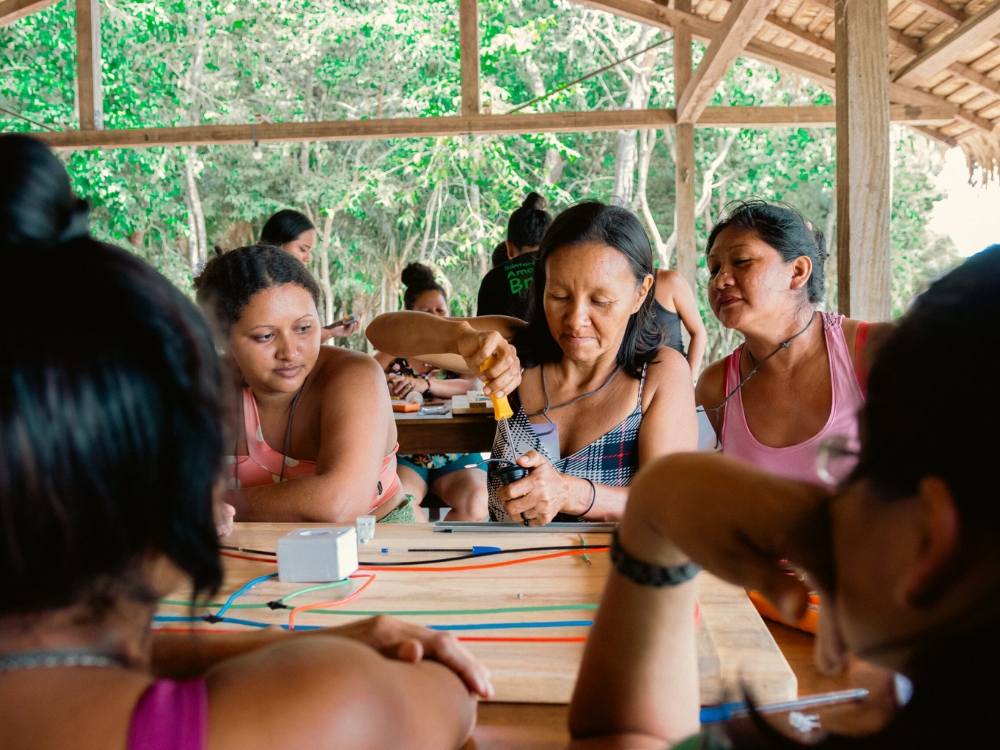
    7 – Women Entrepreneurs of the Forest

    The Women Entrepreneurs of the Forest (Mulheres Empreendedoras da Floresta) empowers women who live in the Amazon – especially in the towns of Santarém, Belterra, Mojuí dos Campos and Aveiro, all in the west of Pará. This is an initiative promoted by Projeto Saúde and Alegria (Health and Happiness Project), or PSA, a non-profit that has been operating in the Brazilian Amazon since the late 80s.

    PSA - Amazon Conservation Projects
    Photo: Mulheres Empreendedoras da Floresta

    Deforestation in the Amazon Rainforest, due to agriculture and illegal logging or mining, results in an unsafe setting for nearby communities who depend on the forest to make a living. Considering the unequal social scenario in which women are often submitted to, PSA provides professional training for Amazonian women to create, manage, and grow their own businesses, all in favor to build a more reliable and sustainable local economy.

    To support Women Entrepreneurs of the Forest and other important projects, check PSA’s official website.

    PSA - Amazon Conservation Projects (2)
    Photo: Mulheres Empreendedoras da Floresta

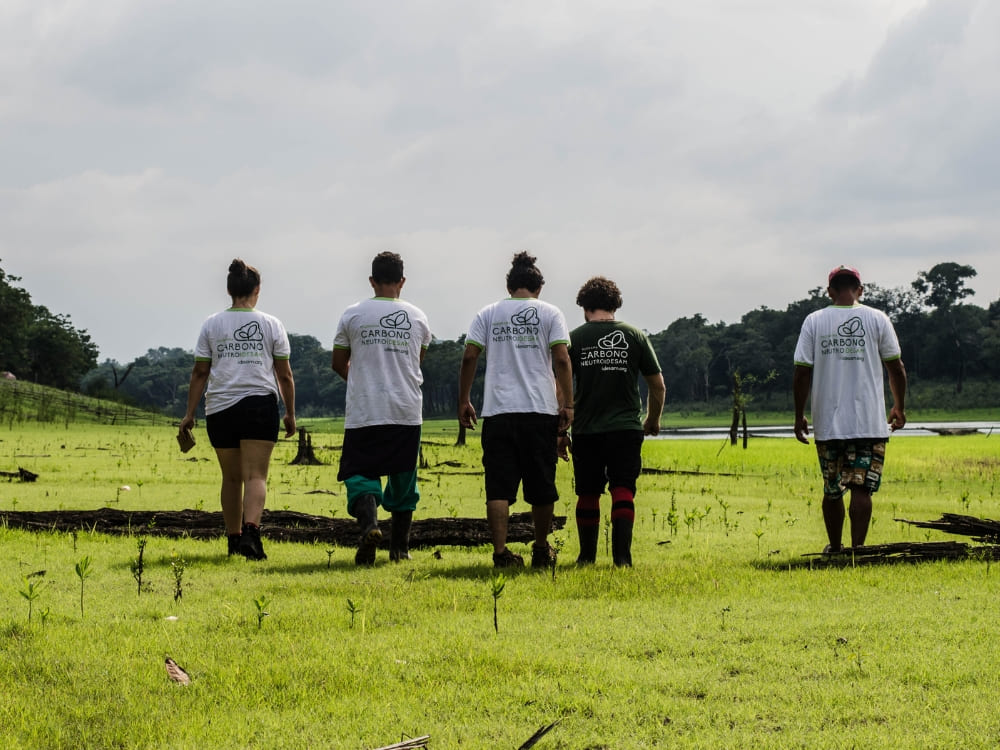
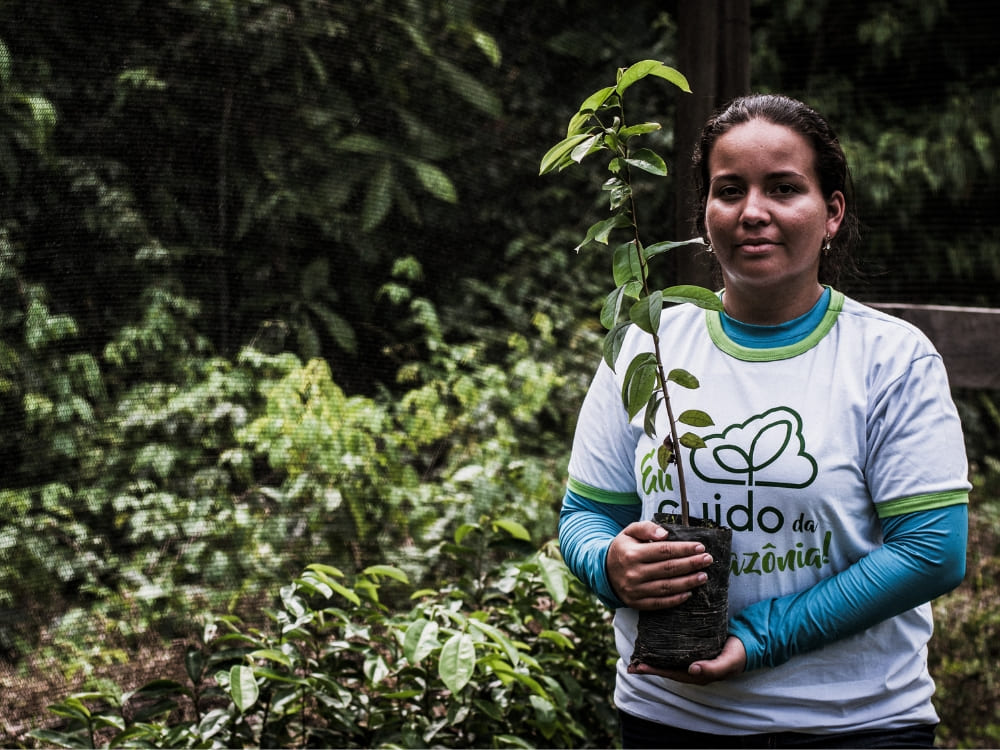
    8 – Neutral Carbon Program (PCN)

    The Neutral Carbon Program (PCN) is the longest-lasting project managed by Idesam, a non-profit created in 2004 that works in favor of the well-being of the forest and its people. The goal is to enable people and companies to take responsibility for the impact they generate on the planet by offsetting their greenhouse gas (GHG) emissions. This compensation is made through the reforestation of affected areas in Uatumã Biological Reserve, in Presidente Figueiredo, Amazonas.

    Carbono Neutro - IDESAM - Amazon Conservation Projects (1)
    Photo: Idesam

    The outcomes include reduced GHG emissions, awareness of carbon footprint, accountability for large corporations, food security, and income generation for families working in PCN.

    Visit Idesam’s official website for more details and donation options. 

    Amazon Rainforest Conservation Projects - IDESAM
    Photo: Idesam

    Show your support to conservation projects in the Amazon Rainforest

    These Amazon conservation projects work daily to protect the natural resources of the most important natural area of the world. There is no saving the forest, however, without helping its guardians, which means social efforts are deeply rooted in sustainable programs and should be taken just as seriously.

    You can do your part by donating, advocating for environmental policies, and supporting ecotourism in the Amazon Rainforest. Every action counts!

  • Where to stay in Lençóis Maranhenses?

    Where to stay in Lençóis Maranhenses?

    Discover accommodation options in Lençóis Maranhenses, from homestays to hotels in Barreirinhas, Santo Amaro, and Atins

    Lençóis Maranhenses National Park is a natural marvel. In a massive area covered by impressively white sand dunes, blue rainwater lagoons, and untouched vegetation, it’s not uncommon for people to describe it as an otherworldly place

    Mirroring the general atmosphere of the national park, accommodation options are characterized by a peaceful and considerably rustic nature. Whether in small inns, hotels offering premium services, or homestays with local residents, the choices for where to stay in Lençóis Maranhenses are all marked by the placid, lovely charm of the dunes.

    PlanetaEXO, an ecotourism platform specializing in Lençóis Maranhenses tours, has helped countless travelers from all over the world to book the best accommodations in this fantastic destination. Read more below!

    Accommodation in the sand dunes

    One of the most authentic ways to experience Lençóis Maranhenses is to traverse it on foot. The trek takes several days, allowing travelers to discover the more secluded parts of the dunes and visit less-crowded lagoons.

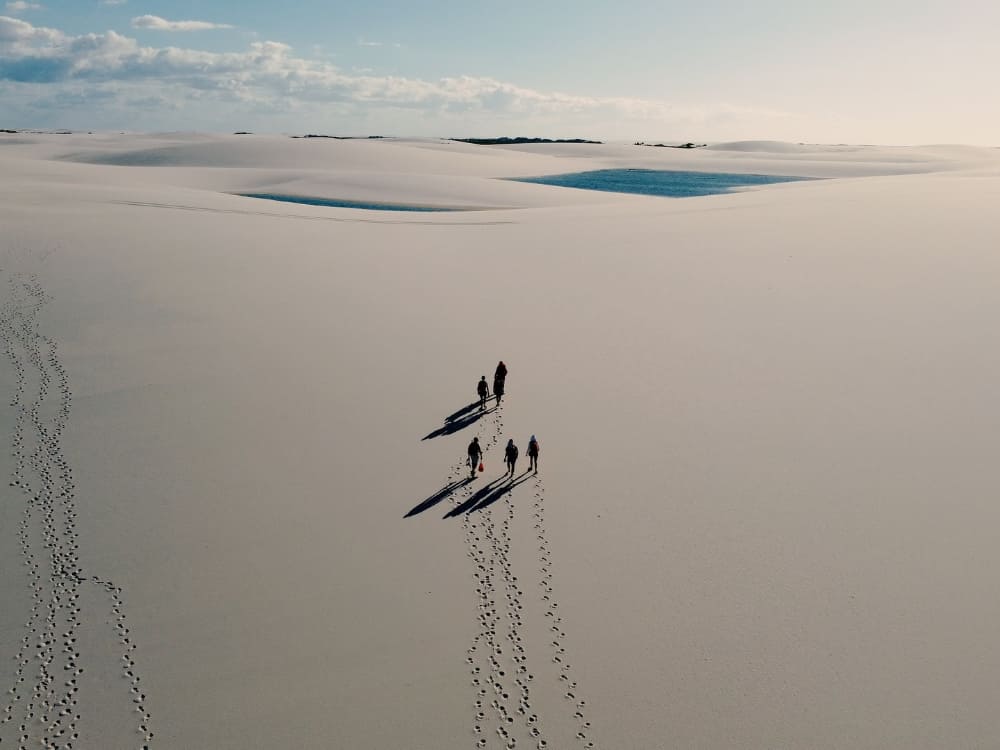
     Sun setting over vast sand dunes with reflecting water pools while four people hike along the sandy ridge.
    .

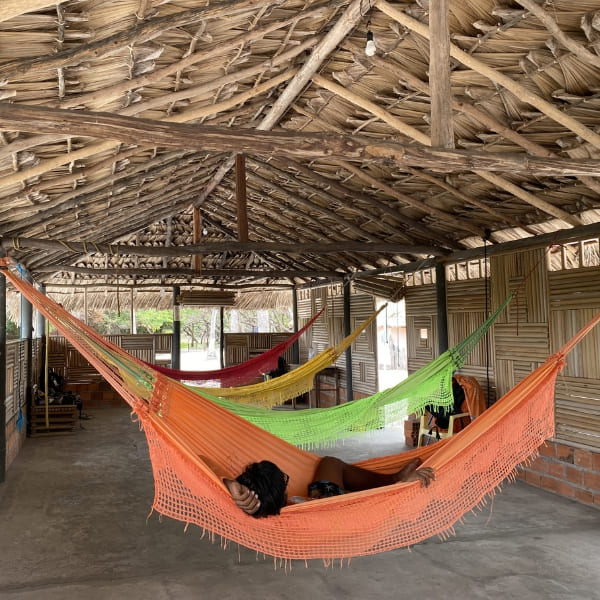
    On an adventure like this, visitors spend the night inside the national park. Residents of small villages, such as Queimada dos Britos and Baixa Grande, welcome guests into their own homes, offering both shelter and food.

    The accommodations are simple, yet cozy and clean. After an intense but rewarding day of trekking through one of Brazil’s most beautiful landscapes, you can rest in hammocks, take a shower, and recharge with a hot meal.

    Beyond just providing a place to stay, this is also a wonderful opportunity to meet new people, immerse yourself in the local culture of Lençóis, and experience famous Brazilian hospitality firsthand.

    Where to stay in Barreirinhas?

    Aerial view of Barreirinhas town focusing on the Preguiças River bend and sandy stretches, illustrating the main park entrance.
    .

    Out of all the base cities, Barreirinhas is the main gateway for the national park. With the best infrastructure of the area and a more lively vibe, most hotels in Lençóis Maranhenses are located here.

    This is the perfect place for travelers looking for balance between nature and convenience due to the easy access to the sand dunes and the various transportation options, as well as restaurants, bars, markets, pharmacies, ATMs, etc.

    👉 Read more: How to get to Lençóis Maranhenses?

    Porto Preguiças Resort 

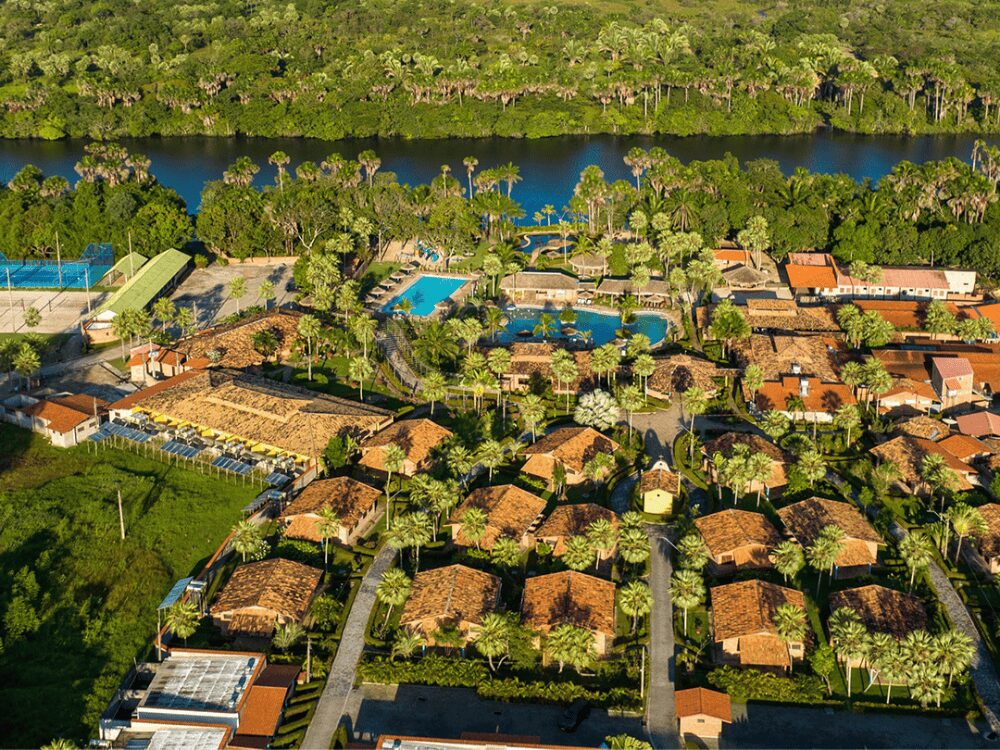
     Aerial view of the large swimming pools and clay-roofed chalet infrastructure at Porto Preguiças Resort, bordering the river.
    .

    One of the only resorts in Lençóis Maranhenses, Porto Preguiças is a high-end resort with a privileged view of the Preguiças River, one of Maranhão’s main rivers. Great for families with children, the air-conditioned rooms have excellent beds, cable TV, a mini fridge, and private bathrooms.

    Amenities include swimming pools, a garden, a restaurant, a bar, a breakfast buffet, free parking, room service, and airport transfer.

    • Address: Estrada do Canaubal, s/n – Carnalbau
    • Price range: $$$$$

    Gran Lençóis Flat

    Also situated on the banks of the Preguiças River, Gran Lençóis Flat is a 4-star hotel recommended for every type of traveler. In the common areas, guests can enjoy a swimming pool, sauna, spa, gym, entertainment room, conference room, and playroom (for children). The restaurant serves typical Brazilian food and international dishes.

    The apartments include single or double beds, TV, air-conditioning, fresh towels, free amenities, and Wi-Fi. 

    • Address: Estrada de São Domingos, s/n – Povoado Boa Vista
    • Price range: $$$$

    Portal do Sol Lençóis Pousada

    A bit simpler than the previous hotels, Portal do Sol Lençóis Pousada still offers a great stay experience, ideal for guests looking for cost efficiency. Rest in spacious rooms with air-conditioning, mini-fridges, TVs, private bathrooms, and high-speed Wi-Fi connection.

    Take a swim in the pool to cool off and enjoy a delicious breakfast buffet with a beautiful view of the inn’s lake. 

    • Address: Rua Principal – Av. Boa Vista, 01
    • Price range: $$$

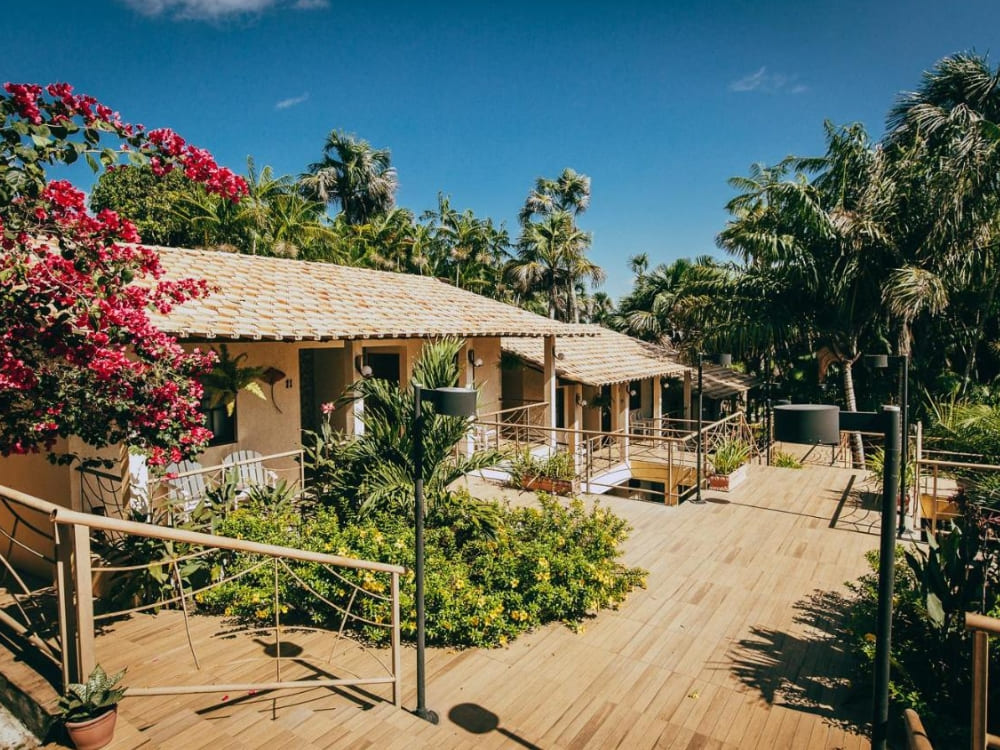
    Pousada Boa Vista

    Sunny outdoor area of a rustic inn with a flowery garden, wooden ramps, and stairs connecting the room balconies.
    .

    4 km away from downtown Barreirinhas, Boa Vista is a charming inn that will make you feel right at home. Apartments include queen-size beds, air-conditioning, TVs, Wi-Fi, and private bathrooms. 

    In the social areas, take a relaxing walk in the garden, swim in the pool, or rest on a hammock. At mealtimes, the talented team of cooks serves incredible local dishes at the restaurant. 

    • Address: Rua Principal – Av. Boa Vista, s/n
    • Price range: $$$

    Pousada D’Areia

    Wondering where to stay in Lençóis Maranhenses on a lower budget? Pousada D’Areia, located on the main street of Barreirinhas, might be the right place for you!

    With easy access to the dunes and the Preguiças River, recharge your energy in lovely air-conditioned rooms with private bathrooms. Includes an amazing all-you-can-eat breakfast made with local, fresh ingredients.

    • Address: Av. Joaquim Soeiro de Carvalho, 888 – Centro
    • Price range: $$

    Pousada Sítio Parque dos Lençóis

    The apartments in Pousada Sítio Parque dos Lençóis are equipped with comfy beds, air-conditioning, free Wi-Fi, and private balconies and bathrooms.

    Guests can also enjoy a swimming pool, a gorgeous garden, a shared lounge, and a breakfast buffet every morning.

    • Address: Rua Boa Vista, 600 – Bairro da Cebola
    • Price range: $$

    Where to stay in Santo Amaro?

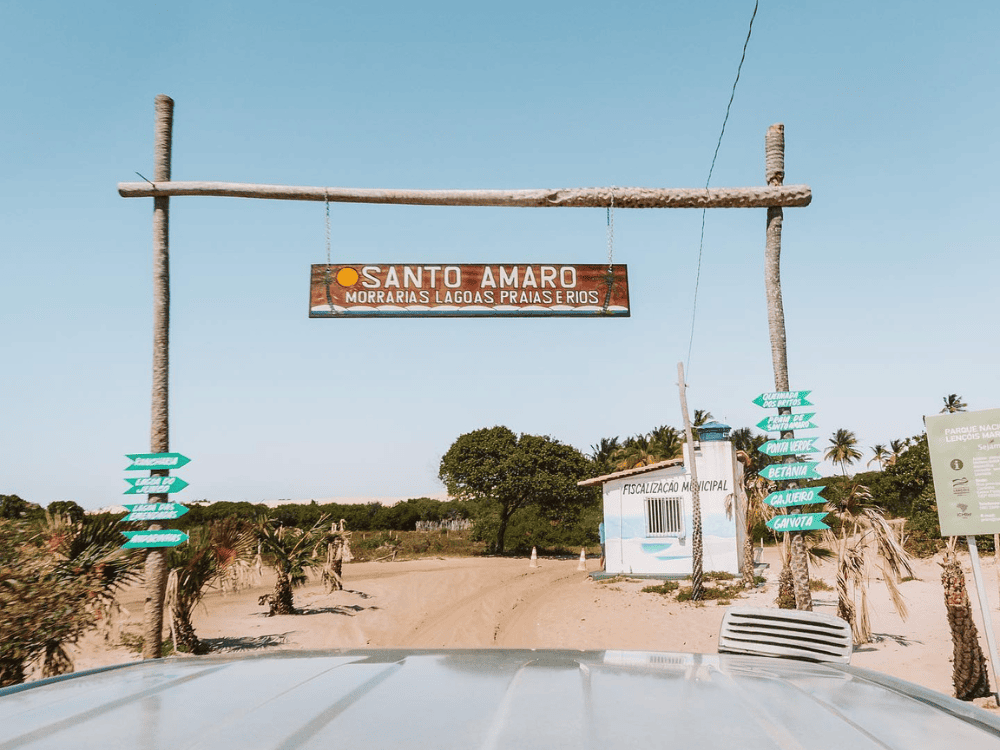
    Santo Amaro is the town with the quickest access to the national park, distinguished by having some of the largest and most beautiful lagoons.

     Rustic portico with a wooden sign displaying the text Santo Amaro Morvanas Lagoas Prajasthios over a sandy road.
    .

    Small and peaceful, it offers less infrastructure than Barreirinhas yet provides excellent immersive experiences and a variety of inns and hotels in Lençóis Maranhenses National Park.

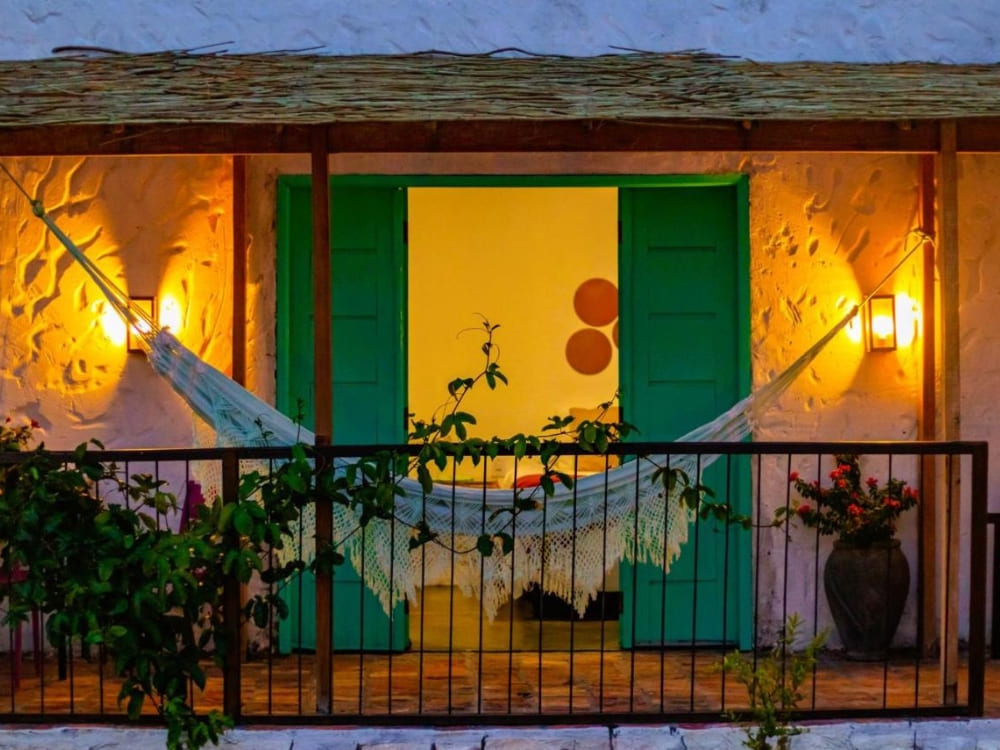
    Quintal das Areias

    Intimate balcony lit at night with a resting hammock stretched in front of the green double door of a Quintal das Areias chalet.
    .

    Quintal das Areias is a highly rated accommodation in Santo Amaro, famous for its gorgeous decor—carefully thought out to represent Maranhão’s essence.

    Each chalet includes air-conditioning, queen or king-size beds, a bathroom with premium amenities, a private closet, Wi-Fi, and a beautiful view of the garden. Can’t wait to taste Brazil’s typical flavors? Grab a bite at the restaurant or have a drink at the bar! 

    • Address: Rua do Mandacaru, s/n
    • Price range: $$$$

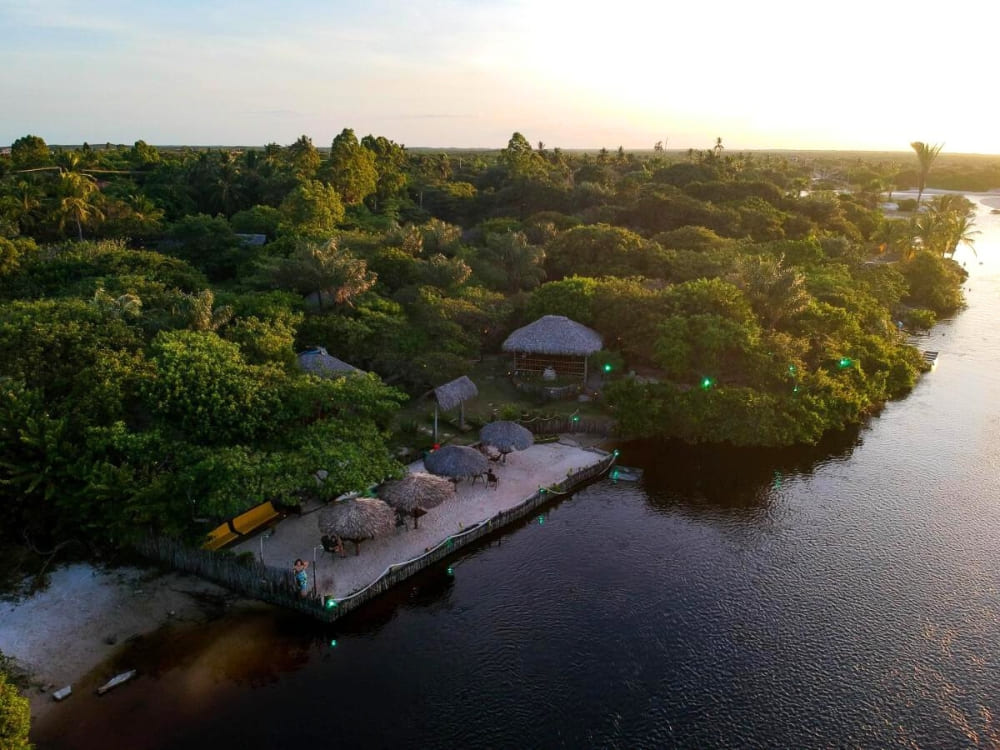
    Ciamat Camp

    Aerial view of the camp-style Ciamat Camp, highlighting thatched kiosks and a deck by the water surrounded by vegetation.
    .

    This camping-style accommodation is perfect for people who want closer contact with nature without giving up comfort. Surrounded by a lake and lush vegetation, Ciamat Camp offers special facilities for water sports, a beautiful garden, a private beach area, and activities like fishing and canoeing.

    Every air-conditioned room is equipped with double or single beds, private bathrooms, and rustic decor. In the morning, fill your belly with an incredible breakfast (including vegetarian and Italian menus).

    • Address: Rua Sempre Virgem, 13
    • Price range: $$$$$

    OIÁ Casa Lençóis

    Blending design, comfort, originality, and a sophisticated simplicity, OIÁ Casa Lençóis features spacious accommodations—from house suites to bungalows—equipped with king-size beds, air-conditioning, private bathrooms, and exclusive amenities.

    The hotel also offers privileged access to the most beautiful lagoons, elegant decor, haute cuisine, and a lovely rural atmosphere.

    • Address: R. Boca da Ilha, s/n – Rural

    Price range: $$$$$

    Vila do Junco

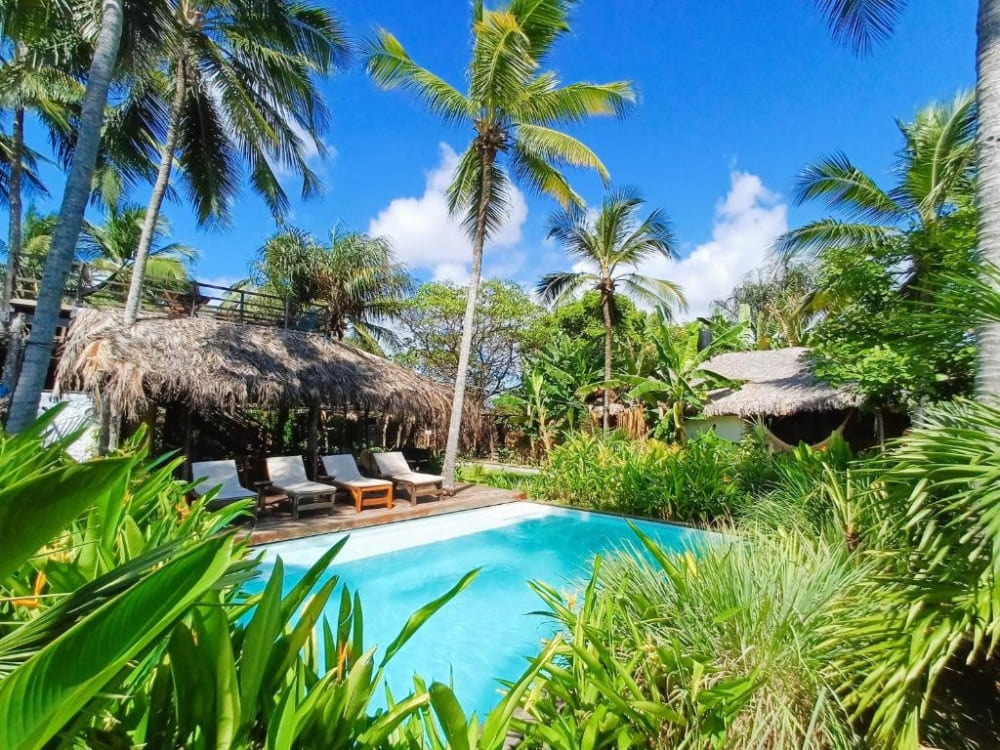
    Relaxing area at Vila do Junco with a blue swimming pool surrounded by wooden sun loungers, coconut trees, and thatched kiosks.
    .

    Vila do Junco provides a nature-immersive stay experience due to its location amidst green vegetation, well-kept gardens, and rustic, wooden facilities. The rooms are beautiful bungalows with spacious beds, private bathrooms, closets, and ceiling fans or air conditioning.

    After a long day in Lençóis Maranhenses, relax on the deck by the pool, take a nap on a hammock, and eat delicious Brazilian or Italian food (also with vegetarian, vegan, and lactose-free options). 

    • Address: Rua do Mandacaru, s/n
    • Price range: $$$$

    Pousada Cajueiro

    Modest but authentic and offering excellent services, Pousada Cajueiro is particularly recommended for couples.

    In each room, enjoy double beds, air-conditioning, flat-screen TVs, private bathrooms, and free Wi-Fi. Breakfast included (buffet or continental). 

    • Address: Rua Oswaldo Cruz, s/n
    • Price range: $$$

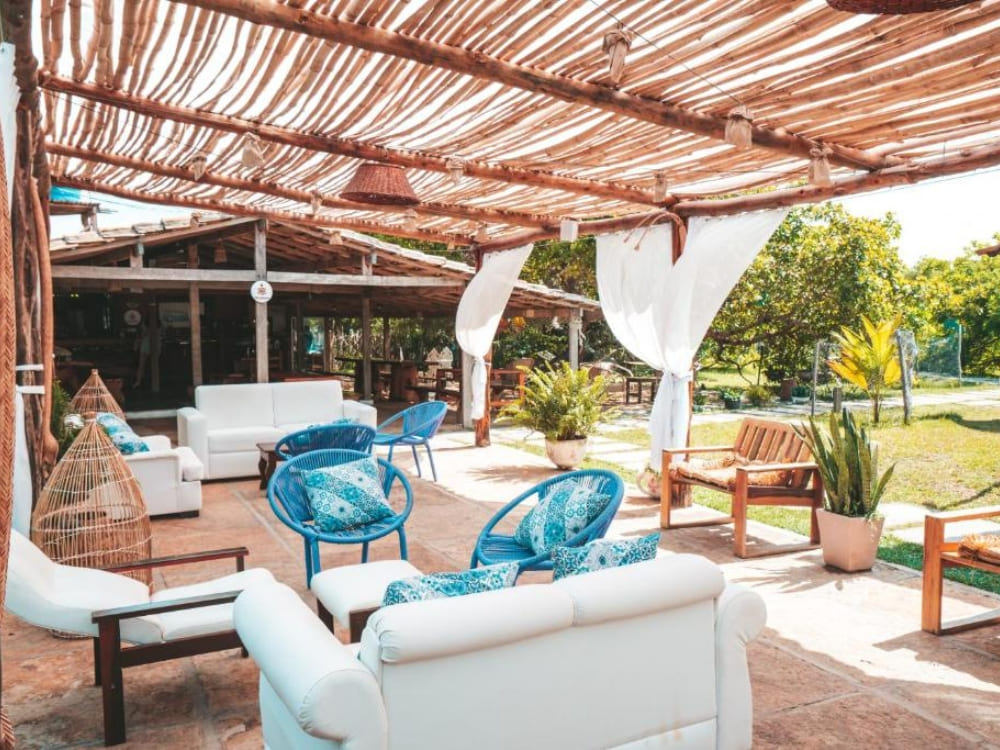
    Vila Capininga Ecopousada 

    Rustic outdoor social area of an inn, covered by an irregular wooden structure and furnished with comfortable white sofas and blue chairs.
    .

    It’s not unusual to find Vila Capininga Ecopousada fully booked due to the beauty of its facilities, high-quality services, and fair prices.

    Enjoy air-conditioned rooms, double or queen-size beds, work desks, free amenities, private bathrooms, flat-screen TVs, internet connection, hammocks, charming social areas, and delicious homemade food. 

    • Address: Vila Povoado Arredores – Rua da Fazenda, 01 – Malhadinha
    • Price range: $$$

    Pousada Giro das Dunas 

    Giro das Dunas is a cozy inn over 500 meters away from downtown Santo Amaro. The apartments include single or double beds, TVs, private bathrooms, and balconies with a lovely view of the pool.

    It also includes a sun deck, a shared lounge, a garden, free Wi-Fi, a restaurant, and car rental service.

    • Address: Rua das Flores, 143
    • Price range: $$

    Where to stay in Atins?

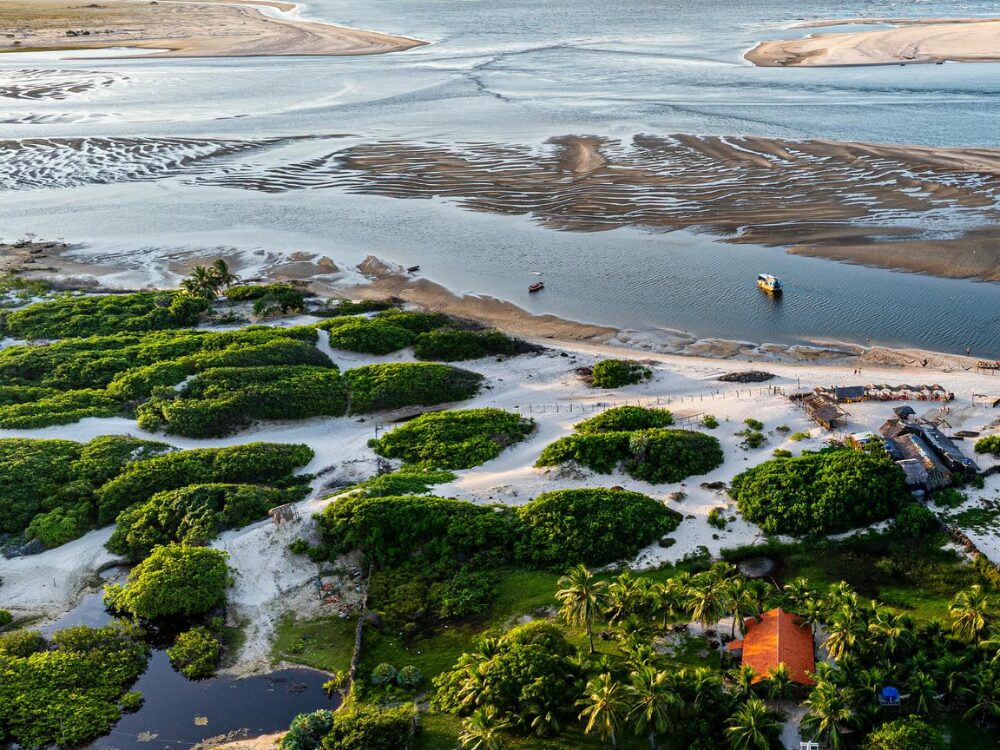
    With a population of only 1,500 inhabitants, Atins is a small village located in a fairly isolated share of Lençóis Maranhenses National Park, in Barreirinhas, by the mouth of the Preguiças River and the Atlantic Ocean. Aside from the lagoons, Atins Beach is also a fantastic spot to visit—especially for kitesurfers.

    Lush aerial landscape of Atins, highlighting the green vegetation, sandbanks, and the meeting of the Preguiças River waters with the ocean.
    @lubritofotografia

    The only way to get to Atins is by four-wheel drive or boat, but the picturesque charm, the kind-hearted people, and the jaw-dropping landscapes are worth the effort. 

    👉 Read more: When is the best time to visit Lençóis Maranhenses?

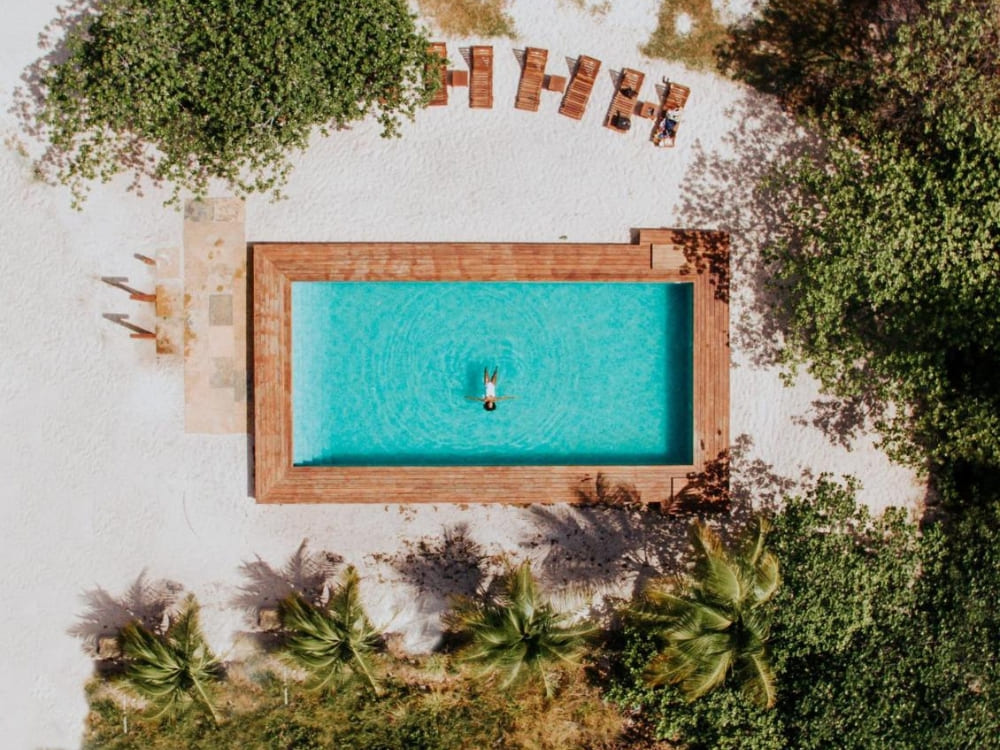
    La Ferme De Georges

    Vertical aerial shot of a rectangular turquoise swimming pool with a smooth wooden deck and loungers at the luxurious La Ferme De Georges.
    .

    Where to stay in Lençóis Maranhenses when you’re looking for a 5-star accommodation with beautiful facilities and exclusive services? La Ferme De Georges is a luxury inn based on high-end experiences and sustainable practices.

    Built with eco-friendly materials, the chalets are spacious and elegant, all of them featuring  comfortable beds, air conditioning, mini fridges, private bathrooms, and premium amenities.

    In the common areas, guests can relax and have fun in the swimming pool, sun deck, volleyball court, entertainment lounge, or bar. Specialized in Brazilian food, the restaurant uses fresh ingredients harvested in La Ferme de George’s own farm.

    • Address: Rua Principal, s/n – Atins
    • Price range: $$$$$

    Muita Paz

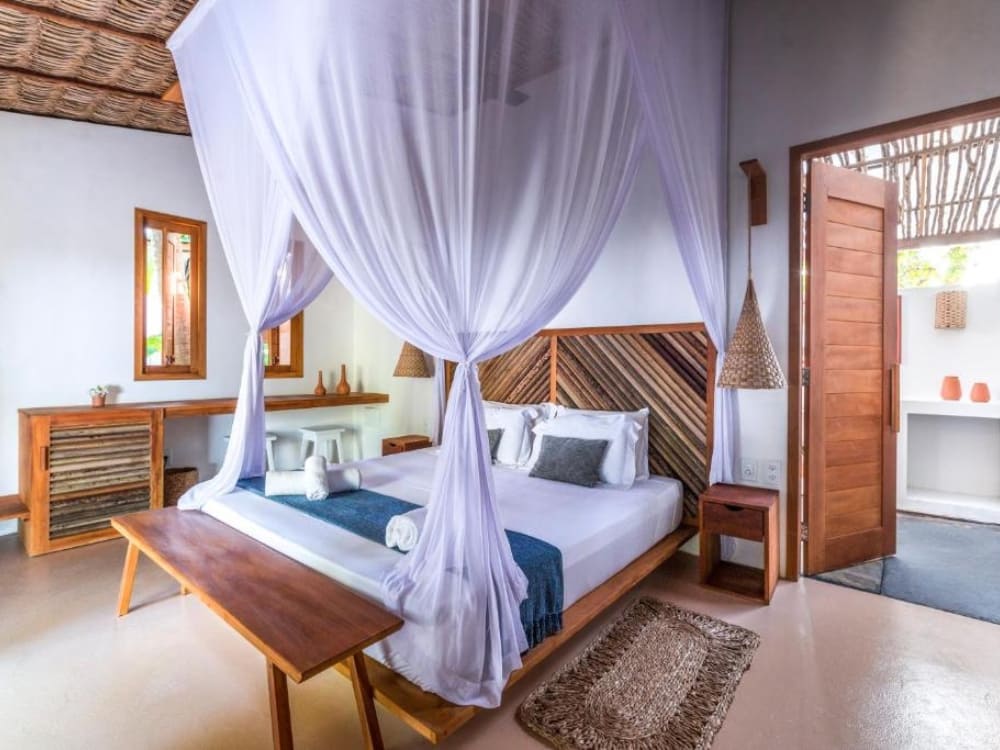
    Elegant and bright interior of a chalet at Muita Paz inn, focused on a double bed covered by a large translucent mosquito net.
    .

    Rated by previous guests as an excellent resort, Muita Paz is located by the sea on a private beach and surrounded by hundreds of coconut trees.

    The ocean view chalets are beautifully decorated and equipped with king or queen-size beds, air-conditioning or ceiling fans, work desks, mini fridges, and private bathrooms. 

    A wonderful fine dining restaurant, spa, kitesurfing lessons, and exclusive activities in Lençóis Maranhenses guarantee an unforgettable stay. 

    • Address: Rua Principal, s/n – Atins
    • Price range: $$$$$

    Anacardier Privé Hotel

    Anacardier is an adult-only hotel with luxury suites and bungalows, a swimming pool, a well-kept garden, a fine dining restaurant, and an open-air terrace facing a beautiful view of the national park.

    The sophisticated accommodations are perfectly balanced with the bucolic charm of Lençóis, creating an experience of pure relaxation and connection with the dunes.

    • Address: Rua Principal, s/n – Atins

    Price range: $$$$$

    Vila Aty Lodge

    Great for families and couples, Vila Aty Lodge is a six-minute walk away from Atins Beach. Common areas include a swimming pool, a garden, a vegetable garden, an entertainment area for children, a bar, and a restaurant.

    The air-conditioned suites have single and double beds, TVs, toiletries, closets, and bathrooms. Some units also feature private balconies. 

    • Address: Rua Principal, s/n – Atins
    • Price range: $$$

    Charme Atins

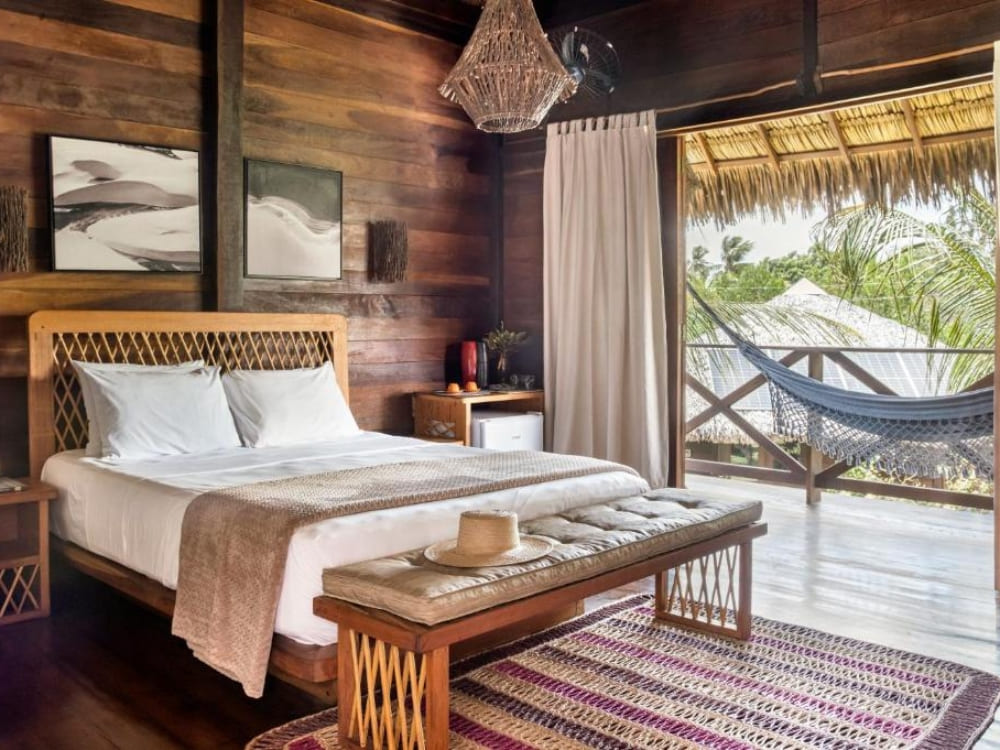
    Cozy room lined with darkened wood panels at Charme Atins, with a double bed and open doors to a balcony with a hammock.
    .

    Seven minutes away from Praia do Atins, this beautiful accommodation offers chalets for families and suites for couples. All of them are equipped with comfy beds, TVs, air-conditioning, and private bathrooms.

    Charme Atins is known in the area for its great activities, such as sunset contemplation in privileged locations and breakfast or lunch right in the dunes.

    • Address: Rua Alegria, s/n – Atins
    • Price range: $$$

    Rancharia Charme Atins

    Three minutes away from Atins Beach and right at the village’s main street, Rancharia Charme Beach is as charming as its name suggests.

    Besides the great rooms ideal for families and couples, some of this accommodation’s highlights include beautiful natural views, a swimming pool, a beach tennis court, and a sushi bar. 

    • Address: Rua Principal, s/n – Atins
    • Price range: $$

    Pousada Jurará

    Respectively 200 and 400 meters away from Atins Beach and Lençóis Maranhenses National Park, Pousada Jurará offers apartments with double or single beds, air-conditioning, mini fridges, toiletries, and private bathrooms.

    It also includes a restaurant, a bar, a breakfast buffet, kite surfing lessons, and free Wi-Fi.

    • Address: Rua Principal, s/n – Atins
    • Price range: $$

    Visiting Lençóis Maranhenses with PlanetaEXO

    Now that you know where to stay in Lençóis Maranhenses, shall we start planning your vacation?

    PlanetaEXO, an ecotourism platform specializing in Lençóis Maranhenses tours, takes care of everything for you—from bookings to transfers and tailor-made itineraries. When you travel with us, all you have to do is enjoy the moment. Contact us now!

  • How to visit the Lençóis Maranhenses National Park: Travel Guide

    How to visit the Lençóis Maranhenses National Park: Travel Guide

    Learn everything you need to know to travel to Lençóis Maranhenses in Brazil, including how to get there, the best time to visit, main activities, and more!

    Are you seeking adventure, relaxation, and breathtaking views? Then you should head to Lençóis Maranhenses National Park, a vast expanse of undulating sand dunes and crystal-clear pools that offers a serene escape from the chaos of city life.

    This destination shows a whole other side of Brazil’s nature—very different from the dense vegetation of rainforests or the open fields of wetlands, but still absolutely extraordinary.

    If you need some help with your vacation planning, PlanetaEXO, an ecotourism platform specializing in Lençóis Maranhenses tours, has created a complete guide detailing all the crucial information for a fantastic trip. Check it out below!

    Table of contents:

    About Lençóis Maranhenses

    Along the undulating white sand dunes formed by the wind, countless rainwater lagoons are formed during the rainy seasons in Lençois Maranhenses National Park. Due to the high volume of rainfall, the bodies of water become large and deep enough for swimming and diving.

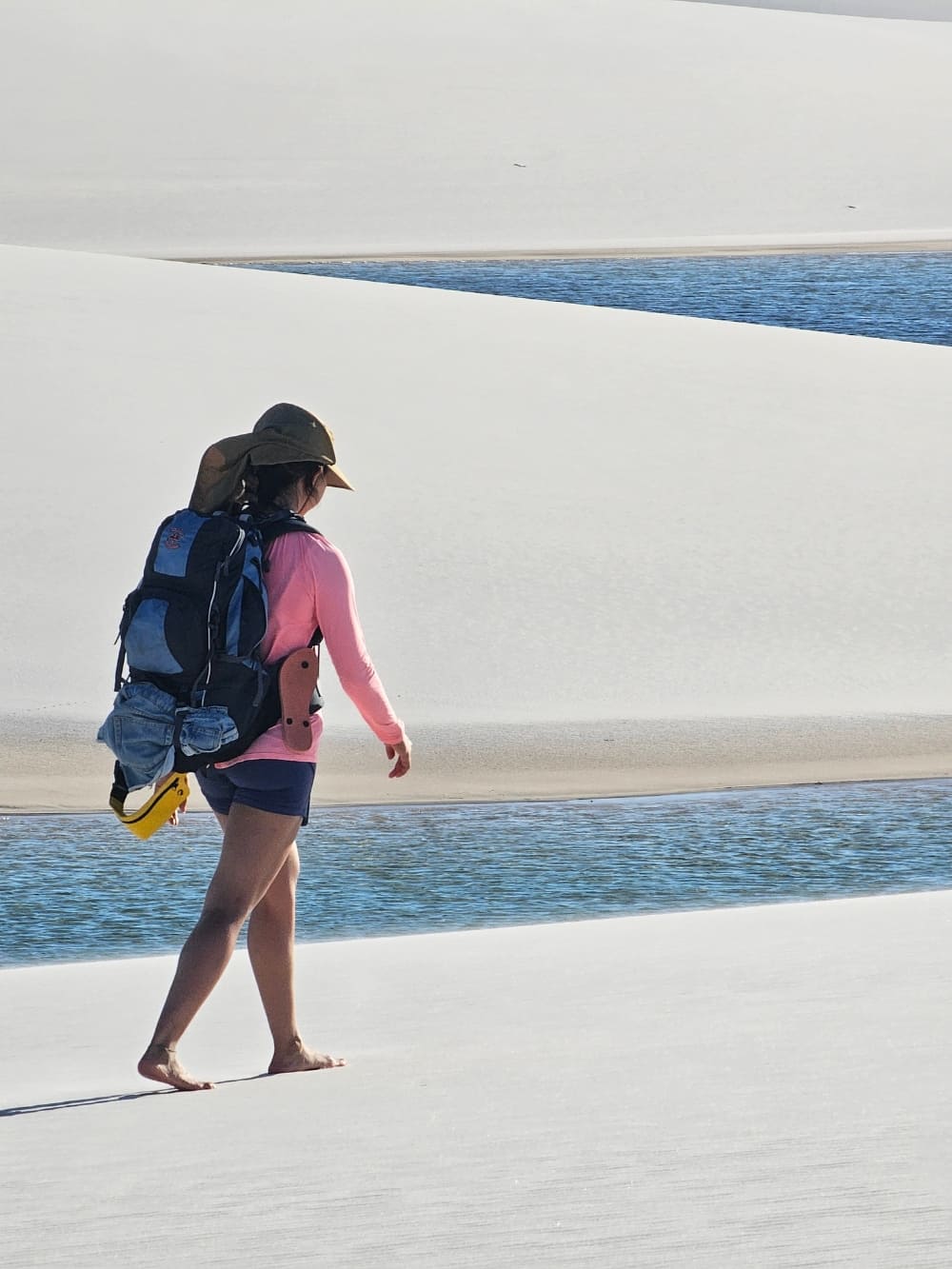
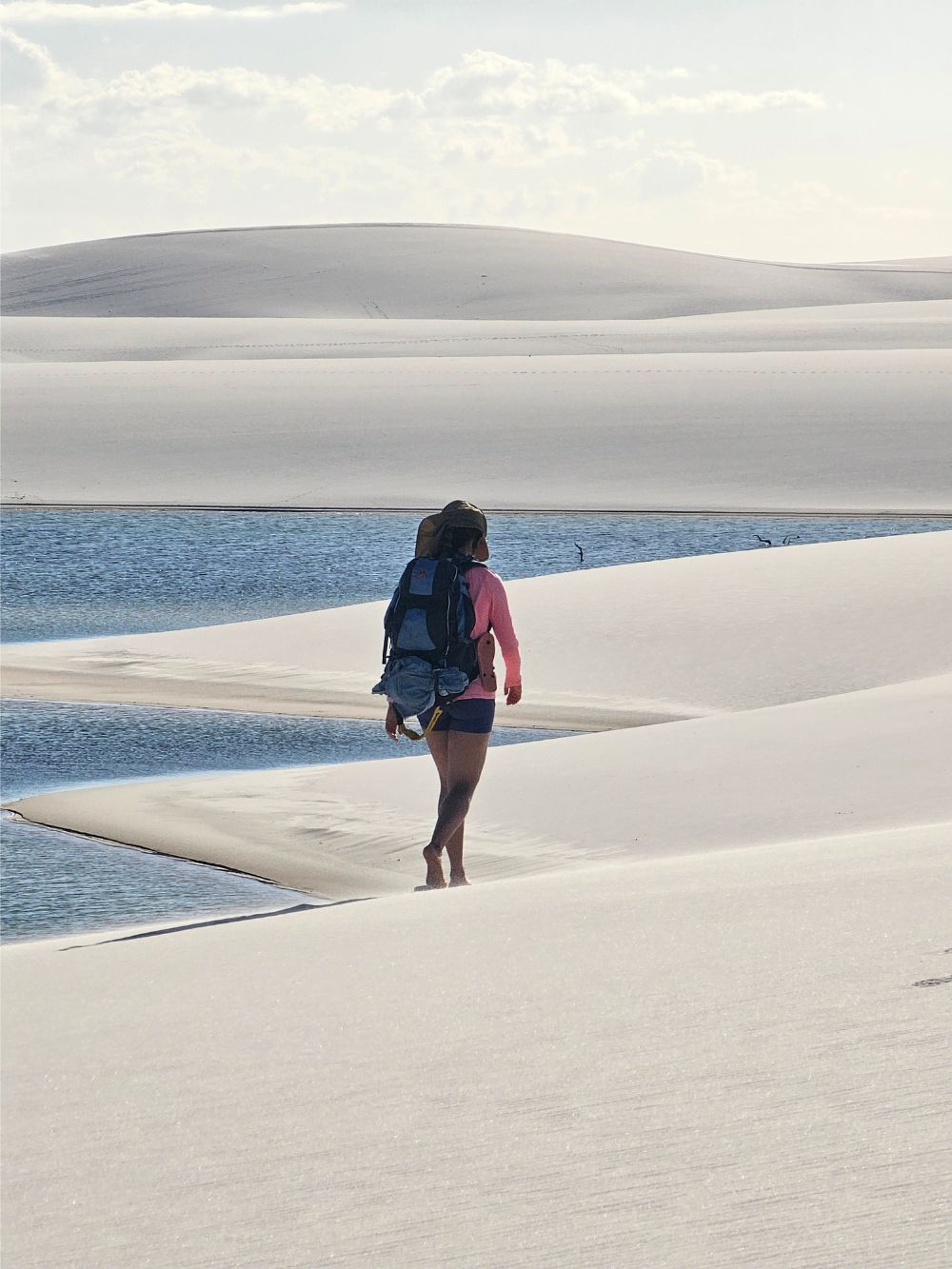
    A backpacker walks barefoot along the white sand dunes near a blue rainwater lagoon while trekking in Lençóis Maranhenses National Park.

    The beauty of Lençóis is so otherworldly it got to Hollywood, serving as the setting for the fictional planet Vormir in Avengers: Infinity War. Amidst CGI effects, the dunes host the villain Thanos and his daughter Gamora in a few scenes from the film.

    The park has been protected by federal Brazilian law since 1981 and was declared a UNESCO World Heritage Site in 2024.

    👉 Read more: How are the dunes and lagoons in Lençóis Maranhenses formed?

    Is Lençóis Maranhenses a desert?

    Lençóis Maranhenses is what we call “a desert with a thousand lakes”. As a wet desert, it’s a broad area of sand dunes and high biodiversity, covered with over 36,000 rainwater lagoons.

    Travelers walk across the vast expanse of sand dunes in Lençóis Maranhenses during a bright sunset.
    .

    Therefore, Brazil does not have vast arid deserts like the Sahara, though there are places undergoing desertification processes, such as the Caatinga biome.

    Where is Lençóis Maranhenses located?

    Lençóis Maranhenses is located in a 155,000 ha area on the coast of the state of Maranhão, in the northeast of Brazil. 

    Barreirinhas, Atins, and Santo Amaro are the gateways for the national park, providing enough infrastructure to comfortably welcome tourists from all over the world.

    How to get to Lençóis Maranhenses National Park?

    To reach the breathtaking expanse of the Lençóis Maranhenses National Park, adventurers can set off from three entry points—all easily accessible from São Luís, capital of Maranhão, where Marechal Cunha Machado International Airport (SLZ) is located:

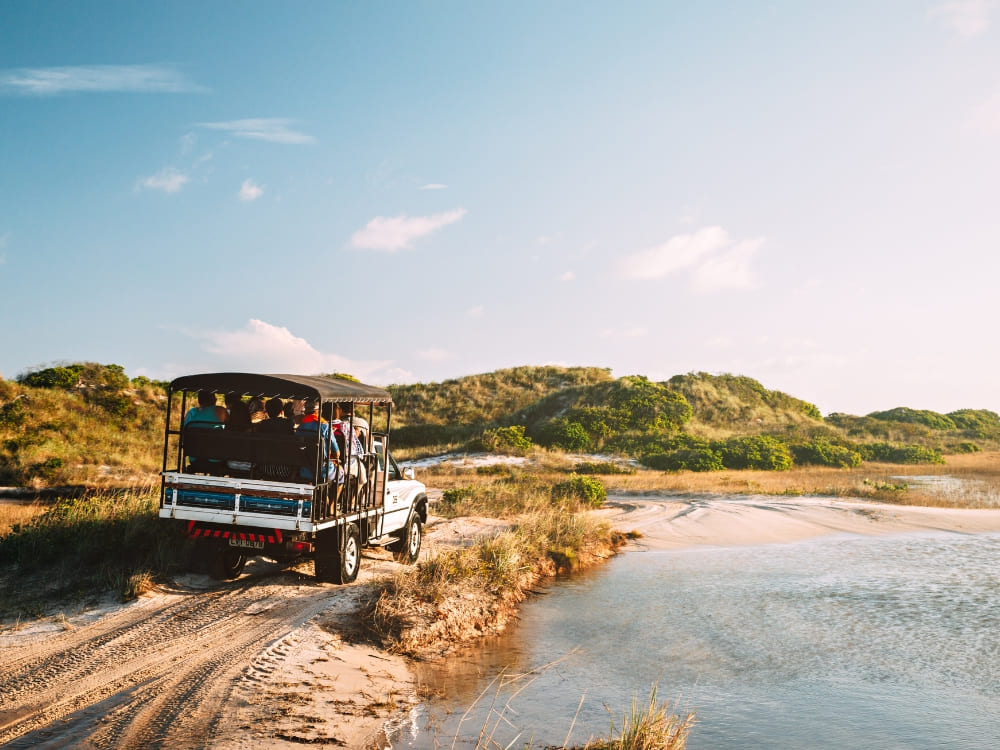
    A 4x4 vehicle carries tourists along a sandy path, offering a ride into the Lençóis Maranhenses National Park.
    .
    • Barreirinhas: the main gateway, 260 km east of São Luís. Options include buses, rental cars, shared vans, and private transfers.
    • Atins: accessible via Barreirinhas. From there, you can take a scenic boat ride along the Preguiças River or a 4×4 vehicle ride. Both options offer unique experiences and beautiful views.
    • Santo Amaro: 237 km southeast of São Luís, it’s a quieter alternative to Barreirinhas. Rent a car in São Luís to drive straight to Santo Amaro, or take a shared van service.
    • Pro tip: when you book your Lençóis Maranhenses tour with PlanetaEXO, our local partners provide shuttle services from the airport/hotels in São Luís to your accommodation in one of the base cities. Talk about convenience!

    👉 Read more: How to get to Lençóis Maranhenses?

    When is the best time to visit Lençóis Maranhenses?

    The ideal time to visit Lençóis Maranhenses in Brazil is from May to September. During this period, the lagoons are at their fullest, providing visitors with the best possible experience. Perfect for swimming, diving or simply relaxing in the crystal-clear waters!

    The sun sets brightly over the undulating white sand dunes and rainwater lagoons in the national park.
    .

    From September to October and February to April, the lagoons start to decrease but still offer plenty of action in the water. While the scenery might not be as lush as during the high-water season, these months are known for fewer crowds and enjoyable activities in the lagoons.

    From November to January, the lagoons dry up, limiting water activities and revealing pastures and meadows on the lagoon floors. This period shows a different side of Lençóis, highlighting the changing landscape and the unique formations of the park.

    👉 Read more: When is the best time to visit Lençóis Maranhenses?

    What to do in Lençóis Maranhenses National Park?

    Besides its jaw-dropping beauty, this is a destination ideal for travelers who love the outdoors and can’t say no to adventure. Watching the sunset from the sand dunes is an experience unlike any other, but there’s a lot more to do in Lençóis Maranhenses

    Lagoons

    Across the national park, there are thousand of lagoons of all sizes, which appear and disappear depending on the time of year.

     A wide landscape shows thousands of rainwater lagoons interspersed among the white sand dunes.
    Photo: Marcelo Bonifacio

    They all have their virtues, but some stand out for their beauty, size, and permanence even during times of drought:

    • Barreirinhas: Lagoa Azul and Lagoa Bonita
    • Atins: Lagoa Tropical and Lagoa da Capivara
    • Santo Amaro: Lagoa da Betânia, Lagoa da Andorinha and Lagoa da Gaivota

    Can I swim in Lençóis Maranhenses?

    Yes, you can swim in Lençóis Maranhenses! The lagoons are clear and have just the right temperature for swimming, diving or simply relaxing.

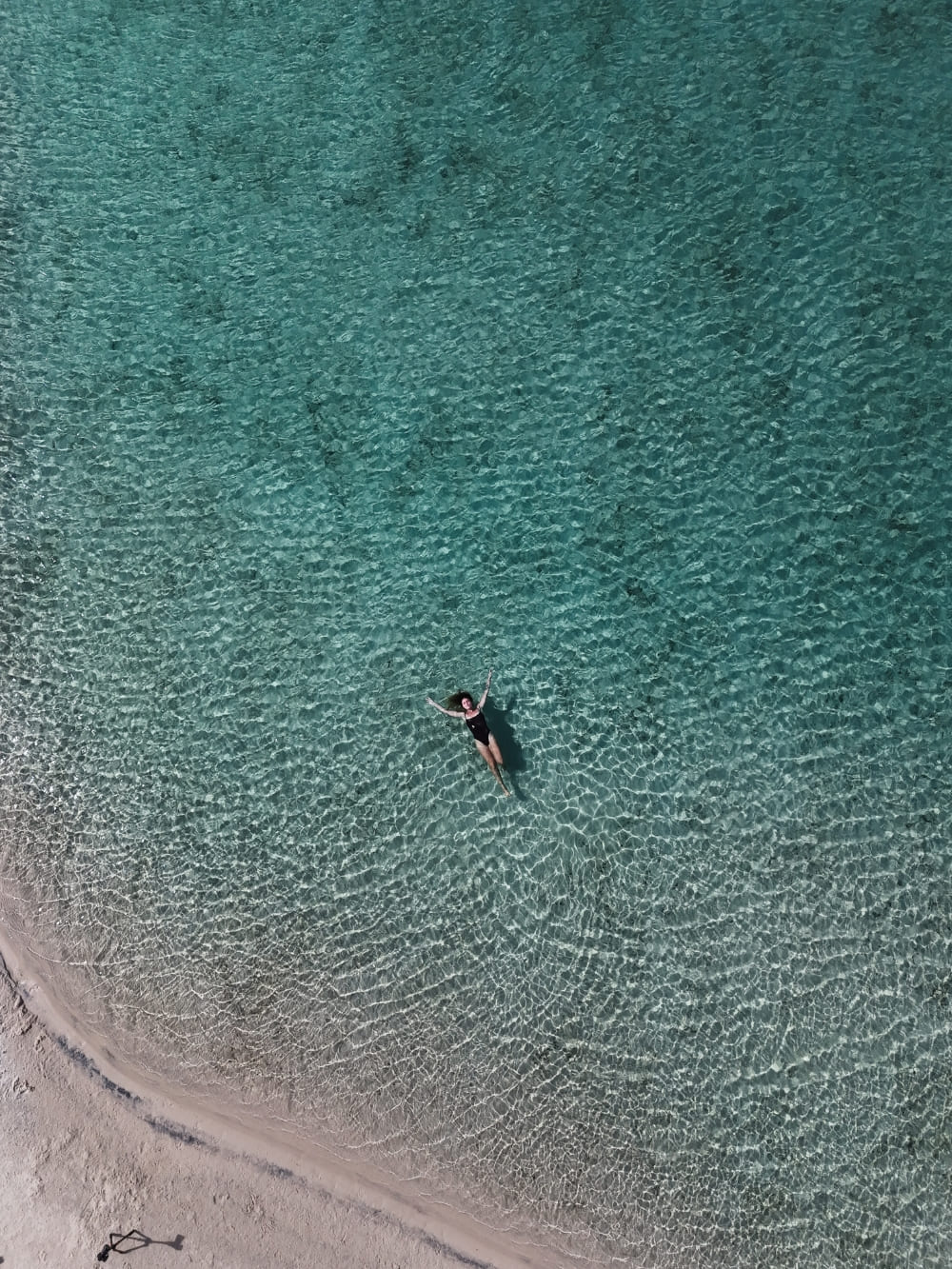
    A person swims and relaxes in the crystal-clear waters of a lagoon in Lençóis Maranhenses.
    Photo: Marcelo Bonifacio

    However, it’s important to follow the guides’ instructions and respect the park’s rules to ensure a safe and responsible experience. This includes avoiding the use of cosmetics that could contaminate the water and picking up your own trash.

    Trekking

    Those seeking total immersion can cross the national park on foot. The trek lasts 3–5 days and allows you to explore the sand dunes and lagoons located in the so-called “primitive zone” of Lençóis Maranhenses.

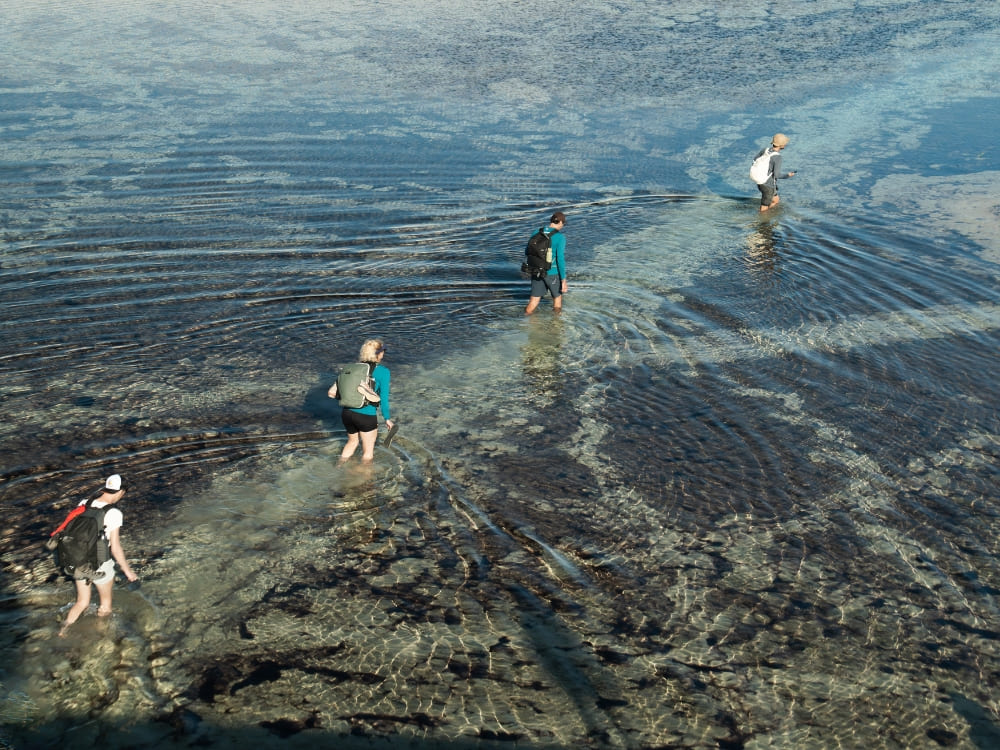
    A group of travelers wades through a shallow lagoon while crossing the national park on foot.
    Photo: Isadora Sá

    After long hours of trekking, travelers spend the night in the homes of locals who generously open their doors to welcome them. The accommodations are modest but cozy.

    The experience requires time and physical effort, meaning not everyone is ready to face it. However, visitors who are willing to embark on this adventure do not regret it and return home transformed!

    👉 Explore the adventure: 5-day Lençóis Maranhenses Hike

    Beaches

    The Lençóis Maranhenses National Park is bordered by the Atlantic Ocean, especially at the mouth of the Preguiças River.

    While somewhat famous, Atins Beach is not very crowded due to its fairly remote location in Atins and relatively difficult access—only by boat or 4×4 vehicles.

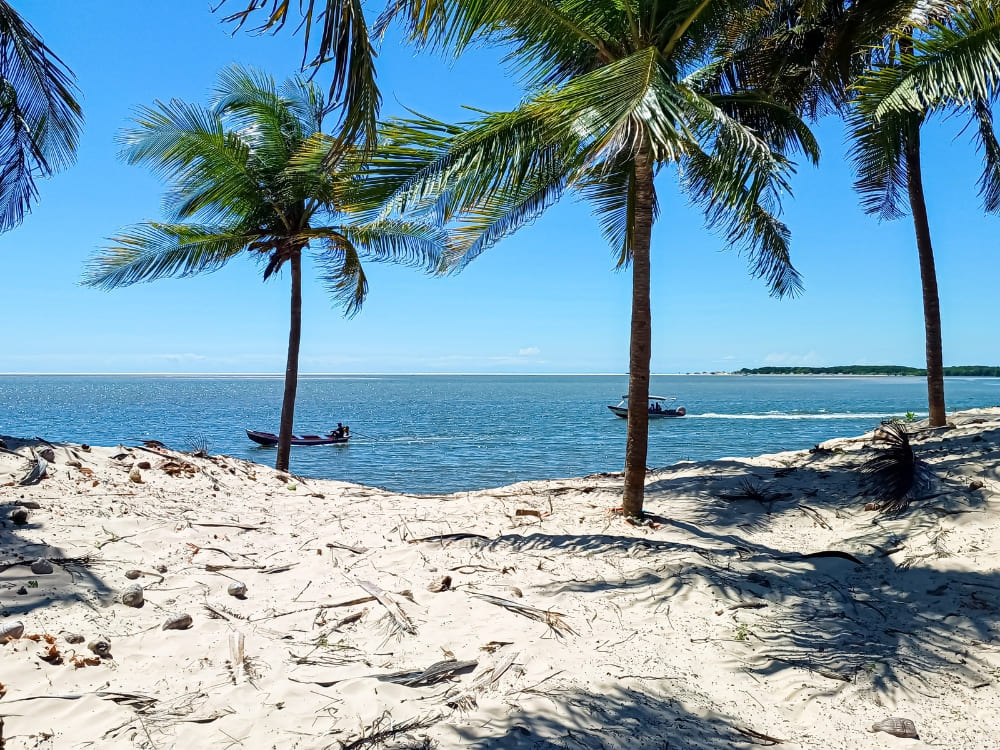
     Palm trees line the light-colored sand near the mouth of the Preguiças River, with small boats sailing on the water.
    .

    The beach is gorgeous, with calm waves, warm waters and light-colored sand. In addition to being great for relaxing and sunbathing, it’s also one of the main kitesurfing spots in Brazil. Therefore, the sky is always adorned with colorful kites that only make the view even more beautiful.

    Caburé Beach (Barreirinhas) and Travosa Beach (Santo Amaro) are also worth the visit!

    Boat rides and boiacross

    The landscape of Lençóis is not limited to sand dunes and lagoons but also includes green areas bathed by the Preguiças River. Passing through Barreirinhas, Atins, Vassouras, Mandacaru and Caburé, navigating its dark waters is a great way to truly get to know the region.

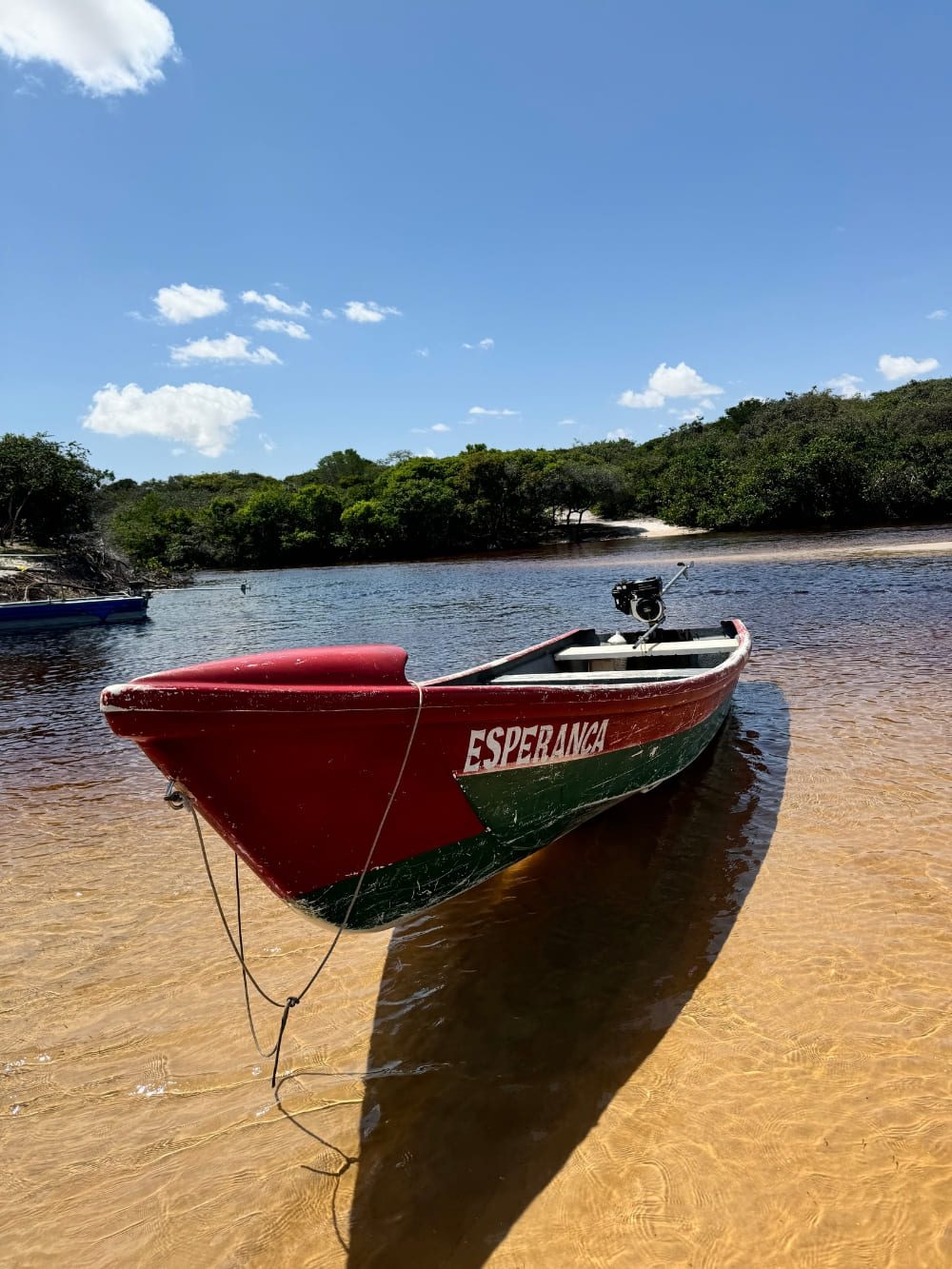
     A red and green boat named Esperanca rests on the sandy shore of the dark waters of the Preguiças River.
    .

    Tourists are also attracted by the Formigas River, which cuts through the village of Cardosa. The current is perfect for boiacross, a popular ecotourism activity in Brazil where people float down the rivers in large inflatable tubes.

    How many days should I stay in Lençóis Maranhenses?

    Knowing how long the trip will last is key to your planning. Lençóis Maranhenses National Park offers experiences ranging from quick introductions to deeper, multi-day adventures.

     A group of people casts long shadows while exploring the sand dunes in the primitive zone of Lençóis Maranhenses.
    .

    If your time is limited, a 2-day tour is enough for a taste of the sand dunes and lagoons. For a more immersive experience, 3 to 4 days allow you to explore different regions of the park, join longer hikes, or take boat trips along the Preguiças River.

    If you’re able to stay 5 days or more, you can enjoy more ambitious adventures, such as multi-day treks crossing the park or embarking on the wonderful Route of Emotions, a fantastic tour that includes destinations (Lençóis, Delta do Parnaíba, and Jericoacoara) in three different states (Maranhão, Piauí, and Ceará)!

    👉 Read more: How many days should you spend in Lençóis Maranhenses?

    Where to stay in Lençóis Maranhenses?

    As the main gateway, Barreirinhas has the widest range of accommodations, from budget guesthouses to comfortable hotels. With easy access to the national park, good transportation options, and restaurants all over town, it’s a very convenient place to stay.

    Atins is a peaceful fishing village by the sea, known for its rustic charm and relaxed pace. It’s ideal for travelers looking for a quieter atmosphere in cozy, more intimate hotels.

    Santo Amaro offers an even more remote and exclusive experience. With fewer visitors and inns surrounded by sand dunes and lagoons, it’s the perfect picture of tranquility and total disconnection.

    👉 Read more: Where to stay in Lençóis Maranhenses?

    Best Lençóis Maranhenses National Parks tours

    Can’t wait to witness the otherwordly beauty of Lençóis Maranhenses up close? Check out PlanetaEXO’s tours and start planning your vacation!

    TOUR HIGHLIGHTS DURATION STARTING PRICE*
    Lençóis Maranhenses trek from Atins Trekking across the sand dunes, rainwater lagoons, accommodation in locals’ houses inside the national park. 2 days US$ 416
    Lençóis Maranhenses Desert Brazil Trip Trekking across the sand dunes, rainwater lagoons, Baixa Grande Oasis, accommodation in locals’ houses inside the national park. 2 days US$ 380
    Lençóis Maranhenses Trek Trekking across the sand dunes, rainwater lagoons, Baixa Grande and Queima dos Britos Oasis, accommodation in locals’ houses inside the national park. 3 days US$ 485
    Lençóis Maranhenses Tour from Santo Amaro Sand dunes and lagoons in Santo Amaro, hiking, 4×4 car tours, Ponta Verde. 3 days US$ 615
    Horseback Riding Lençóis Maranhenses Tour Horseback riding the sand dunes, rainwater lagoons, Baixa Grande, Queimada dos Britos, Atins, accommodation in locals’ houses inside the national park. 3 days US$ 1,165
    Lençois Maranhenses Trekking Trekking across the sand dunes, rainwater lagoons, Lagoa Bicudo Gordo, Lagoa do Junco, Baixa Grande and Queima dos Britos Oasis, accommodation in locals’ houses inside the national park. 4 days US$ 600
    Lençóis Maranhenses Tour from Atins Sand dunes and lagoons in Canto do Atins and Ponta do Mangue, hiking, 4×4 car tours, Preguiças Lighthouse. 4 days US$ 960
    Lençóis Maranhenses Hike Hiking across the sand dunes, rainwater lagoons, Baixa Grande and Queima dos Britos Oasis, boat trips, Atins Beach, Vassouras and Mandacaru, accommodation in locals’ houses inside the national park. 5 days US$ 702
    Lençóis Maranhenses Full Itinerary: Barreirinhas, Santo Amaro & Atins Sand dunes and lagoons in Barreirinhas, Atins, and Santo Amaro. Boat rides, hiking, Mandacaru Lighthouse, waterfalls, visiting local communities. 6 days US$ 1,381
    Route of Emotions: from Lençóis to Jericoacoara trip Tours in Lençóis Maranhenses (MA), Delta do Parnaíba (PI), and Jericoacora (CE). Sand dunes, lagoons, beaches, natural pools, boat trips, ferry and 4×4 rides. 6 days US$ 1,430

    *Per person, based on double occupancy in group departures. Prices may vary depending on season and availability. Exchange rate as of March 13th, 2026; subject to change.

    Is Lençóis Maranhenses worth it?

    Lençóis Maranhenses is more than worth it! Thanks to its unique natural landscapes that combine white dunes with rainwater lagoons, this is surely the type of travel everyone should experience at least once in a lifetime.

    A golden sunset illuminates the unique natural landscapes of white dunes and a rainwater lagoon.
    .

    As you explore the wonders of this surreal-like setting, you’ll also have the chance to connect with Lençóis’ culture by interacting with local communities, take stunning photos, and dive deep into a different side of nature in Brazil.

    With a strong commitment to sustainable tourism, Lençóis Maranhenses National Park offers a journey that is both memorable and respectful of the environment, ensuring  rich and valuable moments for all visitors.

    Traveling to Lençóis Maranhenses with PlanetaEXO

    PlanetaEXO is an ecotourism platform specializing in Lençóis Maranhenses tours. By working alongside the best local operators, we’re able to make your dream vacation a reality!

    From bookings to tailor-made itineraries, our team works every day to ensure unforgettable travel experiences and sustainable practices that benefit both the environment and local communities. Contact us now!

  • Diving in Fernando de Noronha: 2026 Ultimate Guide

    Diving in Fernando de Noronha: 2026 Ultimate Guide

    Discover everything you need to know to have an unforgettable experience  scuba diving and snorkeling in Fernando de Noronha

    Fernando de Noronha is known for the beauty of its crystal-clear waters, gorgeous white-sand beaches, and an elegant, peaceful atmosphere. This makes it one of the best destinations in Brazil for people looking for leisure and adventure alike.

    Diving in Fernando de Noronha is the best way to enjoy what nature has to offer. The sea presents wonderful conditions for divers to explore the breathtaking underwater landscapes and the local marine life. No wonder visitors from all over the world travel to this magical island!

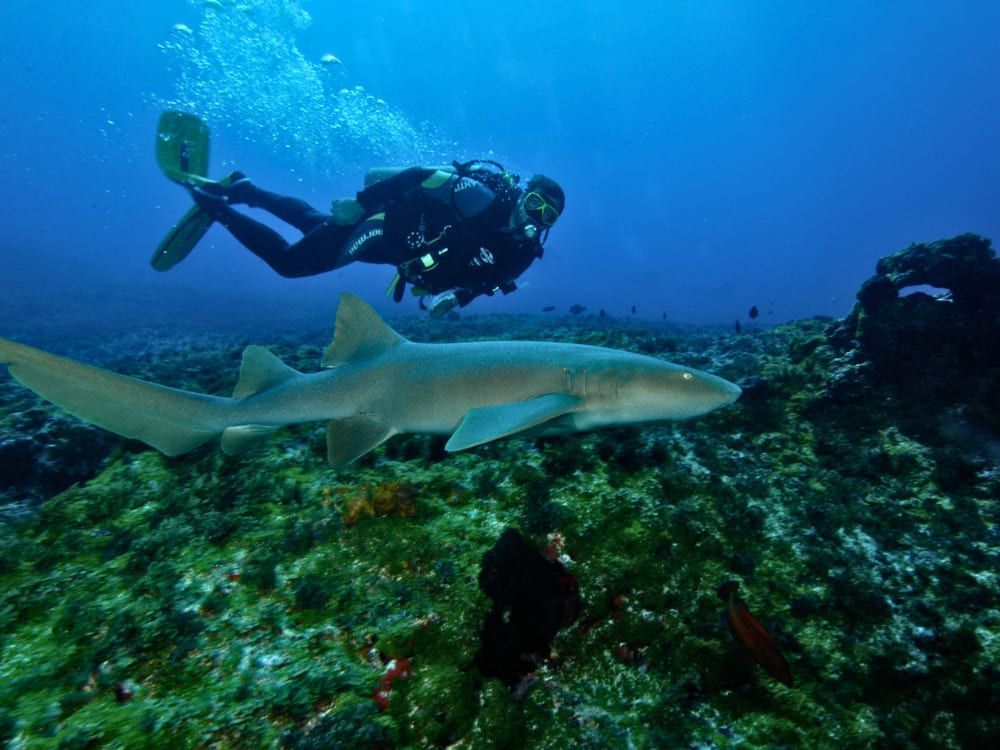
    A scuba diver swims closely behind a nurse shark over a coral reef in the crystal-clear waters of Fernando de Noronha.
    Photo: All Angles

    To help you plan your Brazil diving trip, PlanetaEXO, an ecotourism platform that offers Fernando de Noronha scuba diving packages, has put together a complete guide with all the information you need. Check it out below!

    About Fernando de Noronha

    Fernando de Noronha is the main island—and the only inhabited one—of an archipelago of 21 islands. Its origin traces back millions of years to an inactive volcanic field submerged into the Atlantic Ocean. 

    In 1503, during a Portuguese expedition led by sailor Gonçalo Coelho and explorer Fernão de Noronha—see something familiar about this name?—the islands were discovered. Over the centuries, many nations have occupied them. The Netherlands and France have heavily influenced local culture and architecture, but the Brazilian essence remains striking and undeniable.  

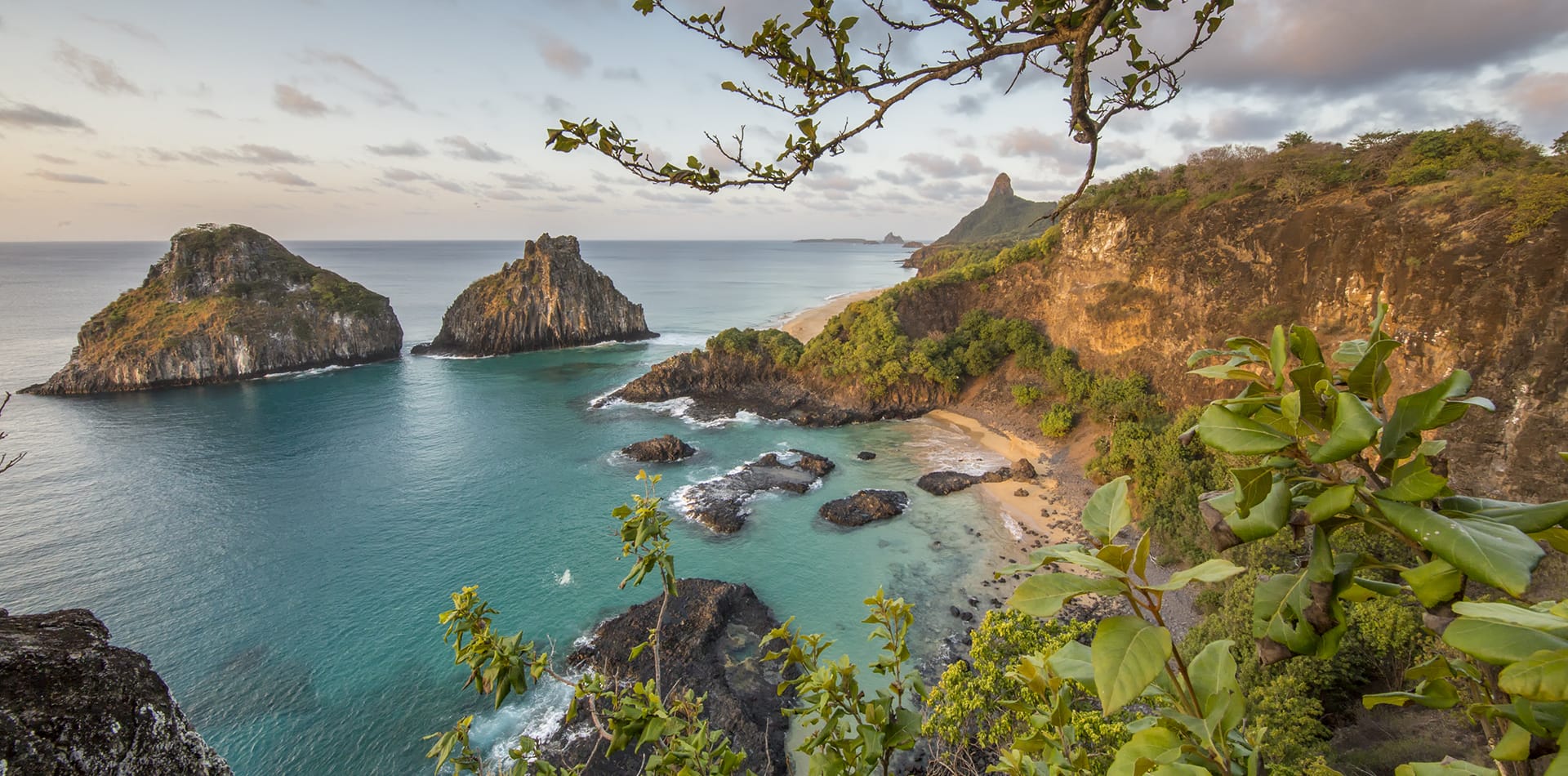
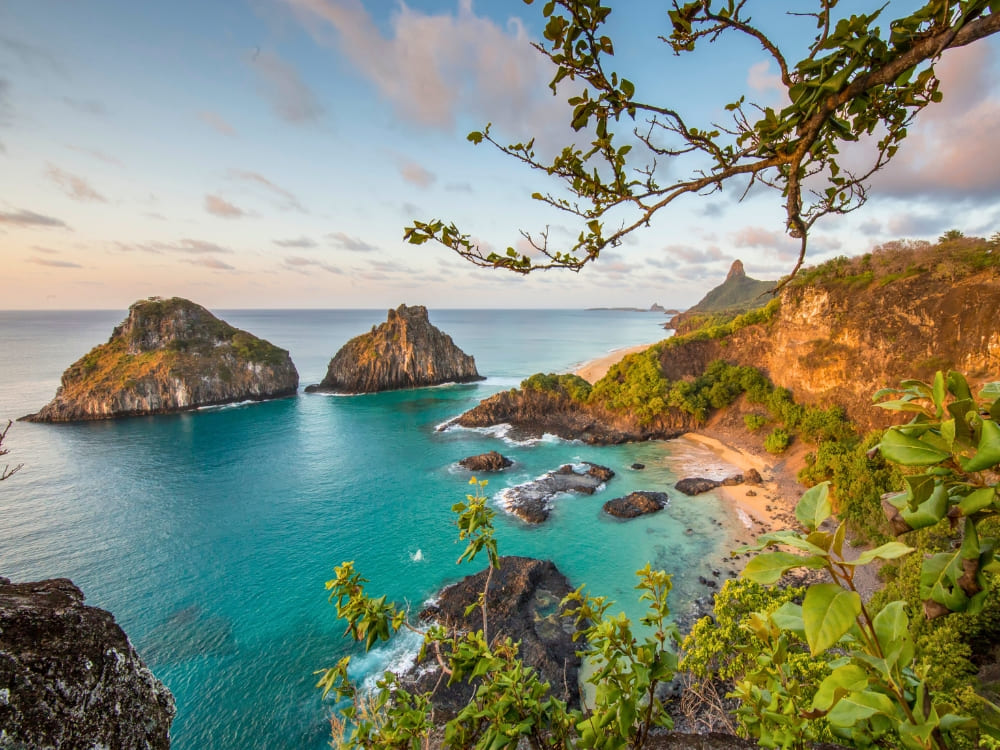
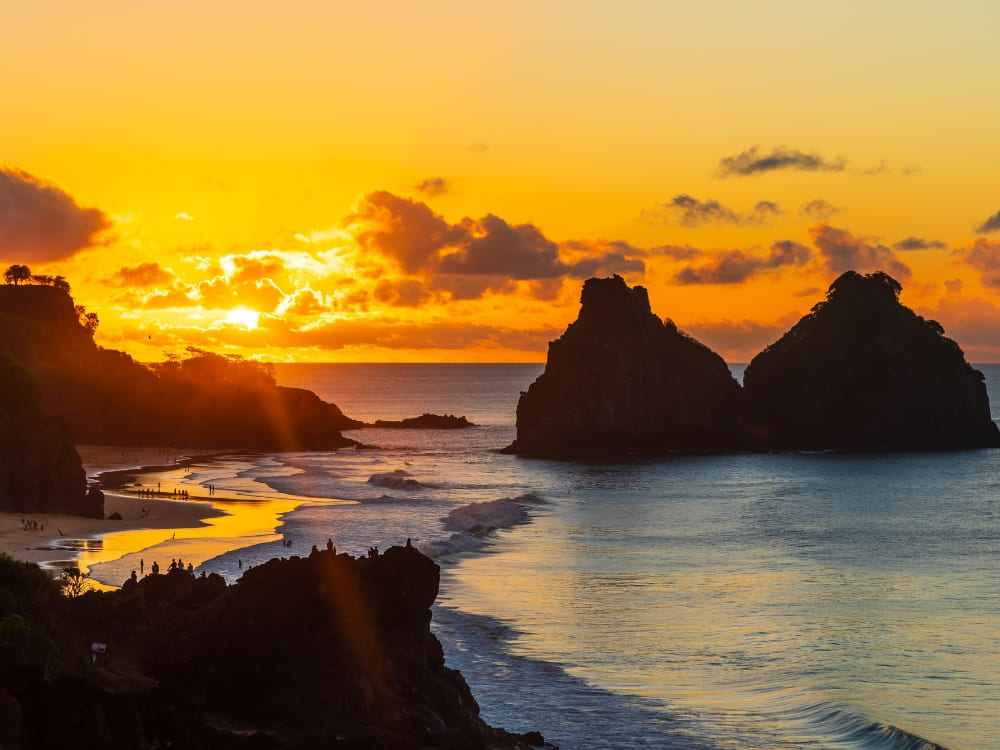
     The iconic Morro dos Dois Irmãos rock formations rise from the turquoise ocean along a lush, cliff-lined beach in Fernando de Noronha.
    .

    Nowadays, Noronha is always on the top of the list of Brazil’s most desired destinations and was even recognized as a UNESCO World Heritage Site in 2001 for its “outstanding universal value.”

    Formed by two federal conservation units, the Fernando de Noronha Marine National Park (PARNAMAR) and the Fernando de Noronha Environmental Protection Area (APA), the archipelago is an important player in the conservation of Brazil’s rich biodiversity.

    Where is Fernando de Noronha, Brazil?

    Fernando de Noronha is located in northeastern Brazil, in Pernambuco, 545 km from the state capital, Recife. Sitting in the Atlantic Ocean, its total area is 26 km², whereas 17 km² are occupied by the main island alone.

    How to Get to Fernando de Noronha?

    Fernando de Noronha Airport (FEN) welcomes tourists arriving on the island. Azul, GOL, and LATAM airlines offer daily direct flights from Recife (REC), while flights from São Paulo (GRU) operate 4 times a week.

    View from an airplane window showing the wing and the famous Morro do Pico peak as a flight arrives at Fernando de Noronha.
    @flor_decerejeirafotografia

    International travelers must disembark in Recife before departing for Noronha Airport, with direct flights from Buenos Aires (EZE/AEP), Lisbon (LIS), Porto (OPO), Madrid (MAD), Orlando (MCO), and Santiago, Chile (SCL). It’s also possible to make connections in São Paulo, Rio de Janeiro, Belo Horizonte, or Brasília before departing for Recife.

    Upon arrival, tourists have to head to their accommodations, which generally offer private or shared shuttle services.

    👉 Read more: How to get to Fernando de Noronha, Brazil?

    When is the Best Time to Go to Fernando de Noronha for Diving?

    The best time for diving in Fernando de Noronha depends on the type of experience you’re looking for, as well as the area you wish to explore. Over 75% of the island’s visitors practice some kind of diving, with the main modalities being free and scuba diving.

    This variety is greatly appreciated by tourists, but it’s important to notice that there are different seasons in Noronha that can affect these activities.

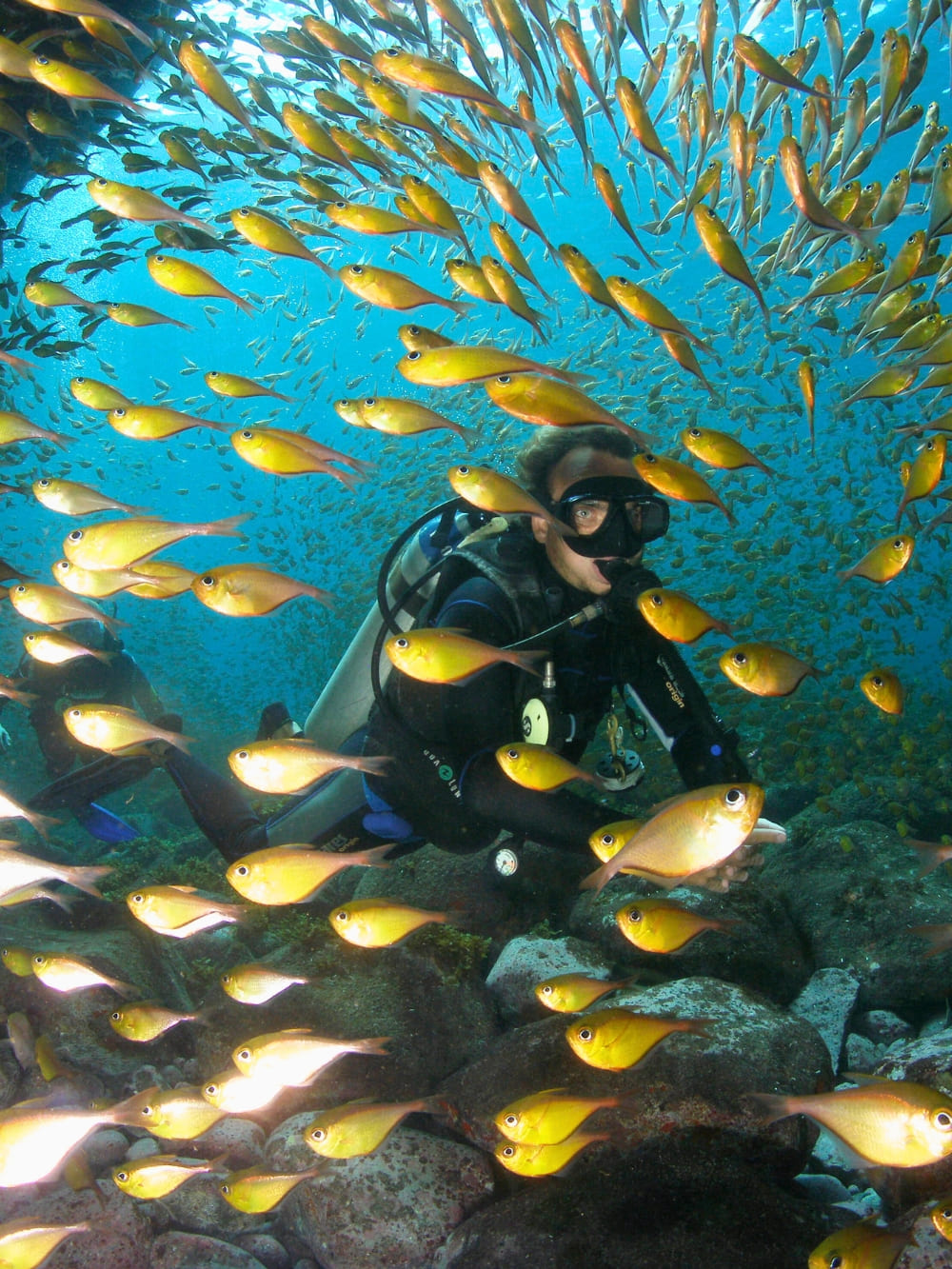
    A scuba diver explores the vibrant marine life of Brazil, completely surrounded by a massive school of bright yellow fish.
    Photo: All Angles

    Best Season For Diving in Brazil’s Fernando de Noronha

    Fernando de Noronha is divided between the Inner Sea (Mar de Dentro), which faces the Brazilian coast, and the Outer Sea (Mar de Fora), directed at Africa and Europe.

    Inner Sea

    The Inner Sea’s calm waters are great for snorkeling and free diving, especially from June to December. The most recommended sites are Praia do Porto, Praia da Conceição, and Praia do Boldró.

    When it comes to water visibility, the best conditions are usually from August to December, when the sea is at its most peaceful state.

    Outer Sea

    From December to May, the Outer Sea’s agitated waters are perfect for divers with more experience and people looking for complex underwater landscapes and a bigger range of marine species.

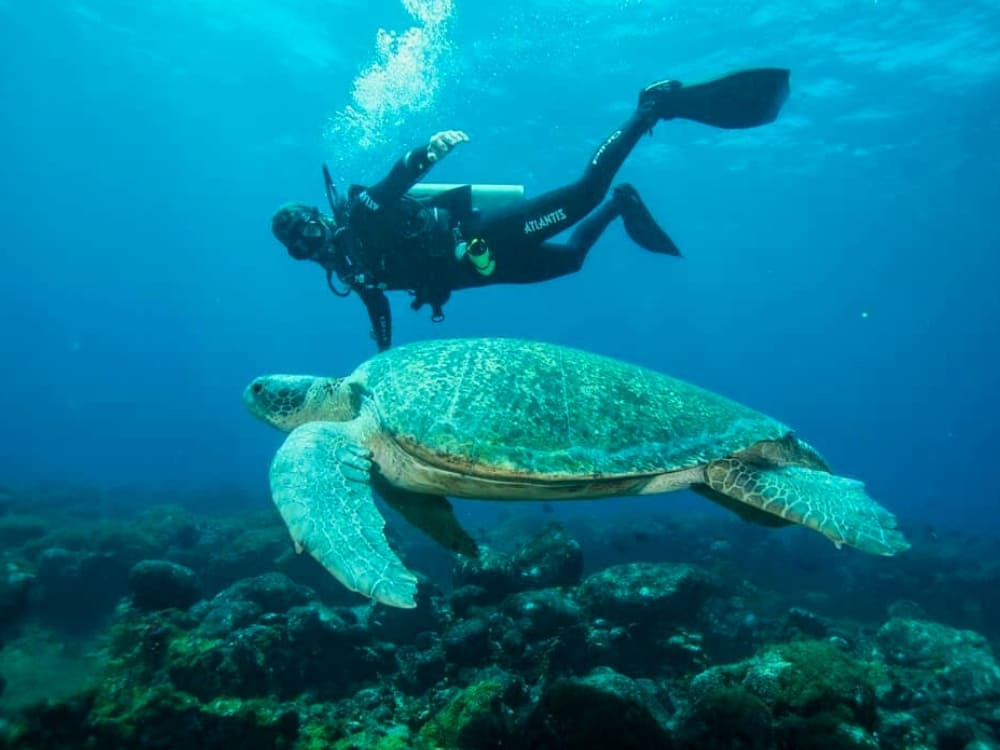
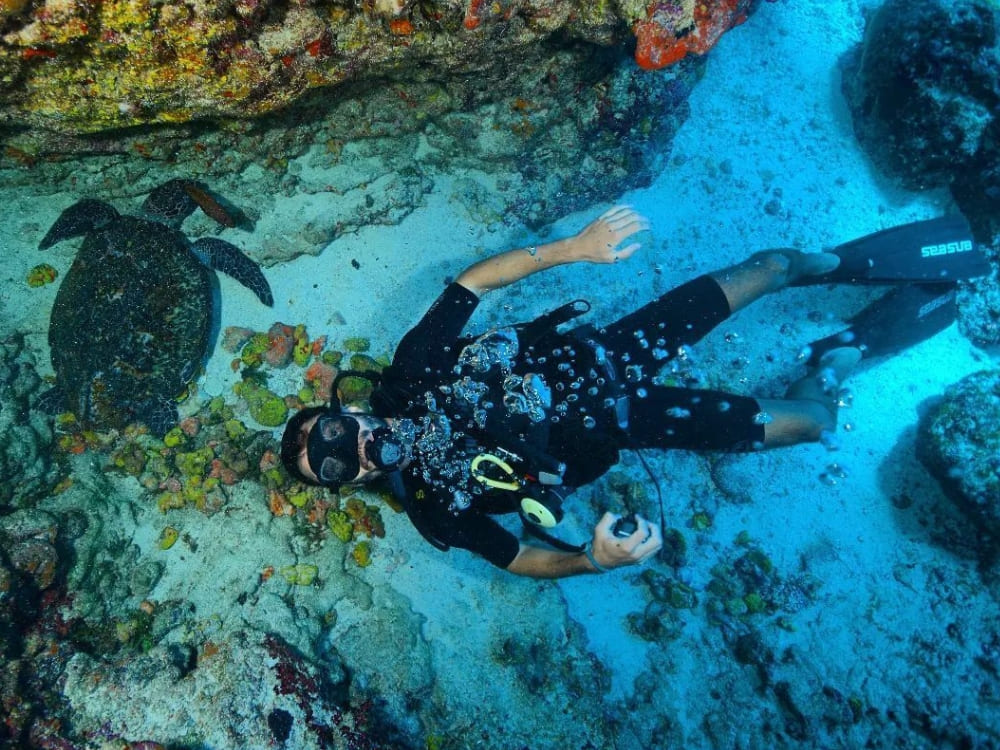
    A scuba diver observes a large green sea turtle swimming over a rocky underwater landscape during a dive in Fernando de Noronha.
    Photo: Thiege Rodrigues

    👉 Read more: When is the best time to dive in Fernando de Noronha?

    Diving Spots in Fernando de Noronha

    The best Fernando de Noronha diving spots may vary according to your preferences. If you have little to no experience or if you’re looking for a more relaxing activity to just enjoy the ocean and spot colorful fish, rock formations, and coral reefs, Atalaia, Pedras Secas, and Laje dos Dois Irmãos are great sites.

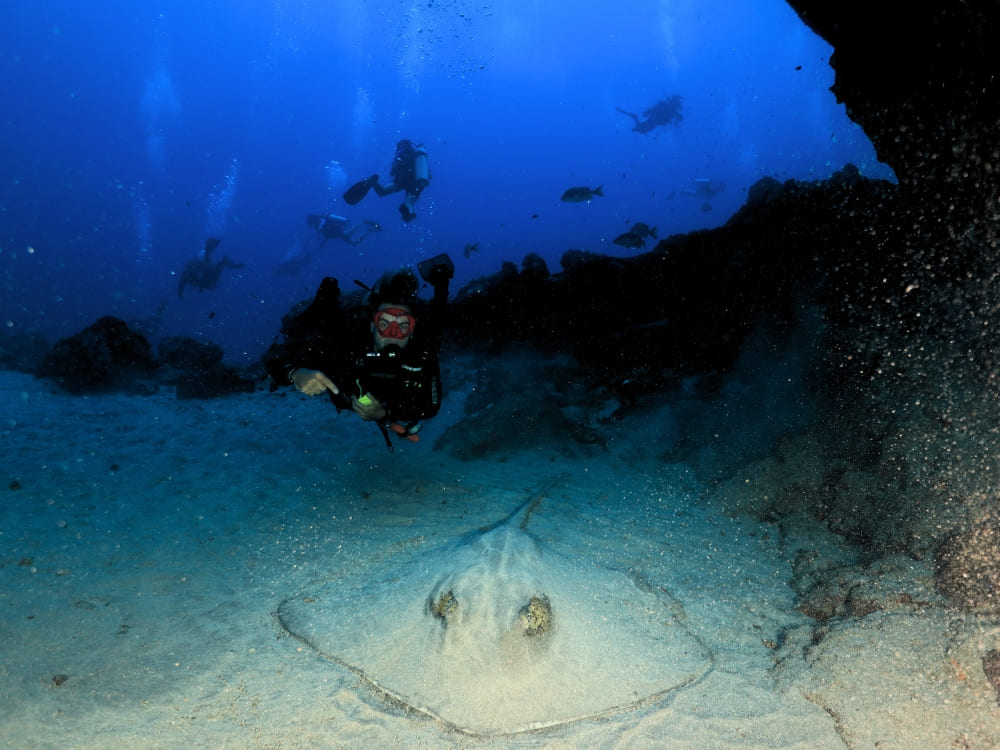
    An experienced scuba diver hovers above the sandy ocean floor near a resting stingray at a dive spot in Fernando de Noronha.
    Photo: Pamella Rech

    Baía dos Sanchos and Baía dos Golfinhos are perfect for animal enthusiasts. Dolphins, sea turtles, stingrays, and nurse sharks are often seen calmly swimming near the divers—already used to the presence of humans.

    Are you an expert diver who’s thirsty for adventure? Then you should go to Ponta da Sapata, one of Noronha’s most famous diving spots in the Inner Sea, mostly known for an underwater cave about 18 meters deep that shelters huge stingrays and the black grouper, a docile ray-finned fish that can reach up to 400 kilos.

    Ressureta is another amazing spot for experienced divers. At 16 meters deep, it’s not difficult to encounter barracudas, reef sharks, sea turtles, moray eels, etc.

    Whether you’re seeking a gentle immersion or an adrenaline-packed dive, Fernando de Noronha has it all!

    👉 Read more: Best Diving Spots in Fernando de Noronha

    Can Beginners Dive in Fernando de Noronha?

    Yes, Fernando de Noronha is a great place for baptism diving—an introductory dive for people with no prior experience.

    Fernando de Noronha Diving Guide
    .

    With the help of local instructors and top-quality equipment, amateur divers can safely explore the underwater beauty of the archipelago. The feeling of such an experience is indescribable! 

    Are There Any Restrictions or Permits Required for Diving in Fernando de Noronha?

    Permits are only required for diving instructors and companies, which must be properly accredited to operate. Trust only qualified and licensed professionals!

    Restrictions for divers are related to possible health conditions, such as heart problems, hypertension, respiratory diseases, and pregnancy. Before diving, you’ll be asked to fill out a form with a health assessment questionnaire to determine whether you are able to dive or not.

    To prevent any problems, always follow your guides/instructors’ directions.

    Marine Life in Fernando de Noronha

    The abundant marine life in Fernando de Noronha includes an extensive reef coverage and hundreds of different species of animals, such as 169 reef fish (10 endemics), 219 mollusks (3 endemics), 11 corals, 33 cnidarians, and 77 sponges.

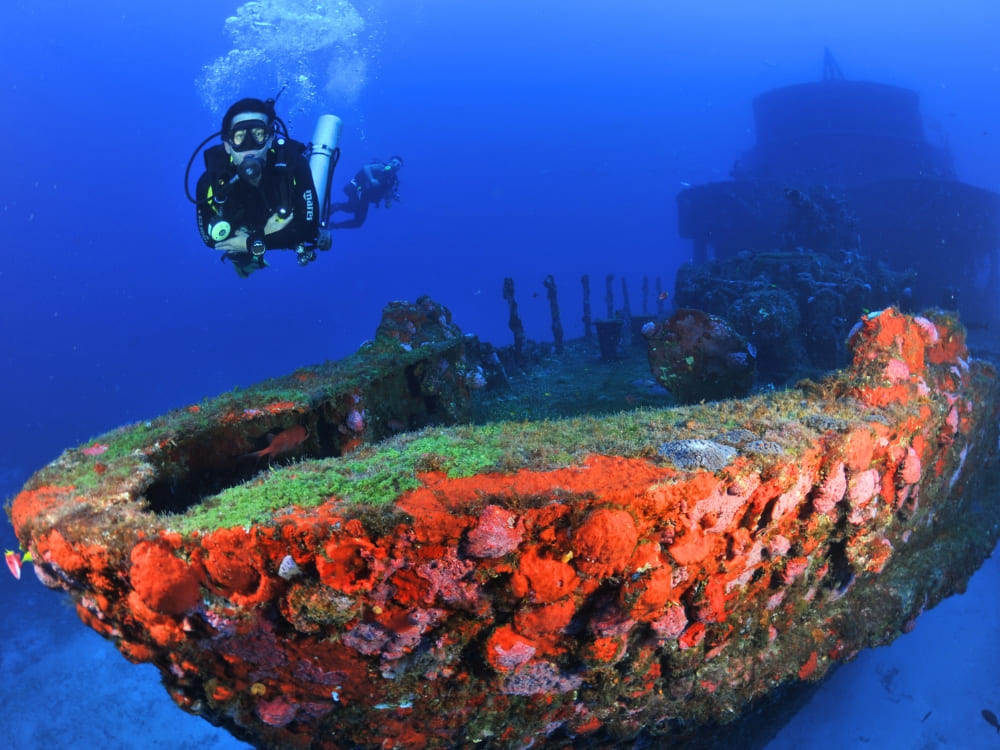
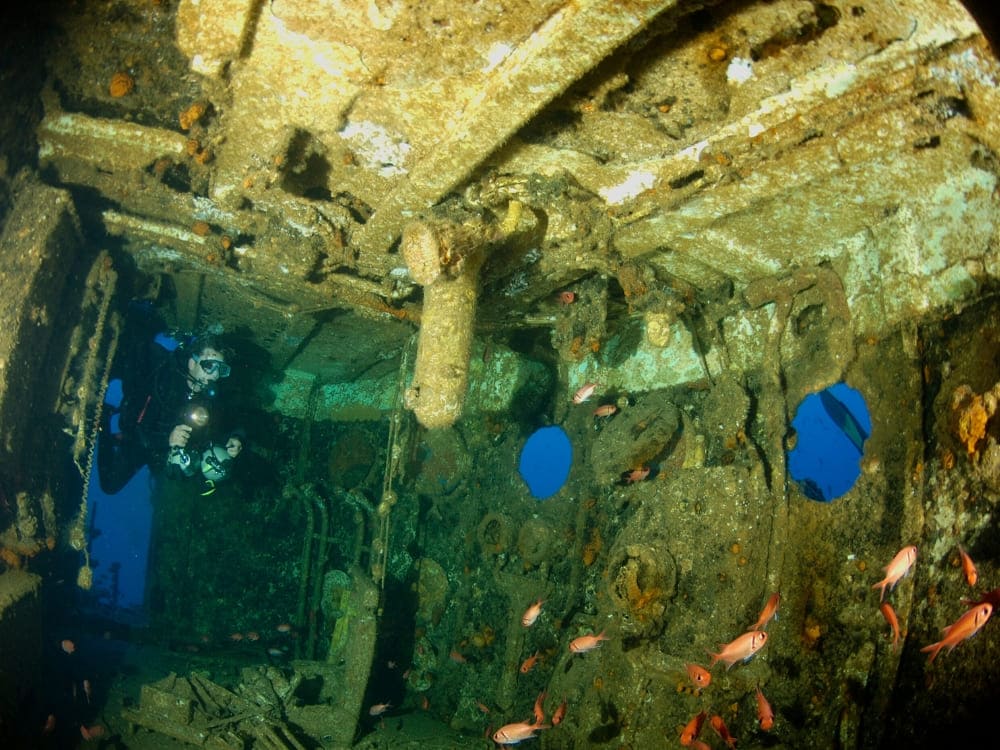
    A scuba diver explores a sunken shipwreck heavily encrusted with bright red and orange sponges in the deep waters of Fernando de Noronha.
    Photo: All Angles

    Sea turtles are also a big part of the local fauna. From July to December, Noronha’s beaches are the breeding ground for the beautiful green turtle. Other residents are the hawksbill turtles, who often make themselves comfortable on the sand to feed and grow their babies. 

    These remarkable animals are protected by the Tamar Project and a decree-law that prohibits the capture and harassment of all species of turtles in Brazilian waters.

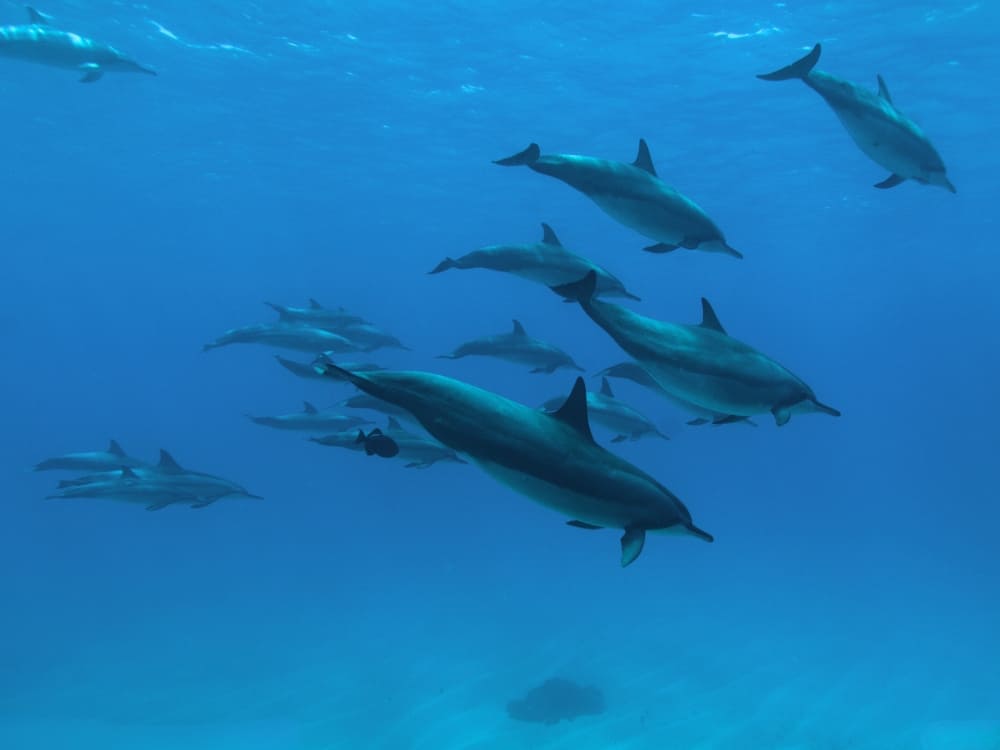
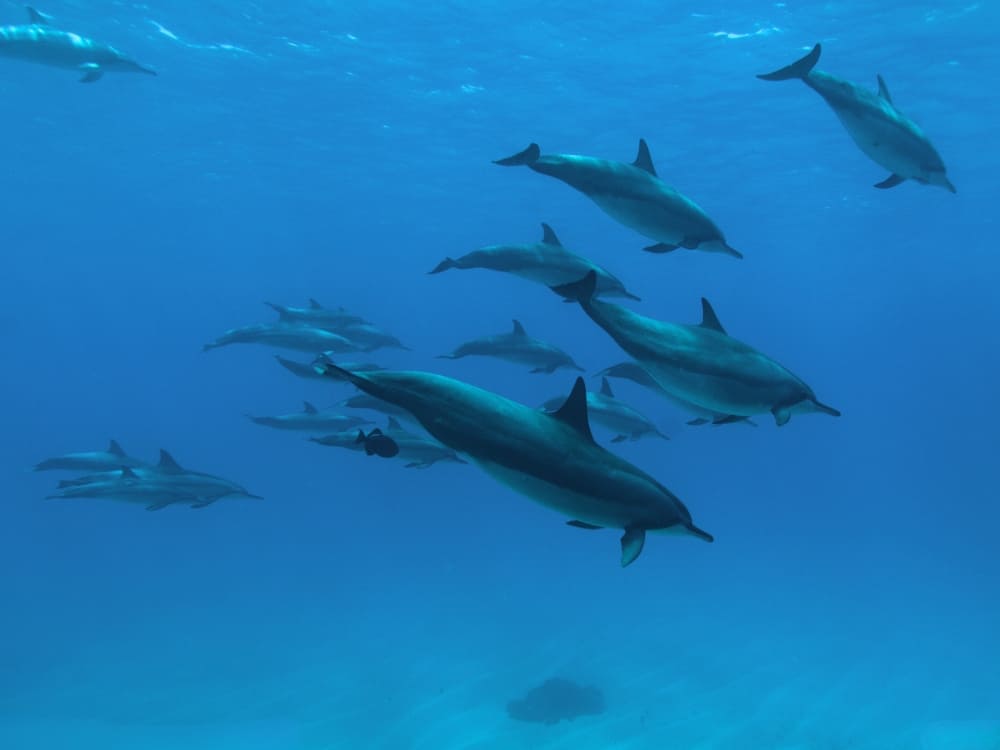
    A large pod of spinner dolphins swims gracefully together through the clear blue ocean waters of Fernando de Noronha.
    Photo: Sandro Rodrigues

    In general, September is the month with the best conditions to watch the marine life in Fernando de Noronha, though they can be spotted all year round. Stingrays, green turtles, barracudas, lemon sharks, moray eels, nurse sharks, octopuses, hawksbill turtles, and spinner dolphins are some of the most frequently spotted animals.

    Besides Diving, What to do in Fernando de Noronha?

    Diving is the main reason a lot of tourists choose to travel to Fernando de Noronha, but there are other incredible activities that are definitely worth your while.

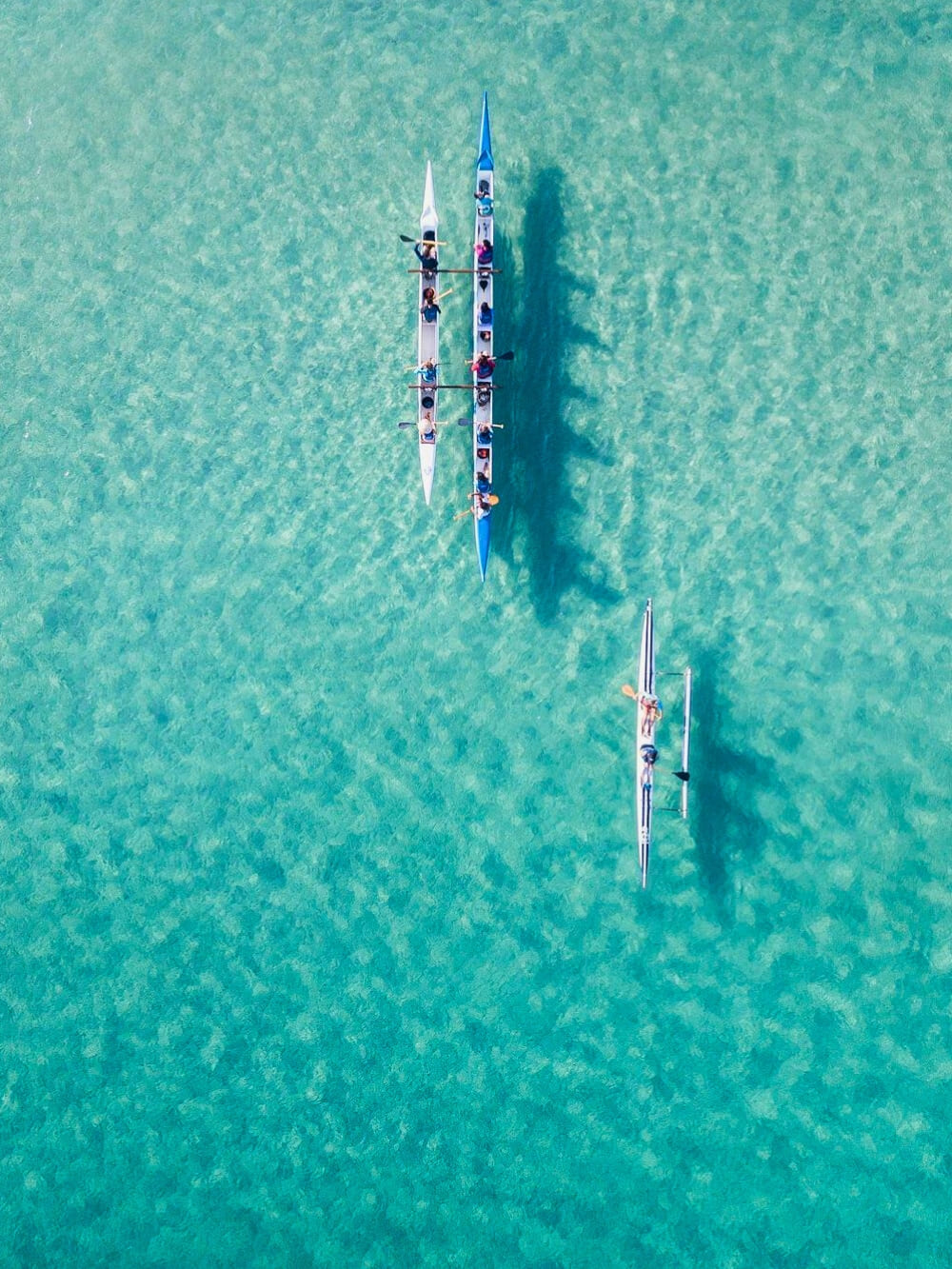
    Aerial view of people paddling a traditional Hawaiian canoe through the vibrant, transparent turquoise waters of Fernando de Noronha.
    @noronhacanoeclube

    Explore the beaches

    Fernando de Noronha beaches are some of the most beautiful you’ll ever see. You can swim and snorkel in the gorgeous blue waters of Baía do Sancho, the 35th best beach on the planet, according to The World’s 50 Best Beaches.

    The stunning views of Morro dos Dois Irmãos at Baía dos Porcos or the surfing vibes at Cacimba do Padre are also mandatory attractions.

    Other beaches you can’t miss: Praia do Cachorro, Praia do Meio, Praia do Bode and Praia do Americano.

    Island tours

    Explore all the best spots of the island in 4×4 vehicles, the perfect way for first-time visitors to explore Noronha’s attractions.

    These tours offer stops at iconic locations and often end with a memorable sunset experience at Forte do Boldró.

    Adventure activities

    Noronha is a paradise for adventure lovers. Explore scenic trails like Trilha do Atalaia or the challenging Capim-Açu trail, which offers beautiful views of untouched landscapes.

    For a unique and unforgettable adventure, try Hawaiian canoeing from Praia do Porto during sunrise and marvel at the sight of dolphins in the open sea.

    Visit marine life projects

    Fernando de Noronha takes the preservation of the ocean and its creatures very seriously. Some organizations are open for visitation all year round, allowing travelers to learn more about their efforts to protect the environment and even engage in some activities.

    The Tamar Project focuses on sea turtles, whereas the Spinner Dolphin Project is committed to spinner dolphins’ well-being and the island’s overall marine life. 

    Local culture and cuisine

    Immerse yourself in Noronha’s culture by exploring Vila dos Remédios, the island’s historical heart. Indulge in fresh seafood at renowned restaurants like Mergulhão or Xica da Silva, and don’t miss trying out local delicacies like tapioca pancakes!

    Sunset contemplation

    The sunsets in Fernando de Noronha are legendary. Head to Forte do Boldró or Praia da Conceição for jaw-dropping views as the sun dips into the Atlantic.

    For a quieter option, Mirante dos Golfinhos is the perfect place for people in need of a few moments of peace.

    A golden sunset illuminates the ocean waves and the Morro dos Dois Irmãos rock formations as surfers paddle in the water.
    .

    👉 Read more: 10 facts about Fernando de Noronha

    How many days should you stay in Fernando de Noronha?

    The average Fernando de Noronha diving trip lasts 4 to 6 days, enough time to explore the island’s dive sites, marine life, and other natural attractions.

    If possible, you should consider extending your stay so you can experience the full spectrum of Noronha’s underwater life—and maybe dive again in your favorite spots or look for a specific animal—and enjoy non-diving activities!

    Where to stay in Fernando de Noronha?

    The island holds many options for every need and budget, from refined five-star establishments to shareable rooms in small hostels. Check it out!

    Luxury hotel deck featuring a swimming pool and comfortable lounge chairs facing the iconic Morro do Pico in Brazil.
    Photo: Hamares Boutique Hotel

    Luxury hotels

    Fernando de Noronha is a decadent destination with some of Brazil’s highest hotel prices due to the beauty and exclusivity of the archipelago. Luxury accommodations are very sophisticated and ideal for people who can’t say no to comfort, fine dining, and overall high-end services.

    They are usually a lot closer to some very famous spots, with panoramic views and short walks away from sites like Baía do SuestePraia do Boldró, and Morro do Pico

    Middle-range hotels and inns

    Middle-range hotels and inns are good alternatives for cheaper rates without sacrificing a high-quality stay.

    The accommodations are simpler than the luxury ones, but they still do a wonderful job at providing comfort, delicious food, and leisure to their guests.

    Basic accommodations

    Travelers on a limited budget can choose guesthouses and hostels with private or shared rooms and bathrooms.

    These accommodations might be considerably far from Noronha’s diving sites (usually 1–2 km away), but they’re usually located in great neighborhoods like Vila dos Remédios, Floresta Velha, and Floresta Nova, which offer restaurants, grocery stores, bars, and street markets.

    👉 Read more: Where to stay in Fernando de Noronha?

    How Much Does it Cost to Scuba Dive in Fernando de Noronha?

    Considering the type/number of dives, equipment, and services, a Fernando de Noronha scuba diving tour costs from R$ 2.000 (approximately US$ 400 and € 340) per person—an average of R$ 5.325 (US$ 1,070; € 905). Prices vary according to season, trip duration, etc.

    TOUR INCLUDES DURATION STARTING PRICE*
    Fernando de Noronha Diving Trip 2 diving sessions (double), island tour (four-wheel drive), full board accommodation, round-trip transfer. 5 days US$ 920 
    Scuba Diving in Fernando de Noronha Guided dives, ballast + 2 tanks (per day), round-trip transfer. 2 days US$ 400
    Open Water Diving Course 2 diving lessons at the beach + 4 guided boat dives (full equipment included), international certification (PADI, SSI or NAUI), round-trip transfer, 5 days US$ 1,525
    Advanced Diving Course Diving lessons, 5 dives (4 daytime + 1 evening), full equipment, international certification (SSI), round-trip transfer. 4 days US$ 1,425

    *Per person, based on double occupancy in group departures. Prices may vary depending on season and availability. Exchange rate as of March 17, 2026; subject to change.

    If not included, you should also consider additional costs of equipment (rental per day):

    • Regulator: R$ 115
    • BCD (buoyancy compensator): R$ 115
    • Diving suit (neoprene): R$ 100
    • Mask: R$ 30
    • Fins: R$ 30
    • Flashlight: R$ 155

    Send us a message to get a customized quote. We’ll be happy to help!

    Taxes, Fees and Other Important Information

    Every traveler visiting Fernando de Noronha for tourist purposes must pay the Environmental Preservation Tax (TPA), which ensures the conservation of the archipelago’s natural resources. The TPA is charged individually and according to the number of days each person will stay on the island.

    For your convenience, paying this fee ahead of boarding is recommended. All you have to do is follow the directions of Noronha’s official website. However, if your credit card isn’t issued in Brazil, the TPA can only be paid at the counter at Fernando de Noronha Airport

    Most sites in the archipelago are protected by Fernando de Noronha Marine National Park. To visit them, you should buy a ticket online or at the park’s Visitor Center (Vila do Boldró). The ticket is valid for 10 days. More information here.

    To travel to Fernando de Noronha, these are the fees that every tourist must pay:

    • Park entry fee: R$ 384 per stay for foreigners; R$ 192 for Brazilians
    • Environmental Preservation Tax (TPA): R$ 105,79 per day

    Another way to preserve the archipelago is by limiting the number of visitors. In 2023, state and federal laws have determined that only 11,000 people per month are allowed on the main island. This is great for the environment and for tourism, as fewer people make it for a more exclusive and quiet experience, with no crowded areas and long lines.

    Scuba Diving Fernando de Noronha
    .

    Diving in Fernando de Noronha with PlanetaEXO

    If your dream vacation is diving in Brazil, then you should definitely plan your trip to Fernando de Noronha, one of the most beautiful nature destinations in the country!

    At PlanetaEXO, an ecotourism platform that offers Fernando de Noronha scuba diving packages, you experience the most authentic side of the island by exploring jaw-dropping underwater views with the guidance of highly qualified professionals and everything else you need for a wonderful, hassle-free trip. Contact us now!

  • How to visit the Cerrado in Brazil?

    How to visit the Cerrado in Brazil?

    Here’s everything you should know to visit Brazil’s second-largest biome and one of the Earth’s most fascinating nature destinations

    Vast fields of green-yellow vegetation, short trees, and bushes thrive in the tropical climate of this Brazilian savanna, home to rich fauna and flora, breathtaking views, and undeniable environmental relevance. The Cerrado in Brazil is a great destination for travelers who love adventure and wildlife. In the article The 25 best places in the world to travel to in 2025, National Geographic describes the biome as “an underappreciated yet incredible place”, highlighting birdwatching and wolf tracking as reasons to visit it.

    How to visit the Cerrado in Brazil

    Traveling to the Cerrado is, without a doubt, an unforgettable experience of unparalleled beauty, connection with nature, contribution to sustainable practices, and the discovery of one of Brazil’s most important – and lesser known – ecosystems.

    Jalapão Waterfalls - How to visit the Cerrado in Brazil
    Photo: @viagemnarelacao

    What is the Cerrado in Brazil?

    Covering 25% of Brazil’s territory, in the states of Goiás, Brasília, Bahia, Mato Grosso, Mato Grosso do Sul, Minas Gerais, Tocantins, Maranhão, Piauí and São Paulo, the Cerrado is over 2 million km². The area is so big it can fit England, France, Germany and Spain!

    How to visit the Cerrado in Brazil?

    The second-largest Brazilian biome – only after the Amazon Rainforest – the Cerrado is considered the most biodiverse savanna in the world for housing 5% of the planet’s animals and plants. The sources of eight of the country’s twelve main river basins are located there, including rivers like São Francisco, Tocantins, Paraná, and Paraguay. Due to its importance in supplying clean water, the biome is also known as “the water tank of Brazil”.

    Jalapão - How to visit the Cerrado in Brazil?

    The GHG emissions profile is also a relevant part of the region, which plays a huge role in regulating the weather and minimizing the amount of carbon dioxide in the atmosphere. According to MapBiomas Brasil, an initiative to map Brazil’s land cover and its changes over the years, there are 8.1 gigatons of organic carbon stock in the first 30 cm of Cerrado’s soil. In the areas with natural vegetation, there are 41 tons of carbon per hectare.

    Environmental challenges

    60% of Brazil’s agriculture production takes place in the Cerrado’s fertile soil, including soy, corn, cotton, and beef. This is very important for the country’s economy, yet harmful to the environment. Between the years 2000 and 2015, the areas dedicated to crops have increased by 87% – and continue to grow at a rapid pace.

    Converting native vegetation into agricultural lands consumes carbon stocks, deregulates the climate, worsens erosion, reduces the soil’s ability to retain water, and endangers the animals. Although scientists claim the best way to protect the Cerrado in Brazil is simply by leaving it untouched, this is not a realistic possibility given its importance for the country’s economic functioning.

    Luckily, some national and state parks safeguard the Cerrado in different areas, like Jalapão State Park (Tocantins), Sempre-Vivas National Park (Minas Gerais), Emas National Park (Goiás), Chapada dos Veadeiros National Park (Goiás) and Grande Sertão Veredas National Park (Minas Gerais).

    How to visit the Cerrado in Brazil?

    Even so, it’s still important to keep the balance between agriculture and the environment. A few solutions can be very useful, such as applying sustainable agriculture activities, restoring native vegetation, using renewable energy sources, and creating more laws that aim for Cerrado’s conservation – as well as toughening the punishments for those who disrespect them.

    Ecotourism is also a powerful resolution. Sustainable travel practices are capable of raising funds for preservation efforts, creating awareness of the importance of the biome, and empowering local communities to not only make a living but also remove these people from jobs that could be potentially harmful to the Cerrado. 

    How to visit the Cerrado in Brazil? - Pousada Trijunção

    Cerrado Wildlife

    Some of the best wildlife tours in Brazil take place in the Cerrado. 860 species of birds, 200 mammals, 180 reptiles, 150 amphibians, 1,200 fish, and millions of insects live in this ecosystem.

    The star of the Cerrado’s fauna is the mane wolf, the largest canid in South America. Its reddish-orange fur, long legs, solitary nature, and eating habits – which include small animals and even a native fruit called lobeira – are the main traits of this gorgeous creature. In the region’s folklore, the mane wolf has magical powers, capable of vanishing in the blink of an eye and hypnotizing its prey to make hunting easier.

    Cerrado Mane Wolfes - How to visit the Cerrado in Brazil?

    Other animals are considered to also be symbols of the Cerrado, like ocelots, armadillos, giant anteaters, porcupines, macaws, brocket deer, etc.

    How to visit the Cerrado in Brazil? - Blue Araras

    When is the best time for a Cerrado trip?

    During the dry season, the best time to visit the Cerrado is between May and September. That’s when the weather is milder, with warm days and cool nights. Temperatures can range from 15º C to 30º C.

    Hiking and spotting animals are great activities when the rainfall volume is lower, while the wet season (October to April) allows for greener vegetation and fuller rivers/waterfalls.

    How to visit the Cerrado in Brazil?

    Places and tours in the Cerrado

    As previously said, the Cerrado is so massive it touches different states, which means many great options for places and tours. Some of them, however, stand out for their beauty, total immersion in nature, and unique experiences.

    How to visit the Cerrado in Brazil?

    See the best Cerrado tours below!

    Jalapão

    Jalapão State Park is a conservation unit whose purpose is protecting the natural resources located in the east of the state of Tocantins, which is covered by the Cerrado. 

    Falling head over heels for this place is a given for any traveler. Sand dunes, ancient rock formations, hiking trails, waterfalls, rivers, and lagoons are safely nestled within the park, but the fervedouros are probably Japalão’s main attractions.

    Jalapão - How to visit the Cerrado in Brazil?

    Fervedouros are very similar to natural pools, only they are surrounded by trees – mostly buriti palm trees –, and it’s impossible to sink into them, no matter how deep they are. The pressure coming from underground aquifers makes anyone and anything float, and it also gives a boiling-like effect to the water.

     Jalapão State Park - How to visit the Cerrado in Brazil?

    How to get there: Brigadeiro Lysias Rodriguez Airport (PMW), in Palmas, the capital of Tocantins, is the nearest airport to Jalapão. There are direct flights from Brasília, São Paulo, Belo Horizonte and Goiânia. After landing, a 4-hour car ride will take you to Jalapão.

    👉 Don’t miss the chance to visit this magical place: Check out our Jalapão tours! 

    Pousada Trijunção

    Just as the Cerrado in Brazil is a must-visit place for 2025 according to National Geographic, the publication also mentions Pousada Trijuncão, a high-end lodge situated in the triple border of Bahia, Minas Gerais, and Goiás, as the perfect accommodation when traveling to the biome.

    Besides the sophistication, premium services, elegant facilities, delicious food, and exclusivity – there are only seven suites available for booking –, Trijunção’s love and respect for the Cerrado make for activities unlike any others.

    Cerrado Mane Wolfes - How to visit the Cerrado in Brazil?

    This is the ideal option for those who want to see mane wolves. In partnership with Onçafari – a non-profit that aims to make wild animals used to the presence of humans to develop ecotourism and protect the fauna and flora –, Pousada Trijunção’s guests can join safaris to spot mane wolves in their natural habitat, always accompanied by expert guides who follow strict protocols to ensure the group’s safety and the animal’s comfort.

    The itinerary also offers birdwatching, hiking, night safari, visiting Grande Sertão Veredas National Park, kayaking, sunset contemplation, and bike riding through the Cerrado fields.

    Night Safaris - Pousada Trijunção- How to visit the Cerrado in Brazil?

    How to get there: From Brasília, Trijunção is 333 km away (5-hour car ride). Guests can either drive their own cars, rent vehicles, hire a transfer service on the side, or even fly in a private plane or chartered flight departing from Brasília Airport (BSB).

    👉 Curious to see more? Check our Brazil Wild Cerrado Tour at Pousada Trijunção!

    Chapada dos Veadeiros

    In the northeast of Goiás, Chapada dos Veadeiros National Park is home to typical Cerrado vegetation, gorgeous waterfalls, dozens of water springs, and billion-year-old rock formations! Recognizing its importance, UNESCO nominated this mesmerizing place as a World Heritage site in 2001.

    Cerrado in Brazil - Chapada dos Veadeiros
    Photo: @camilarbs

    Hikers from all over the planet visit Chapada dos Veadeiros to explore all of its secrets, including quartz crystals formed over the course of time that many people believe to have healing powers.

    The waterfalls, however, are surely the most sought-after attractions in the park. Just to name a few, Saltos do Rio Preto, Cariocas, Segredo, Almécegas I and II, Vale da Lua, and Catarata dos Couros are definitely worth the visit.

    Cerrado in Brazil - Chapada dos Veadeiros
    Photo: @dougcerrado

    How to get there: Chapada dos Veadeiros is served by Brasília Airport (BSB), but a 3-hour journey on the road is required after landing. Accommodations take place in Alto Paraíso de Goiás, a small town with only 10,306 inhabitants – and great access to the park.

    👉 See for yourself: Book our Trekking Tour in Chapada dos Veadeiros now!
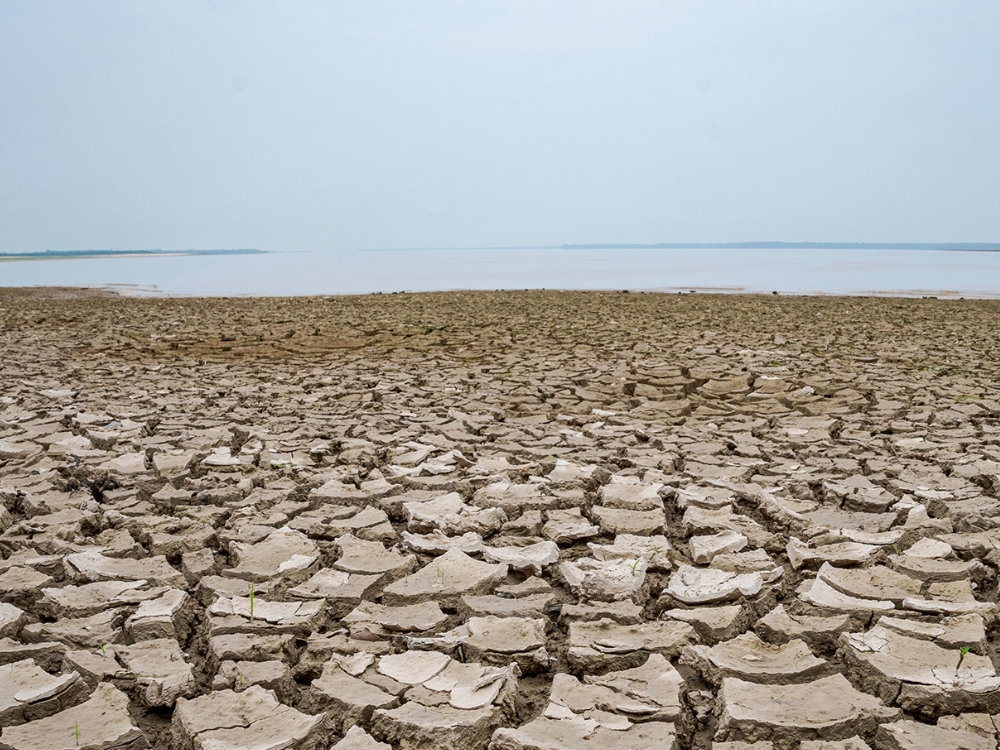
    Chapada das Mesas

    Chapada das Mesas National Park touches 11 towns in the south-central of the state of Maranhão. Its plateaus resemble the shape of stone tables, hence the name – the word mesas means “tables” in Portuguese.

    Chapada das Mesas - How to visit the Cerrado in Brazil
    Photo: @omeupaismaranhao

    The Cerrado covers a good portion of the park’s 160,000 ha, but the Caatinga and the Amazon biomes also share the same space. This creates a beautiful natural diversity among crystal-clear waterfalls, natural pools, and huge rocky walls that give the place all of its charm. Due to this richness, Chapada das Mesas is often compared to Jalapão.

    When it comes to what to do in the Cerrado in this particular spot, some activities are almost mandatory. Cachoeira do Santuário is a 46-meter waterfall hidden inside a canyon, while Encanto Azul and Poço Azul are jaw-dropping natural pools nestled in between rock formations.

    Chapada das Mesas - Cerrado in Brazil
    Photo: @eusouwill_rj

    How to get there: Carolina and Richão are the main entry points to Chapada das Mesas, but there are no airports in either town. Landing at Palmas Airport (PMW), in Tocantins, is the method chosen by many travelers because there are more flight options. On the road, the journey to the national park takes about 7 hours.

    • Araguaína Airport (AUX) – Tocantins: 110 km away from Carolina, is served by flights from Palmas, Brasília and Goiânia. 2-hour car ride to Chapada das Mesas. Closer to the final destination, but there are few weekly flights and the prices are usually higher.
    • Imperatriz Airport (IMP) – Maranhão: 220 km away from Carolina, is served by flights from São Luís, Brasília, Belém and Belo Horizonte. 3-hour car ride to Chapada das Mesas. Average prices and more transfer options.
    • Palmas Airport (PMW) – Tocantins: 475 km away from Carolina, is served by flights from Recife, Brasília, Belo Horizonte, and São Paulo. 7-hour car ride to Chapada das Mesas. The lowest price rates, but the distance to the national park is considerably longer.

    The Cerrado in Brazil is waiting for you!

    Now that you know all the major details about the Cerrado, it’s time to see this magnificence with your own eyes!

    PlanetaEXO not only helps you with your travel plans, but we also connect you to the best professionals in the field so you can finally have the vacation of your dreams. Send us a message and let’s begin!

    Jalapão - How to visit the Cerrado in Brazil

  • Best Hikes in Brazil: From Rainforests to Mountain Peaks

    Best Hikes in Brazil: From Rainforests to Mountain Peaks

    Do you love trekking and engaging with nature? Find out the top hiking trails in Brazil in this carefully curated list!

    Brazil is the best place on the planet for adventure travel, according to US News & World Report—higher than destinations known for ecotourism like Nepal, Costa Rica, and New Zealand. The list also mentions the country’s attributes to justify the #1 placing: locals’ friendliness, great leisure opportunities, pleasant climate, and scenic views.

    Ecological walks are among the favorite activities of any adventurer. The best hikes in Brazil offer breathtaking natural landscapes, including open fields, mountains, rivers, waterfalls, caves, and vast expanses of untouched vegetation.

    As an ecotourism platform specializing in adventure tours in Brazil, PlanetaEXO knows all about the top trekking destinations for travelers who thirst for authentic connections with nature. See our list right below!

    1 – Vale do Pati, Chapada Diamantina (BA)

    If you don’t go to Vale do Pati, in Chapada Diamantina National Park, you’re not getting the full experience of hiking in Brazil. This amazing destination in the state of Bahia holds some of the most challenging but exciting treks in the country.

    Hikers walk along a rocky trail towards distant mountains during a golden sunset in Vale do Pati, Chapada Diamantina National Park.
    Photo: Guillaume Leman

    The trails cross breathtaking views, going through mountains, rock formations, caves, lookouts, rivers, and waterfalls. Swimming and bathing in Funil and Cachoeirão waterfalls are must-have activities for every traveler. Morro do Castelo, a 1280-meter-high cliff, is also a key highlight of a Chapada Diamantina hike.

    On average, a Vale do Pati trek requires 15 kilometers of walking per day, but it’s possible to extend (22 km) or shorten (8 km) this number. It all depends on how long you’re staying, what type of experience you’re looking for, and how much you’re willing to walk.

    2 – Lençóis Maranhenses (MA)

    The sand dunes and rainwater lagoons of Lençóis Maranhenses can make anyone fall in love. The landscapes are almost otherworldly, with such an impressive beauty it’s hard to describe the feeling they bring—and that’s exactly why this is one of the best hikes in Brazil.

    A hiker walks across the vast white sand dunes of Lençóis Maranhenses National Park, framed by dry tree branches under a blue sky.
    .

    During your hike through the white sand, you’ll come across stunning lagoons and interact with attentive locals who will make you feel right at home. On multi-day treks, visitors spend the night at the homes of residents who live within the national park, sleeping in hammocks and eating hot meals after the long journey.

    The best time to visit Lençóis Maranhenses is between May and September, when the lagoons are full, the sun is bright and the rain ceases. With the support of expert guides, it’s recommended that you stay at least 3 days to fully enjoy the experience.

    👉 Explore the adventure: 3-day Lençóis Maranhenses Trek

    3 – Petrópolis-Teresópolis, Serra dos Órgãos (RJ)

    A common mistake is assuming Rio de Janeiro is all about Copacabana Beach, Sugarloaf Mountain, and Christ the Redeemer. While the city holds these amazing attractions, the state of Rio is full of natural destinations that every travel junkie should visit.

    Dramatic, jagged mountain peaks emerge through thick mist at sunrise in Serra dos Órgãos National Park, highlighting the Dedo de Deus formation.
    Photo: Carlos Perez Couto

    Petrópolis and Teresópolis are two inland cities divided by Serra dos Órgãos National Park, one of the best places to hike in Brazil. Its massive set of trails reaches more than 200 kilometers, with options for every level of difficulty, suspended trails, and special access for disabled people.

    Waterfalls (Véu da Noiva, Andorinhas), natural wells (Paraíso, Capela, Sossego, Ponte Velha, Preguiça), and mountains are all part of the experience. Travelers can also enjoy some mountain climbing on Verruga do Frade, Pico do Garrafão, and the world-famous Dedo de Deus, a 1,692-meter-high peak whose name translates to “Finger of God” due to its elongated shape pointing upwards.

    4 – Ilha Grande (RJ)

    Ilha Grande is an island in the municipality of Angra dos Reis, in Rio de Janeiro. There are 16 hiking trails of different levels of difficulty that cross secluded areas of tropical forest.

    A person walks along the pristine white sand and clear blue waters of Lopes Mendes Beach in Ilha Grande, surrounded by tropical forest and mountains.
    @fernando.ilhagrande

    Another highlight is Lopes Mendes Beach, considered one of the most beautiful beaches in Brazil. Surfers love it, but so do hikers. To get there, you can choose trails T10 (Grande de Palmas and Mangues beaches), T11 (Pouso Beach), or T12 (Castelhanos Lighthouse).

    Circuits in Ilha Grande range from 4 to 7 days, which allows flexibility for a faster pace or a more thorough exploration.

    👉 Read more: When is the Best Time to Visit Brazil?

    5 – Monte Roraima (RR)

    Mount Roraima is a mountain in the triple border of Brazil, Venezuela, and Guyana. The highest point is 2,810 meters above sea level, which presents a real challenge for trekkers who are hungry for adrenaline. On average, Roraima treks last 4–5 hours per day, but they can take up to 8 hours depending on the itinerary. Tours span from 6 to 10 days.

    A hiker sits on the edge of a steep, rocky sandstone cliff on Mount Roraima, looking down at a vast valley filled with thick white clouds.
    @roraimaadventures

    The natural pools are one of the reasons why this is one of the best mountain hikes in South America. The clear waters are perfect for bathing, floating, and letting all your troubles be washed away.

    Another unforgettable experience is visiting the Valley of Crystals, an area filled with white quartz that shimmers on the ground. Since Mount Roraima is a giant block of sandstone, temperature changes and erosion along the years formed an impressive crystal formation that attracts tourists from all over the planet due to its beauty and supposed energy powers.

    👉 Explore the adventure:  Mount Roraima Trek 8 days

    6 – Serra Fina (SP/MG/RJ)

    Steep climbs and high altitudes are some of the reasons why Serra Fina is always included in lists with the best hikes in Brazil.

    A hiker wearing a large green backpack stands on a grassy mountain ridge, overlooking the expansive, mountainous landscape of Serra Fina.
    @bernardoespinhaco

    With trails that range from 7 to 26 kilometers, this is also one of the most challenging treks in the country. The Pico dos Três Estados trail, for example, is located on the border of the states of São Paulo, Minas Gerais, and Rio de Janeiro. This specific tour takes 3–4 days

    Such a demanding adventure requires great physicality. Hikers tend to prepare themselves for months before going to Serra Fina, making sure to eat well, improve their physical fitness, and do regular medical follow-ups.

    All this effort is worth it—the views are beautiful, and the victorious feeling of conquering such a challenge couldn’t be sweeter.

    👉 Explore the adventure: 4-day Serra Fina Trekking

    7 – Chapada dos Veadeiros (GO)

    Chapada dos Veadeiros National Park, in Goiás, offers some of the greatest experiences for trekking in Brazil. With great diversity, there are options of easy, moderate, and difficult hikes for every type of traveler. Canyons, natural wells, lookouts, valleys, and waterfalls work together as puzzle pieces to create jaw-dropping scenarios that will surely capture your heart.

     A group of travelers hike single-file along a narrow, grassy trail surrounded by the lush green valleys of Chapada dos Veadeiros National Park.
    .

    Speaking of waterfalls, there are plenty you have to see for yourself: Cristais, São Bento, Encantado, Almécegas (I and II), Rei do Prata, Sertão Zen, Mirante da Janela, Vale da Lua, Santa Bárbara, Catarata dos Couros, etc.

    Trekking in Chapada dos Veadeiros usually lasts 2 to 5 days. If you’re staying a bit longer, you can also enjoy some touristy schedules around the area, like buying hand-made souvenirs in the street markets of Vila de São Jorge and savoring a nice Brazilian meal in Alto Paraíso, the most famous town around the area.

    👉 Read more: Trekking Chapada dos Veadeiros

    8 – Pico da Neblina (AM)

    Pico da Neblina, in the state of Amazonas, is the highest peak of Brazil: 2,995 meters above sea level. To get to the very top, trekkers usually spend up to 15 days in the national park, depending on the group’s rhythm.

    The towering, jagged peaks of Pico da Neblina rise dramatically above the dense, green canopy of the Amazon Rainforest under a cloudy sky.
    .

    Camping in the forest is a part of the experience, and travelers can also cool off in Tucano Waterfall, explore the Amazon Rainforest, and engage with the local culture. This tour demands great physical effort, but if you love adventure, then it’ll definitely be worth your while.

    The journey also requires special permits and expert guides due to its location in Yanomami Indigenous lands.

    👉 Explore the adventure: Pico da Neblina National Park Expedition

    Discover the best hikes in Brazil with PlanetaEXO!
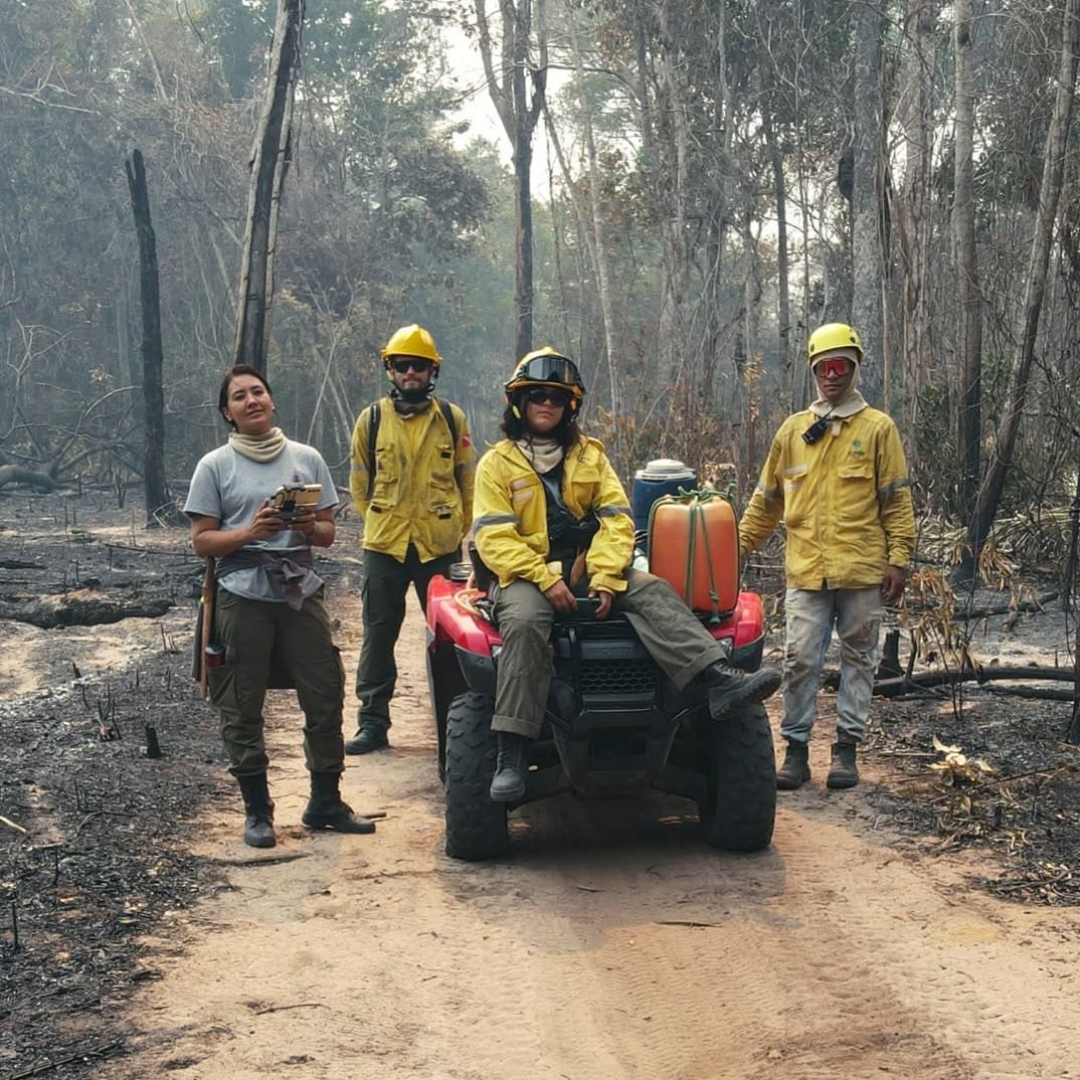
    There’s no doubt that Brazil is one of the best places for hiking. Whether in white sand fields or mountainous regions that share space with waterfalls and natural pools, the adventure is always unforgettable.

    PlanetaEXO, an ecotourism platform specializing in adventure tours in Brazil, connects you with the finest local operators to ensure an authentic, sustainable trip in some of the country’s most gorgeous nature destinations. Contact us now!