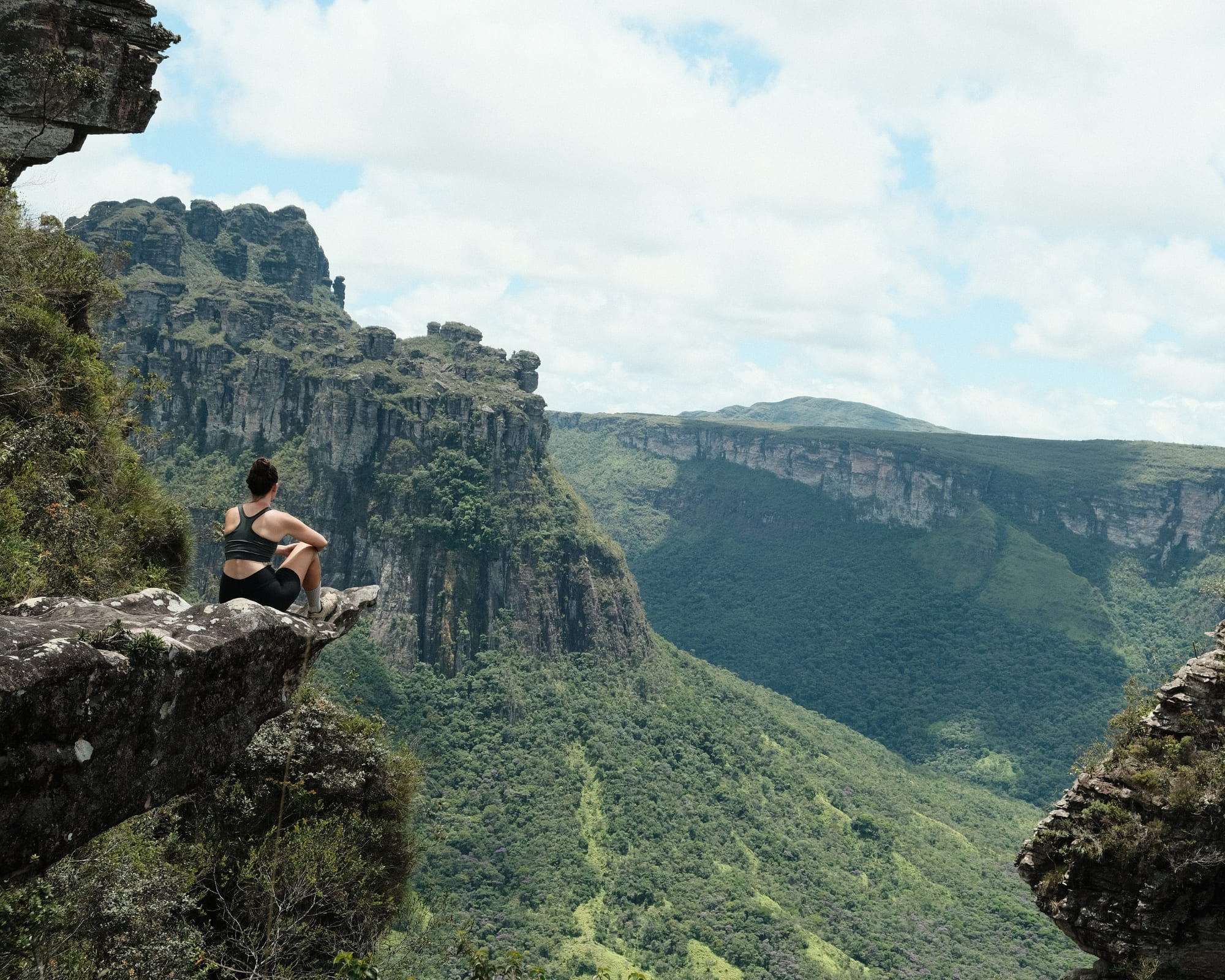
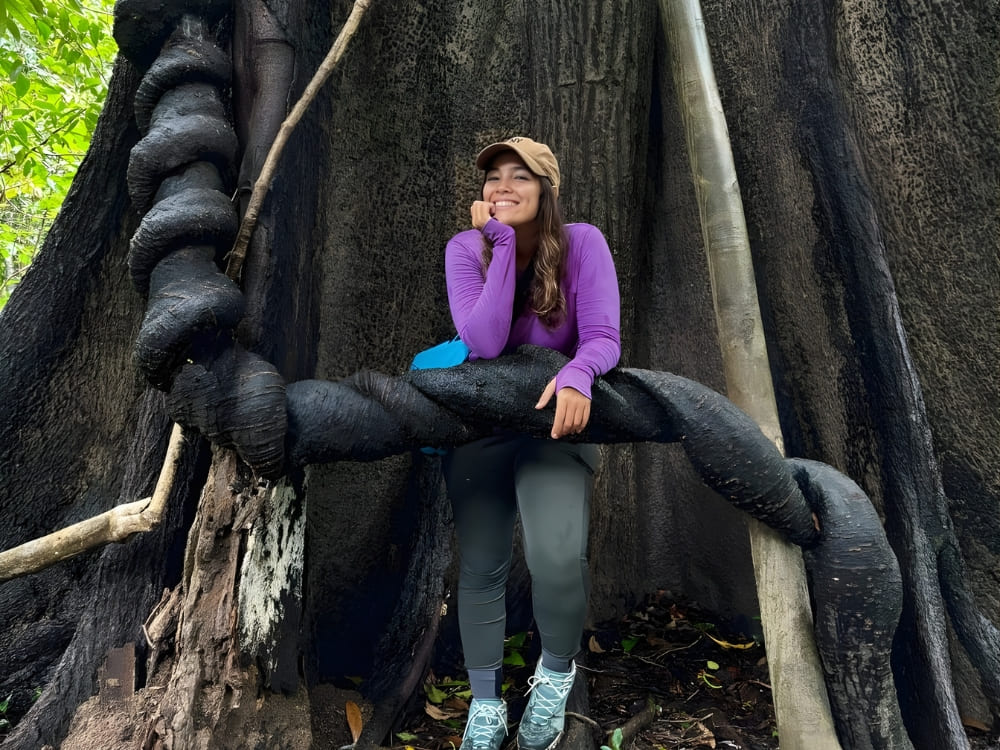
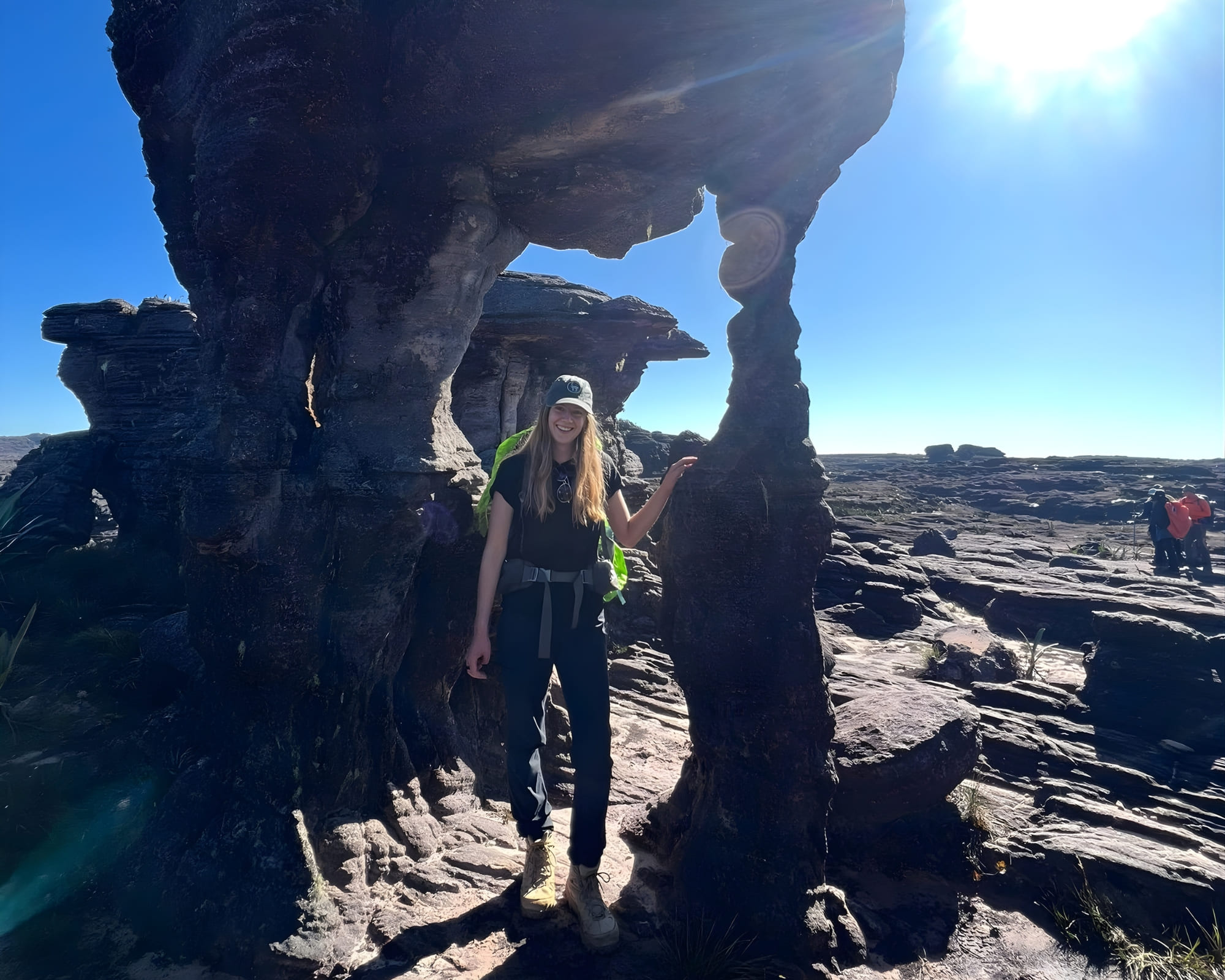
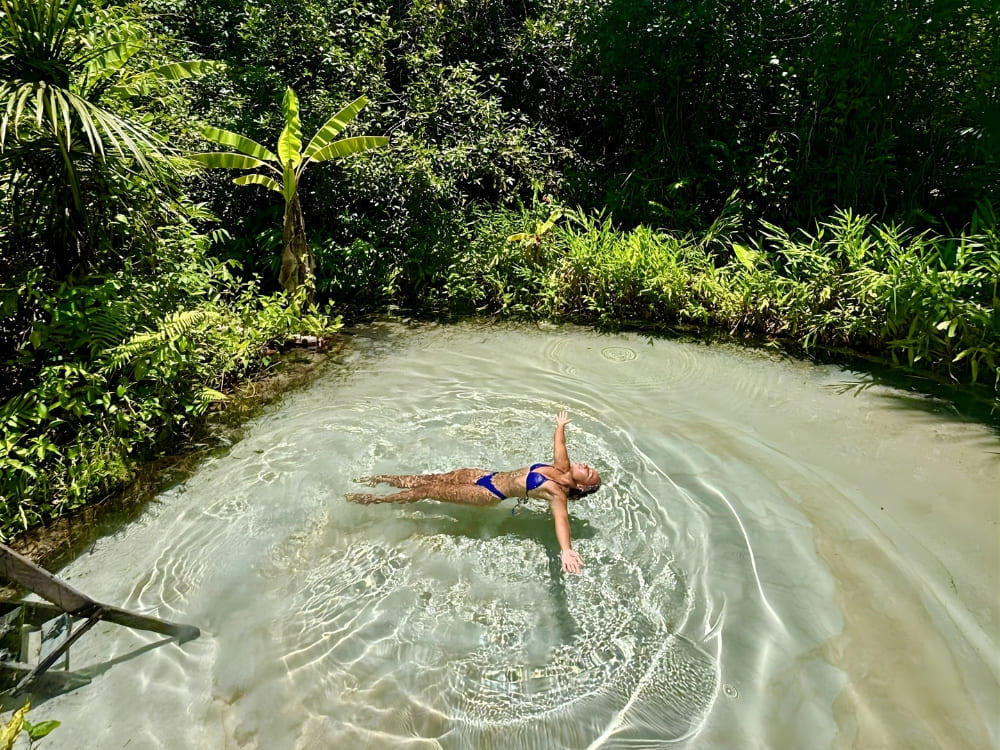
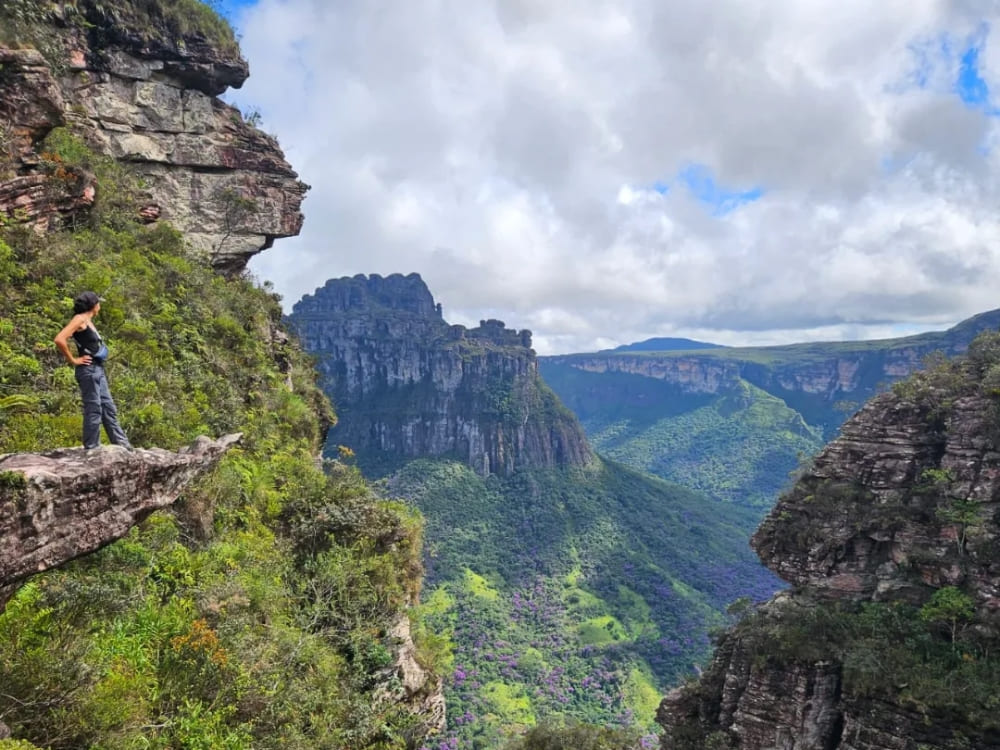
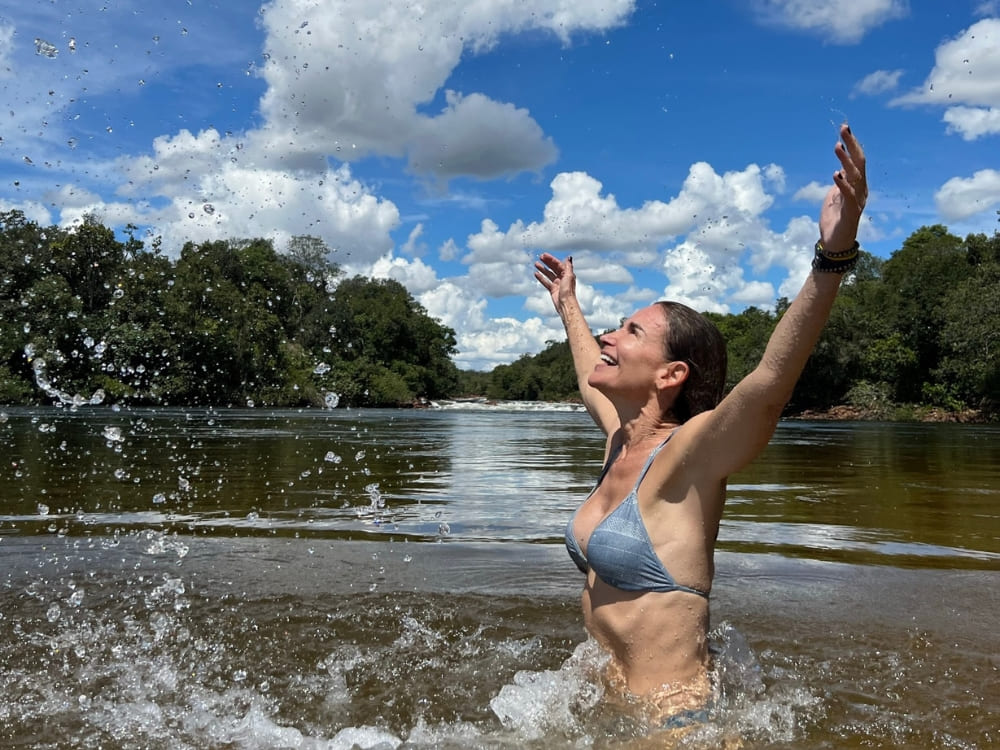
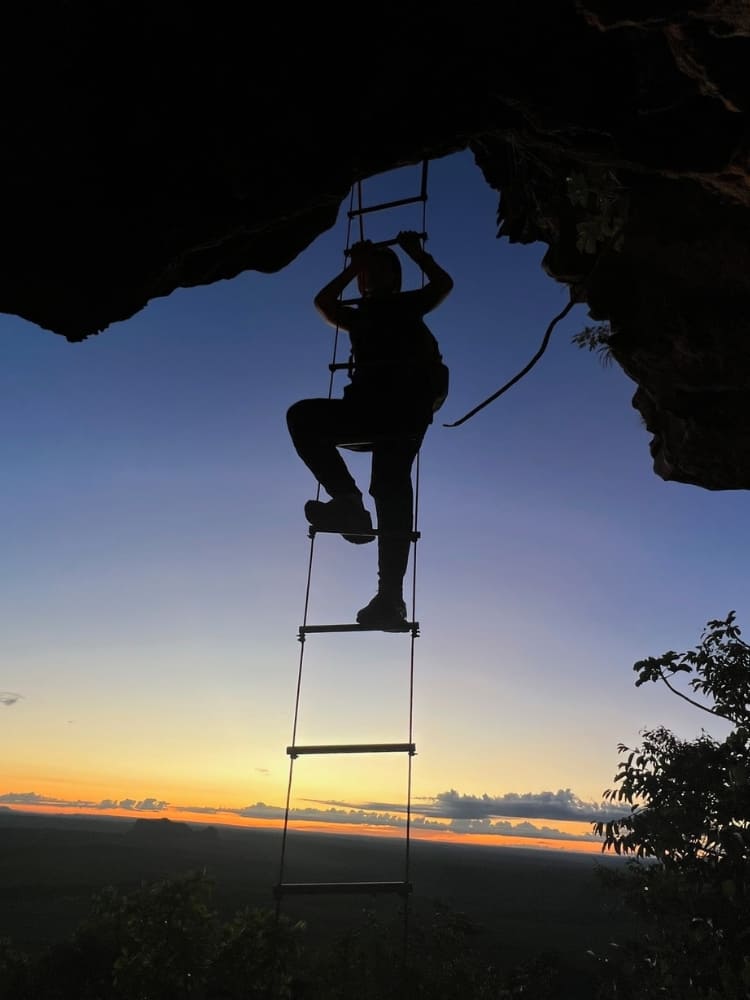
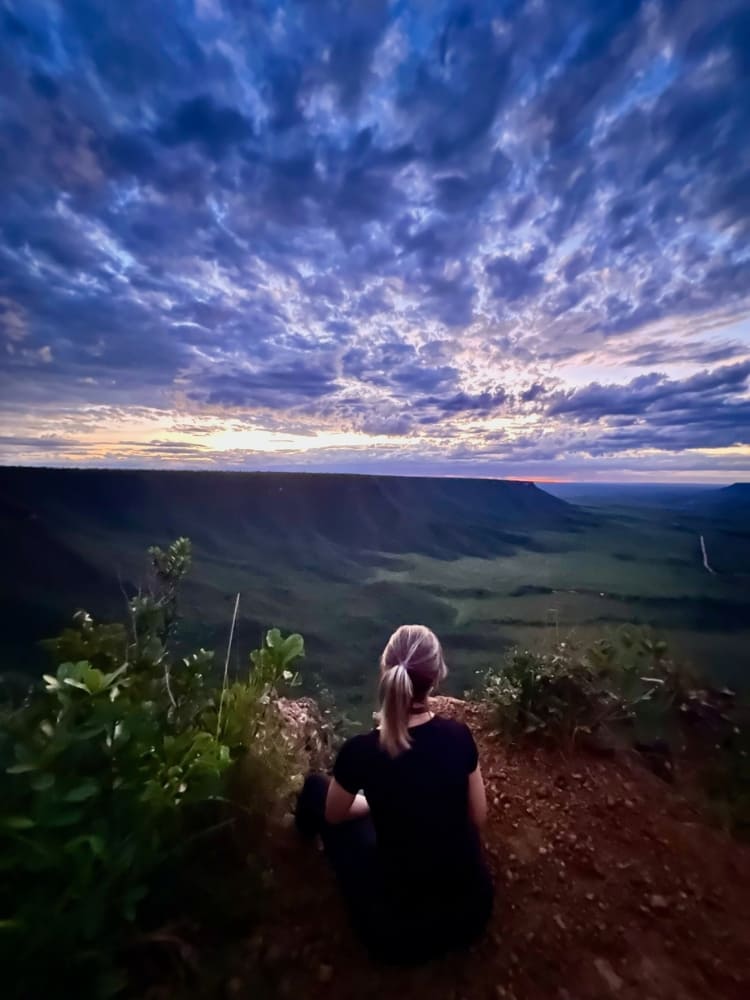
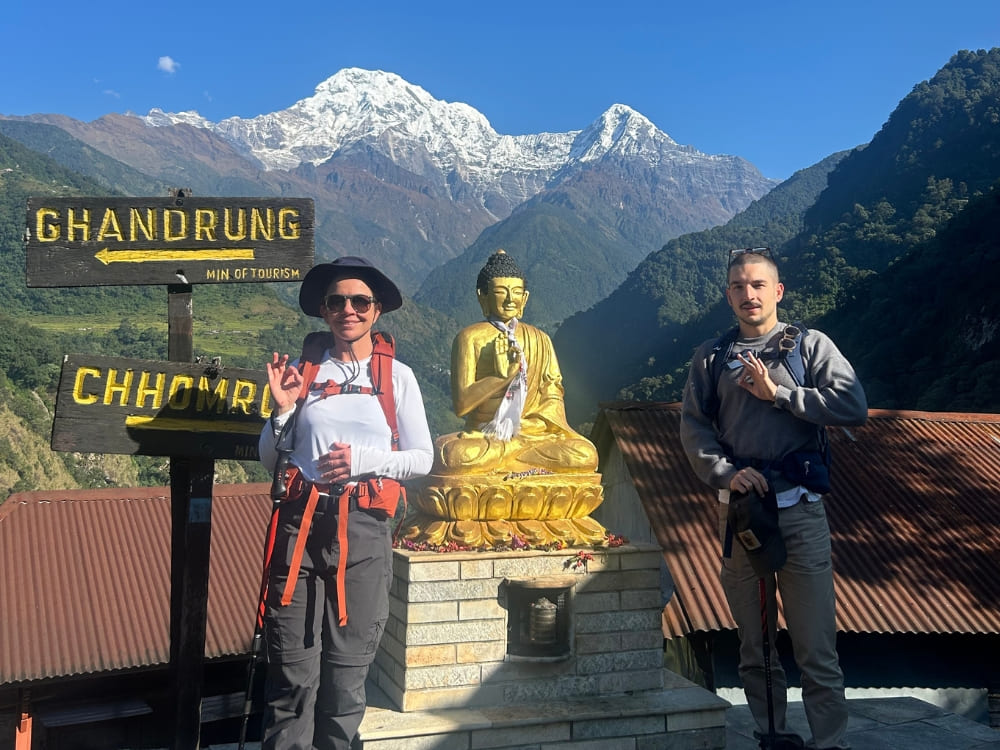
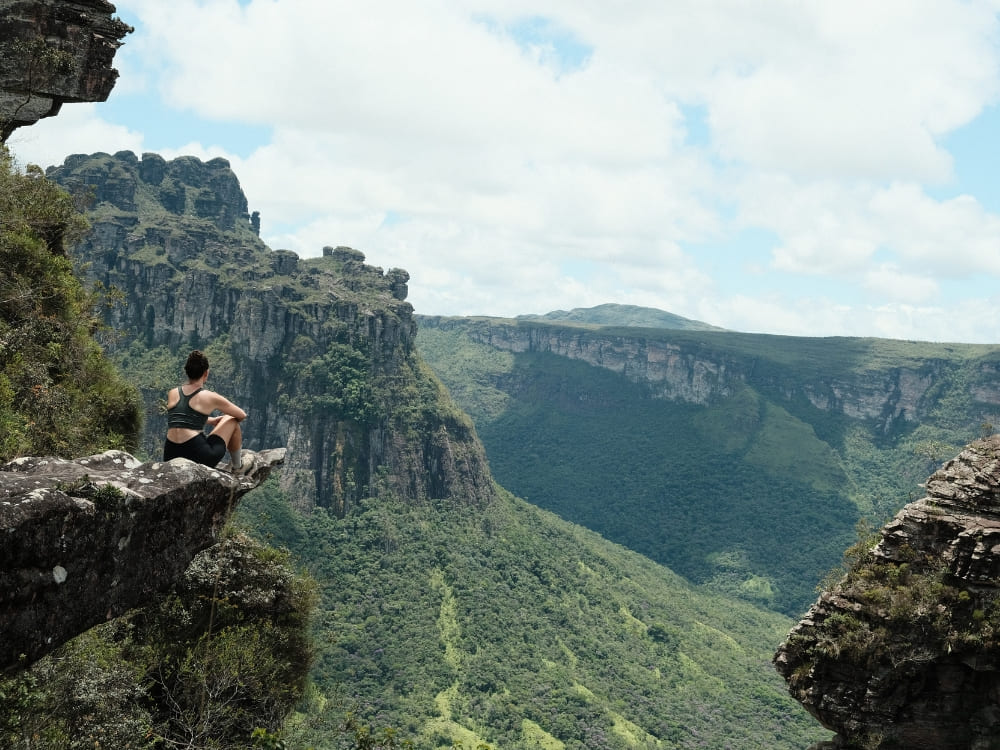
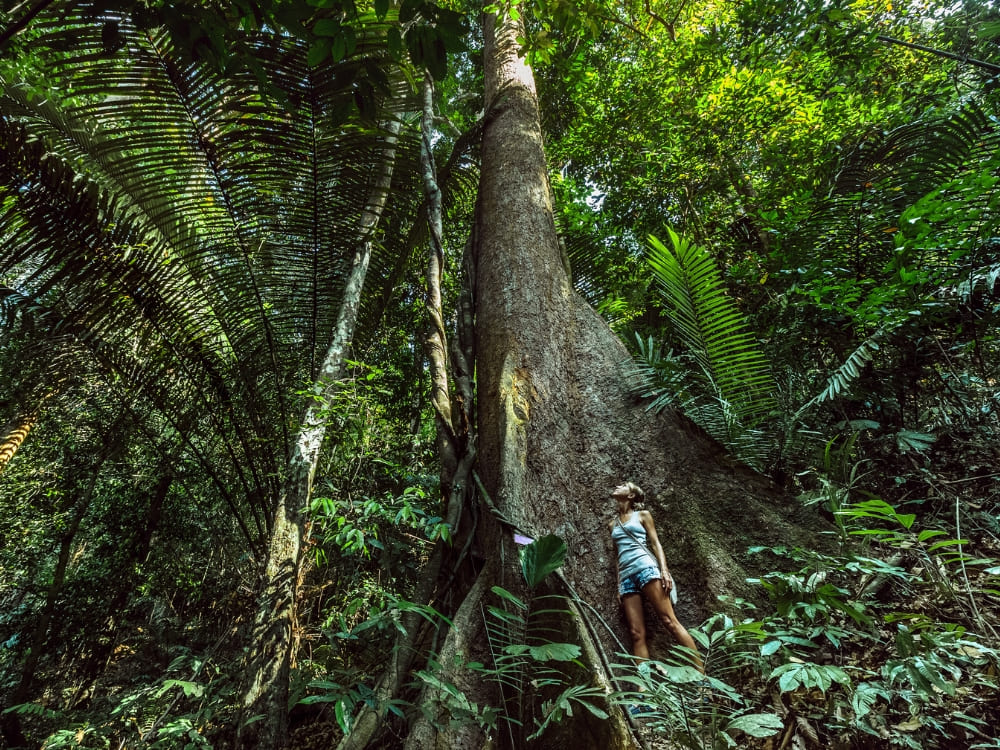
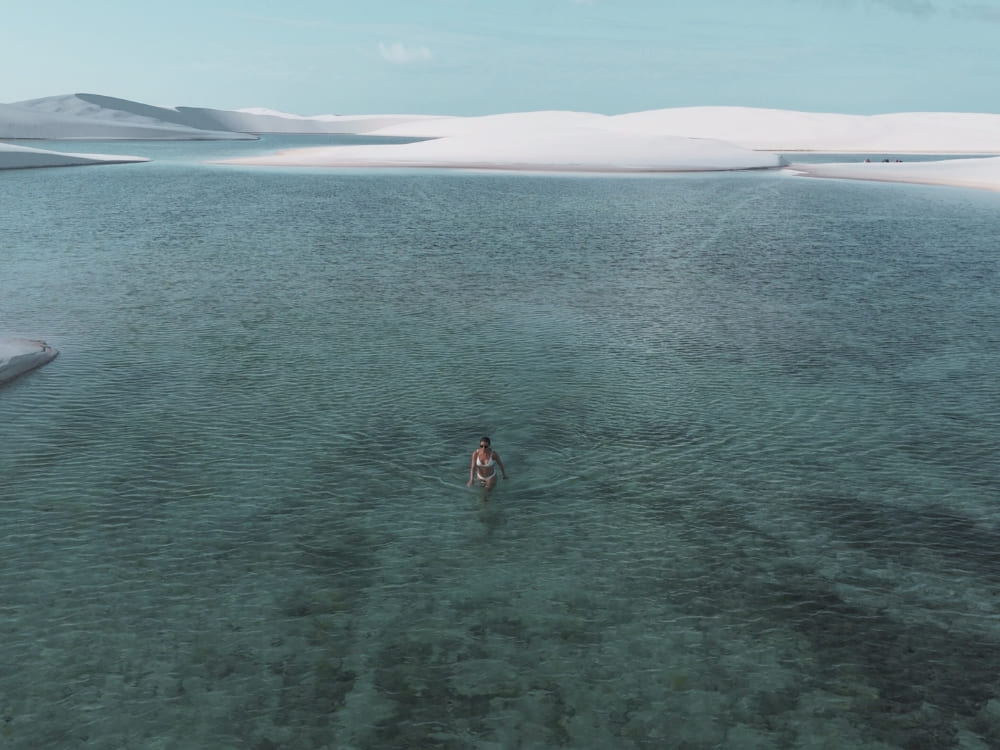
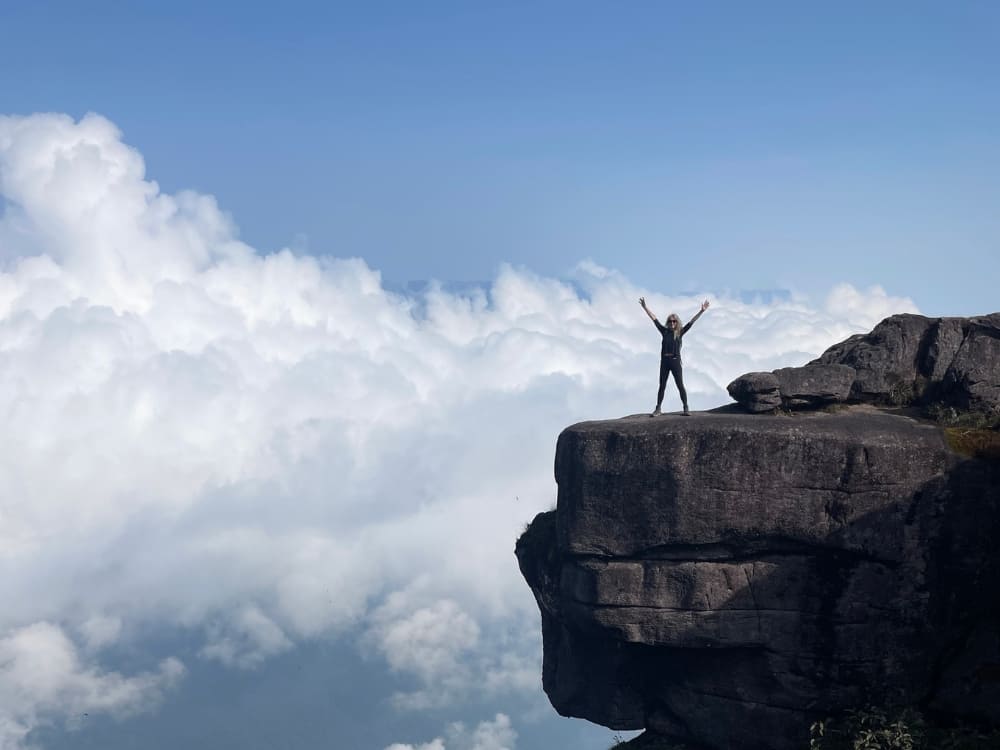
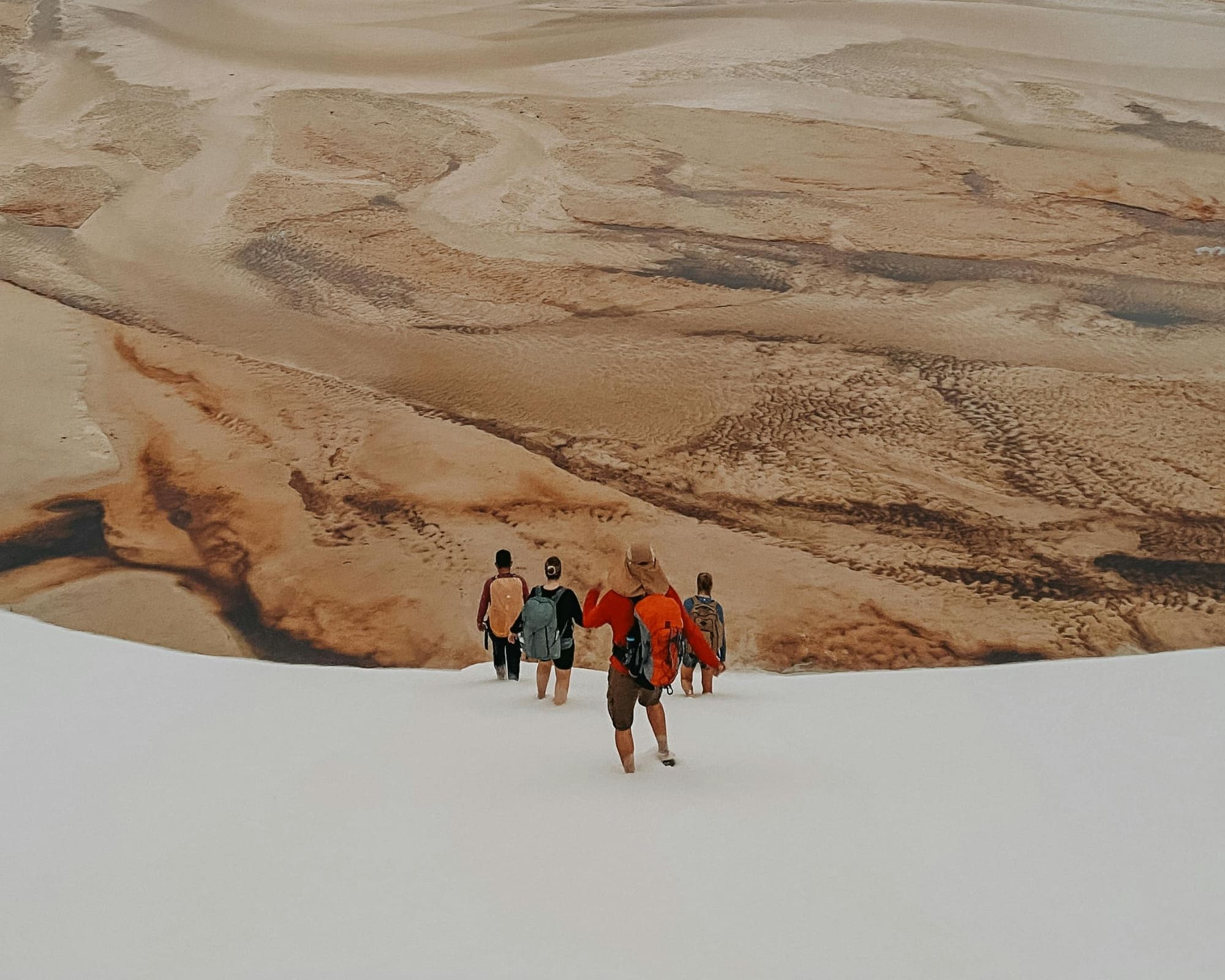
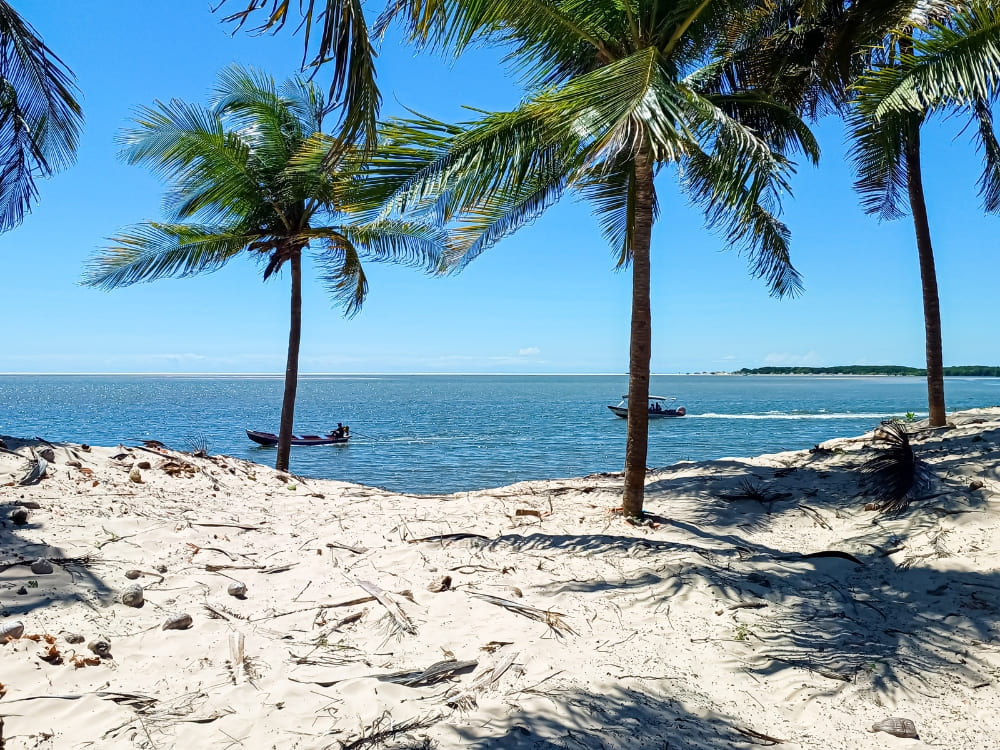
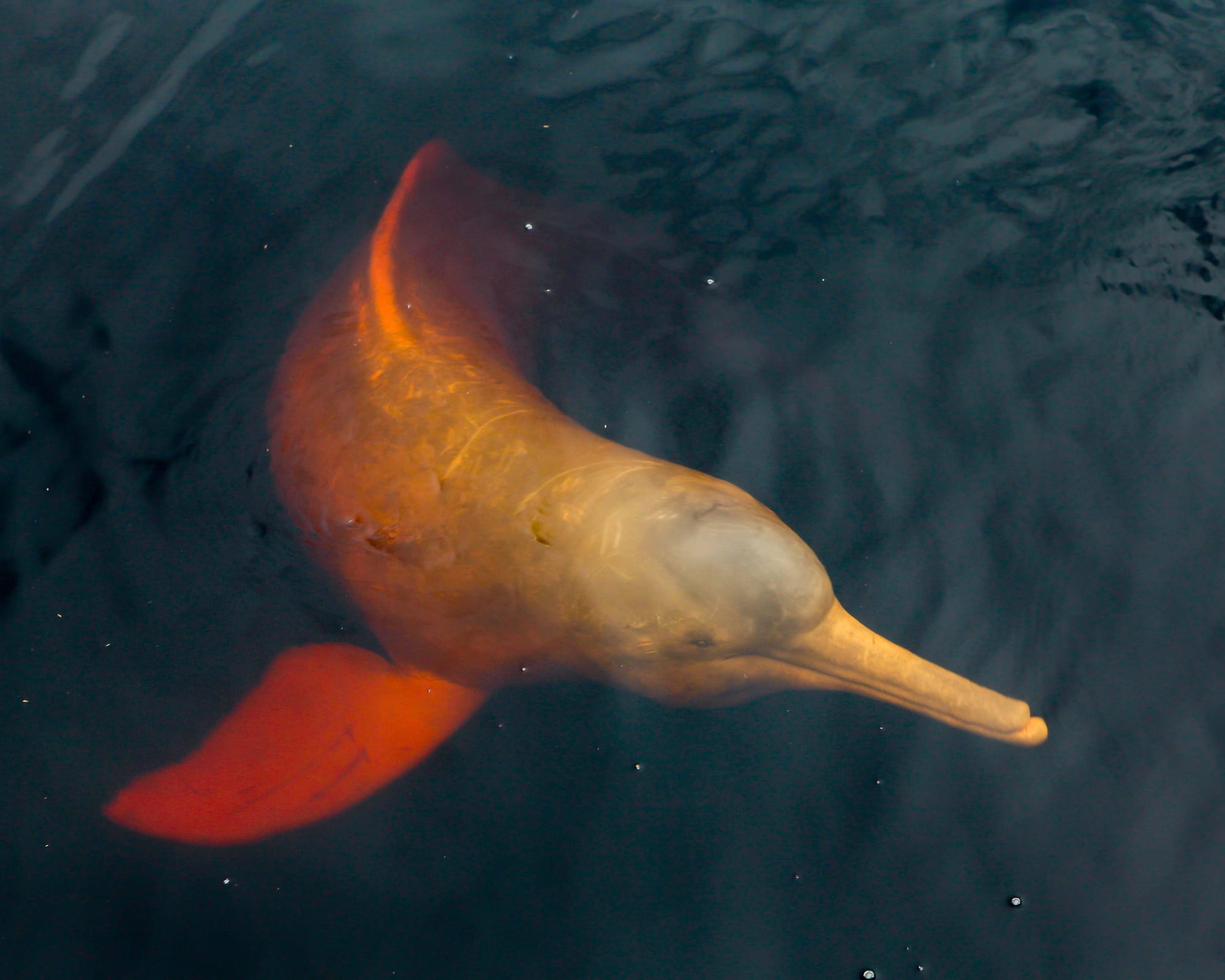
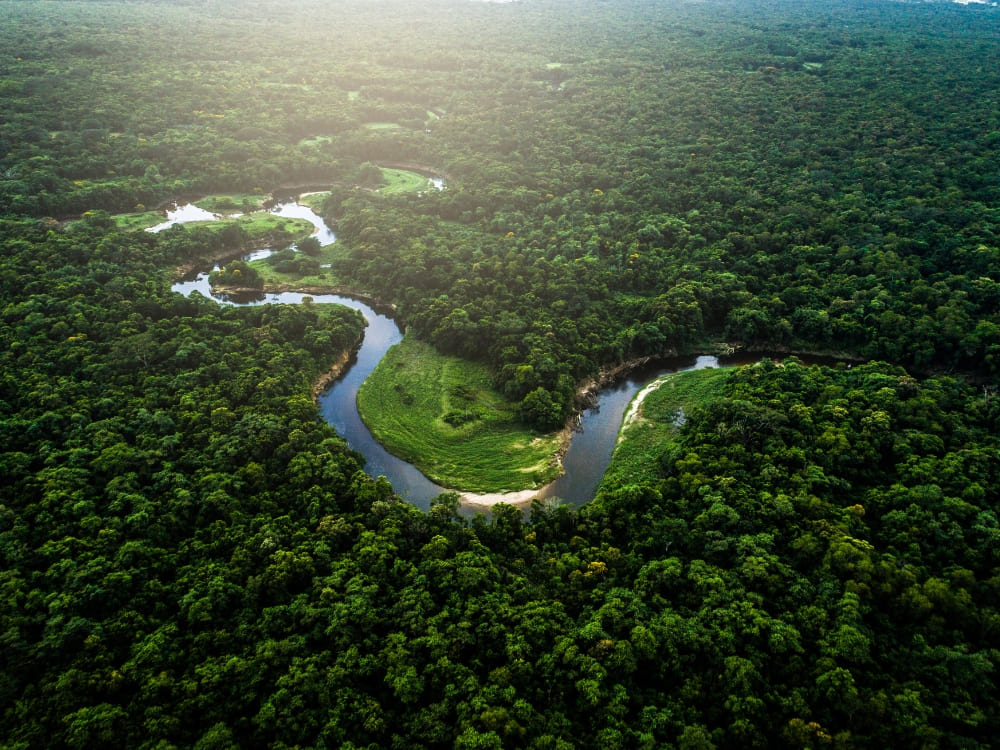
From Roraima to Jalapão, six travelers from Brazil and around the world show how exploring nature alone can be a life-changing experience
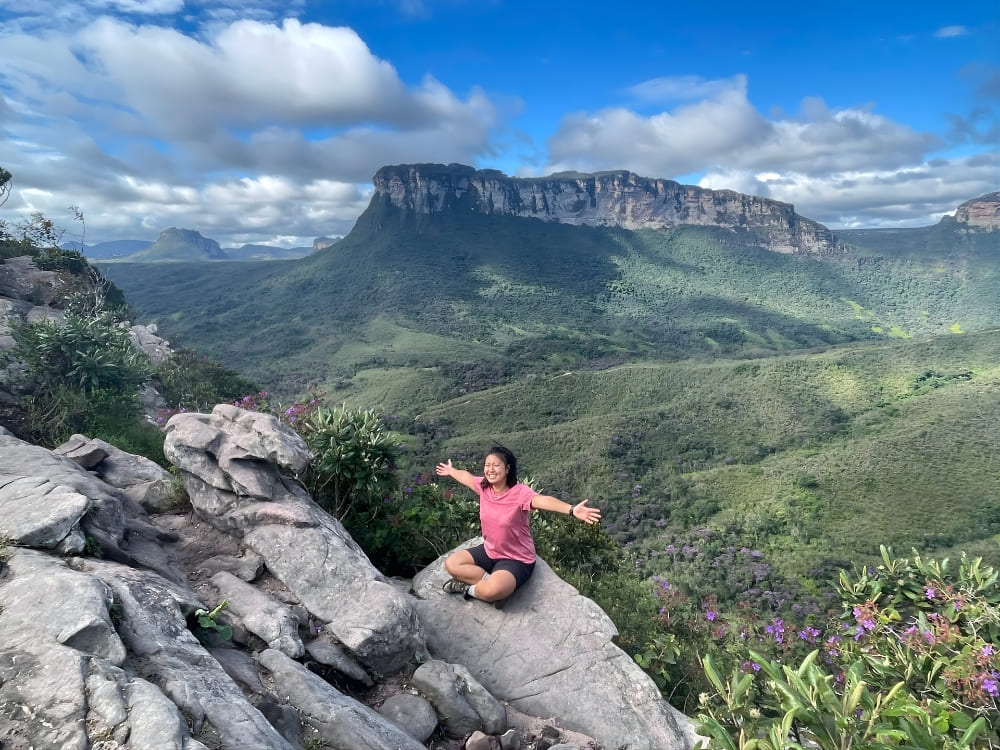
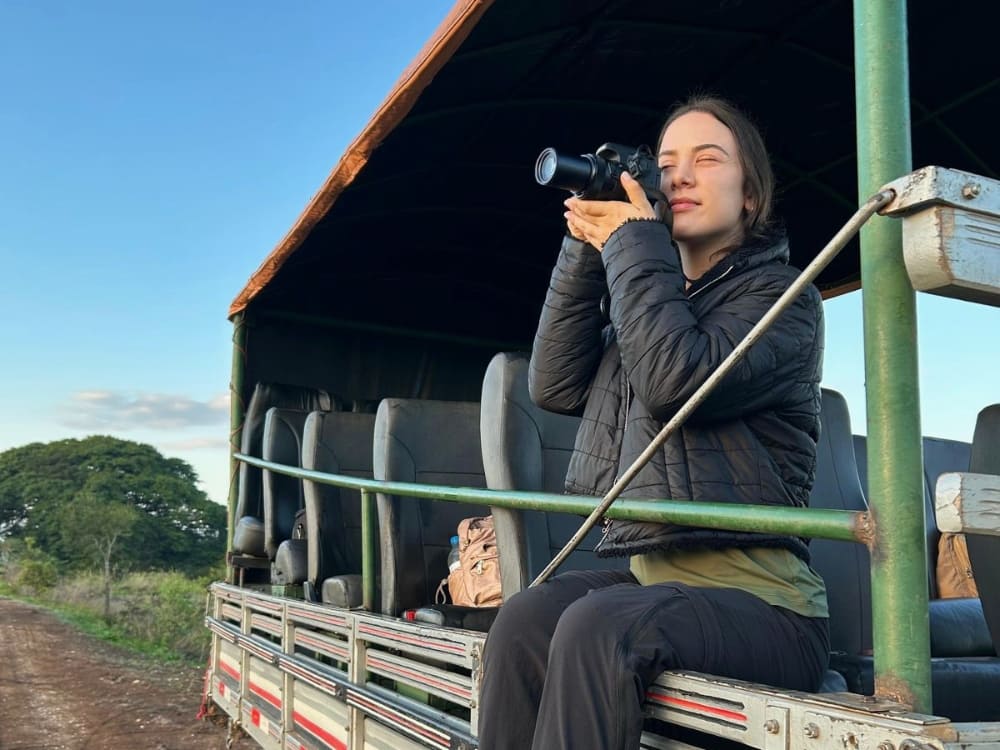
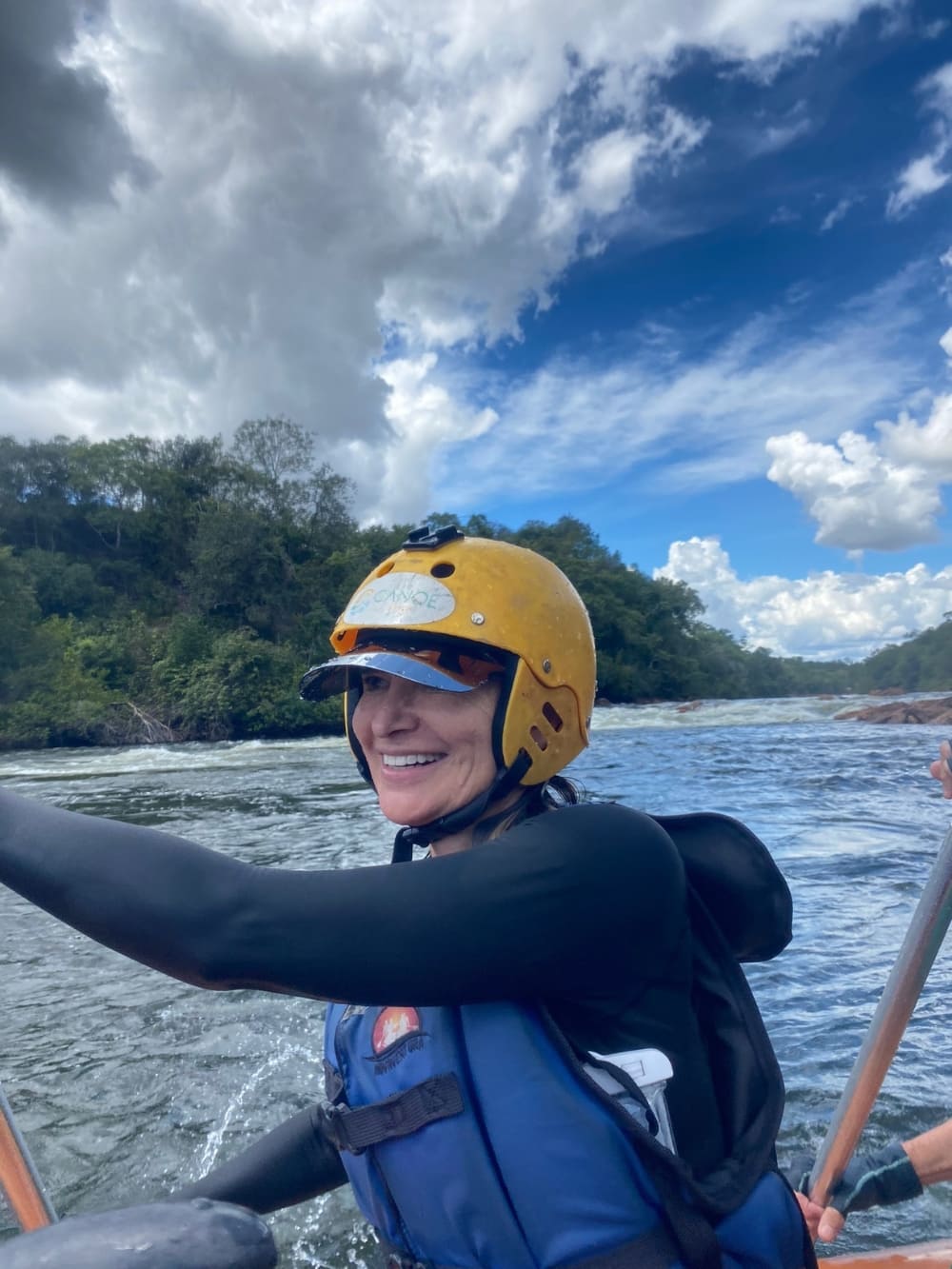
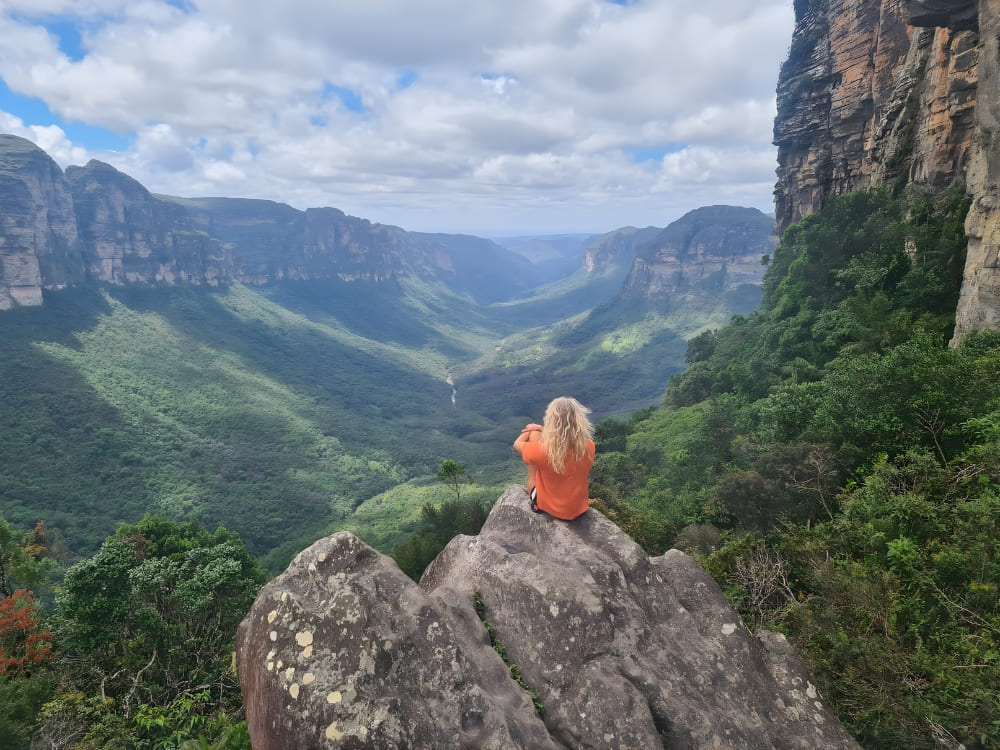
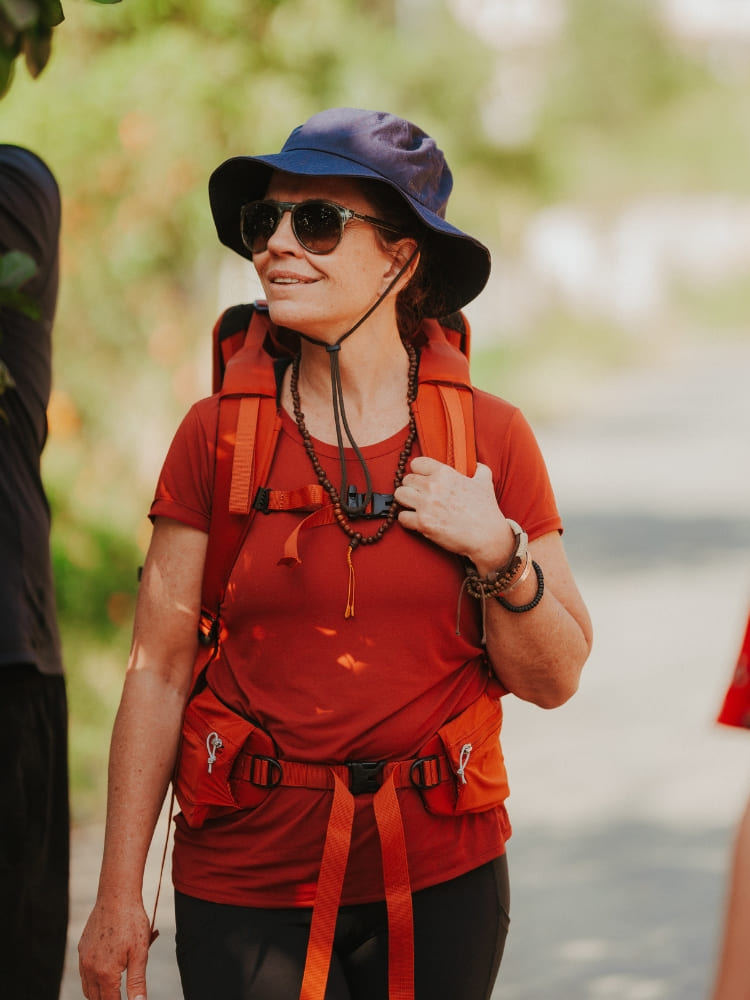
“The feeling can be a bit daunting, but it’s liberating. I know myself better because I allowed myself to meet other people,” said Mariana Sampaio(26), an electrical engineer from Bahia who traveled on her own to Chapada Diamantina and the Amazon. The initial fear existed, but facing it was precisely what turned the journey into a personal milestone.
.
For many women, the idea of traveling alone raises concerns about loneliness and safety. However, a growing movement within national ecotourism has been showing—with planning, careful selection of itineraries, and the support of qualified professionals, it is possible to transform solo travel for women into a structured and welcoming experience.
For Women’s Month, PlanetaEXO, an ecotourism platform specializing in adventure tours in Brazil, gathered the stories of six national and international travelers who chose to explore Brazilian nature on their own. Read more below!
Traveling alone doesn’t mean being lonely
One of the myths of traveling alone is loneliness. In practice, many women report the opposite, stating they became more open to making new connections.
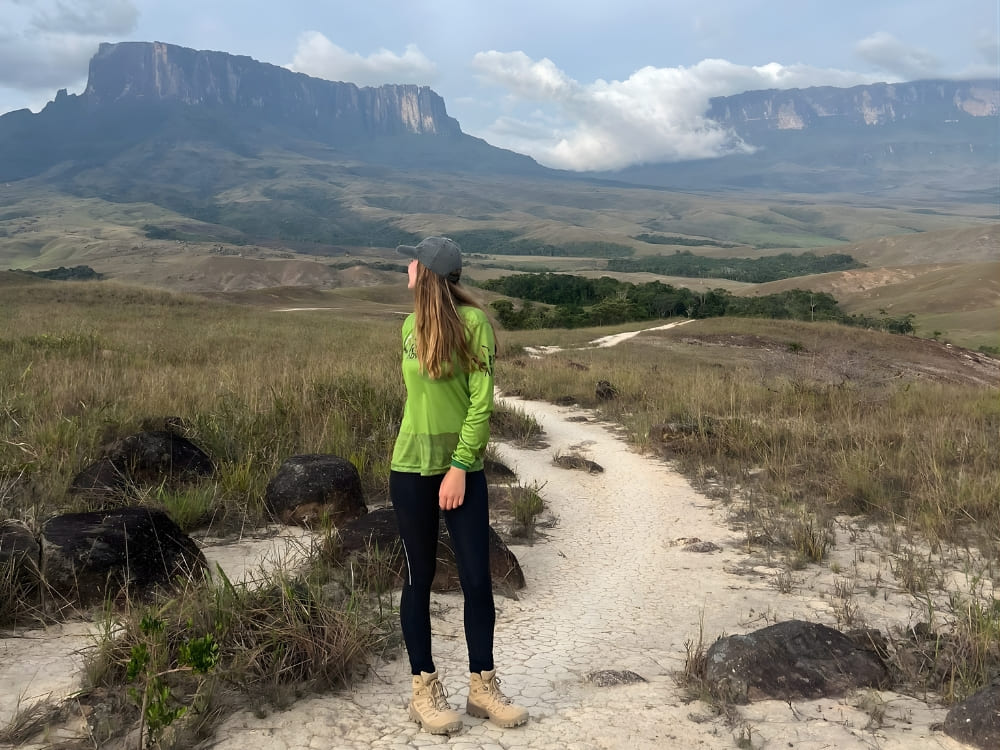
When New Zealand ecologist Olivia Bird(24) decided to climb Mount Roraima, she feared she would be the only foreigner in the group. This fear quickly dissipated as she was welcomed by Brazilian female solo travelers and interacted with Indigenous women working on the expedition. “There are other women doing the same. You don’t need to feel alone,” she states.
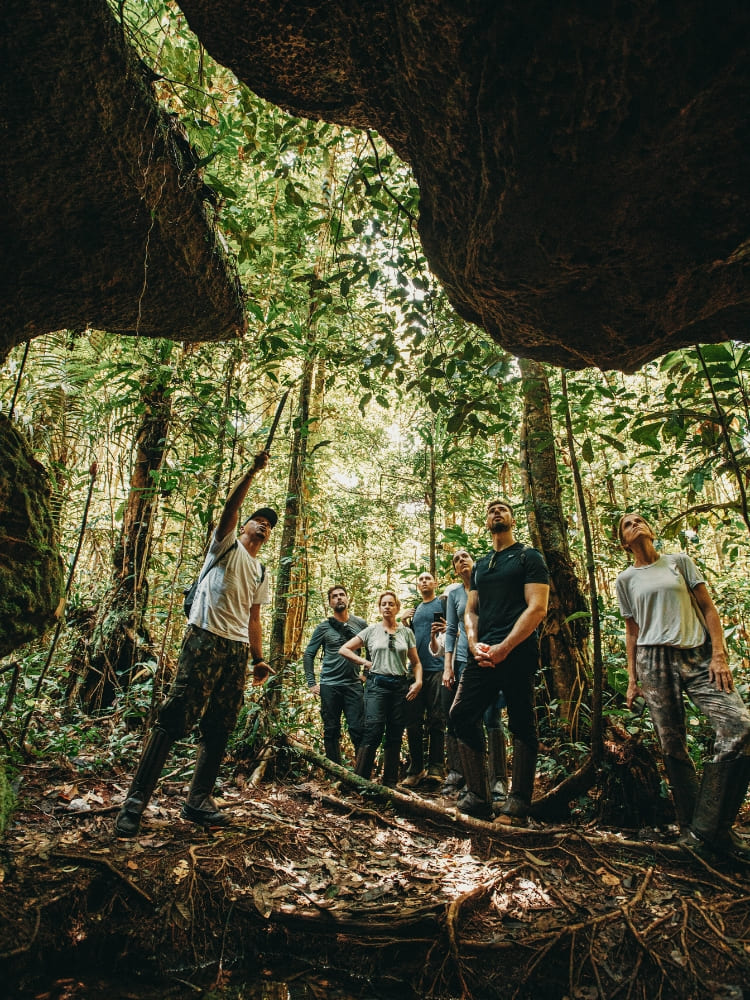
Besides Olivia, the travelers report how the experiences of hiking, camping, and cultural connection deep within Roraima help create bonds between visitors, guides, and local communities.
Structure makes a difference for those concerned about safety
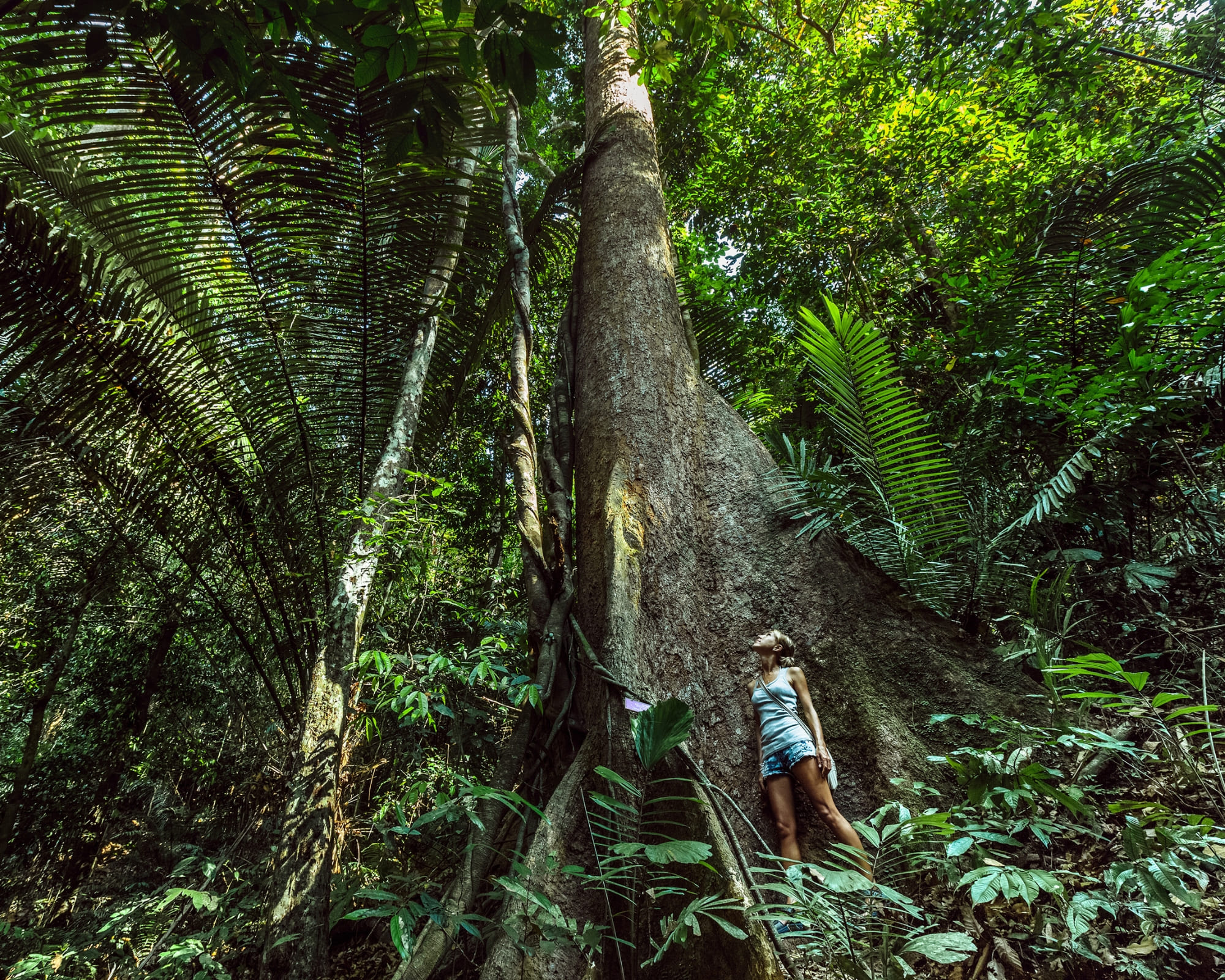
The concern with safety in Brazil is real, but the reality of nature destinations is surprising. Biologist Kristina Wagner(44), from Germany, outlined a complete plan before exploring the Amazon and the Pantanal.
“I felt safe the entire time. People were always trying to help me,” she reports. She also highlights that peace of mind came from the decision to travel with experienced operators and local guides who know the routes, protocols, and regional dynamics.
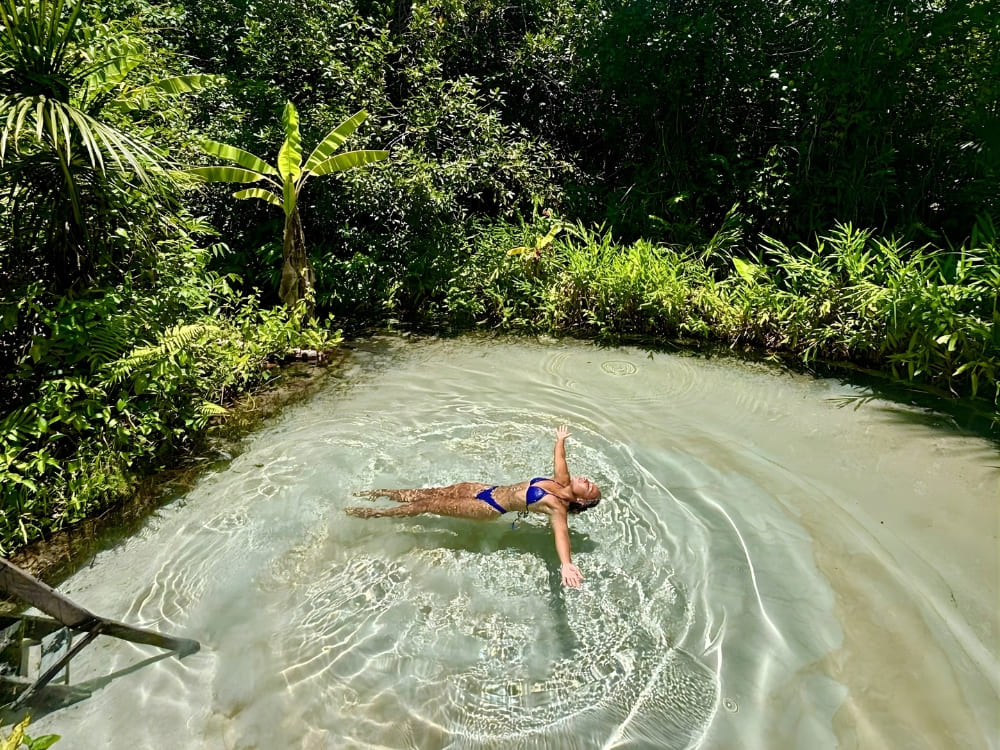
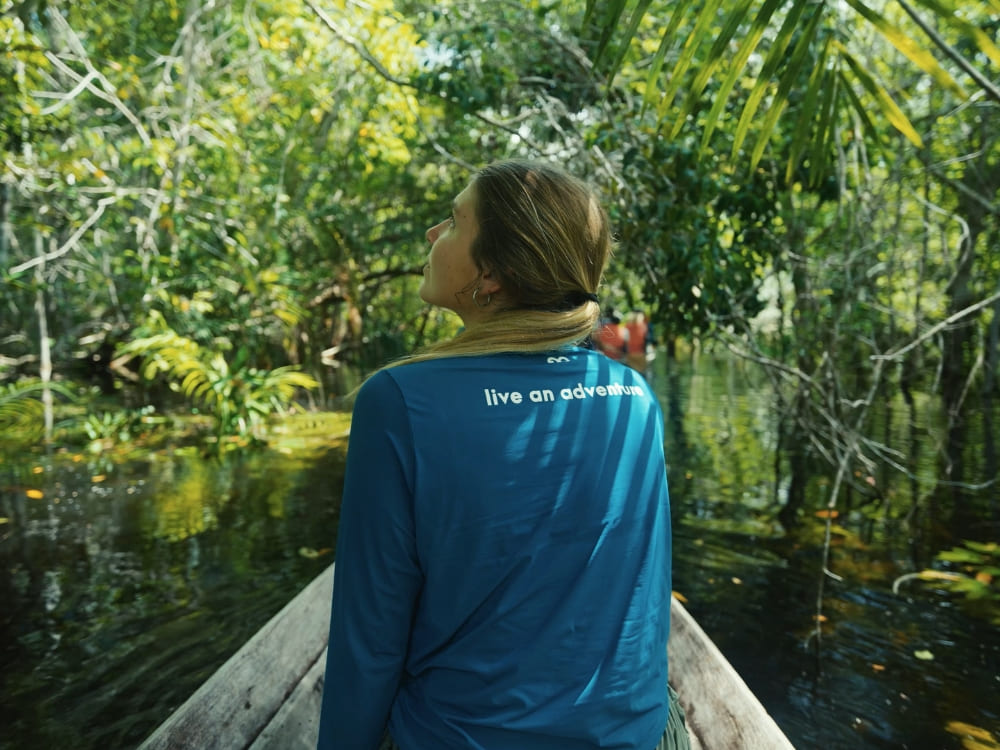
This is also reinforced by Samantha Sage(34), from the US, who visited Jalapão and the Amazon. “The guides can really make or break the trip, and mine made all the difference. Besides that, traveling alone helped me have even more confidence in my own personality.”
Nature as a well-deserved break, with no age limits
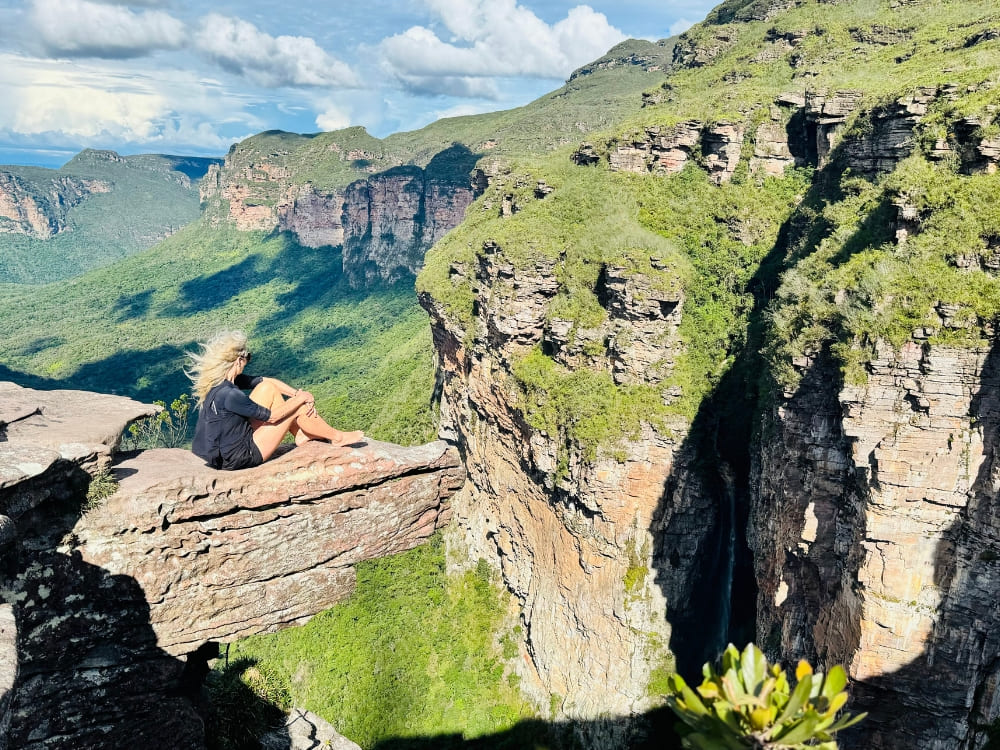
For marketing manager Andreia Yamasaki (35), from São Paulo, immersing herself in nature is a necessity for self-care and mental health amidst the stress of her daily routine. “It’s a breath of fresh air, and I won’t deprive myself from going somewhere I want just because I don’t have company,” she asserts.
.
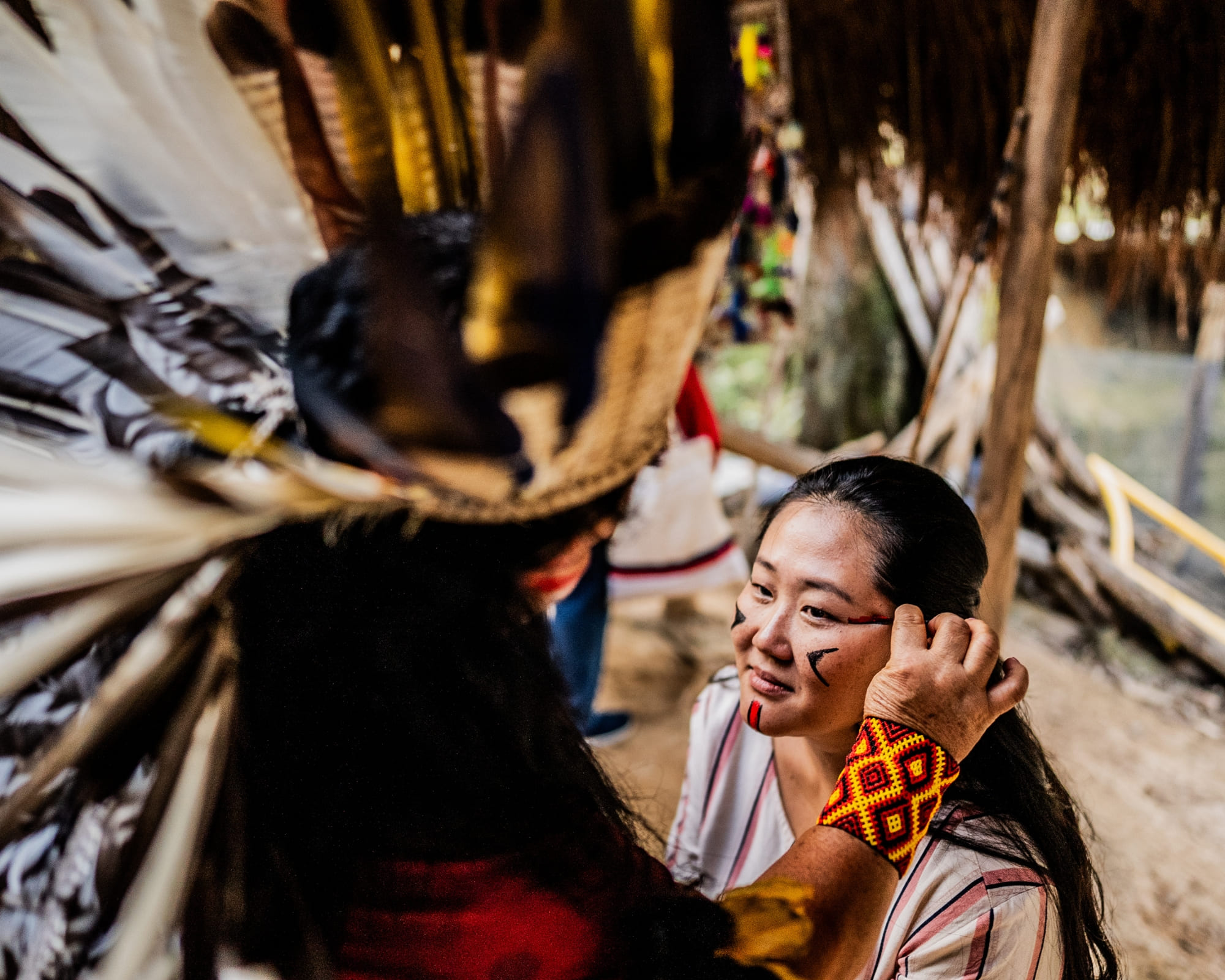
The search for this break knows no age limit. Dutch psychotherapist Katharina Bongaertz (60) is PlanetaEXO’s most frequent traveler. After raising her children and building a successful career, she found a new chapter for her passion for traveling in Brazil. Alongside the Yanomami people, she climbed Pico da Neblina, the highest peak in the country. “It’s important to challenge yourself, find new borders on all levels, and pass them.”
“The 10-Minute Rule” (Andreia): Allow yourself to complain for 10 minutes when facing an unforeseen event. After that, move forward and keep in mind that the unexpected is also part of the experience.
Move on even if you’re afraid (Mariana): Fear is natural, but it cannot take over. What matters is knowing the difference between real fear and mental paralysis.
Prioritize structure and local guides (Kristina and Olivia): Choosing operators committed to responsible tourism increases safety and strengthens the local economy. Trust qualified professionals.
Be open to improvisation (Samantha): The unexpected is part of the experience and often becomes the best stories. Planning is important, but it shouldn’t be an obstacle to experiencing the extraordinary.
Women traveling alone only worry about enjoying every second of their vacation when exploring nature with PlanetaEXO, an ecotourism platform specializing in adventure tours in Brazil.
Working with the best local operators in different Brazilian destinations, we consider the preferences and needs of each traveler to guarantee their safety, comfort, and authentic experiences. Contact us now!
Trading fear for freedom, solo female adventurers are discovering deep human connection and breathtaking scale in nature destinations
When planning a trip to South America’s largest country, the biggest hurdle many foreign women face isn’t the language barrier—it’s overcoming international misconceptions and alarming headlines about safety. Yet, those who push past this initial apprehension are rewarded with an entirely different reality once they step into Brazil’s natural wonders.
Away from the big cities, a standard vacation quickly transforms into a deeply personal journey of human warmth and self-discovery. Immersed in the great outdoors, these adventurers are met with a welcoming spirit that travel guides simply can’t capture, creating experiences that fundamentally shift how they view the world.
In honor of Women’s Month, PlanetaEXO, an ecotourism platform specializing in adventure tours in Brazil, gathered stories from foreign female travelers who ventured into some of the country’s most impressive natural scenarios to champion how women can and should occupy all spaces.
Endless horizons: Freedom for international adventurers
For foreign female travelers, the sheer scale of Brazil’s natural landscapes is awe-inspiring. From the United States, Samantha Sage (34), who traded Seattle’s rainy winter for a six-week deep dive into Brazil, felt it immediately.
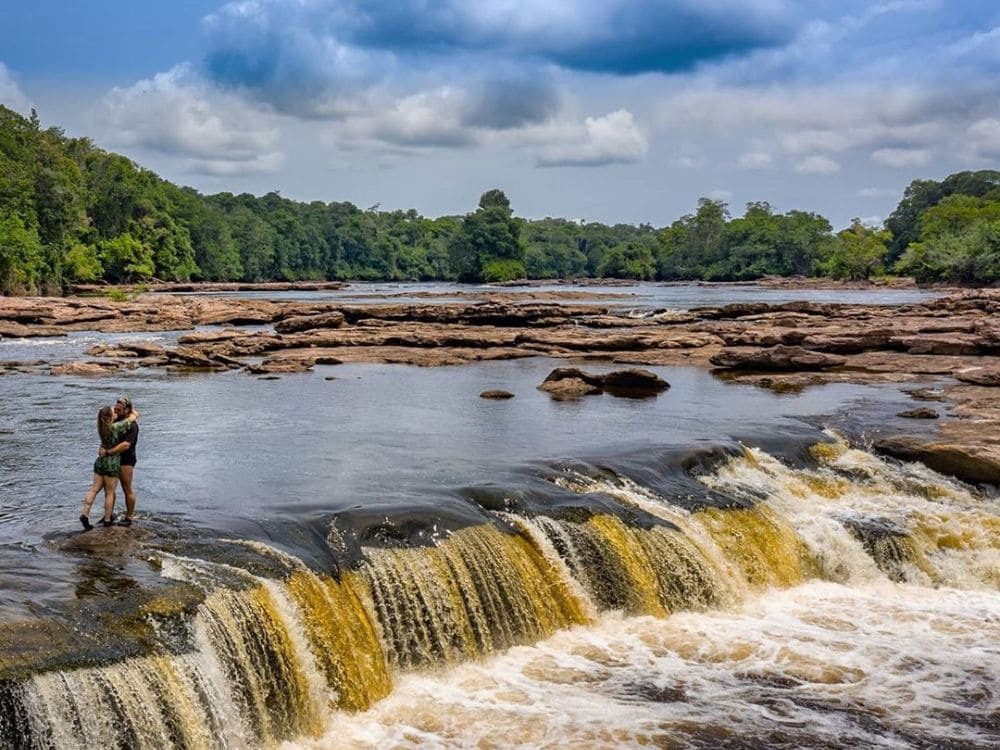
“You hear about the rivers in the Amazon being really big, but you don’t really conceptualize it until you’re there,” she says. She was also completely enchanted by the fervedouros, the crystal-clear natural springs of Jalapão (Tocantins).
@sage_gonewild
British freelance writer Emma Phillips (30) found a similar sense of peace while navigating a five-day river cruise along the Rio Negro in the Amazon. She describes the river as offering a sense of “enormous openness and tranquility,” which contrasted beautifully with the intense and encompassing forest.
Katharina Bongaertz (60), from the Netherlands, was similarly captivated by this greatness. She originally planned a one-month trip, but Brazil drew her in for five. Proving that adventure has no age limit, she hiked Pico da Neblina and explored Chapada Diamantina. “I prefer vast, open spaces without fences, where I can hike freely. It’s empowering, and I take that strength home with me every time,” she says.
While the wildlife and landscapes are stunning, it was the local women who left the deepest impact. Olivia Bird (24), an ecologist from New Zealand, traveled across the globe to see the natural wonders of Mount Roraima up close.
Along the trek, she was blown away by the resilience of the Indigenous support team, particularly the women. “I saw women half my size, wearing flip-flops, effortlessly carrying heavy supplies and breezing past us hikers who were struggling despite our high-tech gear,” she recalls.
.
In the Amazon Rainforest, German biologist Kristina Wagner (44) had a similar experience. While visiting a riverside community that farmed manioc, she was deeply moved to see women acting as the central figures of their community.
“It was incredible to see families led by women. I saw the grandmother, the daughter, and the granddaughter, multiple generations all working together,” she noted, pointing out the stark contrast to family dynamics back in Germany, where relatives often live more separate lives.
Emma also noted the profound impact of connecting with local roots. Accompanied by local guides who used the knowledge of their ancestors to turn the forest into a classroom, she saw how authentic, non-predatory tourism could uplift communities.
“Seeing tourism being used in such a responsible approach to improving people’s lives and preserving the environment was an inspiration,” she states, defining the experience as a way to truly understand cultural diversity.
It’s normal to feel some initial apprehension when traveling to unknown places, but the welcoming nature of the Brazilian people quickly tears down those walls.
Olivia was nervous about being the only foreign female traveler in her Mount Roraima trekking group, but that fear didn’t last long. A Brazilian woman who was also traveling solo took her under her wing, and the entire group made a point to teach her some basic Portuguese.
This warmth extends to all types of travelers. Emma, traveling as a queer woman alongside her Brazilian partner, Jamille, admits she felt an internal anxiety about how their relationship would be received. However, she was met with total respect.
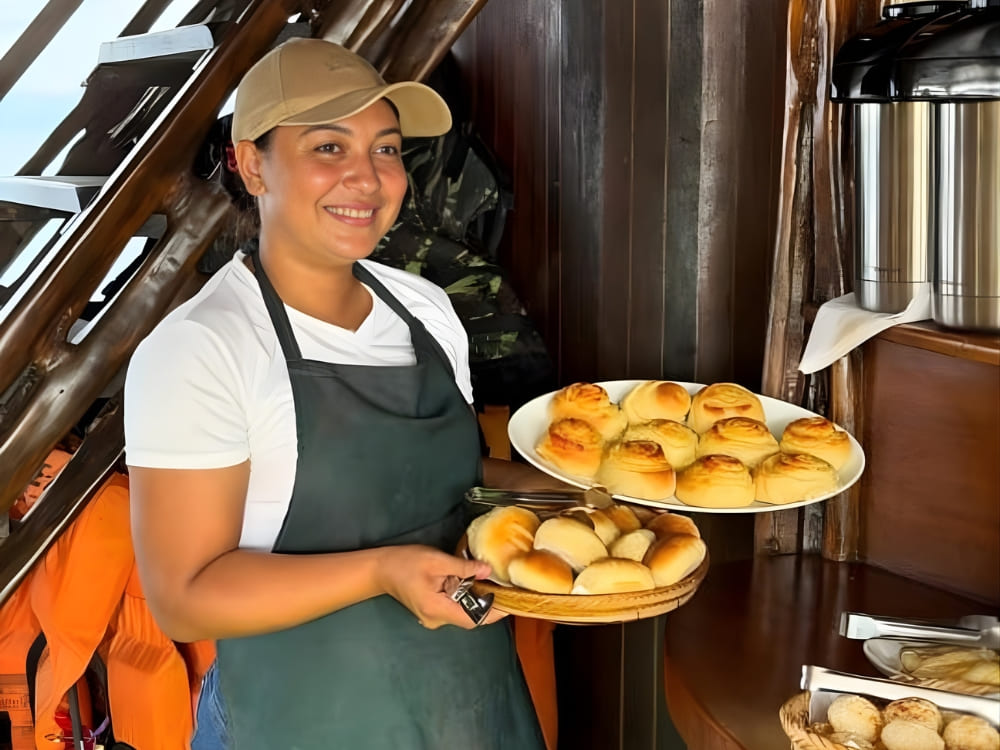
One of the most touching moments happened in the boat’s kitchen when a local chef shared that her own daughter was also queer. “I think she was pleased to see our dynamic play out in front of her. It was lovely,” Emma shares.
Kristina, who was initially wary due to international misconceptions about Brazil, saw firsthand how local women look out for each other. “I felt safe the entire time. People were constantly going out of their way to help me,” she shares.
On a bus to the Pantanal, when a man was aggressively trying to chat her up, a Brazilian passenger didn’t hesitate to step in and ask him to leave her alone. Quickly, her peace of mind was restored.
Takeaways for the journey
Brazil gave these women far more than just postcard-perfect memories. Based on their time exploring the country, they were able to bust common myths and share valuable advice for other foreign female travelers looking to explore the country.
Emma (UK) “Traveling is an incredible way to explore cultural diversity, to always remember that there’s not just one way to live or to show up in this world. So why not go? Going with a group is how you can have support and make things easier.”
Kristina (Germany) “Don’t be afraid to ask for help. Brazilians are incredibly friendly and welcoming, and they’re always ready to support you. Aside from preparing yourself for the sheer size of the Amazon rivers, take time to observe the strength of the local culture. You’ll be surprised and inspired to see women acting as powerful leaders and highly respected matriarchs in riverside communities.”
Samantha (USA) “Don’t hesitate to travel to the countryside and nature destinations. They proved to be incredibly safe, which completely contradicts what you hear internationally. Also, make sure to add Brazilian bakeries to your itinerary—especially in São Paulo. They are an absolute must!”
Katharina (Netherlands) “In ecotourism and nature destinations, you can truly relax and feel completely safe. In the big cities, the best approach is simply to use common sense. Use rideshare apps and avoid flashing expensive belongings. Other than that, keep an open heart and connect with the Brazilian people—they are kind, welcoming, and truly have music in their souls.”
Over the years, PlanetaEXO has welcomed countless international tourists in Brazil, offering all the necessary support so they could explore nature in a safe, authentic, and responsible manner.
As an ecotourism platform specializing in adventure tours in Brazil, we provide incredible opportunities for exploration that do not harm the environment and still support local communities. Contact us now!
From guides breaking stereotypes to community leaders transforming the local economy, meet the women in ecotourism driving authentic experiences across Brazil
When it comes to exploring the most remote destinations in Brazil, the spotlight usually focuses on the lush landscapes or the courage of those who travel. However, there is a vital and invisible gear ensuring that immersion in nature is safe, welcoming, and sustainable.
.
Today, women are the driving force behind the scenes and on the front lines of ecotourism, both in Brazil and around the world. Data from the United Nations World Tourism Organization reveals that 54% of the global tourism workforce is female—a presence that is also growing in the nature and adventure travel market.
For Women’s Month, PlanetaEXO, a sustainable tourism platform specialized in adventure tours in Brazil, sheds light on the stories of professionals who prove how the participation of women in ecotourism is not just a matter of survival, but also of profound socioeconomic transformation.
Overcoming prejudice and showing competence
The line of work of nature guide still carries a strong male stereotype. In Jalapão (Tocantins), where the proportion is up to five women for about 300 male guides, Mychelle Leal (28) felt the prejudice firsthand when opening her own agency. The distrust usually came from colleagues themselves or tourists who questioned her driving skills or emergency response capabilities.
Mychelle’s answer comes through her competence at work. She was the one who took the lead and helped a tourist stung by a scorpion during an expedition where the men didn’t know how to react. “Nowadays, I know how to stand up for myself. A woman needs to focus on the tourist and a job well done, rather than listening to those who just want to get in the way”she states.
In the Pantanal (Mato Grosso), biologist and guide Danielle Rocha (24) faced similar barriers. Although highly praised by clients, she frequently notices doubtful looks from male guides regarding her physical stature.
“I don’t let that shake me. Gender doesn’t disqualify you from working with safety, logistics, and care. In fact, women are more sensitive to picking up if someone in the group isn’t feeling well”explains Danielle, who is also a wildlife photographer.
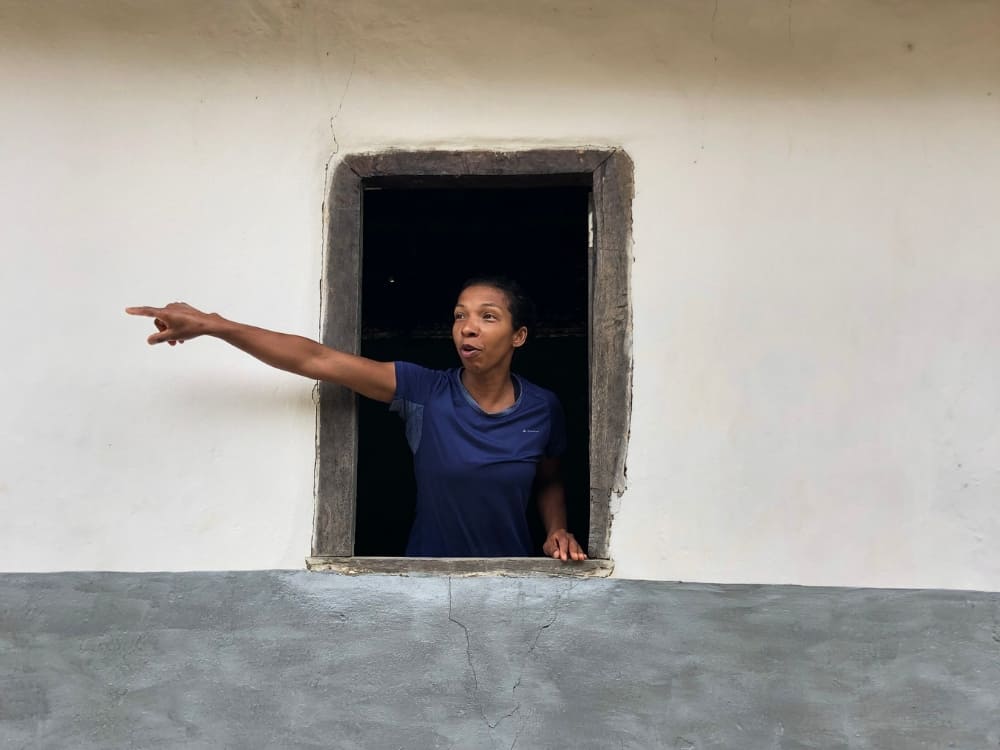
The sensitivity mentioned by Danielle is what transforms the traveler’s experience. In the Vale do Pati, in Chapada Diamantina (Bahia), guide Rayssa Soares (32) reports the impact of leading all-female groups.
Recently, she guided nine British women and tailored the experience to bring out the best in each one of them. “The welcoming is different. The travelers feel we are cut from the same cloth, sharing the same intimate challenges and pains. This creates an immediate bond of trust and comfort.”
For those who think dedication is limited, the women in ecotourism who open the doors of their homes in the most isolated villages prove otherwise.
In the Vale do Pati, Nara Oliveira (42) has taken on a historical legacy. Her family was the first to welcome tourists to the region, about 30 years ago, at the well-known “Casa do Seu Wilson” (Mister Wilson’s House). Today, she balances the non-stop routine of managing the rustic accommodation with raising her two-year-old daughter.
“There are no Saturdays, Sundays, or holidays. We offer basic mountain survival, with restricted solar energy and no luxury” explains Nara. For her, tourism saved the community, which previously relied solely on agriculture and today prospers without deforestation. “The local economy has improved a lot, and the slash-and-burn farming has stopped.”
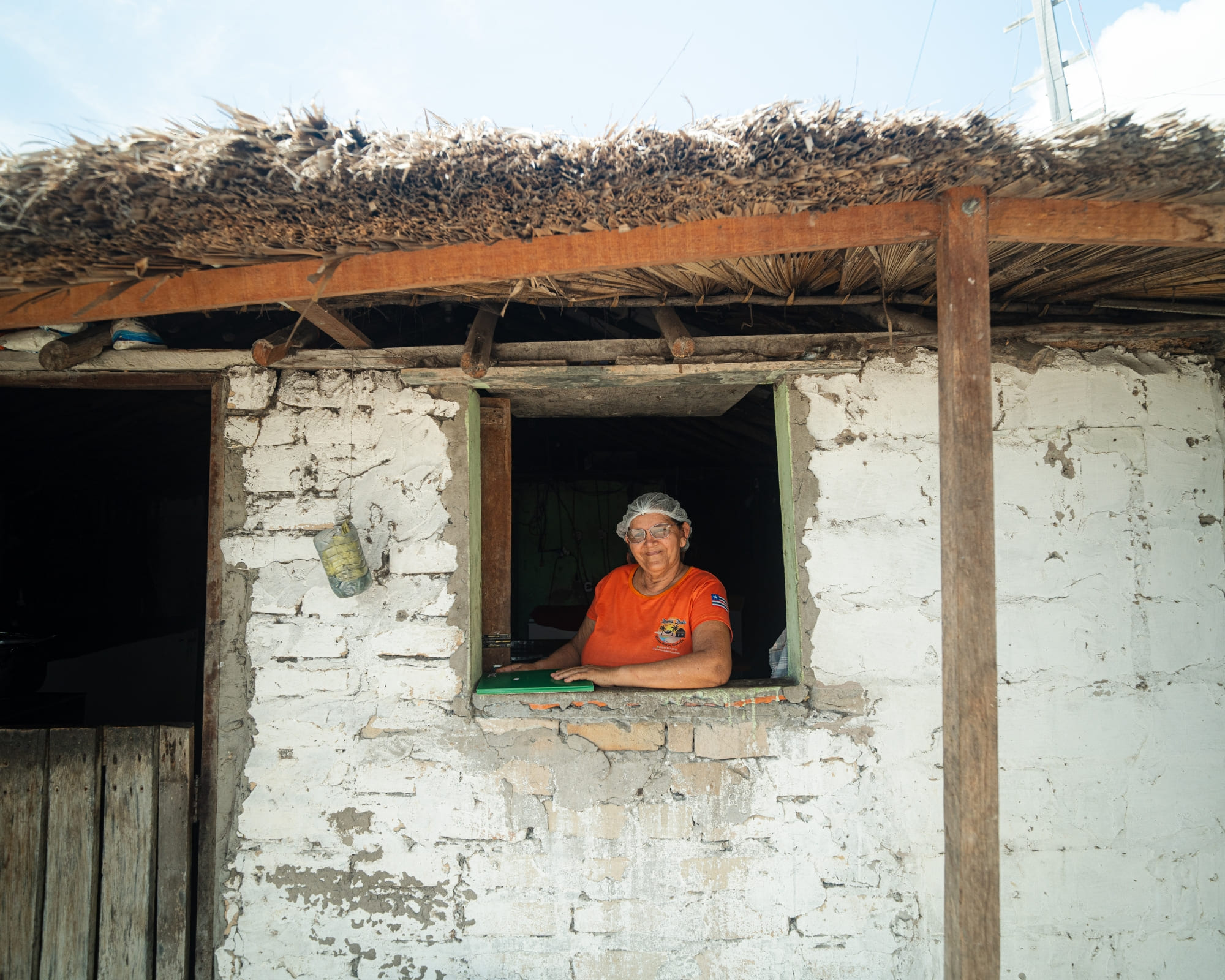
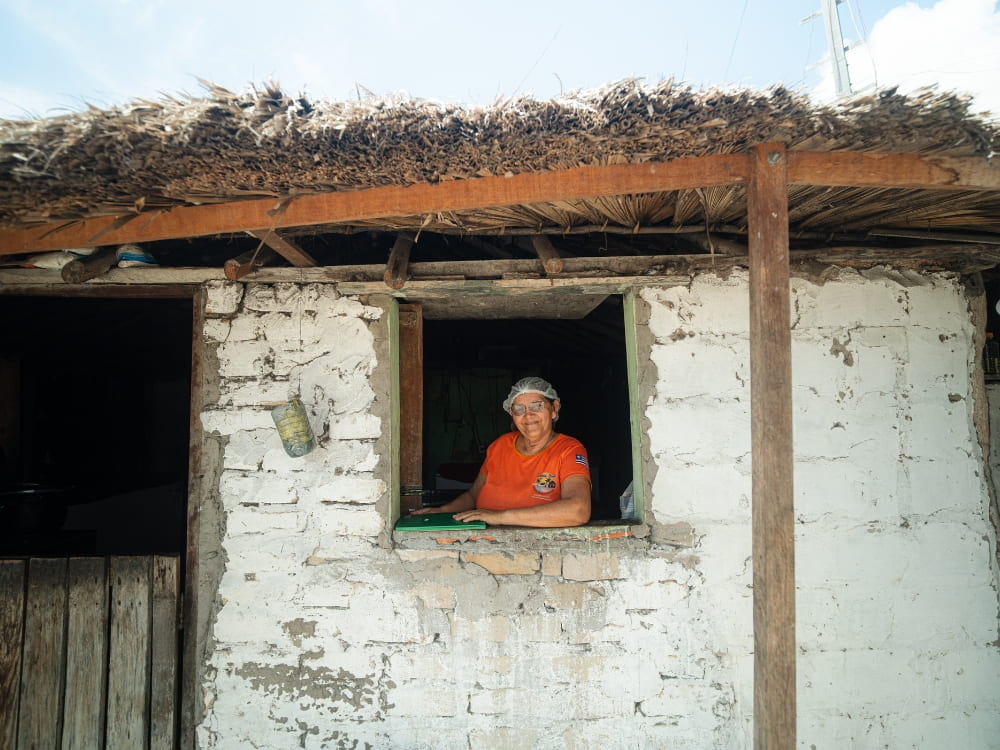
The same sense of purpose is shared by Dona Dete (47), a host who works in the heart of the Lençóis Maranhenses (Maranhão). Before tourism, she carried heavy loads for hours on end to sell fish and support her five children. Today, she wakes up at 3 AM every day to prepare breakfast and welcome up to 70 tourists to her oasis. “Life was very difficult. Tourism is hard work, but I do it with all my love and care.”
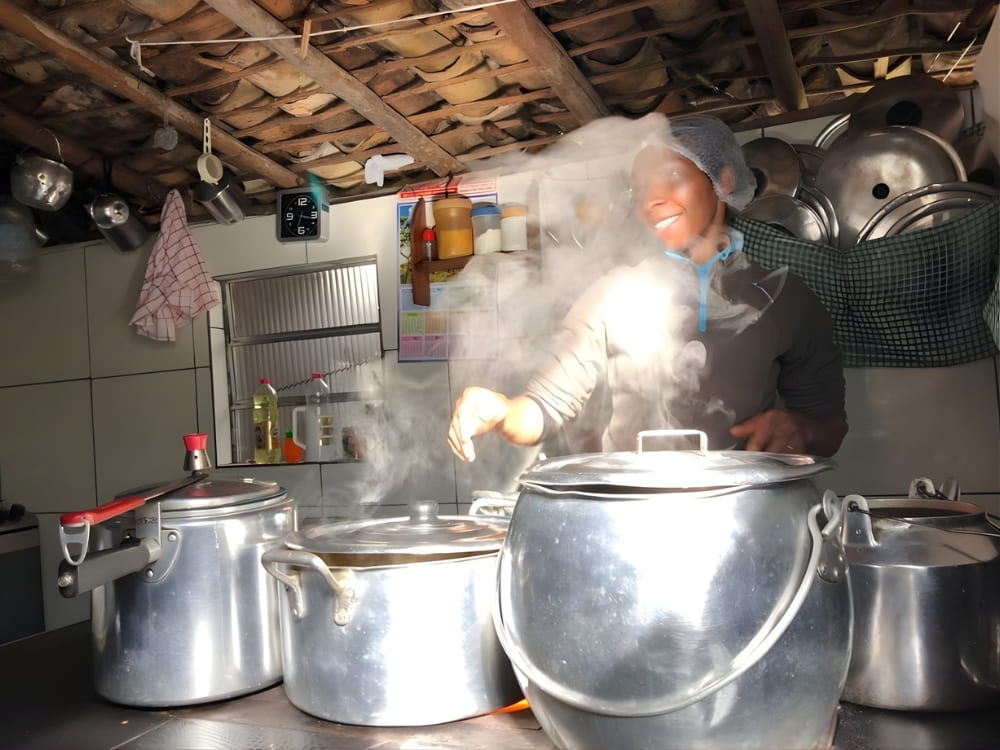
More than breaking social barriers, ecotourism plays a fundamental role in female financial emancipation. In the Amazon, these activities changed the life of Keli Lima (29), a cook who works on the Katerre river cruise.
She started as a chambermaid, embraced every opportunity to learn, and today runs the kitchen on the vessels. This made it possible to achieve a dream: owning her own home. “It used to be very difficult for young women. Tourism is the biggest income today. If I’m told to do something I don’t know, I learn and try it out. You have to be brave” she encourages.
.
Also in the Amazon, Paula Gomes (32), assistant manager of Mirante do Gavião lodge in the municipality of Novo Airão, 200 km from Manaus, emphasizes that qualification is key. “Tourism moves all sectors. Women have been taking on roles and hierarchies that were previously only held by men. The starting point is to get qualified” she advises. With 12 years at the same company, she started in sales, graduated in management, and can also act as a guide.
Advice from those who make tourism happen
For women dreaming of working in ecotourism, these professionals leave important tips:
Get qualified and claim your space: don’t wait for the ideal scenario. Study, take courses, and be ready. Qualification opens doors.
Focus on the client, not the judgments: in male-dominated environments, the best shield is the quality of your work and the satisfaction of the groups you serve.
Leave your comfort zone: for those working in nature, the priority becomes the safety and well-being of everyone in the face of unpredictability.
Dive in headfirst: the experience requires dedication and living in the moment. Don’t let external factors or the lack of a traditional routine keep you from taking the lead in nature.
Women in ecotourism and PlanetaEXO: the perfect match
PlanetaEXO, a sustainable tourism platform specialized in adventure tours in Brazil, works with several female professionals to create unforgettable experiences in the country’s most stunning nature destinations.
By walking side by side with women in ecotourism, we contribute to the socioeconomic development of local communities to build healthier dynamics and, of course, provide incredible experiences for travelers from all over the world. Contact us now!
In celebration of Women’s Month, PlanetaEXO shares the inspiring story of Kristina Wagner, a German biologist who embarked on an unforgettable solo adventure through Brazil
Initially visiting Rio de Janeiro for a scientific conference, Kristina Wagner, a 44-year-old biologist from Germany, decided to extend her stay to explore two Brazilian biomes: the Amazon and the Pantanal.
.
Driven by her passion for animals and nature, she chose to travel with PlanetaEXO, an ecotourism platform specializing in adventure tours in Brazil, due to our strong commitment to eco-travel and supporting of local communities.
“I chose a Brazilian company because it felt strange to go to Brazil and have a German operator organize my trip,” Kristina explained. “I also wanted to support local communities. It was essential for me to travel responsibly.”
Here’s a look into Kristina’s journey, her wildlife encounters, and her empowering experience as a solo female traveler in Brazil!
Discovering the Amazon magic
Kristina’s adventure began in the Amazon Rainforest, where she stayed at the welcoming Turtle Lodge, in the municipality of Careiro, Amazonas.
For her, the experience was brilliant from the very beginning, starting with a boat ride to witness the famous Meeting of Waters—a phenomenon where the rivers Negro and Solimões flow side by side but never mix. “It’s so beautiful. We don’t have anything that compares in Europe” Kristina marveled.
.
As a biologist, the region’s biodiversity left her in awe. Navigating the riverways by boat, she spotted river dolphins, howler monkeys, caimans, and other beautiful Amazon animals. Beyond the wildlife, Kristina deeply appreciated the cultural connections she made. “It felt really like staying with the local people. I learned a lot.”
She visited a local family that grew manioc and was moved by seeing multiple generations working together. She was especially impressed to see a well-respected woman as the head of the family, providing a beautiful contrast to the often-separated family dynamics back in Germany.
One of her most magical memories happened on an exclusive boat tour. While the rest of her group opted for overnight jungle camping (which she skipped due to a fear of spiders), Kristina was treated to a private boat ride where river dolphins jumped around the boat. “They were so close that I could almost touch them,” she recalled. “It was really amazing.”
Following the Amazon, Kristina spent four days exploring the Pantanal, which she described as a “totally different but equally incredible experience.”
.
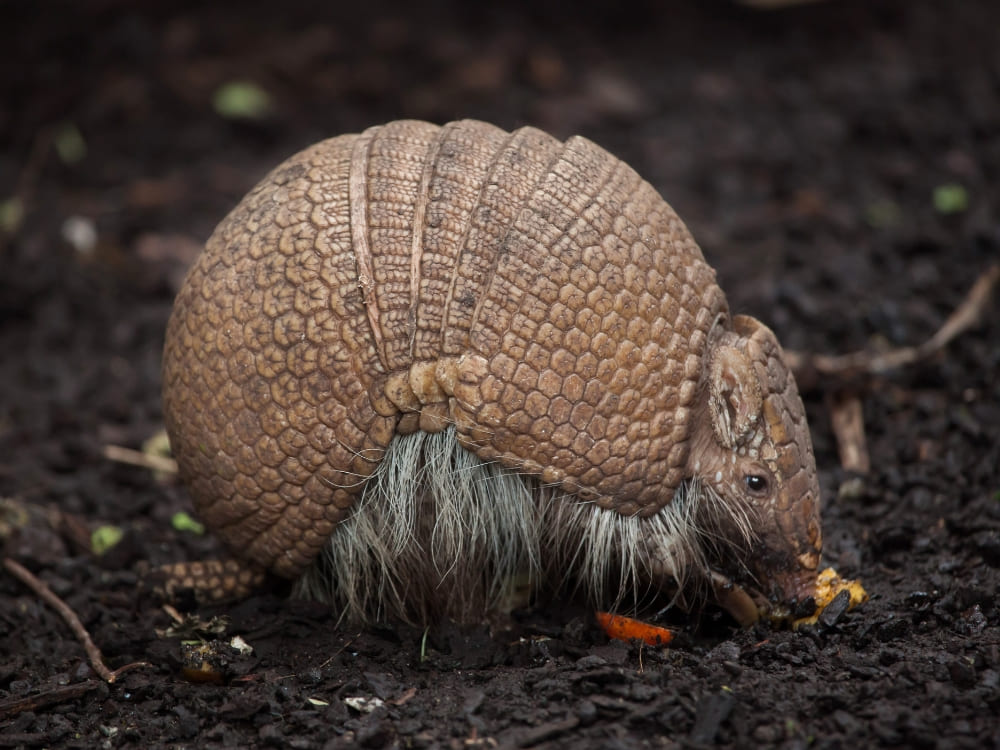
Her days were filled with horseback riding, jungle treks, and canoeing along the Miranda River. The wildlife sightings were spectacular—she encountered armadillos, capybaras, parrots, and caimans.
Throughout both tours, Kristina noted that the guides were exceptional. “It was really important to me to see that the guides were respecting the environment, were careful with the animals, and were not disturbing them” she emphasized as a crucial factor for her as an eco-conscious traveler.
Like many foreign travelers, Kristina had initial safety concerns before arriving in Brazil, particularly in Rio de Janeiro, due to the negative stories often portrayed abroad. However, her actual experience painted a very different picture.
“I felt safe all the time,” she reported. “People were always trying to help me and protect me all the time. Everyone was so friendly.” While she did experience one challenging moment when a man persistently tried to chat her up on a transport to the Pantanal, an older Brazilian passenger quickly intervened and told him to leave her alone, which quickly made her feel safe again.
Kristina acknowledged that general caution is necessary everywhere—even in her hometown of Munich—but concluded that Brazil’s negative safety reputation was inaccurate based on her journey.
For Kristina, traveling is a source of immense empowerment. “I feel the most free and powerful when I travel because I see that, yes, I can do this; I’m capable” she reflected. Navigating a massive country like Brazil without speaking Portuguese was a challenge she happily mastered, which served as proof of her own resilience.
.
As we celebrate Women’s Month, Kristina leaves a message for other women who might be hesitant to travel alone: “Even if you’re scared that it might be lonely or even if people say that it’s not okay to do this when you’re a woman on your own, you should still try it out. Take courage.”
She emphasizes that being a solo woman should never deter you from exploring the world, and if going alone feels too daunting, taking a friend along is always a great option.
Summing up her experience, she shared, “I booked The Amazon Jungle Lodge Tour with PlanetaEXO, and it was perfect. I learned so much about the Amazon, its people, and the wildlife and flora… I loved every minute of it!”
Kristina is already dreaming of her next trip to Brazil, with a potential river cruise in the Amazon on her radar. We cannot wait to welcome her back!
By trusting PlanetaEXO to organize her trip to the Amazon and the Pantanal, Kristina was able to enjoy both comfort and total immersion with nature in some of the world’s most impressive destinations.
As an ecotourism platform specializing in adventure tours in Brazil, not only do we provide unforgettable experiences that are engraved in our travelers’ hearts and souls, but we also support local communities and follow guidelines to protect the environment. Contact us now!
From immersive expeditions in the Amazon to trekking in the Himalayas, women over 50 show that this stage of life brings the perfect freedom and confidence to explore nature
Forget the idea that nature tourism is exclusive to the youth. Increasingly, women over 50 are putting on their hiking boots, packing their backpacks, exploring mountains, going on safaris, and diving into remote expeditions.
.
This trend has already been noticed by the tourism market, which is adapting to offer itineraries that allow these women to experience great adventures. Whether due to the independence gained after raising children, financial stability, or simply the desire to push their own limits, they find in nature an endless source of freedom, self-discovery, and connection.
At PlanetaEXO, an ecotourism platform specializing in adventure trips in Brazil, the most frequent traveler is a 60-year-old woman. Discover her story and those of other women who show that maturity is the passport to adventure!
The 60-year-old Dutch woman who fell in love with Brazil
Katharina Bongaertz, a psychotherapist from the Netherlands, planned to spend only a month in Brazil during a sabbatical in 2023. However, the vibrant culture and landscapes captivated her so much that she ended up staying for four months. That is how Katharina became PlanetaEXO’s most frequent traveler. In three years, she has collected seven expeditions in the Brazilian wild.
She has hiked across the plateaus of Mount Roraima, explored the dunes of Lençóis Maranhenses, immersed herself in the deep jungles of the Amazon, and conquered Pico da Neblina, the highest peak of Brazil. Regarding this last adventure, she recalls, “It was an incredible and deeply special experience. I walked alongside Yanomami guides and spent 10 days immersed in their routine, sleeping in hammocks”.
.
In a European daily routine that involves seeing patients inside an office, nature offers the perfect contrast for Katharina: vastness, wisdom, and an absence of fences and bars. She is adamant that the outdoor life has transformed her. “I think I am much more adventurous today than I was in my 20s or 30s. It’s important to challenge yourself, find new horizons, and break down barriers.”
Katharina has already planned her next trip to Brazil. Her next destination is the Pantanal to see jaguars!
Brazilian explorer points to age as a strategic advantage
Luciana Palma, a 55-year-old plastic surgeon from Rio de Janeiro, is also a collector of major destinations. Her list includes the Atacama Desert, Patagonia, Jalapão, Lençóis Maranhenses, Pico das Agulhas Negras, and her great passion, Chapada dos Veadeiros, where she has been three times.
As a female traveler over 50, Luciana does not see age as a limitation but rather as a phase of strategic advantages. “My children are adults, so I don’t have to worry about this. Besides, technology and communication methods nowadays give us much more safety,” she explains.
She also highlights how planning and choosing competent tour guides are the keys to success. The proof of her vitality was completing the daunting Serra Fina Trek (in the triple border of São Paulo, Minas Gerais, and Rio de Janeiro), which usually takes four days, in just two. She faced high winds and extreme fatigue but did so safely.
.
Her message for women who are afraid to venture out is practical and direct: “There is no reason to deprive yourself of fulfilling your desire out of fear. There are professionals who ensure the infrastructure. Start with an adventure destination close to you. Give yourself this gift and build confidence for bigger steps.”
Mother and son at the top of the world: connection and setting your own pace in Nepal
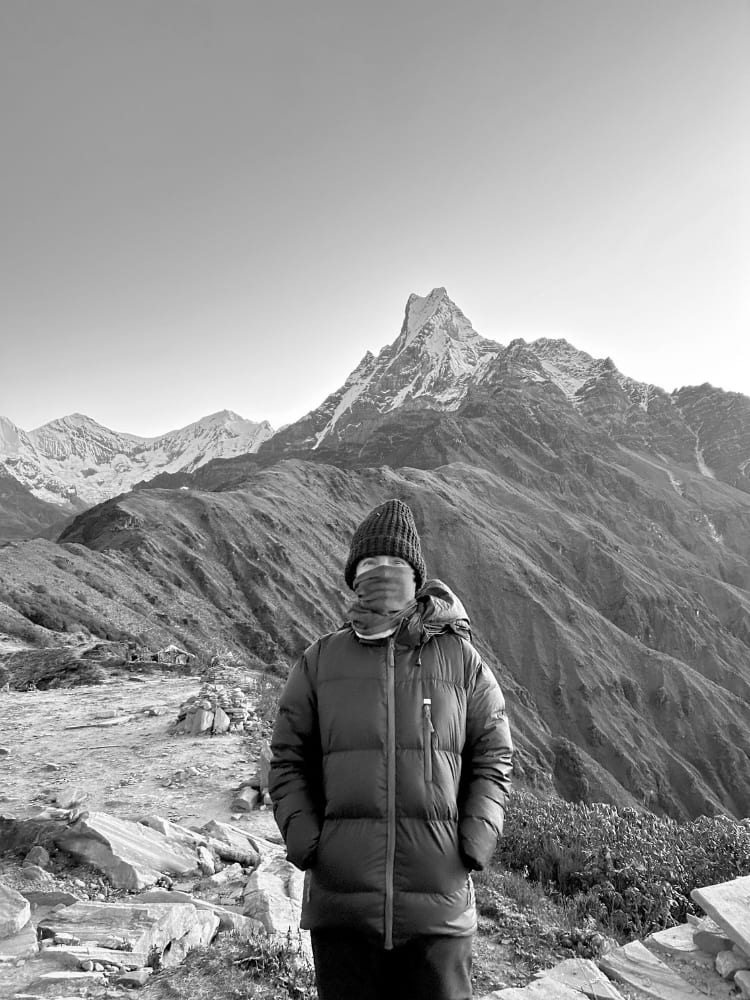
Mila Ricetti, a 56-year-old architect from São Paulo, had already crossed the Vale do Pati in Bahia and ridden 10,000 km on the back of a motorcycle through Patagonia, which helped her break personal taboos and discover female power on the roads. But it was in October 2025 that she experienced one of her greatest adventures—the Mardi Himal trek in Nepal, accompanied by her 24-year-old son, Lorenzo.
Despite her initial apprehension about her own cardiovascular fitness for the intense climbs of the Himalayas, Mila found the perfect balance between effort and warmth on the journey. “I went at my own pace. I didn’t have the expectation that I needed to plant the flag right at the top, but I got there and saw the sunrise. It was surprising, and it made me feel really good to realize that I can rely on my body,” she shares.
.
Mila emphasizes that maturity brings the resilience to understand that temporary discomfort, such as the lack of a hot shower at high altitudes, is part of the experience and is immensely rewarded by breathtaking landscapes. “Mental preparation is essential. Courage serves to break down barriers. Going out there and understanding our possibilities empowers us and empowers other people.”
The best itineraries for women over 50 at PlanetaEXO
Whether in solo or group experiences, mature women from all over the world can explore the wonders of nature with PlanetaEXO, an ecotourism platform specializing in adventure trips in Brazil.
At every stage of the journey, our reservations team and local partners take care of every detail so that your vacation is unforgettable, always taking care to accommodate the preferences and needs of each traveler. Contact us!
As protagonists in the industry and in travel decisions, women are driving adventure tourism, a movement that inspired PlanetaEXO in selecting these destinations
International Women’s Day, on March 8th, opens space for reflections on historical struggles and equal rights, subjects that have concrete resonance in current tourism. Besides their presence in the market, exploring the world increasingly appears as part of women’s life projects.
Photo: Marcelo Bonifácio
In 2025, the “Os Sonhos Delas” research, conducted by non-profit Think Olga, showed that traveling the world is a priority desire for 67% of Brazilian women from age 18 to 29 and for 59% of women over 30, surpassing goals such as financial stability and career consolidation.
In this context, adventure tourism is also growing among the female audience, reflecting a search for authentic experiences, connection with nature, and environments for exchange.
With this in mind, PlanetaEXO, an ecotourism platform specializing in adventure tours in Brazil, has selected 5 adventure trips for women. Check them out below!
Vale do Pati trekking (Chapada Diamantina, BA)
Considered one of the most scenic treks in the world, Vale do Pati is an invitation to disconnect from the tension of everyday life. Hiking through the imposing plateaus and valleys of Chapada Diamantina is a test of physical and mental strength.
The itinerary offers a welcoming stay in the homes of the natives (patizeiros), ensuring a rich cultural immersion and a safe support network from the first to the last step..
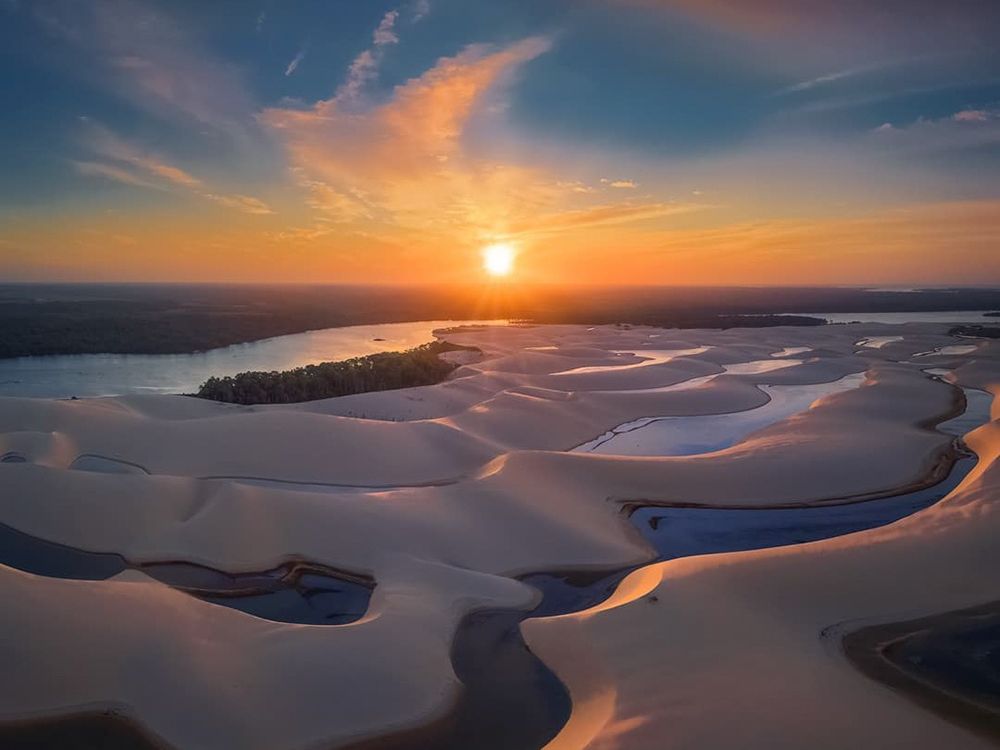
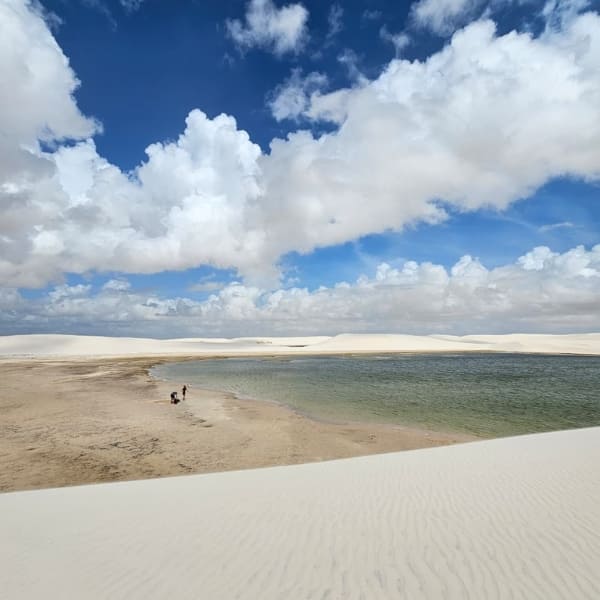
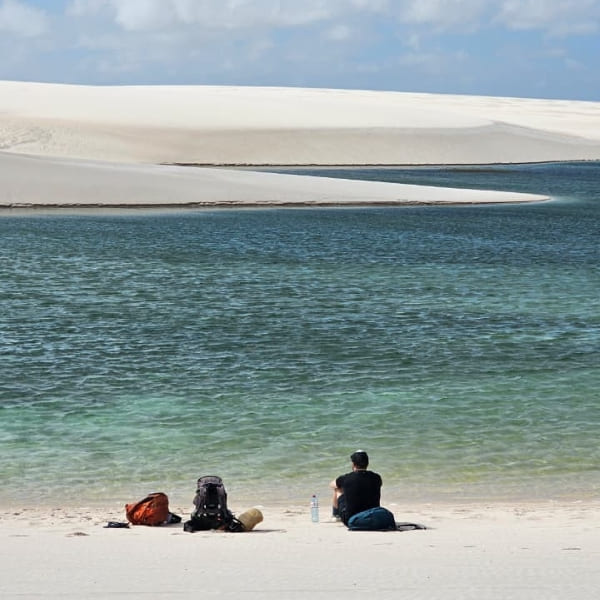
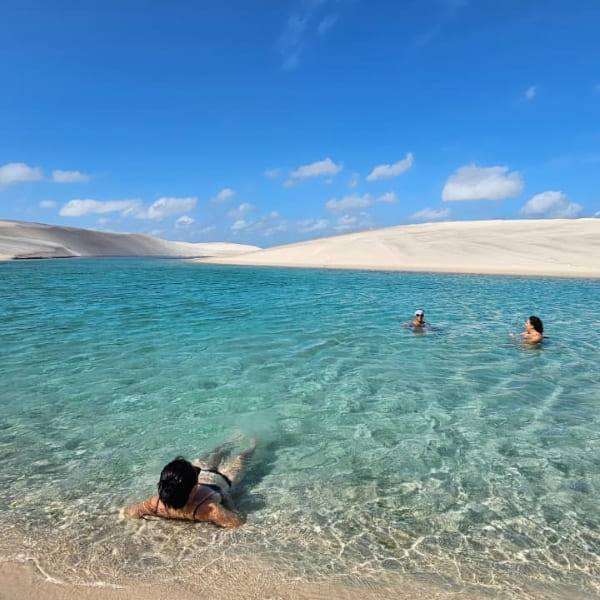
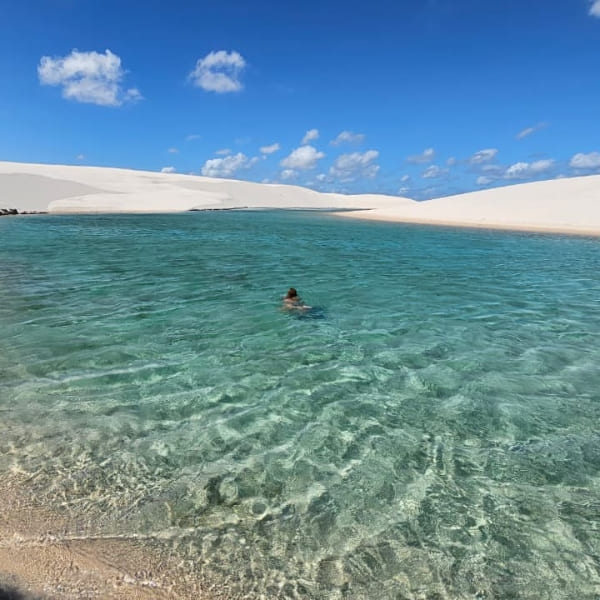
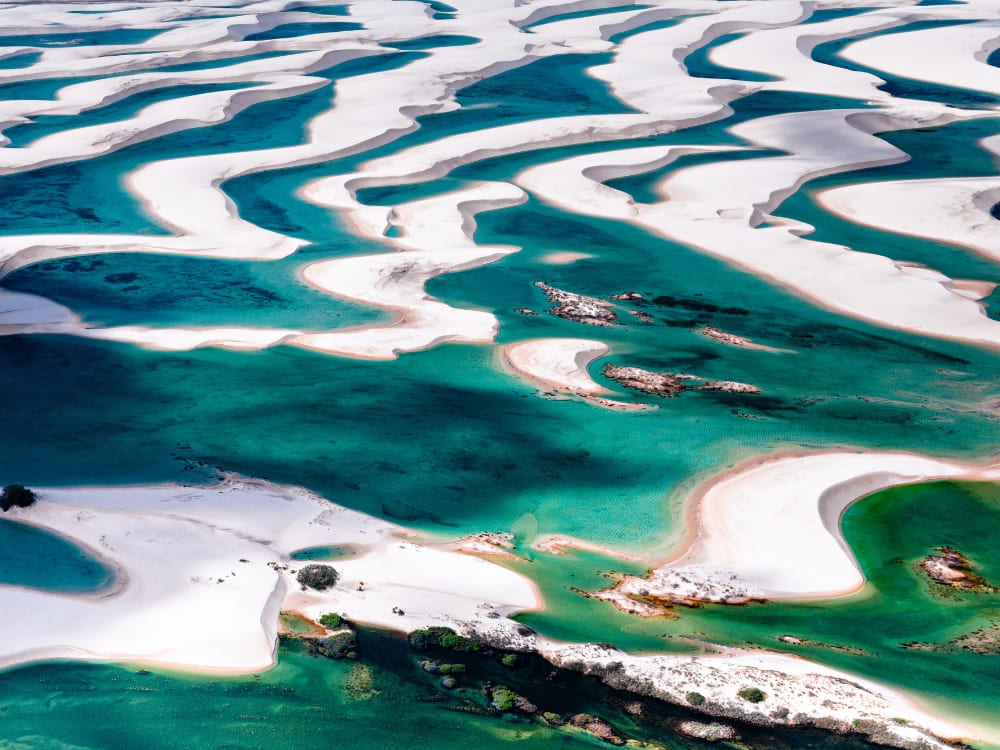
Walking across the stunning white dunes and diving into crystal-clear lagoons is an experience of pure freedom, proving to be one of the most beloved adventure trips for women in Brazil.
The trekking crossing through the Lençóis Maranhenses National Park fosters a strong sense of sisterhood among the group members, who create bonds while sharing the immensity of a scenery that purifies and renews energies.
Photo: Isadora Sá
Mount Roraima (Brazil/Venezuela Border)
An ideal destination for trailblazing souls. The expedition to the top of this imposing tepui, known as the “Lost World,” is a journey of transformation.
Mount Roraima allows women of all ages to conquer not only one of the oldest formations on the planet but also their own internal limits.
An invitation to self-care and contemplation. Escaping the frantic pace of urban centers, this route combines the revitalizing energy of the turquoise fervedouros (natural springs) of Jalapão with the unexplored charm of the Serras Gerais.
Ideal for women who are eager to explore the new paths, float in transparent waters, and celebrate their independence in a safe and welcoming environment.
As an ecotourism platform specializing in adventure tours in Brazil, PlanetaEXO develops adventure itineraries of all kinds, including those for mature women or solo travelers who dream of exploring the wonders of this mesmerizing country.
Always keeping safety, sustainability, and memorable experiences in mind, our team organizes each step of your trip according to your preferences and needs. Contact us now!
The Amazon Rainforest offers unique landscapes and diverse experiences spread across different Brazilian states
Covering a staggering area of approximately 5 million km², the Amazon Rainforest in Brazil hides a whole universe of biodiversity across different states, with emphasis on ecotourism in Amazonas, Pará, and Mato Grosso.
Photo: Marcelo Bonifácio
In other words, it holds destinations and activities for every type of traveler, so choosing the best places to visit in the Amazon depends on the kind of adventure you’re looking for. Do you want to relax in nature? Watch the wildlife? Meet new people and cultures? It’s essential to think about what you want to plan for your trip accordingly!
As an ecotourism platform specializing in Amazon Rainforest tours in Brazil, PlanetaEXO can help you decide which experience suits you best. Check our suggestions right below!
Manaus (Amazonas)
Manaus is the capital of the state of Amazonas and the main gateway to the rainforest. The city boasts a rich history, bustling markets, and vibrant theaters, making it a fantastic cultural hub. It’s also where many Amazon tours begin.
If you don’t want to go deep into the jungle, or if you want to explore the city before or after visiting the forest, Manaus is a good place for day trips, and you can still enjoy the magnetic Amazonian atmosphere even in urban areas.
.
Why visit:
Starting point for tours in various areas of the Amazon Rainforest.
Meeting of the Waters, the phenomenon where the waters of the Negro and Solimões rivers flow without mixing.
Historical heritage of northern Brazil. Unmissable spots: Amazonas Theater, Provincial Palace, and Adolpho Lisboa Market.
Trails, exhibitions, and 42-meter-high observation towers at the Museum of the Amazon (MUSA).
Unique gastronomy with regional ingredients such as tambaqui, pirarucu, açaí, and cupuaçu.
River beaches, like Ponta Negra Beach, on the banks of the Negro River.
How to get there: Easily accessible by air via Eduardo Gomes International Airport (MAO).
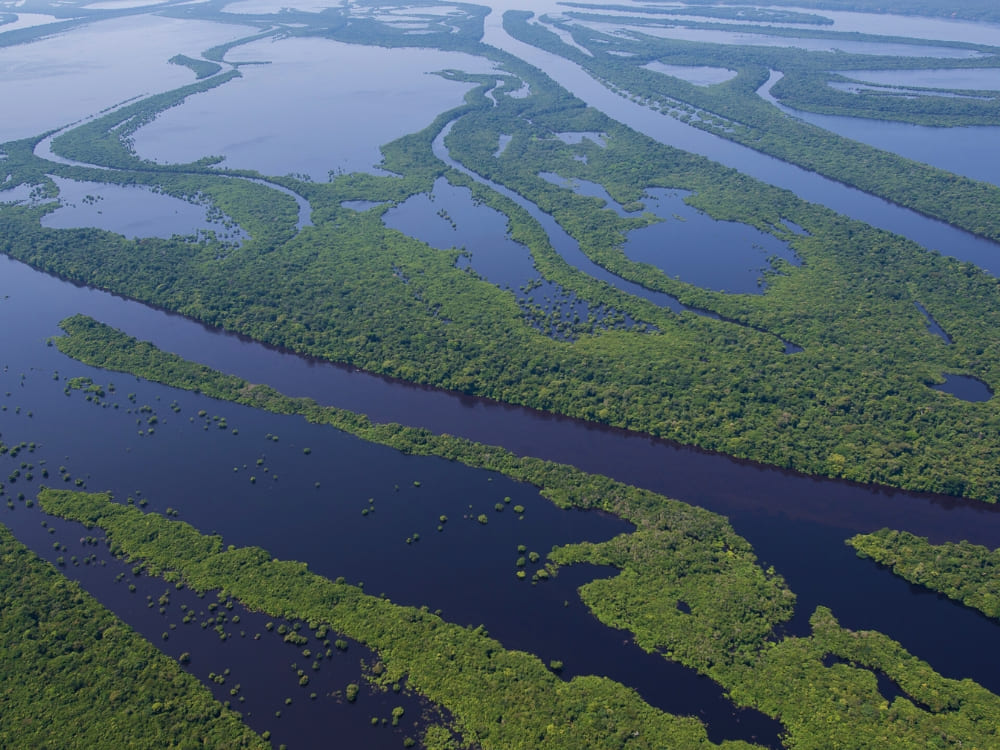
Not only is Anavilhanas National Park located right in the middle of the Negro River, but it also holds the title of the second-largest river archipelago in the world, with over 400 islands—second only to Mariuá (1,400 islands), also in Amazonas.
One of the most breathtaking places in the Amazon Rainforest, Anavilhanas is home to a great concentration of igapós (forests permanently or seasonally flooded), which allow for fascinating experiences like swimming and canoeing among the treetops.
.
Why visit:
Exploring the Várzea Amazônica (Amazonian floodplain), a floodable area of the Amazon basin defined by ecosystems rich in biodiversity and fertile soils.
Riverside communities, such as Santo Antônio and Tiririca.
Sightings of pink river dolphins, sloths, birds, etc.
Boat tours, forest trails, water trails, night spotlighting, etc.
Madadá Caves (ancient sandstone formations).
River beaches that emerge on the Negro River during the dry season (September to March).
How to get there: Easy to reach from Novo Airão, near Manaus.
Jaú National Park (Amazonas)
If you’re planning a trip to the Amazon Rainforest in Brazil, then you should visit Jaú National Park, one of the biggest in the country, covering an area of 2.27 million hectares between the cities of Novo Airão and Barcelos.
Protecting the entire base of the Jaú River and forming part of the Central Amazon Conservation Complex, it’s recognized by UNESCO as a World Heritage Site.
@mkexpeditions
Why visit:
Home to various Amazon animals, such as caimans, manatees, jaguars, etc.
Ancient rock inscriptions on the banks of the Negro River (seem especially during the dry season).
Riverside communities, such as the Quilombo do Tambor.
Forest trails, night spotlighting, waterfalls, river cruises, etc.
How to get there: Accessible by boat from Novo Airão.
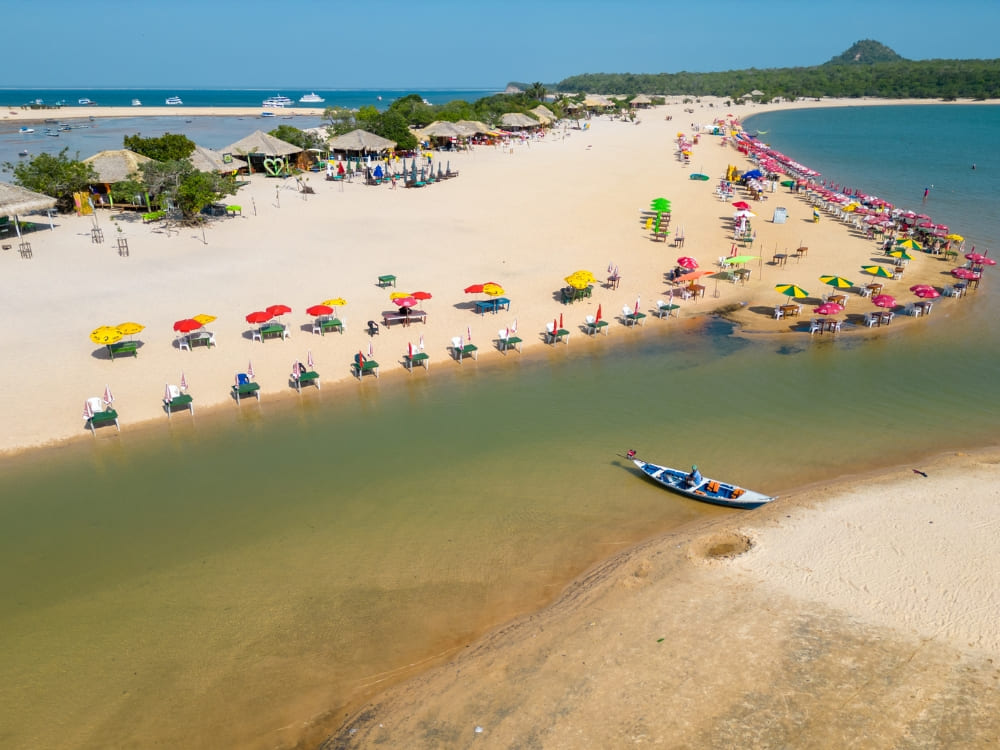
Alter do Chão is a district of the city of Santarém, in the state of Pará. Nicknamed “the Caribbean of the Amazon,” its white sand beaches blend harmoniously with the rivers and vegetation of the forest. It’s great for swimming and relaxing, especially between September and November.
Due to its location outside of Amazonas, the village shows a different side of the rainforest, being one of the best places to visit in the Amazon for those seeking unique experiences.
Photo: Tarcisio Schnaider
Why visit:
River beaches along the banks of the Tapajós River, including Ilha do Amor (Love Island), Ponta do Cururu, and Ponta Grande.
Sairé Festival, an annual local celebration that blends religious rites of Jesuit origin with indigenous traditions and folkloric legends of the pink river dolphin and tucuxi dolphin.
Riverside and indigenous communities (Coroca, São Marcos, and Tucumã).
Activities in the forest, such as hiking trails, igapó tours, and Amazon river cruises.
How to get there: The main route to Alter do Chão is via Santarém, which is accessible by air or boats from Belém and Manaus.
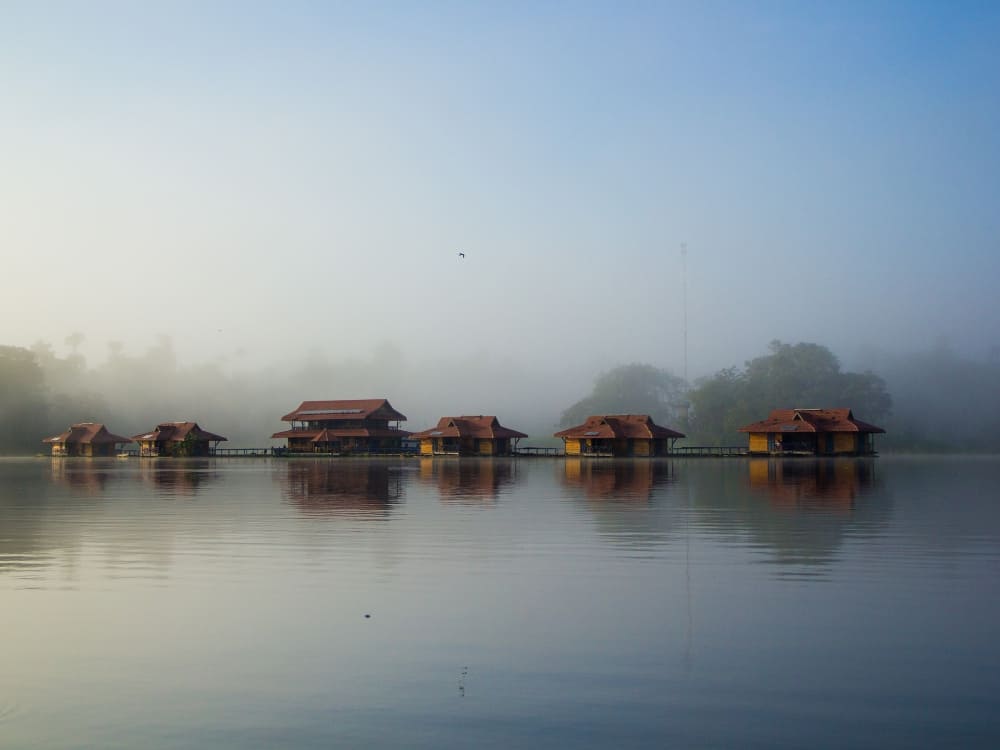
Created in 1996, the Mamirauá Sustainable Development Reserve is a Brazillian pioneer in combining environmental preservation with the sustainable development of traditional populations.
Located in Tefé, on the Solimões River, it’s one of the best places in the Amazon Rainforest to appreciate the seasonal flooding and ecotourism in an area marked by authenticity and isolation.
Photo: Amanda Lelis
Why visit:
Community-based tourism, encompassing 177 communities and over 11,500 residents.
Connection with nature in the world’s largest floodplain forest.
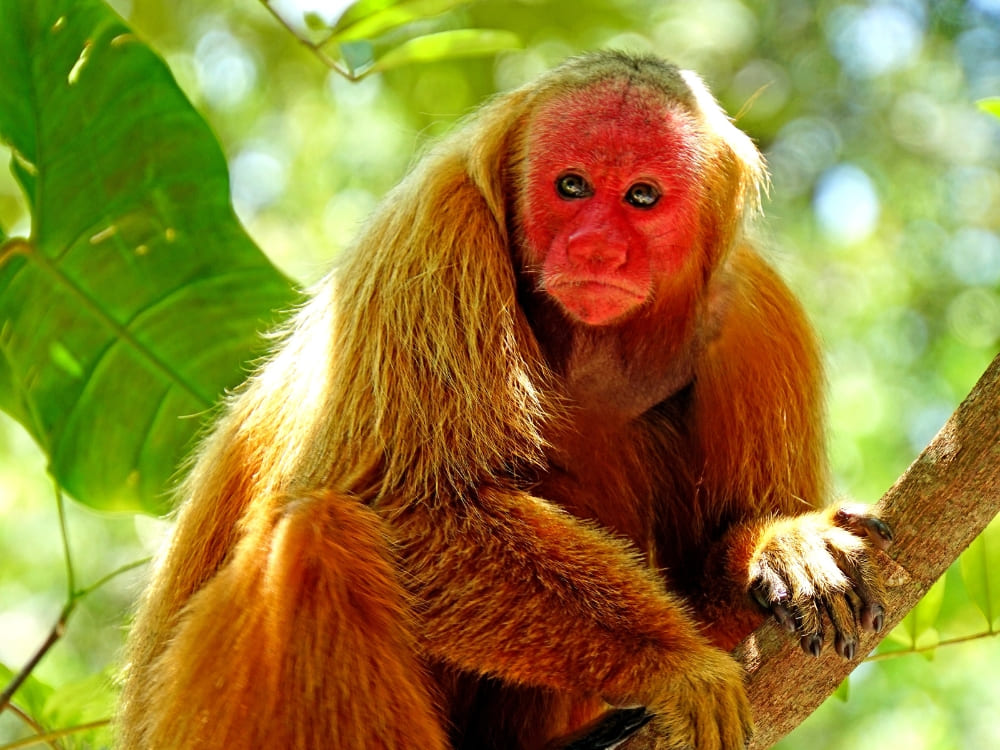
Impressive biodiversity, including the bald uakari monkey, symbol of the reserve.
Hiking trails, canoeing, wildlife watching, night spotlighting, and piranha fishing.
Home of Uakari Lodge, the floating hotel on Lake Mamirauá.
How to get there: Reach the Mamirauá Reserve by boat from Tefé, accessible by air from Manaus.
Alta Floresta is a charming city of just over 62,000 inhabitants. Located in northern Mato Grosso, it serves as the gateway to the state’s Amazon share, characterized by dense forests and the confluence with the Cristalino River—a tributary of the Teles Pires River.
While it’s a lesser-known part of the Amazon, Alta Floresta boasts breathtaking natural views, preserved areas, and rich biodiversity.
Photo: João Marcos Rosa
Why visit:
The location, marked by the transition between the Cerrado and Pantanal biomes, makes this one of the most abundant Amazonian areas in terms of fauna, including monkeys, giant otters, peccaries, and tapirs.
With over 600 cataloged bird species, it’s great for birdwatching.
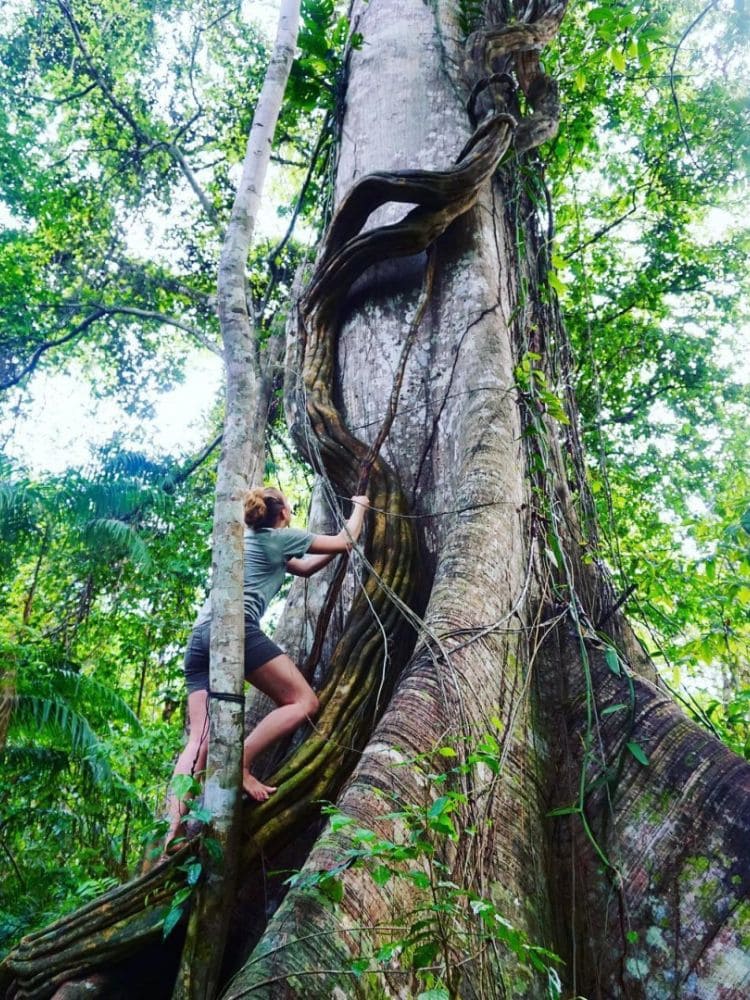
Forest formed by giant trees (approximately 60 meters tall).
Cristalino Jungle Lodge, one of the best and most luxurious sustainable luxury accommodations in Brazil, is located in a private forest reserve of over 11,000 hectares.
How to get there: Departing from airports in São Paulo (VCP) or Cuiabá (CGB), fly to Alta Floresta Airport (AFL).
Presidente Figueiredo (Amazonas)
Only 107 km away from Manaus, Presidente Figueiredo is known as the Land of Waterfalls. In addition to more than 150 officially cataloged waterfalls, caves and natural pools are also hidden among the lush green vegetation.
This is one of the top places to visit in the Amazon for travelers who enjoy water activities and prefer destinations relatively close to large cities.
@ines.lafosse
Why visit:
Hundreds of waterfalls, including Pedra Furada, Orquídeas, Iracema, Judeia, Mutum, Araras, Neblina, etc.
Refúgio do Maragoa, a 400-meter cave with impressive geological formations.
Hiking trails, bird watching, rappelling, and water-based itineraries (especially between February and June, during the rainy season), including waterfall bathing, diving, boiacross, and rafting.
How to get there: 2-hour drive (car/bus) from Manaus.
Near Manaus, Lake Acatajuba is located on the Negro River. One of its highlights is the community’s work to boost local tourism and support sustainable practices that can benefit families and the region’s ecosystem.
With lush scenery of dense vegetation and the typical dark waters of the Amazon Rainforest in Brazil, it’s known for its excellent conditions for encountering and interacting with pink river dolphins.
Photo: Isadora Sá
Why visit:
Conscious tourism that values environmental conservation and support for local residents.
Acatajuba Village, a riverside community that welcomes tourists with programs related to traditional crafts and flour mills.
Wonderful spot for sunset contemplation.
Canoeing, night spotlighting, hiking, and wildlife and flora observation.
South of Manaus, in the municipality of Careiro, the Mamori River is a tributary of the Amazon basin recognized for its rich wildlife, environmental preservation efforts, and ecotourism.
The region is considerably remote, offering incredible experiences for travelers seeking authenticity in the jungle.
.
Why visit:
The Amazonian manatee can be found in the waters of the Mamori River.
Great for sport fishing, especially for peacock bass and butterfly peacock bass (Cichla ocellaris).
Riverside communities and rubber tappers.
Hiking, kayaking, bird watching, survival techniques, and camping in the forest.
Home of the Turtle Lodge, one of the main jungle hotels in the Amazon.
How to get there: The Mamori River can be reached by boat from Manaus.
Why choose sustainable tourism for your trip to the Amazon?
Choosing the right ecotourism experiences plays a key role in protecting the Amazon. By traveling with local guides and staying at ecolodges, you support sustainable practices that benefit both the environment and the local communities.
Visit the best places in the Amazon in Brazil with PlanetaEXO
The best way to visit the Amazon when it comes to authentic experiences and sustainability is by counting on the assistance of professionals who follow environmental practices, support local communities, and hold a deep respect for nature.
PlanetaEXO, an ecotourism platform specializing in Amazon Rainforest tours in Brazil, works with well-respected local partners and takes you to the most incredible places for an unforgettable vacation in one of the most fascinating ecosystems in the world. Contact us now!
Lençóis Maranhenses is an all-year-round destination, but the weather is stable and the iconic lagoons are full right after the rainy season
The best time to visit Lençóis Maranhenses is from May to September, when the lagoons are at their fullest after the rainy season and the weather is generally more stable.
Photo: Marcio Cabral
Outside that period, the destination still offers great options for leisure and connection with nature, but the change in scenery caused by climate influence alters the itineraries, especially when it comes to the lagoons.
In other words, the dunes of Brazil can be enjoyed all year round, but there are a few things to consider to make sure your trip is booked at the appropriate time for the activities you’re looking for.
Learn more about the complete guide PlanetaEXO, an ecotourism platform specializing in Lençóis Maranhenses tours, has carefully curated. Check it out below!
The weather in Lençóis Maranhenses
Lençóis Maranhenses has a tropical climate with little temperature variation throughout the year. The rainy season (February to April) features heavy rainfall that makes the lakes and rivers reach their highest water levels. The average temperature is 30°C to 32°C.
In the dry season (May to September), temperatures don’t change much (31°C to 33°C) and the rainfall ceases, but the lagoons remain full—perfect for swimming, diving and bathing in lovely, stable weather.
As we move into the later months, starting in October, the lagoons begin to recede, revealing the sand dunes in their vastness and presenting a different, yet equally mesmerizing way to experience the Lençóis Maranhenses National Park in Brazil.
Please notice: While it’s possible to provide insights into the typical weather patterns and lagoon conditions in Lençóis Maranhenses, the weather is inherently unpredictable. As the actual amount of rainfall and subsequent state of the lagoons vary from year to year, it’s important to check the latest weather forecasts while planning a trip to ensure the most accurate expectations for your visit.
When’s the best time to visit Lençóis Maranhenses’ lagoons: month by month
The thousands of lagoons in Lençóis Maranhenses are, undoubtedly, the main attraction of the national park. With different sizes and depths, they are known for their crystal-blue waters and perfect conditions for swimming, diving, or relaxing.
January brings a calm atmosphere while the dunes stretch out in vastness. Ideal for peaceful explorations, this is the region’s driest season. The landscapes are different, more white and gold—due to the sand and the sunlight—and less decorated with blue from the lagoons, but the beauty is still undeniable.
Daytime temperatures hover around 31°C (87°F) and cool down to 25°C (77°F) at night. The weather is hot and humid, so wearing light and airy clothes is advisable.
.
Why visit in January?
January marks the low season in Lençóis, so it’s perfect for people seeking solitude and peacefulness. With less tourist activity and uninterrupted views, it’s also a wonderful time for photography.
While the lagoons are not at their peak, it’s still possible to find a few selected spots for a refreshing dip.
Lençóis Maranhenses in February
February is the transitioning month to the rainy season, perfect to enjoy Lençóis before the increased rainfall. Weather conditions don’t change much and, much like January, the temperatures are mild but gentle breezes are a lot more noticible.
Why visit in February?
As February ushers in the beginning of the rainy season, you’ll witness the lagoons slowly filling up, offering a glimpse into the change of scenery. It’s a great time for trekking across the park and visiting isolated zones, such as Baixa Grande Oasis and Queimada dos Britos.
The temperatures follow the average of January and February, accompanied by a lovely breeze. As humidity reaches 83%, the weather becomes considerably muggy.
With the onset of the rainy season, a vibrant renewal takes over Lençóis Maranhenses National Park in Brazil. Fed by the rain, newly formed lagoons fill up each day.
.
Why visit in March?
March is a good time to visit as the rainy season is in full swing. The lagoons are getting fuller and the scenery becomes more striking. It’s also a great for hiking, with pleasant temperatures and fewer tourists around.
Lençóis Maranhenses in April
Temperatures range from 25–30°C (77—86°F). Be prepared for hot weather accompanied by a gentle breeze. Although the lagoons are not yet at their fullest, April offers the first opportunity of the year to really swim in emerging bodies of water.
The pleasant weather creates the perfect setting to explore the region, allowing travelers to enjoy trails and tours comfortably.
Why visit in April?
Trekking and all sorts of outdoor fun are excelent activities during this month. Enjoy Lençóis without getting overheated or caught in too much rain!
In May, the intense rainfall subsides—though it’s still possible to face some quick storms. The weather is warm, the humidity is high, and countless lagoons are fully formed along the dunes, ready to welcome visitors.
Despite this, it’s only the beginning of the high season, which means the park is still relatively empty. Therefore, May is considered by many to be the best time to visit Lençóis Maranhenses.
.
Why visit in May?
With less rain and lagoons completely full, May is an excellent month to book your trip due to lower tourist traffic and considerably lower prices. Wonderful time for all main activities in Lençóis, like trekking and swimming!
Lençóis Maranhenses in June
June is a winter month in Brazil, but this is when Lençóis Maranhenses shines the brightest. Warm weather, less humidity, small chances of rain, vibrant blue sky, entirely full lagoons—everything you need for an unforgettable experience!
As the high seasons advances, the national park becomes busier, but it’s nothing that will negatively affect your trip.
.
Why visit in June?
The lagoons are at their prime and the weather is fairly stable in June. It’s a fantastic time for swimming, boat tours across Preguiças River, and trekking.
Lençóis Maranhenses in July
Temperatures maintain an average of 31°C (88°F) during the day and 24°C (76°F) at night. Less humid and with a modest chance of rain, July preserves the fantastic conditions to enjoy Lençóis.
Why visit in July?
The high season is booming in July due to Brazil’s school break. The atmosphere is beautifully lively, but it still provides moments of relaxation for visitors who need some well-deserved rest—especially in Atins and Santo Amaro, the quietest base cities of the national park.
It’s still high season in August, but the park is less crowded since the school break is over. The weather in Lençóis Maranhenses is warm — 32°C (90°F) — and there’s very little chance of rain, so it’s a great time to cool off in the lagoons and join boat rides.
August is also when kitesurfing season starts to boom. Atins Beach welcomes tourists from all over the world, who adorn the bright sky with colorful kites.
Why visit in August?
August is lively yet slightly less crowded than July, despite being the high season. It’s a great time to enjoy everything Lençóis Maranhenses has to offer and maybe take on a few kitesurfing lessons at Atins Beach!
Lençóis Maranhenses in September
September is still considered one of the best times to visit Lençóis Maranhenses. The weather is hot, humidity is low, chances of rain is almost zero, and the park is even less crowded.
.
Why visit in September?
This month offers a unique perspective of the park. As the low season approaches, you can explore the vast sand dunes in a more serene setting, away from the usual crowds. It’s your last chance to see lagoons completely full!
Lençóis Maranhenses in October
The weather is warm and dry, which means the lagoons are getting smaller. The national park is even less crowded, as October marks the beginning of the low season.
Why visit in October?
While the lagoons are not at their highest level, they’re still full enough for a refreshing swim. October is quieter and more peaceful, perfect for relaxing hikes, nature contemplation, and mingling with locals.
Lençóis Maranhenses in November
November brings a temperature range between 26–32°C (78–90°F), accompanied by moderate winds. This is when the park is almost empty, as the lagoons get smaller and some even disappear.
Photo: Glauco de Souza Santos
Why visit in November?
With fewer people around and a pleasant breeze, November is a fantastic time for those looking to experience the park’s natural beauty in a more laid-back way. It’s a particularly good time for trekking and appreciating the sand dunes’ beauty.
Lençóis Maranhenses in December
It’s hard to find lagoons in December, but some remain in Santo Amaro. Travelers who want to cool off can enjoy the sea and try on some kitesurfing at Atins Beach, as the temperatures are hot and the days are fairly windy.
.
Why visit in December?
Although the lagoons are almost completely dry, December is a good month for people who want to go hiking and enjoy the park with less tourist traffic before the rainy season. Despite the drought, Santo Amaro and Atins Beach are great places for water activities.
Explore the sand dunes and lagoons of Lençóis Maranhenses National Park with PlanetaEXO
As you could see, the best time to visit Lençóis Maranhenses depends on what you’re looking for, as the park offers opportunities for incredible experiences even when the iconic lagoons are not at their fullest.
PlanetaEXO, an ecotourism platform specializing in Lençóis Maranhenses tours, helps you with everything you need for an unforgettable trip, including choosing the adequate time period, tailor-made itineraries, accommodation, transfers, etc. Contact us now!
The richest ecosystem on Earth is home to countless species of animals. Discover the wildlife of the Amazon Rainforest!
Known for its incredibly rich vegetation, the Amazon Rainforest is dense and diverse, with over 2,500 species of trees and 30,000 types of plants—out of 100,000 in all of South America. While the flora is abundant, so is the fauna.
From mammals to fish, amphibians to birds, Amazon animals are as impressive as the place they call home. The rainforest is the Brazilian biome with the most species, sheltering over 75% of mammals and 80% of birds in national territory.
To help you discover the secrets of these creatures, PlanetaEXO, an ecotourism platform specialized in Amazon Rainforest tours in Brazil, has selected 15 fascinating animals that live in the largest tropical forest on the planet. Check it out below!
What animals live in the Amazon Rainforest, Brazil?
According to Embrapa (Brazilian Agricultural Research Corporation), there are approximately 30 millionanimals in the Amazon jungle, not counting those that haven’t been cataloged yet.
The rivers are home to almost 3,000 species of fish and notorious mammals, while predators, monkeys, and birds hide among the trees.
.
Keep in mind: although the Amazon fauna is undeniably rich, the animals are camouflaged by the dense vegetation or follow nocturnal habits. It’s not impossible to spot them, but it’s less common than in the Pantanal—considered the best place for wildlife watching in Brazil.
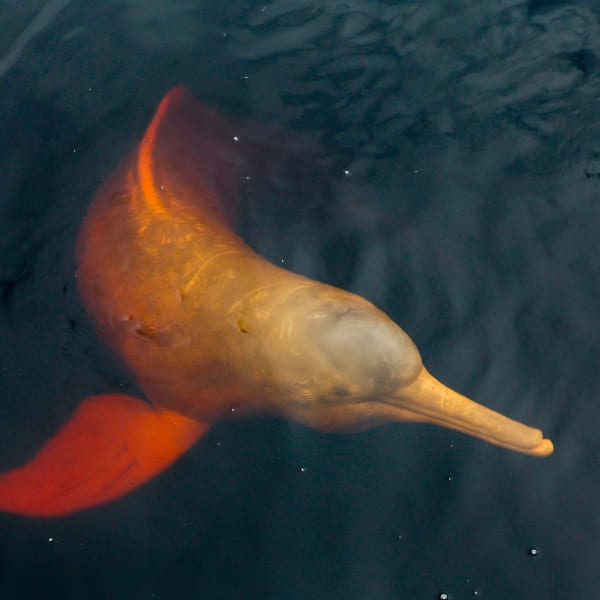
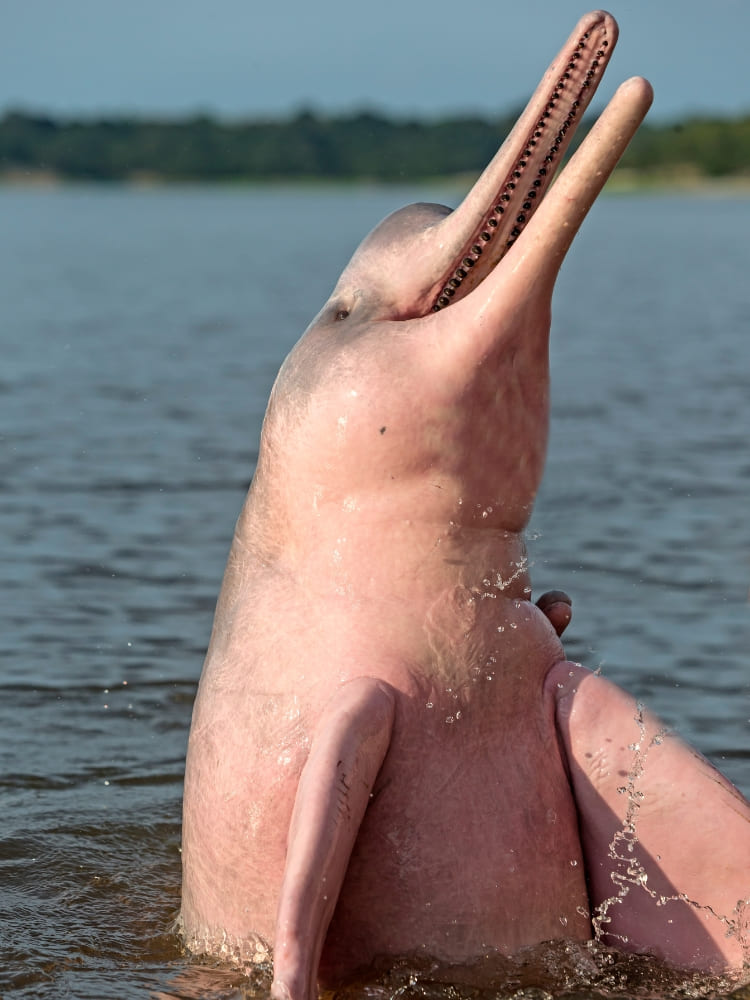
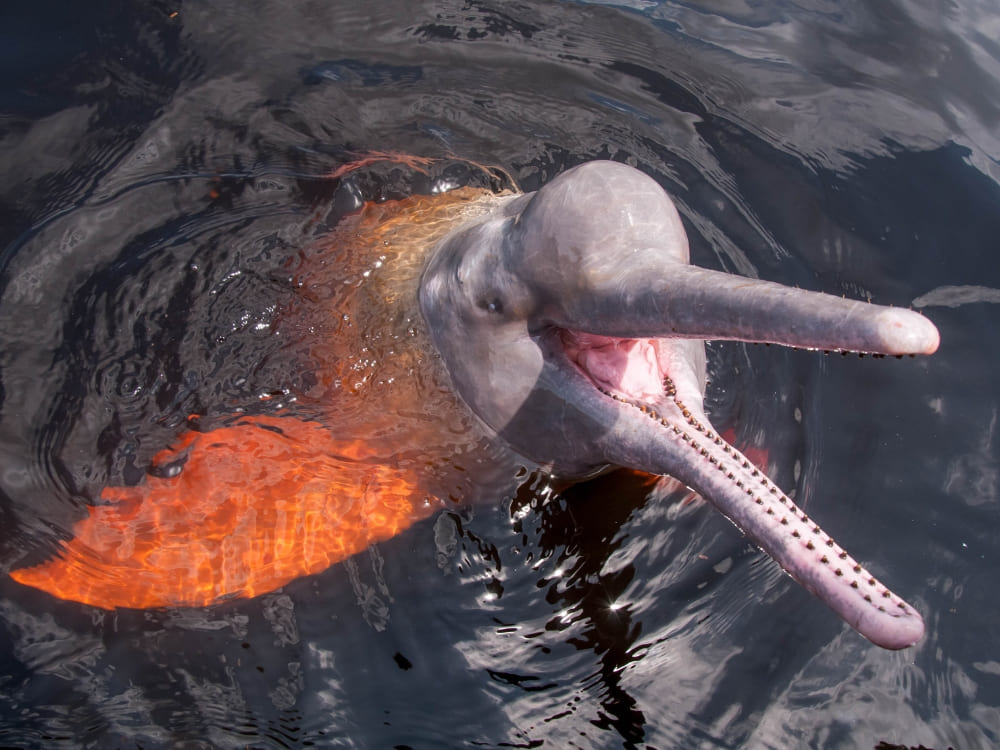
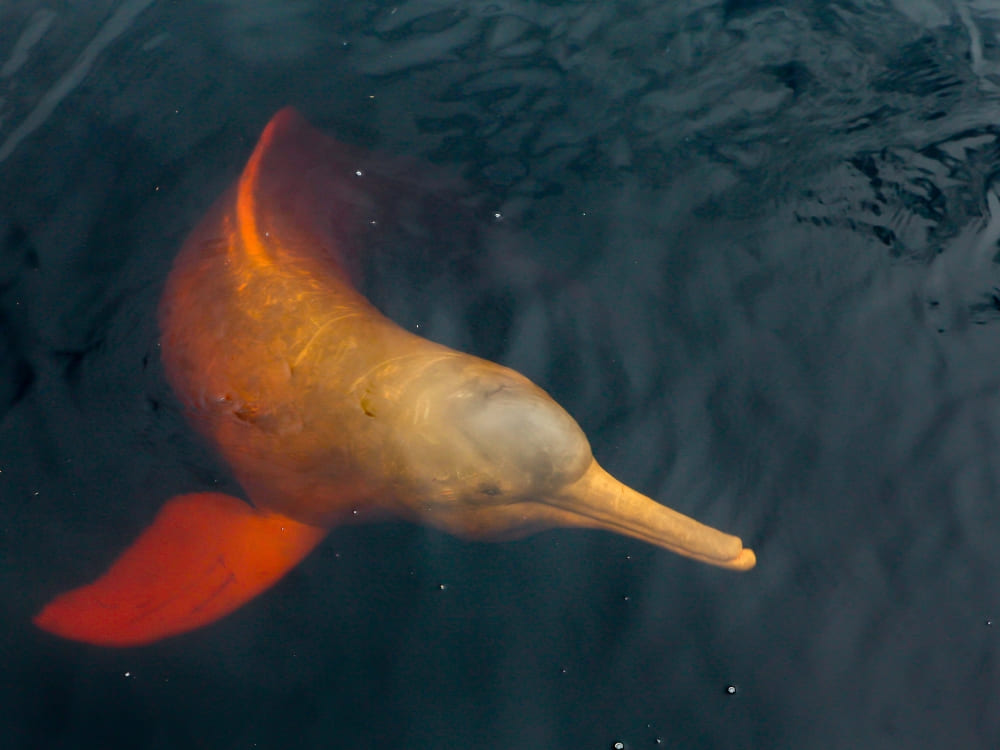
Perhaps the symbol of the Amazon Rainforest fauna, the river dolphin is known for its pink skin and friendliness, always welcoming and interacting with humans. Though it’s particularly famous in Brazil, it’s also found in other countries (Bolivia, Ecuador, Colombia, Peru, and Venezuela).
Fun facts about Amazon river dolphins:
Largest freshwater dolphin in the world, measuring up to 2.5 meters and weighing an average of 200 kg.
Male dolphins are larger and pinker, while females are smaller and grey-colored.
To move around in the rivers and flooded forests, as well as find food in the dark waters of the biome, Amazon river dolphins have a well-developed echolocation system.
Local legend says the Amazon river dolphin turns into a charming man during the full moon in the month of June. In human form, it attends festivities, seduces women, and leaves them behind to return to the river. This myth was widely used in popular tradition to explain fatherless children.
2) Amazonian manatee
.
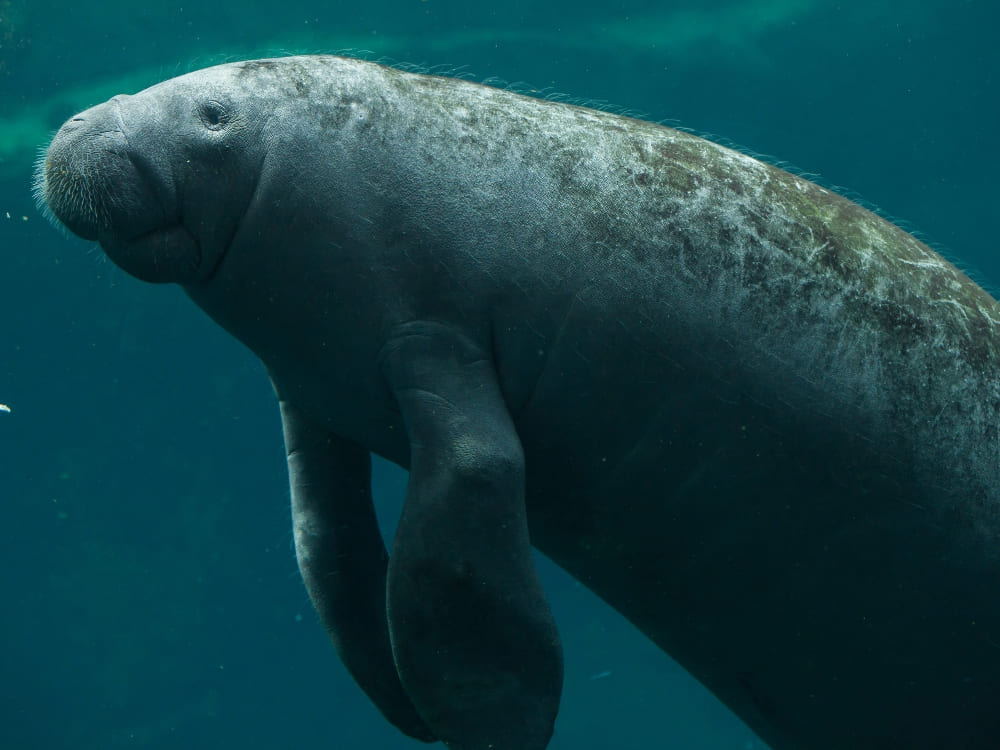
The Amazonian manatee is the smallest manatee in the world, measuring up to 3 meters and weighing an average of 450 kg. This gentle giant has been protected by Brazilian law since 1967, though it’s still hunted for the illegal meat trade, and calves are often accidentally caught in fishing nets.
Fun facts about Amazonian manatees:
Just like a fingerprint, each manatee has a white or pinkish spot on their bellies.
Around Marajó Island (Pará) and the coast of Amapá, Amazonian manatees live in sympatry with their marine counterpart (West Indian manatee).
By feeding on aquatic and semi-aquatic plants, they contribute to the nutrient cycling of rivers and vegetation control.
Discreet and fairly solitary, its lifespan is estimated at 60 years.
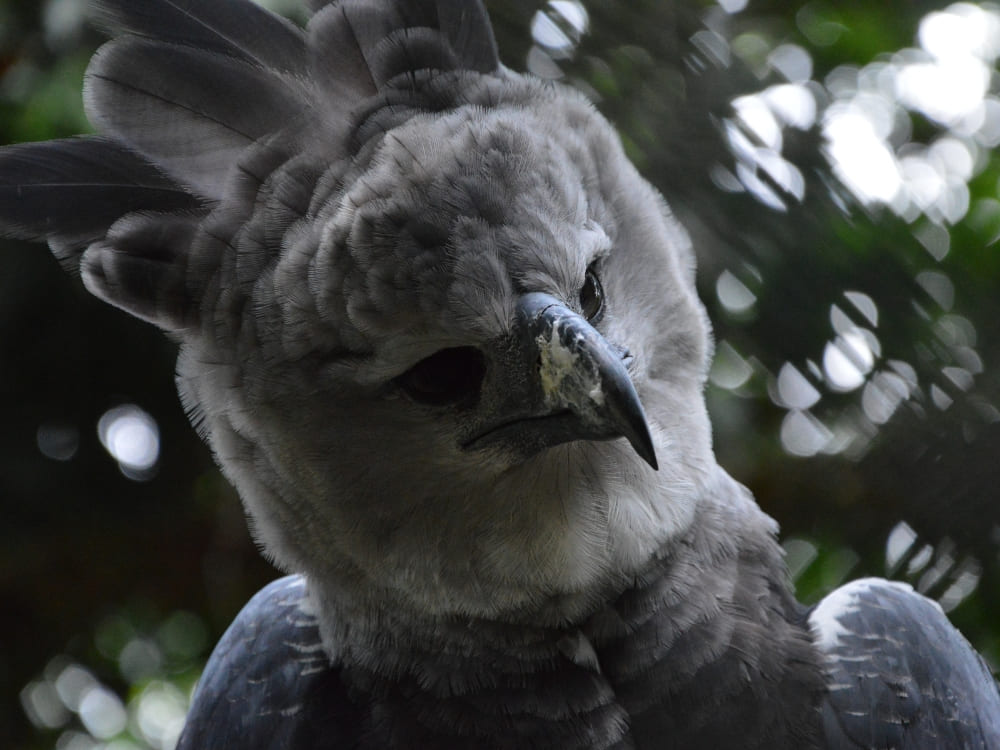
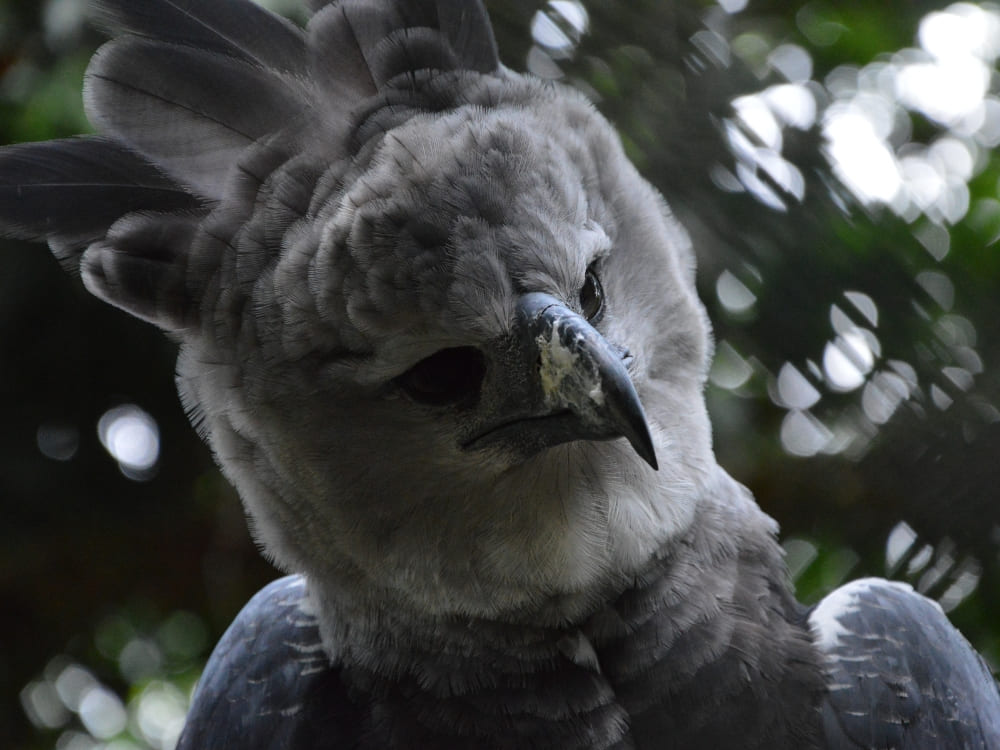
One of the most fascinating Amazon animals, the harpy eagle is the largest bird of prey in the Americas, reaching a wingspan of just over 2 meters and weighing up to 9 kg for females and 5 kg for males. As an apex predator, it feeds on sloths and monkeys, with claws strong enough to rip them off tree branches.
Fun facts about harpy eagles:
Some Brazilian indigenous groups call them uiraçu, which means “bird bird.” They also believe it to be the personification of the tribes’ chiefs.
Despite their size, it’s difficult to spot them due to their agility and solitary nature.
They usually choose the tallest trees (over 40 m) to build their nests.
Since harpy eagles prey on relatively large animals, they need to hunt in areas averaging 100 km²—the equivalent of 10,000 football fields!
4) Hyacinth macaw
.
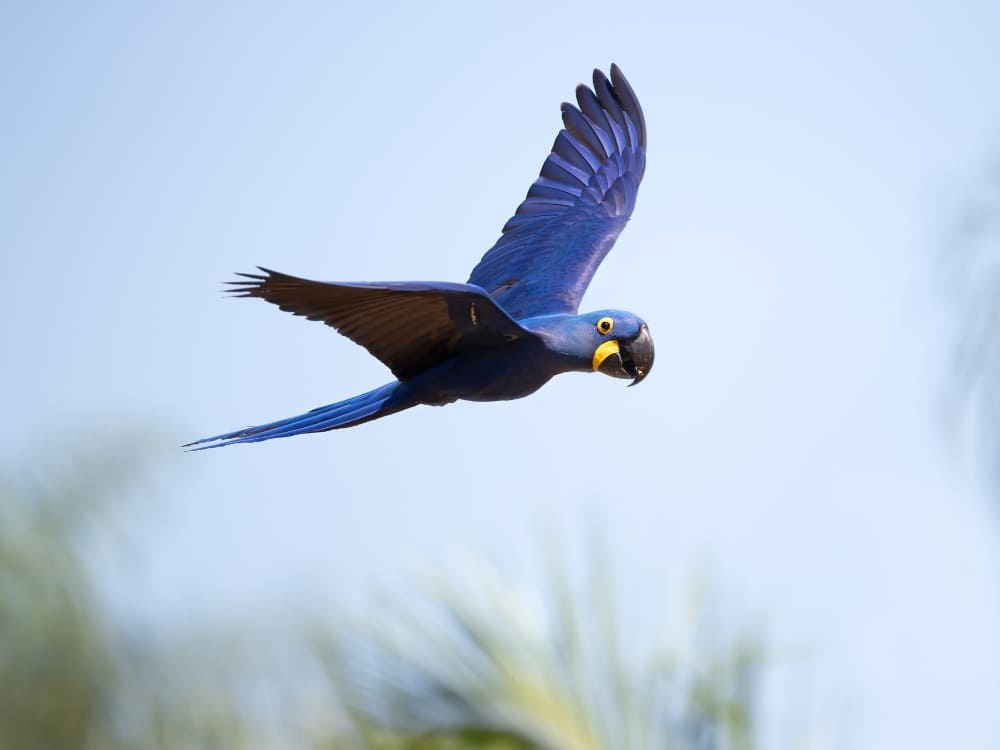
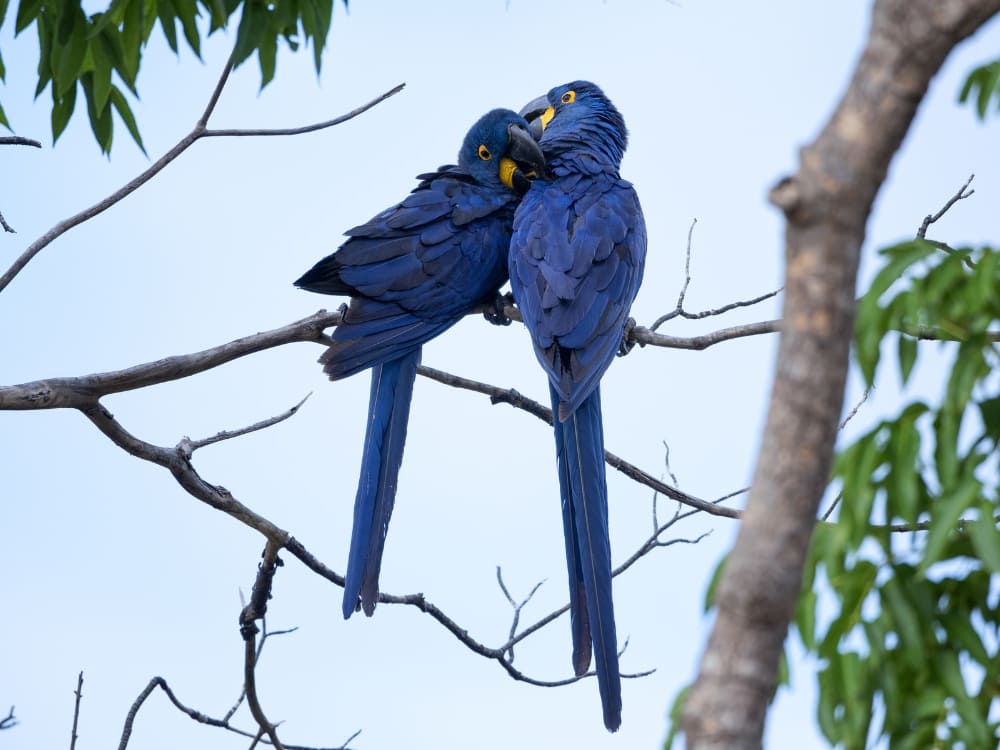
With bright blue feathers and yellow features, the hyacinth macaw flies in pairs or groups and is very faithful to its mate. Sadly, they’re threatened with extinction due to hunting, illegal trade, and deforestation.
Fun facts about hyacinth macaws:
Feed on nuts from two types of palm trees (acuri and bocaiúva).
At around seven years old, they start to look for mates to breed.
During the first 45 days of life, they are extremely fragile and unable to defend themselves—not even against cockroaches and ants.
They’re also found in the Pantanal and in the Cerrado.
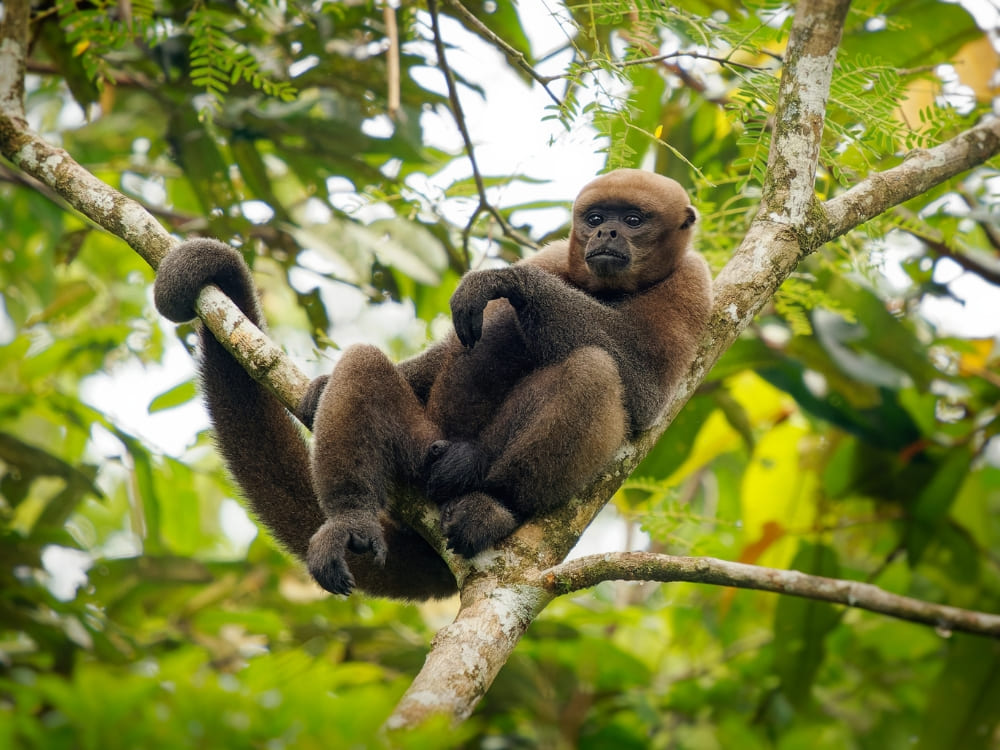
5) Woolly monkey
.
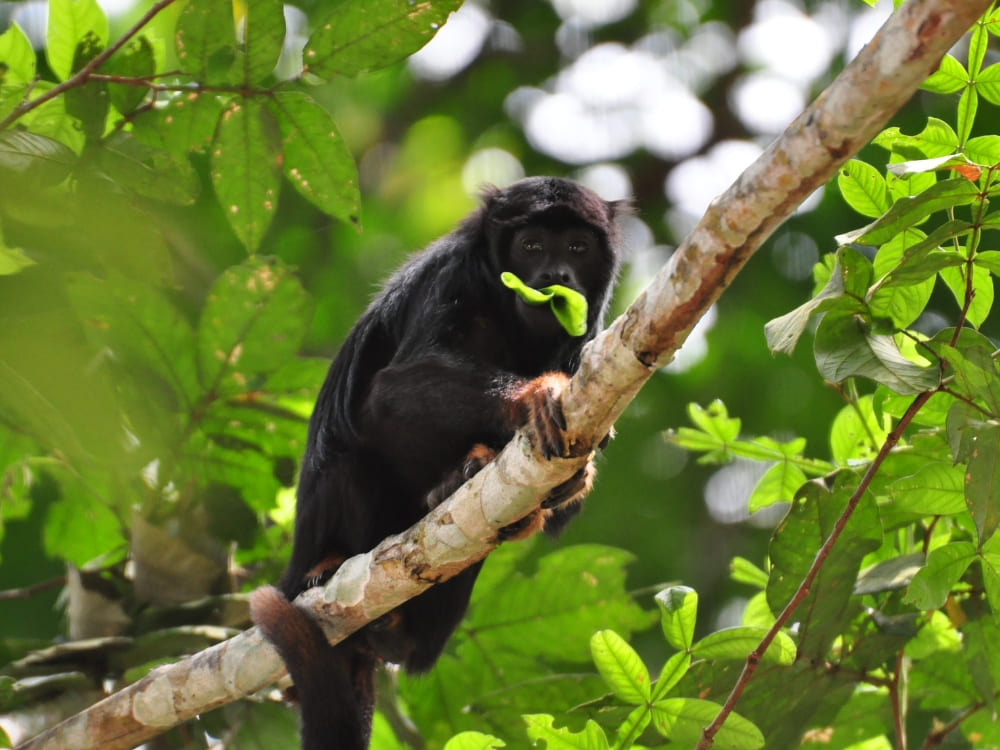
Woolly monkeys have very specific features, including a rounded head covered in short fur and long fur across the abdomen, which gives the impression of a robust stomach. That’s why this lovely ape is known as macaco-barrigudo (big-bellied monkey) in Portuguese.
Fun facts about woolly monkeys:
They primarily inhabit the Amazon Rainforest on firm ground but may use flooded forests during periods of high fruit abundance.
They live in the Negro-Solimões interfluve area, except for the eastern part. Also found in Colombia, Ecuador, Peru, and Venezuela.
Wool-like coat with a brownish-gray color, a bit lighter on the head.
Categorized as gregarious animals, they live in large groups (12–70 individuals).
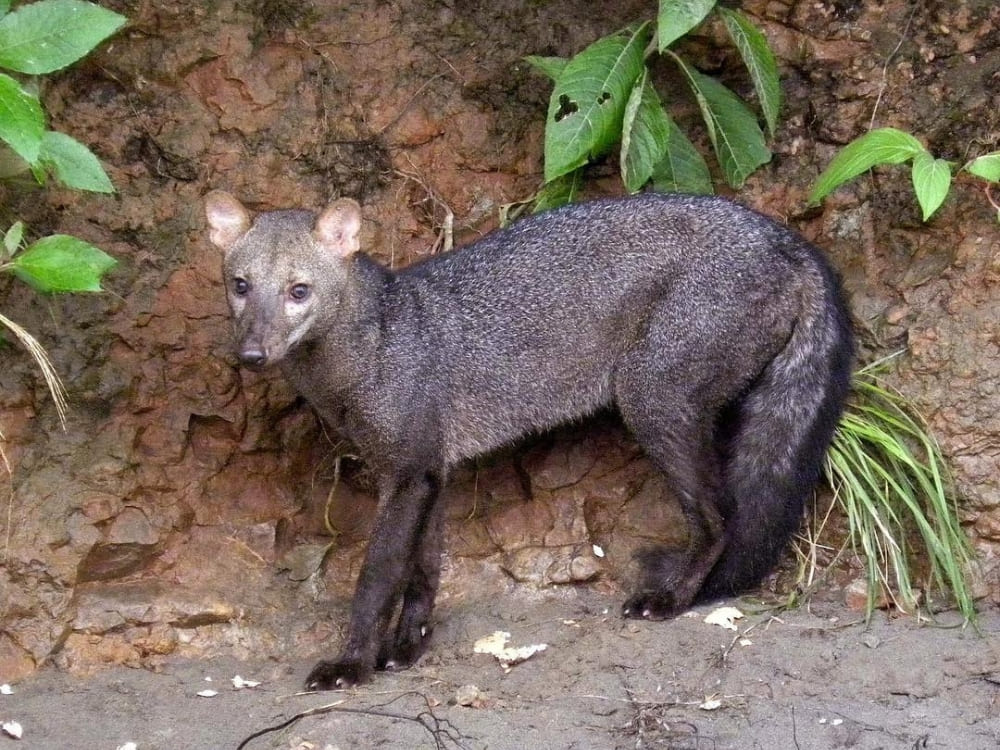
Short-eared dogs are part of the list for rare animals in the Amazon Rainforest, as it’s quite difficult to spot them. Their elusiveness works as a form of protection, though deforestation can put them at risk.
Fun facts about short-eared dogs:
They feed on small mammals, reptiles, birds, insects, and fish.
They look like medium-sized dogs, with dark brown or greyish coats, long snouts, and weighing over 10 kg.
Habitat records exist in floodplains, upland forests, swamps, bamboo plantations, and along rivers.
Due to their avoidance of humans, knowledge about them is still considerably limited.
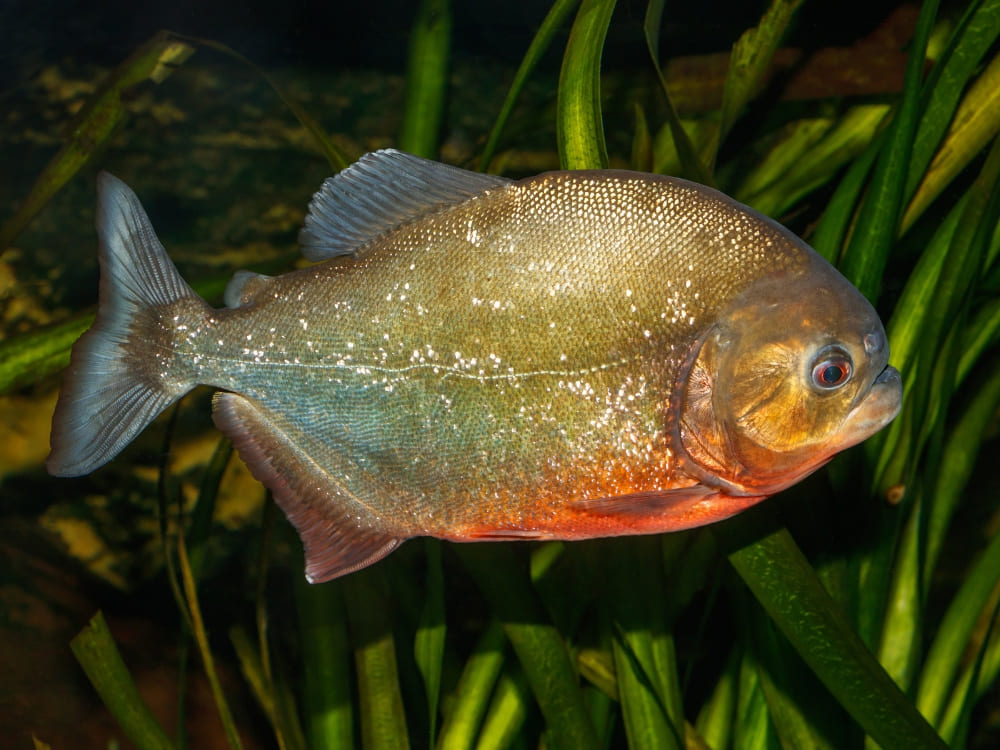
7) Red-bellied piranha
Photo: H. Zell
Contrary to popular belief, piranhas aren’t considered the Amazon Rainforest’s most dangerous animals. Red-bellied piranhas, in particular, don’t tend to attack humans at all—despite their very sharp, triangle-shaped teeth.
Fun facts about red-bellied piranhas:
Their diet consists of insects, aquatic invertebrates, mollusks, crustaceans, other fish, fruit, seeds, and aquatic plants.
Highly valued in local cuisine, it is considered an aphrodisiac.
Inhabits rivers, lakes, and muddy water lagoons.
They reproduce during the rainy season, mostly from April to May. Females lay approximately 5,000 eggs on newly submerged vegetation in nests built by males.
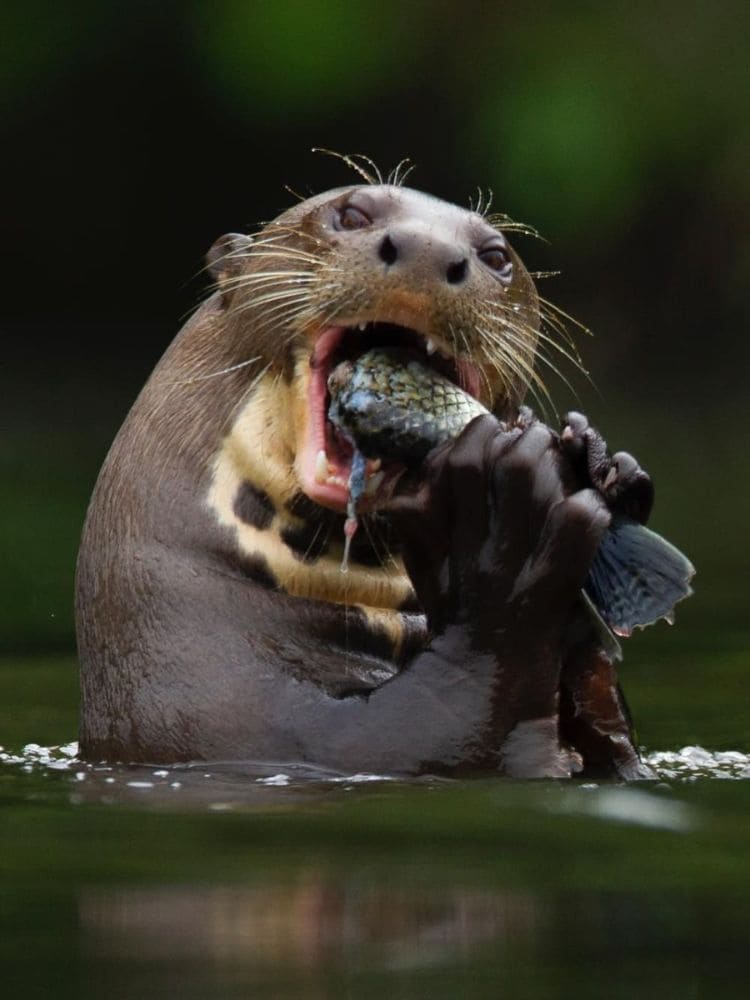
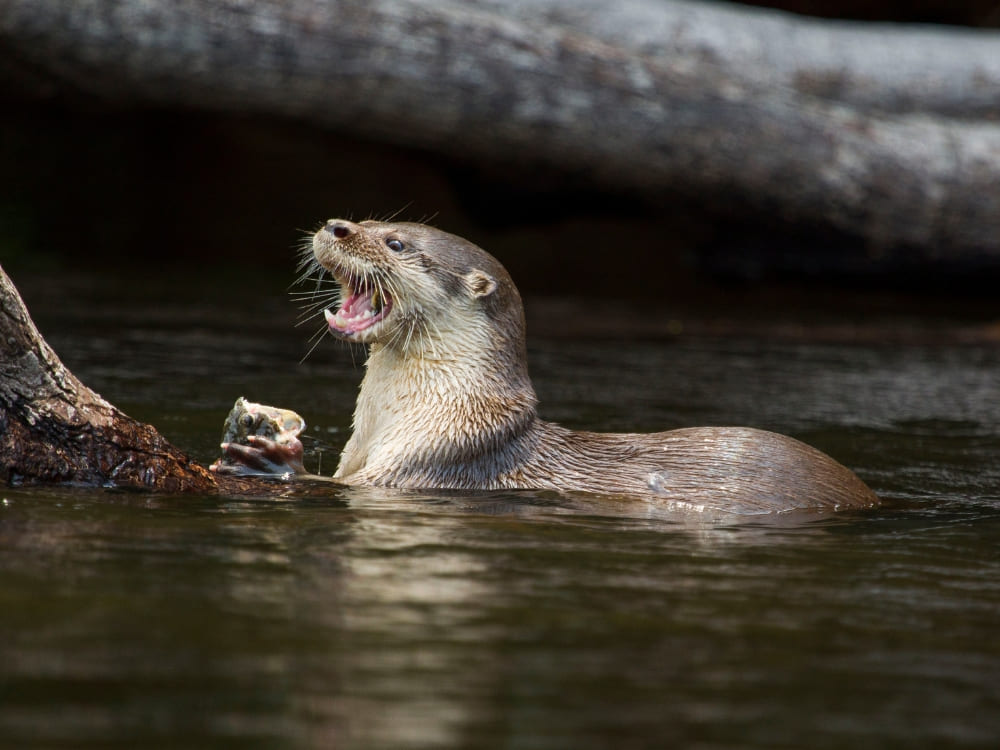
Classified as territorial predators, the giant otter is considerably more aggressive than the Asian small-clawed otter. Excellent swimmers and skilled hunters, fish, crabs, frogs, snakes, and lizards are some of their favorite food.
Fun facts about giant otters:
Widely found in the Amazon, they also inhabit other Brazilian biomes (Pantanal, Cerrado, and the Atlantic Forest).
Distinguished by the white markings on their necks (unique to each individual).
They live in groups of up to 20 members, consisting of a couple and several offspring.
Giant otters use a kind of communal toilet, which also serves to mark their territory with its characteristic scent.
9) Uakari
Photo: Denis Jervis
Uakari is the common name for the New World monkeys from the genus Cacajao. Its most striking features are the lack of fur on the top of its head and a reddish face—the redder the face, the healthier the animal is.
Fun facts about uakaris:
Also known as macaco-inglês (English monkey) in Portuguese.
Native to Brazil, but can also be found in the Colombian and Peruvian Amazon.
Though it’s categorized as a vulnerable species in the IUCN’s Red List of Threatened Species, it has a considerable population near the town of Tefé.
A major inspiration for Uakari Lodge, a jungle hotel located in the Mamirauá Reserve.
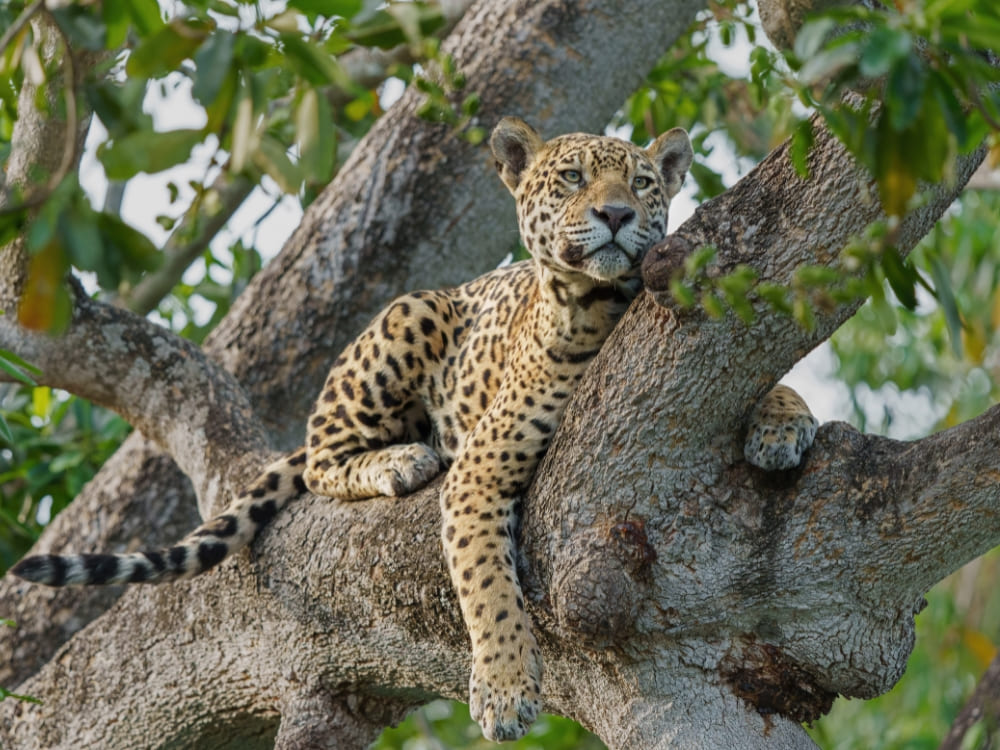
The Pantanal is the best place in the world to spot jaguars, but they’re also a part of the Amazon Rainforest wildlife and even the Cerrado. This habitat variation occurs for a single reason: the incredible adaptability of the largest feline in the Americas.
Fun facts about jaguars:
As of October 2025, just over 6,300 jaguars had been recorded in protected areas of the Amazon, according to the Mamirauá Institute.
The dense vegetation of the Amazon makes hunting more difficult than in the open fields of the Pantanal. Therefore, jaguars in the Amazon region are smaller.
Just like the human fingerprint, the rosettes (black spots scattered across the jaguar’s body) serve as a form of identification for each individual.
11) Black caiman
Photo: Marcelo Bonifácio
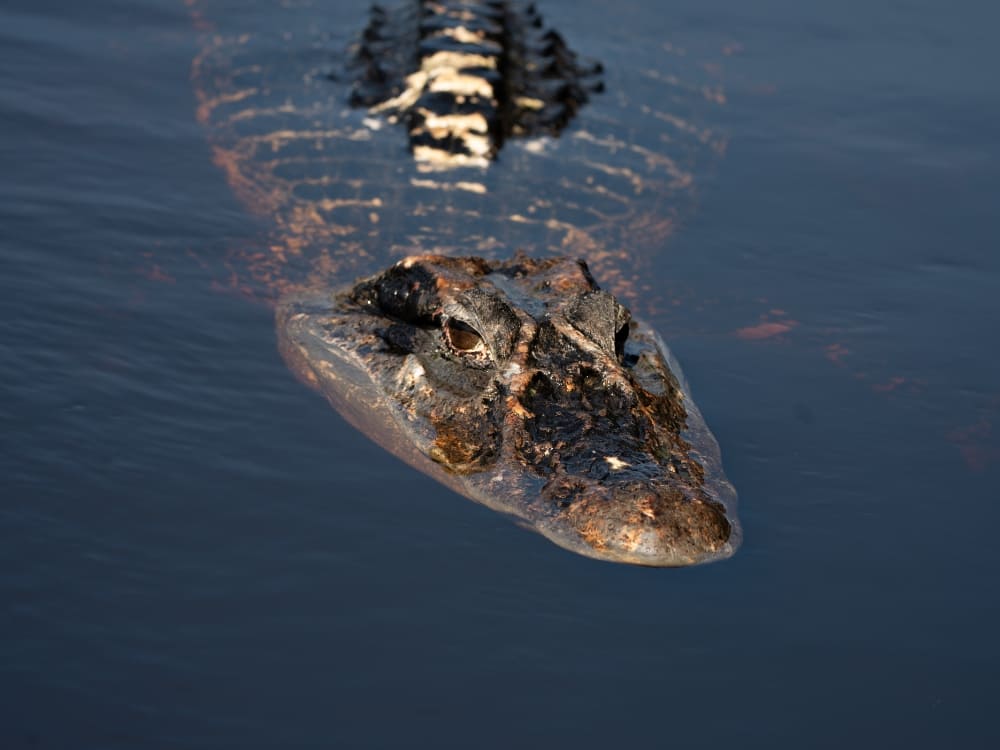
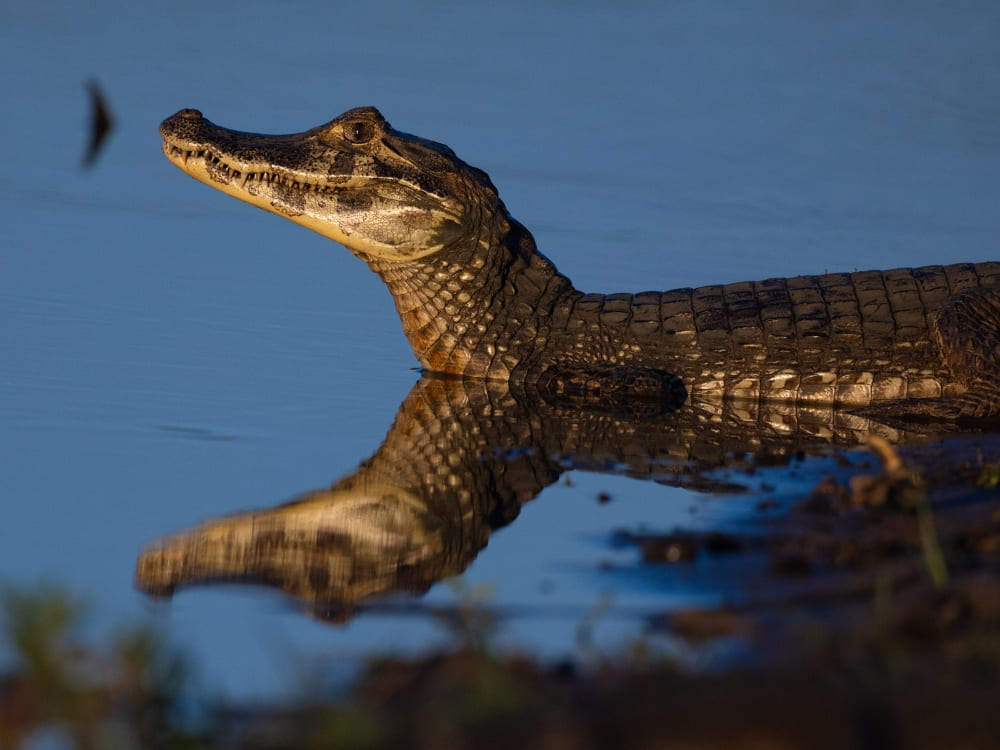
Deadly and silent, the black caiman is an expert in camouflage and hunts equally dangerous predators, like the anaconda. During night tours, it’s one of the easiest Amazon animals to spot due to their bright eyes shining in the darkness.
Fun facts about black caimans:
One of the largest crocodilians in the world, it measures over 4 meters and weighs 400 kg.
When young, they are hunted by other animals but become apex predators when they become adults due to their massive size.
Unlike other Brazilian species, the black caiman is solitary and is very rarely seen close to each other.
Essential for the ecological balance of the Amazonian ecosystem, as well as controlling populations of capybaras, fish, mammals, and even birds.
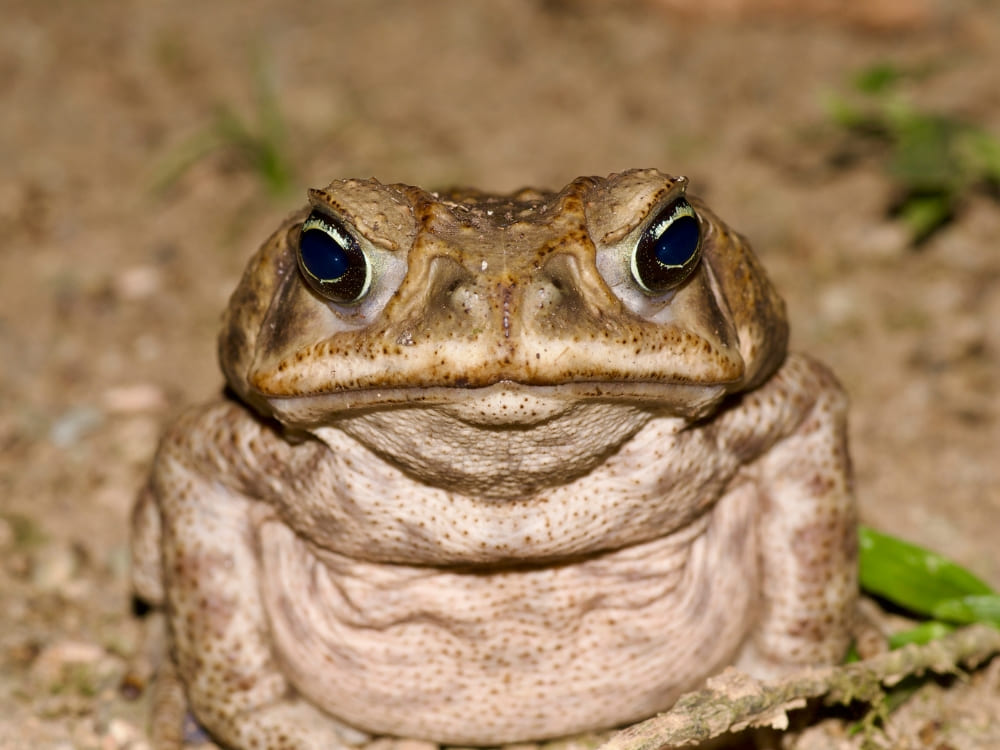
The cane toad is fascinating, but not many people get close to them due to their appearance—coarse skin, warts spread across the body, and a fairly unfriendly face—and the milky venom they squirt on attackers, which can affect the heart and cause hallucinations. Who would’ve thought this would be one of the most dangerous animals in the Amazon Rainforest?
Fun facts about the cane toad:
Reproducing at any time of the year, females lay up to 30,000 eggs.
Big and bulky, they can weigh up to 1 kg (especially pregnant females).
Known for the very loud, almost incessant croaking when searching for mates.
The venomous squirt can reach a distance of almost 2 meters.
13) Pale-throated sloth
@devinbelliston
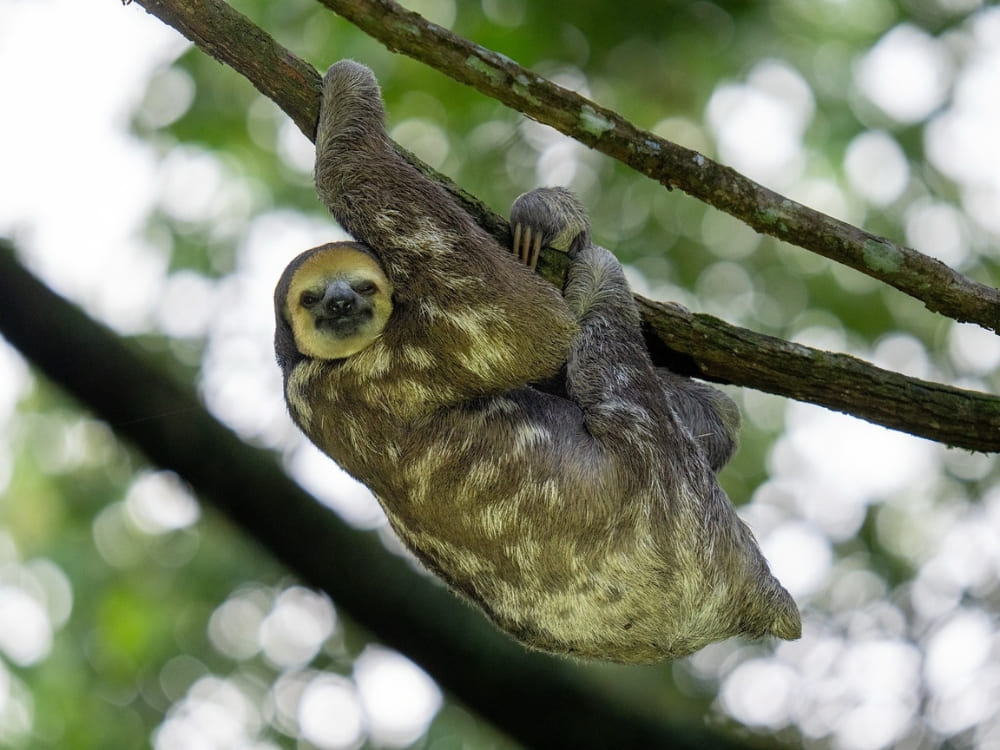
Slow-paced and lazy, the pale-throated sloth sleeps over 14 hours a day. It rarely comes down from the trees, except to relieve itself once a week. Though deforestation can put these Amazon animals at risk, they’re often spotted as there is a healthy population across the rainforest.
Fun facts about pale-throated sloths:
A sloth’s daily movement is approximately 38 meters—and nothing else.
In comparison to their slowness on land, they’re surprisingly good swimmers and are quite fast in the water.
Despite the sharpness of their claws, pale-throated sloths don’t fight off predators and only use them to climb on trees.
To avoid predators like harpy eagles, jaguars, and large snakes, they tend to move around only when night falls.
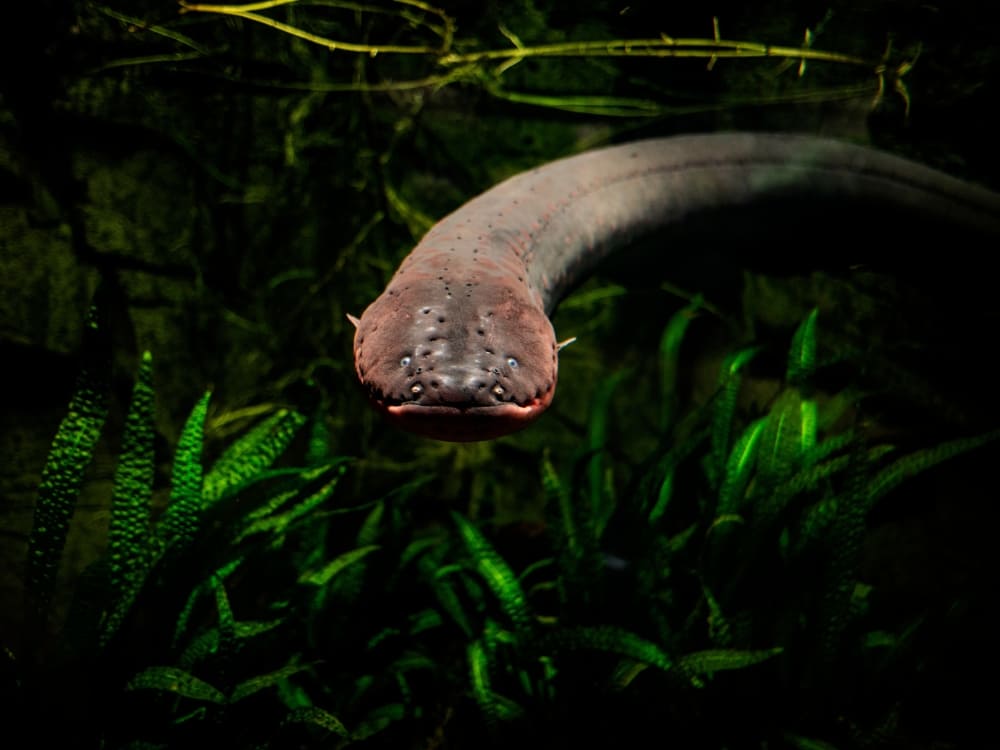
The Amazonian electric eel is known locally as poraquê, which means “the one who puts to sleep” in the indigenous Tupi language. The name makes sense—their electrical discharges are around 500 volts but can reach up to 1500 volts, according to studies by the National Institute for Amazonian Research.
Fun facts about the electric eel:
With a cylindrical and elongated body similar to a snake, they can grow up to 2.5 meters in length.
There are two species: Electrophorus voltai (found in Pará, Amazonas, Rondônia, and Mato Grosso) and Electrophorus electricus (found in the north of Amapá, Amazonas, and Roraima, in addition to French Guyana and Suriname).
Comparable to a battery, the frontal part of its body has a positive charge, while the tip of its tail has a negative charge.
The Electrophorus voltai was named in honor of Italian physicist Alessandro Volta, creator of the battery.
15) Anaconda
.
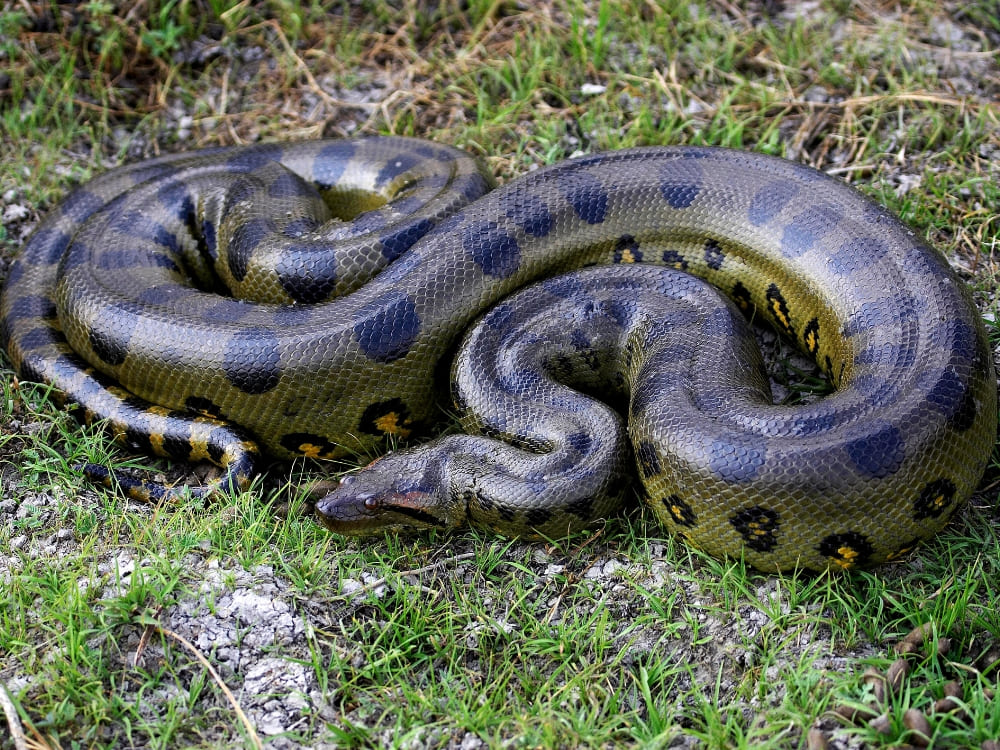
Famous in pop culture and feared by humans and animals, the anaconda is deadly, but not poisonous. When it finds its prey (mammals, birds, amphibians, reptiles, fish), it wraps its bulky body around the victim until they suffocate. Then, the feast begins.
Fun facts about anacondas:
There are five different species: green anaconda, northern green anaconda, yellow anaconda, beni anaconda, and dark-spotted anaconda.
The green anaconda is the largest (up to 7 meters and 130 kg) and the most commonly found in the Amazon River fauna.
In Portuguese, they’re called by various names: sucuris, boiaçus, boiçus, arigboias, sucurijus, viborões, etc.
The Anaconda horror franchise has seven films. The first one, released in 1997, was a huge success at the box office, and it is now considered a cult classic.
See the Amazon animals up close with PlanetaEXO
While the animals in the Amazon jungle are quite shy, travelers can still spot a few of them during boat trips, guided hikes, or night tours, especially river dolphins, sloths, caimans, and different species of birds.
With PlanetaEXO, an ecotourism platform specialized in Amazon Rainforest tours in Brazil, you explore nature in an authentic, responsible way. Our talented team works with the best local partners to ensure you’ll have the adventure of a lifetime. Contact us now!
Brazil’s wildlife is as impressive and abundant as the country itself. From reptiles to mammals, discover the secrets of 20 Brazilian animals!
Brazil is known worldwide for its grandiosity—impressive territory size, wild beauty, and the greatest biodiversity on Earth. For nature lovers and wildlife admirers, it’s a true feast.
Occupying the largest portion of South America with six different biomes, the animals in Brazil represent 15% of all land and aquatic species on the planet.
Can’t wait to understand a bit more about the Brazilian fauna? PlanetaEXO, an ecotourism platform specialized in adventure tours in Brazil, has selected 20 fascinating animals. Check it out below!
What animals live in Brazil?
Among insects, spiders, fungi, mollusks, fish, crustaceans, birds, reptiles, amphibians, and mammals, there are over 163,000 species officially cataloged in Brazil, according to SiBBr (The Brazilian Biodiversity of Information System), the Brazilian branch of GBIF (Global Biodiversity Information Facility).
Considering the differences in ecosystems, Brazil’s animals are diverse and thoroughly studied by scholars and the authorities to come up with solutions to protect them.
From endemic species to animals found in multiple areas, the Brazilian wildlife is unlike any other.
Brazil doesn’t have an official national animal, but some species stand out, like the rufous-bellied thrush, nominated as the country’s symbolic bird in 2002.
On Brazilian real banknotes, certain animals are honored as a way to value national biodiversity and raise public awareness about environmental protection, including hawksbill turtles, herons, macaws, golden lion tamarins, jaguars, groupers, and maned wolves.
These are obviously very important species to the nation’s fauna and are considered symbols of Brazil’s biological diversity in one way or another.
1) Harpy eagle
Photo: Ivo Kruusamägi
The largest and most powerful bird of prey of the Americas, the harpy eagle reaches a wingspan of 2 meters and weighs up to 9 kg, though there are records of individuals weighing over 12 kg. Its piercing black eyes, dark grey coloring, and the vertical plumes on its head give it a regal, intimidating appearance.
Fun facts about harpy eagles:
Snatching sloths and monkeys from the treetops with their sharp claws, they can carry prey weighing over 10 kg into mid-air.
Also known in Brazil as cutucurim, uiraçu, uiracuir, uiruuetê, and águia-imperial (imperial eagle).
Researchers consider their presence an indicator of ecosystem health. Their disappearance means there is not enough prey or forest area for survival.
Although they are apex predators, they’re at risk of extinction due to deforestation.
Where to find them: Mostly in the Amazon Rainforest, occasionally in areas of Atlantic Forest, and rarely in the Pantanal or the Cerrado.
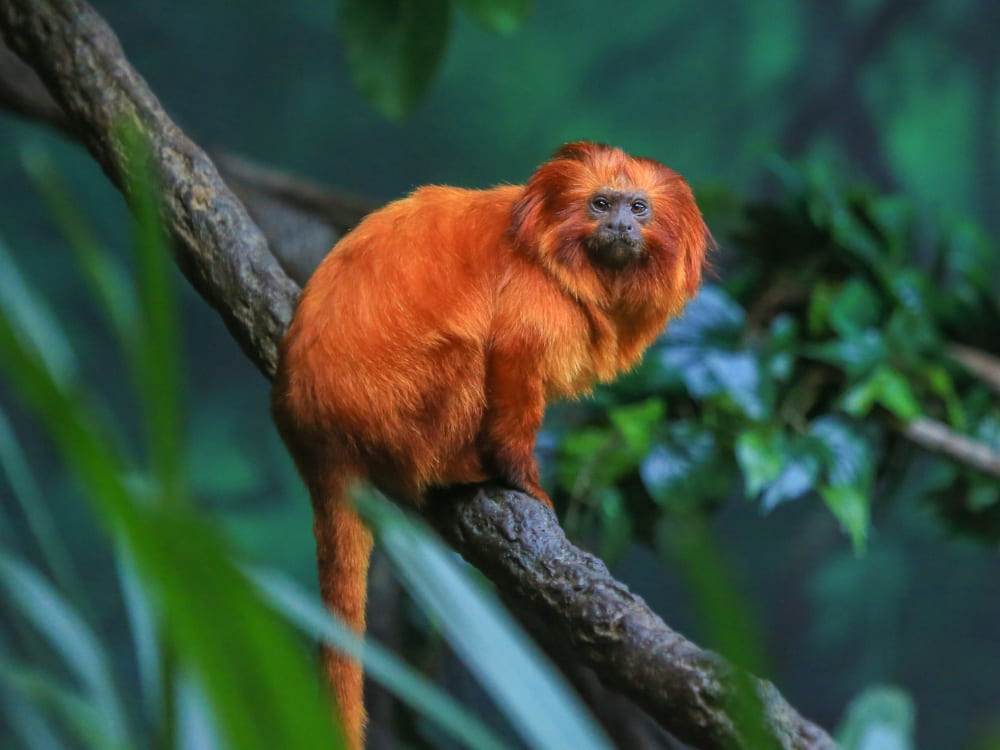
Golden lion tamarins are one of the most notorious native animals of Brazil. Belonging to the class of New World monkeys, its friendly personality and lion-like features are what make it so beloved. Due to the imminent risk of extinction, it has become a sort of mascot for national biodiversity conservation.
Fun facts about golden lion tamarins:
Their tail is longer than their body: 31-40 cm compared to 20-37 cm.
As omnivorous mammals, they eat fruit, vegetables, eggs, spiders, snails, and small lizards and birds.
Over 65% of their pregnancies result in twins.
Golden Lion Tamarin Day is celebrated on August 2.
Where to find them: Atlantic Forest (Rio de Janeiro).
3) Maned wolf
.
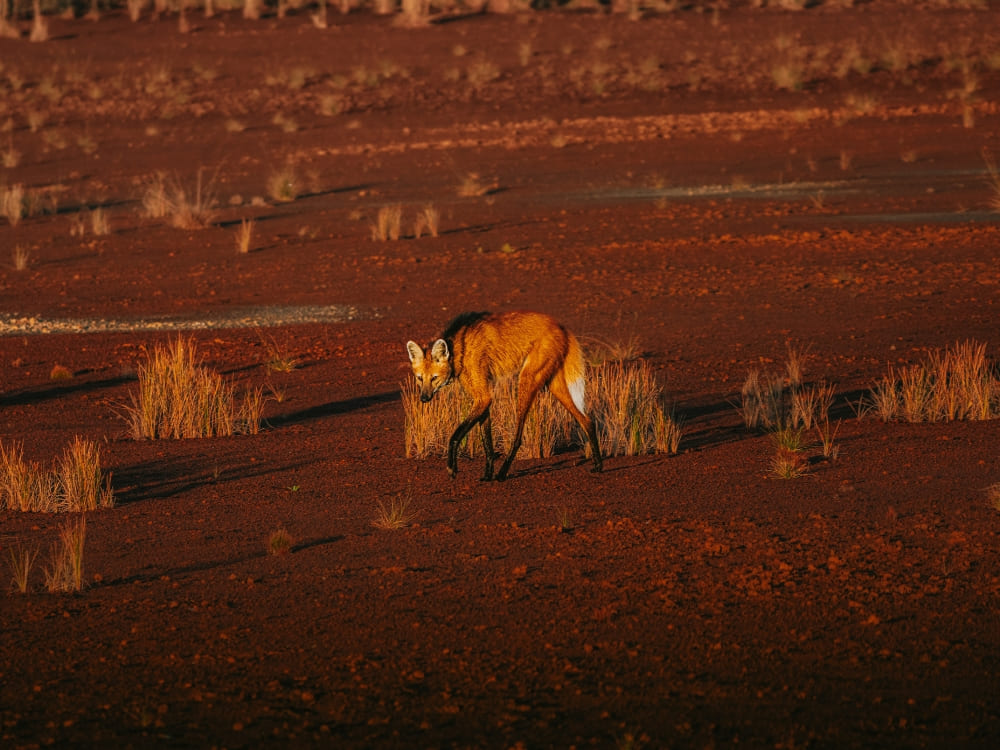
The maned wolf is the largest wild canid in South America. Shy, solitary, and elusive, it’s docile but chooses to stay away from humans. It draws attention due to its reddish-orange coat, long black legs, and prominent ears.
Fun facts about maned wolves:
Despite their names and appearance, they’re not categorized as wolves or foxes. The maned wolf is the only member of the genus Chrysocyon.
They are considered opportunistic animals, which means they easily adapt to the available resources to eat. Their diet includes rodents, birds, reptiles, insects, and fruit—especially the wolf-apple, from the same family as tomatoes and scarlet eggplants.
Deforestation, fires, the expansion of agriculture, and roadkill put them at risk.
Maned Wolf Day is celebrated on October 12.
Where to find them: Mostly in the Cerrado, but maned wolves are also found in transition zones in the Pantanal and the Atlantic Forest.
4) Giant anteater
Photo: Keith Ladzinski
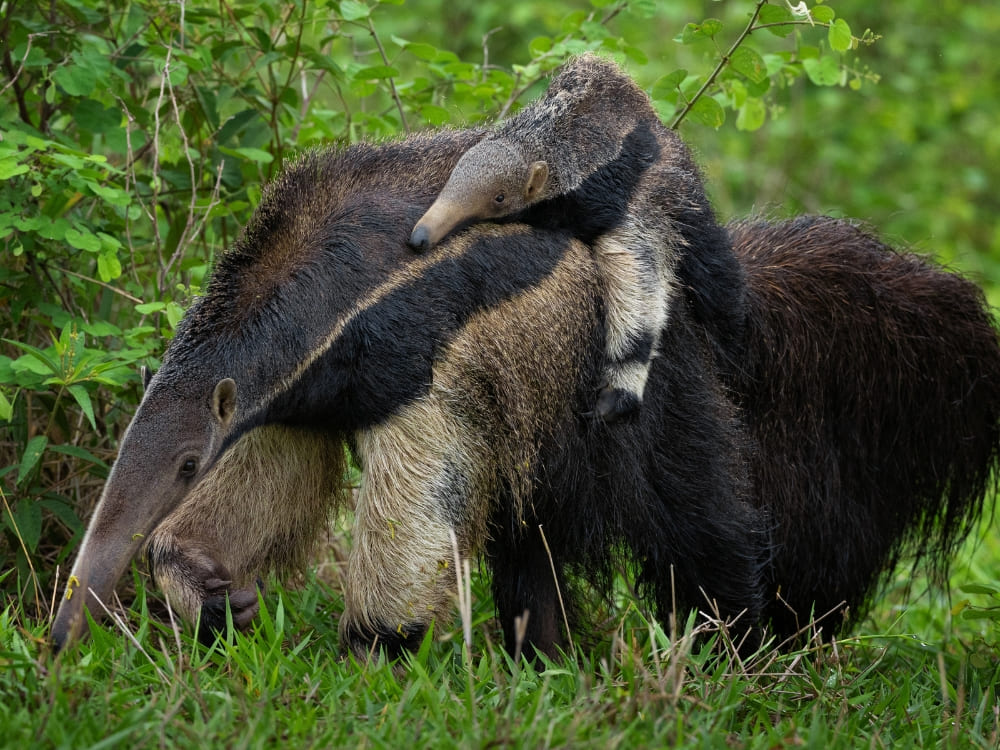
Living up to its name, the giant anteater can reach 2.4 meters from the tip of its nose to the tip of its tail. A single individual eats almost 35,000 ants per day, which requires its tongue to move up to 150 times per minute.
Fun facts about giant anteaters:
Their tongue is 60 cm long, making them the animal with the longest tongue relative to its body size.
Almost blind, they are primarily driven by their sense of smell (40 times more powerful than that of humans).
They’re non-aggressive but can be feral if feeling threatened. By standing on their hind legs and tail, they use their sharp 10 cm claws to fight off predators.
Aside from ants, their diet also consists of termites, larvae, centipedes, and worms.
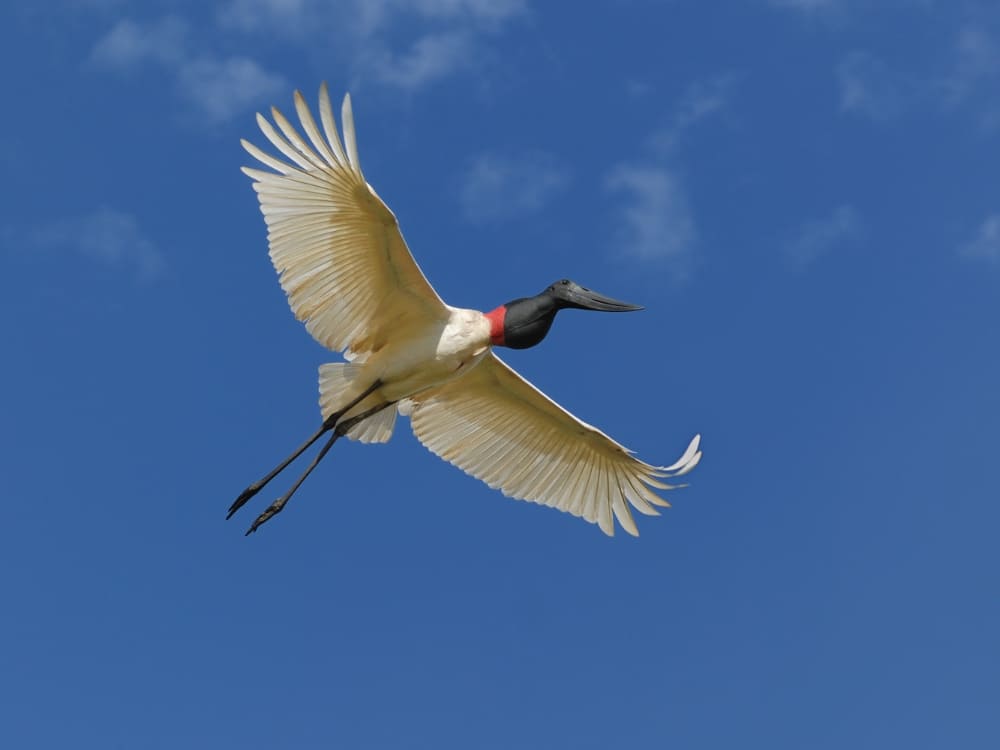
Considered one of the most emblematic animals in Brazil, the jabiru stork is the symbol of the Pantanal. Its grandiosity is unquestionable: it’s the largest bird of the wetlands, reaching a length of 1.4 meters and a height of 1.60 meters. The black beak is 30 cm, while the wingspan is around 3 meters.
Fun facts about jabiru storks:
Scientifically known as Jabiru mycteria, the name is a mix of the Tupi Indigenous language (yabi’ru, iambyrú) and greek (mukter, mukterizo). All together, it means “bird with a very large nose and a swollen neck.”
The head, neck, and beak are usually black, with a red ring right above the chest. However, some individuals are white and red, with no trace of black, due to a lack of melanin.
Unlike many species, they also feed on dead fish, which helps prevent the putrefaction of animals that die from lack of oxygen during dry periods.
At the top of the tallest trees, they build nests that average 1.85 meters in diameter and 70 cm in height, but there are records of nests with a diameter of 3 meters.
Where to find them: Primarily in the South Pantanal, but they can also be found in some areas of the Cerrado.
6) Jaguar
@donalboyd
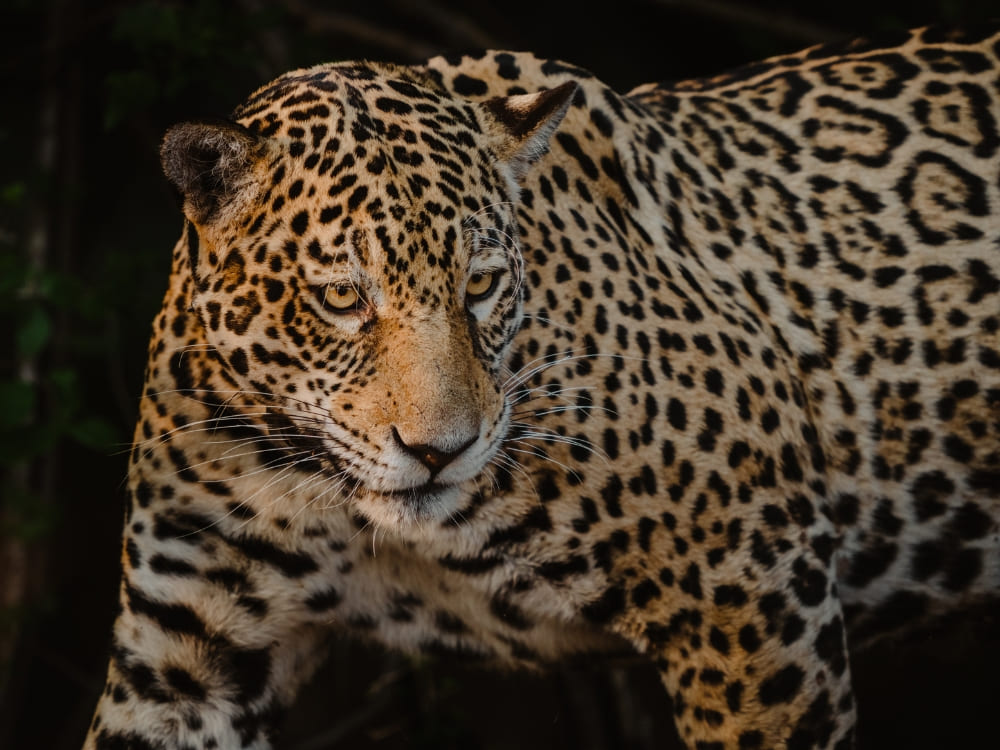
The largest feline in the Americas and the third-largest in the world, the jaguar is definitely one of the most beautiful and notorious animals in Brazil. Despite its beauty, its fierceness is also impressive—as an ultimate apex predator, even caimans are part of its diet.
Fun facts about jaguars:
The rosettes and yellow-orange fur are characteristic of jaguars, but individuals with large amounts of melanin can acquire an appearance similar to panthers.
Always roaming around riverbanks, they are excellent swimmers and often hunt in the water.
Out of all big cats, jaguars have the strongest bite. Their jaw and teeth are so powerful and sharp that they can pierce a turtle’s shell without much effort.
International Jaguar Day is celebrated on November 29.
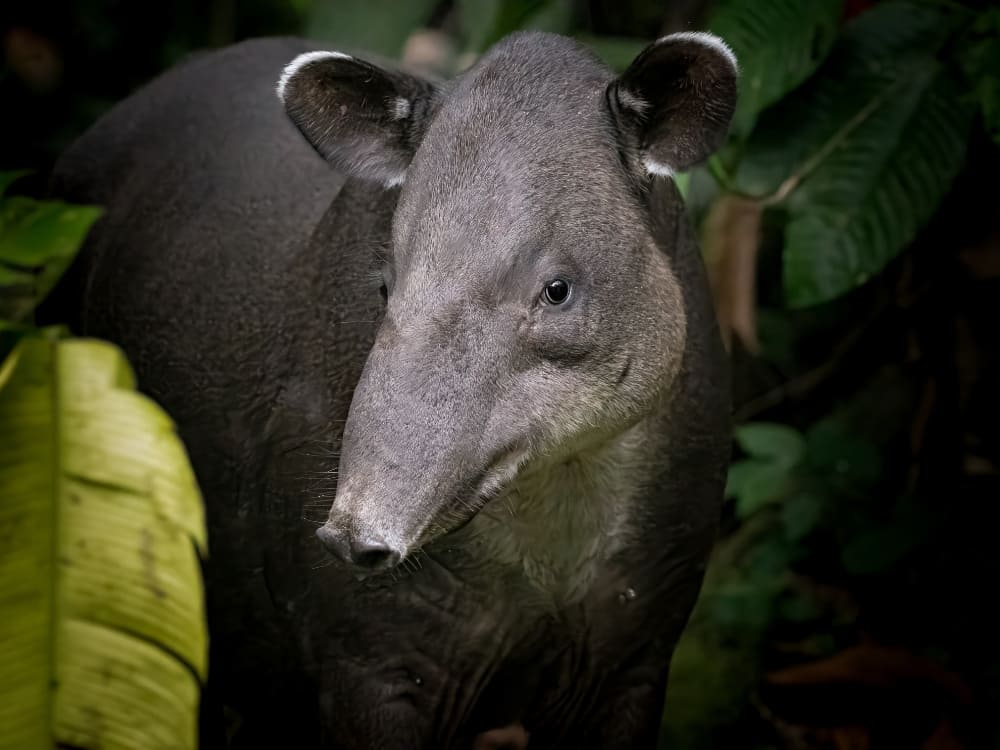
Weighing between 180 and 300 kg, the tapir is the heaviest mammal in Central and South America. Its peculiar features include a “trunk” (proboscis), grey skin, white-tipped ears, and a short, narrow mane along its neck. It’s usually friendly, but it can acquire an aggressive behavior if feeling threatened.
Fun facts about tapirs:
They are known as gardeners of the forest because their droppings, laden with seeds, help in the dispersal and repopulation of vegetation.
Considered a sentinel species, they are used to detect potential danger to the environment or even humans by providing early warnings of hazards like pathogens, climate change, and pollution.
They’re solitary most of the time but can be seen in groups of three during breeding seasons.
World Tapir Day is celebrated on April 27.
Where to find them: Often spotted in the Pantanal, the Amazon Rainforest, the Atlantic Forest, and the Cerrado.
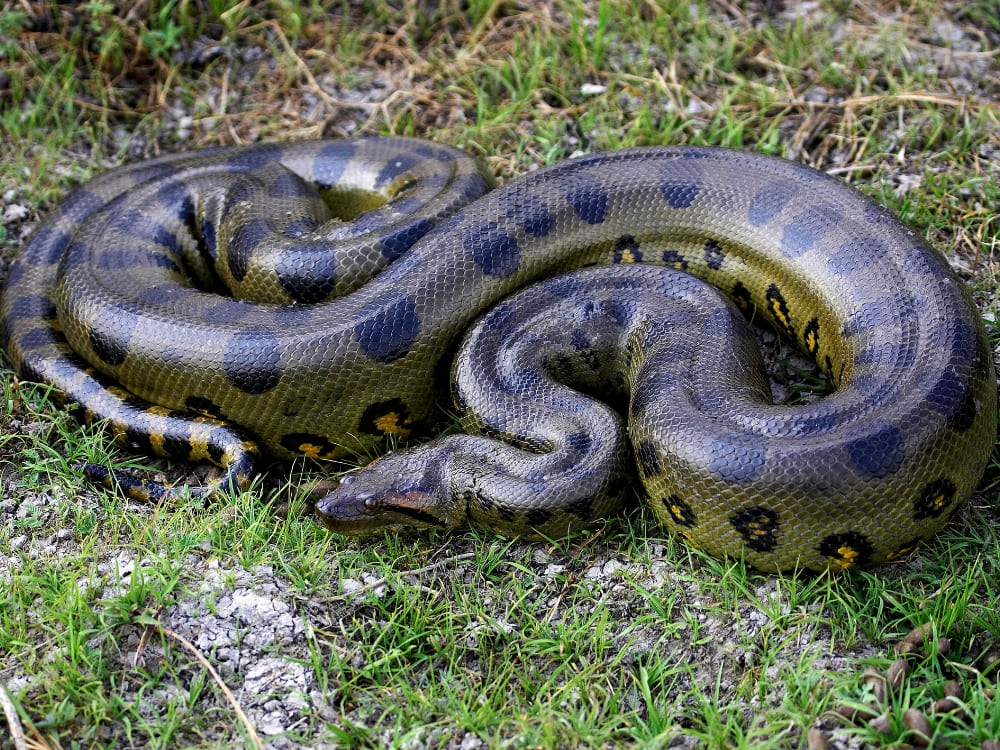
Arguably among the most mysterious and misunderstood animals in Brazil, anacondas are a truly awe-inspiring sight. Reaching impressive lengths of up to 6 meters, these massive constrictors predominantly inhabit marshes and shallow, slow-moving waters across the country’s wetlands. Despite their formidable size, they are incredibly stealthy masters of camouflage and remain a surprisingly rare sight for visitors.
Fascinating truths about the elusive anaconda:
They are entirely non-venomous, relying instead on their immense muscular strength to coil around and subdue their prey.
Their robust diet is remarkably diverse, ranging from fish and water birds to large meals like capybaras and even caimans!
Contrary to sensationalized media portrayals, they are naturally evasive creatures that very rarely pose a threat to humans.
Where to find them: Deep in the wetlands, particularly the swamps and slow-moving rivers of the Amazon Basin, the Pantanal, and the Cerrado.
9) Macaws
Photo: Keith Ladzinski
Brazil serves as a sanctuary for some of the globe’s most breathtaking macaws, notably the hyacinth macaw—the largest flying parrot in existence. Boasting vibrant blue plumage and a wingspan exceeding 1.2 meters, these majestic birds are truly unmistakable. Alongside them, red-and-green and blue-and-yellow macaws can frequently be spotted nesting high in the trees or soaring gracefully in pairs.
Notable traits of Brazilian macaws:
They are incredibly loyal, forming monogamous bonds that last a lifetime.
Their powerful, unique calls reverberate throughout the forest canopy.
Their diet relies heavily on a variety of native fruits, nuts, and seeds.
For birding enthusiasts exploring the country’s wildlife, witnessing these vibrant creatures in their natural habitat is often the crown jewel of the experience.
Where to find them: They are easily spotted in the Pantanal wetlands, the vast Amazon Rainforest, and the Cerrado savannas.
10) Hawksbill turtle
.
Weighing up to 80 kg, the hawksbill turtle is fairly small in comparison to other sea turtles. Its long life expectancy (105 to 135 years) explains the late age of sexual maturity—it begins looking for partners to reproduce after the age of 20, often reaching 40.
Fun facts about hawksbill turtles:
The tapered shape of their mouth resembles the beak of a falcon, hence the name.
Their favorite foods are sponges, corals, algae, and anemones.
They lay 140-200 eggs at a time.
Considered the most tropical of sea turtles, occasionally occurring in subtropical regions.
Where to find them:Fernando de Noronha (Pernambuco), the northern coast of Bahia, Sergipe, and the southern coast of Rio Grande do Norte.
The Amazon river dolphin is one of the most recognizable Brazilian animals due to its docile personality and lovely pink skin. Despite its friendliness with humans, it’s often spotted alone or in groups of a maximum of four members.
Fun facts about Amazon river dolphins:
In Portuguese, they’re known as boto-cor-de-rosa (pink dolphin), but they were called boto-vermelho (red dolphin) until the 80s, when a translation error in a Jacques Cousteau documentary changed things. The name stuck, but locals still call them boto-vermelho.
Their color varies. Some individuals can be deep or light pink, while others are fully gray or pale.
The largest among freshwater dolphins, reaching up to 2.5 meters and weighing around 200 kg.
They have 40% more brain capacity than humans due to the large size of their brains.
Where to find them: Rivers in the Amazon Rainforest (Amazon, Negro, Solimões, Japurá, Araguaia, etc.)
12) Red-handed howler monkey
Photo: Frederico Acaz Sonntag
The name of the red-handed howler monkey describes its most distinct features: reddish hands and powerful howls to communicate with each other. Hands, feet, and part of the tail are also orange-tinted.
Fun facts about red-handed howler monkeys:
Their vocalization can be heard up to 5 km away.
They rarely jump but often use their prehensile tail to aid in slower locomotion on four limbs.
Polygamous system—one male and various females.
Just like humans, they see in color.
Where to find them: the Amazon Rainforest and the Atlantic Forest (in the northeastern region of Brazil).
A ubiquitous presence across Brazil’s diverse wetlands, caimans are frequently spotted lounging along riverbanks, lurking in muddy lagoons, or occasionally even wandering across walking trails. As members of the alligator family, they act as crucial players in the ecosystem—both by keeping fish populations in check and by providing an essential food source for apex predators like jaguars and anacondas.
What makes caimans such a Brazilian icon:
The Yacare caiman reigns supreme as the country’s most abundant species, though South America is home to six other distinct caiman varieties.
Impressive in size, adult males can stretch up to 3 meters in length.
They are classic sunbathers, frequently seen resting with their jaws wide open—a clever behavioral trick to regulate their body temperature in the tropical sun.
In a fascinating twist of statistics, caimans vastly outnumber humans in specific regions like the Pantanal. This particular area serves as a sprawling sanctuary for an estimated 10 million caimans, completely dwarfing the local human population of fewer than 1 million!
Where to find them: The Pantanal is the prime destination, but they are also easily found in the river systems of the Amazon, Cerrado, and Atlantic Forest.
14) Toco Toucan
@donalboyd
An iconic emblem of Brazil, the toco toucan is instantly recognizable thanks to its striking black-and-white plumage and massive, vibrant orange beak. While it may look heavy, this enormous bill is actually incredibly lightweight and serves as a highly versatile tool—especially for plucking out-of-reach fruits from slender branches.
Fascinating facts about the toco toucan:
Their diet is surprisingly varied, encompassing fruits, insects, and occasionally even small animals.
That famous beak doubles as a built-in air conditioner, helping the bird regulate its body temperature in the sweltering tropical heat.
Their unique, croaking vocalizations become the soundtrack of the forest, most commonly heard at dawn and dusk.
When resting, these remarkable birds seek shelter inside hollow tree cavities, though they are just as often spotted proudly perched atop the highest branches of the canopy.
Where to find them: Look for them in the Cerrado’s gallery forests, the Pantanal wetlands, and along the fringes of the Atlantic Forest.
15) Three-banded armadillo
.
The three-banded armadillo curls into a perfect ball to protect itself against potential threats, in addition to rolling around to run away from predators. Though it has sharp claws, it hides in abandoned burrows instead of digging holes.
Fun facts about three-banded armadillos:
When feeding on ants and termites, they often end up swallowing sand, bark, and roots.
Spotting them in the wild can be difficult, as they mostly follow nocturnal habits.
Habitat loss and fragmentation, as well as hunting, put them at great risk.
Fuleco was the official mascot of Brazil’s FIFA World Cup 2014, a three-banded armadillo with a blue leathery armor shell and yellow skin.
Where to find them: Caatinga (northeast of Brazil) and certain areas of the Cerrado.
16) Boana atlantica
@bela.carvvv
Though it’s common to assume the boana atlantica is one of Brazil’s dangerous animals—as small, colorful animals tend to be poisonous—this amphibian is actually harmless. It’s bright green with yellow undertones, but it shines in transparent blue under UV light, creating a beautiful effect in the dark.
Fun facts about boana atlanticas:
They belong to Hylidae, a family of Anura amphibians whose species are found on all continents except Antarctica, popularly known as tree frogs.
One of the smallest tree frogs in Brazil, measuring from 34 to 41 millimeters.
The fluorescence was discovered considerably recently, in 2017.
Although the boana atlantica is included in the IUCN Red List of Threatened Species, it’s fortunately under the LC (least concern) category.
Where to find them: Atlantic Forest (Pernambuco, Alagoas, Sergipe, and Bahia).
17) Masked booby
.
The masked booby is a tropical seabird wide-ranging in the Atlantic, Pacific, and Indian Oceans. The black mask around its orange beak is the reason behind its name, which perfectly adorns its yellow eyes. It’s usually unbothered by human presence, but it can be relatively aggressive when feeling threatened.
Fun facts about masked boobies:
Wonderful swimmers, they catch squids and fish during deep, vertical dives, several meters below the waves.
During mating season, the males present themselves to the females with stretched necks and offer them rocks and feathers.
The females lay two eggs at a time and bury them in small holes in the ground. The chicks are born after 43 days of incubation.
After the eggs hatch, it takes around two to three years for masked boobies to be fully covered in their distinctive white feathers.
Where to find them:Abrolhos (Bahia), Fernando de Noronha, and Trindade Island (Espírito Santo).
Arguably one of the most famous inhabitants of Brazil, capybaras are highly sociable and remarkably gentle creatures. They are frequently spotted relaxing in large herds along riverbanks or peacefully grazing in lush, flooded meadows across the country. Perfectly adapted to semi-aquatic environments, their webbed feet and incredibly laid-back temperament allow them to thrive.
Why capybaras are such a unique part of Brazilian wildlife:
As the world’s largest rodents, they can reach heights of up to 60 cm and weigh well over 60 kg.
They are phenomenal swimmers, capable of napping completely submerged with just their noses peeking above the surface.
Their incredibly docile nature makes them the perfect resting spot for egrets and jacana birds, who frequently hitch a ride on their backs.
These gentle giants share a surprisingly harmonious existence with their neighbors, peacefully coexisting alongside a variety of wading birds and even caimans.
Where to find them: Near almost any steady water source across Brazil, from the Pantanal and Amazon rivers to urban parks in cities like São Paulo and Curitiba.
As an animal that only survives in environmentally balanced ecosystems, especially those with clean and transparent watercourses, the Brazilian merganser is critically endangered on the IUCN Red List of Threatened Species. It’s one of the rarest, most vulnerable aquatic birds in the world.
Fun facts about Brazilian mergansers:
They dive into the water searching for fish, with the tetra fish being their favorite food.
The structure of their beak is different from other ducks, containing a lateral surface with expansions that resemble small teeth.
French naturalist Louis Jean Pierre Vieillot was the first person to describe the species, in 1817.
Monogamous, they remain with the same partner for many years or for life.
Also known as the chicken snake, tropical chicken snake, or yellow rat snake, the caninana is nonvenomous, but it can be quite aggressive. When it feels threatened, it inflates its neck, prepares to pounce, attacks its opponent in a swift movement, and bites them.
Fun facts about caninanas:
Incredibly agile, they can cover a distance of one meter in milliseconds, which facilitates the capture of rats and birds.
Adults may attain a total length of 2.7 meters.
In some parts of Brazil, “caninana” is a term used to describe bad-tempered people, alluding to the snake’s feisty behavior.
Despite their combativeness, they tend to avoid humans and don’t present any danger if kept at a distance.
Where to find them:Chapada Diamantina, Cerrado, Atlantic Forest, and the Amazon.
Don’t miss the opportunity to see the animals in Brazil with PlanetaEXO
As you’ve seen on our list, Brazil’s wildlife is remarkable, offering a true feast for adventure junkies and animal lovers. Fascinating species call different regions and biomes their homes, contributing to the balance of the ecosystem and the natural richness of the country.
With PlanetaEXO, you can witness the wonders of nature in guided hikes and wildlife watching experiences. We are an ecotourism platform specialized in adventure tours in Brazil that works with the best local partners to ensure environmental responsibility and incredible vacations for all travelers. Contact us now!