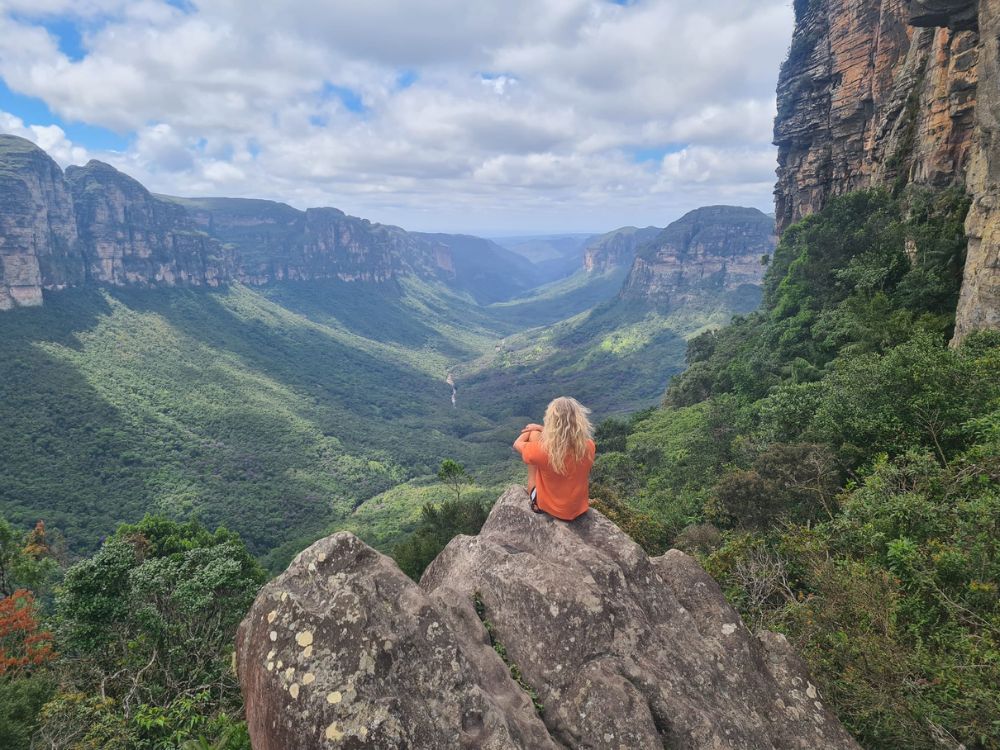
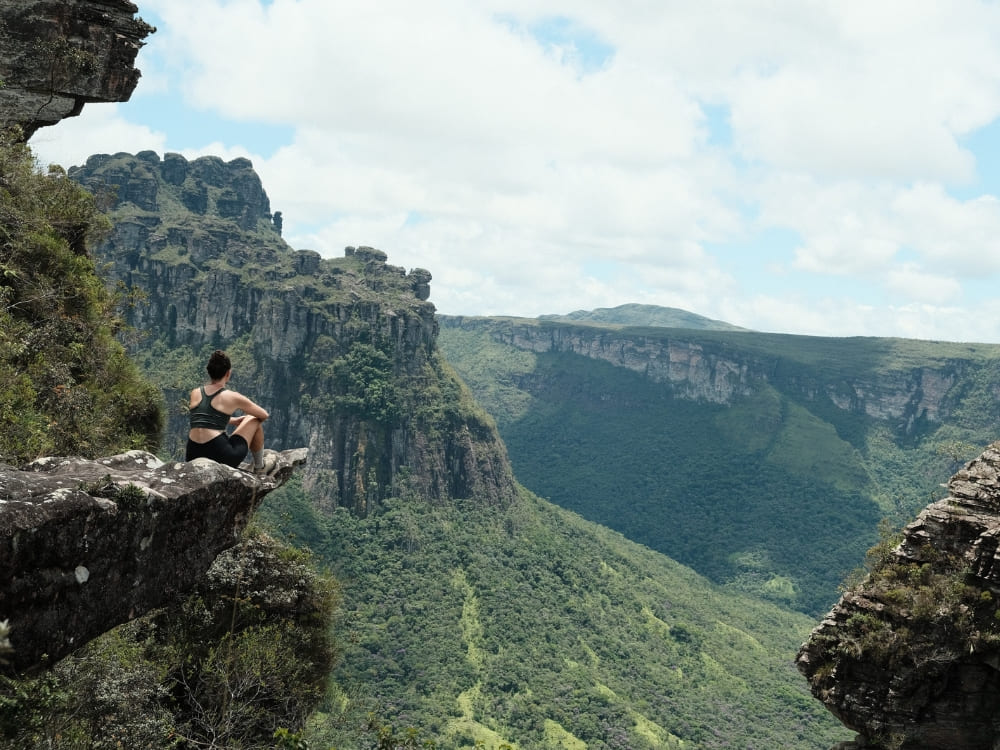
See how to get to Chapada Diamantina from Salvador, Rio de Janeiro, and São Paulo
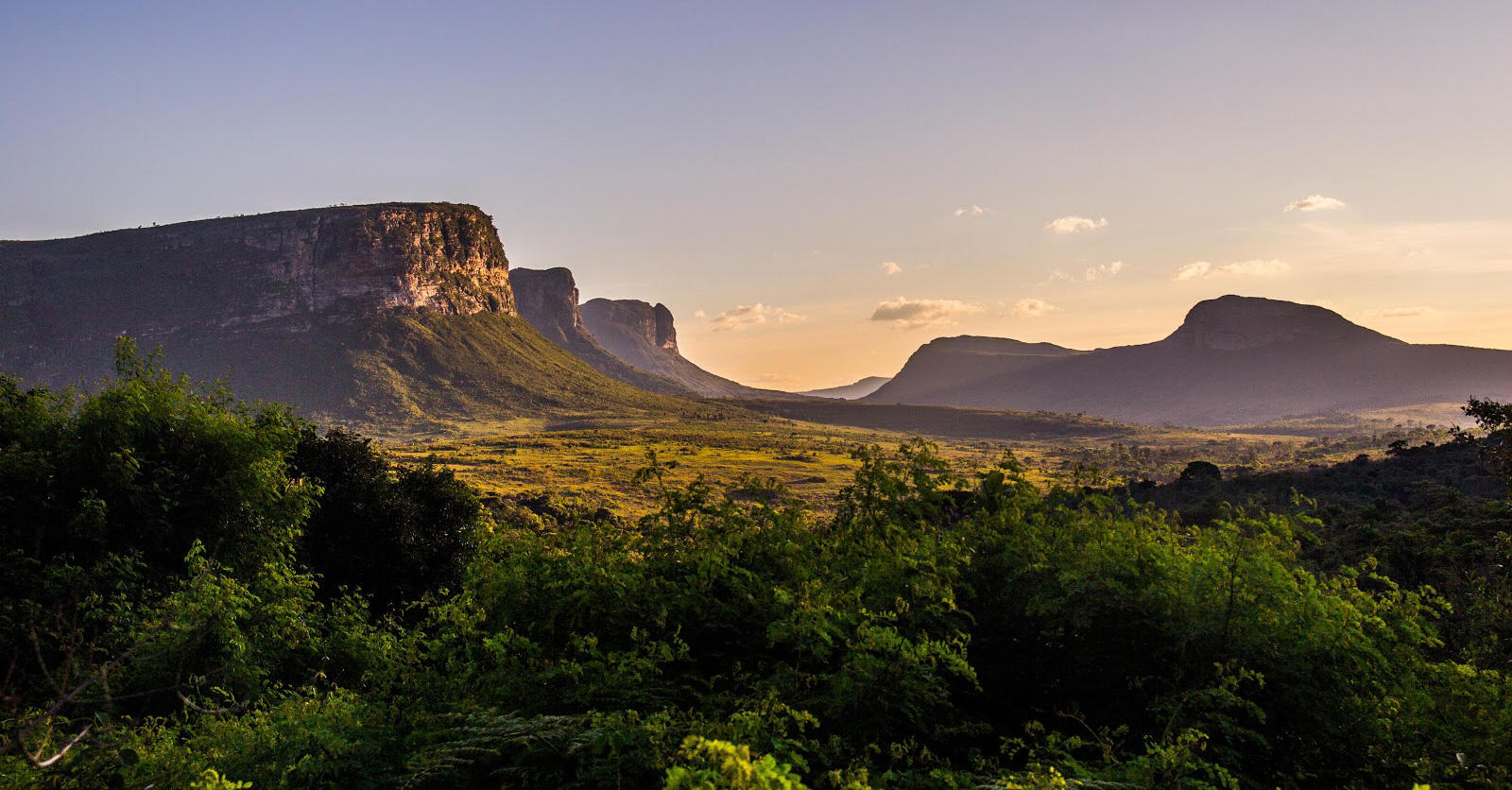
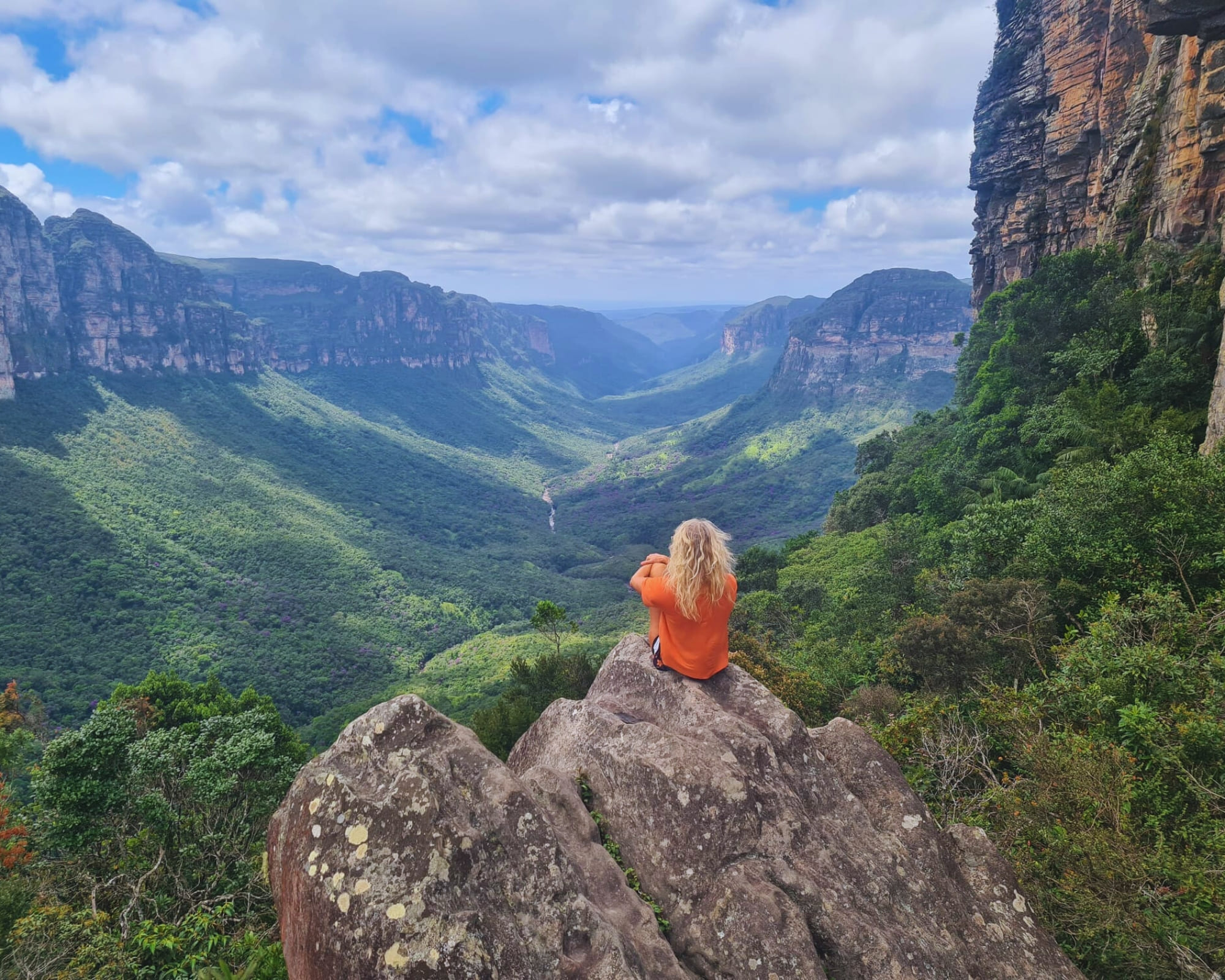
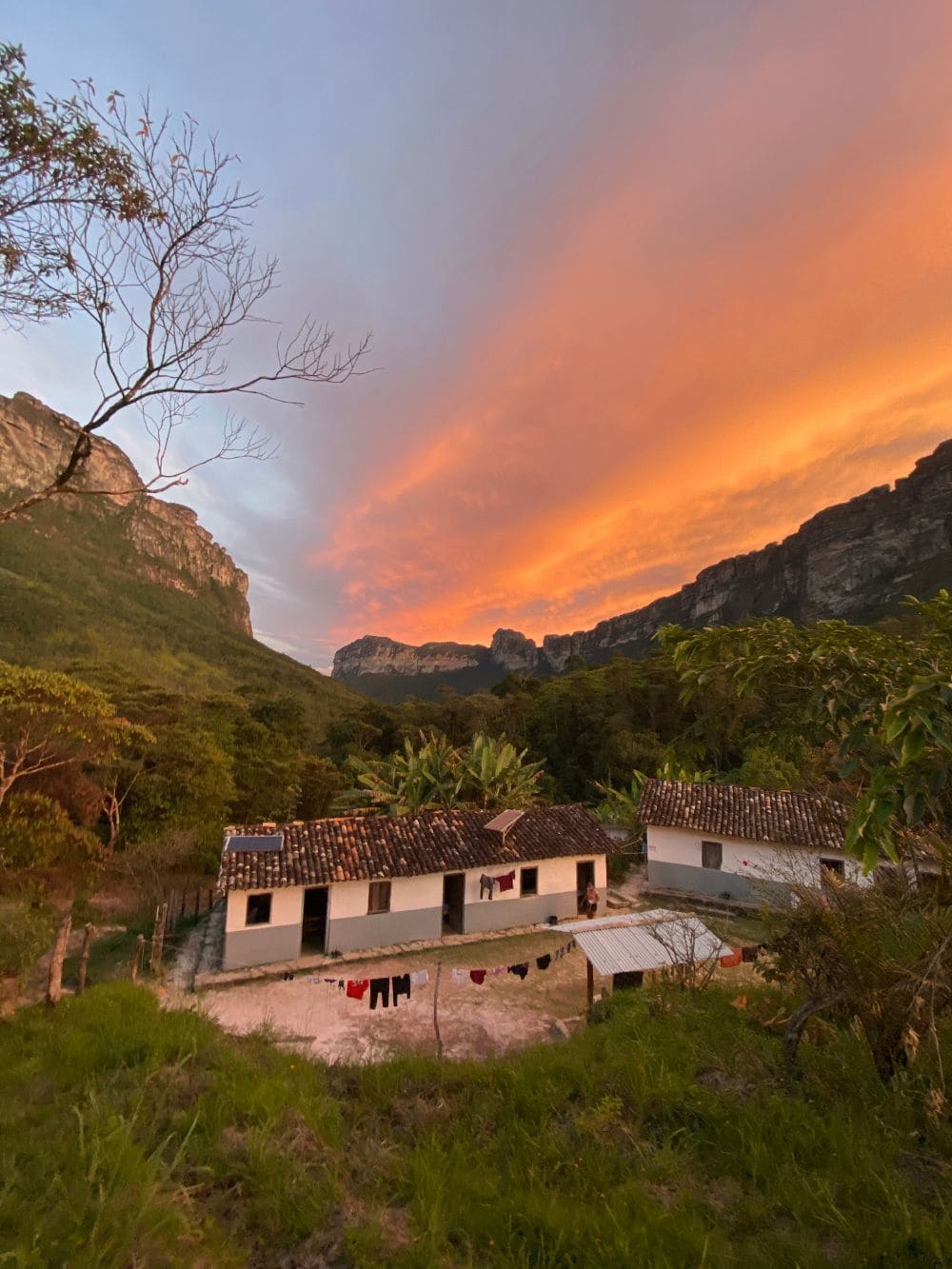
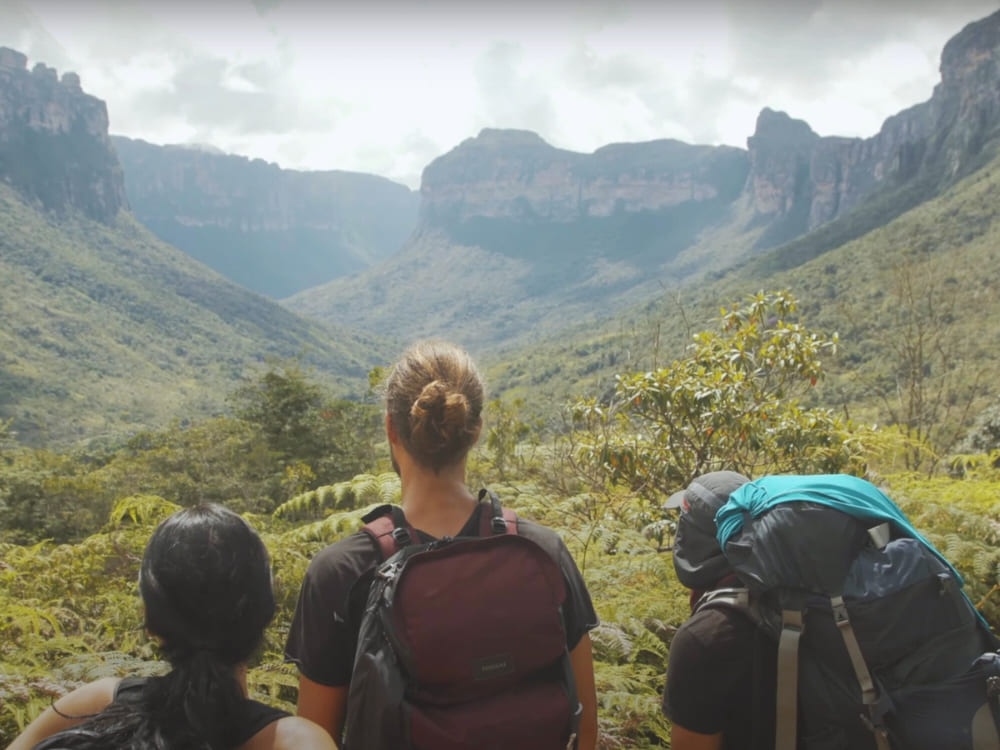
Chapada Diamantina National Park is located in the northeastern part of Brazil, within the state of Bahia. The most common and convenient way to access the park is via Salvador, situated approximately 420 km away.
.
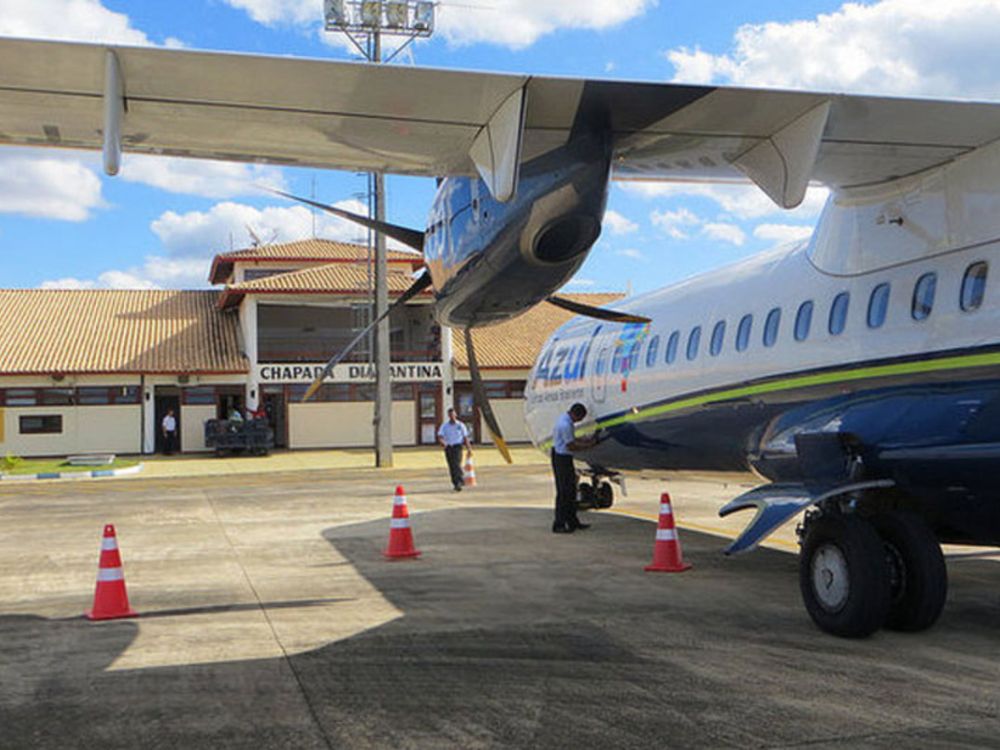
Salvador International Airport (SSA) provides extensive direct flights from various Brazilian cities, as well as international destinations. However, the closest airport is Lençóis Coronel Horácio de Matos Airport (LEC), 22 km away from the national park—though flight options are fairly limited.
To help with your vacation planning, PlanetaEXO, an adventure travel platform specializing in Chapada Diamantina tours, has put together several transportation options. Check them out below!
From Salvador to Chapada Diamantina
.
Please notice: Flight and bus schedules may change unexpectedly at the discretion of their operators. Please check the official channels for details on each transportation option.
By plane
Salvador Airport (SSA) is served by major Brazilian cities, including São Paulo (GRU, VCP, and CGH), Rio de Janeiro, Recife (REC), Belo Horizonte (CNF), and Brasília (BSB). International tourists can fly straight to Salvador from Buenos Aires (EZE/AEP), Panama City (PTY), Lisbon (LIS), Madrid (MAD), and Paris (CDG).
Another option is flying to Lençóis Airport(LEC). Azul Airlines offers flights only twice a week, on Thursdays and Sundays, departing from Salvador at 2:30 PM and returning from Lençóis at 04:10 PM.
By bus
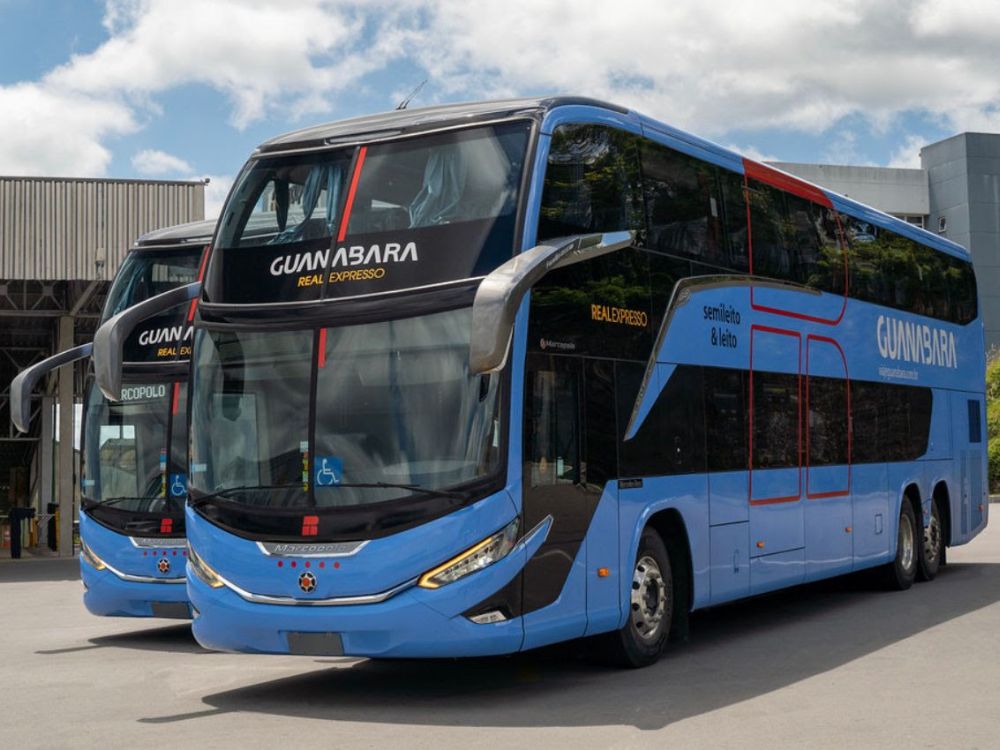
Despite the option to get to Chapada Diamantina via Lençóis Airport, most people take a bus from Salvador. There are three daily departures at 8 AM, 1 AM, and 11 PM from Salvador Bus Station (Terminal Rodoviário de Salvador). The buses make stops in Feira de Santana and Itaberaba.
Known for their cleanliness and comfort, these buses are equipped with air conditioning and toilets. The trip takes about 6 hours, with ticket prices starting at R$100. Buy your tickets at Expresso Guanabara (for those with a CPF number) or BusBud (for foreigners). For the return journey to Salvador, buses depart from Lençóis at 9 AM, 1:45 PM, and 22:50 PM.
By car
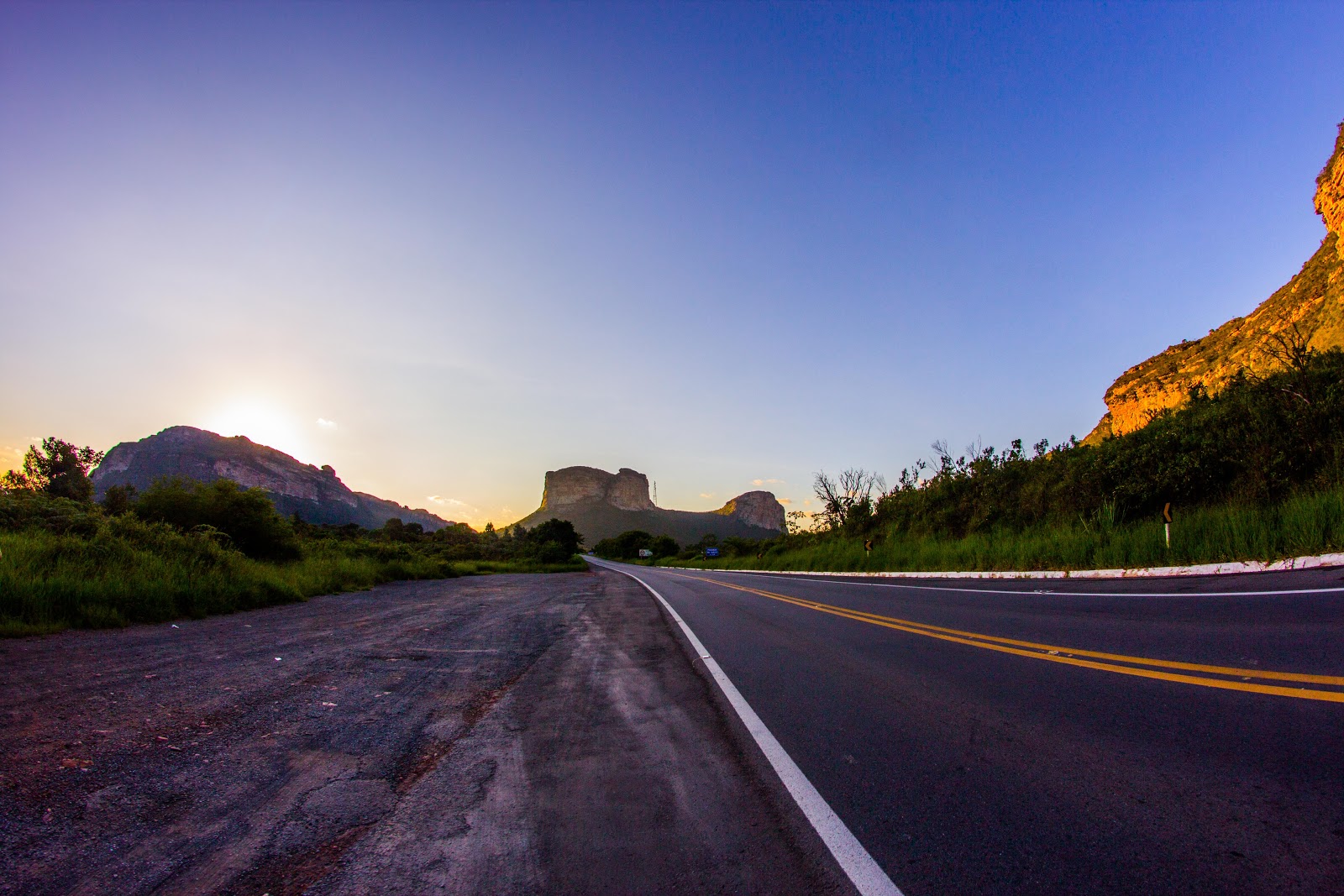
The typical route uses BR-324 and BR-242 highways, covering 420 km in about 6 hours. Car rentals are available at Salvador Airport.
By private transfer
For added comfort and flexibility, private transfers are available. See the prices below:
Car (4 seats): R$ 2.000
Van (15 seats): R$ 3.000
If you are booking your Chapada Diamantina tour with PlanetaEXO, our team can assist you in booking private transfers to the locations. Send us a message!
How to get to Chapada Diamantina from Rio or São Paulo?
From Rio de Janeiro and São Paulo—two of Brazil’s largest cities—you can reach Chapada Diamantina, in Bahia, by flying to Salvador or taking a long-distance bus trip to Feira de Santana.
.
By plane
From Rio’s Galeão (GIG) or São Paulo’s Congonhas (CGH), Viracopos (VCP), or Guarulhos (GRU), you can get to Salvador in over 2 hours. This option offers a quicker and more direct way to start your adventure in the national park.
From Salvador, fly to Lençóis Airport on Thursdays and Sundays, take the bus to Lençóis at the Salvador Bus Station, or hire a private shuttle service (arranged by PlanetaEXO).
By bus
This bus trip from Rio de Janeiro or São Pauloto Feira de Santana can exceed 30 hours, but it’s more budget-friendly, with fares starting at R$ 450. Get your tickets at Busbud.
Once you arrive, continue your journey to Lençóis, taking the same bus as described above from Salvador.
How to get to other small towns in Chapada Diamantina?
Other than Lençóis, Chapada Diamantina is surrounded by several small towns that can serve as gateways to the national park.
.
Palmeiras
Palmeiras is a small town that you have to pass through to get to Guiné and Vale do Capão. From Salvador, you can take the same Expresso Guanabarabus as you would to Lençóis, but you should continue one stop further. This journey lasts almost 8 hours.
Alternatively, you can drive 450 km, which typically takes about 6.5 hours. From Lençóis, a bus ride to Palmeiras takes about an hour, covering approximately 53 km.
Vale do Capão
Located in the Palmeiras municipality, this peaceful village is a hotspot for hikers. From Salvador, take a bus to Palmeiras and then a 40-minute shared van ride to Vale do Capão, which is about 72 km from Lençóis. Taxis are also available.
Guiné
Known for being the starting point for the Vale do Pati trek, Guiné is only accessible by car or private shuttle services, as public transport is not available. The distance from Lençóis to Guiné is approximately 85km, typically involving some driving on rough and unpaved roads.
Ibicoara
Home to the Cachoeira do Buracão and Fumacinha waterfalls, Ibicoara can be accessed from Salvador by a 9-hour bus ride on Fridays or by a 7-hour drive (459 km).
The nearest airport is Vitória da Conquista (VDC), with car rentals available for the 219 km journey to Ibicoara, located 225 km away from Lençois.
Mucugê
Buses from Salvador to Mucugê depart daily at 7 AM and 7 PM. The journey takes up to 8.5 hours, depending on the itinerary.
Driving from Salvador covers 450 km in approximately 6.5 hours. The nearest major airport is Vitória da Conquista (VDC), offering rental car services for the 260 km drive. Mucugê is approximately 147 km away from Lençóis.
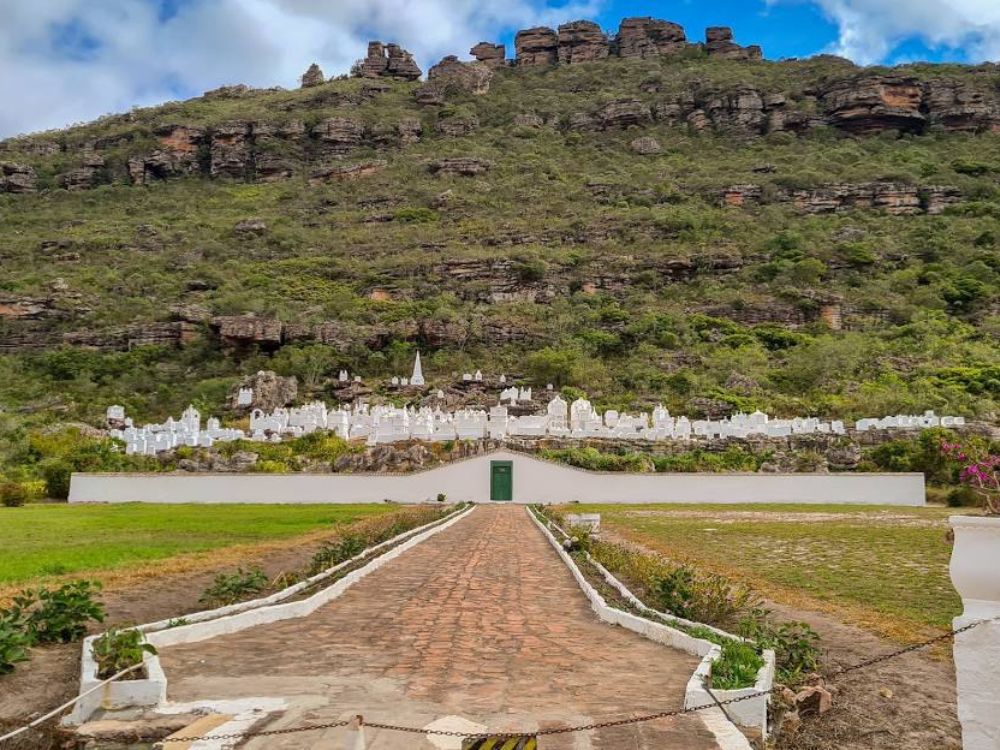
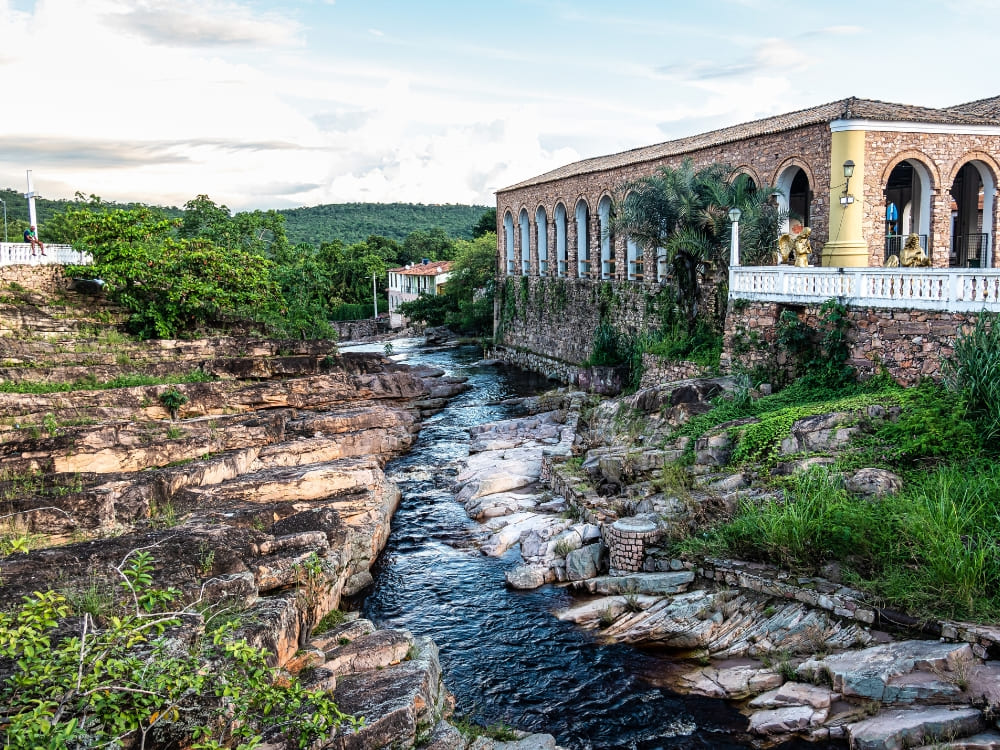
Byzantine Cemetery of Mucugê
Exploring Chapada Diamantina National Park with PlanetaEXO
Now that you know how to get to Chapada Diamantina, it’s time to plan your vacation with us!
At PlanetaEXO, an ecotourism platform specializing in Chapada Diamantina tours, we help you find the best transportation options to the national park, as well as provide accommodation, tailor-made itineraries, and everything else you need for an incredible trip. Contact us now!
Seasons, activities, safety tips, and health precautions. See our recommendations for a fantastic Pantanal safari!
Traveling to any destination requires preparation, but some specifics are exclusive to the Pantanal due to its location, climate, activities, and overall attributes.
Following certain Pantanal travel tips is crucial for visitors safety and enjoyment, but they’re also important for the well-being of locals and the ecosystem.
As an ecotourism platform specializing in Pantanal tours that works with the best local operators, PlanetaEXO has created a guide to help you savor every single moment of your vacation. Check it out below!
1) Time your trip strictly by season and the Pantanal weather
The Pantanal is a primarily warm place, with temperatures up to 29°C (84°F), depending on the season (rainy, wet, intermediate, and dry).
.
The biome is heavily influenced by climate. Higher or lower rainfall volumes cause drastic changes in the landscapes, altering the activity schedules for tourists. That’s why it’s so important to understand the Pantanal weather and seasons before booking your trip—so you know what to expect:
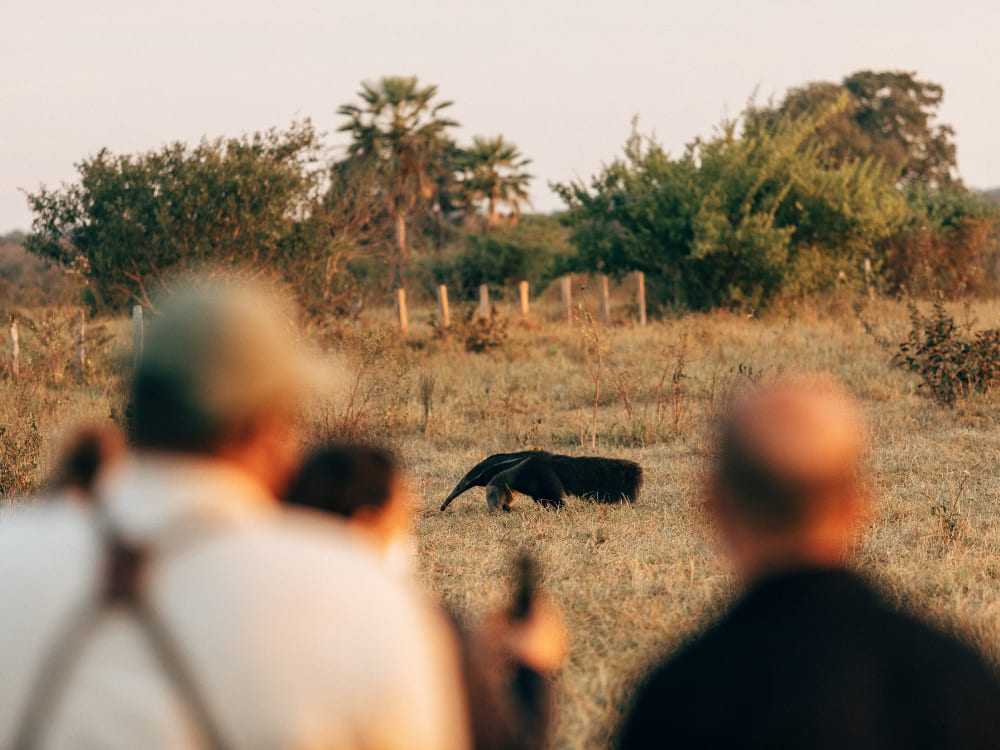
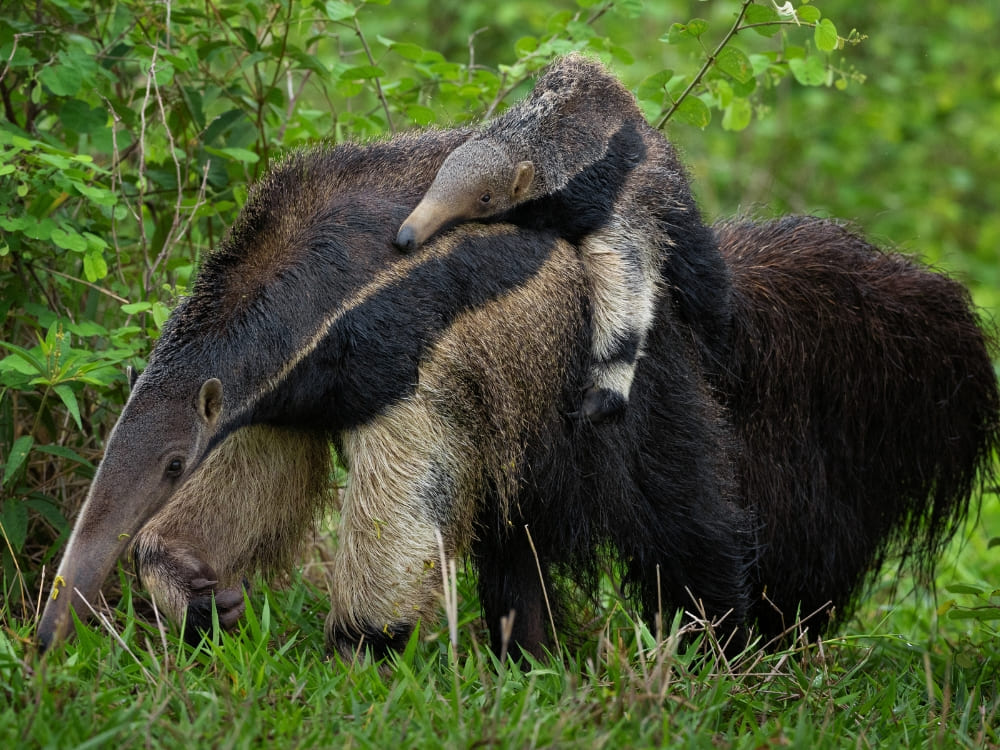
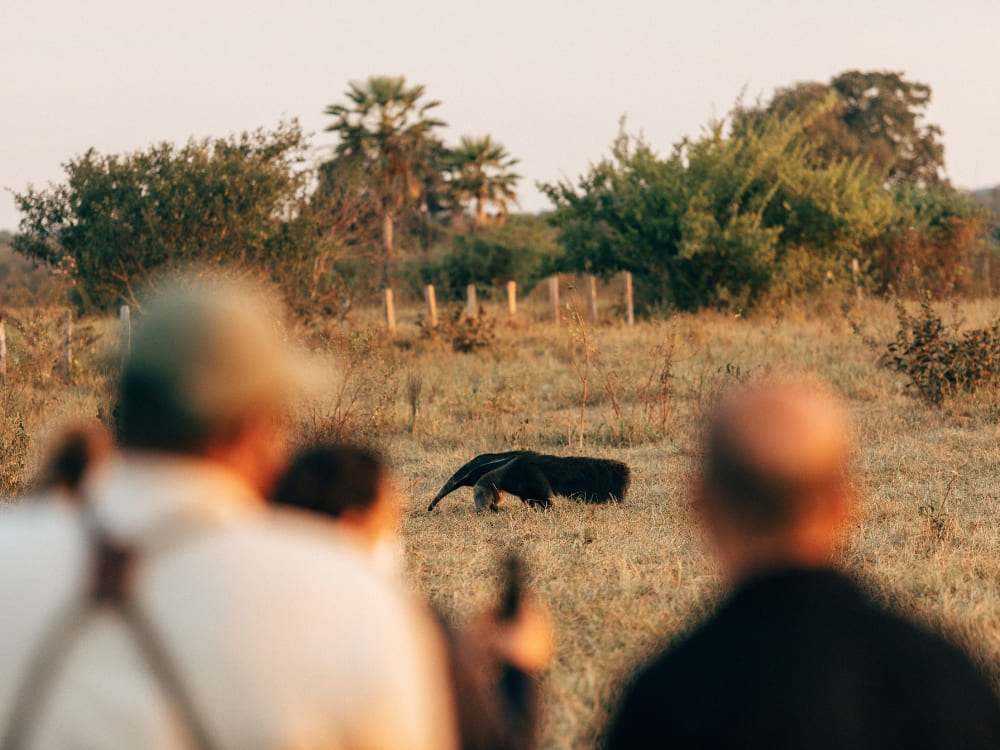
Dry season (July to October): Animals congregate around shrinking water holes, and vegetation is sparse, making spotting jaguars, anteaters, and caimans much easier.
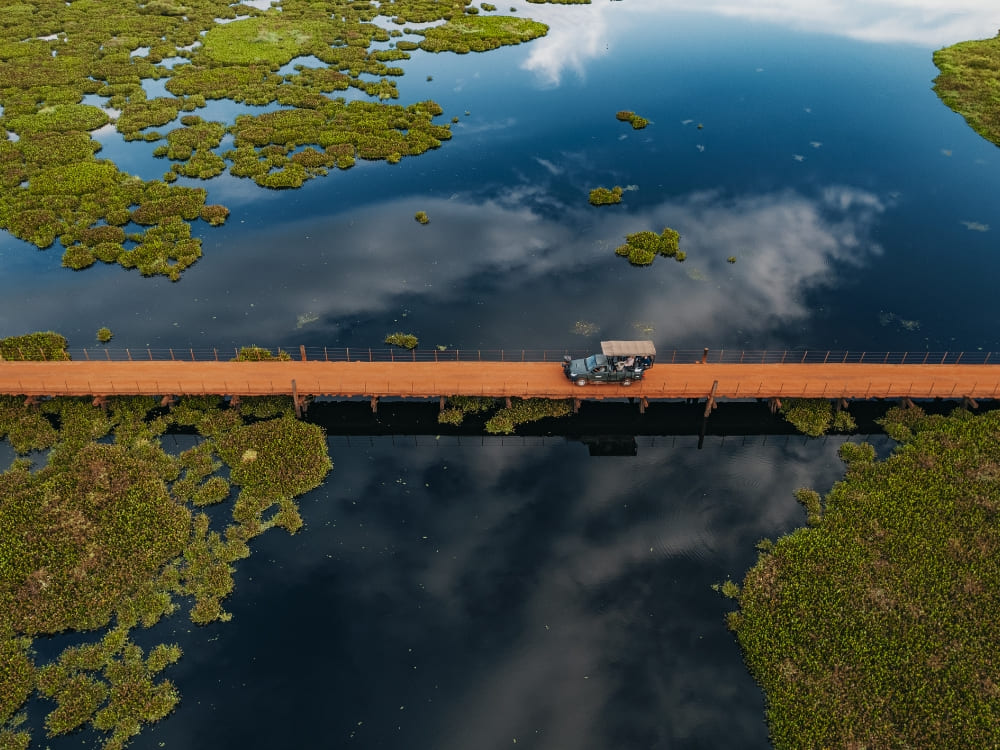
Wet season (December to March): The landscape floods and becomes a lush green mirror. Beautiful for birdwatching and scenery, but many mammals disperse, mosquitoes are particularly abundant and agitated, and road access can be cut off.
The Pantanal is so massive it’s divided into two sides: North and South. By understanding what each region has to offer, you can plan your trip more effectively.
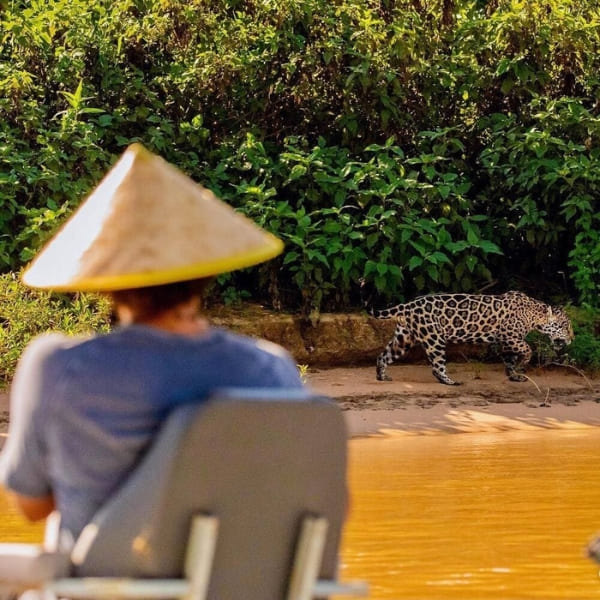
North (via Cuiabá): Best for jaguars—the Transpantaneira Highway leads to Porto Jofre, where boat safaris offer the highest density of jaguar sightings in the world.
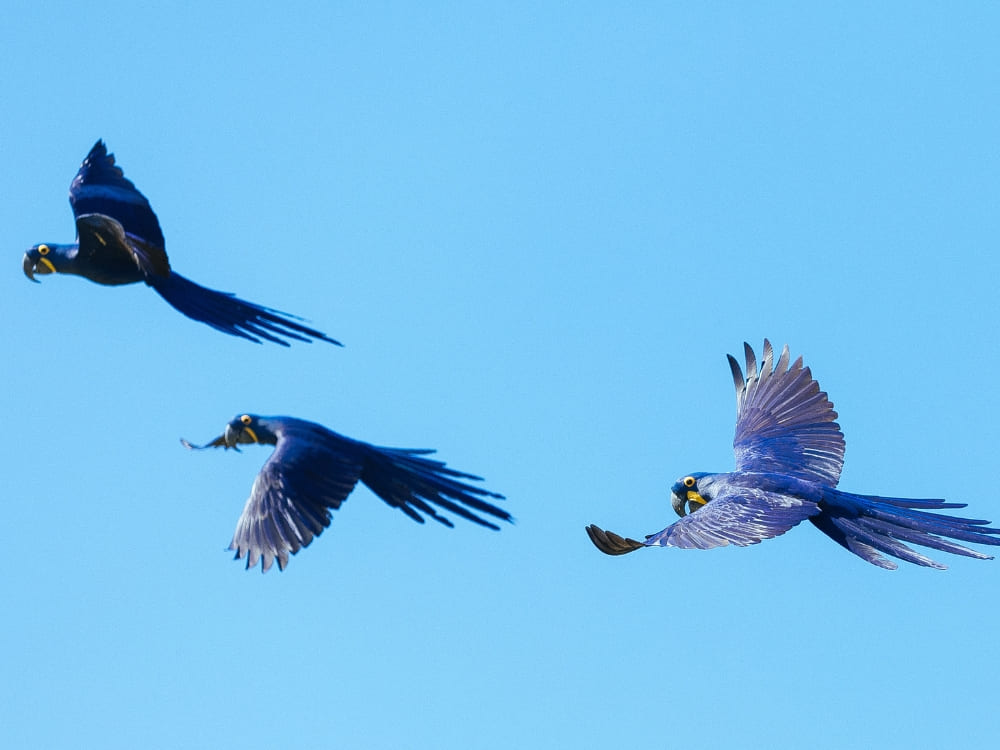
South (via Campo Grande): Best for variety and culture—it offers a mix of wildlife (anteaters, macaws, ocelots) and stronger “Pantaneiro” traditions. It’s also easier to combine with a trip to Bonito (famous for river snorkeling).
Surely one of the most valuable Pantanal travel tips, packing smart is fundamental in any trip. If you bring too much, your bags will be heavy and difficult to move around. If you bring too little, your experience might be tarnished by some very uncomfortable situations. Always aim for balance and mind your own preferences and needs.
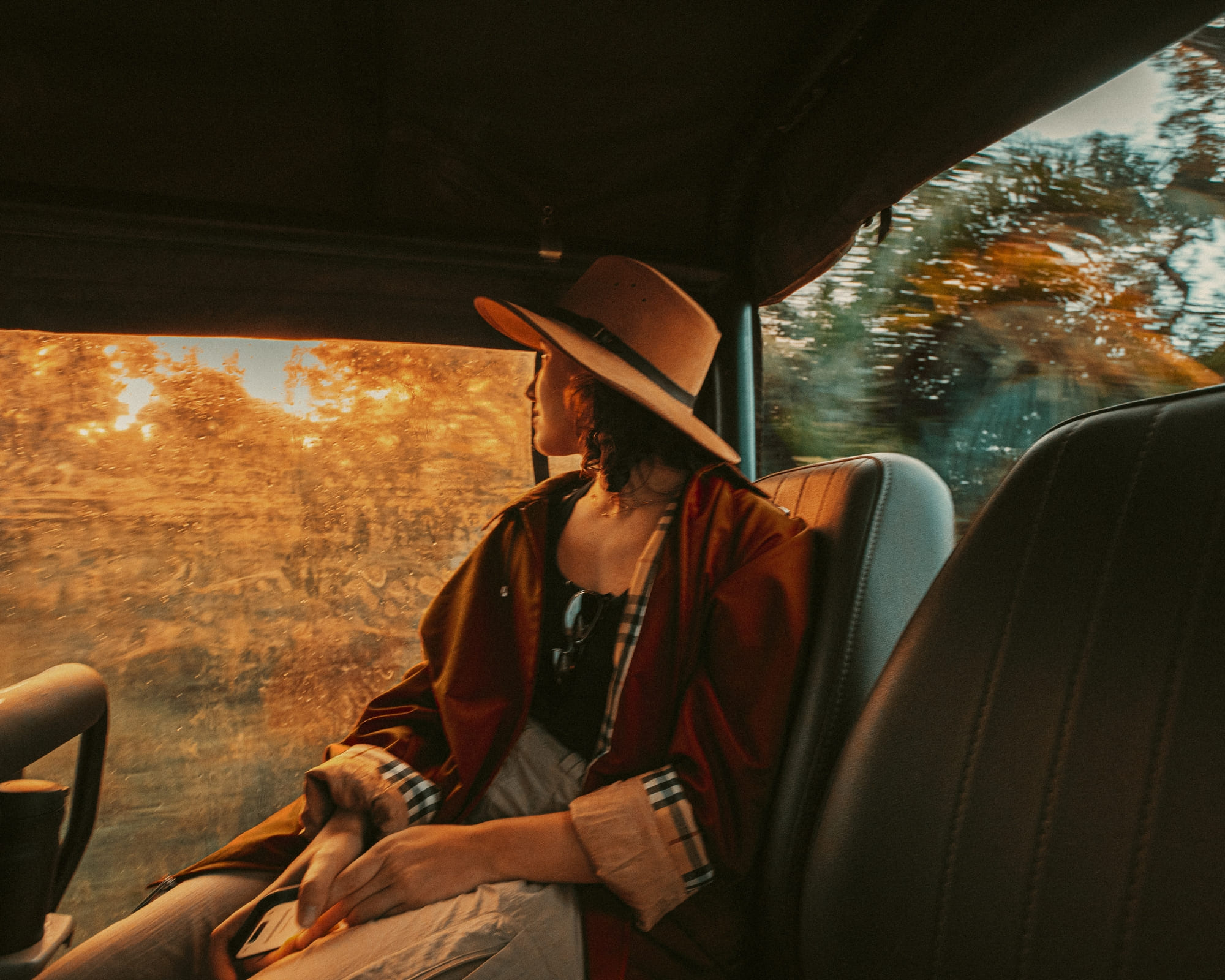
Photo: Layla Motta
Not sure what to pack for the Pantanal? Here’s a list with a few suggestions on what to pack for your Pantanal tour:
Lightweight, breathable clothes: t-shirts, long-sleeved shirts, pants, shorts, windbreakers, khaki or natural-colored clothing for safaris, hats or caps, and swimwear.
Equipment: flashlight, binoculars, personal reusable water bottle, cameras, and extra lenses (especially for photo safaris).
Essentials: documents, medication, sunscreen (SPF 30 or higher), insect repellent, sunglasses, power bank, chargers (phones, cameras, laptops, tablets).
Most lodges accept credit/debit cards and other forms of digital payment, but it’s always a good idea to have some cash (Brazilian real) for food, drinks, souvenirs, and tipping your guide or hotel staff.
Universal power adapters are also very important, as power outlets vary according to location. Before plugging in your devices, please notice that the voltage in the Pantanal area is 127V.
4) Health: vaccines, hydration, and insect repellent
The Brazilian government doesn’t require foreign tourists to be vaccinated, but the Ministry of Health advises that visitors arrive in the country with a complete vaccination schedule for diphtheria, tetanus, polio, and measles.
After arriving in the Pantanal, don’t forget about hydration. The weather is warm, and you will be doing some physical exertion on safaris and other outdoor activities. Always keep a water bottle nearby!
Bring high-strength insect repellent (DEET or Icaridin) and apply it frequently to avoid itching, allergic reactions, and mosquitoes infected with diseases, such as dengue.
5) Choose your adventure
The abundance of the Pantanal is not limited to its natural wealth but also extends to the variety of activities it offers. Don’t know what to do in the Pantanal? Check it out:
Each ecolodge offers these and other experiences that may vary depending on the region, travel package category, and season.
.
Guests also have the option to customize their own itineraries, though it’s necessary to check the conditions with the accommodations’ staff first.
6) Pack your gear for Pantanal photo tours
Photo tours are some of the most beloved experiences in the Pantanal. Drawn by the beauty of the biome and the impressively rich fauna and flora, professional and amateur photographers from different countries travel all the way to Mato Grosso and Mato Grosso do Sul.
Many guides have extensive experience with wildlife photography. During safaris, not only do they point out the best places to find animals, but they also share techniques to capture the most stunning shots.
Photo: Felipe Castellari
Even if you aren’t a pro photographer, a smartphone camera will likely disappoint you. Recommended equipment:
At least two cameras
Telephoto lens (35 to 200 mm and 500 to 600 mm range)
Polarizer filters
Tripod and/or monopod
Binoculars (invest in a high-quality pair, like the 8×42 model)
7) Be aware of the best moments for wildlife watching
Following nature’s schedule is some of the most helpful Pantanal travel tips if you want to witness its wonders.
Pantanal animals tend to leave their hiding places in the early morning or late afternoon to search for food, so be prepared to wake up bright and early or explore the biome when night falls!
Photo: Keith Ladzinski
Remember to keep your distance and stay silent in the presence of wild animals, especially predators like jaguars, maned wolves, and caimans. This ensures longer encounters for a deeper appreciation of the Pantanal fauna and, of course, your safety.
8) Watch the road if you’re driving to the Pantanal
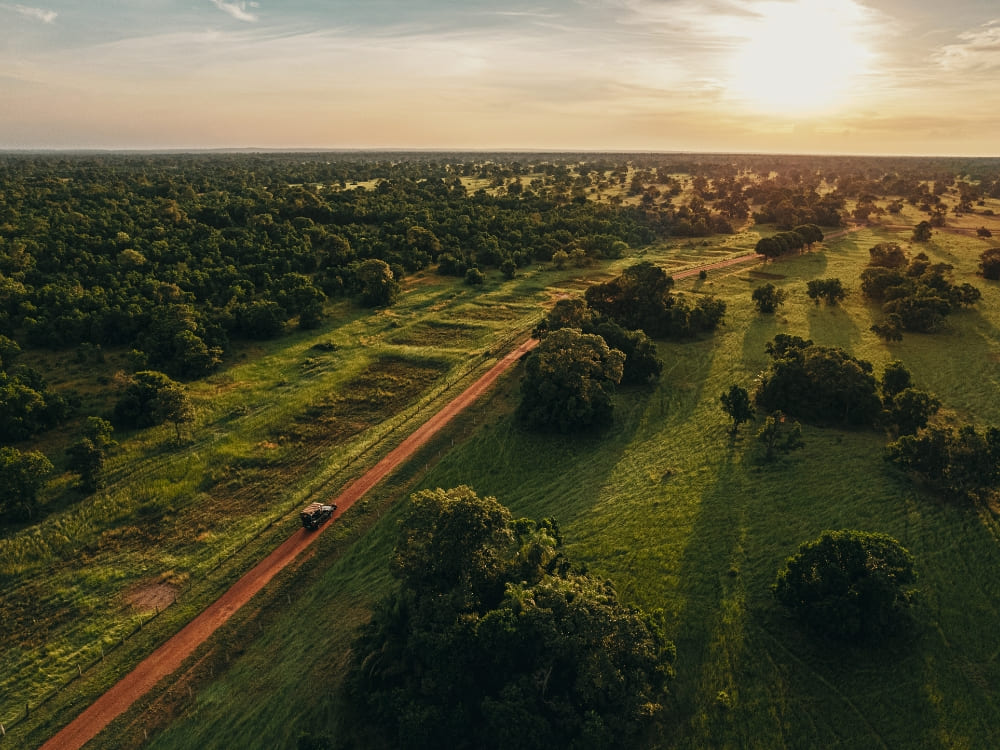
Some travelers decide to take the road to the Pantanal to further enhance the experience. On the North side, you should travel along the Transpantaneira, while the Estrada Parque leads to the South. Both are dirt roads with wooden bridges that tend to get slippery, muddy, and flooded during the rainy season.
Photo: Felipe Castellari
The uneven ground requires 4×4 vehicles. Make sure to fill up your tank in base cities such as Cuiabá, Campo Grande, Poconé, and Miranda. The deeper you get into the wetlands, the rarer gas stations become.
Finally, avoid driving at night. In addition to low visibility, many animals often cross the roads when the sun sets, which increases the risk of accidents.
The overall recommendation is that only people who are familiar with the area should get behind the wheel. Booking a transfer service with local operators is the best alternative for your safety and convenience!
9) Stay in accommodations that respect the environment
Staying in accommodations that respect and care for the Pantanal is crucial for ecotourism. Fortunately, there are incredible ecolodges that implement responsible practices, like recycling, solar energy, rainwater harvesting, and supporting conservation projects.
Photo: Matias Ternes
These ecolodges also look out for the community by employing locals, empowering small businesses, and allowing the Pantaneiro culture to flourish.
Your tour guide is your guardian. These highly qualified professionals know the Pantanal like the back of their hands, including the best spots to watch animals, how to capture the perfect shot, and the overall behavior of the biome.
Photo: Felipe Castellari
Following your guide’s instructions is important for your enjoyment, but also for everyone’s safety—yours, the animals’, and the environment’s.
Booking with PlanetaEXO is the ultimate Pantanal travel tip
PlanetaEXO is an ecotourism platform specialized in Pantanal tours that works with the best local operators. Our talented team is here to help with everything you need, from bookings to choosing tailor-made itineraries.
Positive impact and your dream vacation in one single adventure. Contact us now!
Are you wondering what the best way to visit the Pantanal is? In this travel guide, you’ll find everything you need to plan your trip to Brazil’s wildlife haven.
Home to the greatest population of jaguars in the world, and the best wildlife watching destination in Brazil, the Pantanal has hundreds of different species of birds and mammals. Its vast expanse and unique ecosystem offer an unparalleled experience for nature enthusiasts, making it amust-visit place for those seeking adventure and connection with nature.
As a platform specialized in Pantanal tours that works with the best local operators, PlanetaEXO has put together a comprehensible travel guide with essential information for your trip, such as when is the best time to visit, how to get there, what to do and where to stay. Check it out below!
The largest wetland on the planet and a UNESCO World Heritage site, the Pantanal harmoniously combines fauna, flora and water. Fed by the Paraguay, Cuiabá, Miranda and Taquari rivers, it’s characterized by seasonal flooding and directly influenced by three major Brazilian biomes: Amazon Rainforest, Cerrado and the Atlantic Forest.
The Pantanal’s rich biodiversity is complemented by its cultural significance, allowing visitors to immerse themselves in the traditional lifestyle of local communities that have coexisted with this ecosystem for generations.
Economically, the Pantanal thrives on fishing activities, tourism, and cattle farming, all with a strong commitment to conservation. Over the years, efforts to educate locals and tourists about the socioeconomic benefits of preserving the biome have been successful, fostering a balanced, imperative relationship between wildlife and human activities.
The Pantanal is so massive it extends itself across Brazil, Bolivia and Paraguay, but most of its territory is located within Brazilian borders, in the states of Mato Grosso and Mato Grosso do Sul.
Divided by Northern and Southern Pantanal, the biome spans over 210,000 square kilometers — only a bit smaller than the entire territory of Guyana (214,969 km²)!
What is the wildlife like in the Pantanal?
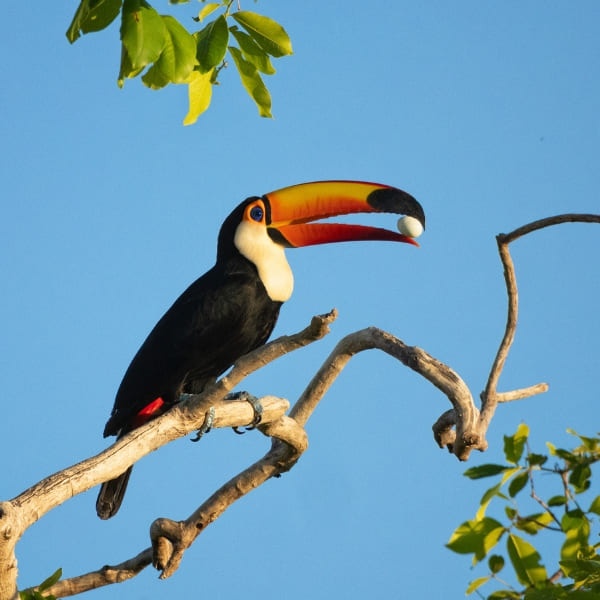
Despite being often overshadowed by the Amazon, the Pantanal hosts the continent’s highest concentration of wildlife. It’s a haven for wildlife observers and photographers, boasting around 325 species of fish, 656 birds, 159 mammals, 53 amphibians and 98 reptiles.
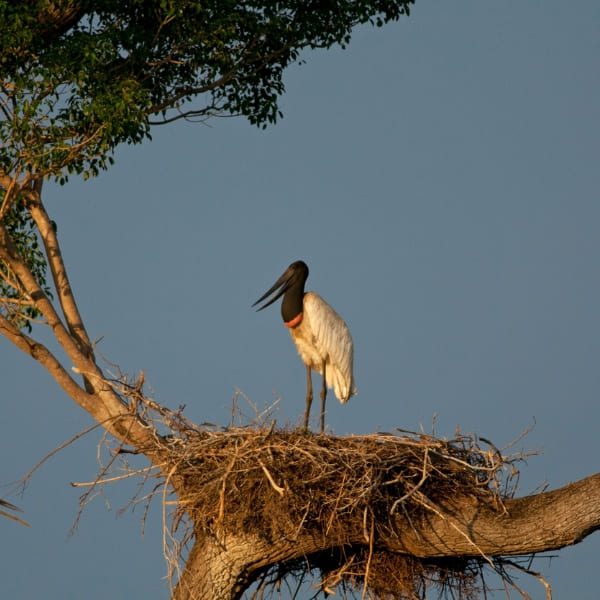
Jaguars are the stars of Brazilian wetlands, but other native animals are often spotted roaming around, like capybaras, giant otters, jabiru storks, mash deer and the mysterious maned wolf.
When planning your trip, it’s important to understand if you’re going to the North or South Pantanal. Naturally, different routes should be considered.
For adventurers exploring the Northern Pantanal, the gateway is Cuiabá, capital of Mato Grosso, accessible via Marechal Rondon International Airport (CGB) and served by direct flights from Brazilian capitals (São Paulo, Rio de Janeiro, Belo Horizonte, Brasília, etc). If you’re going to Porto Jofre via Poconé, the journey continues along the Transpantaneira Highway.
Campo Grande, capital of Mato Grosso do Sul, is the starting point for traveling to Aquidauana, Miranda, and Corumbá — cities that surround the Southern Pantanal. Campo Grande International Airport (CGR) offers direct flights from São Paulo, Rio, Campinas, Brasília, etc.
The Pantanal is a year-round destination. Each season has its own unique charm and opportunities for exploration.
The rainy season (November to December) turns the vegetation into a vibrant green, while the wet season (December to March) is known for the plain floods and river overflows — perfect for boat tours and birdwatching.
During the intermediate season (April to June), the water levels start to drop, making it a great time for the fauna. The dry season (July to October) is even better for wildlife watching, as well as horseback riding and hiking.
Pantanal experiences are as abundant as the biome itself. See the main activities below!
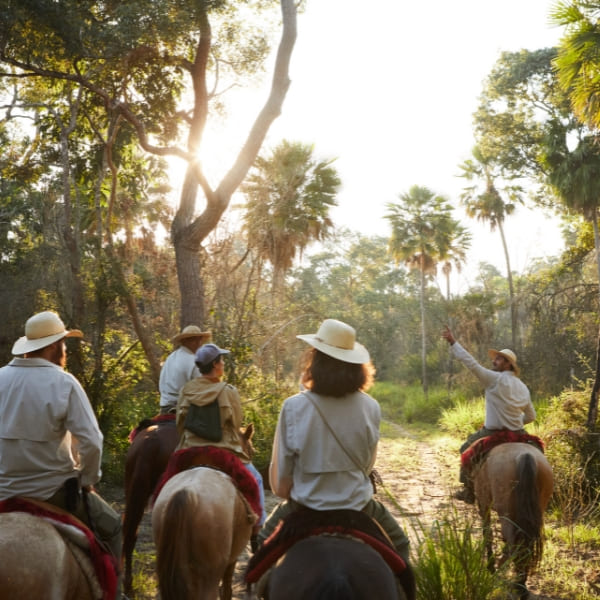
Horseback riding
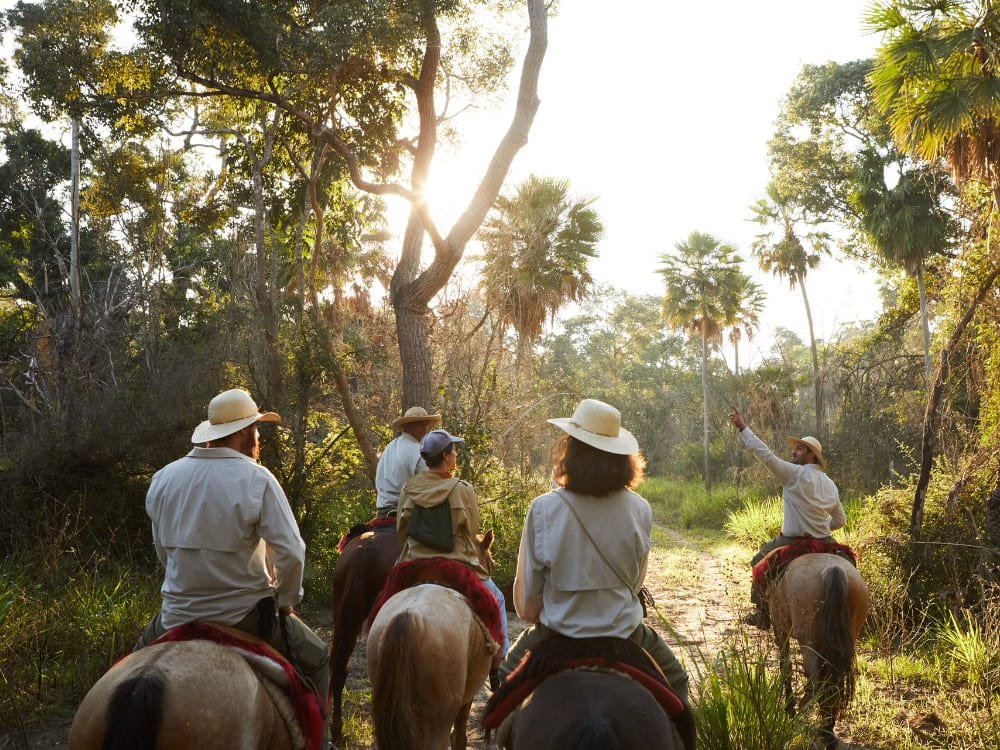
Horseback riding is a traditional way of exploring, allowing visitors to cross flooded areas and access hard-to-reach places. That’s how you dive deep into the true Pantanal lifestyle!
Photo: Layla Motta, Caiman
Jaguar sighting
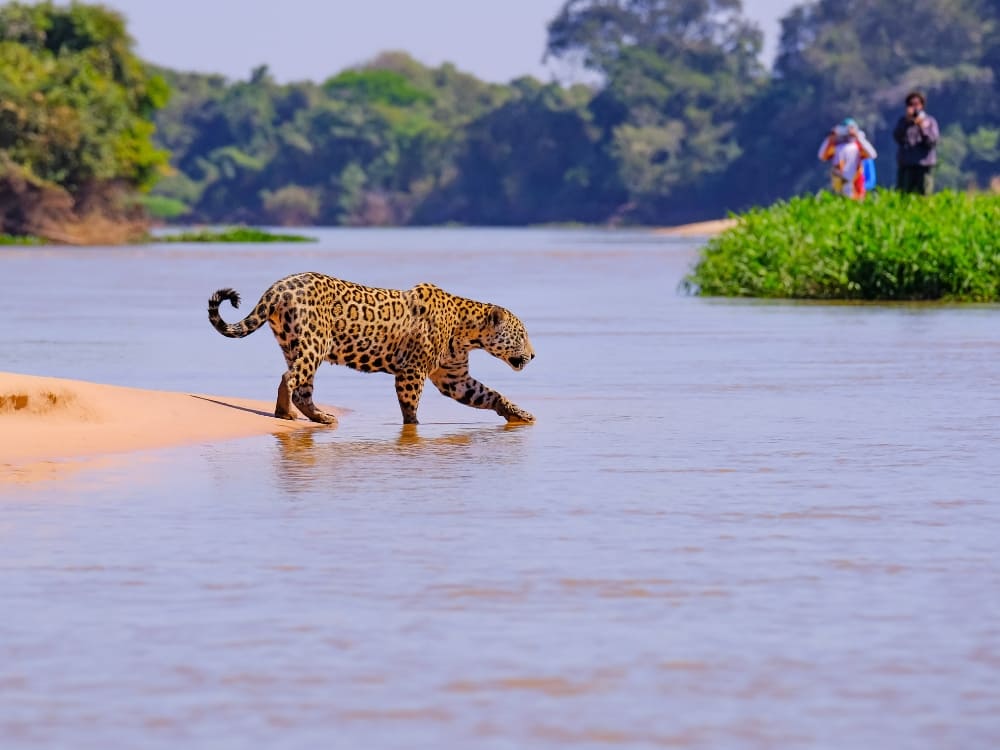
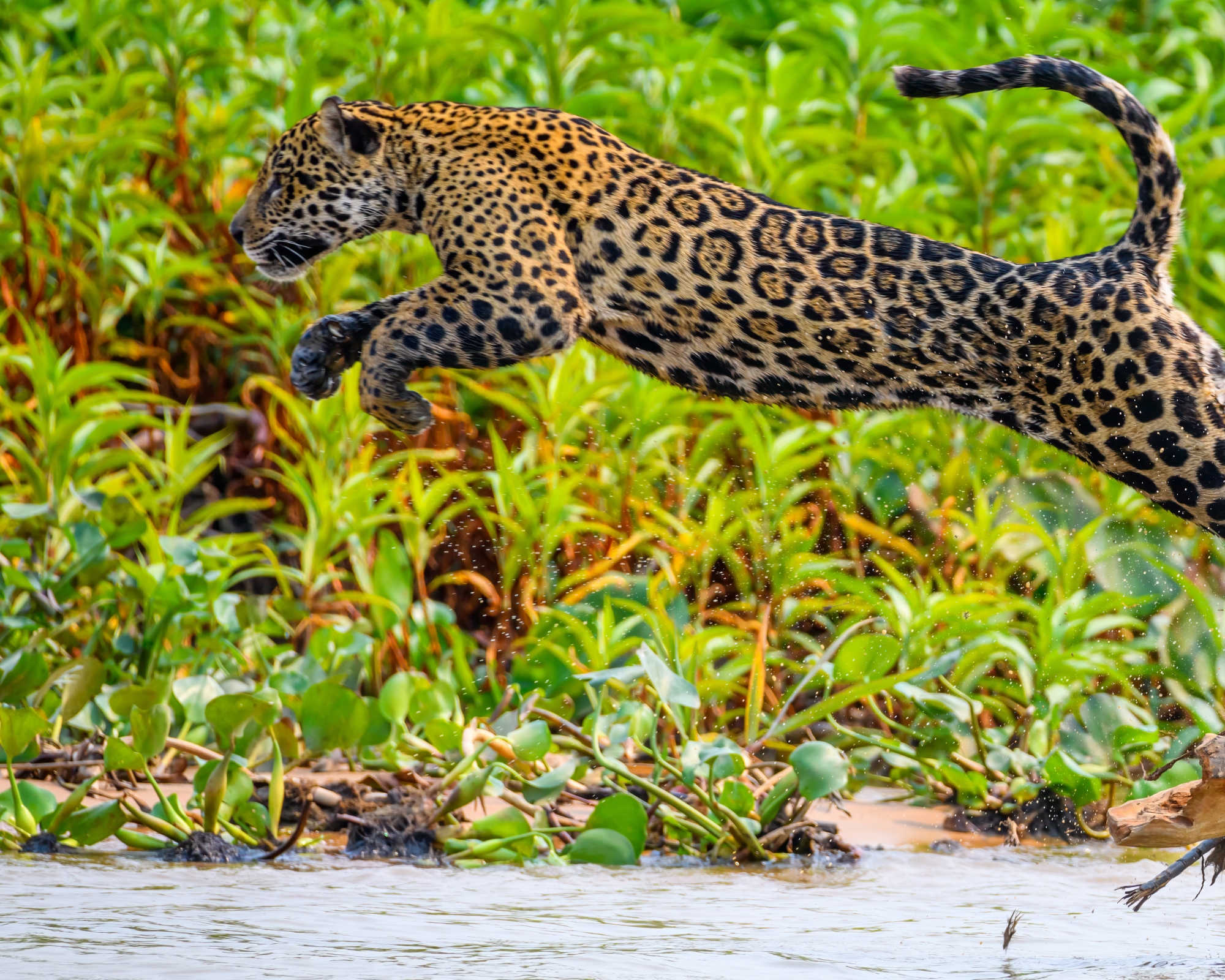
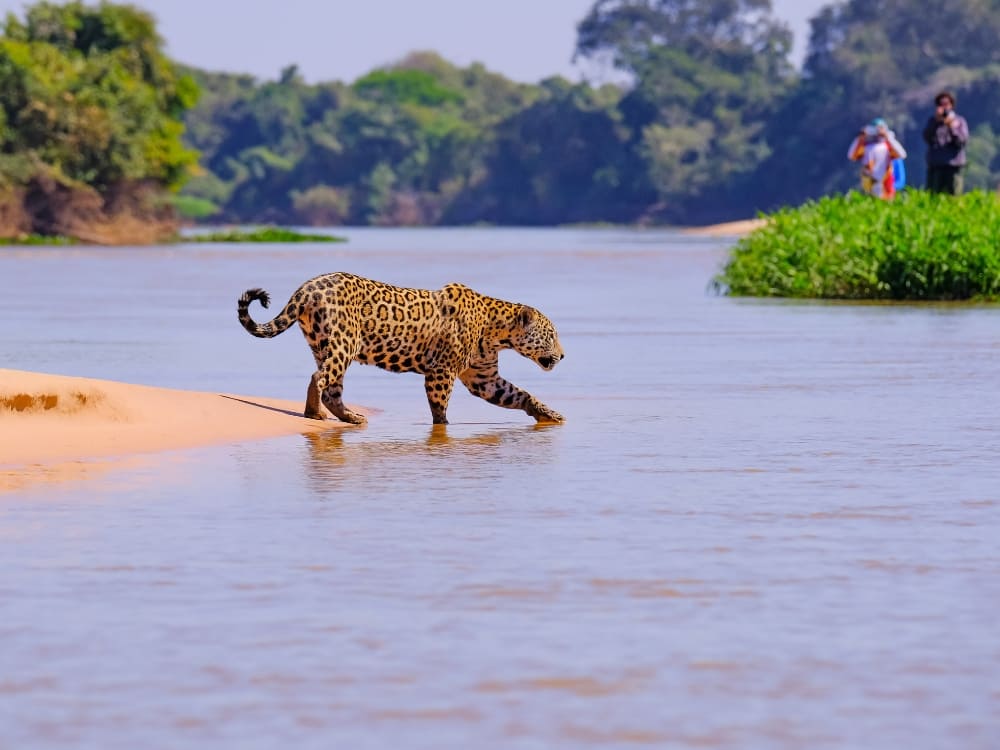
The Pantanal is the best place in the world to see jaguars in their natural habitat. In the Northern Pantanal, particularly around Porto Jofre, jaguar sightings are frequent along the banks of the Cuiabá River.Most lodges offer boat safaris that provide excellent opportunities to observe and photograph the largest feline of the Americas.
Spotting jaguars in South Pantanal is less likely, but definitely not impossible. Casa Caiman, in Miranda, is the only place in the area where these animals can be seen.
.
Photo safaris
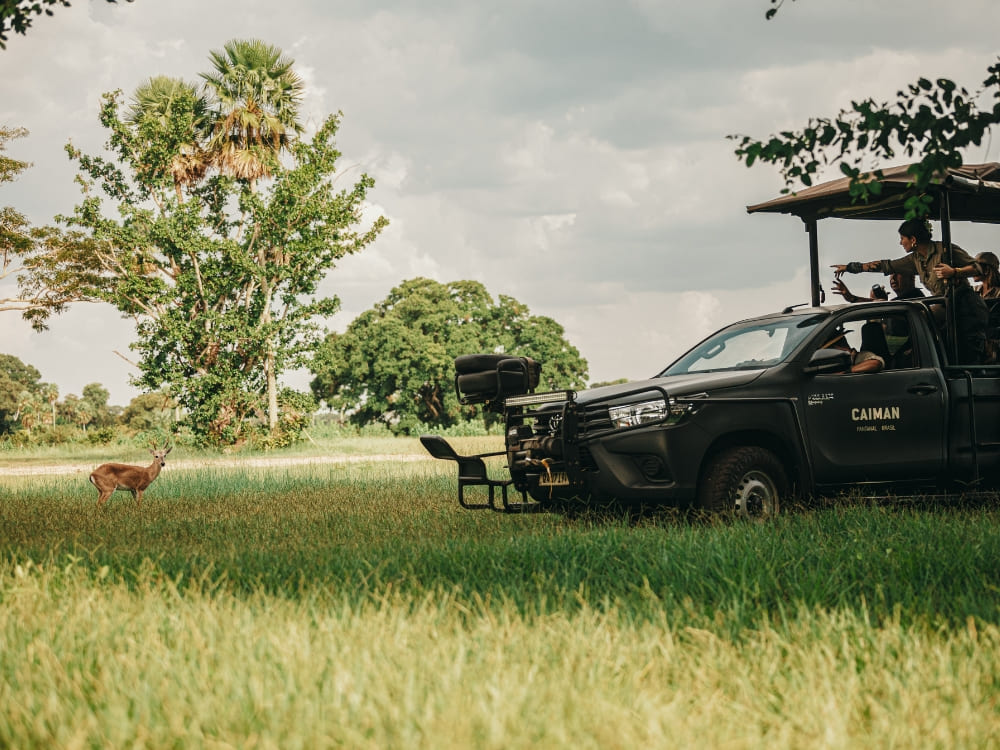
Pantanal photo safaris are conducted in 4×4 vehicles, which allow visitors to explore diverse landscapes and capture stunning images of the wildlife, while also enabling access to remote areas. Naturally, this increases the chances of encountering rare species and getting close-up shots of the biome’s rich biodiversity.
To guarantee the best shots, photo safaris are led by experienced guides who know the perfect spots to photograph birds, reptiles, and mammals.
Photo: Felipe Castellari, Caiman
Boat trips
Boat trips are incredible options to observe the wildlife from the water. As you navigate the rivers, you can spot a wide variety of Pantanal animals, including capybaras, caimans, giant otters, and numerous bird species.
Photo: Felipe Castellari, Caiman
Night spotlighting
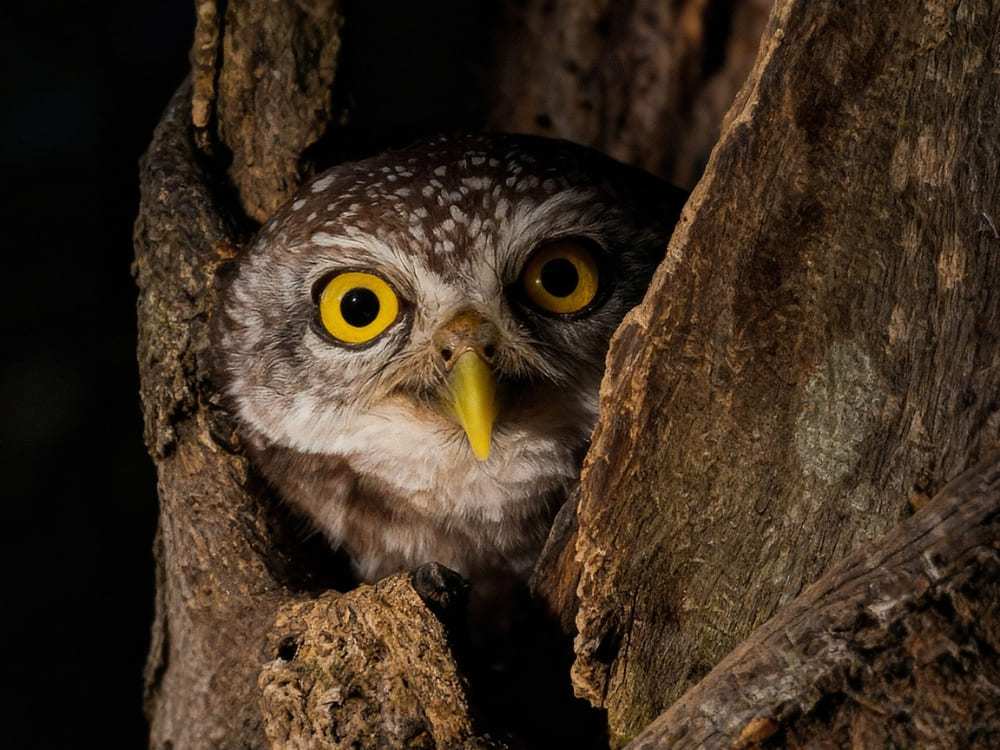
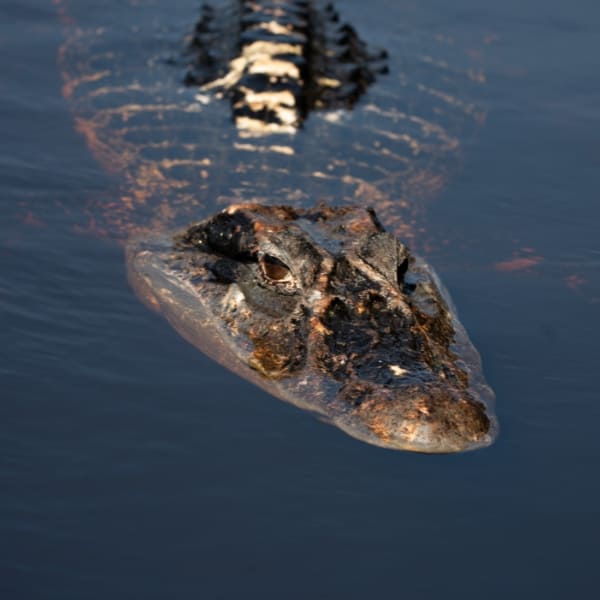
When night falls, tour guides take visitors to the wetlands to watch nocturnal animals, like owls and caimans. Using spotlights and flashlights, experiencing the Pantanal come alive at night is unforgettable, as many species are more active and easier to see under the cover of darkness.
@allecgomes.jpg
Ecological walks
Ecological walks across the Pantanal are guided hikes that allow visitors to discover the area’s flora and fauna on foot. These walks are led by seasoned guides who share insights about the ecosystem, plant species, and animal behaviors.
Photo: Felipe Castellari, Caiman
👉 Check our Pantanal tours and enjoy these incredible experiences!
Where to stay in the Pantanal, Brazil?
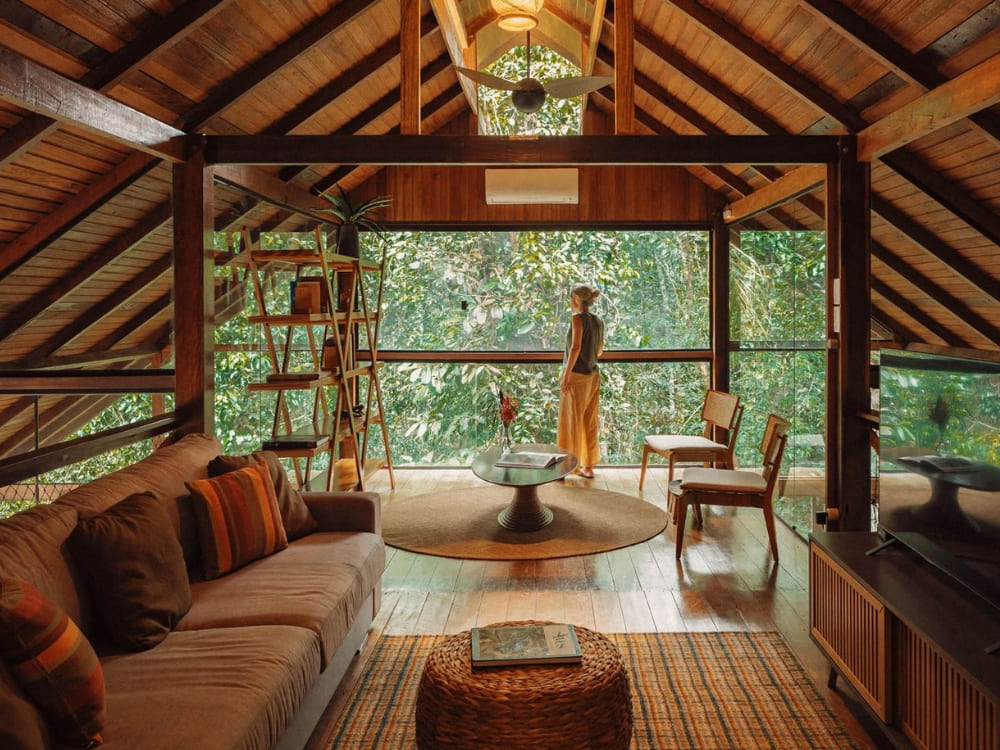
In general, the accommodations in the Pantanal are typically found on traditional farms that have been transformed into conservation areas due to ecotourism efforts. This provides an authentic taste of the Pantaneiro lifestyle while you enjoy a wonderful stay experience with delicious meals, comfortable rooms and premium services.
If you’re heading to Northern Pantanal, book your stay in Porto Jofre, Poconé, Barão de Melgaço or Cáceres. You’ll find simple, yet cozy accommodations with a charming rustic style that reflects directly into local day-to-day life.
Miranda, Aquidauana and Corumbá, in Southern Pantanal, have a great variety of accommodations, from modest to luxury. Regardless of the category, they all combine hospitality, comfortable facilities and sustainability.
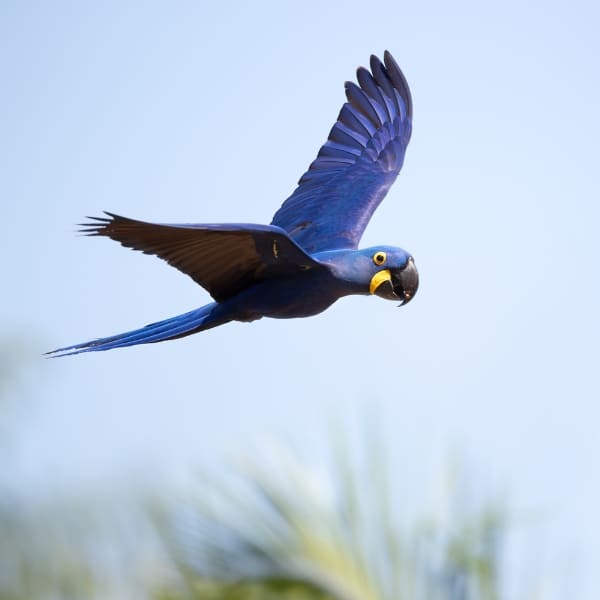
You need at least 4 days to truly enjoy the richness of the Pantanal with safaris at sunrise and sunset, explore different habitats, and increase your chances of seeing species like jaguars, giant otters, hyacinth macaws, capybaras, etc.
By staying 5 days or more, you’ll have the opportunity to visit more remote regions, join specialized activities (jaguar tracking, birdwatching expeditions, photography-focused tours), and engage more closely with local conservation projects.
Don’t forget: reaching one of the biome’s gateway towns requires a considerable amount of time on the roaddue to the distances involved, so be prepared to set aside at least 3 hours. The drive itself is a mini-adventure that offers great opportunities for wildlife spotting. Enjoy this journey as a part of your Pantanal trip!
When choosing your Pantanal safari, several factors come into play:type of wildlife, comfort level, preferred activities and budget.
The Northern Pantanal, especially around Porto Jofre, is perfect for wildlife watching. Boat safaris often sail across Cuiabá River in search for jaguars and other native species. Check it out: Pantanal Jaguar Safari in Porto Jofre, Cuiabá.
Alternatively, the Southern Pantanal also offers remarkable safari experiences. If you have a larger budget, the best option is the ecological refuge for jaguars,notable for its conservation and education efforts that help sustain local wildlife and promote eco-friendly tourism.
This is also the only place in the South that guarantees a 98% chance of jaguar sightings while also providing luxury accommodations. Check it out: Pantanal Luxury Safari.
For those on a limited budget, there are other options for safaris in the Southern Pantanal, including Pantanal tours from Campo Grande. Adventures like this provide an incredible wildlife viewing experience with horseback riding, boat tours, jeep safaris, and ecological walks. Accommodations are simple, yet incredibly cozy.
When preparing for a trip to the Pantanal, packing the right gear is essential to ensure comfort and safety. Here’s a list of must-bring items to make the most of your experience:
Light clothes, including at least one UV long-sleeved shirt and shorts/pants (earth or light colors)
Lightweight jacket
Windbreaker or rain jacket
Swimming suit
2 pairs of shoes (sneakers/walking shoes and hiking boots)
Sandals (or water shoes)
Socks
Hats
Sunglasses
Waterproof sunscreen (SPF30+)
Insect repellent
Bath towel and washcloth
Camera, batteries/battery charger for cameras (underwater camera is also highly recommended)
Headlamp or flashlight + extra batteries
Dry-bag for cameras and personal gear
Daypack for hiking and short outings
Binoculars
Non-perishable snacks
Non-breakable reusable water bottle
.
What makes the Pantanal so special?
Traveling to one of the world’s most fascinating ecosystems not only allows for an escape from the urban pace, but it also provides an authentic immersion in untouched nature.
The Pantanal is a one of a kind destination, offering the opportunity to witness rich biodiversity while encouraging local tourism, supporting communities, and helping conservation efforts.
Local customs also add an enriching cultural layer to the journey. Through ecotourism activities, visitors dive deep into the unique blend of tradition and nature to live experiences found nowhere else on Earth.
.
Book your trip for the Pantanal in Brazil with PlanetaEXO
We hope you’ve enjoyed our Pantanal travel guide! Now that you know everything about this incredible place, it’s time to start vacation planning.
PlanetaEXO specializes in Pantanal tours and connects you with the best ecotourism operators while assisting with tailor-made itineraries, transfer options and much more. Book now!
Learn everything you need before enjoying your Amazon tour in Brazil, including when is the best time to visit, how to get there, what are the main activities and much more!
Are you a nature lover and your ultimate dream to visit the Amazon Rainforest in Brazil so you can experience the fascinating wonders of the largest tropical rainforest in the world? If the answer is a loud and clear “yes!”, then you’ve come to the right place!
There are many ways to discover it, from guided tours with wild camping, to staying in luxury jungle lodges, or even enjoying river cruises.
To help with your vacation planning, PlanetaEXO, an ecotourism platform specialized in Amazon Rainforest tours in Brazil, has created this carefully curated travel guide. Check it out below and discover how to visit the Amazon and other important information about this spectacular destination!
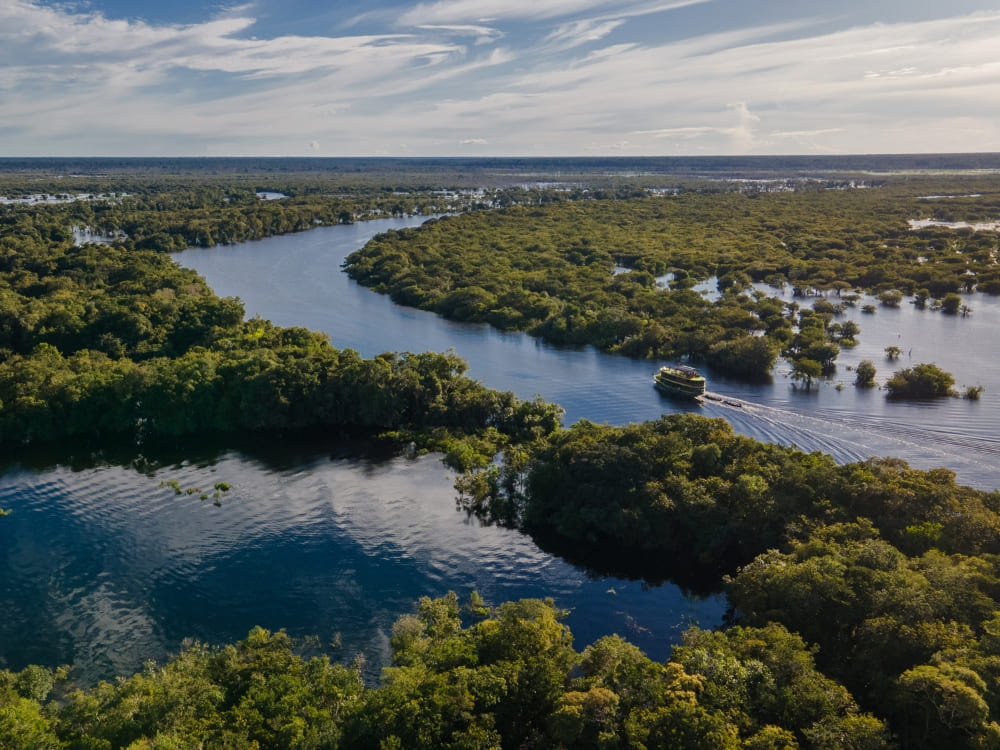
If it were a country, the Amazon would be the seventh largest in the world. It spans 6.7 million km² — twice the size of India!
The impressive numbers go on, this time regarding fauna and flora: there are 30 million species of animals — although not all of them have been officially cataloged yet —, 2.5 million types of insects, and 2,500 and 30,000 varieties of trees and plants, respectively.
When it comes to the watershed, 20% of the planet’s freshwater belongs to the Amazon. The Amazon River alone has an extension of 6,400 km, going down the Andes Mountains and flowing into the Atlantic Ocean.
Such richness holds more than half of the world’s entire biodiversity, making the value of the Amazon Rainforest immeasurable and irreplaceable.
The Amazon Rainforest is in South America, reaching eight different countries: Brazil, Bolivia, Colombia, Ecuador, Guyana, Peru, Suriname and Venezuela.
59% of its area is solely located in Brazil, touching the states of Amazonas, Mato Grosso, Pará, Acre, Amapá, Rondônia, Roraima and Tocantins.
Can you visit the Amazon Rainforest?
Yes, absolutely! But it’s important to rely on professionals who truly know the area. The forest is incredibly beautiful, but the wilderness can be harsh. So if you’ve ever wondered if it’s safe to visit the Amazon Rainforest, the presence of qualified guides is crucial and non-negotiable.
This is also the best way to appreciate nature in its fullness, since an expert will know how to move around the jungle. The activities are vast, but some factors should be considered for everyone’s enjoyment, like weather conditions and the right placesto spot animals.
Brazil Amazon tours are actually encouraged because they can also be a great way to ensure its preservation. Ecotourism is a powerful tool to provide work for local communities. When sustainable travel companies employ these people, they inspire them to work in favor of the forest instead of its degradation.
.
Ecotourism also raises awareness about environmental issues, like deforestation, pollution and climate change. Upon seeing the wonders of the Amazon, travelers fully understand why it is so important to protect it, which can make them engaged in conservation projects not only in the rainforest but also in their home countries.
There are a few ways to visit the Amazon Rainforest in Brazil, but the most convenient one is flying to Manaus, capital of Amazonas.
From the US, travelers can depart from Miami (MIA) and fly straight to Manaus (MAO). From Fort Lauderdale (FLL), connecting flights have layovers in Bogotá (BOG), Panama City (PTY), Belém (BEL) and São Paulo (VCP or GRU).
From Europe, layovers are also expected in Rio de Janeiro (GIG), Belo Horizonte (CNF), Recife (REC), Fortaleza (FOR) or Brasília (BSB), depending on the departure location.
.
The Amazon in Mato Grosso and Pará are also amazing vacation spots to explore nature. In this case, flying to these states’ capitals is the best option.
When is the best time to visit the Amazon Rainforest in Brazil?
Although the Amazon is considered a year-round destination, the period from January to September offers the best conditions because it avoids the peak of the dry season. At the same time, there are good hiking trail options and enough water for aquatic activities.
.
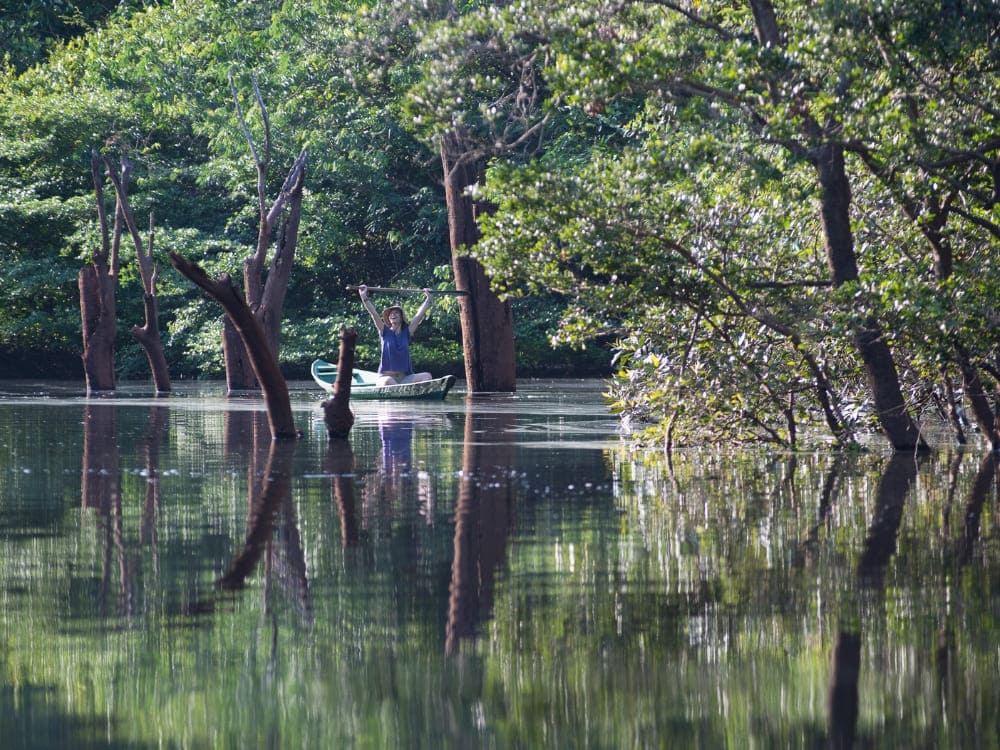
The wet season (December to May) is great for people who want to enjoy the Amazonian rivers by kayaking, canoeing, swimming and exploring the igapós (flooded forests). Rainstorms are common, but don’t last too long.
Meanwhile, the dry season (June to November) is popular because it usually allows both water and land-based activities. However, extended droughts are becoming more frequent, especially from October to December. This causes low water levels and limited access to a few areas and itineraries, though things tend to get better by January.
In addition to how to visit the Amazon Rainforest, what to do during the trip is a very frequently asked question by people who are interested in spending their vacation there.
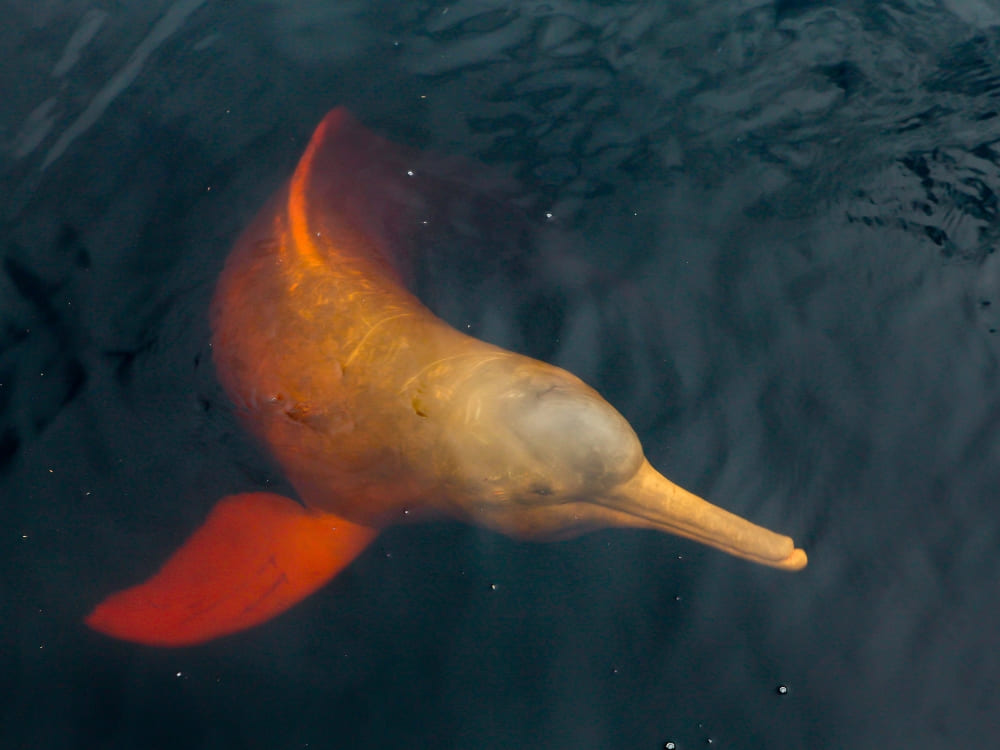
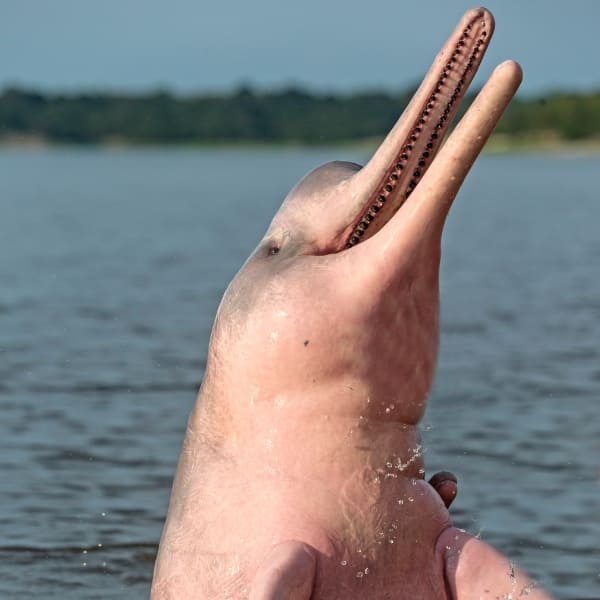
There are millions of species of animals in this ecosystem, but some are considered symbols of the forest, like the mysterious harpy eagle, colorful macaws (red and blue), black spider monkeys, beautiful jaguars, cute-looking sloths, friendly Amazon pink dolphins and ravenous piranhas.
The last two, in particular, are big Amazon stars. Interacting with dolphins is an absolute fan favorite, while fishing for piranhas brings everyone’s adrenaline to its maximum — an activity always monitored by experienced guides and respecting sustainable practices, of course.
.
Keep in mind: despite the abundant fauna, there is no absolute guarantee that these animals will be spotted for a few reasons — the dense vegetation makes wildlife sightings more difficult, some species tend to hide from humans (especially during the day) and local operators follow strict protocols to not disturb animals.
Many people wonder if there are hotels in the Amazon. The answer is yes, but they’re known as jungle lodges since they are located in the middle of the forest.
Photo: Felipe Castellari
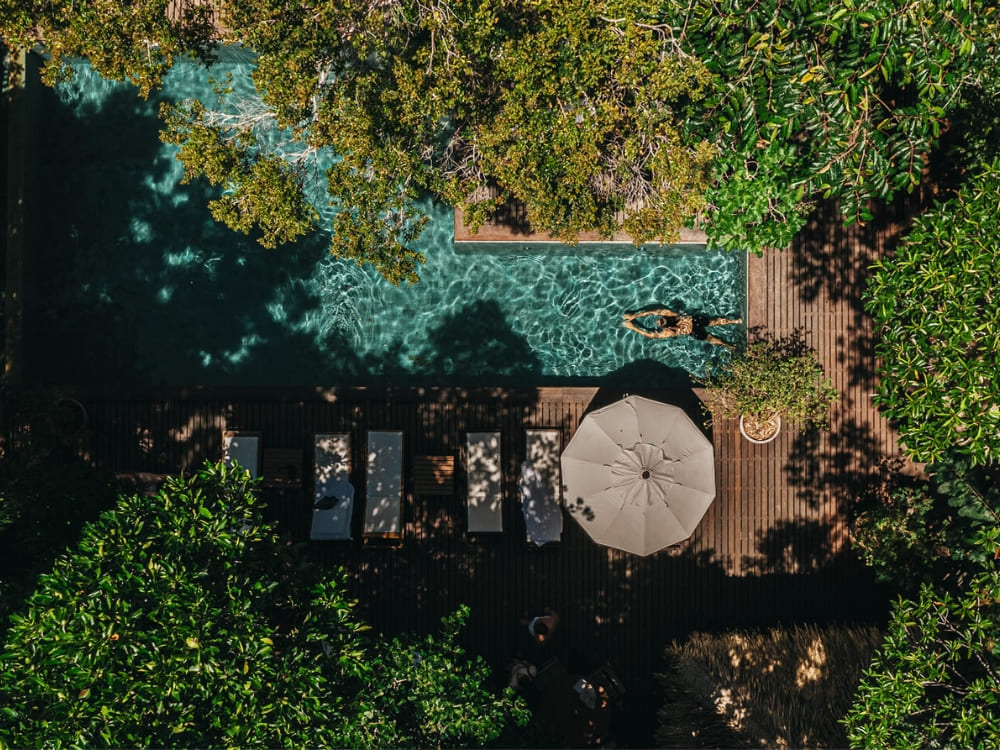
Lodges offer comfortable accommodations, leisure areas (swimming pools, entertainment areas, gyms, lounges, bars, gift shops…), great restaurants and exclusive activities around the forest. From modest to luxury, there’s an option for everyone.
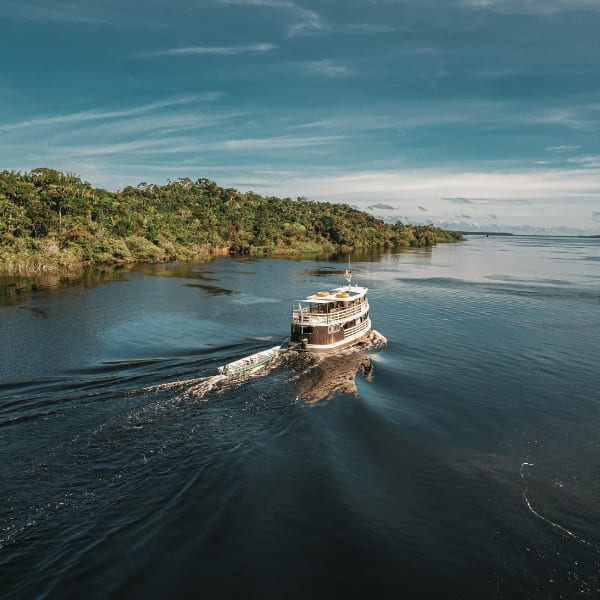
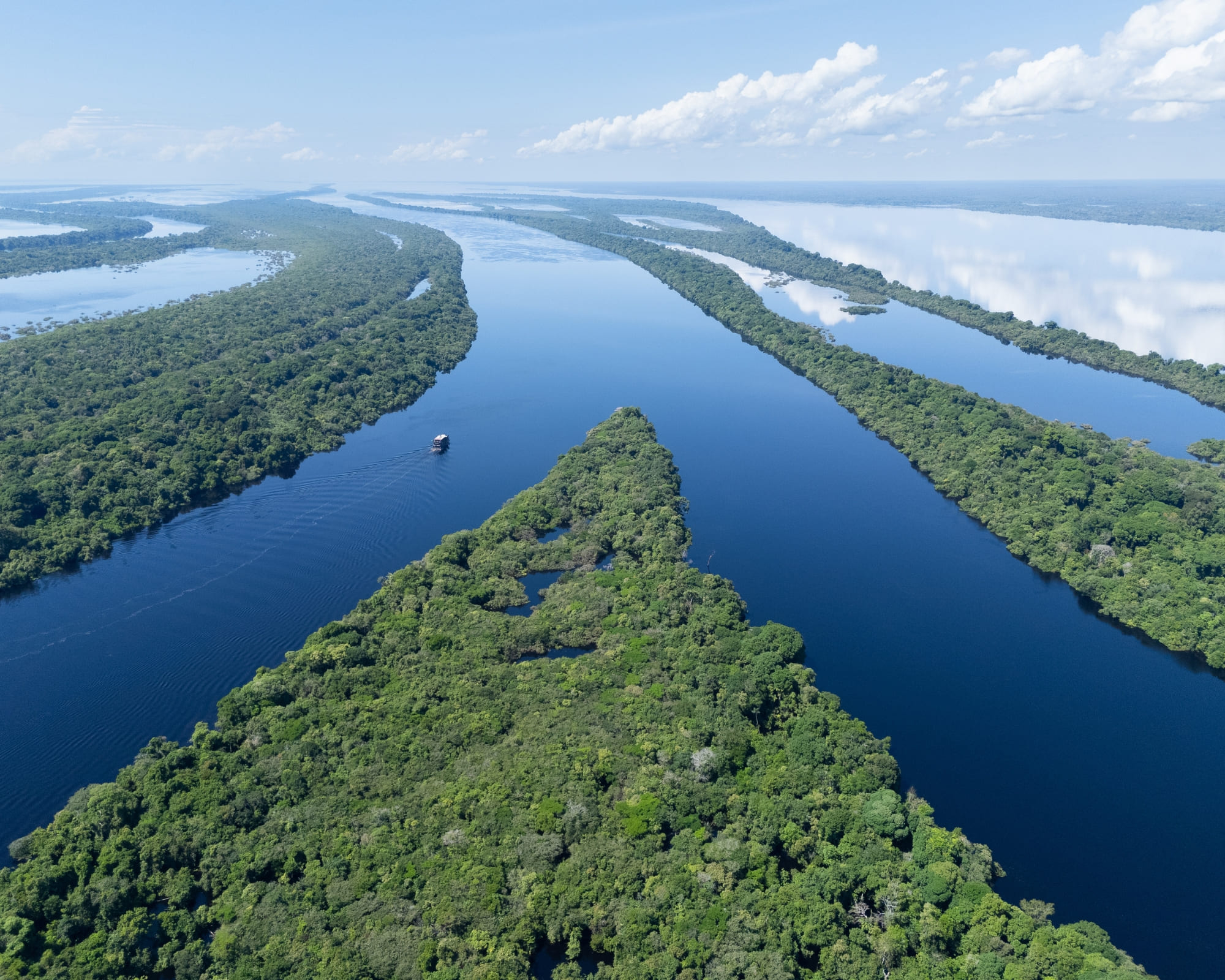
Another alternative is the river cruises, which work similarly to classic cruise ships on the ocean, but with fewer passengers and sailing across the waters of Amazonian rivers, like the Rio Negro, Solimões, Tapajós and the Amazon River.
.
The best Amazon cruises in Brazil include wonderful ensuite cabins, a restaurant onboard and many entertainment options, this is a fantastic way to experience nature.
If you don’t mind giving up comfort so you can completely immerse yourself in nature, then our suggestion is the Amazon Jungle Survival Tour, a fantastic trip where you get to spend your nights camping in the middle of the forest! Accompanied by qualified guides, you’ll sleep in hammocks, cook your food on the campfire and even learn survival techniques.
How long should you stay in the Amazon Rainforest?
The length of your trip depends on how immersive you want your experience to be.
A 3-day tour is recommended for those on a tight schedule — it’s short, but still allows for river tours, guided jungle walks and a first introduction to the rainforest’s unique ecosystems. It’s a good option if you’re passing through Manaus or combining the Amazon with other destinations in Brazil.
.
Traveling to the Amazon in Brazil: how much does it cost?
The cost of a trip to the Amazon in Brazil depends on various factors, like accommodation category, group size, trip length and itineraries.
Photo: Samuel Melim
For example, wild camping tours are a more budget-friendly option, offering a raw and immersive experience, while luxury lodges provide high-end comfort at a higher price. Solo travelers may face higher costs due to single occupancy charges, whereas group travelers can benefit from shared costs.
PlanetaEXO curates the best Amazon Rainforest Tours in Brazil, with prices (per person) ranging from R$2.170 (approximately $418) for basic camping expeditions to R$23,000 (approximately $4,392) forpremium luxury packages — not including flight tickets.
Do you need a vaccine to go to the Amazon Rainforest in Brazil?
Unlike other countries (Bolivia, Colombia, Guyana, Panama, and Venezuela), there is no requirement of yellow fever vaccinations to visit the Amazon in Brazil because ANVISA (Brazil Health Regulatory Agency) doesn’t consider the disease a risk in national territory.
However, it’s strongly recommended that foreign tourists get their shots at least ten days before the trip — especially if they intend to visit the rainforest in the countries previously mentioned. Better safe than sorry!
.
Is it safe to visit the Amazon Rainforest in Brazil?
Yes, it’s safe to visit the Amazon, as long as you explore with experienced local guides. Travelers might think there are wild animals and hidden dangers along the trails, but tours are carefully planned to avoid risky situations.
Tour guides know the forest inside out and ensure that every activity, from jungle walks to boat trips, is carried out with complete safety and respect for nature.
Since itineraries are designed only for observation, you won’t come across animals that pose any threat. Besides, most species prefer to stay hidden, so encounters are peaceful moments to admire their beauty.
With professional guidance, comfortable logistics, and well-structured activities, visiting the Amazon is a safe and unforgettable adventure for all travelers.
It’s more than worth it! The Amazon Rainforest is the richest place on the planet when it comes to natural resources. The jungle, the rivers, the animals, the food, the people — everything holds an inexplicable beauty and magical atmosphere not found anywhere else.
Adventure and ecotourism enthusiasts should spend at least a few days in this surreal destination so they can witness with their own eyes what Mother Nature is truly capable of.
.
Shall we book your Amazon adventure?
We hope this guide on how to visit the Amazon has been helpful to kick off your travel plans!
As an expert platform that works with the best local operators, PlanetaEXO offers incredible Amazon Rainforest tours in Brazil with tailor-made itineraries and all the support you might need. Contact us now!
Discover how each season reveals a different side of Brazil’s natural wonders and start planning your trip!
Brazil is an immense country where nature sets the rhythm of life. From the flooded forests of the Amazon to the crystal-clear lagoons of Lençóis Maranhenses and the coral reefs of Abrolhos, every season paints a new face of the landscape.
When it comes to authentic experiences in nature, the best time to visit Brazil depends on what you want to experience: lush vegetation, wildlife encounters, or sunny adventures by the sea. Across its tropical and subtropical climates, the country offers unforgettable moments all year long.
PlanetaEXO, an ecotourism platform specialized in adventure tours in Brazil that works with the best local operators, has put together a comprehensive guide to help you choose the perfect destination for you. Learn more below!
What is the weather like in Brazil?
Brazil is a continental nation, covering a staggering area of 8.516 million km², which means this is a country with great climatic diversity. In general, the climate is warm in almost the entire territory, but thermometers obviously vary according to the seasons.
However, in some regions (especially in the North, Central-West, and Northeast), it’s warm even during the winter, when Southern and Southeastern states are facing cold temperatures.
It’s also important to point out that the seasons in the Southern Hemisphere are opposite to those in the Northern Hemisphere. When it’s winter in Europe or North America, it’s summer in Brazil (and vice versa).
January, February and March
High season in Brazilian borders due to recess, Carnival (mid-February) and the summer. It’s a time of tropical exuberance, but also intense rainfall in certain regions.
One of the best times to travel to Brazil if you’re looking forward to water-related activities and lush vegetation!
Chapada Diamantina (rainy season)
Summer rains bring Chapada Diamantina’s waterfalls to their maximum volume, making them stronger and fuller. Fumaça, Cachoeirão and Buração are fantastic at this time of year.
Visiting the underground natural pools of Poço Azul and Poço Encantado is also a wonderful experience, particularly due to the rays of sunlight that penetrate the caves and reflect directly on the crystal-clear waters.
Summer rains occur in the morning or at night, making some trails slippery or altogether unassessable in Vale do Pati, but it’s still possible to hike as the weather gets particularly bright when the storms cease. That’s when the vegetation becomes more vibrant, while the waterfalls get even fuller. You’ll have plenty of chances to have fun, explore the area, and take incredible pictures!
Although it’s summer in Brazil, the so-called Amazonian winter takes place from October to March. It has nothing to do with temperature, but with the increased intensity and volume of rainfall.
The Amazon rainy season is marked by high river levels and flooding in some areas of the forest — known as igapós, when the water rises to 10–15 meters and it’s possible to swim and canoe in between treetops.
This is also a good time for Amazon river cruises and wildlife watching — terrestrial animals, like monkeys and sloths, tend to climb the trees to avoid the floods, making it easier to see them. Birds and Amazon pink dolphins are also usually spotted.
The best time of year to go to Brazil for diving in Fernando de Noronha is during the archipelago’s dry season, which features stable weather, minimal rainfall and excellent diving conditions in some parts of the island.
January and February are the months of the inner sea, when swells and strong waves hit the coast. It’s great for surfers, but divers might have to adjust their plans and focus along the outer sea for calmer waters and better visibility.
Influenced by the Venezuelan climate, the weather on Mount Roraima is quite unpredictable, but the dry season — October to March, with emphasis on the first trimester of the year — is considered an excellent period for trekking.
Less rainy and foggy, the trails and the views from the mountaintop become clearer, but the temperature changes are still fairly dramatic: 20–25°C (68–77°F) at the base to 10–15°C (50–59°F) during the day, dropping to 5°C (41°F) or even 0°C (32°F) at night.
Photo: Ma Rabelo
April, May and June
Autumn in Brazil means milder temperatures and clearer skies. It’s when waterfalls are at their peak, lagoons form in the northeast, and trails become ideal for hiking.
Cerrado (Jalapão and Chapada dos Veadeiros)
The Cerrado is the second-largest biome in Brazil, spanning 25% of the country’s territory in ten different states. Known as the Brazilian savannah, it features incredibly rich fauna and flora, as well as jaw-dropping views.
From April onward, the dry season begins. The sky clears, the roads become easier, and fervedouros (natural spring pools) turn transparent blue.
In Jalapão, dunes and waterfalls shine under the golden light of breathtaking sunsets. This time of the year is ideal for the 6-day Jalapão Trekking Immersion, featuring the best adventure itinerary with rafting, bathing in waterfalls, swimming in natural pools, and, of course, trekking through the national park.
Trekking in Chapada dos Veadeiros, and exploring waterfalls and water springs is also an excellent option in this season, which displays rich wildlife, minimal rain, and jaw-dropping views.
Lençóis Maranhenses
The peak of Lençóis Maranhenses, when the lagoons are at their fullest after the rainy season and the weather is considerably stable.
Offering wonderful conditions for swimming and trekking, this period is highlighted by the gorgeous contrast of turquoise lagoons against white sand and a daily change of scenery that reminds everyone why this is one of Brazil’s most surreal destinations.
The weather is still warm, but nothing like the heat of the summer. High humidity and moderate chances of rain help to cool things down and keep the lagoons appropriate for swimming.
Autumn also precedes the high season in Lençóis, making it a great time for travelers looking for quieter experiences and less crowded places.
Hidden in the northeast of the Amazon Rainforest, Pico da Neblina is cold between April and June, but the window for expeditions opens up due to the decrease in rainfall.
Humidity is still high, but the visibility becomes clear, which helps to facilitate the demanding treks and the overall safety of the experience.
For travelers thirsting for high adventure and total isolation!
.
July, August and September
Winter is the best time to visit Brazil if you’re looking for wildlife watching, hiking and even diving or swimming.
The conditions for these activities are appropriate mostly due to the low rainfall, and depending on the region, it’s not even cold!
Pantanal (dry season)
The dry season in the Pantanal is perfect for wildlife safaris. As the water level shrinks, it’s easier to spot animals. The clear skies and very little rain are also ideal for photographic tours, horseback riding and hiking.
The drought exposes the riverbanks and attracts jaguars in the North Pantanal, who leave their hiding places in the woods to search for food. Wonderful opportunity to see these gorgeous creatures!
The Amazon dry season makes the weather warmer. It still rains, but the volume is lower. Some flooded areas start to drain, unblocking hiking trails that were submerged before. Naturally, this is a great time for hiking.
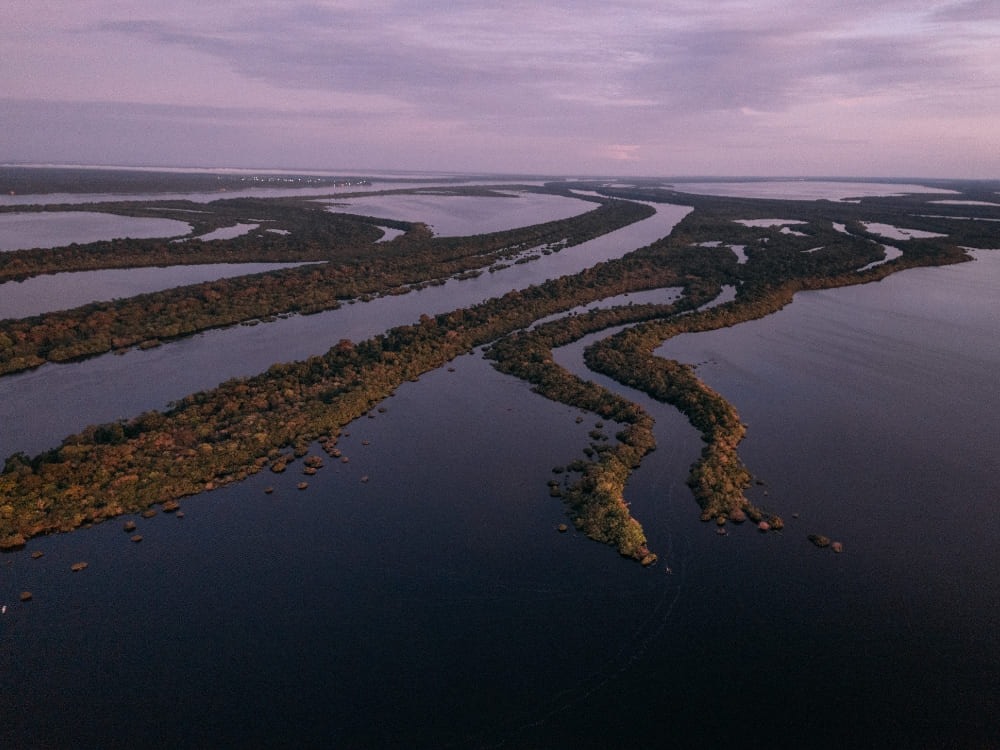
Some beaches reappear in Alter do Chão and Anavilhanas National Park, and it’s easier to see caimans and Amazon pink dolphins as the rivers lower.
Despite that, river cruises are still very much viable and a fantastic experience during this period.
Photo: Samuel Melim
Jalapão
Jalapão is an all-year-round destination, but the dry season is particularly recommended for travelers due to lower chances of rainfall.
Access to the dirt roads is much better without the mud from all the rain, while the fervedouros maintain the perfect temperature for swimming.
The weather is fairly dry, but the sunsets are mesmerizing at this time of year, making the golden dunes shine even brighter.
Photo: Rodrigo José Fernandes
Chapada Diamantina (dry season)
Chapada Diamantina appears on the list again. Though it’s a good destination for the rainy season, it’s also incredible for trekking during the dry season, as the lower volume of rain opens up the trails and keep the soil appropriate for exploring.
In Vale do Pati, the climate is favorable for admiring the national park from the viewpoints, joining guided hikes, and exploring caves and caverns.
Despite the drier weather, the waterfalls remain unmissable, especially the iconic Fumacinha, one of the best known in the region.
Spring and early summer in Brazil bring warmer weather and transitions between dry and rainy periods.
Abrolhos
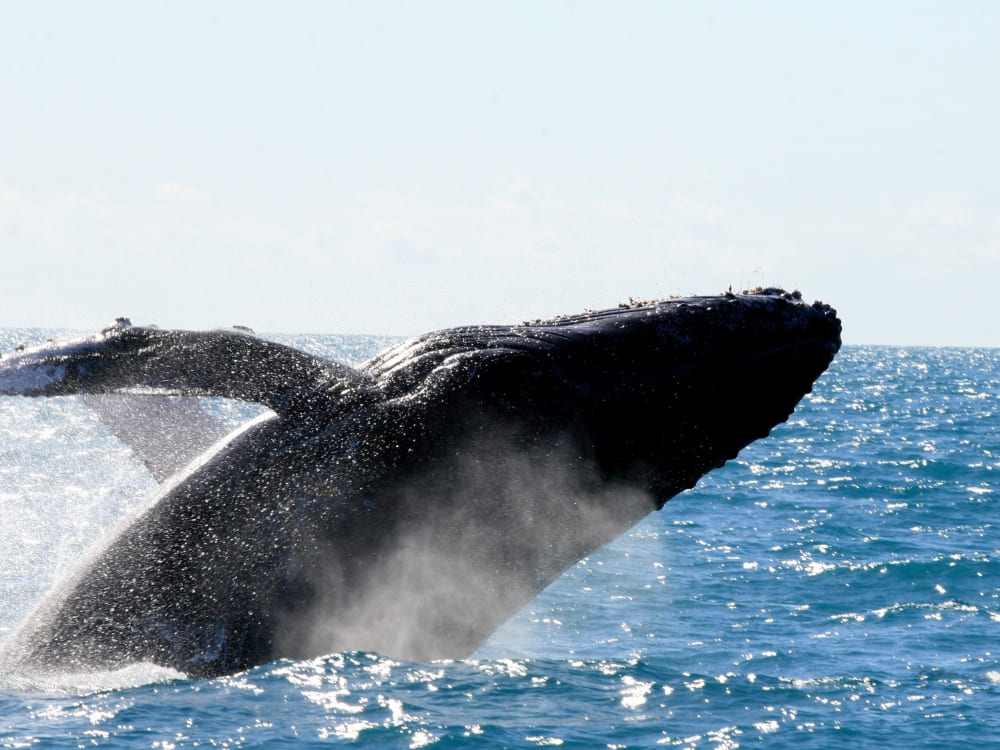
This is the best time to go to Brazil if you want to see the marine life flourishing. Abrolhos is home to the largest coral reef in the South Atlantic and one of the greatest places on Earth to see humpback whales.
These gentle giants breach the surface near Bahia’s coast to mate and breed, exposing themselves to the eyes of tourists that travel thousands of kilometers just to see them.
From November onward, calm seas create great conditions for diving, revealing coral reefs, turtles, and colorful fish.
.
Pantanal (rainy season)
From November to December, the Pantanal becomer lusher and greener in the rainy season. Birdwatchers thrive during this time, as flocks or jabiru storks and macaws are frequently spotted. Mammals, however, tend to hide.
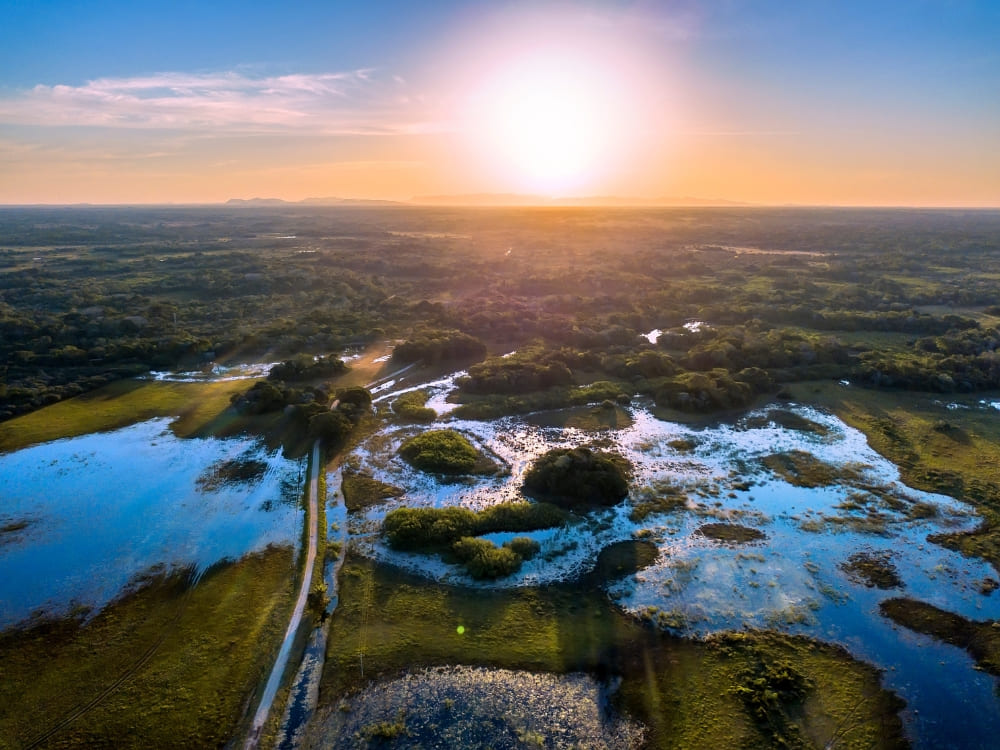
Starting in November, the rain starts to fall and the dry earth quickly absorbs the water. By December, the rivers flood and the wetlands begin to form, creating beautiful natural water mirror landscapes until March.
Besides birdwatching and contemplating the view, activities also include boat rides, canoeing and photo safaris.
.
The best time to visit Brazil is whenever you want!
Brazil offers incredible experiences regardless of the season. Whether you want to spend days trekking through the forest, admire the wildlife or relax in natural pools or sandy beaches, this magnificent place has something for everyone.
PlanetaEXO is an ecotourism platform specialized in Adventure Tours in Brazil from North to South. By partnering with the best local operators, we help you live the vacation of your dreams while supporting community-based travel and preserving the environment. Contact us now!
The activities of river cruises in the Amazon Rainforest differ depending on the season, making each trip totally remarkable
As ecotourism tours in the Amazon become even more comfortable and focused on exploring nature responsibly, river cruises are great for travelers looking for comfort, rich itineraries, eco-friendly practices, and one-of-a-kind experiences.
Considering the influence of the seasons on nature destinations, it’s common to wonder when is the best time of the year for Amazon river cruises in Brazil. Knowing this, in fact, is crucial for efficient vacation planning.
That’s why PlanetaEXO, an ecotourism platform specialized in Amazon Rainforest tours in Brazil, has created a guide to help you understand the proper time for your river cruise. See more below!
Best time of the year to go on Amazon cruises in Brazil
Amazon jungle cruises can be enjoyed all year long! Even during periods when rainfall is significantly lower, the forest is humid enough that the rivers are always full for boats to pass through. The experience only becomes unfeasible during periods of extreme drought, but situations like that are atypical.
During different seasons (wet and dry), cruises operate normally, but activities change to accommodate weather variations and flooding in some areas of the forest.
In other words, you’ll discover the wonders of the Amazon regardless of the season, though your itinerary will vary according to the time of year.
Amazon river cruises in Brazil: rainy season (December to May)
The rain is frequent and heavy in the wet season. As the rivers get higher, the Amazon Basin starts to flood and some parts of the forest become submerged — that’s what locals call igapós.
For that reason, passengers leave the vessels and enjoy specific activities, such as:
Canoeing and swimming through treetops in igapós
Boat trips and other water-related activities in Anavilhanas National Park, Alter do Chão and the Mamirauá Reserve
Wildlife watching — mostly Amazon pink dolphins, birds and mammals that usually climb trees to avoid the water
Equipment: flashlight, raincoat, microfiber towel, personal reusable water bottle
.
Join PlanetaEXO on the best Amazon river tours
As an expert in Amazon Rainforest tours in Brazil, PlanetaEXO works with the most esteemed local operators to provide wonderful travel experiences in the largest rainforest on Earth, always following community-based and sustainable tourism practices.
Experience comfort and immersion in nature with our multiple-day luxury Amazon cruises and turn your dream vacation into reality. Contact us now!
From jungle lodges to river cruises, see how ecotourism in Brazil thrives in these 7 incredible Amazon tours!
Highlighted by The Wall Street Journal in 2024 as a nature destination worth visiting, ecotourism in the Amazon Rainforest is crucial for economic growth, for the financial health of local communities, and for environmental protection.
Every year, tourists from all over the world travel to the Amazon and explore the wonders of one of the most fascinating places on Earth. By relying on the expertise of professionals who truly love and respect nature, it’s possible to experience a fantastic trip while supporting the environment.
As a platform that specializes in Amazon Rainforest tours in Brazil and works with the best local operators, PlanetaEXO has curated a list of 7 experiences you just can’t miss. Check it out below!
1) Amazon Jungle Tour from Manaus
Starting off strong with an affordable, yet amazing experience, this tour allows for a deep dive into the Amazon’s untouched beauty. The adventure starts on the way to the lodge — departing from Manaus, the Meeting of Waters and visits to local markets kick off the trip.
The itinerary is packed with authentic activities: hiking, canoeing, piranha fishing, birdwatching, visiting local communities, and sunrise and sunset contemplation.
After a busy day, get some rest at the lodge in charming, cozy bungalows equipped with comfortable beds, private bathrooms and air-conditioning. In the common areas, eat your meals at the restaurant, get a drink at the bar or have fun with friends and family in the gaming room or the TV lounge.
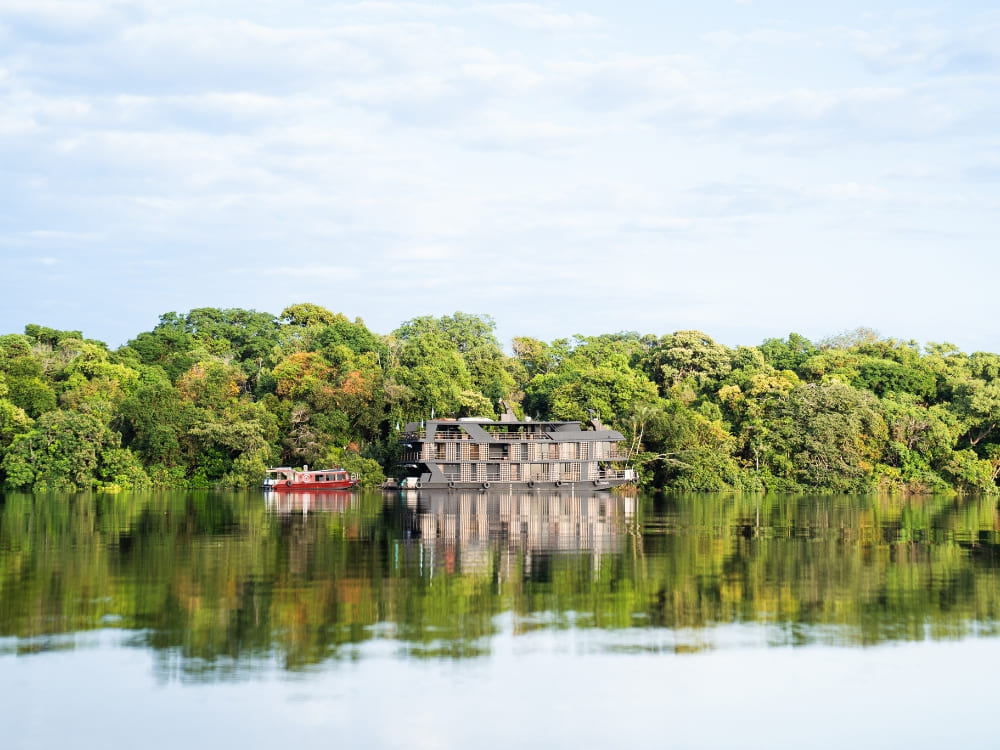
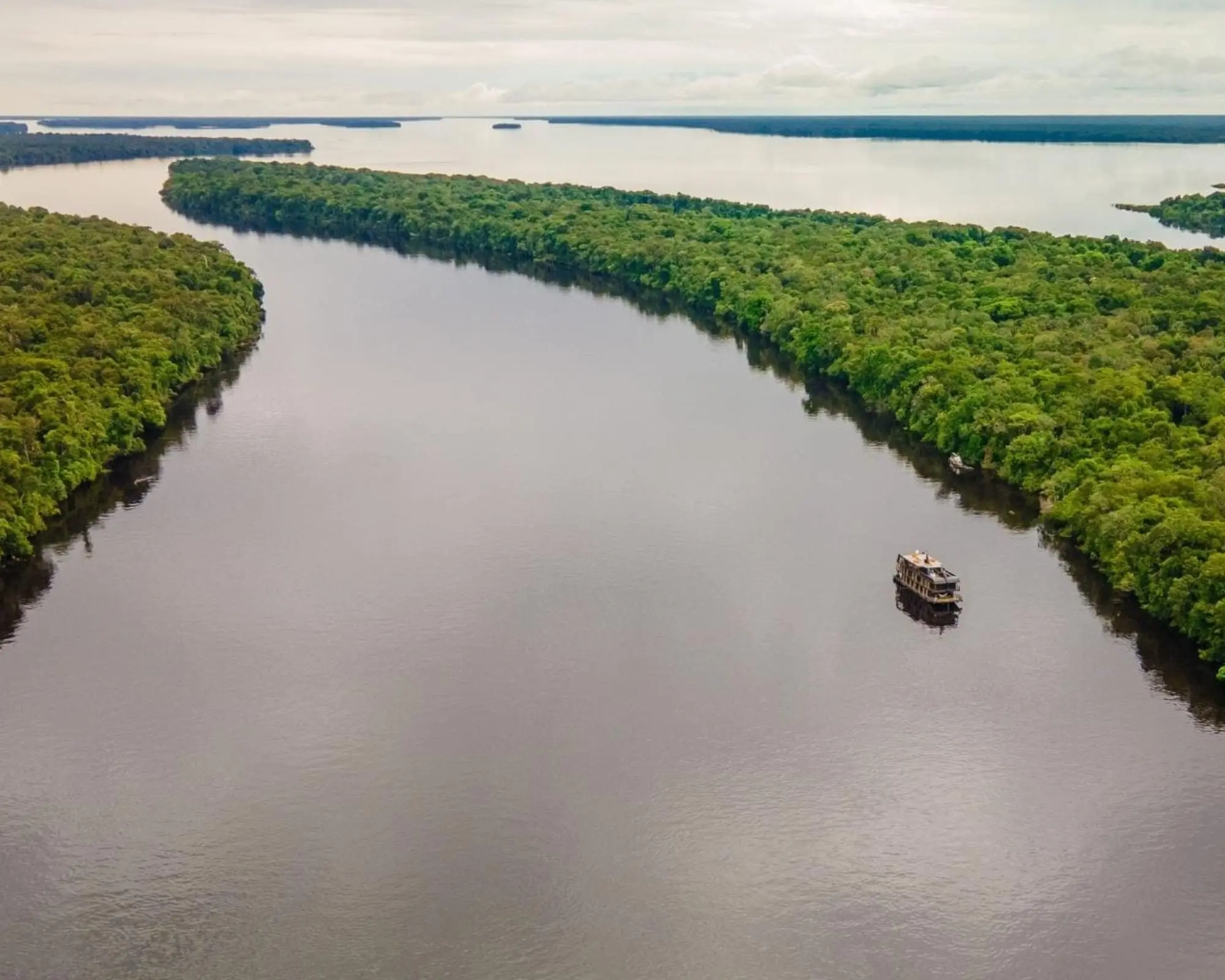
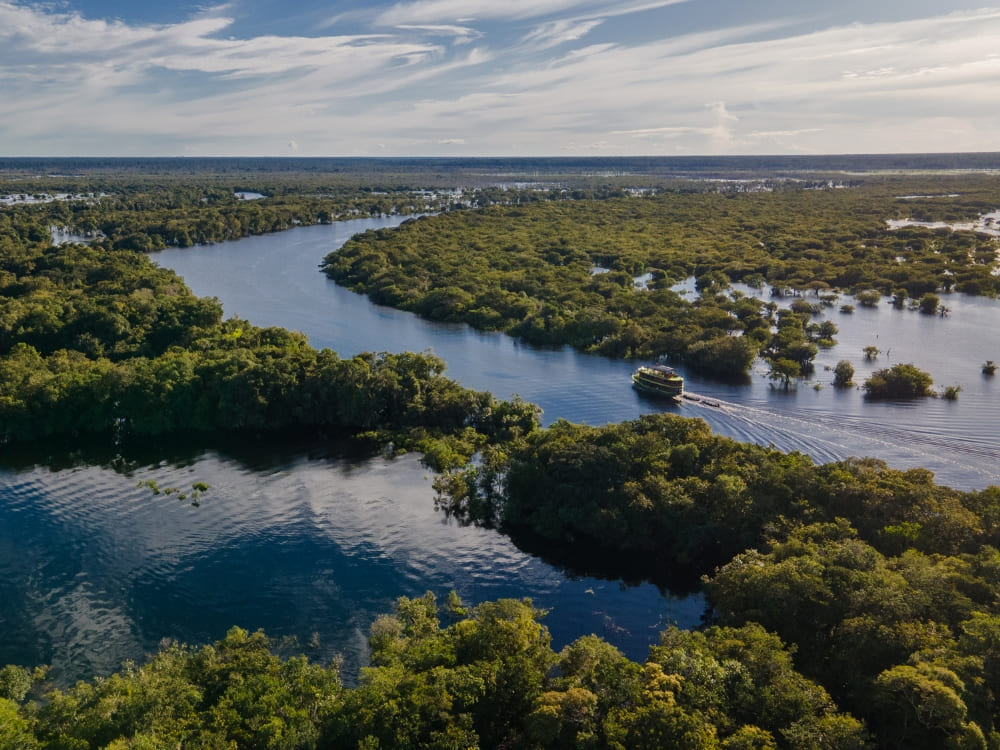
Did you know you can go on cruises in the Amazon Rainforest? Beautiful vessels peacefully glide across the dark waters of the Negro River, granting a totally different Amazon tour experience.
Besides enjoying a delightful stay, guests have the time of their lives with expeditions to Anavilhanas and Jaú National Park, exploring the Madadá Caves, hiking in the forest, relaxing on river beaches, wildlife watching and visiting indigenous groups.
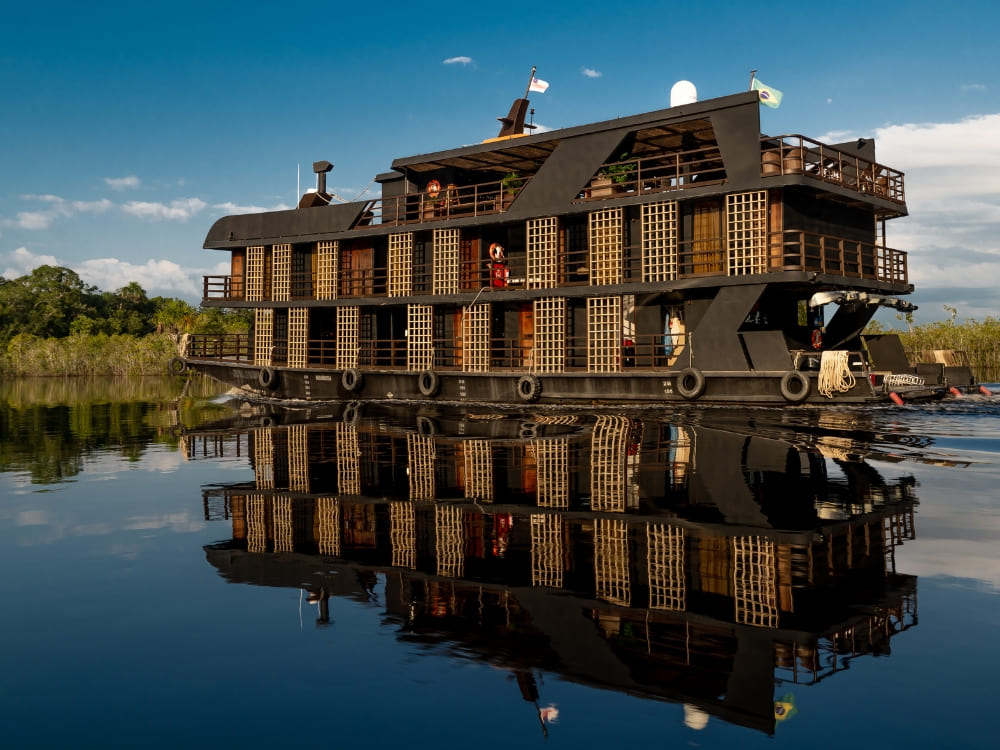
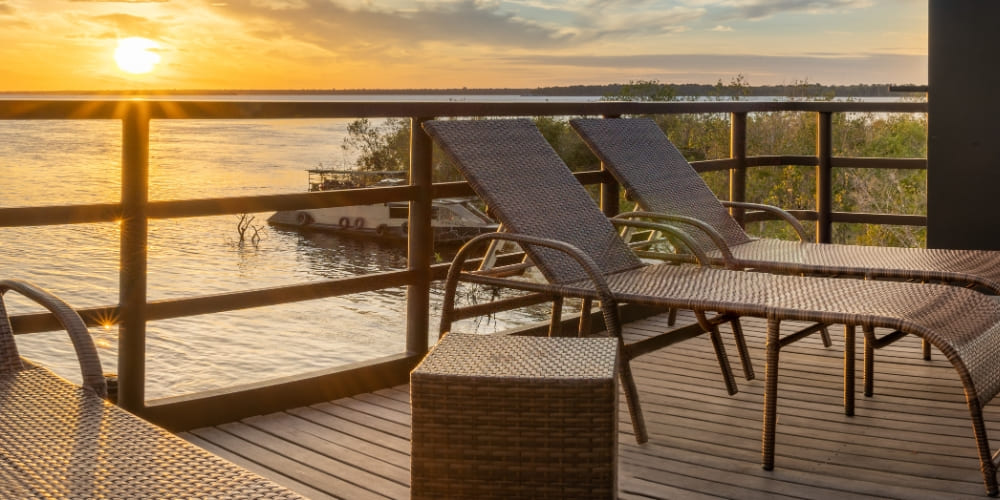
The 3-floor vessel can comfortably accommodate up to 16 guests in private ensuite cabins with air-conditioning and a lovely, rustic decor. Leisure areas include a solarium, a dining room, a living room and a bar.
Mirante do Gavião is one of the highest-rated Amazon ecolodges, acclaimed for its gorgeous architecture and great location — facing the Negro River and Anavilhanas National Park.
Activities like hiking, kayaking, stand-up paddling, night spotting, cave exploration, visiting riverside communities and boat rides are all part of the itinerary. Perfect for outdoorsy guests!
This tour also proves that ecotourism in the Amazon can coexist with comfort. The lodge offers three categories of high-end accommodations, as well as a gaming room, a swimming pool, a fine dining restaurant and a barbecue area.
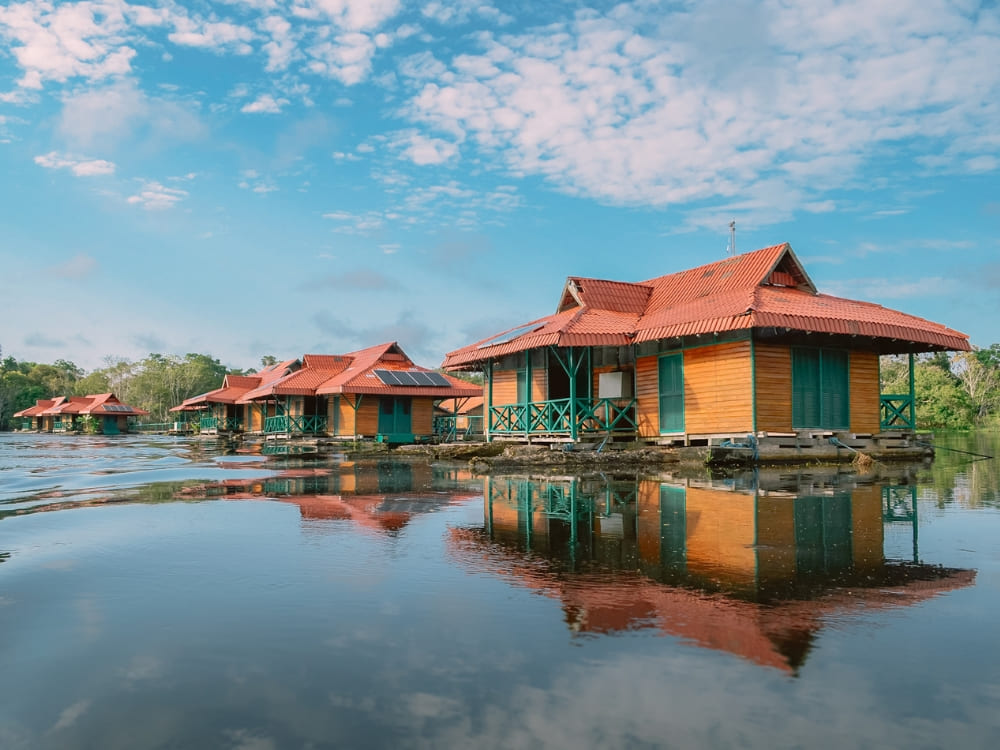
Departing from Tefé, you’ll enjoy an unforgettable experience in the Mamirauá Sustainable Development Reserve, where a floating ecolodge lies on the dark waters of the river, surrounded by lush green vegetation and infinite blue sky.
This 5-day Amazon tour is packed with adventure, including night and photo safaris, piranha fishing, boat rides, canoeing, visiting local villages, and much more.
Uakari Lodge is the only accommodation in Latin America featured in The New York Times’list of floating hotels worth visiting worldwide. The publication highlights its infrastructure, immersive nature experiences, and the Community-Based Tourism (CBT) model, which benefits both the environment and local residents.
The entire infrastructure of the lodge is built on stilts, which means guests relish in breathtaking views from the bungalows or the common areas (deck, restaurant, bar, video room and a library). Learn more about this adventure.
Another Amazon Rainforest tour in Anavilhanas National Park, Anavilhanas Jungle Lodge is located on the banks of the Negro River, granting extraordinary experiences in one of the most beautiful natural scenarios in the world.
Custom itineraries offer great activities for everyone: guided hikes, canoing, night tours for wildlife watching, fishing, archery lessons, visiting riverside villages, boat rides, etc.
Inspired by caboclo design, the twenty-four accommodations are equipped with air-conditioning, mini-fridges, TVs, Wi-Fi, and private bathrooms. Enjoy the lodge’s premium services at the restaurant, floating bar, swimming pools, cozy lounge, massage room and gym. Before your trip ends, make sure to get a souvenir at the gift shop! Learn more about this adventure.
Photo: Felipe Castellari
6) Amazon tour in Mato Grosso
This lodge stands out when it comes to ecotourism in the Amazon Rainforest due to its location. Unlike the other tours on this list, Cristalino is not located in the state of Amazonas, but in the northern region of Mato Grosso, by the south of the jungle, in a private natural reserve.
The geography in itself is a tresure — bordering the Pantanal, it’s one of the best places in the Amazon for wildlife watching. Two biomes in one single experience!
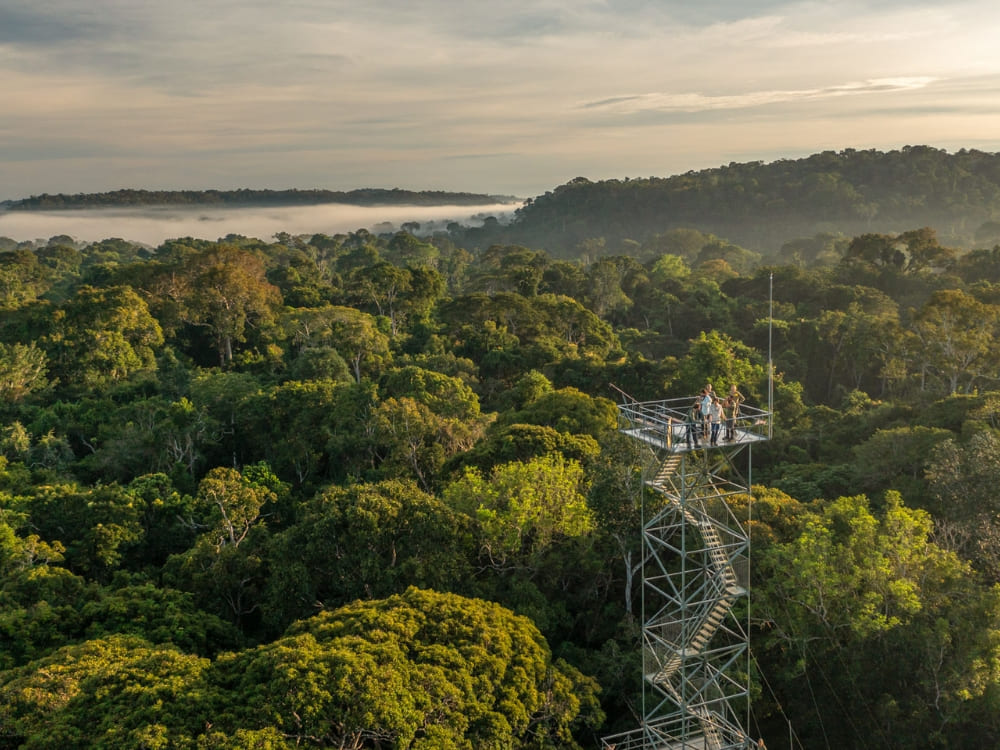
50-meter observation towers are perfect for birdwatching and admiring the view, but activities also include wildlife spotting, canoeing, hiking and boat rides in the Cristalino and Teles Pires rivers, etc.
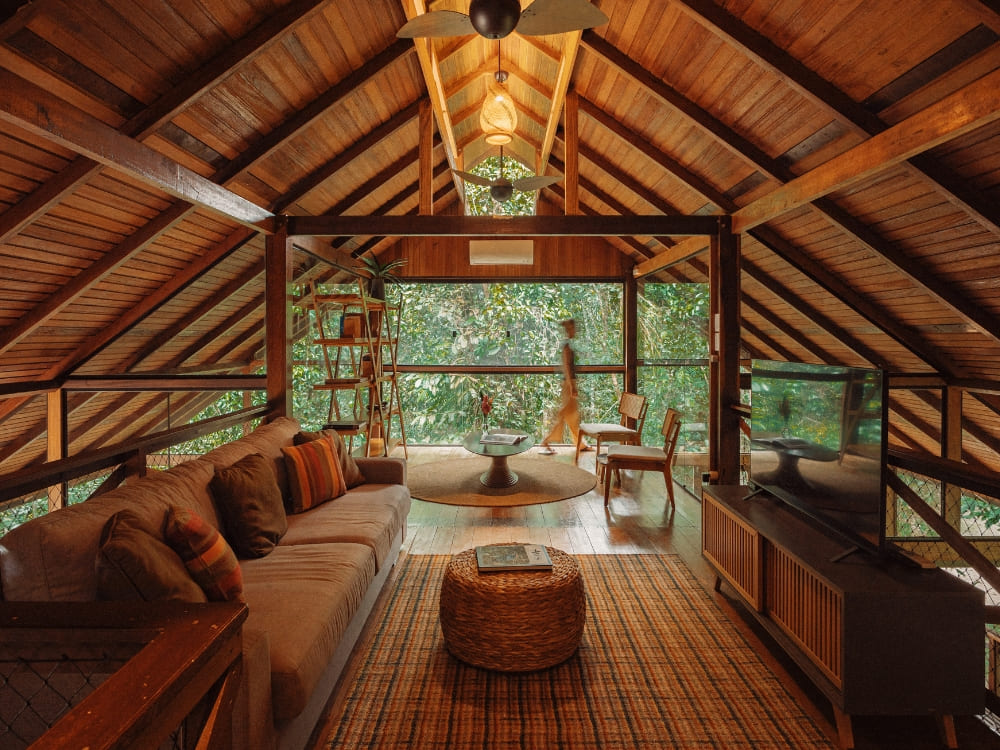
Bungalows and chalets equipped with comfy beds, sleeper sofas, private bathrooms, ceiling fans and Wi-Fi are the perfect accommodations to relax, but guests also love the entertainment areas — floating deck, restaurant, bar, reading room, and conference room. Learn more about this adventure.
Looking for something more exclusive? Ecotourism in the Amazon reaches a whole new level with this luxury river cruise in Anavilhanas, the second-largest river archipelago in the world with over 400 islands!
After departing from Manaus, you’ll witness the Meeting of Waters and the beauty of Lake Janauari. Throughout five days, you’ll visit local communities, hike in the jungle, fish for piranhas, go on boat rides and night tours, relax on river beaches and join a beautiful luau.
The architecture of the sophisticated vessel is jaw-dropping, featuring a modern design in ten ensuite cabins with air-conditioning and floor-to-ceiling windows. You can also unwind at the bar or in the living room, grab a bite at the dining hall and admire the view from the sun deck. Learn more about this adventure.
.
Best Amazon Rainforest tours in Brazil
With so many incredible options, it might be difficult to choose your Amazon tour in Brazil. See the table below to compare activities and prices:
*Per person, based on double occupancy in group departures. Prices may vary depending on season and availability. Exchange rate as of February 4th, 2026; subject to change.
Ecotourism in the Amazon as a solution to deforestation
In addition to government efforts, ecotourism is also an efficient solution for the preservation and recovery of the forest, thanks to sustainable practices, encouraging environmental awareness and empowering local communities to make a living without harming natural resources.
Amazon ecolodges follow sustainable guidelines, like using solar energy, recycling, harvesting rainwater and partnering with environmental projects. Through custom itineraries, jungle hotels educate guests on the importance of preserving the forest and encourage them to become allies of nature even when they go back home.
Lucas Ribeiro, founder of PlanetaEXO, describes ecotourism in the Amazon Rainforest. “By connecting travelers with authentic experiences that benefit local communities, we’re promoting a model of tourism that supports both people and the planet”.
Watch “Tourism That Keeps the Amazon Alive”, a mini-doc produced by PlanetaEXO that showcases the importance of ecotourism:
Ecotourism in the Amazon Rainforest with PlanetaEXO
PlanetaEXO is an ecotourism platform that specializes in Amazon Rainforest tours in Brazil. By working very closely with local operators, we handpick every experience and follow strict protocols to make sure we’re positively impacting our customers, partners and, of course, the environment.
Our team is ready to help with everything you need for a perfect vacation. Contact us now!
Enjoy an exceptional ecotourism experience with the best river tours in the Amazon, comfortable onboard accommodations and wonderful activities in the forest
Cruise ships are loved by many people, but did you know you can cruise on rivers? Better yet, did you know you can sail across the rivers of the Amazon Rainforest, like Negro River, Tapajós and the all-powerful Amazon River?
Aboard comfortable vessels, passengers indulge in high-quality services provided by attentive crews, premium accommodations, and itineraries perfect for tourists who are looking for the best river cruises in the Amazon.
PlanetaEXO, an expert in ecotourism and Amazon Rainforest tours in Brazil, has curated a fantastic river cruise selection for all types of travelers. Working alongside the most reputable local operators in the region, we offer only the best experiences. Check it out below!
1 – Katerre
.
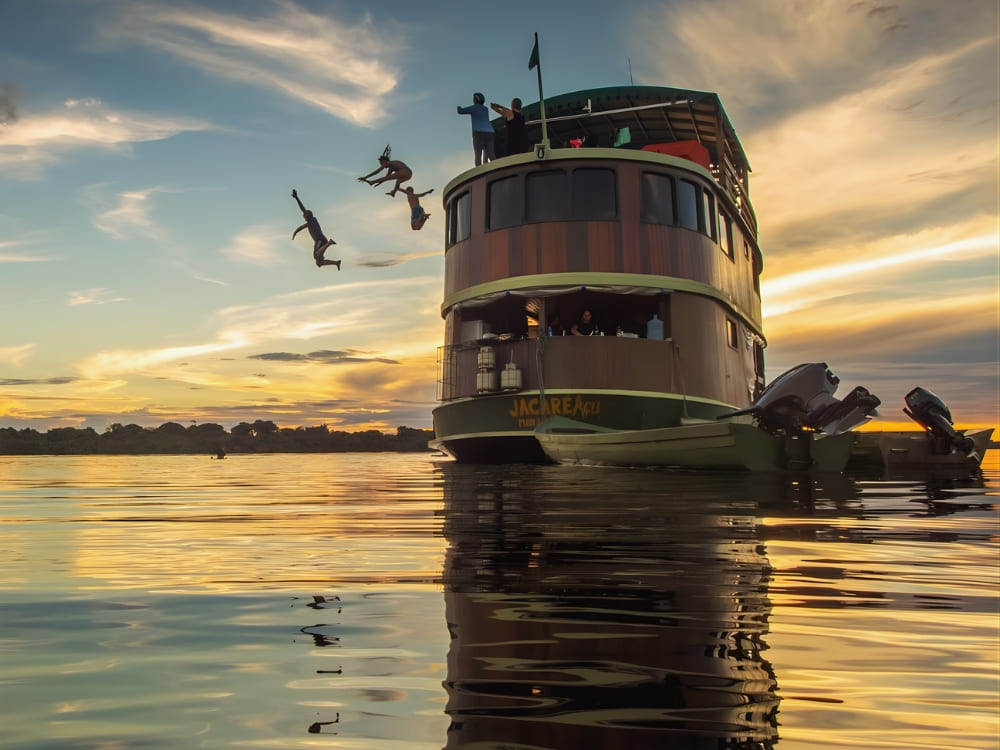
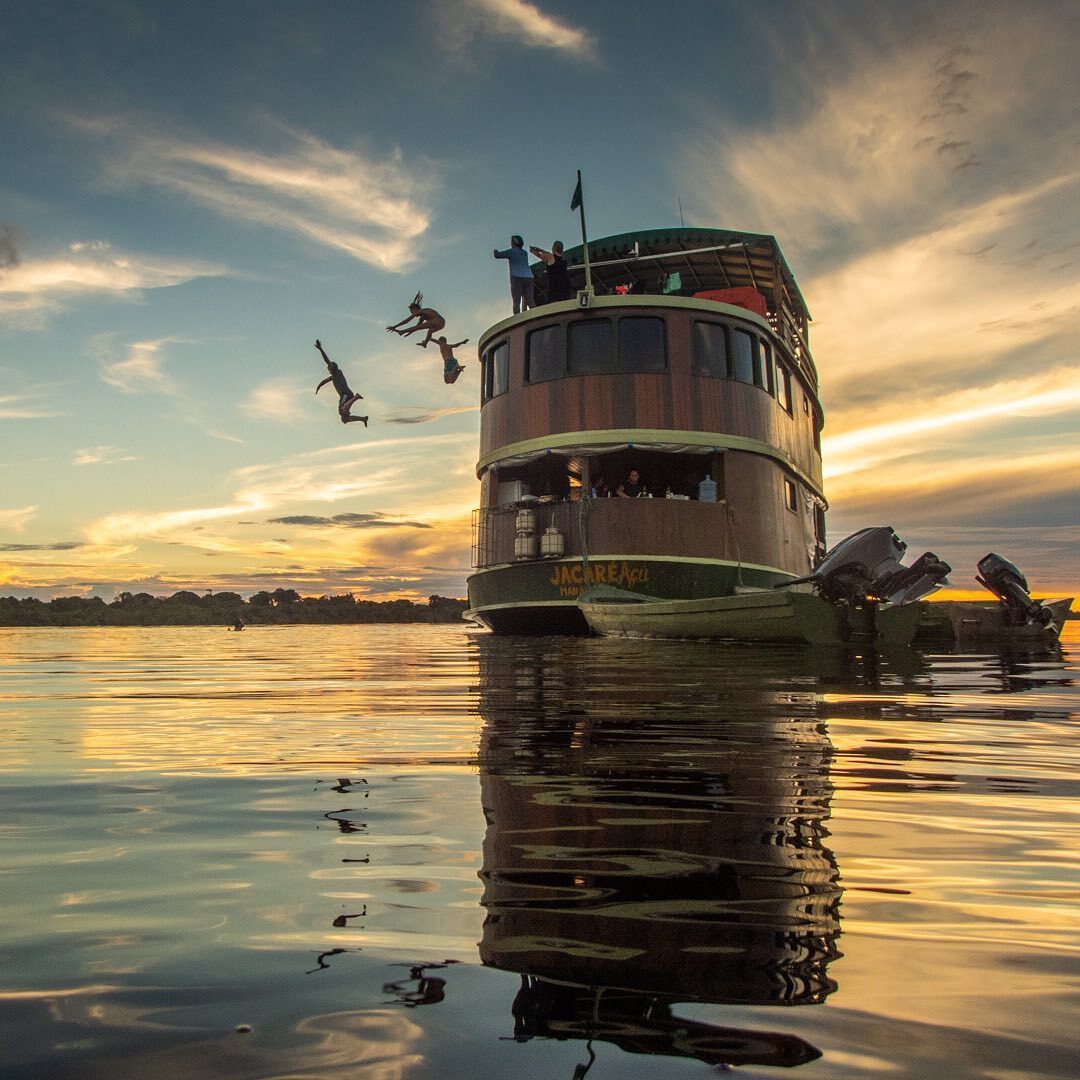
Katerre has some of the best Amazon cruises in Brazil. Aboard Jacaré-Açu, a beautiful wooden boat with three floors and eight cabins, up to sixteen guests can enjoy the wonders of the forest in the most authentic way.
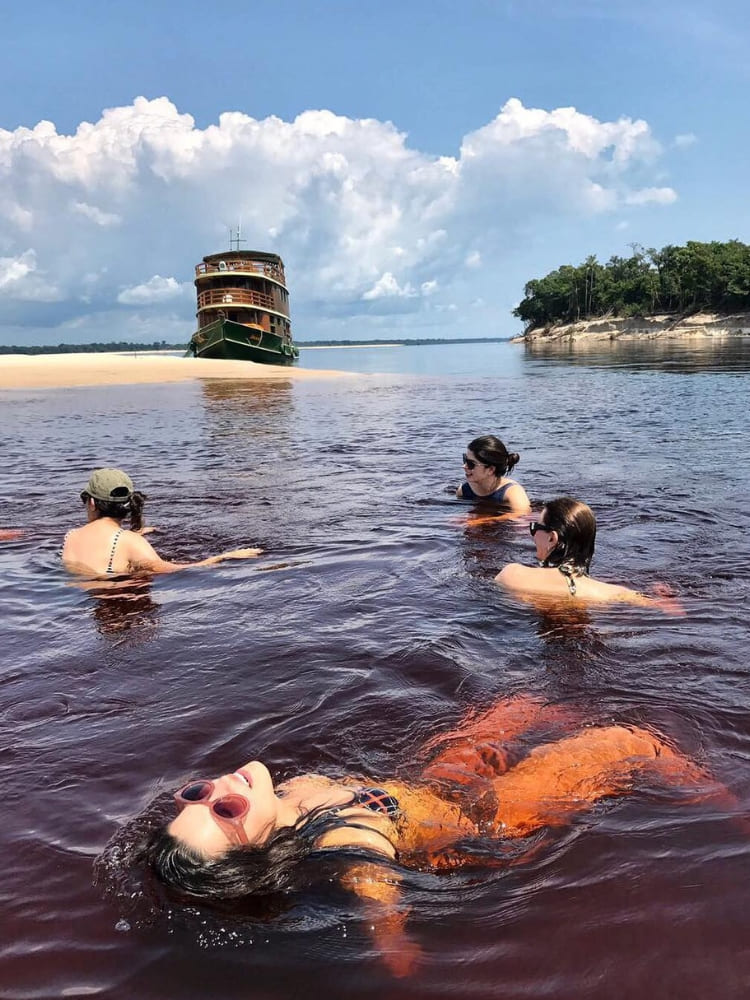
Gliding across the Negro River, being amazed by the beauty of the forest is inevitable. The sky is clear, orange-tinted in the early morning and blue when the sun is at its brightest. The trees are vibrant and green. The water is dark, but still peaceful and welcoming, allowing for a more profound experience in nature.
For The New York Times, journalist Seth Kugel said he “traded infinity pools for infinite waterscapes” when he decided to choose a cruise instead of an Amazon jungle lodge.
Outdoor activities include hiking, visiting local communities, boat rides, wildlife watching, fishing, swimming, relaxing on river beaches, etc.
.
Furthermore, visitors also have a great stay experience in cozy cabins with double or bunk beds, air-conditioning, private bathrooms, hot shower, and fresh sheets and towels.
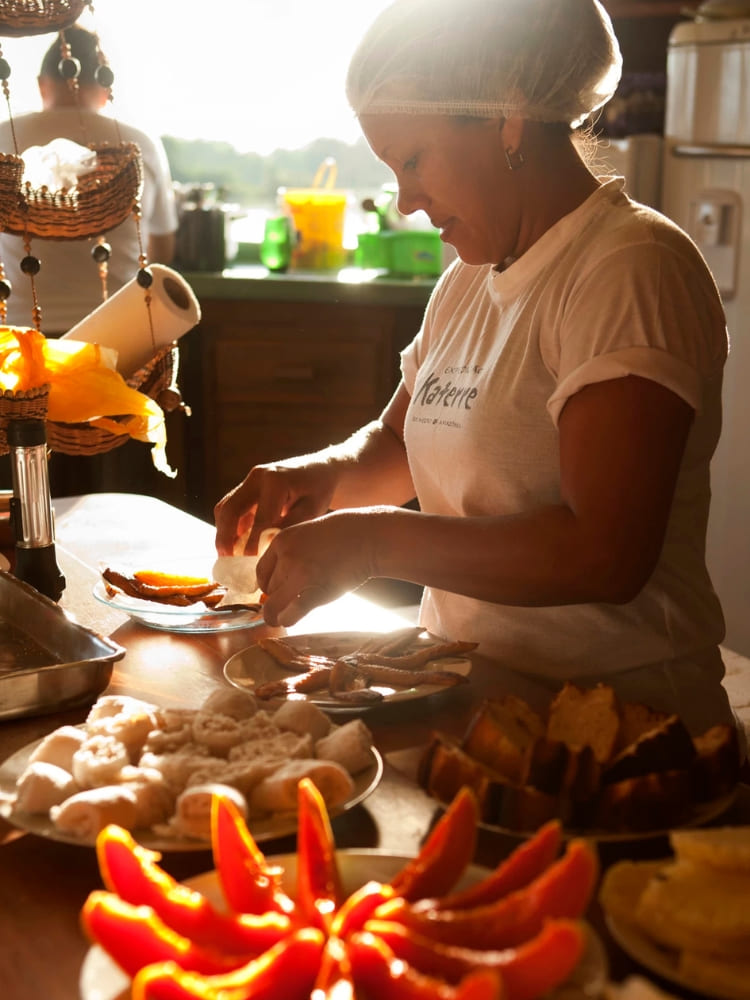
Common areas include a dining room, a living room, a bar and a solarium with chairs, tables, hammocks, sun loungers and a powerful sound system to play music. Feeling hungry? This Amazon river boat cruise offers delicious local cuisine dishes — three meals a day and snacks!
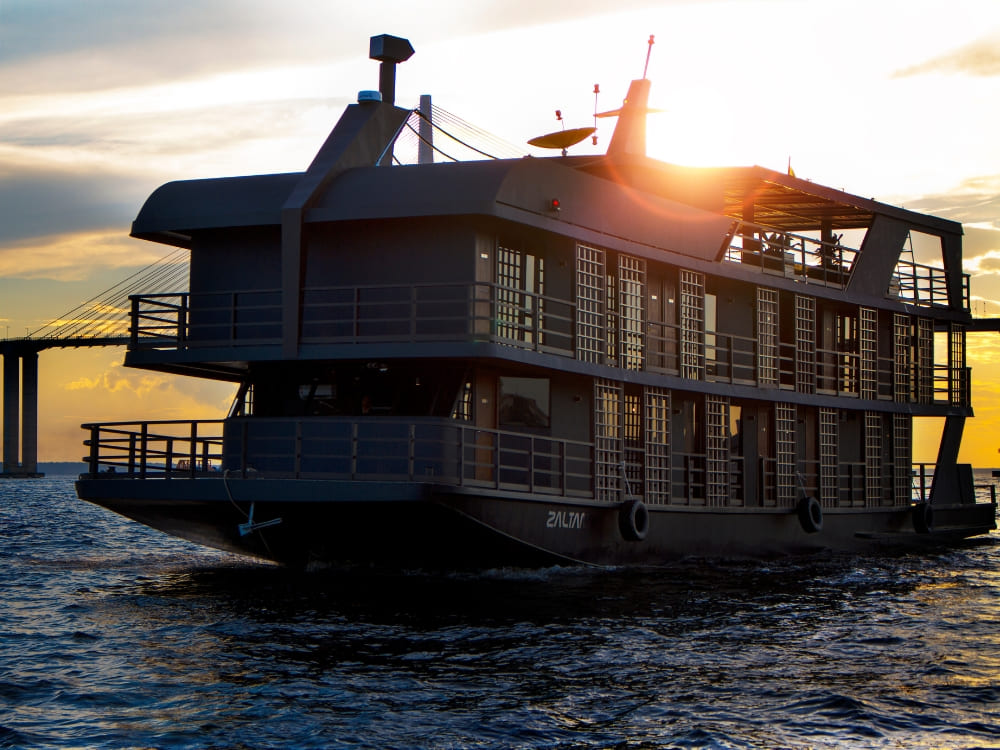
Big, modern and sophisticated, the almighty Zaltana is considered by many the best luxury Amazon river cruise in Brazil.
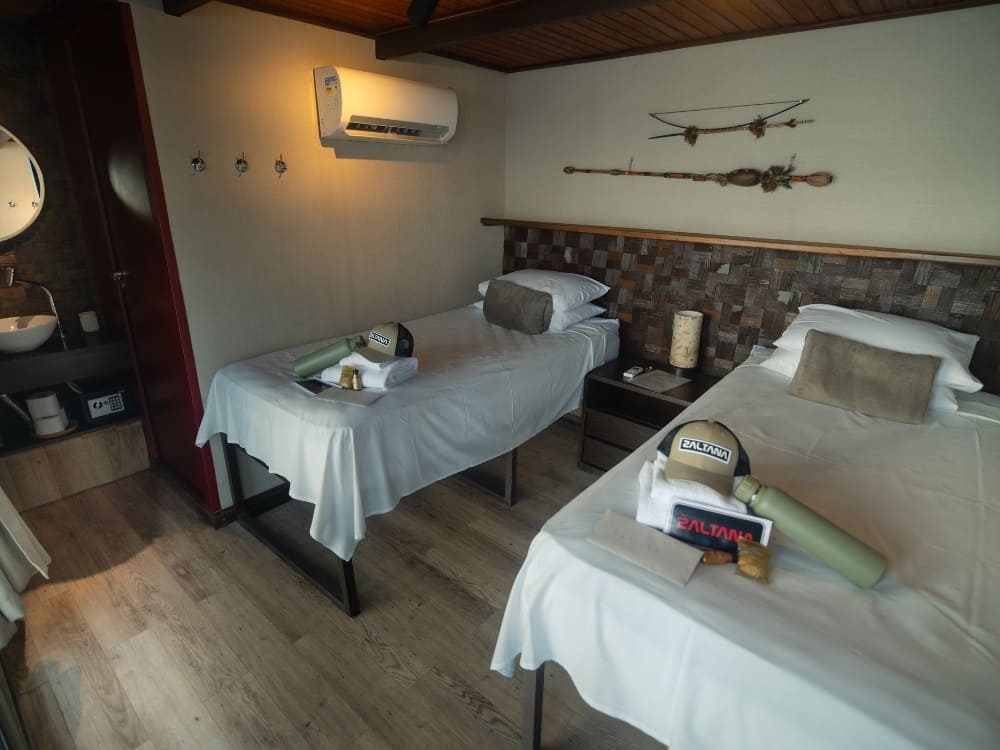
With ten spacious cabins — all with double or single beds, air-conditioning, elegant decor, private bathrooms, amenities and floor-to-ceiling windows that offer panoramic views of the forest —, up to 20 guests can comfortably sail in this impressive vessel to live the most incredible experience of their lives.
Zaltana also includes a TV and entertainment room (with high-speed internet), a living room and sun deck with a shower room, tables and chairs. Guests can get a drink at the bar on the main deck or savor the flavors of the fine dining restaurant specializing in Amazonian dishes.
Besides your typical activities (jungle hiking, fishing, animal spotting, etc.), the itinerary also includes exploring the islands and river beaches of Anavilhanas National Park and a wonderful luau on Praia Grande beach. Learn more about this adventure.
3 – Kaiara
.
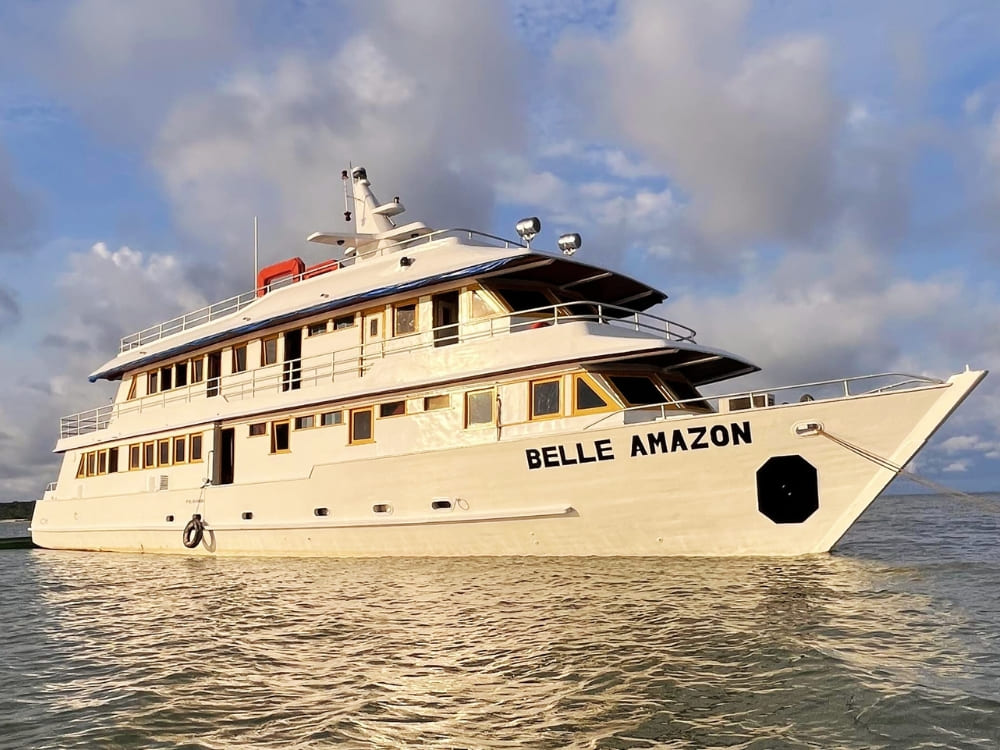
Kaiara stands out for being one of the only Amazon cruises in Brazil to depart from Belém, capital of Pará. With three different vessels (Amazon Dolphin, Belle Amazon and Tupaiú), travelers have the unmissable chance of sailing in Alter do Chão, a small town on the riverbanks of the Tapajós River.
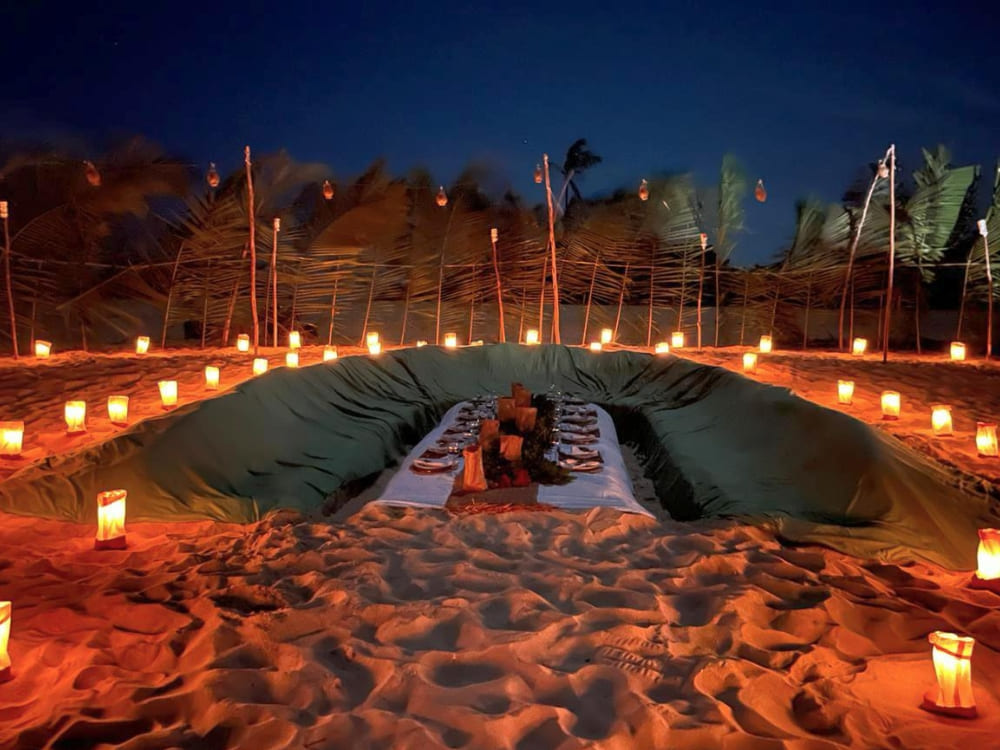
Custom itineraries include hiking, swimming in igarapés (water courses), visiting river beaches and local communities, handicraft lessons, recreational fishing, night spotting, sunrise contemplation, etc.
Considered a food-centric experience, the incredible dishes lovingly made by a talented mother-daughter duo are one of the highlights, according to the Financial Times.
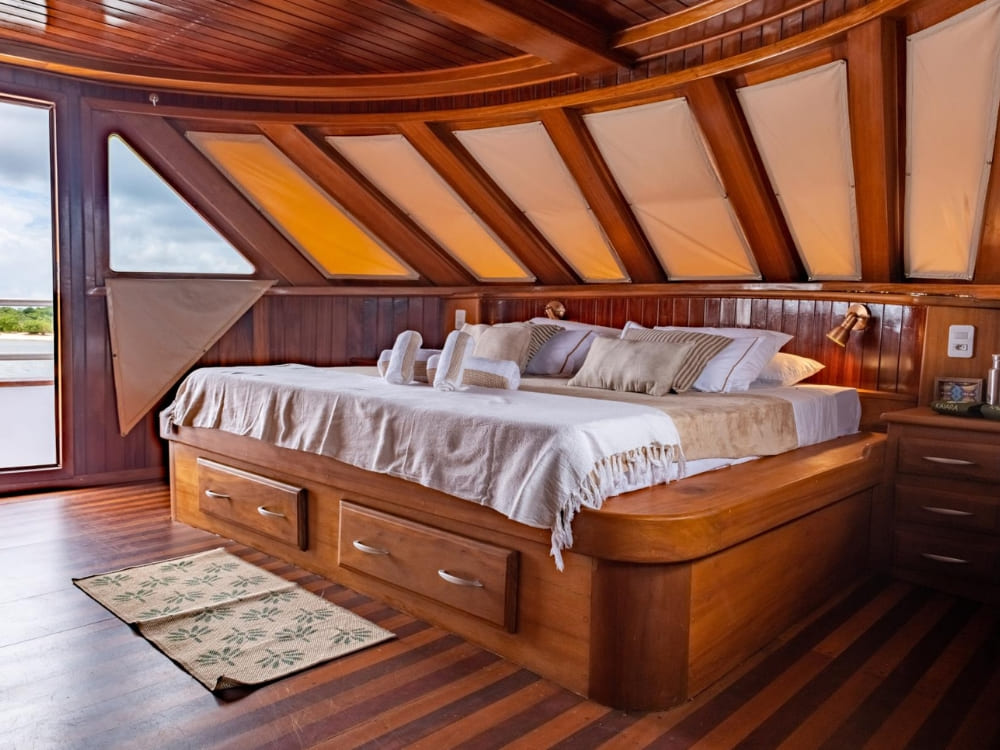
The boats also feature comfortable cabins — with double, single or bunk beds, air-conditioning, and private bathrooms —, dining rooms, living rooms, balconies and sun decks with beautiful panoramic views. Learn more about this adventure.
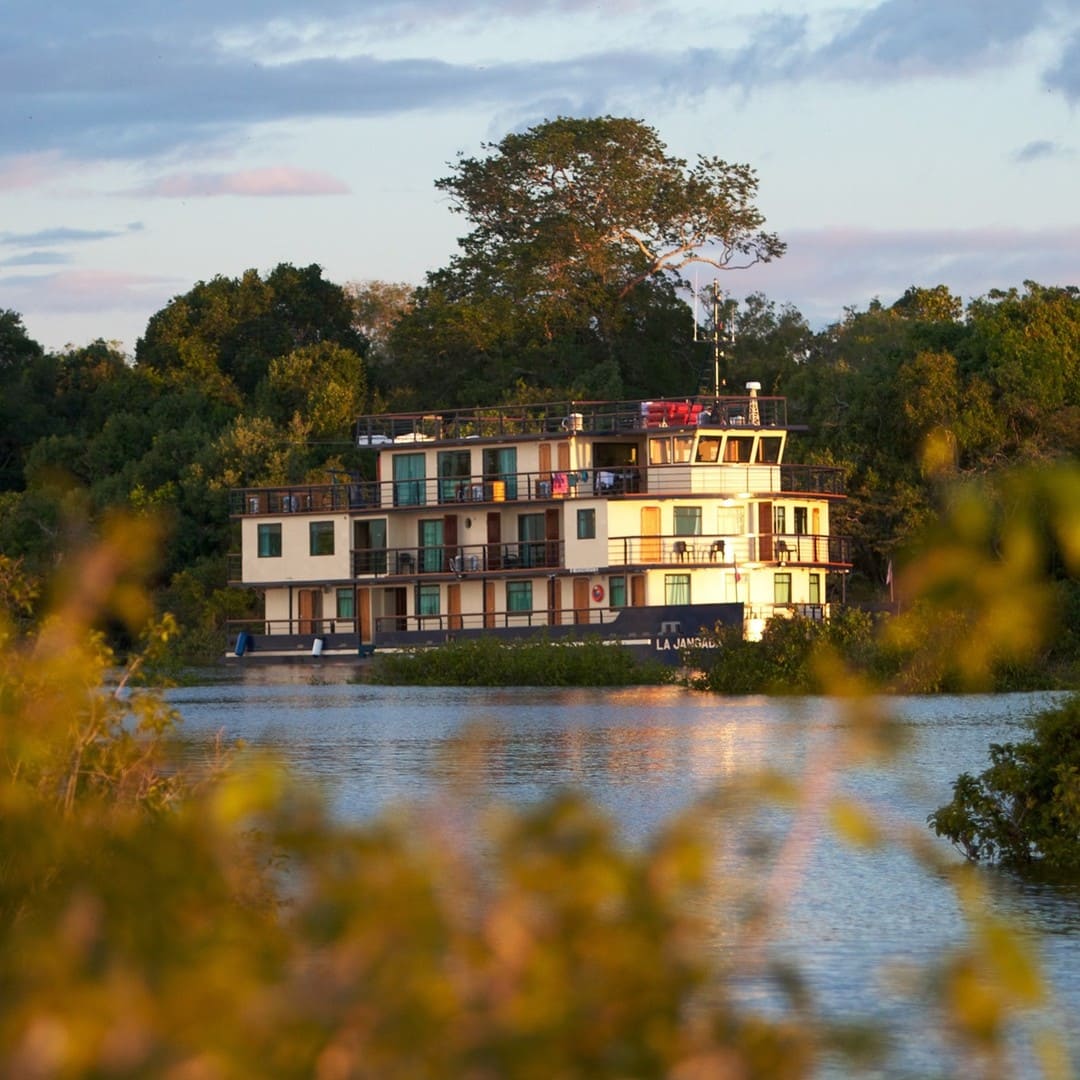
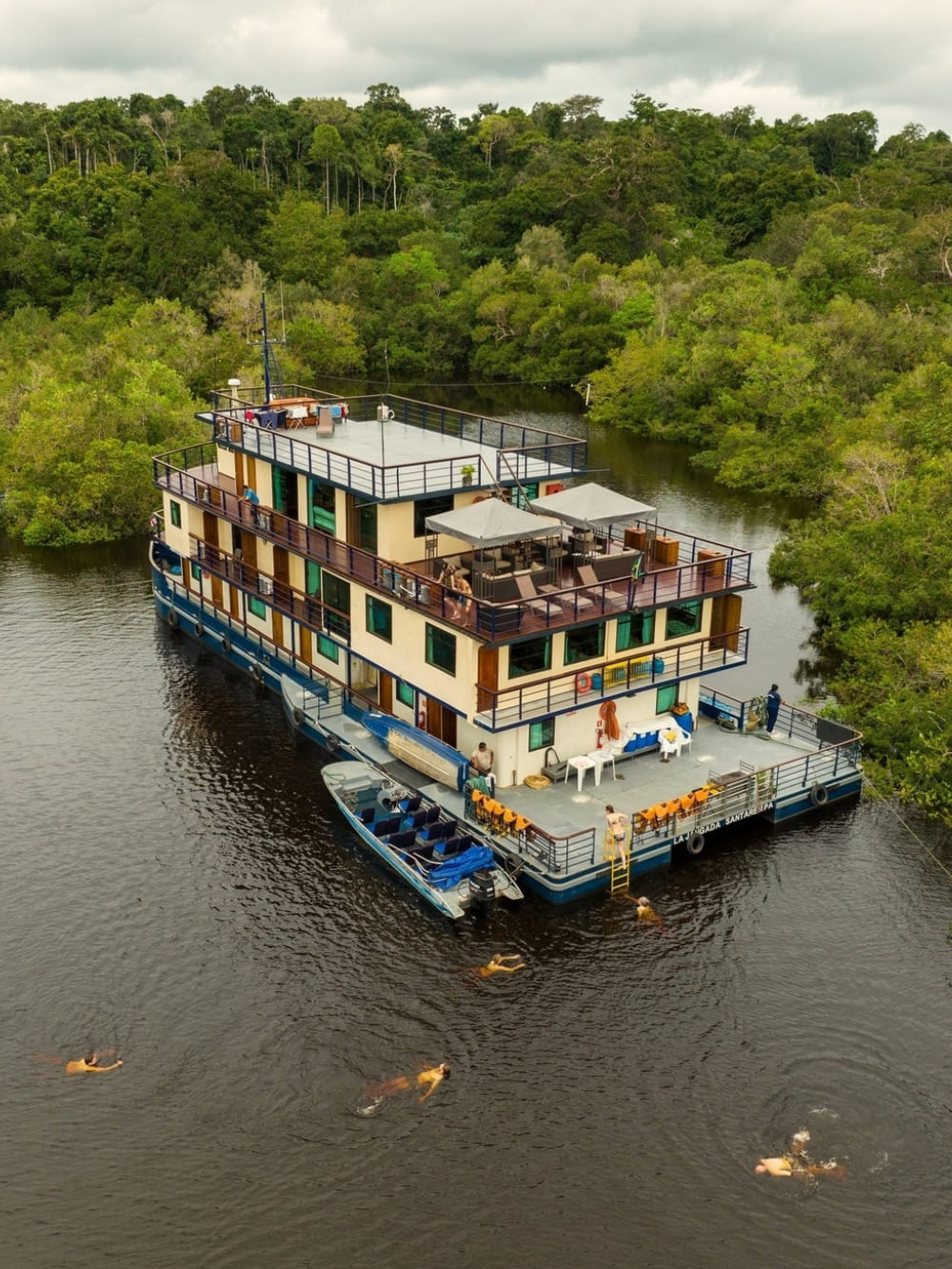
4 – La Jangada
.
Inspired by Jules Verne’s Eight Hundred Leagues on the Amazon, La Jangada’s name comes from the original French title of this iconic novel, La Jangada: Huit Cents lieues sur l’Amazone.
Modern and aesthetically pleasing, this chic catamaran pampers passengers with its spacious decks, refined design and twelve air-conditioned ensuite cabins.
This luxury river cruise in the Brazilian Amazon is the perfect blend of comfort and adventure. Multiple day trips include a vast list of activities, such as hiking, boat trips, animal spotting, hiking, fishing, visiting waterfalls and natural pools, camping in the forest, exploring the Anavilhanas and Jaú National Park, engaging with indigenous and riverside communities, etc.
.
Common areas feature a charming terrace with tables and chairs, two lounges with couches and TVs, a restaurant that serves delicious Amazonian and Brazilian food, a bar with classic and signature drinks, a lecture room and a theater room.
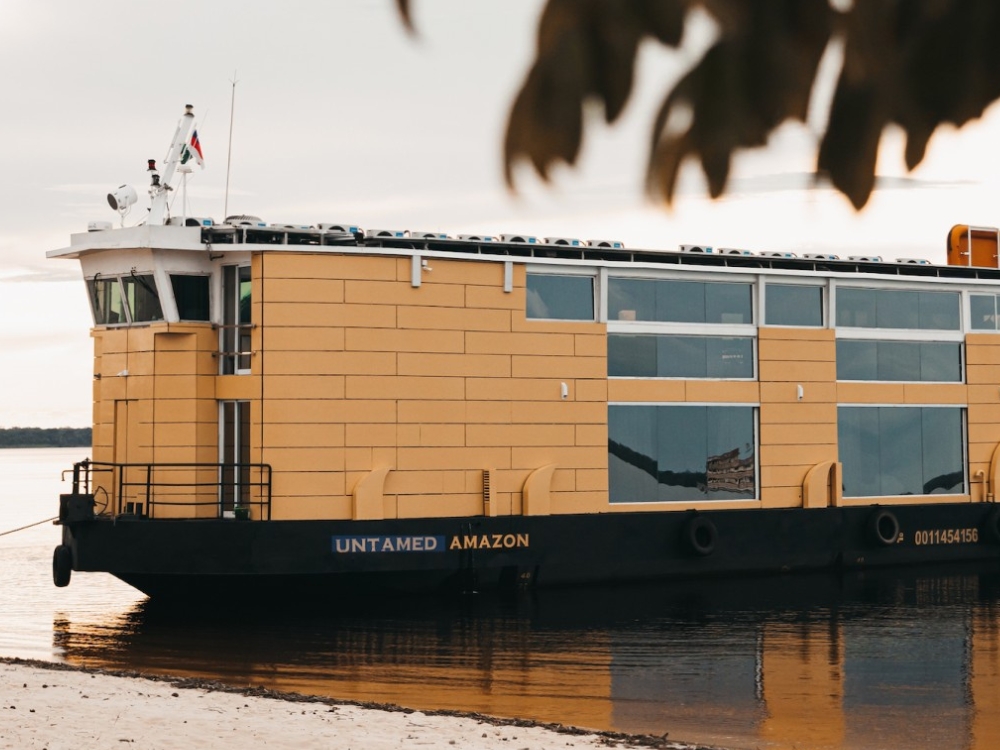
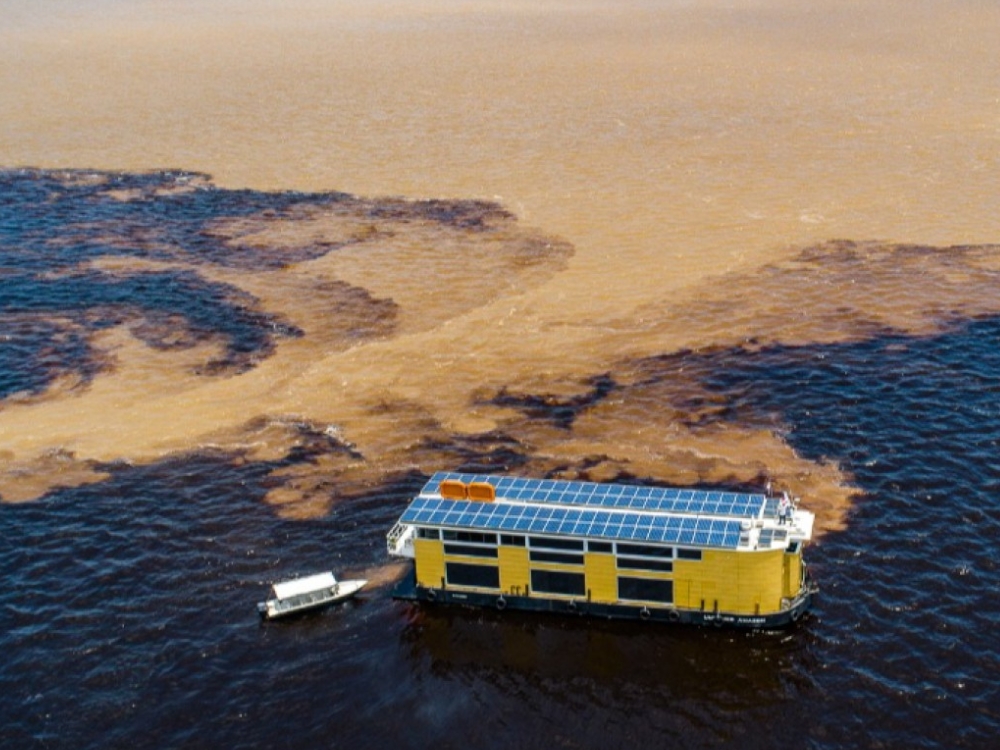
The Untamed Amazon riverboat is described as the ultimate sustainable cruise experience. Partially powered by solar energy, it also has an advanced water treatment system and fuel-efficient engines that follow international environmental standards.
This five-star stay includes eight spacious ensuite cabins — six of them with floor-to-ceiling windows to ensure the most stunning views of the forest —, high quality amenities, local cuisine restaurant, a bar, a dining room, a living room, sun decks and entertainment areas.
.
Eight different itineraries — in addition to New Year cruises, corporate events and tailor-made trips — include canoeing, photo safaris, evening sightseeing, jungle hiking, and much more. Learn more about this adventure
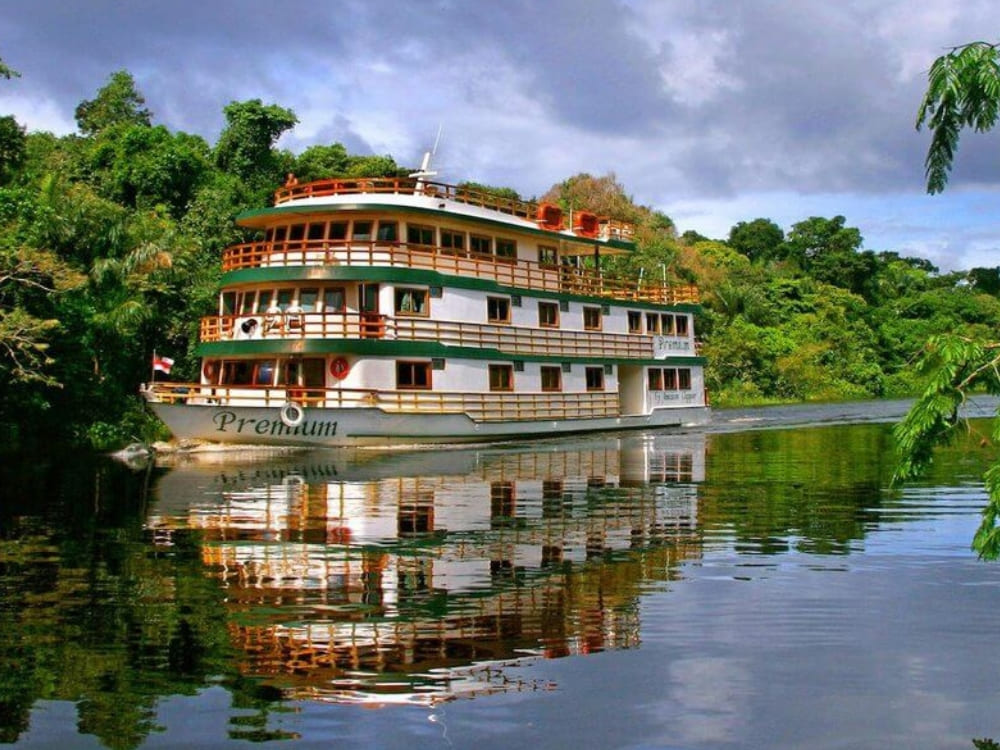
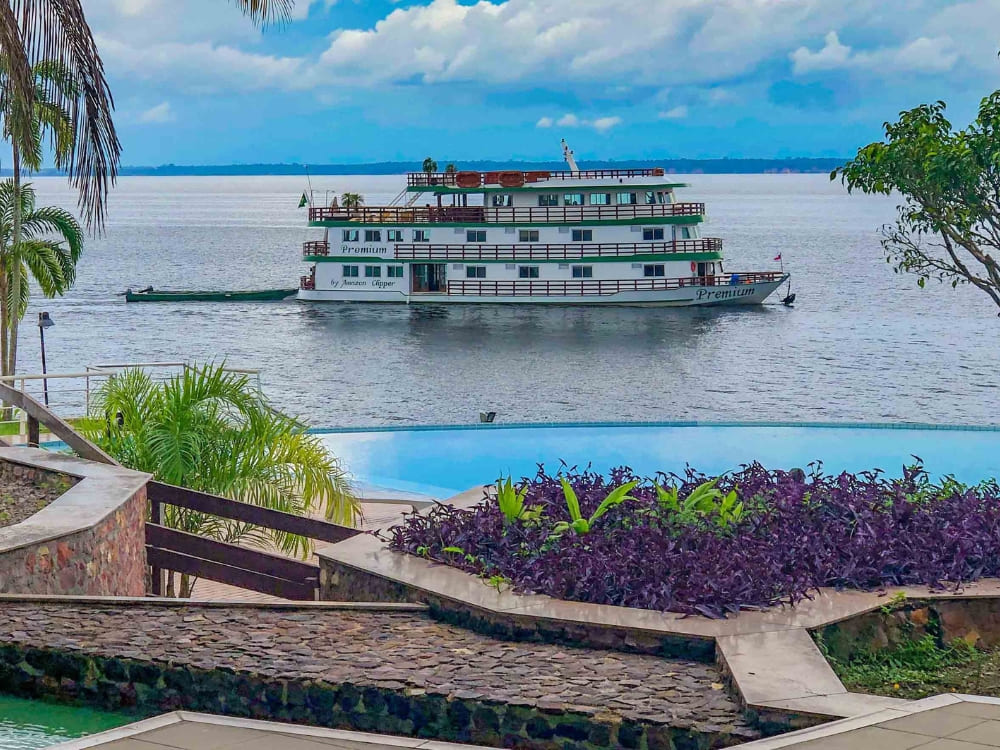
One of the longest-running ecotourism options in the area, going strong for 35 years, Amazon Clipper offers the best Amazon river cruises in Brazil in the small-ship category. The MV Premium is the most luxurious vessel of their fleet, perfect for people who desire a high-end stay.
.
One of the longest-running ecotourism options in the area, going strong for over 35 years, Amazon Clipper offers some of the best Amazon cruises in Brazil in the small-ship category. The MV Premium is the most luxurious vessel of their fleet, perfect for people who desire a high-end stay.
There are sixteen air-conditioned ensuite cabins with twin or queen-size beds, excellent amenities, lecture room, swimming pool, jacuzzi, a leisure deck, gourmet area, a dining room, a lounge, a sun deck and a large observation deck with a fantastic 360 view.
.
Wonderful activities await on 6-day trips across the waters of the Amazon and Negro rivers: stargazing, aquatic trails, night tours, swimming, boat tours, visiting native communities, etc.
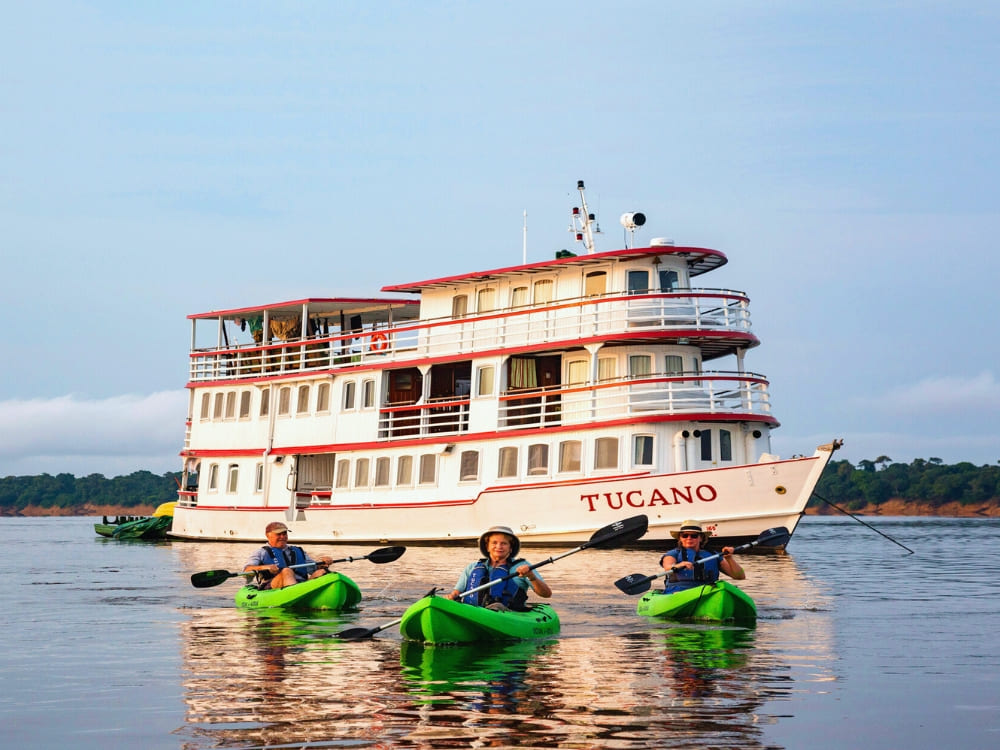
Another great small ship is the Tucano, a modest-sized motor yacht with a fast engine. This design helps it reach places other riverboats can’t, making it the only vessel to explore the deepest parts of the Central Amazon Conservation Complex alongside crew members with more than 30 years of experience.
.
Another great small ship is the Tucano, a modest size motor yacht with a fast engine. This design helps it reach places other boats can’t, making it the only vessel able to explore the deepest parts of the Central Amazon Conservation Complex, in Novo Airão, a small town 195 km away from Manaus.
This is why this Amazon cruise in Brazil is the perfect option for those who wish to take wildlife watching to the next level, as the noise pollution control system is efficient to prevent scaring animals away. Activities also include guided hikes, night tours, skiff safaris, kayaking, etc.
.
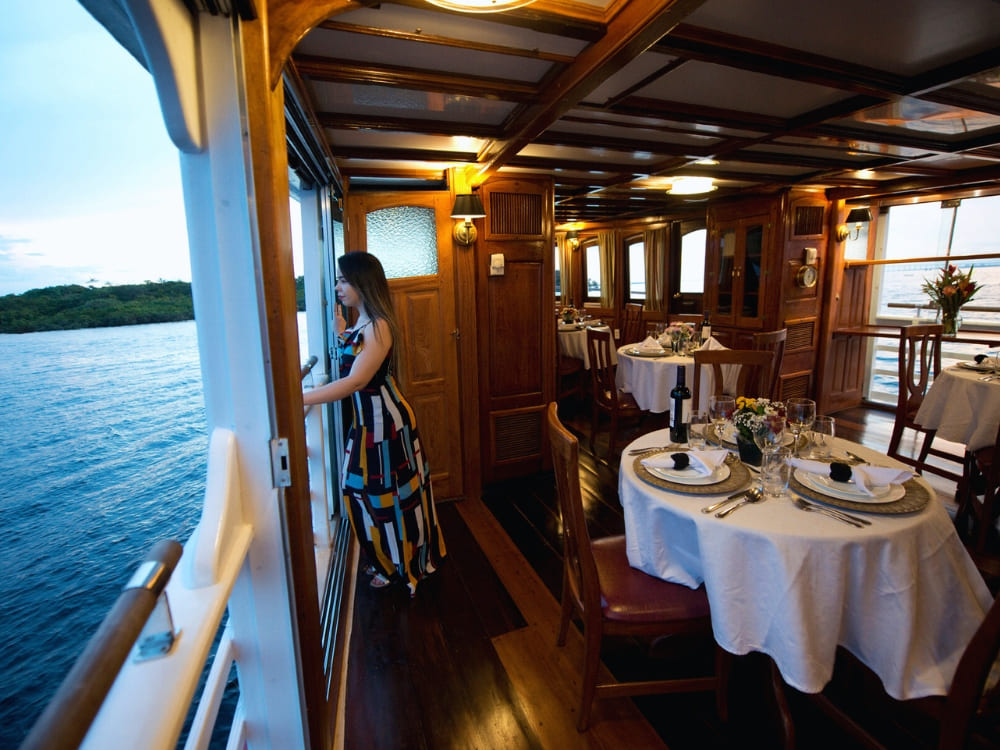
Sixteen guests can comfortably rest in eight different air-conditioned ensuite cabins (single, twin, queen-sized, and bunk beds), and relax in the dining room, lounge or observation deck.
Considering accommodation, services, diverse itineraries, and infrastructure of the vessels, Amazon cruises costs an average of R$ 18.000 (approximately US$ 3,462 and € 2.916) per person. Prices vary according to cabin category, season, trip duration, etc.
*Per person, based on double occupancy in group departures. Prices may vary depending on season and availability. Exchange rate as of February 10th, 2026; subject to change.
Amazon cruises in Brazil: customer reviews
By partnering with the most reliable local operators, PlanetaEXO has helped numerous travelers from all over to world to join incredible river boat cruises in the Amazon Rainforest.
See what our customers think about these experiences!
Yes, Amazon river cruises are safe. The vessels follow strict safety protocols and there are first responders among crew members to offer assistance if needed. In case of emergency, a speedboat is ready to rescue passengers and bring them to the nearest city.
How long do river cruises in the Amazon take?
River cruises are multiple-day experiences. PlanetaEXO offers tours lasting from 4 to 7 days, but it’s possible to extend your trip.
What should I pack for an Amazon river cruise?
Light clothes, comfortable shoes, hats or caps, sunglasses, raincoat, a flashlight, sunscreen, insect repellent, travel essentials (documents, cash, debit/credit card, medication), powerbank and chargers (phones, cameras, laptops, tablets).
What to expect on an Amazon river cruise?
Expect to be awed by the beauty of the Amazon Rainforest. Sailing across the rivers allows you to explore nature from a whole new perspective to admire the fauna and flora of the richest ecosystem in the world.
Meanwhile, elegant accommodations and premium services guarantee a high-stay experience for couples and families alike.
Are Amazon cruises worth it?
More than worth it! River cruises are some of the most fascinating activities in the Amazon because they present the perfect fusion of ecotourism and comfort: connection with nature, responsible travel, and exclusivity. It truly is an unforgettable experience.
Ready to plan your Amazon river cruise in Brazil?
Now that you know everything about the best Amazon river cruises, shall we start planning your next vacation?
As an expert in Amazon Rainforest tours in Brazil, PlanetaEXO is an ecotourism platform that works with the finest local operators to offer unforgettable experiences for all travelers. Contact us now!
Seasons, activities, safety tips, and health precautions. See our recommendations for a fantastic Chadapa Diamantina trip!
Chapada Diamantina National Park is a destination rich in fauna, flora, beauty, and experiences. No wonder countless adventurers visit Brazil every year to explore its trails—considered some of the best in the world.
To make the most of your trip, it’s important to follow some Chapada Diamantina travel tips that ensure safety and authenticity. This makes your planning more efficient and prevents you from having unpleasant surprises when you should be having fun.
Photo: Guillaume Leman
PlanetaEXO, an ecotourism platform specializing in Chapada Diamantina tours, has put together a list with 10 recommendations for an extraordinary vacation. Check them out below!
1. Hiking in Vale do Pati
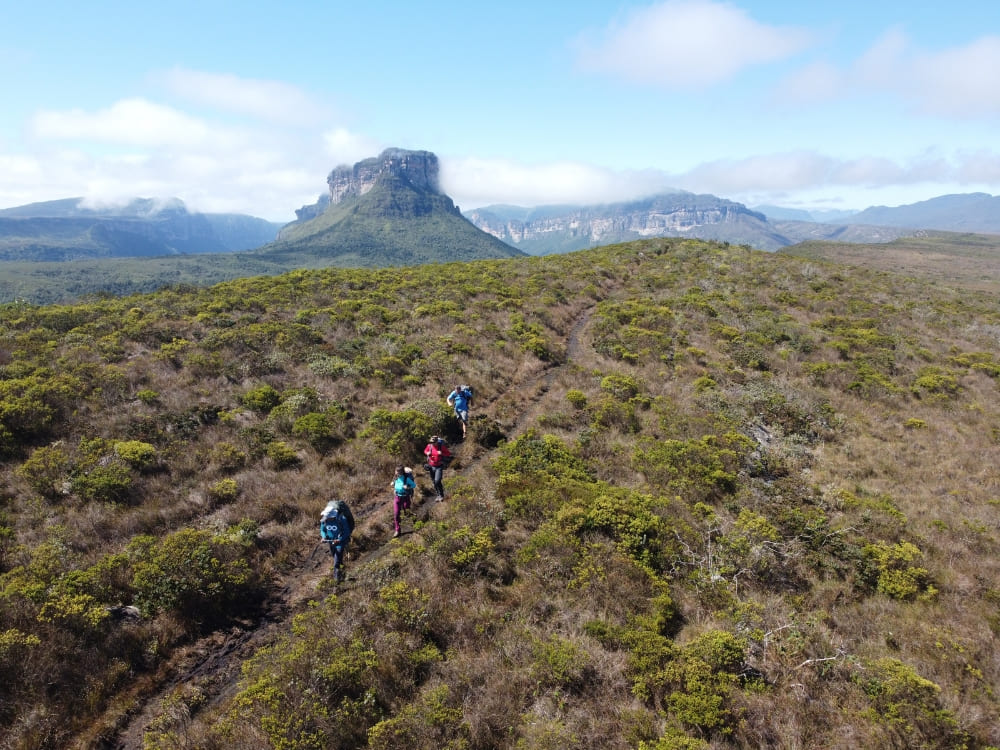
No list of travel tips for Chapada Diamantinais complete without mentioning Vale do Pati. Frequently described as one of the most beautiful treks in Brazil, it crosses mountains, rivers, and valleys inside the national park.
You can choose different routes: the classic 3-day trek from Guiné to Vale do Capão, the 4-day itinerary including Morro do Castelo, or the complete 5-day crossing with more waterfalls and time in local villages. Each option offers homestay accommodations with traditional meals, creating a true immersion in local life.
Chapada Diamantina can be visited all year-round, but each season shapes the landscape in unique ways. Between October and April, waterfalls like Fumaça and Buracão are at their fullest, creating spectacular views. The vegetation turns bright green, though trails may be muddier.
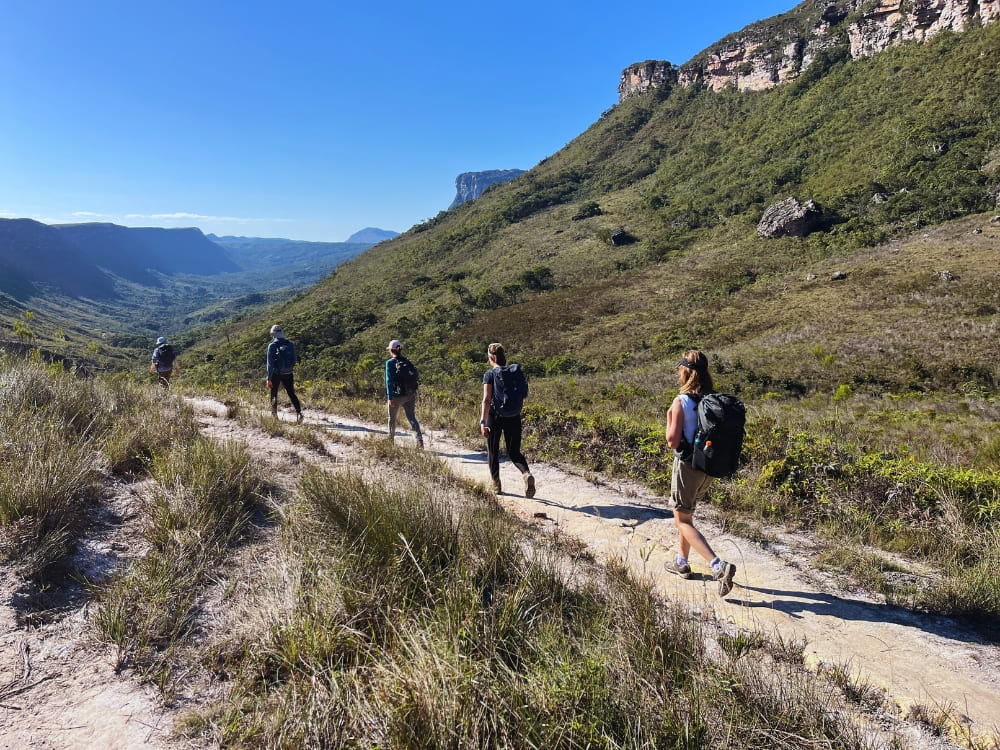
From May to September, the weather is drier and more stable, making it ideal for long treks, like in Vale do Pati. The nights in villages like Mucugê and Vale do Capão can get chilly, so don’t forget to bring warm clothing!
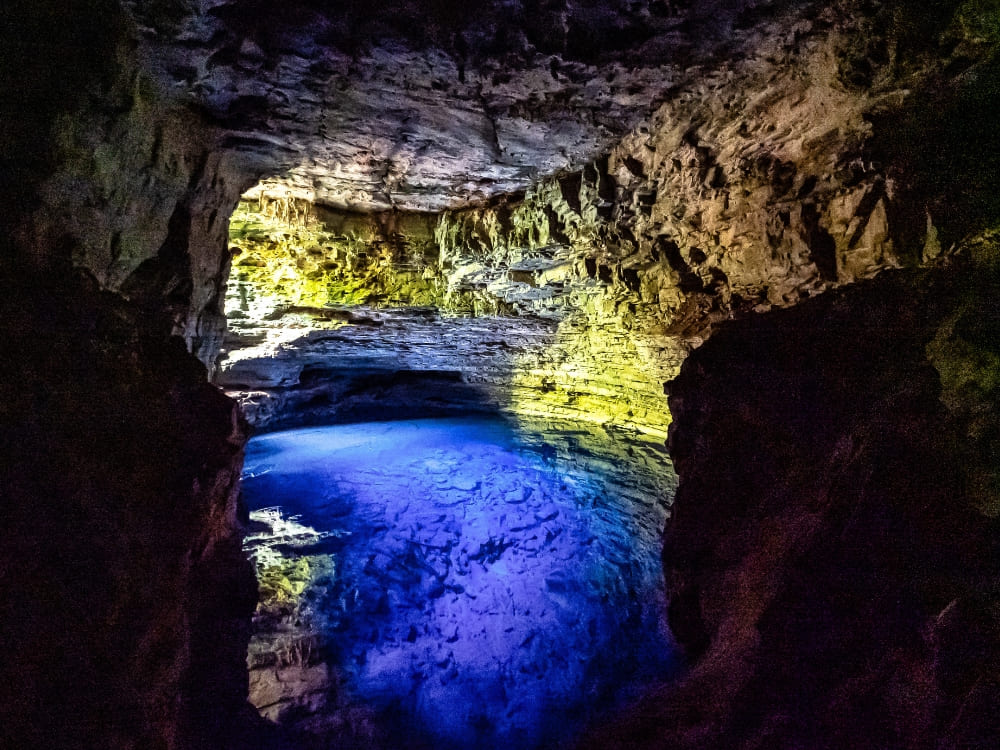
While natural wells Poço Azul and Poço Encantado are always open for visitation, the sun ray phenomenon—when the sunlight peaks through the cave cracks and colors the water with a vibrant blue hue—usually happens from February to October.
While there is no official requirement of vaccination for foreign tourists, Brazil’s Ministry of Health advises that visitors get precautionary shots for diphtheria, tetanus, polio, and measles. For extra safety, vaccines for yellow fever and hepatitis A and B are recommended as well.
Follow more health tips to ensure the best experience:
Always keep a reusable water bottle with you to hydrate during the treks.
Protect yourself from the sun by wearing hats or caps and using sunscreen (SPF 30 or higher).
Wear comfortable shoes and cotton socks to prevent blisters.
Don’t hike on an empty stomach; eat well before hiking and keep protein bars and other non-perishable snacks in your backpack.
4. Beyond the classics: visit as many waterfalls as possible
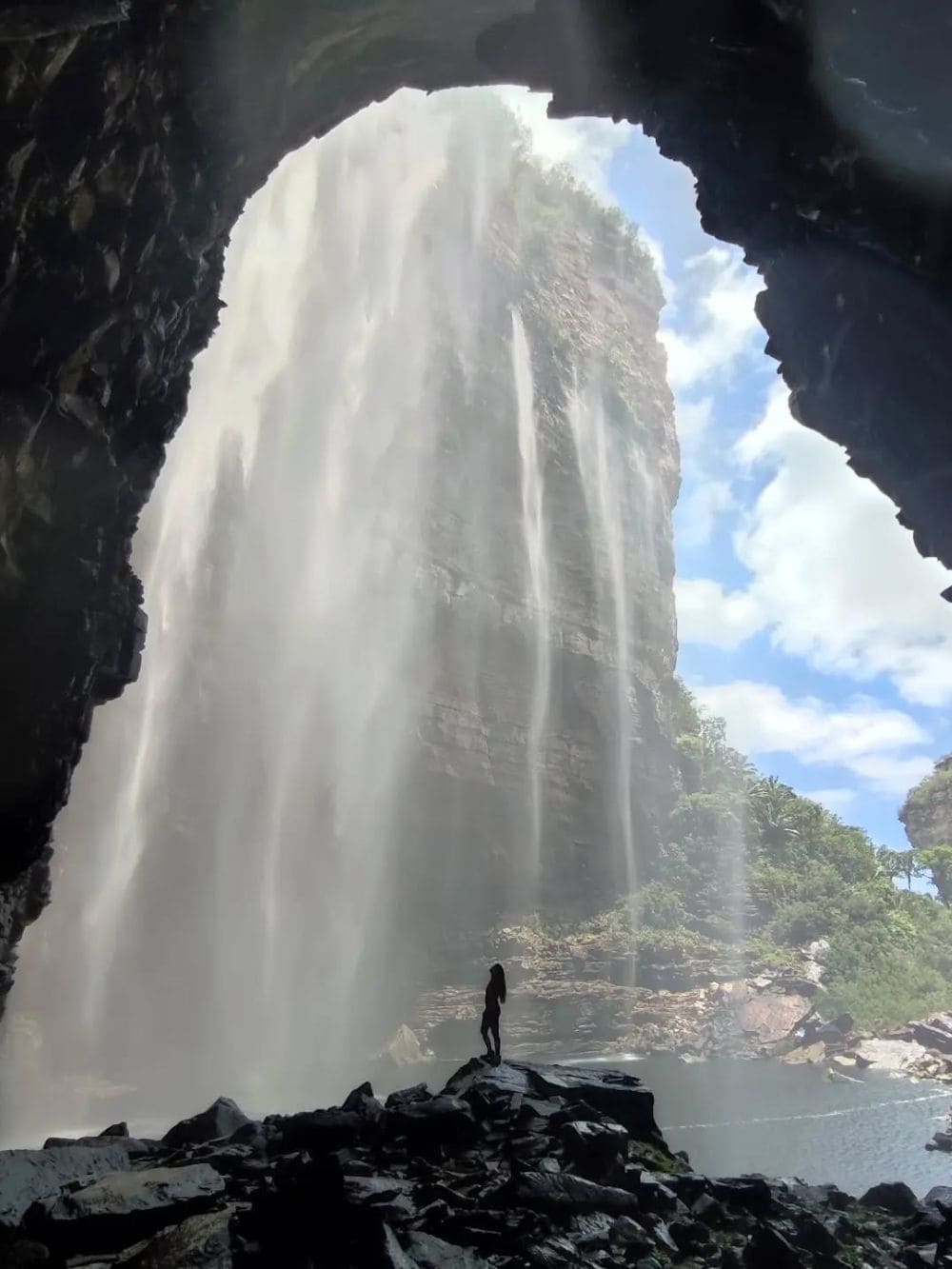
Chapada Diamantina National Park is famous for its waterfalls, and each has a distinct personality. The Herculano Waterfall, in Itaetê, has a drop of about 120 meters and forms a large natural pool at the bottom. Buracão, located near Ibicoara, flows inside a canyon, requiring visitors to swim to its base.
But beyond the famous spots, there are dozens of hidden gems. The Mosquito Waterfall, close to Lençóis, has a 60-meter drop and is often less crowded, while remote places like Fumacinha or Mixila demand more effort but reward hikers with wild, untouched landscapes.
Planning ahead and learning about the waterfalls before you arrive is essential, as it will help you recognize them along the trails and decide which routes to include in your itinerary.
Beyond the waterfalls, travelers can also visit caves and natural wells in Chapada Diamantina. Gruta Lapa Doce, near Iraquara, features impressive limestone formations, like speleothems, stalactites, and stalagmites.
At Pratinha and Gruta Azul, you can snorkel in crystal-clear waters and enjoy optional activities like zip-lining and kayaking. Meanwhile, Poço Encantado and Poço Azul are absolute favorites due to their beauty when sunlight creates surreal effects on the blue-tinted surface.
These sites combine geology, history, and natural beauty. Including them in your itinerary will surely make your Chapada experience much more diverse!
A valuable travel tip for Chapada Diamantina is smart packing, which means carrying only what you’ll actually use, as every unnecessary item will add weight to long hikes under the sun. Being prepared is the difference between a smooth adventure and unnecessary challenges. Here’s our suggested list:
Light clothes, including UV-resistant long-sleeved shirts
Windbreaker and sweater
Raincoat and/or waterproof jacket
Quick-drying towel
Hiking shoes
Socks
Flip-flops
Swimwear
Hats/caps
Sunglasses
Sunscreen
Insect repellent
Reusable water bottle
Waterproof bag
Since ATMs are scarce in smaller towns and obviously nonexistent within the national park, it’s important to bring your own cash (Brazilian real). Other essential items are: documents, credit/debit cards, medication, and chargers/portable chargers for electronic devices.
Photo: Lucas Neves
7. Immersive stay experience: homestay and small inns
One of the most enriching ways to experience Chapada is by staying in locals’ homes, especially during the Vale do Pati trek. Families welcome hikers with simple but cozy rooms and home-cooked meals prepared on wood-burning stoves.
Not only is this the only type of accommodation for multi-day hikes in the national park, but it’s also a way to support small businesses and communities by strengthening the connection between ecotourism and community.
Another option is staying in the surrounding towns (Lençóis, Mucugê, Palmeiras, Andaraí, Igatu, and Ibicoara). Instead of big hotel chains, travelers rest in small inns that provide a more intimate experience, as well as comfortable rooms, great common areas, and other services.
Before or after hiking inside Chapada Diamantina National Park, take time to explore the surrounding towns. Lençóis is the most famous, with cobblestone streets, colonial architecture, and a lively cultural scene, while Igatu features fascinating 19th-century stone ruins.
Mucugê is quieter and full of history, with museums and old churches that tell the story of diamond mining. Vale do Capão is known for its alternative and bohemian vibe, attracting hikers, musicians, and artisans.
These towns offer a different perspective of Chapada, one where culture and history complement the natural beauty of the park.
Photo: Rudolf Ernst
9. Be ready to disconnect
Mobile phone coverage and internet in Chapada Diamantina are very limited. Once you enter deeper trails—especially in the Vale do Pati—you’ll find no signal or connection whatsoever.
Rather than a limitation, this is an opportunity. Disconnecting from the digital world allows you to truly enjoy the waterfalls, landscapes, and communities around you. Travelers often say the absence of signal becomes one of the most rewarding parts of their journey.
Be prepared to be completely offline and embrace the simplicity of this fantastic destination. The lack of signal is not a setback but an invitation to enjoy nature in its purest form.
.
10. Logistics and other important information
Plan your transfers carefully. While Lençóis is accessible by bus or flight from Salvador, other entry points like Guiné or Andaraí require private transfers. Reliable travel companies, like PlanetaEXO, include shuttle services to ensure smooth logistics.
Another important topic is the support of local guides. The Chapada Diamantina National Park is enormous and full of secrets, marked by an atmosphere of untouched nature with many unique features. To ensure a safe and trouble-free trip, guided hikes are essential, even for the most experienced hikers.
We hope our travel tips for Chapada Diamantina will help make your trip to one of Brazil’s most beautiful natural destinations even more enjoyable!
At PlanetaEXO, an ecotourism platform specializing in Chapada Diamantina tours, we take matters into our own hands to ensure you have the perfect vacation, from bookings to transfer options and tailor-made itineraries. Contact us now!
In an unprecedented meeting, the ecotourism platform brings together its team and local operators to discuss community impact and environmental preservation amid the region’s growing international projection.
PlanetaEXO, an international platform specializing in adventure travel and sustainability, announced the launch of “EXO Connection,” a strategic initiative designed to bring its corporate team closer to the reality experienced by tour operators on the ground. The first edition of the event focused onLençóis Maranhenses and featured the participation of the founders of Paraíso do Caju, a pioneering local partner.
The meeting served as a barometer for the profound transformations the region is undergoing. Central themes included the vital economic impact of tourism for native oasis families, ethical partnerships between agencies and the community, and urgent challenges brought by the exponential increase in visitors and the park’s recognition as a heritage site.
Photo: Marcelo Bonifácio
For Lucas Ribeiro, founder of PlanetaEXO, the initiative reinforces the company’s DNA. “The goal of EXO Connection is to communicate our purpose internally and to the market: generating real positive impact in our partners’ communities,” says Ribeiro. “We chose to start with Paraíso do Caju because of our admiration for their authenticity and genuine social commitment. This level of care connects deeply with the essence of PlanetaEXO.”
A Partnership Transforming Lives and Businesses
The choice of Paraíso do Caju as the first guest was intentional. Operating in the region since 2013, the local agency specializes in “adventure tours” and immersionLençóis Maranhenses hiking trips, building a symbiotic relationship with oasis residents.
Alana Paixão, manager of Paraíso do Caju, highlighted how the commercial alliance boosted the professionalization of tourism in the area. “PlanetaEXO is currently our largest partner in sending clients, and this union has been fundamental to our growth. Above all, it is a relationship based on deep respect for local communities and guides, ensuring the financial impact fairly reaches those living inside the National Park.”
Photo: Isadora Sá
The Sustainability Challenge Amid the “Hype”
The event also addressed the other side of the coin: the vertiginous growth of tourism inLençóis Maranhenses and the pressure on the ecosystem. Marcelo, an experienced guide and partner at Sítio Paraíso do Caju, shared a moving account of the paradigm shift in the region but warned of the need for collective responsibility.
“Tourism has radically transformed the lives of families in the oases, who historically lived on fishing and extraction and now have financial security and access to education for their children,” Marcelo reports. “However, we feel both pride and apprehension. Guiding people from all over the world — from Japan to France — in our backyard is an honor, but we have an immense responsibility to maintain the quality of theLençóis Maranhenses trek and preserve this natural gem.”
exo connection
The “EXO Connection” will continue throughout the year, with the next edition already confirmed to coverChapada Diamantina. The initiative will keep bringing other strategic destinations and partners to the center of the debate on the future of ecotourism in Brazil and the world.