Author: Lucas Planeta Exo

  • 10 interesting facts about Fernando de Noronha that you need to know

    10 interesting facts about Fernando de Noronha that you need to know

    Dive into the secrets of Fernando de Noronha, Brazil’s island paradise, a sanctuary of breathtaking beaches, coral reefs, and wildlife

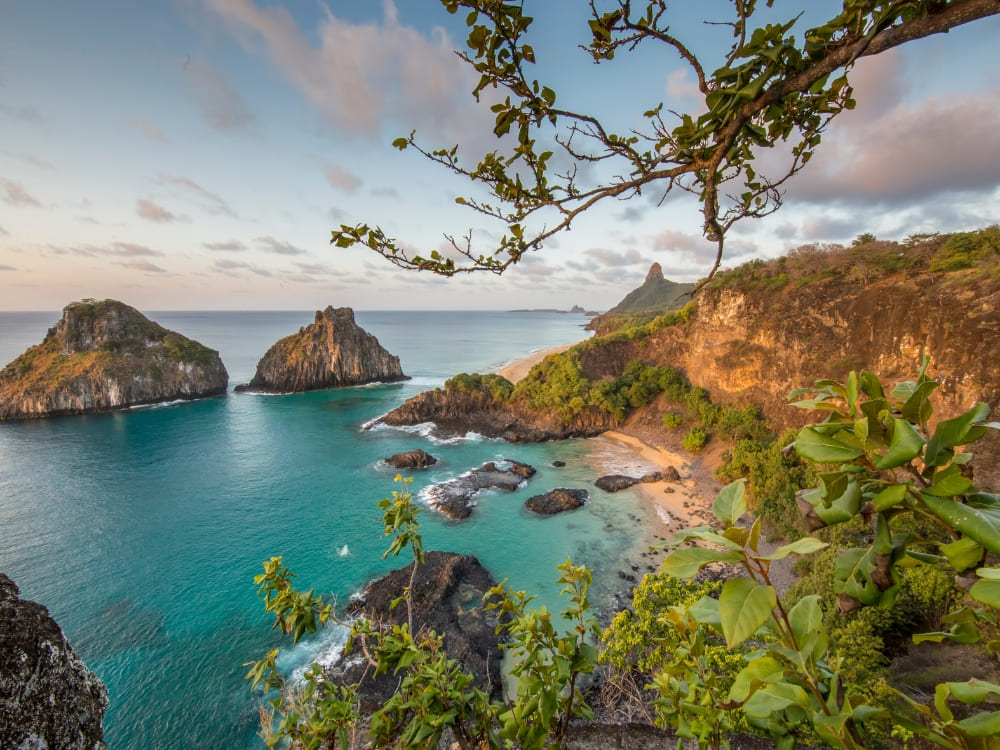
    Hidden in the Atlantic Ocean off Brazil’s northeast coast, Fernando de Noronha is an archipelago that feels like a dream come true. Famous for its turquoise waters, stunning landscapes shaped by ancient volcanic activity, sea turtles, and unforgettable sunsets, this island is one of Brazil’s top natural treasures. Because of this, there are various surprising facts about Fernando de Noronha.

    But what really makes Fernando de Noronha so special? Beyond its beauty, the archipelago is home to an incredible variety of marine life and wildlife, making it a playground for nature lovers. Dolphins, sharks, and exotic birds all coexist in this protected paradise.
    Facts about Fernando de Noronha
    .

    At PlanetaEXO, we believe every trip should leave a positive impact. By choosing sustainable travel to Fernando de Noronha, you not only enjoy the adventure of a lifetime but also help local partners and conservation projects thrive.

    Ready to be amazed? Check out 10 facts about Fernando de Noronha that you need to know: 

    1. Sharks, dolphins, and marine life at Fernando de Noronha

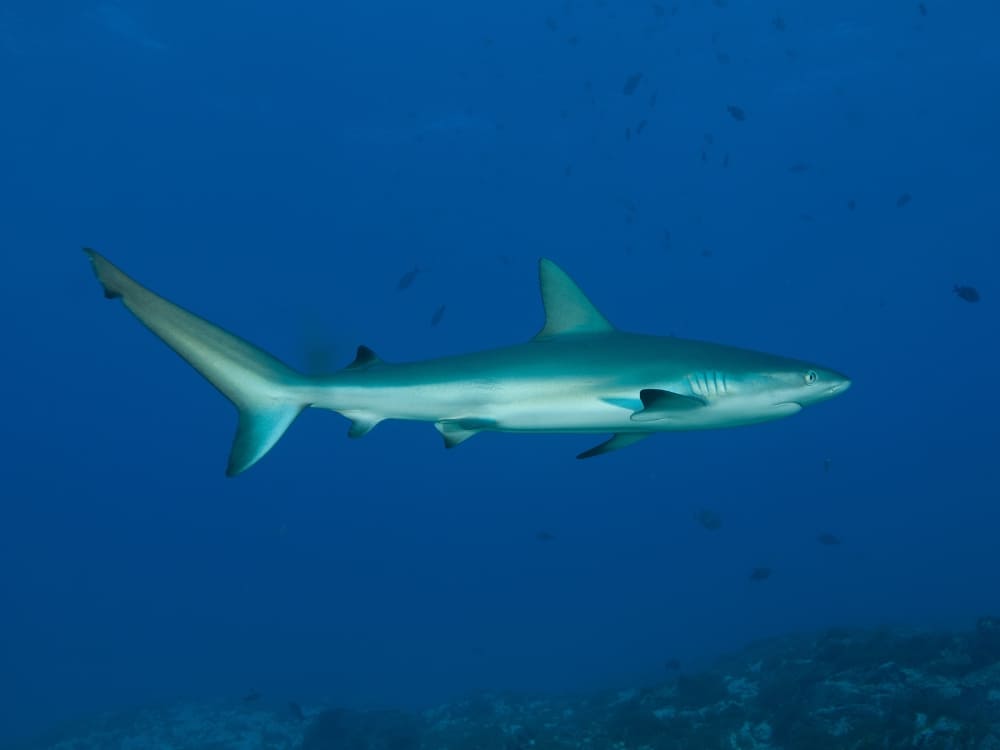
    If you’re worried about sharks, don’t be! The waters are safe and crystal clear, home to species like lemon, nurse, and reef sharks, with encounters closely monitored by local guides during dives.
    Shark Fernando de Noronha
    Photo: Sandro Rodrigues

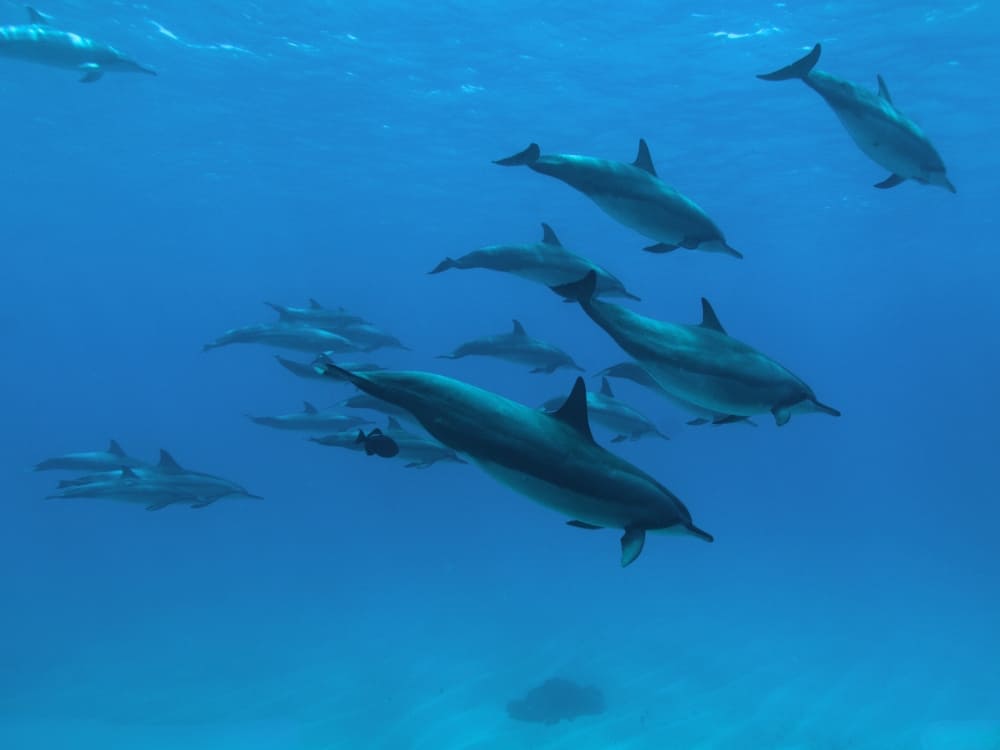
    Noronha is also famous for its resident spinner dolphins, which perform daily shows at Baía dos Golfinhos. Watching hundreds leap and spin in the air, known locally as the balé dos golfinhos (dolphins’ ballet), is an unforgettable experience. 

    In fact, Fernando de Noronha is one of the few places in the world where dolphins can be seen every single day.

    Beyond these stars, the archipelago shelters over 230 fish species, crustaceans, rays, and more reef sharks. On land, you’ll spot red-footed boobies, frigatebirds, tropicbirds, lizards, and crabs, proving that wildlife here thrives both above and below the water.
    Spinner dolphins Fernando de Noronha
    Photo: Sandro Rodrigues

    👉 Want to learn more about Brazilian Wildlife? Discover the best wildlife tours and destinations in Brazil

    2. The smallest highway in Brazil: BR-363 in Fernando de Noronha

    How big is Fernando de Noronha? The archipelago covers just 26 km², made up of 21 islands and islets, though only the main island is inhabited. Despite its size, it’s filled with beaches, trails, and stunning viewpoints.

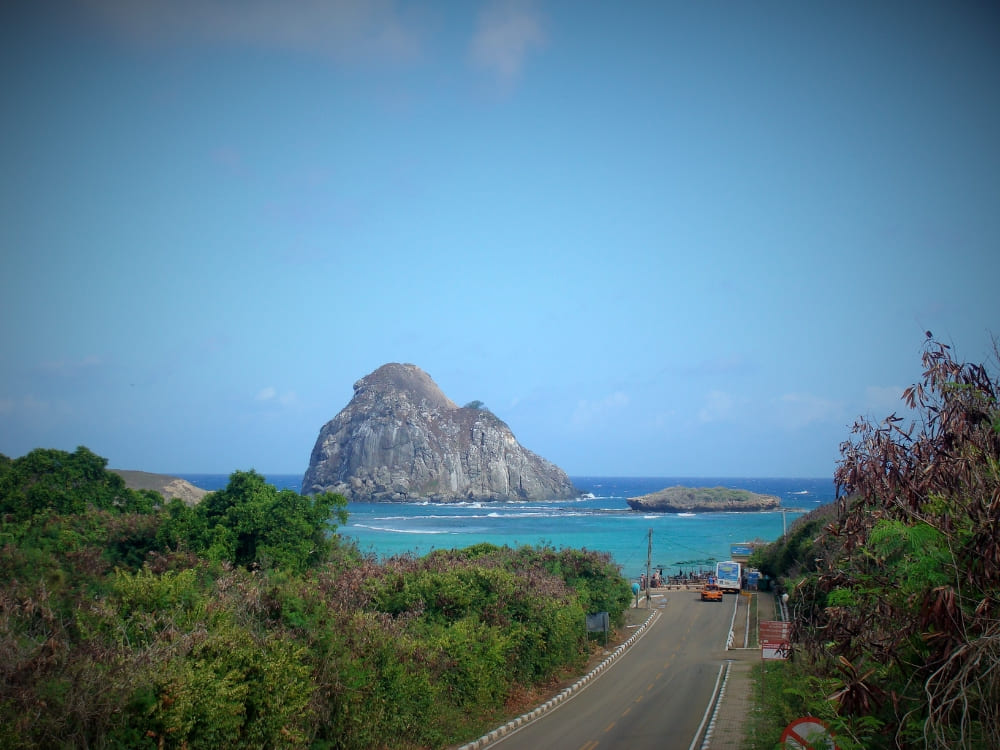
    Noronha is crossed by Brazil’s shortest federal highway, the BR-363, just 7 km long. It’s the island’s main route for buses, cars, motorcycles, and buggies, and the only federal highway in the country not connected to any other.

    Because of its compact size, hitchhiking is common and safe, with locals readily sharing rides. Another quirky fact: the island has only one gas station, selling the most expensive gasoline in Brazil, up to 50% pricier than in Recife.

    👉 Planning your trip? Learn how to get to Fernando de Noronha with our complete guide
    BR 363 Fernando de Noronha
    Photo: Iza Correa

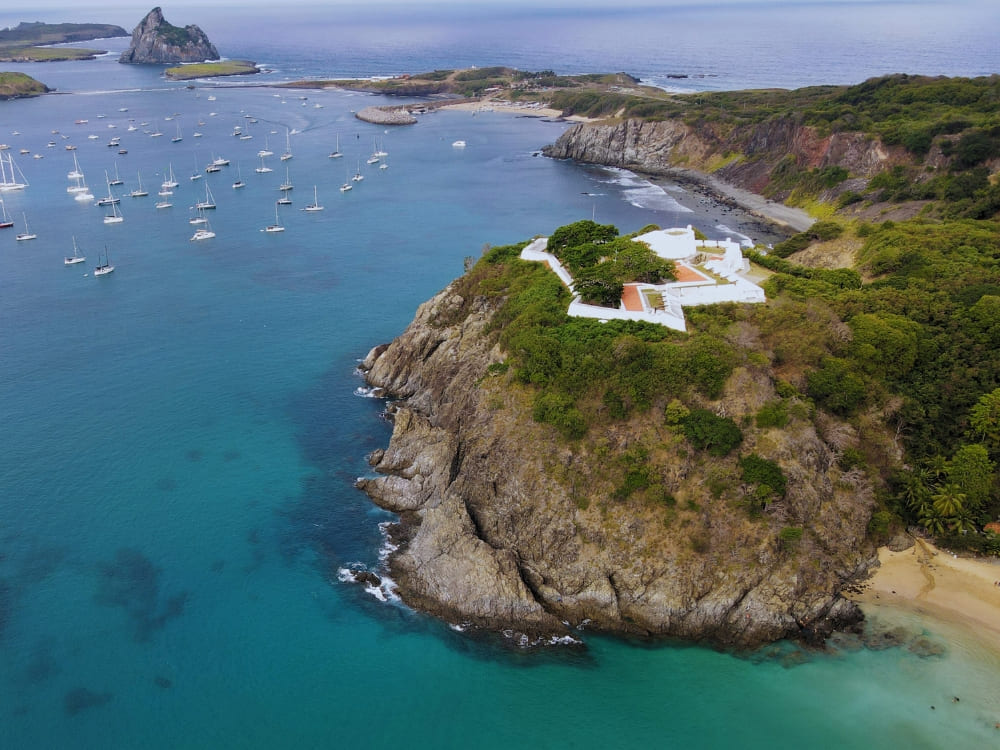
    3. A volcanic archipelago that was once a prison and a hereditary captaincy

    Fernando de Noronha is not just an island: it’s a volcanic archipelago formed around 12 million years ago, with dramatic cliffs, black rocks, and lava-carved coastlines that still shape its landscapes today.

    The island also served as a penal colony: a prison built in 1737 operated for nearly 200 years until World War II, when Noronha became a military base. Some inmates lived under strict confinement, while others with lighter sentences could fish, swim, and even bring their families.

    Adding to its history, Noronha was Brazil’s first hereditary captaincy. In 1504, King Manuel I granted the archipelago to merchant Fernão de Noronha, marking the beginning of this colonial system of land distribution.
    Facts about Fernando de Noronha
    .

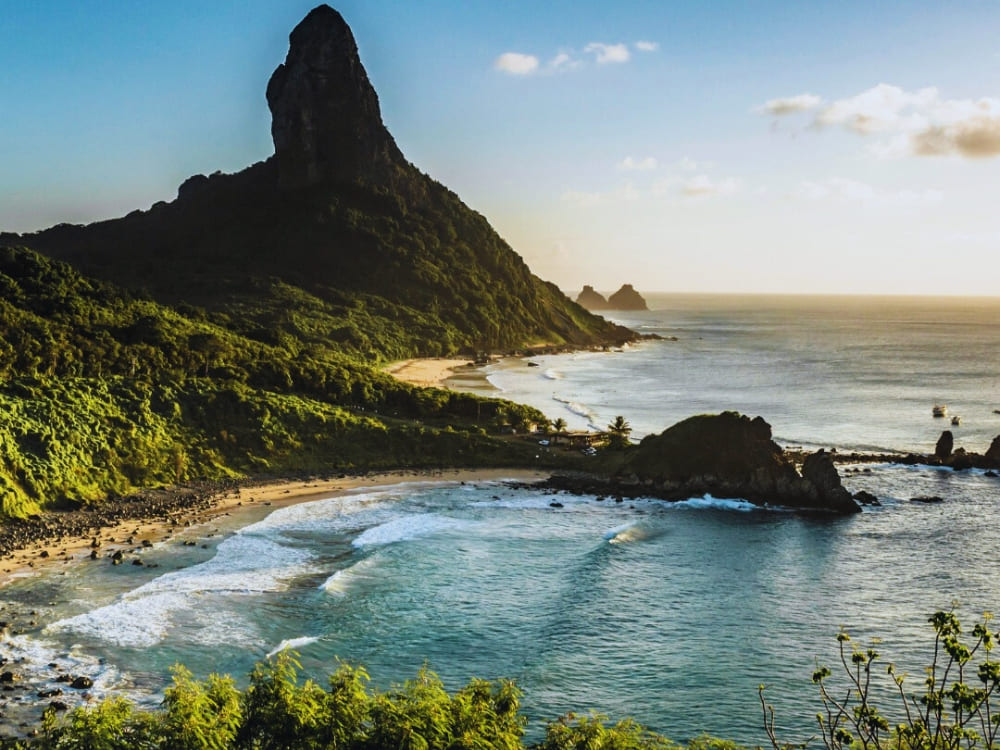
    4. A UNESCO World Heritage Site 

    Since 2001, Fernando de Noronha has been recognized as a UNESCO World Heritage Site for its exceptional natural beauty and biodiversity. Only a handful of places worldwide receive this status, making the island part of an exclusive club.

    The site was chosen for its marine conservation efforts, unique ecosystems, and role as a sanctuary for endangered species.

    UNESCO highlighted the island’s crystal-clear waters, dramatic volcanic landscapes, and the abundance of marine life, including dolphins, sharks, and sea turtles, that thrive under strong protection measures.
    A UNESCO World Heritage Site 
    @visitbrasil

    5. A Marine National Park, plastic-free and carbon-free

    Over 70% of Fernando de Noronha is protected as a Marine National Park, with strict limits on tourism and daily visitor caps to reduce impact.

    Conservation projects like the Tamar Project (sea turtles) and Projeto Golfinho Rotador (spinner dolphins) lead efforts in research and education, alongside programs for reef restoration, sustainable fishing, and wildlife monitoring.

    Plastic-free 

    Since 2018, Fernando de Noronha has been officially a plastic-free island. A decree banned the entry, sale, and use of disposable plastic items such as bottles, cups, straws, bags, Styrofoam containers, and other single-use packaging. 

    This strict policy helps reduce ocean pollution and keeps the archipelago’s beaches and reefs pristine.

    Fernando de Noronha Plastic-free
    .

    Carbon-free

    Noronha is also pioneering as a carbon-free island. The “Noronha Carbono Zero” program aims to ban all fossil-fuel vehicles by 2030, with only electric transport allowed. Since 2022, no new combustion-engine cars have been permitted to enter. 

    With this, the island became the first place in Brazil to officially plan the elimination of carbon-emitting vehicles.

    Another way that helps preserve the archipelago is the daily limit on the number of visitors. The island also relies heavily on renewable energy, especially solar power plants, to reduce its environmental footprint.

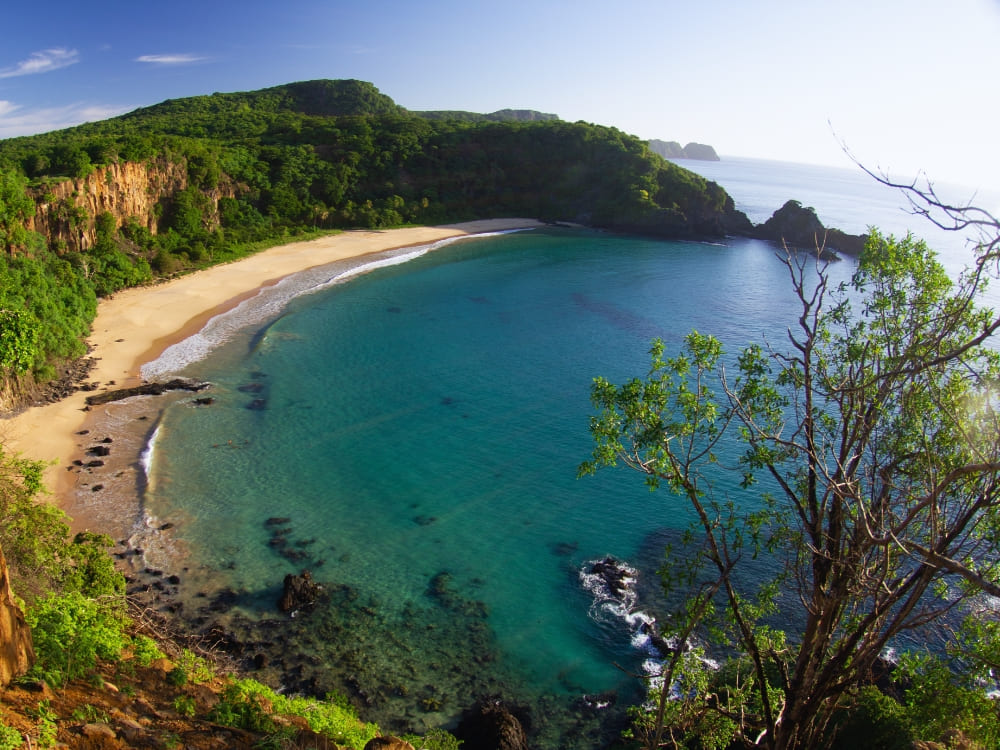
    As proof of these conservation efforts, Praia do Sancho has been voted the best beach in the world multiple times by TripAdvisor’s travelers. It showcases how protection can improve natural beauty.
    Praia do Sancho Fernando de Noronha
    .

    👉 Check out our full article on the best national parks to visit in 2025

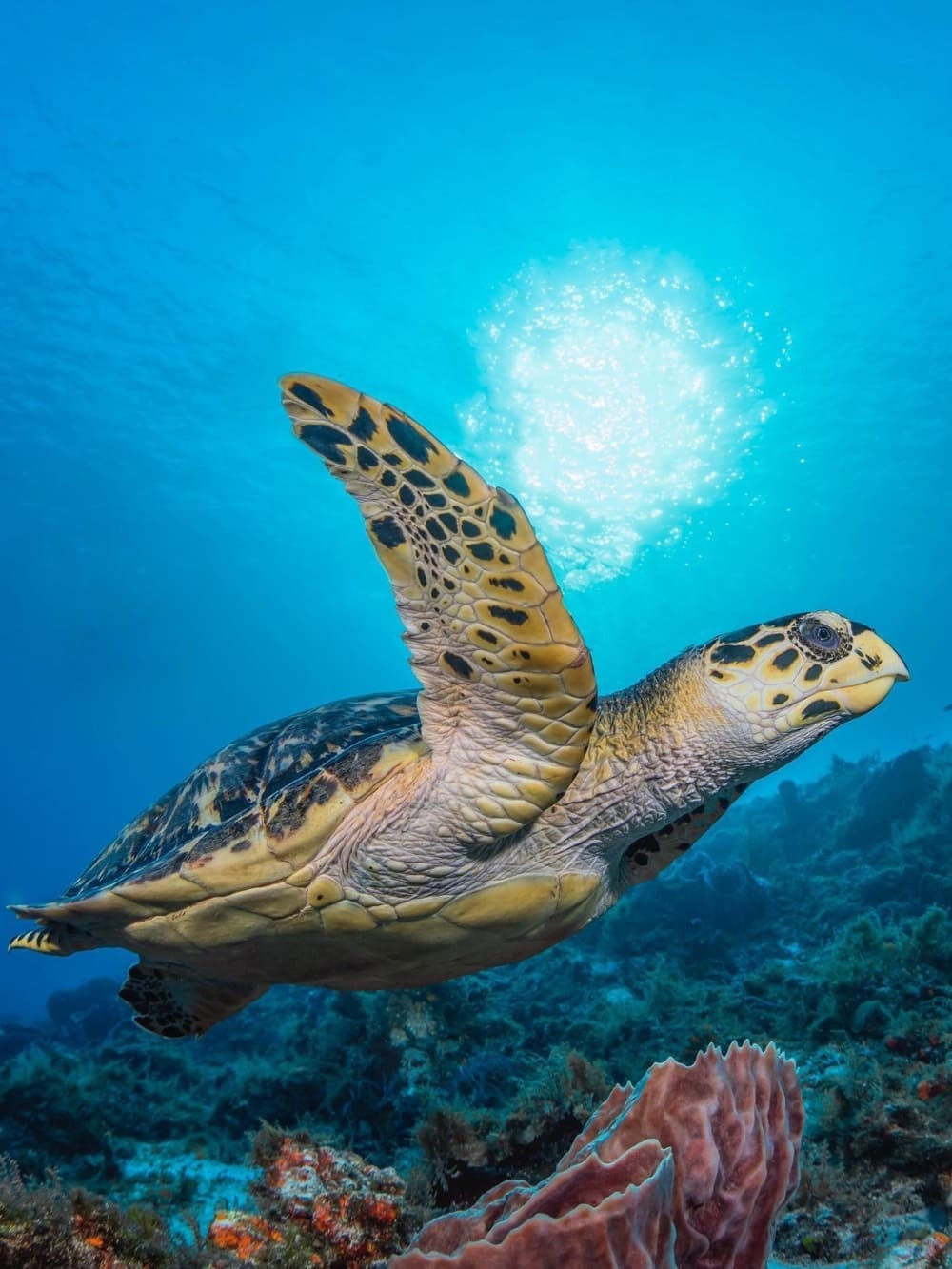
    6. A perfect place to see the Hawksbill Sea Turtle

    Noronha is a paradise for turtle lovers, where visitors can swim alongside hawksbill sea turtles under strict, eco-friendly rules. The Tamar Project protects nesting sites, and it’s common to witness hatchlings making their first journey to the sea.

    Hawksbills are critically endangered, with populations down by more than 80% over the last century due to habitat loss, hunting, and climate change. Yet here they find a safe haven. These turtles are great travelers, often crossing entire oceans and even continents during their migrations.

    To protect them, some beaches close after 6 p.m., giving females peace to lay their eggs. Living up to 50 years and helping keep coral reefs healthy, hawksbills make Noronha even more magical, especially if you visit during nesting season.
    Hawksbill Sea Turtle Fernando de Noronha
    @dohertyphotography

    👉 Want to know when to visit? Take a look at the best time to dive in Fernando de Noronha

    7. Closer to Africa than you think

    Here’s a geography twist: Fernando de Noronha is located just 354 km from the coast of Brazil, but in terms of distance, it’s closer to Africa than to some Brazilian capitals!

    The island’s remote location in the middle of the Atlantic adds to its wild, untouched vibe. It truly feels like you’re in another world! Its isolated position also means it is Brazil’s easternmost point, marked by the Cape of São Miguel. 

    In addition, the archipelago sits right on the route of the South Equatorial Current, which brings warm, nutrient-rich waters from Africa, helping sustain its extraordinary marine life.
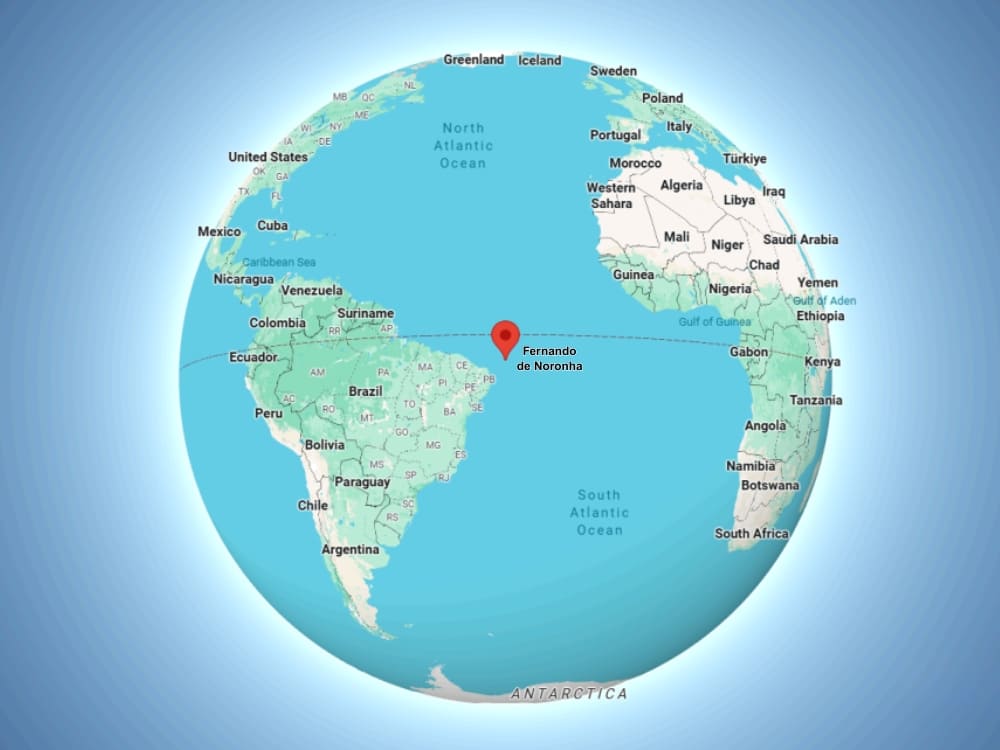
    Fernando de Noronha is near to Africa
    Photo: Google Maps

    8. The “Galapagos of Brazil”

    Ever heard Noronha called the Galapagos of Brazil? That’s because, like the Galapagos Islands, it’s a living laboratory of evolution. Many species of wildlife here are endemic, meaning they exist nowhere else on Earth. 

    Among them are the Noronha skink (a unique lizard), the Noronha wormlizard, and two rare birds: the Noronha elaenia and the Noronha vireo.

    Scientists and travelers alike come to study and admire the island’s biodiversity, making it a must-see destination for eco-travelers.
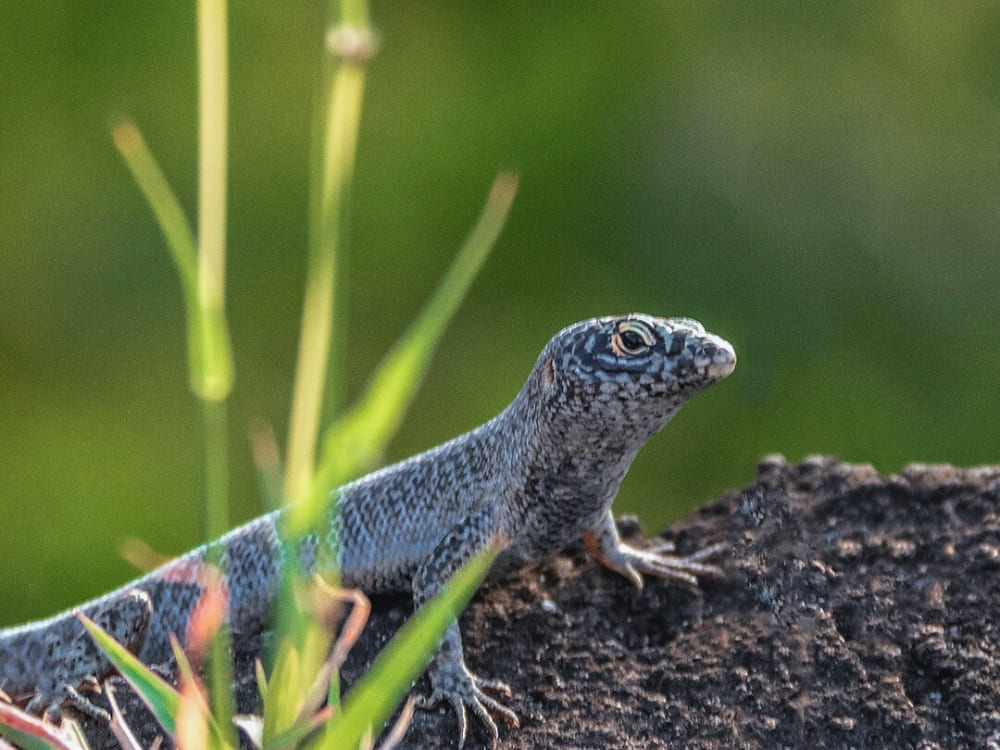
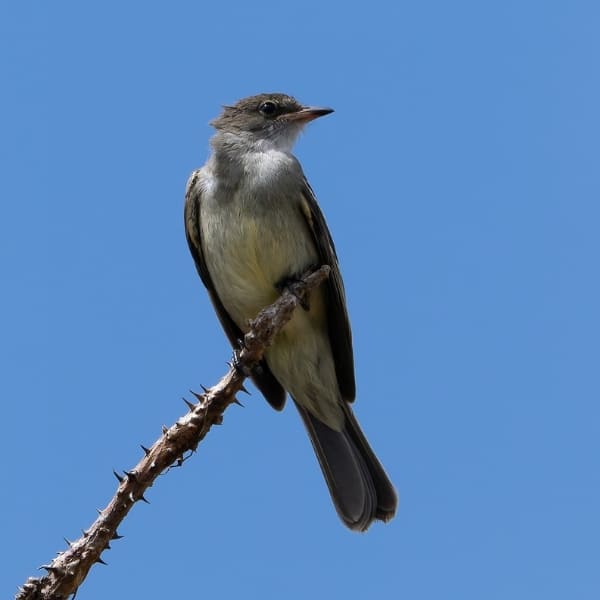
    Noronha skink
    @mare.noronha

    9. You can dive among corals and historic shipwrecks

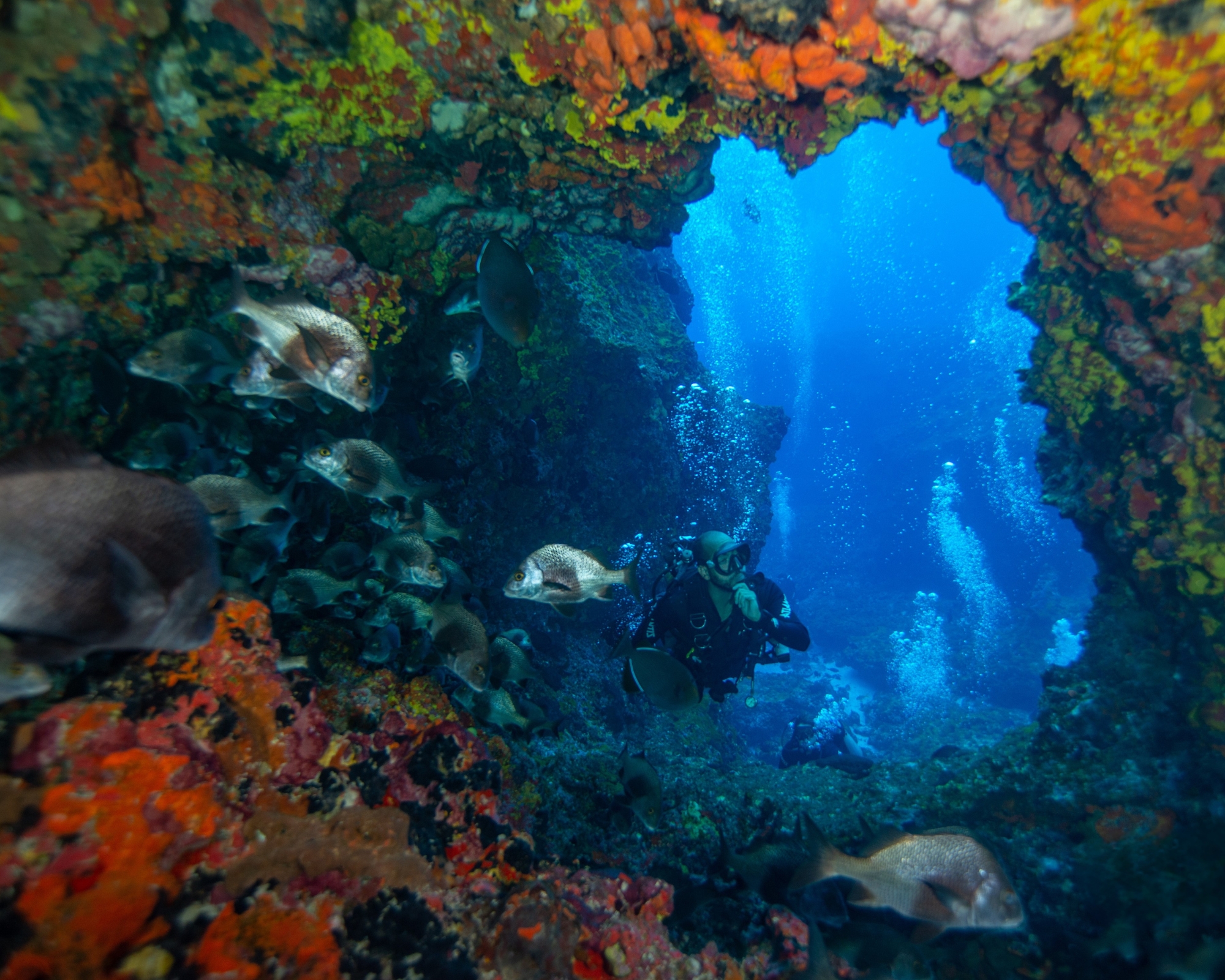
    If you’re a diver, Noronha is heaven. Its reefs shelter over 15 coral species, some centuries old, alongside parrotfish, angelfish, seahorses, barracudas, snappers, and green turtles. With visibility of up to 50 meters, the waters rank among the clearest in the world.

    The island is also famous for its shipwrecks. The highlight is the Corveta Ipiranga V17, a Brazilian Navy vessel that sank in 1983 and now rests intact at 70 meters, considered one of the country’s most impressive wreck dives.

    Adding mystery are two Greek ships: the Maria Stathatos, destroyed by fire in 1937, and the Eleni Stathatos, wrecked after colliding with rocks. Both remain near the coast, forming artificial reefs that attract schools of fish.
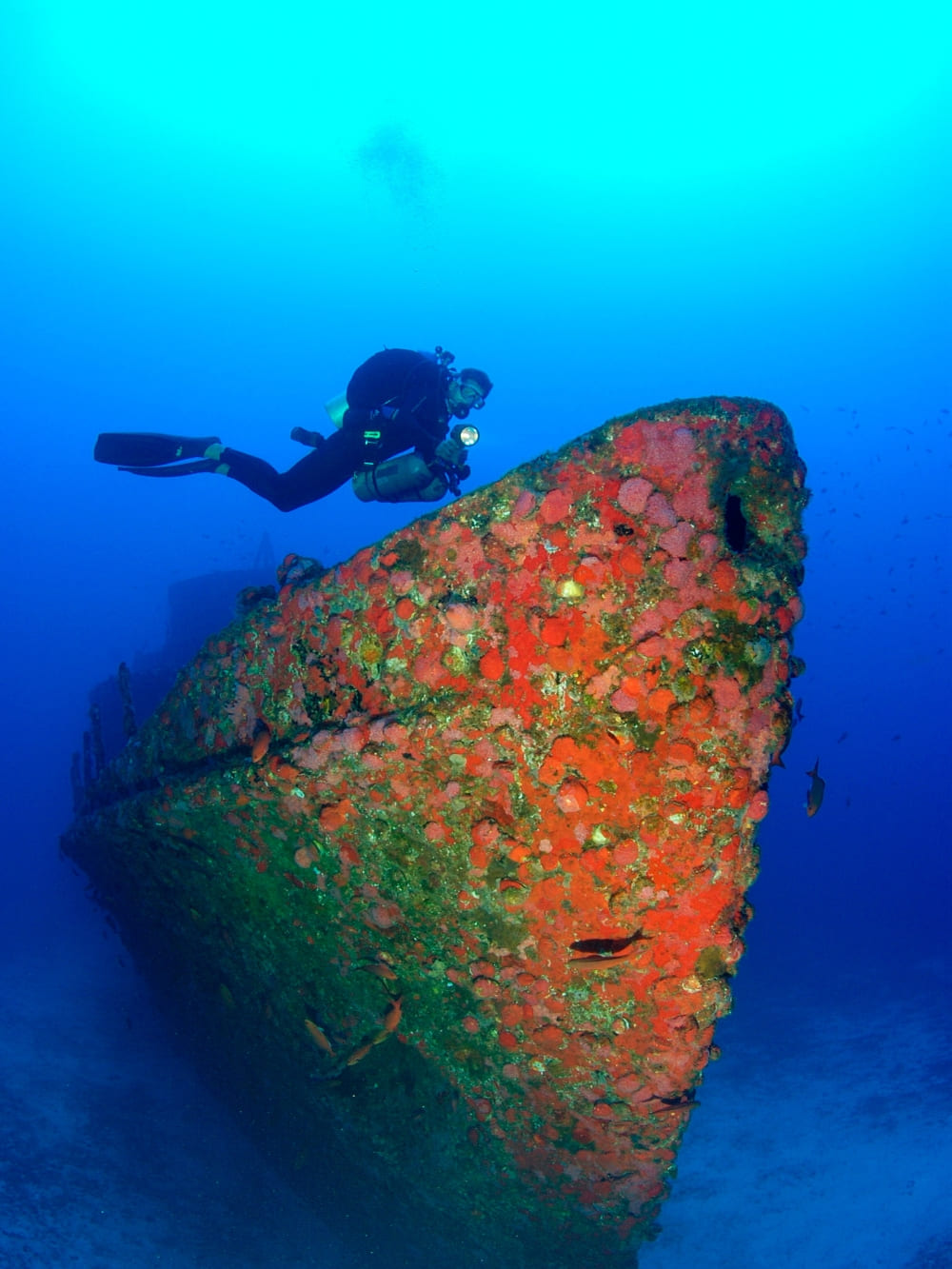
    Dive in Fernando de Noronha
    .

    👉 See more about the best diving spots in Fernando de Noronha

    10. Not many residents, and no births on the island

    Fernando de Noronha is home to about 3,000 residents, most working in tourism, fishing, or conservation. Ecotourism sustains the community, ensuring income while encouraging sustainable practices, and locals proudly share their island with visitors.

    Since 2004, the island’s maternity ward has been closed, so pregnant women must travel to Recife in their seventh month, with costs covered by the government. Even so, children can still be registered as Noronhenses, preserving their island identity.

    And here’s a fun fact: Noronha has even hosted underwater weddings. In 1991, an American couple married at the bottom of the sea near Ponta da Sapata, and in 2017, a local couple tied the knot 16 meters deep inside Caverna da Sapata.
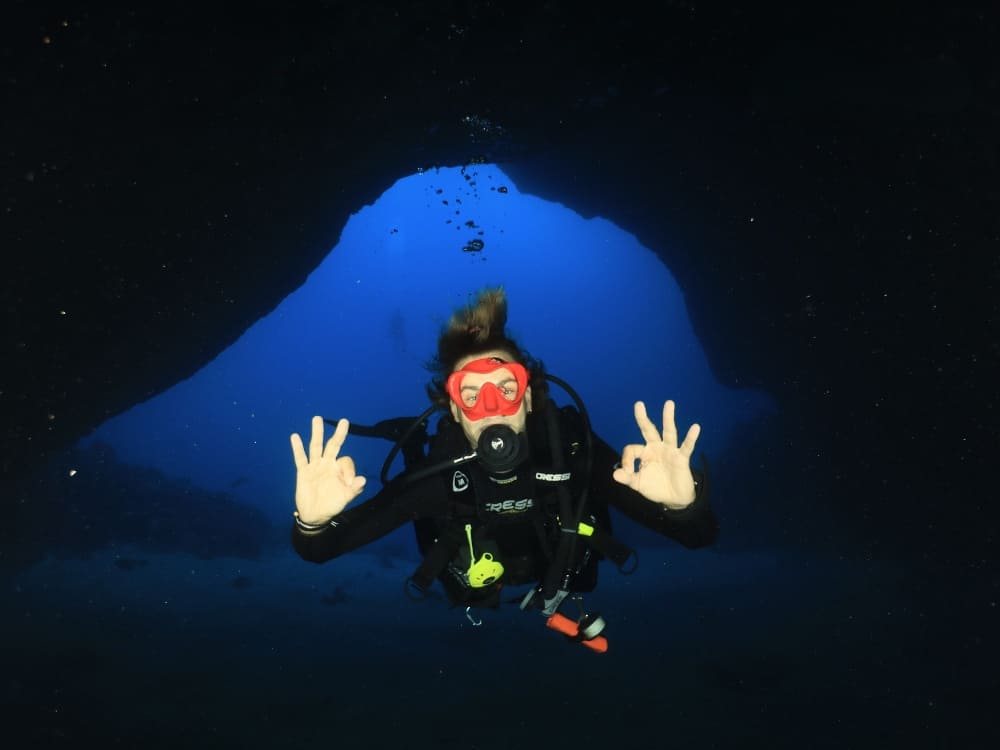
    Facts about Fernando de Noronha
    Photo: Pamela Rech

    Traveling to Fernando de Noronha with PlanetaEXO

    Traveling to such a fragile paradise requires responsibility. With PlanetaEXO, you can explore while knowing that your trip directly benefits local families and conservation programs.

    We work only with trusted partners who share our values of sustainability, ensuring that every adventure supports both the community and the environment.

    So, are you ready to experience one of the most breathtaking places on Earth? Join us, and discover these unforgettable facts about Fernando de Noronha while leaving a positive footprint behind. 

    👉 Send us a message and start planning your adventure in Fernando de Noronha!
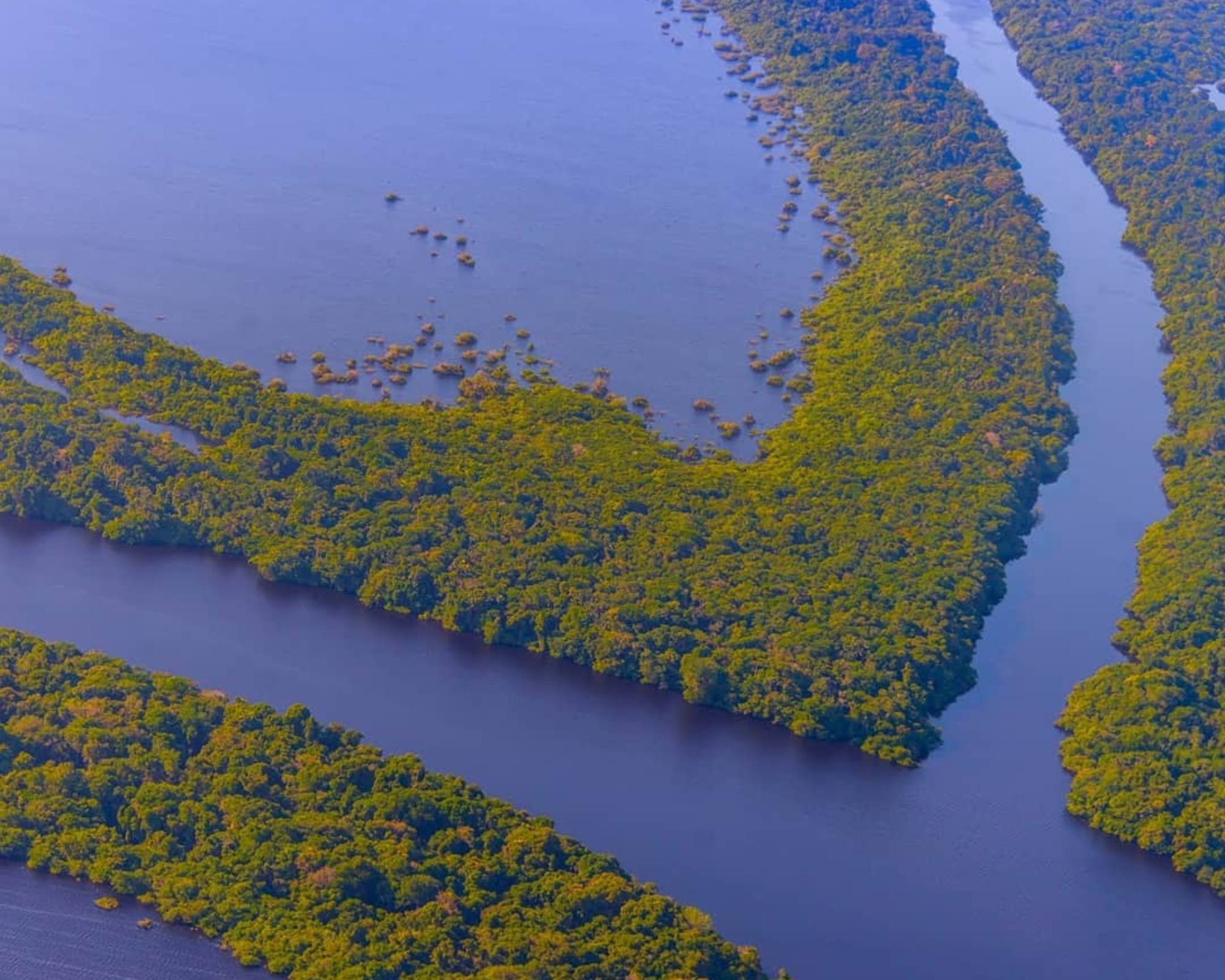
    Read More 

  • 15 Facts About the Amazon Rainforest in Brazil

    15 Facts About the Amazon Rainforest in Brazil

    Vibrant and incredibly valuable for the planet, the Brazilian rainforest is a top destination for ecotourism. Here are our 15 facts about the Amazon!

    Beautiful, colossal, diverse, and always at the center of attention in international discussions about the environment, the Amazon Rainforest is, undoubtedly, one of the most fascinating places on the planet.

    That’s why the number of visitors is growing every day. Only in the first four months of 2025, tourism in the state of Amazonas grew by a total of 13%, with a 21,85% increase in foreign tourists, according to the Amazonas State Tourism Company. Here’s your first fact about the Amazon Rainforest in Brazil!

    To give a taste of what awaits you, PlanetaEXO, an ecotourism platform specialized in Amazon Rainforest tours, has put together a list with 15 fun facts about the Amazon. Check it out below!

    1 – How big is the Amazon Rainforest?

    The Amazon Rainforest’s size is impressive: with an area of 6.74 million km², it extends over eight different countries in South America: Brazil, Bolivia, Colombia, Ecuador, Guyana, Peru, Venezuela, and Suriname. Unsurprisingly, it’s the largest rainforest on Earth.

    To give you an idea of how massive this is, the Amazon is almost the size of Australia (7,692,024 km²) or twice the size of India (3,287,590 km²)!

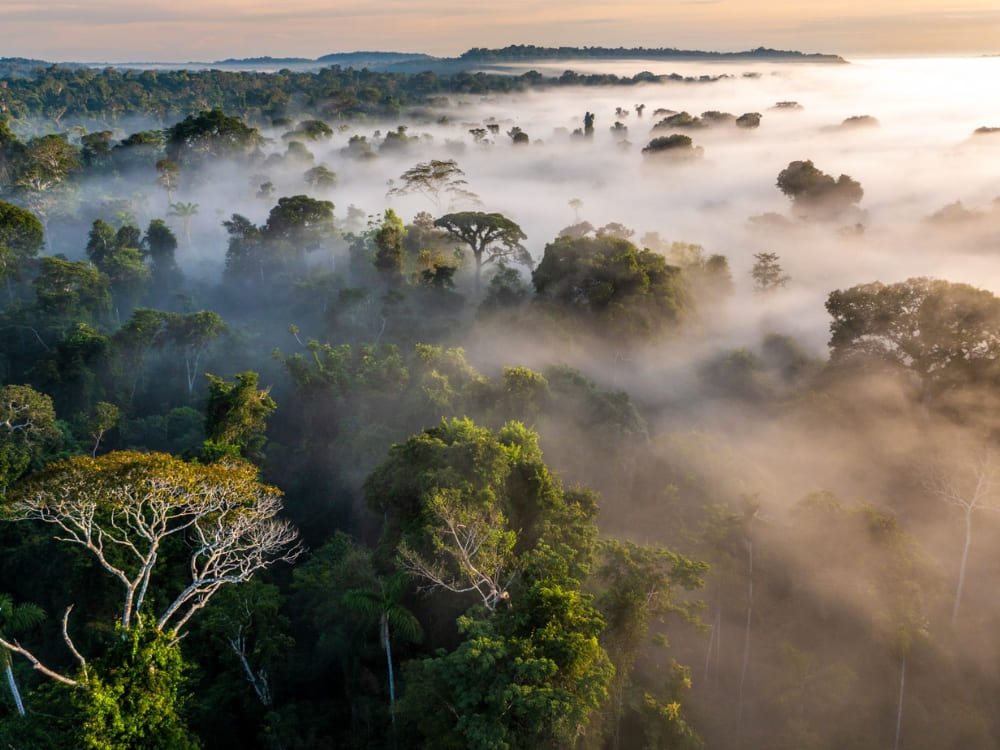
    Mist rising above the dense Amazon Rainforest canopy at sunrise, showcasing the vast biodiversity of the Brazilian jungle.
    Photo: Andre Dib

    2 – Largest share of the Amazon

    60% of the Amazon Rainforest’s share — approximately 4.2 million km² — is located in Brazil, divided between the states of Amazonas, Amapá, Acre, Pará, Rondônia, Roraima, Tocantins, Mato Grosso and Maranhão.

    The largest portion is in Amazonas (1.285.216 km²), followed by Pará (947,303 km²) and Mato Grosso (423,967 km²).

    👉 Read more: How to get to the Amazon Rainforest in Brazil?

    3 –The Amazon River’s massive numbers

    Some of the most interesting facts about the Amazon in Brazil involve the Amazon River. Up until 2008, the Nile River, in Africa, was considered the longest in the world, ranging from 6,650 km.

    However, satellite images taken by the National Institute for Space Research (Inpe) — a unit of the Brazilian Ministry of Science — concluded that this title actually belongs to the Amazon River and its imposing 6,992 km.

    The river’s source is in the Andes Mountains, Peru, whereas its mouth is located in Ilha do Marajó, in the state of Pará, where it flows into the Atlantic Ocean. This long path has more than 1,000 tributaries along Brazil, Colombia, and Peru, representing 20% of all continental freshwater on the planet.

    This is also the largest basin in the world, with an area of 7,000,000 m². The river is the main source of water for thousands of different species of animals and millions of plants, contributing to the climate maintenance of the region.

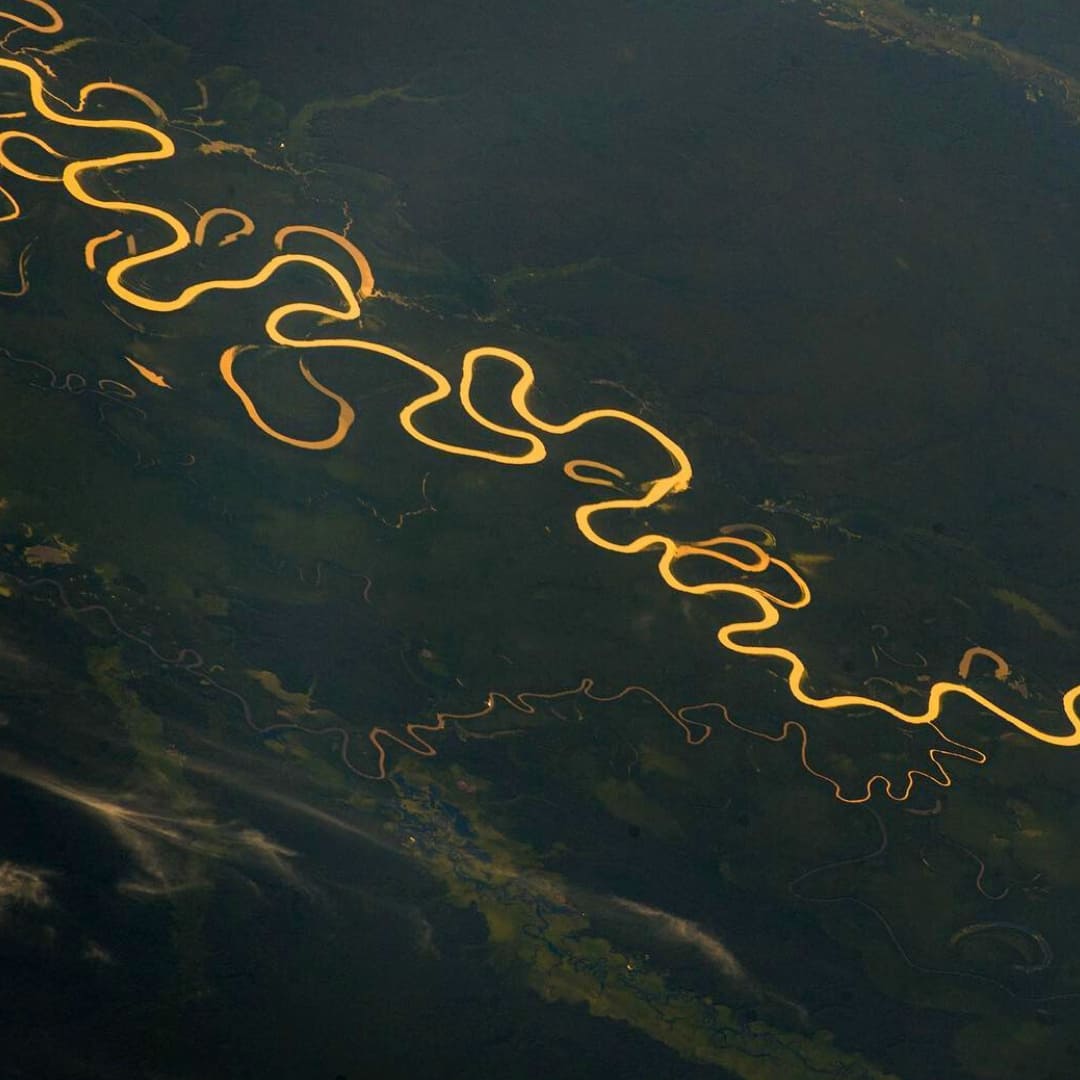
    The winding Amazon River reflecting the golden sunset light as it flows through the dark green rainforest.
    @astro_alex_esa

    People benefit as well. Riverside and Indigenous communities use these waters for their day-to-day needs, but the Amazon River is also important for activities like fishing, agriculture, animal husbandry, and tourist attractions—like river cruises.

    👉 Read more: Best Amazon River Cruises in Brazil

    4 – Indigenous communities

    In total, Brazil has 1.7 million indigenous people, while half of them call the Amazon their home. There are over 180 indigenous communities occupying an area of 1.110.000 km² in the forest, mostly in the states of Mato Grosso, Maranhão, Amazonas, and Roraima. The Yanomami are the largest group, with 27,152 people, followed by Raposa Serra do Sol (26,176) and Évare I (20,177).

    Indigenous communities had lived in Brazil long before the Portuguese arrived in 1500. Protecting their lands and supporting their causes are ways of preserving their culture and the very essence of the country, while also caring for the Amazonian biodiversity

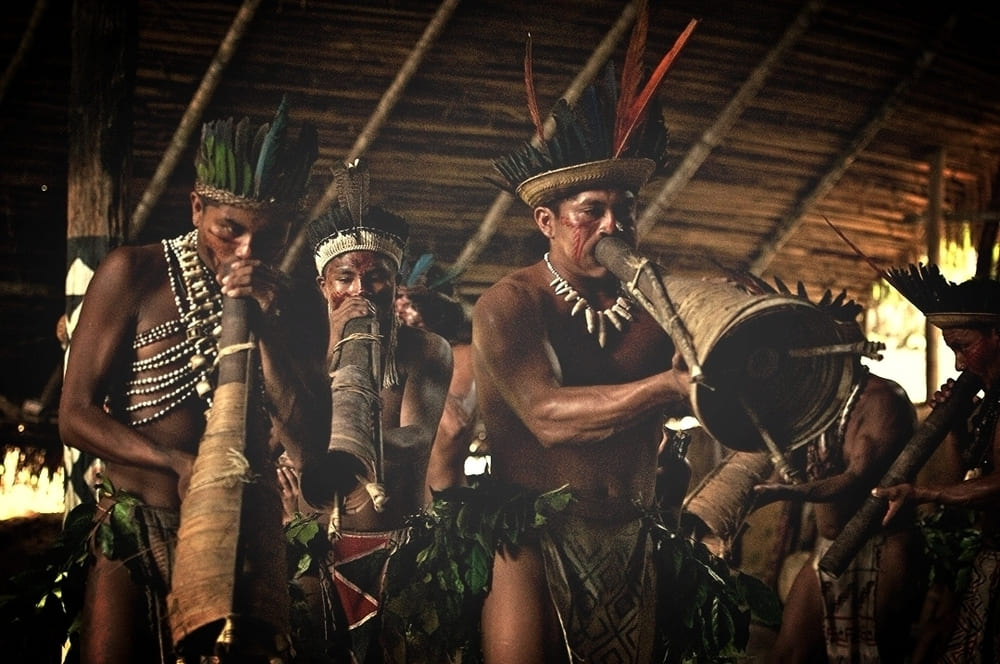
    A group of indigenous people in the Amazon playing traditional long wind instruments and drums during a cultural ritual.
    .

    Though there are a handful of isolated groups, most indigenous communities welcome visitors to teach them about their traditions and raise awareness on the importance of the Amazon Rainforest.

    5 – Cultural experiences

    One of the most amazing facts about the Amazon in Brazil is how diverse the culture in this region actually is. Aside from indigenous people, the rainforest is home to riverside communities — mostly composed of caboclos (non-indigenous people born in Amazonian territory) and quilombolas (descendants of enslaved Africans who fled from sugar mills to create their own groups from the 16th and the 19th centuries).

    This multiculturalism offers incredible experiences for many travelers, who are welcomed by locals to engage with their families and learn about their beliefs, food habits, crafts, and close relationship with nature.

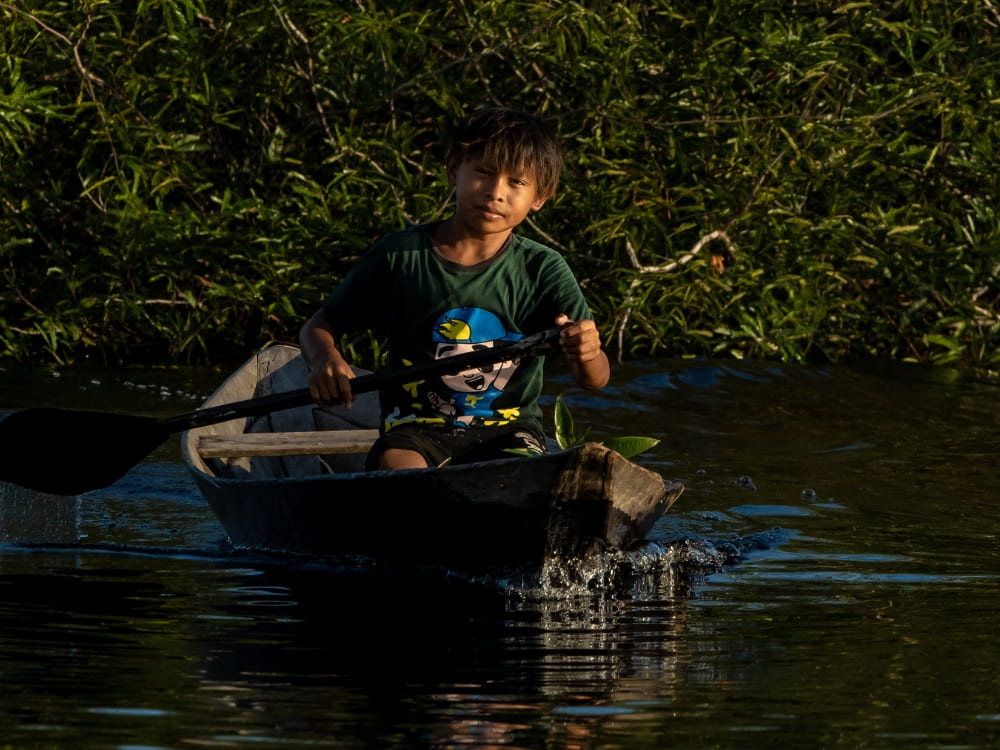
    A young boy paddling a wooden canoe on a dark river, representing the daily life of riverside communities in the Amazon.
    .

    6 – Unique wildlife

    Brazil’s Institute for Society, Population and Nature (ISPN) states that the entire Amazon fauna has not been fully documented yet. While researchers are sure there’s still a lot more to discover, about 30 million species have been officially cataloged to date.

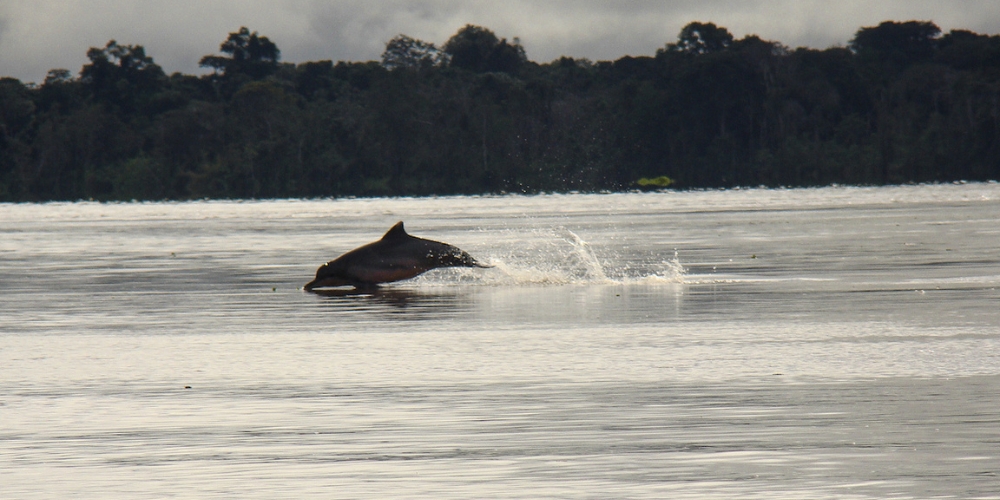
    In Brazilian territory, there are 311 types of mammals, 1,300 birds, 232 amphibians, 273 reptiles, and 1,800 fish. Some animals are considered symbols of the Amazon Rainforest, like pink dolphins, giant anteaters, giant otters, spider monkeys, piranhas and anacondas.

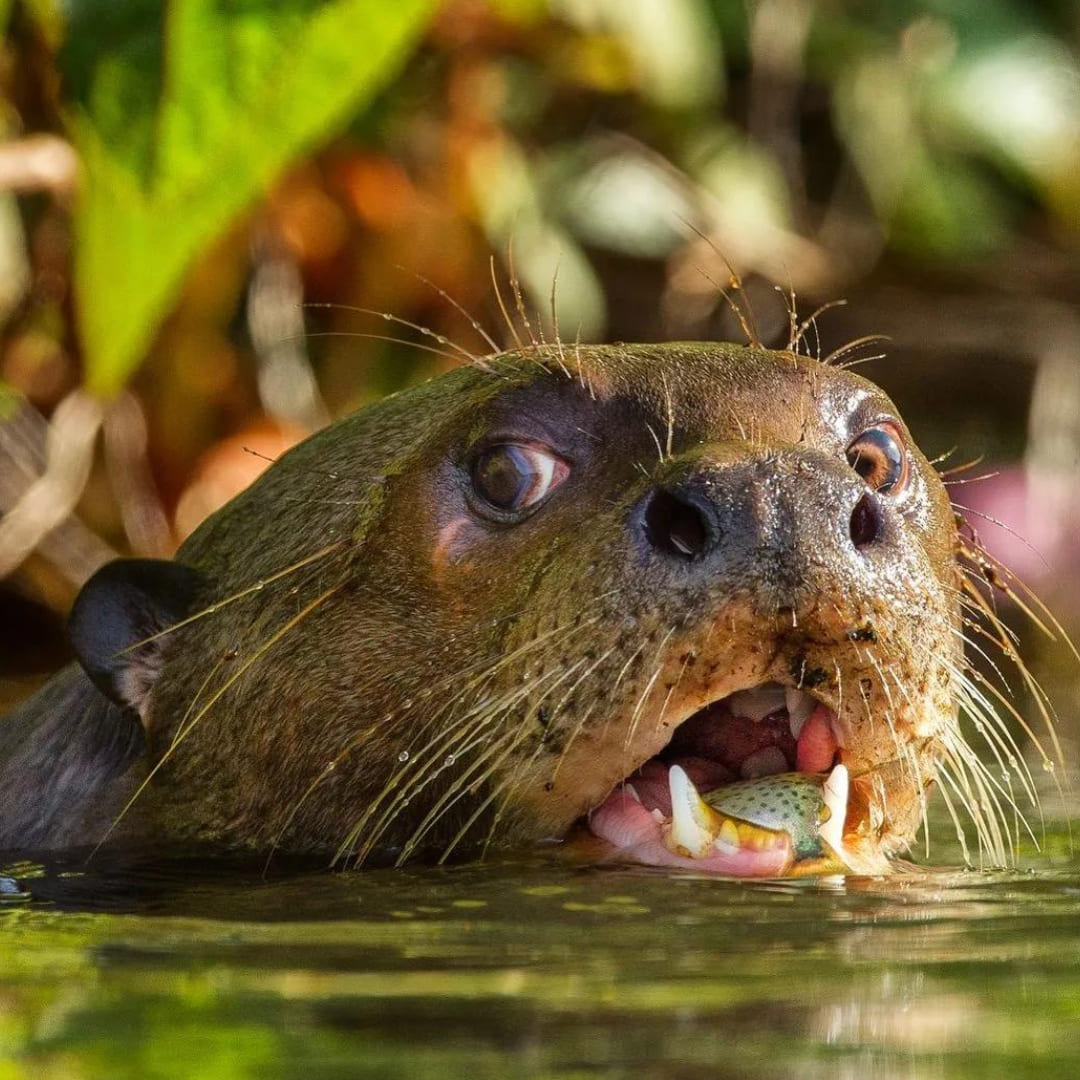
    A Giant Otter, a symbol of Amazon wildlife, swimming in the water while eating a fish.
    .

    Other little creatures play a big role in balancing the Amazon ecosystem. It is estimated that over 2.5 million species of insects live in the forest, including the world’s biggest collection of butterfly species — at least 133 only in Brazil, according to Amazonian Butterflies, a project of the State Museum of Natural History in Karlsruhe, Germany.

    7 – Abundant flora

    Nonprofit World-Transforming Technologies (WTT), in association with Agência Bori, charted over 1,070 scientific articles about Amazonian plants published from 2017 to 2021. The operation was able to point out that the Brazilian Amazon is home to up to 40,000 species — with more to be cataloged, most likely.

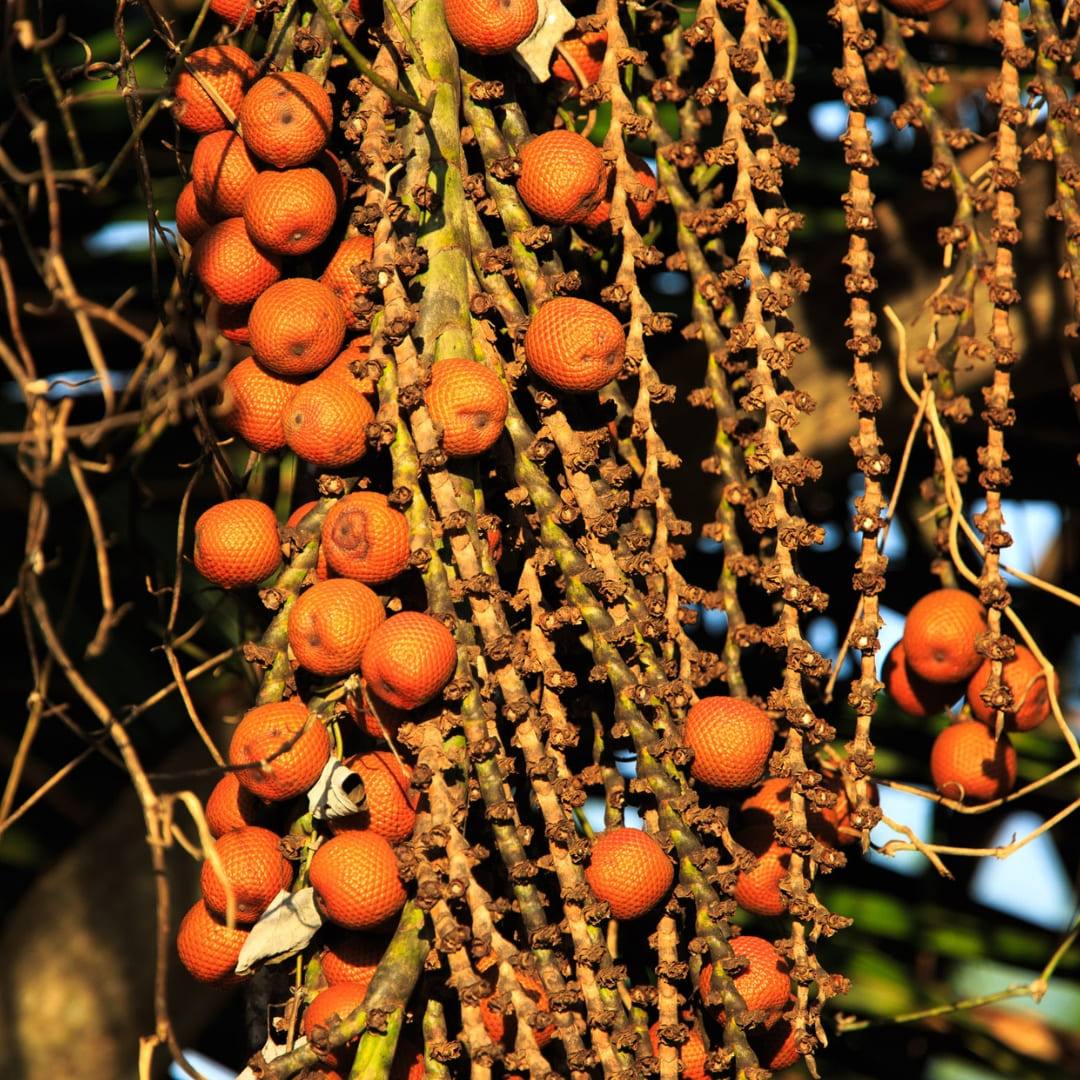
    Researchers also estimate that 2,500 types of trees grow in the forest, representing one-third of all tropical trees on Earth. Some of them are known worldwide, as their fruits are used for tasty treats and even cosmetics, like açaí, Brazil nut, buriti, and tucumã.

    Clusters of bright orange and red palm fruits hanging from a tree, illustrating the abundant flora of the Amazon Rainforest.
    Photo: Alex Da Riva

    8 – Ecotourism hotspot

    One of the most significant facts about the Amazon Rainforest is the  unforgettable ecotourism alternatives, including guided hikes, canoeing through flooded forests, wildlife observation, etc.

    Not only is the government committed to creating policies to promote sustainable trips, but the best Amazon jungle lodges in Brazil have their own set of protocols to ensure the forest’s conservation without compromising itineraries and stay experiences.

    Rainwater harvesting, usage of solar/wind power, recycling, and limiting the number of guests per tour are just a few solutions.

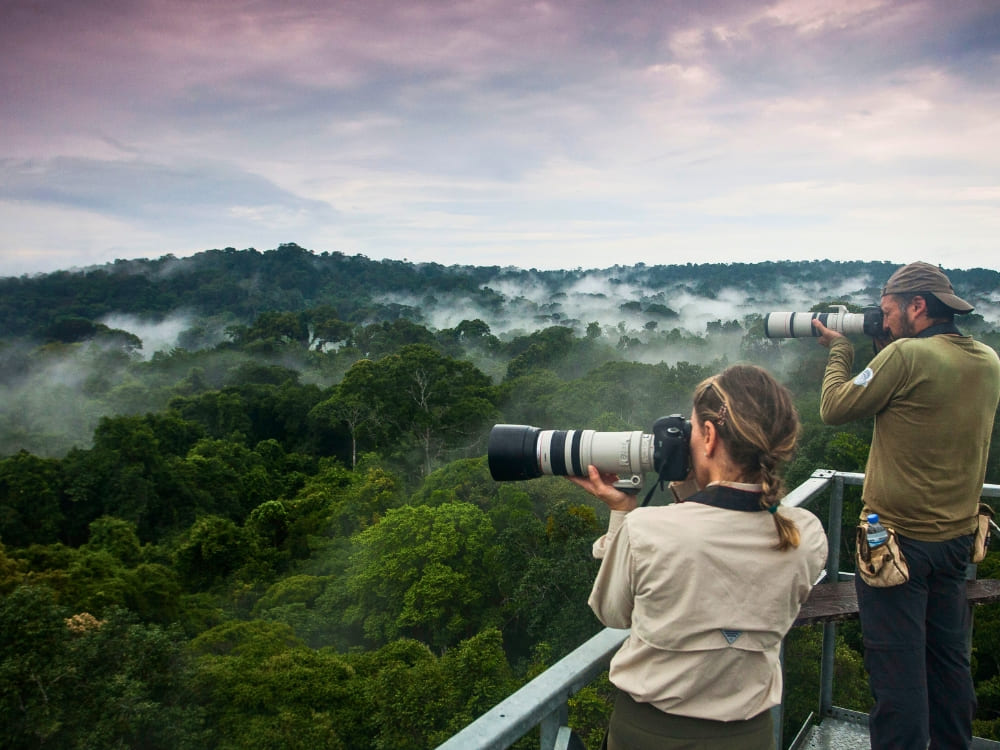
    Tourists on an observation tower using large cameras and binoculars for wildlife observation in the Brazilian Amazon.
    Photo: Andre Dib

    👉 Read more: Ecotourism in the Amazon Rainforest: 7 tours to connect with nature

    9 – Meeting of Waters

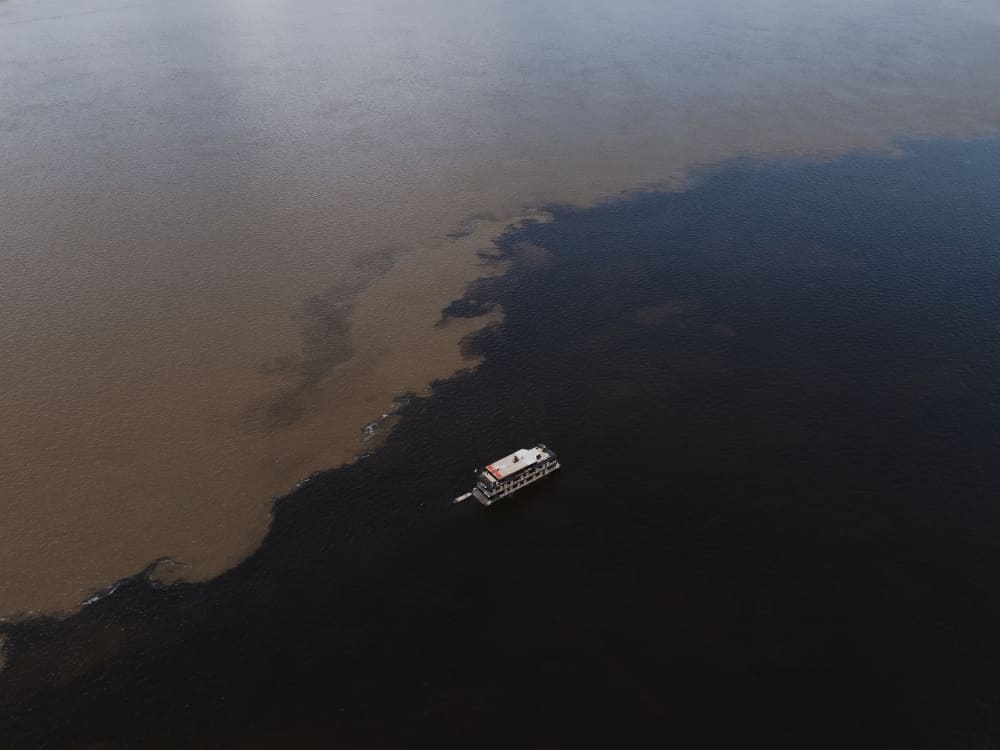
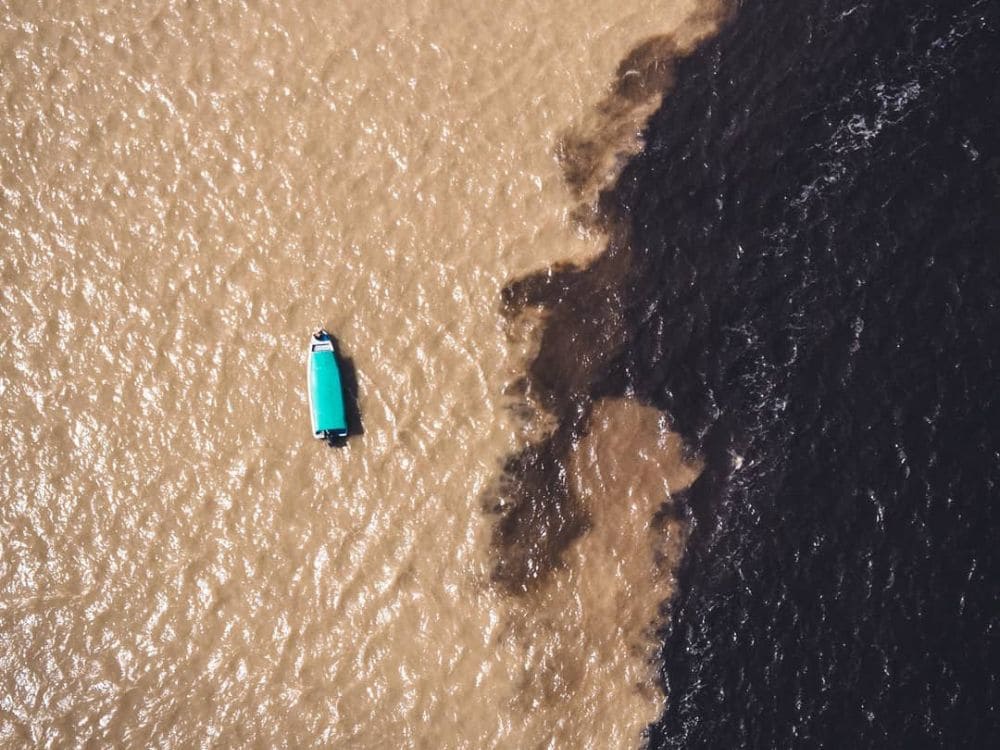
    The Meeting of Waters is a remarkable phenomenon where the waters of the Negro and Solimões rivers — black and brown, respectively — run side to side, but never mix. This scenario is a true sight for the eyes, but how does it happen?

    There are three reasons for this:

    • Current speed: While the Negro River’s speed is 2 km/h, Solimões is faster, flowing at 4 to 6 km/h. 
    • Temperature: The Negro River is fairly warm, with an average temperature of 28º C. At 22º C, Solimões is a lot colder.
    • Acidity: Due to the number of organic acids in Negro River, its pH levels go from 3,8 to 4,9, while Solimões’ stay between 4,5 and 7,8.
    A boat navigating the Meeting of Waters, where the black Rio Negro and brown Solimões River flow side by side without mixing.
    .

    10 – Sumaúma trees

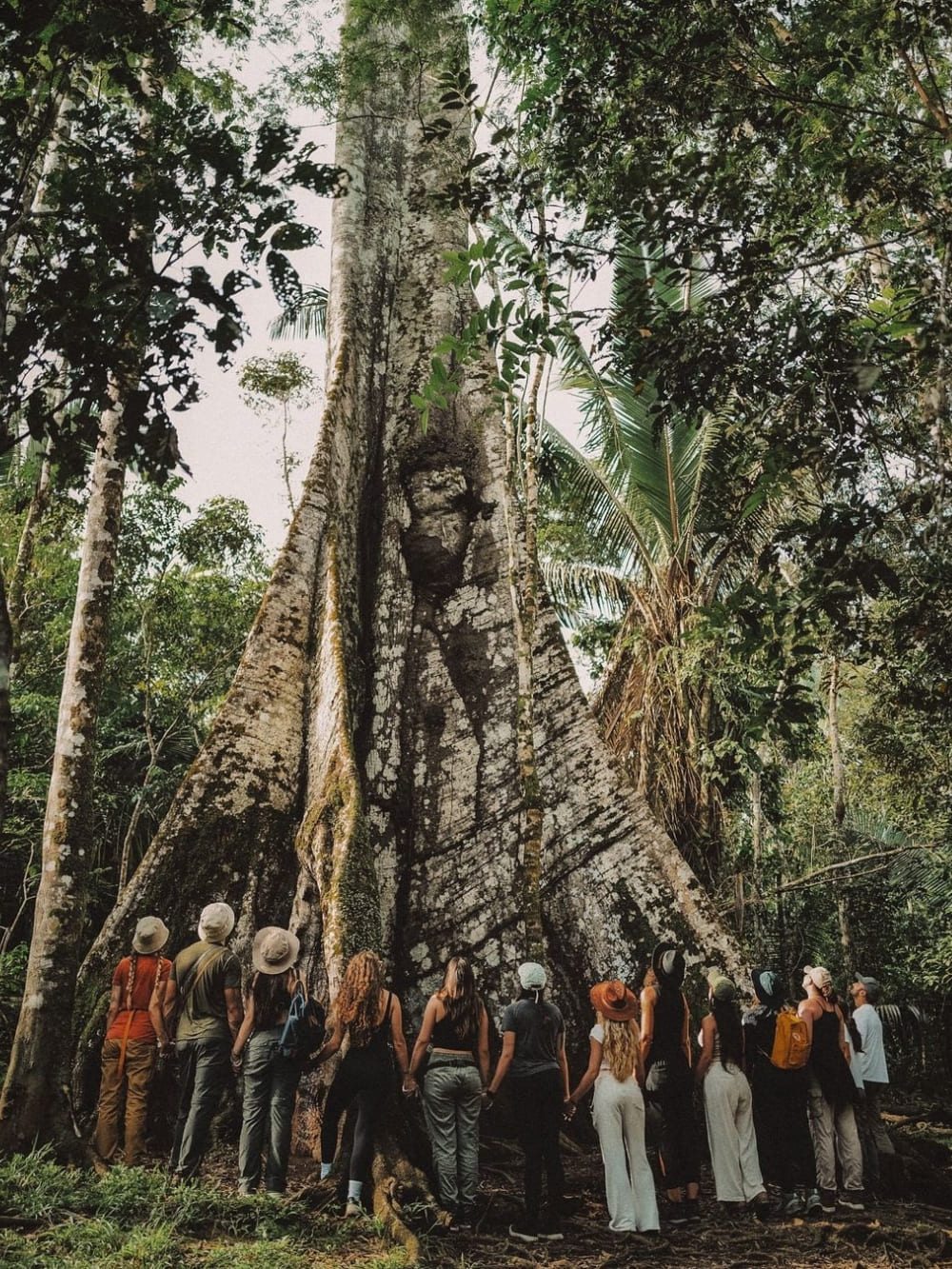
    Here’s another fun fact about the Amazon in Brazil: the rainforest is home to a tree that can grow up to 45 meters tall! We’re talking about the iconic sumaúma (or kapok tree).

    The oldest sumaúmas in the country are located in the Tapajós National Forest, in Alto do Chão, Pará. The most ancient one is believed to be around 900 and 1,000 years old! This tree is known as the Queen of The Amazon or vovózona (big grandma). Appropriate, isn’t it?

    A large group of tourists holding hands to encircle the massive trunk of a Sumaúma tree, known as the Queen of the Amazon.
    .

    This particular sumaúma tree is so big it takes twenty-six adults to hug its trunk, while it’s also capable of releasing thousands of liters of water into the air every day.

    👉 See sumaúma trees with our tour: Amazon River Cruise from Alter do Chão

    11 – Amazonian rainfall

    Overall, it rains between 1,500 mm and 3,000 mm per year in Amazonian territory. The volume is this high because the Amazon basin is so vast, it’s only natural that the rain would follow the same logic.

    Coming from the Atlantic, the wind blows towards the continent, which brings humidity to the forest. At first, the soil and vegetation absorb the water. Then, part of the evaporated rain is transpired into the atmosphere, which increases the rainfall.

    A 2022 study by the University of São Paulo shows that 25% of Brazil’s rain in the South and the Southeast is directly related to the Amazon Rainforest — which up in the North. It also has a great impact on all of South America.

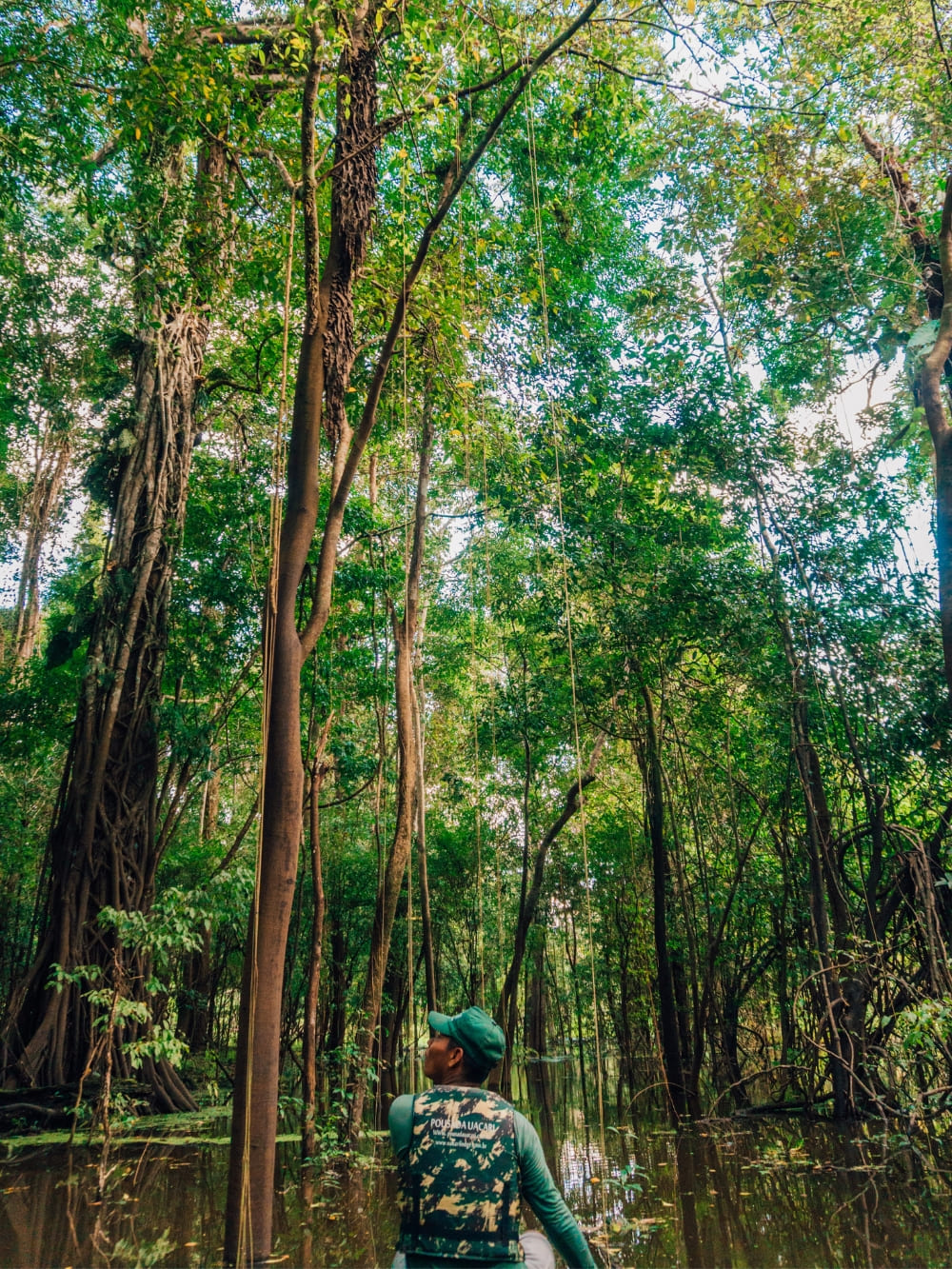
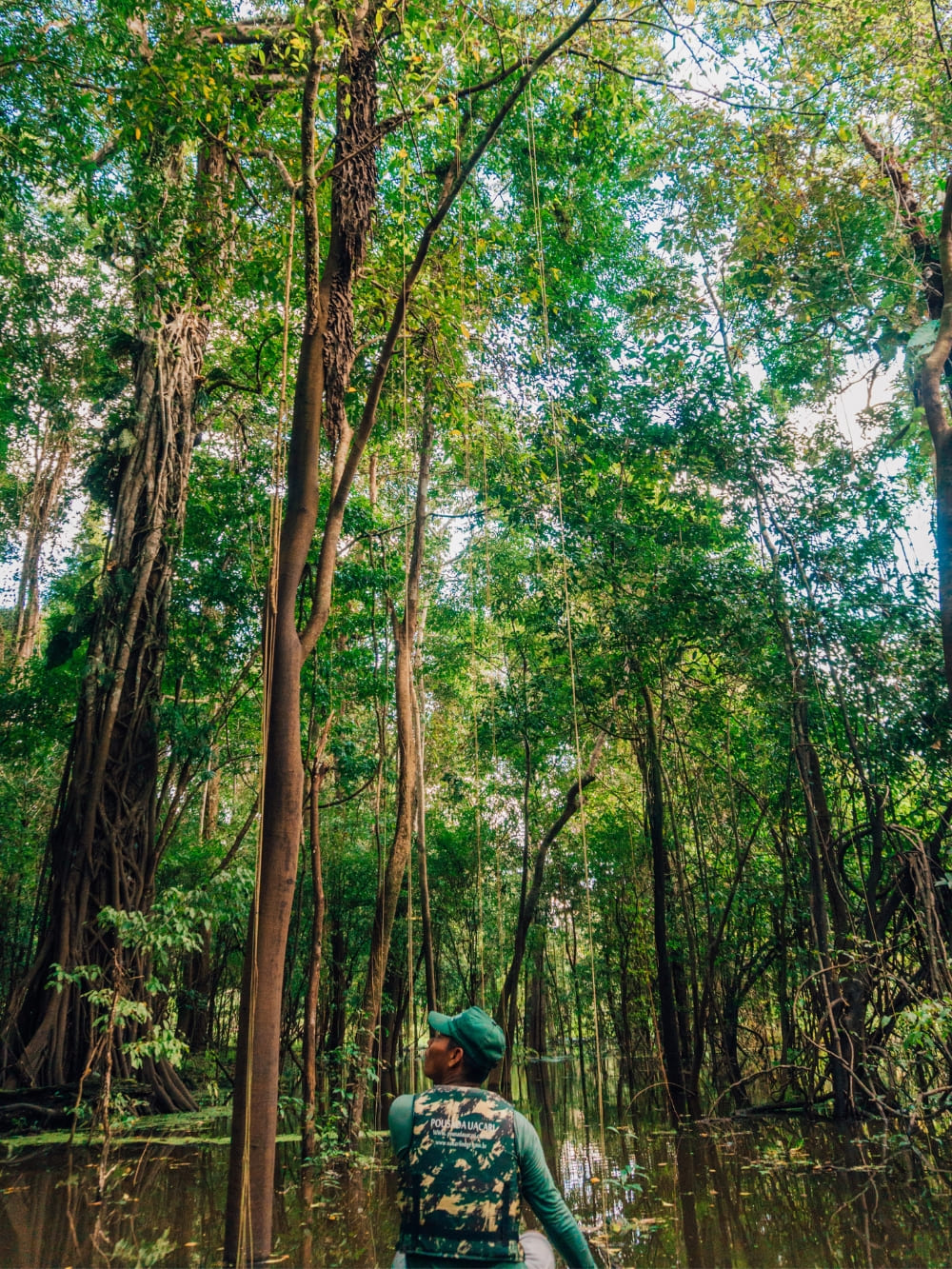
    A guide looking up at the trees while walking through the water in a flooded forest area of the Amazon.
    .

    This natural system, however, is under threat. Deforestation, forest fires, and climate change have been greatly affecting the Amazonian rainfall. The low water levels are the biggest problem, hurting the well-being of animals, plants, and people who depend on the rivers to survive.

    👉 Read more: When is the best time to visit the Amazon Rainforest in Brazil

    12 – Forest fires and deforestation in the Amazon

    Deforestation is a terrible thing for the Amazon, but forest fires have been proven to create even greater casualties. From January to October 2024, the fires destroyed 67,000 km² of natural areas, while deforestation affected 6,300 km² between July 2023 and August 2024. The information was disclosed at COP29 (29th Conference of the Parties of the UNFCCC) by the Amazon Environmental Research Institute (IPAM).

    It’s a domino effect. Deforestation in the Amazon means climate change, which hurts the rainfall. The lack of humidity and the high temperatures make the soil dry enough for the fire to spread without difficulty.

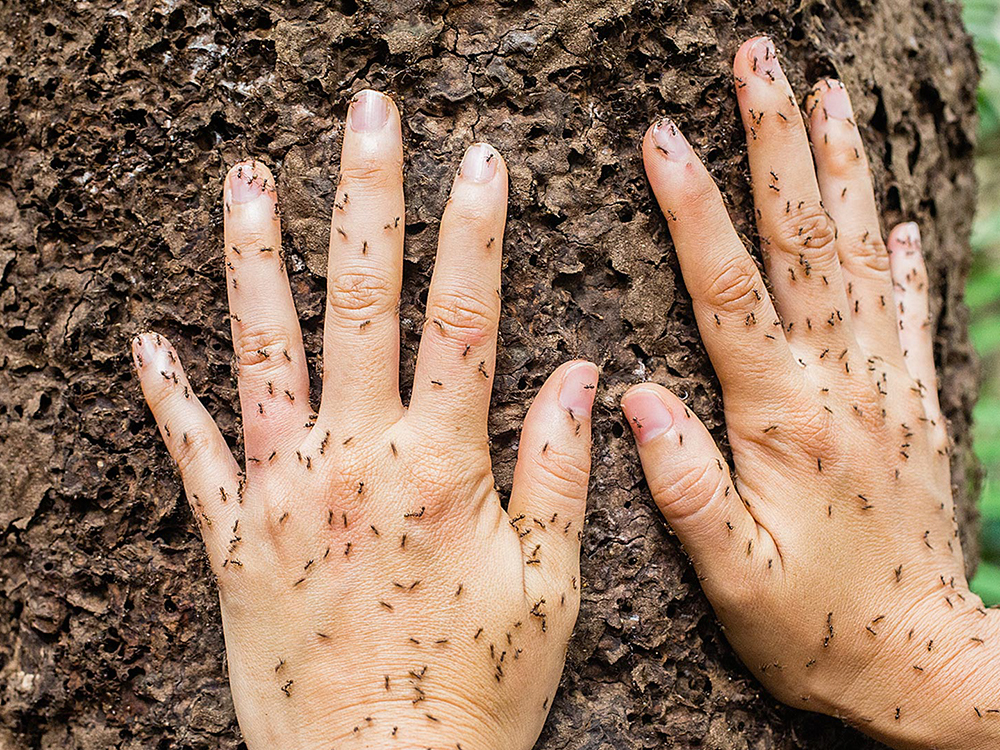
    Two hands placed on a tree trunk covered in small ants, highlighting the diverse insect life in the Amazon ecosystem.
    .

    COP30, which took place in Pará’s capital Belém in 2025, brought together world leaders to develop plans to deal with fires, deforestation, and the consequences of global warming that directly affect the Amazon and other biomes, such as the Pantanal.

    Fire prevention policies, constant surveillance and laws focused on minimizing and reversing damage to the environment are the best ways to solve these problems.

    👉 Read more: Ecotourism in the Amazon Rainforest: A Solution to Deforestation

    13 – Carbon sequestration

    The process of capturing and storing carbon dioxide (CO2) from the atmosphere is called carbon sequestration. This greenhouse gas is very harmful to the environment, which means its absorption helps to prevent climate change.

    Through satellite data, the nonprofit Amazon Conservation discovered that Amazonian trees held 56.8 billion metric tons of CO2 above ground in 2022. From a scientific point of view, the term “lungs of the Earth” isn’t quite accurate, but it sums up the importance of the rainforest for the planet’s ecosystem pretty well.

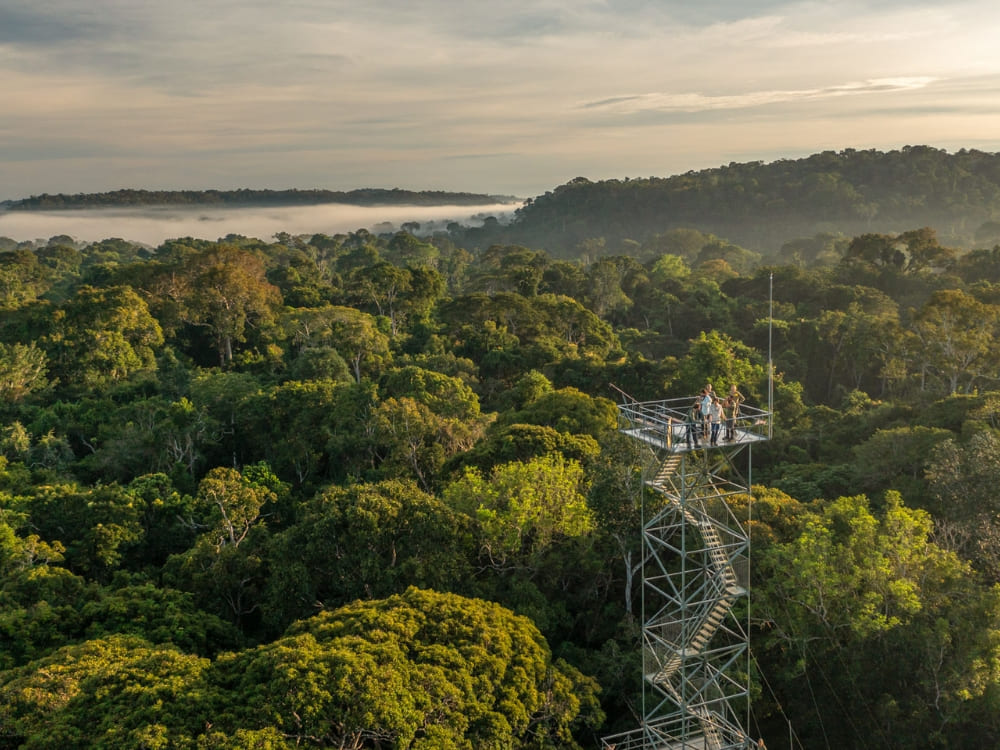
    A tall metal observation tower rising above the dense green canopy of the Amazon Rainforest under a cloudy sky.
    Photo: Andre Dib

    14 – Anavilhanas Archipelago

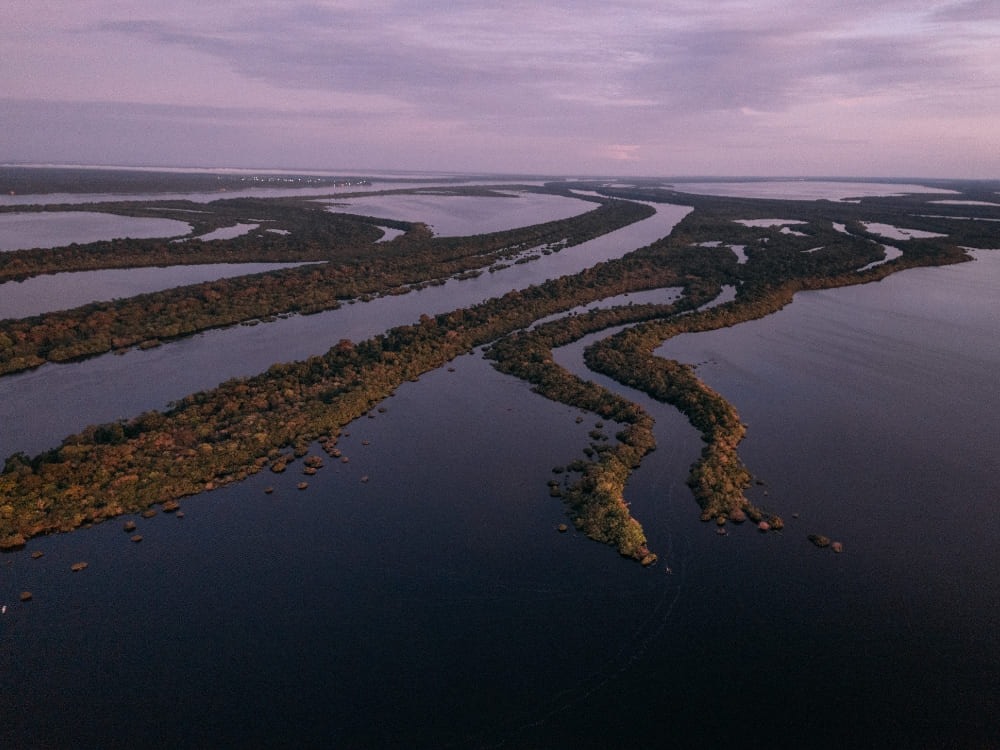
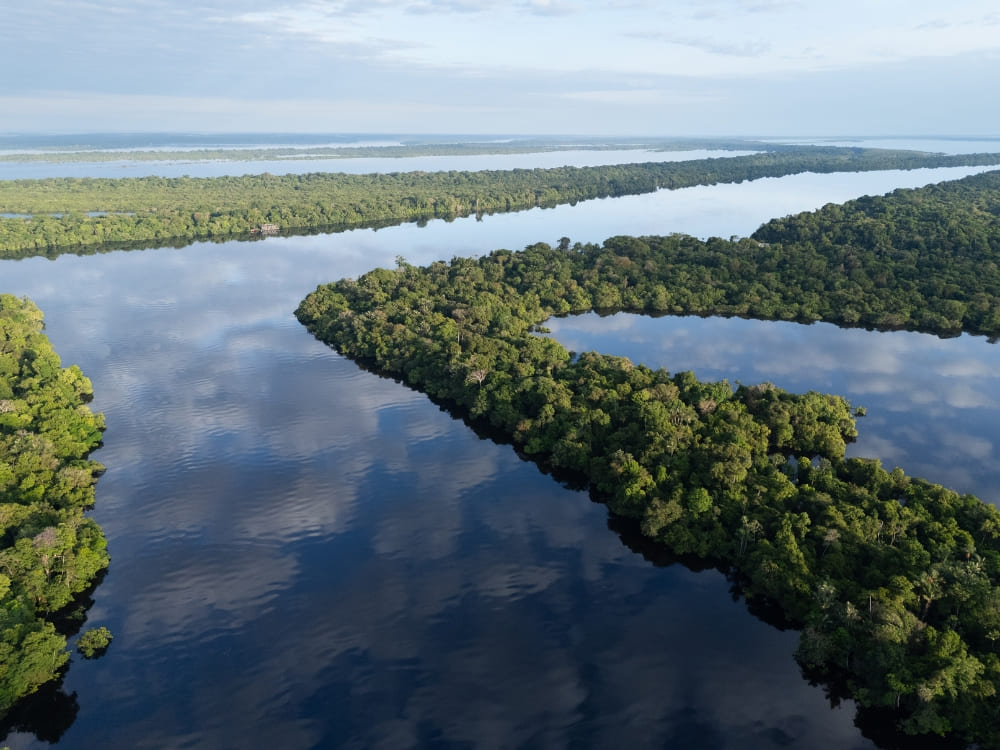
    Not everything is lost. National parks in Brazil are extraordinary assets to care for the forest — Anavilhanas being one of them. Covering a total area of 350,000 ha, it protects 400 islands in the Negro River, making it the second-largest river archipelago in the world. The first one is Mariuá, also in Amazonas.

    From September to February, during the dry season, many river beaches appear on the park’s horizon. Orla, Aracari, Bararoá, and Camaleão are some of the most famous.

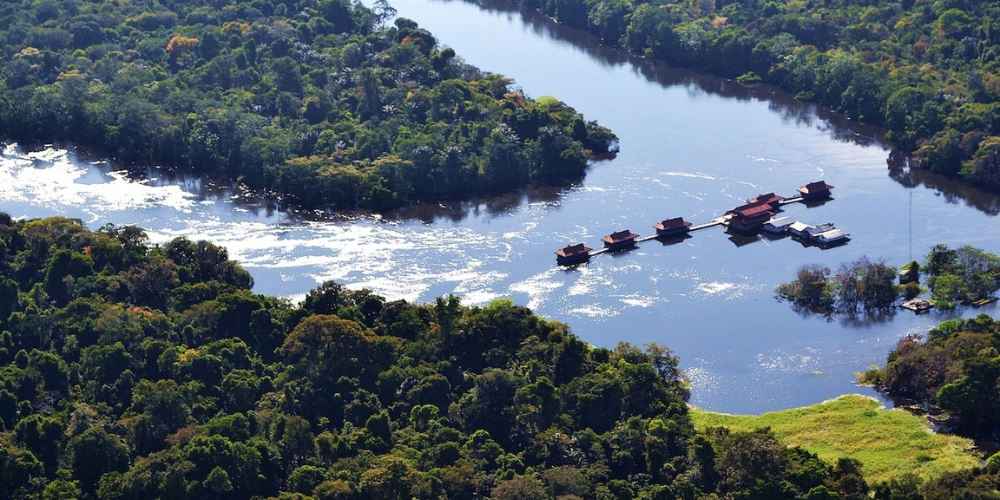
    Aerial view of the Anavilhanas Archipelago showing lush green islands scattered across the dark waters of the Negro River.
    Photo: Felipe Castellari

    Located within the boundaries of the national park, Anavilhanas Jungle Lodge, one of the best accommodation options in the Amazon Rainforest, offers five-star stay experiences in the heart of the forest, allowing guests to dive deep into nature while never putting comfort and luxury aside.

    15 – Manaus, gateway to the Amazon in Brazil

    Finally, our last fact about the Amazon in Brazil is that Manaus, the capital of the Amazonas, is the primary hub for ecotourism in the Northern region and the best starting point to explore the rainforest.

    That’s why many travelers choose to fly to Manaus, at Eduardo Gomes International Airport (MAO), to enjoy their Amazon tours most conveniently.

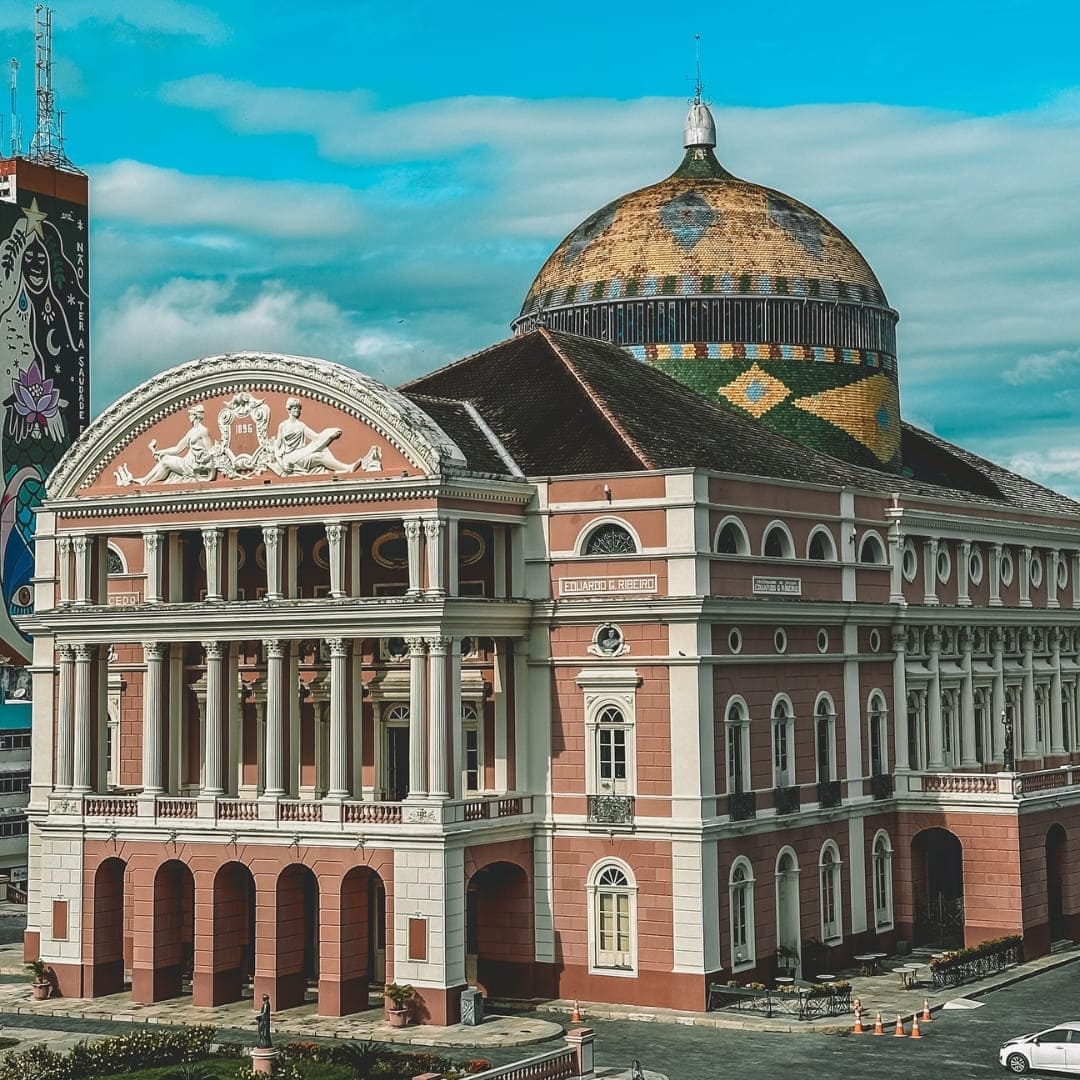
    The historic Teatro Amazonas opera house in Manaus, featuring a tiled dome and pink facade, serving as the gateway to the Amazon.
    @manausnasfotos

    👉 Read more: Manaus, Brazil – Travel Guide: What to do, where to stay, and more!

    Choose your Amazon tour with PlanetaEXO

    Our 15 Amazon Rainforest facts have surely made you want to experience this grandiosity firsthand!

    PlanetaEXO is an ecotourism platform that works with the best local operators and specializes in Amazon tours in Brazil. Our team is ready to assist with everything you need for your next vacation planning. Contact us now!

  • How to get to Mount Roraima?

    How to get to Mount Roraima?

    Learn more about the logistics, the best routes, and how to get to Mount Roraima. This article covers the main access points and what you need to plan before starting your adventure

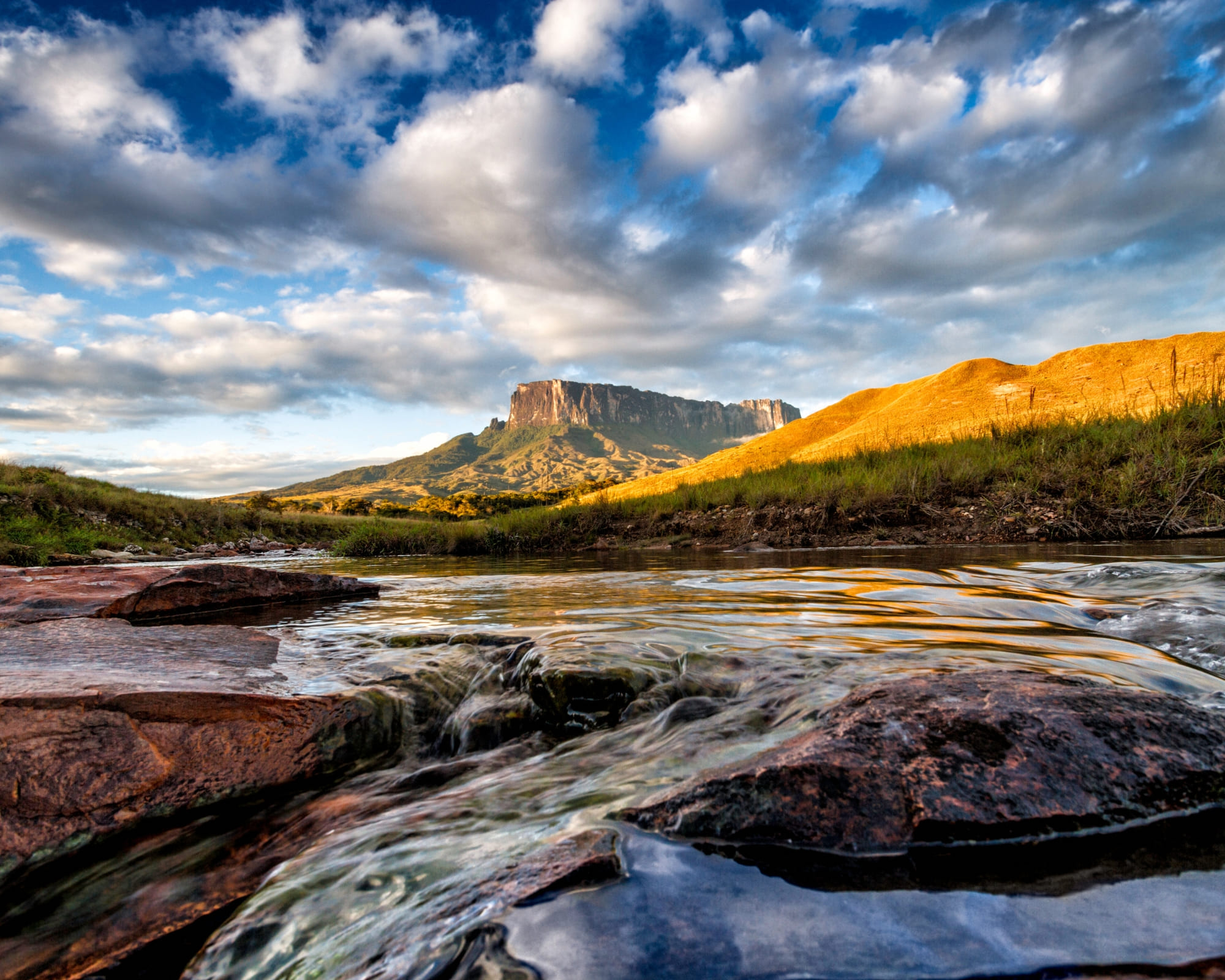
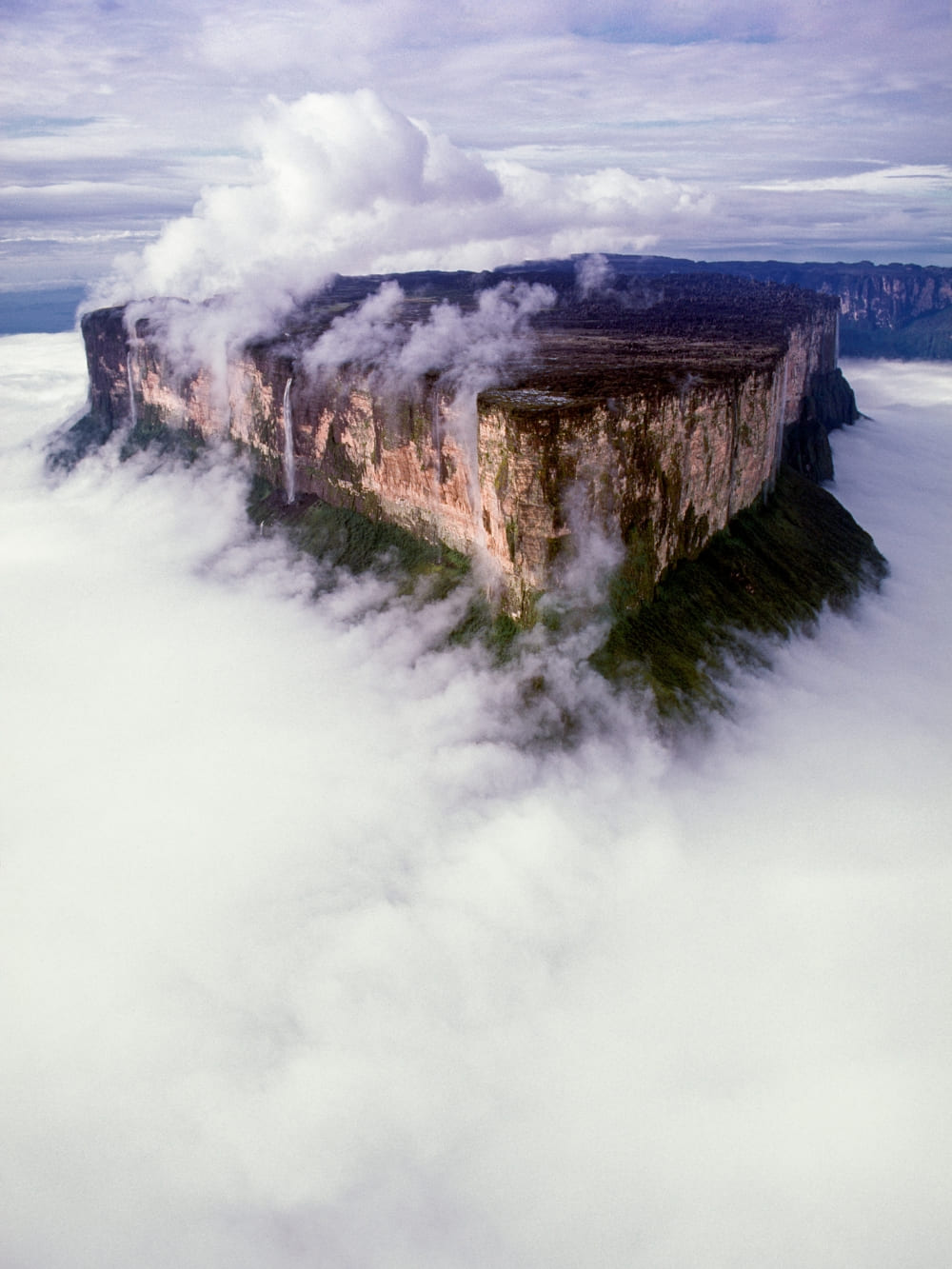
    Mount Roraima is one of the most incredible tepuis in South America. Its sheer cliffs and flat summit give it a unique appearance that has inspired legends, scientists, and travelers for generations. For many adventurers, learning how to get to Mount Roraima is the first step toward experiencing one of the most unique and oldest landscapes on Earth.

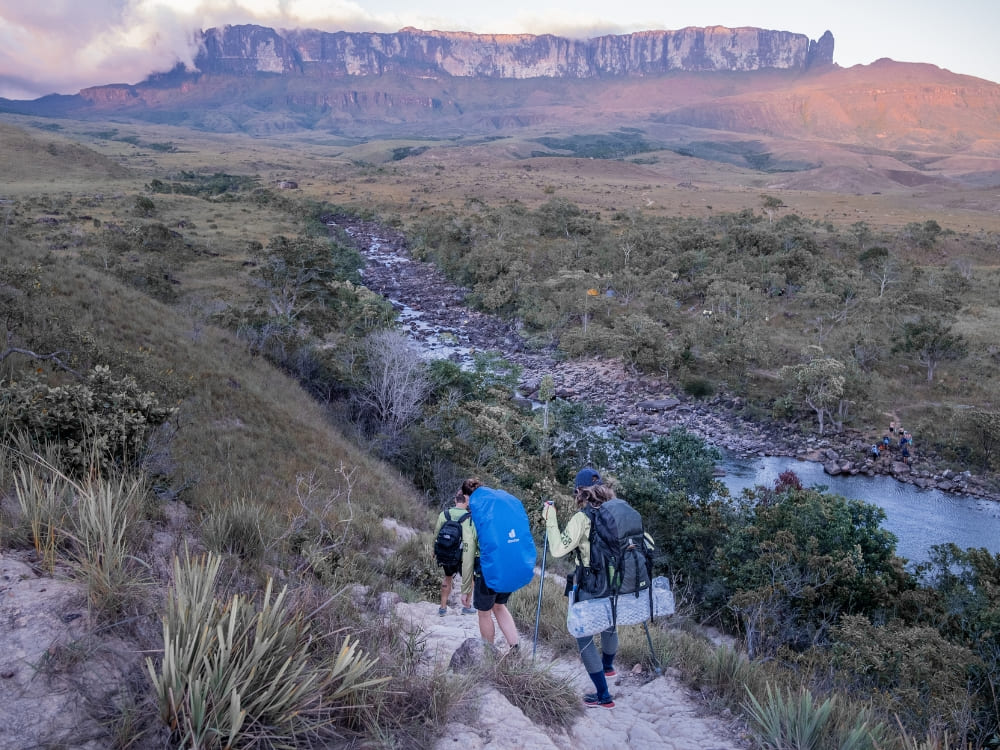
    Trekking up Mount Roraima is an unforgettable adventure, crossing open landscapes and rocky paths before reaching the top of Mount Roraima. At the summit, you’ll find stunning views, rare plants, and rock formations that make this plateau unlike any other place on Earth.

    How to get to Mount Roraima
    Photo: Lucas Gobatti

    Many travelers ask: Can I visit Mount Roraima? With the right preparation, permits, and experienced local guides, this journey is possible and rewarding. PlanetaEXO, for example, offers expeditions with specialized local guides, creating a positive impact through sustainable adventures to reach the top of Mount Roraima.

    If you check a Mount Roraima map, you’ll see how its location at the crossroads of Brazil, Venezuela, and Guyana makes planning essential before you set off. Keep reading to discover how to get to Mount Roraima and the best routes to start your trek:

    How to get to Mount Roraima?

    Before anything else, check the visa requirements, as you’ll need proper documentation to cross into Venezuela.

    You can start your adventure to Mount Roraima from a few different locations, but the most popular and convenient entry point is through Boa Vista, in northern Brazil. This city, the capital of the state of Roraima, serves as the main gateway for travelers coming from other parts of Brazil and abroad. 

    Its location close to the Venezuelan border makes it a natural hub for expeditions heading toward the mountain. On a Mount Roraima map, Boa Vista is clearly the strategic base before crossing into Venezuela.

    Since Mount Roraima lies at the meeting point of Brazil, Venezuela, and Guyana, reaching it always involves a sense of adventure and planning. Most travelers begin with a domestic flight to Boa Vista. 

    👉 Check out 10 Tips for Mount Roraima before your trek

    Boa Vista Roraima
    Photo: Andrezza Mariot

    From Boa Vista to Santa Elena de Uairén

    The airport (Atlas Brasil Cantanhede International Airport – BVB) is categorized as international, but in practice, it receives almost exclusively domestic flights from cities such as Brasília, Manaus, and São Paulo. This means that international visitors usually need to connect through another Brazilian city before arriving in Boa Vista.

    From Boa Vista, the most common route is to travel by car or transfer along the BR-174 highway. From there, it takes around 3 hours by car to reach the border with Venezuela, followed by about 20 minutes more to arrive in Santa Elena de Uairén. This cross-border journey is a well-trodden path, particularly for Brazilian travelers joining organized expeditions.

    There are several ways to make this trip:

    • Private transfer: The most comfortable option, usually arranged by tour operators. A driver picks you up at your hotel or airport in Boa Vista and takes you directly to Santa Elena. This ensures flexibility with departure times and stops along the way. PlanetaEXO, for example, works with trustworthy local partners for this service.
    • Shared van: A more affordable choice, where travelers join a small group for the ride. Vans depart regularly from Boa Vista and are commonly used by those joining expeditions. They may take slightly longer depending on stops and border procedures.
    • Public bus: The cheapest but least convenient option. Buses connect Boa Vista to Santa Elena, but schedules are irregular, and the journey can be slower due to frequent stops. This option is not recommended for travelers with limited time or those who prefer more reliable logistics.
    How to get to Mount Roraima
    Photo: Lucas Gobatti

    The beginning of the journey

    Once in Santa Elena de Uairén, the town serves as a pivotal starting point for climbers and adventurers, offering simple accommodation, restaurants, and last-minute supplies before the trek.

    From Santa Elena, the adventure continues with a scenic drive to the Community of Paraitepuy, the gateway to the trails leading to Mount Roraima. The drive itself offers stunning views of the Gran Sabana landscapes, passing the Tek and Kukenan rivers. 

    Along the way, trekkers may stop at rustic campsites and always count on the guidance of expert local guides connected to the indigenous traditions of the region. This is where the real journey to the top of Mount Roraima begins.

    👉 Check out our package options for your adventure on Mount Roraima

    Trek Mount Roraima
    Photo: Lucas Gobatti

    Best access: Brazil or Venezuela?

    When planning your trip, one of the most common questions is whether it’s better to enter through Brazil or Venezuela. Both routes are possible, but they offer very different logistics.

    Entering via Brazil 

    For most travelers, entering Brazil is the easiest and safest option. Boa Vista is connected to major Brazilian cities with daily flights, making it relatively straightforward to plan an itinerary. 

    The infrastructure on the Brazilian side is generally reliable, with services in English or Portuguese and easier access to support if needed. Another advantage is that some nationalities that can enter Brazil for tourism (including Europeans and many Latin Americans) do not need a visa for short stays, making this route bureaucratically simpler.

    After crossing into Venezuela, you’ll reach Santa Elena de Uairén, where most expeditions organize logistics before heading to Paraitepuy. This path is also highlighted on any Mount Roraima map, showing how Boa Vista is the most efficient hub for accessing the region. 

    Traveling this way allows you to rely on Brazilian airports and services for your arrival and departure, while only entering Venezuela for the trek itself.

    Top of Mount Roraima
    Photo: Lucas Gobatti

    Entering via Venezuela

    It is also possible to fly directly to Santa Elena de Uairén, but this option is far less common. The local airport is small and operates with very few flights. For international travelers, there are usually no direct connections to Santa Elena, meaning you would need to travel first to Caracas or Ciudad Bolívar and then take a regional flight. 

    Additionally, while Santa Elena is a welcoming town for trekkers, it offers more limited infrastructure compared to Boa Vista. For this reason, unless you are already in Venezuela for other causes, starting your trip through Boa Vista, Brazil, remains the most reliable route.

    Sunset Mount Roraima
    @diaz

    Visas and travel requirements

    Whether you choose to enter through Brazil or Venezuela, it is crucial to check visa requirements in advance. For Brazil, most Western nationalities (including citizens of the EU, UK, and several countries in the Americas) are exempt from tourist visas for short stays. However, policies can change, and some countries may require an e-visa or consular application. 

    Official information can be confirmed through the Brazilian Ministry of Foreign Affairs (Itamaraty) or your nearest Brazilian consulate. Click here to see which countries need a visa to visit Brazil. 

    For Venezuela, requirements vary more significantly. Some nationalities can enter with only a passport, while others must secure a visa in advance. The most reliable way to confirm is to contact the Venezuelan consulate or embassy in your country before travel. Given the logistical challenges of entering through Venezuela, many travelers find that handling visas and documentation through Brazil first is much smoother.

    How to get to Mount Roraima
    .

    Traveling to Mount Roraima with PlanetaEXO

    If you’re yearning for an exceptional escapade that pushes your boundaries and creates everlasting memories, seize the opportunity to team up with the knowledgeable local guides from PlanetaEXO.

    Our local partners are deeply connected with the indigenous communities of the region, ensuring not only safety and logistics but also a culturally rich experience. 

    Get ready to begin an extraordinary journey to one of the world’s most fascinating tepuis. From the logistics of how to get to Mount Roraima to the adventure of trekking across its summit and reaching the top of Mount Roraima, we’ll make sure your expedition is unforgettable.

    👉 Send us a message and start planning your adventure to Mount Roraima 

    Read More:

  • How hard is it to trek up Mount Roraima?

    How hard is it to trek up Mount Roraima?

    Hiking Mount Roraima involves diverse terrain and unpredictable weather, but with the right preparation, you can reach the top. Discover the challenges of climbing this iconic peak and how to make it achievable for all!

    You might be asking yourself: How hard is it to trek up Mount Roraima? While it’s a moderate challenge that requires physical preparation, it’s definitely achievable for anyone with the right mindset and training. It’s not just for professional climbers: many hikers, regardless of experience, can reach the top of Mount Roraima with proper planning and the right support.

    The trek is suitable for all ages, with children under 14 needing to be accompanied by an adult, making it a challenge for everyone, from young adventurers to seasoned trekkers!

    The path includes navigating rocky routes and steep climbs, which makes it physically demanding, especially in certain sections. But with the right equipment and preparation, it’s a journey that offers incredible rewards, both in terms of natural beauty and personal fulfilment.

    How hard is it to trek up Mount Roraima

    At PlanetaEXO, a specialized South American adventure company, we partner with trusted local partners to help you reach the top of Mount Roraima. Our team ensures you’re fully prepared for the challenges of climbing this iconic peak, from managing the terrain to navigating the unpredictable weather

    Learn more about all the important things you need to know before trekking up Mount Roraima:

    Understanding the Difficulty of Climbing Mount Roraima

    While the idea of “climbing” Mount Roraima may sound daunting, it’s important to understand that it’s not a vertical climb. The trek is challenging, but it’s more about hiking Mount Roraima through various terrains and river crossings. So, how hard is it to climb Mount Roraima? The answer depends on several factors, including the terrain, your physical fitness, and the level of support you choose.

    👉 Don’t forget to check the visa requirements before planning your trek.

    Is it a Trek or a Climb?

    Mount Roraima is a trekking adventure, not a rock climb. It’s a long hike, but most people in good physical condition can successfully reach the top of Mount Roraima with adequate preparation. The key is to pace yourself and take the time to adjust to the terrain and weather conditions along the way.


    How hard is it to trek up Mount Roraima
    Photo: Lucas Gobatti

    Factors That Influence Your Experience

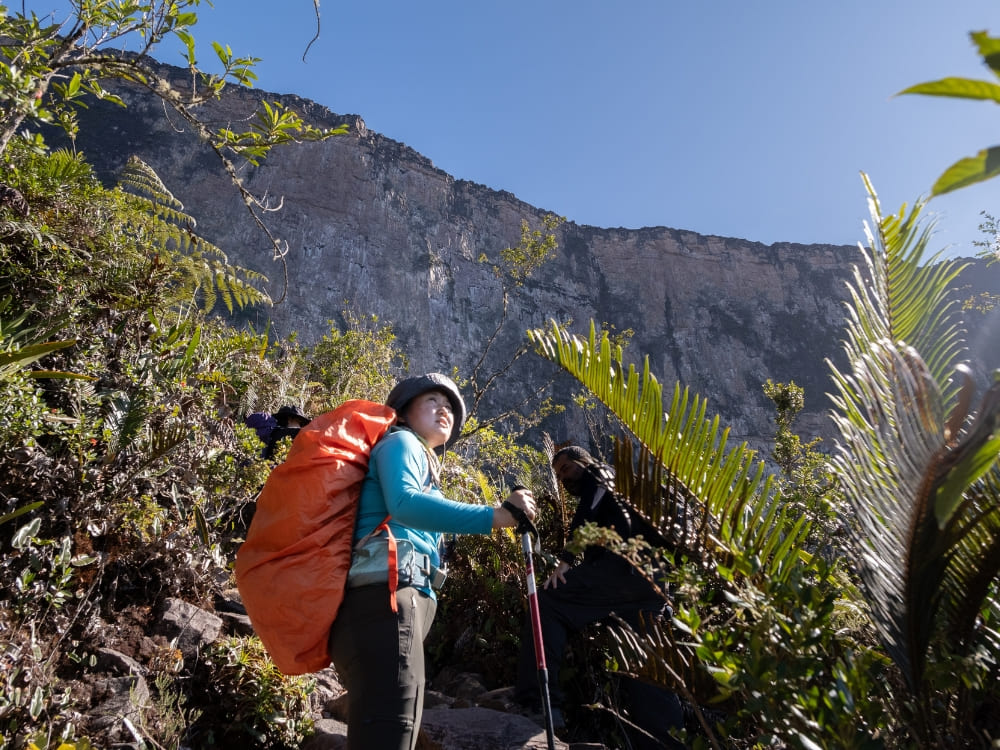
    Before considering the factors below, note that the trek begins in Canaima National Park, at the Indigenous community of Paraitepuy, where visitors register, receive basic instructions, and meet the local guides and porters who will accompany the journey.

    Several factors can affect the difficulty of your trek. Here are the main considerations that will influence your experience:

    1. Duration of the Trek

    The trek to the summit typically spans 8 to 10 days. The total trekking distance is between 90 and 100 kilometers (56 to 62 miles), including the ascent, time spent at the summit, and the return journey. The number of nights at the top of the mountain also varies according to the duration of each trek.

    With the 10-day PlanetaEXO option, for example, you spend 5 nights on the plateau of Mount Roraima. A longer itinerary allows you to pace yourself and adjust to the physical demands, making the experience less strenuous. However, if you’re seeking a more intense challenge, some choose to complete the 8-day itinerary in 6 days.

    Duration of the Mount Roraima Trek
    Photo: Lucas Gobatti

    This compressed version covers the same distance but in a shorter period, making it a more physically demanding experience. While it allows you to reach the top of Mount Roraima in less time, it requires a higher level of fitness and endurance due to the quicker pace.

    👉 Check out 10 Tips for Mount Roraima before your trek

    2. Logistical Support

    Choosing a company like PlanetaEXO makes the trek easier. Our trusted local partners, carefully selected by us, take care of the logistics on the trail, from carrying camping gear to preparing meals. 

    If you decide to manage these tasks yourself, the trek will become more challenging. With the right partners handling logistics, you can focus on enjoying the hike.

    To stay dry, consider using a rain cover for your backpack and dry bags to protect your essentials from moisture. Extra socks (preferably synthetic or wool) and a quick-dry microfiber towel will also help keep you comfortable during and after long days of hiking

    Important reminder: Even with quality gear, heavy rain and humidity can flood tents and muddy campsites, affecting rest. Keep essentials dry and be ready for less-than-ideal nights.

    Camping Mount Roraima
    Photo: Lucas Gobatti

    👉 Let PlanetaEXO connect you with the best local partners: explore our best Mount Roraima tours and start your adventure.

    3. Porter Service

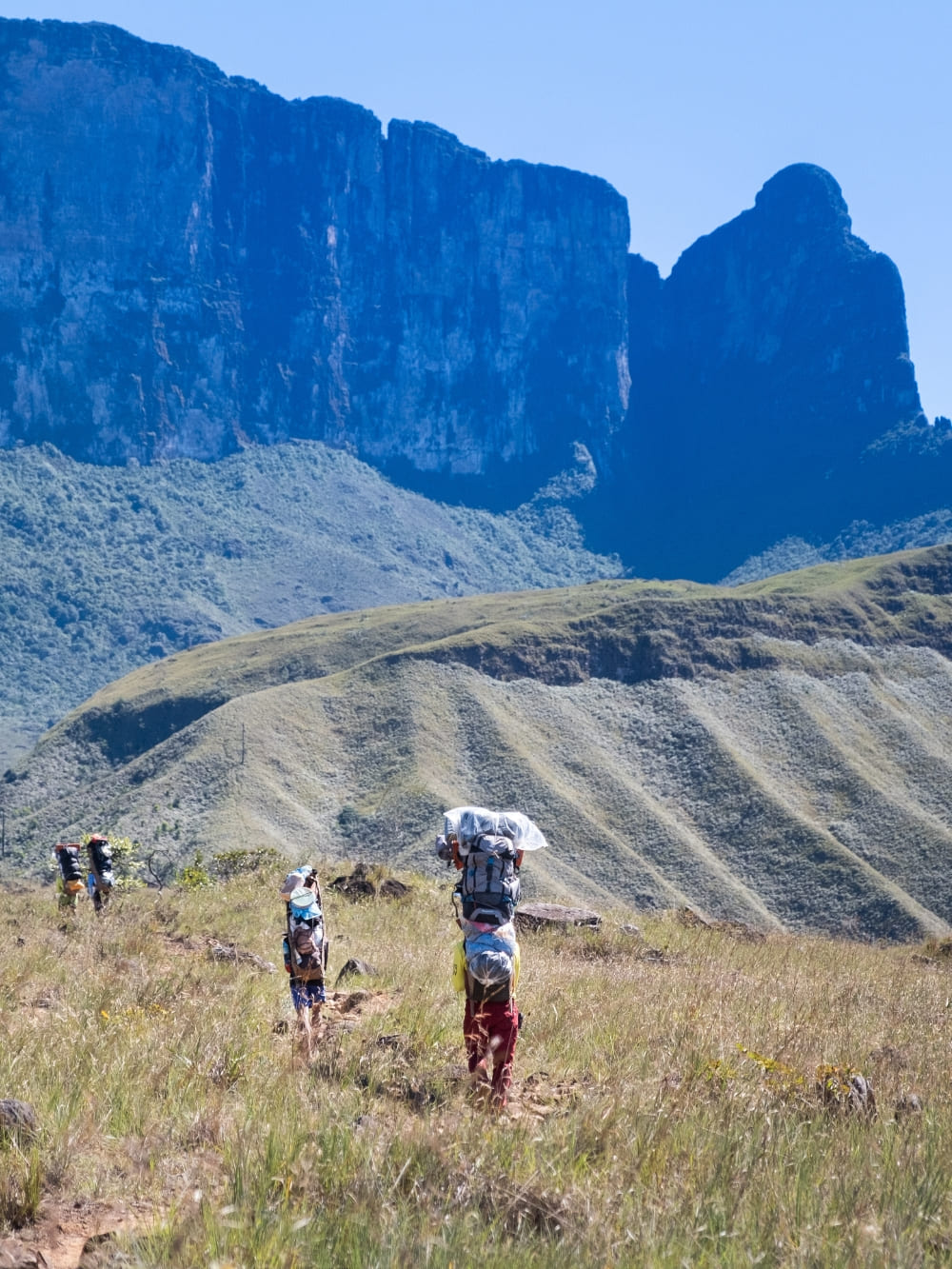
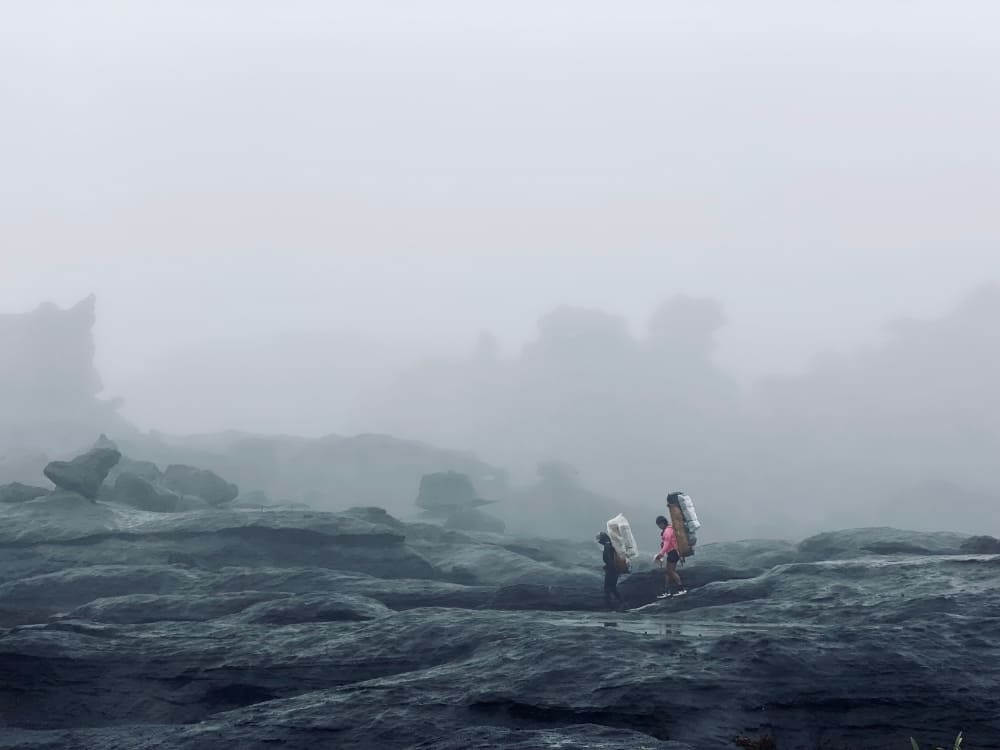
    Even though travel companies handle the logistics of food and camping gear, you’ll still need to carry your personal items. To lighten your load, you can hire a porter from the local community to help reduce the physical demands of the trek.

    This service also contributes to the local economy by supporting experienced porters who are deeply rooted in the community. By hiring them, you’re financially supporting skilled professionals who understand the region, its environment, and its culture, helping sustain their livelihoods.

    Porter Service Mount Roraima
    Photo: Lucas Gobatti

    4.Your Physical Fitness

    Your fitness level plays a significant role in how hard the trek will feel. The terrain varies from easy to moderate, with steeper sections as you approach the summit. 

    If you’re in good health and have done some basic hiking, you’ll be able to handle the trek, but it’s still important to train beforehand to prepare for the demands of a multi-day trek. 

    How hard is it to trek up Mount Roraima
    Photo: Lucas Gobatti

    Remember that it is a long walk, so you need to be in good physical condition and be prepared for strong sun exposure at high altitude, which can intensify its effects.

    5. Terrain and Steep Ascents

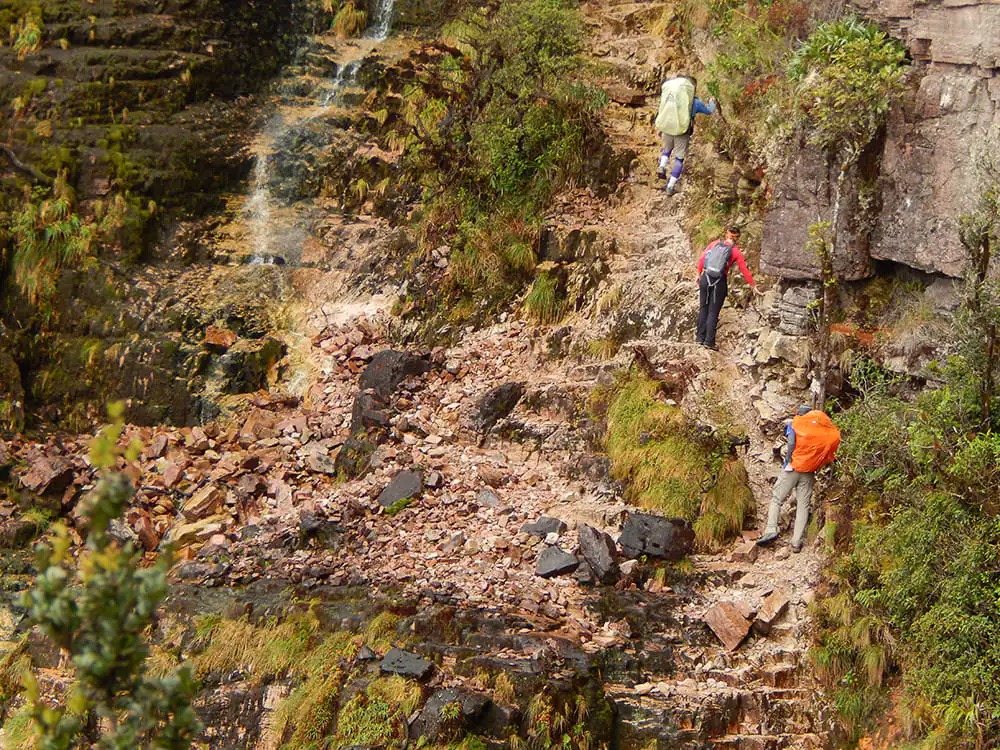
    The terrain can be challenging, with uneven surfaces and slippery sections, especially as you approach the summit. These steep ascents can be physically demanding, but with the right preparation, the reward of reaching the top of Mount Roraima becomes an unforgettable achievement.

    Some key elevation points include:

    • Basecamp: Around 1,500 meters (4,920 feet), where the trek levels out before the final push. Reaching it includes early challenges like the “Prova do Novato”, a steep climb that hints at what’s ahead, and crossing the Tek and Kukenan rivers over slippery rocks with guide assistance.
    • Ascent to the Summit: Steep sections begin around 2,200 meters (7,218 feet), getting progressively more challenging as you approach the 2,810-meter (9,219 feet) summit. This stage includes notable landmarks such as La Rampa, a narrow natural ramp carved into the cliffside where hikers often use all four points of contact due to its steep incline, and the Poço das Lágrimas, a slippery rocky passage often wet from rain and waterfalls, both requiring extra caution and steady footing.
    • Rocky Terrain: From 2,500 meters (8,200 feet) onwards, after La Rampa, the trail turns rugged with large boulders and uneven ground, leading to the 2,810-meter plateau and El Maverick, the summit’s highest point and a popular climb for sweeping views.

    Some sections require careful navigation over rocky terrain, which can be exhausting but manageable for most hikers with prior experience.

    People trekking Mount Roraima

    What to Expect on the Trail: Key Points of the Trek

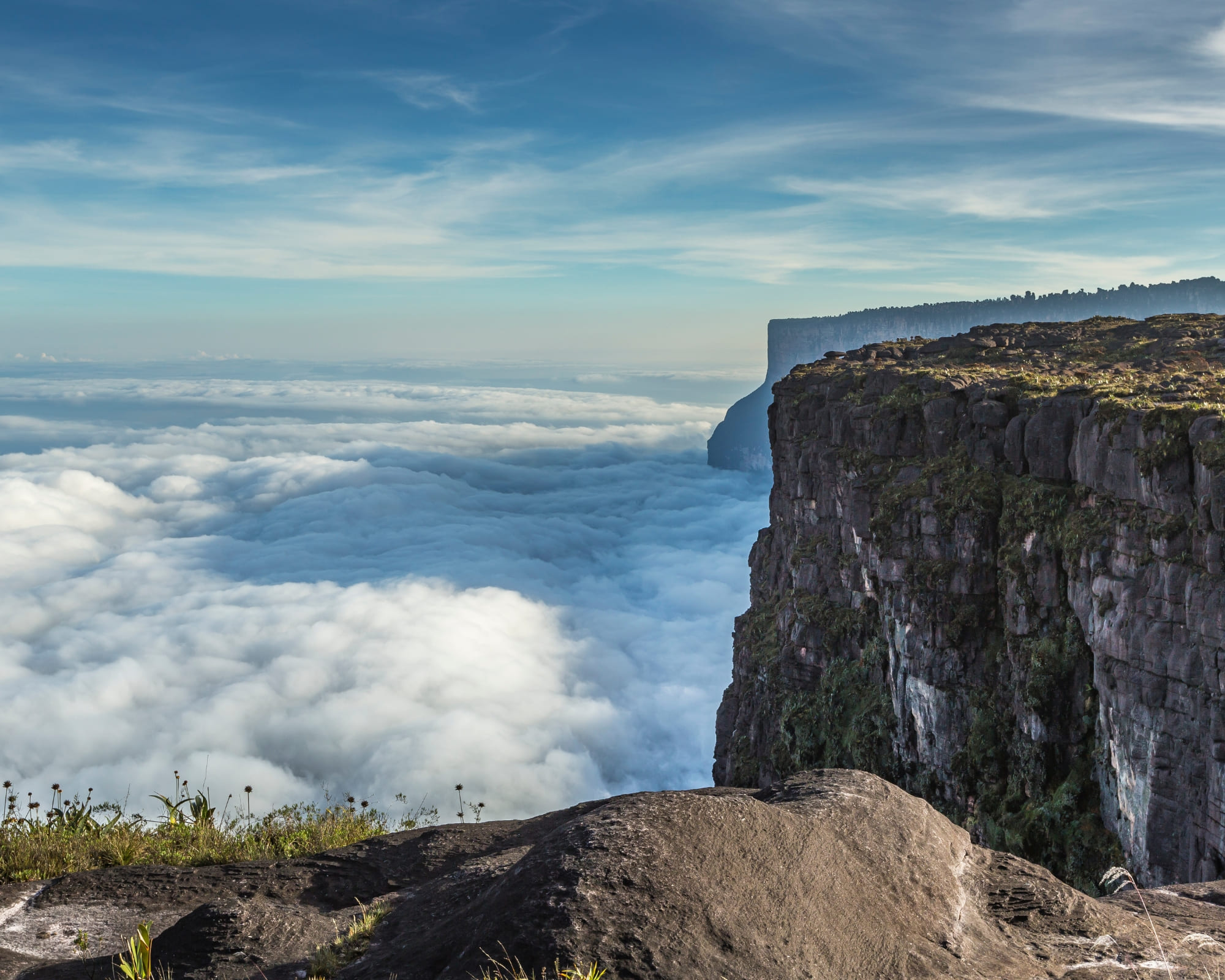
    At this point, you already know that Mount Roraima is a tepui, a flat-topped mountain on the Guiana Shield that rises to 2,810 meters at the Brazil–Venezuela–Guyana border. Its sheer 1,000-meter cliffs isolate the plateau from the forest and savanna below, creating a distinct and fragile ecosystem. 

    Constant rainfall and nutrient-poor soils have shaped highly specialized flora, including carnivorous plants, and fostered a remarkable level of endemic species.

    This perspective highlights that reaching the summit is not only about overcoming physical challenges but also about experiencing an ever-changing landscape filled with natural wonders. Here’s what awaits you along the way:

    • Day 1-2: Start your trek by crossing rivers and gradually ascending. These days are relatively moderate, giving you time to adapt to the pace of the expedition.
    • Day 3–4: The trail grows steeper as you approach the mountain’s base. Here, rocky paths and sharper ascents make the climb more demanding.
    • Day 5–6: Arriving at the summit, you’ll explore an otherworldly plateau dotted with unique vegetation and enjoy sweeping views across three countries.
    Reach the top of Mount Roraima
    @overlandtheamericas

    👉 Want to know what’s waiting at the summit? Read the full article: What’s on top of Mount Roraima?

    Weather and Best Time to Visit Mount Roraima

    The weather on Mount Roraima is highly unpredictable, so being prepared for a variety of conditions is essential. The mountain follows the tropical climate of Venezuela, which means you may encounter rain, fog, and significant temperature fluctuations throughout the trek.

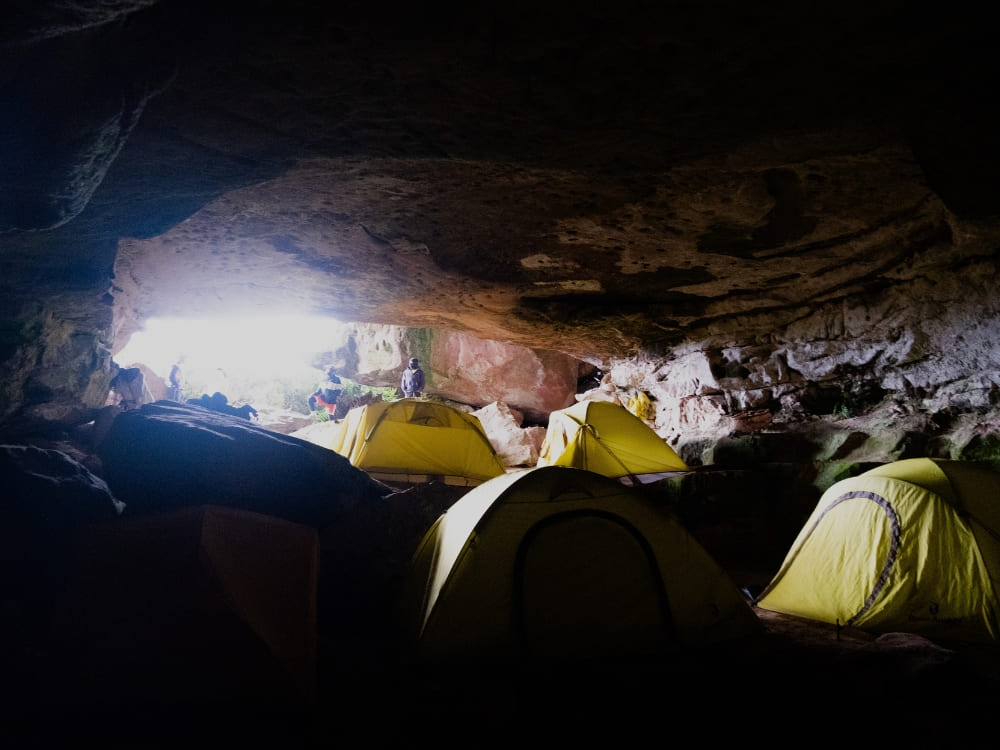
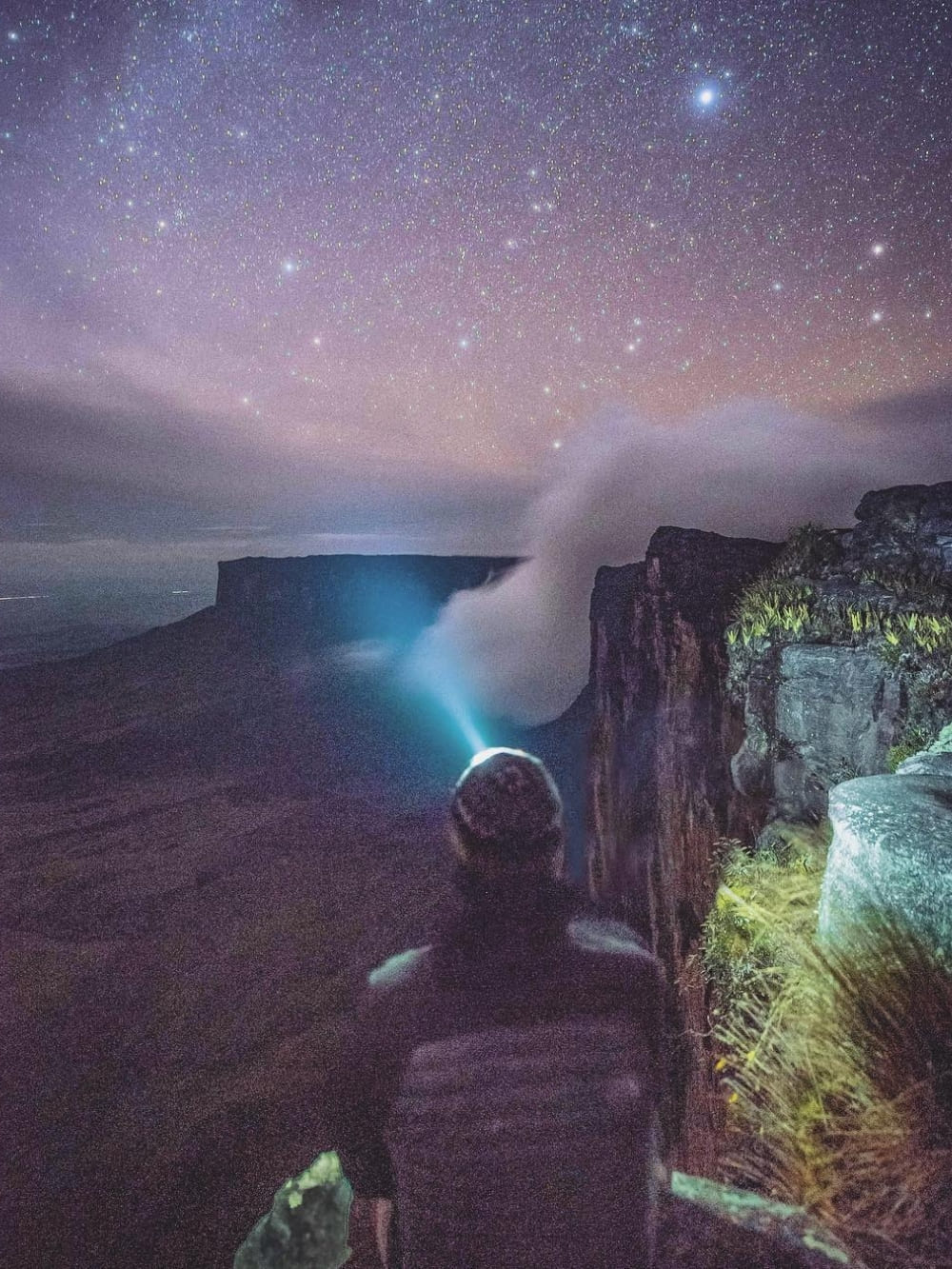
    At the summit, camping is in natural rock shelters (“hotels”) that offer partial protection from wind and rain but have uneven ground. Expect intense sun during the day and near-freezing temperatures at night. The views and sense of accomplishment make it all worthwhile!

    What to Expect:

    • Rain: Rain is common, especially in the afternoon and evening. The wet season, from May to November, brings heavier and more frequent rainfall, which can make the trail slippery and harder to navigate. Be sure to pack waterproof gear, such as a jacket and rain cover for your backpack, to stay dry.
    • Fog and Wind: The summit is often shrouded in fog, and strong winds are frequent, especially as you reach higher elevations. The fog can limit visibility, and the wind can make hiking and camping more challenging.
    • Temperature: Despite being in a tropical region, the altitude causes significant drops in temperature, especially at night. During the day, temperatures can range from 20°C to 25°C (68°F to 77°F), but at night, they can plummet to as low as 5°C to 10°C (41°F to 50°F). Even in the summer months, you’ll experience chilly conditions at night.
    Weather and Best Time to Visit Mount Roraima
    Photo: Lucas Gobatti

    Best Time to Visit

    The best time to trek Mount Roraima is during the dry season, from December to March, when rainfall is less frequent, and the weather is more stable. This period offers the most comfortable trekking conditions, with less rain and cooler nights. However, even in the dry season, weather conditions can still be unpredictable, so be prepared for all possibilities.

     👉 Check out our complete travel guide for all the details on Mount Roraima’s climate, logistics, and more!

    Sunset Mount Roraima
    @watchluke

    Hiking Mount Roraima with PlanetaEXO

    At PlanetaEXO, we’re committed to providing sustainable travel experiences that benefit both travelers and local communities. 

    We work closely with expert local guides, many from the Indigenous community of Paraitepuy inside Canaima National Park, who are passionate about conservation and sharing the beauty of the mountain.

    How hard is it to trek up Mount Roraima
    Photo: Lucas Gobatti

    By choosing us, you’re not just embarking on an adventure; you’re supporting ecotourism that helps preserve Mount Roraima for future generations.

    👉 Ready to take on the challenge? Start planning your Mount Roraima trek today with PlanetaEXO.

    Read More: 

  • COP30: What to Do Beyond the Conference – Explore Brazil’s Nature

    COP30: What to Do Beyond the Conference – Explore Brazil’s Nature

    Sustainable adventures in Brazil for travelers attending COP30, offering curated nature experiences that connect you with the forest, its people, and the climate agenda.

    For those planning to attend the conference or follow it closely, there is one key question: What to do in Brazil during COP30? This is a great opportunity to explore the Amazon Rainforest and other unique destinations like the Pantanal, Monte Roraima, and Chapada Diamantina. And nothing makes more sense during a climate conference than supporting ecotourism, which directly benefits conservation efforts and local communities.

    COP30 Brazil, held in Belém, Pará, from November 10 to 21, 2025, will bring global attention to the Amazon, a region vital for climate regulation and biodiversity. By visiting Brazil, you help preserve its ecosystems, support sustainable tourism, and promote climate action.

    What to do in Brazil during COP30
    Photo: Johan

    With this in mind, explore Amazon Rainforest tours and other destinations with PlanetaEXO during COP30 Brazil, and choose an experience that supports ecotourism as a real and effective solution for conservation and climate change. These are authentic wildlife travels for conscious explorers: 

    Explore the Amazon Rainforest

    Have you ever imagined exploring the Amazon through curated experiences, from canoeing in flooded forests to visiting riverside communities? These nature tours connect adventurers to local culture, biodiversity, and climate action.

    Cruise the rivers of the Amazon 

    COP30 Brazil is an invitation to understand the importance of environmental conservation, right? For those seeking change from the meeting, travelling consciously already means taking action. And it could be even better with a river cruise in the Amazon Rainforest!

    Join Katerre on a 5-day Amazon cruise aboard the Jacaré-Açu boat. You’ll visit indigenous communities and witness the incredible biodiversity of the Anavilhanas Archipelago and Jaú National Park

    How to get there from Belém: Belém to Manaus flights daily; boat departs from Manaus port.

    Cruise in the Amazon 
    .

    👉 Don’t miss this opportunity: Cruise the Amazon Rainforest now and live this experience with PlanetaEXO!

    Ideal for Short Escapes: Discover the Amazon in 3 Days 

    Pressed for time? This 3‑Day Amazon Jungle Tour offers a deep and meaningful immersion into the rainforest without requiring a long visit. You’ll be hosted at a comfortable riverside lodge and explore the jungle by canoe, go on guided hikes, observe wildlife, and visit a local caboclo’s home in the village of Careiro da Várzea

    The experience includes full board, private bungalows, and expert local guides ready to introduce you to the forest, including the Meeting of the Waters, where the Negro and Solimões rivers meet. It’s a short but powerful journey.

    What to do in Brazil during COP30
    .

    How to get there from Belém: Fly to Manaus, then the lodge team will meet you at the airport and take you by road to the port, followed by a boat transfer to the lodge.

    👉  Want to live the Amazon beyond the COP30? Try the 3‑Day Amazon Jungle Tour from Manaus

    Explore the protected area of the Mamirauá Institute  

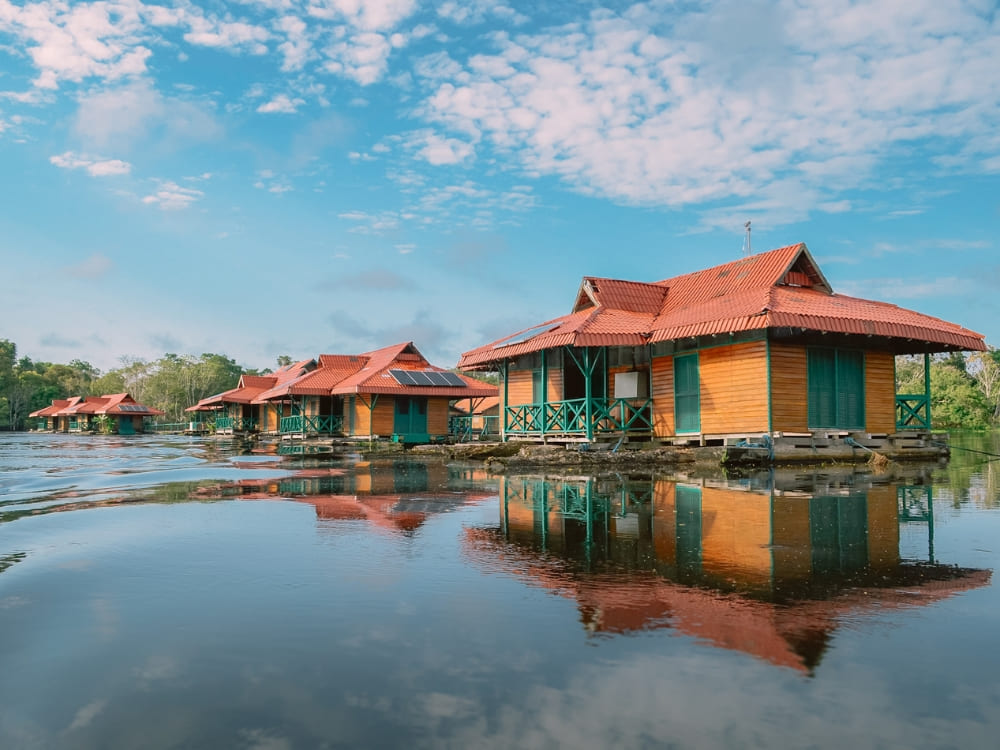
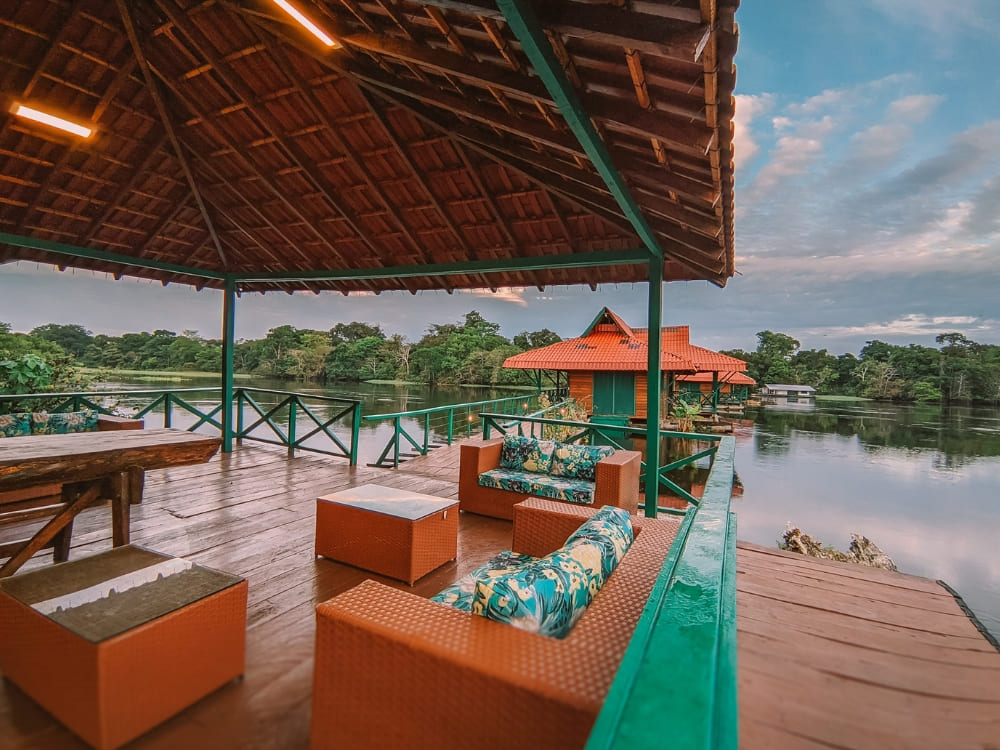
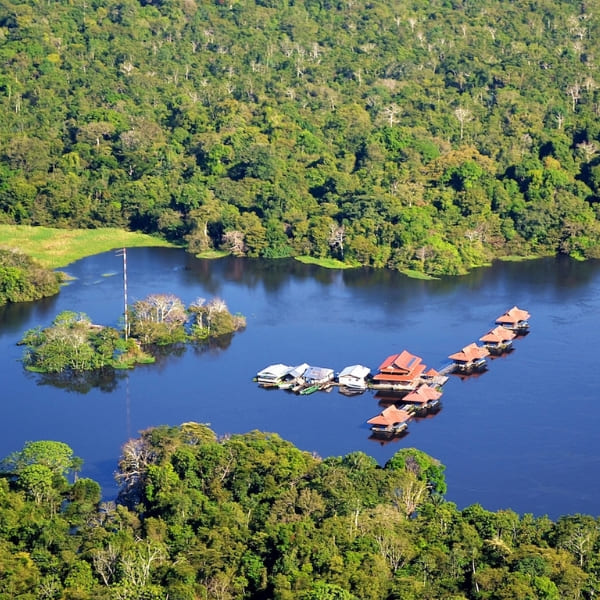
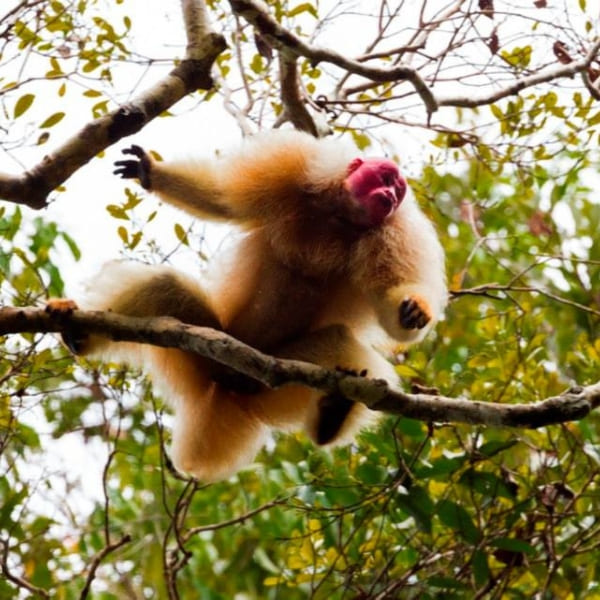
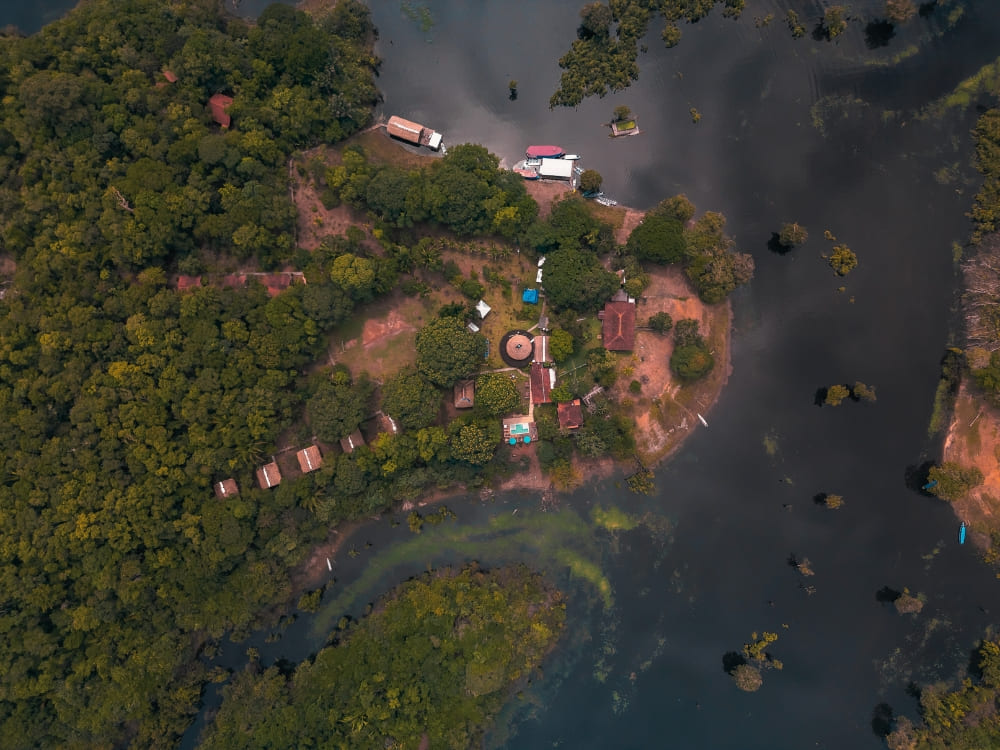
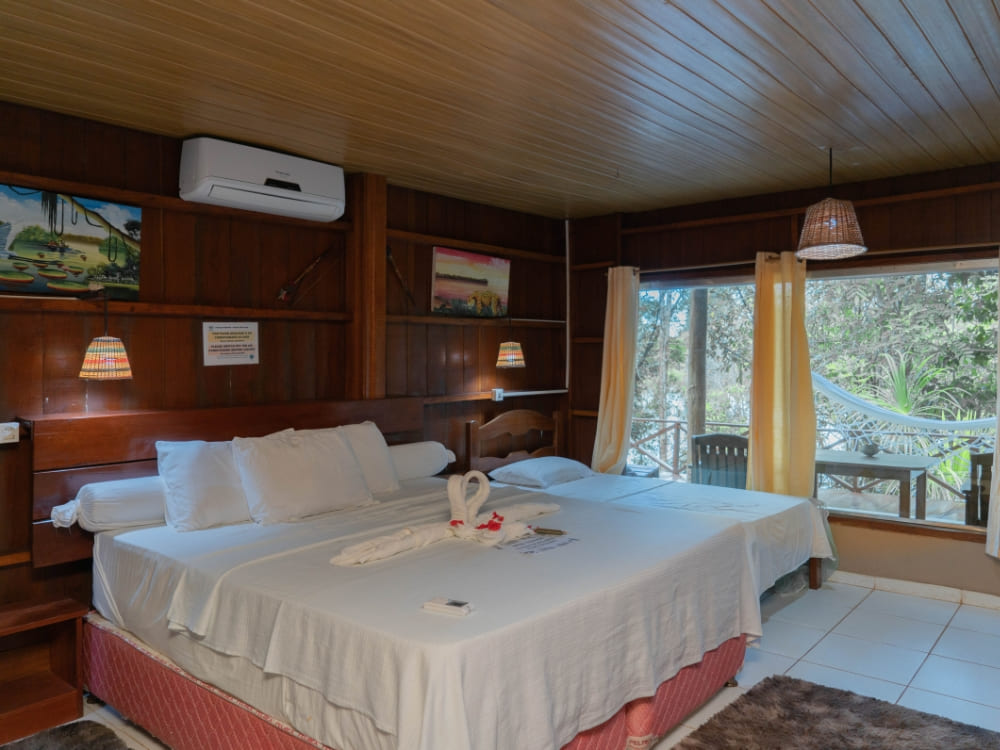
    Explore the Mamirauá Reserve, part of the Central Amazon Conservation Complex, a region recognized by UNESCO for its outstanding biodiversity. Stay in the Uakari Lodge, a floating ecolodge surrounded by the Amazon’s rich ecosystems, and enjoy activities like night safaris, piranha fishing, and visits to local communities.

    What to do in Brazil during COP30
    .

    Ideal for COP30 attendees, this experience offers a chance to connect with nature while learning about pioneering conservation and research conducted by the Mamirauá Institute.

    How to get there from Belém: Fly to Manaus, then connect to Tefé. The lodge team picks you up by boat at the Tefé airport!

    👉  Join an unforgettable Amazon adventure: Book your ecolodge experience!

    A Real Jungle Survival Adventure 

    Embrace the Amazon like never before with this thrilling survival adventure. Venture deep into the rainforest, where you’ll hike, canoe, and camp in the wild. Learn survival techniques, such as fishing, plant identification, and river navigation, while observing the vibrant wildlife in their natural habitat.

    Perfect for those seeking an authentic, immersive experience, this nature tour offers a true connection with nature, far from any comfort zones. 

    How to get there from Belém: Flights to Manaus daily; pick-up from the hotel or airport is included.

    Real Jungle Survival Adventure 
    @lucasdguerra

    👉  Ready for the 4-Day Amazon Jungle Survival Tour? Immerse yourself in this adventure!

    The Best of the Amazon Rainforest Tours in 4 Days

    How about immersing yourself in the Amazon without a lengthy commitment? Explore the Meeting of the Waters, hike jungle trails, and enjoy birdwatching as you spot unique species in the rainforest. 

    This is the perfect option for those who want a well-rounded Amazon experience without needing to spend too much time. Stay in a comfortable lodge, with expert guides leading you through the local Caboclo culture and the rainforest’s rich biodiversity.

    How to get there from Belém: Quick flights to Manaus are available daily.

    Meeting of the Waters
    .

    👉 Don’t miss out on this complete journey! Check out our 4-day Brazilian Amazon Jungle Tour

    Experience Wildlife Travels and Birdwatching 

    A lesser-known but fascinating option is located in the state of Mato Grosso, where the Amazon begins to meet the Pantanal. At Cristalino Jungle Lodge, visitors explore a private reserve recognized for its biodiversity and conservation work. This area is considered one of the richest in bird species on the planet and attracts researchers from around the world.

    With guided trails, canopy towers, river tours, and exceptional accommodation, the Cristalino experience is a great option for those looking to combine nature and scientific relevance, all with minimal impact. 

    Perfect for those looking for COP30 tours and travels that highlight scientific discovery and biodiversity.

    How to get there from Belém: Fly to Alta Floresta with a stopover in Cuiabá; a lodge transfer is arranged from the airport.

    Birdwatching Amazon Rainforest
    Photo: Samuel Melim

    👉  Interested in exploring one of the best conservation models in Brazil? Discover the Cristalino Jungle Lodge

    Discover other nature tours in Brazil during COP30

    Beyond the Amazon Rainforest, Brazil offers other breathtaking ecosystems where ecotourism thrives. If you’re extending your stay after COP30 or planning a parallel escape, consider these unforgettable experiences that blend adventure, sustainability, and cultural immersion: 

    Hike the ancient land of Monte Roraima (RR) 

    Walk through clouds and ancient legends! Monte Roraima, one of the oldest geological formations on Earth, stands at the border of Brazil, Venezuela, and Guyana. This remote tabletop mountain is surrounded by myths, biodiversity, and striking landscapes.

    Reach the Summit of Monte Roraima 

    Choose between two unforgettable adventures, both taking you to the summit of this legendary mountain. If you’re short on time, the 8-day trek offers a shorter itinerary that still reaches the summit, with one night on the top and visits to the Indigenous Community Paraitepuy, wild camping, and the stunning “La Ventana” viewpoint.

    Hike Mount Roraima
    @na7hann

    👉  Looking for a shorter but intense adventure? Discover the Monte Roraima 8-Day Trek

    For those seeking a deeper, cross-border experience, the 10-day expedition covers the full ascent, summit exploration, and descent via the Venezuelan side, a physically demanding journey offering a profound connection with this ancient land.

    How to get there from Belém: Flight to Boa Vista (via Brasília); 4×4 transfer to the trek’s starting point included.

    👉  Want to go all the way? Explore the 10-Day Monte Roraima Full Expedition

    Wildlife Travels: Pantanal Immersive Safaris 

    The Pantanal is the best place for wildlife observation. Unlike the dense Amazon, its open landscapes offer clear views of animals in their natural habitat. As the world’s largest tropical wetland, it’s home to jaguars, giant otters, capybaras, and hundreds of bird species.

    Pantanal Jaguar Safari: Luxury & Conservation 

    Stay in a 53,000-hectare ecolodge in Brazil’s Pantanal, a region known for its incredible biodiversity and strong conservation efforts. This 4-day luxury safari includes boat safaris, jeep tours, and canoeing, offering close encounters with wildlife like caimans, capybaras, and hundreds of bird species.

    It’s a meaningful way to connect with nature during COP30 Brazil, while supporting sustainability and relaxing in comfort.

    How to get there from Belém: Fly to Cuiabá with a layover in Brasília or São Paulo; lodge arranges Pantanal transfers.

    Pantanal Immersive Safaris 
    Photo: Edu Fragoso

    👉 Ready to discover the Pantanal’s natural wonders? Explore this destination in an environmentally protected area

    Pantanal & Bonito: 5 Days of Nature and Adventure 

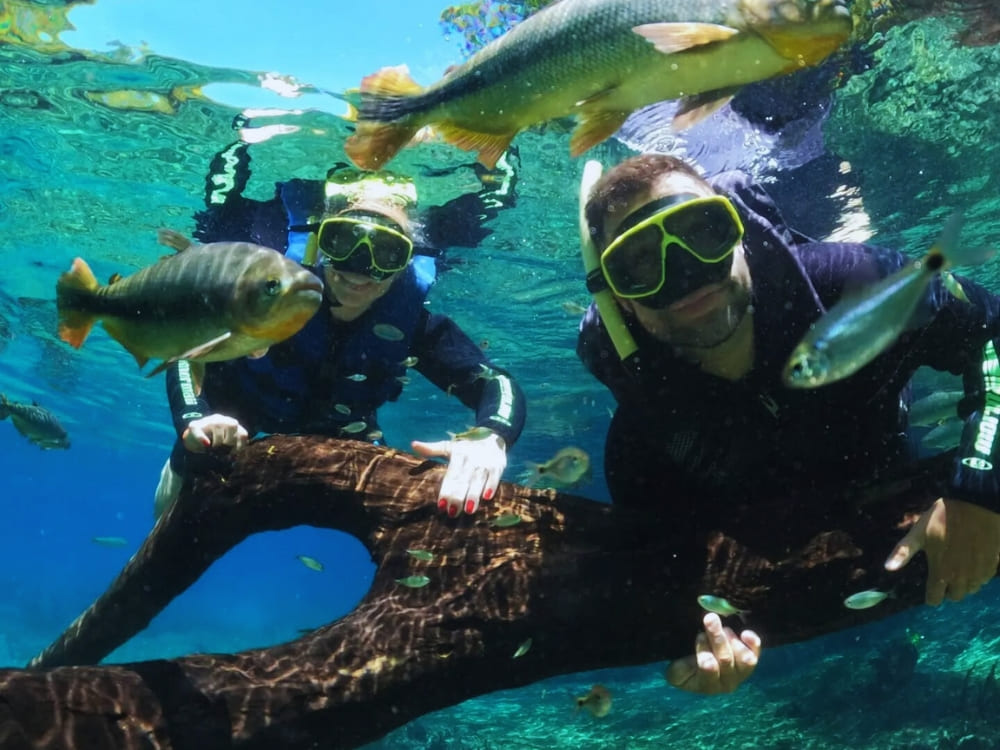
    Combine two beautiful Brazilian destinations on one trip: Explore Brazil’s Pantanal and Bonito in this 5-day ecotourism adventure. Spot wildlife in the Pantanal and then discover Bonito’s crystal-clear rivers and caves. Enjoy boat safaris, horseback riding, and snorkeling in one of the world’s clearest rivers!

    How to get there from Belém: Fly to Campo Grande via São Paulo; road transfer to Pantanal and Bonito is included.

    Diving in Bonito
    @shirleytf4

    👉 Dive into Brazil’s natural wonders: Join this unforgettable adventure today!

    Immerse yourself in the highlands of Chapada Diamantina

    Chapada Diamantina National Park, in the interior of Bahia, is one of Brazil’s top trekking destinations. With trails crossing canyons, plateaus, rivers, and Atlantic Forest patches, the region offers a mix of biodiversity and impressive geological formations shaped by water and time.

    Follow One of Brazil’s Most Iconic Trails

    The classic Vale do Pati Trek takes you through one of the most scenic valleys in South America. The route includes river crossings, climbs to panoramic viewpoints like Cachoeirão, and overnight stays in local family homes. Each day ends with a refreshing swim in waterfalls or natural pools.

    Chapada Diamantina trek
    Photo: Guillaume Leman

    👉  Short on time? Try the 3-Day Vale do Pati Trek

    Discover Remote Trails and Viewpoints

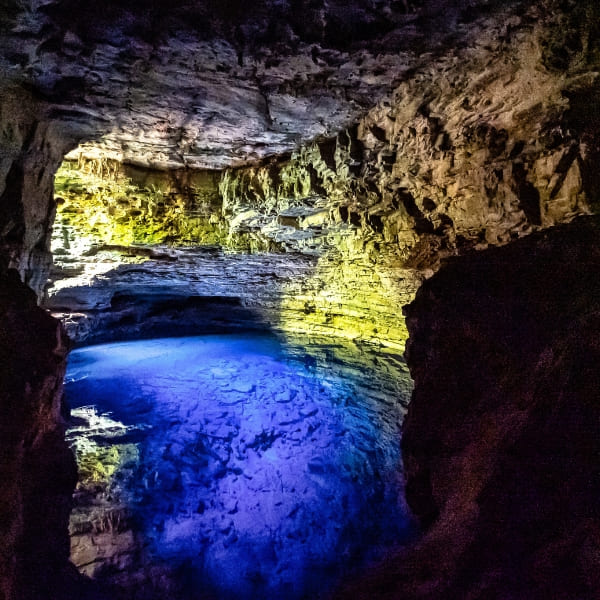
    Set off on a 6-day adventure through Chapada Diamantina, hiking to stunning sites like Vale do Pati, Buracão, and Fumacinha waterfalls, as well as the crystal-clear Poço Azul and Poço Encantado lakes.

    This moderate trek offers a perfect blend of beautiful landscapes, wildlife encounters, and authentic experiences. Expert guides will ensure you get the most out of this immersive journey.

    Note: This trek is moderate, ideal for those with basic hiking experience.

    How to get there from Belém: Fly to Salvador (Bahia), then continue by overland transfer to the town of Lençóis, the main gateway to Chapada Diamantina National Park.

    Buracao Waterfall Chapada Diamantina
    @albagonma

    👉  Looking for a deeper immersion? Discover the 6-day Ultimate Chapada Diamantina Hike

    However, if you’d like to explore other tour options in Vale do Pati with different formats and durations, check out our full selection here

    Traveling with purpose with PlanetaEXO 

    At PlanetaEXO, we believe every trip can make a positive impact. That’s why we create experiences that combine adventure, environmental conservation, and cultural exchange. During COP30 Brazil, while the world looks at Brazil, we invite you to go beyond the event and experience what’s at stake: not just in theory, but in the field.

    By choosing sustainable tourism, you become part of a movement that protects the forest, values local knowledge, and builds a more sustainable future. Let your journey be part of the solution.

    Want help choosing what to do in Brazil during COP30?

    Whether you’re looking for a short escape between sessions or planning a deeper immersion after the conference, our team is here to guide you.

    From the lush Amazon Rainforest to the vast wetlands of the Pantanal, Brazil offers unmatched wildlife travels that go far beyond the conference halls. There’s no better time to explore these nature tours beyond the COP30 Brazil!

    Talk to our team and plan your expedition with a purpose.

    Read More: 

  • 10 Facts You Need to Know about Mount Roraima

    10 Facts You Need to Know about Mount Roraima

    Learn key facts about Mount Roraima, including its formation, height, location, who lives there, and how to experience it responsibly. 

    Mount Roraima is one of the most fascinating natural wonders in South America. After all, it stretches over 30 kilometres across three countries: Brazil, Venezuela, and Guyana. In this article, you’ll discover 10 facts about Mount Roraima that explain why this flat-topped mountain draws travelers from all over the world. From ancient geology to rare animals and Indigenous culture, there’s more to Roraima than meets the eye.

    Its isolation, ecosystem, and sheer cliffs have inspired curiosity and scientific study for centuries. Whether you’re planning a trip or just want to learn more, this text breaks down everything you need to know about this destination! 

    facts about Mount Roraima
    Photo: Lucas Gobatti

    PlanetaEXO offers immersive ecotourism experiences to Mount Roraima that connect you with nature and local communities. If you’re seeking adventure with purpose, you’re in the right place. Keep reading! 

    1. Mount Roraima was formed over two billion years ago

    Mount Roraima is part of the Guiana Shield, one of the most ancient geological formations on Earth. The formation of Mount Roraima dates back over 2 billion years, making its rock layers older than most mountain ranges on the planet.

    This incredible age is visible in its weathered sandstone, shaped by wind and water erosion over millions of years. Its characteristic shape, a flat summit with sheer vertical cliffs, was created through natural processes that have taken place since the Precambrian era.

    👉 Before planning your trek, remember to check the visa requirements

    2. Mount Roraima inspired Pixar’s Up – Paradise Falls

    Did you know that Mount Roraima was one of the main inspirations for Pixar’s animated film Up? The movie’s iconic “Paradise Falls” was modeled after the tepuis of the Guiana Shield, especially Mount Roraima, with its vertical cliffs, flat summit, and dramatic waterfalls. 

    The mountain’s otherworldly landscapes gave the animators the perfect backdrop for Carl’s flying house adventure. Today, travelers who trek to the top often recognize the resemblance and say it feels like stepping straight into the movie.

    Film Up – Paradise Falls
    Photo: Pixar Film, Up – Paradise Falls

    3. Indigenous communities that live there protect Mount Roraima’s legacy

    Mount Roraima is surrounded by Indigenous communities who live there, including the Pemon, Kapon, and Taurepang peoples. The Pemon and Taurepang belong to the Carib (Karib) linguistic and cultural group, while the Kapon are part of the Akawaio-speaking peoples, who are also often classified within the Carib family.

    These groups are the traditional custodians of the land and hold deep spiritual ties to the mountain. They play a vital role in sustainable tourism, not only guiding visitors but also providing the logistics that make the trek possible: carrying equipment, setting up tents, preparing meals, and facilitating access to remote areas. 

    Their work ensures tourism benefits local economies while preserving both the environment and cultural heritage.

    Indigenous communities Mount Roraima
    .

    4. Mount Roraima’s height reaches 2,810 meters above sea level

    The Mount Roraima height reaches an impressive 2,810 meters (9,219 feet) above sea level, with cliffs that rise nearly 400 meters from the base. It is the highest tepui in the Pakaraima mountain range.

    Although it’s not the tallest mountain in South America, its shape and prominence make it one of the most striking. The plateau covers about 34 square kilometers in the Venezuelan sector, which is the most visited area and where the main trekking route is located.

    However, the mountain’s summit lies across the Brazil–Venezuela–Guyana border, and the trekking route to ascend, explore, and return covers roughly 90 kilometers in total.

    Mount Roraima’s height
    Photo: Denis Minnetdinov

    5. It’s surrounded by the mystery of the “Tree of Life

    One of the most enduring aspects of Mount Roraima is the mystery surrounding its symbolic meaning. In Indigenous Pemon mythology, the mountain is believed to be the trunk of the “Tree of Life, a sacred figure from which the world’s fruits once originated.

    This idea has gained attention in recent years as visitors reflect on the mountain’s otherworldly terrain. The concept of a “living origin” resonates with those seeking spiritual connection in natural spaces. Additionally, some indigenous people also refer to the mountain as the “house of the gods.” 

    mystery of the “Tree of Life”
    @overlandtheamericas

    6. The summit has its own wildlife

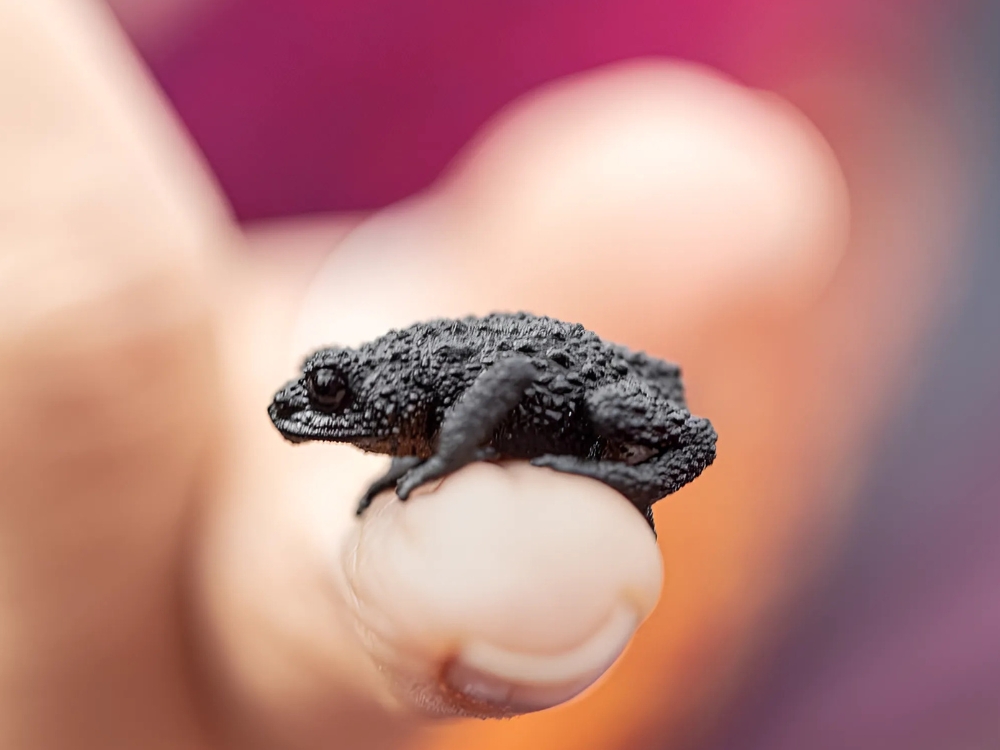
    The summit’s isolation has led to the evolution of unique animals found only on Mount Roraima. These include endemic frogs, such as the Roraima bush toad, rare lizards, insects, tarantulas, and even some butterfly species adapted to the misty, nutrient-poor environment.

    Despite the rocky terrain, biodiversity is rich. Carnivorous plants like Heliamphora thrive, while small rodents and birds like hummingbirds and tanagers live in sheltered areas.

    The mountain is also known as the “Madre de las Aguas” (Mother of Waters), as it gives birth to several major rivers. Dozens of waterfalls cascade from its cliffs, fed by constant rainfall and mist, forming the headwaters of the Amazon, Orinoco, and Essequibo river systems.

    👉 Check out 10 Tips for Mount Roraima before your trek

    endemic frogs Mount Roraima
    @cafred33

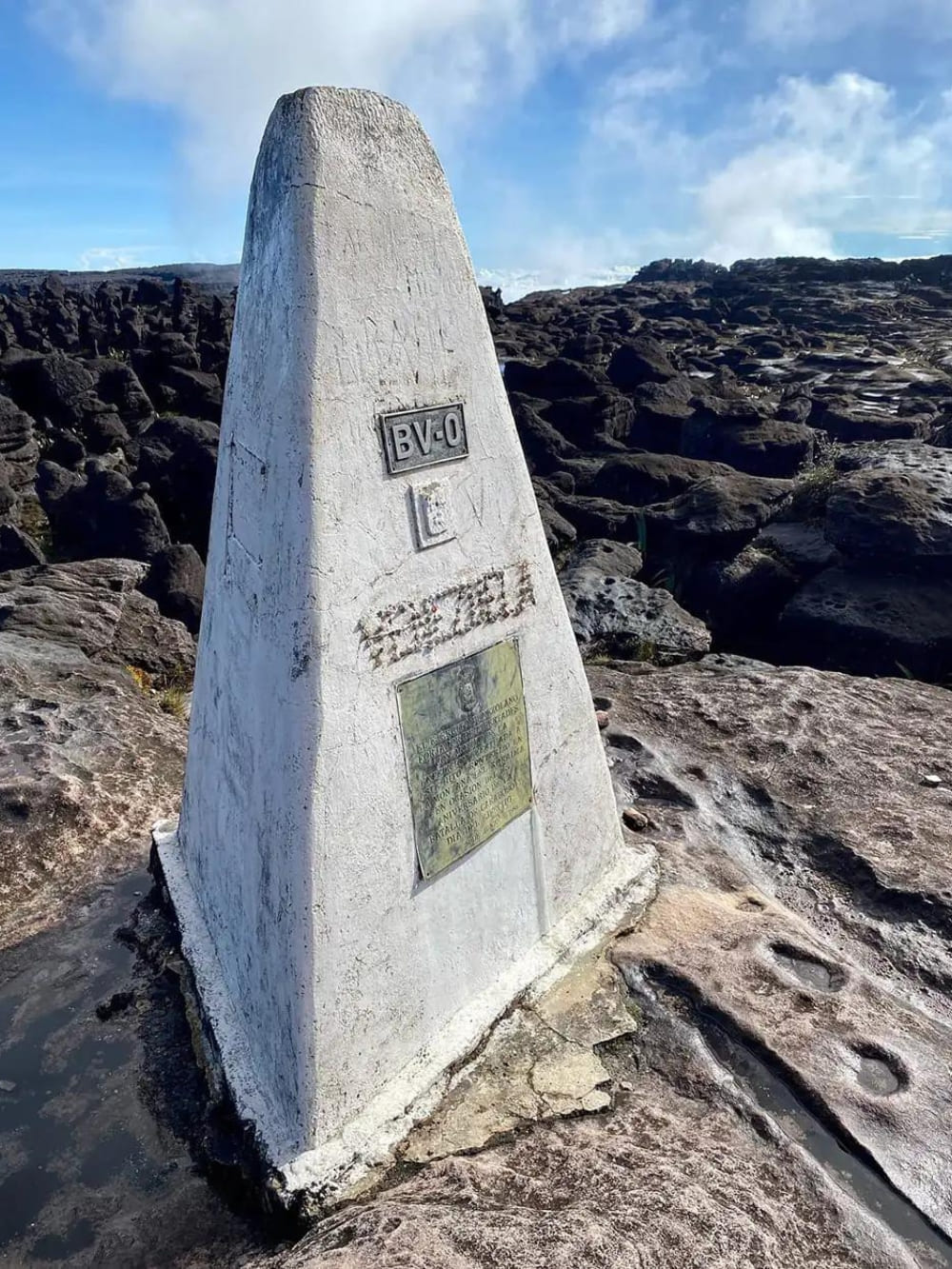
    7. Mount Roraima map: On the border of Brazil, Venezuela, and Guyana

    Curious about getting to the summit of Mount Roraima and where to find it on the map? The mountain straddles the borders of Brazil, Venezuela, and Guyana, with most of its mass located inside Venezuelan territory.

    The most common trekking route to Mount Roraima begins in Venezuela, departing from the village of Paraitepuy, which is accessible via Santa Elena de Uairén. For travelers coming from Brazil, the nearest major city is Boa Vista, in the state of Roraima. Taking the route through Brazil provides better access to the start of the mountain trail.

    From there, it’s a three-hour drive to the Venezuelan border and then 20 minutes to reach Santa Elena. This cross-border journey is a popular path for Brazilian travelers, especially those joining organized expeditions.

    If you look at a Mount Roraima map, you’ll see the summit lies exactly on the triple border between Brazil, Venezuela, and Guyana. While most of the trekking occurs on the Venezuelan side, the mountain’s plateau itself spreads across all three countries. 

    facts about Mount Roraima
    .

    This geographical intersection makes Mount Roraima not only a natural wonder but also an amazing geopolitical landmark in South America!
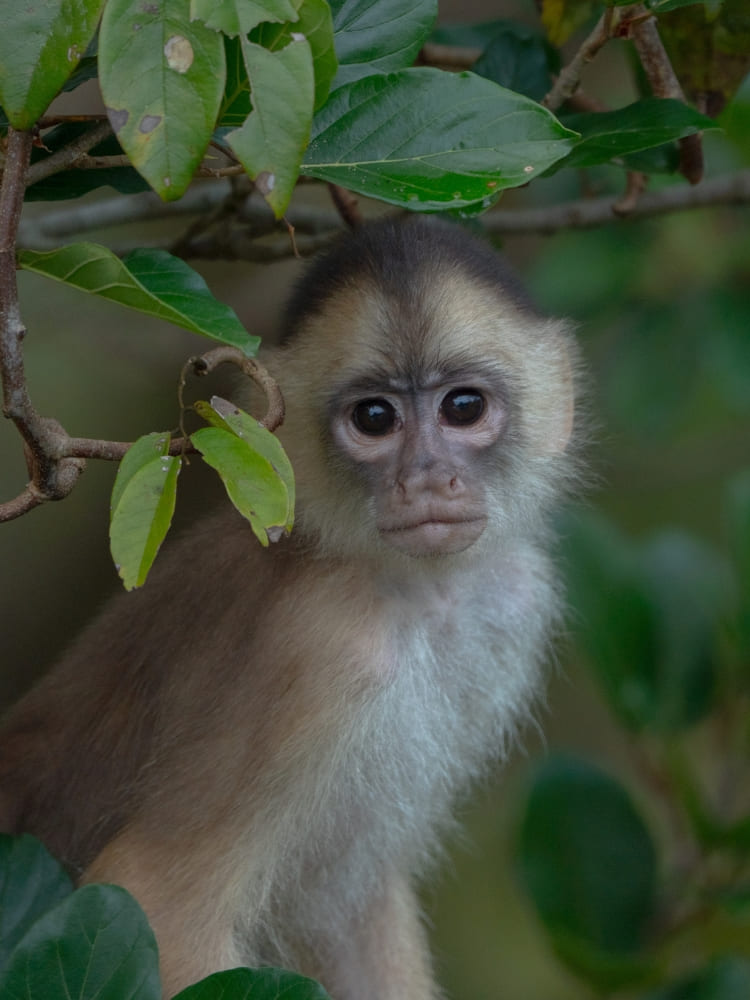
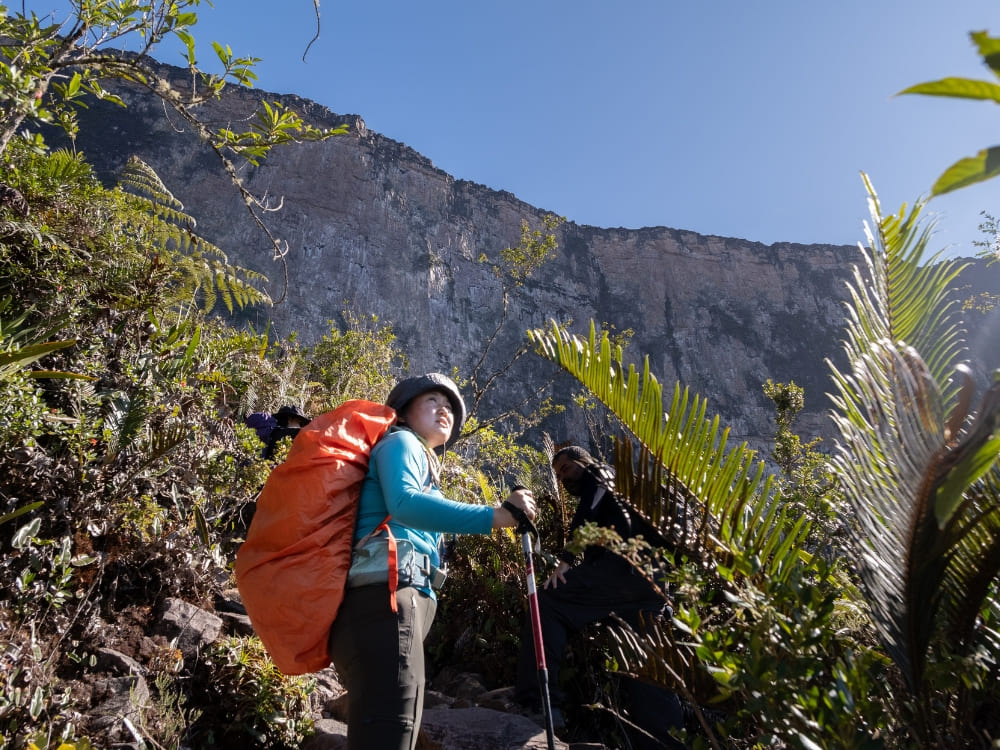
    8. Reaching the top of Mount Roraima takes 6 to 8 days of trekking

    While the trek doesn’t require climbing gear, it is physically demanding. Most tours take between 6 and 8 days round-trip and involve hiking over 60 kilometers through jungle, rivers, and steep terrain.

    The number of daily visitors varies by season and logistics, but during peak months, it’s estimated that between 100 and 200 people may be on the trail or at different points of the mountain. The final ascent includes the “Rampa,” a narrow natural path leading to the summit of Mount Roraima, where the landscape changes dramatically.

    Due to the elevation and constant cloud cover, temperatures at the summit can vary greatly, from 5°C at night to over 25°C during the day. The climate is defined more by Venezuelan seasons than Brazilian ones, with a wetter season from May to September and drier months between December and March. Sudden weather shifts are common, so visitors should be prepared for rain and cold at any time.

    trekking Mount Roraima
    Photo: Lucas Gobatti

    👉 Want to know what’s waiting at the summit? Read the full article: What’s on top of Mount Roraima?

    9. At the top of Mount Roraima, you can explore crystal valleys and rock formations

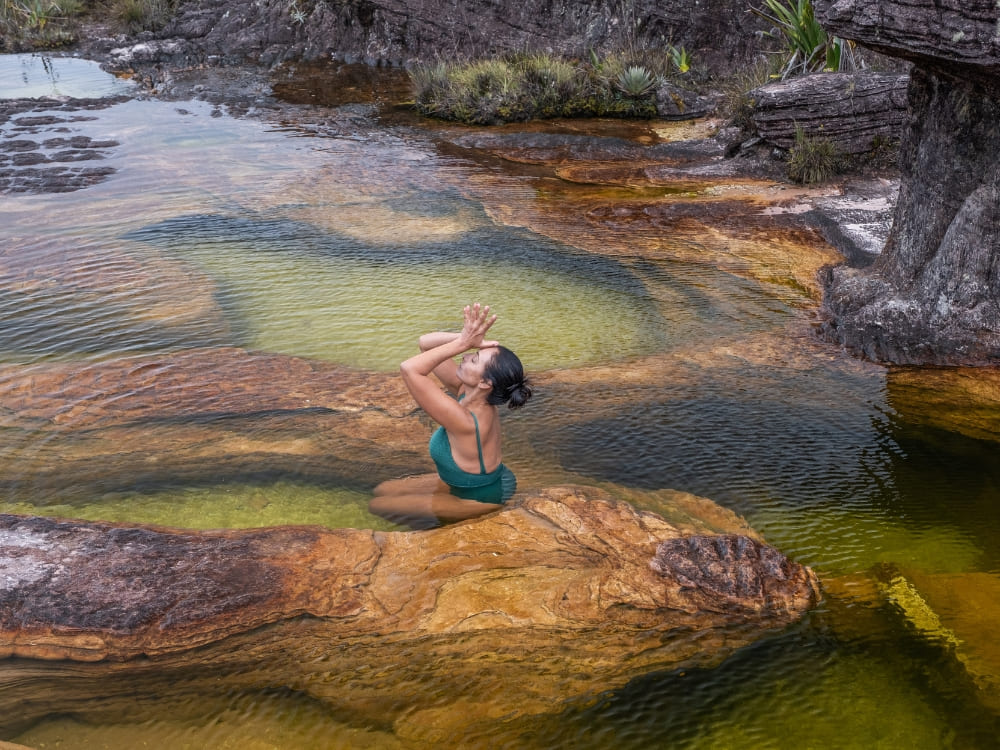
    At Mount Roraima’s plateau, visitors find crystal-clear pools, impressive rock formations, and panoramic views. Sites like “El Hotel” and “Valley of Crystals” are popular stops on summit treks, each with its own microclimate and ecological quirks.

    Rainfall is frequent, feeding rivers and forming “Jacuzzis” in rocky basins. Itineraries often include time for exploration, photography, and rest, allowing travelers to take in the full grandeur of the plateau. 

    PlanetaEXO, for example, offers a package that includes 5 nights at the top of Mountain Roraima: in other words, the ideal amount of time to explore all the possibilities of such a unique and rich place! 
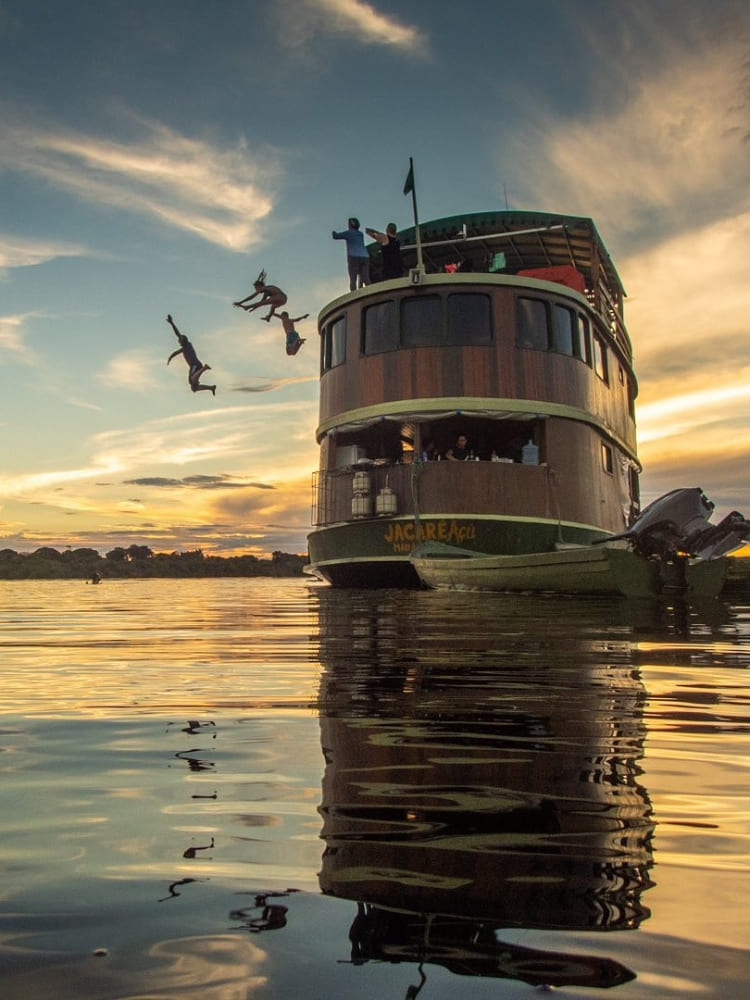
    Mount Roraima pools
    Photo: Lucas Gobatti

    👉 Choose the 10-day expedition for extended summit exploration

    10. Mount Roraima’s flat top is a result of millions of years of erosion

    Geologists explain the top of Mount Roraima’s flatness through erosion. Horizontal layers of sandstone have eroded evenly over time, unlike volcanic or folded mountains that form jagged peaks.

    This creates a tabletop effect that is both visually striking and scientifically fascinating. The flat terrain, combined with steep walls, makes Roraima a geological outlier among South American peaks.

    Mount Roraima’s plateau consists of resistant quartzitic sandstone, which erodes slowly and uniformly. Beneath it lies a hard igneous basement, which helps preserve the flat structure. This combination prevents the formation of peaks, resulting in the mountain’s striking tabletop shape.

    Top of the mountain
    Photo: Juan Silva

    Travel to Mount Roraima With Purpose

    At PlanetaEXO, we believe every journey should leave a positive impact. That’s why we offer ways to explore the summit of Mount Roraima with respect and purpose.

    In this way, your trip supports local communities, protects the environment, and brings you face-to-face with one of the world’s most unique ecosystems. 

    You’ve just learned 10 facts about Mount Roraima. Now it’s time to experience it yourself

    Explore our Mount Roraima tours and start planning your expedition today!
    Read More 

  • 15 Amazing Pantanal Animals and Wildlife

    15 Amazing Pantanal Animals and Wildlife

    From jaguars to giant anteaters and maned wolves, discover the secrets of some of the most fascinating Pantanal animals and get ready for your wildlife safari trip!

    Did you know the Pantanal is one of the most biodiverse regions on Earth? Imagine watching jaguars sunbathing by the riverbanks, macaws flying overhead and giant anteaters crossing wide savannahs.

    Unlike the Amazon Rainforest, the Pantanal’s open landscapes and seasonal floods offer ideal conditions to experience real-life encounters with the wildlife. This vast wetland is home to over 650 bird species, 120 mammals, and hundreds of reptiles and fish

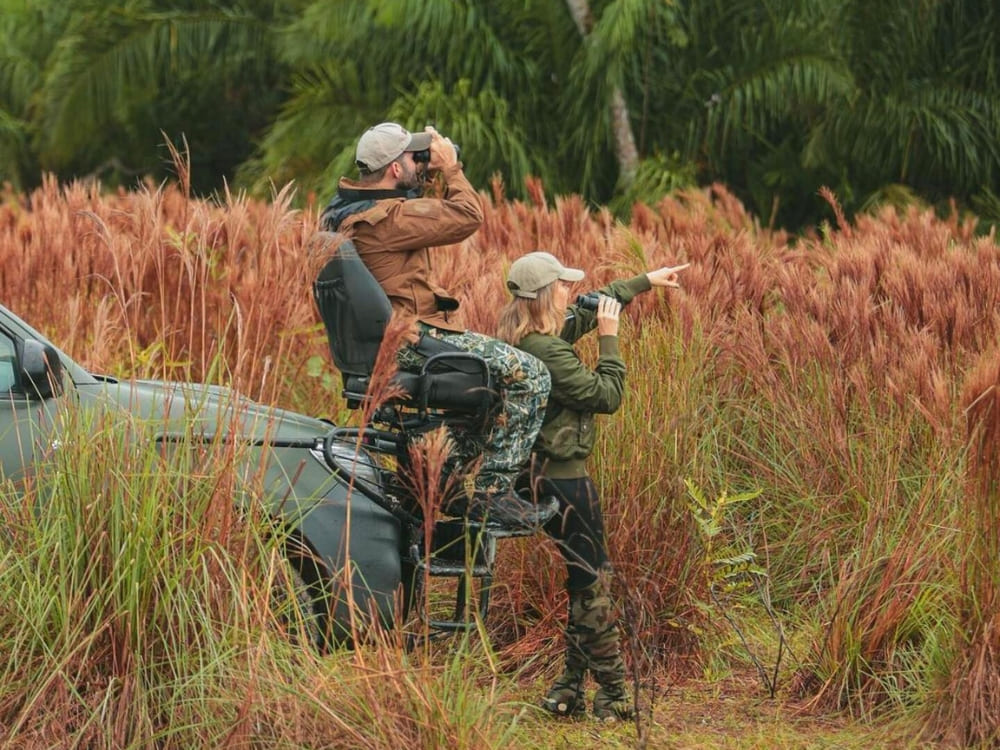
    Two tourists use binoculars to spot Pantanal animals during a safari trip in the wetlands.
    .

    That’s why PlanetaEXO, an ecotourism platform specialized in Pantanal tours, has put together some fun facts about the most celebrated Pantanal animals out there. Check it out below!

    1. Jaguar: Star of the Pantanal

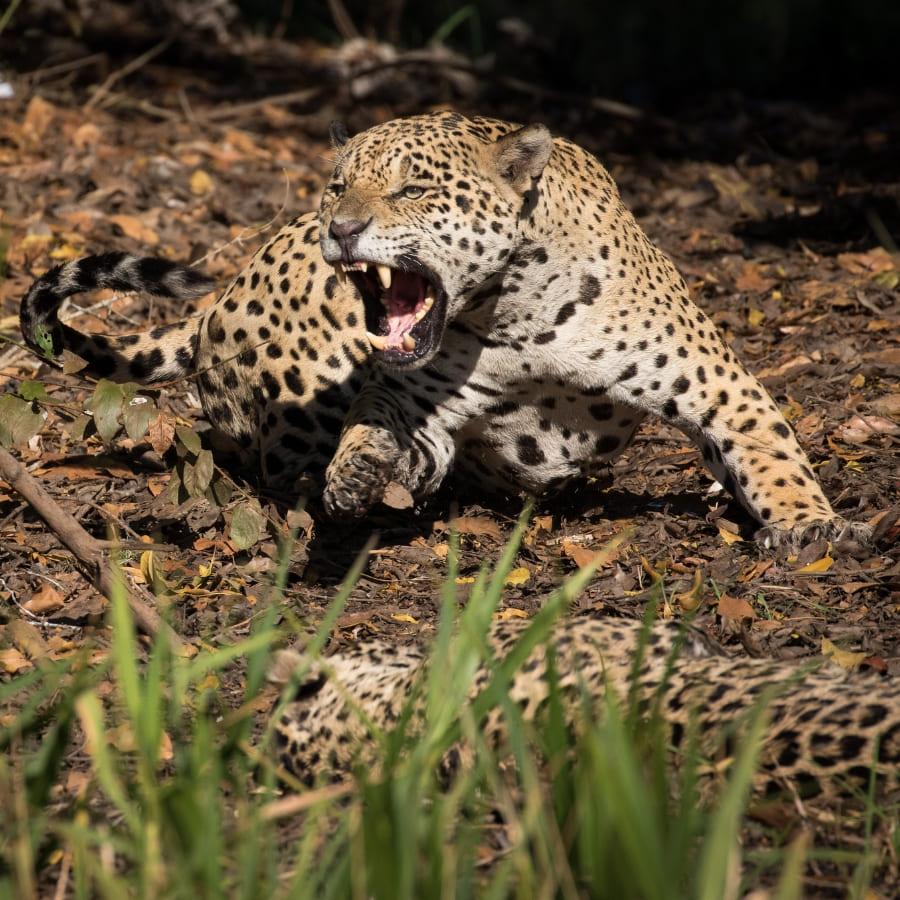
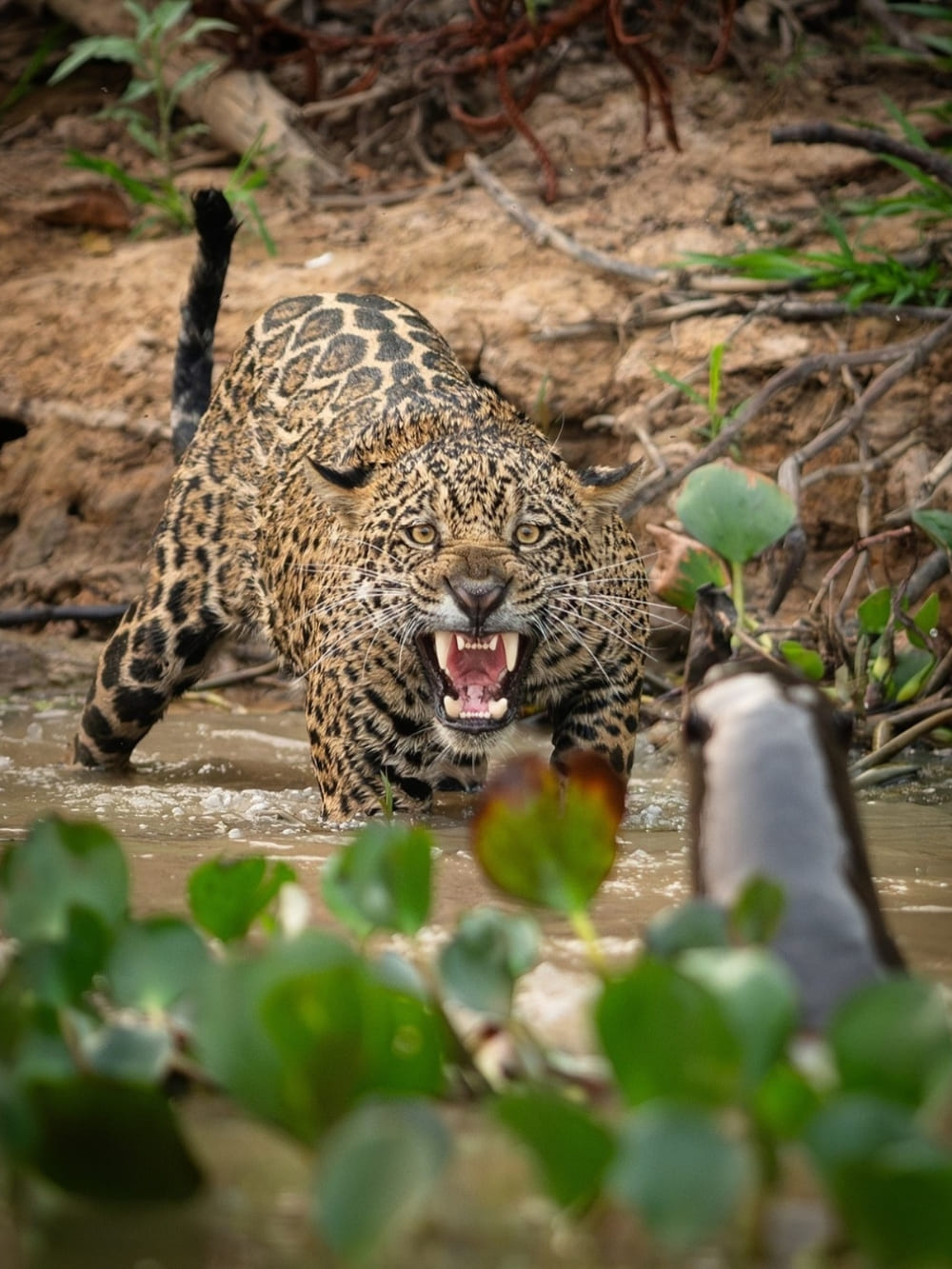
    The jaguar is the undisputed star of the Pantanal. It’s the largest feline in the Americas and a powerful predator capable of taking down caimans, deer, and even anacondas. 

    The best place in the Pantanal to see jaguars is in the North (Mato Grosso), particularly in Porto Jofre, Poconé. They are often seen during the dry season (July to October).

    Here are some interesting facts that make jaguars so unique:

    • Excellent swimmers, they often hunt in water.
    • The Pantanal is the largest jaguar sanctuary on Earth, containing roughly 20–25% of the global jaguar population (between 4,000 and 7,000 individuals). 
    • Their bite force is among the strongest of any mammal, allowing them to crush bones and shells.
    • Jaguars are solitary and territorial, each requiring a large area of intact habitat.
    A jaguar, the star of Pantanal animals, walks through the water while baring its teeth.
    @octaviocampossalles

    In the Southern Pantanal, jaguar sightings can happen year-round in protected ecological reserves. Pantanal safaris like the Luxury Jaguar Safari are usually done in 4×4 vehicles, offering a more terrestrial experience compared to the river-based excursions in the North.

    2. Capybara: World’s Largest Rodent

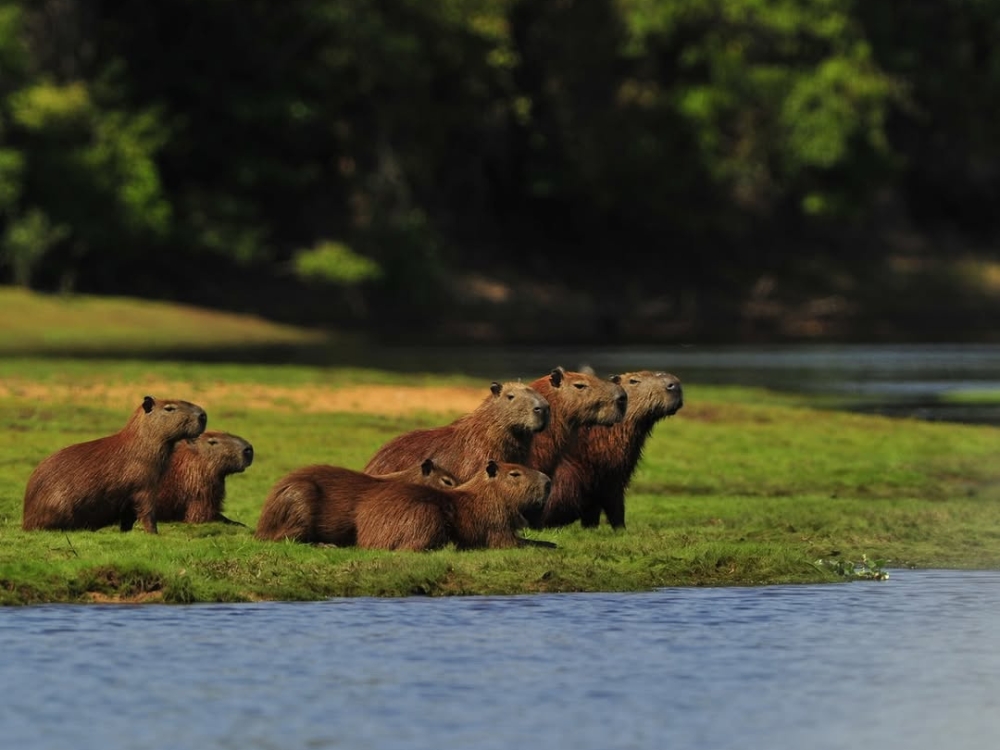
    Capybaras are perhaps the Pantanal’s most recognizable residents. These sociable, gentle animals are often found lounging in large groups along riverbanks or grazing in wet meadows. With their webbed feet and calm nature, they thrive in the semi-aquatic landscapes of the region.

    This is why capybaras are so impactful to the Pantanal wildlife:

    • They can grow up to 60 cm tall and weigh over 60 kg.
    • Excellent swimmers, they can even sleep underwater with only their noses exposed.
    • Capybaras are so docile that egrets and jacana birds often perch on their backs.
    • They coexist harmoniously with species like caimans and wading birds.
    A group of capybaras rests on a grassy riverbank, showcasing the social nature of these Pantanal animals.
    .

    👉 Don’t miss the chance to see capybaras: Pantanal Wildlife Tour from Cuiabá

    3. Caiman: The Stealthy Reptile 

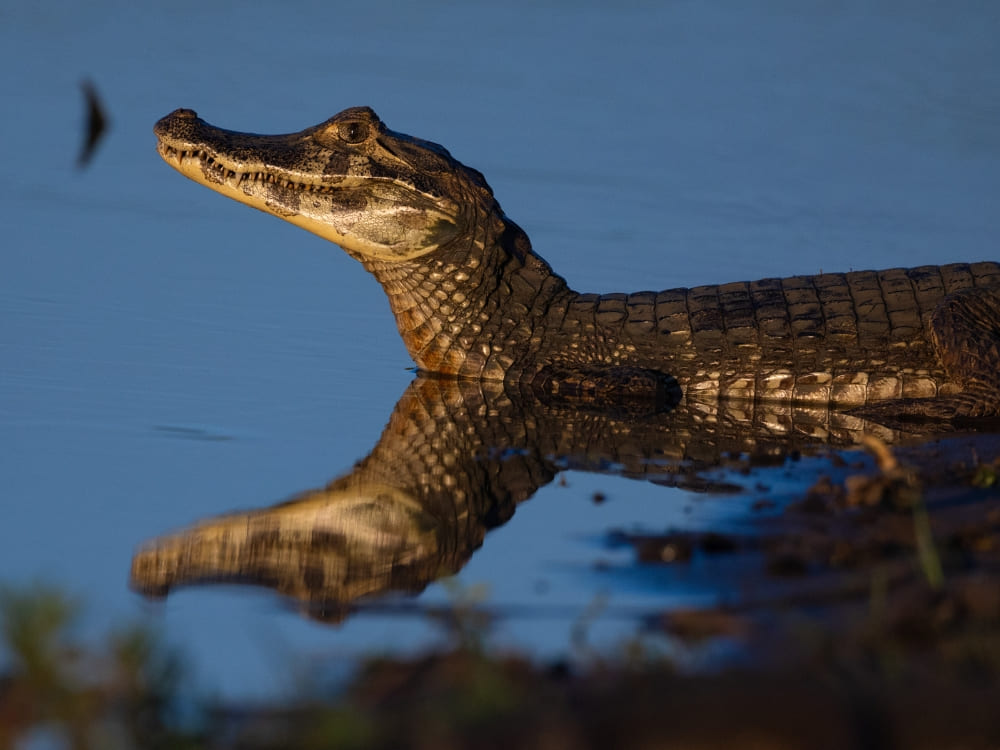
    Caimans are found along riverbanks, in muddy lagoons, and sometimes even crossing walking trails. As part of the alligator family, they play a vital role in the ecosystem by regulating fish populations and serving as prey for top predators like jaguars and anacondas.

    Notable traits that make caimans one of the most iconic animals in the Pantanal

    • The yacare caiman is the most common species — six other different caiman species are found across South America.
    • Males can grow up to 3 meters in length.
    • They’re usually seen basking with their mouths open to regulate body temperature.
    • There are more caimans than people in the Pantanal. The region is home to over 10 million caimans, while fewer than 1 million people live in the surrounding area.
    The head of a Yacare caiman surfaces from the blue water, a common sight in Pantanal wildlife.
    Photo: Keith Ladzinski

    4. Giant Otters: Playful and Endangered

    For many people, giant otters are the most charismatic Pantanal animals. Measuring up to 1.7 meters in length, they live in close-knit family groups that are highly vocal, communicating with various squeals, barks, and whistles.

    Here’s what makes giant otters stand out:

    • They feed almost exclusively on fish, consuming several kilograms per day.
    • Huge team players, they work in big groups to corner their prey.
    • Webbed feet, dense fur, and streamlined bodies make them expert swimmers.
    • They are considered endangered and rely on protected habitats to survive.
    A giant river otter holds a fish in its paws while eating in the dark water.
    @chamiltonjames

    👉 Read more: 5 Pantanal Conservation Projects Making a Real Impact

    5. Macaws: Colorful Messengers

    The Pantanal is home to some of the world’s most stunning macaws, including the hyacinth macaw, the largest flying parrot on the planet. With a wingspan over 1.2 meters and bright blue feathers, they’re very hard to miss. You’ll also find red-and-green and blue-and-yellow macaws nesting in trees or flying in pairs.

    Key features of macaws in the Pantanal:

    • They form lifelong monogamous pairs.
    • Their calls are loud and distinctive, echoing across the canopy.
    • Fruits, seeds, and nuts are essential items of their diet.
    • Observing macaws in the wild is a top highlight for birdwatchers interested in the Pantanal fauna.
    Three vibrant Hyacinth macaws fly together against a clear blue sky.
    Photo: Felipe Castelllari

    6. Anaconda: Mythical Serpent

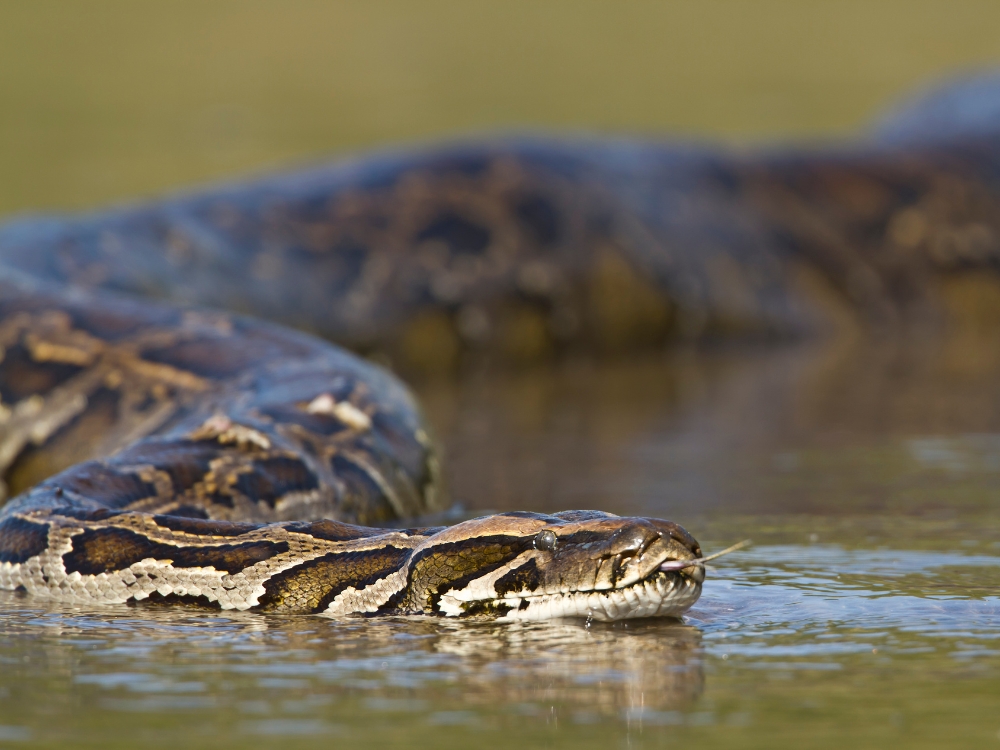
    We can say that anacondas are among the most mysterious and misunderstood animals in the Pantanal. These massive constrictor snakes can grow up to 6 meters long and usually dwell in marshes and shallow waters. Despite their size, they are stealthy and rarely seen

    Traits that shed light on their true nature:

    • They’re non-venomous but kill by coiling and suffocating their prey.
    • Their diet includes fish, birds, capybaras, and even caimans! 
    • Despite the myths and the media, anacondas very rarely attack humans.
    • Due to their elusive behavior, anacondas are not spotted frequently.
    The head of a massive anaconda glides just above the water surface in the wetland marshes.
    Photo: Utopia_88

    Fun fact: The 1997 thriller Anaconda, filmed in the Amazon Rainforest, made these snakes world-famous. Six other films have followed over the years, including the 2025 remake starring Jack Black and Brazilian actor Selton Mello. The entire franchise features scary anacondas, but the ones in real life are way less dramatic.

    7. Piranhas: Small but Fierce

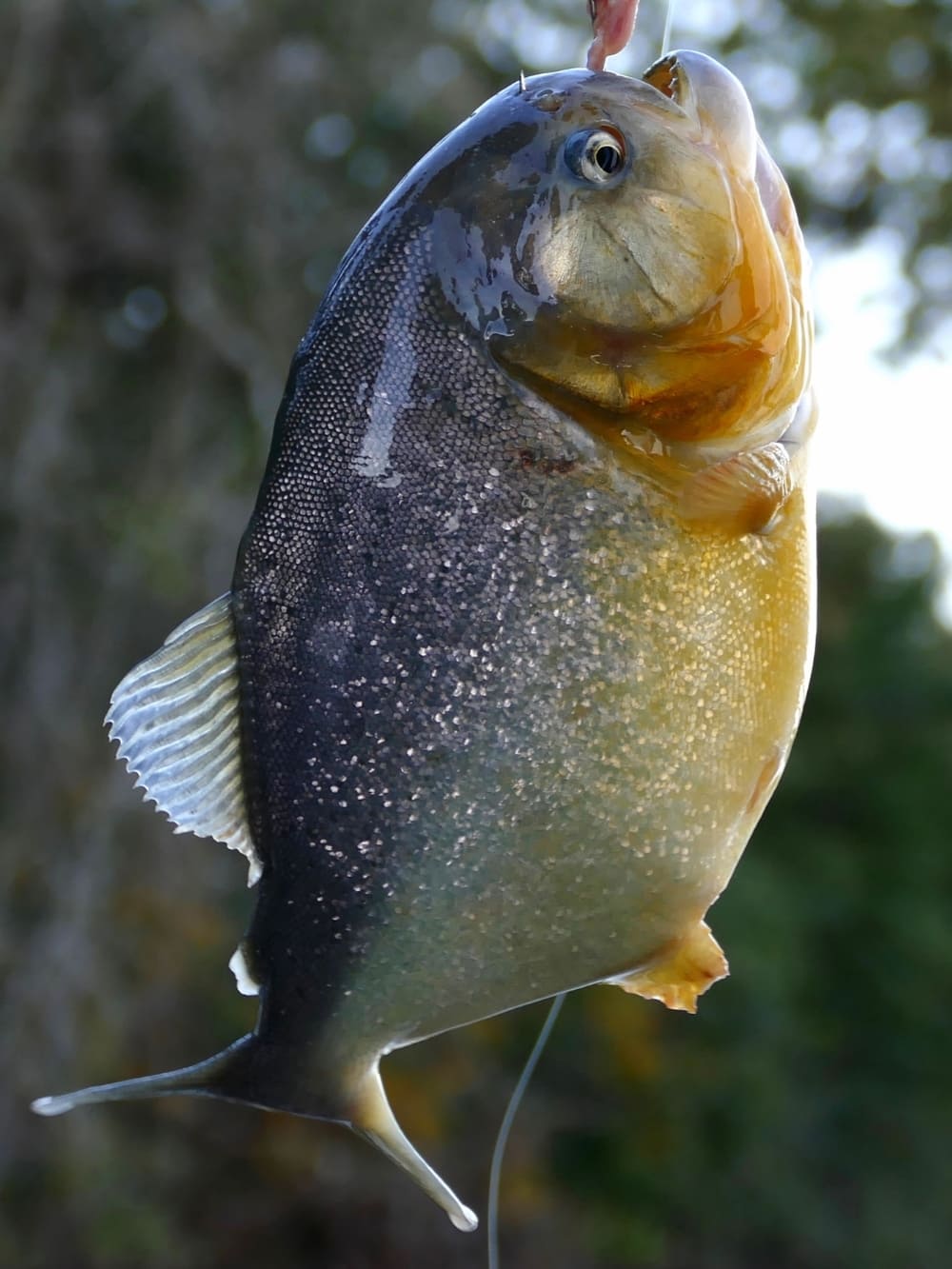
    Piranhas are well-known inhabitants of the Pantanal’s rivers and lakes. Famous for their sharp teeth and strong bite, they usually feed on fish, insects, and even plants. Despite their scary reputation, they rarely attack humans and prefer to avoid disturbances.

    Here’s what you should know about piranhas:

    • The dry season makes them more aggressive due to limited food.
    • Their powerful jaws allow them to tear through flesh quickly. 
    • Many species are omnivorous and feed on plants as well.
    • Catch-and-release fishing is possible in Pantanal tours guided by local experts.
    A close-up view of a piranha showing its scales and shape, a famous part of the Pantanal fauna.
    Photo: Bernard Dupont

    Fun fact: Just like anacondas, piranhas are movie stars. The horror franchise Piranha started in 1978 with a parody of Jaws. The series ended with its fifth film, Piranha 3DD, in 2012.

    8. Ocelot: The Elusive Small Cat

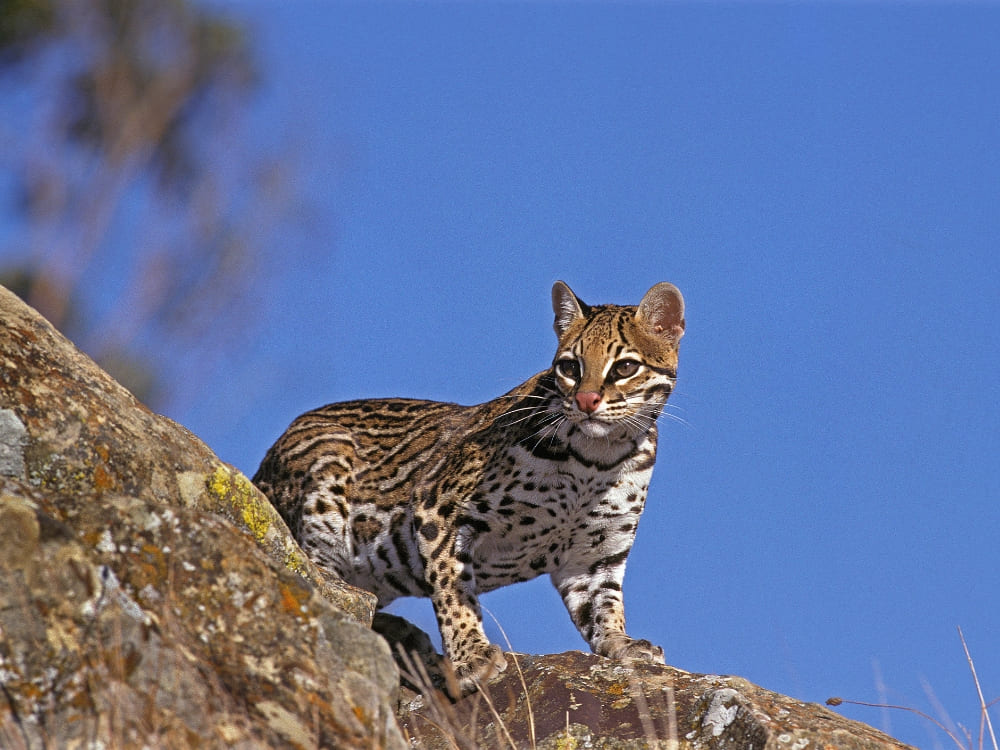
    Ocelots are small, spotted wild cats native to South America. Mostly nocturnal and elusive, they hide in dense vegetation, which makes encounters in the wild quite rare. Still, this graceful feline plays an essential role in maintaining ecological balance in the Pantanal wildlife.

    Interesting facts about ocelots you should know about:

    • By preying on small mammals, birds, and reptiles, they help to control these animals populations.
    • Solitary and territorial, they’re about the size of a house cat — but more muscular.
    • Sightings are rare but possible during night safaris or via camera traps.
    • Like many Pantanal animals, their habitat is key to survival.
    An ocelot stands on a rocky outcrop against a blue sky, scanning its surroundings.
    Photo: slowmotiongli

    9. Marsh Deer: Gentle Giant

    Perfectly adapted to life in wetland environments, the marsh deer is the biggest deer species in South America. Its long legs allow it to move easily through flooded areas, while its reddish coat helps it to blend into the tall grasses of the Pantanal.

    Key facts about the marsh deer:

    • Generally shy around humans, they’re most active during the night.
    • Its population is vulnerable due to habitat loss and disease.
    • Protected areas in the Pantanal provide a vital refuge for the species.
    • Their presence is often seen as an indicator of a healthy ecosystem.
    A female marsh deer stands protectively next to her fawn on a dirt path.
    @rafamattosphoto

    10. Toco Toucan: Bright-Billed Icon

    A famous Brazilian symbol, the toco toucan stands out with its enormous orange bill and striking black-and-white plumage. Despite its size, the beak is surprisingly light and serves multiple purposes, especially reaching fruits on distant branches.

    Things you should know about toco toucans:

    • Fruits, insects and even small animals are part of their diet.
    • The large beak also helps control body temperature in hot climates. 
    • Their croaking call is most often heard at dawn and dusk.
    • Tree cavities are where they rest, but they’re also often seen perched on treetops.
    A Toco toucan perches on a tree branch holding a small fruit in its large orange beak.
    .

    👉 Read more: 10 facts about the Pantanal

    11. Lowland Tapir: The Forest Gardener

    Lowland tapirs are the largest land mammals in South America. By spreading seeds through their droppings, they help regenerate forests and maintain healthy ecosystems in the Pantanal.

    Here’s what makes tapirs unique:

    • They feed on fruits, leaves, and aquatic plants.
    • Tapirs defecate in water as a strategy to avoid predators.
    • They are mostly nocturnal and prefer solitude.
    • Good swimmers, they often rest submerged when the weather is too hot.
    A lowland tapir keeps its head above water while swimming in a river.
    @rafamattosphoto

    12. Ring-Tailed Coatis: Curious Foragers

    Ring-tailed coatis are social, daytime mammals often spotted in groups foraging along trails and forest edges. With long, flexible snouts, they dig through leaves and soil searching for insects, fruit, and small animals.

    Some interesting facts about coatis — and why they’re essential players in the Pantanal fauna:

    • Their upright, ringed tails help group members stay visually connected.
    • Highly adaptable and often seen near human areas.
    • Curious and clever, they explore everything, but feeding them is discouraged.
    • They play an important role in the ecosystem by controlling insect populations.
     A group of ring-tailed coatis with raised tails forages for food in the green grass.
    Photo: VisitMS

    13. Giant Anteater: A Walking Marvel

    Giant anteaters are among the most unusual and fascinating mammals in the Pantanal. With no teeth and a 60-centimeter-long sticky tongue, they can consume tens of thousands of ants and termites every day.

    A few things that set giant anteaters apart:

    • Powerful claws are used to tear open nests and for self-defense.
    • They are solitary and mostly active during the early morning hours.
    • Their bushy tail, unique coat, and slow gait make them easy to spot.
    • Despite their size, they are non-aggressive and shy around humans.
    A giant anteater walks across the grassy savannah, a highlight of giant anteater sightings in the Pantanal region.
    Photo: Felipe Castellari

    👉 Looking forward to giant anteater sightings in the Pantanal region? Check it out: Pantanal Wildlife Trip from Campo Grande

    14. Maned Wolf: The “Fox on Stilts”

    The maned wolf isn’t a wolf or a fox but a distinct species in its own family. With long, slender legs and a reddish coat, it walks elegantly through the tall grasses of the Pantanal, often at dusk or night.

    Distinctive traits of the maned wolf:

    • Local legends say they have magic abilities, including hypnotic powers to protect the biome and catch prey.
    • Its diet is omnivorous, including rodents, birds, and fruit like the “wolf apple”.
    • Mostly nocturnal, it’s rarely seen, but its ghostly call can be heard at night.
    • Due to their shy and solitary nature, any sight of them is extra special.
     A maned wolf with long legs steps carefully through shallow green water.
    Photo: Ian Fox

    15. Jabiru Stork: Symbol of the Pantanal

    The jabiru stork is the tallest flying bird in South America and a striking emblem of the Pantanal wildlife. With its black-and-red neck and massive wingspan, it’s often seen wading through shallow wetlands looking for fish, frogs, and other aquatic animals.

    Why the Jabiru stork stands out:

    • They form lifelong pairs and reuse the same nest year after year.
    • Nests are built in tall trees and can reach over a meter wide.
    • Their graceful flight and size make them a favorite among birdwatchers.
    • Their feeding grounds are most exposed during the dry season.
    A majestic Jabiru stork displays its black neck and red throat pouch against a green background.
    @luiz4mendes

    Pantanal fauna and flora: Always in harmony

    While the Pantanal is well-known for its animals, its vegetation is equally fascinating. The region is a mosaic of ecosystems, seasonally flooded grasslands, savannas, forests, and aquatic habitats.

    This diversity allows plants like Carandá Palms, Ipê Trees, and aquatic species like water hyacinth to thrive and to harmoniously coexist with Pantanal animals

    Notable plant species of the Pantanal:

    • Buriti Palm (Mauritia flexuosa): Palm tree with edible fruits; thrives in wet soils.
    • Aroeira (Schinus terebinthifolia): Medicinal tree with pink berries.
    • Cambará (Vochysia divergens): Common in flooded forests, aids in regeneration.
    • Sucuriú Grass (Paspalum spp.): Native grass, vital for herbivores.
    • Jacaré Wood (Calophyllum brasiliense): Moisture-loving tree that stabilizes soil.
    A large Pink Ipê tree stands in full bloom in a field, highlighting the beauty of Pantanal flora.
    .

    These plants provide food and shelter for animals while also playing a vital role in regulating the water cycle and filtering pollutants. Together, both fauna and flora uplift each other in perfect tune, making the Pantanal a very ecologically resilient ecosystem.

    When is the best time to visit the Pantanal?

    The ideal time for wildlife viewing is between May and October, when the dry season reduces water levels and animals gather around remaining lagoons and rivers. This makes sightings of jaguars, capybaras, caimans, and birds a lot more frequent.

    During the rainy season (November to March), the landscape becomes lush and green. Birdwatching is particularly rewarding during this period, but access to remote areas can be more difficult.

    An aerial view captures the vast Pantanal wetlands and lagoons illuminated by a sunset.
    Photo: Leo Mercon

    👉 Read more: When is the best time to visit the Pantanal?

    How to get to the Pantanal?

    The Pantanal is divided into two main access regions: North and South. To visit the Northern Pantanal, fly to Cuiabá (Mato Grosso), then travel by car to areas like Poconé and Porto Jofre. To explore the Southern Pantanal, fly to Campo Grande (Mato Grosso do Sul), with access to regions like Miranda and Aquidauana.

    From either base, you can reach ecolodges and reserves by 4×4 vehicles, boats, or small aircraft. Transfers are typically arranged by tour operators or accommodations.

    👉 Read more: How to get to the Pantanal, Brazil

    North or South Pantanal: Which region is best for wildlife?

    The North Pantanal is best known for jaguar sightings and boat safaris along the Cuiabá River. It’s ideal for photographers (professionals or amateurs).

    The South Pantanal offers more terrestrial safaris by four-wheel drive or horseback and is great for a broader range of mammals, birds, and reptiles. It’s also easier to access year-round due to better infrastructure.

    Keep in mind: While the Pantanal provides one of the best settings in the world to observe wildlife, it’s still nature, so sightings are never 100% guaranteed. That’s part of what makes every moment so authentic and special!

    👉 Read more: North or South Pantanal: which one should you visit?

    Come admire the Pantanal animals with PlanetaEXO!

    See how amazing the Pantanal wildlife is? Whether you’re dreaming of watching a jaguar swim across a river or discovering rare plants and animals on foot, this destination offers experiences unlike any other.

    You can see all these wonders with your own eyes by traveling with PlanetaEXO, an expert in Pantanal tours. By working with the best local operators, we turn your dream vacation into a reality. Contact us now!

  • Best Amazon Jungle Lodges in Brazil

    Best Amazon Jungle Lodges in Brazil

    Lodges in the Amazon Rainforest offer comfortable stay experiences, high-end services, and total immersion in nature

    Visiting the Amazon Rainforest is on the bucket list of travelers from all over the world, though many people wonder if the wild environment is the proper place to forget about work and all the responsabilities back at home. Adventure is guaranteed, but what about rest?

    Fortunately, the best Amazon jungle lodges in Brazil provide incredible infrastructure in the middle of the forest, as well as premium services and custom itineraries. The result is a high-end stay experience that proves ecotourism and comfort are a perfect match.

    Need a hand to plan your trip? PlanetaEXO, a platform specialized in Amazon Rainforest tours in Brazil, has created a list with wonderful accommodation options. Check it out!

    Cristalino Lodge

    Tourists stand on an observation tower above the canopy at Cristalino Lodge, a top Amazon rainforest hotel.
    .

    Cristalino Lodge is located on a private natural reserve in the southern Amazon. Providing the best stay experiences and following protocols to preserve the forest, it’s considered one of most notorious ecolodges in the world by National Geographic.

    The Cristalino RPPN (Private National Heritage Reserve) is the second largest private reserve in the rainforest, ranging 27,000 acres — twice the size of Manhattan Island (NY). The rich fauna stands out: over 600 species of birds and dozens of mammals, including monkeys, giant river otters, peccaries and tapirs.

    If you adore birdwatching or any kind of wildlife watching, then you’ll go crazy over the 50-meter (164 ft) observation towers that offer a mesmerizing view of the forest. Sunrises and sunsets from this height are life-changing!

    After a full day of hiking or canoeing on Teles Pires and Cristalino rivers, guests go back to luxury facilities, including sophisticated bungalows and elegant common areas (reading and conferences rooms, a local cuisine restaurant, a bar and the beloved floating deck).

    • Location: Alta Floresta, Mato Grosso
    • Access: 40-minute drive from Alta Floresta + boat trip
    Lounge chairs and green umbrellas on the floating deck at Cristalino Lodge, an amazing Amazon eco lodge in Brazil.
    .

    👉 Read more: How to get to the Amazon Rainforest in Brazil?

    Anavilhanas Jungle Lodge

    A refined bungalow with a thatched roof and a hammock on the balcony at Anavilhanas Jungle Lodge in Brazil.
    .

    Anavilhanas Jungle Lodge could be named one of the finest Amazon lodges in Brazil simply for its location — in the heart of the Anavilhanas National Park, the world’s second-largest river archipelago —, but there’s much more to this extraordinary place.

    Create unforgettable memories by joining adventure-packed activities, such as hiking, boat rides, recreational fishing, night expeditions, cave exploration, sunset tours, etc. Keep your eyes open to spot caimans, colorful macaws, friendly river dolphins and other fascinating creatures!

    In terms of facilities, this Amazon jungle hotel has it all: refined bungalows and chalets with TVs, minifridges, air conditioning, Wi-Fi connection, hot showers and private balconies with panoramic views.

    You can also swim in the pool, go to the gym, get a relaxing massage, eat delicious Brazilian dishes, or have a drink at the floating bar. Who knew the Amazon could be so luxurious?

    • Location: Novo Airão, Amazonas
    • Access: 3 hours from Manaus (road + boat)
    A woman relaxes on a wooden floating deck over the river at Anavilhanas Jungle Lodge, one of the best Amazon lodges in Brazil.
    Photo: Felipe Castellari

    Juma Amazon Lodge

    High-end bungalows built on tall stilts over the river at Juma Amazon Lodge, a premier Amazon jungle lodge in Brazil.
    .

    When we mention the Amazon Rainforest hotels, Juma Amazon Lodge is a must-visit place for every nature lover.

    Based on sustainable practices, like solar energy, wastewater treatment and recycling, Juma is eco-friendly, but doesn’t leave a high-end experience behind. Wonderful accommodations are built on stilts nearly 15 meters (49 ft) high. The gorgeous bungalows are in the treetops, which offers an immersive experience and helps to avoid the water during seasonal floods.

    Enjoy the hotel’s common areas by drinking at the bar, eating traditional Brazilian meals at the restaurant, swimming in the pool or getting a tan at the floating deck.

    Thirsty for some adventure? Hike through the jungle, climb trees, go fishing for piranhas, canoe on Amazonian rivers, sign up for night tours, visit indigenous communities and have fun with other activities that will make your heart beat fast!

    👉 Read more: When is the Best Time to visit the Amazon Rainforest in Brazil

    • Location: Autazes, Amazonas
    • Access: 45-minute boat ride from Manaus + 1-hour drive + 1-hour boat trip
    A floating deck and pool illuminated at night at Juma Amazon Lodge in the Amazon rainforest.
    .

    Mirante do Gavião

    The unique wooden architecture of Mirante do Gavião lodge illuminated at dusk, representing one of the best Amazon jungle lodges in Brazil.
    .

    Your jaw will drop when you see Mirante do Gavião with your own eyes. The striking architecture design uses wooden arrangements to resemble the wings of a bird of prey. It’s a nod to the lodge’s name, which means “hawk’s lookout”. Clever, huh?

    There are three types of accommodations (Premium, Luxury and Tree House), while each room is equipped with air-conditioning, comfy beds, a spacious bathroom and a minibar. Depending on the category, you’ll also find private balconies, hammocks and hot tubs.

    Need some action? No problem! This ecolodge has plenty of activities: hiking, water trails, night tours to spot animals, canoeing, cave exploring, and visiting local villages and indigenous communities. 

    When you’re not out and about in the forest, you can have fun in the gaming room, relax in the wellness area, jump in the pool or eat a delicious meal made with fresh, local ingredients at Camu-Camu, the lodge’s fine dining restaurant. 

    • Location: Novo Airão, Amazonas
    • Access: 3 hours from Manaus (road + boat)
    A luxury room with a large glass window facing the forest at Mirante do Gavião in the Amazon rainforest.
    .

    👉 Read more: Best Amazon River Cruises in Brazil

    Uakari Lodge

    Floating bungalows on the river water at Uakari Lodge, an immersive Amazon rainforest lodge experience.
    .

    There is nothing like Uakari Lodge. Safely built on stilts in the middle of the Mamirauá Sustainable Development Reserve, it floats on the waters of the river, giving it a deeper sense of total immersion in nature. One of the best Amazon jungle lodges in Brazil, Lonely Planet included it in a list of unmissable experiences in the rainforest.

    Uakari’s sustainable practices are not only directed to the environment (solar energy, rainwater harvesting, recycling…), but they’re also extended to the communities. Operated by the Mamirauá Institute and local leaders, this Amazon Rainforest hotel generate income for riverside groups and create incentives for the conservation of the area’s natural resources.

    In addition, beautiful accommodations await. The floating structure includes five bungalows with two suites each — facing the river, they allow fantastic views of the forest. Outside the rooms, guests can enjoy the lovely common areas (deck, restaurant, bar, video room and even a library).

    The itinerary consists of a wide range of activities, including night tours, hiking, fishing, visiting local villages, canoeing, boat tours for wildlife watching and much more! 

    • Location: Tefé, Amazonas
    • Access: Flight from Manaus to Tefé + 1 hour 30 minute boat trip
    A wooden deck with comfortable sofas overlooking the floating bungalows and river at Uakari Lodge in Brazil.
    .

    Amazon Turtle Lodge

    Aerial view of Amazon Turtle Lodge located by the river and deep inside the Brazilian Amazon rainforest.
    .

    Looking for something more affordable? Amazon Turtle Lodge is an excellent option for people who want to spend less. But make no mistake: its budget-friendliness does not mean you won’t have the most incredible experiences in the forest!

    Near the Guaporé River, the location is perfect to dive deep into nature. Charmingly picturesque, the lodge has three types of bungalows: Rustic, Masonry and Superior — all with comfortable beds, air-conditioning, and private bathrooms. You can also enjoy your meals at the restaurant, get a drink at the bar or have fun in the gaming room or the TV lounge.

    The generous list of activities is another reason why this is one of the most outstanding Amazon ecolodges in Brazil: kayaking, stand-up paddling, canoeing, hiking, birdwatching, wildlife spotting, piranha fishing, boat riding to the Meeting of Waters, visiting the local fruit market (Ceasa) and touring nearby villages.

    • Location: Careiro, Amazonas
    • Access: 3h30 hours from Manaus (road + boat)
    A comfortable and affordable bungalow bedroom with two beds at Amazon Turtle Lodge in Brazil.
    .

    Dolphin Lodge

     Aerial view of Dolphin Lodge showing its floating deck, boats, and chalets surrounded by the Amazon forest.
    .

    Living up to its name, Dolphin Lodge is located in a preserved area where dolphins are often spotted, as well as caimans, monkeys, birds, and other beautiful species.

    Taking ecotourism to a whole other level, sustainable actions are a massive part of the place, such as employing locals, excursions of low environmental impact, recycling, reduced use of plastics and protocols to preserve the wildlife.

    The hotel has six chalets on land and four bungalows on the Memori River, all of them with stunning views. Guests can relax in the straw hut with hammocks and eat delicious Brazilian food served daily by the kitchen staff.

    Activities include jungle hiking, wildlife watching, fishing, boat tours, survival lessons, camping in the forest and visiting local communities. 

    • Location: Careiro, Amazonas
    • Access: 3 hours from Manaus (road + boat)
    Wooden chalets with thatched roofs connected by a walkway at Dolphin Lodge, a great Amazon rainforest hotel.
    .

    How much does it cost to stay at an Amazon jungle lodge in Brazil?

    The average cost to stay at an Amazon Rainforest hotel is R$ 11.000 (approximately US$ 2,130 and € 1,790) per person. However, prices vary according to accommodation category, season, trip duration, etc.

    Check out more information about Brazil’s best Amazon jungle lodges:

    LODGE HIGHLIGHTS DURATION STARTING PRICE*
    Cristalino Jungle Lodge High-end stay, located near Cristalino and Teles Pires rivers, observation towers for birdwatching and wildlife watching, hiking, canoeing, boat trips. 5 days US$ 3,380
    Anavilhanas Jungle Lodge Sophisticated stay, expeditions (Anavilhanas, Negro River and Madadá Caves), wildlife watching, hiking, canoeing, boat trips, fishing, archery lessons. 6 days US$ 3,230
    Juma Amazon Lodge Comfortable stay, night tours, hiking, canoeing, fishing, sunrise contemplation, Sumaúma trees, visiting local communities. 5 days US$ 2,180
    Mirante do Gavião Luxury stay, expeditions in Anavilhanas and Negro River, hiking, night tours, wildlife watching, aquatic trails, sunset contemplation, visiting locals. 5 days US$ 2,430
    Uakari Lodge Floating ecolodge (Mamirauá Reserve), hiking, canoeing, interacting with dolphins, night tours, fishing, visiting locals. 5 days US$ 1,150
    Amazon Turtle Lodge Affordable stay, hiking, canoeing, fishing, birdwatching, sunset tours, Meeting of Waters, visiting caboclo communities. 3 days
    4 days
    5 days
    US$ 600
    Dolphin Lodge Meeting of Waters, jungle trekking, night safari, sunrise contemplation, visiting local communities. 3 days
    4 days
    5 days
    US$ 425

    *Per person, based on double occupancy in group departures. Prices may vary depending on season and availability. Exchange rate as of February 12th, 2026; subject to change.

    Meet the best Amazon jungle lodges in Brazil with PlanetaEXO

    See how you don’t have to choose between adventure and comfort? With these incredible jungle hotels, you can have the best of both worlds in one single vacation!

    As an expert in Amazon Rainforest tours in Brazil, PlanetaEXO partners with esteemed local operators and handpicks the finest trips for sustainable and pleasurable experiences in some the most beautiful places in the country. Contact us now!

  • COP30 Brazil: Sustainable Tourism’s Impact on Climate Action

    COP30 Brazil: Sustainable Tourism’s Impact on Climate Action

    Sustainable tourism can be part of the solution to the climate crisis. Learn how ecotourism, especially community-based models, is playing a role in the COP30 agenda.

    Taking place from 10 to 21 November 2025 in Belém, Pará, COP30 Brazil is expected to mark a turning point in global climate discussions and in how we think about travel. Beyond negotiations, the event is also a chance to experience nature-based solutions already in motion. Tourism at COP30 Brazil is not a side note: ecotourism is now a key topic, showing how conscious travel can support climate action.

    Did you know that tourism accounts for about 8% of global greenhouse gas emissions, mainly due to air travel and large-scale operations? Shocking, isn’t it? Ecotourism, on the other hand, operates on a smaller scale, with less environmental impact and provides local benefits.

    We are talking about one of the most practical ways to combat climate change. Sustainable tourism offers tools for both climate adaptation and environmental preservation, not just in Brazil or the Amazon Rainforest, but globally.

    Tourism at COP30 Brazil
    Photo: Marcelo Bonifácio

    In this context, PlanetaEXO curates responsible travel experiences in nature, with a strong focus on the Amazon and community-led ecotourism. It’s a real example of how tourism can drive conservation and local development.

    If you’re curious about how COP30 Brazil connects with your travel choices, keep reading. Below, we explore how ecotourism fits into the climate agenda and why it matters more than ever.

    How Ecotourism Helps Fight Global Warming

    Sustainable tourism has gained increasing recognition in the United Nations (UN) climate summits as a viable and scalable solution for both mitigation and adaptation. It doesn’t replace public policy or systemic change, but it does strengthen what experts call nature-based solutions: strategies that combine environmental protection with community well-being.

    How Ecotourism Helps Fight Global Warming
    .

    The concept of using tourism as a climate solution has evolved considerably since it was first mentioned in 2005. Over the years, major declarations and reports have helped to formalise the role of tourism in sustainable development and environmental resilience. Take a look at them:

    Sustainable Tourism Joins the Climate Agenda

    This discussion began formally at COP11 in Montreal, when tourism was officially acknowledged as a relevant sector in the climate agenda. The conference emphasized its role in biodiversity conservation and poverty reduction, stating that: “tourism can support natural resource conservation and provide biodiversity-friendly livelihoods for Indigenous and local communities.”

    Sustainable Tourism
    Photo: Isadora Sá

    The Year of Sustainable Tourism for Development

    Some years later, in 2017, the UN declared it the International Year of Sustainable Tourism for Development. As a result, tourism was officially linked to the 2030 Agenda for Sustainable Development, with increasing recognition of its role in climate resilience.

    The year emphasized how tourism could contribute to 12 of the 17 Sustainable Development Goals (SDGs), especially in areas like inclusive economic growth, sustainable resource use, and cultural preservation. It also called on governments and industry to promote low-impact travel models and strengthen community-led tourism as a tool for sustainable development.

    The Year of Sustainable Tourism for Development
    Tourism at COP30 Brazil

    Sustainable Tourism pillars 

    At COP26 in Glasgow (2021), the conversation advanced with the launch of the Glasgow Declaration on Climate Action in Tourism, signed by governments, Non-Governmental Organizations (NGOs), and travel companies. This declaration committed the tourism industry to reach net-zero emissions by 2050, with five main action pillars:

    • Measure and reduce carbon emissions from travel and hospitality;
    • Regenerate ecosystems through responsible tourism;
    • Support local economies and community-led conservation;
    • Secure climate financing for sustainable travel initiatives;
    • Share transparent progress and best practices.

    As mentioned earlier, most of tourism’s emissions come from air travel, large resorts, and mass-market cruises. This is confirmed by the United Nations World Tourism Organization (UNWTO) report “Transport-related CO₂ Emissions of the Tourism Sector” (2019), which outlines how these segments dominate the sector’s carbon footprint.

    Ecotourism, in contrast, operates on a smaller, lower-impact scale, often involving local travel, small-scale infrastructure, and environmentally conscious operations.

    In practice, ecotourism contributes to the fight against global warming in five key ways:

    • Lowering carbon emissions: It encourages slower, more local travel and reduces reliance on high-emission transportation and infrastructure.
    • Protecting carbon sinks: By conserving rainforests, wetlands, and other ecosystems, ecotourism helps preserve the planet’s natural climate regulators.
    • Offering sustainable income for local people: It provides alternatives to destructive industries like logging, mining, and industrial agriculture.
    • Building resilience: It diversifies local economies and strengthens communities against climate-related disruptions.
    • Raising awareness: It fosters education and engagement, allowing travelers to better understand biodiversity, traditional knowledge, and the urgency of climate action.
    Tourism at COP30 Brazil
    .

    Change Has Started, But It Must Go Global

    Around the world, sustainable tourism initiatives have already begun to emerge and show positive results. One example comes from the Maya Biosphere Reserve in Guatemala, where former logging areas have been converted into community-managed ecotourism zones, helping to protect vast forest areas while generating income for local residents.

    COP30 Brazil
    Photo: Mike Vondran

    In Brazil, the potential is immense. Destinations like the Amazon Rainforest, Pantanal, and Cerrado are vital for carbon capture and biodiversity, but also face high socio-environmental vulnerability. 

    Including ecotourism as a tool in Brazil’s Nationally Determined Contributions (NDCs) and climate action plans would provide a measurable impact, a topic that is set to gain relevance during COP30 in Belém.

    Now, at COP30 Brazil, the focus is on turning these declarations into action. Ecotourism offers a real-world model already working on the ground: scalable, inclusive, and adaptable.

    The Amazon Rainforest at the Center of Climate Change

    While ecotourism is a global solution, Brazil (and particularly the Amazon Rainforest) plays a central role in the climate crisis. The forest stretches across nine Brazilian states, including Pará, where it covers more than 60% of the state’s territory. This makes its capital, Belém, a symbolic and strategic host city for COP30.

    Belém
    .

    The Amazon regulates rainfall across South America, stabilizes global temperatures, and holds more biodiversity than any other ecosystem on the planet. But it’s also under extreme pressure.

    In 2023, the Rio Negro in Manaus reached its lowest level in a century, and satellite data from MapBiomas shows that the region lost over 50 million hectares of forest cover between 1985 and 2023. 

    Rio Negro in Manaus
    Photo: Jacqueline Lisboa, WWF-Brasil

    Droughts are becoming more frequent and intense, threatening the forest’s regeneration capacity and the livelihoods of its people. This context reinforces the importance of low-impact, community-driven alternatives. Ecotourism is not the only answer, but it is a promising one, and one that can be implemented immediately.

    👉 Want to learn more about those who are actively working to protect the Amazon Rainforest? Discover the inspiring stories of the guardians of the forest.

    Conscious Travel in the Amazon

    Given the grandeur of the Amazon, it’s clear why it is one of PlanetaEXO’s flagship destinations. We connect travelers with immersive experiences that respect the forest, support local communities, and contribute to long-term conservation. 

    During COP30, visitors will have the chance to go beyond the conference walls and experience real-life examples of nature-based solutions: from ecolodges and tours led by local communities to forest conservation projects. 

    Tourism at COP30 Brazil : The Future is Sustainable

    COP30 Brazil is a chance for the country to position itself as a global reference in sustainable tourism. However, this requires real action. Supporting small-scale entrepreneurs, investing in training, and developing respectful travel experiences are essential steps.

    Beyond the Amazon Rainforest, other well-known natural destinations such as Chapada Diamantina and Lençóis Maranhenses also offer significant opportunities for ecotourism. The visibility of the conference could help attract investment and attention to these unique, yet often not fully explored, sustainable travel models.

    Travel with PlanetaEXO and Be Part of the Climate Solution

    Now, we understand how ecotourism can be part of the climate solution. In the face of the challenges humanity is up against, every action counts.

    👉 Explore our sustainable destinations across Brazil and find experiences that generate a positive impact on nature and local communities.

    Read More:

  • Forest Protection Day: Meet 7 guardians of the Amazon Rainforest

    Forest Protection Day: Meet 7 guardians of the Amazon Rainforest

    In celebration of the date, find out more about those who work directly to preserve the Amazon, the planet’s greatest biodiversity refuge.

    Have you ever stopped to think about the vital role that forests play in the balance of our planet? Like great green lungs, they regulate the climate, produce oxygen and sustain the lives of millions of species, including our own. But if they are so essential, why are they still not at the centre of global priorities?

    In Brazil, the Forest Protection Day, celebrated on 17 July, reinforces the urgency of preserving this natural heritage, after all, protecting our forests is protecting the future. The date honours Curupira, the guardian of the forests in Brazilian folklore, and draws attention to the grandeur of the Amazon Rainforest, which is home to around 20 percent of the world’s fauna, more than 50,000 species of plants and various traditional communities that live in balance with the forest.

    Forest Protection DayBut who are the real guardians of this territory? What are the stories behind the defence of the world’s largest rainforest? In this article, you’ll meet some of the leaders who are at the forefront of the fight for the Amazon. Find out who the Guardians of the Amazon Rainforest are and how community-based tourism can help keep this mission alive:
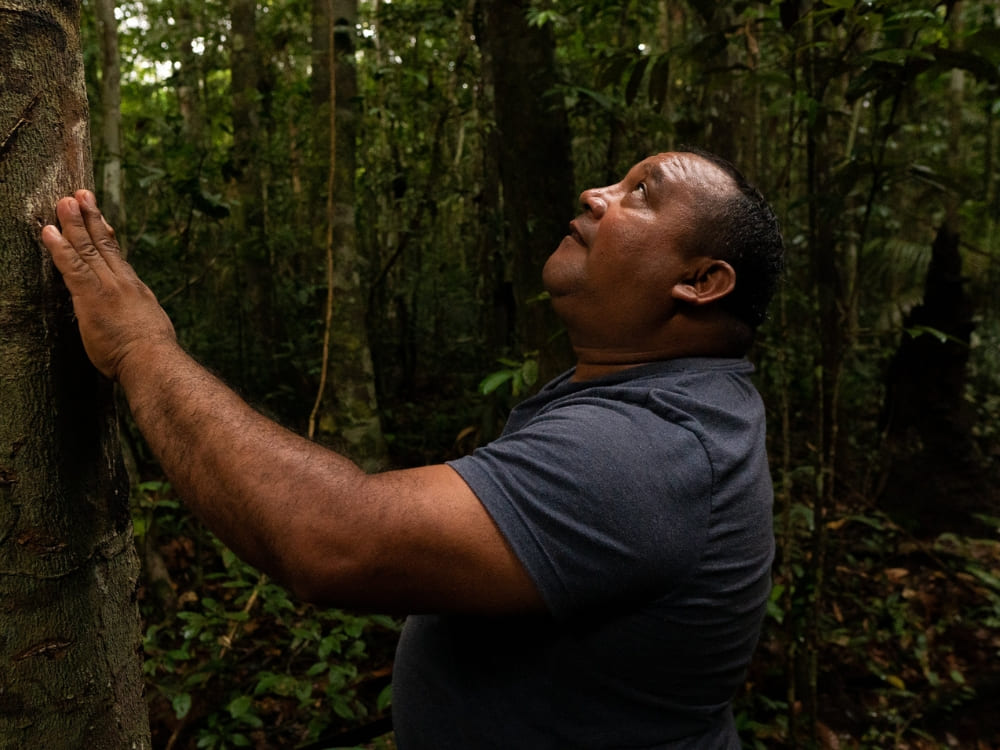
    Roberto Brito

    From logger to leader of the Tumbira riverside community

    In the old days, when Roberto looked at a tree, the first thing that came to mind was the price he could sell that wood for on the market. Each tree was labelled with different numbers. Today, the scenario is different: the tree, the rivers, the animals are all part of an environment in which he is also a living and active participant.

    At 50, Roberto Brito is one of the leaders of the Tumbira community, located in the Rio Negro Sustainable Development Reserve (RDS) in Amazonas. He runs lodges that welcome visitors interested in authentic experiences in the Amazon and guides other tourist activities in the community.

    “Before, I saw a price on trees, on everything. Now I understand the meaning of value, the value that the forest has in my life”, he told PlanetaEXO. Roberto has organised the community so that everyone participates in the itineraries, from craft production to cooking and driving on the trails. He emphasises that community-based tourism isn’t just something that should make sense to those who live there: it’s everyone’s priority. After all, the river dwellers are not just hosts, but also part of the very nature that we want to protect.

    Guardians of the Amazon Rainforest - Roberto Brito
    Photo: Felipe Beltrame

    Nilde Silva

    Leading an ecolodge in the heart of the forest

    Nilde Silva is a river dweller born and raised in Acajatuba, in the Amazon, and founder of Caboclos House Ecolodge, a sustainable lodge built with materials from the forest and operated by local residents. At the head of the enterprise, she offers immersive experiences that connect travellers to the culture, gastronomy and daily life of the riverside responsibly.

    Recognised for her leading role, Nilde won the traditional Prova da Farinha in 2021 and was awarded by Sebrae as a Business Woman. Ecotourism was essential for her to gain independence and, above all, to show that it is possible to undertake in the forest with identity and respect. Because of her work, Nilde is an example of female leadership and an inspiration to other Amazonian women, especially for her fight for the environmental preservation of the Amazon.

    Juma Xipaya

    First woman chief among the peoples of the middle Xingu

    Often, when we think of a chief, the male figure is the first association with the name due to years of tradition in the popular imagination. Juma Xipaia changed that. An indigenous leader of the Xipaya people, she was the first woman to become chief of her village in Pará. She gained international prominence by publicly denouncing the presence of illegal mining in her territory and has become one of the main indigenous voices in defence of the Amazon.

    The leader is also the coordinator of the Juma Xipaia Institute and a communicator, participating in events in Brazil and around the world as an indigenous woman and guardian of the Xingu. She recently released the documentary “Yanuni”, by director Richard Ladkani, in partnership with actor Leonardo DiCaprio. The production tells the story of the Juma and their fight against illegal mining. For Xipaya, protecting the territory means preserving their culture, their history and their future.

    @tribeca

    Txai Suruí

    Amazonian roots, resistance and global leadership

    Raised in the middle of the forest, Txai Suruí grew up among the songs, rituals and teachings of the Paiter Suruí people, in the Sete de Setembro Indigenous Land in Rondônia. The daughter of Almir Suruí, a recognised indigenous leader, she has carried the legacy of struggle and connection with nature from an early age. With her serene presence and firm speech, Txai has stood out as one of the main voices of Brazil’s indigenous youth. Her work goes beyond the borders of the village, uniting tradition, spirituality and political mobilisation.

    An environmental activist and defender of the rights of indigenous peoples, Txai became the best-known Brazilian indigenous woman in the world after giving a speech at the opening of COP26 in Glasgow. She was the only Brazilian to occupy the stage, where she denounced the violence against the peoples of the forest and the advance of deforestation in the Amazon.

    In Rondônia, she works on territorial protection initiatives and strengthening young leaders. In this way, Txai represents a generation that resists with wisdom and, at the same time, talks to the world without losing its roots.

    Forest Protection Day - Txai Suruí
    @levitapuia

    Izolena Garrido

    Transformation and preservation through art

    A teacher, Izolena Garrido founded a workshop in the Tumbira community because she believed in the power of art and traditional knowledge to generate opportunities for transformation. In her home, she created a space where she produces bio-jewellery and handicrafts with seeds and natural pigments, taking in girls and boys in vulnerable situations. For her, protecting her people is also protecting the forest.

    There, nature talks to each other and all the facts are connected, from the rain falling to the travellers who pass through the workshop and learn about Izolena’s work. Everything is a cycle. For us to have the seeds we use in our crafts, we need rain, river water, the earth. If one thing stops, it doesn’t happen. We need to keep it going”, she explains.

    Today, Izolena is one of the community’s leaders and also a reference in initiatives that unite art, education and preservation in the riverside context. Her pieces have already been exhibited at São Paulo Fashion Week, Brazil’s biggest fashion week, and the project receives support from brands such as Louis Vuitton. For Izolena, art can act as a healer of trauma, strengthening self-esteem and the bond with the territory.

    José Pancrácio

    Chief of the Nova Esperança community

    José Pancrácio is the chief of the Nova Esperança indigenous community, located in the Puranga Conquista Sustainable Development Reserve (RDS), Amazonas, and one of the main leaders of the Baré people. He is at the forefront of actions that unite environmental preservation, community-based tourism and education. Under his leadership, the community carries out projects such as the release of Amazonian turtle hatchlings, strengthening the collective commitment to environmental preservation.

    From a young age, José understood that there was no other way to change and maintain the cultural legacy of his people but through the education of children. Among the most symbolic achievements is the construction of the community’s school, made possible with funds raised through ecotourism. The income generated by the visits was essential to guarantee the structure of the building, with classrooms and basic materials.

    For Pancrácio, ecotourism contributes directly to improving the lives of those who look after the forest every day. Above all, he explains the importance of cultural exchange: when tourists arrive in the community, it’s always a great pleasure to show them the history and traditions of the Baré people.

    Chief of the Nova Esperança indigenous community - Cacife José Pancrácio
    Photo: Isadora Sá

    Daniel Gutierrez Govino

    A forest brigade to protect the forest

    Daniel Gutierrez Govino is the founder of the Alter do Chão Community Forest Brigade in Pará. Since 2017, he has been mobilising local residents to prevent and fight forest fires, with the support of firefighters, Civil Defence and partners such as the World Wide Fund for Nature (WWF). The brigade works with mixed techniques, drones and network communication, and is a reference in community action against fires in the Amazon.

    In addition to emergency response, Daniel is committed to training firefighters and environmental education as ways to strengthen local protagonism. For him, protecting the forest starts with those who live in it. Because of this, his work has also gained international visibility, with participation in COP26 and support from human rights and environmental organisations.

    How can we help protect the forest?

    At PlanetaEXO, we believe that every trip can generate positive impact and preserve the environment where we live. Our mission is to connect you to authentic and sustainable experiences, promoting community-based ecotourism in the Amazon and other natural destinations in Brazil. We have selected adventures that respect the environment and empower those who live in these regions, including the guardians of the Amazon Rainforest.

    One way of also supporting this cause is through conservation projects in the Amazon, promoted by organisations such as the Instituto Socioambiental (ISA) and the Fundação Amazônia Sustentável (FAS). Both have been working for decades to protect the forest and traditional peoples, and receive donations to continue this essential work. The Amazon sustains the climate, is home to millions of lives and holds the history of indigenous peoples: defending it is a collective commitment.

    Read more: