Meet the 10 Patagonia animals you are most likely to see in Torres del Paine, with details about where and when to look for each one, plus the rules that protect them!
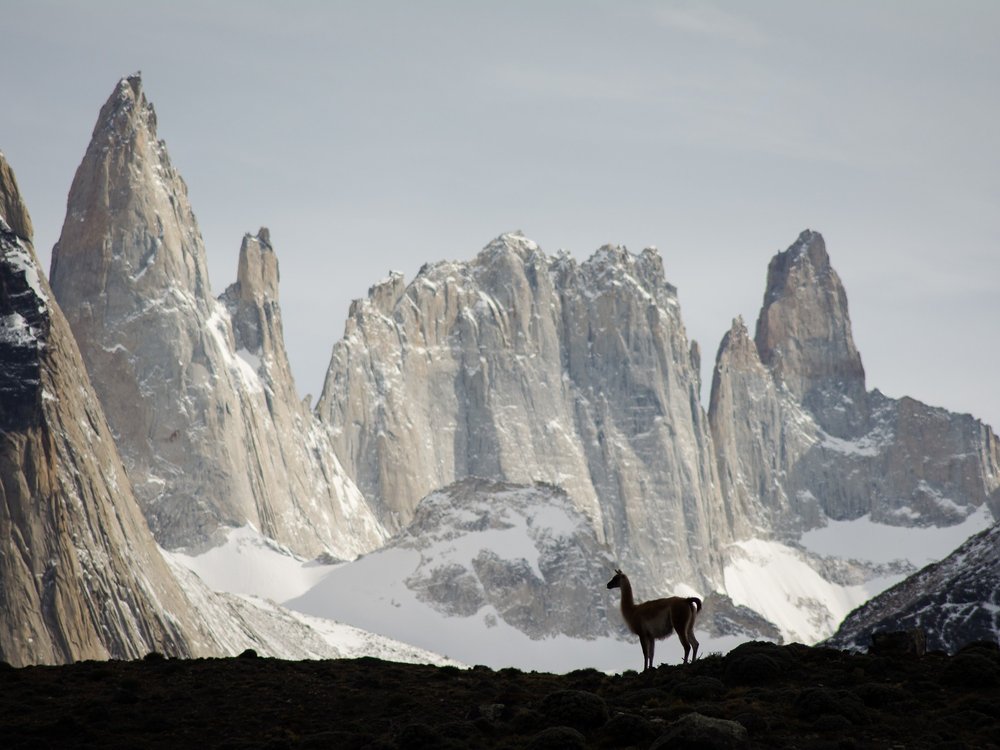
Situated in Chile’s Magallanes region, Torres del Paine National Park is where the iconic granite peaks of the Paine Massif emerge above the vast Patagonian steppe. The park’s concessionaire reports that the reserve protects over 25 mammal species and more than 100 bird species. Thanks to long-term conservation efforts, it stands out as one of South America’s best destinations for observing wildlife.
While some Patagonia animals are impossible to miss, like guanacos grazing beside the roads, others, including the elusive puma and huemul deer, require patience, the expertise of a local guide, and some luck.
Want to know which Torres del Paine animals you can realistically expect to see and where to look? PlanetaEXO, an ecotourism platform specializing in Patagonia tours, has put together this guide. Check it out below!
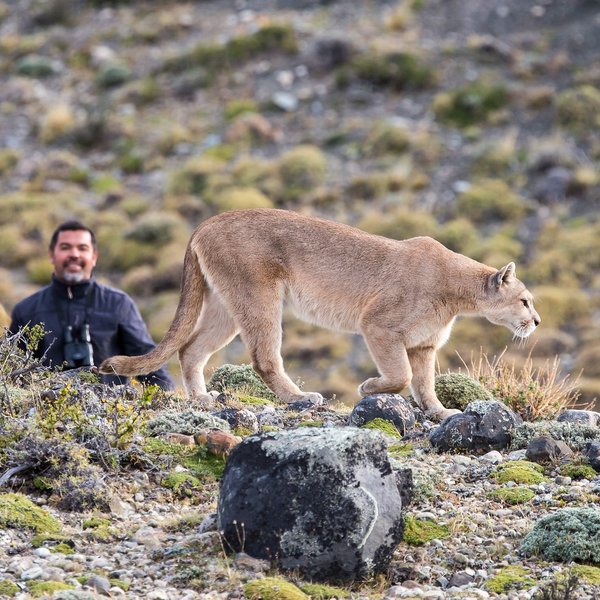
1. Puma, the top predator of Torres del Paine
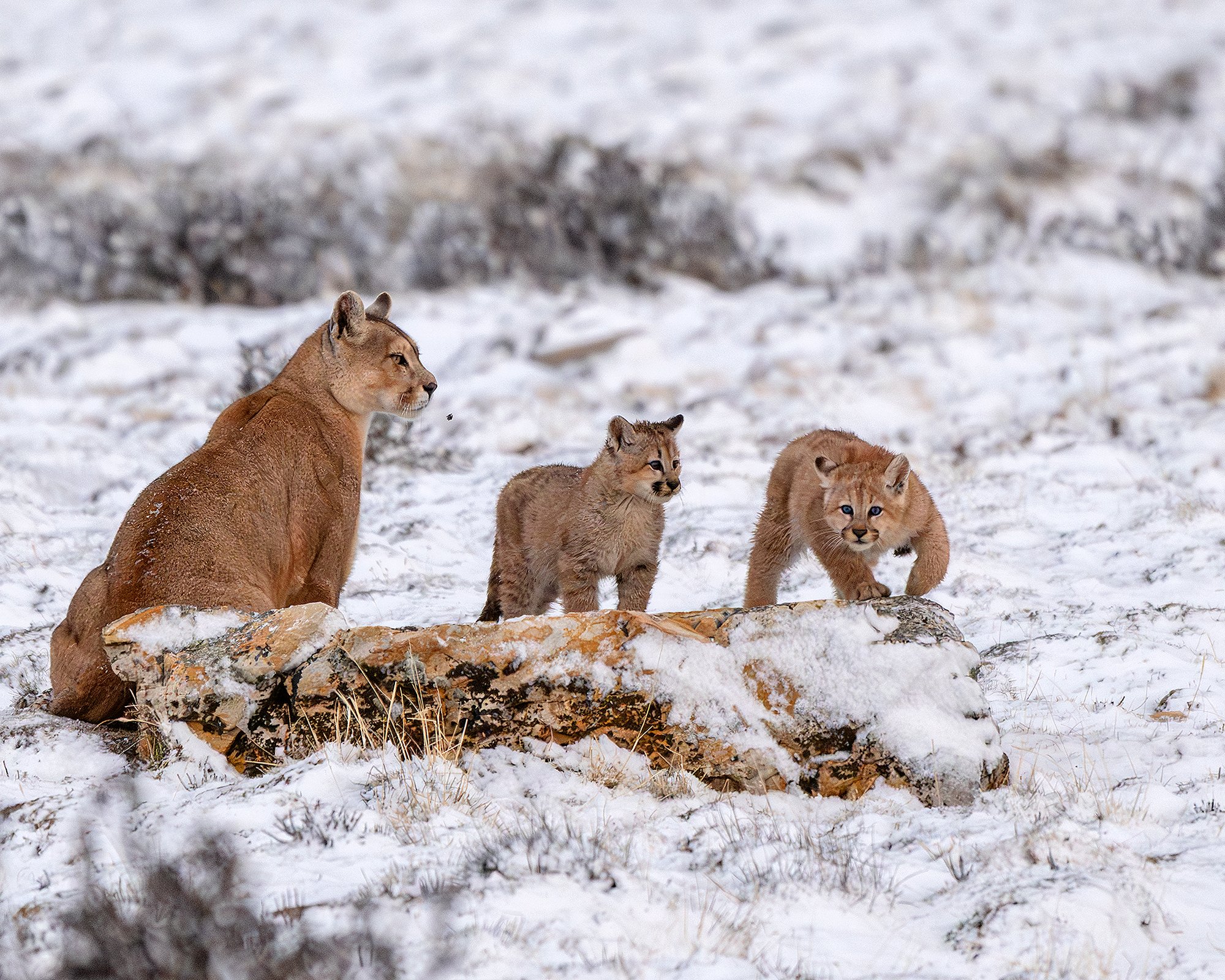
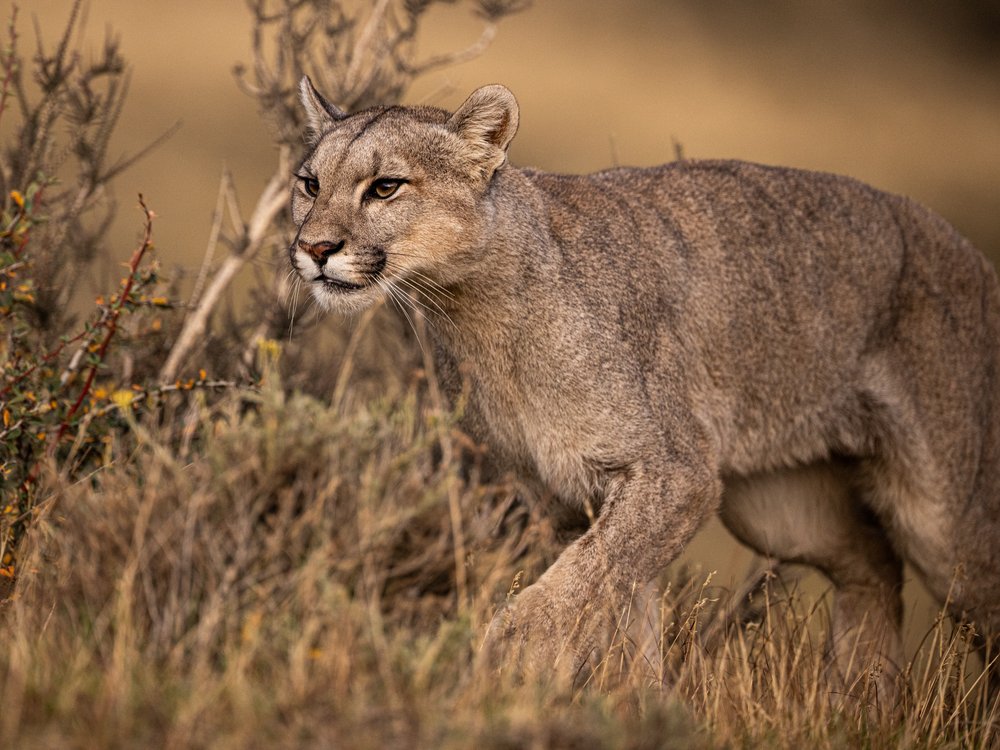
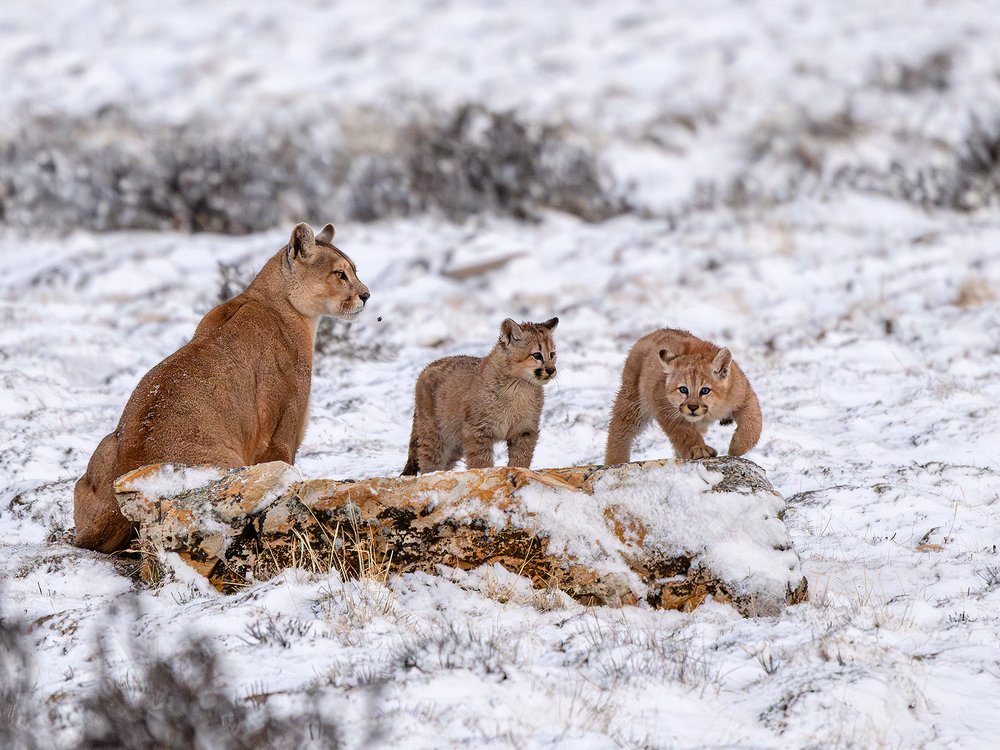
The puma is the second-largest cat in the Americas, after the jaguar. It hunts mostly at dawn and dusk, and its main prey here is the guanaco. Solitary and territorial, an adult male can defend up to 200 km² (77 mi²).
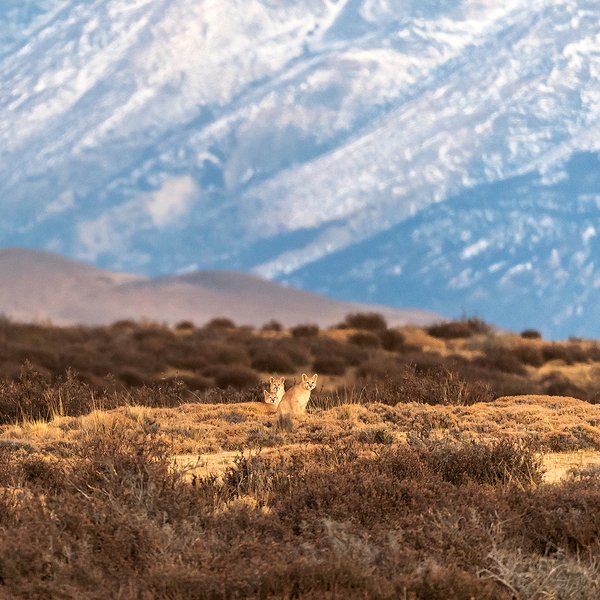
Pumas range from Canada to Patagonia, and Torres del Paine has one of the highest known densities of the species, with experiences dedicated to tracking them. Since males roam over larger areas, most sightings are of females, which tend to remain within fixed territories.
Fun facts about pumas:
- They do not roar. Instead, they purr, hiss, squeak, and let out high-pitched cries—especially females in heat.
- They can leap up to 5 meters high and 10 meters in distance, making them highly skilled at ambush hunting.
- Cubs are born with spotted coats and blue eyes. They remain with their mother for up to 2 years.
Where to find them: the open eastern sector of the national park and the private ranches on its border, around Laguna Amarga, Lake Sarmiento, and the road to Laguna Azul. Your best chance is a day out with a professional tracker.
👉 Read more: Where is the Best Place to See Jaguars in the Pantanal?
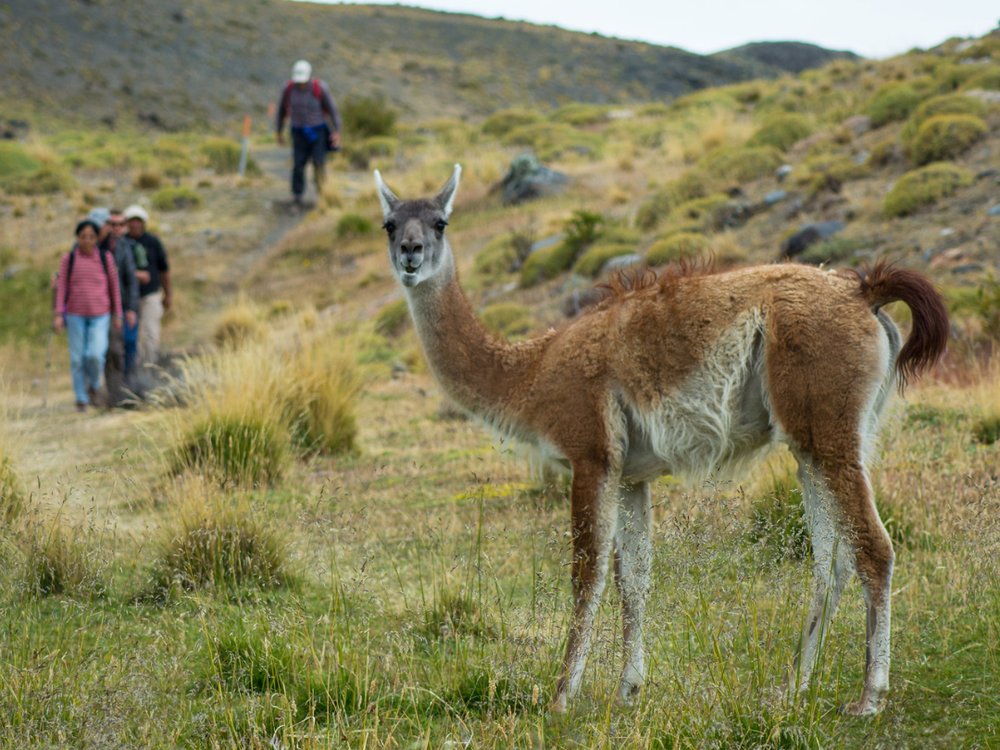
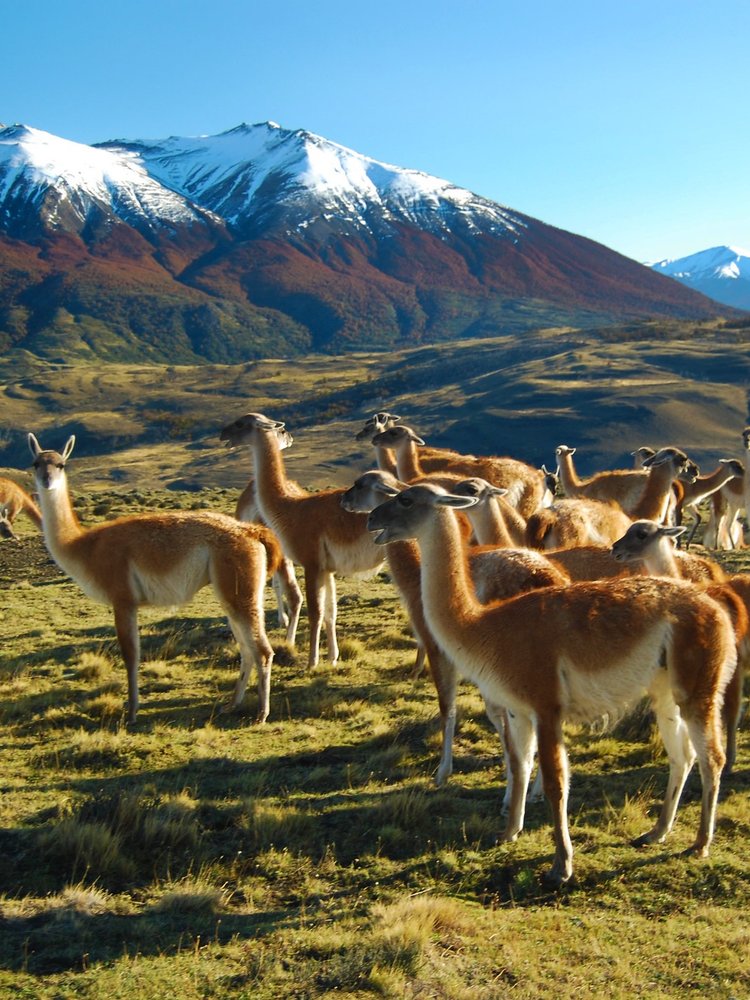
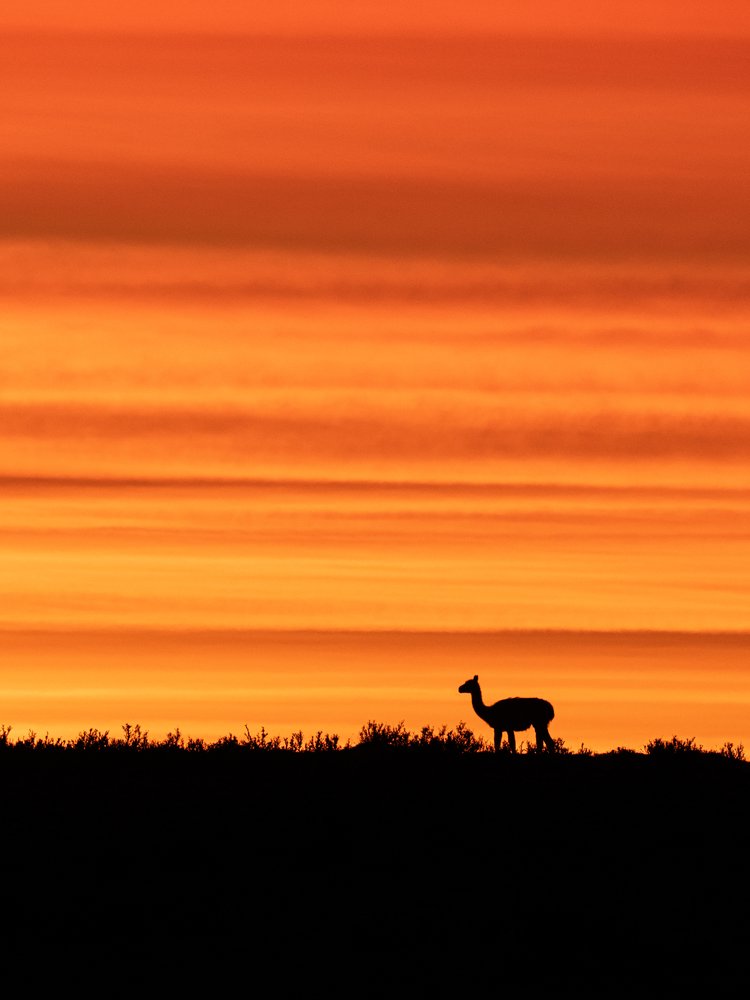
2. Guanaco, the animal you will see first
One of the most visible of all animals in Torres del Paine, the guanaco is a wild cousin of the camel and the llama. Even on a single day in the national park you will see plenty of them, grazing on the hills or crossing the road.
Guanacos live in family groups with one dominant male, several females, and their young, while young males form bachelor herds that can pass 30 animals. The calves, called chulengos, are born between November and February and stand within minutes of birth.
Fun facts about guanacos:
- Their blood is adapted to low oxygen levels, allowing them to live anywhere from sea level to altitudes of over 4,000 m (13,123 ft).
- When faced with predators, they let out a short, high-pitched whinny that sounds like laughter.
- They are excellent indicators of the presence of pumas; trackers know a puma is nearby when guanacos stand perfectly still, staring fixedly in one direction.
Where to find them: Laguna Amarga, Lake Sarmiento, and the start of the Base Torres trail, best in the early morning.
3. Andean condor, the giant of the ridges
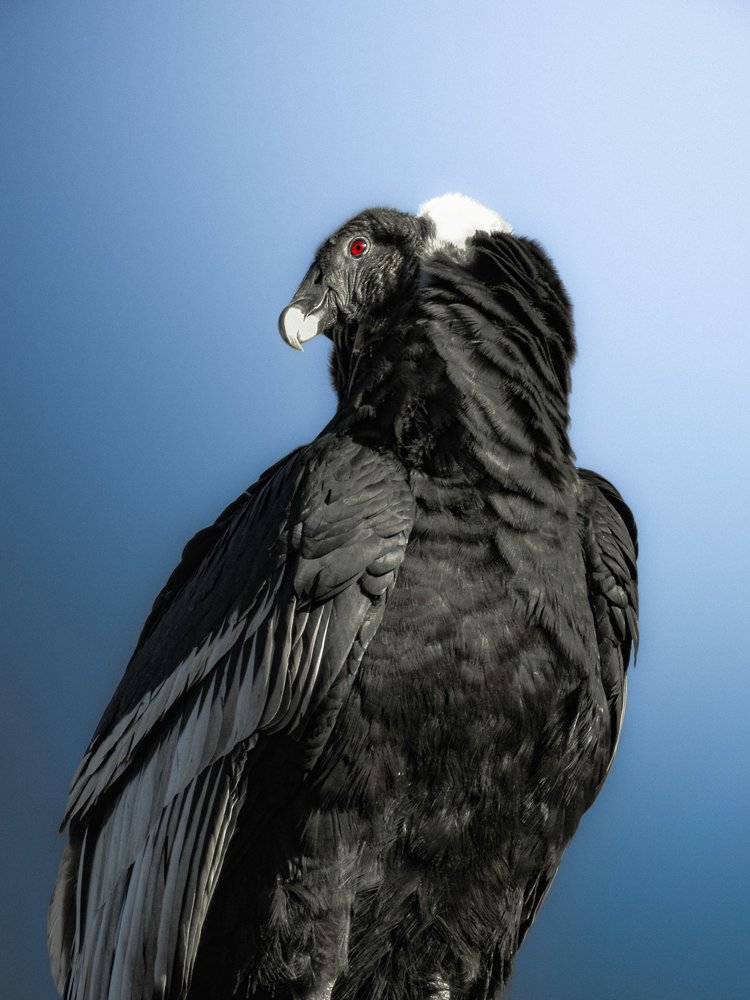
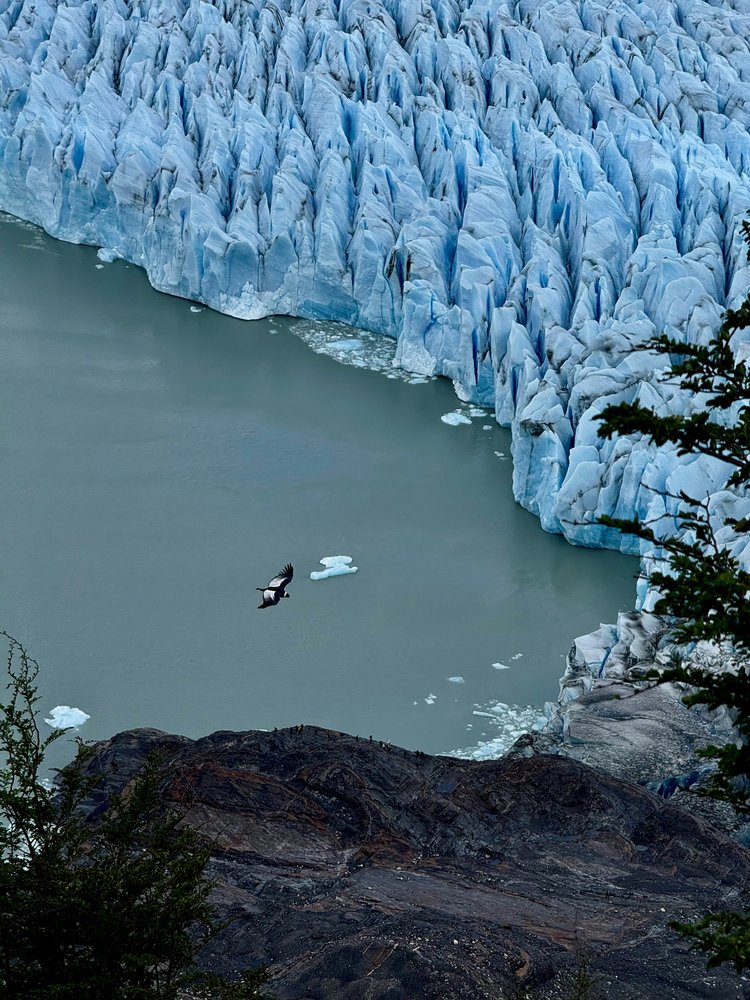
Another iconic animal of Patagonia, the Andean condor is one of the largest flying birds on Earth, with a wingspan of more than 3 m (10 ft) and a weight of up to 15 kg (33 lb). As a scavenger, guanaco carcasses left by pumas are part of its diet. Once airborne, it rides thermal currents and can glide for hours without flapping.
Fun facts about Andean condors:
- Males have a fleshy crest and brown eyes, while females are identified by their red eyes. Juveniles are brown and only develop the white collar at around 6–8 years of age.
- Since they thrust their heads into carcasses to feed, having a bald head is a matter of hygiene.
- It is the national bird of Chile, Bolivia, Ecuador, and Colombia, as well as a national symbol of Argentina and Peru.
Where to find them: look up along the high ridges. Mirador Cóndor, near the Pudeto sector, is one of the most reliable viewpoints; the best time is late morning, when the sun warms the rock walls and the thermals form. Condors also circle above the Base of the Towers and come back to roost on the cliffs at dusk.
4. Lesser rhea (ñandú), the runner of the steppe
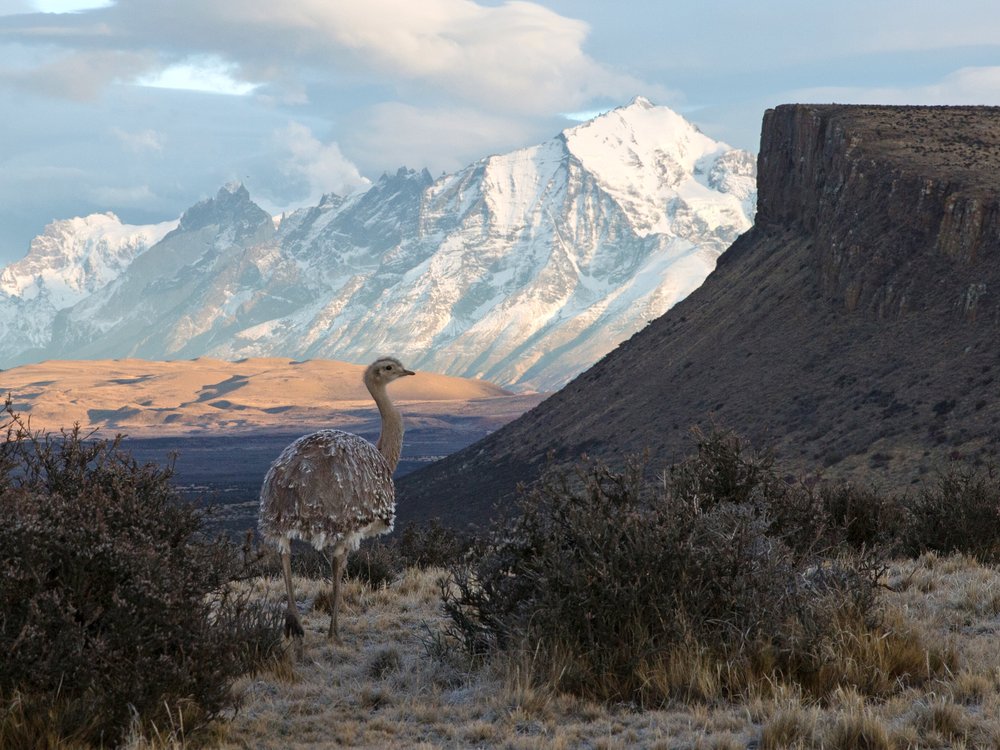
The lesser rhea, also called Darwin’s rhea or ñandú, is the largest bird in Chile. It looks like a small ostrich, moves in groups, and can run at 60 km/h (37 mph) across the grassland.
Fun facts about lesser rheas:
- Males gather eggs from several females (sometimes more than 50), tend to the nests, and raise the chicks on their own. They may also adopt the offspring of other males, forming nurseries that can contain more than 20 chicks.
- To protect their nests, the males become aggressive and may charge at people or vehicles.
- In 1834, the British naturalist Charles Darwin was searching for rheas in southern Patagonia. The painter Conrad Martens, who was traveling with him, shot one—believing it to be a common rhea—to provide a meal for the group. In the middle of dinner, Darwin realized that the dish was, in fact, the very animal he had been searching for. He quickly saved the head, neck, legs, one wing, and many of the larger feathers to send them to England for scientific classification.
Where to find them: on the steppe grasslands just before the eastern entrances of the park, often near herds of guanacos.
5. Southern crested caracara, the opportunist
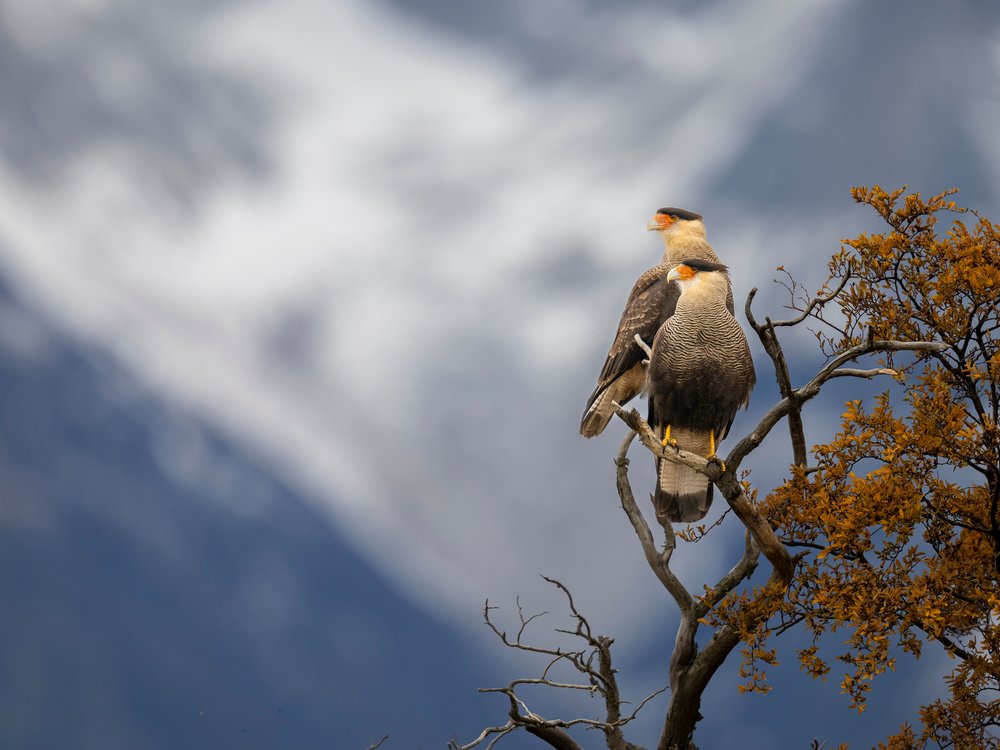
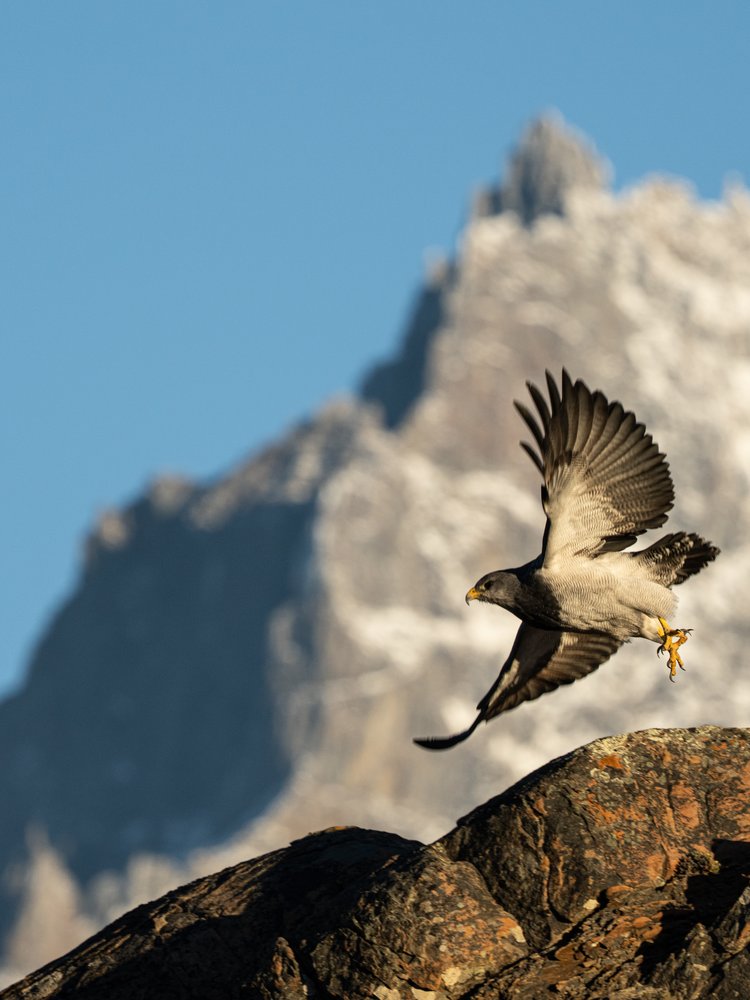
Caracaras are birds of prey that both hunt and scavenge. Three species turn up in Torres del Paine: southern crested caracara, chimango, and white-throated caracara.
Fun facts about caracaras in Patagonia:
- They belong to the falcon family, but they have the habits of vultures and spend a great deal of time on the ground.
- They eat everything: carrion, insects, the eggs and young of Patagonian animals, stranded fish, and even trash. They are also known to steal food from other birds.
- The name “caracara” comes from the Tupi language and mimics their call. When calling, they throw their head back and let out a harsh, loud, and high-pitched sequence of sounds.
Where to find them: along the park roads, around the lakes, and wherever a carcass lies in the open.
6. Culpeo fox and South American gray fox
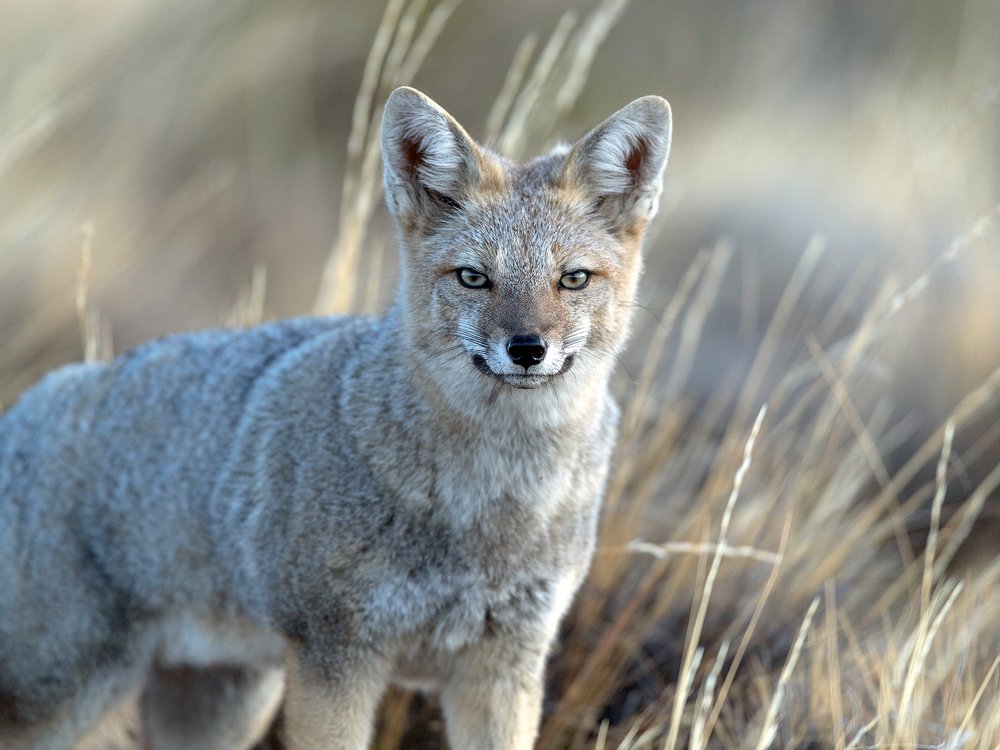
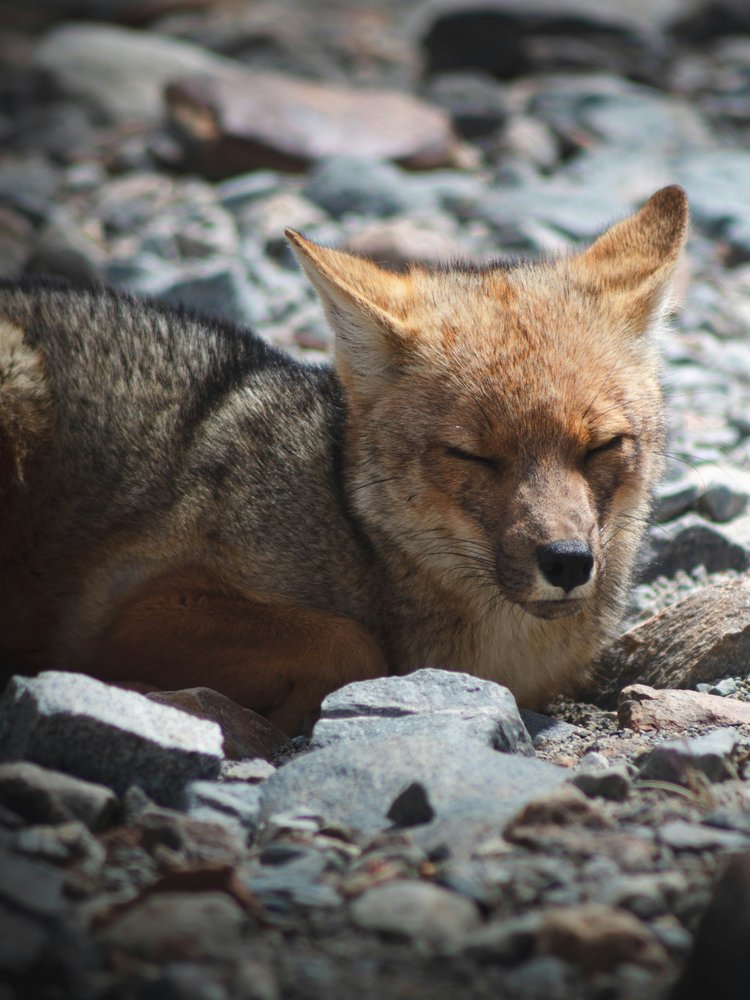
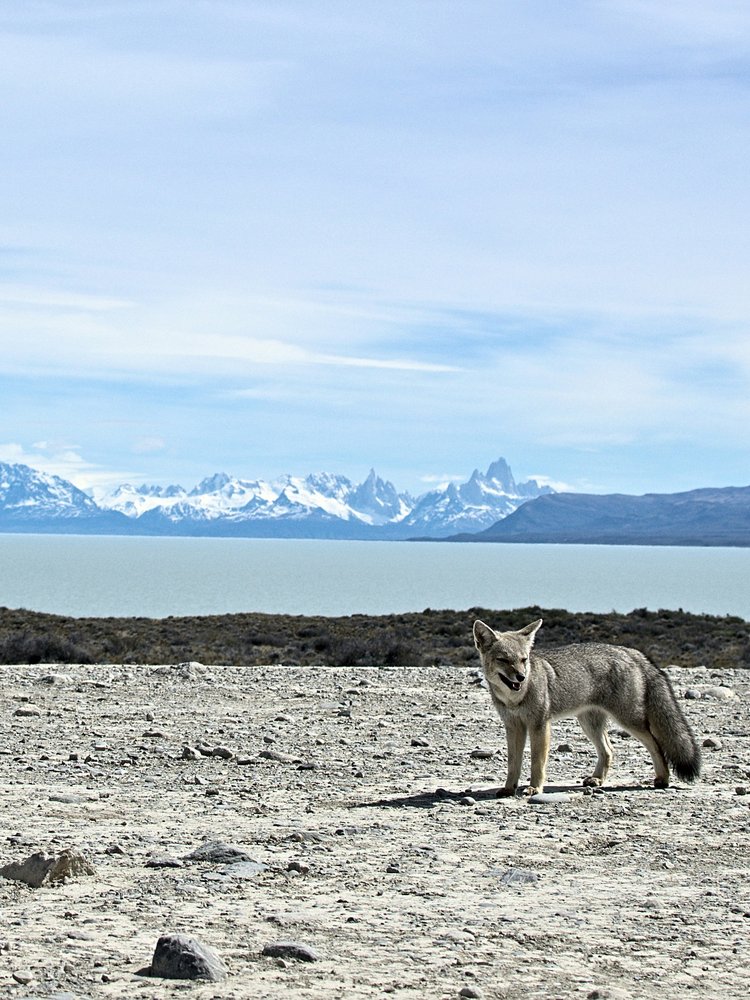
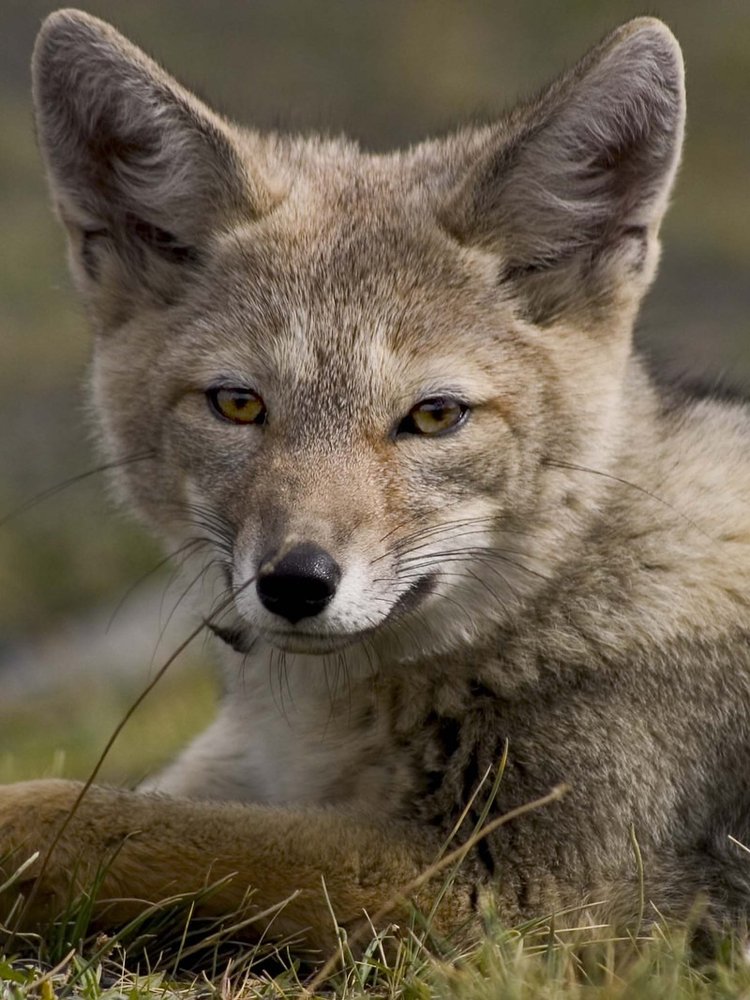
Two foxes share Torres del Paine. The culpeo is the largest fox in Patagonia, reddish and sturdy, and usually appears alone at the edge of the road, wary of people. The South American gray fox, called chilla in Chile, is smaller and grayer, weighs about 2.5 to 5.5 kg (5.5 to 12 lb), and eats small mammals, birds, eggs, fruit, and carrion.
Fun facts about the foxes in Patagonia:
- Although they are called foxes, both species actually belong to a genus of canids found exclusively in South America.
- During the 20th century, both species were heavily hunted for their fur and to protect flocks of sheep. Today, the IUCN (International Union for Conservation of Nature) classifies the conservation status of both as “Least Concern.”
- Chillas often approach people in parks and along roads, which can be dangerous for them. It is always recommended to keep your distance and never feed any animal.
Where to find them: at dawn and dusk along the roads of the Torres del Paine National Park.
7. Chilean flamingo, pink on a cold lagoon
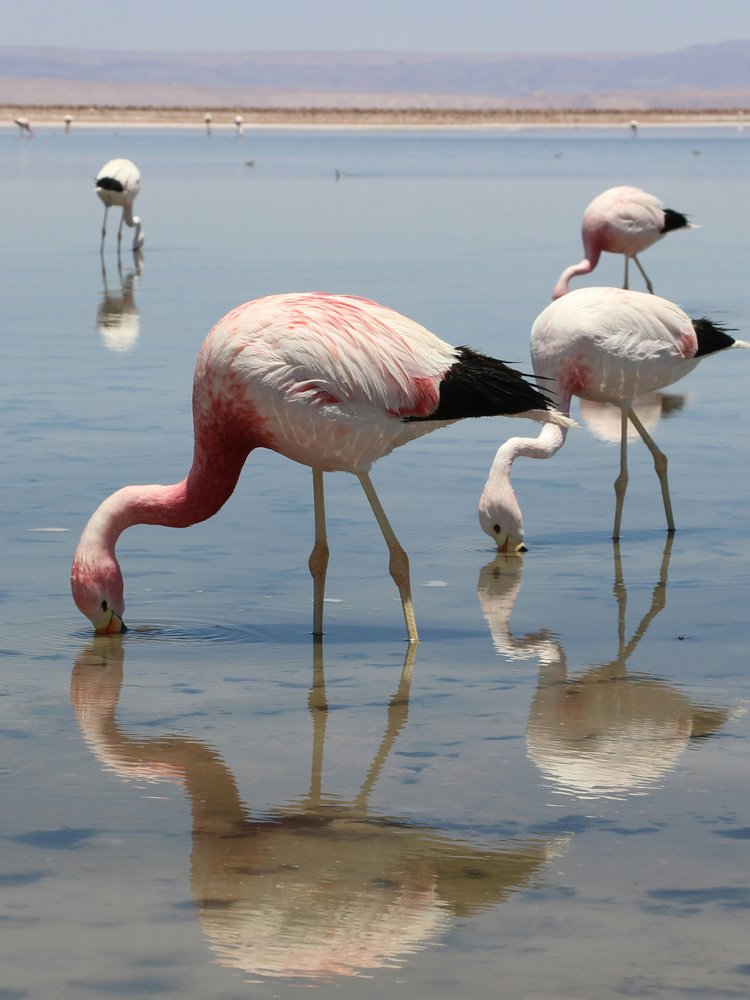
The Chilean flamingo, with gray legs, pink knees, and a largely black bill, lives in the lakes and lagoons of the park. Of all the Patagonian animals in this list, it looks the most out of place next to snowy peaks.
Fun facts about Chilean flamingos:
- The pink color of their feathers comes from carotenoids found in crustaceans and algae, which they obtain by plunging their heads into the water.
- They lay a single egg in a small mound of mud. The chicks are fed a reddish “milk” that the parents produce within their digestive tracts.
- They spend much of their time standing on one leg to conserve energy and reduce heat loss in the cold water.
Where to find them: the lakes and lagoons of Torres del Paine. Treat them as a bonus, not a sure thing.

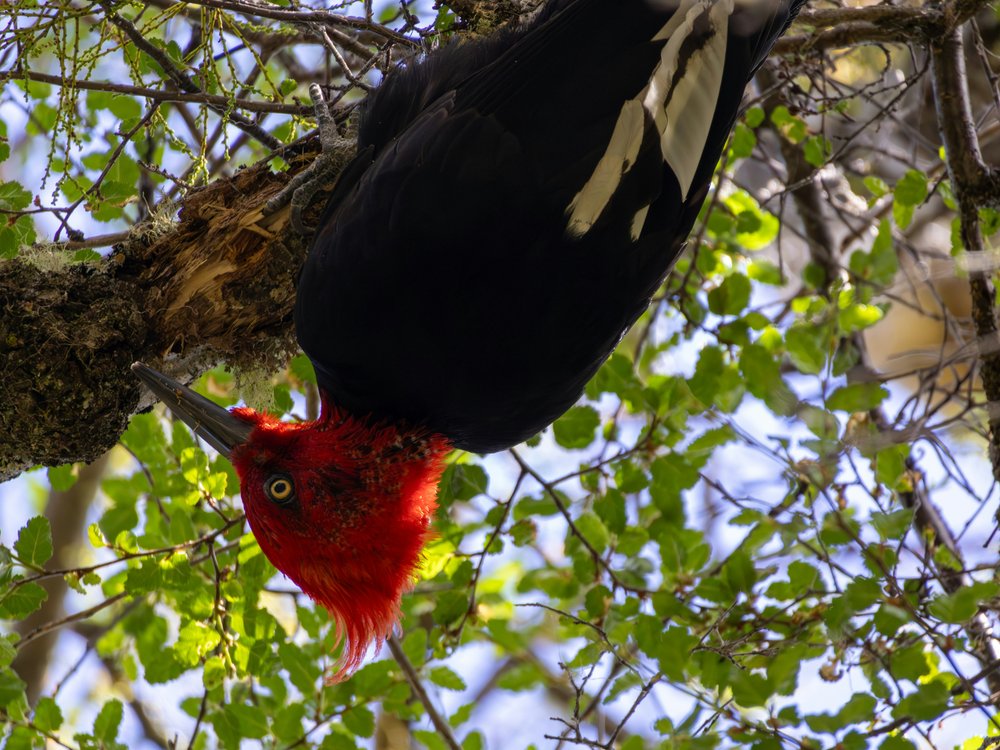
8. Magellanic woodpecker, South America’s largest woodpecker
The Magellanic woodpecker is the largest woodpecker in South America (up to 45 cm/18 in). It lives in Nothofagus (lenga and coihue) forests and depends on large, old trees for excavating nests.
Fun facts about Magellanic woodpeckers:
- Males have entirely red heads, while females are black and distinguished by a curly crest, as well as a red patch at the base of their beak.
- They lay one or two eggs. The offspring remain with their parents until they are 2 years old.
- A two-tap drumming sound on tree wood reveals their presence.
Where to find them: lenga beech forests, including the trees around some of the park’s hotels.
9. Huemul, the rarest of Torres del Paine wildlife
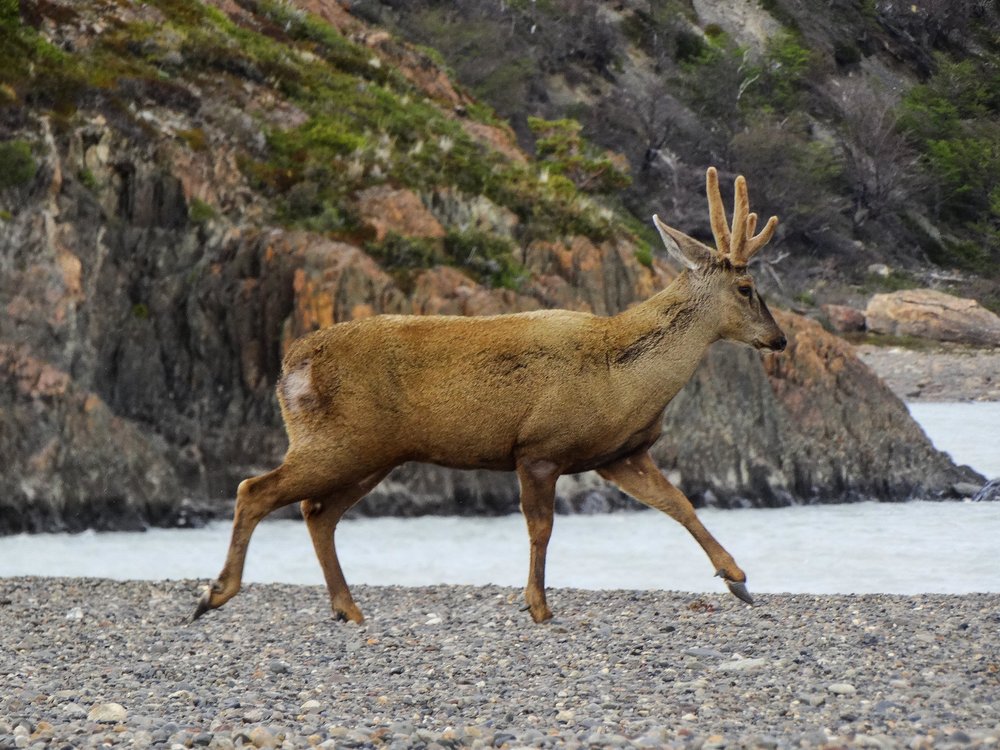
The huemul is an endangered deer of the Patagonian Andes and, alongside the condor, the national animal on Chile’s coat of arms.
Fewer than 1,500 are thought to remain between Chile and Argentina. Park rangers count about 20 individuals in Torres del Paine through twice-yearly surveys and camera traps. A sighting is never something you can plan—even people who have worked in the park for years say huemuls are hard to see.
Fun facts about huemuls:
- They have robust bodies and short legs, adapted to mountainous ecosystems. The males possess Y-shaped antlers, which are shed at the end of winter and subsequently regrow.
- When they encounter humans, they tend to stand still—a behavior that has historically left them vulnerable to hunting.
- Domestic dogs, livestock-borne diseases, loss of habitat, and isolation are their primary threats.
Where to find them: with luck, in the forests of the western side of the park (the Lago Grey sector and the Pingo valley) and in the French Valley. A family of four lives in the Ascencio Valley, on the trail to the Base of the Towers, and sometimes comes down near the entrance of the valley in summer.
👉 Read more: 8 Best Torres del Paine Hikes, from Short Viewpoints to the W and O Treks
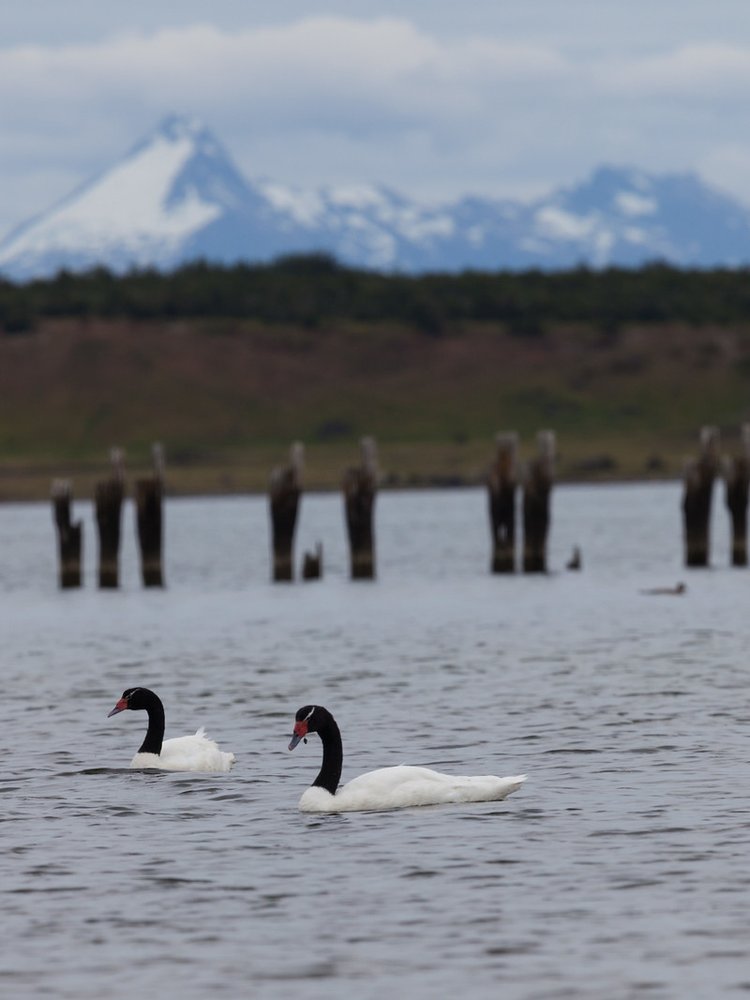
10. Black-necked swan
Among the more than 100 species of birds that live in Torres del Paine, the black-necked swan is perhaps the easiest to recognize, precisely because of the contrast in its feathers: white on the body and dark as coal from the neck up.
Fun facts about black-necked swans:
- They are the largest waterfowl native to South America, weighing between 3.5 and 6.7 kg (7.7 to 14.8 lb), with a wingspan of up to about 1.8 m (5.9 ft).
- Pairs remain together for years and share the responsibility of caring for their eggs, which are laid on a floating platform. The female incubates the eggs for about 35 days, while the male is tasked with guarding the nest.
- During the winter, a portion of the population migrates northward—for instance, to areas such as Taim and Lagoa do Peixe, in the state of Rio Grande do Sul, Brazil.
Where to find them: they appear in the park’s lagoons, alongside other water birds, typically seen during day tours departing from Natales.
👉 Read more: 20 Animals in Brazil – Wildlife Facts and Where to Find Them
How does puma tracking work in Torres del Paine?
Inside the national park, CONAF (National Forestry Corporation) allows wildlife watching and photo safaris only in daylight and from the official trails. Walking off the trail to follow an animal is forbidden.
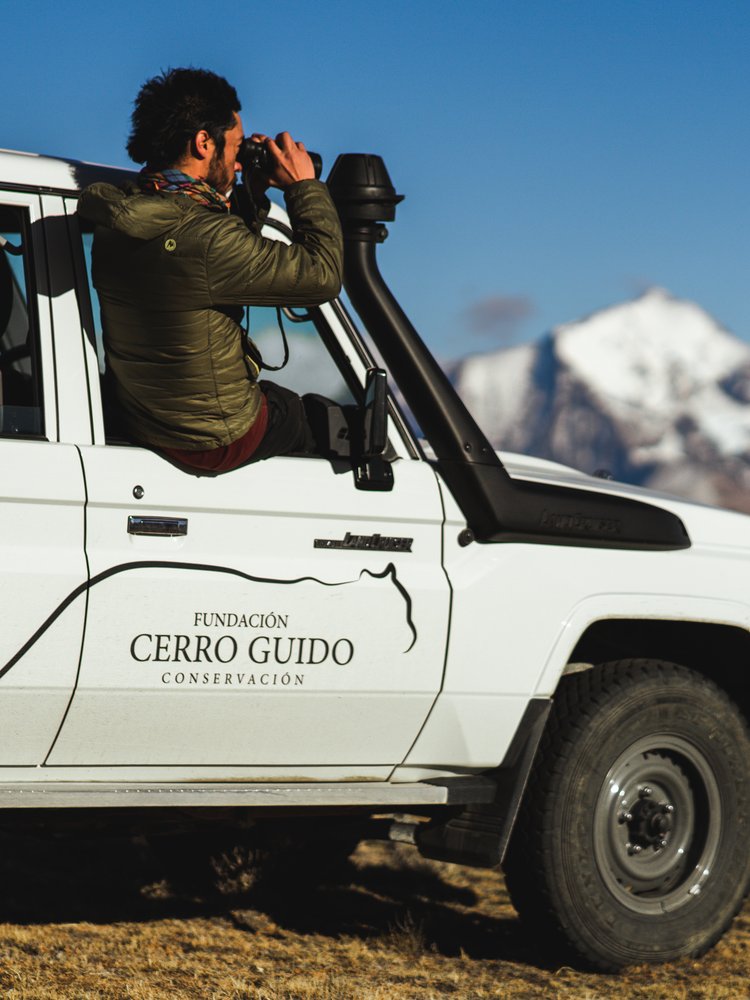
That is why most puma tracking happens two ways: from the park roads and trails or on the private ranches (estancias) that border Torres del Paine, where guests can leave the vehicle and approach on foot with the ranch’s trackers.
A tracking day starts before sunrise. Trackers go out first, scan the hills and watch the guanacos, then radio the guides when they find a cat. Expect hours of waiting in the wind and cold, and some days with no puma at all.
Our puma tracking tour in Torres del Paine (6 days) includes three full tracking days with a specialist guide in 4×4 vehicles with up to three guests each and a maximum of six travelers, plus binoculars and a digiscope. Activities start between 5 AM in December and 8 AM in April.
On the eastern border of the park, Estancia Cerro Guido works on coexistence between sheep ranching and pumas, with guardian dogs and a GPS-collar research project run with the cat conservation group Panthera and supported by CONAF. Its conservation day is a visit to that research, not a guarantee of spotting pumas.
Torres del Paine wildlife rules and safety
To protect the animals in Patagonia, CONAF sets a few rules:
- Watch wildlife only in daylight and from official trails.
- Never feed or disturb animals of any species.
- If you are close to an animal, don’t approach it and never touch it.
- No drones for recreational or private use; offenders are expelled.
- To prevent looking like prey, don’t cycle alone in the park.
Outside the park, within the Torres del Paine Biosphere Reserve, a municipal protocol dating from August 2025 regulates puma-watching activities on both public and private land. The rules include a requirement for operators to register and for visitors to sign consent forms, as well as a mandate to maintain a minimum distance of 50 m (164 ft)—or 100 m (328 ft) if a cat is in motion.
When to see Patagonian wildlife?
Dawn and dusk are when most animals in Patagonia are active. Condors are easiest to see in late morning, when the thermals form. Pumas often rest through the middle of the day.
Pumas can be tracked all year, though winter and shoulder months (late April to May and September to November) are usually the most recommended times.
Guanaco calves are born from November to February, while part of the black-necked swan population migrates north from May to mid-September.
👉 Read more: Best Time to Visit Patagonia: Torres del Paine Month by Month
Where to see wildlife in Torres del Paine?
- Eastern sector (Laguna Amarga, Lake Sarmiento, road to Laguna Azul): guanacos, rheas, foxes, and the best puma territory.
- Mirador Cóndor, near Pudeto: condors over the Paine Massif.
- Ascencio Valley (Base Torres trail): guanacos at the trailhead, condors at the top and, with luck, huemul.
- Western forests (Lago Grey, Pingo valley) and the French Valley: huemul and Magellanic woodpeckers.
- Vega Castillo wetland: a privately protected wetland outside the park, rich in waterbirds.
If you would rather see Torres del Paine wildlife on day trips from a comfortable base, the 4-Day All-Inclusive Tour at EcoCamp Patagonia lets you choose one excursion a day. On Mondays, activities include an easy walk in the Vega Castillo wetland, where coscoroba swans, upland geese, black-faced ibises, condors, and guanacos are among the possible sightings.

Ready to see Patagonia’s animals? Plan your trip with PlanetaEXO!
Now that you know where the pumas, condors, and guanacos live, it’s time to go and look for them yourself.
PlanetaEXO is an ecotourism platform specializing in Patagonia trekking tours. We work with local operators in Torres del Paine and plan the hikes, the wildlife days, and the lodges as one trip. Our team is here to help you choose the right one. Contact us now!


Leave a Reply