Category: Brazil

  • Route of Emotions in Brazil: itinerary, map, and best time to visit in 2026

    Route of Emotions in Brazil: itinerary, map, and best time to visit in 2026

    Map, how many days you need, and how to travel the route that connects Lençóis Maranhenses (MA), Delta do Parnaíba (PI), and Jericoacoara (CE)

    The Route of Emotions is the tourist itinerary that links three of the most sought-after destinations in northeastern Brazil: Lençóis Maranhenses (MA), Delta do Parnaíba (PI), and Jericoacoara (CE). It spans hundreds of kilometers across 14 municipalities and 3 states in a single trip, featuring sweeping dunes, rainwater lagoons, dense mangroves, and pristine beaches.

    In 2024 alone, the route welcomed 496,705 visitors registered via digital vouchers, generating an estimated R$ 83.1 million. In July of that same year, the Lençóis Maranhenses National Park was declared a UNESCO World Heritage Site — the 24th Brazilian site to make the list.

    Want to know how to organize this trip? PlanetaEXO, an ecotourism platform specializing in Route of Emotions tours, has prepared a complete guide with everything you need to know for a smooth, unforgettable experience. Check it out below!

    Table of contents:

    1. What is the Route of Emotions and why does it exist?
    2. Map of the Route of Emotions
    3. How to get there and logistics between destinations
    4. What is the best time to do the Route of Emotions?
    5. What to expect from each part: Lençóis, Delta do Parnaíba, and Jericoacoara
    6. How many days are ideal to do the Route of Emotions?
    7. Route of Emotions Packages
    8. Accommodation on the Route of Emotions itinerary
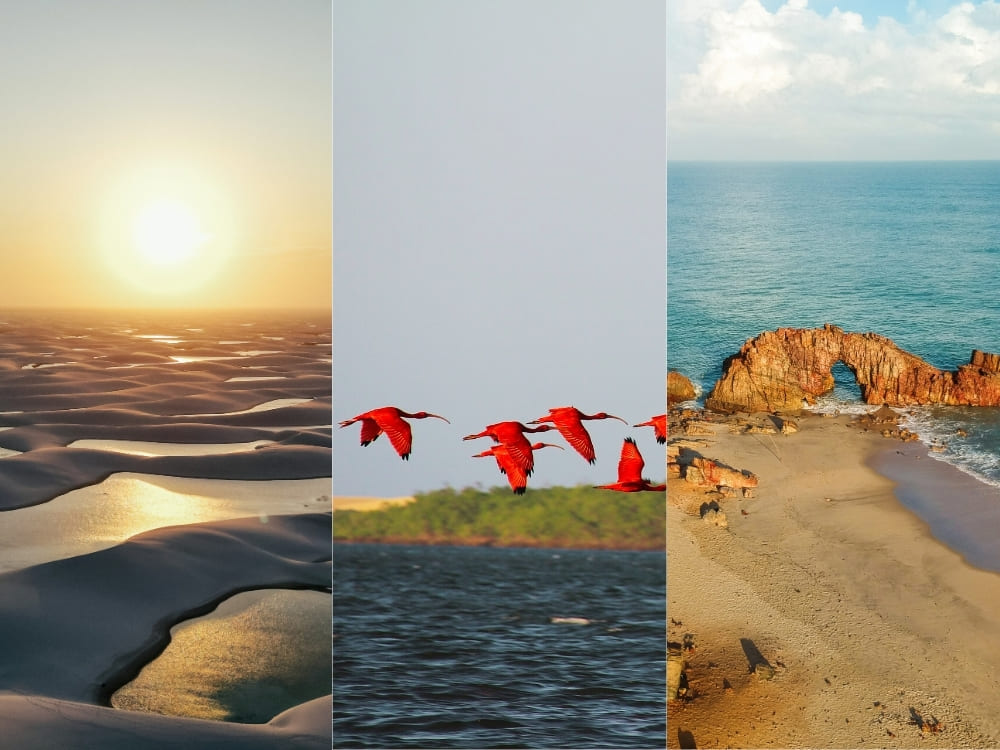
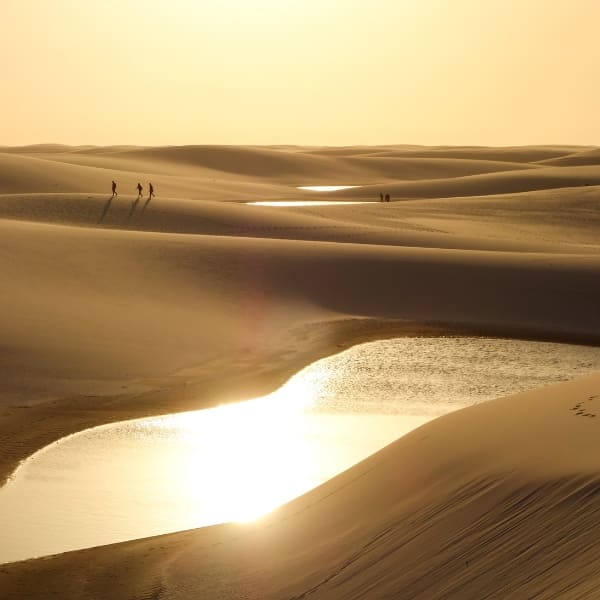
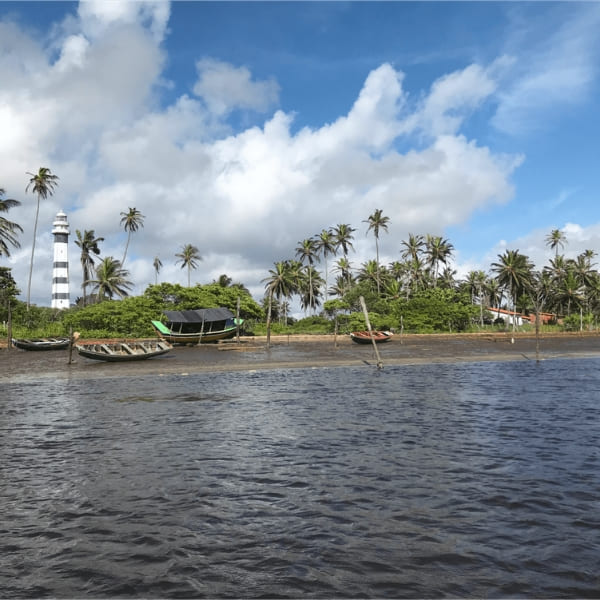
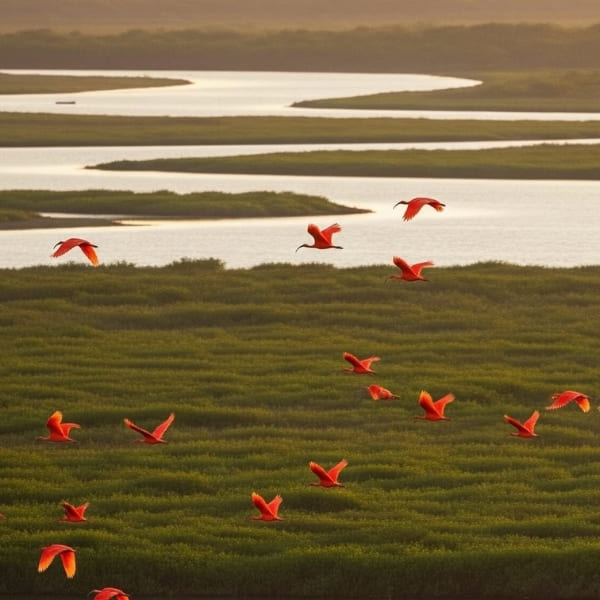
    Three vertical panels showing red ibises flying, vast sand dunes at sunset, and the Pedra Furada rock formation on the beach.
    .

    What is the Route of Emotions and why does it exist?

    The Route of Emotions is the official name of the tourist itinerary that connects the northeastern coast of Brazil (Maranhão, Piauí, and Ceará) across 14 municipalities spread over roughly 900 km of coastline.

    The project was launched in 2005 by Sebrae Nacional (Sebrae (Brazilian Micro and Small Business Support Service) is a private, non-profit organization established to foster entrepreneurship and the development of small businesses in Brazil.)  in partnership with the Ministry of Tourism (MTur) and state-level branches. The goal was to structure regional tourism by integrating three spectacular destinations that, until then, were largely visited in isolation.

    According to Sebrae, the itinerary has injected over R$ 670 million into the local economy since 2009. By December 2025, it celebrated 20 years of tourism success, economic growth, and international recognition.

    Map of the Route of Emotions

    The Route of Emotions map crosses 14 municipalities across three states, hugging the coastline the entire way. The order in which you visit depends on your starting point — São Luís (MA) and Fortaleza (CE) are the two main gateways. At PlanetaEXO, the adventure typically begins in Maranhão.

    • Maranhão (5 cities): Santo Amaro, Barreirinhas, Paulino Neves, Tutóia, and Araioses.
    • Piauí (4 cities): Ilha Grande, Parnaíba, Luís Correia, and Cajueiro da Praia (Barra Grande).
    • Ceará (5 cities): Chaval, Barroquinha, Camocim, Jijoca de Jericoacoara, and Cruz.

    The route’s three main hubs are Barreirinhas (gateway to Lençóis), Parnaíba (gateway to the Delta), and Jijoca de Jericoacoara (gateway to the Ceará park). The remaining municipalities serve as scenic crossing points, alternative bases, or technical stops between the major landmarks.

    How to get there and logistics between destinations

    By air

    The two main airports servicing the Route of Emotions are São Luís (SLZ) in Maranhão and Fortaleza (FOR) in Ceará — most itineraries start at one and end at the other to avoid backtracking. You can also fly directly into Parnaíba (PHB), Piauí, and Jericoacoara (JJD), Ceará.

    Beyond commercial flights, Azul Conecta (Azul’s regional charter branch) operates a nine-passenger Cessna Caravan connecting Fortaleza, Jericoacoara, Parnaíba, Barreirinhas, and São Luís about three times a week.

    While each stretch takes 3 to 6 hours by road, these scenic flights take an average of 45 minutes to 1 hour. It’s the fastest — though most expensive — way to cover the route.

    By road

    This is the most common way to travel between the destinations. While some adventurers choose to rent a car and drive themselves, the vast majority of tourists rely on transfer services (shared or private). This seamless logistics approach is built into PlanetaEXO’s Route of Emotions itineraries.

    Distances per segment:

    • São Luís → Barreirinhas: 260 km / 4–5 hours by transfer.
    • Barreirinhas → Tutóia: ~100 km / ~3h, passing through Paulino Neves.
    • Tutóia → Parnaíba: 120 km, usually involving a boat crossing through the Pequenos Lençóis.
    • Parnaíba → Jericoacoara: ~270 km / 5–6h, passing through Camocim.
    • Jericoacoara → Fortaleza: ~300 km / ~5h.

    👉 Learn more about how to get to Lençóis Maranhenses

    What is the best time to do the Route of Emotions?

    The best time to do the Route of Emotions is between late June and early September, when the lagoons in Lençóis Maranhenses are brimming with water and the climate across all three regions is drier.

    Silhouettes of people kitesurfing and windsurfing on ocean waves near a sandy beach during a golden sunset.
    .

    Practical calendar:

    • January to May: Rainy season. The lagoons begin to form and fill up progressively. Road access to certain areas may be temporarily affected.
    • June to August: The peak season for full lagoons. This is high season, so be sure to book your accommodation 3 to 4 months in advance.
    • September: The lagoons still hold a good amount of water, but you’ll find fewer crowds and better prices.
    • October to December: In Lençóis, the lagoons shrink significantly, and some dry out completely. However, this is when Jericoacoara experiences the best winds of the year for kitesurfing and windsurfing, with consistent gusts from July through January.

    Average temperatures hover between 25 °C and 32 °C (77 °F to 89 °F) year-round across all three destinations. The main variables are simply the water levels in the dunes and the wind intensity in Jeri.

    👉 Read more about the best time to visit Lençóis Maranhenses

    What to expect from each part: Lençóis, Delta do Parnaíba, and Jericoacoara

    Lençóis Maranhenses, Maranhão

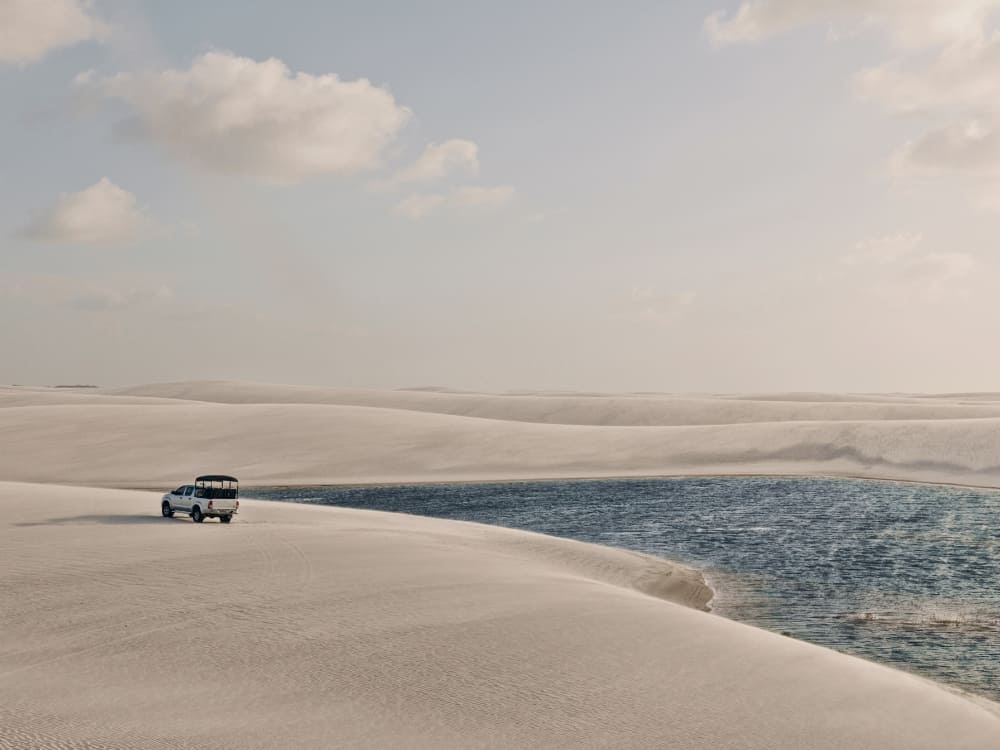
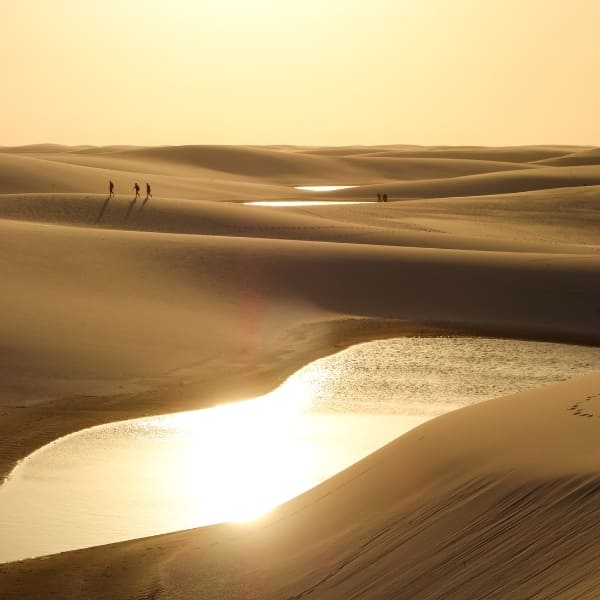
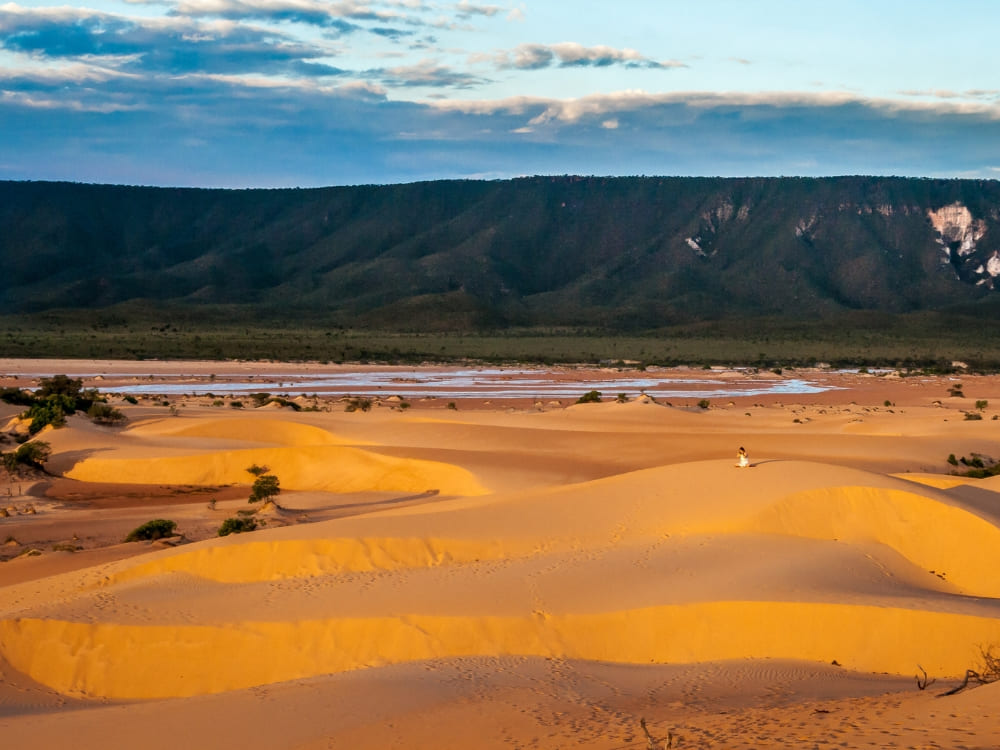
    Spanning 1,550 km², the Lençóis Maranhenses National Park is globally famous for its sweeping white sand dunes and thousands of crystal-clear lagoons formed purely by rainwater.

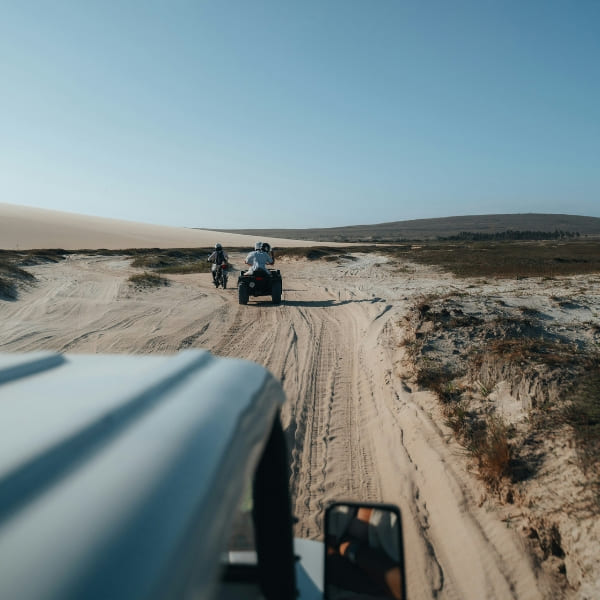
    A white 4x4 tour vehicle driving across vast white sand dunes next to a bright blue lagoon.
    .

    Surrounded by the base towns of Barreirinhas, Santo Amaro, and Atins, the primary activities include hiking or taking 4×4 tours through the dunes, swimming in the lagoons (Lagoa Azul, Bonita, Gaivota, Betânia, etc.), cruising down the Preguiças River, and visiting local villages (Mandacaru, Vassouras) and Atins Beach.

    Delta do Parnaíba, Piauí and Maranhão

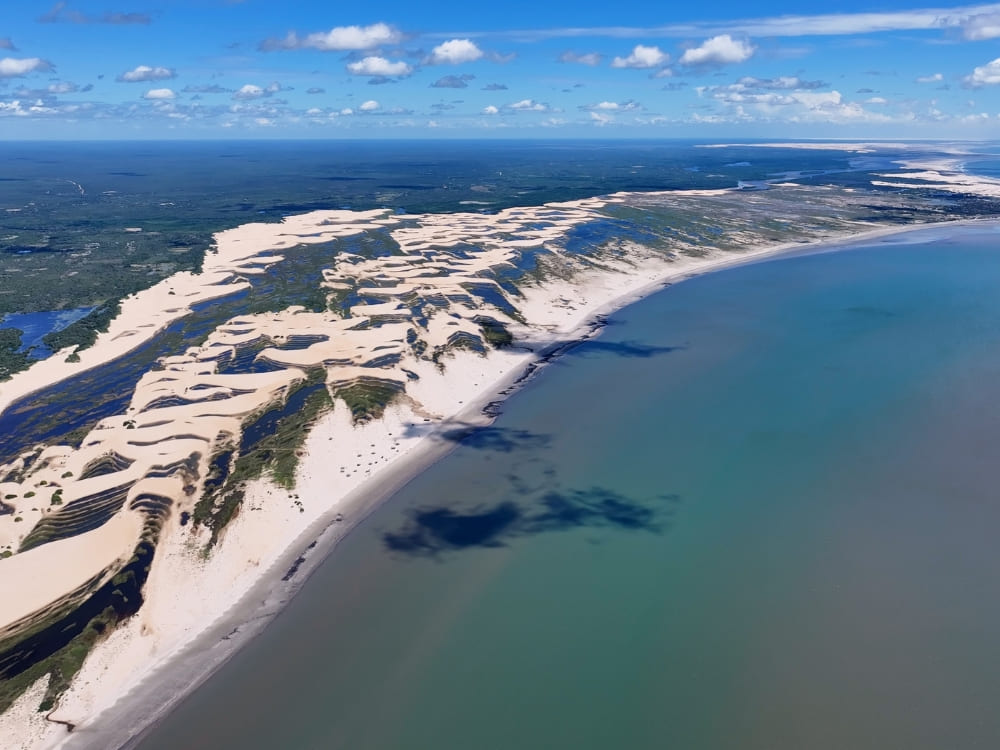
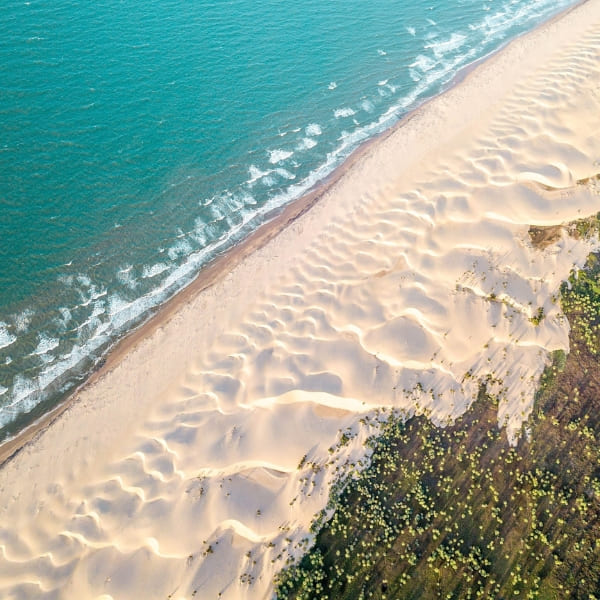
    The Delta do Parnaíba is the mouth of the Parnaíba River, nestled between the states of Piauí and Maranhão. It is the only open-sea delta in the Americas and the 3rd largest in the world, covering around 2,700 km² across more than 70 islands.

    Aerial perspective of the Delta do Parnaiba showing the river branching into the ocean alongside large coastal sand dunes.
    .

    The classic tour sets off from Parnaíba (PI) via speedboat or catamaran, navigating the five river branches — Igaraçu, Canárias, Caju, Melancieiras, and Tutoia — until reaching Porto dos Tatus, the beating heart of the route. Once there, highlights include exploring the Morro do Meio dunes and visiting the Canárias Islands and Pontal Beach.

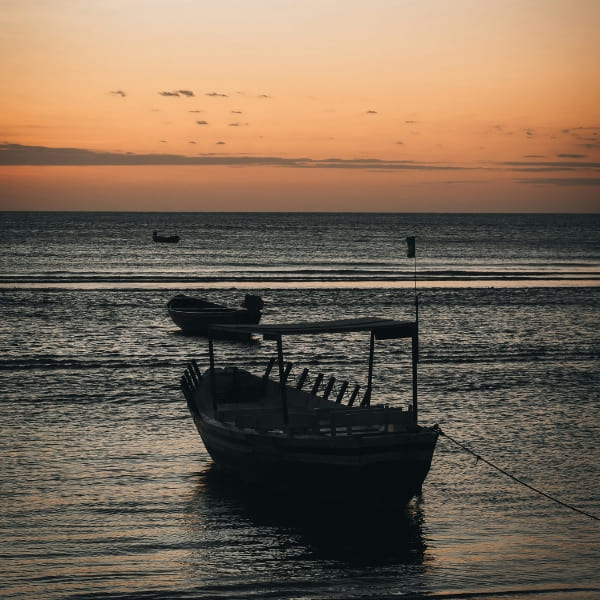
    The flocking of the scarlet ibises (Revoada dos Guarás) is absolutely unmissable. In the late afternoon, speedboats depart from Porto dos Tatus toward islands wrapped in dunes and mangroves. From the water, you can watch hundreds of vibrant scarlet ibises returning to roost, painting the sky red with their feathers. It’s an unforgettable sight.

    Jericoacoara, Ceará

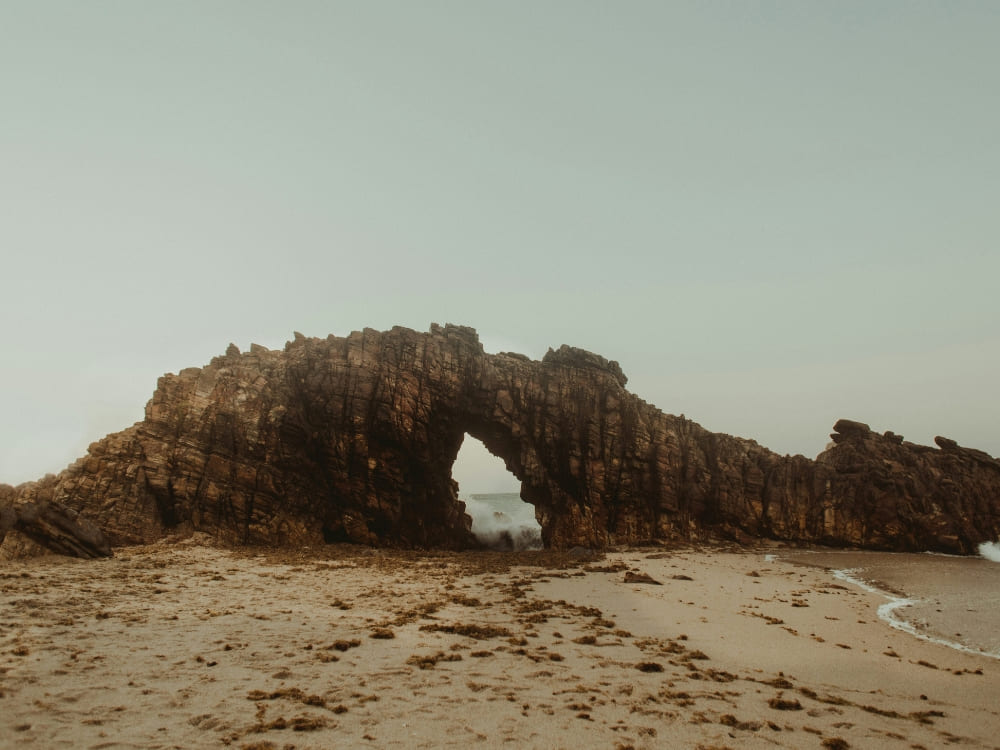
    Before you even arrive at the Jericoacoara National Park (88.8 km²), the route treats you to other jaw-dropping spots in Ceará, including the Coreaú River, Ilha do Amor (Island of Love), and the raw beaches of Tatajuba and Guriú.

    A large, rugged rock formation featuring a natural arch on a sandy beach beside the ocean, known as Pedra Furada in Jericoacoara.
    Photo: Jonathan Borba

    Once in Jeri, a few experiences are practically mandatory: lounging at the iconic beaches (Lagoa do Paraíso, Preá, Principal, Barrinha), visiting Pedra Furada and the Buraco Azul, tearing across the sand in a buggy, and enjoying the laid-back nightlife in the sandy streets of Vila de Jericoacoara.

    How many days are ideal to do the Route of Emotions?

    Trip duration depends entirely on your pace and interests, but generally, the Route of Emotions takes between 6 and 13 days. Naturally, the longer you stay, the deeper and more immersive the adventure becomes.

    • 6 days: 2 days per destination + travel/arrival days. (A fast-paced highlights reel).
    • 10 days: 3 days per destination + extra time to explore Atins, Barra Grande, or Camocim.
    • 12 days or more: The sweet spot. Enough time to comfortably hike the Lagoa Bonita Circuit, watch the sunset in Mandacaru, and tackle the eastern route of Jericoacoara without feeling rushed.

    Route of Emotions Packages

    Travel with PlanetaEXO to discover some of Brazil’s most beautiful landscapes along the Route of Emotions!

    PACKAGE HIGHLIGHTS STARTING PRICE
    Route of Emotions – 6 days Lençóis Maranhenses (dunes, lagoons, Preguiças River, Atins Beach, and villages of Vassouras and Mandacaru); Delta do Parnaíba (Parnaíba, Porto dos Tatus, Morro do Meio, flocking of the scarlet ibises); Jericoacoara (Principal, Preá and Lagoa Paraíso beaches, Lagoa Azul, Buraco Azul, Pedra Furada, sand buggy). US$ 1,490
    Route of Emotions – 10 days Lençóis Maranhenses (dunes, lagoons, Mirar das Estrelas, Preguiças River, Ponta do Mangue, Canto do Atins); Delta do Parnaíba (flocking of the scarlet ibises, Barra Grande, Camocim); Jericoacoara (Principal, Preá and Lagoa Paraíso beaches, Lagoa Azul, Buraco Azul, Pedra Furada, sand buggy). US$ 2,100
    Route of Emotions – 13 days Lençóis Maranhenses (dunes, lagoons, Santo Amaro, Ponta Verde, Barreirinhas, Mirar das Estrelas, Preguiças River, Canto do Atins, villages of Vassouras and Mandacaru); Delta do Parnaíba (flocking of the scarlet ibises, Barra Grande, Camocim); Jericoacoara (Principal, Preá and Lagoa Paraíso beaches, Lagoa Azul, Buraco Azul, Pedra Furada, sand buggy). US$ 2,590

    *Per person, based on double occupancy in group departures. Prices may vary depending on the season and availability. Exchange rate as of May 21, 2026; subject to change.

    Accommodation on the Route of Emotions itinerary

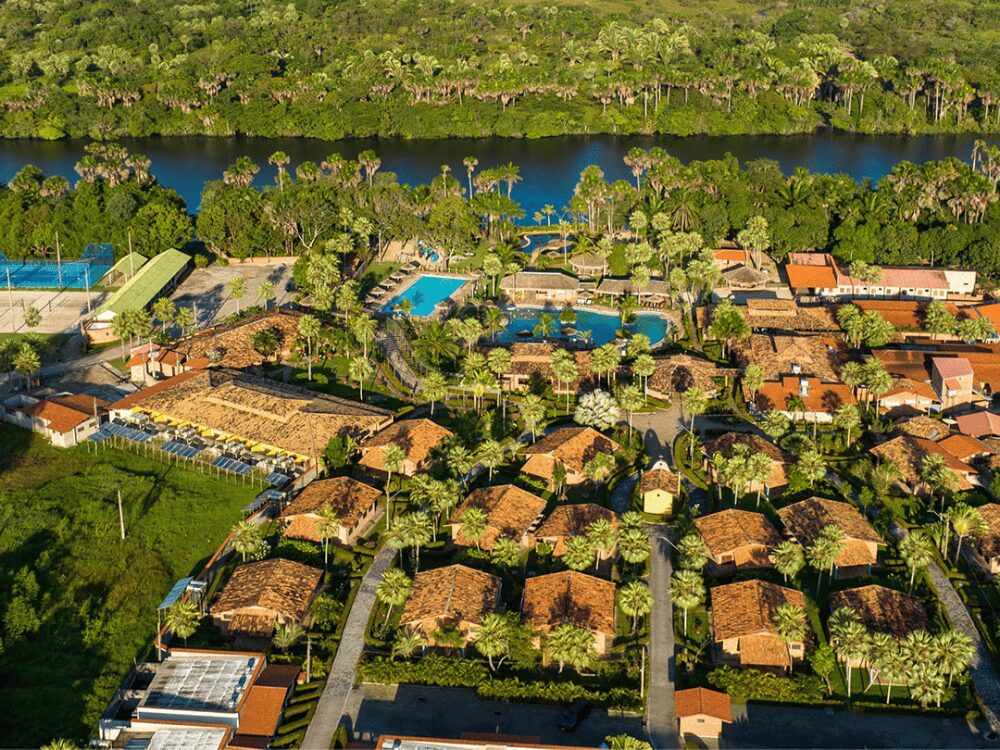
    Aerial view of a lush resort complex featuring red-roofed buildings and blue swimming pools nestled beside a wide river.
    Photo: Porto Preguiça Resort

    The accommodation experience is as dynamic as the trip itself, transitioning across three different states and vibes. Check out PlanetaEXO’s top hotel and pousada recommendations for Lençóis Maranhenses, Delta do Parnaíba, and Jericoacoara!

    Lençóis Maranhenses (Barreirinhas, Maranhão)

    Delta do Parnaíba (Parnaíba, Piauí)

    Jericoacoara (Jijoca de Jericoacoara, Ceará)

    Embark on the PlanetaEXO Route of Emotions itinerary

    Now that you know what the Route of Emotions is, have mapped out the geography, and figured out the best time and logistics, there’s only one thing left to do: lock in your dates and start packing!

    PlanetaEXO is a premier ecotourism platform offering seamless Route of Emotions tours and specializing in fully-guided Lençóis Maranhenses tours. We work exclusively with accredited local operators in each destination, ensuring authorized transfers, certified expert guides, and hand-picked, comfortable accommodations. Contact us today!

  • 10 Fascinating Facts About Jaguars and Why Brazil Is Their Stronghold

    10 Fascinating Facts About Jaguars and Why Brazil Is Their Stronghold

    A current look at the largest cat in the Americas: its bite, its range, its newly recorded meow, and why the Pantanal remains the best place on Earth to see one in the wild

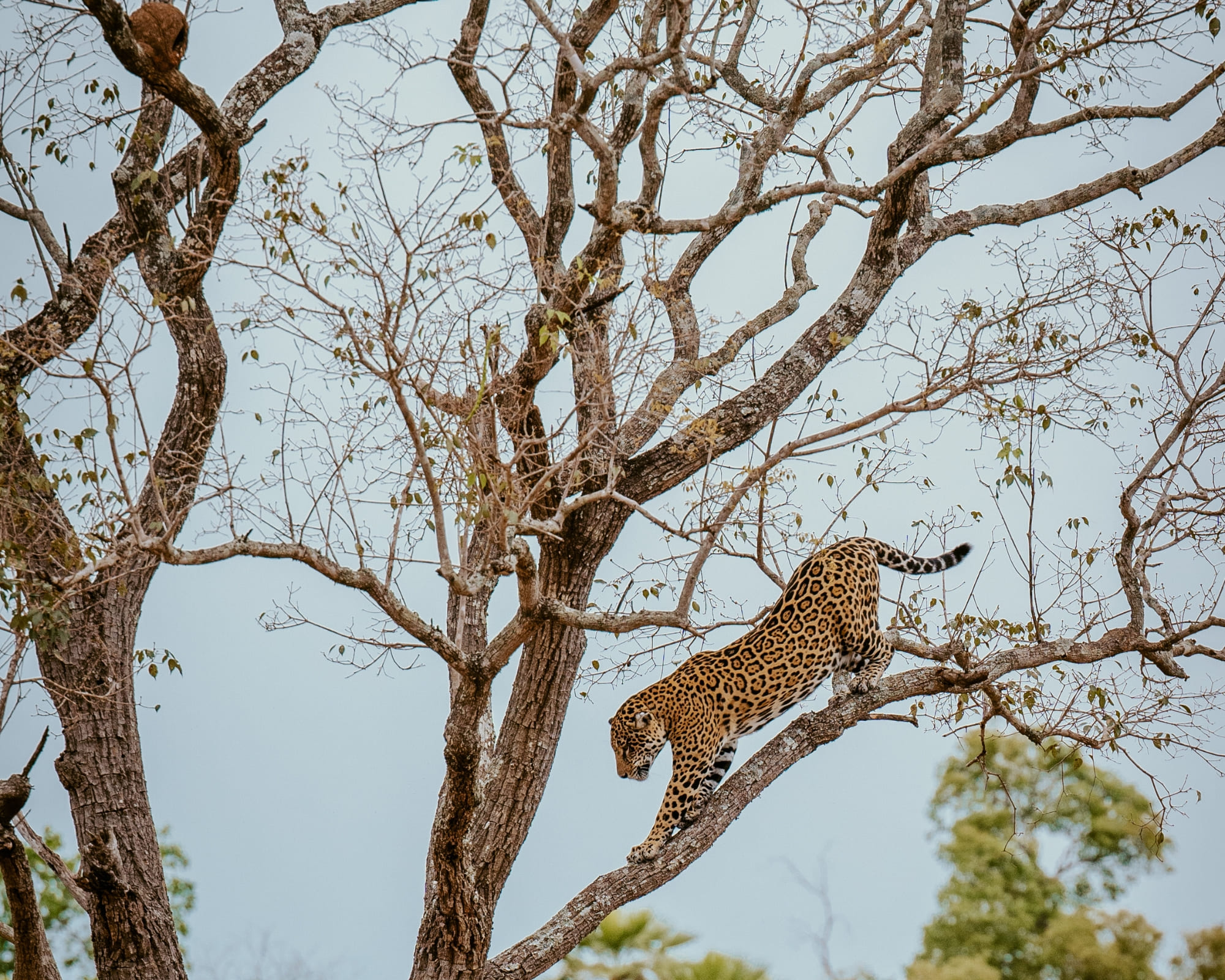
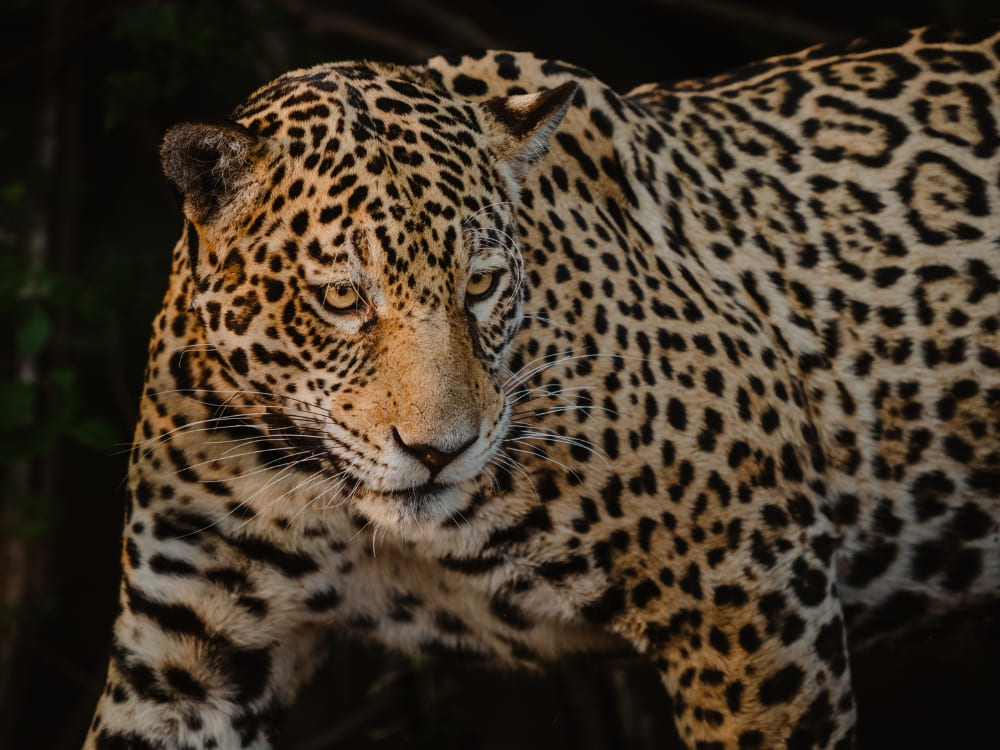
    The jaguar (Panthera onca) is the largest cat in the Americas and the third largest in the world, after the tiger and the lion. With their gold-and-black fur, penetrating gaze, and dominant charm, this is surely one of the animals that inspires the most fascination wherever it goes, especially in the Pantanal, where their presence is greater.

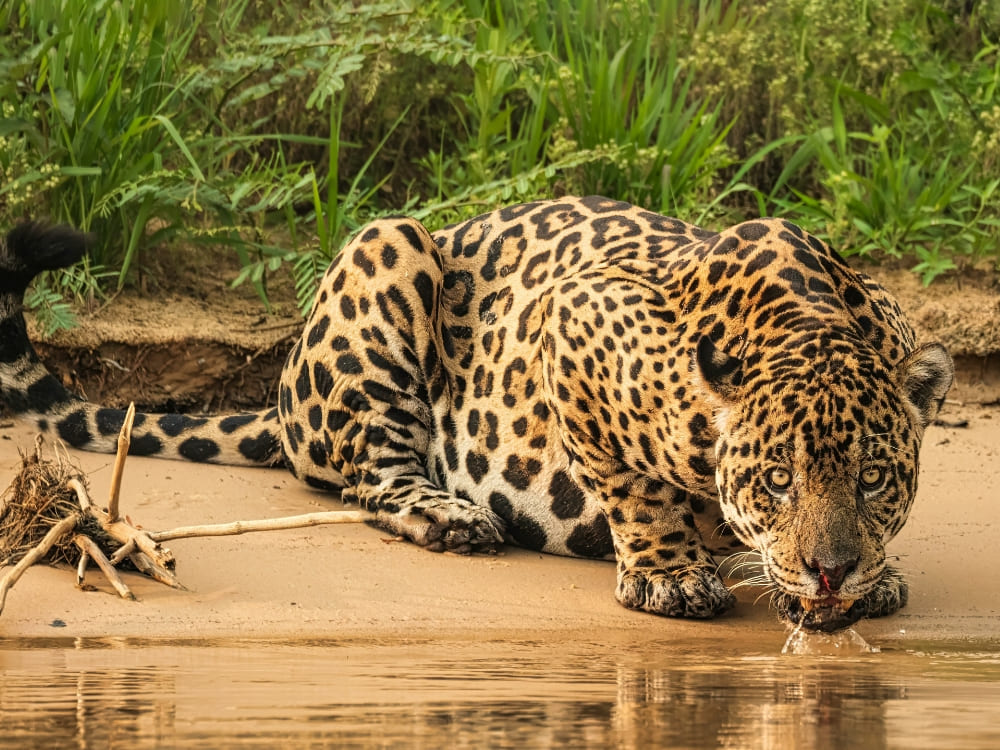
    A spotted jaguar crouches on a sandy riverbank to drink water in the wild.
    Photo: Joanne de Graaff

    In the wild, they live 12–15 years on average and up to 23 in captivity. They are solitary, mostly active at dawn, dusk, and night, and sit firmly at the top of their food chain as apex predators.

    PlanetaEXO, an ecotourism platform specializing in Pantanal tours, has put together 10 jaguar facts that will make you fall even harder for them—and make you crave seeing them up close. See below!

    1. Largest Cats in the Americas

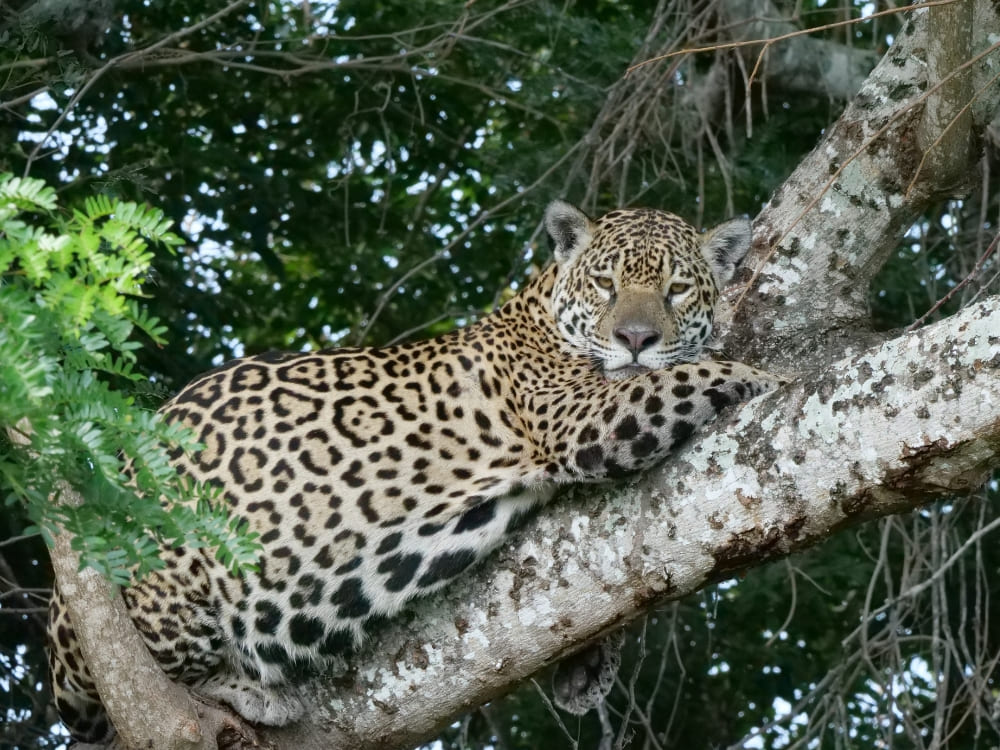
    Among the eight species of wild cats in the New World, the jaguar is the heaviest, strongest, and most muscular. Pantanal males are the upper end of the species—verified weights up to 158 kg, with shoulder height around 75 cm. For comparison, a male puma rarely exceeds 100 kg, and an ocelot tops out around 16 kg.

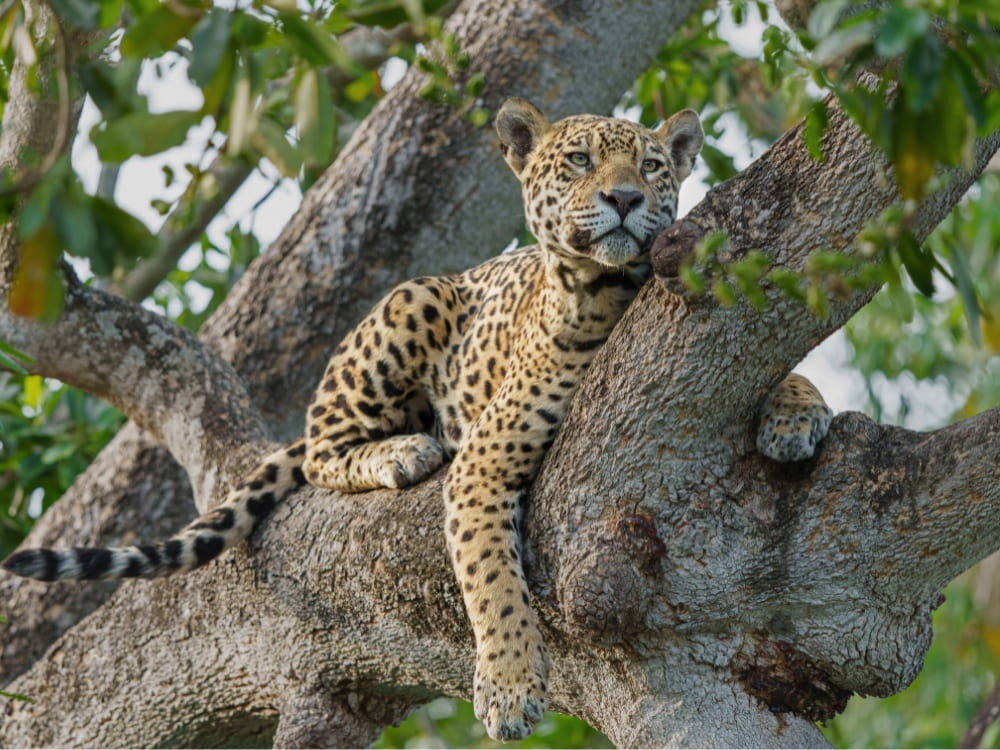
    A large jaguar rests its head on its paws while lying on a tree branch, displaying its unique rosette coat pattern.
    .

    Globally, only the tiger and the African lion outweigh them. Among living big cats, the jaguar is also the stockiest in build—short-limbed, deep-chested, and built for ambush rather than chase. That body plan is one of the reasons jaguars in Brazil can drag prey twice their weight up a tree or into the water.

    2. The Strongest Bite of Any Big Cat (Relative to Body Size)

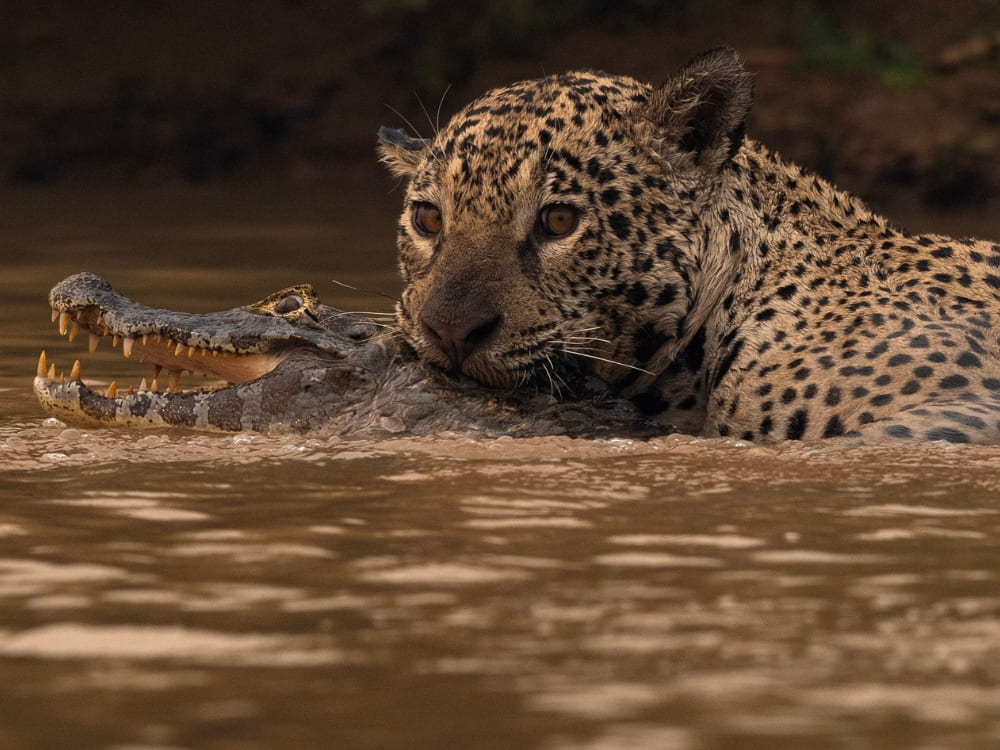
    A 2012 study in The Anatomical Record compared bite mechanics across nine big cat species and found the jaguar produces the highest bite force in proportion to body size. Guinness World Records lists the jaguar’s bite force quotient at the top of any extant big cat.

    A powerful Pantanal jaguar swims in muddy water while holding a hunted caiman in its strong jaws.
    .

    In raw numbers, a 100-kg jaguar bites with roughly 503 kg of pressure at the canines and around 705 kg at the carnassial teeth—about 1,500 PSI (pounds per square inch) total. That’s nearly double a tiger’s bite force despite the jaguar being significantly smaller.

    The function follows the form. Jaguars are one of the few predators that kill by piercing the skull of their prey directly, rather than suffocating it. The bite also goes through caiman armor and turtle shells—a niche almost no other big cat can fill.

    👉 Read more: When is the Best Time to Visit the Pantanal?

    3. Like a Fingerprint, Each Jaguar’s Rosettes are Unique

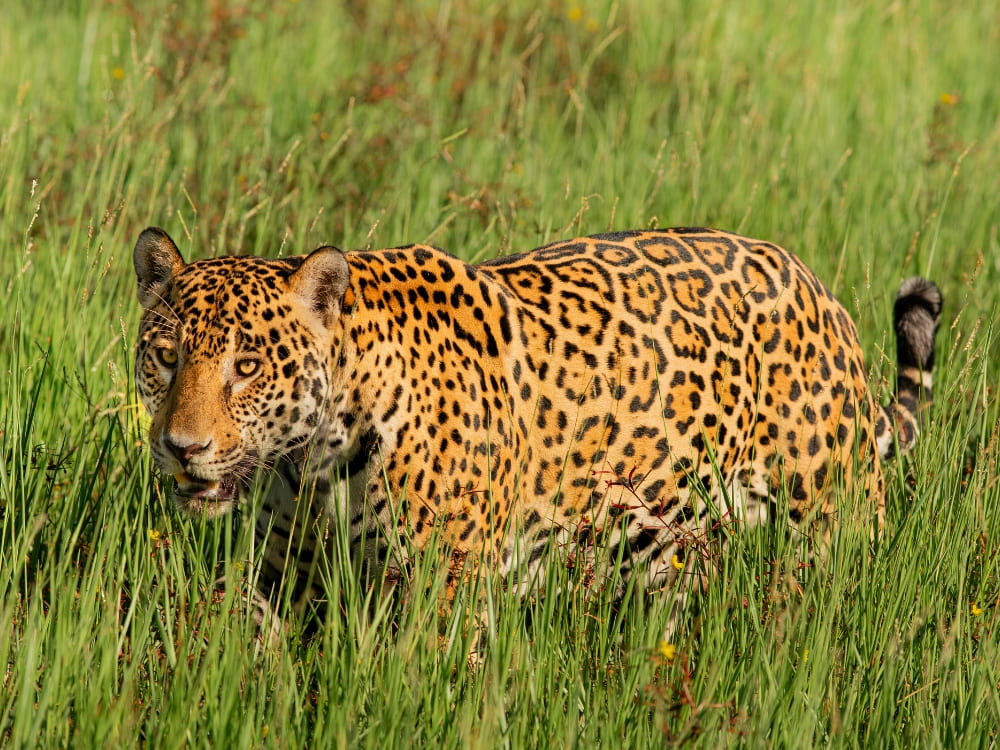
    Every jaguar carries a coat pattern that no other jaguar shares. The arrangement, size, and spacing of the rosettes (rose-shaped markings with small spots inside) vary from individual to individual across the entire body—flanks, shoulders, hips, and tail. Even melanistic jaguars carry these patterns, visible as “ghost rosettes” in bright light.

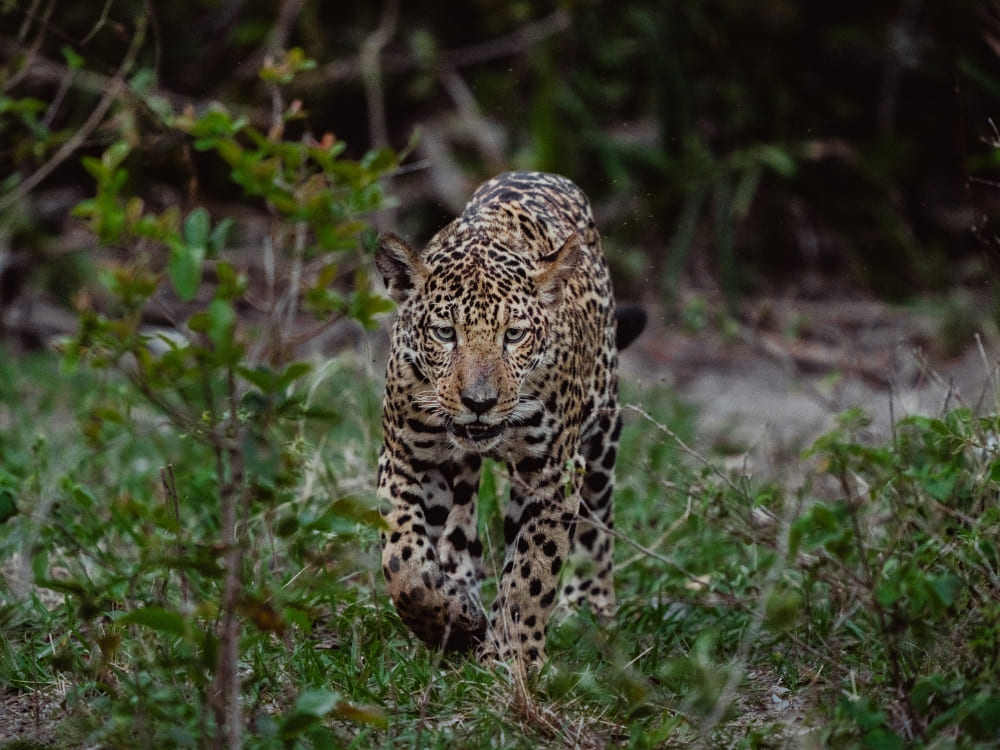
    A spotted jaguar with gold-and-black fur walks stealthily through tall green grass.
    Photo: Matias Ternes

    That uniqueness is how field biologists do their work. Camera-trap projects across the Amazon and Pantanal photograph each cat that walks past, then use pattern-recognition software (like HotSpotter) to match new images against catalogs of known animals. 

    Top-rank match accuracy on high-quality images runs 85–99%; on poor-quality images, it drops to 28–52%. The same method underpins most modern Pantanal jaguar density estimates.

    4. They Once Roamed From California to Argentina (and Lost Half of That Range)

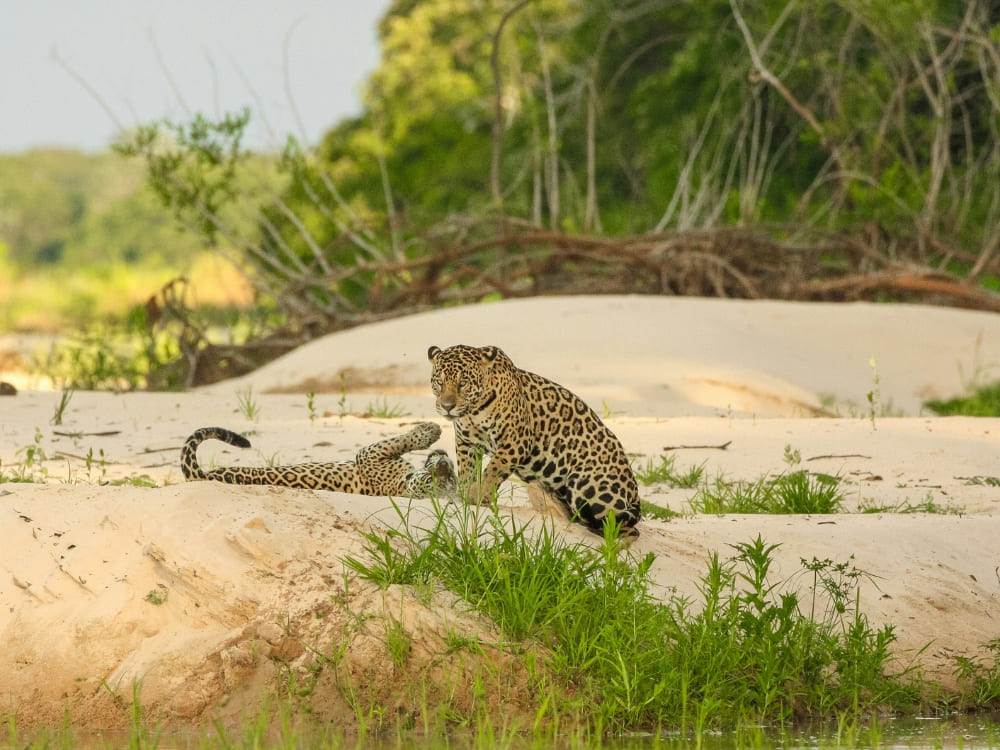
    At the turn of the 20th century, jaguars occupied an estimated 19 million km² stretching from the southwestern United States through Central America and most of South America down to northern Argentina. Today, the IUCN reports the species occupies only 51% of that historic range—the rest is lost to hunting, ranching, and habitat conversion.

    Two jaguars sit together on a white sandbank surrounded by green vegetation during a Pantanal jaguar safari.
    Photo: David Waite

    In the U.S., verified records once placed jaguars in Southern California, Arizona, New Mexico, Texas, and Louisiana. The last confirmed Texas jaguar was shot in 1948 near Kingsville. In Arizona, the last documented female was killed in the White Mountains in 1963

    By the late 1960s, no breeding population remained inside U.S. borders. El Salvador lost its jaguars entirely. In northern Argentina, populations dropped to a fraction of their original numbers.

    Occasional male jaguars still cross from Mexico into Arizona and New Mexico—and camera traps have confirmed a handful since 2011—but no resident U.S. breeding population exists nowadays.

    👉 Read more: How to Get to the Pantanal, Brazil

    5. Today, Brazil Holds the World’s Largest Jaguar Populations

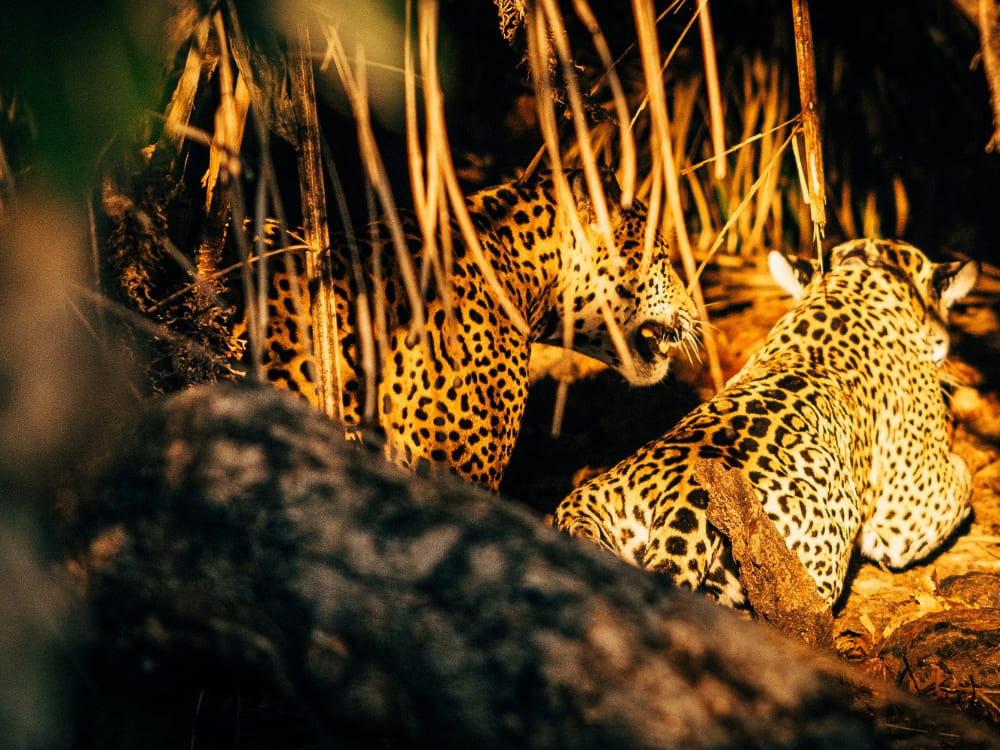
    The species’ current range covers 18 countries: Argentina, Belize, Bolivia, Brazil, Colombia, Costa Rica, Ecuador, French Guiana, Guatemala, Guyana, Honduras, Mexico, Nicaragua, Panama, Paraguay, Peru, Suriname, and Venezuela. Brazil sits at the center of it.

    Two jaguars sit together in the dark, illuminated through dry brush and tree branches during a night viewing.
    Photo: Felipe Castellari

    A study published in the scientific journal Biological Nature in 2025 revealed that an estimated population of 6,389 jaguars lives across 22 protected areas and indigenous lands in the Amazon.

    Even so, within Brazil, the Pantanal is the showcase. The world’s largest tropical wetland holds the densest jaguar population on record—up to 12.4 individuals per 100 km² in the northern Pantanal, with total estimates between 4,000 and 7,000 cats.

    That’s why nearly all serious jaguar watching happens in this area. The combination of open floodplain, abundant prey, and well-developed riverboat infrastructure makes sightings far more likely than in any other biome.

    👉 Read more: Where is the Best Place to See Jaguars in the Pantanal?

    6. Amazon Jaguars Are Smaller and Far Harder to See Than Pantanal Jaguars

    Although the Amazon hosts the largest jaguar population on the planet, the cats themselves are smaller than their Pantanal cousins. Central American jaguars can be roughly half the size of Pantanal animals, while Amazon jaguars sit in between.

    A muscular jaguar looks directly forward while walking through dense green shrubs and foliage.
    Photo: Donal Boyd

    The likely reason is prey. Open habitats like the Pantanal hold higher densities of large ungulates (capybara, peccary, marsh deer, etc.), so cats grow bigger. Dense rainforest holds smaller prey and forces cats to range over much larger territories—female home ranges of about 15.3 km² in the Pantanal expand to 53.6 km² in the Amazon.

    That same density gap is why sightings are so different. Pantanal jaguars come to the riverbank to hunt, rest, and drink water in plain view. Amazon jaguars move through closed canopies, often near the ground, and most photographs of them are from camera traps.

    Even on multi-day trips, wildlife encounters in the Amazon are possible but should be considered uncommon.

    👉 Read more: Pantanal or the Amazon – Which One Should You Choose?

    7. Jaguars Actually Meow

    Until recently, jaguar vocalizations in the wild were generally divided into roars, growls, grunts, hisses, and the species’ signature “saw” call—a low, rasping sound that resembles wood being cut. Meowing was assumed to be a captive-only behavior.

    Then a research team led by the University of Salford published a paper in the journal Behaviour documenting three audio recordings of free-ranging female jaguars in southern Brazil, in the state of Paraná, producing high-pitched, short, repetitive meows—much closer to a domestic cat than to anything previously associated with the species.

    Two clips appear to show a mother searching for her cub; a third captures a one-year-old female possibly calling for her mother. Listen below:

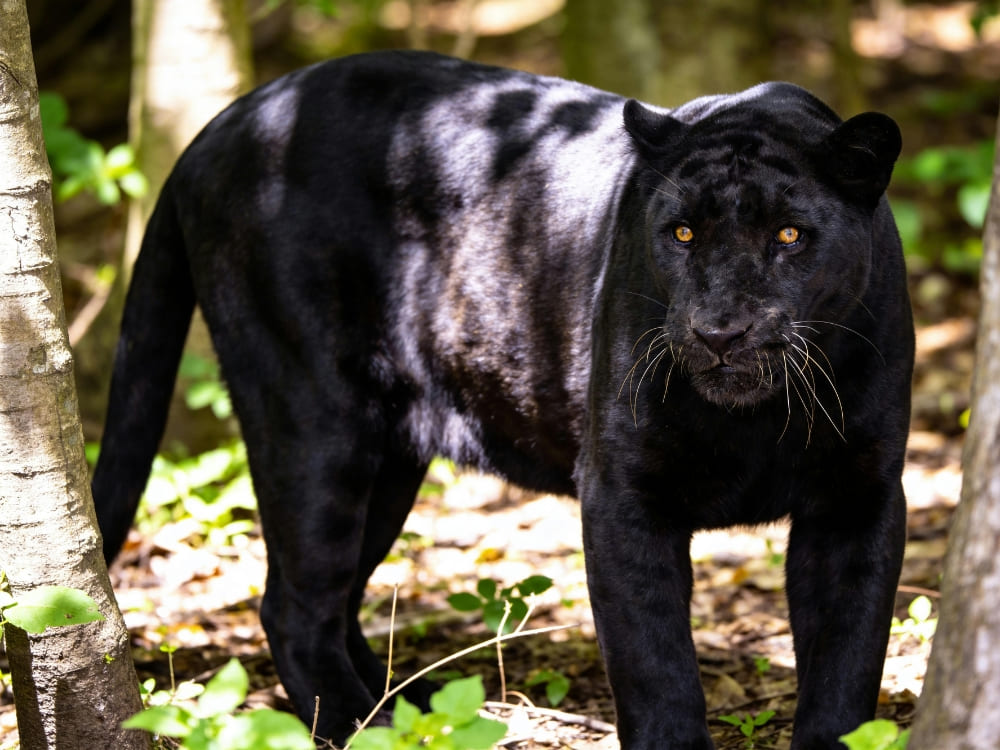
    8. “Black Panthers” in the Americas Are Melanistic Jaguars (Same Species)

    In the Americas, every “black panther” you have ever seen photographed is a melanistic jaguar with an excess of dark pigment—the same species (Panthera onca). In Africa and Asia, the equivalent is a melanistic leopard.

    A melanistic jaguar with dark fur and visible ghost rosettes stands among trees in a forest environment.
    @yglmmes

    The genetics differ between the two species. In jaguars, melanism is caused by deletions in the MC1R gene and is conferred by a dominant allele; in leopards, the same trait is recessive. Either way, the underlying rosettes remain visible in strong light. Black jaguars can be born in the same litter as spotted siblings.

    Melanistic jaguars appear most often in dense tropical forests, which suggests the trait offers an adaptive advantage in low-light environments. Estimates put the share of melanistic jaguars in the global population somewhere around 10%.

    9. Jaguars are the Best Swimmers Among the Big Cats

    Most big cats avoid deep water, but jaguars are the exception. Broad paws, dense musculature, and a comfort with submersion make them the most aquatic of the world’s big cats.

    In September 2025, a study led by biologist Leandro Silveira and colleagues, posted as a preprint on bioRxiv, documented the longest jaguar swim ever recorded: roughly 2.48 km across an artificial lake at the Serra da Mesa hydroelectric reservoir, in the state of Goiás. According to the researchers, the distance was traveled to explore the territory, probably to find mates.

    The hunting side of that talent is even more interesting. In the Pantanal, recent footage from the Jaguar Identification Project has captured cats hunting underwater—a male, Ousado, diving beneath the surface to ambush a caiman from below. This behavior is uncommon to observe but consistent with what guides and boatmen on the Cuiabá River have reported for years.

    All of this reinforces a point made earlier: when the Pantanal floods, jaguars don’t retreat. They follow the prey into the water, where their bite, patience, and swimming all converge into something no other big cat can do.

    10. Mesoamerican Civilizations Worshipped Jaguars as Gods

    Long before they were a conservation story, jaguars were a religious one. Across more than two thousand years of Mesoamerican history, every major civilization placed jaguars at the center of its cosmology.

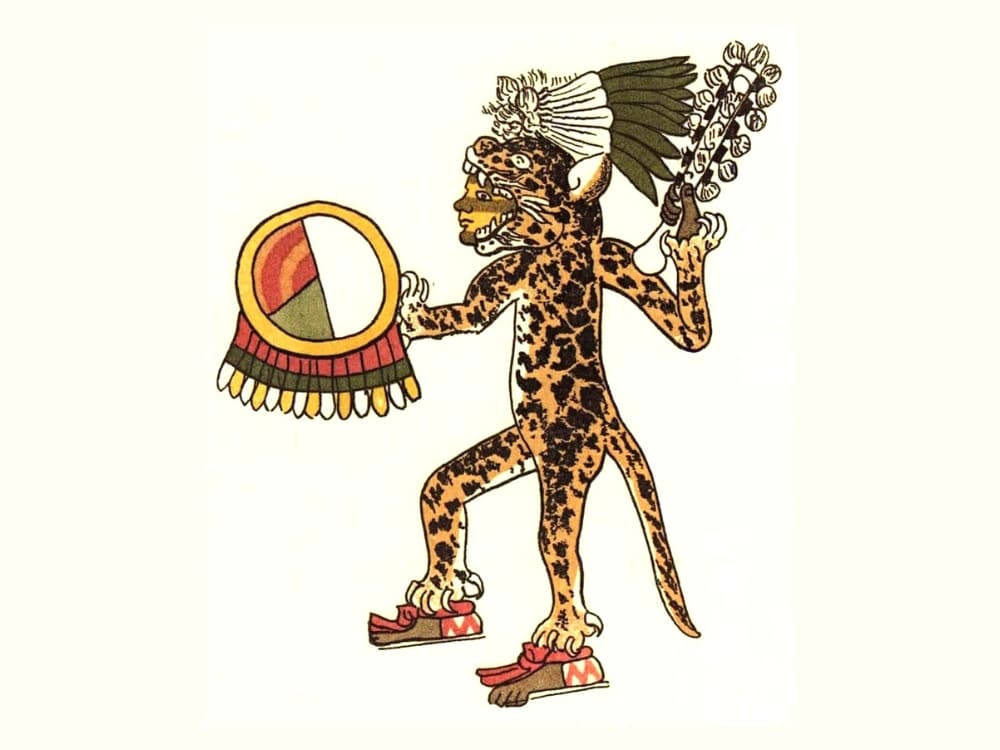
    A historical Mesoamerican illustration depicting a figure dressed as a jaguar warrior with a shield and headdress.
    .

    Olmec: Produced the earliest known iconography, depicting hybrid “were-jaguar” figures with feline and human features.

    Maya: The religion included multiple jaguar deities; one of the Hero Twins, Xbalanque, has skin patched with jaguar fur and is associated with the underworld.

    Aztec: The god Tezcatlipoca’s animal counterpart was the jaguar, and in jaguar form, he became Tepeyollotl (Mountainheart), a deity of caves, earthquakes, and night.

    The symbolism wasn’t random. The jaguar’s strength, its night vision, its comfort in both trees and water, and its habit of resting in caves all mapped onto ideas about power, fertility, and the ability to move between worlds.

     A bronze relief by Jesús Fructuoso Contreras depicting Cacamatzin wearing a jaguar pelt as a warrior.
    Bronze relief by Jesús Fructuoso Contreras depicting Cacamatzin as a jaguar warrior

    Aztec rulers wore jaguar pelts; Maya kings sat on jaguar-skin thrones. The cat has held this status in human imagination almost as long as it has held the top of the food chain.

    Bonus: How and where to see jaguars in the wild

    If after reading these facts about jaguars you want to look one in the eye, the answer is short: join a Pantanal safari in the dry season. Between roughly June and October, water recedes, prey concentrates along the rivers, and jaguar sightings reach their statistical peak, especially in Porto Jofre, Poconé, in the north.

    It is also possible to spot them in the Southern Pantanal, but only on the grounds of Caiman, an ecolodge that works with the Onçafari Project to incorporate ecotourism into animal conservation.

    PlanetaEXO offers tours that feature Pantanal jaguar safaris. Check them out below!

    TOUR HIGHLIGHTS DURATION STARTING PRICE*
    Pantanal Jaguar Budget Safari Budget-friendly, wildlife safari focused on jaguars, boat tours, hiking. 4 days R$ 9.700

    US$ 1,900

    € 1.640

    Pantanal Luxury Safari at Caiman The only place in the Southern Pantanal where jaguars are spotted, luxury accommodation, hiking, canoeing. 4 days R$ 16.700

    US$ 3,285

    € 2.825

    Pantanal Jaguar Safari in Porto Jofre, Cuiabá Jaguar-focused boat safaris, sighting of other species (capybaras, giant anteaters, native birds, etc.), hiking. 4 days R$ 13.785

    US$ 2,710

    € 2.330

    Pantanal Jaguar Photography Tour Boat safaris for jaguar watching, local guides specializing in wildlife photography, hiking. 6 days R$ 19.280

    US$ 3,790

    € 3.260

    *Per person, based on double occupancy in group departures. Prices may vary depending on season and availability. Exchange rate as of May 20, 2026; subject to change.

    Spot jaguars in the wild with PlanetaEXO

    Now that you know so many incredible facts about jaguars, it’s time to see them with your own eyes! PlanetaEXO, an ecotourism platform specializing in Pantanal tours, can help with the planning of your wildlife trip to Brazil.

    We work with the best local operators to ensure safe, fulfilling, and responsible travel to spot jaguars and other animals in the wild. With tailored itineraries, comfortable accommodations, and transportation support, you’ll experience the vacation of your dreams. Contact us now!

  • National Parks in Brazil Every Nature Lover Should Visit

    National Parks in Brazil Every Nature Lover Should Visit

    National parks are important to protect nature, but they also offer amazing ecotourism experiences that can attend to travelers’ every adventure need

    Essential for the preservation of ecosystems of great ecological relevance and scenic beauty, Brazil’s seventy-five national parks are also important assets for scientific research, environmental education, and non-exploitative ways to connect with nature—which directly affects ecotourism.

    While Tijuca (Rio de Janeiro) and Iguazu (Paraná) parks are the country’s most visited—attracting 4.6 and 2 million visitors every year, respectively—there are other incredible national parks in Brazil that offer terrific experiences for travelers who can’t get enough of outdoor activities.

    If you’re a nature aficionado, then you should definitely explore Brazilian national parks! PlanetaEXO, an ecotourism platform specializing in adventure tours in Brazil, has put together a list of remarkable off-the-beaten-path destinations. Check it out below!

    1 – Chapada Diamantina National Park (BA)

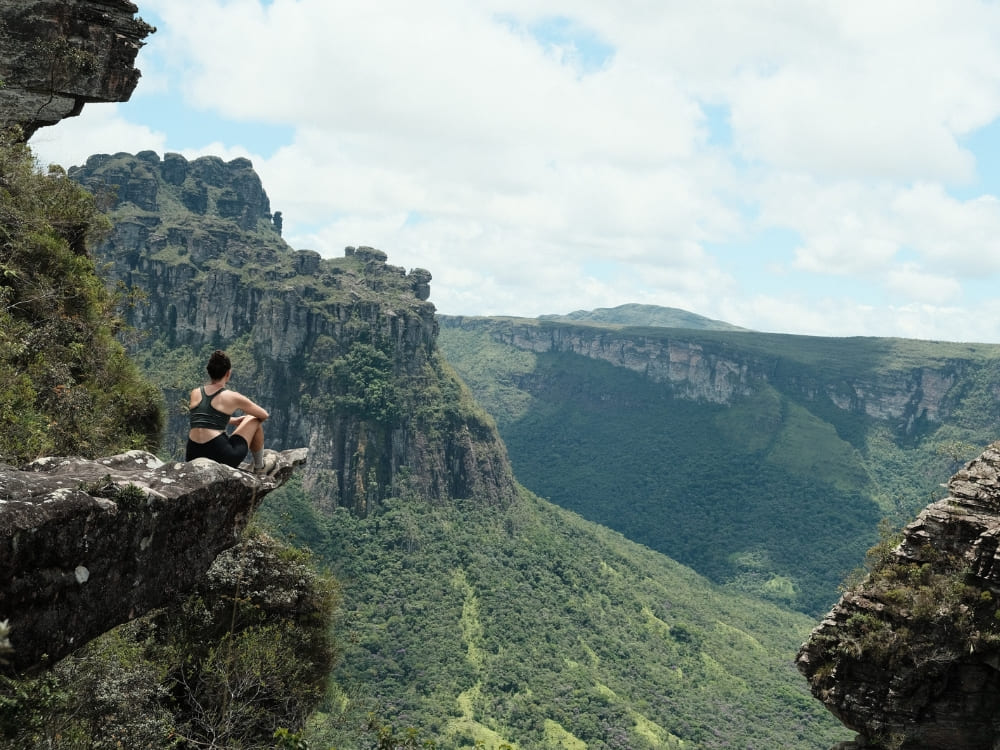
    Chapada Diamantina National Park (total area: 152,000 ha), in the state of Bahia, is one of Brazil’s main destinations for adventure travel. With gorgeous waterfalls (Fumacinha, Buracão, Sossego, Mixila, etc.), natural wells, lookouts, canyons, and diverse vegetation, it’s the perfect place for a full immersion in nature.

    Hiker sitting on a rocky cliff overlooking the green canyons of Chapada Diamantina National Park in Brazil.
    .

    Vale do Pati is considered the best hike in Brazil by many hikers due to its amazing trekking routes that cross rivers, caves, mountains, and ancient rock formations. 

    Another unmissable experience is swimming in Poço Azul, an underground lake with crystal-clear waters that gain a beautiful blue tint when the sunlight cuts through the cave cracks.

    Why visit?

    Hike through Vale do Pati’s incomparable beauty, explore hidden caves, cool off in dozens of waterfalls, and live unforgettable moments in mesmerizing underground lakes.

    2 – Lençóis Maranhenses National Park (MA)

    Surely one of the most jaw-dropping national parks in Brazil, Lençóis Maranhenses (total area: 155,000 ha), in the state of Maranhão, stands out for the gorgeous white sand dunes and rainwater lagoons sharing the same space. Rivers, mangroves, and beaches also inhabit this gorgeous desert-like scenario.

    Aerial view of the white sand dunes and green rainwater lagoons in Lençóis Maranhenses National Park.
    .

    The park’s otherworldly beauty is recognized internationally. In July 2024, UNESCO (United Nations Educational, Scientific and Cultural Organization) nominated Lençóis Maranhenses as a World Heritage Site

    Why visit?

    Lençóis Maranhenses is the largest sand dune field in South America, offering over 36,000 lagoons that appear and disappear according to the rainfall volume.

    It’s the perfect vacation option for travelers looking for peaceful experiences and splendid natural scenarios.

    3 – Fernando de Noronha Marine National Park (PE)

    Located off Brazil’s northeastern coast, Fernando de Noronha Marine National Park (total area: 11,000 ha) protects a cluster of twenty-one islands in the state of Pernambuco.

    Although one of the most desired travel destinations in Brazil, Fernando de Noronha limits the number of travelers to ensure its conservation. According to federal and state laws, only 11,000 people per month are allowed on the island (including locals, workers, and tourists).

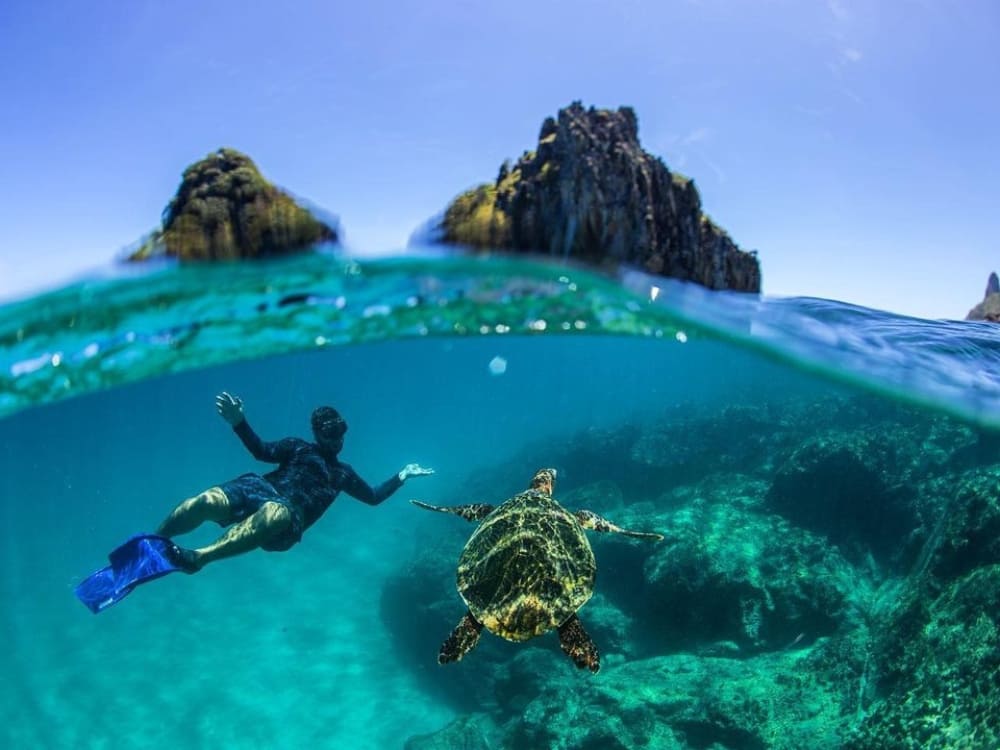
    Snorkeler swimming with a sea turtle in the clear marine waters of Fernando de Noronha National Park.
    .

    That is one of the reasons why the park is so beautiful and well-preserved. With vibrant coral reefs and rich marine life, it’s an amazing place for scuba diving and spotting dolphins, turtles, and various species of fish.

    Noronha’s unspoiled beaches are a sight to behold. Baía do Sancho, in particular, is the main attraction and was even nominated the best beach in the world by TripAdvisor’s users in 2023.

    Why visit?

    Fernando de Noronha’s pristine beaches are perfect for tanning, relaxing, and engaging in aquatic activities, like swimming, snorkeling, canoeing, and water bike riding.

    In addition, The Tamar Project, an organization that protects various species of sea turtles, is based on the island and welcomes visitors all year round.

    4 – Pantanal Matogrossense National Park (MT/MS)

    As part of the largest wetland on the planet, Pantanal Matogrossense National Park (135,000 ha) is divided between two states—Mato Grosso and Mato Grosso do Sul.

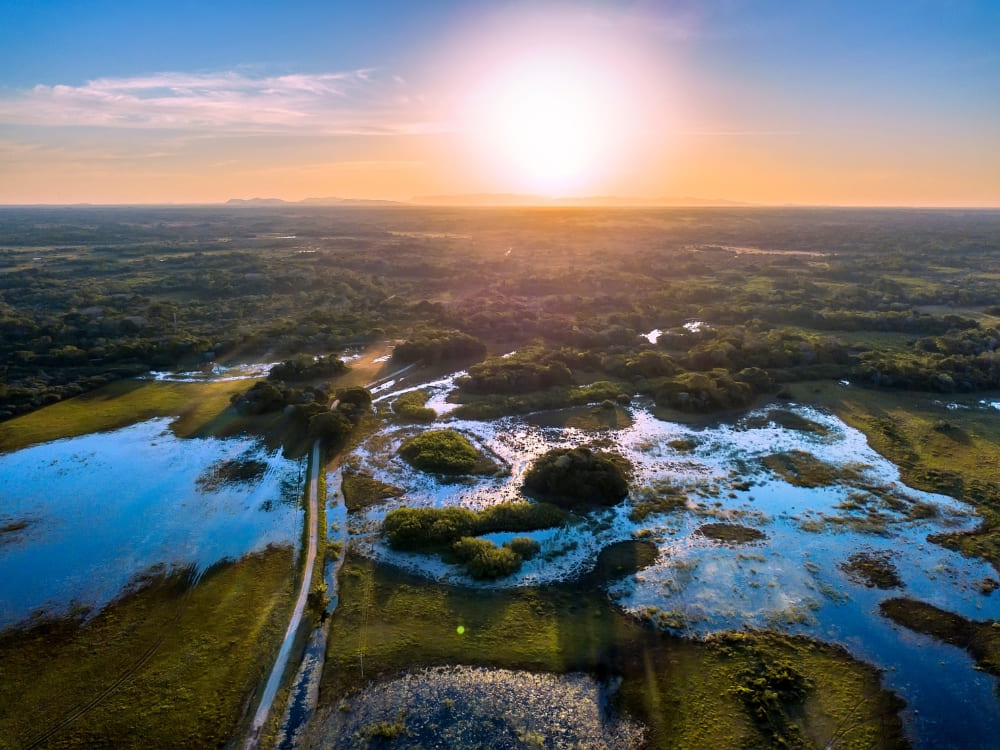
    Aerial sunset view over the expansive wetlands and rivers of the Pantanal Matogrossense National Park.
    .

    Home to three major Brazilian biomes (Cerrado, Atlantic Forest, and the Amazon Rainforest), the Pantanal’s flora and fauna play a huge role in balancing South America’s ecosystem.

    This is the best national park in Brazil for travelers who love wildlife watching, with over 650 bird species, 120 mammals, and 50 reptiles.

    Why visit?

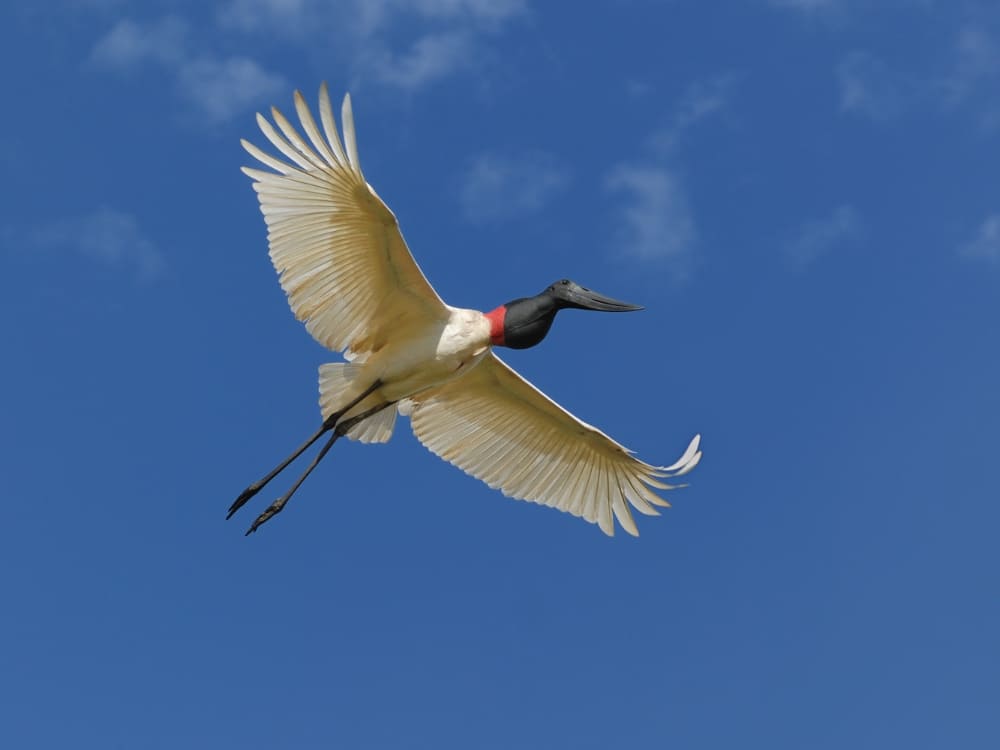
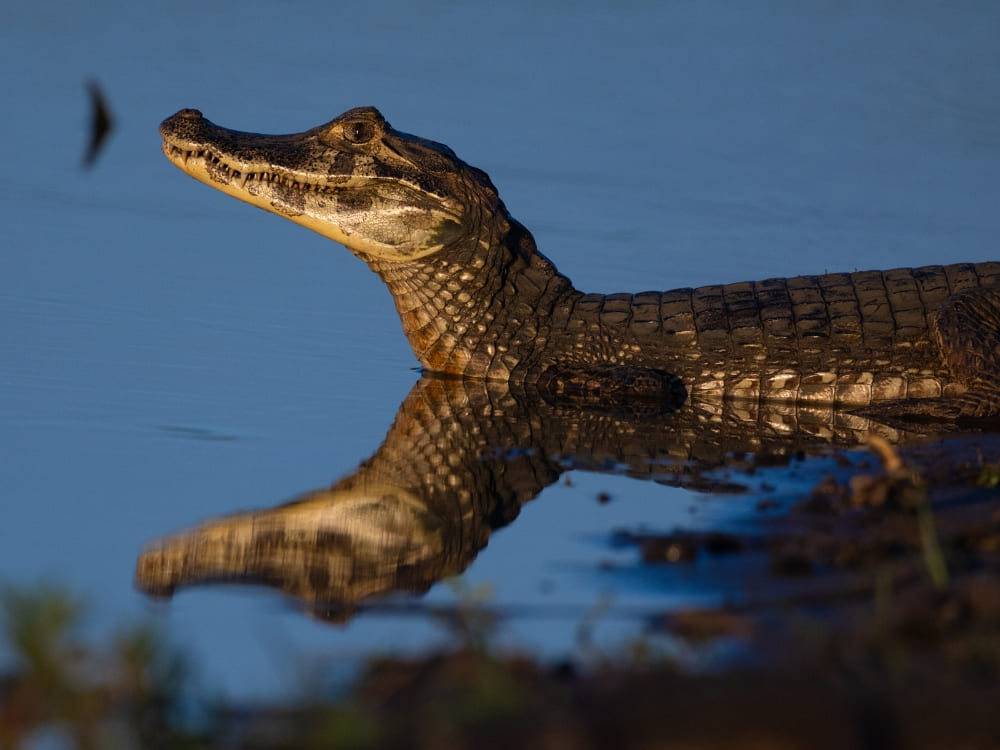
    Incredible animals roam around the Pantanal, such as capybaras, caimans, jabiru storks, and jaguars. Photo safaris and night spotlighting are perfect activities to observe the wildlife.

    👉 Read more: Where is the Best Place to See Jaguars in the Pantanal?

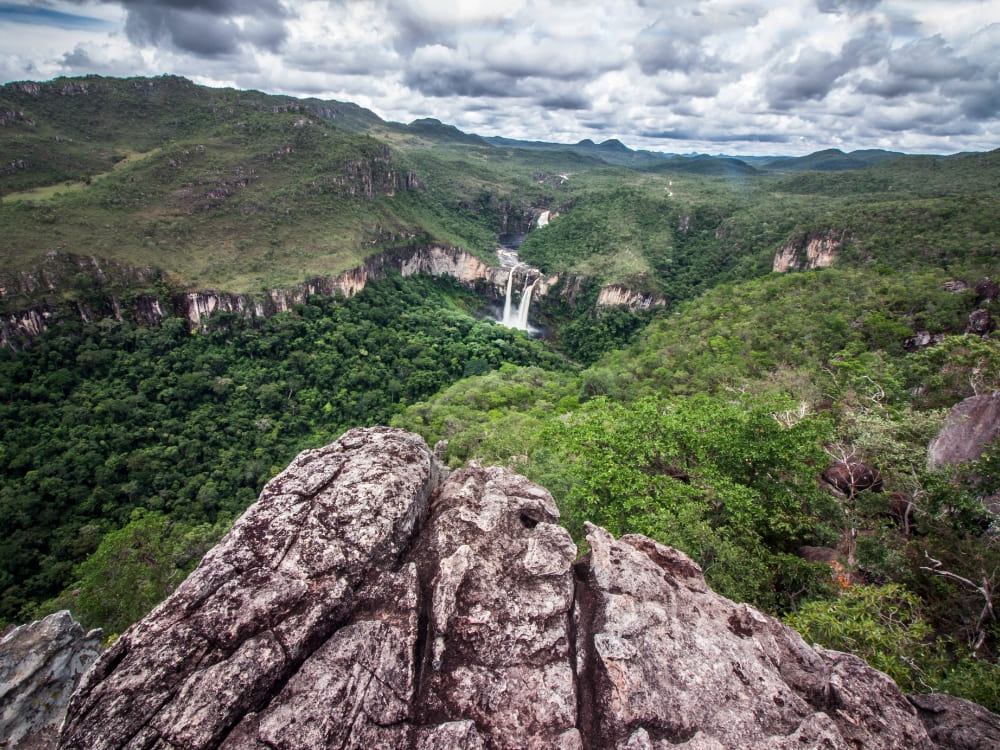
    5 – Chapada dos Veadeiros National Park (GO)

    Situated in northeast Goiás, Chapada dos Veadeiros National Park (total area: 240,000 ha) features lush vegetation, hundreds of water springs, waterfalls, lookouts, dozens of hiking trails of different levels of difficulty, and ancient rock formations.

    View from a rocky overlook showing a distant waterfall and lush vegetation in Chapada dos Veadeiros National Park.
    .

    Scientists claim these rocks are over a billion years old, back when the Earth was formed by continental crusts spread across oceans—millions of years before Pangaea. Over time, natural phenomena crystallized the sand of the sea and the beaches, creating beautiful quartz crystals.

    Why visit?

    Chapada dos Veadeiros’ enchanting atmosphere attracts trekkers and spiritual travelers who seek a closer connection with nature and the crystals’ supposed healing powers.

    With over 2,000 cataloged waterfalls, it’s a wonderful destination for swimming, taking pictures, or simply relaxing by the water.

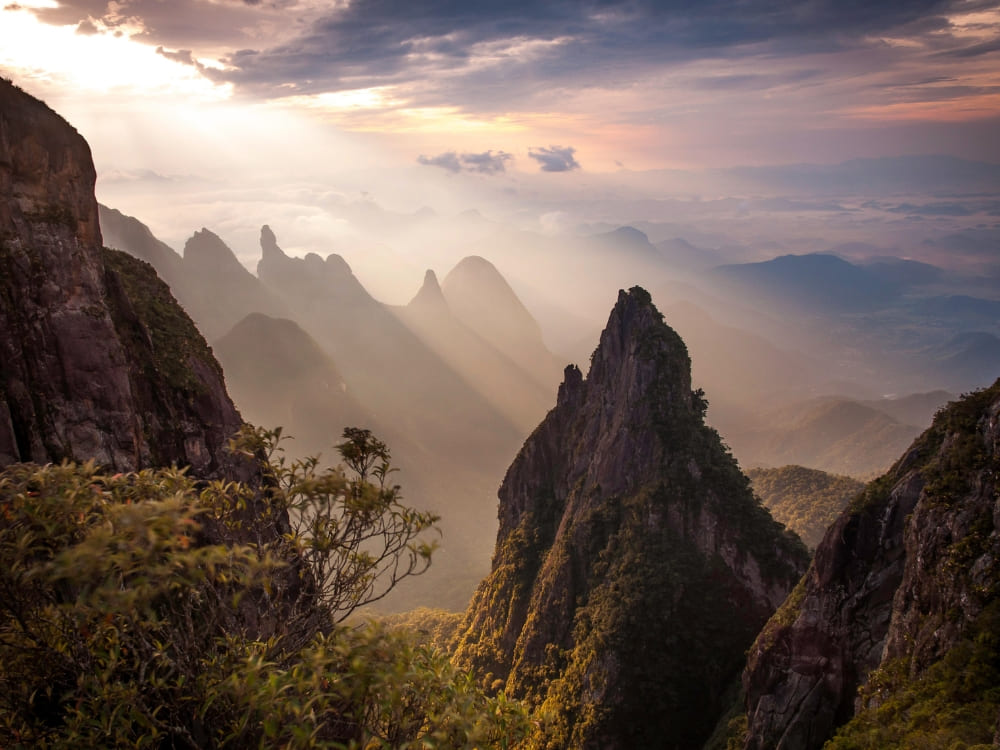
    6 – Serra dos Órgãos National Park (RJ)

    Serra dos Órgãos National Park (total area: 20,000 ha) guards the mountain range of Rio de Janeiro across four different towns: Petrópolis, Teresópolis, Magé, and Guapimirim.

    The park is great if you like wildlife watching—there are 462 species of birds, 105 mammals, 103 amphibians, and 83 reptiles—but it’s even better for trekking.

    Misty sunrise over the jagged mountain peaks and trails of Serra dos Órgãos National Park in Brazil.
    .

    Beautiful natural scenarios adorn 200 km of trails, including the trek to the almighty Finger of God, a mountain that reaches almost 1,700 meters above sea level. 

    Why visit?

    Serra dos Órgãos is mostly recommended for people with good physicality that enjoy challenging hiking trails and mountain climbing. It’s a demanding experience, but the beauty of this Brazilian national park is more than worth it.

    👉 Read more: When is the Best Time to Visit Brazil?

    7 – Serra da Capivara National Park (PI)

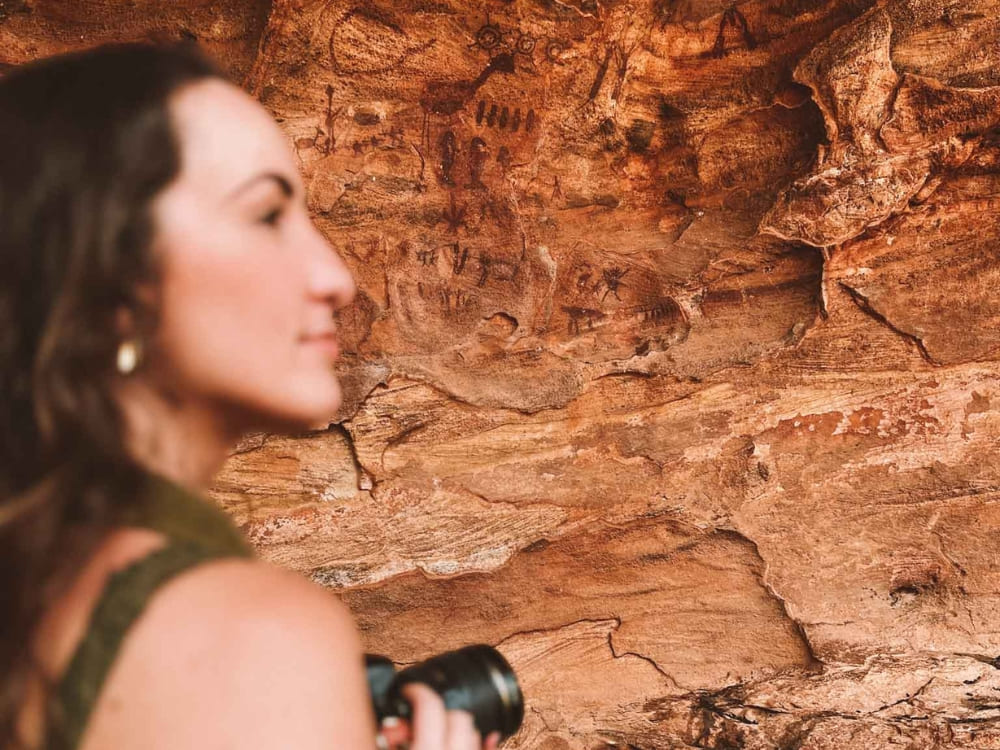
    Curious travelers who love history can’t miss the chance to go to Serra da Capivara National Park (total area: 130,000 ha) in the state of Piauí. A UNESCO World Heritage Site since 1991, this mesmerizing place is a real treasure for science and ancient human civilization enthusiasts.

    Woman viewing ancient cave paintings on a rock wall inside Serra da Capivara National Park.
    @gaiavani

    Among rocky cliffs and deep canyons, you’ll find 400 archaeological sites—some of them are over 10,000 years old—with fascinating cave paintings and engravings made by the first humans in South America.

    Licensed guides are required to accompany the groups in Serra da Capivara. This ensures the park’s preservation and allows for custom tours and engaging lessons about this amazing environment and its past.

    Why visit?

    Serra da Capivara is surely one of the greatest national parks in Brazil to get in touch with human history. Not only is the park the largest cave painting site in the world, but it also displays gorgeous views of ancient canyons, dense vegetation, and infinite blue sky.

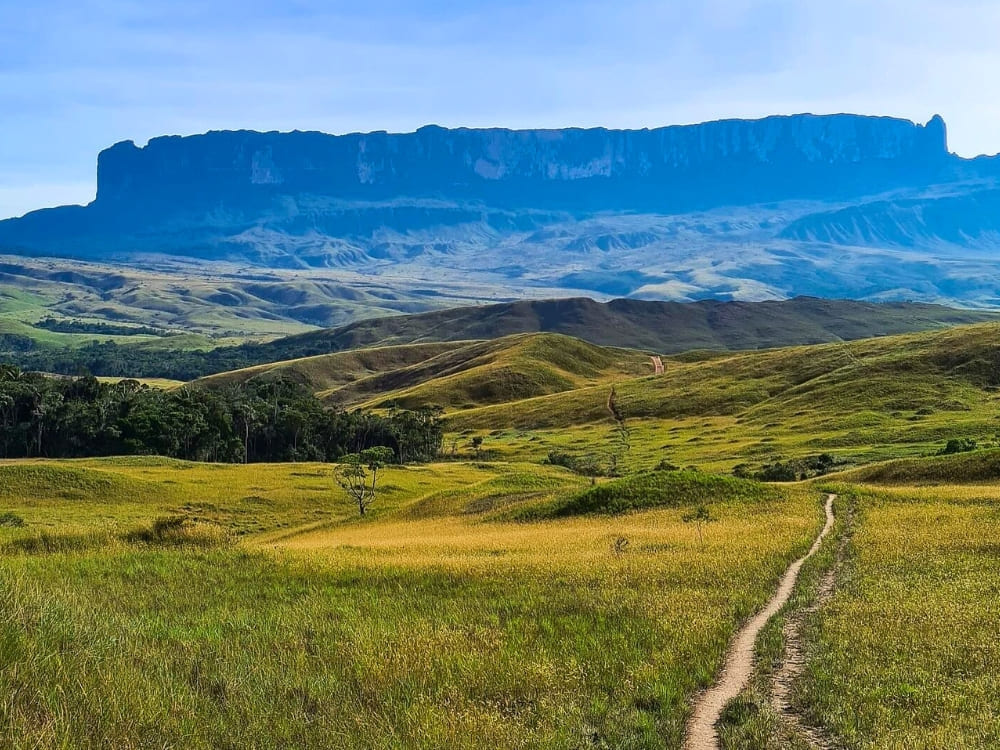
    8 – Mount Roraima National Park (RR)

    On the triple border of Brazil, Venezuela, and Guyana, Mount Roraima National Park (total area: 117,600 ha), in the state of Roraima, is excellent for hiking, wild camping, and mountain climbing. The very top of the mountain reaches nearly 2,900 meters above sea level!

    Hiking trail leading through the savanna towards the towering cliffs of Mount Roraima National Park.
    @dmitrideigatu

    Mount Roraima is located mostly on Venezuelan territory, so it’s common for travelers to also roam around Canaima National Park (total area: 3,000,000 ha) in Bolívar. That’s where you’ll find the Valley of Crystals, an impressive natural quartz formation.

    You can also swim in the rivers (Orinoco, Essequibo, Amazon) and natural pools, observe the rich fauna and flora, and join wonderful, yet demanding, trekking tours.

    Why visit?

    Mount Roraima is one of Earth’s oldest geological formations, dating back nearly 2 billion years. Shrouded in mystery and beautiful views, it captivates visitors with its towering cliffs and mesmerizing ecosystems, offering an awe-inspiring glimpse into Mother Nature’s wonders.

    👉 Read more: 10 Travel Tips for Mount Roraima to make the most of your trip

    9 – Jaú National Park (AM)

    The largest in the state of Amazonas, Jaú National Park (total area: 2,272,00 ha) protects a good portion of the Amazon Rainforest and its river basin, both immeasurably valuable to the planet’s ecosystem.

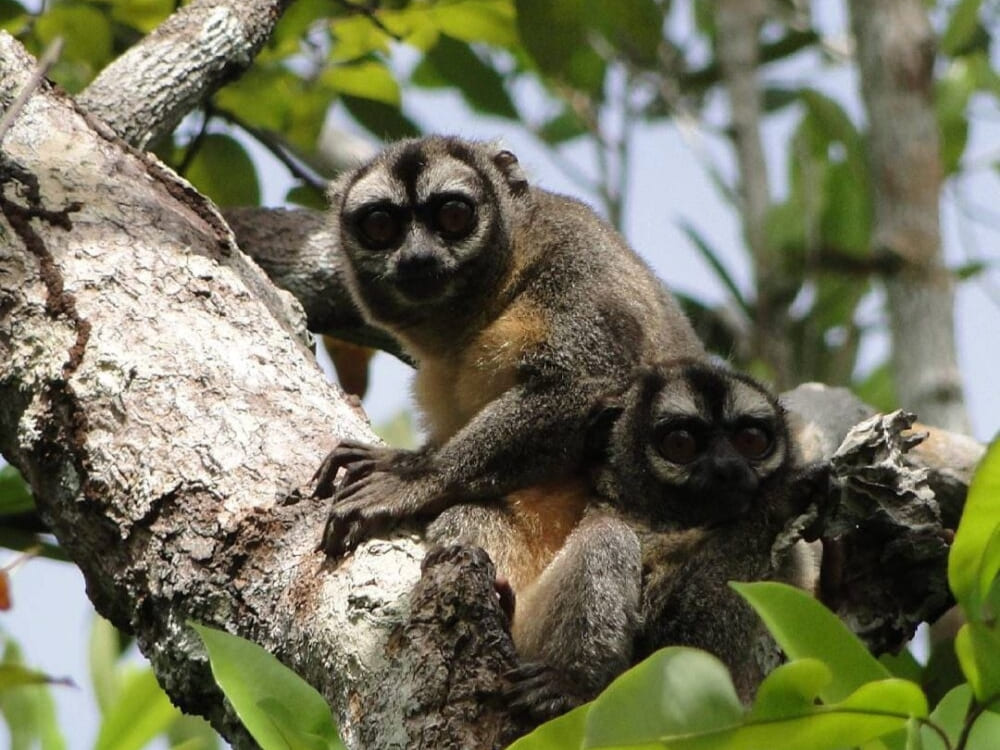
    Two monkeys resting on a tree branch in the Amazon rainforest of Jaú National Park.
    @parquenacionaldojau

    Travelers can hike in the jungle, spot wild animals, go on boat rides, fish for piranhas and other local species, and visit freshwater beaches

    Weather conditions dictate itineraries in the Amazon. It’s important to pay attention to both the wet and dry seasons so you know when the best time to visit is.

    Why visit?

    Tourists dive deep into the heart of the Amazon when visiting Jaú, which holds exceptional experiences in nature that will surely be engraved in their minds and hearts for a very long time.

    Beyond the natural wonders, archeological treasures are nestled in the park’s facilities. Petroglyphs from the Neolithic era located near the Jaú River banks are major elements to understand human history in South America.

    10 – Anavilhanas National Park (AM)

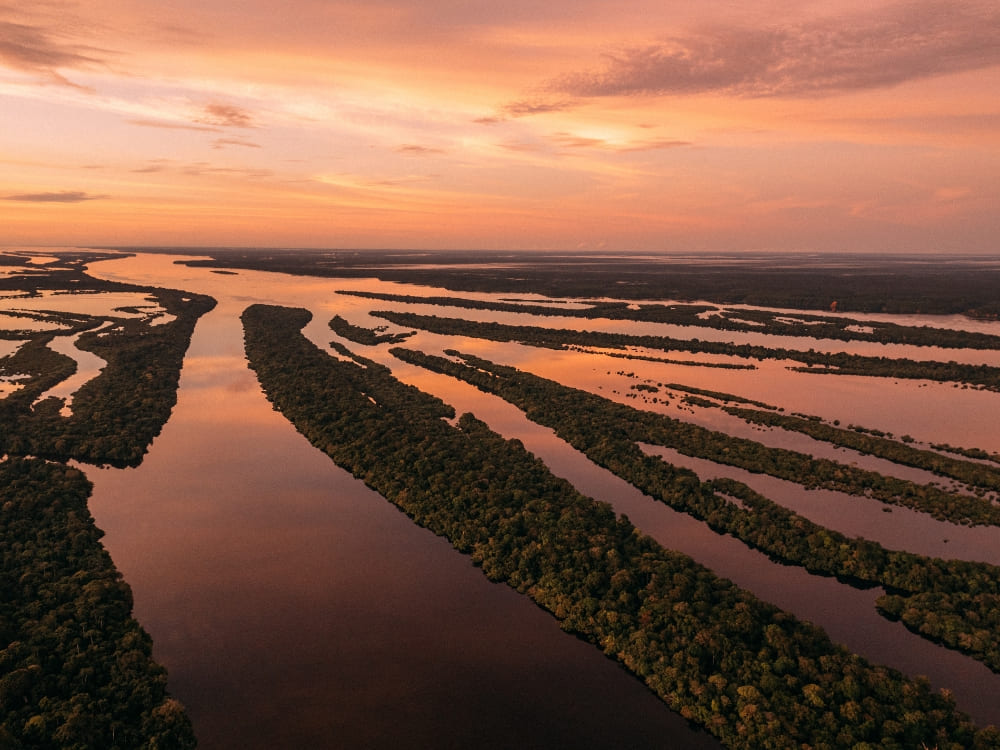
    Anavilhanas (total area: 350,000 ha) is always included on lists of the best national parks in Brazil for protecting over 400 islands in the Negro River. It’s the second-largest river archipelago in the world, only after Mariuá, also in Amazonas.

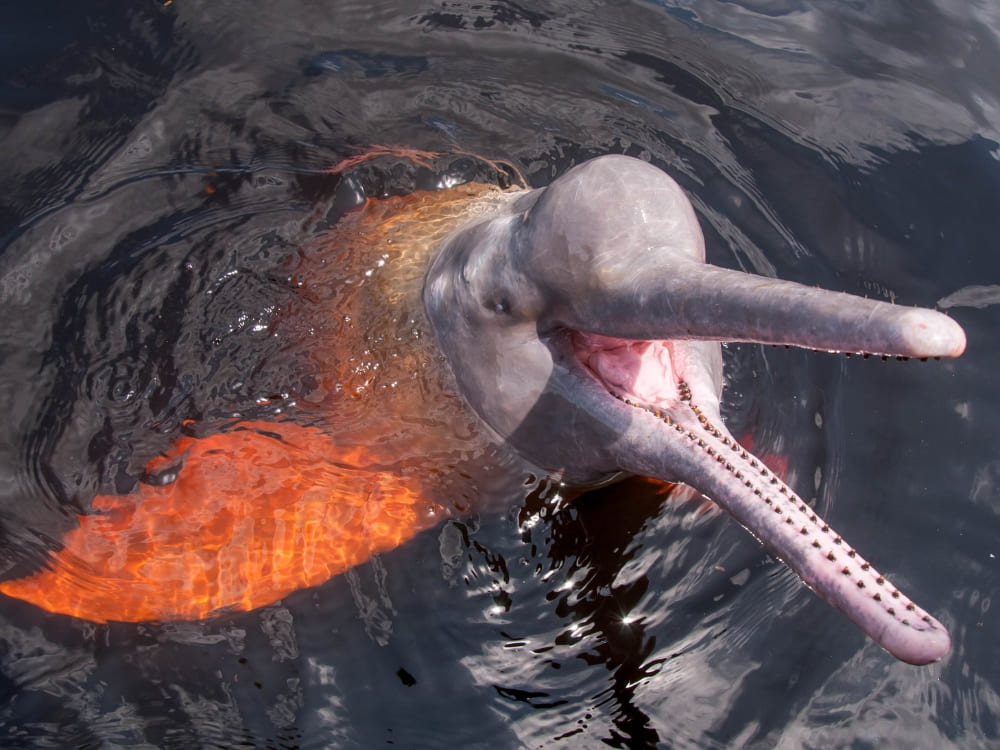
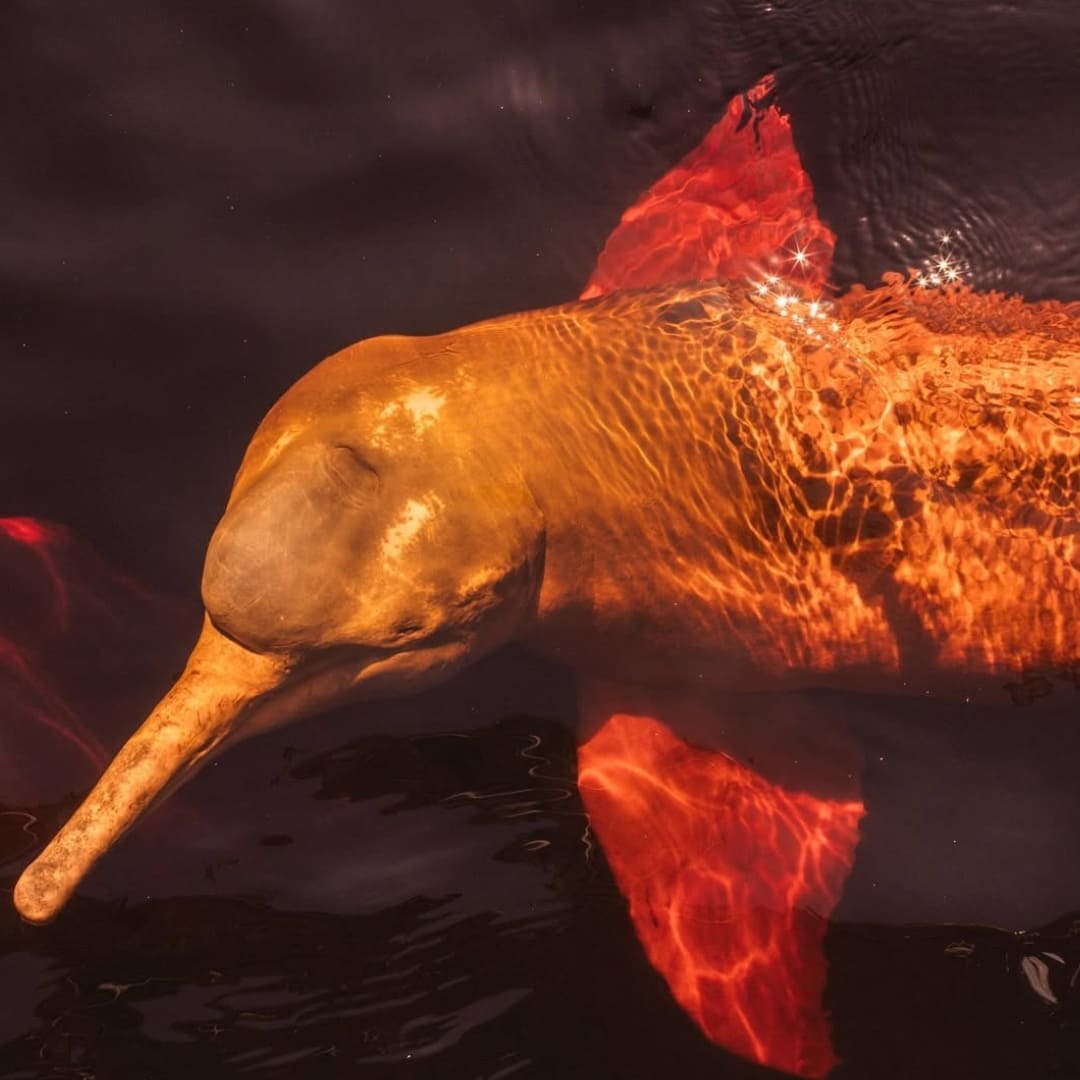
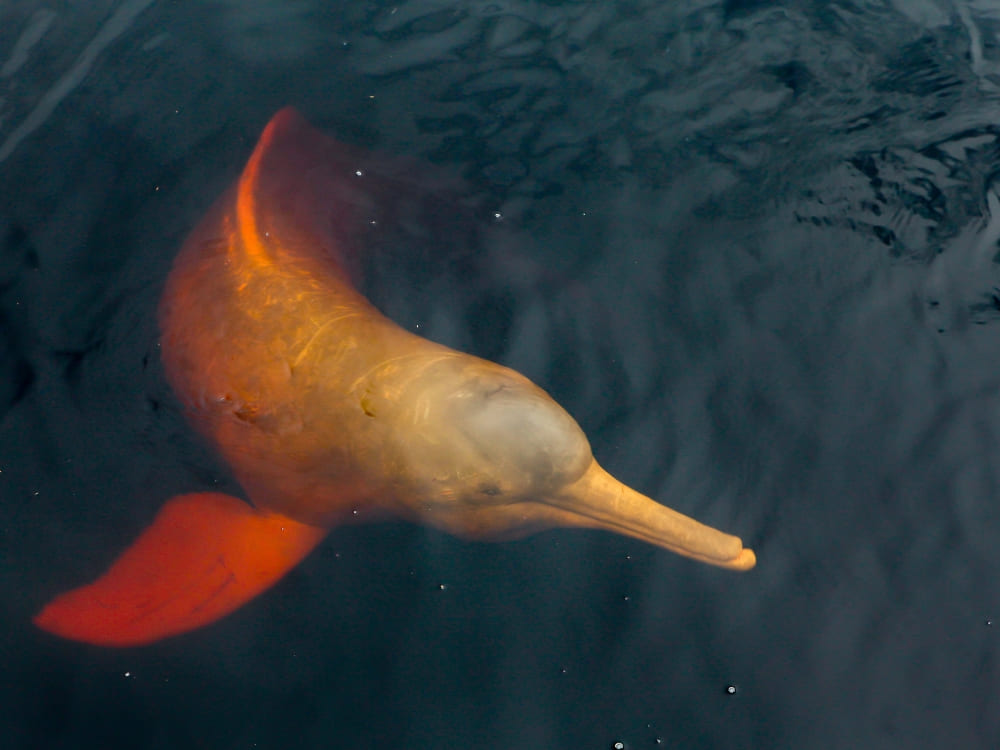
    Tourists have a blast when it comes to adventure. Wildlife watching, interacting with Amazon pink dolphins, forest trekking, aquatic trails, and visiting freshwater beaches are must-have experiences in Anavilhanas.

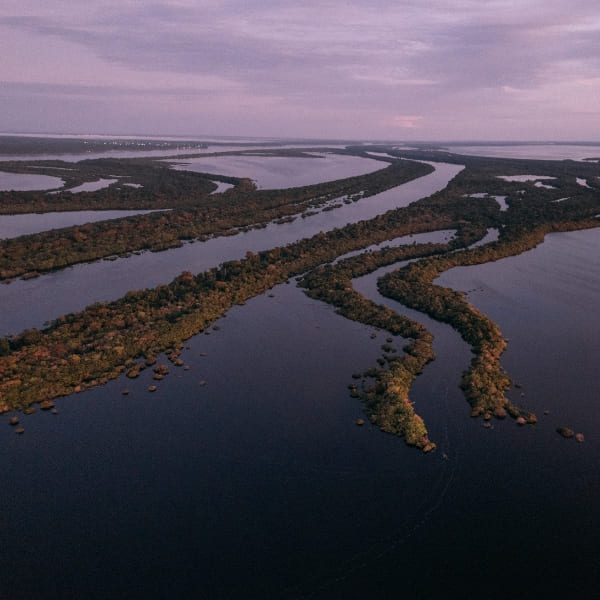
    Aerial view of the dark waters of the Negro River and forested islands of Anavilhanas National Park at sunset.
    Photo: Felipe Castellari

    Why visit?

    The contrast of the white sand of the islands with the dark waters of the Negro River creates beautiful views, capable of charming travelers of any age. There are hundreds of river beaches, but some are completely unmissable: Orla, Aracari, Bararoá, Iluminado, Sobrado, and Camaleão

    Rich biodiversity, immersion in the forest, and engaging with local communities to learn about Amazonian culture are other reasons to visit Anavilhanas. 

    👉 Read more: 15 Amazon Animals – Unravel the Wildlife in Brazil

    11 – Abrolhos Marine National Park (BA)

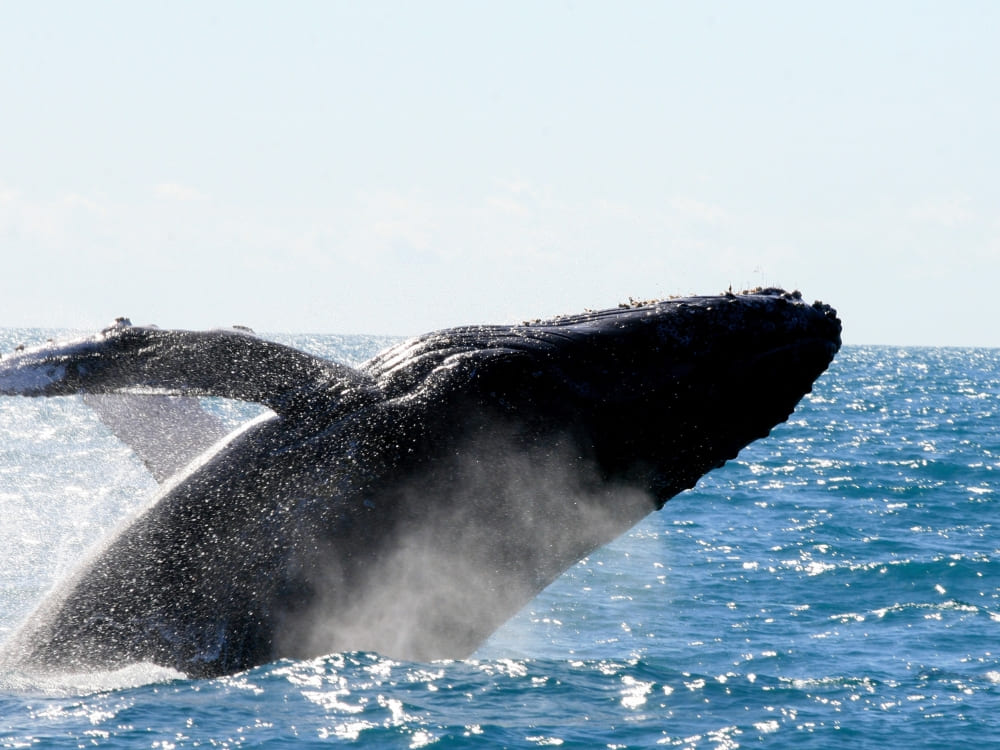
    Abrolhos Marine National Park (total area: 88.000 ha), a cluster of islands in the state of Bahia, was established in 1983, but this is the same place English naturalist Charles Darwin fell in love with in 1832, during his 5-year voyage around the world to collect data about biological evolution.

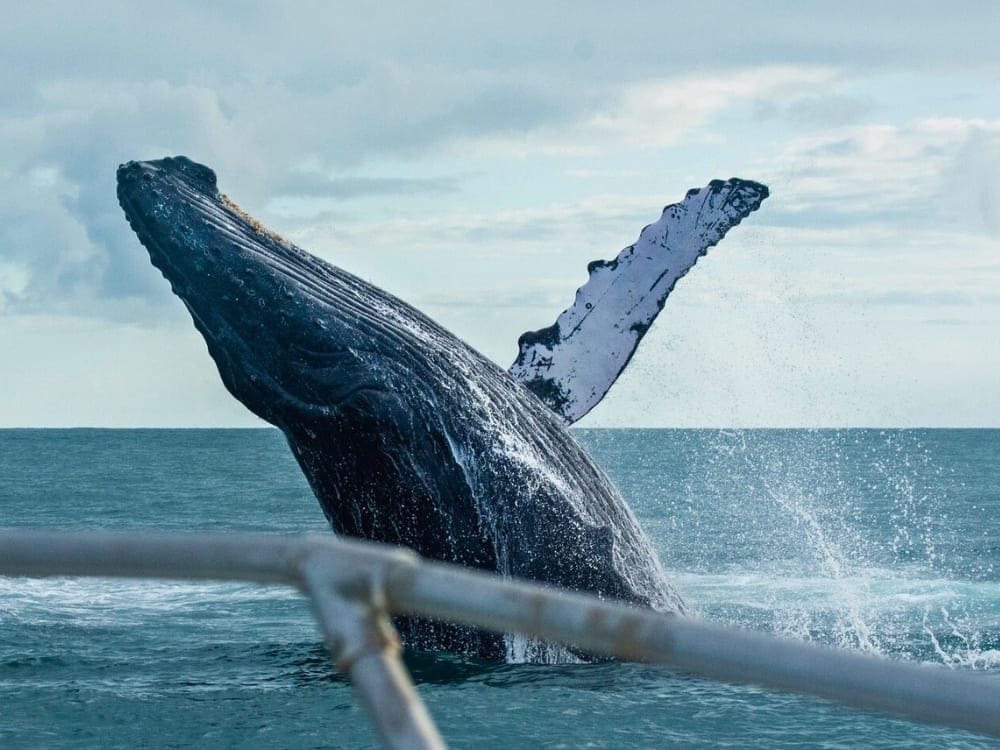
    Humpback whale breaching the ocean surface near a boat in Abrolhos Marine National Park.
    @projetobaleiajubarte

    The book The Beagle Record: Selections From the Original Pictorial Records and Written Accounts of the Voyage of the H.M.S. Beagle (1979), published by his great-grandson, Richard Keynes, mentions Darwin’s fascination with Abrolhos’ green vegetation, abundant bird species, and coral reefs.

    The park is essential to preserve the richest marine biodiversity of the South Atlantic, home to sea turtles, seabirds, Mussismilia braziliensis corals, and humpback whales.

    A great destination for divers and marine life admirers, Abrolhos’ activities include hiking, stand-up paddling, snorkeling, and scuba diving.

    Why visit?

    Abrolhos’ beautiful mix of colors—green for the trees, blue for the sea, white for the sand, and every color under the rainbow for the coral reefs—can make anyone breathless and dreading the moment of leaving this paradise.

    Wildlife enthusiasts are in for a treat with humpback whale watching. From July to November, the archipelago becomes a prime location for whale watching, as these magnificent creatures migrate to the area to breed and nurse their young. 

    Ready to visit the national parks in Brazil? Plan your vacation with PlanetaEXO!

    Now all you have to do is choose your favorite Brazilian national park—or more than one!—to start planning your next trip.

    Whether you’re drawn to forest treks, gorgeous beaches and waterfalls, or mountain climbing, PlanetaEXO, an ecotourism platform specializing in adventure tours in Brazil, works with the best local operators to ensure an unforgettable adventure for travelers from all over the world. Contact us now!
  • 10 Luxury Ecolodges in Brazil: Sustainable Tourism and Premium Services

    10 Luxury Ecolodges in Brazil: Sustainable Tourism and Premium Services

    Luxury sustainable hotels are perfect alternatives for travelers seeking nature adventures and sophisticated accommodations

    Cultural richness, outstanding gastronomy, breathtaking natural sightings, and luxury experiences make Brazil one of the best destinations for travelers looking forward to creating unforgettable memories. And if you’re worried about choosing your vacation spot based on sustainable practices, this is definitely the right place!

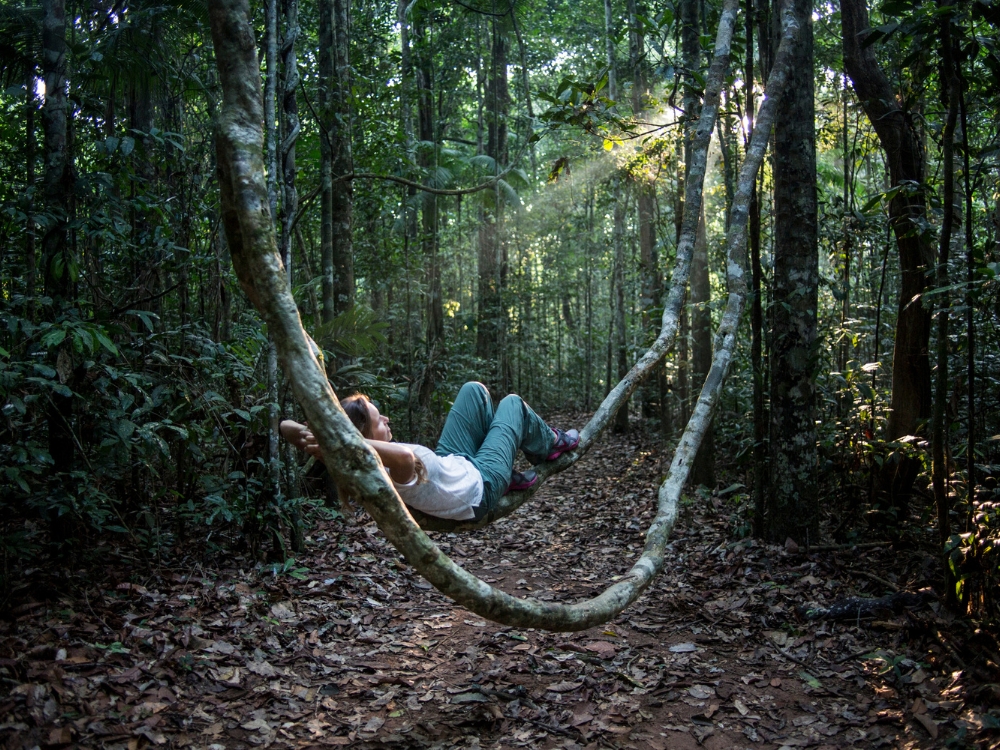
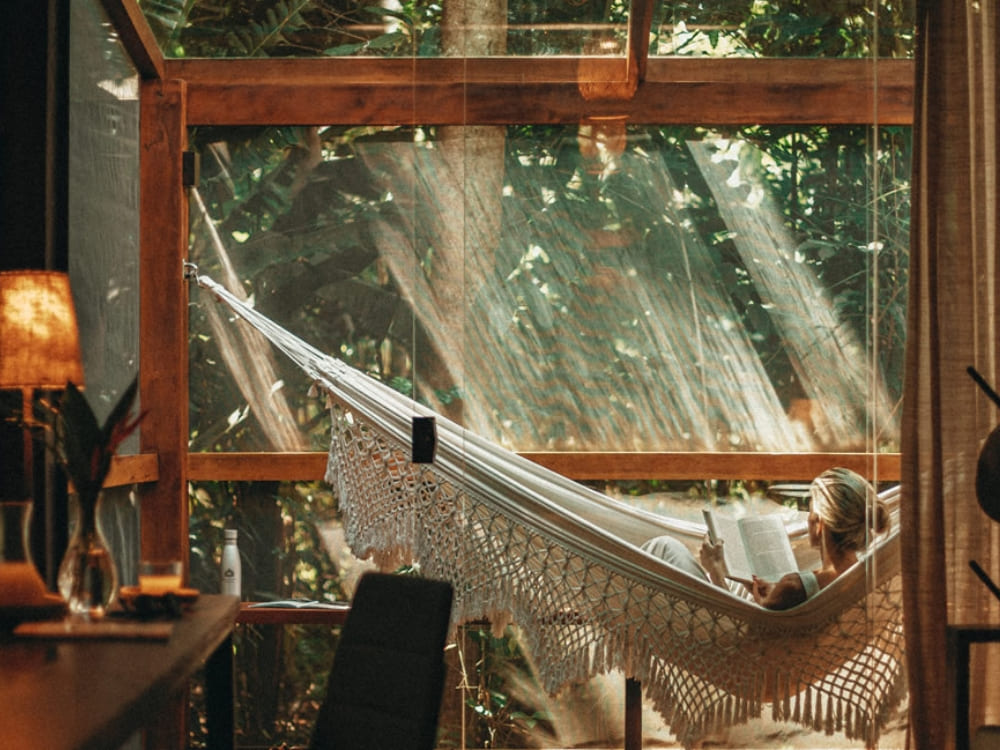
    Tourist relaxing in a vine hammock within the Amazon rainforest during a Brazil eco tour.
    .

    Several tourist cities and luxury ecolodges in Brazil follow strict protocols to ensure the preservation of natural resources while providing one-of-a-kind experiences for travelers from all over the world. You can find high-end tourism options in different states and enjoy comfortable accommodations, fine dining, and exclusive activities without harming the environment. Green practices, in fact, are valuable elements of the trip.

    This beautiful harmony of untouched nature, wonderful service, and hospitality is why Brazil is Travel + Leisure destination of the year (2026), which proves just how special the South American giant actually is.

    PlanetaEXO is an ecotourism platform specializing in adventure tours in Brazil with extensive knowledge in planning high-end, sustainable trips. Check out below our suggestions for unforgettable, eco-friendly luxury experiences!

    Mirante do Gavião Amazon Lodge

    On the banks of the Negro River, Mirante do Gavião Amazon Lodge is one of the most celebrated luxury ecolodges in Brazil thanks to the gorgeous view of the Amazon Rainforest and major sustainable efforts.

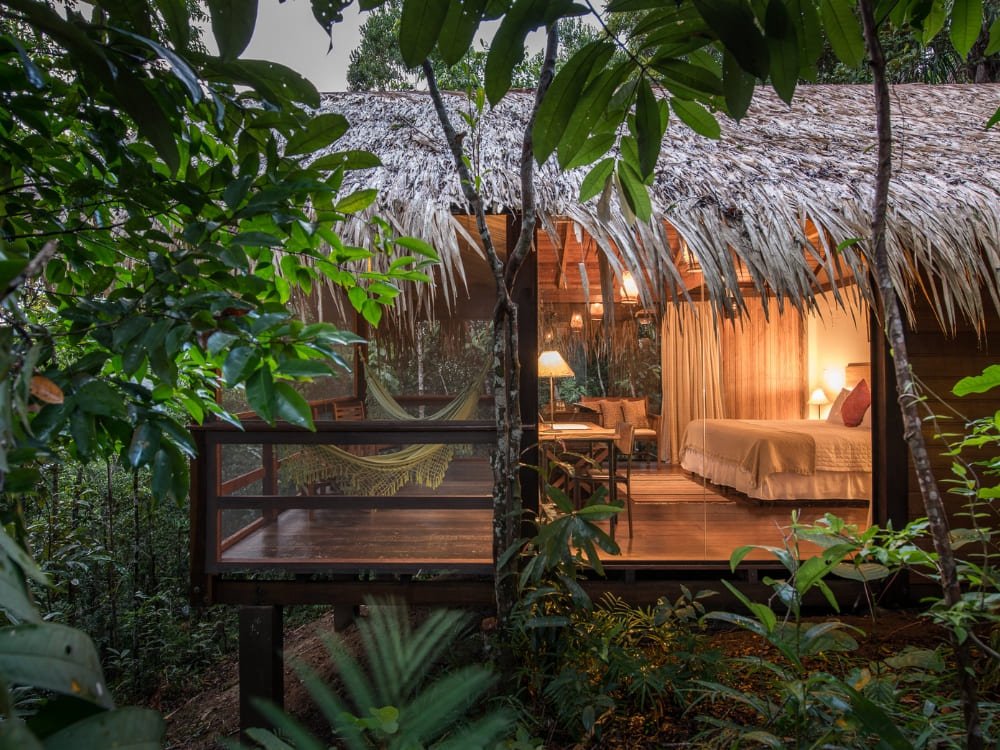
    Built with certified wood facing the Anavilhanas National Park, thirteen bungalows raised in the middle of the forest are spacious and modern yet homey and rustic, beautifully integrating natural elements into contemporary designs. In the common areas, guests can enjoy an elegant living room, relax in hammocks, or play in the game room.

     Illuminated wooden bungalow at Mirante do Gaviao Amazon Lodge surrounded by trees at night.
    .

    To delve deep into the wonders of the Amazon, Mirante do Gavião offers different outdoor activities, such as hiking, boat tours, sunset contemplation, night spotting, cave exploring, and visiting riverside communities. Some expeditions also include camping in the rainforest—perfect for nature junkies!

    • How much:  Starting at US$ 1340 per night in a double room (minimum 2 nights).
    • Included: Round-trip transfer, full board, guided tours.
    • Where: Novo Airão, Amazonas.
    • Best time to go: January to September.
    • How to get there: Flights to Manaus International Airport (MAO) + private transfer provided by Mirante do Gavião Amazon Lodge.

    La Ferme de Georges

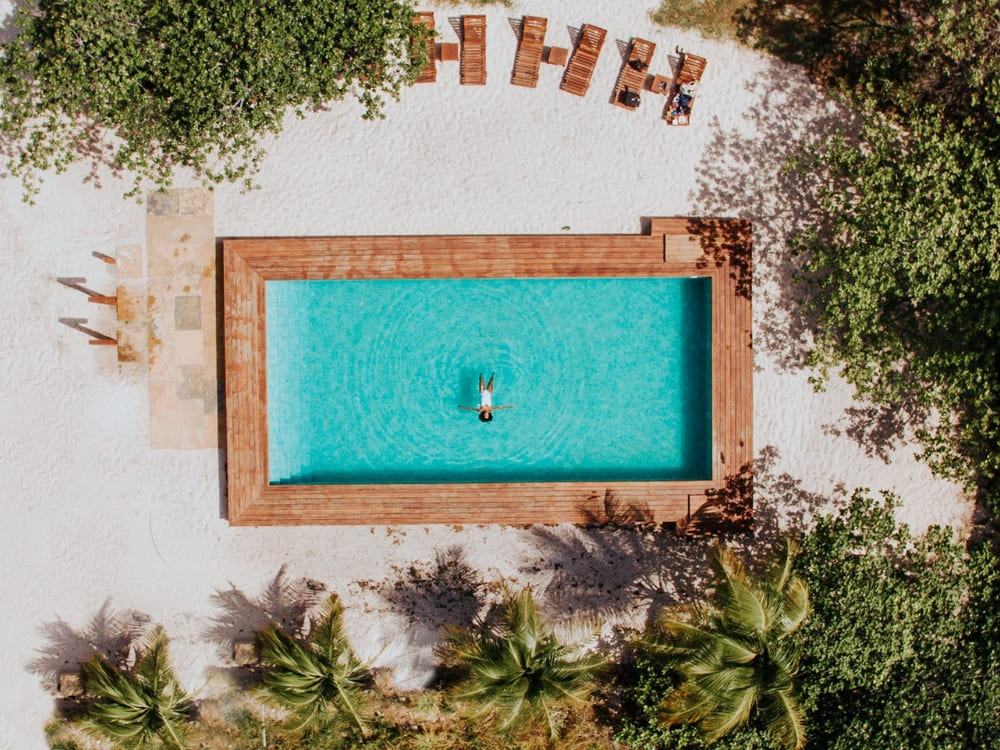
    La Ferme de Georges is a lovely inn right next to Lençóis Maranhenses National Park, offering easy access and guided tours to the white sand dunes and crystal-clear lagoons.

    Each chalet is built with bricks, straw, and local wood, perfectly adapted to Atins’ sunny, warm weather through cross-ventilation and natural light. In the common areas, swim in the pool, grab a drink at the bar, play volleyball at the court, and delight yourself with delicious meals made with fresh, local ingredients at the inn’s restaurant.

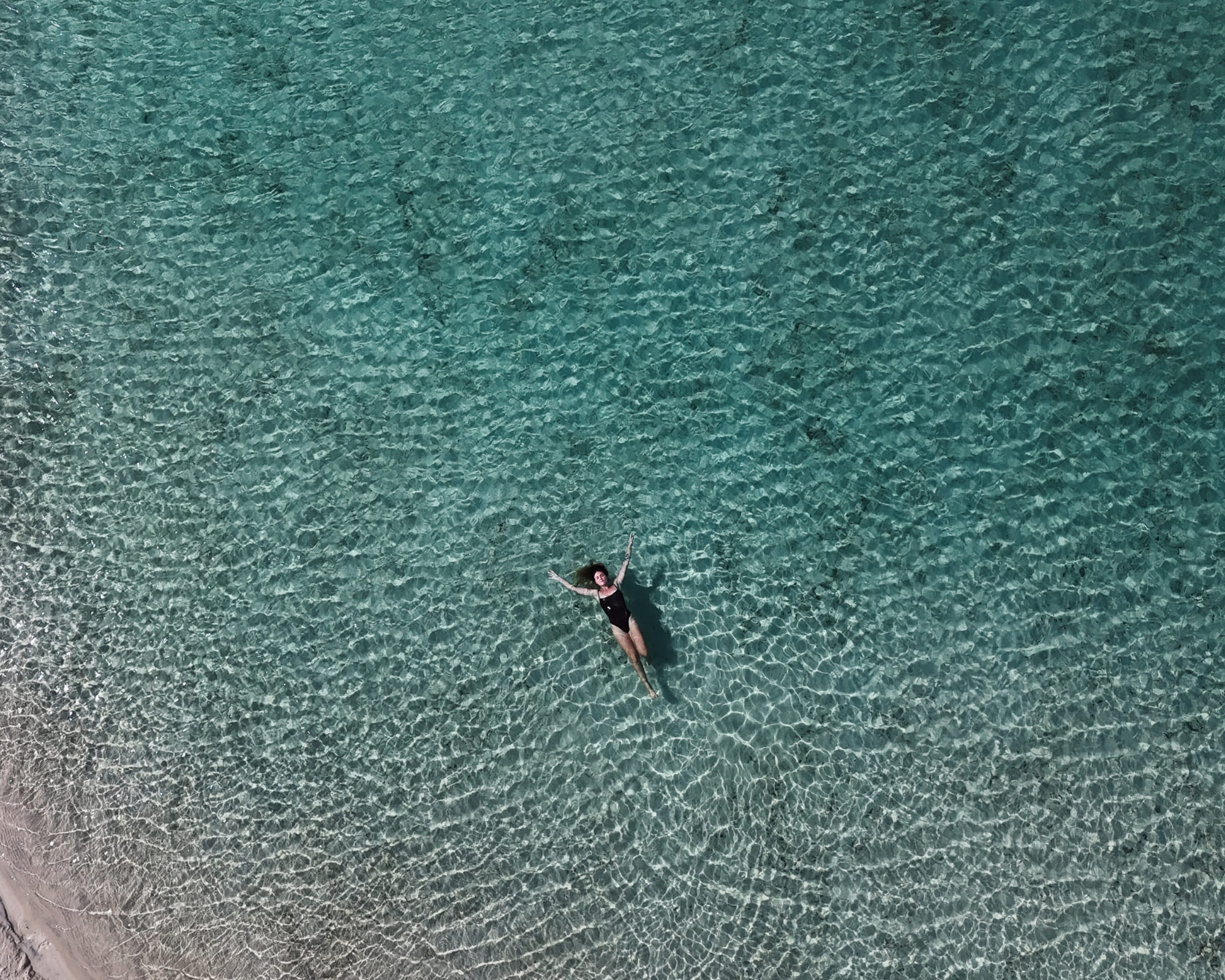
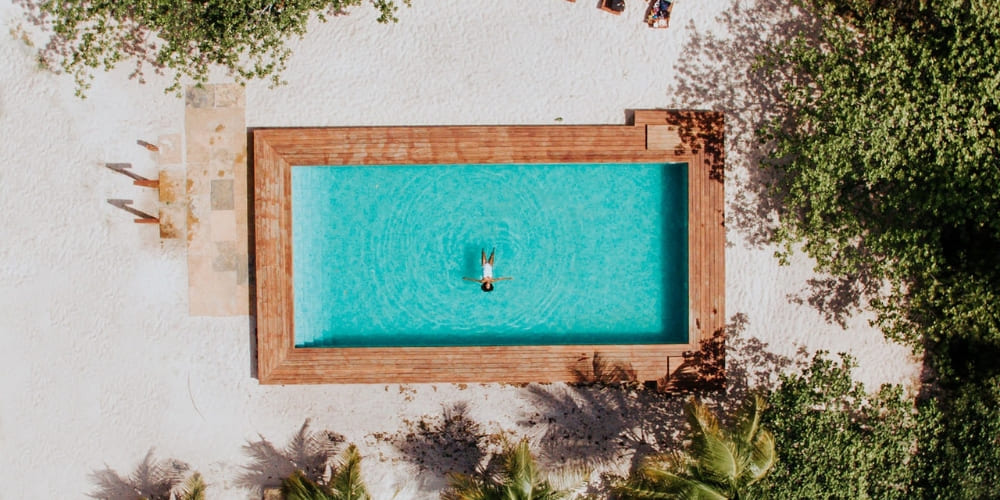
    Aerial view of a person swimming in a rectangular pool at La Ferme de Georges inn.
    .

    Activities include kitesurfing, trekking, horseback riding, wildlife watching, and even giving a hand at the vegetable garden.

    • How much:  Starting at US$ 370 per night in a double room (minimum 2 nights).
    • Included: Breakfast.
    • Where: Atins, Maranhão.
    • Best time to go: May to September.
    • How to get there: Flights to São Luís International Airport (SLZ) + bus or car ride to La Ferme de Georges.

    Ibiti Project

    The Ibiti Project encompasses 6,000 hectares of preserved areas or areas undergoing regeneration while also backing programs to protect endangered species, promoting sustainable local production, coordinating courses to empower the local community, and reducing carbon emissions.

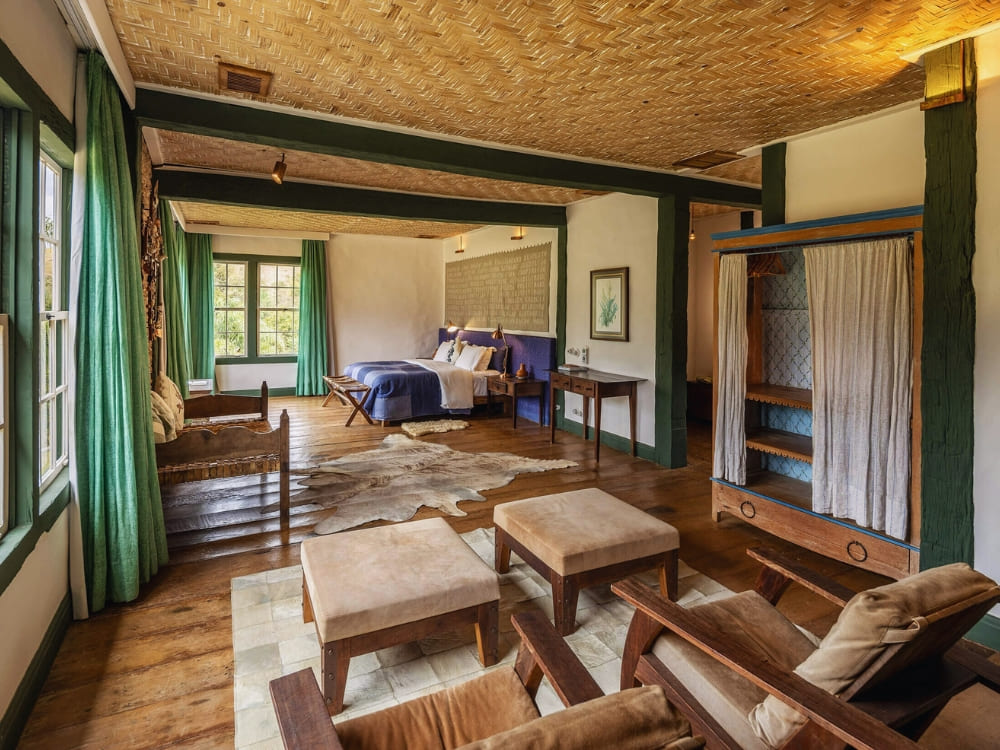
    Spacious rustic bedroom with a large bed, wooden floors, and green accents at Ibiti Project.
    .

    Low-impact architecture is present in all three forms of accommodation: Ibiti Village—a charming village in rural Minas Gerais; Engenho Lodge—a sophisticated farmhouse; and Ibiti Remote—ideal for families and couples seeking tranquility and total disconnection from the outside world.

    To have fun and explore your surroundings, make sure to ask the lodge’s staff about hiking, wildlife watching, stand-up paddling, biking, horseback riding, film screenings at the open-air cinema, and visits to waterfalls, natural pools, and nearby beaches. This Brazil eco tour has it all!

    • How much: US$ 570 per person per night (minimum 2 nights).
    • Included: Full board, non-alcoholic beverages, morning yoga practice, and guided tours.
    • Where: Lima Duarte/Conceição do Ibitipoca, Minas Gerais.
    • Best time to go: All year-round.
    • How to get there: Flights to Zona da Mata Airport (IZA) + private car transfer provided by the Ibiti Project.

    Caiman

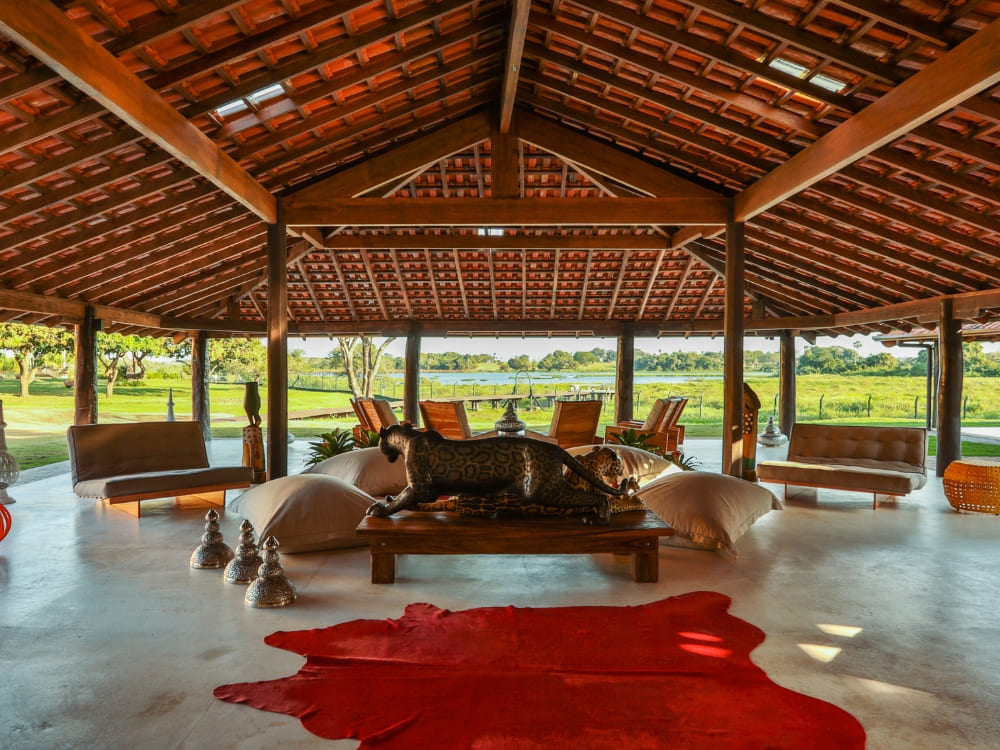
    This one is for the animal lovers! Caiman, in the Pantanal, offers daytime and nighttime safaris, horseback riding, birdwatching, canoeing, and hiking. By joining the lodge’s activities, you’ll have the chance to spot over 500 species—including the jaguar!

    Open-air living room featuring a red cowhide rug and a carved wooden jaguar at Caiman ecolodge.
    .

    Speaking of the largest feline in the Americas, Caiman works in partnership with the Onçafari Project, an initiative to study, protect, and preserve jaguars and other Pantanal animals. It also collects funds to kick-start social programs, environmental trainings, scientific research, fire prevention, and forest management.

    Surely one of the greatest eco-friendly luxury experiences in Brazil, accommodations are divided between Casa Caiman (old-farmhouse-turned-ecolodge) and Baiazinha (a secluded private villa). Each room features private bathrooms, comfy beds, ceiling fans, toiletries, and Wi-Fi.

    • How much: Starting at US$ 1130 per person/night (minimum 3 nights).
    • Included:  Round-trip transfer, full board (drinks not included), and guided tours.
    • Where: Miranda (Southern Pantanal), Mato Grosso do Sul.
    • Best time to go: May to October.
    • How to get there: Flights to Campo Grande International Airport (CGR) or Bonito Regional Airport (BYO) + private transfer provided by Caiman Ecological Refuge.

    Cristalino Jungle Lodge

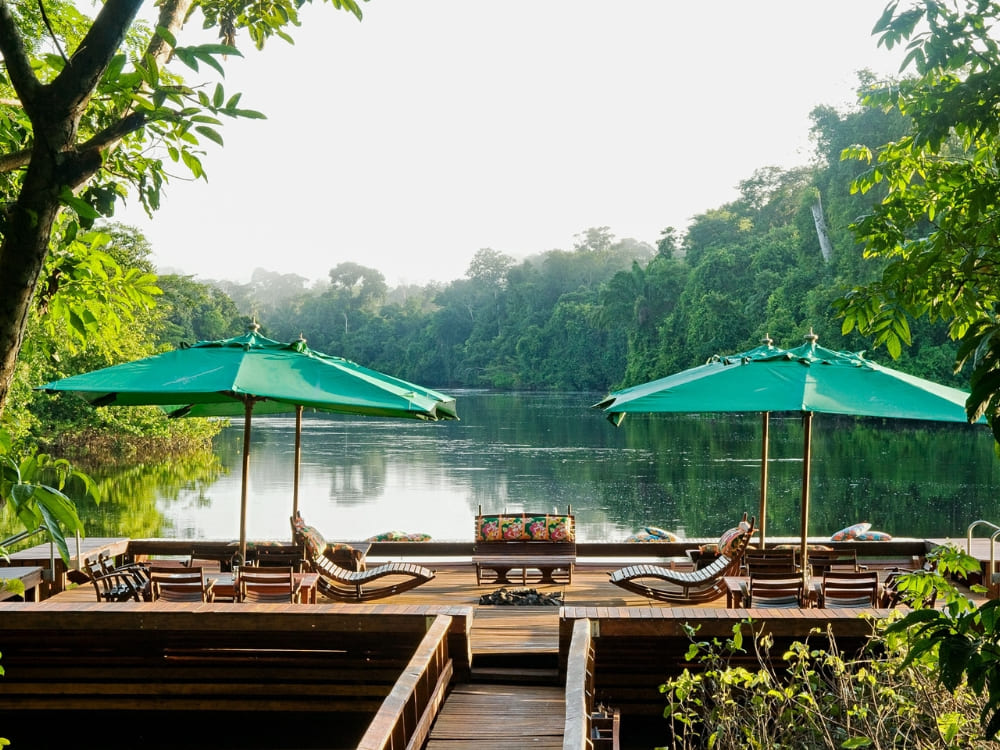
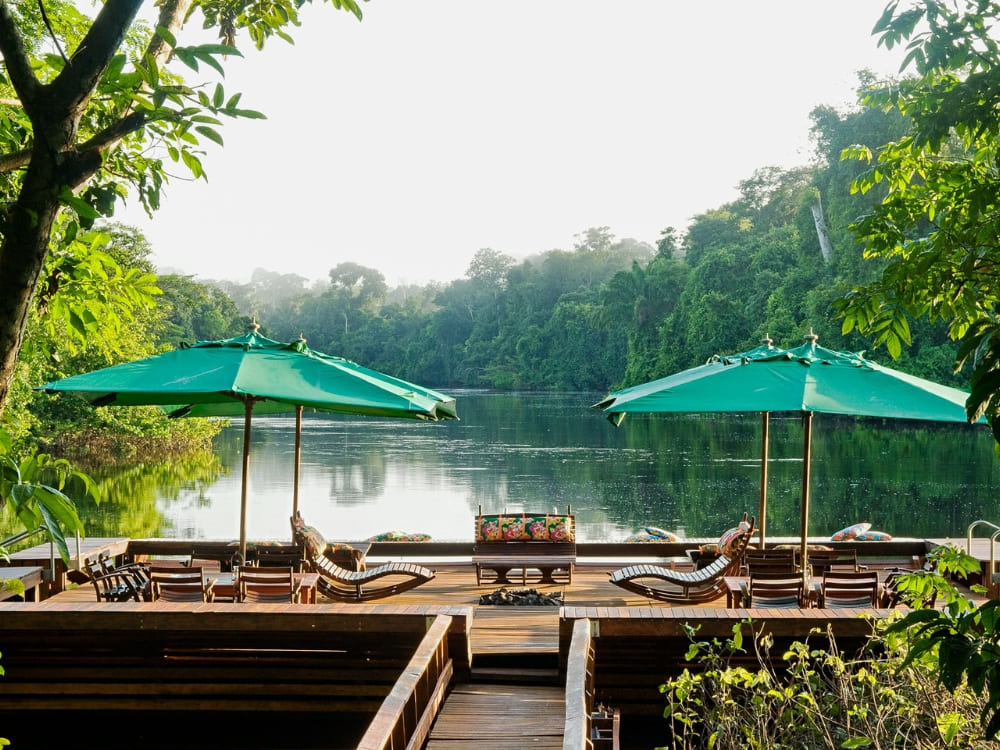
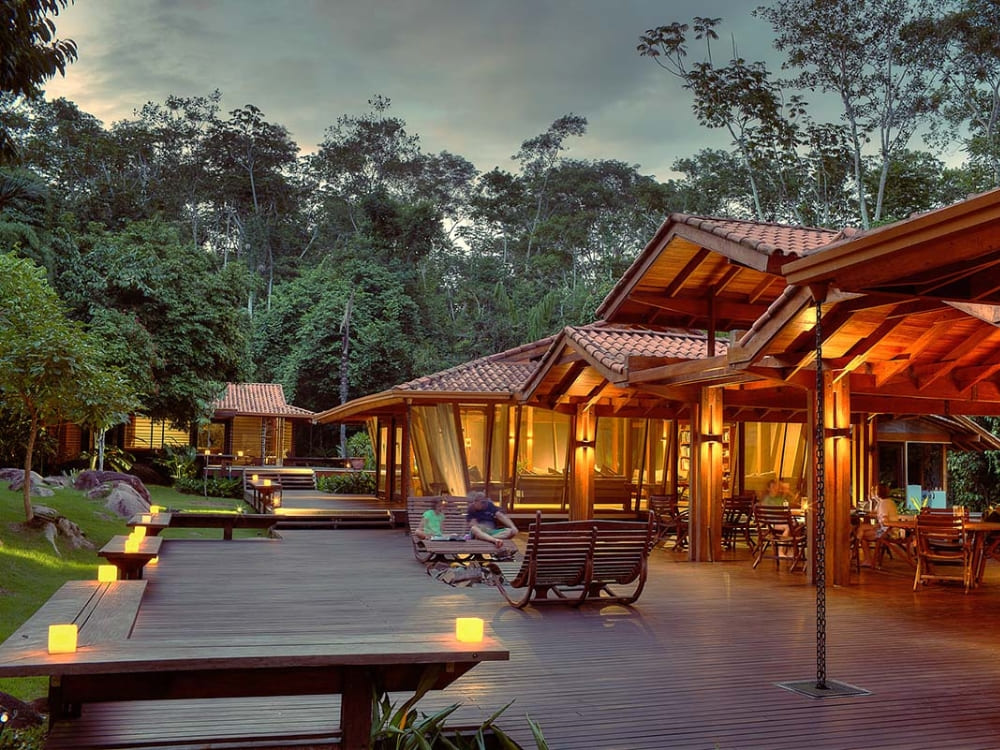
    Cristalino Lodge is well-known for its impressive infrastructure, gorgeous architecture, comfortable accommodations, delicious traditional food, and diverse itinerary in the Mato Grosso share of the Amazon Rainforest, located in a 27,000-hectare private nature reserve.

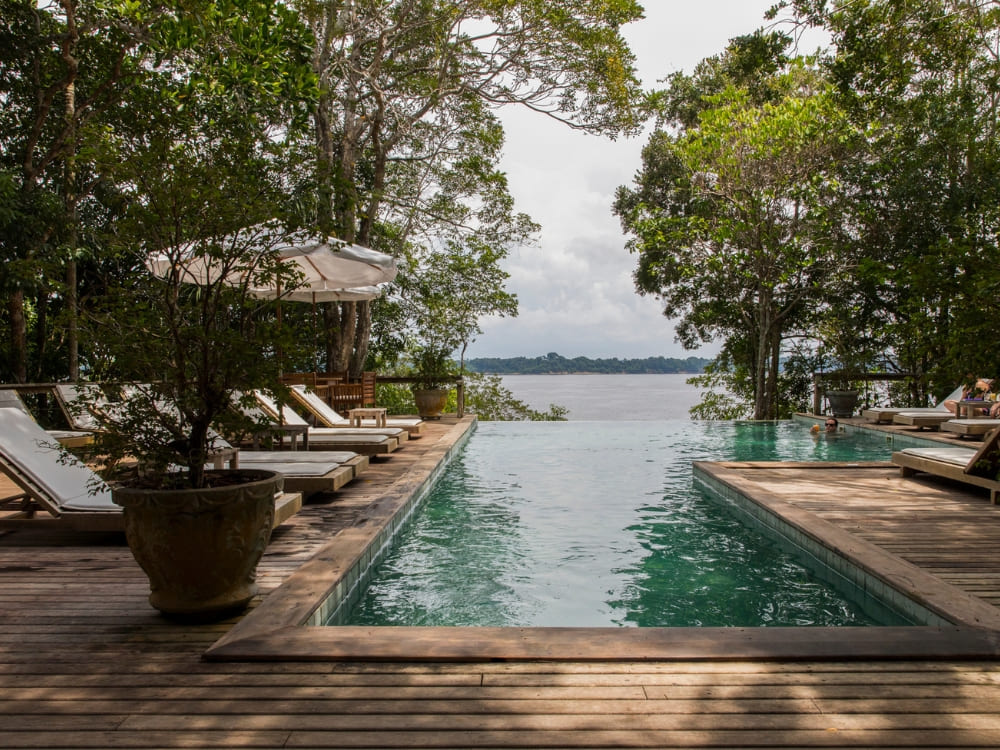
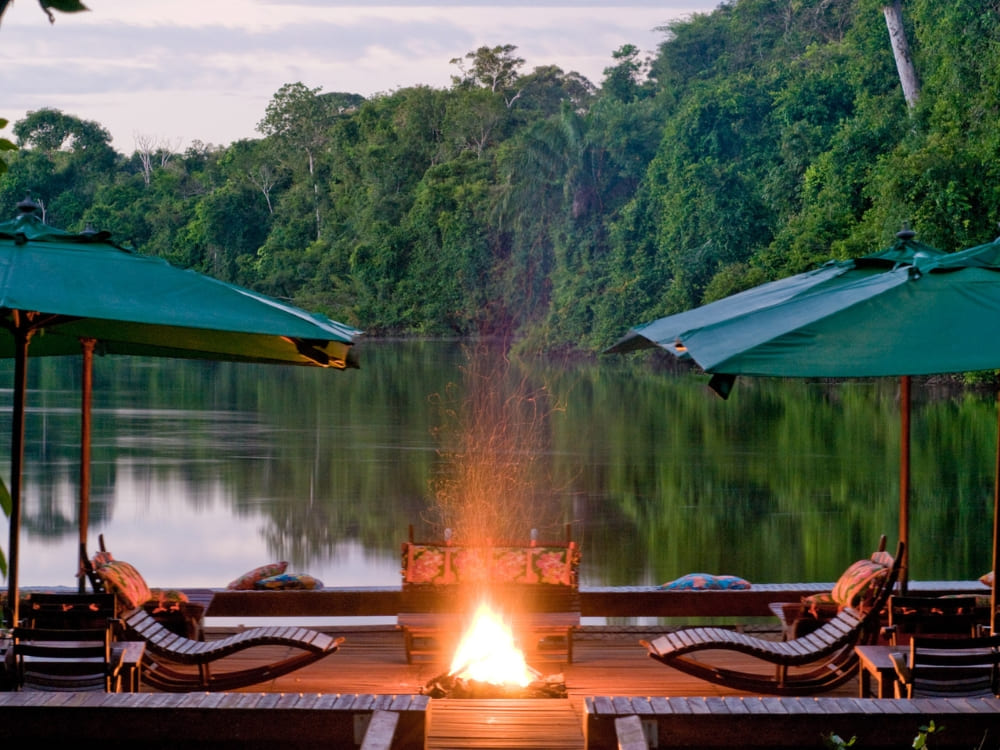
    Wooden deck with green umbrellas and lounge chairs overlooking a serene Amazon river.
    Photo: Luis Gomes

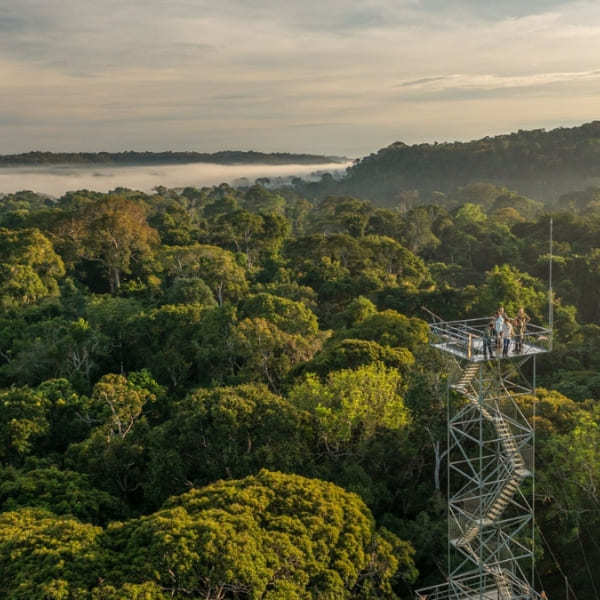
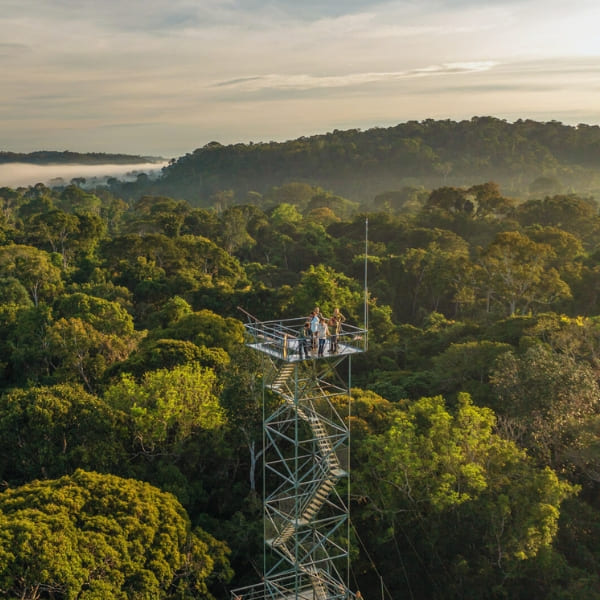
    As a part of National Geographic’s best ecolodges in the world list, Cristalino shines bright when it comes to expeditions: forest hiking, canoeing, birdwatching, scientific tours guided by specialists, and animal spotting at the top of 50-meter towers with panoramic views of thousands of lush green trees.

    The entire lodge operates on renewable energy and sustainable water resource management, in addition to supporting research and local schools.

    • How much: Starting at US$ 945 per night in a double room (minimum 2 nights).
    • Included: Round-trip transfer (Alta Floresta airport/hotel), full board, guides, and non-alcoholic beverages.
    • Where: Alta Floresta, Mato Grosso.
    • Best time to go: January to September.
    • How to get there: Flights to Alta Floresta Airport (AFL) + private transfer provided by Cristalino Lodge.

    👉 Read more: When is the Best Time to Visit Brazil?

    Nannai Noronha

    You can’t talk about luxury travel in Brazil without mentioning Fernando de Noronha, a beautiful archipelago in Pernambuco and (probably) the country’s most coveted destination!

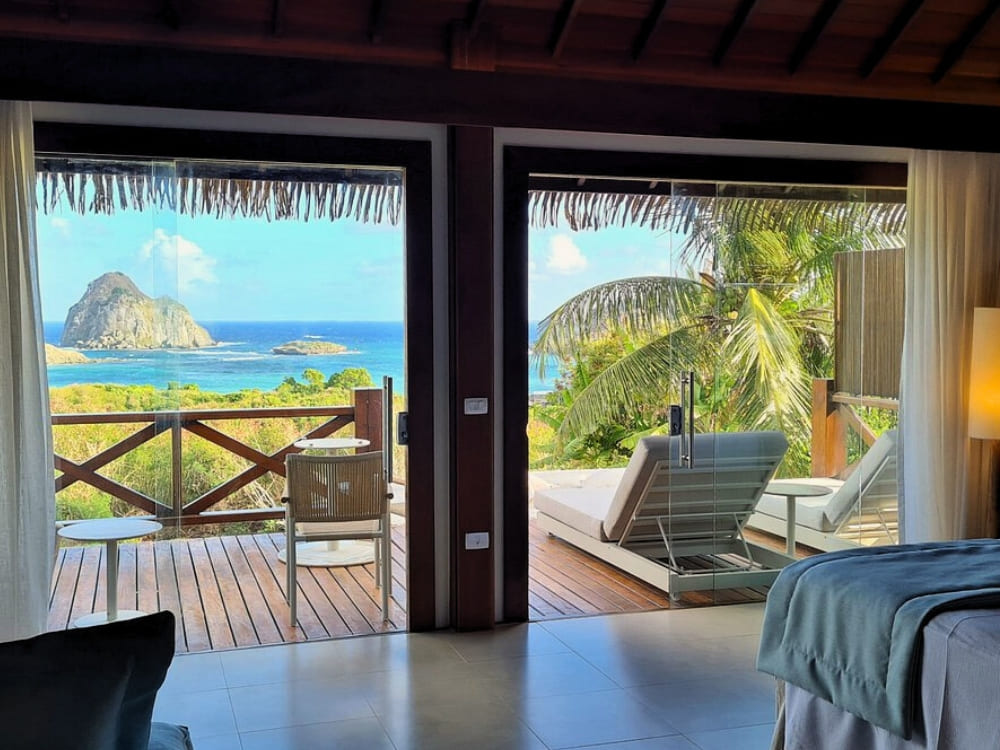
    Nannai Noronha is the perfect accommodation for travelers who prefer a high-end infrastructure and premium services. Facing the jaw-dropping beauty of Baía do Sueste, guests get comfy in bungalows or apartments with sea views, all of them including king-size beds, hot showers, toiletries, charming decor, and private balconies.

    Open balcony doors revealing a lounge chair and stunning ocean views in Fernando de Noronha.
    .

    Additionally, this ecolodge has easy access to numerous beaches, coastal hiking trails, and scuba diving areas, while also offering private picnics, special meals, and luaus. 

    As a way to contribute to Fernando de Noronha’s efforts to protect its natural resources, Nannai supports researchers who monitor marine fauna in controlled visitation areas, generates energy with solar panels, and has its own water management system and organic vegetable gardens.

    • How much: Starting at US$ 818 per night in a double room (minimum 1 night).
    • Included: Breakfast.
    • Where: Fernando de Noronha, Pernambuco.
    • Best time to go: All year-round, but diving is best between May and July.
    • How to get there: Flights from Recife International Airport (REC) to Fernando de Noronha Airport (FEN) + car ride to Nannai Noronha.

    Pousada Trijunção

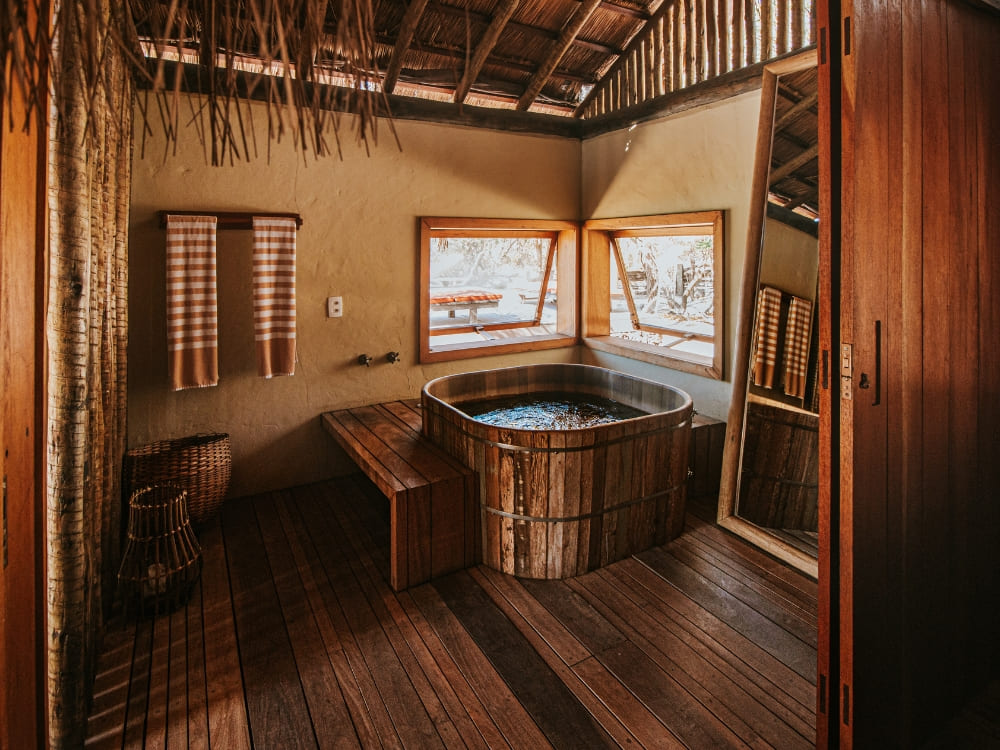
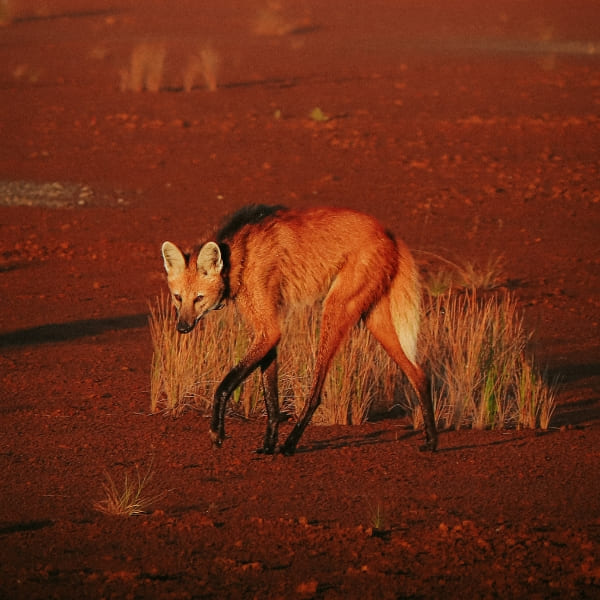
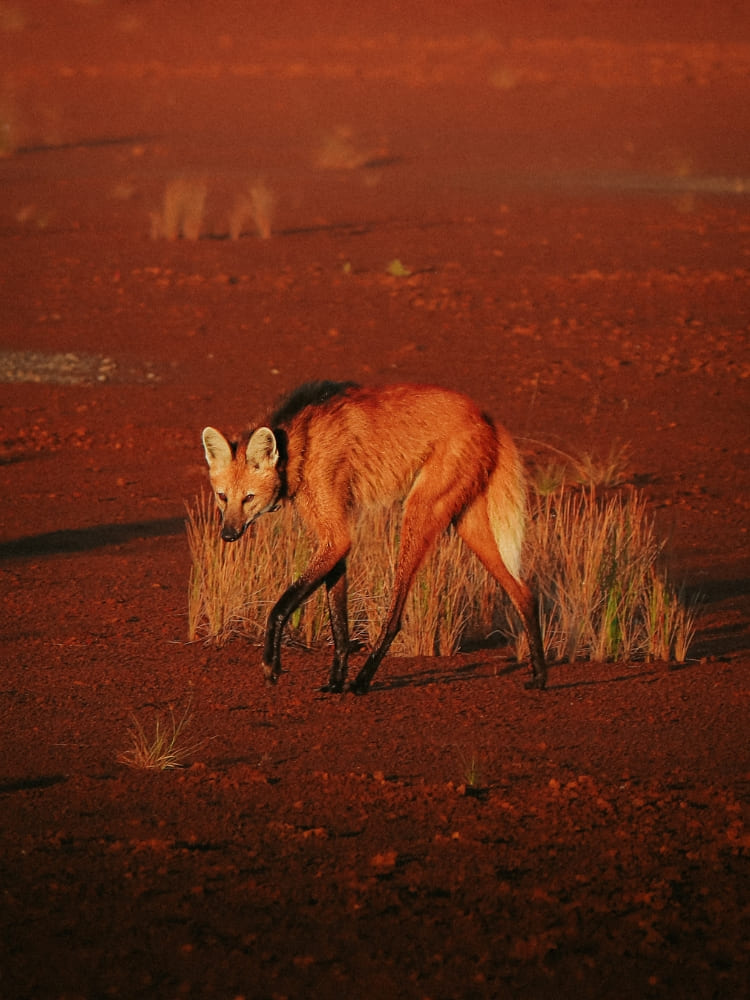
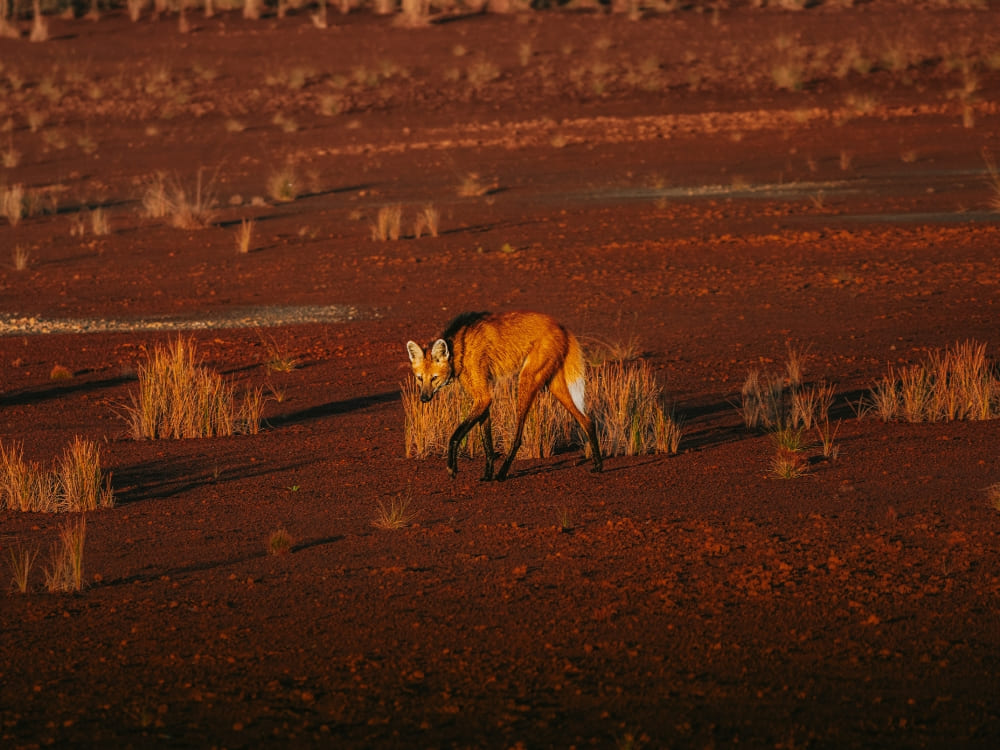
    Trekking, biking, sunrise contemplation, birdwatching, and wildlife watching—which includes expeditions to spot the mysterious maned wolf—are some of the activities offered by Pousada Trijunção, a beautiful lodge of the Cerrado, the savanna biome of Brazil.

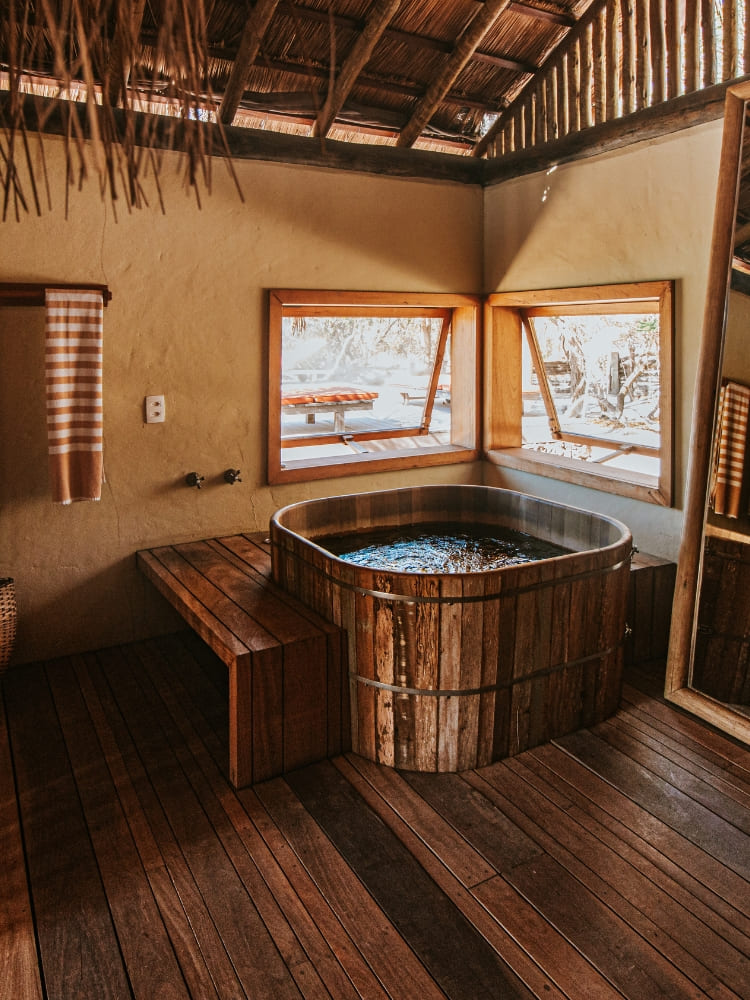
     Wooden soaking tub set beside large windows inside a rustic suite at Pousada Trijuncao.
    Photos: Fe Albori

    After a long day of adrenaline in nature, relax in the suites or in Villa Jatobá, a private house perfect for larger groups. Every accommodation is equipped with comfortable beds, air-conditioning, private bathroom, TV, Wi-Fi, minibar, toiletries, etc.

    Sustainable practices are rigorously followed in order to preserve the Cerrado, such as solar energy, rainwater harvesting, recycling, and promoting conservation programs and environmental education.

    • How much: Starting at US$ 685 per person per night (minimum 1 night).
    • Included: Round-trip transfer, full board, non-alcoholic drinks, and guided tours.
    • Where: Jaborandi, Bahia (near the triple border of Bahia, Goiás, and Minas Gerais).
    • Best time to go: May to September / October to April.
    • How to get there: Flights to Brasília International Airport (BSB) + car ride, chartered plane, or private car transfer provided by Pousada Trijunção.

    Belmond Hotel das Cataratas

    Belmond is one of the world’s most important hotel chains—the iconic Copacabana Palace is part of it—acclaimed for its premium services, refined infrastructures, and high-end experiences. 

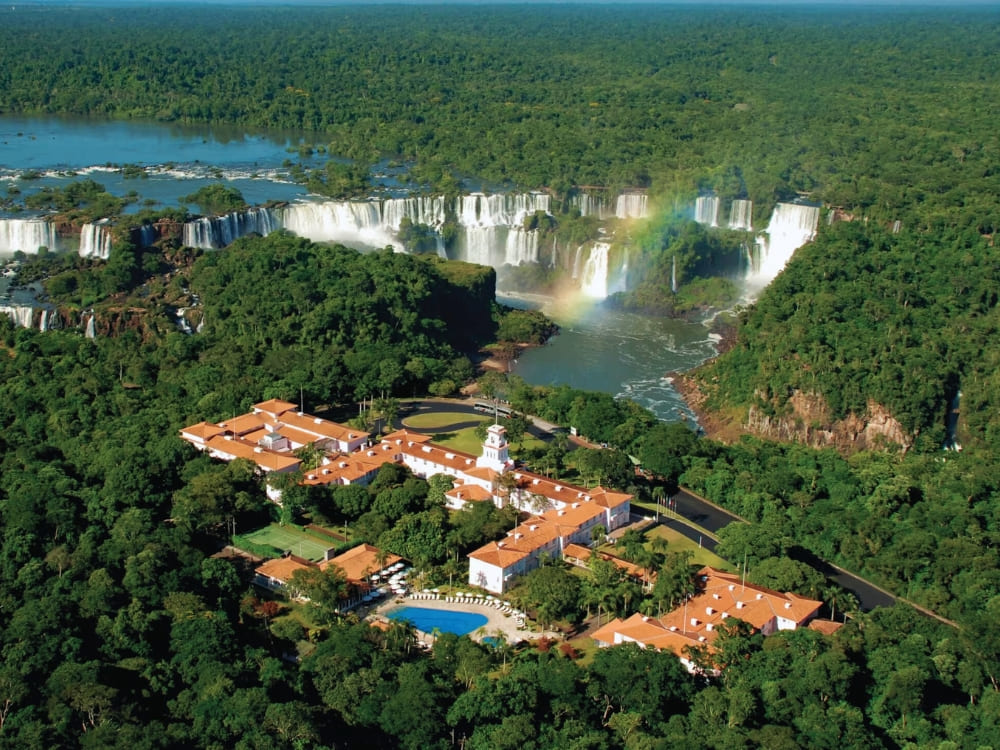
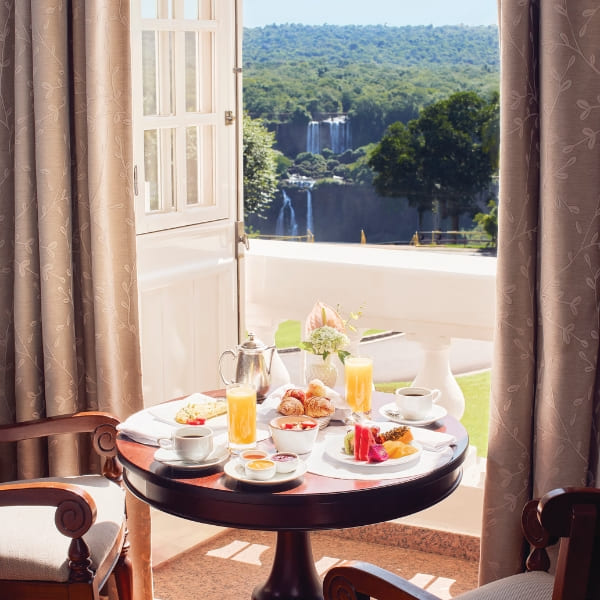
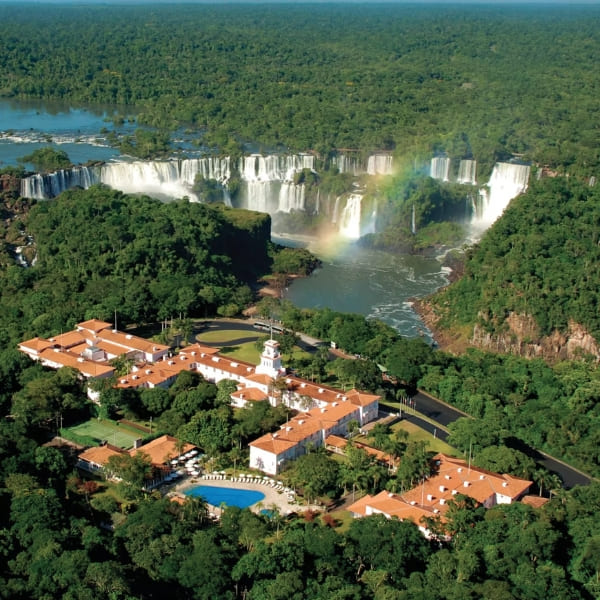
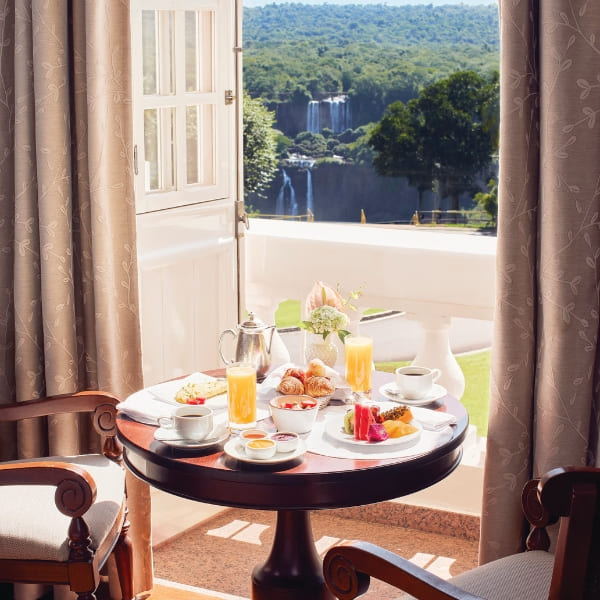
    The only hotel in Iguaçu National Park, Belmond Hotel das Cataratas features elegant accommodations, a fine dining restaurant, a spa, event venues, a swimming pool, lounges, and a gym.

    Aerial view of Belmond Hotel das Cataratas nestled in the forest near the Iguacu Falls.
    .

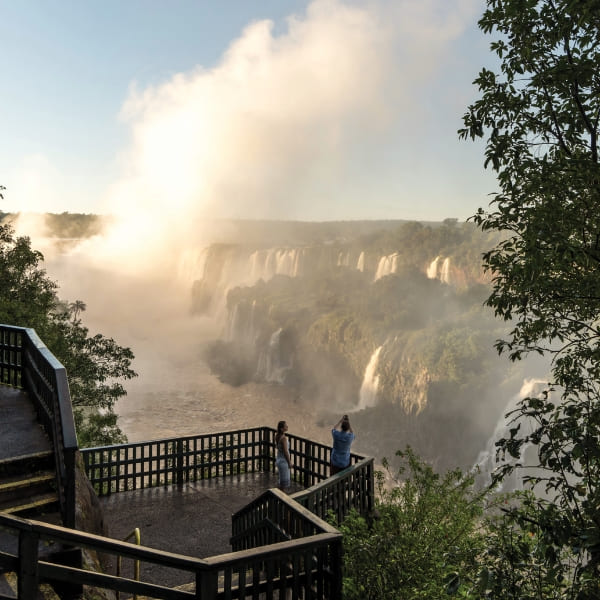
    As the perfect mix between comfort and nature activities, the itinerary allows for great enjoyment in Iguaçu Falls—larger in extension and height than Niagara Falls—including speedboat rides, stargazing, sunrise contemplation, and night tours. One of its unique services is the exclusive access to the waterfalls before the park opens.

    Sustainability is addressed through water management, recycling, and the preference for local suppliers.

    • How much:  Starting at US$ 1080 per night in a double room (minimum 1 night).
    • Included: Breakfast
    • Where: Foz do Iguaçu, Paraná.
    • Best time to go: All year-round, but travelers enjoy Foz do Iguaçu the most between January and May, when the falls are fuller due to the rainy season.
    • How to get there: Flights to Foz do Iguaçu International Airport (IGU) + car ride to Belmond Hotel das Cataratas.

    Barracuda Boutique 

    In Itacaré, a lovely coastal town in Southern Bahia, Barracuda Boutique shares space with gorgeous beaches, Atlantic Forest areas, and a welcoming local community that enriches anyone’s experience with a great sense of culture and hospitality.

    Recognized by Small Luxury Hotels of the World™ (SLH) and The Michelin Guide, Barracuda is contemporary and elegant, yet casual and free-spirited, making it an amazing option for luxury vacations in Brazil.

    Aerial view of Barracuda Boutique hotel featuring a long pool overlooking the Atlantic ocean.
    .

    This authenticity is easily noticed by the modern design of its eleven suites, OITI Restaurant & Bar, and outdoor experiences—boat riding, canoeing, trekking, rafting, stand-up paddling, mountain biking, surfing, fishing, capoeira classes, and visiting cocoa farms.

    ESG (Environmental, Social, and Governance) initiatives are just as abundant: water reuse, carbon tracking, regenerative tourism practices, and support for social programs, climate protection, and forest conservation.

    • How much: Starting at US$ 640 per night in a double room (minimum 1 night).
    • Included:  Breakfast.
    • Where: Itacaré, Bahia.
    • Best time to go: All year-round.
    • How to get there: Flights from Salvador Bahia Airport (SSA) to Ilhéus Airport (IOS) + car ride to Barracuda Boutique.

    UXUA Casa Hotel & Spa

    Famous for its exquisite beaches, historic downtown (Quadrado), rustic atmosphere, and lively nightlife, Trancoso is a must-visit district in Porto Seguro, Bahia. 

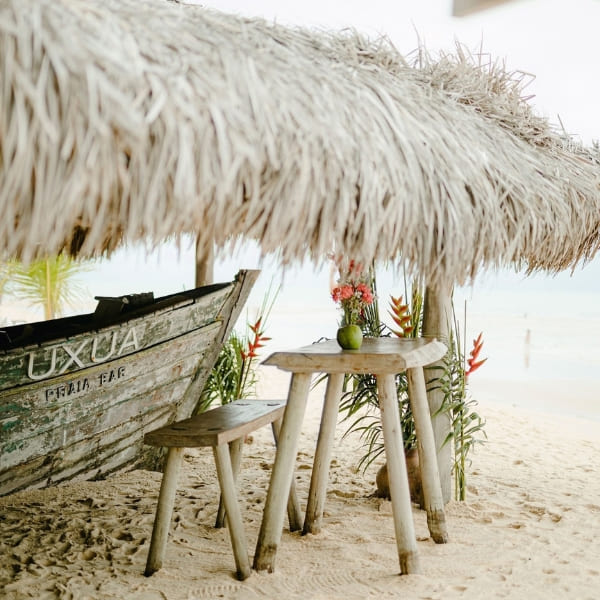
    UXUA Casa Hotel & Spa perfectly sums up the destination’s vibes, with entire houses serving as accommodations—each of them offering private access to the beach—massages at Vida Spa & Lab, mouthwatering food at UXUA Praia Bar, and activities such as surfing, kayaking, and beach volleyball.

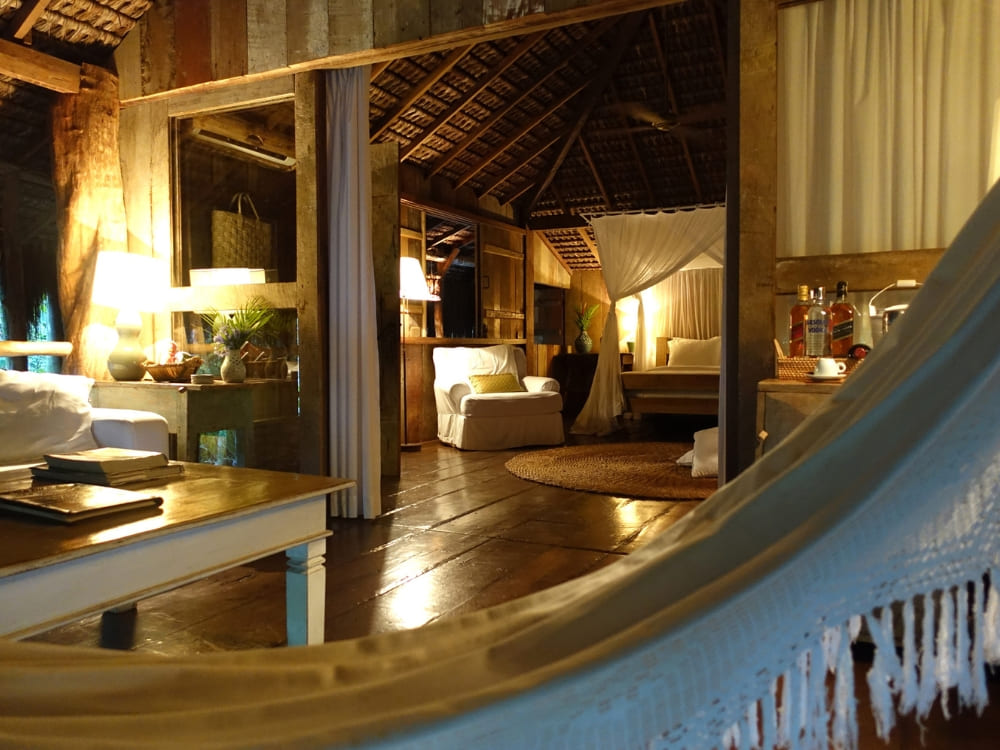
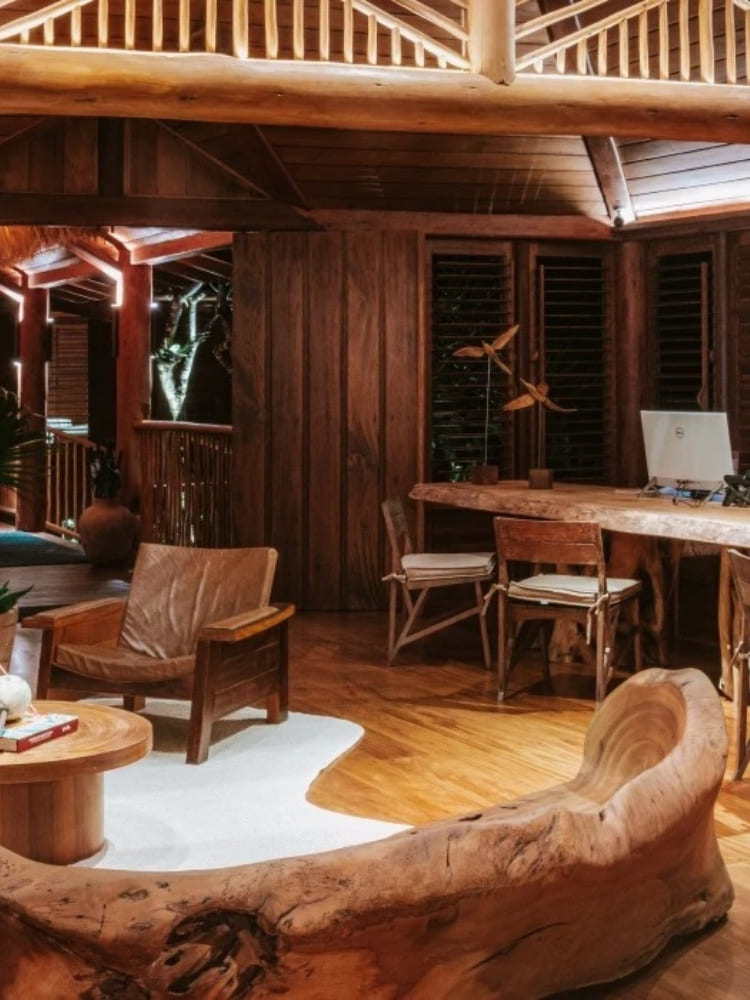
    View from a hammock looking into a warmly lit rustic suite with wooden floors at UXUA.
    .

    This luxury ecolodge in Brazil uses reclaimed wood and natural materials in its architecture, while also supporting local artisans, organic horticulture, and cultural projects that strengthen the village’s local economy. 

    • How much: US$ 580 per night in a double room (minimum 2 nights).
    • Included: Breakfast.
    • Where: Trancoso, Bahia.
    • Best time to go: All year-round.
    • How to get there: Flights from Salvador Bahia Airport (SSA) to Porto Seguro Airport (BPS) + car transfer provided by UXUA Casa Hotel & Spa.

    Booking your Brazil luxury tour with PlanetaEXO

    Can’t wait to enjoy Brazil eco-tours with all the comfort and premium services that high-end lodges can provide?

    PlanetaEXO is an ecotourism platform specializing in adventure tours in Brazil. By working with the best local partners, we’re able to plan the vacation of your dreams based on tailor-made itineraries, sustainable practices, and a positive impact on the environment and regional communities. Contact us now!
  • Luxury Tours in Brazil: Comfort, Nature, and Wildlife

    Luxury Tours in Brazil: Comfort, Nature, and Wildlife

    Discover luxury trips in Brazil that combine comfort, nature, and sustainability; learn how to travel in style while supporting conservation and local communities!

    Luxury tours in Brazil not only offer high-standard accommodation and services in 5-star hotels but also, from an ecotourism perspective, allow for total connection to nature without harming ecosystems and communities.

    Whether it’s on Amazon river cruises, ecolodges in the Pantanal, the dunes of Lençóis Maranhenses, or the stunning beaches of Fernando de Noronha, the best luxury experiences include unforgettable trips that cause a positive impact.

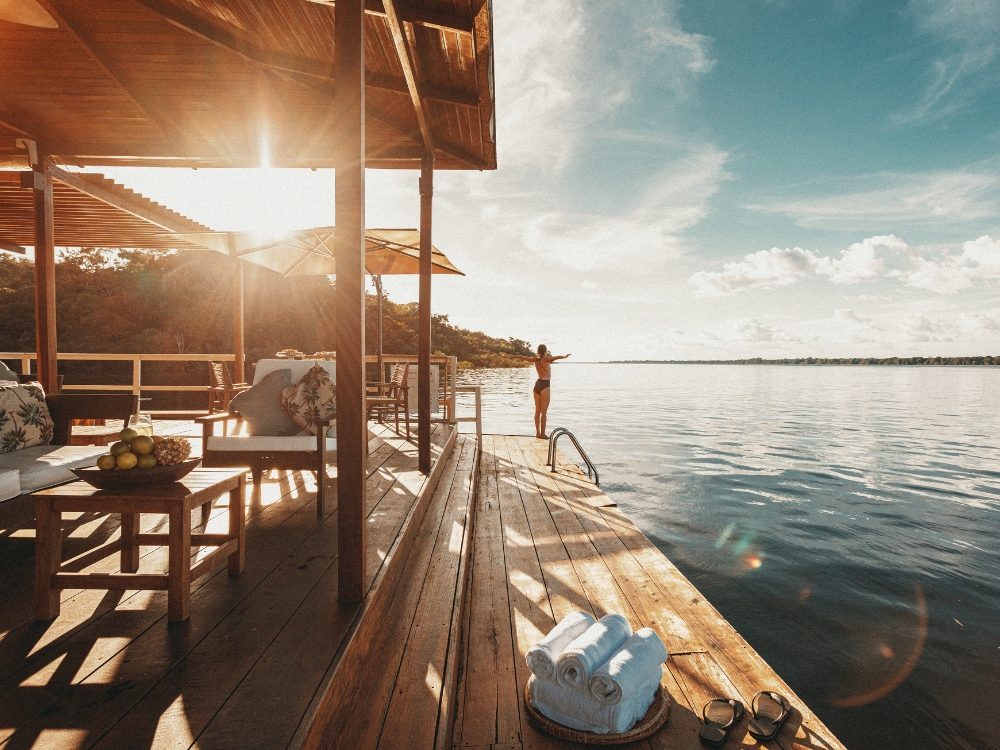
    Person with open arms on the floating wooden deck of an Amazon ecolodge at sunset.
    Photo: Felipe Castellari

    PlanetaEXO is an ecotourism platform specializing in adventure tours in Brazil. We work with esteemed local partners to organize the best trip for travelers from all over the world, including high-end experiences with the perfect mix of nature immersion and premium services. Check out some options below!

    Amazon Rainforest 

    Itineraries in the Amazon Rainforest include canoeing, hiking, wildlife watching, boat tours, and visits to local communities, as well as sophisticated accommodations in gorgeous jungle lodges.

    Exclusive stay in Anavilhanas 

    Located in Anavilhanas National Park, the second-largest river archipelago in the world, the Anavilhanas Jungle Lodge is considered one of the best lodges in the Amazon.

    This six-day journey features canoe explorations through narrow igarapés (shallow, narrow streams or creeks winding through the forest), guided forest walks, sunrise and night safaris, wildlife encounters, and visits to traditional riverside communities. 

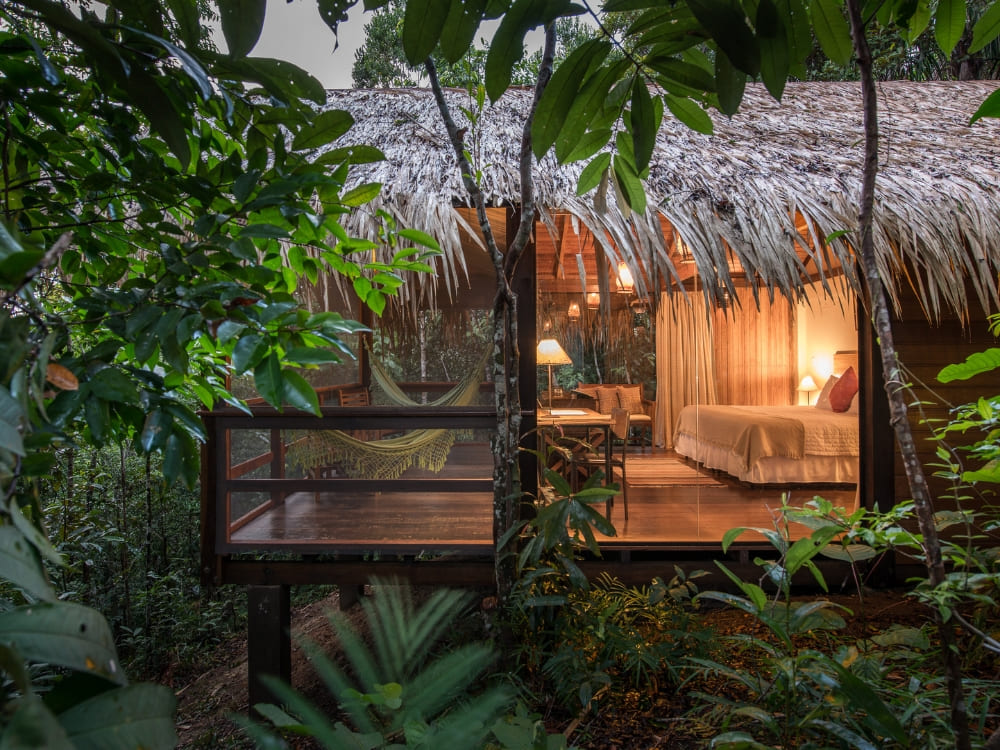
     Illuminated rustic luxury bungalow with a thatched roof, comfortable bed, and balcony hammock surrounded by the Brazilian jungle.
    Photo: Felipe Castellari

    With luxury bungalows immersed in nature, a pool overlooking the river, and refined regional cuisine, it offers comfort while maintaining a strong environmental commitment. Besides preserving 520 hectares of the national park, Anavilhanas Jungle Lodge is a signatory of the UN Global Compact, supports scientific research, uses only renewable energy, and follows a strict zero-plastic policy.

    Luxury Amazon lodge

    Another well-renowned jungle lodge in the Amazon Rainforest is Mirante do Gavião, situated in the municipality of Novo Airão.

    The modern design of the hotel’s architecture is jaw-dropping, while the infrastructure provides the ultimate comfort and leisure: elegant suites with beautiful views of the forest, a swimming pool, a deck facing the Negro River, a gaming room, and even a massage room.

    Modern wood and glass architecture of the Mirante do Gaviao hotel illuminated at night in the jungle.
    .

    Activities include boat tours, hiking, sunrise/sunset contemplation, night spotlighting, exploring the Madadá Caves, and visiting local communities.

    Although Mirante do Gavião is located near Anavilhanas—and some expeditions take place there—guests can also camp within the limits of Jaú National Park to sleep under the starry Amazonian sky.

    Cruise the Amazon rivers

    River cruises in the Amazon are some of the best options of luxury tours in Brazil for travelers who thirst for adventure but can’t say no to comfort.

     Large and luxurious river cruise ship reflected in the calm waters of an Amazon river.
    Photo: Isadora Sá

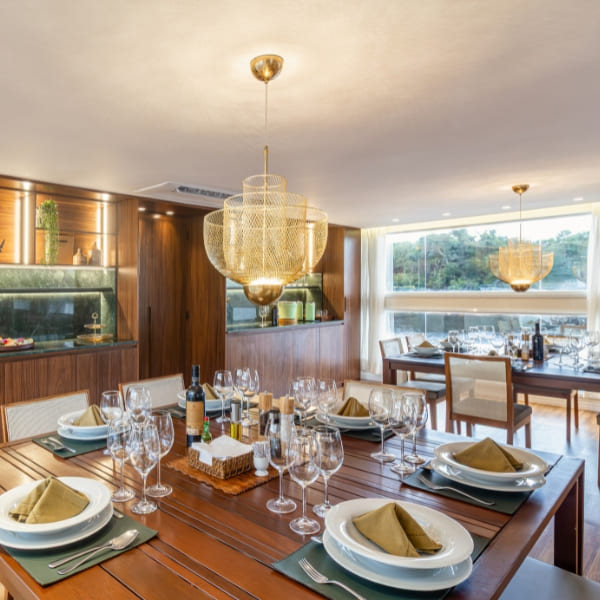
    Traveling through the rainforest and waking up every day to a different landscape is a unique experience, which gets even better with the wonderful stay experience. High-end vessels have it all: spacious cabins with private bathrooms and premium amenities, elegant common areas for moments of leisure, and delicious food made fresh every day.

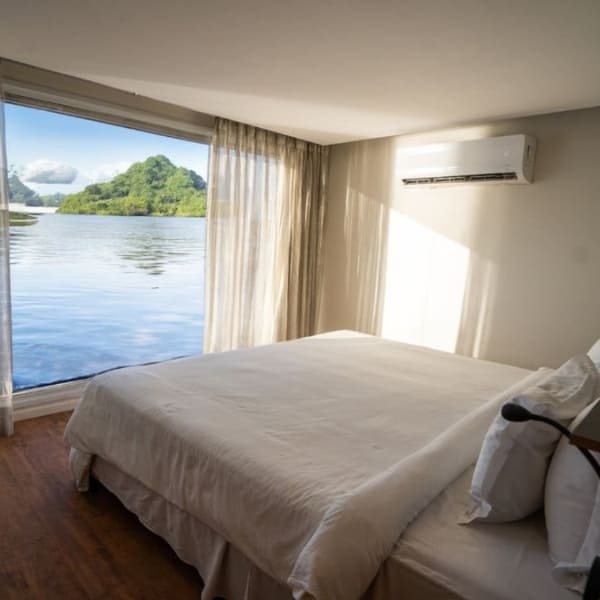
     Large double bed with white sheets in a spacious cabin with a wooden ceiling on the cruise.
    .

    The itinerary varies according to season, but generally speaking, it features canoeing, swimming in igapós (flooded forests), boat tours, wildlife watching, hiking, night spotlighting, and visiting river beaches in Alter do Chão, Anavilhanas, and Jaú National Park.

    Providing the most authentic experiences, luxury Amazon cruises like Zaltana and Kaiara also follow sustainable protocols, such as using solar panels, water treatment systems, fuel-efficient engines, recycling, etc.

    👉 Read more:

    Wildlife and birdwatching in the Amazon 

    Many travelers visit the Amazon hoping to see wild animals, but it can be difficult to spot them due to the dense vegetation and vastness of the forest. 

    However, Cristalino Lodge, in northern Mato Grosso, offers great opportunities for spotting monkeys, giant otters, tapirs, and rare birds. With expert-led hikes, 50-meter-high observation towers, and refined forest-view bungalows, it’s a top choice for wildlife sightings and birdwatching.

    Wooden deck over the water with lounge chairs and large green umbrellas surrounded by trees.
    Photo: Luis Gomes

    Recognized by National Geographic as one of the best lodges in the country, Cristalino also stands out for its refined hospitality, with forest-view bungalows, a library, and Amazon-inspired fine dining.

    👉 Read more: 15 Amazon Animals: Unravel the Wildlife in Brazil

    Wildlife adventures in the Pantanal 

    The best place for wildlife watching in Brazil is the Pantanal, not only for its incredibly rich biodiversity but also because of its open fields, which allow for better sightings of animals.

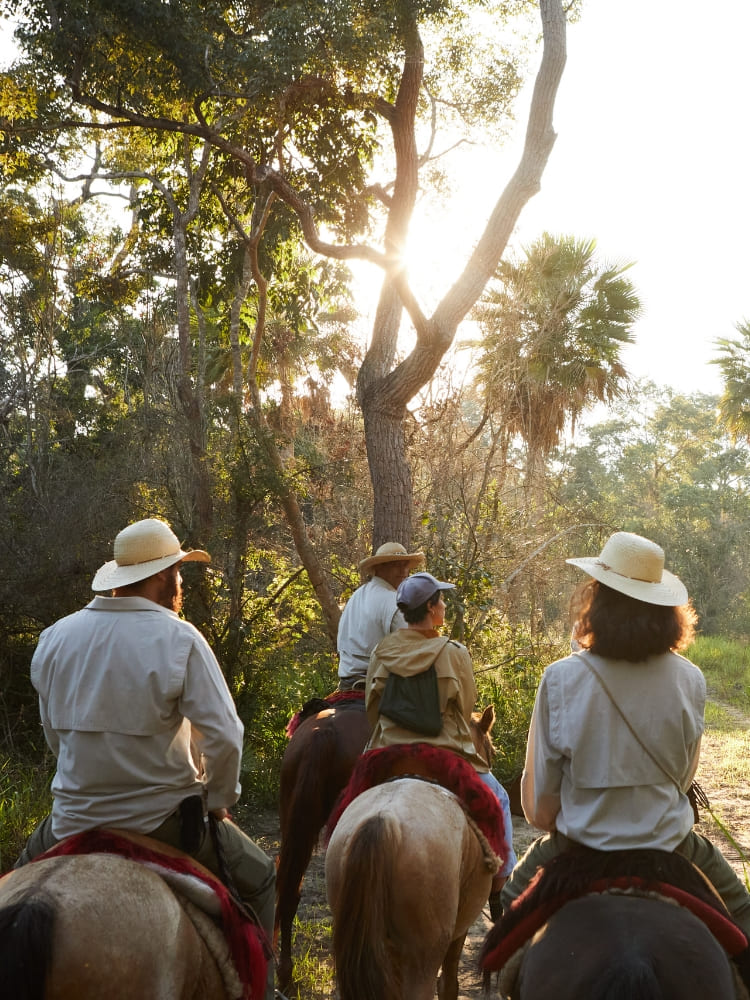
    Depending on the location (north or south), travelers enjoy fantastic activities in the Pantanal, like wildlife safaris (boat or 4×4), canoeing, hiking, horseback riding, etc.

    Jaguar Photography Tour in the North Pantanal

    The northern region is the best place to see jaguars in the Pantanal. Naturally, wildlife lovers from many countries cross the world to admire and photograph these beautiful creatures.

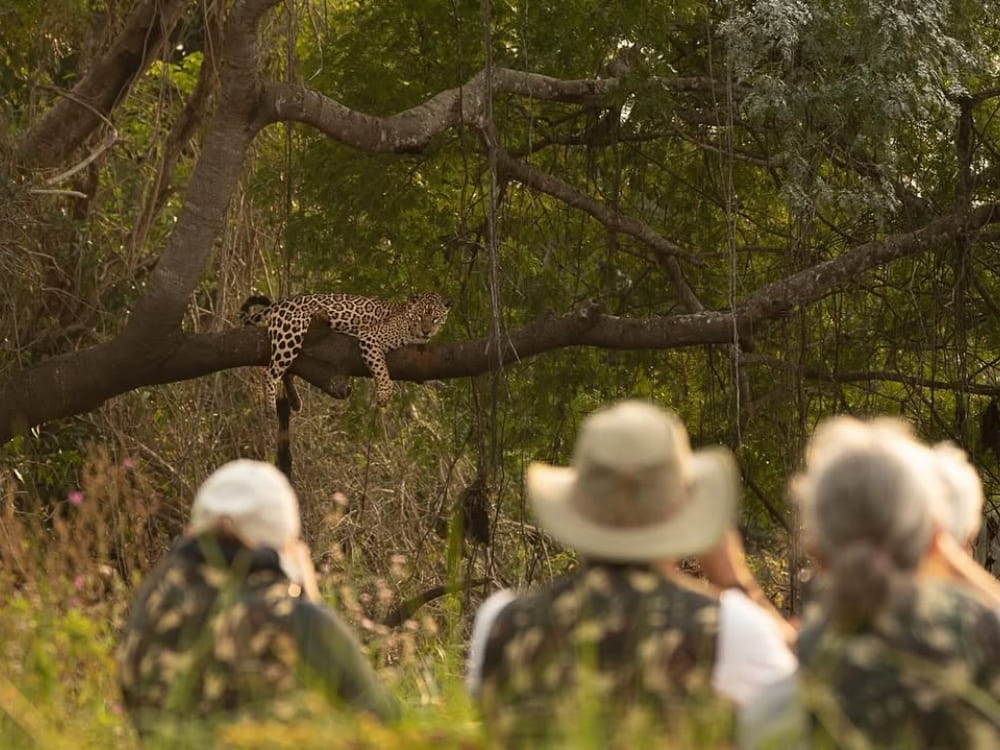
     Tourists with hats and cameras in a boat observing a jaguar lying on a tree branch.
    .

    Boat safaris are organized by ecolodges located in the city of Poconé. Accompanied by expert guides with extensive knowledge in wildlife photography, the groups spend days in the wetlands looking for jaguars and other Pantanal animals.

    Guests who join the Pantanal Jaguar Photography Tour stay at lodges like Santa Rosa, which features beautiful chalets located on the banks of the São Lourenço River. In the common spaces, guests have a lovely time in the swimming pool and social areas.

    Luxury Jaguar Safari in the South Pantanal

    On the list of Brazil’s luxury sustainable travel experiences, Caiman, one of the best and most elegant lodges in all of the Pantanal, cannot be forgotten.

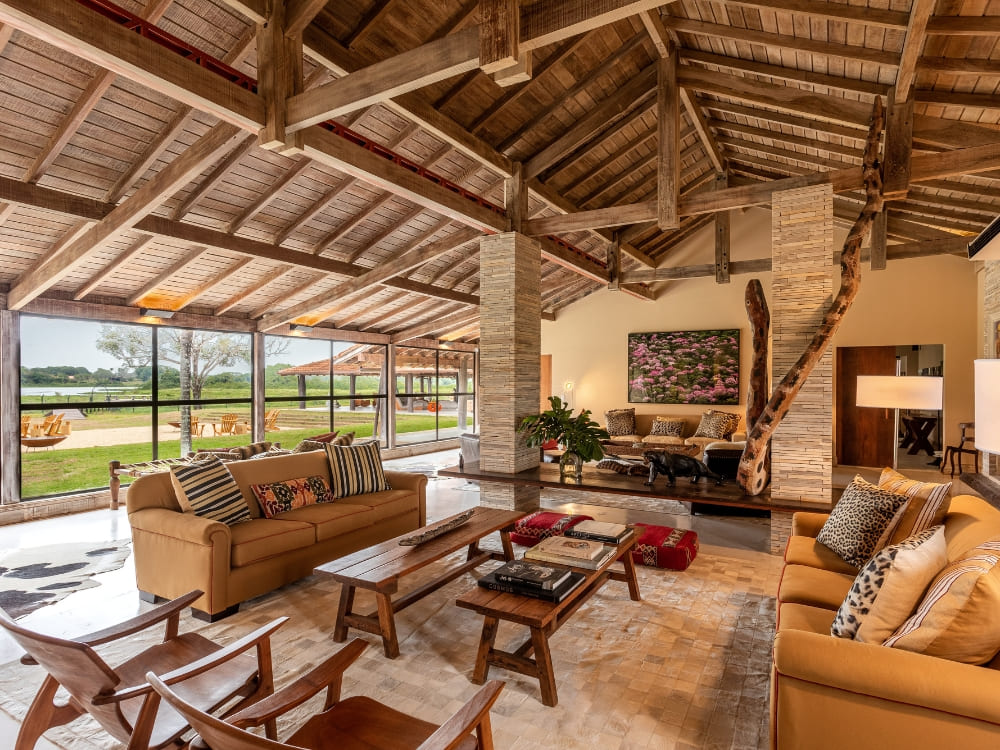
     Luxurious living room with sofas, rustic wooden ceiling, and glass walls overlooking the field.
    .

    The wonderful installations include two categories of accommodations: old farmhouses with 18 suites and a private villa ideal for people who seek exclusivity. With swimming pools, fire pits, lounges, dining rooms, a deck overlooking the bay, TV rooms, a sauna, and a gym, the standard of service remains consistently high.

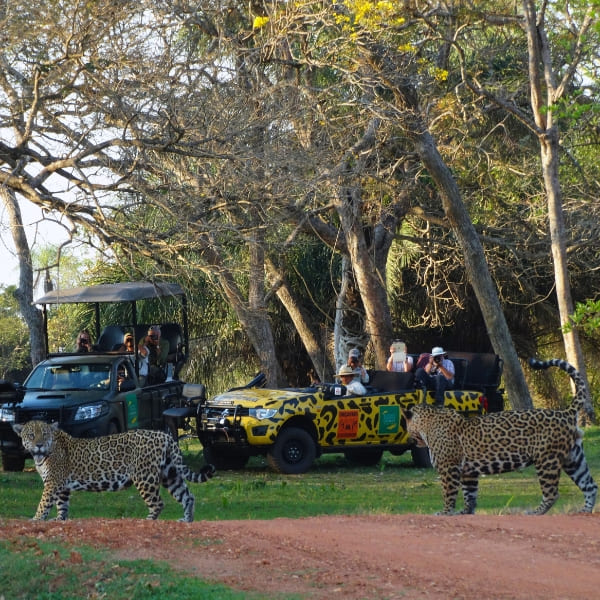
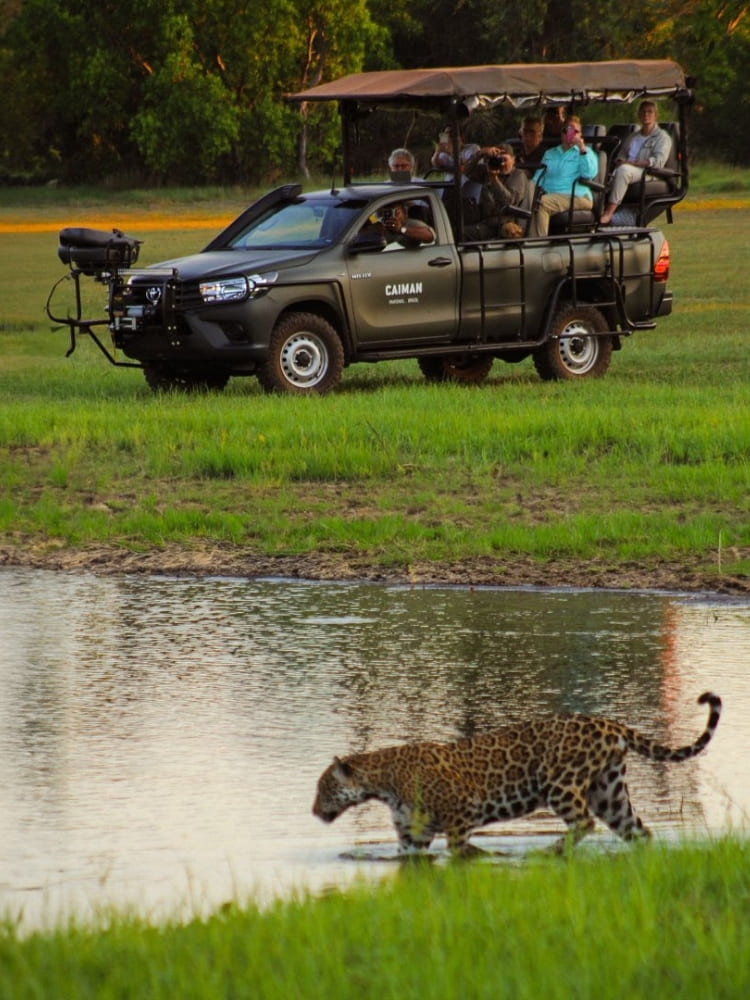
    Caiman is also well-known for being the only place in the South Pantanal where it’s possible to see jaguars. In partnership with the Onçafari Project, the lodge takes guests to the wetlands on 4×4 vehicles to look for the largest feline of the Americas.

    Other activities include hiking, horseback riding, night safaris, canoeing, birdwatching, etc.

    👉 Read more: When is the Best Time to Visit Brazil?

    Exclusive experience in Fernando de Noronha

    The Fernando de Noronha archipelago is a paradisiacal destination notorious for its high-end services, strong conservation efforts, and beautiful views of white-sand beaches and blue-green ocean.

    Charming suite balcony with a wooden pergola, wicker chairs, and tropical plants.
    .

    Snorkeling, scuba diving, swimming with fish, hiking to natural pools, and unwinding on secluded beaches are some of the main activities.

    Noronha’s diving tours and luxury accommodations

    Fernando de Noronha is ideal for divers (both experienced and amateur), as underwater visibility can reach 50 meters to uncover breathtaking underwater landscapes. It’s possible to swim with turtles, sandbar sharks, rays, eels, and countless species of fish.

    The islands also have several stunning beaches. Baía dos Sanchos, considered the 35th best beach on the planet, is a must-visit place, but so are Baía dos Porcos, Praia do Cachorro, and Praia do Meio.

    As for accommodation, Nannai Noronha and Vila Sal Noronha will definitely make your luxury trip in Brazil even better, all thanks to their elegant bungalows and apartments, exquisite views, easy access to beaches and natural pools, and exclusive tours. Both follow environmental practices to safeguard the local ecosystem, such as solar energy, organic gardens, water reuse, use of reforested wood, etc.

    Sophisticated immersion in Lençóis Maranhenses

    Known as a “desert with a thousand lakes” Lençóis Maranhenses covers a 155,000 ha area of white sand dunes with 36,000 rainwater lagoons. Surely one of the most beautiful natural destinations in Brazil, its beauty is almost otherworldly.

    Tourists enjoy the national park by trekking across the dunes, swimming in crystal-clear lagoons, joining boat tours, kitesurfing, taking scenic flights, and connecting with the local culture.

    Explore Lençóis with a premium stay

    One of Lençóis’ base cities, Atins, is perfect for those who want to explore at a slower pace, combining comfort, nature, and local culture. From the village, you can swim in lagoons, hike through dunes, visit nearby communities, take boat rides, and even enjoy scenic flights.

    Hotels like Anacardier Privé (adults-only) and Villa Pantai offer luxury stays integrated into the landscape with easy access to the national park.

    Luxury tour in Lençóis Maranhenses with horseback riding, boat tours and scenic flights 

    Exploring the region on horseback deepens the connection with the dunes, while boat tours along the Preguiças River uncover lesser-known corners—but just as beautiful and worth the visit.

    Best of all, you can enjoy all of this while staying in a 5-star inn, such as the La Ferme de Georges, which blends premium hospitality, rustic-chic chalets, regional cuisine, and sustainable practices. To enrich the experience, opt for scenic flights over the dunes and lagoons to admire Lençóis Maranhenses at an entirely different angle.

    Sustainable luxury travel in Brazil’s Cerrado

    The Cerrado is the second-largest biome in Brazil, only after the Amazon Rainforest, covering a territorial extension of 2 million km². Known as the “Brazilian savanna,” it’s a less internationally known ecotourism destination but very rich in beauty and biodiversity.

    This is the perfect place for people who love to dive deep into nature. The highlight is the wildlife tours, which take travelers into thrilling safaris to spot Brazilian animals—such as the mysterious maned wolf.

    Explore the wild Cerrado in comfort

    At Pousada Trijunção, activities include trails with biologists, kayaking, biking, and night safaris in partnership with the Onçafari Project to spot maned wolves and other native species.

    The Cerrado gets a glamorous spin thanks to Trijunção’s refined facilities, rustic-chic architecture, spacious suites, and lovely common areas (swimming pool, sauna, spa, and fine dining restaurant).

    To contribute to the environment and the community, some of the hotel’s sustainable practices are recycling, rainwater harvesting, and supporting conservation and educational programs.

    Other destinations for luxury tours in Brazil

    Foz do Iguaçu

    The Iguaçu Falls are one of the most stunning and sought-after natural destinations in Brazil. Stay at the only hotel located inside the Iguaçu National Park, with exclusive access to the waterfalls, Belmond Hotel das Catarata, which offers luxury accommodations, a swimming pool, and experiences such as hiking trails and boat rides. The property follows sustainable practices and supports the conservation of the Atlantic Forest.

    Itacaré (BA)

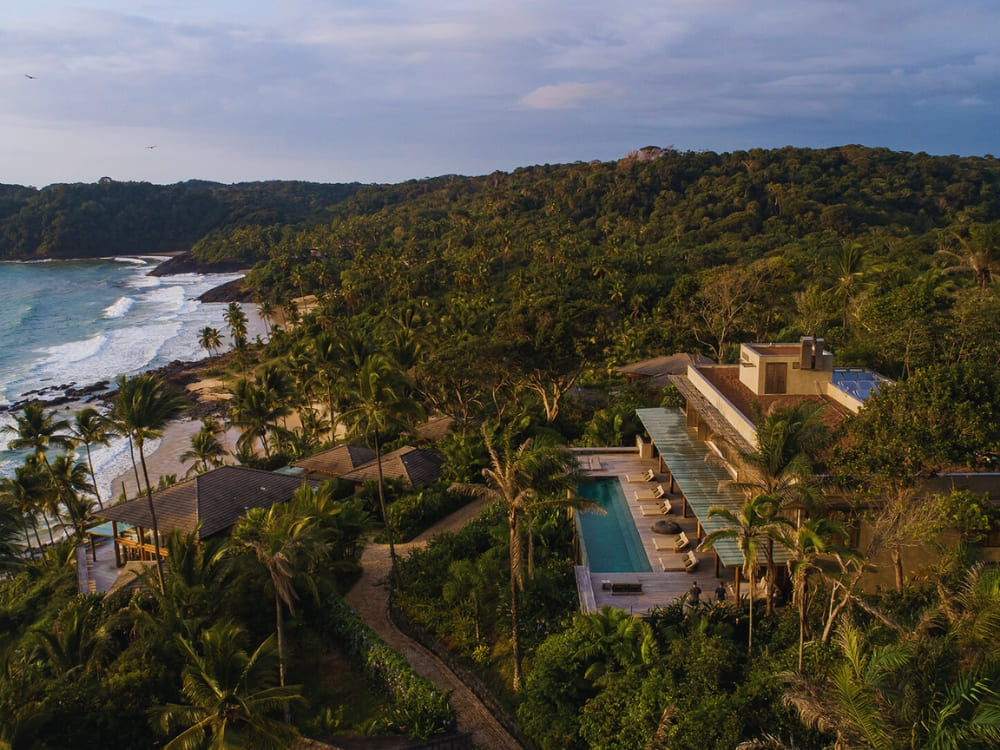
    In Itacaré, you can explore trails in the forest, paddle through mangroves, or surf on deserted beaches. The Barracuda Boutique Hotel has an infinity pool, ocean views, and an à la carte restaurant. The program includes yoga and holistic therapies, while the hotel supports many social projects. It’s the perfect balance between nature, immersive experiences, and comfort!

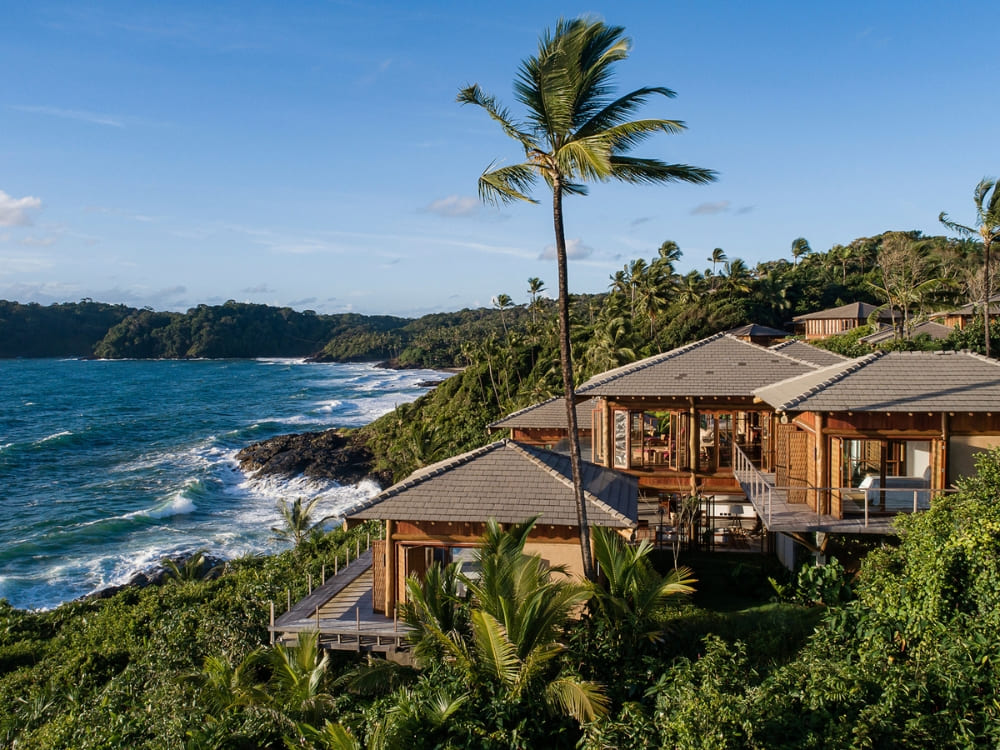
    Luxurious villas with wooden roofs surrounded by palm trees on a cliff facing the sea.
    Photo: Tarso Figueira

    Paraty (RJ)

    At Pousada Literária, guests can explore trails, waterfalls, and the historic center of Paraty, in Rio de Janeiro. Accommodations include a spa, a library, and exclusive tours of Fazenda Bananal (hiking, birdwatching, organic cuisine, etc). The inn is also the official venue for the Paraty Literary Festival (FLIP).

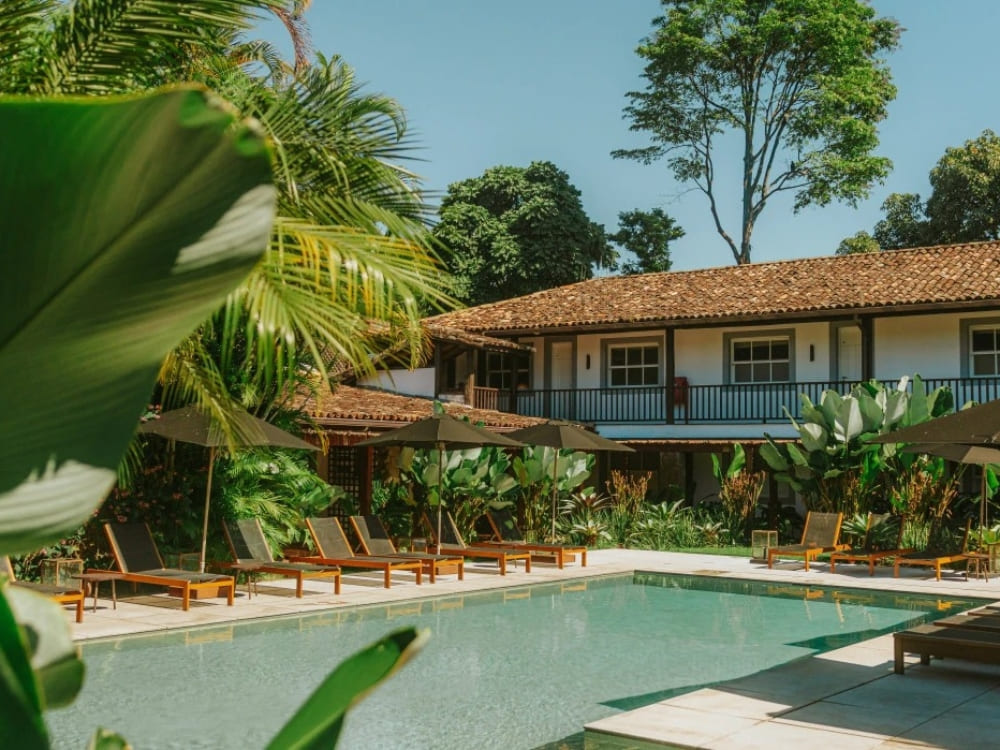
    Calm water pool surrounded by lounge chairs and plants in the inner courtyard of a colonial inn.
    .

    Trancoso (BA)

    Trancoso goes beyond its idyllic beaches: it offers trails within a Private Natural Heritage Reserve (RPPN), experiences with the local community, and initiatives to preserve the Atlantic Forest. At Pousada Tutabel, guests enjoy wonderful itineraries and a structure that includes elegant suites, a spa, a restaurant, and a swimming pool. The inn is a supporter of the O CANTO program, which creates comfortable experiences within a regenerative tourism proposition.

    Ibitipoca (MG)

    At Engenho Lodge, a sophisticated farmhouse that is part of the Ibiti Project, travelers hike trails, observe animals of the Cerrado, join biking and horseback riding tours, and visit waterfalls and natural pools. The accommodation provides comfort with suites featuring heated floors, lake-view balconies, a sauna, and regional cuisine.

    Your luxury tour in Brazil with PlanetaEXO

    Luxury trips in Brazil combine connection with nature, premium accommodations, and a positive socio-environmental impact.

    As a platform specializing in adventure tours in Brazil, PlanetaEXO works with the best local partners to ensure fantastic experiences in some of the country’s most beautiful destinations. Contact us now!

  • Best Brazil Wildlife Tours and Destinations

    Best Brazil Wildlife Tours and Destinations

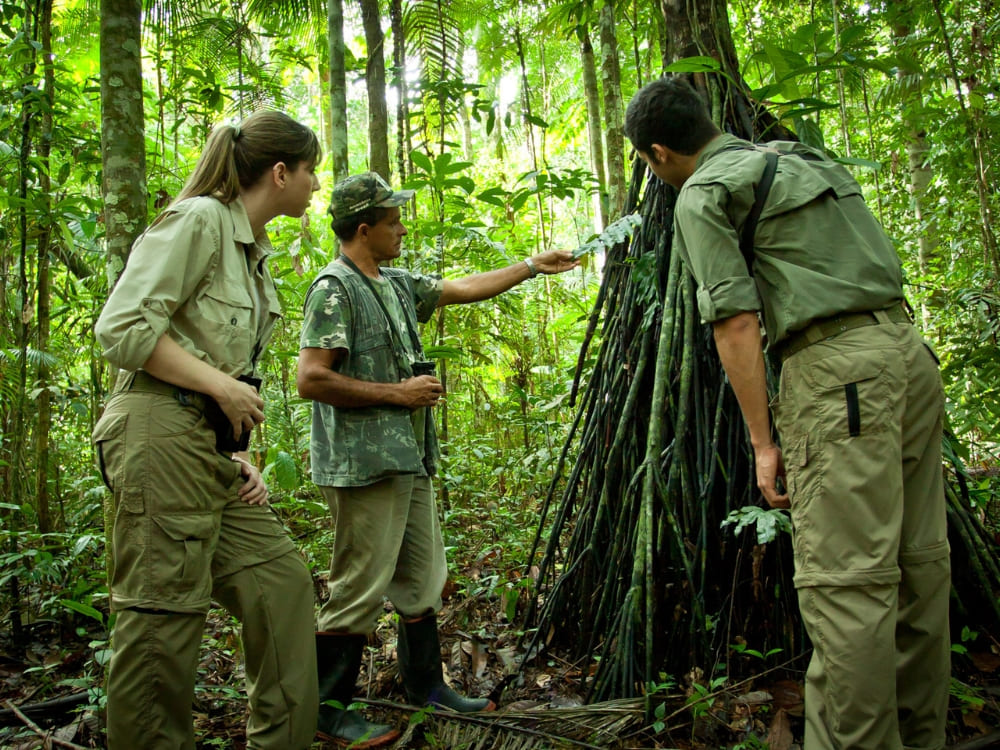
    As a country with one of the richest faunas in the entire world, Brazil’s nature tours are dream-like experiences for wildlife enthusiasts 

    Brazil hosts a higher number of terrestrial vertebrates and invertebrates than any other country on the planet. This can be explained not only by the giant area of 8,510,000 km² but also by the biodiversity. The Amazon Rainforest, Atlantic Forest, Cerrado, Pantanal, Caatinga, and Pampas are the six biomes that occupy Brazilian territory—all of them very different from one another, but each with its own importance.

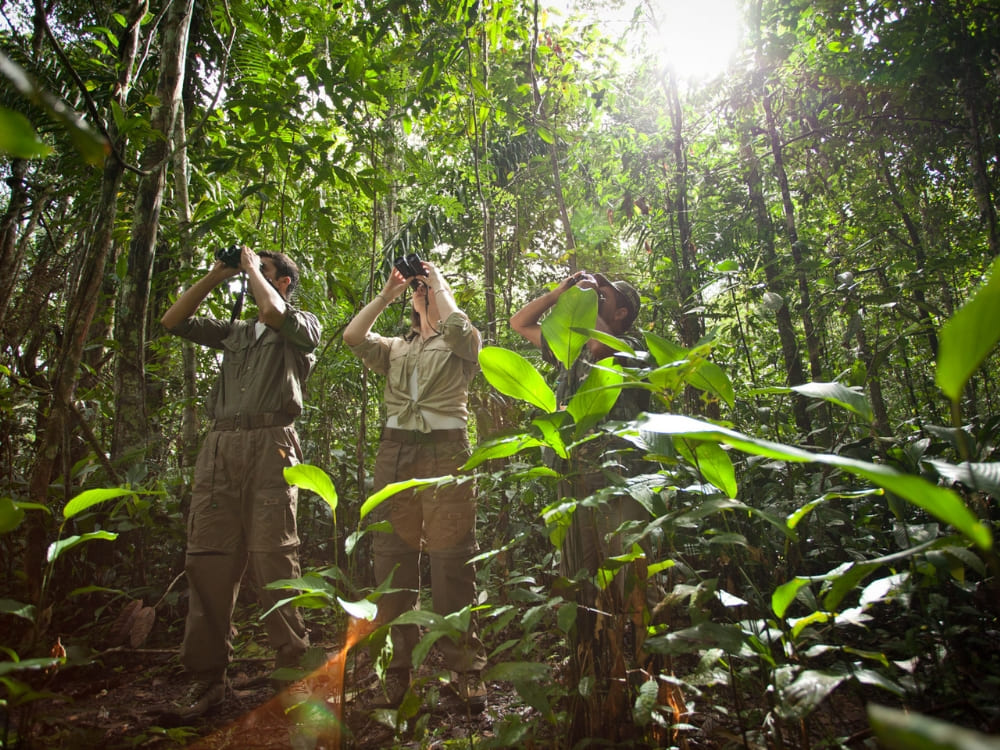
    Three people exploring the tropical rainforest using binoculars during an immersive nature watching tour in Brazil.
    .

    Consequently, the wildlife is just as generous. Naming just a few examples, the country has 139 species of primates, 775 mammals, and the world’s third-highest number of reptiles (848). By mixing adventure, animal watching, and sustainable tourism practices, Brazil wildlife tours are must-have experiences for every nature junkie out there.

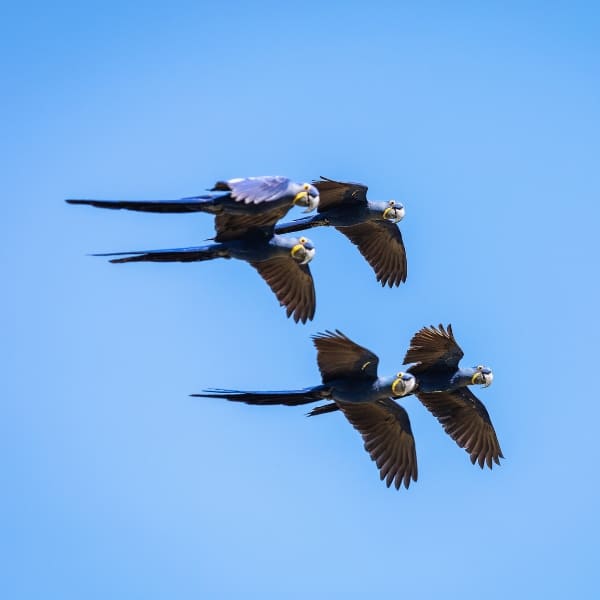
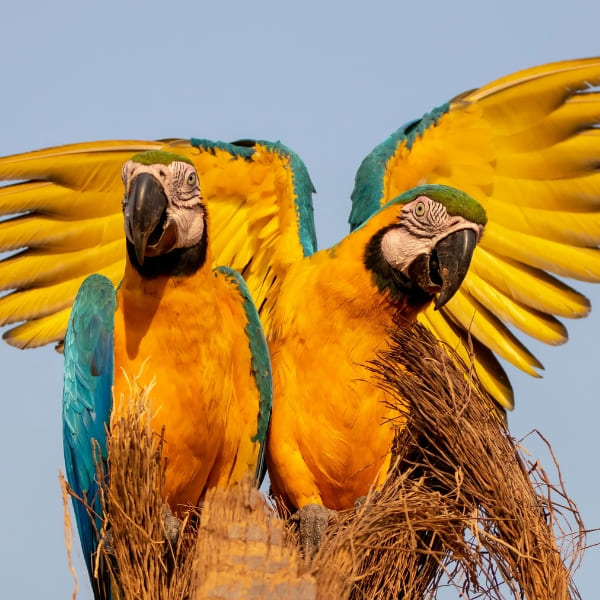
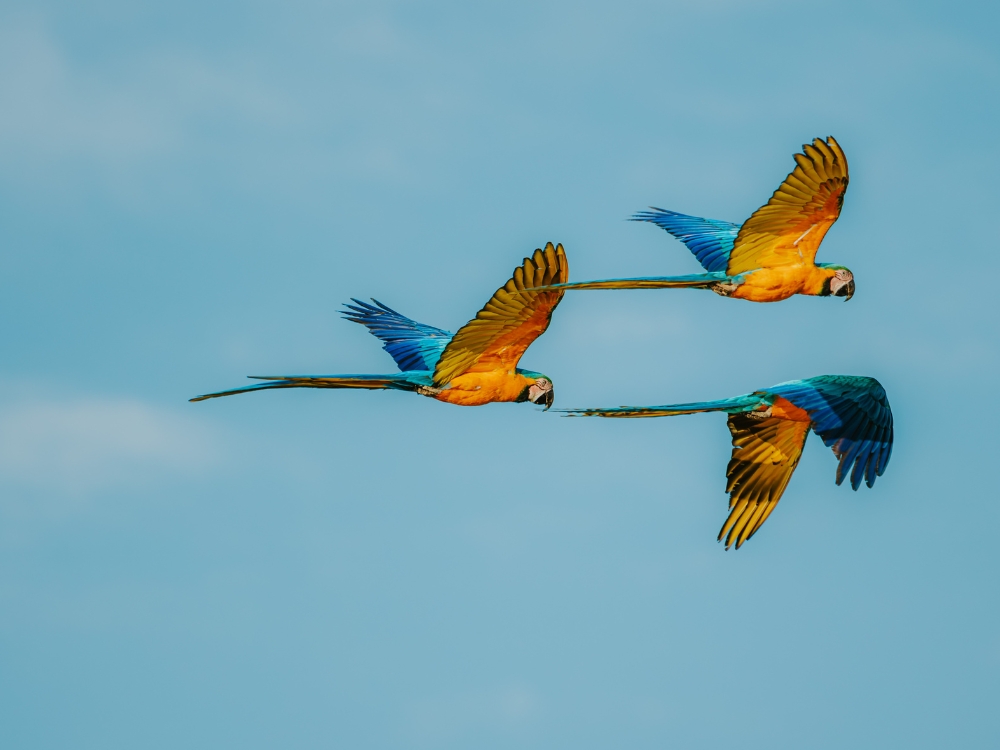
    Three colorful macaws flying together across a blue sky during a wildlife observation tour in Brazil.
    .

    To help you select the destination and experiences, PlanetaEXO, an ecotourism platform specializing in adventure tours in Brazil that works with the best local partners, has put together a comprehensive guide on the country’s best places to see wildlife. Check it out below!

    Pantanal

    In the west of Brazil, the Pantanal is the largest wetland on the planet, spanning over 200,000 km². Three different biomes share the same space: the Cerrado, the Atlantic Forest, and the Amazon Rainforest. This diversity gave the Pantanal Conservation Area the title of a UNESCO World Heritage site in 2000.

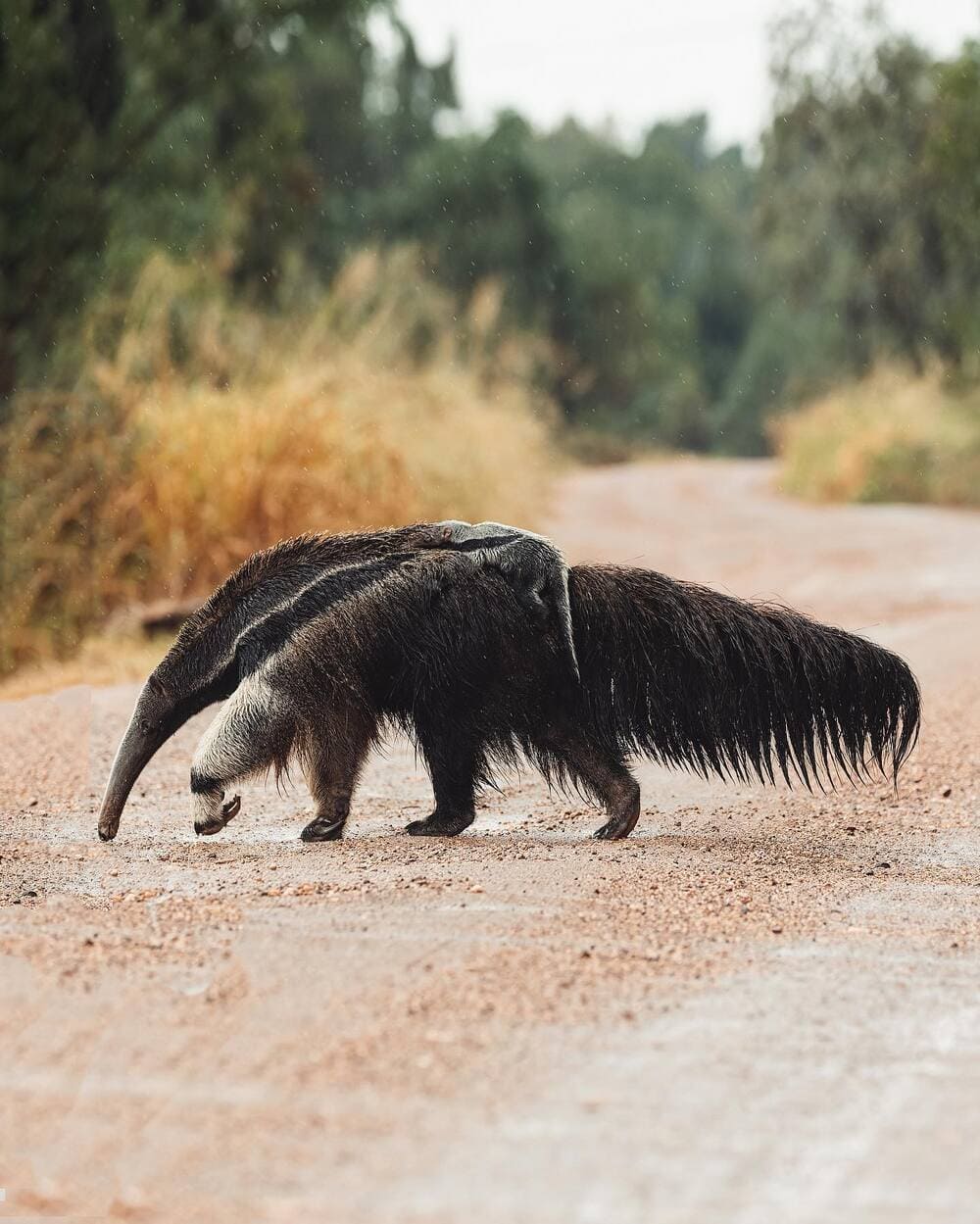
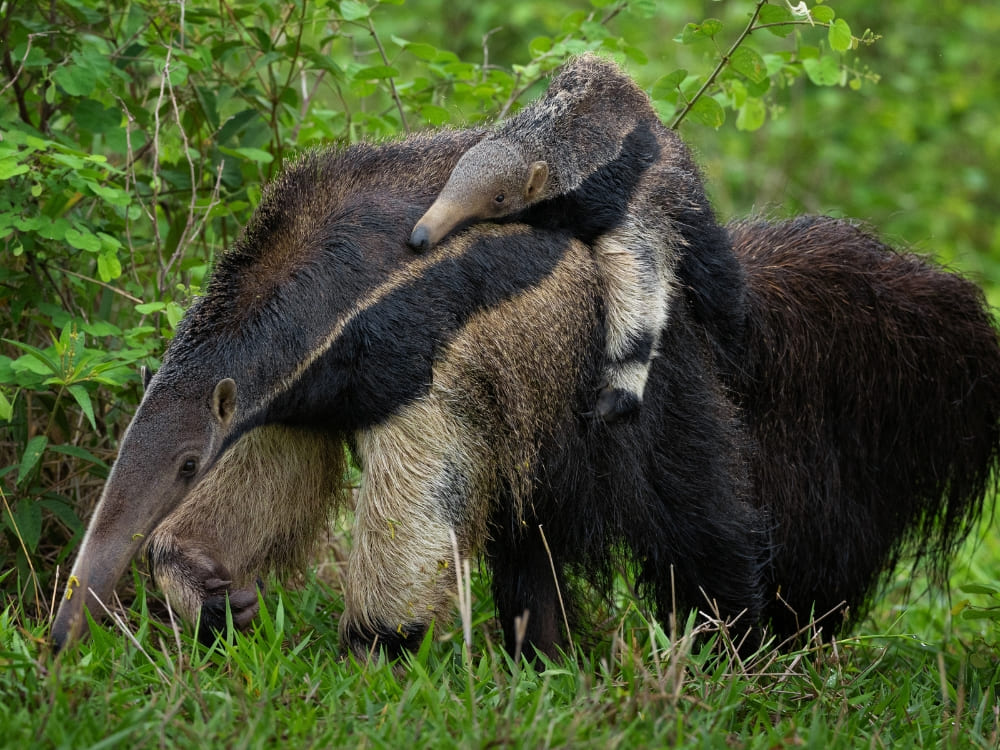
    A giant anteater walking along a dirt road in the Pantanal, considered one of the best places to see wildlife.
    @pracontarprosnetos

    The Pantanal is the best place for wildlife watching in Brazil, as well as the best in the world to see jaguars. Other animals make special appearances, like capybaras, giant anteaters, jabiru storks, caimans, maned wolves, tapirs, etc.

    👉 Read more: 15 Amazing Pantanal Animals and Wildlife

    Pantanal Jaguar Safari in Porto Jofre

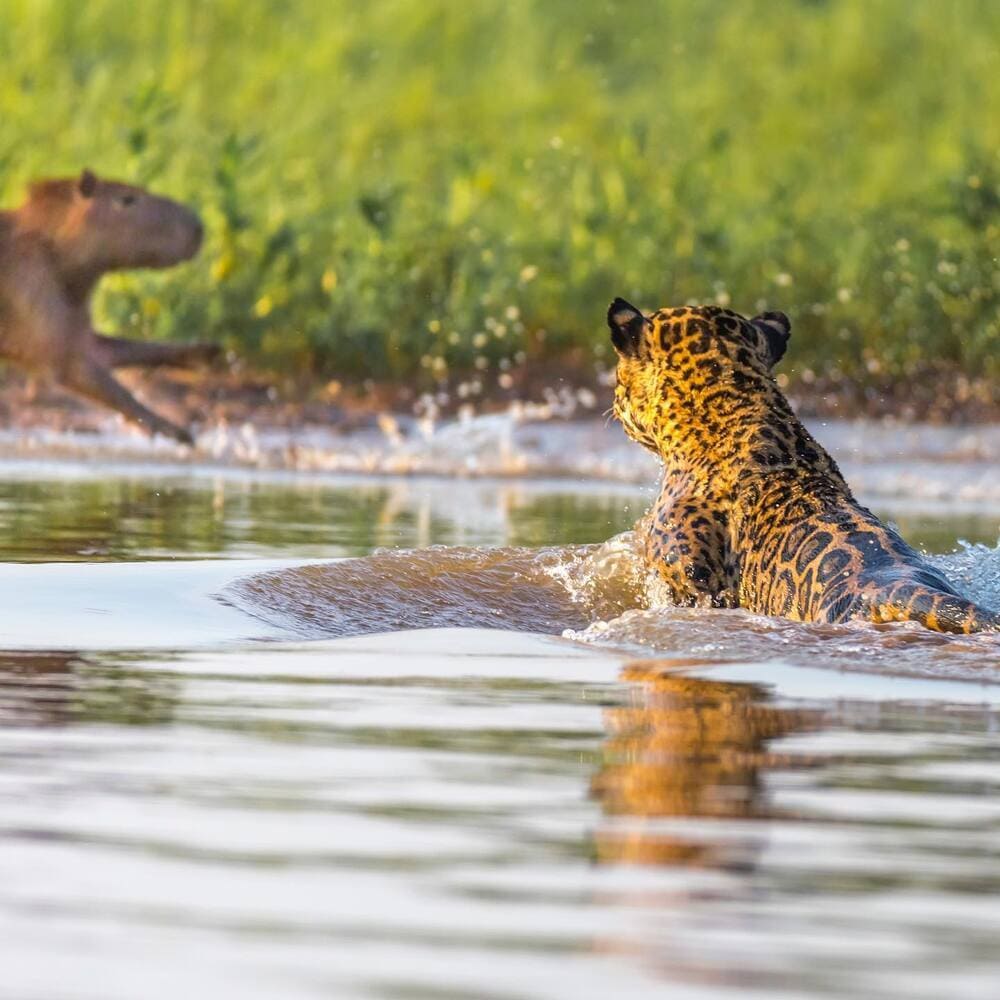
    The Pantanal Jaguar Safari in Porto Jofre, Mato Grosso, explores the northern side of the biome, which is the region where jaguar sightings happen most frequently.

    A jaguar swimming in a river while watching a capybara running on the riverbank during a Pantanal safari.
    .

    Alongside guides who know exactly where to look, you’ll be able to spot these beautiful felines in their natural habitat. The safaris are the highlights of this Brazil nature tour for the majority of guests, but you can also have memorable experiences while hiking and going on boat rides.

    This tour includes round-trip transfers, comfortable accommodation, delicious Brazilian meals, and full-day guided tours for jaguar observation.

    Pantanal Jaguar Photography Tour

    Pantanal tours in Brazil are perfect for photographers (both amateur and professional) seeking gorgeous natural scenarios, rich fauna, and proper conditions for privileged sightings of numerous species.

    Our Pantanal Jaguar Photography Tour takes place in the Northern Pantanal, so you can take the most beautiful shots of jaguars peacefully napping, swimming, nursing their cubs, and even hunting.

    Photographers in a safari vehicle observing a jaguar resting peacefully on a tree branch.
    @larissa_pantanal11

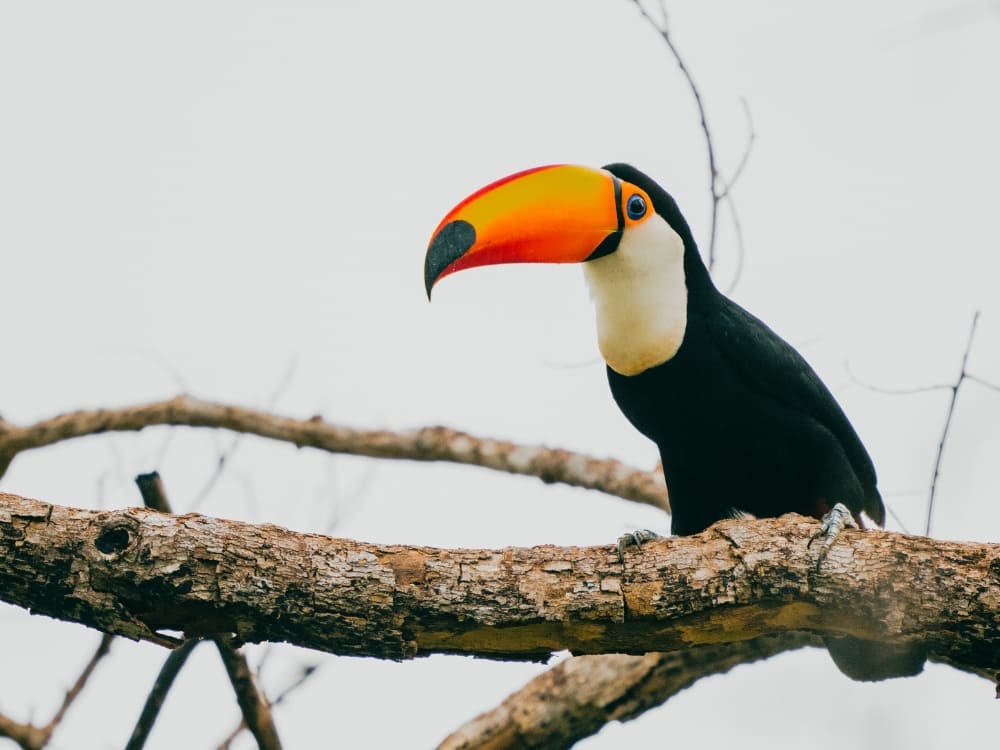
    You’ll be guided by professional guides who not only can share the best photography tips, but also lead you to great areas to encounter jaguars, caimans, toucans, monkeys, snakes, etc.

    This amazing trip includes round-trip transfers, accommodation at the Flotel or Berco Lodge, three meals a day, full-day boat safaris, and naturalist guides.

    👉 Read more: Where to Stay in the Pantanal?

    Pantanal Wildlife Trip from Campo Grande

    Another option to experience the wildlife is the Pantanal Wildlife Trip from Campo Grande. In the city of Aquidauana, in the south, spotting jaguars doesn’t happen very often, but you can still see plenty of other animals.

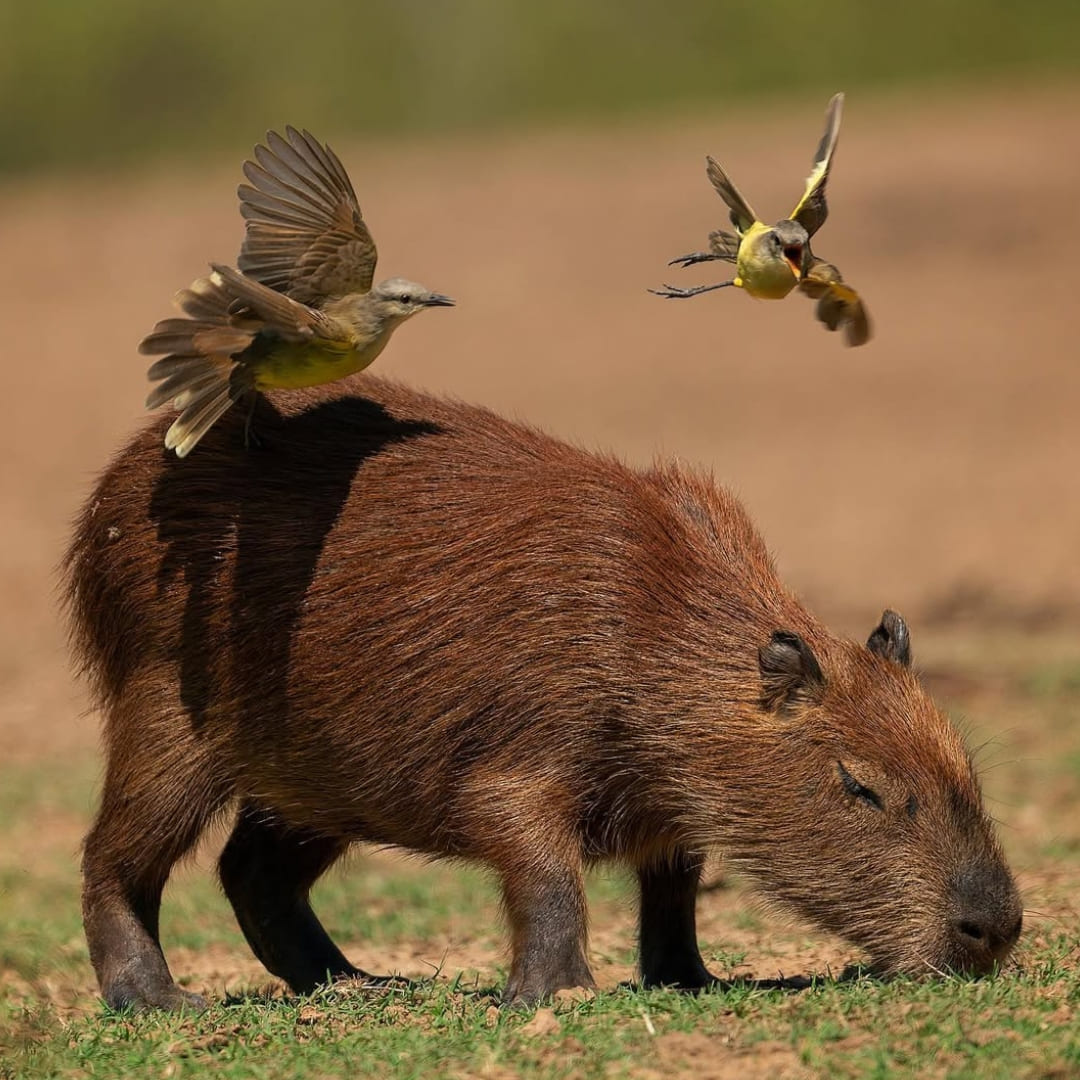
    A capybara grazing on the grass with small birds flying around and perched on its back.
    @mateusrauber

    In a photo safari, get your cameras ready to immortalize the images of anteaters, caimans, giant otters, capybaras, and the almighty jabiru stork—considered a symbol of the Pantanal.

    This itinerary also includes night safaris, piranha fishing, horseback riding, boat tours, and hiking. Guests stay at cozy rooms with private bathrooms and enjoy delicious local cuisine at the restaurant, a refreshing swimming pool, and hammocks for a truly relaxing stay. 

    Luxury Jaguar Safari in the Pantanal

    Perfect for nature lovers, this wildlife tour in Brazil is the perfect mix of Pantaneiro authenticity and comfort. The itinerary includes many opportunities to spot animals, such as ecological walks, safaris, nocturnal observation excursions, and canoe trips. 

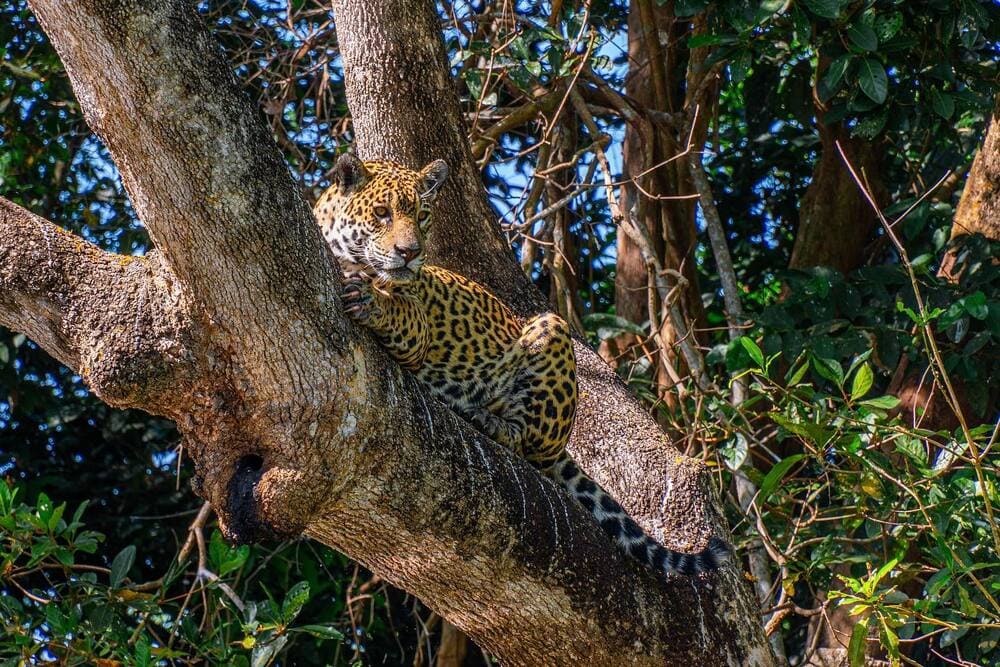
    A camouflaged jaguar resting on the trunk of a large tree during a luxury eco-safari.
    @jnrlara

    The safaris, however, are surely a favorite among visitors. Caiman’s facilities are the only place in the Southern Pantanal where it’s possible to see jaguars. With the support of the Onçafari Project, the hotel’s guests have many chances of spotting these animals in the wild.

    As one of the highest-rated lodges in the area, Caiman offers a fantastic stay experience with the Luxury Jaguar Safari in the Pantanal. Aside from 18 air-conditioned rooms with private bathrooms and balconies, a swimming pool, decks, a sauna, a gym, fire pits, a restaurant, and a bar, this luxury accommodation has various activities for guests who can’t stay away from nature—including night tours, hiking, and canoeing.

    Amazon Rainforest

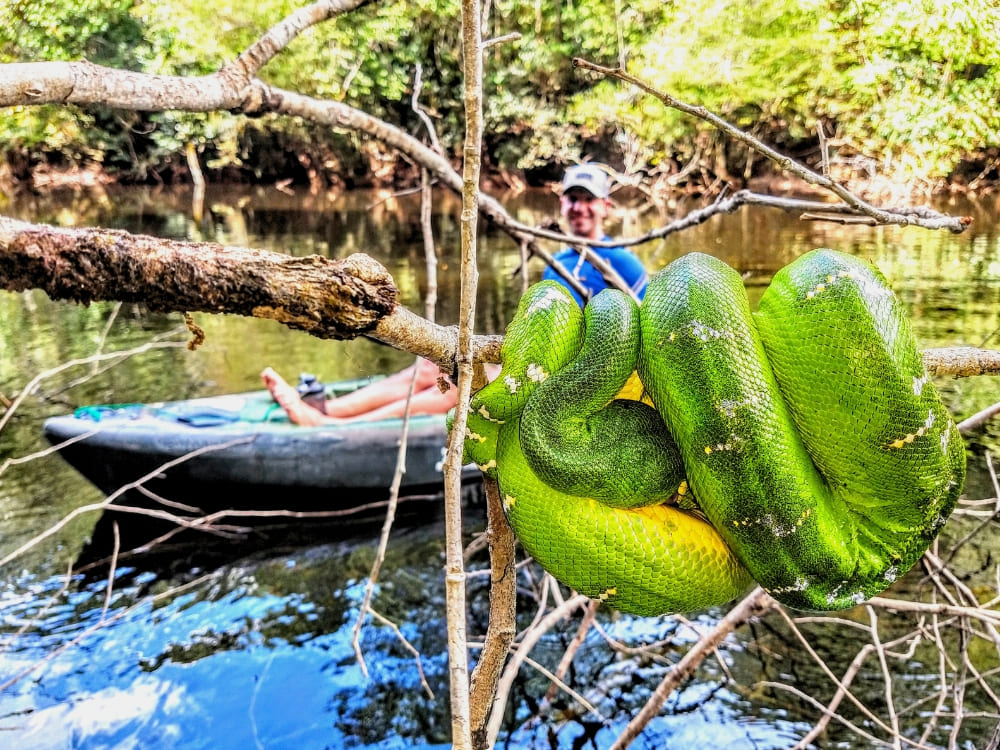
    The Amazon is the largest rainforest in the world, spanning over 6.74 million km² in Bolivia, Colombia, Ecuador, Guyana, Peru, Venezuela, and Suriname. The biggest share is actually located in Brazil, where it occupies parts of the states of Amazonas, Amapá, Acre, Pará, Rondônia, Roraima, Tocantins, Mato Grosso, and Maranhão.

    A large green snake coiled on a branch over the water, with a person in a kayak in the background in the Amazon jungle.
    .

    The Amazonian flora is impressive, but so is the fauna. Amid birds, mammals, reptiles, amphibians, and insects, scientists claim there are 30 million species of animals in the forest.

    While it might be harder to spot animals here than in the Pantanal—due to the vastness of the forest and the density of the vegetation—Amazon wildlife tours in Brazil are still some of the best ecotourism options for nature lovers.

    👉 Read more: Pantanal or the Amazon — Which One Should You Choose?

    Cristalino Jungle Lodge

    Considered one of the best jungle lodges in the world by National Geographic, Cristalino Jungle Lodge, in the state of Mato Grosso, is a haven of tranquility and luxury in the middle of the Amazon. Forest hikes, canoeing, boat trips, and climbing on the 50-meter-tall observation towers are wonderful activities for wildlife watching.

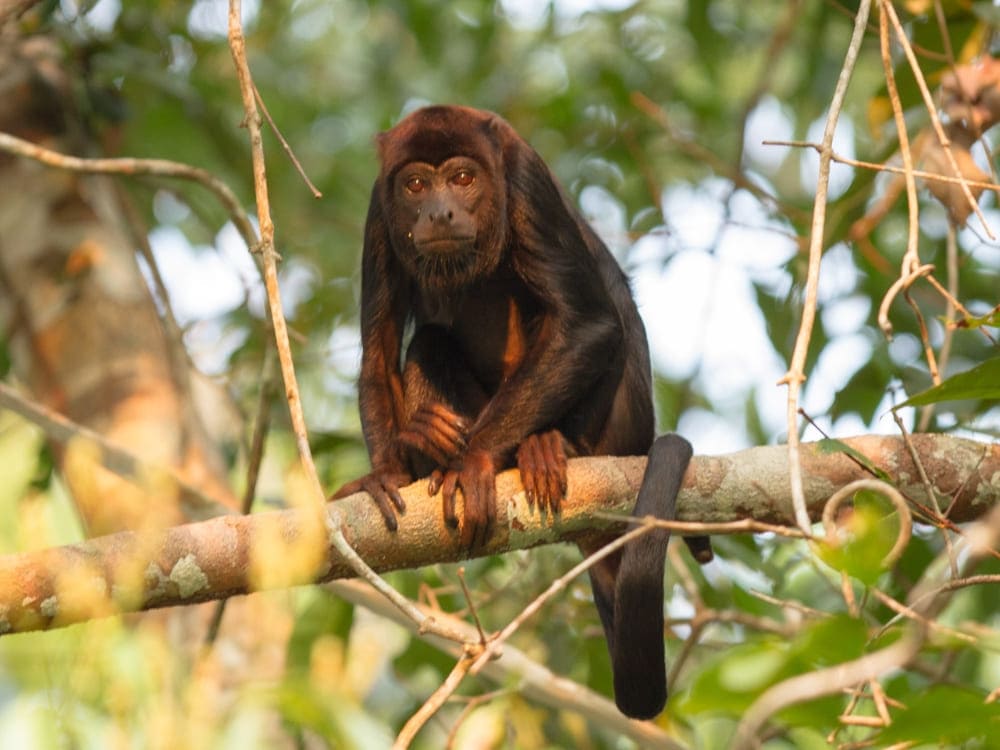
    A dark-furred monkey sitting on a tree branch during a wildlife-focused tour in the Amazon.
    Photo: Jorge Lopes

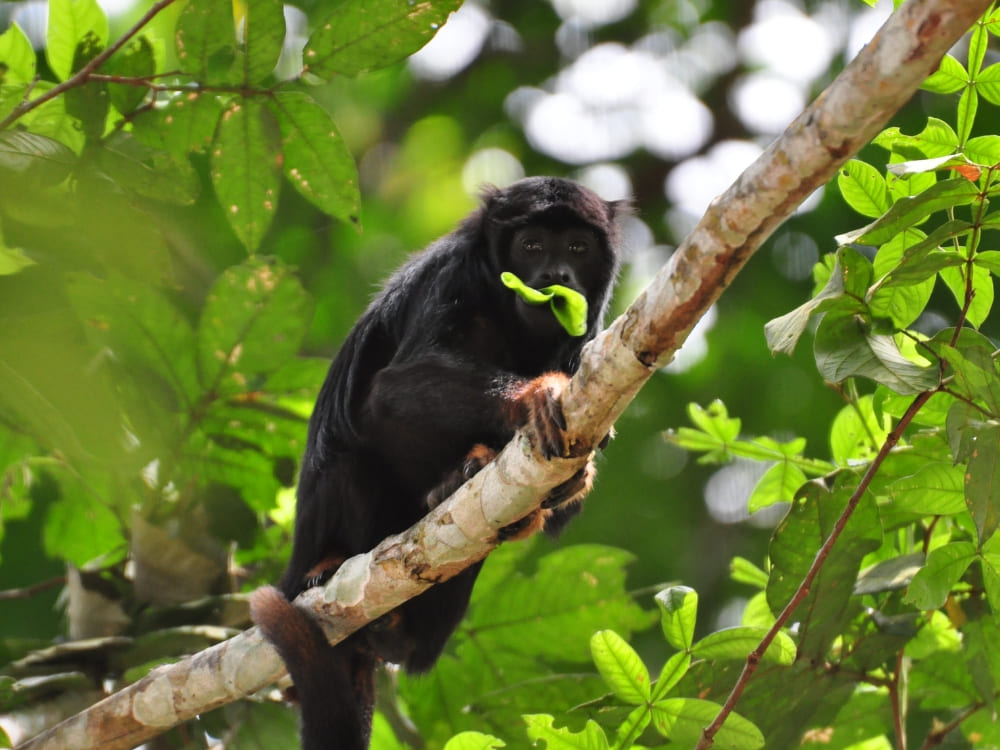
    On the top of the trees, flying across the blue sky, roaming around the jungle, and swimming in the rivers, expect to see plenty of different animals, like monkeys, caimans, lizards, tapirs, and other Amazon animals.

    A wooden deck illuminated by small lights at dusk, surrounded by the lush tropical vegetation of the rainforest.
    Photo: Samuel Melim

    Additionally, Cristalino is a five-star stay experience with air-conditioned suites, charming decor, bathtubs, outdoor showers, balconies with hammocks, private gardens,  a gourmet area, a floating deck, and a reading room. 

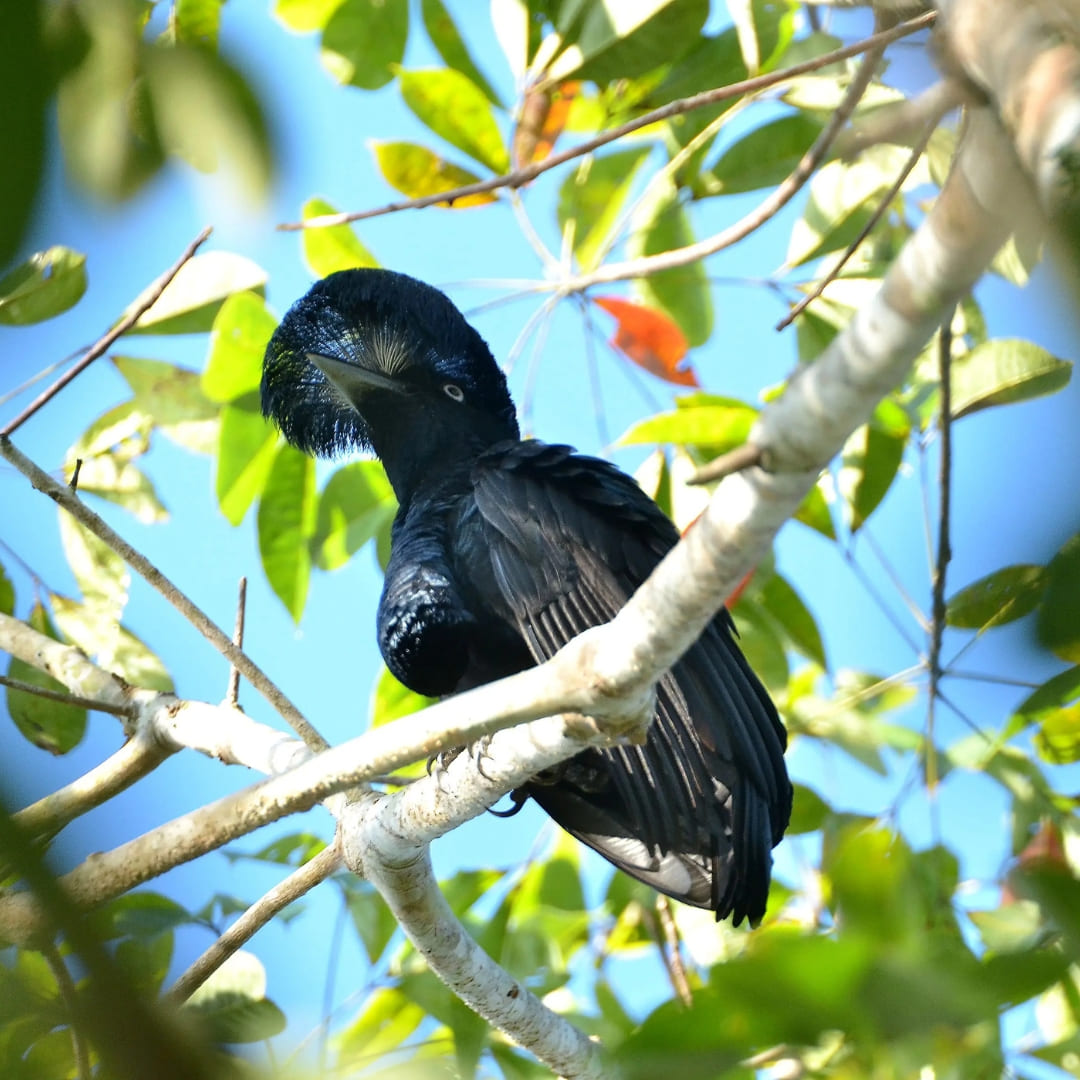
    Cristalino Birdwatching

    Birdwatching in the Amazon is a lifetime experience at Cristalino. The lodge has an entire itinerary for birdwatching, including hiking on special trails to look for birds.

    An exotic black bird with a prominent crest perched on a green branch during a birdwatching tour in the Amazon.
    .

    With the help of expert guides, you’ll see fascinating species that only exist in this part of the forest, such as the rufous-capped nunlet, dusky-cheeked foliage-gleaner, dark-billed cuckoo, blue-winged and red-bellied macaws, and many more!

    Activities also include canoeing, boat tours, and climbing on the observation towers—which allows for an even greater view of the birds and the forest as a whole. An unmissable experience for anyone seeking adventure in Brazil!

    Anavilhanas Jungle Lodge

    Anavilhanas Jungle Lodge is another sophisticated accommodation in the Amazon. Safely nestled in Anavilhanas National Park, the second-largest river archipelago in the world, this is the main choice for guests who want to immerse themselves in nature and explore Brazil’s wildlife.

     A person relaxing in a hammock inside a sophisticated room with large glass windows facing the jungle.
    Photo: Felipe Castellari

    Such an incredible location allows for sightings of the most fascinating creatures, including sloths, caimans, manatees, spider monkeys, and piranhas. The most awaited moment, however, is when travelers can interact with the friendly Amazon pink dolphins!

     A pink river dolphin swimming gracefully just below the surface in the dark waters of a Brazilian river.
    .

    To make things better, Anavilhanas guests will definitely fall in love with the lodge’s gorgeous infrastructure: caboclo architecture, sophisticated rooms with private bathrooms and jaw-dropping views of the forest, a floating bar, a fine dining restaurant, a lounge, swimming pools, a gym, a massage room, and a gift shop.

    Amazon Rainforest Ecolodge Trip in Brazil

    Another perfect tour for tourists seeking wildlife activities is the Amazon Rainforest Ecolodge Trip in Brazil.

     Aerial view of an eco-lodge with floating structures on a winding river completely surrounded by dense forest.
    Photo: Marcelo Castro

    This Brazilian wildlife tour takes place at Uakari Lodge, named after the white uakari monkey (Cacajao calvus calvus), native to the area of the Mamirauá Sustainable Development Reserve, where the accommodation is located.

    Built on stilts to adapt to seasonal floods, the lodge offers an unparalleled connection to the rainforest. Aside from the uakari monkeys, you can spot extraordinary local wildlife, including caimans, sloths, river dolphins, exotic birds, etc.

    The textured head and eyes of a caiman emerging from the surface of dark water during a night observation tour.
    .

    The experience is further enhanced by the amazing curated activities, such as jungle hiking, canoeing, night spotting, and fishing, making it an unforgettable journey for nature enthusiasts.

    👉 Read more: When is the Best Time to Visit Brazil?

    Cerrado

    The Cerrado is Brazil’s savanna, covering around 25% of the country’s territory. It spans up to 2 million km² in the states of Goiás, Tocantins, Mato Grosso, Mato Grosso do Sul, Minas Gerais, Bahia, Maranhão, Piauí, São Paulo, and Brasília. 

    An off-road vehicle driving on a dirt road through the vast Cerrado plains illuminated by the golden sunset light.
    .

    Considered a highly biodiverse biome, it holds over 5% of the world’s animals and plants. This ecosystem is home to 860 species of birds, 180 reptiles, 200 mammals, 150 amphibians, 1,200 fish, and millions of insects

    No wonder this is one of the best places to see wildlife in Brazil!

    Pousada Trijunção

    National Geographic includes the Cerrado as a great destination for wildlife activities, highlighting birdwatching and wolf tracking. The publication also mentions Pousada Trijunção—situated in the triple border of Bahia, Goiás, and Minas Gerais—as the best stay option for people visiting this enchanting destination.

     A large maned wolf walking through the dry grass of the Brazilian savanna under the soft late afternoon light.
    .

    Wildlife watching is, indeed, one of the inn’s main attractions. Night safaris, guided birdwatching, and visiting a conservation breeding and wild animal release area are amazing opportunities to see deer, tapirs, peccaries, hawks, macaws, etc. In partnership with Onçafari, spotting maned wolves is just as unforgettable.

    he silhouette of a passenger in a safari vehicle admiring a vibrant purple and orange sunset skyline in the Cerrado.
    .

    Providing the utmost comfort, Pousada Trijunção has seven suites with king-size beds, air-conditioning, TVs, and mini fridges. In the common areas, there is a local cuisine restaurant (which serves all-day breakfast), a lounge, a swimming pool, and much more.

    Abrolhos

    Abrolhos is an archipelago situated in the Atlantic Ocean, about 65 km away from the south coast of Bahia. Its five islands are protected by Abrolhos Marine National Park, established in 1983.

    Aerial view of a white catamaran anchored in crystal clear waters next to a green island in the Abrolhos archipelago.
    .

    Home to the largest reef complex and the richest marine biodiversity of the South Atlantic Ocean, Abrolhos is a true sanctuary for stingrays, hundreds of different species of fish, sea turtles, and seabirds.

    However, the protagonist of Abrolhos is, without a doubt, the humpback whale. The archipelago is known as a destination where these gentle giants go every year—mostly between July and November—to breed, feed their calves, and rest. 

    Diving Liveabord in Abrolhos

    Abrolhos Liveaboard is definitely the perfect vacation option for people who want to see a different side of Brazil’s nature tours. Instead of immersing yourself in the jungle, you get to explore the beauty of Bahia’s sea and its riveting creatures.

    A massive humpback whale breaching the ocean water, observed from the edge of an eco-tourism boat.
    @gilenocorumbau

    Sailing through the crystal-blue waters of the islands, activities include guided dives (day and night), stand-up paddling, sunset contemplation, and, of course, humpback whale watching.

    A lovely (and safe!) catamaran is the accommodation for guests joining the tour. Five ensuite cabins will comfortably welcome you on this aquatic adventure. Feeling hungry? Freshly made Brazilian food is served aboard every day!

    👉 Read more: 10 facts about Abrolhos

    Fernando de Noronha

    A UNESCO World Heritage site since 2001, Fernando de Noronha is an archipelago off the northeast coast of Brazil, in the state of Pernambuco

    Coastal landscape with iconic pointed rock formations bathed by crystal clear, turquoise ocean waters.
    .

    Aside from the breathtaking beaches—including Baía do Sancho, ranked #35 by The World’s 50 Best Beaches—travelers are lured to the island due to its vibrant marine life. Green turtles, spinner dolphins, barracudas, lemon sharks, and moray eels are just a few animals often seen in the area.

    To see this beauty up close, Fernando de Noronha has the best diving spots in Brazil and all of South America.

    Diving trips in Fernando de Noronha

    If you truly want to experience everything Fernando de Noronha has to offer, then you can’t miss the opportunity of exploring its beautiful diving sites!

     A scuba diver exploring the blue ocean swimming with open arms just above a large fish near the seabed.
    Photo: All Angles

    With the help of local, qualified guides, you’ll be amazed by the paradise this island hides underwater. Whether this is your first time diving or you’ve had your fair share of aquatic adventures before, Fernando de Noronha’s got your back.

    The Fernando de Noronha Diving Trip includes diving sessions, accommodation, breakfast, round-trip transfers, and a full-day island tour

    👉 Read more: 10 facts about Fernando de Noronha

    Wildlife tours in Brazil with PlanetaEXO

    See how fascinating the wildlife in Brazil is? From the jungle to the savanna, from wetlands to aquatic ecosystems, there is an option for every nature lover’s tastes and needs!

    PlanetaEXO is an ecotourism platform specializing in adventure tours in Brazil. By connecting you with the best local partners, we ensure a fulfilling, responsible travel experience in some of the country’s most incredible natural destinations. Contact us now!

  • 20 Animals in Brazil: Wildlife Facts and Where to Find Them

    20 Animals in Brazil: Wildlife Facts and Where to Find Them

    Brazil’s wildlife is as impressive and abundant as the country itself. From reptiles to mammals, discover the secrets of 20 Brazilian animals!

    Brazil is known worldwide for its grandiosity—impressive territory size, wild beauty, and the greatest biodiversity on Earth. For nature lovers and wildlife admirers, it’s a true feast.

    Occupying the largest portion of South America with six different biomes, the animals in Brazil represent 15% of all land and aquatic species on the planet.

    Can’t wait to understand a bit more about the Brazilian fauna? PlanetaEXO, an ecotourism platform specialized in adventure tours in Brazil, has selected 20 fascinating animals. Check it out below!

    What animals live in Brazil?

    Among insects, spiders, fungi, mollusks, fish, crustaceans, birds, reptiles, amphibians, and mammals, there are over 163,000 species officially cataloged in Brazil, according to SiBBr (The Brazilian Biodiversity of Information System), the Brazilian branch of GBIF (Global Biodiversity Information Facility).

    Considering the differences in ecosystems, Brazil’s animals are diverse and thoroughly studied by scholars and the authorities to come up with solutions to protect them. 

    From endemic species to animals found in multiple areas, the Brazilian wildlife is unlike any other.

    👉 Read more: When is the best time to visit Brazil?

    What is Brazil’s national animal?

    Brazil doesn’t have an official national animal, but some species stand out, like the rufous-bellied thrush, nominated as the country’s symbolic bird in 2002.

    On Brazilian real banknotes, certain animals are honored as a way to value national biodiversity and raise public awareness about environmental protection, including hawksbill turtles, herons, macaws, golden lion tamarins, jaguars, groupers, and maned wolves.

    These are obviously very important species to the nation’s fauna and are considered symbols of Brazil’s biological diversity in one way or another.

    1) Harpy eagle

    A close-up of a harpy eagle with dark grey feathers and vertical plumes on its head.
    Photo: Ivo Kruusamägi

    The largest and most powerful bird of prey of the Americas, the harpy eagle reaches a wingspan of 2 meters and weighs up to 9 kg, though there are records of individuals weighing over 12 kg. Its piercing black eyes, dark grey coloring, and the vertical plumes on its head give it a regal, intimidating appearance.

    Fun facts about harpy eagles:

    • Snatching sloths and monkeys from the treetops with their sharp claws, they can carry prey weighing over 10 kg into mid-air.
    • Also known in Brazil as cutucurim, uiraçu, uiracuir, uiruuetê, and águia-imperial (imperial eagle).
    • Researchers consider their presence an indicator of ecosystem health. Their disappearance means there is not enough prey or forest area for survival.
    • Although they are apex predators, they’re at risk of extinction due to deforestation.

    Where to find them: Mostly in the Amazon Rainforest, occasionally in areas of Atlantic Forest, and rarely in the Pantanal or the Cerrado.

    👉 Read more: 15 Amazon animals in Brazil

    2) Golden lion tamarin

     A golden lion tamarin with bright orange fur sits on a branch in the Atlantic Forest.
    .

    Golden lion tamarins are one of the most notorious native animals of Brazil. Belonging to the class of New World monkeys, its friendly personality and lion-like features are what make it so beloved. Due to the imminent risk of extinction, it has become a sort of mascot for national biodiversity conservation.

    Fun facts about golden lion tamarins:

    • Their tail is longer than their body: 31-40 cm compared to 20-37 cm.
    • As omnivorous mammals, they eat fruit, vegetables, eggs, spiders, snails, and small lizards and birds.
    • Over 65% of their pregnancies result in twins.
    • Golden Lion Tamarin Day is celebrated on August 2.

    Where to find them: Atlantic Forest (Rio de Janeiro).

    3) Maned wolf

    A maned wolf with a reddish-orange coat and long black legs walks across the Cerrado landscape.
    .

    The maned wolf is the largest wild canid in South America. Shy, solitary, and elusive, it’s docile but chooses to stay away from humans. It draws attention due to its reddish-orange coat, long black legs, and prominent ears.

    Fun facts about maned wolves:

    • Despite their names and appearance, they’re not categorized as wolves or foxes. The maned wolf is the only member of the genus Chrysocyon.
    • They are considered opportunistic animals, which means they easily adapt to the available resources to eat. Their diet includes rodents, birds, reptiles, insects, and fruit—especially the wolf-apple, from the same family as tomatoes and scarlet eggplants.
    • Deforestation, fires, the expansion of agriculture, and roadkill put them at risk.
    • Maned Wolf Day is celebrated on October 12.

    Where to find them: Mostly in the Cerrado, but maned wolves are also found in transition zones in the Pantanal and the Atlantic Forest.

    4) Giant anteater

    A giant anteater walks through green grass while carrying a baby on its back, a unique sight in Brazil wildlife.
    Photo: Keith Ladzinski

    Living up to its name, the giant anteater can reach 2.4 meters from the tip of its nose to the tip of its tail. A single individual eats almost 35,000 ants per day, which requires its tongue to move up to 150 times per minute.

    Fun facts about giant anteaters:

    • Their tongue is 60 cm long, making them the animal with the longest tongue relative to its body size.
    • Almost blind, they are primarily driven by their sense of smell (40 times more powerful than that of humans).
    • They’re non-aggressive but can be feral if feeling threatened. By standing on their hind legs and tail, they use their sharp 10 cm claws to fight off predators.
    • Aside from ants, their diet also consists of termites, larvae, centipedes, and worms.

    Where to find them: Pantanal, Cerrado, Caatinga, Amazon Rainforest, and the Atlantic Forest.

    5) Jabiru stork

    A large jabiru stork with a white body, black head, and red neck band flies against a clear blue sky.
    .

    Considered one of the most emblematic animals in Brazil, the jabiru stork is the symbol of the Pantanal. Its grandiosity is unquestionable: it’s the largest bird of the wetlands, reaching a length of 1.4 meters and a height of 1.60 meters. The black beak is 30 cm, while the wingspan is around 3 meters.

    Fun facts about jabiru storks:

    • Scientifically known as Jabiru mycteria, the name is a mix of the Tupi Indigenous language (yabi’ru, iambyrú) and greek (mukter, mukterizo). All together, it means “bird with a very large nose and a swollen neck.”
    • The head, neck, and beak are usually black, with a red ring right above the chest. However, some individuals are white and red, with no trace of black, due to a lack of melanin.
    • Unlike many species, they also feed on dead fish, which helps prevent the putrefaction of animals that die from lack of oxygen during dry periods.
    • At the top of the tallest trees, they build nests that average 1.85 meters in diameter and 70 cm in height, but there are records of nests with a diameter of 3 meters.

    Where to find them: Primarily in the South Pantanal, but they can also be found in some areas of the Cerrado.

    6) Jaguar

     A fierce jaguar with a yellow-orange coat and black rosettes prowls in the dark.
    @donalboyd

    The largest feline in the Americas and the third-largest in the world, the jaguar is definitely one of the most beautiful and notorious animals in Brazil. Despite its beauty, its fierceness is also impressive—as an ultimate apex predator, even caimans are part of its diet. 

    Fun facts about jaguars:

    • The rosettes and yellow-orange fur are characteristic of jaguars, but individuals with large amounts of melanin can acquire an appearance similar to panthers.
    • Always roaming around riverbanks, they are excellent swimmers and often hunt in the water.
    • Out of all big cats, jaguars have the strongest bite. Their jaw and teeth are so powerful and sharp that they can pierce a turtle’s shell without much effort.
    • International Jaguar Day is celebrated on November 29.

    Where to find them: The Pantanal is the best place in the world to spot jaguars, but they also live in the Amazon, the Cerrado, and, to a lesser extent, in the Atlantic Forest.

    7) Tapir

     A heavy tapir with grey skin and a short proboscis stands in the lush forest vegetation.
    .

    Weighing between 180 and 300 kg, the tapir is the heaviest mammal in Central and South America. Its peculiar features include a “trunk” (proboscis), grey skin, white-tipped ears, and a short, narrow mane along its neck. It’s usually friendly, but it can acquire an aggressive behavior if feeling threatened.

    Fun facts about tapirs:

    • They are known as gardeners of the forest because their droppings, laden with seeds, help in the dispersal and repopulation of vegetation.
    • Considered a sentinel species, they are used to detect potential danger to the environment or even humans by providing early warnings of hazards like pathogens, climate change, and pollution.
    • They’re solitary most of the time but can be seen in groups of three during breeding seasons.
    • World Tapir Day is celebrated on April 27.

    Where to find them: Often spotted in the Pantanal, the Amazon Rainforest, the Atlantic Forest, and the Cerrado.

    👉 Read more: 15 Amazing Pantanal Animals and Wildlife

    8) Anaconda

     A massive anaconda with dark spots coils tightly on the green grass of the Brazilian wetlands.
    .

    Arguably among the most mysterious and misunderstood animals in Brazil, anacondas are a truly awe-inspiring sight. Reaching impressive lengths of up to 6 meters, these massive constrictors predominantly inhabit marshes and shallow, slow-moving waters across the country’s wetlands. Despite their formidable size, they are incredibly stealthy masters of camouflage and remain a surprisingly rare sight for visitors.

    Fascinating truths about the elusive anaconda:

    • They are entirely non-venomous, relying instead on their immense muscular strength to coil around and subdue their prey.
    • Their robust diet is remarkably diverse, ranging from fish and water birds to large meals like capybaras and even caimans!
    • Contrary to sensationalized media portrayals, they are naturally evasive creatures that very rarely pose a threat to humans.

    Where to find them: Deep in the wetlands, particularly the swamps and slow-moving rivers of the Amazon Basin, the Pantanal, and the Cerrado.

    9) Macaws

    Two vibrant blue hyacinth macaws perch closely together on a tree branch, showcasing Brazilian wildlife.
    Photo: Keith Ladzinski

    Brazil serves as a sanctuary for some of the globe’s most breathtaking macaws, notably the hyacinth macaw—the largest flying parrot in existence. Boasting vibrant blue plumage and a wingspan exceeding 1.2 meters, these majestic birds are truly unmistakable. Alongside them, red-and-green and blue-and-yellow macaws can frequently be spotted nesting high in the trees or soaring gracefully in pairs.

    Notable traits of Brazilian macaws:

    • They are incredibly loyal, forming monogamous bonds that last a lifetime.
    • Their powerful, unique calls reverberate throughout the forest canopy.
    • Their diet relies heavily on a variety of native fruits, nuts, and seeds.

    For birding enthusiasts exploring the country’s wildlife, witnessing these vibrant creatures in their natural habitat is often the crown jewel of the experience.

    Where to find them: They are easily spotted in the Pantanal wetlands, the vast Amazon Rainforest, and the Cerrado savannas.

    10) Hawksbill turtle

    A hawksbill turtle swims underwater near a rocky reef in the tropical ocean.
    .

    Weighing up to 80 kg, the hawksbill turtle is fairly small in comparison to other sea turtles. Its long life expectancy (105 to 135 years) explains the late age of sexual maturity—it begins looking for partners to reproduce after the age of 20, often reaching 40.

    Fun facts about hawksbill turtles:

    • The tapered shape of their mouth resembles the beak of a falcon, hence the name.
    • Their favorite foods are sponges, corals, algae, and anemones.
    • They lay 140-200 eggs at a time.
    • Considered the most tropical of sea turtles, occasionally occurring in subtropical regions.

    Where to find them: Fernando de Noronha (Pernambuco), the northern coast of Bahia, Sergipe, and the southern coast of Rio Grande do Norte.

    👉 Read more: 10 interesting facts about Fernando de Noronha

    11) Amazon river dolphin

     An Amazon river dolphin with distinctive pink skin swims just below the dark water surface.
    .

    The Amazon river dolphin is one of the most recognizable Brazilian animals due to its docile personality and lovely pink skin. Despite its friendliness with humans, it’s often spotted alone or in groups of a maximum of four members.

    Fun facts about Amazon river dolphins:

    • In Portuguese, they’re known as boto-cor-de-rosa (pink dolphin), but they were called boto-vermelho (red dolphin) until the 80s, when a translation error in a Jacques Cousteau documentary changed things. The name stuck, but locals still call them boto-vermelho.
    • Their color varies. Some individuals can be deep or light pink, while others are fully gray or pale.
    • The largest among freshwater dolphins, reaching up to 2.5 meters and weighing around 200 kg.
    • They have 40% more brain capacity than humans due to the large size of their brains.

    Where to find them: Rivers in the Amazon Rainforest (Amazon, Negro, Solimões, Japurá, Araguaia, etc.)

    12) Red-handed howler monkey

     A black red-handed howler monkey with reddish-orange hands holds a green leaf while sitting on a branch.
    Photo: Frederico Acaz Sonntag

    The name of the red-handed howler monkey describes its most distinct features: reddish hands and powerful howls to communicate with each other. Hands, feet, and part of the tail are also orange-tinted.

    Fun facts about red-handed howler monkeys:

    • Their vocalization can be heard up to 5 km away.
    • They rarely jump but often use their prehensile tail to aid in slower locomotion on four limbs.
    • Polygamous system—one male and various females.
    • Just like humans, they see in color.

    Where to find them: the Amazon Rainforest and the Atlantic Forest (in the northeastern region of Brazil).

    👉 Read more: Best Brazil Wildlife Tours and Destinations

    13) Caiman 

     A yacare caiman rests in a muddy lagoon with its head above the surface, casting a clear reflection in the water.
    Photo: Keith Ladzinski

    A ubiquitous presence across Brazil’s diverse wetlands, caimans are frequently spotted lounging along riverbanks, lurking in muddy lagoons, or occasionally even wandering across walking trails. As members of the alligator family, they act as crucial players in the ecosystem—both by keeping fish populations in check and by providing an essential food source for apex predators like jaguars and anacondas.

    What makes caimans such a Brazilian icon:

    • The Yacare caiman reigns supreme as the country’s most abundant species, though South America is home to six other distinct caiman varieties.
    • Impressive in size, adult males can stretch up to 3 meters in length.
    • They are classic sunbathers, frequently seen resting with their jaws wide open—a clever behavioral trick to regulate their body temperature in the tropical sun.
    • In a fascinating twist of statistics, caimans vastly outnumber humans in specific regions like the Pantanal. This particular area serves as a sprawling sanctuary for an estimated 10 million caimans, completely dwarfing the local human population of fewer than 1 million!

    Where to find them: The Pantanal is the prime destination, but they are also easily found in the river systems of the Amazon, Cerrado, and Atlantic Forest.

    14) Toco Toucan

     A toco toucan with black-and-white plumage and a massive vibrant orange beak rests on a thick branch.
    @donalboyd

    An iconic emblem of Brazil, the toco toucan is instantly recognizable thanks to its striking black-and-white plumage and massive, vibrant orange beak. While it may look heavy, this enormous bill is actually incredibly lightweight and serves as a highly versatile tool—especially for plucking out-of-reach fruits from slender branches.

    Fascinating facts about the toco toucan:

    • Their diet is surprisingly varied, encompassing fruits, insects, and occasionally even small animals.
    • That famous beak doubles as a built-in air conditioner, helping the bird regulate its body temperature in the sweltering tropical heat.
    • Their unique, croaking vocalizations become the soundtrack of the forest, most commonly heard at dawn and dusk.
    • When resting, these remarkable birds seek shelter inside hollow tree cavities, though they are just as often spotted proudly perched atop the highest branches of the canopy.

    Where to find them: Look for them in the Cerrado’s gallery forests, the Pantanal wetlands, and along the fringes of the Atlantic Forest.

    15) Three-banded armadillo

     A three-banded armadillo with a textured leathery shell forages on the dark soil.
    .

    The three-banded armadillo curls into a perfect ball to protect itself against potential threats, in addition to rolling around to run away from predators. Though it has sharp claws, it hides in abandoned burrows instead of digging holes.

    Fun facts about three-banded armadillos:

    • When feeding on ants and termites, they often end up swallowing sand, bark, and roots.
    • Spotting them in the wild can be difficult, as they mostly follow nocturnal habits.
    • Habitat loss and fragmentation, as well as hunting, put them at great risk.
    • Fuleco was the official mascot of Brazil’s FIFA World Cup 2014, a three-banded armadillo with a blue leathery armor shell and yellow skin.

    Where to find them: Caatinga (northeast of Brazil) and certain areas of the Cerrado.

    16) Boana atlantica

     A small boana atlantica tree frog with bright green skin and large eyes grips a green leaf.
    @bela.carvvv

    Though it’s common to assume the boana atlantica is one of Brazil’s dangerous animals—as small, colorful animals tend to be poisonous—this amphibian is actually harmless. It’s bright green with yellow undertones, but it shines in transparent blue under UV light, creating a beautiful effect in the dark.

    Fun facts about boana atlanticas:

    • They belong to Hylidae, a family of Anura amphibians whose species are found on all continents except Antarctica, popularly known as tree frogs.
    • One of the smallest tree frogs in Brazil, measuring from 34 to 41 millimeters.
    • The fluorescence was discovered considerably recently, in 2017.
    • Although the boana atlantica is included in the IUCN Red List of Threatened Species, it’s fortunately under the LC (least concern) category.

    Where to find them: Atlantic Forest (Pernambuco, Alagoas, Sergipe, and Bahia).

    17) Masked booby

    A masked booby seabird with white feathers and a black mask around its orange beak glides through the air.
    .

    The masked booby is a tropical seabird wide-ranging in the Atlantic, Pacific, and Indian Oceans. The black mask around its orange beak is the reason behind its name, which perfectly adorns its yellow eyes. It’s usually unbothered by human presence, but it can be relatively aggressive when feeling threatened.

    Fun facts about masked boobies:

    • Wonderful swimmers, they catch squids and fish during deep, vertical dives, several meters below the waves.
    • During mating season, the males present themselves to the females with stretched necks and offer them rocks and feathers.
    • The females lay two eggs at a time and bury them in small holes in the ground. The chicks are born after 43 days of incubation.
    • After the eggs hatch, it takes around two to three years for masked boobies to be fully covered in their distinctive white feathers.

    Where to find them: Abrolhos (Bahia), Fernando de Noronha, and Trindade Island (Espírito Santo).

    👉 Read more: 10 Facts About Abrolhos

    18) Capybara

     A group of four capybaras, the largest rodents in the world, stand together on a grassy riverbank at golden hour.
    .

    Arguably one of the most famous inhabitants of Brazil, capybaras are highly sociable and remarkably gentle creatures. They are frequently spotted relaxing in large herds along riverbanks or peacefully grazing in lush, flooded meadows across the country. Perfectly adapted to semi-aquatic environments, their webbed feet and incredibly laid-back temperament allow them to thrive.

    Why capybaras are such a unique part of Brazilian wildlife:

    • As the world’s largest rodents, they can reach heights of up to 60 cm and weigh well over 60 kg.
    • They are phenomenal swimmers, capable of napping completely submerged with just their noses peeking above the surface.
    • Their incredibly docile nature makes them the perfect resting spot for egrets and jacana birds, who frequently hitch a ride on their backs.

    These gentle giants share a surprisingly harmonious existence with their neighbors, peacefully coexisting alongside a variety of wading birds and even caimans.

    Where to find them: Near almost any steady water source across Brazil, from the Pantanal and Amazon rivers to urban parks in cities like São Paulo and Curitiba.

    👉 Don’t miss the chance to see capybaras: Pantanal Wildlife Tour from Cuiabá

    19) Brazilian merganser

    A rare Brazilian merganser duck swims calmly in clean, transparent water.
    @claubrasileiro

    As an animal that only survives in environmentally balanced ecosystems, especially those with clean and transparent watercourses, the Brazilian merganser is critically endangered on the IUCN Red List of Threatened Species. It’s one of the rarest, most vulnerable aquatic birds in the world.

    Fun facts about Brazilian mergansers:

    • They dive into the water searching for fish, with the tetra fish being their favorite food.
    • The structure of their beak is different from other ducks, containing a lateral surface with expansions that resemble small teeth.
    • French naturalist Louis Jean Pierre Vieillot was the first person to describe the species, in 1817.
    • Monogamous, they remain with the same partner for many years or for life.

    Where to find them: Chapada dos Veadeiros (Goiás), Jalapão (Tocantins), and Serra da Canastra (Minas Gerais).

    👉 Read more: 10 facts about Jalapão

    20) Caninana

    A nonvenomous caninana snake with striking yellow and black scales slithers along a thin tree branch.
    @elquen_pereira

    Also known as the chicken snake, tropical chicken snake, or yellow rat snake, the caninana is nonvenomous, but it can be quite aggressive. When it feels threatened, it inflates its neck, prepares to pounce, attacks its opponent in a swift movement, and bites them.

    Fun facts about caninanas:

    • Incredibly agile, they can cover a distance of one meter in milliseconds, which facilitates the capture of rats and birds.
    • Adults may attain a total length of 2.7 meters.
    • In some parts of Brazil, “caninana” is a term used to describe bad-tempered people, alluding to the snake’s feisty behavior.
    • Despite their combativeness, they tend to avoid humans and don’t present any danger if kept at a distance.

    Where to find them: Chapada Diamantina, Cerrado, Atlantic Forest, and the Amazon.

    👉 Read more: 10 Travel Tips for Chapada Diamantina, Brazil

    Don’t miss the opportunity to see the animals in Brazil with PlanetaEXO

    As you’ve seen on our list, Brazil’s wildlife is remarkable, offering a true feast for adventure junkies and animal lovers. Fascinating species call different regions and biomes their homes, contributing to the balance of the ecosystem and the natural richness of the country.

    With PlanetaEXO, you can witness the wonders of nature in guided hikes and wildlife watching experiences. We are an ecotourism platform specialized in adventure tours in Brazil that works with the best local partners to ensure environmental responsibility and incredible vacations for all travelers. Contact us now!
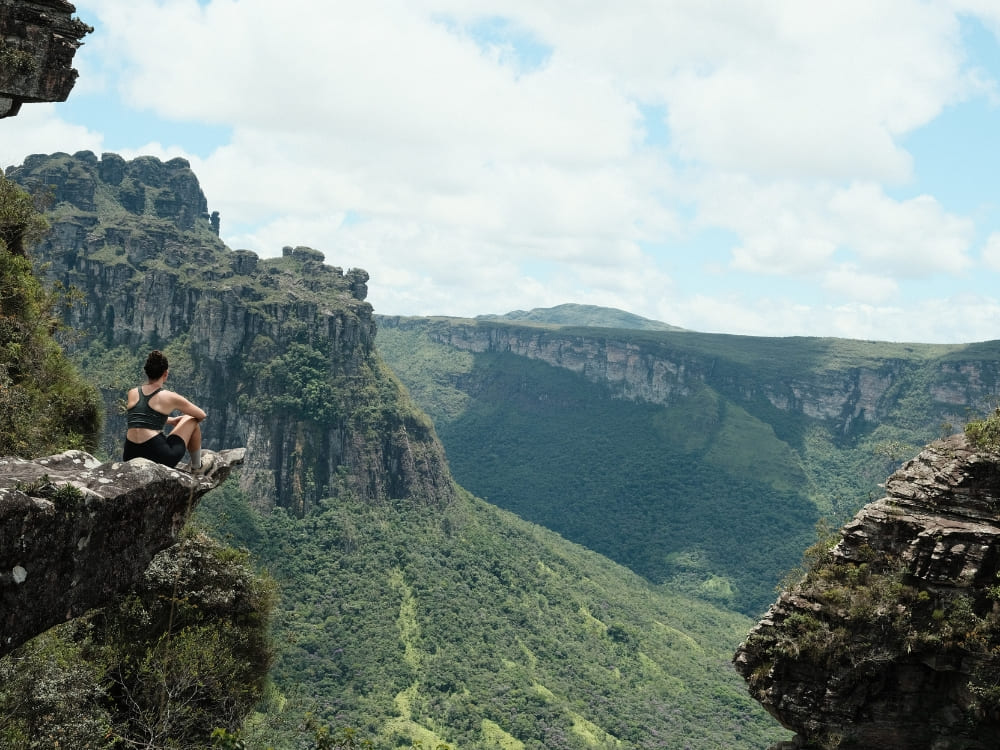
  • When is the Best Time to Visit Brazil?

    When is the Best Time to Visit Brazil?

    Discover how each season reveals a different side of Brazil’s natural wonders and start planning your trip!

    Brazil is an immense country where nature sets the rhythm of life. From the flooded forests of the Amazon to the crystal-clear lagoons of Lençóis Maranhenses and the coral reefs of Abrolhos, every season paints a new face of the landscape.

    When it comes to authentic experiences in nature, the best time to visit Brazil depends on what you want to experience: lush vegetation, wildlife encounters, or sunny adventures by the sea. Across its tropical and subtropical climates, the country offers unforgettable moments all year long. 

    PlanetaEXO, an ecotourism platform specialized in adventure tours in Brazil that works with the best local operators, has put together a comprehensive guide to help you choose the perfect destination for you. Learn more below!

    What is the weather like in Brazil?

    Brazil is a continental nation, covering a staggering area of 8.516 million km², which means this is a country with great climatic diversity. In general, the climate is warm in almost the entire territory, but thermometers obviously vary according to the seasons.

    However, in some regions (especially in the North, Central-West, and Northeast), it’s warm even during the winter, when Southern and Southeastern states are facing cold temperatures.

    It’s also important to point out that the seasons in the Southern Hemisphere are opposite to those in the Northern Hemisphere. When it’s winter in Europe or North America, it’s summer in Brazil (and vice versa).

    January, February and March

    High season in Brazilian borders due to recess, Carnival (mid-February) and the summer. It’s a time of tropical exuberance, but also intense rainfall in certain regions.

    One of the best times to travel to Brazil if you’re looking forward to water-related activities and lush vegetation!

    Chapada Diamantina (rainy season)

    Summer rains bring Chapada Diamantina’s waterfalls to their maximum volume, making them stronger and fuller. Fumaça, Cachoeirão and Buração are fantastic at this time of year.

    Visiting the underground natural pools of Poço Azul and Poço Encantado is also a wonderful experience, particularly due to the rays of sunlight that penetrate the caves and reflect directly on the crystal-clear waters.

    Summer rains occur in the morning or at night, making some trails slippery or altogether unassessable in Vale do Pati, but it’s still possible to hike as the weather gets particularly bright when the storms cease. That’s when the vegetation becomes more vibrant, while the waterfalls get even fuller. You’ll have plenty of chances to have fun, explore the area, and take incredible pictures!

    A hiker stands on a rock gazing up at a massive waterfall flowing through a canyon in Chapada Diamantina.
    Photo: Lucas Ribeiro

    👉 Read more: When is the best time to Visit Chapada Diamantina?

    Amazon Rainforest (rainy season)

    Although it’s summer in Brazil, the so-called Amazonian winter takes place from October to March. It has nothing to do with temperature, but with the increased intensity and volume of rainfall.

    The Amazon rainy season is marked by high river levels and flooding in some areas of the forest — known as igapós, when the water rises to 10–15 meters and it’s possible to swim and canoe in between treetops.

    This is also a good time for Amazon river cruises and wildlife watching — terrestrial animals, like monkeys and sloths, tend to climb the trees to avoid the floods, making it easier to see them. Birds and Amazon pink dolphins are also usually spotted.

    A traveler explores the flooded forests of the Amazon Rainforest by canoe during the high water season.
    Photo: Marcelo Bonifácio

    👉 Read more: When is the best time to visit the Amazon Rainforest in Brazil

    Fernando de Noronha

    The best time of year to go to Brazil for diving in Fernando de Noronha is during the archipelago’s dry season, which features stable weather, minimal rainfall and excellent diving conditions in some parts of the island.

    January and February are the months of the inner sea, when swells and strong waves hit the coast. It’s great for surfers, but divers might have to adjust their plans and focus along the outer sea for calmer waters and better visibility.

     A scuba diver swims alongside a large hawksbill sea turtle in the clear blue waters of Fernando de Noronha.
    .

    👉 Read more: When is the Best Time to Dive in Fernando de Noronha, Brazil?

    Mount Roraima

    Influenced by the Venezuelan climate, the weather on Mount Roraima is quite unpredictable, but the dry season — October to March, with emphasis on the first trimester of the year — is considered an excellent period for trekking.

    Less rainy and foggy, the trails and the views from the mountaintop become clearer, but the temperature changes are still fairly dramatic: 20–25°C (68–77°F) at the base to 10–15°C (50–59°F) during the day, dropping to 5°C (41°F) or even 0°C (32°F) at night.

    A backpacker hikes on a trail through a grassy savannah towards the majestic flat-top Mount Roraima.
    Photo: Ma Rabelo

    April, May and June

    Autumn in Brazil means milder temperatures and clearer skies. It’s when waterfalls are at their peak, lagoons form in the northeast, and trails become ideal for hiking.

    Cerrado (Jalapão and Chapada dos Veadeiros)

    The Cerrado is the second-largest biome in Brazil, spanning 25% of the country’s territory in ten different states. Known as the Brazilian savannah, it features incredibly rich fauna and flora, as well as jaw-dropping views.

    From April onward, the dry season begins. The sky clears, the roads become easier, and fervedouros (natural spring pools) turn transparent blue.

    In Jalapão, dunes and waterfalls shine under the golden light of breathtaking sunsets. This time of the year is ideal for the 6-day Jalapão Trekking Immersion, featuring the best adventure itinerary with rafting, bathing in waterfalls, swimming in natural pools, and, of course, trekking through the national park.

    Trekking in Chapada dos Veadeiros, and exploring waterfalls and water springs is also an excellent option in this season, which displays rich wildlife, minimal rain, and jaw-dropping views.

    Lençóis Maranhenses

    The peak of Lençóis Maranhenses, when the lagoons are at their fullest after the rainy season and the weather is considerably stable.

    Offering wonderful conditions for swimming and trekking, this period is highlighted by the gorgeous contrast of turquoise lagoons against white sand and a daily change of scenery that reminds everyone why this is one of Brazil’s most surreal destinations.

    The weather is still warm, but nothing like the heat of the summer. High humidity and moderate chances of rain help to cool things down and keep the lagoons appropriate for swimming.

    Autumn also precedes the high season in Lençóis, making it a great time for travelers looking for quieter experiences and less crowded places.

    Turquoise freshwater lagoons nestled between vast white sand dunes in Lençóis Maranhenses National Park.
    .

    👉 Read more: When is the best time to visit Lençóis Maranhenses?

    Pico da Neblina

    Hidden in the northeast of the Amazon Rainforest, Pico da Neblina is cold between April and June, but the window for expeditions opens up due to the decrease in rainfall.

    Humidity is still high, but the visibility becomes clear, which helps to facilitate the demanding treks and the overall safety of the experience.

    For travelers thirsting for high adventure and total isolation!

    The dark, rocky cliffs of Pico da Neblina, Brazil's highest peak, shrouded in mist within the Amazon Rainforest.
    .

    July, August and September

    Winter is the best time to visit Brazil if you’re looking for wildlife watching, hiking and even diving or swimming.

    The conditions for these activities are appropriate mostly due to the low rainfall, and depending on the region, it’s not even cold!

    Pantanal (dry season)

    The dry season in the Pantanal is perfect for wildlife safaris. As the water level shrinks, it’s easier to spot animals. The clear skies and very little rain are also ideal for photographic tours, horseback riding and hiking.

    The drought exposes the riverbanks and attracts jaguars in the North Pantanal, who leave their hiding places in the woods to search for food. Wonderful opportunity to see these gorgeous creatures!

    A jaguar rests on a thick tree branch during a wildlife watching safari in the Pantanal dry season.
    Photo: Henk Bogaard

    👉 Read more:

    Amazon Rainforest (dry season)

    The Amazon dry season makes the weather warmer. It still rains, but the volume is lower. Some flooded areas start to drain, unblocking hiking trails that were submerged before. Naturally, this is a great time for hiking.

    Some beaches reappear in Alter do Chão and Anavilhanas National Park, and it’s easier to see caimans and Amazon pink dolphins as the rivers lower.

    Despite that, river cruises are still very much viable and a fantastic experience during this period.

    A local guide explains native flora to a group of hikers trekking through the dense Amazon jungle.
    Photo: Samuel Melim

    Jalapão

    Jalapão is an all-year-round destination, but the dry season is particularly recommended for travelers due to lower chances of rainfall

    Access to the dirt roads is much better without the mud from all the rain, while the fervedouros maintain the perfect temperature for swimming.

    The weather is fairly dry, but the sunsets are mesmerizing at this time of year, making the golden dunes shine even brighter.

    A traveler sits on the golden sand dunes of Jalapão watching the sunset over the mountains.
    Photo: Rodrigo José Fernandes

    Chapada Diamantina (dry season)

    Chapada Diamantina appears on the list again. Though it’s a good destination for the rainy season, it’s also incredible for trekking during the dry season, as the lower volume of rain opens up the trails and keep the soil appropriate for exploring.

    In Vale do Pati, the climate is favorable for admiring the national park from the viewpoints, joining guided hikes, and exploring caves and caverns.

    Despite the drier weather, the waterfalls remain unmissable, especially the iconic Fumacinha, one of the best known in the region.

    A person sits on a rocky cliff edge overlooking the deep, green forest canyons of Chapada Diamantina.
    .

    👉 Learn more about this adventure: 6-day Ultimate Chapada Diamantina Hike

    October, November and December

    Spring and early summer in Brazil bring warmer weather and transitions between dry and rainy periods. 

    Abrolhos

    This  is the best time to go to Brazil if you want to see the marine life flourishing. Abrolhos is home to the largest coral reef in the South Atlantic and one of the greatest places on Earth to see humpback whales.

    These gentle giants breach the surface near Bahia’s coast to mate and breed, exposing themselves to the eyes of tourists that travel thousands of kilometers just to see them.

    From November onward, calm seas create great conditions for diving, revealing coral reefs, turtles, and colorful fish.

     A massive humpback whale breaches high out of the water near the coast of Abrolhos Marine National Park.
    .

    Pantanal (rainy season)

    From November to December, the Pantanal becomer lusher and greener in the rainy season. Birdwatchers thrive during this time, as flocks or jabiru storks and macaws are frequently spotted. Mammals, however, tend to hide.

    Starting in November, the rain starts to fall and the dry earth quickly absorbs the water. By December, the rivers flood and the wetlands begin to form, creating beautiful natural water mirror landscapes until March.

    Besides birdwatching and contemplating the view, activities also include boat rides, canoeing and photo safaris.

    Aerial panoramic view of the Pantanal wetlands with flooded plains reflecting the warm sunlight.
    .

    The best time to visit Brazil is whenever you want!

    Brazil offers incredible experiences regardless of the season. Whether you want to spend days trekking through the forest, admire the wildlife or relax in natural pools or sandy beaches, this magnificent place has something for everyone.

    PlanetaEXO is an ecotourism platform specialized in Adventure Tours in Brazil from North to South. By partnering with the best local operators, we help you live the vacation of your dreams while supporting community-based travel and preserving the environment. Contact us now!
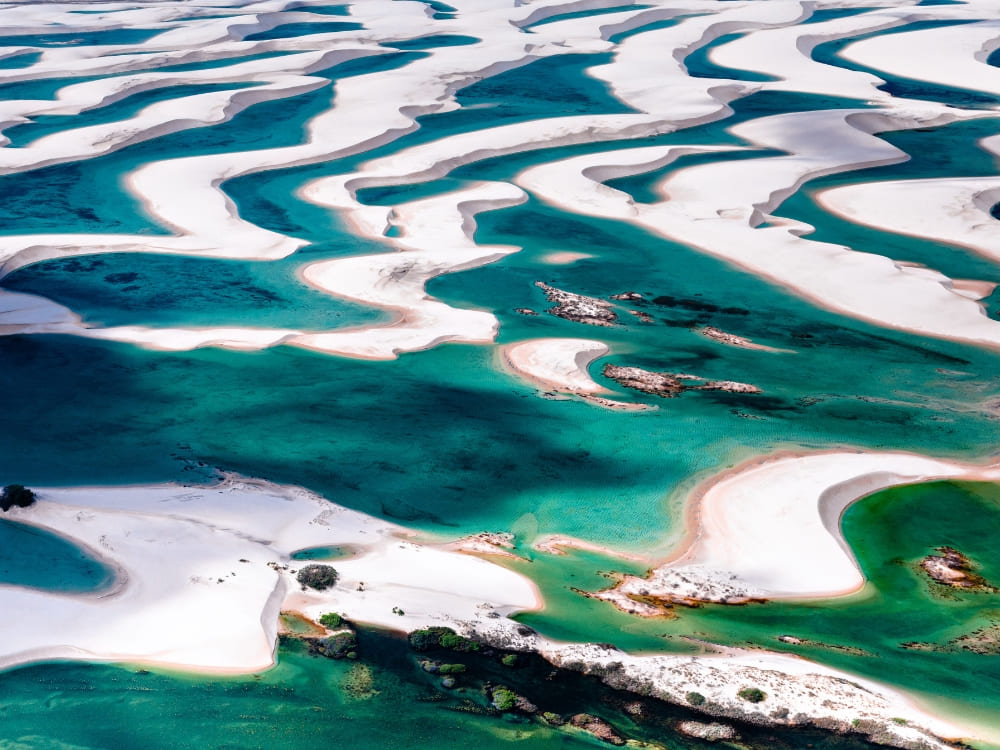
  • Best Hikes in Brazil: From Rainforests to Mountain Peaks

    Best Hikes in Brazil: From Rainforests to Mountain Peaks

    Do you love trekking and engaging with nature? Find out the top hiking trails in Brazil in this carefully curated list!

    Brazil is the best place on the planet for adventure travel, according to US News & World Report—higher than destinations known for ecotourism like Nepal, Costa Rica, and New Zealand. The list also mentions the country’s attributes to justify the #1 placing: locals’ friendliness, great leisure opportunities, pleasant climate, and scenic views.

    Ecological walks are among the favorite activities of any adventurer. The best hikes in Brazil offer breathtaking natural landscapes, including open fields, mountains, rivers, waterfalls, caves, and vast expanses of untouched vegetation.

    As an ecotourism platform specializing in adventure tours in Brazil, PlanetaEXO knows all about the top trekking destinations for travelers who thirst for authentic connections with nature. See our list right below!
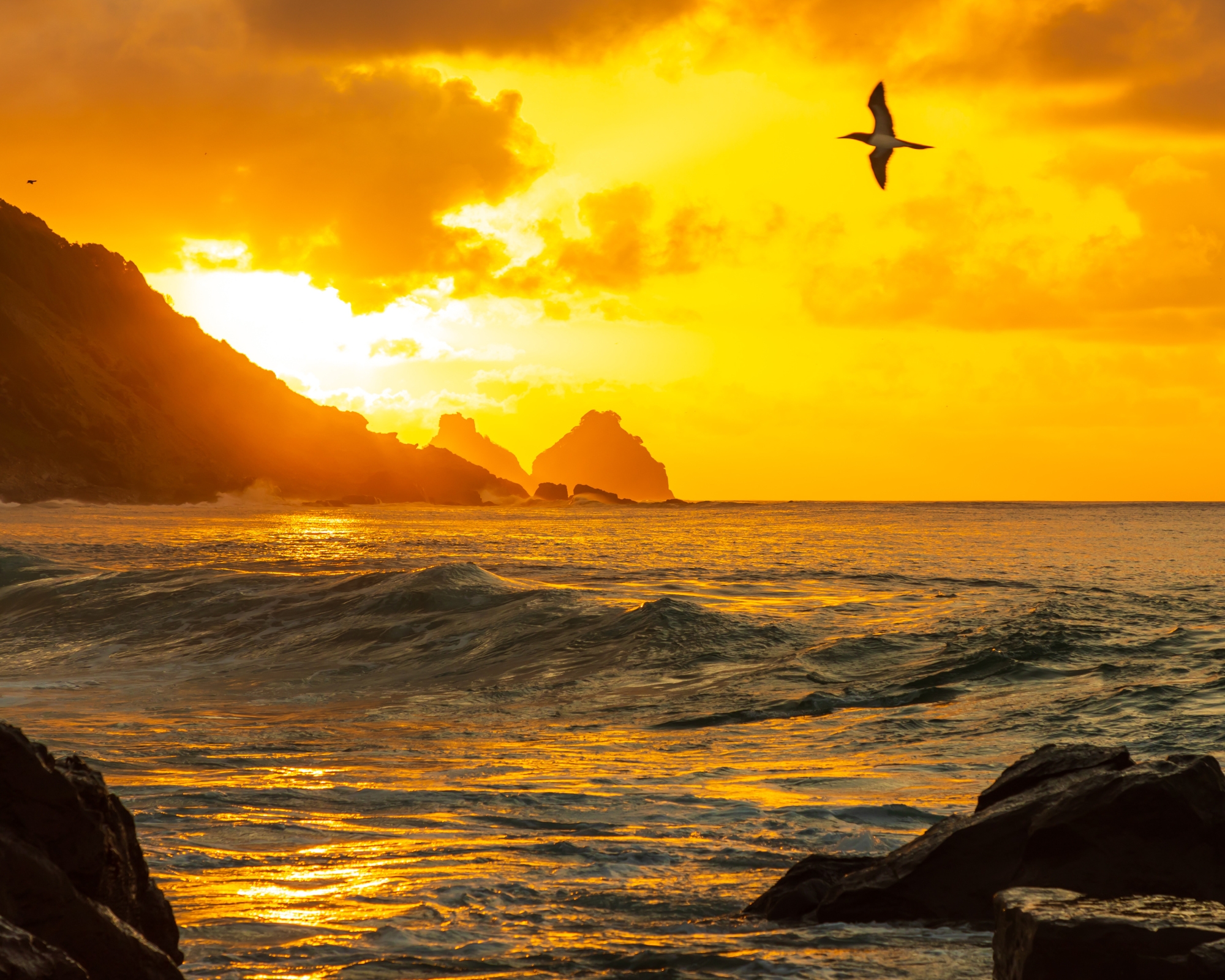
    1 – Vale do Pati, Chapada Diamantina (BA)

    If you don’t go to Vale do Pati, in Chapada Diamantina National Park, you’re not getting the full experience of hiking in Brazil. This amazing destination in the state of Bahia holds some of the most challenging but exciting treks in the country.

    Hikers walk along a rocky trail towards distant mountains during a golden sunset in Vale do Pati, Chapada Diamantina National Park.
    Photo: Guillaume Leman

    The trails cross breathtaking views, going through mountains, rock formations, caves, lookouts, rivers, and waterfalls. Swimming and bathing in Funil and Cachoeirão waterfalls are must-have activities for every traveler. Morro do Castelo, a 1280-meter-high cliff, is also a key highlight of a Chapada Diamantina hike.

    On average, a Vale do Pati trek requires 15 kilometers of walking per day, but it’s possible to extend (22 km) or shorten (8 km) this number. It all depends on how long you’re staying, what type of experience you’re looking for, and how much you’re willing to walk.

    2 – Lençóis Maranhenses (MA)

    The sand dunes and rainwater lagoons of Lençóis Maranhenses can make anyone fall in love. The landscapes are almost otherworldly, with such an impressive beauty it’s hard to describe the feeling they bring—and that’s exactly why this is one of the best hikes in Brazil.

    A hiker walks across the vast white sand dunes of Lençóis Maranhenses National Park, framed by dry tree branches under a blue sky.
    .

    During your hike through the white sand, you’ll come across stunning lagoons and interact with attentive locals who will make you feel right at home. On multi-day treks, visitors spend the night at the homes of residents who live within the national park, sleeping in hammocks and eating hot meals after the long journey.

    The best time to visit Lençóis Maranhenses is between May and September, when the lagoons are full, the sun is bright and the rain ceases. With the support of expert guides, it’s recommended that you stay at least 3 days to fully enjoy the experience.

    👉 Explore the adventure: 3-day Lençóis Maranhenses Trek

    3 – Petrópolis-Teresópolis, Serra dos Órgãos (RJ)

    A common mistake is assuming Rio de Janeiro is all about Copacabana Beach, Sugarloaf Mountain, and Christ the Redeemer. While the city holds these amazing attractions, the state of Rio is full of natural destinations that every travel junkie should visit.

    Dramatic, jagged mountain peaks emerge through thick mist at sunrise in Serra dos Órgãos National Park, highlighting the Dedo de Deus formation.
    Photo: Carlos Perez Couto

    Petrópolis and Teresópolis are two inland cities divided by Serra dos Órgãos National Park, one of the best places to hike in Brazil. Its massive set of trails reaches more than 200 kilometers, with options for every level of difficulty, suspended trails, and special access for disabled people.

    Waterfalls (Véu da Noiva, Andorinhas), natural wells (Paraíso, Capela, Sossego, Ponte Velha, Preguiça), and mountains are all part of the experience. Travelers can also enjoy some mountain climbing on Verruga do Frade, Pico do Garrafão, and the world-famous Dedo de Deus, a 1,692-meter-high peak whose name translates to “Finger of God” due to its elongated shape pointing upwards.

    4 – Ilha Grande (RJ)

    Ilha Grande is an island in the municipality of Angra dos Reis, in Rio de Janeiro. There are 16 hiking trails of different levels of difficulty that cross secluded areas of tropical forest.

    A person walks along the pristine white sand and clear blue waters of Lopes Mendes Beach in Ilha Grande, surrounded by tropical forest and mountains.
    @fernando.ilhagrande

    Another highlight is Lopes Mendes Beach, considered one of the most beautiful beaches in Brazil. Surfers love it, but so do hikers. To get there, you can choose trails T10 (Grande de Palmas and Mangues beaches), T11 (Pouso Beach), or T12 (Castelhanos Lighthouse).

    Circuits in Ilha Grande range from 4 to 7 days, which allows flexibility for a faster pace or a more thorough exploration.

    👉 Read more: When is the Best Time to Visit Brazil?

    5 – Monte Roraima (RR)

    Mount Roraima is a mountain in the triple border of Brazil, Venezuela, and Guyana. The highest point is 2,810 meters above sea level, which presents a real challenge for trekkers who are hungry for adrenaline. On average, Roraima treks last 4–5 hours per day, but they can take up to 8 hours depending on the itinerary. Tours span from 6 to 10 days.

    A hiker sits on the edge of a steep, rocky sandstone cliff on Mount Roraima, looking down at a vast valley filled with thick white clouds.
    @roraimaadventures

    The natural pools are one of the reasons why this is one of the best mountain hikes in South America. The clear waters are perfect for bathing, floating, and letting all your troubles be washed away.

    Another unforgettable experience is visiting the Valley of Crystals, an area filled with white quartz that shimmers on the ground. Since Mount Roraima is a giant block of sandstone, temperature changes and erosion along the years formed an impressive crystal formation that attracts tourists from all over the planet due to its beauty and supposed energy powers.

    👉 Explore the adventure:  Mount Roraima Trek 8 days

    6 – Serra Fina (SP/MG/RJ)

    Steep climbs and high altitudes are some of the reasons why Serra Fina is always included in lists with the best hikes in Brazil.

    A hiker wearing a large green backpack stands on a grassy mountain ridge, overlooking the expansive, mountainous landscape of Serra Fina.
    @bernardoespinhaco

    With trails that range from 7 to 26 kilometers, this is also one of the most challenging treks in the country. The Pico dos Três Estados trail, for example, is located on the border of the states of São Paulo, Minas Gerais, and Rio de Janeiro. This specific tour takes 3–4 days

    Such a demanding adventure requires great physicality. Hikers tend to prepare themselves for months before going to Serra Fina, making sure to eat well, improve their physical fitness, and do regular medical follow-ups.

    All this effort is worth it—the views are beautiful, and the victorious feeling of conquering such a challenge couldn’t be sweeter.

    👉 Explore the adventure: 4-day Serra Fina Trekking

    7 – Chapada dos Veadeiros (GO)

    Chapada dos Veadeiros National Park, in Goiás, offers some of the greatest experiences for trekking in Brazil. With great diversity, there are options of easy, moderate, and difficult hikes for every type of traveler. Canyons, natural wells, lookouts, valleys, and waterfalls work together as puzzle pieces to create jaw-dropping scenarios that will surely capture your heart.

     A group of travelers hike single-file along a narrow, grassy trail surrounded by the lush green valleys of Chapada dos Veadeiros National Park.
    .

    Speaking of waterfalls, there are plenty you have to see for yourself: Cristais, São Bento, Encantado, Almécegas (I and II), Rei do Prata, Sertão Zen, Mirante da Janela, Vale da Lua, Santa Bárbara, Catarata dos Couros, etc.

    Trekking in Chapada dos Veadeiros usually lasts 2 to 5 days. If you’re staying a bit longer, you can also enjoy some touristy schedules around the area, like buying hand-made souvenirs in the street markets of Vila de São Jorge and savoring a nice Brazilian meal in Alto Paraíso, the most famous town around the area.

    👉 Read more: Trekking Chapada dos Veadeiros

    8 – Pico da Neblina (AM)

    Pico da Neblina, in the state of Amazonas, is the highest peak of Brazil: 2,995 meters above sea level. To get to the very top, trekkers usually spend up to 15 days in the national park, depending on the group’s rhythm.

    The towering, jagged peaks of Pico da Neblina rise dramatically above the dense, green canopy of the Amazon Rainforest under a cloudy sky.
    .

    Camping in the forest is a part of the experience, and travelers can also cool off in Tucano Waterfall, explore the Amazon Rainforest, and engage with the local culture. This tour demands great physical effort, but if you love adventure, then it’ll definitely be worth your while.

    The journey also requires special permits and expert guides due to its location in Yanomami Indigenous lands.

    👉 Explore the adventure: Pico da Neblina National Park Expedition

    Discover the best hikes in Brazil with PlanetaEXO!
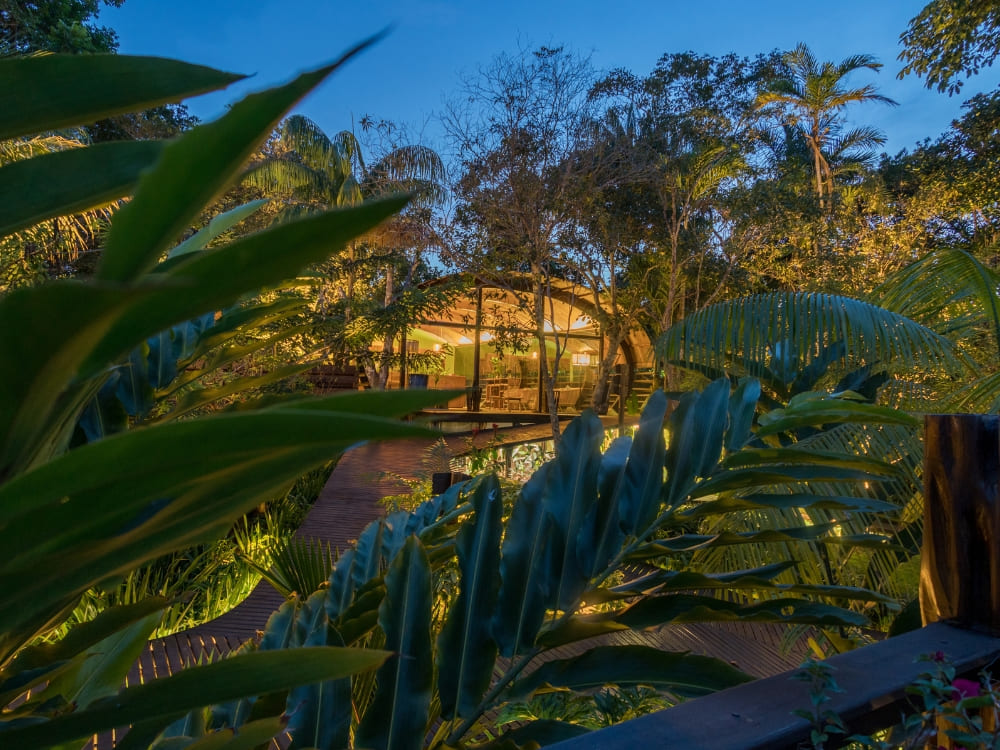
    There’s no doubt that Brazil is one of the best places for hiking. Whether in white sand fields or mountainous regions that share space with waterfalls and natural pools, the adventure is always unforgettable.

    PlanetaEXO, an ecotourism platform specializing in adventure tours in Brazil, connects you with the finest local operators to ensure an authentic, sustainable trip in some of the country’s most gorgeous nature destinations. Contact us now!