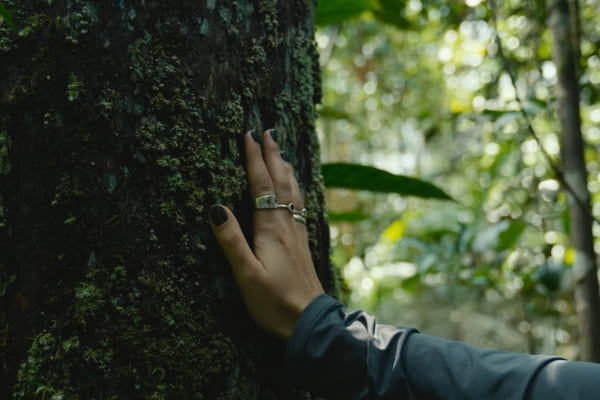
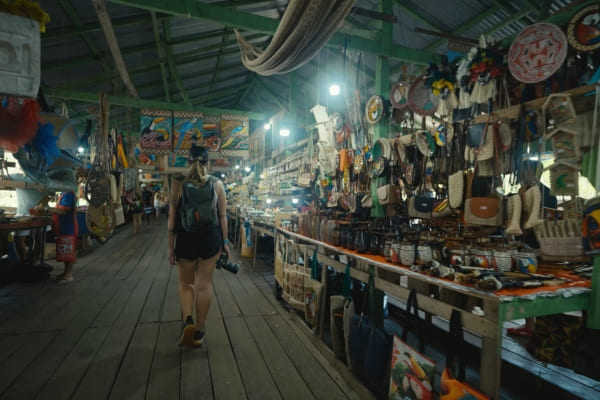
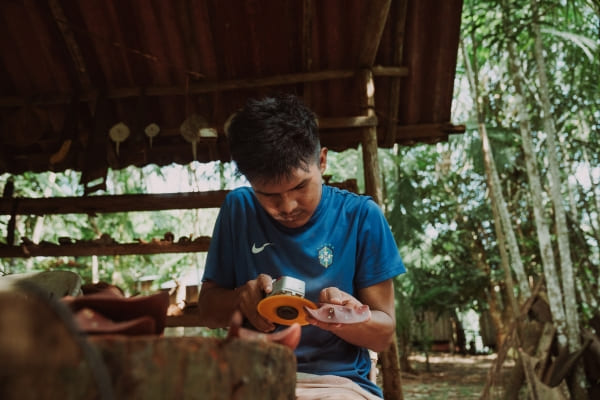
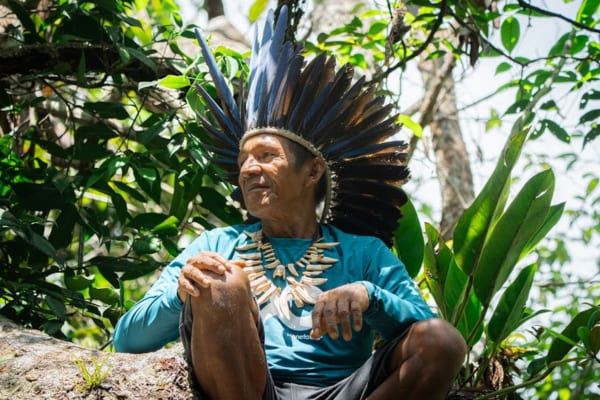
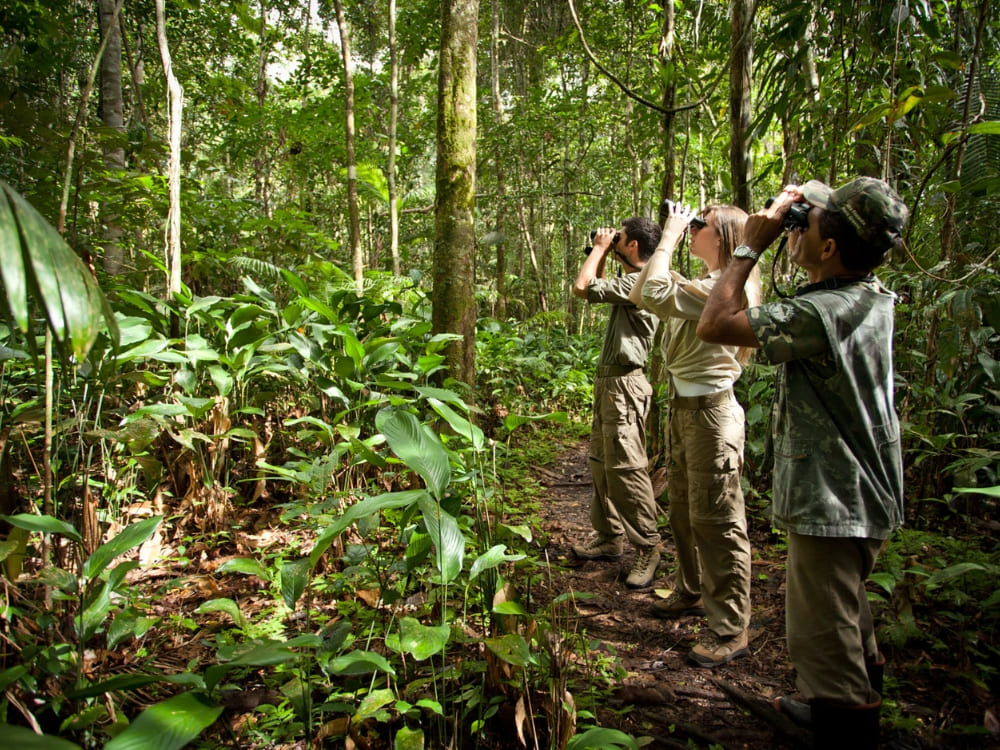
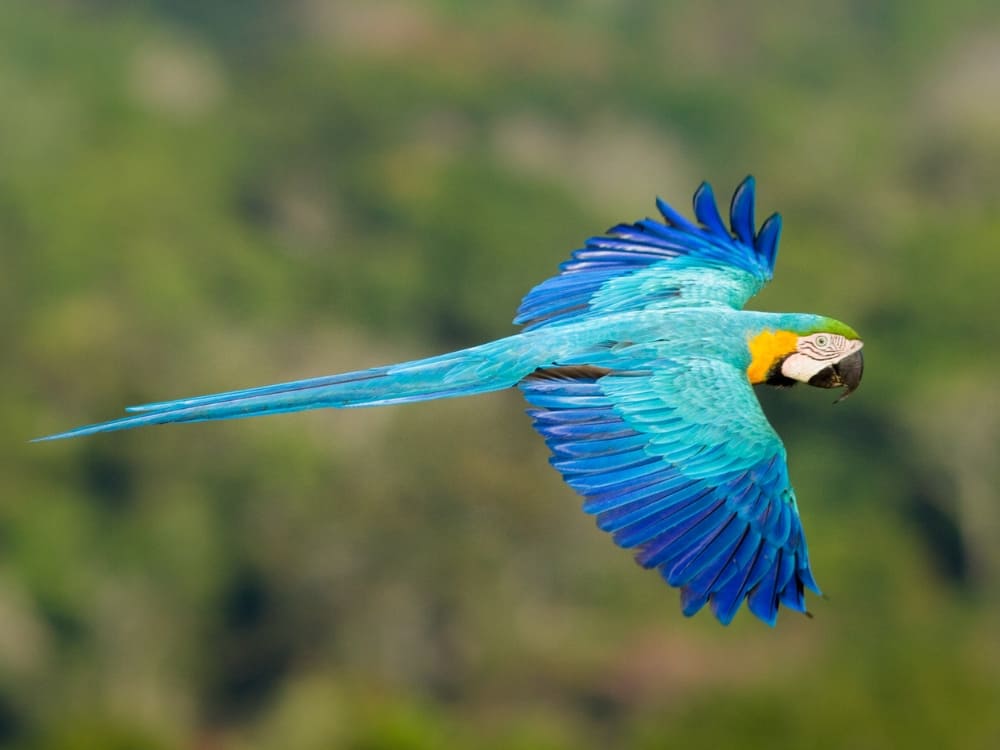
PlanetaEXO documentary reveals how sustainable travel advances forest conservation, local actions that put climate discourse into practice and strengthen Amazonian communities.
São Paulo, November 2025 – Following the conclusion of COP30 in Belém, a new documentary reinforces that protecting the Amazon increasingly depends on local and continuous action. The sustainable travel platform PlanetaEXO has just released “Tourism that Keeps the Amazon Alive,” a 5-minute film that portrays how Amazonian communities are transforming tourism into an effective strategy for conservation and income generation.
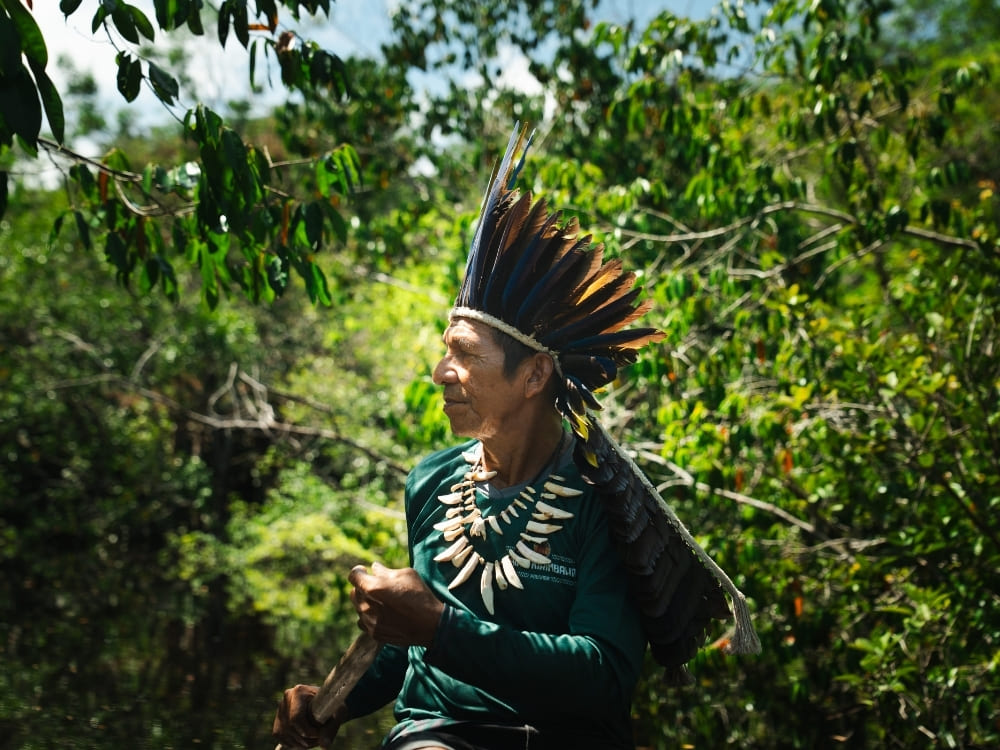
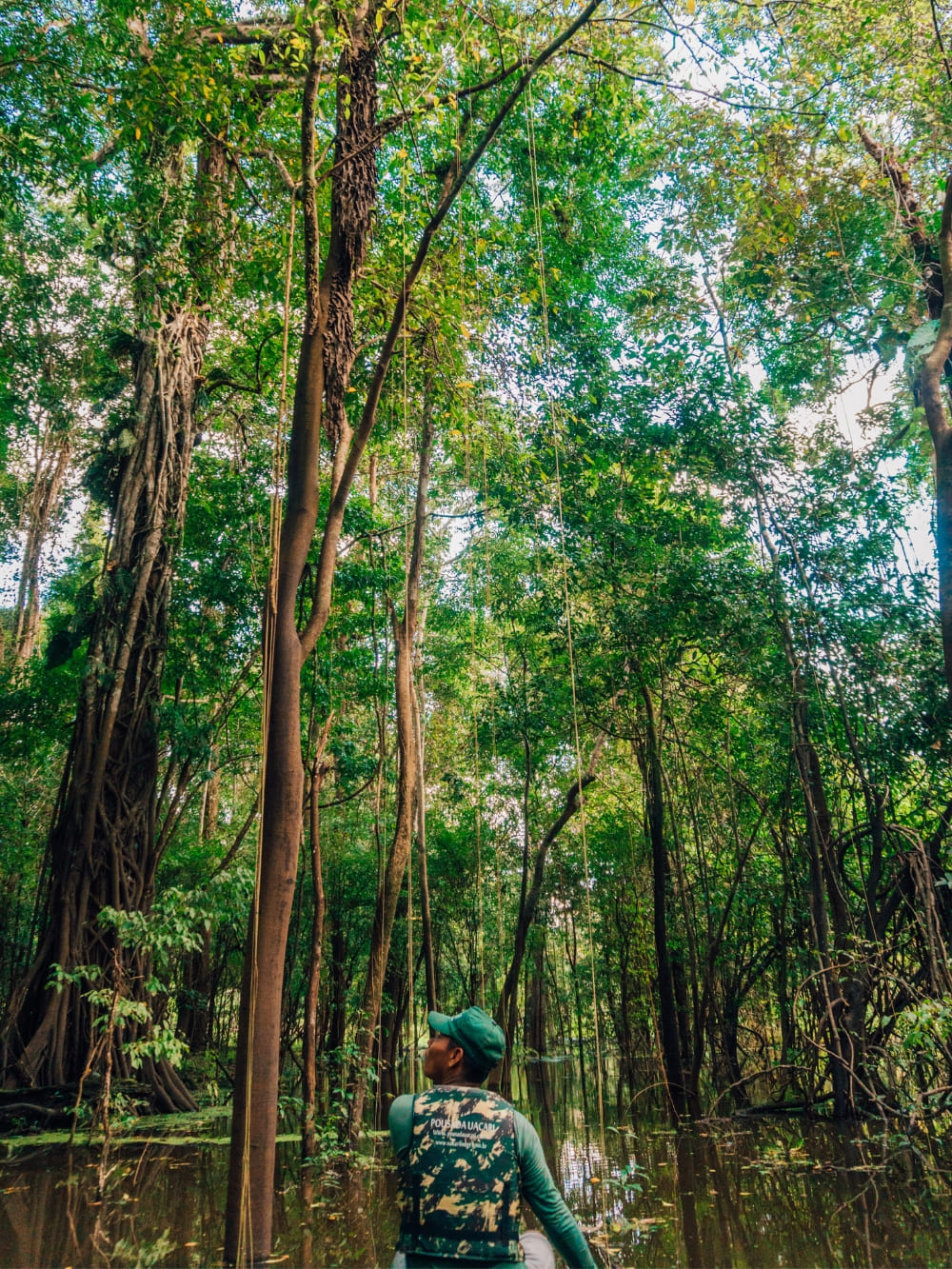
The mini-documentary directed by Lucas Ribeiro, who is also the founder and CEO of PlanetaEXO, features accounts from residents who have replaced old extractive activities with community-based tourism models. By accompanying visitors, sharing traditional knowledge, and directly caring for the territory, they demonstrate that it is possible to keep the forest alive while strengthening their local economies.
Recent figures reinforce the urgency of this movement. Between August 2024 and July 2025, the Legal Amazon recorded 5,796 km² of deforestation, the lowest rate in more than a decade, according to PRODES/INPE. Even so, degradation caused by fire already accounts for almost 40% of recent losses, indicating that pressure on the biome remains high. For many families, tourism is emerging as a concrete alternative to remain in the territory without resorting to practices that compromise the forest.
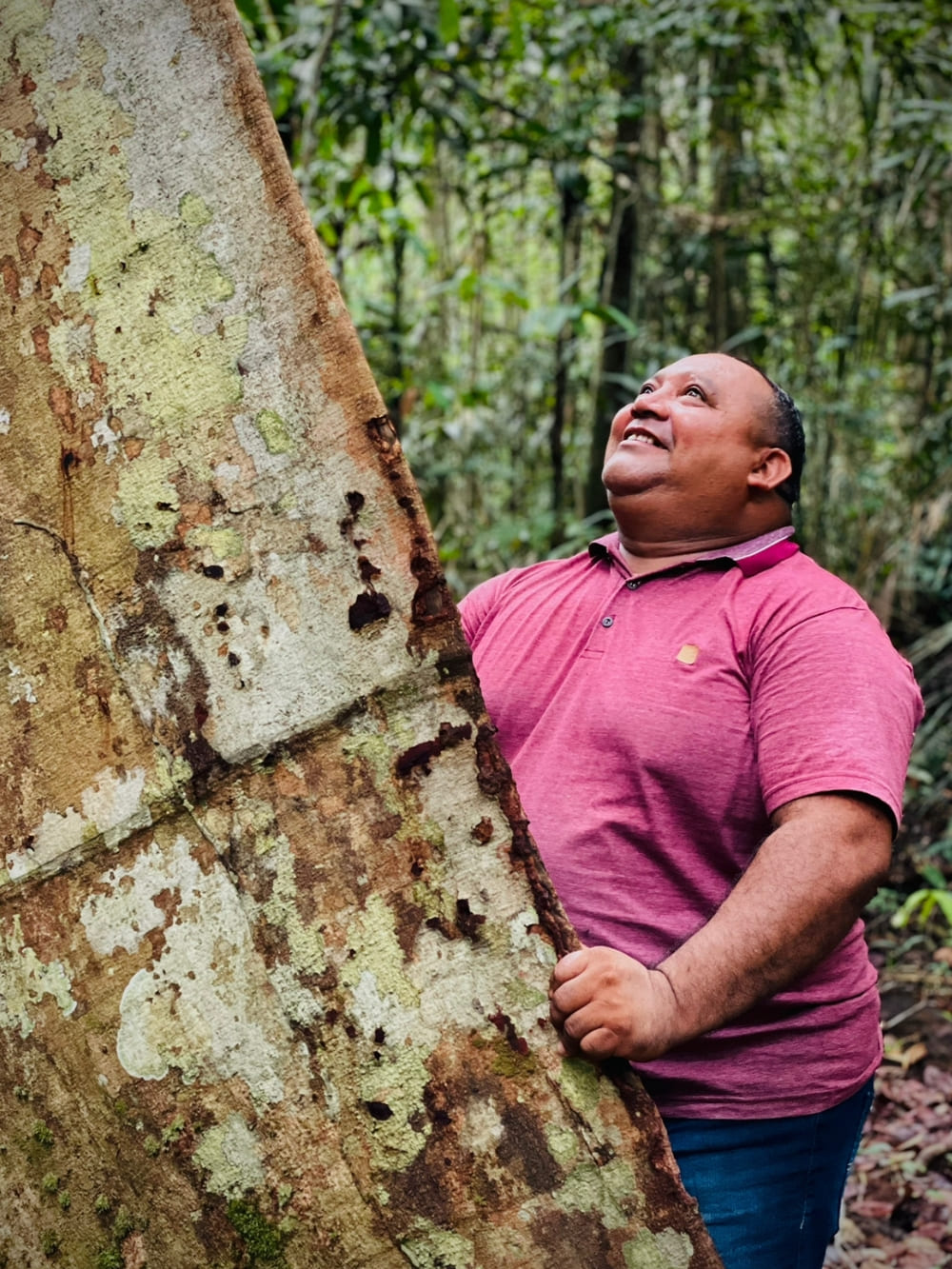
One of the most striking testimonials in the film sums up this change in perspective. “Tourism showed me that price is different from value. A caboclo cuts down a 300-year-old tree to buy a chicken for lunch and ends up without dinner. That’s price. But when you understand value, that’s when things start to change,” says Roberto Britto, a former logger and current tourism entrepreneur.
Tourism showed me that price is different from value. A caboclo cuts down a 300-year-old tree to buy a chicken for lunch and ends up without dinner. That’s price. But when you understand value, that’s when things start to change.
Roberto Britto
PlanetaEXO has observed a growing interest in responsible travel, which strengthens community projects and amplifies the positive impact of ecotourism. In 2025, the platform recorded a 210% increase in the number of tourists in the Amazon compared to the previous year, with visitors coming from the United States, France, Germany, and other countries.
World Bank data shows that sustainable tourism already generates around US$ 2.3 billion per year in the Amazon. The figure is still far from the US$ 45 billion generated by extractive activities, but it is a new and growing market. The PlanetaEXO documentary highlights the stories of forest dwellers who have discovered responsible tourism as a more sustainable source of income.
“The film focuses on the people behind these efforts. In their own words, they describe how tourism has transformed their daily lives, brought them independence, and offered a dignified alternative to extractivism,” says Lucas Ribeiro. These accounts complement, in a concrete way, the climate discussions raised during COP30.
Technical Data Sheet “Tourism that Keeps the Amazon Alive”
Format: Documentary
Duration: 5 minutes
Director: Lucas Ribeiro Interviews: Larissa Mariano and Isadora Sá
Production Assistant: Lucas Pinelli
Participants: Joarlison Garrido – Nova Esperança Community; José Pancrácio – Nova Esperança Community; Roberto Brito – Tumbira Community; and Izolena Garrido – Tumbira Community
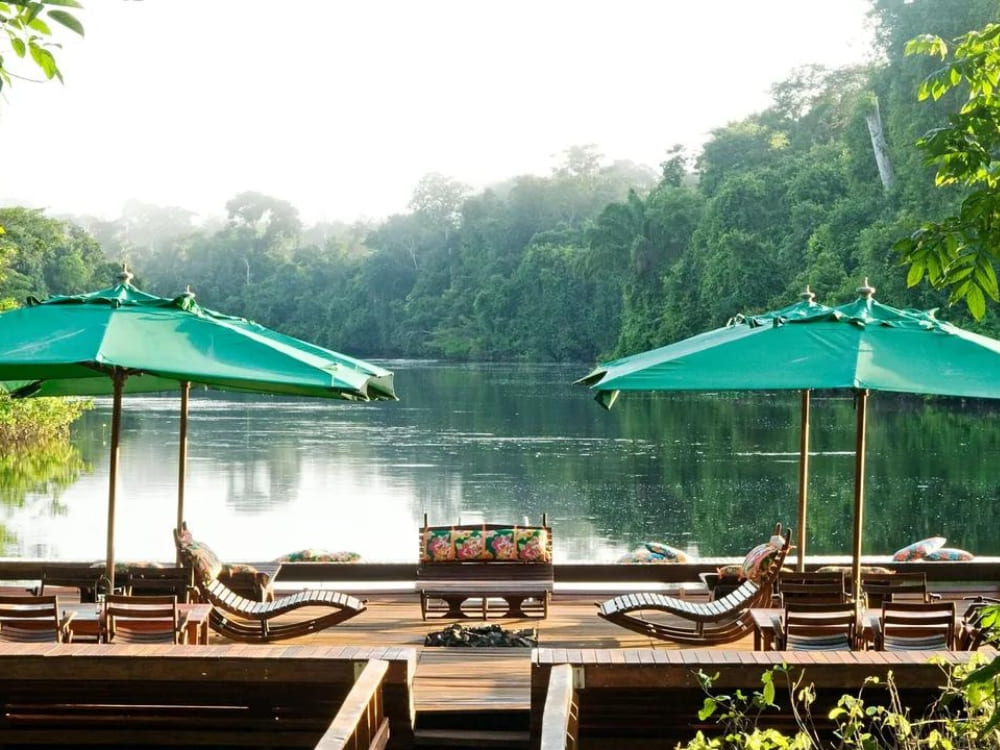
Lodges in the Amazon Rainforest offer comfortable stay experiences, high-end services, and total immersion in nature
Visiting the Amazon Rainforest is on the bucket list of travelers from all over the world, though many people wonder if the wild environment is the proper place to forget about work and all the responsabilities back at home. Adventure is guaranteed, but what about rest?
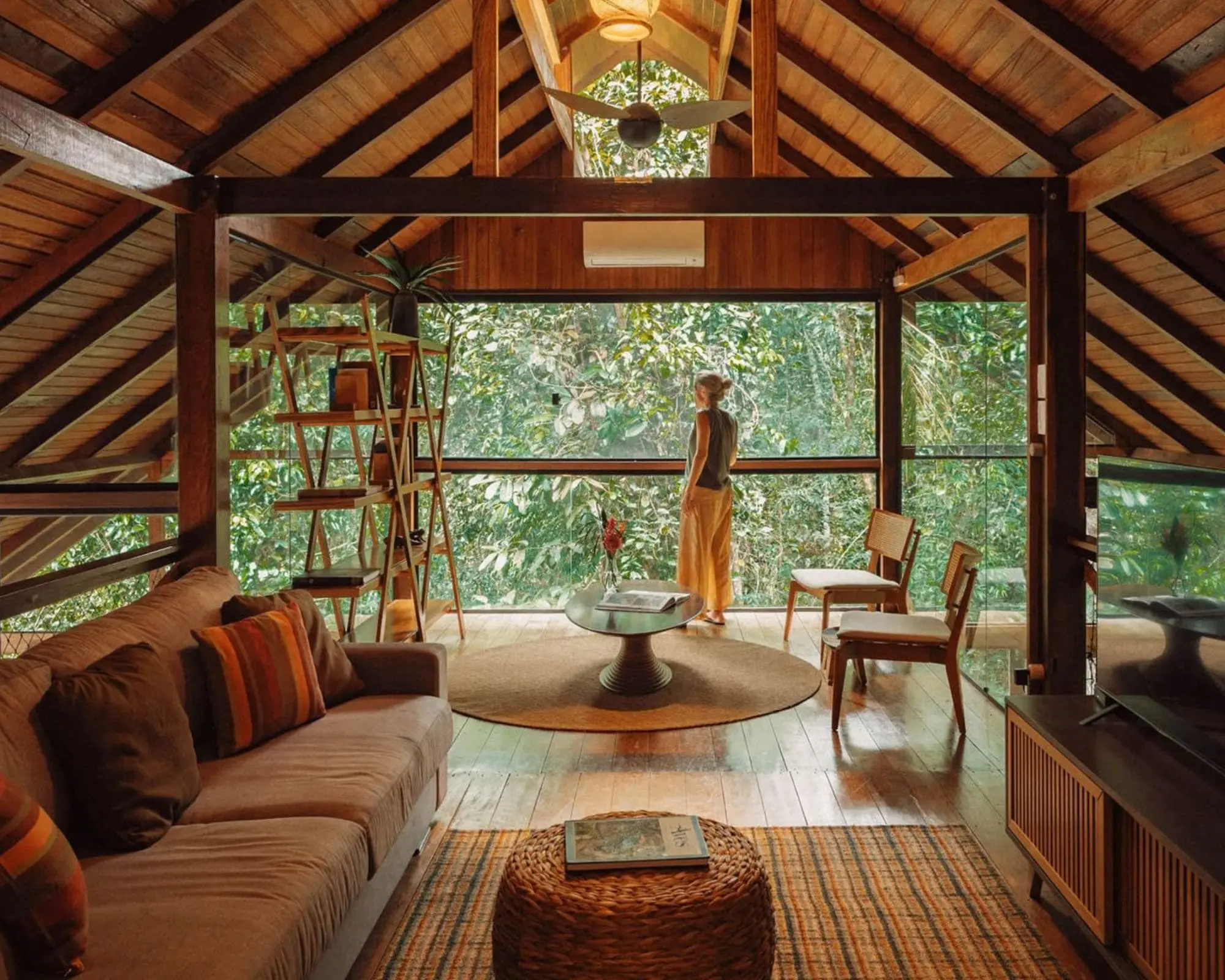
Fortunately, the best Amazon jungle lodges in Brazil provide incredible infrastructure in the middle of the forest, as well as premium services and custom itineraries. The result is a high-end stay experience that proves ecotourism and comfort are a perfect match.
Need a hand to plan your trip? PlanetaEXO, a platform specialized in Amazon Rainforest tours in Brazil, has created a list with wonderful accommodation options. Check it out!
The Cristalino RPPN (Private National Heritage Reserve) is the second largest private reserve in the rainforest, ranging 27,000 acres — twice the size of Manhattan Island (NY). The rich fauna stands out: over 600 species of birds and dozens of mammals, including monkeys, giant river otters, peccaries and tapirs.
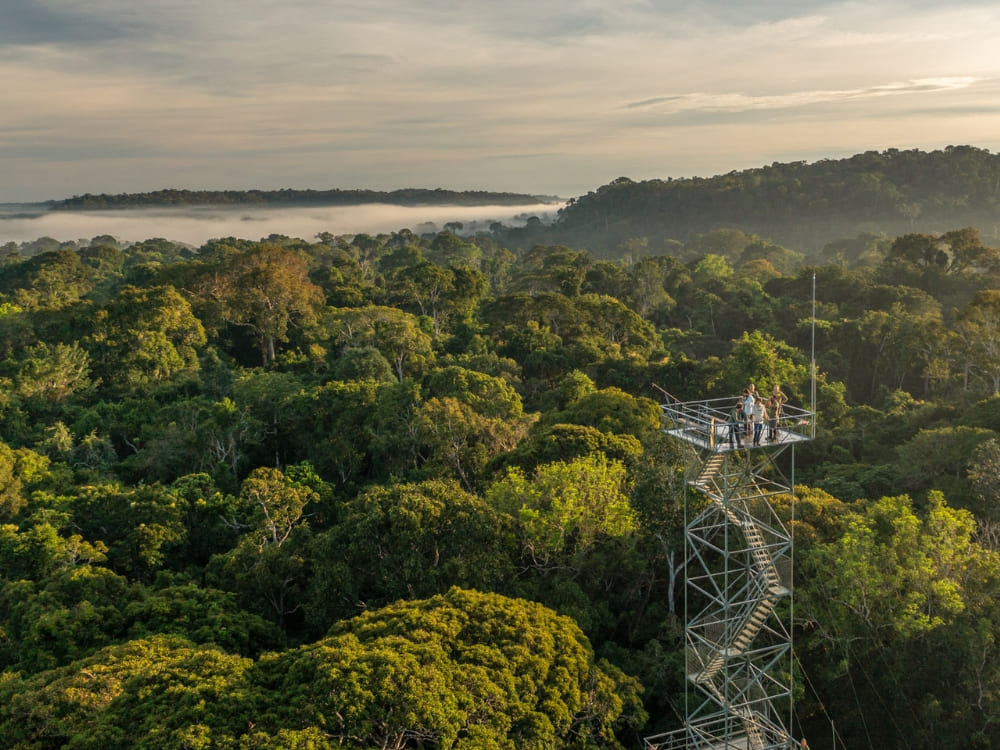
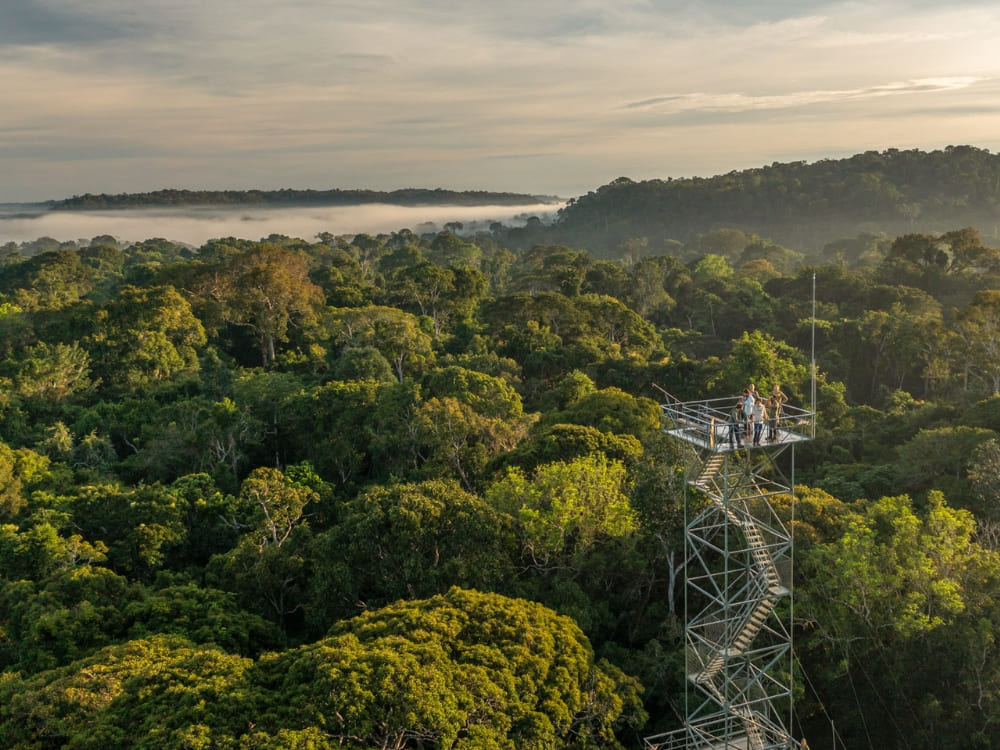
If you adore birdwatching or any kind of wildlife watching, then you’ll go crazy over the 50-meter (164 ft) observation towers that offer a mesmerizing view of the forest. Sunrises and sunsets from this height are life-changing!
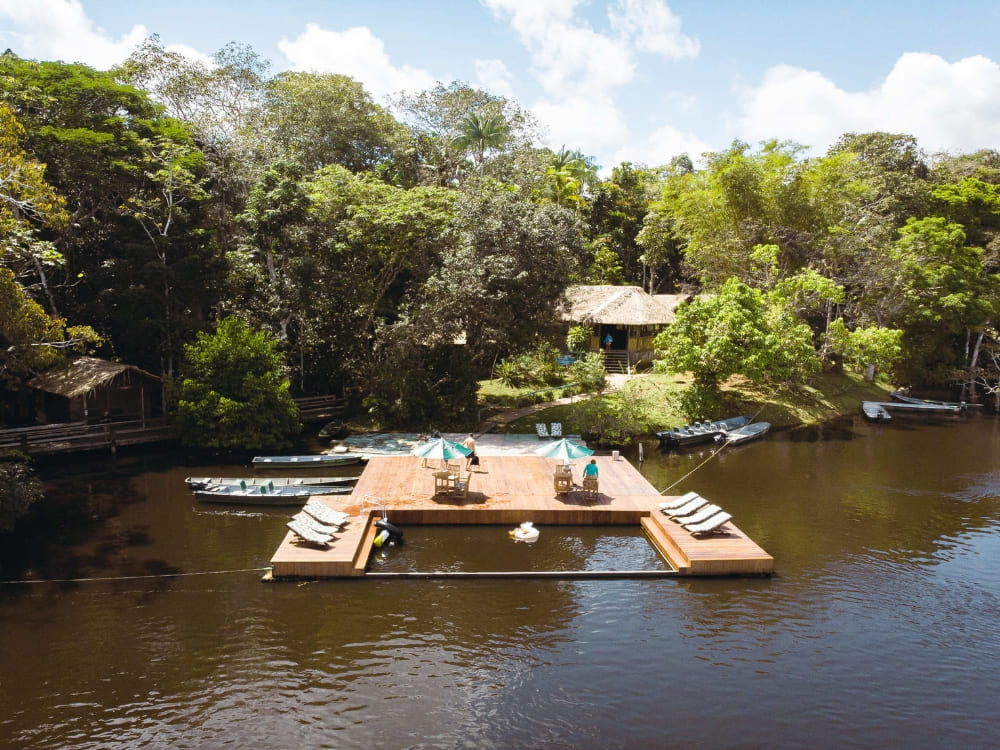
After a full day of hiking or canoeing on Teles Pires and Cristalino rivers, guests go back to luxury facilities, including sophisticated bungalows and elegant common areas (reading and conferences rooms, a local cuisine restaurant, a bar and the beloved floating deck).
Location: Alta Floresta, Mato Grosso
Access: 40-minute drive from Alta Floresta + boat trip
Anavilhanas Jungle Lodgecould be named one of the finest Amazon lodges in Brazil simply for its location — in the heart of the Anavilhanas National Park, the world’s second-largest river archipelago —, but there’s much more to this extraordinary place.
Create unforgettable memories by joining adventure-packed activities, such ashiking, boat rides, recreational fishing, night expeditions, cave exploration, sunset tours, etc. Keep your eyes open to spot caimans, colorful macaws, friendly river dolphins and other fascinating creatures!
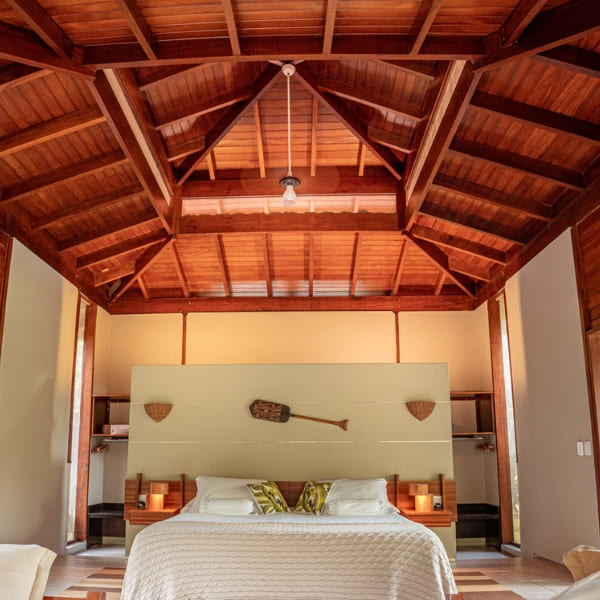
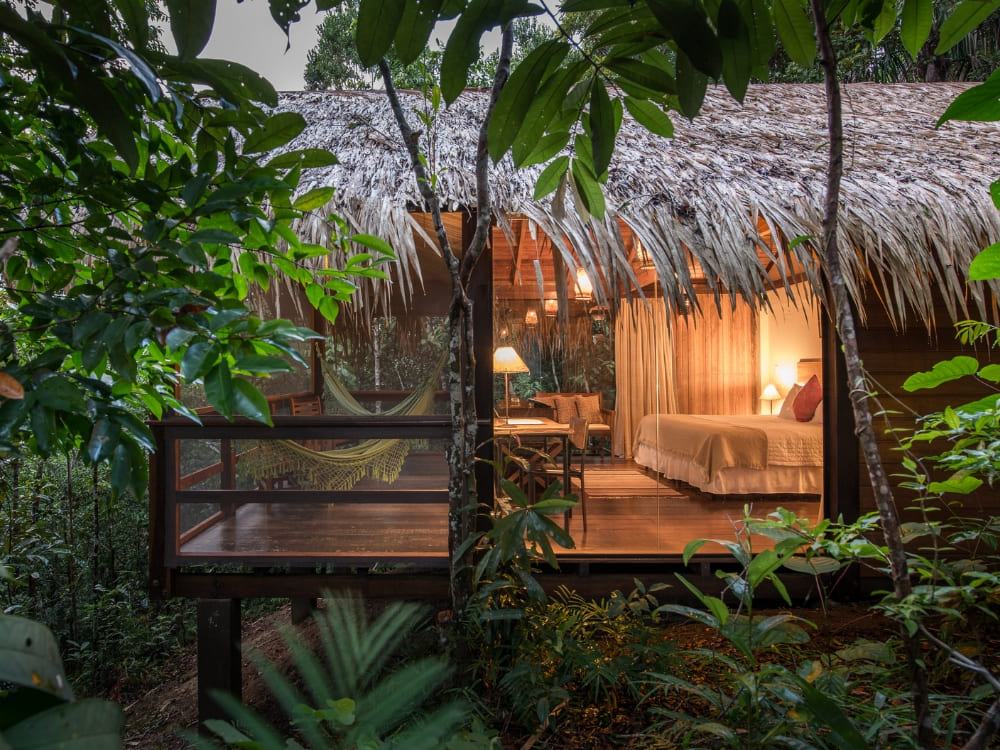
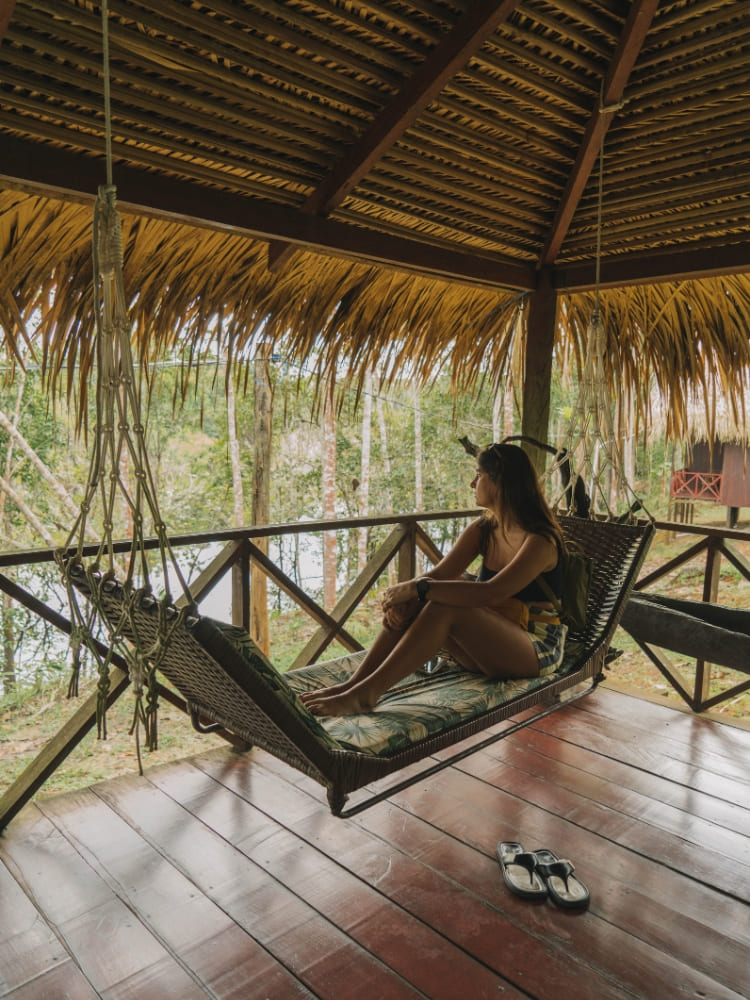
In terms of facilities, this Amazon jungle hotel has it all: refined bungalows and chalets with TVs, minifridges, air conditioning, Wi-Fi connection, hot showers and private balconies with panoramic views.
You can also swim in the pool, go to the gym, get a relaxing massage, eat delicious Brazilian dishes, or have a drink at the floating bar. Who knew the Amazon could be so luxurious?
Location: Novo Airão, Amazonas
Access: 3 hours from Manaus (road + boat)
Photo: Felipe Castellari
Juma Amazon Lodge
.
When we mention the Amazon Rainforest hotels, Juma Amazon Lodge is a must-visit place for every nature lover.
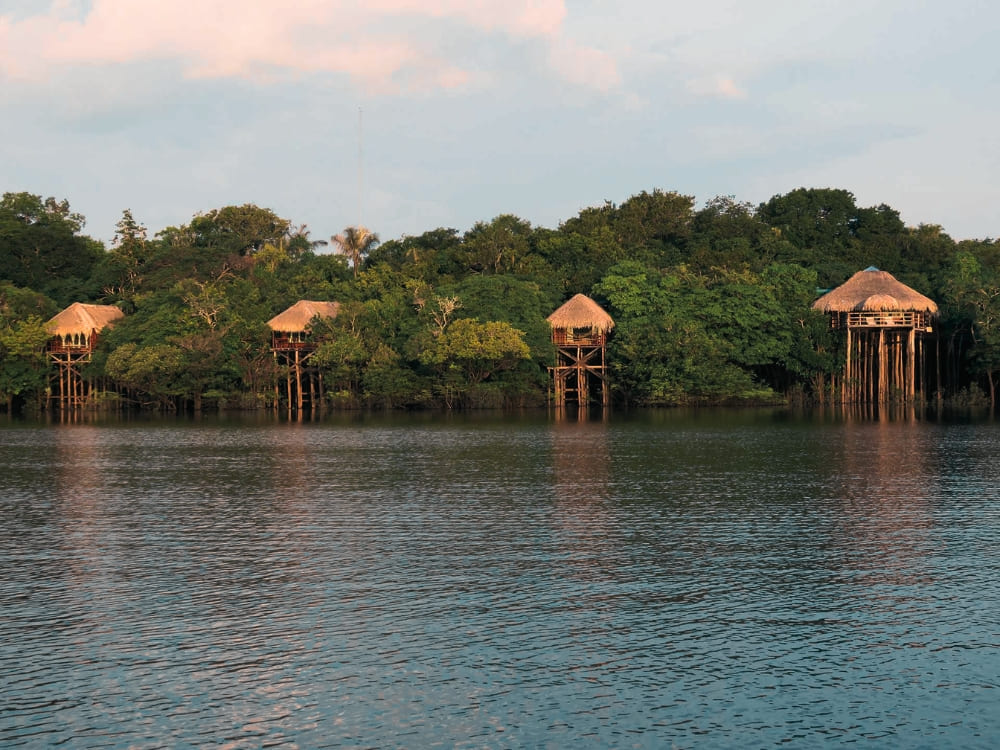
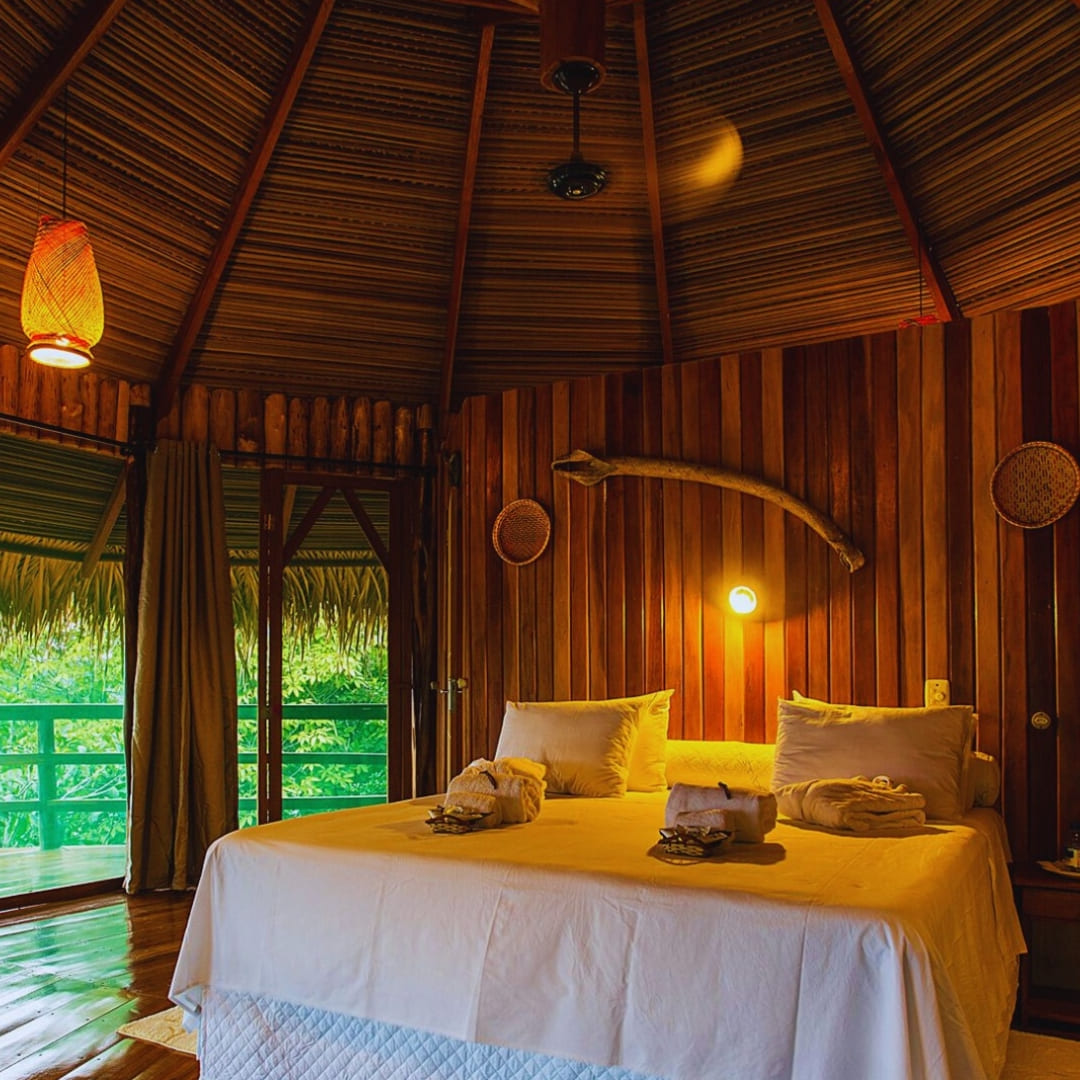
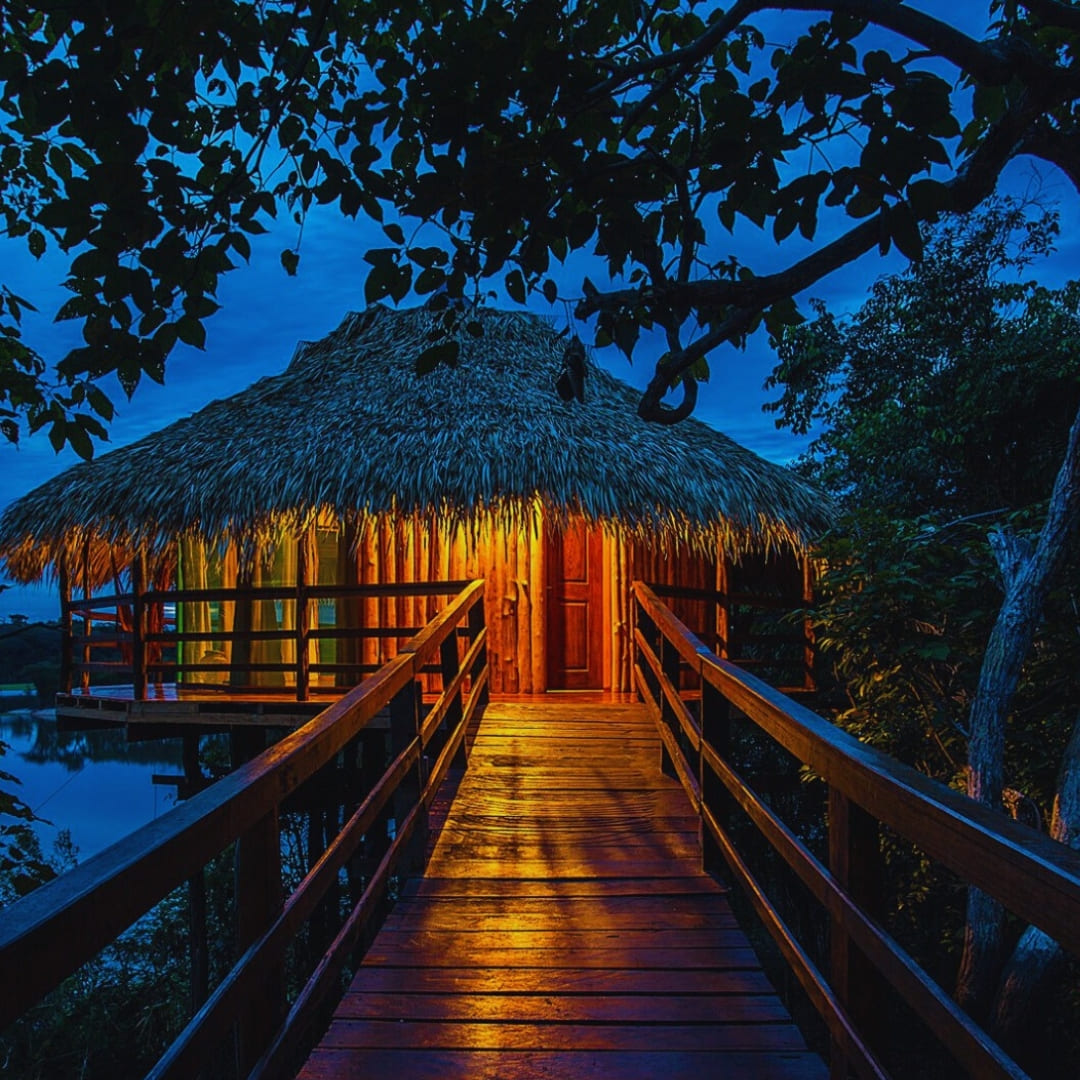
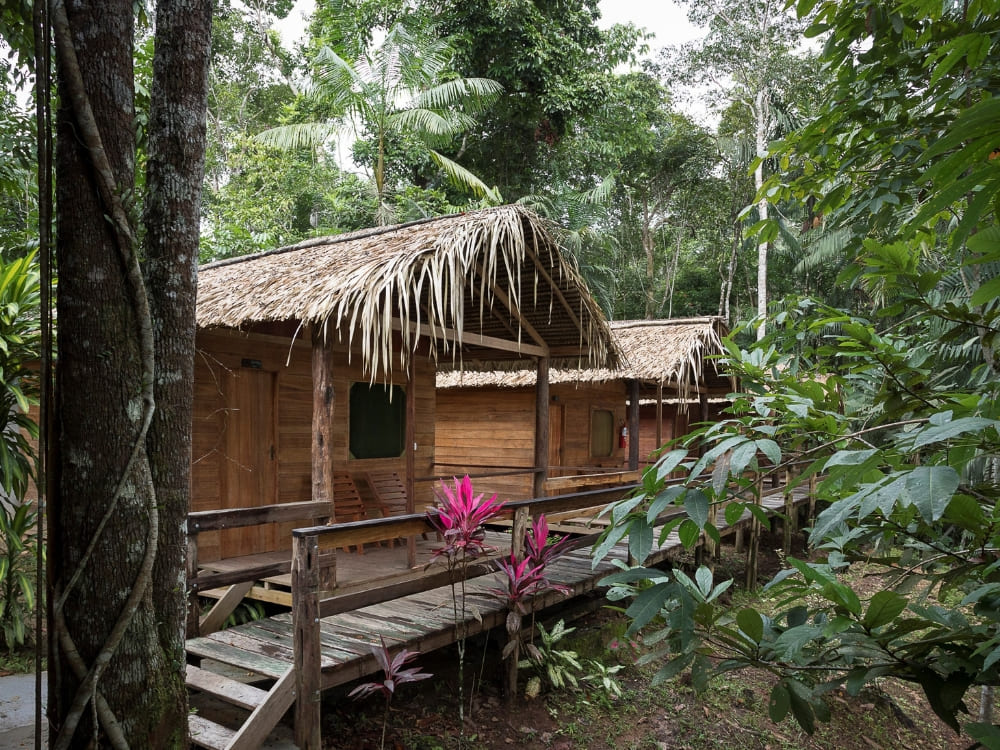
Based on sustainable practices, like solar energy, wastewater treatment and recycling, Juma is eco-friendly, but doesn’t leave a high-end experience behind. Wonderful accommodations are built on stilts nearly 15 meters (49 ft) high. The gorgeous bungalows are in the treetops, which offers an immersive experience and helps to avoid the water during seasonal floods.
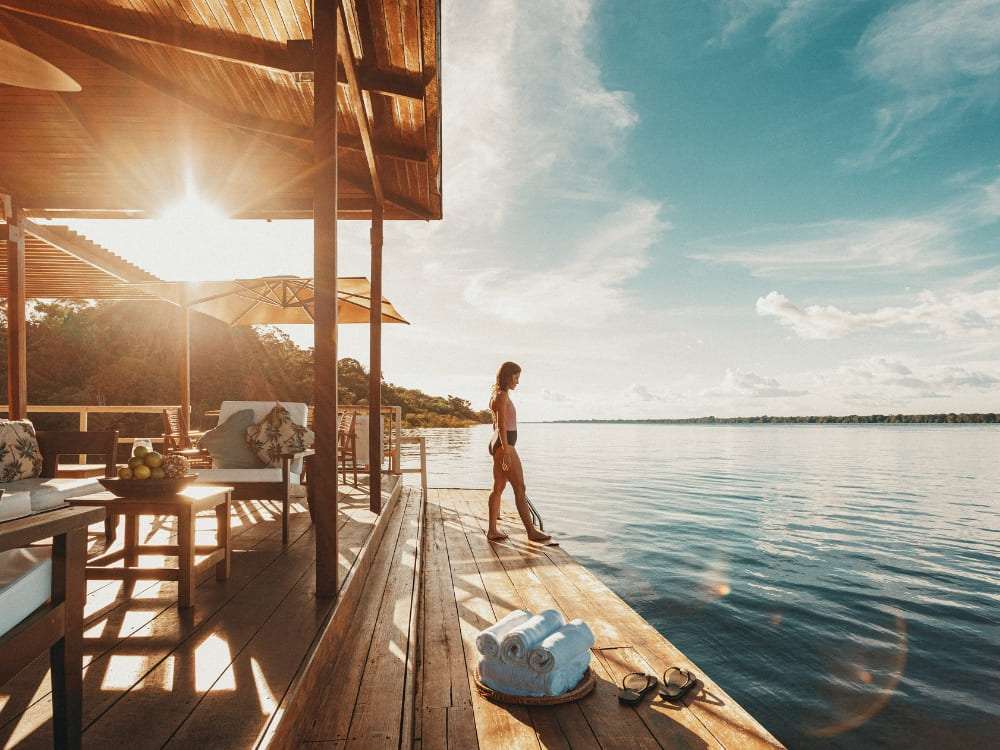
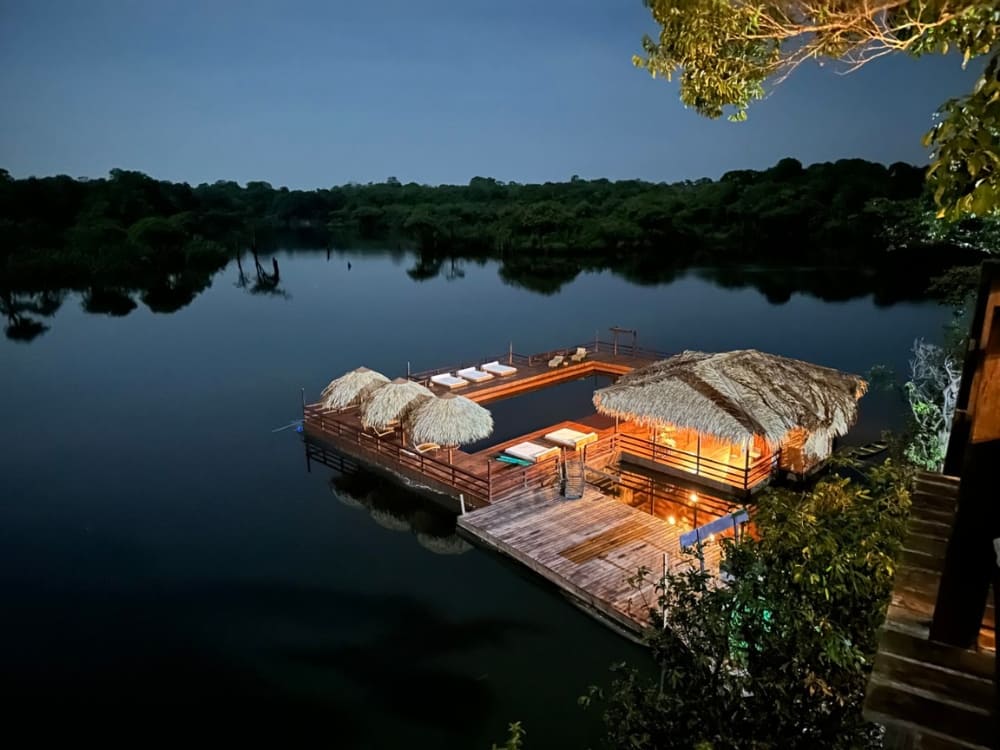
Enjoy the hotel’s common areas by drinking at the bar, eating traditional Brazilian meals at the restaurant, swimming in the pool or getting a tan at the floating deck.
Thirsty for some adventure? Hike through the jungle, climb trees, go fishing for piranhas, canoe on Amazonian rivers, sign up for night tours, visit indigenous communities and have fun with other activities that will make your heart beat fast!
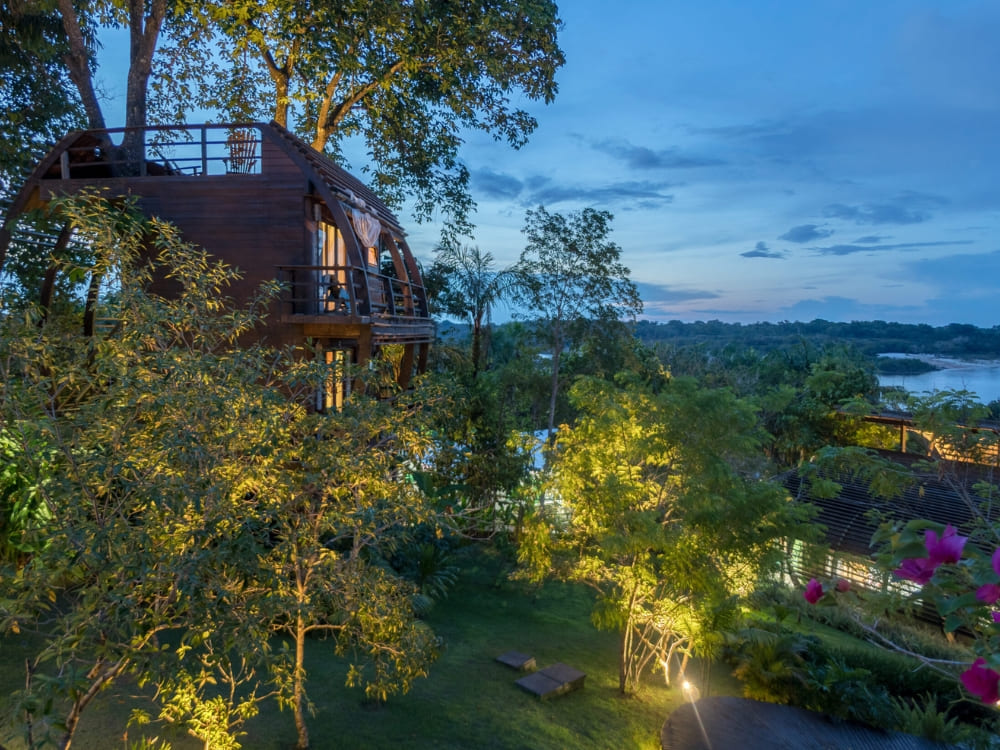
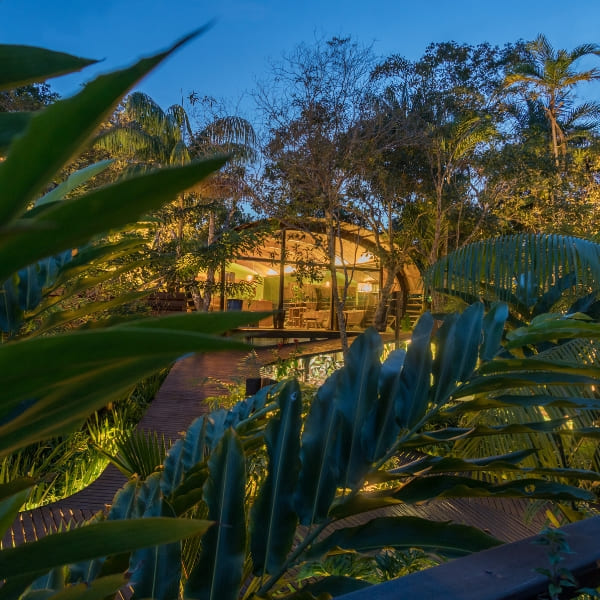
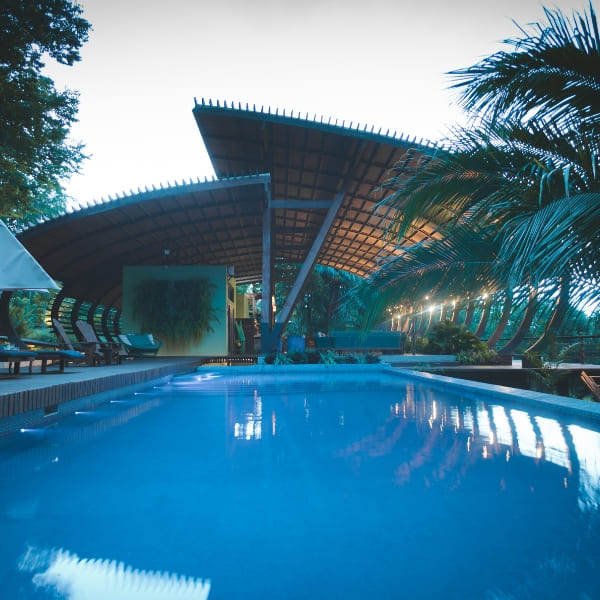
Your jaw will drop when you see Mirante do Gavião with your own eyes. The striking architecture design uses wooden arrangements to resemble the wings of a bird of prey. It’s a nod to the lodge’s name, which means “hawk’s lookout”. Clever, huh?
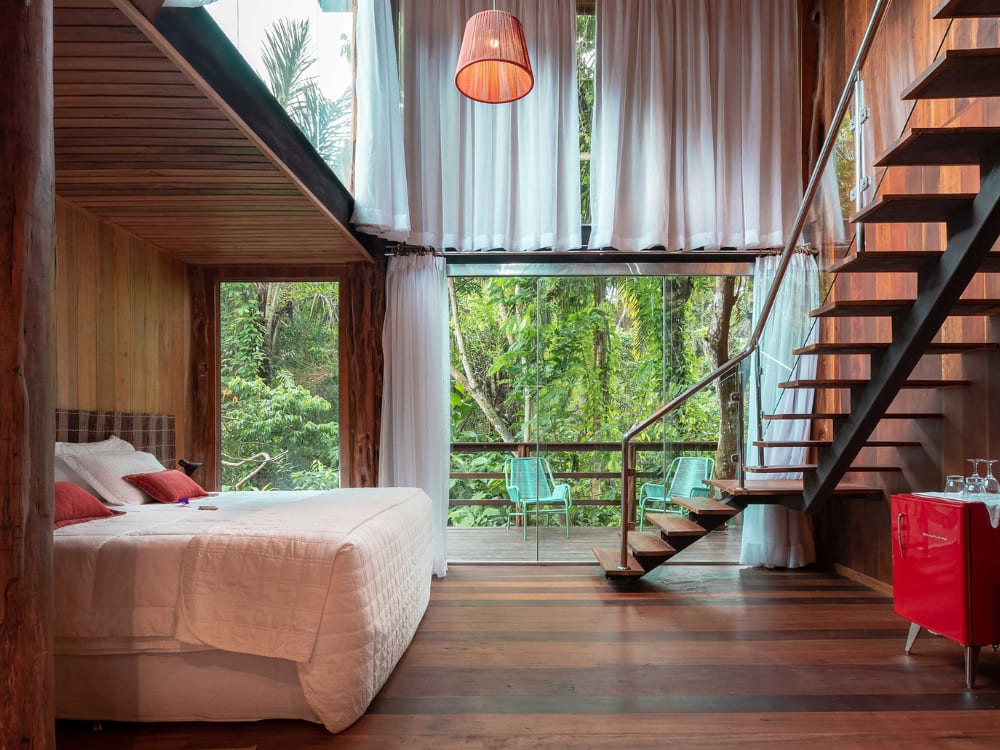
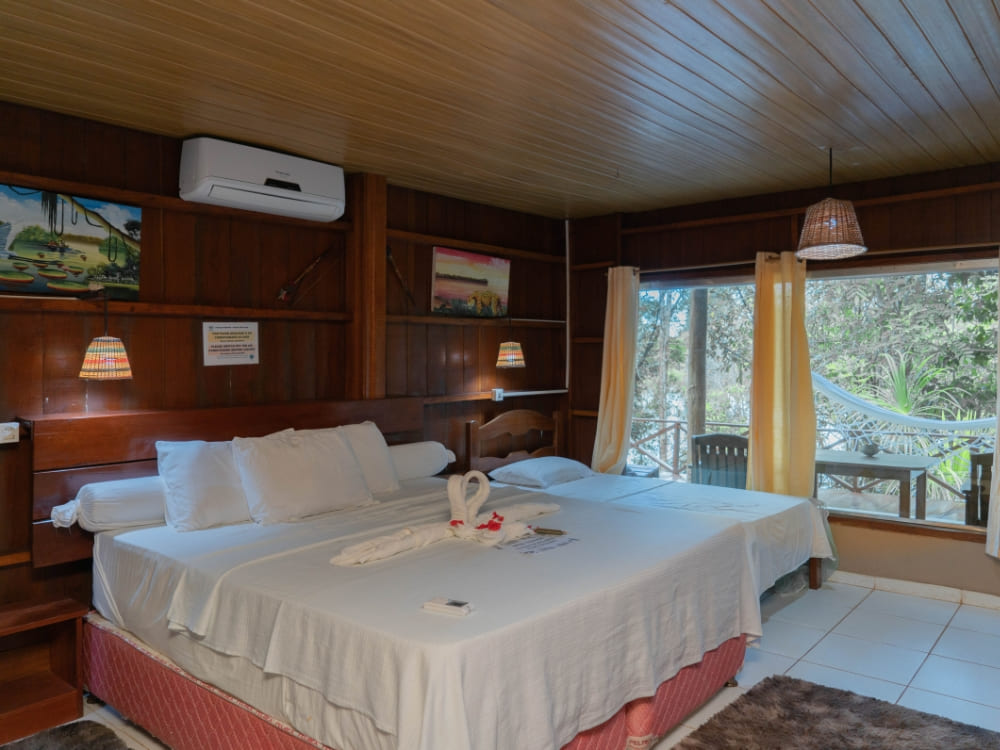
There are three types of accommodations (Premium, Luxury and Tree House), while each room is equipped with air-conditioning, comfy beds, a spacious bathroom and a minibar. Depending on the category, you’ll also find private balconies, hammocks and hot tubs.
Need some action? No problem! This ecolodge has plenty of activities: hiking, water trails, night tours to spot animals, canoeing, cave exploring, and visiting local villages and indigenous communities.
When you’re not out and about in the forest, you can have fun in the gaming room, relax in the wellness area, jump in the pool or eat a delicious meal made with fresh, local ingredients at Camu-Camu, the lodge’s fine dining restaurant.
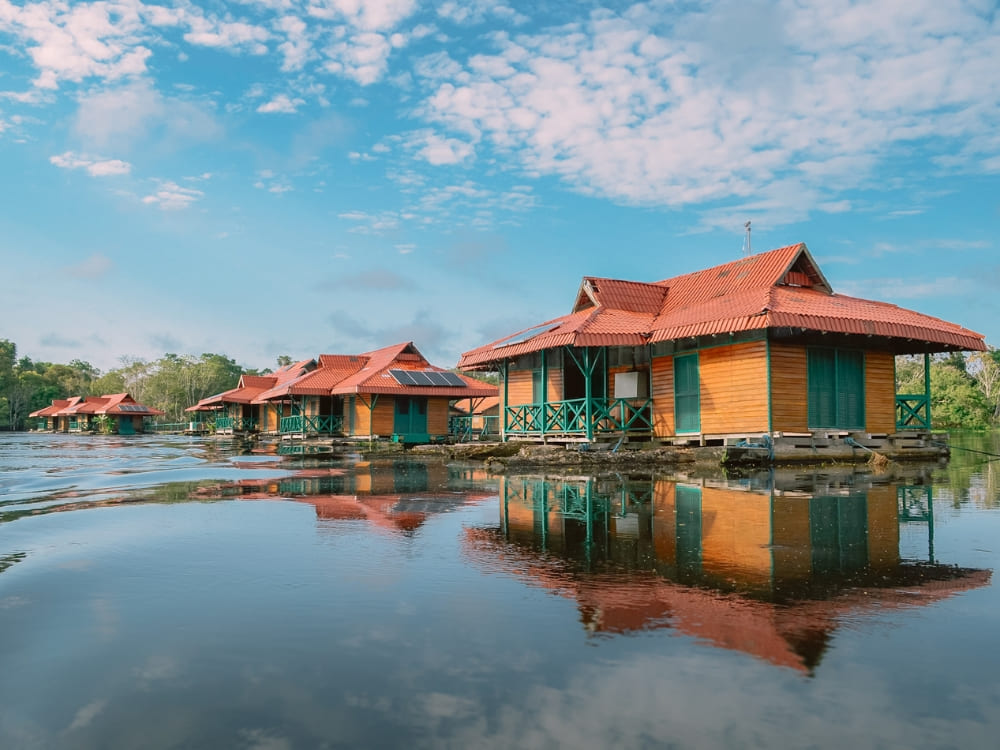
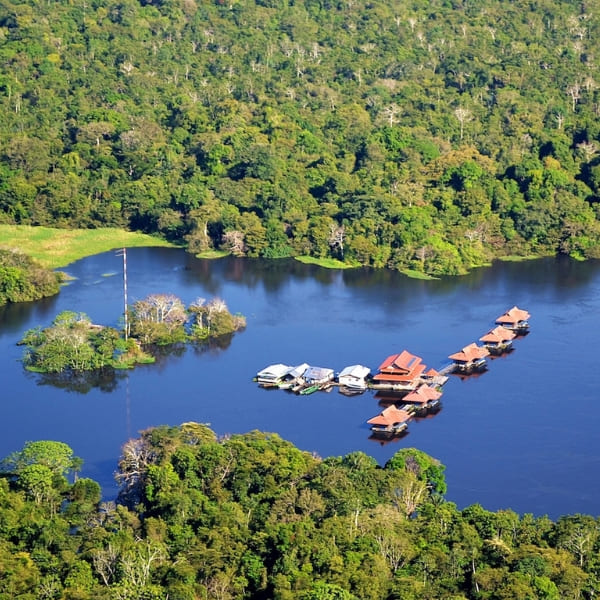
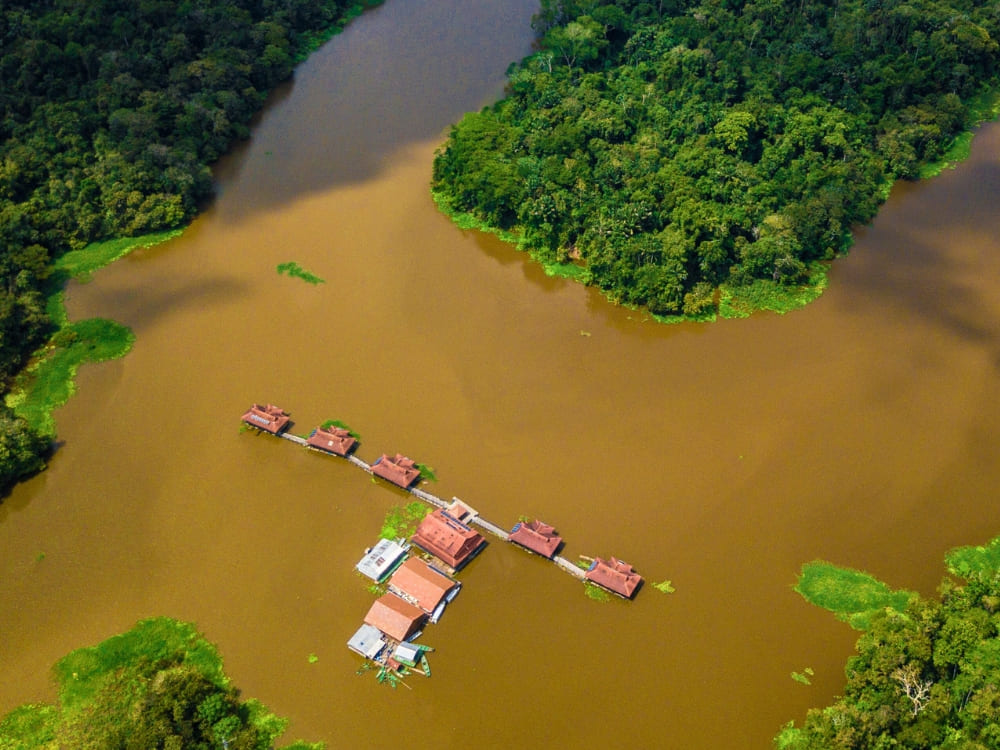
There is nothing like Uakari Lodge. Safely built on stilts in the middle of the Mamirauá Sustainable Development Reserve, it floats on the waters of the river, giving it a deeper sense of total immersion in nature. One of the best Amazon jungle lodges in Brazil, Lonely Planet included it in a list of unmissable experiences in the rainforest.
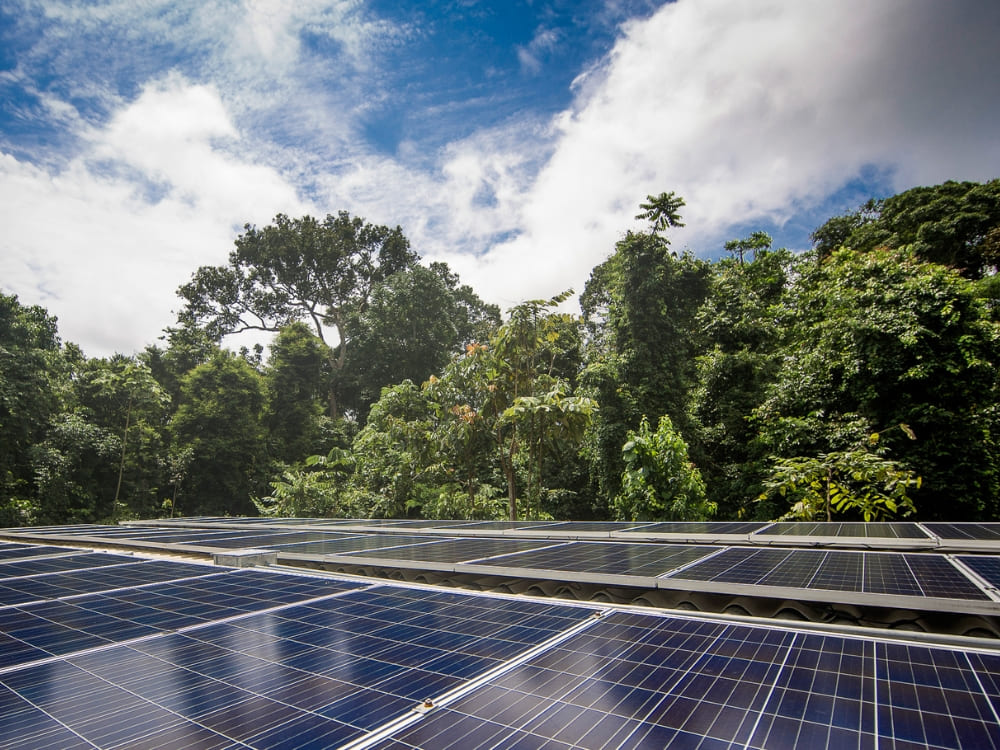
Uakari’s sustainable practices are not only directed to the environment (solar energy, rainwater harvesting, recycling…), but they’re also extended to the communities. Operated by the Mamirauá Institute and local leaders, this Amazon Rainforest hotelgenerate income for riverside groups and create incentives for the conservation of the area’s natural resources.
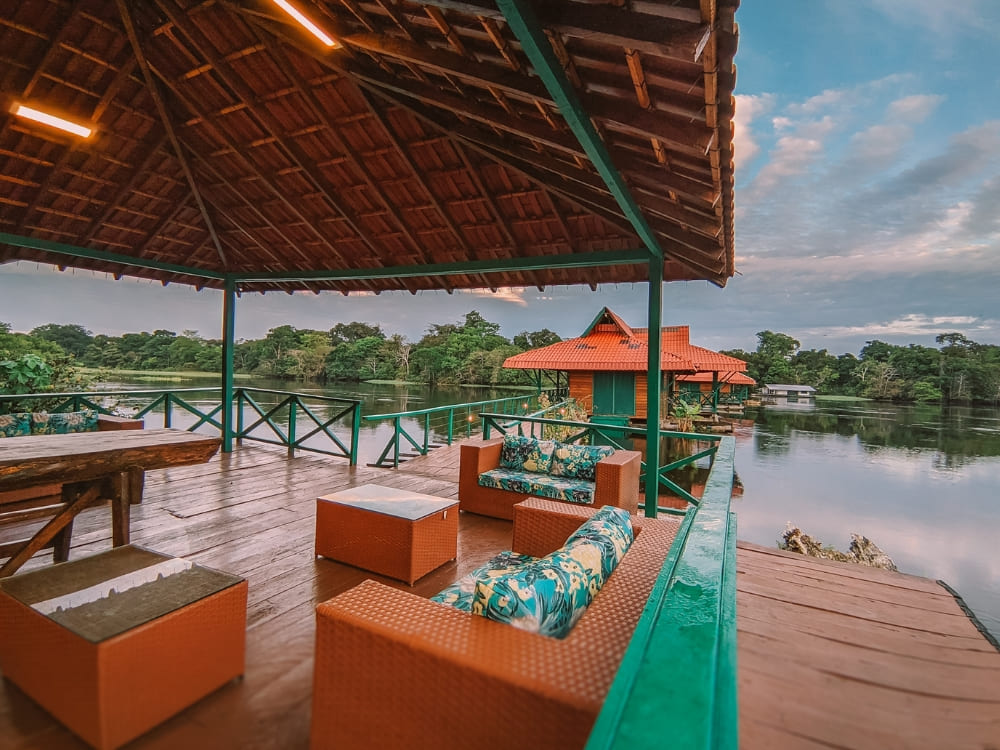
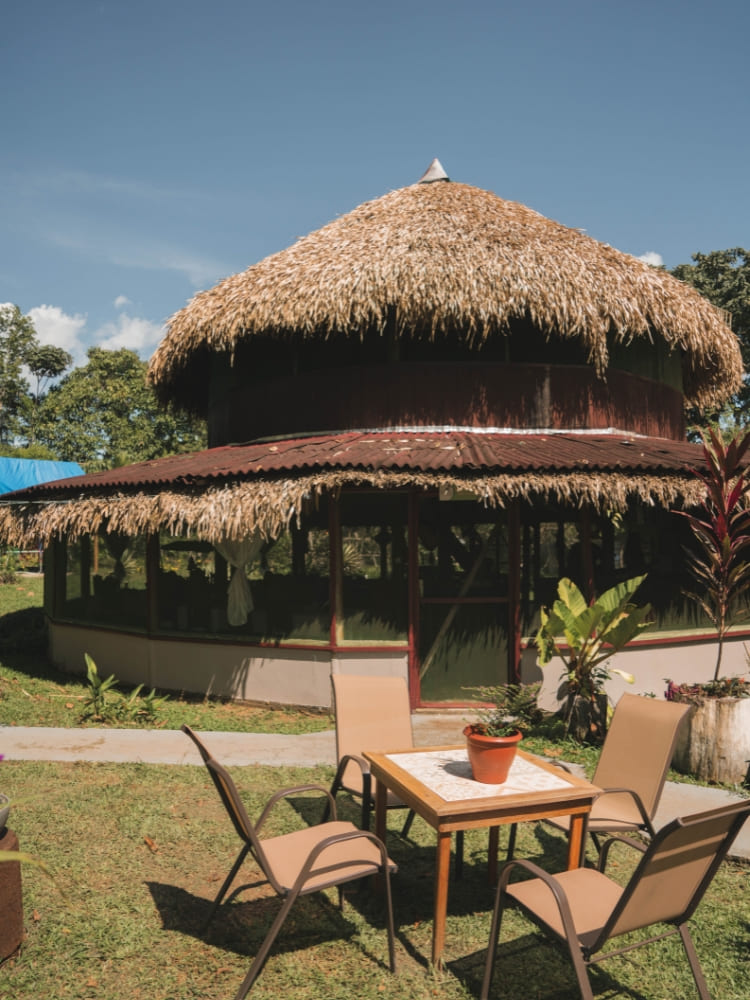
In addition, beautiful accommodations await. The floating structure includes five bungalows with two suites each — facing the river, they allow fantastic views of the forest. Outside the rooms, guests can enjoy the lovely common areas (deck, restaurant, bar, video room and even a library).
The itinerary consists of a wide range of activities, including night tours, hiking, fishing, visiting local villages, canoeing, boat tours for wildlife watching and much more!
Location: Tefé, Amazonas
Access: Flight from Manaus to Tefé + 1 hour 30 minute boat trip
.
Amazon Turtle Lodge
.
Looking for something more affordable? Amazon Turtle Lodge is an excellent option for people who want to spend less. But make no mistake: its budget-friendliness does not mean you won’t have the most incredible experiences in the forest!
Near the Guaporé River, the location is perfect to dive deep into nature. Charmingly picturesque, the lodge has three types of bungalows: Rustic, Masonry and Superior — all with comfortable beds, air-conditioning, and private bathrooms. You can also enjoy your meals at the restaurant, get a drink at the bar or have fun in the gaming room or the TV lounge.
The generous list of activities is another reason why this is one of the most outstanding Amazon ecolodges in Brazil: kayaking, stand-up paddling, canoeing, hiking, birdwatching, wildlife spotting, piranha fishing, boat riding to the Meeting of Waters, visiting the local fruit market (Ceasa) and touring nearby villages.
Location: Careiro, Amazonas
Access: 3h30 hours from Manaus (road + boat)
.
Dolphin Lodge
.
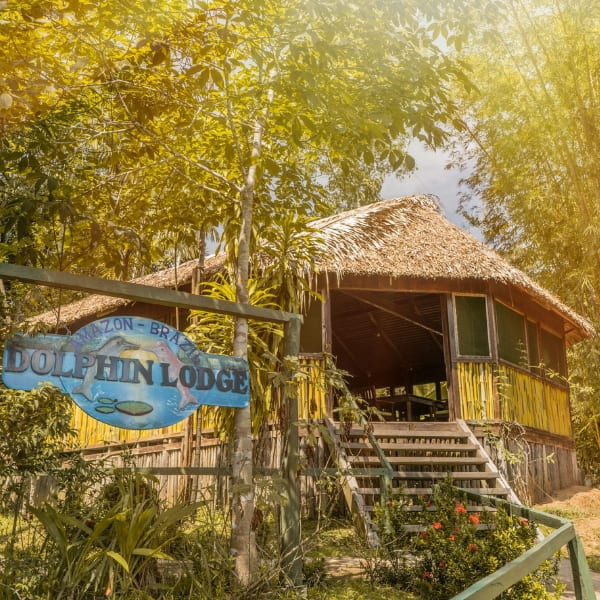
Living up to its name, Dolphin Lodge is located in a preserved area where dolphins are often spotted, as well as caimans, monkeys, birds, and other beautiful species.
Taking ecotourism to a whole other level, sustainable actions are a massive part of the place, such as employing locals, excursions of low environmental impact, recycling, reduced use of plastics and protocols to preserve the wildlife.
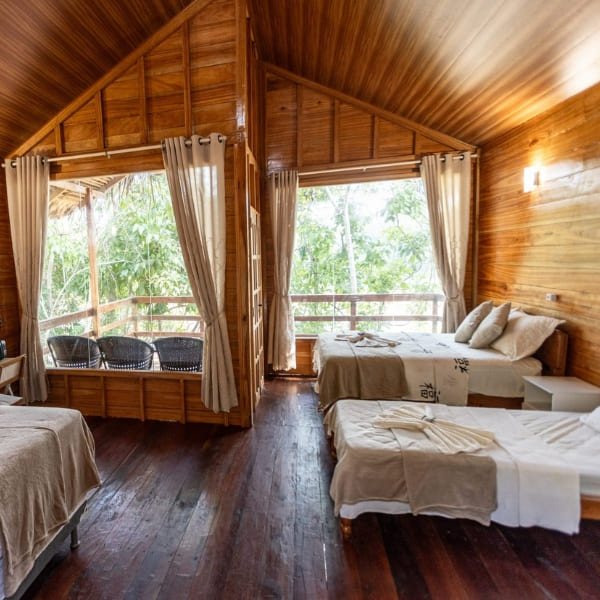
The hotel has six chalets on land and four bungalows on the Memori River, all of them with stunning views. Guests can relax in the straw hut with hammocks and eat delicious Brazilian food served daily by the kitchen staff.
Activities include jungle hiking, wildlife watching, fishing, boat tours, survival lessons, camping in the forest and visiting local communities.
Location: Careiro, Amazonas
Access: 3 hours from Manaus (road + boat)
.
How much does it cost to stay at an Amazon jungle lodge in Brazil?
The average cost to stay at an Amazon Rainforest hotel is R$ 11.000 (approximately US$ 2,130 and € 1,790) per person. However, prices vary according to accommodation category, season, trip duration, etc.
Check out more information about Brazil’s best Amazon jungle lodges:
High-end stay, located near Cristalino and Teles Pires rivers, observation towers for birdwatching and wildlife watching, hiking, canoeing, boat trips.
Luxury stay, expeditions in Anavilhanas and Negro River, hiking, night tours, wildlife watching, aquatic trails, sunset contemplation, visiting locals.
*Per person, based on double occupancy in group departures. Prices may vary depending on season and availability. Exchange rate as of February 12th, 2026; subject to change.
Meet the best Amazon jungle lodges in Brazil with PlanetaEXO
See how you don’t have to choose between adventure and comfort? With these incredible jungle hotels, you can have the best of both worlds in one single vacation!
As an expert in Amazon Rainforest tours in Brazil, PlanetaEXO partners with esteemed local operators and handpicks the finest trips for sustainable and pleasurable experiences in some the most beautiful places in the country. Contact us now!
Conscious and positive-impact tourism has just gained new momentum in Brazil. PlanetaEXO announces its affiliation with The Long Run, one of the leading global networks dedicated to sustainable tourism.
With this achievement, PlanetaEXO becomes the first Brazilian travel company to join The Long Run, an international network of destinations committed to responsible tourism. In Brazil, the network already includes names such as Refúgio Ecológico Caiman, Pousada Trijunção, and Ibiti Projeto. Now, this commitment also extends to the experiences offered through PlanetaEXO‘s carefully selected partners, all aligned with The Long Run’s 4Cs framework: Conservation, Community, Culture, and Commerce.
“Being alongside such important initiatives and having the recognition of The Long Run is a milestone for us”, says Lucas Ribeiro, founder of PlanetaEXO.“We’ve always believed that tourism can be a force for positive change, and being part of this global community reinforces the value of our mission.”
Photo: Aleksandrs Orlovs
What Is The Long Run and Why It Matters
Founded by the Zeitz Foundation, The Long Run is today one of the most respected global networks promoting tourism that protects nature and supports local communities. Its members commit to four key pillars:
Conservation: Protect biodiversity and reduce environmental impact.
Community: Involve and benefit local populations.
Culture: Promote and respect cultural diversity.
Commerce: Encourage long-term sustainable business practices.
PlanetaEXO’s admission followed a rigorous evaluation process to ensure alignment with these principles.
Photo: Lucas Neves
Who are we?
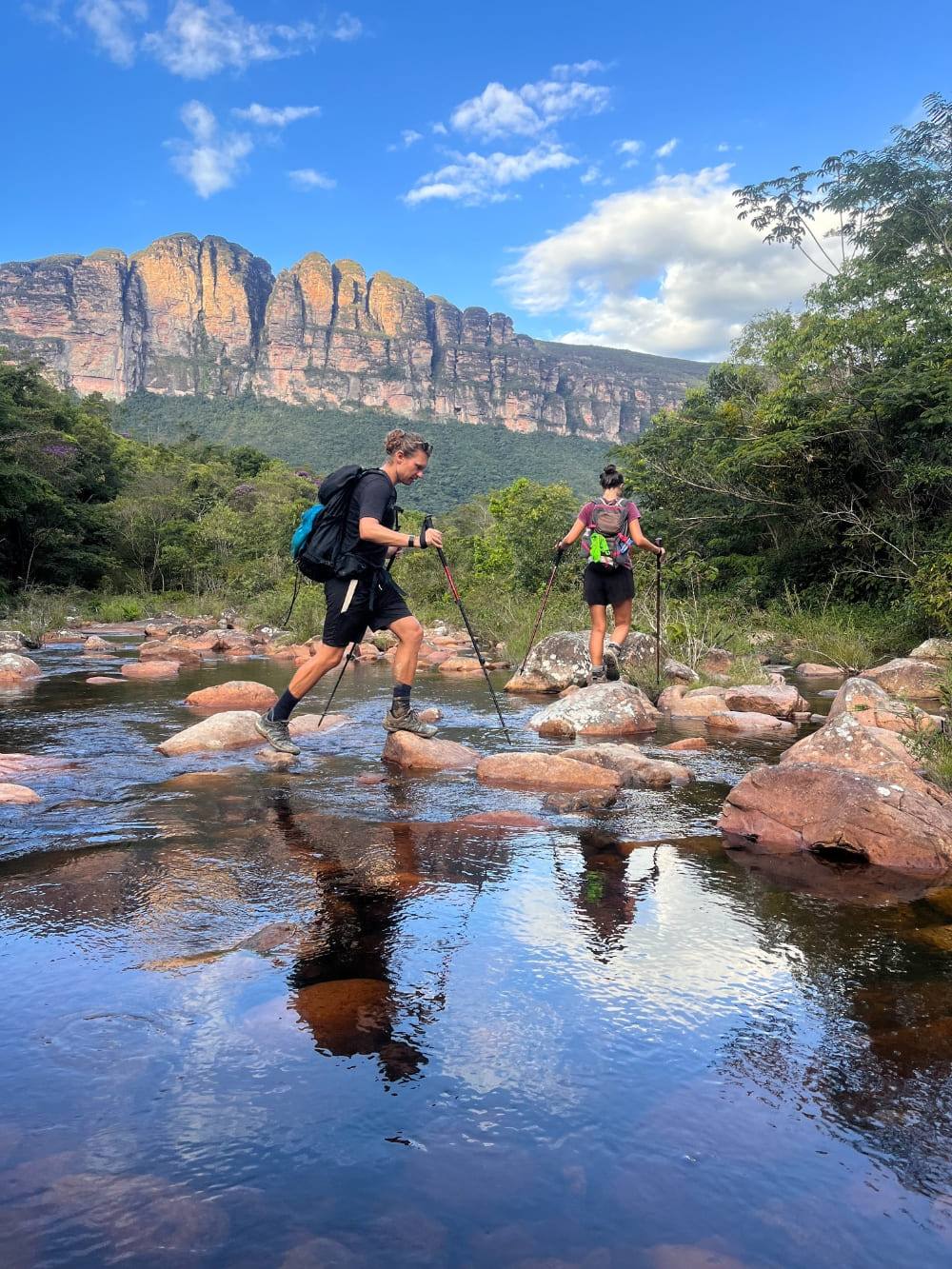
Founded in 2021, PlanetaEXO was born from the desire to connect travelers with authentic, responsible adventures led by local guides and communities involved in environmental preservation. The project began in Chapada Diamantina with the iconic Pati Valley trek, but from day one, the goal was broader: to become a global platform for sustainable travel.
PlanetaEXO does more than organize trips, it curates immersive experiences that prioritize environmental respect and community leadership. A significant share of the revenue generated by tours goes directly to local families, guides, and small businesses.
Our model was designed to have a positive impact from the start, not just for travelers, but for everyone involved. We believe extraordinary adventures can go hand in hand with preserving and strengthening the places we visit.”
Lucas Ribeiro
Photo: Clovis Cruvinel
The Value of Global Collaboration
In a world where mass tourism often harms ecosystems and erases cultural identities, The Long Run stands out as a model for transformative and inclusive tourism. The network goes beyond buzzwords and fosters deep, long-term benefits for nature and local communities.
By joining this global movement, PlanetaEXO not only commits to best practices but also gains access to knowledge exchange, training, and international collaboration, tools that are key to improving impact-driven tourism while respecting local realities.
Looking Ahead: What’s Next for PlanetaEXO
Joining The Long Run signals a new chapter in PlanetaEXO’s journey. The company is currently expanding its itineraries to new regions across Brazil and Latin America, focusing on destinations with high ecological and cultural value.
It also plans to invest in training programs, partnerships with conservation projects, and technological improvements to make sustainable travel more accessible and efficient.
“We want to show that adventure tourism can be a real catalyst for environmental and social change”, concludes Lucas Ribeiro. “Our journey is just beginning.”
About The Long Run
Founded in 2009 by the Zeitz Foundation, The Long Run is a global initiative supporting tourism enterprises committed to a positive, long-term impact. With more than 40 members across five continents, including lodges, private reserves, and community-led projects, the network currently protects over 20 million acres of biodiversity worldwide.
Do you love trekking and engaging with nature? Find out the top hiking trails in Brazil in this carefully curated list!
Brazil is the best place on the planet for adventure travel, according to US News & World Report—higher than destinations known for ecotourism like Nepal, Costa Rica, and New Zealand. The list also mentions the country’s attributes to justify the #1 placing: locals’friendliness, great leisure opportunities, pleasant climate, and scenic views.
Ecological walks are among the favorite activities of any adventurer. The best hikes in Brazil offer breathtaking natural landscapes, including open fields, mountains, rivers, waterfalls, caves, and vast expanses of untouched vegetation.
As an ecotourism platform specializing in adventure tours in Brazil, PlanetaEXO knows all about the top trekking destinations for travelers who thirst for authentic connections with nature. See our list right below!
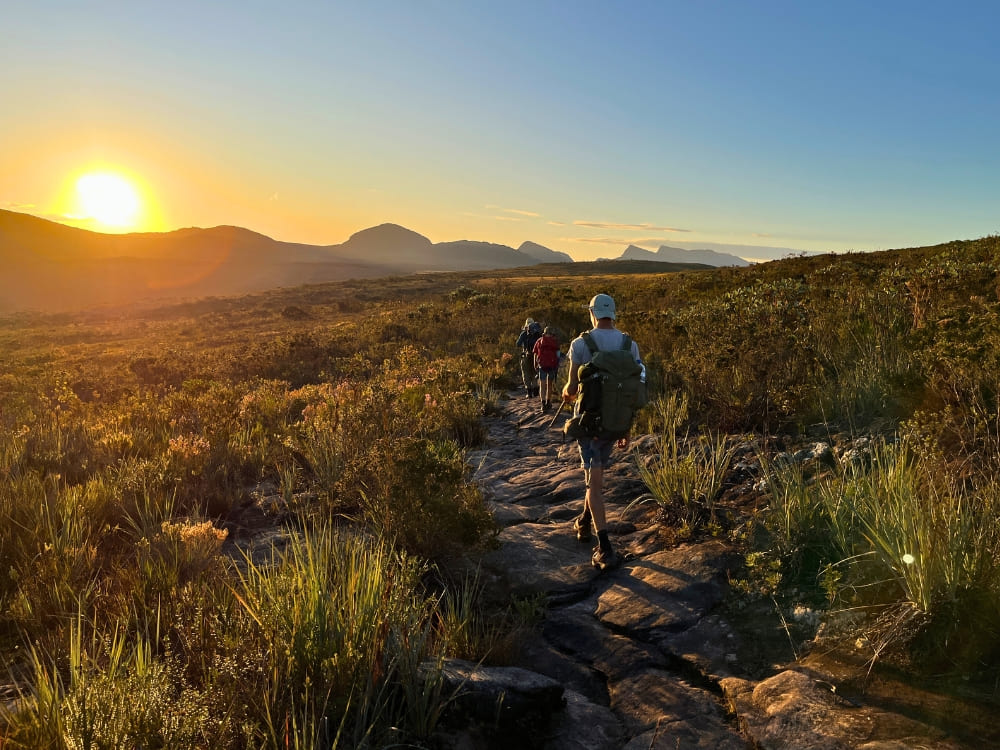
1 – Vale do Pati, Chapada Diamantina (BA)
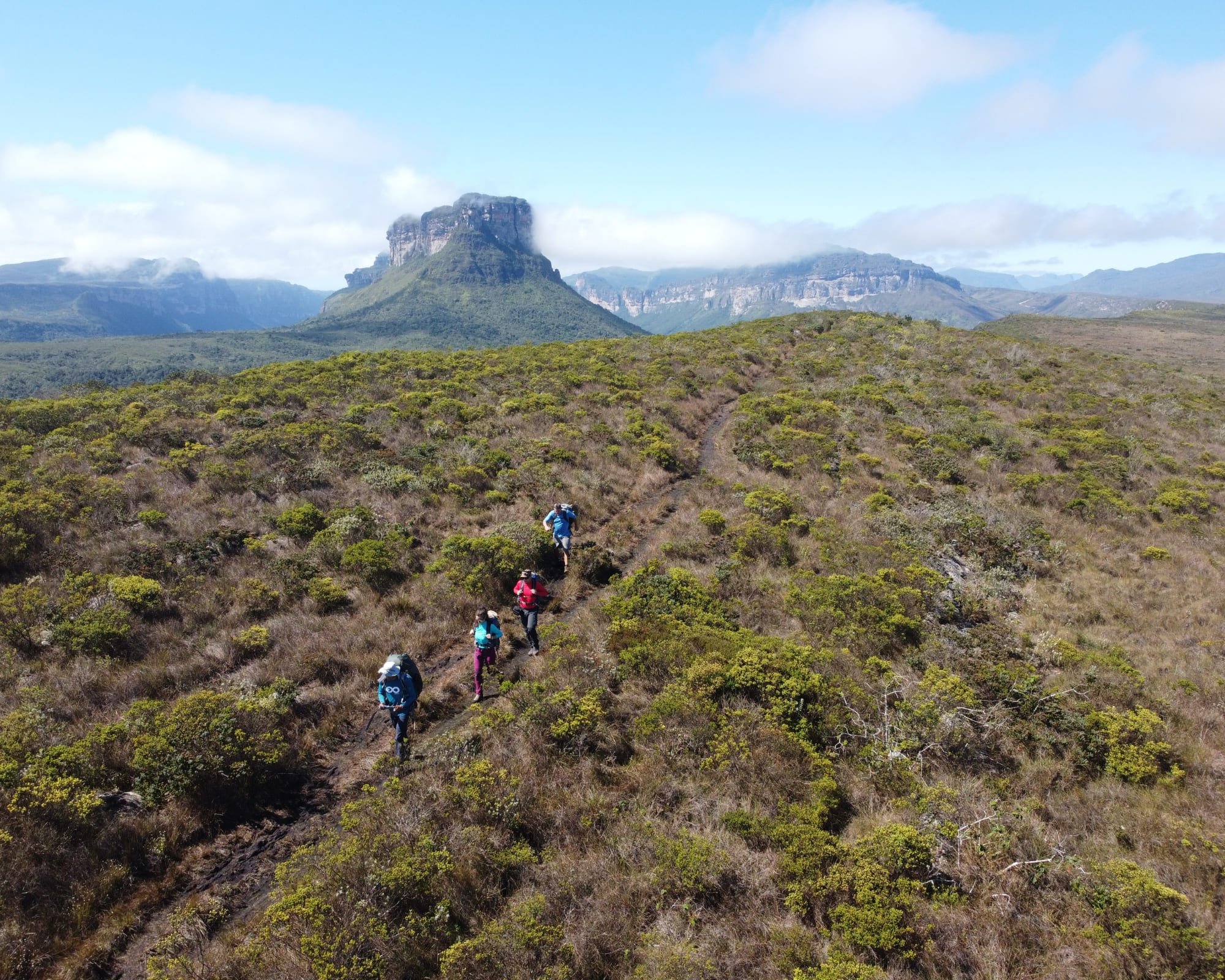
If you don’t go to Vale do Pati, in Chapada Diamantina National Park, you’re not getting the full experience of hiking in Brazil. This amazing destination in the state of Bahia holds some of the most challenging but exciting treks in the country.
Photo: Guillaume Leman
The trails cross breathtaking views, going through mountains, rock formations, caves, lookouts, rivers, and waterfalls. Swimming and bathing in Funil and Cachoeirão waterfalls are must-have activities for every traveler. Morro do Castelo, a 1280-meter-high cliff, is also a key highlight of a Chapada Diamantina hike.
On average, a Vale do Pati trek requires 15 kilometers of walking per day, but it’s possible to extend (22 km) or shorten (8 km) this number. It all depends on how long you’re staying, what type of experience you’re looking for, and how much you’re willing to walk.
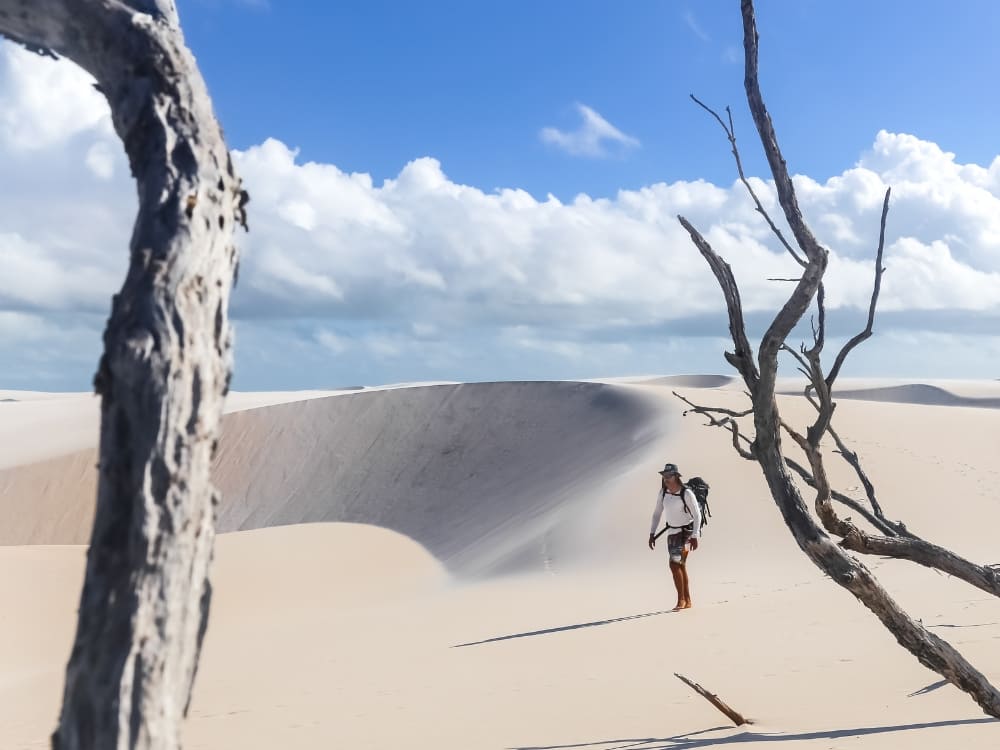
2 – Lençóis Maranhenses (MA)
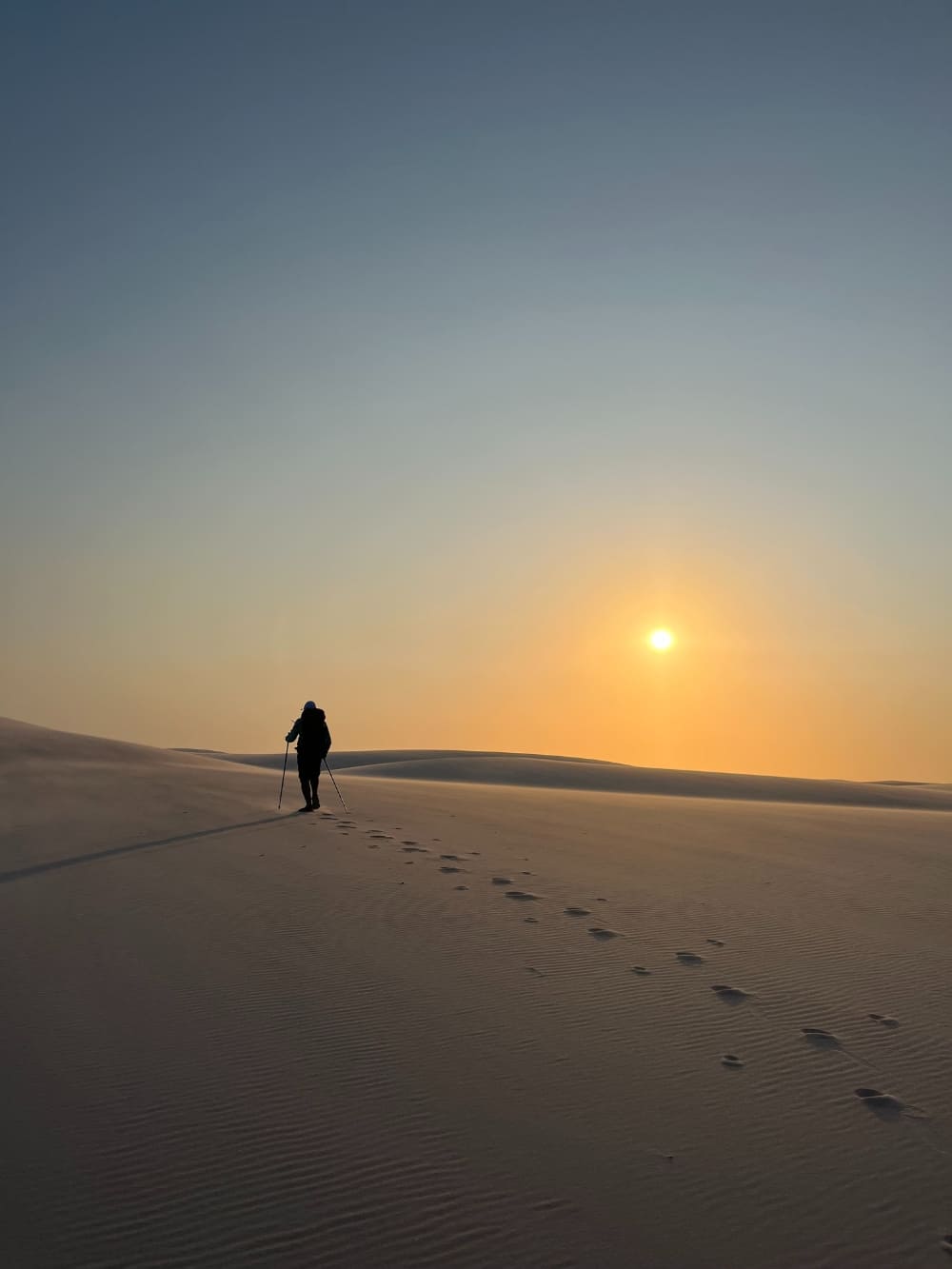
The sand dunes and rainwater lagoons of Lençóis Maranhenses can make anyone fall in love. The landscapes are almost otherworldly, with such an impressive beauty it’s hard to describe the feeling they bring—and that’s exactly why this is one of the best hikes in Brazil.
.
During your hike through the white sand, you’ll come across stunning lagoons and interact with attentive locals who will make you feel right at home. On multi-day treks, visitors spend the night at the homes of residents who live within the national park, sleeping in hammocks and eating hot meals after the long journey.
The best time to visit Lençóis Maranhenses is between May and September, when the lagoons are full, the sun is bright and the rain ceases. With the support of expert guides, it’s recommended that you stay at least 3 days to fully enjoy the experience.
A common mistake is assuming Rio de Janeiro is all about Copacabana Beach, Sugarloaf Mountain, and Christ the Redeemer. While the city holds these amazing attractions, the state of Rio is full of natural destinations that every travel junkie should visit.
Photo: Carlos Perez Couto
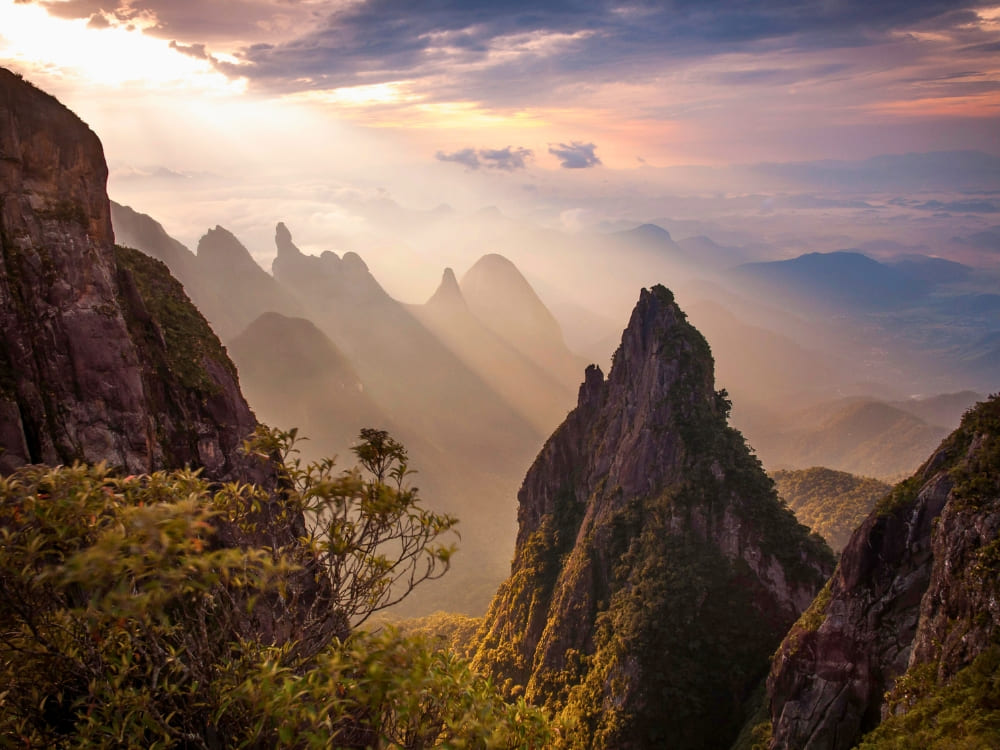
Petrópolis and Teresópolis are two inland cities divided by Serra dos Órgãos National Park, one of the best places to hike in Brazil. Its massive set of trails reaches more than 200 kilometers, with options for every level of difficulty, suspended trails, and special access for disabled people.
Waterfalls (Véu da Noiva, Andorinhas), natural wells (Paraíso, Capela, Sossego, Ponte Velha, Preguiça), and mountains are all part of the experience. Travelers can also enjoy some mountain climbing on Verruga do Frade, Pico do Garrafão, and the world-famous Dedo de Deus, a 1,692-meter-high peak whose name translates to “Finger of God” due to its elongated shape pointing upwards.
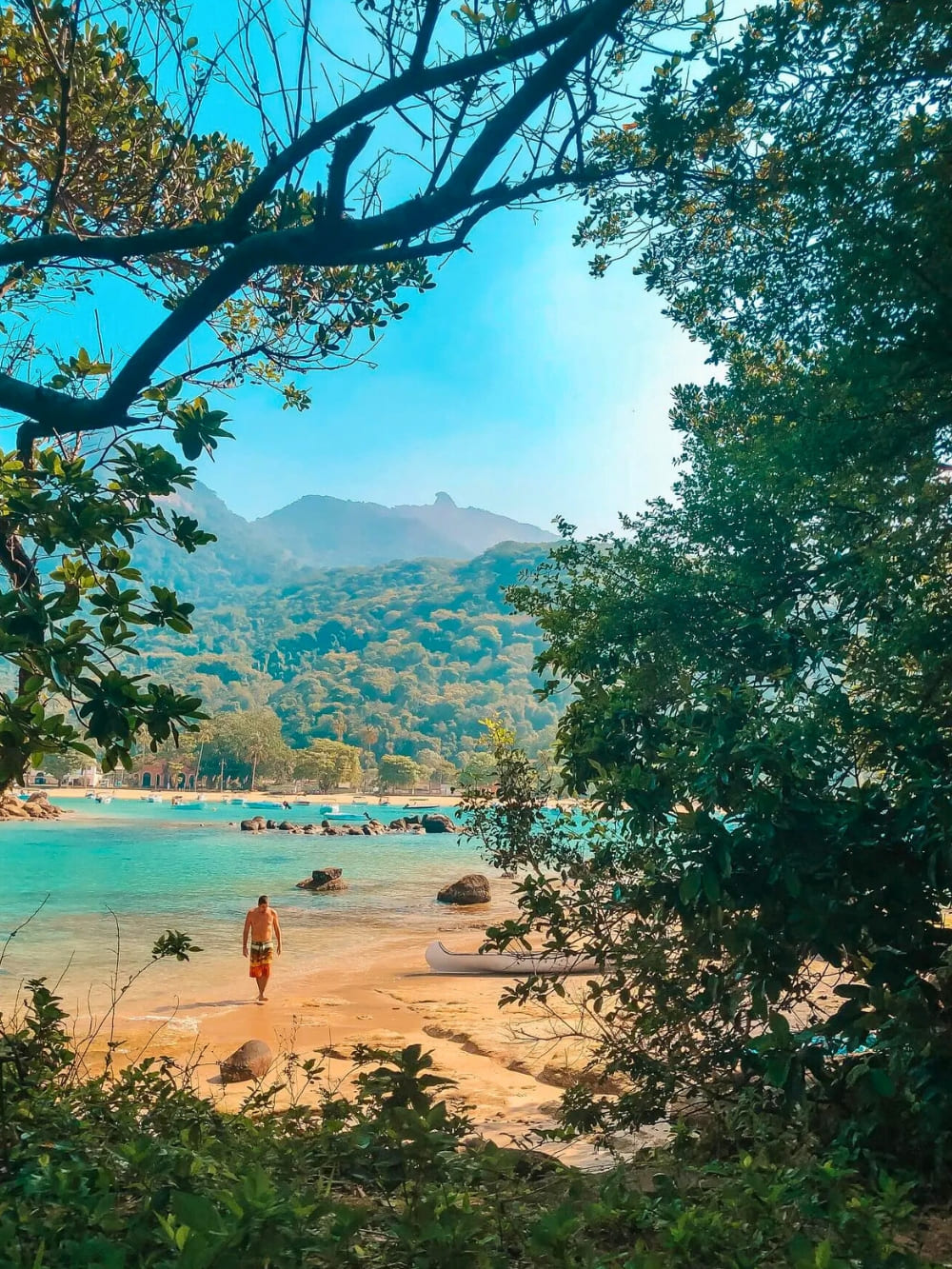
4 – Ilha Grande (RJ)
Ilha Grande is an island in the municipality of Angra dos Reis, in Rio de Janeiro. There are 16 hiking trails of different levels of difficulty that cross secluded areas of tropical forest.
@fernando.ilhagrande
Another highlight is Lopes Mendes Beach, considered one of the most beautiful beaches in Brazil. Surfers love it, but so do hikers. To get there, you can choose trails T10 (Grande de Palmas and Mangues beaches), T11 (Pouso Beach), or T12 (Castelhanos Lighthouse).
Circuits in Ilha Grande range from 4 to 7 days, which allows flexibility for a faster pace or a more thorough exploration.
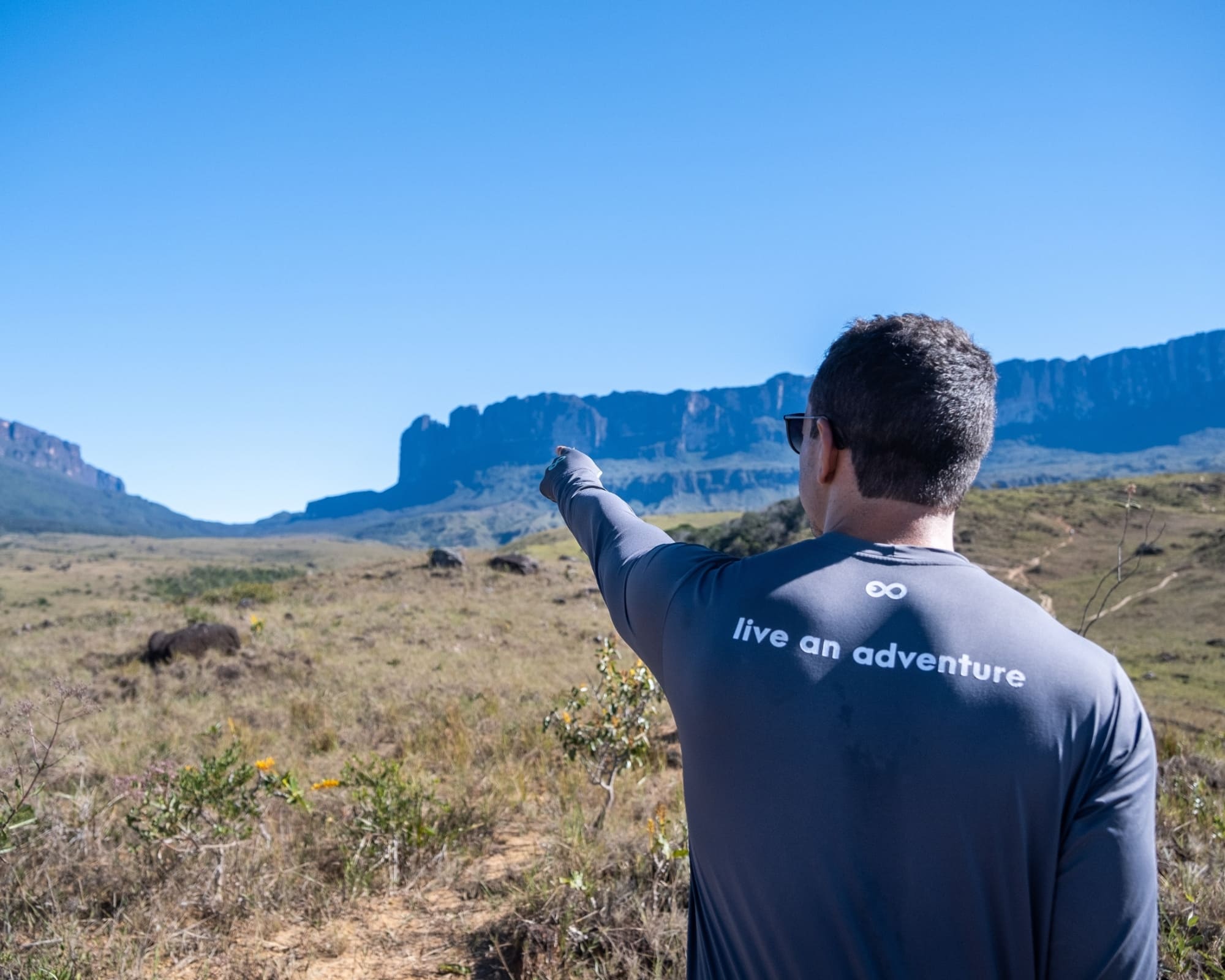
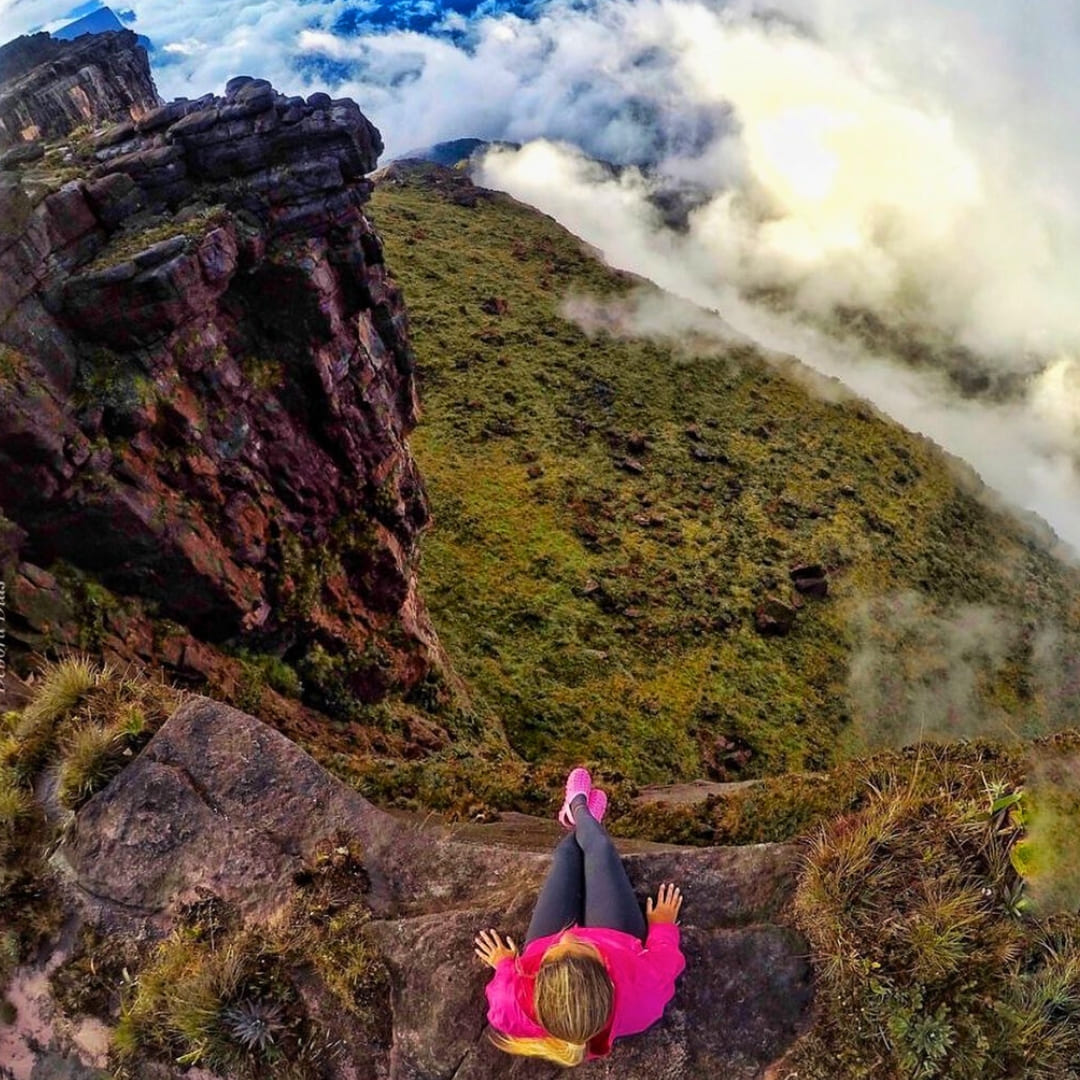
Mount Roraima is a mountain in the triple border of Brazil, Venezuela, and Guyana. The highest point is 2,810 meters above sea level, which presents a real challenge for trekkers who are hungry for adrenaline. On average, Roraima treks last 4–5 hours per day, but they can take up to 8 hours depending on the itinerary. Tours span from 6 to 10 days.
@roraimaadventures
The natural pools are one of the reasons why this is one of the best mountain hikes in South America. The clear watersare perfect for bathing, floating, and letting all your troubles be washed away.
Another unforgettable experience is visiting the Valley of Crystals, an area filled with white quartz that shimmers on the ground. Since Mount Roraima is a giant block of sandstone, temperature changes and erosion along the years formed an impressive crystal formation that attracts tourists from all over the planet due to its beauty and supposed energy powers.
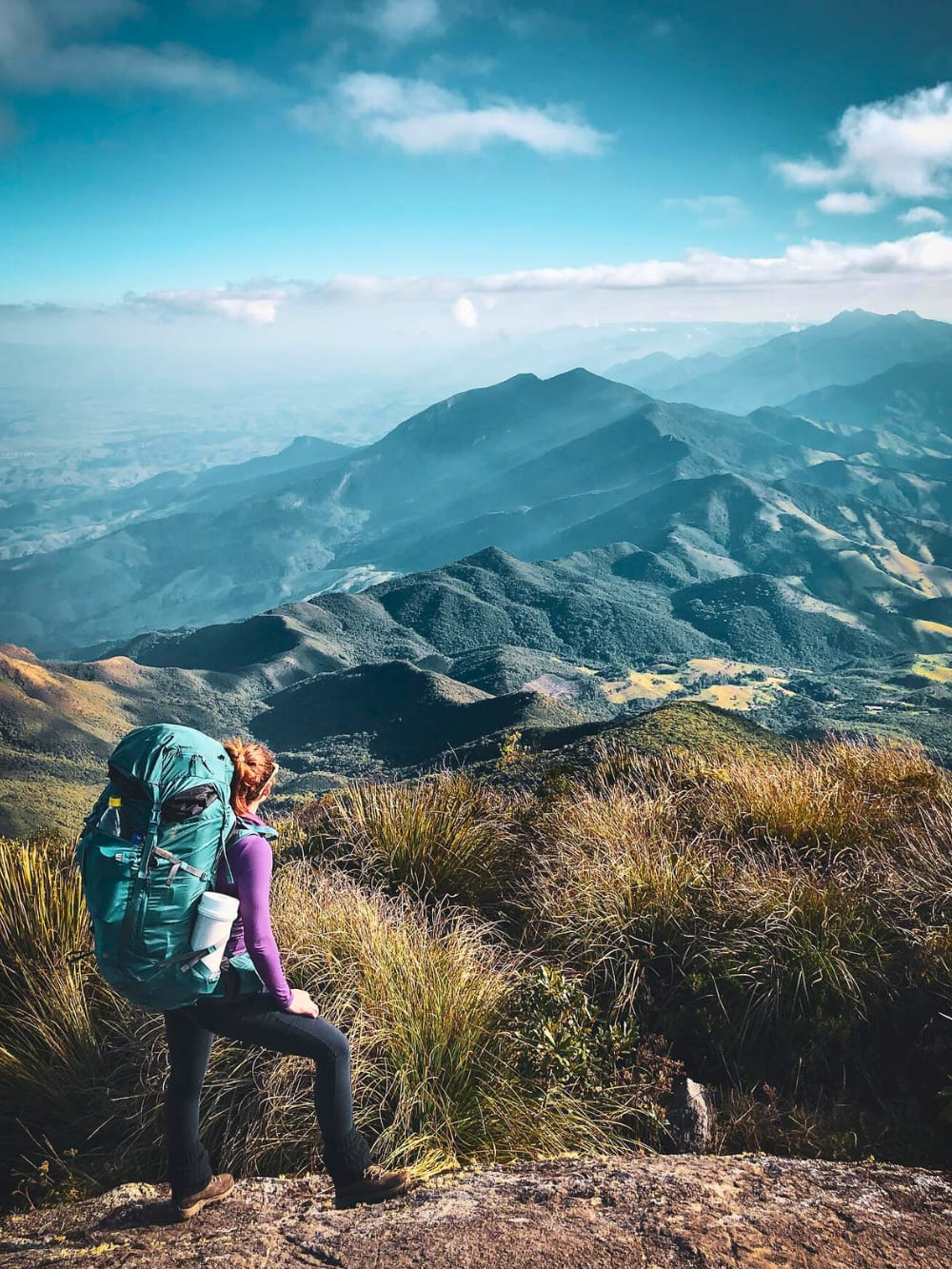
Steep climbs and high altitudes are some of the reasons why Serra Fina is always included in lists with the best hikes in Brazil.
@bernardoespinhaco
With trails that range from 7 to 26 kilometers, this is also one of the most challenging treks in the country. The Pico dos Três Estados trail, for example, is located on the border of the states of São Paulo, Minas Gerais, and Rio de Janeiro. This specific tour takes 3–4 days.
Such a demanding adventure requires great physicality. Hikers tend to prepare themselves for months before going to Serra Fina, making sure to eat well, improve their physical fitness, and do regular medical follow-ups.
All this effort is worth it—the views are beautiful, and the victorious feeling of conquering such a challenge couldn’t be sweeter.
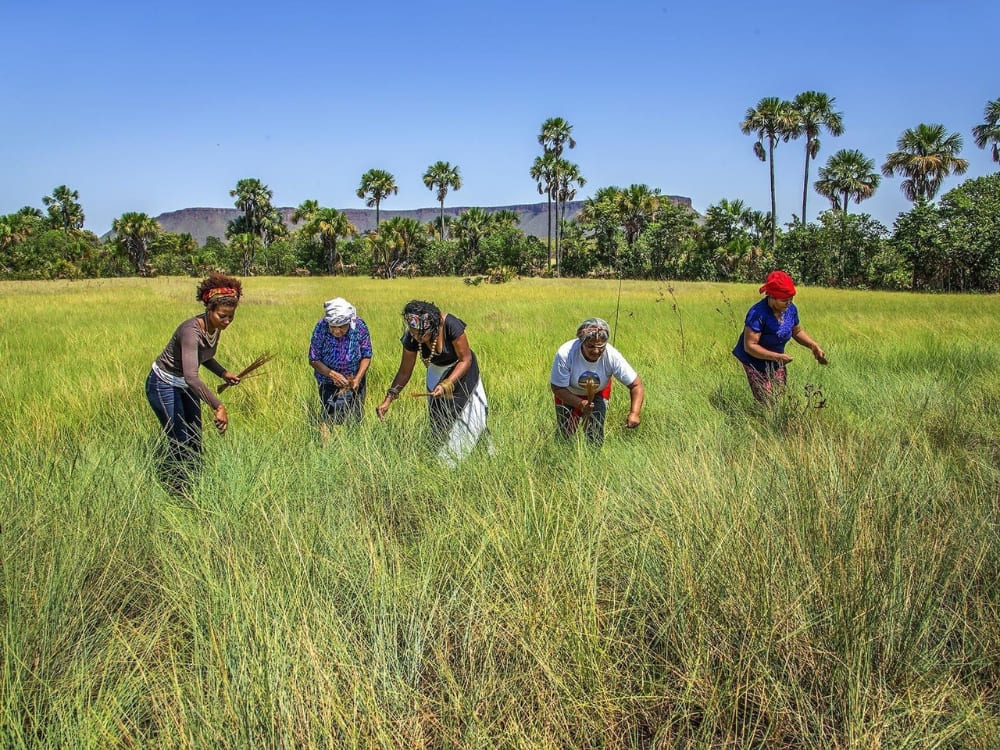
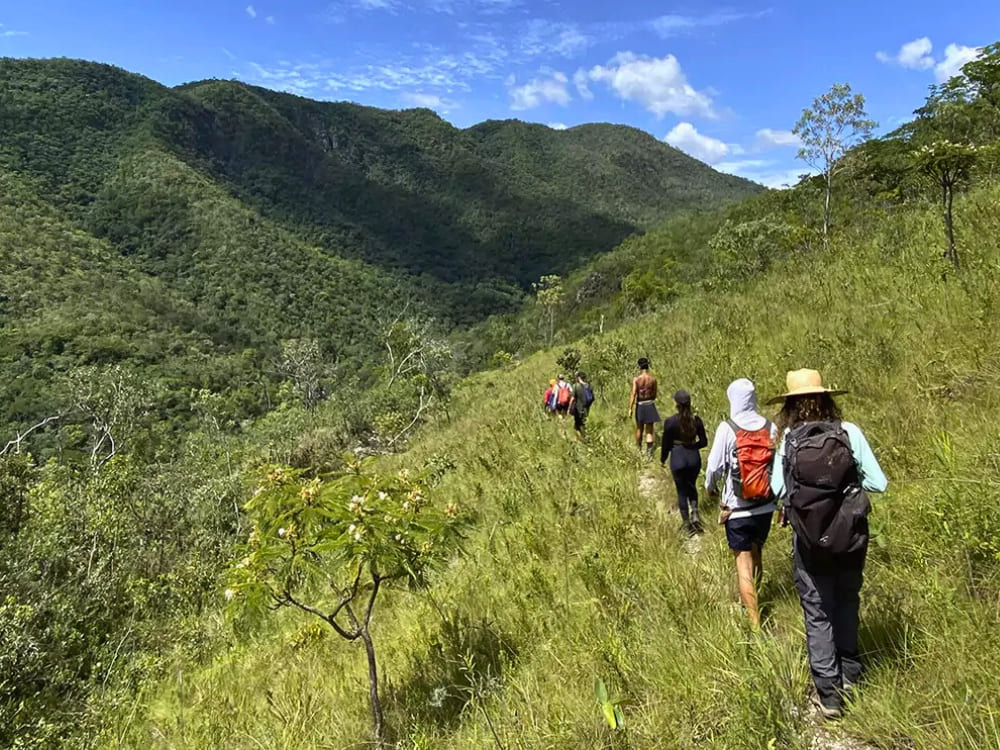
Chapada dos Veadeiros National Park, in Goiás, offers some of the greatest experiences for trekking in Brazil. With great diversity, there are options of easy, moderate, and difficult hikes for every type of traveler. Canyons, natural wells, lookouts, valleys, and waterfalls work together as puzzle pieces to create jaw-dropping scenarios that will surely capture your heart.
.
Speaking of waterfalls, there are plenty you have to see for yourself: Cristais, São Bento, Encantado, Almécegas (I and II), Rei do Prata, Sertão Zen, Mirante da Janela, Vale da Lua, Santa Bárbara, Catarata dos Couros, etc.
Trekking in Chapada dos Veadeiros usually lasts 2 to 5 days. If you’re staying a bit longer, you can also enjoy some touristy schedules around the area, like buying hand-made souvenirs in the street markets of Vila de São Jorge and savoring a nice Brazilian meal in Alto Paraíso, the most famous town around the area.
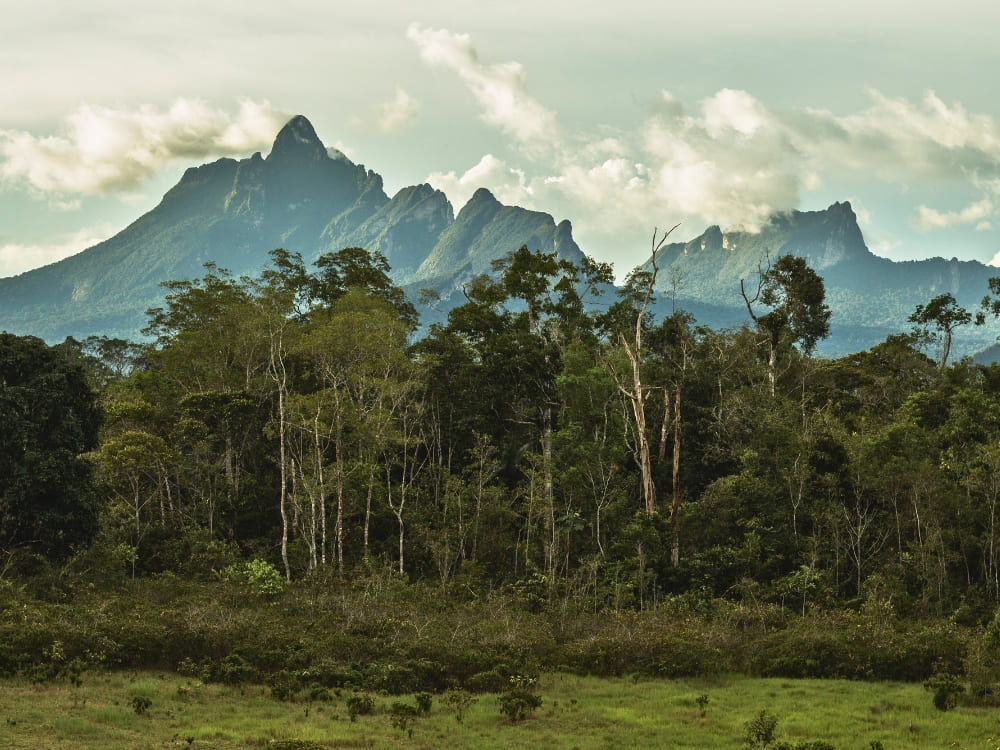
Pico da Neblina, in the state of Amazonas, is the highest peak of Brazil: 2,995 meters above sea level. To get to the very top, trekkers usually spend up to 15 days in the national park, depending on the group’s rhythm.
.
Camping in the forest is a part of the experience, and travelers can also cool off in Tucano Waterfall, explore the Amazon Rainforest, and engage with the local culture. This tour demands great physical effort, but if you love adventure, then it’ll definitely be worth your while.
The journey also requires special permits and expert guides due to its location in Yanomami Indigenous lands.
Discover the best hikes in Brazil with PlanetaEXO!
There’s no doubt that Brazil is one of the best places for hiking. Whether in white sand fields or mountainous regions that share space with waterfalls and natural pools, the adventure is always unforgettable.
PlanetaEXO, an ecotourism platform specializing in adventure tours in Brazil,connects you with the finest local operators to ensure an authentic, sustainable trip in some of the country’s most gorgeous nature destinations. Contact us now!
As deforestation threatens the Amazon, ecotourism in the Amazon Rainforest emerges as a key solution, with startups like PlanetaEXO leading the way in supporting Conservation and Local Communities.
The Amazon Rainforest, often referred to as the “lungs of the Earth,” is facing one of its most critical challenges in decades. Deforestation rates have skyrocketed, with over 10,000 square kilometers of forest being cleared annually, driven by illegal logging, mining, and land conversion for agriculture. In addition, record-breaking wildfires and persistent droughts are worsening the situation, with over 50,000 active fires across Brazil.
Sustainable tourism to the Amazon Rainforest is emerging as a viable strategy to combat this environmental crisis while supporting local communities.
“Locally guided tours help shift the focus away from destructive practices.” – Photo: João Paulo Krajewski
PlanetaEXO, a startup dedicated to eco-friendly travel, has been working closely with these communities to offer tours in the Amazon in Brazil that prioritize both environmental conservation and community empowerment. “We’ve seen firsthand how ecolodges and locally guided tours help shift the focus away from destructive practices,” says Lucas Ribeiro, founder of PlanetaEXO.
“By connecting travelers with authentic experiences that benefit local communities, we’re promoting a model of tourism that supports both people and the planet,” he adds.
A sanctuary for biodiversity and a symbol of sustainable tourism: Cristalino Ecological Reserve
According to a report by the World Wildlife Fund (WWF), ecotourism in the Amazon Rainforest could reduce deforestation in the Amazon by providing an alternative source of income to industries that exploit the rainforest.
WWF suggests that responsible tourism can help maintain over 50% of the forest’s biodiversity, while also addressing climate challenges by protecting large swaths of land from forest clearing.
Empowering Local Communities through Sustainable Tourism
The benefits of sustainable tourism are not limited to environmental protection. Ecotourism is also creating economic opportunities for local communities, including many indigenous groups, who have long acted as stewards of the Amazon.
A powerful example of this transformation, highlighted by Projeto Draft, is the story of Roberto Brito Mendonça from Iranduba, Amazonas. Like his father and grandfather before him, Roberto was a logger, using the forest to support his family. In 2008, when his land became part of the Rio Negro Sustainable Development Reserve, his livelihood was at risk. Faced with uncertainty, Roberto turned to tourism, and by 2012, he began running Pousada do Garrido, one of 24 tourism businesses in the area.
“The Amazon we want is one full of life – and when I say life, I mean especially the human lives that are part of it,” says Roberto Brito.
“Access to education and technology is essential for sustainability,” says Roberto. “If everyone had this opportunity, we can chart a new course for the forest. The Amazon we want is one full of life – and when I say life, I mean especially the human lives that are part of it”.
His story is a testament to how sustainable tourism can offer an alternative to extractive industries, allowing local communities to preserve both nature and their way of life.
Ecolodges Leading by Example
Lodges like Uakari Lodge in the Mamirauá Reserve, Tefé, andCristalino Lodge, in Alta Floresta, Mato Grosso, are prime examples of how ecolodges play a critical role in ecotourism. Uakari, located in a semi-flooded ecosystem that represents 3% of the Amazon, aims to protect local biodiversity while supporting eleven local communities.
The lodge operates with sustainability at its core, using solar energy, collecting and storing rainwater, and treating sewage with microorganisms instead of chemicals. Even the roof tiles are made from recycled plastic bottles.
“Uakari Lodge aims to protect local biodiversity while supporting eleven local communities.”
Guests are encouraged to minimize their energy usage, and all waste is treated before being returned to the river. Through its community tourism model, Uakari provides opportunities and training for local people, ensuring that the lodge’s operations have minimal impact on the environment.
Meanwhile, Cristalino Lodge stands out as an ecolodge nestled within one of the largest private reserves in the Amazon, protecting over 11,000 hectares of forest—an area nearly twice the size of Manhattan Island. This vast area is kept in pristine condition, rich in biodiversity, and supports critical conservation efforts.
Being atop Cristalino Lodge’s 164-foot towerview is a breathtaking sight. – Photo: Andre Dib
The lodge adopts sustainable architecture that respects nature, with systems for effluent and wastewater treatment, solar water heating, solar energy, and recycling—all protocols designed to minimize the impact of its operations. By limiting the number of guests per guide on every tour, Cristalino ensures a low-impact experience.
“The lodge adopts sustainable architecture that respects nature.” – Photo Samuel Melim
Visitors to both lodges embark on guided treks and excursions, experiencing the astonishing complexity of the Amazon’s ecosystems.
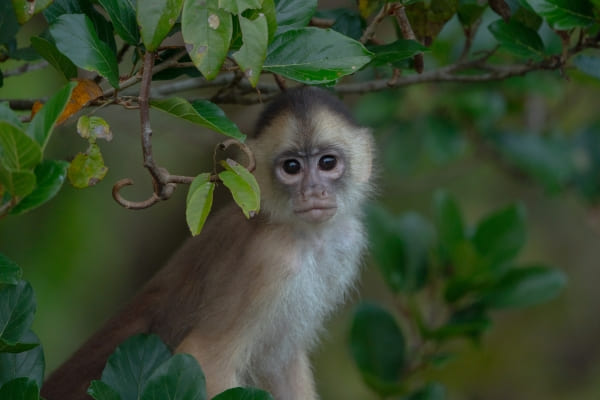
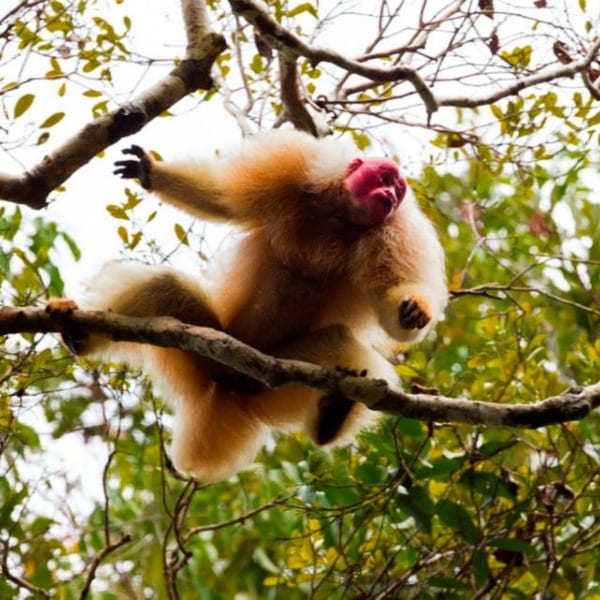
Uakari Lodge serves as a sanctuary for unique species like the white-faced uakari, while Cristalino Lodge supports research that has documented over 1,356 different plant species, including six previously unknown to science.
By promoting low-impact tourism, both Uakari and Cristalino contribute to the preservation of the forest while providing sustainable livelihoods for local communities.
Economic and Global Impact of Sustainable Tourism in the Amazon
The economic comparison between sustainable tourism and private exploitation in the Amazon highlights the importance of eco-friendly travel. According to the World Bank, sustainable tourism in the Amazonis valued at approximately US$2.3 billion annually.
Although this represents only around 5% of the US$45 billion generated by private exploitation of the forest through agriculture, timber harvesting, and mining, ecoutourism provides an essential ally in conservation efforts.
Photo: Samuel Melim
Beyond its financial value, sustainable tourism raises awareness of the Amazon’s deforestation crisis and its impact on the global climate. Tourists who witness the destruction firsthand are often inspired tosupport conservation projects in their home countries.
Ecotourism also contributes toenvironmental education, which helps fostering a deeper understanding of the need for sustainable practices worldwide.
Photo: Jorge Lopes
With eco-friendly tours increasingly contributing to nature protection and restoration, ecotourism is able to shape global views on deforestation. Travelers support these efforts, creating a win-win situation where tourism funds the preservation of natural resources in the Amazon.
A Call To Action
As deforestation continues to threaten one of the world’s most important ecosystems, sustainable tourism offers a way forward. By shifting economic incentives and raising global awareness, it is possible to reduce the pressure on the Amazon and protect its biodiversity for future generations.
At PlanetaEXO, we believe that every traveler has the power to make a difference. Our eco-tours offer authentic, responsible tourism experiences that benefit both the environment and the communities that rely on the forest. By choosing sustainable tourism, we can all be part of the solution.