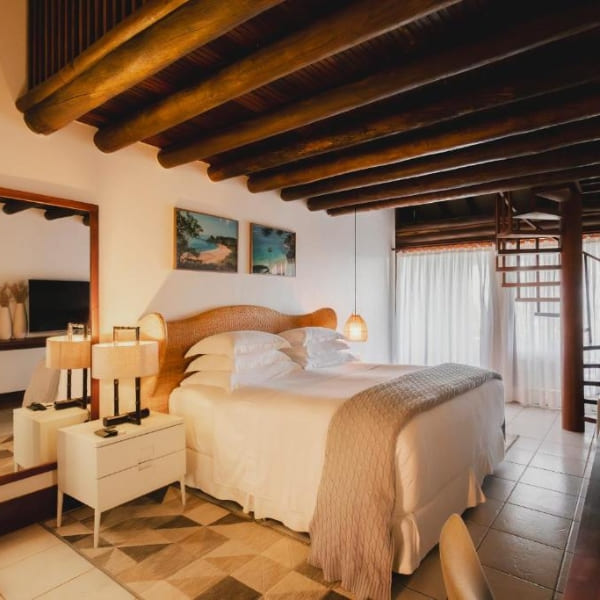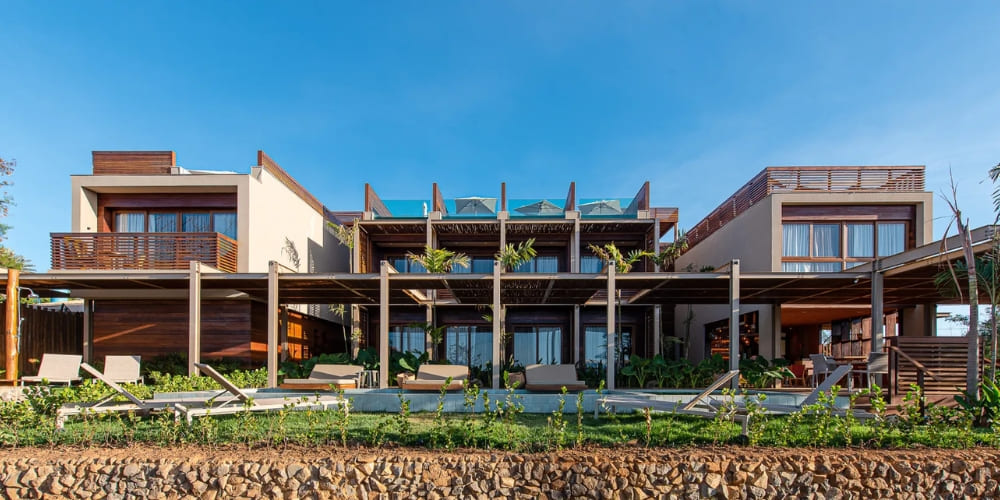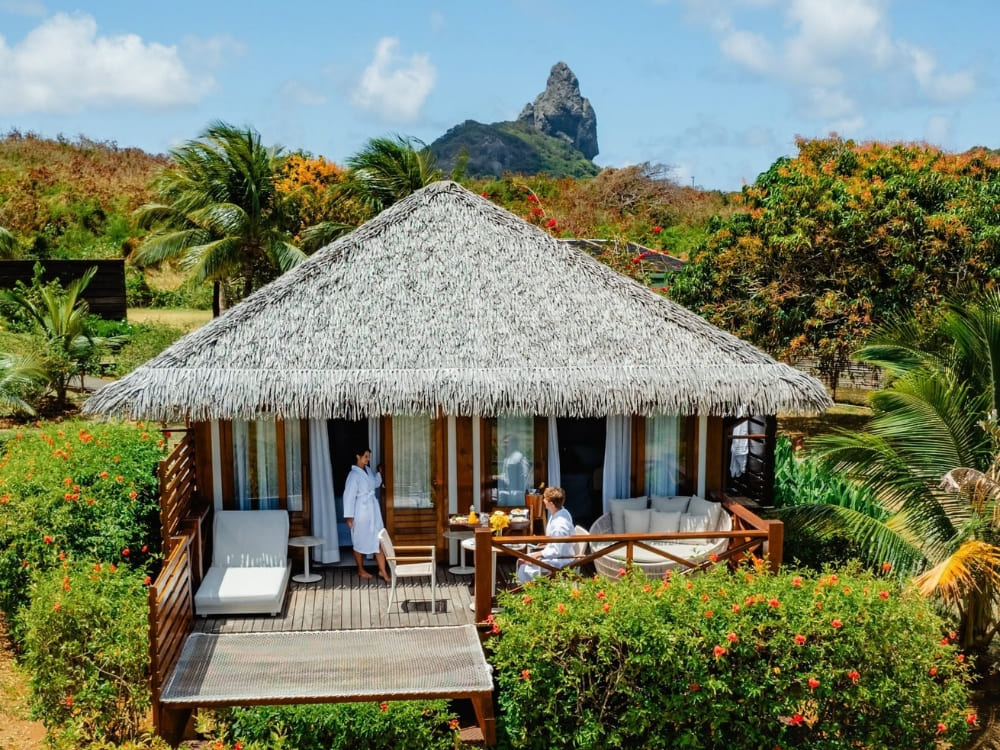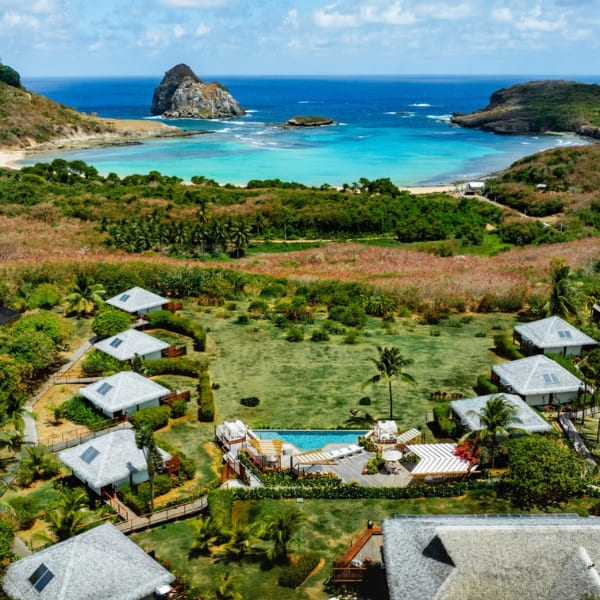
Category: Fernando de Noronha

  • Where to stay in Fernando de Noronha?

    Where to stay in Fernando de Noronha?

    Discover the main neighborhoods and best accommodations across different categories in Fernando de Noronha

    Don’t know where to stay when you’re diving in Fernando de Noronha? This paradisiacal island has several accommodation options, from luxury hotels to modest guesthouses.

    When choosing the best option for you, it’s important to consider some aspects, including budget, desired comfort level, and proximity to the central neighborhoods, beaches, viewpoints, and other tourist attractions. In any situation, the recommendation is always the same: book as soon as possible to guarantee the best rooms and prices!

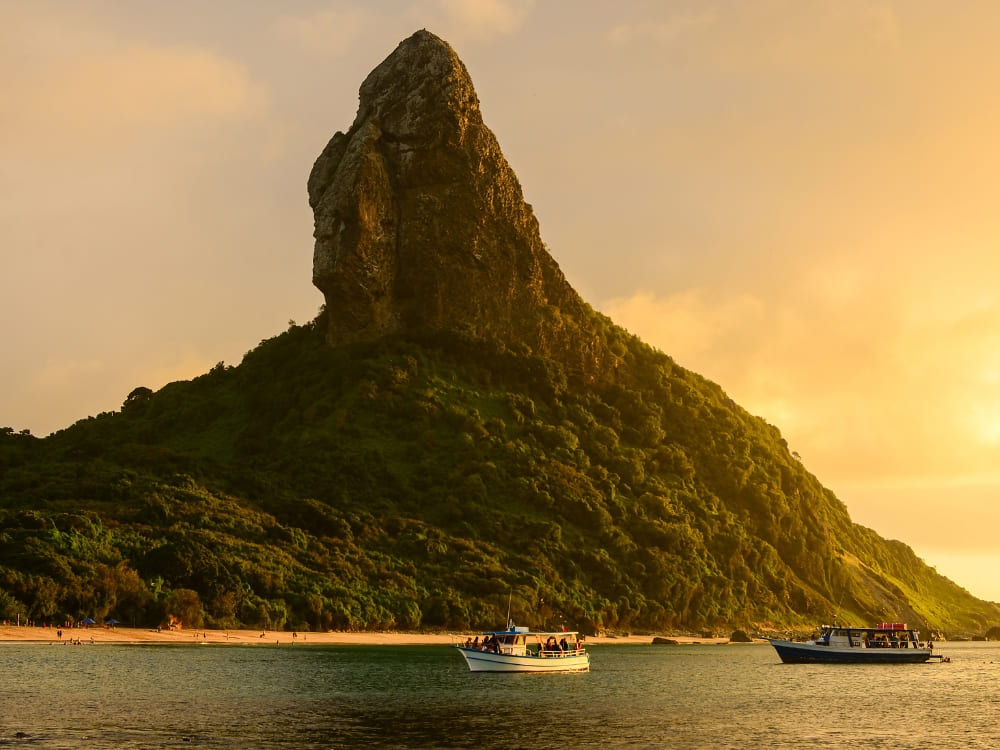
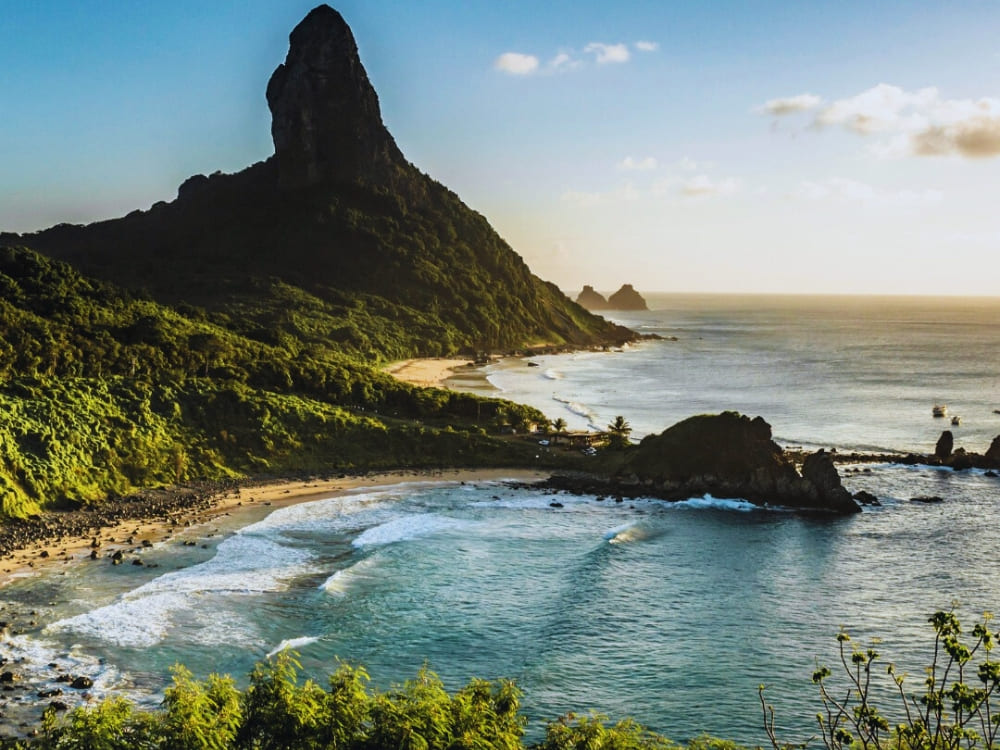
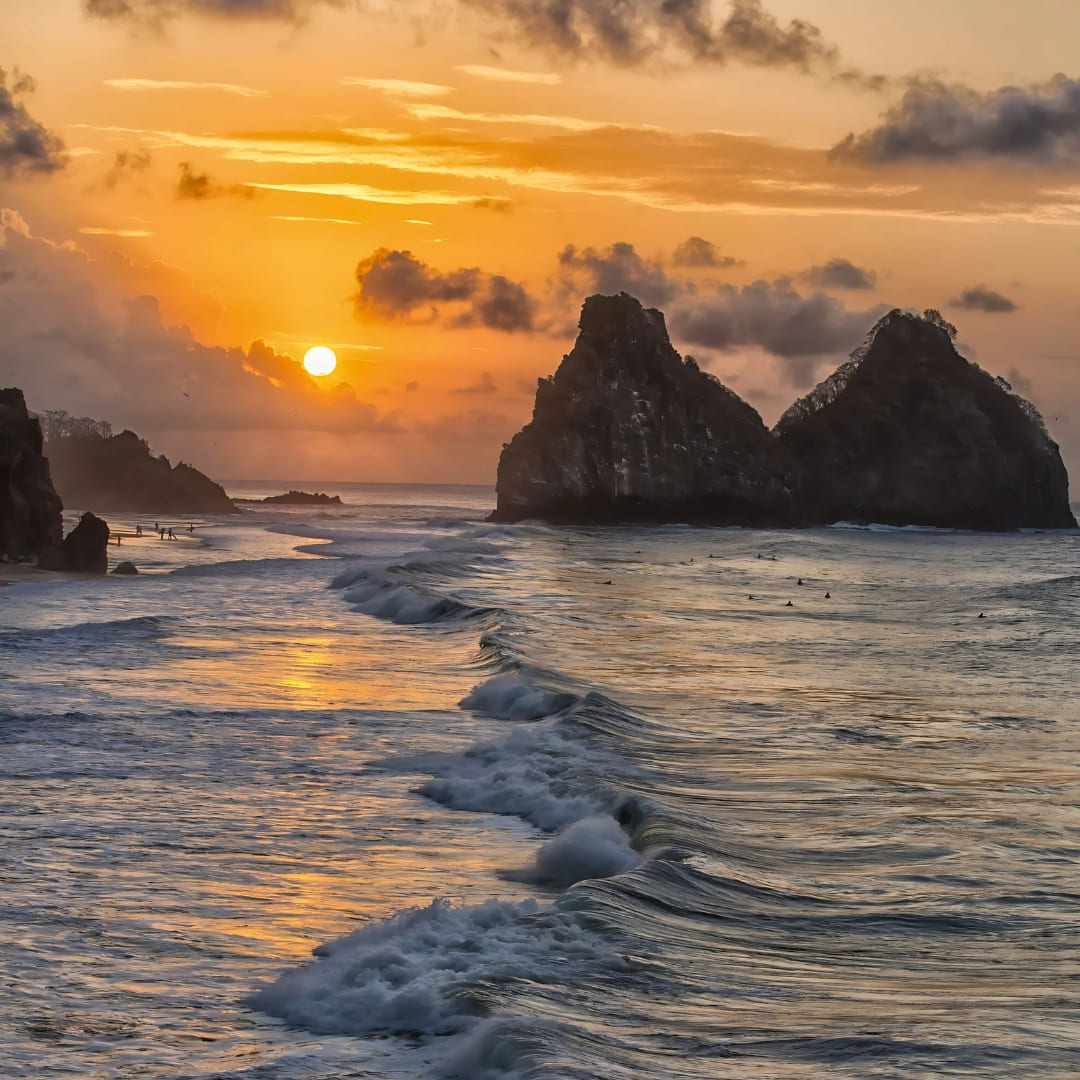
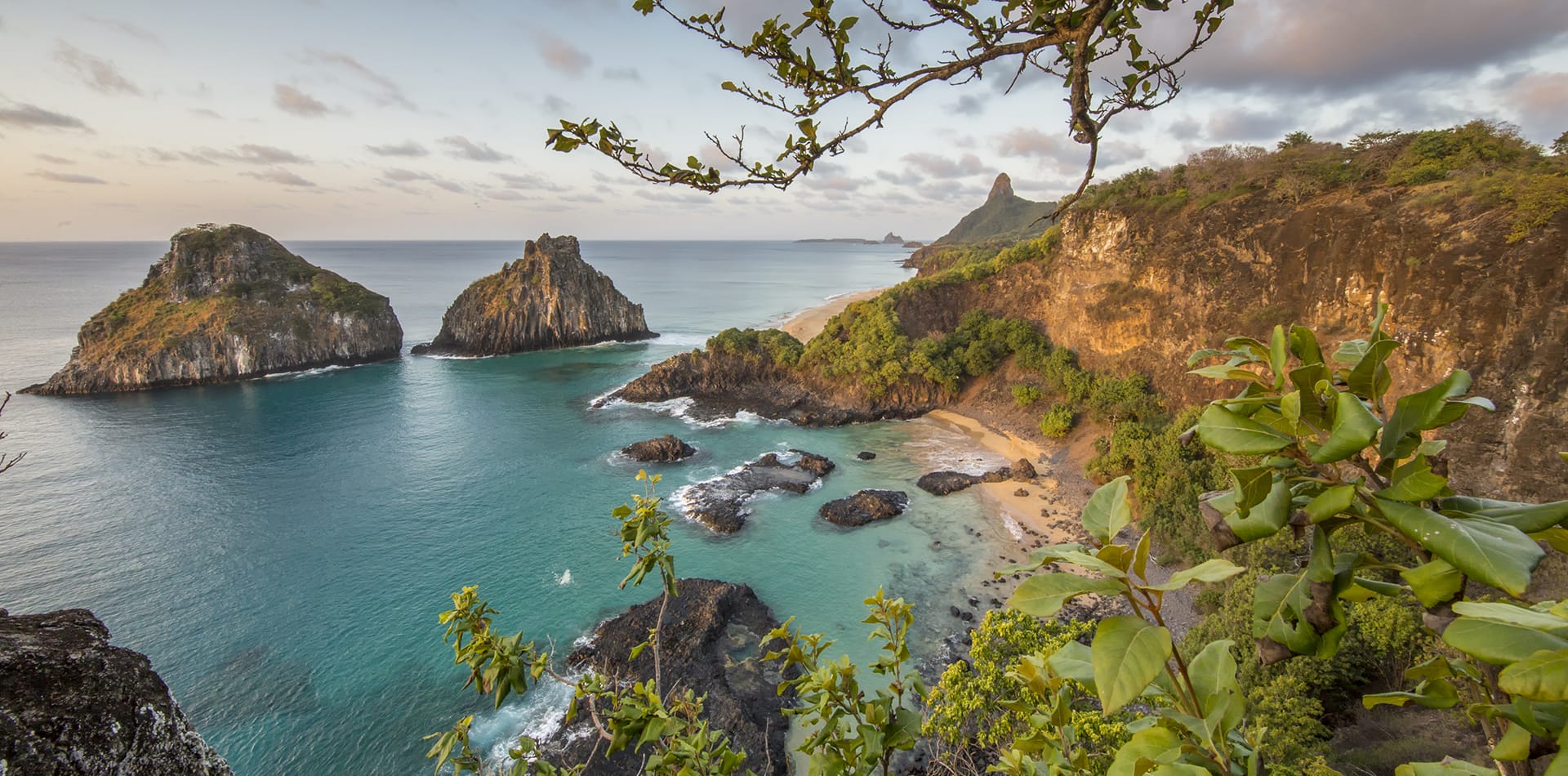
    Golden sunset over the Morro Dois Irmaos rock formations, a famous landscape near hotels in Fernando de Noronha.
    .

    To help you plan your trip, PlanetaEXO, an ecotourism platform that offers Fernando de Noronha scuba diving packages, has created a guide with accommodation options in different categories. See below!

    Neighborhoods in Fernando de Noronha

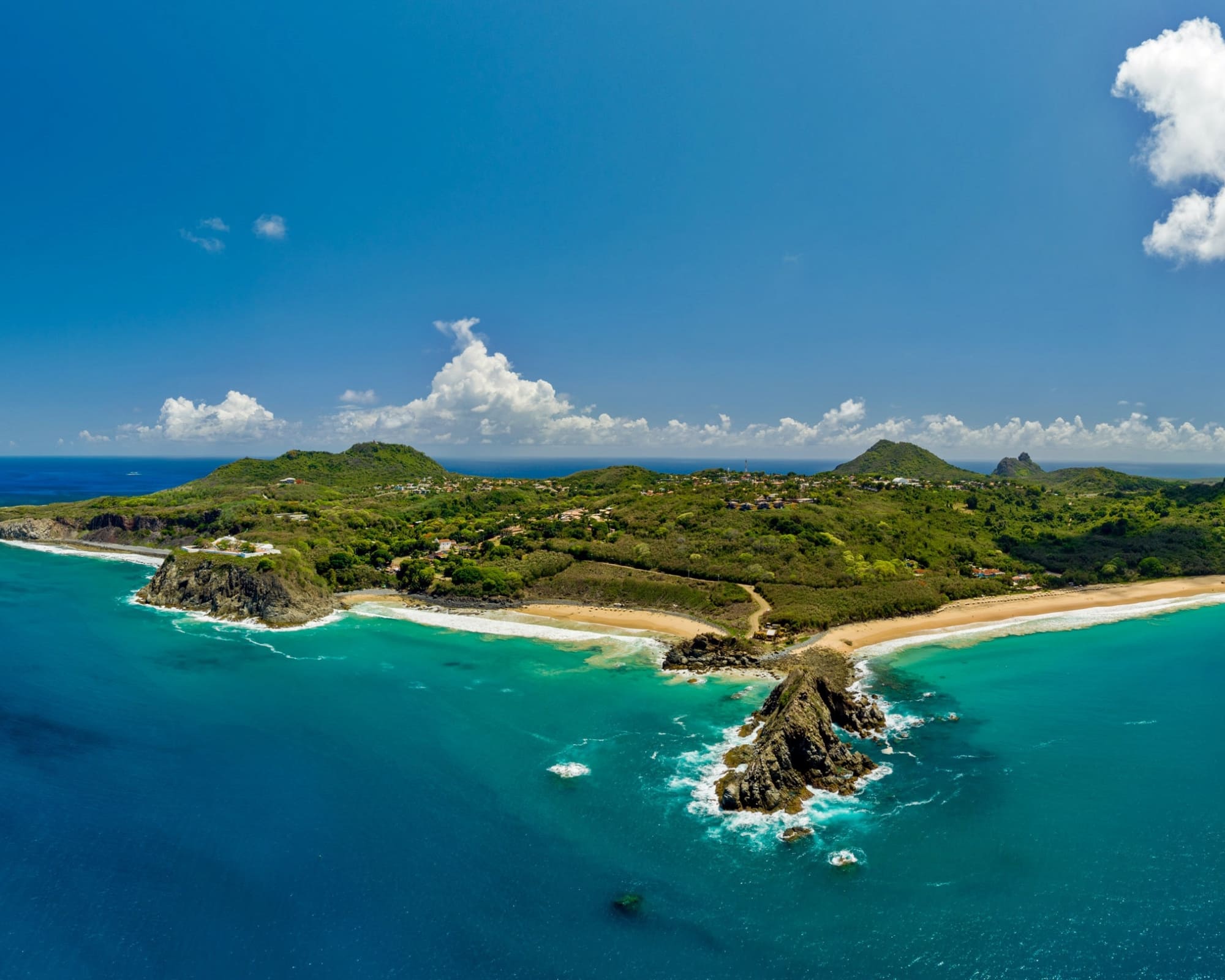
    Despite its abundant natural beauty, Fernando de Noronha is small, covering only 26 km² and comprising 13 officially mapped neighborhoods. Hotels are located throughout the entire island, but some areas stand out:

    • Vila dos Remédios: The center of Noronha, with many restaurants and bars, is also conveniently near the beaches of Meio, Cachorro, and Conceição.
    • Floresta Velha: Located close to Vila dos Remédios, it’s a quiet and tree-lined neighborhood with a privileged view of Morro do Pico.
    • Floresta Nova: One of the newest neighborhoods on the island, it’s right next to Floresta Velha and has excellent access to Cachorro and Meio beaches.
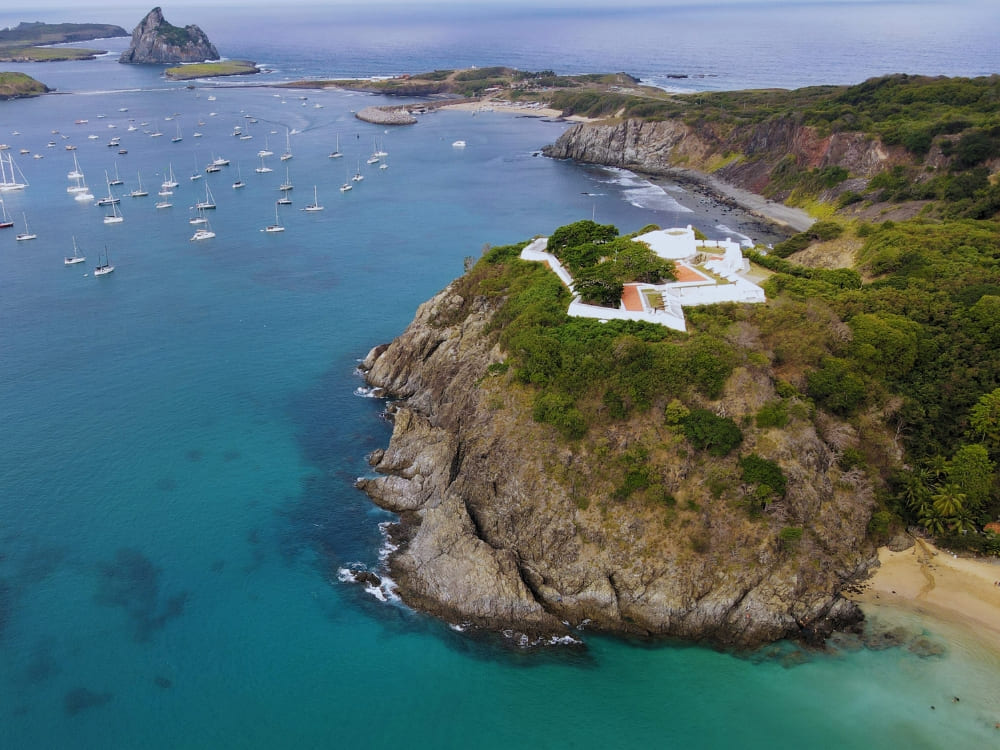
    • Vila do Boldró: Situated near Boldró Beach and the Tamar Project, it’s perfect for those seeking tranquility. Fortinho do Boldró, a viewpoint built by the Portuguese in the 18th century, is one of the region’s major attractions.
    • Vila do Sueste: In the south of the island, the neighborhood is renowned for its proximity to Sueste Beach and for housing some of the most luxurious hotels in Fernando de Noronha.

    👉 Read more: How to get to Fernando de Noronha, Brazil?

    Luxury hotels in Fernando de Noronha, Brazil

    Considered one of the most sophisticated destinations in Brazil, Fernando de Noronha boasts several luxury hotels that prioritize experiences with maximum comfort and personalization.

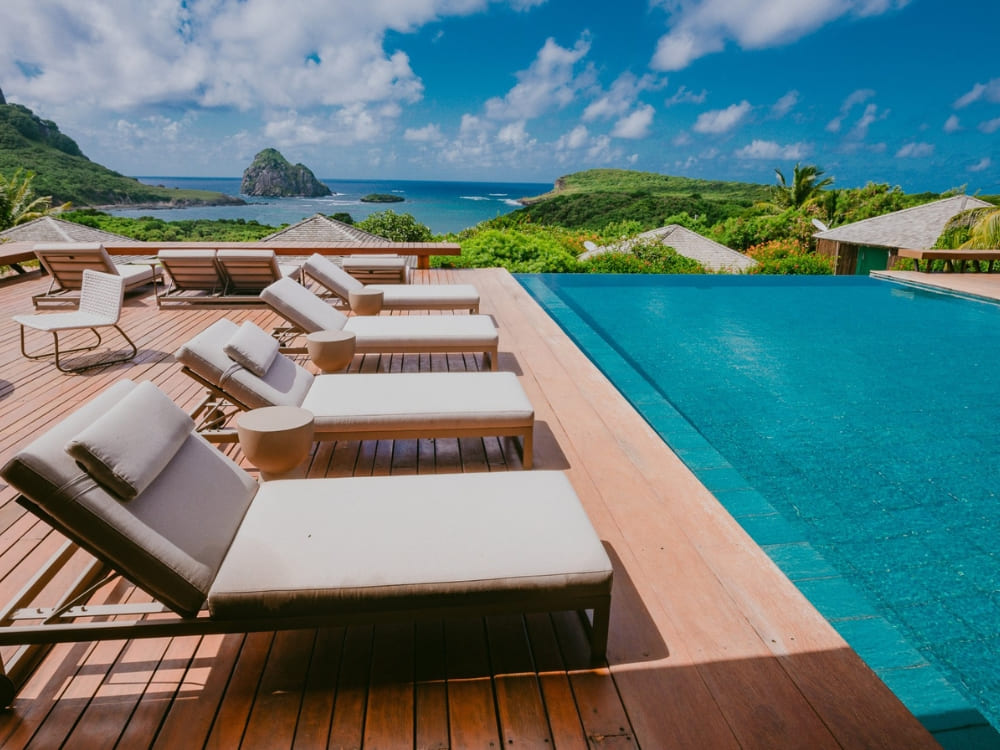
     Luxury hotel deck featuring a swimming pool and comfortable lounge chairs facing the iconic Morro do Pico in Brazil.
    Photo: Hamares Boutique Hotel

    These types of accommodations are characterized by elegant architecture and decor, spacious rooms with privileged views of the island’s most beautiful landscapes, a variety of common areas, guided activities, and premium services.

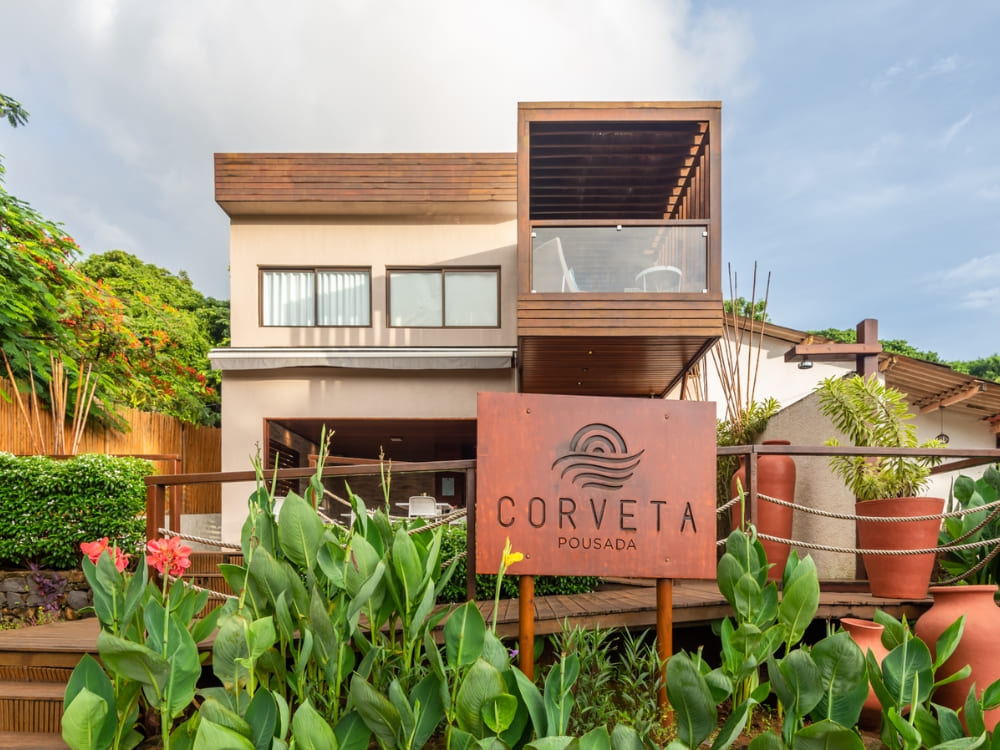
    Pousada Corveta

    Pousada Corveta stands out for its contemporary design and exceptional proximity to the island’s main historical sites and restaurants. The inn combines modern sophistication with a cozy atmosphere, featuring a high-end restaurant on-site that serves refined local cuisine.

    The accommodations are divided into categories like Superior and Deluxe, offering clean, minimalist decor with premium linens, smart TVs, and air conditioning. Common areas include a charming reception lounge and an outdoor deck where guests can enjoy the island breeze while being steps away from the vibrant local life.

    Modern exterior of Pousada Corveta with a metal sign, wooden walkways, and tropical plants, highlighting where to stay in Fernando de Noronha.
    .

    Address: R. São Miguel, 342 – Vila dos Remédios

    Pousada Mirante

    Renowned for its breathtaking panoramic views of Boldró Beach (150 m away) and the iconic Morro do Pico, Pousada Mirante’s main differentiator is the sunset experience, arguably one of the best on the island, which guests can enjoy directly from the property’s extensive wooden decks and lookout points.

    Modern exterior of Pousada Mirante featuring a long rectangular swimming pool, sun loungers, and wooden pergolas, highlighting premium hotels in Fernando de Noronha.
    .

    The rooms are designed to blend into the natural landscape, often featuring private balconies with hammocks that face the ocean. The common areas emphasize relaxation, with a focus on open-air spaces, a rustic-chic breakfast area, and a deep connection with the surrounding ecological preserve.

    Address: R. Eurico Cavalcanti de Albuquerque, s/n – Vila do Boldró

    Nannai Noronha

    Nannai Noronha offers a boutique luxury experience focused on sustainability and elegance. Located near Sueste Bay, it provides a sanctuary of privacy and silence. Its standout feature is the personalized service and the seamless integration of high-end architecture with the island’s raw nature.

    The accommodations are spacious bungalows built on stilts to minimize environmental impact and apartments facing the garden. The common areas include a signature restaurant, TiaTê, and an infinity pool that overlooks the turquoise waters, providing an atmosphere of absolute exclusivity.

    Couple in white bathrobes relaxing on the private deck of a rustic thatched-roof bungalow with views of Morro do Pico at a top hotel in Fernando de Noronha.
    .

    Address: BR-363 – Vila do Sueste

    👉 Read more: 10 Luxury Ecolodges in Brazil: Sustainable Tourism and Premium Services

    Pousada Maravilha

    A symbol of luxury in Noronha, Pousada Maravilha features an infinity pool that seems to merge with Sueste Bay (50 meters away). The service is highly personalized, aiming to provide a seamless blend of comfort and natural beauty for discerning travelers.

     Wooden deck with comfortable lounge chairs beside an infinity pool overlooking the ocean and Morro do Pico at a hotel in Fernando de Noronha
    .

    The accommodations consist of sophisticated apartments and private bungalows, the latter offering private hot tubs on spacious balconies with unobstructed sea views. Common areas include a renowned gourmet restaurant and a wellness center, all designed with wide-open structures to maximize the stunning vistas.

    Address: BR-363, s/n – Vila do Sueste

    Pousada Morena

    Pousada Morena is only 850 meters away from Praia da Conceição and Vila dos Remédios, also offering a spectacular view of the Morro do Pico. One of its main highlights is the infinity-edge pool and the complete spa facilities, including a sauna and hydrotherapy, which provide a resort-like feel within a boutique setting.

    The rooms and bungalows are elegantly decorated, many featuring private balconies with hammocks and views of the Atlantic. The property boasts lush gardens and a breakfast area where guests can enjoy regional delicacies while watching the island’s famous sunrise.

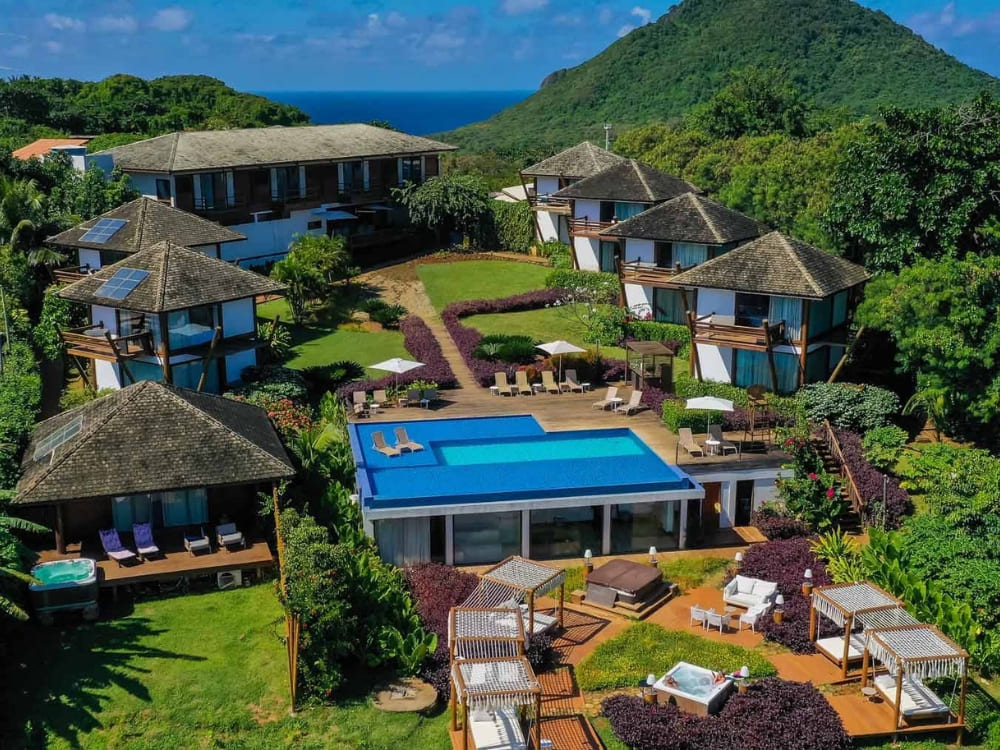
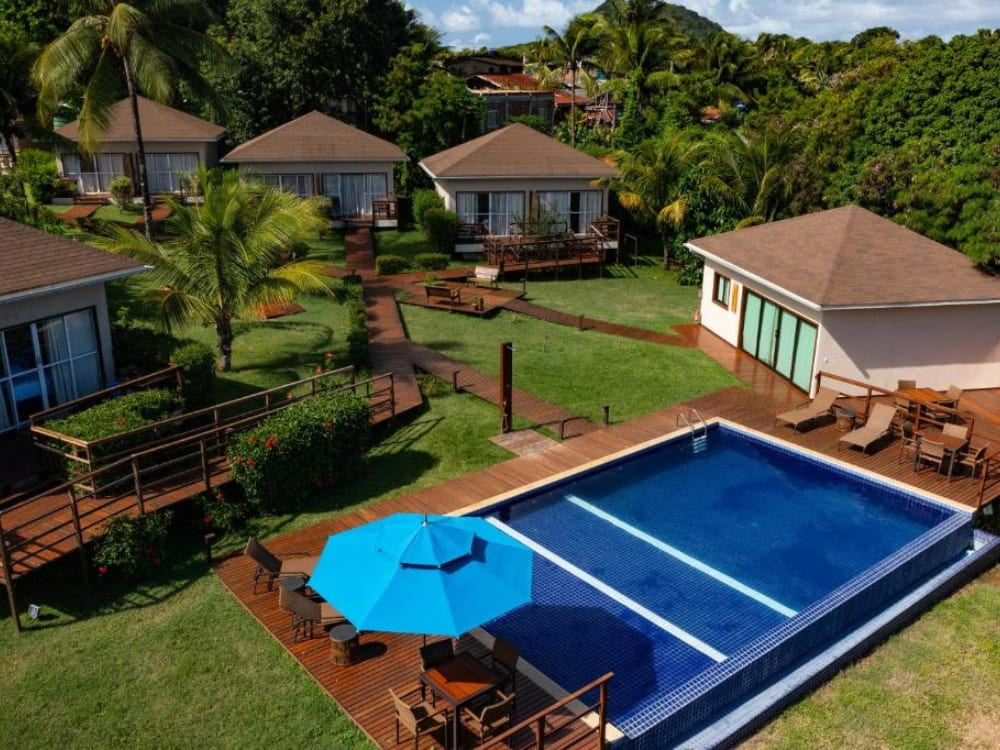
    Aerial view of Pousada Morena featuring dark-roofed cabins, a central blue swimming pool, and hot tubs surrounded by lush forests in Fernando de Noronha.
    .

    Address: R. Nice Cordeiro, 2600 – Floresta Velha

    Hamares Boutique Hotel

    Hamares Boutique Hotel stands out for its modern, clean architecture and a fresh, “new-luxury” feel. Only a short walk away from Praia do Meio and near attractions like the Shark Museum and Santo Antonio Fort Ruins, it offers a sophisticated base for travelers who appreciate design and comfort.

    The suites are bright and airy, equipped with high-end mattresses, coffee machines, and modern bathrooms. The common areas include a beautiful central pool area surrounded by sun loungers and a bar that serves artisanal cocktails, creating a perfect social hub after a day of exploring.

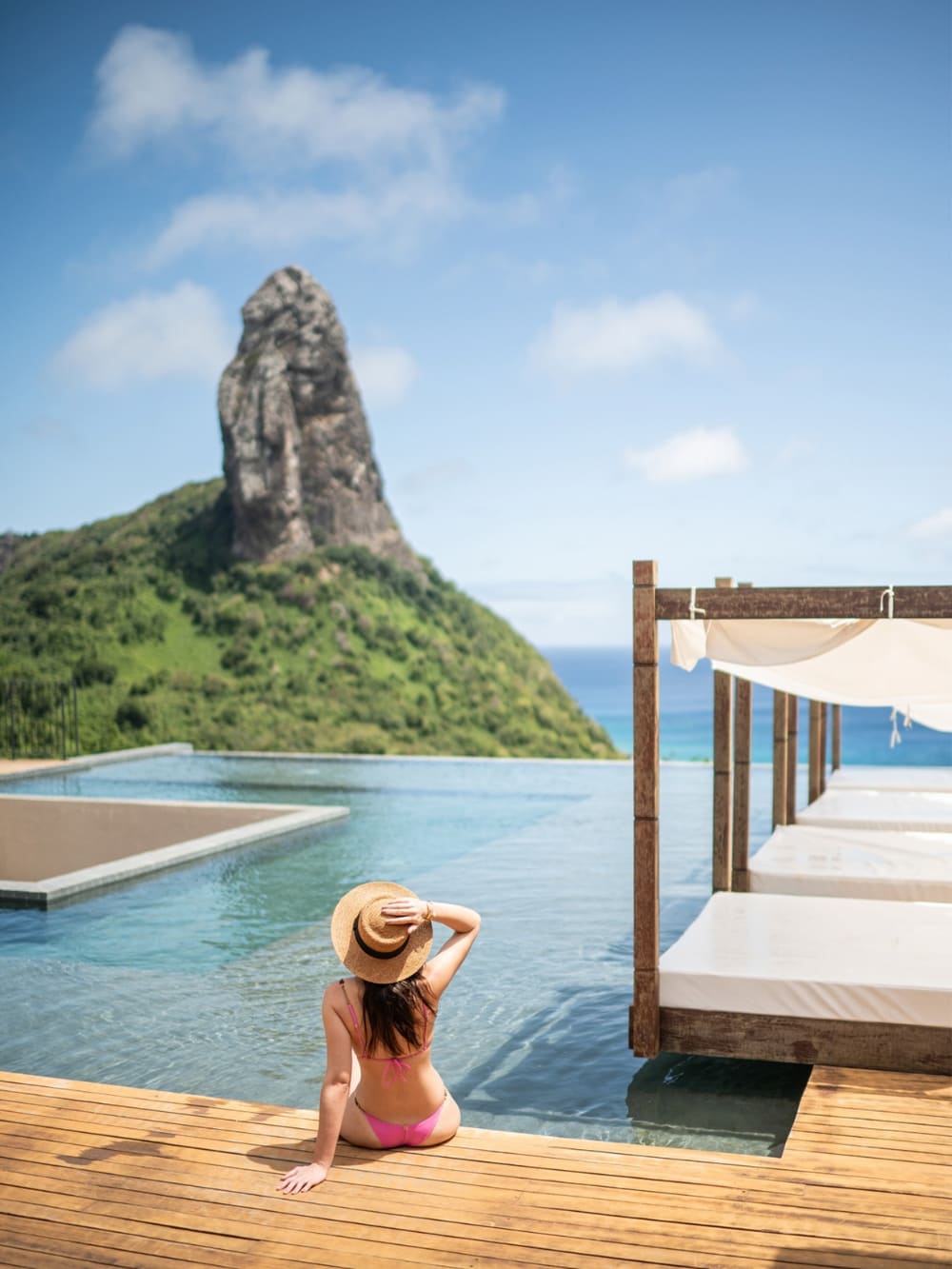
    Woman wearing a straw hat relaxing on a wooden deck by an infinity pool with a stunning view of Morro do Pico at a luxury hotel in Fernando de Noronha, Brazil.
    .

    Address: R. Amaro Preto, 472 – Floresta Velha

    Mid-range accommodations in Fernando de Noronha

    When looking for where to stay in Fernando de Noronha, many tourists focus on the balance between comfort and fair prices.

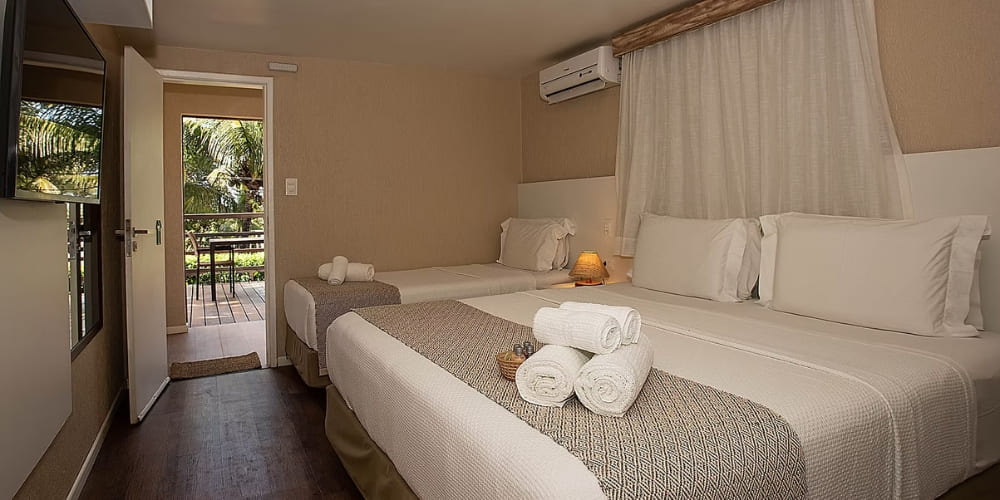
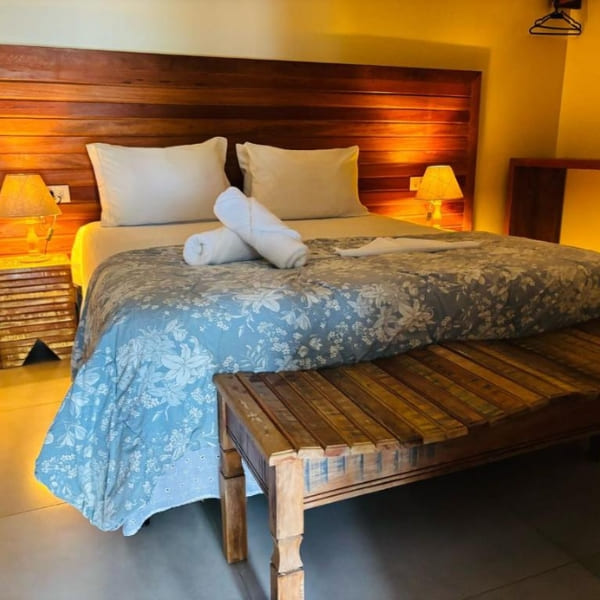
    Cozy hotel room featuring a double bed, a single bed, and an open doorway leading to a sunny outdoor balcony in a Fernando de Noronha accommodation.
    Photo: Pousada Germana

    Mid-range guesthouses and hotels offer excellent cost-efficiency for couples, families, and larger groups in terms of rooms, activities, and services provided. A bit simpler than luxury accommodations, but still featuring everything you need for a lovely lodging experience.

    👉 Read more: When is the Best Time to Dive in Fernando de Noronha, Brazil?

    Pousada do Vale

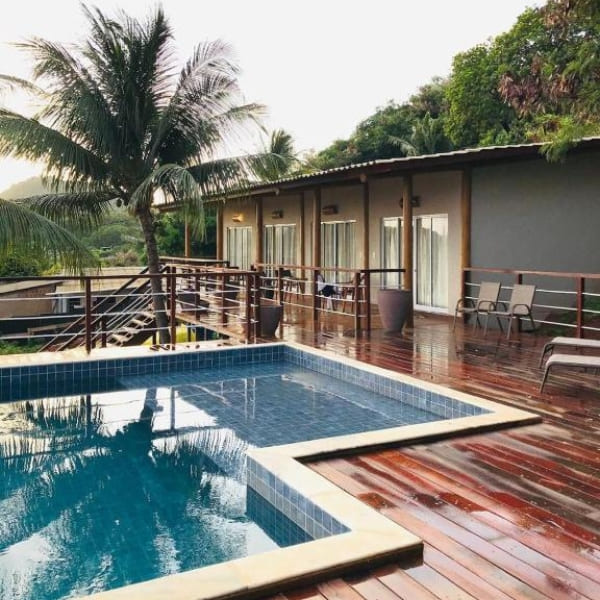
    Pousada do Vale is an eco-friendly oasis known for its lush tropical gardens and its commitment to sustainability, including an on-site organic orchard. A unique highlight is the spa with holistic therapies and relaxing massages.

    The accommodations range from cozy standard rooms to more spacious suites, all decorated with regional art and wooden accents. Common areas are centered around nature, featuring a swimming pool and a restaurant that often uses ingredients harvested from the inn’s own garden.

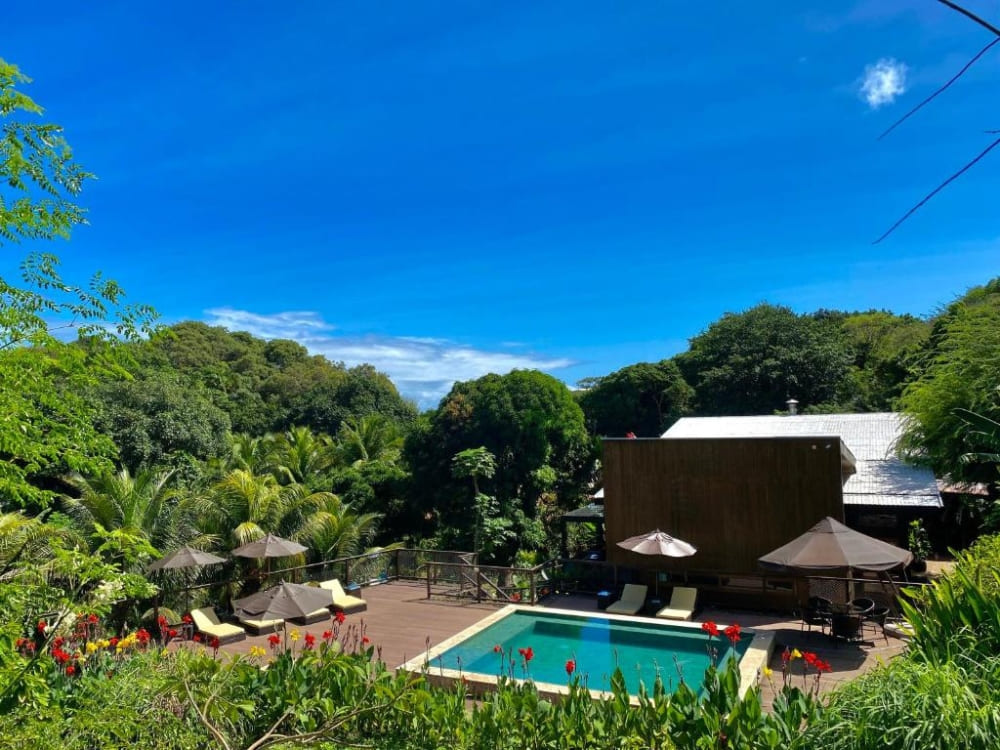
    Swimming pool surrounded by dense tropical forest and lounge chairs at a sustainable pousada in Fernando de Noronha.
    .

    Address: R. Pescador Sérgio Lino, 18 – Jardim Elizabeth

    Pousada da Germana

    Located in the historic Vila dos Remédios, Pousada da Germana is a traditional favorite known for its warm hospitality and “home away from home” feel. Its main advantage is the unbeatable location, allowing guests to walk to the island’s best beaches like Praia do Cachorro and Praia do Meio in just a few minutes.

    The rooms are functional, clean, and comfortable, equipped with all essential amenities like air conditioning and minibars. The common area is dominated by a cozy breakfast room where a rich, homemade buffet is served, reflecting the authentic charm of a hotel in Fernando de Noronha.

    Address: R. Mestre Gouveia, s/n – Vila dos Remédios

    Pousada Tubarão

    Rustic and authentic island experience with a focus on practicality and a welcoming environment. Pousada Tubarão is well-regarded for its helpful staff and the lovely garden setting that provides a peaceful retreat despite its central location.

    The rooms are functional and air-conditioned, featuring traditional decor that captures the spirit of Noronha. Guests can enjoy a shaded outdoor patio and a shared lounge area where breakfast is served, making it an excellent choice for those seeking a balance of comfort and value.

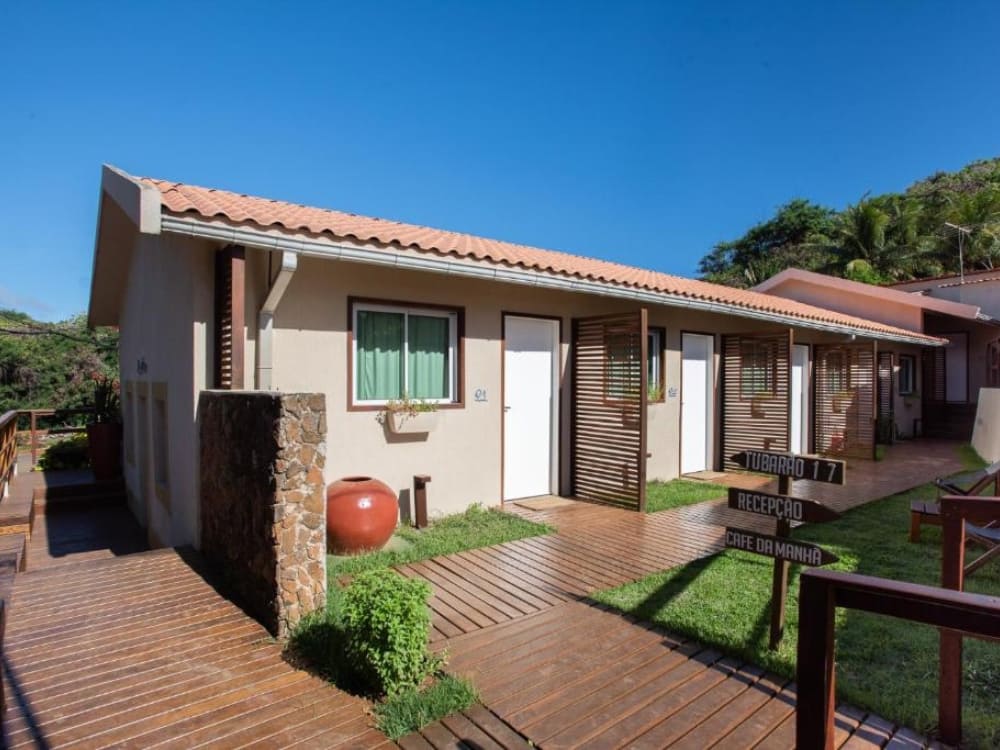
    Wooden walkway leading to rustic guesthouse rooms with white doors and small gardens in Fernando de Noronha.
    .

    Address: R. São Miguel, s/n – Vila dos Remédios

    Pousada Lua Bela

    Pousada Lua Bela has excellent infrastructure and a family-friendly environment. The property is spacious and well-located, offering easy access to both the beaches (Cachorro and Conceição) and the village.

    Accommodations include both standard rooms and bungalows, providing options for couples and families alike. The common areas are well-maintained, featuring a swimming pool and a large breakfast hall that offers a wide variety of local fruits and traditional Brazilian breakfast items every day.

    Address: R. Amaro Preto, 113 – Floresta Velha

    Basic accommodations in Fernando de Noronha

    If your budget is limited or if you intend to spend most of your day outdoors enjoying the island’s natural beauty, the best hotels in Fernando de Noronha for your travel style are the most affordable.

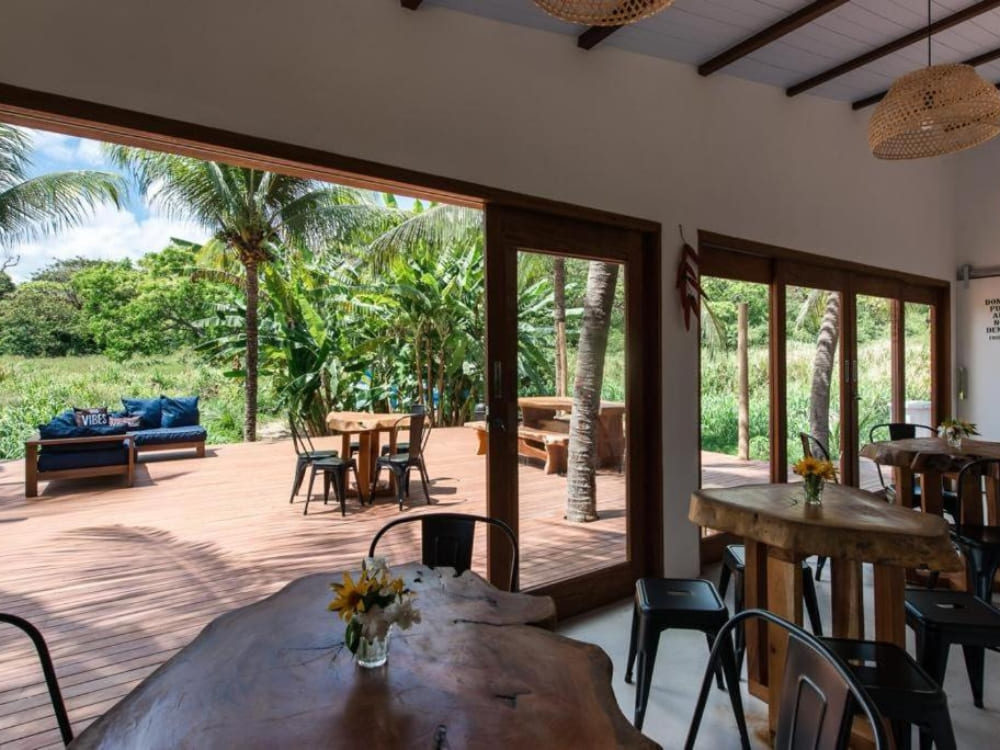
    Open-air common area of a hostel with a rustic wooden table and wide doors showing lush vegetation in Fernando de Noronha.
    .

    These guesthouses are simple and functional, offering modest (but clean and cozy) rooms and basic services. The locations may be a little further from the center of Noronha or the main tourist attractions, but nothing that a few minutes’ walk won’t solve.

    👉 Read more: Best Diving Spots in Fernando de Noronha

    Pousada Ilha Bela

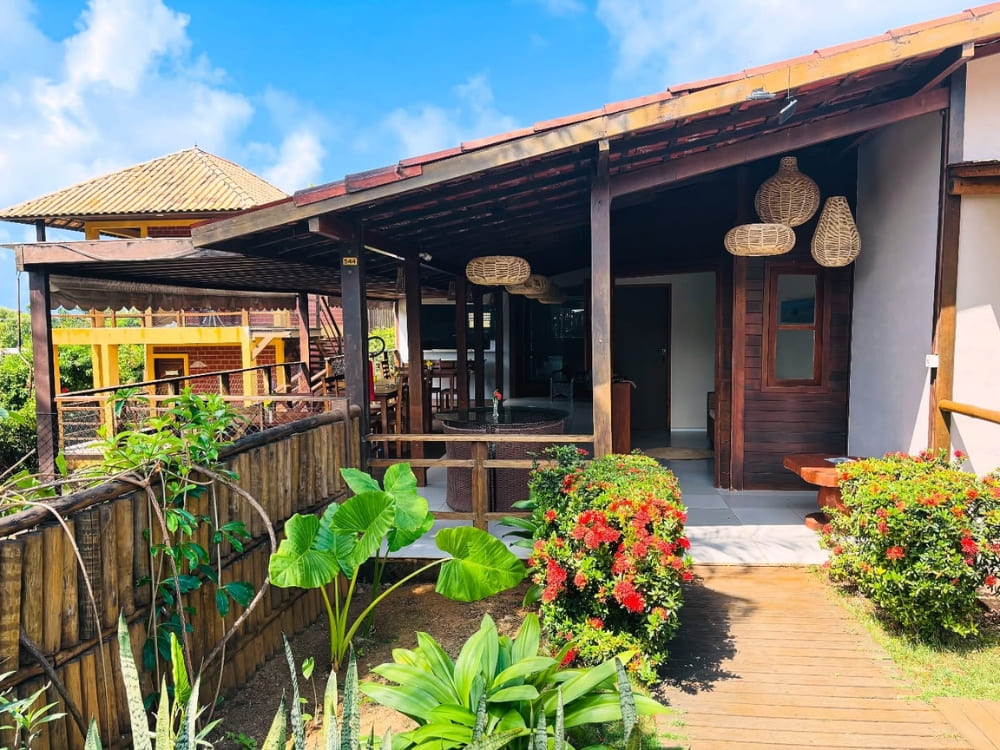
    Charming and intimate, Pousada Ilha Bela is a guest house that prides itself on a personalized experience. Its differentiator is the quiet, secluded feel it offers while still being within reach of the island’s main attractions, making it popular for couples seeking a romantic getaway.

    The suites are tastefully decorated with a focus on light colors and natural textures, creating a serene environment. The common areas include a cozy deck and a breakfast area where guests are treated to individualized service and freshly prepared local dishes.

    Charming guesthouse exterior featuring a covered porch, wooden pillars, and a green tropical garden in Fernando de Noronha.
    .

    Address: Alameda das Amendoeiras, 544 – Centro

    Pousada Canto do Boldró

    Situated only 100 meters from Boldró Beach, Pousada Canto do Boldró is a favorite for surfers and nature lovers. Its main highlight is the proximity to the Tamar Project visitor center and the best surf breaks on the island, offering a more adventurous and localized experience.

    The accommodations are simple, rustic, and practical, designed for guests who spend their days exploring the outdoors. The common areas include an outdoor patio and a breakfast room that provides a friendly setting to exchange tips with fellow travelers.

    Address: Alameda do Boldró, 190 – Vila do Boldró

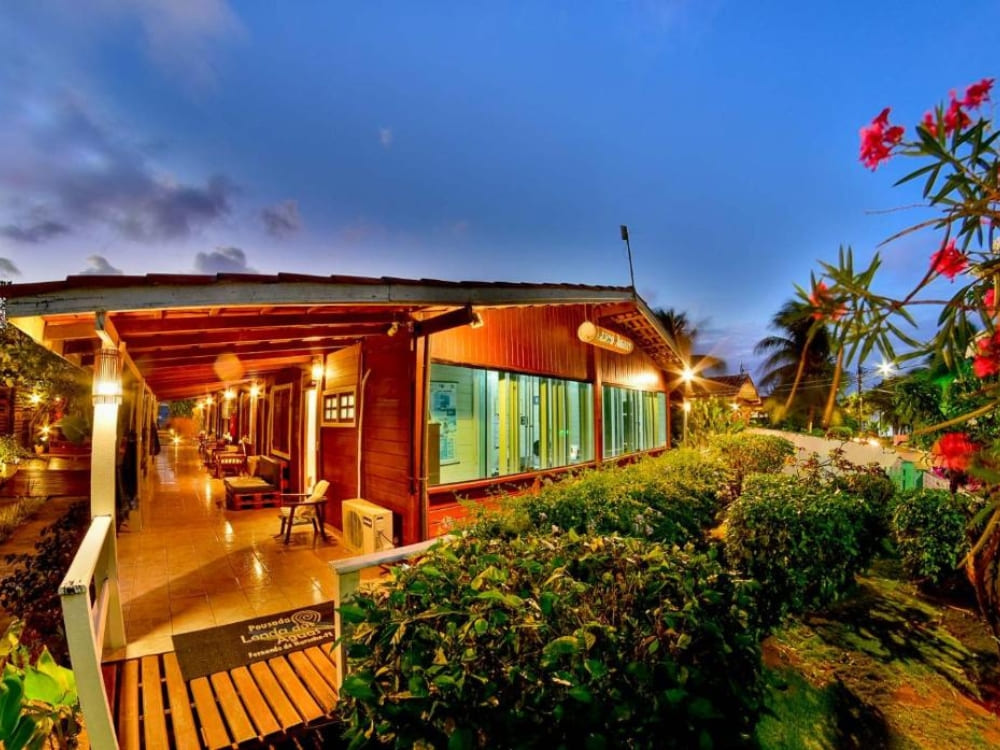
    Pousada Lenda das Águas

    Pousada Lenda das Águas has a colorful, artistic vibe in the peaceful Floresta Nova neighborhood. It stands out for its excellent cost-benefit ratio and the friendly, laid-back atmosphere that captures the “pousada” essence perfectly.

    The rooms are vibrant and comfortable, often decorated with local crafts and paintings. The common areas feature a beautiful garden and a communal terrace where guests can relax in hammocks.

    Illuminated rustic pousada exterior at dusk with tropical flowers and a welcoming atmosphere in Fernando de Noronha.
    .

    Address: Alameda dos Cajueiros, 600 – Floresta Nova

    Pousada Recanto Noronha

    Pousada Recanto is a cozy, family-run establishment located near Praia do Meio and Santo Antônio Port. It distinguishes itself through its tranquility and the lush greenery that surrounds the property, providing a very private and silent environment for its guests.

    The rooms are comfortable and maintain a classic island style with wooden furniture and essential modern comforts. The common spaces include a pleasant shaded garden and a breakfast area that feels like a private terrace, perfect for a slow start to the day.

    Address: R. da Consolação, 118 – Vila dos Remédios

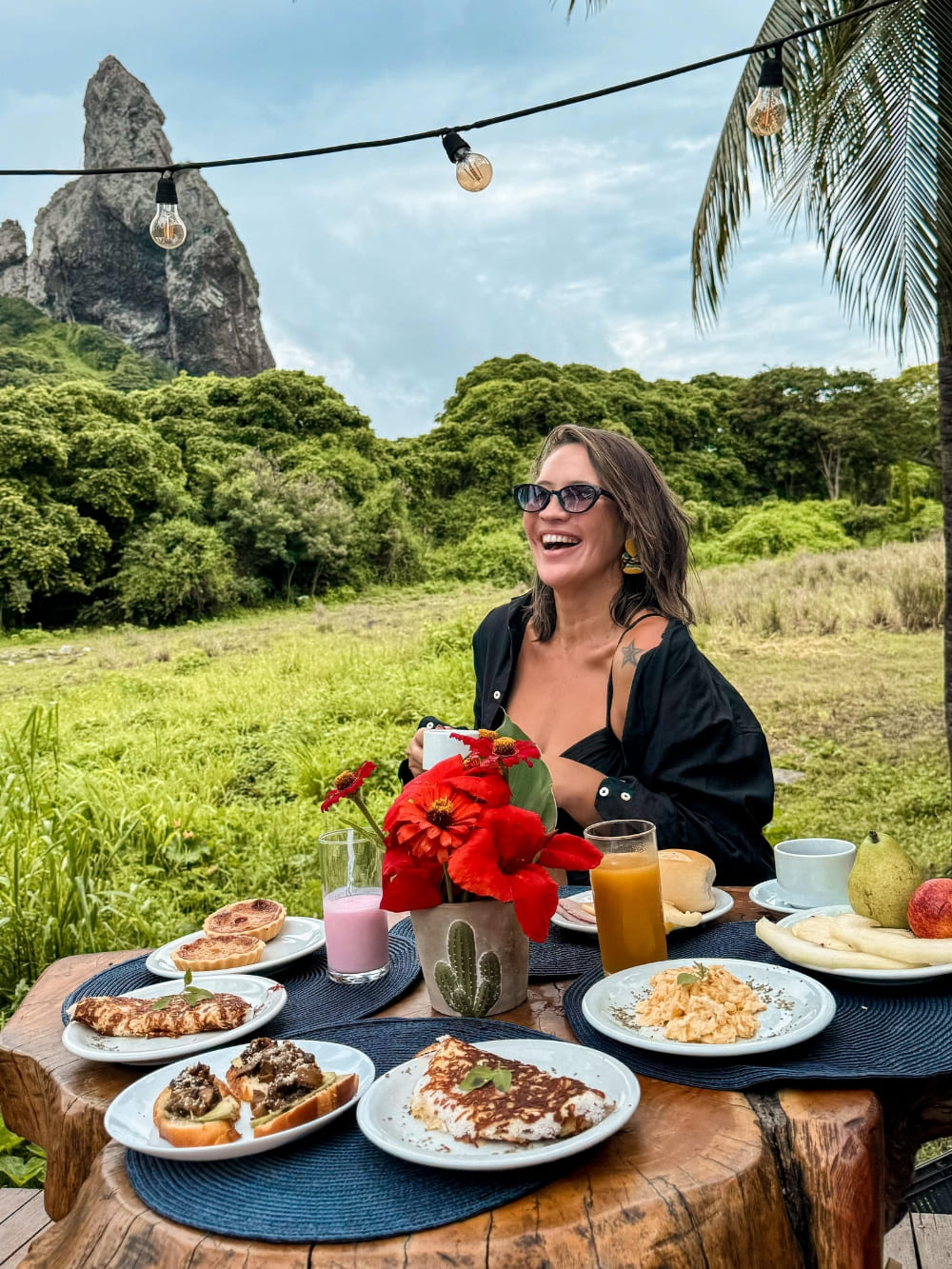
    Noronha 350

    Noronha 350 blends comfort and rustic charm, offering both private suites for maximum privacy and modern shared dormitories. The property stands out for its inviting common areas, including a fully equipped guest kitchen and lush outdoor spaces designed for relaxation and integration with the island’s nature.

    Guests start their day with a fresh breakfast served in a serene setting surrounded by greenery. With a focus on personalized hospitality, the hostel provides the perfect balance of convenience and well-being.

    Woman having breakfast in Noronha
    @noronha350

    Address: R. Primavera, 105 – Vacaria

    Aloha Noronha

    Aloha Noronha operates with a spirit of adventure and integrated tourism services. Well-known for  the “lifestyle” experience, it often assists guests with curated island tours and activities, making it ideal for active travelers.

    The guest house features modern, clean rooms with a youthful and energetic vibe. Common areas are designed for social interaction, featuring bright decor and comfortable spots to plan the next day’s trekking or diving adventures.

    Address: R. Amaro Preto, 487 – Floresta Velha

    Planning your trip with PlanetaEXO

    Don’t want the hassle of booking hotels in Fernando de Noronha, hiring instructors for diving activities, and dealing with all the logistics of planning a trip? Then you’re in the right place!

    At PlanetaEXO, an ecotourism platform that offers Fernando de Noronha scuba diving packages, we take care of everything you need for a smooth and unforgettable trip, including accommodation, itineraries, transfers, and much more. Contact us now!

  • How to get to Fernando de Noronha, Brazil?

    How to get to Fernando de Noronha, Brazil?

    Learn the main routes, airport details, and travel tips for a smooth journey to Fernando de Noronha islands paradise 

    Fernando de Noronha is a UNESCO World Heritage Site and one of Brazil’s most preserved Marine National Parks. With controlled tourism and a daily visitor cap, the island is known for its clear waters, coral reefs, and rare wildlife.

    Sea turtles, dolphins, and colorful fish are part of its daily scenery, making it a hotspot for ecotourism and marine research. Its natural beauty comes with responsibility: strict rules help protect biodiversity.

    How to get to Fernando de Noronha
    .

    PlanetaEXO works with local partners to promote sustainable tourism, offering trips that combine comfort, authenticity, and respect for nature. In this guide, we will explain how to get to Fernando de Noronha, with flights, routes, fees, and practical details.

    How to get to Fernando de Noronha?

    By plane

    The fastest and most common way to reach Fernando de Noronha is by air. Until recently, the island was only serviced by daily flights from Recife (REC) and weekly flights from Natal (NAT). Since 2024, LATAM has also operated direct flights from São Paulo’s Guarulhos Airport (GRU).

    The new São Paulo connection runs five times a week (Mondays, Wednesdays, Thursdays, Fridays, and Sundays) and takes around 3h50. This route significantly expanded international access to the island, as Guarulhos is Brazil’s largest international hub, receiving flights from Europe, the United States, and beyond.

    How to Get to Fernando de Noronha?
    @souza_aviation

    How to get to Fernando de Noronha from the UK?

    For travelers coming from Europe, the easiest entry points remain the non-stop flights from Lisbon (LIS) to Recife or Natal. Another option is to fly through São Paulo, which connects directly to Noronha or offers quick domestic connections of 3-4 hours to Recife or Natal.

    How to get to Fernando de Noronha from Rio de Janeiro?

    For travelers from Rio de Janeiro, the most common route is connecting through Recife (REC) or São Paulo (GRU). From Recife, it’s a short 1h15 flight to the island, while from São Paulo, you’ll catch the direct flight which takes just under 4 hours.

    For visitors from the US, flying into São Paulo is also the best alternative, followed either by a direct flight to the island or a short domestic connection.

    Fernando de Noronha Airport (FEN)

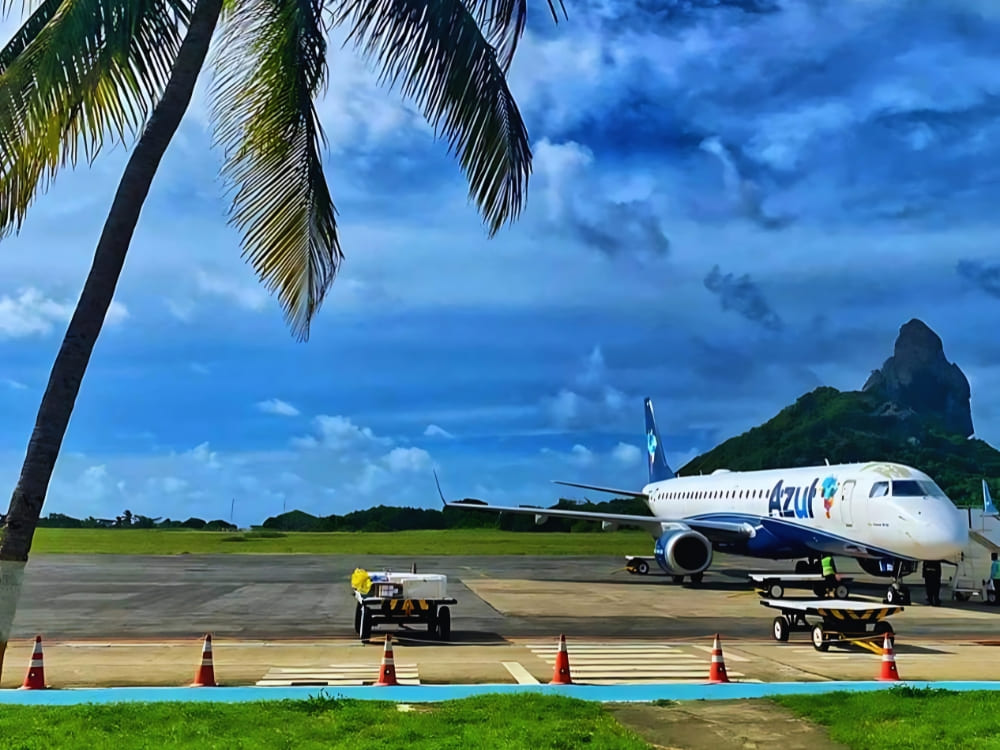
    The Governador Carlos Wilson Airport (FEN) is the island’s only airport, built in the 1930s and modernized to serve ecotourism. It sits in the center of the island, close to Vila dos Remédios and most accommodations.

    Small in size but functional, FEN receives daily flights from Recife and Natal, and now a direct line from São Paulo. The airport is easy to navigate, with quick transfers to hotels and pousadas.

    On any Fernando de Noronha map, you will notice how strategic the airport is, reducing travel time on arrival and making logistics simple for visitors.

    Fernando de Noronha Airport
    @casadaalbertinanoronha

    👉 Check our 5-day Fernando de Noronha Diving Trip for a full ecoadventure starting right at the airport

    Airports with connections

    • Recife (REC): The most reliable hub, with multiple daily flights to Noronha. Flights take about 1h15.
    • Natal (NAT): A smaller hub with direct flights of about 1h20.
    • São Paulo (GRU): Brazil’s largest international airport, with connections worldwide. From Guarulhos, the direct LATAM route to Noronha takes under 4 hours.

    👉 See the best time to visit Fernando de Noronha and align your flights with the season that best fits your plans

    By boat

    Is it possible to reach Fernando de Noronha by boat? Yes, but not through regular ferries. The island’s remote location (about 545 km from Recife) makes routine services impossible.

    Some sailing expeditions and private yachts arrive on the Fernando de Noronha islands, but they must follow strict entry requirements and coordinate with authorities. For most travelers, boats are not a realistic option.

    Boats Fernando de Noronha
    Photo: Fernando Klark

    Cruises

    A few international and Brazilian cruises include Noronha in their itineraries. These usually depart from Recife, Natal, or other South American ports as part of longer Atlantic journeys. Stops are typically short, lasting half a day to one day, giving passengers time to explore beaches or take a guided tour.

    These rare visits provide a different perspective of the island: approaching its volcanic cliffs and turquoise bays from the ocean. While not as flexible as air travel, they remain an option for travelers who enjoy sea expeditions.

    👉 Explore the best diving spots in Fernando de Noronha if you want to add underwater experiences to your cruise visit

    Entry requirements for Fernando de Noronha

    Travelers do not need a special visa to visit Fernando de Noronha, but they must follow Brazil’s general entry rules depending on nationality. Citizens from countries with visa agreements can stay up to 90 days, while others need a tourist visa before arrival. Always check your passport validity and requirements before flying.

    In addition to immigration rules, every visitor must pay two local fees: the daily Environmental Preservation Tax (TPA) and the Marine National Park ticket, valid for 10 days. These fees are mandatory and directly support conservation and infrastructure.

    Dive Fernando de Noronha
    Photo: Zaira Matheus

    Another essential point is planning ahead. Fernando de Noronha has a legally established limit of 132,000 visitors per year and 11,000 per month, based on an agreement between Pernambuco and federal authorities.

     A new Carrying Capacity Study is underway to reassess these numbers, since some months in recent years exceeded the monthly limit. Booking early ensures you secure flights, hotels, and permits in this protected paradise.

    👉 Want to learn more curiosities? Read 10 interesting facts about Fernando de Noronha

    Transport on the island

    After solving How do I get to Fernando de Noronha island?, it’s time to plan how to move around. The island is small, but transport options are varied:

    • Bus service: Runs regularly from Porto to Sueste.
    • Taxis and rides: More costly, but practical for short trips.
    • Buggy rentals: The most popular choice for freedom of movement.
    • Boat tours: Essential for reaching remote beaches and dive sites.
    • Hitchhiking: Surrisingly common and safe, reflecting the island’s small size and sense of community.

    Visitors usually mix public transport with buggies or rides, making it easy to explore without missing the main highlights.

    How to Get to Fernando de Noronha?
    Photo: Iza Correa

    👉 Short on time? Check out our 2-day diving package in Fernando de Noronha

    Travelling with PlanetaEXO

    With PlanetaEXO, you get full support for flights, tours, and accommodations, while contributing to local communities. Our experienced guides know the island’s trails, waters, and culture.

    We offer curated packages like the 2-Day Diving Package, 5-Day Diving Trip, and courses such as Open Water and Advanced Adventurer, combining top-level diving with sustainability for a safe and memorable experience.

    With us, the answer to how to get to Fernando de Noronha comes with the guarantee of authenticity, safety, and positive impact.

    👉 Contact us today to start planning your adventure

    Read More 

  • 10 interesting facts about Fernando de Noronha that you need to know

    10 interesting facts about Fernando de Noronha that you need to know

    Dive into the secrets of Fernando de Noronha, Brazil’s island paradise, a sanctuary of breathtaking beaches, coral reefs, and wildlife

    Hidden in the Atlantic Ocean off Brazil’s northeast coast, Fernando de Noronha is an archipelago that feels like a dream come true. Famous for its turquoise waters, stunning landscapes shaped by ancient volcanic activity, sea turtles, and unforgettable sunsets, this island is one of Brazil’s top natural treasures. Because of this, there are various surprising facts about Fernando de Noronha.

    But what really makes Fernando de Noronha so special? Beyond its beauty, the archipelago is home to an incredible variety of marine life and wildlife, making it a playground for nature lovers. Dolphins, sharks, and exotic birds all coexist in this protected paradise.

    Facts about Fernando de Noronha
    .

    At PlanetaEXO, we believe every trip should leave a positive impact. By choosing sustainable travel to Fernando de Noronha, you not only enjoy the adventure of a lifetime but also help local partners and conservation projects thrive.

    Ready to be amazed? Check out 10 facts about Fernando de Noronha that you need to know: 

    1. Sharks, dolphins, and marine life at Fernando de Noronha

    If you’re worried about sharks, don’t be! The waters are safe and crystal clear, home to species like lemon, nurse, and reef sharks, with encounters closely monitored by local guides during dives.

    Shark Fernando de Noronha
    Photo: Sandro Rodrigues

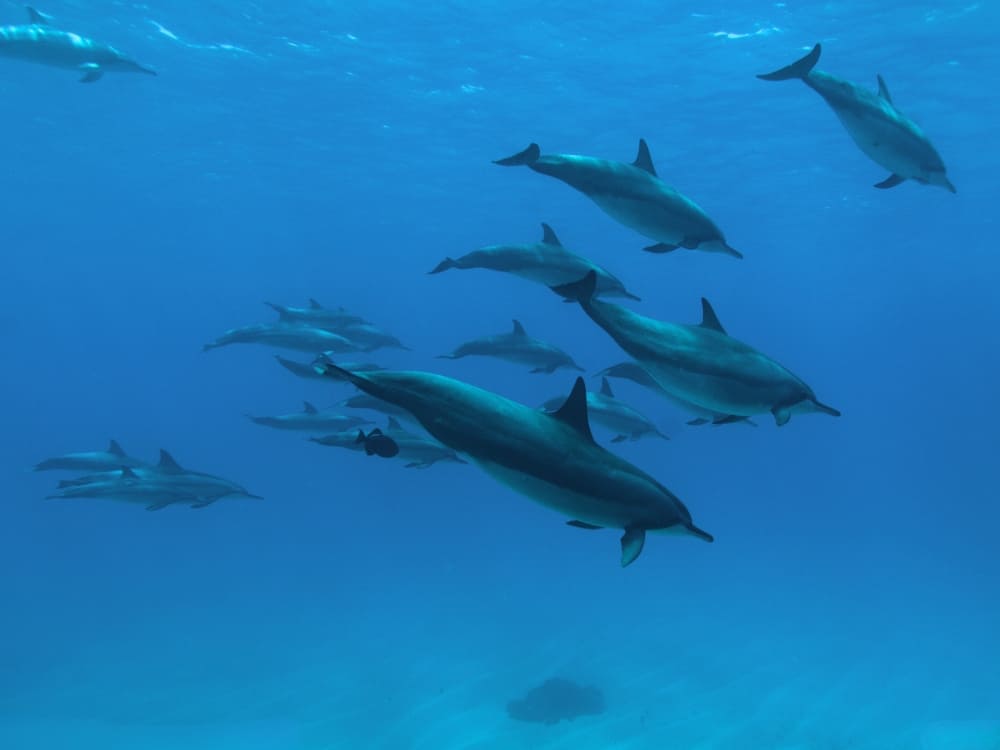
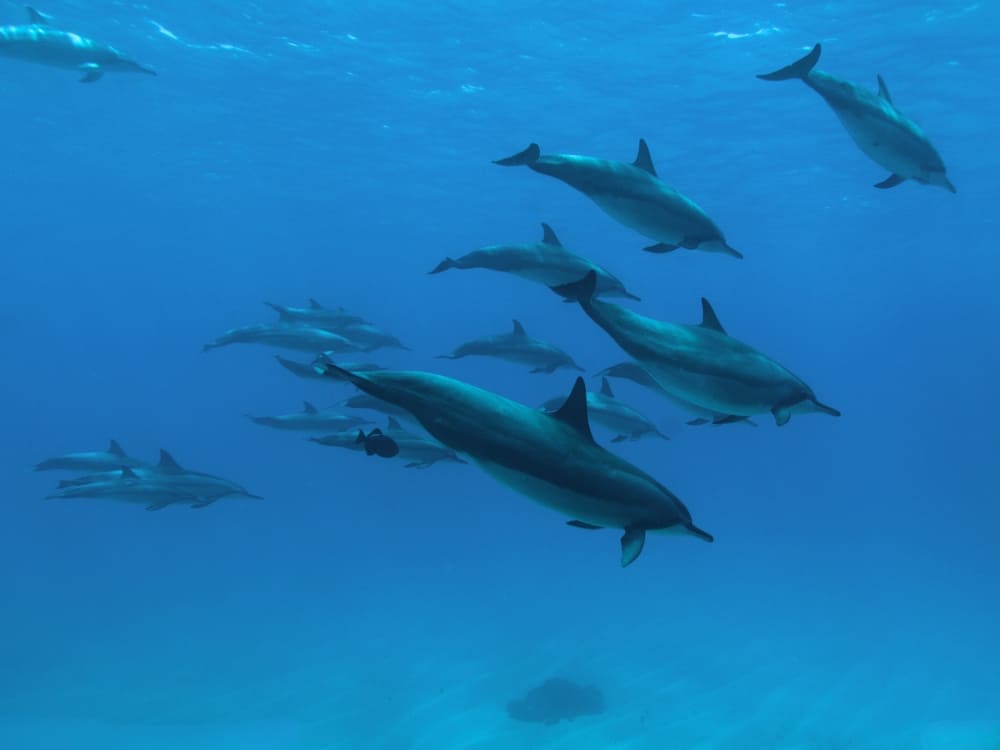
    Noronha is also famous for its resident spinner dolphins, which perform daily shows at Baía dos Golfinhos. Watching hundreds leap and spin in the air, known locally as the balé dos golfinhos (dolphins’ ballet), is an unforgettable experience. 

    In fact, Fernando de Noronha is one of the few places in the world where dolphins can be seen every single day.

    Beyond these stars, the archipelago shelters over 230 fish species, crustaceans, rays, and more reef sharks. On land, you’ll spot red-footed boobies, frigatebirds, tropicbirds, lizards, and crabs, proving that wildlife here thrives both above and below the water.

    Spinner dolphins Fernando de Noronha
    Photo: Sandro Rodrigues

    👉 Want to learn more about Brazilian Wildlife? Discover the best wildlife tours and destinations in Brazil

    2. The smallest highway in Brazil: BR-363 in Fernando de Noronha

    How big is Fernando de Noronha? The archipelago covers just 26 km², made up of 21 islands and islets, though only the main island is inhabited. Despite its size, it’s filled with beaches, trails, and stunning viewpoints.

    Noronha is crossed by Brazil’s shortest federal highway, the BR-363, just 7 km long. It’s the island’s main route for buses, cars, motorcycles, and buggies, and the only federal highway in the country not connected to any other.

    Because of its compact size, hitchhiking is common and safe, with locals readily sharing rides. Another quirky fact: the island has only one gas station, selling the most expensive gasoline in Brazil, up to 50% pricier than in Recife.

    👉 Planning your trip? Learn how to get to Fernando de Noronha with our complete guide

    BR 363 Fernando de Noronha
    Photo: Iza Correa

    3. A volcanic archipelago that was once a prison and a hereditary captaincy

    Fernando de Noronha is not just an island: it’s a volcanic archipelago formed around 12 million years ago, with dramatic cliffs, black rocks, and lava-carved coastlines that still shape its landscapes today.

    The island also served as a penal colony: a prison built in 1737 operated for nearly 200 years until World War II, when Noronha became a military base. Some inmates lived under strict confinement, while others with lighter sentences could fish, swim, and even bring their families.

    Adding to its history, Noronha was Brazil’s first hereditary captaincy. In 1504, King Manuel I granted the archipelago to merchant Fernão de Noronha, marking the beginning of this colonial system of land distribution.

    Facts about Fernando de Noronha
    .

    4. A UNESCO World Heritage Site 

    Since 2001, Fernando de Noronha has been recognized as a UNESCO World Heritage Site for its exceptional natural beauty and biodiversity. Only a handful of places worldwide receive this status, making the island part of an exclusive club.

    The site was chosen for its marine conservation efforts, unique ecosystems, and role as a sanctuary for endangered species.

    UNESCO highlighted the island’s crystal-clear waters, dramatic volcanic landscapes, and the abundance of marine life, including dolphins, sharks, and sea turtles, that thrive under strong protection measures.

    A UNESCO World Heritage Site 
    @visitbrasil

    5. A Marine National Park, plastic-free and carbon-free

    Over 70% of Fernando de Noronha is protected as a Marine National Park, with strict limits on tourism and daily visitor caps to reduce impact.

    Conservation projects like the Tamar Project (sea turtles) and Projeto Golfinho Rotador (spinner dolphins) lead efforts in research and education, alongside programs for reef restoration, sustainable fishing, and wildlife monitoring.

    Plastic-free 

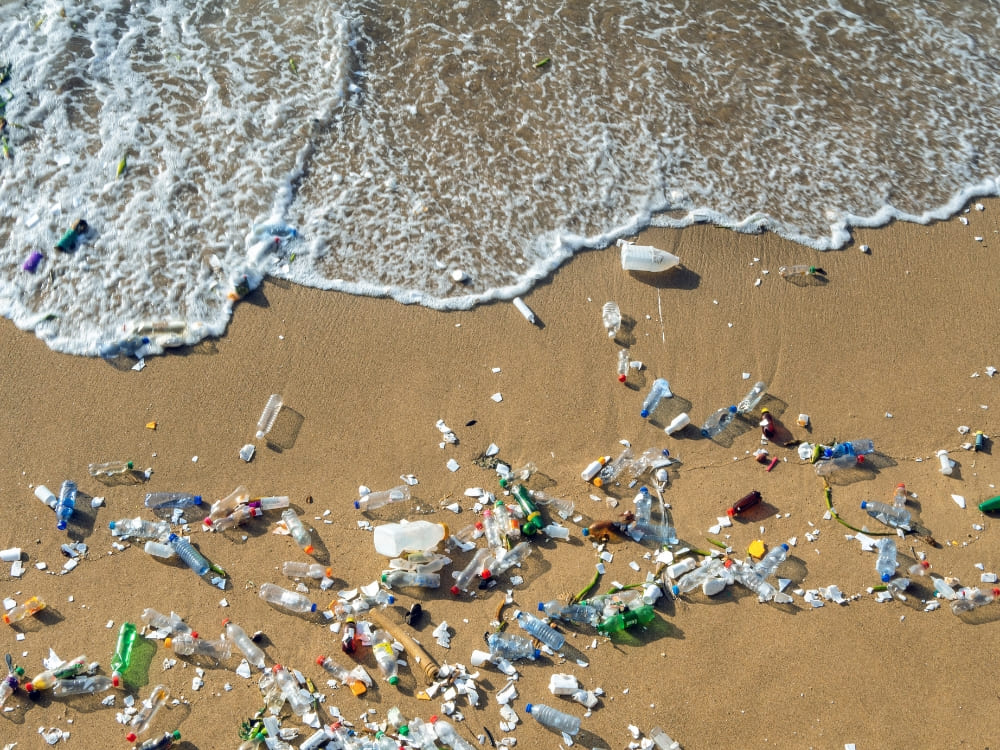
    Since 2018, Fernando de Noronha has been officially a plastic-free island. A decree banned the entry, sale, and use of disposable plastic items such as bottles, cups, straws, bags, Styrofoam containers, and other single-use packaging. 

    This strict policy helps reduce ocean pollution and keeps the archipelago’s beaches and reefs pristine.

    Fernando de Noronha Plastic-free
    .

    Carbon-free

    Noronha is also pioneering as a carbon-free island. The “Noronha Carbono Zero” program aims to ban all fossil-fuel vehicles by 2030, with only electric transport allowed. Since 2022, no new combustion-engine cars have been permitted to enter. 

    With this, the island became the first place in Brazil to officially plan the elimination of carbon-emitting vehicles.

    Another way that helps preserve the archipelago is the daily limit on the number of visitors. The island also relies heavily on renewable energy, especially solar power plants, to reduce its environmental footprint.

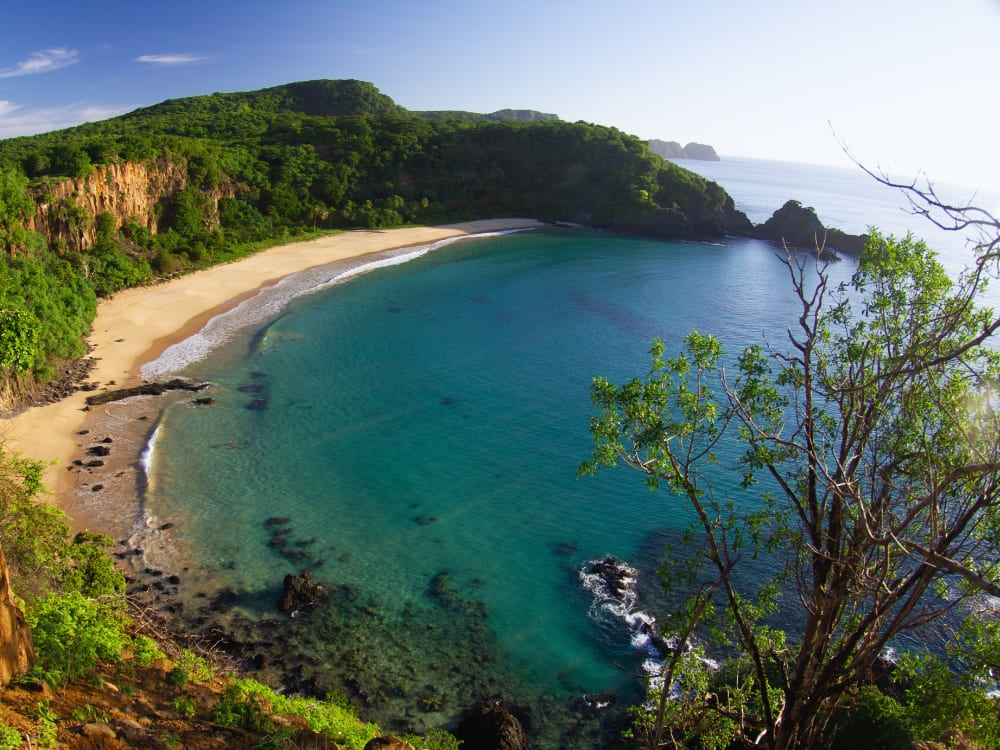
    As proof of these conservation efforts, Praia do Sancho has been voted the best beach in the world multiple times by TripAdvisor’s travelers. It showcases how protection can improve natural beauty.

    Praia do Sancho Fernando de Noronha
    .

    👉 Check out our full article on the best national parks to visit in 2025

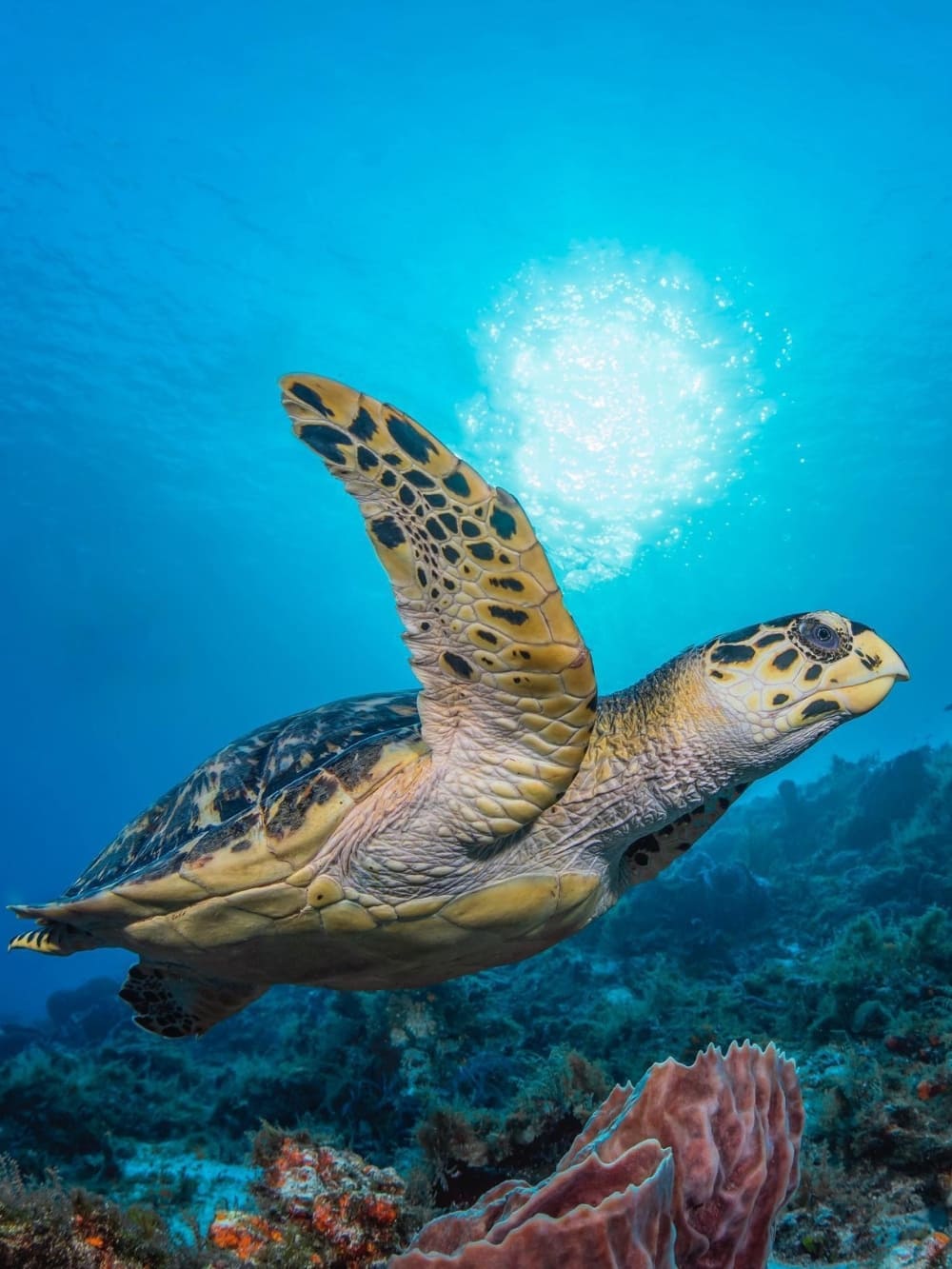
    6. A perfect place to see the Hawksbill Sea Turtle

    Noronha is a paradise for turtle lovers, where visitors can swim alongside hawksbill sea turtles under strict, eco-friendly rules. The Tamar Project protects nesting sites, and it’s common to witness hatchlings making their first journey to the sea.

    Hawksbills are critically endangered, with populations down by more than 80% over the last century due to habitat loss, hunting, and climate change. Yet here they find a safe haven. These turtles are great travelers, often crossing entire oceans and even continents during their migrations.

    To protect them, some beaches close after 6 p.m., giving females peace to lay their eggs. Living up to 50 years and helping keep coral reefs healthy, hawksbills make Noronha even more magical, especially if you visit during nesting season.

    Hawksbill Sea Turtle Fernando de Noronha
    @dohertyphotography

    👉 Want to know when to visit? Take a look at the best time to dive in Fernando de Noronha

    7. Closer to Africa than you think

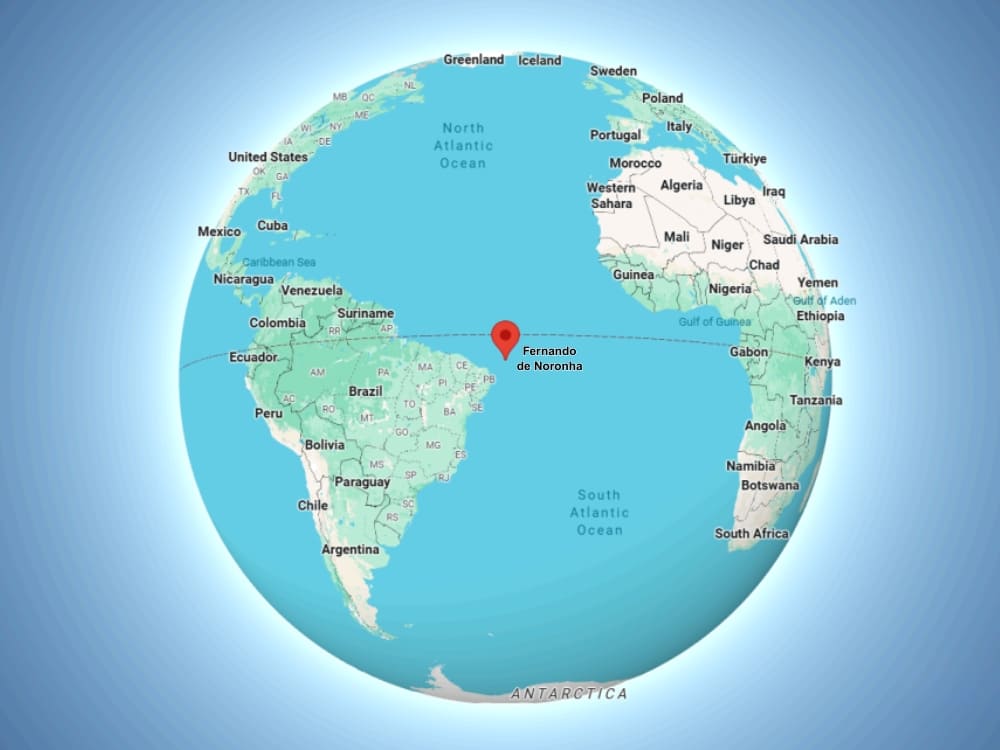
    Here’s a geography twist: Fernando de Noronha is located just 354 km from the coast of Brazil, but in terms of distance, it’s closer to Africa than to some Brazilian capitals!

    The island’s remote location in the middle of the Atlantic adds to its wild, untouched vibe. It truly feels like you’re in another world! Its isolated position also means it is Brazil’s easternmost point, marked by the Cape of São Miguel. 

    In addition, the archipelago sits right on the route of the South Equatorial Current, which brings warm, nutrient-rich waters from Africa, helping sustain its extraordinary marine life.

    Fernando de Noronha is near to Africa
    Photo: Google Maps

    8. The “Galapagos of Brazil”

    Ever heard Noronha called the Galapagos of Brazil? That’s because, like the Galapagos Islands, it’s a living laboratory of evolution. Many species of wildlife here are endemic, meaning they exist nowhere else on Earth. 

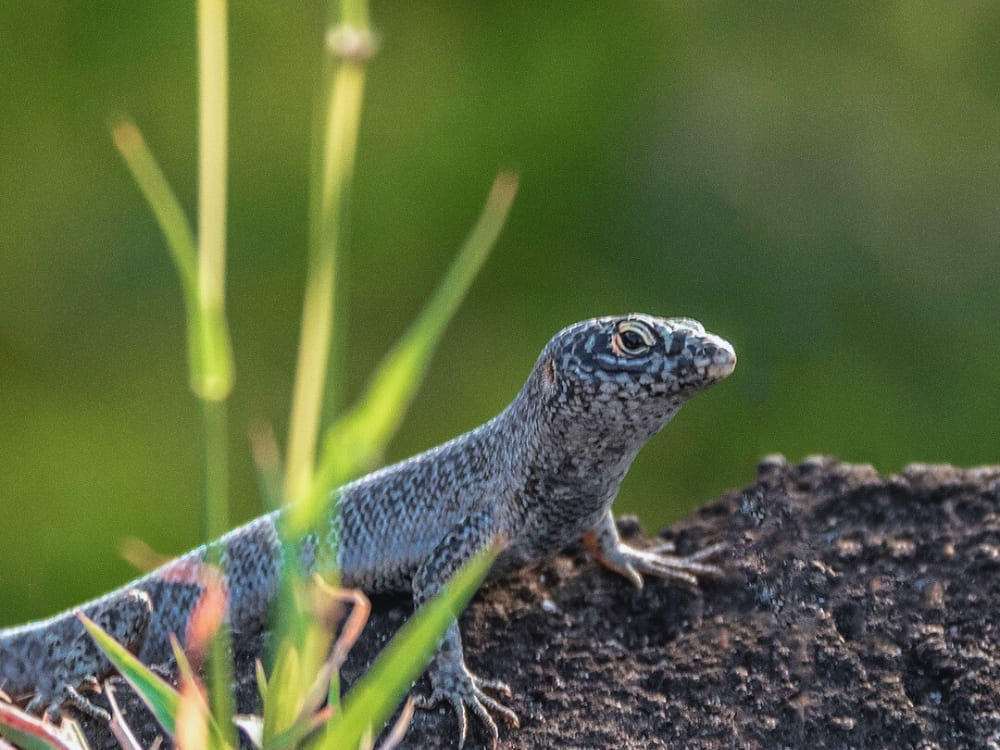
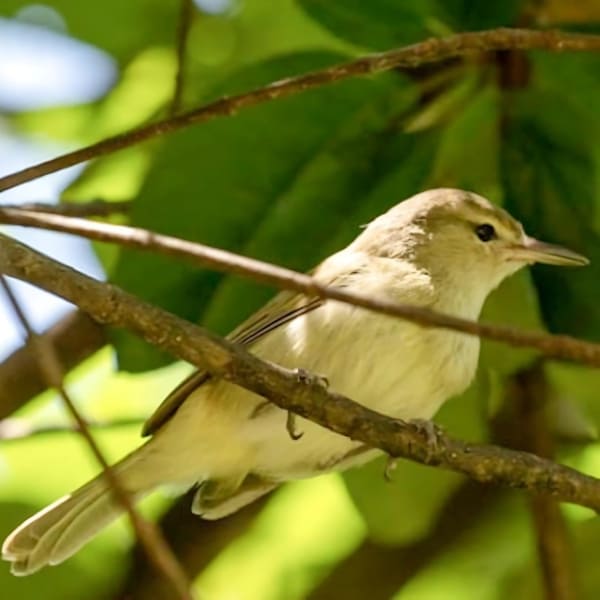
    Among them are the Noronha skink (a unique lizard), the Noronha wormlizard, and two rare birds: the Noronha elaenia and the Noronha vireo.

    Scientists and travelers alike come to study and admire the island’s biodiversity, making it a must-see destination for eco-travelers.

    Noronha skink
    @mare.noronha

    9. You can dive among corals and historic shipwrecks

    If you’re a diver, Noronha is heaven. Its reefs shelter over 15 coral species, some centuries old, alongside parrotfish, angelfish, seahorses, barracudas, snappers, and green turtles. With visibility of up to 50 meters, the waters rank among the clearest in the world.

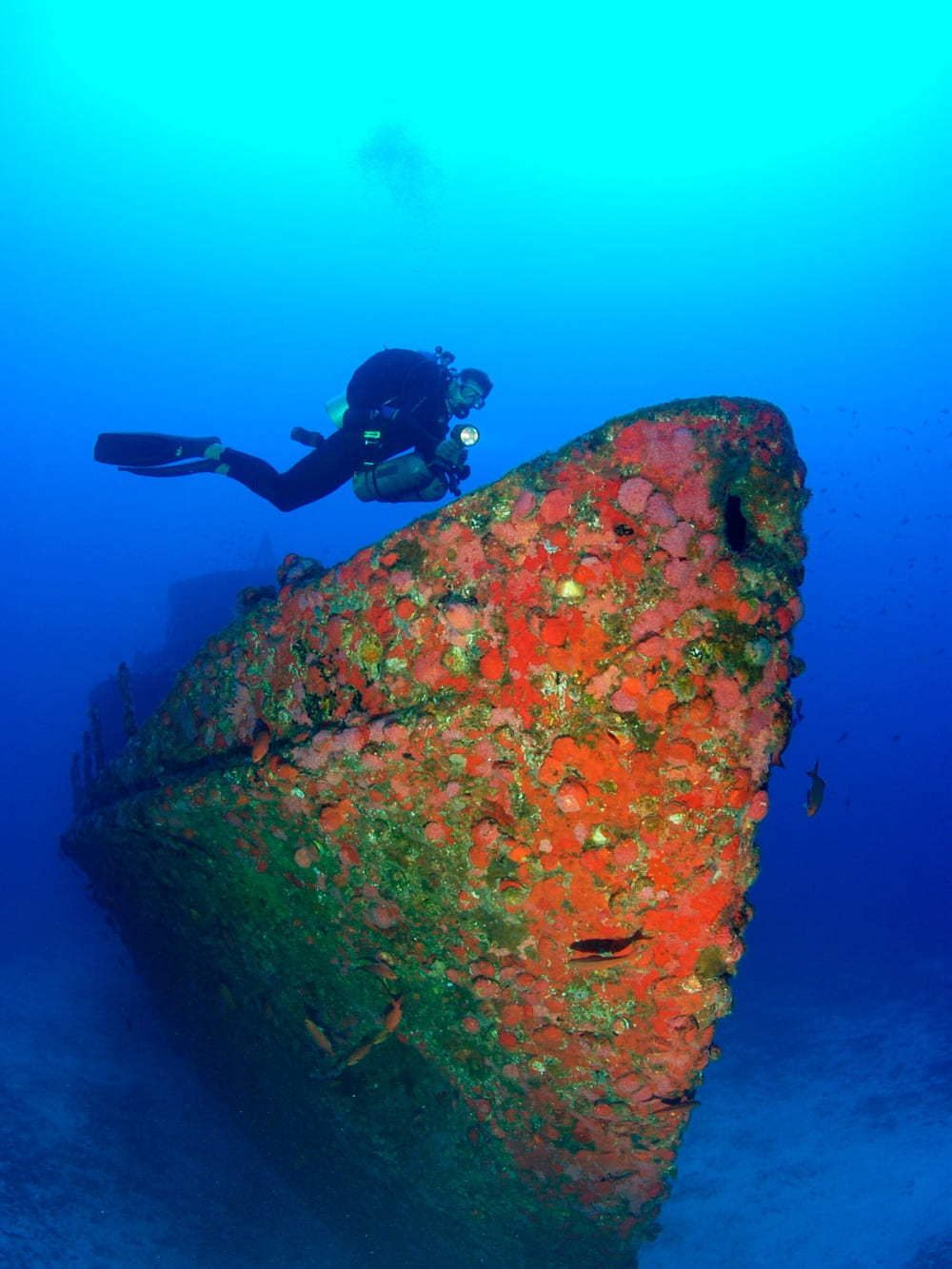
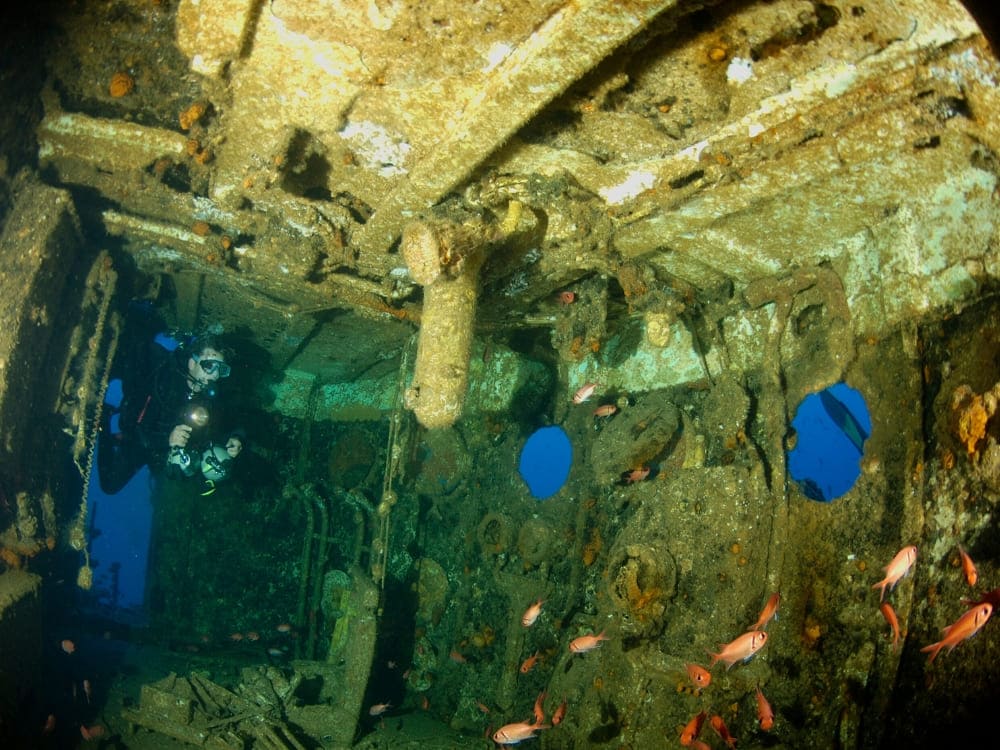
    The island is also famous for its shipwrecks. The highlight is the Corveta Ipiranga V17, a Brazilian Navy vessel that sank in 1983 and now rests intact at 70 meters, considered one of the country’s most impressive wreck dives.

    Adding mystery are two Greek ships: the Maria Stathatos, destroyed by fire in 1937, and the Eleni Stathatos, wrecked after colliding with rocks. Both remain near the coast, forming artificial reefs that attract schools of fish.

    Dive in Fernando de Noronha
    .

    👉 See more about the best diving spots in Fernando de Noronha

    10. Not many residents, and no births on the island

    Fernando de Noronha is home to about 3,000 residents, most working in tourism, fishing, or conservation. Ecotourism sustains the community, ensuring income while encouraging sustainable practices, and locals proudly share their island with visitors.

    Since 2004, the island’s maternity ward has been closed, so pregnant women must travel to Recife in their seventh month, with costs covered by the government. Even so, children can still be registered as Noronhenses, preserving their island identity.

    And here’s a fun fact: Noronha has even hosted underwater weddings. In 1991, an American couple married at the bottom of the sea near Ponta da Sapata, and in 2017, a local couple tied the knot 16 meters deep inside Caverna da Sapata.

    Facts about Fernando de Noronha
    Photo: Pamela Rech

    Traveling to Fernando de Noronha with PlanetaEXO

    Traveling to such a fragile paradise requires responsibility. With PlanetaEXO, you can explore while knowing that your trip directly benefits local families and conservation programs.

    We work only with trusted partners who share our values of sustainability, ensuring that every adventure supports both the community and the environment.

    So, are you ready to experience one of the most breathtaking places on Earth? Join us, and discover these unforgettable facts about Fernando de Noronha while leaving a positive footprint behind. 

    👉 Send us a message and start planning your adventure in Fernando de Noronha!

    Read More 

  • When is the Best Time to Dive in Fernando de Noronha, Brazil?

    When is the Best Time to Dive in Fernando de Noronha, Brazil?

    Find out when is the best time to dive in Fernando de Noronha’s, with calm year-round conditions in the Inner Sea and exciting adventures in the Outer Sea during the swell season.

    Fernando de Noronha, an archipelago off the northeastern coast of Brazil, is renowned as a diver’s paradise. It’s easy to see why this UNESCO World Heritage Site is on the bucket list of divers worldwide, with its crystal-clear waters, marine life, and underwater landscapes. One of the most frequently asked questions by divers planning their trip is: “When is the best time to dive in Fernando de Noronha?”

    The answer isn’t entirely straightforward, as Fernando de Noronha has great diving conditions all year round. However, seasonal changes in weather, sea conditions, and water visibility can affect the overall experience. Let’s look at the details to help you plan the perfect trip:

    Fernando de Noronha Island
    Baia do Sancho is one of the world’s 50 top beaches

    Table of Contents:

      1. Year-Round Diving Conditions
      2. Seasonal Variations in Fernando de Noronha
      3. Wind and Sea Conditions
      4. Swells and Seasonal Waves
      5. Best Time to Dive: March to July
      6. What Awaits Underwater?
      7. Diving Highlights by Season

    Year-Round Diving Condition in Fernando de Noronha

    One of the reasons Fernando de Noronha is such a popular diving spot is that the conditions are pretty much the same all year round. Thanks to the tropical climate, the archipelago enjoys great water conditions throughout the year. The average water temperature is around 27°C (80°F), which is just right for diving without a heavy wetsuit.

    Visibility is between 25 and 50 meters (82 to 164 feet), which offers incredible views of the underwater world.

    On top of that, Fernando de Noronha is home to a protected that supports local ecosystems. Divers can expect to see all kinds of marine life, including turtles, reef sharks, rays, eels, and different species of fish. Spinner dolphins are a common sight and a highlight for many visitors.

    Diving in Fernando de Noronha
    Photo: All Angles

    You can dive year-round, but the archipelago experiences seasonal variations that affect wind, waves, and visibility. These variations may affect the quality of dives and determine which areas of the island are more suitable for diving during specific months.

    👉 Curious about Fernando de Noronha? Discover 10 interesting facts about this Brazilian island paradise.

    Seasonal Variations in Fernando de Noronha

    “Mar de Dentro” (Inner Sea) and “Mar de Fora” (Outer Sea) provide distinct diving experiences for visitors to Fernando de Noronha.

    Mar de Dentro, to the left of Ilha do Meio and facing the mainland—though still distant—is more sheltered and offers consistently stable conditions year-round. This makes it an excellent spot for diving, with minimal swell and reliable visibility.

    In contrast, Mar de Fora, located on the right side of the island, is more exposed to natural elements, making its conditions less predictable. Wind and swell can fluctuate, creating navigation challenges and reducing usability, but diving is still possible during calmer periods.

    Diving Spots in Fernando de Noronha
    Diving Spots in Fernando de Noronha

    Dry Season (August to February)

    When it comes to diving seasons, August to February marks the dry season, with stable weather, minimal rainfall, and excellent diving conditions.

    Visibility is at its peak from August to mid-October, making it ideal for underwater photography and exploring deeper sites.

    However, from mid-October to February, is the “wave season”. During this time, swells and strong waves can affect the Inner Sea, the side of the island that faces the Brazilian coast.

    These swells may stir up the water, reducing visibility and making the sea more agitated. For divers, this can mean adjusting plans and focusing on sites along the Outer Sea, which tends to remain calmer during this period.

    When is The Best Time to Dive in Fernando de Noronha

    Rainy Season (March to July)

    The rainy season, from March to July, brings increased rainfall, especially between April and June. Surprisingly, this period often features calmer seas and excellent visibility underwater, as the rain primarily affects surface waters.

    This season is particularly recommended for divers looking to explore both sides of the island without being limited by weather, offering a unique opportunity to experience Fernando de Noronha’s remarkable underwater world.

    Rainy Season is highly recommended for divers who prioritize calm seas and clear visibility. This season provides a unique opportunity to explore a wider variety of dive sites without being limited by weather or sea conditions.

    When is the Best Time to Dive in Fernando de Noronha
    Photo: @gz_mergulho

    Wind and Sea Conditions

    Sea conditions in Fernando de Noronha change a lot depending on the time of year. Strong winds can make the water agitated and make it harder to see.

    The months with the strongest winds are August and September, as well as late December and January.

    • August and September: stronger winds can make the seas a bit choppier, especially on the side of the island facing the Inner Sea. Visibility might be a little reduced, but experienced divers can still enjoy the challenge and discover Noronha’s unique underwater ecosystems.
    • December and January: wind patterns heighten sea agitation on the Inner Sea. Divers are typically redirected to the Outer Sea, where conditions are more stable. Fernando de Noronha’s ability to adapt is one of its key advantages, ensuring that diving remains possible even during less favorable conditions.

    Swells and Seasonal Waves

    From November to February, a phenomenon known as the “swell” occurs, bringing large waves formed offshore. This movement, which can last for a day or two, stirs up the seabed of Mar de Fora, reducing visibility temporarily.

    However, it also creates unique opportunities for diving in the Outer Sea, as the period often provides favorable conditions for exploration in this area.

    Swells create opportunities to explore dive sites that might otherwise be overlooked. For adventurous divers, these conditions can be exciting, adding an element of unpredictability to the experience.

    spinner dolphins

    Best Time to Dive: March to July

    If you’re looking for the most tranquil and predictable diving conditions, the period from March to July is the best time to dive in Fernando de Noronha. During these months, both the Inner and Outer Sea sides of the island are generally calm, allowing divers to access the full range of dive sites.

    Water visibility is excellent, and the absence of strong winds ensures smooth entries and exits.

    This period is particularly well-suited for novice divers or those looking for a relaxing underwater experience. It’s also a great time for photographers, as the clear waters and abundant marine life provide endless opportunities for stunning shots.

    Diving in Fernando de Noronha


    What Awaits Underwater?

    No matter when you visit Fernando de Noronha’s underwater world is sure to impress. Here’s what you can expect:

    There’s something for everyone on the island: from colorful reefs and coral gardens to deep shipwrecks and underwater caves. Some of the most popular sites include Cabeço da Sapata, Pedras Secas, and Buraco das Cabras.

    You’ll see a lot of marine biodiversity, such as sea turtles, reef sharks, rays, moray eels, fish, and much more. Noronha’s waters are teeming with life. The archipelago is also famous for its spinner dolphins, which can often be seen leaping and twirling near the surface.

    The Marine Park’s strict conservation measures guarantee that the dive sites stay vibrant. This dedication to sustainability makes the experience better for divers and helps protect the archipelago’s ecosystems.

    When is The Best Time to Dive in Fernando de Noronha
    Photo: Thiege Rodrigues


    Seasonal Diving Conditions: Summary Table


    Season Conditions Best Diving Areas
    March to July Calm seas on both Inner and Outer sides, excellent visibility, ideal for all divers. Inner and Outer Sea dive sites
    August to September Windy season, with some agitation, and suspended particles reducing visibility slightly. Outer Sea is generally better sheltered.
    November to March Swells and strong waves are possible, but often brief (1-2 days). Outer Sea offers better conditions during this time. Outer Sea sites like Cabeço da Sapata.
    December to January The Inner Sea is more agitated, but the Outer Sea remains calmer. Divers may need to adjust sites depending on conditions. Outer Sea dive spots.


    Plan Your Dive Adventure

    Now that you know the best time to dive in Fernando de Noronha, why not start planning your trip? Check out PlanetaEXO’s packages for diving experiences that let you explore the archipelago’s incredible underwater world.

    Whether you’re a beginner or a seasoned diver, Fernando de Noronha promises an unforgettable adventure!

  • Diving in Fernando de Noronha: 2026 Ultimate Guide

    Diving in Fernando de Noronha: 2026 Ultimate Guide

    Discover everything you need to know to have an unforgettable experience  scuba diving and snorkeling in Fernando de Noronha

    Fernando de Noronha is known for the beauty of its crystal-clear waters, gorgeous white-sand beaches, and an elegant, peaceful atmosphere. This makes it one of the best destinations in Brazil for people looking for leisure and adventure alike.

    Diving in Fernando de Noronha is the best way to enjoy what nature has to offer. The sea presents wonderful conditions for divers to explore the breathtaking underwater landscapes and the local marine life. No wonder visitors from all over the world travel to this magical island!
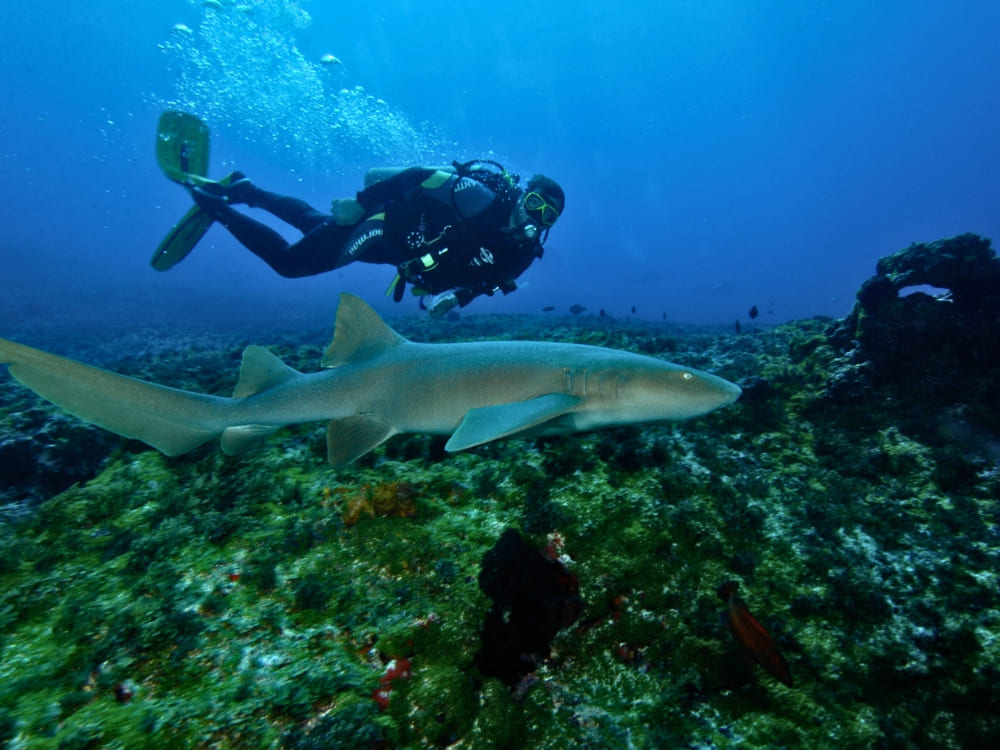
    A scuba diver swims closely behind a nurse shark over a coral reef in the crystal-clear waters of Fernando de Noronha.
    Photo: All Angles

    To help you plan your Brazil diving trip, PlanetaEXO, an ecotourism platform that offers Fernando de Noronha scuba diving packages, has put together a complete guide with all the information you need. Check it out below!

    About Fernando de Noronha

    Fernando de Noronha is the main island—and the only inhabited one—of an archipelago of 21 islands. Its origin traces back millions of years to an inactive volcanic field submerged into the Atlantic Ocean. 

    In 1503, during a Portuguese expedition led by sailor Gonçalo Coelho and explorer Fernão de Noronha—see something familiar about this name?—the islands were discovered. Over the centuries, many nations have occupied them. The Netherlands and France have heavily influenced local culture and architecture, but the Brazilian essence remains striking and undeniable.  
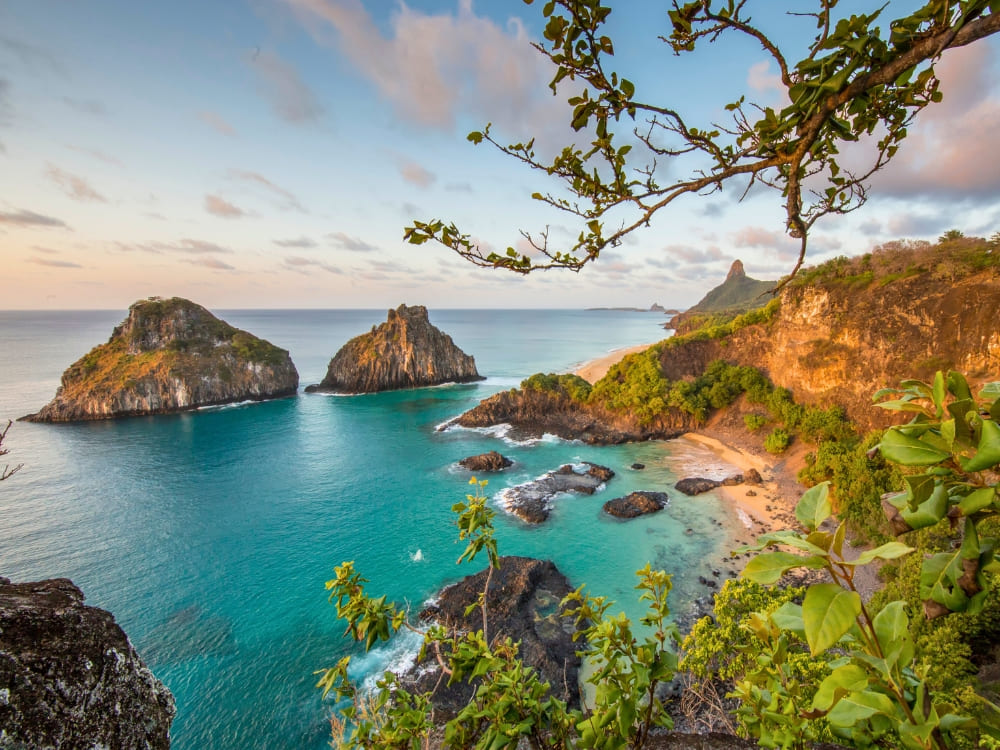
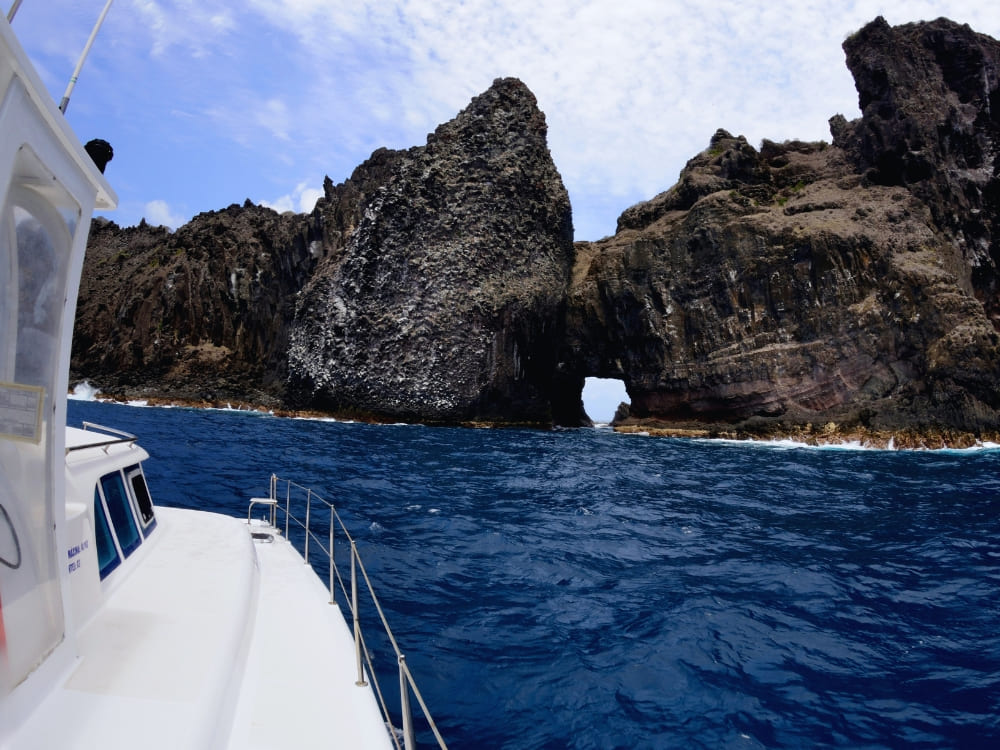
     The iconic Morro dos Dois Irmãos rock formations rise from the turquoise ocean along a lush, cliff-lined beach in Fernando de Noronha.
    .

    Nowadays, Noronha is always on the top of the list of Brazil’s most desired destinations and was even recognized as a UNESCO World Heritage Site in 2001 for its “outstanding universal value.”

    Formed by two federal conservation units, the Fernando de Noronha Marine National Park (PARNAMAR) and the Fernando de Noronha Environmental Protection Area (APA), the archipelago is an important player in the conservation of Brazil’s rich biodiversity.

    Where is Fernando de Noronha, Brazil?

    Fernando de Noronha is located in northeastern Brazil, in Pernambuco, 545 km from the state capital, Recife. Sitting in the Atlantic Ocean, its total area is 26 km², whereas 17 km² are occupied by the main island alone.

    How to Get to Fernando de Noronha?

    Fernando de Noronha Airport (FEN) welcomes tourists arriving on the island. Azul, GOL, and LATAM airlines offer daily direct flights from Recife (REC), while flights from São Paulo (GRU) operate 4 times a week.
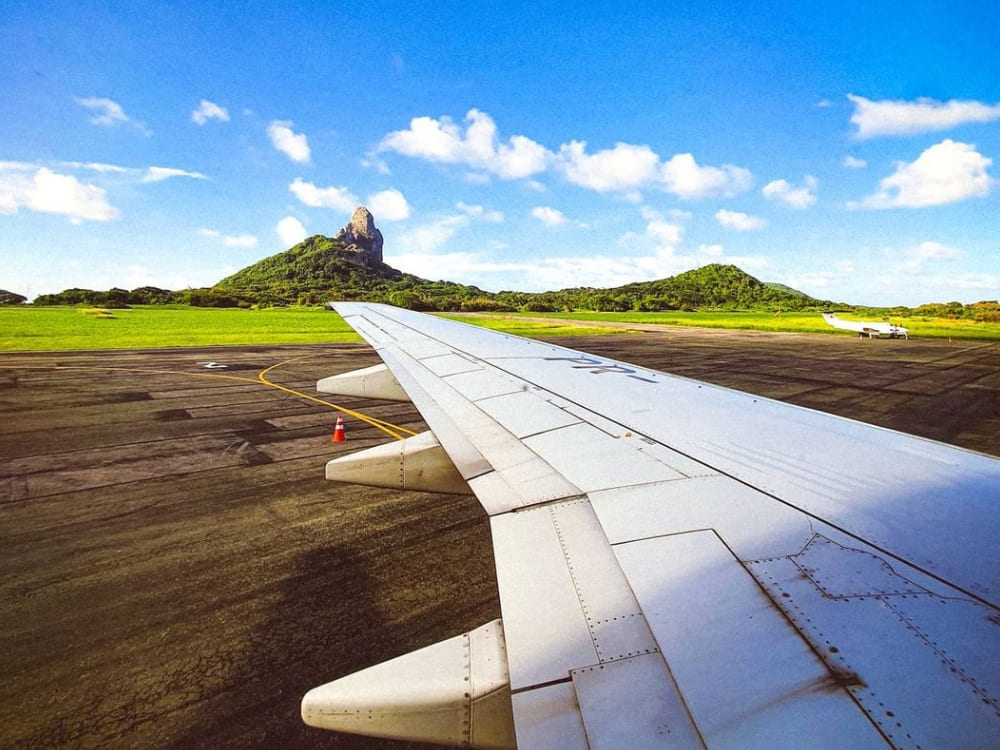
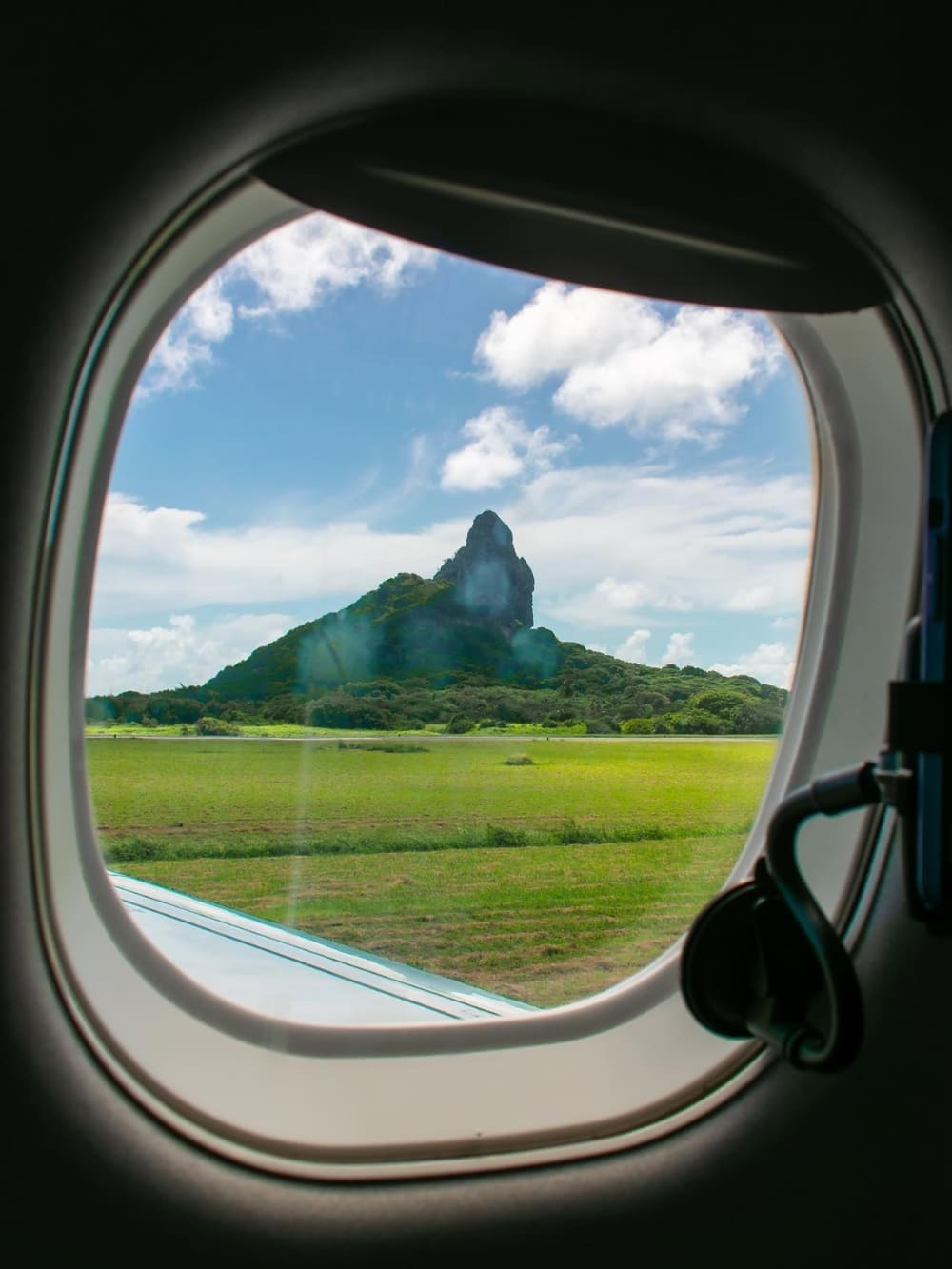
    View from an airplane window showing the wing and the famous Morro do Pico peak as a flight arrives at Fernando de Noronha.
    @flor_decerejeirafotografia

    International travelers must disembark in Recife before departing for Noronha Airport, with direct flights from Buenos Aires (EZE/AEP), Lisbon (LIS), Porto (OPO), Madrid (MAD), Orlando (MCO), and Santiago, Chile (SCL). It’s also possible to make connections in São Paulo, Rio de Janeiro, Belo Horizonte, or Brasília before departing for Recife.

    Upon arrival, tourists have to head to their accommodations, which generally offer private or shared shuttle services.

    👉 Read more: How to get to Fernando de Noronha, Brazil?

    When is the Best Time to Go to Fernando de Noronha for Diving?

    The best time for diving in Fernando de Noronha depends on the type of experience you’re looking for, as well as the area you wish to explore. Over 75% of the island’s visitors practice some kind of diving, with the main modalities being free and scuba diving.

    This variety is greatly appreciated by tourists, but it’s important to notice that there are different seasons in Noronha that can affect these activities.
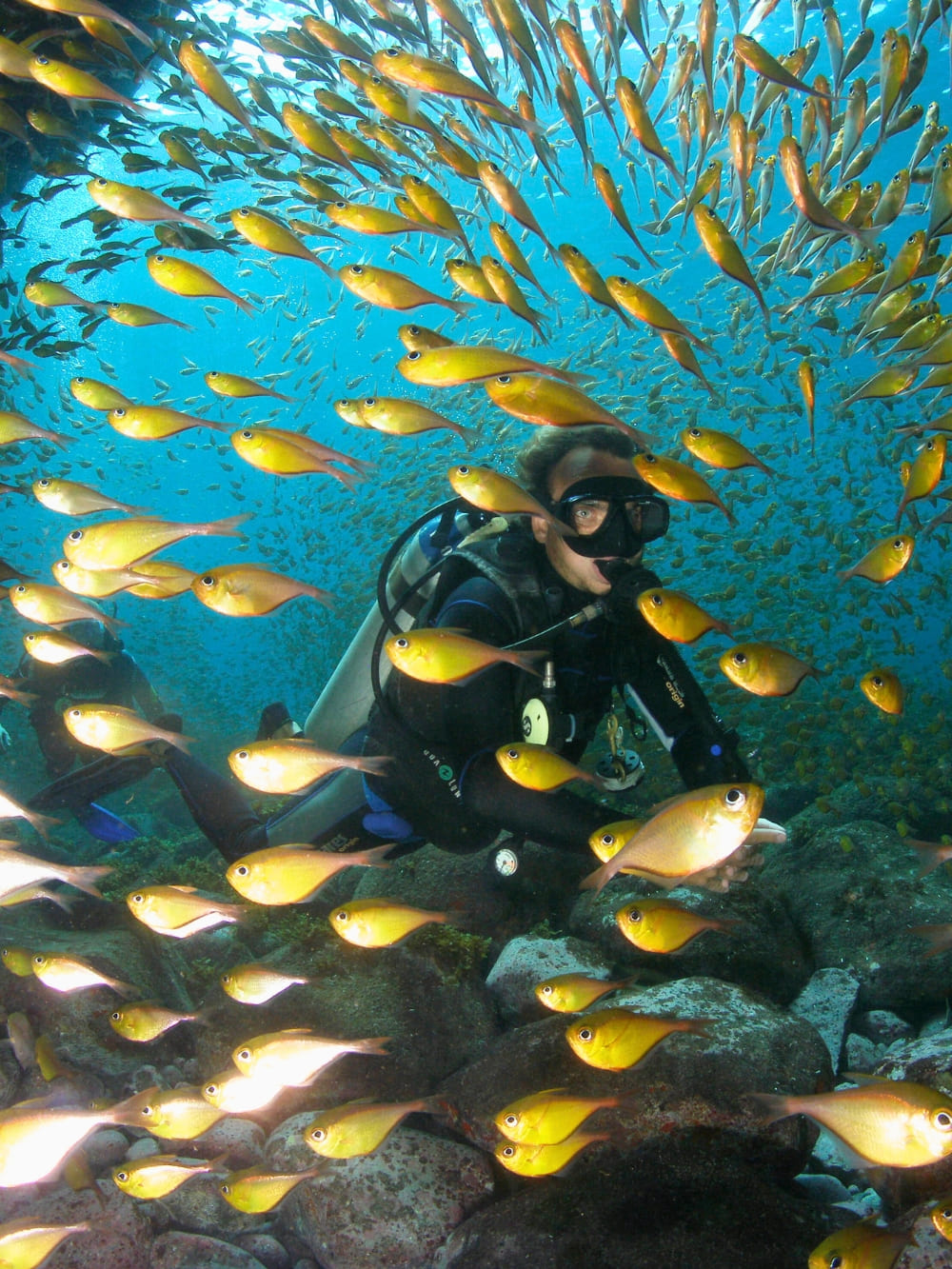
    A scuba diver explores the vibrant marine life of Brazil, completely surrounded by a massive school of bright yellow fish.
    Photo: All Angles

    Best Season For Diving in Brazil’s Fernando de Noronha

    Fernando de Noronha is divided between the Inner Sea (Mar de Dentro), which faces the Brazilian coast, and the Outer Sea (Mar de Fora), directed at Africa and Europe.

    Inner Sea

    The Inner Sea’s calm waters are great for snorkeling and free diving, especially from June to December. The most recommended sites are Praia do Porto, Praia da Conceição, and Praia do Boldró.

    When it comes to water visibility, the best conditions are usually from August to December, when the sea is at its most peaceful state.

    Outer Sea

    From December to May, the Outer Sea’s agitated waters are perfect for divers with more experience and people looking for complex underwater landscapes and a bigger range of marine species.
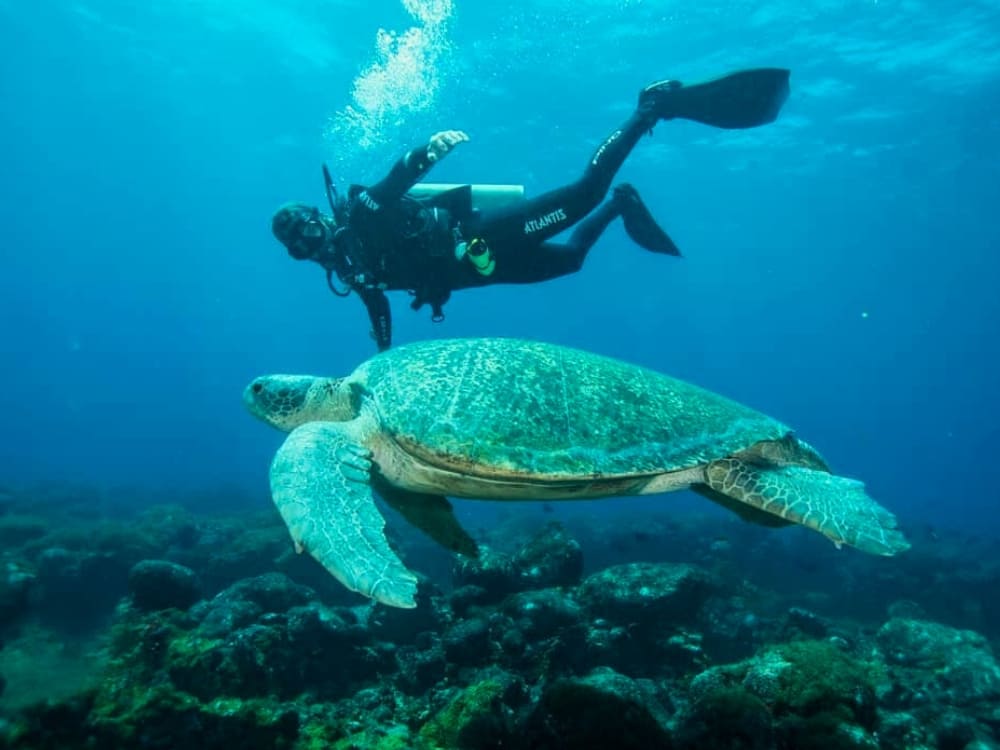
    A scuba diver observes a large green sea turtle swimming over a rocky underwater landscape during a dive in Fernando de Noronha.
    Photo: Thiege Rodrigues

    👉 Read more: When is the best time to dive in Fernando de Noronha?

    Diving Spots in Fernando de Noronha

    The best Fernando de Noronha diving spots may vary according to your preferences. If you have little to no experience or if you’re looking for a more relaxing activity to just enjoy the ocean and spot colorful fish, rock formations, and coral reefs, Atalaia, Pedras Secas, and Laje dos Dois Irmãos are great sites.
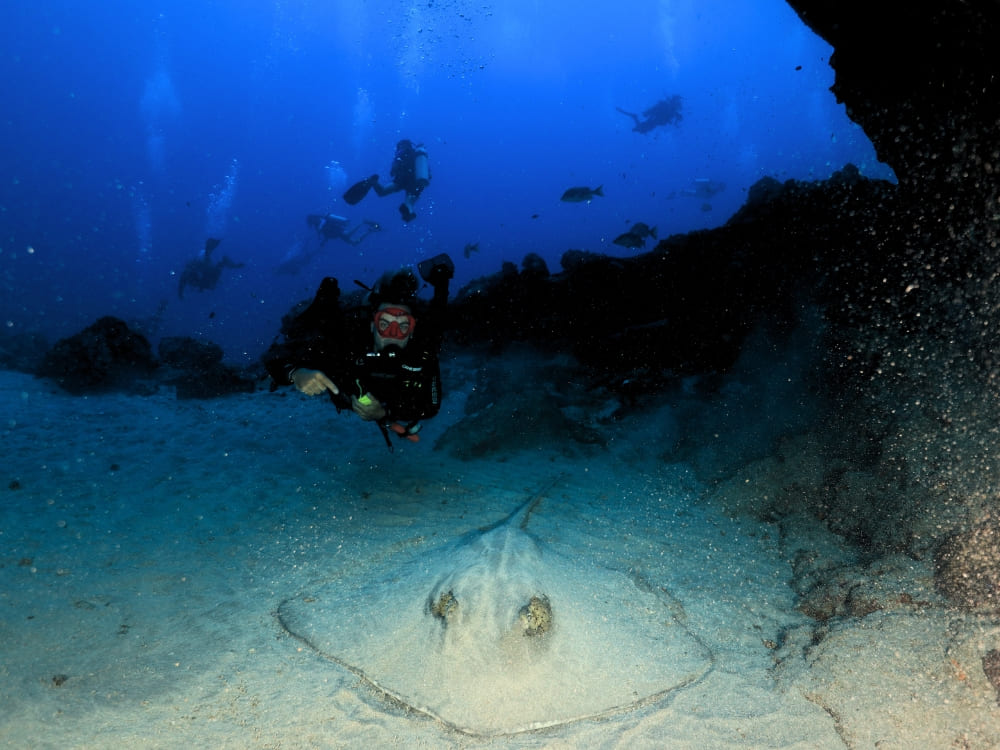
    An experienced scuba diver hovers above the sandy ocean floor near a resting stingray at a dive spot in Fernando de Noronha.
    Photo: Pamella Rech

    Baía dos Sanchos and Baía dos Golfinhos are perfect for animal enthusiasts. Dolphins, sea turtles, stingrays, and nurse sharks are often seen calmly swimming near the divers—already used to the presence of humans.

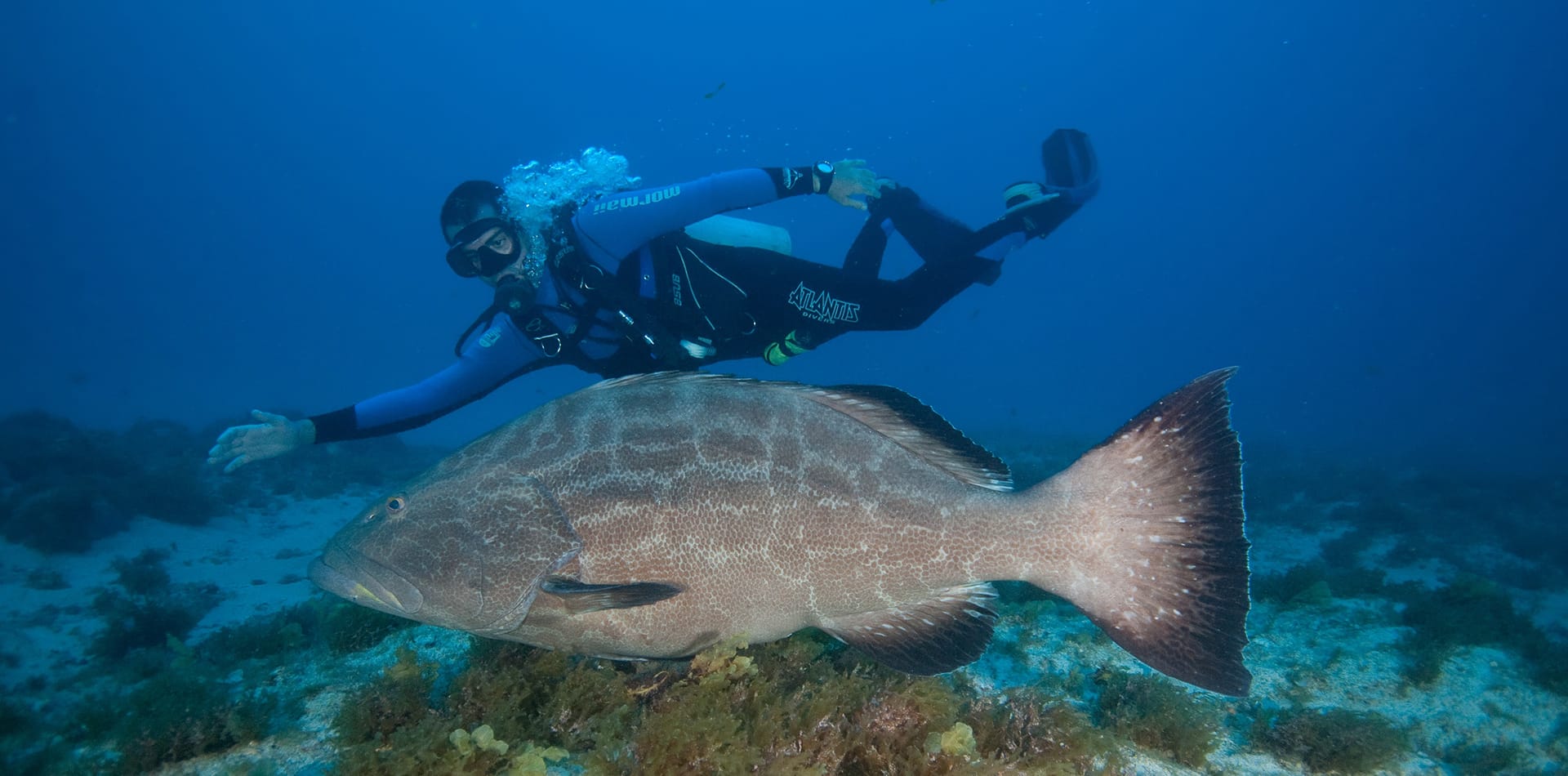
    Are you an expert diver who’s thirsty for adventure? Then you should go to Ponta da Sapata, one of Noronha’s most famous diving spots in the Inner Sea, mostly known for an underwater cave about 18 meters deep that shelters huge stingrays and the black grouper, a docile ray-finned fish that can reach up to 400 kilos.

    Ressureta is another amazing spot for experienced divers. At 16 meters deep, it’s not difficult to encounter barracudas, reef sharks, sea turtles, moray eels, etc.

    Whether you’re seeking a gentle immersion or an adrenaline-packed dive, Fernando de Noronha has it all!

    👉 Read more: Best Diving Spots in Fernando de Noronha

    Can Beginners Dive in Fernando de Noronha?

    Yes, Fernando de Noronha is a great place for baptism diving—an introductory dive for people with no prior experience.
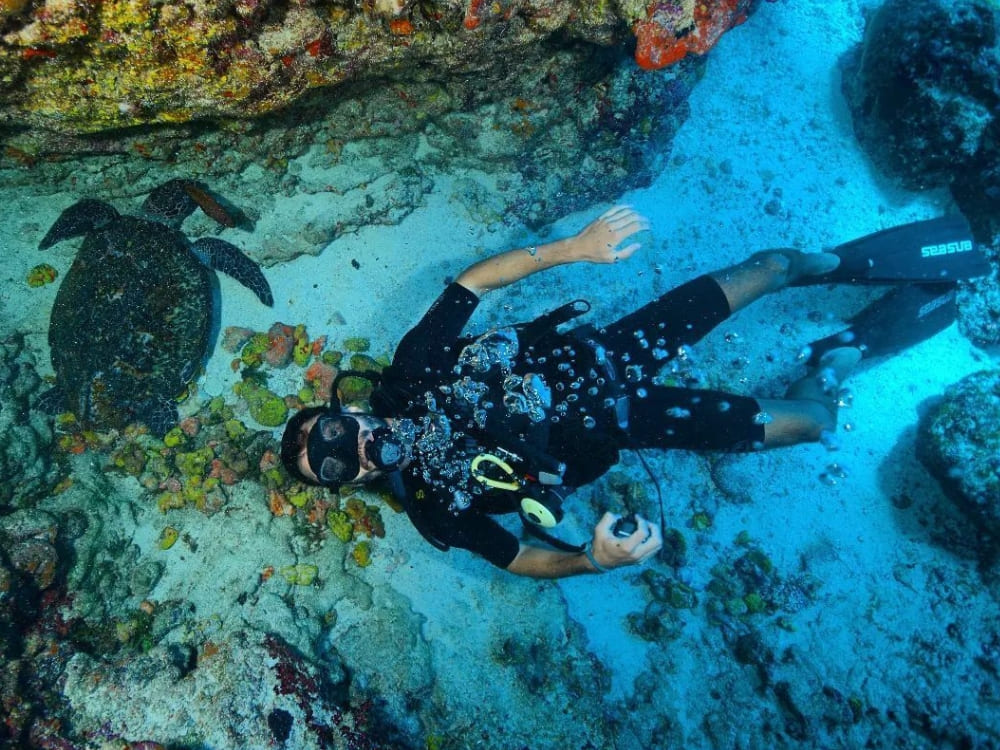
    Fernando de Noronha Diving Guide
    .

    With the help of local instructors and top-quality equipment, amateur divers can safely explore the underwater beauty of the archipelago. The feeling of such an experience is indescribable! 

    Are There Any Restrictions or Permits Required for Diving in Fernando de Noronha?

    Permits are only required for diving instructors and companies, which must be properly accredited to operate. Trust only qualified and licensed professionals!

    Restrictions for divers are related to possible health conditions, such as heart problems, hypertension, respiratory diseases, and pregnancy. Before diving, you’ll be asked to fill out a form with a health assessment questionnaire to determine whether you are able to dive or not.

    To prevent any problems, always follow your guides/instructors’ directions.

    Marine Life in Fernando de Noronha

    The abundant marine life in Fernando de Noronha includes an extensive reef coverage and hundreds of different species of animals, such as 169 reef fish (10 endemics), 219 mollusks (3 endemics), 11 corals, 33 cnidarians, and 77 sponges.
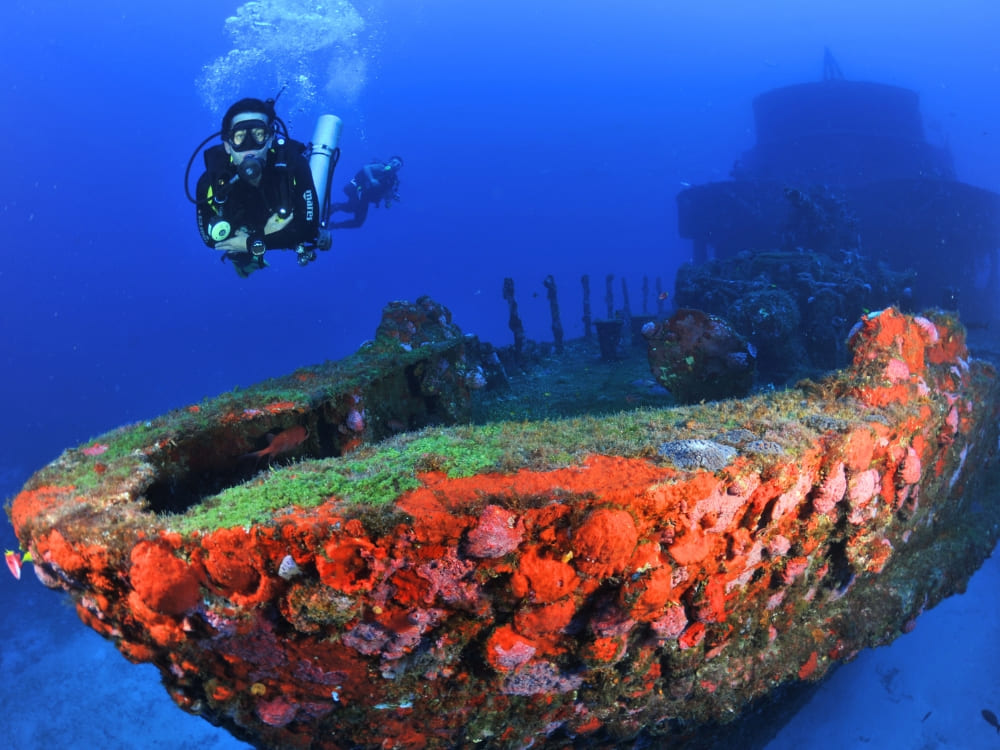
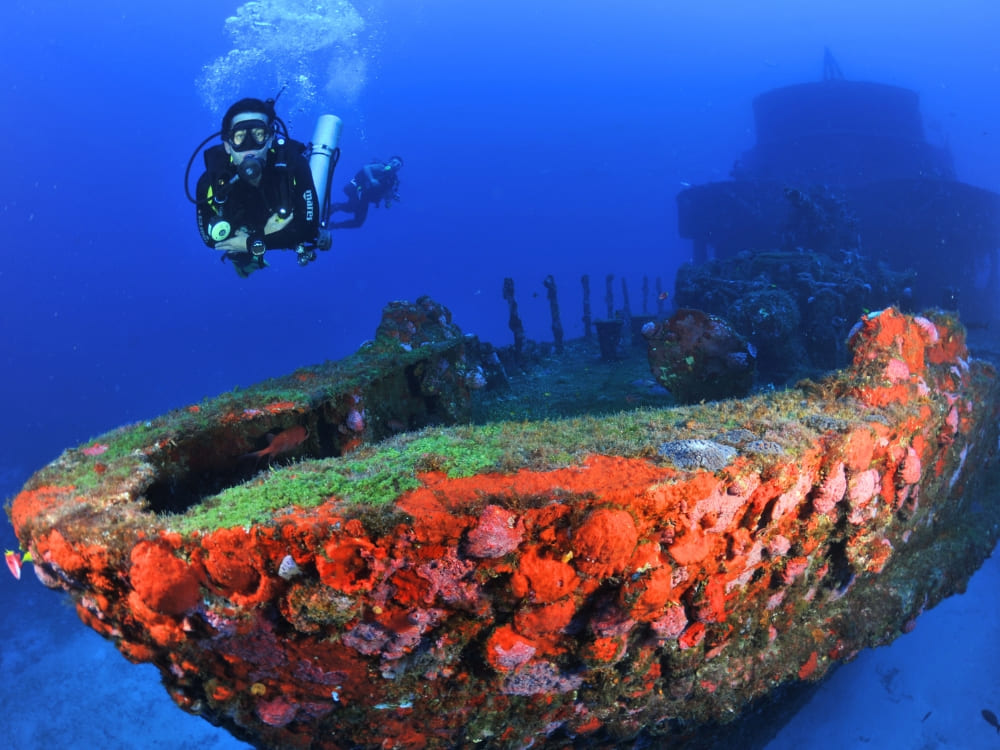
    A scuba diver explores a sunken shipwreck heavily encrusted with bright red and orange sponges in the deep waters of Fernando de Noronha.
    Photo: All Angles

    Sea turtles are also a big part of the local fauna. From July to December, Noronha’s beaches are the breeding ground for the beautiful green turtle. Other residents are the hawksbill turtles, who often make themselves comfortable on the sand to feed and grow their babies. 

    These remarkable animals are protected by the Tamar Project and a decree-law that prohibits the capture and harassment of all species of turtles in Brazilian waters.
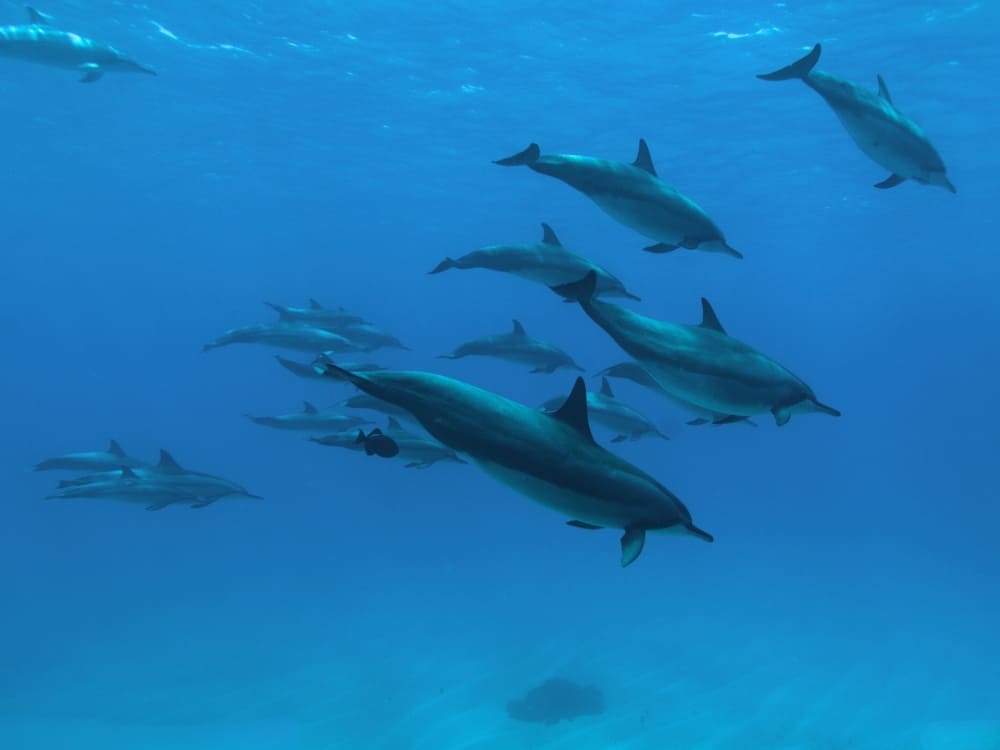
    A large pod of spinner dolphins swims gracefully together through the clear blue ocean waters of Fernando de Noronha.
    Photo: Sandro Rodrigues

    In general, September is the month with the best conditions to watch the marine life in Fernando de Noronha, though they can be spotted all year round. Stingrays, green turtles, barracudas, lemon sharks, moray eels, nurse sharks, octopuses, hawksbill turtles, and spinner dolphins are some of the most frequently spotted animals.

    Besides Diving, What to do in Fernando de Noronha?

    Diving is the main reason a lot of tourists choose to travel to Fernando de Noronha, but there are other incredible activities that are definitely worth your while.
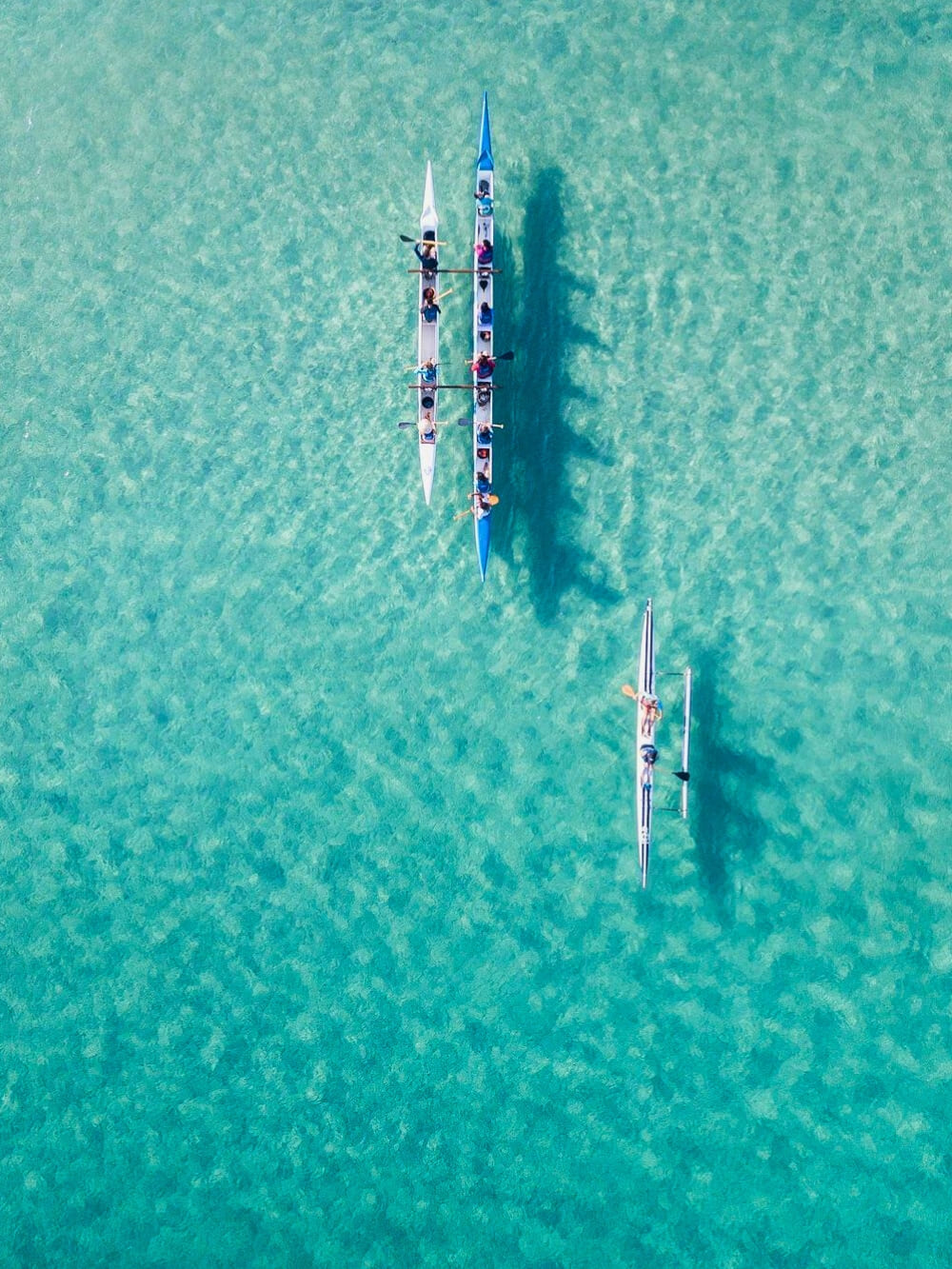
    Aerial view of people paddling a traditional Hawaiian canoe through the vibrant, transparent turquoise waters of Fernando de Noronha.
    @noronhacanoeclube

    Explore the beaches

    Fernando de Noronha beaches are some of the most beautiful you’ll ever see. You can swim and snorkel in the gorgeous blue waters of Baía do Sancho, the 35th best beach on the planet, according to The World’s 50 Best Beaches.

    The stunning views of Morro dos Dois Irmãos at Baía dos Porcos or the surfing vibes at Cacimba do Padre are also mandatory attractions.

    Other beaches you can’t miss: Praia do Cachorro, Praia do Meio, Praia do Bode and Praia do Americano.

    Island tours

    Explore all the best spots of the island in 4×4 vehicles, the perfect way for first-time visitors to explore Noronha’s attractions.

    These tours offer stops at iconic locations and often end with a memorable sunset experience at Forte do Boldró.

    Adventure activities

    Noronha is a paradise for adventure lovers. Explore scenic trails like Trilha do Atalaia or the challenging Capim-Açu trail, which offers beautiful views of untouched landscapes.

    For a unique and unforgettable adventure, try Hawaiian canoeing from Praia do Porto during sunrise and marvel at the sight of dolphins in the open sea.

    Visit marine life projects

    Fernando de Noronha takes the preservation of the ocean and its creatures very seriously. Some organizations are open for visitation all year round, allowing travelers to learn more about their efforts to protect the environment and even engage in some activities.

    The Tamar Project focuses on sea turtles, whereas the Spinner Dolphin Project is committed to spinner dolphins’ well-being and the island’s overall marine life. 

    Local culture and cuisine

    Immerse yourself in Noronha’s culture by exploring Vila dos Remédios, the island’s historical heart. Indulge in fresh seafood at renowned restaurants like Mergulhão or Xica da Silva, and don’t miss trying out local delicacies like tapioca pancakes!

    Sunset contemplation

    The sunsets in Fernando de Noronha are legendary. Head to Forte do Boldró or Praia da Conceição for jaw-dropping views as the sun dips into the Atlantic.

    For a quieter option, Mirante dos Golfinhos is the perfect place for people in need of a few moments of peace.
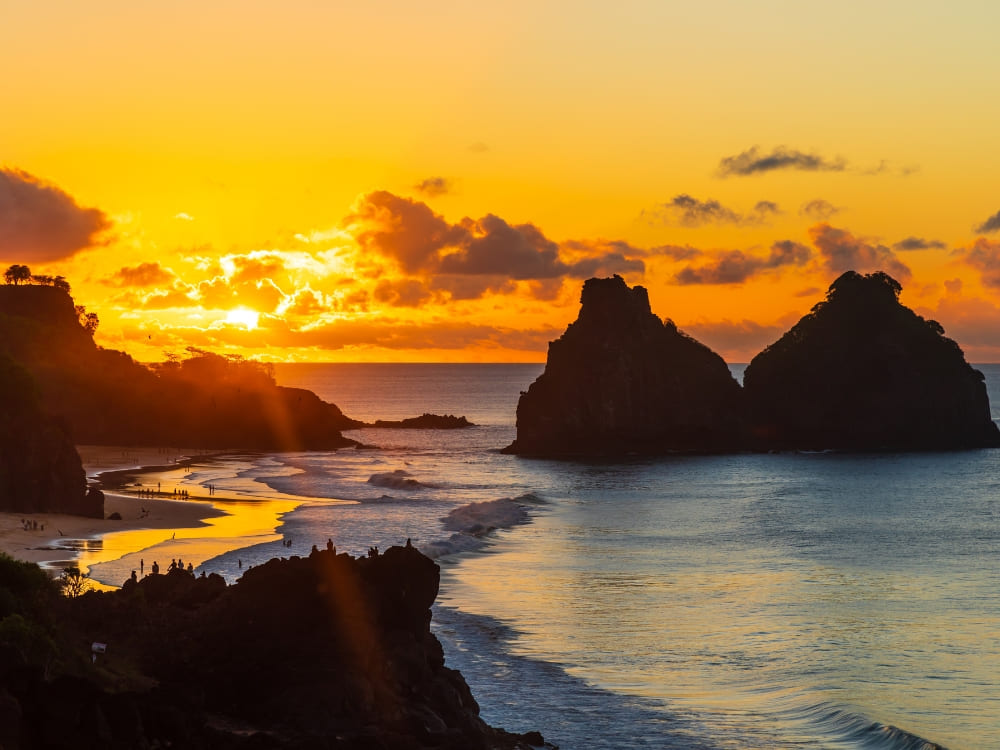
    A golden sunset illuminates the ocean waves and the Morro dos Dois Irmãos rock formations as surfers paddle in the water.
    .

    👉 Read more: 10 facts about Fernando de Noronha

    How many days should you stay in Fernando de Noronha?

    The average Fernando de Noronha diving trip lasts 4 to 6 days, enough time to explore the island’s dive sites, marine life, and other natural attractions.

    If possible, you should consider extending your stay so you can experience the full spectrum of Noronha’s underwater life—and maybe dive again in your favorite spots or look for a specific animal—and enjoy non-diving activities!

    Where to stay in Fernando de Noronha?

    The island holds many options for every need and budget, from refined five-star establishments to shareable rooms in small hostels. Check it out!
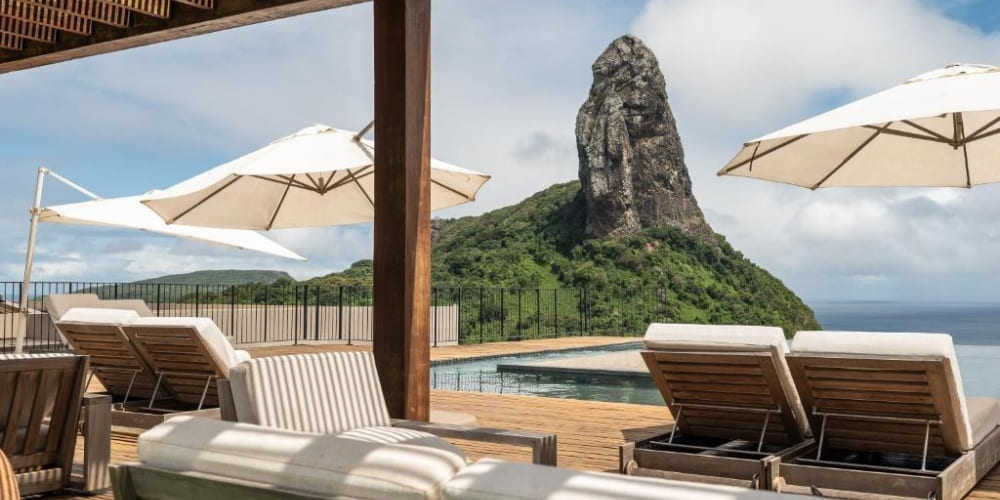
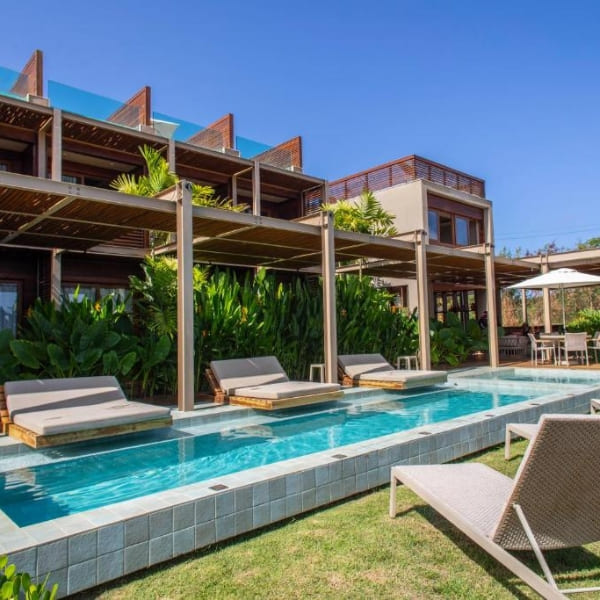
    Luxury hotel deck featuring a swimming pool and comfortable lounge chairs facing the iconic Morro do Pico in Brazil.
    Photo: Hamares Boutique Hotel

    Luxury hotels

    Fernando de Noronha is a decadent destination with some of Brazil’s highest hotel prices due to the beauty and exclusivity of the archipelago. Luxury accommodations are very sophisticated and ideal for people who can’t say no to comfort, fine dining, and overall high-end services.

    They are usually a lot closer to some very famous spots, with panoramic views and short walks away from sites like Baía do SuestePraia do Boldró, and Morro do Pico

    Middle-range hotels and inns

    Middle-range hotels and inns are good alternatives for cheaper rates without sacrificing a high-quality stay.

    The accommodations are simpler than the luxury ones, but they still do a wonderful job at providing comfort, delicious food, and leisure to their guests.

    Basic accommodations

    Travelers on a limited budget can choose guesthouses and hostels with private or shared rooms and bathrooms.

    These accommodations might be considerably far from Noronha’s diving sites (usually 1–2 km away), but they’re usually located in great neighborhoods like Vila dos Remédios, Floresta Velha, and Floresta Nova, which offer restaurants, grocery stores, bars, and street markets.

    👉 Read more: Where to stay in Fernando de Noronha?

    How Much Does it Cost to Scuba Dive in Fernando de Noronha?

    Considering the type/number of dives, equipment, and services, a Fernando de Noronha scuba diving tour costs from R$ 2.000 (approximately US$ 400 and € 340) per person—an average of R$ 5.325 (US$ 1,070; € 905). Prices vary according to season, trip duration, etc.

    TOUR INCLUDES DURATION STARTING PRICE*
    Fernando de Noronha Diving Trip 2 diving sessions (double), island tour (four-wheel drive), full board accommodation, round-trip transfer. 5 days US$ 920 
    Scuba Diving in Fernando de Noronha Guided dives, ballast + 2 tanks (per day), round-trip transfer. 2 days US$ 400
    Open Water Diving Course 2 diving lessons at the beach + 4 guided boat dives (full equipment included), international certification (PADI, SSI or NAUI), round-trip transfer, 5 days US$ 1,525
    Advanced Diving Course Diving lessons, 5 dives (4 daytime + 1 evening), full equipment, international certification (SSI), round-trip transfer. 4 days US$ 1,425

    *Per person, based on double occupancy in group departures. Prices may vary depending on season and availability. Exchange rate as of March 17, 2026; subject to change.

    If not included, you should also consider additional costs of equipment (rental per day):

    • Regulator: R$ 115
    • BCD (buoyancy compensator): R$ 115
    • Diving suit (neoprene): R$ 100
    • Mask: R$ 30
    • Fins: R$ 30
    • Flashlight: R$ 155

    Send us a message to get a customized quote. We’ll be happy to help!

    Taxes, Fees and Other Important Information

    Every traveler visiting Fernando de Noronha for tourist purposes must pay the Environmental Preservation Tax (TPA), which ensures the conservation of the archipelago’s natural resources. The TPA is charged individually and according to the number of days each person will stay on the island.

    For your convenience, paying this fee ahead of boarding is recommended. All you have to do is follow the directions of Noronha’s official website. However, if your credit card isn’t issued in Brazil, the TPA can only be paid at the counter at Fernando de Noronha Airport

    Most sites in the archipelago are protected by Fernando de Noronha Marine National Park. To visit them, you should buy a ticket online or at the park’s Visitor Center (Vila do Boldró). The ticket is valid for 10 days. More information here.

    To travel to Fernando de Noronha, these are the fees that every tourist must pay:
    • Park entry fee: R$ 384 per stay for foreigners; R$ 192 for Brazilians
    • Environmental Preservation Tax (TPA): R$ 105,79 per day

    Another way to preserve the archipelago is by limiting the number of visitors. In 2023, state and federal laws have determined that only 11,000 people per month are allowed on the main island. This is great for the environment and for tourism, as fewer people make it for a more exclusive and quiet experience, with no crowded areas and long lines.

    Scuba Diving Fernando de Noronha
    .

    Diving in Fernando de Noronha with PlanetaEXO

    If your dream vacation is diving in Brazil, then you should definitely plan your trip to Fernando de Noronha, one of the most beautiful nature destinations in the country!

    At PlanetaEXO, an ecotourism platform that offers Fernando de Noronha scuba diving packages, you experience the most authentic side of the island by exploring jaw-dropping underwater views with the guidance of highly qualified professionals and everything else you need for a wonderful, hassle-free trip. Contact us now!
  • Best Diving Spots in Fernando de Noronha

    Best Diving Spots in Fernando de Noronha

    Discover the wonders of Fernando de Noronha, a diver’s paradise offering diverse marine life, stunning dive sites, and a connection to nature!
    Fernando de Noronha National Marine Park is one of the best places in the world for diving. Famous for its biodiversity and crystal-clear waters, this UNESCO World Heritage Site has something for divers of all skill levels, combining adventure with conservation.

    From coral reefs to shipwrecks and underwater caves, Fernando de Noronha is an ocean lover’s dream destination. Before you plan your trip, find out when is the best time to dive and take a look at our diving packages to make the most of your visit.

    Fernando de Noronha island

    One of the things that makes diving in Fernando de Noronha stand out is the archipelago’s dedication to sustainable tourism. With eco-friendly practices to ensure that the region stays beautiful for future generations, visitors are encouraged to respect marine ecosystems.

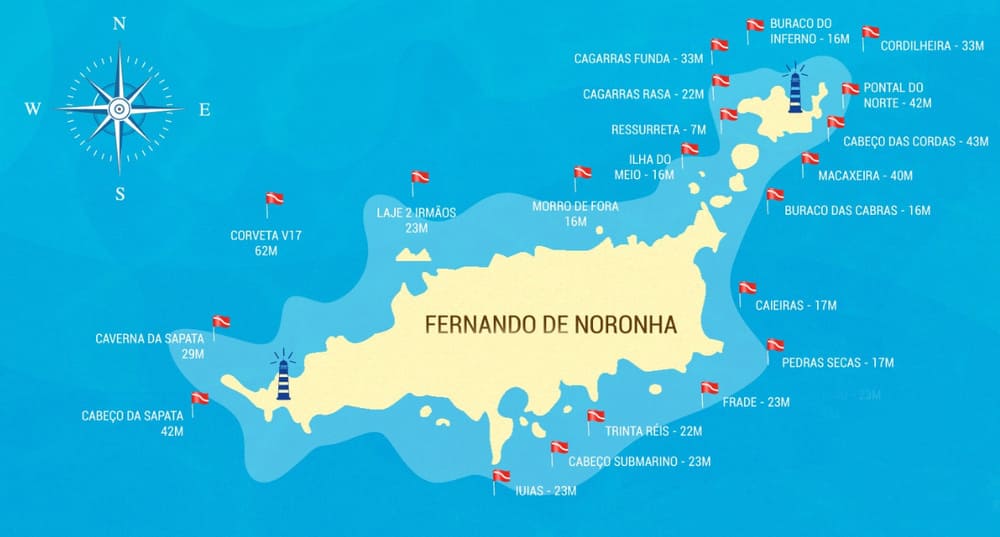
    Fernando de Noronha has over 20 world-class dive sites, so it’s great for both novice and experienced divers. You can explore coral gardens or navigate sunken shipwrecks at each site. Here’s a guide to the best diving spots in Fernando de Noronha, which will help you plan your adventure:

    👉 Planning your trip? Learn how to get to Fernando de Noronha with our complete guide

    Diving Spots in Fernando de Noronha


    Dive Spots in Fernando de Noronha

    Cabeço da Sapata (42m)

    This deep dive site features a natural coral reef amphitheater, challenging currents, and the chance to encounter large marine species like groupers and rays. The depth and underwater scenery make it a perfect spot for those looking to push their limits.

    Cabeço da Sapata
    Cabeço da Sapata. – Photo: Pamella Rech

    👉 Curious about Fernando de Noronha? Discover 10 interesting facts about this Brazilian island paradise.

    Ilha do Meio (16m)

    Ilha do Meio is known for its calm waters and underwater views, making it a great spot for relaxed dives. The site has diverse marine life, from small reef fish to moray eels, which makes it a great place for underwater photographers.

    Ressurreta (7m)

    If you’re new to diving and want to ease into it, Ressurreta is the place for you. It’s a calm and shallow dive site with plenty of fish and small coral formations. It’s also great for snorkelers.

    Caverna da Sapata (29m)

    This naturally lit underwater cave is a diver’s dream, offering a captivating interplay of light and shadow. The cave’s geological formations and species of fish create an ever-changing spectacle that divers won’t forget. It’s perfect for those interested in exploring intricate underwater landscapes.

    Corveta V17 (62m)

    This sunken warship is a must-go place to dive. Home to lots of marine life, you’ll find reef sharks, corals, and lots of fish there. It’s a challenging but impressive dive for experienced divers.

    Corveta V17 in Fernando de Noronha
    Corveta V17

    Laje 2 Irmãos (23m)

    Located near the iconic Dois Irmãos hill, this site offers stunning rock formations and marine biodiversity. Divers can encounter colorful schools of fish, playful dolphins, and sea turtles. Its moderate depth makes it accessible to both intermediate and advanced divers.

    Morro de Fora (16m)

    This shallow site is great for beginners and intermediate divers, with tropical fish and coral gardens. The vibrant marine life and calm conditions make it an excellent spot for those new to diving.

    Cagarras Rasa (22m)

    There’s a kaleidoscope of colors waiting for divers at this vibrant site. It’s got coral reefs and marine life, including angelfish and sea turtles. It’s a favorite for divers of all levels.

    Cagarras Funda (33m)

    This deeper dive site is perfect for advanced divers looking for a bit of adventure. With underwater cliffs and canyons, Cagarras Funda is home to rays and barracudas, offering a dynamic diving experience.

    Buraco do Inferno (16m)

    The name might sound a bit ominous, but this site is a maze of underwater crevices and caves. The geological formations provide a habitat for crustaceans and small reef fish, making it a peaceful place to explore.

    Cordilheira (33m)

    Cordilheira is known for its dramatic underwater landscapes, featuring steep drop-offs and towering cliffs. This site also offers rich biodiversity, from nudibranchs to pelagic species, making it a must-visit for advanced divers.

    Macaxeira (40m)

    This dive site is known for its intricate rock formations and vibrant coral gardens. It’s a great spot for experienced divers looking for an unforgettable underwater experience, as it’s home to rays, eels, and tropical fish.

    Buraco das Cabras (16m)

    A tranquil spot to observe small reef fish in a laid-back setting. Its shallow depth makes it ideal for beginners and those who want to take it easy on their dives.

    Caieiras (17m)

    Caieiras is known for its coral reefs and tropical fish, making it an easy place to navigate and perfect for intermediate divers. Its underwater environment makes for a memorable experience.

    Pedras Secas (17m)

    Pedras Secas is an underwater labyrinth of rock formations that’s perfect for divers who like exploring narrow passages and discovering hidden marine life.

    Frade (23m)

    This site is a popular spot for rays, turtles, and schools of fish. It’s an exciting dive for intermediate divers and offers a rewarding underwater experience.

    Trinta Réis (22m)

    Trinta Réis is a favorite for its atmosphere, scenery, and marine life. Divers often encounter a mix of small and large species, which makes for a well-rounded diving experience.

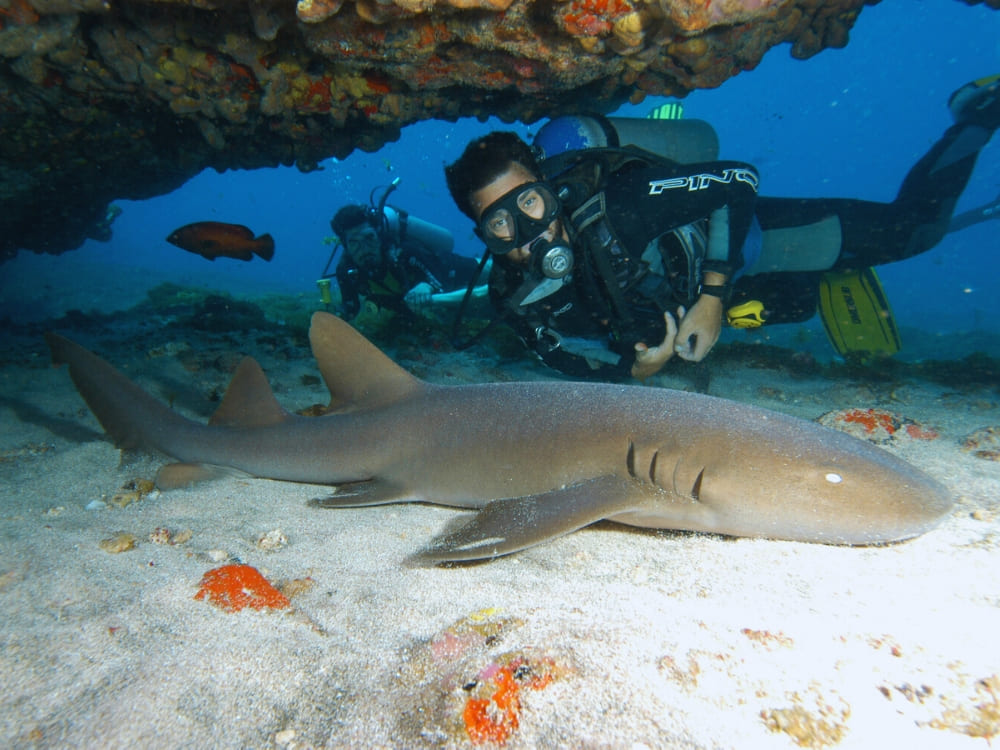
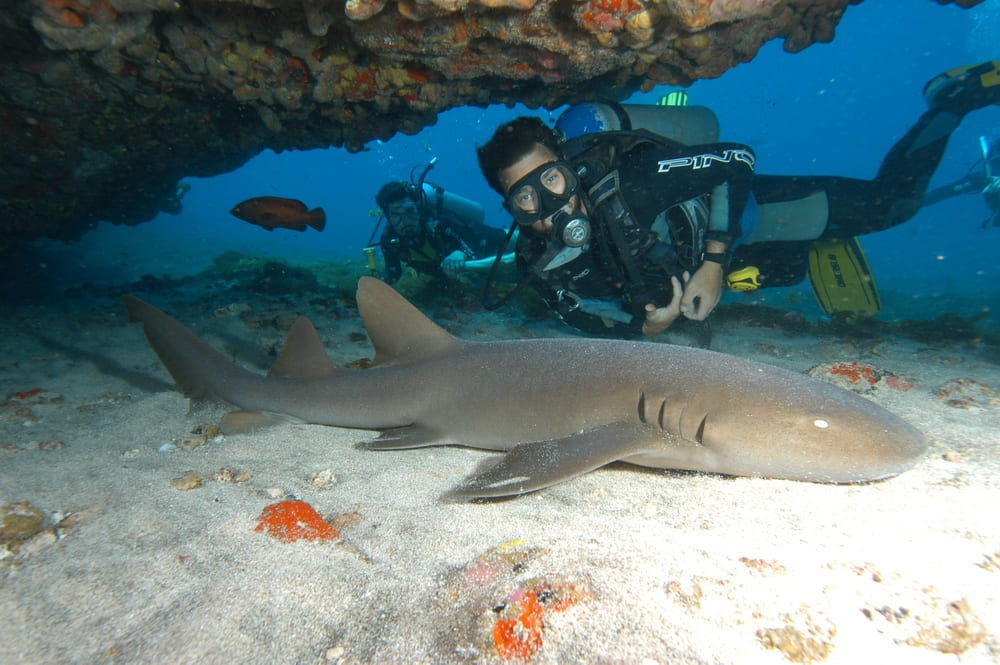
    Diver with a shark in Fernando de Noronha

    Cabeço Submarino (23m)

    If you’re into exploring geological wonders while observing diverse marine life, Cabeço Submarino is a great spot. It features unique rock formations and underwater landscapes.

    Iuias (23m)

    Iuias is a diver’s paradise. With a variety of marine life, it’s a favorite among underwater photographers and nature enthusiasts thanks to its biodiversity.

    Pontal do Norte (42m)

    Deep and challenging, Pontal do Nortes is home to diverse marine life, including schools of fish and the occasional shark. The depth and strong currents make it best suited for experienced divers looking for a rewarding adventure.

    Cabeço das Cordas (43m)

    If you’re looking for a great spot for diving, Cabeço das Cordas is a perfect choice. It offers amazing underwater views and marine life. The light on the coral formations is stunning, making it a great place for advanced divers to test their skills.

    Dive Into Fernando de Noronha’s Wonders

    Now that you know the best diving spots in Fernando de Noronha, it’s time to start planning your adventure. At PlanetaEXO, we’ve got packages that let you explore this underwater paradise responsibly and sustainably.

    Whether you’re a beginner looking for calm waters or an experienced diver looking for a deep-sea challenge, our trips are guided by local experts and are sure to be unforgettable. Dive into marine life, coral reefs, and underwater landscapes — book your Fernando de Noronha adventure today!