Tag: Bahia

  • What to Do in Chapada Diamantina, Brazil

    What to Do in Chapada Diamantina, Brazil

    Distances, difficulty, entrance fees, and the base town for each of the 10 Chapada Diamantina attractions are worth planning your days around

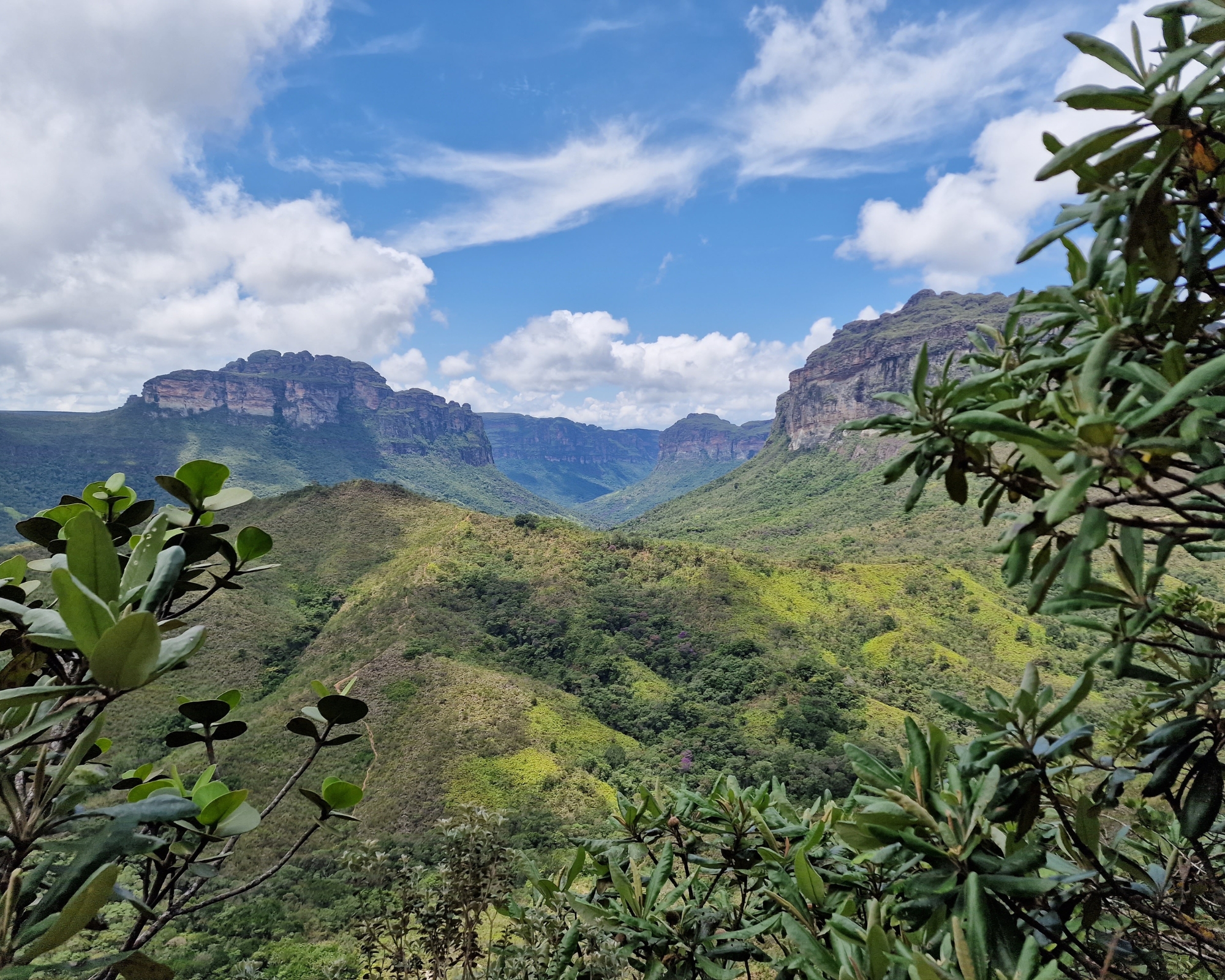
    Chapada Diamantina National Park covers 152,000 hectares of Bahia’s central highlands, spread across the municipalities of Lençóis, Palmeiras, Mucugê, Andaraí, and Ibicoara. Created by federal decree on September 17, 1985, it is one of the few places where three Brazilian biomes meet inside a single park (Caatinga, Cerrado, and Atlantic Forest).

    In one week, you can look down a 340-meter waterfall, swim in a flooded cave where a prehistoric sloth was recovered, and sleep in a valley with no cell signal. Access is controlled on the busiest routes: ICMBio counts more than 25,000 visitors a year on the Cachoeira da Fumaça trail alone. Want to know what to do in Chapada Diamantina without burning a day on the wrong trail?

    PlanetaEXO, an ecotourism platform specializing in Chapada Diamantina tours, has selected 10 attractions, with the distance, difficulty, fee, and base town for each. Check it out below!

    Vale do Pati

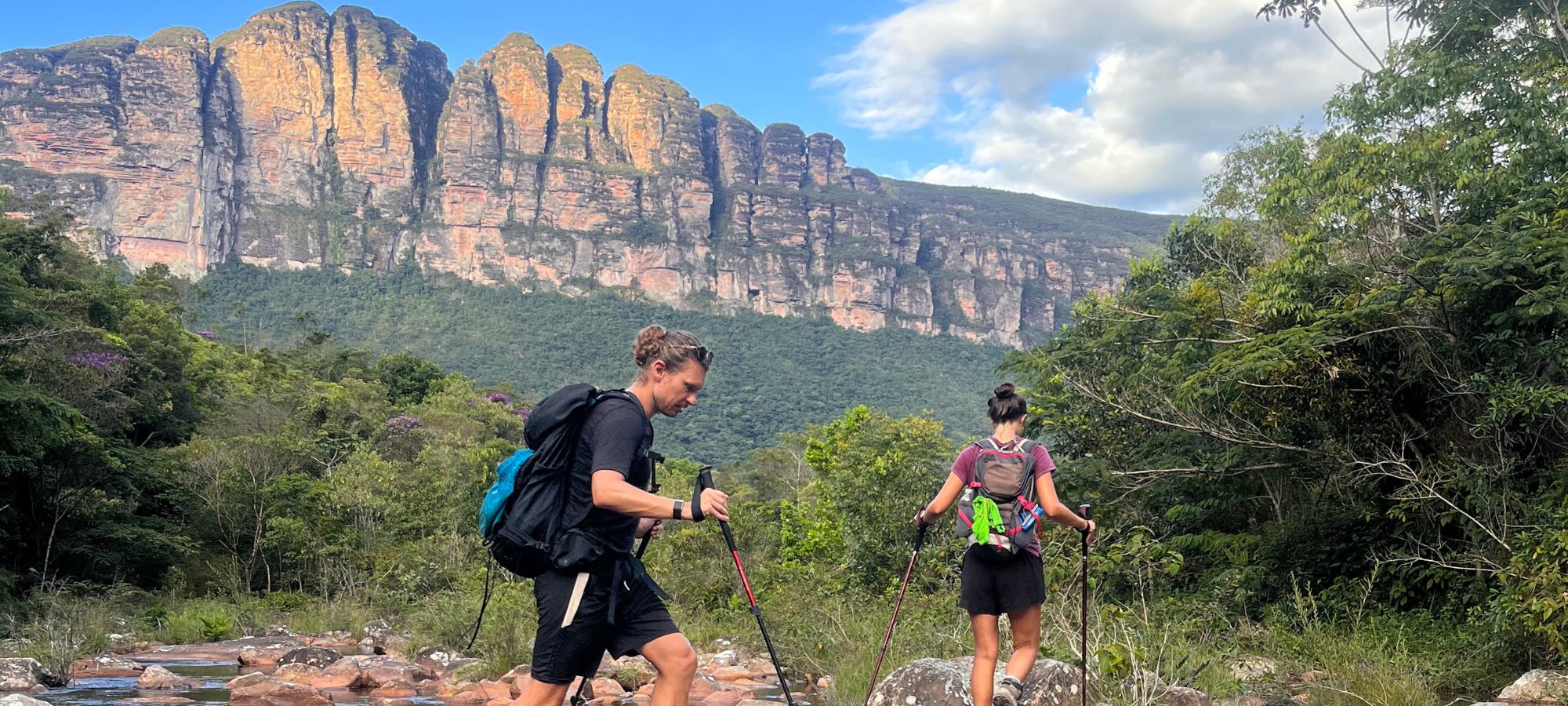
    Vale do Pati sits in the middle of the national park and can only be crossed on foot. A full traverse covers more than 70 kilometers over five days, climbing to nearly 1,400 meters, with daily stages of 15 to 25 kilometers. There is no road in, no cell signal, and no hotel.

    You sleep in the houses of the families who still live in the valley, who cook your meals and rent out a room. Because you can enter and leave through three different points—Vale do Capão, Guiné (in Mucugê), and Andaraí—itineraries run anywhere from 3 to 8 days, which is what makes it the most customizable trek in the park.

    Good to know:

    • Base towns: Vale do Capão, Guiné, or Andaraí.
    • Distance: 70+ km over 5 days, with 3-day and 8-day versions.
    • Difficulty: hard (15 to 25 km a day carrying your own pack).
    • Guide: essential; the route is unmarked and crosses private land.

    👉 Read more: 10 Facts about Vale do Pati, Brazil

    Cachoeira do Buracão

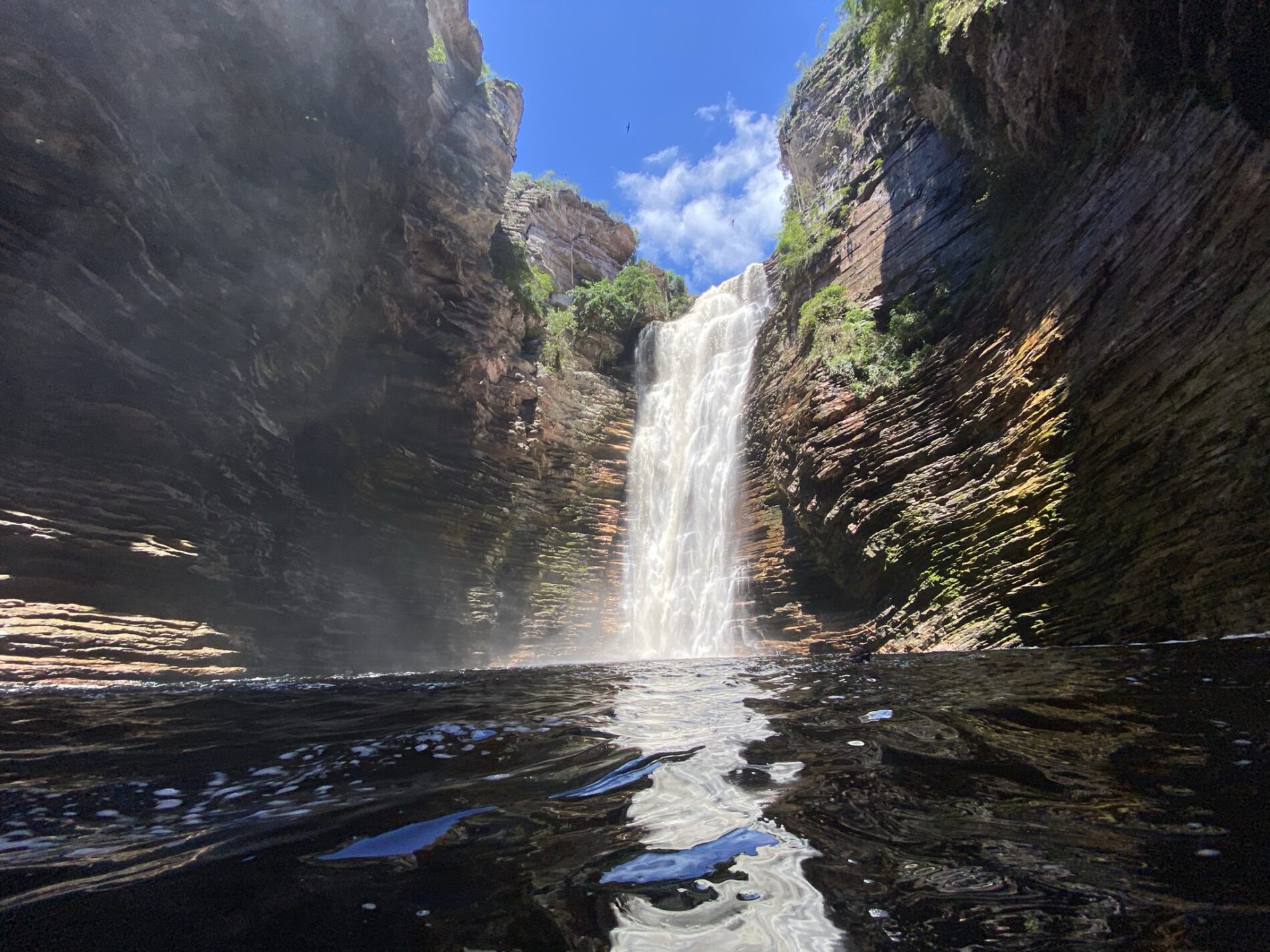
    Cachoeira do Buracão drops 85 meters into a canyon of layered rock near Ibicoara, at the southern end of Chapada Diamantina. The 3-kilometer trail in is short and rated light to moderate, which makes it the best return on effort of any big waterfall here.

    Cachoeira do Buracão falling into a dark pool between the layered canyon walls near Ibicoara, seen from the water

    Located within the Parque Natural Municipal do Espalhado, access to the waterfall requires a municipal registered guide or visitor conductor. Visitors must also pay an entry fee and wear a mandatory life jacket when entering the pool. After heavy rain, the current can make swimming impossible, even though the waterfall itself only gets stronger.

    Good to know:

    • Base town: Ibicoara.
    • Distance: about 3 km each way, on a light-to-moderate trail.
    • Fee and guide: both mandatory, hired in town or at the guides’ association.
    • Combine it with: Cachoeira das Orquídeas and Cachoeira do Recanto Verde on the same day.

    👉 Explore the adventure: 6-Day Ultimate Chapada Diamantina Hike

    Morro do Pai Inácio

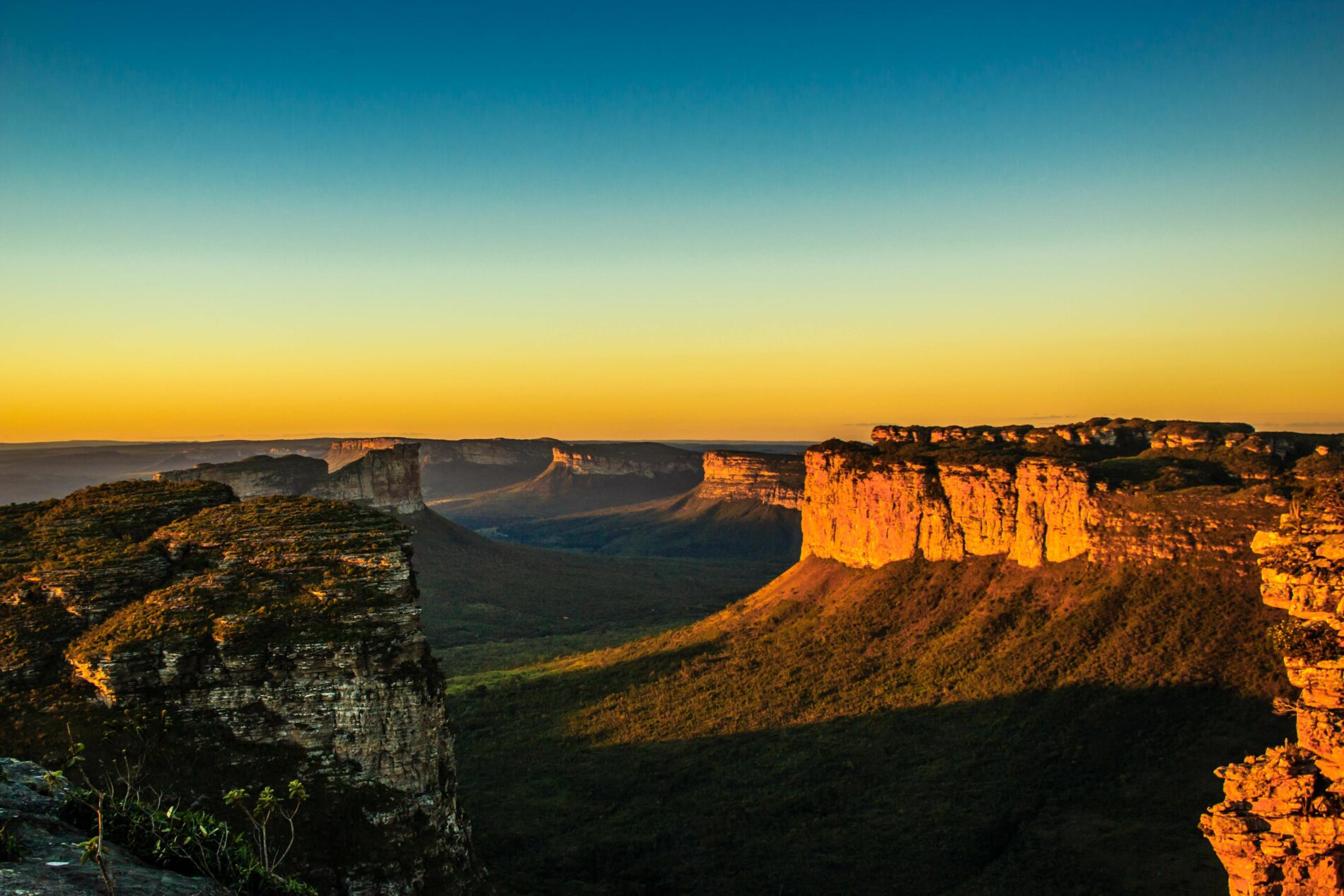
    If you have half a day and are still deciding what to do in Chapada Diamantina, start here. The summit of Morro do Pai Inácio stands at 1,120 meters, roughly 250 meters above the plain, while the climb from the gate takes about 25 minutes on a short, steep path.

    Sunset from Morro do Pai Inácio over the flat-topped hills and the valley cut by the BR-242 in Chapada Diamantina

    From the top, get the Camelo and Três Irmãos hills and the full width of the valley cut by the BR-242 highway. Go close to sunset and pair it with a nearby waterfall such as Poço do Diabo.

    Good to know:

    • Base town: Lençóis or Palmeiras, both under an hour by car.
    • Distance: roughly 500 meters uphill from the parking area.
    • Difficulty: easy (the only stop on this list a non-hiker can do).
    • Fee and hours: small gate fee (R$12 recently, check locally); 9 AM to 5 PM.

    Cachoeira da Fumacinha

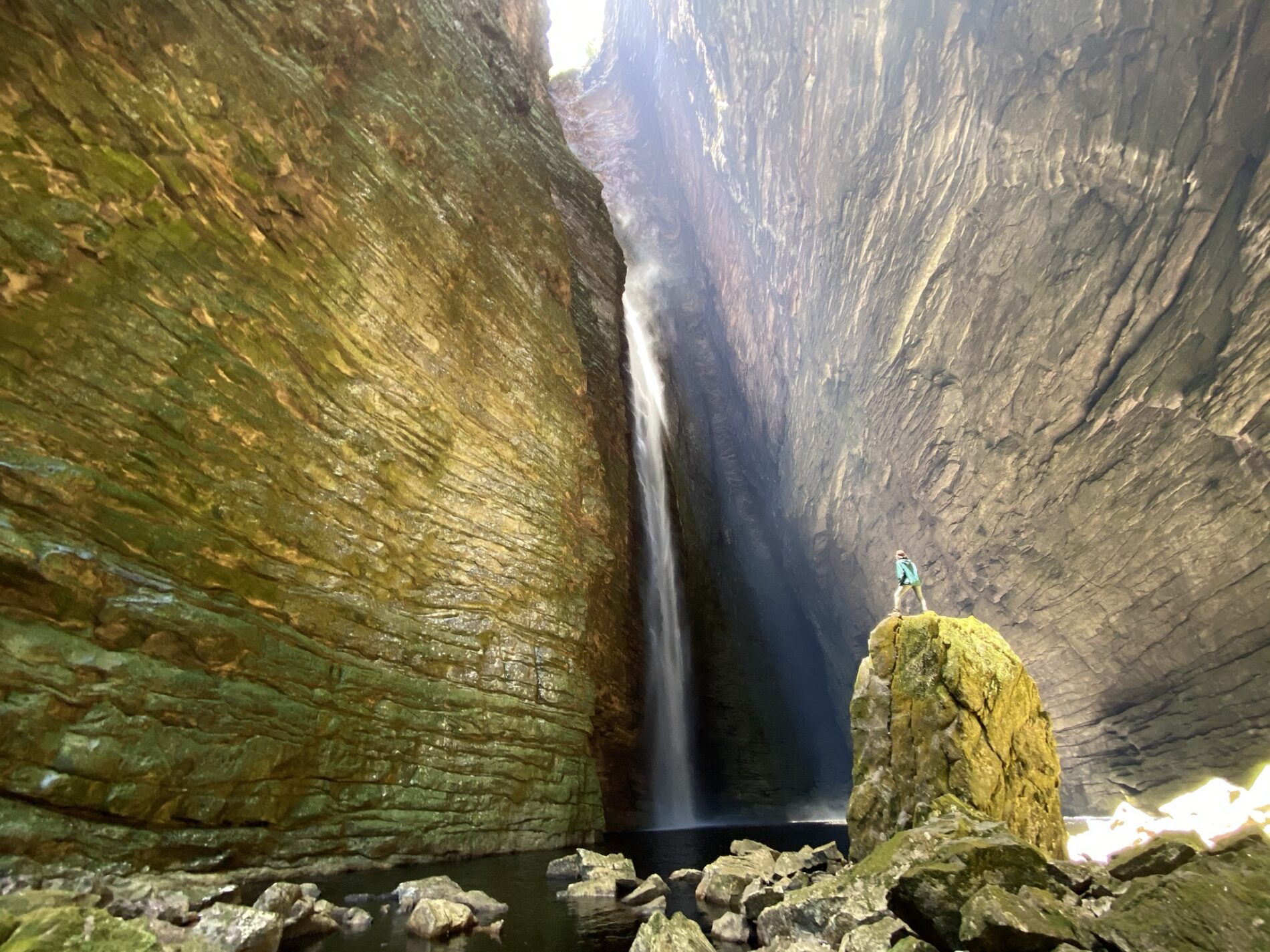
    Fumacinha is the hardest single day on this list. The walls closing in around the falls rise close to 300 meters, and the waterfall itself was measured at 210 meters by the Projeto Cachoeiras Gigantes survey, well above the 100 meters usually quoted.

    A hiker standing on a boulder inside the closed canyon of Cachoeira da Fumacinha, dwarfed by walls close to 300 meters high

    The trail runs 18 kilometers round trip up the riverbed from the Baixão community, which is itself 30 kilometers of dirt road from Ibicoara. The first 3 kilometers are easy; after that you are hopping boulders and using your hands.

    A registered Chapada Diamantina guide is mandatory, as the river turns dangerous in the rainy season.

    Good to know:

    • Base town: Ibicoara, plus 30 km of dirt road to the trailhead.
    • Distance: 18 km round trip (3 to 4 hours each way).
    • Difficulty: hard (riverbed boulders and scrambling after km 3).
    • Watch the forecast: powerful currents during the rainy season, while the flow can diminish significantly in dry months.

    👉 Read more: Chapada Diamantina Waterfalls: Best Trails and Hidden Gems

    Cachoeira da Fumaça (from the top)

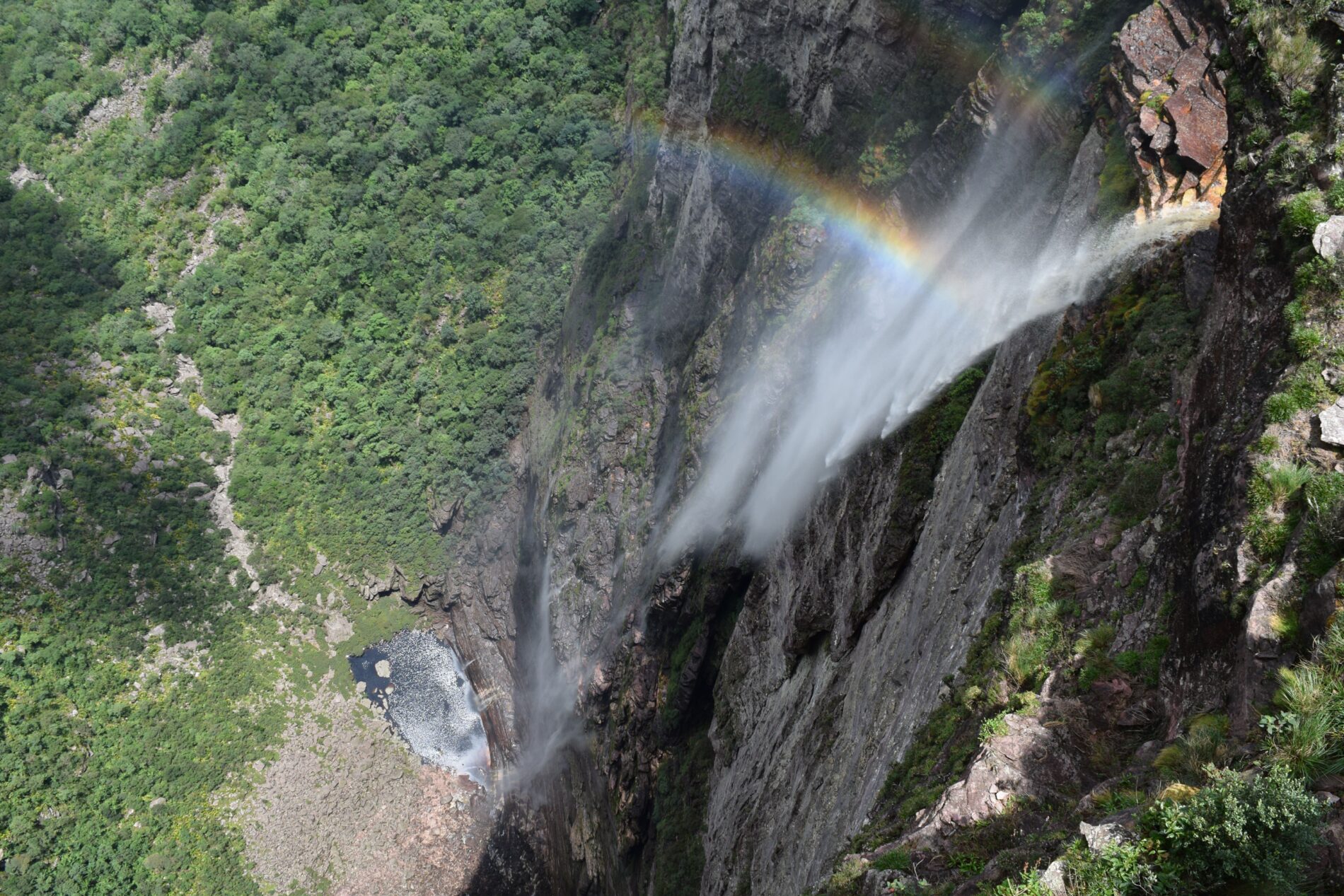
    At 340 meters, Cachoeira da Fumaça is the second-highest waterfall in Brazil, behind Cachoeira da Neblina in Rio de Janeiro. Wind catches the water long before it lands and turns it into drifting spray, which is where the name comes from—fumaça means smoke.

    The 340-meter Cachoeira da Fumaça seen from the top, its water breaking into spray with a rainbow above the valley

    The trail from Vale do Capão is 12 kilometers round trip, with 2 kilometers of steep steps, then 4 kilometers of uneven rock to the lookout. It is the busiest controlled trail in Chapada Diamantina National Park.

    There is no pool at the top, so most groups drive the extra 3 kilometers to Cachoeira do Riachinho to cool off afterward.

    Good to know:

    • Base town: Vale do Capão, in the municipality of Palmeiras.
    • Distance: 12 km round trip (about 5 hours).
    • Difficulty: moderate (the first 2 km are the whole climb).
    • Timing: the fall can disappear completely at the end of the dry season.

    👉 Read more: When is the best time to visit Chapada Diamantina?

    Cachoeira da Fumaça (from the bottom)

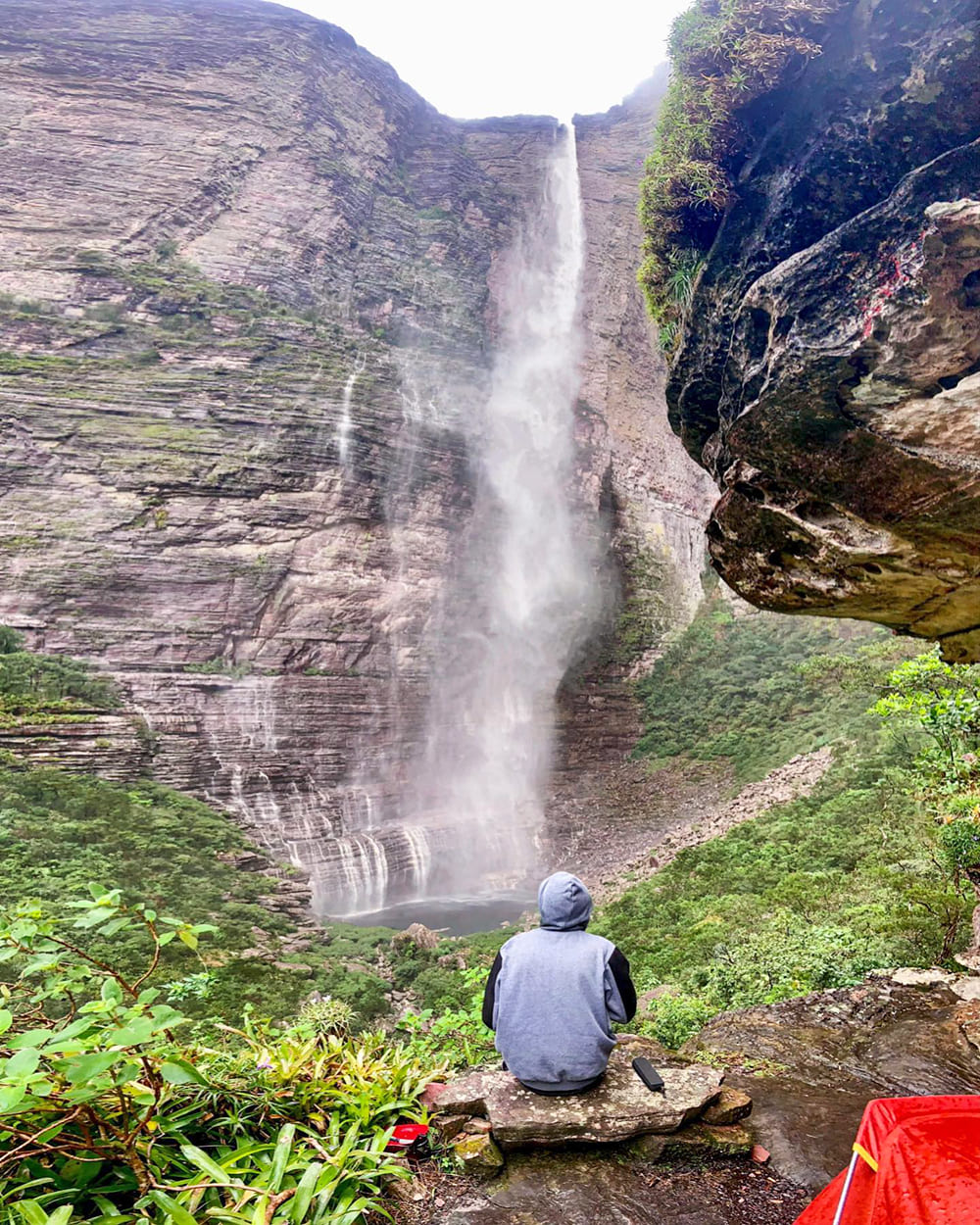
    Same waterfall, opposite angle, completely different trip. Reaching the base means a 3-day traverse between Vale do Capão and Lençóis, in either direction, camping in the wild and carrying your own food, water, and equipment.

    A trekker sitting at camp watching Cachoeira da Fumaça from the bottom on the traverse between Vale do Capão and Lençóis

    Your reward for completing this classic Chapada Diamantina trek is a refreshing swim in the natural pool right at the base of the towering cliff face. Along the way, the trail winds through pristine forest, historic diamond-mining ruins, and past two additional waterfalls: Capivara and Palmital.

    Keep in mind that there are no restroom facilities along the trail, so visitors must pack out all trash and waste.

    Good to know:

    • Base towns: Vale do Capão and Lençóis, one at each end.
    • Duration: 3 days, wild camping, no resupply.
    • Difficulty: hard (full pack, rock sections, river crossings).
    • Bring: tent, water treatment, all your food, and waste bags.

    👉 Explore the adventure: Chapada Diamantina Tour 7 Days

    Poço Encantado and Poço Azul

    These two flooded caves are the easiest stop on any list of what to do in Chapada Diamantina—and the most unique.

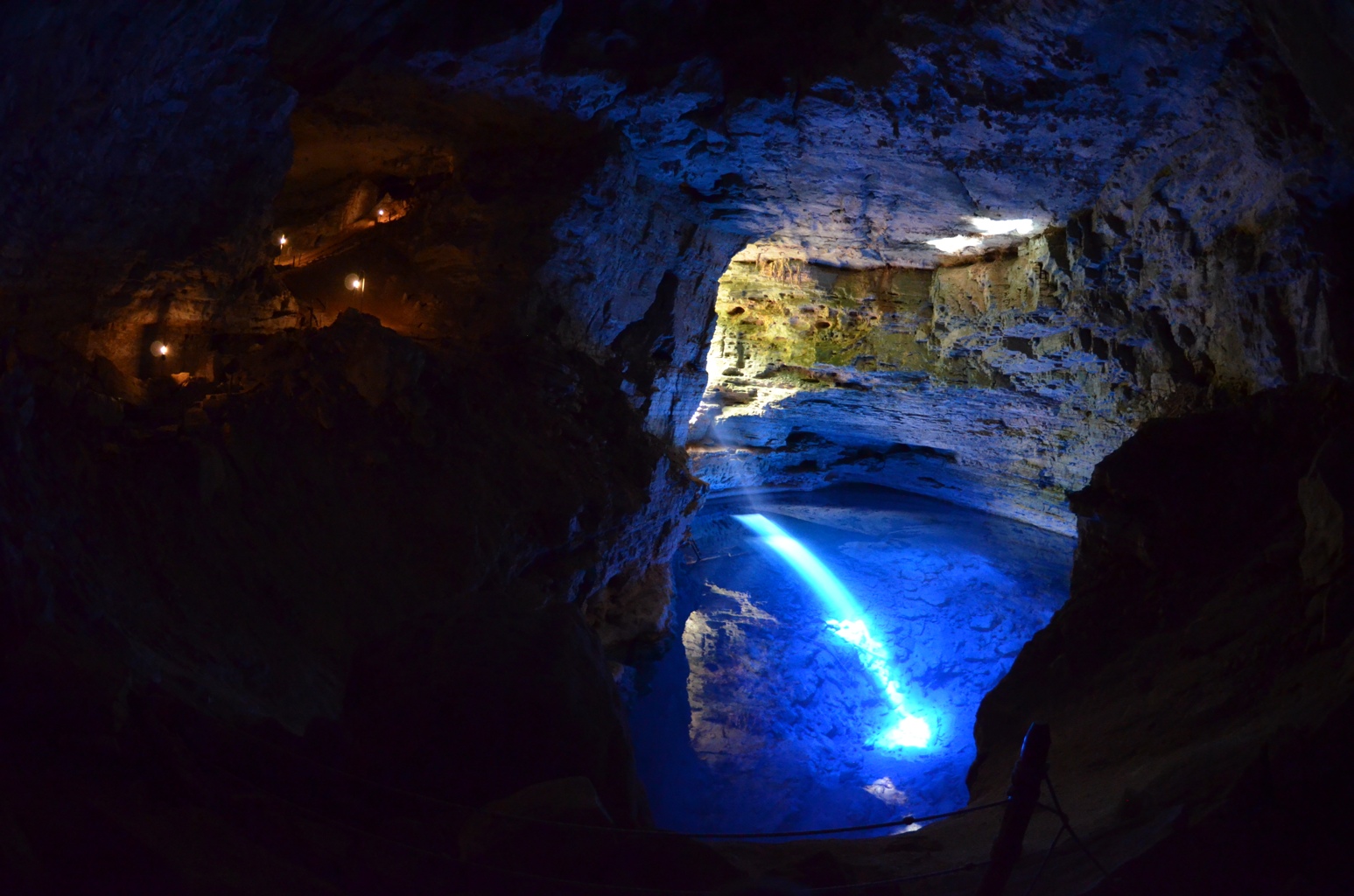
    Poço Encantado in Itaetê measures 110×70 meters and is over 60 meters deep. Its crystal-clear water comes from a non-renewable water table, so swimming is banned. From April 1 to September 10 (peaking in June and July), sunlight passes through a rock opening onto the lake between 10 AM and 1:30 PM.

    A shaft of sunlight hitting the blue water of Poço Encantado inside its cave chamber in Itaetê

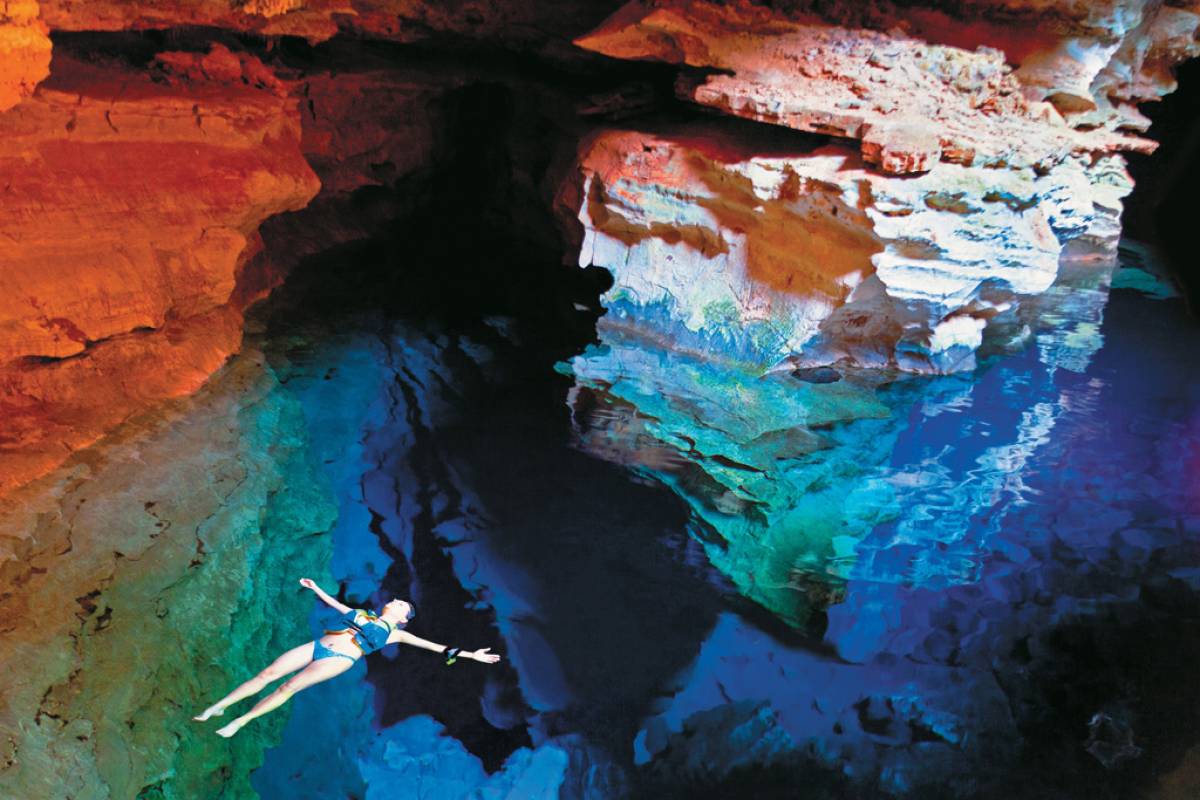
    Poço Azul, in Nova Redenção, has running water, so floating with a life jacket is allowed. It is also a fossil site—divers recovered a near-complete skeleton of Eremotherium laurillardi, a ground sloth up to 6 meters long weighing around 5 tons, extinct for roughly 11,000 years. The first skull surfaced in 1995.

    A visitor floating on her back on the blue water of Poço Azul, the cave walls mirrored in the pool at Nova Redenção

    Good to know:

    • Base towns: Itaetê (Poço Encantado) and Nova Redenção (Poço Azul), one hour apart.
    • Distance: Poço Encantado is 140 km from Lençóis, reached by dirt road.
    • Fees: both sit on private property and charge on-site.
    • Best light: April to September, between 10 AM and 1:30 PM.

    👉 Read more: 10 facts about Chapada Diamantina National Park

    Cachoeira do Mixila

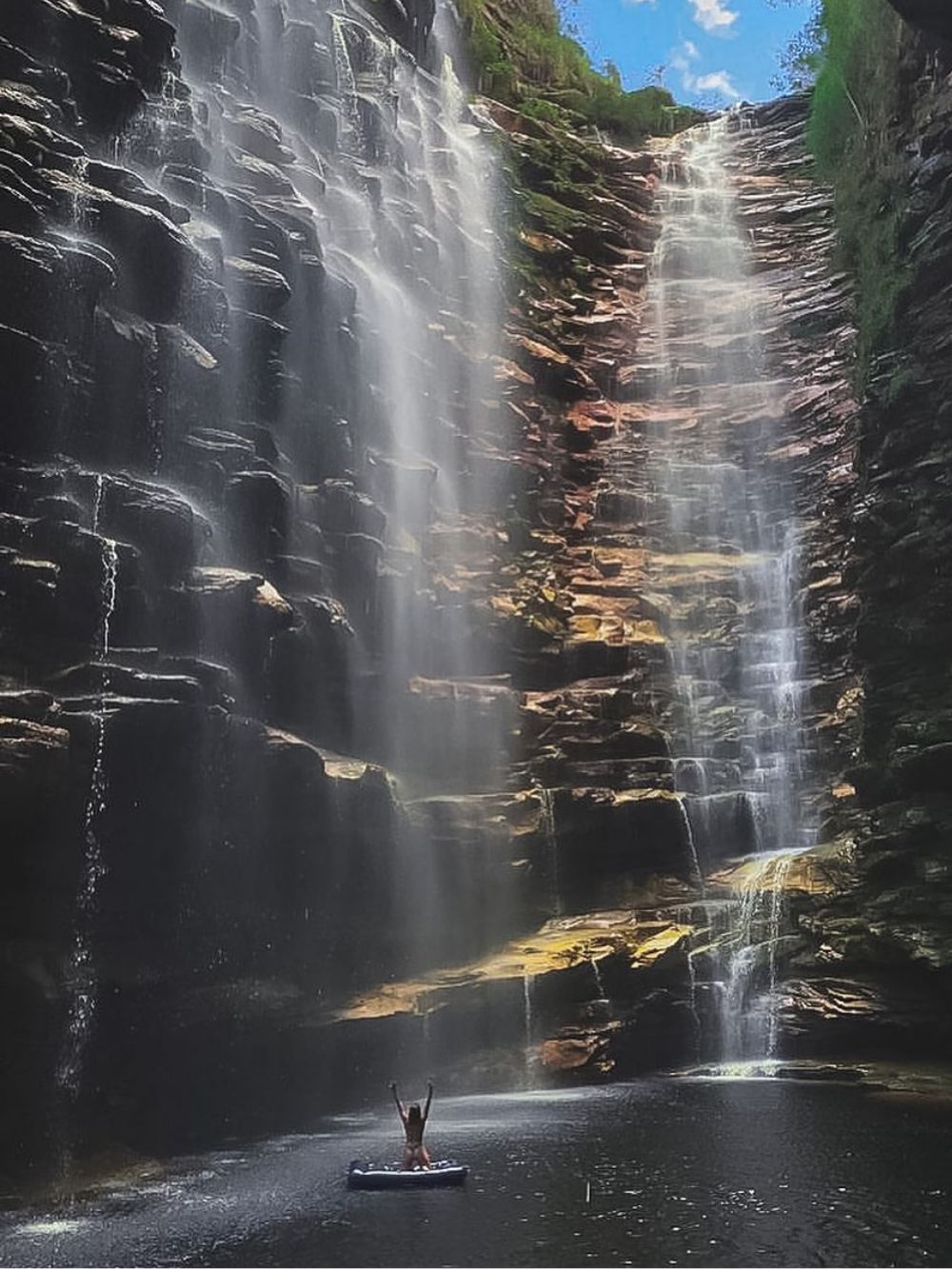
    The 80-meter Mixila waterfall sits deep inside the Capivari river canyon, which narrows to 4 meters wide at its tightest point. Get there by following the riverbed from near Lençóis, hopping boulders, and swimming across two pools with your backpack left behind on the rocks.

    A swimmer on a float raising both arms at the foot of the 80-meter Cachoeira do Mixila in the Capivari canyon
    Photo: @nairaferreiraa

    As a day hike, it is punishing and only for very fit hikers—roughly 25 kilometers round trip, after a 9-kilometer approach by car best driven in a 4×4. Camping one night turns it into a much better trip and lets you add the Capivari and Poção waterfalls on the way.

    Good to know:

    • Base town: Lençóis.
    • Distance: about 25 km round trip.
    • Difficulty: hard (4 to 5 hours on day one, 6 to 7 hours on day two).
    • You will swim: two pools have to be crossed, so pack dry bags.

    Cachoeira do Sossego

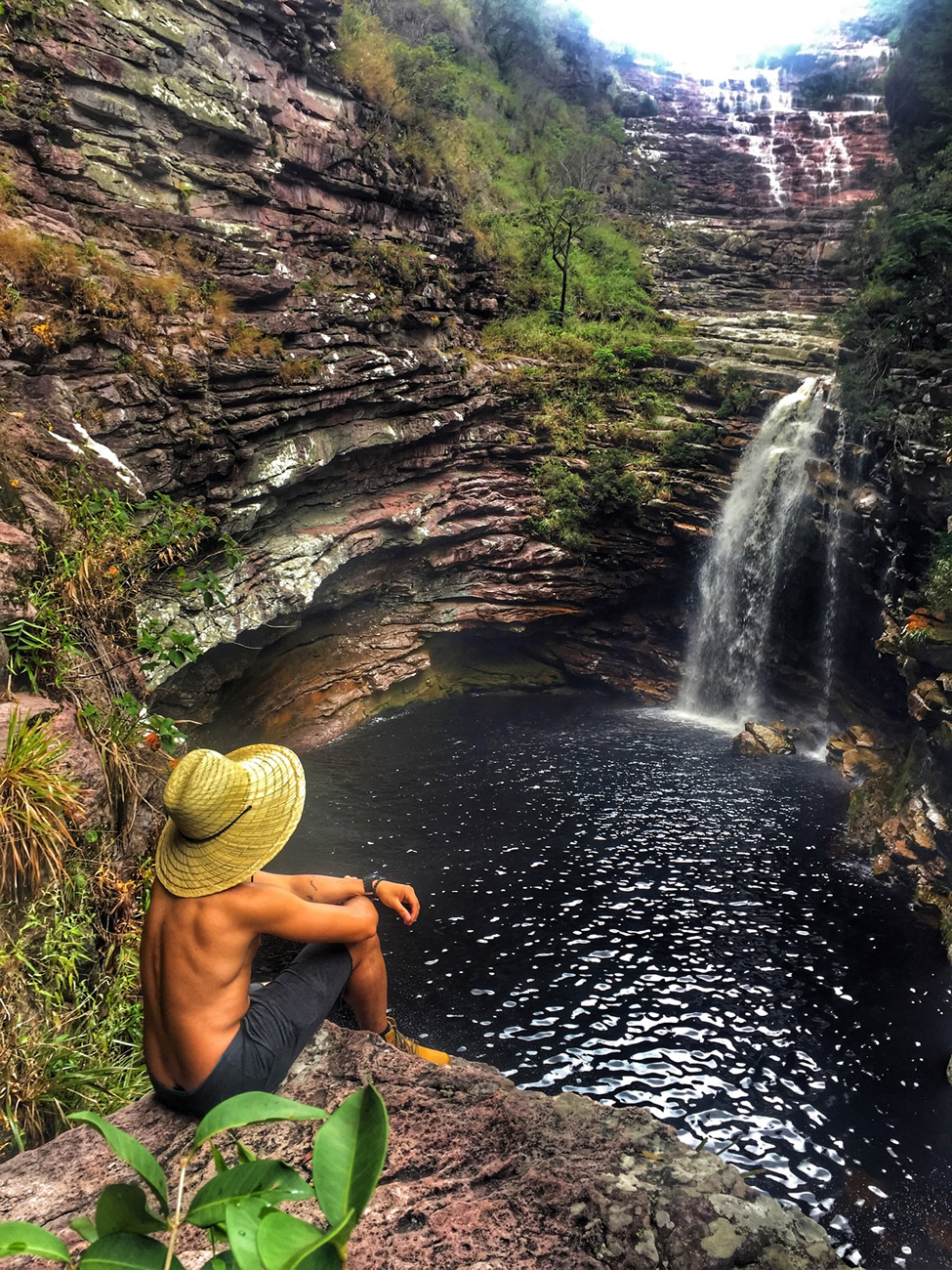
    Sossego drops about 20 meters down a stepped wall inside a canyon, into a pool wide enough to swim across and flanked by flat rock to dry off on. The round trip from Lençóis, Bahia, is 12 kilometers with 463 meters of elevation gain, normally done in a single day.

    A traveler in a straw hat sitting on the rock above the pool of Cachoeira do Sossego, 12 kilometers from Lençóis

    The final section proceeds along the riverbed across large boulders, including a passage beneath an overhanging ledge that should only be attempted during low water levels. Avoid this route following extended rainfall, as the river rises rapidly and makes the rocks exceptionally slick.

    Good to know:

    • Base town: Lençóis.
    • Distance: 12 km round trip (463 m of elevation gain).
    • Difficulty: hard for the distance (the boulder sections are the slow part).
    • Do not go: after several consecutive days of rain.

    👉 Read more: The 5 Best Hikes in Chapada Diamantina: Trails, Waterfalls and Distances

    Lapa Doce cave and Pratinha

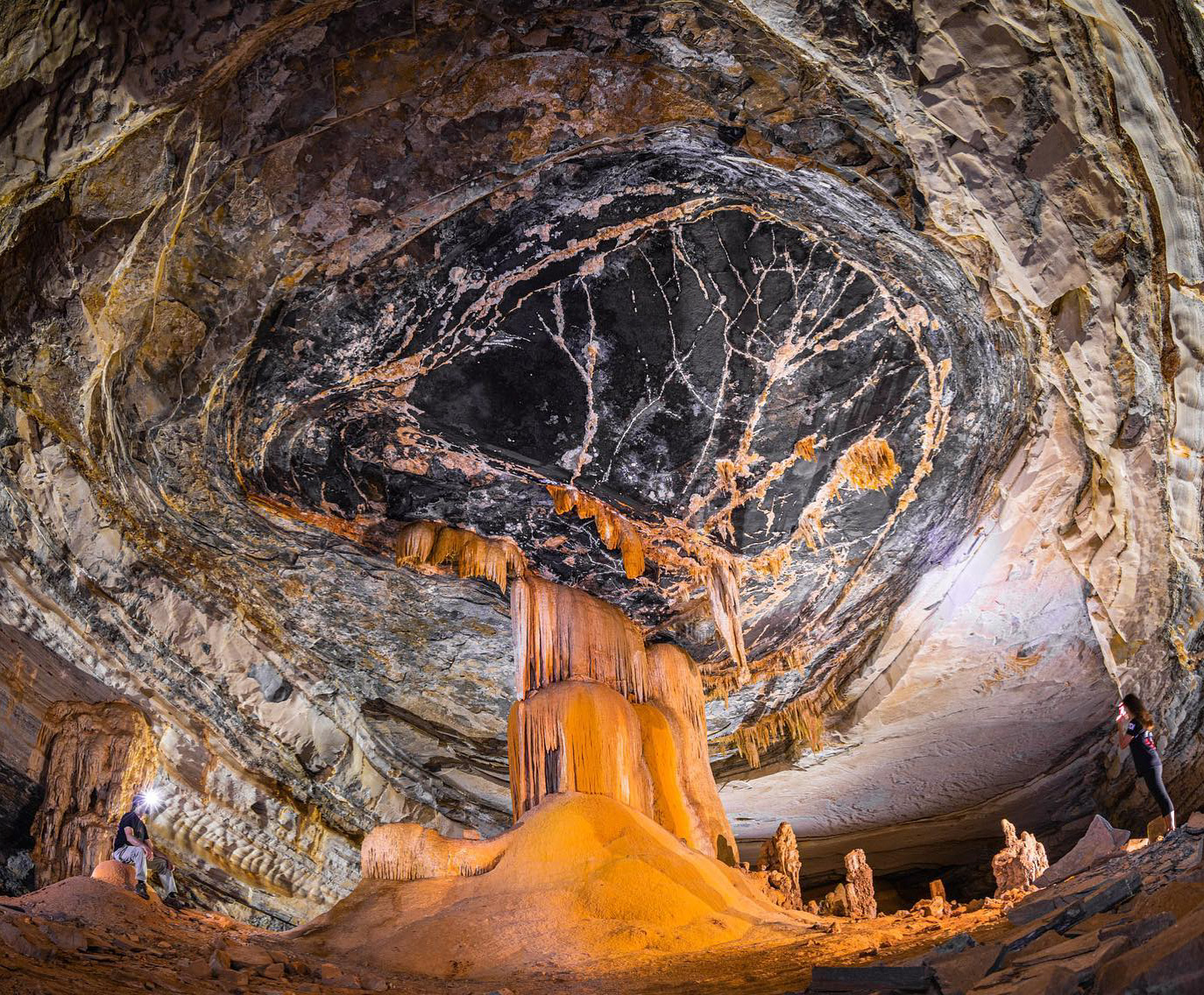
    Lapa Doce, in Iraquara, is part of a cave system 42 kilometers long, of which 850 meters are open to visitors around 1.5 hours underground among stalactites, stalagmites, and limestone curtains. It has more than ten entrances and is the most visited cave in the municipality.

    Visitors lit by headlamps beside a giant column of stalagmites in the Lapa Doce cave chamber in Iraquara

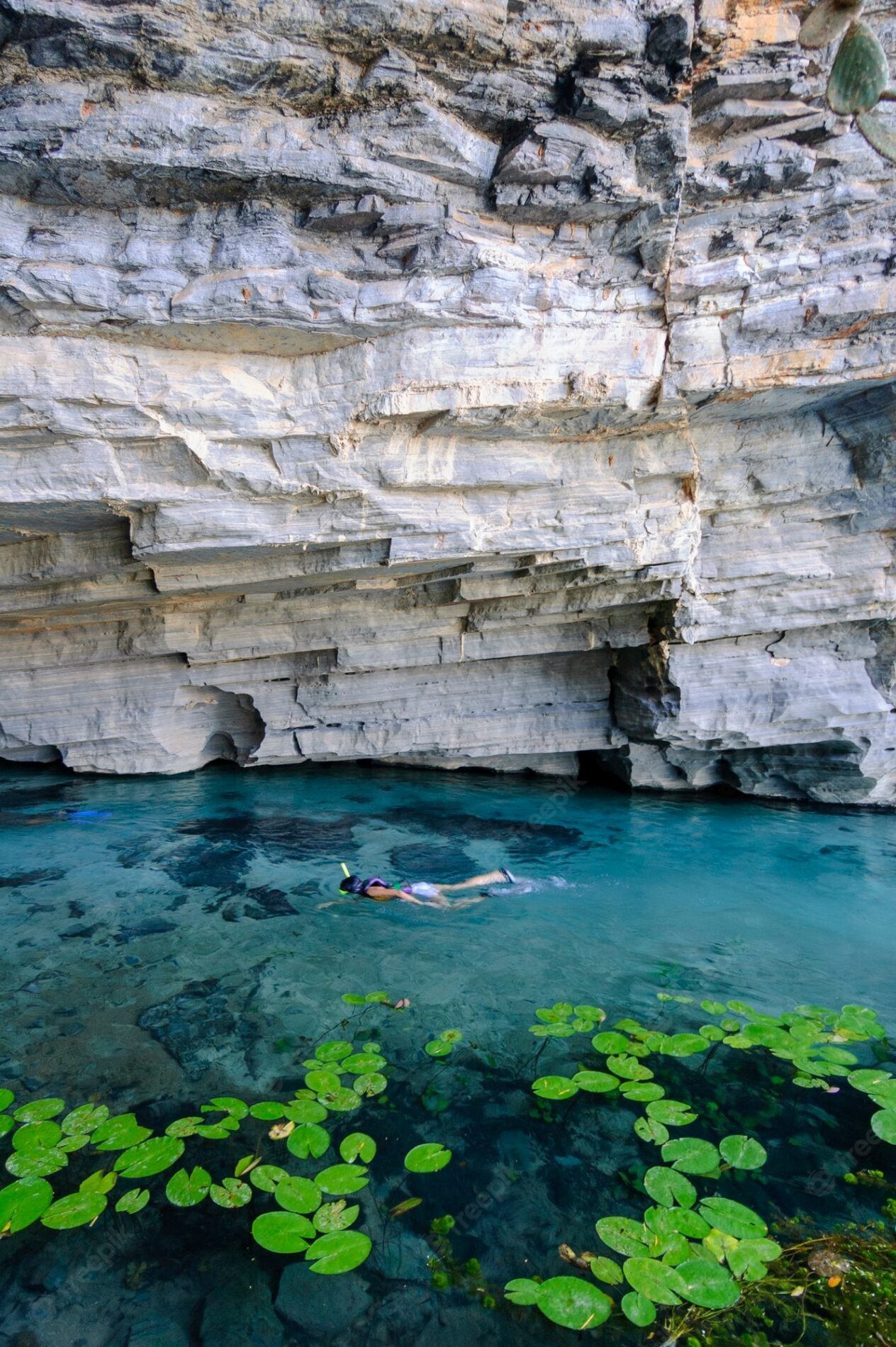
    The visit starts with a steep descent on stairs and stays easy after that, which makes it workable for almost anyone. Most people pair it with Pratinha, minutes away, where a clear river runs straight out of a cave mouth and you can float, snorkel, or ride the zip line. Both charge on-site.

    A snorkeler in the clear turquoise water of Pratinha, under the layered limestone wall and among the water lily pads

    Good to know:

    • Base town: Iraquara, about 1.5 hours from Lençóis by car.
    • Distance: 850 meters underground (roughly 1.5 hours).
    • Difficulty: easy (after the stairs at the entrance).
    • Guide: mandatory inside Lapa Doce; fees paid on-site at both stops.

    Ready to Visit Chapada Diamantina? Plan Your Trip with PlanetaEXO

    Now that you know what to do in Chapada Diamantina, it’s time to pick your favorite attractions and plan your vacation.

    PlanetaEXO is an ecotourism platform specializing in hiking and trekking tours in Brazil. Working with local guides and operators who know the national park like the back of their hand, our team plans your entire trip, from logistics to tailor-made itineraries, so all you have to do is enjoy yourself. Contact us now!

  • 10 Facts about Vale do Pati, Brazil

    10 Facts about Vale do Pati, Brazil

    Looking for an experience in Brazil’s Vale do Pati, the trekking hub of Chapada Diamantina? Learn all about it before booking your trip!

    Amidst Chapada Diamantina National Park, in the state of Bahia, Vale do Pati is a dream destination for trekkers all over the world. Hiking trails, waterfalls, rock formations, and beautiful landscapes make this the perfect place for travelers seeking adventure and full immersion in nature.

    Want to learn more about this fantastic place? PlanetaEXO, an ecotourism platform specializing in Chapada Diamantina tours, has put together 10 facts about Vale do Pati. Check them out below!

    1. Thousands of Football Fields Can Fit Inside Vale do Pati

    Chapada Diamantina National Park ranges over 152,142 hectares—bigger than Hong Kong, Singapore, and Malta—while Vale do Pati’s total area is 12,300 hectares.

    Let’s put it in easier terms: Vale do Pati is as big as 17,227 football (soccer) fields!
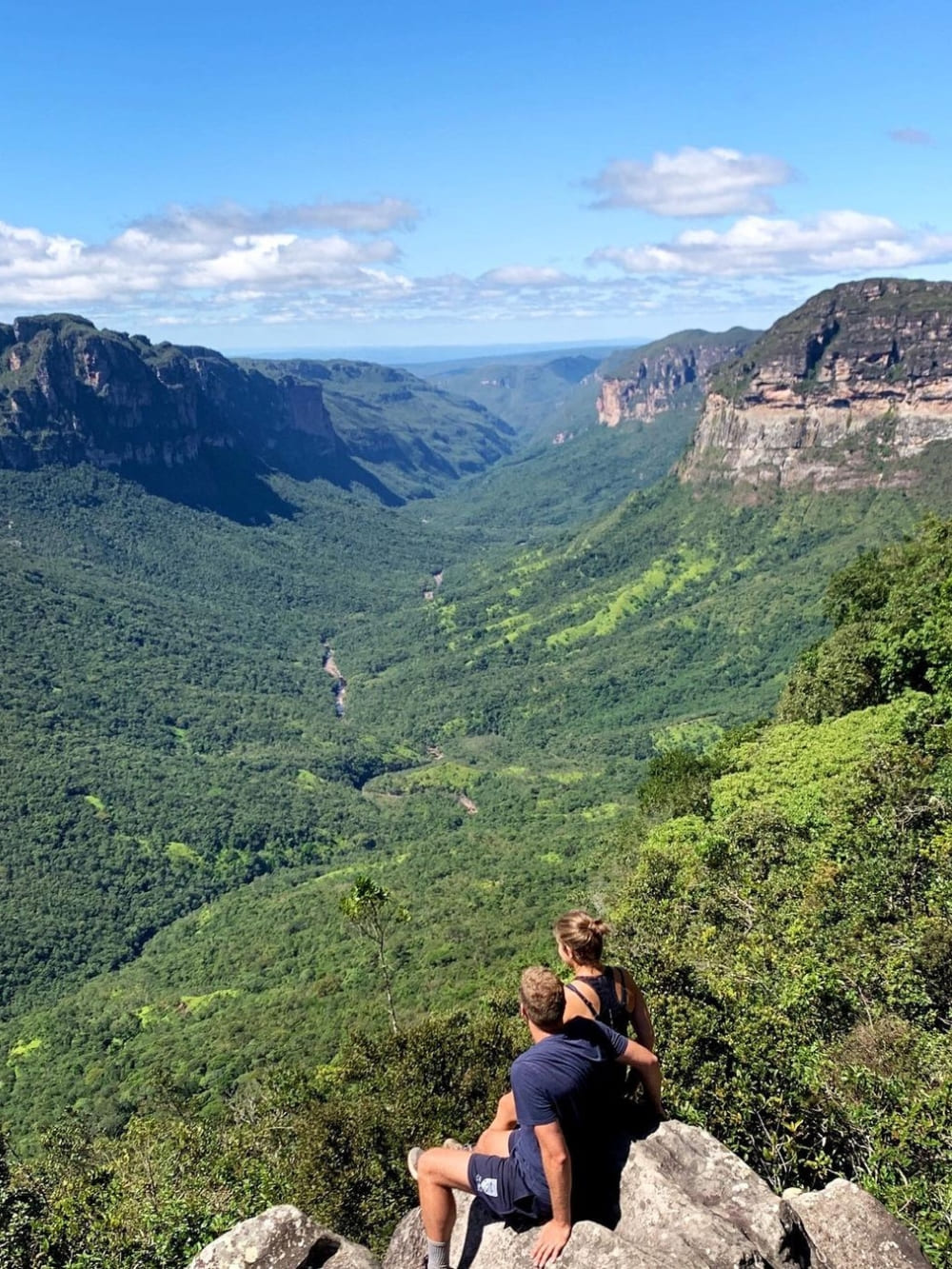
    Two hikers sit on a rocky cliff admiring the vast, green expanse of Vale do Pati in Chapada Diamantina National Park.
    .

    👉 Read more: How to Get to Chapada Diamantina National Park?

    2 – The Downfall of the Coffee Cycle and The Rise of Ecotourism

    The soil in Vale do Pati is known for excellent coffee harvests. In the heyday of the coffee cycle—one of Brazil’s most important economic eras—during the 19th century, over 400 families lived in the area. There was a school, a church, and a city hall.

    Scarce workforce and soil exhaustion caused by mass production prompted the downfall of the coffee cycle in 1930. Consequently, Vale do Pati was abandoned until the late 1970s. In 1985, the region was incorporated into the national park, but this time, only ten families called Pati their home. 

    To this day, locals make a living from ecotourism activities, offering their own homes as a safe place for backpackers to rest.

    3. Authentic Stay Experience in Vale do Pati, Brazil

    One of the most relevant facts about Vale do Pati is that this is a remote location, which means there are no hotels, lodges, buildings, or stores. If you’re planning your vacation to this part of Chapada Diamantina, keep in mind that you’ll stay in the locals’ houses—the very same ones we’ve mentioned before.

    The accommodations are modest but still cozy and very clean. The authentic stay experience also includes home-cooked meals. If you’re interested in eating typical Brazilian food made by people who know everything about it, this is your chance!

    By staying in the natives’ homes, you’ll get the full experience of what it’s like to live in nature. This is the perfect opportunity to fully immerse yourself in Bahia’s culture, learn all about your hosts’ day-to-day life, and support the local communities to make a living in a sustainable, dignified way.
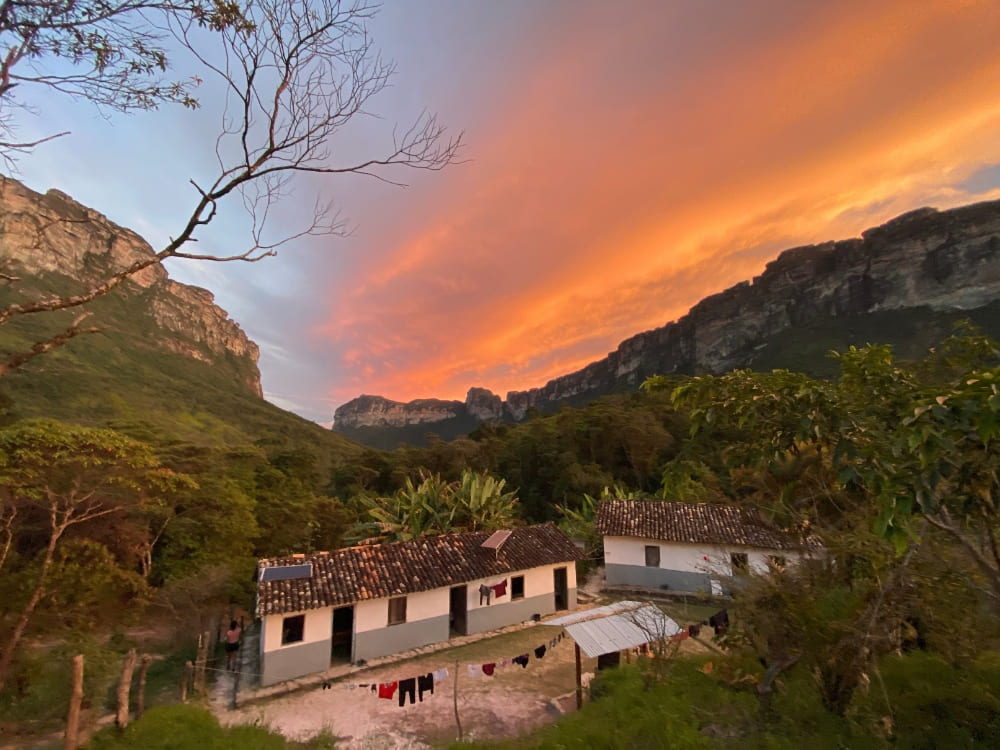
    Modest local houses equipped with solar panels sit in a lush green valley beneath a colorful sunset sky in Vale do Pati.
    .

    👉 Read more: Where to stay in Chapada Diamantina?

    4. Best Trekking Destination in Brazil

    Brazil’s Paty Valley is a popular ecotourism destination due to its great trekking conditions. In 2010, the Ministry of Tourism nominated it the best hike in the country and one of the top circuits on the planet.

    Hiking here is a given to reach pretty much all the iconic attractions of the national park. The good news is that there are options for expert hikers or people with no experience in this type of excursion. The trick is asking your tour guides for recommendations that fit your skills and desired itinerary!

    5. Waterfalls in Vale do Pati

    The waterfalls in Vale do Pati are breathtaking and are considered essential parts of the trekking circuits. If you don’t bathe in a waterfall after a long hike, you’re not enjoying your vacation right!

    Cachoeirão: Its nearly 300-meter fall boasts several smaller waterfalls during the rainy season. To get the full experience, hike on the top side to catch the amazing view of the falls surrounded by mountains and vegetation. Then, explore closer to the well at the bottom.

    Cachoeira dos Funis: Fairly small, the 30-meter fall that pools into a natural well at the base is the perfect place to cool off and relax.
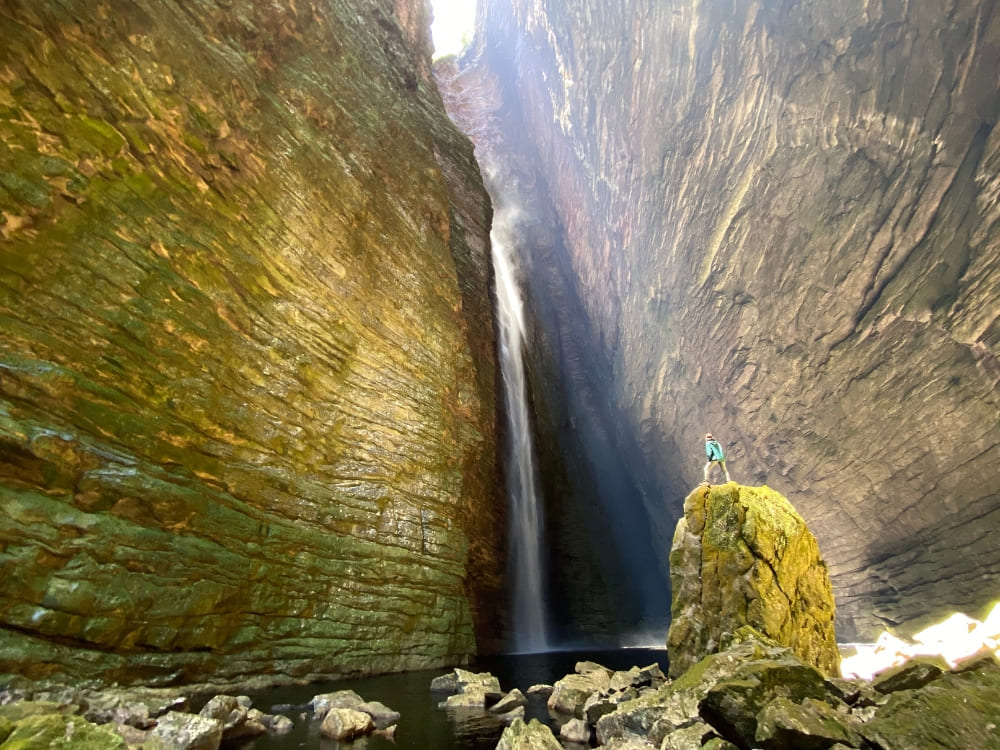
    A hiker stands on a boulder looking up at the towering Cachoeirão waterfall cascading down steep, rocky cliffs.
    .

    👉 Read more: Chapada Diamantina Waterfalls: Best Trails and Hidden Gems

    6. Atlantic Forest

    Vale do Pati is one of the few places in Chapada Diamantina where there still are remnants of the Atlantic Forest, while most of the park is covered by the Caatinga and Cerrado flora, which proves the richness of the region’s biodiversity. 

    The Atlantic Forest features unified treetops that create plenty of shade and humidity, dense vegetation, and a great diversity of mammals, birds, insects, reptiles, amphibians, and fish.

    7. Stunning Lookouts

    Vale do Pati is beautiful everywhere, but there are two specific lookouts that provide stunning panoramic views of Chapada Diamantina: Morro do Castelo and Mirante do Pati.

    At 1600 meters high, Morro do Castelo is the highest point of the national park. To get there, visitors have to face a steep climb and hike around a cave (Gruta da Lapinha).
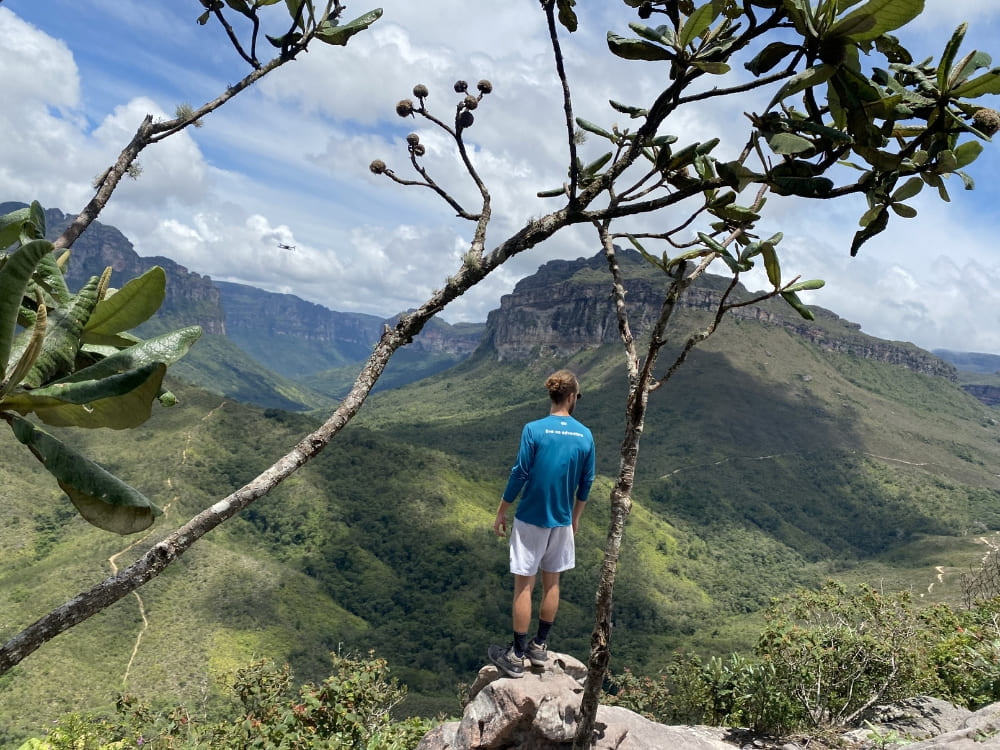
    A hiker stands on a rocky edge framed by tree branches, looking out over the green valley toward the flat-topped Morro do Castelo.
    .

    To arrive at Mirante do Pati (1400 meters high), the hike kicks off from Guiné, a small town with great access to Chapada. After passing through rocky paths, open fields, and the banks of the Rio Preto, you’ll reach the lookout.

    The journey isn’t easy, but the beautiful views of pristine nature are the reward you need to stay motivated!

    8. A Paradise for Nature Junkies

    Although Chapada Diamantina offers hundreds of breathtaking landscapes, Vale do Pati is, undoubtedly, a true scene stealer. The amazing views, waterfalls, caves, and hiking trails make it one of the most beautiful and unique places in Brazil.

    Vale do Pati gathers everything a backpacker looks for in adventure, including isolation from the outside world, complete disconnection from digital devices, and a new perspective on what Mother Nature is capable of.

    👉 Read more: When Is The Best Time To Visit Chapada Diamantina?

    9. Sustainable Way of Life

    National parks aim for the conservation of natural resources. In other words, things work a little differently on their premises.

    In Vale do Pati, most electric/electronic devices are powered by solar energy, including cellphones, batteries, and lamps. Refrigerators run on gas and showers are cold—which, considering the warm temperatures of Chapada Diamantina, is totally fine.

    Most supplies (food, household goods, solar panels, etc.) arrive in Vale do Pati on horseback, carried by donkeys or even by the locals themselves. No cars making noise or polluting the air!

    10. Zero Internet Connection

    The last fact about Vale do Pati is that there is no internet connection along the trails and in the more isolated areas of the national park. While some residents may offer Wi-Fi, unstable connections are not uncommon.
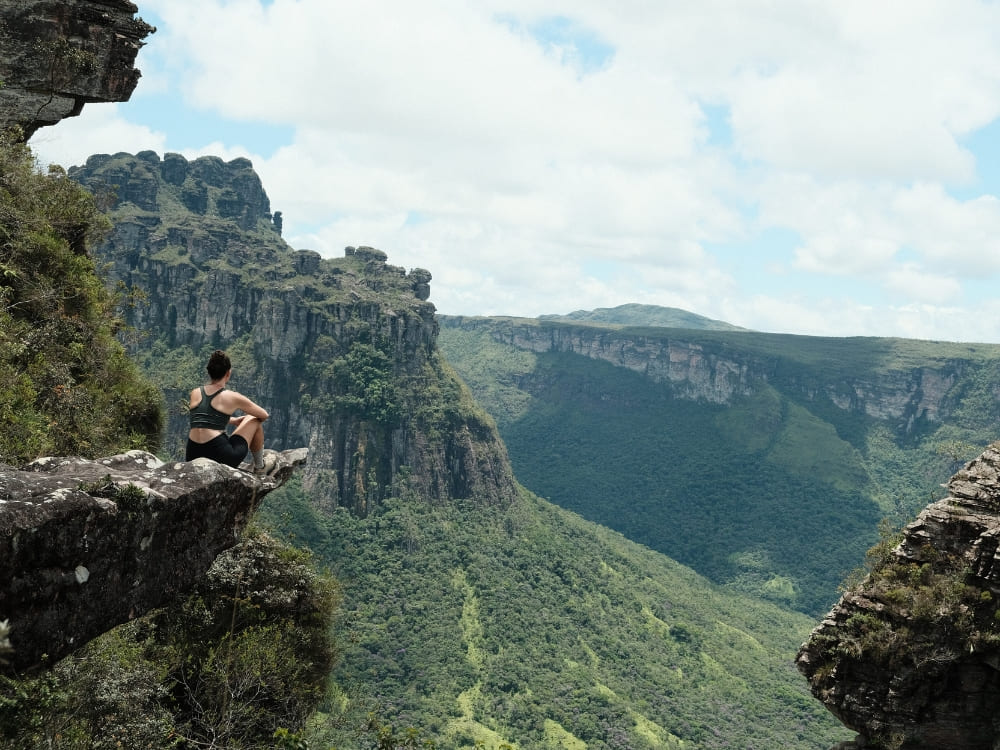
    A backpacker sits on a jagged rock ledge enjoying a panoramic view of the steep cliffs and pristine green valleys of Vale do Pati.
    .

    Chapada Diamantina is all about nature and human connections. You’ll have everything you need while you’re there—beautiful views, gorgeous waterfalls and underground lakes, several kilometers of hiking trails, cozy accommodations, and interactions with amazing people. 

    You won’t even miss scrolling on your phone!

    Traveling to Vale do Pati, Brazil, with PlanetaEXO

    Now that you know all the important facts about Vale do Pati, it’s time to visit this fascinating destination!

    PlanetaEXO, an ecotourism platform specializing in Chapada Diamantina tours, is here to help you book the vacation of your dreams, from tailor-made itineraries to transfer options and accommodations. Contact us now!