Tag: Amazon Rainforest

  • Ecotourism in the Amazon Rainforest: A Solution to Deforestation

    Ecotourism in the Amazon Rainforest: A Solution to Deforestation

    As deforestation threatens the Amazon, ecotourism in the Amazon Rainforest emerges as a key solution, with startups like PlanetaEXO leading the way in supporting Conservation and Local Communities.

    The Amazon Rainforest, often referred to as the “lungs of the Earth,” is facing one of its most critical challenges in decades. Deforestation rates have skyrocketed, with over 10,000 square kilometers of forest being cleared annually, driven by illegal logging, mining, and land conversion for agriculture. In addition, record-breaking wildfires and persistent droughts are worsening the situation, with over 50,000 active fires across Brazil.

    Sustainable tourism to the Amazon Rainforest is emerging as a viable strategy to combat this environmental crisis while supporting local communities.
    Ecotourism in the Amazon Rainforest
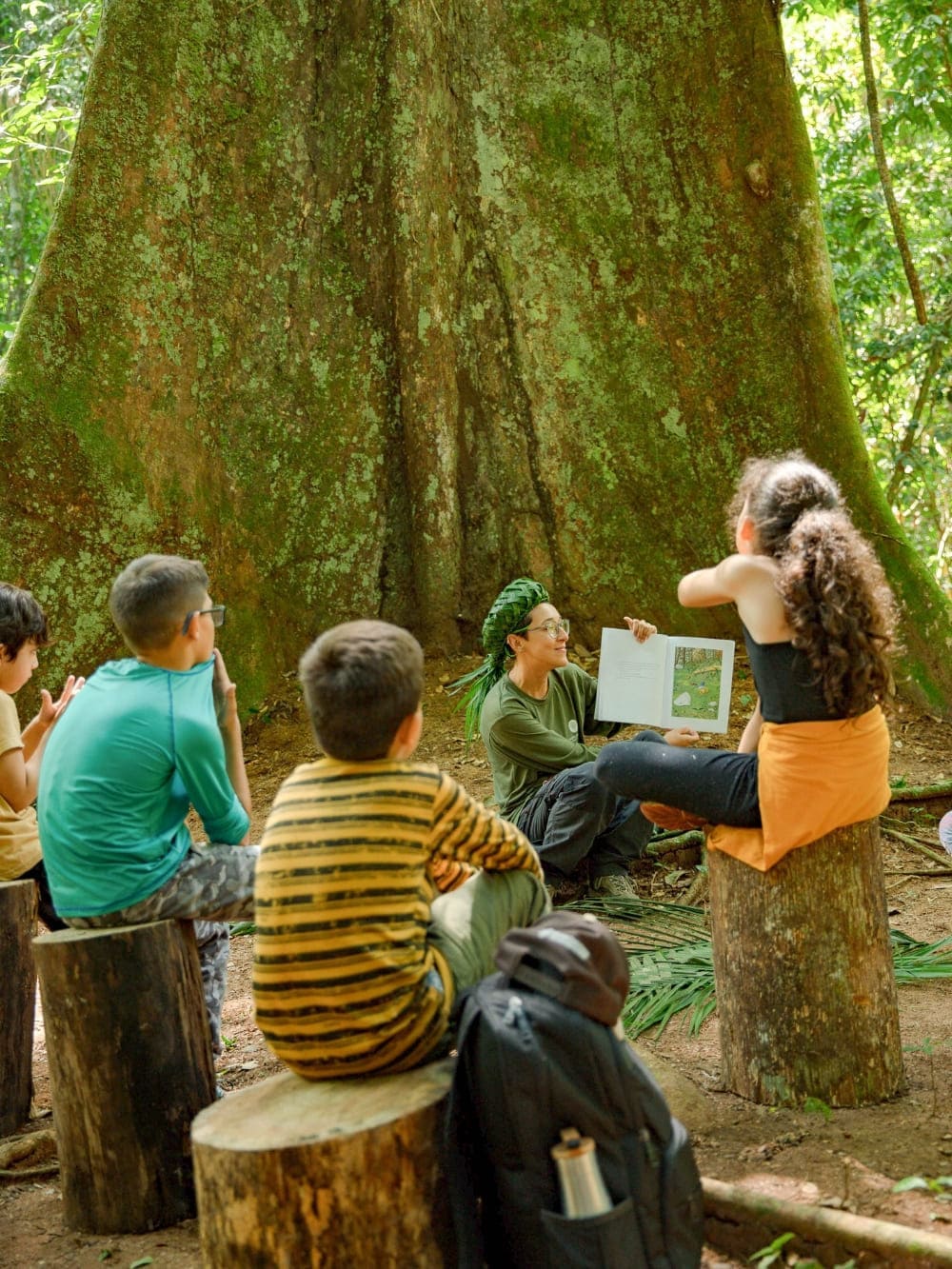
    “Locally guided tours help shift the focus away from destructive practices.” – Photo: João Paulo Krajewski

    PlanetaEXO, a startup dedicated to eco-friendly travel, has been working closely with these communities to offer tours in the Amazon in Brazil that prioritize both environmental conservation and community empowerment. “We’ve seen firsthand how ecolodges and locally guided tours help shift the focus away from destructive practices,” says Lucas Ribeiro, founder of PlanetaEXO.

    By connecting travelers with authentic experiences that benefit local communities, we’re promoting a model of tourism that supports both people and the planet,” he adds.
    Ecotourism in the Amazon Rainforest: how can it reduce deforestation
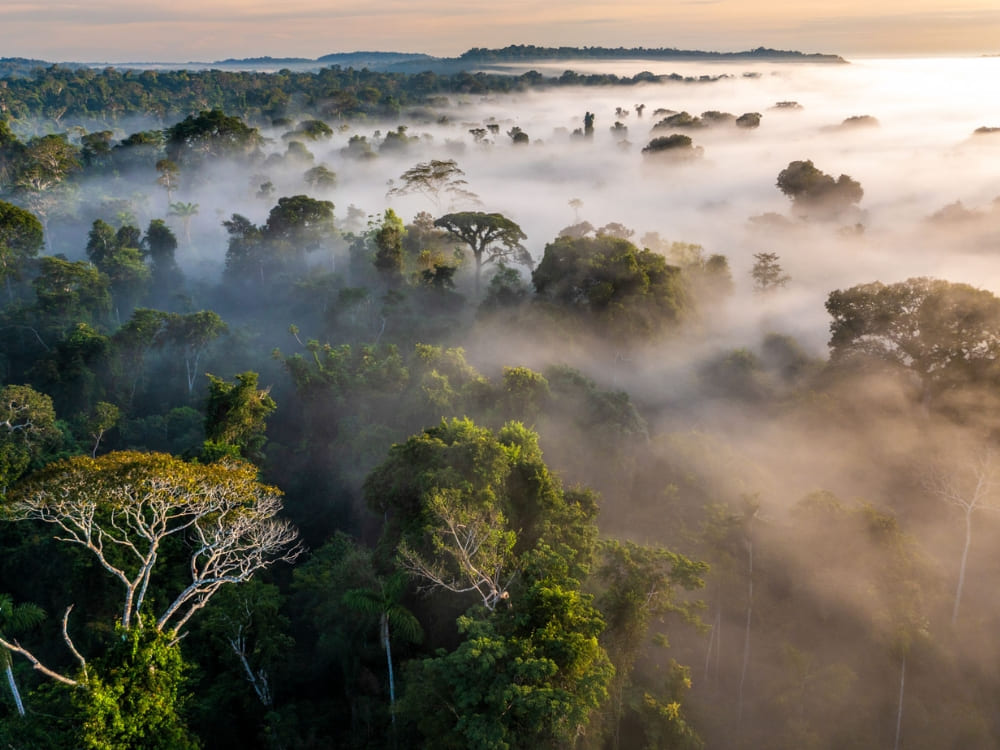
    A sanctuary for biodiversity and a symbol of sustainable tourism: Cristalino Ecological Reserve

    According to a report by the World Wildlife Fund (WWF), ecotourism in the Amazon Rainforest could reduce deforestation in the Amazon by providing an alternative source of income to industries that exploit the rainforest.

    WWF suggests that responsible tourism can help maintain over 50% of the forest’s biodiversity, while also addressing climate challenges by protecting large swaths of land from forest clearing.

    Empowering Local Communities through Sustainable Tourism

    The benefits of sustainable tourism are not limited to environmental protection. Ecotourism is also creating economic opportunities for local communities, including many indigenous groups, who have long acted as stewards of the Amazon.

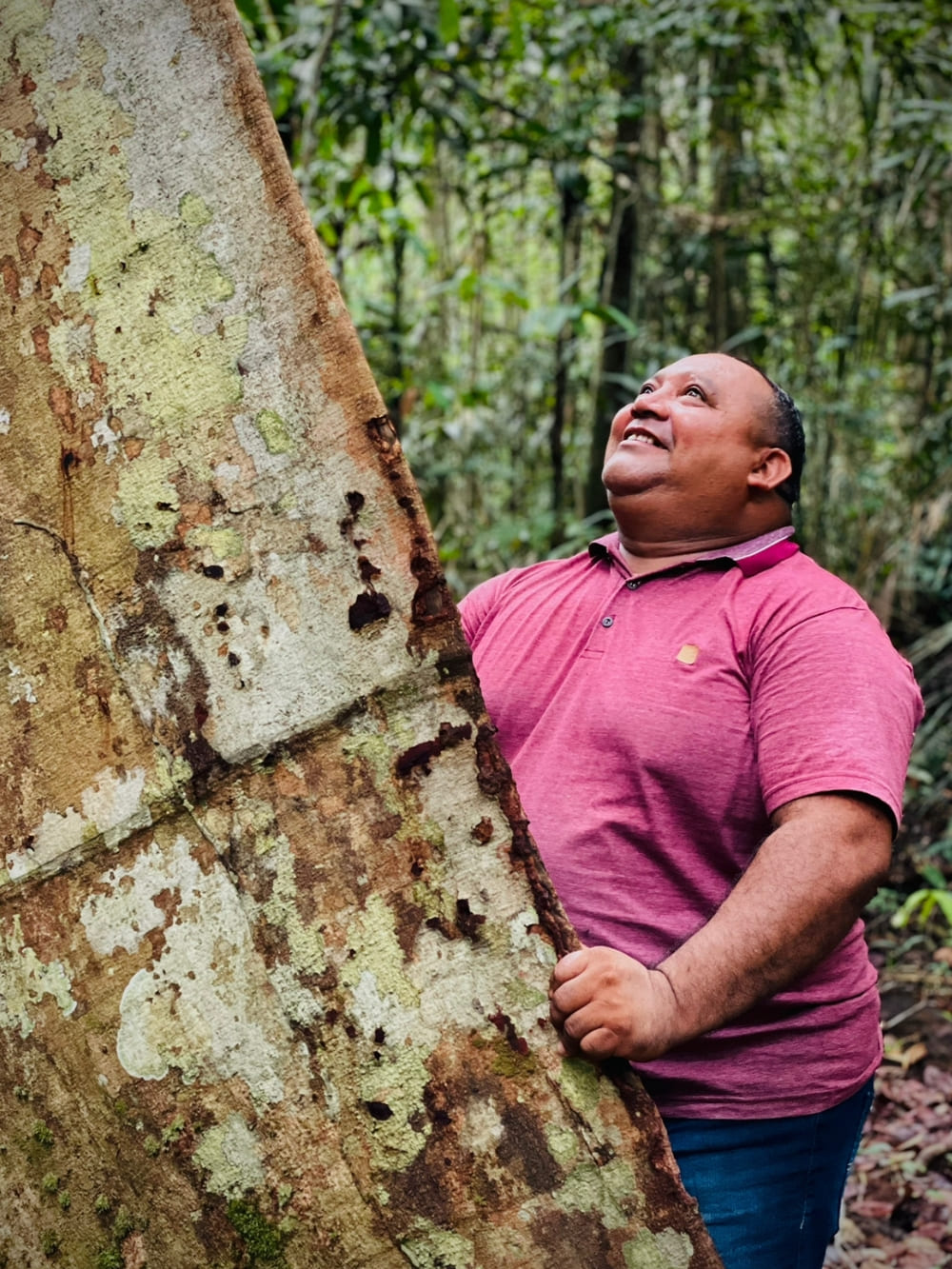
    A powerful example of this transformation, highlighted by Projeto Draft, is the story of Roberto Brito Mendonça from Iranduba, Amazonas. Like his father and grandfather before him, Roberto was a logger, using the forest to support his family. In 2008, when his land became part of the Rio Negro Sustainable Development Reserve, his livelihood was at risk. Faced with uncertainty, Roberto turned to tourism, and by 2012, he began running Pousada do Garrido, one of 24 tourism businesses in the area.
    Ecotourism in the Amazon Rainforest - A Solution to Deforestation
    “The Amazon we want is one full of life – and when I say life, I mean especially the human lives that are part of it,” says Roberto Brito.

    Access to education and technology is essential for sustainability,” says Roberto. “If everyone had this opportunity, we can chart a new course for the forest. The Amazon we want is one full of life – and when I say life, I mean especially the human lives that are part of it”.

    His story is a testament to how sustainable tourism can offer an alternative to extractive industries, allowing local communities to preserve both nature and their way of life.

    Ecolodges Leading by Example

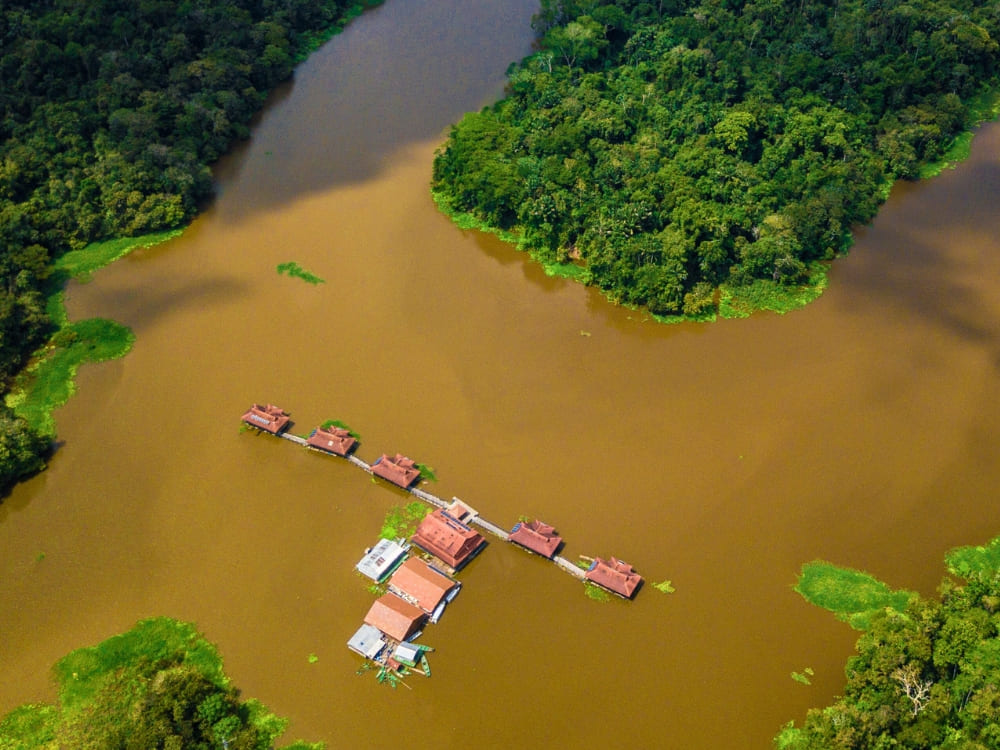
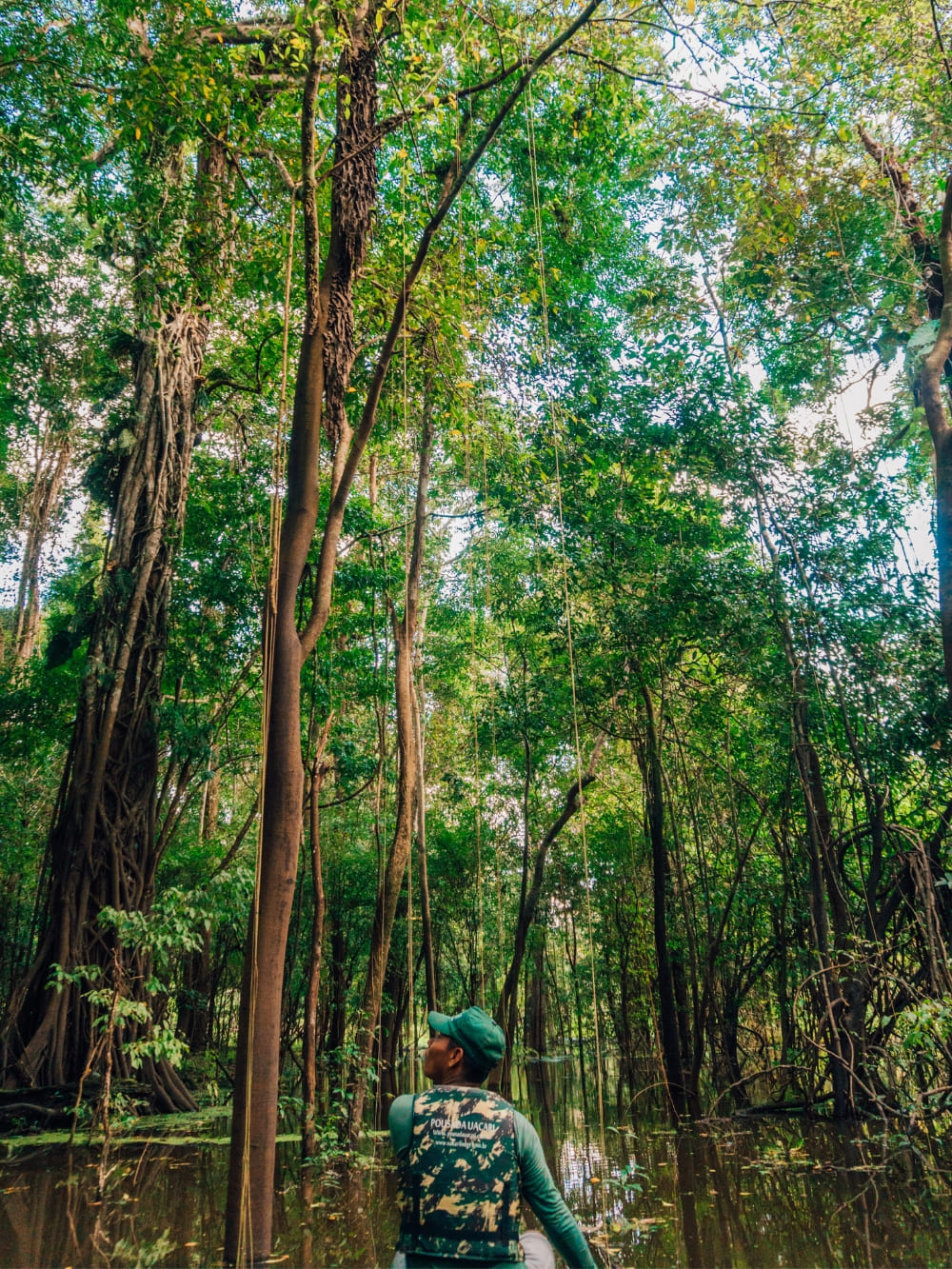
    Lodges like Uakari Lodge in the Mamirauá Reserve, Tefé, and Cristalino Lodge, in Alta Floresta, Mato Grosso, are prime examples of how ecolodges play a critical role in ecotourism. Uakari, located in a semi-flooded ecosystem that represents 3% of the Amazon, aims to protect local biodiversity while supporting eleven local communities.

    The lodge operates with sustainability at its core, using solar energy, collecting and storing rainwater, and treating sewage with microorganisms instead of chemicals. Even the roof tiles are made from recycled plastic bottles.
    Ecolodges leading Sustainable Practices - Uakari Lodge
    “Uakari Lodge aims to protect local biodiversity while supporting eleven local communities.”

    Guests are encouraged to minimize their energy usage, and all waste is treated before being returned to the river. Through its community tourism model, Uakari provides opportunities and training for local people, ensuring that the lodge’s operations have minimal impact on the environment.
    Ecotourism in the Amazon Rainforest - A Solution to Deforestation

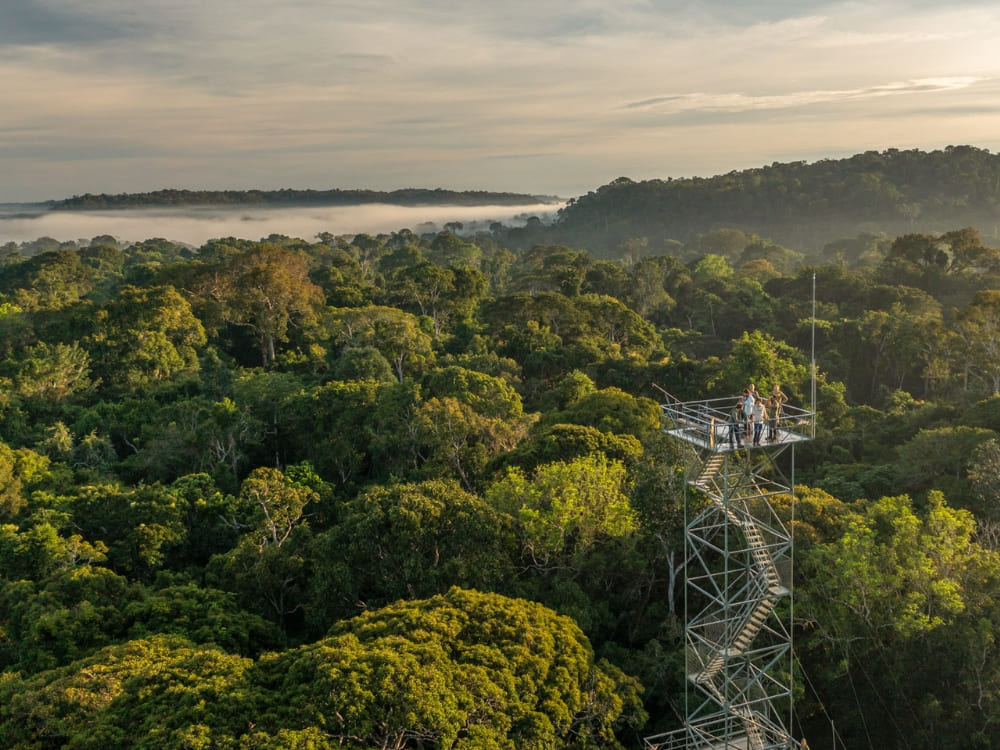
    Meanwhile, Cristalino Lodge stands out as an ecolodge nestled within one of the largest private reserves in the Amazon, protecting over 11,000 hectares of forest—an area nearly twice the size of Manhattan Island. This vast area is kept in pristine condition, rich in biodiversity, and supports critical conservation efforts.
    Cristalino Jungle Lodge leading ecotourism in the Amazon Rainforest by example
    Being atop Cristalino Lodge’s 164-foot towerview  is a breathtaking sight. – Photo: Andre Dib

    The lodge adopts sustainable architecture that respects nature, with systems for effluent and wastewater treatment, solar water heating, solar energy, and recycling—all protocols designed to minimize the impact of its operations. By limiting the number of guests per guide on every tour, Cristalino ensures a low-impact experience.
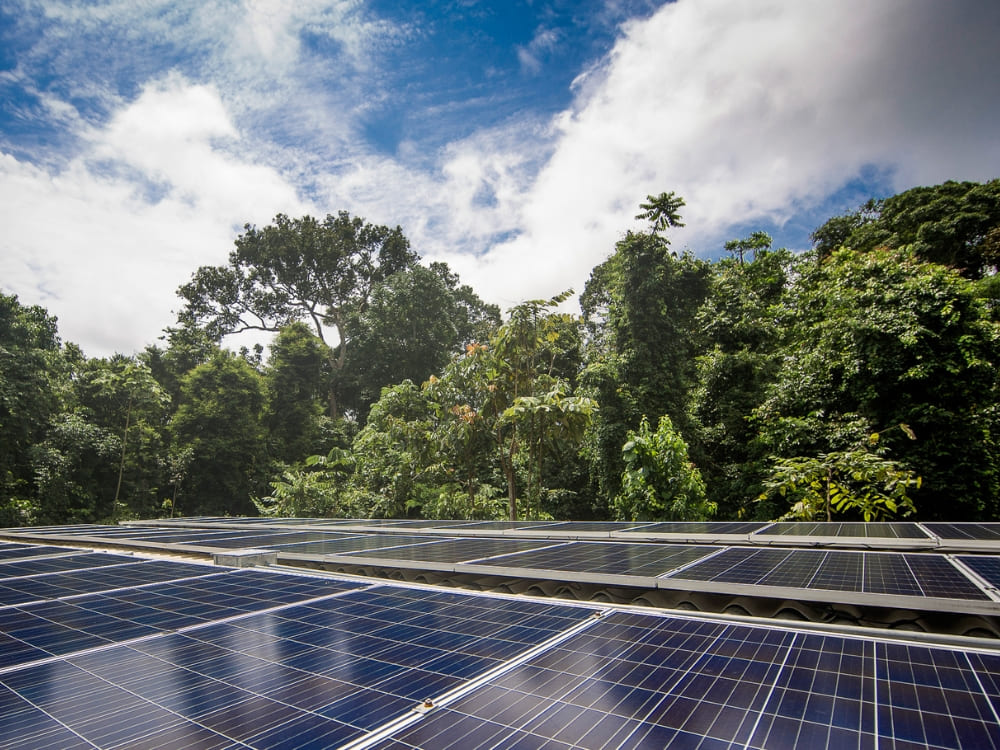
    “The lodge adopts sustainable architecture that respects nature.” – Photo Samuel Melim

    Visitors to both lodges embark on guided treks and excursions, experiencing the astonishing complexity of the Amazon’s ecosystems.

    Uakari Lodge serves as a sanctuary for unique species like the white-faced uakari, while Cristalino Lodge supports research that has documented over 1,356 different plant species, including six previously unknown to science.

    By promoting low-impact tourism, both Uakari and Cristalino contribute to the preservation of the forest while providing sustainable livelihoods for local communities.

    Economic and Global Impact of Sustainable Tourism in the Amazon

    The economic comparison between sustainable tourism and private exploitation in the Amazon highlights the importance of eco-friendly travel. According to the World Bank, sustainable tourism in the Amazon is valued at approximately US$2.3 billion annually.

    Although this represents only around 5% of the US$45 billion generated by private exploitation of the forest through agriculture, timber harvesting, and mining, ecoutourism provides an essential ally in conservation efforts.
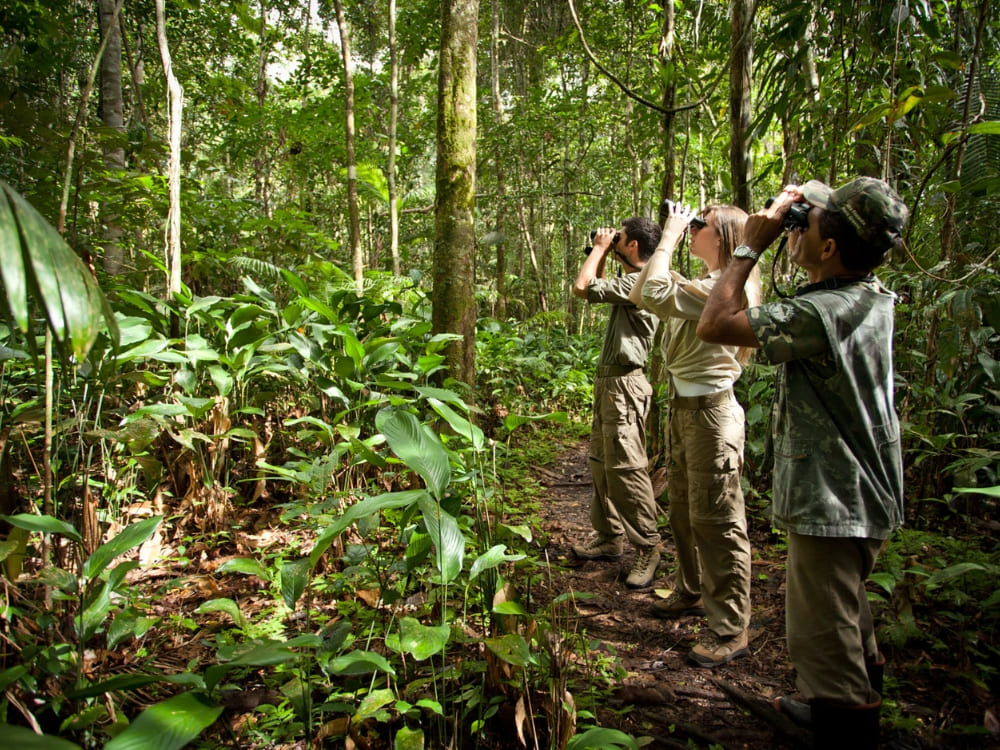
    Ecotourism in the Amazon Rainforest Brazil
    Photo: Samuel Melim

    Beyond its financial value, sustainable tourism raises awareness of the Amazon’s deforestation crisis and its impact on the global climate. Tourists who witness the destruction firsthand are often inspired to support conservation projects in their home countries.

    Ecotourism also contributes to environmental education, which helps fostering a deeper understanding of the need for sustainable practices worldwide.
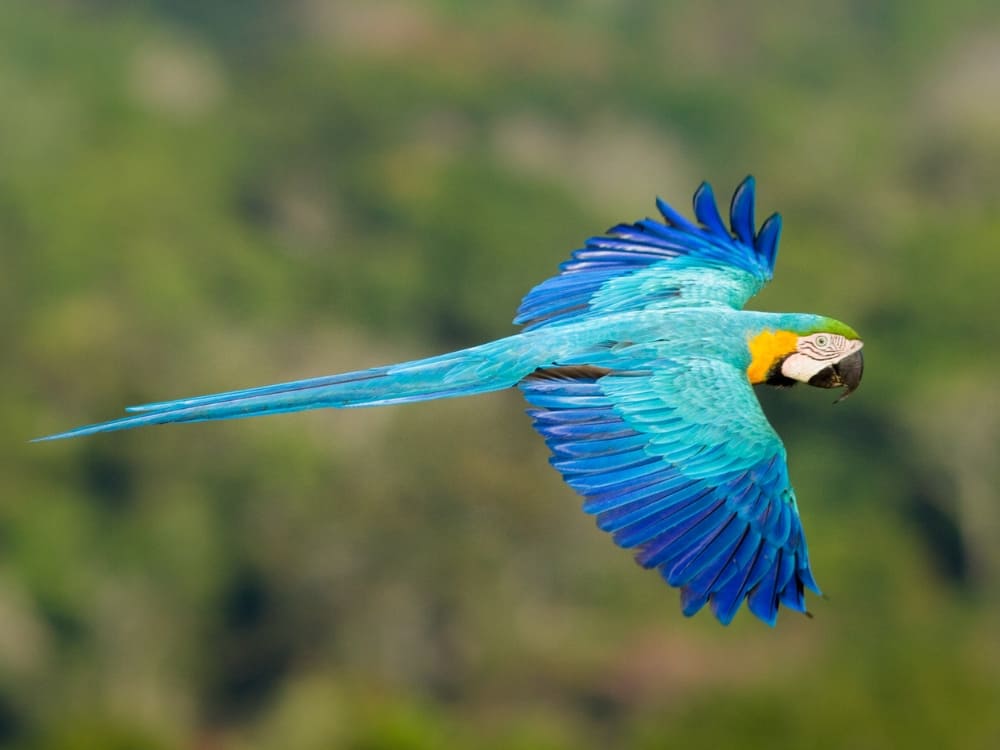
    Ecotourism in the Amazon Rainforest - Blue Macaws
    Photo: Jorge Lopes

    With eco-friendly tours increasingly contributing to nature protection and restoration, ecotourism is able to shape global views on deforestation. Travelers support these efforts, creating a win-win situation where tourism funds the preservation of natural resources in the Amazon.

    A Call To Action

    As deforestation continues to threaten one of the world’s most important ecosystems, sustainable tourism offers a way forward. By shifting economic incentives and raising global awareness, it is possible to reduce the pressure on the Amazon and protect its biodiversity for future generations.

    At PlanetaEXO, we believe that every traveler has the power to make a difference. Our eco-tours offer authentic, responsible tourism experiences that benefit both the environment and the communities that rely on the forest. By choosing sustainable tourism, we can all be part of the solution.
    Read more:

  • What to Do in the Amazon Rainforest: Top Outdoor Activities in Brazil

    What to Do in the Amazon Rainforest: Top Outdoor Activities in Brazil

    Looking forward to seeing up close one of the most impressive natural wonders of the planet? Check out a curated list of the top activities in the Amazon, Brazil

    The possibilities of the Amazon in Brazil are as vast as its impressive expanse of nearly 5 million km². With options for solo travelers, couples, families, and adrenaline-loving adventurers, the world’s largest tropical forest is full of surprises.

    What to do in the Amazon Rainforest also depends on individual preferences and needs. Think about what kind of experience you would like to keep in your memory and heart: navigating majestic rivers, camping among the trees, combining comfort and nature in a jungle lodge…

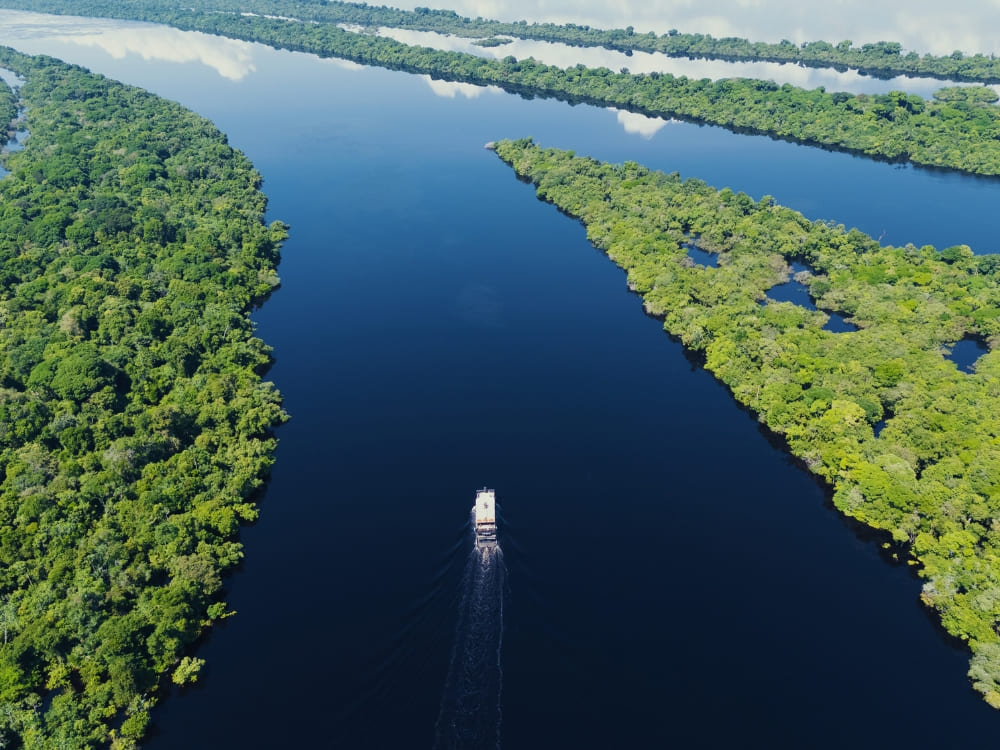
    A multi-level riverboat travels along a wide, calm dark river bordered by dense green rainforest islands reflecting the sky.
    Photo: Marcelo Bonifacio

    Whatever it may be, PlanetaEXO, an ecotourism platform specializing in Amazon Rainforest tours in Brazil, is well-acquainted with tailor-made itineraries in nature for every travel style. Check our suggestions right below!

    Amazon immersion in jungle lodges

    Do you want to experience what nature has to offer but still need some comfort to rest your bones after a day full of adventure? You can enjoy all the outdoor activities while staying in an Amazon jungle lodge!

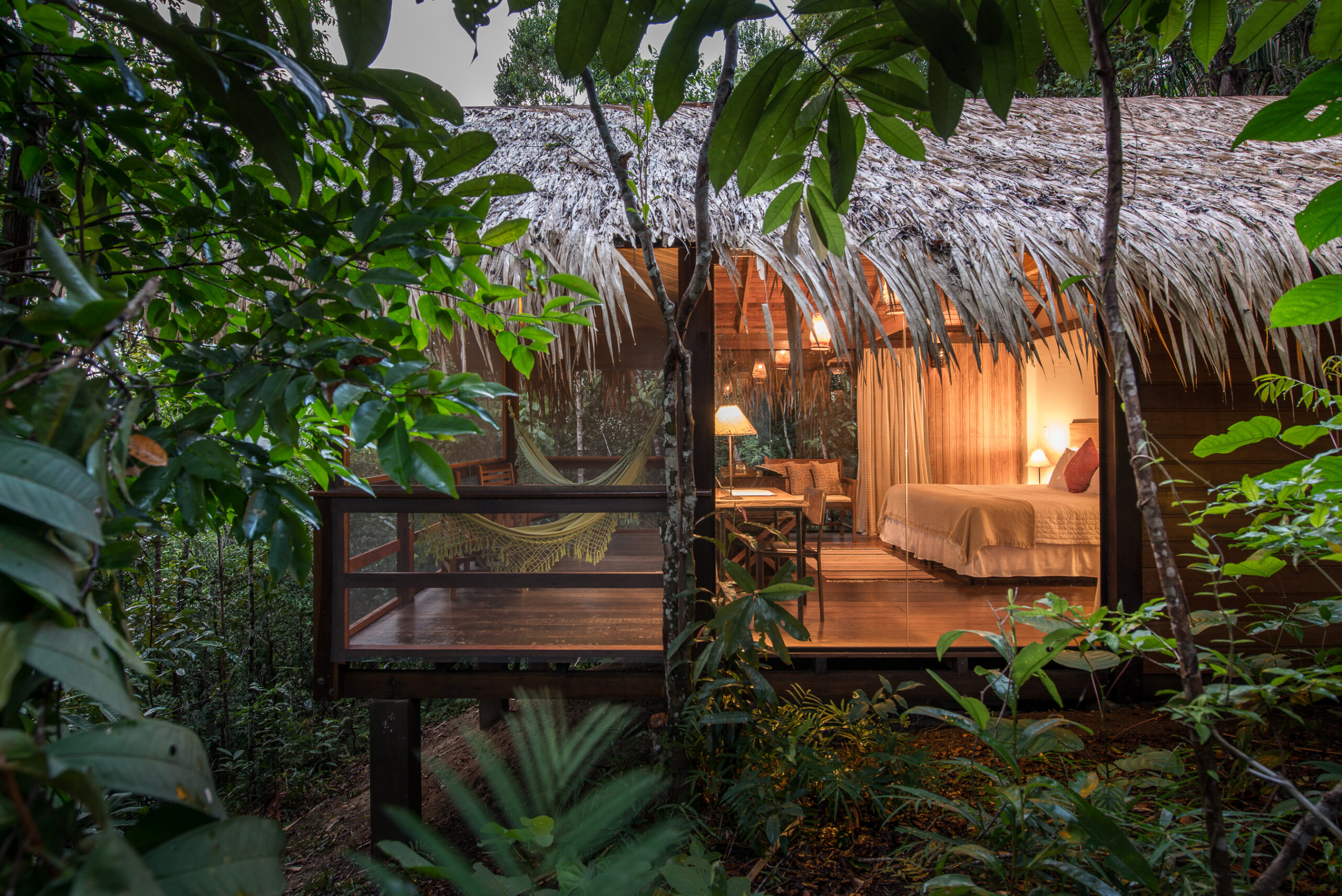
    Comfortable Amazon jungle lodge with a thatched roof nestled in the tropical rainforest.
    Photo: Felipe Castellari

    Located amidst preserved areas in different zones of the forest, such as the Anavilhanas and Jaú National Parks, the accommodations have everything for a great stay: comfortable rooms, private bathrooms, common areas for leisure and relaxation, traditional food, and much more.

    Each lodge features its own team of qualified professionals to guide the activities, including hiking, fishing, boat tours, wildlife watching, night spotlighting, etc.

    👉 Read more: When is the Best Time to Visit the Amazon Rainforest in Brazil

    Amazon river cruises

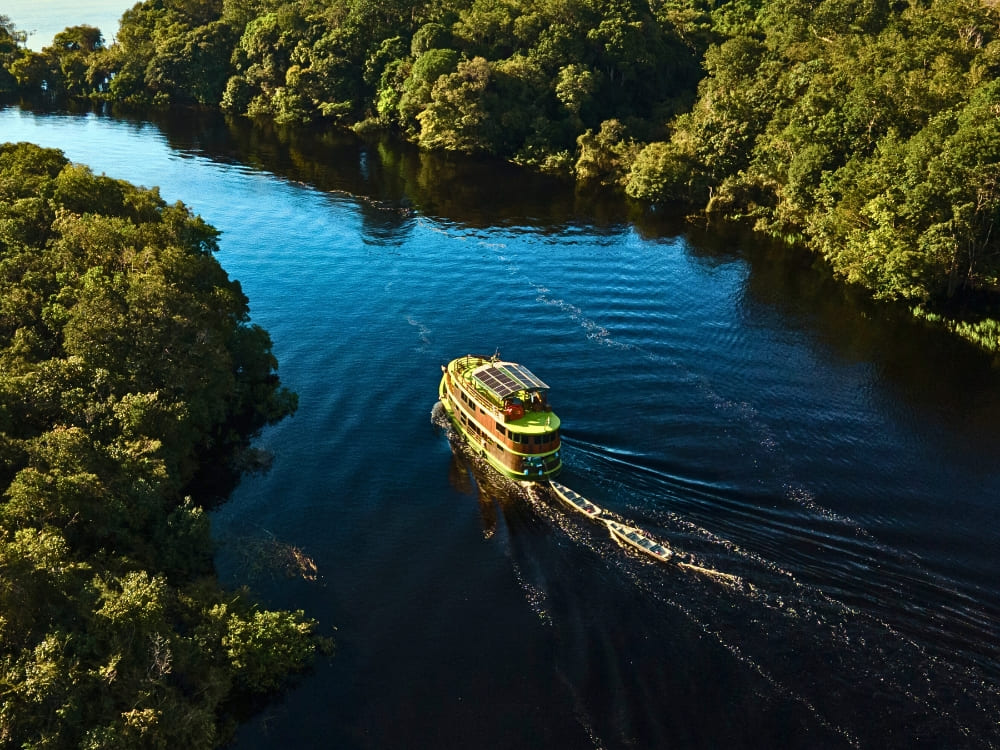
    Did you know cruises can also take place in bodies of water besides the ocean? The boats for river cruises are smaller than your traditional ships, but that makes for an even better, more intimate experience.

    With fewer people aboard, you can focus on what truly matters—the trees, the animals, the soft breeze, and the indescribable feeling of sailing through the calm waters of the Amazonian rivers. 

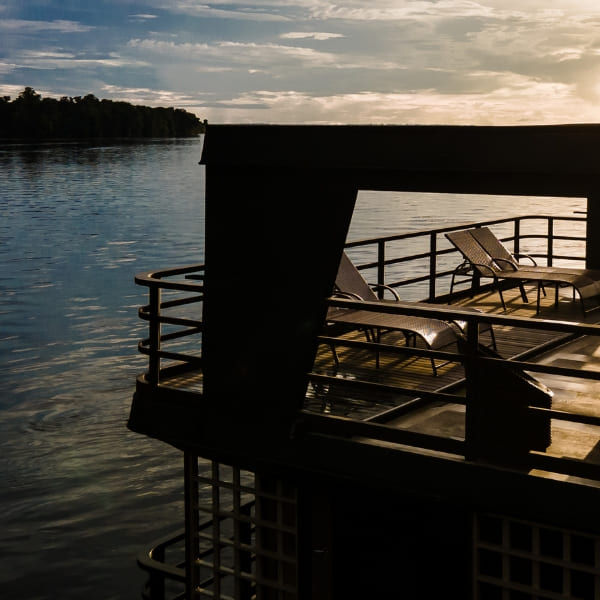
    A green ecotourism riverboat with solar panels cruises down a dark river surrounded by lush Amazon rainforest.
    .

    In addition to excellent accommodation in elegant cabins equipped with everything you need for a comfortable trip—private bathrooms, king-size beds, air-conditioning, and a wide range of amenities—the cruises also include many activities in the Amazon Rainforest, such as hiking trails, canoeing in igapós (flooded forests), night spotlighting, visits to local communities, and much more.

    The best Amazon river cruises are multi-level vessels featuring elegant designs, various common areas, and highly qualified crews. They also follow strict safety and environmental protocols to ensure a responsible, hassle-free trip. 

    👉 Read more: What’s the Best Time of the Year for Amazon River Cruises in Brazil?

    Kayaking on Amazon rivers

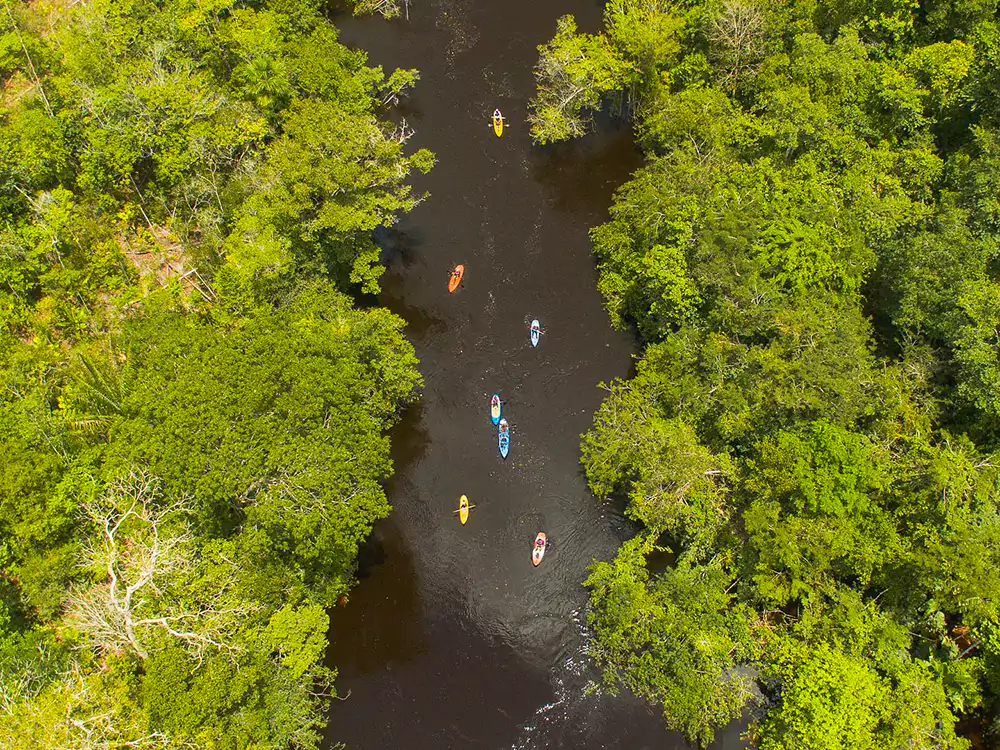
    One of the top things to do in the Amazon, particularly in Presidente Figueiredo, is kayaking. Known as the Land of Waterfalls due to its hundreds of cataloged waterfalls, as well as rivers and natural pools, this is the perfect destination for travelers who love water-related itineraries.

     Aerial view of a group of tourists kayaking on a dark Amazonian river surrounded by dense green forest.
    .

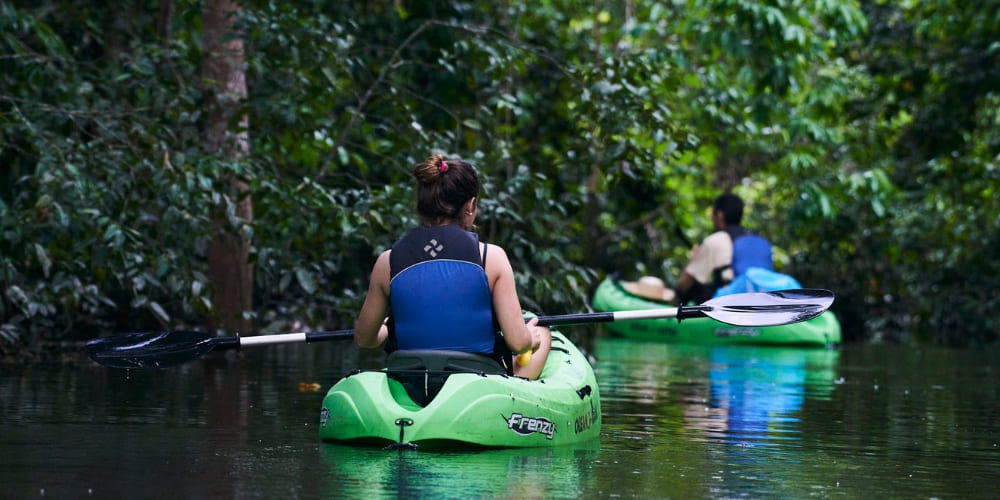
    Kayak tours are great for both experienced and newbie kayakers. If you’ve done this before, then you get to do what you love in one of the most beautiful places in the world. First time? No biggie, the instructors will help you with everything you need, from how to put on your safety gear to the best paddling techniques!

    Keep in mind: kayaking can be quite demanding in terms of physicality—you’ll be in the water for 4–8 hours. Even those in great shape might get tired eventually, so the solution is requesting to be pulled by the support boats when your arms start feeling funny. This way, you can just relax and enjoy the ride!

    👉 Explore the adventure: 4-day Amazon Kayak Tour Brazil

    Meeting of Waters

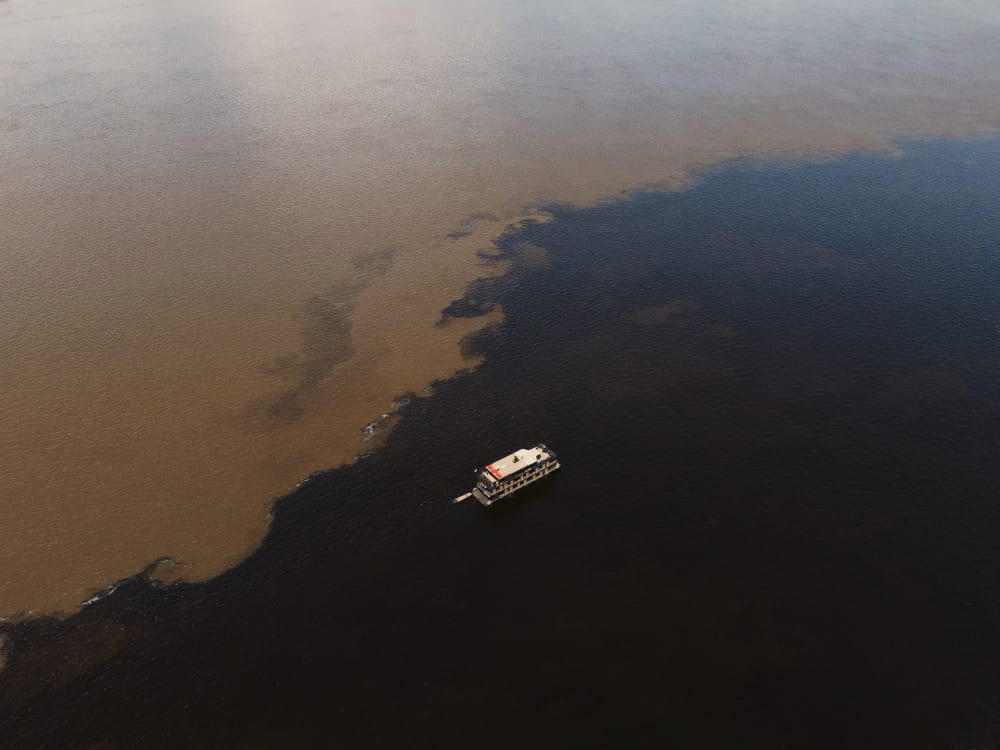
    Surely one of the greatest landmarks of the Amazon Rainforest, the Meeting of Waters is a fascinating phenomenon where the Negro and Solimões rivers merge—but not quite.

    Aerial view of a riverboat navigating the Meeting of the Waters in the Amazon, showing the distinct dark and sandy rivers flowing side-by-side.
    Photo: Marcelo Bonifacio

    Doing justice to its name, the Negro River’s water is black, while Solimões’ is brown. They both meet but never blend together. There are three reasons for this: different temperatures, current speed, and the waters’ pH (acidity).

    Offering a breathtaking view all year-round, the Meeting of Waters can be seen in Manaus or during river cruises and boat rides. You can’t miss it!

    Read more: How to Get to the Amazon Rainforest in Brazil?

    Amazon jungle tours

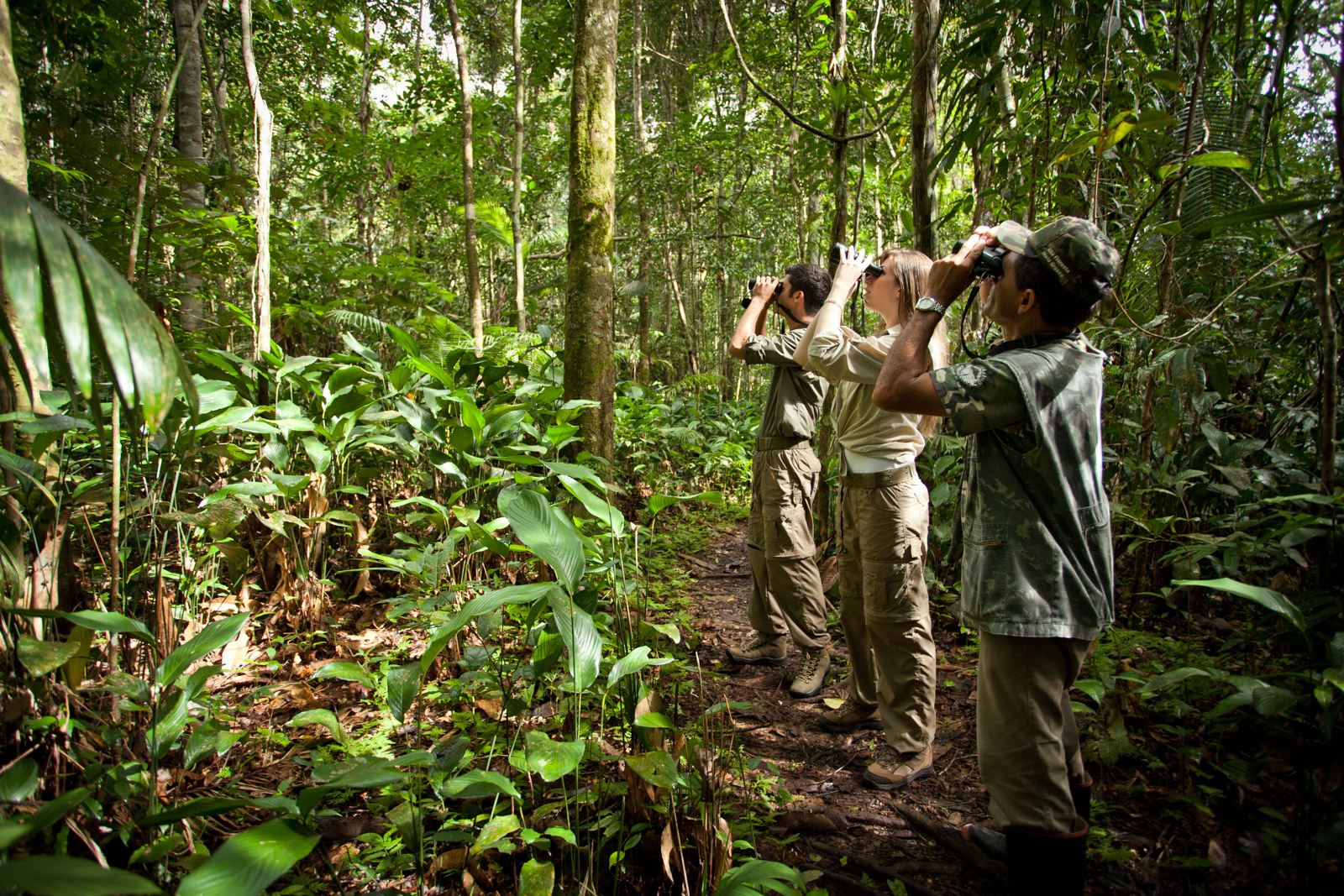
    When it comes to what to do in the Amazon Rainforest in Brazil, of course jungle expeditions must be included.

    Three tourists on an Amazon jungle tour using binoculars to observe wildlife among giant trees.
    Photo: Samuel Melim

    There are 80,000 species of plants all over the area, of which 40,000 have very important roles in sustaining local water cycles and even regulating the weather on a global scale. The forest is also home to many animals—427 mammals, 1300 birds, 378 reptiles, and 400 amphibians, according to the Amazon Conservation Association.

    So much natural richness must be appreciated, so get ready to hike in between the giant (and ancient) trees, breathe the purest fresh air on the planet, and observe the wildlife. Can you imagine spotting alligators, sloths, macaws, pink river dolphins, or other incredible Amazon animals? You just don’t see that every day.

    Expeditions may vary depending on how close to nature you want to be. If you love the idea of wild camping, survival tours are a great option, which allows you to sleep in a hammock in the middle of the jungle, safely secured from animals, mosquitoes, and the rain.

    Connecting with locals

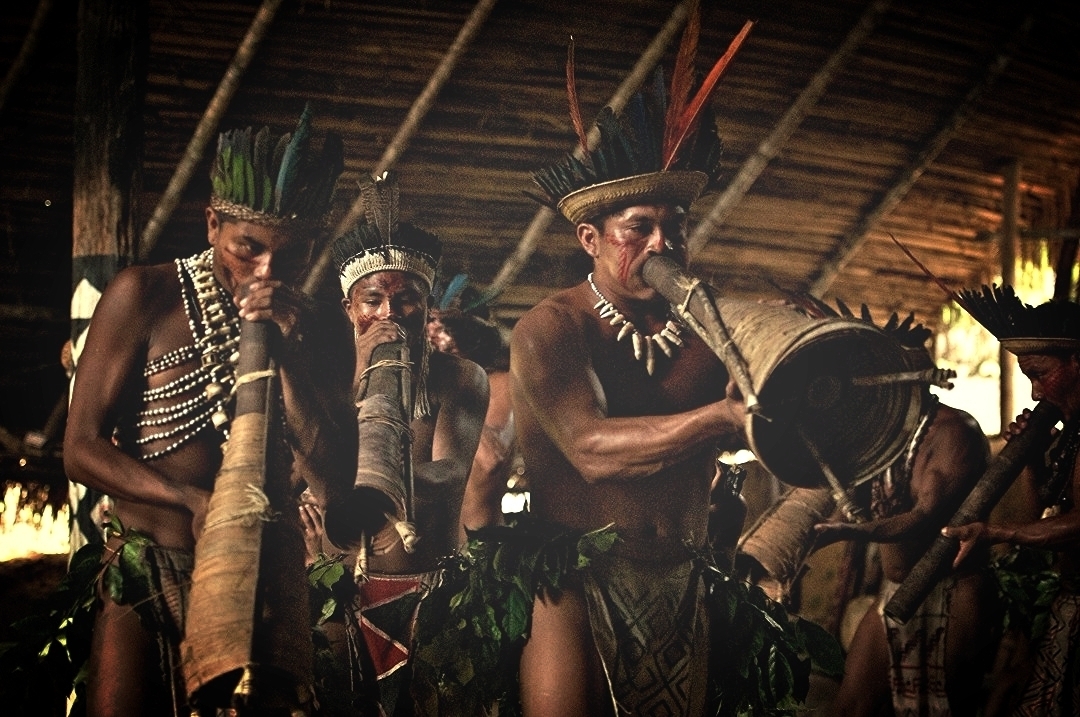
    The Amazon Rainforest is not only rich in biodiversity but also in culture. In Amazonas alone, there are approximately 350 riverside communities and 259 indigenous groups in different parts of the state.

     Indigenous people from the Amazon playing traditional wind instruments during a cultural presentation.
    .

    Visiting the homes of local residents is one of the main things to do in the Amazon because it allows you to dive deep into the most crucial element of every destination: the people.

    Activities vary according to each community, but include immersive tours that make it possible to learn about the day-to-day life of natives when it comes to food, agriculture, crafts, festivities, etc.

    Group of smiling local children and a tourist interacting in front of a riverside community school building in the Amazon.
    .

    The experience can hold many surprises, but be sure of one thing: Brazilians are very friendly and will welcome you with open arms!

    Join the best activities in the Amazon with PlanetaEXO

    Now that you know what to do in the Amazon Rainforest, it’s time to plan your trip!

    PlanetaEXO is an ecotourism platform specializing in Amazon Rainforest tours in Brazil. By connecting you with the best local operators, we enrich your travel experience with tailor-made itineraries, wonderful accommodations, convenient transfer options, and much more. Contact us now!