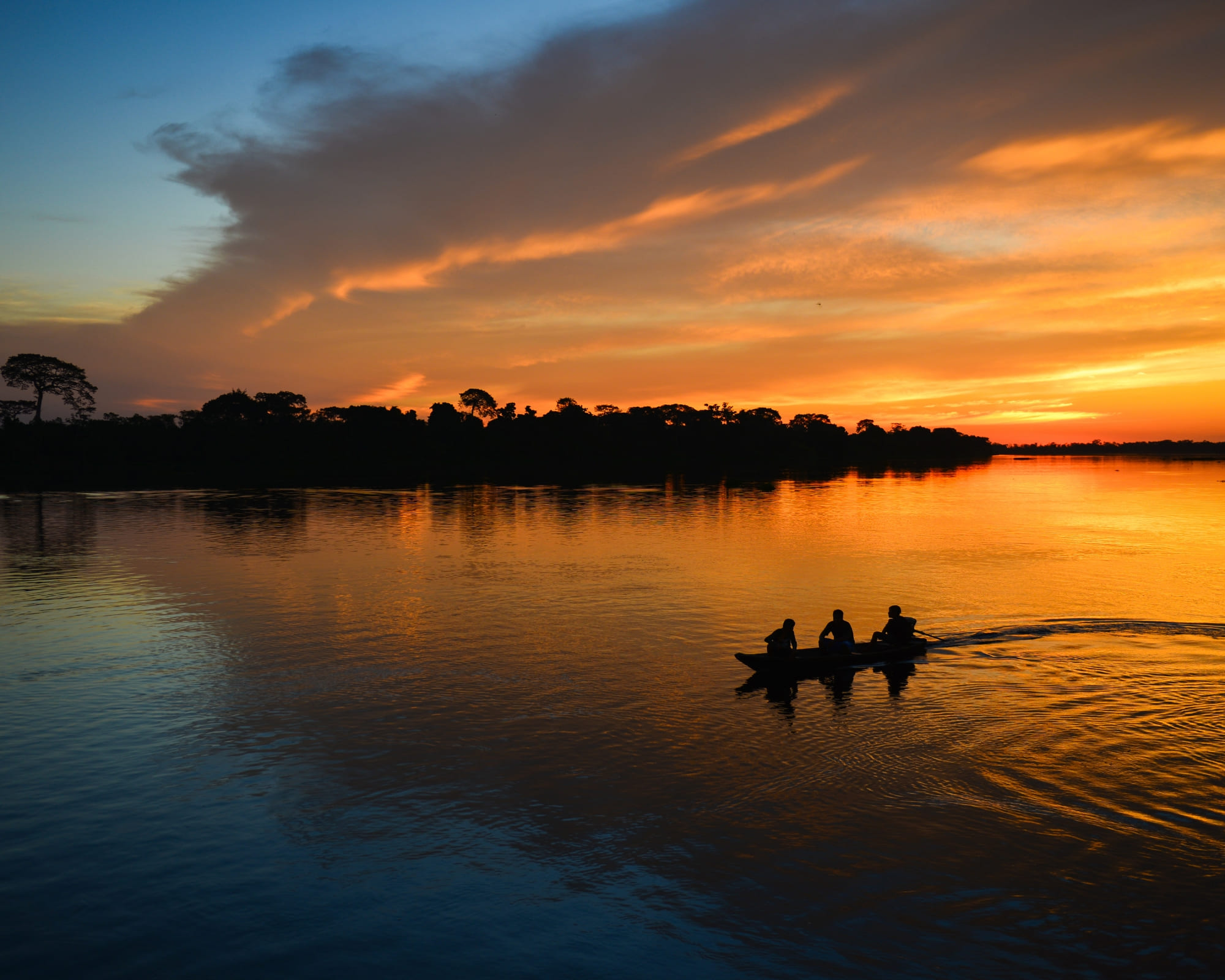
Tag: Amazon Rainforest

  • How to Visit the Amazon Rainforest in Brazil – Travel Guide

    How to Visit the Amazon Rainforest in Brazil – Travel Guide

    Learn everything you need before enjoying your Amazon tour in Brazil, including when is the best time to visit, how to get there, what are the main activities and much more!

    Are you a nature lover and your ultimate dream to visit the Amazon Rainforest in Brazil so you can experience the fascinating wonders of the largest tropical rainforest in the world? If the answer is a loud and clear “yes!”, then you’ve come to the right place!

    There are many ways to discover it, from guided tours with wild camping, to staying in luxury jungle lodges, or even enjoying river cruises.

    To help with your vacation planning, PlanetaEXO, an ecotourism platform specialized in Amazon Rainforest tours in Brazil, has created this carefully curated travel guide. Check it out below and discover how to visit the Amazon and other important information about this spectacular destination!

    Table of contents:

    1. About the Amazon
    2. Where is the Amazon Rainforest?
    3. Can you visit the Amazon Rainforest?
    4. How to get to the Amazon Rainforest?
    5. When is the best time to visit the Amazon Rainforest in Brazil?
    6. What to do in the Amazon Rainforest?
    7. Animals in the Amazon Rainforest, Brazil
    8. Where to stay in the Amazon Rainforest?
    9. How long should you stay in the Amazon Rainforest?
    10. Traveling to the Amazon in Brazil: how much does it cost?
    11. Do you need a vaccine to go to the Amazon Rainforest in Brazil?
    12. Is it safe to visit the Amazon Rainforest in Brazil?
    13. What should I pack for an Amazon Rainforest trip?
    14. Is traveling to the Amazon worth it?
    How to visit the Amazon Rainforest - Cristalino National Reserve
    .

    About the Amazon

    If it were a country, the Amazon would be the seventh largest in the world. It spans 6.7 million km² — twice the size of India!

    The impressive numbers go on, this time regarding fauna and flora: there are 30 million species of animals — although not all of them have been officially cataloged yet —, 2.5 million types of insects, and 2,500 and 30,000 varieties of trees and plants, respectively.

    When it comes to the watershed, 20% of the planet’s freshwater belongs to the Amazon. The Amazon River alone has an extension of 6,400 km, going down the Andes Mountains and flowing into the Atlantic Ocean.

    Such richness holds more than half of the world’s entire biodiversity, making the value of the Amazon Rainforest immeasurable and irreplaceable.

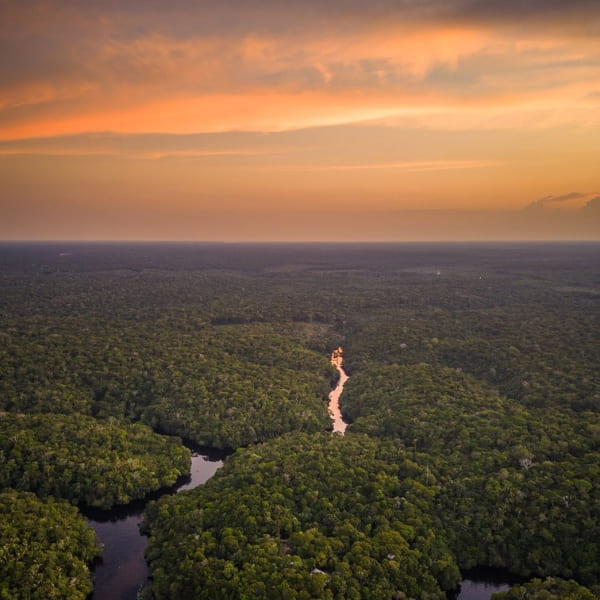
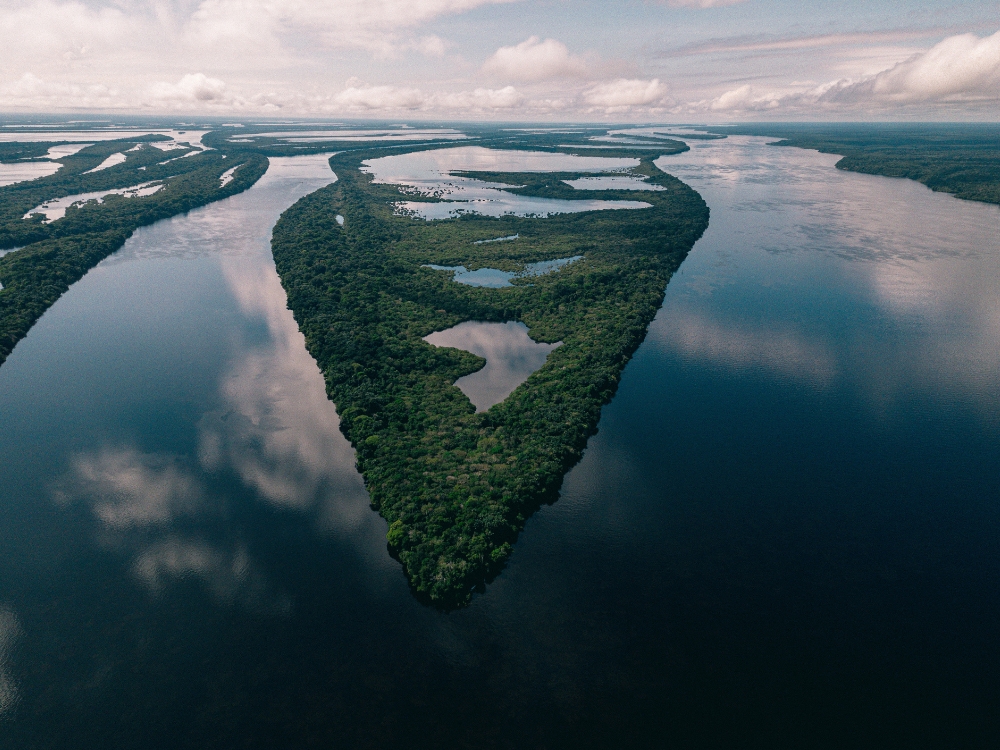
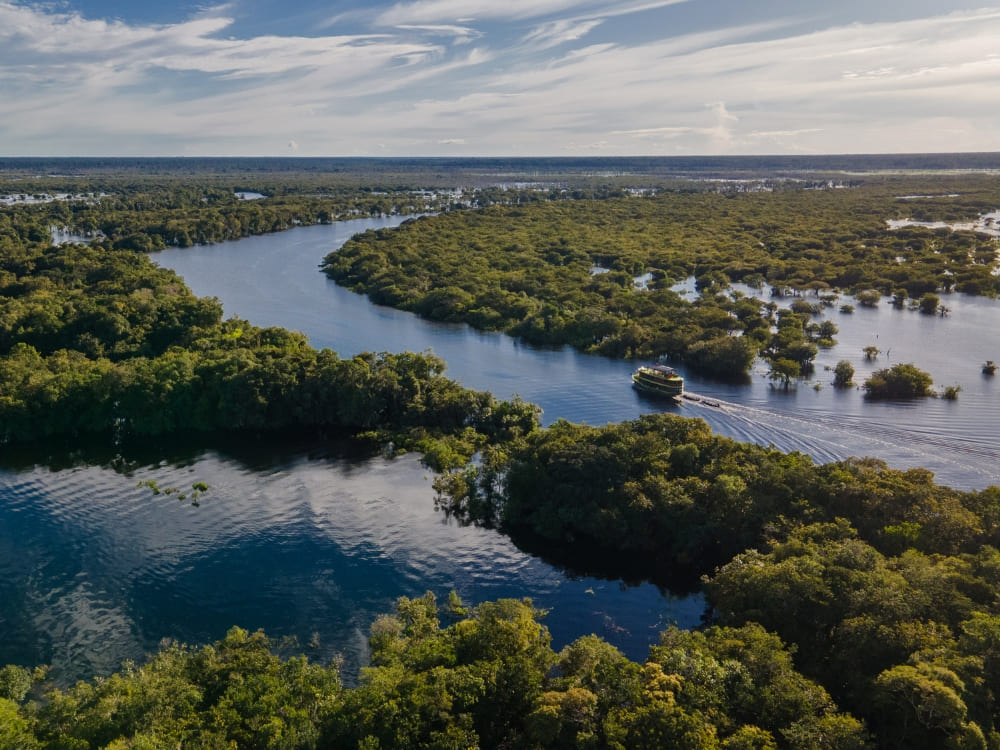
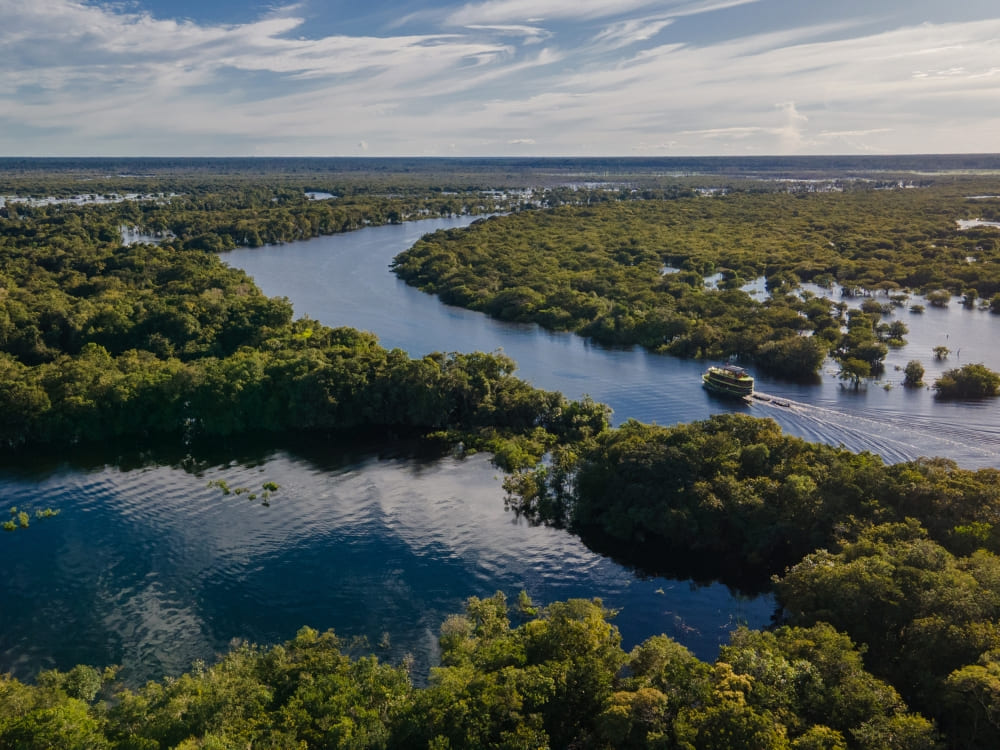
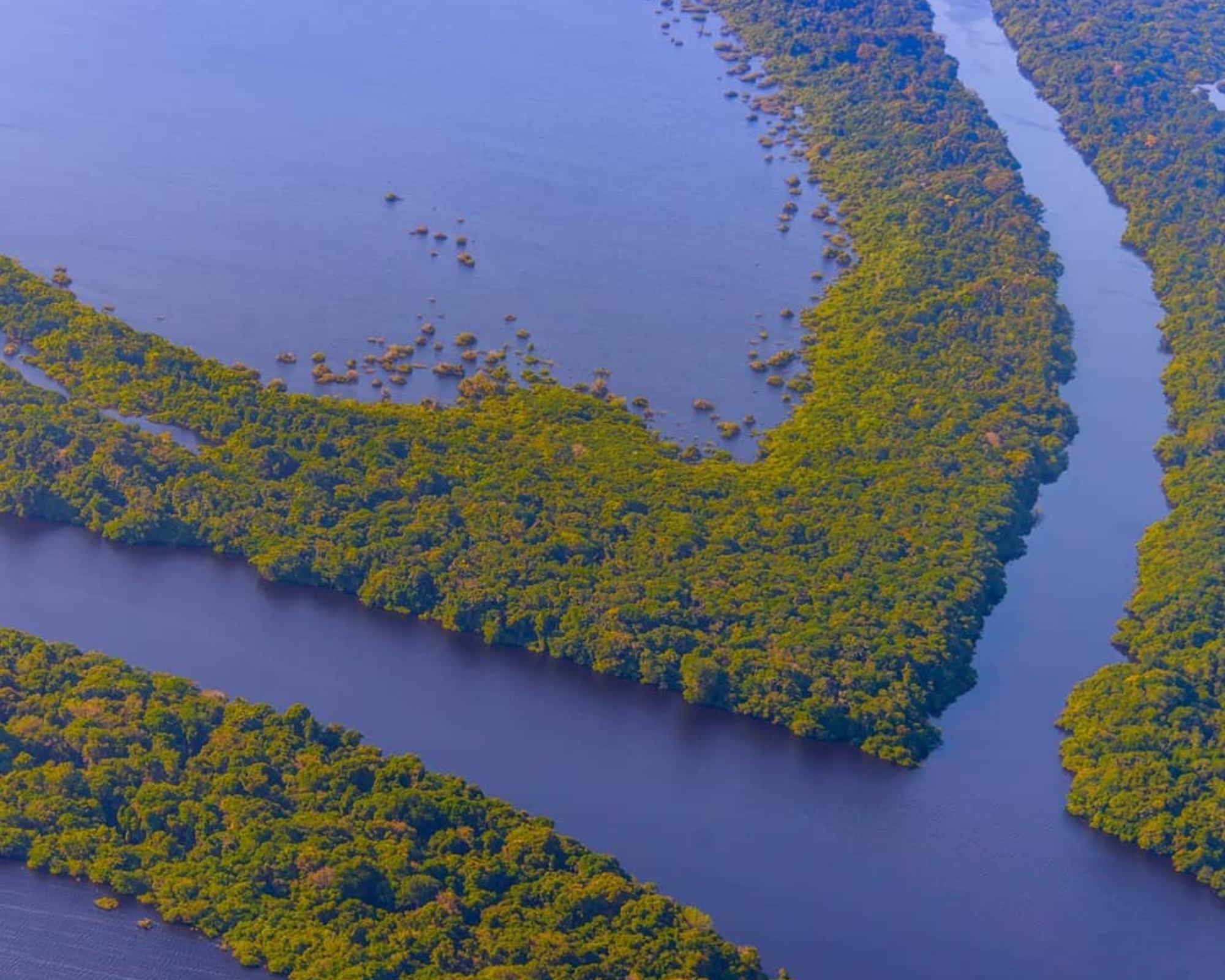
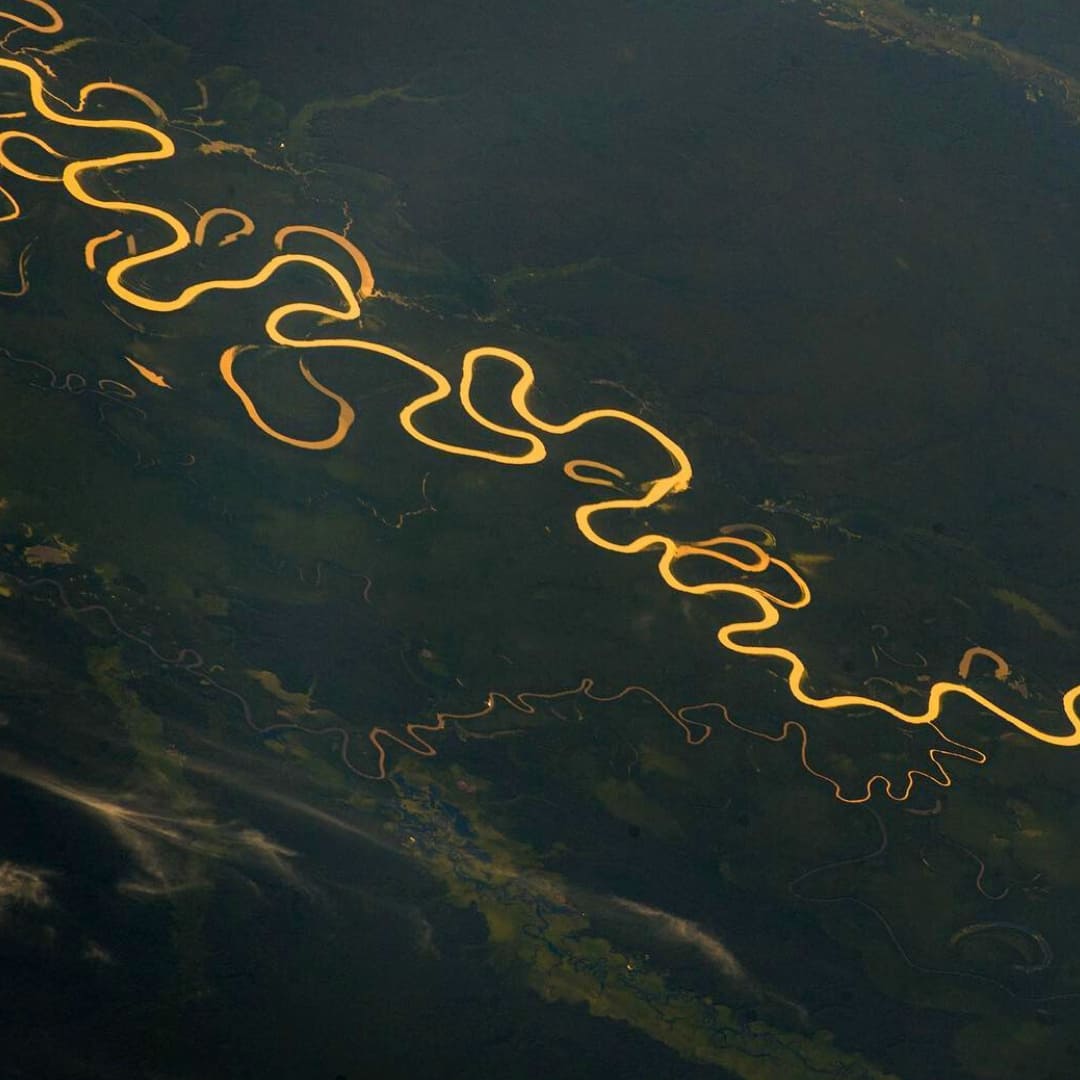
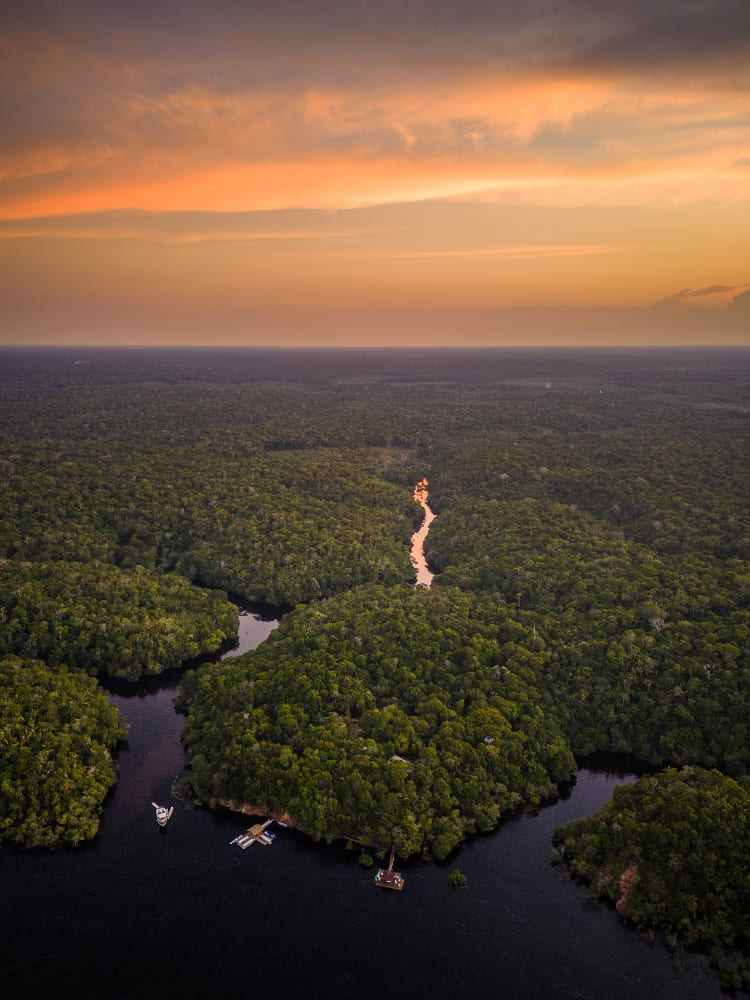
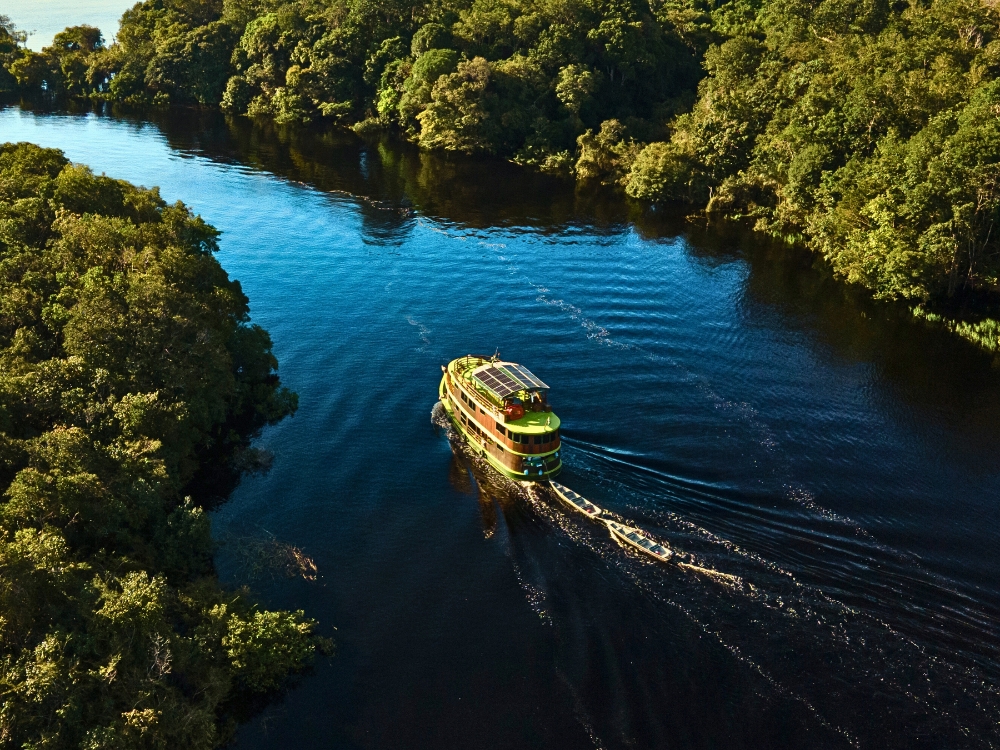
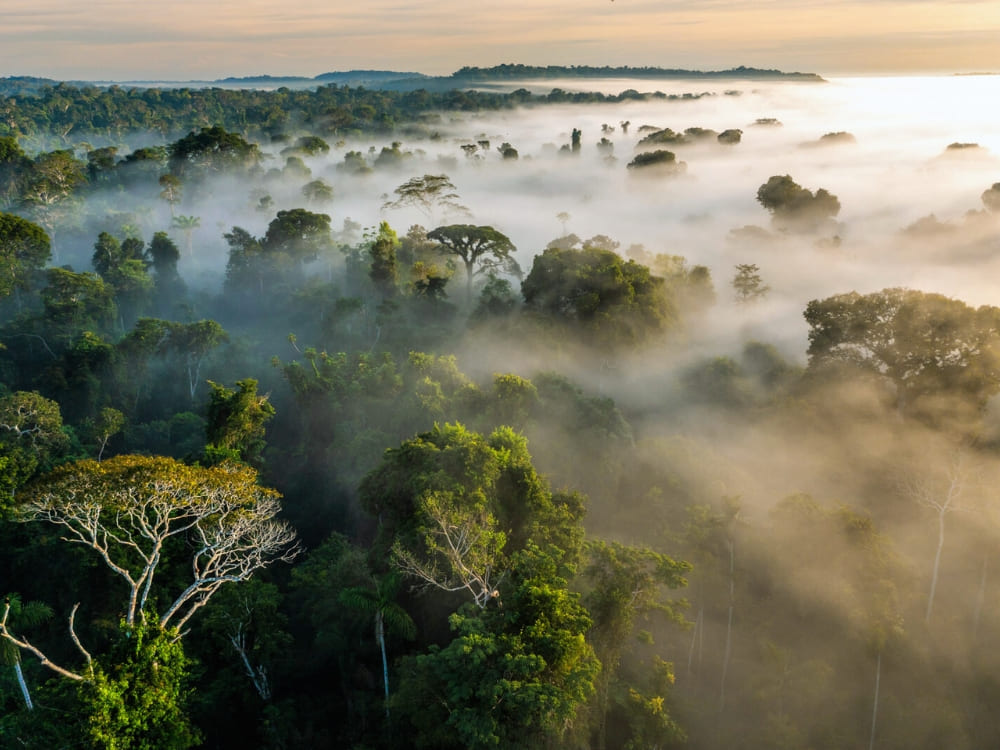
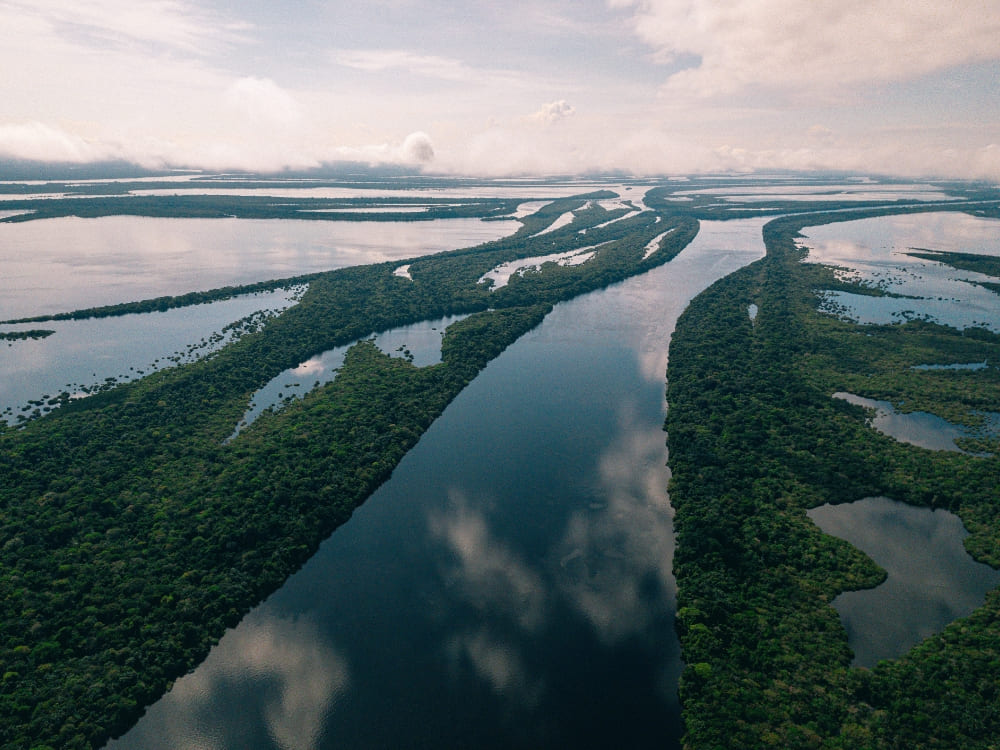
    Aerial panorama of the Amazon river channels and lush green islands, highlighting the massive watershed and freshwater ecosystem of the basin.
    Photo: Felipe Castellari


    👉 Read more: 15 Facts about the Amazon Rainforest in Brazil

    Where is the Amazon Rainforest?

    The Amazon Rainforest is in South America, reaching eight different countries: Brazil, Bolivia, Colombia, Ecuador, Guyana, Peru, Suriname and Venezuela.

    59% of its area is solely located in Brazil, touching the states of Amazonas, Mato Grosso, Pará, Acre, Amapá, Rondônia, Roraima and Tocantins. 

    Can you visit the Amazon Rainforest?

    Yes, absolutely! But it’s important to rely on professionals who truly know the area. The forest is incredibly beautiful, but the wilderness can be harsh. So if you’ve ever wondered if it’s safe to visit the Amazon Rainforest, the presence of qualified guides is crucial and non-negotiable.

    This is also the best way to appreciate nature in its fullness, since an expert will know how to move around the jungle. The activities are vast, but some factors should be considered for everyone’s enjoyment, like weather conditions and the right places to spot animals. 

    Brazil Amazon tours are actually encouraged because they can also be a great way to ensure its preservation. Ecotourism is a powerful tool to provide work for local communities. When sustainable travel companies employ these people, they inspire them to work in favor of the forest instead of its degradation.

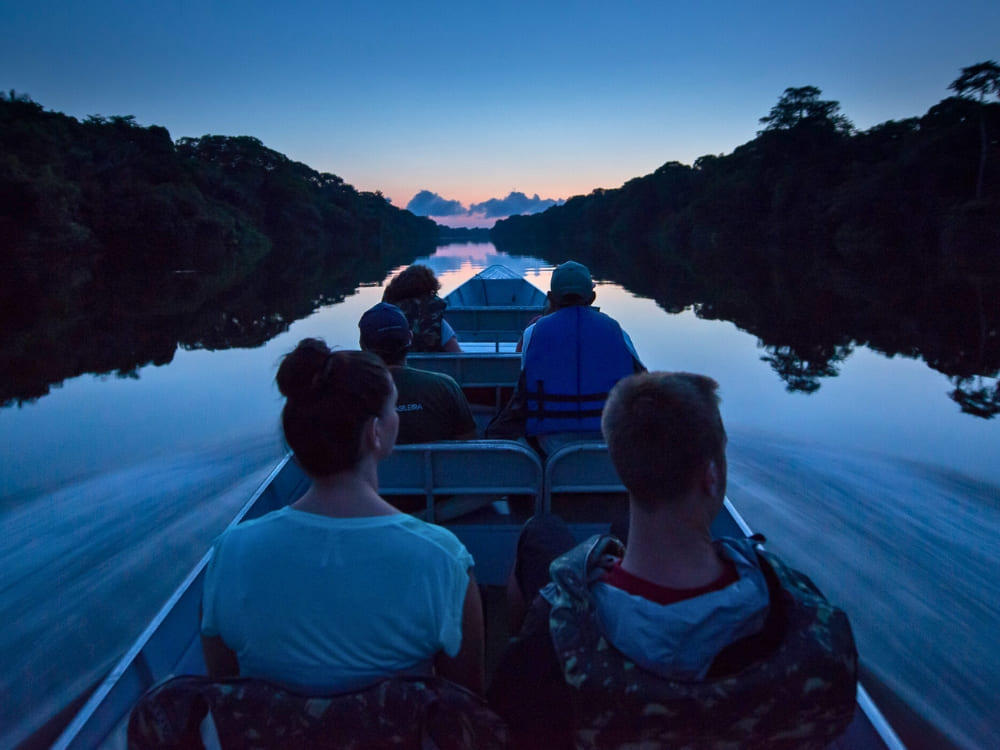
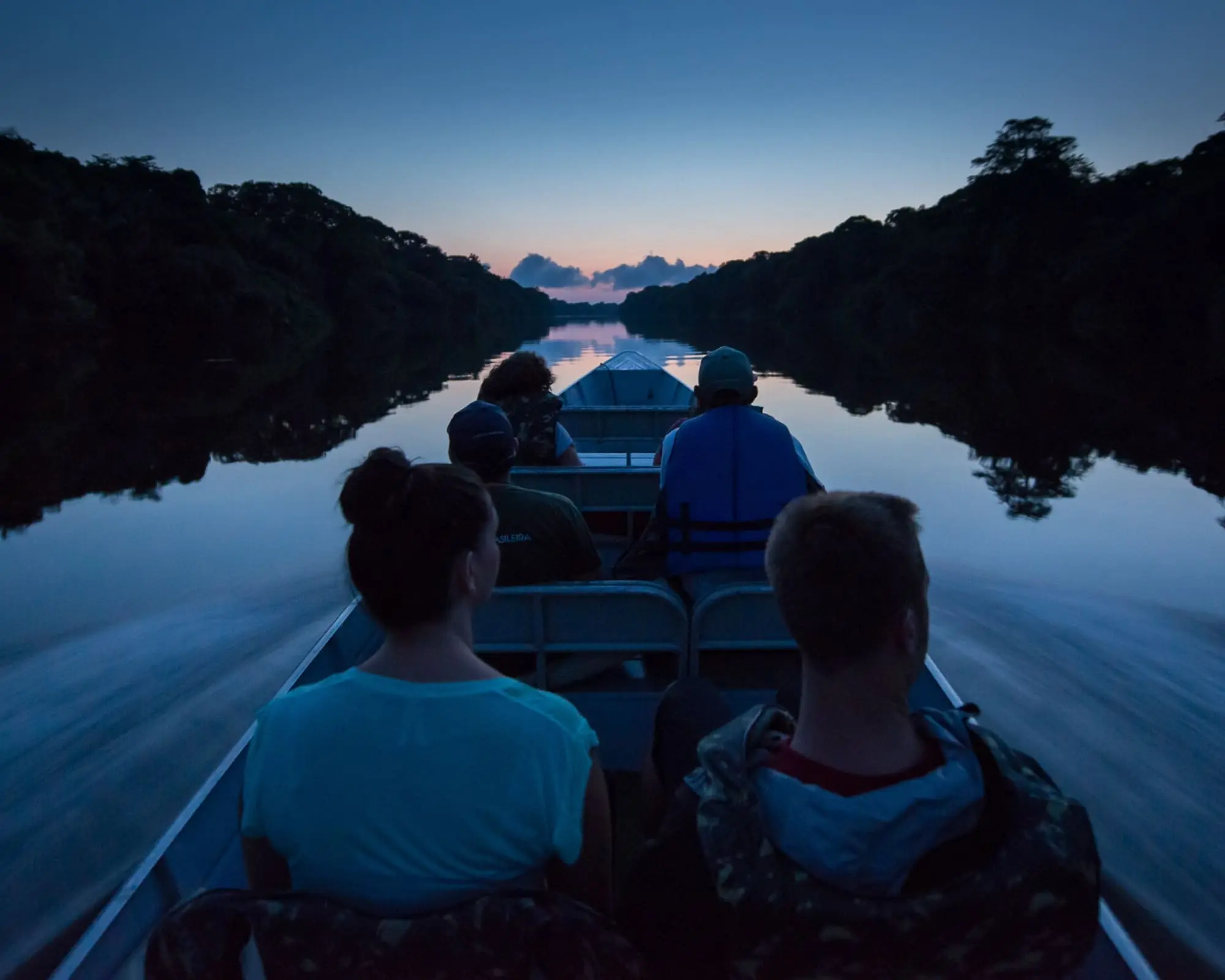
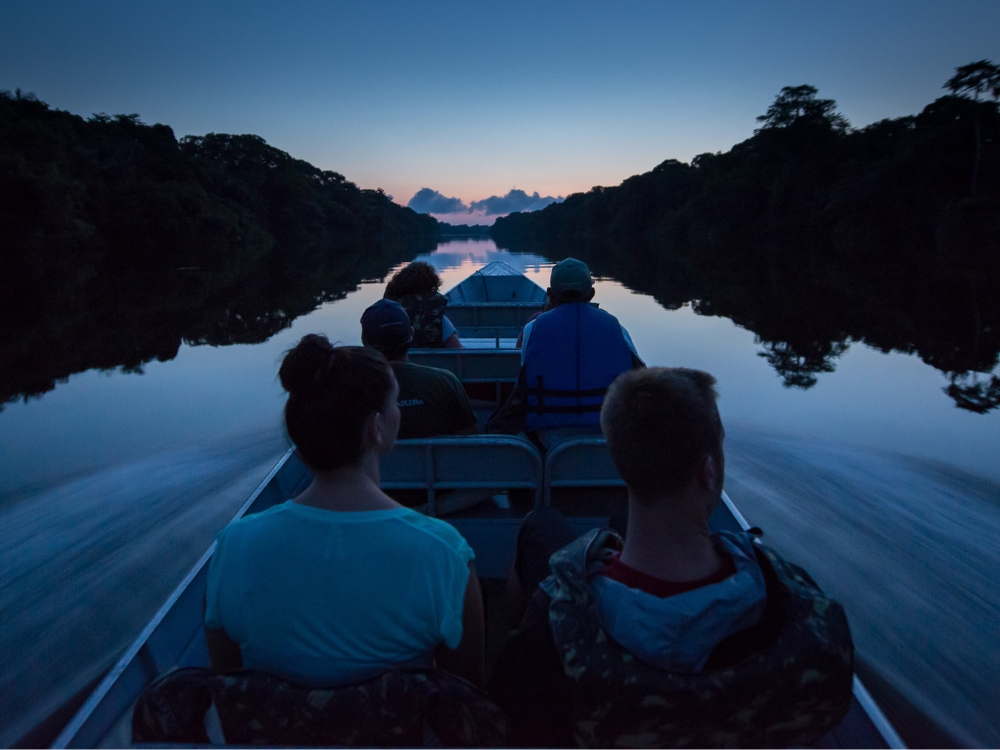
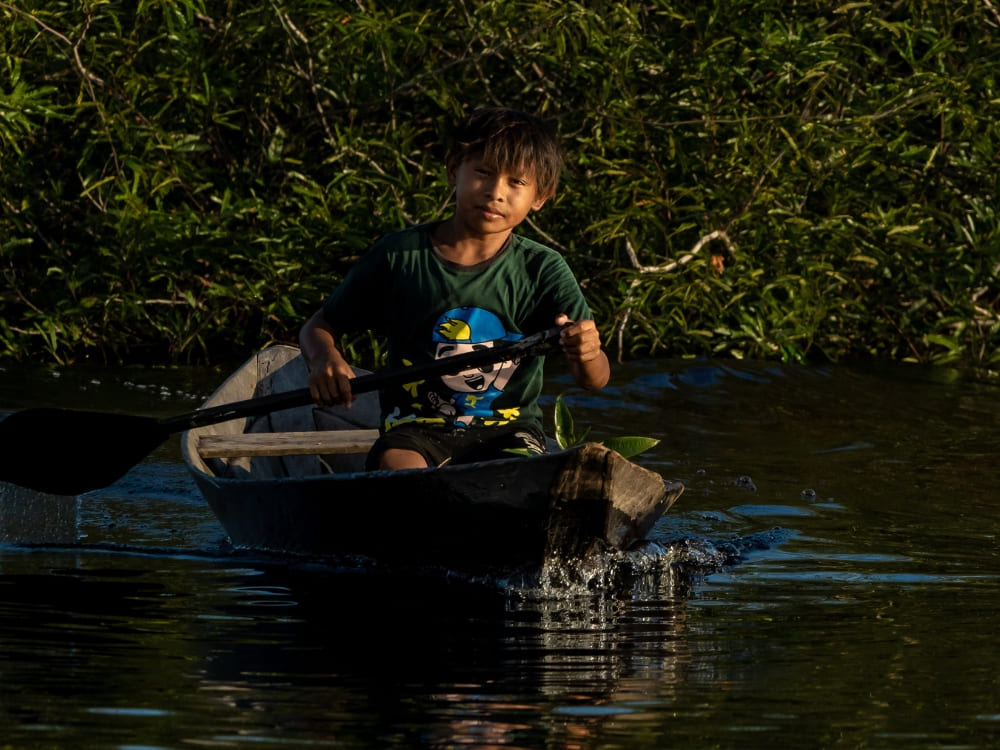
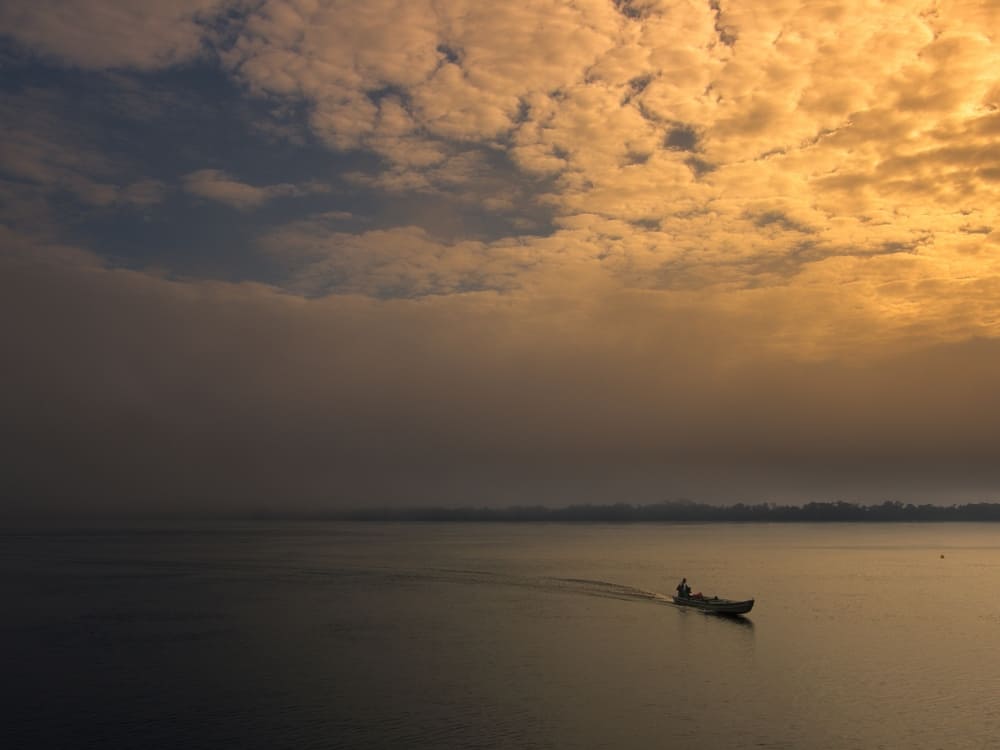
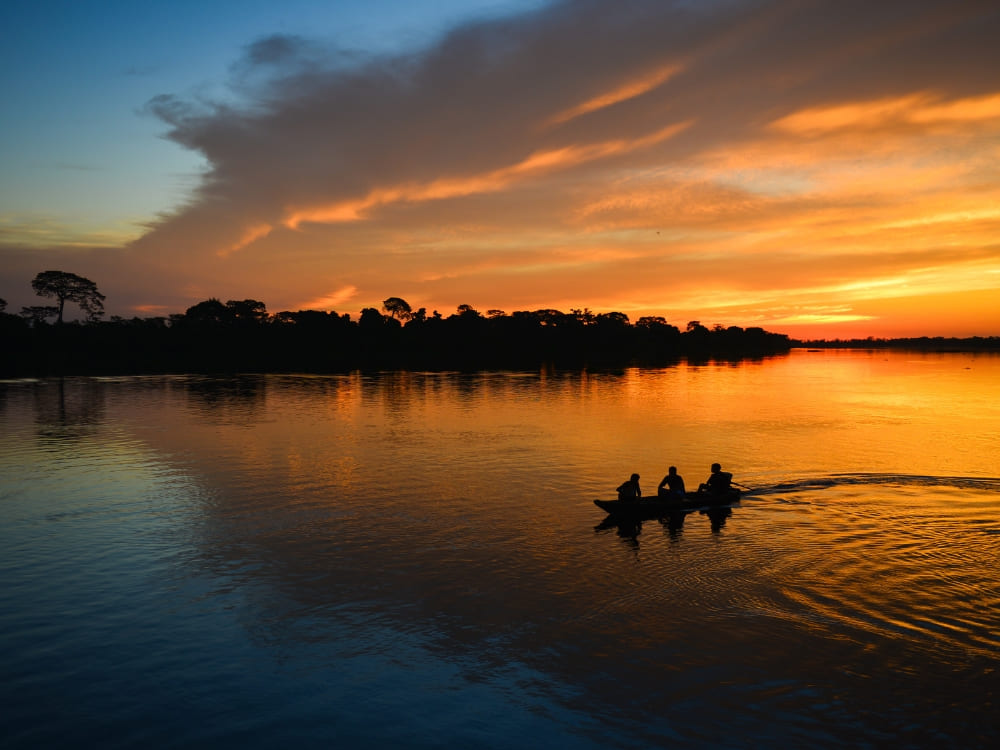
     Tourists enjoying a peaceful boat ride on an Amazon river at twilight, observing nature with a local guide to ensure a safe experience.
    .

    Ecotourism also raises awareness about environmental issues, like deforestation, pollution and climate change. Upon seeing the wonders of the Amazon, travelers fully understand why it is so important to protect it, which can make them engaged in conservation projects not only in the rainforest but also in their home countries.

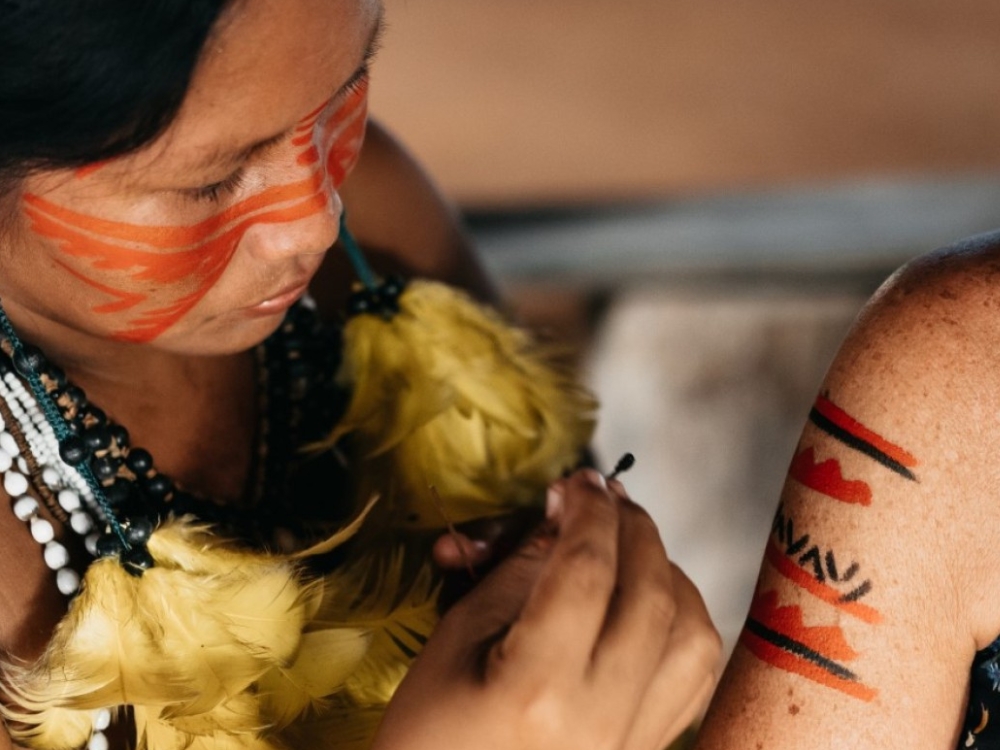
    Indigenous woman applying traditional red and black face paint, representing the rich culture of local communities in the Amazon supported by ecotourism.
    .

    👉 Read more:

    How to get to the Amazon Rainforest?

    There are a few ways to visit the Amazon Rainforest in Brazil, but the most convenient one is flying to Manaus, capital of Amazonas.

    From the US, travelers can depart from Miami (MIA) and fly straight to Manaus (MAO). From Fort Lauderdale (FLL), connecting flights have layovers in Bogotá (BOG), Panama City (PTY), Belém (BEL) and São Paulo (VCP or GRU).

    From Europe, layovers are also expected in Rio de Janeiro (GIG), Belo Horizonte (CNF), Recife (REC), Fortaleza (FOR) or Brasília (BSB), depending on the departure location.

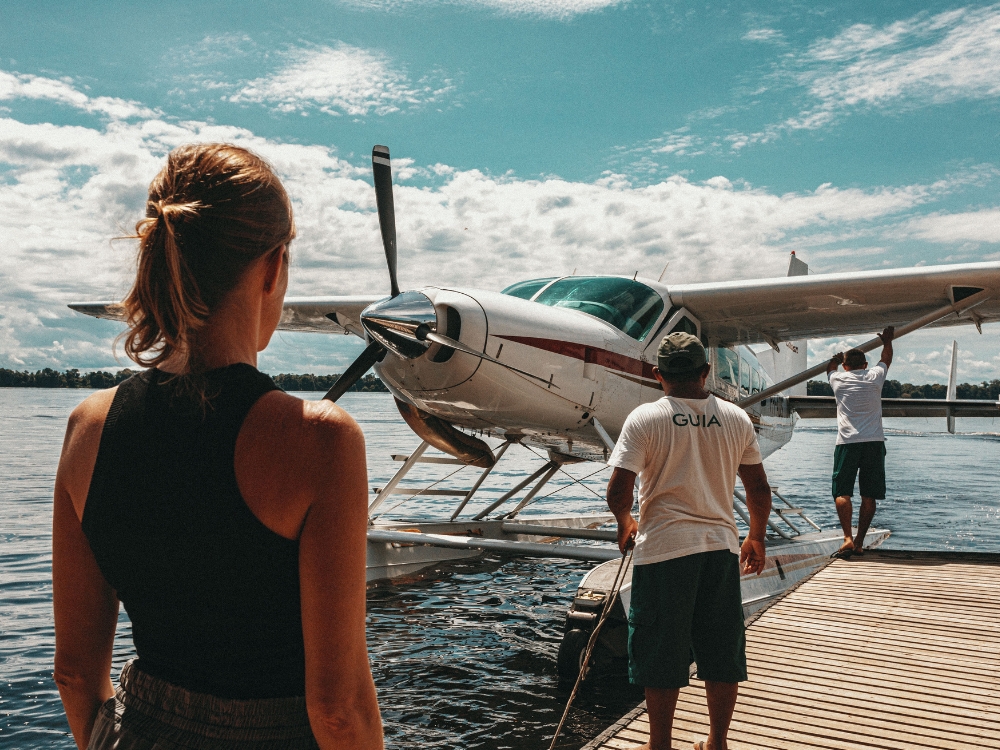
    Seaplane docked at a river pier in Manaus, a common transport method to reach remote Amazon jungle lodges and explore nature.
    .

    The Amazon in Mato Grosso and Pará are also amazing vacation spots to explore nature. In this case, flying to these states’ capitals is the best option.

    👉 See more details: How to get to the Amazon Rainforest in Brazil?

    When is the best time to visit the Amazon Rainforest in Brazil?

    Although the Amazon is considered a year-round destination, the period from January to September offers the best conditions because it avoids the peak of the dry season. At the same time, there are good hiking trail options and enough water for aquatic activities.

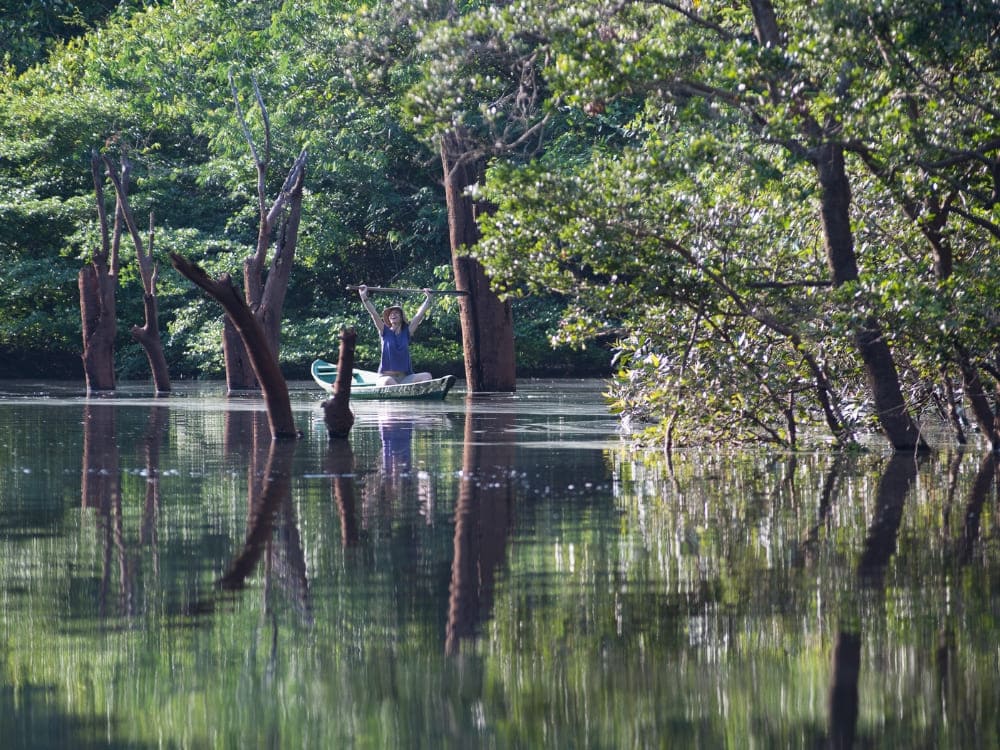
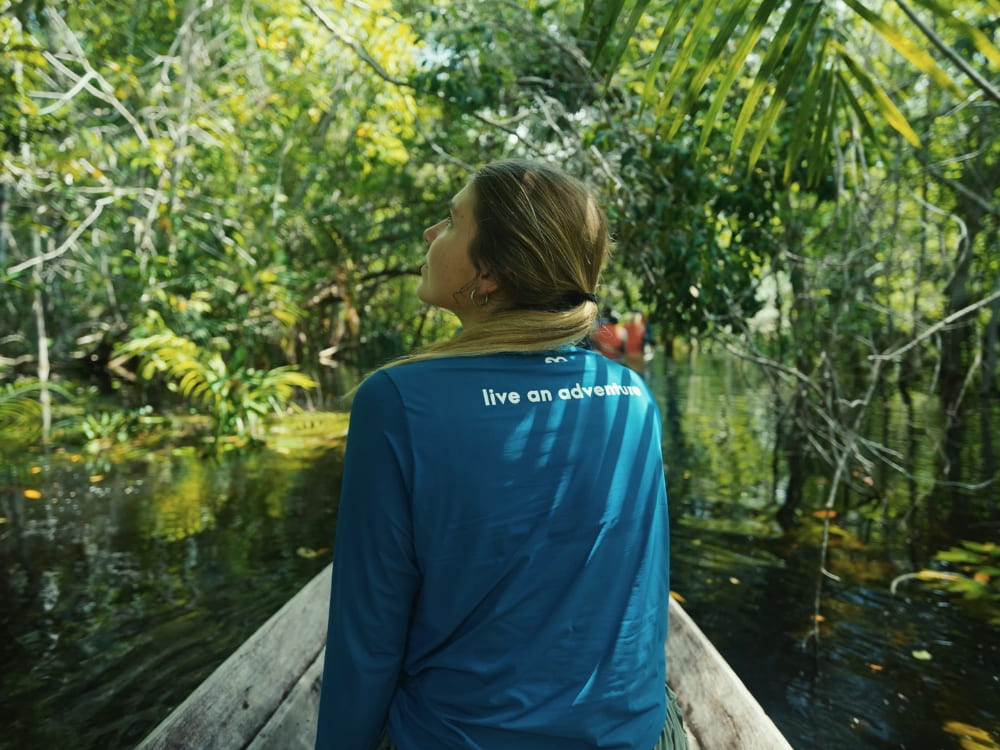
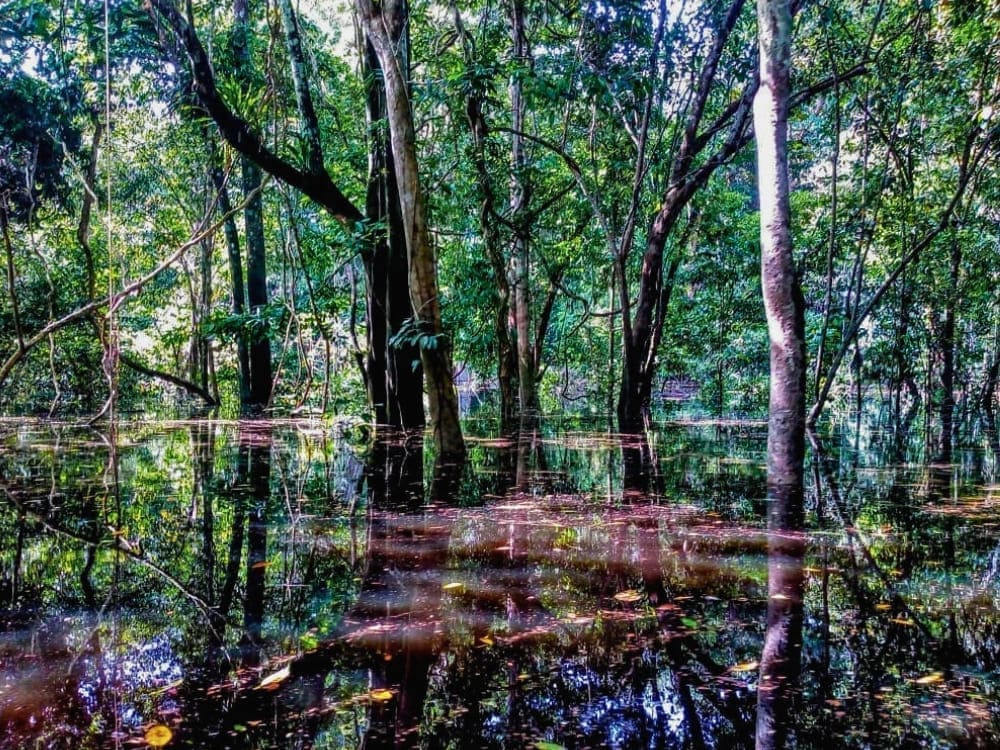
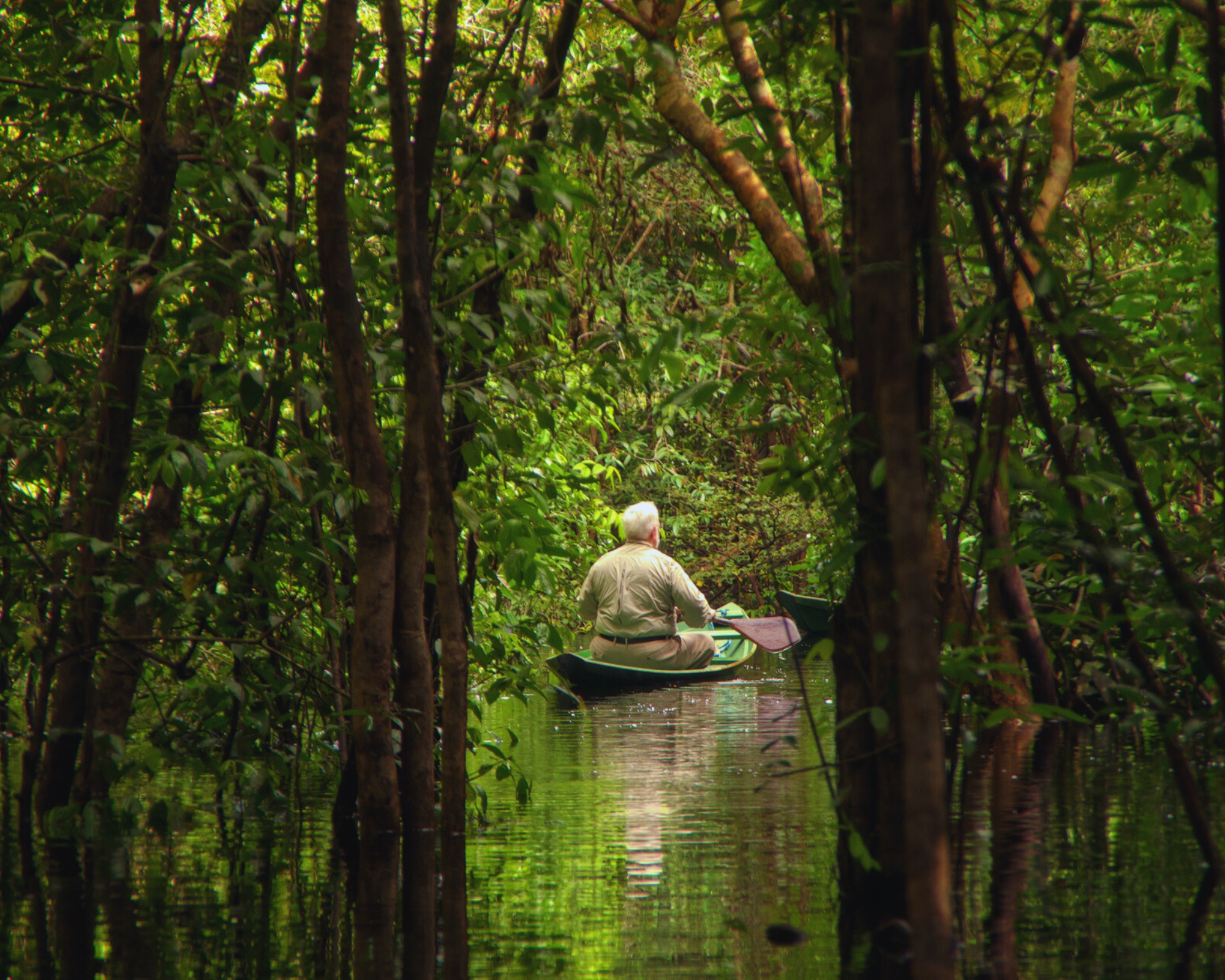
    Canoe navigating through the flooded forest (igapó) during the wet season in the Amazon, surrounded by water-reflected trees.
    .

    The wet season (December to May) is great for people who want to enjoy the Amazonian rivers by kayaking, canoeing, swimming and exploring the igapós (flooded forests). Rainstorms are common, but don’t last too long. 

    Meanwhile, the dry season (June to November) is popular because it usually allows both water and land-based activities. However, extended droughts are becoming more frequent, especially from October to December. This causes low water levels and limited access to a few areas and itineraries, though things tend to get better by January.

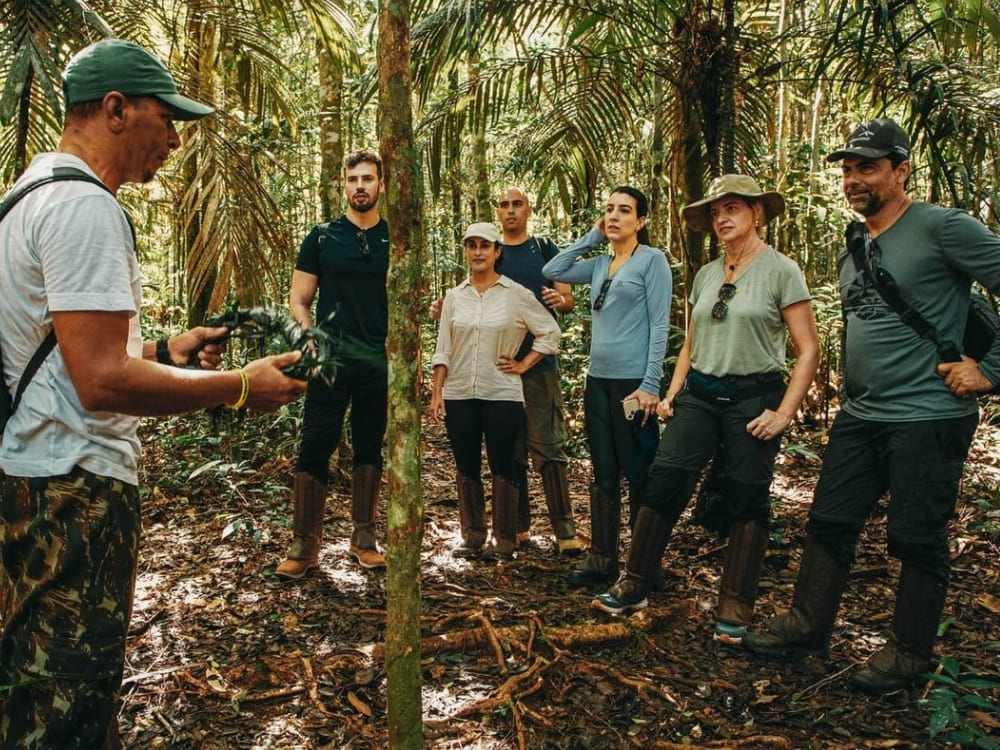
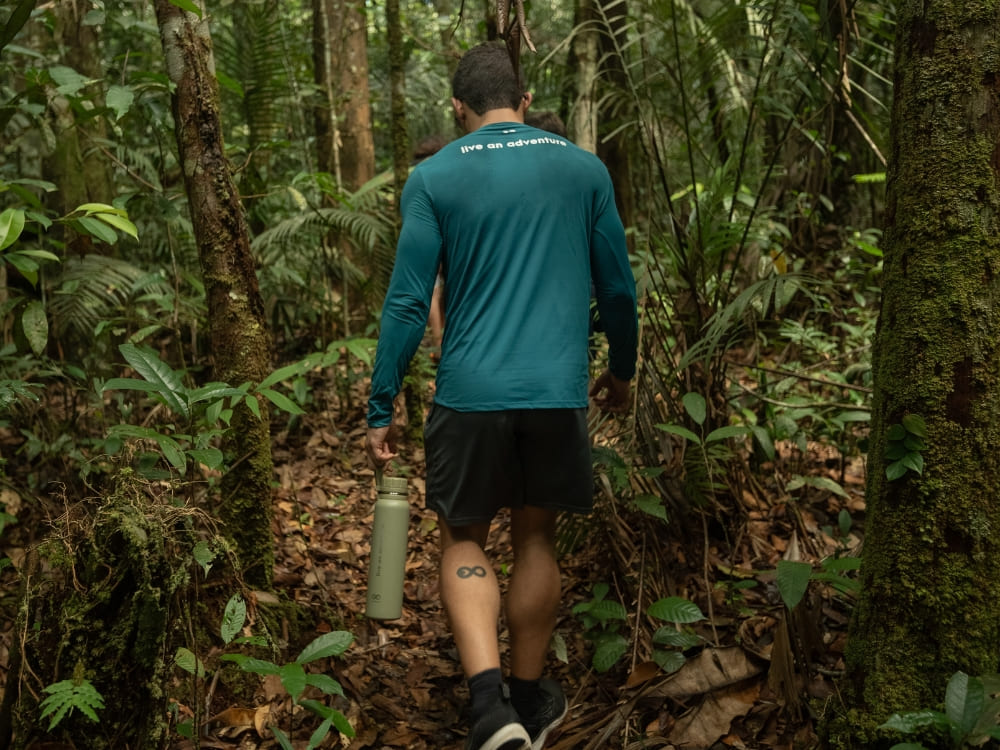
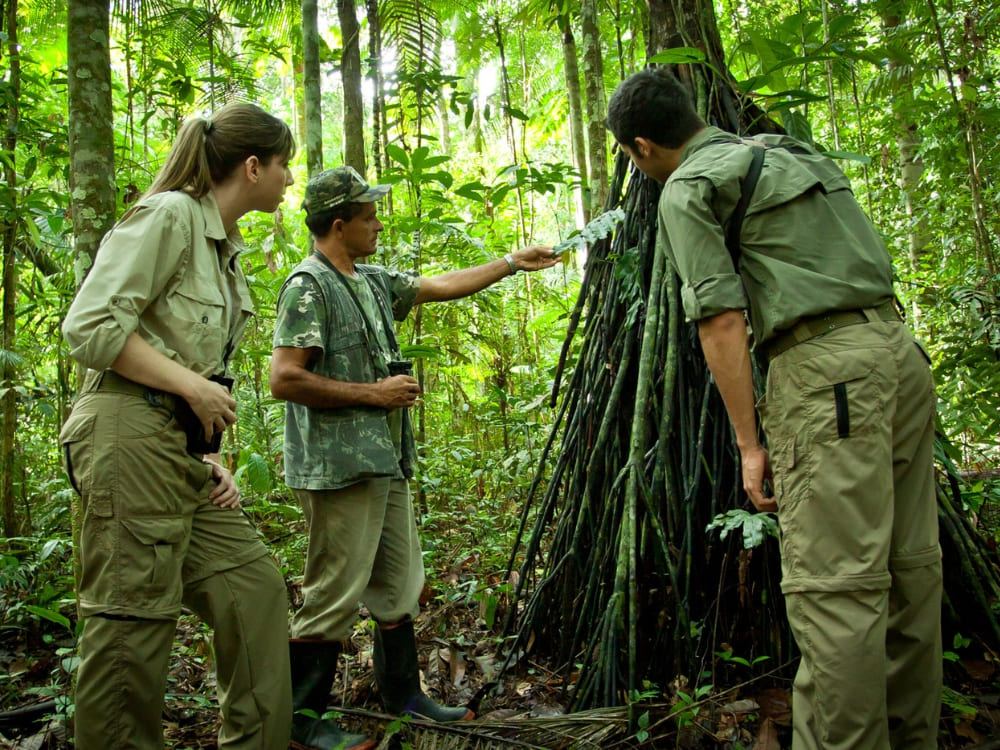
     Local guide explaining the flora to a group of tourists during a jungle hiking tour in the Amazon Rainforest.
    .

    👉 Read more: When is the best time to visit the Amazon Rainforest in Brazil

    What to do in the Amazon Rainforest?

    In addition to how to visit the Amazon Rainforest, what to do during the trip is a very frequently asked question by people who are interested in spending their vacation there. 

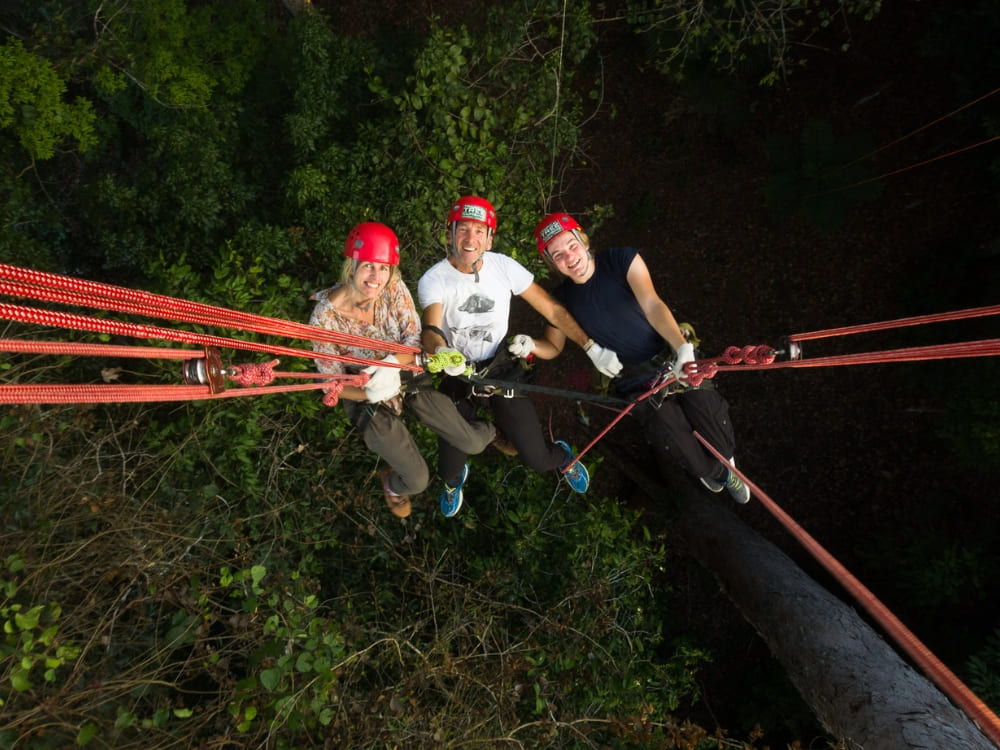
    Adventurous tourists equipped with helmets participating in tree climbing and rappelling activities high up in the Amazon canopy.
    .

    Each Amazon jungle tour in Brazil has its own itinerary, but tourists can expect a few activities, such as:

    • Jungle hiking
    • Boat trips
    • Kayaking
    • Canoeing
    • River cruises
    • Sailing through the Meeting of Waters
    • Wildlife watching
    • Tree climbing
    • Cave exploring
    • Forest immersion in jungle lodges
    • Visiting local communities, including indigenous groups

    👉 Read more: Top things to do in the Amazon Rainforest in Brazil

    Animals in the Amazon Rainforest, Brazil

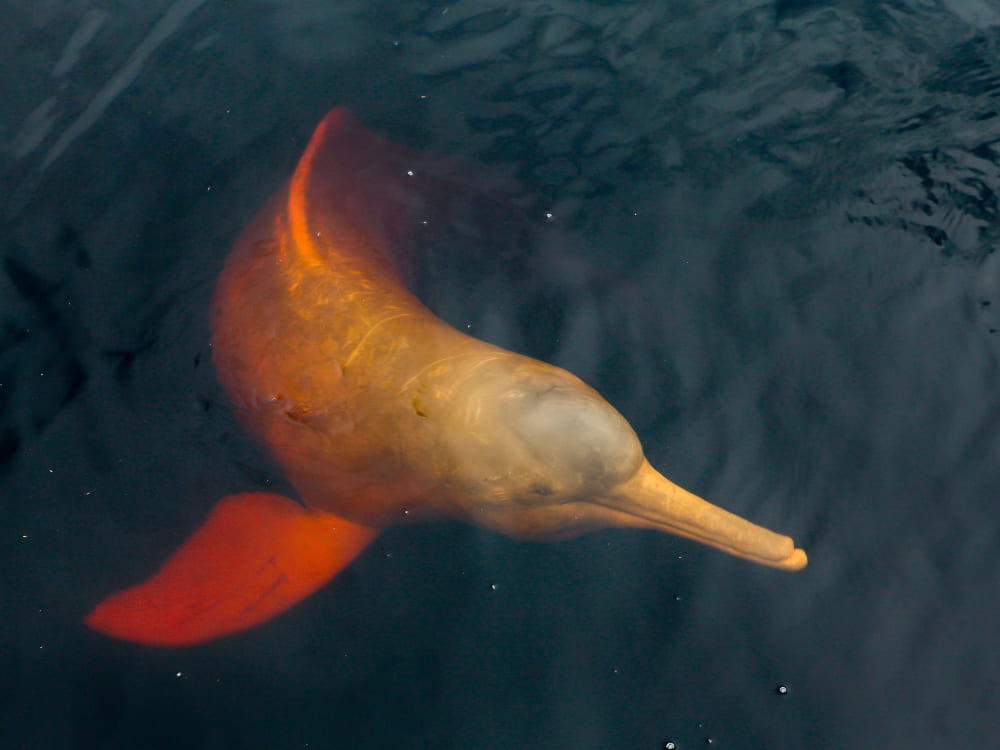
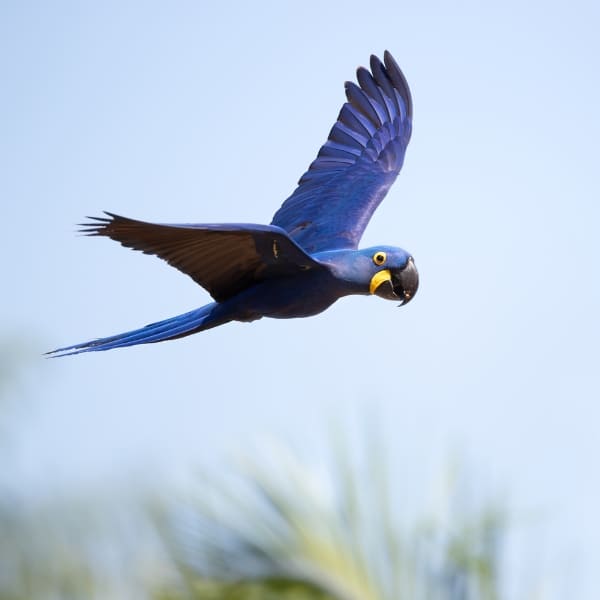
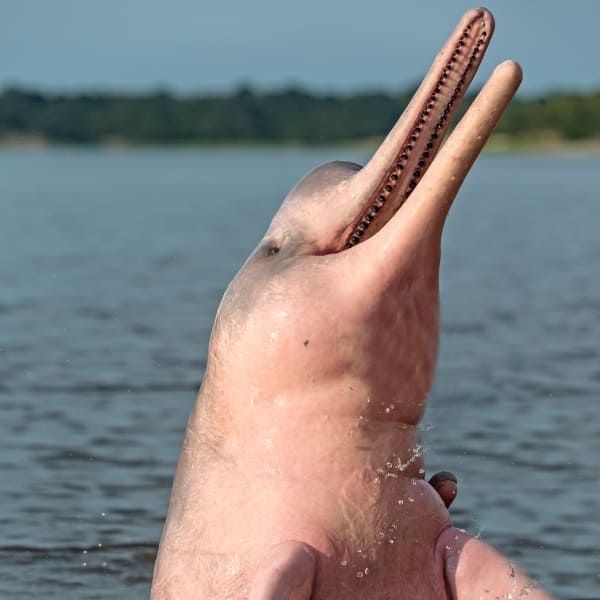
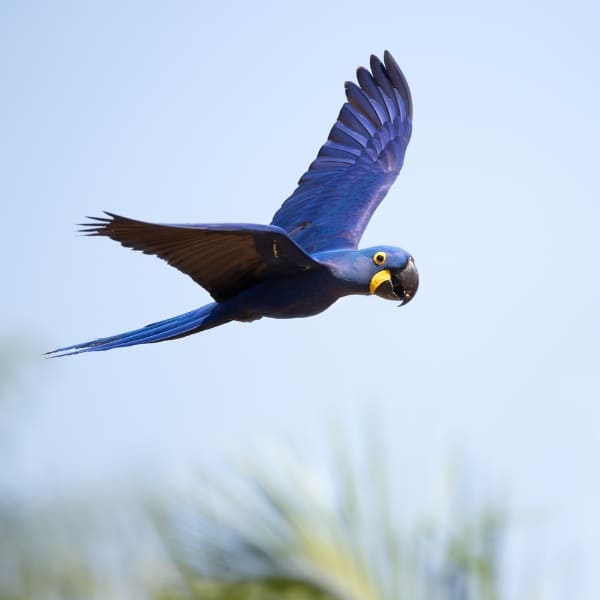
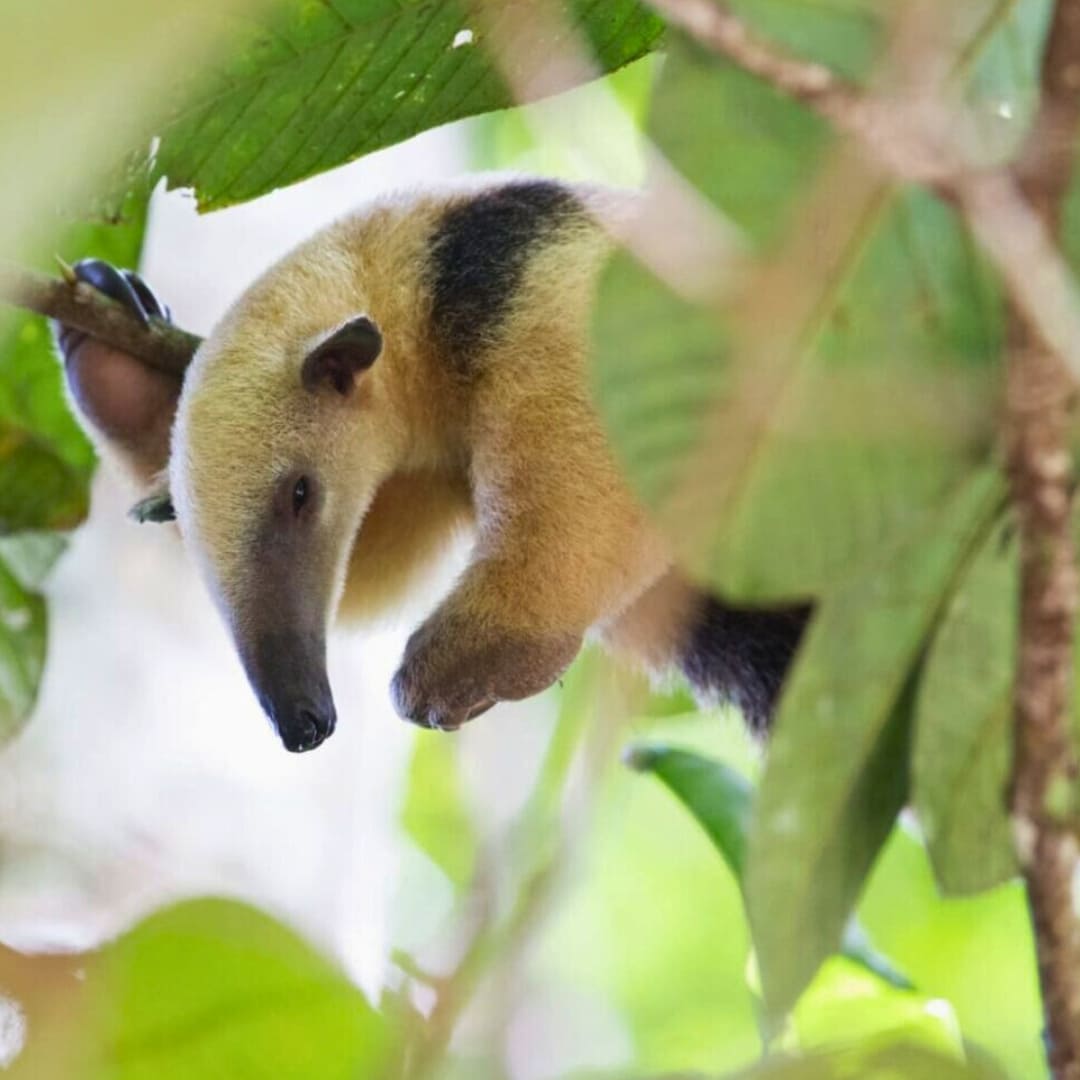
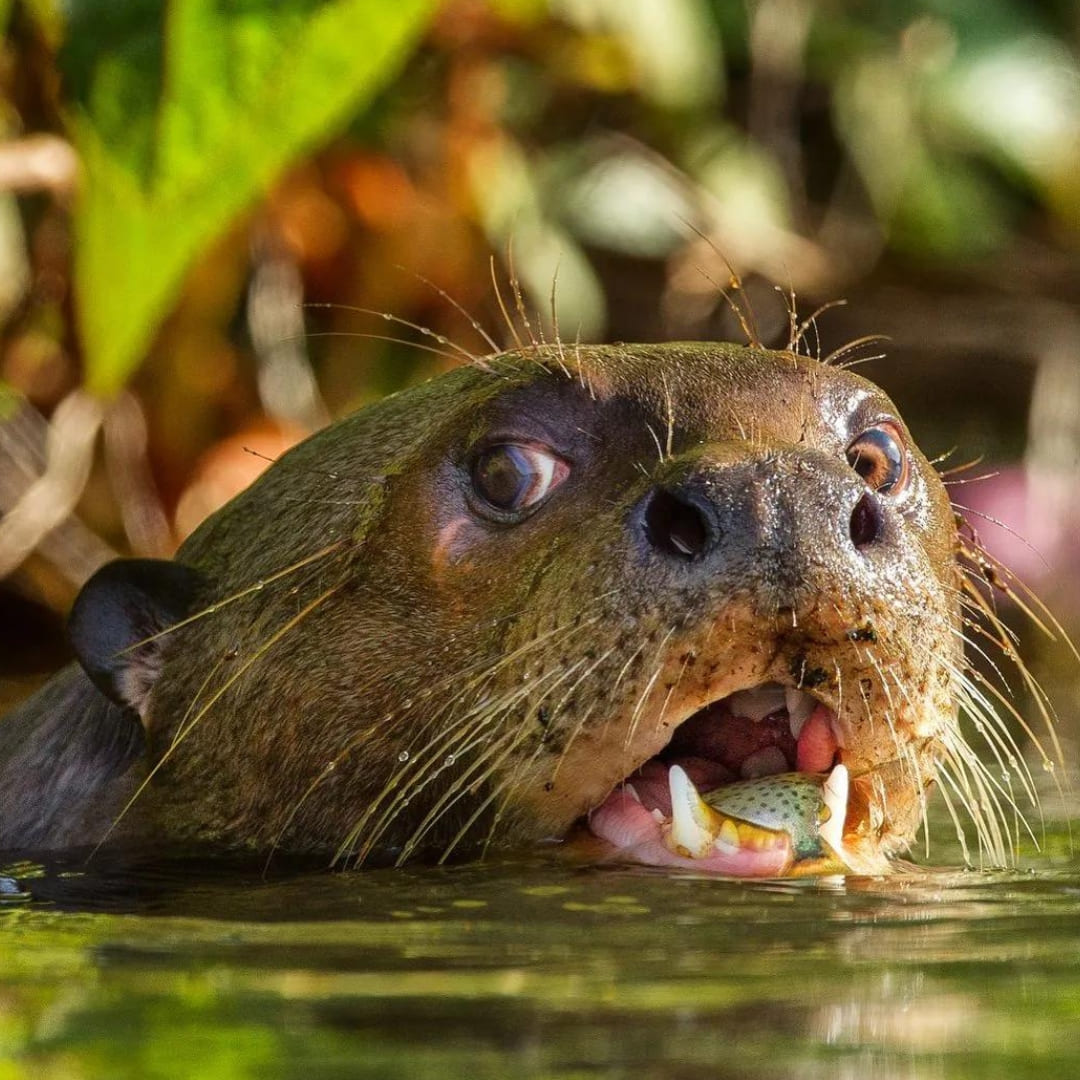
    There are millions of species of animals in this ecosystem, but some are considered symbols of the forest, like the mysterious harpy eagle, colorful macaws (red and blue), black spider monkeys, beautiful jaguars, cute-looking sloths, friendly Amazon pink dolphins and ravenous piranhas.

    The last two, in particular, are big Amazon stars. Interacting with dolphins is an absolute fan favorite, while fishing for piranhas brings everyone’s adrenaline to its maximum — an activity always monitored by experienced guides and respecting sustainable practices, of course.

    Amazon pink river dolphin swimming in the dark waters of the Rio Negro, a unique wildlife interaction and symbol of the Brazilian forest.
    .

    Keep in mind: despite the abundant fauna, there is no absolute guarantee that these animals will be spotted for a few reasons — the dense vegetation makes wildlife sightings more difficult, some species tend to hide from humans (especially during the day) and local operators follow strict protocols to not disturb animals.

    👉 Read more: Best Brazil Wildlife Tours and Destinations


    Where to stay in the Amazon Rainforest?

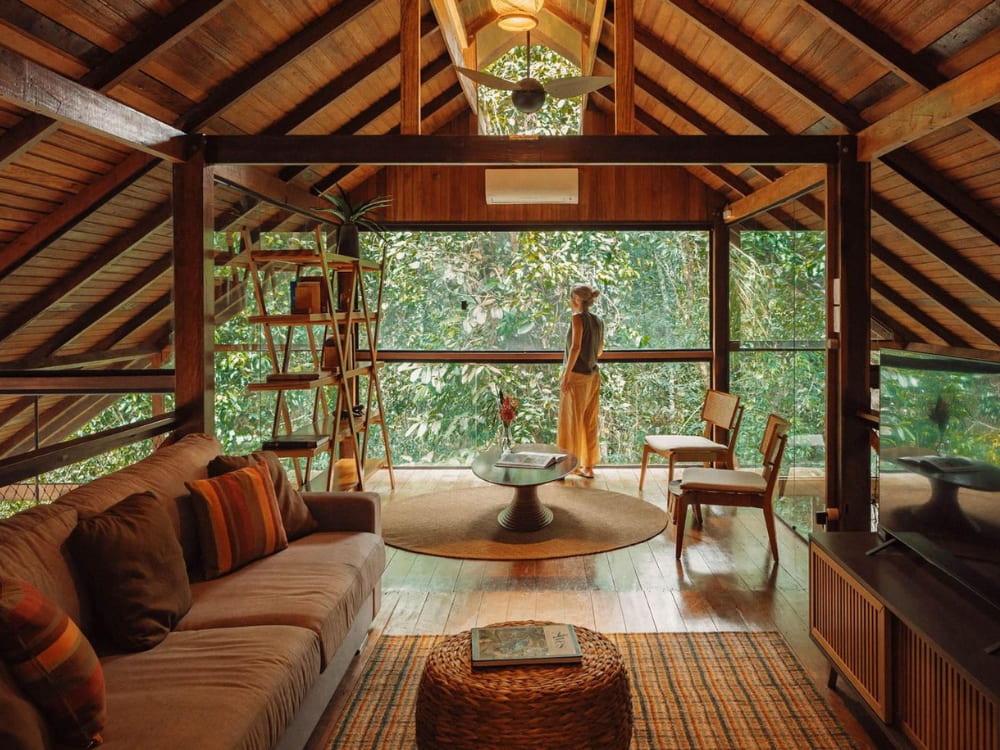
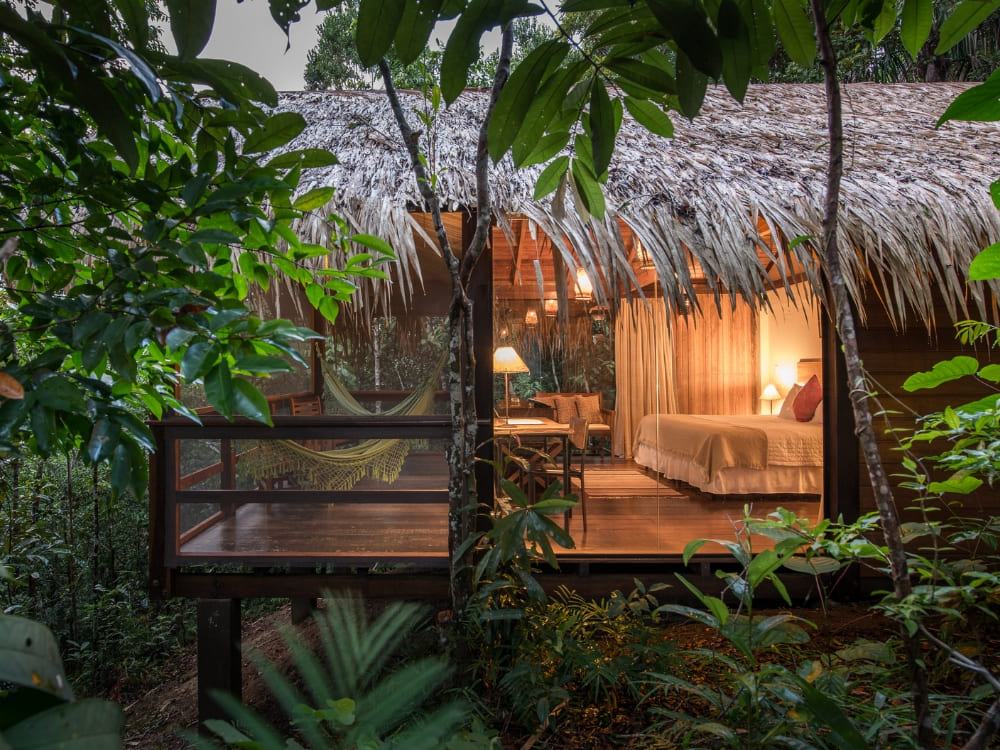
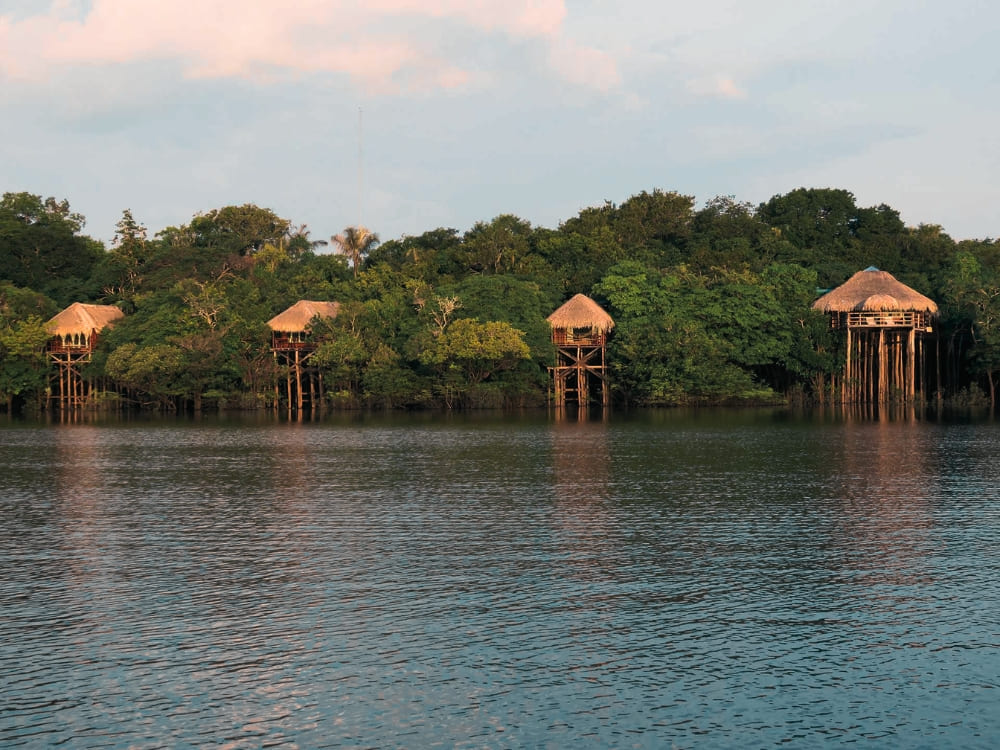
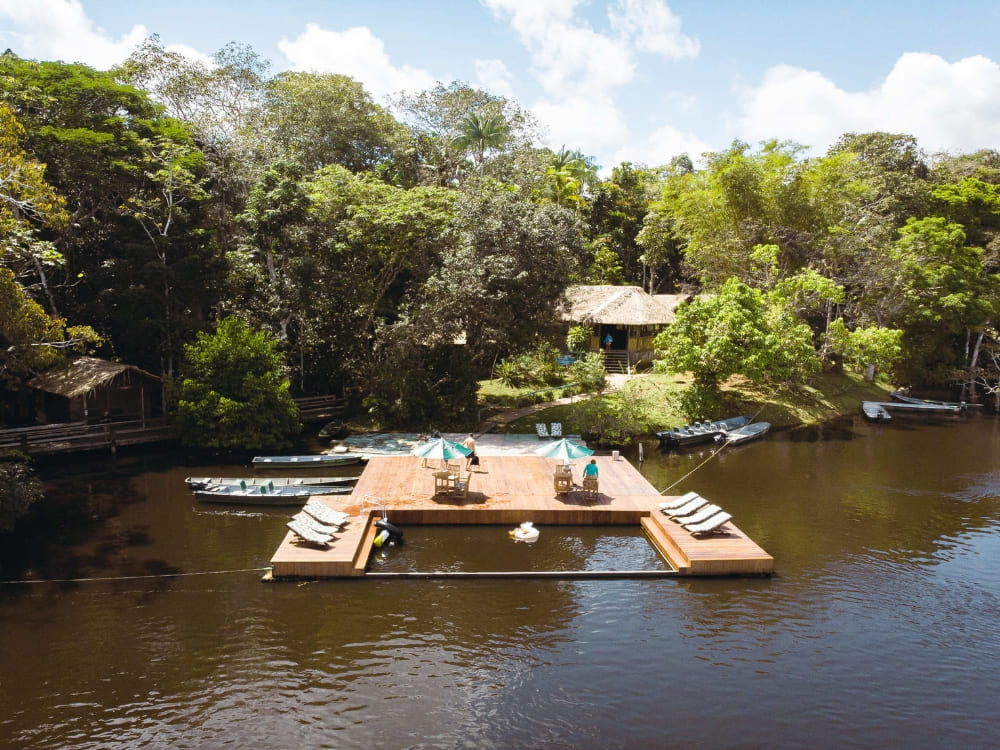
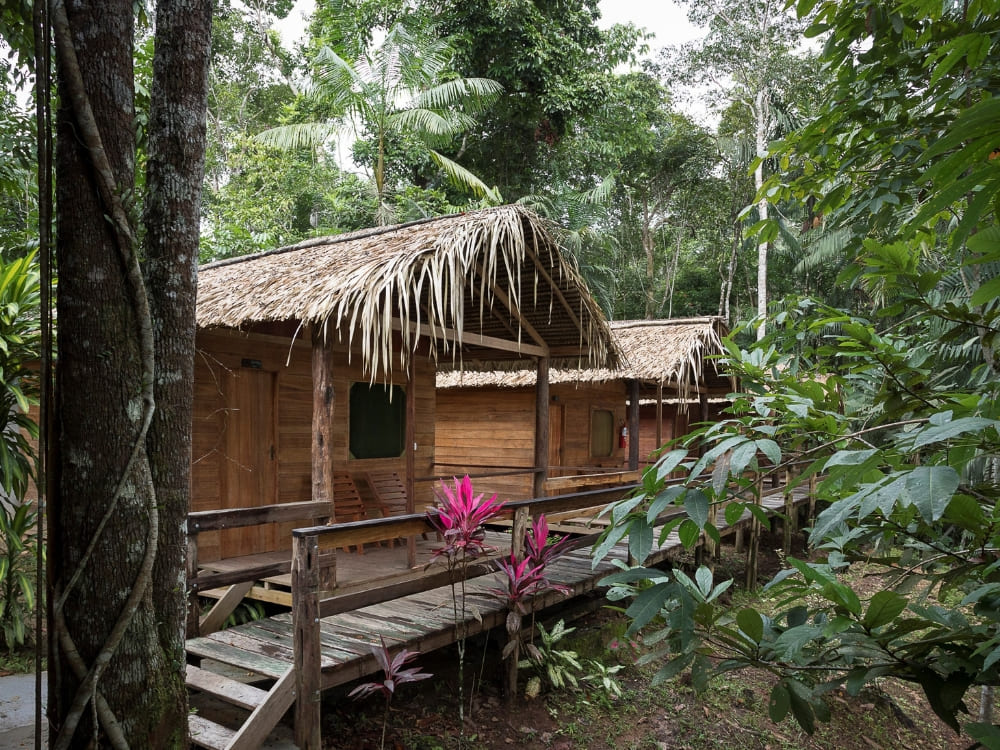
    Many people wonder if there are hotels in the Amazon. The answer is yes, but they’re known as jungle lodges since they are located in the middle of the forest. 

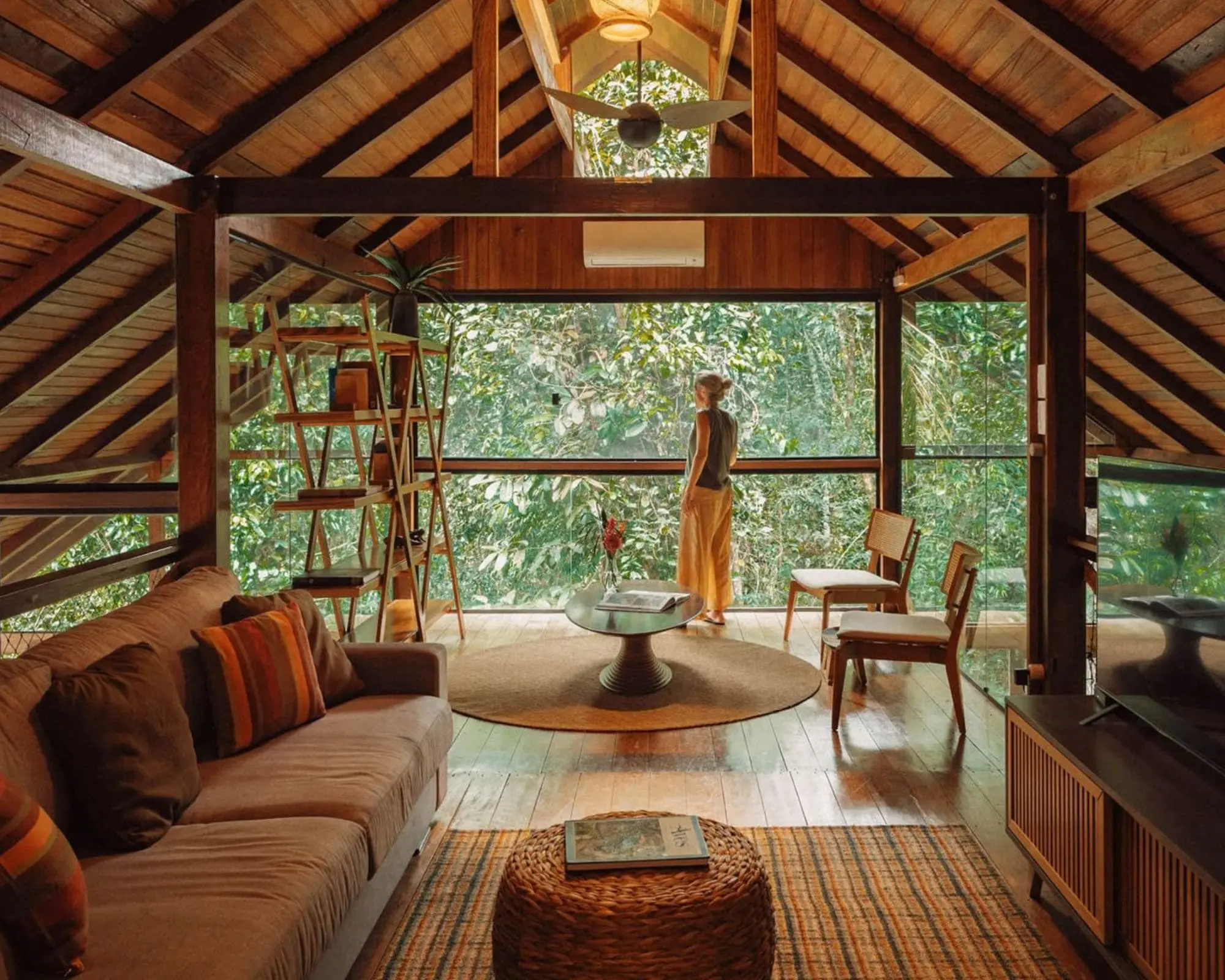
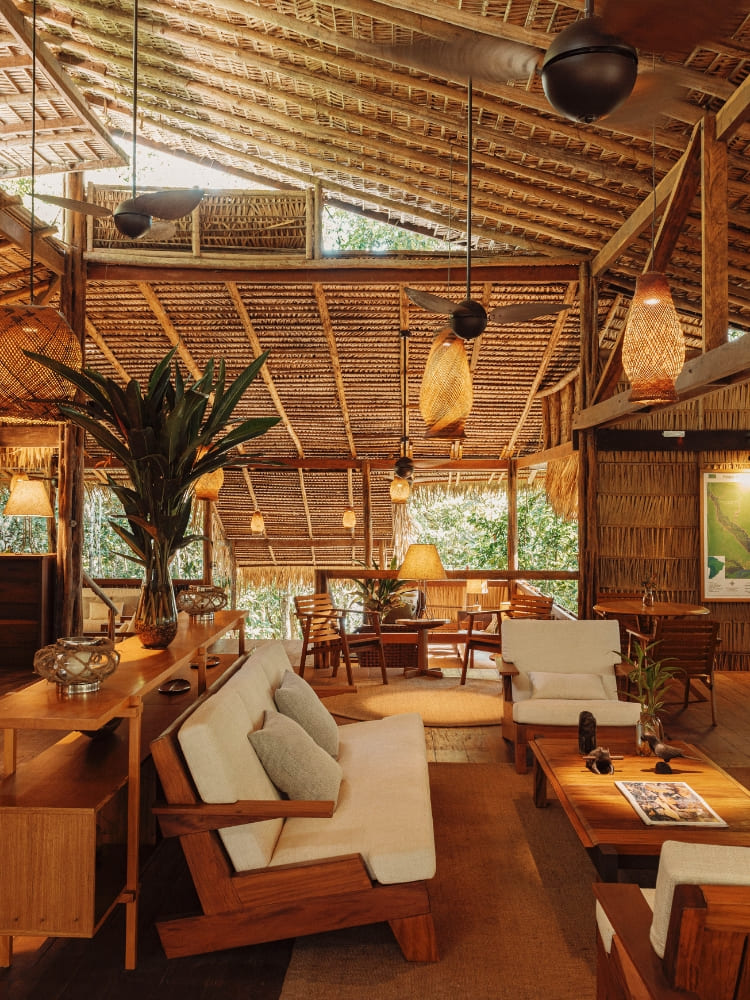
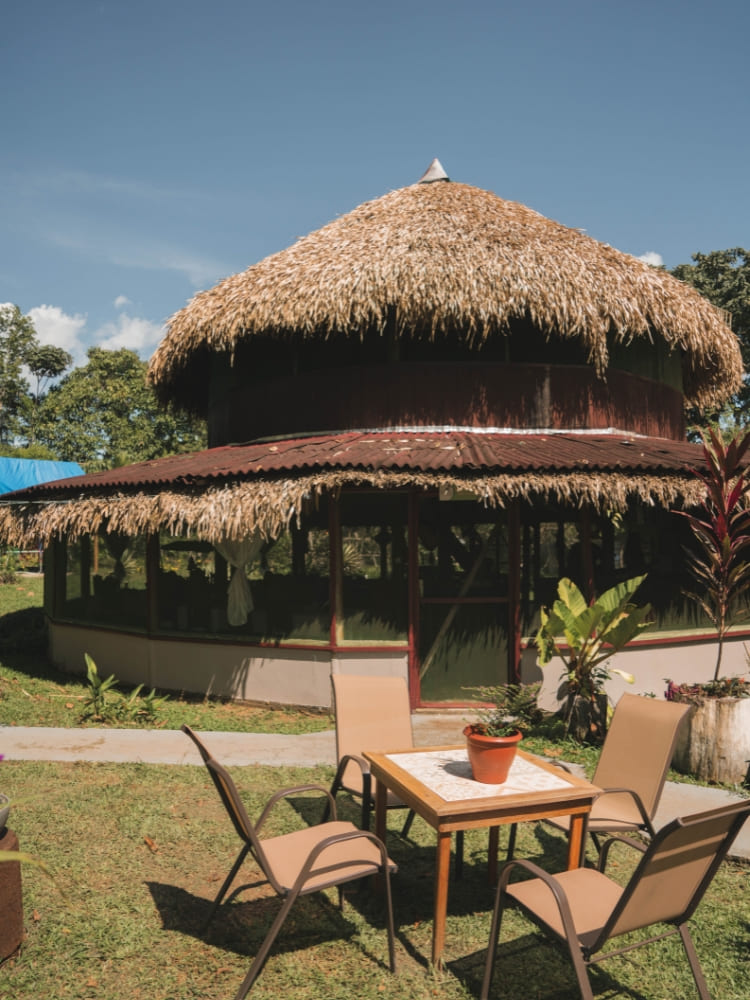
    Best Amazon Jungle Cozy lounge area inside an Amazon jungle lodge with large glass windows offering immersive views of the surrounding dense forest.
    Photo: Felipe Castellari

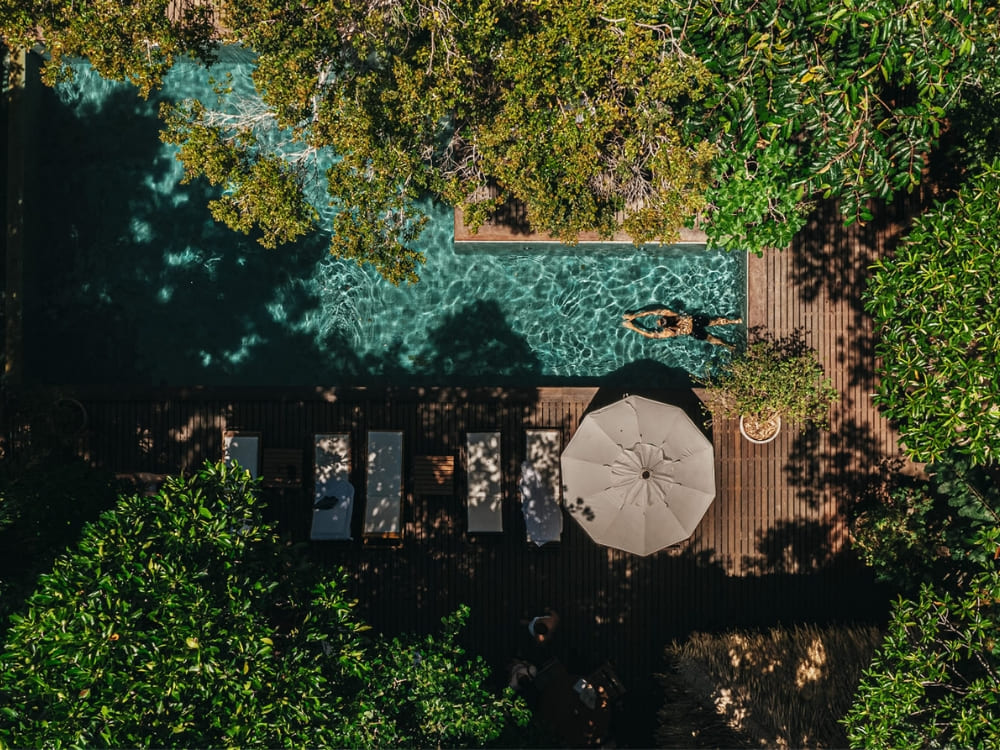
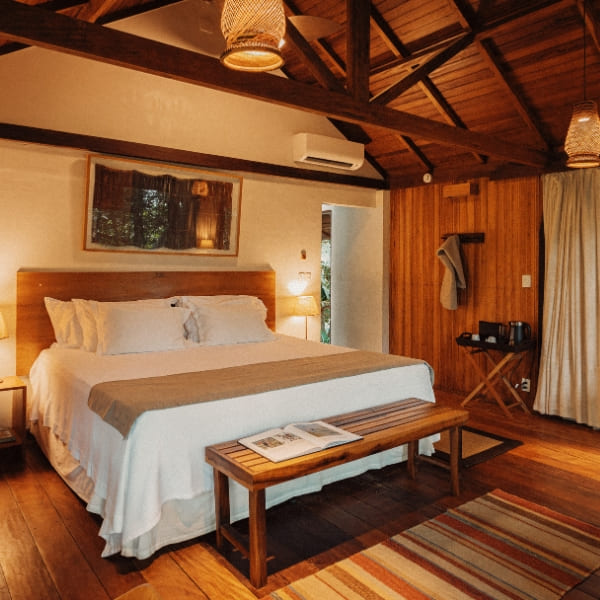
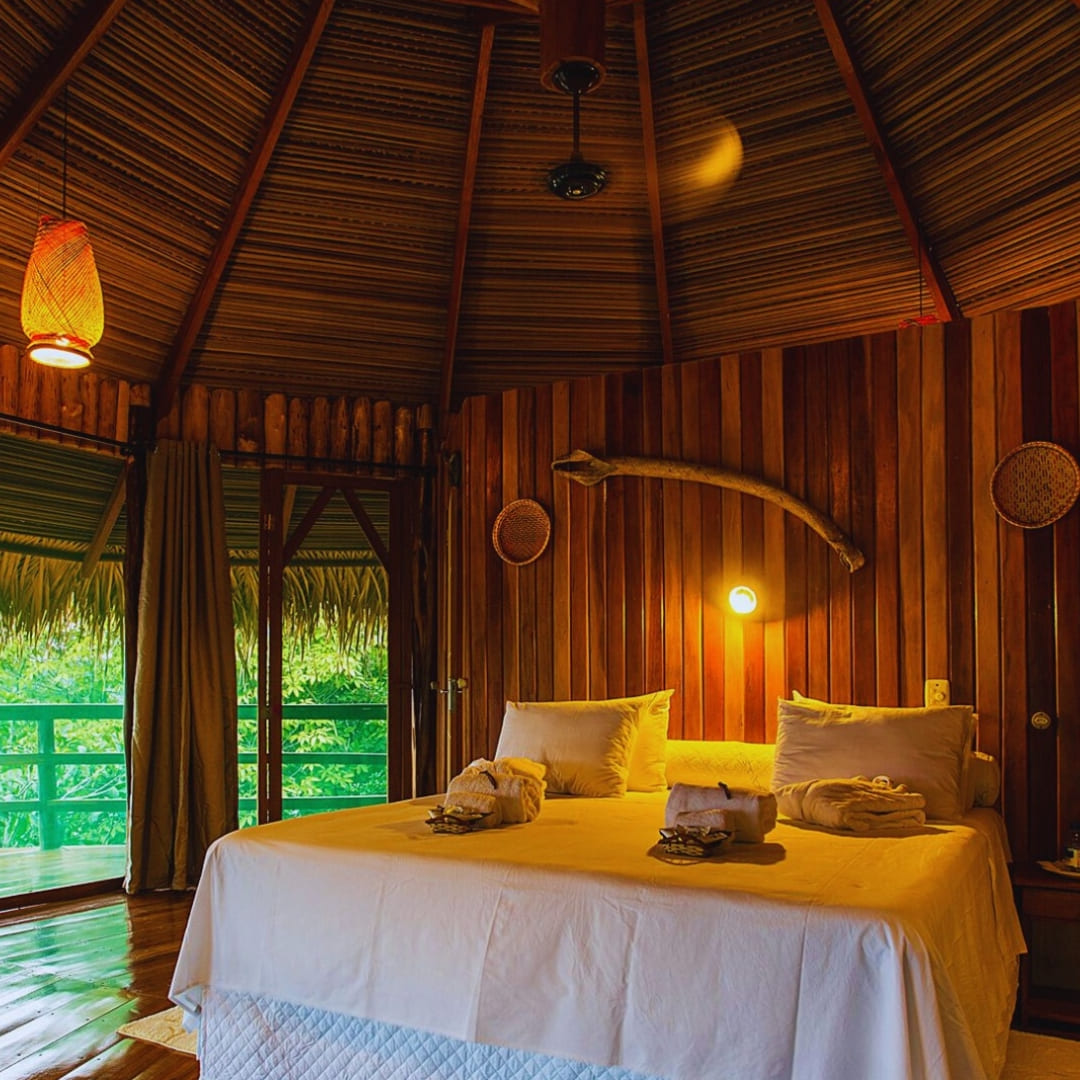
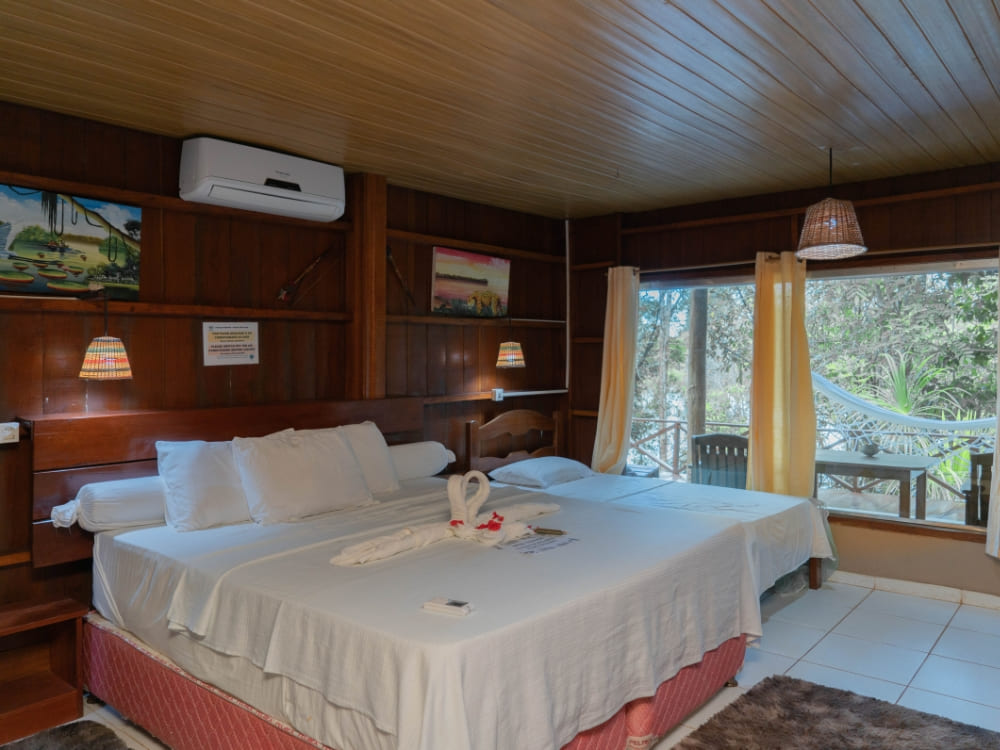
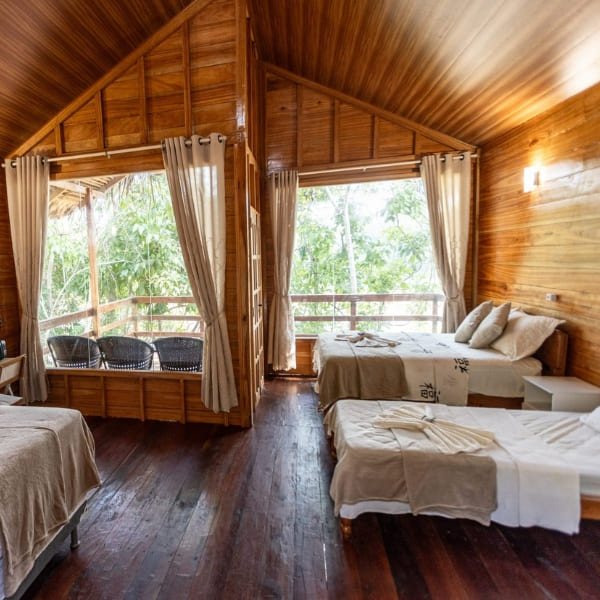
    Lodges offer comfortable accommodations, leisure areas (swimming pools, entertainment areas, gyms, lounges, bars, gift shops…), great restaurants and exclusive activities around the forest. From modest to luxury, there’s an option for everyone.

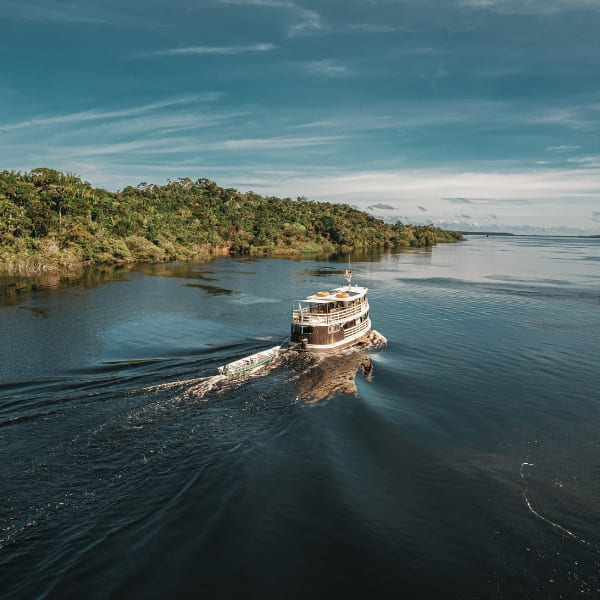
    Another alternative is the river cruises, which work similarly to classic cruise ships on the ocean, but with fewer passengers and sailing across the waters of Amazonian rivers, like the Rio Negro, Solimões, Tapajós and the Amazon River.

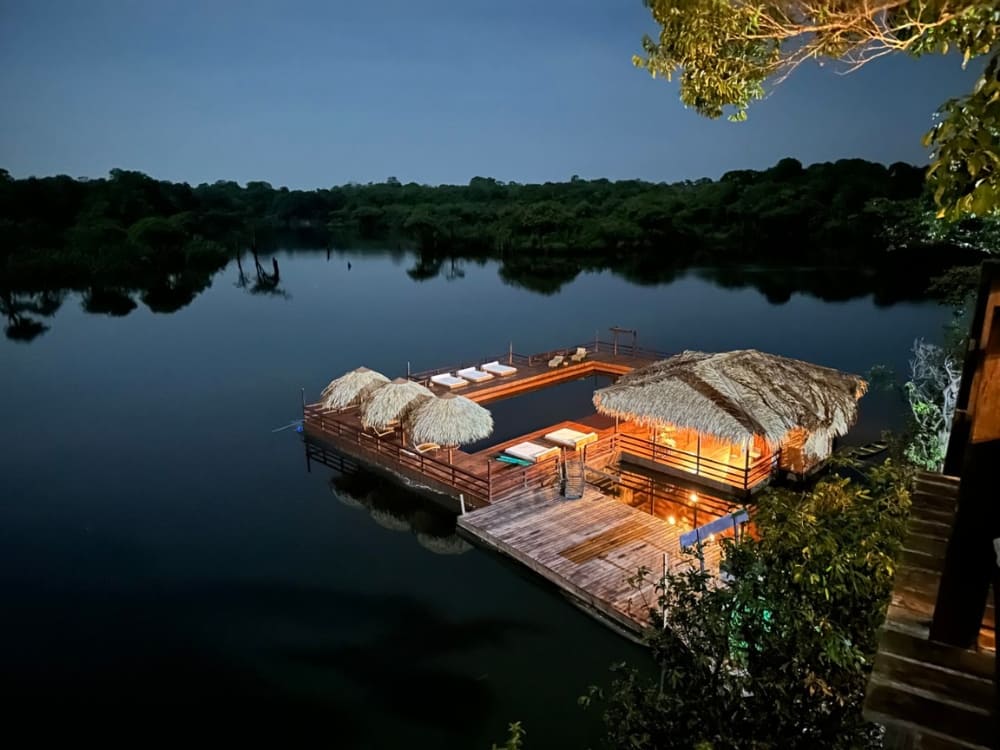
    Aerial view of a swimming pool at a luxury eco-lodge nestled deep within the Amazon Rainforest vegetation, offering leisure in nature.
    .


    The best Amazon cruises in Brazil include wonderful ensuite cabins, a restaurant onboard and many entertainment options, this is a fantastic way to experience nature.

    If you don’t mind giving up comfort so you can completely immerse yourself in nature, then our suggestion is the Amazon Jungle Survival Tour, a fantastic trip where you get to spend your nights camping in the middle of the forest! Accompanied by qualified guides, you’ll sleep in hammocks, cook your food on the campfire and even learn survival techniques.

    👉 Read more:

    How long should you stay in the Amazon Rainforest?

    The length of your trip depends on how immersive you want your experience to be.

    A 3-day tour is recommended for those on a tight schedule — it’s short, but still allows for river tours, guided jungle walks and a first introduction to the rainforest’s unique ecosystems. It’s a good option if you’re passing through Manaus or combining the Amazon with other destinations in Brazil.

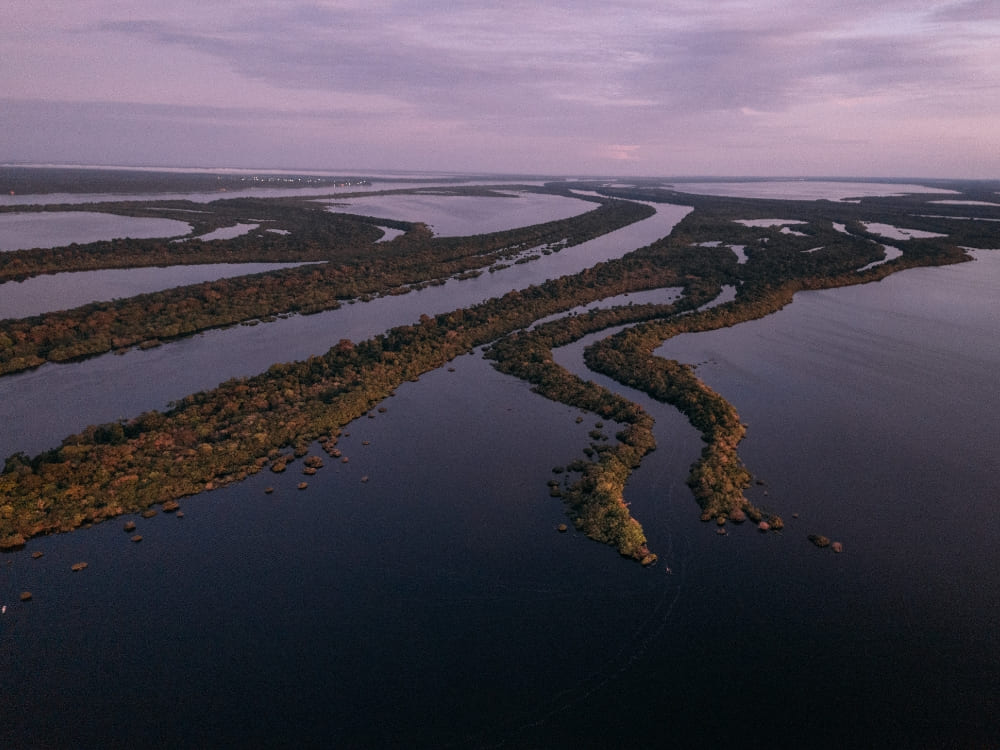
    Breathtaking aerial view of a river fork and lush green islands in the Amazon basin, highlighting the region's vast hydrology and beauty.
    .

    Traveling to the Amazon in Brazil: how much does it cost?

    The cost of a trip to the Amazon in Brazil depends on various factors, like accommodation category, group size, trip length and itineraries.

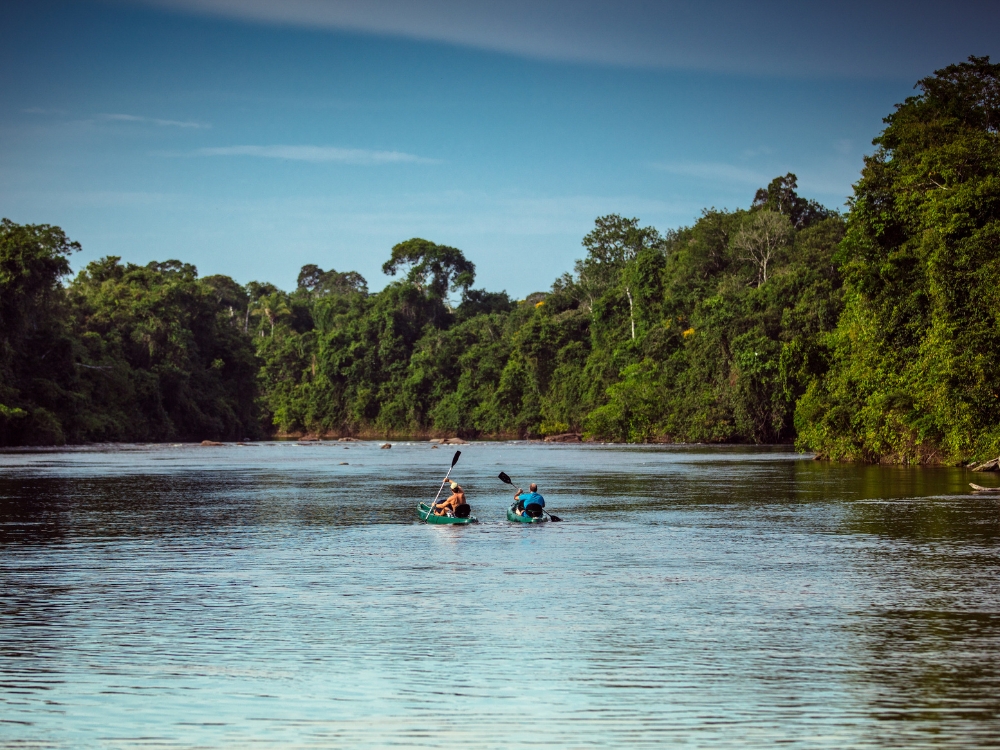
    Travelers kayaking down a tranquil Amazon river, enjoying an eco-friendly way to observe the rainforest ecosystem up close.
    Photo: Samuel Melim

    For example, wild camping tours are a more budget-friendly option, offering a raw and immersive experience, while luxury lodges provide high-end comfort at a higher price. Solo travelers may face higher costs due to single occupancy charges, whereas group travelers can benefit from shared costs.

    PlanetaEXO curates the best Amazon Rainforest Tours in Brazil, with prices (per person) ranging from R$2.170 (approximately $418) for basic camping expeditions to R$23,000 (approximately $4,392) for premium luxury packages — not including flight tickets.

    Do you need a vaccine to go to the Amazon Rainforest in Brazil?

    Unlike other countries (Bolivia, Colombia, Guyana, Panama, and Venezuela), there is no requirement of yellow fever vaccinations to visit the Amazon in Brazil because ANVISA (Brazil Health Regulatory Agency) doesn’t consider the disease a risk in national territory.

    However, it’s strongly recommended that foreign tourists get their shots at least ten days before the trip — especially if they intend to visit the rainforest in the countries previously mentioned. Better safe than sorry!

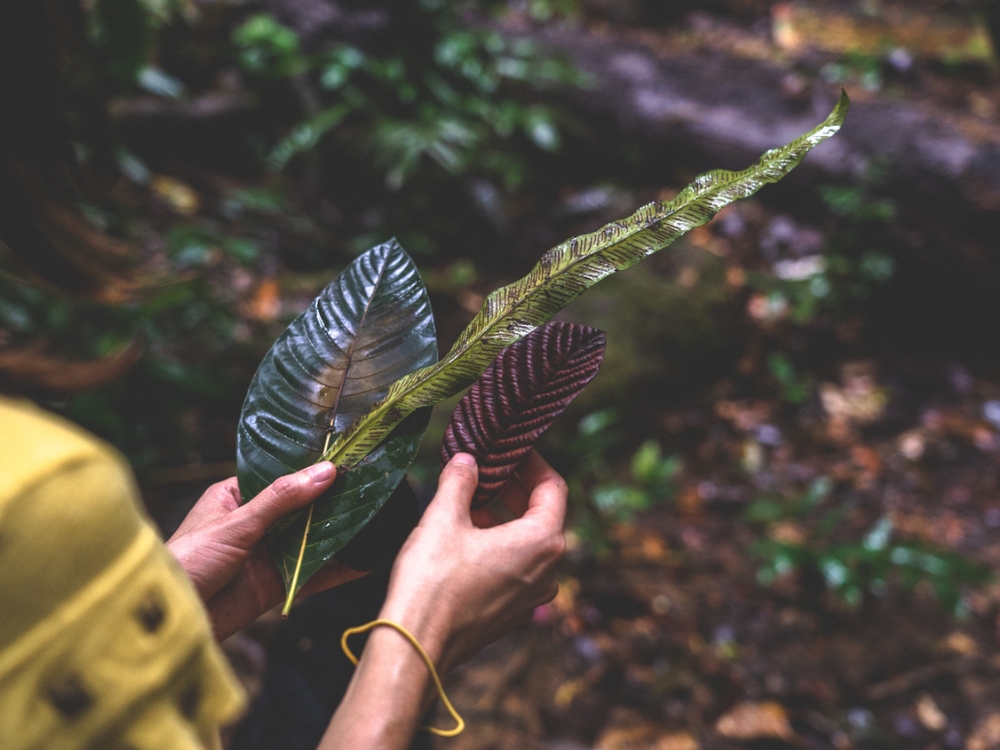
    Close-up of a traveler's hands examining unique leaf textures during a guided educational walk in the Amazon jungle.
    .

    Is it safe to visit the Amazon Rainforest in Brazil?

    Yes, it’s safe to visit the Amazon, as long as you explore with experienced local guides. Travelers might think there are wild animals and hidden dangers along the trails, but tours are carefully planned to avoid risky situations.

    Tour guides know the forest inside out and ensure that every activity, from jungle walks to boat trips, is carried out with complete safety and respect for nature.

    Since itineraries are designed only for observation, you won’t come across animals that pose any threat. Besides, most species prefer to stay hidden, so encounters are peaceful moments to admire their beauty.

    With professional guidance, comfortable logistics, and well-structured activities, visiting the Amazon is a safe and unforgettable adventure for all travelers.

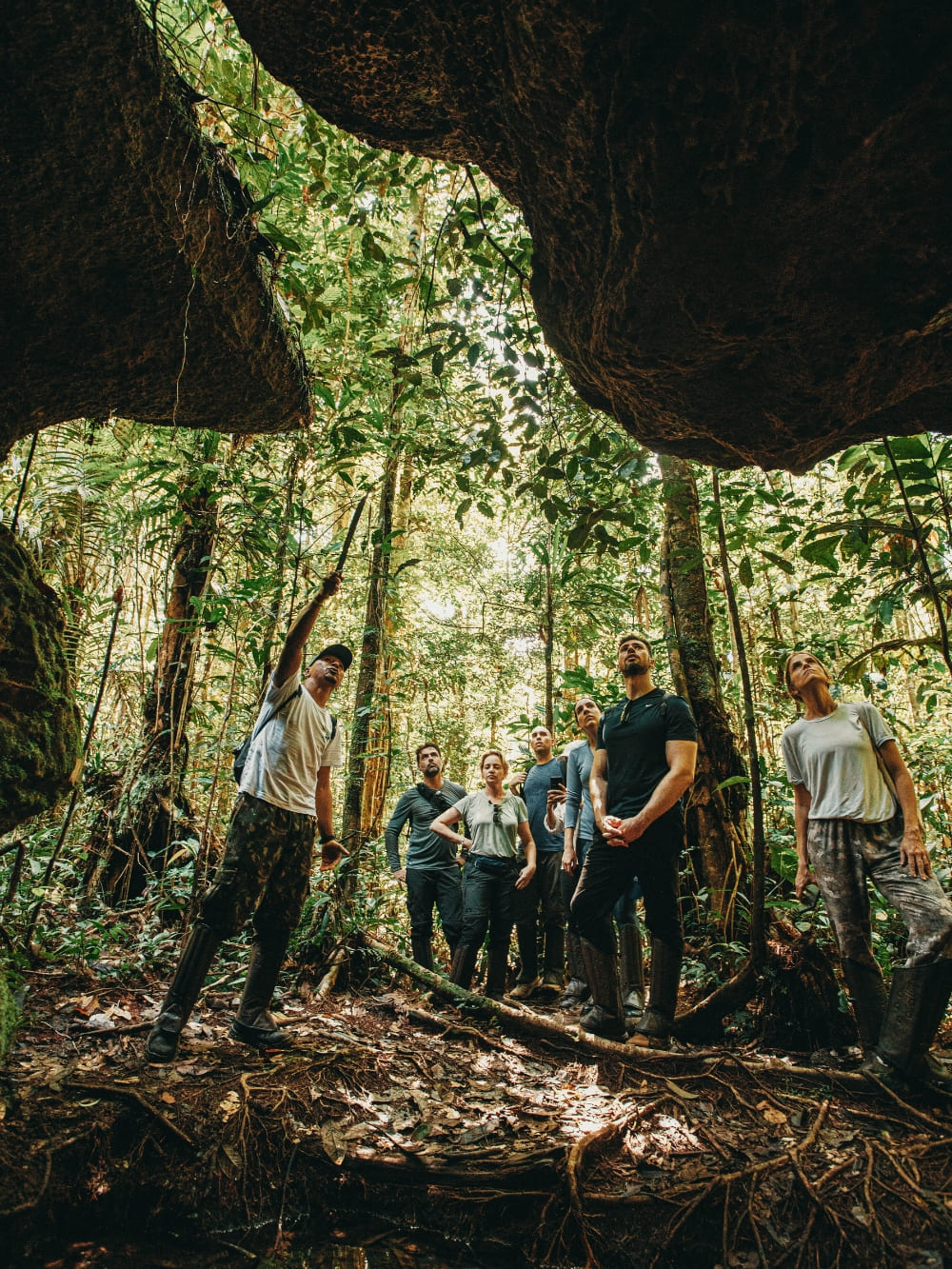
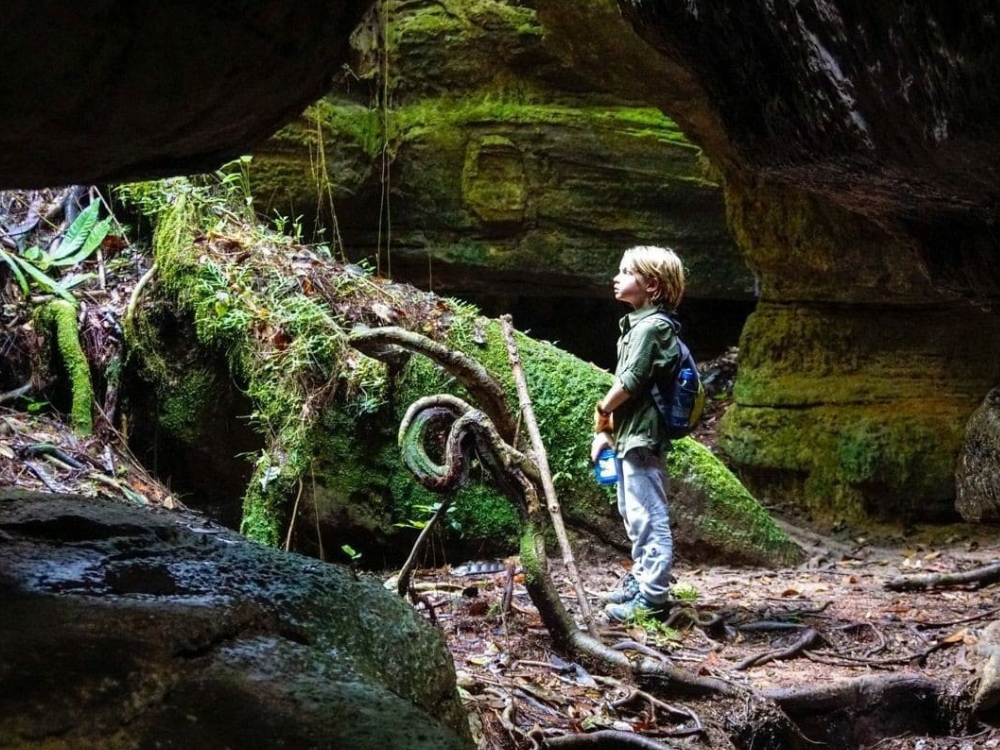
    Group of tourists exploring a cave formation within the Amazon rainforest, looking out at the jungle with an expert local guide.
    Photo: Felipe Castellari

    What should I pack for an Amazon Rainforest trip?

    Pack your bags with:

    • Light clothes (t-shirts, long-sleeved t-shirts, shorts, pants, hats/caps, swimwear)
    • Comfy shoes (sneakers for hiking, flip-flops, sandals)
    • Travel essentials (documents, cash, credit/debit cards, medication, sunscreens, after-sun gel, insect repellent)
    • Equipment for jungle hiking (raincoat, flashlight, reusable water bottle)
    • Electronic devices (cellphone, camera, chargers, portable chargers, etc.)

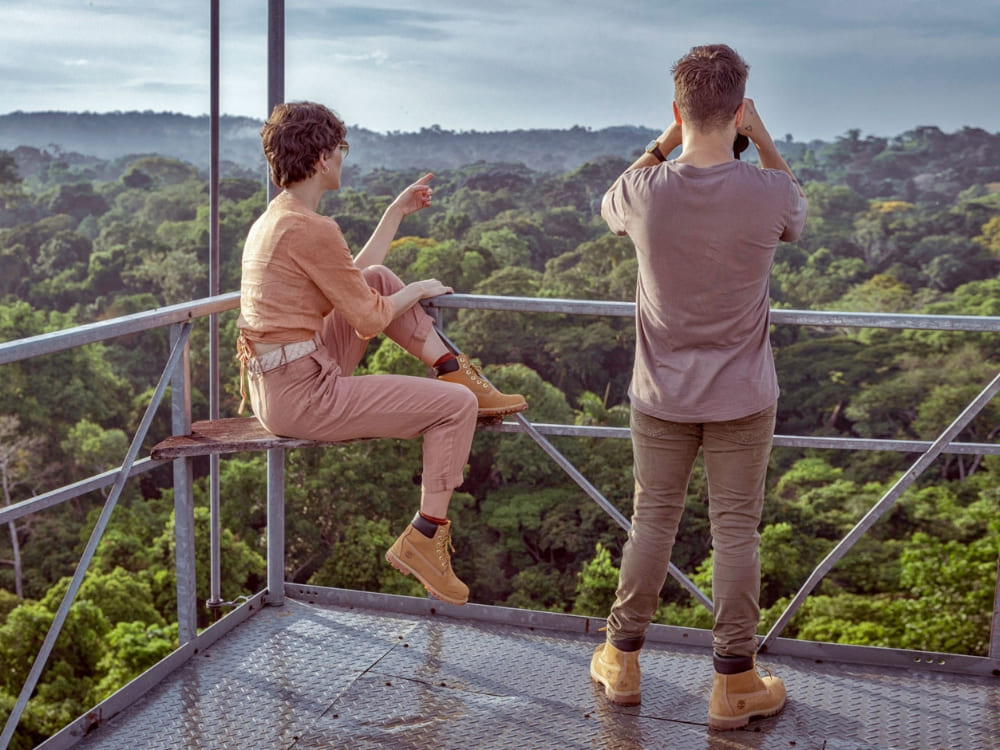
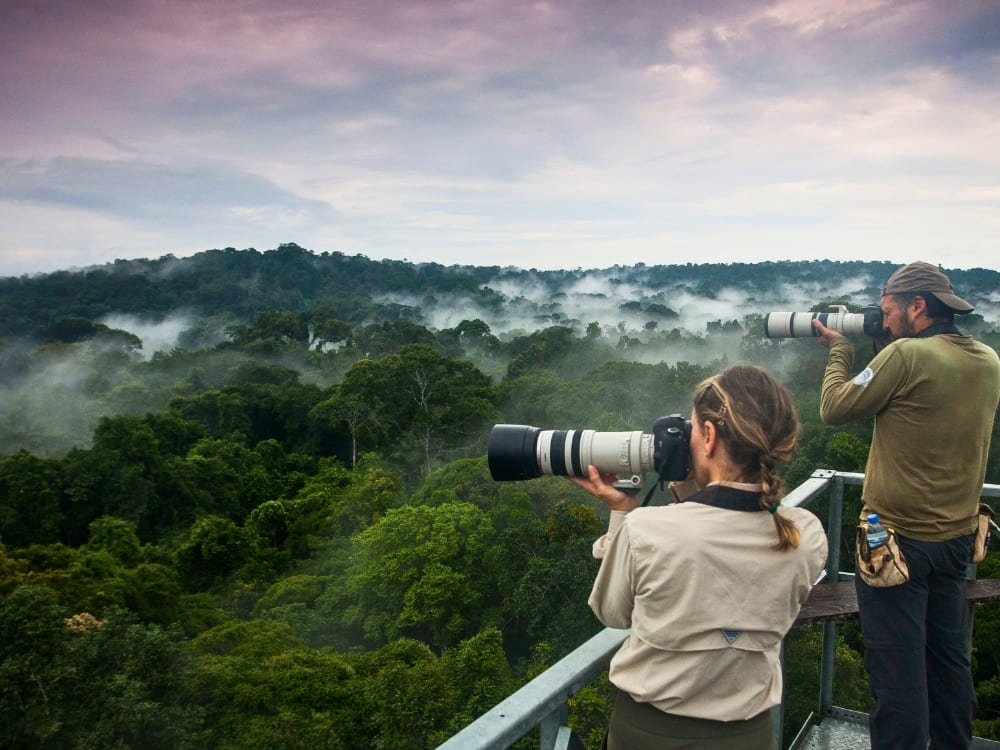
    Travelers using binoculars on an observation tower high above the canopy to safely spot birds and wildlife in the Amazon Rainforest.

    👉 Read more: 10 Amazon Rainforest Travel Tips to Make the Most of Your Adventure

    Is traveling to the Amazon worth it?

    It’s more than worth it! The Amazon Rainforest is the richest place on the planet when it comes to natural resources. The jungle, the rivers, the animals, the food, the people — everything holds an inexplicable beauty and magical atmosphere not found anywhere else.

    Adventure and ecotourism enthusiasts should spend at least a few days in this surreal destination so they can witness with their own eyes what Mother Nature is truly capable of. 

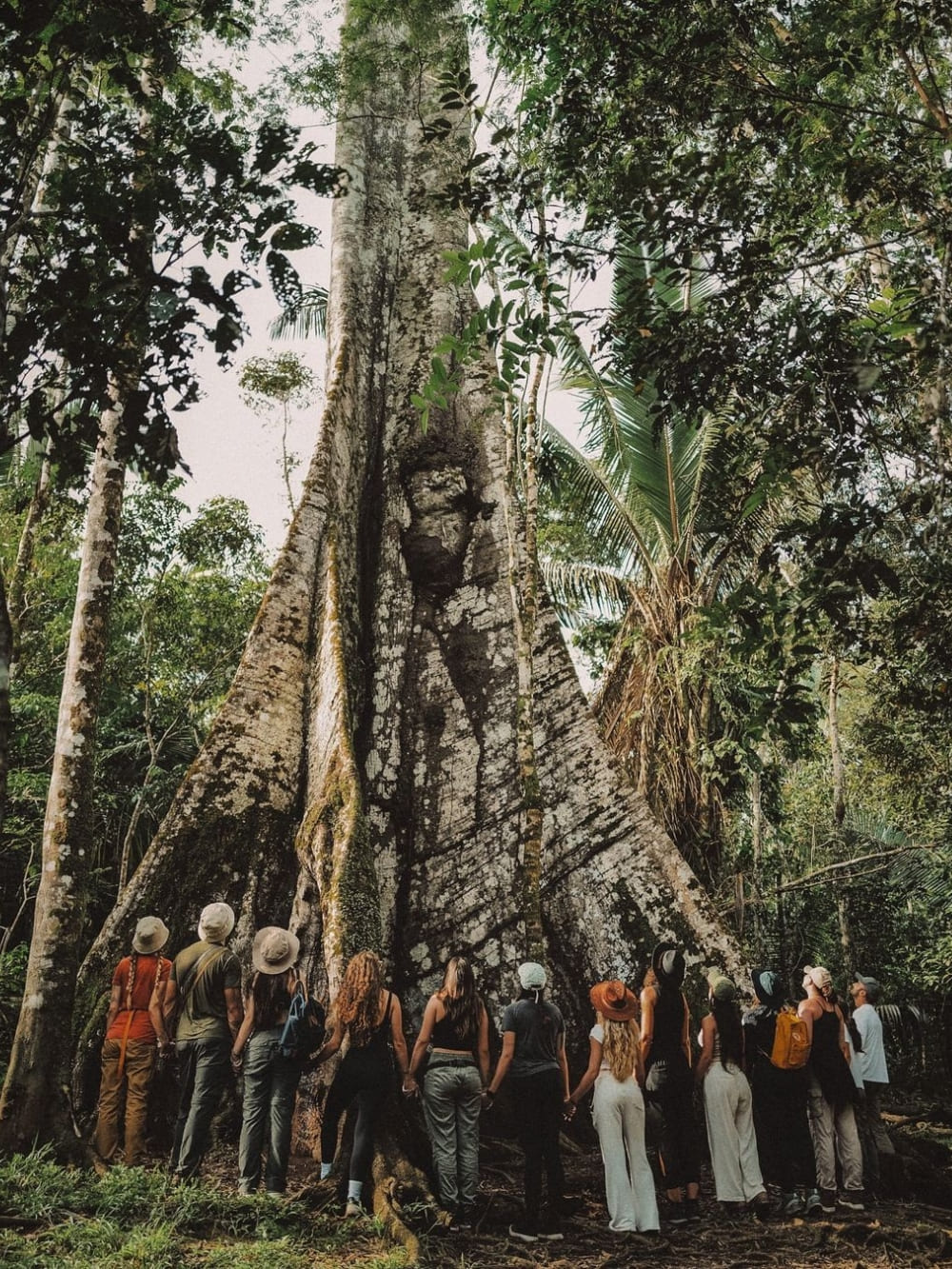
    Tourist embracing the massive trunk of a Samauma tree, showcasing the scale of the giant trees and the connection with nature in the Amazon.
    .

    Shall we book your Amazon adventure?

    We hope this guide on how to visit the Amazon has been helpful to kick off your travel plans!

    As an expert platform that works with the best local operators, PlanetaEXO offers incredible Amazon Rainforest tours in Brazil with tailor-made itineraries and all the support you might need. Contact us now!

  • Best Amazon River Cruises in Brazil

    Best Amazon River Cruises in Brazil

    Enjoy an exceptional ecotourism experience with the best river tours in the Amazon, comfortable onboard accommodations and wonderful activities in the forest

    Cruise ships are loved by many people, but did you know you can cruise on rivers? Better yet, did you know you can sail across the rivers of the Amazon Rainforest, like Negro River, Tapajós and the all-powerful Amazon River?

    Aboard comfortable vessels, passengers indulge in high-quality services provided by attentive crews, premium accommodations, and itineraries perfect for tourists who are looking for the best river cruises in the Amazon.

    PlanetaEXO, an expert in ecotourism and Amazon Rainforest tours in Brazil, has curated a fantastic river cruise selection for all types of travelers. Working alongside the most reputable local operators in the region, we offer only the best experiences. Check it out below!

    1 – Katerre

    Aerial view of a Katerre riverboat navigating the winding channels of the Negro River in the Amazon Rainforest, surrounded by lush green vegetation.
    .

    Katerre has some of the best Amazon cruises in Brazil. Aboard Jacaré-Açu, a beautiful wooden boat with three floors and eight cabins, up to sixteen guests can enjoy the wonders of the forest in the most authentic way. 

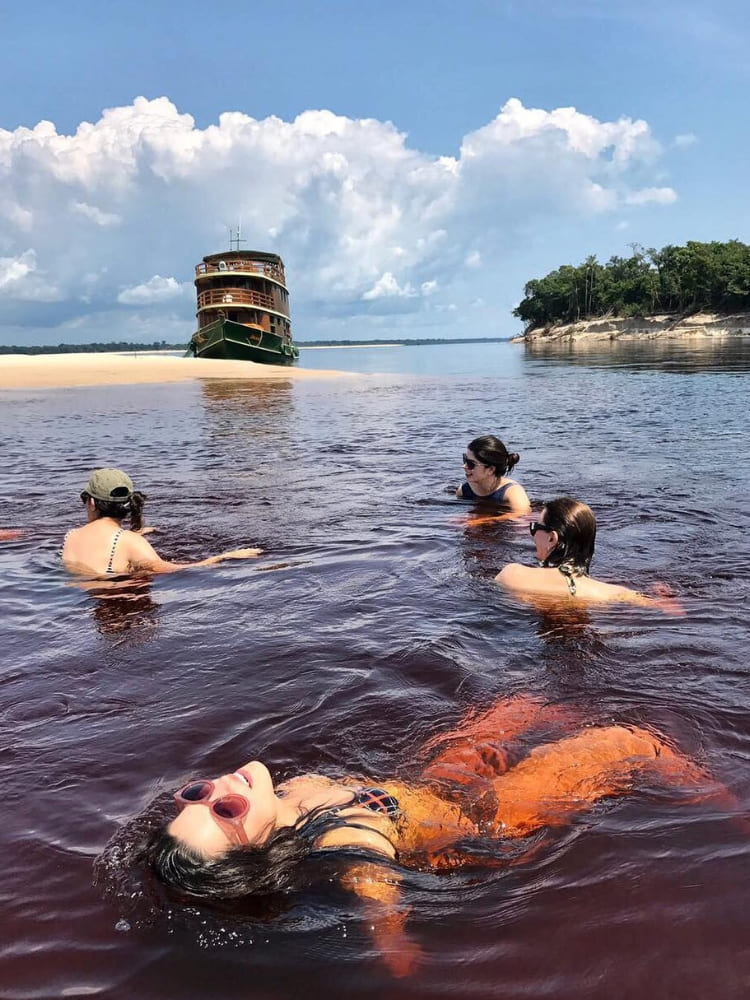
    Gliding across the Negro River, being amazed by the beauty of the forest is inevitable. The sky is clear, orange-tinted in the early morning and blue when the sun is at its brightest. The trees are vibrant and green. The water is dark, but still peaceful and welcoming, allowing for a more profound experience in nature.

    For The New York Times, journalist Seth Kugel said he “traded infinity pools for infinite waterscapes” when he decided to choose a cruise instead of an Amazon jungle lodge

    Outdoor activities include hiking, visiting local communities, boat rides, wildlife watching, fishing, swimming, relaxing on river beaches, etc.

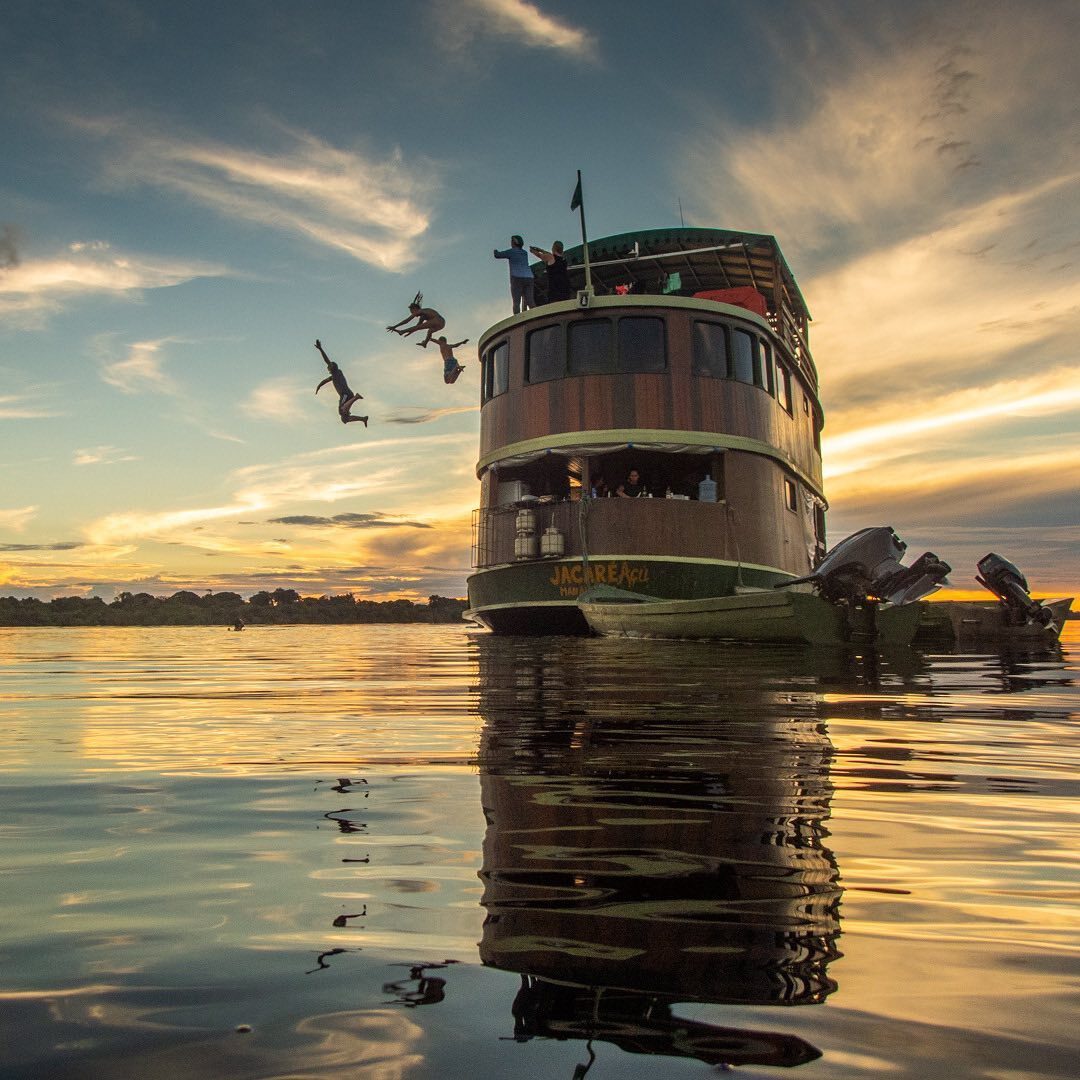
    Tourists jumping into the river from the top deck of the Jacaré-Açu wooden boat at sunset during an authentic Amazon river cruise experience.
    .

    Furthermore, visitors also have a great stay experience in cozy cabins with double or bunk beds, air-conditioning, private bathrooms, hot shower, and fresh sheets and towels.

    Common areas include a dining room, a living room, a bar and a solarium with chairs, tables, hammocks, sun loungers and a powerful sound system to play music. Feeling hungry? This Amazon river boat cruise offers delicious local cuisine dishes — three meals a day and snacks!

    Available in 4-day, 5-day or 7-day tours. Learn more about this adventure.

    2 – Zaltana

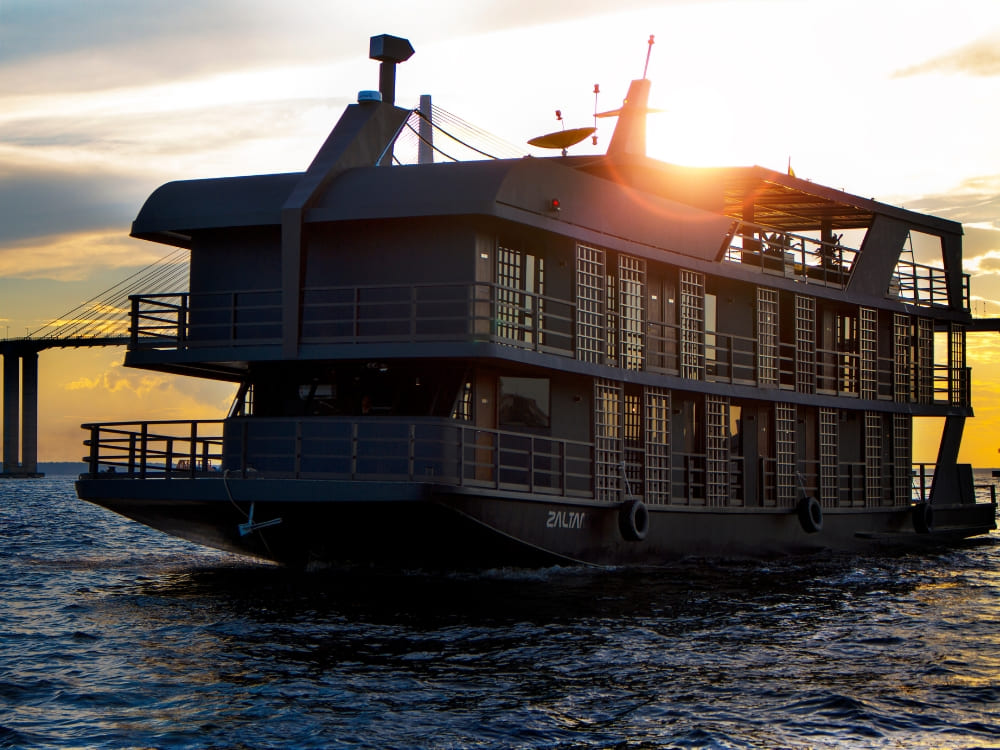
    The Zaltana luxury riverboat anchored in the Amazon river at sunset, showing its modern design and spacious structure for a premium cruise.
    .

    Big, modern and sophisticated, the almighty Zaltana is considered by many the best luxury Amazon river cruise in Brazil.

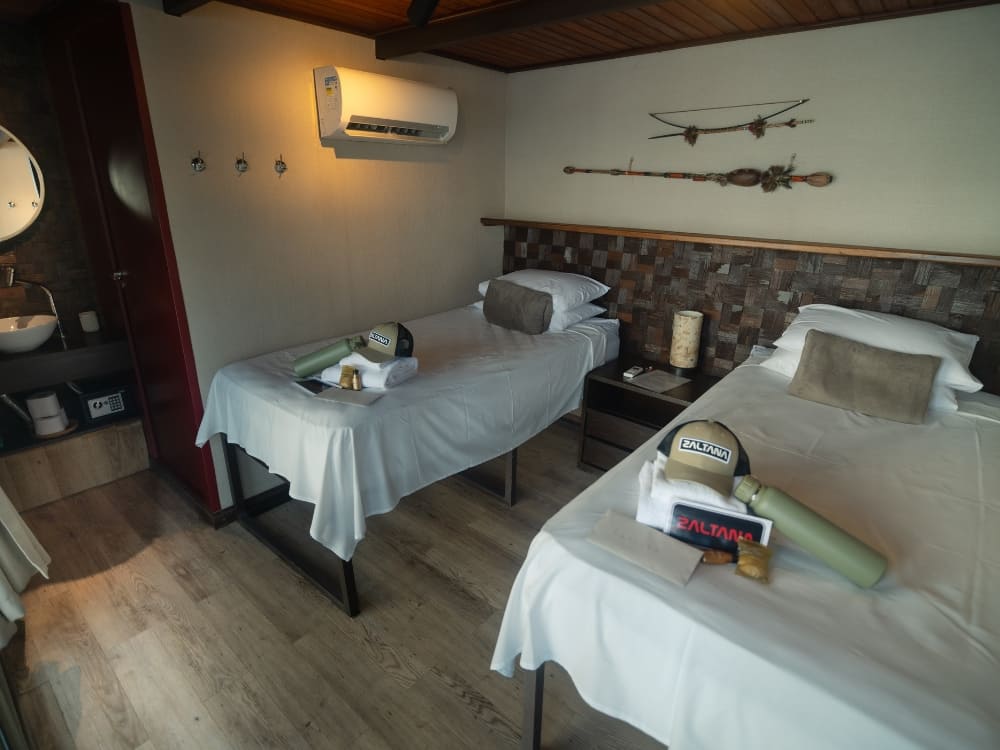
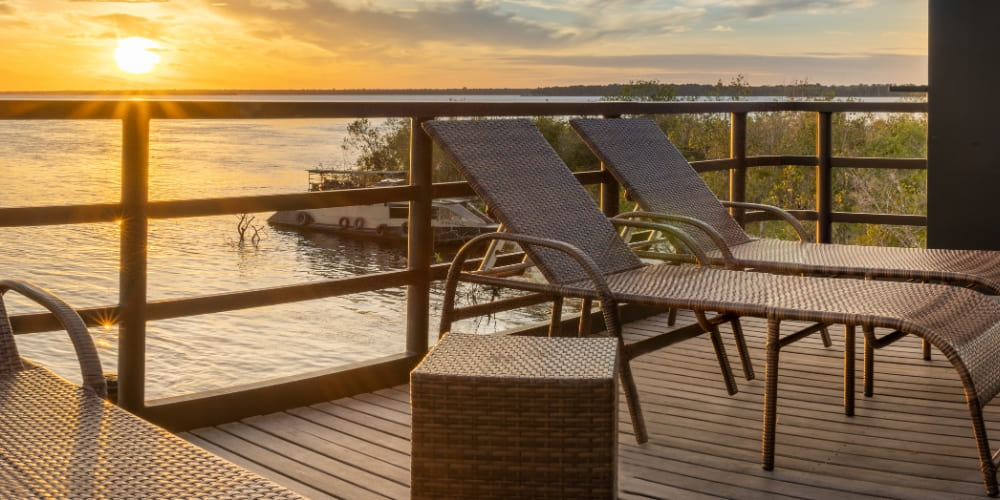
    With ten spacious cabins — all with double or single beds, air-conditioning, elegant decor, private bathrooms, amenities and floor-to-ceiling windows that offer panoramic views of the forest —, up to 20 guests can comfortably sail in this impressive vessel to live the most incredible experience of their lives.

    Zaltana also includes a TV and entertainment room (with high-speed internet), a living room and sun deck with a shower room, tables and chairs. Guests can get a drink at the bar on the main deck or savor the flavors of the fine dining restaurant specializing in Amazonian dishes.

    Besides your typical activities (jungle hiking, fishing, animal spotting, etc.), the itinerary also includes exploring the islands and river beaches of Anavilhanas National Park and a wonderful luau on Praia Grande beach. Learn more about this adventure.

    3 – Kaiara

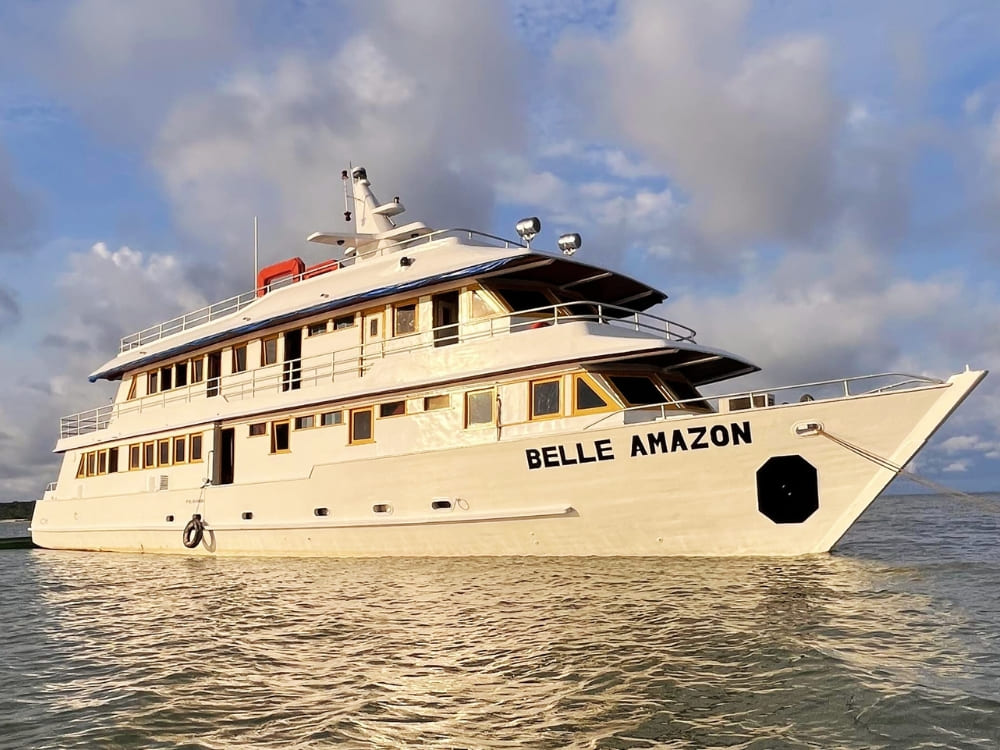
    The Belle Amazon white riverboat sailing on the water, part of the Kaiara fleet offering cruises from Belém and Alter do Chão.
    .

    Kaiara stands out for being one of the only Amazon cruises in Brazil to depart from Belém, capital of Pará. With three different vessels (Amazon Dolphin, Belle Amazon and Tupaiú), travelers have the unmissable chance of sailing in Alter do Chão, a small town on the riverbanks of the Tapajós River.

    Custom itineraries include hiking, swimming in igarapés (water courses), visiting river beaches and local communities, handicraft lessons, recreational fishing, night spotting, sunrise contemplation, etc.

    Considered a food-centric experience, the incredible dishes lovingly made by a talented mother-daughter duo are one of the highlights, according to the Financial Times.

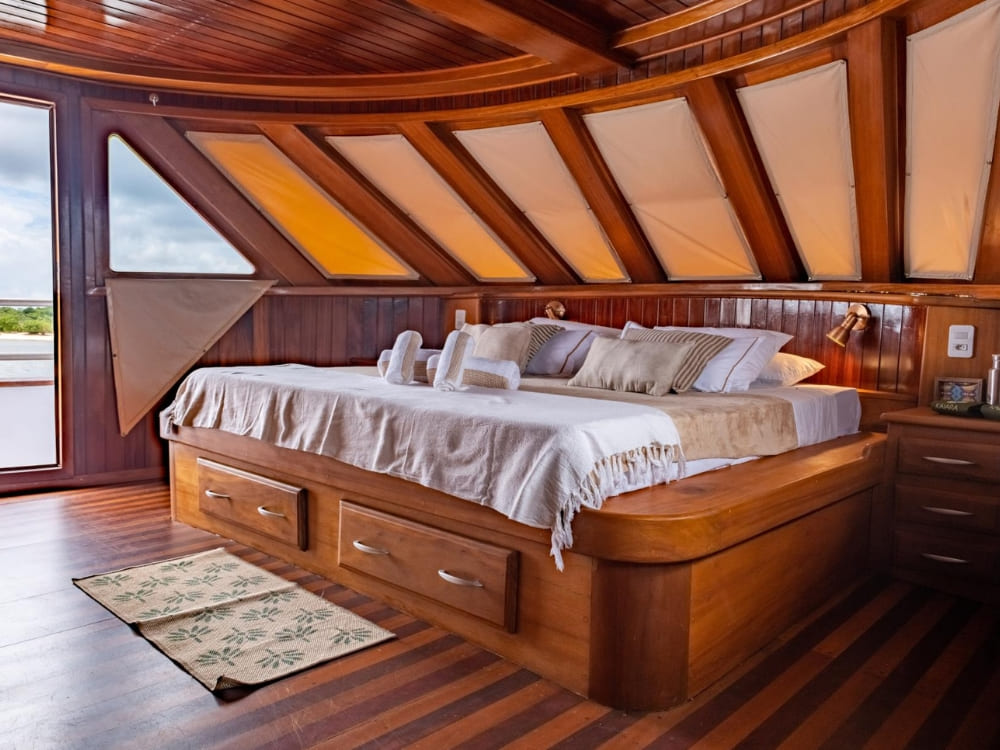
    The boats also feature comfortable cabins — with double, single or bunk beds, air-conditioning, and private bathrooms —, dining rooms, living rooms, balconies and sun decks with beautiful panoramic views. Learn more about this adventure

    4 – La Jangada

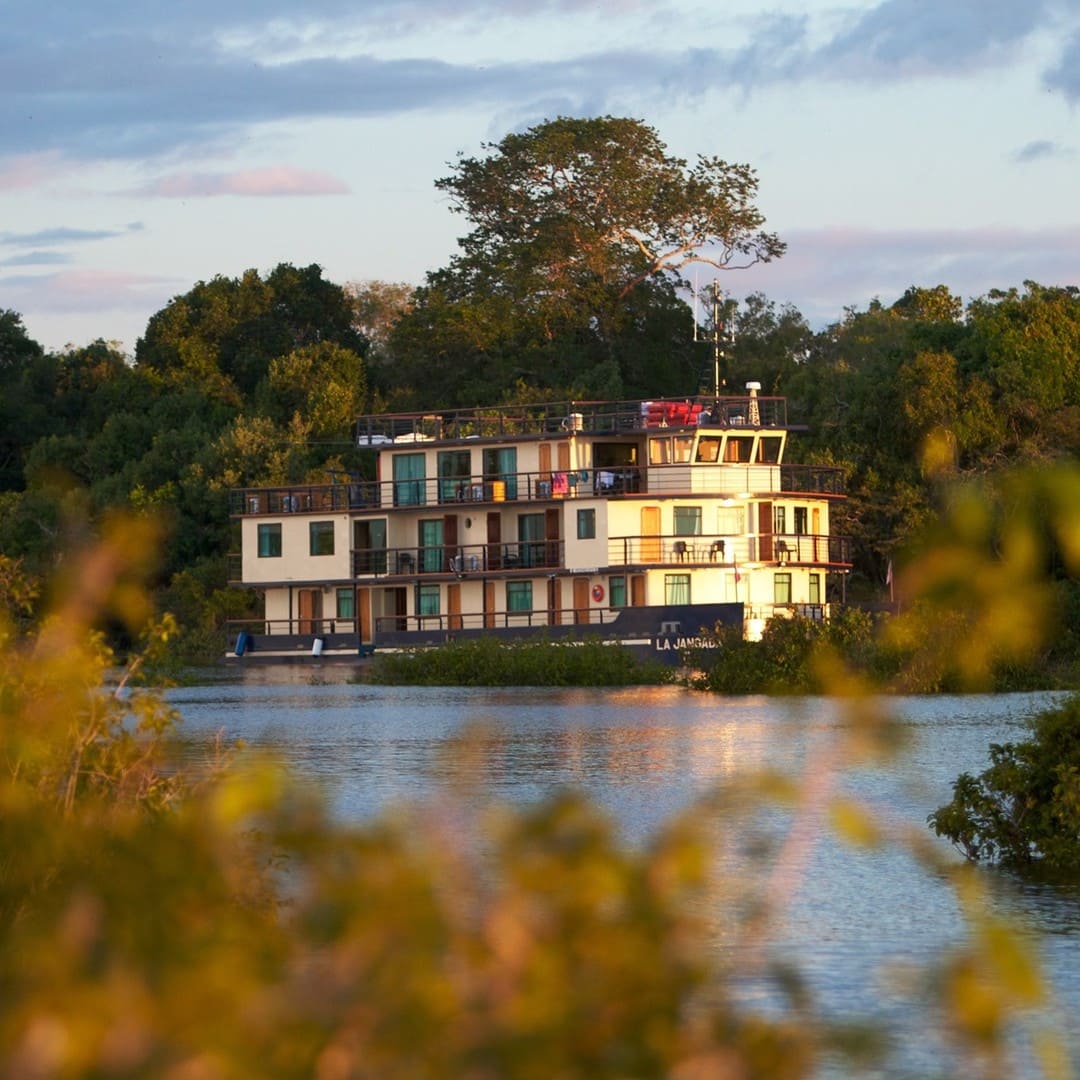
    The La Jangada chic catamaran sailing on the Amazon river, surrounded by trees, offering a blend of comfort and adventure.
    .

    Inspired by Jules Verne’s Eight Hundred Leagues on the Amazon, La Jangada’s name comes from the original French title of this iconic novel, La Jangada: Huit Cents lieues sur l’Amazone

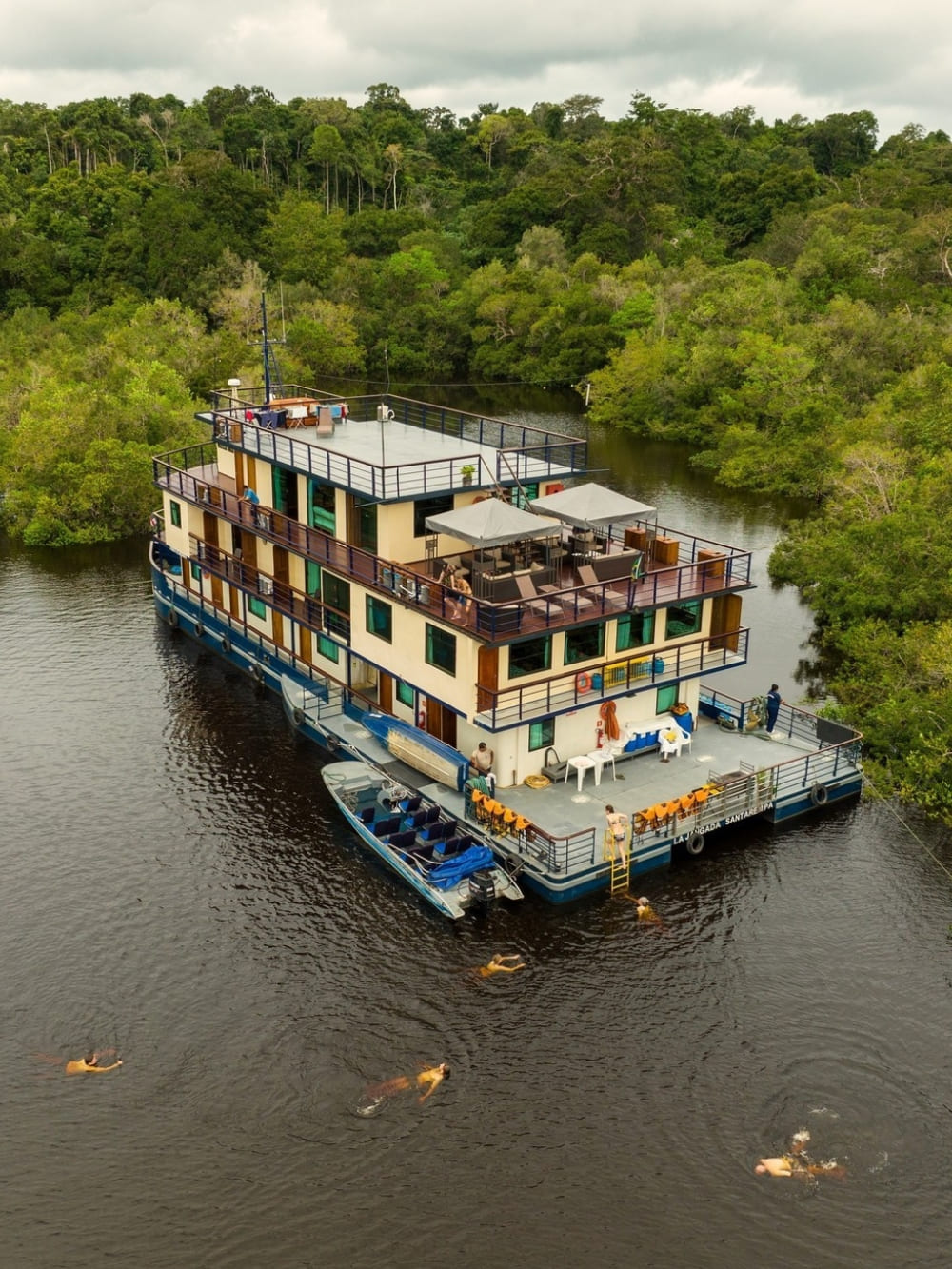
    Modern and aesthetically pleasing, this chic catamaran pampers passengers with its spacious decks, refined design and twelve air-conditioned ensuite cabins.

    This luxury river cruise in the Brazilian Amazon is the perfect blend of comfort and adventure. Multiple day trips include a vast list of activities, such as hiking, boat trips, animal spotting, hiking, fishing, visiting waterfalls and natural pools, camping in the forest, exploring the Anavilhanas and Jaú National Park, engaging with indigenous and riverside communities, etc.

    Aerial view of the La Jangada riverboat docked near the jungle, showcasing its spacious upper deck and proximity to the rainforest nature.
    .

    Common areas feature a charming terrace with tables and chairs, two lounges with couches and TVs, a restaurant that serves delicious Amazonian and Brazilian food, a bar with classic and signature drinks, a lecture room and a theater room. 

    La Jangada is one of the best Amazon river cruises in Brazil, but it’s only available for chartering. Talk to our team to learn information.

    5 – Untamed Amazon

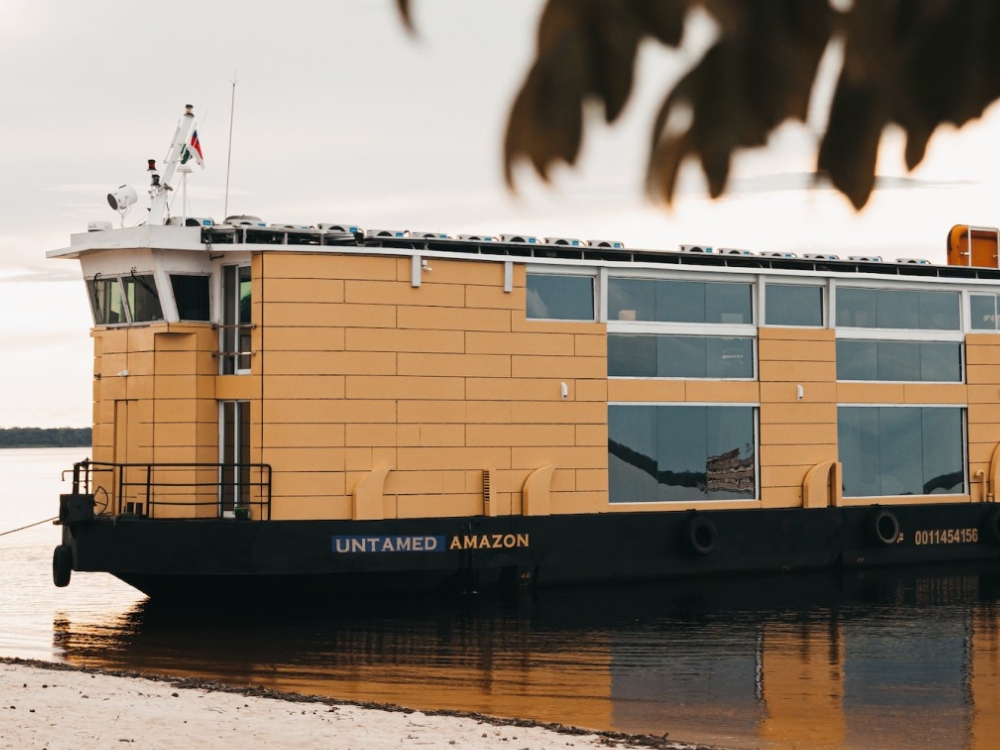
    The Untamed Amazon riverboat featuring a modern design with a yellow hull, known for being a sustainable solar-powered cruise option.
    .

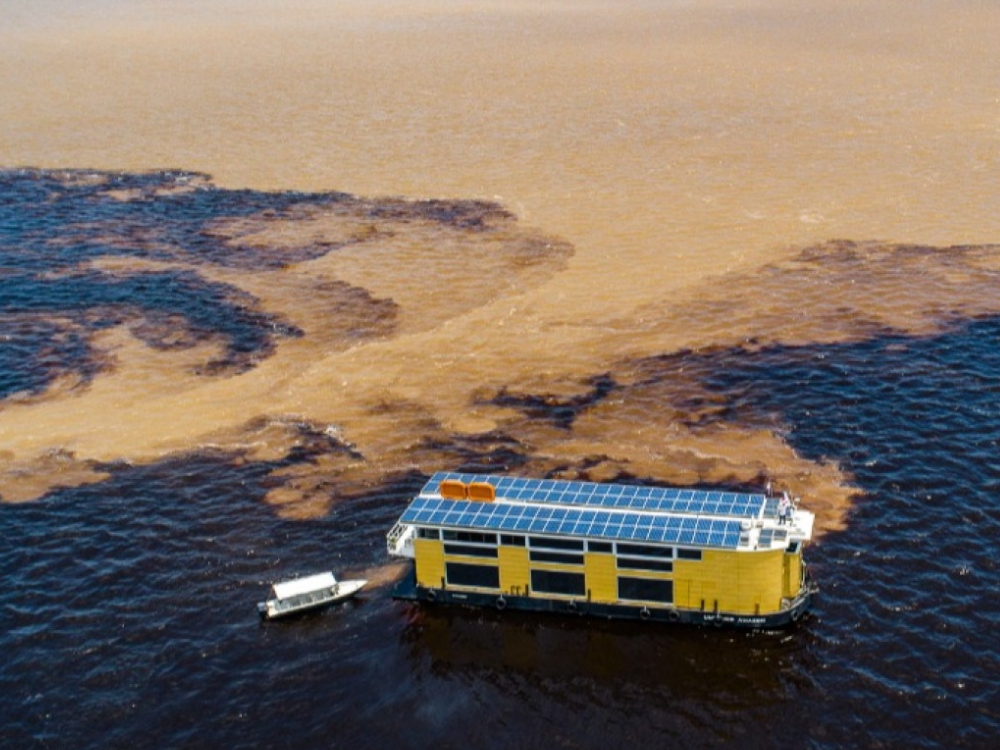
    The Untamed Amazon riverboat is described as the ultimate sustainable cruise experience. Partially powered by solar energy, it also has an advanced water treatment system and fuel-efficient engines that follow international environmental standards.

    This five-star stay includes eight spacious ensuite cabins — six of them with floor-to-ceiling windows to ensure the most stunning views of the forest —, high quality amenities, local cuisine restaurant, a bar, a dining room, a living room, sun decks and entertainment areas.

    Aerial shot of the Untamed Amazon boat showing the solar panels on the roof, highlighting its eco-friendly energy system and sustainable design.
    .

    Eight different itineraries — in addition to New Year cruises, corporate events and tailor-made trips — include canoeing, photo safaris, evening sightseeing, jungle hiking, and much more. Learn more about this adventure

    👉 Read more: How to get to the Amazon Rainforest in Brazil?

    6 – Amazon Clipper Premium Cruise

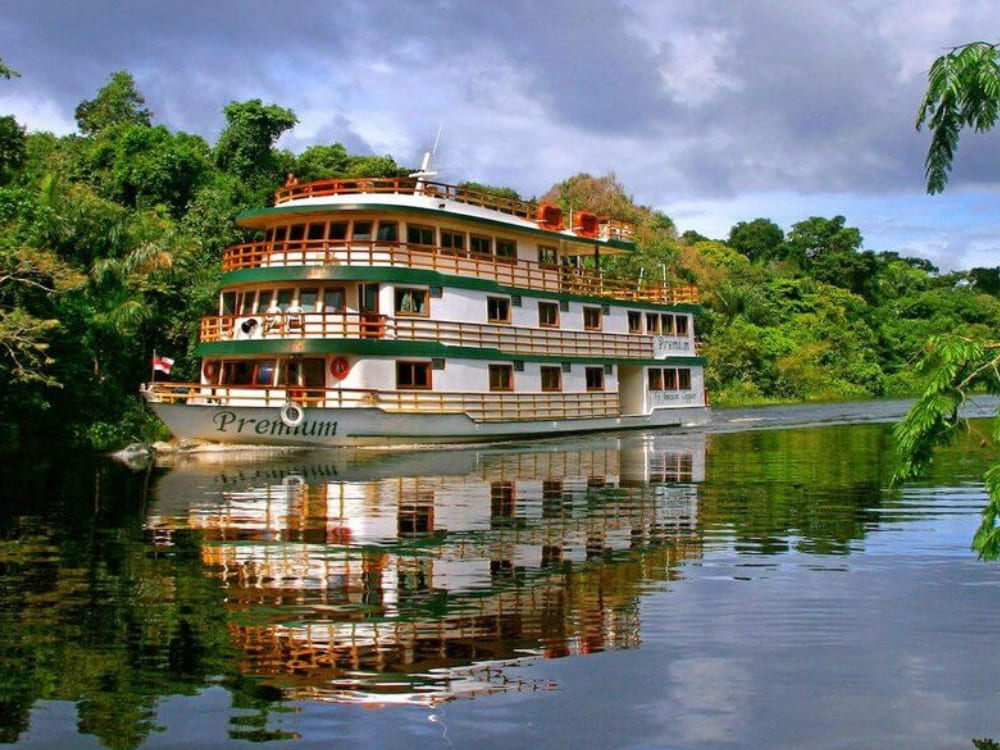
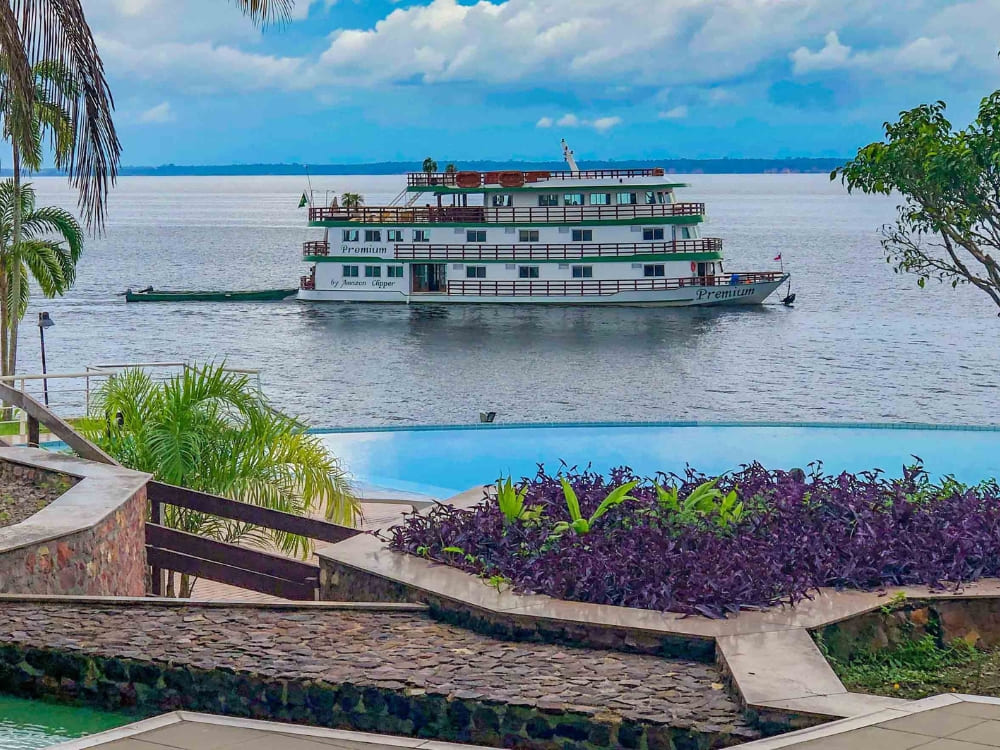
    One of the longest-running ecotourism options in the area, going strong for 35 years, Amazon Clipper offers the best Amazon river cruises in Brazil in the small-ship category. The MV Premium is the most luxurious vessel of their fleet, perfect for people who desire a high-end stay.

    The Amazon Clipper Premium riverboat cruising along the Amazon River, reflecting in the calm water against a backdrop of dense green rainforest.
    .

    One of the longest-running ecotourism options in the area, going strong for over 35 years, Amazon Clipper offers some of the best Amazon cruises in Brazil in the small-ship category. The MV Premium is the most luxurious vessel of their fleet, perfect for people who desire a high-end stay.

    There are sixteen air-conditioned ensuite cabins with twin or queen-size beds, excellent amenities, lecture room, swimming pool, jacuzzi, a leisure deck, gourmet area, a dining room, a lounge, a sun deck and a large observation deck with a fantastic 360 view.

    The Amazon Clipper Premium vessel docked near a riverside pool, offering a luxurious small-ship experience in the Amazon.
    .

    Wonderful activities await on 6-day trips across the waters of the Amazon and Negro rivers: stargazing, aquatic trails, night tours, swimming, boat tours, visiting native communities, etc.

    👉 Read more: When is the Best Time to visit the Amazon Rainforest in Brazil

    7 – Tucano Amazon River Cruise

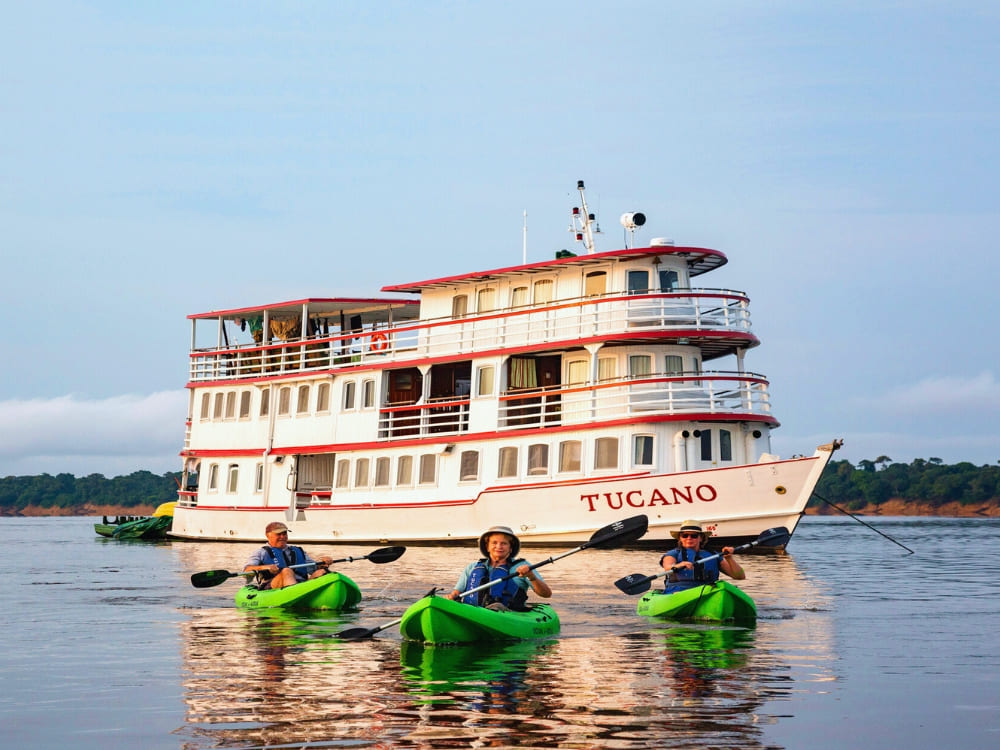
    Another great small ship is the Tucano, a modest-sized motor yacht with a fast engine. This design helps it reach places other riverboats can’t, making it the only vessel to explore the deepest parts of the Central Amazon Conservation Complex alongside crew members with more than 30 years of experience.

    Three people paddle green kayaks on a calm river in front of a multi-deck riverboat named Tucano, with lush green trees lining the shore in the background.
    .

    Another great small ship is the Tucano, a modest size motor yacht with a fast engine. This design helps it reach places other boats can’t, making it the only vessel able to explore the deepest parts of the Central Amazon Conservation Complex, in Novo Airão, a small town 195 km away from Manaus.

    This is why this Amazon cruise in Brazil is the perfect option for those who wish to take wildlife watching to the next level, as the noise pollution control system is efficient to prevent scaring animals away. Activities also include guided hikes, night tours, skiff safaris, kayaking, etc.

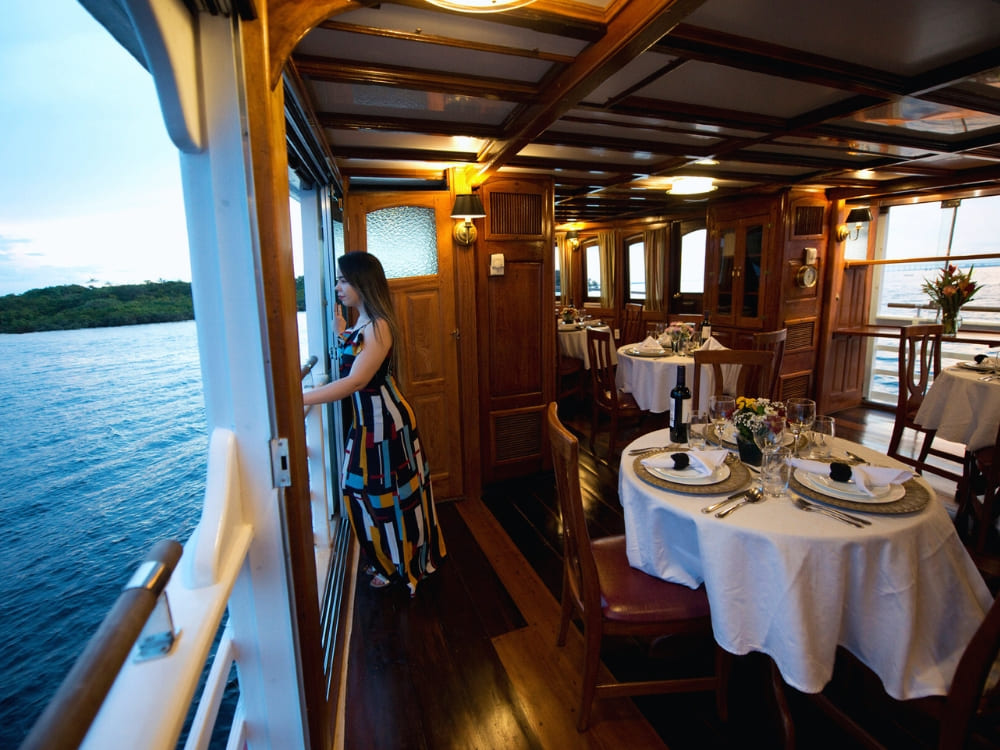
    A woman in a colorful striped dress looks out the open window of a wooden boat dining room, which features tables set with white tablecloths and wine glasses.
    .

    Sixteen guests can comfortably rest in eight different air-conditioned ensuite cabins (single, twin, queen-sized, and bunk beds), and relax in the dining room, lounge or observation deck.

    Available in 5 to 7-day tours. See more details about the Tucano Amazon River Cruise.

    How much does an Amazon river cruise cost?

    Considering accommodation, services, diverse itineraries, and infrastructure of the vessels, Amazon cruises costs an average of R$ 18.000 (approximately US$ 3,462 and € 2.916) per person. Prices vary according to cabin category, season, trip duration, etc.

    Check out the prices and other information below:

    RIVER CRUISE HIGHLIGHTS DURATION STARTING PRICE*
    Amazon River Cruise in Brazil (Katerre) Hiking, boat rides, wildlife watching, fishing, river beaches, visiting local villages. 4 days

    5 days

    7 days

    US$ 2,505 
    Luxury Amazon Cruise in Brazil (Zaltana) Sophisticated stay, Meeting of Waters, Anavilhanas, wildlife watching, hiking, piranha fishing, river beaches, luau. 5 days US$ 3,770 
    Amazon River Cruise from Alter do Chão (Kaiara) Expedition in the Tapajós River (Alter do Chão, Pará), hiking, wildlife watching, canoeing, night spotting, visiting local villages. 5 days US$ 2,630  
    La Jangada Wildlife watching, engaging with indigenous groups, boat rides, jungle hiking, fishing, night safaris. 13 days US$ 7,890 
    Untamed Amazon Eco-friendly riverboat, canoeing, hiking, photo safaris, night tours, recreational fishing. 5 days US$ 3,985 
    Amazon Clipper Premium Cruise Expeditions on the Amazon and Negro rivers, aquatic trails, swimming, boat tours, stargazing, native communities. 6 days US$ 1,917  
    Tucano Amazon River Cruise Expeditions in the Central Amazon Conservation Complex, hiking, night tours, kayaking, skiff safari. 5 days

    7 days

    US$ 2,750

    *Per person, based on double occupancy in group departures. Prices may vary depending on season and availability. Exchange rate as of February 10th, 2026; subject to change.

    Amazon cruises in Brazil: customer reviews

    By partnering with the most reliable local operators, PlanetaEXO has helped numerous travelers from all over to world to join incredible river boat cruises in the Amazon Rainforest.

    See what our customers think about these experiences!

    Everything you should know about river cruises in the Amazon

    When is the best time to enjoy Amazon Rainforest cruises?

    River cruises operate throughout the entire year, but itineraries vary according to the seasons. 

    See more information: What’s the best time of the year for Amazon River Cruises in Brazil?

    Are Amazon river cruises safe?

    Yes, Amazon river cruises are safe. The vessels follow strict safety protocols and there are first responders among crew members to offer assistance if needed. In case of emergency, a speedboat is ready to rescue passengers and bring them to the nearest city.

    How long do river cruises in the Amazon take?

    River cruises are multiple-day experiences. PlanetaEXO offers tours lasting from 4 to 7 days, but it’s possible to extend your trip.

    What should I pack for an Amazon river cruise?

    Light clothes, comfortable shoes, hats or caps, sunglasses, raincoat, a flashlight, sunscreen, insect repellent, travel essentials (documents, cash, debit/credit card, medication), powerbank and chargers (phones, cameras, laptops, tablets).

    What to expect on an Amazon river cruise?

    Expect to be awed by the beauty of the Amazon Rainforest. Sailing across the rivers allows you to explore nature from a whole new perspective to admire the fauna and flora of the richest ecosystem in the world.

    Meanwhile, elegant accommodations and premium services guarantee a high-stay experience for couples and families alike. 

    Are Amazon cruises worth it?

    More than worth it! River cruises are some of the most fascinating activities in the Amazon because they present the perfect fusion of ecotourism and comfort: connection with nature, responsible travel, and exclusivity. It truly is an unforgettable experience.

    Ready to plan your Amazon river cruise in Brazil?

    Now that you know everything about the best Amazon river cruises, shall we start planning your next vacation?

    As an expert in Amazon Rainforest tours in Brazil, PlanetaEXO is an ecotourism platform that works with the finest local operators to offer unforgettable experiences for all travelers. Contact us now!

  • Pantanal or the Amazon: Which One Should you Choose?

    Pantanal or the Amazon: Which One Should you Choose?

    Both incredible Brazilian biomes, the Pantanal is home to jaguars and other fantastic animals, while the Amazon Rainforest allows for unbelievable jungle experiences

    When planning an adventure into Brazil’s wildest landscapes, two destinations may come to mind: the Pantanal or the Amazon. Both are ecological powerhouses teeming with biodiversity, but they offer different experiences.
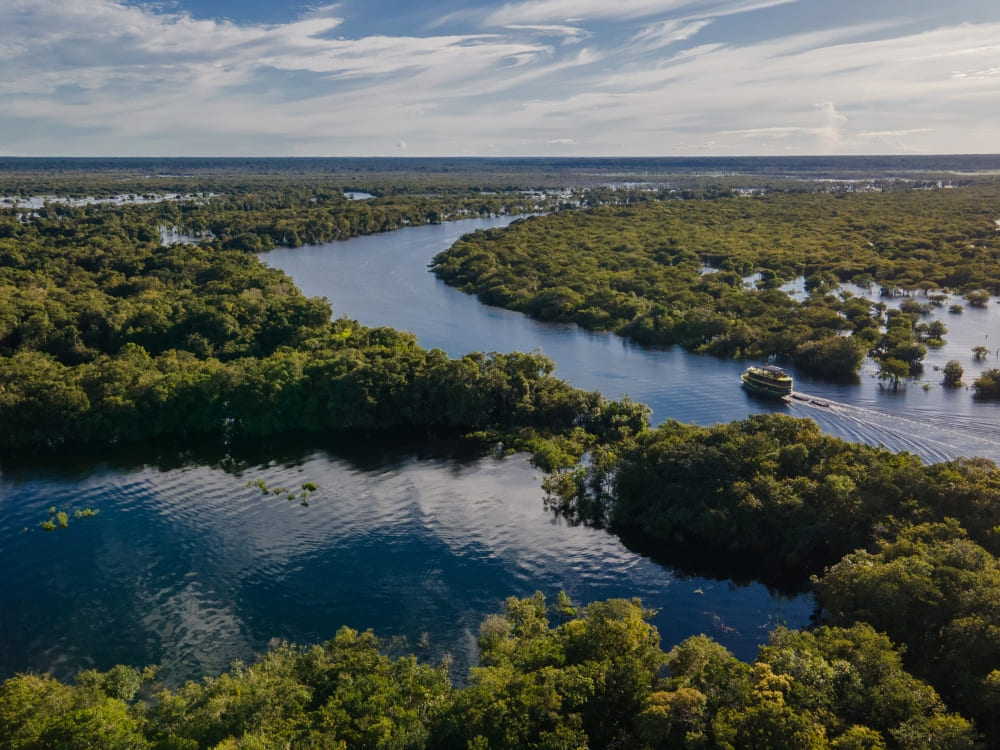
    Aerial view of a tour boat navigating a winding river through the lush green landscape of the Amazon.
    .

    Simply comparing travel itineraries is not enough, since both destinations are among some of the planet’s richest biomes in terms of biodiversity and untouched beauty. In their own unique ways, they provide incredible activities for those who wish to connect with nature in its most exuberant form.
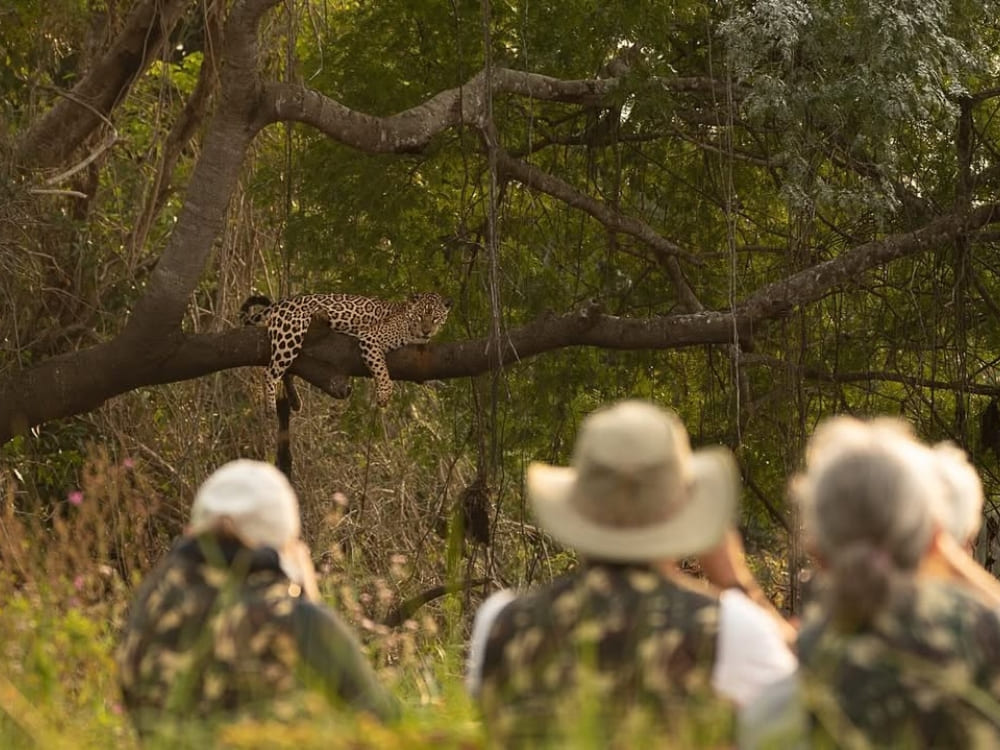
    Tourists watching a jaguar resting on a tree branch during a wildlife safari tour in the Pantanal.
    Photo: @larissa_pantanal

    As an expert in Pantanal tours and Amazon Rainforest tours in Brazil, PlanetaEXO has put together a guide to help you choose where you should spend your next vacation. See more below!

    Is the Pantanal part of the Amazon?

    No, the Pantanal is not part of the Amazon Rainforest. Although neighboring biomes in Brazil, they have fairly different ecosystems.

    Spanning the states of Mato Grosso and Mato Grosso do Sul, the Pantanal is considered the world’s largest wetland.

    Meanwhile, the Amazon is the largest tropical rainforest on Earth, covering areas of eight different states: Amazonas, Pará, Mato Grosso, Acre, Amapá, Rondônia, Roraima and Maranhão.

    Pantanal safaris: wildlife watching at its finest

    If your dream is to see wildlife up close, the Pantanal is the perfect destination. Besides the incredibly rich fauna, the open landscapes make it much easier to spot animals in their natural habitat compared to anywhere else in Brazil.

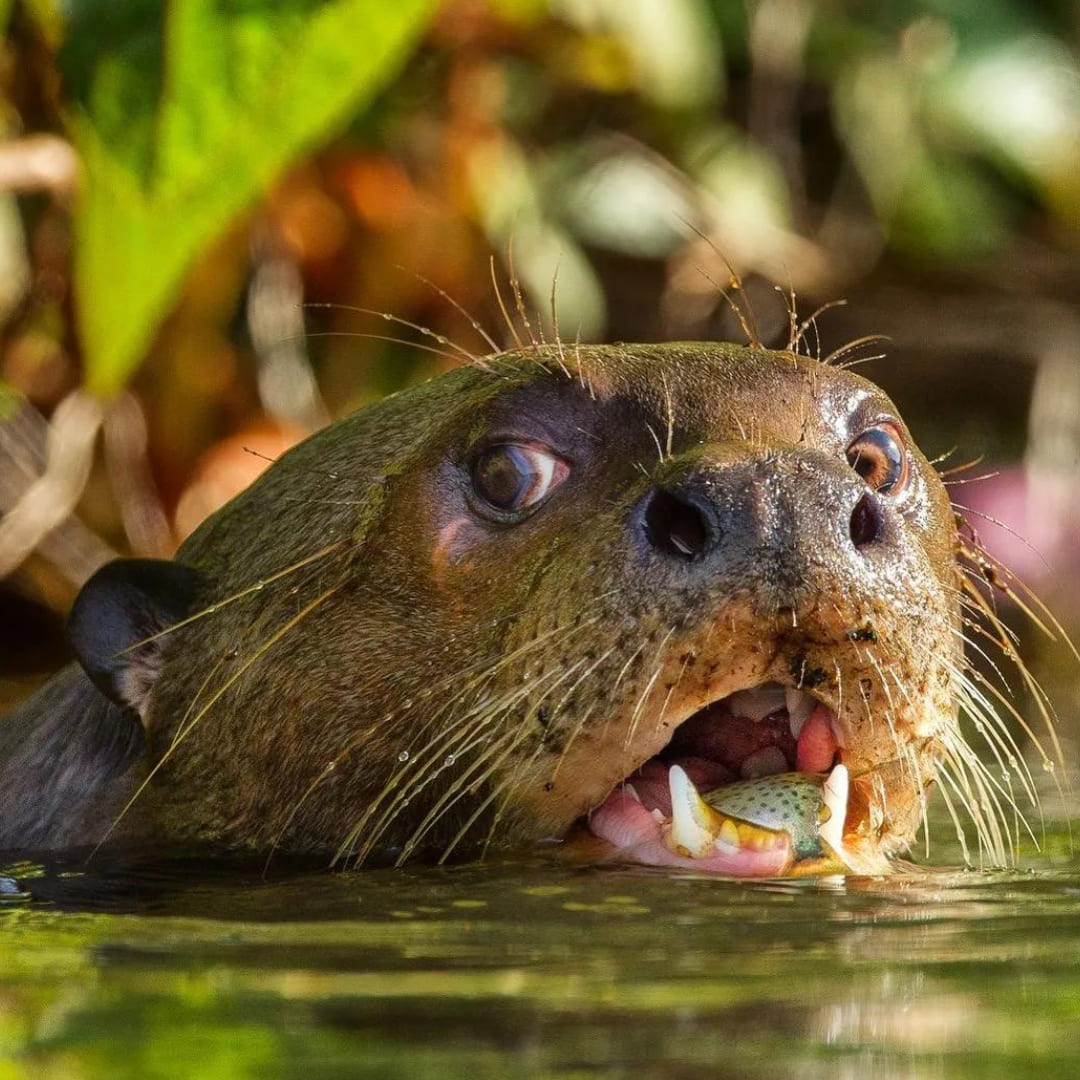
    By boat or four-wheel drives, Pantanal safaris allow visitors some of the best wildlife watching experiences in the world. With the help of expert guides who know just the right places to spot animals, you might see capybaras, giant otters, caimans, macaws, etc.

    Silhouette of a capybara with birds perched on its back against a vibrant orange sunset in the Pantanal.
    Photo: Ondrej Prosicky

    All species are fascinating, but it’s safe to say that the largest feline in the Americas is the star of the show. The Northern region, especially near the town of Porto Jofre, is considered the best place in the world to see jaguars.

    The Pantanal’s abundance of wildlife is a striking highlight compared to other biomes. Amazon jungle tours in Brazil are wonderful for a total immersion in nature, but spotting animals there requires more patience and a bit of luck.
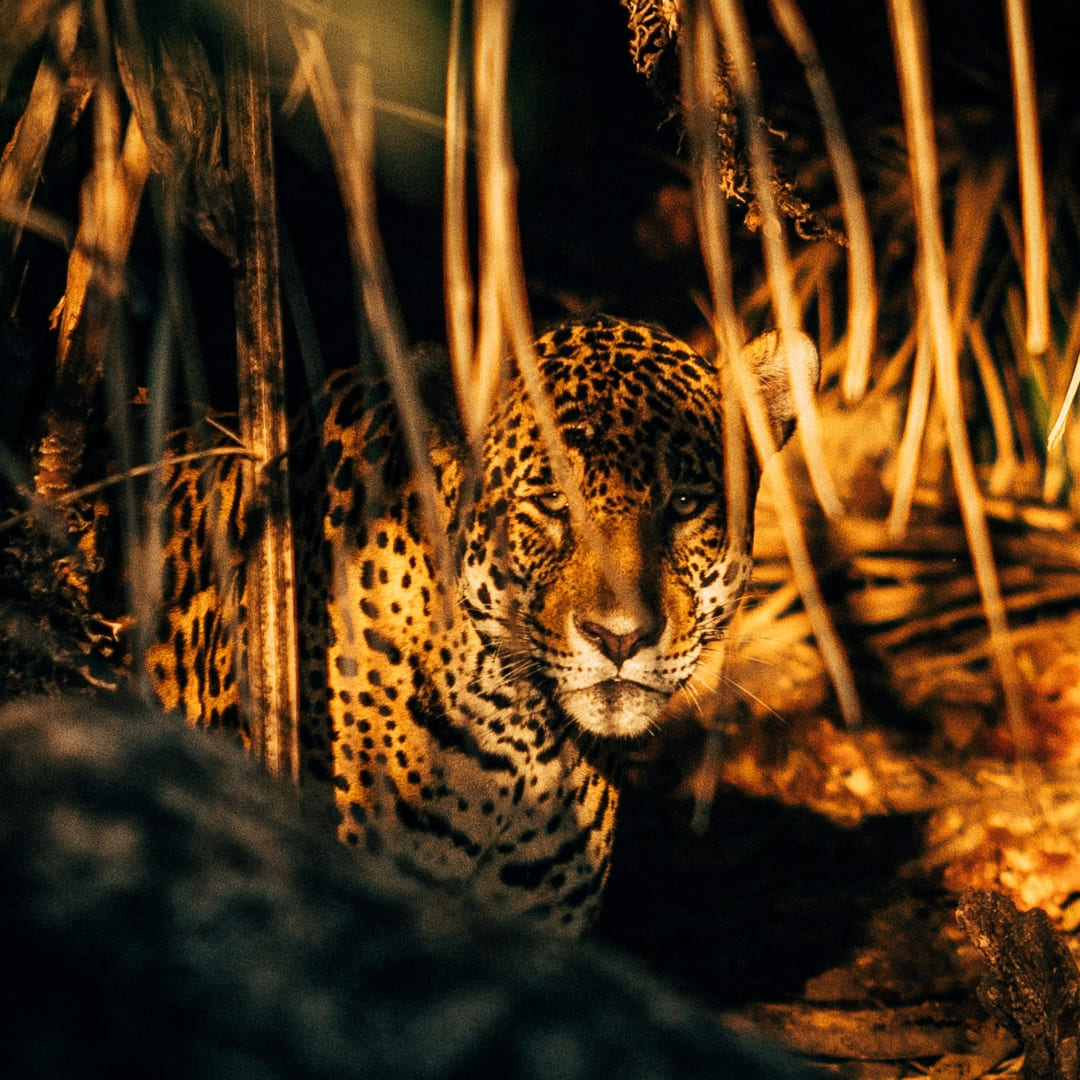
    Close-up of a jaguar engaging in natural camouflage amidst dense foliage in the Brazilian wetlands.
    Photo: Felipe Castellari

    👉 Read more:

    The immensity of the Amazon Rainforest

    The Amazon Rainforest  is an endless sea of green. With trees that reach over 40 meters in height, the forest creates a closed, humid environment where sunlight barely touches the ground, and houses thousands of plant and animal species.

    Hiking in the Amazon is almost mystic. Different sounds and aromas are enveloped by the forest grandeur and a constant sense of mystery. Such an atmosphere can make anyone very aware of the warm, yet relentless power of Mother Nature.
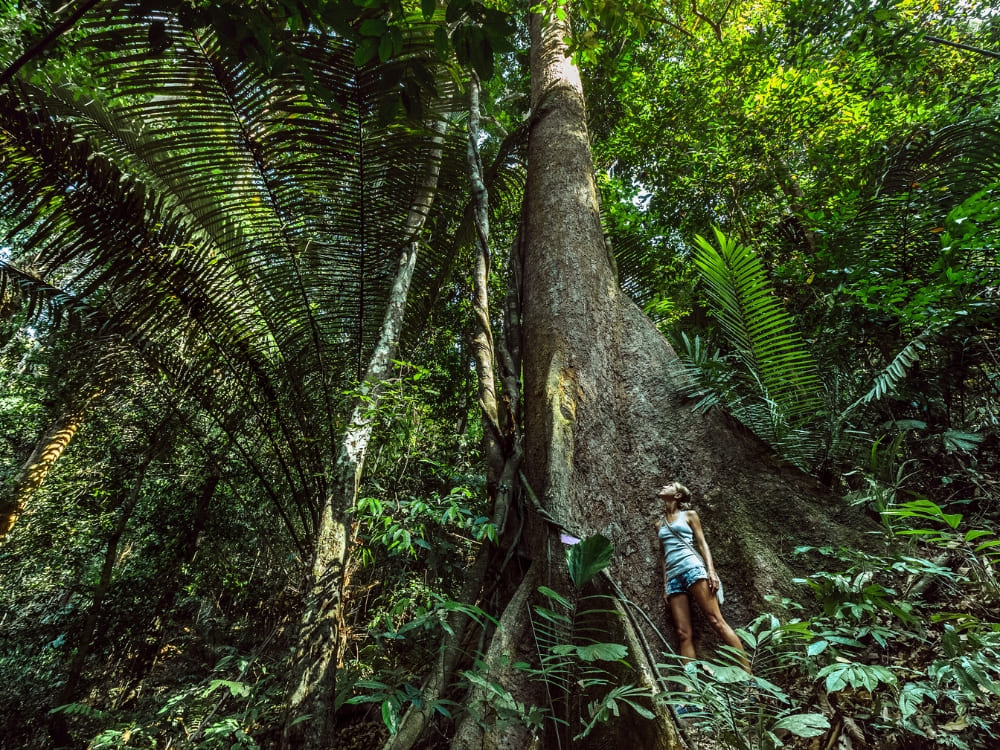
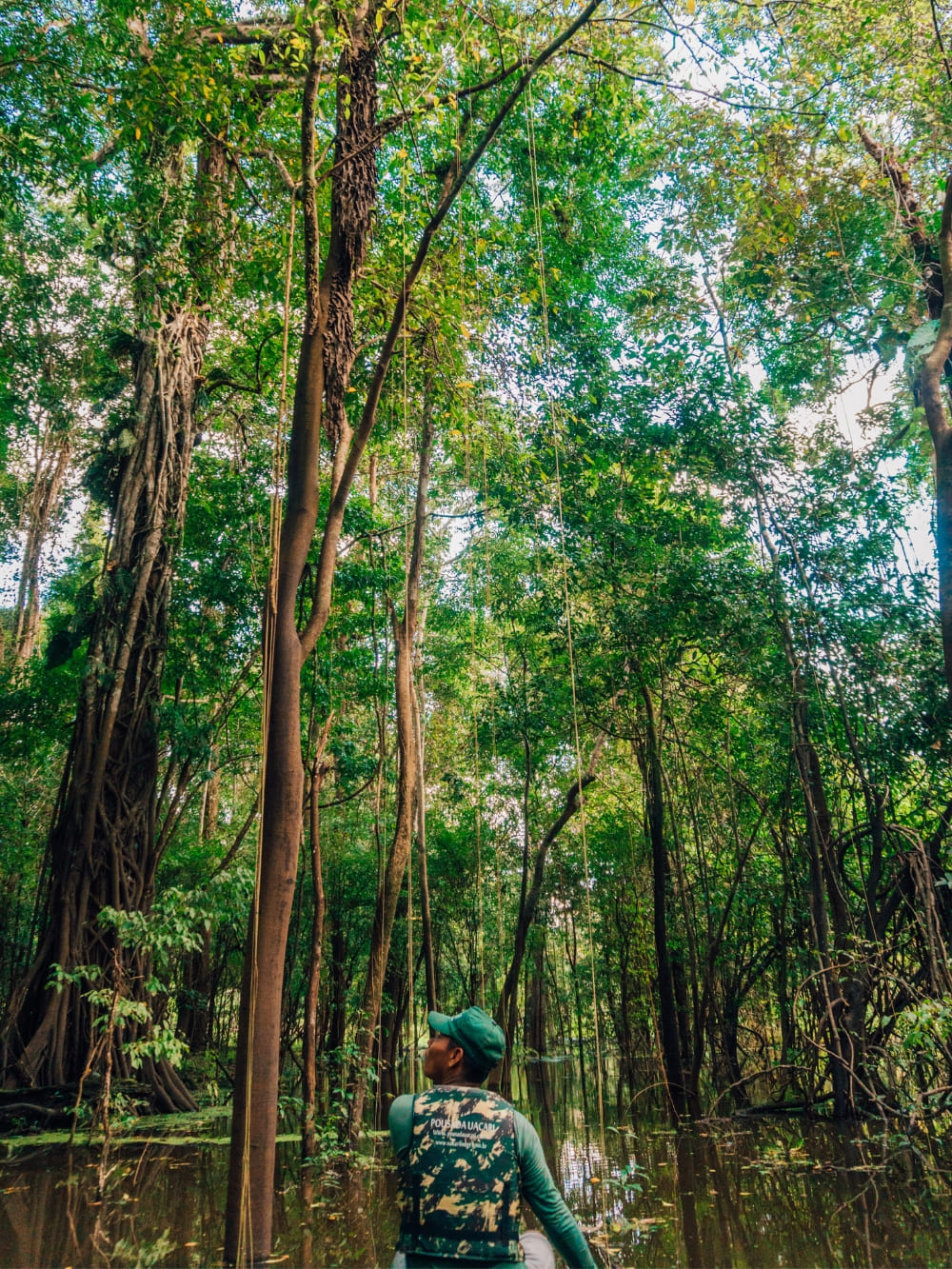
    A traveler stands at the base of a massive tree trunk wrapped in vines, gazing up into the dense, green canopy of the Amazon rainforest.
    .

    By joining Amazon tours in Brazil, travelers witness the importance of the rivers, which determine the local way of life as natural highways that connect riverside communities and grant proper access to deeper parts of the forest.

    Negro, Solimões and Amazonas are just some of the rivers that cut through the vegetation and form igarapés (small bodies of water), igapós (flooded forests) and breathtaking views of immeasurable value for the fauna, flora and locals. 
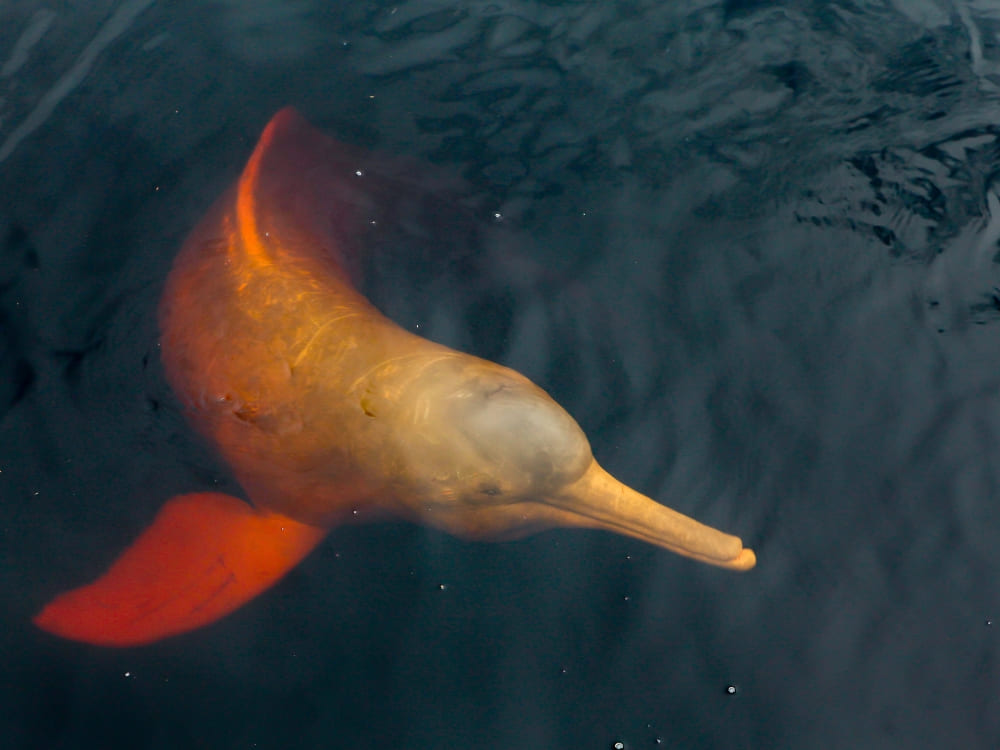
    A pink river dolphin surfaces to breathe, showing its distinct color against the dark, black waters of the Rio Negro.
    .

    Wildlife is rich, but discreet. Except for pink river dolphins, most animals live in the tree tops, are camouflaged by the jungle or only make themselves known at night. The focus is on immersion: smelling the wet earth, listening to the music of nature, breathing fresh air and understanding the privilege of being surrounded by the most complex ecosystem on the planet.

    👉 Check our travel packages: Amazon Rainforest tours, Brazil

    Experiences in the Amazon and the Pantanal

    Both the Pantanal and the Amazon are spectacular. There is no better destination — only the better option for your preferences.

    While the Amazon stands out for the vastness of its closed forest, imposing rivers and the constant sounds of the jungle, the Pantanal mesmerizes with its flooded fields, open vegetation and the spectacle of wildlife on view. Despite the contrasting differences, these two wild destinations represent the richness of Brazilian biodiversity and sustainable travel.

    Besides understanding what makes each biome so great, it’s also important to point out how the experiences are influenced by their distinctness.
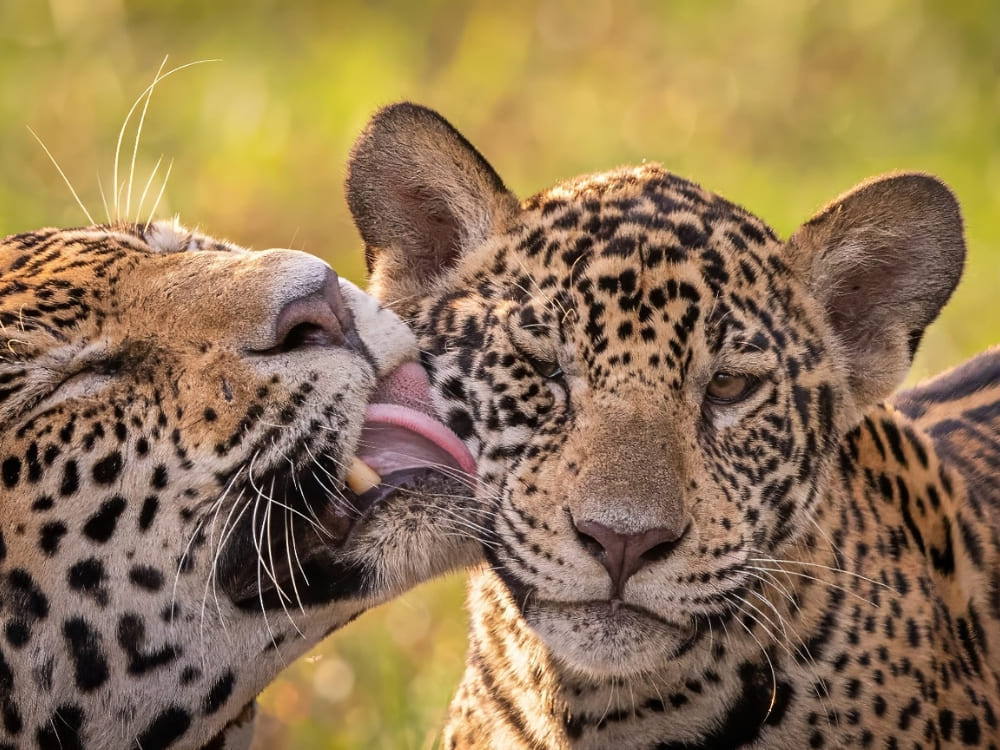
    Two jaguars grooming each other in their natural habitat in the Pantanal.
    @matthias_kern_photography

    Pantanal tours activities

    Book your trip to the Pantanal if you love:

    • Photo safaris: explore the wetlands by boat or 4×4 car to spot some of the most beautiful Brazilian animals, including jaguars, anteaters, tapirs, toucans, and many more.
    • Birdwatching: keep your eyes open to spot some of the native birds, including toucans, macaws and the enigmatic jabiru stork.
    • Horseback riding: delve into the flooded plains on horseback like a true Pantaneiro.
    • Trekking: accompanied by qualified guides, trek across open fields and immerse yourself in nature.
    • Boat rides and catch-and-release fishing: discover the wetlands by joining boat tours and fish for typical Pantanal species, like pacu and dorado.
    • Farm life: some lodges are actually adapted farmhouses, but day-to-day life is still heavily based on ranch culture — which guests are more than welcomed to participate in.
    • Cinematic sunrises and sunsets: wide-open skies offer unforgettable views when dawn breaks or when the sun sets.

    Keep in mind: itineraries vary in North and South Pantanal. Make sure to learn the differences of both regions before booking your trip!
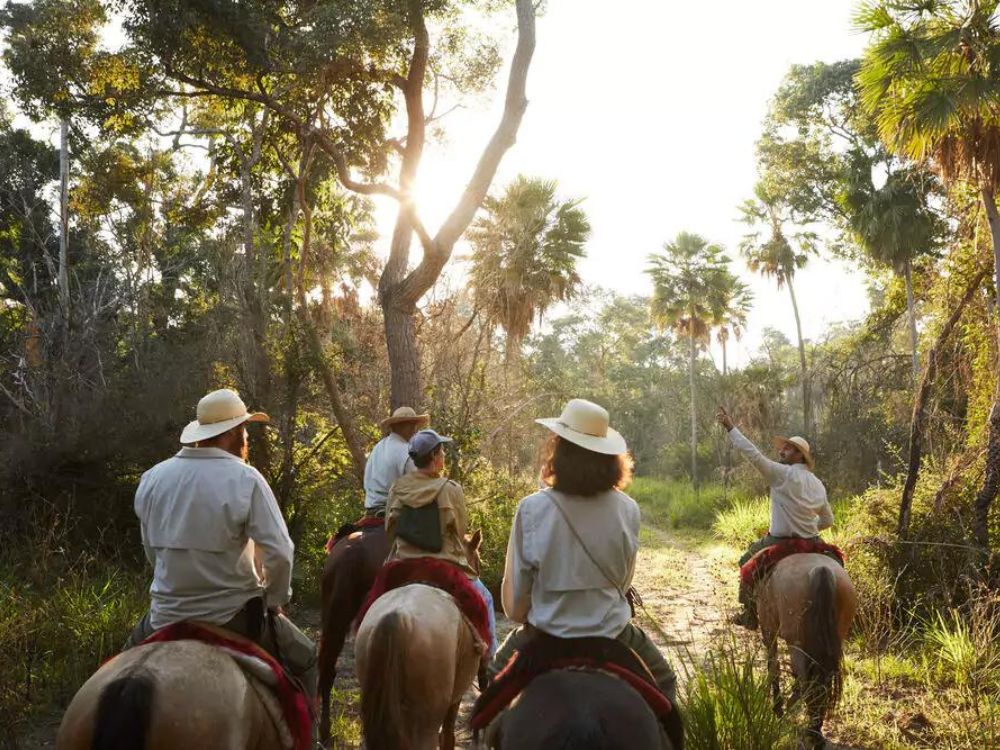
    Group of tourists horseback riding through the Pantanal wetlands guided by local experts.

    Brazil Amazon tours activities

    Plan your vacation in the Amazon if you can’t get enough of:

    • Forest hiking: immerse yourself in the forest by hiking with expert guides to explore the fauna, flora and local traditions.
    • River cruises: high-end vessels provide a one of a kind sailing experience across the rivers in Anavilhanas and Jaú national parks.
    • Boat trips: smaller boat and canoes sailing through igarapés and igapós are some of the most authentic activities in the forest.
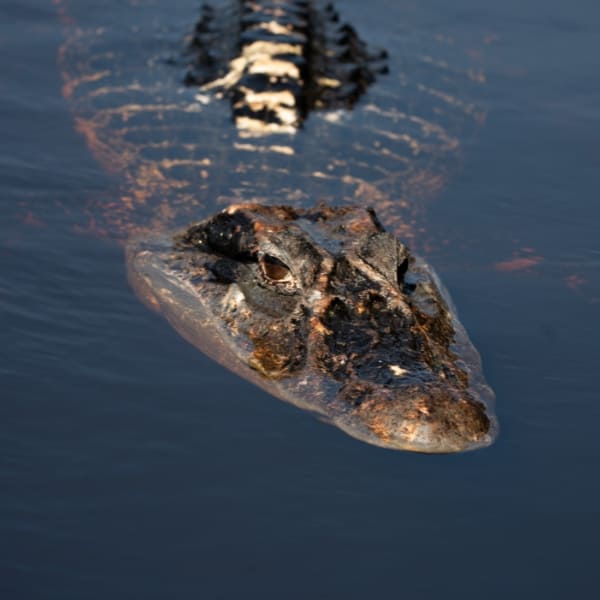
    • Night expeditions: animals (caimans, snakes, frogs, owls…) tend to roam around the forest more freely when night falls, making it an ideal time for wildlife watching in the Amazon.
    • Pink dolphins sightings: unlike other native animals, the iconic pink river dolphins aren’t shy and are often spotted during boat rides across Solimões and Negro rivers.
    • Lodging in the forest and floating houses: rustic or sophisticated stay experiences, always integrated with nature.
    • Visiting riverside and indigenous communities: contact with local cultures, traditional cuisine, handicrafts and even ceremonies conducted by indigenous leaders.

    👉 Read more: Top things to do in the Amazon Rainforest in Brazil
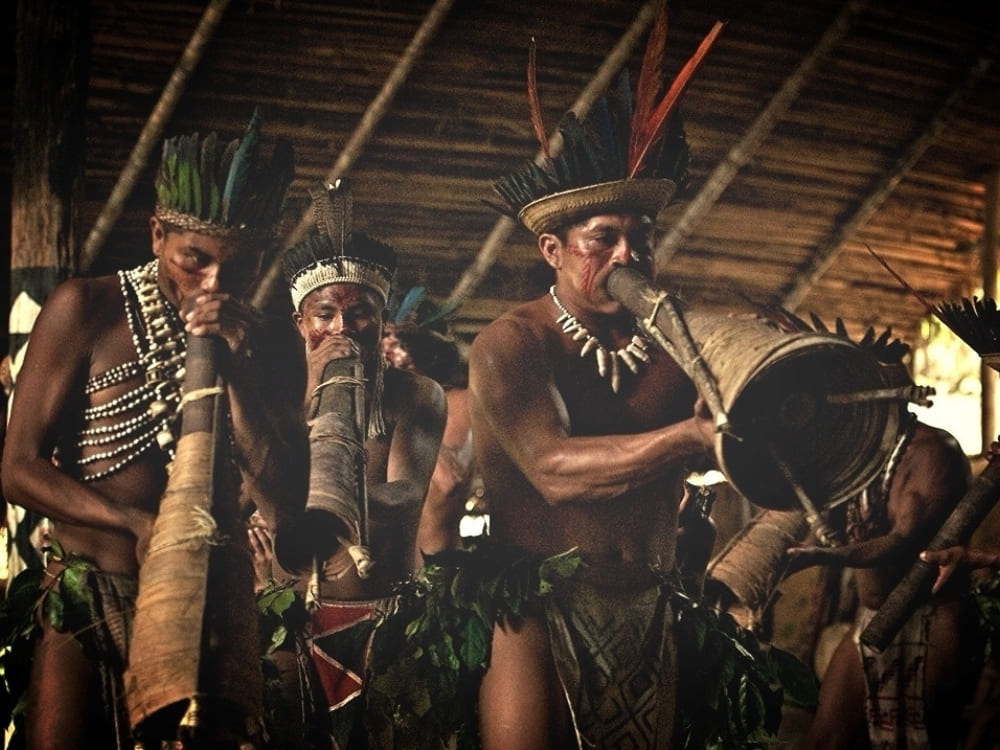
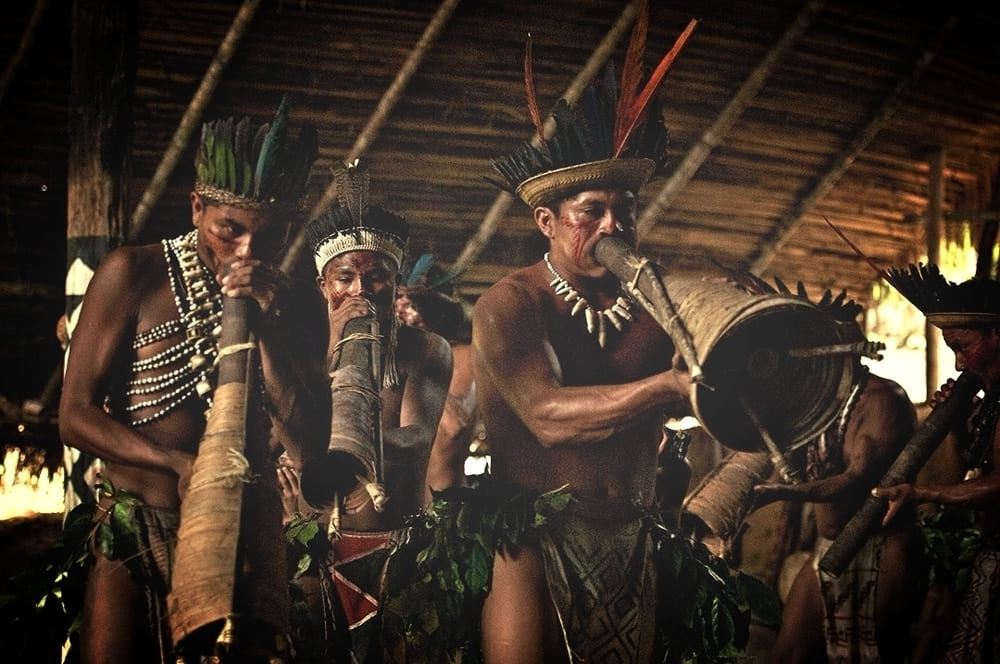
    Indigenous men playing traditional wind instruments during a cultural ceremony in the Amazon.

    How to get to the Pantanal and the Amazon in Brazil?

    The Pantanal and the Amazon Rainforest are located in remote regions, with logistical challenges that can directly influence the tourist experience. However, with the growth of ecotourism in Brazil and the development of local infrastructure, these trips have become increasingly viable.

    Divided between North and South, the Pantanal is assessable via Cuiabá (Mato Grosso) or Campo Grande (Mato Grosso do Sul), both capitals connected by dirt roads to the lodges and ranches. The dry season (May to October) is a great time for wildlife watching and other outdoor activities due to the decrease in water level.

    👉 Read more:
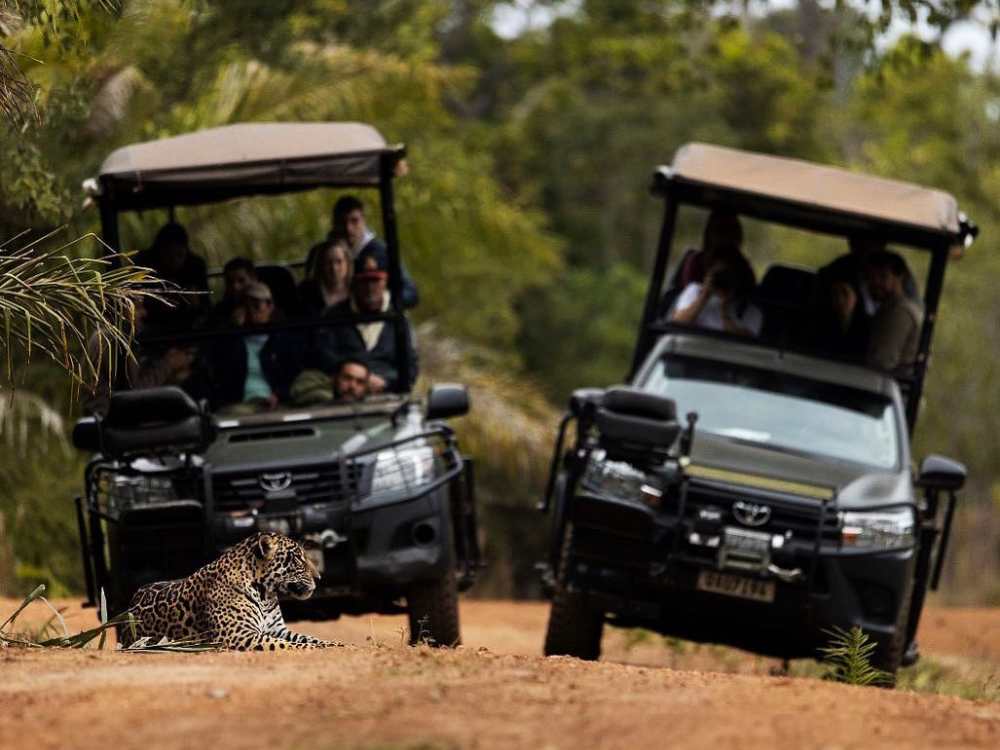
    Two open-air safari vehicles stopping on a dirt road to observe a jaguar lying on the ground.

    If you’re traveling to the Amazon, the route depends on which areas you’re visiting. Manaus, capital of Amazonas, is the main getaway to the forests, served by direct flights from major Brazilian cities, but there are also tours in the states of Pará and Mato Grosso.

    River levels vary greatly between the wet and dry seasons, so activities can change depending on the time of year. The rainy season (December to May) is best for canoeing, while the dry season (June to December) allows for longer hikes.

    👉 Read more:

    Tourists on a small motorized canoe navigating an Amazon river at twilight.

    Sustainability and local impact

    Both the Pantanal and the Amazon are biomes of global importance for environmental conservation. Sustainable travel has proven to be a powerful tool for preserving these regions and supporting local communities. 

    By choosing responsible lodging, hiring local guides, opting for operators that follow sustainable practices and taking part in activities focused on environmental education, tourists contribute directly to maintaining communities and enhancing biodiversity.
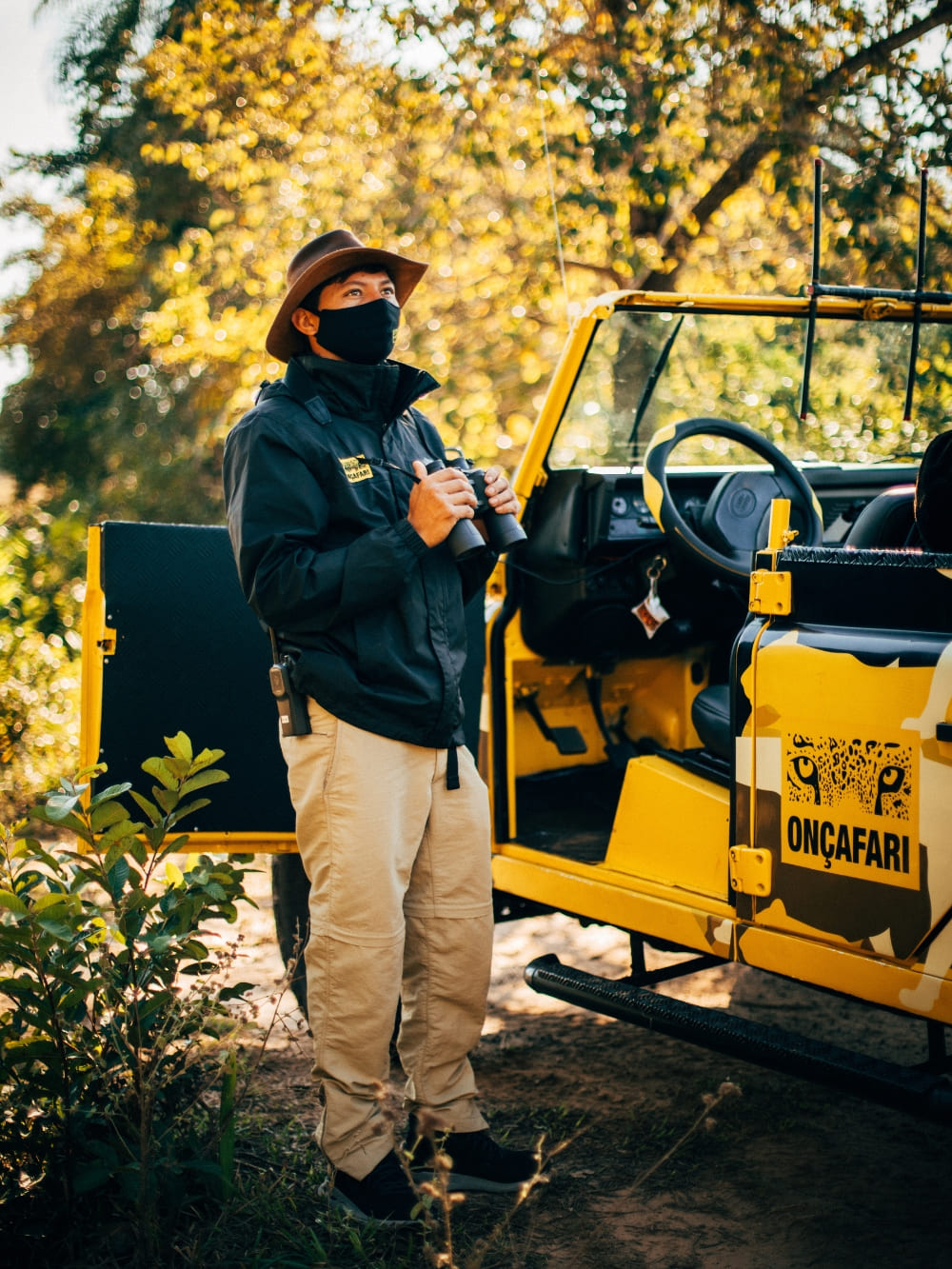
    An ecotourism guide holding binoculars standing next to an Onçafari project vehicle.

    Ecotourism efforts, such as ecological lodges in the Amazon, or adapted farms in the Pantanal, help generate income for local populations and create alternatives to deforestation, poaching and predatory exploitation of natural resources.

    Prioritizing experiences that respect the rhythms of nature, limit the number of visitors and are committed to sustainable practices is essential to ensure that these landscapes continue to exist for generations to come. 
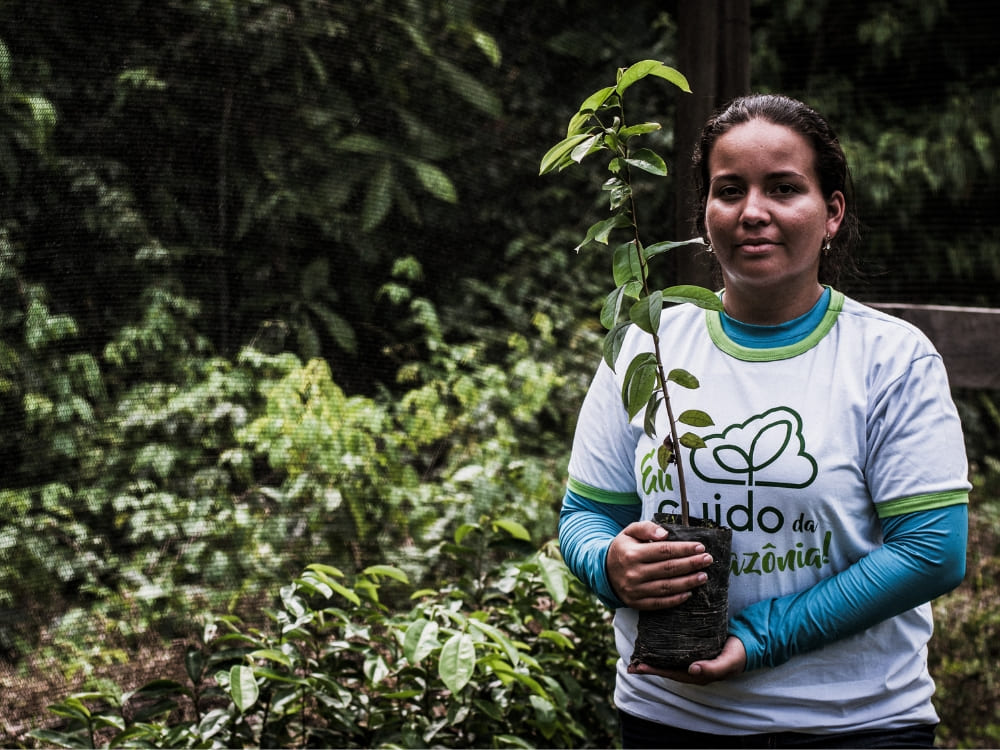
    A woman holding a native tree sapling for a sustainability and reforestation project in the Amazon.

    👉 Learn more and support:

    In conclusion, should you choose the Amazon Rainforest or the Pantanal?

    Go to the Pantanal for easier wildlife watching, open landscapes and safari-style experiences, or choose the Amazon if you’re looking for immersive jungle exploration, cultural encounters, and the feeling of being in the middle of a tropical rainforest.

    Better yet: plan your trip to both destinations, since each reveals a unique side of Brazil’s untamed beauty. 

    There’s no wrong choice here, just different kinds of adventures!
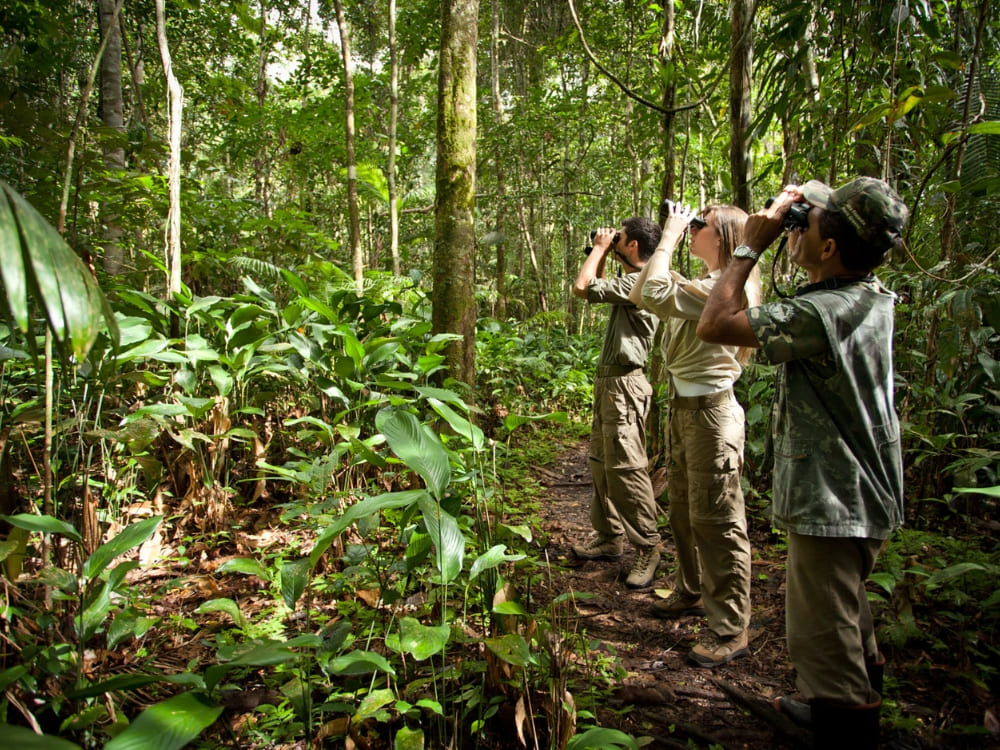
    Travelers using binoculars to spot wildlife while hiking through the Amazon jungle.
    Photo: Samuel Melim

    Travel to the Pantanal or the Amazon with PlanetaEXO

    PlanetaEXO is an ecotourism platform specialized in Pantanal tours and Amazon Rainforest tours in Brazil, so why choose just one destination when you can do both?

    We work with the best local operators to make sure your travel experience is unlike any other. From bookings to itineraries, our team will be with you every step of the way. Contact us now!
  • When is the Best Time to Visit the Amazon Rainforest in Brazil

    When is the Best Time to Visit the Amazon Rainforest in Brazil

    Not sure when is the best time to travel to the Amazon? This guide will teach you everything about the forest’s seasons and help you plan your next vacation!

    With two very well-defined seasons (wet and dry seasons), the best time to visit the Amazon Rainforest depends on what you’re looking for. This is an all-year-round destination, but some periods are more favorable to certain activities than others

    The weather is warm throughout the entire year, but it’s the humidity you should pay attention to—it is a rainforest, after all. The rain is mostly an everyday occurrence, but there are specific times when rainstorms are more common. But don’t you worry: your experience will not be affected!

    To help with your vacation planning, PlanetaEXO, a platform specialized in Amazon Rainforest tours in Brazil, has put together a guide on when you should book your trip. Check it out below!

    Visiting the Amazon in the wet season

    December, January, February, March, April and May

    The wet season is when rainfall is the heaviest, from December to May. Rivers get higher, the Amazon Basin starts to flood and the weather is slightly cooler, with an average temperature of 25,8 ºC (78 ºF).

    Rainstorms hit the forest daily, but your trip won’t be negatively affected, since they only last about an hour per day. When the sky clears, you can go back outside and enjoy yourself.

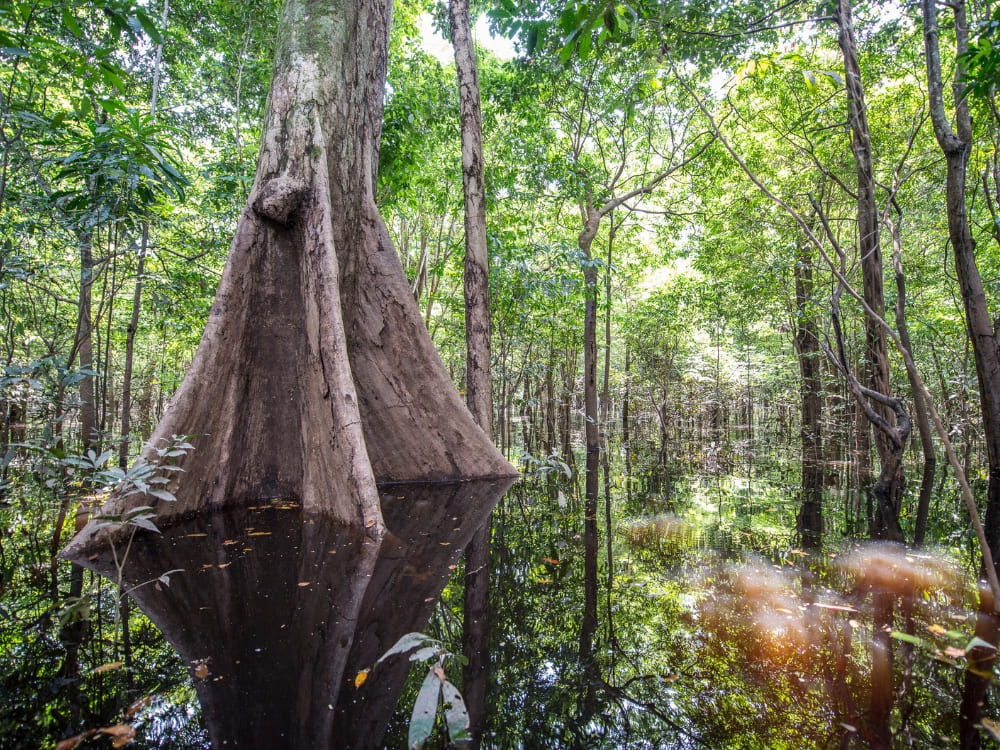
    Another impressive feature of the rainy season is the igapós. The intense rainfall causes some areas of the forests to become flooded. Depending on river levels, the water can reach up to 10 meters in height, transforming the vegetation into a natural pool that delights underwater animals and humans alike.

    Large Samauma tree with buttress roots submerged in the dark waters of the flooded Amazon forest.
    .

    Amazonian winter

    While the rest of Brazil heats up with spring and summer, the Amazonian winter (December to March) affects the Northern states.

    Despite its name, the season is really not about temperature — which remain high, as usual —, but the intensity of rainfall that causes rivers to rise and forests to flood. In the Amazonian winter, it’s possible for the amount of rain that would normally fall in an entire month to fall in two or three days.

    This phenomenon happens for a few reasons:

    • Lack of well-defined season in the North
    • Oscillation of a band of cloudiness over the Equator
    • Transport of humidity from the North Atlantic
    • Specific climatic phenomena, such as La Niña

    Your travel experience isn’t negatively affected by this, but some activities are more favorable than others during this time, as detailed below.

    What to do during the wet season in the Amazon Rainforest?

    This is the perfect season for water-related itineraries. Due to the heavy rainfall, you don’t walk through the forest, you navigate through it:

    • Igapós (flooded forests): Canoe, swim or go on aquatic hikes between treetops, orchids, bromeliads and other plants at eye level.
    • Wildlife watching: Terrestrial animals tend to climb to the treetops when the forest floods, making it much easier to spot sloths and monkeys. Various species of birds and the famous Amazon pink dolphins are also frequently seen.
    • Destinations for the Amazon rainy season: Anavilhanas National Park, Mamirauá Reserve and Alter do Chão are some of the top places to travel during this period. Explore water labyrinths, admire the wildlife and join canoe trips.
    • River cruises: Sailing across the Amazon, Negro or Solimões rivers on 3-floor vessels is a wonderful way to experience nature from a whole new perspective.
    Tourist navigating a canoe through the green canopy of the flooded Amazon rainforest looking up at the trees.
    .

    👉 Read more: Best Amazon River Cruises in Brazil

    Visiting the Amazon in the dry season

    June, July, August, September, October and November

    Between June and November, the dry season makes the temperature warmer, with an average of 27,9 ºC (82 ºF). It still rains, but it’s less frequent and the water volume is lower. This allows the floods to drain, unblocking various hiking trails that were previously submerged — although there still are a considerable amount of flooded areas. 

    Less rain also means reduced rivers and a better look at different species of fish and even Amazon pink dolphins. When the water recedes, aquatic animals have less space to swim around, so their occupation is concentrated in smaller zones.

    Keep in mind: from October to December, extended dry seasons are becoming more frequent, causing rivers to shrink, limiting access to a few areas and potentially reducing encounters with some species of animals and plants. The rivers are expected to slowly start rising by November and December. The conditions are much better by January, so the recommendation is to book your tour from this month onwards.

    Young boy standing at the entrance of a mossy cave exploring the Amazon jungle.
    .

    What to do during the dry season in the Amazon Rainforest?

    Land-based itineraries are the highlights of the dry season, but it’s still very much possible to do incredible aquatic activities:

    • River beaches: Known as the Caribbean of the Amazon, Alter do Chão is the main destination for visiting river beaches, though Anavilhanas and the Manaus region are also great spots.
    • Jungle hiking: This is the perfect time for modest hikes or long treks in the forest — including caves and waterfalls —, as well as camping and night walks.
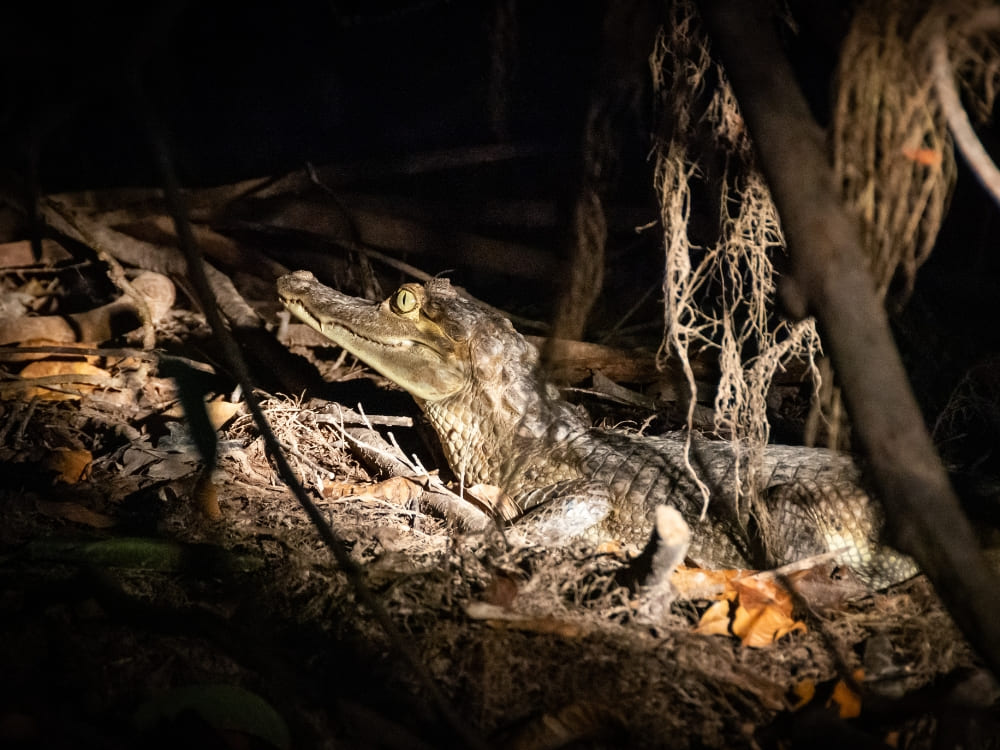
    • Night spotlight: As the flooded area shrinks drastically, caimans gather on the banks of the main rivers and the remaining lakes. At night, “spotting” (shining flashlights into their eyes) reveals hundreds of bright spots in the water. With some luck, you might see other nocturnal creatures, too.
    • Amazon river cruises: Cruises are one of the most versatile activities in the Amazon, as they can be enjoyed during both the rainy and dry seasons.
    Silhouette of a person doing a yoga tree pose on an Amazon river beach at sunset.
    .

    👉 Read more: Best Places to Visit in the Amazon, Brazil

    High and low seasons in the Amazon, Brazil

    The high season is the time of year when the greatest number of people visit a certain destination. Increased demand doesn’t harm the travel experience, but it can affect aspects such as higher prices, more visitors, and reduced availability in the best Amazon jungle lodges.

    The following months are usually the busiest:

    • December and January: Holidays, vacations, and work/school breaks cause people to travel more.
    • February: Carnival is one of the most important holidays in Brazil. After four days of festivities, tourist activity in the Amazon tends to grow (usually in the second half of February, depending on the annual calendar).
    • June, July and August: School break in Brazil, and North American and European countries.
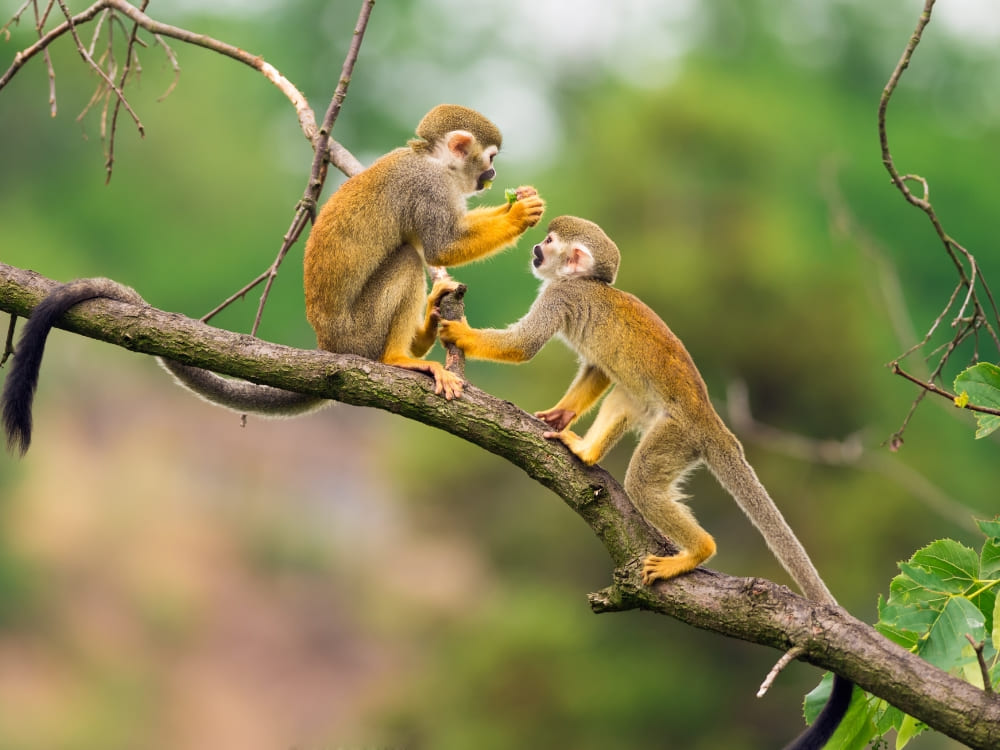
    Two squirrel monkeys sitting on a tree branch grooming each other in the jungle.
    .

    The low season occurs during the months not mentioned above. If you are looking for more peacefulness, exclusivity, and affordable prices, this is the best time to go to the Amazon!

    Amazon Rainforest weather

    The Amazon in Brazil is big enough to reach eight different states, but we’ll focus on three: Amazonas, Pará and Mato Grosso. All of them, of course, have their own features, travel options and weather patterns.

    To help you decide when is the best time to go to the Amazon, check the widgets below to see how the weather is right now in these locations.

    👉 Read more: How to get to the Amazon Rainforest in Brazil?

    Manaus, Amazonas

    Manaus is the capital of Amazonas, the state in which the forest occupies the largest portion – about 29% of the Brazilian Amazon, ranging 1.450.00 km². It’s bigger than the entire country of Peru (1.285.216 km²)!

    That’s why Amazonas is the most seeked out destination for a lot of people who want to immerse themselves into the Amazon Rainforest. Makes sense, huh?

    Belém, Pará

    Pará sits right beside Amazonas, in the North of Brazil. The Amazon takes up a smaller area here, with “only” 930.00 km². It’s almost as big as Tanzania (947,303 km²), in Africa. 

    See below how the weather is right now in Belém, the capital of Pará.

    Alta Floresta, Mato Grosso

    Alta Floresta is a town in Mato Grosso with a population of over sixty-two thousand people, located in the north of the state and the south of the Amazon. The rainforest takes up 470.000 km² — larger than the California area (423,967 km²).

    Take a look at the current weather in Alta Floresta:

    The best time to visit the Amazon in Brazil is whenever you want!

    As a year-round destination, the Amazon allows for incredible experiences at any time — it all depends on your schedule and preferences.

    Now all you have to do is choose the most convenient date to plan your trip with PlanetaEXO, the ecotourism platform specialized in Amazon Rainforest tours in Brazil that works with the best local partners. Our team will help with everything you need to make your vacation one of the best moments of your life. Contact us now!

  • How to Get to the Amazon Rainforest in Brazil?

    How to Get to the Amazon Rainforest in Brazil?

    Don’t know how to visit the Amazon Rainforest? Check our guide for routes to Amazonas, Mato Grosso and Pará and learn everything you need to know!

    If you’re wondering how to get to the Amazon Rainforest so you can start planning your next vacation, it’s important to point out that, contrary to popular belief, access is not difficult at all. The best way to get there is by flying to Manaus, the capital of the Amazonas state.

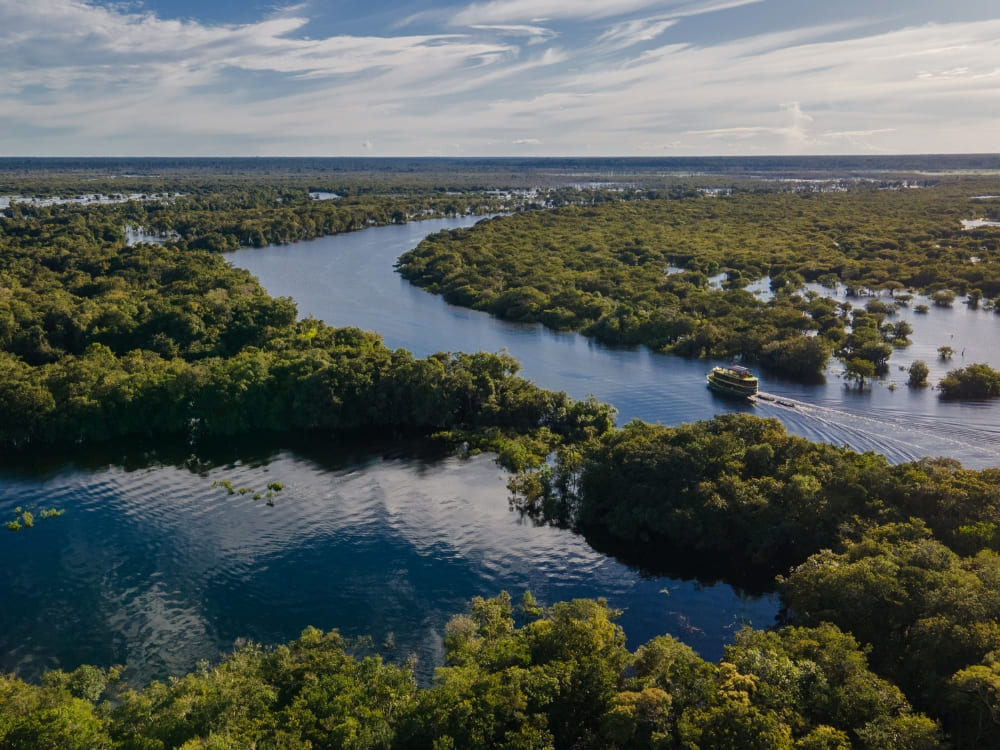
    Aerial view of a winding blue river flowing through the dense green vegetation of the Amazon Rainforest in Brazil.
    .

    As an ecotourism platform for Amazon Rainforest tours in Brazil that partners with the best local operators, PlanetaEXO has put together a comprehensive guide to answer all your questions. Check it out!

    Where is the Amazon Rainforest in Brazil?

    The Amazon is located in the Northern region of Brazil. Though it spans over Bolivia, Colombia, Ecuador, Peru, Guyana, Venezuela and Suriname, over 59% of the biome is located within Brazilian borders.

    Amazonas is the main state, but the forest also extends into Pará, Mato Grosso, Acre, Amapá, Rondônia, Roraima and Tocantins. 

    👉 Read more: When is the best time to visit the Amazon Rainforest in Brazil

    How to get to Manaus?

    The route from Manaus to the Amazon Rainforest is the most convenient, as the capital of Amazonas is considered the gateway to the biome. Tourists fly to Eduardo Gomes International Airport (MAO), which is served by flights from Belém, Belo Horizonte, Brasília, Fortaleza, Recife, Rio de Janeiro and São Paulo.

    Foreign travelers can reach Manaus from Bogotá (BOG), Panama City (PTY) or Curacao (CUR), as there are no direct flights from Europe or the United States. For US residents, Copa and Avianca airlines offer the most convenient flight options with layovers in Panama and Colombia.

    Traveler standing on a wooden pier looking at a small seaplane docked in the Amazon river ready for boarding.
    Photo: Felipe Castellari

    From European and North American countries, flights usually stop in São Paulo (GRU/VCP), Rio de Janeiro (GIG) or Brasília (BSB) before getting to the final destination. From these cities, Azul and GOL airlines fly straight to Manaus.

    After arriving in Manaus, transportation to the forest is necessary. Most PlanetaEXO’s tours to the Amazon include private or group shuttle services provided by the lodges, which require a 30-minute drive to Port of Ceasa and boat rides to the hotel — whose duration depends on the location of each accommodation.

    Tourists riding a motorized canoe exploring the calm waters of the Amazon Rainforest river at dusk
    .

    Some lodges are located in very isolated areas, which makes the route fairly long, with multiple car, bus or boat rides. It might seem like a lot, but don’t worry! The journey to the accommodation is an adventure in itself, as you’ll be able to live incredible things right on your first day, like visiting fruit markets, spotting animals, witnessing the Meeting of Waters, etc.

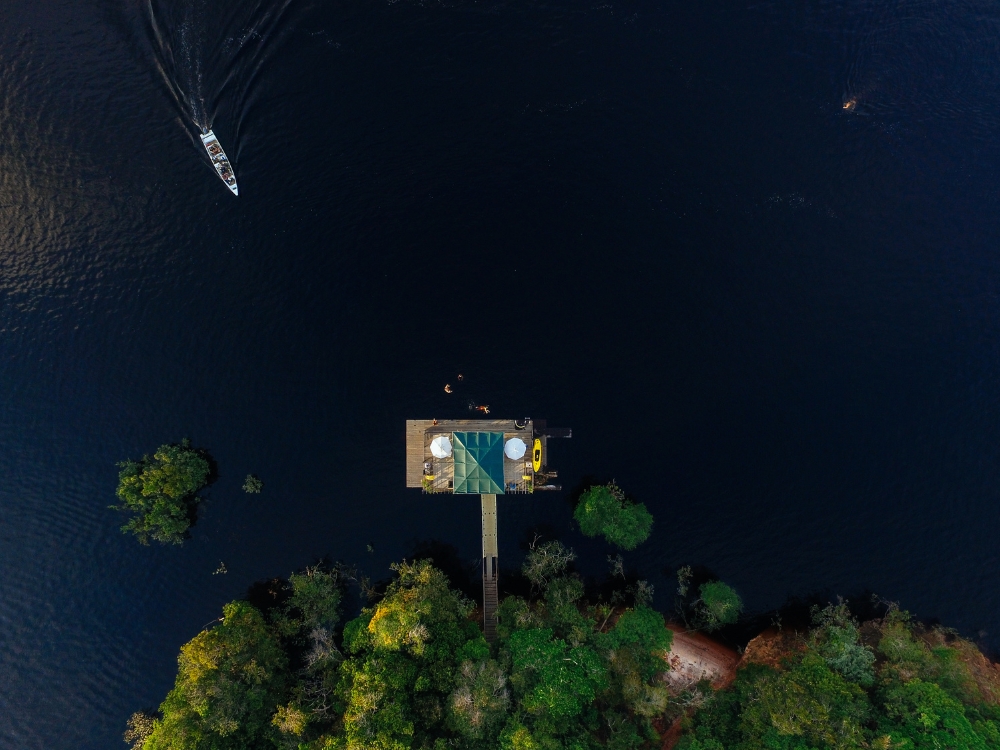
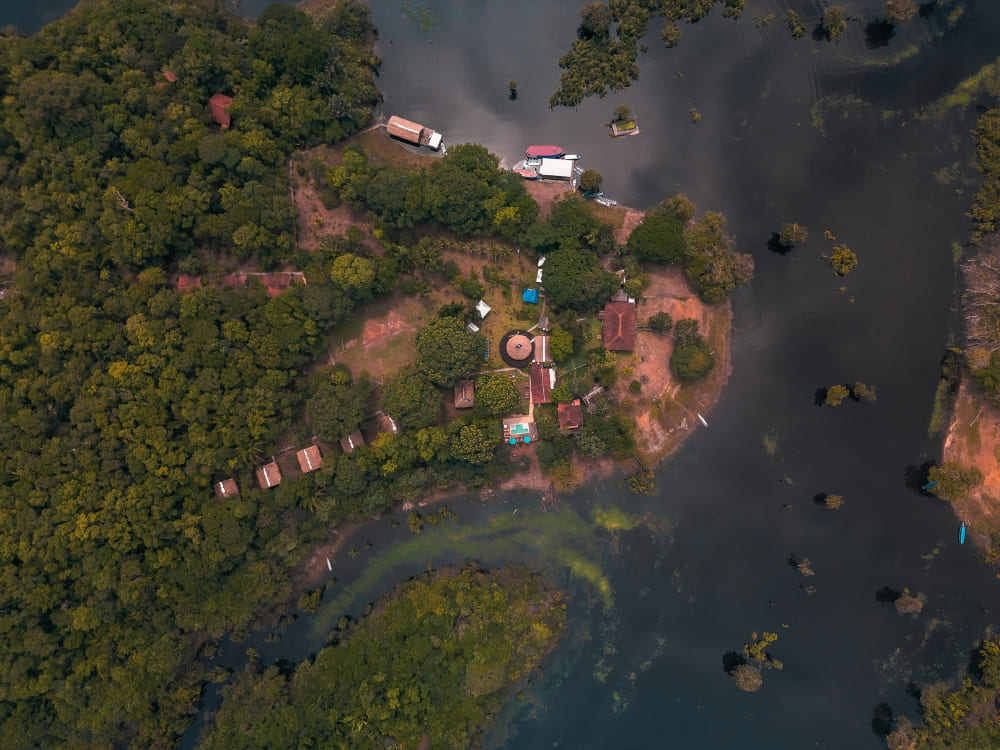
    Aerial drone shot of an eco-lodge built on stilts surrounded by the dark waters of the Amazon river and lush jungle.
    .

    👉 Read more:

    How to get to the Amazon Rainforest in Alta Floresta, Mato Grosso?

    Alta Floresta is located in the northern part of Mato Grosso, on the southern edge of the Amazon. This lovely town is home to Cristalino Jungle Lodge, one of the most renowned jungle lodges in the world. Don’t just take our word for it — National Geographic thinks so too!

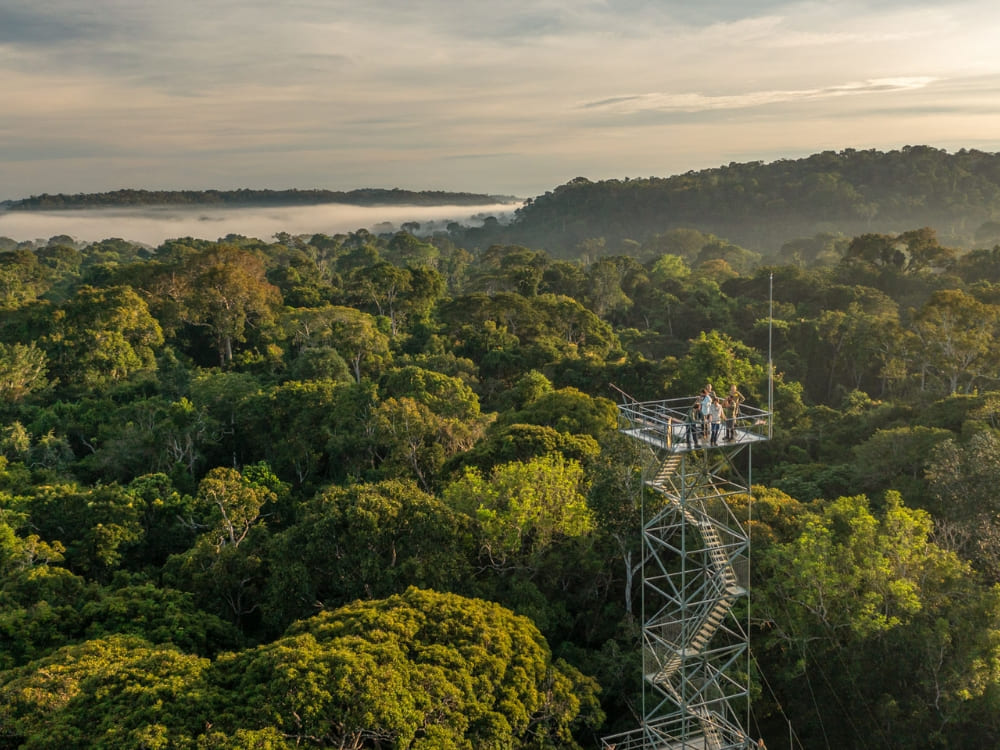
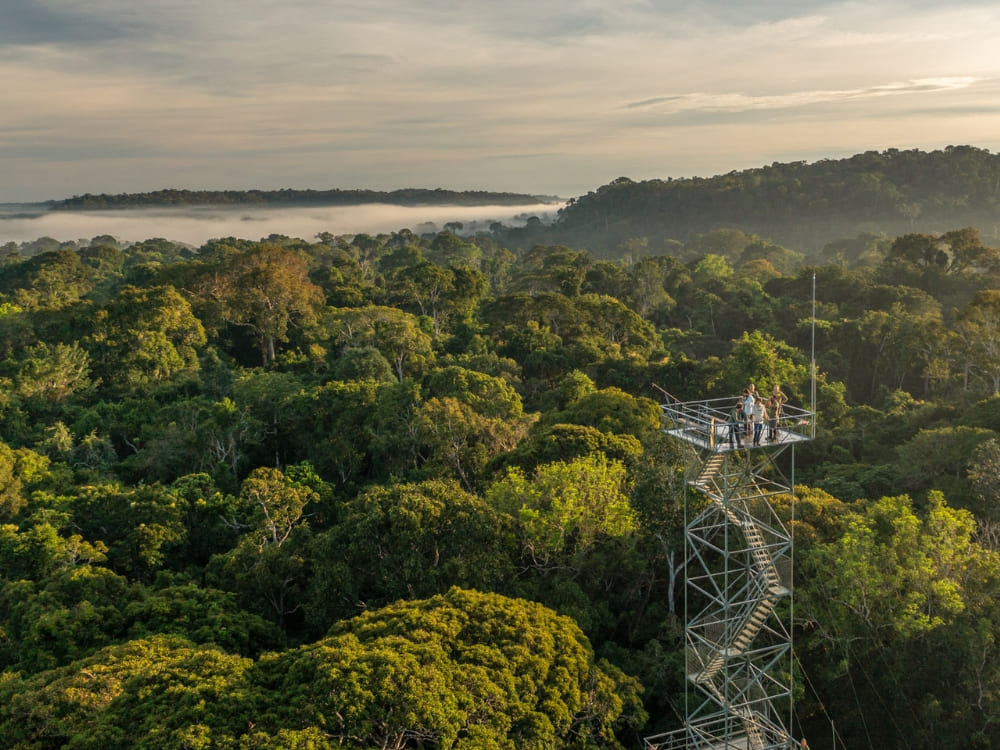
    Tall metal observation tower rising above the Amazon rainforest canopy at Cristalino Jungle Lodge in Mato Grosso.
    Photo: Andre Dib

    The Amazon Rainforest airport in Alta Floresta is Piloto Osvaldo Marques Dias Airport (AFL), served by Azul Airlines with flights from Cuiabá (CGB) and São Paulo (VCP) 2–3 times a week. Before landing in these cities, you might have a layover in other places. Double-check your flight details!

    Alta Floresta is also near other remarkable biomes, such as the Pantanal, famous for jaguar sightings. Many Pantanal tours depart from Cuiabá, providing the perfect opportunity to experience more of Brazil’s incredible natural diversity.

    Jaguar resting comfortably on a thick tree branch in the Brazilian wetlands.
    Photo: Jorge Lopes

    How to get to the Amazon Rainforest in Pará

    Bordering the state of Amazonas, Pará allows for a different side of Brazil’s rainforest. Still beautiful and full of wonders, but with its own uniqueness of natural resources and cultural richness. 

    Pará’s main Amazonian attractions are the exquisite Marajó Island and Alter do Chão, the best beach in Brazil according to The Guardian, which described it as “the jungle’s answer to the Caribbean”.

    Belém

    The easiest way to arrive in Pará is to land in Belém, the capital of the state. Belém International Airport (BEL) is served by direct flights from multiple Brazilian cities: Belo Horizonte (CNF), Brasília (BSB), Fortaleza (FOR), Manaus (MAO), Recife (REC), Rio de Janeiro (GIG), São Luís (SLZ) and São Paulo (GRU/VCP).

    Aerial view of the historic Ver-o-Peso market and docked boats on the riverfront in Belém do Pará.
    .

    Foreign tourists can also fly straight to Belém from Bogotá (BOG), Lisbon (LIS), Fort Lauderdale (FLL) and Miami (MIA).

    GOL, LATAM and Azul airlines operate both national and international routes.

    Santarém

    If you’re going to Alter do Chão, you should book your flight to Santarém (STM), a town 1.167 km (725 miles) away from Belém. To get there, you can depart from Belém (BEL), Brasília (BSB), Manaus (MAO) or Porto Trombetas (TMT).

     White sand beach of Ilha do Amor stretching into the clear waters of the Tapajós River in Alter do Chão.
    .

    You can also reach your destination by boat through Port of Belém or Port of Santarém. Boat trips last over 36 hours, enough time for you to enjoy a nice ride across the Amazon and the Tapajós rivers. Watch the sunrise or the sunset, admire the Meeting of Waters and keep your eyes open for birds and aquatic animals.

    The boats are relatively modest, but still comfortable and safe. Passengers can book their own cabins (with double beds, private bathrooms, air conditioning, TV, and minifridge) or spend the night in hammocks spread around the floors. Meals (breakfast, lunch, dinner, and snacks) are sold separately. 

    👉 Explore this adventure: Amazon River Cruise from Alter do Chão

    Valuable tips for getting to the Amazon

    You’ve learned how to visit the Amazon Rainforest in Brazil through different routes, states and cities. To make your journey even smoother, here are some valuable tips:

    • The route from São Paulo to the Amazon Rainforest offers the most options for direct flights and layovers in Viracopos (VCP) and Guarulhos (GRU).
    • From Rio de Janeiro to the Amazon Rainforest, Galeão (GIG) is the main airport for travelers going to Manaus and Belém.
    • Check Google Flights to find affordable flight tickets.
    • If you choose to go from Belém to Santarém (or vice versa) by boat, Ibarco is one of the most well-known operators in the North of Brazil.

    PlanetaEXO is here to assist you with the best transfer options for trips in Amazonas, Mato Grosso or Pará. Most of our tours include private shuttle services for your convenience. Contact us and check more information!

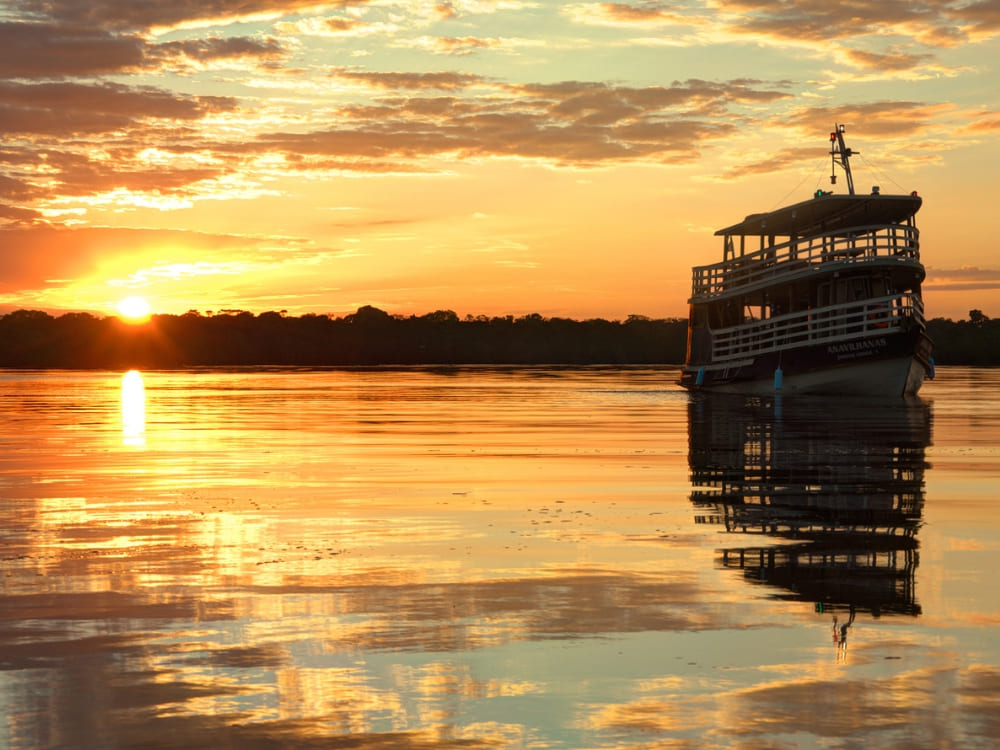
    Traditional wooden riverboat navigating the calm Amazon waters during a golden sunset reflecting on the river.
    .

    The Brazilian Amazon is calling for you!

    Now that you know everything about getting to the largest rainforest on Earth, it’s time to start your travel plans!

    PlanetaEXO is an ecotourism platform specialized in Amazon Rainforest tours in Brazil. By working with the best local operators, we’re able to help the community, protect the environment, and arrange your dream trip. Contact us now!

  • How to Visit Manaus, Brazil – Travel Guide: What to Do and More!

    How to Visit Manaus, Brazil – Travel Guide: What to Do and More!

    Check out our travel tips to enjoy Manaus City to its fullest and immerse yourself in this wonderful place that blends urban atmosphere and the Amazon’s natural resources!

    Manaus, capital of the state of Amazonas, Brazil, has been listed by The New York Times as one of the 52 places in the world worth visiting. Visitors make quick stops there on their way to the Amazon Rainforest, but most don’t even imagine the beauty and the authenticity of this place.

    Besides the natural wonders, Manaus is full of history and culture. As the main gateway to the Amazon, the capital offers something to everyone — from river cruises, to jungle expeditions and local cuisine that reflects the region’s biodiversity.

    PlanetaEXO, an ecotourism platform specialized in Amazon tours in Brazil, has created a complete Manaus travel guide to help you navigate this incredible city. Read more below!

    About Manaus

    Manaus was founded in the 17th century as a Portuguese fort, but grew fast during the rubber boom of the late 1800s. It received this name as an homage to the indigenous group Manaós, which inhabited the territory back at the time. Manaus means “mother of the gods”.

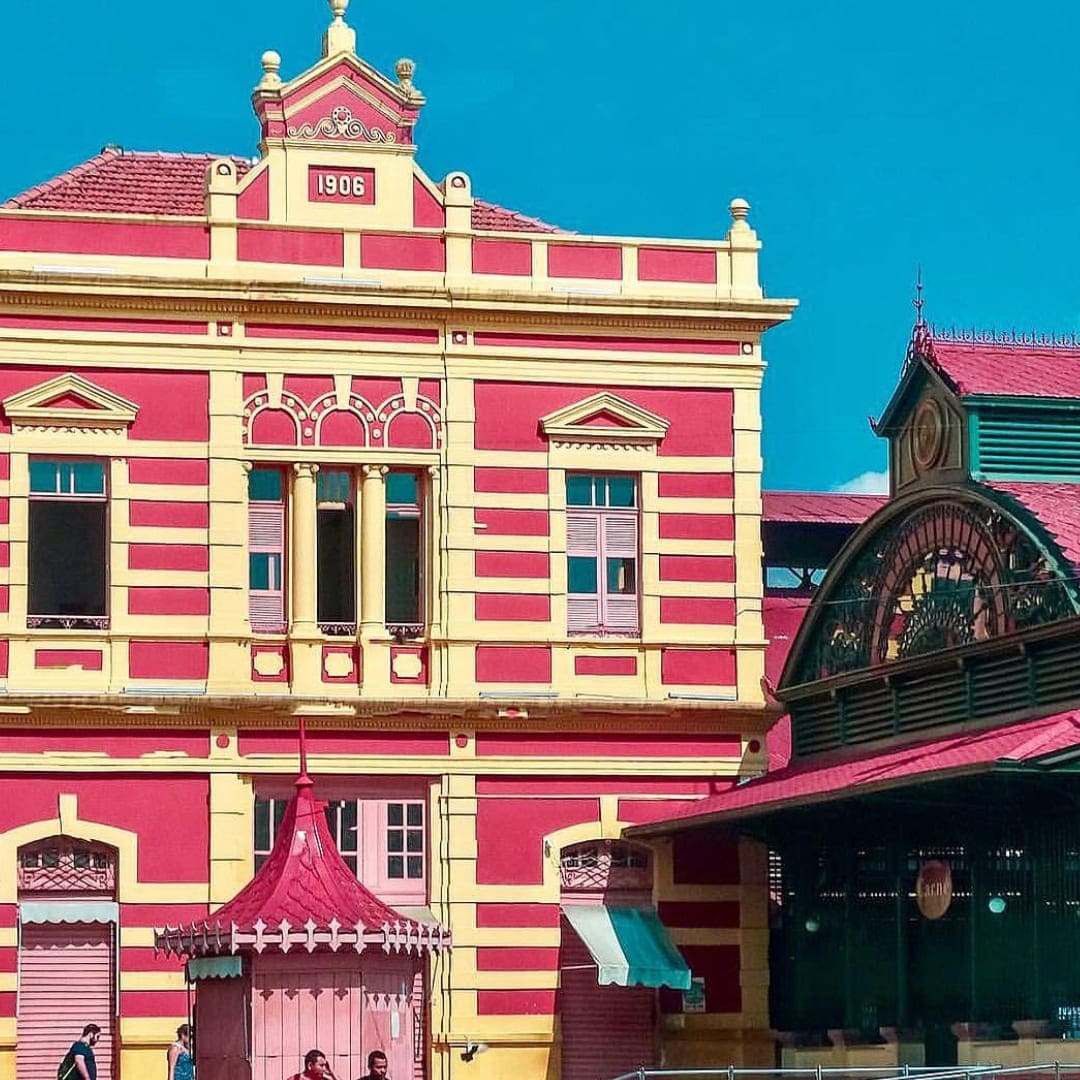
    Historic red and pink colonial building facade in Manaus featuring architecture from the rubber boom era.
    @manauschibata

    The rubber boom was so prosperous that Manaus was known as the “Paris of the Tropics”, but it didn’t last long due to heavy competition from abroad.  Even so, the city reinvented itself as a regional metropolis where 2.3 million people live nowadays, as well as a thriving ecotourism hub that blends colonial architecture, bustling markets and lush landscapes.

    Where is Manaus located?

    Manaus, in Amazonas, is located in the Northern Region of Brazil. At the east center of the state, it’s a metropolitan area heavily influenced by the Negro and Amazon rivers.

    What is Manaus famous for?

    Manaus is mostly known as the primary gateway to the Amazon Rainforest and a huge ecotourism destination not only in Brazil, but in the world. 

    The unique mix of urban aspects and natural resources is what makes this city so fascinating and worth visiting.

    Aerial view of a winding blue river flowing through the lush green Amazon Rainforest near Manaus.
    .

    Best time to visit Manaus

    Manaus City has a tropical rainforest climate, with two main seasons: the rainy season (December to May) and the dry season (June to November)

    December, January, February, March, April, May

    The forest is at its lushest and most vibrant during this time, making it the ideal period for riverboat tours. With higher water levels, you can explore the igapós (flooded forests) by canoe, which grants a unique perspective of the Amazon.

    Trees of the Amazon rainforest reflected in the dark calm waters of a flooded forest during the rainy season.
    Photo: @buyehelen

    June, July, August, September, October, November

    Great period for hiking and wildlife spotting, as animals gather near rivers and water sources. It’s also the perfect time to visit the famous Meeting of the Waters, where the Negro and Solimões rivers meet.

    👉 Read more: When is the best time to visit the Amazon Rainforest in Brazil

    How to get to Manaus?

    Most travelers reach Manaus by flying into Eduardo Gomes International Airport (MAO), served by direct flights from several major Brazilian cities (Belém, Belo Horizonte, Brasília, Fortaleza, Recife, Rio de Janeiro e São Paulo) and a few international destinations.

    There are no direct flights from the US or Europe, so foreign tourists should travel to Bogota (BOG), Panama City (PTY) or Curaçao (CUR) first.

    Flights departing from North American or European countries usually have layovers in São Paulo (GRU/VCP), Rio de Janeiro (GIG) or Brasília (BSB). From these destinations, it takes 3–4 hours to reach Manaus with Azul or GOL airlines.

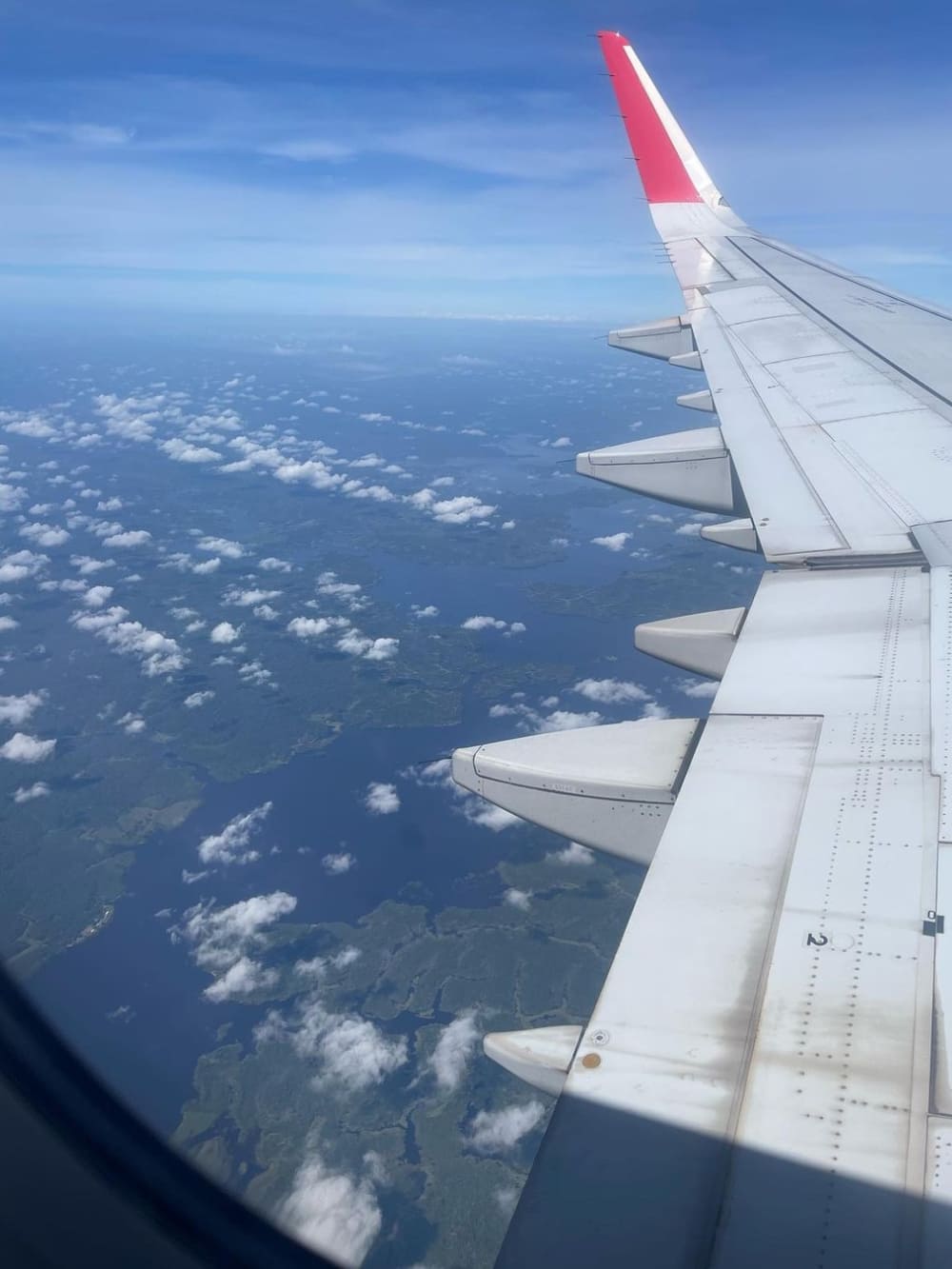
    View from an airplane window looking out over the wing towards the Amazon clouds and landscape below.
    @villaamazonia

    👉 Read more: How to get to the Amazon Rainforest in Brazil?

    What to do in Manaus?

    A Manaus travel guide is incomplete without a list of activities around the city — which offers a wide range of experiences and tours that allow visitors to experience and enjoy the Amazon’s natural beauty and local culture.

    Check out PlanetaEXO’s selection of things to do in Manaus!

    Historic Center Tour

    Embark on a tour of Manaus’s historic center to dive into the city’s cultural and gastronomic core.

    Wander through traditional buildings and landmarks that showcase Manaus’s rich heritage, including the Adolpho Lisboa Market, Palácio Rio Negro, São Sebastião Church, and Casa Eduardo Ribeiro Museum. Perfect for people who love history and cultural experiences!

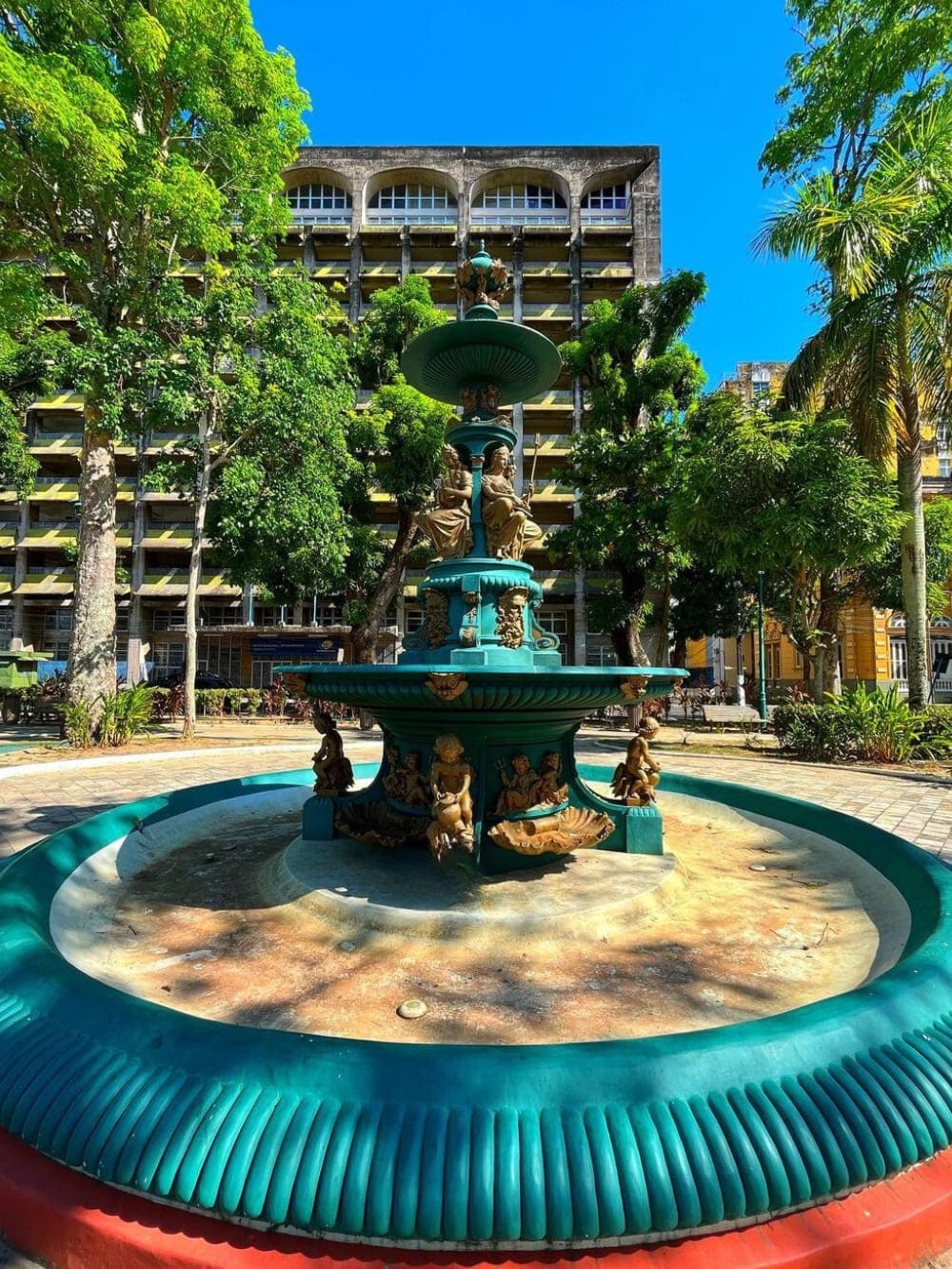
    Green iron fountain located in a public square within the historic center of Manaus surrounded by trees.
    @janelasdemanaus

    Amazon Theatre

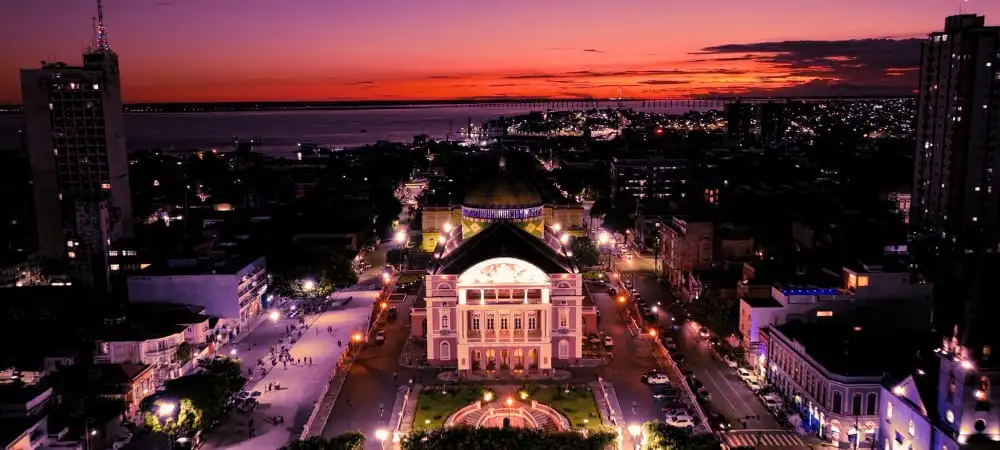
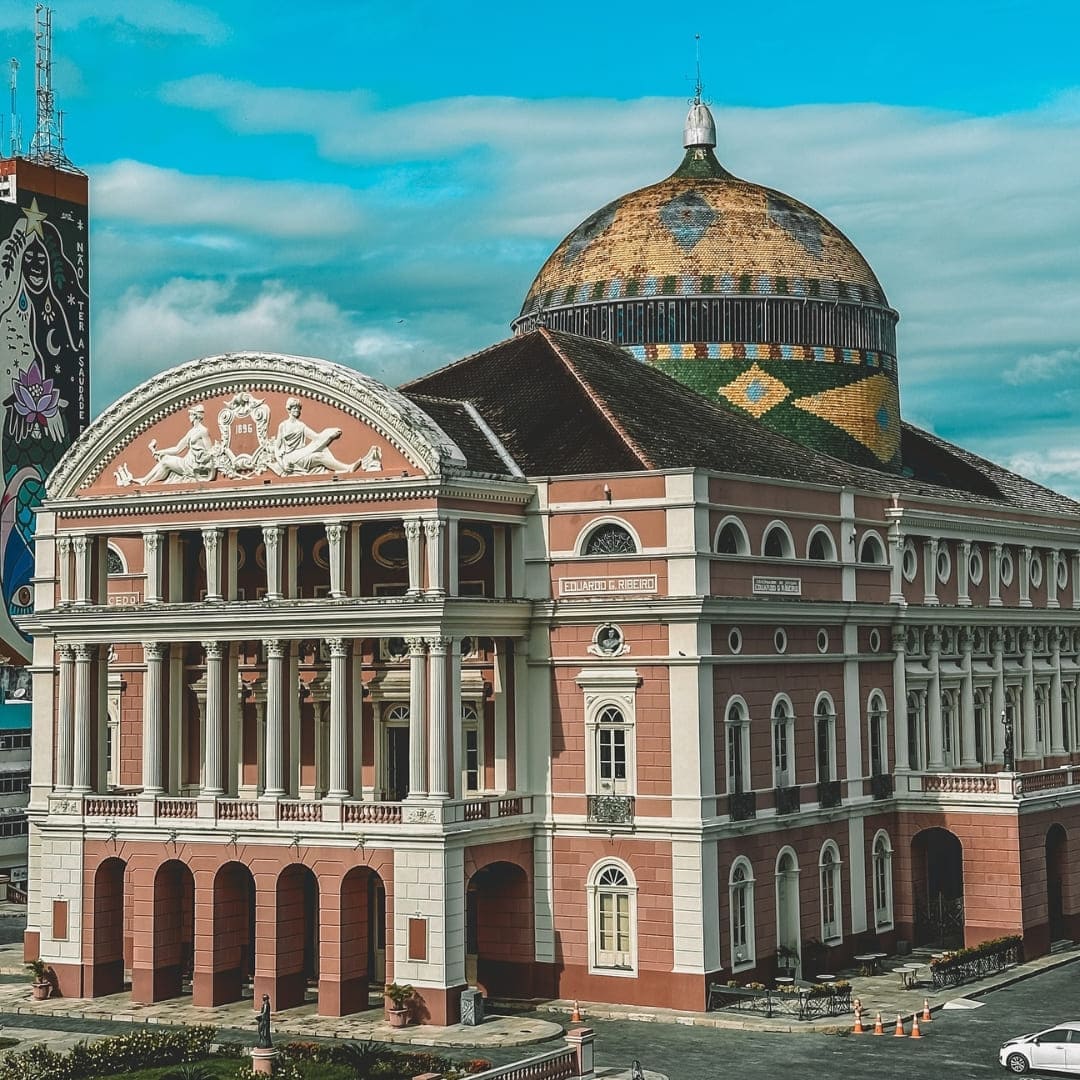
    The Amazon Theatre (Teatro Amazonas) is such an integral part of Manaus’ history. Built during the rubber boom period, it used to be a grand opera house. Nowadays, as one of the capital’s most beloved landmarks, it’s open for visitation.

    While visiting the theater, stroll through Largo de São Sebastião, where you can explore the charming central church and the lively surrounding square.

    Address: Av. Eduardo Ribeiro, 659 — Centro, Manaus

    The pink neoclassical facade and colorful tiled dome of the Amazon Theatre in Manaus under a blue sky.
    @manausnasfotos

    MUSA (Museum of the Amazon)

    MUSA showcases the Amazon’s sociocultural and biological diversity through themed exhibitions and forest hikes

    Located in a 100-hectare area at the Adolpho Ducke Forest Reserve, it has a 42-meter observation tower and hundreds of plant species, like orchids, bromeliads, araceae, palm trees, etc. You can also see animals, including snakes, scorpions, spiders and butterflies.

    Address: Av. Margarita, 6305 (formerly Av. Uirapuru) — Jorge Teixeira, Manaus

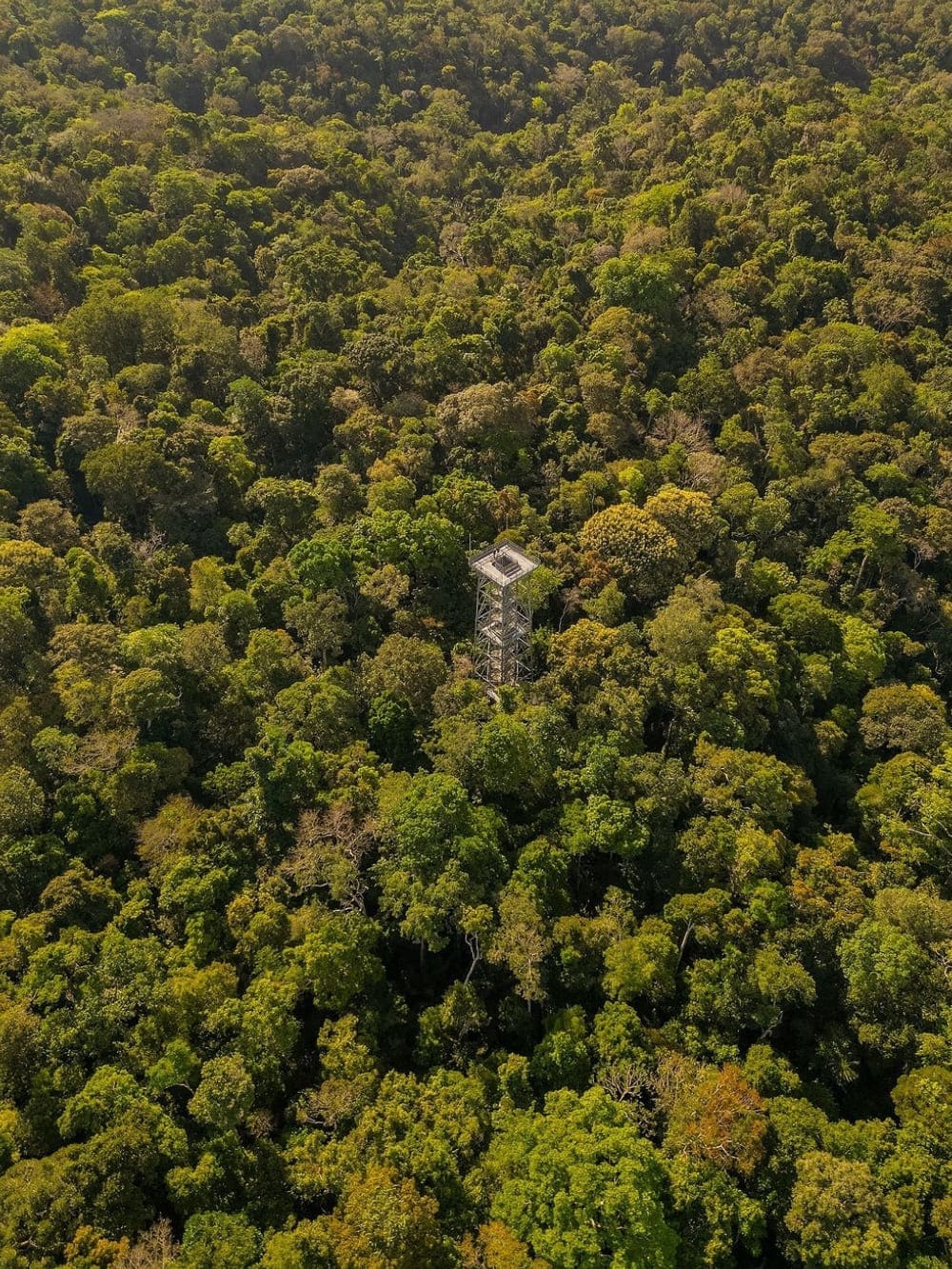
    Tall metal observation tower rising above the dense green canopy of the Amazon rainforest at MUSA.
    @alaisooon

    Meeting of the Waters

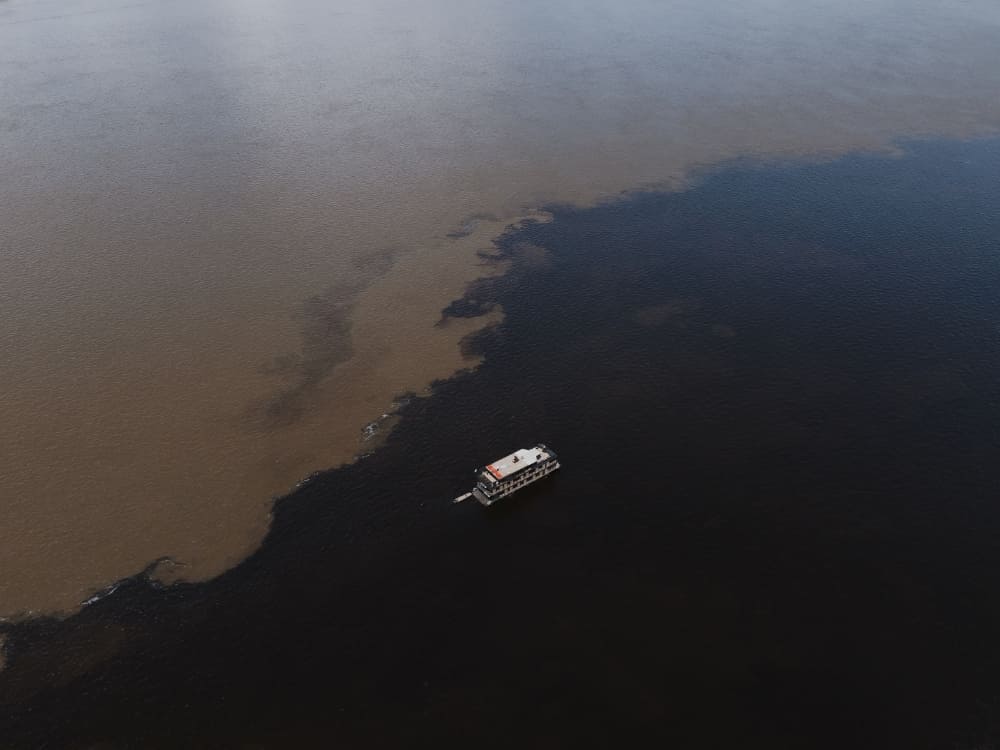
    The Meeting of Waters is one of the most incredible natural phenomena in Brazil. Due to differences in current speed, temperature and acidity, the Negro and Solimões rivers meet, but don’t quite mix.

    Black and brown waters create a perfect contrasting line in the water, effortlessly dividing the two rivers in a jaw-dropping view.

    Aerial view showing the distinct dividing line where the black Rio Negro meets the brown Solimões River.
    @fromflora

    👉 Read more: 15 Facts about the Amazon Rainforest in Brazil

    Bosque da Ciência (INPA)

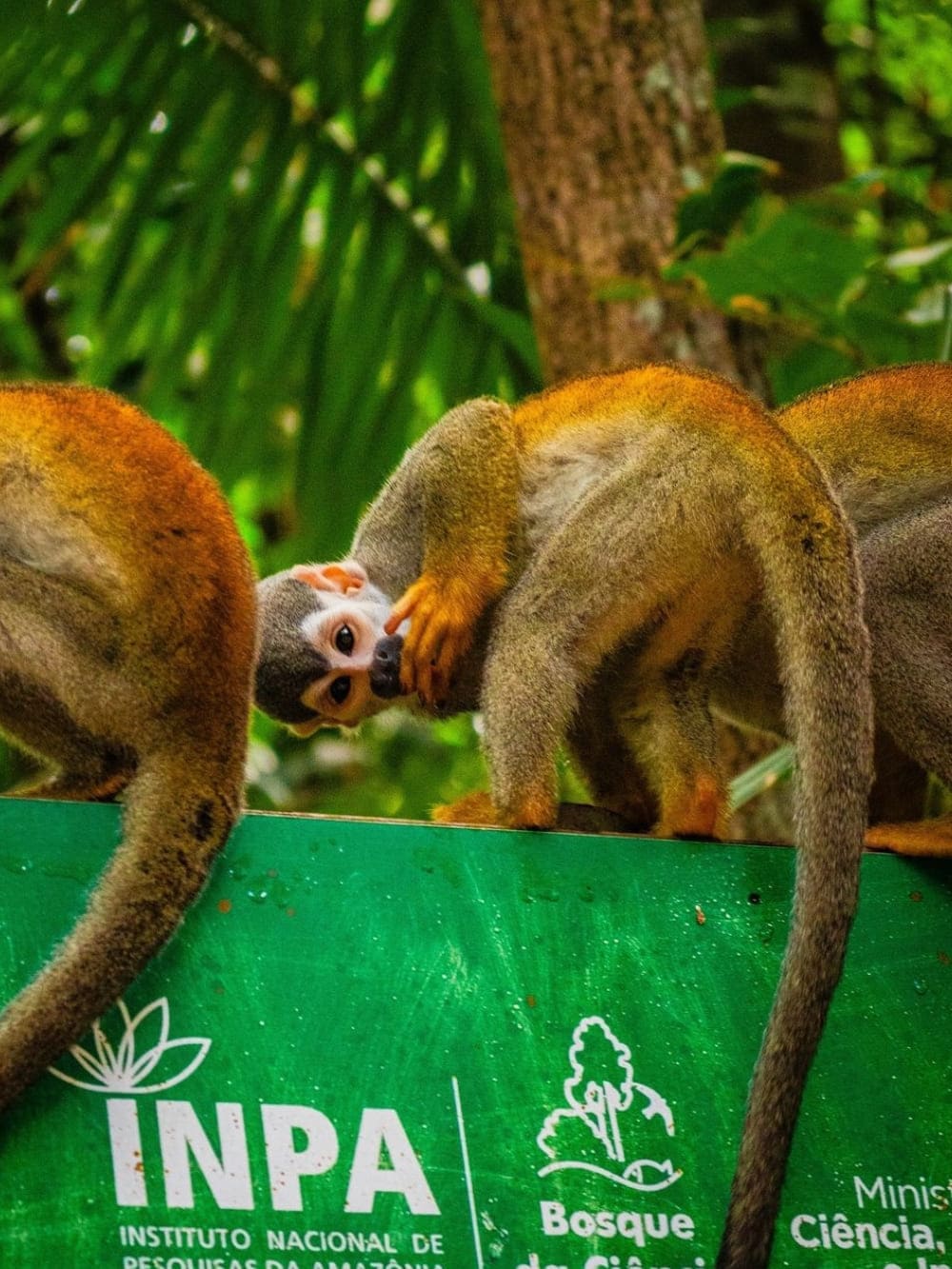
    For animal lovers, Bosque da Ciência, managed by INPA (National Institute for Amazonian Research), is almost an obligatory attraction for tourists visiting Manaus City.

    Join guided tours and learn everything about various free-roaming Amazon animals, from native bees to giant otters. If wildlife isn’t your main interest, the exhibitions also provide fascinating insights into the region’s flora and unique biodiversity. 

    Address: Av. Bem-Te-Vi, s/n — Petrópolis, Manaus

    Small squirrel monkeys resting together on top of a green sign at the Bosque da Ciência INPA.
    @yu.jhima

    Lúcia Almeida Viewpoint

    For a  breathtaking view of Manaus in Brazil, the Lúcia Almeida Viewpoint is a must-visit spot. Located near the Amazon Theatre, it offers panoramic views of the city and the Rio Negro.

    It’s a perfect place to relax, take photos, and enjoy the unique charm of Manaus’ skyline.

    Address: Av. Sete de Setembro, 8 — Centro, Manaus

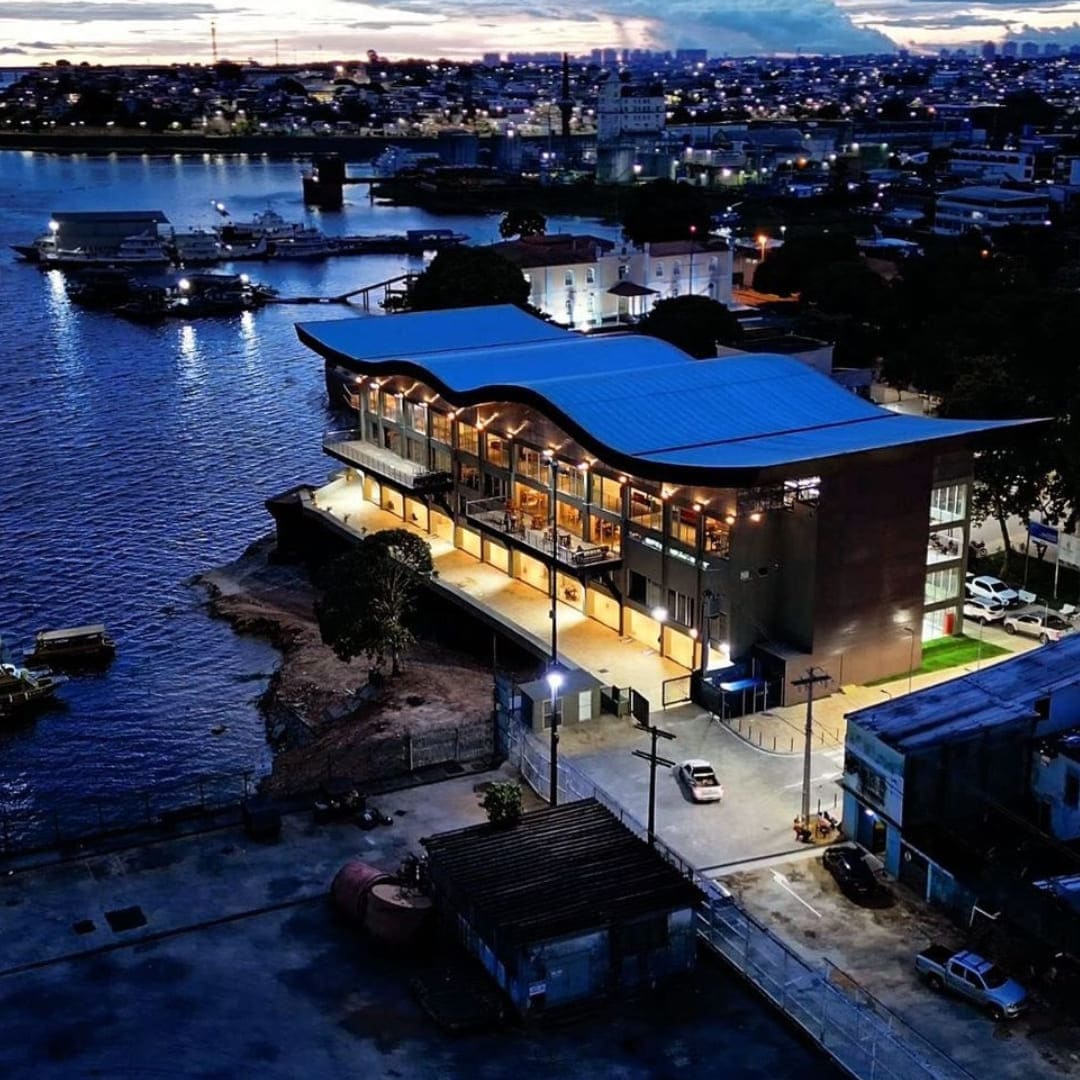
    Night view of the illuminated Lúcia Almeida Viewpoint building reflected in the river water in Manaus.

    Best Amazon tours departing from Manaus

    Most Amazon tours depart from Manaus, bound for incredible ecotourism spots in the forest, like Anavilhanas and Jaú National Park, Presidente Figueiredo and Careiro. See some options below!

    TOUR HIGHLIGHTS DURATION STARTING PRICE*
    Amazon Cruise Onboard accommodation, expeditions to Anavilhanas and Jaú, cave exploration, hiking, river beaches, wildlife watching, visiting indigenous groups. 4 days
    5 days
    7 days
    US$ 2,485
    Luxury Amazon Cruise Luxury onboard accommodation, Meeting of Waters, Lake Janauari, jungle hiking, fishing, boat rides, night tours, river beaches, luau. 5 days US$ 3,740 
    Anavilhanas Jungle Lodge Luxury stay at Anavilhanas, hiking, canoeing, wildlife watching, fishing, archery lessons, visiting local communities. 6 days US$ 3,180 
    Brazilian Amazon Jungle Tour Affordable stay, birdwatching, fishing, canoe trips, forest hikes, Meeting of Waters, visiting local markets. 3 days
    4 days
    5 days
    US$ 585 
    Mirante do Gavião Exclusive Amazon Lodge High-end stay, kayaking, stand-up paddling, cave exploration, wildlife watching, boat rides. 4 days
    5 days
    US$ 1,865 
    Amazon Kayak Tour Brazil Kayaking, camping in the forest, hiking, fishing, caiman spotting, visiting locals. 4 days US$ 600 
    Amazon Jungle Survival Tour Camping in the forest, survival skills lessons, trekking, canoeing, wildlife watching. 4 days
    6 days
    US$ 950 

    *Per person, based on double occupancy in group departures. Prices may vary depending on season and availability. Exchange rate as of February 6th, 2026; subject to change.

    PlanetaEXO has an entire selection of fantastic Amazon Rainforest tours in Brazil. Discover our adventures!

    👉 Read more:

    How to get around in Manaus?

    To get around in Manaus, there are a few options:

    • Public buses: Manaus City has an affordable bus system, but it can be crowded at rush hours and occasionally unreliable. Safety is a concern due to pickpocketing, so keep valuable items secure and stay alert. Check routes with apps like Moovit and Ônibus Manaus.
    • Ride-sharing apps: Uber and 99 App provide safe rides with set prices, making them ideal for solo travelers, nighttime trips and people who are unfamiliar with the area.
    • Ferries and boat services: For river transport, ferries and boats departing from the Port of Manaus can take you to surrounding areas and deeper into the Amazon. Use reputable operators and follow safety guidelines for a secure journey.

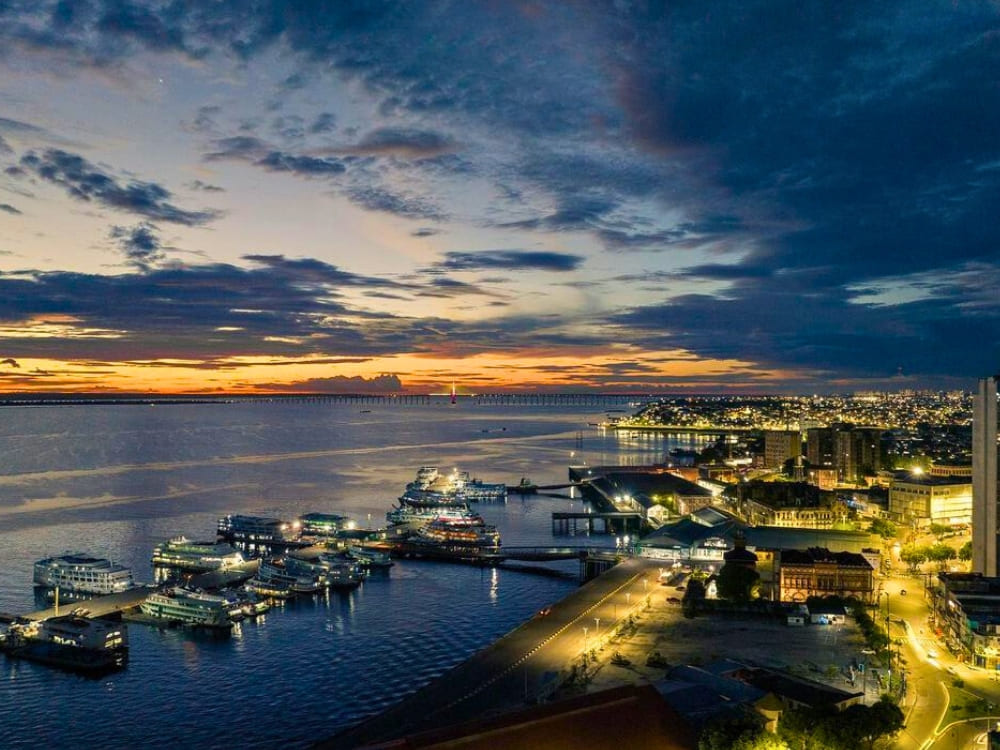
    manaus port

    Where to eat in Manaus

    The city is known for being a core for Amazonian cuisine, famous for dishes you won’t find anywhere else. Feeling hungry? PlanetaEXO’s Manaus travel guide has listed some local spots so you can try out the unique flavors of the forest!

    Biatüwi $$$

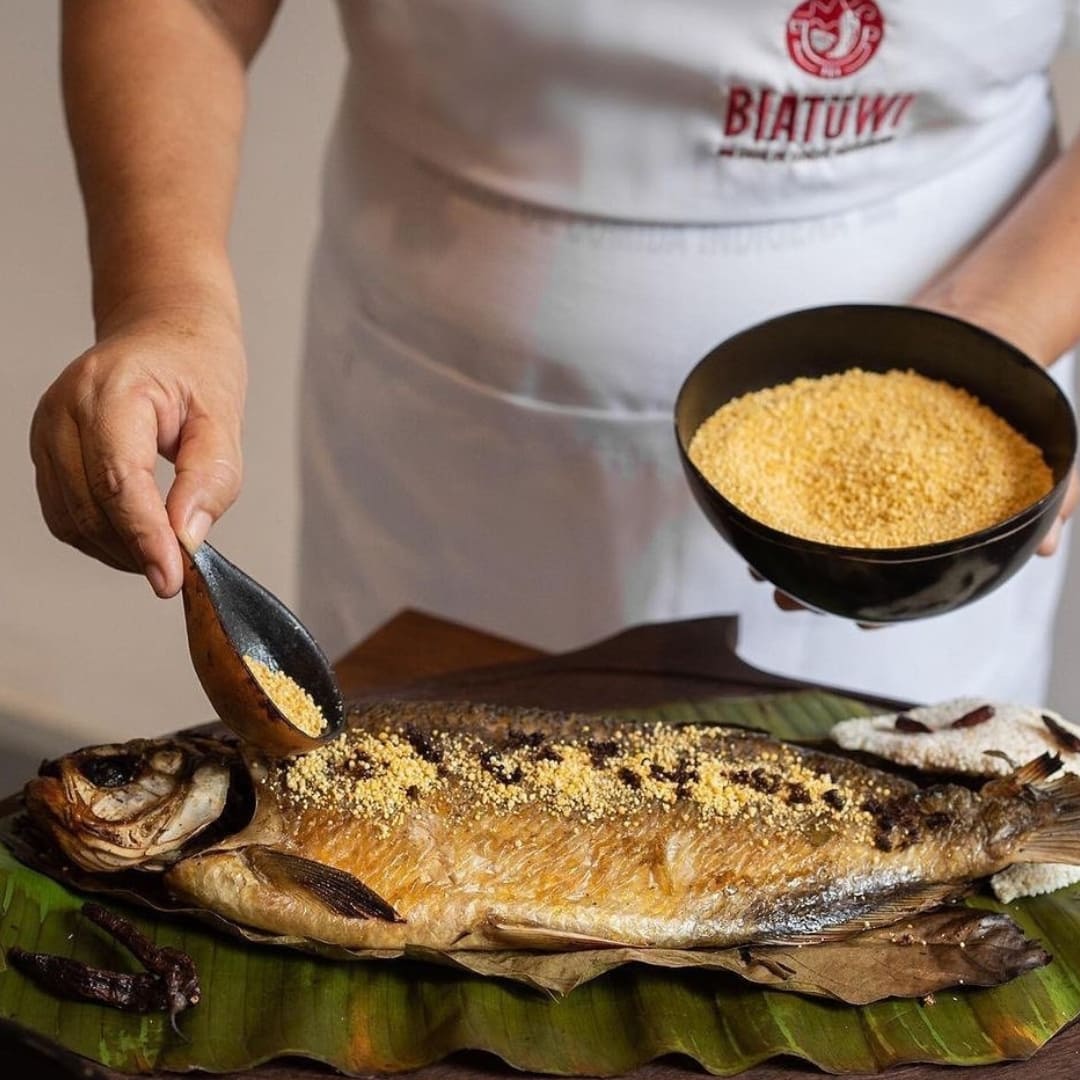
    Biatüwi is an indigenous culinary house in the heart of Manaus, offering a unique experience rooted in Amazonian indigenous culture.  

    Address: R. Bernardo Ramos, 97 — Centro, Manaus

    Close-up of a person sprinkling manioc flour onto a roasted fish dish served on a banana leaf.
    .

    Caxiri Manaus $$$

    With a great view of the Amazon Theatre, Caxiri provides a sophisticated dining experience that celebrates local cuisine. The menu is described as a fusion of traditional Brazilian dishes with Amazonian culture.

    Address: R. 10 de Julho, 495 — Centro, Manaus

    Sophisticated dish featuring shrimp served in a white bowl at a Manaus restaurant.
    @caxiri_amazonia

    Tambaqui de Banda $$

    Tambaqui de Banda’s signature dish is traditional-style grilled tambaqui (a native fish). Known worldwide for its love and respect for Amazonian flavors, the restaurant has both indoor and outdoor seating — with a beautiful view of the Amazon Theatre.

    Address: R. José Clemente, 596 — Centro, Manaus

    O Lenhador $$$

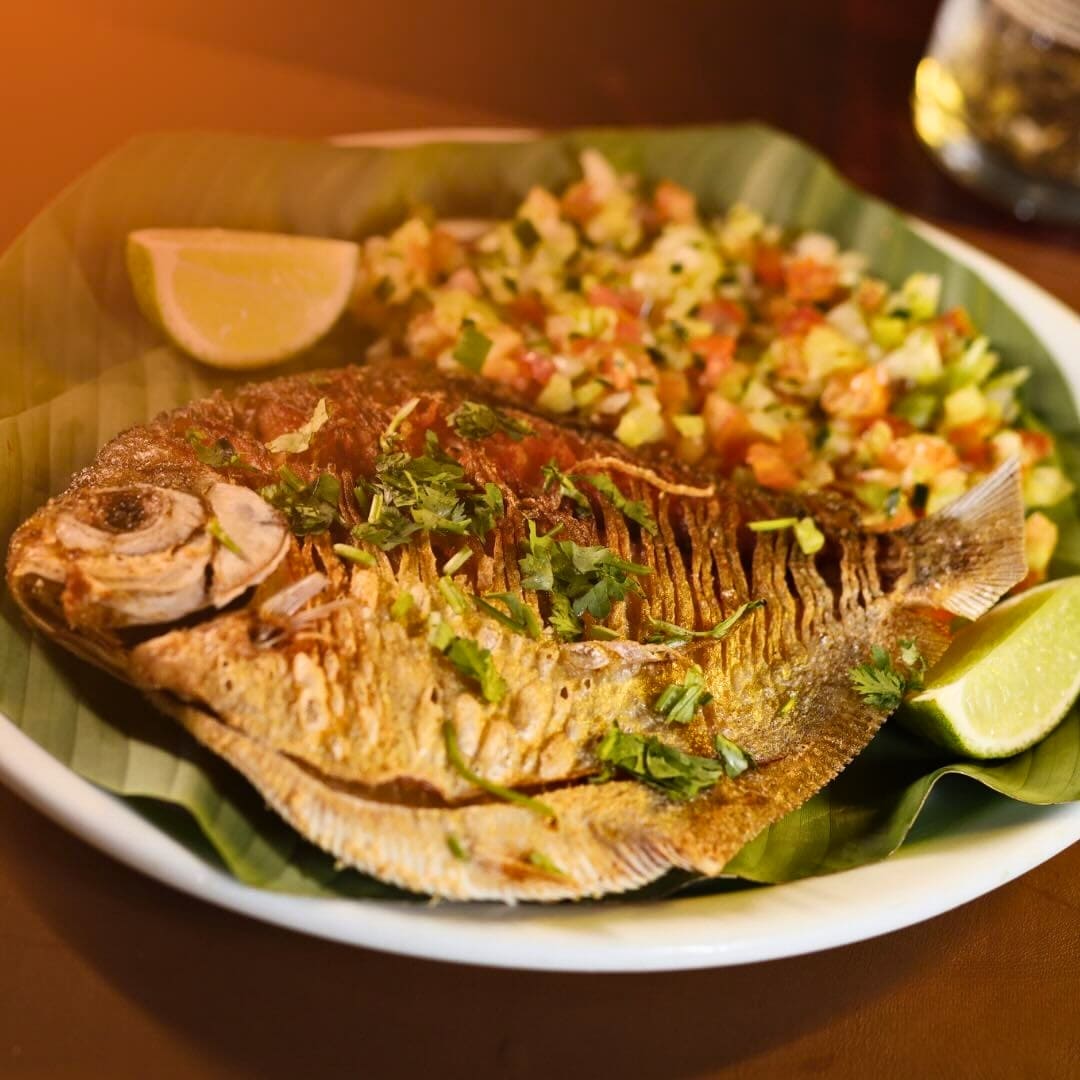
    O Lenhador serves various traditional dishes, with a heavy focus on regional meats and hearty portions. Famous for its rustic atmosphere, it’s a favorite spot for those looking to experience local cuisine.

    Address: Av. do Turismo, 2371 — Ponta Negra, Manaus

     Grilled Tambaqui fish served whole on a banana leaf with vinaigrette and lime slices.
    @restauranteolenhador

    Peixaria Morada do Peixe $$

    Charming seafood restaurant, Peixaria Morada do Peixe is celebrated for its fresh fish and authentic Amazonian dishes. Specializing in regional dishes like tambaqui and pirarucu, it offers a relaxed atmosphere perfect for enjoying the culinary heritage of Manaus.

    Address: Beco Goiania, Conjunto Jardim Versalles — Planalto, Manaus

    Banzeiro Manaus $$$

    Blending traditional flavors with contemporary techniques, the menu of Banzeiro Manaus showcases various regional dishes, focusing on local recipes and ingredients like tacacá, tambaqui, cupuaçu and even leafcutter ants. 

    Address: R. Libertador, 102, — Nossa Senhora das Graças, Manaus

    Cachaçaria do Dedé $$$

    Famous for its selection of premium cachaças and Amazonian-inspired dishes, Cachaçaria do Dedé offers a unique dining experience that blends local flavors with Brazilian culinary traditions.

    Address: R. do Comercio, 1003-F (Box 4) — Parque 10 de Novembro, Manaus

    Where to stay: hotels in Manaus

    Manaus has great accommodation options to fit different budgets and preferences. Many hotels are located near major attractions, making it easier to explore the city. 

    Hotel Villa Amazonia ⭐️⭐️⭐️⭐️⭐️

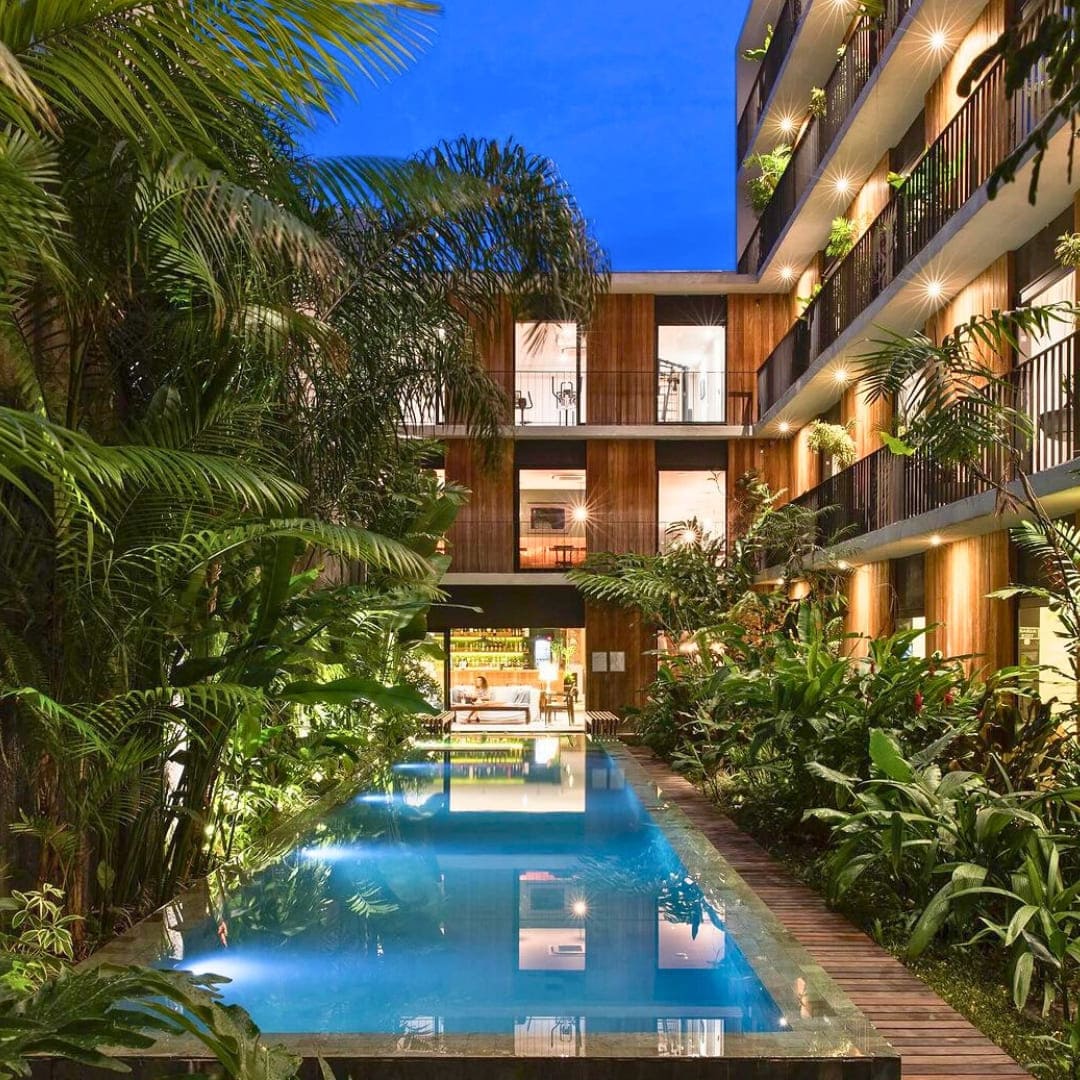
    Boutique hotel in the historic center with garden views, an Amazon-inspired restaurant, and a natural stone pool.

    Address: R. 10 de Julho, 315 — Centro, Manaus

    Outdoor swimming pool surrounded by tropical gardens and building balconies at Hotel Villa Amazonia.
    @villaamazonia

    Hotel Mural Living ⭐️⭐️⭐️⭐️

    A modern and minimalist hotel located in the heart of Manaus, offering clean and cozy rooms with contemporary decor. Perfect for travelers seeking comfort and practicality near the city’s main attractions. 

    Address: R. Doutor Moreira, 168 — Centro, Manaus

    Hostel Manaus ⭐️⭐️⭐️⭐️

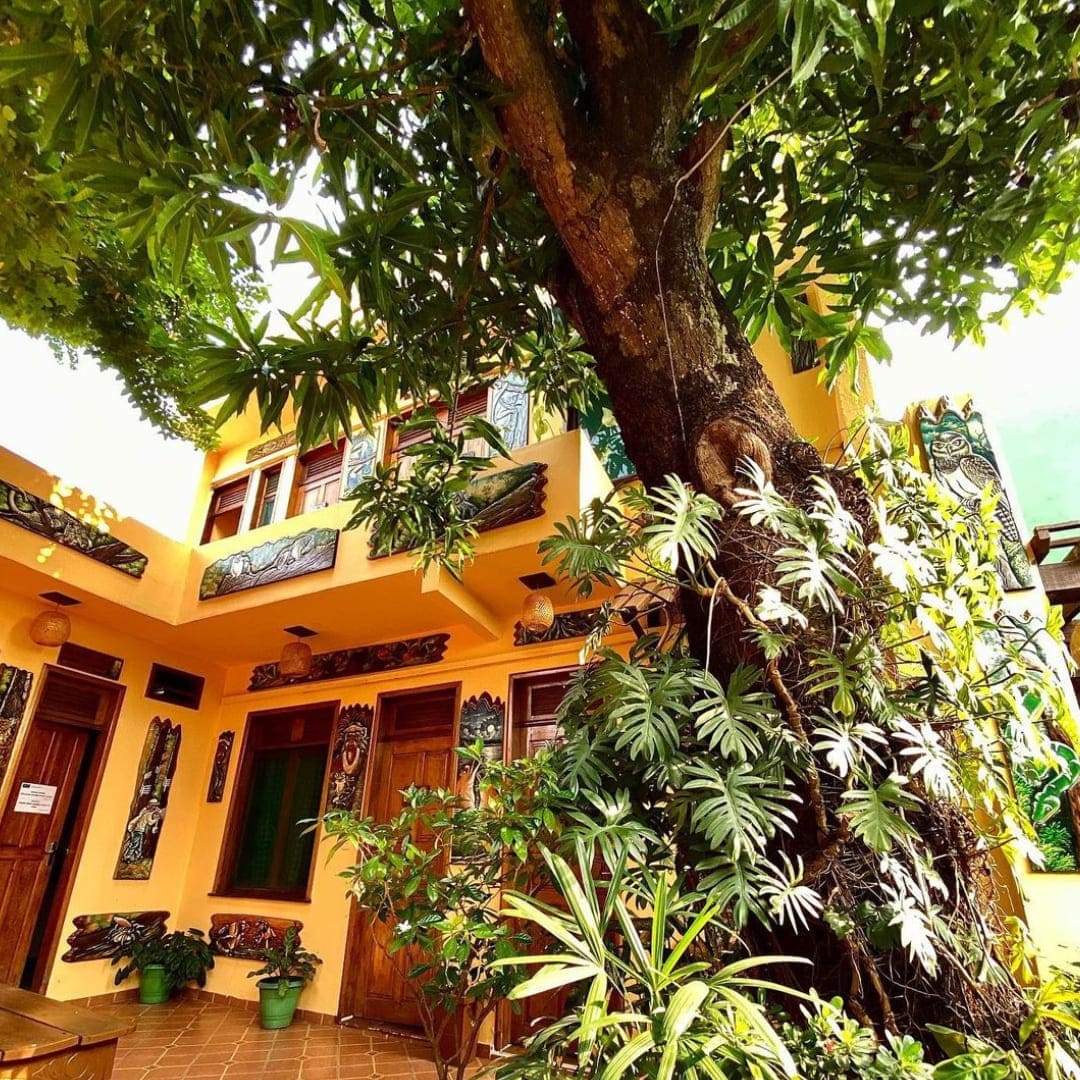
    Located near Manaus’ historic center, Hostel Manaus has budget-friendly accommodations in a vibrant and welcoming atmosphere. Ideal for backpackers, it features shared dorms, private rooms, and a rooftop terrace with city views. 

    Address: R. Lauro Calvacante, 231 — Centro, Manaus

    Exterior view of the yellow Hostel Manaus building shaded by large green trees.
    @hostelmanaus

    Manaus Hóteis Millennium ⭐️⭐️⭐️⭐️

    Located within Millennium Shopping, the hotel offers rooms with balconies, a rooftop pool, and panoramic views. 

    Address: Av. Djalma Batista, 1661 — Chapada, Manaus

    Seringal Hotel ⭐️⭐️⭐️⭐️

    Just 50 meters away from the Amazon Theatre, it provides cozy rooms with air conditioning, Wi-Fi, and a breakfast buffet. 

    Address: R. Monsenhor Coutinho, 758 — Centro, Manaus

    Ramada by Wyndham Manaus Torres Center ⭐️⭐️⭐️

    A modern hotel near the Industrial District with contemporary rooms, a fitness center, an on-site restaurant, and an all-you-can-eat breakfast buffet. Ideal for both business and leisure travelers.

    Address: Av. José Lindoso, 280, Coroado — Manaus

    Juma Ópera Hotel ⭐️⭐️⭐️⭐️⭐️

    Located in the heart of Manaus and directly across from the iconic Amazon Theatre, Juma Ópera Hotel offers a blend of historical charm and modern luxury. With elegant rooms, a rooftop pool, and a gourmet restaurant featuring Amazonian cuisine, it’s an excellent choice for those seeking an upscale stay close to the city’s cultural landmarks. 

    Address: R. 10 de Julho, 481 — Centro, Manaus

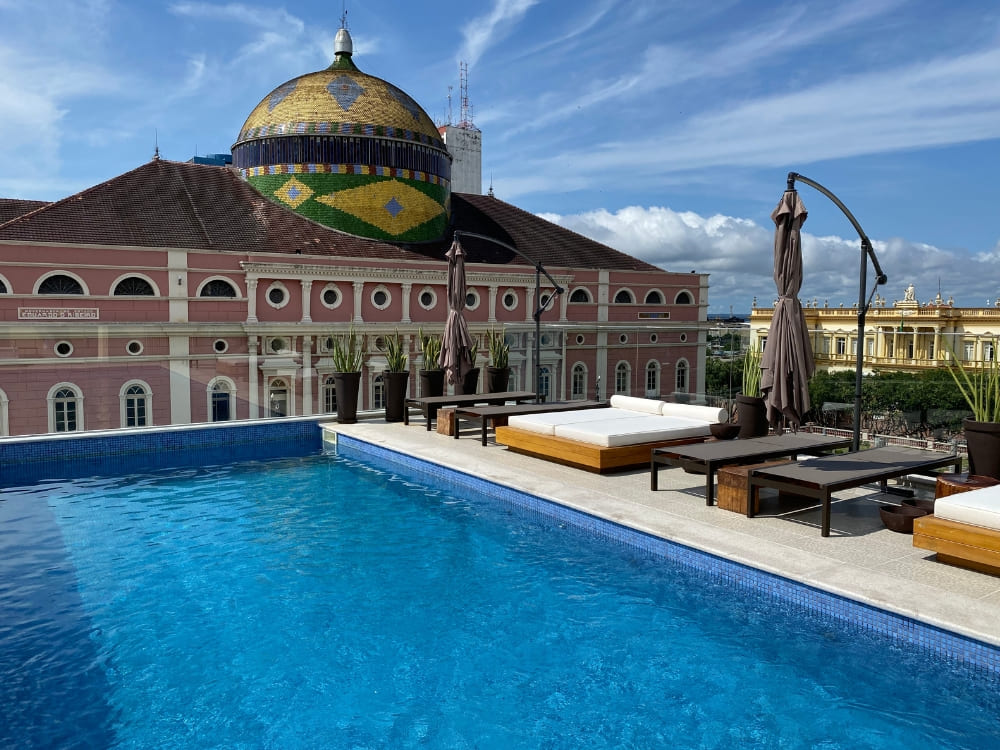
    Rooftop swimming pool at Juma Ópera Hotel offering a direct view of the Amazon Theatre dome.
    .

    Is Manaus safe?

    Overall, Manaus is safe, but like in any other destination, it’s important to be careful regarding physical integrity, health and your personal belongings. Here are some safety tips for your trip:

    • Banks and ATMs: Visit banks only during the day, when security is present. Only withdraw small amounts of cash and avoid ATMs where there’s no one else around — if possible, don’t do it alone.
    • Cash safety: Keep cash separate and consider carrying a fake wallet or fanny pack with minimal money to lower the impact of potential theft.
    • Public areas and tourist spots: Be mindful of pickpockets in busy areas. Avoid displaying valuable items openly and use a secure bag for your belongings.
    • Vaccinations: Although not required, yellow fever vaccines are recommended for people going to the Amazon — especially in neighboring countries, like Bolivia and Colombia. Malaria risk is low, though some choose preventive medication. Make sure your tetanus vaccination is also up to date for added safety.
    • Climate preparedness: Manaus is hot and humid, so stay hydrated, wear light clothing, and use insect repellent — especially in forested areas.

    Manaus, Brazil: more than just a gateway to the Amazon Rainforest

    Manaus is more than just a quick stop on the way to the Amazon — it’s a fascinating place with a complex history, rich culture, and stunning natural scenery. Upon booking your Amazon trip, consider saving a few days to explore the city. You’re going to love it!

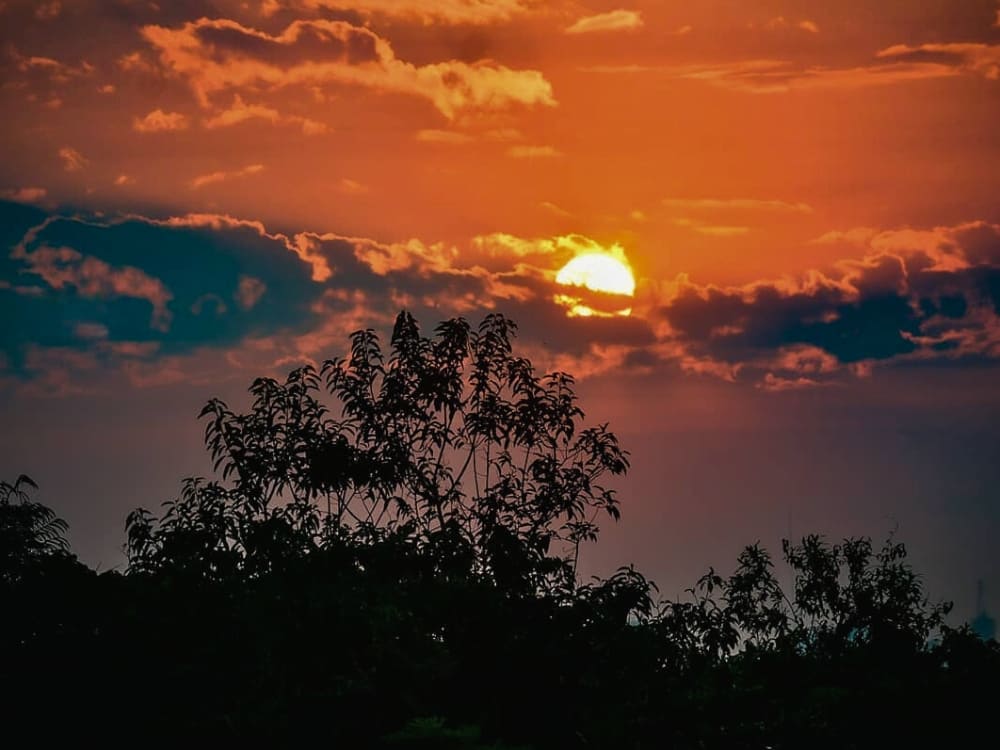
    Bright orange sun setting behind the dark silhouettes of Amazon rainforest trees.

    As a platform specialized in Amazon Rainforest tours in Brazil, PlanetaEXO works with the finest local operators to ensure the best experience, from your departure in Manaus to joining activities in the middle of the forest. Contact us now!

  • 15 Facts About the Amazon Rainforest in Brazil

    15 Facts About the Amazon Rainforest in Brazil

    Vibrant and incredibly valuable for the planet, the Brazilian rainforest is a top destination for ecotourism. Here are our 15 facts about the Amazon!

    Beautiful, colossal, diverse, and always at the center of attention in international discussions about the environment, the Amazon Rainforest is, undoubtedly, one of the most fascinating places on the planet.

    That’s why the number of visitors is growing every day. Only in the first four months of 2025, tourism in the state of Amazonas grew by a total of 13%, with a 21,85% increase in foreign tourists, according to the Amazonas State Tourism Company. Here’s your first fact about the Amazon Rainforest in Brazil!

    To give a taste of what awaits you, PlanetaEXO, an ecotourism platform specialized in Amazon Rainforest tours, has put together a list with 15 fun facts about the Amazon. Check it out below!

    1 – How big is the Amazon Rainforest?

    The Amazon Rainforest’s size is impressive: with an area of 6.74 million km², it extends over eight different countries in South America: Brazil, Bolivia, Colombia, Ecuador, Guyana, Peru, Venezuela, and Suriname. Unsurprisingly, it’s the largest rainforest on Earth.

    To give you an idea of how massive this is, the Amazon is almost the size of Australia (7,692,024 km²) or twice the size of India (3,287,590 km²)!

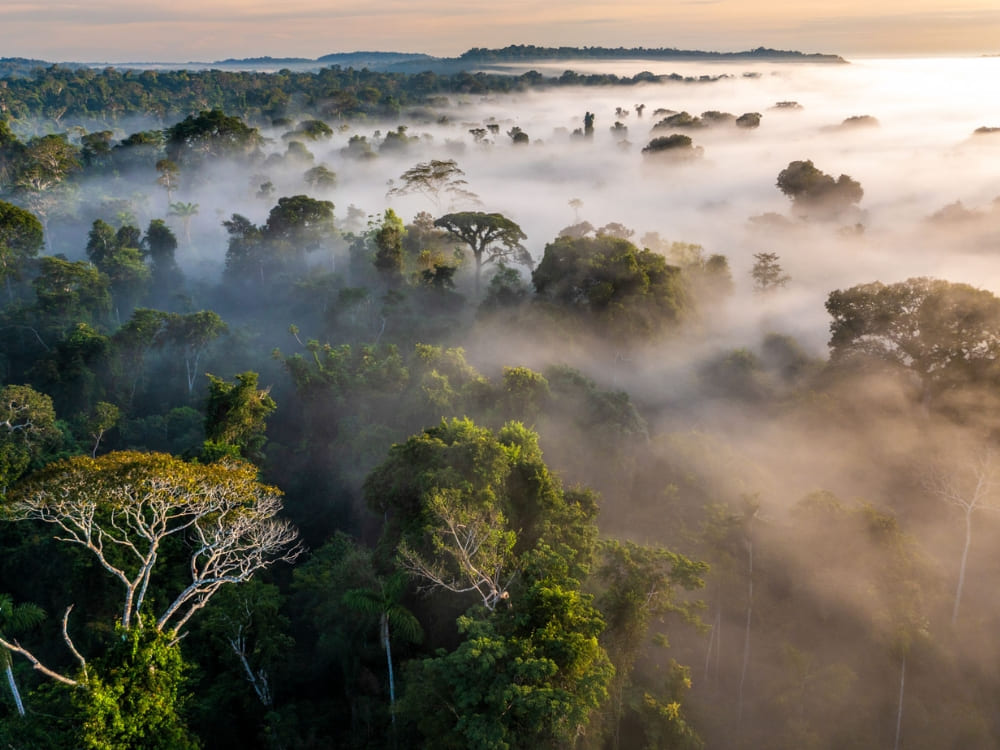
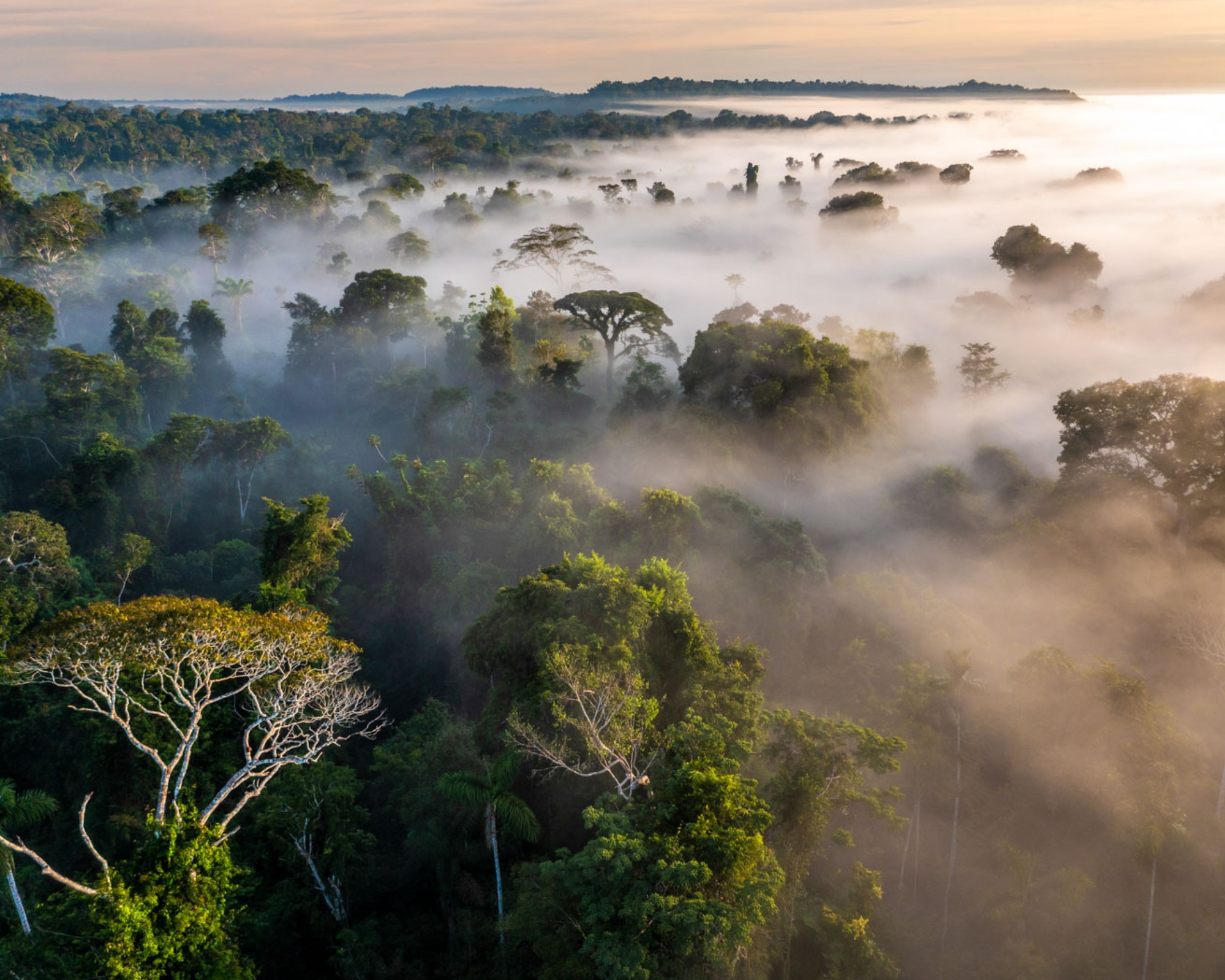
    Mist rising above the dense Amazon Rainforest canopy at sunrise, showcasing the vast biodiversity of the Brazilian jungle.
    Photo: Andre Dib

    2 – Largest share of the Amazon

    60% of the Amazon Rainforest’s share — approximately 4.2 million km² — is located in Brazil, divided between the states of Amazonas, Amapá, Acre, Pará, Rondônia, Roraima, Tocantins, Mato Grosso and Maranhão.

    The largest portion is in Amazonas (1.285.216 km²), followed by Pará (947,303 km²) and Mato Grosso (423,967 km²).

    👉 Read more: How to get to the Amazon Rainforest in Brazil?

    3 –The Amazon River’s massive numbers

    Some of the most interesting facts about the Amazon in Brazil involve the Amazon River. Up until 2008, the Nile River, in Africa, was considered the longest in the world, ranging from 6,650 km.

    However, satellite images taken by the National Institute for Space Research (Inpe) — a unit of the Brazilian Ministry of Science — concluded that this title actually belongs to the Amazon River and its imposing 6,992 km.

    The river’s source is in the Andes Mountains, Peru, whereas its mouth is located in Ilha do Marajó, in the state of Pará, where it flows into the Atlantic Ocean. This long path has more than 1,000 tributaries along Brazil, Colombia, and Peru, representing 20% of all continental freshwater on the planet.

    This is also the largest basin in the world, with an area of 7,000,000 m². The river is the main source of water for thousands of different species of animals and millions of plants, contributing to the climate maintenance of the region.

    The winding Amazon River reflecting the golden sunset light as it flows through the dark green rainforest.
    @astro_alex_esa

    People benefit as well. Riverside and Indigenous communities use these waters for their day-to-day needs, but the Amazon River is also important for activities like fishing, agriculture, animal husbandry, and tourist attractions—like river cruises.

    👉 Read more: Best Amazon River Cruises in Brazil

    4 – Indigenous communities

    In total, Brazil has 1.7 million indigenous people, while half of them call the Amazon their home. There are over 180 indigenous communities occupying an area of 1.110.000 km² in the forest, mostly in the states of Mato Grosso, Maranhão, Amazonas, and Roraima. The Yanomami are the largest group, with 27,152 people, followed by Raposa Serra do Sol (26,176) and Évare I (20,177).

    Indigenous communities had lived in Brazil long before the Portuguese arrived in 1500. Protecting their lands and supporting their causes are ways of preserving their culture and the very essence of the country, while also caring for the Amazonian biodiversity

    A group of indigenous people in the Amazon playing traditional long wind instruments and drums during a cultural ritual.
    .

    Though there are a handful of isolated groups, most indigenous communities welcome visitors to teach them about their traditions and raise awareness on the importance of the Amazon Rainforest.

    5 – Cultural experiences

    One of the most amazing facts about the Amazon in Brazil is how diverse the culture in this region actually is. Aside from indigenous people, the rainforest is home to riverside communities — mostly composed of caboclos (non-indigenous people born in Amazonian territory) and quilombolas (descendants of enslaved Africans who fled from sugar mills to create their own groups from the 16th and the 19th centuries).

    This multiculturalism offers incredible experiences for many travelers, who are welcomed by locals to engage with their families and learn about their beliefs, food habits, crafts, and close relationship with nature.

    A young boy paddling a wooden canoe on a dark river, representing the daily life of riverside communities in the Amazon.
    .

    6 – Unique wildlife

    Brazil’s Institute for Society, Population and Nature (ISPN) states that the entire Amazon fauna has not been fully documented yet. While researchers are sure there’s still a lot more to discover, about 30 million species have been officially cataloged to date.

    In Brazilian territory, there are 311 types of mammals, 1,300 birds, 232 amphibians, 273 reptiles, and 1,800 fish. Some animals are considered symbols of the Amazon Rainforest, like pink dolphins, giant anteaters, giant otters, spider monkeys, piranhas and anacondas.

    A Giant Otter, a symbol of Amazon wildlife, swimming in the water while eating a fish.
    .

    Other little creatures play a big role in balancing the Amazon ecosystem. It is estimated that over 2.5 million species of insects live in the forest, including the world’s biggest collection of butterfly species — at least 133 only in Brazil, according to Amazonian Butterflies, a project of the State Museum of Natural History in Karlsruhe, Germany.

    7 – Abundant flora

    Nonprofit World-Transforming Technologies (WTT), in association with Agência Bori, charted over 1,070 scientific articles about Amazonian plants published from 2017 to 2021. The operation was able to point out that the Brazilian Amazon is home to up to 40,000 species — with more to be cataloged, most likely.

    Researchers also estimate that 2,500 types of trees grow in the forest, representing one-third of all tropical trees on Earth. Some of them are known worldwide, as their fruits are used for tasty treats and even cosmetics, like açaí, Brazil nut, buriti, and tucumã.

    Clusters of bright orange and red palm fruits hanging from a tree, illustrating the abundant flora of the Amazon Rainforest.
    Photo: Alex Da Riva

    8 – Ecotourism hotspot

    One of the most significant facts about the Amazon Rainforest is the  unforgettable ecotourism alternatives, including guided hikes, canoeing through flooded forests, wildlife observation, etc.

    Not only is the government committed to creating policies to promote sustainable trips, but the best Amazon jungle lodges in Brazil have their own set of protocols to ensure the forest’s conservation without compromising itineraries and stay experiences.

    Rainwater harvesting, usage of solar/wind power, recycling, and limiting the number of guests per tour are just a few solutions.

    Tourists on an observation tower using large cameras and binoculars for wildlife observation in the Brazilian Amazon.
    Photo: Andre Dib

    👉 Read more: Ecotourism in the Amazon Rainforest: 7 tours to connect with nature

    9 – Meeting of Waters

    The Meeting of Waters is a remarkable phenomenon where the waters of the Negro and Solimões rivers — black and brown, respectively — run side to side, but never mix. This scenario is a true sight for the eyes, but how does it happen?

    There are three reasons for this:

    • Current speed: While the Negro River’s speed is 2 km/h, Solimões is faster, flowing at 4 to 6 km/h. 
    • Temperature: The Negro River is fairly warm, with an average temperature of 28º C. At 22º C, Solimões is a lot colder.
    • Acidity: Due to the number of organic acids in Negro River, its pH levels go from 3,8 to 4,9, while Solimões’ stay between 4,5 and 7,8.
    A boat navigating the Meeting of Waters, where the black Rio Negro and brown Solimões River flow side by side without mixing.
    .

    10 – Sumaúma trees

    Here’s another fun fact about the Amazon in Brazil: the rainforest is home to a tree that can grow up to 45 meters tall! We’re talking about the iconic sumaúma (or kapok tree).

    The oldest sumaúmas in the country are located in the Tapajós National Forest, in Alto do Chão, Pará. The most ancient one is believed to be around 900 and 1,000 years old! This tree is known as the Queen of The Amazon or vovózona (big grandma). Appropriate, isn’t it?

    A large group of tourists holding hands to encircle the massive trunk of a Sumaúma tree, known as the Queen of the Amazon.
    .

    This particular sumaúma tree is so big it takes twenty-six adults to hug its trunk, while it’s also capable of releasing thousands of liters of water into the air every day.

    👉 See sumaúma trees with our tour: Amazon River Cruise from Alter do Chão

    11 – Amazonian rainfall

    Overall, it rains between 1,500 mm and 3,000 mm per year in Amazonian territory. The volume is this high because the Amazon basin is so vast, it’s only natural that the rain would follow the same logic.

    Coming from the Atlantic, the wind blows towards the continent, which brings humidity to the forest. At first, the soil and vegetation absorb the water. Then, part of the evaporated rain is transpired into the atmosphere, which increases the rainfall.

    A 2022 study by the University of São Paulo shows that 25% of Brazil’s rain in the South and the Southeast is directly related to the Amazon Rainforest — which up in the North. It also has a great impact on all of South America.

    A guide looking up at the trees while walking through the water in a flooded forest area of the Amazon.
    .

    This natural system, however, is under threat. Deforestation, forest fires, and climate change have been greatly affecting the Amazonian rainfall. The low water levels are the biggest problem, hurting the well-being of animals, plants, and people who depend on the rivers to survive.

    👉 Read more: When is the best time to visit the Amazon Rainforest in Brazil

    12 – Forest fires and deforestation in the Amazon

    Deforestation is a terrible thing for the Amazon, but forest fires have been proven to create even greater casualties. From January to October 2024, the fires destroyed 67,000 km² of natural areas, while deforestation affected 6,300 km² between July 2023 and August 2024. The information was disclosed at COP29 (29th Conference of the Parties of the UNFCCC) by the Amazon Environmental Research Institute (IPAM).

    It’s a domino effect. Deforestation in the Amazon means climate change, which hurts the rainfall. The lack of humidity and the high temperatures make the soil dry enough for the fire to spread without difficulty.

    Two hands placed on a tree trunk covered in small ants, highlighting the diverse insect life in the Amazon ecosystem.
    .

    COP30, which took place in Pará’s capital Belém in 2025, brought together world leaders to develop plans to deal with fires, deforestation, and the consequences of global warming that directly affect the Amazon and other biomes, such as the Pantanal.

    Fire prevention policies, constant surveillance and laws focused on minimizing and reversing damage to the environment are the best ways to solve these problems.

    👉 Read more: Ecotourism in the Amazon Rainforest: A Solution to Deforestation

    13 – Carbon sequestration

    The process of capturing and storing carbon dioxide (CO2) from the atmosphere is called carbon sequestration. This greenhouse gas is very harmful to the environment, which means its absorption helps to prevent climate change.

    Through satellite data, the nonprofit Amazon Conservation discovered that Amazonian trees held 56.8 billion metric tons of CO2 above ground in 2022. From a scientific point of view, the term “lungs of the Earth” isn’t quite accurate, but it sums up the importance of the rainforest for the planet’s ecosystem pretty well.

    A tall metal observation tower rising above the dense green canopy of the Amazon Rainforest under a cloudy sky.
    Photo: Andre Dib

    14 – Anavilhanas Archipelago

    Not everything is lost. National parks in Brazil are extraordinary assets to care for the forest — Anavilhanas being one of them. Covering a total area of 350,000 ha, it protects 400 islands in the Negro River, making it the second-largest river archipelago in the world. The first one is Mariuá, also in Amazonas.

    From September to February, during the dry season, many river beaches appear on the park’s horizon. Orla, Aracari, Bararoá, and Camaleão are some of the most famous.

    Aerial view of the Anavilhanas Archipelago showing lush green islands scattered across the dark waters of the Negro River.
    Photo: Felipe Castellari

    Located within the boundaries of the national park, Anavilhanas Jungle Lodge, one of the best accommodation options in the Amazon Rainforest, offers five-star stay experiences in the heart of the forest, allowing guests to dive deep into nature while never putting comfort and luxury aside.

    15 – Manaus, gateway to the Amazon in Brazil

    Finally, our last fact about the Amazon in Brazil is that Manaus, the capital of the Amazonas, is the primary hub for ecotourism in the Northern region and the best starting point to explore the rainforest.

    That’s why many travelers choose to fly to Manaus, at Eduardo Gomes International Airport (MAO), to enjoy their Amazon tours most conveniently.

    The historic Teatro Amazonas opera house in Manaus, featuring a tiled dome and pink facade, serving as the gateway to the Amazon.
    @manausnasfotos

    👉 Read more: Manaus, Brazil – Travel Guide: What to do, where to stay, and more!

    Choose your Amazon tour with PlanetaEXO

    Our 15 Amazon Rainforest facts have surely made you want to experience this grandiosity firsthand!

    PlanetaEXO is an ecotourism platform that works with the best local operators and specializes in Amazon tours in Brazil. Our team is ready to assist with everything you need for your next vacation planning. Contact us now!

  • Best Amazon Jungle Lodges in Brazil

    Best Amazon Jungle Lodges in Brazil

    Lodges in the Amazon Rainforest offer comfortable stay experiences, high-end services, and total immersion in nature

    Visiting the Amazon Rainforest is on the bucket list of travelers from all over the world, though many people wonder if the wild environment is the proper place to forget about work and all the responsabilities back at home. Adventure is guaranteed, but what about rest?

    Fortunately, the best Amazon jungle lodges in Brazil provide incredible infrastructure in the middle of the forest, as well as premium services and custom itineraries. The result is a high-end stay experience that proves ecotourism and comfort are a perfect match.

    Need a hand to plan your trip? PlanetaEXO, a platform specialized in Amazon Rainforest tours in Brazil, has created a list with wonderful accommodation options. Check it out!

    Cristalino Lodge

    Tourists stand on an observation tower above the canopy at Cristalino Lodge, a top Amazon rainforest hotel.
    .

    Cristalino Lodge is located on a private natural reserve in the southern Amazon. Providing the best stay experiences and following protocols to preserve the forest, it’s considered one of most notorious ecolodges in the world by National Geographic.

    The Cristalino RPPN (Private National Heritage Reserve) is the second largest private reserve in the rainforest, ranging 27,000 acres — twice the size of Manhattan Island (NY). The rich fauna stands out: over 600 species of birds and dozens of mammals, including monkeys, giant river otters, peccaries and tapirs.

    If you adore birdwatching or any kind of wildlife watching, then you’ll go crazy over the 50-meter (164 ft) observation towers that offer a mesmerizing view of the forest. Sunrises and sunsets from this height are life-changing!

    After a full day of hiking or canoeing on Teles Pires and Cristalino rivers, guests go back to luxury facilities, including sophisticated bungalows and elegant common areas (reading and conferences rooms, a local cuisine restaurant, a bar and the beloved floating deck).

    • Location: Alta Floresta, Mato Grosso
    • Access: 40-minute drive from Alta Floresta + boat trip
    Lounge chairs and green umbrellas on the floating deck at Cristalino Lodge, an amazing Amazon eco lodge in Brazil.
    .

    👉 Read more: How to get to the Amazon Rainforest in Brazil?

    Anavilhanas Jungle Lodge

    A refined bungalow with a thatched roof and a hammock on the balcony at Anavilhanas Jungle Lodge in Brazil.
    .

    Anavilhanas Jungle Lodge could be named one of the finest Amazon lodges in Brazil simply for its location — in the heart of the Anavilhanas National Park, the world’s second-largest river archipelago —, but there’s much more to this extraordinary place.

    Create unforgettable memories by joining adventure-packed activities, such as hiking, boat rides, recreational fishing, night expeditions, cave exploration, sunset tours, etc. Keep your eyes open to spot caimans, colorful macaws, friendly river dolphins and other fascinating creatures!

    In terms of facilities, this Amazon jungle hotel has it all: refined bungalows and chalets with TVs, minifridges, air conditioning, Wi-Fi connection, hot showers and private balconies with panoramic views.

    You can also swim in the pool, go to the gym, get a relaxing massage, eat delicious Brazilian dishes, or have a drink at the floating bar. Who knew the Amazon could be so luxurious?

    • Location: Novo Airão, Amazonas
    • Access: 3 hours from Manaus (road + boat)
    A woman relaxes on a wooden floating deck over the river at Anavilhanas Jungle Lodge, one of the best Amazon lodges in Brazil.
    Photo: Felipe Castellari

    Juma Amazon Lodge

    High-end bungalows built on tall stilts over the river at Juma Amazon Lodge, a premier Amazon jungle lodge in Brazil.
    .

    When we mention the Amazon Rainforest hotels, Juma Amazon Lodge is a must-visit place for every nature lover.

    Based on sustainable practices, like solar energy, wastewater treatment and recycling, Juma is eco-friendly, but doesn’t leave a high-end experience behind. Wonderful accommodations are built on stilts nearly 15 meters (49 ft) high. The gorgeous bungalows are in the treetops, which offers an immersive experience and helps to avoid the water during seasonal floods.

    Enjoy the hotel’s common areas by drinking at the bar, eating traditional Brazilian meals at the restaurant, swimming in the pool or getting a tan at the floating deck.

    Thirsty for some adventure? Hike through the jungle, climb trees, go fishing for piranhas, canoe on Amazonian rivers, sign up for night tours, visit indigenous communities and have fun with other activities that will make your heart beat fast!

    👉 Read more: When is the Best Time to visit the Amazon Rainforest in Brazil

    • Location: Autazes, Amazonas
    • Access: 45-minute boat ride from Manaus + 1-hour drive + 1-hour boat trip
    A floating deck and pool illuminated at night at Juma Amazon Lodge in the Amazon rainforest.
    .

    Mirante do Gavião

    The unique wooden architecture of Mirante do Gavião lodge illuminated at dusk, representing one of the best Amazon jungle lodges in Brazil.
    .

    Your jaw will drop when you see Mirante do Gavião with your own eyes. The striking architecture design uses wooden arrangements to resemble the wings of a bird of prey. It’s a nod to the lodge’s name, which means “hawk’s lookout”. Clever, huh?

    There are three types of accommodations (Premium, Luxury and Tree House), while each room is equipped with air-conditioning, comfy beds, a spacious bathroom and a minibar. Depending on the category, you’ll also find private balconies, hammocks and hot tubs.

    Need some action? No problem! This ecolodge has plenty of activities: hiking, water trails, night tours to spot animals, canoeing, cave exploring, and visiting local villages and indigenous communities. 

    When you’re not out and about in the forest, you can have fun in the gaming room, relax in the wellness area, jump in the pool or eat a delicious meal made with fresh, local ingredients at Camu-Camu, the lodge’s fine dining restaurant. 

    • Location: Novo Airão, Amazonas
    • Access: 3 hours from Manaus (road + boat)
    A luxury room with a large glass window facing the forest at Mirante do Gavião in the Amazon rainforest.
    .

    👉 Read more: Best Amazon River Cruises in Brazil

    Uakari Lodge

    Floating bungalows on the river water at Uakari Lodge, an immersive Amazon rainforest lodge experience.
    .

    There is nothing like Uakari Lodge. Safely built on stilts in the middle of the Mamirauá Sustainable Development Reserve, it floats on the waters of the river, giving it a deeper sense of total immersion in nature. One of the best Amazon jungle lodges in Brazil, Lonely Planet included it in a list of unmissable experiences in the rainforest.

    Uakari’s sustainable practices are not only directed to the environment (solar energy, rainwater harvesting, recycling…), but they’re also extended to the communities. Operated by the Mamirauá Institute and local leaders, this Amazon Rainforest hotel generate income for riverside groups and create incentives for the conservation of the area’s natural resources.

    In addition, beautiful accommodations await. The floating structure includes five bungalows with two suites each — facing the river, they allow fantastic views of the forest. Outside the rooms, guests can enjoy the lovely common areas (deck, restaurant, bar, video room and even a library).

    The itinerary consists of a wide range of activities, including night tours, hiking, fishing, visiting local villages, canoeing, boat tours for wildlife watching and much more! 

    • Location: Tefé, Amazonas
    • Access: Flight from Manaus to Tefé + 1 hour 30 minute boat trip
    A wooden deck with comfortable sofas overlooking the floating bungalows and river at Uakari Lodge in Brazil.
    .

    Amazon Turtle Lodge

    Aerial view of Amazon Turtle Lodge located by the river and deep inside the Brazilian Amazon rainforest.
    .

    Looking for something more affordable? Amazon Turtle Lodge is an excellent option for people who want to spend less. But make no mistake: its budget-friendliness does not mean you won’t have the most incredible experiences in the forest!

    Near the Guaporé River, the location is perfect to dive deep into nature. Charmingly picturesque, the lodge has three types of bungalows: Rustic, Masonry and Superior — all with comfortable beds, air-conditioning, and private bathrooms. You can also enjoy your meals at the restaurant, get a drink at the bar or have fun in the gaming room or the TV lounge.

    The generous list of activities is another reason why this is one of the most outstanding Amazon ecolodges in Brazil: kayaking, stand-up paddling, canoeing, hiking, birdwatching, wildlife spotting, piranha fishing, boat riding to the Meeting of Waters, visiting the local fruit market (Ceasa) and touring nearby villages.

    • Location: Careiro, Amazonas
    • Access: 3h30 hours from Manaus (road + boat)
    A comfortable and affordable bungalow bedroom with two beds at Amazon Turtle Lodge in Brazil.
    .

    Dolphin Lodge

     Aerial view of Dolphin Lodge showing its floating deck, boats, and chalets surrounded by the Amazon forest.
    .

    Living up to its name, Dolphin Lodge is located in a preserved area where dolphins are often spotted, as well as caimans, monkeys, birds, and other beautiful species.

    Taking ecotourism to a whole other level, sustainable actions are a massive part of the place, such as employing locals, excursions of low environmental impact, recycling, reduced use of plastics and protocols to preserve the wildlife.

    The hotel has six chalets on land and four bungalows on the Memori River, all of them with stunning views. Guests can relax in the straw hut with hammocks and eat delicious Brazilian food served daily by the kitchen staff.

    Activities include jungle hiking, wildlife watching, fishing, boat tours, survival lessons, camping in the forest and visiting local communities. 

    • Location: Careiro, Amazonas
    • Access: 3 hours from Manaus (road + boat)
    Wooden chalets with thatched roofs connected by a walkway at Dolphin Lodge, a great Amazon rainforest hotel.
    .

    How much does it cost to stay at an Amazon jungle lodge in Brazil?

    The average cost to stay at an Amazon Rainforest hotel is R$ 11.000 (approximately US$ 2,130 and € 1,790) per person. However, prices vary according to accommodation category, season, trip duration, etc.

    Check out more information about Brazil’s best Amazon jungle lodges:

    LODGE HIGHLIGHTS DURATION STARTING PRICE*
    Cristalino Jungle Lodge High-end stay, located near Cristalino and Teles Pires rivers, observation towers for birdwatching and wildlife watching, hiking, canoeing, boat trips. 5 days US$ 3,380
    Anavilhanas Jungle Lodge Sophisticated stay, expeditions (Anavilhanas, Negro River and Madadá Caves), wildlife watching, hiking, canoeing, boat trips, fishing, archery lessons. 6 days US$ 3,230
    Juma Amazon Lodge Comfortable stay, night tours, hiking, canoeing, fishing, sunrise contemplation, Sumaúma trees, visiting local communities. 5 days US$ 2,180
    Mirante do Gavião Luxury stay, expeditions in Anavilhanas and Negro River, hiking, night tours, wildlife watching, aquatic trails, sunset contemplation, visiting locals. 5 days US$ 2,430
    Uakari Lodge Floating ecolodge (Mamirauá Reserve), hiking, canoeing, interacting with dolphins, night tours, fishing, visiting locals. 5 days US$ 1,150
    Amazon Turtle Lodge Affordable stay, hiking, canoeing, fishing, birdwatching, sunset tours, Meeting of Waters, visiting caboclo communities. 3 days
    4 days
    5 days
    US$ 600
    Dolphin Lodge Meeting of Waters, jungle trekking, night safari, sunrise contemplation, visiting local communities. 3 days
    4 days
    5 days
    US$ 425

    *Per person, based on double occupancy in group departures. Prices may vary depending on season and availability. Exchange rate as of February 12th, 2026; subject to change.

    Meet the best Amazon jungle lodges in Brazil with PlanetaEXO

    See how you don’t have to choose between adventure and comfort? With these incredible jungle hotels, you can have the best of both worlds in one single vacation!

    As an expert in Amazon Rainforest tours in Brazil, PlanetaEXO partners with esteemed local operators and handpicks the finest trips for sustainable and pleasurable experiences in some the most beautiful places in the country. Contact us now!
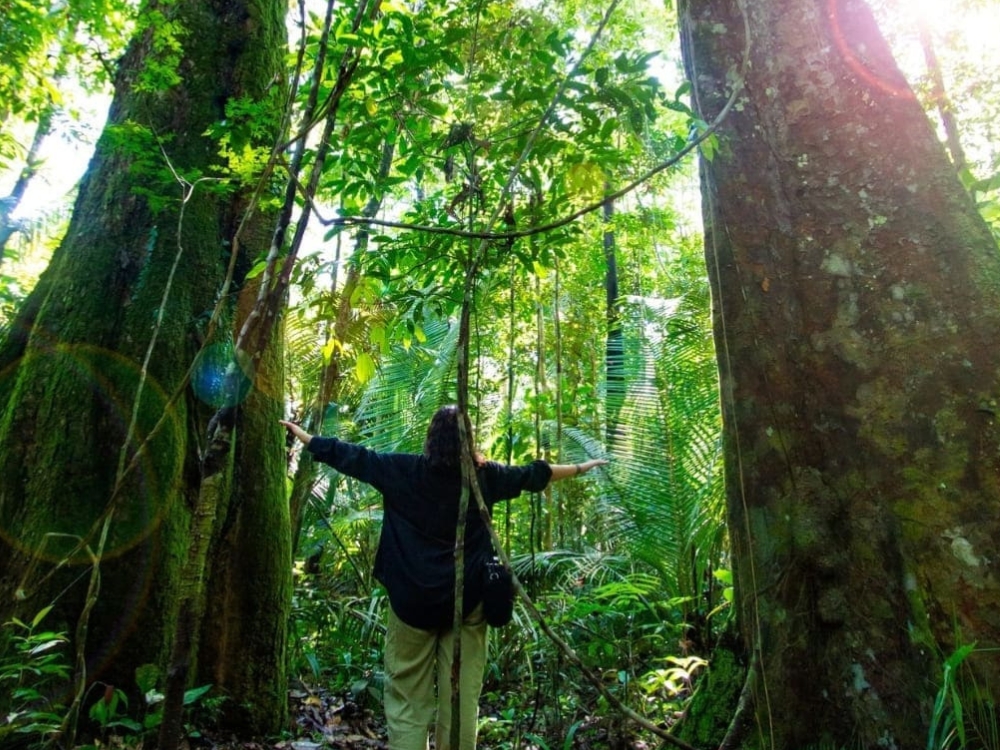
  • 10 Amazon Rainforest Travel Tips to Make the Most of your Adventure

    10 Amazon Rainforest Travel Tips to Make the Most of your Adventure

    Discover how to prepare for your Amazon Rainforest trip with practical tips, local insights, and sustainable travel advice

    Planning a trip to the Amazon in Brazil is no ordinary travel experience. With its immense size, rich biodiversity, and complex logistics, this magnificent place might challenge even the most seasoned travelers.

    This is a destination where preparation matters, both for your safety and for the well-being of the environment and local communities. When you follow certain Amazon Rainforest travel tips, you know exactly what to expect and can make your vacation even better.

    Aerial view of an Amazon river cruise boat navigating a dark river surrounded by dense green rainforest in Brazil.
    Photo: Katerre Expedição

    PlanetaEXO knows everything about this subject. As experts in Amazon tours in Brazil, our team works with the best local operators to ensure a smooth trip for everyone. See our recommendations below!

    1) Understand the seasons and expect rain

    The Amazon has two main seasons: the wet season (December to May) and the dry season (June to November). Each offers a different experience.

    A small motorized canoe traveling across the wide Amazon River during a golden sunrise under a cloudy sky.
    .

    During the wet season, river levels rise significantly, creating a temporary ecosystem where the flooded forest is only accessible by boat.

    In the dry season, receding waters reveal beaches, trails become more passable, and it’s easier to spot land animals.

    Still, don’t let the term “dry season” fool you. Rainfall volume is significantly high all year round—it is a rainforest after all—which means rainstorms can make sudden appearances. This doesn’t negatively affect your trip at all, but it’s important to be aware. 

    👉 Read more: When is the Best Time to Visit the Amazon Rainforest in Brazil

    2) Travel light, but smart

    You don’t need much, but what you bring matters. Overpacking makes travel heavier and harder to manage, while underpacking can make your experience uncomfortable. Aim for balance—what you carry should serve the journey, not complicate it.

    A traveler carrying a reusable water bottle hikes through a lush green Amazon Rainforest trail.
    Photo: Marcelo Bonifácio

    Check out a list of what you should pack to make the most of your Amazon travel experience:

    • Lightweight, breathable clothes: t-shirts, shorts, pants, long-sleeved shirts (preferably with UV protection), windbreakers, hats or caps, and swimwear.
    • Comfy shoes: sneakers, flip-flops, sturdy hiking boots.
    • Equipment: raincoat, flashlight, personal reusable water bottle.
    • Travel essentials: documents, medication, sunscreen (SPF 30 or higher), insect repellent, sunglasses, and power bank (phones, cameras, laptops, tablets).
    • While larger cities like Manaus or Belém have ATMs and card-friendly establishments, much of the forest region still operates in a cash economy, especially in remote communities and local markets. Bring enough cash (Brazilian real) to cover meals, souvenirs, entrance fees, etc.—store it safely and divide it between bags.

    Another essential item to pack is a universal power adapter, as power outlets vary depending on the location. The voltage in the Amazon area is 127 V. Be careful with your devices!

    3) Protect your electronic devices from humidity

    Humidity in the Amazon ranges from 77% to 88% throughout the year, which can harm your electronics even when there’s no rain, as the humid air can condense inside lenses and devices. 

    To protect phones, cameras, laptops, and tablets, keep them in Ziploc or waterproof bags when you’re not using them.

    Aerial view of the dense Amazon Rainforest canopy covered in thick morning mist and fog.
    Photo: André Dib

    4) Keep up with the time zone in the Amazon Rainforest

    The time zone in Manaus and the surrounding areas is UTC-4.

    Amazon Time (AMT) is 1 hour ahead of Eastern Standard Time and 2 hours ahead of Central Standard Time (-4 hours in comparison to Coordinated Universal Time).

    Pay attention to these differences so you don’t get confused when traveling!

    Amazon Rainforest travel Silhouette of three people in a small canoe navigating the Amazon River against a bright orange sunset sky.
    .

    👉 Read more: How to get to the Amazon Rainforest in Brazil?

    5) Health first: vaccines and general precautions

    Medical preparation is a basic Amazon Rainforest travel tip, and it begins before you arrive at your destination. Vaccinations are strongly recommended, particularly for hepatitis A and B, diphtheria, tetanus, polio, and measles. Depending on the region and season, your doctor may advise malaria prevention as well. 

    A traveler stands behind a powerful rushing waterfall in the Amazon Rainforest with their arms raised.
    @ines.lafosse

    Yellow fever vaccines are not obligatory like in other South American countries, but they are highly advised—especially if you’re also traveling to the Amazon in Peru, Colombia, Ecuador, and Bolivia.

    Check the United States government traveler’s health guide and Brazil’s official recommendations for international tourists. If necessary, consult a travel clinic at least a few weeks before your trip.

    Once in the rainforest, simple habits make a big difference:

    • Hydration is essential in the heat and humidity. Carry a reusable water bottle and drink regularly.
    • Pack a small medical kit with essentials, including medication for headaches or stomach discomfort, allergy relief, and plasters or Band-Aids for minor injuries.
    • Apply your sunscreen first, wait 15 minutes for it to absorb, and then apply high-DEET insect repellent on top. If you do it the other way around, the sunscreen can dilute the repellent or even trap insects against your skin.
    • Before putting your shoes on in the morning, give them a vigorous shake and a peek inside. Spiders, scorpions, and the occasional small frog love the dark, damp “cave” of a hiking boot.

    6) Walk with a local guide

    Tourists might wonder if the Amazon Rainforest is dangerous. As this is a wild environment, the jungle can hold its dangers, but only for travelers exploring the biome on their own.

    That’s why following a qualified local guide is crucial. They know where to step, when to stay quiet, and what not to touch. Safety comes first, but respecting instructions also allows for a deeper immersion and the conservation of nature.

    A local guide shows two tourists the intricate roots of a large tree while hiking through the Amazon.
    Photo: Samuel Melim

    Hiking through the forest with someone who knows the terrain inside out transforms the experience. You’ll learn to spot hidden insects, medicinal plants, camouflaged frogs, and animal tracks you’d never notice on your own, as well as act correctly so as not to disrupt the balance of the ecosystem.

    7) Keep quiet and don’t interfere when you spot an animal

    Though the Pantanal is considered the best place in Brazil for wildlife watching, the Amazon fauna is also incredibly rich, being a fundamental part of one of the most complex ecosystems on Earth.

    A camouflaged caiman rests on a riverbank covered in leaves during a night wildlife tour in the Amazon.
    Photo: Vitor Marigo

    Whether it’s a sloth in the canopy, a caiman along the riverbanks, or a line of leafcutter ants crossing your path, all of this forms a finely balanced environment. Touching, feeding, or approaching animals disrupts that balance, altering natural behaviors and potentially putting both you and the animal at risk.

    Real respect means keeping your distance, moving quietly, and resisting the urge to interact. These are moments of connection with nature as they truly are: wild, unpredictable, and best left undisturbed.

    8) Stay in lodges that care for nature 

    One of the most important Amazon travel tips involves where you stay. Choosing lodges that prioritize sustainability ensures your visit supports both the environment and the community.

    Sustainable wooden Amazon jungle lodge cabins floating on a calm river reflecting the blue sky.
    .

    Look for accommodations powered by solar energy, with waste management systems and fair hiring practices. Many ecolodges reinvest part of their profits into conservation and education projects, which helps to support local families.

    When you stay in jungle hotels where your trip makes a difference, you contribute directly to the preservation of the forest and the quality of life of those who call it home, making your trip truly meaningful.

    👉 Read more: Best Amazon Jungle Lodges in Brazil

    9) Stay in a “black water” region to avoid bugs

    Here’s an Amazon travel tip you don’t see everywhere: if you are particularly mosquito-prone, look for lodges on “black water” rivers (like the Negro River).

    The high acidity from decomposing organic matter prevents mosquito larvae from developing, making these areas significantly less buggy than “white water” regions (like the Solimões).

    A group of travelers swims in a calm black water Amazon river during a vibrant orange sunset.
    .

    👉 Read more: Best Amazon River Cruises in Brazil

    10) Respect local communities

    The Amazon is home to countless people, including Indigenous and riverside communities who have lived there for generations. Respecting their traditions and way of life is essential.

    An Indigenous man wearing a traditional feather headdress walks through the lush green Amazon jungle.
    Photo: Isadora Sá

    Always ask before taking photos, avoid offering gifts without context, and be open to learning from their stories. Many members of these groups are guides, hosts, and stewards of conservation projects who work every day to ensure the forest’s well-being. 

    When you travel responsibly, you support community-based tourism that protects culture, creates jobs, and strengthens local pride. Do your part and contribute to a better future.

    Here’s your last Amazon Rainforest travel tip: book your experience with PlanetaEXO

    PlanetaEXO is an ecotourism platform that works with the best local operators and specializes in Amazon Rainforest tours in Brazil.

    When you travel with us, you’re making sure your vacation causes a positive impact on small businesses, native communities, and our planet. Let’s live an adventure together. Contact us now!
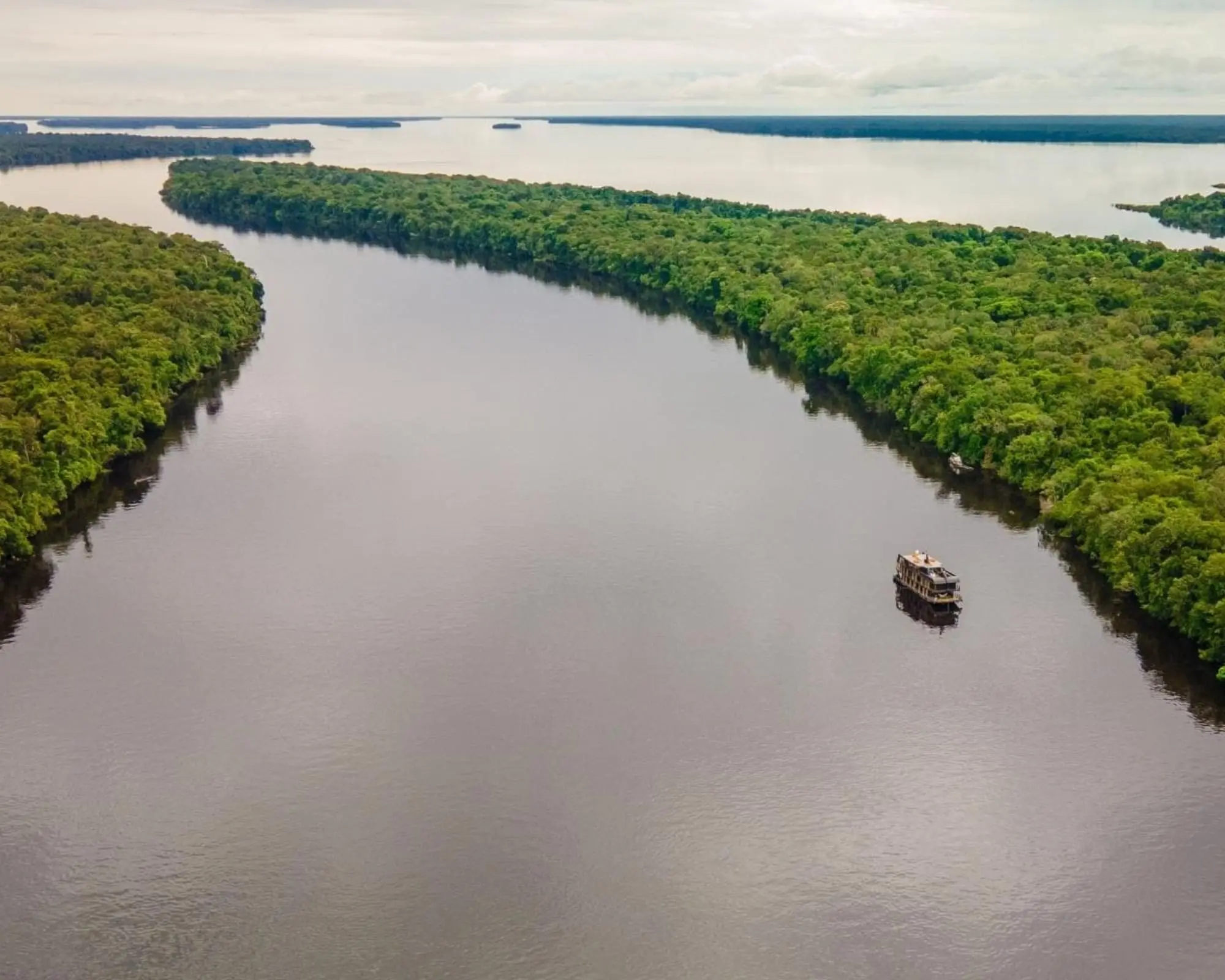
  • 8 conservation projects in the Amazon to support in 2025

    8 conservation projects in the Amazon to support in 2025

    Environmental education, income generation for local communities, reforestation, and ecotourism practices are some of the actions taken by various non-profits in the Brazilian Amazon

    The Amazon is the largest rainforest in the world, covering a total area of 6.74 million km², while the Brazilian territory spans over 4.2 million km². An ecosystem this big can only mean equally big effects on the planet’s balance and natural life.

    8 conservation projects in the Amazon to support in 2025 (4) (1)

    Housing millions of different species of animals and plants, the forest is responsible for up to 16% of freshwater in the world, and it also plays a huge role in carbon sequestration – the process of capturing and storing carbon dioxide (CO2) from the atmosphere, which prevents climate change.

    All of this, however, is under threat. According to the National Institute for Space Research (INPE), deforestation in the Amazon reached 4.315 km² from August 2023 to July 2024 – a smaller area when compared to the same period in 2022, but a concerning number nonetheless.

    8 conservation Projects in the Amazon - Alter do Chão Brigade (2) (2)
    Photo: @guardioes_ti_kumaruara

    Forest fires are likely the biggest current danger. The Amazon Rainforest faced the largest amount of fires in the last seventeen years, concentrating 50.6% of Brazil’s fires. INPE estimates there were 137,538 heat outbreaks in the Amazon up until December 2024, including fires (controlled or not) and full-on forest fires.

    The consequences are dreadful: temperatures rising, longer droughts, lower rivers, animals dying, poor air quality, and people who depend on the forest to survive losing their homes and primary sources of income. To prevent these terrible repercussions, local communities engaged on these Amazon Rainforest conservation projects work tirelessly to protect what many call “the lungs of the Earth”

    1 – Amazon Entrepreneurship and Sustainable Business Program (Pensa)

    Resources that can only be found locally, exquisite nature that attracts tourists from all over the world – which proves that ecotourism activities are powerful conservation solutions –, and local groups willing to learn and undertake are some of the factors that make the Amazon Rainforest a promising place for sustainable entrepreneurship.

    Amazon Rainforest Conservation Projects – Sustainable Amazon Foundation (FAS) (1)
    Photo: Emile Gomes

    The Sustainable Amazon Foundation (FAS) fights social vulnerability with the Amazon Entrepreneurship and Sustainable Business Program (Pensa, the acronym in Portuguese). By combining social technology to train entrepreneurs, the program has supported over 583 communities in 16 Conservation Units (CUs).

    In 2023, 62 sustainable ventures were supported by FAS and 323 people gained new skills. The average income of families benefited by Pensa increased in 19%, while the total revenue from community-based tourism ventures raised R$ 5 million. Learn more and make your donation.

    Ecotourism in the Amazon Rainforest - A Solution to Deforestation
    Roberto Brito, founder of “Projeto Draft”.

    2 – Almerinda Malaquias Foundation (FAM)

    Almerinda Malaquias Foundation (FAM) is a non-profit based in Novo Airão, in the state of Amazonas, whose activities are focused on three aspects: 

    • Income generation: training of professionals for craftsmanship and soap production
    • Environmental education: for local children and teens to learn more about their home, as well as economic alternatives for sustainable development
    • Ecotourism: eco-friendly travel practices as a tool to boost education and work opportunities

    In 2024 alone, FAM has helped 190 people enroll in school45 families generate income and has tended to ten riverside communities regarding education and funding.

    Educação Ribeirinha Katerre - Amazon Conservation Projects (1)
    Photo: @expedicaokaterre

    To help FAM change lives, Expedição Katerre and Mirante do Gavião Amazon Lodge and act as sponsors. Both specialize in ecotourism, with Katarre offering some of the best river cruises in Brazil.

    You can support FAM by buying their beautiful handmade products or making a donationLearn more on their official website or social media profile.

    Amazon Rainforest Conservation Projects - Almerinda Malaquias Foundation (FAM)
    Photo: Fundação Almerinda Malaquias Foundation (FAM)

    3 – Mamirauá Institute

    In 2024, severe droughts were the biggest concern regarding the Amazon. Many non-profits took action to try to reverse the effects caused by the lack of rainfall, with Mamirauá Institute for Sustainable Development (IDSM), founded in 1999, in the forefront of the actions.

    By pushing scientific recommendations to the authorities, this Amazon Rainforest conservation project offered educational support to local communities, came up with different methods to better access to drinking water, and worked throughout the entire year to minimize the consequences of this uncharacteristic dry period.

    Ações Seca 2024 Marimaua Amazonia - Amazon Conservation Projects
    Photo: Caroline Reucker

    Ecotourism is also a big player. Uakari Lodge is situated in the middle of the Mamirauá Reserve, safely built on stilts in Lake Tefé. Besides providing total immersion in the forest, the lodge is an important asset for environmental awareness and scientific research.

    Activities promoted by Uakari, like wildlife watching, have been greatly useful to collect data about uakari monkeys – the inspiration for the lodge’s name –, which helps scientists and biologists to understand this species and bring forth effective ways to protect them and the Amazon as a whole. A scientific article by this particular subject was published in 2021.

    Learn more about this drought prevention project and make a donation online if you can.

    Ações Seca 2024 Marimaua Amazonia - Amazon Conservation Projects
    Photo: Miguel Monteiro

    4 – Amazon Boto Expedition

    Since 2021, the Amazon Boto Expedition project has been working to monitor and investigate the protection of pink Amazon dolphins while also implementing a long-term study about the population of these animals to deepen the knowledge about the species and find active ways to protect them.

    Amazon Rainforest Conservation Projects - Sea Sheperd Brasil
    Photo: @seasheperdbrasil

    The project is led by Sea Shepherd, an international non-profit marine conservation organization founded in 1977 in Vancouver, Canada. The Brazilian branch is set on helping the Amazon river dolphins. Anyone can donate R$ 1 per day to support this incredible initiative. More information here.

    5 – Alter do Chão’s Forest Fire Brigade

    Based in Alter do Chão, Pará, the Forest Fire Brigade is a non-profit organization founded in 2019. This Amazon Rainforest conservation project believes that fighting fires is actually a last resource, as it is possible to prevent and control fire spread altogether through environmental education and collective efforts – both from the civil society and the authorities. 

    Brigada do Alter - Amazon Conservation Projects
    Photo: @_fotografia23_

    By protecting the local fauna and flora, as well as the Indigenous population in the Lower Tapajós River area, the initiative serves as a model for new volunteer brigades not only in the Amazon but also in other Brazilian biomes (Atlantic Forest, Caatinga, Cerrado, Pampas and Pantanal).

    See more information about the Alter do Chão’s Forest Fire Brigade on their official website or social media profile, and show your support.

    Brigada do Alter - Amazon Conservation Projects
    Photo: @egrymaia

    6 – Expeditionaries of Health (EDS)

    Expeditionaries of Health (Expedicionários da Saúde), a.k.a. EDS, was founded in 2003 by a group of volunteer doctors to provide medical care for Indigenous groups who live in geographically isolated areas of the Amazon Rainforest.

    Over the years, 300 volunteers have covered over 500,000 km² in the forest to provide medical care for those in need. In 55 expeditions, EDS was able to achieve 10,486 surgeries, 76,333 appointments, 148,125 medical exams and procedures, and donated 8,464 prescription glasses.

    Dr. Ricardo Affonso, EDS president, was honored with the Zayed Sustainability Prize in Abu Dhabi’s COP28 (28th United Nations Climate Change Conference), in 2023. The recognition was an important step towards improvement in medical services, but the project needs constant donations to continue caring for the health of Brazilian indigenous people. Help EDS here.

    Amazon Conservation Projects - EDS (1)
    Photo: EDS

    7 – Women Entrepreneurs of the Forest

    The Women Entrepreneurs of the Forest (Mulheres Empreendedoras da Floresta) empowers women who live in the Amazon – especially in the towns of Santarém, Belterra, Mojuí dos Campos and Aveiro, all in the west of Pará. This is an initiative promoted by Projeto Saúde and Alegria (Health and Happiness Project), or PSA, a non-profit that has been operating in the Brazilian Amazon since the late 80s.

    PSA - Amazon Conservation Projects
    Photo: Mulheres Empreendedoras da Floresta

    Deforestation in the Amazon Rainforest, due to agriculture and illegal logging or mining, results in an unsafe setting for nearby communities who depend on the forest to make a living. Considering the unequal social scenario in which women are often submitted to, PSA provides professional training for Amazonian women to create, manage, and grow their own businesses, all in favor to build a more reliable and sustainable local economy.

    To support Women Entrepreneurs of the Forest and other important projects, check PSA’s official website.

    PSA - Amazon Conservation Projects (2)
    Photo: Mulheres Empreendedoras da Floresta

    8 – Neutral Carbon Program (PCN)

    The Neutral Carbon Program (PCN) is the longest-lasting project managed by Idesam, a non-profit created in 2004 that works in favor of the well-being of the forest and its people. The goal is to enable people and companies to take responsibility for the impact they generate on the planet by offsetting their greenhouse gas (GHG) emissions. This compensation is made through the reforestation of affected areas in Uatumã Biological Reserve, in Presidente Figueiredo, Amazonas.

    Carbono Neutro - IDESAM - Amazon Conservation Projects (1)
    Photo: Idesam

    The outcomes include reduced GHG emissions, awareness of carbon footprint, accountability for large corporations, food security, and income generation for families working in PCN.

    Visit Idesam’s official website for more details and donation options. 

    Amazon Rainforest Conservation Projects - IDESAM
    Photo: Idesam

    Show your support to conservation projects in the Amazon Rainforest

    These Amazon conservation projects work daily to protect the natural resources of the most important natural area of the world. There is no saving the forest, however, without helping its guardians, which means social efforts are deeply rooted in sustainable programs and should be taken just as seriously.

    You can do your part by donating, advocating for environmental policies, and supporting ecotourism in the Amazon Rainforest. Every action counts!