Category: Amazon

  • Pantanal or the Amazon: Which One Should you Choose?

    Pantanal or the Amazon: Which One Should you Choose?

    Both incredible Brazilian biomes, the Pantanal is home to jaguars and other fantastic animals, while the Amazon Rainforest allows for unbelievable jungle experiences

    When planning an adventure into Brazil’s wildest landscapes, two destinations may come to mind: the Pantanal or the Amazon. Both are ecological powerhouses teeming with biodiversity, but they offer different experiences.

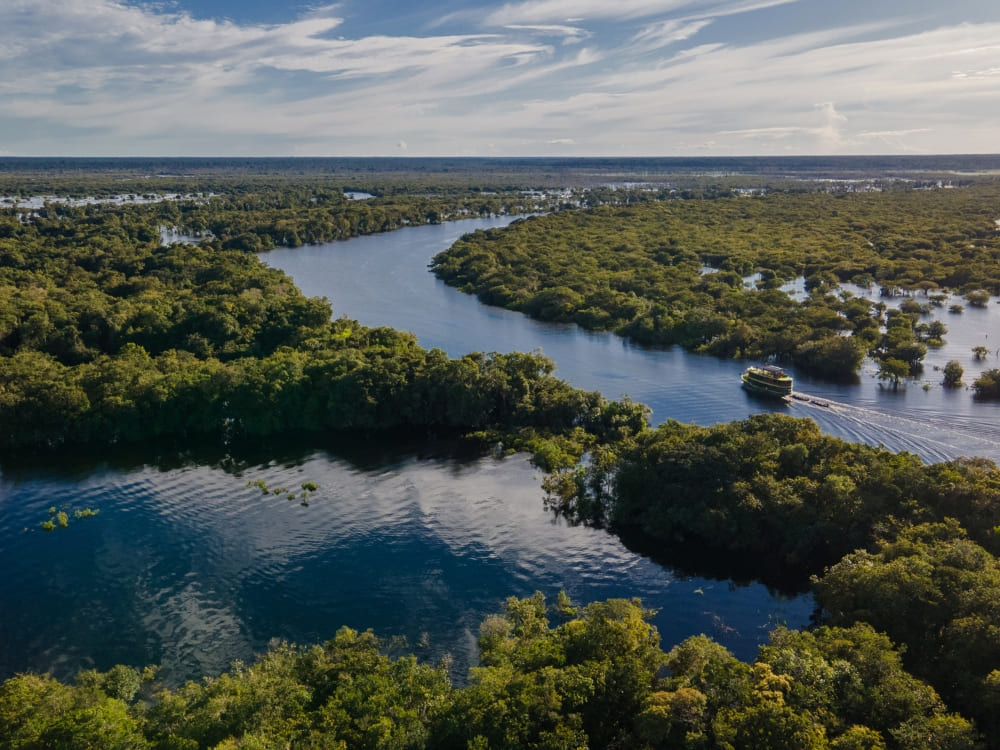
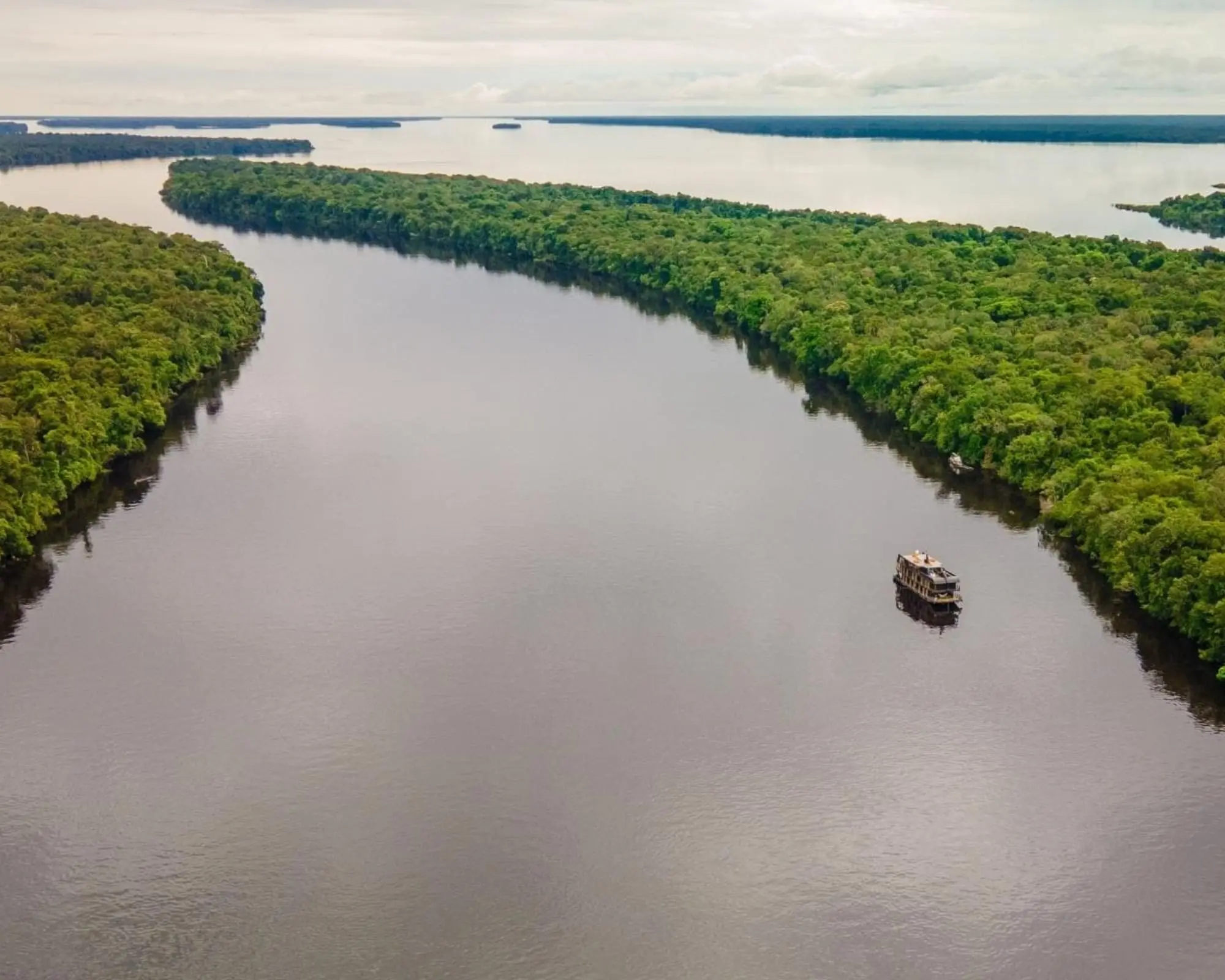
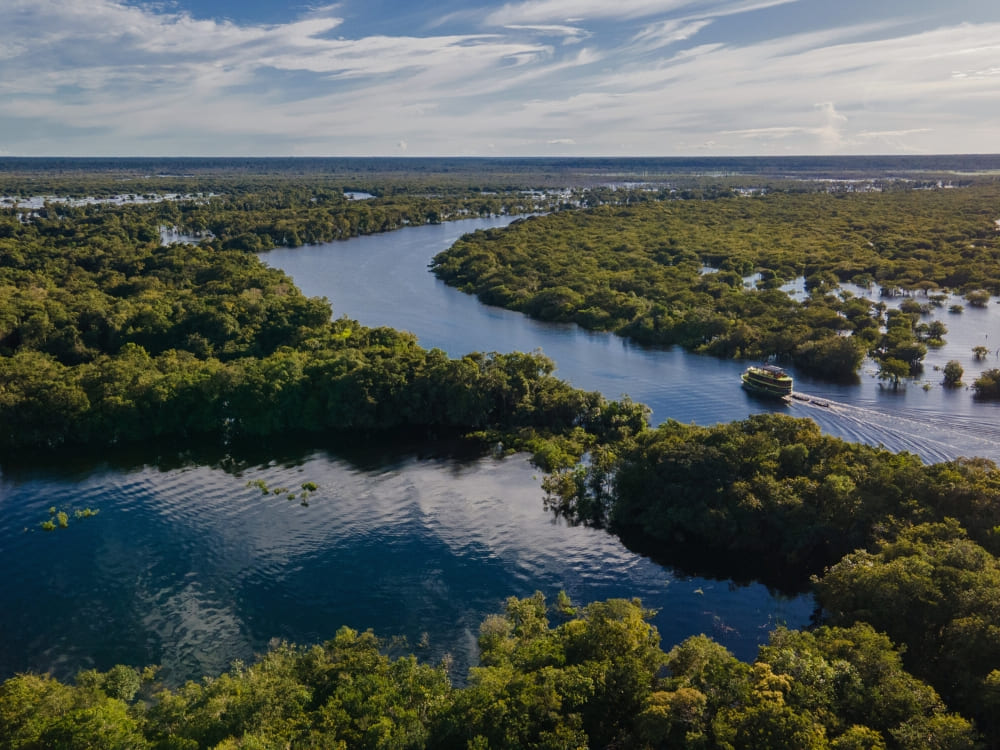
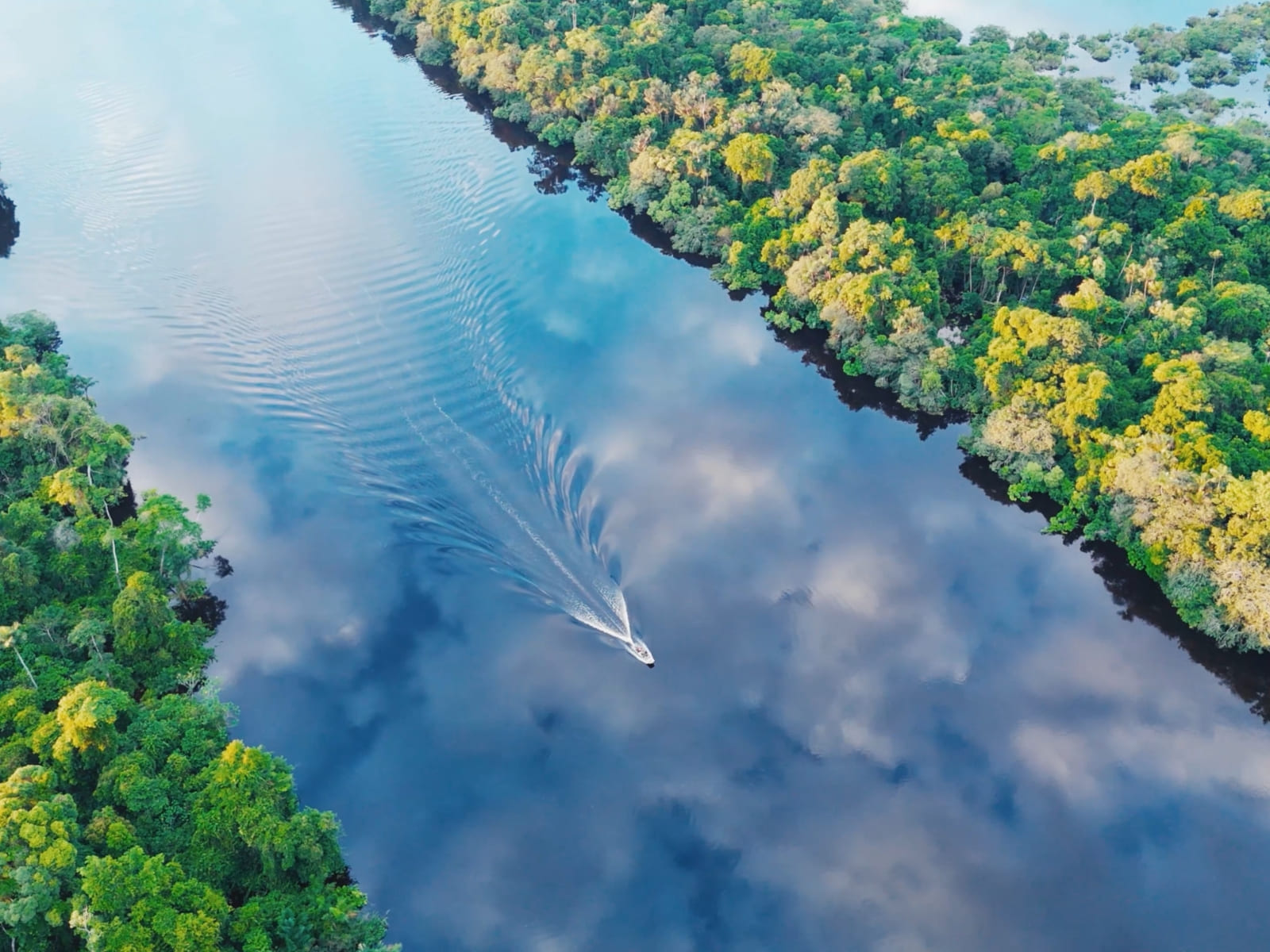
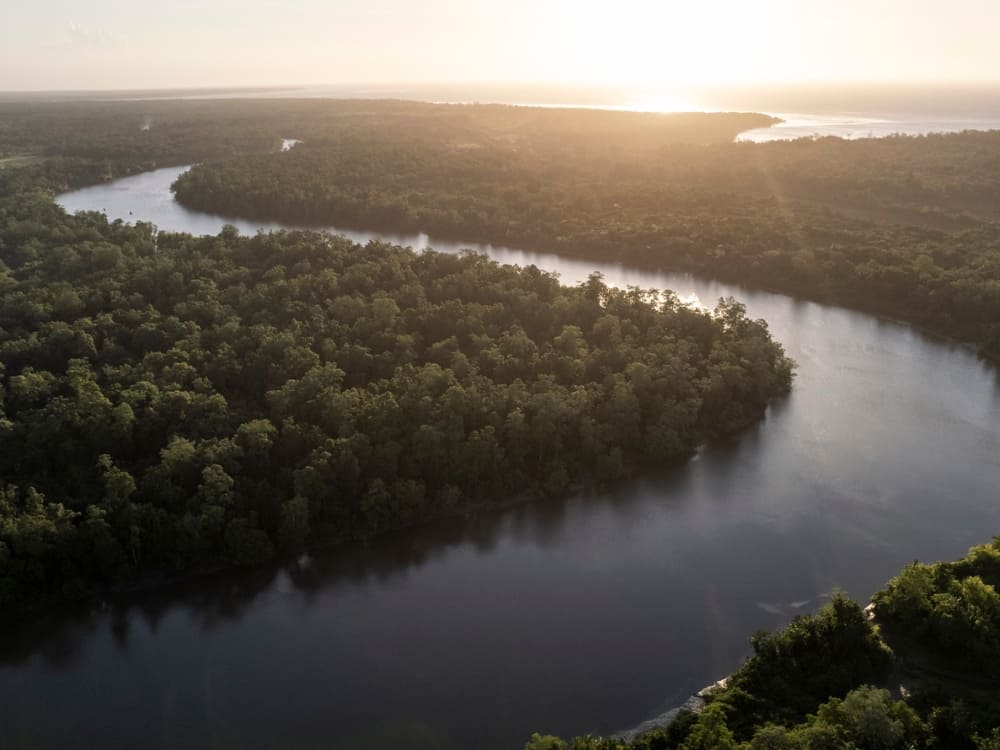
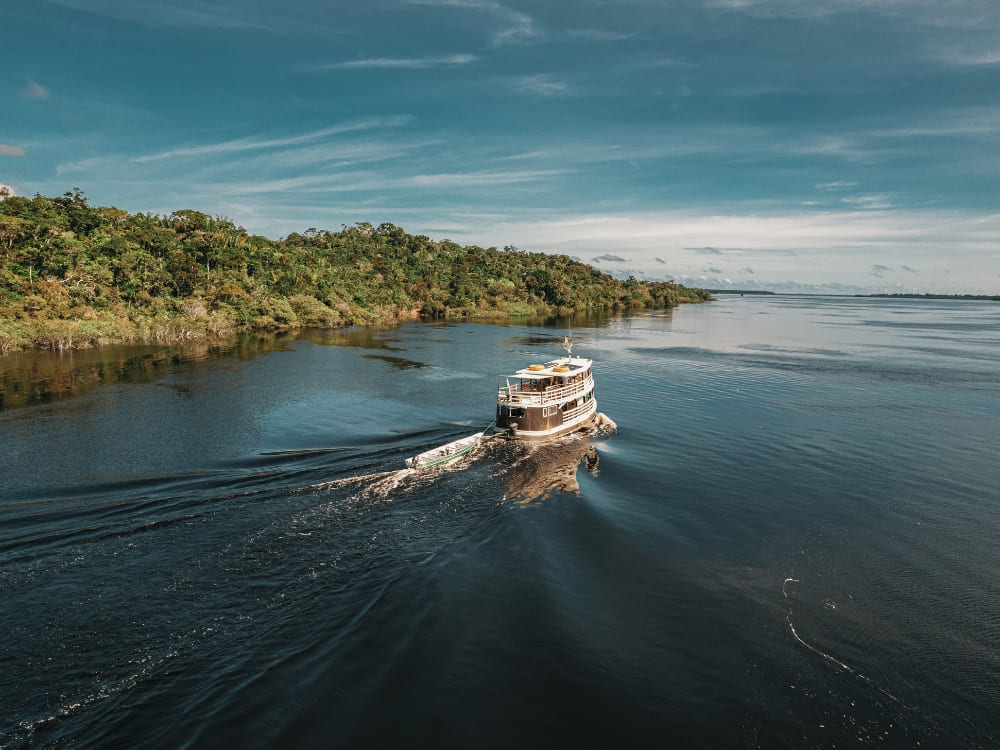
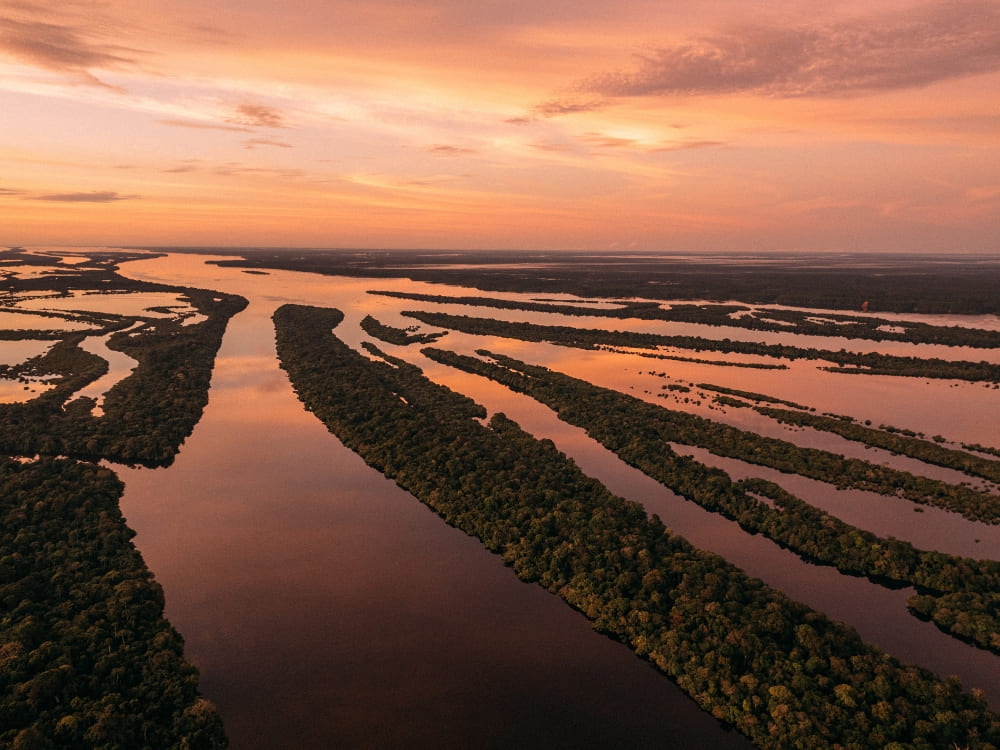
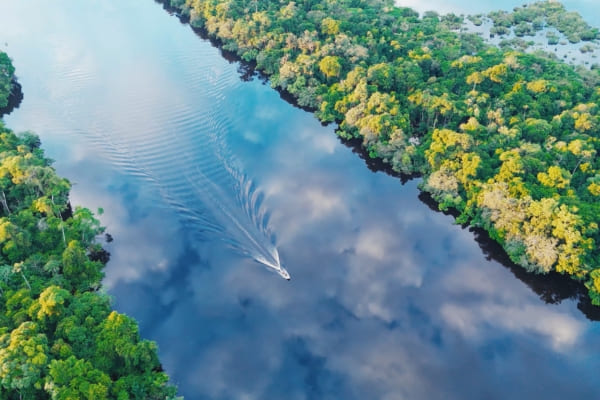
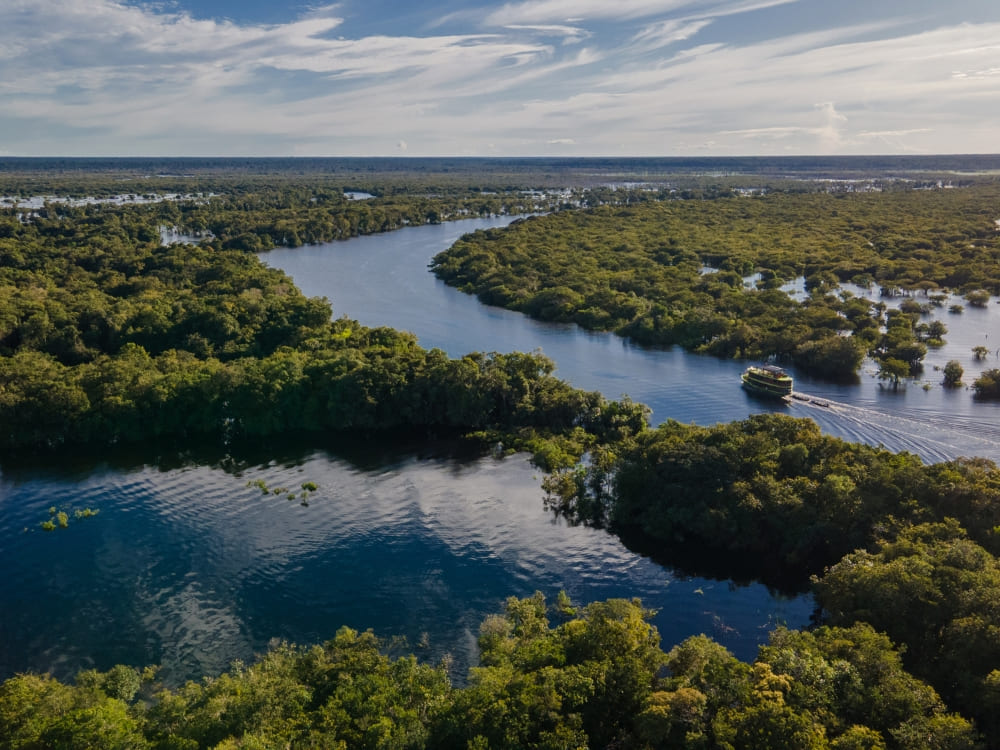
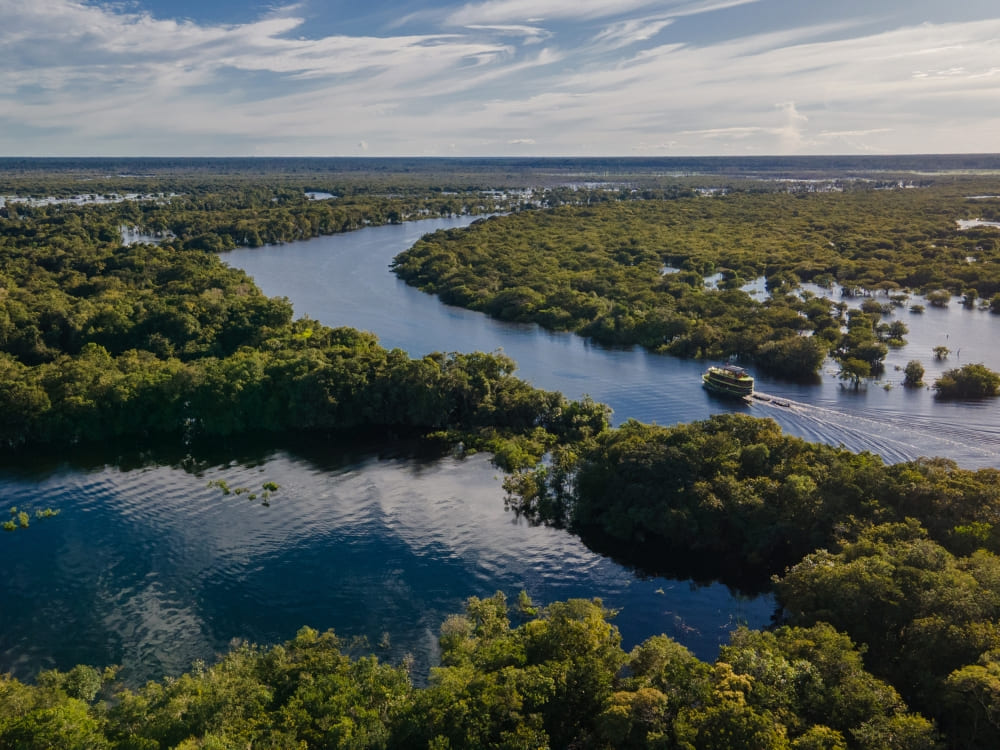
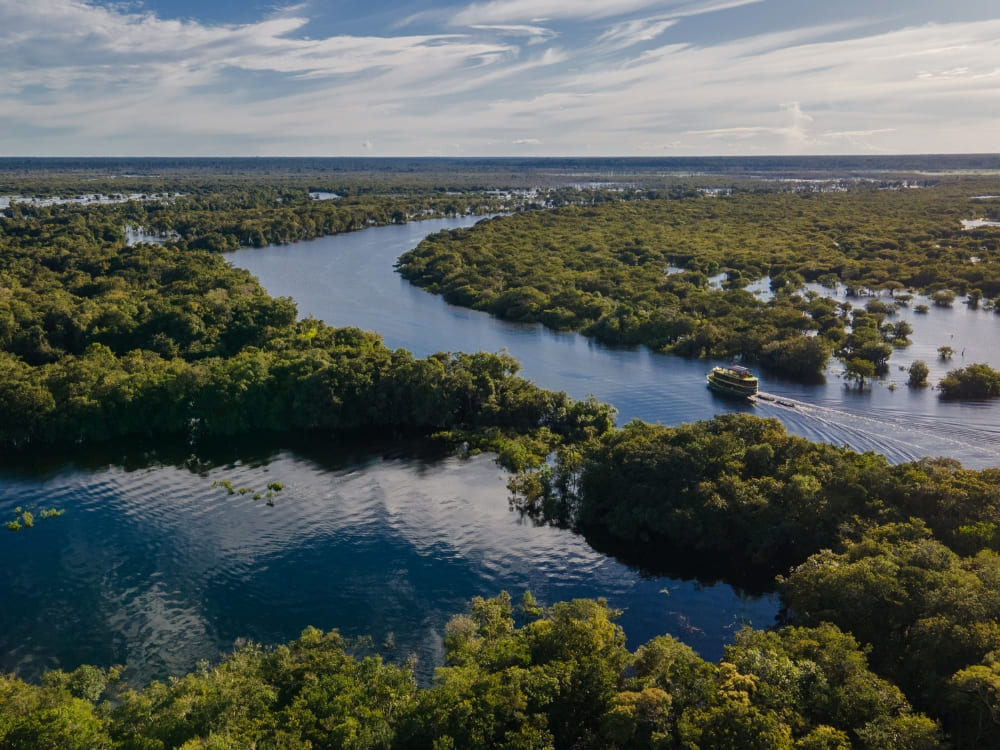
    Aerial view of a tour boat navigating a winding river through the lush green landscape of the Amazon.
    .

    Simply comparing travel itineraries is not enough, since both destinations are among some of the planet’s richest biomes in terms of biodiversity and untouched beauty. In their own unique ways, they provide incredible activities for those who wish to connect with nature in its most exuberant form.

    Tourists watching a jaguar resting on a tree branch during a wildlife safari tour in the Pantanal.
    Photo: @larissa_pantanal

    As an expert in Pantanal tours and Amazon Rainforest tours in Brazil, PlanetaEXO has put together a guide to help you choose where you should spend your next vacation. See more below!

    Is the Pantanal part of the Amazon?

    No, the Pantanal is not part of the Amazon Rainforest. Although neighboring biomes in Brazil, they have fairly different ecosystems.

    Spanning the states of Mato Grosso and Mato Grosso do Sul, the Pantanal is considered the world’s largest wetland.

    Meanwhile, the Amazon is the largest tropical rainforest on Earth, covering areas of eight different states: Amazonas, Pará, Mato Grosso, Acre, Amapá, Rondônia, Roraima and Maranhão.

    Pantanal safaris: wildlife watching at its finest

    If your dream is to see wildlife up close, the Pantanal is the perfect destination. Besides the incredibly rich fauna, the open landscapes make it much easier to spot animals in their natural habitat compared to anywhere else in Brazil.

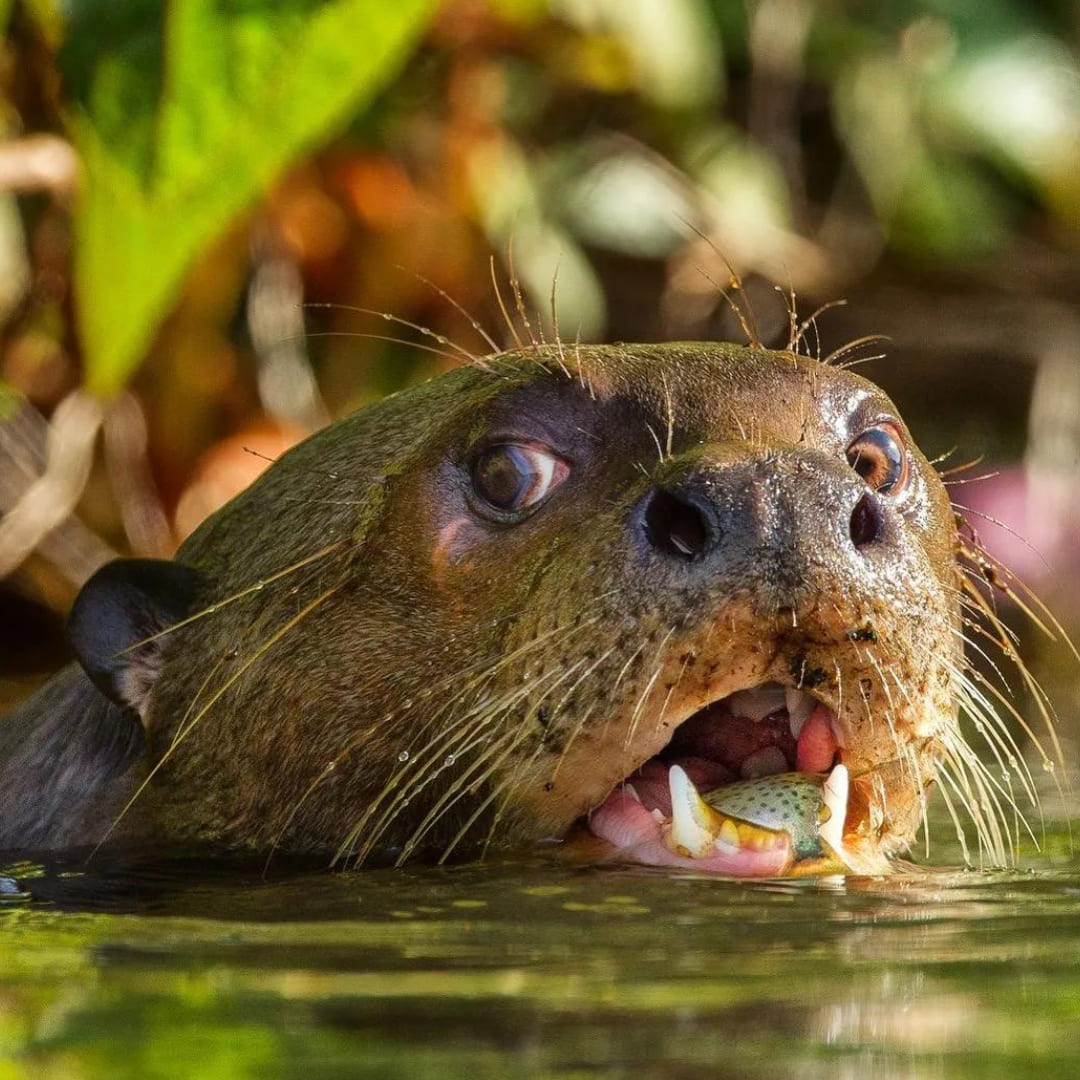
    By boat or four-wheel drives, Pantanal safaris allow visitors some of the best wildlife watching experiences in the world. With the help of expert guides who know just the right places to spot animals, you might see capybaras, giant otters, caimans, macaws, etc.

    Silhouette of a capybara with birds perched on its back against a vibrant orange sunset in the Pantanal.
    Photo: Ondrej Prosicky

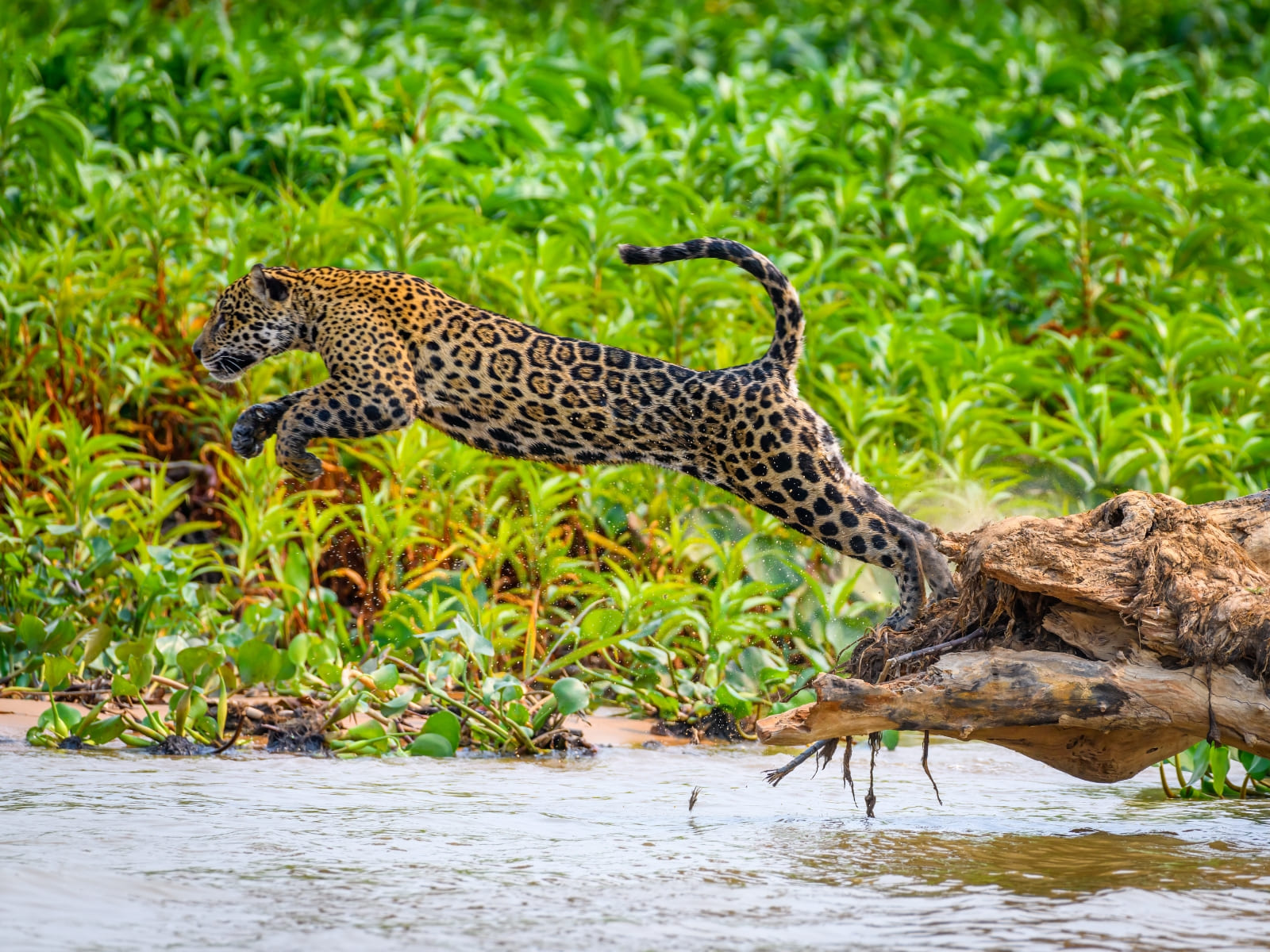
    All species are fascinating, but it’s safe to say that the largest feline in the Americas is the star of the show. The Northern region, especially near the town of Porto Jofre, is considered the best place in the world to see jaguars.

    The Pantanal’s abundance of wildlife is a striking highlight compared to other biomes. Amazon jungle tours in Brazil are wonderful for a total immersion in nature, but spotting animals there requires more patience and a bit of luck.

    Close-up of a jaguar engaging in natural camouflage amidst dense foliage in the Brazilian wetlands.
    Photo: Felipe Castellari

    👉 Read more:

    The immensity of the Amazon Rainforest

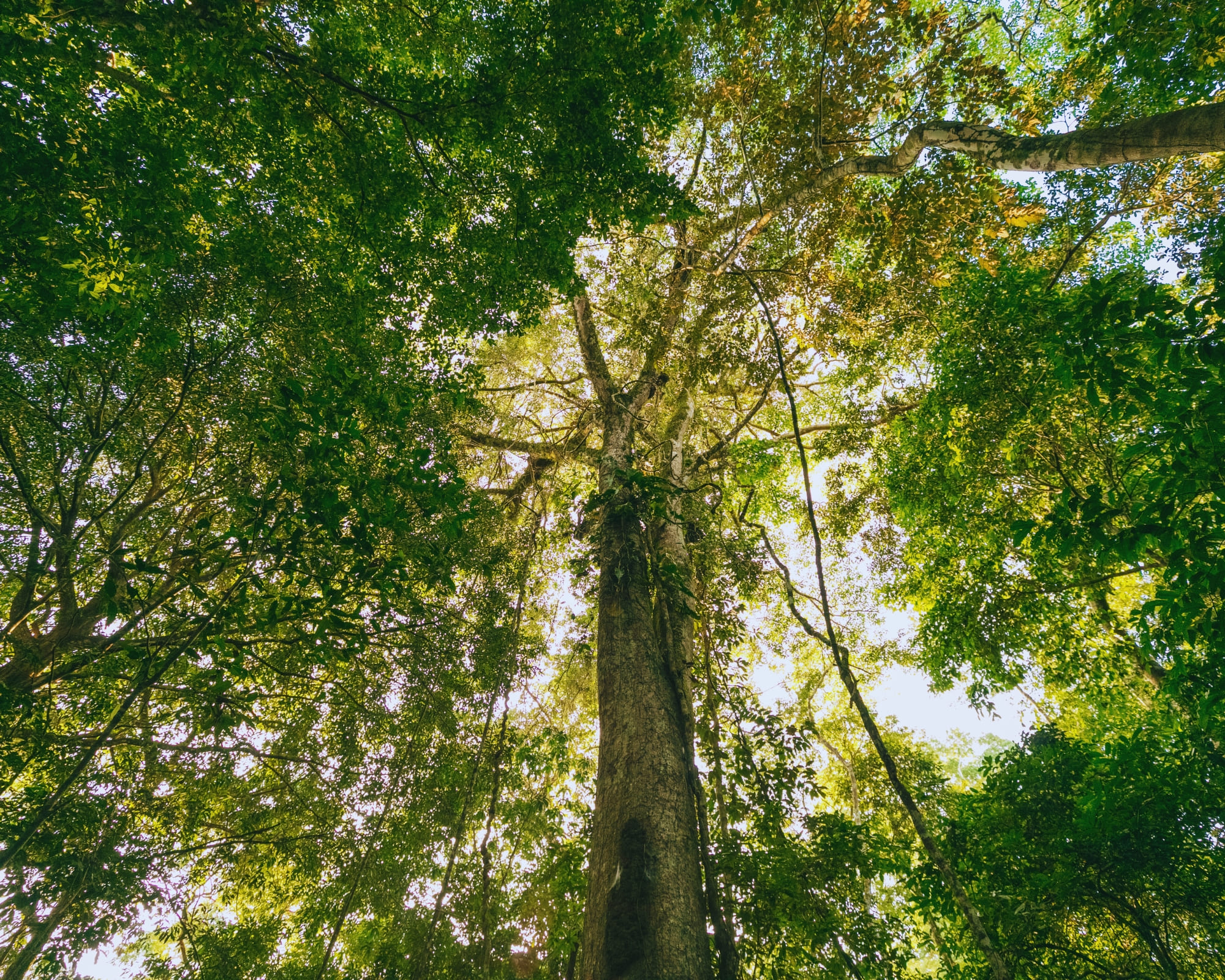
    The Amazon Rainforest  is an endless sea of green. With trees that reach over 40 meters in height, the forest creates a closed, humid environment where sunlight barely touches the ground, and houses thousands of plant and animal species.

    Hiking in the Amazon is almost mystic. Different sounds and aromas are enveloped by the forest grandeur and a constant sense of mystery. Such an atmosphere can make anyone very aware of the warm, yet relentless power of Mother Nature.

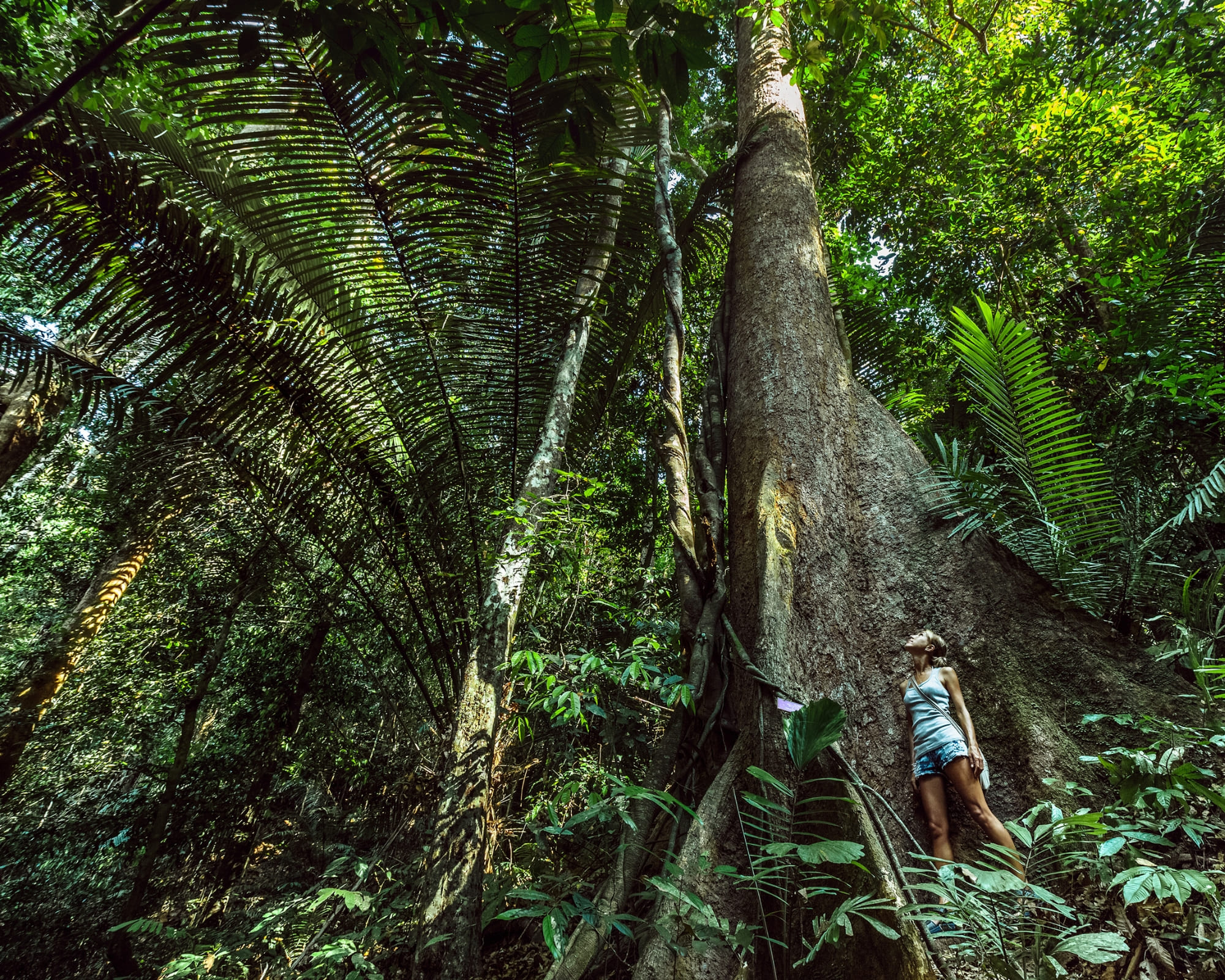
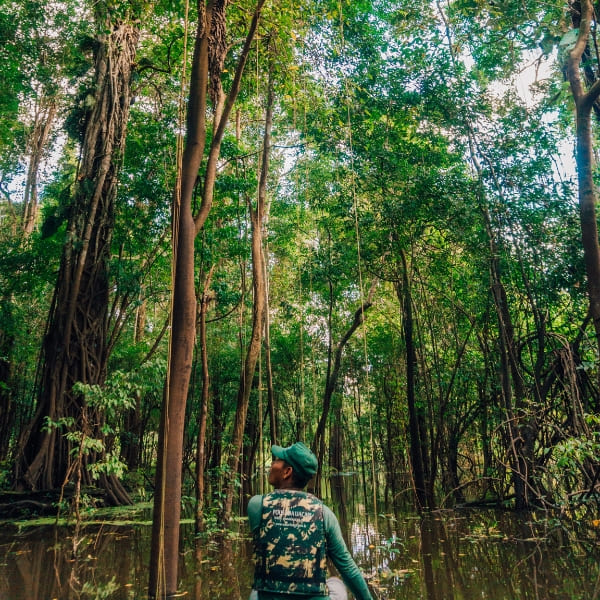
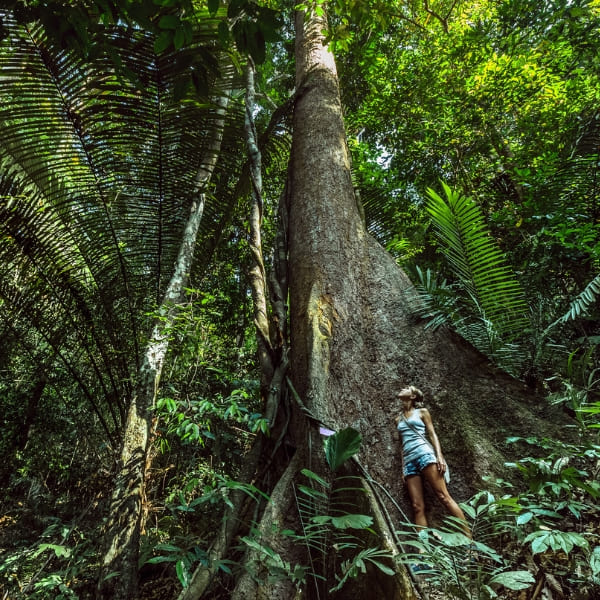
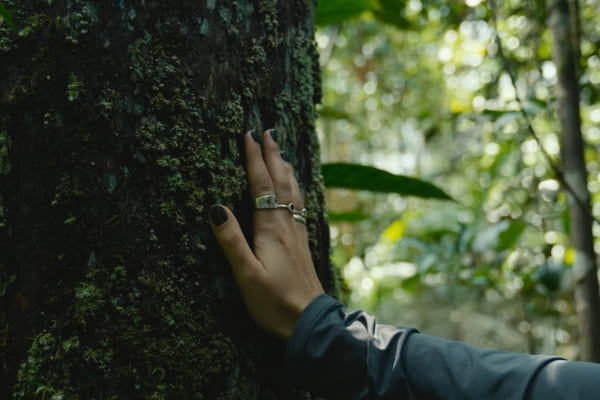
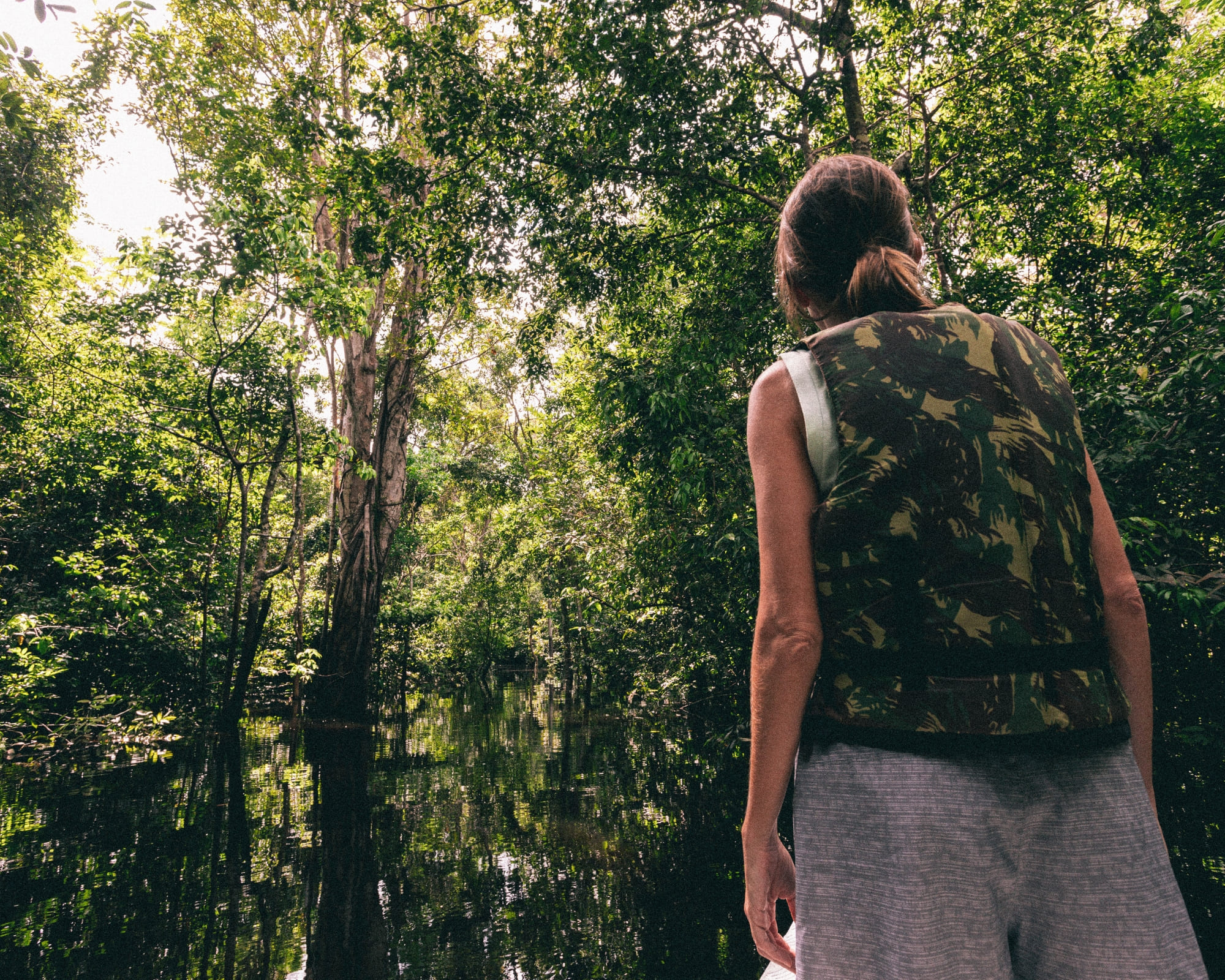
    A traveler stands at the base of a massive tree trunk wrapped in vines, gazing up into the dense, green canopy of the Amazon rainforest.
    .

    By joining Amazon tours in Brazil, travelers witness the importance of the rivers, which determine the local way of life as natural highways that connect riverside communities and grant proper access to deeper parts of the forest.

    Negro, Solimões and Amazonas are just some of the rivers that cut through the vegetation and form igarapés (small bodies of water), igapós (flooded forests) and breathtaking views of immeasurable value for the fauna, flora and locals. 

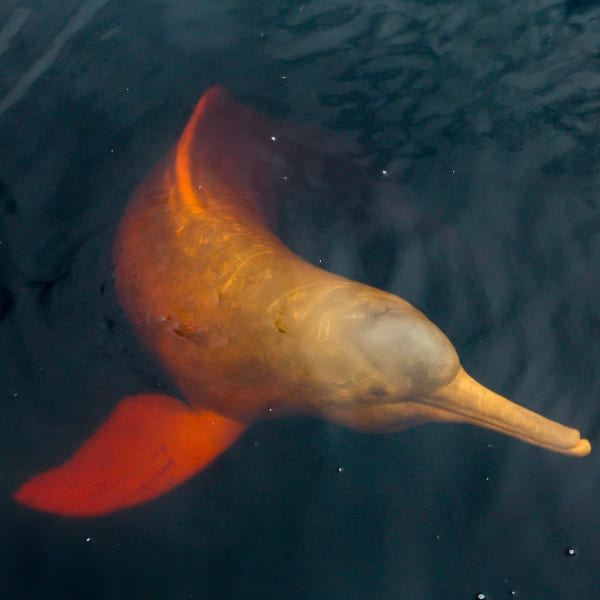
    A pink river dolphin surfaces to breathe, showing its distinct color against the dark, black waters of the Rio Negro.
    .

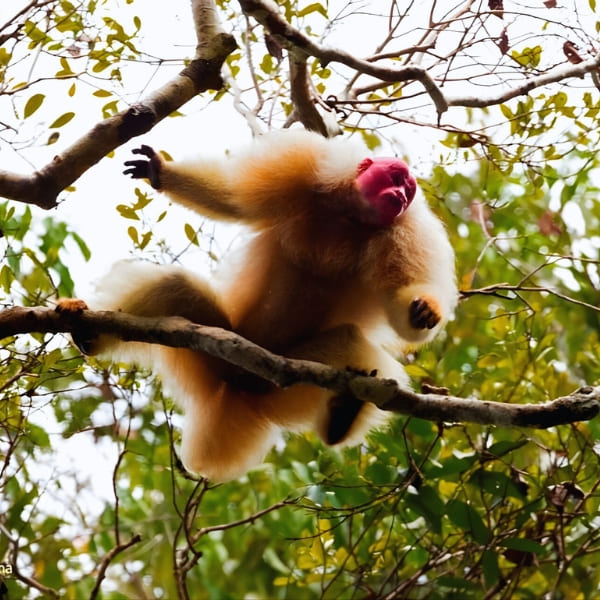
    Wildlife is rich, but discreet. Except for pink river dolphins, most animals live in the tree tops, are camouflaged by the jungle or only make themselves known at night. The focus is on immersion: smelling the wet earth, listening to the music of nature, breathing fresh air and understanding the privilege of being surrounded by the most complex ecosystem on the planet.

    👉 Check our travel packages: Amazon Rainforest tours, Brazil

    Experiences in the Amazon and the Pantanal

    Both the Pantanal and the Amazon are spectacular. There is no better destination — only the better option for your preferences.

    While the Amazon stands out for the vastness of its closed forest, imposing rivers and the constant sounds of the jungle, the Pantanal mesmerizes with its flooded fields, open vegetation and the spectacle of wildlife on view. Despite the contrasting differences, these two wild destinations represent the richness of Brazilian biodiversity and sustainable travel.

    Besides understanding what makes each biome so great, it’s also important to point out how the experiences are influenced by their distinctness.

    Two jaguars grooming each other in their natural habitat in the Pantanal.
    @matthias_kern_photography

    Pantanal tours activities

    Book your trip to the Pantanal if you love:

    • Photo safaris: explore the wetlands by boat or 4×4 car to spot some of the most beautiful Brazilian animals, including jaguars, anteaters, tapirs, toucans, and many more.
    • Birdwatching: keep your eyes open to spot some of the native birds, including toucans, macaws and the enigmatic jabiru stork.
    • Horseback riding: delve into the flooded plains on horseback like a true Pantaneiro.
    • Trekking: accompanied by qualified guides, trek across open fields and immerse yourself in nature.
    • Boat rides and catch-and-release fishing: discover the wetlands by joining boat tours and fish for typical Pantanal species, like pacu and dorado.
    • Farm life: some lodges are actually adapted farmhouses, but day-to-day life is still heavily based on ranch culture — which guests are more than welcomed to participate in.
    • Cinematic sunrises and sunsets: wide-open skies offer unforgettable views when dawn breaks or when the sun sets.

    Keep in mind: itineraries vary in North and South Pantanal. Make sure to learn the differences of both regions before booking your trip!

    Group of tourists horseback riding through the Pantanal wetlands guided by local experts.

    Brazil Amazon tours activities

    Plan your vacation in the Amazon if you can’t get enough of:

    • Forest hiking: immerse yourself in the forest by hiking with expert guides to explore the fauna, flora and local traditions.
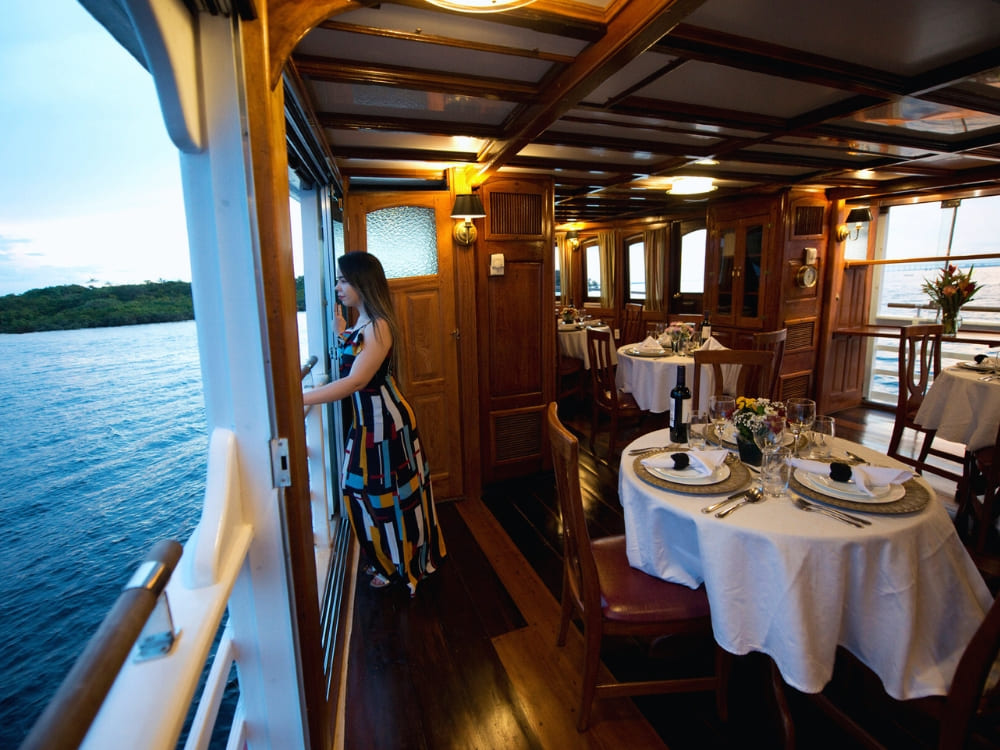
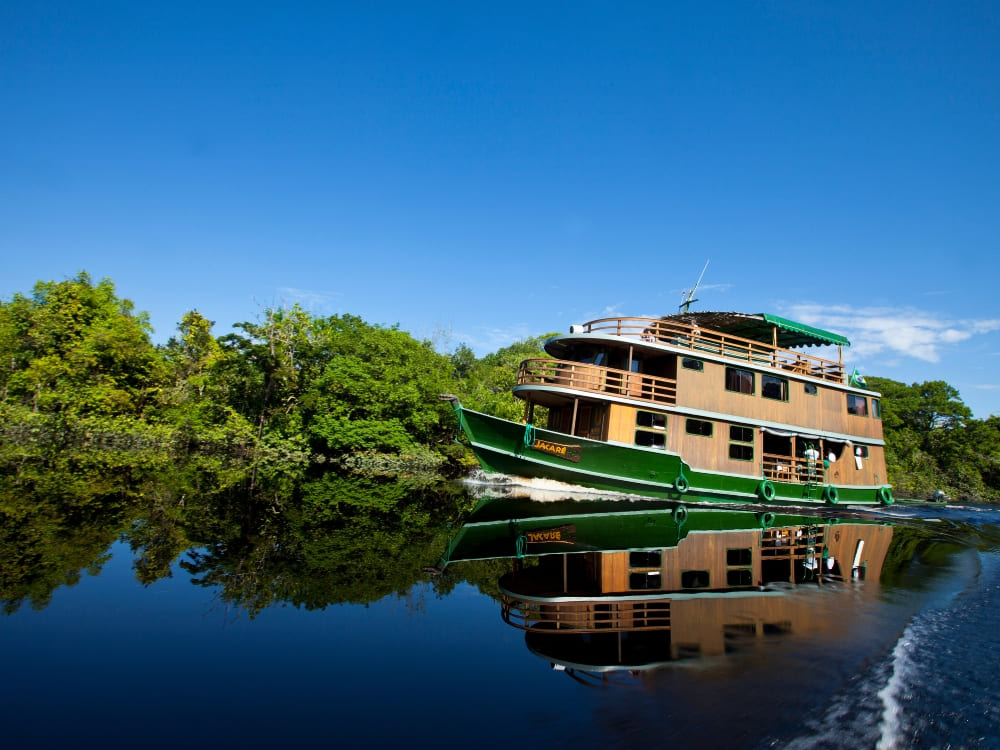
    • River cruises: high-end vessels provide a one of a kind sailing experience across the rivers in Anavilhanas and Jaú national parks.
    • Boat trips: smaller boat and canoes sailing through igarapés and igapós are some of the most authentic activities in the forest.
    • Night expeditions: animals (caimans, snakes, frogs, owls…) tend to roam around the forest more freely when night falls, making it an ideal time for wildlife watching in the Amazon.
    • Pink dolphins sightings: unlike other native animals, the iconic pink river dolphins aren’t shy and are often spotted during boat rides across Solimões and Negro rivers.
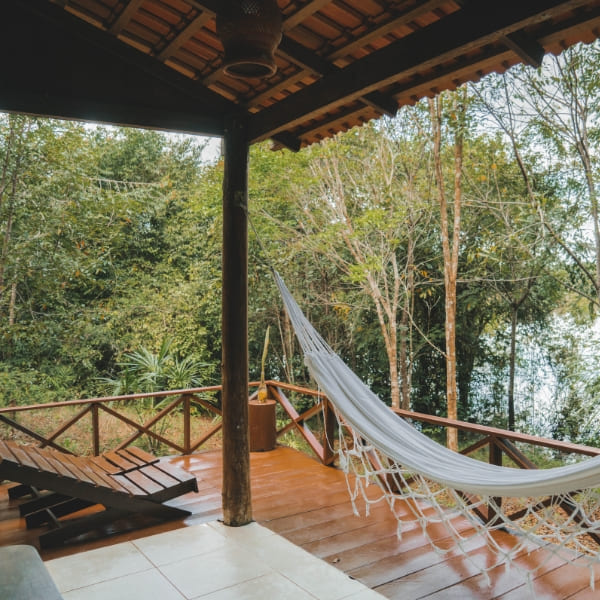
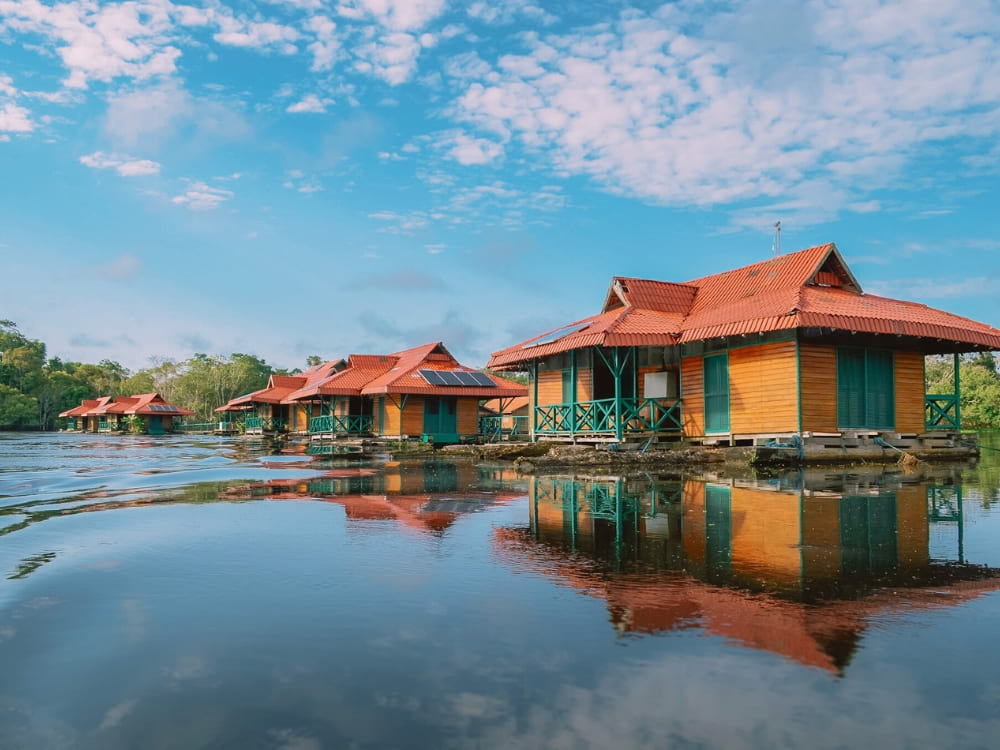
    • Lodging in the forest and floating houses: rustic or sophisticated stay experiences, always integrated with nature.
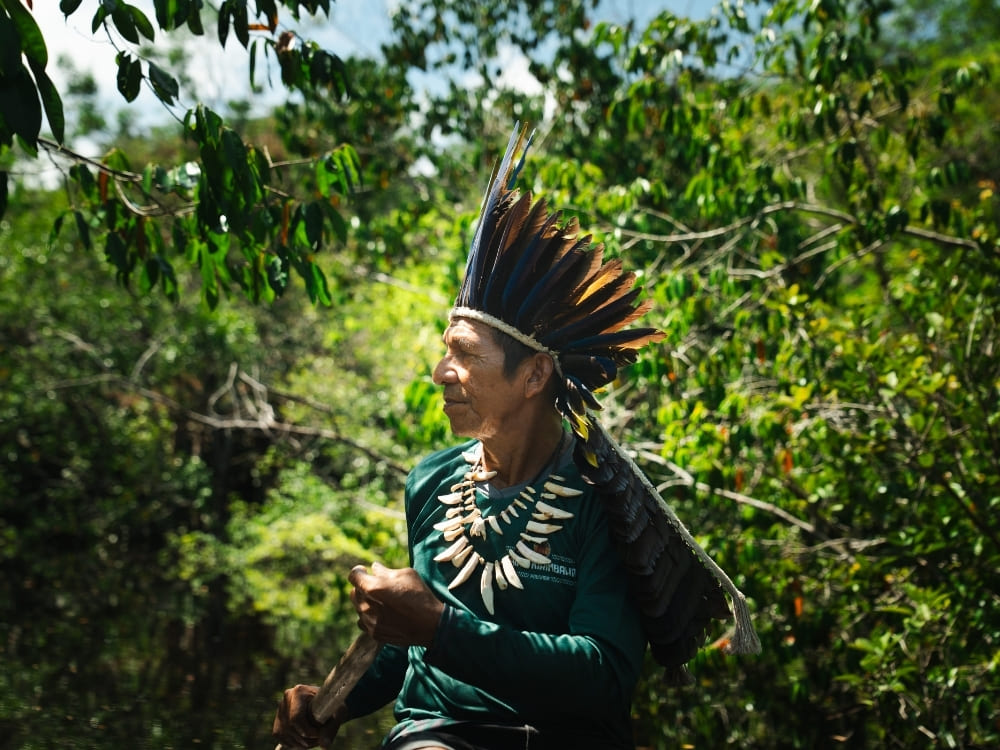
    • Visiting riverside and indigenous communities: contact with local cultures, traditional cuisine, handicrafts and even ceremonies conducted by indigenous leaders.

    👉 Read more: Top things to do in the Amazon Rainforest in Brazil

    Indigenous men playing traditional wind instruments during a cultural ceremony in the Amazon.

    How to get to the Pantanal and the Amazon in Brazil?

    The Pantanal and the Amazon Rainforest are located in remote regions, with logistical challenges that can directly influence the tourist experience. However, with the growth of ecotourism in Brazil and the development of local infrastructure, these trips have become increasingly viable.

    Divided between North and South, the Pantanal is assessable via Cuiabá (Mato Grosso) or Campo Grande (Mato Grosso do Sul), both capitals connected by dirt roads to the lodges and ranches. The dry season (May to October) is a great time for wildlife watching and other outdoor activities due to the decrease in water level.

    👉 Read more:

    Two open-air safari vehicles stopping on a dirt road to observe a jaguar lying on the ground.

    If you’re traveling to the Amazon, the route depends on which areas you’re visiting. Manaus, capital of Amazonas, is the main getaway to the forests, served by direct flights from major Brazilian cities, but there are also tours in the states of Pará and Mato Grosso.

    River levels vary greatly between the wet and dry seasons, so activities can change depending on the time of year. The rainy season (December to May) is best for canoeing, while the dry season (June to December) allows for longer hikes.

    👉 Read more:

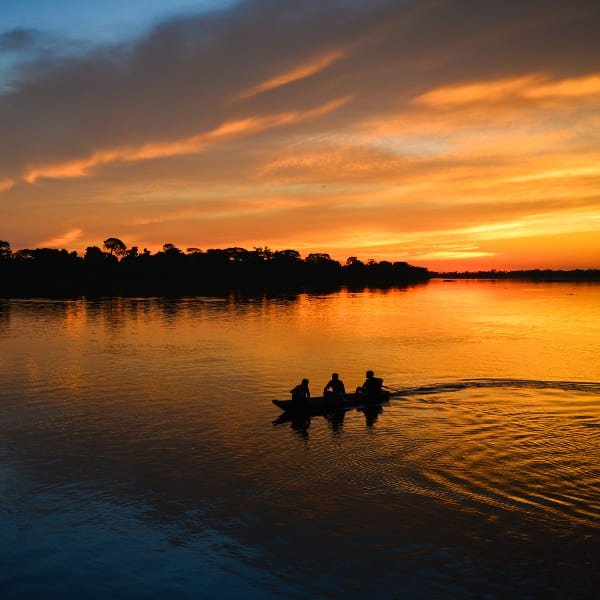
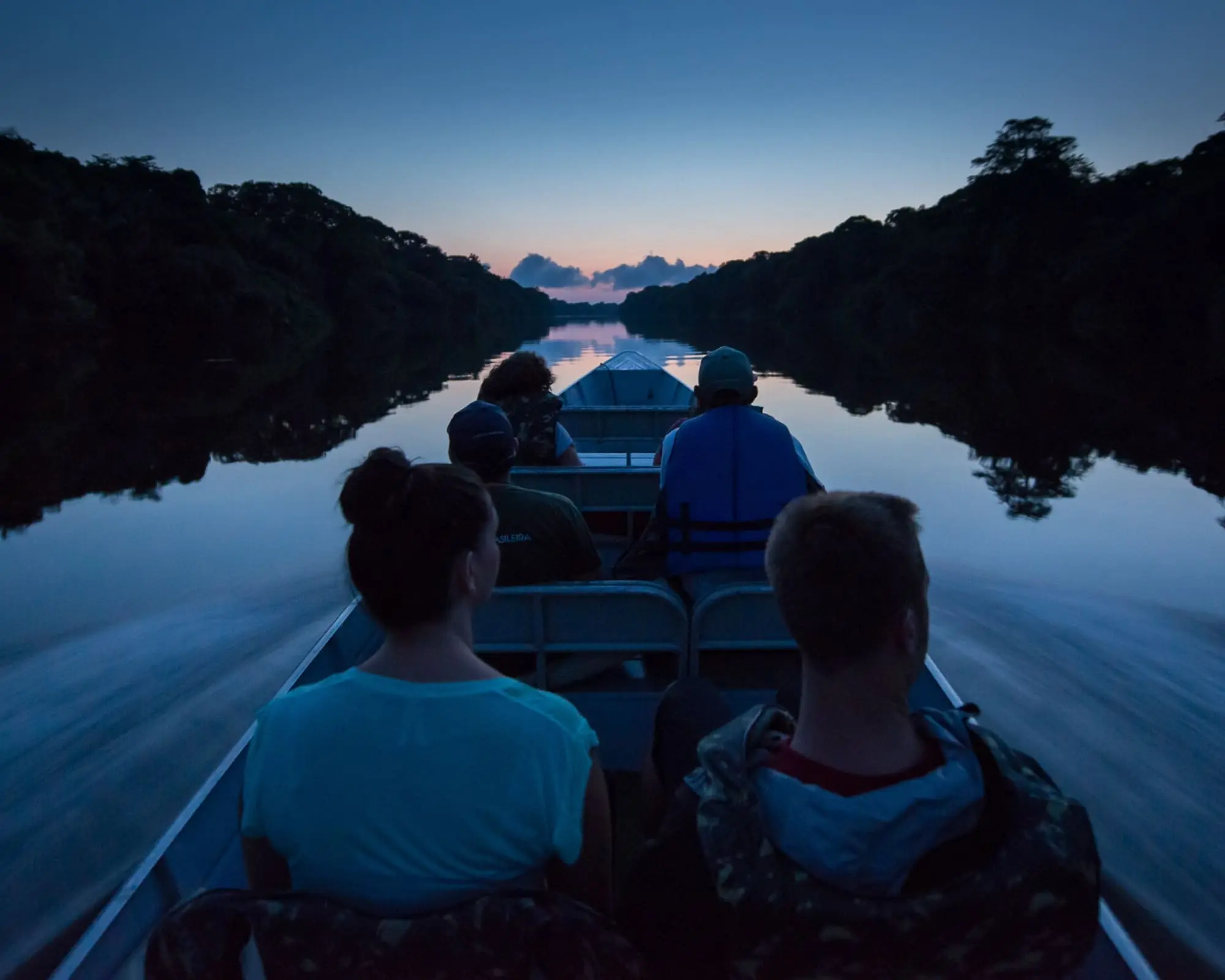
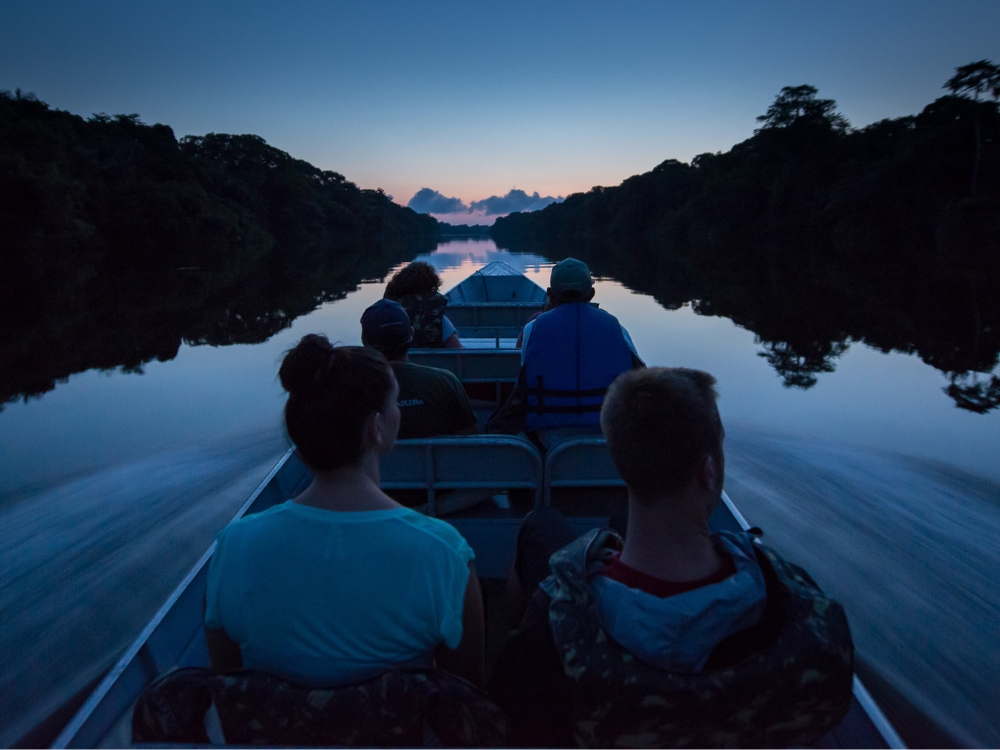
    Tourists on a small motorized canoe navigating an Amazon river at twilight.

    Sustainability and local impact

    Both the Pantanal and the Amazon are biomes of global importance for environmental conservation. Sustainable travel has proven to be a powerful tool for preserving these regions and supporting local communities. 

    By choosing responsible lodging, hiring local guides, opting for operators that follow sustainable practices and taking part in activities focused on environmental education, tourists contribute directly to maintaining communities and enhancing biodiversity.

    An ecotourism guide holding binoculars standing next to an Onçafari project vehicle.

    Ecotourism efforts, such as ecological lodges in the Amazon, or adapted farms in the Pantanal, help generate income for local populations and create alternatives to deforestation, poaching and predatory exploitation of natural resources.

    Prioritizing experiences that respect the rhythms of nature, limit the number of visitors and are committed to sustainable practices is essential to ensure that these landscapes continue to exist for generations to come. 

    A woman holding a native tree sapling for a sustainability and reforestation project in the Amazon.

    👉 Learn more and support:

    In conclusion, should you choose the Amazon Rainforest or the Pantanal?

    Go to the Pantanal for easier wildlife watching, open landscapes and safari-style experiences, or choose the Amazon if you’re looking for immersive jungle exploration, cultural encounters, and the feeling of being in the middle of a tropical rainforest.

    Better yet: plan your trip to both destinations, since each reveals a unique side of Brazil’s untamed beauty. 

    There’s no wrong choice here, just different kinds of adventures!

    Travelers using binoculars to spot wildlife while hiking through the Amazon jungle.
    Photo: Samuel Melim

    Travel to the Pantanal or the Amazon with PlanetaEXO

    PlanetaEXO is an ecotourism platform specialized in Pantanal tours and Amazon Rainforest tours in Brazil, so why choose just one destination when you can do both?

    We work with the best local operators to make sure your travel experience is unlike any other. From bookings to itineraries, our team will be with you every step of the way. Contact us now!
  • The 5 Nature Destinations Our Travelers Loved Most in Brazil in 2025

    The 5 Nature Destinations Our Travelers Loved Most in Brazil in 2025

    2025 was a special year for travel in Brazil and for everyone who chose to experience the country through nature

    At PlanetaEXO, we welcomed more than 1,000 international travelers over the year, all looking for journeys that went beyond short visits and famous highlights.

    When we look back at what travelers shared after their trips, through verified reviews and feedback, a clear pattern appears. The destinations that left the strongest impression were those where people could move through the landscape over several days, letting nature set the rhythm instead of following a tight schedule.

    Beyond the landscapes themselves, these journeys also stood out for the positive impact they create at each destination, supporting local communities, valuing local knowledge, and traveling in a way that respects the places visited.

    Five-star destinations that stood out in 2025, shaped by the adventures travelers valued most.

    Lençóis Maranhenses

    Walking routes that turn dunes and lagoons into a multi-day journey

    Lençóis Maranhenses was the destination most often mentioned throughout the year. What travelers appreciated most were the multi-day trekking routes across the national park, where the journey happens entirely on foot.

    Adventurers cross wide dune fields, swim in seasonal freshwater lagoons and spend nights in small villages along the way. Many people describe the experience as crossing a living landscape that changes every day.

    An unforgettable experience. Brazil reveals itself here, in Lençóis, through landscapes that are incredible and truly unique in the world.

    Franck Nicolas

    👉 Explore trekking routes in Lençóis Maranhenses

    Vale do Pati (Chapada Diamantina)

    Multi-day hikes through deep valleys and local communities

    In the Vale do Pati, in Chapada Diamantina, travelers consistently highlighted the classic multi-day trek through the valley as one of the most meaningful experiences of their time in Brazil.

    Days are spent hiking between viewpoints, waterfalls and river crossings, while nights are spent in the homes of local families who live inside the park. What stays with many travelers is the sense of continuity — walking all day, sharing meals and waking up surrounded by the same landscape.

    From start to finish the whole trip was amazing. The valley is stunning, the hikes were well planned, and the hosting families made the experience even more special.

    Dan Heath

    👉 Discover the Vale do Pati trekking experiences

    Amazon Rainforest

    From jungle lodges to survival expeditions deep in the rainforest

    The Amazon stood out in 2025 for offering two very different ways of experiencing the rainforest, both leaving a strong impression on travelers.

    Some chose classic Amazon jungle lodge adventure, combining river navigation, forest walks and wildlife observation. Others opted for longer survival-style expeditions, learning how to move, navigate and live in the forest over several days.

    The lodge and tour were perfect. I learned so much about Amazon, it's people and the wildlife and flora.

    Kristina Wagner

    👉 Choose your Amazon experience

    Pantanal

    Wildlife encounters shaped by open landscapes and rivers

    In the Pantanal, what travelers remember most is how natural wildlife encounters feel. The open floodplains and rivers allow people to observe animals without long waits or artificial setups.

    Many adventurers mention seeing iconic species — including jaguars — early in the trip, which often defines the tone of the days that follow.

    A wonderful experience in a beautiful environment. We saw a jaguar on the first day and many other animals during the trip.

    Valerio Grandis

    👉 See wildlife journeys in the Pantanal

    Jalapão

    Remote Cerrado landscapes that reward those who go further

    Jalapão surprised many travelers in 2025. The most appreciated experiences were multi-day expeditions across the Cerrado, connecting sand dunes, waterfalls, fervedouros (natural springs) and long stretches of open land.

    People often describe how distance, dirt roads and long driving days are not inconveniences, but essential parts of what makes the journey feel real and memorable.

    Sensational. Jalapão is breathtaking. Incredible landscapes, perfect organization, and very professional guides. An unforgettable experience.

    Sarah Danflous

    👉 Explore Jalapão expeditions in the Cerrado

    What these journeys say about how people want to travel

    Across all five destinations, one thing becomes clear: people are choosing trips that give them time to be present. Journeys that unfold over several days, where movement through the landscape matters more than ticking off stops, and where nature sets the rhythm of each day.

    If this way of traveling resonates with you, 2026 is a great moment to start planning. These destinations, and the adventures within them, are exactly where many travelers begin when they’re looking for a deeper, more meaningful way to experience Brazil.

    👉 Join us on five-star adventures that make a positive impact.


  • When is the Best Time to Visit the Amazon Rainforest in Brazil

    When is the Best Time to Visit the Amazon Rainforest in Brazil

    Not sure when is the best time to travel to the Amazon? This guide will teach you everything about the forest’s seasons and help you plan your next vacation!

    With two very well-defined seasons (wet and dry seasons), the best time to visit the Amazon Rainforest depends on what you’re looking for. This is an all-year-round destination, but some periods are more favorable to certain activities than others

    The weather is warm throughout the entire year, but it’s the humidity you should pay attention to—it is a rainforest, after all. The rain is mostly an everyday occurrence, but there are specific times when rainstorms are more common. But don’t you worry: your experience will not be affected!

    To help with your vacation planning, PlanetaEXO, a platform specialized in Amazon Rainforest tours in Brazil, has put together a guide on when you should book your trip. Check it out below!

    Visiting the Amazon in the wet season

    December, January, February, March, April and May

    The wet season is when rainfall is the heaviest, from December to May. Rivers get higher, the Amazon Basin starts to flood and the weather is slightly cooler, with an average temperature of 25,8 ºC (78 ºF).

    Rainstorms hit the forest daily, but your trip won’t be negatively affected, since they only last about an hour per day. When the sky clears, you can go back outside and enjoy yourself.

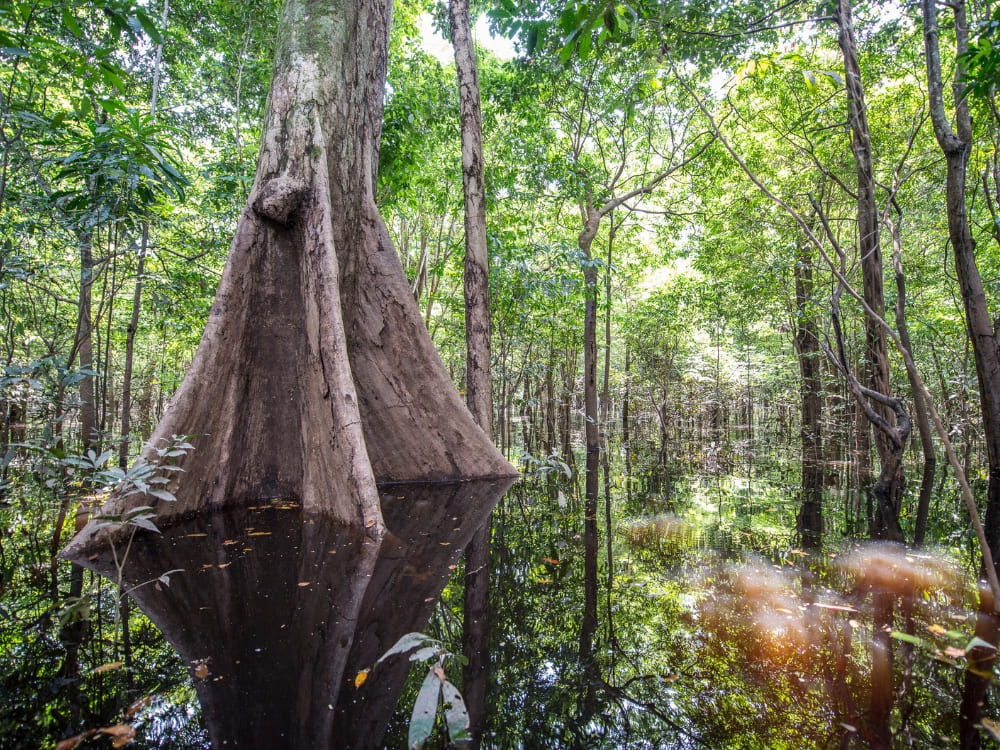
    Another impressive feature of the rainy season is the igapós. The intense rainfall causes some areas of the forests to become flooded. Depending on river levels, the water can reach up to 10 meters in height, transforming the vegetation into a natural pool that delights underwater animals and humans alike.

    Large Samauma tree with buttress roots submerged in the dark waters of the flooded Amazon forest.
    .

    Amazonian winter

    While the rest of Brazil heats up with spring and summer, the Amazonian winter (December to March) affects the Northern states.

    Despite its name, the season is really not about temperature — which remain high, as usual —, but the intensity of rainfall that causes rivers to rise and forests to flood. In the Amazonian winter, it’s possible for the amount of rain that would normally fall in an entire month to fall in two or three days.

    This phenomenon happens for a few reasons:

    • Lack of well-defined season in the North
    • Oscillation of a band of cloudiness over the Equator
    • Transport of humidity from the North Atlantic
    • Specific climatic phenomena, such as La Niña

    Your travel experience isn’t negatively affected by this, but some activities are more favorable than others during this time, as detailed below.

    What to do during the wet season in the Amazon Rainforest?

    This is the perfect season for water-related itineraries. Due to the heavy rainfall, you don’t walk through the forest, you navigate through it:

    • Igapós (flooded forests): Canoe, swim or go on aquatic hikes between treetops, orchids, bromeliads and other plants at eye level.
    • Wildlife watching: Terrestrial animals tend to climb to the treetops when the forest floods, making it much easier to spot sloths and monkeys. Various species of birds and the famous Amazon pink dolphins are also frequently seen.
    • Destinations for the Amazon rainy season: Anavilhanas National Park, Mamirauá Reserve and Alter do Chão are some of the top places to travel during this period. Explore water labyrinths, admire the wildlife and join canoe trips.
    • River cruises: Sailing across the Amazon, Negro or Solimões rivers on 3-floor vessels is a wonderful way to experience nature from a whole new perspective.
    Tourist navigating a canoe through the green canopy of the flooded Amazon rainforest looking up at the trees.
    .

    👉 Read more: Best Amazon River Cruises in Brazil

    Visiting the Amazon in the dry season

    June, July, August, September, October and November

    Between June and November, the dry season makes the temperature warmer, with an average of 27,9 ºC (82 ºF). It still rains, but it’s less frequent and the water volume is lower. This allows the floods to drain, unblocking various hiking trails that were previously submerged — although there still are a considerable amount of flooded areas. 

    Less rain also means reduced rivers and a better look at different species of fish and even Amazon pink dolphins. When the water recedes, aquatic animals have less space to swim around, so their occupation is concentrated in smaller zones.

    Keep in mind: from October to December, extended dry seasons are becoming more frequent, causing rivers to shrink, limiting access to a few areas and potentially reducing encounters with some species of animals and plants. The rivers are expected to slowly start rising by November and December. The conditions are much better by January, so the recommendation is to book your tour from this month onwards.

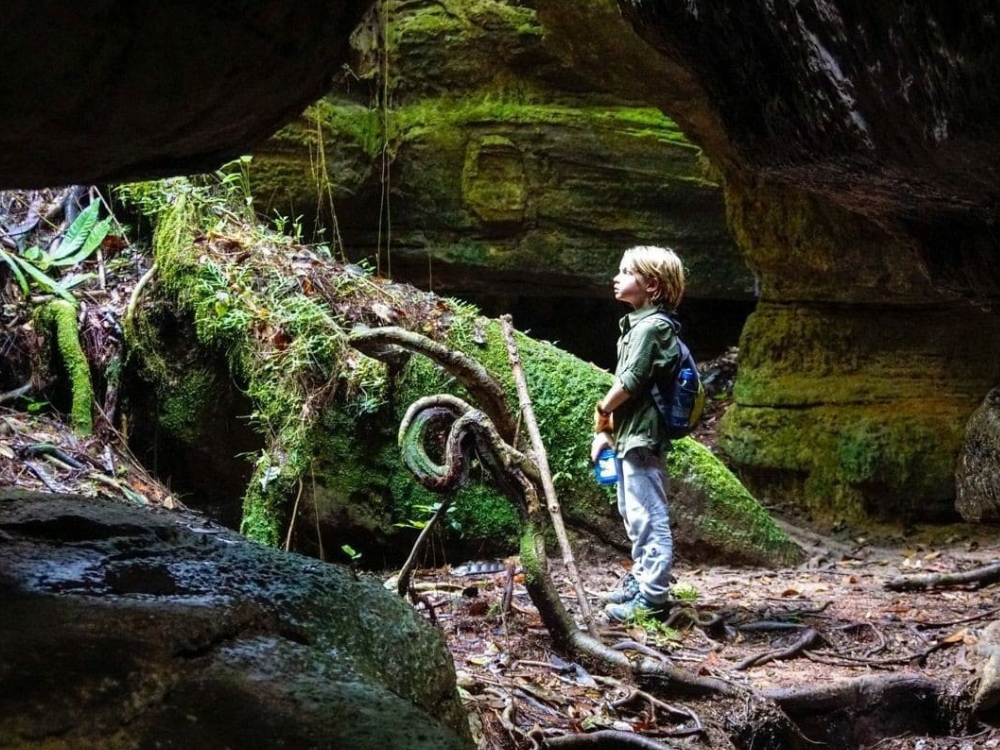
    Young boy standing at the entrance of a mossy cave exploring the Amazon jungle.
    .

    What to do during the dry season in the Amazon Rainforest?

    Land-based itineraries are the highlights of the dry season, but it’s still very much possible to do incredible aquatic activities:

    • River beaches: Known as the Caribbean of the Amazon, Alter do Chão is the main destination for visiting river beaches, though Anavilhanas and the Manaus region are also great spots.
    • Jungle hiking: This is the perfect time for modest hikes or long treks in the forest — including caves and waterfalls —, as well as camping and night walks.
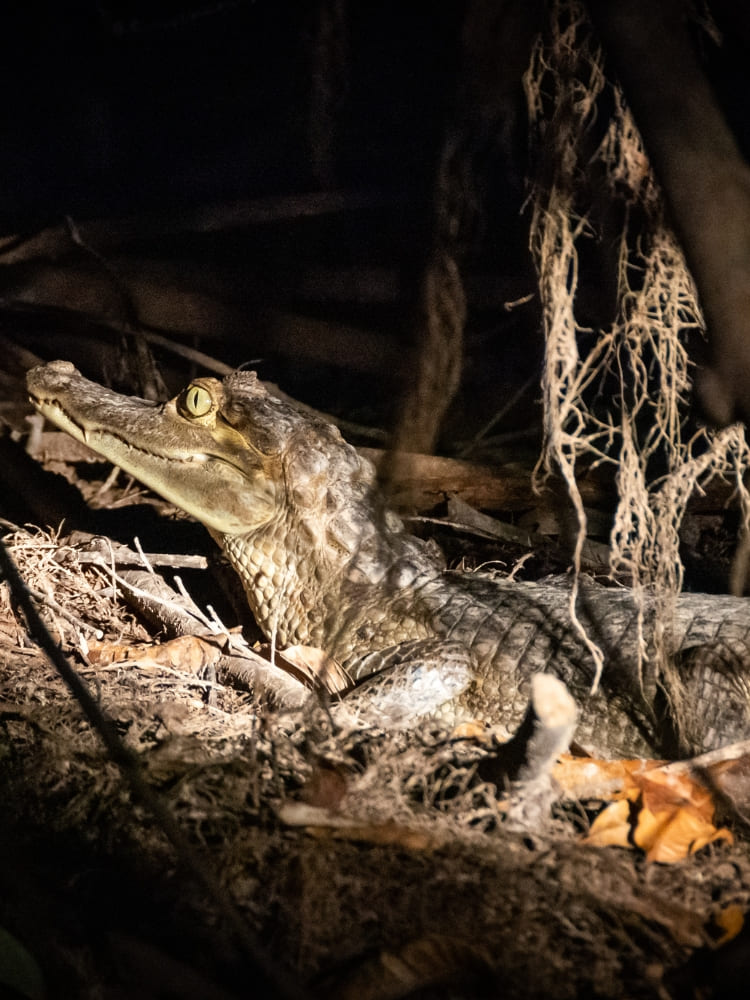
    • Night spotlight: As the flooded area shrinks drastically, caimans gather on the banks of the main rivers and the remaining lakes. At night, “spotting” (shining flashlights into their eyes) reveals hundreds of bright spots in the water. With some luck, you might see other nocturnal creatures, too.
    • Amazon river cruises: Cruises are one of the most versatile activities in the Amazon, as they can be enjoyed during both the rainy and dry seasons.
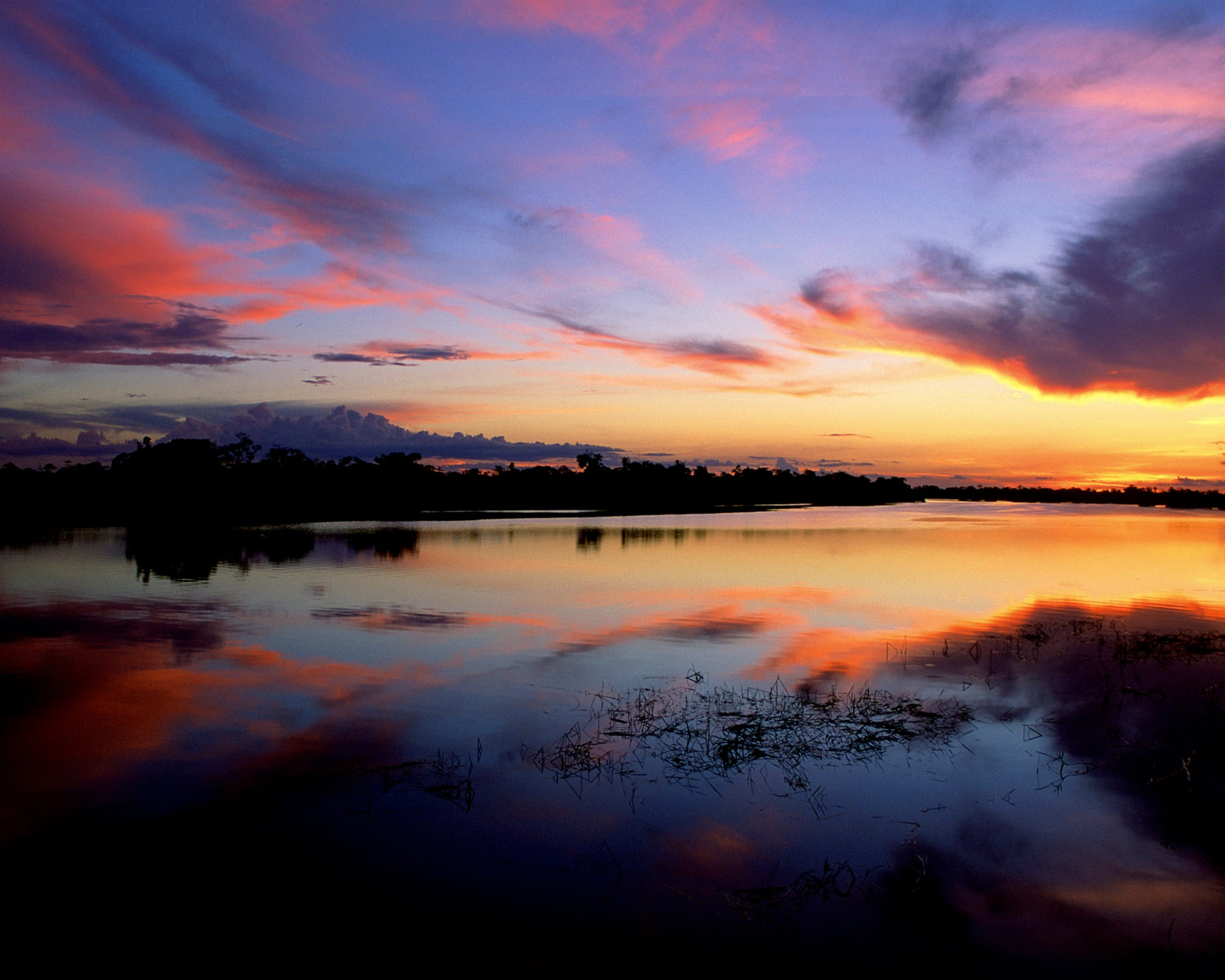
    Silhouette of a person doing a yoga tree pose on an Amazon river beach at sunset.
    .

    👉 Read more: Best Places to Visit in the Amazon, Brazil

    High and low seasons in the Amazon, Brazil

    The high season is the time of year when the greatest number of people visit a certain destination. Increased demand doesn’t harm the travel experience, but it can affect aspects such as higher prices, more visitors, and reduced availability in the best Amazon jungle lodges.

    The following months are usually the busiest:

    • December and January: Holidays, vacations, and work/school breaks cause people to travel more.
    • February: Carnival is one of the most important holidays in Brazil. After four days of festivities, tourist activity in the Amazon tends to grow (usually in the second half of February, depending on the annual calendar).
    • June, July and August: School break in Brazil, and North American and European countries.
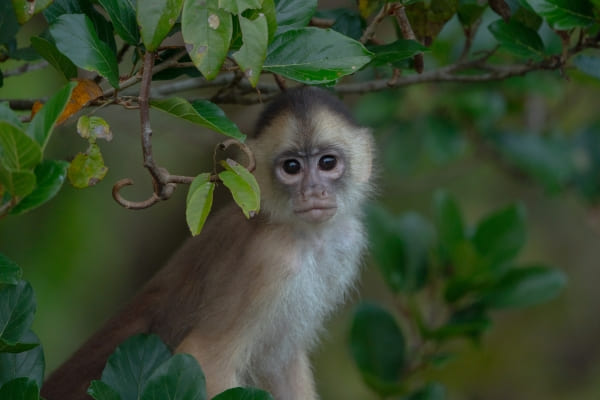
    Two squirrel monkeys sitting on a tree branch grooming each other in the jungle.
    .

    The low season occurs during the months not mentioned above. If you are looking for more peacefulness, exclusivity, and affordable prices, this is the best time to go to the Amazon!

    Amazon Rainforest weather

    The Amazon in Brazil is big enough to reach eight different states, but we’ll focus on three: Amazonas, Pará and Mato Grosso. All of them, of course, have their own features, travel options and weather patterns.

    To help you decide when is the best time to go to the Amazon, check the widgets below to see how the weather is right now in these locations.

    👉 Read more: How to get to the Amazon Rainforest in Brazil?

    Manaus, Amazonas

    Manaus is the capital of Amazonas, the state in which the forest occupies the largest portion – about 29% of the Brazilian Amazon, ranging 1.450.00 km². It’s bigger than the entire country of Peru (1.285.216 km²)!

    That’s why Amazonas is the most seeked out destination for a lot of people who want to immerse themselves into the Amazon Rainforest. Makes sense, huh?

    Belém, Pará

    Pará sits right beside Amazonas, in the North of Brazil. The Amazon takes up a smaller area here, with “only” 930.00 km². It’s almost as big as Tanzania (947,303 km²), in Africa. 

    See below how the weather is right now in Belém, the capital of Pará.

    Alta Floresta, Mato Grosso

    Alta Floresta is a town in Mato Grosso with a population of over sixty-two thousand people, located in the north of the state and the south of the Amazon. The rainforest takes up 470.000 km² — larger than the California area (423,967 km²).

    Take a look at the current weather in Alta Floresta:

    The best time to visit the Amazon in Brazil is whenever you want!

    As a year-round destination, the Amazon allows for incredible experiences at any time — it all depends on your schedule and preferences.

    Now all you have to do is choose the most convenient date to plan your trip with PlanetaEXO, the ecotourism platform specialized in Amazon Rainforest tours in Brazil that works with the best local partners. Our team will help with everything you need to make your vacation one of the best moments of your life. Contact us now!
  • How Many Days Should You Spend in the Amazon?

    How Many Days Should You Spend in the Amazon?

    When planning your trip to the Amazon, don’t forget to consider logistics, seasons, and your travel style

    To truly experience the rainforest, it’s recommended to book a trip for at least 3 full days, but deciding how many days you should stay in the Amazon Rainforest depends on what experiences you’re looking for, as well as the weather and seasons.

    Aerial view of the Amazon River winding through the dense rainforest in Brazil during a golden sunrise.
    Photo: Anderson Coelho

    The logists also play a huge part in vacation planning—the forest covers over 4 million square kilometers just within Brazilian borders. In fact, just getting to Brazil might be a long journey in itself for some foreign tourists, so time management is crucial.

    As an ecotourism platform specializing in Amazon tours in Brazil, PlanetaEXO has extensive experience planning trips to the largest rainforest in the world. Check our complete guide below and follow our tips!

    What determines how long you should stay in the Amazon?

    Before deciding how many days to spend in the Amazon, it’s worth considering a few factors that will shape your experience:

    Logistics

    Most travelers going to the Amazon Rainforest arrive via Manaus, capital of Amazonas and a major gateway served by daily flights from São Paulo, Brasília, Rio de Janeiro, Belém, etc.

    A river cruise boat navigating the calm waters of the Amazon River surrounded by lush green jungle.
    .

    From Manaus, two of the closest protected areas in the Amazon are the Anavilhanas Archipelago and Jaú National Park. Anavilhanas lies along the Rio Negro near the town of Novo Airão, about 180–200 km from the capital, and can be reached in roughly 2–3 hours by road. Jaú is accessed through the same gateway town but requires an additional boat journey along the river to reach its remote interior.

    For more distant locations like Tefé (~520 km) and Alter do Chão (~600 km), travel requires more planning. While the river journey can take between 1–3 days depending on the current, a flight reduces the travel time to just over an hour.

    One of the most renowned wildlife destinations in the southern Amazon is the Cristalino region, located in the state of Mato Grosso. Unlike the areas around Manaus, access begins with a flight to the city of Alta Floresta. From there, travelers continue with a 1.5-hour drive followed by a 30-minute boat ride along the Cristalino River, leading to private reserves and lodges surrounded by the forest.

    👉 Read more: How to get to the Amazon Rainforest in Brazil?

    Seasons and weather

    Knowing when is the best time to visit the Amazon Rainforest has a great influence on your trip, as seasons shape river levels, wildlife behavior, and trail conditions.

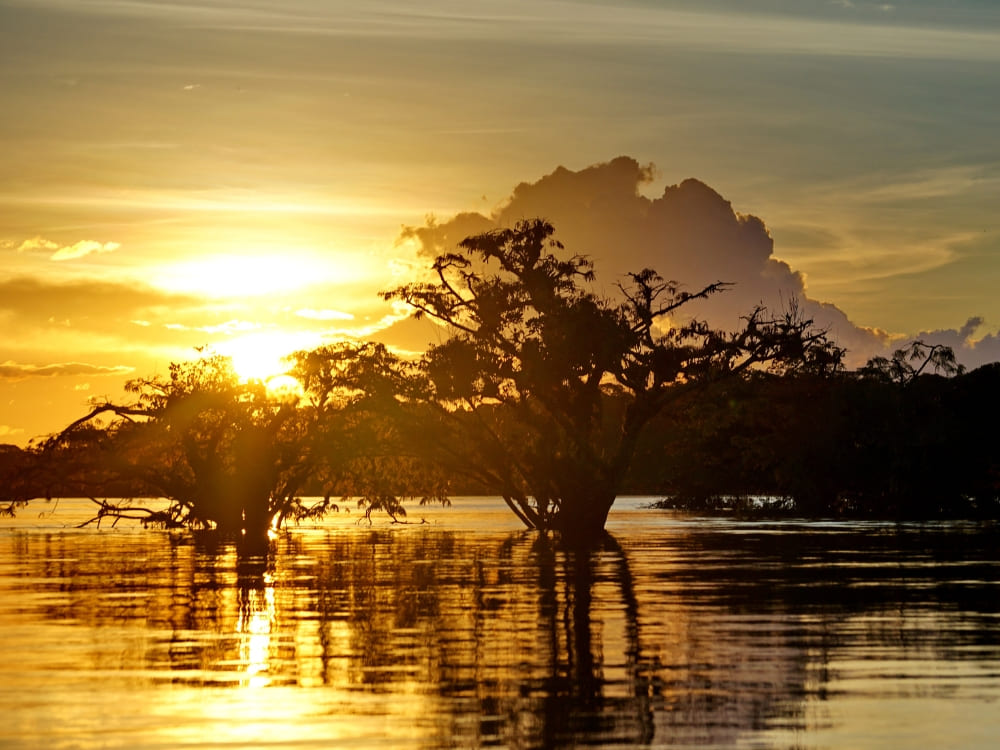
    Golden sunset reflecting on the calm waters of a flooded igapó forest in the Amazon.
    .

    The rainy season runs from December to May, marked by heavy rain that makes the rivers higher and causes a few areas of the forest to flood. Activities include swimming and canoeing in igapós, boat trips, wildlife watching and river cruises.

    From June to November, in the dry season, the rivers shrink and hiking trails are unblocked. It’s the perfect time for hiking, camping, night spotlighting and visiting river beaches.

    The Amazon weather is also something to consider. While the rainfall volume is higher during the rainy season, storms are common throughout the entire year, though they’re usually quick and don’t negatively affect trips at all. Warm and humid, temperatures range from an average of 25,8 ºC (78 ºF) to 27,9 ºC (82 ºF).

    Travel style and pace

    Some people prefer slow, immersive journeys with time to disconnect, join multi-day expeditions, and explore the culture and main attractions of Manaus. Staying longer allows for more contact with nature and meaningful exchanges with local communities, including indigenous and riverside groups who share their ancestral knowledge and bond with the forest.

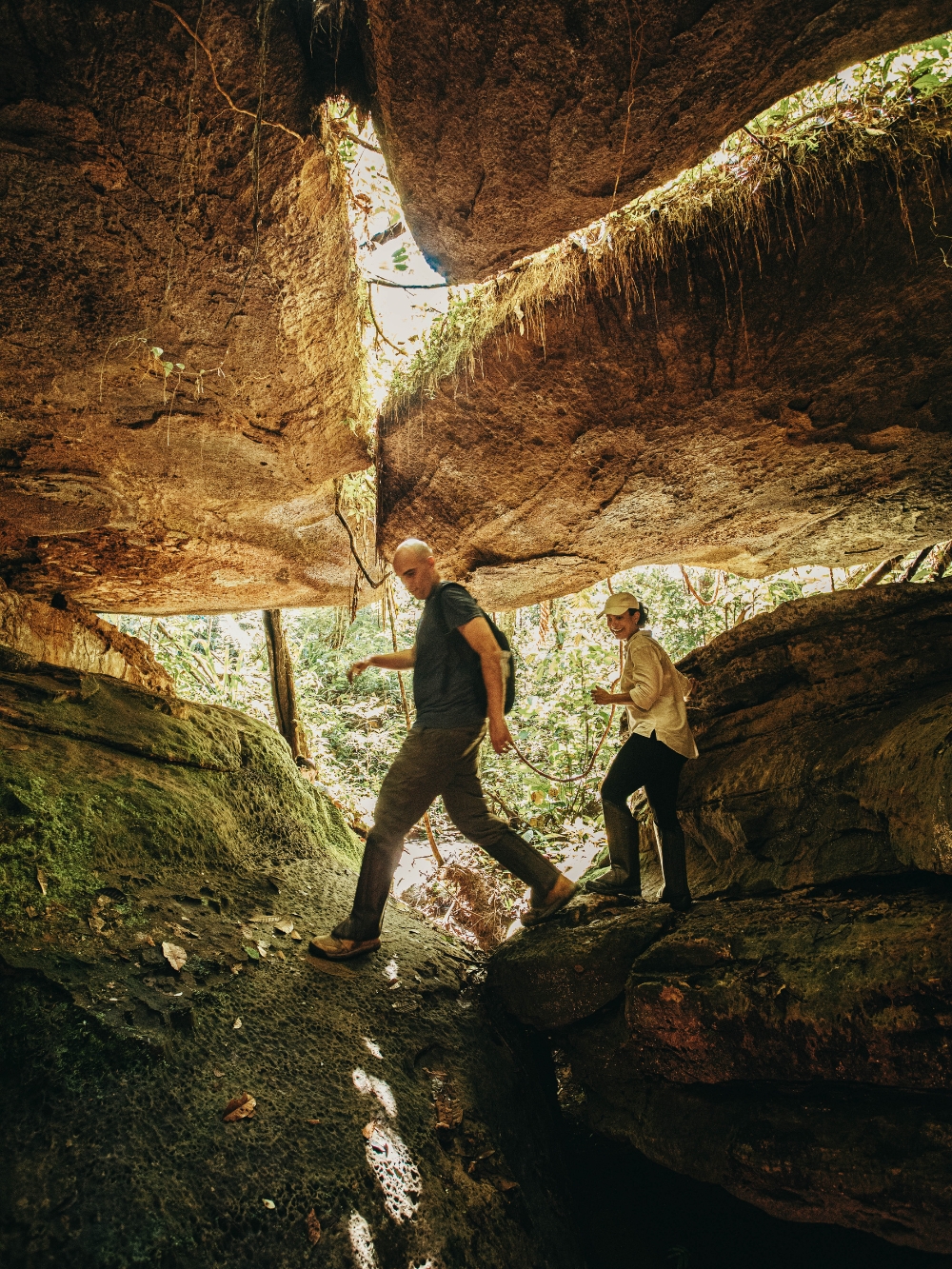
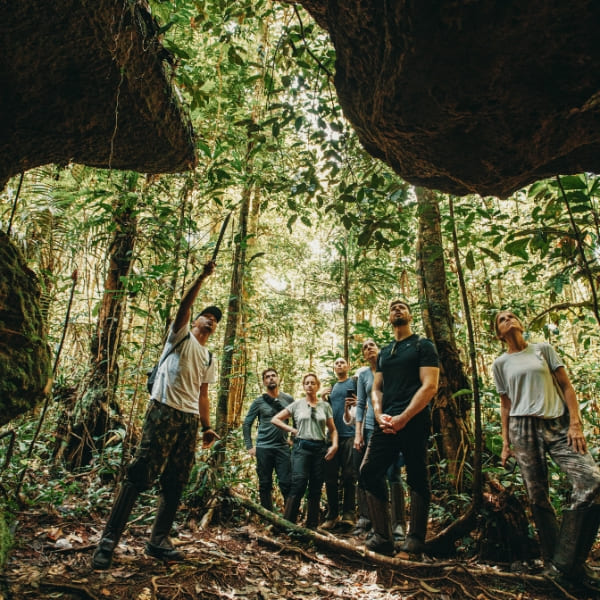
    Two travelers hiking under a massive rock formation in the Presidente Figueiredo forest.
    .

    Travelers who run on limited schedules can also live amazing experiences on fewer days, but it’s important to notice that the Amazon favors a slower rhythm of life. Nature, after all, lives on its own time.

    Therefore, 3 days give you a good enough glimpse of the forest, but a 4 to 7-day trip is ideal to fully enjoy yourself. If you’re not sure how long to stay in the Amazon, the logic is clear: the more days, the better!

    3-day trip: comfort and nature

    Fit for families, couples and travelers looking for a comfortable and safe introduction to the Amazon’s ecosystem. Jungle lodges have great outdoor itineraries while also providing a complete infrastructure for a nice stay experience.

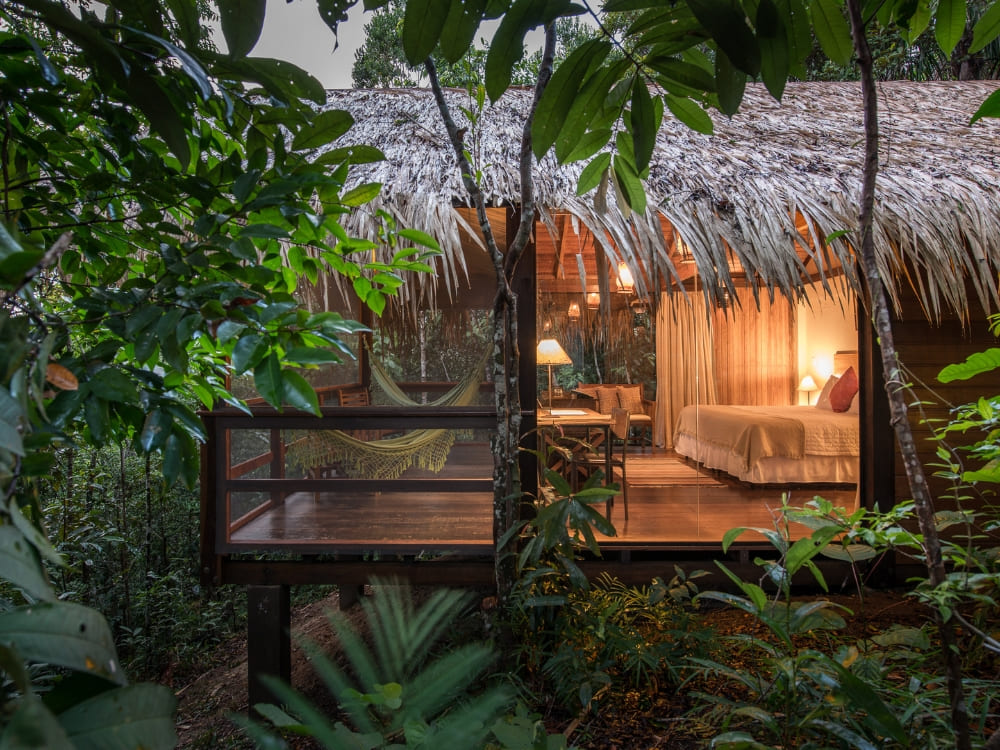
    A comfortable, illuminated room in an Amazon jungle lodge with a thatched roof, surrounded by native vegetation.
    .

    Activities include forest hikes, canoeing, wildlife watching, sunset/sunrise contemplation and leisure time in the hotel’s private rooms and common areas.

    👉 Read more: Best Amazon Jungle Lodges in Brazil

    4-day trip: immersion and survival

    Explore deeper into the Amazon and head to quieter, more preserved zones. It’s the perfect opportunity to establish a real connection with nature and absorb its knowledge

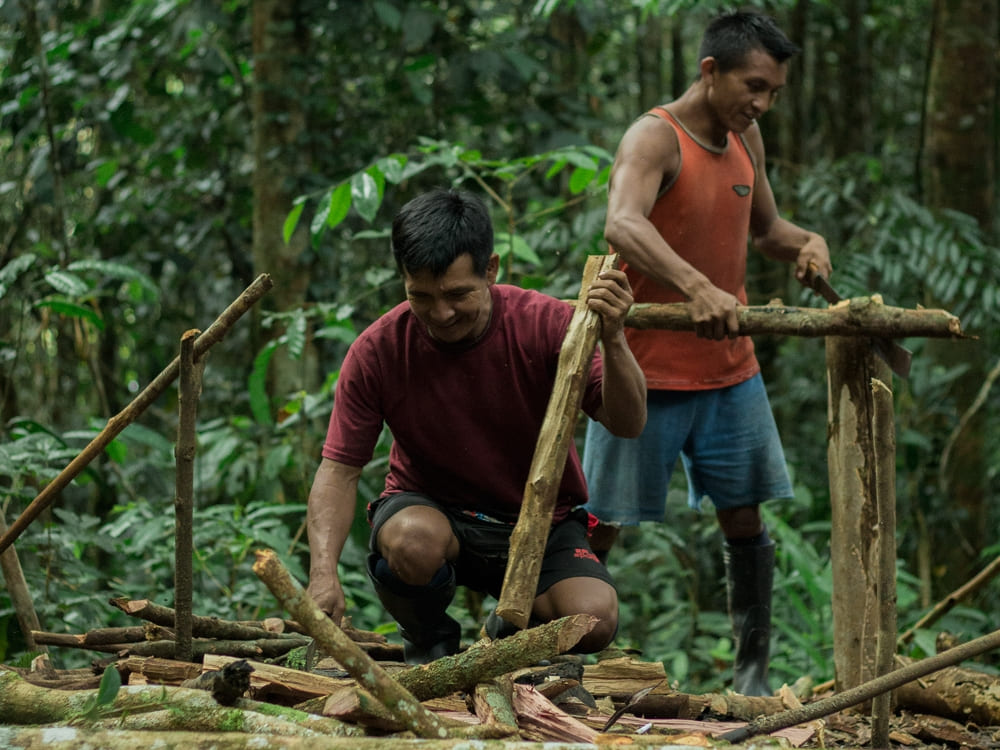
     Two local guides building a wooden structure during a jungle survival tour in the Amazon.
    .

    Local guides can teach you basic survival techniques, like extracting water from vines, identifying medicinal plants, and even setting up simple traps. Additionally, an experienced professional can accompany you while camping among the trees and teach you how to cook your own food on an improvised campfire.

    You can also venture into President Figueiredo, known as the “Land of Waterfalls” to cool off in one of the 150 waterfalls and sandstone caves. Here are some unmissible spots: Judeia and Maragoa Caves, and Iracema and Araras Waterfalls.

    5 to 7-day trip: exploring natural reserves

    There’s a lot you can do in a week, like visiting conservation units that require boat rides to reach areas inaccessible to mass tourism.

    Aerial view of the labyrinthine islands and narrow channels of the Anavilhanas Archipelago on the Rio Negro.
    Photo: Felipe Castellari

    Some jungle lodges and river cruises take their guests to Anavilhanas National Park, the second-largest river archipelago in the world, with over 400 islands. Navigating its narrow channels is a labyrinthine and fascinating experience.

    In Jaú National Park, hike in the forest to get to the sumaúmas (kapok trees), giant trees estimated to be 500 years old. Their roots are so large that they store vast amounts of water to nourish the biome and can even produce vibrating sounds when hit with enough strength.

    Travelers who love cultural experiences can visit riverside communities to learn more about their day-to-day life, including aspects of food, crafts, and conservation challenges.

    👉 Read more: Best Amazon River Cruises in Brazil

    10 to 15-day trip: epic expeditions

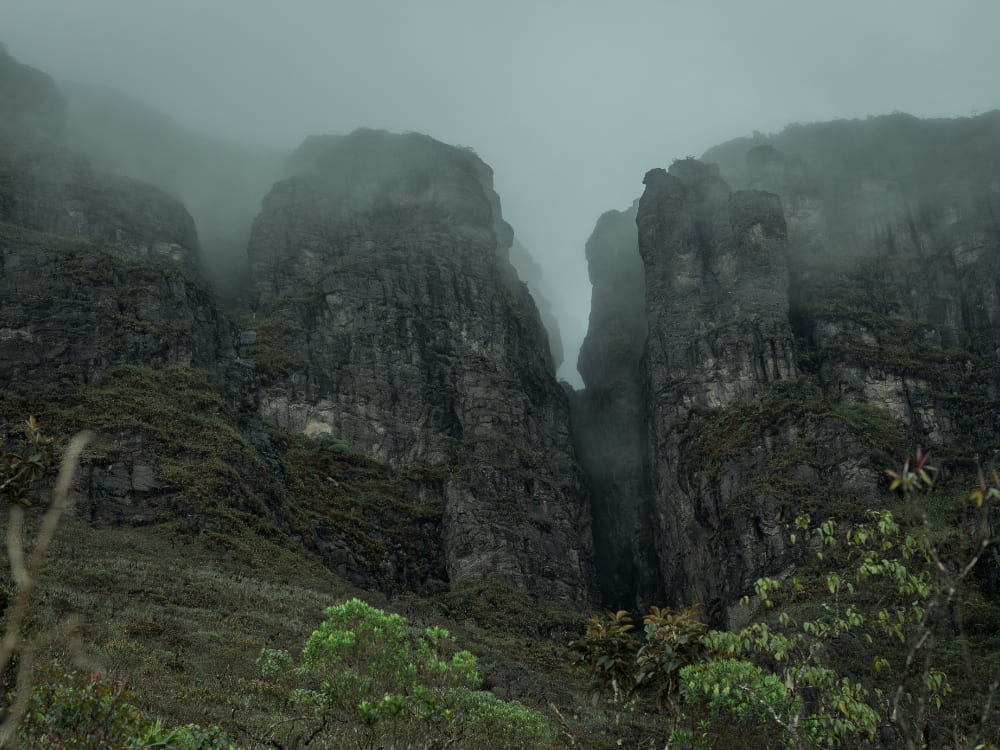
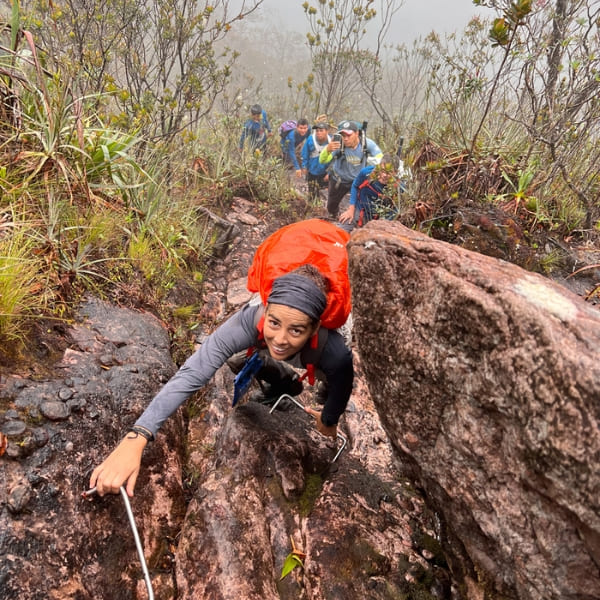
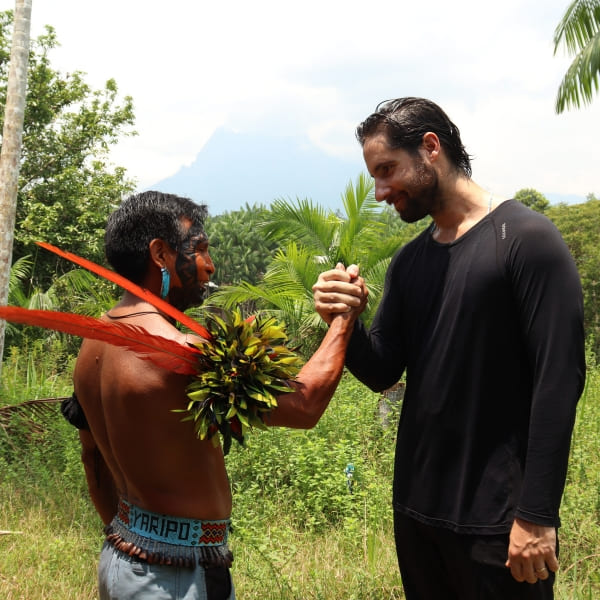
    Test your limits with journeys that explore the most remote and wild parts of the Amazon Rainforest, such as trekking and camping on Pico da Neblina, the highest point in Brazil. Bordering Venezuela, the destination is Yanomami territory, which requires strict permits to access it and indigenous guides who inhabit the region.

     Imposing, steep rock faces partially covered by thick mist at Pico da Neblina National Park.
    .

    It involves long days of hiking, steep climbs, and unpredictable weather conditions. Physical and mental preparation is essential, but the adventure is well worth it due to the beauty of the natural landscapes, contact with natives, and almost mystical-like atmosphere.

    Best Amazon Rainforest Tours in Brazil

    From luxury river cruises and comfortable lodges to camping in the wild, here are a few option of PlanetaEXO’s tours to help you decide how many days you should stay in the Amazon!

    TOUR HIGHLIGHTS DURATION STARTING PRICE*
    Amazon Jungle Tour from Manaus Hiking, canoeing, fishing, wildlife watching, sunrise contemplation, Meeting of Waters, visiting local communities. 3 days US$ 590
    Amazon Jungle Adventure in Brazil Biking, hiking, kayaking, waterfalls in Presidente Figueiredo, camping in the forest. 3 days US$ 415
    Amazon Jungle Survival Tour Survival techniques, camping in the forest, hiking, wildlife watching, canoeing, Meeting of Waters. 4 days US$ 970
    Mirante do Gavião Exclusive Amazon Lodge High-end stay at Mirante do Gavião, Rio Negro (swimming, kayaking, stand-up paddling), wildlife watching, night tours, hiking, visiting local communities. 4 days US$ 1,900
    Amazon River Cruise in Brazil River cruise in Anavilhanas National Park, hiking, wildlife watching, fishing, night tours, visiting river beaches and local communities. 5 days US$ 2,780
    Cristalino Jungle Lodge Luxury accommodation, wildlife watching, canoeing, boat trips, wildlife watching, hiking. 5 days US$ 3,340
    Amazon Trek and Survival Tour Camping in the forest, survival techniques, hiking, canoeing, wildlife watching, night fishing, boat trips. 6 days US$ 1,351
    Amazon Cruise Trip in Brazil Luxury cruise in Novo Airão, Meeting of Waters, hiking, wildlife watching, Madadá Cave, river beaches, Anavilhanas and Jaú National Parks, visiting indigenous communities. 7 days US$ 3,415
    Pico da Neblina National Park Expedition Trekking, camping in the forest, wildlife watching, cultural immersion with the Yanomami indigenous group. 15 days US$ 4,400

    *Per person, based on double occupancy in group departures. Prices may vary depending on season and availability. Exchange rate as of March 12th, 2026; subject to change.

    Exploring the Amazon Rainforest with PlanetaEXO

    It doesn’t matter how many days you decide to spend in the Amazon—our team is ready to help you live the best vacation of your life in any scenario!

    PlanetaEXO is an ecotourism platform specializing in Amazon Rainforest tours in Brazil. By working with the best local operators, we attend to all your preferences and needs while causing a positive impact on local communities and the environment. Contact us now!

  • Documentary: Tourism That Keeps the Amazon Alive

    Documentary: Tourism That Keeps the Amazon Alive

    PlanetaEXO documentary reveals how sustainable travel advances forest conservation, local actions that put climate discourse into practice and strengthen Amazonian communities.

    São Paulo, November 2025 – Following the conclusion of COP30 in Belém, a new documentary reinforces that protecting the Amazon increasingly depends on local and continuous action. The sustainable travel platform PlanetaEXO has just released “Tourism that Keeps the Amazon Alive,” a 5-minute film that portrays how Amazonian communities are transforming tourism into an effective strategy for conservation and income generation.

    The mini-documentary directed by Lucas Ribeiro, who is also the founder and CEO of PlanetaEXO, features accounts from residents who have replaced old extractive activities with community-based tourism models. By accompanying visitors, sharing traditional knowledge, and directly caring for the territory, they demonstrate that it is possible to keep the forest alive while strengthening their local economies.

    Recent figures reinforce the urgency of this movement. Between August 2024 and July 2025, the Legal Amazon recorded 5,796 km² of deforestation, the lowest rate in more than a decade, according to PRODES/INPE. Even so, degradation caused by fire already accounts for almost 40% of recent losses, indicating that pressure on the biome remains high. For many families, tourism is emerging as a concrete alternative to remain in the territory without resorting to practices that compromise the forest.

    One of the most striking testimonials in the film sums up this change in perspective. “Tourism showed me that price is different from value. A caboclo cuts down a 300-year-old tree to buy a chicken for lunch and ends up without dinner. That’s price. But when you understand value, that’s when things start to change,” says Roberto Britto, a former logger and current tourism entrepreneur.

    Tourism showed me that price is different from value. A caboclo cuts down a 300-year-old tree to buy a chicken for lunch and ends up without dinner. That's price. But when you understand value, that's when things start to change.

    Roberto Britto

    PlanetaEXO has observed a growing interest in responsible travel, which strengthens community projects and amplifies the positive impact of ecotourism. In 2025, the platform recorded a 210% increase in the number of tourists in the Amazon compared to the previous year, with visitors coming from the United States, France, Germany, and other countries. 

    World Bank data shows that sustainable tourism already generates around US$ 2.3 billion per year in the Amazon. The figure is still far from the US$ 45 billion generated by extractive activities, but it is a new and growing market. The Planeta EXO documentary highlights the stories of forest dwellers who have discovered responsible tourism as a more sustainable source of income. 

    “The film focuses on the people behind these efforts. In their own words, they describe how tourism has transformed their daily lives, brought them independence, and offered a dignified alternative to extractivism,” says Lucas Ribeiro. These accounts complement, in a concrete way, the climate discussions raised during COP30.

    Technical Data Sheet “Tourism that Keeps the Amazon Alive”

    Format: Documentary 

    Duration: 5 minutes

    Director: Lucas Ribeiro
    Interviews: Larissa Mariano and Isadora Sá

    Production Assistant: Lucas Pinelli

    Participants: Joarlison Garrido – Nova Esperança Community; José Pancrácio – Nova Esperança Community; Roberto Brito – Tumbira Community; and Izolena Garrido – Tumbira Community

  • Jaú National Park: In the heart of the Amazon, Brazil

    Jaú National Park: In the heart of the Amazon, Brazil

    Discover Jaú National Park in Brazil, one of the largest protected areas of the Amazon, including its locations, history, culture, wildlife, and much more!

    Jaú National Park covers an impressive area of 2.27 million hectares in the middle of the Amazon Rainforest, protecting the entire basin of the Jaú River, a blackwater tributary of the Rio Negro

    As the fourth largest forest reserve in Brazil and the third largest park in the world with intact tropical rainforest, Jaú preserves flooded forests and rare ecosystems that shelter incredible biodiversity. Its dark rivers reflect the sky and forest like a mirror, creating ever-changing landscapes through the seasons.

    Aerial view of a riverboat navigating the Jaú River basin surrounded by the vast green Amazon Rainforest.
    .

    Curious to learn more about it? PlanetaEXO, an ecotourism platform specializing in Amazon Rainforest tours in Brazil, has put together a comprehensive guide about Jaú. Check it out below!

    The History of Jaú National Park

    Jaú was created in September 1980 to protect one of the largest blackwater river basins in the world. Its name comes from the jaú fish, a giant catfish species that inhabits these rivers.

    The park holds archaeological sites and ancient petroglyphs carved into rocks—evidence of human presence in the Amazon for thousands of years. These traces highlight the cultural importance of the area alongside its natural wealth.

    Today, it stands as a global symbol of Amazonian conservation, preserving ecosystems essential to biodiversity and climate balance while protecting valuable cultural heritage.

    Global Ecological Relevance

    Since 2000, Jaú National Park has been a UNESCO World Heritage Site as a core area of the Central Amazon Conservation Complex, which is formed by Jaú, Anavilhanas National Park, Amanã Sustainable Development Reserve, and Mamirauá Sustainable Development Reserve.

    It is also considered a biosphere reserve (an international designation by UNESCO for areas that balance the conservation of biodiversity with sustainable human development) and a Ramsar Site (a wetland designated to be of international importance under the Ramsar Convention, an intergovernmental environmental treaty signed in Iran in 1971).

    Where is Jaú National Park located?

    Jaú is located between the municipalities of Novo Airão and Barcelos, in Amazonas, in the north of Brazil. The park entrance is approximately 220 km from Manaus, the state capital.

    How to get to Jaú National Park?

    The starting point for any visit is Manaus, the main gateway of the Brazilian Amazon. From there, travelers join guided tours that take them directly to Novo Airão and the protected area of Jaú.

    From Manaus, you need to drive along highways AM-070 and AM-352 to Novo Airão (2–3 hours). Then, travelers must continue along the Rio Negro by speedboat or motorboat for another 1–2 hours.

    Due to the demanding route and the mandatory authorization to enter the park, it is recommended that travelers hire duly accredited tour operators to provide all transportation logistics, such as PlanetaEXO.

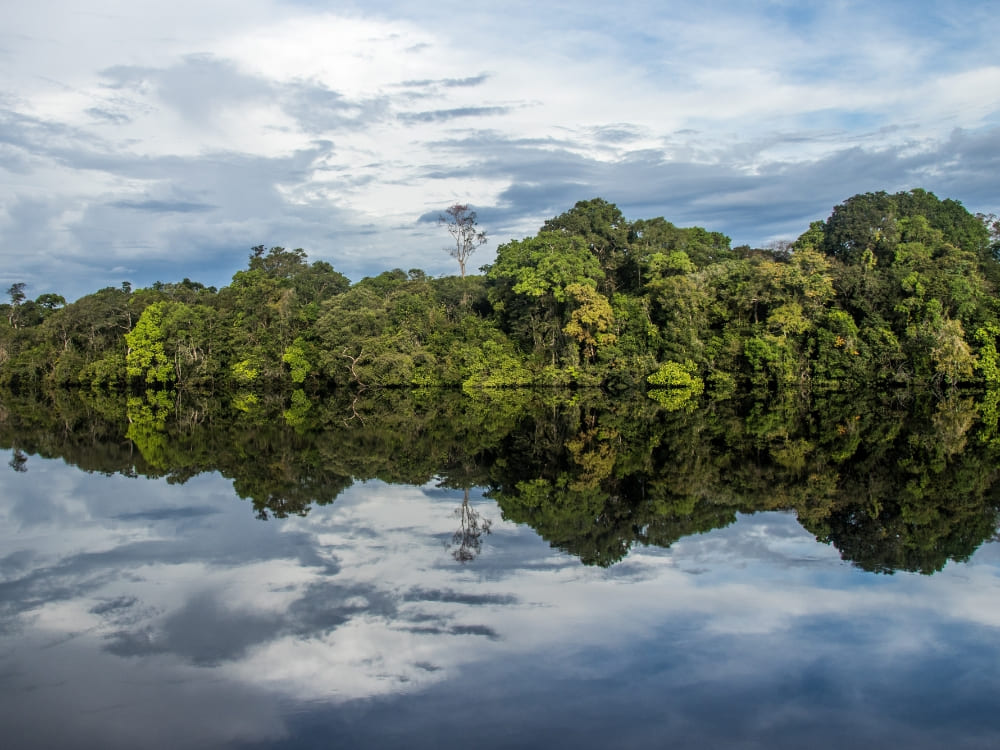
    The dense green Amazon forest reflecting like a perfect mirror on the calm, dark waters of the river.
    Photo: Dalia McGill

    👉 Read more: How to get to the Amazon Rainforest in Brazil

    Best Time to Visit Jaú National Park

    The Amazon Rainforest has two main seasons that shape every experience in the forest. Between March and August, rivers rise and form the igapós (flooded forests). Great time for canoeing across the flooded areas and wildlife watching!

    From September to February, the waters recede and sandy beaches appear along the Rio Negro and its tributaries. Trails become more accessible, allowing visitors to reach waterfalls and rocky formations such as those in the Carabinani River.

    Each season offers unique perspectives. Whether you prefer paddling among submerged forests or hiking to waterfalls and ancient caves, your choice depends on your travel style.

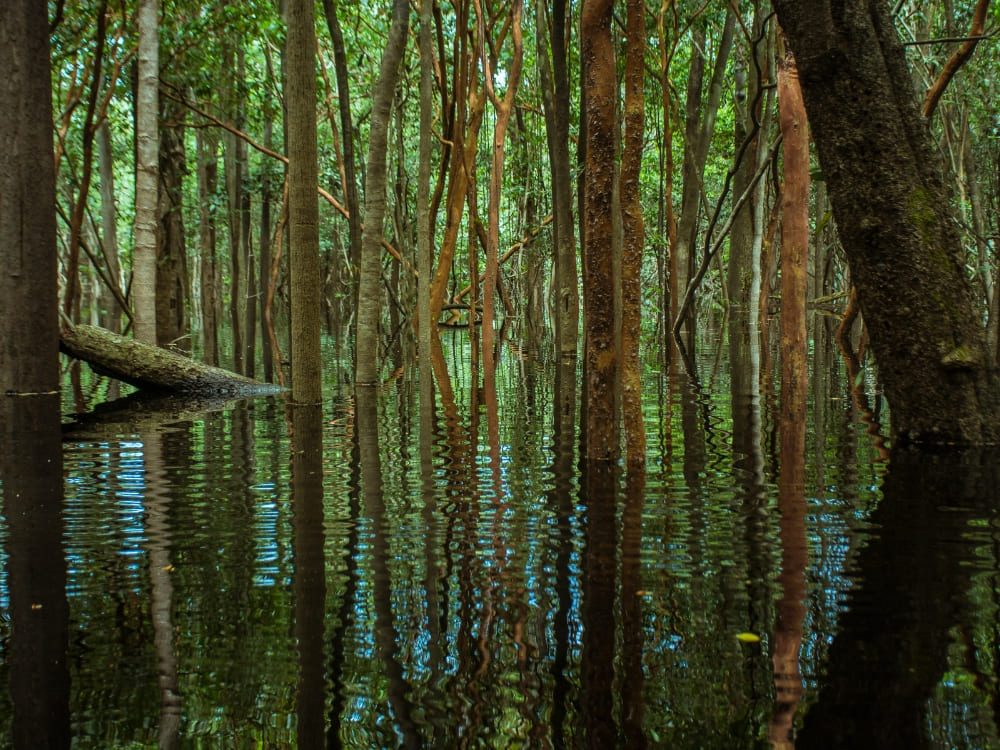
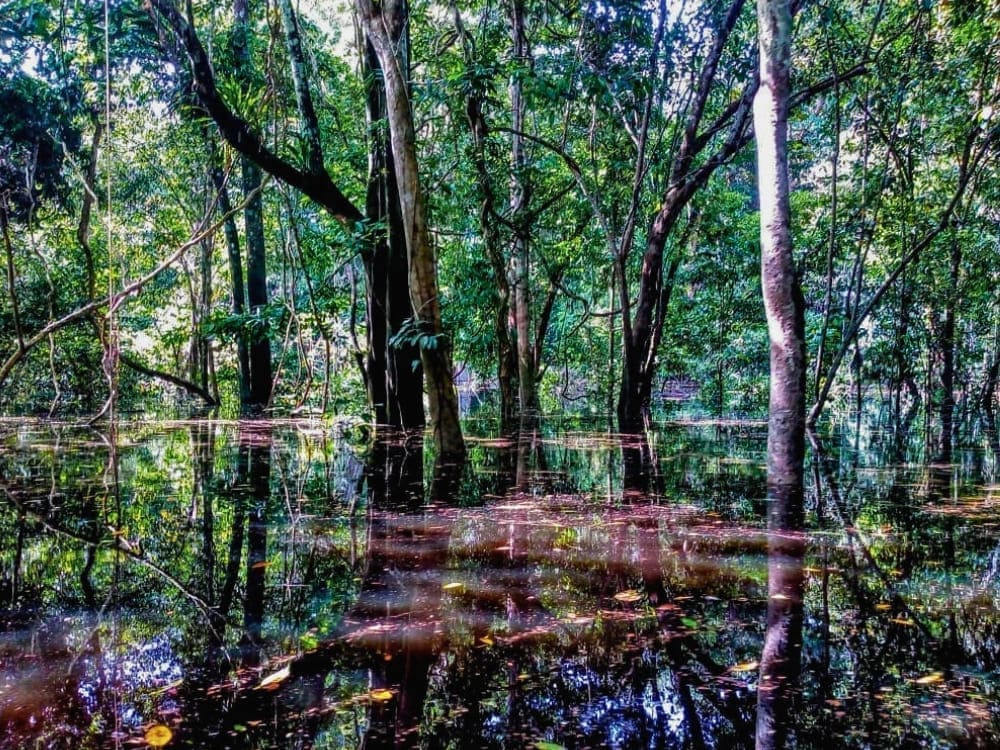
    Slender tree trunks emerging from the dark waters in the igapós, or flooded forests, of the Amazon.
    Photo: Meyriane de Mira Teixeira

    👉 Read more: Best time to visit the Amazon Rainforest

    Fauna, Flora and Protected Systems

    According to IPHAN (Brazil’s National Institute of Historical and Artistic Heritage), Jaú is home to around 400 types of plants, including species that only grow in flooded areas, such as macaricuia and mucucu do igapé. Throughout its territory, there are also açaí and Brazil nut trees.

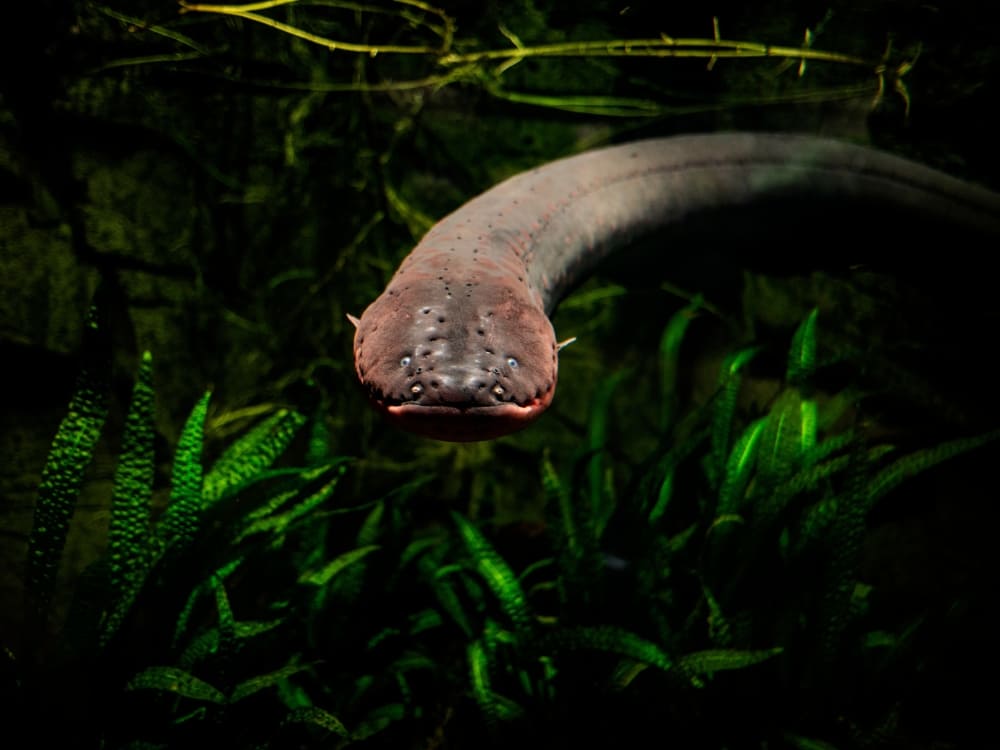
    The animals in Jaú National Park are equally diverse. The park has the largest variety of electric fish in the world, which are part of the 263 species of fish officially cataloged in the region. Other notable animals are the Amazonian manatees, black caiman, harpy eagles, giant otters, pink river dolphins, jaguars, etc.

    As part of Ibama’s Parks and Reserves Project—an initiative that seeks to promote sustainable development plans led by the Brazilian Institute of Environment and Renewable Natural Resources—Jaú is the geographic center of the Amazon Ecological Corridor.

    Close-up of a pinkish electric fish swimming among green aquatic plants in the Amazon.
    Photo: Alex Zakletsky

    👉 Read more: Best Brazil Wildlife Tours and Destinations 

    Fun Facts About Jaú National Park

    Explore more fascinating details about Jaú National Park that illustrate why it is ranked among the Amazon’s most enchanting destinations:

    • Size: With 2.27 million hectares, Jaú is the largest national park in the Brazilian Amazon. To put it in perspective, it is larger than Wales, El Salvador, and Slovenia.
    • Exploration style: The only way to visit responsibly is through organized expeditions, mainly small-group cruises that ensure safety and sustainability.
    • Diversity of experiences: In a single trip, you can visit caves formed 700 million years ago, swim in blackwater rivers, join night safaris, and interact with riverside and indigenous families.

    What to Do in Jaú National Park

    Activities inside Jaú are always led by experienced guides and designed to respect conservation rules. Instead of mass tourism, visitors join small-group expeditions that highlight both nature and culture.

    One of the main activities is canoeing through blackwater rivers and igapós. Here, travelers may spot giant river otters, exotic birds, or even caiman during night excursions. Hiking trails are also part of the itineraries, offering the chance to walk under the forest and learn more about native plants and animals.

    Another unforgettable experience is visiting the Aturiá community. Guests interact with local families, taste seasonal fruits, and learn about daily life in the Amazon. Combined with refreshing swims in natural pools and waterfalls, these moments reveal just how diverse the forest is.

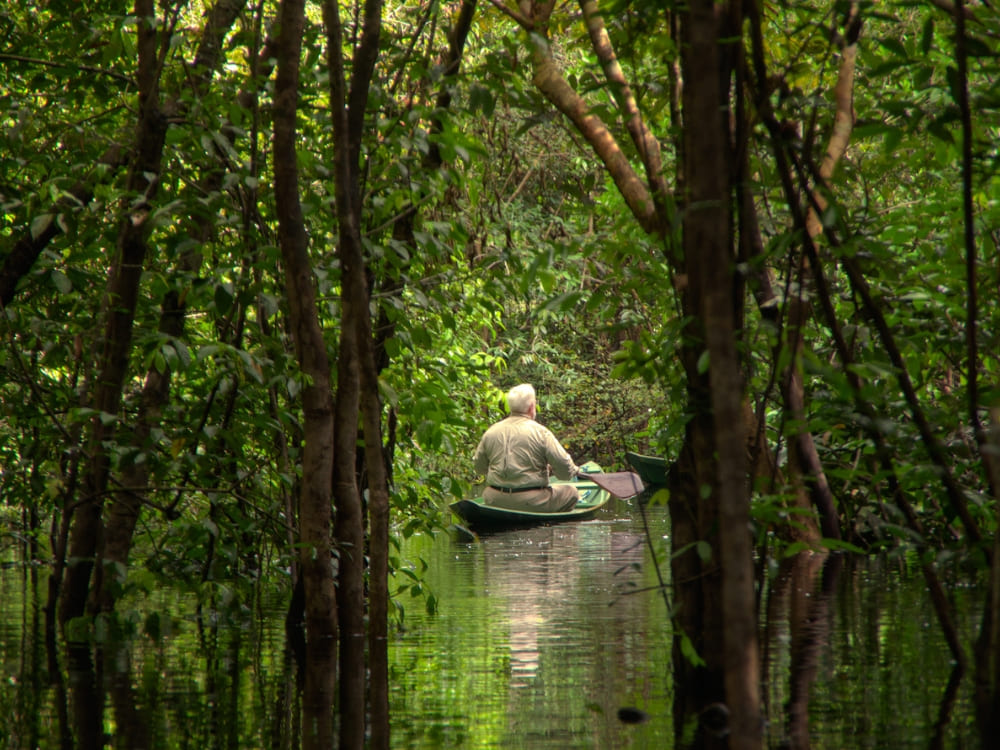
     A traveler paddles a small wooden canoe through a flooded blackwater river in the Amazon.
    Photo: Johan

    👉 Read more: Best Amazon Jungle Lodges in Brazil

    Katerre Expedition

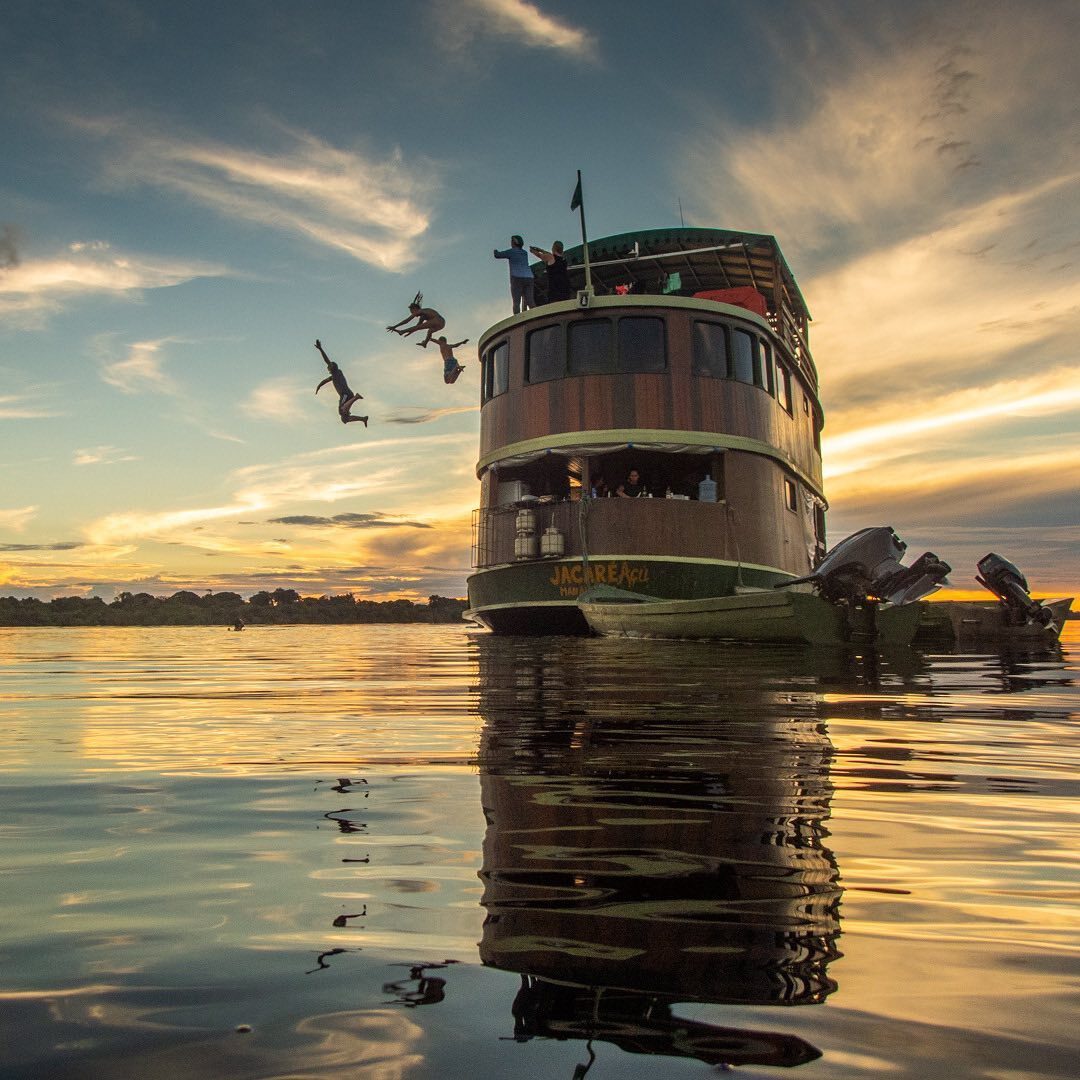
    The Katerre Expeditions are the most complete way to explore Jaú and its surroundings. Operated on comfortable boats with rustic designs and three decks, these river cruises combine adventure with all-inclusive service.

    • 5-day Amazon River Cruise in Brazil: This journey takes travelers from Novo Airão through Anavilhanas National Park and deep into Jaú. Highlights include hikes to the Madadá Caves, canoe trips, wildlife observation, cultural exchanges with local communities, and nighttime canoe trips.
    • 7-day Amazon Cruise Trip in Brazil: Expanding the experience, it includes the Meeting of Waters in Manaus, visits to Velho Airão (a historic abandoned settlement), petroglyphs, and more days inside Jaú. Travelers enjoy birdwatching, cultural immersion in riverside villages, and forest hikes to giant kapok trees.

    Both options are small-group expeditions with a maximum of 16 passengers. As a result, each journey offers an intimate and authentic way to experience the park.

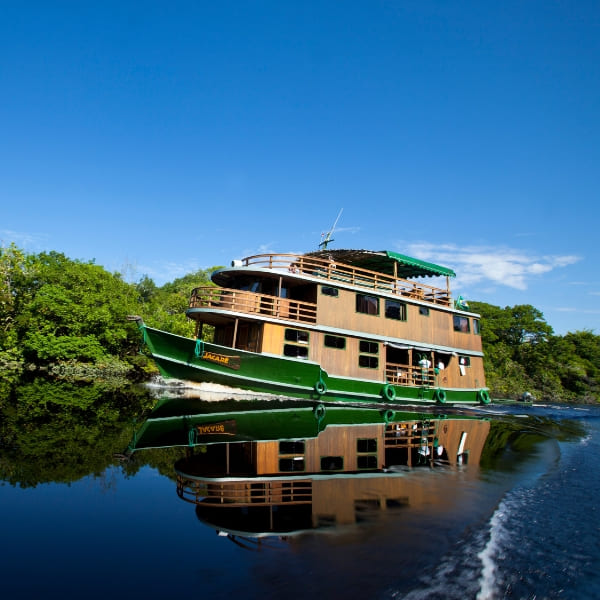
    A rustic, three-deck wooden riverboat cruises smoothly along a dark Amazonian river beneath a blue sky.
    .

    👉 Read more: Best Amazon River Cruises in Brazil

    Traveling to Jaú National Park with PlanetaEXO

    Choosing PlanetaEXO, an ecotourism platform specializing in Amazon Rainforest tours in Brazil, means traveling with purpose. Every expedition is organized in partnership with local operators, ensuring that the economic benefits stay in the community while respecting environmental standards. 

    The expeditions balance comfort and authenticity, with boats and lodges designed for immersive experiences and itineraries that highlight both nature and culture. By joining one of these journeys, you live the vacation of your dreams and directly support projects that protect wildlife and strengthen community-based tourism. Contact us now!
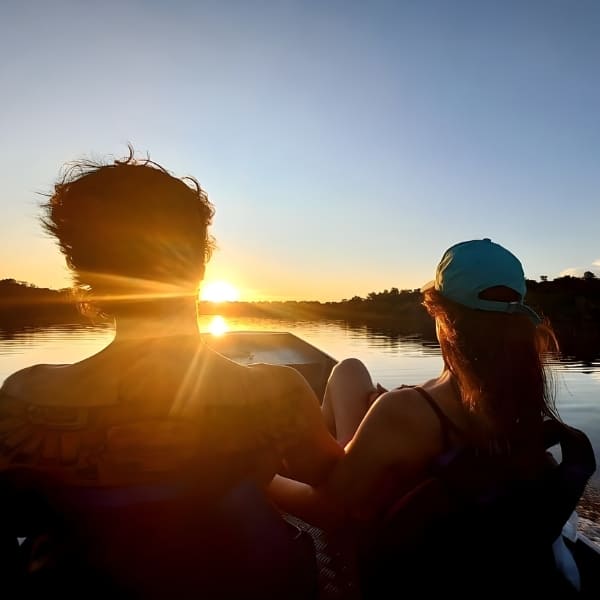
  • How to Get to the Amazon Rainforest in Brazil?

    How to Get to the Amazon Rainforest in Brazil?

    Don’t know how to visit the Amazon Rainforest? Check our guide for routes to Amazonas, Mato Grosso and Pará and learn everything you need to know!

    If you’re wondering how to get to the Amazon Rainforest so you can start planning your next vacation, it’s important to point out that, contrary to popular belief, access is not difficult at all. The best way to get there is by flying to Manaus, the capital of the Amazonas state.

    Aerial view of a winding blue river flowing through the dense green vegetation of the Amazon Rainforest in Brazil.
    .

    As an ecotourism platform for Amazon Rainforest tours in Brazil that partners with the best local operators, PlanetaEXO has put together a comprehensive guide to answer all your questions. Check it out!

    Where is the Amazon Rainforest in Brazil?

    The Amazon is located in the Northern region of Brazil. Though it spans over Bolivia, Colombia, Ecuador, Peru, Guyana, Venezuela and Suriname, over 59% of the biome is located within Brazilian borders.

    Amazonas is the main state, but the forest also extends into Pará, Mato Grosso, Acre, Amapá, Rondônia, Roraima and Tocantins. 

    👉 Read more: When is the best time to visit the Amazon Rainforest in Brazil

    How to get to Manaus?

    The route from Manaus to the Amazon Rainforest is the most convenient, as the capital of Amazonas is considered the gateway to the biome. Tourists fly to Eduardo Gomes International Airport (MAO), which is served by flights from Belém, Belo Horizonte, Brasília, Fortaleza, Recife, Rio de Janeiro and São Paulo.

    Foreign travelers can reach Manaus from Bogotá (BOG), Panama City (PTY) or Curacao (CUR), as there are no direct flights from Europe or the United States. For US residents, Copa and Avianca airlines offer the most convenient flight options with layovers in Panama and Colombia.

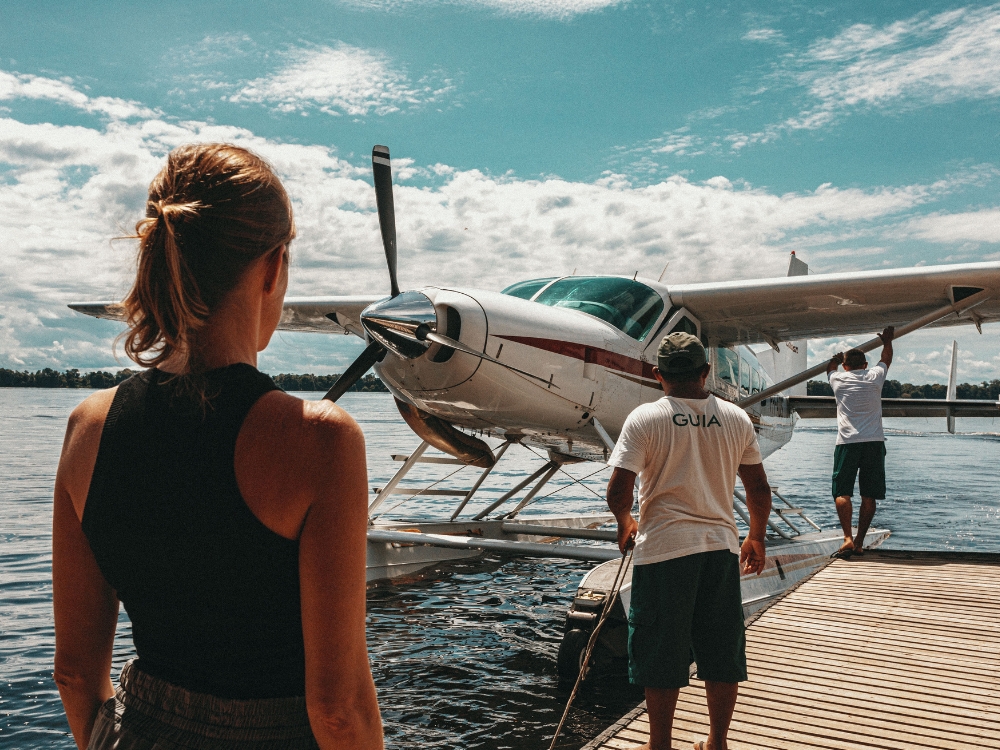
    Traveler standing on a wooden pier looking at a small seaplane docked in the Amazon river ready for boarding.
    Photo: Felipe Castellari

    From European and North American countries, flights usually stop in São Paulo (GRU/VCP), Rio de Janeiro (GIG) or Brasília (BSB) before getting to the final destination. From these cities, Azul and GOL airlines fly straight to Manaus.

    After arriving in Manaus, transportation to the forest is necessary. Most PlanetaEXO’s tours to the Amazon include private or group shuttle services provided by the lodges, which require a 30-minute drive to Port of Ceasa and boat rides to the hotel — whose duration depends on the location of each accommodation.

    Tourists riding a motorized canoe exploring the calm waters of the Amazon Rainforest river at dusk
    .

    Some lodges are located in very isolated areas, which makes the route fairly long, with multiple car, bus or boat rides. It might seem like a lot, but don’t worry! The journey to the accommodation is an adventure in itself, as you’ll be able to live incredible things right on your first day, like visiting fruit markets, spotting animals, witnessing the Meeting of Waters, etc.

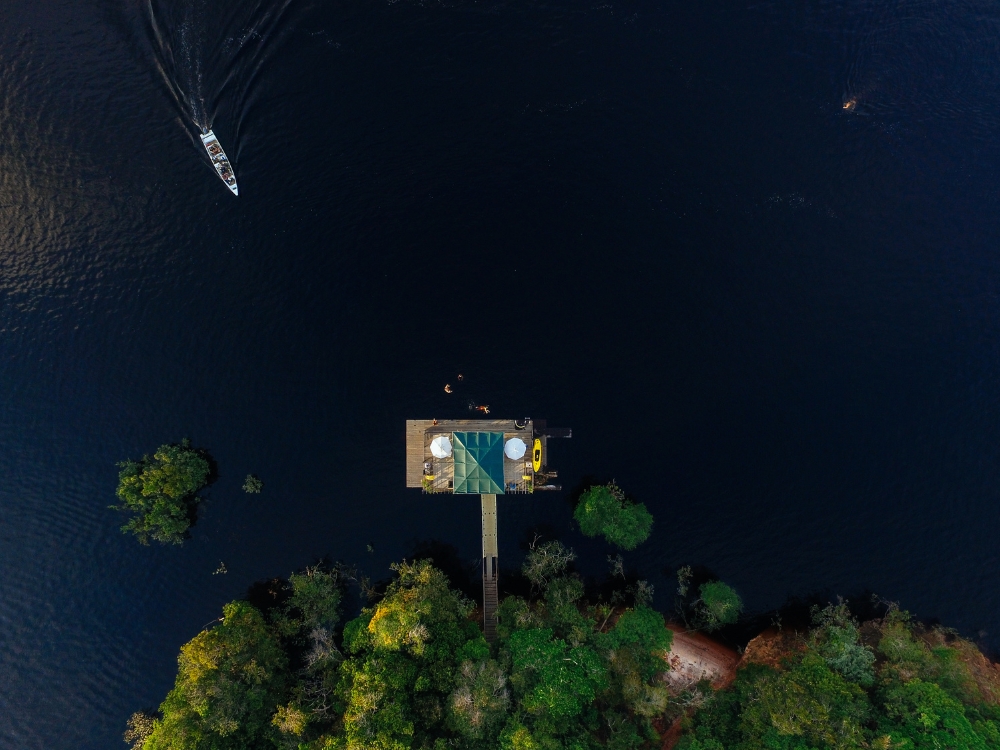
    Aerial drone shot of an eco-lodge built on stilts surrounded by the dark waters of the Amazon river and lush jungle.
    .

    👉 Read more:

    How to get to the Amazon Rainforest in Alta Floresta, Mato Grosso?

    Alta Floresta is located in the northern part of Mato Grosso, on the southern edge of the Amazon. This lovely town is home to Cristalino Jungle Lodge, one of the most renowned jungle lodges in the world. Don’t just take our word for it — National Geographic thinks so too!

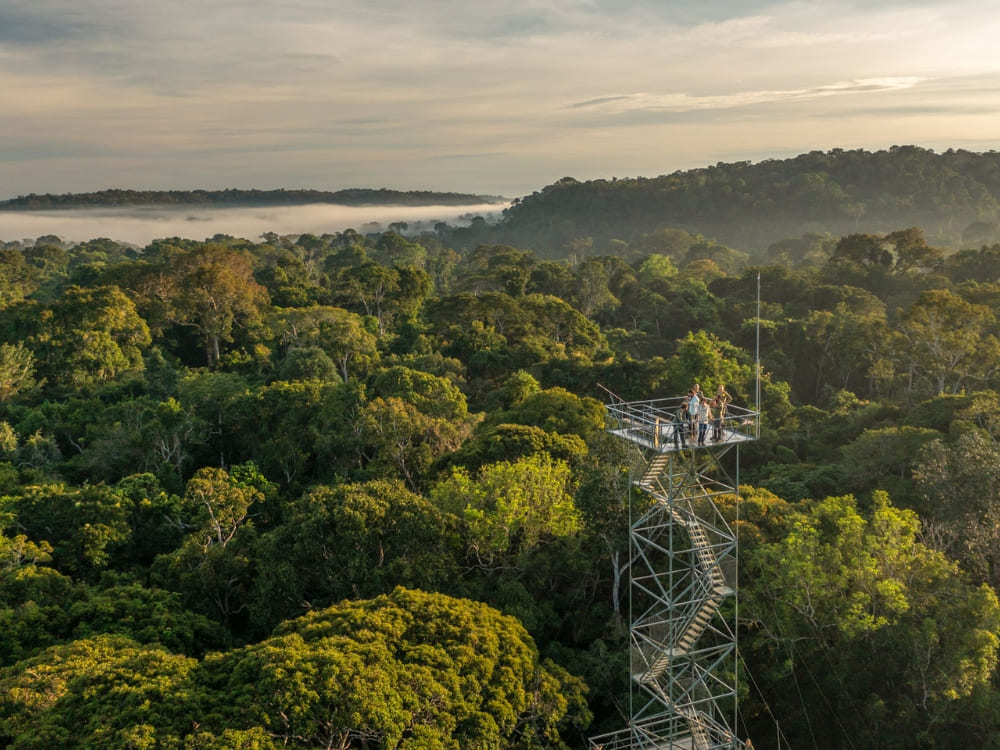
    Tall metal observation tower rising above the Amazon rainforest canopy at Cristalino Jungle Lodge in Mato Grosso.
    Photo: Andre Dib

    The Amazon Rainforest airport in Alta Floresta is Piloto Osvaldo Marques Dias Airport (AFL), served by Azul Airlines with flights from Cuiabá (CGB) and São Paulo (VCP) 2–3 times a week. Before landing in these cities, you might have a layover in other places. Double-check your flight details!

    Alta Floresta is also near other remarkable biomes, such as the Pantanal, famous for jaguar sightings. Many Pantanal tours depart from Cuiabá, providing the perfect opportunity to experience more of Brazil’s incredible natural diversity.

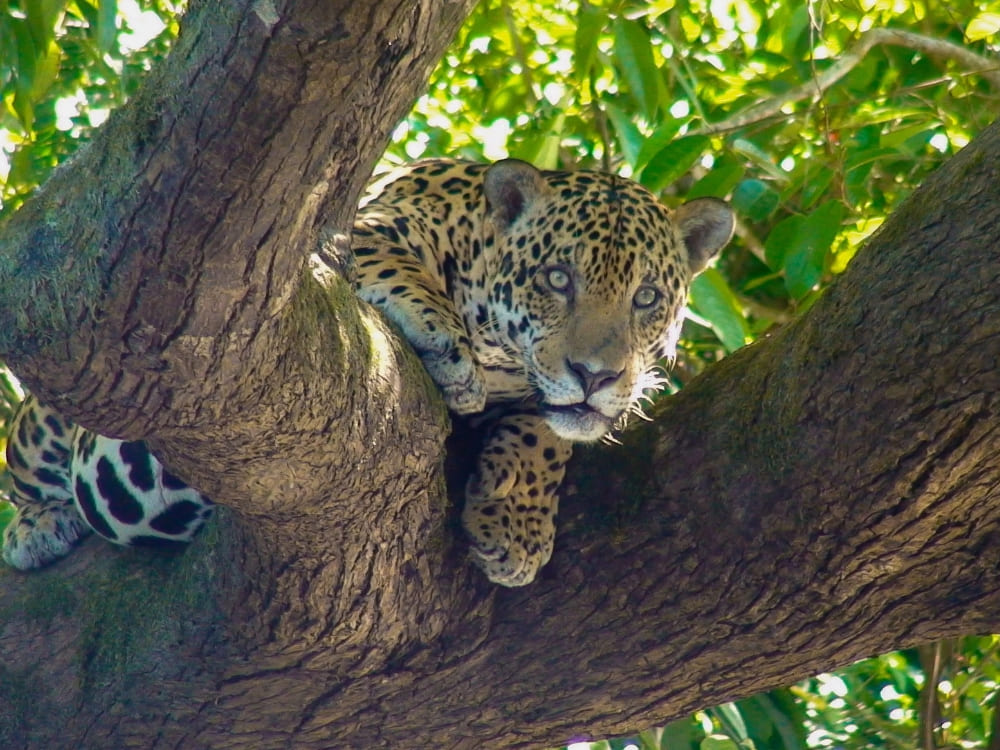
    Jaguar resting comfortably on a thick tree branch in the Brazilian wetlands.
    Photo: Jorge Lopes

    How to get to the Amazon Rainforest in Pará

    Bordering the state of Amazonas, Pará allows for a different side of Brazil’s rainforest. Still beautiful and full of wonders, but with its own uniqueness of natural resources and cultural richness. 

    Pará’s main Amazonian attractions are the exquisite Marajó Island and Alter do Chão, the best beach in Brazil according to The Guardian, which described it as “the jungle’s answer to the Caribbean”.

    Belém

    The easiest way to arrive in Pará is to land in Belém, the capital of the state. Belém International Airport (BEL) is served by direct flights from multiple Brazilian cities: Belo Horizonte (CNF), Brasília (BSB), Fortaleza (FOR), Manaus (MAO), Recife (REC), Rio de Janeiro (GIG), São Luís (SLZ) and São Paulo (GRU/VCP).

    Aerial view of the historic Ver-o-Peso market and docked boats on the riverfront in Belém do Pará.
    .

    Foreign tourists can also fly straight to Belém from Bogotá (BOG), Lisbon (LIS), Fort Lauderdale (FLL) and Miami (MIA).

    GOL, LATAM and Azul airlines operate both national and international routes.

    Santarém

    If you’re going to Alter do Chão, you should book your flight to Santarém (STM), a town 1.167 km (725 miles) away from Belém. To get there, you can depart from Belém (BEL), Brasília (BSB), Manaus (MAO) or Porto Trombetas (TMT).

     White sand beach of Ilha do Amor stretching into the clear waters of the Tapajós River in Alter do Chão.
    .

    You can also reach your destination by boat through Port of Belém or Port of Santarém. Boat trips last over 36 hours, enough time for you to enjoy a nice ride across the Amazon and the Tapajós rivers. Watch the sunrise or the sunset, admire the Meeting of Waters and keep your eyes open for birds and aquatic animals.

    The boats are relatively modest, but still comfortable and safe. Passengers can book their own cabins (with double beds, private bathrooms, air conditioning, TV, and minifridge) or spend the night in hammocks spread around the floors. Meals (breakfast, lunch, dinner, and snacks) are sold separately. 

    👉 Explore this adventure: Amazon River Cruise from Alter do Chão

    Valuable tips for getting to the Amazon

    You’ve learned how to visit the Amazon Rainforest in Brazil through different routes, states and cities. To make your journey even smoother, here are some valuable tips:

    • The route from São Paulo to the Amazon Rainforest offers the most options for direct flights and layovers in Viracopos (VCP) and Guarulhos (GRU).
    • From Rio de Janeiro to the Amazon Rainforest, Galeão (GIG) is the main airport for travelers going to Manaus and Belém.
    • Check Google Flights to find affordable flight tickets.
    • If you choose to go from Belém to Santarém (or vice versa) by boat, Ibarco is one of the most well-known operators in the North of Brazil.

    PlanetaEXO is here to assist you with the best transfer options for trips in Amazonas, Mato Grosso or Pará. Most of our tours include private shuttle services for your convenience. Contact us and check more information!

    Traditional wooden riverboat navigating the calm Amazon waters during a golden sunset reflecting on the river.
    .

    The Brazilian Amazon is calling for you!

    Now that you know everything about getting to the largest rainforest on Earth, it’s time to start your travel plans!

    PlanetaEXO is an ecotourism platform specialized in Amazon Rainforest tours in Brazil. By working with the best local operators, we’re able to help the community, protect the environment, and arrange your dream trip. Contact us now!
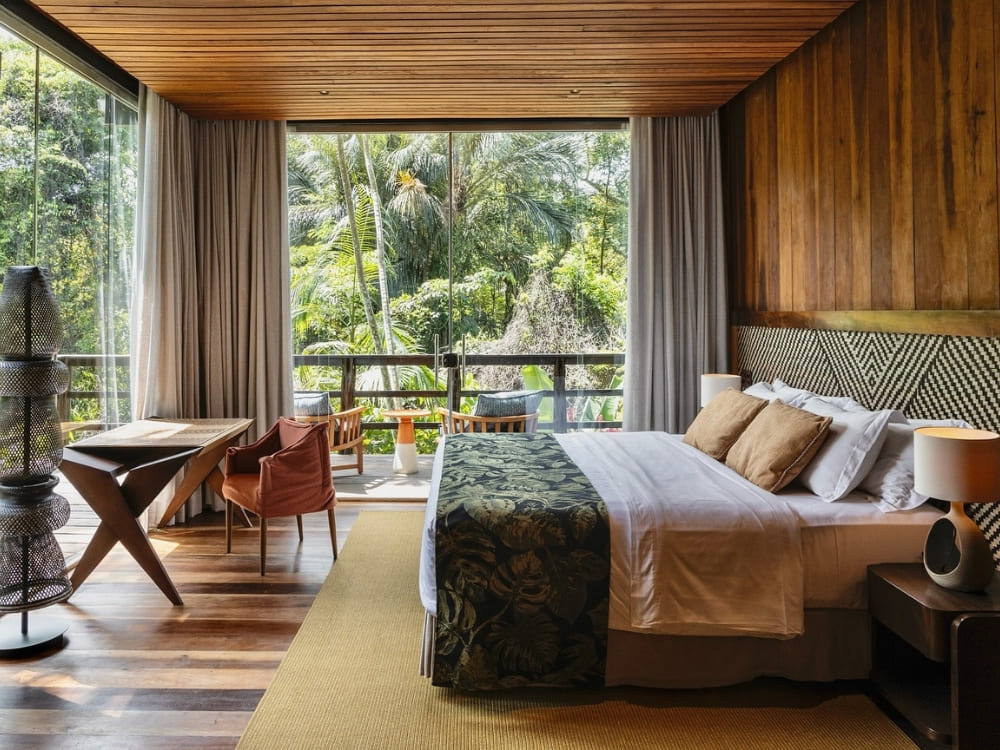
  • How to Visit Manaus, Brazil – Travel Guide: What to Do and More!

    How to Visit Manaus, Brazil – Travel Guide: What to Do and More!

    Check out our travel tips to enjoy Manaus City to its fullest and immerse yourself in this wonderful place that blends urban atmosphere and the Amazon’s natural resources!

    Manaus, capital of the state of Amazonas, Brazil, has been listed by The New York Times as one of the 52 places in the world worth visiting. Visitors make quick stops there on their way to the Amazon Rainforest, but most don’t even imagine the beauty and the authenticity of this place.

    Besides the natural wonders, Manaus is full of history and culture. As the main gateway to the Amazon, the capital offers something to everyone — from river cruises, to jungle expeditions and local cuisine that reflects the region’s biodiversity.

    PlanetaEXO, an ecotourism platform specialized in Amazon tours in Brazil, has created a complete Manaus travel guide to help you navigate this incredible city. Read more below!

    About Manaus

    Manaus was founded in the 17th century as a Portuguese fort, but grew fast during the rubber boom of the late 1800s. It received this name as an homage to the indigenous group Manaós, which inhabited the territory back at the time. Manaus means “mother of the gods”.

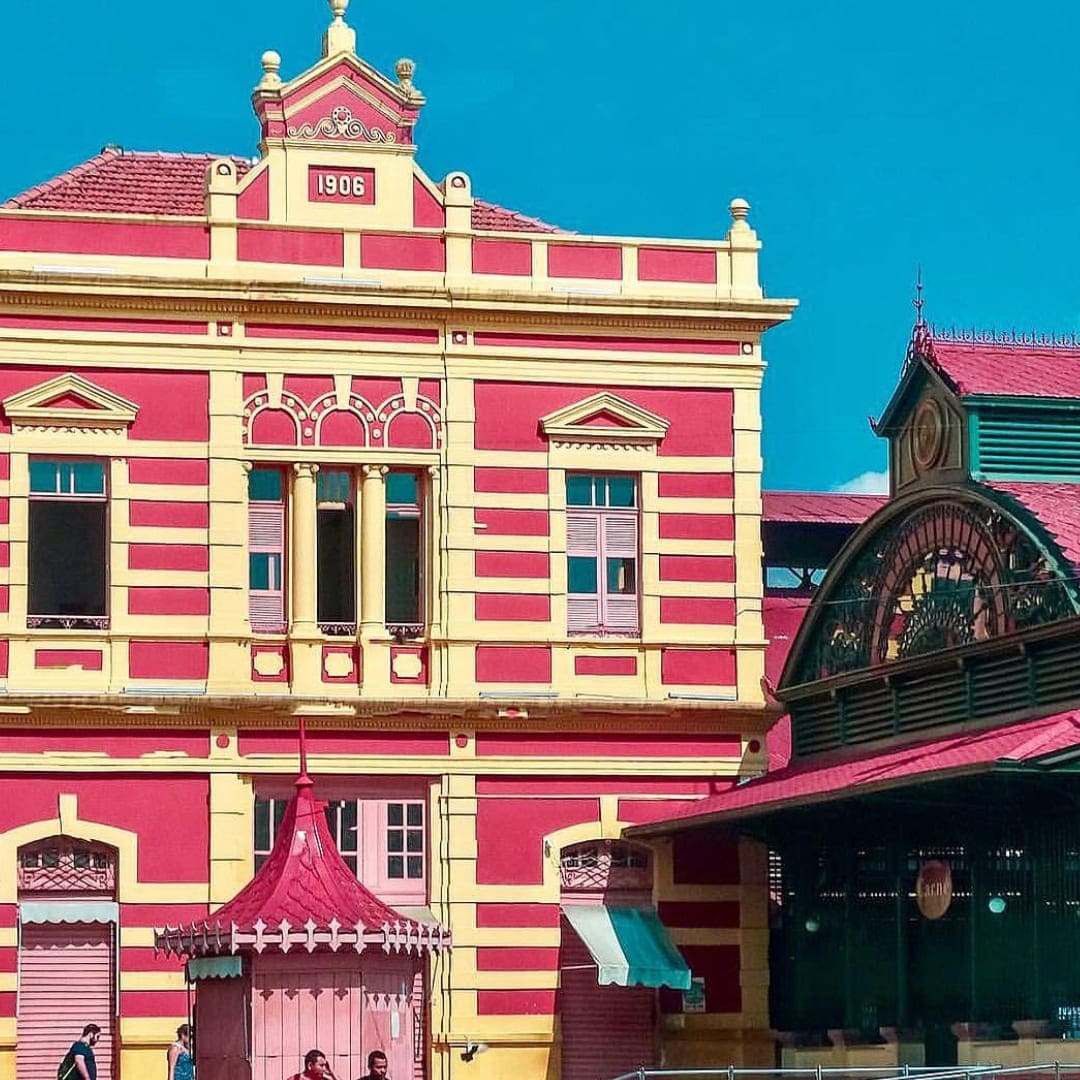
    Historic red and pink colonial building facade in Manaus featuring architecture from the rubber boom era.
    @manauschibata

    The rubber boom was so prosperous that Manaus was known as the “Paris of the Tropics”, but it didn’t last long due to heavy competition from abroad.  Even so, the city reinvented itself as a regional metropolis where 2.3 million people live nowadays, as well as a thriving ecotourism hub that blends colonial architecture, bustling markets and lush landscapes.

    Where is Manaus located?

    Manaus, in Amazonas, is located in the Northern Region of Brazil. At the east center of the state, it’s a metropolitan area heavily influenced by the Negro and Amazon rivers.

    What is Manaus famous for?

    Manaus is mostly known as the primary gateway to the Amazon Rainforest and a huge ecotourism destination not only in Brazil, but in the world. 

    The unique mix of urban aspects and natural resources is what makes this city so fascinating and worth visiting.

    Aerial view of a winding blue river flowing through the lush green Amazon Rainforest near Manaus.
    .

    Best time to visit Manaus

    Manaus City has a tropical rainforest climate, with two main seasons: the rainy season (December to May) and the dry season (June to November)

    December, January, February, March, April, May

    The forest is at its lushest and most vibrant during this time, making it the ideal period for riverboat tours. With higher water levels, you can explore the igapós (flooded forests) by canoe, which grants a unique perspective of the Amazon.

    Trees of the Amazon rainforest reflected in the dark calm waters of a flooded forest during the rainy season.
    Photo: @buyehelen

    June, July, August, September, October, November

    Great period for hiking and wildlife spotting, as animals gather near rivers and water sources. It’s also the perfect time to visit the famous Meeting of the Waters, where the Negro and Solimões rivers meet.

    👉 Read more: When is the best time to visit the Amazon Rainforest in Brazil

    How to get to Manaus?

    Most travelers reach Manaus by flying into Eduardo Gomes International Airport (MAO), served by direct flights from several major Brazilian cities (Belém, Belo Horizonte, Brasília, Fortaleza, Recife, Rio de Janeiro e São Paulo) and a few international destinations.

    There are no direct flights from the US or Europe, so foreign tourists should travel to Bogota (BOG), Panama City (PTY) or Curaçao (CUR) first.

    Flights departing from North American or European countries usually have layovers in São Paulo (GRU/VCP), Rio de Janeiro (GIG) or Brasília (BSB). From these destinations, it takes 3–4 hours to reach Manaus with Azul or GOL airlines.

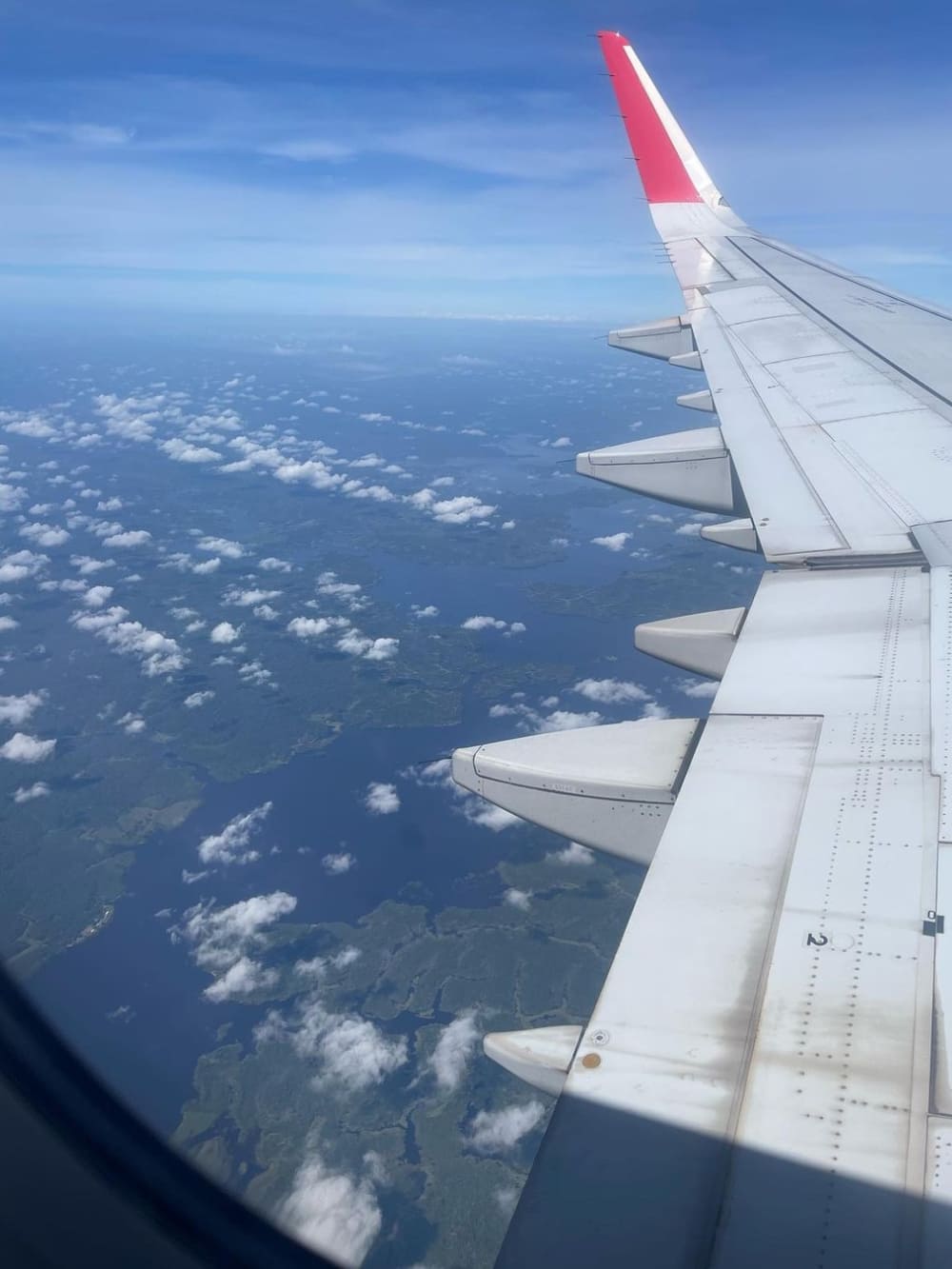
    View from an airplane window looking out over the wing towards the Amazon clouds and landscape below.
    @villaamazonia

    👉 Read more: How to get to the Amazon Rainforest in Brazil?

    What to do in Manaus?

    A Manaus travel guide is incomplete without a list of activities around the city — which offers a wide range of experiences and tours that allow visitors to experience and enjoy the Amazon’s natural beauty and local culture.

    Check out PlanetaEXO’s selection of things to do in Manaus!

    Historic Center Tour

    Embark on a tour of Manaus’s historic center to dive into the city’s cultural and gastronomic core.

    Wander through traditional buildings and landmarks that showcase Manaus’s rich heritage, including the Adolpho Lisboa Market, Palácio Rio Negro, São Sebastião Church, and Casa Eduardo Ribeiro Museum. Perfect for people who love history and cultural experiences!

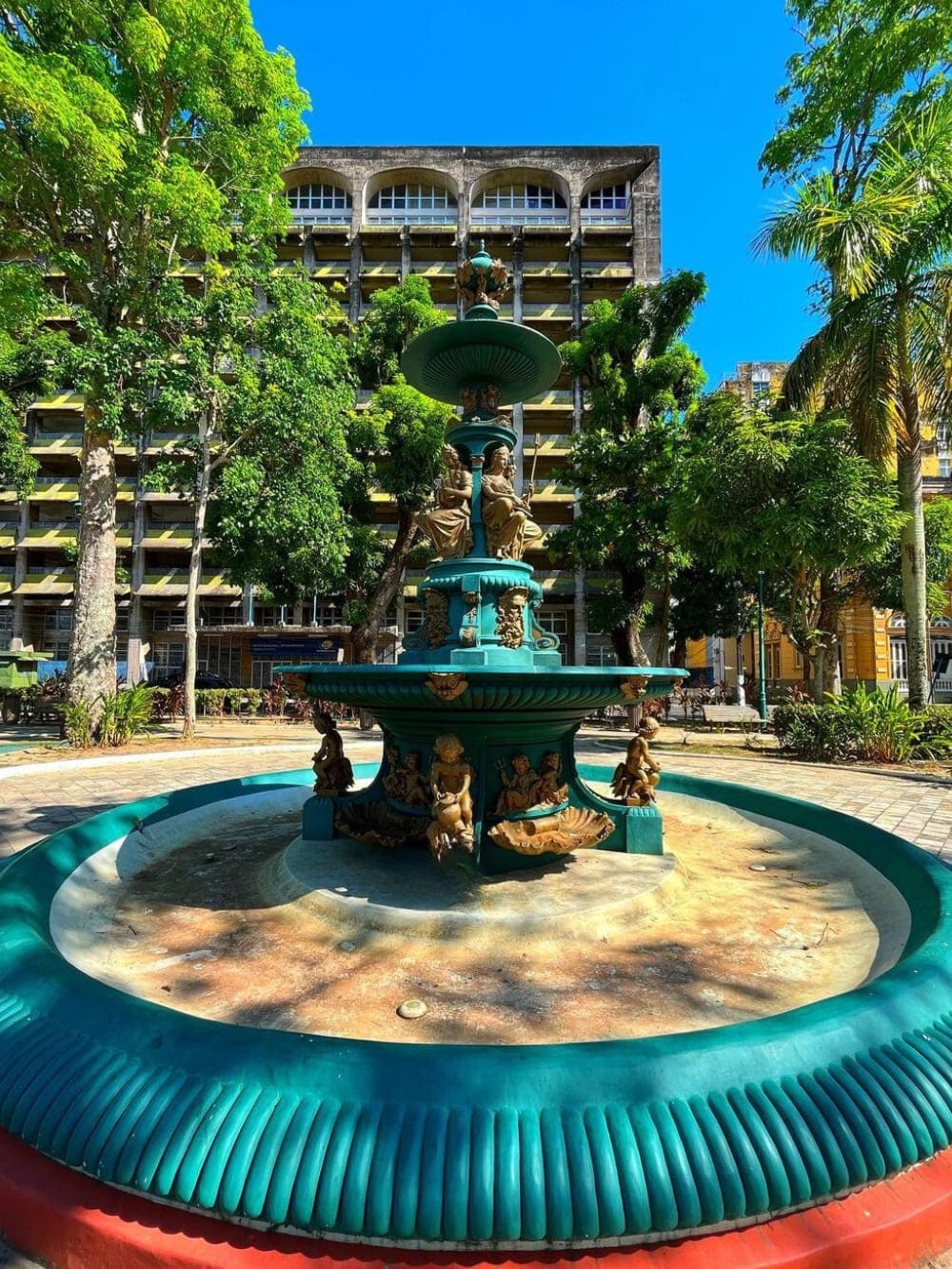
    Green iron fountain located in a public square within the historic center of Manaus surrounded by trees.
    @janelasdemanaus

    Amazon Theatre

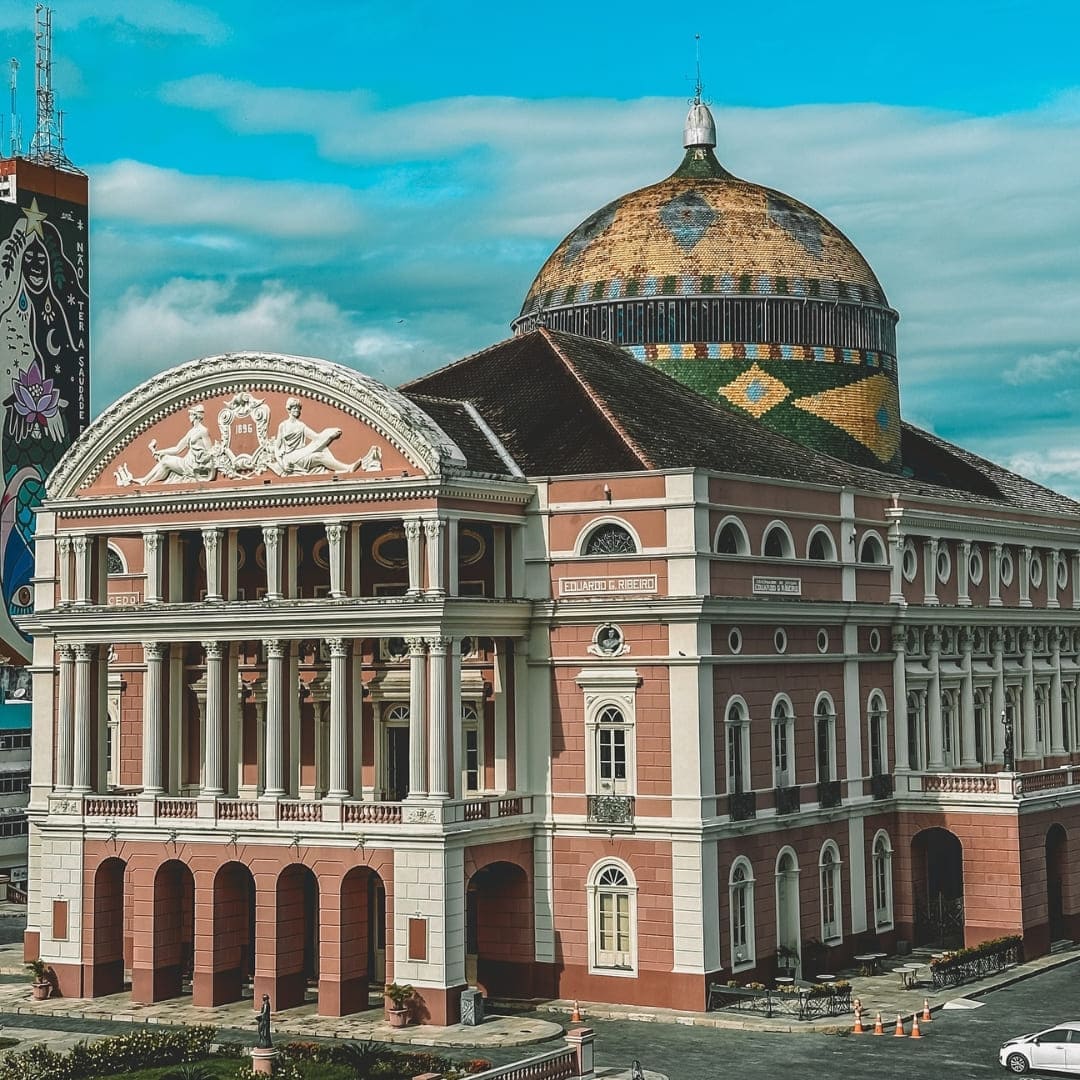
    The Amazon Theatre (Teatro Amazonas) is such an integral part of Manaus’ history. Built during the rubber boom period, it used to be a grand opera house. Nowadays, as one of the capital’s most beloved landmarks, it’s open for visitation.

    While visiting the theater, stroll through Largo de São Sebastião, where you can explore the charming central church and the lively surrounding square.

    Address: Av. Eduardo Ribeiro, 659 — Centro, Manaus

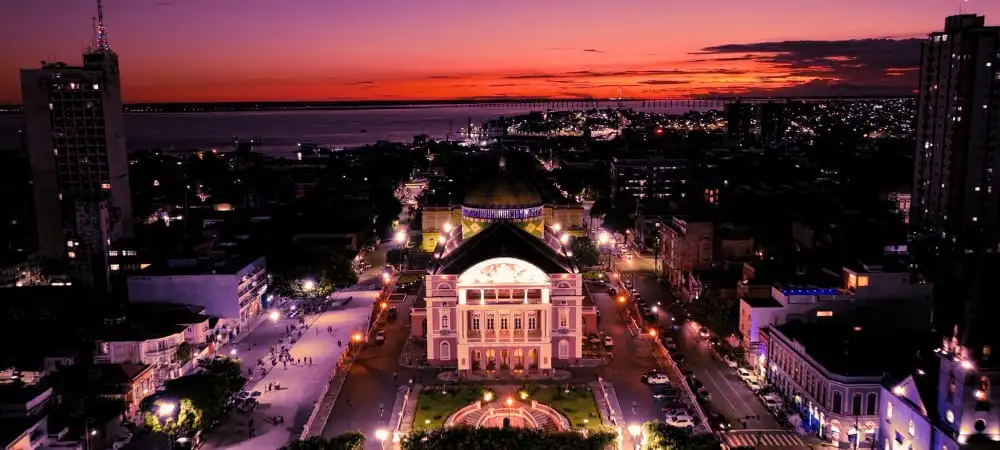
    The pink neoclassical facade and colorful tiled dome of the Amazon Theatre in Manaus under a blue sky.
    @manausnasfotos

    MUSA (Museum of the Amazon)

    MUSA showcases the Amazon’s sociocultural and biological diversity through themed exhibitions and forest hikes

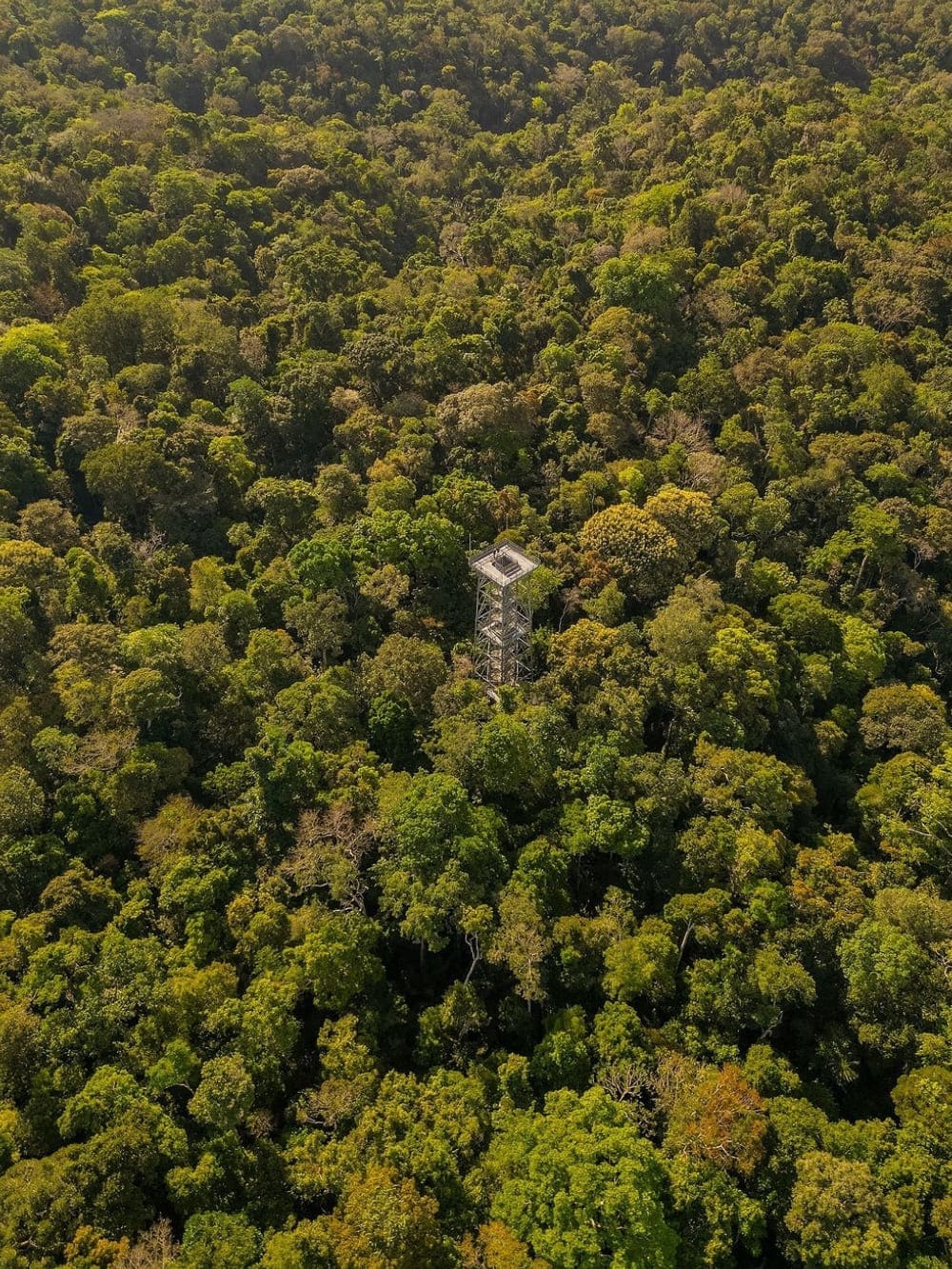
    Located in a 100-hectare area at the Adolpho Ducke Forest Reserve, it has a 42-meter observation tower and hundreds of plant species, like orchids, bromeliads, araceae, palm trees, etc. You can also see animals, including snakes, scorpions, spiders and butterflies.

    Address: Av. Margarita, 6305 (formerly Av. Uirapuru) — Jorge Teixeira, Manaus

    Tall metal observation tower rising above the dense green canopy of the Amazon rainforest at MUSA.
    @alaisooon

    Meeting of the Waters

    The Meeting of Waters is one of the most incredible natural phenomena in Brazil. Due to differences in current speed, temperature and acidity, the Negro and Solimões rivers meet, but don’t quite mix.

    Black and brown waters create a perfect contrasting line in the water, effortlessly dividing the two rivers in a jaw-dropping view.

    Aerial view showing the distinct dividing line where the black Rio Negro meets the brown Solimões River.
    @fromflora

    👉 Read more: 15 Facts about the Amazon Rainforest in Brazil

    Bosque da Ciência (INPA)

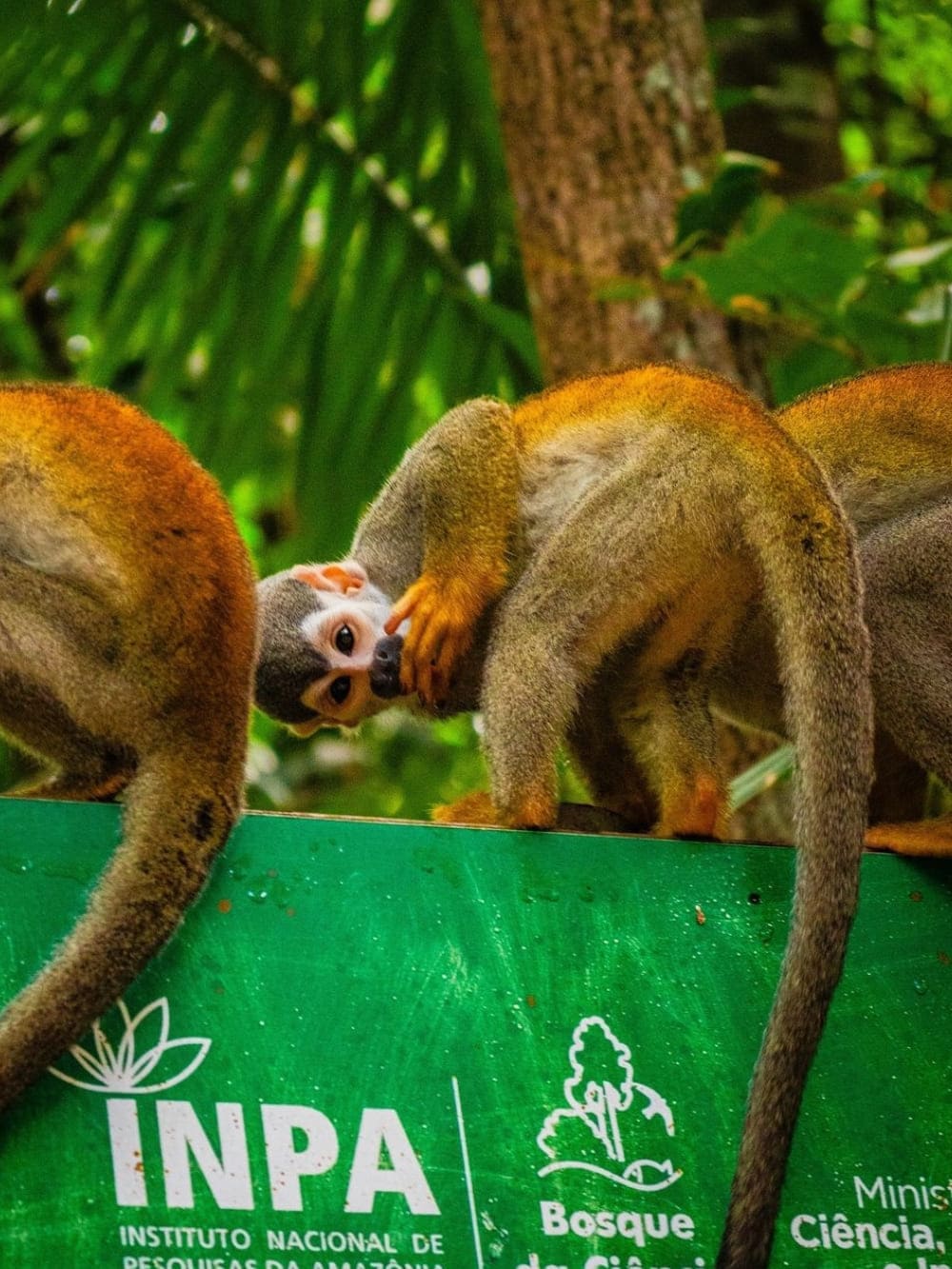
    For animal lovers, Bosque da Ciência, managed by INPA (National Institute for Amazonian Research), is almost an obligatory attraction for tourists visiting Manaus City.

    Join guided tours and learn everything about various free-roaming Amazon animals, from native bees to giant otters. If wildlife isn’t your main interest, the exhibitions also provide fascinating insights into the region’s flora and unique biodiversity. 

    Address: Av. Bem-Te-Vi, s/n — Petrópolis, Manaus

    Small squirrel monkeys resting together on top of a green sign at the Bosque da Ciência INPA.
    @yu.jhima

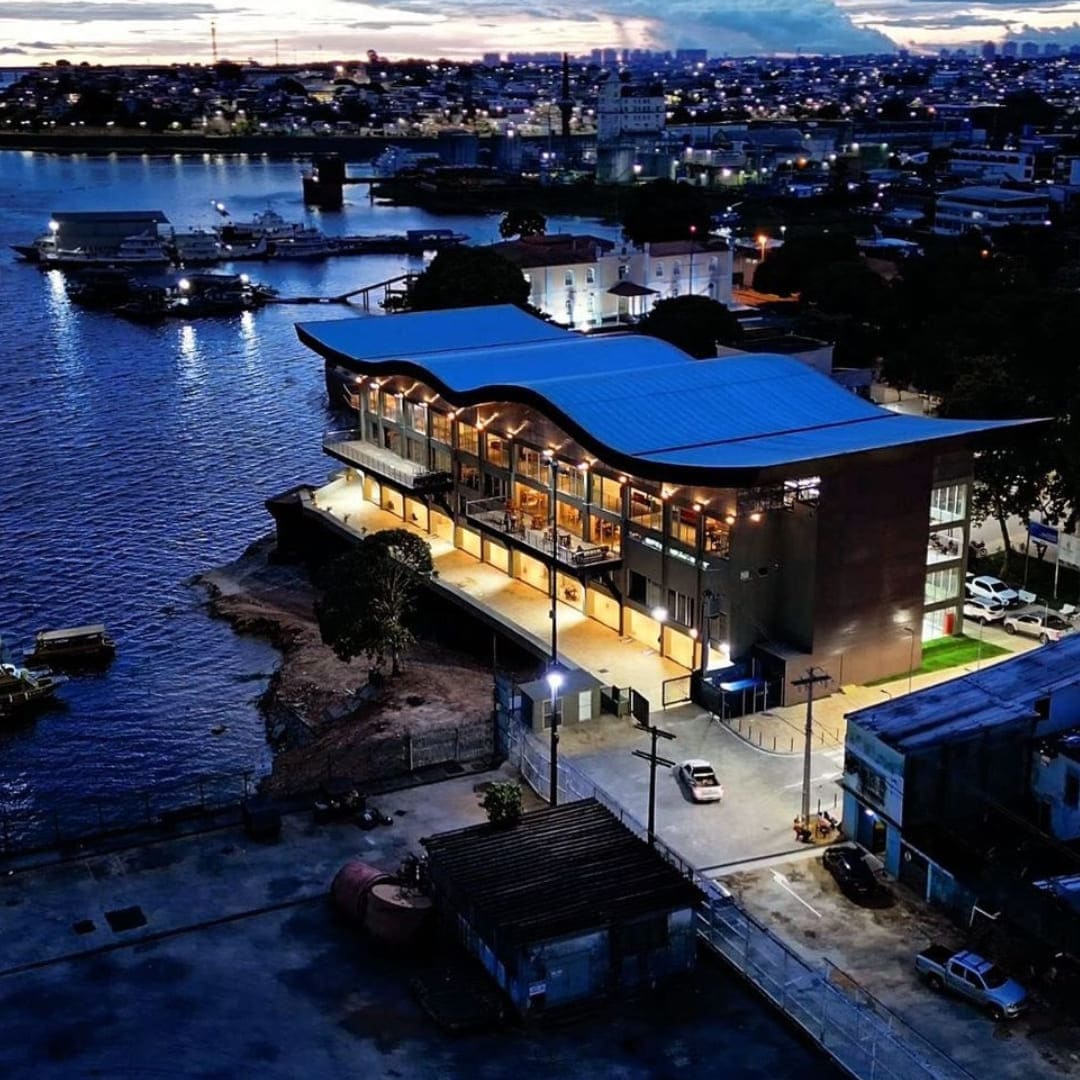
    Lúcia Almeida Viewpoint

    For a  breathtaking view of Manaus in Brazil, the Lúcia Almeida Viewpoint is a must-visit spot. Located near the Amazon Theatre, it offers panoramic views of the city and the Rio Negro.

    It’s a perfect place to relax, take photos, and enjoy the unique charm of Manaus’ skyline.

    Address: Av. Sete de Setembro, 8 — Centro, Manaus

    Night view of the illuminated Lúcia Almeida Viewpoint building reflected in the river water in Manaus.

    Best Amazon tours departing from Manaus

    Most Amazon tours depart from Manaus, bound for incredible ecotourism spots in the forest, like Anavilhanas and Jaú National Park, Presidente Figueiredo and Careiro. See some options below!

    TOUR HIGHLIGHTS DURATION STARTING PRICE*
    Amazon Cruise Onboard accommodation, expeditions to Anavilhanas and Jaú, cave exploration, hiking, river beaches, wildlife watching, visiting indigenous groups. 4 days
    5 days
    7 days
    US$ 2,485
    Luxury Amazon Cruise Luxury onboard accommodation, Meeting of Waters, Lake Janauari, jungle hiking, fishing, boat rides, night tours, river beaches, luau. 5 days US$ 3,740 
    Anavilhanas Jungle Lodge Luxury stay at Anavilhanas, hiking, canoeing, wildlife watching, fishing, archery lessons, visiting local communities. 6 days US$ 3,180 
    Brazilian Amazon Jungle Tour Affordable stay, birdwatching, fishing, canoe trips, forest hikes, Meeting of Waters, visiting local markets. 3 days
    4 days
    5 days
    US$ 585 
    Mirante do Gavião Exclusive Amazon Lodge High-end stay, kayaking, stand-up paddling, cave exploration, wildlife watching, boat rides. 4 days
    5 days
    US$ 1,865 
    Amazon Kayak Tour Brazil Kayaking, camping in the forest, hiking, fishing, caiman spotting, visiting locals. 4 days US$ 600 
    Amazon Jungle Survival Tour Camping in the forest, survival skills lessons, trekking, canoeing, wildlife watching. 4 days
    6 days
    US$ 950 

    *Per person, based on double occupancy in group departures. Prices may vary depending on season and availability. Exchange rate as of February 6th, 2026; subject to change.

    PlanetaEXO has an entire selection of fantastic Amazon Rainforest tours in Brazil. Discover our adventures!

    👉 Read more:

    How to get around in Manaus?

    To get around in Manaus, there are a few options:

    • Public buses: Manaus City has an affordable bus system, but it can be crowded at rush hours and occasionally unreliable. Safety is a concern due to pickpocketing, so keep valuable items secure and stay alert. Check routes with apps like Moovit and Ônibus Manaus.
    • Ride-sharing apps: Uber and 99 App provide safe rides with set prices, making them ideal for solo travelers, nighttime trips and people who are unfamiliar with the area.
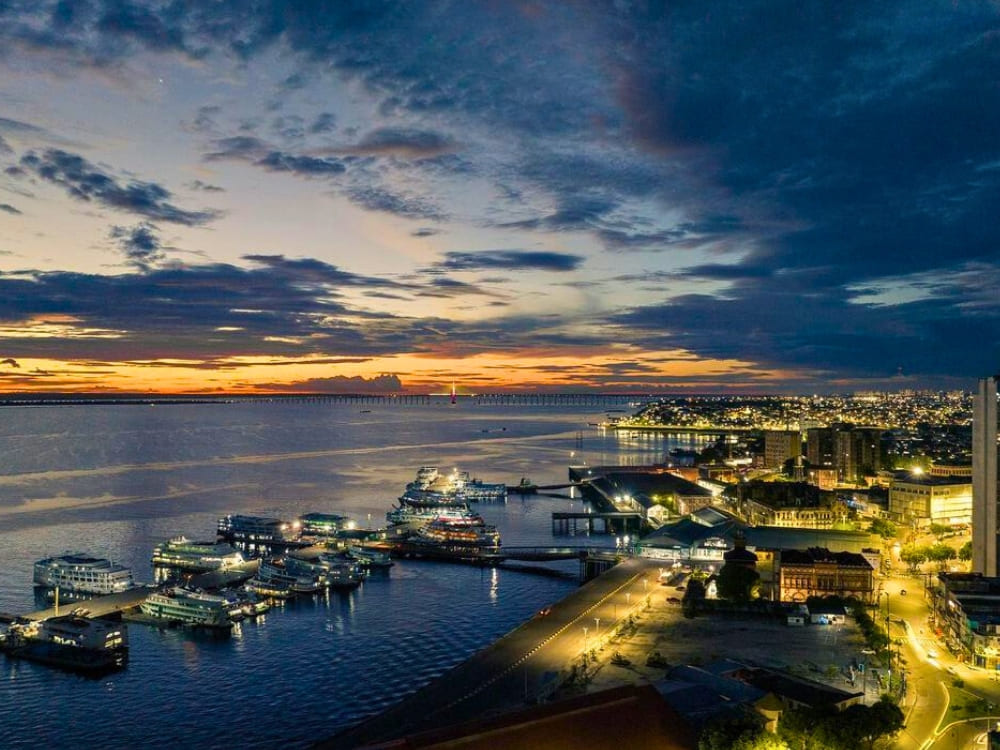
    • Ferries and boat services: For river transport, ferries and boats departing from the Port of Manaus can take you to surrounding areas and deeper into the Amazon. Use reputable operators and follow safety guidelines for a secure journey.

    manaus port

    Where to eat in Manaus

    The city is known for being a core for Amazonian cuisine, famous for dishes you won’t find anywhere else. Feeling hungry? PlanetaEXO’s Manaus travel guide has listed some local spots so you can try out the unique flavors of the forest!

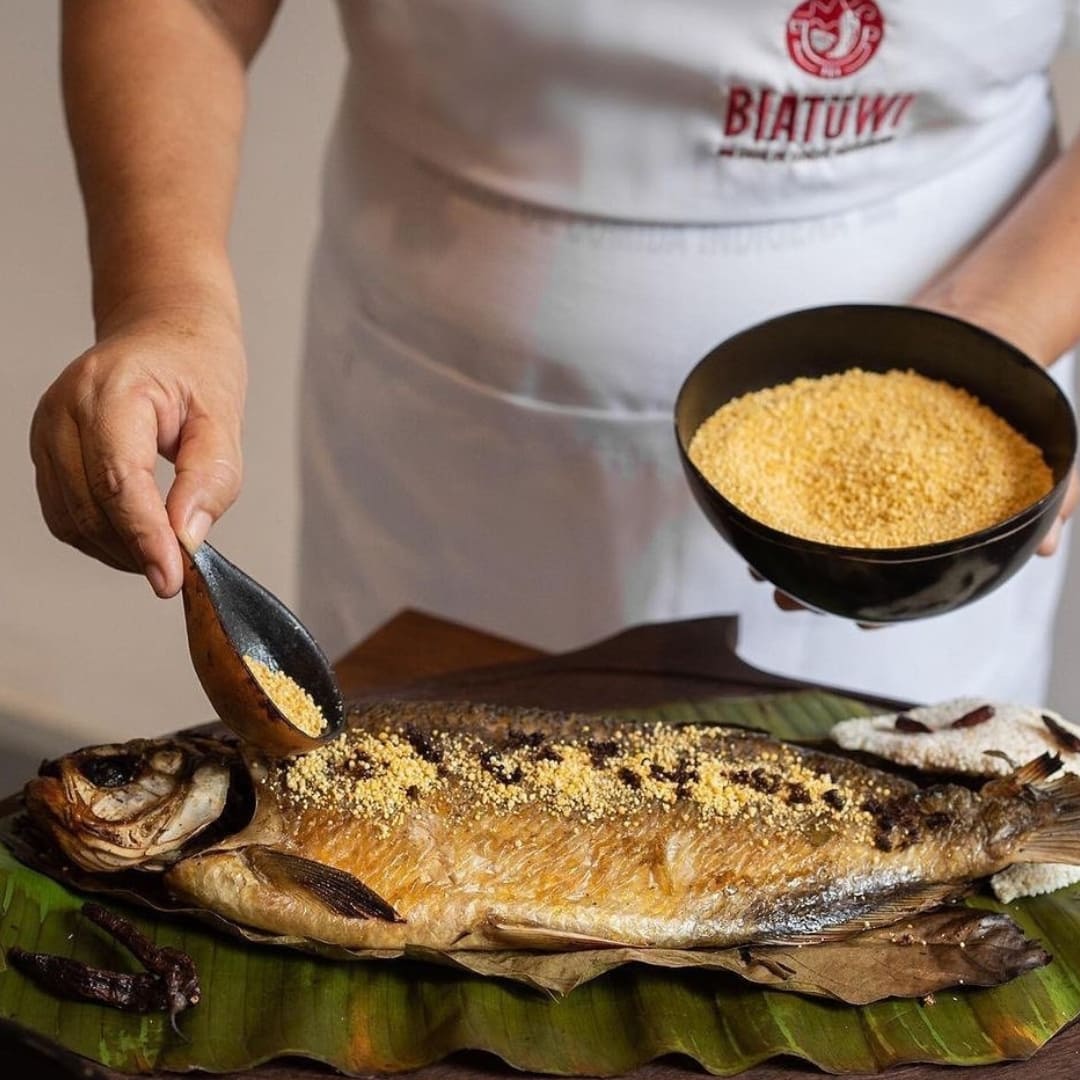
    Biatüwi $$$

    Biatüwi is an indigenous culinary house in the heart of Manaus, offering a unique experience rooted in Amazonian indigenous culture.  

    Address: R. Bernardo Ramos, 97 — Centro, Manaus

    Close-up of a person sprinkling manioc flour onto a roasted fish dish served on a banana leaf.
    .

    Caxiri Manaus $$$

    With a great view of the Amazon Theatre, Caxiri provides a sophisticated dining experience that celebrates local cuisine. The menu is described as a fusion of traditional Brazilian dishes with Amazonian culture.

    Address: R. 10 de Julho, 495 — Centro, Manaus

    Sophisticated dish featuring shrimp served in a white bowl at a Manaus restaurant.
    @caxiri_amazonia

    Tambaqui de Banda $$

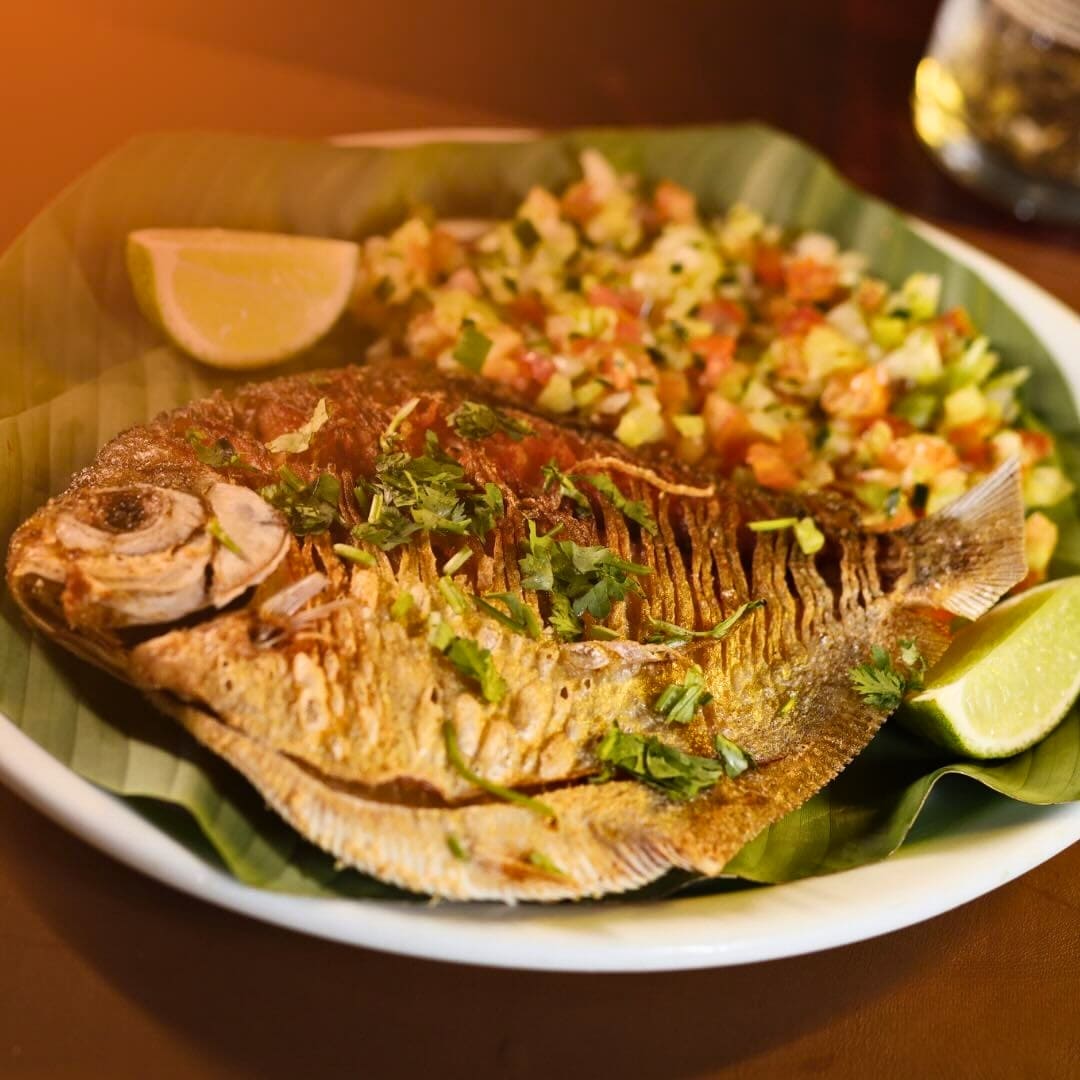
    Tambaqui de Banda’s signature dish is traditional-style grilled tambaqui (a native fish). Known worldwide for its love and respect for Amazonian flavors, the restaurant has both indoor and outdoor seating — with a beautiful view of the Amazon Theatre.

    Address: R. José Clemente, 596 — Centro, Manaus

    O Lenhador $$$

    O Lenhador serves various traditional dishes, with a heavy focus on regional meats and hearty portions. Famous for its rustic atmosphere, it’s a favorite spot for those looking to experience local cuisine.

    Address: Av. do Turismo, 2371 — Ponta Negra, Manaus

     Grilled Tambaqui fish served whole on a banana leaf with vinaigrette and lime slices.
    @restauranteolenhador

    Peixaria Morada do Peixe $$

    Charming seafood restaurant, Peixaria Morada do Peixe is celebrated for its fresh fish and authentic Amazonian dishes. Specializing in regional dishes like tambaqui and pirarucu, it offers a relaxed atmosphere perfect for enjoying the culinary heritage of Manaus.

    Address: Beco Goiania, Conjunto Jardim Versalles — Planalto, Manaus

    Banzeiro Manaus $$$

    Blending traditional flavors with contemporary techniques, the menu of Banzeiro Manaus showcases various regional dishes, focusing on local recipes and ingredients like tacacá, tambaqui, cupuaçu and even leafcutter ants. 

    Address: R. Libertador, 102, — Nossa Senhora das Graças, Manaus

    Cachaçaria do Dedé $$$

    Famous for its selection of premium cachaças and Amazonian-inspired dishes, Cachaçaria do Dedé offers a unique dining experience that blends local flavors with Brazilian culinary traditions.

    Address: R. do Comercio, 1003-F (Box 4) — Parque 10 de Novembro, Manaus

    Where to stay: hotels in Manaus

    Manaus has great accommodation options to fit different budgets and preferences. Many hotels are located near major attractions, making it easier to explore the city. 

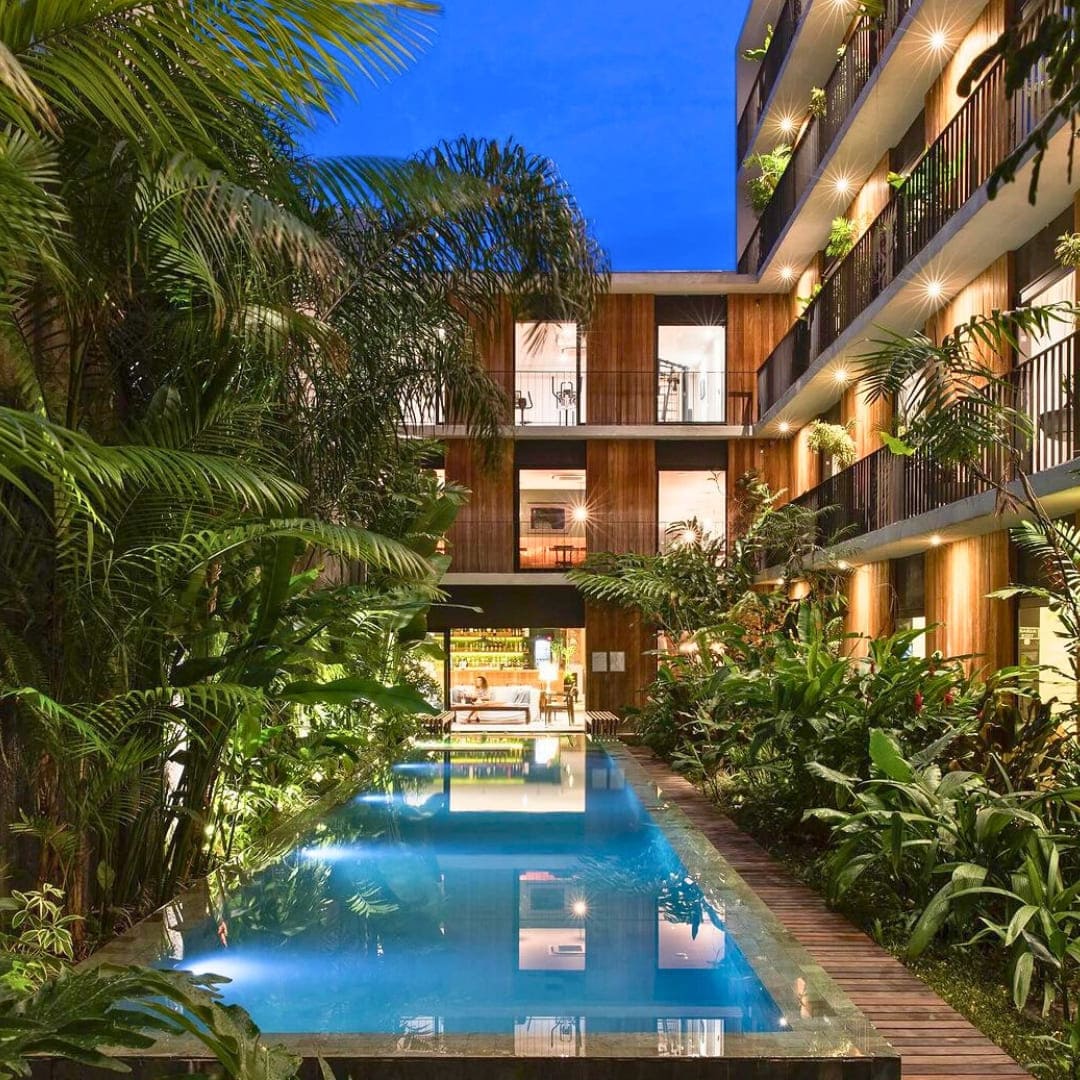
    Hotel Villa Amazonia ⭐️⭐️⭐️⭐️⭐️

    Boutique hotel in the historic center with garden views, an Amazon-inspired restaurant, and a natural stone pool.

    Address: R. 10 de Julho, 315 — Centro, Manaus

    Outdoor swimming pool surrounded by tropical gardens and building balconies at Hotel Villa Amazonia.
    @villaamazonia

    Hotel Mural Living ⭐️⭐️⭐️⭐️

    A modern and minimalist hotel located in the heart of Manaus, offering clean and cozy rooms with contemporary decor. Perfect for travelers seeking comfort and practicality near the city’s main attractions. 

    Address: R. Doutor Moreira, 168 — Centro, Manaus

    Hostel Manaus ⭐️⭐️⭐️⭐️

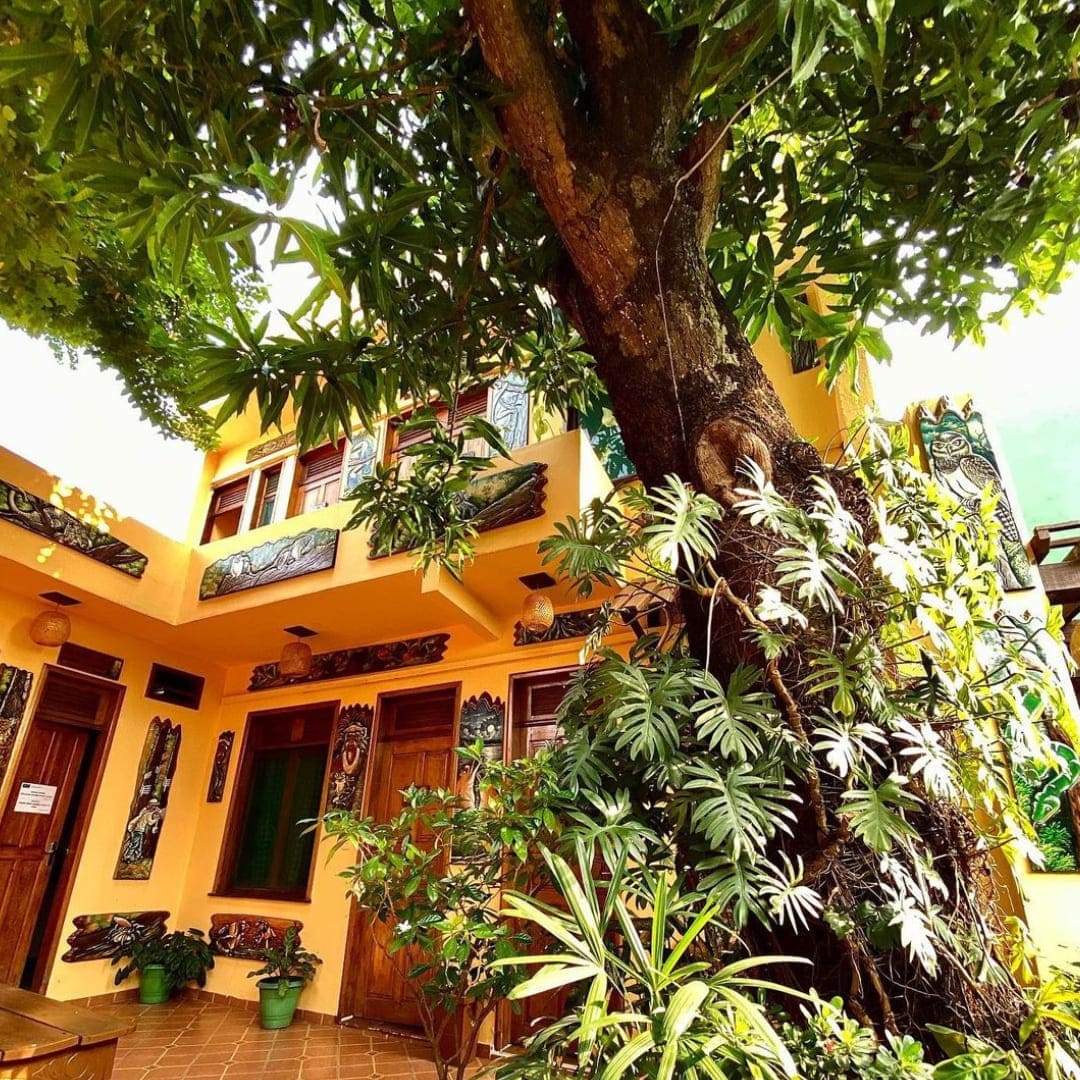
    Located near Manaus’ historic center, Hostel Manaus has budget-friendly accommodations in a vibrant and welcoming atmosphere. Ideal for backpackers, it features shared dorms, private rooms, and a rooftop terrace with city views. 

    Address: R. Lauro Calvacante, 231 — Centro, Manaus

    Exterior view of the yellow Hostel Manaus building shaded by large green trees.
    @hostelmanaus

    Manaus Hóteis Millennium ⭐️⭐️⭐️⭐️

    Located within Millennium Shopping, the hotel offers rooms with balconies, a rooftop pool, and panoramic views. 

    Address: Av. Djalma Batista, 1661 — Chapada, Manaus

    Seringal Hotel ⭐️⭐️⭐️⭐️

    Just 50 meters away from the Amazon Theatre, it provides cozy rooms with air conditioning, Wi-Fi, and a breakfast buffet. 

    Address: R. Monsenhor Coutinho, 758 — Centro, Manaus

    Ramada by Wyndham Manaus Torres Center ⭐️⭐️⭐️

    A modern hotel near the Industrial District with contemporary rooms, a fitness center, an on-site restaurant, and an all-you-can-eat breakfast buffet. Ideal for both business and leisure travelers.

    Address: Av. José Lindoso, 280, Coroado — Manaus

    Juma Ópera Hotel ⭐️⭐️⭐️⭐️⭐️

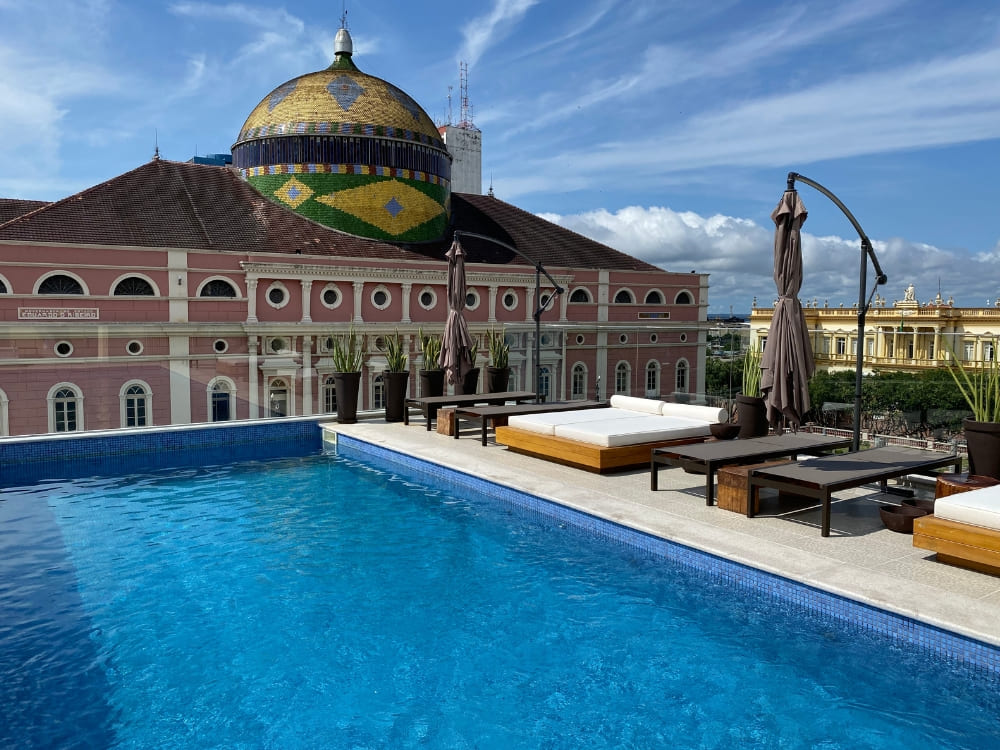
    Located in the heart of Manaus and directly across from the iconic Amazon Theatre, Juma Ópera Hotel offers a blend of historical charm and modern luxury. With elegant rooms, a rooftop pool, and a gourmet restaurant featuring Amazonian cuisine, it’s an excellent choice for those seeking an upscale stay close to the city’s cultural landmarks. 

    Address: R. 10 de Julho, 481 — Centro, Manaus

    Rooftop swimming pool at Juma Ópera Hotel offering a direct view of the Amazon Theatre dome.
    .

    Is Manaus safe?

    Overall, Manaus is safe, but like in any other destination, it’s important to be careful regarding physical integrity, health and your personal belongings. Here are some safety tips for your trip:

    • Banks and ATMs: Visit banks only during the day, when security is present. Only withdraw small amounts of cash and avoid ATMs where there’s no one else around — if possible, don’t do it alone.
    • Cash safety: Keep cash separate and consider carrying a fake wallet or fanny pack with minimal money to lower the impact of potential theft.
    • Public areas and tourist spots: Be mindful of pickpockets in busy areas. Avoid displaying valuable items openly and use a secure bag for your belongings.
    • Vaccinations: Although not required, yellow fever vaccines are recommended for people going to the Amazon — especially in neighboring countries, like Bolivia and Colombia. Malaria risk is low, though some choose preventive medication. Make sure your tetanus vaccination is also up to date for added safety.
    • Climate preparedness: Manaus is hot and humid, so stay hydrated, wear light clothing, and use insect repellent — especially in forested areas.

    Manaus, Brazil: more than just a gateway to the Amazon Rainforest

    Manaus is more than just a quick stop on the way to the Amazon — it’s a fascinating place with a complex history, rich culture, and stunning natural scenery. Upon booking your Amazon trip, consider saving a few days to explore the city. You’re going to love it!

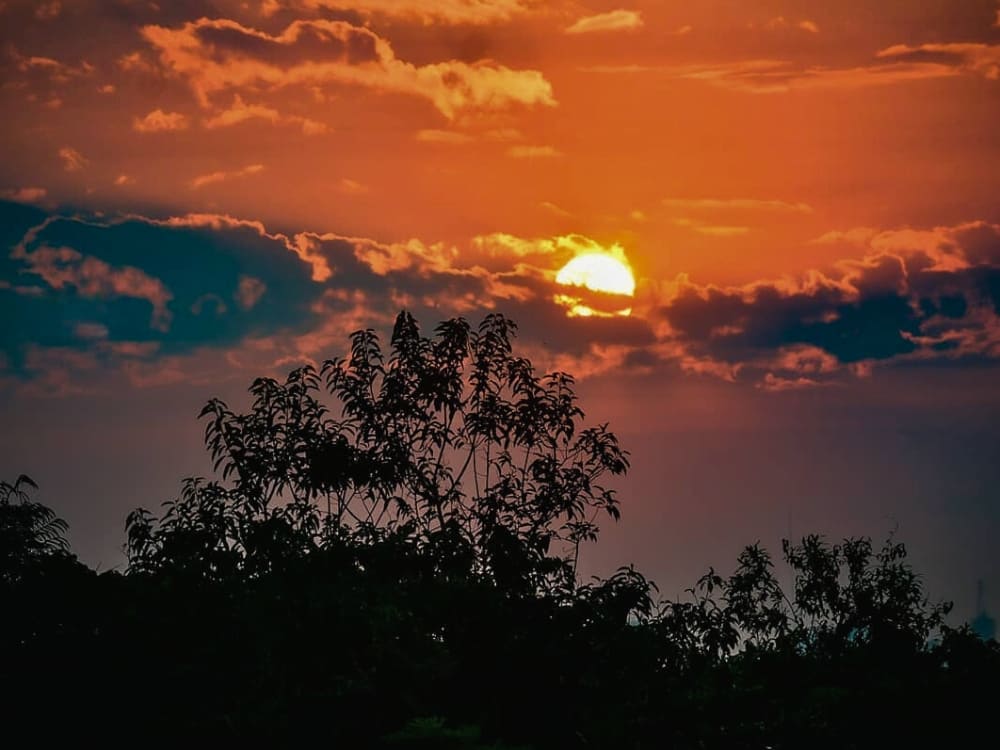
    Bright orange sun setting behind the dark silhouettes of Amazon rainforest trees.

    As a platform specialized in Amazon Rainforest tours in Brazil, PlanetaEXO works with the finest local operators to ensure the best experience, from your departure in Manaus to joining activities in the middle of the forest. Contact us now!
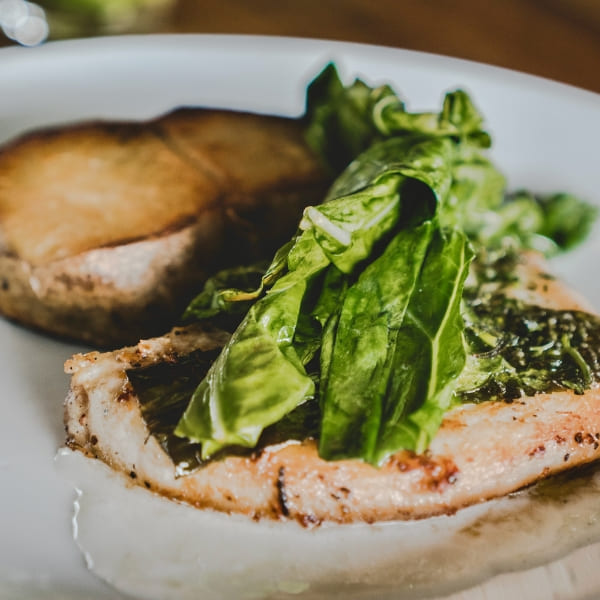
  • Anavilhanas National Park, the archipelago of the Amazon in Brazil

    Anavilhanas National Park, the archipelago of the Amazon in Brazil

    Learn everything you should know about the Anavilhanas in the Amazon Rainforest, including its history, how to get there, the best time to visit, what to do, and more!

    Anavilhanas National Park is home to the second largest river archipelago in the world. Located on the Rio Negro in the Amazon Rainforest, Brazil, it holds more than 400 islands and 60 lakes, with up to 60% of its area submerged during the wet season, transforming the landscape every year.

    A pink river dolphin swims near the surface of dark, calm water.

    The Anavilhanas archipelago safeguards unique ecosystems of várzea (a flat, fertile, and extensive terrain, usually located on the banks of Amazonian rivers) and igapó (flooded forest) while promoting sustainable tourism. This shift boosted the economy of the city of Novo Airão and made it the most visited national park in the Brazilian Amazon.

    To help you understand the national park, PlanetaEXO, an ecotourism platform specializing in Amazon Rainforest tours in Brazil, has put together a complete guide on where it is, how to visit, the best activities, and much more. Check it out below!

    The History of Anavilhanas National Park 

    The name Anavilhanas is believed to have originated from the Aneuene or Anauini River, which was once called Anaviana and later Anavilhena.

    An aerial view shows the dark waters of the Rio Negro cutting through the lush green canopy of the Amazon rainforest.
    Photo: João Paulo Krajewski

    Its origins trace back to 1981, when it was created as the Anavilhanas Ecological Station, a category aimed at scientific research and environmental education. However, this designation conflicted with the reality of the region, which was better suited for sustainable tourism. In 2008, ICMBio reclassified the area as a national park, expanding its boundaries to 350,000 hectares and opening it to responsible visitation.

    The change also helped curb illegal logging, which had previously been common in the Rio Negro basin, and gave local communities new opportunities through ecotourism. Today, most of Novo Airão’s population relies directly or indirectly on tourism, from guiding to crafts and hospitality.

    👉 Read more: Best places to visit in the Amazon, Brazil 

    Worldwide Recognitions

    Since 2000, the Anavilhanas archipelago has been part of the Central Amazon Conservation Complex, a UNESCO World Heritage Site that also includes Jaú National Park and the Mamirauá Reserve

    A vibrant sunset reflects over the complex network of islands and waters in the Anavilhanas archipelago.
    Photo: Felipe Castellari

    It is also recognized as a Ramsar Site, a wetland of global importance, designated by the Ramsar Convention—an international treaty signed in 1971 in Iran, aimed at the conservation and wise use of wetlands (swamps, mangroves, lagoons, etc.) with the participation of more than 160 countries.

    These recognitions ensure international visibility, long-term protection, and support for responsible tourism that benefits local communities while safeguarding biodiversity.

    How to Get to Anavilhanas National Park

    The main gateway to Anavilhanas is Manaus, the capital of Amazonas state. Eduardo Gomes International Airport (MAO) receives direct flights from Miami (MIA), Bogota (BOG), Panama City (PTY), and Curaçao (CUR), as well as numerous daily connections from São Paulo, Rio de Janeiro, Brasília, and other Brazilian cities.

    A white and red hydroplane floats on the calm Rio Negro, offering a transport option to the Amazon.
    Photo: Felipe Castellari

    From Manaus, the most popular way to reach the park is by road to Novo Airão, a small riverside town located 180 km away. The drive takes around 2–3 hours along the AM-070 and AM-352 highways. 

    Visitors can also hire private shuttle services, rent a car, or even charter a hydroplane to land directly on the Rio Negro. Novo Airão is considered the main access point to Anavilhanas, with boats departing every day to explore the islands.

    Another option is arriving by river. Boat transfers from Manaus to Novo Airão take 8–12 hours and allow travelers to witness the famous Meeting of the Waters, where the dark Rio Negro and the muddy Solimões flow side by side without mixing.

    For those looking for a faster option, speedboats can make the same journey in around 3–4 hours, depending on river conditions. Many itineraries combine this journey with river cruises, which gives visitors a complete experience of the region.

    👉 Read more: How to get to the Amazon Rainforest in Brazil

    Best Time to Visit Anavilhanas National Park, Brazil

    The park is a year-round destination, but the experience changes dramatically with the seasons. In fact, this is a feature that makes Anavilhanas even more unique! 

    • Dry Season (September–February): White-sand beaches emerge across the islands, providing ideal conditions for swimming and birdwatching. Some species even nest in the sandbanks during this period. Trails through the flooded forests can be explored on foot.
    • Wet Season (March–August): Water levels rise up to 16 meters, flooding 60% of the park’s area. This is the time to explore the igapó by canoe and observe aquatic animals like giant river otters and river dolphins.
    • Transition Months: From October to December, prolonged droughts may reduce access to some areas, but conditions improve again by January.

    👉 Read more: Best time to visit the Amazon Rainforest

    Fauna, Flora, and the Protected Systems of Anavilhanas in the Amazon

    The biodiversity of Anavilhanas National Park is astonishing. The igapós flood seasonally, creating habitats for unique plants and wildlife. Visitors may spot giant macucu trees, orchids, and fruiting species like açaí and cupuaçu. Among the most emblematic Amazon animals are the pink river dolphin, giant river otters, sloths, howler monkeys, and black caimans. 

    Birdwatchers will be delighted with sightings of toucans, macaws, and even the majestic harpy eagle. In the rivers and lakes, more than 300 fish species thrive, including pirarucu, piranhas, and dourada.

    Scientific research in Anavilhanas is vital and already brings important discoveries. A recent INPA (National Institute of Amazonian Research) study found that ant communities on the islands differ from those on terra-firme (non-flooded forest), with seasonal flooding driving changes in species composition. Some ants adapt by moving to tree canopies, while others struggle to survive.

    All of this (and much more) reinforces the park’s role in protecting biodiversity and in advancing ecological knowledge.

    👉 Read more: Best Brazil Wildlife Tours and Destinations 

    Fun Facts About Anavilhanas

    Discover more fascinating facts about Anavilhanas that further highlight why the park is considered one of the most captivating places in the Amazon:

    • 3 Bocas (Three Mouths): one of the most scenic spots in the archipelago, where three channels meet, creating mirrored waters and lush vegetation.
    • The Madadá Caves are nearby: sandstone formations over 700 million years old, accessible by trails that start at the edge of the park.
    • No mosquitoes: thanks to the acidity of the Rio Negro, the area is far less affected by mosquitoes than most tropical regions.
    • Visitor numbers: Anavilhanas welcomes up to 40,000 visitors annually, making it the most visited national park in the Brazilian Amazon.
    • Around 60 lakes: in addition to the 400+ islands, the archipelago shelters dozens of lakes that sustain a wide variety of wildlife.

    What to Do in Anavilhanas National Park?

    A local guide rows a wooden canoe filled with tourists through the flooded waterways of Anavilhanas National Park
    Photo: Isadora Sá

    Anavilhanas offers a wide range of activities that change with the seasons:

    • Boat tours: through water channels and lakes, with chances to see pink river dolphins, caimans, and many bird species.
    • White-sand beaches: when the rivers shrink, many beaches appear. Perfect for swimming and relaxing in the dry season!
    • Igapós (flooded forests): ideal for canoe or kayak trips through waterways during the wet season.
    • Jungle hikes: see giant trees, orchids, and even prehistoric rock carvings by hiking in the forest when water levels drop.
    • Visit the ICMBio bases: visitors can stop at research and monitoring structures to learn about ongoing conservation measures and the protection of this fragile ecosystem. In the surrounding areas, during nighttime spotlights and near some ICMBio bases, large caimans also make occasional appearances.

    👉 Read more: Top things to do in the Amazon Rainforest in Brazil 

    Best Tours in the Anavilhanas Archipelago

    Some of the best experiences in the Amazon Rainforest take place in Anavilhanas National Park, Brazil. Discover the trips available on PlanetaEXO!

    Anavilhanas Jungle Lodge

    One of the best ways to experience the park is by staying at the Anavilhanas Jungle Lodge, an award-winning ecolodge located in Novo Airão. Blending comfort with sustainability, the lodge offers guided excursions such as piranha fishing, nocturnal wildlife tours, canoeing, and visits to local communities.

    A luxury thatched-roof bungalow with warm interior lighting sits nestled among lush green trees at the Anavilhanas Jungle Lodge.
    .

    Guests can also learn about scientific projects supported by the lodge, including biodiversity monitoring with researchers from INPA (National Institute for Amazonian Research) and innovative studies on fungi for “mycotourism,” which highlight the lesser-known but fascinating world of the Amazon’s fungi.

    With luxury bungalows overlooking the Rio Negro, a pool with panoramic views, and Amazon-inspired cuisine, the lodge is both a refuge and a hub for conservation.

    Amazon River Cruises

    Another great way to experience the park is on an Amazon river cruise in Brazil, departing from Manaus and sailing through the Rio Negro. Mixing adventure and comfort, the itinerary includes canoeing through igapós, piranha fishing, jungle hiking, and close encounters with pink river dolphins. 

     A multi-level traditional wooden river cruise boat navigates the reflective dark waters of the Amazon.
    .

    Travelers also visit Indigenous and riverside communities, explore hidden lagoons, and spot wildlife such as macaws, sloths, and pirarucu fish.

    On board, guests enjoy air-conditioned cabins, local cuisine, and leisure areas like a solarium and lounge, making the journey as enjoyable as the destination of Anavilhanas

    👉 Explore the adventure: 4-day and 7-day Amazon cruises in Brazil

    Mirante do Gavião

    Staying at the Mirante do Gavião is one of the best ways to discover Anavilhanas. From the its privileged location on the Rio Negro, guests set out on daily tours through the archipelago, whether hiking to the Madadá Caves, exploring flooded forests by canoe, or relaxing on the white-sand beaches during the dry season.

    The unique, boat-shaped wooden architecture of Mirante do Gavião lodge glows warmly at night in the forest.
    .

    The lodge also connects travelers with the local culture, including visits to riverside communities, craft centers, and conservation initiatives. At sunset, boat rides across the Rio Negro provide unforgettable views of the park’s islands, followed by nocturnal excursions to spot caimans and other animals.

    Between adventures, Mirante do Gavião offers comfort and exclusivity, making it the perfect base to combine relaxation with the best tours in the Anavilhanas National Park.

    👉 Read more: Best Amazon Jungle Lodges in Brazil

    Luxury Amazon Cruise

    The Luxury Amazon Cruise aboard the Zaltana is a 5-day journey through the Rio Negro and the Anavilhanas archipelago. Guests explore hidden lakes and igarapés (narrow water channels), hike to giant trees, try piranha fishing, and meet pink river dolphins while also visiting Indigenous and riverside communities.

    The Zaltana luxury riverboat floats calmly on the Rio Negro, offering high-end cruises through the Anavilhanas archipelago.
    Photo: Isadora Sá

    With 10 suite cabins, panoramic views, and Amazon-inspired cuisine, the Zaltana offers one of the most comfortable and exclusive ways to experience the rainforest.

    👉 Read more: Best Amazon River Cruises in Brazil

    Comparative price table for each Anavilhanas tour

    TOUR HIGHLIGHTS DURATION STARTING PRICE*
    Anavilhanas Jungle Lodge Luxury accommodation, visits to local communities, Madadá Caves, guided tours (canoeing, hiking, wildlife watching, night tours, etc.) 6 days US$ 3,330
    Amazon River Cruise Accommodation aboard (private ensuite cabins), Lake Janauari, visits to indigenous groups, guided tours (piranha fishing, hiking, canoeing, wildlife spotting, etc.) 4 days

    7 days

    US$ 2,605
    Mirante do Gavião High-end accommodation, Rio Negro, Madadá Caves, visits to riverside communities, guided tours (hiking, kayaking, wildlife watching, etc.) 4 days US$ 2,000
    Luxury Amazon Cruise Accommodation on a luxury riverboat, Meeting of Waters, Lake Janauari, visits to local communities, guided tours (wildlife watching, night spotting, hiking, piranha fishing, etc.). 5 days US$ 3,920

    *Per person, based on double occupancy in group departures. Prices may vary depending on season and availability. Exchange rate as of May 14th, 2026; subject to change.

    Traveling to Anavilhanas National Park, Brazil, with PlanetaEXO

    At PlanetaEXO, an ecotourism platform specializing in Amazon Rainforest tours in Brazil, the trips to Anavilhanas are designed to connect travelers with nature while supporting local communities and conservation projects. By booking with us, you ensure that your vacation contributes to keeping the Amazon forest standing.

    We help travelers find the perfect balance between leisure, adventure, and sustainability. Our difference lies in offering authentic experiences guided by the best local operators who know the forest better than anyone. Contact us now!
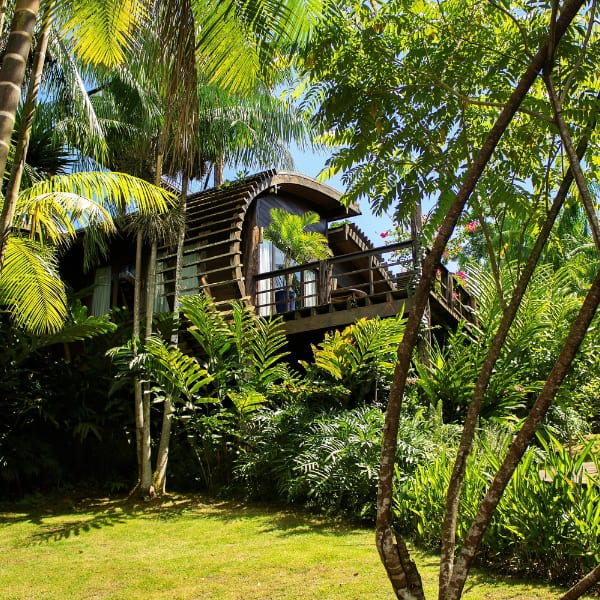
  • 15 Facts About the Amazon Rainforest in Brazil

    15 Facts About the Amazon Rainforest in Brazil

    Vibrant and incredibly valuable for the planet, the Brazilian rainforest is a top destination for ecotourism. Here are our 15 facts about the Amazon!

    Beautiful, colossal, diverse, and always at the center of attention in international discussions about the environment, the Amazon Rainforest is, undoubtedly, one of the most fascinating places on the planet.

    That’s why the number of visitors is growing every day. Only in the first four months of 2025, tourism in the state of Amazonas grew by a total of 13%, with a 21,85% increase in foreign tourists, according to the Amazonas State Tourism Company. Here’s your first fact about the Amazon Rainforest in Brazil!

    To give a taste of what awaits you, PlanetaEXO, an ecotourism platform specialized in Amazon Rainforest tours, has put together a list with 15 fun facts about the Amazon. Check it out below!

    1 – How big is the Amazon Rainforest?

    The Amazon Rainforest’s size is impressive: with an area of 6.74 million km², it extends over eight different countries in South America: Brazil, Bolivia, Colombia, Ecuador, Guyana, Peru, Venezuela, and Suriname. Unsurprisingly, it’s the largest rainforest on Earth.

    To give you an idea of how massive this is, the Amazon is almost the size of Australia (7,692,024 km²) or twice the size of India (3,287,590 km²)!
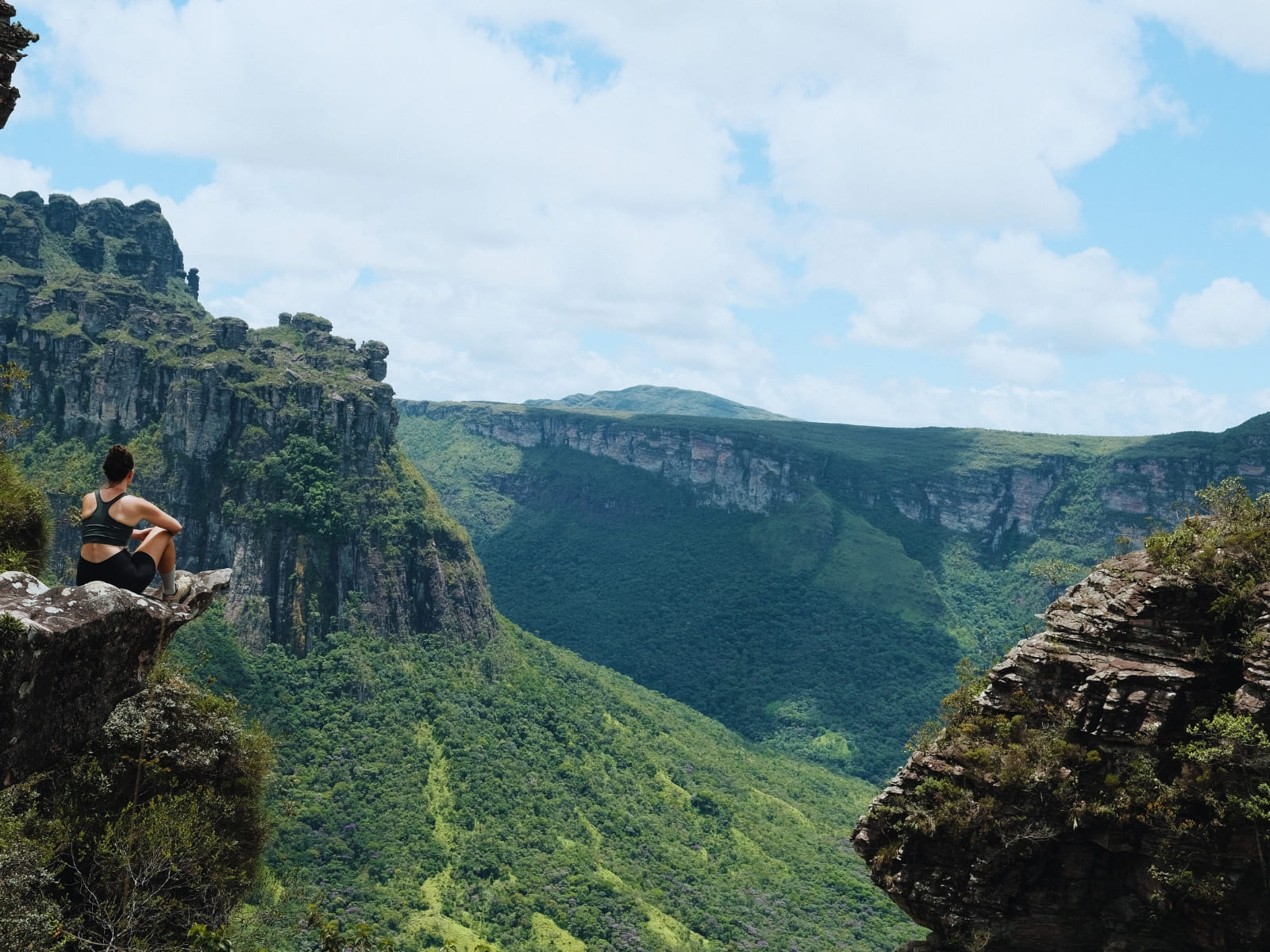
    Mist rising above the dense Amazon Rainforest canopy at sunrise, showcasing the vast biodiversity of the Brazilian jungle.
    Photo: Andre Dib

    2 – Largest share of the Amazon

    60% of the Amazon Rainforest’s share — approximately 4.2 million km² — is located in Brazil, divided between the states of Amazonas, Amapá, Acre, Pará, Rondônia, Roraima, Tocantins, Mato Grosso and Maranhão.

    The largest portion is in Amazonas (1.285.216 km²), followed by Pará (947,303 km²) and Mato Grosso (423,967 km²).

    👉 Read more: How to get to the Amazon Rainforest in Brazil?

    3 –The Amazon River’s massive numbers

    Some of the most interesting facts about the Amazon in Brazil involve the Amazon River. Up until 2008, the Nile River, in Africa, was considered the longest in the world, ranging from 6,650 km.

    However, satellite images taken by the National Institute for Space Research (Inpe) — a unit of the Brazilian Ministry of Science — concluded that this title actually belongs to the Amazon River and its imposing 6,992 km.

    The river’s source is in the Andes Mountains, Peru, whereas its mouth is located in Ilha do Marajó, in the state of Pará, where it flows into the Atlantic Ocean. This long path has more than 1,000 tributaries along Brazil, Colombia, and Peru, representing 20% of all continental freshwater on the planet.

    This is also the largest basin in the world, with an area of 7,000,000 m². The river is the main source of water for thousands of different species of animals and millions of plants, contributing to the climate maintenance of the region.

    The winding Amazon River reflecting the golden sunset light as it flows through the dark green rainforest.
    @astro_alex_esa

    People benefit as well. Riverside and Indigenous communities use these waters for their day-to-day needs, but the Amazon River is also important for activities like fishing, agriculture, animal husbandry, and tourist attractions—like river cruises.

    👉 Read more: Best Amazon River Cruises in Brazil

    4 – Indigenous communities

    In total, Brazil has 1.7 million indigenous people, while half of them call the Amazon their home. There are over 180 indigenous communities occupying an area of 1.110.000 km² in the forest, mostly in the states of Mato Grosso, Maranhão, Amazonas, and Roraima. The Yanomami are the largest group, with 27,152 people, followed by Raposa Serra do Sol (26,176) and Évare I (20,177).

    Indigenous communities had lived in Brazil long before the Portuguese arrived in 1500. Protecting their lands and supporting their causes are ways of preserving their culture and the very essence of the country, while also caring for the Amazonian biodiversity

    A group of indigenous people in the Amazon playing traditional long wind instruments and drums during a cultural ritual.
    .

    Though there are a handful of isolated groups, most indigenous communities welcome visitors to teach them about their traditions and raise awareness on the importance of the Amazon Rainforest.

    5 – Cultural experiences

    One of the most amazing facts about the Amazon in Brazil is how diverse the culture in this region actually is. Aside from indigenous people, the rainforest is home to riverside communities — mostly composed of caboclos (non-indigenous people born in Amazonian territory) and quilombolas (descendants of enslaved Africans who fled from sugar mills to create their own groups from the 16th and the 19th centuries).

    This multiculturalism offers incredible experiences for many travelers, who are welcomed by locals to engage with their families and learn about their beliefs, food habits, crafts, and close relationship with nature.

    A young boy paddling a wooden canoe on a dark river, representing the daily life of riverside communities in the Amazon.
    .

    6 – Unique wildlife

    Brazil’s Institute for Society, Population and Nature (ISPN) states that the entire Amazon fauna has not been fully documented yet. While researchers are sure there’s still a lot more to discover, about 30 million species have been officially cataloged to date.

    In Brazilian territory, there are 311 types of mammals, 1,300 birds, 232 amphibians, 273 reptiles, and 1,800 fish. Some animals are considered symbols of the Amazon Rainforest, like pink dolphins, giant anteaters, giant otters, spider monkeys, piranhas and anacondas.

    A Giant Otter, a symbol of Amazon wildlife, swimming in the water while eating a fish.
    .

    Other little creatures play a big role in balancing the Amazon ecosystem. It is estimated that over 2.5 million species of insects live in the forest, including the world’s biggest collection of butterfly species — at least 133 only in Brazil, according to Amazonian Butterflies, a project of the State Museum of Natural History in Karlsruhe, Germany.

    7 – Abundant flora

    Nonprofit World-Transforming Technologies (WTT), in association with Agência Bori, charted over 1,070 scientific articles about Amazonian plants published from 2017 to 2021. The operation was able to point out that the Brazilian Amazon is home to up to 40,000 species — with more to be cataloged, most likely.

    Researchers also estimate that 2,500 types of trees grow in the forest, representing one-third of all tropical trees on Earth. Some of them are known worldwide, as their fruits are used for tasty treats and even cosmetics, like açaí, Brazil nut, buriti, and tucumã.

    Clusters of bright orange and red palm fruits hanging from a tree, illustrating the abundant flora of the Amazon Rainforest.
    Photo: Alex Da Riva

    8 – Ecotourism hotspot

    One of the most significant facts about the Amazon Rainforest is the  unforgettable ecotourism alternatives, including guided hikes, canoeing through flooded forests, wildlife observation, etc.

    Not only is the government committed to creating policies to promote sustainable trips, but the best Amazon jungle lodges in Brazil have their own set of protocols to ensure the forest’s conservation without compromising itineraries and stay experiences.

    Rainwater harvesting, usage of solar/wind power, recycling, and limiting the number of guests per tour are just a few solutions.

    Tourists on an observation tower using large cameras and binoculars for wildlife observation in the Brazilian Amazon.
    Photo: Andre Dib

    👉 Read more: Ecotourism in the Amazon Rainforest: 7 tours to connect with nature

    9 – Meeting of Waters

    The Meeting of Waters is a remarkable phenomenon where the waters of the Negro and Solimões rivers — black and brown, respectively — run side to side, but never mix. This scenario is a true sight for the eyes, but how does it happen?

    There are three reasons for this:

    • Current speed: While the Negro River’s speed is 2 km/h, Solimões is faster, flowing at 4 to 6 km/h. 
    • Temperature: The Negro River is fairly warm, with an average temperature of 28º C. At 22º C, Solimões is a lot colder.
    • Acidity: Due to the number of organic acids in Negro River, its pH levels go from 3,8 to 4,9, while Solimões’ stay between 4,5 and 7,8.
    A boat navigating the Meeting of Waters, where the black Rio Negro and brown Solimões River flow side by side without mixing.
    .

    10 – Sumaúma trees

    Here’s another fun fact about the Amazon in Brazil: the rainforest is home to a tree that can grow up to 45 meters tall! We’re talking about the iconic sumaúma (or kapok tree).
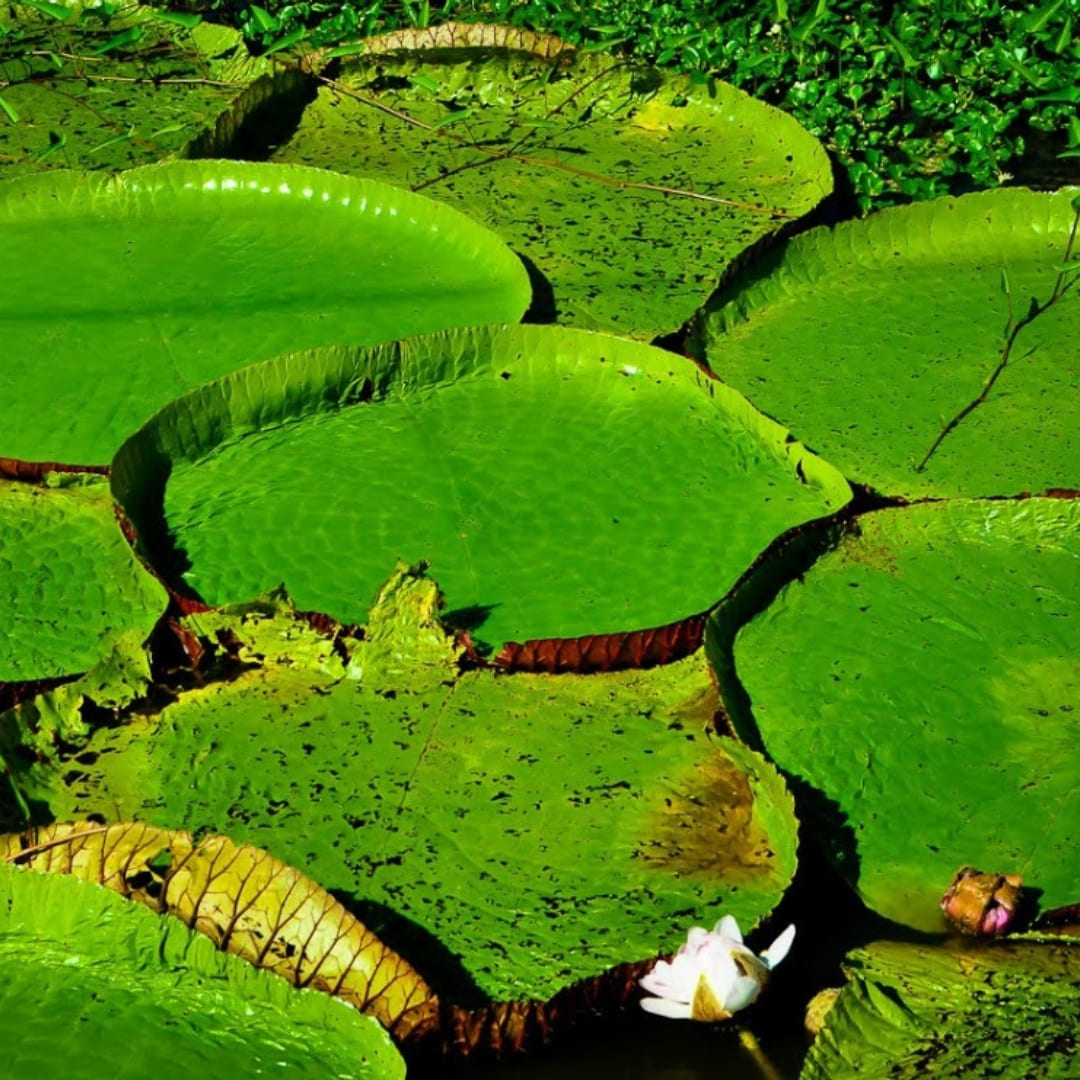
    The oldest sumaúmas in the country are located in the Tapajós National Forest, in Alto do Chão, Pará. The most ancient one is believed to be around 900 and 1,000 years old! This tree is known as the Queen of The Amazon or vovózona (big grandma). Appropriate, isn’t it?

    A large group of tourists holding hands to encircle the massive trunk of a Sumaúma tree, known as the Queen of the Amazon.
    .

    This particular sumaúma tree is so big it takes twenty-six adults to hug its trunk, while it’s also capable of releasing thousands of liters of water into the air every day.

    👉 See sumaúma trees with our tour: Amazon River Cruise from Alter do Chão

    11 – Amazonian rainfall

    Overall, it rains between 1,500 mm and 3,000 mm per year in Amazonian territory. The volume is this high because the Amazon basin is so vast, it’s only natural that the rain would follow the same logic.

    Coming from the Atlantic, the wind blows towards the continent, which brings humidity to the forest. At first, the soil and vegetation absorb the water. Then, part of the evaporated rain is transpired into the atmosphere, which increases the rainfall.

    A 2022 study by the University of São Paulo shows that 25% of Brazil’s rain in the South and the Southeast is directly related to the Amazon Rainforest — which up in the North. It also has a great impact on all of South America.

    A guide looking up at the trees while walking through the water in a flooded forest area of the Amazon.
    .

    This natural system, however, is under threat. Deforestation, forest fires, and climate change have been greatly affecting the Amazonian rainfall. The low water levels are the biggest problem, hurting the well-being of animals, plants, and people who depend on the rivers to survive.

    👉 Read more: When is the best time to visit the Amazon Rainforest in Brazil

    12 – Forest fires and deforestation in the Amazon

    Deforestation is a terrible thing for the Amazon, but forest fires have been proven to create even greater casualties. From January to October 2024, the fires destroyed 67,000 km² of natural areas, while deforestation affected 6,300 km² between July 2023 and August 2024. The information was disclosed at COP29 (29th Conference of the Parties of the UNFCCC) by the Amazon Environmental Research Institute (IPAM).

    It’s a domino effect. Deforestation in the Amazon means climate change, which hurts the rainfall. The lack of humidity and the high temperatures make the soil dry enough for the fire to spread without difficulty.

    Two hands placed on a tree trunk covered in small ants, highlighting the diverse insect life in the Amazon ecosystem.
    .

    COP30, which took place in Pará’s capital Belém in 2025, brought together world leaders to develop plans to deal with fires, deforestation, and the consequences of global warming that directly affect the Amazon and other biomes, such as the Pantanal.

    Fire prevention policies, constant surveillance and laws focused on minimizing and reversing damage to the environment are the best ways to solve these problems.

    👉 Read more: Ecotourism in the Amazon Rainforest: A Solution to Deforestation

    13 – Carbon sequestration

    The process of capturing and storing carbon dioxide (CO2) from the atmosphere is called carbon sequestration. This greenhouse gas is very harmful to the environment, which means its absorption helps to prevent climate change.

    Through satellite data, the nonprofit Amazon Conservation discovered that Amazonian trees held 56.8 billion metric tons of CO2 above ground in 2022. From a scientific point of view, the term “lungs of the Earth” isn’t quite accurate, but it sums up the importance of the rainforest for the planet’s ecosystem pretty well.

    A tall metal observation tower rising above the dense green canopy of the Amazon Rainforest under a cloudy sky.
    Photo: Andre Dib

    14 – Anavilhanas Archipelago

    Not everything is lost. National parks in Brazil are extraordinary assets to care for the forest — Anavilhanas being one of them. Covering a total area of 350,000 ha, it protects 400 islands in the Negro River, making it the second-largest river archipelago in the world. The first one is Mariuá, also in Amazonas.

    From September to February, during the dry season, many river beaches appear on the park’s horizon. Orla, Aracari, Bararoá, and Camaleão are some of the most famous.

    Aerial view of the Anavilhanas Archipelago showing lush green islands scattered across the dark waters of the Negro River.
    Photo: Felipe Castellari

    Located within the boundaries of the national park, Anavilhanas Jungle Lodge, one of the best accommodation options in the Amazon Rainforest, offers five-star stay experiences in the heart of the forest, allowing guests to dive deep into nature while never putting comfort and luxury aside.

    15 – Manaus, gateway to the Amazon in Brazil

    Finally, our last fact about the Amazon in Brazil is that Manaus, the capital of the Amazonas, is the primary hub for ecotourism in the Northern region and the best starting point to explore the rainforest.

    That’s why many travelers choose to fly to Manaus, at Eduardo Gomes International Airport (MAO), to enjoy their Amazon tours most conveniently.

    The historic Teatro Amazonas opera house in Manaus, featuring a tiled dome and pink facade, serving as the gateway to the Amazon.
    @manausnasfotos

    👉 Read more: Manaus, Brazil – Travel Guide: What to do, where to stay, and more!

    Choose your Amazon tour with PlanetaEXO

    Our 15 Amazon Rainforest facts have surely made you want to experience this grandiosity firsthand!

    PlanetaEXO is an ecotourism platform that works with the best local operators and specializes in Amazon tours in Brazil. Our team is ready to assist with everything you need for your next vacation planning. Contact us now!