Category: Amazon

  • Is Manaus Safe? A Guide for Travelers Heading to the Amazon, Brazil

    Is Manaus Safe? A Guide for Travelers Heading to the Amazon, Brazil

    Discover the best practices for a safe and smooth passage through Manaus, the gateway to travel in the Amazon Rainforest

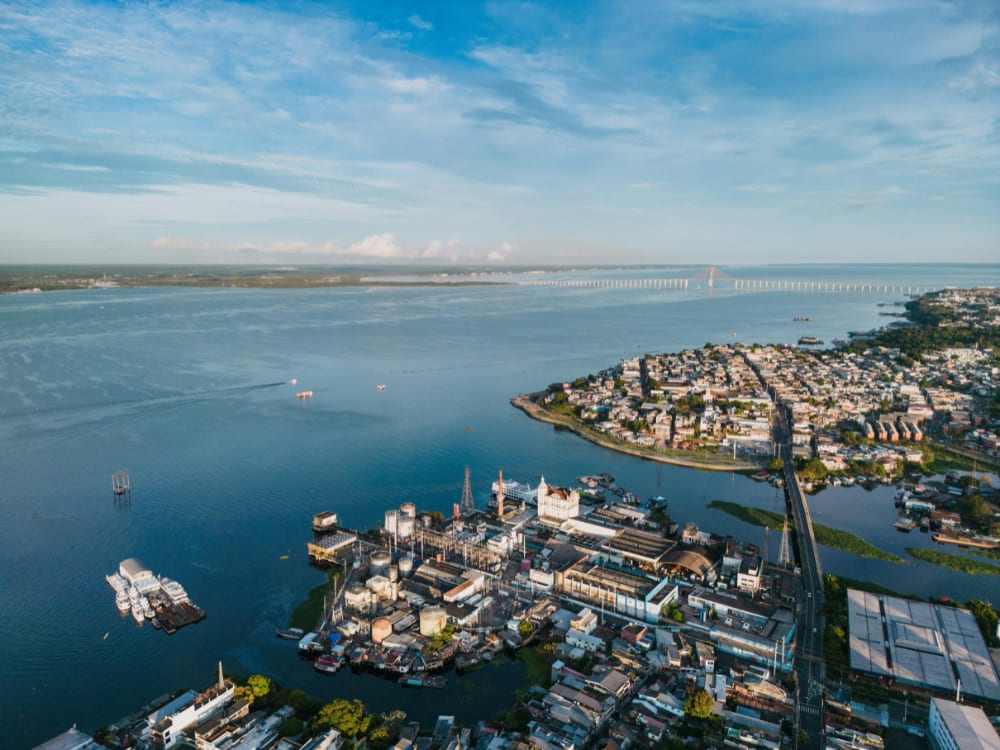
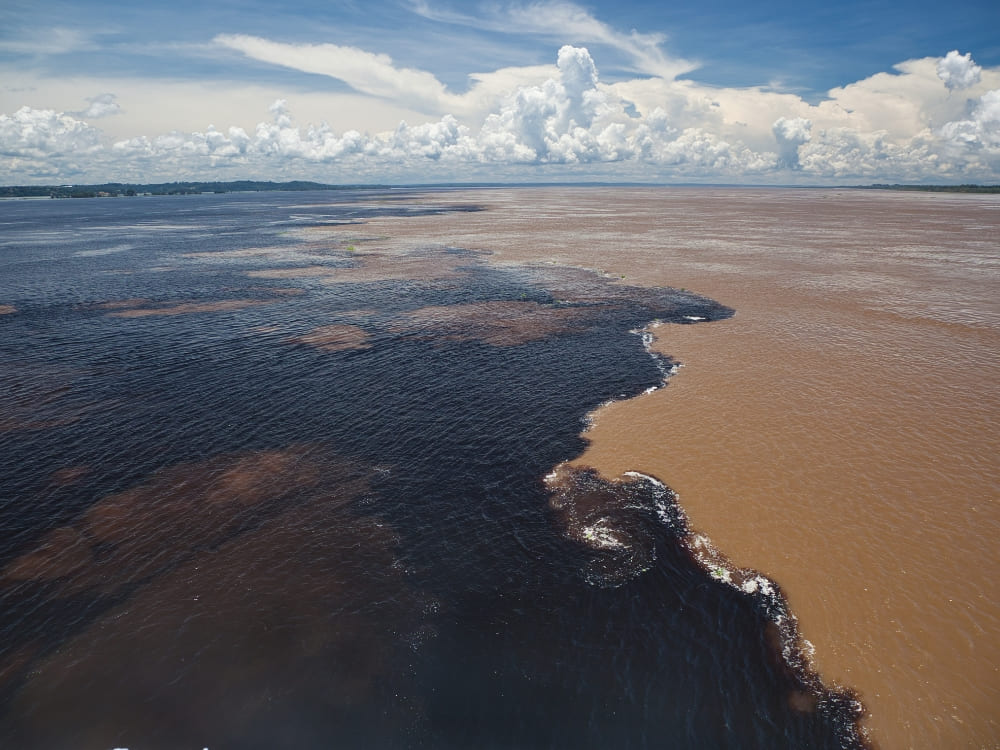
    Minutes before landing at Eduardo Gomes International Airport in Manaus, Amazonas, travelers see from their window seat a contrasting view: two of the largest tributaries of the Amazon River forming the fascinating Meeting of the Waters—a stretch where the dark and muddy waters of the Negro and Solimões rivers run side by side without mixing—and a city of 2.3 million people built on a plateau at the edge of the world’s largest rainforest.

    Aerial view of Manaus, Amazonas, showing the city's port, residential neighborhoods, and the expansive river with a long bridge in the distance.
    Photo: K

    Most travelers don’t stay long. The capital is a layover with a purpose—one or two nights between the airplane and the riverboat or jungle lodge that brought them to Brazil in the first place. Headed to the Amazon Rainforest, many tourists ask a simple question: is Manaus safe?

    The answer is yes, but there are a few elements to consider. PlanetaEXO, an ecotourism platform specializing in Amazon Rainforest tours in Brazil, explains it all right below.

    Manaus is safe for tourists, but it’s important to be careful

    Manaus is a major Brazilian city that requires the same awareness any large urban destination demands. Tens of thousands of foreign travelers pass through every year, and the overwhelming majority leave without incident because they made the right small decisions.

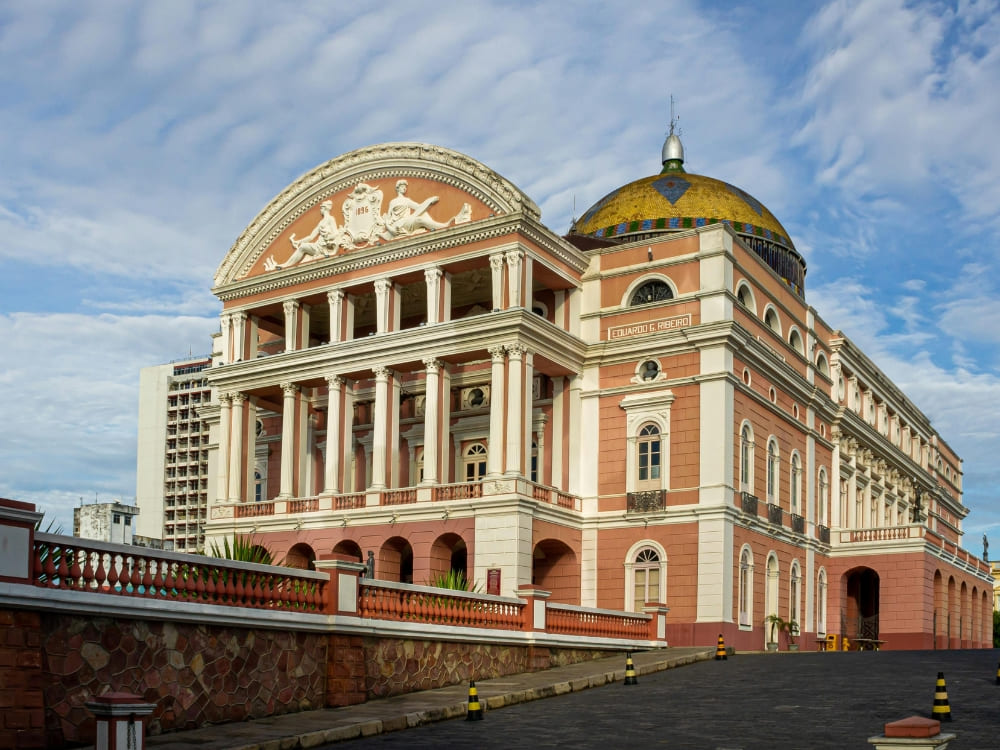
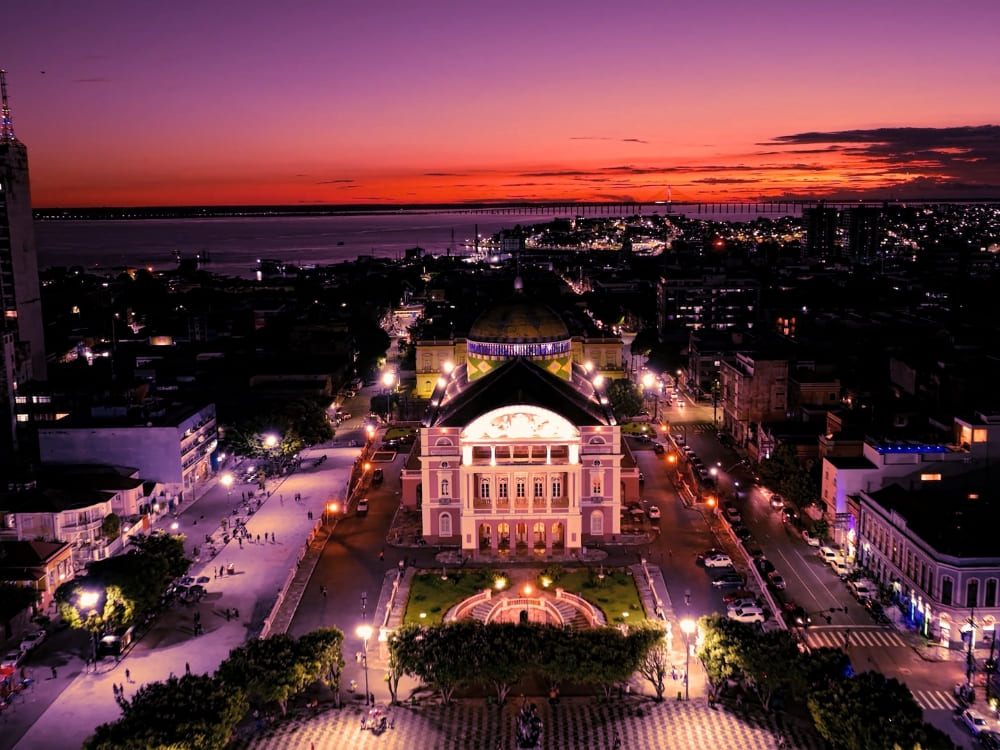
    The Teatro Amazonas opera house featuring a colorful dome and pink facade in the Centro Histórico of Manaus.
    Photo: Lucia Barreiros Silva

    The capital of Amazonas is a working tropical city with neighborhoods that are perfectly fine and a few you have no reason to enter. If you stay where tourists stay, move how locals move, and avoid the obvious mistakes, the city is calm, sweltering, and surprisingly easy.

    Where to stay (and where to walk): a neighborhood map

    For travelers heading to the Amazon, only a handful of neighborhoods matter:

    • Adrianópolis: Manaus’s upscale residential and shopping zone, full of hotels and the Amazonas Shopping mall. Quiet, well-policed, low-risk day or night.
    • Ponta Negra: riverside neighborhood with hotels, restaurants, and a busy waterfront promenade in the evenings. Police presence is heavy. Probably the most pleasant base for a one- or two-night stay.
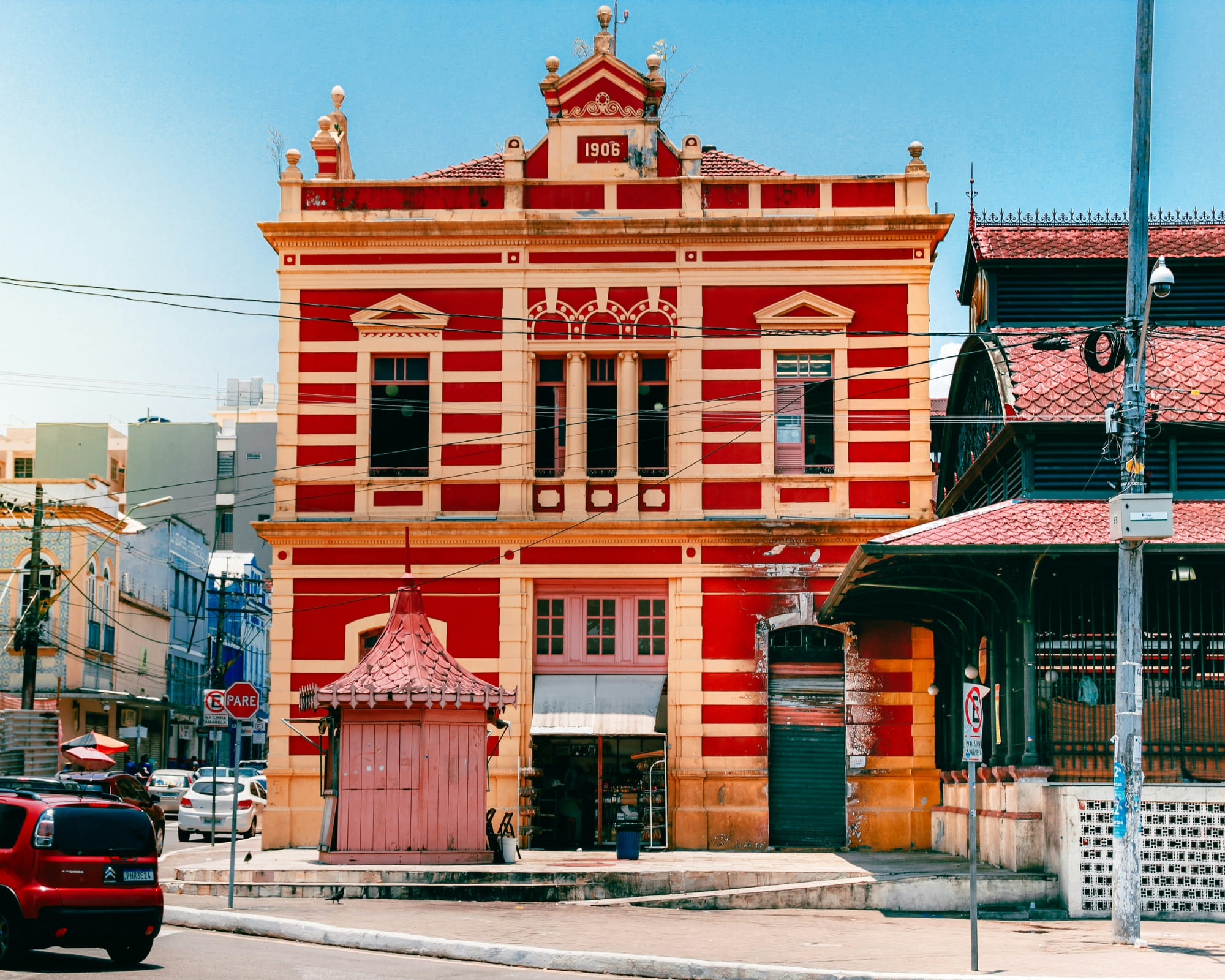
    • Centro Histórico: the historic center, home to the famous Teatro Amazonas opera house and the Mercado Adolpho Lisboa. Worth a visit during the day. Empties out and gets edgier after dark; try not to linger past 8 PM.
    • Vieiralves: a small, lively grid of restaurants and bars, popular with locals and expats. Safe in the evening.
    • Dom Pedro: quieter residential area, decent for a low-key stay.
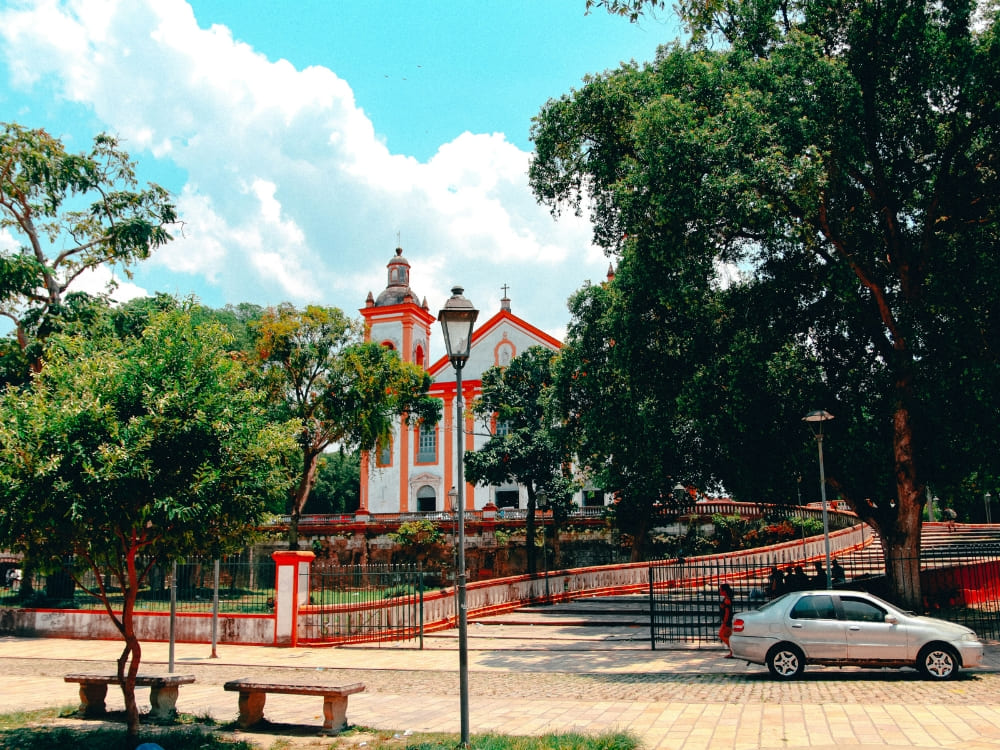
    White and orange historic church with a curved ramp surrounded by green trees in a quiet Manaus city plaza.
    Photo: soybreno

    Areas to keep off your map: Compensa, São José Operário, the Eastern Zone outside the tourist corridor, and any of the city’s favelas. There is no tourist reason to go to these places, and Google Maps will not warn you. If your driver suggests “a shortcut” through any of them, decline.

    👉 Read more: How to get to the Amazon Rainforest in Brazil?

    The 5 most common scams targeting Amazon-bound tourists

    Overall, Manaus is safe to visit, but as the city’s economy is mostly built around the Amazon, so are the scams. They’re usually aimed at people in transit who are tired, jet-lagged, and pre-committed to a jungle experience.

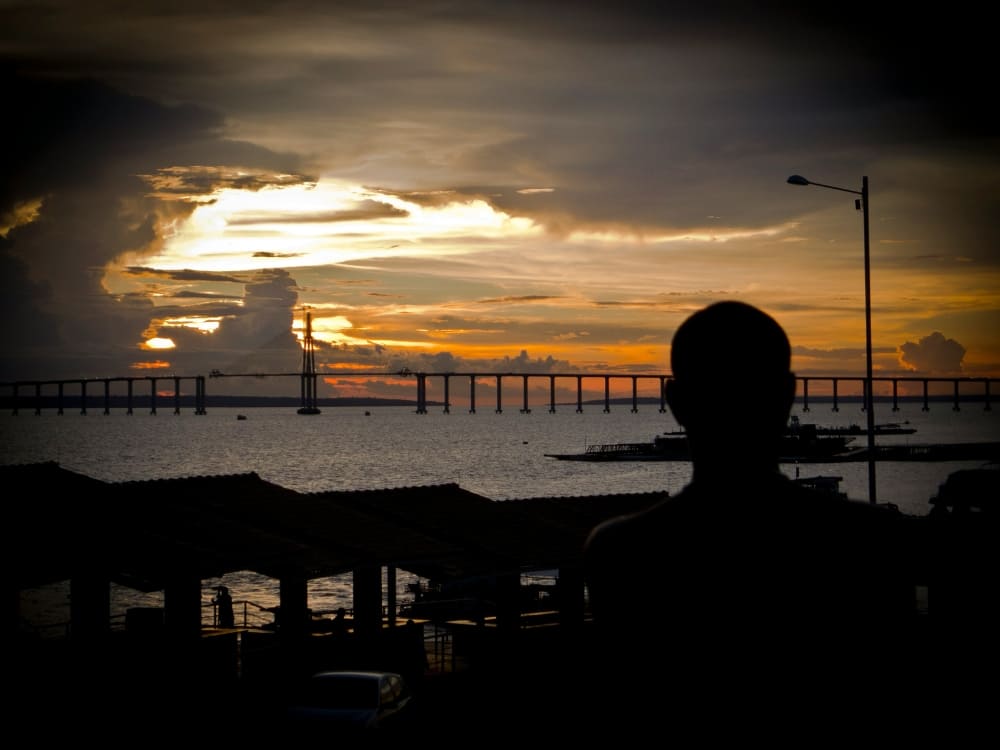
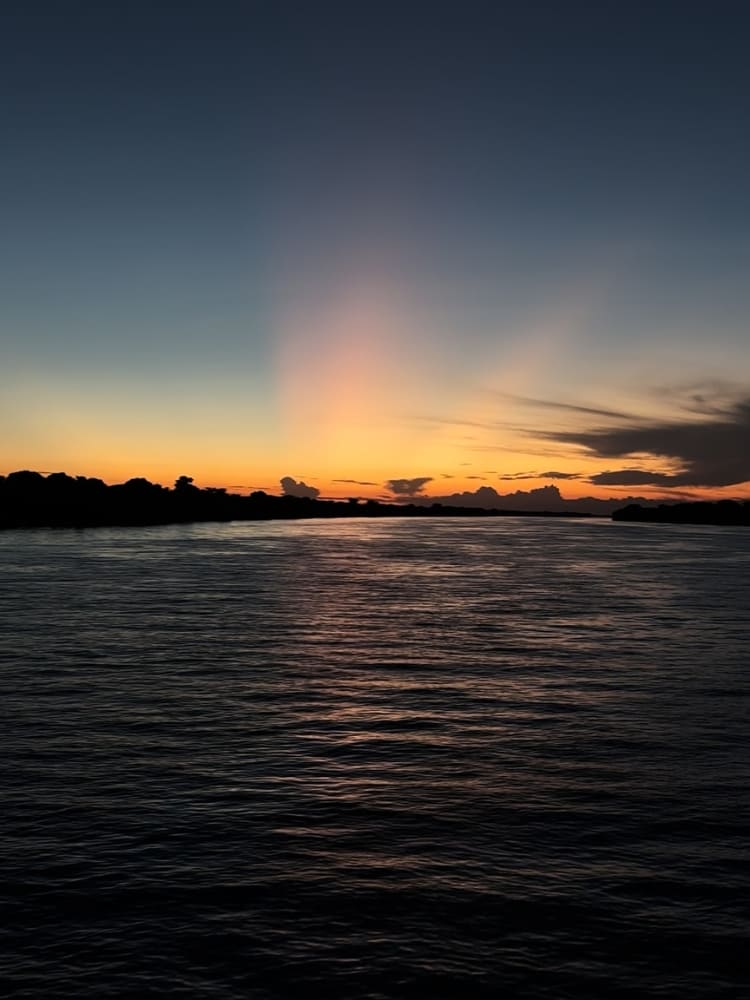
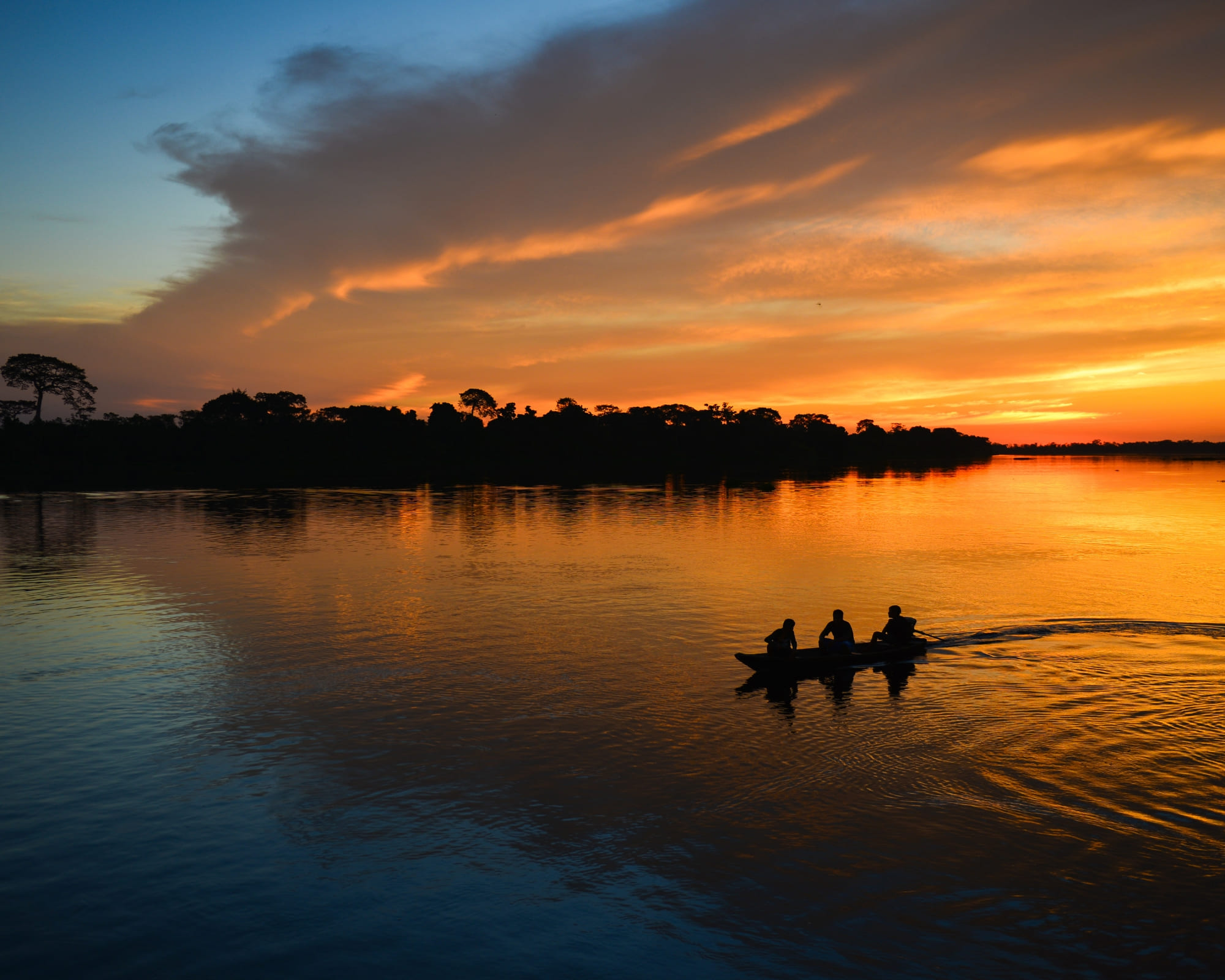
    Silhouette of a traveler watching the sunset over the Amazon River from Manaus, the gateway to the rainforest.
    Photo: Gustavo Nacht

    The arrivals-hall “tour guide”

    A friendly English-speaker at the airport offers a discounted Amazon tour, sometimes with a printed flyer. The “lodge” is real or imaginary. Either way, you pay cash up front, and the experience is promised to be wildly different from what was sold. Don’t fall for it and always pre-book your tour with a registered operator before you fly.

    Unlicensed taxis from the airport

    Drivers approach you inside the terminal offering “official” rides at three times the meter rate. The licensed taxi rank is outside, marked, and uses fixed rates by zone. Avoid any problems by using Uber or 99 (Brazil’s local ride app).

    Currency exchange “favor”

    Someone in the historic center offers to exchange dollars at a great rate. Half the bills are counterfeit. Say no and only use ATMs at branded banks (Bradesco, Banco do Brasil, Itaú).

    Mercado Adolpho Lisboa pickpocket

    Pickpocketing is universal. From Paris and Milan to Manaus, this is a problem for tourists. The Mercado Adolpho Lisboa, a beautiful 19th-century covered market, is one of the favorite spots for pickpockets in the capital of Amazonas.

    Pay attention while walking, leave your most valuable belongings in the hotel safe, and keep your wallet, cell phone, and documents in crossbody bags or fanny packs.

    Phantom riverboat tickets

    Informal touts at the Manaus port sell tickets to slow boats heading up-river. Some are legitimate; some take your money and disappear. Buy from the official ticket office or through your tour operator.

    Getting around: Uber, 99, taxis, and the airport-to-hotel reality

    The airport (Eduardo Gomes International, MAO) sits about 14 km north of the historic center. Three reliable ways to move from there:

    • Uber or 99: both work in Manaus and at the airport. Estimated cost from MAO to Ponta Negra: R$50–80 (US$10–16). The app shows the driver’s plate, photo, and route. Verify before getting in.
    • Licensed airport taxis: fixed-rate, paid at a kiosk inside the terminal before you exit. Slightly more expensive than Uber but transparent.
    • Pre-arranged transfer: most reputable Amazon tour operators include or offer airport pickup. The driver waits in arrivals with your name on a sign. Confirm name, phone, and vehicle plate by message before flying.

    Inside the city, Uber and 99 are dramatically safer and cheaper than flagging cabs on the street. Use them at night without hesitation.

    Walking is fine in Adrianópolis and Ponta Negra during the day. After 9 PM, use a ride-share for any distance more than a couple of blocks. 

    Health: yellow fever, mosquitoes, and other important information

    If you’re wondering if Manaus is safe to visit, you should also think about your well-being. Considering its location in the equatorial Amazon basin, some health aspects are inevitable.

    Vaccines

    Unlike other South American countries, Brazil doesn’t require foreign travelers to be vaccinated for yellow fever, but it is highly advised—especially if you’re traveling to the Amazon or have plans to visit the rainforest in Bolivia, Colombia, Ecuador, or Peru. Get it at least 10 days before travel. It’s a single dose for lifetime protection!

    Just for safety, arriving in Manaus with a complete vaccination schedule for diphtheria, tetanus, polio, rubella, measles, and hepatitis A/B is recommended.

    Mosquitoes

    The Aedes aegypti mosquito carries dengue, Zika, and chikungunya in Manaus year-round. The malaria-carrying Anopheles is more relevant once you’re in the deep forest.

    Use a repellent with 30% DEET or 20% picaridin, wear long sleeves at dawn and dusk, keep your windows closed at night, and sleep under mosquito nets.

    Be careful with the heat

    The heat itself is a safety issue. Manaus runs 30–34°C (86–93°F) with 80%+ humidity. Heatstroke and dehydration can cause more trouble than the possibility of crime. 

    Stay hydrated, use sunscreen (SPF 30+), cover your head with caps and hats, wear light clothing, and don’t spend too much time in the sun.

    👉 Read more: When is the best time to visit the Amazon Rainforest in Brazil

    Picking a legitimate Amazon tour operator

    Safety in Manaus increases when you travel with competent, reliable professionals. While planning your trip to the Amazon, choosing a good tour operator is the key to a successful vacation.

    Red flags to walk away from

    • The “operator” is an individual, not a registered company. Ask for a CNPJ (Brazilian company tax ID).
    • They want full payment in cash, in advance, with no formal receipt.
    • They can’t show you a current operating license from Cadastur (Brazil’s Ministry of Tourism registration).
    • The contact is a personal WhatsApp number, and there’s no real website.
    • The price is dramatically below market—Amazon tours in Brazil are not exactly cheap. Three-day all-inclusive lodge experiences from Manaus typically run US$400–1,200 per person depending on the standard.
    • They get aggressive or start to sound confused when you ask follow-up questions.

    Green flags

    • Reviews on TrustPilot, TripAdvisor and Google going back several years.
    • Listed in Cadastur. Easy to verify.
    • Insurance details disclosed up-front.
    • Clear written itinerary with named accommodations.
    • Booking handled by a real travel platform with refund policies.

    This is the layer where PlanetaEXO operates. We’re a registered ecotourism operator running curated multi-day experiences in the Brazilian Amazon. If you’re heading to the rainforest and don’t yet have your tour locked in, we’ll save you the airport-arrivals-hall scramble.

    The bottom line: as long as you know what to do, Manaus is safe and totally enjoyable

    Every place has problems, but they don’t necessarily overcome the good parts. Manaus is the main gateway to the rainforest, serving as a temporary base for people staying at a jungle lodge or joining an Amazon river cruise.

    The city is safer and calmer than its reputation suggests (which can be said for Brazil as a whole), warmer than you might anticipate, and entirely manageable with two days of planning before you fly.

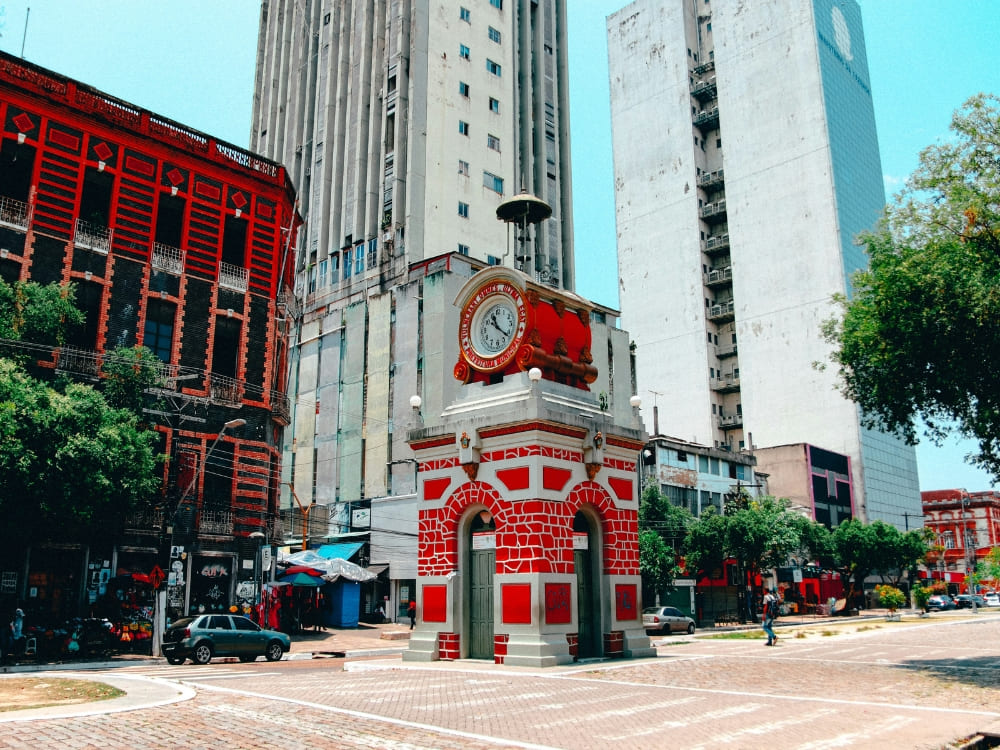
    Historic red and stone clock tower standing in a city square against a backdrop of modern tall buildings in Manaus.
    Photo: soybreno

    If you stay in certain neighborhoods, use the right transport, watch out for pickpockets, and book your tours beforehand with reliable professionals, Manaus will treat you just right. In fact, the capital of Amazonas has much to offer: rich history, delicious food, gorgeous landscapes, and incredibly friendly people.

    Still have questions? Check the answers below!

    Is Manaus safe to visit at night?

    Inside the well-policed tourist neighborhoods (Ponta Negra, Adrianópolis, and Vieiralves), Manaus is reasonably safe in the evening. The historic center empties after 8 PM and is best avoided after dark. Use Uber or 99 for any nighttime movement.

    Is Uber safe in Manaus at night?

    Yes. Uber and 99 are the recommended way to move around Manaus after dark, including from the airport. Both apps verify drivers and track rides.

    Is Manaus dangerous for solo female travelers?

    Manaus is no more dangerous for solo women than other large Brazilian cities. The same precautions apply: stay in tourist neighborhoods, use ride-sharing at night, dress in lightweight casual clothing, and avoid drawing attention with expensive jewelry or visible cameras.

    What should I avoid in Manaus?

    Avoid Compensa, São José Operário, and any favela, as well as accepting tour offers from people in the airport arrivals hall, exchanging currency on the street, and carrying your passport when you don’t need it (use the hotel safe).

    Is the Manaus airport safe?

    Yes, Eduardo Gomes Airport is well-secured. The risk window is the meet-and-greet area outside, where unlicensed taxi drivers and informal “guides” approach arrivals. Walk past them and use the official taxi rank or your booked transfer.

    How safe is the Amazon rainforest itself?

    The rainforest is statistically safer than the city. Once you’re with a registered operator at a licensed lodge, you’re in a controlled environment. The risks shift — they’re now about staying hydrated, listening to your guide, and respecting wildlife at a distance.

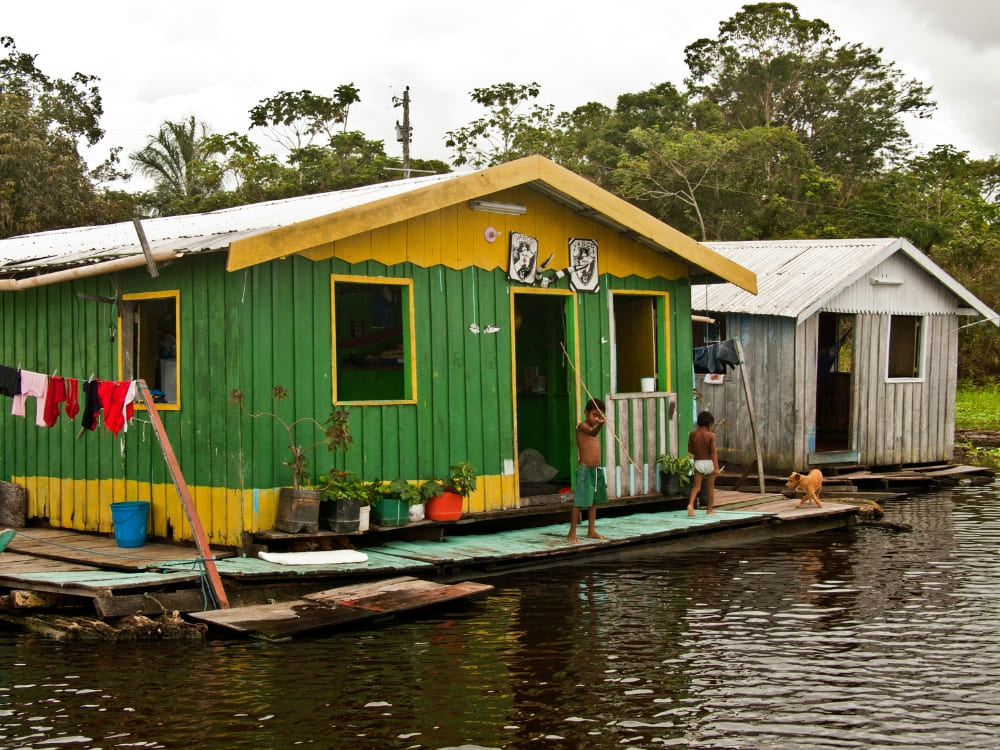
    Children standing outside a vibrant green and yellow floating house on the waters of the Amazon River.
    Photo: Gustavo Nacht

    Traveling to the Amazon from Manaus with PlanetaEXO

    PlanetaEXO, an ecotourism platform specializing in Amazon Rainforest tours in Brazil, works every day to make your trip easier, fulfilling, and sustainable.

    From Manaus to a jungle lodge or a river cruise, we take care of all the details for your vacation, including transfer options and tailor-made itineraries. Contact us now!

  • The Amazon River, Brazil: A Guide to the World’s Greatest River

    The Amazon River, Brazil: A Guide to the World’s Greatest River

    Understand the importance of the world’s largest river regarding ecological balance, cultural preservation, and ecotourism

    Brazil’s Amazon River is a continent-spanning hydrological system that determines weather patterns as far away as Texas and the Sahara. Its sheer size and great importance to the ecosystem make it a key element to the Earth’s balance.

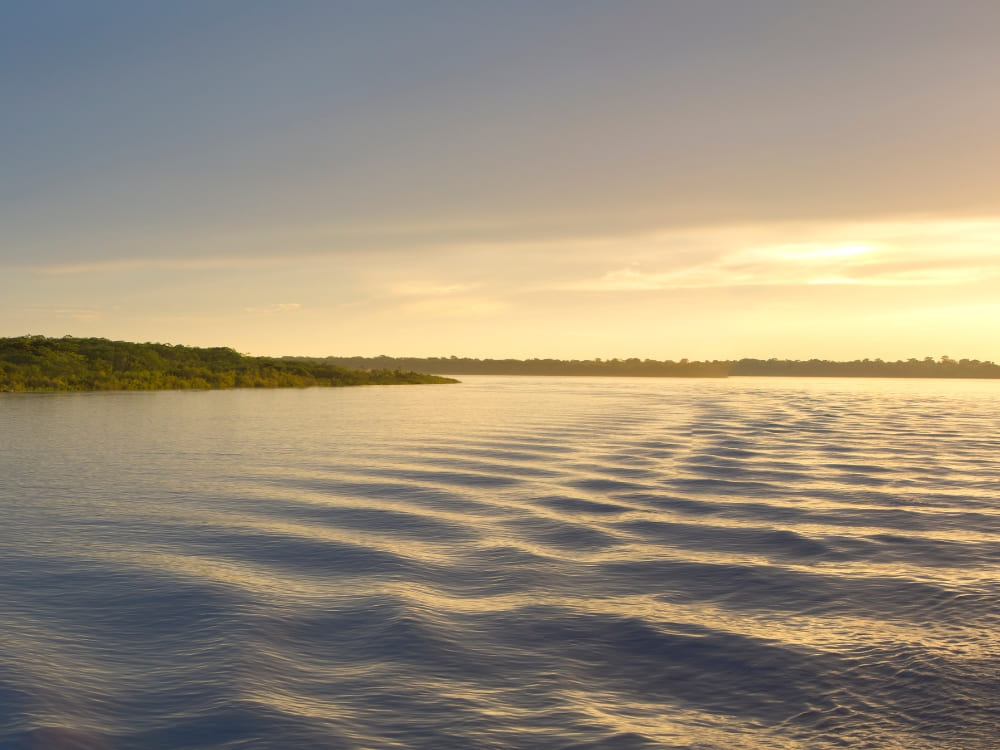
    Photo taken from inside the Amazon River with the sun shining on the water.

    As a central point of the Amazon Rainforest, the river directly affects the economy and the local culture. Millions of people depend on its waters to make a living and to preserve a rich heritage of traditions belonging to groups who have lived in the region for hundreds of years.

    PlanetaEXO, an ecotourism platform specializing in Amazon Rainforest tours in Brazil, has been running trips on the Amazon River Basin for years. To help you understand more about it, we’ve created a guide covering aspects of its geography, seasons, wildlife, and much more. Check it out below!

    The Amazon River by the numbers

    For a long time, the Nile River in northeastern Africa was considered the longest river in the world. However, in July 2008, a study published by Brazil’s National Institute for Space Research (INPE) found that the Amazon River is the longest waterway on the planet.

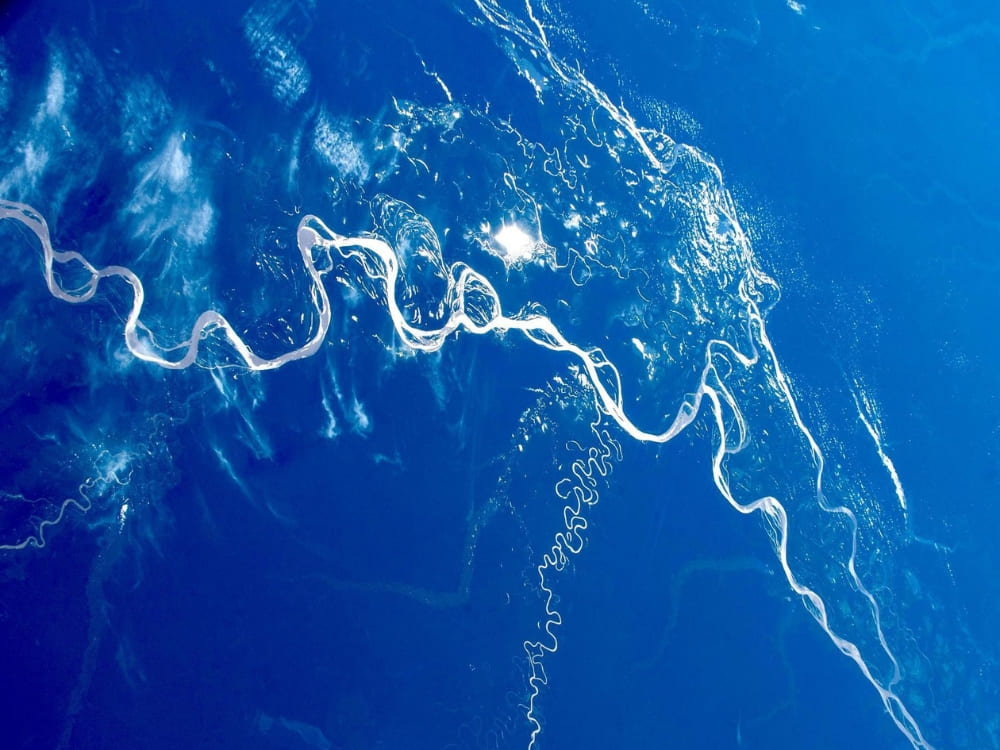
    Satellite view from space showing the extensive winding path of the Amazon River.
    Photo: Oleg Artemiev

    With the help of satellite imagery and remote geoprocessing technology from the Brazilian Space Program, INPE concluded that the Amazon is 6,992.06 km long, while the Nile extends itself for 6,852.15 km—a difference of 140 km.

    Here are other impressive numbers:

    • Discharge: around 209,000 cubic meters per second—roughly one-fifth of all the fresh water flowing into the world’s oceans. The next-biggest river (the Congo) discharges about a quarter as much.
    • Width: varies from 1.6 km in the dry season to over 40 km in some flooded sections during peak rains. Average width through the Brazilian stretch sits around 8–12 km.
    • Depth: averages around 50 meters and reaches 100 meters in places—deep enough for ocean-going ships to navigate to Manaus, 1,500 km inland.
    • Tributaries: more than 1,100, of which seventeen are themselves over 1,500 km long. The Rio Negro, which meets the main channel at Manaus, is the world’s largest blackwater river.
    • Basin: The Amazon River Basin covers 7 million km² across nine countries—approximately 40% of South America. Brazil holds about 60% of it.

    👉 Read more: 15 Facts About the Amazon Rainforest in Brazil

    Where the Amazon River begins and where it ends

    While the Amazon River is located in Brazil, various expeditions conducted by INPE, the Peruvian Military Geographic Institute, the Brazilian National Water and Sanitation Agency (ANA), and the Brazilian Institute of Geography and Statistics (IBGE) have found that its source starts at roughly 5,200 meters above sea level in the Peruvian Andes—at a small glacial stream called the Apacheta, on the slopes of Nevado Mismi.

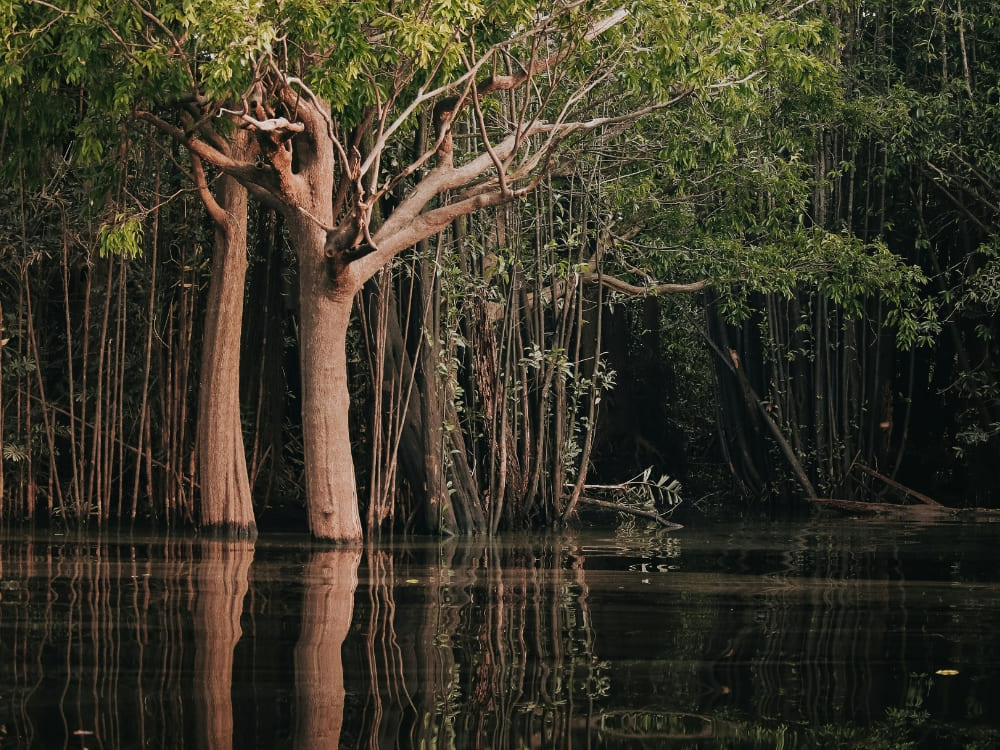
    Trees with submerged trunks standing in the dark waters of an Amazon River flooded forest.
    Photo: Jean Gc

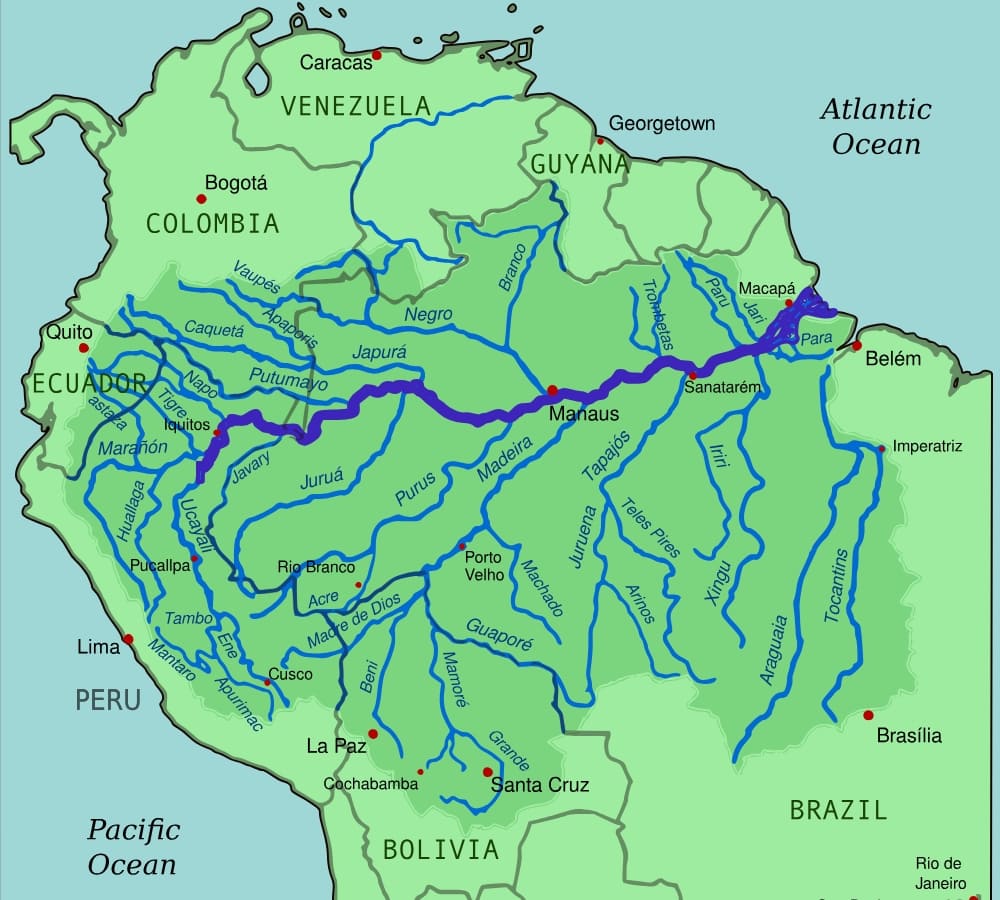
    The water travels east, gathers tributaries, becomes the Marañón, then the Solimões as it crosses into Brazil, and finally, at Manaus, meets the dark Rio Negro and is renamed simply the Amazon for its final 1,500 km.

    It empties into the Atlantic Ocean at the equator on Brazil’s northern coast, between the states of Pará and Amapá. The mouth is so wide (330 km) that an entire island the size of Switzerland (Marajó Island) sits inside it.

    The ocean current pushes the river’s freshwater plume outward for over 200 km into the Atlantic; sailors used to know they were close to South America when they hauled up buckets of fresh water from the open sea.

    To help you visualize such magnitude, see the map of the Amazon River below:

    Map of South America highlighting the Amazon River Basin and its main tributaries across the continent.
    .

    The Amazon River’s two seasons: high water and low water

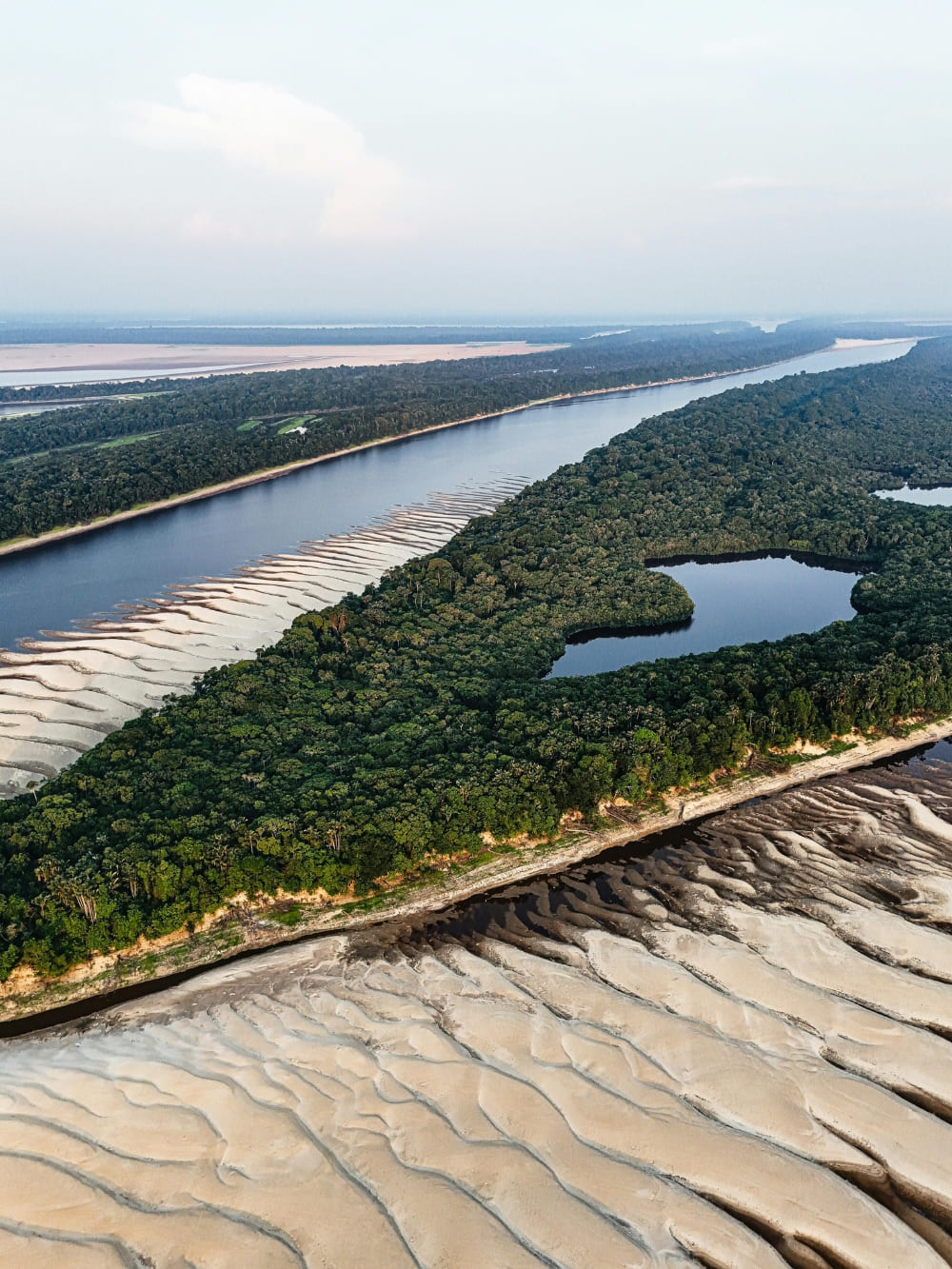
    The Amazon Rainforest has no real winter and summer but a wet season (roughly December to May) and a dry season (June to November). Naturally, the river swells and shrinks dramatically between them.

    Aerial view of the Amazon River during the dry season showing exposed sandbanks along the forest edge.
    Photo: Gustavo Denuncio

    High water (December–May): the river rises 10–15 meters above its dry-season level. Vast areas of rainforest flood, creating the unique igapó (flooded forest) ecosystem where you can canoe between the trunks of standing trees. Wildlife concentrates in the canopy.

    Low water (June–November): rivers drop, beaches appear, animals concentrate around shrinking water sources, and visibility on land hikes is much better.

    👉 Read more: When is the Best Time to Visit the Amazon Rainforest in Brazil

    Wildlife of the Amazon River in Brazil

    The Amazon holds an estimated 30% of the planet’s known species—and possibly the same again, still undocumented. The river itself is home to some of the most distinctive of them.

    What surprises most travelers isn’t just the wildlife inventory but also how the Amazon River makes it visible in ways no rainforest interior can. In a few minutes, the river reveals more than a multiple-hour jungle hike. This is the central reason most tours are water-based: the river is the corridor through which life moves.

    Pink river dolphins

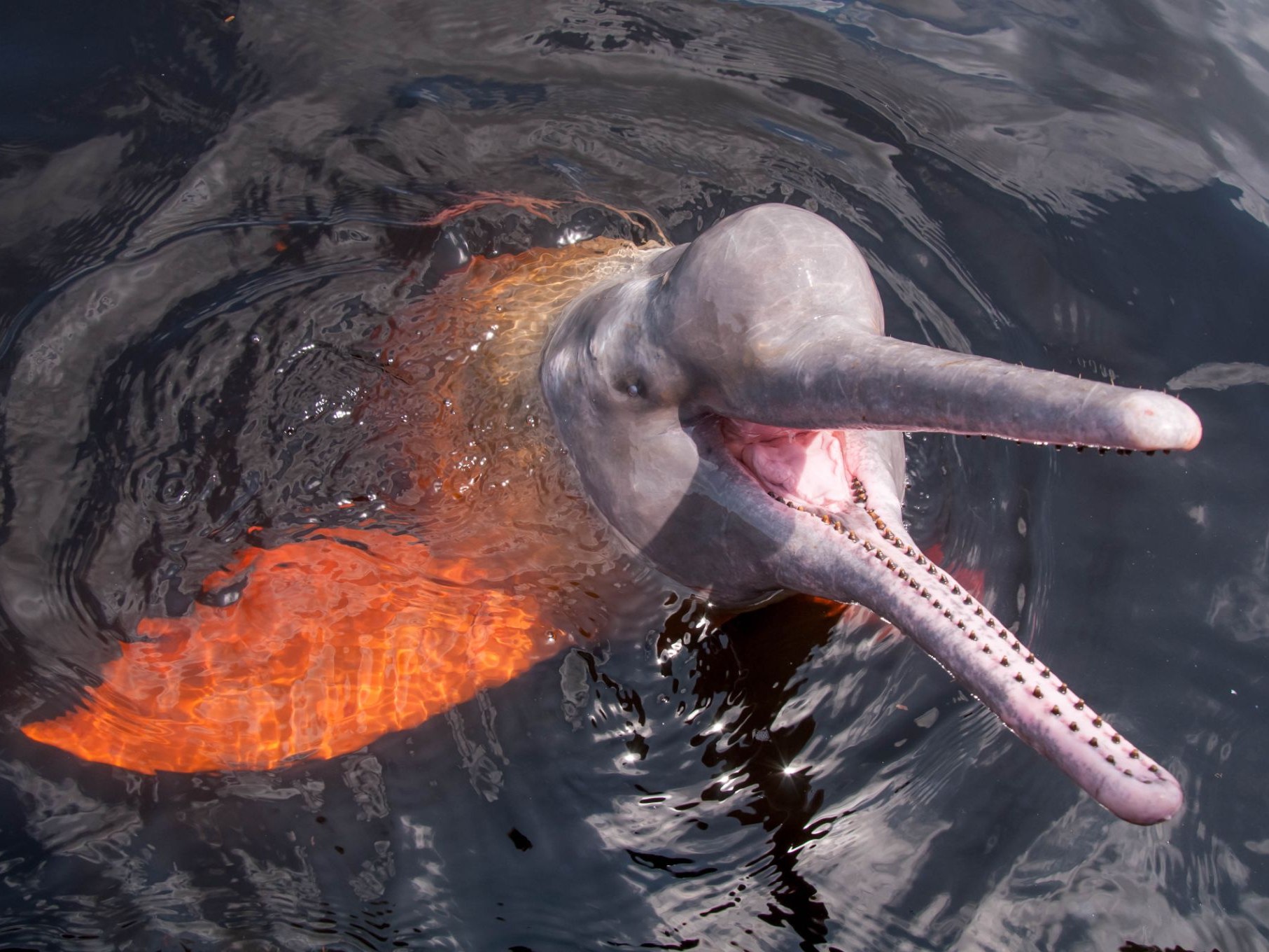
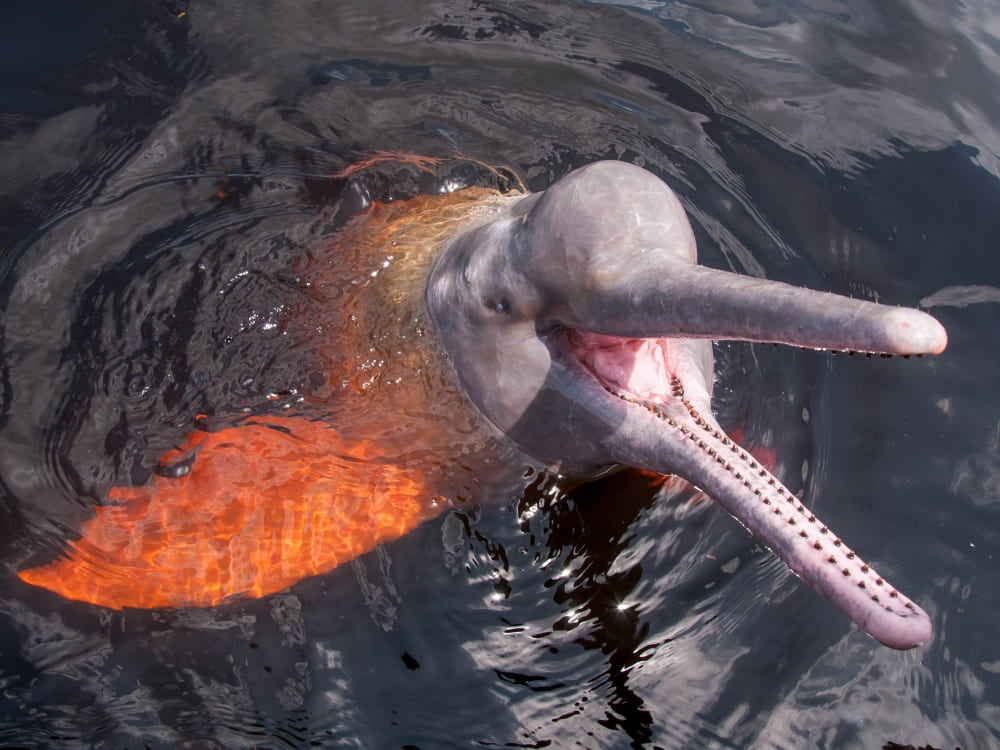
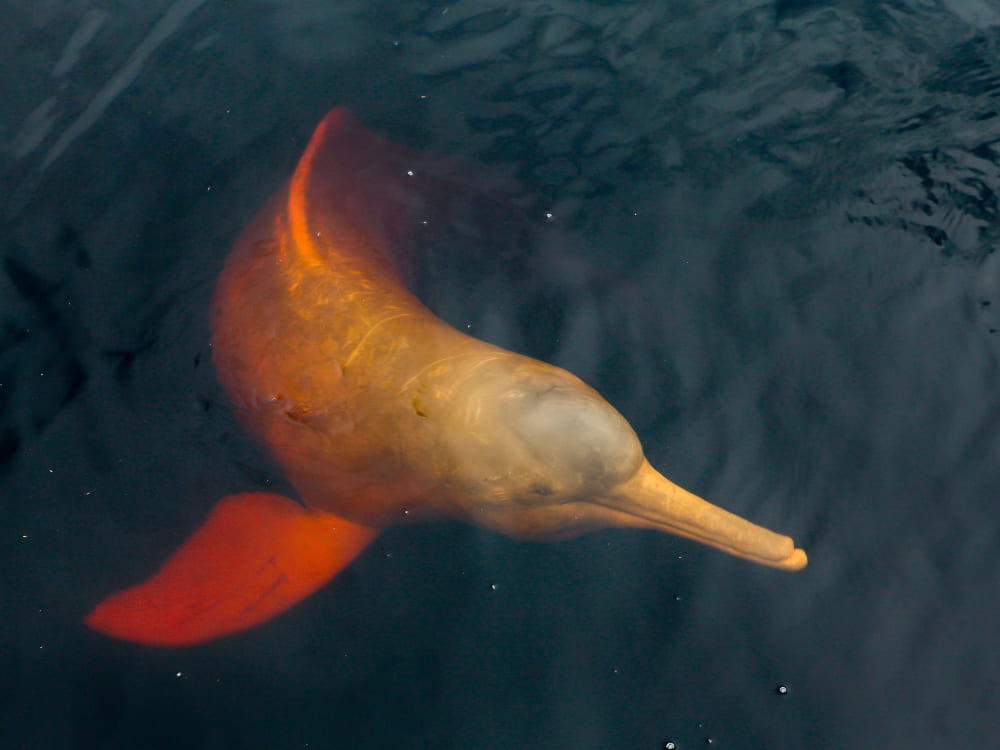
    A pink river dolphin swimming with its head above the dark waters of the Amazon River.
    .

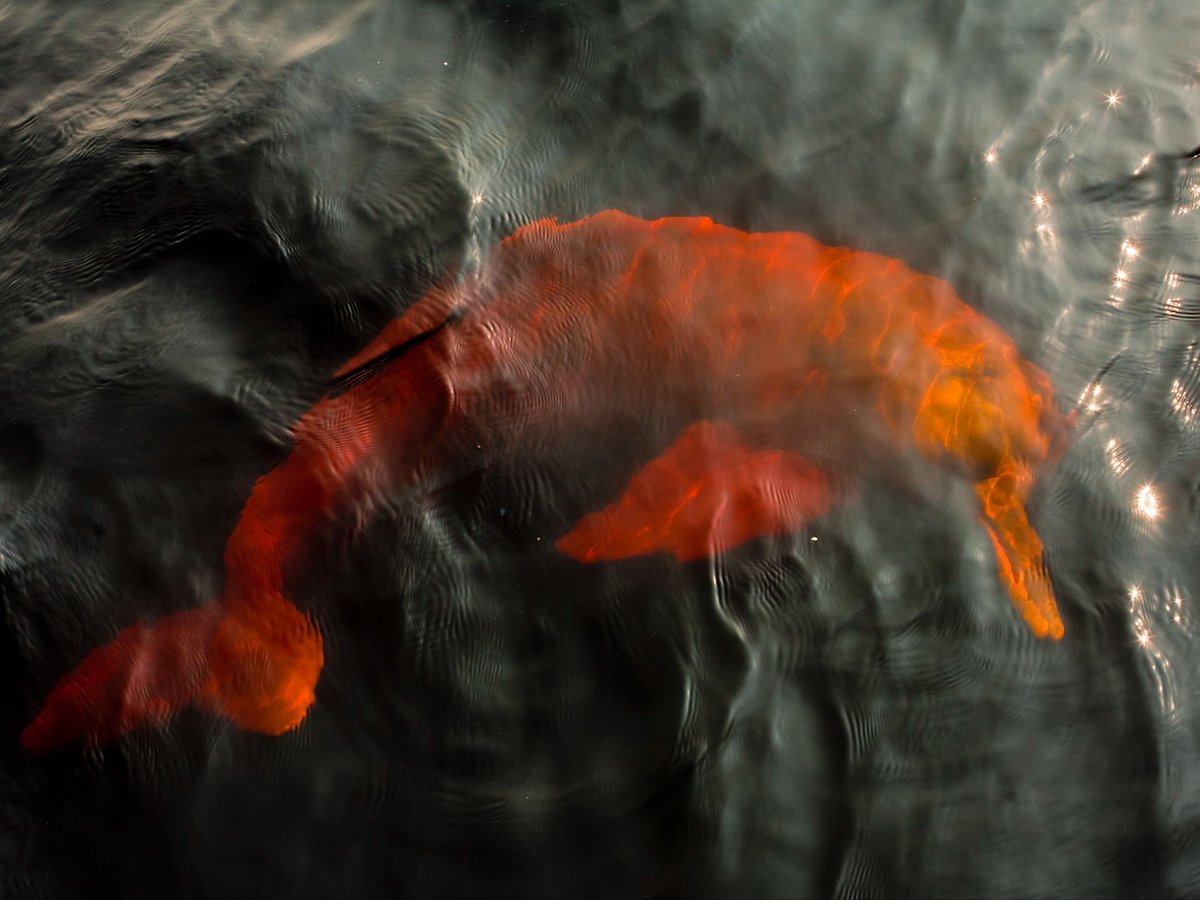
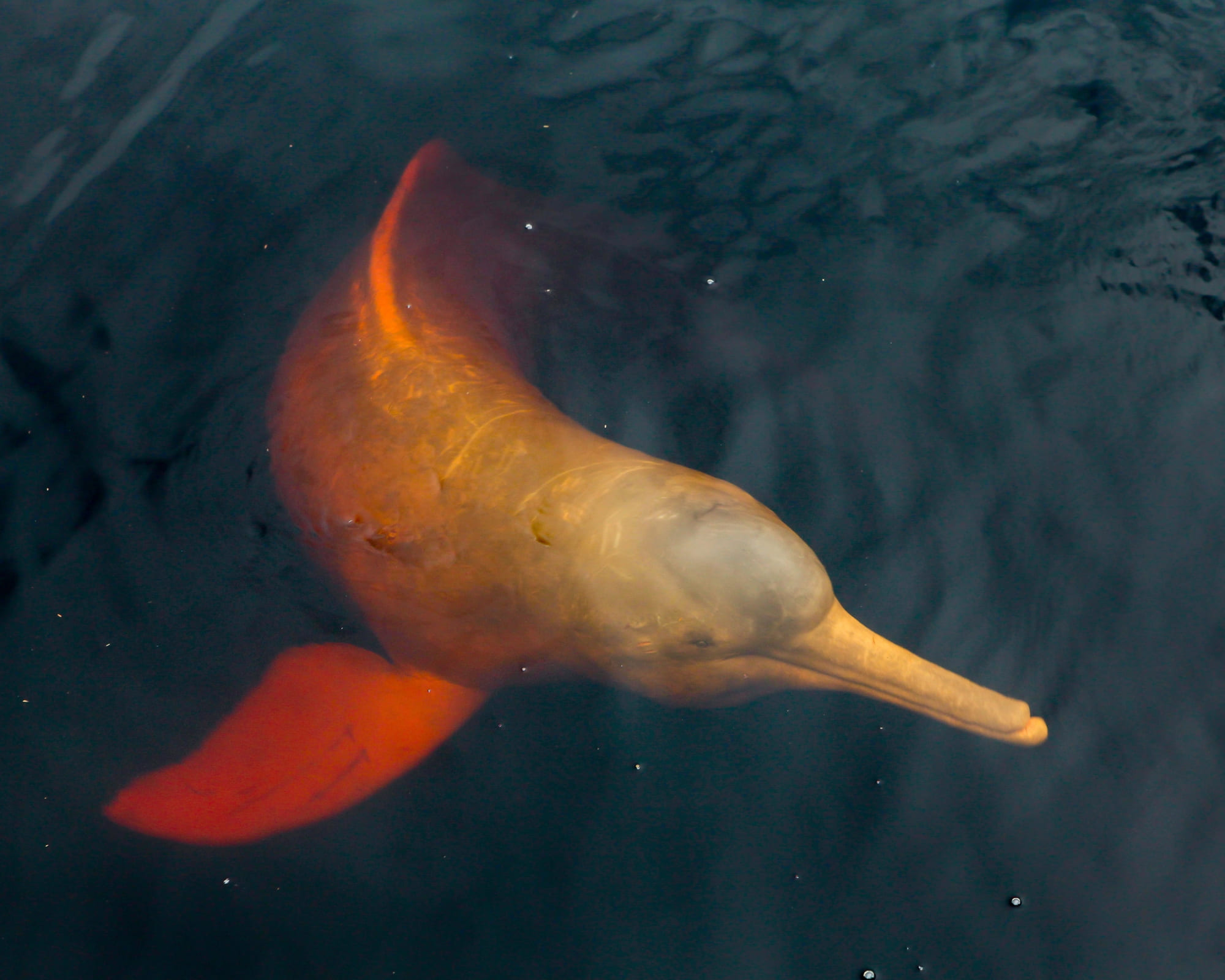
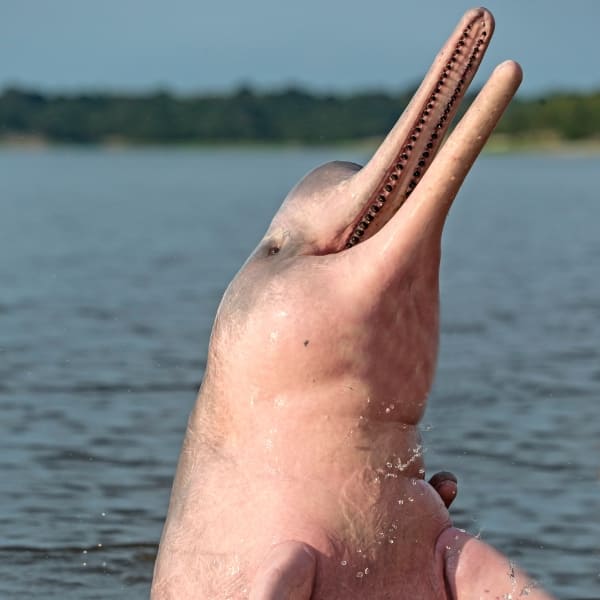
    Larger and more curious than their ocean cousins, Amazon river dolphins (botos-cor-de-rosa) are born gray and turn pink with age. With a friendly, curious personality, they surface near boats out of pure interest and often interact with humans.

    Black caimans

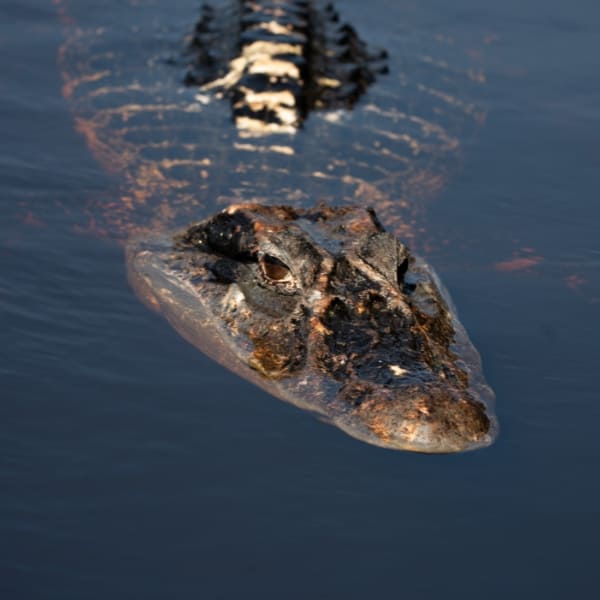
     A black caiman swimming near the surface of the Amazon River.
    Photo: Marcelo Bonifácio

    Solitary and mysterious, the black caiman is the Amazon’s apex aquatic predator, growing up to 5 meters. A major attraction for nighttime spotlighting tours, they’re easily spotted at night by their orange eyeshine.

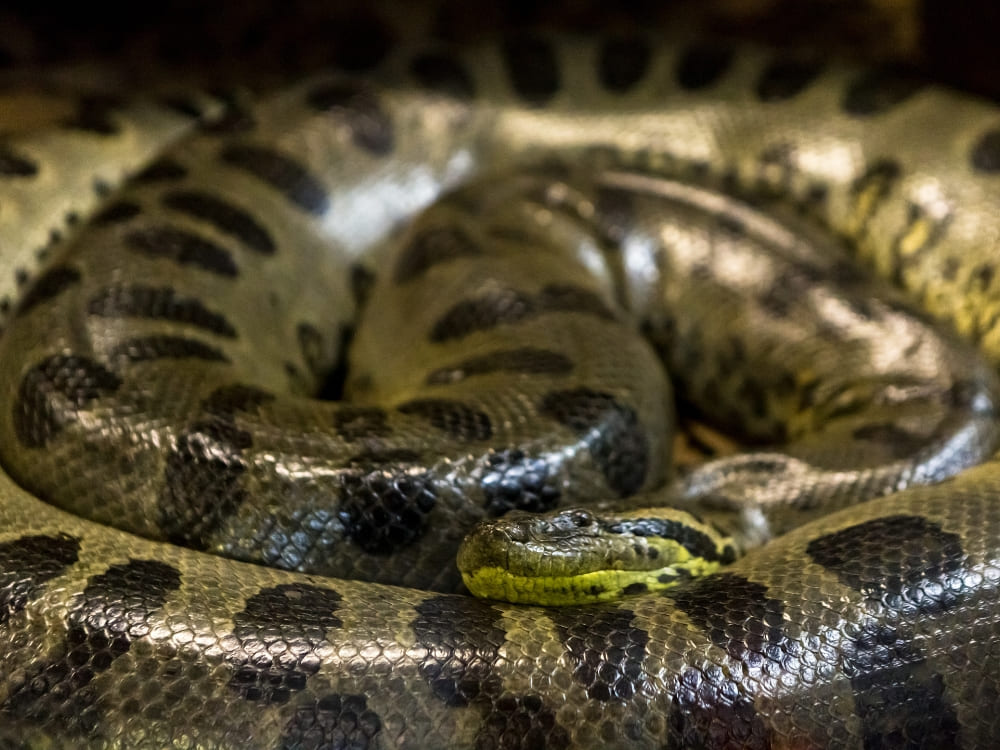
    Anacondas

    A large green anaconda coiled up resting in the Amazon Basin.
    .

    The green anaconda is the world’s heaviest snake, found in the slow-moving channels and oxbow lakes of the basin. Mostly seen in dry season when water levels expose them.

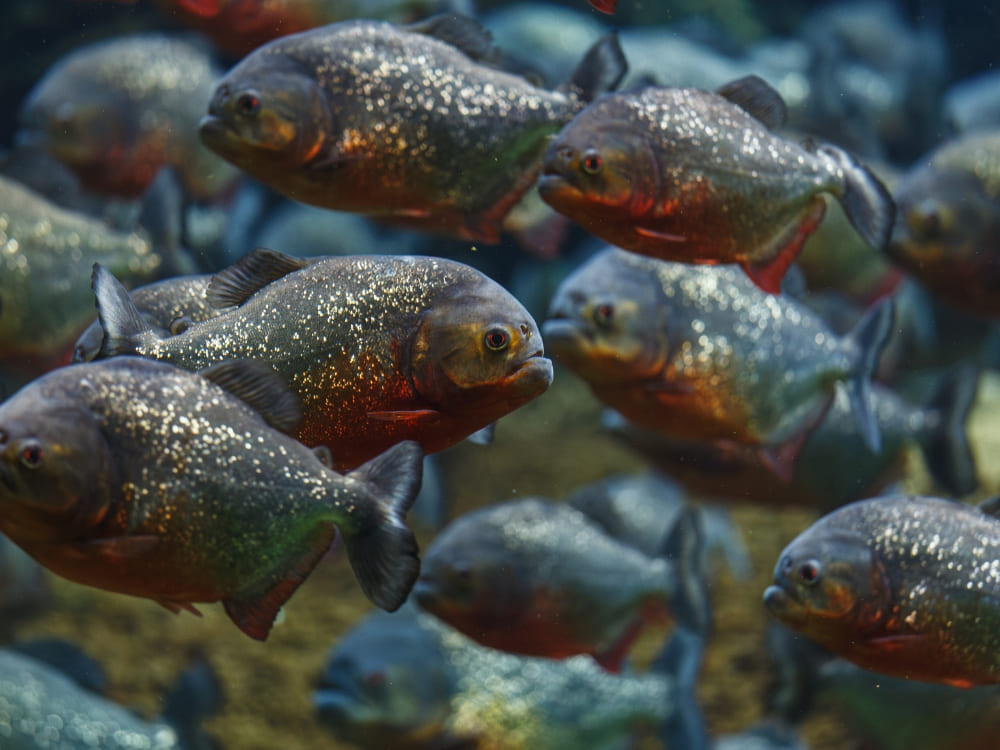
    Piranhas

    A school of red-bellied piranhas swimming underwater in the Amazon River.
    .

    Less terrifying than the movies suggest, most species of piranhas are scavengers—the genuinely aggressive red-bellied piranha is real but accounts for a fraction of the genus. As one of the most traditional ingredients in Amazonian cuisine, they are incorporated into daily meals, mainly in stews.

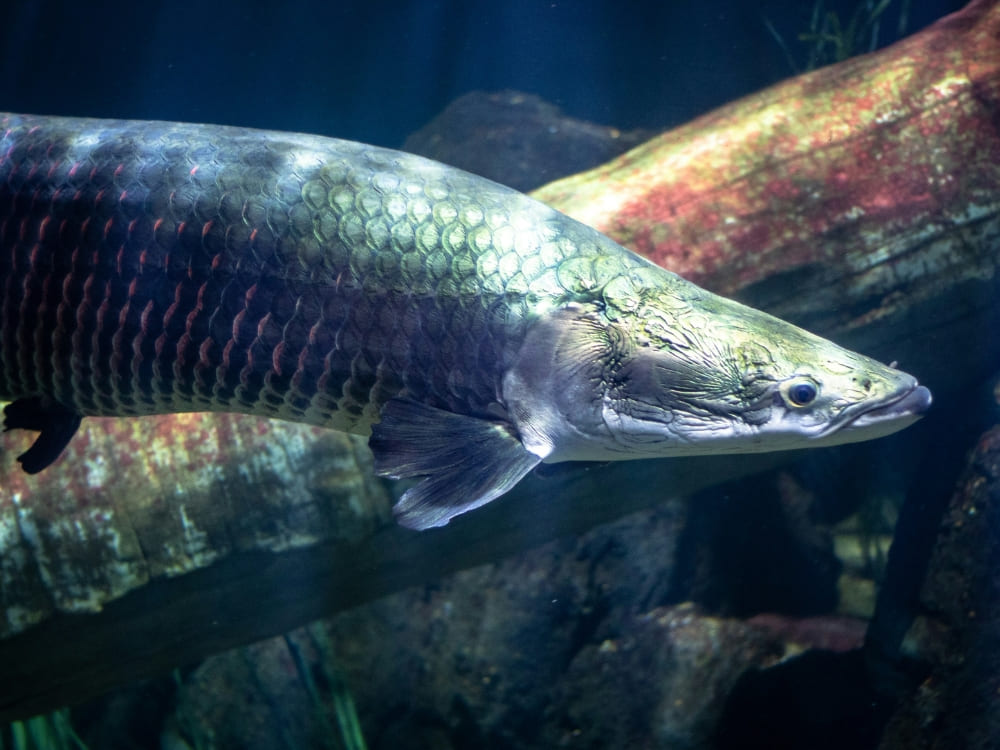
    Pirarucu

    A large pirarucu fish swimming underwater in the Amazon region.
    Photo: Joshua J. Cotten

    One of the world’s largest freshwater fish, growing to 3 meters and 200 kg. Being air-breathing, it has to surface every few minutes. A staple food in the region and now carefully managed.

    👉 Read more: 15 Amazon Animals – Unravel the Wildlife in Brazil

    The people of the Amazon River

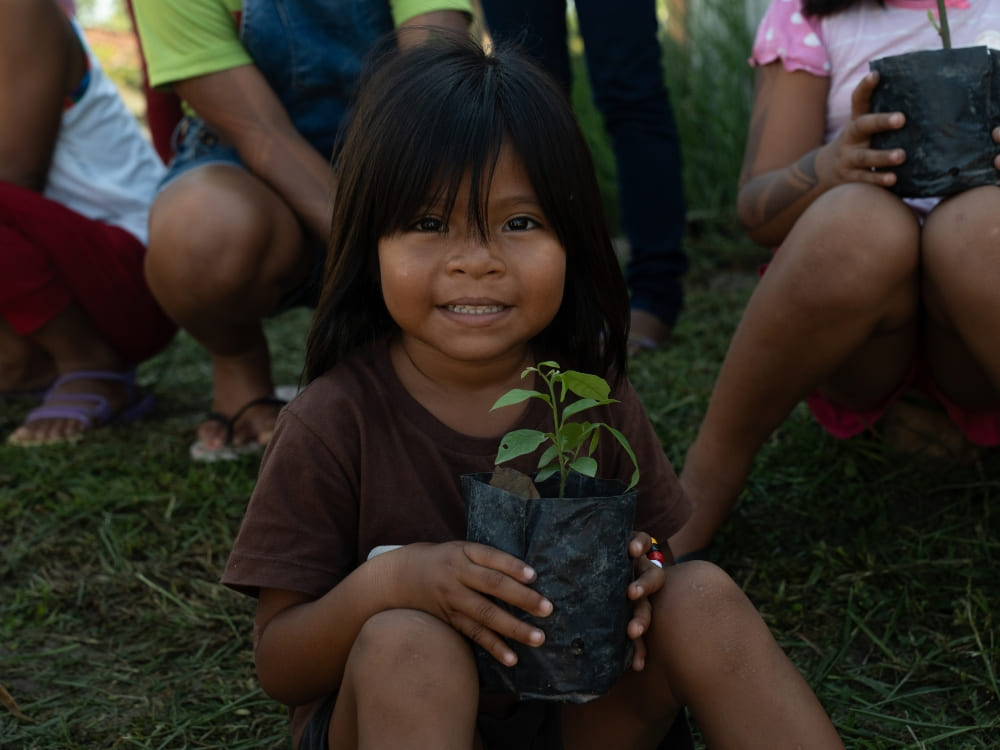
    More than 30 million people live in the Amazon River Basin across Brazil, Bolivia, Colombia, Ecuador, French Guiana, Guyana, Peru, Suriname, and Venezuela; the largest concentration is along the river itself and its main tributaries.

    A smiling child from an Amazonian riverside community sitting on the grass and holding a small potted plant.
    Photo: Isadora Sá

    Roughly 3 million belong to indigenous groups, including the Yanomami, Kayapo, Tikuna, and Munduruku—speaking more than 240 distinct languages.

    Many communities are small ribeirinho (riverside) settlements of caboclo people, descended from indigenous and Portuguese ancestry, living from fishing, farming small floodplain plots, and harvesting forest products like açaí and Brazil nuts.

    To ensure that indigenous and riverside communities are properly valued, tourism operators truly committed to sustainable practices lead tours that respect traditions, establish boundaries, and share profits fairly. This way, Amazonian culture can be shared and enriched responsibly and in a balanced manner, avoiding conduct that puts the community and the environment at risk.

    How to experience the Amazon River in Brazil

    There are four practical ways most travelers experience the river. The right one depends on your comfort level, time, and budget.

    Amazon River Cruises

    Multi-day cruises move you through the river system aboard a small ship with cabins, meals, and a daily program of guided excursions. This is the most efficient way to see distance—you cover stretches of river that no lodge can reach. Comfort ranges from rustic to luxury Amazon river cruises in Brazil.

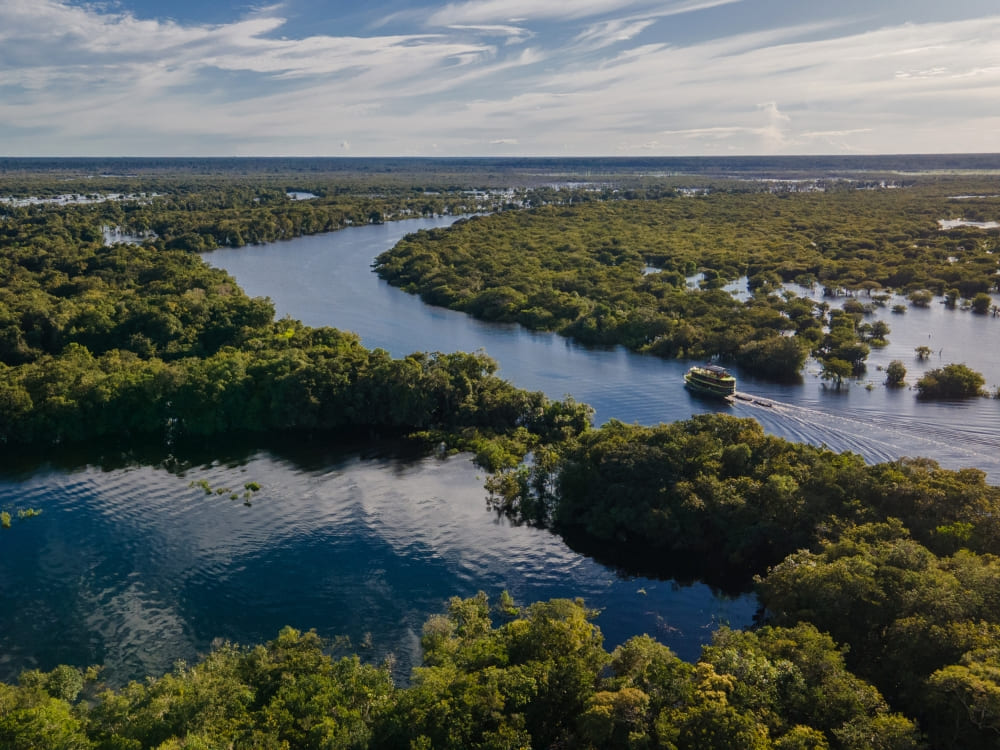
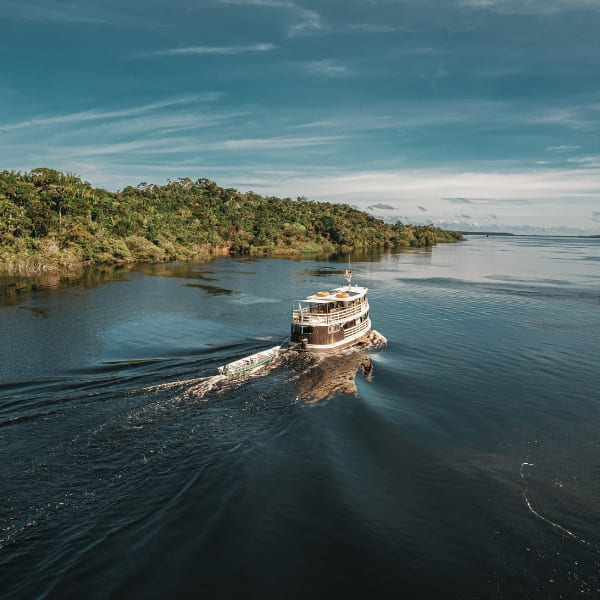
    A riverboat cruising through the winding waters of the Amazon River surrounded by lush rainforest.
    .

    👉 Read more:

    Jungle Lodges

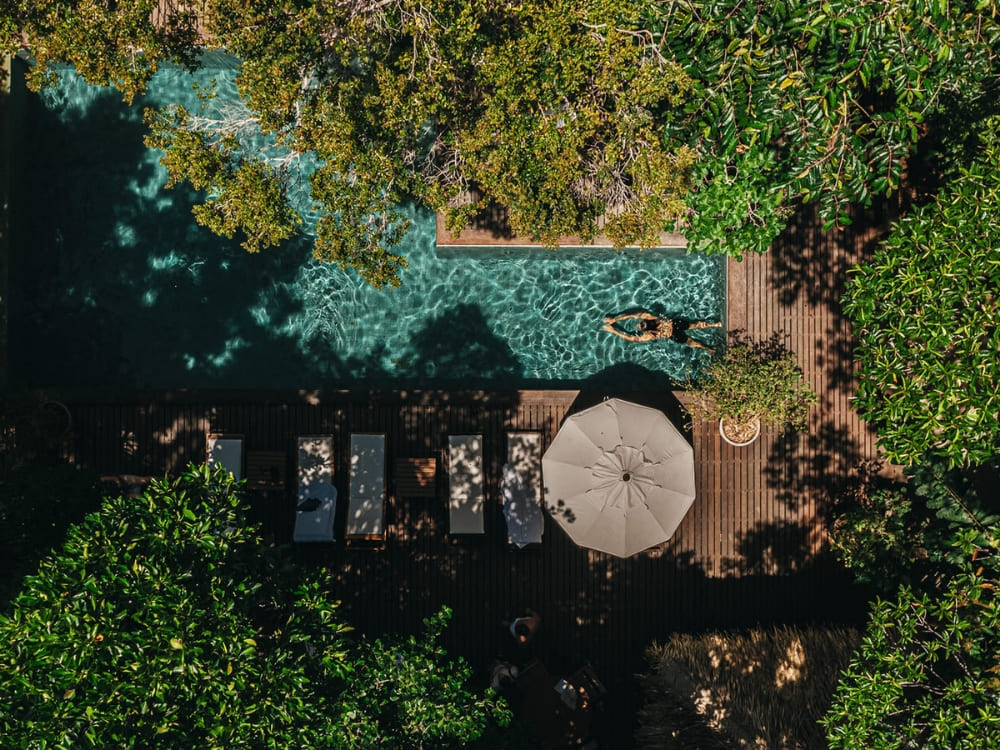
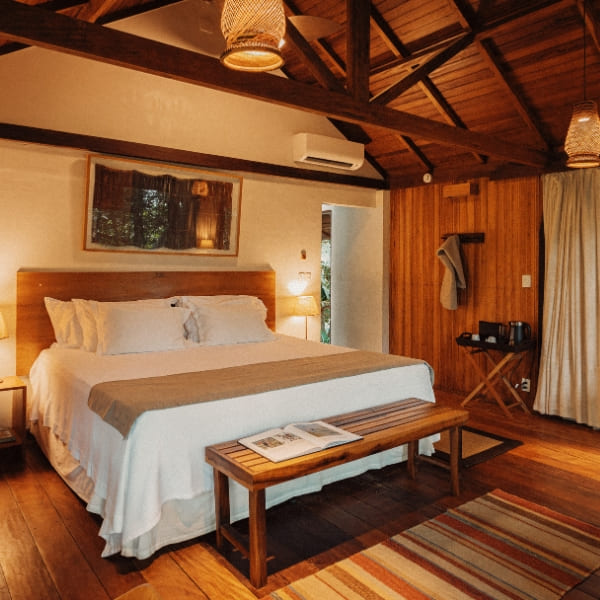
    Jungle lodges sit on tributaries off the main river and use small boats for daily excursions, providing great accommodations, a variety of leisure spaces, and premium services—just like any high-rated hotel.

    You unpack once and explore one stretch of rainforest deeply. Best for travelers who want to settle in! 

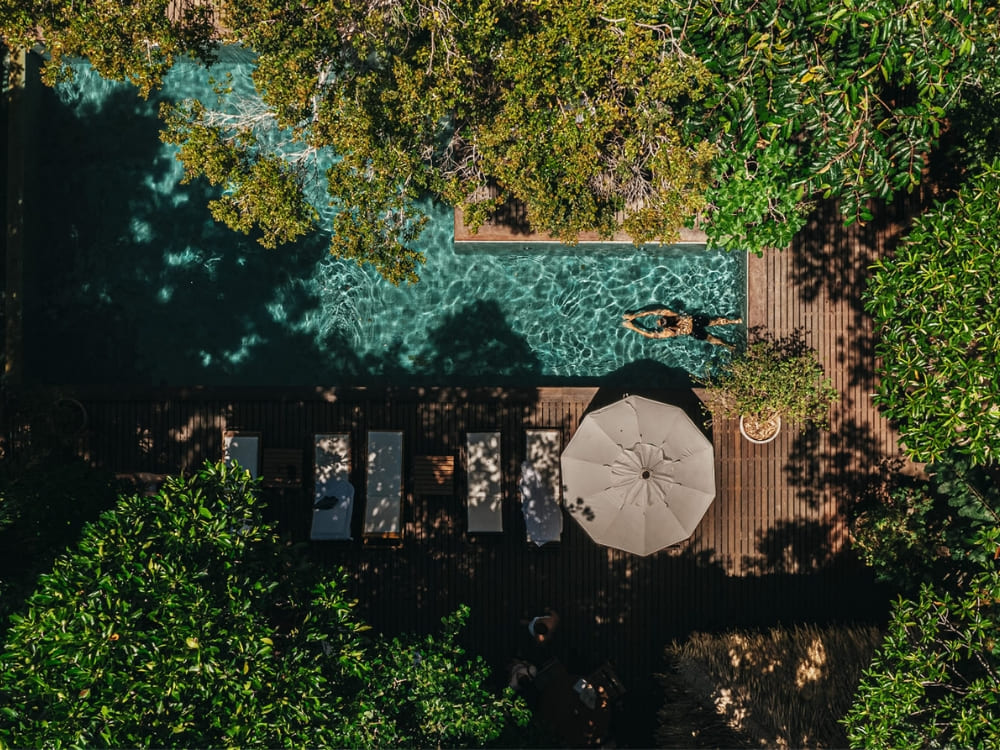
    Aerial view of an Amazon jungle lodge featuring a swimming pool and wooden deck surrounded by dense trees.
    Photo: Felipe Castellari

    👉 Read more: Best Amazon Jungle Lodges in Brazil

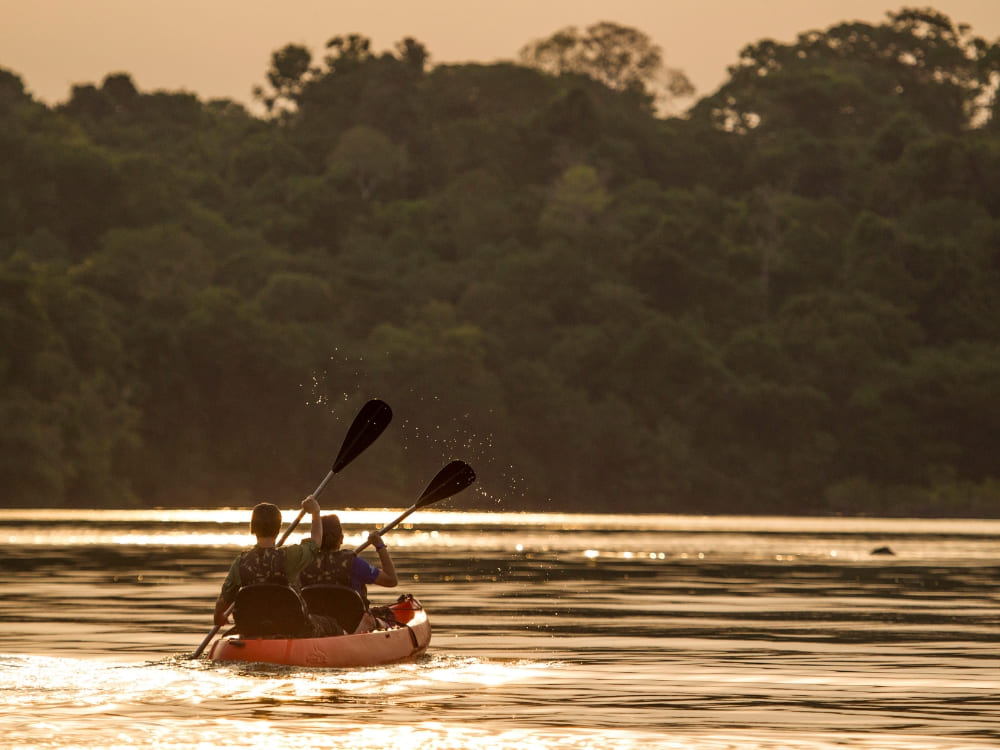
    Kayak and Small-Boat Expeditions

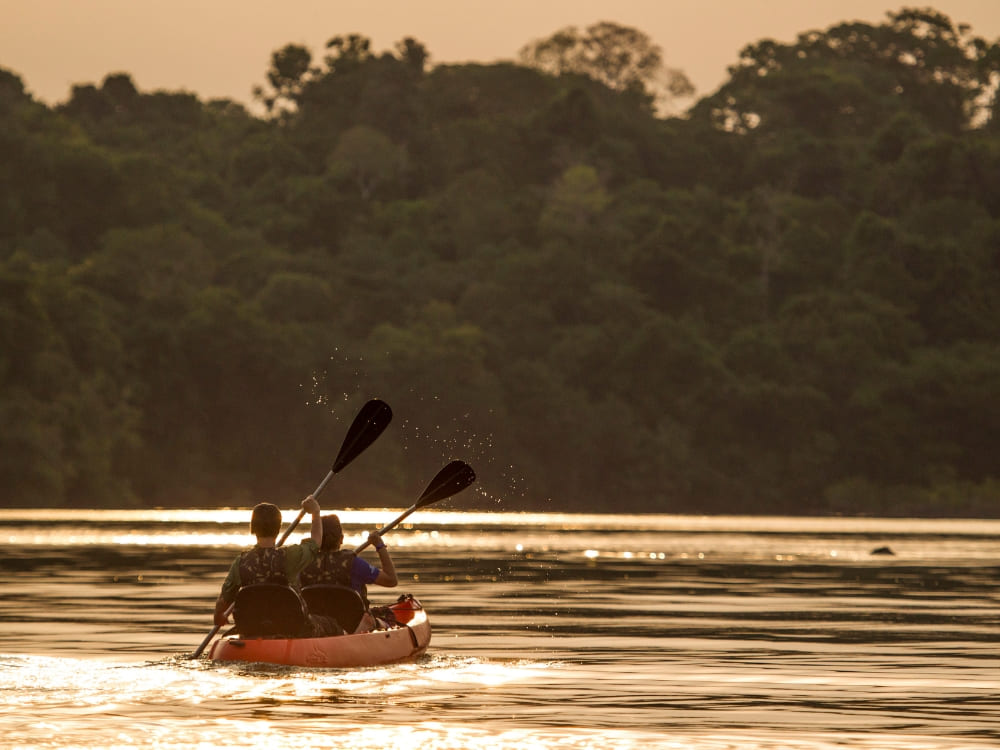
    Active travelers who want intimacy with the river can paddle smaller tributaries with a guide. Less wildlife distance, more physical engagement. 

    Two people paddling a kayak on the Amazon River during a golden sunset.
    Photo: João Marcos Rosa

    👉 Explore the adventure: 4-day Amazon Kayak Tour Brazil

    Day Trips and Short Stays from Manaus

    If you only have one or two days, day trips from Manaus, capital of the state of Amazonas, reach the Meeting of the Waters—where the black Rio Negro meets the muddy Solimões—and small communities downstream. Worth doing even if you’re staying in a lodge!

    Aerial view of the Meeting of the Waters where the dark Rio Negro flows alongside the muddy Solimões River without mixing.
    .

    👉 Explore the adventure: 3-day Amazon Jungle Tour from Manaus

    Everything You Need to Know about the Amazon River, Brazil

    Given its vital role for Brazil, South America, and global ecological stability, the Amazon River is a complex system that naturally generates many inquiries. PlanetaEXO addresses several of these key questions below.

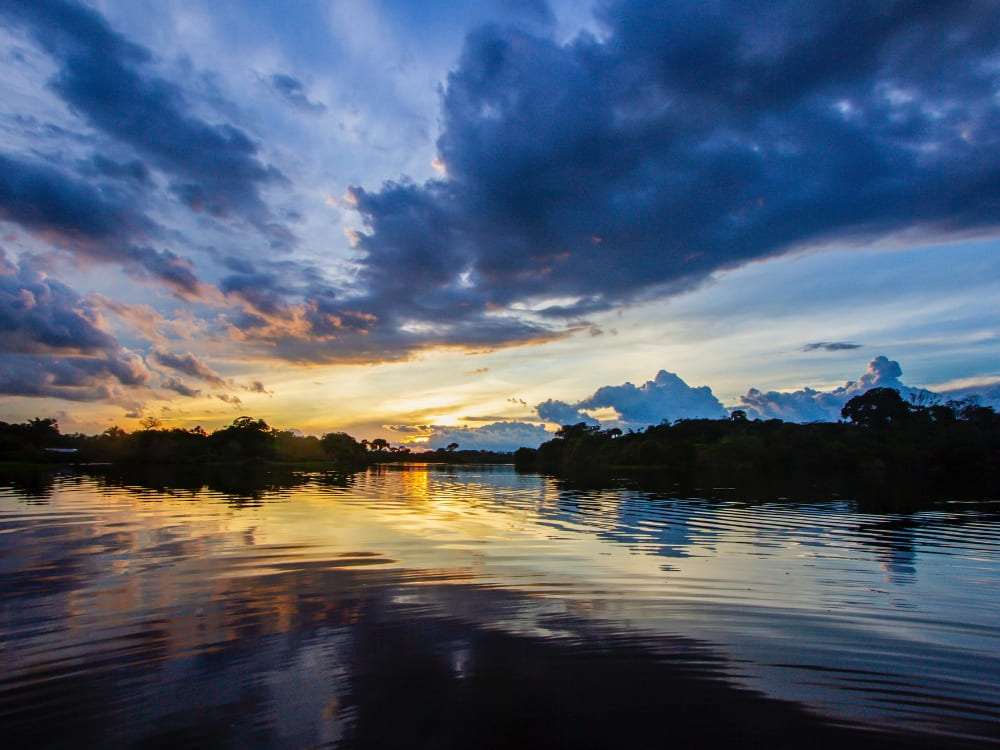
    A colorful sunset reflecting on the calm waters of the Amazon River bordered by the rainforest.
    .

    How long is the Amazon River?

    6,992.06 km (4,344 miles), making it the longest river in the world in terms of length and water volume.

    How deep is the Amazon River?

    Average depth is around 50 meters; maximum recorded depth exceeds 100 meters in places. 

    How wide is the Amazon River?

    It varies from 1.6 km in the dry season to over 40 km in the flooded wet season. The mouth of the Atlantic is 330 km wide and contains an island the size of Switzerland.

    In which country is the Amazon River?

    It crosses Peru, Colombia, and Brazil, with about 60% of its course in Brazilian territory. The basin extends across nine countries: Brazil, Peru, Colombia, Venezuela, Ecuador, Bolivia, Guyana, Suriname, and French Guiana.

    Is the Amazon River safe to visit?

    For travelers on guided trips with registered operators, yes. The rainforest itself is statistically safer than most cities. Standard precautions apply for the gateway city Manaus.

    👉 Read more: Is Manaus Safe? An Comprehensive Guide for Travelers Heading to the Amazon

    Why is the Amazon River important?

    The Amazon River Basin produces an estimated 6–9% of the world’s oxygen, regulates rainfall across South America, and stores roughly 120 billion tonnes of carbon in its forests. 

    Its discharge into the Atlantic influences ocean currents and global climate. Practically, it sustains the world’s most biodiverse ecosystem and directly supports tens of millions of people.

    Can you swim in the Amazon River?

    In some places, yes. The dark waters of the Rio Negro are largely free of piranhas and caimans in their main channel and are commonly swum during cruises and lodge stays.

    The muddy Solimões/Amazon main channel is a different story; locals don’t swim there, and neither should you. Always follow your guide’s lead.

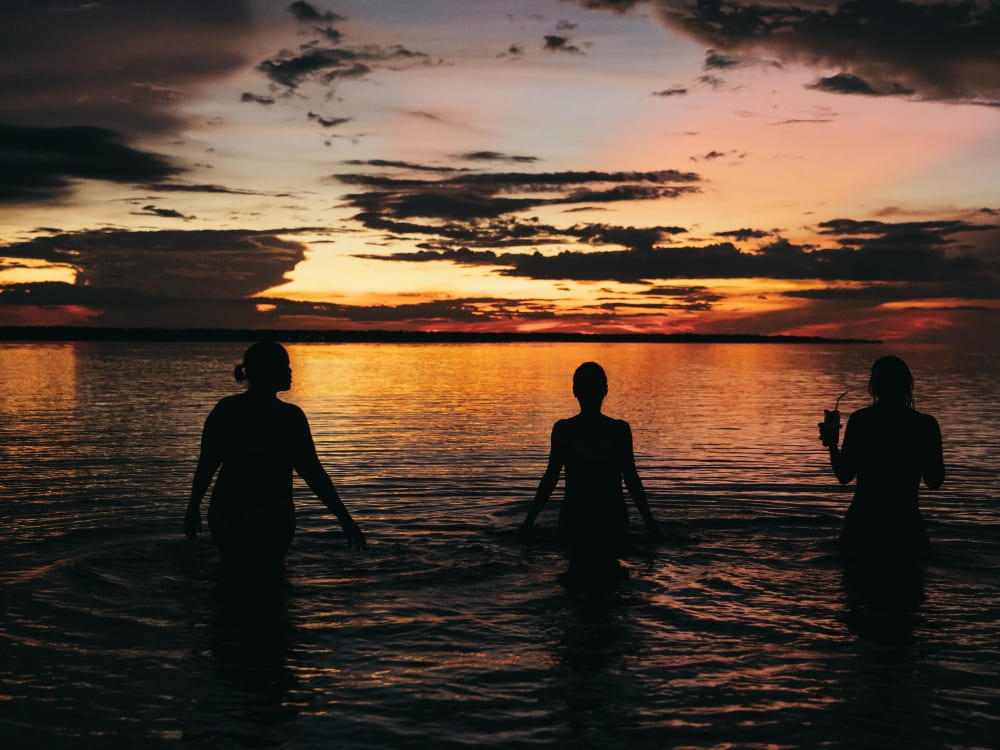
    Silhouettes of three people standing waist-deep in the waters of the Amazon at sunset.
    .

    Visit the Amazon River in Brazil with PlanetaEXO

    If you’ve made it this far, you’re not just researching for school—you’re probably trying to plan a trip. Luckily, PlanetaEXO, an ecotourism platform specializing in Amazon Rainforest tours in Brazil, can help you with that!

    In partnership with the best local operators out there, we design tailored itineraries that cater to all your preferences and needs, taking care of bookings, transfer options, and everything you need for an unforgettable trip. This way, all you have to do is enjoy the Amazon’s beauty. Contact us now!

  • 10 Facts about Pico da Neblina in the Amazon, Brazil

    10 Facts about Pico da Neblina in the Amazon, Brazil

    Learn more about Brazil’s highest mountain, a sacred Yanomami landmark hidden deep in the Amazon Rainforest

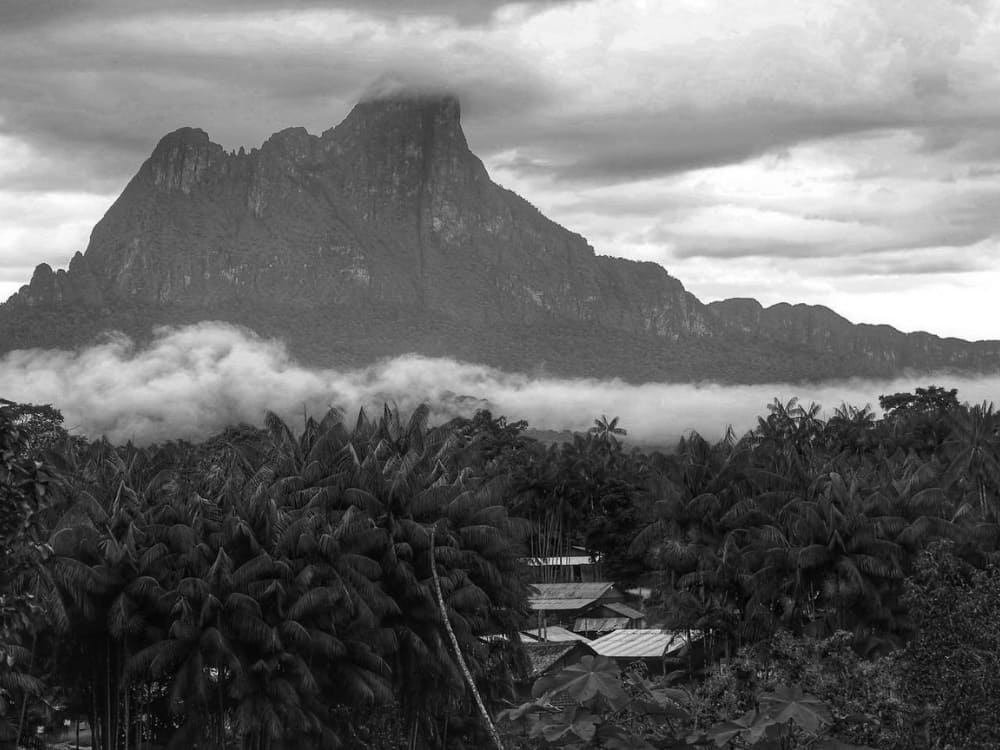
    Pico da Neblina is the highest peak in Brazil, standing at almost 3,000 meters above sea level. Hidden in the northwest Amazon, it rises above the rainforest canopy, and it’s almost always wrapped in mist. 

    Beyond being the tallest mountain in Brazil, Pico da Neblina is also part of one of the most remote and least-explored regions of South America. Its wilderness, dense forest, and rugged trails make it a destination that combines adventure, conservation, and cultural depth.

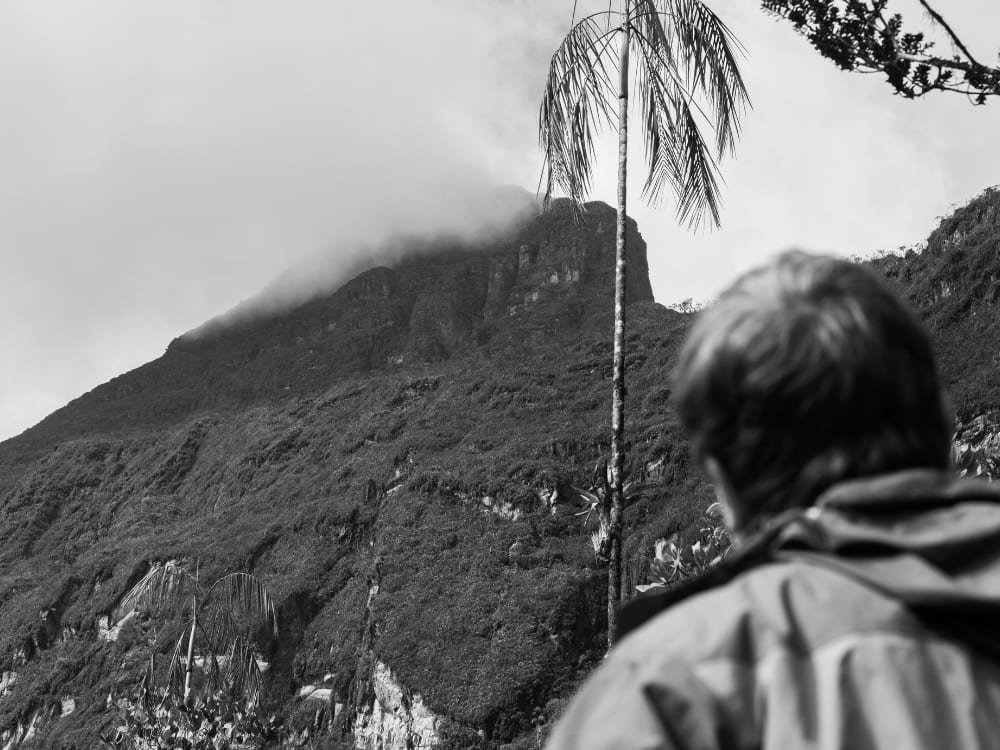
    A hiker looks toward the mist-covered summit of Pico da Neblina, the highest peak in Brazil
    Photo: Lucas Miagostovich

    PlanetaEXO, an ecotourism platform specializing in Amazon Rainforest tours in Brazil, has put together a complete guide with 10 facts about Pico da Neblina so you can prepare before embarking on your journey. Check it out below!

    1. Highest mountain in Brazil

    Standing at precisely 2,995 meters, Pico da Neblina is officially the highest point in Brazil. From its summit, travelers find themselves looking over an endless green carpet of rainforest stretching to the horizon. Have you ever imagined standing above the Amazon clouds? That’s the reward of reaching the top.

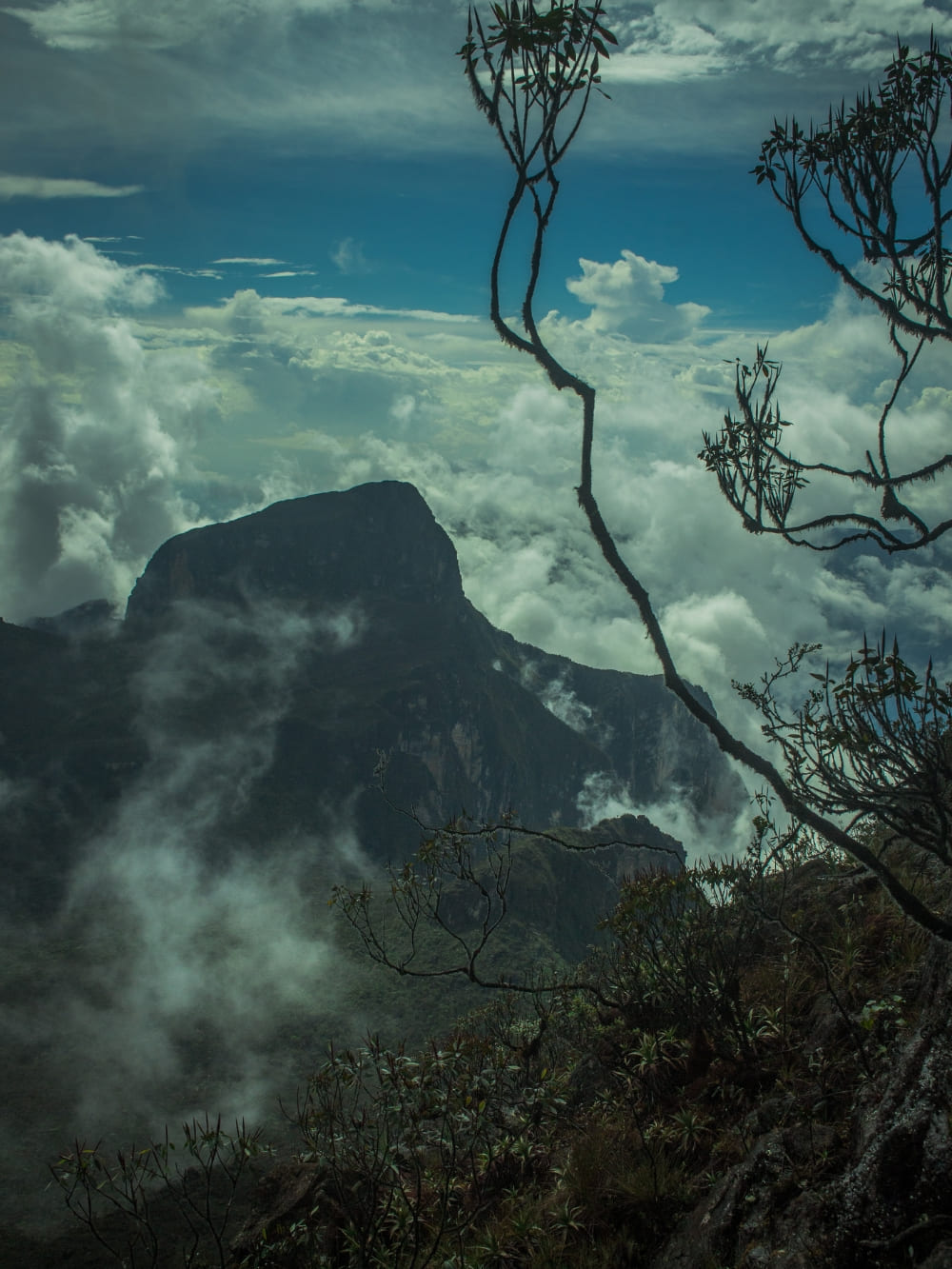
    The dark, rocky peak of Pico da Neblina towering above a thick layer of white clouds in the Amazon Rainforest.
    Photo: Lucas Miagostovich

    There are other impressive peaks in the country, but none surpass Pico da Neblina. Pico 31 de Março (2,974 m), located nearby in the same mountain range, is the second tallest, while Pico da Bandeira (2,892 m), between the states of Espírito Santo and Minas Gerais, is the third. The famous Mount Roraima (2,734) sits at #8 on the ranking.

    These comparisons highlight how unique this place truly is. It’s a reminder of how diverse Brazil’s landscapes are, from coastal plains and wetlands to towering mountains hidden deep inside the forest.

    2. Deep in the forest

    Pico da Neblina National Park is located in the far northwest of the Amazonas state, right on the border with Venezuela, within the São Gabriel da Cachoeira municipality.

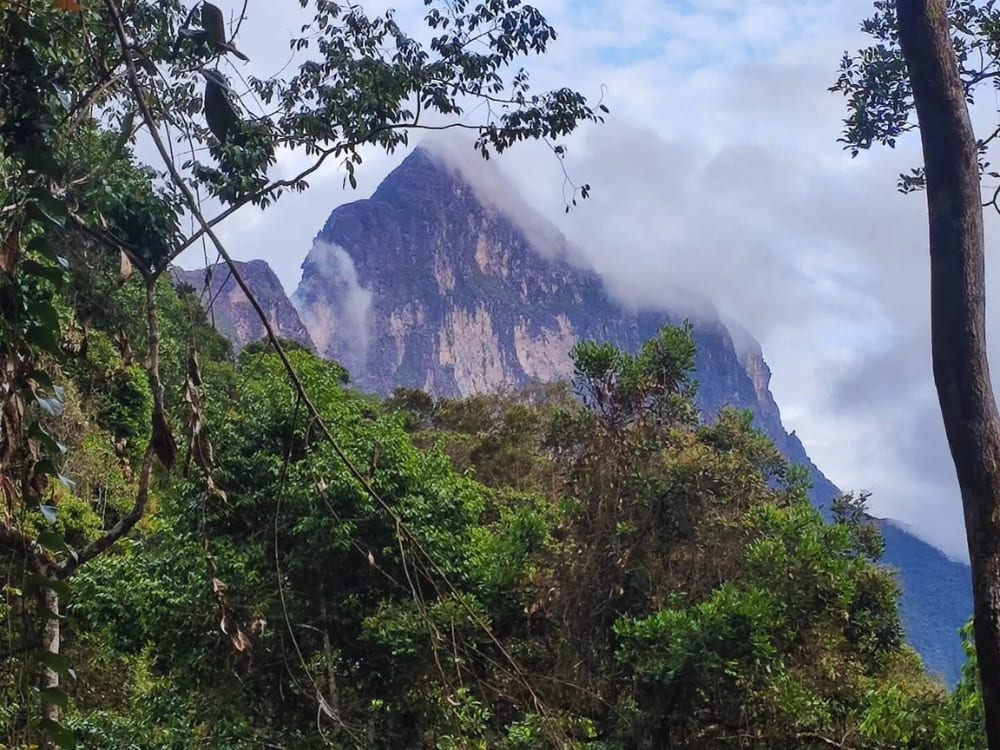
    The towering mountain of Pico da Neblina viewed through the dense, lush green canopy of the Amazon Rainforest.
    @geoturismo_na_amazonia

    Getting there is an adventure in itself. Travelers usually fly from Manaus to São Gabriel da Cachoeira, then continue by four-wheel drive and canoe along the Cauaburis and Maturacá rivers until reaching the Yanomami village of Maturacá, the gateway to the park.

    👉 Read more: How to get to the Amazon Rainforest

    3. A sacred mountain for the Yanomami

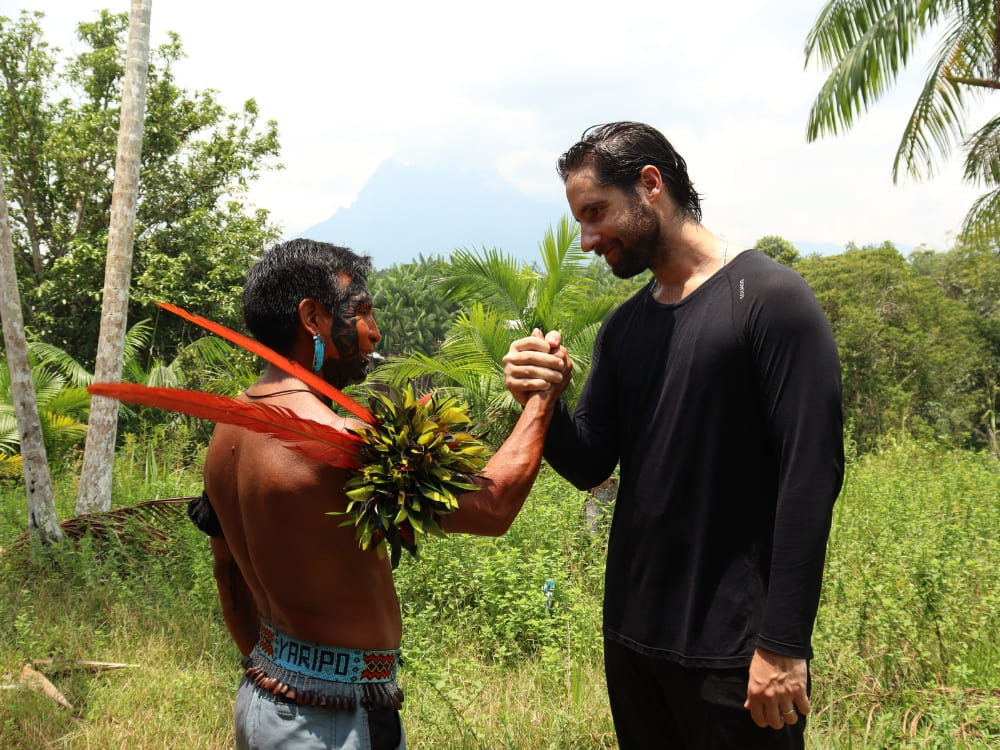
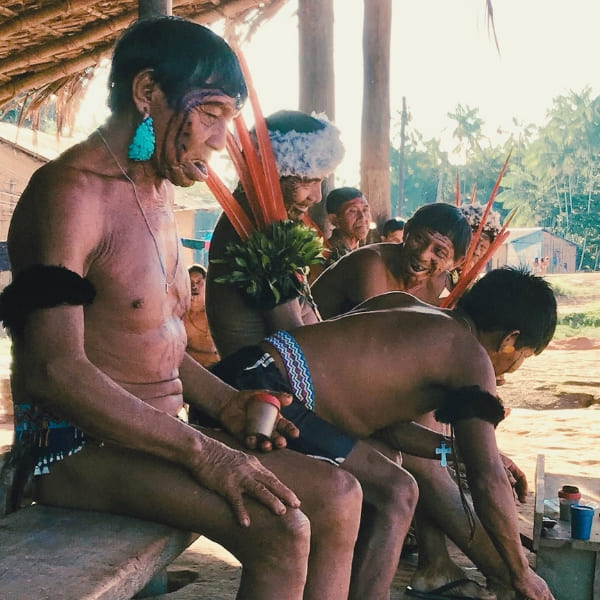
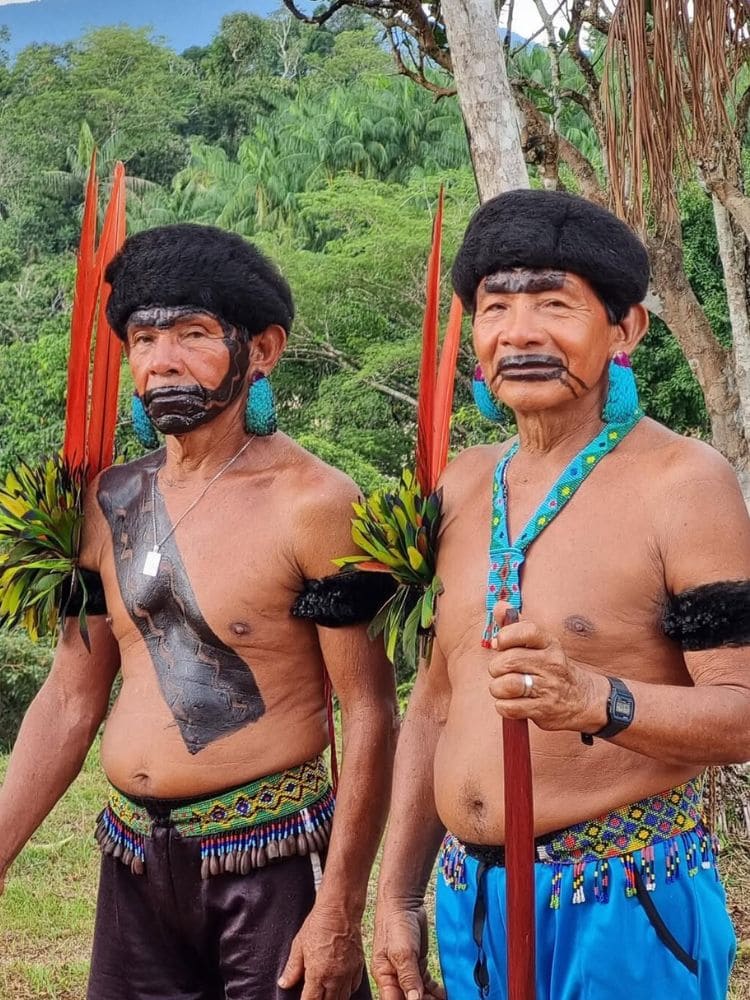
    The Yanomami people see Pico da Neblina as a sacred place where ancestral spirits and the powerful Xapiripë reside. In their cosmology, these spiritual beings dance in mirrors of light to protect the forest, sustain life, and keep the sky from collapsing.

    A Yanomami indigenous guide wearing traditional red feathers shaking hands with a hiker in the forest.
    .

    The Yanomami are one of the largest Indigenous groups in South America, with more than 30,000 people living between Brazil and Venezuela. In the Brazilian share, they inhabit territories in the Roraima and Amazonas states, including the area surrounding Pico da Neblina National Park.

    For travelers, this turns the climb into a cultural and spiritual journey that highlights the risks of greed and the importance of protecting the Amazon.

    4. The meaning of the name

    What does “Pico da Neblina” mean? In Portuguese, it translates to “Peak of the Fog” describing the constant mist that surrounds its summit. But the meaning of the name goes deeper when we consider its Yanomami name: Yaripo.

    For the Yanomami, Yaripo is not just a physical place but a spiritual landmark where the sky and earth connect. This duality, the descriptive Portuguese name, and the sacred Indigenous name reflect the blend of science and tradition that defines the mountain.

    Since its official recognition in the 20th century, the name “Pico da Neblina” has been widely used, but Indigenous voices ensure that Yaripo remains alive in collective memory.

    5. Pico da Neblina remained closed for years

    Until the early 2000s, expeditions to Pico da Neblina were common, often organized by private operators without Indigenous participation or environmental oversight. For the Yanomami, this uncontrolled flow of outsiders into Yaripo, their sacred mountain, was deeply disturbing.

    In 2003, following rising tensions over government plans to develop tourism infrastructure, the park was officially closed. Tourism remained suspended for almost 20 years, until a new model based on conservation and Indigenous leadership was gradually developed through dialogue and partnerships. 

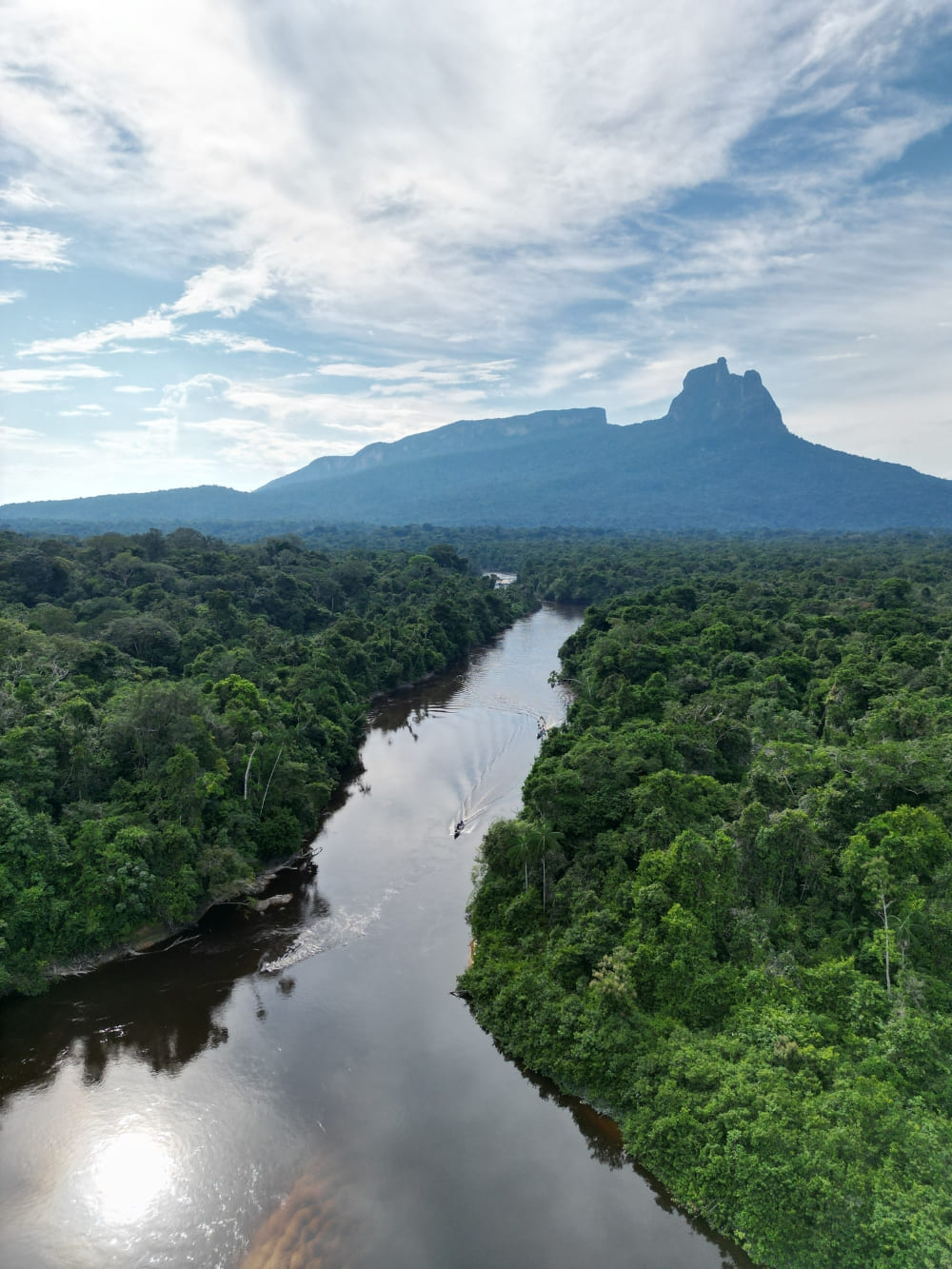
    Aerial view of a dark river winding through the vast Amazon Rainforest, with Pico da Neblina in the background
    .

    A pilot project was launched in 2019, with plans to reopen in 2020 delayed by the COVID-19 pandemic. By 2022, visitation resumed under an ethnotourism framework led by the Yanomami people.  

    Today, visitors follow rituals of purification with shamans before climbing, and every experience, such as PlanetaEXO’s Pico da Neblina Expedition, is planned with Indigenous associations to ensure cultural respect and environmental care.

    6. The second-largest national park in Brazil

    Despite being the highest point in Brazil, Pico da Neblina is also the second-largest national park in the country, covering an impressive area of 22,200 km². Only the Jaú National Park, also in Amazonas, is bigger.

    A dramatic view of Pico da Neblina partially obscured by thick, low-hanging clouds rising above the jungle canopy.
    @joaoclaudio2

    Created in 1979, the park protects mountains, rivers, and vast stretches of rainforest along the border with Venezuela. Its remoteness makes it one of the least visited but also one of the most pristine. Imagine a park larger than many countries in Europe (Greece, Iceland, Hungary, Portugal, etc.); that’s the scale we’re talking about.

    For visitors, this immense area means days of trekking through varied ecosystems: lowland rainforest, cloud forests, alpine vegetation, and misty summits. 

    👉 Read more: National Parks in Brazil

    7. Discovery and first ascent

    Pico da Neblina was first identified by non-Indigenous people in the 1950s, during aerial surveys of the Amazon. But it wasn’t until the following decade, in 1965, that an expedition carried out by the Brazilian army confirmed its altitude of 2,994 meters. This moment shifted national geography, as Pico da Bandeira was considered the country’s highest point back then.

    Silhouette of an explorer kneeling next to a waving Brazilian flag at the summit of Pico da Neblina at sunrise.
    @escoteirosdobrasil

    The remoteness of the region, the lack of infrastructure, and the complexity of the terrain all played a huge role in the delay between discovery and official exploration. Unlike other mountains with established trails, reaching Pico da Neblina required building routes through untouched rainforest.

    For the Yanomami, Pico da Neblina (Yarapo) was never “discovered.” They had always known and revered it as a sacred place. The notion of “first ascent” is, therefore, relative—it represents the perspective of the näpe (non-Indigenous).

    In recent years, a historic moment added a new chapter: Maria Yanomami became the first Indigenous woman to climb Yaripo, joining the test expeditions that shaped today’s official tourism route. Her achievement reflects the growing role of Yanomami women in guiding, organizing, and sustaining Pico da Neblina expeditions.

    👉 Read more: Women in Ecotourism – Female Presence that Makes the Sector Happen

    8. Not an easy expedition 

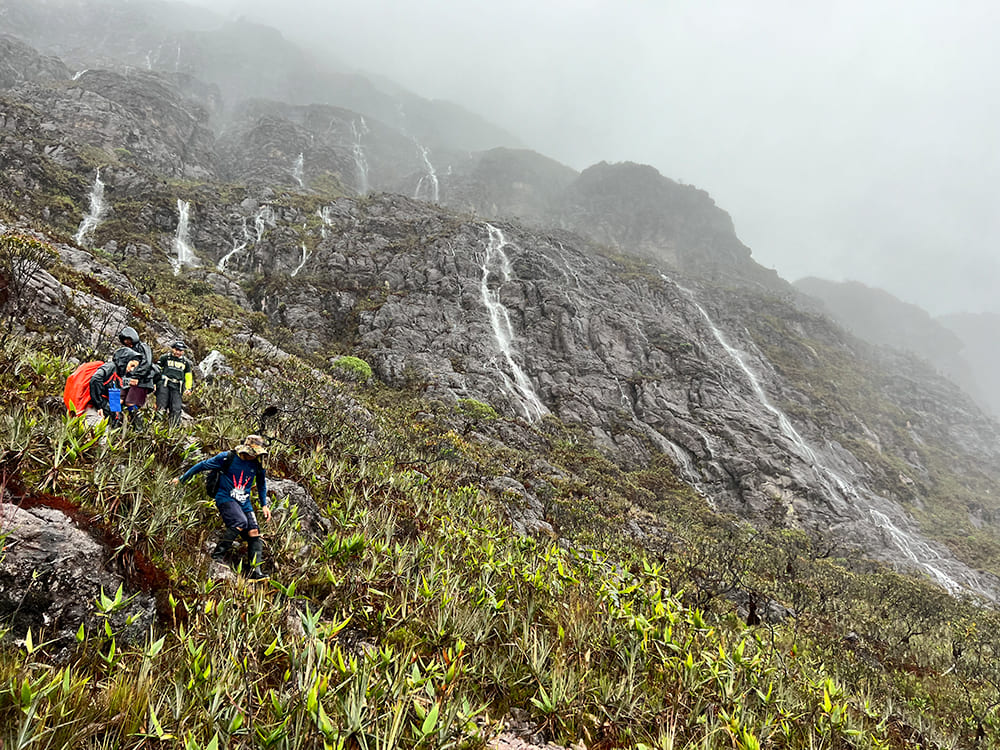
    Reaching the summit of Pico da Neblina is far from simple. The trek covers about 35 kilometers from the first base camp to the top, spread across several days of hiking through dense rainforest, steep ascents, and sections of slippery terrain.

     A group of trekkers navigating a steep, rocky, and wet mountain slope with small waterfalls during the expedition.
    .

    Climbers face river crossings, high humidity, sudden changes in weather, and altitudes above 2,000 meters that demand extra endurance. In total, it usually takes 6 days of trekking from the starting point until the summit day, making it one of the most demanding trails in Brazil. 

    For this reason, it is recommended only for travelers who already have experience with challenging multi-day hikes and enjoy wild, remote adventures.

    👉 Read more: Best Hikes in Brazil – From Rainforests to Mountain Peaks

    9. Ancient mountain range

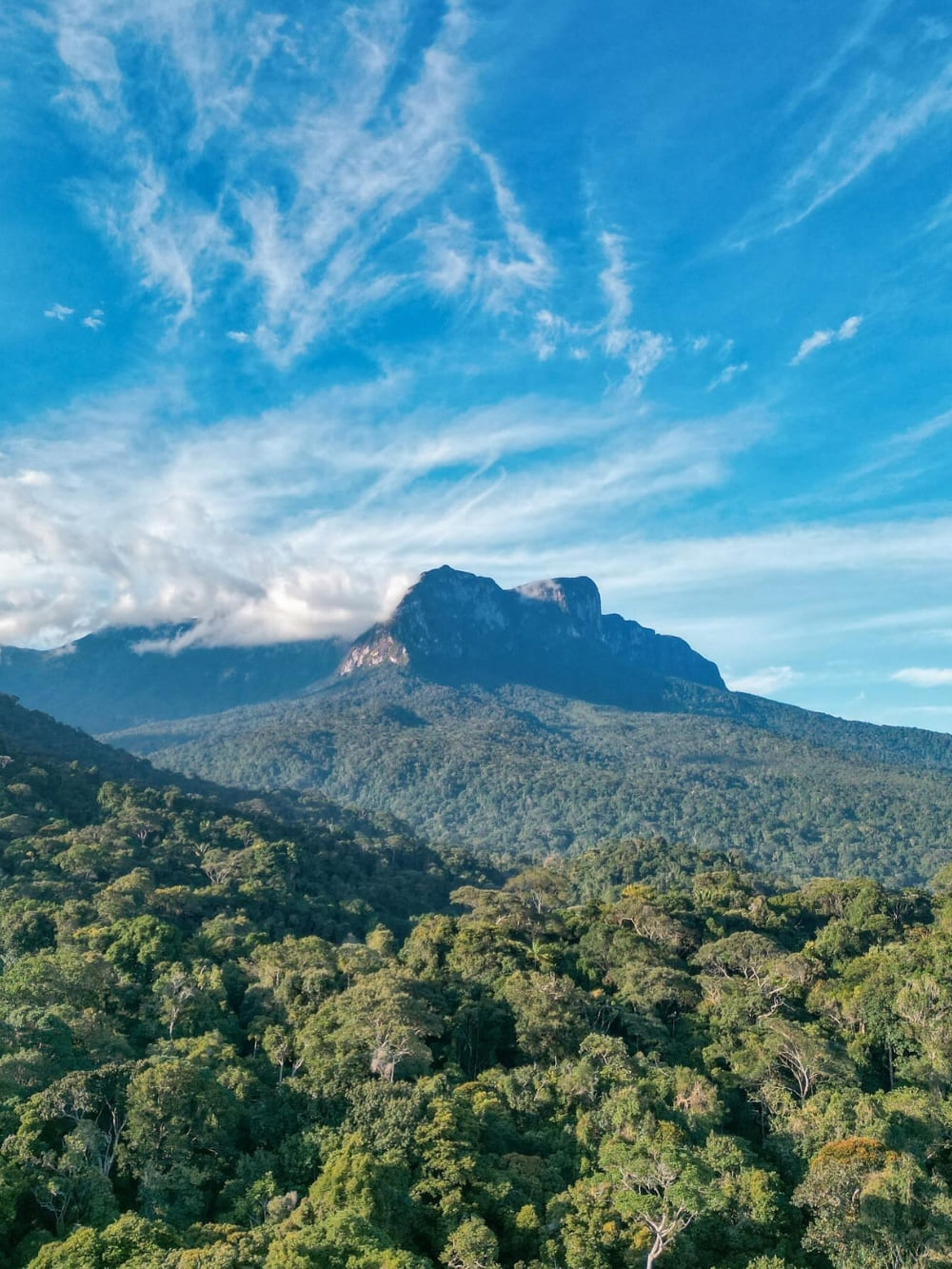
    Geologists believe Pico da Neblina was formed around 3 billion years ago, making it part of some of the oldest geological structures in South America. It belongs to the Guiana Shield, a vast region of ancient rock that also includes Mount Roraima.

    The massive peak of Pico da Neblina rising above an endless green expanse of Amazonian trees under a blue sky.
    @mochilaodobem

    These formations predate the Andes and many other famous mountain ranges. Can you imagine rocks that are older than Pangaea itself? That’s the kind of history hidden in Pico da Neblina’s slopes!

    This ancient origin explains the mountain’s rugged landscapes, steep cliffs, and constant weather changes. 

    10. Biodiversity and weather

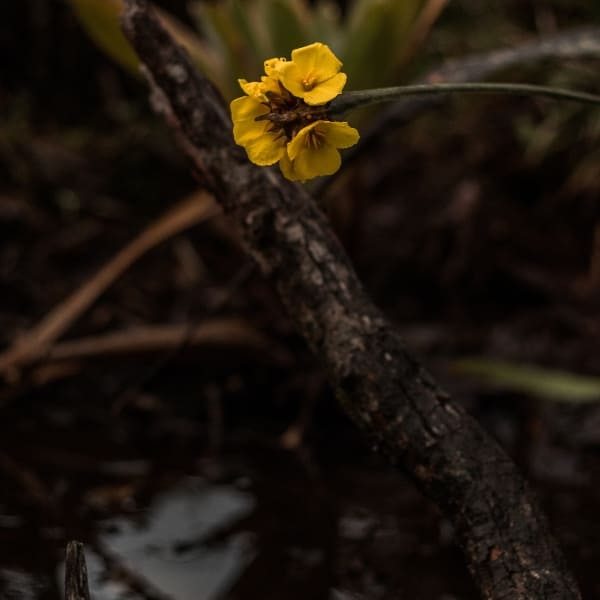
    Because of its altitude and location, Pico da Neblina shelters a unique combination of Amazonian biodiversity and highland species. Rare orchids, moss-covered forests, and alpine plants thrive near the summit.

    The unique flora includes fascinating species like Drosera meristocaulis and Heliamphora ceracea, carnivorous plants that only grow on Neblina’s slopes. 

    Wildlife here includes tapirs, giant armadillos, and hundreds of bird species. The region is also a hotspot for endemic species found nowhere else. Amphibians like Stefania neblinae and Neblinaphryne mayeri are exclusive to this environment, as well as the Neblina uakari (Cacajao hosomi) and the Architis neblina, a spider officially registered in 2008.

    Due to its location near the Amazon Rainforest, the region receives a lot of rain. This can present some challenges for trekkers, but it’s great for the vegetation to grow strong and abundant.

    The unpredictability of the weather at Pico da Neblina is something to pay attention to. It’s hot and humid in the lowlands, but chilly and foggy at higher elevations. Temperature variation is just as dramatic, ranging from 20°C during the day to 0°C at night.

    👉 Read more: When is the Best Time to Visit the Amazon Rainforest in Brazil

    Exploring Pico da Neblina with PlanetaEXO

    Pico da Neblina is not a regular trek but a transformative journey where every step supports the Yanomami and helps to protect one of the last wild frontiers of the Amazon

    With PlanetaEXO, an ecotourism platform specializing in Amazon Rainforest tours in Brazil,  travelers are guided by the best local partners—the people who know the mountain best and who have lived in it for centuries. Contact us now!

  • Best Places to Visit in the Amazon, Brazil

    Best Places to Visit in the Amazon, Brazil

    The Amazon Rainforest offers unique landscapes and  diverse experiences spread across different Brazilian states

    Covering a staggering area of approximately 5 million km², the Amazon Rainforest in Brazil hides a whole universe of biodiversity across different states, with emphasis on ecotourism in Amazonas, Pará, and Mato Grosso.

    Tourist walking along a dense trail in the Amazon rainforest in Brazil.
    Photo: Marcelo Bonifácio

    In other words, it holds destinations and activities for every type of traveler, so choosing the best places to visit in the Amazon depends on the kind of adventure you’re looking for. Do you want to relax in nature? Watch the wildlife? Meet new people and cultures? It’s essential to think about what you want to plan for your trip accordingly!

    As an ecotourism platform specializing in Amazon Rainforest tours in Brazil, PlanetaEXO can help you decide which experience suits you best. Check our suggestions right below!

    Manaus (Amazonas)

    Manaus is the capital of the state of Amazonas and the main gateway to the rainforest. The city boasts a rich history, bustling markets, and vibrant theaters, making it a fantastic cultural hub. It’s also where many Amazon tours begin

    If you don’t want to go deep into the jungle, or if you want to explore the city before or after visiting the forest, Manaus is a good place for day trips, and you can still enjoy the magnetic Amazonian atmosphere even in urban areas.

    erial night view of the historic illuminated Amazon Theatre in downtown Manaus.
    .

    Why visit:

    • Starting point for tours in various areas of the Amazon Rainforest.
    • Meeting of the Waters, the phenomenon where the waters of the Negro and Solimões rivers flow without mixing.
    • Historical heritage of northern Brazil. Unmissable spots: Amazonas Theater, Provincial Palace, and Adolpho Lisboa Market.
    • Trails, exhibitions, and 42-meter-high observation towers at the Museum of the Amazon (MUSA).
    • Unique gastronomy with regional ingredients such as tambaqui, pirarucu, açaí, and cupuaçu.
    • River beaches, like Ponta Negra Beach, on the banks of the Negro River.

    How to get there: Easily accessible by air via Eduardo Gomes International Airport (MAO).

    👉 Read more: How to get to the Amazon Rainforest in Brazil?

    Anavilhanas National Park (Amazonas)

    Not only is Anavilhanas National Park located right in the middle of the Negro River, but it also holds the title of the second-largest river archipelago in the world, with over 400 islands—second only to Mariuá (1,400 islands), also in Amazonas.

    One of the most breathtaking places in the Amazon Rainforest, Anavilhanas is home to a great concentration of igapós (forests permanently or seasonally flooded), which allow for fascinating experiences like swimming and canoeing among the treetops.

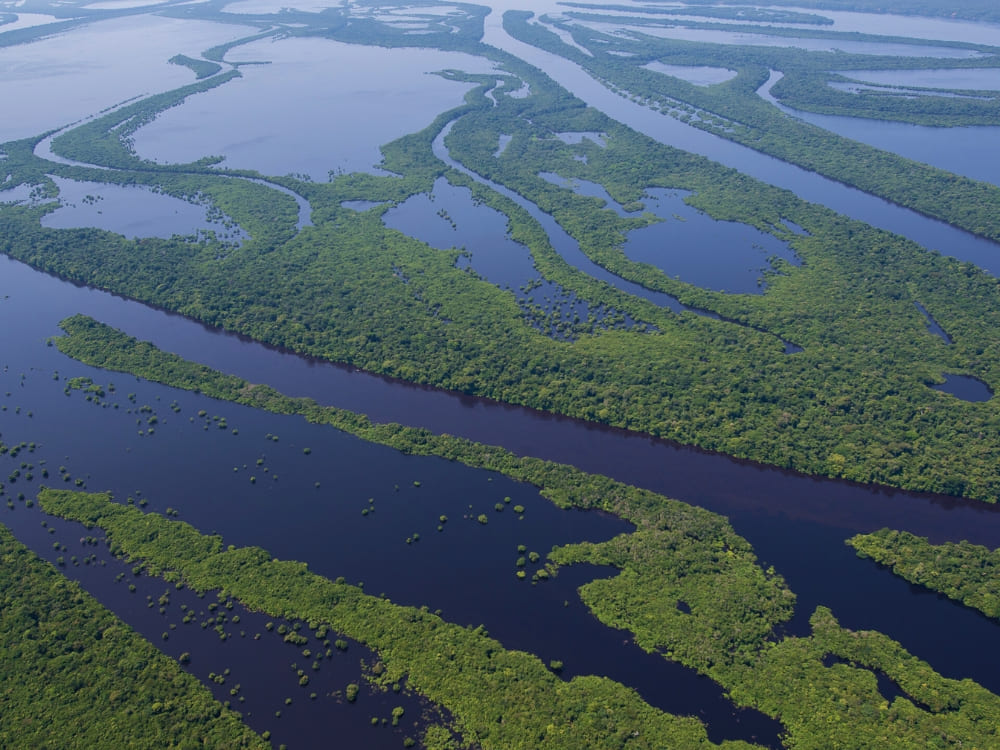
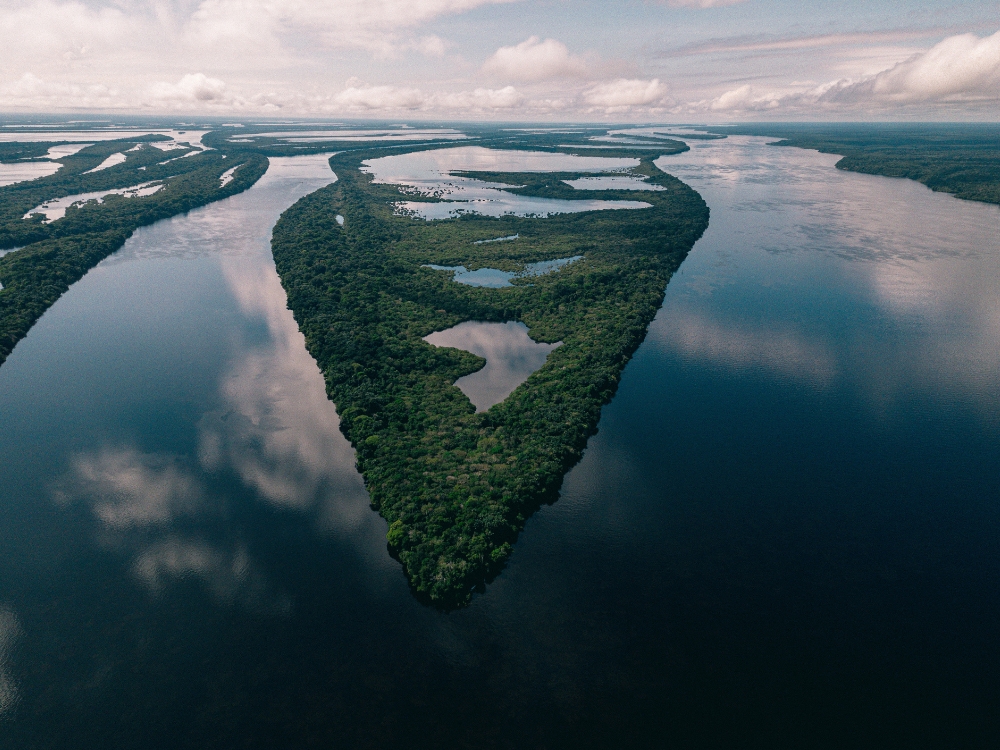
    Aerial view of the Anavilhanas National Park showcasing densely vegetated islands cut by the waters of the Negro River.
    .

    Why visit:

    • Exploring the Várzea Amazônica (Amazonian floodplain), a floodable area of ​​the Amazon basin defined by ecosystems rich in biodiversity and fertile soils.
    • Riverside communities, such as Santo Antônio and Tiririca.
    • Sightings of pink river dolphins, sloths, birds, etc.
    • Boat tours, forest trails, water trails, night spotlighting, etc.
    • Madadá Caves (ancient sandstone formations).
    • River beaches that emerge on the Negro River during the dry season (September to March).
    • Incredible lodges, like Mirante do Gavião and Anavilhanas Jungle Lodge.

    How to get there: Easy to reach from Novo Airão, near Manaus.

    Jaú National Park (Amazonas)

    If you’re planning a trip to the Amazon Rainforest in Brazil, then you should visit Jaú National Park, one of the biggest in the country, covering an area of 2.27 million hectares between the cities of Novo Airão and Barcelos.

    Protecting the entire base of the Jaú River and forming part of the Central Amazon Conservation Complex, it’s recognized by UNESCO as a World Heritage Site.

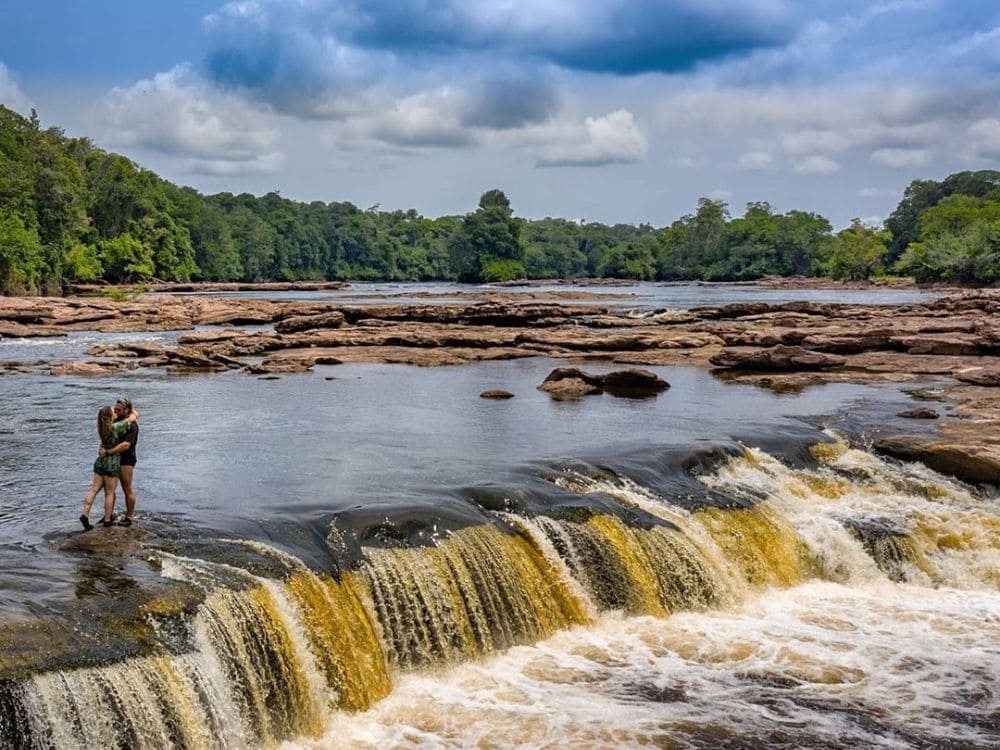
    Couple hugging in the shallow waters of river rapids surrounded by forest in the Jaú National Park.
    @mkexpeditions

    Why visit:

    • Home to various Amazon animals, such as caimans, manatees, jaguars, etc.
    • Ancient rock inscriptions on the banks of the Negro River (seem especially during the dry season).
    • Riverside communities, such as the Quilombo do Tambor.
    • Forest trails, night spotlighting, waterfalls, river cruises, etc.

    How to get there: Accessible by boat from Novo Airão.

    👉 Explore these adventures in Jaú: 

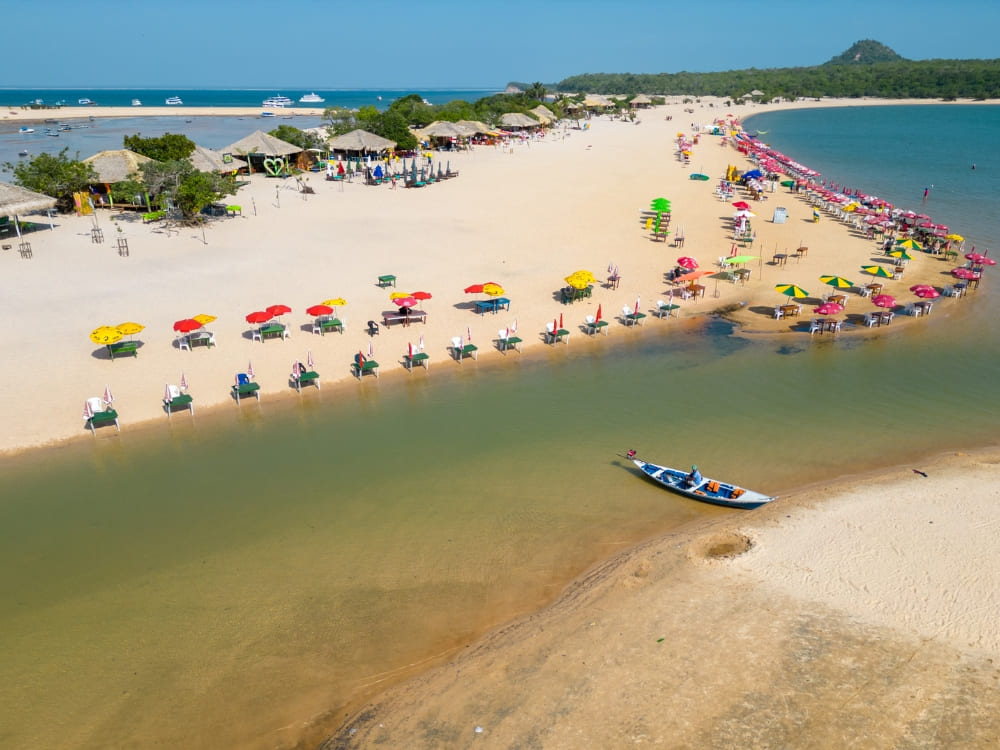
    Alter do Chão (Pará)

    Alter do Chão is a district of the city of Santarém, in the state of Pará. Nicknamed “the Caribbean of the Amazon,” its white sand beaches blend harmoniously with the rivers and vegetation of the forest. It’s great for swimming and relaxing, especially between September and November.

    Due to its location outside of Amazonas, the village shows a different side of the rainforest, being one of the best places to visit in the Amazon for those seeking unique experiences.

    White sand beach filled with colorful umbrellas along the greenish waters of the Tapajós River in Alter do Chão.
    Photo: Tarcisio Schnaider

    Why visit:

    • River beaches along the banks of the Tapajós River, including Ilha do Amor (Love Island), Ponta do Cururu, and Ponta Grande.
    • Sairé Festival, an annual local celebration that blends religious rites of Jesuit origin with indigenous traditions and folkloric legends of the pink river dolphin and tucuxi dolphin.
    • Riverside and indigenous communities (Coroca, São Marcos, and Tucumã).
    • Activities in the forest, such as hiking trails, igapó tours, and Amazon river cruises.

    How to get there: The main route to Alter do Chão is via Santarém, which is accessible by air or boats from Belém and Manaus.

    👉 Explore this adventure: Amazon Cruise from Alter do Chão

    Mamirauá Reserve (Amazonas)

    Created in 1996, the Mamirauá Sustainable Development Reserve is a Brazillian pioneer in combining environmental preservation with the sustainable development of traditional populations.

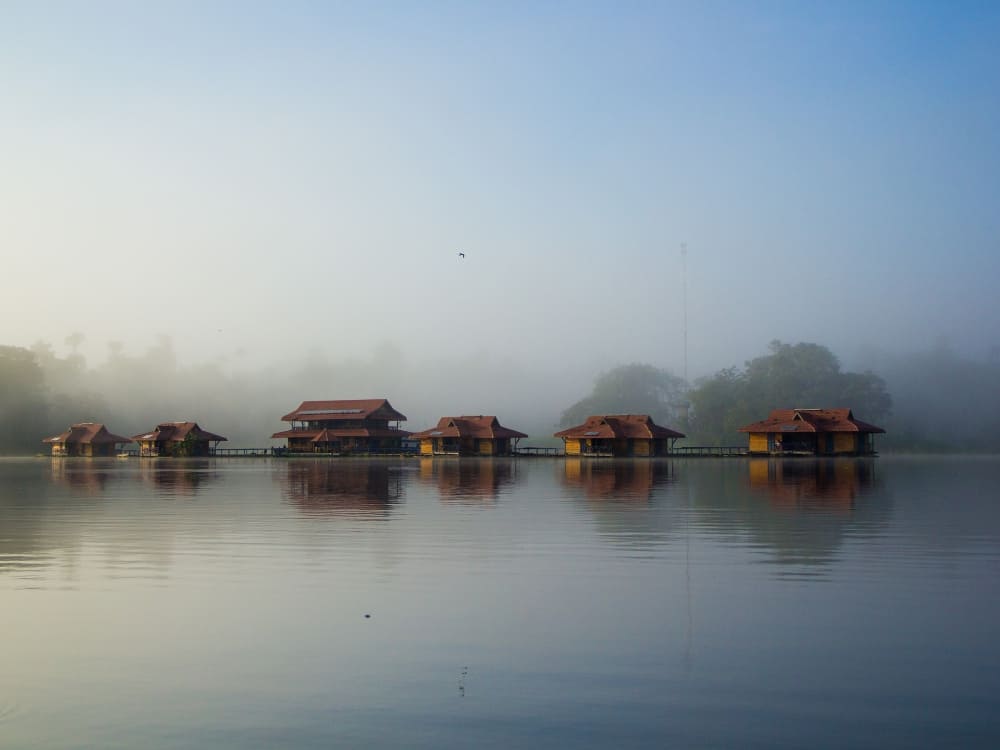
    Located in Tefé, on the Solimões River, it’s one of the best places in the Amazon Rainforest to appreciate the seasonal flooding and ecotourism in an area marked by authenticity and isolation.

    Uakari Lodge floating inn made of wooden cabins on the calm waters of Lake Mamirauá with mist in the background.
    Photo: Amanda Lelis

    Why visit:

    • Community-based tourism, encompassing 177 communities and over 11,500 residents.
    • Connection with nature in the world’s largest floodplain forest.
    • Impressive biodiversity, including the bald uakari monkey, symbol of the reserve.
    • Hiking trails, canoeing, wildlife watching, night spotlighting, and piranha fishing.
    • Home of Uakari Lodge, the floating hotel on Lake Mamirauá.

    How to get there: Reach the Mamirauá Reserve by boat from Tefé, accessible by air from Manaus.

    👉 Read more: When is the Best Time to Visit the Amazon Rainforest in Brazil

    Alta Floresta (Mato Grosso)

    Alta Floresta is a charming city of just over 62,000 inhabitants. Located in northern Mato Grosso, it serves as the gateway to the state’s Amazon share, characterized by dense forests and the confluence with the Cristalino River—a tributary of the Teles Pires River.

    While it’s a lesser-known part of the Amazon, Alta Floresta boasts breathtaking natural views, preserved areas, and rich biodiversity.

    People kayaking in the Amazon rainforest.
    Photo: João Marcos Rosa

    Why visit:

    • The location, marked by the transition between the Cerrado and Pantanal biomes, makes this one of the most abundant Amazonian areas in terms of fauna, including monkeys, giant otters, peccaries, and tapirs.
    • With over 600 cataloged bird species, it’s great for birdwatching.
    • Forest formed by giant trees (approximately 60 meters tall).
    • Cristalino Jungle Lodge, one of the best and most luxurious sustainable luxury accommodations in Brazil, is located in a private forest reserve of over 11,000 hectares.

    How to get there: Departing from airports in São Paulo (VCP) or Cuiabá (CGB), fly to Alta Floresta Airport (AFL).

    Presidente Figueiredo (Amazonas) 

    Only 107 km away from Manaus, Presidente Figueiredo is known as the Land of Waterfalls. In addition to more than 150 officially cataloged waterfalls, caves and natural pools are also hidden among the lush green vegetation.

    This is one of the top places to visit in the Amazon for travelers who enjoy water activities and prefer destinations relatively close to large cities.

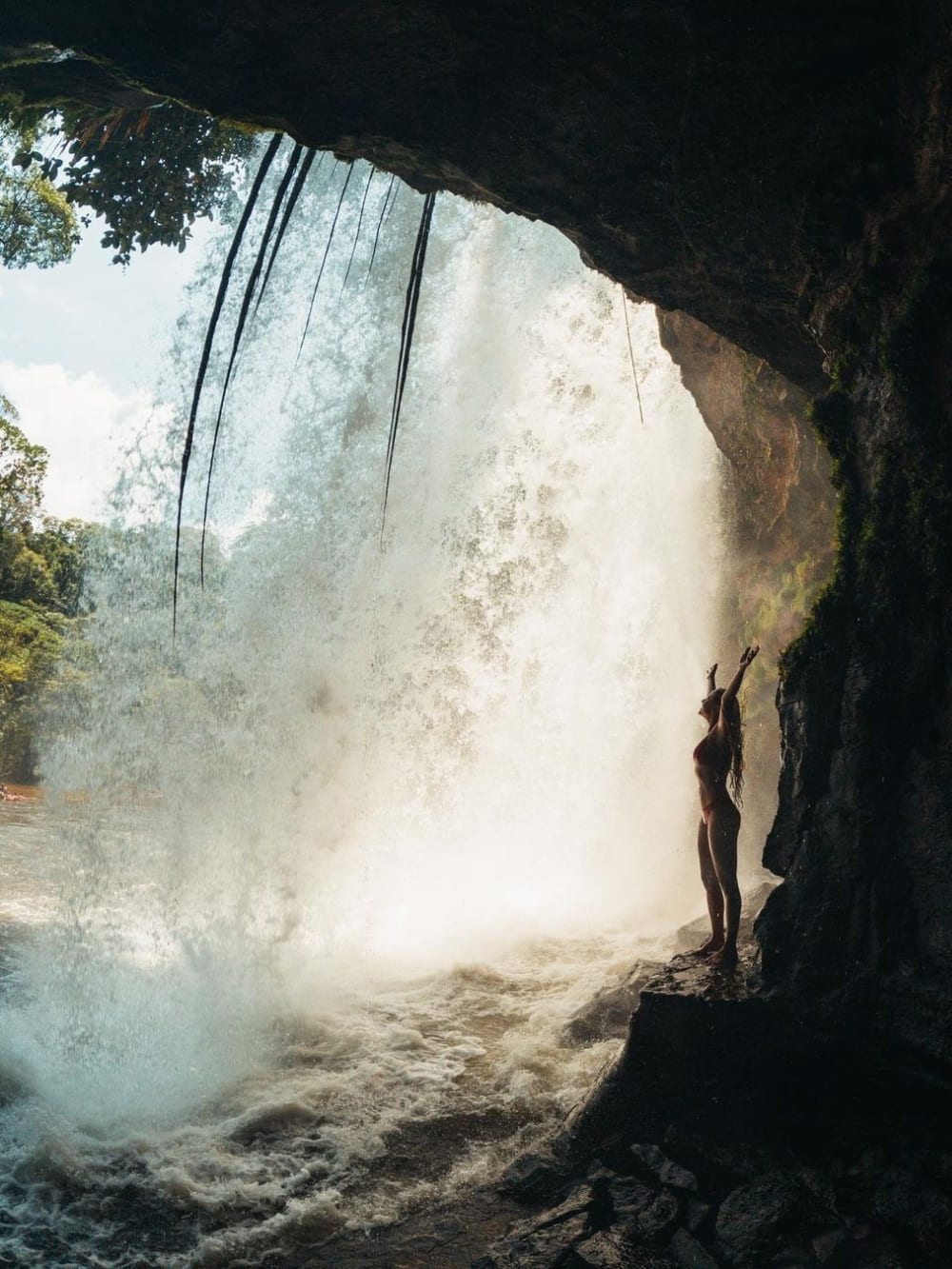
    Silhouette of a woman with open arms contemplating a strong waterfall from the dark interior of a cave.
    @ines.lafosse

    Why visit:

    • Hundreds of waterfalls, including Pedra Furada, Orquídeas, Iracema, Judeia, Mutum, Araras, Neblina, etc.
    • Refúgio do Maragoa, a 400-meter cave with impressive geological formations.
    • Hiking trails, bird watching, rappelling, and water-based itineraries (especially between February and June, during the rainy season), including waterfall bathing, diving, boiacross, and rafting.

    How to get there: 2-hour drive (car/bus) from Manaus.

    👉 Explore this adventure in Presidente Figueiredo: 4-Day Amazon Kayak Tour!

    Acajatuba Lake (Amazonas)

    Near Manaus, Lake Acatajuba is located on the Negro River. One of its highlights is the community’s work to boost local tourism and support sustainable practices that can benefit families and the region’s ecosystem.

    With lush scenery of dense vegetation and the typical dark waters of the Amazon Rainforest in Brazil, it’s known for its excellent conditions for encountering and interacting with pink river dolphins.

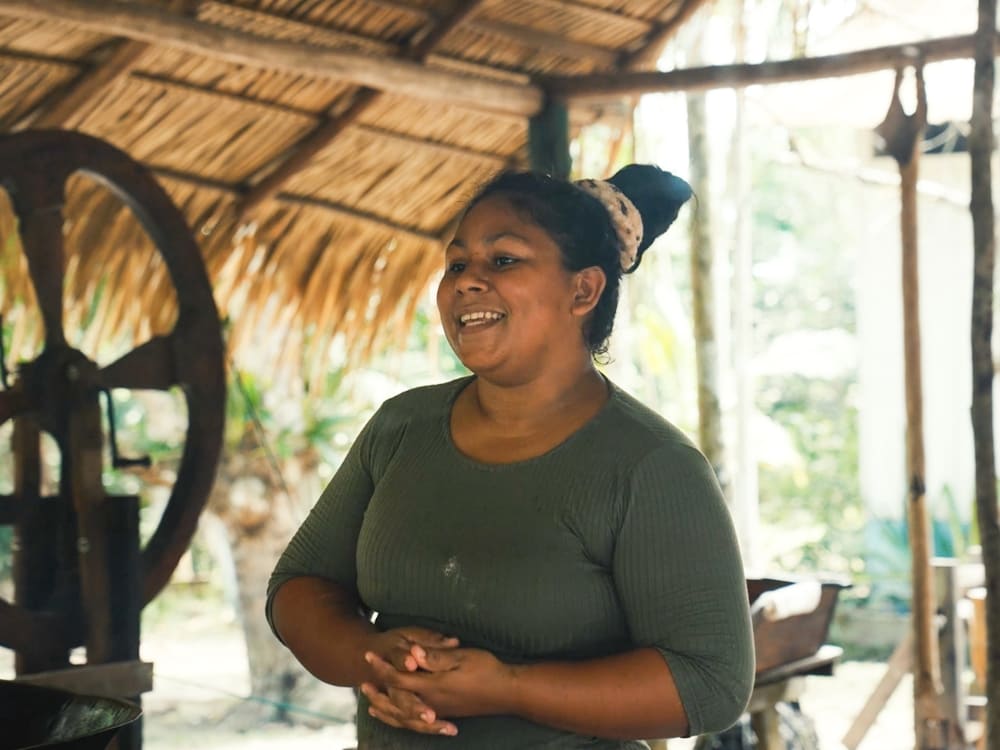
    Smiling woman from an Amazon riverside community standing under a traditional thatched roof.
    Photo: Isadora Sá

    Why visit:

    • Conscious tourism that values ​​environmental conservation and support for local residents.
    • Acatajuba Village, a riverside community that welcomes tourists with programs related to traditional crafts and flour mills.
    • Wonderful spot for sunset contemplation.
    • Canoeing, night spotlighting, hiking, and wildlife and flora observation.
    • Central point for Amazon jungle lodges and river cruises.

    How to get there: 2 hours by boat from Manaus.

    👉 Explore this adventure in Acajatuba: Zaltana Luxury Amazon Cruise

    Mamori River (Amazonas)

    South of Manaus, in the municipality of Careiro, the Mamori River is a tributary of the Amazon basin recognized for its rich wildlife, environmental preservation efforts, and ecotourism.

    The region is considerably remote, offering incredible experiences for travelers seeking authenticity in the jungle.

    Small boat navigating in the distance on the calm and reflective waters of the Mamori River, surrounded by green jungle vegetation.
    .

    Why visit:

    • The Amazonian manatee can be found in the waters of the Mamori River.
    • Great for sport fishing, especially for peacock bass and butterfly peacock bass (Cichla ocellaris).
    • Riverside communities and rubber tappers.
    • Hiking, kayaking, bird watching, survival techniques, and camping in the forest.
    • Home of the Turtle Lodge, one of the main jungle hotels in the Amazon.

    How to get there: The Mamori River can be reached by boat from Manaus.

    Why choose sustainable tourism for your trip to the Amazon?

    The Amazon plays a crucial role in regulating rainfall, stabilizing global temperatures, and maintaining unparalleled biodiversity. However, it faces significant threats, with over 50 million hectares of forest lost between 1985 and 2023

    Choosing the right ecotourism experiences plays a key role in protecting the Amazon. By traveling with local guides and staying at ecolodges, you support sustainable practices that benefit both the environment and the local communities.

    👉 Read more – Ecotourism in the Amazon Rainforest: 7 Tours to Connect with Nature

    Visit the best places in the Amazon in Brazil with PlanetaEXO

    The best way to visit the Amazon when it comes to authentic experiences and sustainability is by counting on the assistance of professionals who follow environmental practices, support local communities, and hold a deep respect for nature.

    PlanetaEXO, an ecotourism platform specializing in Amazon Rainforest tours in Brazil, works with well-respected local partners and takes you to the most incredible places for an unforgettable vacation in one of the most fascinating ecosystems in the world. Contact us now!

  • 15 Amazon Animals: Unravel the Wildlife in Brazil

    15 Amazon Animals: Unravel the Wildlife in Brazil

    The richest ecosystem on Earth is home to countless species of animals. Discover the wildlife of the Amazon Rainforest!

    Known for its incredibly rich vegetation, the Amazon Rainforest is dense and diverse, with over 2,500 species of trees and 30,000 types of plants—out of 100,000 in all of South America. While the flora is abundant, so is the fauna.

    From mammals to fish, amphibians to birds, Amazon animals are as impressive as the place they call home. The rainforest is the Brazilian biome with the most species, sheltering over 75% of mammals and 80% of birds in national territory.

    To help you discover the secrets of these creatures, PlanetaEXO, an ecotourism platform specialized in Amazon Rainforest tours in Brazil, has selected 15 fascinating animals that live in the largest tropical forest on the planet. Check it out below!

    What animals live in the Amazon Rainforest, Brazil?

    According to Embrapa (Brazilian Agricultural Research Corporation), there are approximately 30 million animals in the Amazon jungle, not counting those that haven’t been cataloged yet. 

    The rivers are home to almost 3,000 species of fish and notorious mammals, while predators, monkeys, and birds hide among the trees.

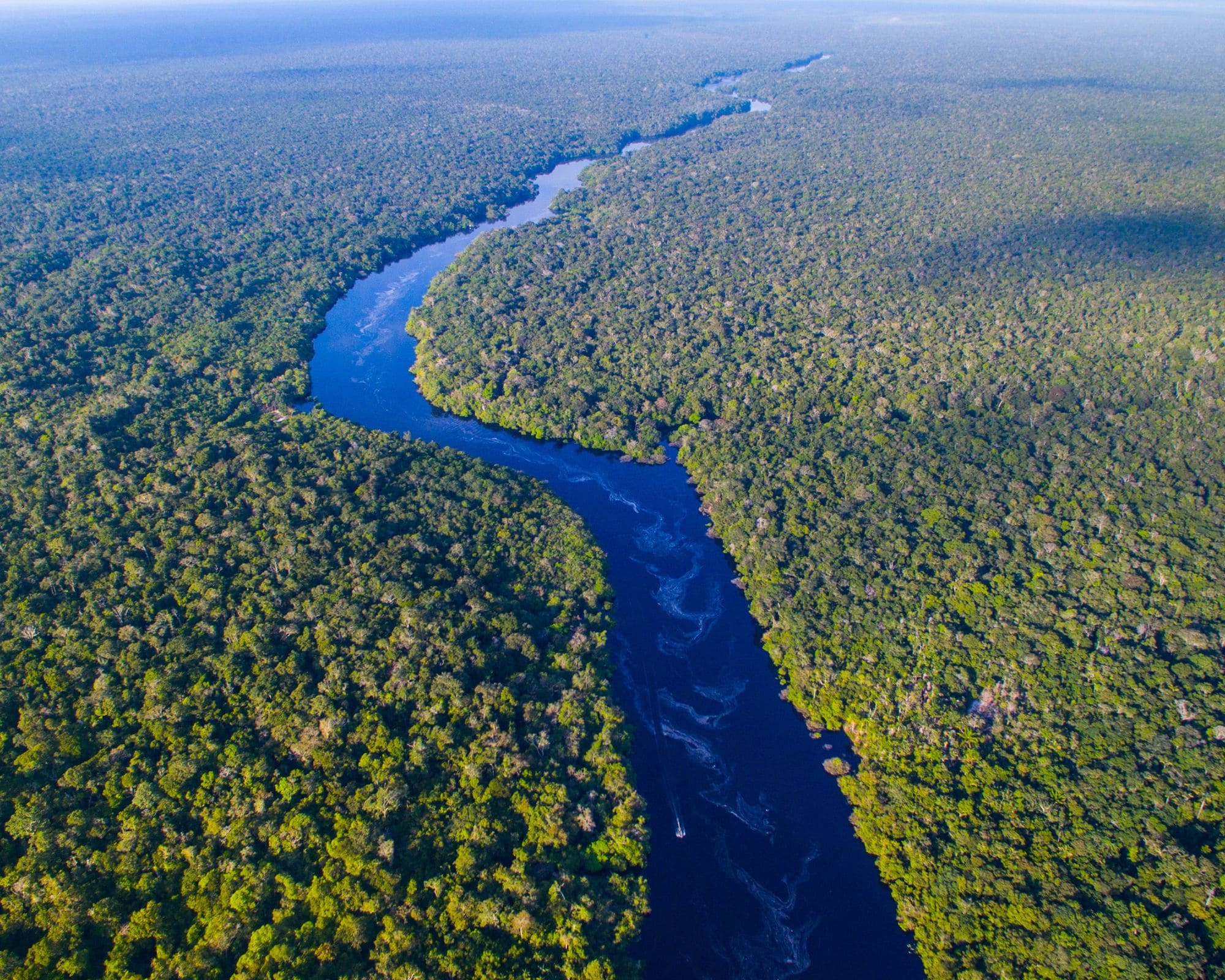
    Aerial view of a winding river surrounded by the dense green vegetation of the Amazon Rainforest in Brazil.
    .

    Keep in mind: although the Amazon fauna is undeniably rich, the animals are camouflaged by the dense vegetation or follow nocturnal habits. It’s not impossible to spot them, but it’s less common than in the Pantanal—considered the best place for wildlife watching in Brazil.

    👉 Read more: Pantanal or the Amazon: which one should you choose?

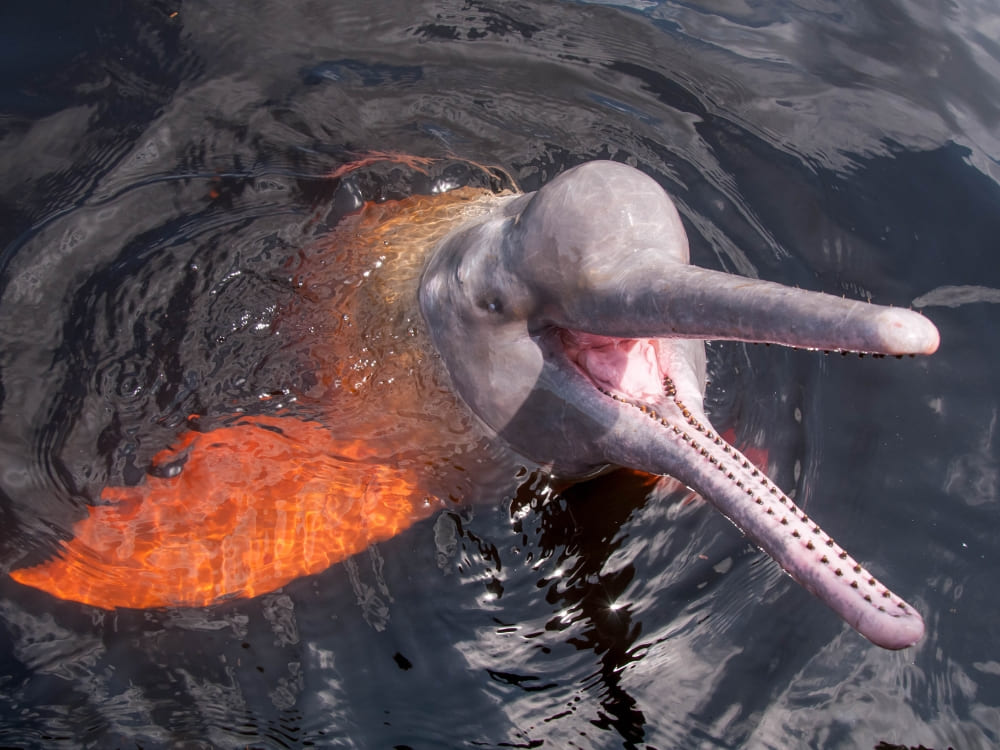
    1) Amazon river dolphin

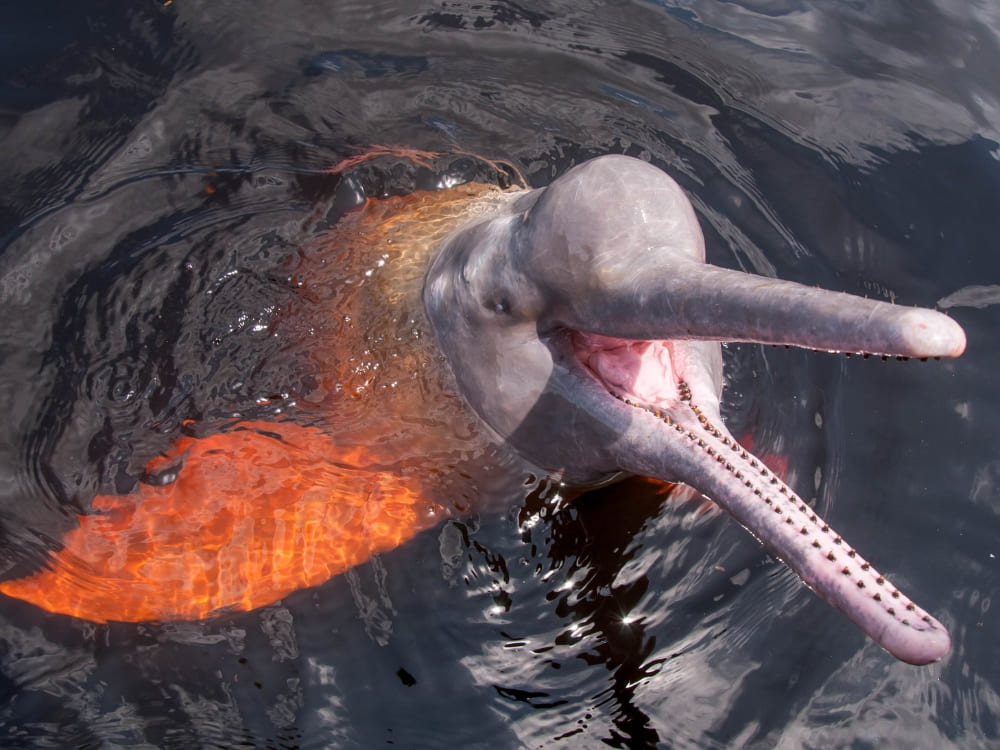
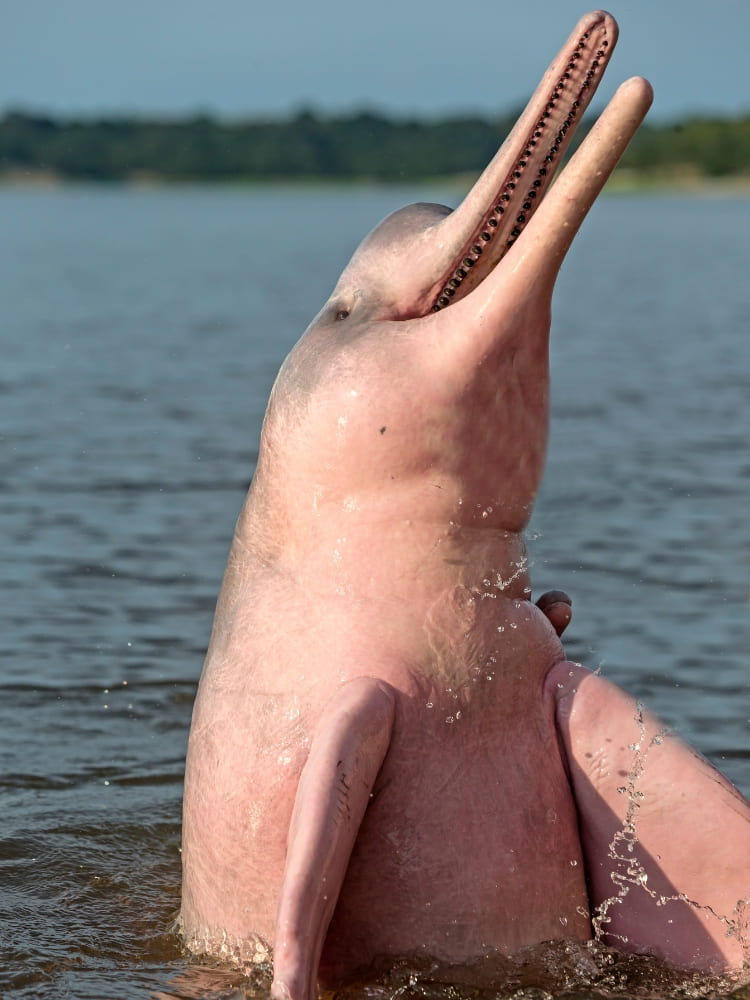
    A pink Amazon river dolphin with its head above water and mouth open, showcasing the friendly wildlife of Brazil.
    .

    Perhaps the symbol of the Amazon Rainforest fauna, the river dolphin is known for its pink skin and friendliness, always welcoming and interacting with humans. Though it’s particularly famous in Brazil, it’s also found in other countries (Bolivia, Ecuador, Colombia, Peru, and Venezuela).

    Fun facts about Amazon river dolphins:

    • Largest freshwater dolphin in the world, measuring up to 2.5 meters and weighing an average of 200 kg.
    • Male dolphins are larger and pinker, while females are smaller and grey-colored.
    • To move around in the rivers and flooded forests, as well as find food in the dark waters of the biome, Amazon river dolphins have a well-developed echolocation system.
    • Local legend says the Amazon river dolphin turns into a charming man during the full moon in the month of June. In human form, it attends festivities, seduces women, and leaves them behind to return to the river. This myth was widely used in popular tradition to explain fatherless children.

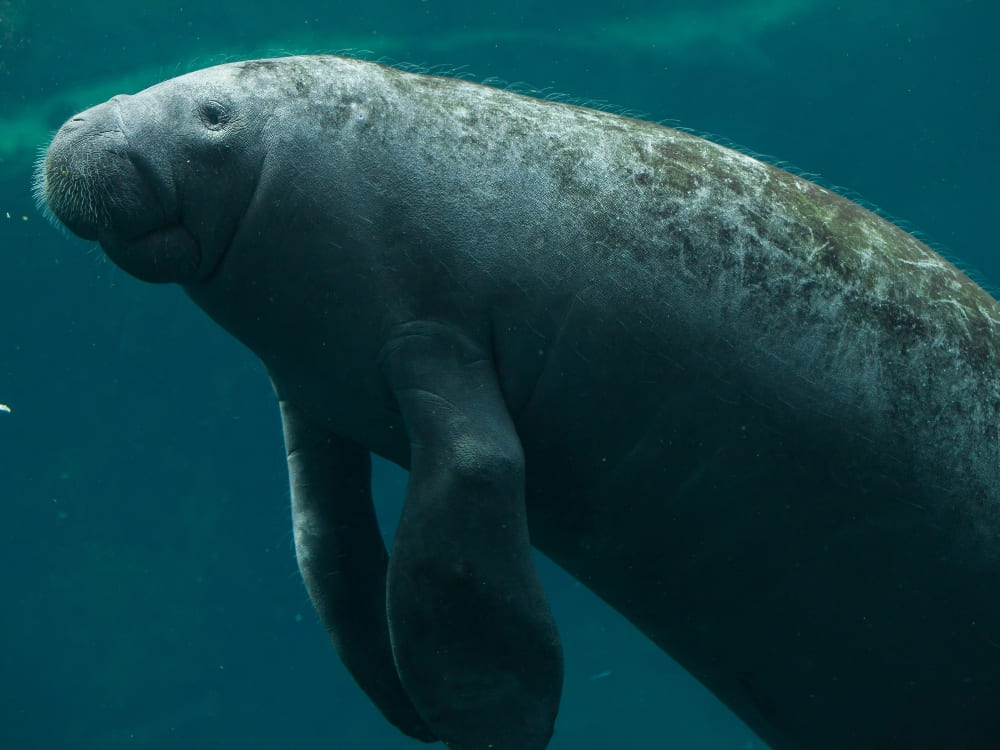
    2) Amazonian manatee

    A large Amazonian manatee swimming slowly underwater in its natural habitat.
    .

    The Amazonian manatee is the smallest manatee in the world, measuring up to 3 meters and weighing an average of 450 kg. This gentle giant has been protected by Brazilian law since 1967, though it’s still hunted for the illegal meat trade, and calves are often accidentally caught in fishing nets.

    Fun facts about Amazonian manatees:

    • Just like a fingerprint, each manatee has a white or pinkish spot on their bellies.
    • Around Marajó Island (Pará) and the coast of Amapá, Amazonian manatees live in sympatry with their marine counterpart (West Indian manatee).
    • By feeding on aquatic and semi-aquatic plants, they contribute to the nutrient cycling of rivers and vegetation control.
    • Discreet and fairly solitary, its lifespan is estimated at 60 years.

    👉 Read more: How to get to the Amazon Rainforest in Brazil?

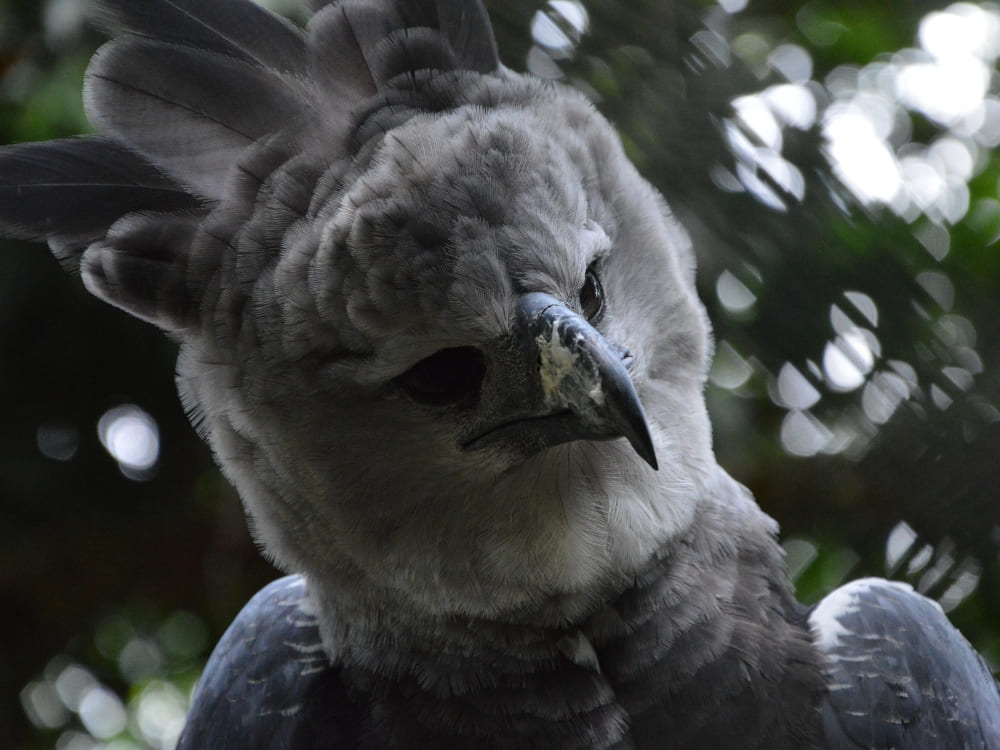
    3) Harpy eagle

    Close-up of a large harpy eagle with gray feathers looking down sharply from the Amazon jungle.
    Photo: Ivo Kruusamägi

    One of the most fascinating Amazon animals, the harpy eagle is the largest bird of prey in the Americas, reaching a wingspan of just over 2 meters and weighing up to 9 kg for females and 5 kg for males. As an apex predator, it feeds on sloths and monkeys, with claws strong enough to rip them off tree branches.

    Fun facts about harpy eagles:

    • Some Brazilian indigenous groups call them uiraçu, which means “bird bird.” They also believe it to be the personification of the tribes’ chiefs.
    • Despite their size, it’s difficult to spot them due to their agility and solitary nature.
    • They usually choose the tallest trees (over 40 m) to build their nests.
    • Since harpy eagles prey on relatively large animals, they need to hunt in areas averaging 100 km²—the equivalent of 10,000 football fields!

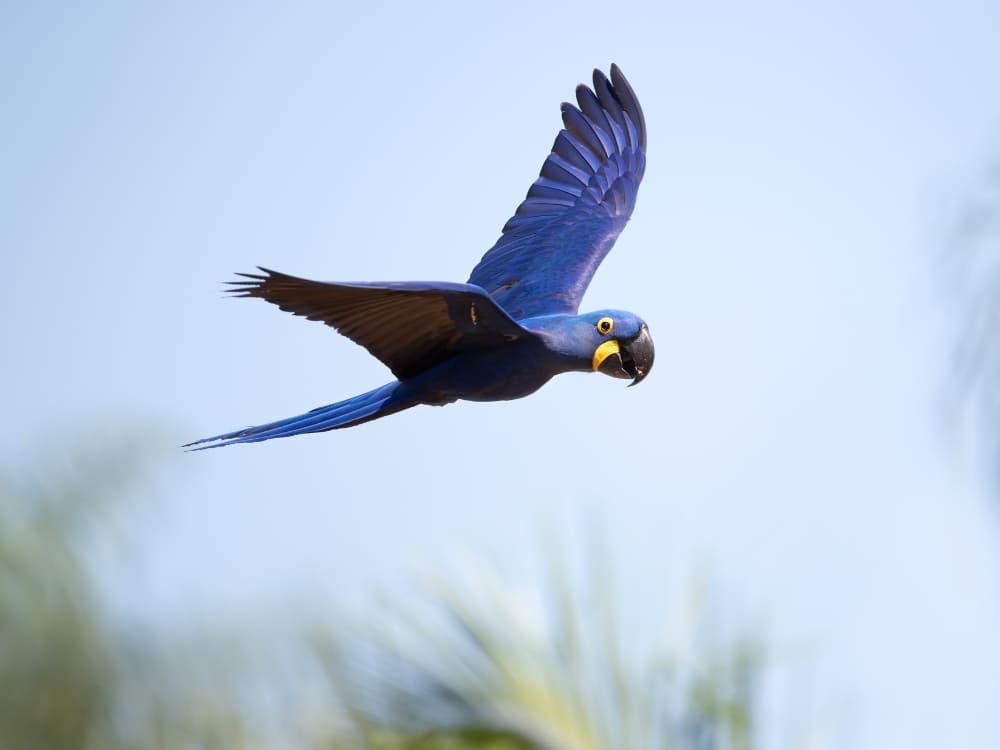
    4) Hyacinth macaw

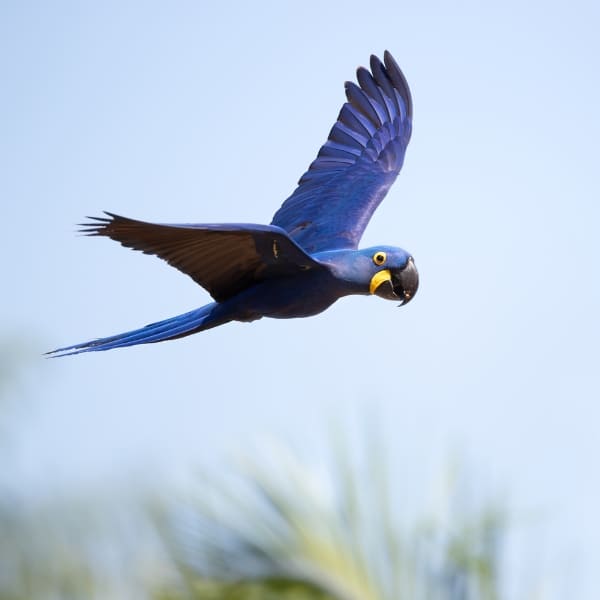
    A hyacinth macaw with bright blue feathers and yellow facial features flying across the sky.
    .

    With bright blue feathers and yellow features, the hyacinth macaw flies in pairs or groups and is very faithful to its mate. Sadly, they’re threatened with extinction due to hunting, illegal trade, and deforestation.

    Fun facts about hyacinth macaws:

    • Feed on nuts from two types of palm trees (acuri and bocaiúva).
    • At around seven years old, they start to look for mates to breed.
    • During the first 45 days of life, they are extremely fragile and unable to defend themselves—not even against cockroaches and ants.
    • They’re also found in the Pantanal and in the Cerrado.

    5) Woolly monkey

    A robust woolly monkey with brownish-gray fur resting comfortably on a tree branch in the Amazon Rainforest.
    .

    Woolly monkeys have very specific features, including a rounded head covered in short fur and long fur across the abdomen, which gives the impression of a robust stomach. That’s why this lovely ape is known as macaco-barrigudo (big-bellied monkey) in Portuguese.

    Fun facts about woolly monkeys:

    • They primarily inhabit the Amazon Rainforest on firm ground but may use flooded forests during periods of high fruit abundance.
    • They live in the Negro-Solimões interfluve area, except for the eastern part. Also found in Colombia, Ecuador, Peru, and Venezuela.
    • Wool-like coat with a brownish-gray color, a bit lighter on the head. 
    • Categorized as gregarious animals, they live in large groups (12–70 individuals).

    👉 Read more: Best Brazil Wildlife Tours and Destinations

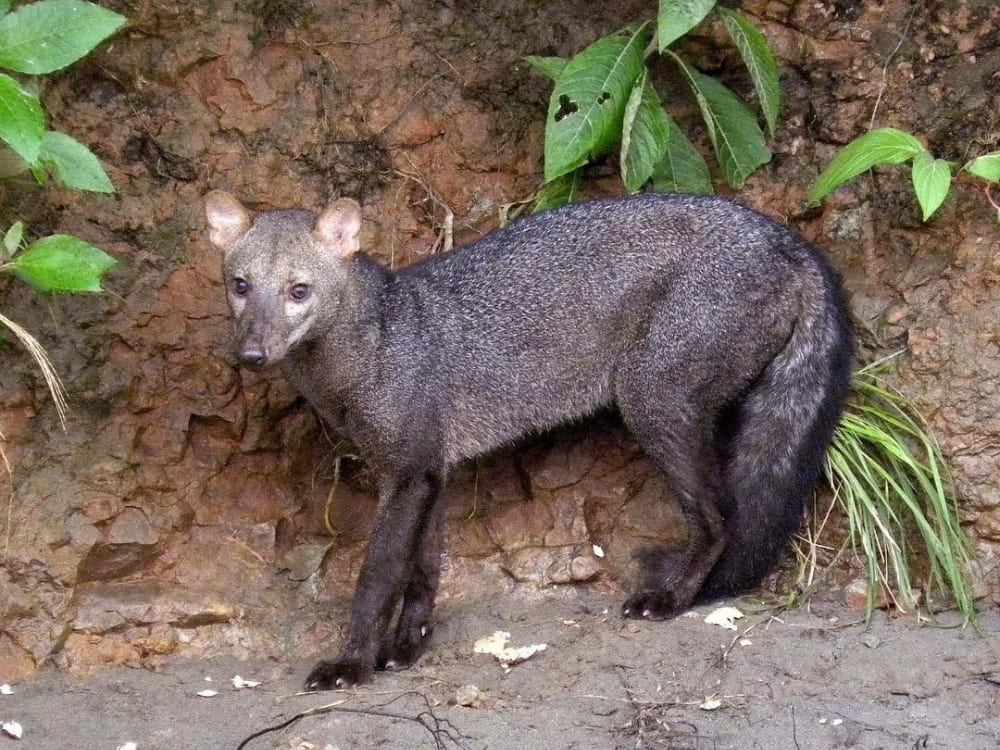
    6) Short-eared dog

     A rare short-eared dog with a dark greyish coat standing near a muddy riverbank in the Amazon.
    @galo_zapata_rios

    Short-eared dogs are part of the list for rare animals in the Amazon Rainforest, as it’s quite difficult to spot them. Their elusiveness works as a form of protection, though deforestation can put them at risk.

    Fun facts about short-eared dogs:

    • They feed on small mammals, reptiles, birds, insects, and fish.
    • They look like medium-sized dogs, with dark brown or greyish coats, long snouts, and weighing over 10 kg.
    • Habitat records exist in floodplains, upland forests, swamps, bamboo plantations, and along rivers.
    • Due to their avoidance of humans, knowledge about them is still considerably limited.

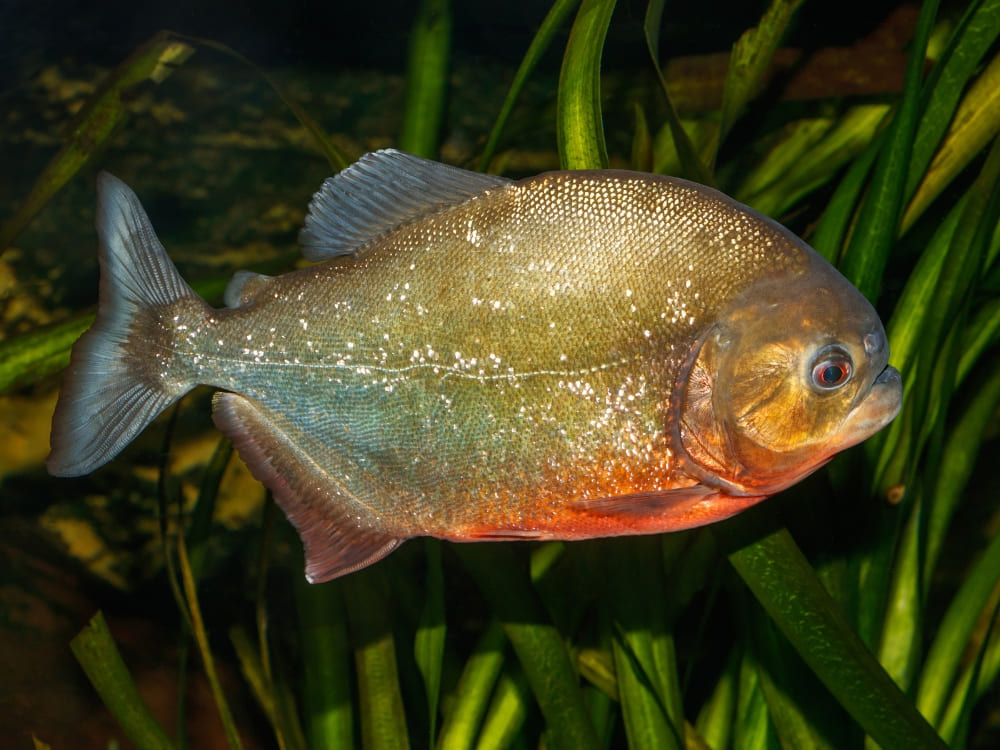
    7) Red-bellied piranha

    A red-bellied piranha swimming among green aquatic plants in the muddy waters of the Amazon.
    Photo: H. Zell

    Contrary to popular belief, piranhas aren’t considered the Amazon Rainforest’s most dangerous animals. Red-bellied piranhas, in particular, don’t tend to attack humans at all—despite their very sharp, triangle-shaped teeth.

    Fun facts about red-bellied piranhas:

    • Their diet consists of insects, aquatic invertebrates, mollusks, crustaceans, other fish, fruit, seeds, and aquatic plants.
    • Highly valued in local cuisine, it is considered an aphrodisiac.
    • Inhabits rivers, lakes, and muddy water lagoons.
    • They reproduce during the rainy season, mostly from April to May. Females lay approximately 5,000 eggs on newly submerged vegetation in nests built by males.

    👉 Read more: When is the best time to visit the Amazon Rainforest in Brazil

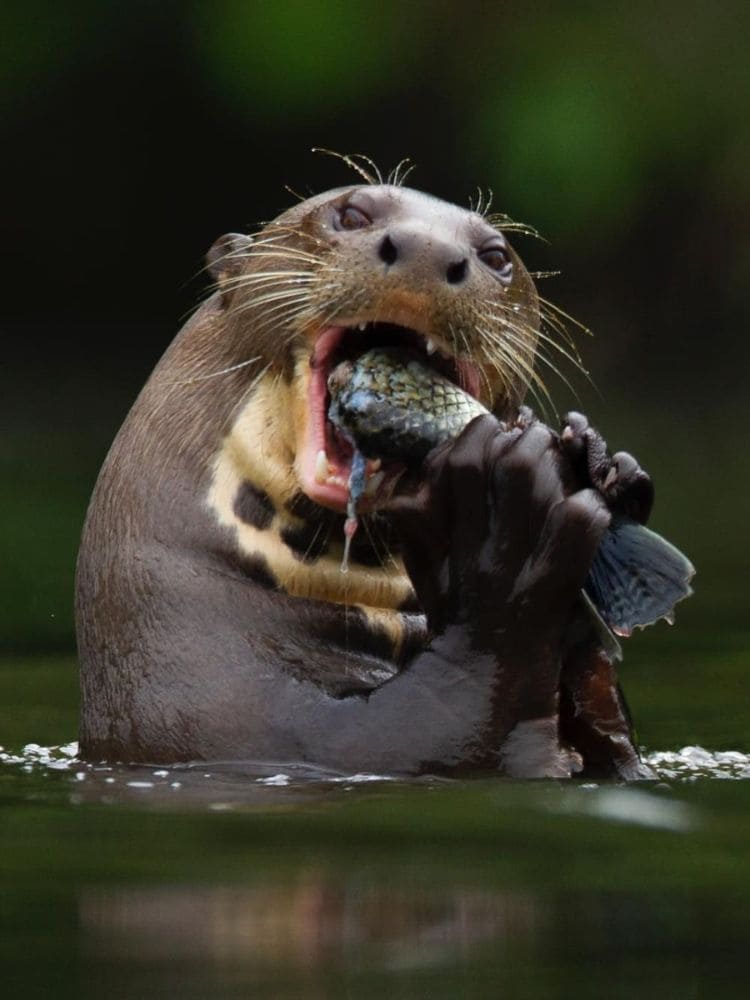
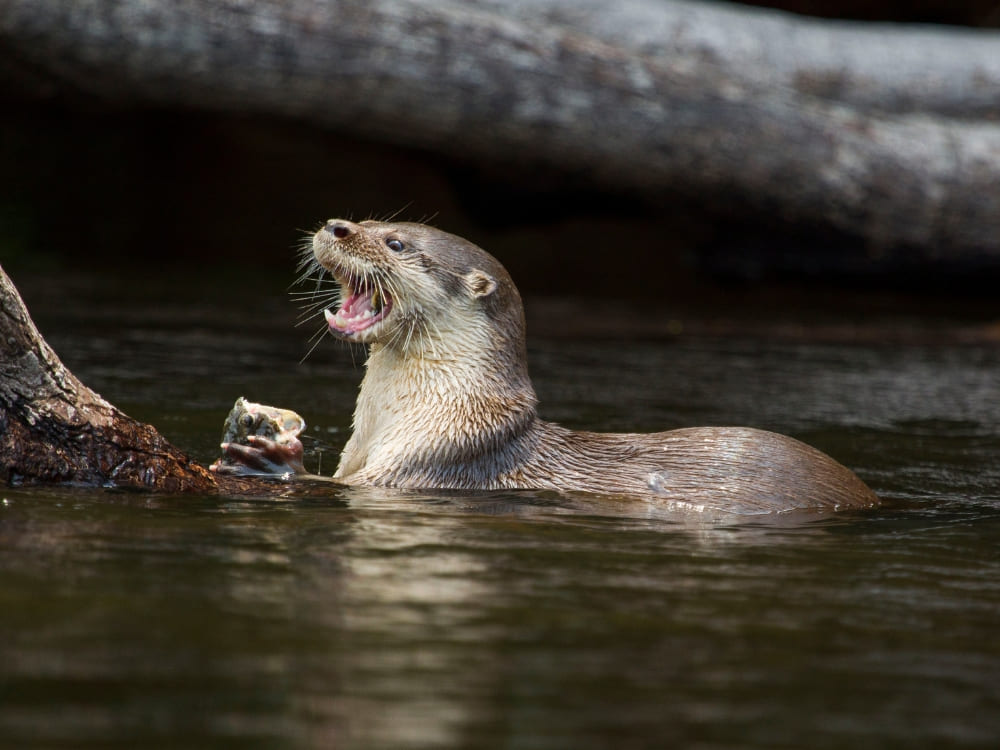
    8) Giant otter

    A giant otter swimming in the river with its mouth wide open while eating its prey.
    Photo: João Marcos Rosa

    Classified as territorial predators, the giant otter is considerably more aggressive than the Asian small-clawed otter. Excellent swimmers and skilled hunters, fish, crabs, frogs, snakes, and lizards are some of their favorite food.

    Fun facts about giant otters:

    • Widely found in the Amazon, they also inhabit other Brazilian biomes (Pantanal, Cerrado, and the Atlantic Forest).
    • Distinguished by the white markings on their necks (unique to each individual).
    • They live in groups of up to 20 members, consisting of a couple and several offspring.
    • Giant otters use a kind of communal toilet, which also serves to mark their territory with its characteristic scent.

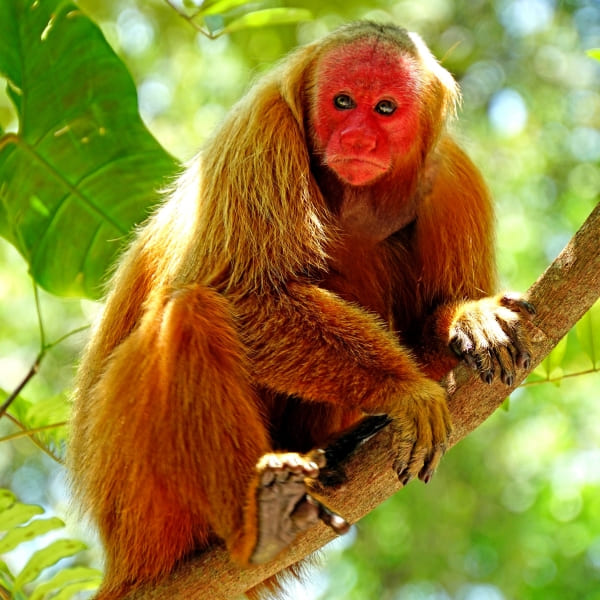
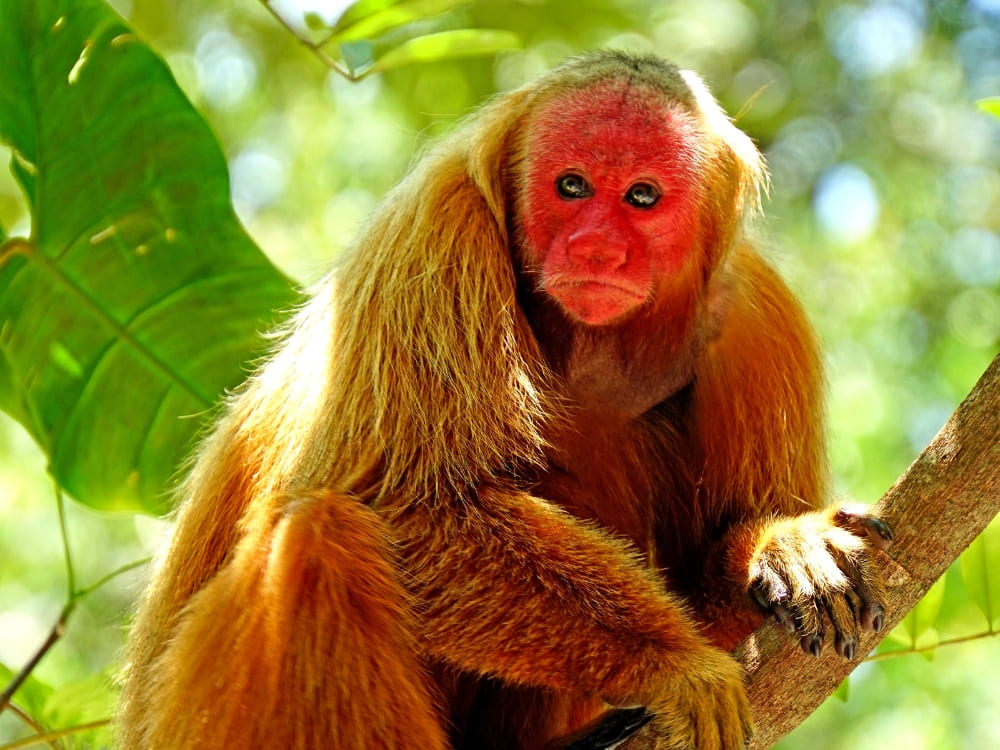
    9) Uakari

    A uakari monkey with a bright red face and long fur sitting quietly on a tree branch.
    Photo: Denis Jervis

    Uakari is the common name for the New World monkeys from the genus Cacajao. Its most striking features are the lack of fur on the top of its head and a reddish face—the redder the face, the healthier the animal is.

    Fun facts about uakaris:

    • Also known as macaco-inglês (English monkey) in Portuguese.
    • Native to Brazil, but can also be found in the Colombian and Peruvian Amazon.
    • Though it’s categorized as a vulnerable species in the IUCN’s Red List of Threatened Species, it has a considerable population near the town of Tefé.
    • A major inspiration for Uakari Lodge, a jungle hotel located in the Mamirauá Reserve.

    👉 Read more: Best Amazon Jungle Lodges in Brazil

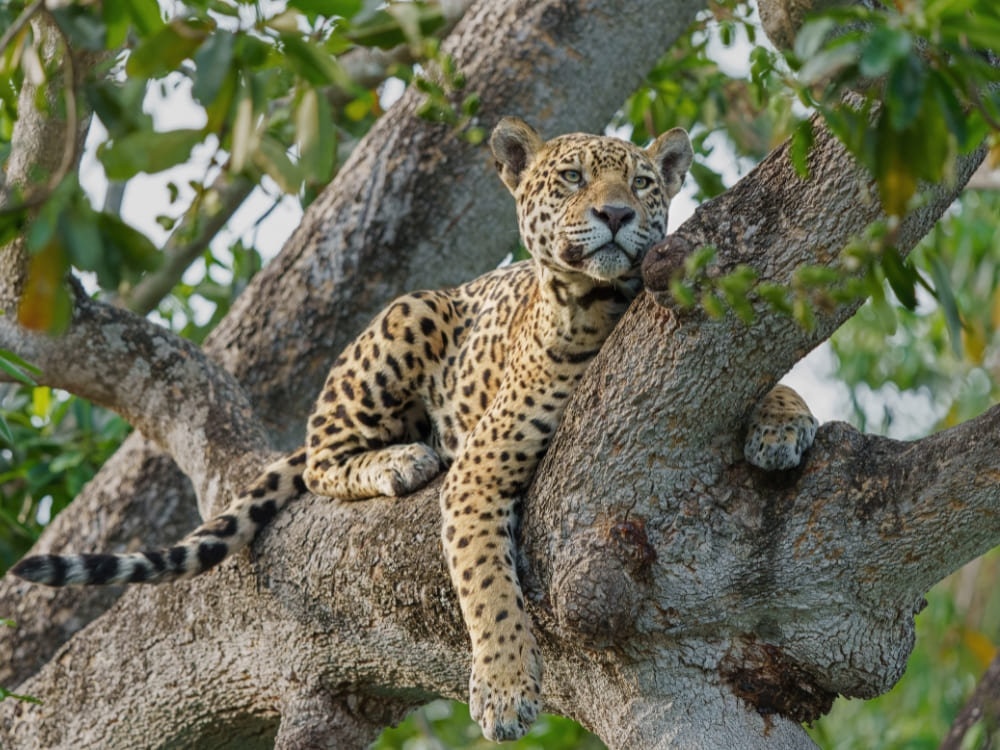
    10) Jaguar

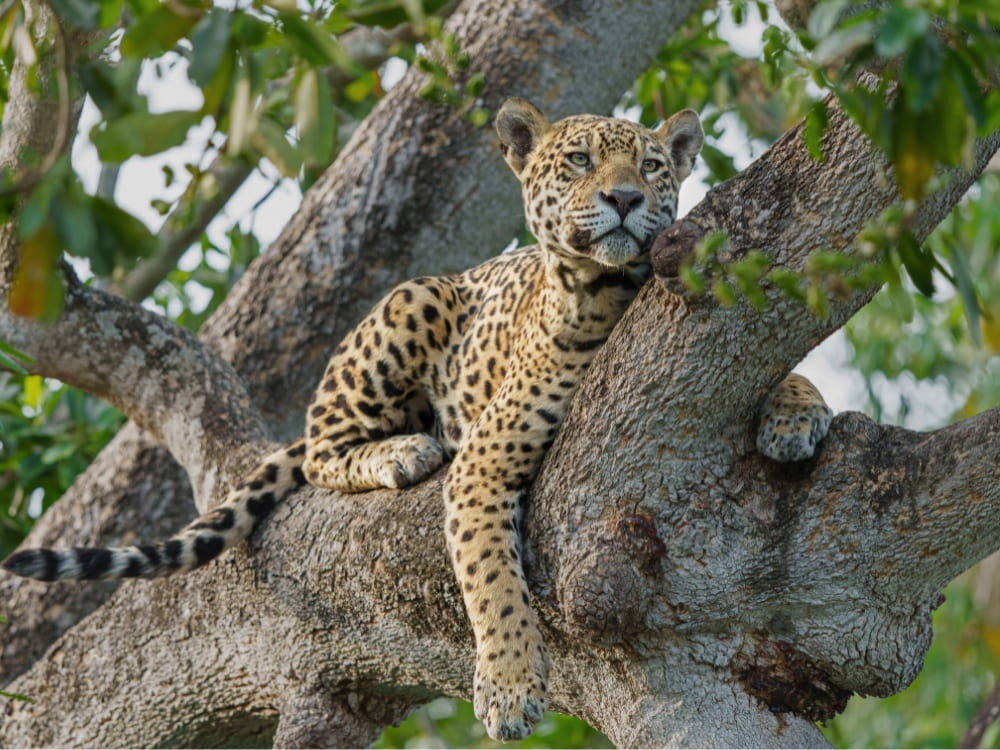
    A spotted jaguar resting completely relaxed on a thick tree branch in the Amazon vegetation.
    .

    The Pantanal is the best place in the world to spot jaguars, but they’re also a part of the Amazon Rainforest wildlife and even the Cerrado. This habitat variation occurs for a single reason: the incredible adaptability of the largest feline in the Americas.

    Fun facts about jaguars:

    • As of October 2025, just over 6,300 jaguars had been recorded in protected areas of the Amazon, according to the Mamirauá Institute.
    • The dense vegetation of the Amazon makes hunting more difficult than in the open fields of the Pantanal. Therefore, jaguars in the Amazon region are smaller.
    • Researchers recently discovered that jaguars can meow like cats, especially when females and cubs communicate.
    • Just like the human fingerprint, the rosettes (black spots scattered across the jaguar’s body) serve as a form of identification for each individual.

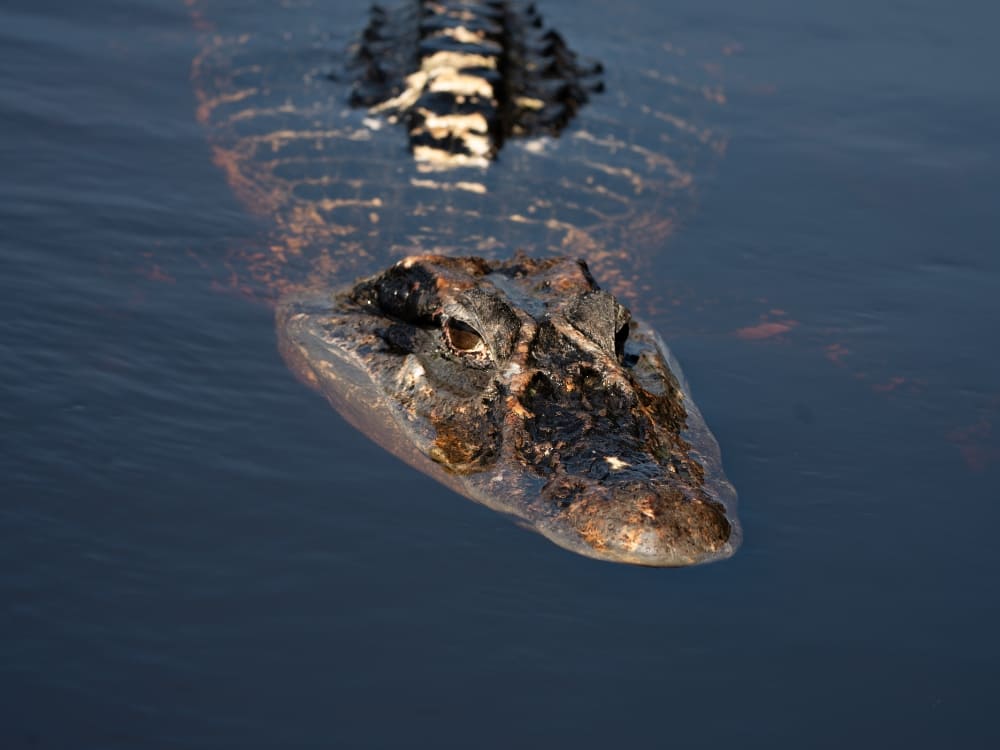
    11) Black caiman

    The textured head and bright eyes of a large black caiman floating quietly on the dark Amazon water.
    Photo: Marcelo Bonifácio

    Deadly and silent, the black caiman is an expert in camouflage and hunts equally dangerous predators, like the anaconda. During night tours, it’s one of the easiest Amazon animals to spot due to their bright eyes shining in the darkness.

    Fun facts about black caimans:

    • One of the largest crocodilians in the world, it measures over 4 meters and weighs 400 kg.
    • When young, they are hunted by other animals but become apex predators when they become adults due to their massive size.
    • Unlike other Brazilian species, the black caiman is solitary and is very rarely seen close to each other.
    • Essential for the ecological balance of the Amazonian ecosystem, as well as controlling populations of capybaras, fish, mammals, and even birds.

    👉 Read more: Best Amazon River Cruises in Brazil

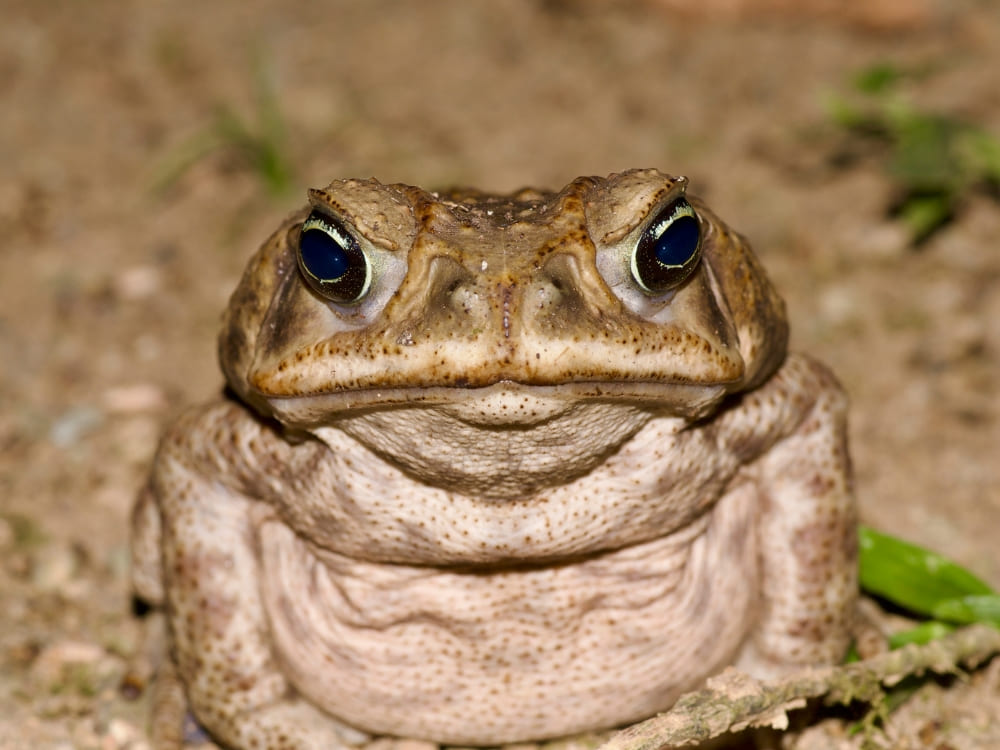
    12) Cane toad

     Close-up of a cane toad showing its coarse skin and warts in the Amazon jungle.
    Photo: C. Brück

    The cane toad is fascinating, but not many people get close to them due to their appearance—coarse skin, warts spread across the body, and a fairly unfriendly face—and the milky venom they squirt on attackers, which can affect the heart and cause hallucinations. Who would’ve thought this would be one of the most dangerous animals in the Amazon Rainforest?

    Fun facts about the cane toad:

    • Reproducing at any time of the year, females lay up to 30,000 eggs.
    • Big and bulky, they can weigh up to 1 kg (especially pregnant females).
    • Known for the very loud, almost incessant croaking when searching for mates.
    • The venomous squirt can reach a distance of almost 2 meters.

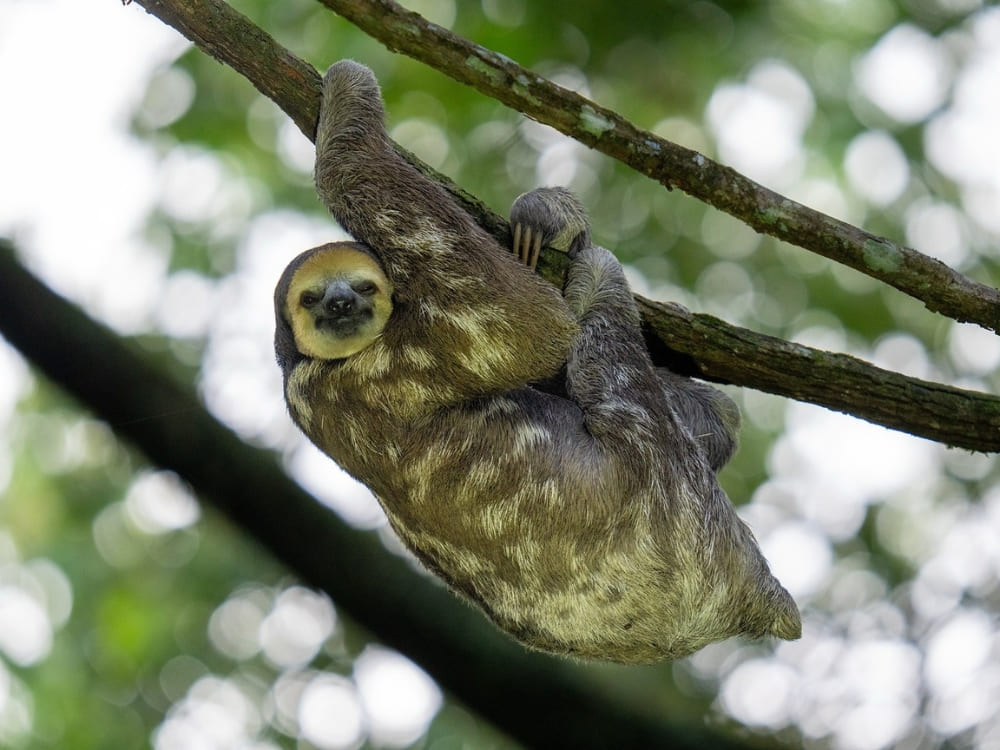
    13) Pale-throated sloth

    A pale-throated sloth hanging upside down from a thin tree branch in the dense Amazon Rainforest.
    @devinbelliston

    Slow-paced and lazy, the pale-throated sloth sleeps over 14 hours a day. It rarely comes down from the trees, except to relieve itself once a week. Though deforestation can put these Amazon animals at risk, they’re often spotted as there is a healthy population across the rainforest.

    Fun facts about pale-throated sloths:

    • A sloth’s daily movement is approximately 38 meters—and nothing else.
    • In comparison to their slowness on land, they’re surprisingly good swimmers and are quite fast in the water.
    • Despite the sharpness of their claws, pale-throated sloths don’t fight off predators and only use them to climb on trees.
    • To avoid predators like harpy eagles, jaguars, and large snakes, they tend to move around only when night falls.

    👉 Read more: 20 animals in Brazil – wildlife facts and where to find them

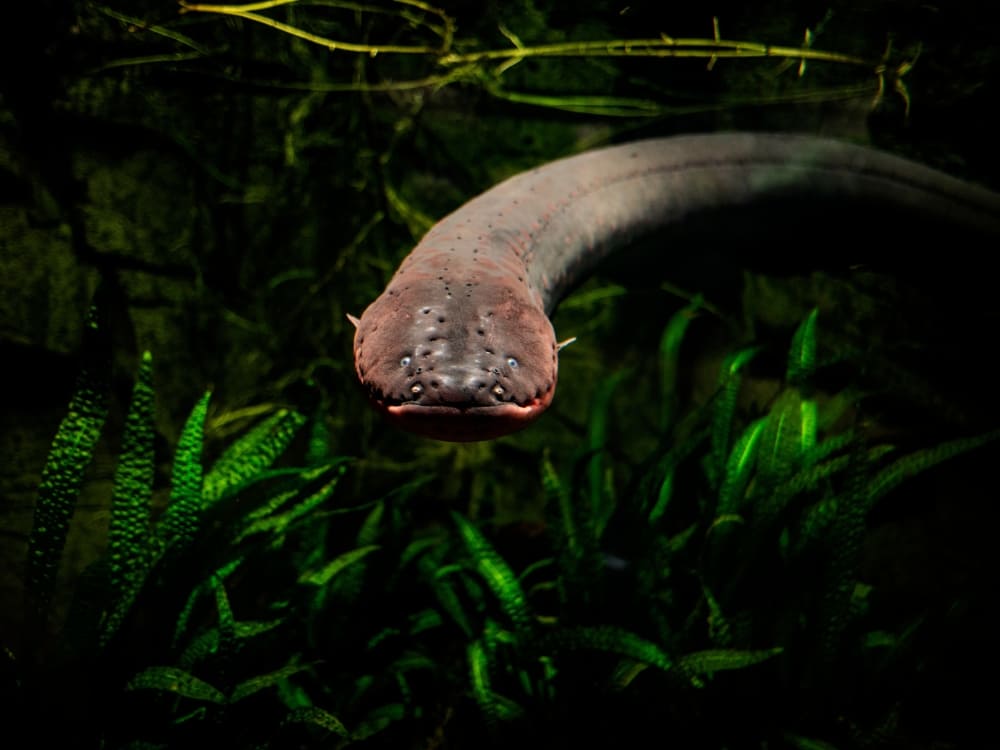
    14) Electric eel 

    An electric eel with a long cylindrical body swimming underwater near dark green aquatic plants.
    Photo: Alex Zakletsky

    The Amazonian electric eel is known locally as poraquê, which means  “the one who puts to sleep” in the indigenous Tupi language. The name makes sense—their electrical discharges are around 500 volts but can reach up to 1500 volts, according to studies by the National Institute for Amazonian Research.

    Fun facts about the electric eel:

    • With a cylindrical and elongated body similar to a snake, they can grow up to 2.5 meters in length.
    • There are two species: Electrophorus voltai (found in Pará, Amazonas, Rondônia, and Mato Grosso) and Electrophorus electricus (found in the north of Amapá, Amazonas, and Roraima, in addition to French Guyana and Suriname).
    • Comparable to a battery, the frontal part of its body has a positive charge, while the tip of its tail has a negative charge.
    • The Electrophorus voltai was named in honor of Italian physicist Alessandro Volta, creator of the battery.

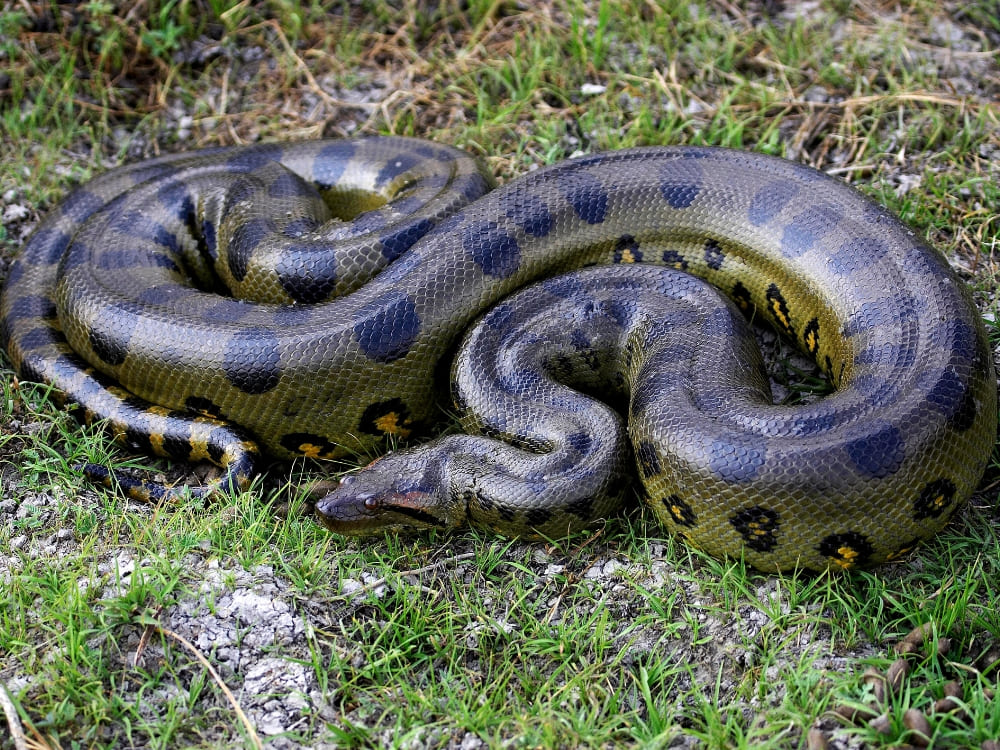
    15) Anaconda

     A massive green anaconda snake curled up tightly on the grass near the Amazon River.
    .

    Famous in pop culture and feared by humans and animals, the anaconda is deadly, but not poisonous. When it finds its prey (mammals, birds, amphibians, reptiles, fish), it wraps its bulky body around the victim until they suffocate. Then, the feast begins.

    Fun facts about anacondas:

    • There are five different species: green anaconda, northern green anaconda, yellow anaconda, beni anaconda, and dark-spotted anaconda.
    • The green anaconda is the largest (up to 7 meters and 130 kg) and the most commonly found in the Amazon River fauna.
    • In Portuguese, they’re called by various names: sucuris, boiaçus, boiçus, arigboias, sucurijus, viborões, etc.
    • The Anaconda horror franchise has seven films. The first one, released in 1997, was a huge success at the box office, and it is now considered a cult classic.

    See the Amazon animals up close with PlanetaEXO

    While the animals in the Amazon jungle are quite shy, travelers can still spot a few of them during boat trips, guided hikes, or night tours, especially river dolphins, sloths, caimans, and different species of birds.

    With PlanetaEXO, an ecotourism platform specialized in Amazon Rainforest tours in Brazil, you explore nature in an authentic, responsible way. Our talented team works with the best local partners to ensure you’ll have the adventure of a lifetime. Contact us now!

  • How to Visit the Amazon Rainforest in Brazil – Travel Guide

    How to Visit the Amazon Rainforest in Brazil – Travel Guide

    Learn everything you need before enjoying your Amazon tour in Brazil, including when is the best time to visit, how to get there, what are the main activities and much more!

    Are you a nature lover and your ultimate dream to visit the Amazon Rainforest in Brazil so you can experience the fascinating wonders of the largest tropical rainforest in the world? If the answer is a loud and clear “yes!”, then you’ve come to the right place!

    There are many ways to discover it, from guided tours with wild camping, to staying in luxury jungle lodges, or even enjoying river cruises.

    To help with your vacation planning, PlanetaEXO, an ecotourism platform specialized in Amazon Rainforest tours in Brazil, has created this carefully curated travel guide. Check it out below and discover how to visit the Amazon and other important information about this spectacular destination!

    Table of contents:

    1. About the Amazon
    2. Where is the Amazon Rainforest?
    3. Can you visit the Amazon Rainforest?
    4. How to get to the Amazon Rainforest?
    5. When is the best time to visit the Amazon Rainforest in Brazil?
    6. What to do in the Amazon Rainforest?
    7. Animals in the Amazon Rainforest, Brazil
    8. Where to stay in the Amazon Rainforest?
    9. How long should you stay in the Amazon Rainforest?
    10. Traveling to the Amazon in Brazil: how much does it cost?
    11. Do you need a vaccine to go to the Amazon Rainforest in Brazil?
    12. Is it safe to visit the Amazon Rainforest in Brazil?
    13. What should I pack for an Amazon Rainforest trip?
    14. Is traveling to the Amazon worth it?
    How to visit the Amazon Rainforest - Cristalino National Reserve
    .

    About the Amazon

    If it were a country, the Amazon would be the seventh largest in the world. It spans 6.7 million km² — twice the size of India!

    The impressive numbers go on, this time regarding fauna and flora: there are 30 million species of animals — although not all of them have been officially cataloged yet —, 2.5 million types of insects, and 2,500 and 30,000 varieties of trees and plants, respectively.

    When it comes to the watershed, 20% of the planet’s freshwater belongs to the Amazon. The Amazon River alone has an extension of 6,400 km, going down the Andes Mountains and flowing into the Atlantic Ocean.

    Such richness holds more than half of the world’s entire biodiversity, making the value of the Amazon Rainforest immeasurable and irreplaceable.

    Aerial panorama of the Amazon river channels and lush green islands, highlighting the massive watershed and freshwater ecosystem of the basin.
    Photo: Felipe Castellari


    👉 Read more: 15 Facts about the Amazon Rainforest in Brazil

    Where is the Amazon Rainforest?

    The Amazon Rainforest is in South America, reaching eight different countries: Brazil, Bolivia, Colombia, Ecuador, Guyana, Peru, Suriname and Venezuela.

    59% of its area is solely located in Brazil, touching the states of Amazonas, Mato Grosso, Pará, Acre, Amapá, Rondônia, Roraima and Tocantins. 

    Can you visit the Amazon Rainforest?

    Yes, absolutely! But it’s important to rely on professionals who truly know the area. The forest is incredibly beautiful, but the wilderness can be harsh. So if you’ve ever wondered if it’s safe to visit the Amazon Rainforest, the presence of qualified guides is crucial and non-negotiable.

    This is also the best way to appreciate nature in its fullness, since an expert will know how to move around the jungle. The activities are vast, but some factors should be considered for everyone’s enjoyment, like weather conditions and the right places to spot animals. 

    Brazil Amazon tours are actually encouraged because they can also be a great way to ensure its preservation. Ecotourism is a powerful tool to provide work for local communities. When sustainable travel companies employ these people, they inspire them to work in favor of the forest instead of its degradation.

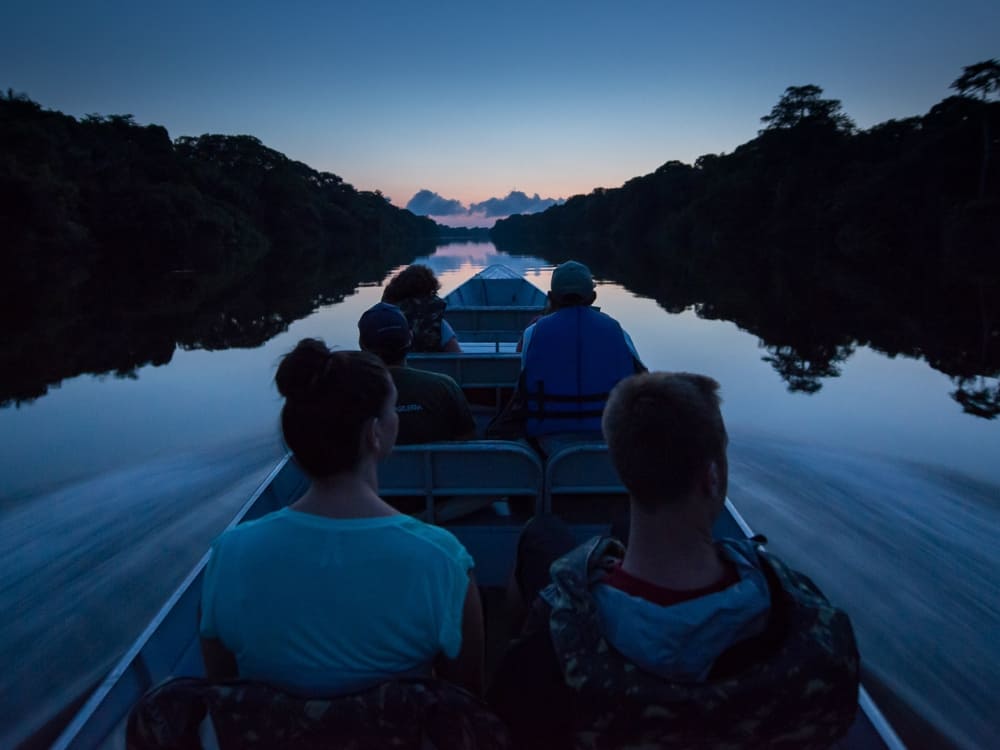
     Tourists enjoying a peaceful boat ride on an Amazon river at twilight, observing nature with a local guide to ensure a safe experience.
    .

    Ecotourism also raises awareness about environmental issues, like deforestation, pollution and climate change. Upon seeing the wonders of the Amazon, travelers fully understand why it is so important to protect it, which can make them engaged in conservation projects not only in the rainforest but also in their home countries.

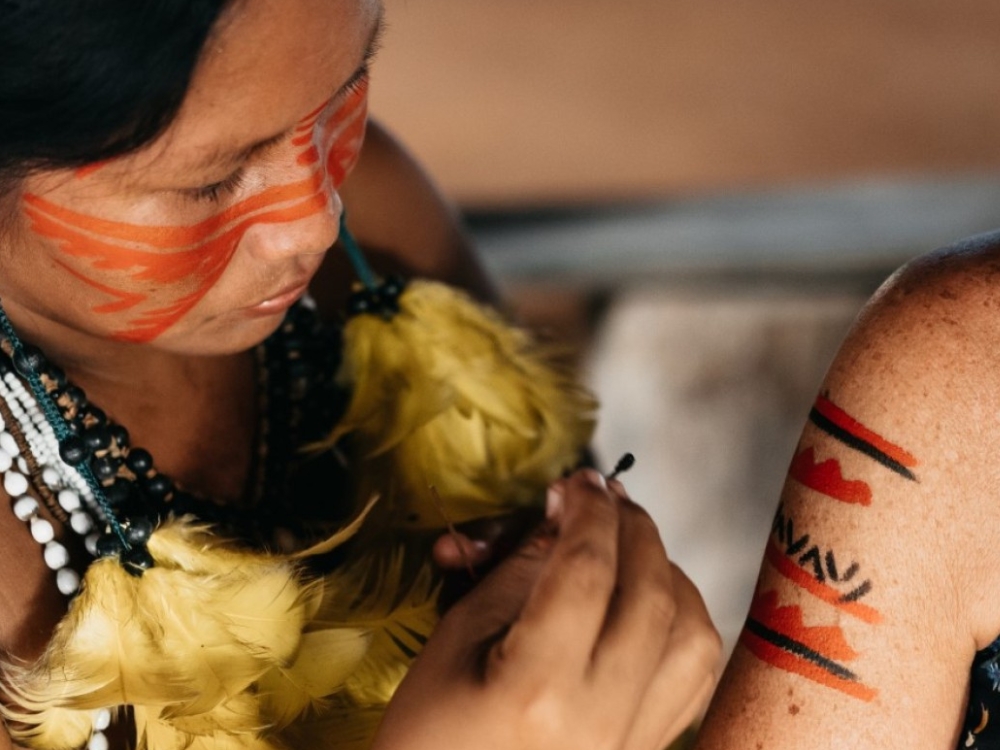
    Indigenous woman applying traditional red and black face paint, representing the rich culture of local communities in the Amazon supported by ecotourism.
    .

    👉 Read more:

    How to get to the Amazon Rainforest?

    There are a few ways to visit the Amazon Rainforest in Brazil, but the most convenient one is flying to Manaus, capital of Amazonas.

    From the US, travelers can depart from Miami (MIA) and fly straight to Manaus (MAO). From Fort Lauderdale (FLL), connecting flights have layovers in Bogotá (BOG), Panama City (PTY), Belém (BEL) and São Paulo (VCP or GRU).

    From Europe, layovers are also expected in Rio de Janeiro (GIG), Belo Horizonte (CNF), Recife (REC), Fortaleza (FOR) or Brasília (BSB), depending on the departure location.

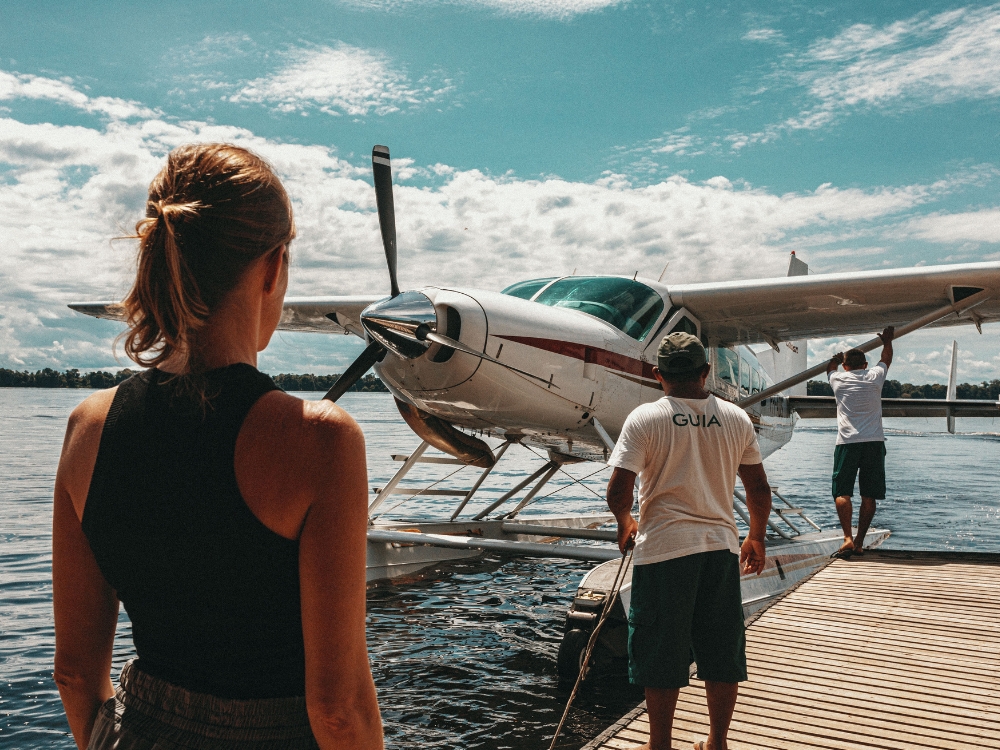
    Seaplane docked at a river pier in Manaus, a common transport method to reach remote Amazon jungle lodges and explore nature.
    .

    The Amazon in Mato Grosso and Pará are also amazing vacation spots to explore nature. In this case, flying to these states’ capitals is the best option.

    👉 See more details: How to get to the Amazon Rainforest in Brazil?

    When is the best time to visit the Amazon Rainforest in Brazil?

    Although the Amazon is considered a year-round destination, the period from January to September offers the best conditions because it avoids the peak of the dry season. At the same time, there are good hiking trail options and enough water for aquatic activities.

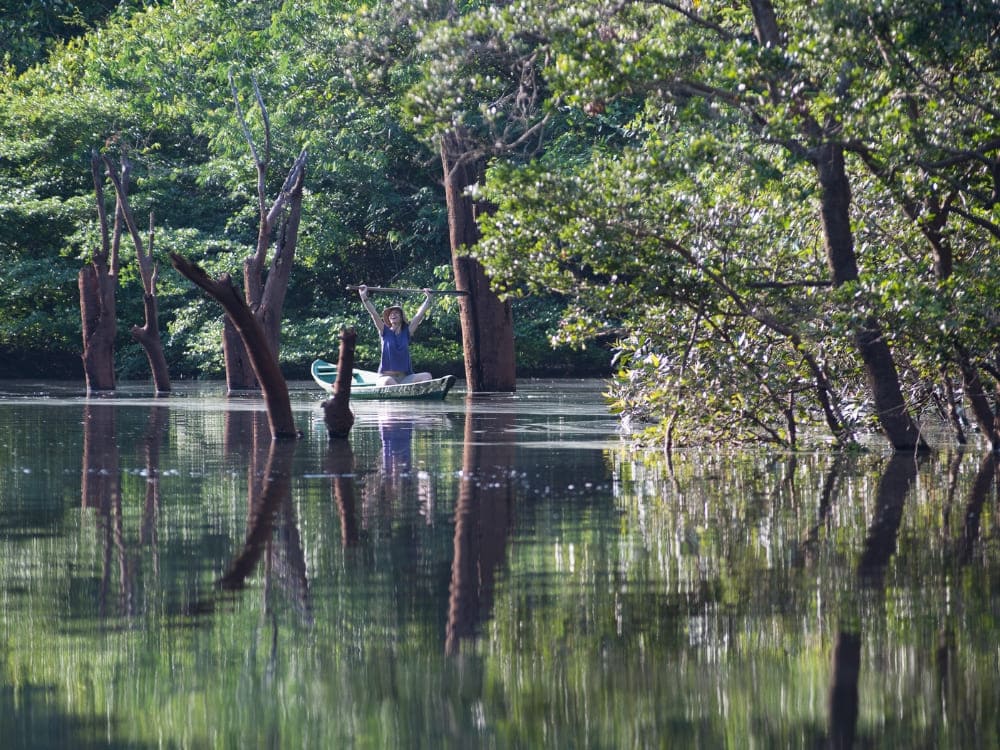
    Canoe navigating through the flooded forest (igapó) during the wet season in the Amazon, surrounded by water-reflected trees.
    .

    The wet season (December to May) is great for people who want to enjoy the Amazonian rivers by kayaking, canoeing, swimming and exploring the igapós (flooded forests). Rainstorms are common, but don’t last too long. 

    Meanwhile, the dry season (June to November) is popular because it usually allows both water and land-based activities. However, extended droughts are becoming more frequent, especially from October to December. This causes low water levels and limited access to a few areas and itineraries, though things tend to get better by January.

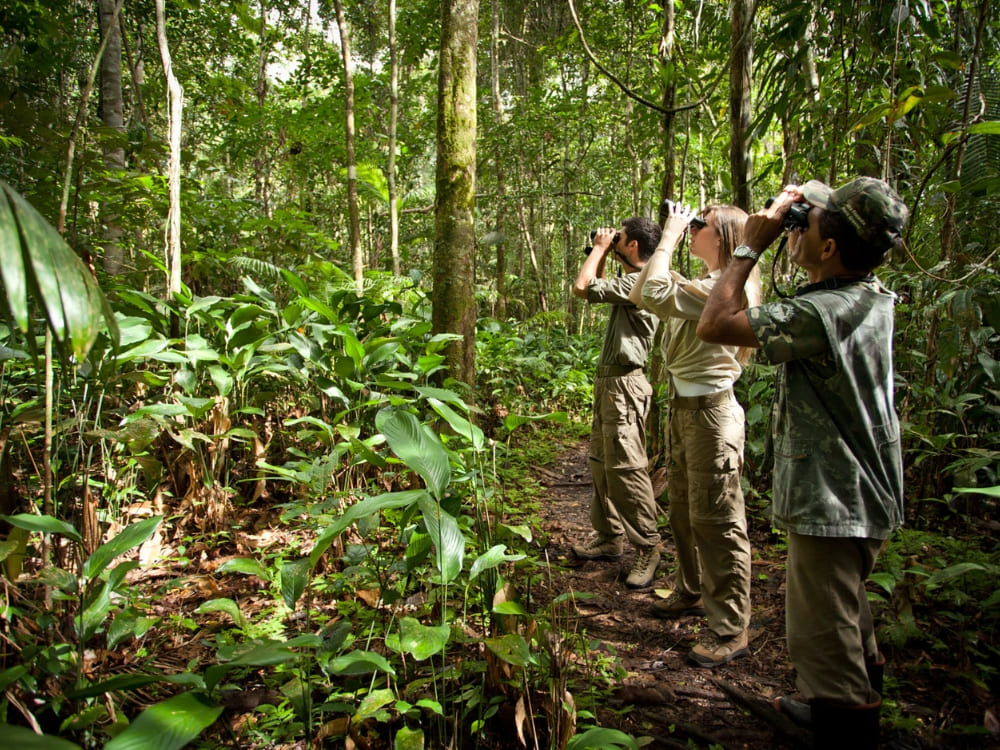
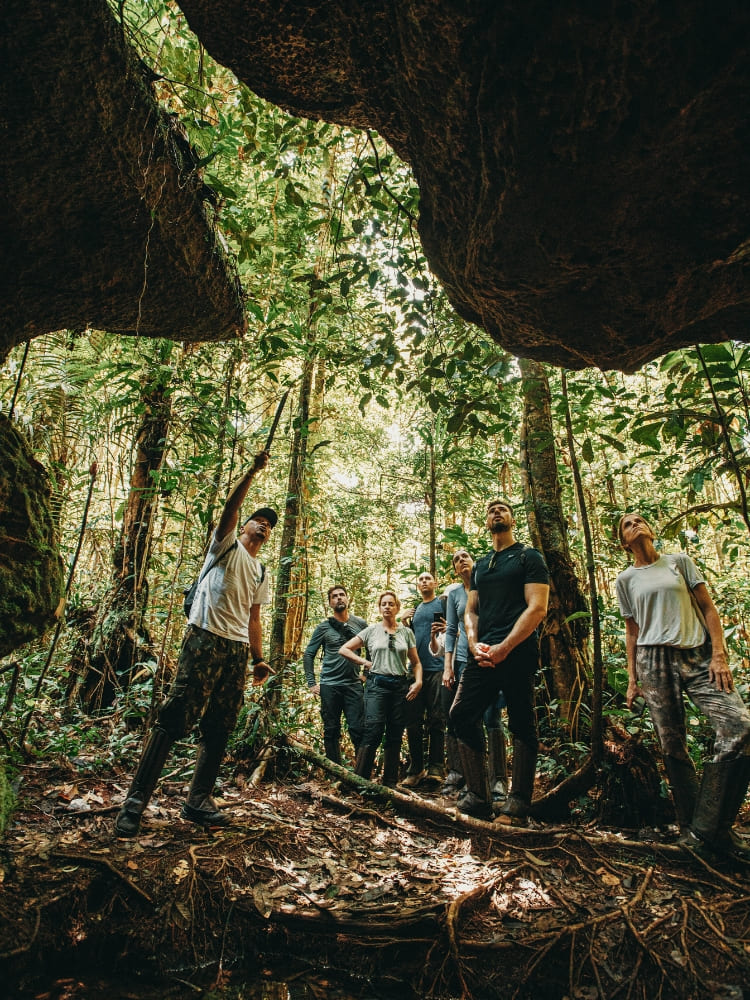
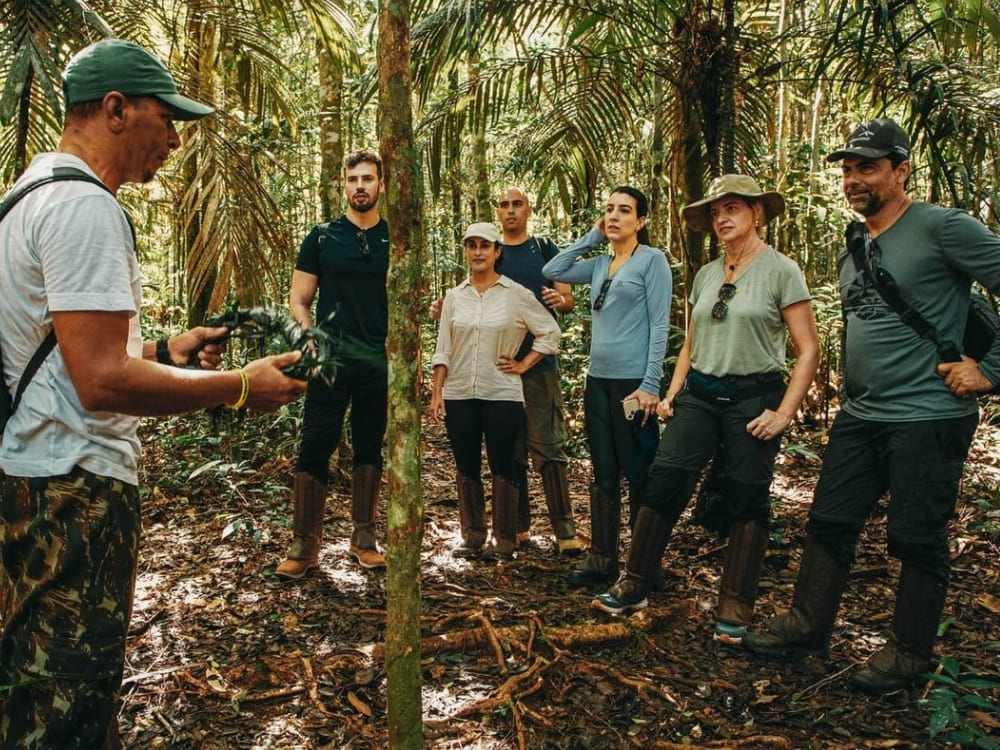
     Local guide explaining the flora to a group of tourists during a jungle hiking tour in the Amazon Rainforest.
    .

    👉 Read more: When is the best time to visit the Amazon Rainforest in Brazil

    What to do in the Amazon Rainforest?

    In addition to how to visit the Amazon Rainforest, what to do during the trip is a very frequently asked question by people who are interested in spending their vacation there. 

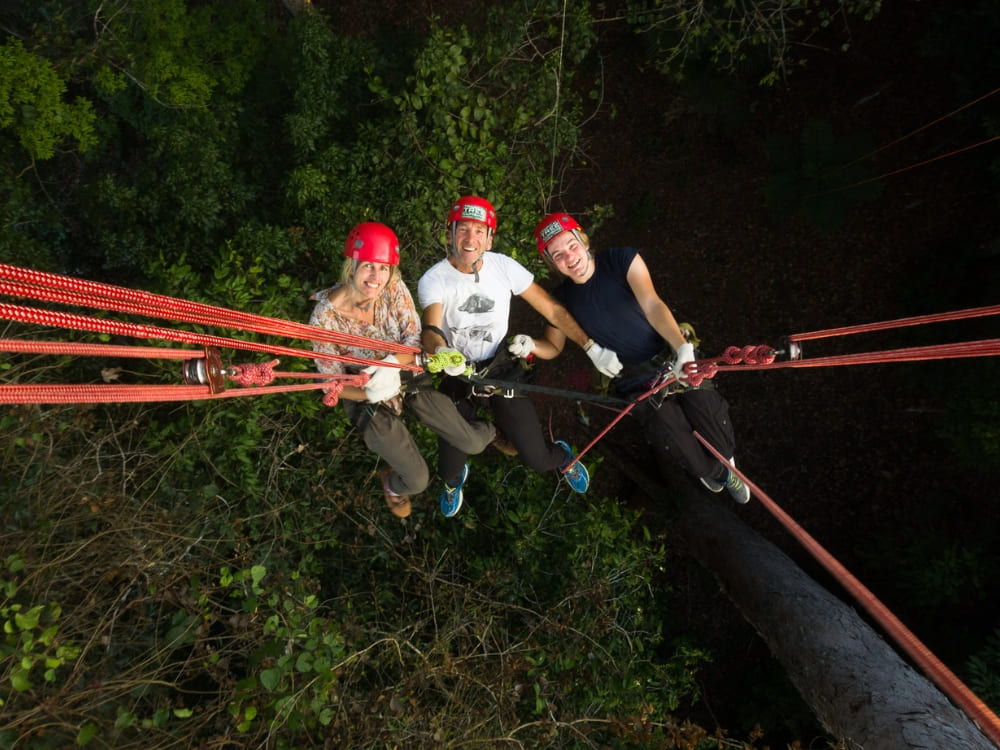
    Adventurous tourists equipped with helmets participating in tree climbing and rappelling activities high up in the Amazon canopy.
    .

    Each Amazon jungle tour in Brazil has its own itinerary, but tourists can expect a few activities, such as:

    • Jungle hiking
    • Boat trips
    • Kayaking
    • Canoeing
    • River cruises
    • Sailing through the Meeting of Waters
    • Wildlife watching
    • Tree climbing
    • Cave exploring
    • Forest immersion in jungle lodges
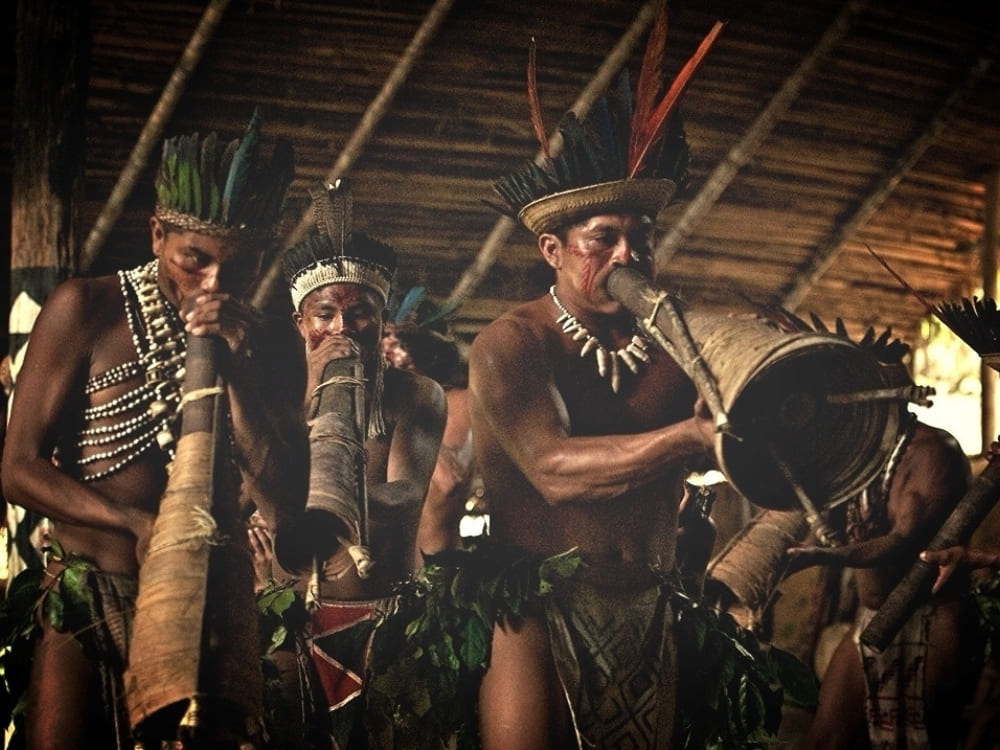
    • Visiting local communities, including indigenous groups

    👉 Read more: Top things to do in the Amazon Rainforest in Brazil
    Animals in the Amazon Rainforest, Brazil

    There are millions of species of animals in this ecosystem, but some are considered symbols of the forest, like the mysterious harpy eagle, colorful macaws (red and blue), black spider monkeys, beautiful jaguars, cute-looking sloths, friendly Amazon pink dolphins and ravenous piranhas.

    The last two, in particular, are big Amazon stars. Interacting with dolphins is an absolute fan favorite, while fishing for piranhas brings everyone’s adrenaline to its maximum — an activity always monitored by experienced guides and respecting sustainable practices, of course.

    Amazon pink river dolphin swimming in the dark waters of the Rio Negro, a unique wildlife interaction and symbol of the Brazilian forest.
    .

    Keep in mind: despite the abundant fauna, there is no absolute guarantee that these animals will be spotted for a few reasons — the dense vegetation makes wildlife sightings more difficult, some species tend to hide from humans (especially during the day) and local operators follow strict protocols to not disturb animals.

    👉 Read more: Best Brazil Wildlife Tours and Destinations


    Where to stay in the Amazon Rainforest?

    Many people wonder if there are hotels in the Amazon. The answer is yes, but they’re known as jungle lodges since they are located in the middle of the forest. 

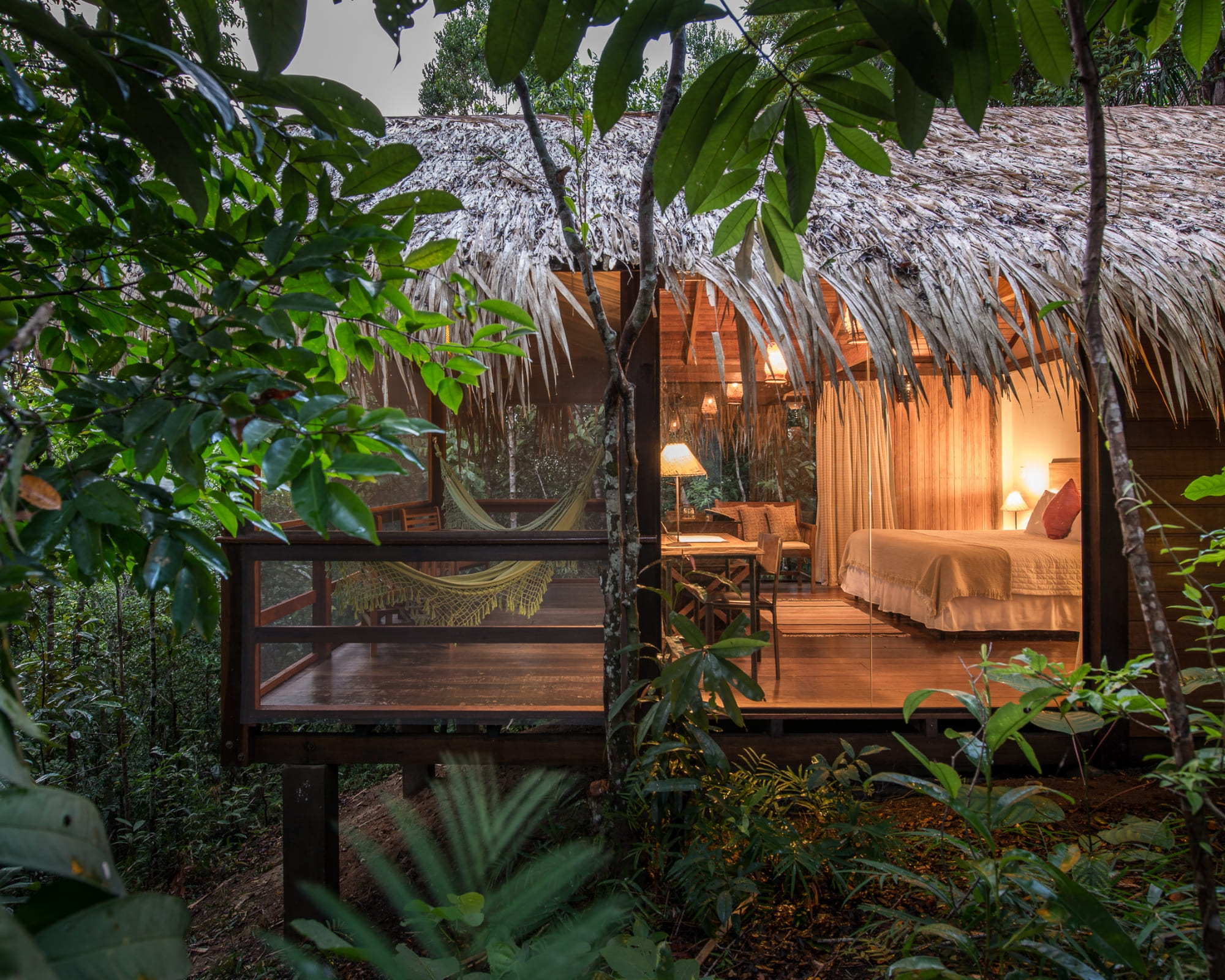
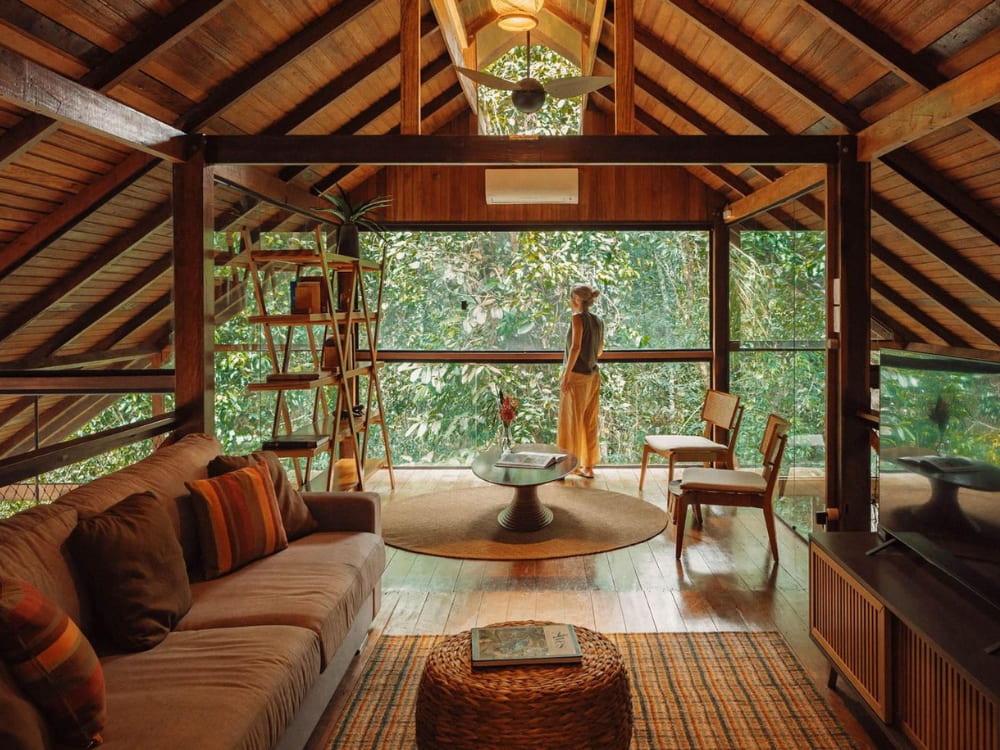
    Best Amazon Jungle Cozy lounge area inside an Amazon jungle lodge with large glass windows offering immersive views of the surrounding dense forest.
    Photo: Felipe Castellari

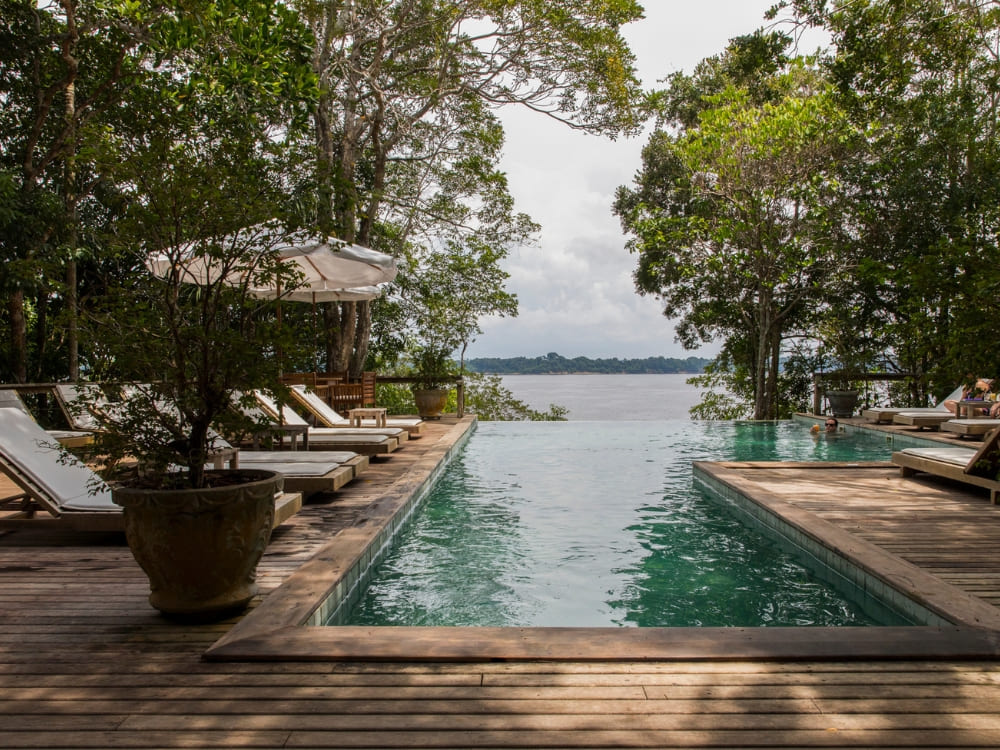
    Lodges offer comfortable accommodations, leisure areas (swimming pools, entertainment areas, gyms, lounges, bars, gift shops…), great restaurants and exclusive activities around the forest. From modest to luxury, there’s an option for everyone.

    Another alternative is the river cruises, which work similarly to classic cruise ships on the ocean, but with fewer passengers and sailing across the waters of Amazonian rivers, like the Rio Negro, Solimões, Tapajós and the Amazon River.

    Aerial view of a swimming pool at a luxury eco-lodge nestled deep within the Amazon Rainforest vegetation, offering leisure in nature.
    .


    The best Amazon cruises in Brazil include wonderful ensuite cabins, a restaurant onboard and many entertainment options, this is a fantastic way to experience nature.

    If you don’t mind giving up comfort so you can completely immerse yourself in nature, then our suggestion is the Amazon Jungle Survival Tour, a fantastic trip where you get to spend your nights camping in the middle of the forest! Accompanied by qualified guides, you’ll sleep in hammocks, cook your food on the campfire and even learn survival techniques.

    👉 Read more:

    How long should you stay in the Amazon Rainforest?

    The length of your trip depends on how immersive you want your experience to be.

    A 3-day tour is recommended for those on a tight schedule — it’s short, but still allows for river tours, guided jungle walks and a first introduction to the rainforest’s unique ecosystems. It’s a good option if you’re passing through Manaus or combining the Amazon with other destinations in Brazil.

    Breathtaking aerial view of a river fork and lush green islands in the Amazon basin, highlighting the region's vast hydrology and beauty.
    .

    Traveling to the Amazon in Brazil: how much does it cost?

    The cost of a trip to the Amazon in Brazil depends on various factors, like accommodation category, group size, trip length and itineraries.

    Travelers kayaking down a tranquil Amazon river, enjoying an eco-friendly way to observe the rainforest ecosystem up close.
    Photo: Samuel Melim

    For example, wild camping tours are a more budget-friendly option, offering a raw and immersive experience, while luxury lodges provide high-end comfort at a higher price. Solo travelers may face higher costs due to single occupancy charges, whereas group travelers can benefit from shared costs.

    PlanetaEXO curates the best Amazon Rainforest Tours in Brazil, with prices (per person) ranging from R$2.170 (approximately $418) for basic camping expeditions to R$23,000 (approximately $4,392) for premium luxury packages — not including flight tickets.

    Do you need a vaccine to go to the Amazon Rainforest in Brazil?

    Unlike other countries (Bolivia, Colombia, Guyana, Panama, and Venezuela), there is no requirement of yellow fever vaccinations to visit the Amazon in Brazil because ANVISA (Brazil Health Regulatory Agency) doesn’t consider the disease a risk in national territory.

    However, it’s strongly recommended that foreign tourists get their shots at least ten days before the trip — especially if they intend to visit the rainforest in the countries previously mentioned. Better safe than sorry!

    Close-up of a traveler's hands examining unique leaf textures during a guided educational walk in the Amazon jungle.
    .

    Is it safe to visit the Amazon Rainforest in Brazil?
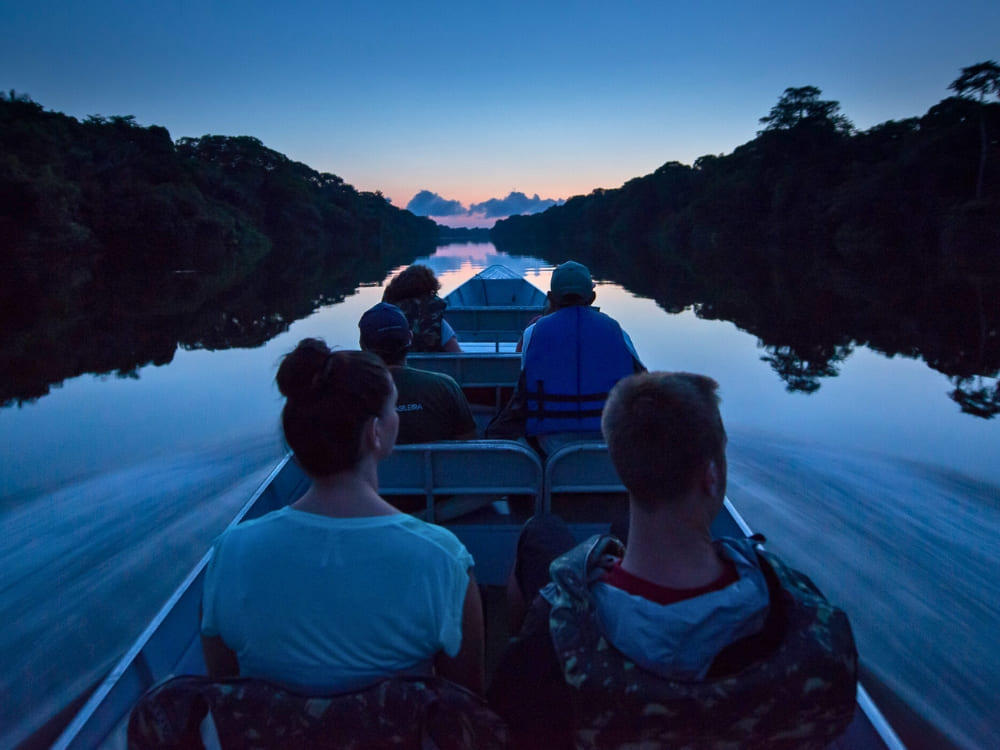
    Yes, it’s safe to visit the Amazon, as long as you explore with experienced local guides. Travelers might think there are wild animals and hidden dangers along the trails, but tours are carefully planned to avoid risky situations.

    Tour guides know the forest inside out and ensure that every activity, from jungle walks to boat trips, is carried out with complete safety and respect for nature.

    Since itineraries are designed only for observation, you won’t come across animals that pose any threat. Besides, most species prefer to stay hidden, so encounters are peaceful moments to admire their beauty.

    With professional guidance, comfortable logistics, and well-structured activities, visiting the Amazon is a safe and unforgettable adventure for all travelers.

    Group of tourists exploring a cave formation within the Amazon rainforest, looking out at the jungle with an expert local guide.
    Photo: Felipe Castellari

    What should I pack for an Amazon Rainforest trip?

    Pack your bags with:

    • Light clothes (t-shirts, long-sleeved t-shirts, shorts, pants, hats/caps, swimwear)
    • Comfy shoes (sneakers for hiking, flip-flops, sandals)
    • Travel essentials (documents, cash, credit/debit cards, medication, sunscreens, after-sun gel, insect repellent)
    • Equipment for jungle hiking (raincoat, flashlight, reusable water bottle)
    • Electronic devices (cellphone, camera, chargers, portable chargers, etc.)

    Travelers using binoculars on an observation tower high above the canopy to safely spot birds and wildlife in the Amazon Rainforest.

    👉 Read more: 10 Amazon Rainforest Travel Tips to Make the Most of Your Adventure

    Is traveling to the Amazon worth it?

    It’s more than worth it! The Amazon Rainforest is the richest place on the planet when it comes to natural resources. The jungle, the rivers, the animals, the food, the people — everything holds an inexplicable beauty and magical atmosphere not found anywhere else.

    Adventure and ecotourism enthusiasts should spend at least a few days in this surreal destination so they can witness with their own eyes what Mother Nature is truly capable of. 

    Tourist embracing the massive trunk of a Samauma tree, showcasing the scale of the giant trees and the connection with nature in the Amazon.
    .

    Shall we book your Amazon adventure?

    We hope this guide on how to visit the Amazon has been helpful to kick off your travel plans!

    As an expert platform that works with the best local operators, PlanetaEXO offers incredible Amazon Rainforest tours in Brazil with tailor-made itineraries and all the support you might need. Contact us now!

  • What’s the Best Time of the Year for Amazon River Cruises in Brazil?

    What’s the Best Time of the Year for Amazon River Cruises in Brazil?

    The activities of river cruises in the Amazon Rainforest differ depending on the season, making each trip totally remarkable

    As ecotourism tours in the Amazon become even more comfortable and focused on exploring nature responsibly, river cruises are great for travelers looking for comfort, rich itineraries, eco-friendly practices, and one-of-a-kind experiences.

    Considering the influence of the seasons on nature destinations, it’s common to wonder when is the best time of the year for Amazon river cruises in Brazil. Knowing this, in fact, is crucial for efficient vacation planning.

    That’s why PlanetaEXO, an ecotourism platform specialized in Amazon Rainforest tours in Brazil, has created a guide to help you understand the proper time for your river cruise. See more below!

    Best time of the year to go on Amazon cruises in Brazil

    Amazon jungle cruises can be enjoyed all year long! Even during periods when rainfall is significantly lower, the forest is humid enough that the rivers are always full for boats to pass through. The experience only becomes unfeasible during periods of extreme drought, but situations like that are atypical.

    During different seasons (wet and dry), cruises operate normally, but activities change to accommodate weather variations and flooding in some areas of the forest.

    In other words, you’ll discover the wonders of the Amazon regardless of the season, though your itinerary will vary according to the time of year.

    A multi-deck Amazon river cruise boat floating on calm waters reflecting the dense green forest vegetation.
    .

    👉 Read more:

    Amazon river cruises in Brazil: rainy season (December to May)

    The rain is frequent and heavy in the wet season. As the rivers get higher, the Amazon Basin starts to flood and some parts of the forest become submerged — that’s what locals call igapós.

    For that reason, passengers leave the vessels and enjoy specific activities, such as:

    • Canoeing and swimming through treetops in igapós
    • Boat trips and other water-related activities in Anavilhanas National Park, Alter do Chão and the Mamirauá Reserve
    • Wildlife watching — mostly Amazon pink dolphins, birds and mammals that usually climb trees to avoid the water
    A riverboat navigating a winding channel in the Amazon Rainforest surrounded by thick tropical canopy.
    .

    👉 Read more: When is the Best Time to visit the Amazon Rainforest in Brazil

    Amazon river cruise in Brazil: dry season (June to November)

    Less rain means lower water levels. As the rivers start to shrink, hiking trails are unblocked by the drainage of flooded areas.

    Therefore, it’s easier to spot some aquatic or semiquatic animals, who concentrate on smaller zones in the water.

    If you go on an Amazon boat cruise during the dry season, your itinerary will probably include:

    • Hiking in the forest, as well as visiting waterfalls and exploring caves
    • River beaches in Alter do Chão, Anavilhanas, Jaú National Park and near Manaus
    • Night spotlighting — mostly caimans, but other nocturnal animals might also be spotted
    Travelers jumping from the top deck of a river cruise boat into the Amazon River at sunset during an adventurous ecotourism trip
    .

    👉 Read more: How to get to the Amazon Rainforest in Brazil?

    What should I pack for an Amazon Rainforest river cruise?

    As you can see, the best time of the year for Amazon river cruises in Brazil depends on what experience you’re looking for.

    Whether you plan your trip during the wet or the dry season, here are some essential items you should definitely pack:

    • Light clothes: t-shirts, long-sleeved shirts (preferably with UV protection), pants, shorts, hats or caps, swimwear
    • Shoes: flip-flops, sandals, hiking boots
    • Travel essentials: documents, money (cash and credit/debit cards), medication, sunscreen (SPF 30 or higher), insect repellent, sunglasses, chargers (phones, cameras, laptops, tablets), powerbank
    • Equipment: flashlight, raincoat, microfiber towel, personal reusable water bottle
    A traveler hiking along a forest trail surrounded by tall trees in the Amazon Rainforest, a typical dry season activity.
    .

    Join PlanetaEXO on the best Amazon river tours

    As an expert in Amazon Rainforest tours in Brazil, PlanetaEXO works with the most esteemed local operators to provide wonderful travel experiences in the largest rainforest on Earth, always following community-based and sustainable tourism practices.

    Experience comfort and immersion in nature with our multiple-day luxury Amazon cruises and turn your dream vacation into reality. Contact us now!
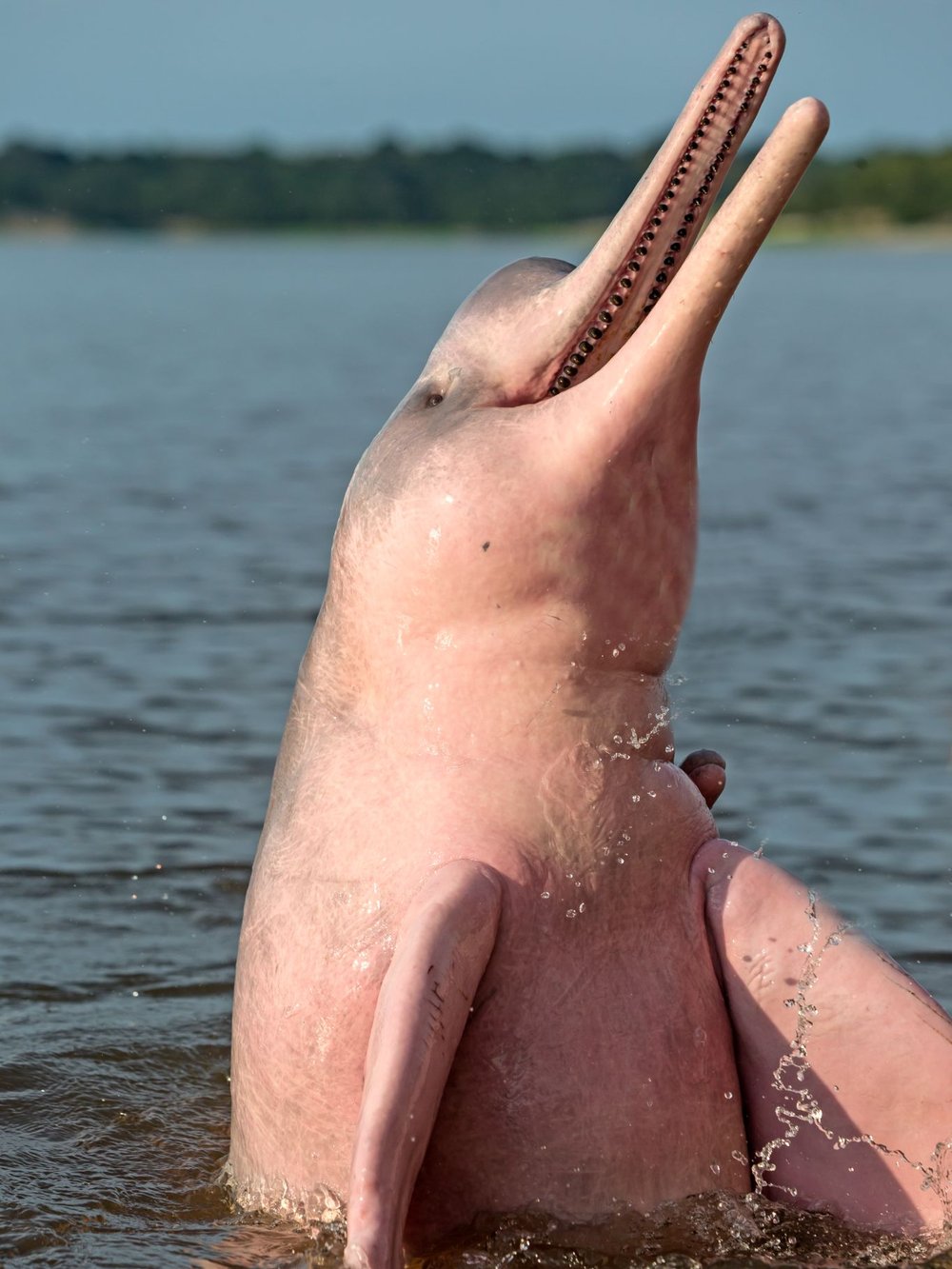
  • Ecotourism in the Amazon Rainforest: 7 Tours to Connect with Nature

    Ecotourism in the Amazon Rainforest: 7 Tours to Connect with Nature

    From jungle lodges to river cruises, see how ecotourism in Brazil thrives in these 7 incredible Amazon tours!

    Highlighted by The Wall Street Journal in 2024 as a nature destination worth visiting, ecotourism in the Amazon Rainforest is crucial for economic growth, for the financial health of local communities, and for environmental protection.

    Every year, tourists from all over the world travel to the Amazon and explore the wonders of one of the most fascinating places on Earth. By relying on the expertise of professionals who truly love and respect nature, it’s possible to experience a fantastic trip while supporting the environment

    As a platform that specializes in Amazon Rainforest tours in Brazil and works with the best local operators, PlanetaEXO has curated a list of 7 experiences you just can’t miss. Check it out below!

    1) Amazon Jungle Tour from Manaus

    Starting off strong with an affordable, yet amazing experience, this tour allows for a deep dive into the Amazon’s untouched beauty. The adventure starts on the way to the lodge — departing from Manaus, the Meeting of Waters and visits to local markets kick off the trip.

    The itinerary is packed with authentic activities: hiking, canoeing, piranha fishing, birdwatching, visiting local communities, and sunrise and sunset contemplation. 

    After a busy day, get some rest at the lodge in charming, cozy bungalows equipped with comfortable beds, private bathrooms and air-conditioning. In the common areas, eat your meals at the restaurant, get a drink at the bar or have fun with friends and family in the gaming room or the TV lounge. 

    Available in 3-day, 4-day, and 5-day tours. Learn more about this adventure.

    A traveler sits in a wooden canoe navigating the flooded forest during an Amazon rainforest tour, looking up at the lush green canopy while wearing a blue shirt that reads "live an adventure."
    Photo: Marcelo Bonifácio

    👉 Read more: How to get to the Amazon Rainforest in Brazil?

    2) Amazon cruise in Brazil

    Did you know you can go on cruises in the Amazon Rainforest? Beautiful vessels peacefully glide across the dark waters of the Negro River, granting a totally different Amazon tour experience.

    Besides enjoying a delightful stay, guests have the time of their lives with expeditions to Anavilhanas and Jaú National Park, exploring the Madadá Caves, hiking in the forest, relaxing on river beaches, wildlife watching and visiting indigenous groups.

    The 3-floor vessel can comfortably accommodate up to 16 guests in private ensuite cabins with air-conditioning and a lovely, rustic decor. Leisure areas include a solarium, a dining room, a living room and a bar.

    Available in 4-day, 5-day, and 7-day tours. Learn more about this adventure.

    An aerial view of a winding river cutting through lush green vegetation, highlighting the beauty of Amazon rainforest ecotourism.
    .

    👉 Read more: Best Amazon River Cruises in Brazil

    3) Exclusive tour in Avanilhanas National Park

    Mirante do Gavião is one of the highest-rated Amazon ecolodges, acclaimed for its gorgeous architecture and great location — facing the Negro River and Anavilhanas National Park.

    Activities like hiking, kayaking, stand-up paddling, night spotting, cave exploration, visiting riverside communities and boat rides are all part of the itinerary. Perfect for outdoorsy guests!

    This tour also proves that ecotourism in the Amazon can coexist with comfort. The lodge offers three categories of high-end accommodations, as well as a gaming room, a swimming pool, a fine dining restaurant and a barbecue area. 

    Available in 4-day and 5-day tours. Learn more about this adventure.

    The illuminated wooden architecture of Mirante do Gavião at night, one of the best Amazon lodges in Brazil located near Anavilhanas National Park.
    .

    4) Floating ecolodge in Mamirauá Reserve

    Departing from Tefé, you’ll enjoy an unforgettable experience in the Mamirauá Sustainable Development Reserve, where a floating ecolodge lies on the dark waters of the river, surrounded by lush green vegetation and infinite blue sky.

    This 5-day Amazon tour is packed with adventure, including night and photo safaris, piranha fishing, boat rides, canoeing, visiting local villages, and much more.

    Uakari Lodge is the only accommodation in Latin America featured in The New York Times’ list of floating hotels worth visiting worldwide. The publication highlights its infrastructure, immersive nature experiences, and the Community-Based Tourism (CBT) model, which benefits both the environment and local residents.

    The entire infrastructure of the lodge is built on stilts, which means guests relish in breathtaking views from the bungalows or the common areas (deck, restaurant, bar, video room and a library). Learn more about this adventure.

    The floating bungalows of Uakari Lodge sitting on the dark river waters, a unique destination for ecotourism in Brazil.
    .

    👉 Read more: When is the best time to visit the Amazon Rainforest in Brazil

    5) Luxury stay at Anavilhanas Jungle Lodge

    Another Amazon Rainforest tour in Anavilhanas National Park, Anavilhanas Jungle Lodge is located on the banks of the Negro River, granting extraordinary experiences in one of the most beautiful natural scenarios in the world.

    Custom itineraries offer great activities for everyone: guided hikes, canoing, night tours for wildlife watching, fishing, archery lessons, visiting riverside villages, boat rides, etc.

    Inspired by caboclo design, the twenty-four accommodations are equipped with air-conditioning, mini-fridges, TVs, Wi-Fi, and private bathrooms. Enjoy the lodge’s premium services at the restaurant, floating bar, swimming pools, cozy lounge, massage room and gym. Before your trip ends, make sure to get a souvenir at the gift shop!  Learn more about this adventure.

    A cozy, rustic interior of a wooden bungalow at an Amazon ecolodge featuring a comfortable living area and a view of the forest.
    Photo: Felipe Castellari

    6) Amazon tour in Mato Grosso

    This lodge stands out when it comes to ecotourism in the Amazon Rainforest due to its location. Unlike the other tours on this list, Cristalino is not located in the state of Amazonas, but in the northern region of Mato Grosso, by the south of the jungle, in a private natural reserve.

    The geography in itself is a tresure — bordering the Pantanal, it’s one of the best places in the Amazon for wildlife watching. Two biomes in one single experience!

    50-meter observation towers are perfect for birdwatching and admiring the view, but activities also include wildlife spotting, canoeing, hiking and boat rides in the Cristalino and Teles Pires rivers, etc.

    Bungalows and chalets equipped with comfy beds, sleeper sofas, private bathrooms, ceiling fans and Wi-Fi are the perfect accommodations to relax, but guests also love the entertainment areas — floating deck, restaurant, bar, reading room, and conference room. Learn more about this adventure.

    A view of the misty rainforest canopy at sunrise from a 50-meter observation tower, a highlight of Amazon rainforest tours in Mato Grosso.
    Photo: Andre Dib

    👉 Read more: Best Amazon Lodges in Brazil

    7) Luxury Amazon Cruise

    Looking for something more exclusive? Ecotourism in the Amazon reaches a whole new level with this luxury river cruise in Anavilhanas, the second-largest river archipelago in the world with over 400 islands!

    After departing from Manaus, you’ll witness the Meeting of Waters and the beauty of Lake Janauari. Throughout five days, you’ll visit local communities, hike in the jungle, fish for piranhas, go on boat rides and night tours, relax on river beaches and join a beautiful luau.

    The architecture of the sophisticated vessel is jaw-dropping, featuring a modern design in ten ensuite cabins with air-conditioning and floor-to-ceiling windows. You can also unwind at the bar or in the living room, grab a bite at the dining hall and admire the view from the sun deck. Learn more about this adventure.

    A sophisticated multi-story vessel reflects on the dark water, offering one of the best Amazon river cruises in Brazil.
    .

    Best Amazon Rainforest tours in Brazil

    With so many incredible options, it might be difficult to choose your Amazon tour in Brazil. See the table below to compare activities and prices: 

    TOUR HIGHLIGHTS DURATION STARTING PRICE*
    Brazilian Amazon Jungle Tour from Manaus Affordable stay, birdwatching, fishing, canoe trips, forest hikes, Meeting of Waters, visiting local markets. 3 days
    4 days
    5 days
    US$ 590 


    Mirante do Gavião, Anavilhanas National Park High-end stay facing Anavilhanas National Park, kayaking, hiking, boat rides and cave exploration. 4 days
    5 days
    US$ 1896 


    Anavilhanas Jungle Lodge Luxury stay at Anavilhanas, hiking, canoeing, wildlife watching, fishing, archery lessons, visiting local communities. 6 days US$ 3180 


    Floating ecolodge in Mamirauá Reserve Accommodation in a floating ecolodge, photo safaris, night tours, fishing, boat rides, visiting riverside villages. 5 days US$ 1135 


    Cristalino Jungle Lodge Private reserve in southern Amazon (Mato Grosso), sophisticated stay, birdwatching, canoeing, hiking, boat rides. 5 days US$ 3333 


    Amazon Cruise Onboard accommodation, expeditions to Anavilhanas and Jaú, cave exploration, hiking, river beaches, wildlife watching, visiting indigenous groups. 4 days
    5 days
    7 days
    US$ 2485 


    Luxury Amazon Cruise Luxury onboard accommodation, Meeting of Waters, Lake Janauari, jungle hiking, fishing, boat rides, night tours, river beaches, luau. 5 days US$ 3740 


    *Per person, based on double occupancy in group departures. Prices may vary depending on season and availability. Exchange rate as of February 4th, 2026; subject to change.

    Ecotourism in the Amazon as a solution to deforestation

    Although deforestation in the Amazon has dropped 11% from August 2024 to July 2025 due to heavy environmental inspection, the largest tropical rainforest in the world is still at risk. Wildfires and illegal logging and mining harms the ecosystem, increasing the temperature in 3 ºC and driving a strong rainfall decline across the southern Amazon basin.

    A traveler hikes through the dense green jungle, experiencing ecotourism in the Amazon firsthand.
    .

    In addition to government efforts, ecotourism is also an efficient solution for the preservation and recovery of the forest, thanks to sustainable practices, encouraging environmental awareness and empowering local communities to make a living without harming natural resources.

    Amazon ecolodges follow sustainable guidelines, like using solar energy, recycling, harvesting rainwater and partnering with environmental projects. Through custom itineraries, jungle hotels educate guests on the importance of preserving the forest and encourage them to become allies of nature even when they go back home.

    Lucas Ribeiro, founder of PlanetaEXO, describes ecotourism in the Amazon Rainforest. “By connecting travelers with authentic experiences that benefit local communities, we’re promoting a model of tourism that supports both people and the planet”.

    Watch “Tourism That Keeps the Amazon Alive”, a mini-doc produced by PlanetaEXO that showcases the importance of ecotourism:

    👉 Read more: Ecotourism in the Amazon Rainforest: A Solution to Deforestation

    Ecotourism in the Amazon Rainforest with PlanetaEXO

    PlanetaEXO is an ecotourism platform that specializes in Amazon Rainforest tours in Brazil. By working very closely with local operators, we handpick every experience and follow strict protocols to make sure we’re positively impacting our customers, partners and, of course, the environment.

    Our team is ready to help with everything you need for a perfect vacation. Contact us now!
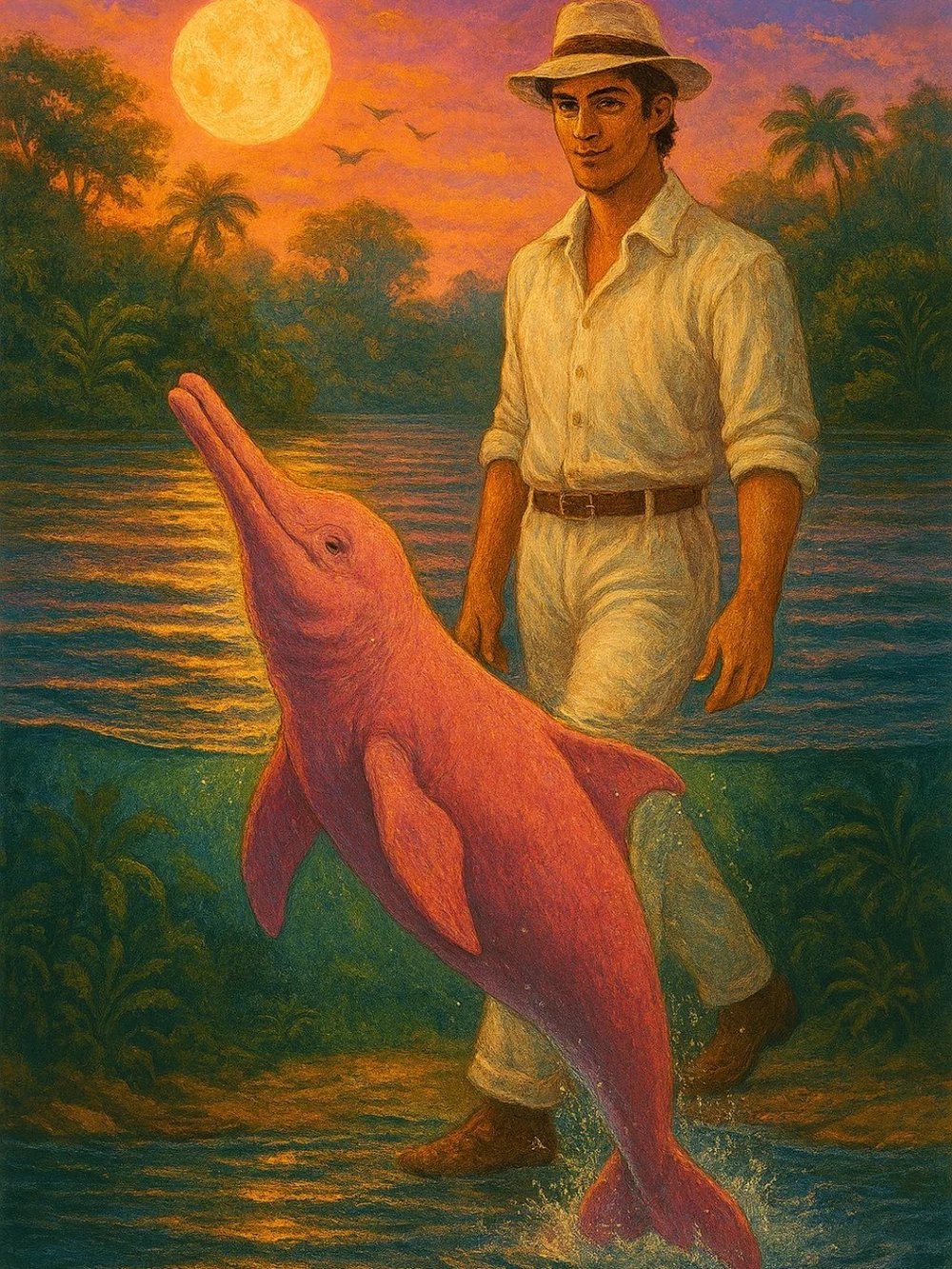
  • Best Amazon River Cruises in Brazil

    Best Amazon River Cruises in Brazil

    Enjoy an exceptional ecotourism experience with the best river tours in the Amazon, comfortable onboard accommodations and wonderful activities in the forest

    Cruise ships are loved by many people, but did you know you can cruise on rivers? Better yet, did you know you can sail across the rivers of the Amazon Rainforest, like Negro River, Tapajós and the all-powerful Amazon River?

    Aboard comfortable vessels, passengers indulge in high-quality services provided by attentive crews, premium accommodations, and itineraries perfect for tourists who are looking for the best river cruises in the Amazon.

    PlanetaEXO, an expert in ecotourism and Amazon Rainforest tours in Brazil, has curated a fantastic river cruise selection for all types of travelers. Working alongside the most reputable local operators in the region, we offer only the best experiences. Check it out below!

    1 – Katerre

    Aerial view of a Katerre riverboat navigating the winding channels of the Negro River in the Amazon Rainforest, surrounded by lush green vegetation.
    .

    Katerre has some of the best Amazon cruises in Brazil. Aboard Jacaré-Açu, a beautiful wooden boat with three floors and eight cabins, up to sixteen guests can enjoy the wonders of the forest in the most authentic way. 

    Gliding across the Negro River, being amazed by the beauty of the forest is inevitable. The sky is clear, orange-tinted in the early morning and blue when the sun is at its brightest. The trees are vibrant and green. The water is dark, but still peaceful and welcoming, allowing for a more profound experience in nature.

    For The New York Times, journalist Seth Kugel said he “traded infinity pools for infinite waterscapes” when he decided to choose a cruise instead of an Amazon jungle lodge

    Outdoor activities include hiking, visiting local communities, boat rides, wildlife watching, fishing, swimming, relaxing on river beaches, etc.

    Tourists jumping into the river from the top deck of the Jacaré-Açu wooden boat at sunset during an authentic Amazon river cruise experience.
    .

    Furthermore, visitors also have a great stay experience in cozy cabins with double or bunk beds, air-conditioning, private bathrooms, hot shower, and fresh sheets and towels.

    Common areas include a dining room, a living room, a bar and a solarium with chairs, tables, hammocks, sun loungers and a powerful sound system to play music. Feeling hungry? This Amazon river boat cruise offers delicious local cuisine dishes — three meals a day and snacks!

    Available in 4-day, 5-day or 7-day tours. Learn more about this adventure.

    2 – Zaltana

    The Zaltana luxury riverboat anchored in the Amazon river at sunset, showing its modern design and spacious structure for a premium cruise.
    .

    Big, modern and sophisticated, the almighty Zaltana is considered by many the best luxury Amazon river cruise in Brazil.

    With ten spacious cabins — all with double or single beds, air-conditioning, elegant decor, private bathrooms, amenities and floor-to-ceiling windows that offer panoramic views of the forest —, up to 20 guests can comfortably sail in this impressive vessel to live the most incredible experience of their lives.

    Zaltana also includes a TV and entertainment room (with high-speed internet), a living room and sun deck with a shower room, tables and chairs. Guests can get a drink at the bar on the main deck or savor the flavors of the fine dining restaurant specializing in Amazonian dishes.

    Besides your typical activities (jungle hiking, fishing, animal spotting, etc.), the itinerary also includes exploring the islands and river beaches of Anavilhanas National Park and a wonderful luau on Praia Grande beach. Learn more about this adventure.

    3 – Kaiara

    The Belle Amazon white riverboat sailing on the water, part of the Kaiara fleet offering cruises from Belém and Alter do Chão.
    .

    Kaiara stands out for being one of the only Amazon cruises in Brazil to depart from Belém, capital of Pará. With three different vessels (Amazon Dolphin, Belle Amazon and Tupaiú), travelers have the unmissable chance of sailing in Alter do Chão, a small town on the riverbanks of the Tapajós River.

    Custom itineraries include hiking, swimming in igarapés (water courses), visiting river beaches and local communities, handicraft lessons, recreational fishing, night spotting, sunrise contemplation, etc.

    Considered a food-centric experience, the incredible dishes lovingly made by a talented mother-daughter duo are one of the highlights, according to the Financial Times.

    The boats also feature comfortable cabins — with double, single or bunk beds, air-conditioning, and private bathrooms —, dining rooms, living rooms, balconies and sun decks with beautiful panoramic views. Learn more about this adventure

    4 – La Jangada

    The La Jangada chic catamaran sailing on the Amazon river, surrounded by trees, offering a blend of comfort and adventure.
    .

    Inspired by Jules Verne’s Eight Hundred Leagues on the Amazon, La Jangada’s name comes from the original French title of this iconic novel, La Jangada: Huit Cents lieues sur l’Amazone

    Modern and aesthetically pleasing, this chic catamaran pampers passengers with its spacious decks, refined design and twelve air-conditioned ensuite cabins.

    This luxury river cruise in the Brazilian Amazon is the perfect blend of comfort and adventure. Multiple day trips include a vast list of activities, such as hiking, boat trips, animal spotting, hiking, fishing, visiting waterfalls and natural pools, camping in the forest, exploring the Anavilhanas and Jaú National Park, engaging with indigenous and riverside communities, etc.

    Aerial view of the La Jangada riverboat docked near the jungle, showcasing its spacious upper deck and proximity to the rainforest nature.
    .

    Common areas feature a charming terrace with tables and chairs, two lounges with couches and TVs, a restaurant that serves delicious Amazonian and Brazilian food, a bar with classic and signature drinks, a lecture room and a theater room. 

    La Jangada is one of the best Amazon river cruises in Brazil, but it’s only available for chartering. Talk to our team to learn information.

    5 – Untamed Amazon

    The Untamed Amazon riverboat featuring a modern design with a yellow hull, known for being a sustainable solar-powered cruise option.
    .

    The Untamed Amazon riverboat is described as the ultimate sustainable cruise experience. Partially powered by solar energy, it also has an advanced water treatment system and fuel-efficient engines that follow international environmental standards.

    This five-star stay includes eight spacious ensuite cabins — six of them with floor-to-ceiling windows to ensure the most stunning views of the forest —, high quality amenities, local cuisine restaurant, a bar, a dining room, a living room, sun decks and entertainment areas.

    Aerial shot of the Untamed Amazon boat showing the solar panels on the roof, highlighting its eco-friendly energy system and sustainable design.
    .

    Eight different itineraries — in addition to New Year cruises, corporate events and tailor-made trips — include canoeing, photo safaris, evening sightseeing, jungle hiking, and much more. Learn more about this adventure

    👉 Read more: How to get to the Amazon Rainforest in Brazil?

    6 – Amazon Clipper Premium Cruise

    One of the longest-running ecotourism options in the area, going strong for 35 years, Amazon Clipper offers the best Amazon river cruises in Brazil in the small-ship category. The MV Premium is the most luxurious vessel of their fleet, perfect for people who desire a high-end stay.

    The Amazon Clipper Premium riverboat cruising along the Amazon River, reflecting in the calm water against a backdrop of dense green rainforest.
    .

    One of the longest-running ecotourism options in the area, going strong for over 35 years, Amazon Clipper offers some of the best Amazon cruises in Brazil in the small-ship category. The MV Premium is the most luxurious vessel of their fleet, perfect for people who desire a high-end stay.

    There are sixteen air-conditioned ensuite cabins with twin or queen-size beds, excellent amenities, lecture room, swimming pool, jacuzzi, a leisure deck, gourmet area, a dining room, a lounge, a sun deck and a large observation deck with a fantastic 360 view.

    The Amazon Clipper Premium vessel docked near a riverside pool, offering a luxurious small-ship experience in the Amazon.
    .

    Wonderful activities await on 6-day trips across the waters of the Amazon and Negro rivers: stargazing, aquatic trails, night tours, swimming, boat tours, visiting native communities, etc.

    👉 Read more: When is the Best Time to visit the Amazon Rainforest in Brazil

    7 – Tucano Amazon River Cruise

    Another great small ship is the Tucano, a modest-sized motor yacht with a fast engine. This design helps it reach places other riverboats can’t, making it the only vessel to explore the deepest parts of the Central Amazon Conservation Complex alongside crew members with more than 30 years of experience.

    Three people paddle green kayaks on a calm river in front of a multi-deck riverboat named Tucano, with lush green trees lining the shore in the background.
    .

    Another great small ship is the Tucano, a modest size motor yacht with a fast engine. This design helps it reach places other boats can’t, making it the only vessel able to explore the deepest parts of the Central Amazon Conservation Complex, in Novo Airão, a small town 195 km away from Manaus.

    This is why this Amazon cruise in Brazil is the perfect option for those who wish to take wildlife watching to the next level, as the noise pollution control system is efficient to prevent scaring animals away. Activities also include guided hikes, night tours, skiff safaris, kayaking, etc.

    A woman in a colorful striped dress looks out the open window of a wooden boat dining room, which features tables set with white tablecloths and wine glasses.
    .

    Sixteen guests can comfortably rest in eight different air-conditioned ensuite cabins (single, twin, queen-sized, and bunk beds), and relax in the dining room, lounge or observation deck.

    Available in 5 to 7-day tours. See more details about the Tucano Amazon River Cruise.

    How much does an Amazon river cruise cost?

    Considering accommodation, services, diverse itineraries, and infrastructure of the vessels, Amazon cruises costs an average of R$ 18.000 (approximately US$ 3,462 and € 2.916) per person. Prices vary according to cabin category, season, trip duration, etc.

    Check out the prices and other information below:

    RIVER CRUISE HIGHLIGHTS DURATION STARTING PRICE*
    Amazon River Cruise in Brazil (Katerre) Hiking, boat rides, wildlife watching, fishing, river beaches, visiting local villages. 4 days

    5 days

    7 days

    US$ 2,505 
    Luxury Amazon Cruise in Brazil (Zaltana) Sophisticated stay, Meeting of Waters, Anavilhanas, wildlife watching, hiking, piranha fishing, river beaches, luau. 5 days US$ 3,770 
    Amazon River Cruise from Alter do Chão (Kaiara) Expedition in the Tapajós River (Alter do Chão, Pará), hiking, wildlife watching, canoeing, night spotting, visiting local villages. 5 days US$ 2,630  
    La Jangada Wildlife watching, engaging with indigenous groups, boat rides, jungle hiking, fishing, night safaris. 13 days US$ 7,890 
    Untamed Amazon Eco-friendly riverboat, canoeing, hiking, photo safaris, night tours, recreational fishing. 5 days US$ 3,985 
    Amazon Clipper Premium Cruise Expeditions on the Amazon and Negro rivers, aquatic trails, swimming, boat tours, stargazing, native communities. 6 days US$ 1,917  
    Tucano Amazon River Cruise Expeditions in the Central Amazon Conservation Complex, hiking, night tours, kayaking, skiff safari. 5 days

    7 days

    US$ 2,750

    *Per person, based on double occupancy in group departures. Prices may vary depending on season and availability. Exchange rate as of February 10th, 2026; subject to change.

    Amazon cruises in Brazil: customer reviews

    By partnering with the most reliable local operators, PlanetaEXO has helped numerous travelers from all over to world to join incredible river boat cruises in the Amazon Rainforest.

    See what our customers think about these experiences!

    Everything you should know about river cruises in the Amazon

    When is the best time to enjoy Amazon Rainforest cruises?

    River cruises operate throughout the entire year, but itineraries vary according to the seasons. 

    See more information: What’s the best time of the year for Amazon River Cruises in Brazil?

    Are Amazon river cruises safe?

    Yes, Amazon river cruises are safe. The vessels follow strict safety protocols and there are first responders among crew members to offer assistance if needed. In case of emergency, a speedboat is ready to rescue passengers and bring them to the nearest city.

    How long do river cruises in the Amazon take?

    River cruises are multiple-day experiences. PlanetaEXO offers tours lasting from 4 to 7 days, but it’s possible to extend your trip.

    What should I pack for an Amazon river cruise?

    Light clothes, comfortable shoes, hats or caps, sunglasses, raincoat, a flashlight, sunscreen, insect repellent, travel essentials (documents, cash, debit/credit card, medication), powerbank and chargers (phones, cameras, laptops, tablets).

    What to expect on an Amazon river cruise?

    Expect to be awed by the beauty of the Amazon Rainforest. Sailing across the rivers allows you to explore nature from a whole new perspective to admire the fauna and flora of the richest ecosystem in the world.

    Meanwhile, elegant accommodations and premium services guarantee a high-stay experience for couples and families alike. 

    Are Amazon cruises worth it?

    More than worth it! River cruises are some of the most fascinating activities in the Amazon because they present the perfect fusion of ecotourism and comfort: connection with nature, responsible travel, and exclusivity. It truly is an unforgettable experience.

    Ready to plan your Amazon river cruise in Brazil?

    Now that you know everything about the best Amazon river cruises, shall we start planning your next vacation?

    As an expert in Amazon Rainforest tours in Brazil, PlanetaEXO is an ecotourism platform that works with the finest local operators to offer unforgettable experiences for all travelers. Contact us now!
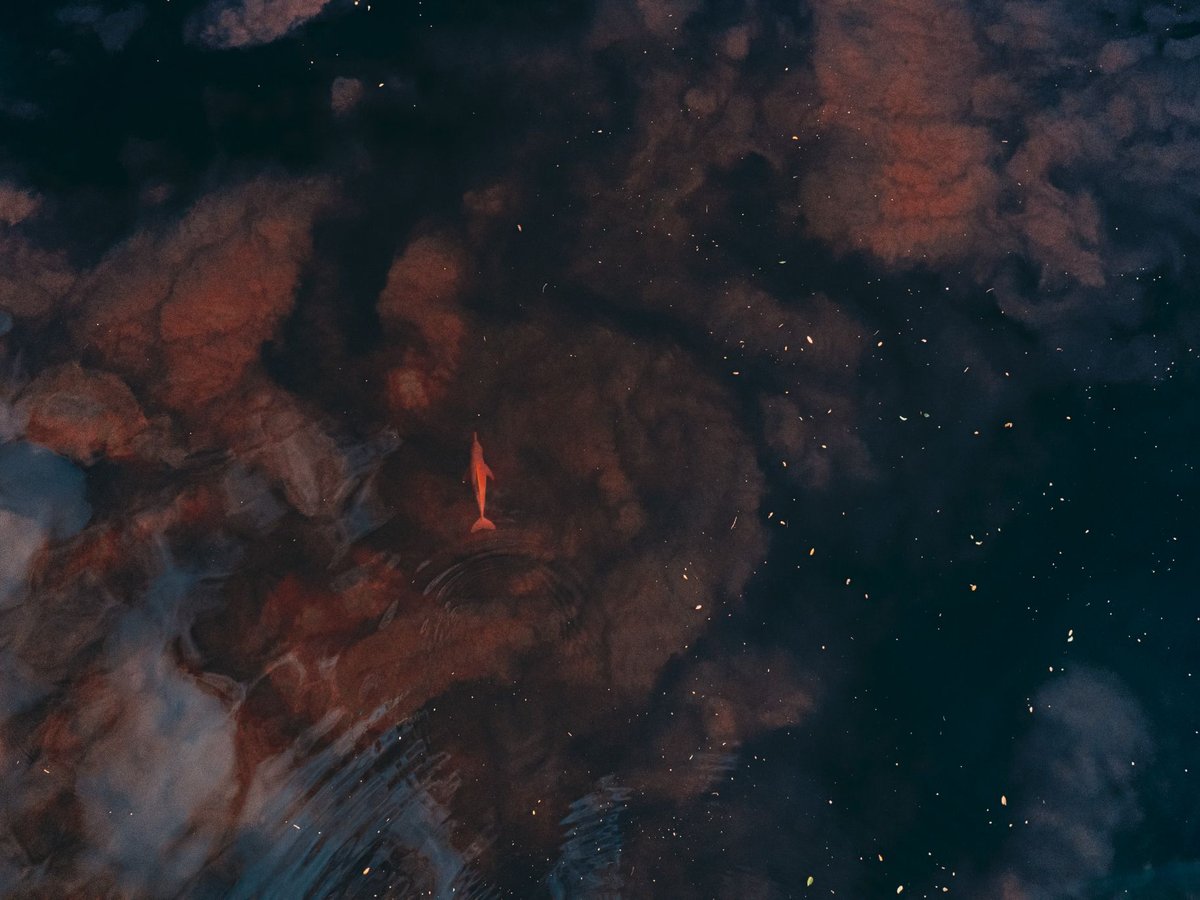
  • Carnival in the Amazon: 5 adventures to enjoy the holiday surrounded by nature

    Carnival in the Amazon: 5 adventures to enjoy the holiday surrounded by nature

    Experience the best of Amazonian Carnival on river cruises, eco-lodges, and forest camps.

    Want to enjoy your days off in peace, but don’t know what to do during Carnival to escape the revelry? The tip is to immerse yourself in the indescribable nature of the Amazon on tours filled with the serenity and beauty of the forest.

    In 2026, Carnival will be celebrated on February 16 and 17, followed by Ash Wednesday (18). The weekend before the holiday (February 14 and 15) allows for an extended trip.

    Don’t miss the chance to explore one of the most fascinating places in Brazil! Here are 6 incredible destinations to enjoy Carnival in the Amazon in peace and surrounded by nature.
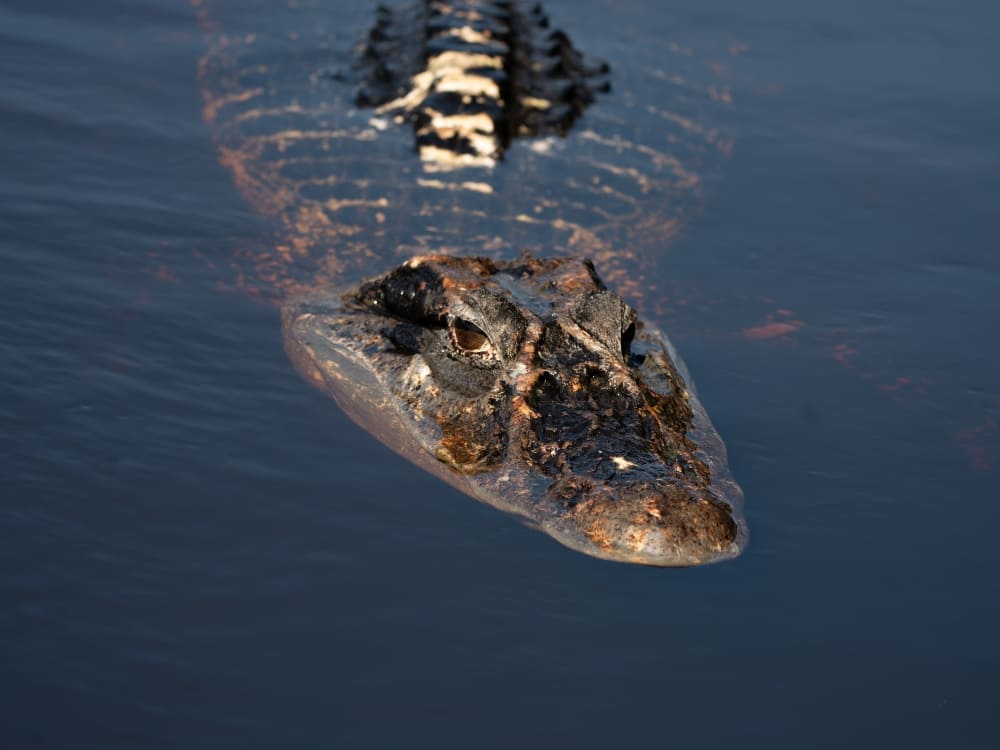
    Cruise on the Amazon

    .

    One of the best cruises in the Amazon, Katerre Expeditions offers unparalleled experiences in some of the region’s main postcard locations, such as the Anavilhanas National Park and the Jaú National Park.

    Depending on the vessel, it is possible to accommodate up to 29 guests in elegant cabins with private bathrooms, comfortable beds, and air conditioning. Common areas include a restaurant or dining room, open deck with solarium, lounge areas, and even a massage room.

    Explore the beauty of nature and enjoy Carnival in the Amazon by participating in the activity itinerary, which includes guided trails, visits to local communities, animal watching, canoeing, trips to river beaches, and much more.

    • Price: Starting at R$14,540 (per person)
    • Included: accommodation, meals, transfers, guides, and tours.
    • Dates for Carnival 2026 accommodation: February 13 to 17 (DBL cabins) | February 17 to 21 (QPL cabin)

    👉 Learn more and book: 5-day Amazon cruise

    Wild adventure in the Amazon Rainforest

    .

    Are you adventurous and still haven’t decided what to do for Carnival? Experience the Amazon at its most authentic with this wild adventure in the forest!
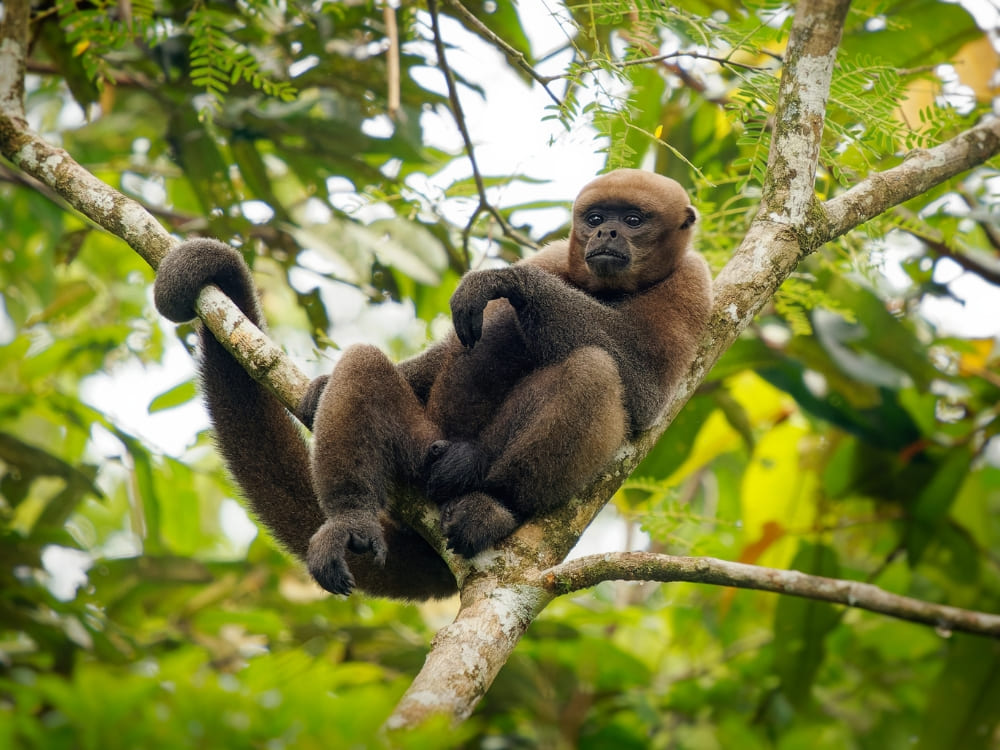
    On trips lasting 4 or 6 days, you will explore the depths of the world’s largest rainforest while camping among the trees. Led by experienced guides, the group spends the night in hammocks covered by tarps and mosquito nets. Meals are prepared over the campfire—the menu includes fresh vegetables, chicken, and freshly caught fish.

    Immersion in the jungle is already a great adventure in itself, but the itinerary of activities also includes lessons in survival techniques and plant identification, wildlife observation, fishing, hiking, and river navigation.

    • Price: per person, starting at R$4,958 (4 days) or R$6,862.50 (6 days)
    • Included: accommodation, meals + drinking water, transfers, guides, activities, and camping equipment.
    • Dates for Carnival 2026 accommodation: starting February 9 (5 days and 4 nights) | starting February 17 (4 days and 3 nights) | February 13 to 17 (5 days and 4 nights) | February 13 to 18 (6 days and 4 nights)

    👉 Learn more and book: 4-day Amazon survival tour / 6-day immersion in the Amazon Rainforest

    Luxury jungle hotel in Novo Airão

    Photo: Ruy Teixeira

    Staying at the Gavião Lookout in the municipality of Novo Airão is all you need to make your trip to the Amazon memorable.

    Facing Anavilhanas National Park, this luxurious ecolodge has three categories of accommodation (Premium, Luxury, and Tree House) of the highest standard, all with air conditioning, comfortable beds, spacious bathrooms, and minibars.

    Throughout the day, enjoy the beauty of the forest by hiking and kayaking in Anavilhanas, watching the sunset on boat trips on the Rio Negro, participating in nighttime wildlife spotting, exploring the Madadá Caves, and learning about the daily life of those who live in the heart of the forest.

    At the hotel, relax by the pool, in the massage room, on the deck overlooking the river, in the games room, or in the library. The Mirante do Gavião team also provides equipment for stand-up paddleboarding and kayaking.

    • Price: starting at R$8,525 (per person)
    • Included: accommodation, meals, transfers, guides, and activities.
    • Dates for Carnival 2026 accommodation: February 12 to 16 (Tree House and Premium) | February 19 to 24 (Luxury) | from February 25 (Premium)

    👉 Learn more and book: 4-day package at Hotel Mirante do Gavião

    Immersion and comfort in the forest

    carnaval amazônia
    Imersão Floresta Amazônica – FOTO_ Divulgação

    Carnival in Manaus takes on a new meaning with the Amazon Turtle Lodge on Lake Paraná do Mamori in Careiro. Based on authenticity and a passion for nature, this is a more accessible experience—but no less incredible.

    Leaving the Amazonian capital, the route navigates the incredible Meeting of the Waters of the Negro and Solimões rivers. In addition to this phenomenon, it is possible to contemplate other wonders of the forest on the way to the accommodation, such as vitórias-régia, pink dolphins, alligators, birds, monkeys, and sloths

    Other activities take place throughout the trip, such as canoeing, visits to riverside communities, survival training, piranha fishing, animal watching, etc.

    After exploring the jungle, relax in wooden bungalows or brick cottages. The lodge has 21 units, all with air conditioning, private bathrooms, cozy beds, and charming decor.

    • Price: starting at R$3,440 (per person)
    • Included: accommodation, meals, transfers, guides, and tours.
    • Dates for Carnival 2026 accommodation: February 12 to 17 (all categories) | February 18 to 24 (Comfort Brick Chalet) | February 25 to 28 (all categories)

    👉 Learn more and book:  4-day Amazon Rainforest Tour  / 5-day Amazon Rainforest Expedition

    Floating ecolodge in Mamirauá

    Photo: Lucas Ramos

    Always on the list of the best jungle hotels in the Amazon, the Uakari Lodge stands out for the uniqueness of its structure: the accommodations and common areas are built on stilts in the Mamirauá Sustainable Development Reserve in Tefé, providing an even more unforgettable stay. Due to the isolation of the location, the connection with nature is unparalleled.

    Guests stay in five bungalows with fantastic views of the river and forest. The floating lodge also has a bar, restaurant, deck, video room, and library.

    The program sums up the essence of spending Carnival in the Amazon: hiking trails, nighttime animal watching tours, fishing, boat trips, and visits to riverside villages. Not to be missed!

    Uakari is the only accommodation in Latin America on the list of floating hotels around the world that are worth visiting, compiled by The New York Times. The publication highlights infrastructure, nature experiences, and the Community-Based Tourism (CBT) model, which benefits both the environment and local residents.

    • Price: starting at R$5,240 (per person)
    • Included: accommodation, meals, transfers, guides, and activities.
    • Dates for Carnival 2026 accommodation: February 13 to 18 or February 18 to 23 (6-day tour) | February 20 to 23 (4-day tour)

    👉 Learn more and book:  Ecolodge in the Amazon Rainforest

    What is the weather like in the Amazon in February?

    February is a rainy month in the Amazon. Although rainfall occurs throughout the year in the region, it intensifies between December and May. The climate is also milder, with an average temperature of 25.8 °C.

    This does not detract from the trip, but it may determine the itinerary of activities. During Carnival month, boat trips, canoeing, water trails, animal watching, and river cruises are unmissable experiences.

    👉 Learn more: When is the best time to visit the Amazon in 2026?

    Carnival in the Amazon with PlanetaEXO

    Traveling to the Amazon has never been easier! Escape the hustle and bustle of the city and enjoy your Carnival break with peace and adventure at lodges, river cruises, and camps operated by PlanetaEXO partners.

    In addition to connecting our clients with the best ecotourism professionals, we accompany each step of planning your dream trip. Contact us and make your reservation!