Category: Amazon

  • Best Amazon Jungle Lodges in Brazil

    Best Amazon Jungle Lodges in Brazil

    Lodges in the Amazon Rainforest offer comfortable stay experiences, high-end services, and total immersion in nature

    Visiting the Amazon Rainforest is on the bucket list of travelers from all over the world, though many people wonder if the wild environment is the proper place to forget about work and all the responsabilities back at home. Adventure is guaranteed, but what about rest?

    Fortunately, the best Amazon jungle lodges in Brazil provide incredible infrastructure in the middle of the forest, as well as premium services and custom itineraries. The result is a high-end stay experience that proves ecotourism and comfort are a perfect match.

    Need a hand to plan your trip? PlanetaEXO, a platform specialized in Amazon Rainforest tours in Brazil, has created a list with wonderful accommodation options. Check it out!

    Cristalino Lodge

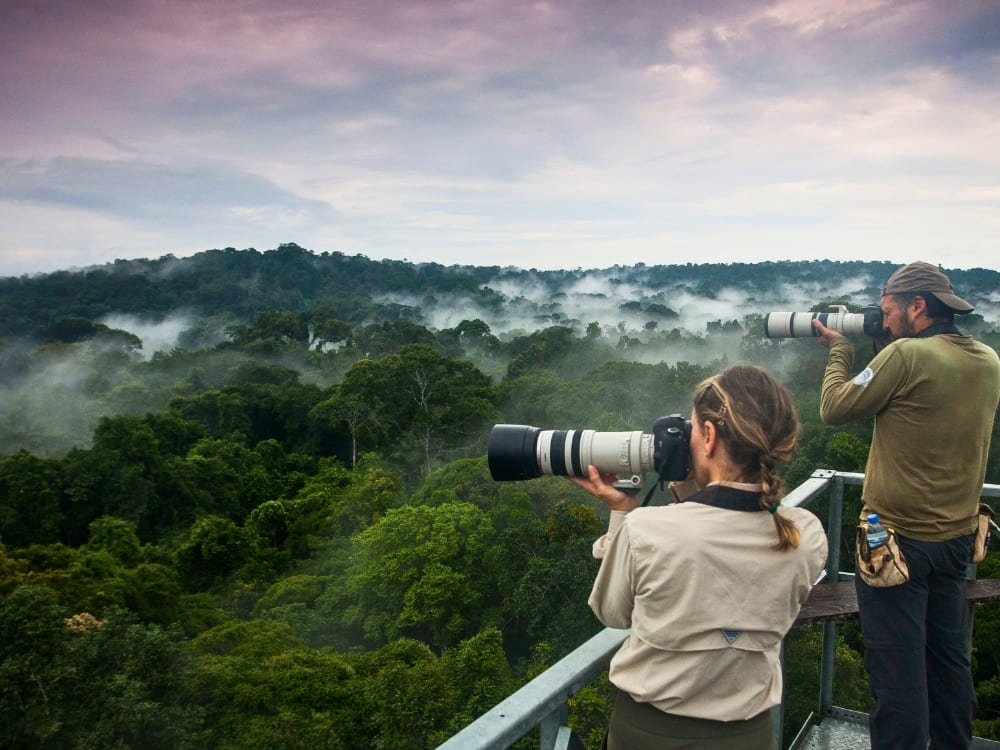
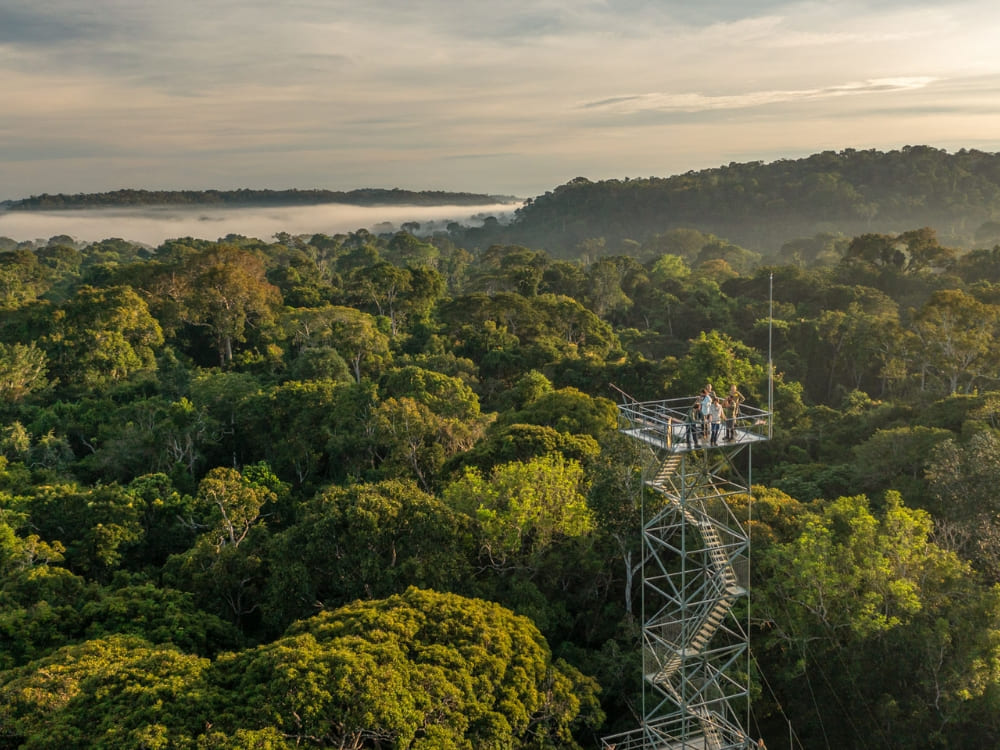
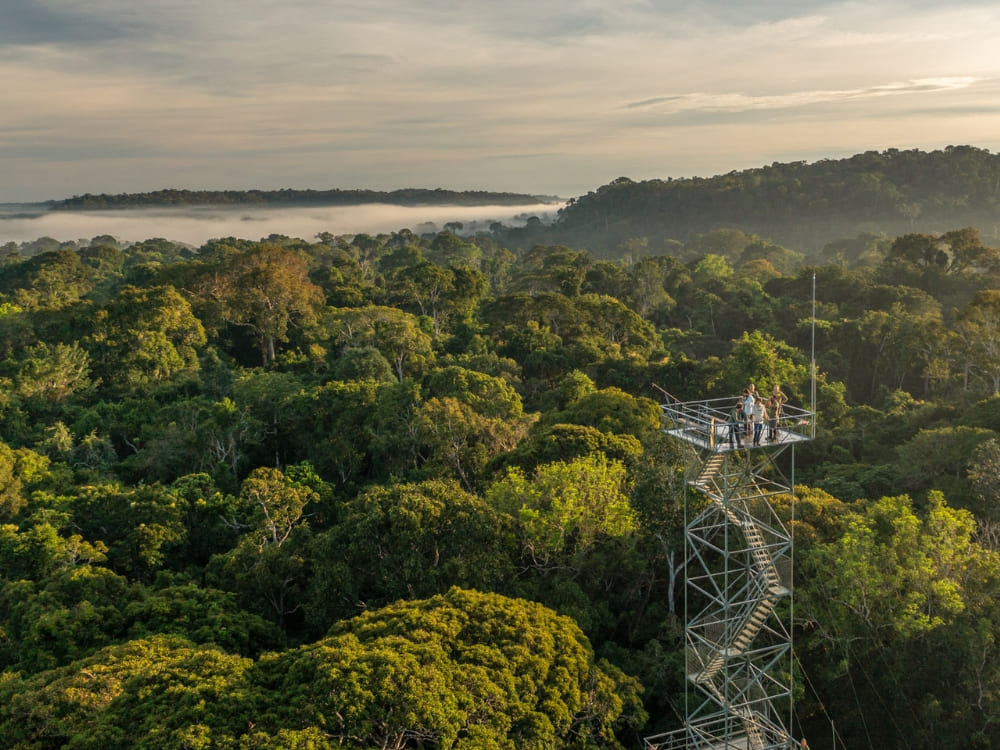
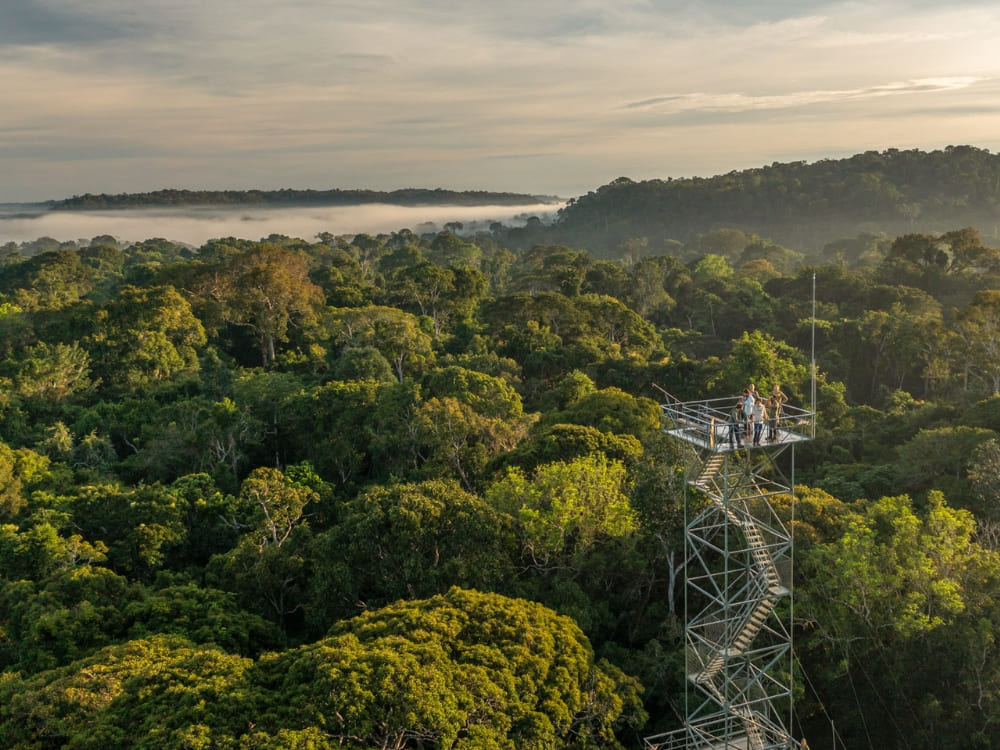
    Tourists stand on an observation tower above the canopy at Cristalino Lodge, a top Amazon rainforest hotel.
    .

    Cristalino Lodge is located on a private natural reserve in the southern Amazon. Providing the best stay experiences and following protocols to preserve the forest, it’s considered one of most notorious ecolodges in the world by National Geographic.

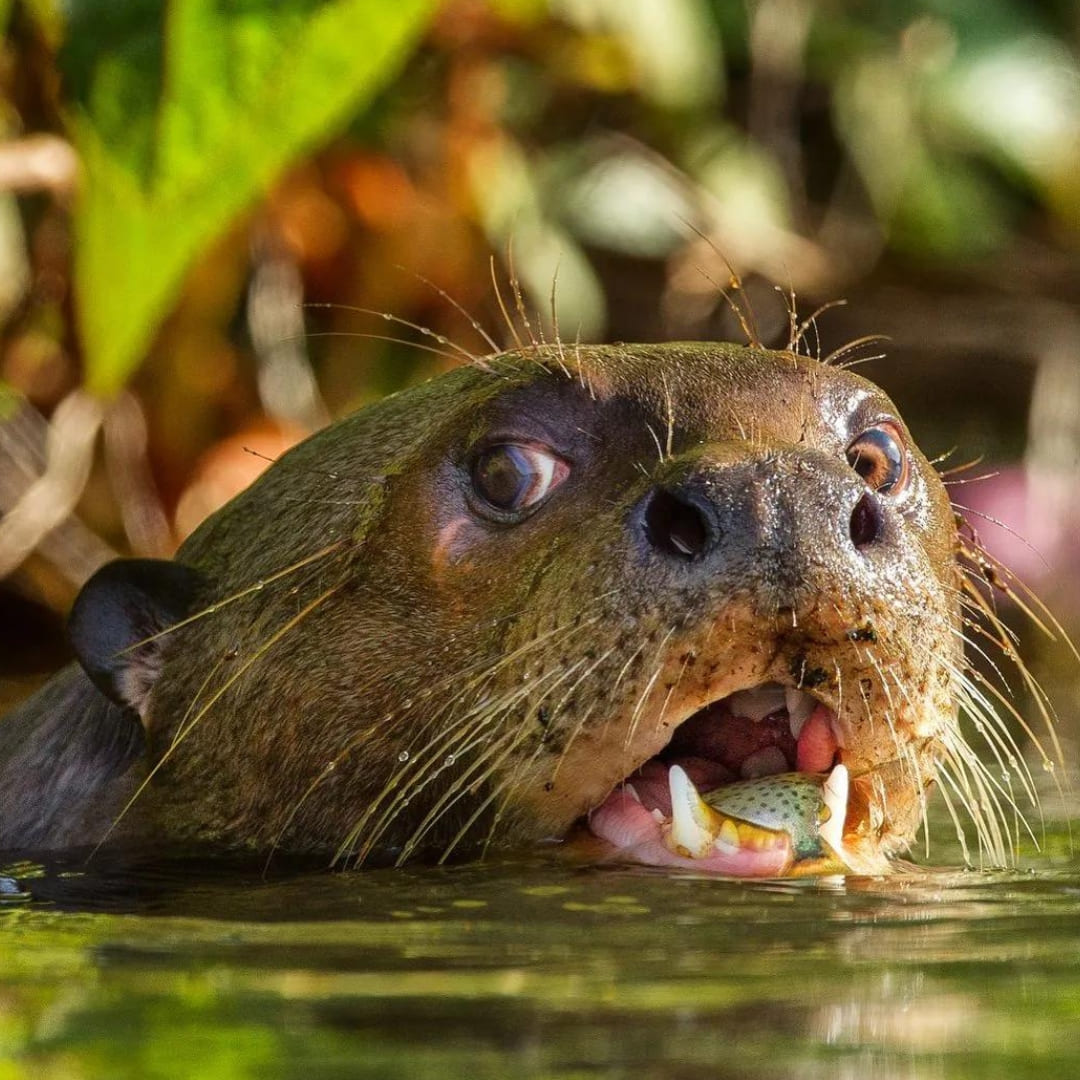
    The Cristalino RPPN (Private National Heritage Reserve) is the second largest private reserve in the rainforest, ranging 27,000 acres — twice the size of Manhattan Island (NY). The rich fauna stands out: over 600 species of birds and dozens of mammals, including monkeys, giant river otters, peccaries and tapirs.

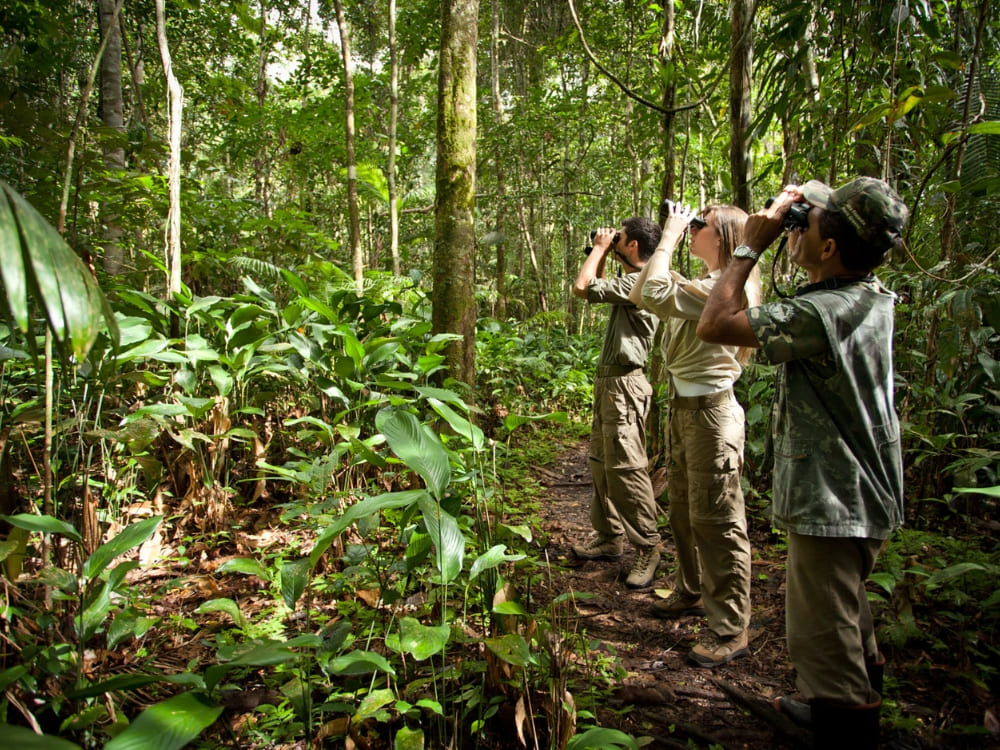
    If you adore birdwatching or any kind of wildlife watching, then you’ll go crazy over the 50-meter (164 ft) observation towers that offer a mesmerizing view of the forest. Sunrises and sunsets from this height are life-changing!

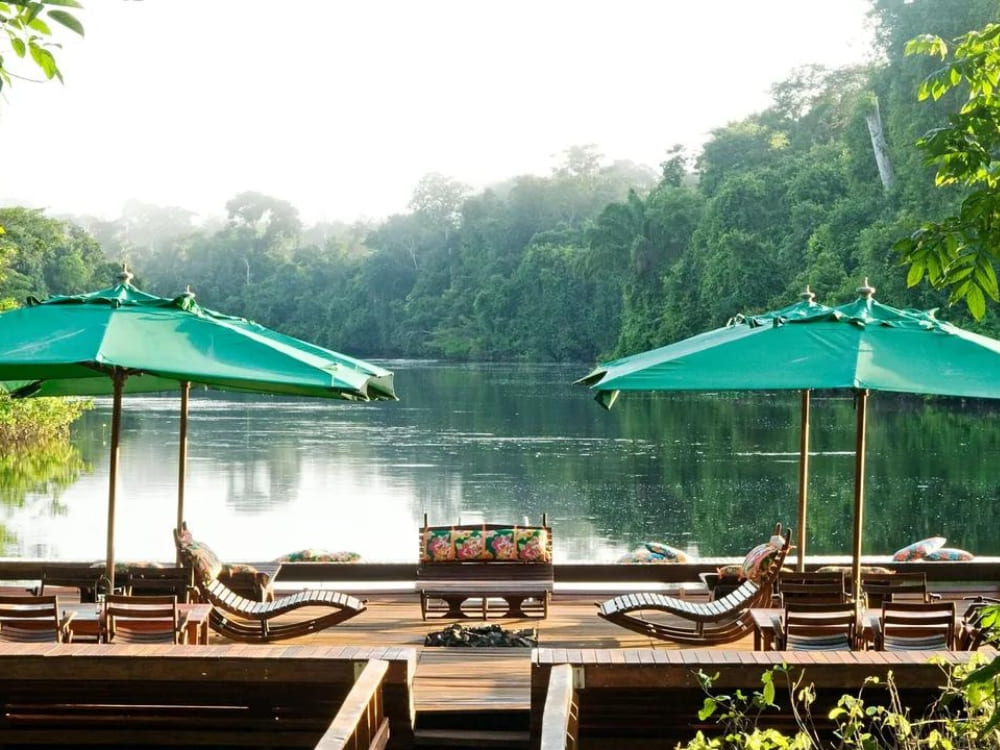
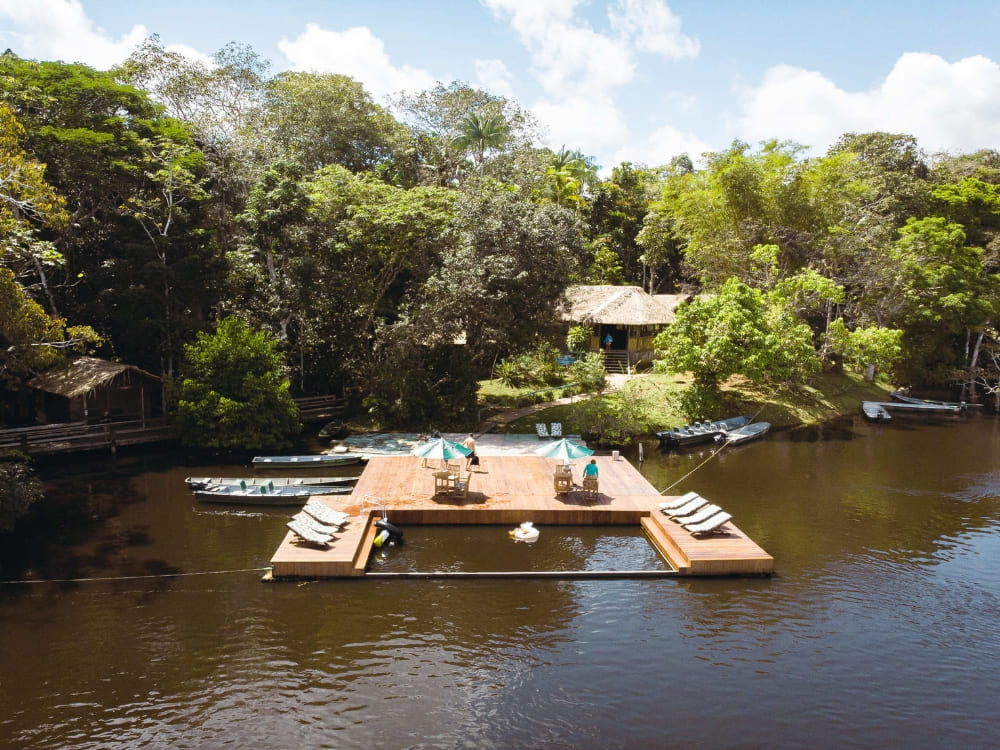
    After a full day of hiking or canoeing on Teles Pires and Cristalino rivers, guests go back to luxury facilities, including sophisticated bungalows and elegant common areas (reading and conferences rooms, a local cuisine restaurant, a bar and the beloved floating deck).

    • Location: Alta Floresta, Mato Grosso
    • Access: 40-minute drive from Alta Floresta + boat trip
    Lounge chairs and green umbrellas on the floating deck at Cristalino Lodge, an amazing Amazon eco lodge in Brazil.
    .

    👉 Read more: How to get to the Amazon Rainforest in Brazil?

    Anavilhanas Jungle Lodge

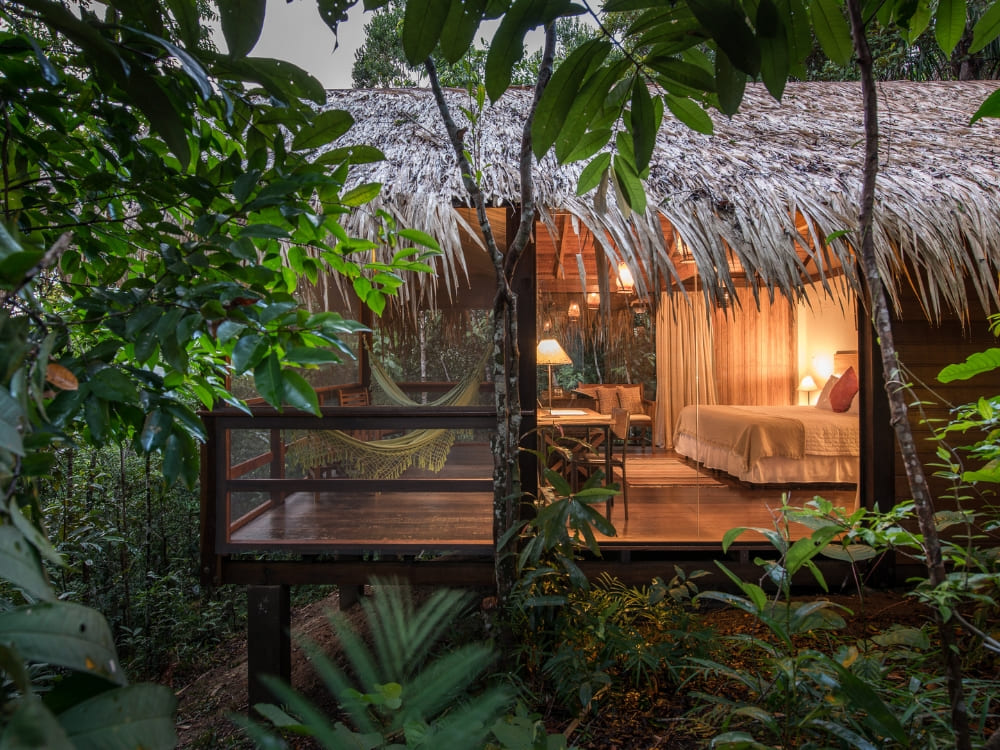
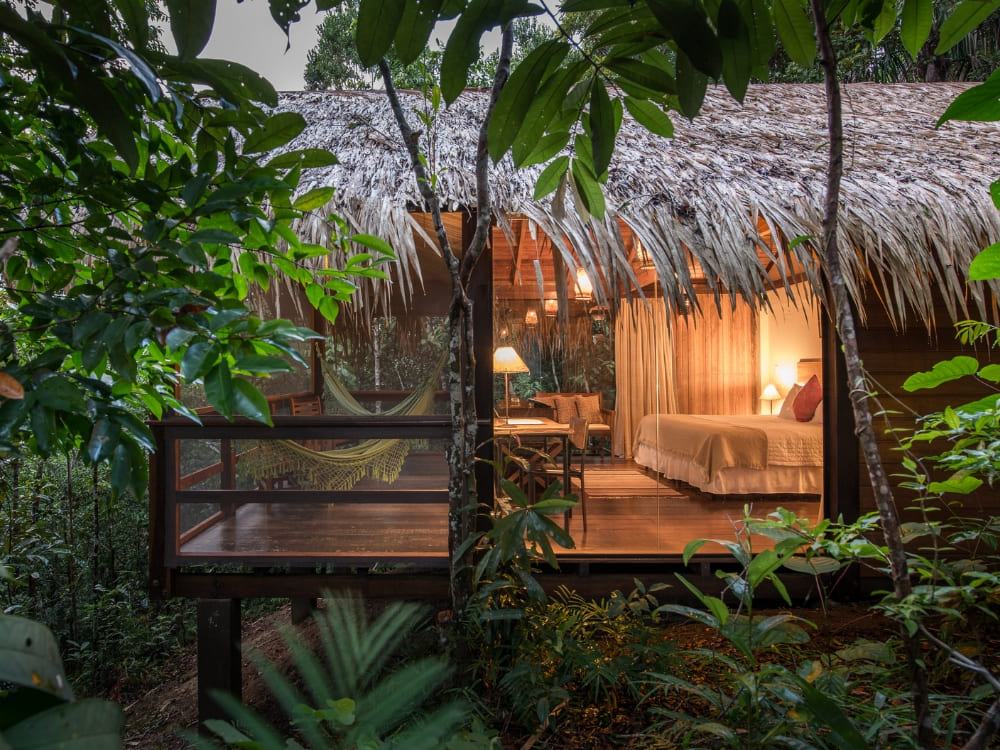
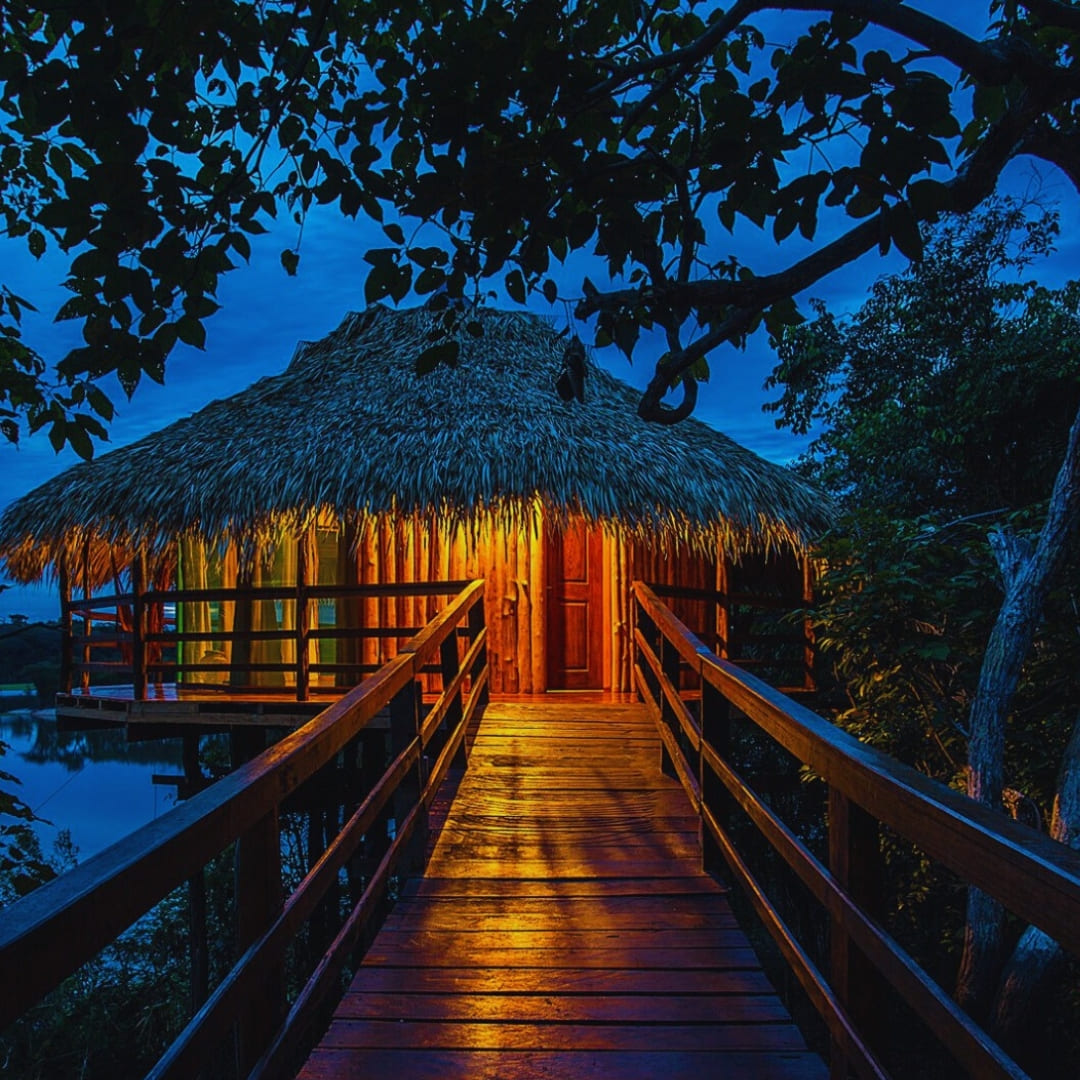
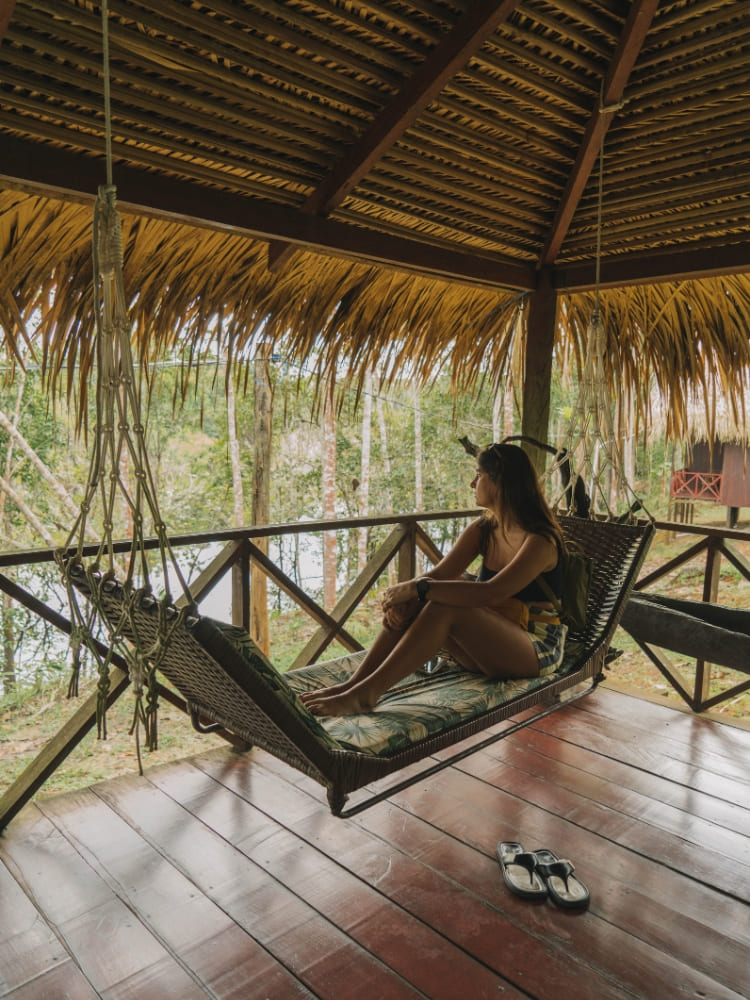
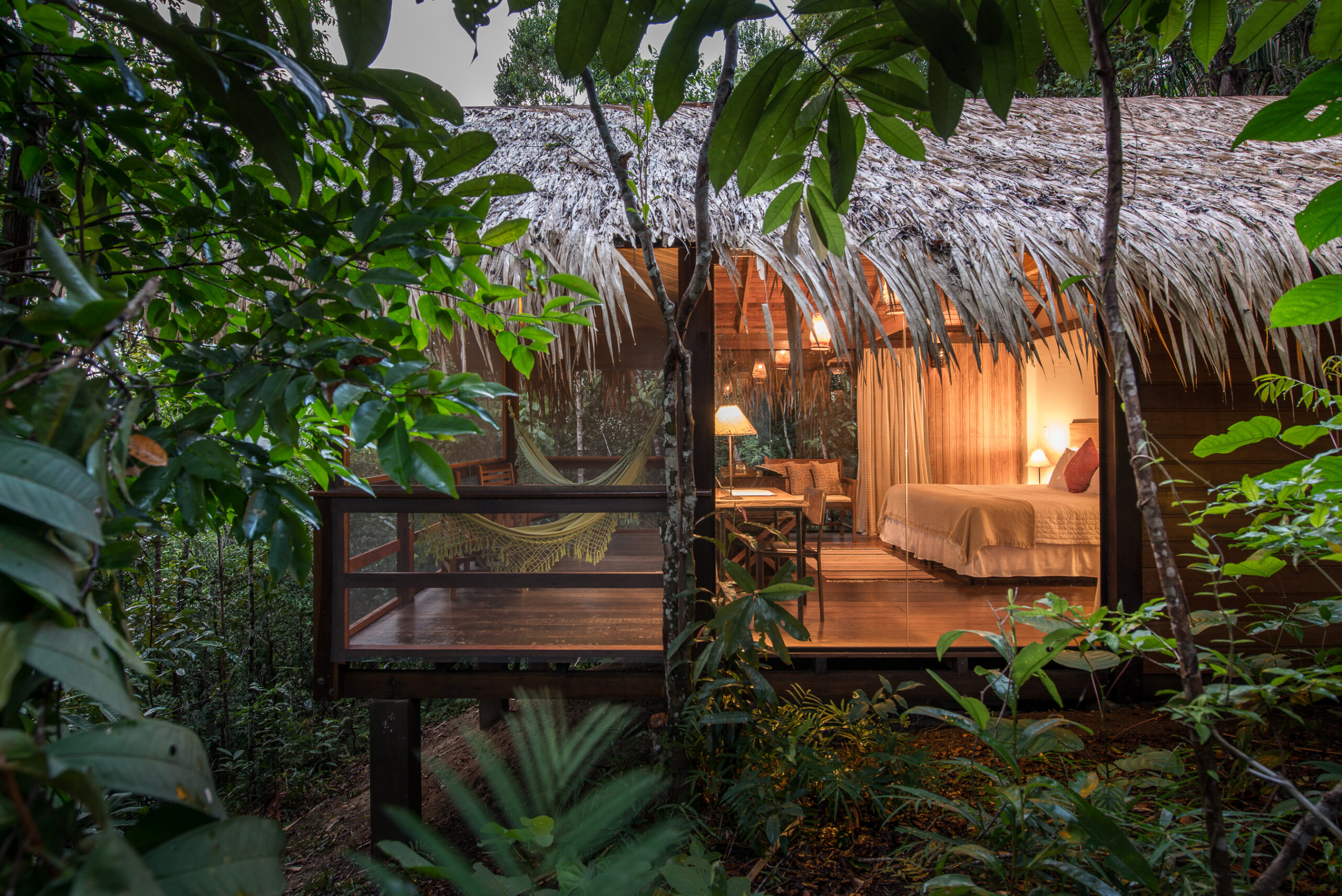
    A refined bungalow with a thatched roof and a hammock on the balcony at Anavilhanas Jungle Lodge in Brazil.
    .

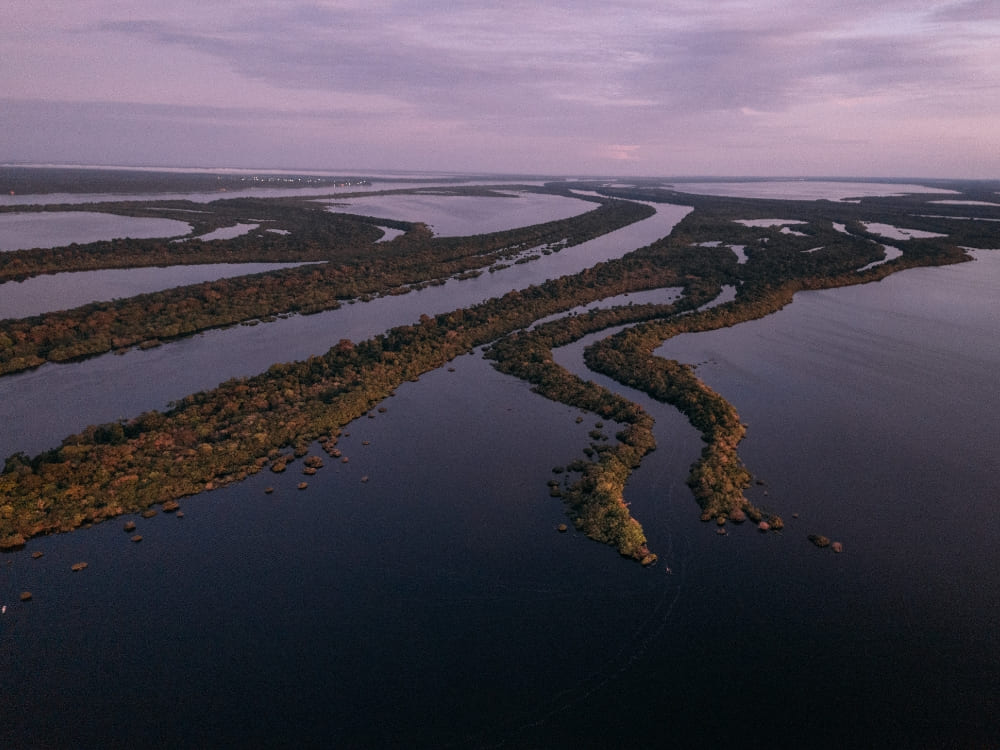
    Anavilhanas Jungle Lodge could be named one of the finest Amazon lodges in Brazil simply for its location — in the heart of the Anavilhanas National Park, the world’s second-largest river archipelago —, but there’s much more to this extraordinary place.

    Create unforgettable memories by joining adventure-packed activities, such as hiking, boat rides, recreational fishing, night expeditions, cave exploration, sunset tours, etc. Keep your eyes open to spot caimans, colorful macaws, friendly river dolphins and other fascinating creatures!

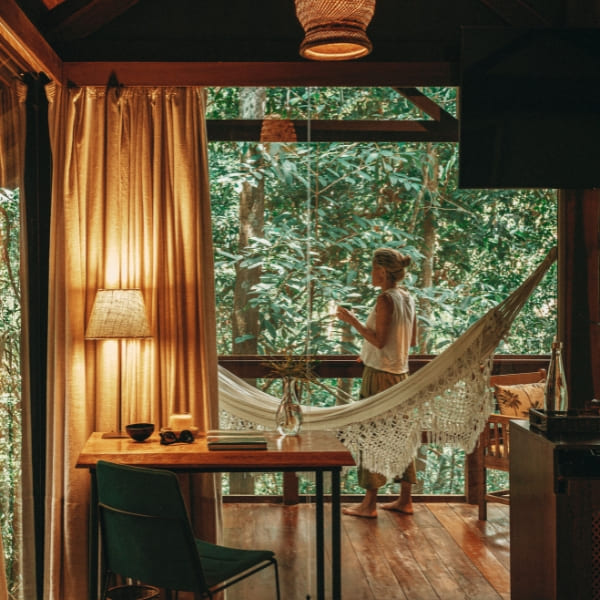
    In terms of facilities, this Amazon jungle hotel has it all: refined bungalows and chalets with TVs, minifridges, air conditioning, Wi-Fi connection, hot showers and private balconies with panoramic views.

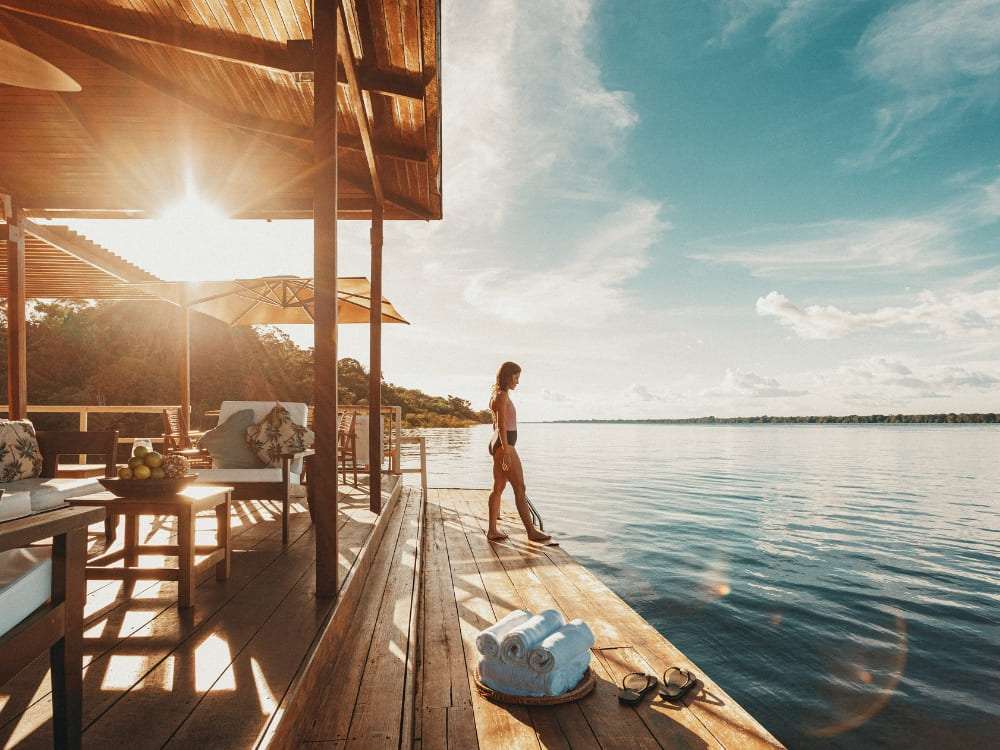
    You can also swim in the pool, go to the gym, get a relaxing massage, eat delicious Brazilian dishes, or have a drink at the floating bar. Who knew the Amazon could be so luxurious?

    • Location: Novo Airão, Amazonas
    • Access: 3 hours from Manaus (road + boat)
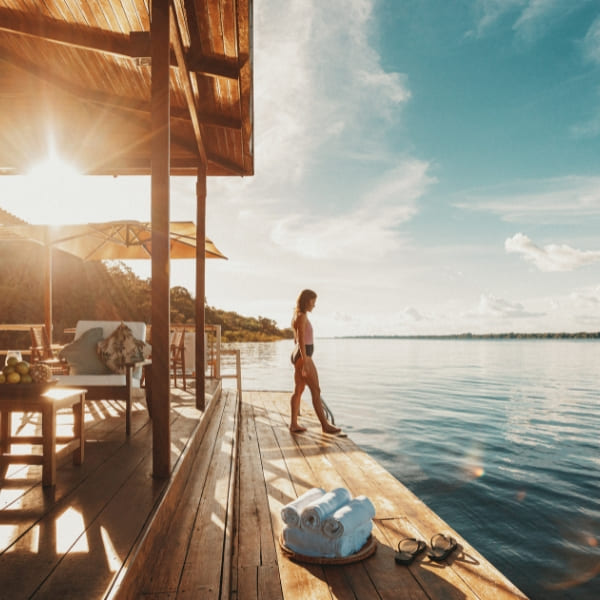
    A woman relaxes on a wooden floating deck over the river at Anavilhanas Jungle Lodge, one of the best Amazon lodges in Brazil.
    Photo: Felipe Castellari

    Juma Amazon Lodge

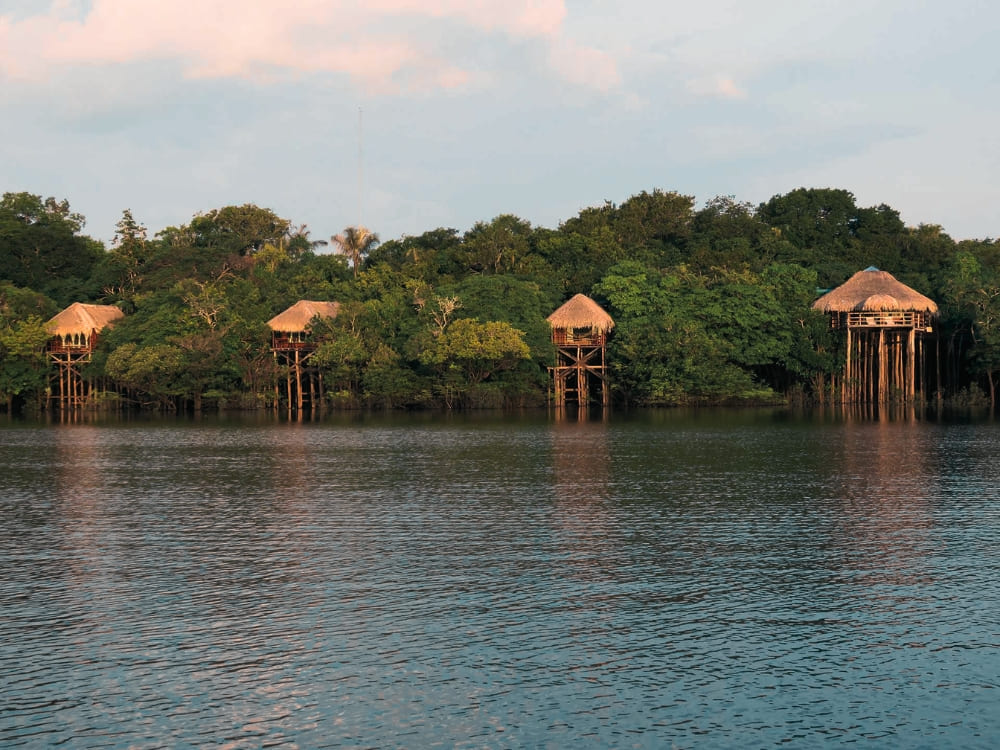
    High-end bungalows built on tall stilts over the river at Juma Amazon Lodge, a premier Amazon jungle lodge in Brazil.
    .

    When we mention the Amazon Rainforest hotels, Juma Amazon Lodge is a must-visit place for every nature lover.

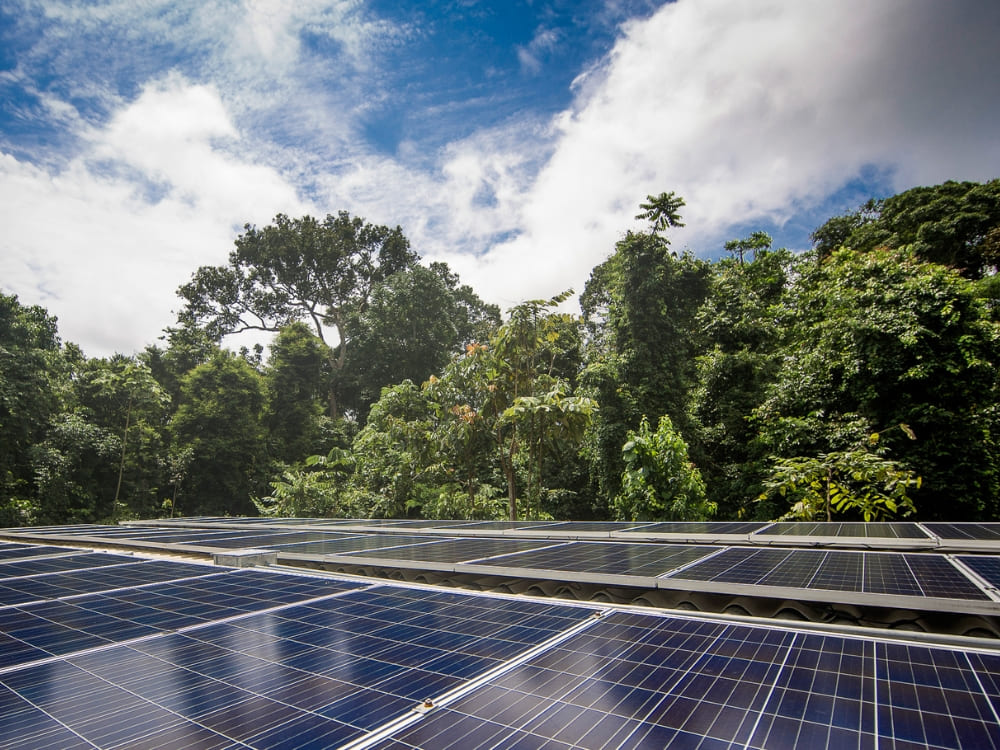
    Based on sustainable practices, like solar energy, wastewater treatment and recycling, Juma is eco-friendly, but doesn’t leave a high-end experience behind. Wonderful accommodations are built on stilts nearly 15 meters (49 ft) high. The gorgeous bungalows are in the treetops, which offers an immersive experience and helps to avoid the water during seasonal floods.

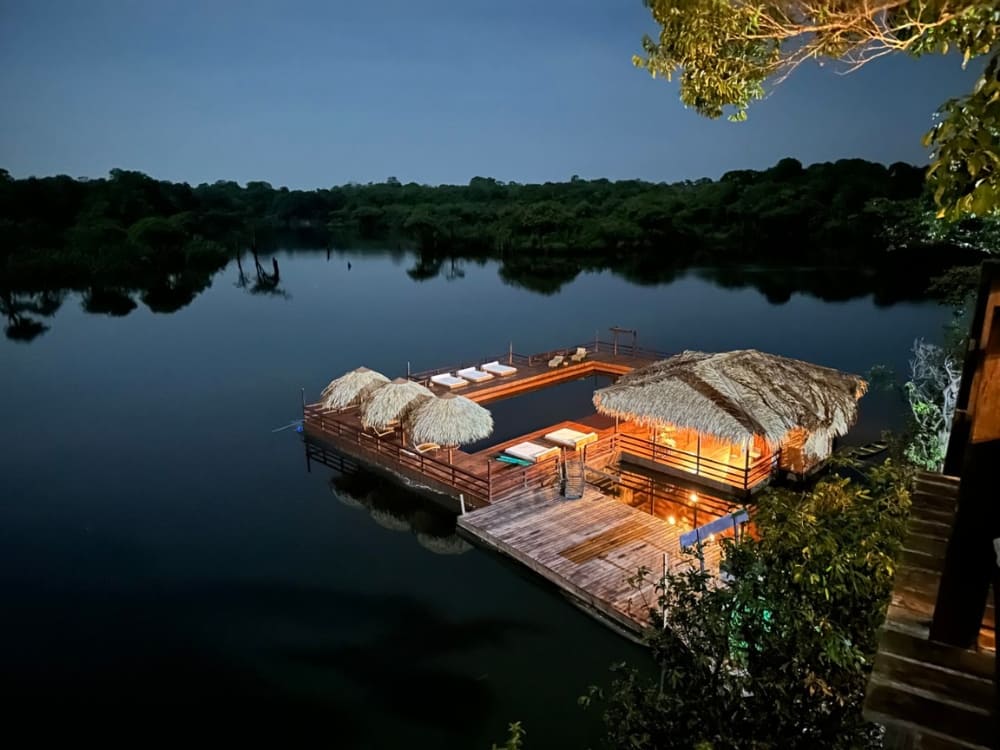
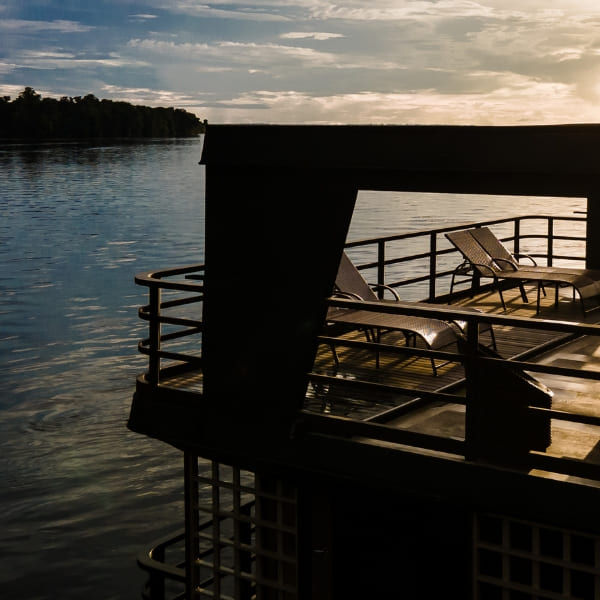
    Enjoy the hotel’s common areas by drinking at the bar, eating traditional Brazilian meals at the restaurant, swimming in the pool or getting a tan at the floating deck.

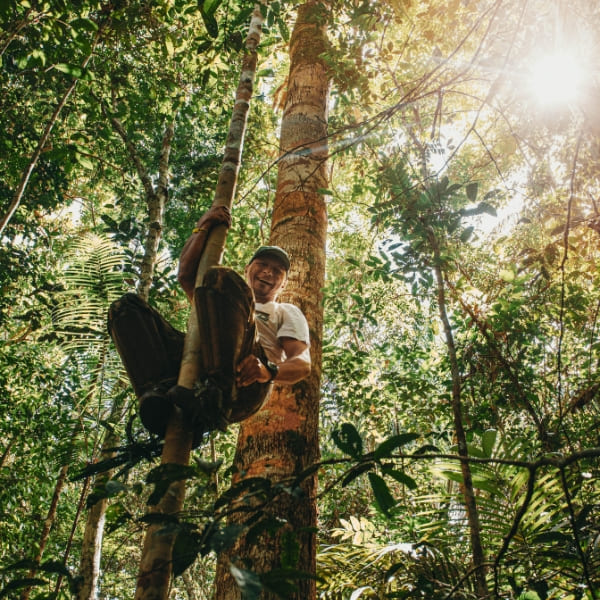
    Thirsty for some adventure? Hike through the jungle, climb trees, go fishing for piranhas, canoe on Amazonian rivers, sign up for night tours, visit indigenous communities and have fun with other activities that will make your heart beat fast!

    👉 Read more: When is the Best Time to visit the Amazon Rainforest in Brazil

    • Location: Autazes, Amazonas
    • Access: 45-minute boat ride from Manaus + 1-hour drive + 1-hour boat trip
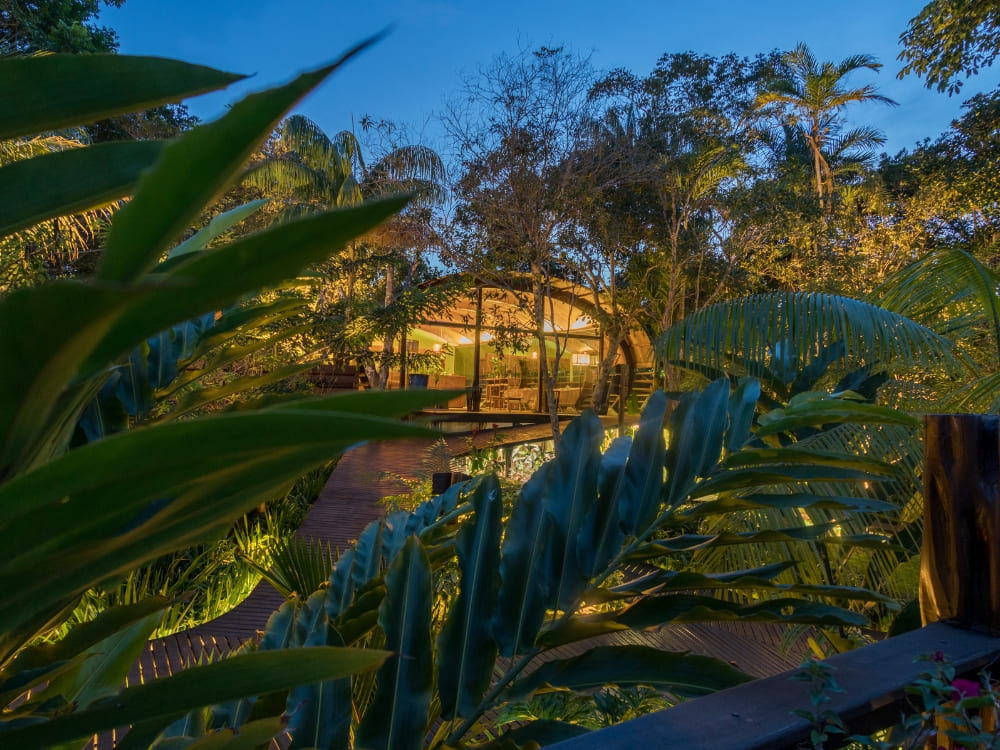
    A floating deck and pool illuminated at night at Juma Amazon Lodge in the Amazon rainforest.
    .

    Mirante do Gavião

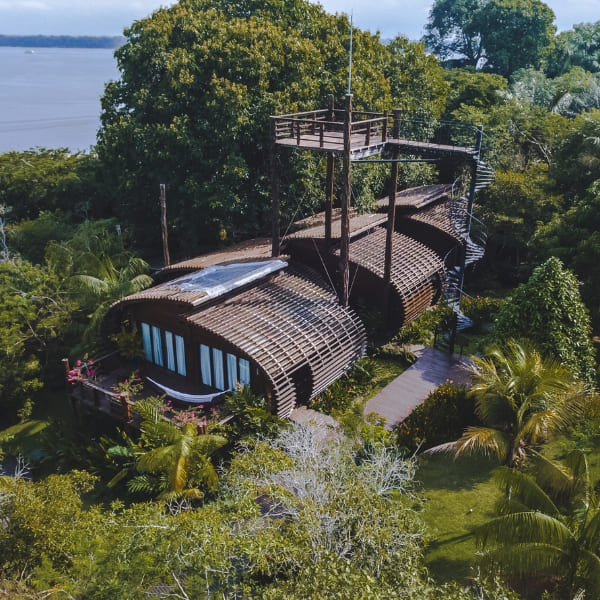
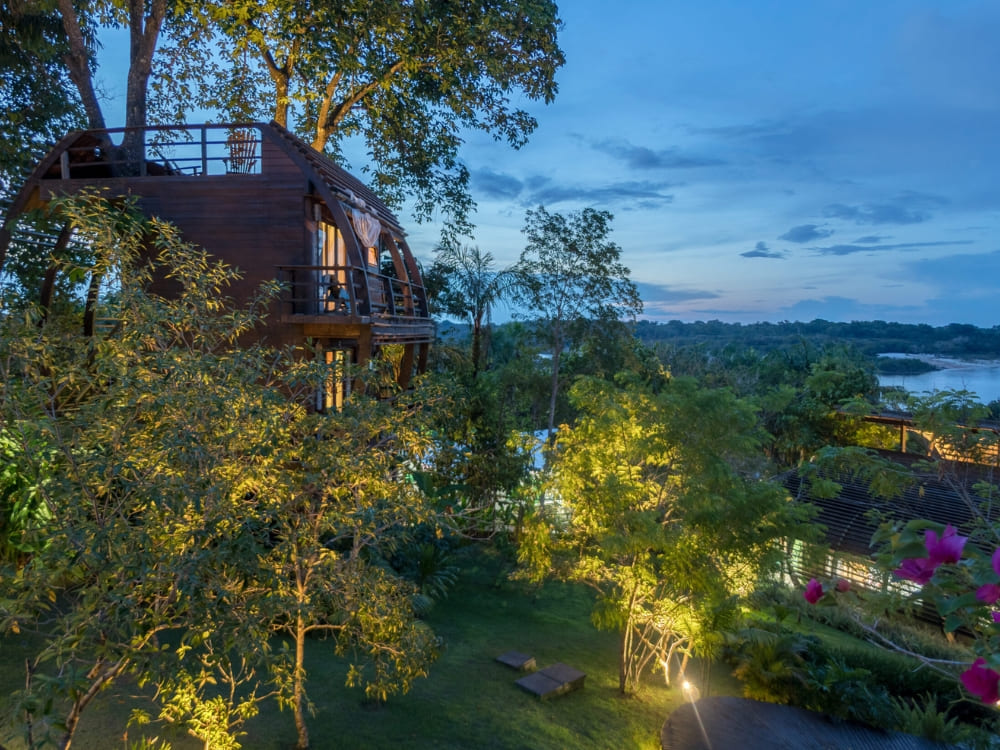
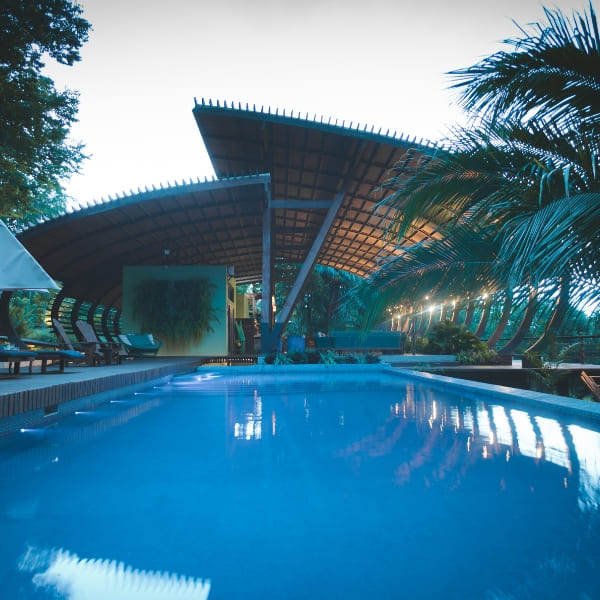
    The unique wooden architecture of Mirante do Gavião lodge illuminated at dusk, representing one of the best Amazon jungle lodges in Brazil.
    .

    Your jaw will drop when you see Mirante do Gavião with your own eyes. The striking architecture design uses wooden arrangements to resemble the wings of a bird of prey. It’s a nod to the lodge’s name, which means “hawk’s lookout”. Clever, huh?

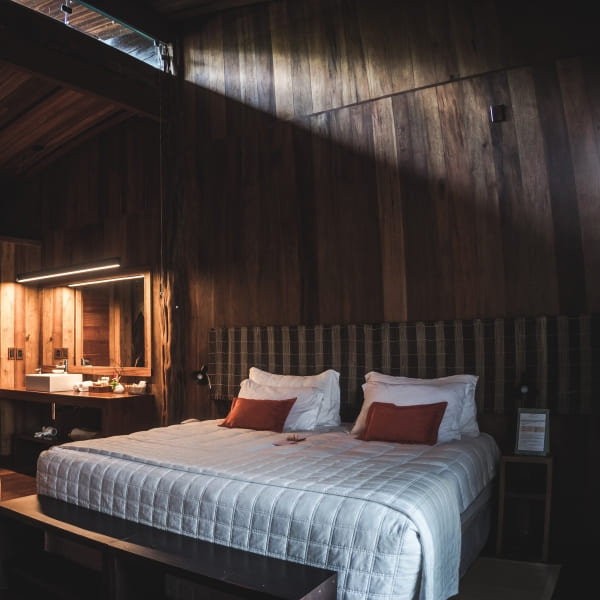
    There are three types of accommodations (Premium, Luxury and Tree House), while each room is equipped with air-conditioning, comfy beds, a spacious bathroom and a minibar. Depending on the category, you’ll also find private balconies, hammocks and hot tubs.

    Need some action? No problem! This ecolodge has plenty of activities: hiking, water trails, night tours to spot animals, canoeing, cave exploring, and visiting local villages and indigenous communities. 

    When you’re not out and about in the forest, you can have fun in the gaming room, relax in the wellness area, jump in the pool or eat a delicious meal made with fresh, local ingredients at Camu-Camu, the lodge’s fine dining restaurant. 

    • Location: Novo Airão, Amazonas
    • Access: 3 hours from Manaus (road + boat)
    A luxury room with a large glass window facing the forest at Mirante do Gavião in the Amazon rainforest.
    .

    👉 Read more: Best Amazon River Cruises in Brazil

    Uakari Lodge

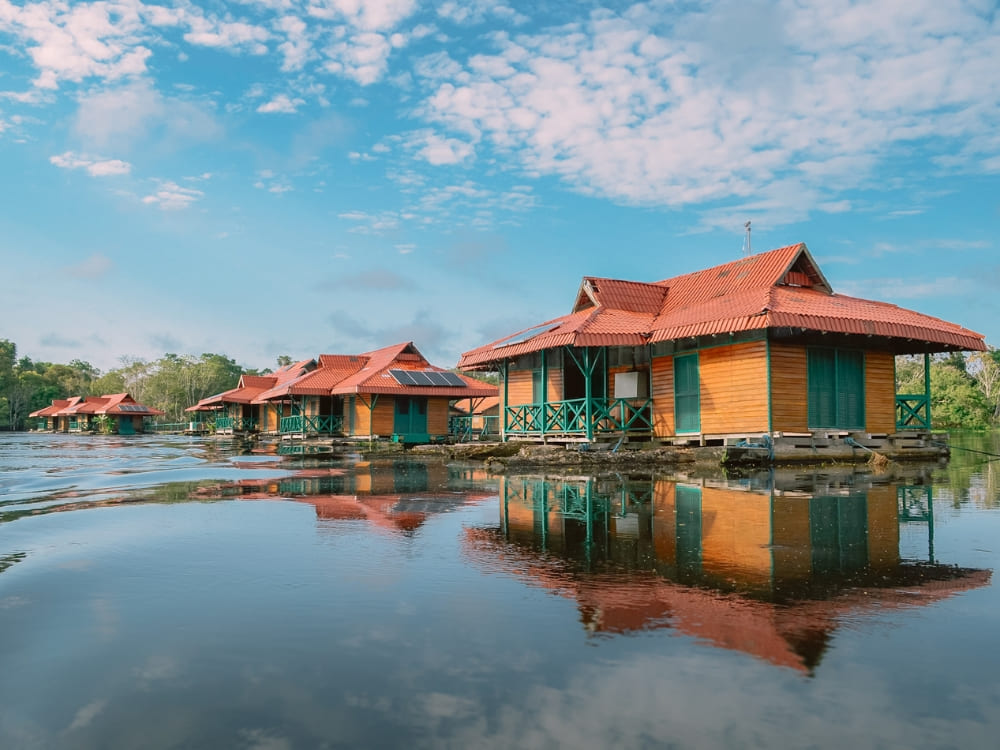
    Floating bungalows on the river water at Uakari Lodge, an immersive Amazon rainforest lodge experience.
    .

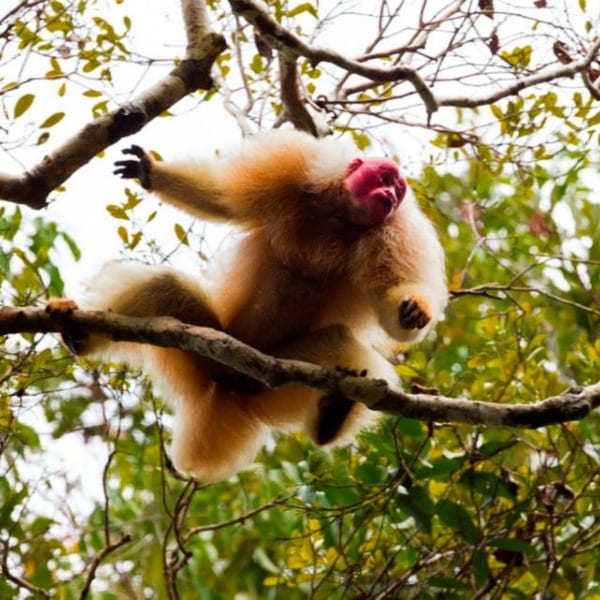
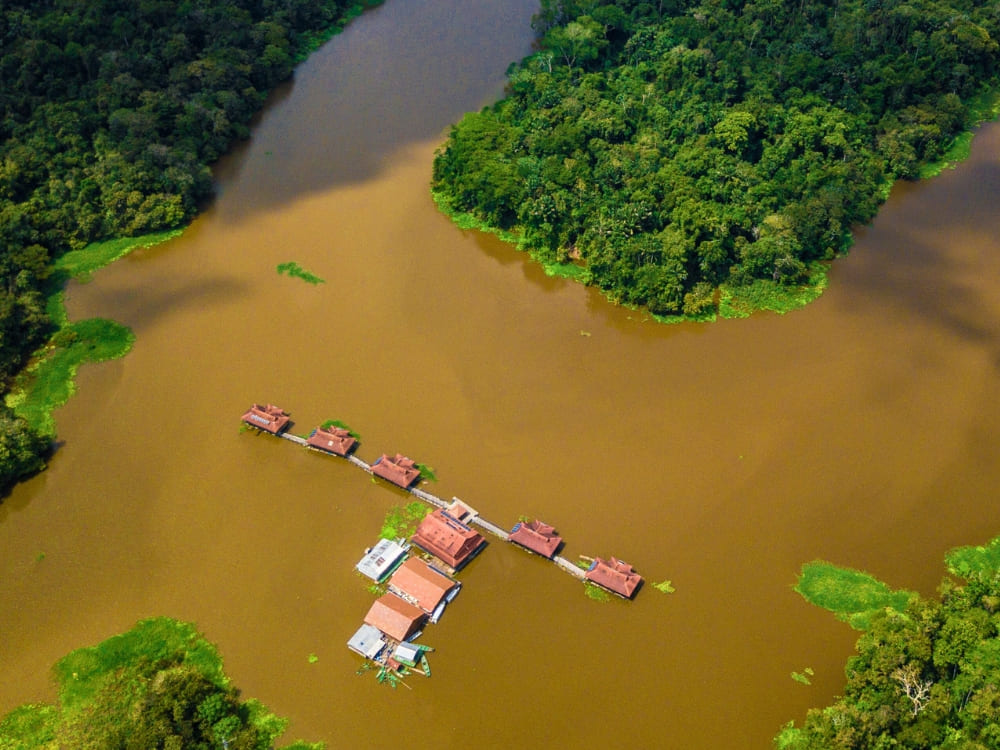
    There is nothing like Uakari Lodge. Safely built on stilts in the middle of the Mamirauá Sustainable Development Reserve, it floats on the waters of the river, giving it a deeper sense of total immersion in nature. One of the best Amazon jungle lodges in Brazil, Lonely Planet included it in a list of unmissable experiences in the rainforest.

    Uakari’s sustainable practices are not only directed to the environment (solar energy, rainwater harvesting, recycling…), but they’re also extended to the communities. Operated by the Mamirauá Institute and local leaders, this Amazon Rainforest hotel generate income for riverside groups and create incentives for the conservation of the area’s natural resources.

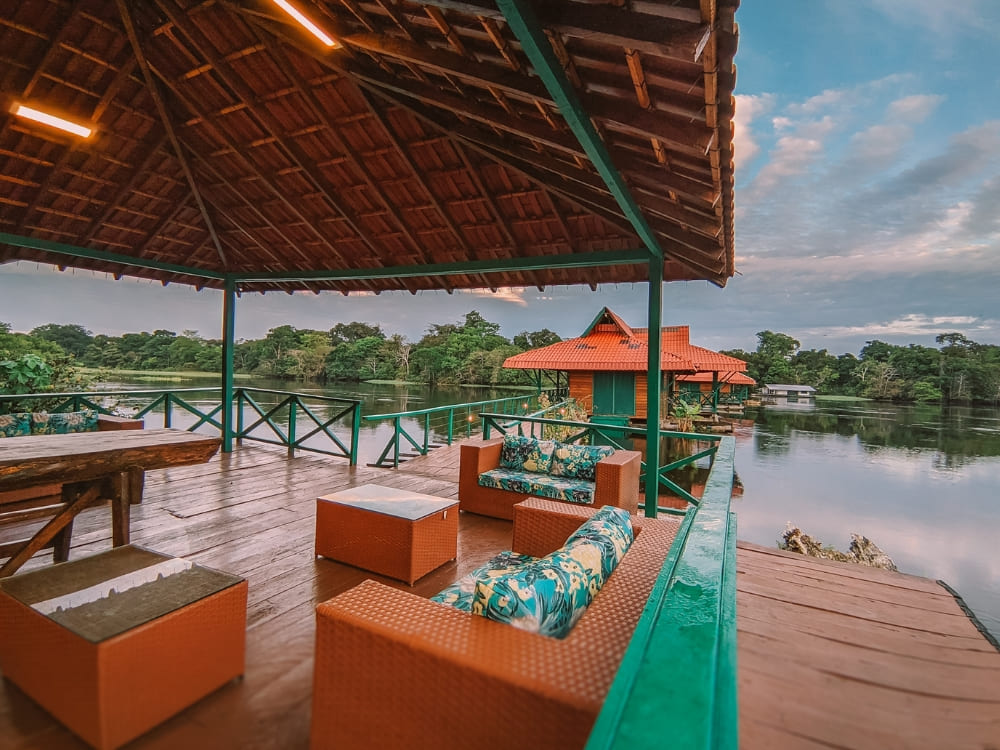
    In addition, beautiful accommodations await. The floating structure includes five bungalows with two suites each — facing the river, they allow fantastic views of the forest. Outside the rooms, guests can enjoy the lovely common areas (deck, restaurant, bar, video room and even a library).

    The itinerary consists of a wide range of activities, including night tours, hiking, fishing, visiting local villages, canoeing, boat tours for wildlife watching and much more! 

    • Location: Tefé, Amazonas
    • Access: Flight from Manaus to Tefé + 1 hour 30 minute boat trip
    A wooden deck with comfortable sofas overlooking the floating bungalows and river at Uakari Lodge in Brazil.
    .

    Amazon Turtle Lodge

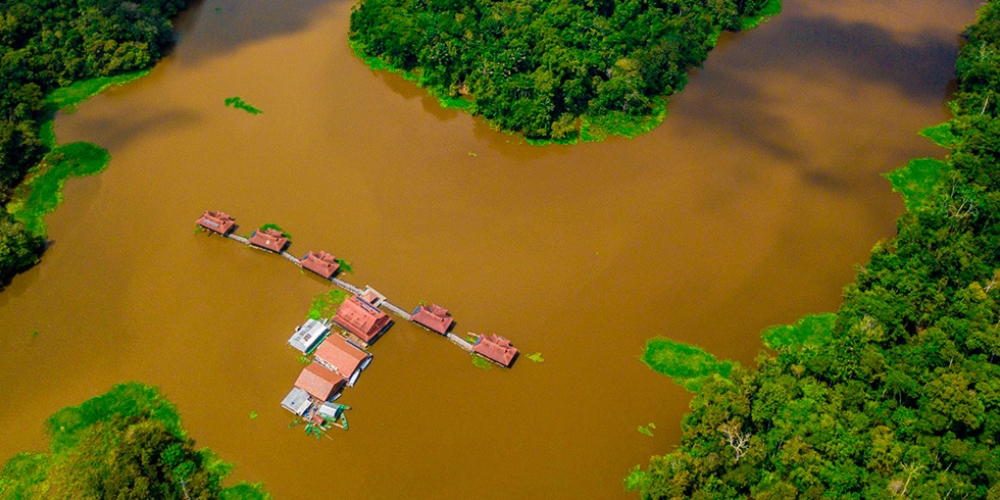
    Aerial view of Amazon Turtle Lodge located by the river and deep inside the Brazilian Amazon rainforest.
    .

    Looking for something more affordable? Amazon Turtle Lodge is an excellent option for people who want to spend less. But make no mistake: its budget-friendliness does not mean you won’t have the most incredible experiences in the forest!

    Near the Guaporé River, the location is perfect to dive deep into nature. Charmingly picturesque, the lodge has three types of bungalows: Rustic, Masonry and Superior — all with comfortable beds, air-conditioning, and private bathrooms. You can also enjoy your meals at the restaurant, get a drink at the bar or have fun in the gaming room or the TV lounge.

    The generous list of activities is another reason why this is one of the most outstanding Amazon ecolodges in Brazil: kayaking, stand-up paddling, canoeing, hiking, birdwatching, wildlife spotting, piranha fishing, boat riding to the Meeting of Waters, visiting the local fruit market (Ceasa) and touring nearby villages.

    • Location: Careiro, Amazonas
    • Access: 3h30 hours from Manaus (road + boat)
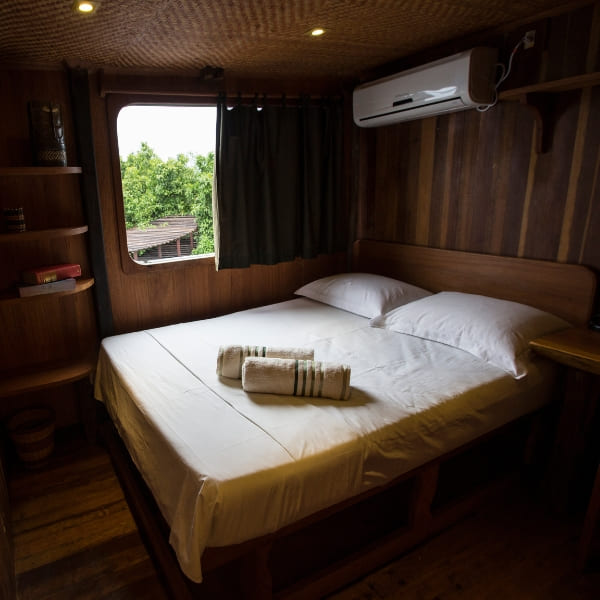
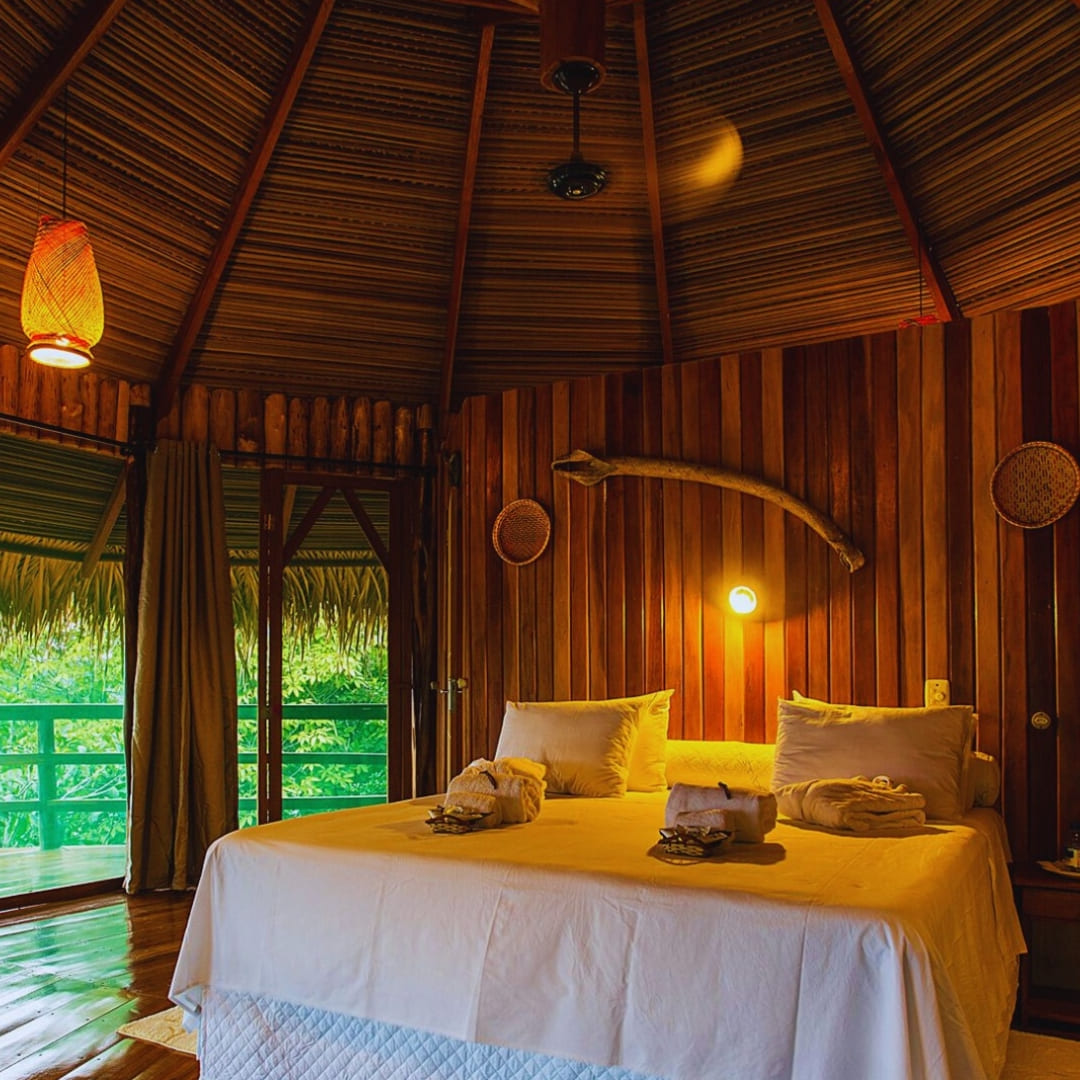
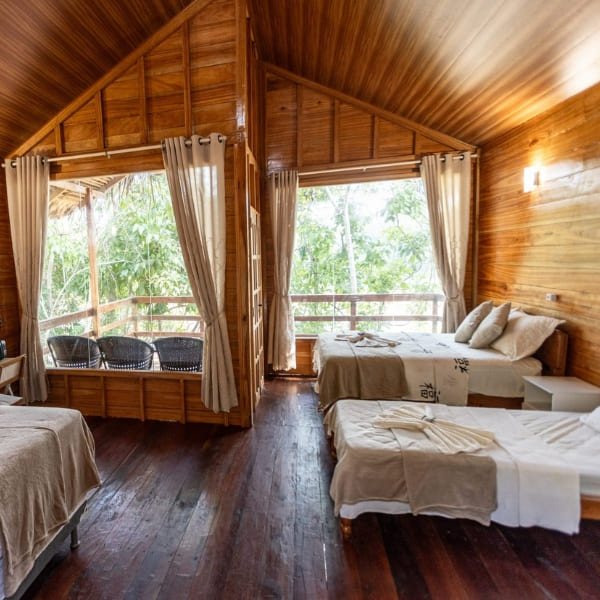
    A comfortable and affordable bungalow bedroom with two beds at Amazon Turtle Lodge in Brazil.
    .

    Dolphin Lodge

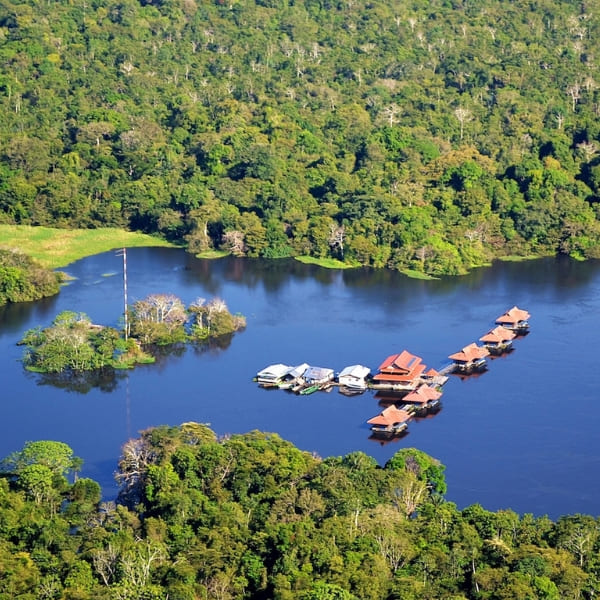
     Aerial view of Dolphin Lodge showing its floating deck, boats, and chalets surrounded by the Amazon forest.
    .

    Living up to its name, Dolphin Lodge is located in a preserved area where dolphins are often spotted, as well as caimans, monkeys, birds, and other beautiful species.

    Taking ecotourism to a whole other level, sustainable actions are a massive part of the place, such as employing locals, excursions of low environmental impact, recycling, reduced use of plastics and protocols to preserve the wildlife.

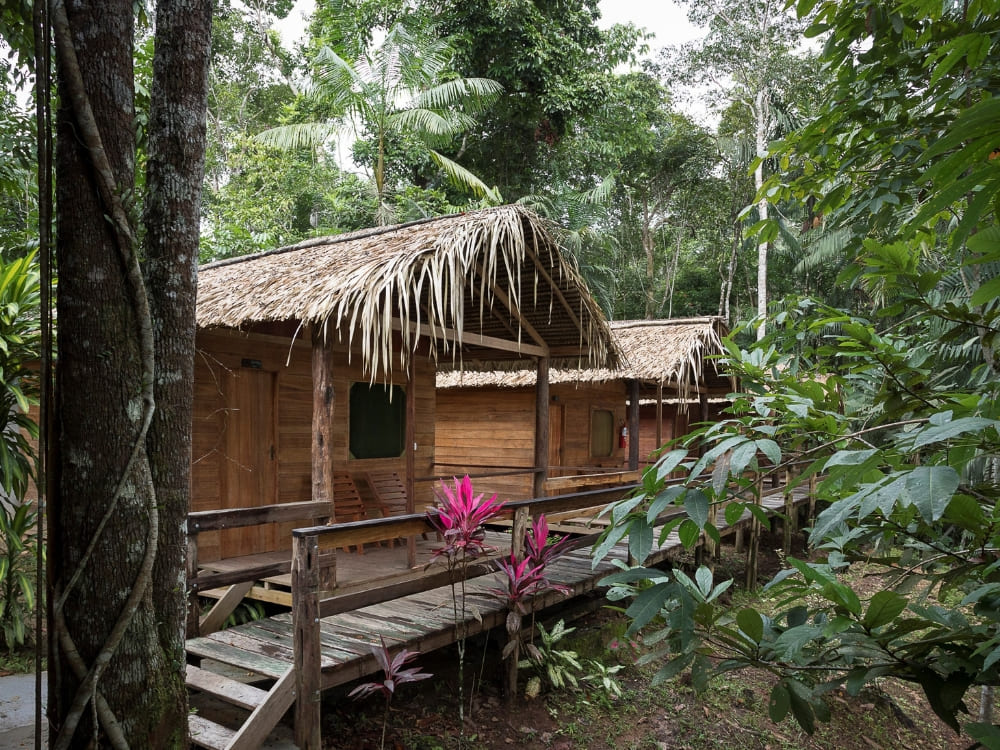
    The hotel has six chalets on land and four bungalows on the Memori River, all of them with stunning views. Guests can relax in the straw hut with hammocks and eat delicious Brazilian food served daily by the kitchen staff.

    Activities include jungle hiking, wildlife watching, fishing, boat tours, survival lessons, camping in the forest and visiting local communities. 

    • Location: Careiro, Amazonas
    • Access: 3 hours from Manaus (road + boat)
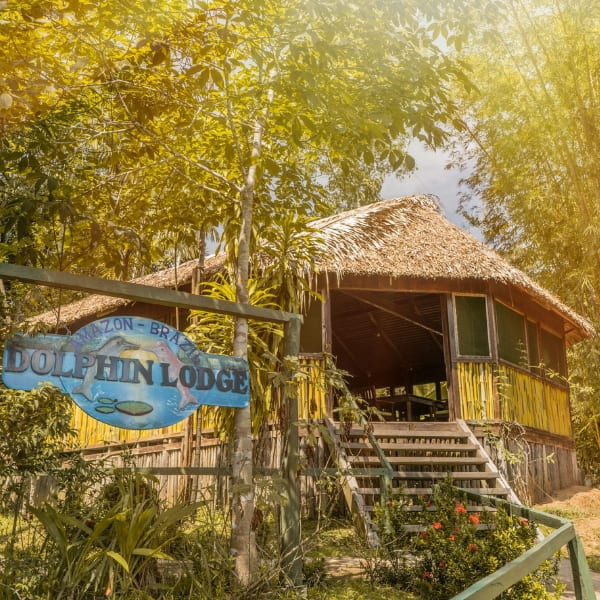
    Wooden chalets with thatched roofs connected by a walkway at Dolphin Lodge, a great Amazon rainforest hotel.
    .

    How much does it cost to stay at an Amazon jungle lodge in Brazil?

    The average cost to stay at an Amazon Rainforest hotel is R$ 11.000 (approximately US$ 2,130 and € 1,790) per person. However, prices vary according to accommodation category, season, trip duration, etc.

    Check out more information about Brazil’s best Amazon jungle lodges:

    LODGE HIGHLIGHTS DURATION STARTING PRICE*
    Cristalino Jungle Lodge High-end stay, located near Cristalino and Teles Pires rivers, observation towers for birdwatching and wildlife watching, hiking, canoeing, boat trips. 5 days US$ 3,380
    Anavilhanas Jungle Lodge Sophisticated stay, expeditions (Anavilhanas, Negro River and Madadá Caves), wildlife watching, hiking, canoeing, boat trips, fishing, archery lessons. 6 days US$ 3,230
    Juma Amazon Lodge Comfortable stay, night tours, hiking, canoeing, fishing, sunrise contemplation, Sumaúma trees, visiting local communities. 5 days US$ 2,180
    Mirante do Gavião Luxury stay, expeditions in Anavilhanas and Negro River, hiking, night tours, wildlife watching, aquatic trails, sunset contemplation, visiting locals. 5 days US$ 2,430
    Uakari Lodge Floating ecolodge (Mamirauá Reserve), hiking, canoeing, interacting with dolphins, night tours, fishing, visiting locals. 5 days US$ 1,150
    Amazon Turtle Lodge Affordable stay, hiking, canoeing, fishing, birdwatching, sunset tours, Meeting of Waters, visiting caboclo communities. 3 days
    4 days
    5 days
    US$ 600
    Dolphin Lodge Meeting of Waters, jungle trekking, night safari, sunrise contemplation, visiting local communities. 3 days
    4 days
    5 days
    US$ 425

    *Per person, based on double occupancy in group departures. Prices may vary depending on season and availability. Exchange rate as of February 12th, 2026; subject to change.

    Meet the best Amazon jungle lodges in Brazil with PlanetaEXO

    See how you don’t have to choose between adventure and comfort? With these incredible jungle hotels, you can have the best of both worlds in one single vacation!

    As an expert in Amazon Rainforest tours in Brazil, PlanetaEXO partners with esteemed local operators and handpicks the finest trips for sustainable and pleasurable experiences in some the most beautiful places in the country. Contact us now!
  • COP30 Brazil: Sustainable Tourism’s Impact on Climate Action

    COP30 Brazil: Sustainable Tourism’s Impact on Climate Action

    Sustainable tourism can be part of the solution to the climate crisis. Learn how ecotourism, especially community-based models, is playing a role in the COP30 agenda.

    Taking place from 10 to 21 November 2025 in Belém, Pará, COP30 Brazil is expected to mark a turning point in global climate discussions and in how we think about travel. Beyond negotiations, the event is also a chance to experience nature-based solutions already in motion. Tourism at COP30 Brazil is not a side note: ecotourism is now a key topic, showing how conscious travel can support climate action.

    Did you know that tourism accounts for about 8% of global greenhouse gas emissions, mainly due to air travel and large-scale operations? Shocking, isn’t it? Ecotourism, on the other hand, operates on a smaller scale, with less environmental impact and provides local benefits.

    We are talking about one of the most practical ways to combat climate change. Sustainable tourism offers tools for both climate adaptation and environmental preservation, not just in Brazil or the Amazon Rainforest, but globally.

    Tourism at COP30 Brazil
    Photo: Marcelo Bonifácio

    In this context, PlanetaEXO curates responsible travel experiences in nature, with a strong focus on the Amazon and community-led ecotourism. It’s a real example of how tourism can drive conservation and local development.

    If you’re curious about how COP30 Brazil connects with your travel choices, keep reading. Below, we explore how ecotourism fits into the climate agenda and why it matters more than ever.

    How Ecotourism Helps Fight Global Warming

    Sustainable tourism has gained increasing recognition in the United Nations (UN) climate summits as a viable and scalable solution for both mitigation and adaptation. It doesn’t replace public policy or systemic change, but it does strengthen what experts call nature-based solutions: strategies that combine environmental protection with community well-being.

    How Ecotourism Helps Fight Global Warming
    .

    The concept of using tourism as a climate solution has evolved considerably since it was first mentioned in 2005. Over the years, major declarations and reports have helped to formalise the role of tourism in sustainable development and environmental resilience. Take a look at them:

    Sustainable Tourism Joins the Climate Agenda

    This discussion began formally at COP11 in Montreal, when tourism was officially acknowledged as a relevant sector in the climate agenda. The conference emphasized its role in biodiversity conservation and poverty reduction, stating that: “tourism can support natural resource conservation and provide biodiversity-friendly livelihoods for Indigenous and local communities.”

    Sustainable Tourism
    Photo: Isadora Sá

    The Year of Sustainable Tourism for Development

    Some years later, in 2017, the UN declared it the International Year of Sustainable Tourism for Development. As a result, tourism was officially linked to the 2030 Agenda for Sustainable Development, with increasing recognition of its role in climate resilience.

    The year emphasized how tourism could contribute to 12 of the 17 Sustainable Development Goals (SDGs), especially in areas like inclusive economic growth, sustainable resource use, and cultural preservation. It also called on governments and industry to promote low-impact travel models and strengthen community-led tourism as a tool for sustainable development.

    The Year of Sustainable Tourism for Development
    Tourism at COP30 Brazil

    Sustainable Tourism pillars 

    At COP26 in Glasgow (2021), the conversation advanced with the launch of the Glasgow Declaration on Climate Action in Tourism, signed by governments, Non-Governmental Organizations (NGOs), and travel companies. This declaration committed the tourism industry to reach net-zero emissions by 2050, with five main action pillars:

    • Measure and reduce carbon emissions from travel and hospitality;
    • Regenerate ecosystems through responsible tourism;
    • Support local economies and community-led conservation;
    • Secure climate financing for sustainable travel initiatives;
    • Share transparent progress and best practices.

    As mentioned earlier, most of tourism’s emissions come from air travel, large resorts, and mass-market cruises. This is confirmed by the United Nations World Tourism Organization (UNWTO) report “Transport-related CO₂ Emissions of the Tourism Sector” (2019), which outlines how these segments dominate the sector’s carbon footprint.

    Ecotourism, in contrast, operates on a smaller, lower-impact scale, often involving local travel, small-scale infrastructure, and environmentally conscious operations.

    In practice, ecotourism contributes to the fight against global warming in five key ways:

    • Lowering carbon emissions: It encourages slower, more local travel and reduces reliance on high-emission transportation and infrastructure.
    • Protecting carbon sinks: By conserving rainforests, wetlands, and other ecosystems, ecotourism helps preserve the planet’s natural climate regulators.
    • Offering sustainable income for local people: It provides alternatives to destructive industries like logging, mining, and industrial agriculture.
    • Building resilience: It diversifies local economies and strengthens communities against climate-related disruptions.
    • Raising awareness: It fosters education and engagement, allowing travelers to better understand biodiversity, traditional knowledge, and the urgency of climate action.
    Tourism at COP30 Brazil
    .

    Change Has Started, But It Must Go Global

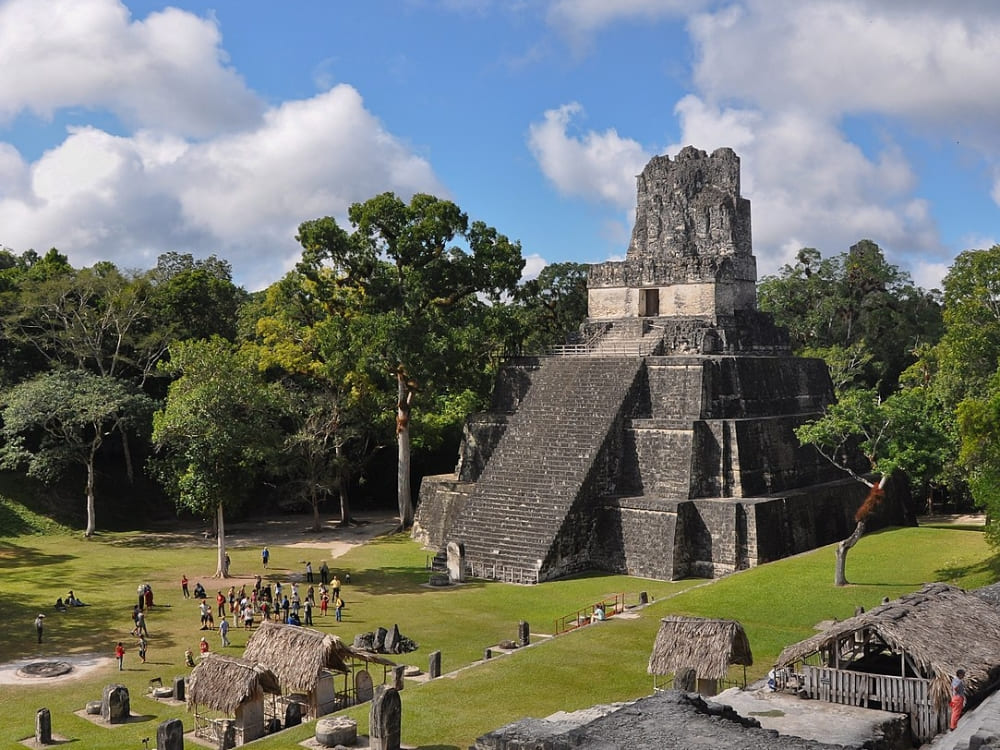
    Around the world, sustainable tourism initiatives have already begun to emerge and show positive results. One example comes from the Maya Biosphere Reserve in Guatemala, where former logging areas have been converted into community-managed ecotourism zones, helping to protect vast forest areas while generating income for local residents.

    COP30 Brazil
    Photo: Mike Vondran

    In Brazil, the potential is immense. Destinations like the Amazon Rainforest, Pantanal, and Cerrado are vital for carbon capture and biodiversity, but also face high socio-environmental vulnerability. 

    Including ecotourism as a tool in Brazil’s Nationally Determined Contributions (NDCs) and climate action plans would provide a measurable impact, a topic that is set to gain relevance during COP30 in Belém.

    Now, at COP30 Brazil, the focus is on turning these declarations into action. Ecotourism offers a real-world model already working on the ground: scalable, inclusive, and adaptable.

    The Amazon Rainforest at the Center of Climate Change

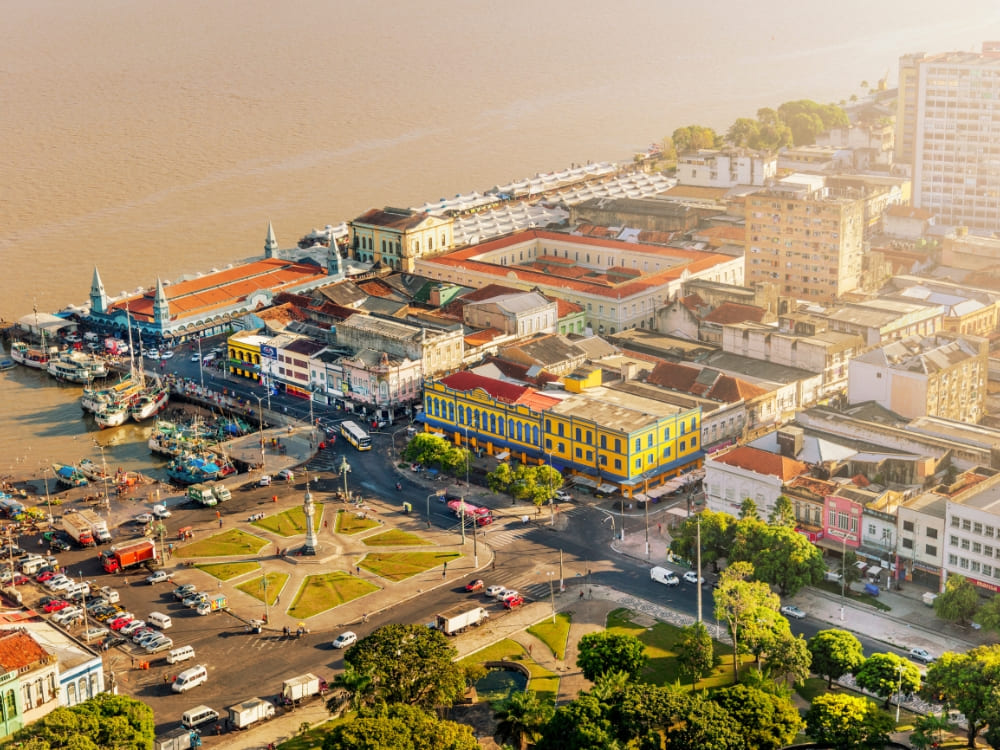
    While ecotourism is a global solution, Brazil (and particularly the Amazon Rainforest) plays a central role in the climate crisis. The forest stretches across nine Brazilian states, including Pará, where it covers more than 60% of the state’s territory. This makes its capital, Belém, a symbolic and strategic host city for COP30.

    Belém
    .

    The Amazon regulates rainfall across South America, stabilizes global temperatures, and holds more biodiversity than any other ecosystem on the planet. But it’s also under extreme pressure.

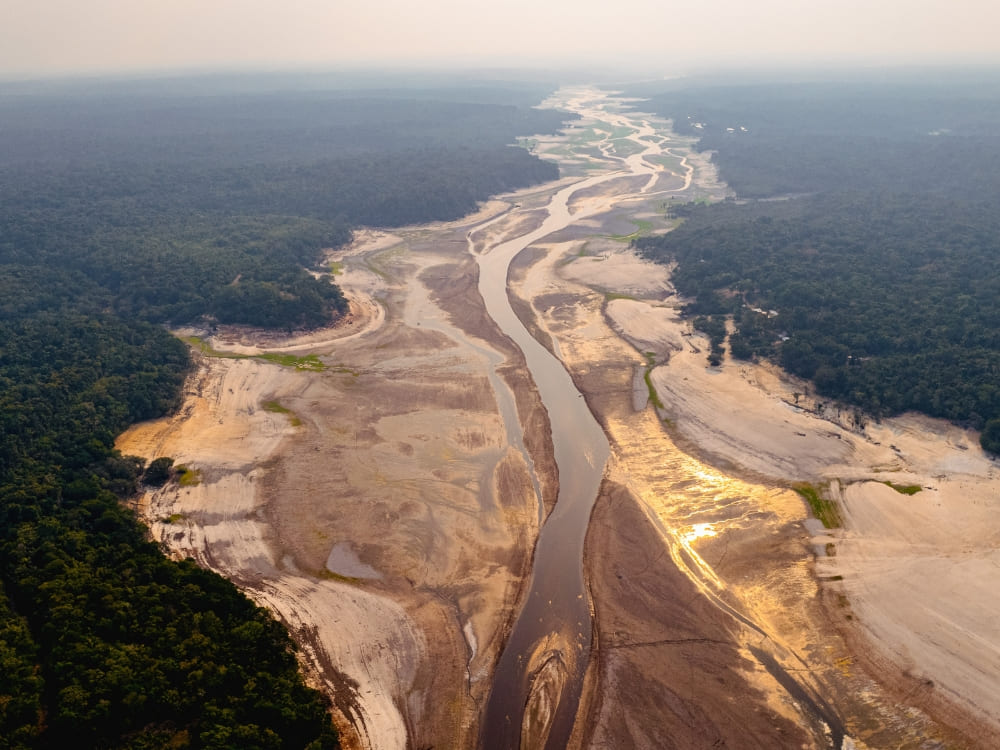
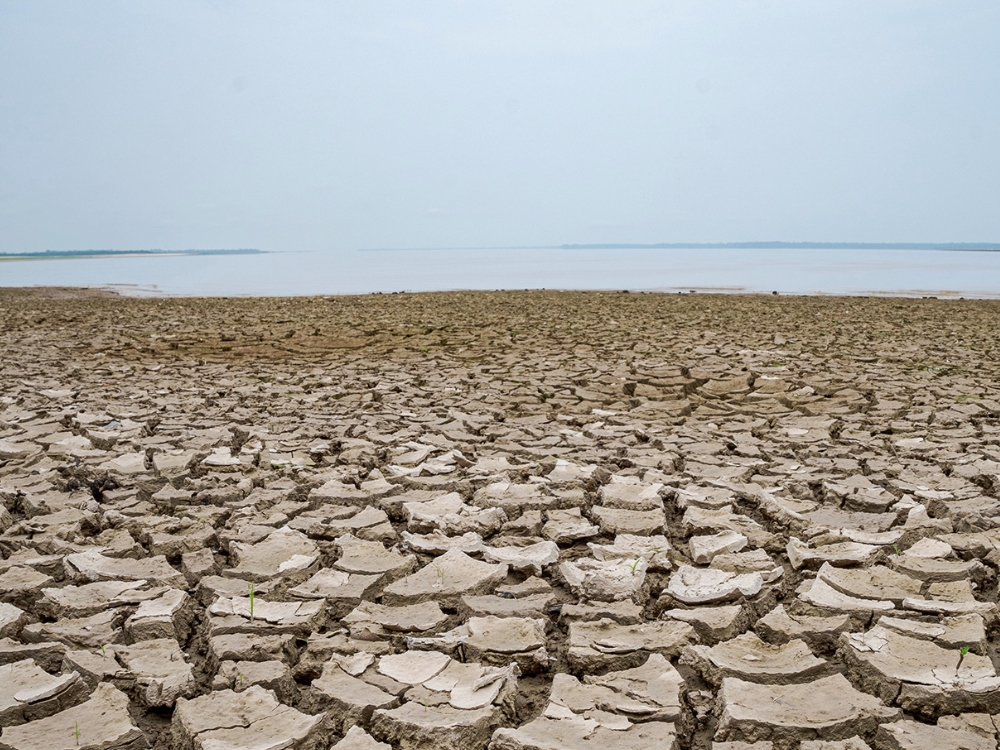
    In 2023, the Rio Negro in Manaus reached its lowest level in a century, and satellite data from MapBiomas shows that the region lost over 50 million hectares of forest cover between 1985 and 2023. 

    Rio Negro in Manaus
    Photo: Jacqueline Lisboa, WWF-Brasil

    Droughts are becoming more frequent and intense, threatening the forest’s regeneration capacity and the livelihoods of its people. This context reinforces the importance of low-impact, community-driven alternatives. Ecotourism is not the only answer, but it is a promising one, and one that can be implemented immediately.

    👉 Want to learn more about those who are actively working to protect the Amazon Rainforest? Discover the inspiring stories of the guardians of the forest.

    Conscious Travel in the Amazon

    Given the grandeur of the Amazon, it’s clear why it is one of PlanetaEXO’s flagship destinations. We connect travelers with immersive experiences that respect the forest, support local communities, and contribute to long-term conservation. 

    During COP30, visitors will have the chance to go beyond the conference walls and experience real-life examples of nature-based solutions: from ecolodges and tours led by local communities to forest conservation projects. 

    Tourism at COP30 Brazil : The Future is Sustainable

    COP30 Brazil is a chance for the country to position itself as a global reference in sustainable tourism. However, this requires real action. Supporting small-scale entrepreneurs, investing in training, and developing respectful travel experiences are essential steps.

    Beyond the Amazon Rainforest, other well-known natural destinations such as Chapada Diamantina and Lençóis Maranhenses also offer significant opportunities for ecotourism. The visibility of the conference could help attract investment and attention to these unique, yet often not fully explored, sustainable travel models.

    Travel with PlanetaEXO and Be Part of the Climate Solution

    Now, we understand how ecotourism can be part of the climate solution. In the face of the challenges humanity is up against, every action counts.

    👉 Explore our sustainable destinations across Brazil and find experiences that generate a positive impact on nature and local communities.

    Read More:

  • Forest Protection Day: Meet 7 guardians of the Amazon Rainforest

    Forest Protection Day: Meet 7 guardians of the Amazon Rainforest

    In celebration of the date, find out more about those who work directly to preserve the Amazon, the planet’s greatest biodiversity refuge.

    Have you ever stopped to think about the vital role that forests play in the balance of our planet? Like great green lungs, they regulate the climate, produce oxygen and sustain the lives of millions of species, including our own. But if they are so essential, why are they still not at the centre of global priorities?

    In Brazil, the Forest Protection Day, celebrated on 17 July, reinforces the urgency of preserving this natural heritage, after all, protecting our forests is protecting the future. The date honours Curupira, the guardian of the forests in Brazilian folklore, and draws attention to the grandeur of the Amazon Rainforest, which is home to around 20 percent of the world’s fauna, more than 50,000 species of plants and various traditional communities that live in balance with the forest.

    Forest Protection DayBut who are the real guardians of this territory? What are the stories behind the defence of the world’s largest rainforest? In this article, you’ll meet some of the leaders who are at the forefront of the fight for the Amazon. Find out who the Guardians of the Amazon Rainforest are and how community-based tourism can help keep this mission alive:

    Roberto Brito

    From logger to leader of the Tumbira riverside community

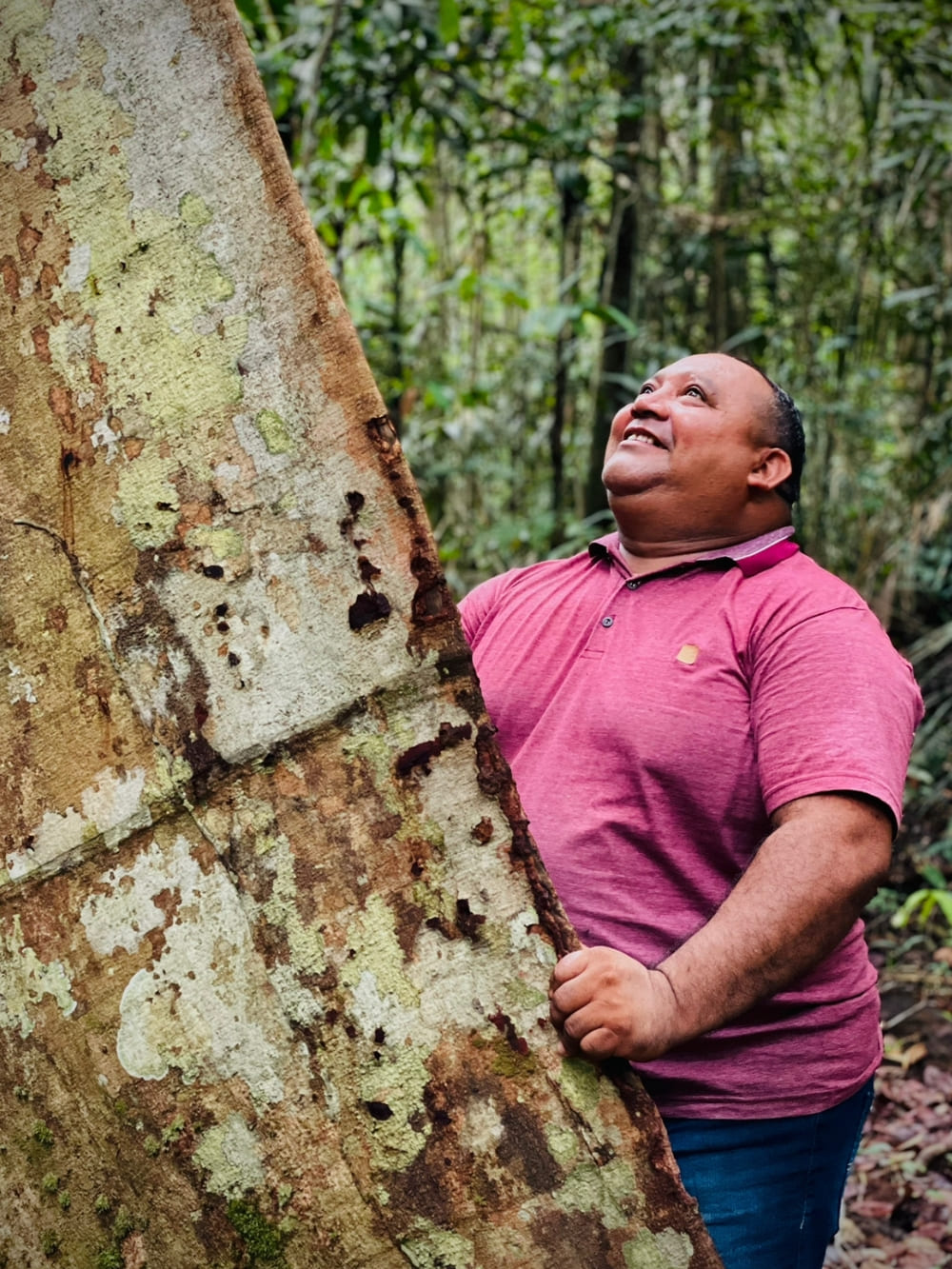
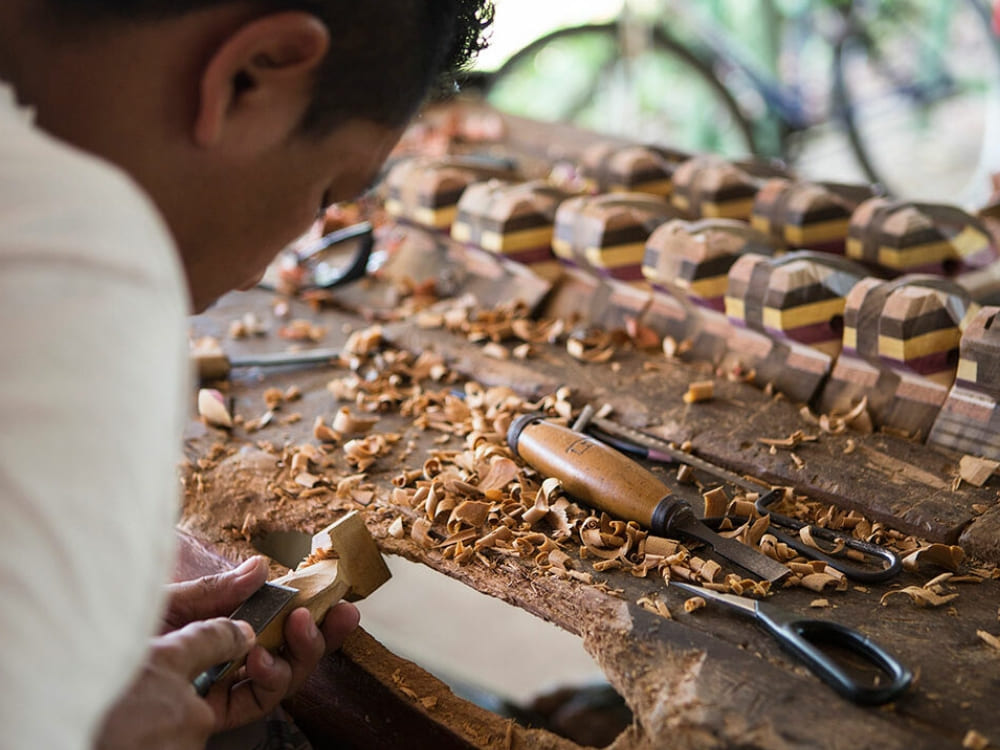
    In the old days, when Roberto looked at a tree, the first thing that came to mind was the price he could sell that wood for on the market. Each tree was labelled with different numbers. Today, the scenario is different: the tree, the rivers, the animals are all part of an environment in which he is also a living and active participant.

    At 50, Roberto Brito is one of the leaders of the Tumbira community, located in the Rio Negro Sustainable Development Reserve (RDS) in Amazonas. He runs lodges that welcome visitors interested in authentic experiences in the Amazon and guides other tourist activities in the community.

    “Before, I saw a price on trees, on everything. Now I understand the meaning of value, the value that the forest has in my life”, he told PlanetaEXO. Roberto has organised the community so that everyone participates in the itineraries, from craft production to cooking and driving on the trails. He emphasises that community-based tourism isn’t just something that should make sense to those who live there: it’s everyone’s priority. After all, the river dwellers are not just hosts, but also part of the very nature that we want to protect.

    Guardians of the Amazon Rainforest - Roberto Brito
    Photo: Felipe Beltrame

    Nilde Silva

    Leading an ecolodge in the heart of the forest

    Nilde Silva is a river dweller born and raised in Acajatuba, in the Amazon, and founder of Caboclos House Ecolodge, a sustainable lodge built with materials from the forest and operated by local residents. At the head of the enterprise, she offers immersive experiences that connect travellers to the culture, gastronomy and daily life of the riverside responsibly.

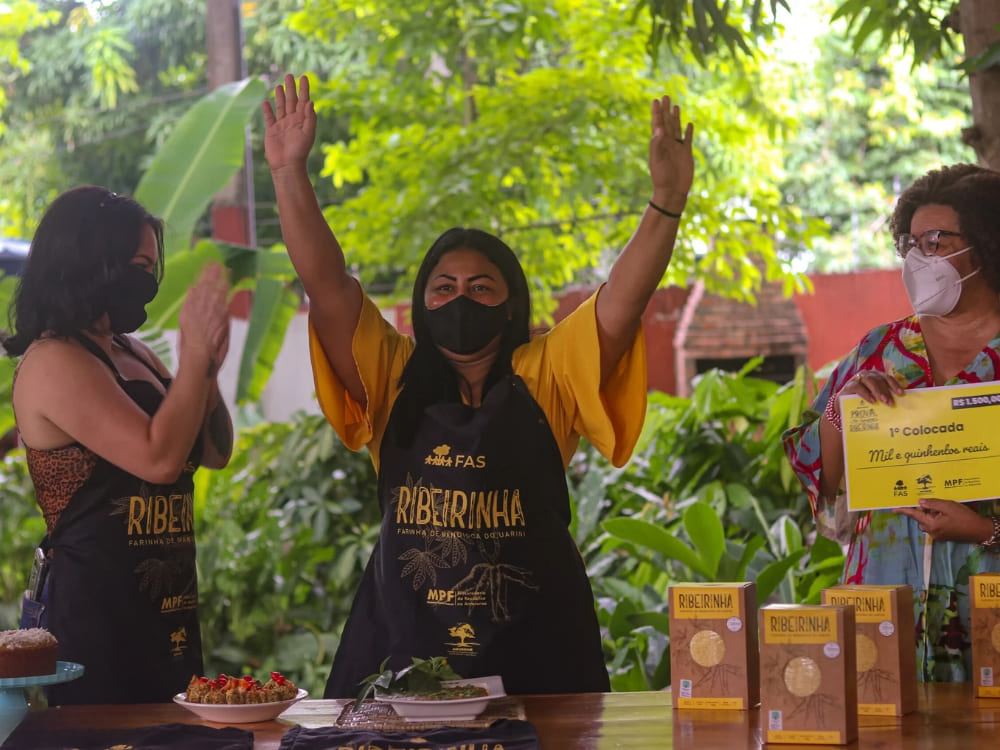
    Recognised for her leading role, Nilde won the traditional Prova da Farinha in 2021 and was awarded by Sebrae as a Business Woman. Ecotourism was essential for her to gain independence and, above all, to show that it is possible to undertake in the forest with identity and respect. Because of her work, Nilde is an example of female leadership and an inspiration to other Amazonian women, especially for her fight for the environmental preservation of the Amazon.

    Juma Xipaya

    First woman chief among the peoples of the middle Xingu

    Often, when we think of a chief, the male figure is the first association with the name due to years of tradition in the popular imagination. Juma Xipaia changed that. An indigenous leader of the Xipaya people, she was the first woman to become chief of her village in Pará. She gained international prominence by publicly denouncing the presence of illegal mining in her territory and has become one of the main indigenous voices in defence of the Amazon.

    The leader is also the coordinator of the Juma Xipaia Institute and a communicator, participating in events in Brazil and around the world as an indigenous woman and guardian of the Xingu. She recently released the documentary “Yanuni”, by director Richard Ladkani, in partnership with actor Leonardo DiCaprio. The production tells the story of the Juma and their fight against illegal mining. For Xipaya, protecting the territory means preserving their culture, their history and their future.

    @tribeca

    Txai Suruí

    Amazonian roots, resistance and global leadership

    Raised in the middle of the forest, Txai Suruí grew up among the songs, rituals and teachings of the Paiter Suruí people, in the Sete de Setembro Indigenous Land in Rondônia. The daughter of Almir Suruí, a recognised indigenous leader, she has carried the legacy of struggle and connection with nature from an early age. With her serene presence and firm speech, Txai has stood out as one of the main voices of Brazil’s indigenous youth. Her work goes beyond the borders of the village, uniting tradition, spirituality and political mobilisation.

    An environmental activist and defender of the rights of indigenous peoples, Txai became the best-known Brazilian indigenous woman in the world after giving a speech at the opening of COP26 in Glasgow. She was the only Brazilian to occupy the stage, where she denounced the violence against the peoples of the forest and the advance of deforestation in the Amazon.

    In Rondônia, she works on territorial protection initiatives and strengthening young leaders. In this way, Txai represents a generation that resists with wisdom and, at the same time, talks to the world without losing its roots.

    Forest Protection Day - Txai Suruí
    @levitapuia

    Izolena Garrido

    Transformation and preservation through art

    A teacher, Izolena Garrido founded a workshop in the Tumbira community because she believed in the power of art and traditional knowledge to generate opportunities for transformation. In her home, she created a space where she produces bio-jewellery and handicrafts with seeds and natural pigments, taking in girls and boys in vulnerable situations. For her, protecting her people is also protecting the forest.

    There, nature talks to each other and all the facts are connected, from the rain falling to the travellers who pass through the workshop and learn about Izolena’s work. Everything is a cycle. For us to have the seeds we use in our crafts, we need rain, river water, the earth. If one thing stops, it doesn’t happen. We need to keep it going”, she explains.

    Today, Izolena is one of the community’s leaders and also a reference in initiatives that unite art, education and preservation in the riverside context. Her pieces have already been exhibited at São Paulo Fashion Week, Brazil’s biggest fashion week, and the project receives support from brands such as Louis Vuitton. For Izolena, art can act as a healer of trauma, strengthening self-esteem and the bond with the territory.

    José Pancrácio

    Chief of the Nova Esperança community

    José Pancrácio is the chief of the Nova Esperança indigenous community, located in the Puranga Conquista Sustainable Development Reserve (RDS), Amazonas, and one of the main leaders of the Baré people. He is at the forefront of actions that unite environmental preservation, community-based tourism and education. Under his leadership, the community carries out projects such as the release of Amazonian turtle hatchlings, strengthening the collective commitment to environmental preservation.

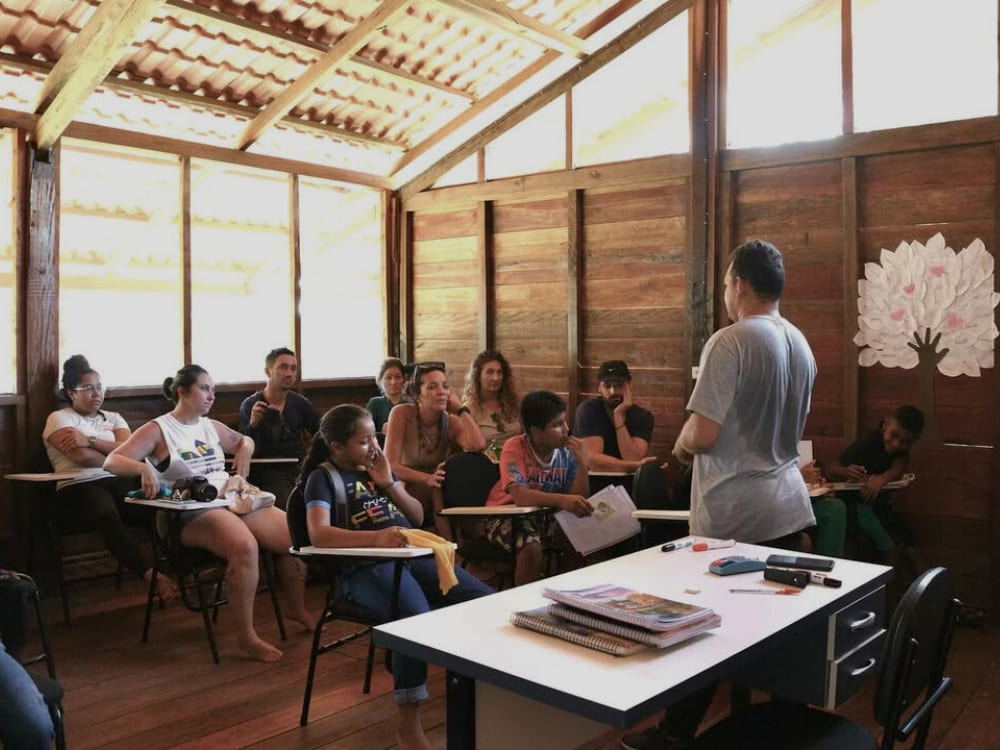
    From a young age, José understood that there was no other way to change and maintain the cultural legacy of his people but through the education of children. Among the most symbolic achievements is the construction of the community’s school, made possible with funds raised through ecotourism. The income generated by the visits was essential to guarantee the structure of the building, with classrooms and basic materials.

    For Pancrácio, ecotourism contributes directly to improving the lives of those who look after the forest every day. Above all, he explains the importance of cultural exchange: when tourists arrive in the community, it’s always a great pleasure to show them the history and traditions of the Baré people.

    Chief of the Nova Esperança indigenous community - Cacife José Pancrácio
    Photo: Isadora Sá

    Daniel Gutierrez Govino

    A forest brigade to protect the forest

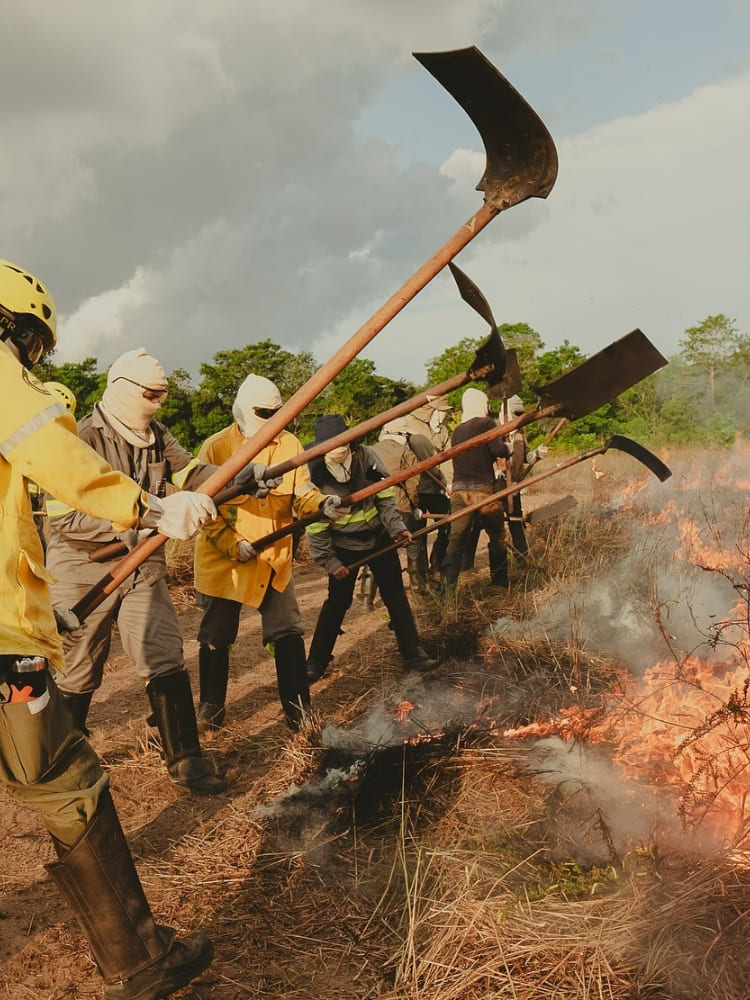
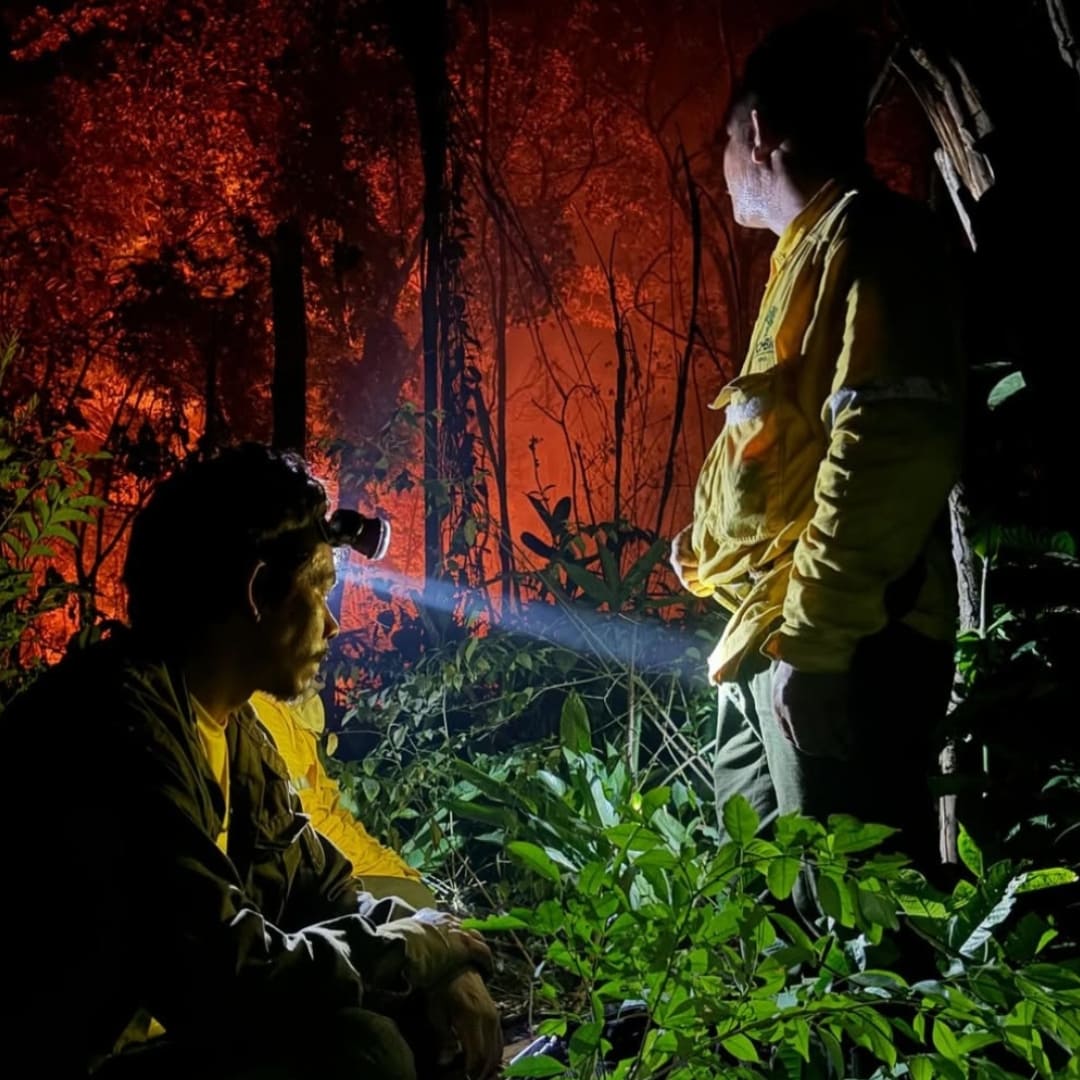
    Daniel Gutierrez Govino is the founder of the Alter do Chão Community Forest Brigade in Pará. Since 2017, he has been mobilising local residents to prevent and fight forest fires, with the support of firefighters, Civil Defence and partners such as the World Wide Fund for Nature (WWF). The brigade works with mixed techniques, drones and network communication, and is a reference in community action against fires in the Amazon.

    In addition to emergency response, Daniel is committed to training firefighters and environmental education as ways to strengthen local protagonism. For him, protecting the forest starts with those who live in it. Because of this, his work has also gained international visibility, with participation in COP26 and support from human rights and environmental organisations.

    How can we help protect the forest?

    At PlanetaEXO, we believe that every trip can generate positive impact and preserve the environment where we live. Our mission is to connect you to authentic and sustainable experiences, promoting community-based ecotourism in the Amazon and other natural destinations in Brazil. We have selected adventures that respect the environment and empower those who live in these regions, including the guardians of the Amazon Rainforest.

    One way of also supporting this cause is through conservation projects in the Amazon, promoted by organisations such as the Instituto Socioambiental (ISA) and the Fundação Amazônia Sustentável (FAS). Both have been working for decades to protect the forest and traditional peoples, and receive donations to continue this essential work. The Amazon sustains the climate, is home to millions of lives and holds the history of indigenous peoples: defending it is a collective commitment.

    Read more:

  • 10 Amazon Rainforest Travel Tips to Make the Most of your Adventure

    10 Amazon Rainforest Travel Tips to Make the Most of your Adventure

    Discover how to prepare for your Amazon Rainforest trip with practical tips, local insights, and sustainable travel advice

    Planning a trip to the Amazon in Brazil is no ordinary travel experience. With its immense size, rich biodiversity, and complex logistics, this magnificent place might challenge even the most seasoned travelers.

    This is a destination where preparation matters, both for your safety and for the well-being of the environment and local communities. When you follow certain Amazon Rainforest travel tips, you know exactly what to expect and can make your vacation even better.

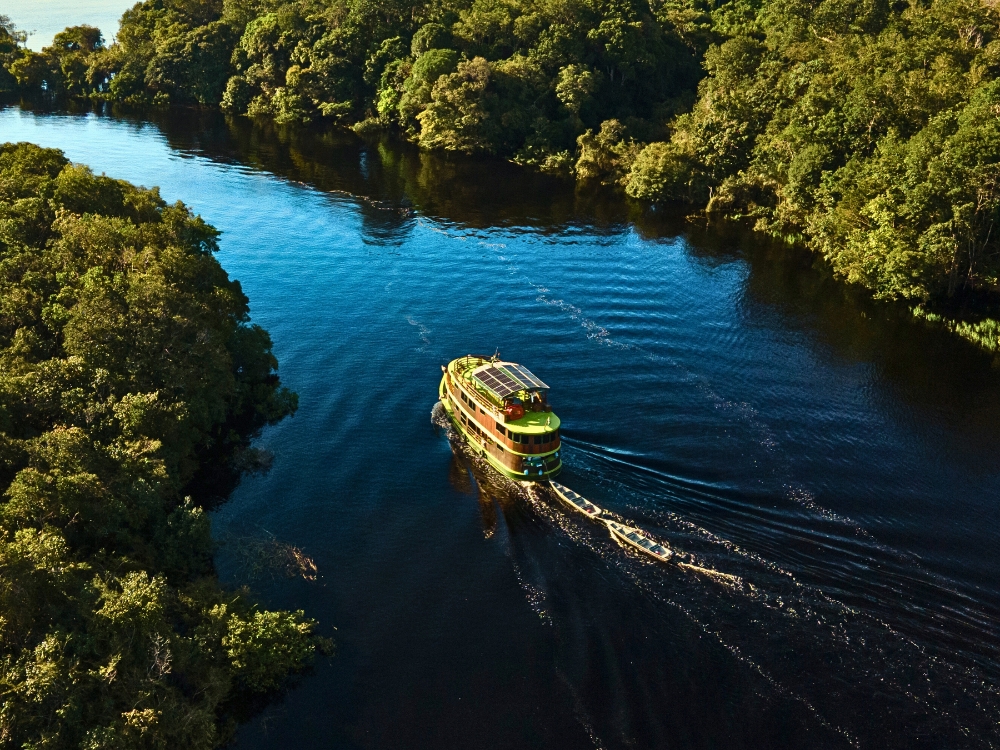
    Aerial view of an Amazon river cruise boat navigating a dark river surrounded by dense green rainforest in Brazil.
    Photo: Katerre Expedição

    PlanetaEXO knows everything about this subject. As experts in Amazon tours in Brazil, our team works with the best local operators to ensure a smooth trip for everyone. See our recommendations below!

    1) Understand the seasons and expect rain

    The Amazon has two main seasons: the wet season (December to May) and the dry season (June to November). Each offers a different experience.

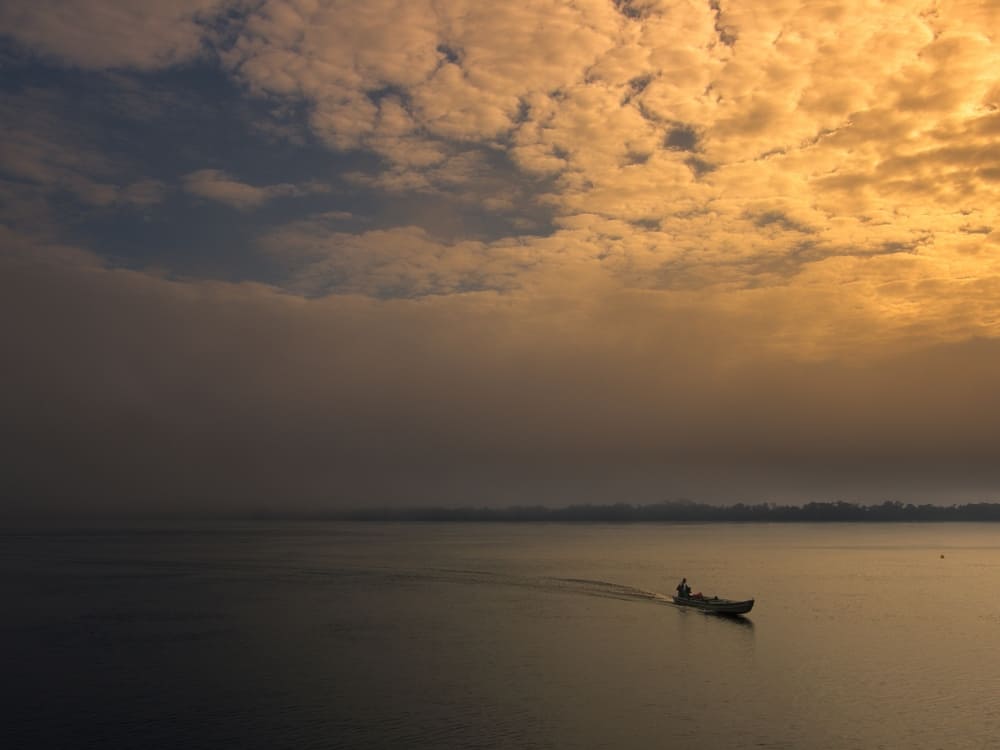
    A small motorized canoe traveling across the wide Amazon River during a golden sunrise under a cloudy sky.
    .

    During the wet season, river levels rise significantly, creating a temporary ecosystem where the flooded forest is only accessible by boat.

    In the dry season, receding waters reveal beaches, trails become more passable, and it’s easier to spot land animals.

    Still, don’t let the term “dry season” fool you. Rainfall volume is significantly high all year round—it is a rainforest after all—which means rainstorms can make sudden appearances. This doesn’t negatively affect your trip at all, but it’s important to be aware. 

    👉 Read more: When is the Best Time to Visit the Amazon Rainforest in Brazil

    2) Travel light, but smart

    You don’t need much, but what you bring matters. Overpacking makes travel heavier and harder to manage, while underpacking can make your experience uncomfortable. Aim for balance—what you carry should serve the journey, not complicate it.

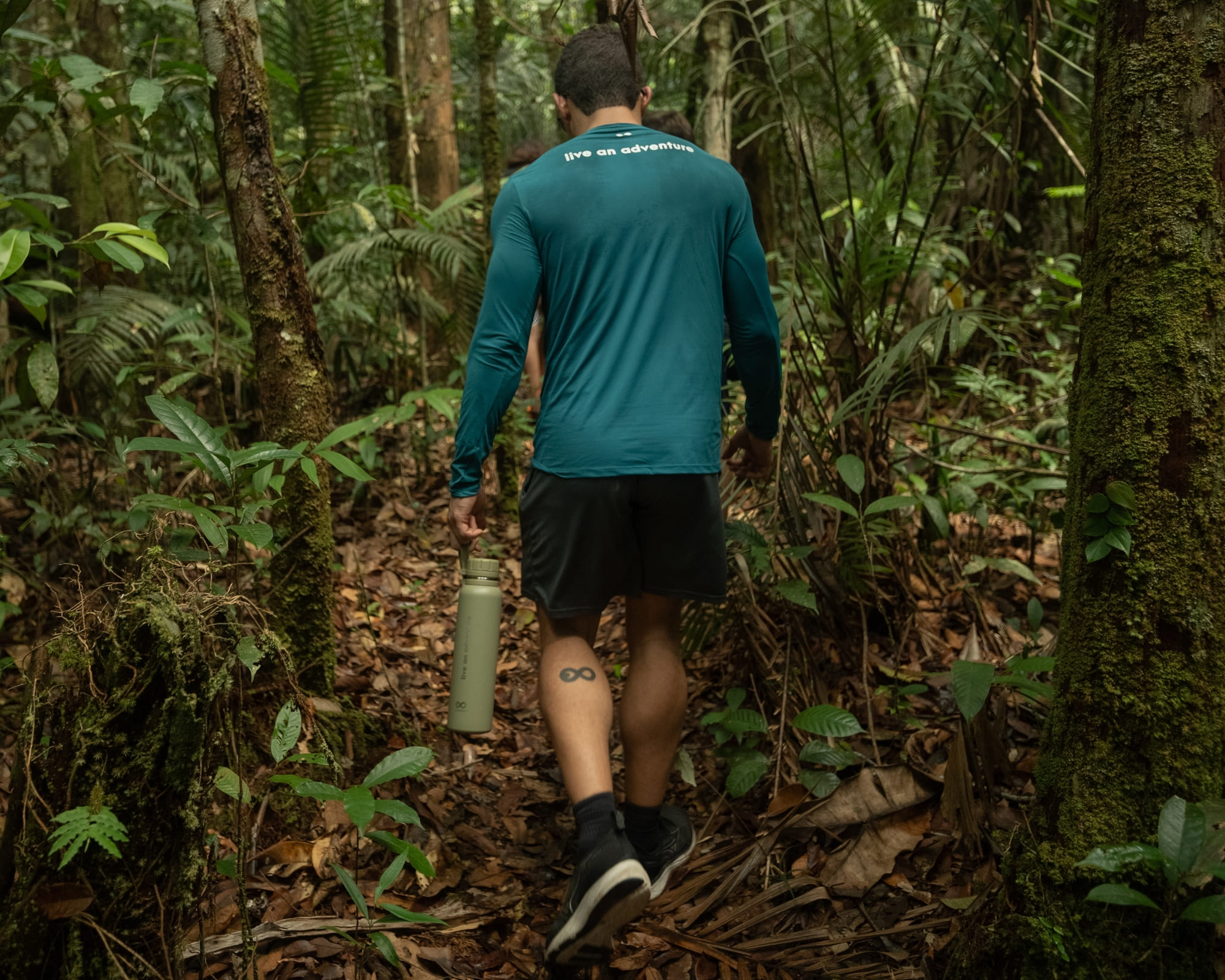
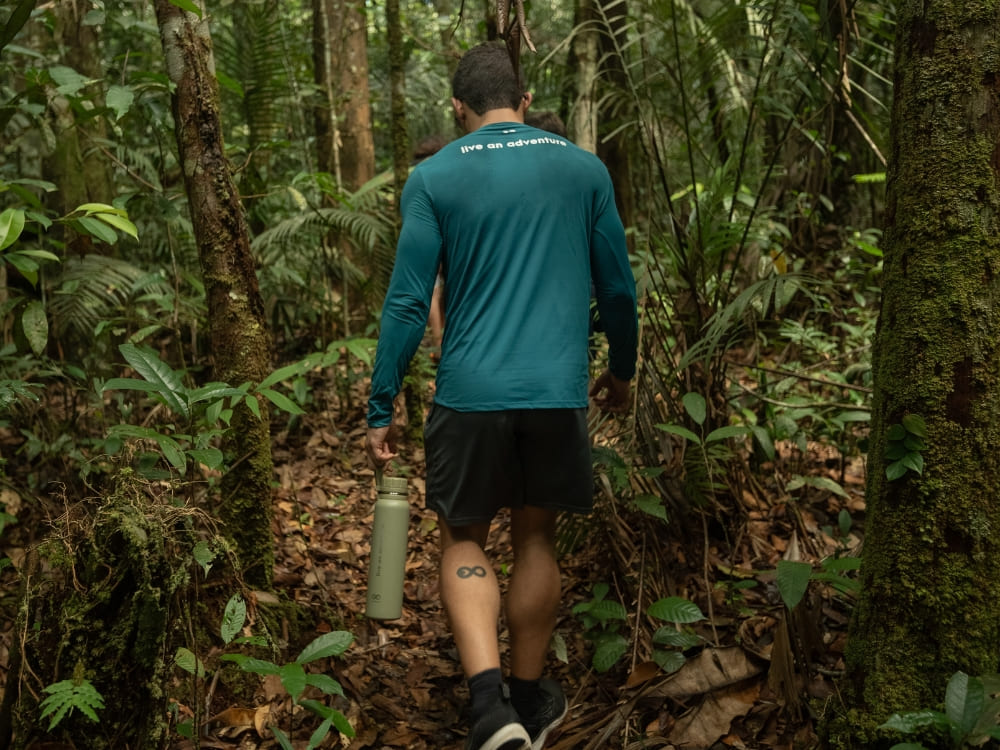
    A traveler carrying a reusable water bottle hikes through a lush green Amazon Rainforest trail.
    Photo: Marcelo Bonifácio

    Check out a list of what you should pack to make the most of your Amazon travel experience:

    • Lightweight, breathable clothes: t-shirts, shorts, pants, long-sleeved shirts (preferably with UV protection), windbreakers, hats or caps, and swimwear.
    • Comfy shoes: sneakers, flip-flops, sturdy hiking boots.
    • Equipment: raincoat, flashlight, personal reusable water bottle.
    • Travel essentials: documents, medication, sunscreen (SPF 30 or higher), insect repellent, sunglasses, and power bank (phones, cameras, laptops, tablets).
    • While larger cities like Manaus or Belém have ATMs and card-friendly establishments, much of the forest region still operates in a cash economy, especially in remote communities and local markets. Bring enough cash (Brazilian real) to cover meals, souvenirs, entrance fees, etc.—store it safely and divide it between bags.

    Another essential item to pack is a universal power adapter, as power outlets vary depending on the location. The voltage in the Amazon area is 127 V. Be careful with your devices!

    3) Protect your electronic devices from humidity

    Humidity in the Amazon ranges from 77% to 88% throughout the year, which can harm your electronics even when there’s no rain, as the humid air can condense inside lenses and devices. 

    To protect phones, cameras, laptops, and tablets, keep them in Ziploc or waterproof bags when you’re not using them.

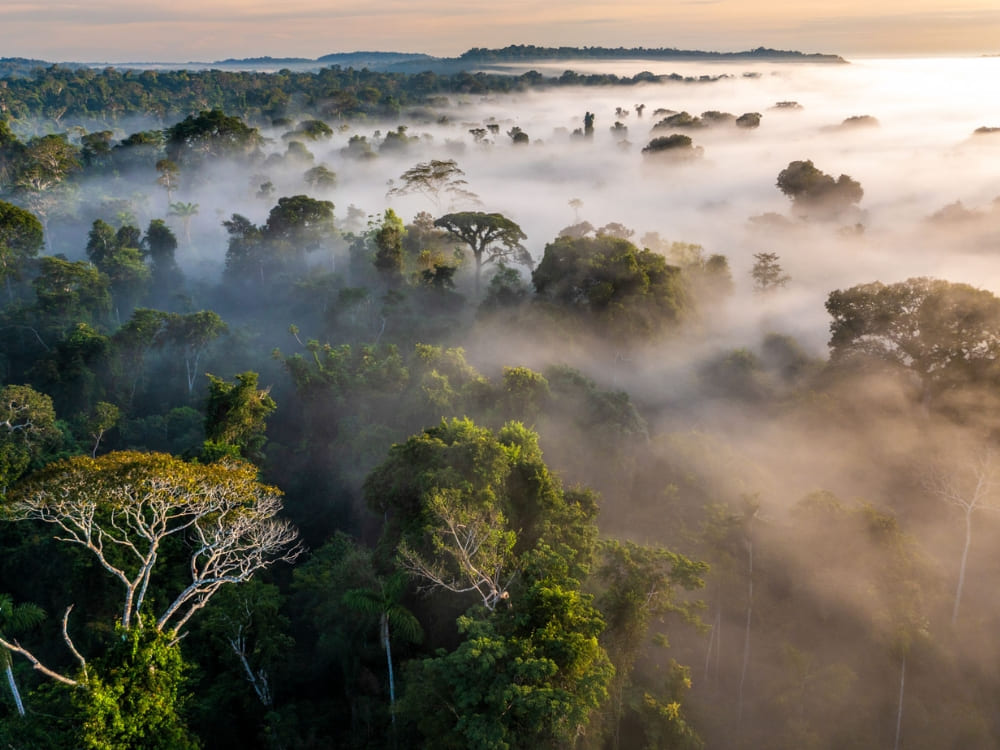
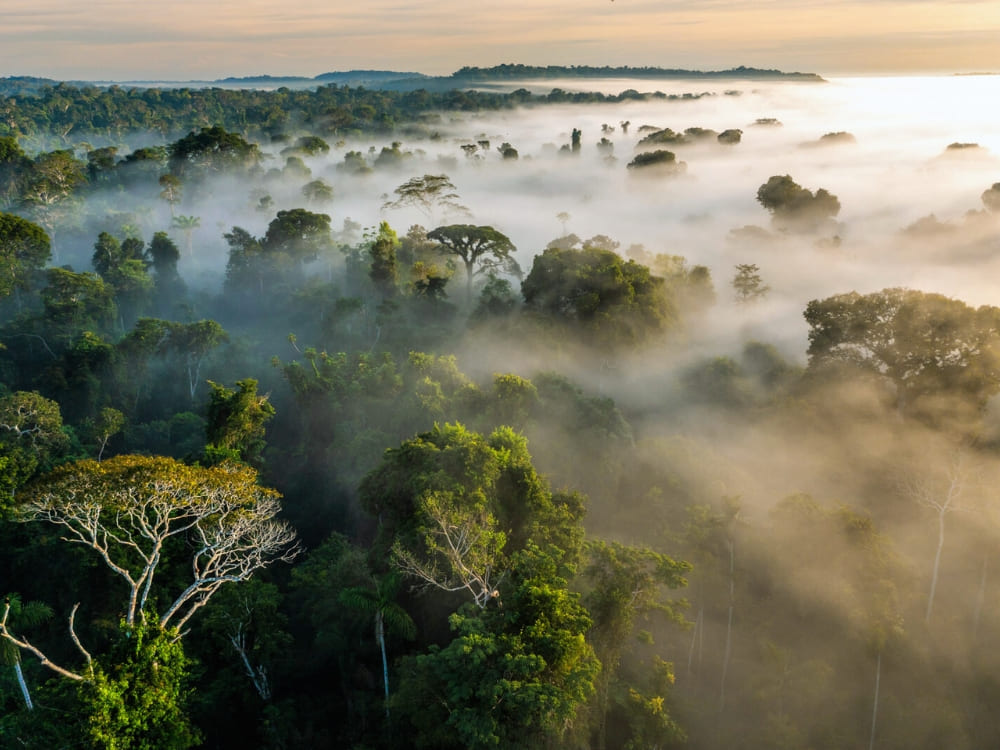
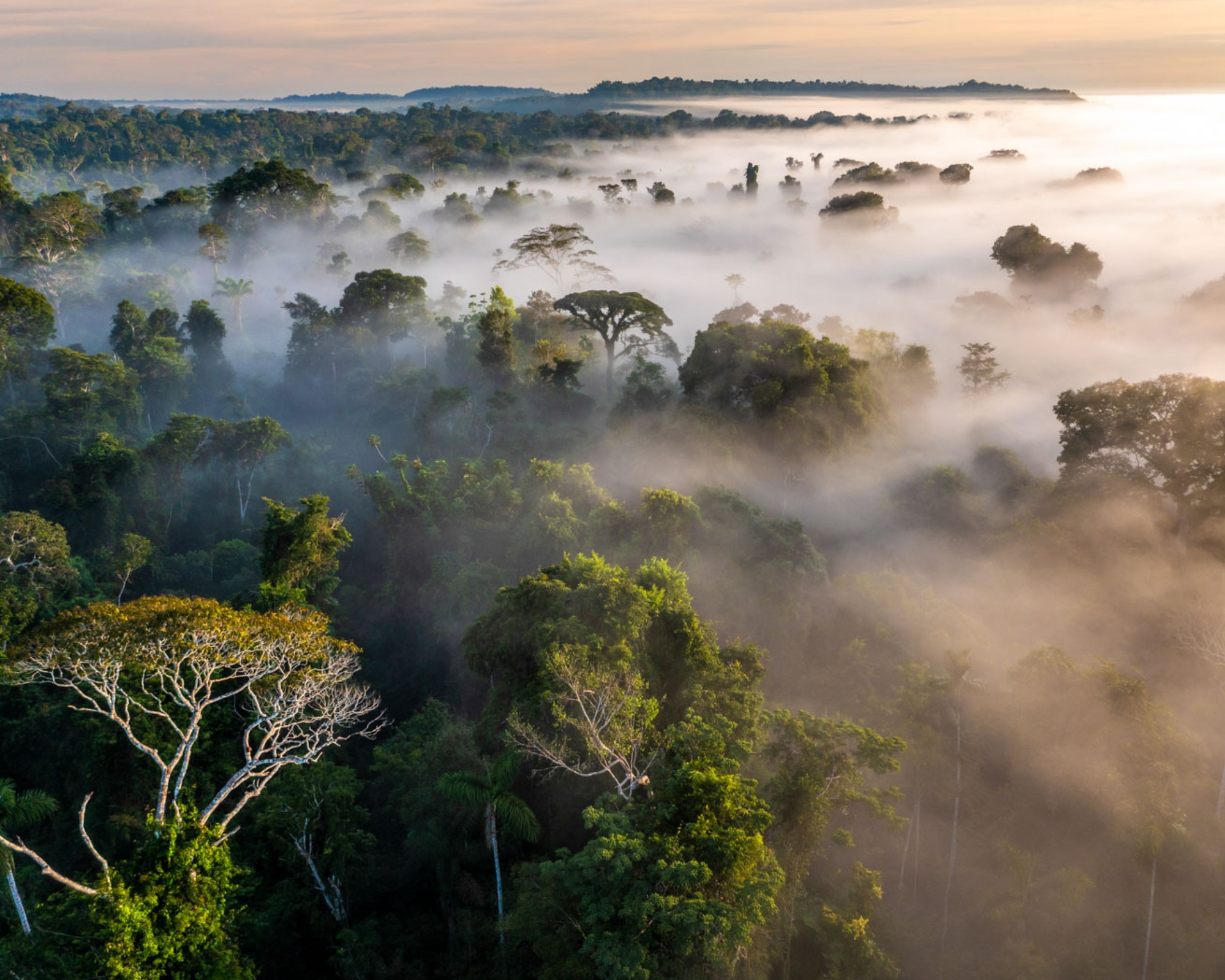
    Aerial view of the dense Amazon Rainforest canopy covered in thick morning mist and fog.
    Photo: André Dib

    4) Keep up with the time zone in the Amazon Rainforest

    The time zone in Manaus and the surrounding areas is UTC-4.

    Amazon Time (AMT) is 1 hour ahead of Eastern Standard Time and 2 hours ahead of Central Standard Time (-4 hours in comparison to Coordinated Universal Time).

    Pay attention to these differences so you don’t get confused when traveling!

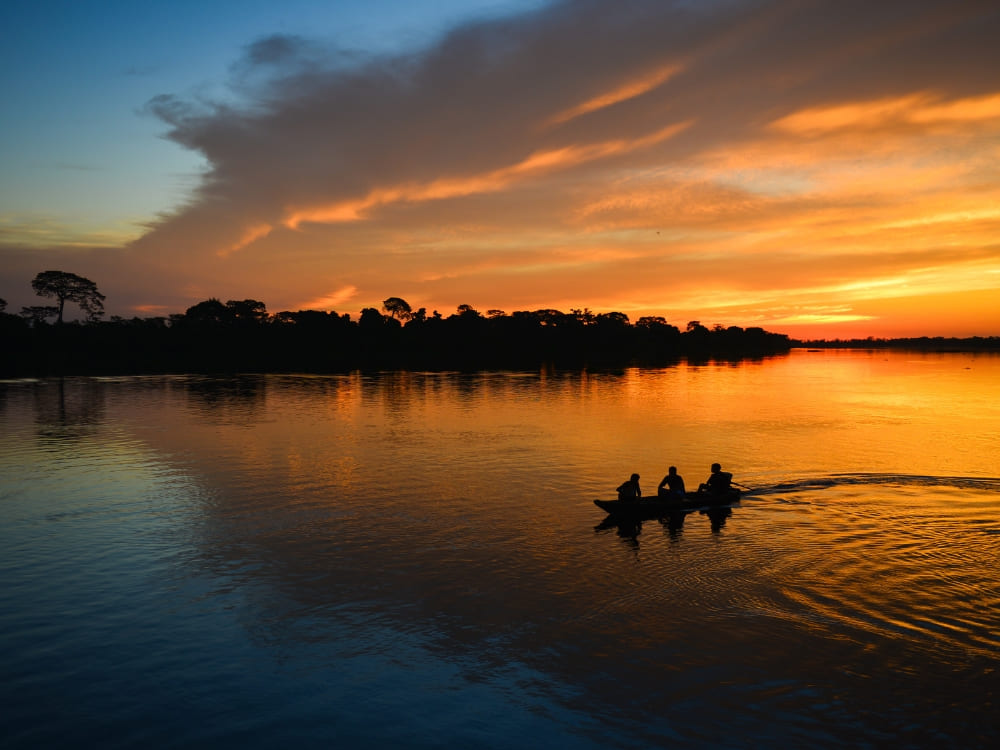
    Amazon Rainforest travel Silhouette of three people in a small canoe navigating the Amazon River against a bright orange sunset sky.
    .

    👉 Read more: How to get to the Amazon Rainforest in Brazil?

    5) Health first: vaccines and general precautions

    Medical preparation is a basic Amazon Rainforest travel tip, and it begins before you arrive at your destination. Vaccinations are strongly recommended, particularly for hepatitis A and B, diphtheria, tetanus, polio, and measles. Depending on the region and season, your doctor may advise malaria prevention as well. 

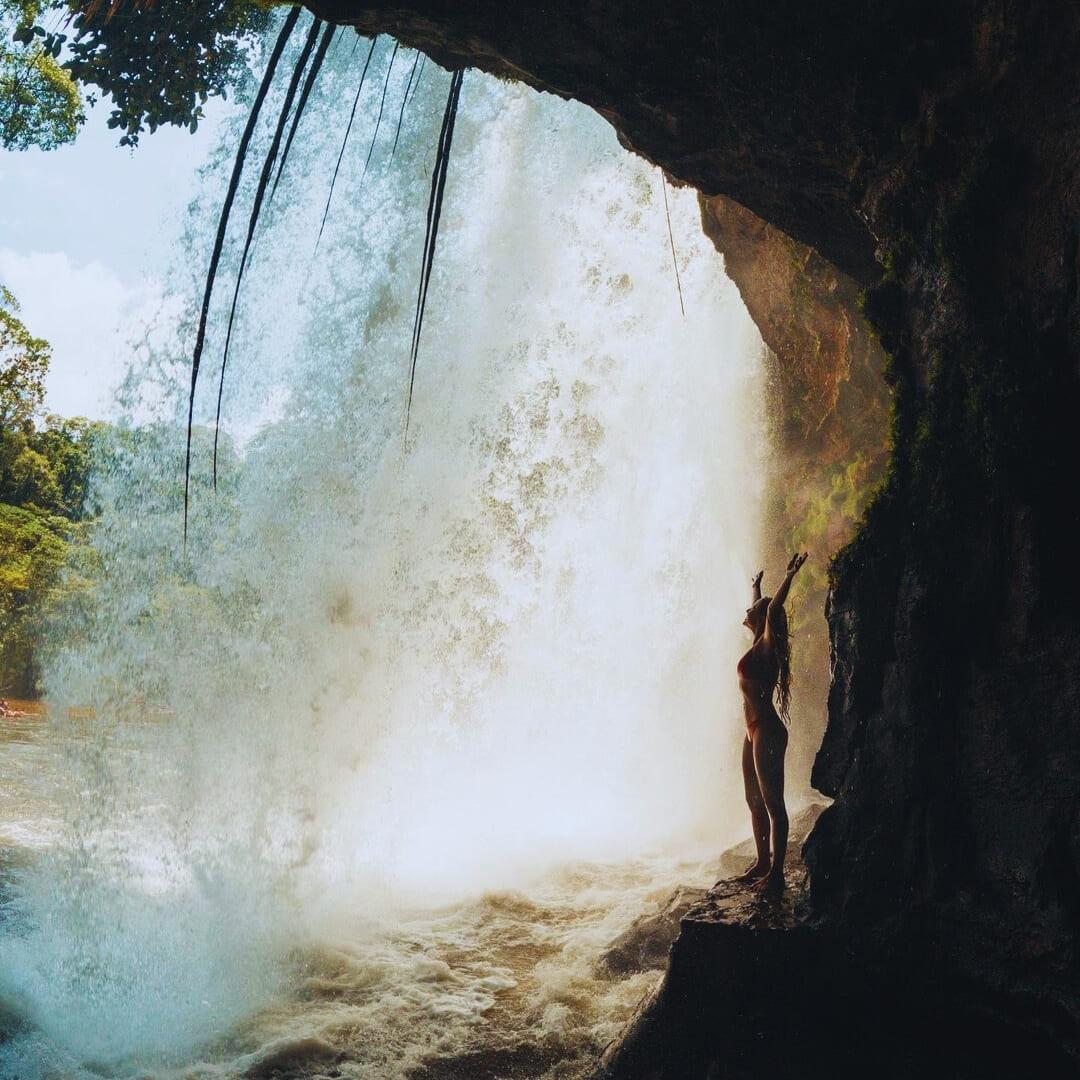
    A traveler stands behind a powerful rushing waterfall in the Amazon Rainforest with their arms raised.
    @ines.lafosse

    Yellow fever vaccines are not obligatory like in other South American countries, but they are highly advised—especially if you’re also traveling to the Amazon in Peru, Colombia, Ecuador, and Bolivia.

    Check the United States government traveler’s health guide and Brazil’s official recommendations for international tourists. If necessary, consult a travel clinic at least a few weeks before your trip.

    Once in the rainforest, simple habits make a big difference:

    • Hydration is essential in the heat and humidity. Carry a reusable water bottle and drink regularly.
    • Pack a small medical kit with essentials, including medication for headaches or stomach discomfort, allergy relief, and plasters or Band-Aids for minor injuries.
    • Apply your sunscreen first, wait 15 minutes for it to absorb, and then apply high-DEET insect repellent on top. If you do it the other way around, the sunscreen can dilute the repellent or even trap insects against your skin.
    • Before putting your shoes on in the morning, give them a vigorous shake and a peek inside. Spiders, scorpions, and the occasional small frog love the dark, damp “cave” of a hiking boot.

    6) Walk with a local guide

    Tourists might wonder if the Amazon Rainforest is dangerous. As this is a wild environment, the jungle can hold its dangers, but only for travelers exploring the biome on their own.

    That’s why following a qualified local guide is crucial. They know where to step, when to stay quiet, and what not to touch. Safety comes first, but respecting instructions also allows for a deeper immersion and the conservation of nature.

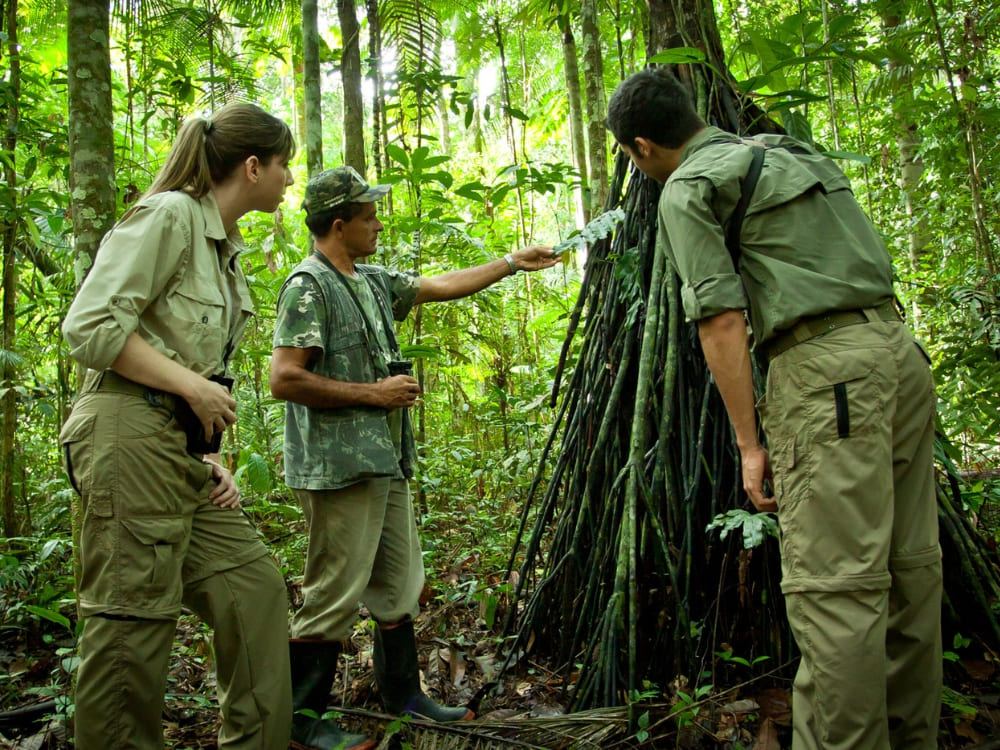
    A local guide shows two tourists the intricate roots of a large tree while hiking through the Amazon.
    Photo: Samuel Melim

    Hiking through the forest with someone who knows the terrain inside out transforms the experience. You’ll learn to spot hidden insects, medicinal plants, camouflaged frogs, and animal tracks you’d never notice on your own, as well as act correctly so as not to disrupt the balance of the ecosystem.

    7) Keep quiet and don’t interfere when you spot an animal

    Though the Pantanal is considered the best place in Brazil for wildlife watching, the Amazon fauna is also incredibly rich, being a fundamental part of one of the most complex ecosystems on Earth.

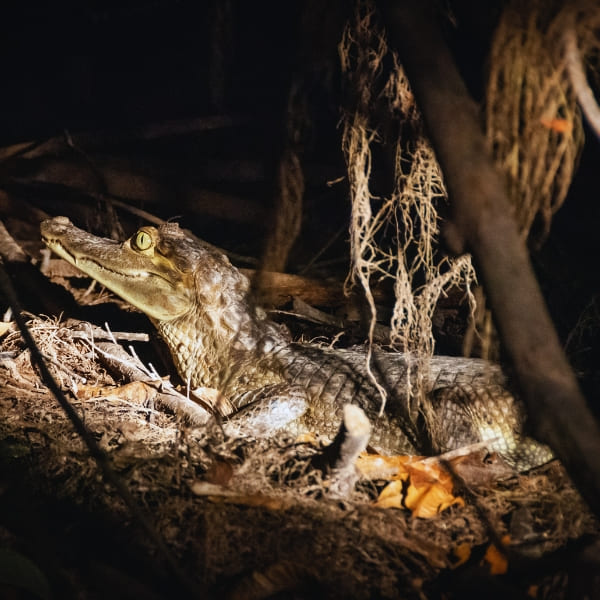
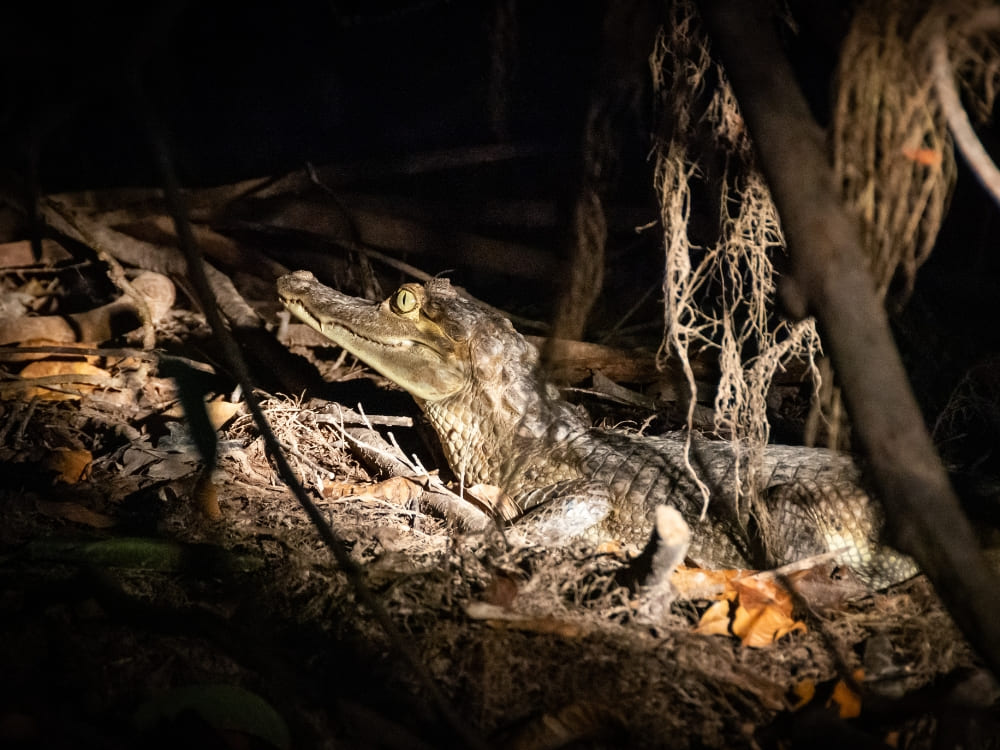
    A camouflaged caiman rests on a riverbank covered in leaves during a night wildlife tour in the Amazon.
    Photo: Vitor Marigo

    Whether it’s a sloth in the canopy, a caiman along the riverbanks, or a line of leafcutter ants crossing your path, all of this forms a finely balanced environment. Touching, feeding, or approaching animals disrupts that balance, altering natural behaviors and potentially putting both you and the animal at risk.

    Real respect means keeping your distance, moving quietly, and resisting the urge to interact. These are moments of connection with nature as they truly are: wild, unpredictable, and best left undisturbed.

    8) Stay in lodges that care for nature 

    One of the most important Amazon travel tips involves where you stay. Choosing lodges that prioritize sustainability ensures your visit supports both the environment and the community.

    Sustainable wooden Amazon jungle lodge cabins floating on a calm river reflecting the blue sky.
    .

    Look for accommodations powered by solar energy, with waste management systems and fair hiring practices. Many ecolodges reinvest part of their profits into conservation and education projects, which helps to support local families.

    When you stay in jungle hotels where your trip makes a difference, you contribute directly to the preservation of the forest and the quality of life of those who call it home, making your trip truly meaningful.

    👉 Read more: Best Amazon Jungle Lodges in Brazil

    9) Stay in a “black water” region to avoid bugs

    Here’s an Amazon travel tip you don’t see everywhere: if you are particularly mosquito-prone, look for lodges on “black water” rivers (like the Negro River).

    The high acidity from decomposing organic matter prevents mosquito larvae from developing, making these areas significantly less buggy than “white water” regions (like the Solimões).

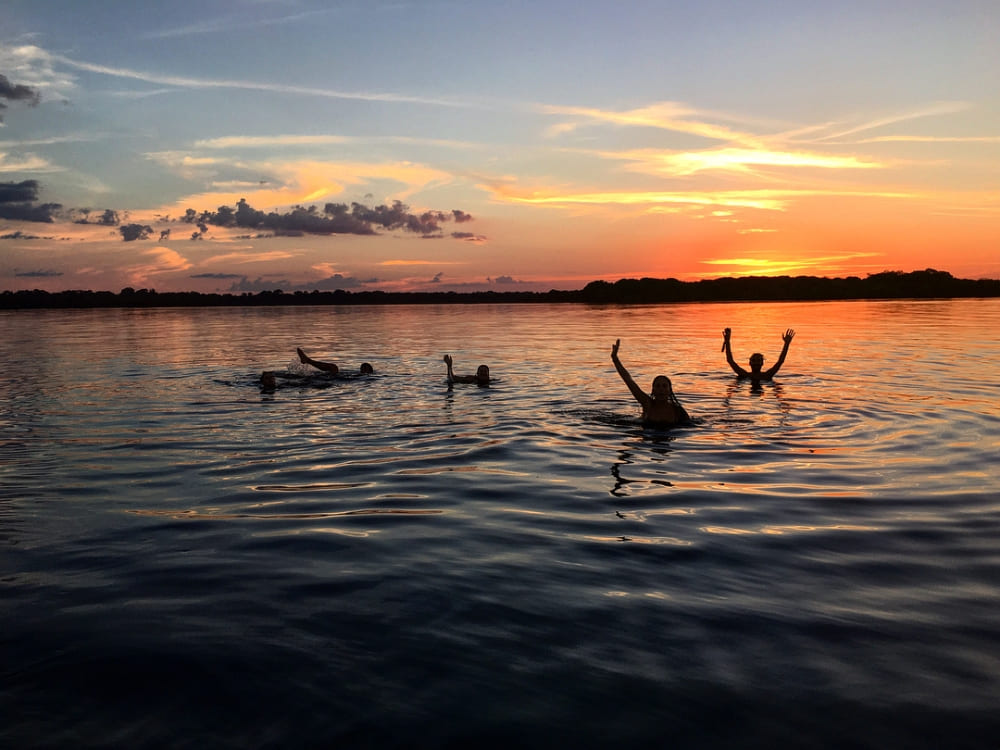
    A group of travelers swims in a calm black water Amazon river during a vibrant orange sunset.
    .

    👉 Read more: Best Amazon River Cruises in Brazil

    10) Respect local communities

    The Amazon is home to countless people, including Indigenous and riverside communities who have lived there for generations. Respecting their traditions and way of life is essential.

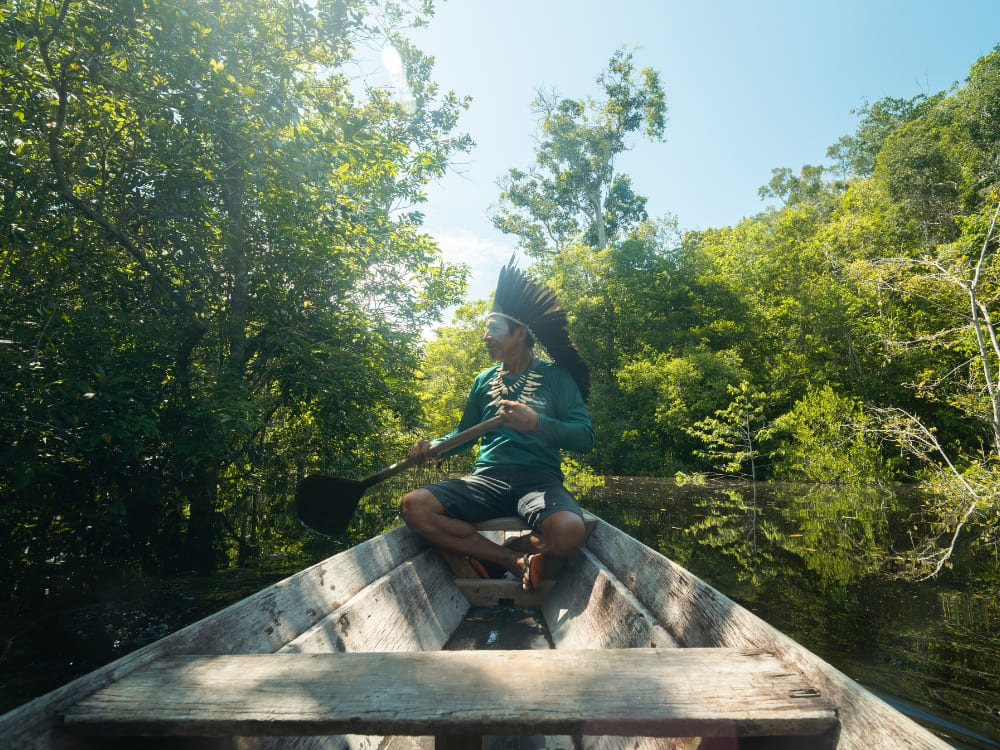
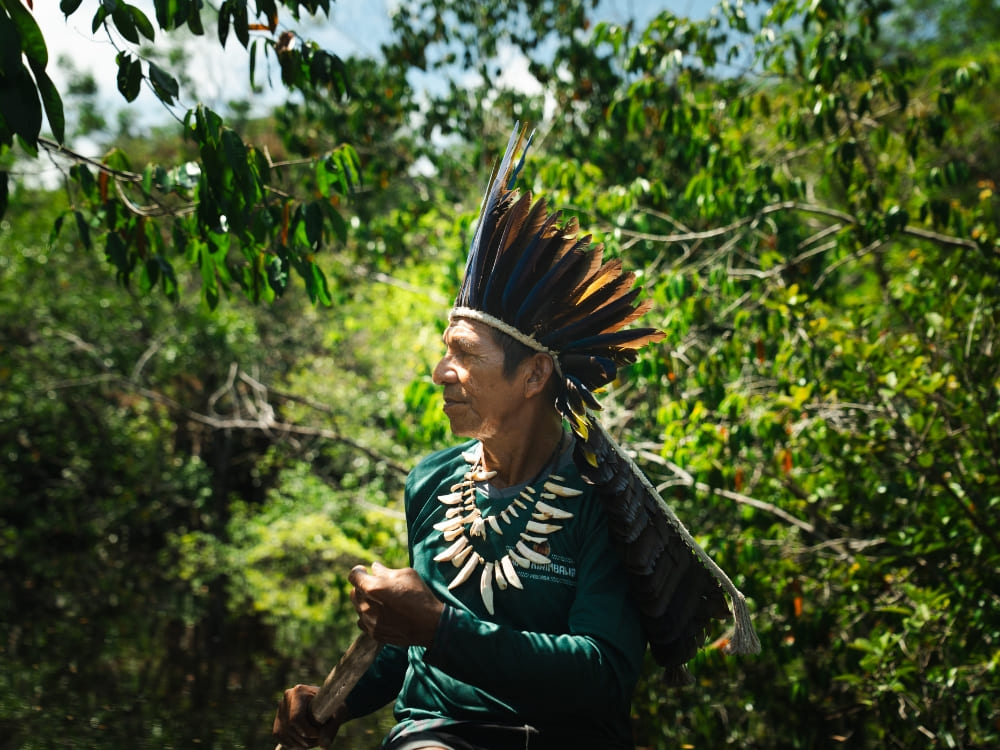
    An Indigenous man wearing a traditional feather headdress walks through the lush green Amazon jungle.
    Photo: Isadora Sá

    Always ask before taking photos, avoid offering gifts without context, and be open to learning from their stories. Many members of these groups are guides, hosts, and stewards of conservation projects who work every day to ensure the forest’s well-being. 

    When you travel responsibly, you support community-based tourism that protects culture, creates jobs, and strengthens local pride. Do your part and contribute to a better future.

    Here’s your last Amazon Rainforest travel tip: book your experience with PlanetaEXO

    PlanetaEXO is an ecotourism platform that works with the best local operators and specializes in Amazon Rainforest tours in Brazil.

    When you travel with us, you’re making sure your vacation causes a positive impact on small businesses, native communities, and our planet. Let’s live an adventure together. Contact us now!
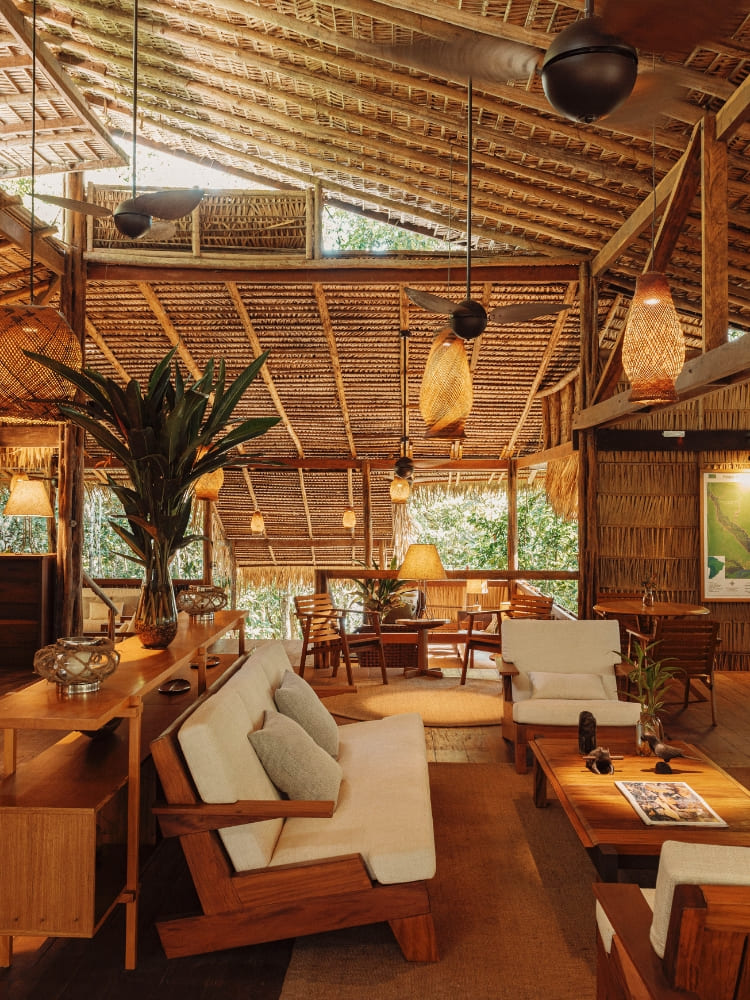
  • 8 conservation projects in the Amazon to support in 2025

    8 conservation projects in the Amazon to support in 2025

    Environmental education, income generation for local communities, reforestation, and ecotourism practices are some of the actions taken by various non-profits in the Brazilian Amazon

    The Amazon is the largest rainforest in the world, covering a total area of 6.74 million km², while the Brazilian territory spans over 4.2 million km². An ecosystem this big can only mean equally big effects on the planet’s balance and natural life.

    8 conservation projects in the Amazon to support in 2025 (4) (1)

    Housing millions of different species of animals and plants, the forest is responsible for up to 16% of freshwater in the world, and it also plays a huge role in carbon sequestration – the process of capturing and storing carbon dioxide (CO2) from the atmosphere, which prevents climate change.

    All of this, however, is under threat. According to the National Institute for Space Research (INPE), deforestation in the Amazon reached 4.315 km² from August 2023 to July 2024 – a smaller area when compared to the same period in 2022, but a concerning number nonetheless.

    8 conservation Projects in the Amazon - Alter do Chão Brigade (2) (2)
    Photo: @guardioes_ti_kumaruara

    Forest fires are likely the biggest current danger. The Amazon Rainforest faced the largest amount of fires in the last seventeen years, concentrating 50.6% of Brazil’s fires. INPE estimates there were 137,538 heat outbreaks in the Amazon up until December 2024, including fires (controlled or not) and full-on forest fires.

    The consequences are dreadful: temperatures rising, longer droughts, lower rivers, animals dying, poor air quality, and people who depend on the forest to survive losing their homes and primary sources of income. To prevent these terrible repercussions, local communities engaged on these Amazon Rainforest conservation projects work tirelessly to protect what many call “the lungs of the Earth”

    1 – Amazon Entrepreneurship and Sustainable Business Program (Pensa)

    Resources that can only be found locally, exquisite nature that attracts tourists from all over the world – which proves that ecotourism activities are powerful conservation solutions –, and local groups willing to learn and undertake are some of the factors that make the Amazon Rainforest a promising place for sustainable entrepreneurship.

    Amazon Rainforest Conservation Projects – Sustainable Amazon Foundation (FAS) (1)
    Photo: Emile Gomes

    The Sustainable Amazon Foundation (FAS) fights social vulnerability with the Amazon Entrepreneurship and Sustainable Business Program (Pensa, the acronym in Portuguese). By combining social technology to train entrepreneurs, the program has supported over 583 communities in 16 Conservation Units (CUs).

    In 2023, 62 sustainable ventures were supported by FAS and 323 people gained new skills. The average income of families benefited by Pensa increased in 19%, while the total revenue from community-based tourism ventures raised R$ 5 million. Learn more and make your donation.

    Ecotourism in the Amazon Rainforest - A Solution to Deforestation
    Roberto Brito, founder of “Projeto Draft”.

    2 – Almerinda Malaquias Foundation (FAM)

    Almerinda Malaquias Foundation (FAM) is a non-profit based in Novo Airão, in the state of Amazonas, whose activities are focused on three aspects: 

    • Income generation: training of professionals for craftsmanship and soap production
    • Environmental education: for local children and teens to learn more about their home, as well as economic alternatives for sustainable development
    • Ecotourism: eco-friendly travel practices as a tool to boost education and work opportunities

    In 2024 alone, FAM has helped 190 people enroll in school45 families generate income and has tended to ten riverside communities regarding education and funding.

    Educação Ribeirinha Katerre - Amazon Conservation Projects (1)
    Photo: @expedicaokaterre

    To help FAM change lives, Expedição Katerre and Mirante do Gavião Amazon Lodge and act as sponsors. Both specialize in ecotourism, with Katarre offering some of the best river cruises in Brazil.

    You can support FAM by buying their beautiful handmade products or making a donationLearn more on their official website or social media profile.

    Amazon Rainforest Conservation Projects - Almerinda Malaquias Foundation (FAM)
    Photo: Fundação Almerinda Malaquias Foundation (FAM)

    3 – Mamirauá Institute

    In 2024, severe droughts were the biggest concern regarding the Amazon. Many non-profits took action to try to reverse the effects caused by the lack of rainfall, with Mamirauá Institute for Sustainable Development (IDSM), founded in 1999, in the forefront of the actions.

    By pushing scientific recommendations to the authorities, this Amazon Rainforest conservation project offered educational support to local communities, came up with different methods to better access to drinking water, and worked throughout the entire year to minimize the consequences of this uncharacteristic dry period.

    Ações Seca 2024 Marimaua Amazonia - Amazon Conservation Projects
    Photo: Caroline Reucker

    Ecotourism is also a big player. Uakari Lodge is situated in the middle of the Mamirauá Reserve, safely built on stilts in Lake Tefé. Besides providing total immersion in the forest, the lodge is an important asset for environmental awareness and scientific research.

    Activities promoted by Uakari, like wildlife watching, have been greatly useful to collect data about uakari monkeys – the inspiration for the lodge’s name –, which helps scientists and biologists to understand this species and bring forth effective ways to protect them and the Amazon as a whole. A scientific article by this particular subject was published in 2021.

    Learn more about this drought prevention project and make a donation online if you can.

    Ações Seca 2024 Marimaua Amazonia - Amazon Conservation Projects
    Photo: Miguel Monteiro

    4 – Amazon Boto Expedition

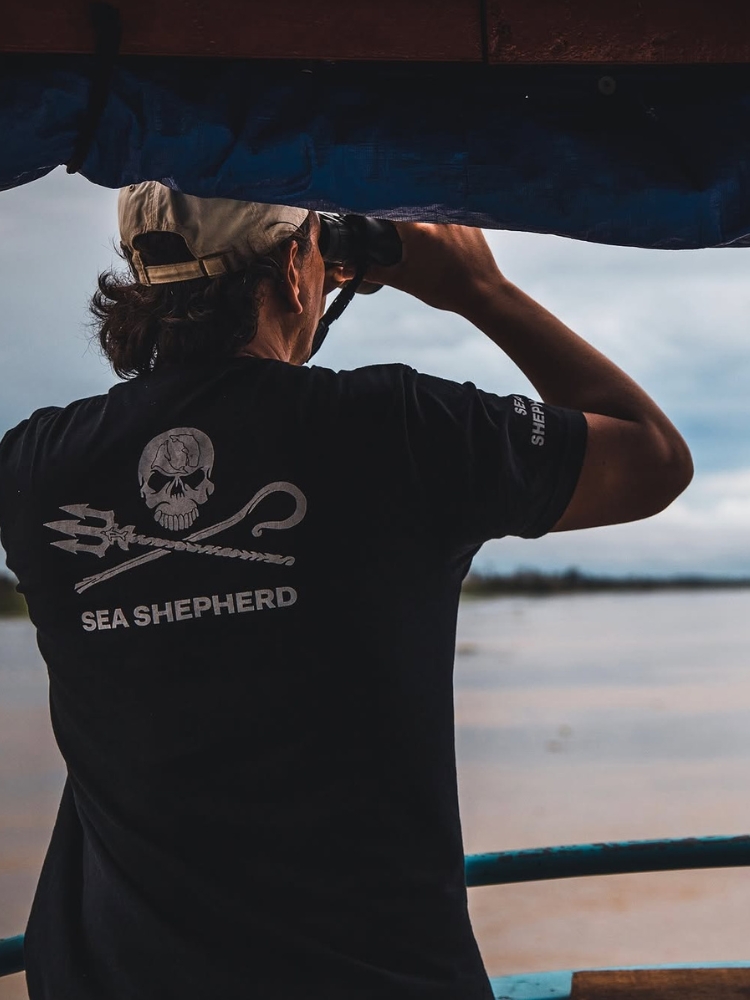
    Since 2021, the Amazon Boto Expedition project has been working to monitor and investigate the protection of pink Amazon dolphins while also implementing a long-term study about the population of these animals to deepen the knowledge about the species and find active ways to protect them.

    Amazon Rainforest Conservation Projects - Sea Sheperd Brasil
    Photo: @seasheperdbrasil

    The project is led by Sea Shepherd, an international non-profit marine conservation organization founded in 1977 in Vancouver, Canada. The Brazilian branch is set on helping the Amazon river dolphins. Anyone can donate R$ 1 per day to support this incredible initiative. More information here.

    5 – Alter do Chão’s Forest Fire Brigade

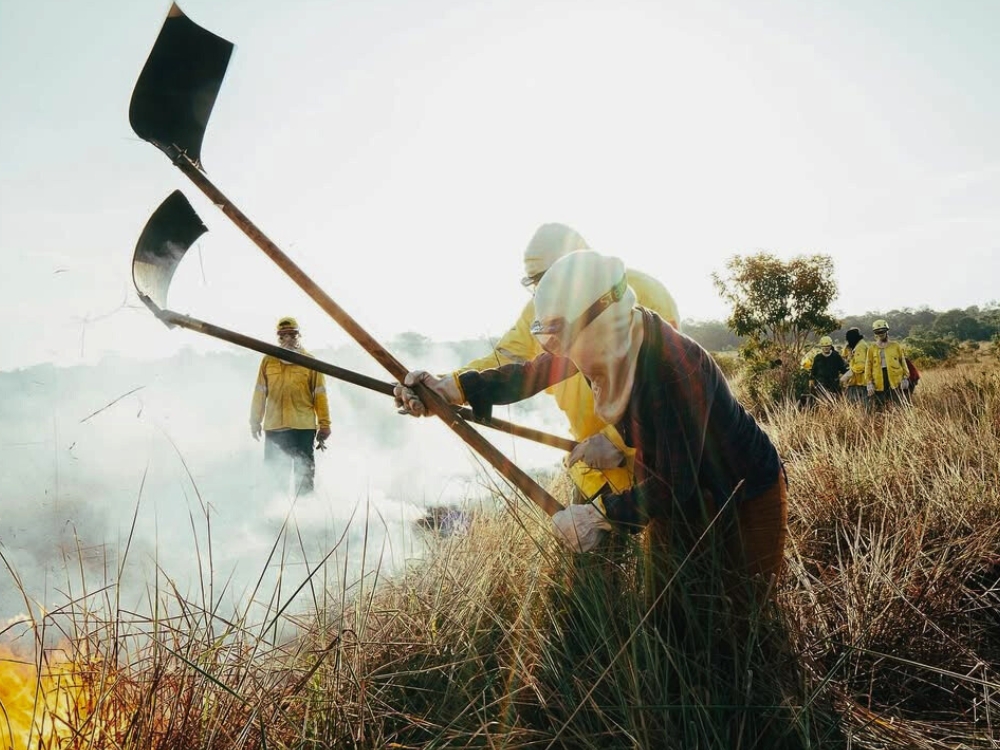
    Based in Alter do Chão, Pará, the Forest Fire Brigade is a non-profit organization founded in 2019. This Amazon Rainforest conservation project believes that fighting fires is actually a last resource, as it is possible to prevent and control fire spread altogether through environmental education and collective efforts – both from the civil society and the authorities. 

    Brigada do Alter - Amazon Conservation Projects
    Photo: @_fotografia23_

    By protecting the local fauna and flora, as well as the Indigenous population in the Lower Tapajós River area, the initiative serves as a model for new volunteer brigades not only in the Amazon but also in other Brazilian biomes (Atlantic Forest, Caatinga, Cerrado, Pampas and Pantanal).

    See more information about the Alter do Chão’s Forest Fire Brigade on their official website or social media profile, and show your support.

    Brigada do Alter - Amazon Conservation Projects
    Photo: @egrymaia

    6 – Expeditionaries of Health (EDS)

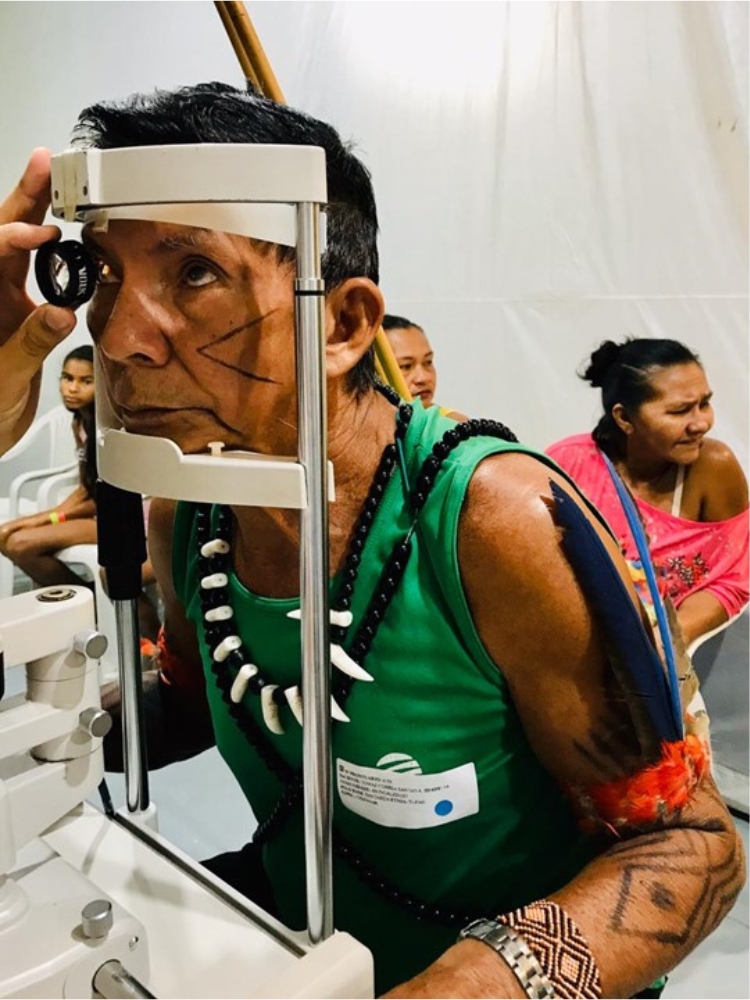
    Expeditionaries of Health (Expedicionários da Saúde), a.k.a. EDS, was founded in 2003 by a group of volunteer doctors to provide medical care for Indigenous groups who live in geographically isolated areas of the Amazon Rainforest.

    Over the years, 300 volunteers have covered over 500,000 km² in the forest to provide medical care for those in need. In 55 expeditions, EDS was able to achieve 10,486 surgeries, 76,333 appointments, 148,125 medical exams and procedures, and donated 8,464 prescription glasses.

    Dr. Ricardo Affonso, EDS president, was honored with the Zayed Sustainability Prize in Abu Dhabi’s COP28 (28th United Nations Climate Change Conference), in 2023. The recognition was an important step towards improvement in medical services, but the project needs constant donations to continue caring for the health of Brazilian indigenous people. Help EDS here.

    Amazon Conservation Projects - EDS (1)
    Photo: EDS

    7 – Women Entrepreneurs of the Forest

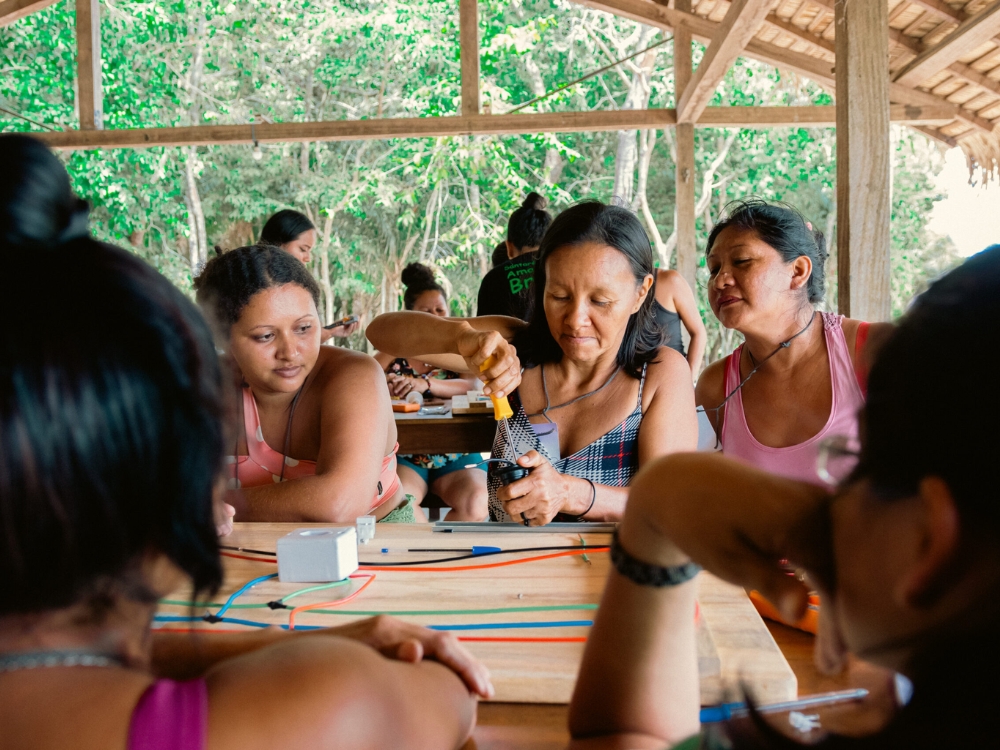
    The Women Entrepreneurs of the Forest (Mulheres Empreendedoras da Floresta) empowers women who live in the Amazon – especially in the towns of Santarém, Belterra, Mojuí dos Campos and Aveiro, all in the west of Pará. This is an initiative promoted by Projeto Saúde and Alegria (Health and Happiness Project), or PSA, a non-profit that has been operating in the Brazilian Amazon since the late 80s.

    PSA - Amazon Conservation Projects
    Photo: Mulheres Empreendedoras da Floresta

    Deforestation in the Amazon Rainforest, due to agriculture and illegal logging or mining, results in an unsafe setting for nearby communities who depend on the forest to make a living. Considering the unequal social scenario in which women are often submitted to, PSA provides professional training for Amazonian women to create, manage, and grow their own businesses, all in favor to build a more reliable and sustainable local economy.

    To support Women Entrepreneurs of the Forest and other important projects, check PSA’s official website.

    PSA - Amazon Conservation Projects (2)
    Photo: Mulheres Empreendedoras da Floresta

    8 – Neutral Carbon Program (PCN)

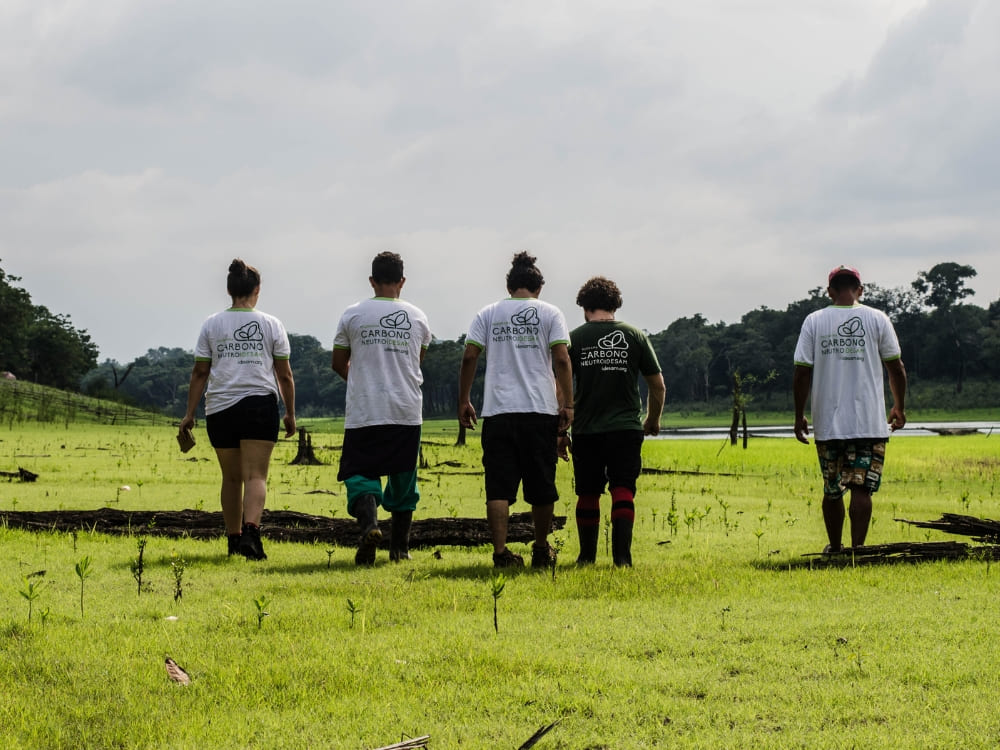
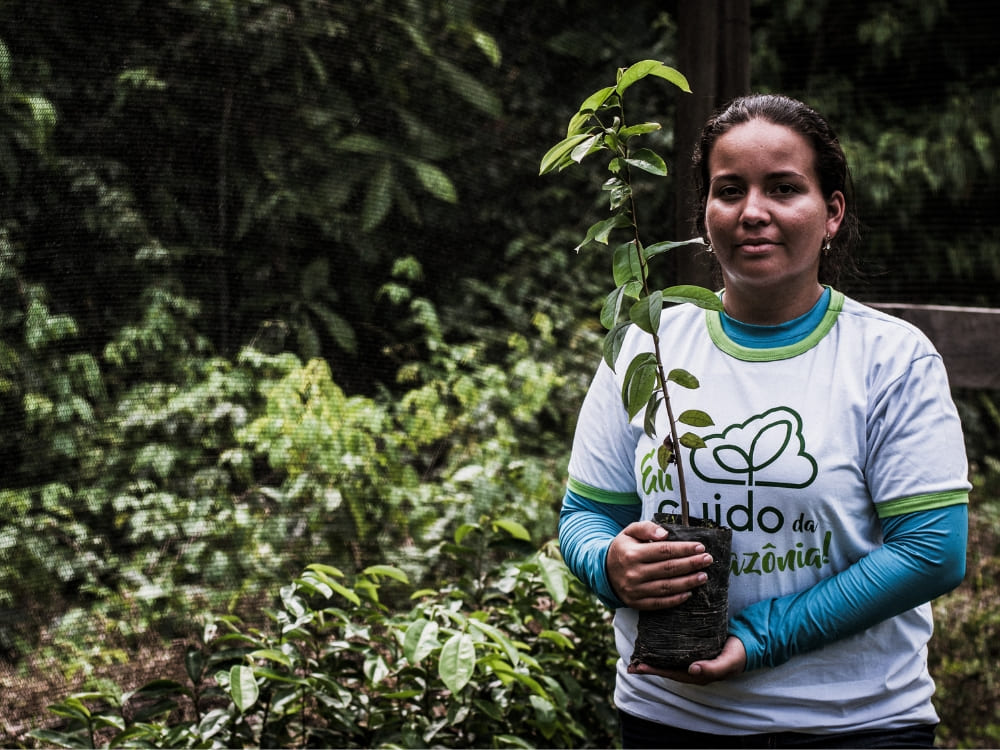
    The Neutral Carbon Program (PCN) is the longest-lasting project managed by Idesam, a non-profit created in 2004 that works in favor of the well-being of the forest and its people. The goal is to enable people and companies to take responsibility for the impact they generate on the planet by offsetting their greenhouse gas (GHG) emissions. This compensation is made through the reforestation of affected areas in Uatumã Biological Reserve, in Presidente Figueiredo, Amazonas.

    Carbono Neutro - IDESAM - Amazon Conservation Projects (1)
    Photo: Idesam

    The outcomes include reduced GHG emissions, awareness of carbon footprint, accountability for large corporations, food security, and income generation for families working in PCN.

    Visit Idesam’s official website for more details and donation options. 

    Amazon Rainforest Conservation Projects - IDESAM
    Photo: Idesam

    Show your support to conservation projects in the Amazon Rainforest

    These Amazon conservation projects work daily to protect the natural resources of the most important natural area of the world. There is no saving the forest, however, without helping its guardians, which means social efforts are deeply rooted in sustainable programs and should be taken just as seriously.

    You can do your part by donating, advocating for environmental policies, and supporting ecotourism in the Amazon Rainforest. Every action counts!

  • Ecotourism in the Amazon Rainforest: A Solution to Deforestation

    Ecotourism in the Amazon Rainforest: A Solution to Deforestation

    As deforestation threatens the Amazon, ecotourism in the Amazon Rainforest emerges as a key solution, with startups like PlanetaEXO leading the way in supporting Conservation and Local Communities.

    The Amazon Rainforest, often referred to as the “lungs of the Earth,” is facing one of its most critical challenges in decades. Deforestation rates have skyrocketed, with over 10,000 square kilometers of forest being cleared annually, driven by illegal logging, mining, and land conversion for agriculture. In addition, record-breaking wildfires and persistent droughts are worsening the situation, with over 50,000 active fires across Brazil.

    Sustainable tourism to the Amazon Rainforest is emerging as a viable strategy to combat this environmental crisis while supporting local communities.

    Ecotourism in the Amazon Rainforest
    “Locally guided tours help shift the focus away from destructive practices.” – Photo: João Paulo Krajewski

    PlanetaEXO, a startup dedicated to eco-friendly travel, has been working closely with these communities to offer tours in the Amazon in Brazil that prioritize both environmental conservation and community empowerment. “We’ve seen firsthand how ecolodges and locally guided tours help shift the focus away from destructive practices,” says Lucas Ribeiro, founder of PlanetaEXO.

    By connecting travelers with authentic experiences that benefit local communities, we’re promoting a model of tourism that supports both people and the planet,” he adds.

    Ecotourism in the Amazon Rainforest: how can it reduce deforestation
    A sanctuary for biodiversity and a symbol of sustainable tourism: Cristalino Ecological Reserve

    According to a report by the World Wildlife Fund (WWF), ecotourism in the Amazon Rainforest could reduce deforestation in the Amazon by providing an alternative source of income to industries that exploit the rainforest.

    WWF suggests that responsible tourism can help maintain over 50% of the forest’s biodiversity, while also addressing climate challenges by protecting large swaths of land from forest clearing.

    Empowering Local Communities through Sustainable Tourism

    The benefits of sustainable tourism are not limited to environmental protection. Ecotourism is also creating economic opportunities for local communities, including many indigenous groups, who have long acted as stewards of the Amazon.

    A powerful example of this transformation, highlighted by Projeto Draft, is the story of Roberto Brito Mendonça from Iranduba, Amazonas. Like his father and grandfather before him, Roberto was a logger, using the forest to support his family. In 2008, when his land became part of the Rio Negro Sustainable Development Reserve, his livelihood was at risk. Faced with uncertainty, Roberto turned to tourism, and by 2012, he began running Pousada do Garrido, one of 24 tourism businesses in the area.

    Ecotourism in the Amazon Rainforest - A Solution to Deforestation
    “The Amazon we want is one full of life – and when I say life, I mean especially the human lives that are part of it,” says Roberto Brito.

    Access to education and technology is essential for sustainability,” says Roberto. “If everyone had this opportunity, we can chart a new course for the forest. The Amazon we want is one full of life – and when I say life, I mean especially the human lives that are part of it”.

    His story is a testament to how sustainable tourism can offer an alternative to extractive industries, allowing local communities to preserve both nature and their way of life.

    Ecolodges Leading by Example

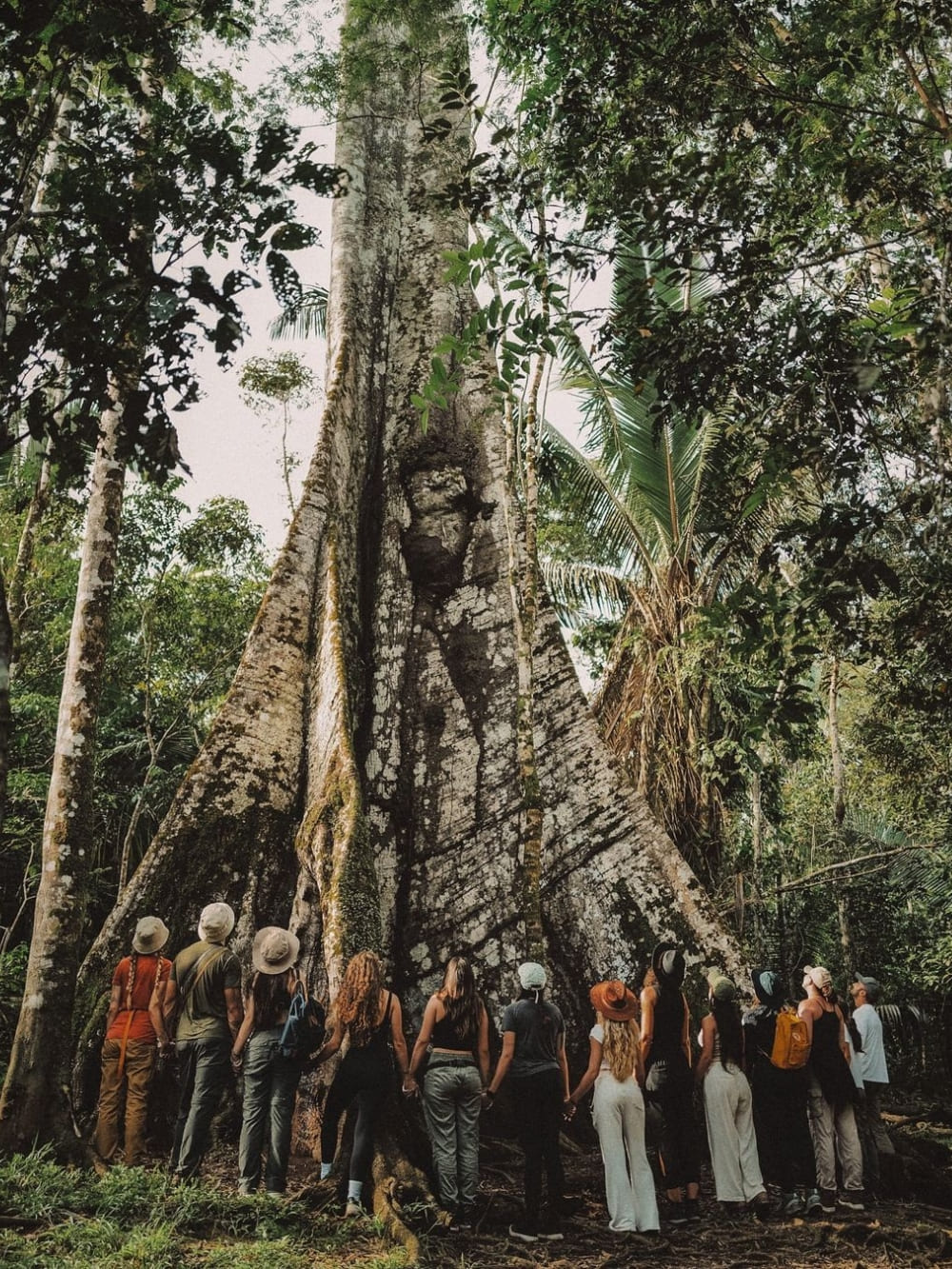
    Lodges like Uakari Lodge in the Mamirauá Reserve, Tefé, and Cristalino Lodge, in Alta Floresta, Mato Grosso, are prime examples of how ecolodges play a critical role in ecotourism. Uakari, located in a semi-flooded ecosystem that represents 3% of the Amazon, aims to protect local biodiversity while supporting eleven local communities.

    The lodge operates with sustainability at its core, using solar energy, collecting and storing rainwater, and treating sewage with microorganisms instead of chemicals. Even the roof tiles are made from recycled plastic bottles.

    Ecolodges leading Sustainable Practices - Uakari Lodge
    “Uakari Lodge aims to protect local biodiversity while supporting eleven local communities.”

    Guests are encouraged to minimize their energy usage, and all waste is treated before being returned to the river. Through its community tourism model, Uakari provides opportunities and training for local people, ensuring that the lodge’s operations have minimal impact on the environment.

    Ecotourism in the Amazon Rainforest - A Solution to Deforestation

    Meanwhile, Cristalino Lodge stands out as an ecolodge nestled within one of the largest private reserves in the Amazon, protecting over 11,000 hectares of forest—an area nearly twice the size of Manhattan Island. This vast area is kept in pristine condition, rich in biodiversity, and supports critical conservation efforts.

    Cristalino Jungle Lodge leading ecotourism in the Amazon Rainforest by example
    Being atop Cristalino Lodge’s 164-foot towerview  is a breathtaking sight. – Photo: Andre Dib

    The lodge adopts sustainable architecture that respects nature, with systems for effluent and wastewater treatment, solar water heating, solar energy, and recycling—all protocols designed to minimize the impact of its operations. By limiting the number of guests per guide on every tour, Cristalino ensures a low-impact experience.

    “The lodge adopts sustainable architecture that respects nature.” – Photo Samuel Melim

    Visitors to both lodges embark on guided treks and excursions, experiencing the astonishing complexity of the Amazon’s ecosystems.

    Uakari Lodge serves as a sanctuary for unique species like the white-faced uakari, while Cristalino Lodge supports research that has documented over 1,356 different plant species, including six previously unknown to science.

    By promoting low-impact tourism, both Uakari and Cristalino contribute to the preservation of the forest while providing sustainable livelihoods for local communities.

    Economic and Global Impact of Sustainable Tourism in the Amazon

    The economic comparison between sustainable tourism and private exploitation in the Amazon highlights the importance of eco-friendly travel. According to the World Bank, sustainable tourism in the Amazon is valued at approximately US$2.3 billion annually.

    Although this represents only around 5% of the US$45 billion generated by private exploitation of the forest through agriculture, timber harvesting, and mining, ecoutourism provides an essential ally in conservation efforts.

    Ecotourism in the Amazon Rainforest Brazil
    Photo: Samuel Melim

    Beyond its financial value, sustainable tourism raises awareness of the Amazon’s deforestation crisis and its impact on the global climate. Tourists who witness the destruction firsthand are often inspired to support conservation projects in their home countries.

    Ecotourism also contributes to environmental education, which helps fostering a deeper understanding of the need for sustainable practices worldwide.

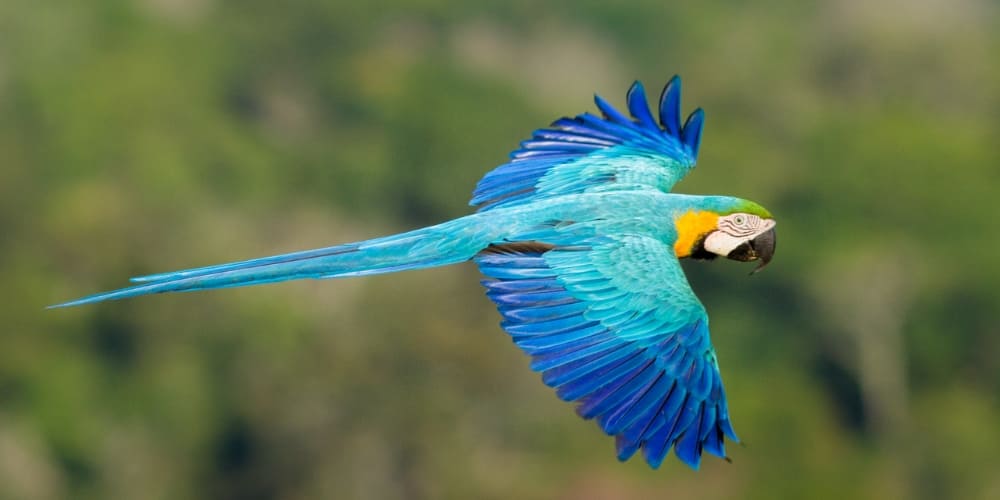
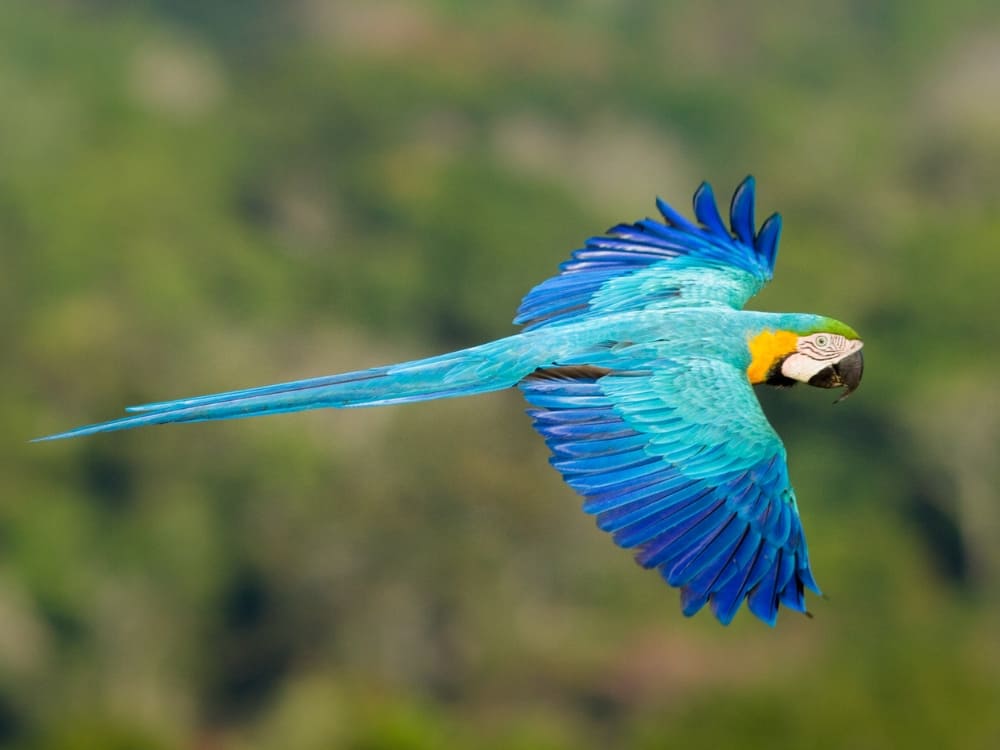
    Ecotourism in the Amazon Rainforest - Blue Macaws
    Photo: Jorge Lopes

    With eco-friendly tours increasingly contributing to nature protection and restoration, ecotourism is able to shape global views on deforestation. Travelers support these efforts, creating a win-win situation where tourism funds the preservation of natural resources in the Amazon.

    A Call To Action

    As deforestation continues to threaten one of the world’s most important ecosystems, sustainable tourism offers a way forward. By shifting economic incentives and raising global awareness, it is possible to reduce the pressure on the Amazon and protect its biodiversity for future generations.

    At PlanetaEXO, we believe that every traveler has the power to make a difference. Our eco-tours offer authentic, responsible tourism experiences that benefit both the environment and the communities that rely on the forest. By choosing sustainable tourism, we can all be part of the solution.

    Read more:

  • What to Do in the Amazon Rainforest: Top Outdoor Activities in Brazil

    What to Do in the Amazon Rainforest: Top Outdoor Activities in Brazil

    Looking forward to seeing up close one of the most impressive natural wonders of the planet? Check out a curated list of the top activities in the Amazon, Brazil

    The possibilities of the Amazon in Brazil are as vast as its impressive expanse of nearly 5 million km². With options for solo travelers, couples, families, and adrenaline-loving adventurers, the world’s largest tropical forest is full of surprises.

    What to do in the Amazon Rainforest also depends on individual preferences and needs. Think about what kind of experience you would like to keep in your memory and heart: navigating majestic rivers, camping among the trees, combining comfort and nature in a jungle lodge…

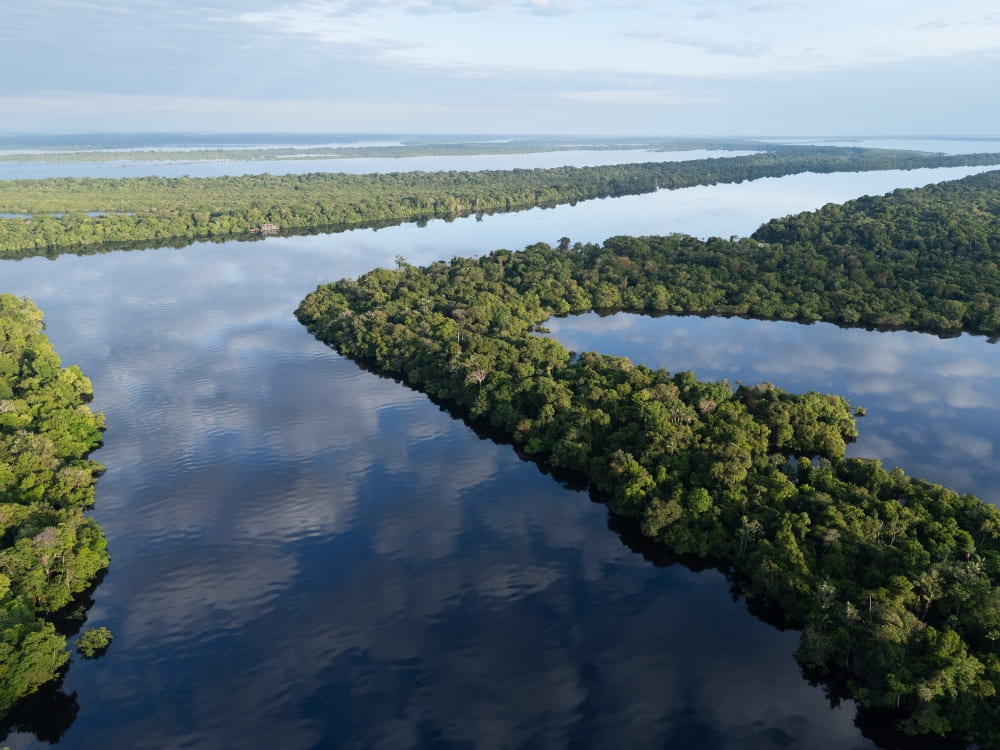
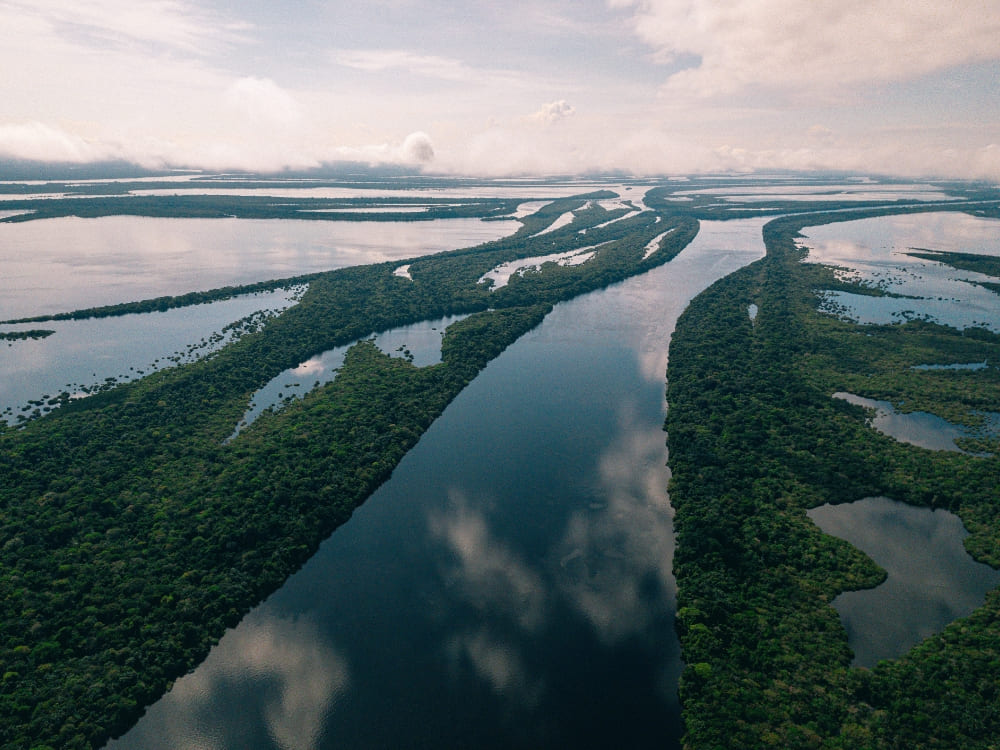
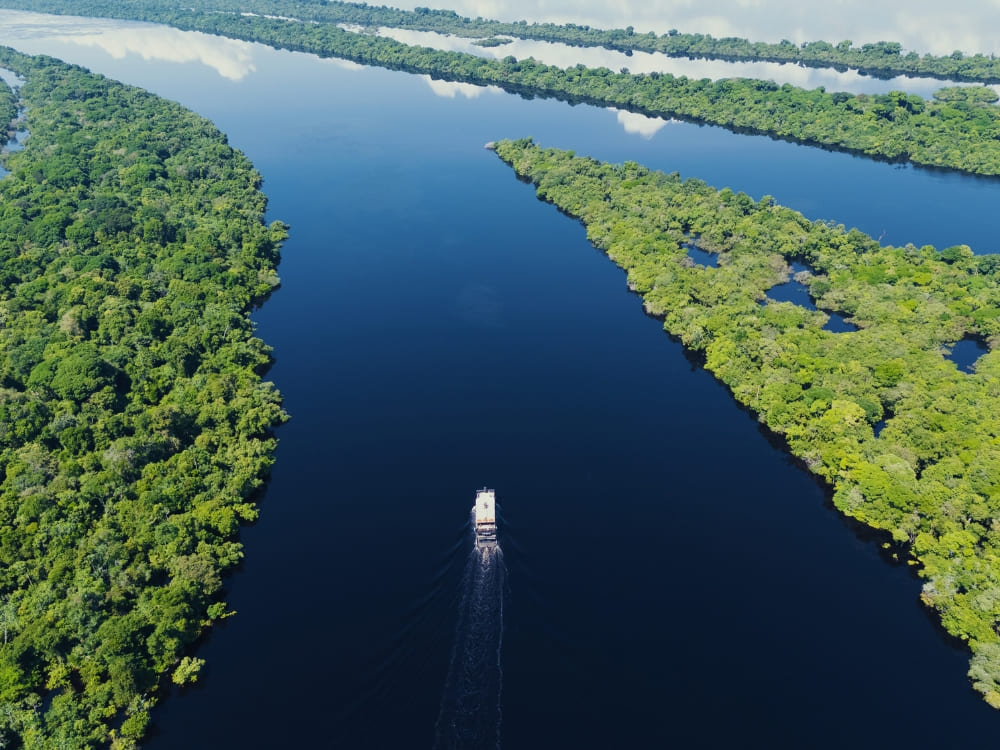
    A multi-level riverboat travels along a wide, calm dark river bordered by dense green rainforest islands reflecting the sky.
    Photo: Marcelo Bonifacio

    Whatever it may be, PlanetaEXO, an ecotourism platform specializing in Amazon Rainforest tours in Brazil, is well-acquainted with tailor-made itineraries in nature for every travel style. Check our suggestions right below!
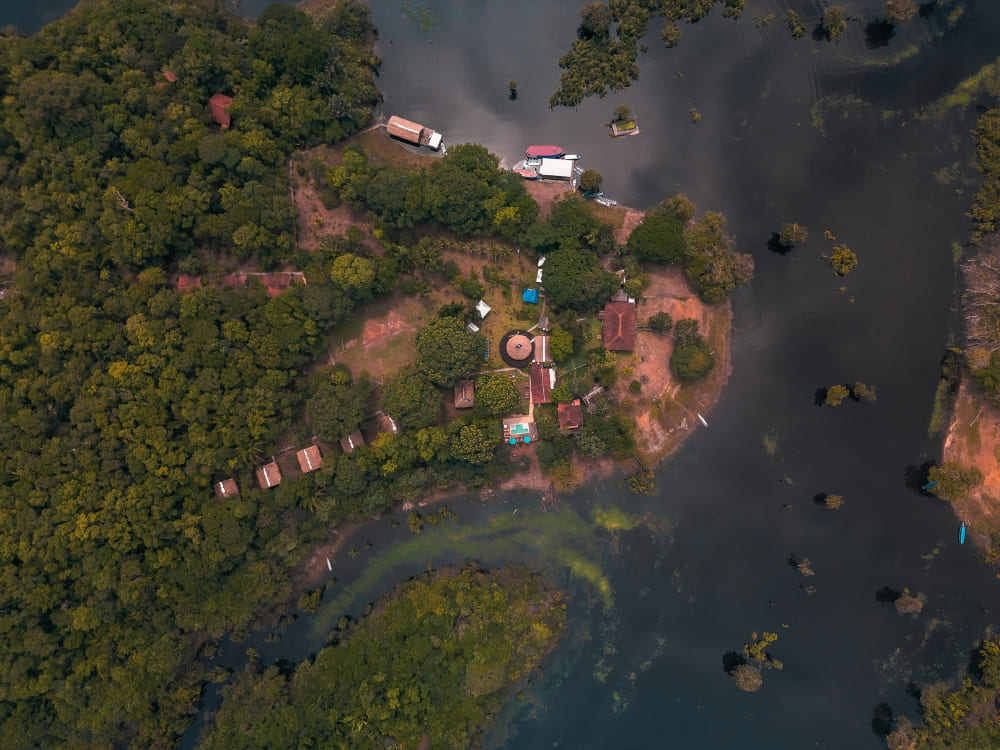
    Amazon immersion in jungle lodges

    Do you want to experience what nature has to offer but still need some comfort to rest your bones after a day full of adventure? You can enjoy all the outdoor activities while staying in an Amazon jungle lodge!
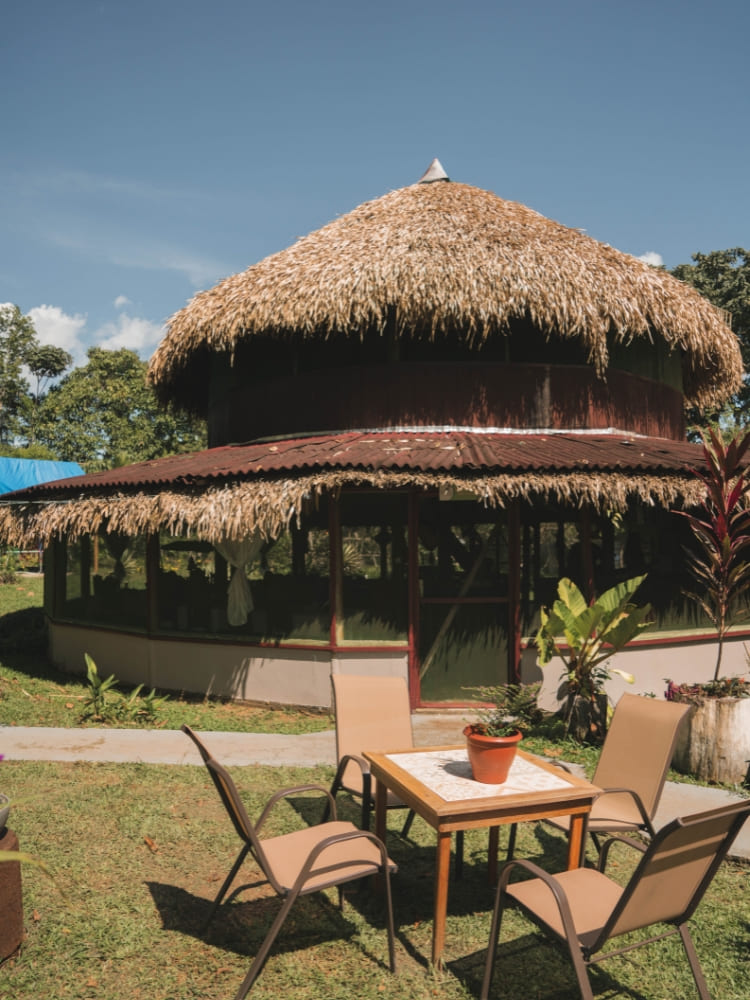
    Comfortable Amazon jungle lodge with a thatched roof nestled in the tropical rainforest.
    Photo: Felipe Castellari

    Located amidst preserved areas in different zones of the forest, such as the Anavilhanas and Jaú National Parks, the accommodations have everything for a great stay: comfortable rooms, private bathrooms, common areas for leisure and relaxation, traditional food, and much more.

    Each lodge features its own team of qualified professionals to guide the activities, including hiking, fishing, boat tours, wildlife watching, night spotlighting, etc.

    👉 Read more: When is the Best Time to Visit the Amazon Rainforest in Brazil

    Amazon river cruises

    Did you know cruises can also take place in bodies of water besides the ocean? The boats for river cruises are smaller than your traditional ships, but that makes for an even better, more intimate experience.

    With fewer people aboard, you can focus on what truly matters—the trees, the animals, the soft breeze, and the indescribable feeling of sailing through the calm waters of the Amazonian rivers. 

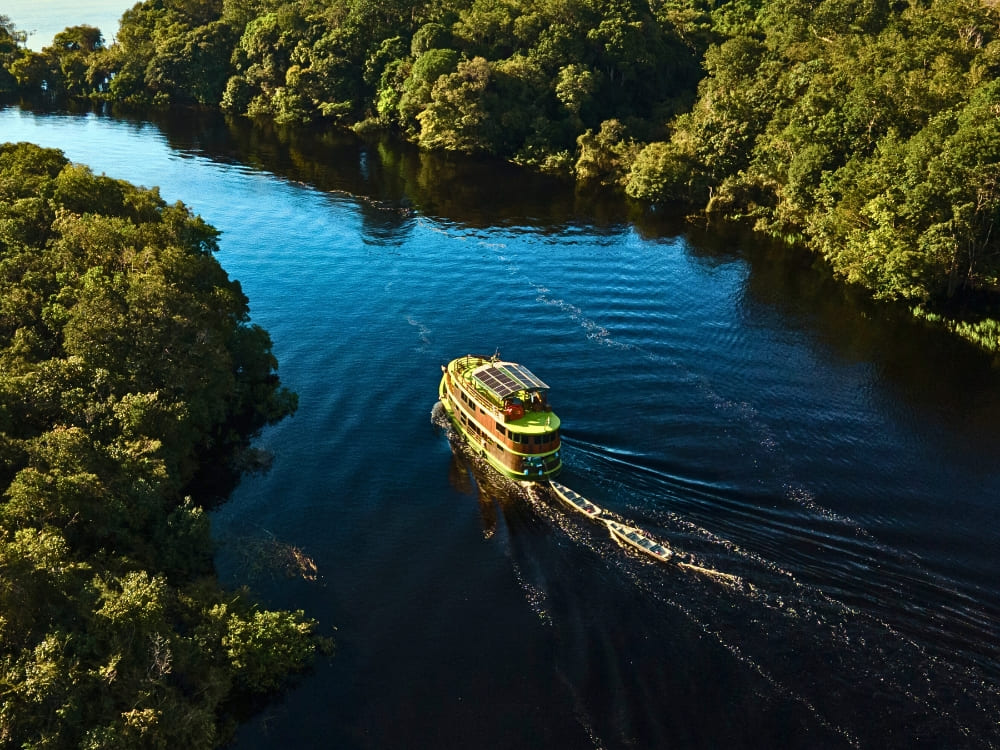
    A green ecotourism riverboat with solar panels cruises down a dark river surrounded by lush Amazon rainforest.
    .

    In addition to excellent accommodation in elegant cabins equipped with everything you need for a comfortable trip—private bathrooms, king-size beds, air-conditioning, and a wide range of amenities—the cruises also include many activities in the Amazon Rainforest, such as hiking trails, canoeing in igapós (flooded forests), night spotlighting, visits to local communities, and much more.

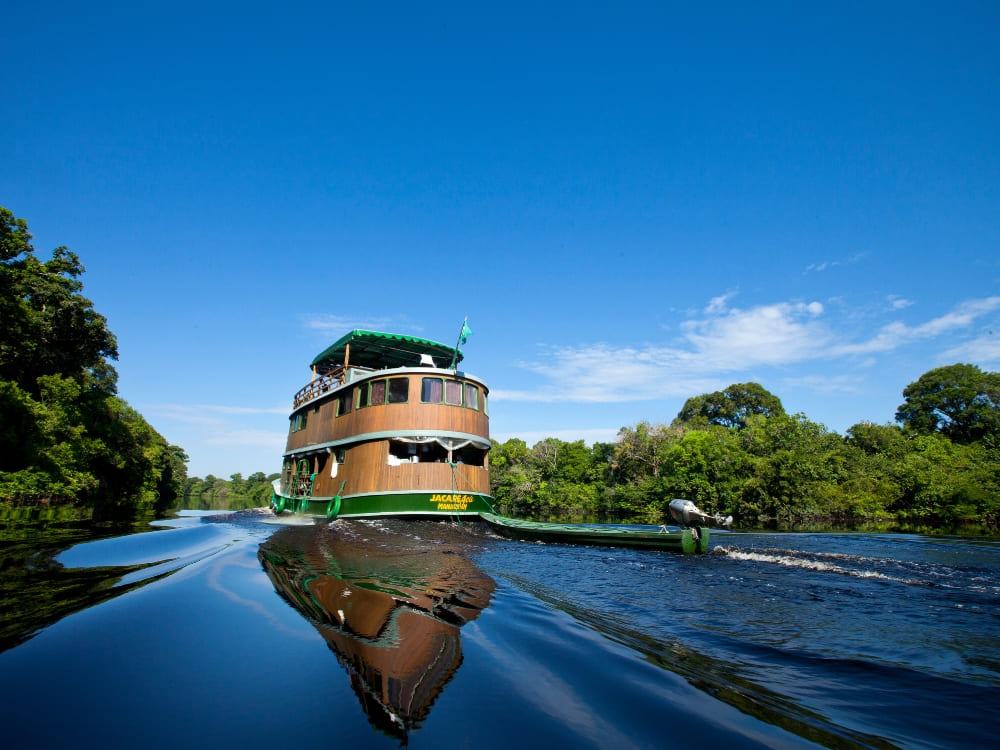
    The best Amazon river cruises are multi-level vessels featuring elegant designs, various common areas, and highly qualified crews. They also follow strict safety and environmental protocols to ensure a responsible, hassle-free trip. 

    👉 Read more: What’s the Best Time of the Year for Amazon River Cruises in Brazil?

    Kayaking on Amazon rivers

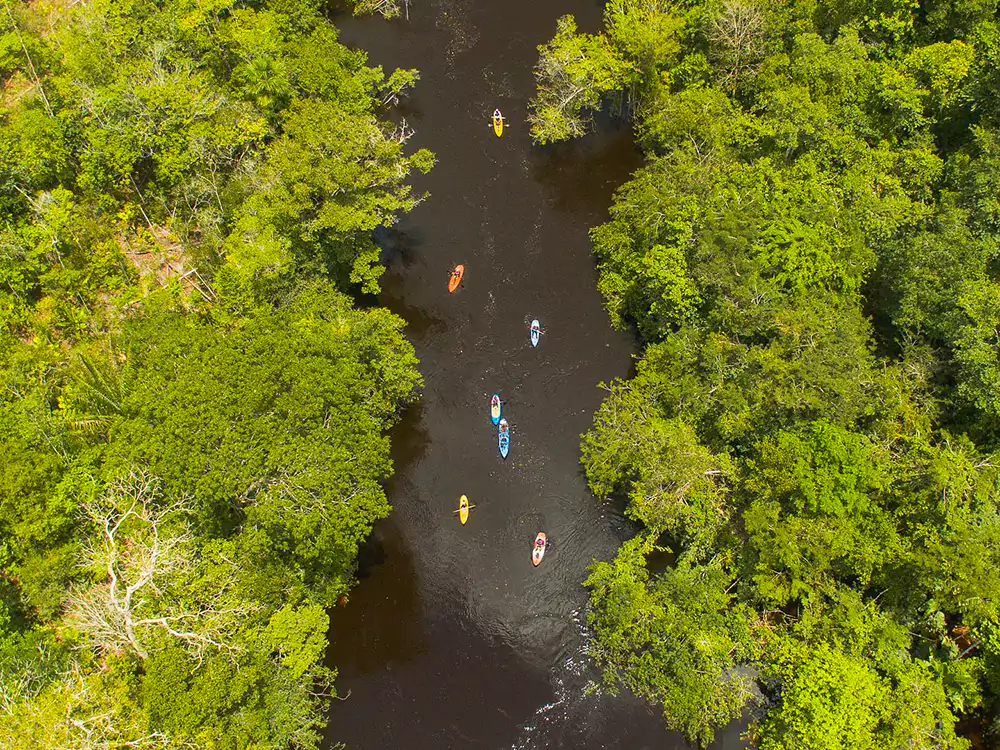
    One of the top things to do in the Amazon, particularly in Presidente Figueiredo, is kayaking. Known as the Land of Waterfalls due to its hundreds of cataloged waterfalls, as well as rivers and natural pools, this is the perfect destination for travelers who love water-related itineraries.

     Aerial view of a group of tourists kayaking on a dark Amazonian river surrounded by dense green forest.
    .

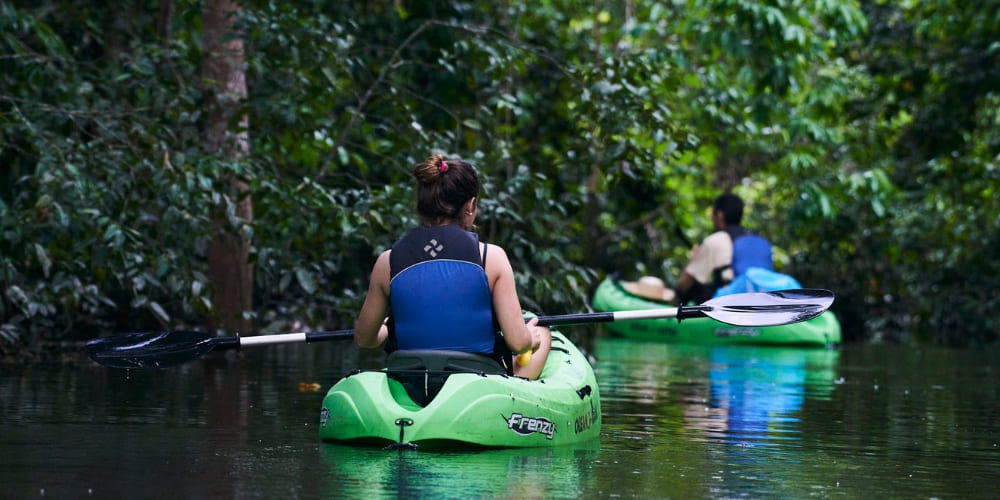
    Kayak tours are great for both experienced and newbie kayakers. If you’ve done this before, then you get to do what you love in one of the most beautiful places in the world. First time? No biggie, the instructors will help you with everything you need, from how to put on your safety gear to the best paddling techniques!
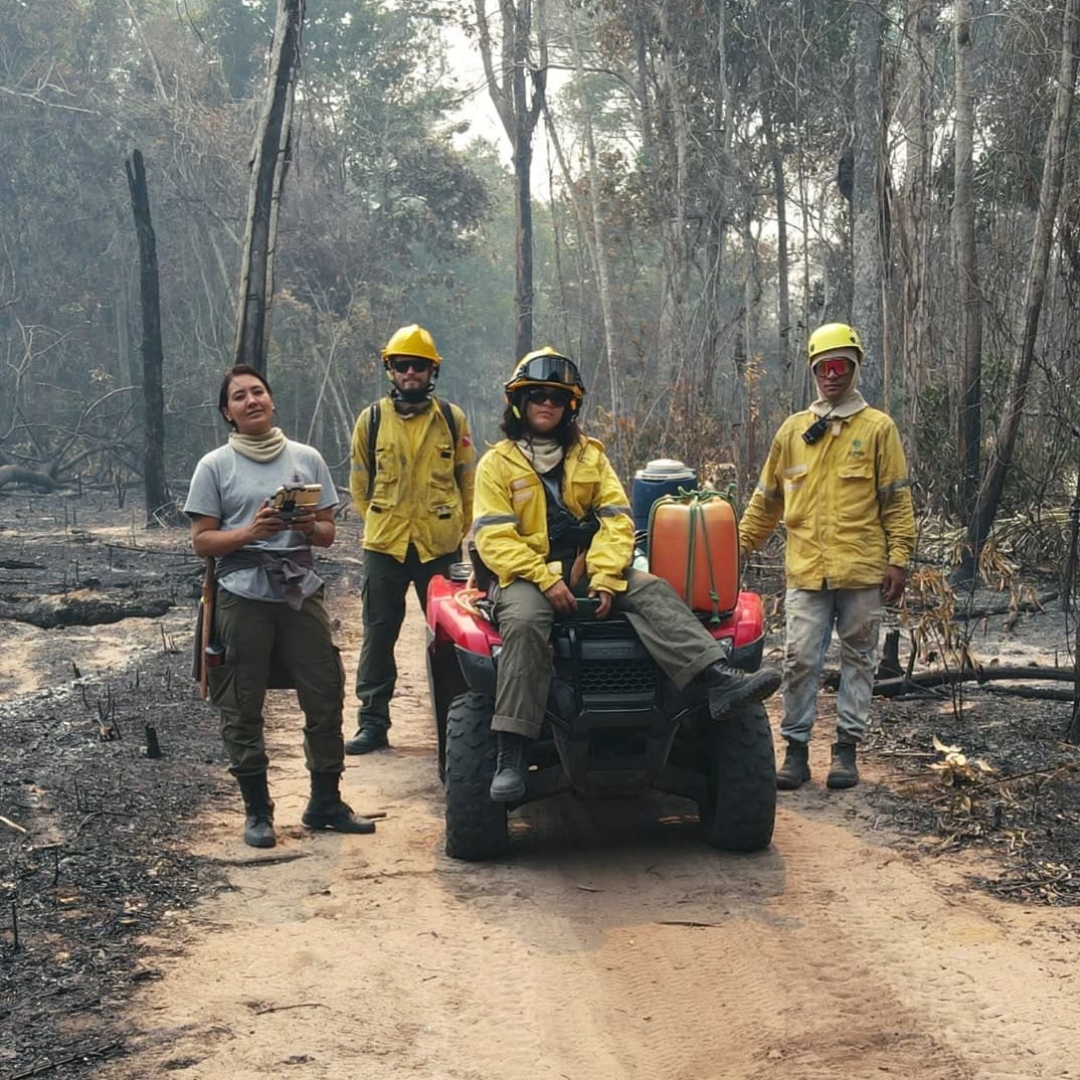
    Keep in mind: kayaking can be quite demanding in terms of physicality—you’ll be in the water for 4–8 hours. Even those in great shape might get tired eventually, so the solution is requesting to be pulled by the support boats when your arms start feeling funny. This way, you can just relax and enjoy the ride!


    👉 Explore the adventure: 4-day Amazon Kayak Tour Brazil

    Meeting of Waters

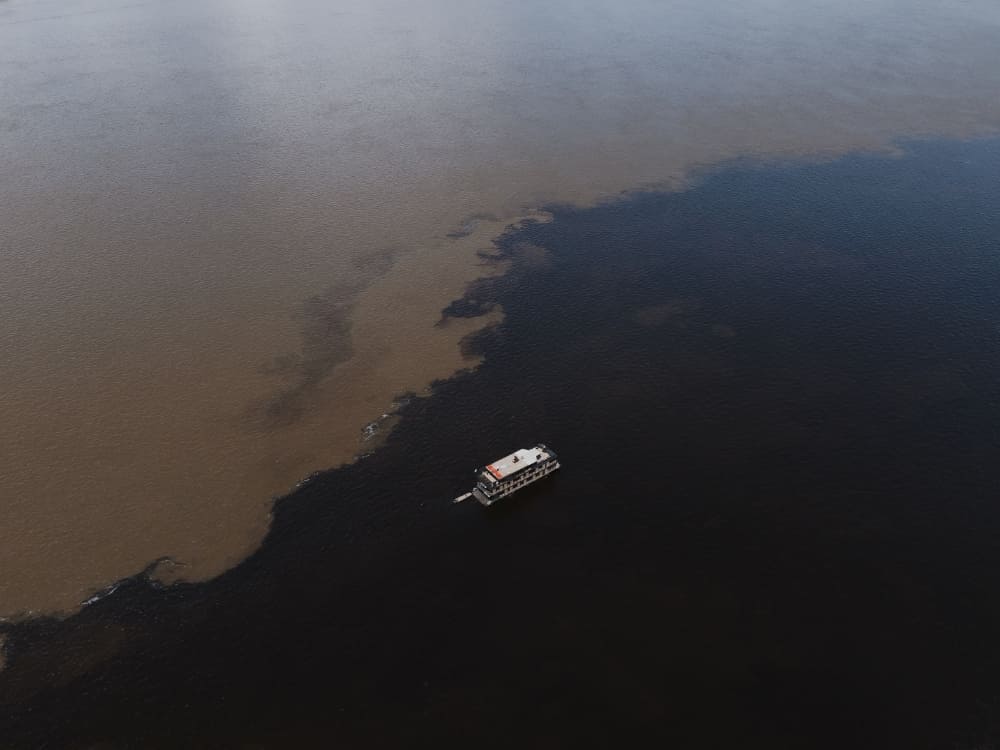
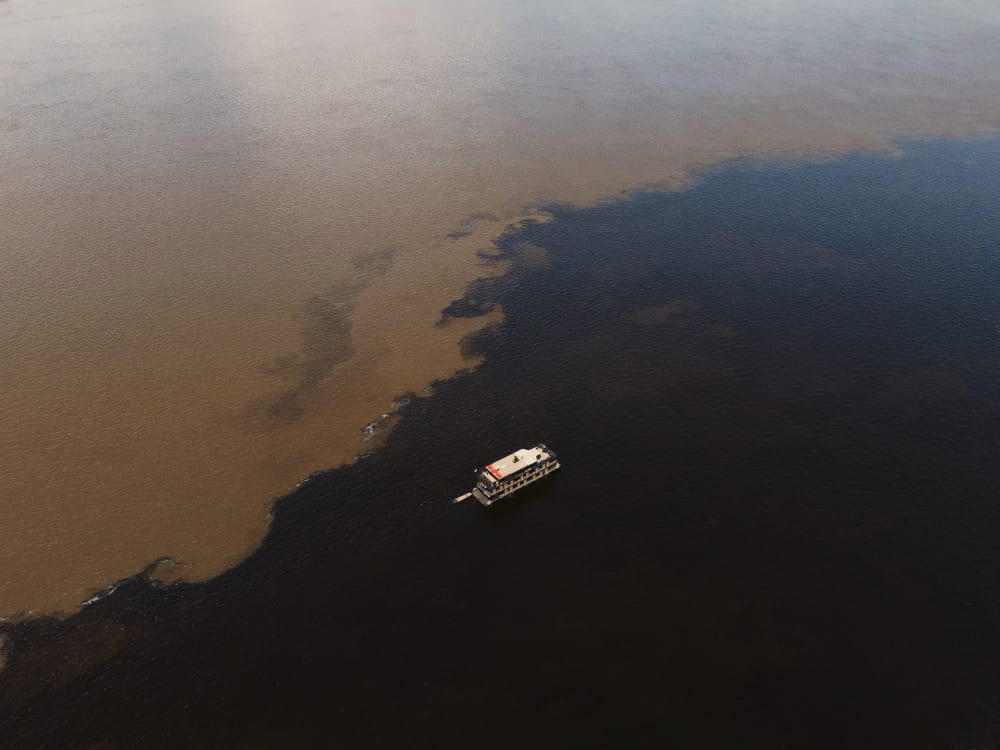
    Surely one of the greatest landmarks of the Amazon Rainforest, the Meeting of Waters is a fascinating phenomenon where the Negro and Solimões rivers merge—but not quite.

    Aerial view of a riverboat navigating the Meeting of the Waters in the Amazon, showing the distinct dark and sandy rivers flowing side-by-side.
    Photo: Marcelo Bonifacio

    Doing justice to its name, the Negro River’s water is black, while Solimões’ is brown. They both meet but never blend together. There are three reasons for this: different temperatures, current speed, and the waters’ pH (acidity).

    Offering a breathtaking view all year-round, the Meeting of Waters can be seen in Manaus or during river cruises and boat rides. You can’t miss it!

    Read more: How to Get to the Amazon Rainforest in Brazil?

    Amazon jungle tours

    When it comes to what to do in the Amazon Rainforest in Brazil, of course jungle expeditions must be included.

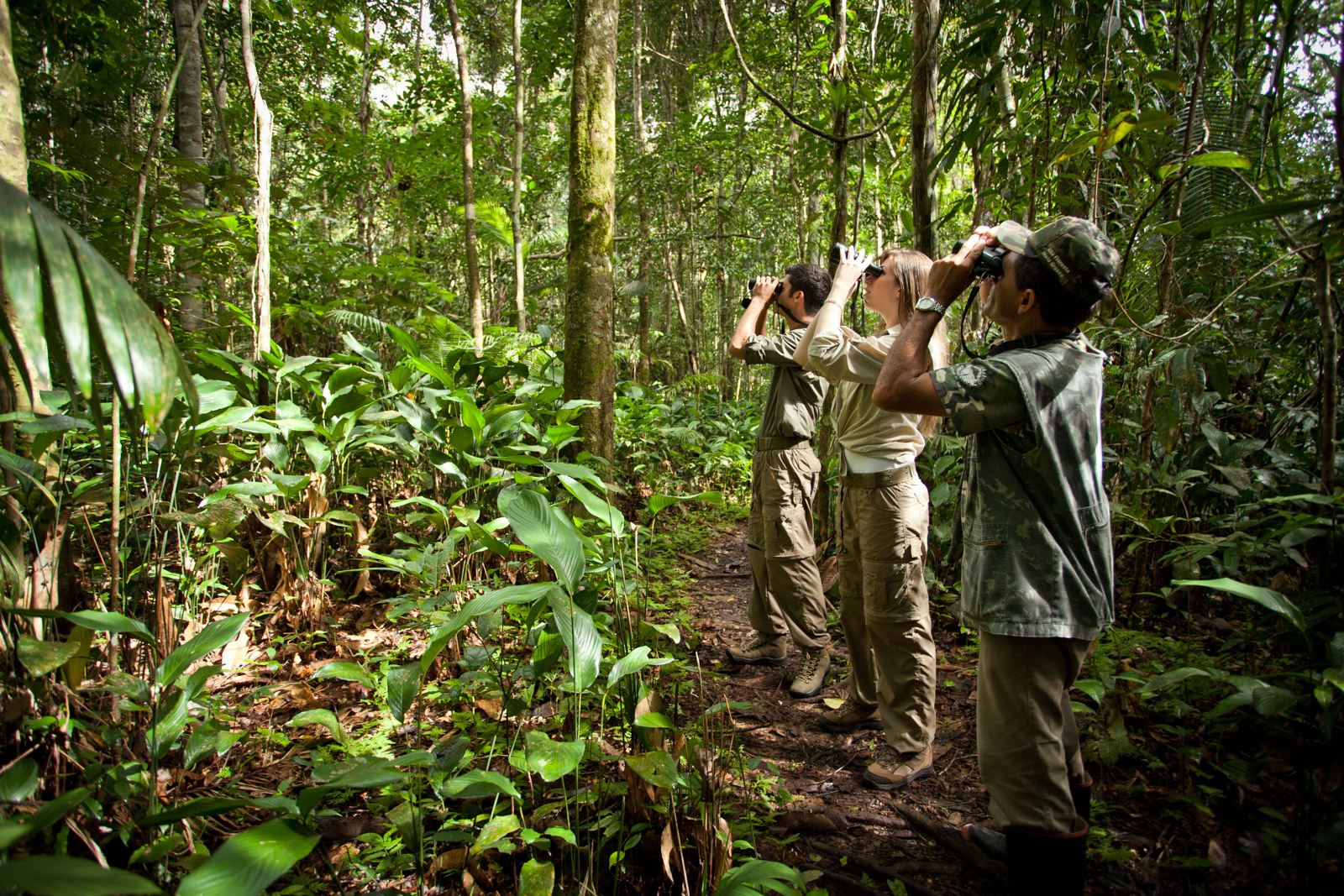
    Three tourists on an Amazon jungle tour using binoculars to observe wildlife among giant trees.
    Photo: Samuel Melim

    There are 80,000 species of plants all over the area, of which 40,000 have very important roles in sustaining local water cycles and even regulating the weather on a global scale. The forest is also home to many animals—427 mammals, 1300 birds, 378 reptiles, and 400 amphibians, according to the Amazon Conservation Association.

    So much natural richness must be appreciated, so get ready to hike in between the giant (and ancient) trees, breathe the purest fresh air on the planet, and observe the wildlife. Can you imagine spotting alligators, sloths, macaws, pink river dolphins, or other incredible Amazon animals? You just don’t see that every day.

    Expeditions may vary depending on how close to nature you want to be. If you love the idea of wild camping, survival tours are a great option, which allows you to sleep in a hammock in the middle of the jungle, safely secured from animals, mosquitoes, and the rain.

    Connecting with locals

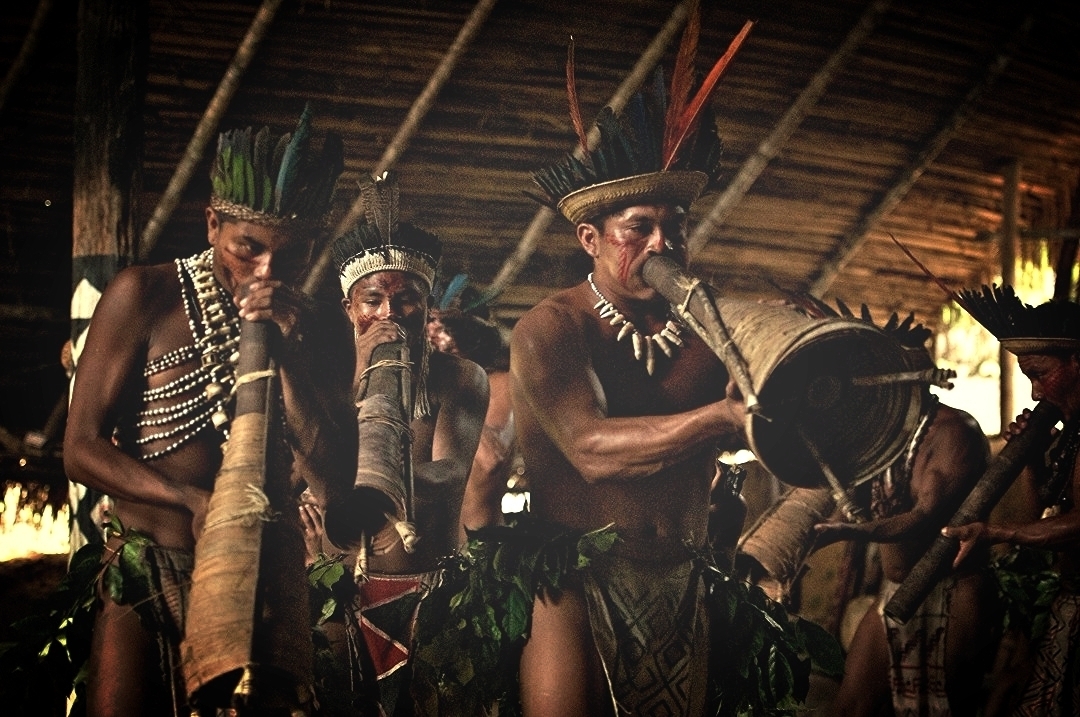
    The Amazon Rainforest is not only rich in biodiversity but also in culture. In Amazonas alone, there are approximately 350 riverside communities and 259 indigenous groups in different parts of the state.

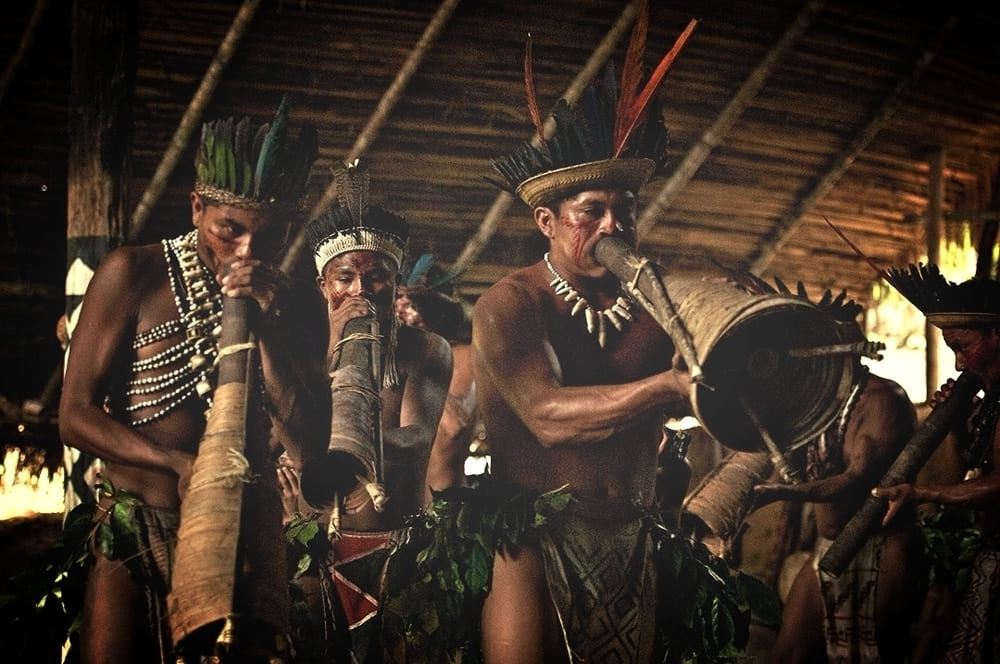
     Indigenous people from the Amazon playing traditional wind instruments during a cultural presentation.
    .

    Visiting the homes of local residents is one of the main things to do in the Amazon because it allows you to dive deep into the most crucial element of every destination: the people.

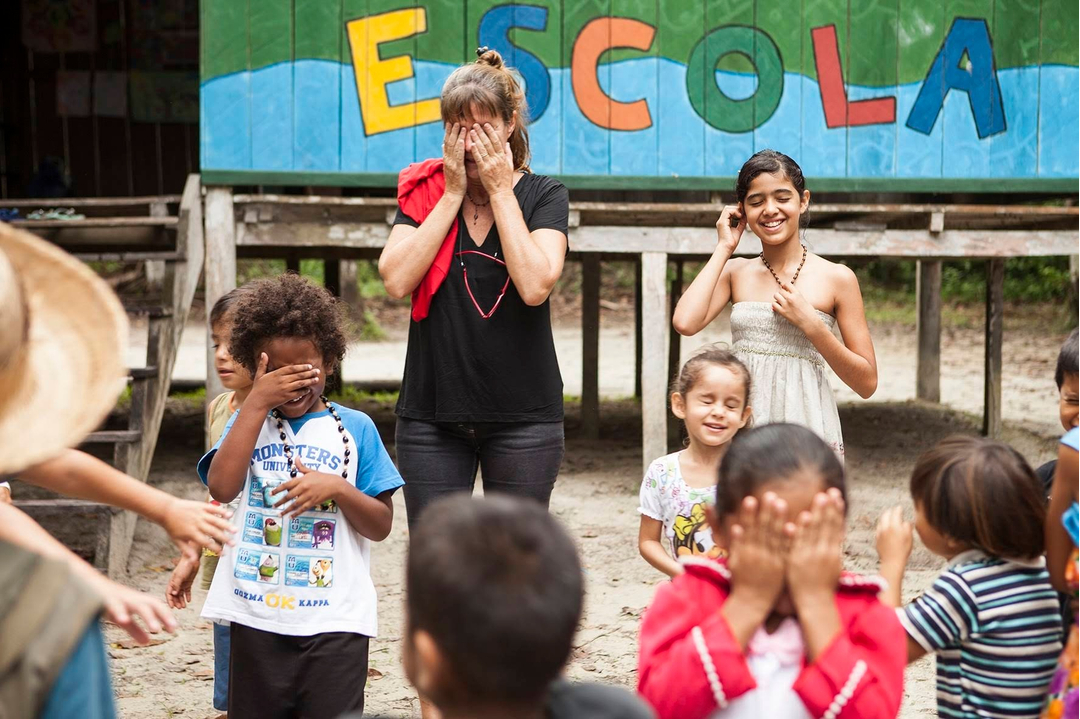
    Activities vary according to each community, but include immersive tours that make it possible to learn about the day-to-day life of natives when it comes to food, agriculture, crafts, festivities, etc.

    Group of smiling local children and a tourist interacting in front of a riverside community school building in the Amazon.
    .

    The experience can hold many surprises, but be sure of one thing: Brazilians are very friendly and will welcome you with open arms!

    Join the best activities in the Amazon with PlanetaEXO

    Now that you know what to do in the Amazon Rainforest, it’s time to plan your trip!

    PlanetaEXO is an ecotourism platform specializing in Amazon Rainforest tours in Brazil. By connecting you with the best local operators, we enrich your travel experience with tailor-made itineraries, wonderful accommodations, convenient transfer options, and much more. Contact us now!