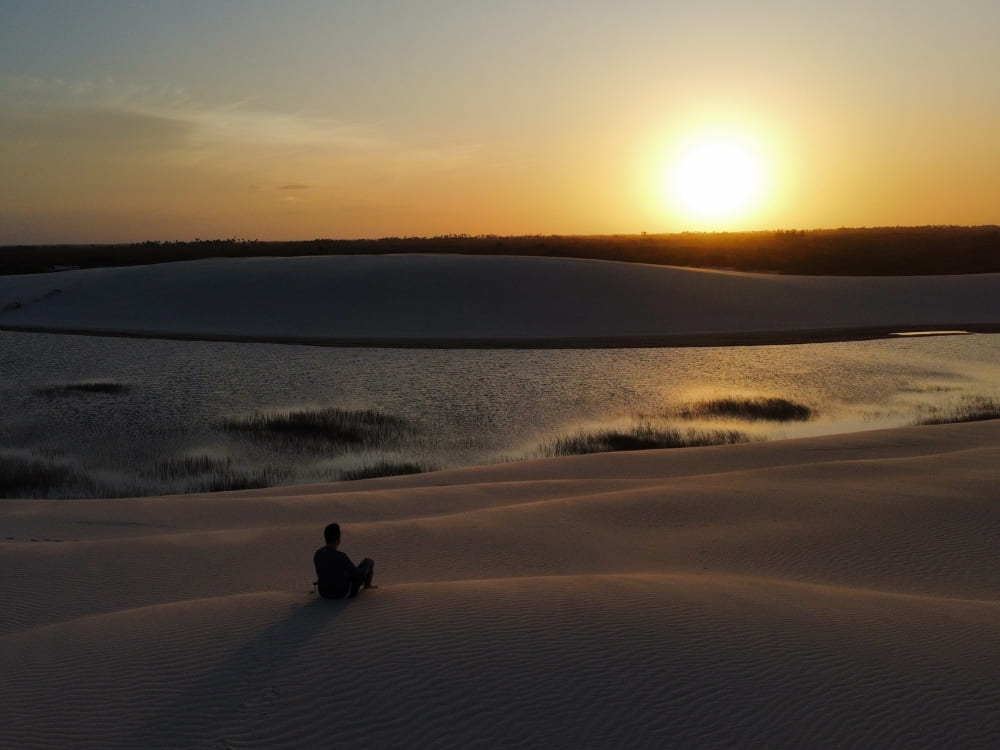
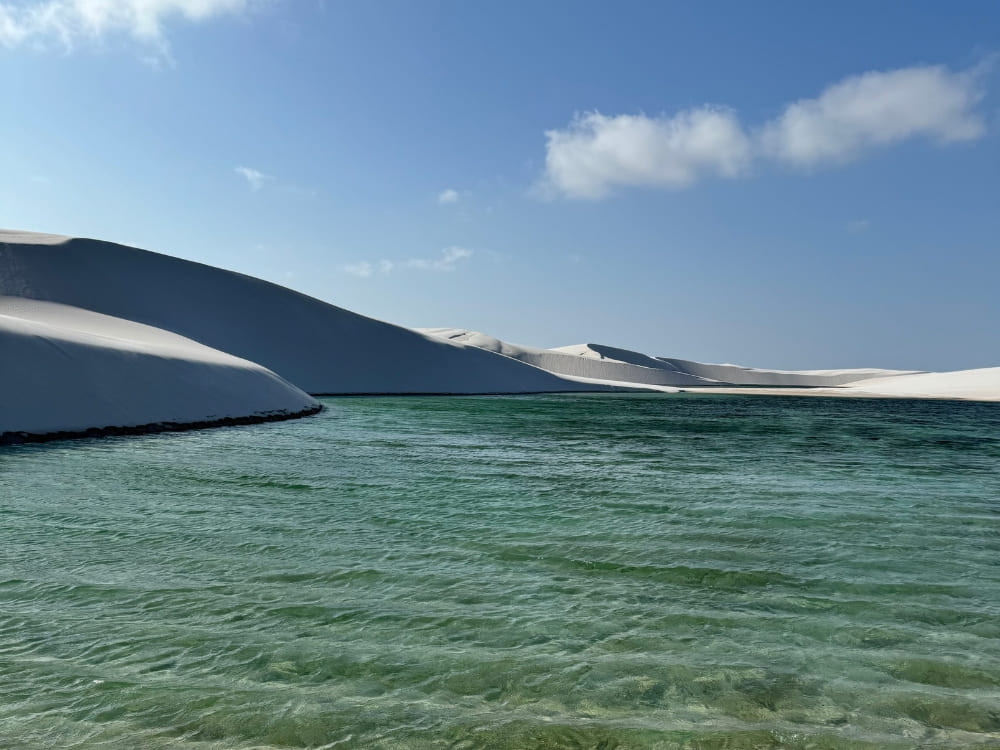
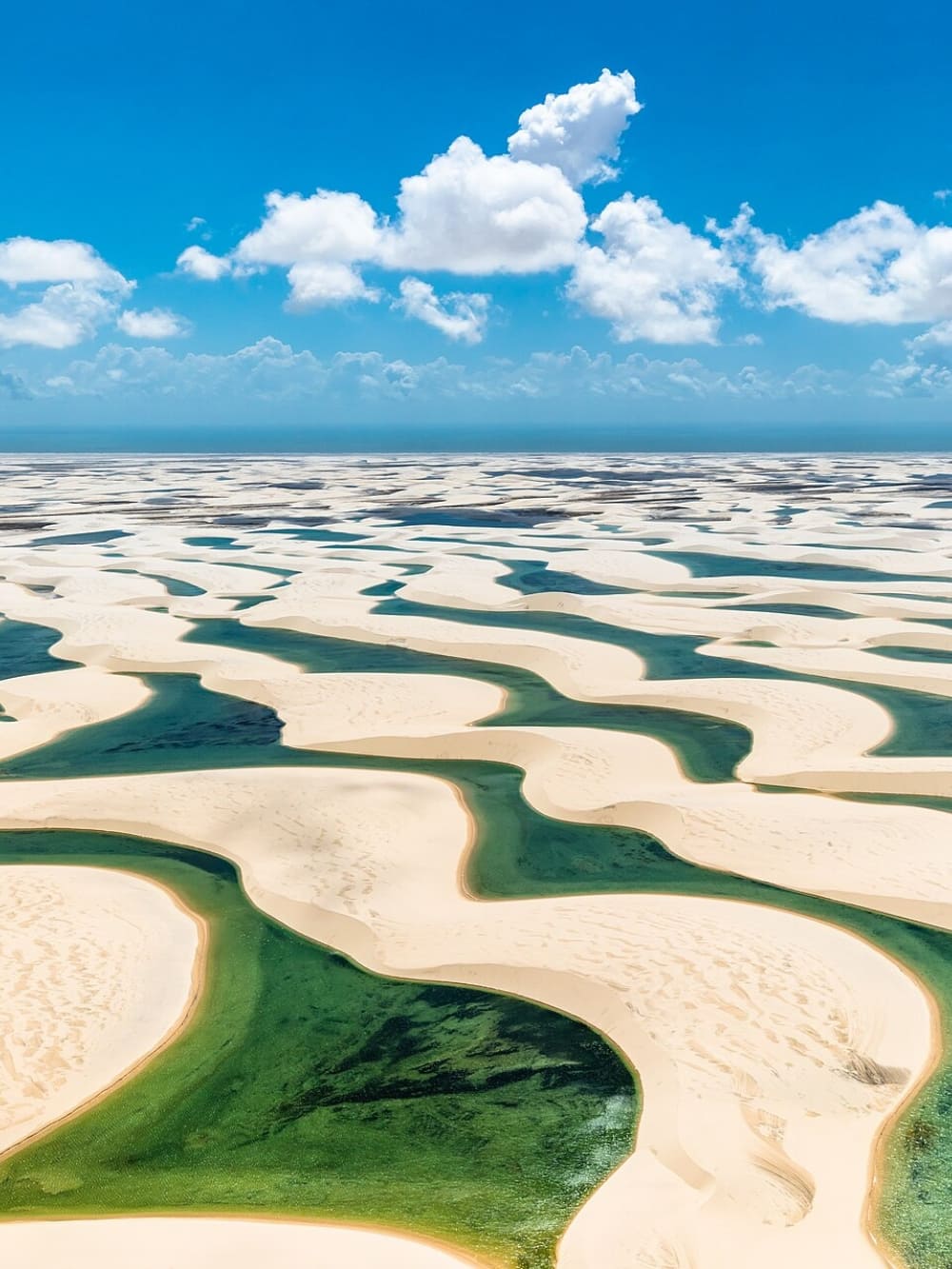
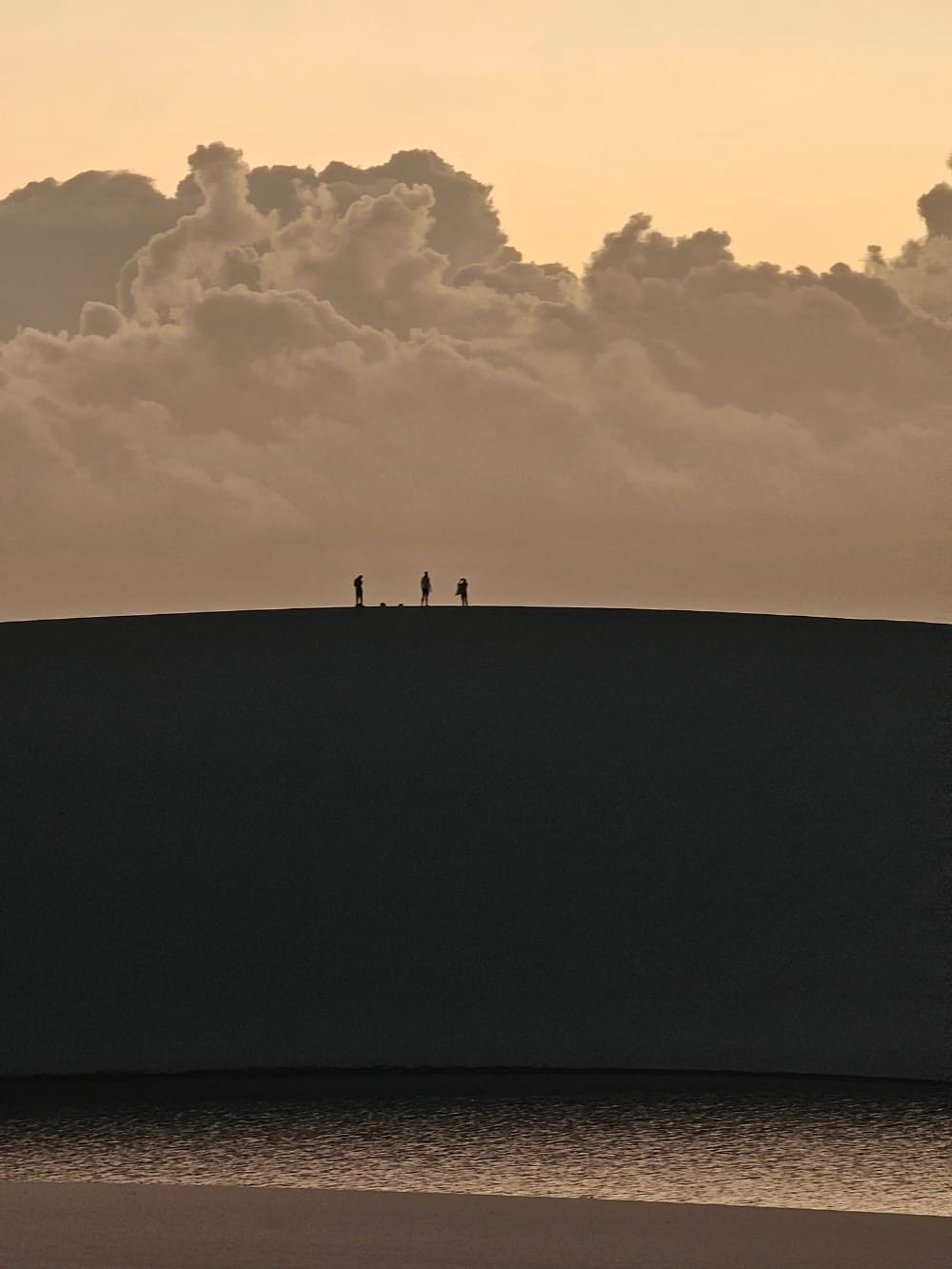
“Far From The Crowds, Close To What Matters” highlights how a low-volume tourism model is transforming the lives of traditional communities inside the newly designated UNESCO World Heritage site.
PlanetaEXO has officially released its new short film, “Lençóis Maranhenses: Far From The Crowds, Close To What Matters.” Premiering on September 23 on YouTube, the documentary explores the profound socioeconomic impact of a low-volume, multi-day trekking model in Brazil’s Lençóis Maranhenses National Park, contrasting the reality of remote communities with the growing wave of mass tourism in the region.
The national park is currently facing a moment of unprecedented tourist exposure. In 2025, propelled by its new title as a UNESCO World Heritage site, the destination welcomed 656,388 visitors, a 41% leap from the previous year, according to the ICMBio.
Understanding the best time to visit Lençóis Maranhenses has become crucial for travelers aiming to avoid massive crowds, but the mini-doc shifts the focus even further away from the easily accessible lagoons. Instead, it highlights the communities located in and around the reserve that bet on overnight stays in local homes as a source of income.
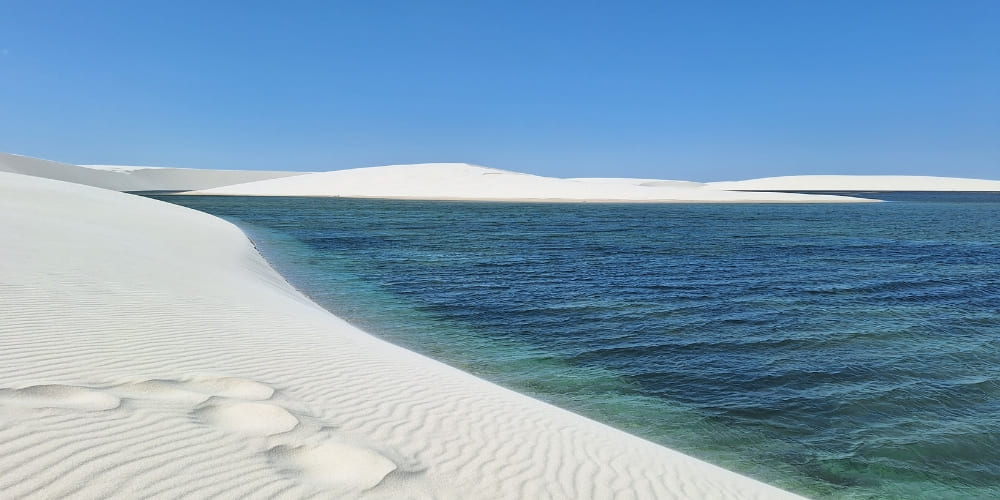
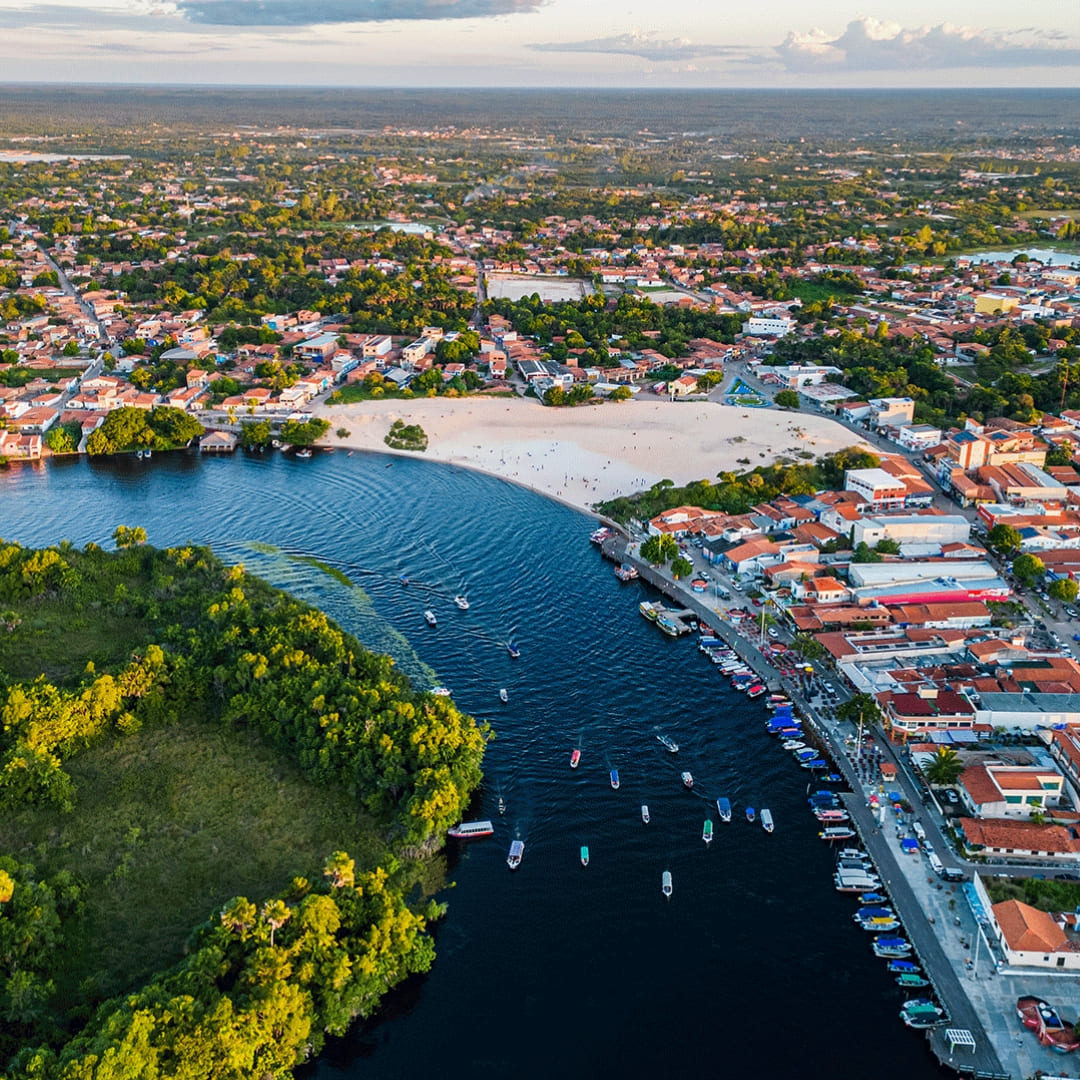
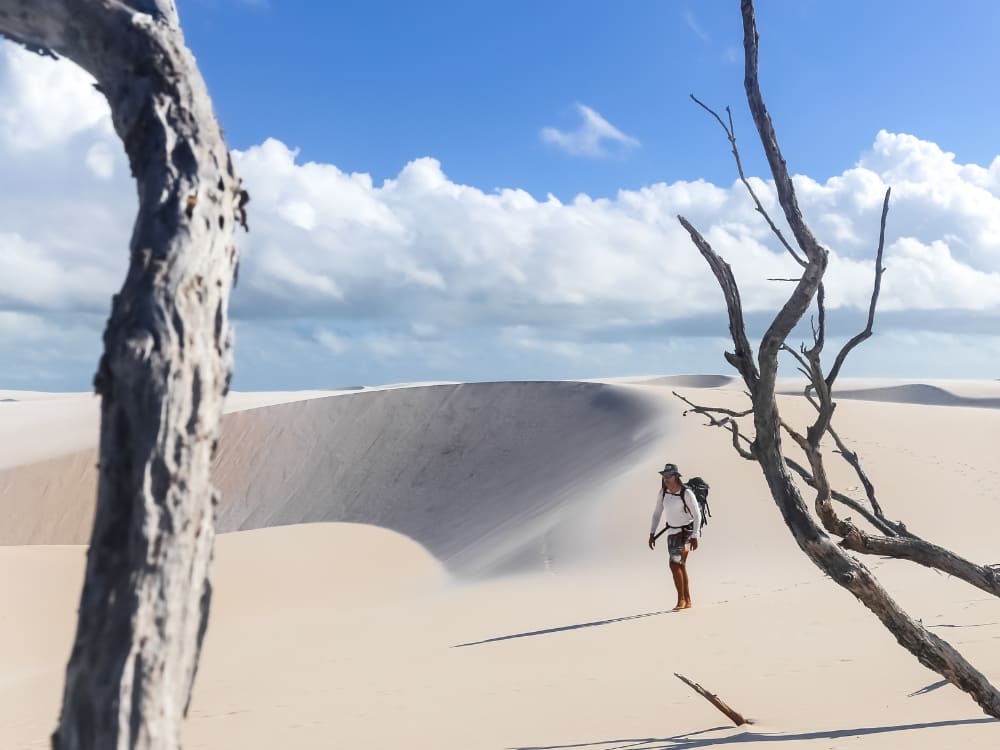
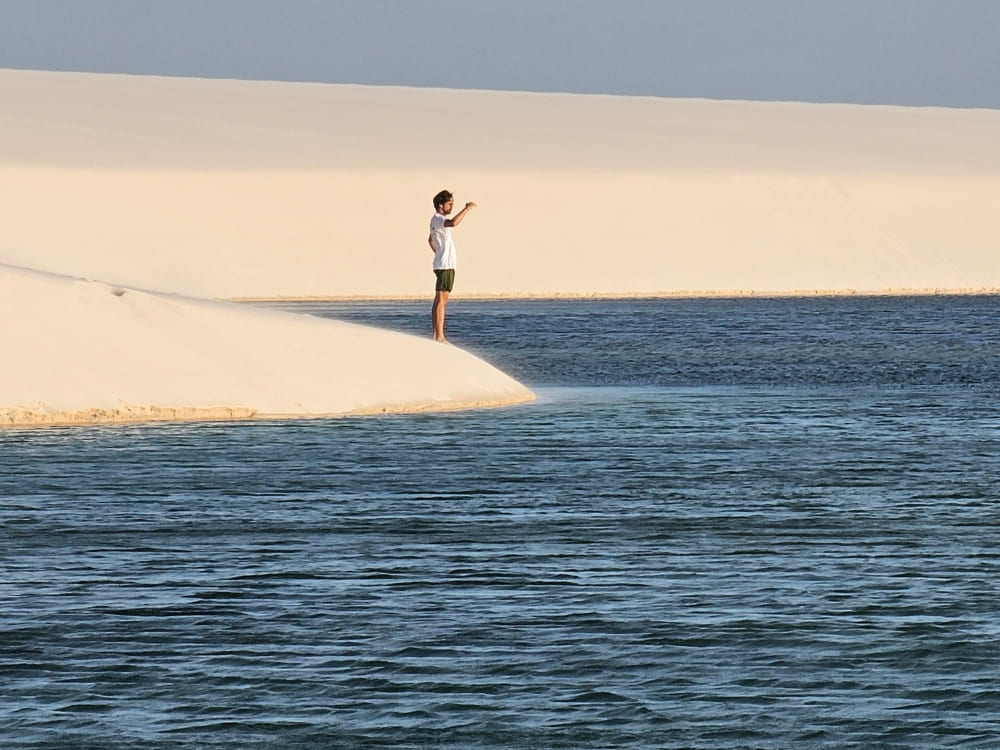
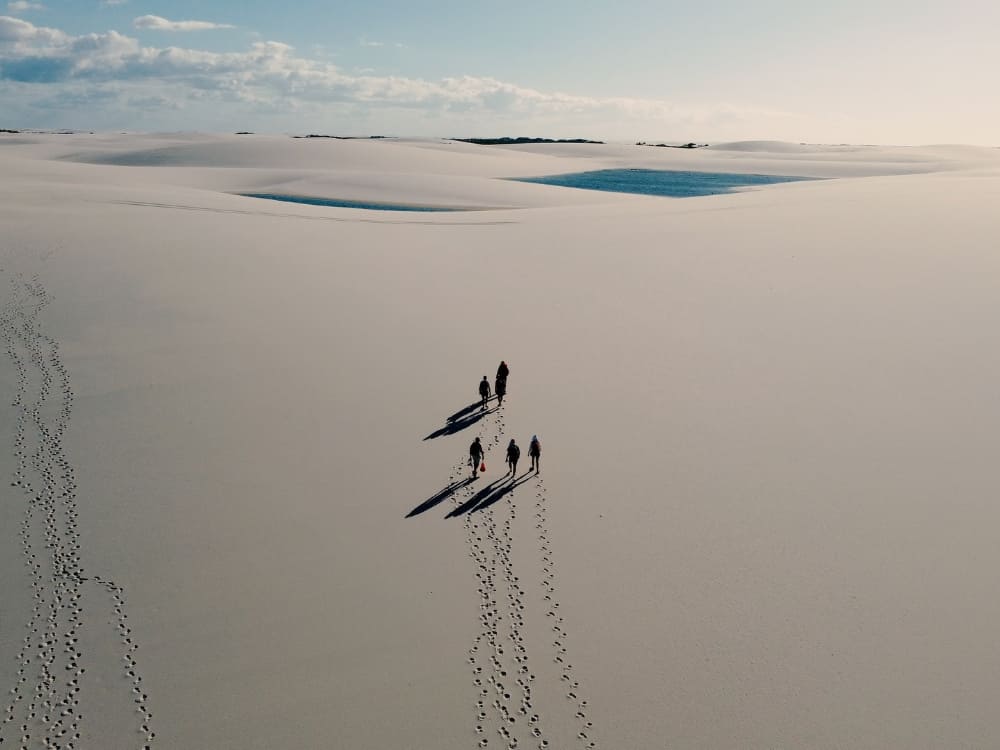
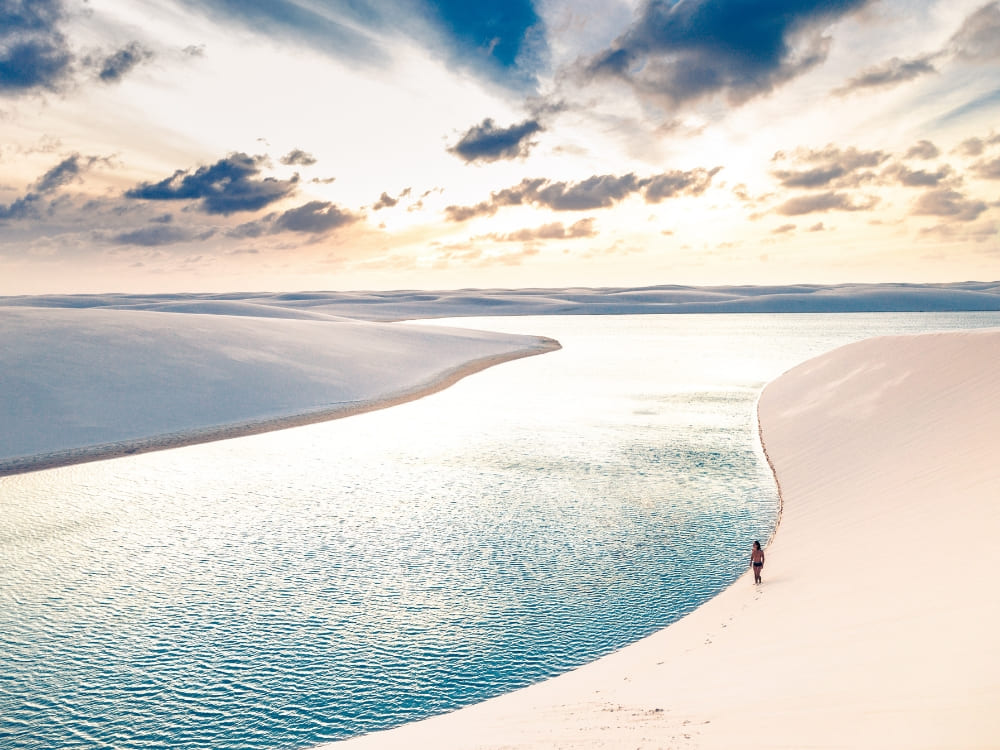
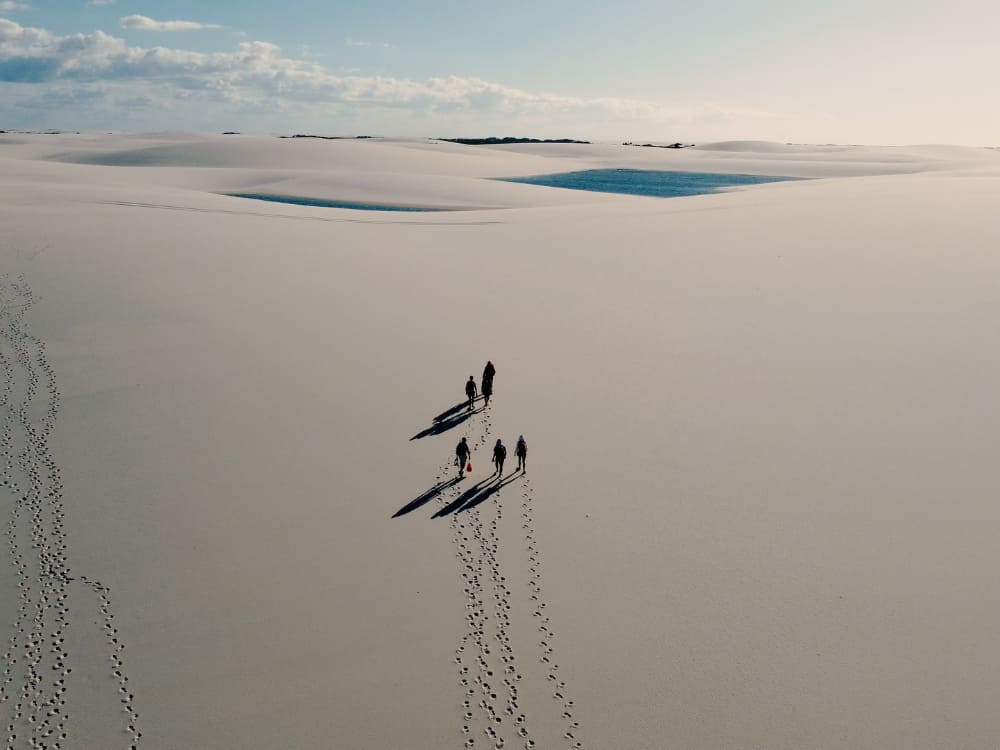
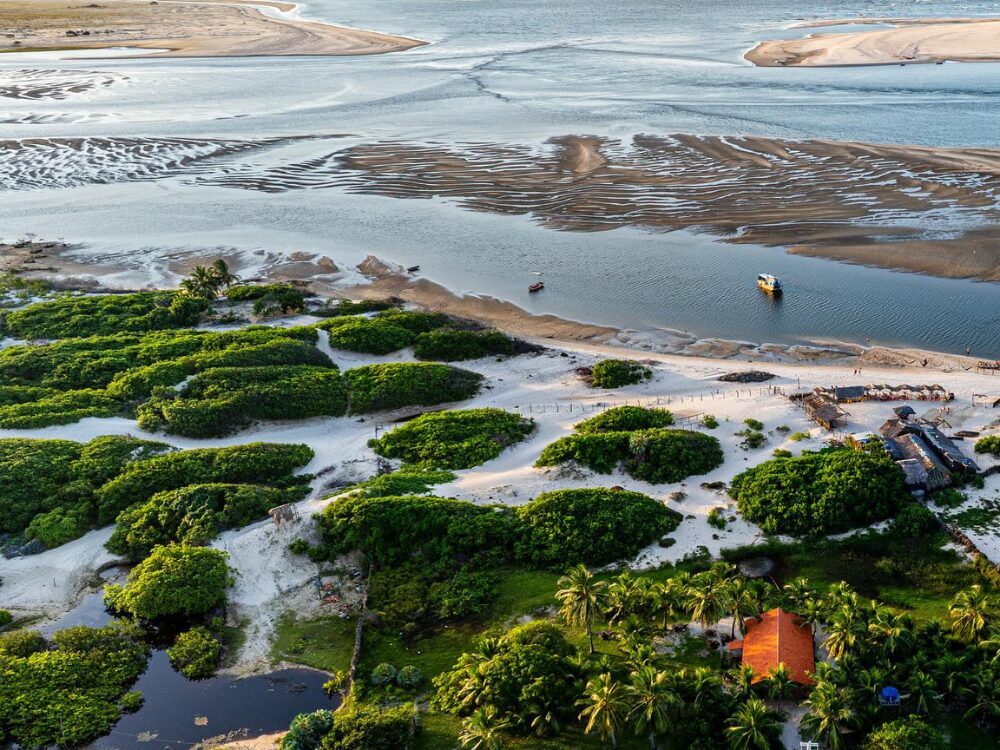
Far beyond the crowded lagoons: the spectacular scenery of the Lençóis Maranhenses, where low-impact tourism is transforming the lives of those who live in the park. (Credit: Isadora Sá)
“We intentionally keep the smallest share,” explains Lucas Ribeiro, founder of PlanetaEXO and director of the short film. “If the majority of the money doesn’t stay with the people who host the traveler, cook for them, and walk alongside them, it’s not community-based tourism; it’s just a pretty landscape being sold.”
Hard Data Backing the Narrative
The operational data from PlanetaEXO, which connects travelers directly with native partners, proves the viability of the format showcased in the mini-doc. Over the last two seasons, the company facilitated the dune crossing for a restricted group of just 583 travelers.
By retaining 80% of gross earnings within the destination, the operation funneled more than R$ 1.4 million (approximately U$ 250,000) straight into the local economy. These funds were distributed directly to host families, drivers, and guides without middleman fees.
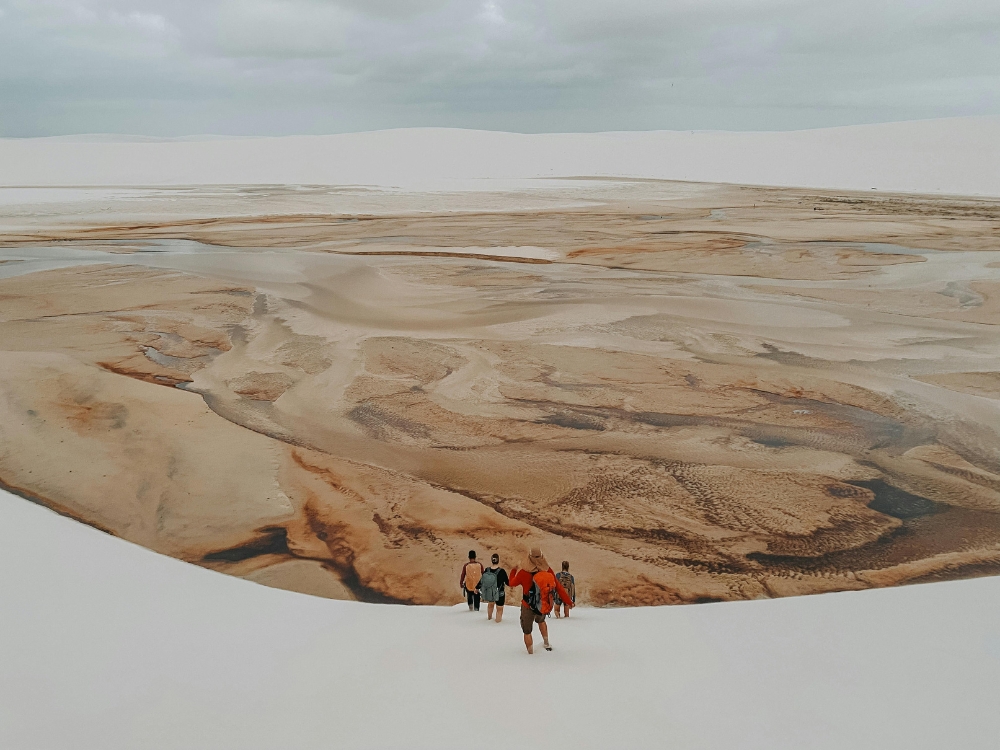
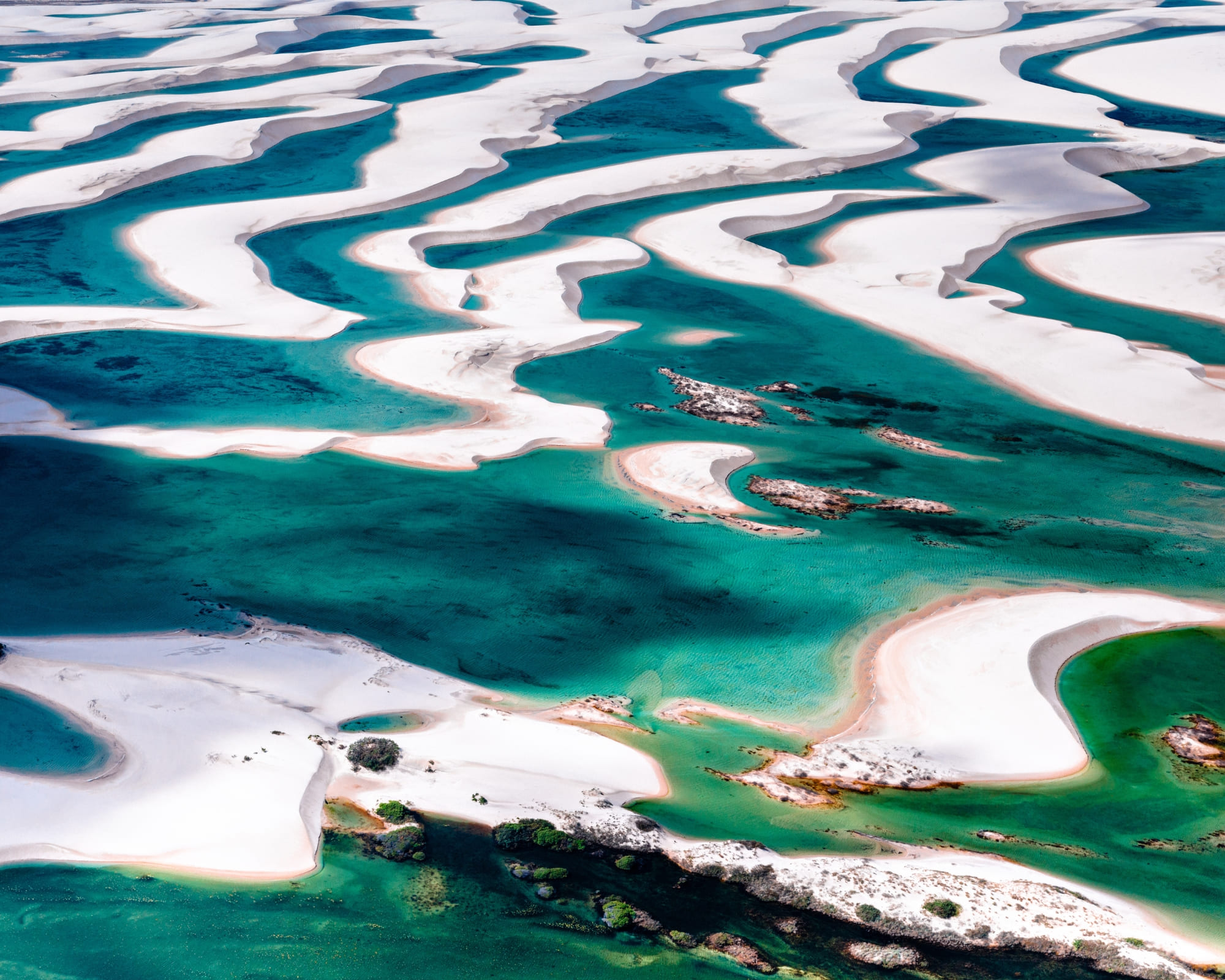
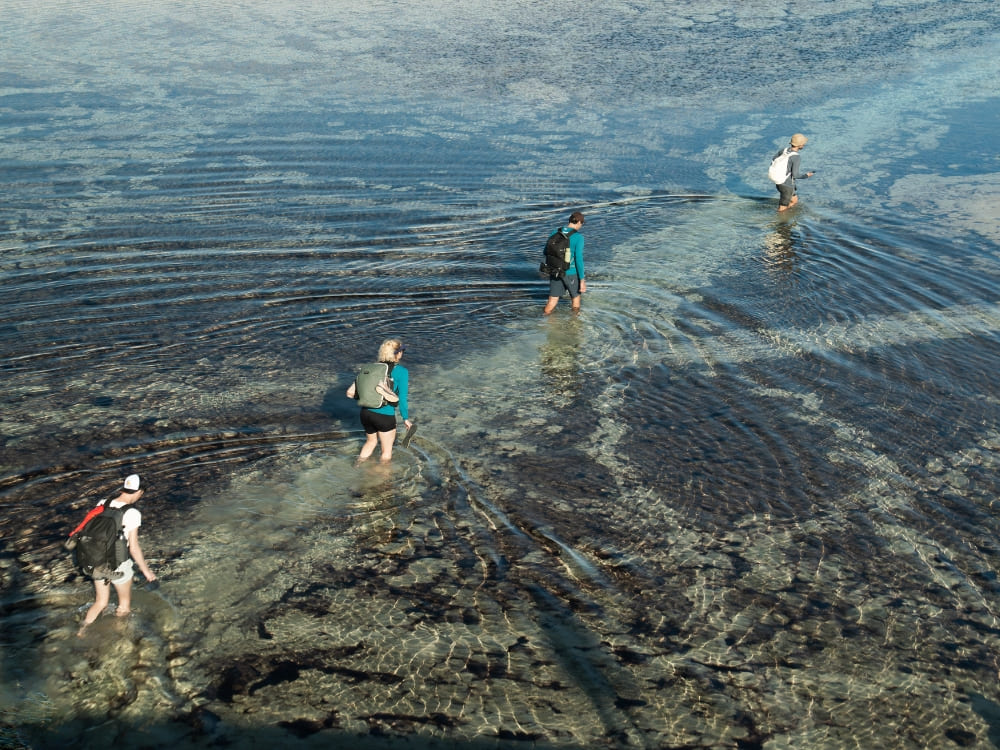
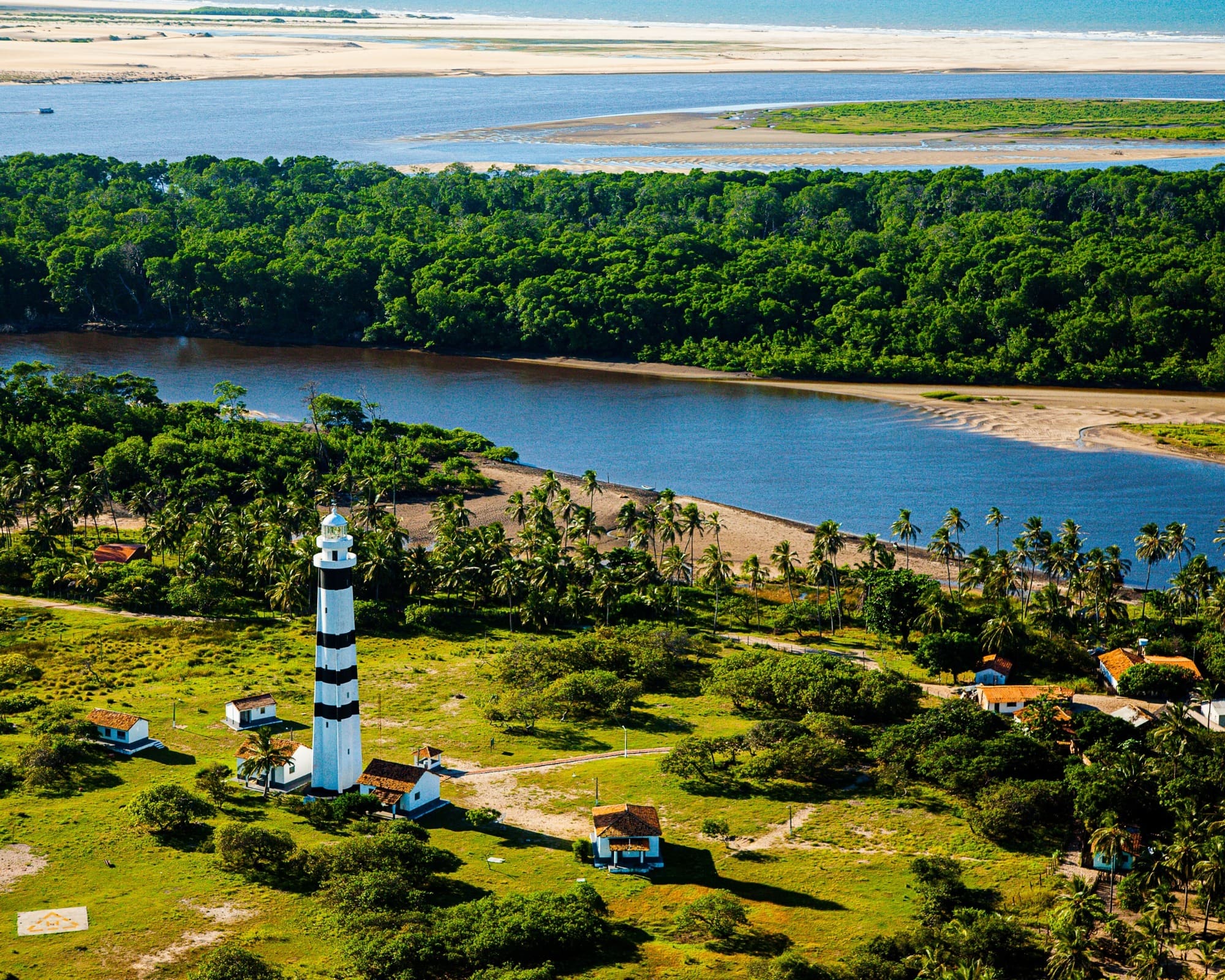
Away from the crowds, close to what matters. Overland tourism focuses on small groups to ensure that a high percentage of revenue stays in local communities. (Credit: Isadora Sá)
Trading Fishing Nets for Hospitality
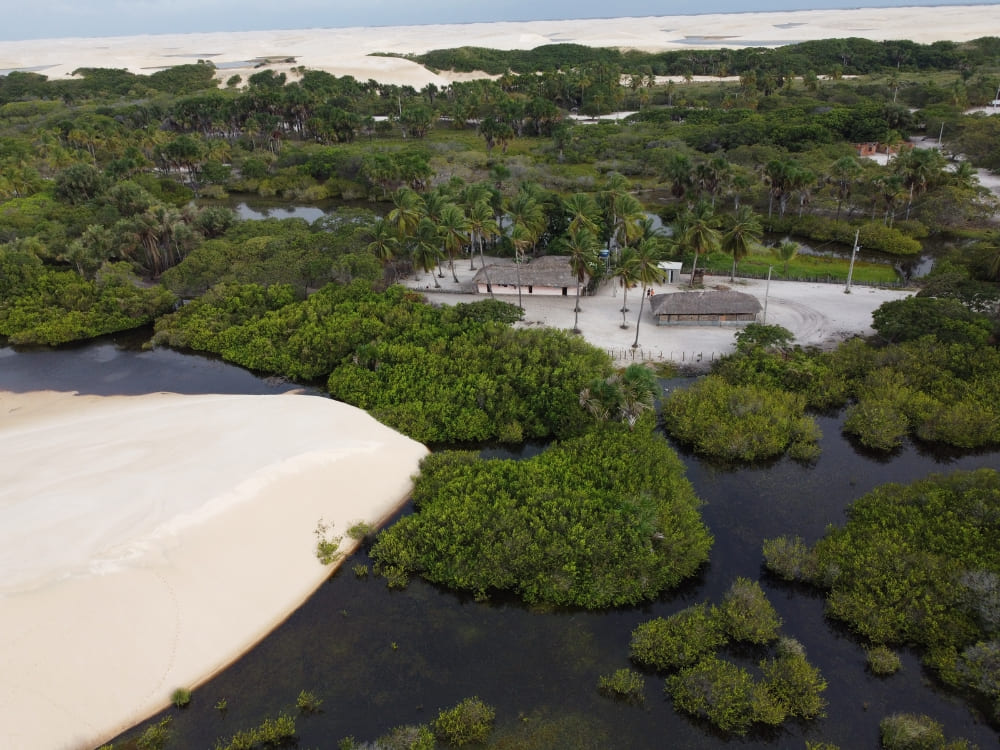
“Far From The Crowds, Close To What Matters” illustrates these figures through the daily lives of residents in the Baixa Grande oasis, located hours away from the nearest road.
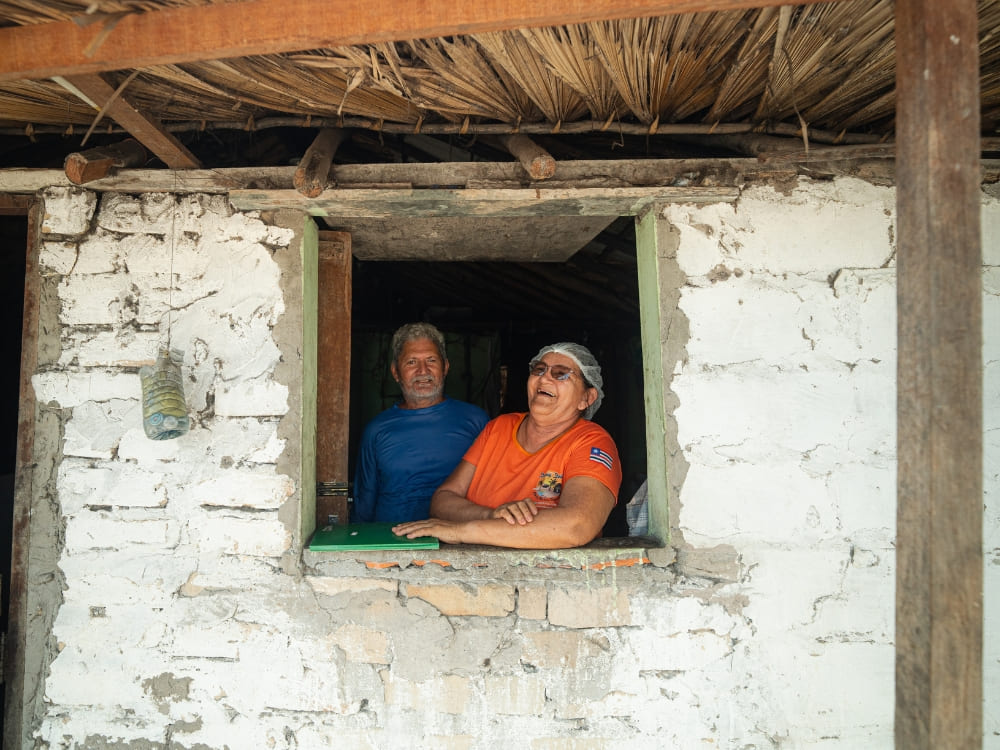
After dedicating himself to subsistence fishing, Seu Moacir saw his income transform. “Twenty years in fishing. We used to catch fish to sell, and it yielded almost nothing. Tourism provides a bit more,” he shares in the film.
“Everything used to be very difficult,” adds Dona Dete, his wife and co-host. “Then tourism came and things improved, thank God. Our place was smaller; we had few little houses. Now it’s better. I have the means to host more people.”
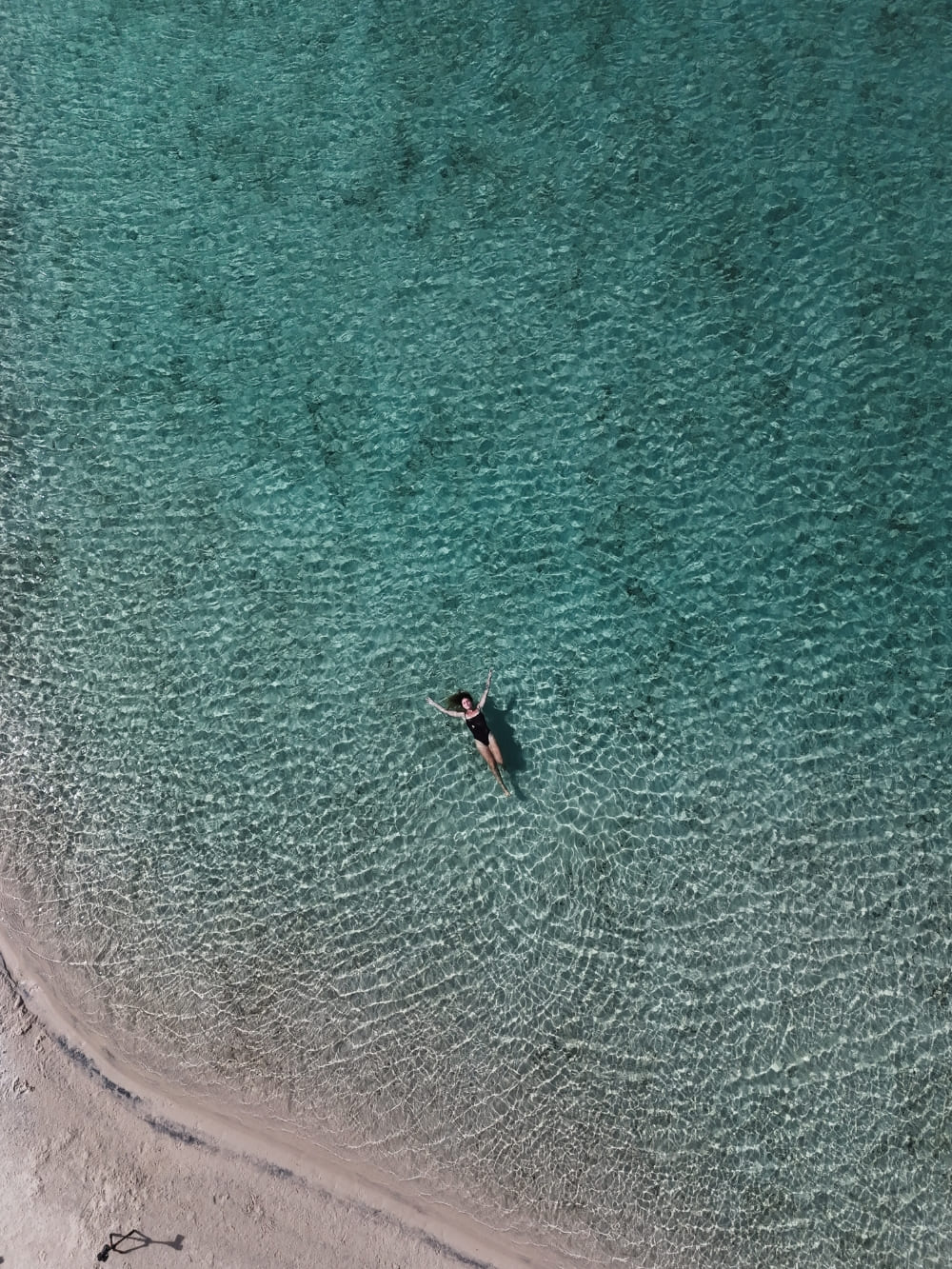
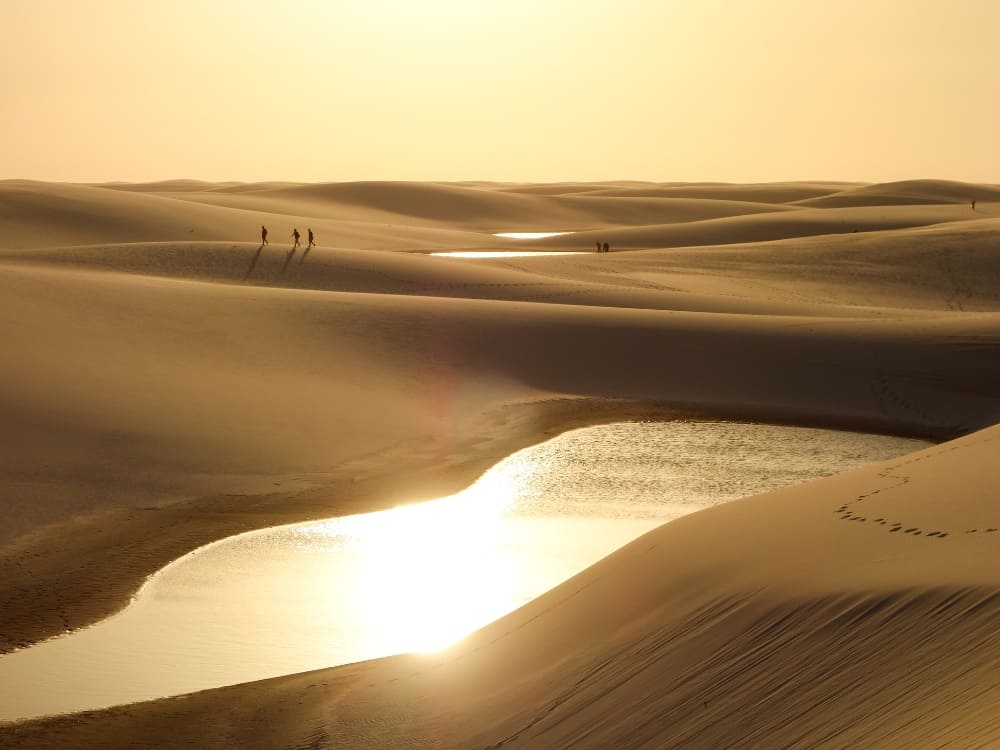
From fishermen to hosts: Dona Dete and Seu Moacir have seen their lives transform thanks to income from tourism in the Baixa Grande oasis. (Credit: Marcelo Bonifácio)
For travelers seeking authentic Lençóis Maranhenses tours, stepping away from mass tourism is a key factor. “We wanted to visit in a non-touristy way. We didn’t want to be in huge groups,” explains French traveler Morgane Meyer in a testimonial captured during the trek.
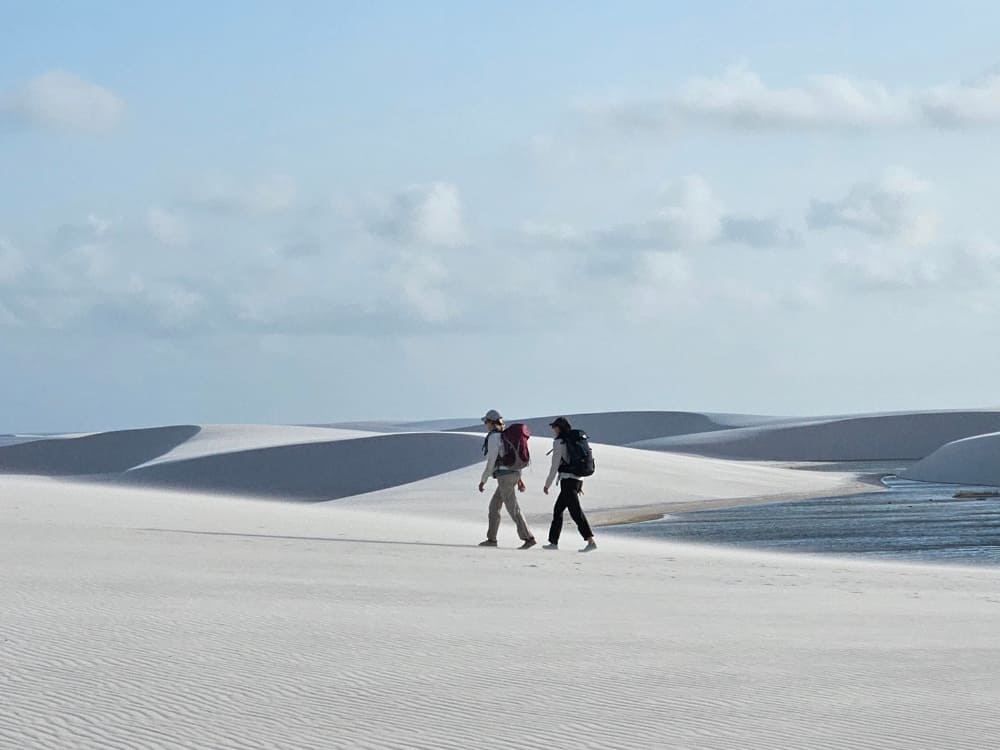
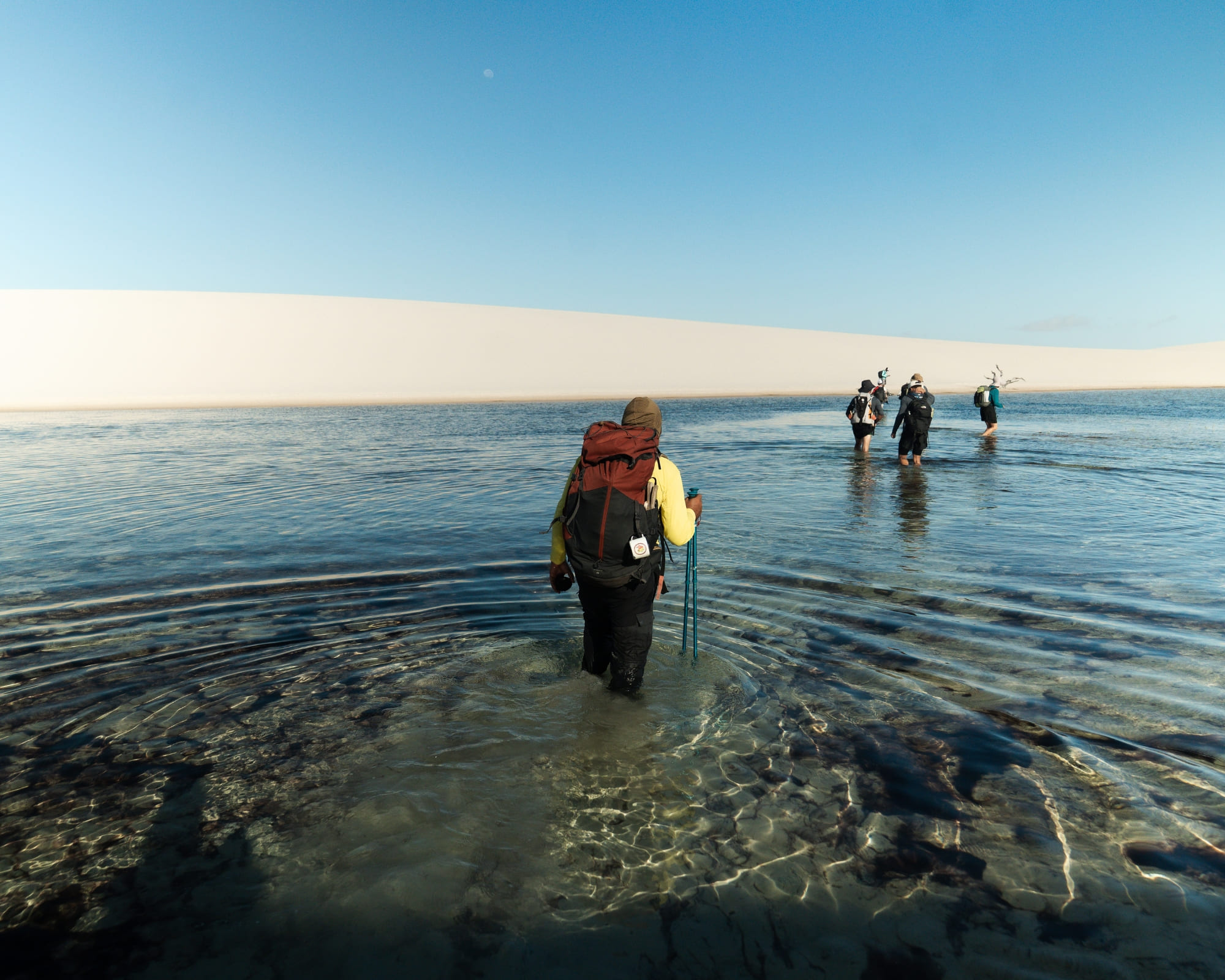
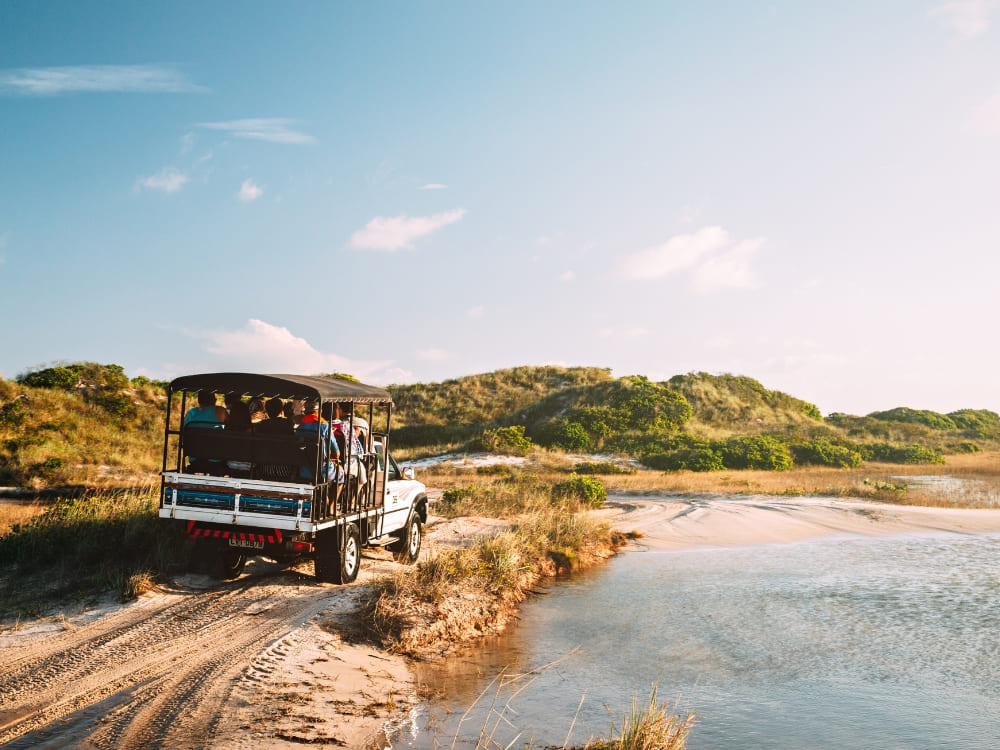
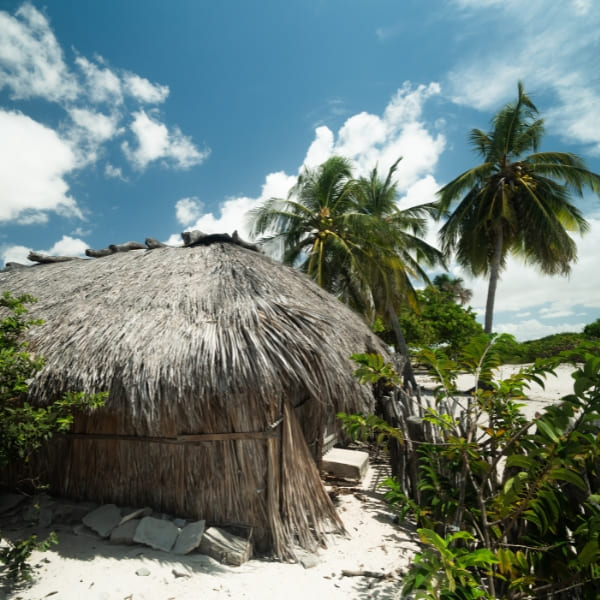
In search of an authentic experience far from mass tourism, French travelers Morgane and Guillaume opted for the classic cross-country hike. (Credit: Isadora Sá)
Portuguese tourist Diogo Melo agrees. “The positive impact it has on the communities is very obvious. When we stay [in their homes], you can tell that this helps families achieve a more stable standard of living.”
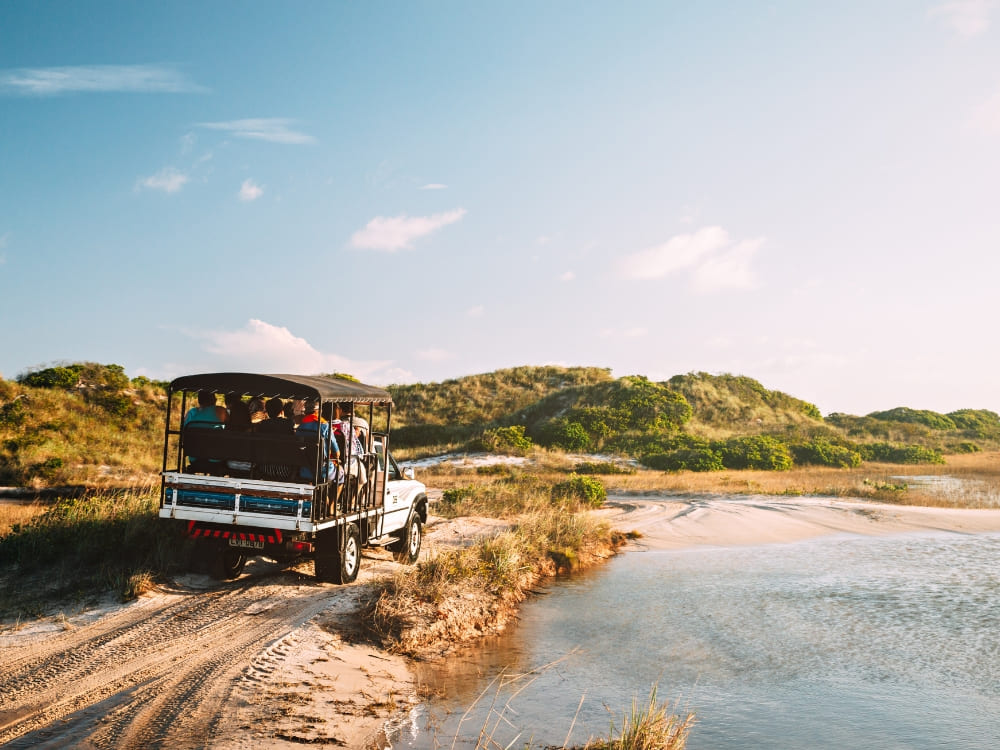
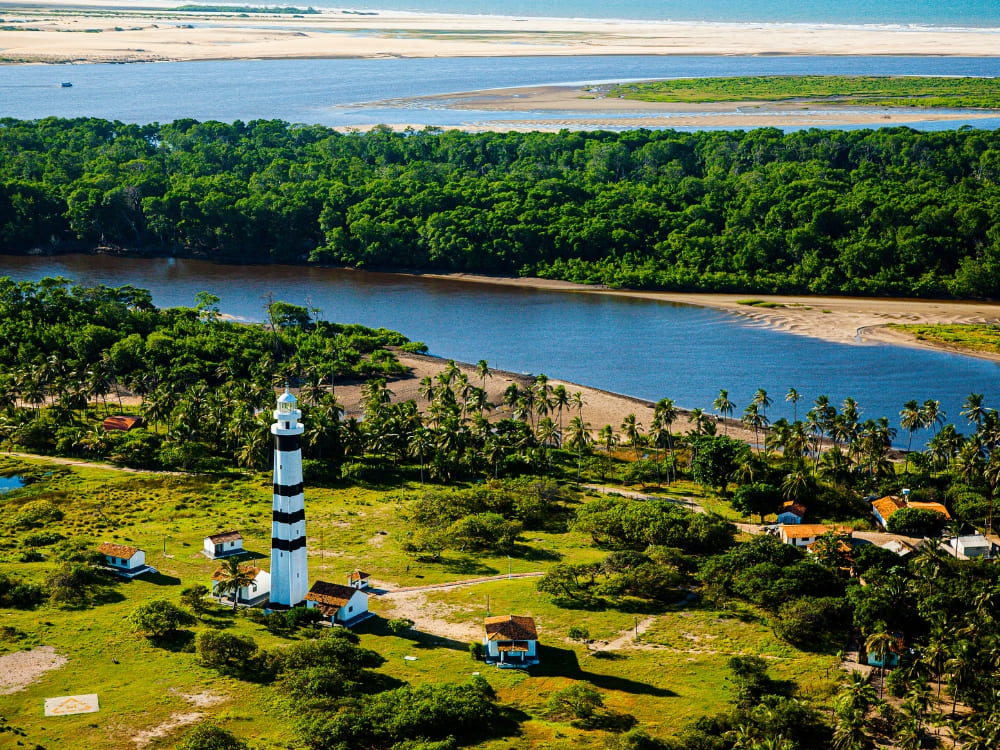
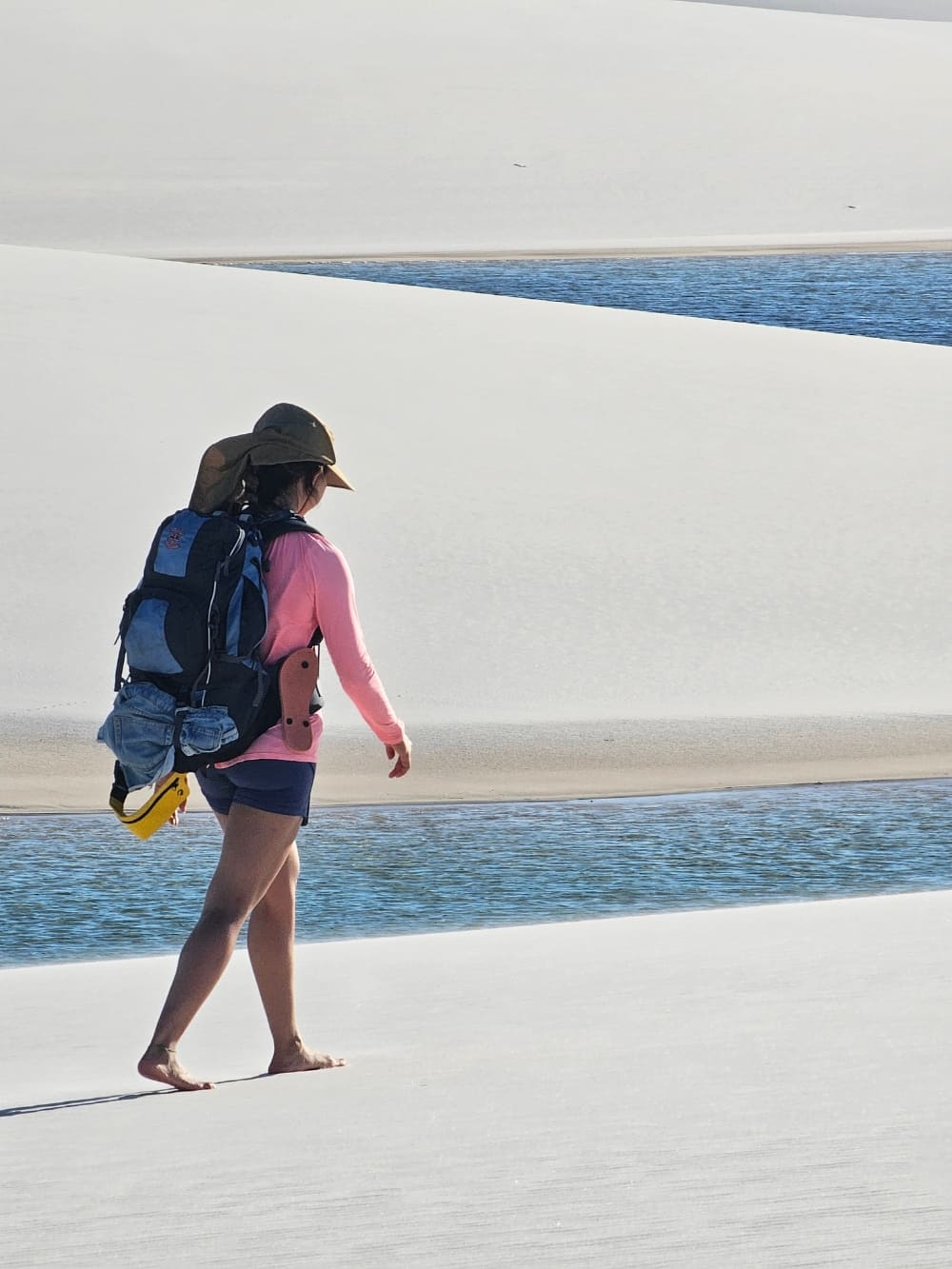
For Portuguese traveler Diogo Melo, the best part of the trip is witnessing the positive and direct impact that tourism has on the stability of host families. (Credit: Isadora Sá)
The film is part of PlanetaEXO’s efforts to prove that tourism in Brazil’s natural areas must decentralize income, transforming conservation and local development into a profitable business model for local partners.
Technical Sheet | “Lençóis Maranhenses: Far From The Crowds, Close To What Matters”
Format: Short Documentary
Duration: 5 min 30 sec
Director: Lucas Ribeiro
Director of Photography: Isadora Sá and Marcelo Bonifácio
Editing: Marcelo Bonifácio
Interviews: Lucas Ribeiro and Isadora Sá
Cast: Seu Moacir and Dona Dete (Baixa Grande – Lençóis Maranhenses), Bruno Lamas (Brazil), Carol Costa (Brazil), Diogo Melo (Portugal), Franck Nicolas (France), Guillaume Poupin (France), Magali Liprandi (France), Marcelo Zelarayán (Barreirinhas – Brazil), and Morgane Meyer (France).
Where each lagoon sits, how deep it gets, when it fills, and which ones are worth the extra drive across the dunes
Lençóis Maranhenses National Park covers 155,000 hectares of white sand in northeastern Brazil, forming the largest dune field in South America and the only one on the continent that fills with fresh water every single year.
Every year between January and June, heavy rainfall elevates the water table, creating thousands of crystal-clear pools in the valleys between the dunes. Recognized for its unique interplay between a desert-like environment and a living floodplain, UNESCO designated the park a World Heritage Site on July 26, 2024. That contradiction is where the nickname came from. Some people call it a desert with a thousand lakes, though the real count runs far higher after the rainy season.
Photo: Leo Castro
But the lagoons in Lençóis Maranhenses are not interchangeable. Some sit 12 km from town on a flat sand track, while others need a 30-meter dune climb on foot, and a few hold water months after the rest have gone back to sand.
Want to know which one belongs on your itinerary? PlanetaEXO, an ecotourism platform specializing in Lençóis Maranhenses tours, has put together a guide to the five lagoons travelers ask about most: where each one is, what makes it different, and when it is actually full. Check it out below!
How the lagoons in Lençóis Maranhenses are formed
The lagoons are not fed by rivers or springs. The park receives roughly 1,600 mm of rain a year, according to ICMBio (Chico Mendes Institute for Biodiversity Conservation), more than six times the 250 mm that defines a desert climate, which is why Lençóis is not technically a desert at all. The sand absorbs that rain almost instantly, and a layer of less permeable coastal and fluvial sediment underneath stops it from draining away.
What you end up with is a water table that rises and falls with the season. When it climbs above the low points between the dunes, the groundwater surfaces on its own and fills the hollows: that is the moment the sand dune lagoons appear.
Most lagoons settle around 1.5 m deep, and after a generous rainy season, the larger ones reach 3 m. The same water table pins the dunes in place: while the sand is wet, the barchan chains stop moving and only start advancing again once they dry out, moving 4 to 25 m a year under easterly winds that gust to 70 km/h.
The best time to visit Lençóis Maranhenses is May to September. The rain has stopped, the lagoons sit at their fullest, and the sky is clear enough for the water to read turquoise instead of gray.
From September to October, and again from February to April, the lagoons are just past or just before their peak. They still hold enough water to swim in, and the dunes are noticeably emptier. Between November and January, the park runs dry: the smaller lagoons evaporate completely and leave grass and bare sand behind, while the deeper, more sheltered ones hold on.
One practical consequence: if you travel outside the peak, ask your operator which lagoons still have water on the week you go, not which ones are the most famous. The answer changes fast, and it is the single biggest variable in a Lençóis itinerary.
Every lagoon on this list depends on the same thing: rain. They fill up between January and May, stay full from June to September and shrink from October on — some disappear altogether. Landing in the right window is what separates a swim from a walk on dry sand.
Period
Lagoon level
What to expect
January – May
Filling
The rain runs through the sand and starts filling the hollows between the dunes
June – September
Full
The window when the park becomes the postcard. It is when almost everyone goes
October – December
Drying out
The lagoons evaporate and a white desert is left. Fewer people, another landscape
All five sit inside the same national park, but the lagoons in Lençóis Maranhenses are reached from three different towns: Barreirinhas, Santo Amaro, and Atins. There is no road across the dunes connecting them, so you pick a base and work outward from it.
Lagoa Azul is the lagoon most people picture when they think of the park and the easiest of the five to reach. The 4×4 circuit leaves Barreirinhas, covers 12 km of sand track in about 45 minutes, then parks at the edge of the dune field for a walk of roughly 2 km to the water.
Broad and shallow at its edges, this lagoon lives up to its name with strikingly blue waters. Because its expansive sandbanks make it the safest desert lagoon for families with young children, most operators offer it as a half-day circuit. The tour lasts approximately 4 hours and departs after lunch to take advantage of the deepening afternoon light.
Where it is: Barreirinhas side, inside the park boundary, ~12 km from town.
Getting there: 4×4 only (45 min on sand track) + ~2 km on foot.
Size & depth: one of the wider lagoons on this side; ~1.5 m typical, up to 3 m after a strong rainy season.
Best months: June to September (afternoon).
2. Lagoa Bonita (Barreirinhas)
Lagoa Bonita sits 15 km from Barreirinhas, and the last stretch is vertical. You climb a 30-meter dune on foot, in loose sand, before you see anything at all, the steepest approach of the five, and the only one that pays you back with a view rather than just a swim.
From the summit, dune chains reach the horizon with pools tucked into every valley. As the premier sunset viewpoint on the Barreirinhas circuit, it provides the best vantage to see how the park earned its nickname as a desert of a thousand lakes. The lagoon itself is one of the most extensive in the area, with the blue tones people usually compare to the Caribbean.
Where it is: Barreirinhas side, ~15 km from town.
Getting there: 4×4 + a steep ~30 m dune climb on foot.
Size & depth: among the most extensive lagoons on the Barreirinhas side; depth follows the park average of 1.5–3 m.
Best months: June to September (late afternoon for the sunset).
Worth knowing: it is the best viewpoint in the park, not the easiest swim. If the dune climb is a problem, choose Lagoa Azul instead.
@izaias.guia
@izaias.privativo
3. Lagoa do Junco (Santo Amaro)
Santo Amaro sits less than 2 km from the park boundary, which changes the rhythm of a visit completely. Here, the lagoons in Lençóis Maranhenses start where the town ends. Lagoa do Junco is its signature circuit: a short 4×4 transfer to the permitted parking area, then roughly 1 hour on foot through the dunes with a guide.
The walk is half the reason to do it. You cross a dozen smaller lagoons on the way in before the main one opens up, deep blue in the middle and pale turquoise along the rim, with dunes that visibly change shape between seasons.
Because the access takes real effort, it stays far quieter than anything on the Barreirinhas side. This is where you go if you’re trying to avoid crowds.
Where it is: Santo Amaro side, inside Lençóis Maranhenses National Park.
Getting there: 4×4 to the permitted parking area + ~1 hour walking each way.
Size & depth: one of the larger lagoons on the Santo Amaro circuit; 1.5–3 m depending on the rains.
Best months: June to September (the walk is hot, so morning departures are better).
4. Lagoa do Reflexo (Santo Amaro)
Lagoa do Reflexo is the main stop on the Ponta Verde circuit out of Santo Amaro, reached by 4×4 plus a walk of about 25 minutes. Its reputation rests on one thing: on windless mornings and late afternoons the surface goes completely flat and mirrors the dunes and the sky, hence the name.
As Santo Amaro’s most photographed lagoon, it rewards precise timing above all others on this list, since midday winds completely eliminate the mirror effect. It also holds water later into the dry season than most, which is why it keeps appearing on itineraries in October and November when smaller lagoons have already gone back to sand.
Where it is: Santo Amaro side, on the Ponta Verde circuit.
Getting there: full-day 4×4 outing + ~25 min on foot.
Size & depth: shallow and wide (the flat, still surface is what produces the mirror effect).
Best months: June to September for volume, but go at sunrise or late afternoon on a windless day; one of the safer picks in October–November.
@seguenaviagem
@seguenaviagem
5. Lagoa Tropical (Atins)
Atins sits where the Preguiças River, the dunes, and the Atlantic meet, a fishing village that turned into a kitesurfing and ecotourism base without losing much of itself. Lagoa Tropical is the headline stop on its Ponta do Mangue circuit: a 4×4 run along the beach and through mangrove before the track turns inland into the sand.
It is one of the largest lagoons on the Atins side, with turquoise water and a soft sand floor, normally combined with Lagoa da Esmeralda and Lagoa da Gorjeta on the same outing. Far fewer vehicles come this way than on the Barreirinhas circuits, so having a shoreline to yourself is realistic rather than lucky.
Where it is: Atins side, on the Ponta do Mangue circuit.
Getting there: 4×4 from Atins along the beach and through mangrove; usually a half or full day.
Size & depth: one of the largest lagoons on this side of the park; soft sand bottom, comfortable swimming depth.
Best months: June to September (combine with Lagoa da Esmeralda and Lagoa da Gorjeta).
@anapaulazeber
Can you swim in the lagoons?
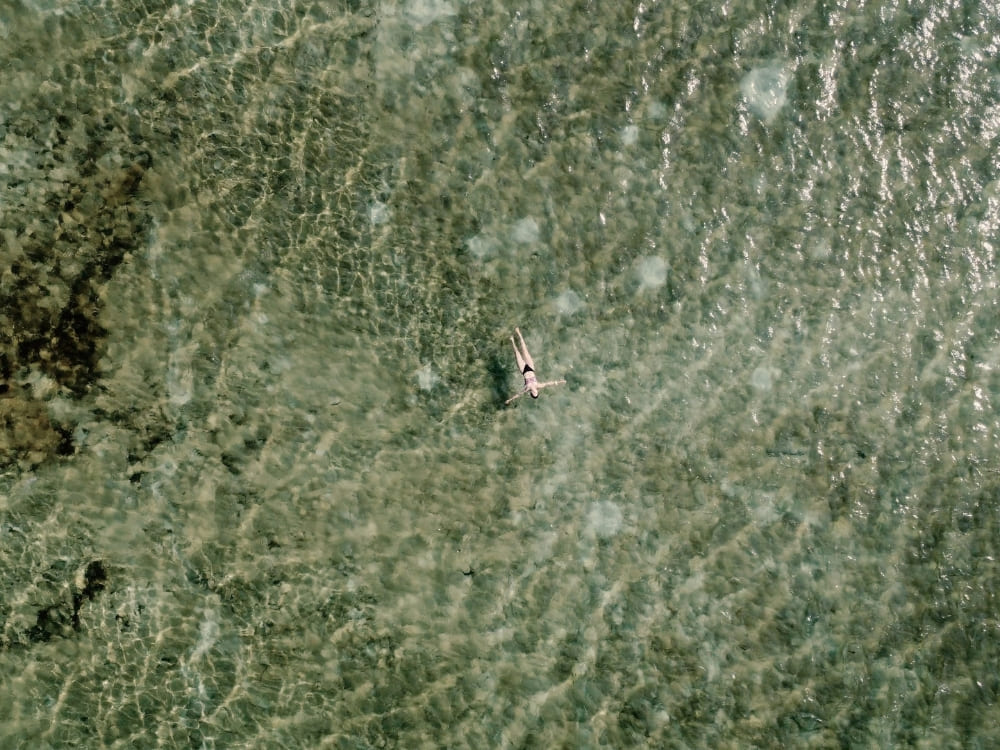
Yes, you can absolutely swim in almost all the lagoons in Lençóis Maranhenses. The water is fresh and warm, usually waist to chest deep, with a firm sand bottom and no current at all.
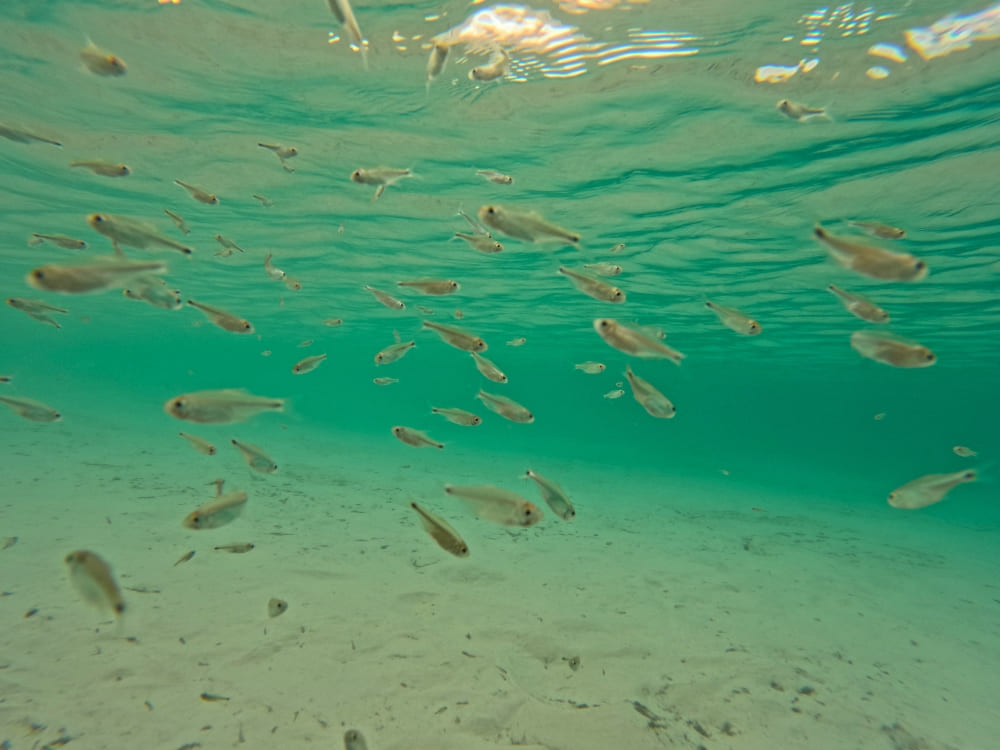
There is life in it, though nothing that bothers swimmers. More than 30 fish species survive in these temporary pools, including the wolf-fish (traíra). Some hatch from eggs that sit buried in the sand through the dry months and wait for the water to return, while others arrive as eggs carried in on the feet and feathers of migratory birds, which use the park as a rest stop on their routes.
One thing to consider is the preservation of the lagoons. Sunscreen is essential given the intense sun in Maranhão, but the use of creams and oils can harm water quality. The best approach is to apply sunscreen well before entering the lagoons so the skin has enough time to absorb it, and, if possible, to use biodegradable products.
Exploring the best lagoons in Lençóis Maranhenses with PlanetaEXO
Now that you know where each lagoon sits and when it actually fills, the only decision left is which base to start from: Barreirinhas for the classic circuits, Santo Amaro for the quiet ones, or Atins for the walk-in crossings. Or all three, which is what a full traverse of the park looks like.
PlanetaEXO is an ecotourism platform specializing in Lençóis Maranhenses tours, working alongside the local guides and families who live at the edge of the national park. From multi-day treks to class tours across this desert with a thousand lakes, we handle the logistics so you can spend your days in the water instead of on a booking page. Contact us now!
Lençóis Maranhenses is an all-year-round destination, but the weather is stable and the iconic lagoons are full right after the rainy season
The best time to visit Lençóis Maranhenses is from May to September, when the lagoons are at their fullest after the rainy season and the weather is generally more stable.
Photo: Marcio Cabral
Outside that period, the destination still offers great options for leisure and connection with nature, but the change in scenery caused by climate influence alters the itineraries, especially when it comes to the lagoons.
In other words, the dunes of Brazil can be enjoyed all year round, but there are a few things to consider to make sure your trip is booked at the appropriate time for the activities you’re looking for.
Learn more about the complete guide PlanetaEXO, an ecotourism platform specializing in Lençóis Maranhenses tours, has carefully curated. Check it out below!
The weather in Lençóis Maranhenses
Lençóis Maranhenses has a tropical climate with little temperature variation throughout the year. The rainy season (February to April) features heavy rainfall that makes the lakes and rivers reach their highest water levels. The average temperature is 30°C to 32°C.
In the dry season (May to September), temperatures don’t change much (31°C to 33°C) and the rainfall ceases, but the lagoons remain full—perfect for swimming, diving and bathing in lovely, stable weather.
As we move into the later months, starting in October, the lagoons begin to recede, revealing the sand dunes in their vastness and presenting a different, yet equally mesmerizing way to experience the Lençóis Maranhenses National Park in Brazil.
Please notice: While it’s possible to provide insights into the typical weather patterns and lagoon conditions in Lençóis Maranhenses, the weather is inherently unpredictable. As the actual amount of rainfall and subsequent state of the lagoons vary from year to year, it’s important to check the latest weather forecasts while planning a trip to ensure the most accurate expectations for your visit.
When’s the best time to visit Lençóis Maranhenses’ lagoons: month by month
The thousands of lagoons in Lençóis Maranhenses are, undoubtedly, the main attraction of the national park. With different sizes and depths, they are known for their crystal-blue waters and perfect conditions for swimming, diving, or relaxing.
The lagoons of Lençóis Maranhenses are not permanent: they are rainwater held between the dunes. The rain falls from January to May and fills the hollows in the sand; from October the sun evaporates them until the desert turns white again. That is why the same park looks like a different place depending on the month you land.
Month
Lagoon level
The park
January
~10%
The driest month, dunes wide open
February
~20%
First rains, first lagoons
March
~40%
Heavy rain, new lagoons every day
April
~60%
First real swimming of the year
May
~80%
Lagoons formed and the park still quiet
June
~95%
Blue sky, lagoons at their prime
July
100%
Peak water, peak season
August
~95%
Still full, fewer people, kitesurf opens
September
~75%
Last month with the lagoons full
October
~40%
Shrinking, still deep enough to swim
November
~20%
Many lagoons gone, dunes take over
December
~10%
Almost dry, a few left near Santo Amaro
Averages of a typical year. Rainfall changes from one year to the next.
Lençóis Maranhenses in January
January brings a calm atmosphere while the dunes stretch out in vastness. Ideal for peaceful explorations, this is the region’s driest season. The landscapes are different, more white and gold—due to the sand and the sunlight—and less decorated with blue from the lagoons, but the beauty is still undeniable.
Daytime temperatures hover around 31°C (87°F) and cool down to 25°C (77°F) at night. The weather is hot and humid, so wearing light and airy clothes is advisable.
.
Why visit in January?
January marks the low season in Lençóis, so it’s perfect for people seeking solitude and peacefulness. With less tourist activity and uninterrupted views, it’s also a wonderful time for photography.
While the lagoons are not at their peak, it’s still possible to find a few selected spots for a refreshing dip.
Lençóis Maranhenses in February
February is the transitioning month to the rainy season, perfect to enjoy Lençóis before the increased rainfall. Weather conditions don’t change much and, much like January, the temperatures are mild but gentle breezes are a lot more noticible.
Why visit in February?
As February ushers in the beginning of the rainy season, you’ll witness the lagoons slowly filling up, offering a glimpse into the change of scenery. It’s a great time for trekking across the park and visiting isolated zones, such as Baixa Grande Oasis and Queimada dos Britos.
The temperatures follow the average of January and February, accompanied by a lovely breeze. As humidity reaches 83%, the weather becomes considerably muggy.
With the onset of the rainy season, a vibrant renewal takes over Lençóis Maranhenses National Park in Brazil. Fed by the rain, newly formed lagoons fill up each day.
.
Why visit in March?
March is a good time to visit as the rainy season is in full swing. The lagoons are getting fuller and the scenery becomes more striking. It’s also a great for hiking, with pleasant temperatures and fewer tourists around.
Lençóis Maranhenses in April
Temperatures range from 25–30°C (77—86°F). Be prepared for hot weather accompanied by a gentle breeze. Although the lagoons are not yet at their fullest, April offers the first opportunity of the year to really swim in emerging bodies of water.
The pleasant weather creates the perfect setting to explore the region, allowing travelers to enjoy trails and tours comfortably.
Why visit in April?
Trekking and all sorts of outdoor fun are excelent activities during this month. Enjoy Lençóis without getting overheated or caught in too much rain!
In May, the intense rainfall subsides—though it’s still possible to face some quick storms. The weather is warm, the humidity is high, and countless lagoons are fully formed along the dunes, ready to welcome visitors.
Despite this, it’s only the beginning of the high season, which means the park is still relatively empty. Therefore, May is considered by many to be the best time to visit Lençóis Maranhenses.
.
Why visit in May?
With less rain and lagoons completely full, May is an excellent month to book your trip due to lower tourist traffic and considerably lower prices. Wonderful time for all main activities in Lençóis, like trekking and swimming!
Lençóis Maranhenses in June
June is a winter month in Brazil, but this is when Lençóis Maranhenses shines the brightest. Warm weather, less humidity, small chances of rain, vibrant blue sky, entirely full lagoons—everything you need for an unforgettable experience!
As the high seasons advances, the national park becomes busier, but it’s nothing that will negatively affect your trip.
.
Why visit in June?
The lagoons are at their prime and the weather is fairly stable in June. It’s a fantastic time for swimming, boat tours across Preguiças River, and trekking.
Lençóis Maranhenses in July
Temperatures maintain an average of 31°C (88°F) during the day and 24°C (76°F) at night. Less humid and with a modest chance of rain, July preserves the fantastic conditions to enjoy Lençóis.
Why visit in July?
The high season is booming in July due to Brazil’s school break. The atmosphere is beautifully lively, but it still provides moments of relaxation for visitors who need some well-deserved rest—especially in Atins and Santo Amaro, the quietest base cities of the national park.
It’s still high season in August, but the park is less crowded since the school break is over. The weather in Lençóis Maranhenses is warm — 32°C (90°F) — and there’s very little chance of rain, so it’s a great time to cool off in the lagoons and join boat rides.
August is also when kitesurfing season starts to boom. Atins Beach welcomes tourists from all over the world, who adorn the bright sky with colorful kites.
Why visit in August?
August is lively yet slightly less crowded than July, despite being the high season. It’s a great time to enjoy everything Lençóis Maranhenses has to offer and maybe take on a few kitesurfing lessons at Atins Beach!
Lençóis Maranhenses in September
September is still considered one of the best times to visit Lençóis Maranhenses. The weather is hot, humidity is low, chances of rain is almost zero, and the park is even less crowded.
.
Why visit in September?
This month offers a unique perspective of the park. As the low season approaches, you can explore the vast sand dunes in a more serene setting, away from the usual crowds. It’s your last chance to see lagoons completely full!
Lençóis Maranhenses in October
The weather is warm and dry, which means the lagoons are getting smaller. The national park is even less crowded, as October marks the beginning of the low season.
Why visit in October?
While the lagoons are not at their highest level, they’re still full enough for a refreshing swim. October is quieter and more peaceful, perfect for relaxing hikes, nature contemplation, and mingling with locals.
Lençóis Maranhenses in November
November brings a temperature range between 26–32°C (78–90°F), accompanied by moderate winds. This is when the park is almost empty, as the lagoons get smaller and some even disappear.
Photo: Glauco de Souza Santos
Why visit in November?
With fewer people around and a pleasant breeze, November is a fantastic time for those looking to experience the park’s natural beauty in a more laid-back way. It’s a particularly good time for trekking and appreciating the sand dunes’ beauty.
Lençóis Maranhenses in December
It’s hard to find lagoons in December, but some remain in Santo Amaro. Travelers who want to cool off can enjoy the sea and try on some kitesurfing at Atins Beach, as the temperatures are hot and the days are fairly windy.
.
Why visit in December?
Although the lagoons are almost completely dry, December is a good month for people who want to go hiking and enjoy the park with less tourist traffic before the rainy season. Despite the drought, Santo Amaro and Atins Beach are great places for water activities.
Explore the sand dunes and lagoons of Lençóis Maranhenses National Park with PlanetaEXO
As you could see, the best time to visit Lençóis Maranhenses depends on what you’re looking for, as the park offers opportunities for incredible experiences even when the iconic lagoons are not at their fullest.
PlanetaEXO, an ecotourism platform specializing in Lençóis Maranhenses tours, helps you with everything you need for an unforgettable trip, including choosing the adequate time period, tailor-made itineraries, accommodation, transfers, etc. Contact us now!
Discover all the options for getting to Barreirinhas, Atins, and Santo Amaro, the base towns of Lençóis Maranhenses in Brazil
Lençóis Maranhenses National Park is located in northeastern Brazil, in the state of Maranhão. You can easily get there from the capital, São Luís, which has the closest international airport, and then head to one of the base cities to start your adventure: Barreirinhas, Atins or Santo Amaro.
.
The route is fairly time-consuming,as the final leg requires driving for a few hours to reach your destination. In addition to understanding how to get to Lençóis Maranhenses, it’s important to consider the travel time when planning your trip so you can enjoy every second without facing any unpleasant surprises.
As an ecotourism platform specializing in Lençóis Maranhenses tours, PlanetaEXO has created a comprehensive guide with all the information you need for a smooth transfer. Check it out below!
How to get to São Luís?
Arriving in São Luís, Maranhão, is the first step to traveling to the Lençóis Maranhenses for most national and international visitors.
Marechal Cunha Machado International Airport (SLZ) receives daily flights from some of the largest cities in Brazil, including São Paulo, Rio de Janeiro, Belém, Recife, Belo Horizonte, Salvador, and Brasília. Check Google Flights to find the best options.
The only direct international flight — without connecting to any of the cities mentioned above — departs from Lisbon, Portugal, twice a week. The operator is TAP Air Portugal.
How to get to Barreirinhas from São Luís?
Located about 260 km east of São Luís, Barreirinhas is the primary gateway to Lençóis Maranhenses, the city with the best infrastructure, and the starting point for many tours.
.
By bus
Operated by Expresso Guanabara and Crisbell, the bus ride from the Center Bus Station of São Luís to Barreirinhas takes 4–5 hours.
You’ll get off at Av. Rodoviário Canequinho or Av. 31 de Março, depending on the itinerary. Both locations offer easy access to the national park.
Rent a car at São Luís Airport (SLZ) and drive to Barreirinhas for roughly 4 hours. Rental agencies like Unidas, Movida and Localiza are reliable options for rentals.
By shared van
Shared van services are cost-effective and convenient, providing comfort and safety for travelers who just want to sit back and relax.
FrankTur (WhatsApp: +55 98 99167-7766) is an experienced operator that offers daily transfers for a fixed rate (contact them to inquire about prices):
São Luís → Barreirinhas: Departures at 03:30 AM, 8:00 AM, 02:30 PM, and 05:00 PM.
Barreirinhas → São Luís: Departures at 06:00 AM, 09:00 AM, 02:00 PM, and 04:30 PM.
By private transfer
For greater flexibility and privacy, consider a private transfer (São Luís ⇌ Barreirinhas, approx. 4h). Pricing details are as follows:
Car (4 seats): R$ 1.070 (day) / R$ 1.220 (evening)
Mini van (6 seats): R$ 1.375 (day) / R$ 1.525 (evening)
Van (15 seats): R$ 2.500 (day) / R$ 2.650 (evening)
Although Barreirinhas Municipal Airport (BRB) is the closest airport to Lençóis Maranhenses, commercial flights have been suspended since March 2025, but it still operates for executive and charter aircrafts.
If you want to know how to get to Lençóis Maranhenses, it’s important to understand how to access it via Atins, a peaceful fishing village located in Barreirinhas, in a more isolated part of the national park. Naturally, you need to go to Barreirinhas and then move along to Atins.
By boat
The boat trip from Barreirinhas along the Preguiças River takes about 1 hour and 15 minutes. The slower pace of the journey is a way to get into the peaceful atmosphere of Atins and appreciate the beautiful natural landscapes.
.
Here are a couple of options:
Shared boat transfer:K-BEÇA TURISMO (WhatsApp: +55 98 8827-7715) offers daily group departures from Atins to Barreirinhas at 07:00 AM and from Barreirinhas to Atins at 12:30 PM. Contact them to inquire about prices
Private boat transfer: For more privacy and flexibility, contact PlanetaEXO to book your private transfer.
By 4×4 Vehicle
Another option is to drive from Barreirinhas in a 4×4 vehicle. The 1-hour ride can be a little bumpy, but it’s an exciting way to reach the Lençóis Maranhenses and contemplate its natural beauty. The private transfer costs R$ 1.188.
Shared Transfer:Monalisa Atins (WhatsApp: +55 98 9101-0124) offers 4×4 rides between Barreirinhas and Atins at 05:00 AM, 09:00 AM, and 02:00 PM. Contact them to inquire about prices.
Private Transfer: For more privacy and flexibility, contact PlanetaEXO to book your private transfer.
How to get to Santo Amaro from São Luís?
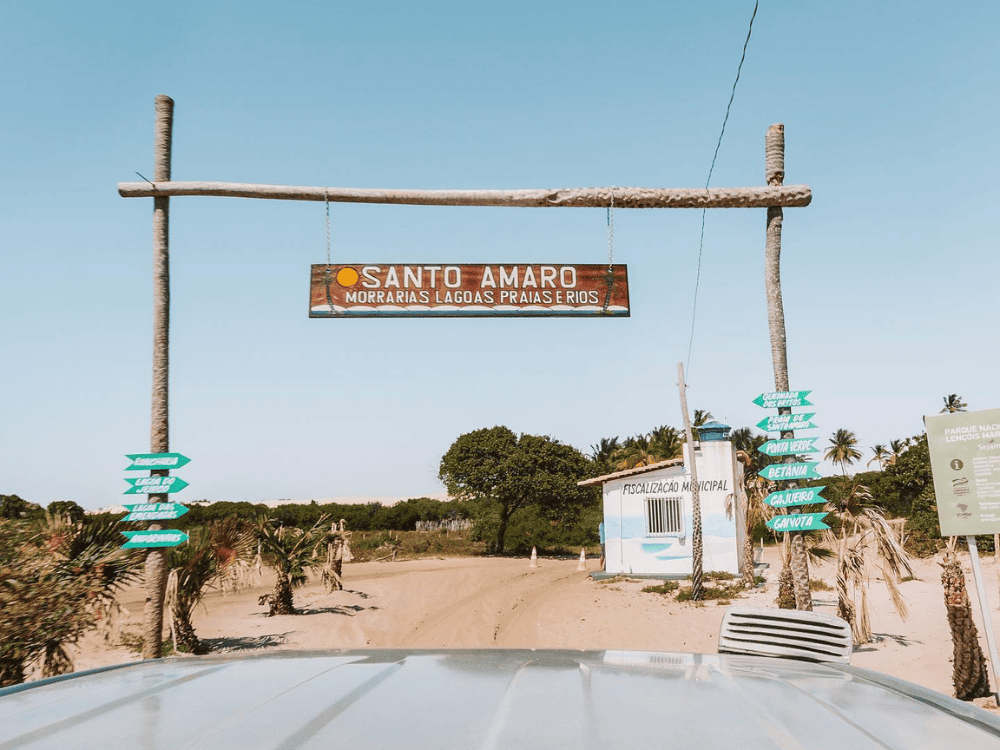
Santo Amaro is the quietest and most remote base city in the national park. Located 237 km southeast of São Luís, it serves as the endpoint for several Lençóis Maranhenses treks. It’s a great alternative for those seeking less tourist activity and total disconnection from the outside world.
.
By car
Rent a car at São Luís airport from companies such as Unidas, Movida or Localiza and drive for about 3 hours and 45 minutes to Santo Amaro. Since there are no car rental agencies in the city, you will need to take the vehicle back to the capital.
By shared van
Shared vans are practical options for travelers looking for budget-friendly transfers. With trips lasting 3 hours and 30 minutes, the operator Paperinho da Van (WhatsApp: +55 98 98468-4146) offers daily departures at fixed individual rates (contact them to inquire about prices):
São Luís → Santo Amaro: Departures at 04:00 AM, 01:00 PM, and 04:00 PM.
Santo Amaro → São Luís: Departures at 05:00 AM, 09:00 AM, and 02:00 PM.
By private transfer
For those seeking greater flexibility, booking a private transfer (Santo Amaro ⇌ São Luís, approx. 4h) is a great option. Costs are as follows:
Car (4 seats): R$ 1.125 (day) / R$ 1.275 (evening)
Mini van (6 seats): R$ 1.437,50 (day) / R$ 1.587,50 (evening)
Van (15 seats): R$ 2.500 (day) / R$ 2.650 (evening)
Now that you know how to get to Lençóis Maranhenses National Park from São Luís, it’s time to understand how to access it via Jijoca de Jericoacoara, in the state of Ceará.
Jericoacoara is a paradisiacal village known for its pristine beaches and gorgeous rock formations. It’s part of the Route of Emotions, a 6-day tour that also includes Delta do Parnaíba, in Piauí, and Lençóis Maranhenses.
Due to the natural beauty and considerable proximity between Lençóis and Jericoacoara (382 km), it’s common for travelers to move between both to further enjoy their vacations in the Brazilian Northeast.
By car
The drive from Jericoacoara to Barreirinhas takes around 7 hours. You can rent a car at agencies like Localiza and drop it off in São Luís by the end of your trip.
By shared or private transfer
Rota Combo(WhatsApp: +55 86 99993-0111) is one of the main operators on the Jericoacoara-Barreirinhas route, offering group or private shuttle services at various schedules and individual fixed rates (contact them to inquire about prices).
How to get to Lençóis Maranhenses from Rio and São Paulo
Most foreign tourists land in Rio de Janeiro or São Paulo to reach Lençóis Maranhenses, as these are the biggest cities in Brazil.
.
From Rio, flights depart from Galeão Airport (GIG) to São Luís (SLZ) three times a week. From São Paulo, flights to the capital of Maranhão depart daily from Viracopos Airport (VCP) and three times a week from Congonhas (CGH) and Guarulhos (GRU). All flights are served by LATAM, GOL or Azul Airlines.
It’s also possible to go by bus, but the trip is quite long. Departing from the Novo Rio Bus Station to São Luís, the journey takes 2 days and 14 hours. From São Paulo, passengers board at the Tietê Bus Station and arrive in Maranhão in 2 days and 18 hours.
Since there are no options to travel straight to the base cities of Lençóis Maranhenses from Rio or São Paulo’s bus stations, tourists still have to take another bus from São Luís to Barreirinhas (an extra 4–5 hours).
Book your Lençóis Maranhenses trip with PlanetaEXO
Understanding how to get to Lençóis Maranhenses is important to organize your trip, but when you travel with us, all you have to worry about is enjoying yourself!
PlanetaEXO is an ecotourism platform specializing in Lençóis Maranhenses tour. Working with the best local operators, we take care of every step of your vacation, including accommodation, tailor-made itineraries, and transfer options. Contact us now!
Learn everything you need to know to travel to Lençóis Maranhenses in Brazil, including how to get there, the best time to visit, main activities, and more!
Are you seeking adventure, relaxation, and breathtaking views? Then you should head to Lençóis Maranhenses National Park, a vast expanse of undulating sand dunes and crystal-clear pools that offers a serene escape from the chaos of city life.
This destination shows a whole other side of Brazil’s nature—very different from the dense vegetation of rainforests or the open fields of wetlands, but still absolutely extraordinary.
If you need some help with your vacation planning, PlanetaEXO, an ecotourism platform specializing in Lençóis Maranhenses tours, has created a complete guide detailing all the crucial information for a fantastic trip. Check it out below!
Along the undulating white sand dunes formed by the wind, countless rainwater lagoons are formed during the rainy seasons in Lençois Maranhenses National Park. Due to the high volume of rainfall, the bodies of water become large and deep enough for swimming and diving.
The beauty of Lençóis is so otherworldly it got to Hollywood, serving as the setting for the fictional planet Vormir in Avengers: Infinity War. Amidst CGI effects, the dunes host the villain Thanos and his daughter Gamora in a few scenes from the film.
The park has been protected by federal Brazilian law since 1981 and was declared a UNESCO World Heritage Site in 2024.
Lençóis Maranhenses is what we call “a desert with a thousand lakes”. As a wet desert, it’s a broad area of sand dunes and high biodiversity, covered with over 36,000 rainwater lagoons.
Therefore, Brazil does not have vast arid deserts like the Sahara, though there are places undergoing desertification processes, such as the Caatinga biome.
Where is Lençóis Maranhenses located?
Lençóis Maranhenses is located in a 155,000 ha area on the coast of the state of Maranhão, in the northeast of Brazil.
Barreirinhas, Atins, and Santo Amaro are the gateways for the national park, providing enough infrastructure to comfortably welcome tourists from all over the world.
How to get to Lençóis Maranhenses National Park?
To reach the breathtaking expanse of the Lençóis Maranhenses National Park, adventurers can set off from three entry points—all easily accessible from São Luís, capital of Maranhão, where Marechal Cunha Machado International Airport (SLZ) is located:
.
Barreirinhas: the main gateway, 260 km east of São Luís. Options include buses, rental cars, shared vans, and private transfers.
Atins: accessible via Barreirinhas. From there, you can take a scenic boat ride along the Preguiças River or a 4×4 vehicle ride. Both options offer unique experiences and beautiful views.
Santo Amaro: 237 km southeast of São Luís, it’s a quieter alternative to Barreirinhas. Rent a car in São Luís to drive straight to Santo Amaro, or take a shared van service.
Pro tip: when you book your Lençóis Maranhenses tour with PlanetaEXO, our local partners provide shuttle services from the airport/hotels in São Luís to your accommodation in one of the base cities. Talk about convenience!
When is the best time to visit Lençóis Maranhenses?
The ideal time to visit Lençóis Maranhenses in Brazil is from May to September. During this period, the lagoons are at their fullest, providing visitors with the best possible experience. Perfect for swimming, diving or simply relaxing in the crystal-clear waters!
From September to October and February to April, the lagoons start to decrease but still offer plenty of action in the water. While the scenery might not be as lush as during the high-water season, these months are known for fewer crowds and enjoyable activities in the lagoons.
From November to January, the lagoons dry up, limiting water activities and revealing pastures and meadows on the lagoon floors. This period shows a different side of Lençóis, highlighting the changing landscape and the unique formations of the park.
Photo: Bruno Nogaki
Lagoon season: rainy months, dry months
Before anything else, decide the month. The lagoons in the park are rainwater held between the dunes, so from June to September you find them full, and from October to December you find a white desert. Both are worth the trip, but they are not the same trip.
Period
Lagoon level
What to expect
January – May
Filling
The rain runs through the sand and starts filling the hollows between the dunes
June – September
Full
The window when the park becomes the postcard. It is when almost everyone goes
October – December
Drying out
The lagoons evaporate and a white desert is left. Fewer people, another landscape
Besides its jaw-dropping beauty, this is a destination ideal for travelers who love the outdoors and can’t say no to adventure. Watching the sunset from the sand dunes is an experience unlike any other, but there’s a lot more to do in Lençóis Maranhenses.
Lagoons
Across the national park, there are thousand of lagoons of all sizes, which appear and disappear depending on the time of year.
Photo: Renato Nascimento
Photo: Leo Castro
Photo: Victor Dubugras
They all have their virtues, but some stand out for their beauty, size, and permanence even during times of drought:
Barreirinhas: Lagoa Azul and Lagoa Bonita
Atins: Lagoa Tropical and Lagoa da Capivara
Santo Amaro: Lagoa da Betânia, Lagoa da Andorinha and Lagoa da Gaivota
Can I swim in Lençóis Maranhenses?
Yes, you can swim in Lençóis Maranhenses! The lagoons are clear and have just the right temperature for swimming, diving or simply relaxing.
Photo: Marcelo Bonifacio
However, it’s important to follow the guides’ instructions and respect the park’s rules to ensure a safe and responsible experience. This includes avoiding the use of cosmetics that could contaminate the water and picking up your own trash.
Trekking
Those seeking total immersion can cross the national park on foot. The trek lasts 3–5 days and allows you to explore the sand dunes and lagoons located in the so-called “primitive zone” of Lençóis Maranhenses.
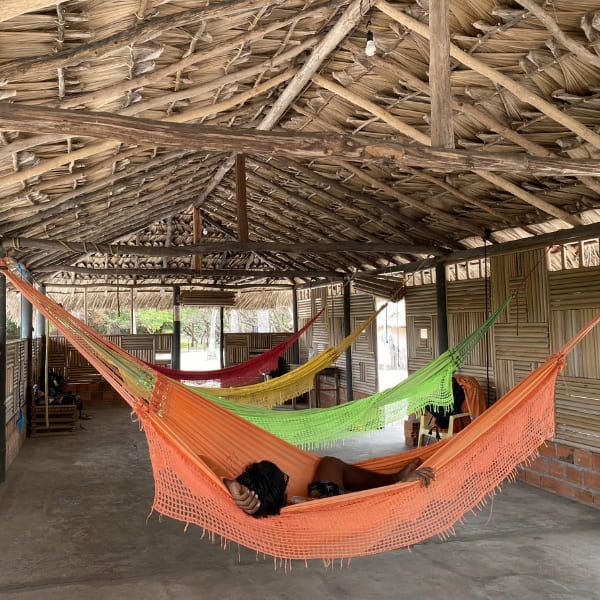
After long hours of trekking, travelers spend the night in the homes of locals who generously open their doors to welcome them. The accommodations are modest but cozy.
The experience requires time and physical effort, meaning not everyone is ready to face it. However, visitors who are willing to embark on this adventure do not regret it and return home transformed!
One of the most authentic experiences in Lençóis is riding through the dunes on horseback. The slower pace is ideal for those seeking a calm activity that still allows for complete connection with nature.
In addition to strolling through the park to find dunes and villages like Queimada dos Britos, the horses also enter the water to cross the Negro River.
ATV tours
Want to feel the adrenaline pumping through your veins? ATV tours are the perfect adventure for thrill-seeking travelers!
Accompanied by expert guides, you’ll traverse the national park on exhilarating rides among white sand dunes, crystal-clear lagoons, and local communities.
Beaches
The Lençóis Maranhenses National Park is bordered by the Atlantic Ocean, especially at the mouth of the Preguiças River.
While somewhat famous, Atins Beach is not very crowded due to its fairly remote location in Atins and relatively difficult access—only by boat or 4×4 vehicles.
The beach is gorgeous, with calm waves, warm waters and light-colored sand. In addition to being great for relaxing and sunbathing, it’s also one of the main kitesurfing spots in Brazil. Therefore, the sky is always adorned with colorful kites that only make the view even more beautiful.
Caburé Beach (Barreirinhas) and Travosa Beach (Santo Amaro) are also worth the visit!
Boat rides and boiacross
The landscape of Lençóis is not limited to sand dunes and lagoons but also includes green areas bathed by the Preguiças River. Passing through Barreirinhas, Atins, Vassouras, Mandacaru and Caburé, navigating its dark waters is a great way to truly get to know the region.
Tourists are also attracted by the Formigas River, which cuts through the village of Cardosa. The current is perfect for boiacross, a popular ecotourism activity in Brazil where people float down the rivers in large inflatable tubes.
How many days should I stay in Lençóis Maranhenses?
Knowing how long the trip will last is key to your planning. Lençóis Maranhenses National Park offers experiences ranging from quick introductions to deeper, multi-day adventures.
.
If your time is limited, a 2-day tour is enough for a taste of the sand dunes and lagoons. For a more immersive experience, 3 to 4 days allow you to explore different regions of the park, join longer hikes, or take boat trips along the Preguiças River.
If you’re able to stay 5 days or more, you can enjoy more ambitious adventures, such as multi-day treks crossing the park or embarking on the wonderful Route of Emotions, a fantastic tour that includes destinations (Lençóis, Delta do Parnaíba, and Jericoacoara) in three different states (Maranhão, Piauí, and Ceará)!
As the main gateway, Barreirinhas has the widest range of accommodations, from budget guesthouses to comfortable hotels. With easy access to the national park, good transportation options, and restaurants all over town, it’s a very convenient place to stay.
Atins is a peaceful fishing village by the sea, known for its rustic charm and relaxed pace. It’s ideal for travelers looking for a quieter atmosphere in cozy, more intimate hotels.
Santo Amaro offers an even more remote and exclusive experience. With fewer visitors and inns surrounded by sand dunes and lagoons, it’s the perfect picture of tranquility and total disconnection.
Horseback riding the sand dunes, rainwater lagoons, Baixa Grande, Queimada dos Britos, Atins, accommodation in locals’ houses inside the national park.
Trekking across the sand dunes, rainwater lagoons, Lagoa Bicudo Gordo, Lagoa do Junco, Baixa Grande and Queima dos Britos Oasis, accommodation in locals’ houses inside the national park.
Hiking across the sand dunes, rainwater lagoons, Baixa Grande and Queima dos Britos Oasis, boat trips, Atins Beach, Vassouras and Mandacaru, accommodation in locals’ houses inside the national park.
*Per person, based on double occupancy in group departures. Prices may vary depending on season and availability. Exchange rate as of March 13th, 2026; subject to change.
Is Lençóis Maranhenses worth it?
Lençóis Maranhenses is more than worth it! Thanks to its unique natural landscapes that combine white dunes with rainwater lagoons, this is surely the type of travel everyone should experience at least once in a lifetime.
As you explore the wonders of this surreal-like setting, you’ll also have the chance to connect with Lençóis’ culture by interacting with local communities, take stunning photos, and dive deep into a different side of nature in Brazil.
With a strong commitment to sustainable tourism, Lençóis Maranhenses National Park offers a journey that is both memorable and respectful of the environment, ensuring rich and valuable moments for all visitors.
Traveling to Lençóis Maranhenses with PlanetaEXO
PlanetaEXO is an ecotourism platform specializing in Lençóis Maranhenses tours. By working alongside the best local operators, we’re able to make your dream vacation a reality!
From bookings to tailor-made itineraries, our team works every day to ensure unforgettable travel experiences and sustainable practices that benefit both the environment and local communities. Contact us now!
Wind and rain play a fundamental role in the formation of the dunes and lagoons of Lençóis Maranhenses National Park
Lençóis Maranhenses National Park is a natural wonder where sand dunes and lagoons are formed by a fascinating combination of wind and rain, which createsa unique landscape found nowhere else in the world.
.
Considering the changing scenery according to season, it’s common to wonder how Lençóis Maranhenses was formed. Around two-thirds of the park are covered in flowing sand dunes that, from above, resemble bedsheets—hence the name in Portuguese, “Lençóis.” The beauty and rarity of the coexistence between a vast field of sand and thousands of lagoons earned the park UNESCO World Heritage status in 2024.
Want to find out how this phenomenon occurs? Check out the complete guide created by PlanetaEXO, an ecotourism platform specializing in Lençóis Maranhenses tours.
How are the dunes formed in Lençóis Maranhenses?
Lençóis’ dunes are the result of aeolian erosion, a natural process where the wind shapes the Earth’s surface by removing, transporting, and abrading soil and rock particles—particularly in arid, coastal, or sparse-vegetation environments.
Photo: Ma Rabelo
Powerful coastal winds from the Atlantic Ocean blow fine sand particles inland, where the region’s topography traps and accumulates them. Over time, this sand builds up into massive sandy hills that can reach up to 40 meters in height. Shaped by the constant movement of the wind, these dunes take on smooth, crescent-like forms and are in a state of perpetual motion, giving the landscape a dynamic and ever-changing character.
Researchers believe that 10,000 years ago, the national park area was covered by the sea. As the ocean gradually receded, it first gave way to mangrove forests and eventually transformed into the vast dune fields we see today.
.
A significant portion of the sand in the park was brought by the Parnaíba River, which carries sediment towards the sea, while ocean currents push it back toward the shore. This ongoing interaction between river flow, tides, and ocean currents allowed the sand to accumulate, forming the unique ecosystem of Lençóis Maranhenses.
Far from being static, the dunes are in constant motion. As the wind reshapes them regularly, they perform what locals poetically call the “dance of the dunes.” This phenomenon is especially visible during the dry season (July to December), when stronger winds and lower water levels in the lagoons make the movement even more noticeable.
Active and inactive dunes of Lençóis Maranhenses, Brazil
In Lençóis Maranhenses, not all dunes behave the same way. The presence or absence of vegetation is what determines whether a dune is active or inactive.
.
Some dunes are considered inactive, meaning they stay in place thanks to the surrounding vegetation. The native plants help to settle the sand, forming a natural cover that prevents the wind from moving the dune, making it more stable and fixed in place.
On the other hand, active dunes are in constant movement due to the force of the wind, rainfall, and the absence of nearby vegetation, allowing the sand to “dance.”
Can the dunes disappear?
Researchers believe that the complete disappearance of Lençóis’ dunes is unlikely. However, some factors could significantly alter their formation and have serious environmental and social consequences.
One of the main concerns is the unplanned installation of wind farms, as these structures can alter the wind patterns and directly affect the arrangement of the dunes. In addition, climate change plays a fundamental role, as it can change the behavior of rainfall and wind.
How are the lagoons formed in Lençóis Maranhenses?
The beautiful, crystal-clear lagoons of Lençóis Maranhenses are formed by the significant amount of rainfall the region receives, reaching 2,000 millimeters a year, mainly between January and June.
.
During the rainy season, the rain is quickly absorbed by the sand, which raises the water table above the ground and fills the temporary lagoons that lie between the dunes.
But the true secret behind the formation and maintenance of the lagoons is attributed to the mixture of sand and clay found in the soil. Over time, this combination has developed characteristics similar to a sponge-like rock, allowing water to seep out slowly—thus prolonging the lifespan of the lagoons.
Rainwater accumulates in the low areas between the dunes, forming thousands of crystalline pools that can reach depths of around one meter. Beloved lagoons such as Lagoa Azul and Lagoa Bonita offer a breathtaking view of this unique phenomenon, while the humidity in the air also prevents the dunes from shifting.
Can the lagoons dry up?
Brazil’s rainwater lagoons in Lençóis Maranhenses National Park begin to shrink between October and January. As the rain stops and the sun prevails, the water in the smaller lagoons evaporates completely, while the larger, deeper ones can retain it for longer.
Photo: Glauco de Souza Santos
This seasonal change not only alters the visual landscape but also affects the climate. During the end of the second semester, the strongest winds return, causing the dunes to grow and move more quickly.
While it would be fun for the lagoons to be full all year round, it’s essential for the ecosystem that they dry out periodically. Continuous water accumulation, combined with local vegetation and organic matter, would otherwise lead to excessive algae growth, making the water slimy and the lagoons unsuitable for swimming.
Weather and seasonality: best time to visit the dunes and lagoons in Lençóis Maranhenses
The best time to visit Lençóis Maranhenses is from May to September, when the rainy season has just ended and the lagoons are at their peak.
.
The weather during this period is sunny, free of rain, and marked by pleasant temperatures, perfect for hiking across the park and taking a refreshing dip in the lagoons.
Although the beginning of the dry season is considered the ideal time for visiting, each month offers a different kind of beauty. Whether it’s the vibrant lagoons of the rainy season or the giant dune formations of the dry period, Lençóis never ceases to amaze.
How the rain fills the lagoons — and the sun empties them
The formation does not stop at the dunes. Rain that falls between January and May cannot drain through the impermeable layer under the sand, so it stays trapped in the hollows — that is a lagoon. From October the sun takes the water back, and the park rebuilds itself the following year.
Period
Lagoon level
What to expect
January – May
Filling
The rain runs through the sand and starts filling the hollows between the dunes
June – September
Full
The window when the park becomes the postcard. It is when almost everyone goes
October – December
Drying out
The lagoons evaporate and a white desert is left. Fewer people, another landscape
Visiting Lençóis Maranhenses’ dunes and lagoons with PlanetaEXO
Now that you know how Lençóis Maranhenses was formed, it’s time to see its surreal beauty up close!
PlanetaEXO is an ecotourism platform specializing in Lençóis Maranhenses tours. Working alongside the best local operators, our team helps you with hassle-free vacation planning, from bookings to tailor-made experiences. Contact us now!
One of the most beautiful destinations in Brazil is also one of the most interesting. Discover amazing facts that will make you fall in love with Lençóis Maranhenses National Park!
Spanning 1,550 km² (155,000 hectares), Brazil’s Lençóis Maranhenses is a protected area in the northeastern state of Maranhão that features a surreal mix of white sand dunes, seasonal freshwater lagoons, mangroves, and remote fishing villages.
At first glance, it looks like a typical desert, but here’s your first fact about Lençóis Maranhenses National Park: its almost supernatural beauty holds secrets that reveal the complexity of nature and the exclusivity of phenomena that occur in the sand dunes of Brazil—and nowhere else in the world.
Curious to learn more? PlanetaEXO, an ecotourism platform specializing in Lençóis Maranhenses tours, has put together 10 facts about this fascinating destination. Check them out below!
1. It’s not actually a desert
Brazil doesn’t have deserts like the Sahara, but it does have Lençóis Maranhenses, a desert-like area formed by vast sand dunes, high biodiversity, and almost 2,000 mm of annual rain—more than entire cities like London and Berlin.
.
As a wet desert, Lençóis’ intricate environment involves meteorological and geological factors that have been occurring for thousands of years.
2. Timing is everything when you visit Lençóis Maranhenses
One of the key facts about Lencois Maranhenses National Park is that the landscape changes dramatically with the seasons.
Julius Dadalti
From February to April, the rains fill the dunes with freshwater lagoons. Between May and September, they’re at their peak, perfect for swimming and photography. By September, many begin to dry up, revealing a significantly more arid terrain.
No matter the month, traveling to Lençóis is worth your while. Each season offers a different way to experience this jaw-dropping destination, from lagoon-filled hikes to dune crossings under wide, open skies.
If you’re wondering just how massive Brazil’s sand dunes can get, Lençóis Maranhenses will surprise you.
.
Some dunes rise up to 40 meters, the equivalent of a 10-story building. Walking across them feels like stepping into another world. The sand is fine, pale, and soft underfoot, while each step reveals sweeping views of blue and green lagoons nestled in the valleys below.
It’s physically demanding but visually rewarding, especially during sunrise or sunset, when the light paints the dunes in golden hues.
4. Some lagoons have fish
Did you know there’s fish in Lençóis Maranhenses? According to scientific studies, some of the 36,000 lagoons across the national park are inhabited by wolf fish. During the dry season, they bury themselves in the mud and enter a state of dormancy that only ends when it starts to rain once again.
Photo: Isadora Sá
This natural adaptation demonstrates how the dunes are extremely rich in terms of biodiversity, proving that resilience is an intrinsic part of environments driven by the complexity of nature.
5. Access points
There arethree main gateways to Lençóis Maranhenses, Brazil: Barreirinhas, Santo Amaro, and Atins.
Barreirinhas is the most developed, offering daily tours, river transport, and great infrastructure. Santo Amaro is quieter, with easier access to some of the most stunning lagoons, perfect for travelers who want to avoid crowds. Atins is remote and laid-back, popular with backpackers and kite surfers.
Each base city offers a different way to explore this unique region, whether you’re seeking convenience, immersion, or solitude.
While Lençóis Maranhenses is not as famous as the Amazon Rainforest or the Pantanal, it’s not an unknown destination. In fact, it’s Hollywood famous.
Marvel
The park’s surreal landscape of white sand and rain-filled lagoons was featured in Avengers: Infinity War, representing Vormir, the fictional planet where the powerful Soul Stone is hidden. The scenes were shot in Atins, one of the base cities of Lençóis.
7. The area has been inhabited for centuries
While it might look untouched, Lençóis Maranhenses National Park has a long human history. Villages like Queimada dos Britos and Baixa Grande, located deep within the dunes, have been inhabited for generations.
Photo: Isadora Sá
The families there live in harmony with the environment, depending on small-scale agriculture, fishing, and, in recent years, sustainable tourism. Their presence adds cultural depth to the region, showing that Brazil’s sand dunes are not just a pretty background but a living, breathing community space.
8. Recognised by UNESCO as a World Heritage Site
In 2024, Lençóis Maranhenses National Park received one of the highest recognitions on the planet: it was officially declared a UNESCO World Heritage Site.
This status highlights not only its surreal beauty but also its ecological importance and the need for long-term preservation. With its rare combination of vast white dunes, seasonal rainwater lagoons, mangroves, and traditional communities, the park stands out as a global landmark of nature and culture.
9. Not just sightseeing: plenty of adventure
Although they possess a stunning beauty, the Lençóis Maranhenses in Brazil are not merely a backdrop for contemplation and photos worthy of spotlight on social media.
Ma Rabelo
As an ecotourism destination, the national park offers many adventures beyond swimming in the lagoons, such as multi-day treks—which also include overnight stays in the homes of local residents—4×4 expeditions, boiacross or boat tours on the Preguiças River, and kitesurfing at Atins Beach.
10. You’ll probably lose your sense of direction
Among the most surprising facts about Lencois Maranhenses is how easy it is to lose your bearings once you’re deep inside the park. The landscape repeats itself in every direction, endless hills of white sand with no roads, signs, or clear landmarks.
That’s why guided tours are highly recommended—not only for safety but also to ensure visitors actually reach the lagoons and remote villages. Venturing into the park without a professional guide is not advisable.
Getting a bit disoriented, however, is part of the charm. Many travelers say that’s when the magic begins, when you stop trying to control the journey and let the scenery take over.
Delve into Lençóis Maranhenses National Park with PlanetaEXO
Ready to be enchanted by the paradisiacal landscapes of Lençóis Maranhenses in Brazil?
PlanetaEXO is an ecotourism platform that specializes in Lençóis Maranhenses tours. When you travel with us, we connect you with the best local operators to ensure an unforgettable vacation. From bookings to tailor-made itineraries, our team is always ready to help. Contact us now!
Planning your trip depends on several factors, such as logistics, weather, and travel style
The Lençóis Maranhenses National Park covers a massive area of 155,000 ha, which means you need at least 3 full days to truly experience the paradisiac atmosphere—though there are options for quick 2-day treks in selected areas across the sand dunes.
Logistics also plays a huge part when it comes to travel planning, as this is a remote location that requires long journeys to reach the base cities (Barreirinhas, Atins, and Santo Amaro). Seasons, weather, and each traveler’s pace should also be considered when deciding how many days you should stay in Lençóis Maranhenses.
.
Need a hand with your trip? PlanetaEXO is an ecotourism platform specializing in Lençóis Maranhenses tours that knows everything about trips to Brazil’s wet desert. Check it out below!
What determines how many days you should stay in Lençóis Maranhenses?
Logistics
In northeastern Maranhão, Lençóis Maranhenses is located in a remote area. After arriving in the capital São Luís, it takes 4-5 hours by road to reach one of the base towns: Barreirinhas, Atins, and Santo Amaro.
The main transportation options are buses, private cars, or shared vans, but it’s also possible to reach Barreirinhas by chartered plane or by boat to Atins (departing from Barreirinhas).
The transfer to your destination must be considered in your planning, as a significant part of the trip is spent on the Lençóis-São Luís route.
The weather in Lençóis Maranhenses dictates the experiences—some seasons may be better enjoyed than others, depending on what you are looking for.
The rainy season begins in February and extends until April, causing downpours that form new lagoons and fill up existing ones. The rain doesn’t stop tourists from visiting, but it can make walks through the dunes a bit more complicated.
The rain stops when the dry season (May to September) begins, presenting conditions most people prefer: full lagoons scattered across the sand dunes, warm weather, and a refreshing breeze. This is the period when the park is busiest, marking the high season.
From October onwards, the lagoons begin to dry up. Until January, the national park has more sand than water, but it’s still possible to venture out with trekking, boat trips on the Preguiças River, and kitesurfing on Atins Beach.
Don’t forget: before deciding how many days you should spend in Lençóis Maranhenses, check the weather forecast for the desired period.
How many days you need also depends on when you come. With the lagoons full, from June to September, two days already give you the postcard. In the dry months the water is scattered and you need more time, and more walking, to reach what is left.
Period
Lagoon level
What to expect
January – May
Filling
The rain runs through the sand and starts filling the hollows between the dunes
June – September
Full
The window when the park becomes the postcard. It is when almost everyone goes
October – December
Drying out
The lagoons evaporate and a white desert is left. Fewer people, another landscape
The vastness of the white dunes, the calmness of the crystal-clear lagoons, and the endless blue of the sky contribute to the peaceful atmosphere of the national park, perfect for those seeking rest and disconnection from the tensions of day-to-day life.
However, there are also opportunities for adventure, such as 4×4 rides, trekking across the park—and spending the night in locals’ houses—boiacross, and kitesurfing.
The extent of the trip depends on the availability and style of each traveler, but Lençóis Maranhenses is versatile enough for all scenarios and paces, from quick 2-day experiences walking through the main points of the park to multi-day trips that even cover other states.
.
2 to 3-day trip: the essential
Even on a tighter schedule, it’s perfectly possible to experience the magic of Lençóis Maranhenses simply by choosing the pace of your adventure.
If you’re looking for something more relaxed, the 2-day trek from Atins (easy level) is perfect: a lighter hike through the stunning dunes and lagoons, starting and ending in the charming village. Are you an adventurous spirit and physically fit? Then you should check the 2-day desert trek (difficult level), which requires more effort but rewards you with a deep immersion and an unforgettable overnight stay in the Baixa Grande oasis.
With 3 days available, the range of experiences opens up even more. You can opt for the 3-day trek (moderate level), walking among dunes and visiting two different oases, with an overnight stay in the homes of local families. If you prefer comfort, the 3-day tour from Santo Amaro (easy level) allows you to explore the most pristine lagoons in 4×4 vehicles, based in a very peaceful village.
And for a truly unique experience, you can cross the white sand desert on our 3-day horseback riding expedition, an easy-level adventure that will create memories to last a lifetime!
.
4 to 5-day trip: digging deeper
For those with a little more time, investing 4 to 5 days is the best way to disconnect and get into the rhythm of nature.
The 4-day tour from Atins is ideal for those who want to enjoy the rainwater lagoons during the day and enjoy the rustic and welcoming atmosphere of the village at night without much physical effort.
If hiking is your thing, the 4 and 5-day treks (moderate level) are the classic crossings. On these itineraries, you experience the ultimate immersion: entire days hiking through surreal landscapes, swimming in exclusive lagoons, and having rich contact with the culture of the local communities that live in the oases within the park.
Photo: Marcelo Bonifacio
6-day trip: the full experience
Six days open doors to the most complete and spectacular trips in the Brazilian Northeast, both easy-level and focused on comfort and contemplation.
The Lençóis Maranhenses Full Itinerary takes you to explore the three main bases of the region: Barreirinhas, Santo Amaro, and Atins. You will take boat trips, visit the most famous dunes, and have a 360º view of the park without having to do long walks.
The famous Route of Emotions is an epic interstate trip. It allows you to start your journey exploring Lençóis Maranhenses, pass through the incredible beauties of the Parnaíba Delta in Piauí and end the trip relaxing on the paradisiacal beaches of Jericoacoara, in Ceará.
.
Your vacation in Lençóis Maranhenses with PlanetaEXO
If you’re still not sure of how many days you should spend in Lençóis Maranhenses, we are here to help!
PlanetaEXO is an ecotourism platform specializing in Lençóis Maranhenses tours, from tailor-made itineraries to bookings and transfer options. Our team works with the best local operators to make sure you’ll experience a vacation you’ll never forget. Contact us now!
Seasons, locations, safety tips, and health precautions. See our recommendations for an unforgettable travel experience in Brazil’s Lençóis Maranhenses National Park!
Located in northeast Brazil, Lençóis Maranhenses National Park is a destination sought after by adventurers from all over the planet. Recognized as a UNESCO World Heritage Site, this natural wonder is famous for its vast, giant white sand dunes and crystal-clear freshwater lagoons.
But don’t let its otherworldly beauty fool you—exploring this fantastic place requires thoughtful planning to make the most of your time, energy, and budget. Considering elements like location, weather, and activities, following some Lençóis Maranhenses travel tips can help to make your vacation even more memorable.
That’s why PlanetaEXO, an ecotourism platform specialized in Lençóis Maranhenses tours, has put together 10 essential recommendations for a wonderful experience in one of the most beautiful places in Brazil. Check them out below!
1. Pick your base city: Barreirinhas, Atins, or Santo Amaro
The choice of base cities can shape your entire experience, so analyzing the options and choosing the one that makes the most sense for your travel style is the first tip to thoroughly enjoy Lençóis Maranhenses.
Photo: Gabriel Boieras
Barreirinhas is the most popular hub, with solid infrastructure and easy access. Atins is a peaceful fishing village, harder to reach, but offering rustic charm and great conditions for kitesurfers. Meanwhile, Santo Amaro has the closest access to the national park and beautiful lagoons, but restaurants, bars, and other services are rather scarce.
Besides considering the different atmospheres and logistics of each base, it’s also possible to combine more than one city throughout a single trip. This way, you can experience each side of Lençóis!
2. Time it right: when the lagoons are at their best
The weather is ideal for those looking to explore ecotourism in Brazil. The best time to visit Lençóis Maranhenses is between May and September, when the lagoons are full from seasonal rains and the sky is usually clear with no rain. This window offers the most spectacular views and the best overall conditions for hiking and swimming.
From February to April, the heavy rainfall might disrupt travel plans, while the period between November and January causes the lagoons to shrink or disappear completely.
Lençóis offers great experiences all year round, but the itineraries vary according to the seasons. Make sure to check the weather forecast and plan your trip according to your preferences!
3. Health tips: vaccination and fighting the heat
Foreign tourists are not required to get vaccinated, but Brazil’s Ministry of Health recommends that visitors from other countries be protected against diphtheria, tetanus, polio, and measles.
.
Additionally, as a precaution, it is advisable to get vaccinated against yellow fever and hepatitis A and B—even though there is no imminent risk of these diseases within national territory.
The heat is also something to consider, as Lençóis Maranhenses is located in one of the hottest regions in the entire country. To protect yourself against the intense sun and high temperatures, always apply sunscreen, wear a cap/hat when exploring the sand dunes, and stay well-hydrated at all times.
One of the best Lençóis Maranhenses travel tips is to trust the locals for a truly immersive, fulfilling experience.
Lençóis is a protected area with no marked trails. As the dunes stretch endlessly, it’s easy to lose your sense of direction. Tour guides know the safest and most scenic routes, how to avoid getting lost, and can tailor your experience to your interests. Remember: never venture into the national park without a qualified professional.
Photo: Marcelo Bonifacio
Local residents also play an important role in the stay experience, as many travelers making the dune crossing, which can last several days, spend the night in the homes of locals within the park.
The accommodations are simple, yet clean and comfortable—ideal for resting a weary body after a long day of trekking. This is also a wonderful way to meet new people and connect with Brazilian and Maranhense culture.
5. Lençóis Maranhenses treks are demanding (be prepared!)
Expect a workout. The sand is uneven and the dunes are tall, so the ground slips out from under your feet as you walk.
.
Under the hot sun, physical exertion becomes even greater. To avoid stressful situations, exhaustion, and other health issues, dress in light, airy clothes, drink plenty of water, and don’t rush. And while most people enjoy walking barefoot, hiking sandals work just fine!
All this effort and dedication are worth it: you will be rewarded with landscapes that seem out of this world and indescribable experiences to carry with you for the rest of your life!
6. Pack smart
Pack smart, light, and functional. Comfortable, appropriate items for physical activities and warm weather are indispensable:
Swimwear
UV-resistant clothing
T-shirts
Shorts
Flip-flops
Sandals or light hiking shoes
Socks
Hats or caps
Towels
Sunglasses
Reusable water bottle (at least 1.5L)
Eco-friendly sunscreen (non-toxic to aquatic life; SPF 30 or higher)
And, as with any other trip, don’t forget the essentials: documents, insect repellent, medication, a power bank, and chargers (phones, cameras, laptops, and tablets).
Bring your own cash (Brazilian real), as ATMs are scarce (especially in Atins and Santo Amaro), and connectivity for debit/credit cards is limited.
7. Don’t underestimate transfer times
Lençóis Maranhenses National Park is located in a remote area. From the capital of Maranhão, São Luís, to the base cities, the drive takes between 4 and 5 hours.
.
When planning your vacation, map out the round-trip transfer to ensure you enjoy every single second and to avoid any problems with your schedules—like missing a flight, for example.
Your trip should last at least 3 days, but it obviously depends on your availability and the type of experiences you’re looking for.
This is a more intense experience than the day tours, but far more rewarding. You’ll hike through remote parts of Lençóis Maranhenses that most visitors never see, sleep in locals’ homes or campsites, and enjoy simple, home-cooked meals.
.
In the afternoons, after the hikes, you’ll have a few quiet hours to relax and recharge. It’s the perfect moment to disconnect, take a nap, or simply admire the breathtaking beauty that surrounds you.
9. Bring your own snacks and drinks on the tours
Lençóis tours typically only stop during lunchtime, and there are no restaurants or diners inside the national park. If you plan to spend several hours (or even days) in Lençóis Maranhenses, it’s important to bring your own food and water.
Opt for light, non-perishable snacks such as crackers, nuts, protein/fruit bars, etc. Use reusable containers and keep the packaging in your backpack to dispose of it once you return to the city. Never litter in the dunes or lagoons.
10. Download Google Translate for offline use
Don’t expect English everywhere; most locals only speak Portuguese.
Downloading Google Translate (or other translation apps) before arriving and setting up the Portuguese language pack for offline use is highly recommended. This will help with everything you might need, from ordering food to asking for directions.
.
Take the opportunity to learn a few basic words in Portuguese, like “bom dia” (good morning) and “obrigado” (thank you). Small gestures like these show kindness, openness, and appreciation for the people and the place you’re visiting!
Visit Lençóis Maranhenses with PlanetaEXO
Now that you know 10 essential travel tips for Lençóis Maranhenses visitors should follow, it’s time to start planning your trip!
PlanetaEXO, an ecotourism platform specializing in Lençóis Maranhenses tours, works with the best local partners to turn your dream vacation into reality. Our team is ready to help you with bookings, transfer options, and tailor-made itineraries for a fantastic experience. Contact us now!
Discover accommodation options in Lençóis Maranhenses, from homestays to hotels in Barreirinhas, Santo Amaro, and Atins
Lençóis Maranhenses National Park is a natural marvel. In a massive area covered by impressively white sand dunes, blue rainwater lagoons, and untouched vegetation, it’s not uncommon for people to describe it as an otherworldly place.
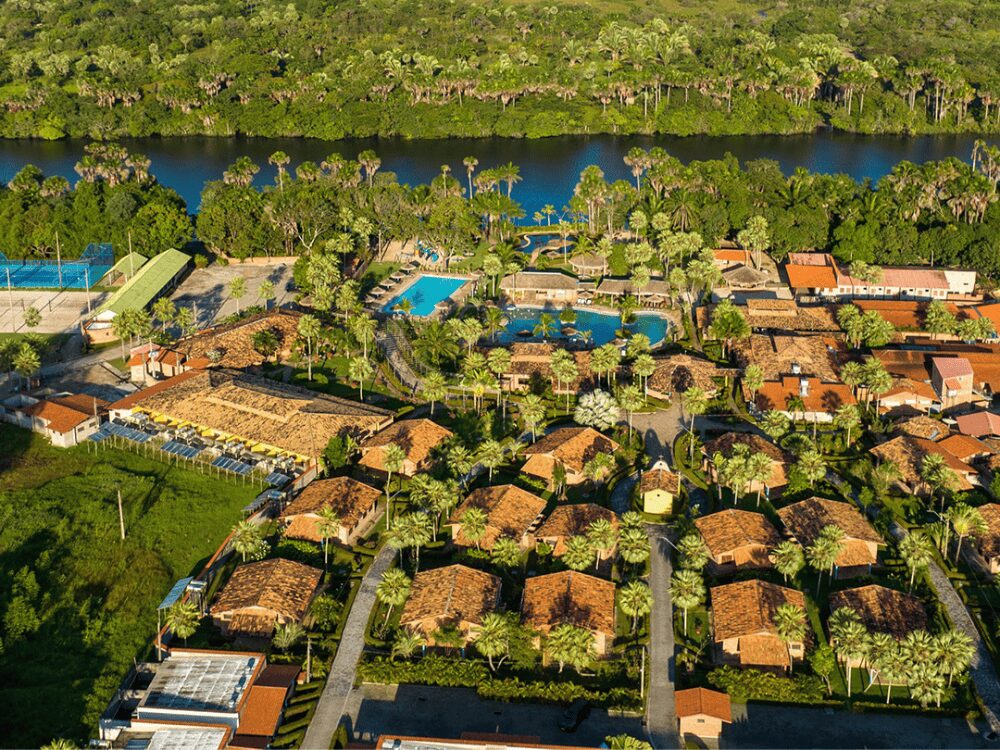
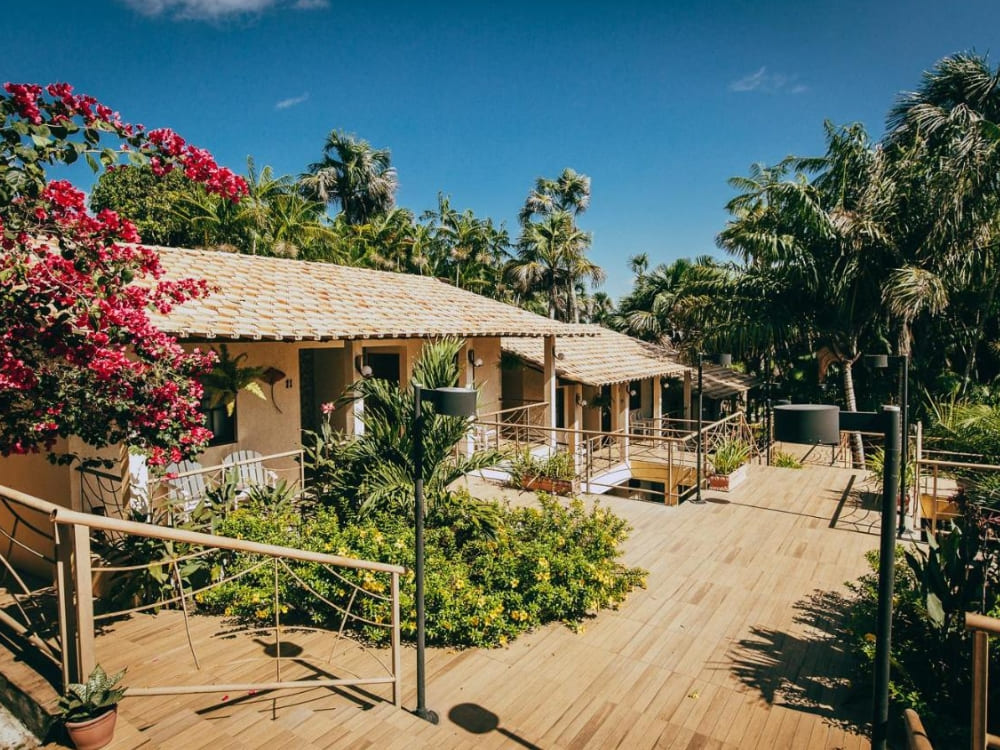
Mirroring the general atmosphere of the national park, accommodation options are characterized by a peaceful and considerably rustic nature. Whether in small inns, hotels offering premium services, or homestays with local residents, the choices for where to stay in Lençóis Maranhenses are all marked by the placid, lovely charm of the dunes.
PlanetaEXO, an ecotourism platform specializing in Lençóis Maranhenses tours, has helped countless travelers from all over the world to book the best accommodations in this fantastic destination. Read more below!
Accommodation in the sand dunes
One of the most authentic ways to experience Lençóis Maranhenses is to traverse it on foot. The trek takes several days, allowing travelers to discover the more secluded parts of the dunes and visit less-crowded lagoons.
.
On an adventure like this, visitors spend the night inside the national park. Residents of small villages, such as Queimada dos Britos and Baixa Grande, welcome guests into their own homes, offering both shelter and food.
The accommodations are simple, yet cozy and clean. After an intense but rewarding day of trekking through one of Brazil’s most beautiful landscapes, you can rest in hammocks, take a shower, and recharge with a hot meal.
Beyond just providing a place to stay, this is also a wonderful opportunity to meet new people, immerse yourself in the local culture of Lençóis, and experience famous Brazilian hospitality firsthand.
Where to stay in Barreirinhas?
.
Out of all the base cities, Barreirinhas is the main gateway for the national park. With the best infrastructure of the area and a more lively vibe, most hotels in Lençóis Maranhenses are located here.
This is the perfect place for travelers looking for balance between nature and convenience due to the easy access to the sand dunes and the various transportation options, as well as restaurants, bars, markets, pharmacies, ATMs, etc.
One of the only resorts in Lençóis Maranhenses, Porto Preguiças is a high-end resort with a privileged view of the Preguiças River, one of Maranhão’s main rivers. Great for families with children, the air-conditioned rooms have excellent beds, cable TV, a mini fridge, and private bathrooms.
Amenities include swimming pools, a garden, a restaurant, a bar, a breakfast buffet, free parking, room service, and airport transfer.
Also situated on the banks of the Preguiças River, Gran Lençóis Flat is a 4-star hotel recommended for every type of traveler. In the common areas, guests can enjoy a swimming pool, sauna, spa, gym, entertainment room, conference room, and playroom (for children). The restaurant serves typical Brazilian food and international dishes.
The apartments include single or double beds, TV, air-conditioning, fresh towels, free amenities, and Wi-Fi.
Address: Estrada de São Domingos, s/n – Povoado Boa Vista
A bit simpler than the previous hotels, Portal do Sol Lençóis Pousada still offers a great stay experience, ideal for guests looking for cost efficiency. Rest in spacious rooms with air-conditioning, mini-fridges, TVs, private bathrooms, and high-speed Wi-Fi connection.
Take a swim in the pool to cool off and enjoy a delicious breakfast buffet with a beautiful view of the inn’s lake.
4 km away from downtown Barreirinhas, Boa Vista is a charming inn that will make you feel right at home. Apartments include queen-size beds, air-conditioning, TVs, Wi-Fi, and private bathrooms.
In the social areas, take a relaxing walk in the garden, swim in the pool, or rest on a hammock. At mealtimes, the talented team of cooks serves incredible local dishes at the restaurant.
Wondering where to stay in Lençóis Maranhenses on a lower budget? Pousada D’Areia, located on the main street of Barreirinhas, might be the right place for you!
With easy access to the dunes and the Preguiças River, recharge your energy in lovely air-conditioned rooms with private bathrooms. Includes an amazing all-you-can-eat breakfast made with local, fresh ingredients.
Address: Av. Joaquim Soeiro de Carvalho, 888 – Centro
The apartments in Pousada Sítio Parque dos Lençóis are equipped with comfy beds, air-conditioning, free Wi-Fi, and private balconies and bathrooms.
Guests can also enjoy a swimming pool, a gorgeous garden, a shared lounge, and a breakfast buffet every morning.
Address: Rua Boa Vista, 600 – Bairro da Cebola
Price range: $$
Where to stay in Santo Amaro?
Santo Amaro is the town with the quickest access to the national park, distinguished by having some of the largest and most beautiful lagoons.
.
Small and peaceful, it offers less infrastructure than Barreirinhas yet provides excellent immersive experiences and a variety of inns and hotels in Lençóis Maranhenses National Park.
Quintal das Areias is a highly rated accommodation in Santo Amaro, famous for its gorgeous decor—carefully thought out to represent Maranhão’s essence.
Each chalet includes air-conditioning, queen or king-size beds, a bathroom with premium amenities, a private closet, Wi-Fi, and a beautiful view of the garden. Can’t wait to taste Brazil’s typical flavors? Grab a bite at the restaurant or have a drink at the bar!
This camping-style accommodation is perfect for people who want closer contact with nature without giving up comfort. Surrounded by a lake and lush vegetation, Ciamat Camp offers special facilities for water sports, a beautiful garden, a private beach area, and activities like fishing and canoeing.
Every air-conditioned room is equipped with double or single beds, private bathrooms, and rustic decor. In the morning, fill your belly with an incredible breakfast (including vegetarian and Italian menus).
Blending design, comfort, originality, and a sophisticated simplicity, OIÁ Casa Lençóis features spacious accommodations—from house suites to bungalows—equipped with king-size beds, air-conditioning, private bathrooms, and exclusive amenities.
The hotel also offers privileged access to the most beautiful lagoons, elegant decor, haute cuisine, and a lovely rural atmosphere.
Vila do Junco provides a nature-immersive stay experience due to its location amidst green vegetation, well-kept gardens, and rustic, wooden facilities. The rooms are beautiful bungalows with spacious beds, private bathrooms, closets, and ceiling fans or air conditioning.
After a long day in Lençóis Maranhenses, relax on the deck by the pool, take a nap on a hammock, and eat delicious Brazilian or Italian food (also with vegetarian, vegan, and lactose-free options).
It’s not unusual to find Vila Capininga Ecopousada fully booked due to the beauty of its facilities, high-quality services, and fair prices.
Enjoy air-conditioned rooms, double or queen-size beds, work desks, free amenities, private bathrooms, flat-screen TVs, internet connection, hammocks, charming social areas, and delicious homemade food.
Address: Vila Povoado Arredores – Rua da Fazenda, 01 – Malhadinha
Giro das Dunas is a cozy inn over 500 meters away from downtown Santo Amaro. The apartments include single or double beds, TVs, private bathrooms, and balconies with a lovely view of the pool.
It also includes a sun deck, a shared lounge, a garden, free Wi-Fi, a restaurant, and car rental service.
Address: Rua das Flores, 143
Price range: $$
Where to stay in Atins?
With a population of only 1,500 inhabitants, Atins is a small village located in a fairly isolated share of Lençóis Maranhenses National Park, in Barreirinhas, by the mouth of the Preguiças River and the Atlantic Ocean. Aside from the lagoons, Atins Beach is also a fantastic spot to visit—especially for kitesurfers.
@lubritofotografia
The only way to get to Atins is by four-wheel drive or boat, but the picturesque charm, the kind-hearted people, and the jaw-dropping landscapes are worth the effort.
Where to stay in Lençóis Maranhenses when you’re looking for a 5-star accommodation with beautiful facilities and exclusive services? La Ferme De Georges is a luxury inn based on high-end experiences and sustainable practices.
Built with eco-friendly materials, the chalets are spacious and elegant, all of them featuring comfortable beds, air conditioning, mini fridges, private bathrooms, and premium amenities.
In the common areas, guests can relax and have fun in the swimming pool, sun deck, volleyball court, entertainment lounge, or bar. Specialized in Brazilian food, the restaurant uses fresh ingredients harvested in La Ferme de George’s own farm.
Rated by previous guests as an excellent resort, Muita Paz is located by the sea on a private beach and surrounded by hundreds of coconut trees.
The ocean view chalets are beautifully decorated and equipped with king or queen-size beds, air-conditioning or ceiling fans, work desks, mini fridges, and private bathrooms.
A wonderful fine dining restaurant, spa, kitesurfing lessons, and exclusive activities in Lençóis Maranhenses guarantee an unforgettable stay.
Anacardier is an adult-only hotel with luxury suites and bungalows, a swimming pool, a well-kept garden, a fine dining restaurant, and an open-air terrace facing a beautiful view of the national park.
The sophisticated accommodations are perfectly balanced with the bucolic charm of Lençóis, creating an experience of pure relaxation and connection with the dunes.
Great for families and couples, Vila Aty Lodge is a six-minute walk away from Atins Beach. Common areas include a swimming pool, a garden, a vegetable garden, an entertainment area for children, a bar, and a restaurant.
The air-conditioned suites have single and double beds, TVs, toiletries, closets, and bathrooms. Some units also feature private balconies.
Seven minutes away from Praia do Atins, this beautiful accommodation offers chalets for families and suites for couples. All of them are equipped with comfy beds, TVs, air-conditioning, and private bathrooms.
Charme Atins is known in the area for its great activities, such as sunset contemplation in privileged locations and breakfast or lunch right in the dunes.
Three minutes away from Atins Beach and right at the village’s main street, Rancharia Charme Beach is as charming as its name suggests.
Besides the great rooms ideal for families and couples, some of this accommodation’s highlights include beautiful natural views, a swimming pool, a beach tennis court, and a sushi bar.
Respectively 200 and 400 meters away from Atins Beach and Lençóis Maranhenses National Park, Pousada Jurará offers apartments with double or single beds, air-conditioning, mini fridges, toiletries, and private bathrooms.
It also includes a restaurant, a bar, a breakfast buffet, kite surfing lessons, and free Wi-Fi.
Address: Rua Principal, s/n – Atins
Price range: $$
Visiting Lençóis Maranhenses with PlanetaEXO
Now that you know where to stay in Lençóis Maranhenses, shall we start planning your vacation?
PlanetaEXO, an ecotourism platform specializing in Lençóis Maranhenses tours, takes care of everything for you—from bookings to transfers and tailor-made itineraries. When you travel with us, all you have to do is enjoy the moment. Contact us now!
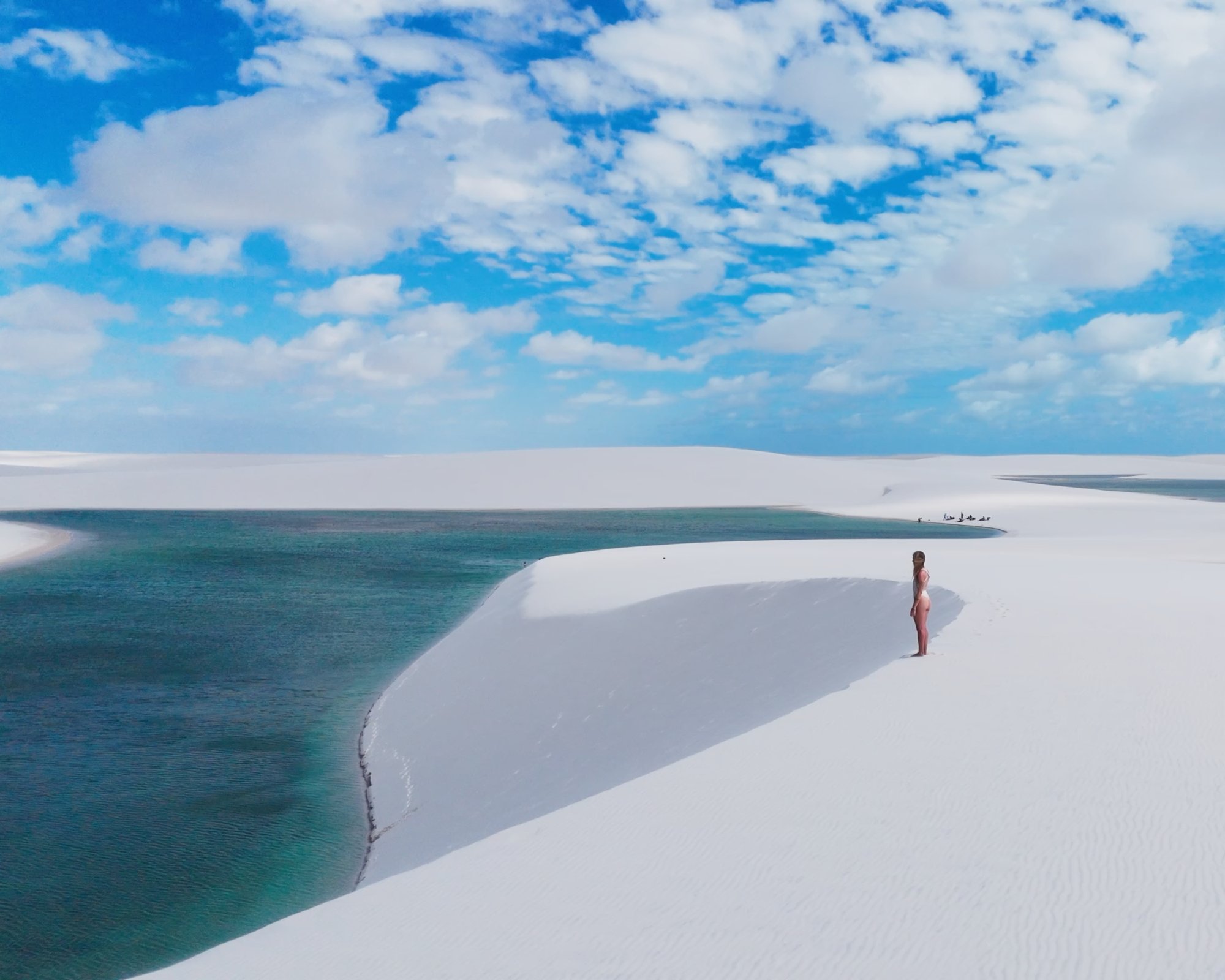
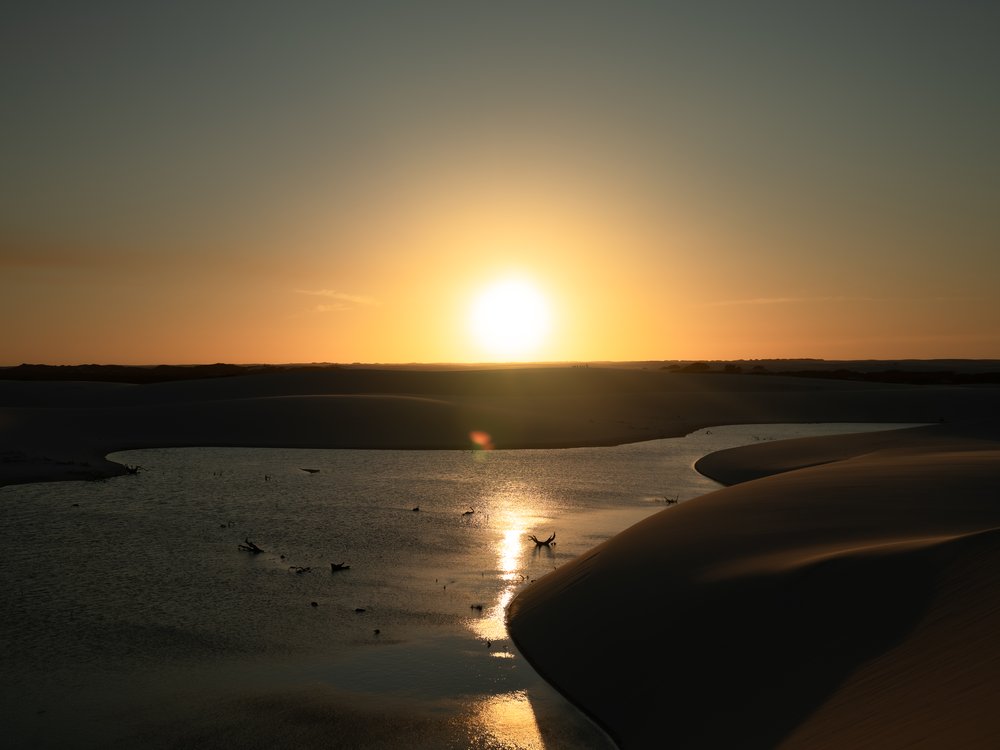

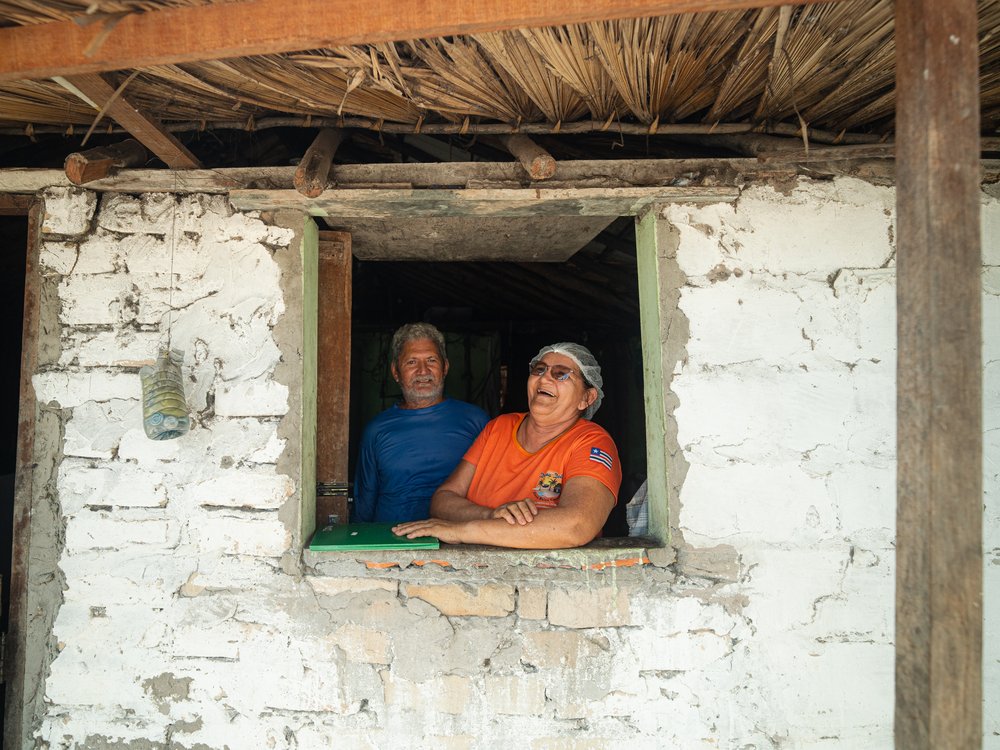



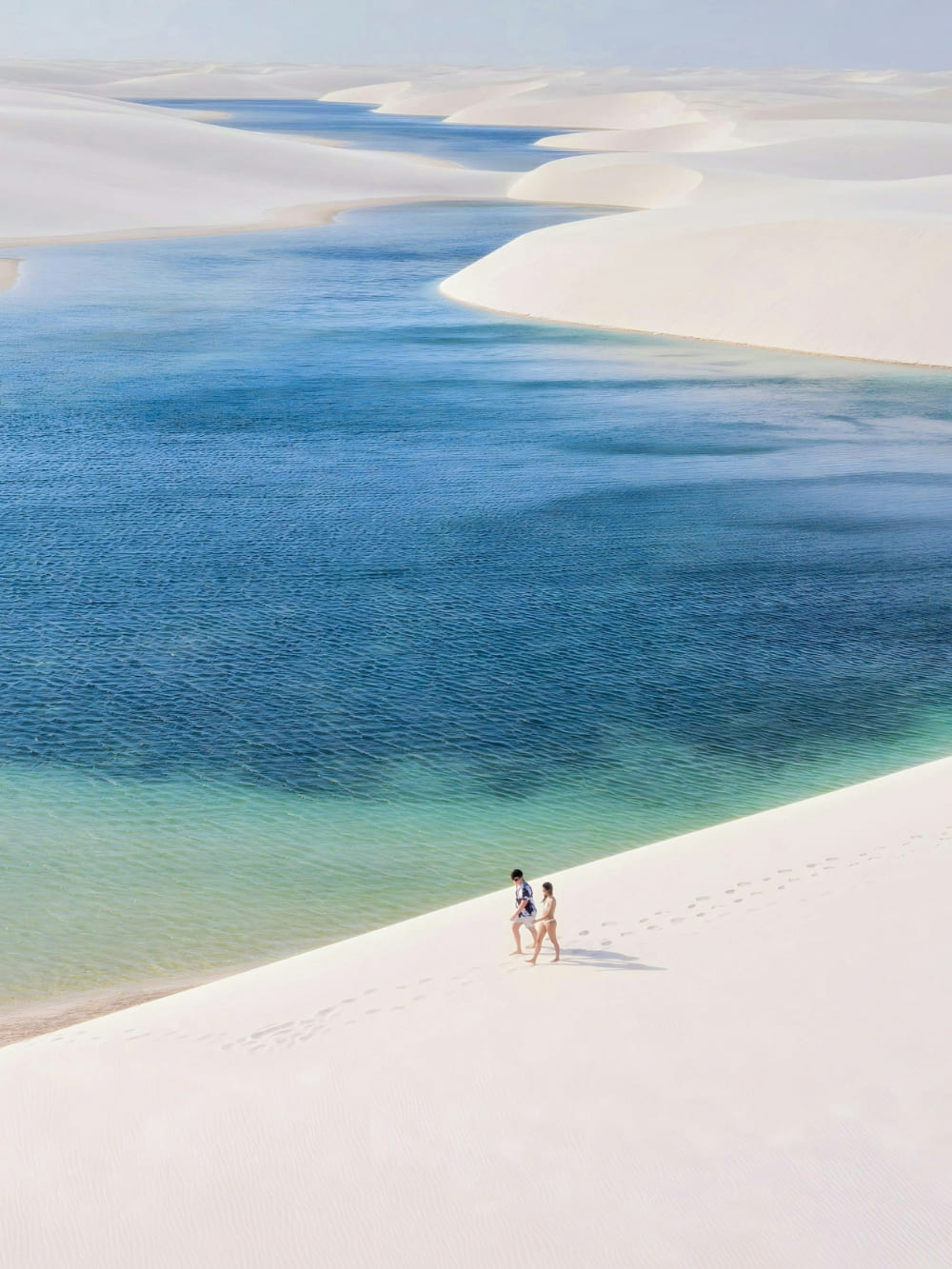

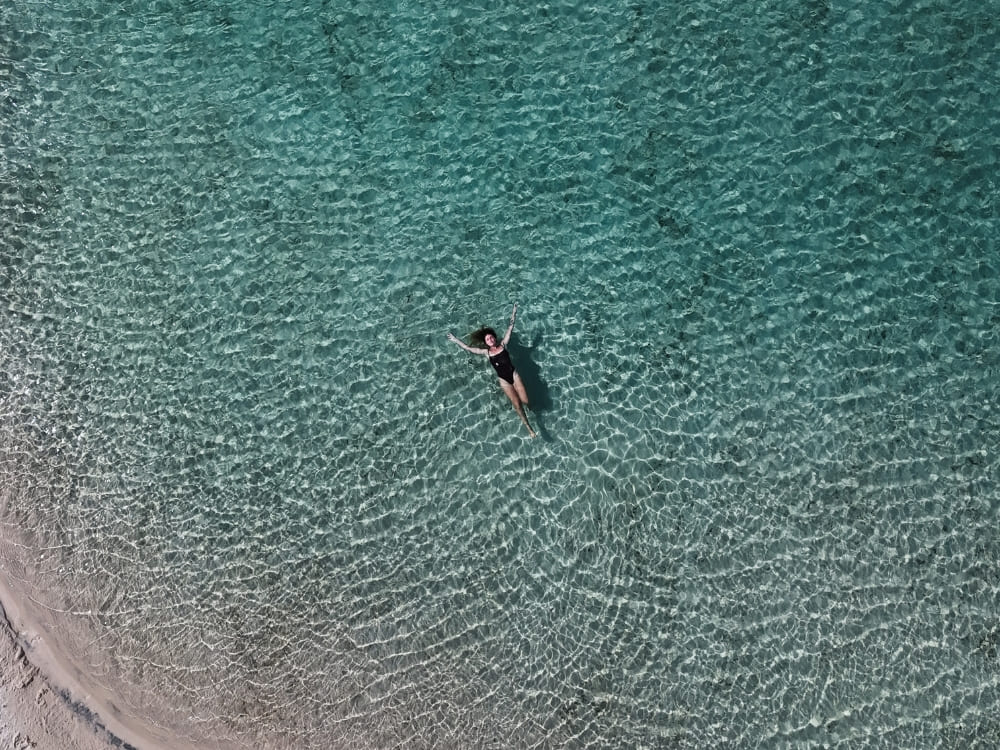
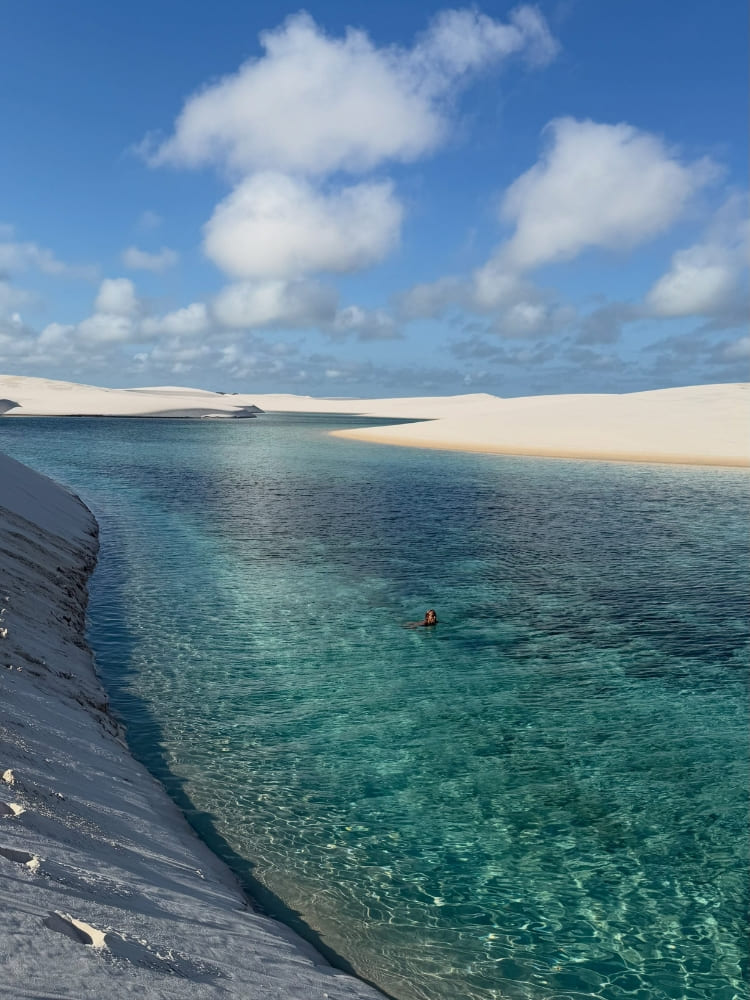
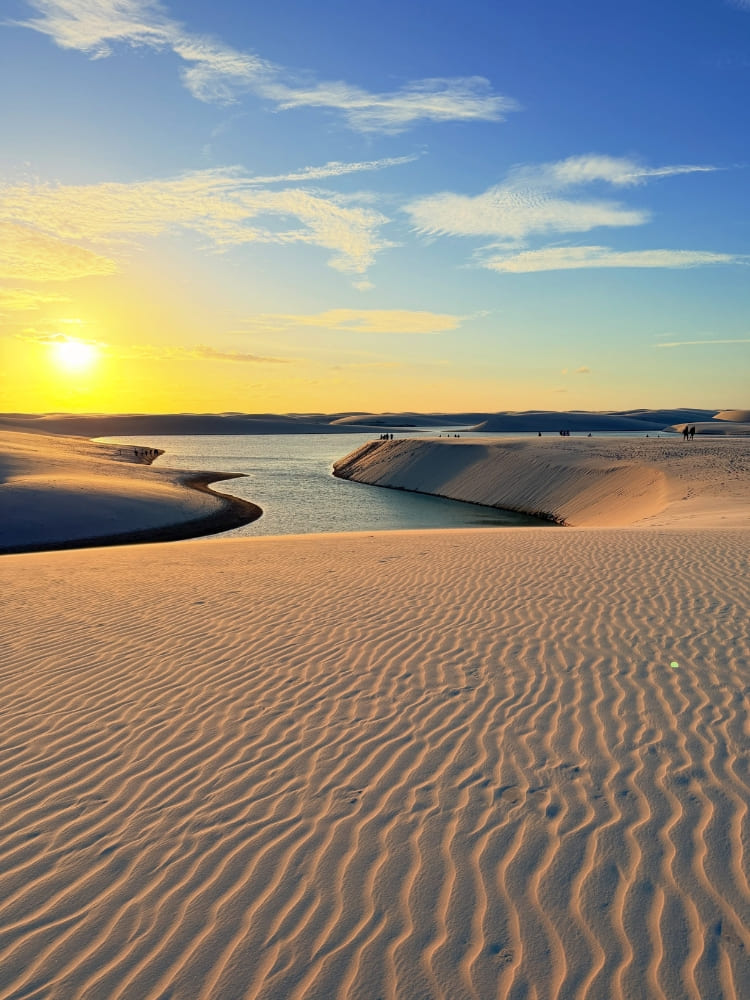
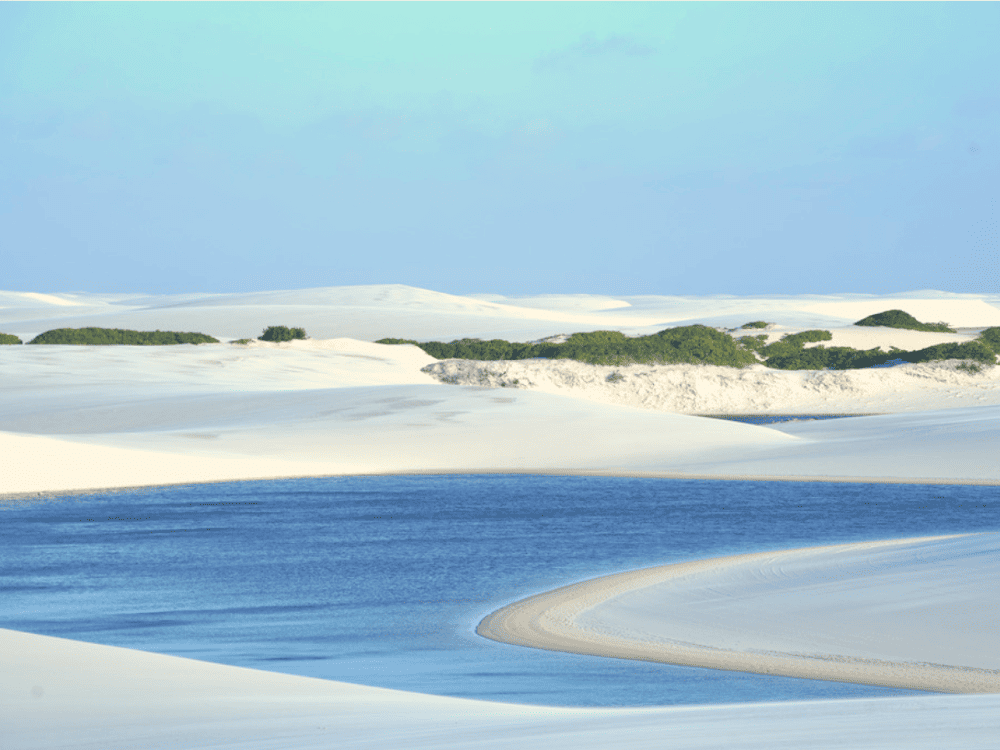
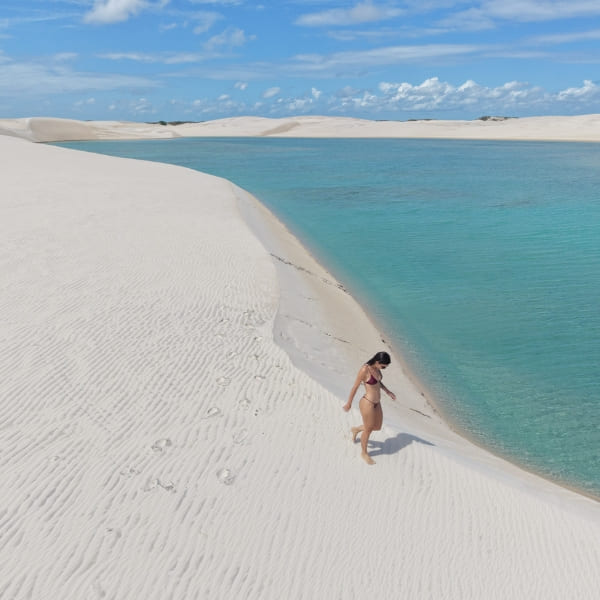
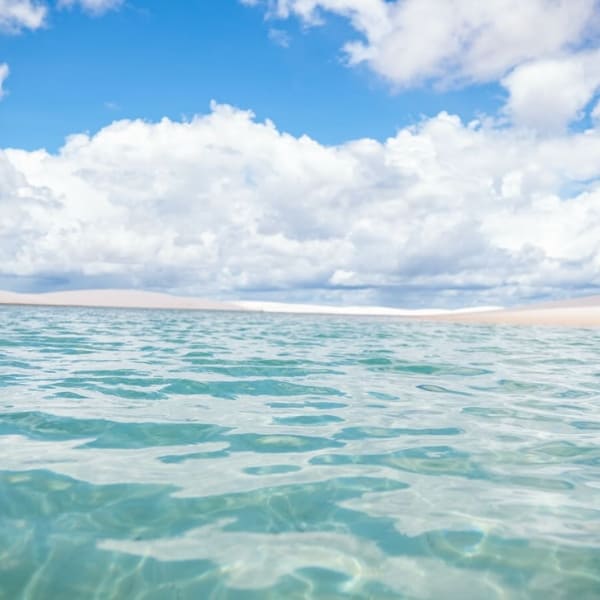

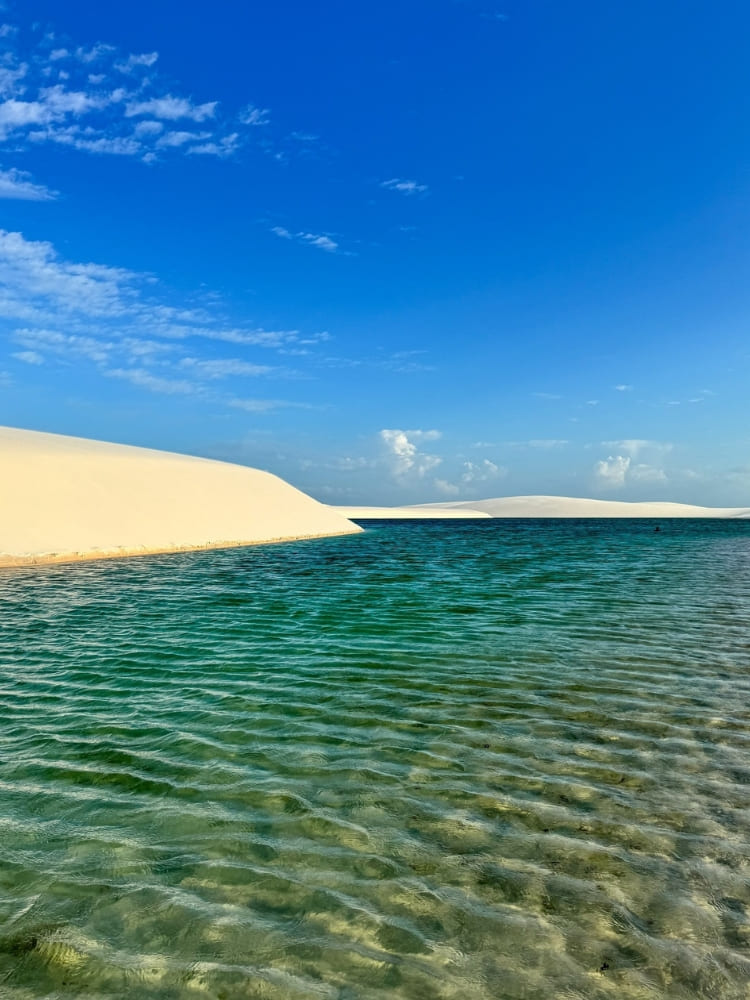

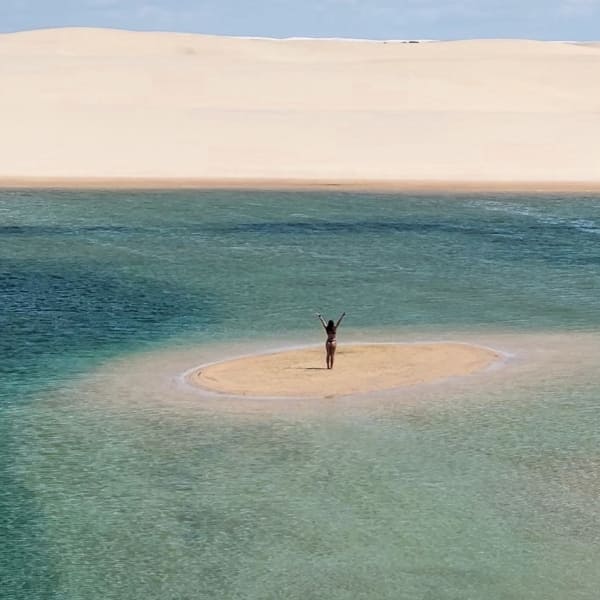
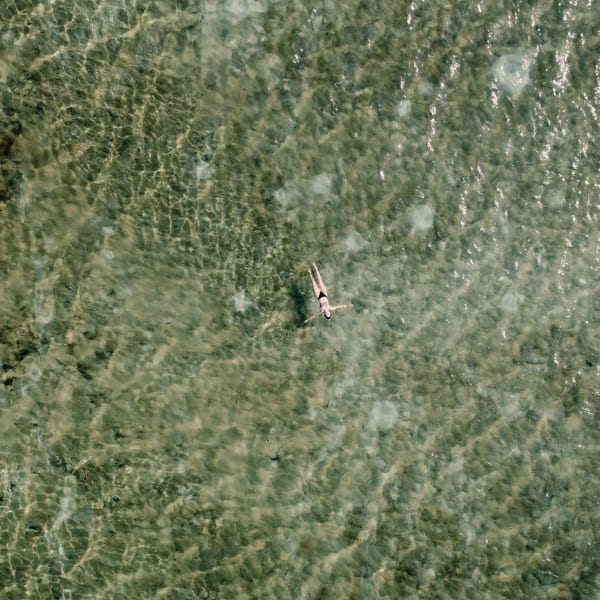
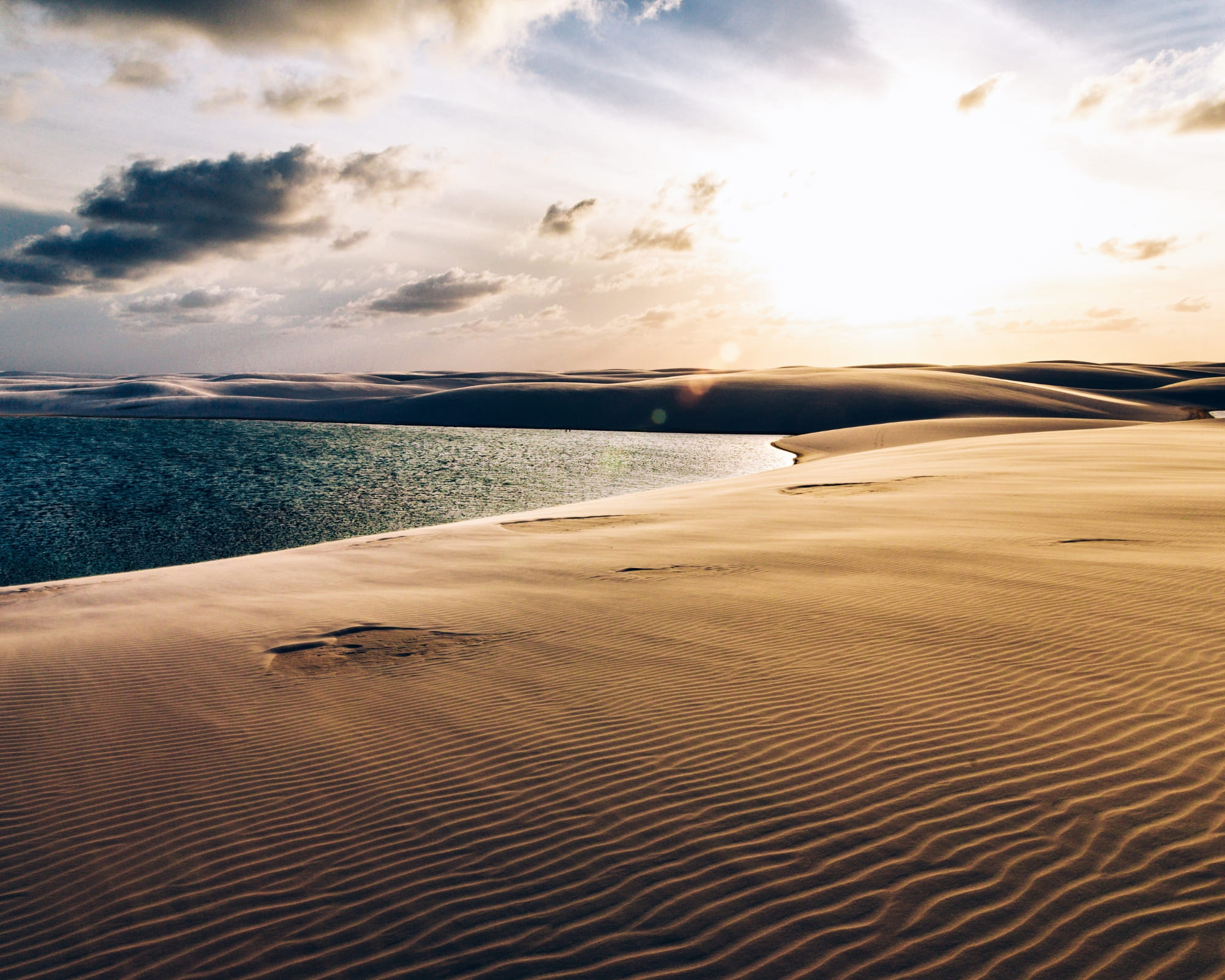
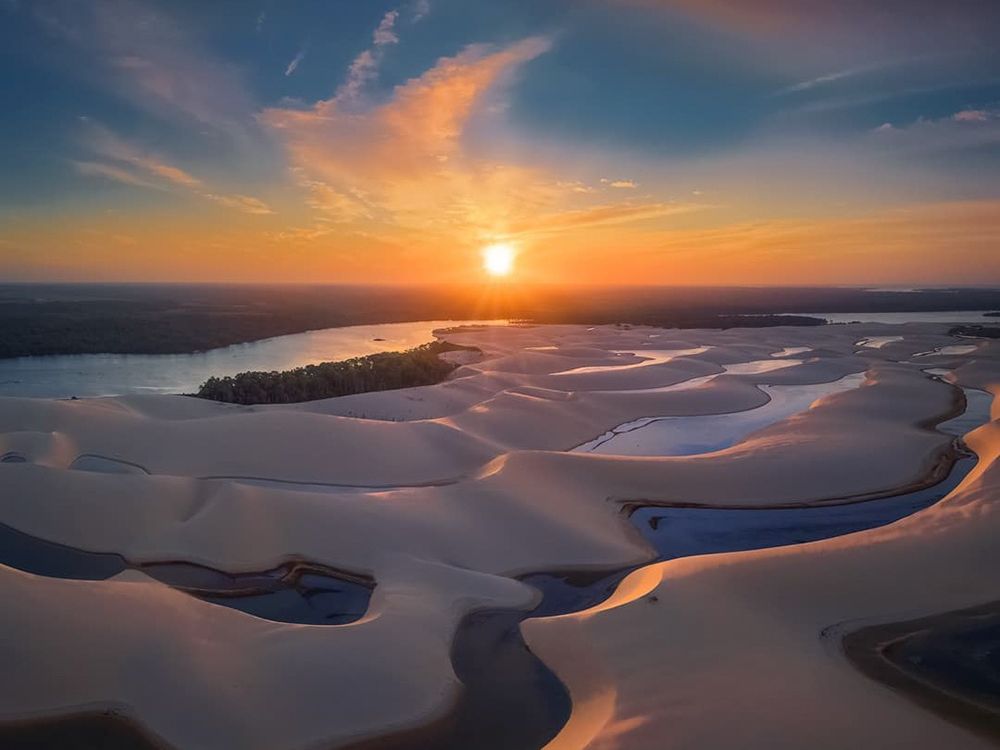
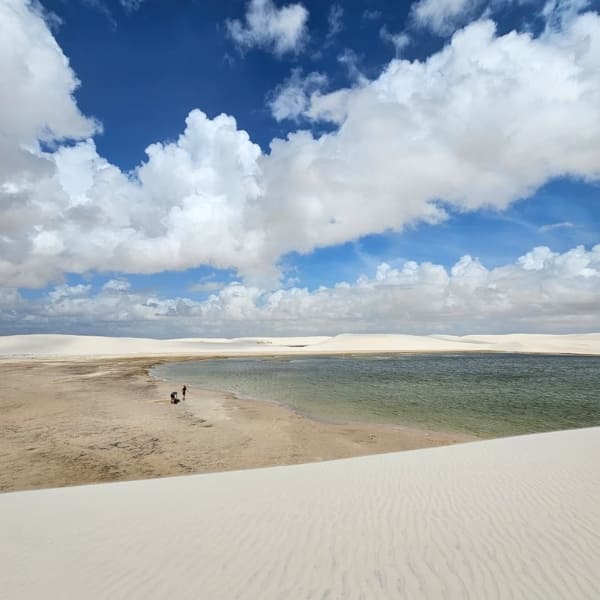
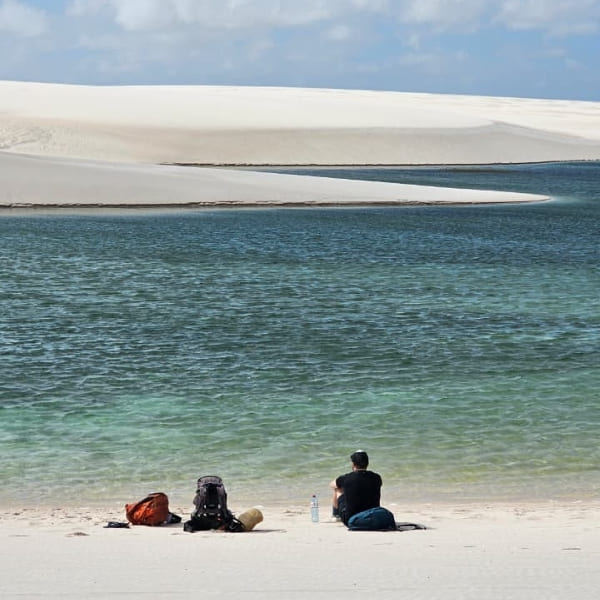
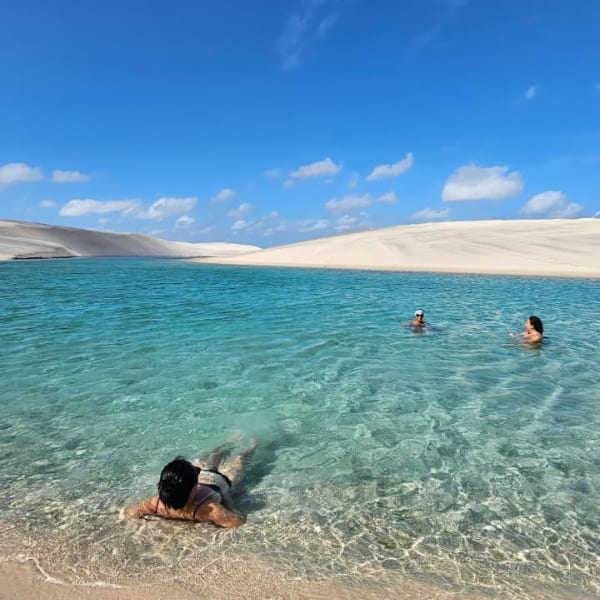
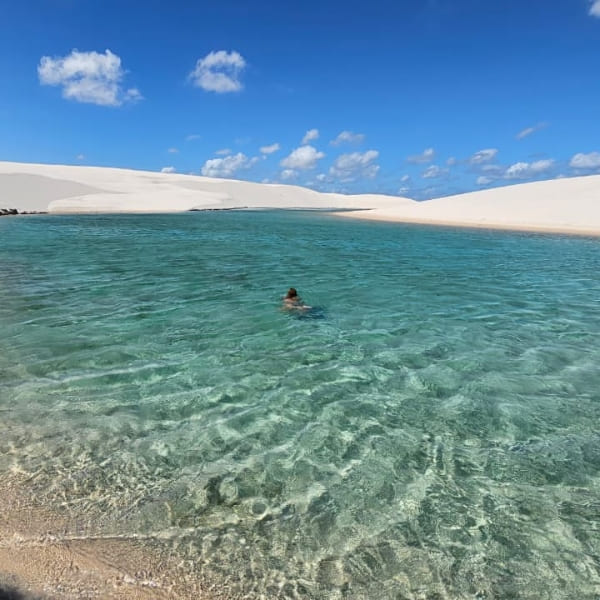

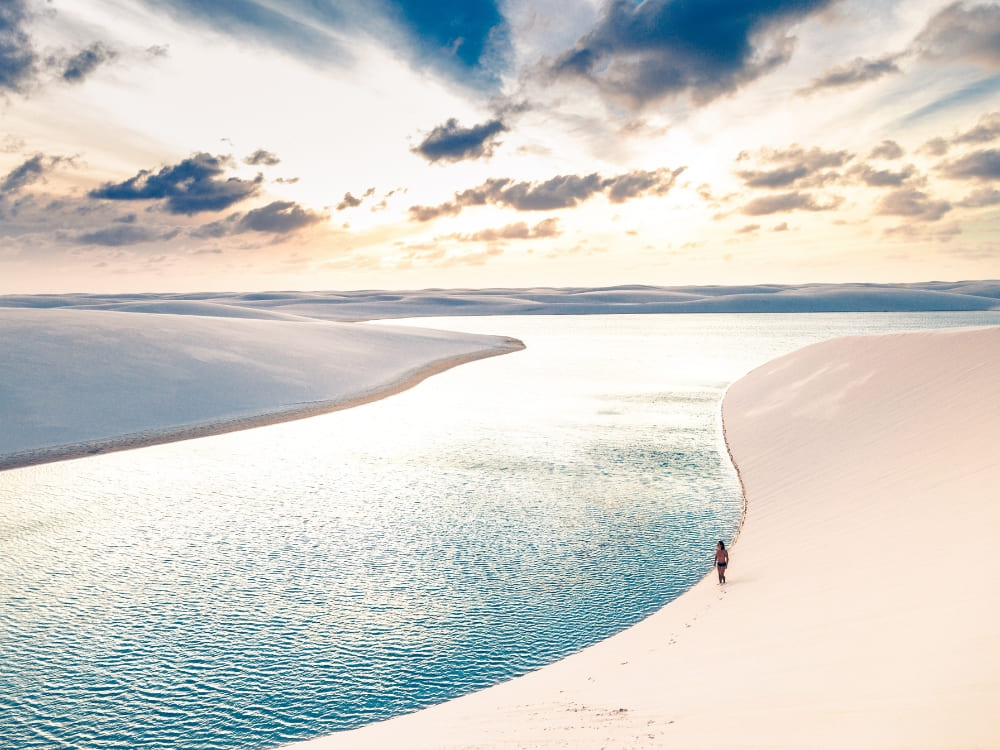

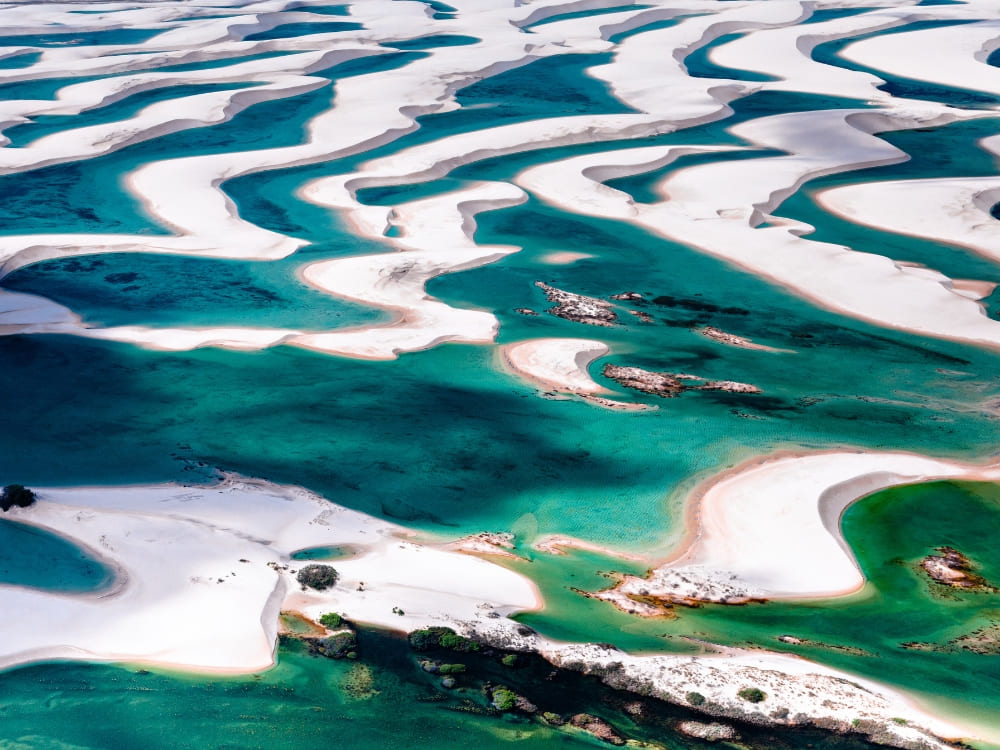
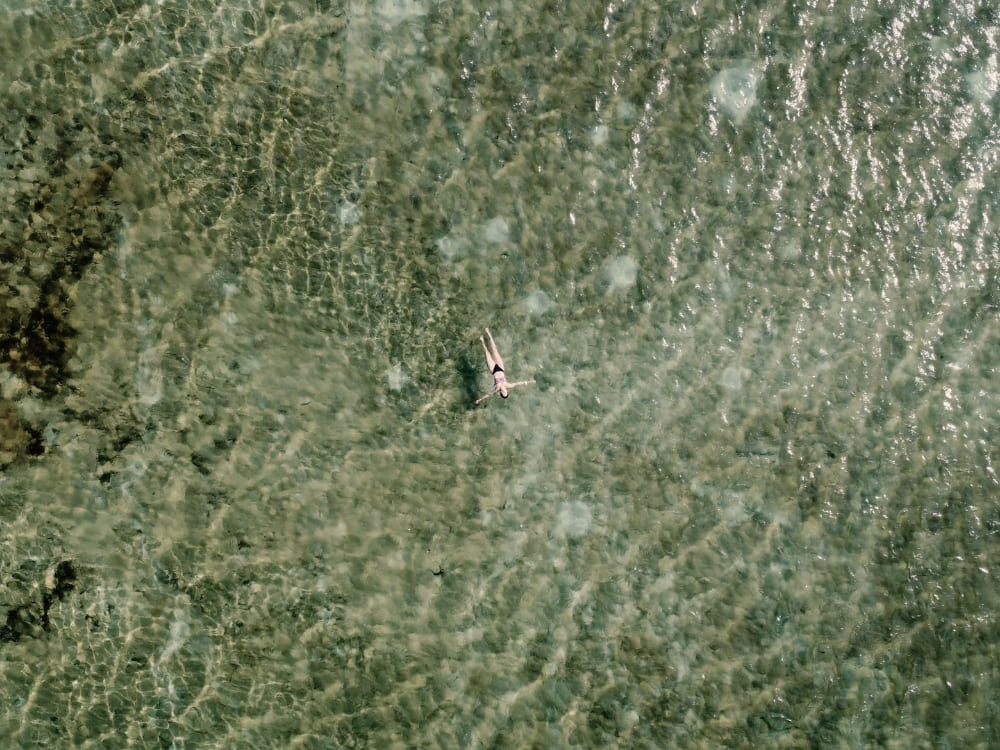

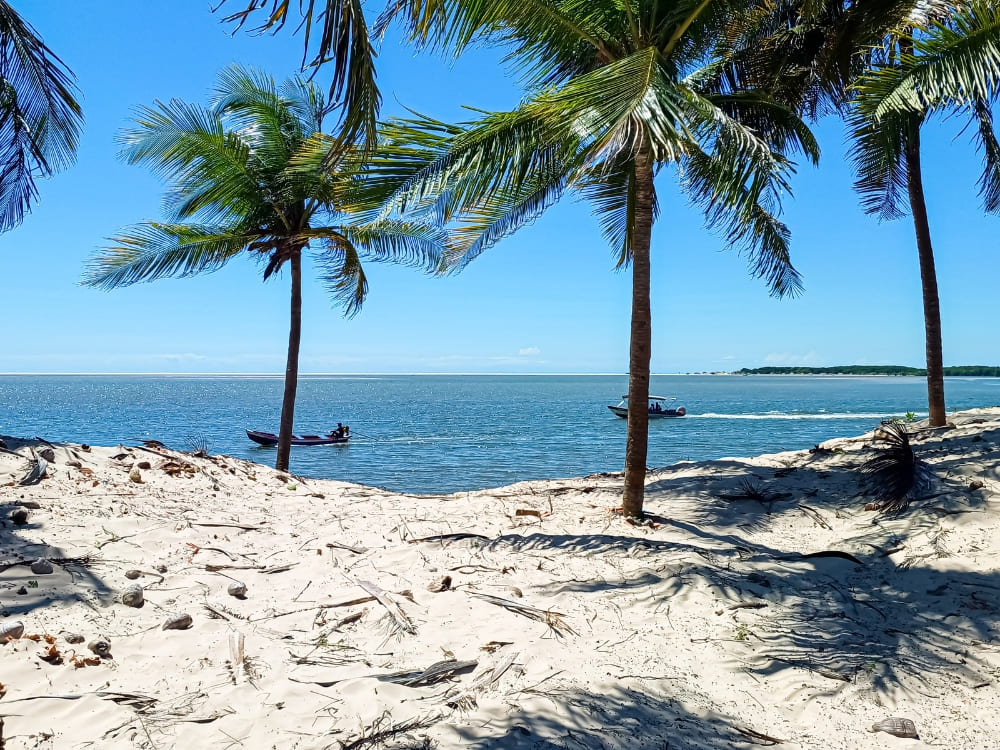
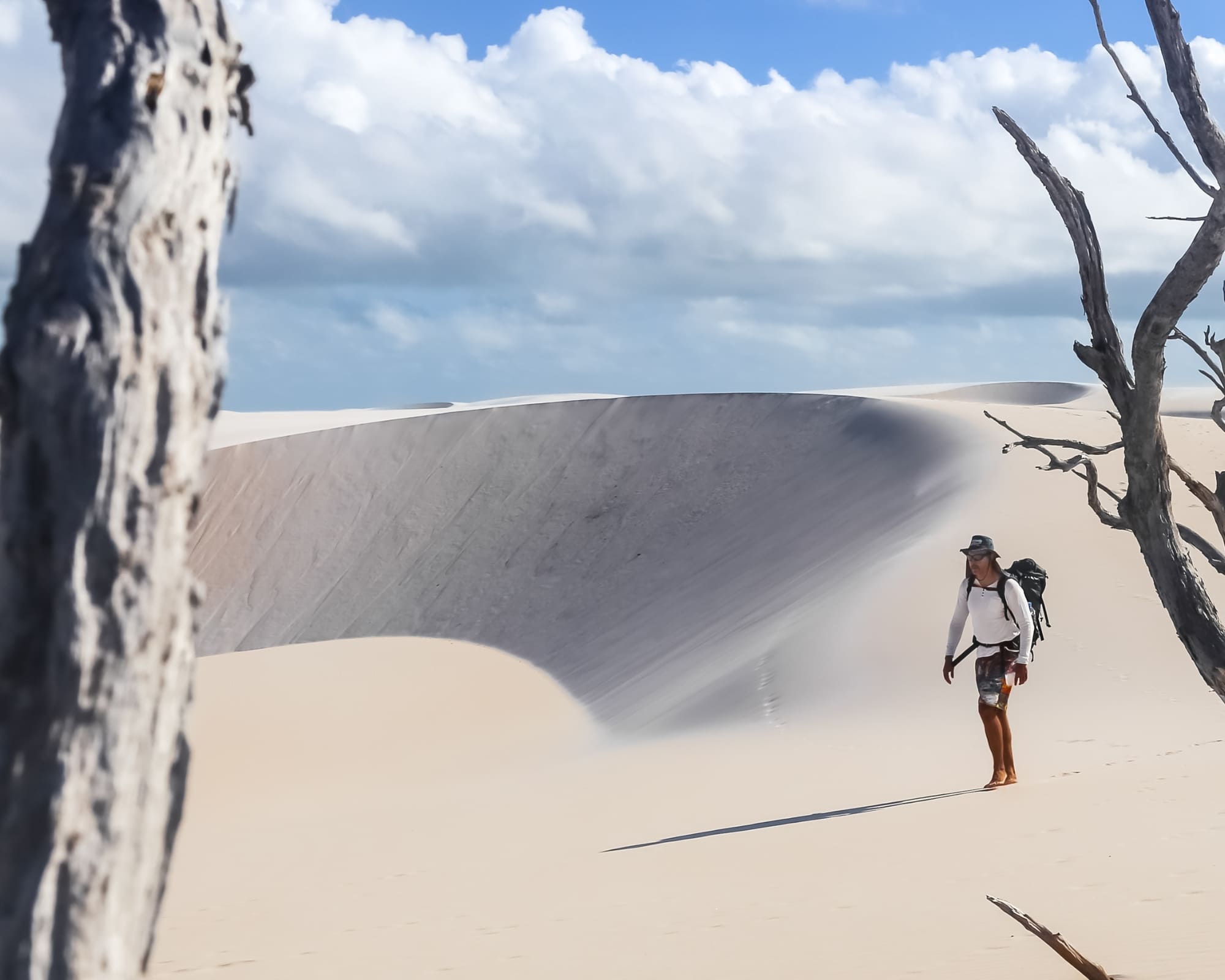
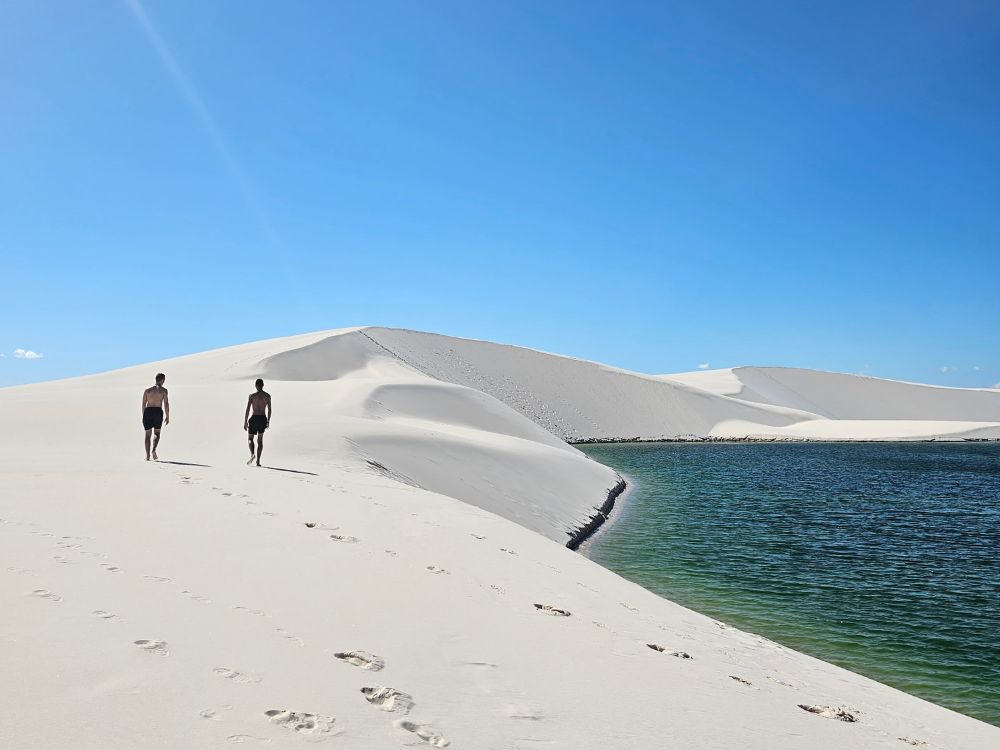
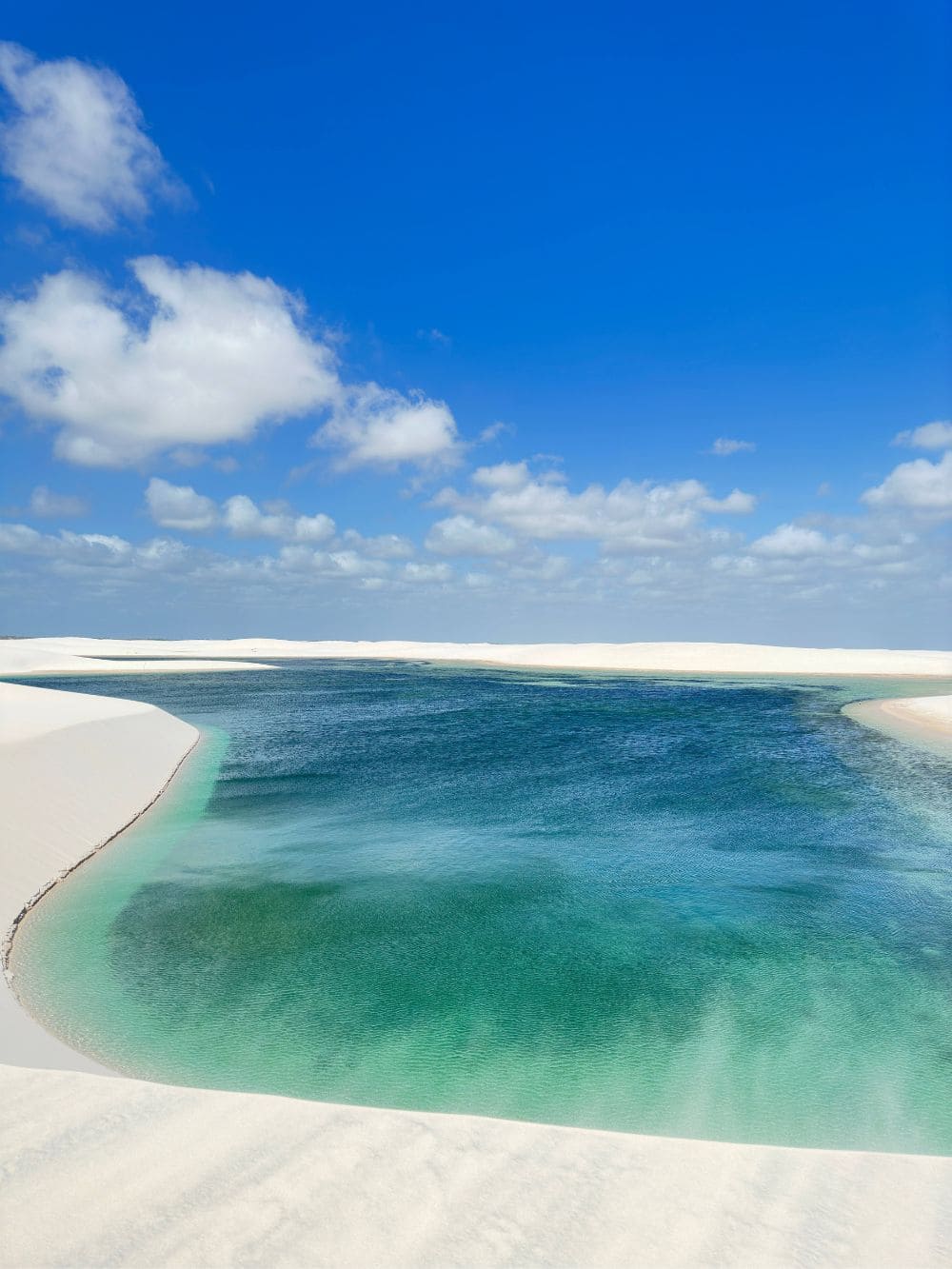
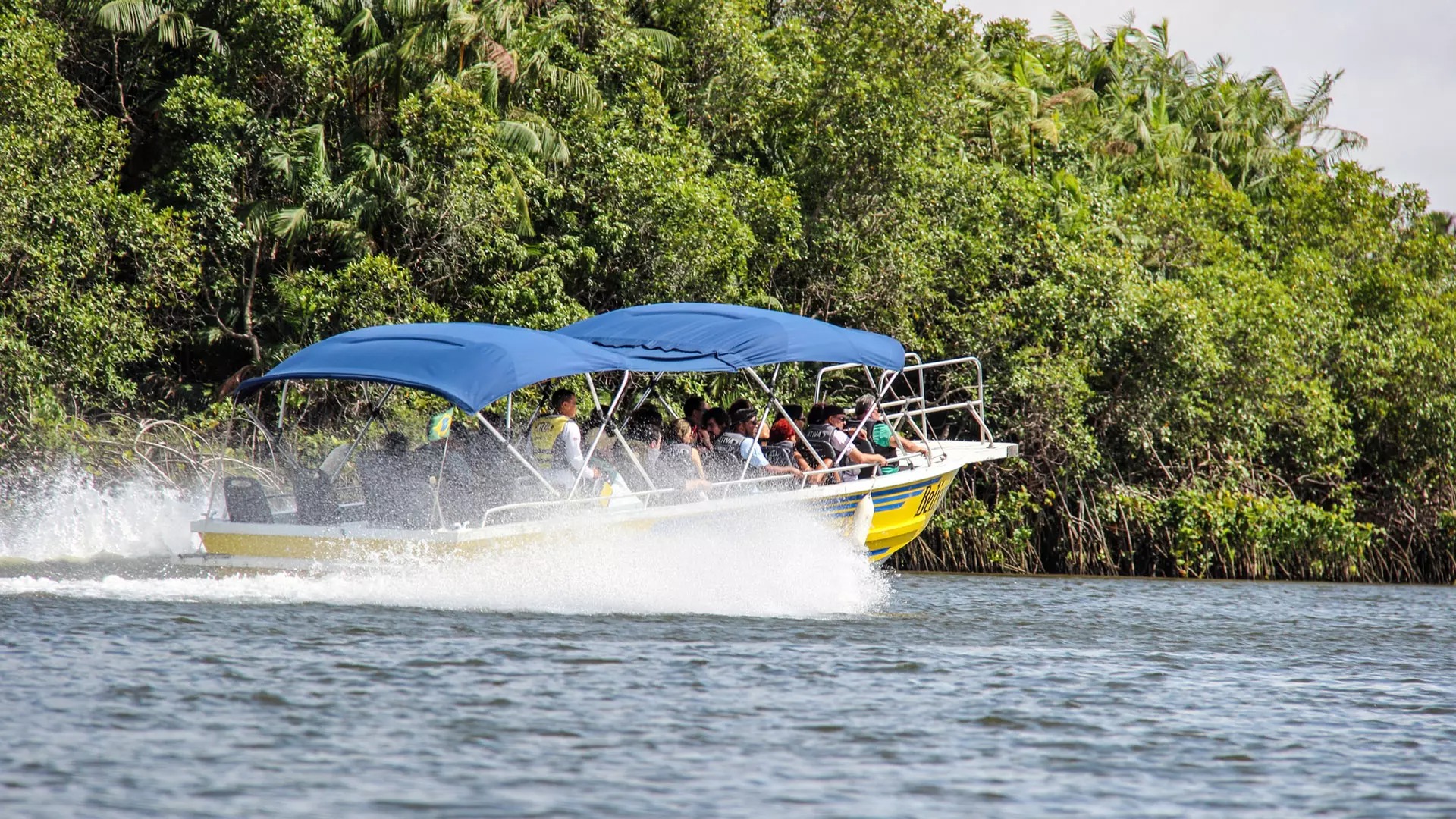

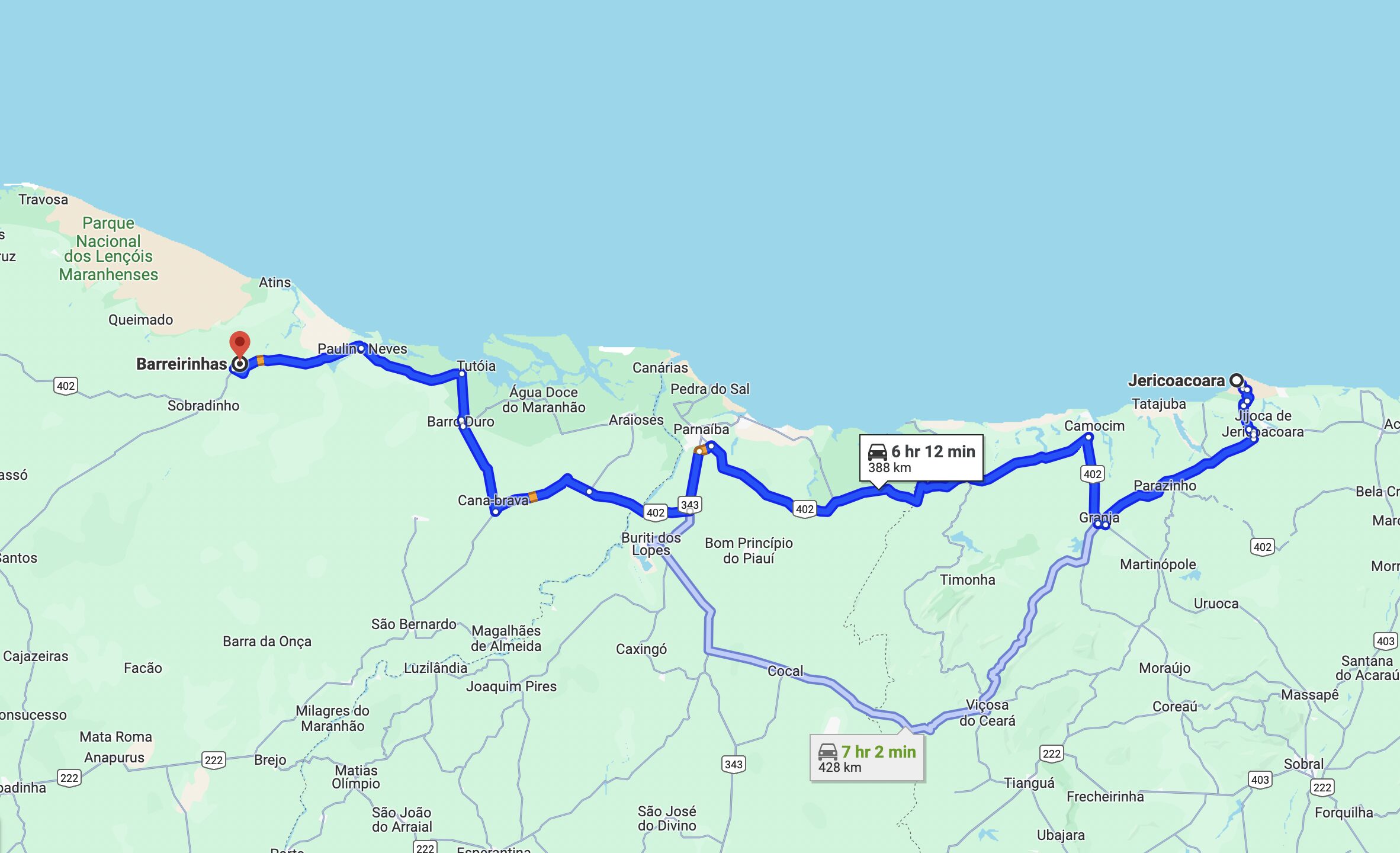
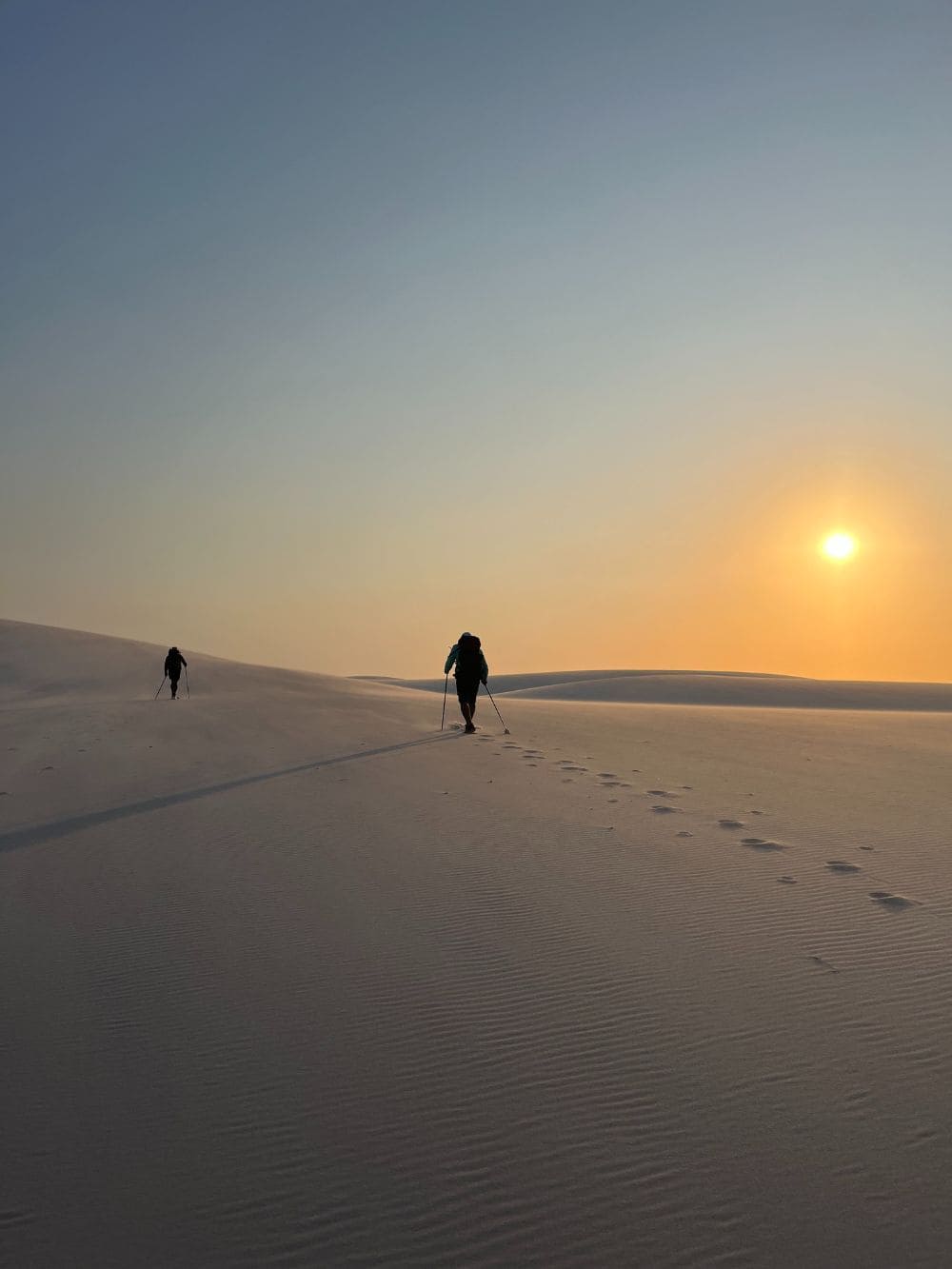



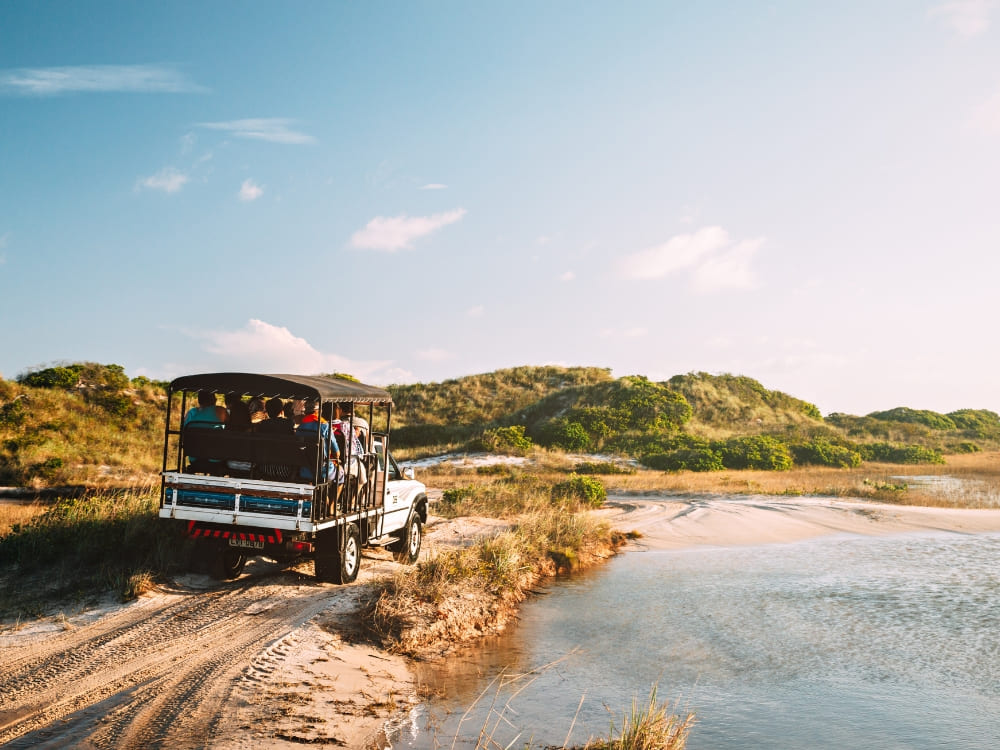


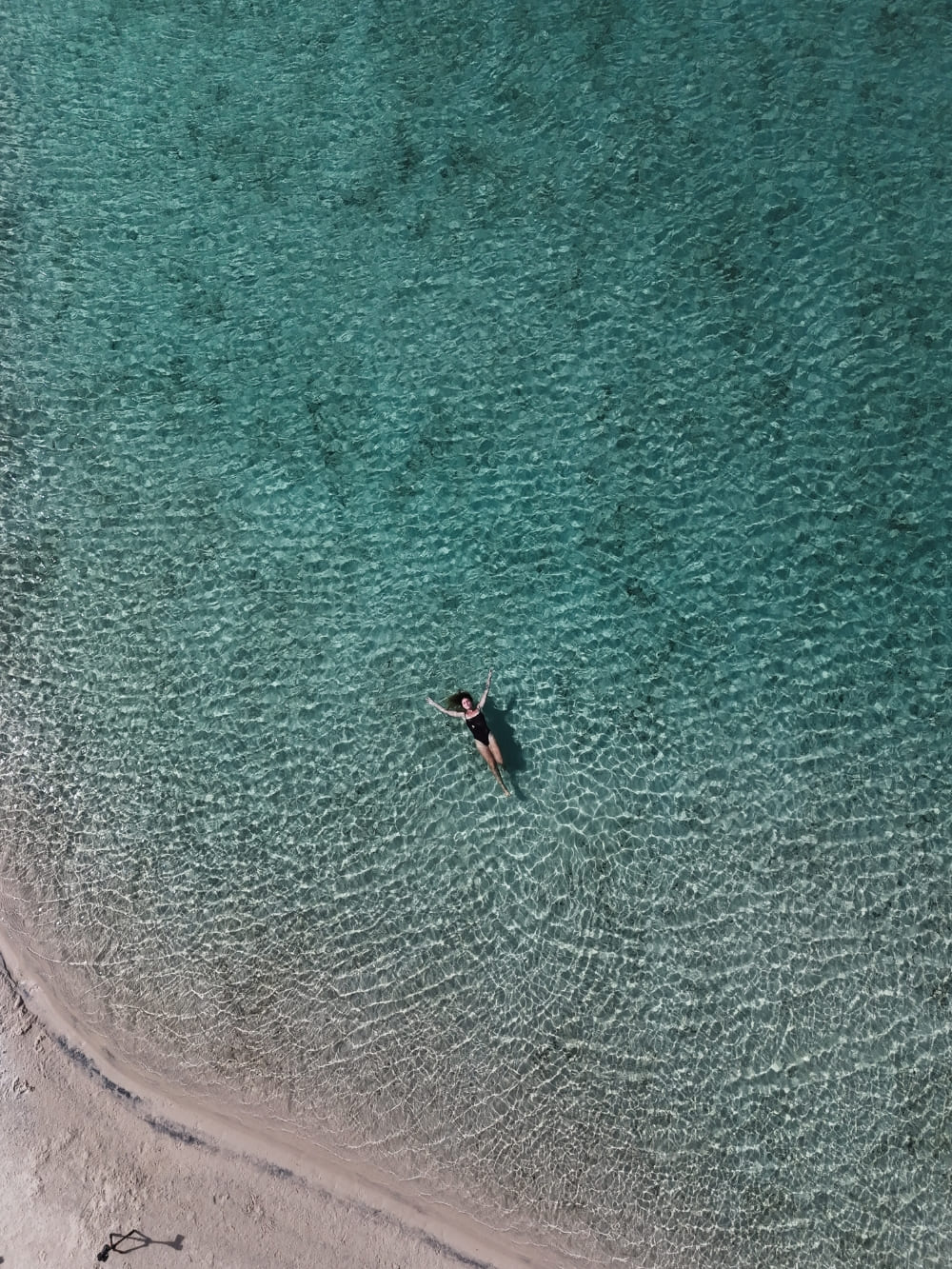
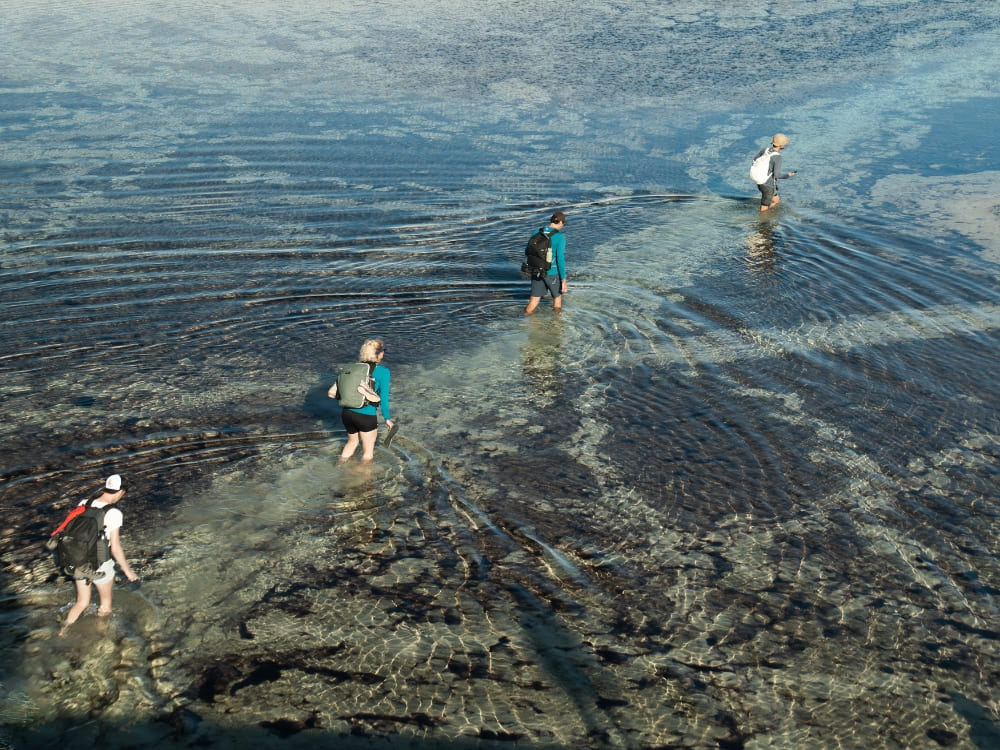


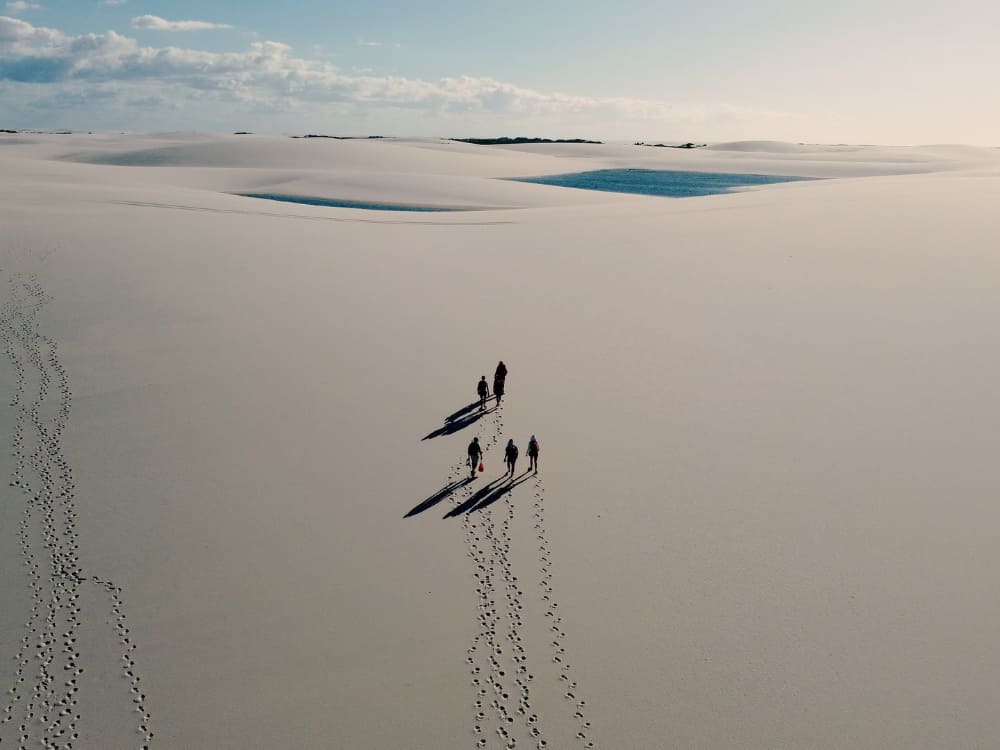




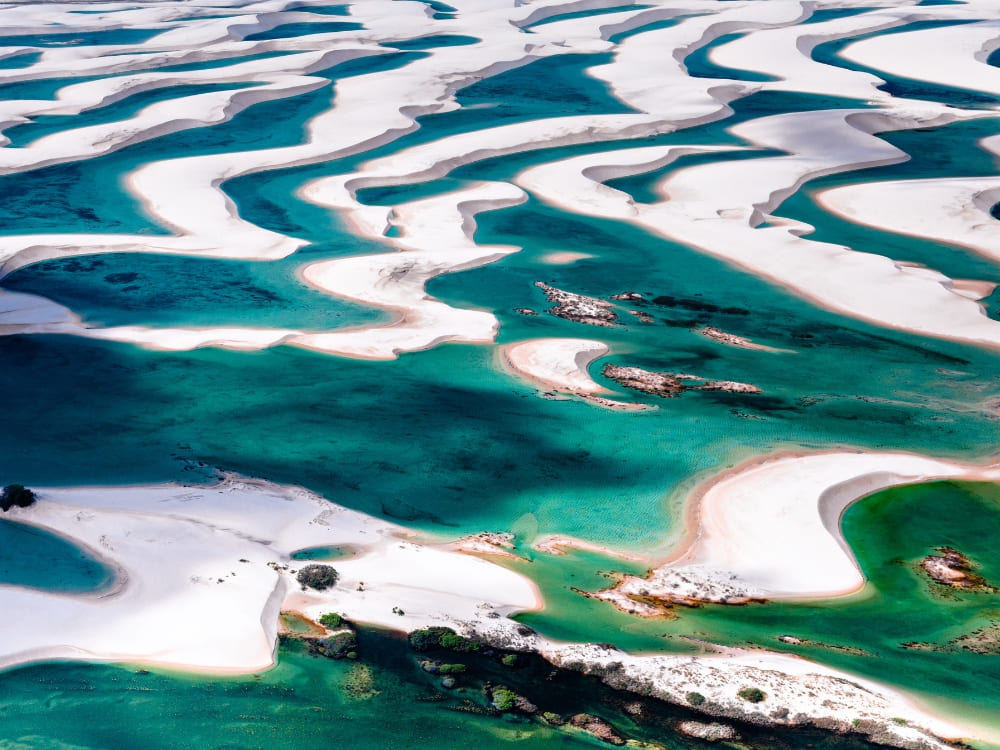
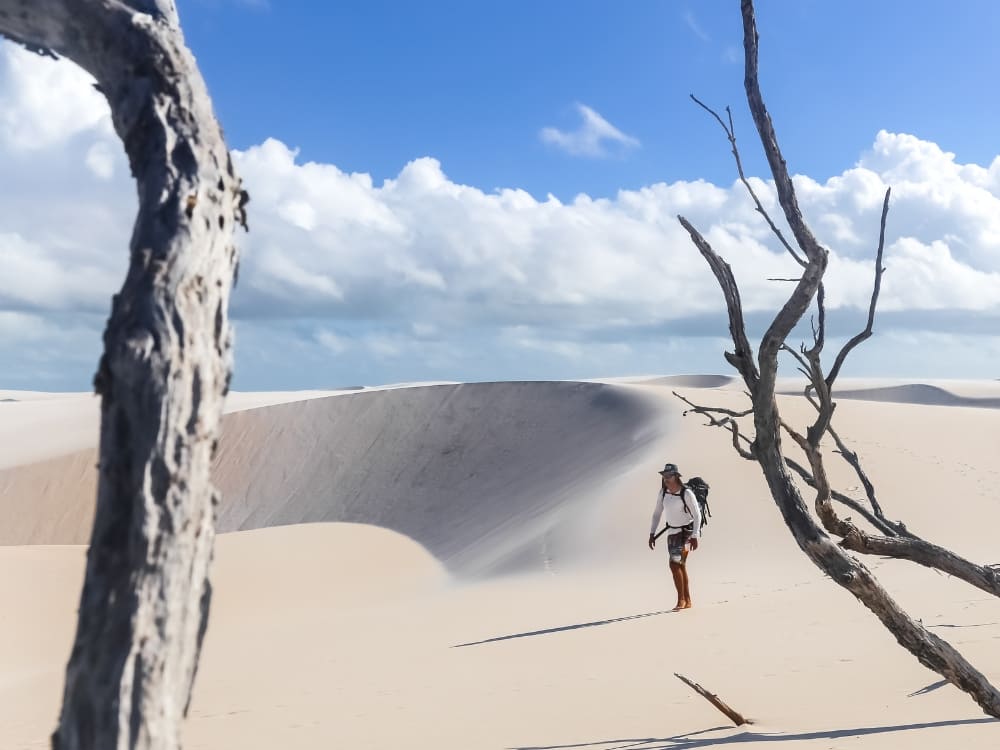
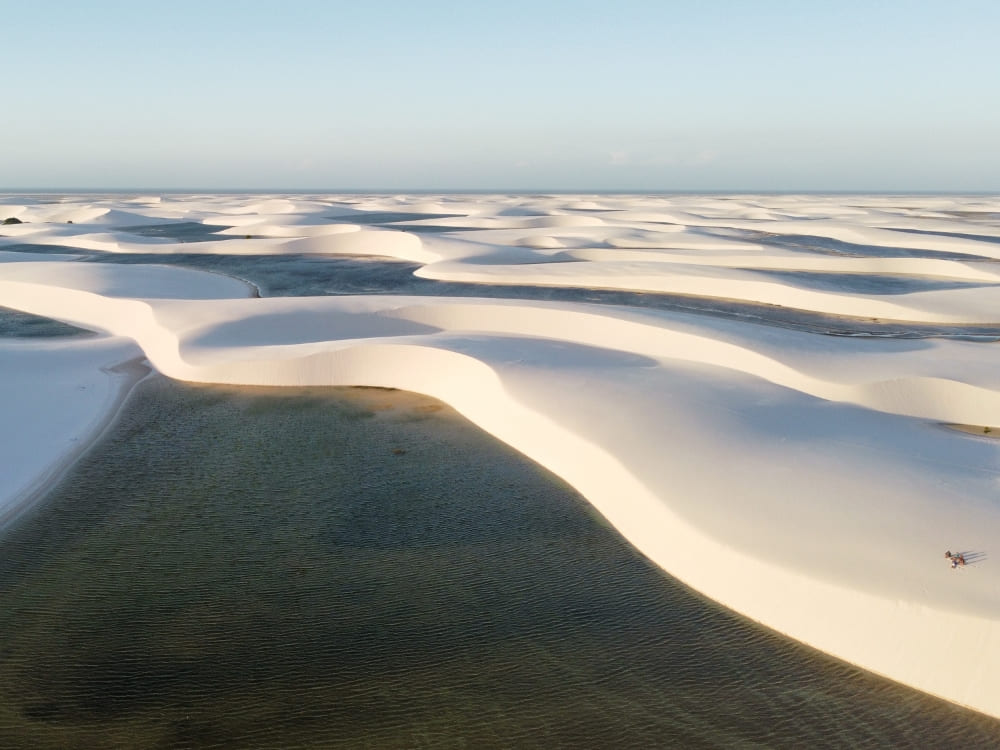
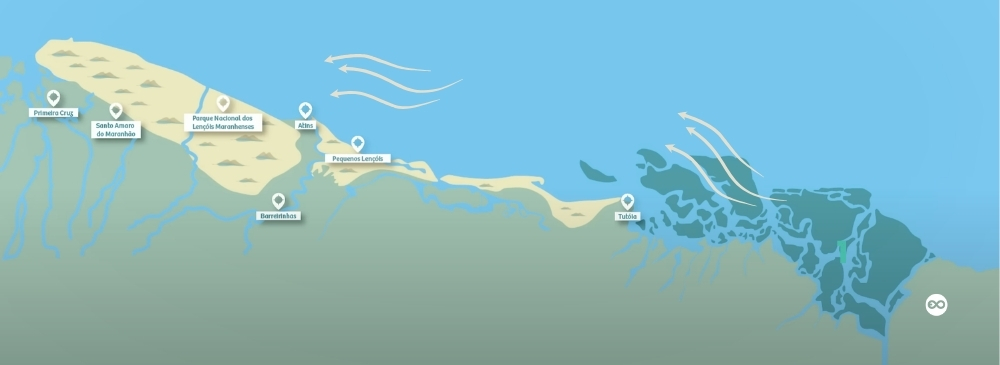 Far from being static, the dunes are in constant motion. As the wind reshapes them regularly, they perform what locals poetically call the