Category: Stories

  • Beyond the Mountains of Nepal: A Journey of Connection with Mother and Son

    Beyond the Mountains of Nepal: A Journey of Connection with Mother and Son

    How an expedition to the Himalayas strengthened the bond between Mila and Lorenzo Ricetti

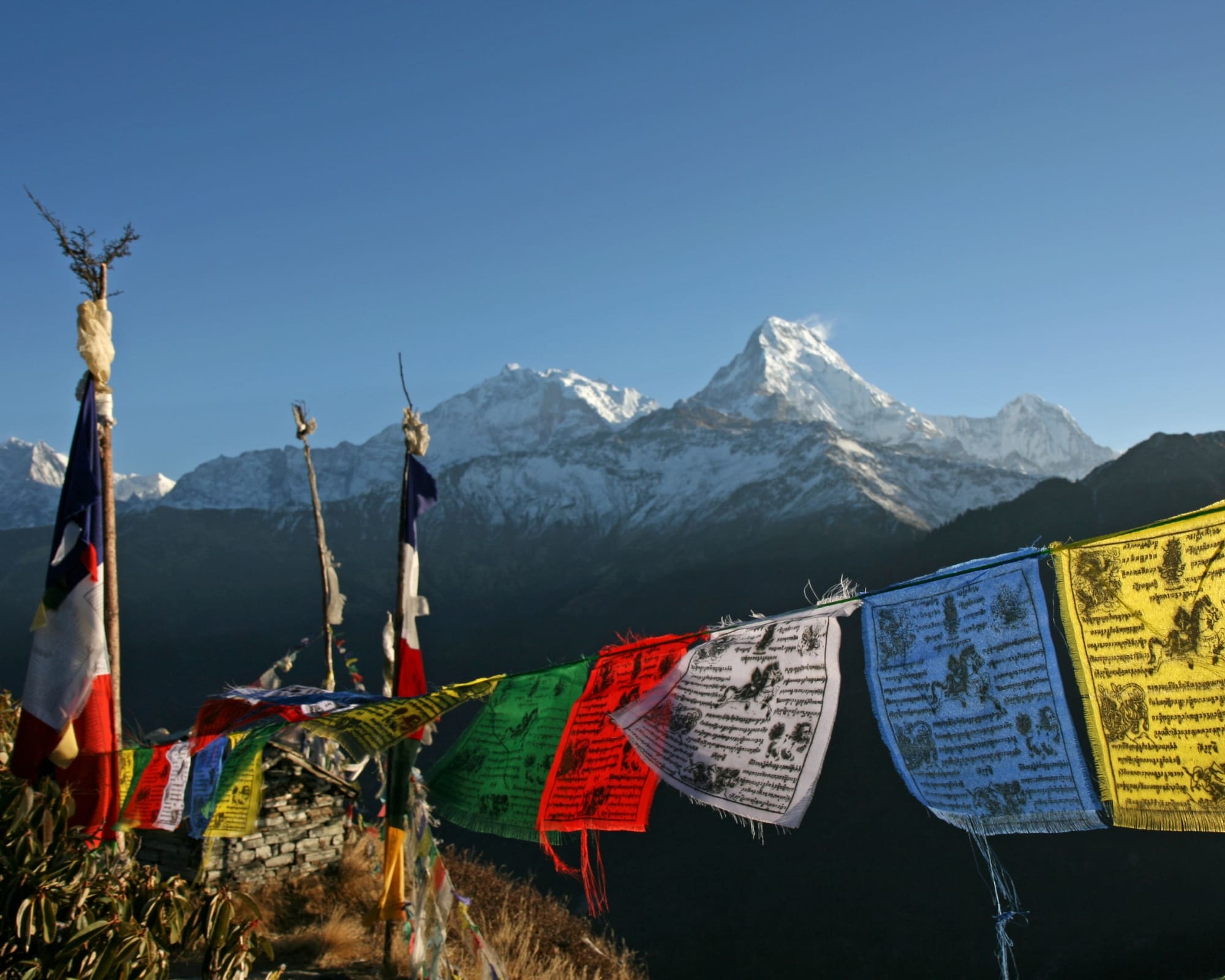
    Motherhood is often described as a journey, but for Mila Ricetti (56) and her son Lorenzo (24), it materialized into a literal expedition across the rustic landscapes of Nepal with the Mardi Himal trek in the Annapurna region—a route that invites a profound introspection in the face of the Himalayas’ grandeur.
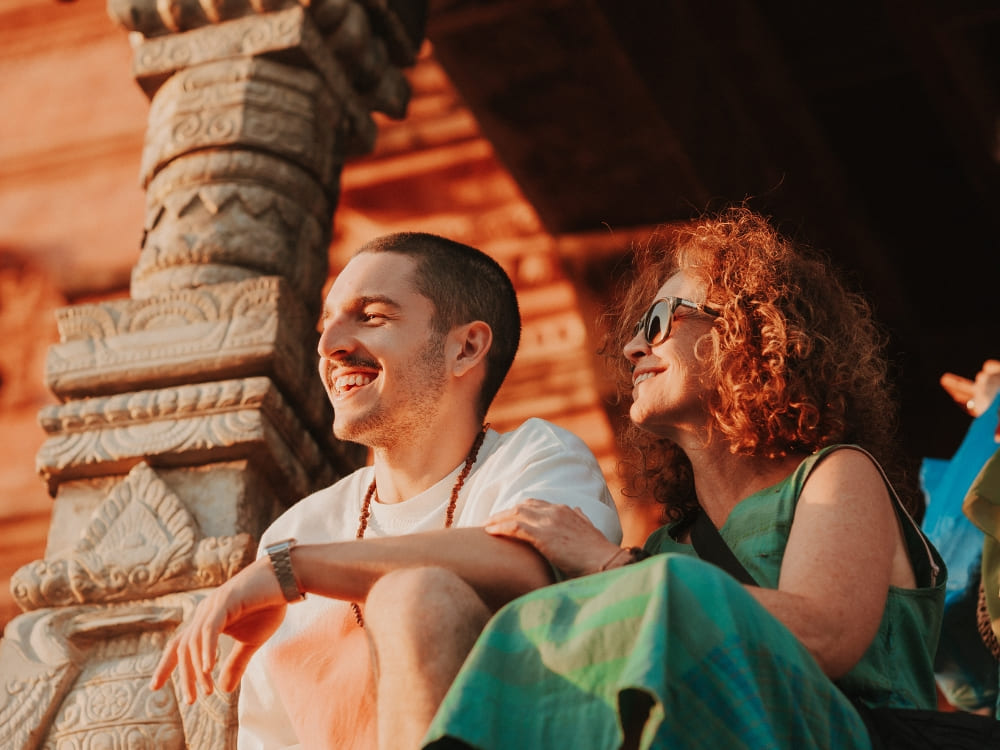
    Mila Ricetti and her son Lorenzo smiling and sitting together at a historic brick temple during their ecotourism expedition in Nepal.
    Photo: CJ

    Mila already had a yoga retreat planned. To celebrate Lorenzo’s graduation from law school and the new chapter in his life, they altered the schedule to include trekking. With the support of PlanetaEXO in organizing the logistics, mother and son traded traditional graduation parties for the silence of high altitudes.
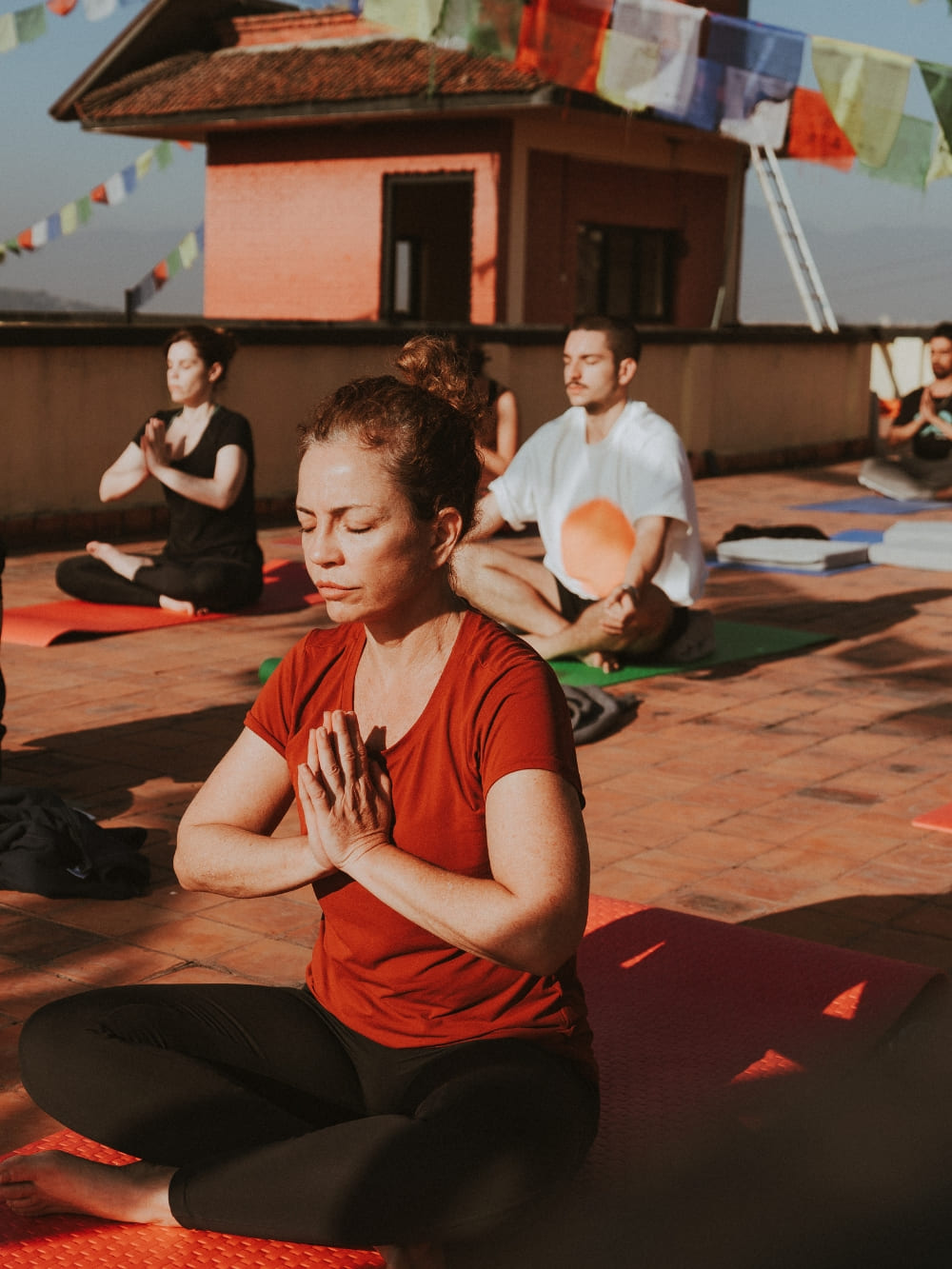
    Mila Ricetti and Lorenzo practicing yoga and meditating with a group on a sunlit rooftop decorated with prayer flags during a retreat in Nepal.
    Photo: CJ

    Together, they were able to connect even more in one of the most beautiful and enigmatic settings in the world.

    The Beauty of the Path

    In Nepal, spirituality isn’t found only in temples but in the very rhythm of the walk and the spectacular views from the mountaintops after a long trek.

    “We woke up at 3 a.m. to climb the mountains and watch the sunrise,” Mila recalls.  I didn’t think I’d make it in time, but I went at my own pace, and it worked out. It was beautiful and very emotional.”
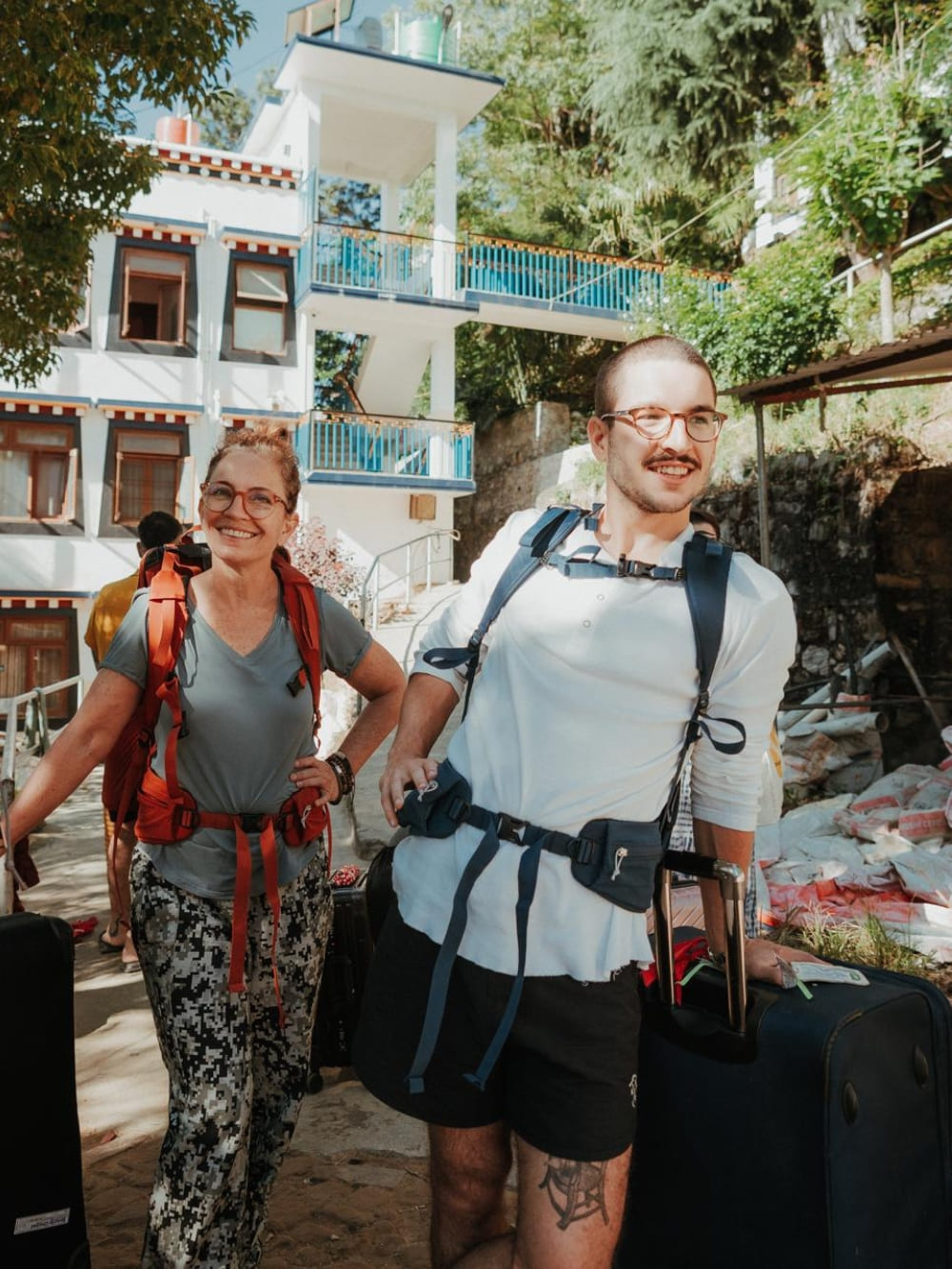
    Mila and Lorenzo wearing trekking backpacks and smiling as they prepare for physical endurance on the Mardi Himal trek in Nepal.
    .

    The starlit sky that seemed low enough to touch, the frozen darkness, and the snowy peaks covered with golden sunlight made that moment a rich, unforgettable exchange where the silence between one step and the next spoke louder than a thousand words—especially in such good company.

    👉 Read more: Women over 50 Shatter Stereotypes and Prove that Adventure Has No Age Limit

    A New Dynamic on the Trail

    Traveling to Nepal demands physical endurance and mental preparation. For Mila and Lorenzo, the challenges of the harsh terrain acted as a catalyst.

    The trip marked a clear transition from traditional “family vacations” to a shared experience between two adults. The simple act of walking side by side for hours on end created a safe space for dialogue and mutual observation.
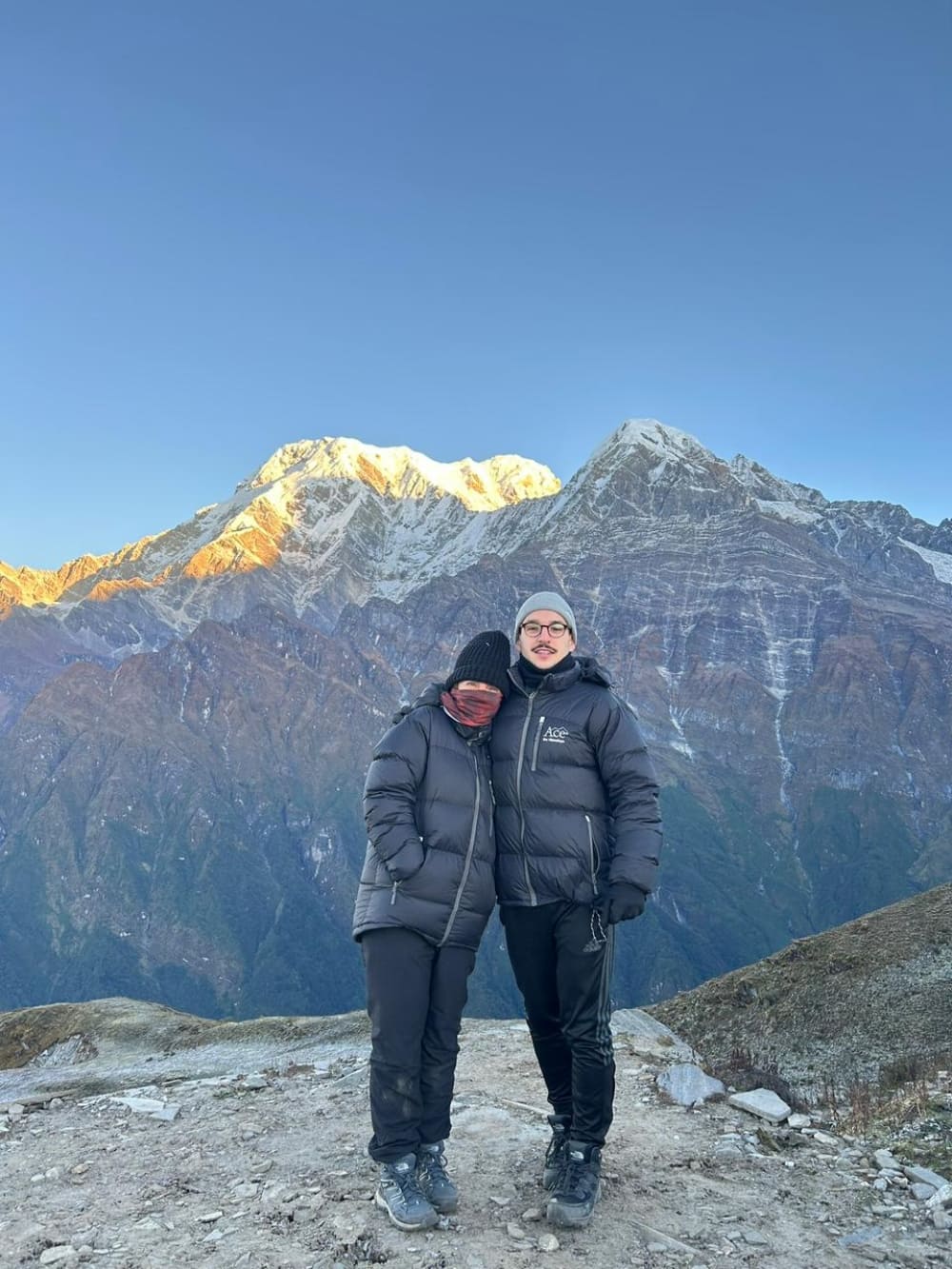
    Mother and son Mila and Lorenzo wearing heavy winter gear and embracing in front of the snowy Himalayan peaks after an early morning climb.
    .

    “It was wonderful to have this companionship above all else, helping each other out and solving problems together. It was a great experience of maturation for our relationship,” Lorenzo shares. 

    For Mila, the immersive environment provided an uninterrupted space to appreciate the present moment and, most importantly, the presence of Lorenzo in a new light. “It was an intimacy with the surroundings, with myself, and with my son by my side. Everything felt so perfect; I was worry-free and incredibly happy.”

    Strength in Vulnerability and Mutual Inspiration

    Facing the altitude, the cold, and the physical exhaustion required a level of trust that is only forged in adversity. Mutual support became vital as they found strength in giving each other space to deal with their own limits: Mila’s cardio limitation and Lorenzo’s fear of heights during the steep descents.
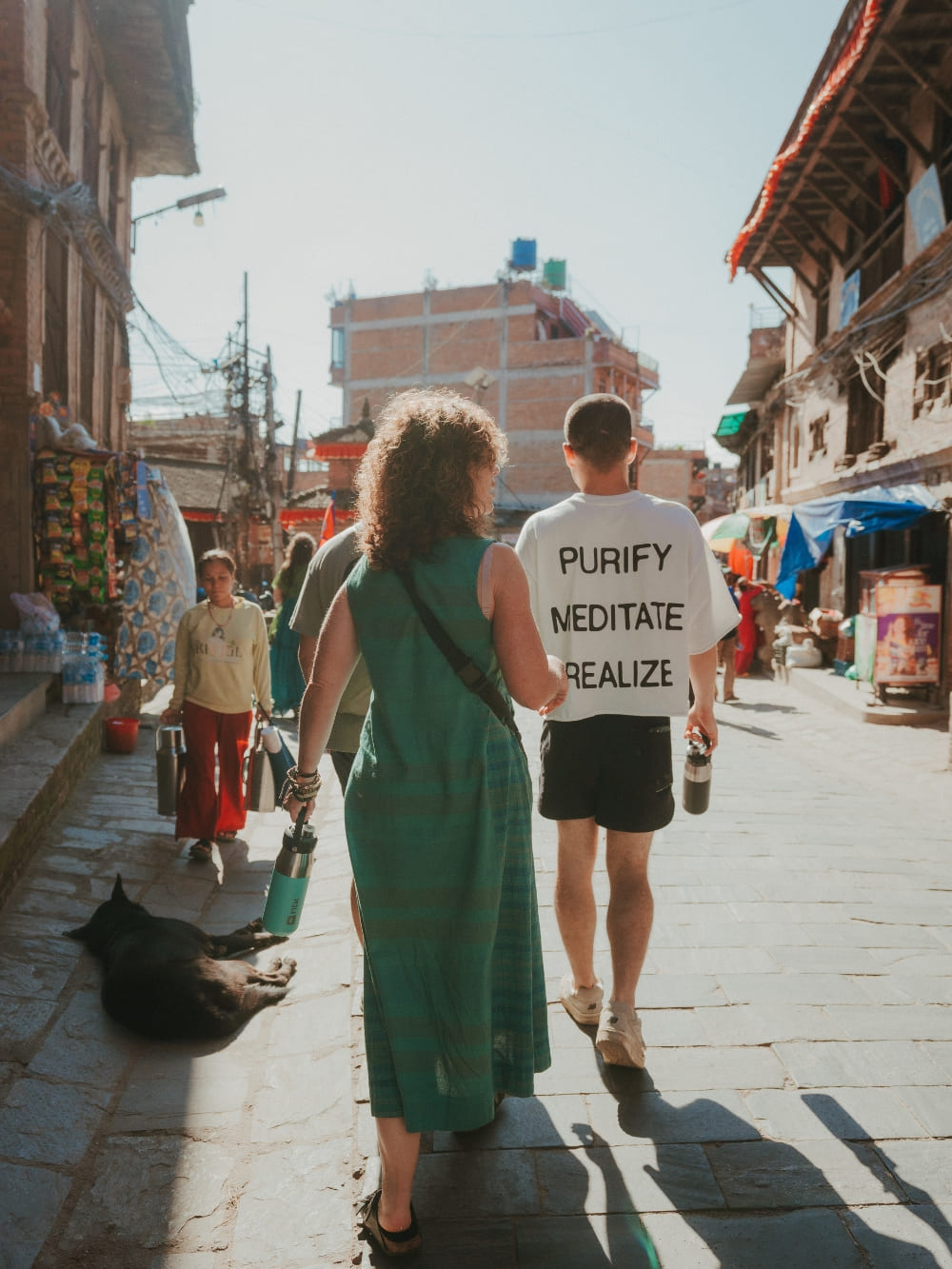
    Mila and Lorenzo walking side by side down a sunny street in Nepal, with Lorenzo wearing a t-shirt that says purify, meditate, realize.
    Photo: CJ

    “I realized there was nothing I could do to change the situation, so I just focused on doing what I could to get through it. And then, she followed right after,” he says, recalling that both had their individual experiences and how they met halfway.

    Seeing her son navigate these obstacles changed Mila’s perspective. It was no longer about protecting him from every danger, but about respecting each other’s space and acting as true partners.

    👉 Read more: 10 must-visit global destinations for sustainable travel in 2026

    A Legacy of Admiration

    Reflecting on Mother’s Day and the meaning of sharing this path, Mila and Lorenzo’s story serves as a reminder that the greatest gift one can give a child is presence and example. The trip to Nepal anchored even more their already-loving relationship.
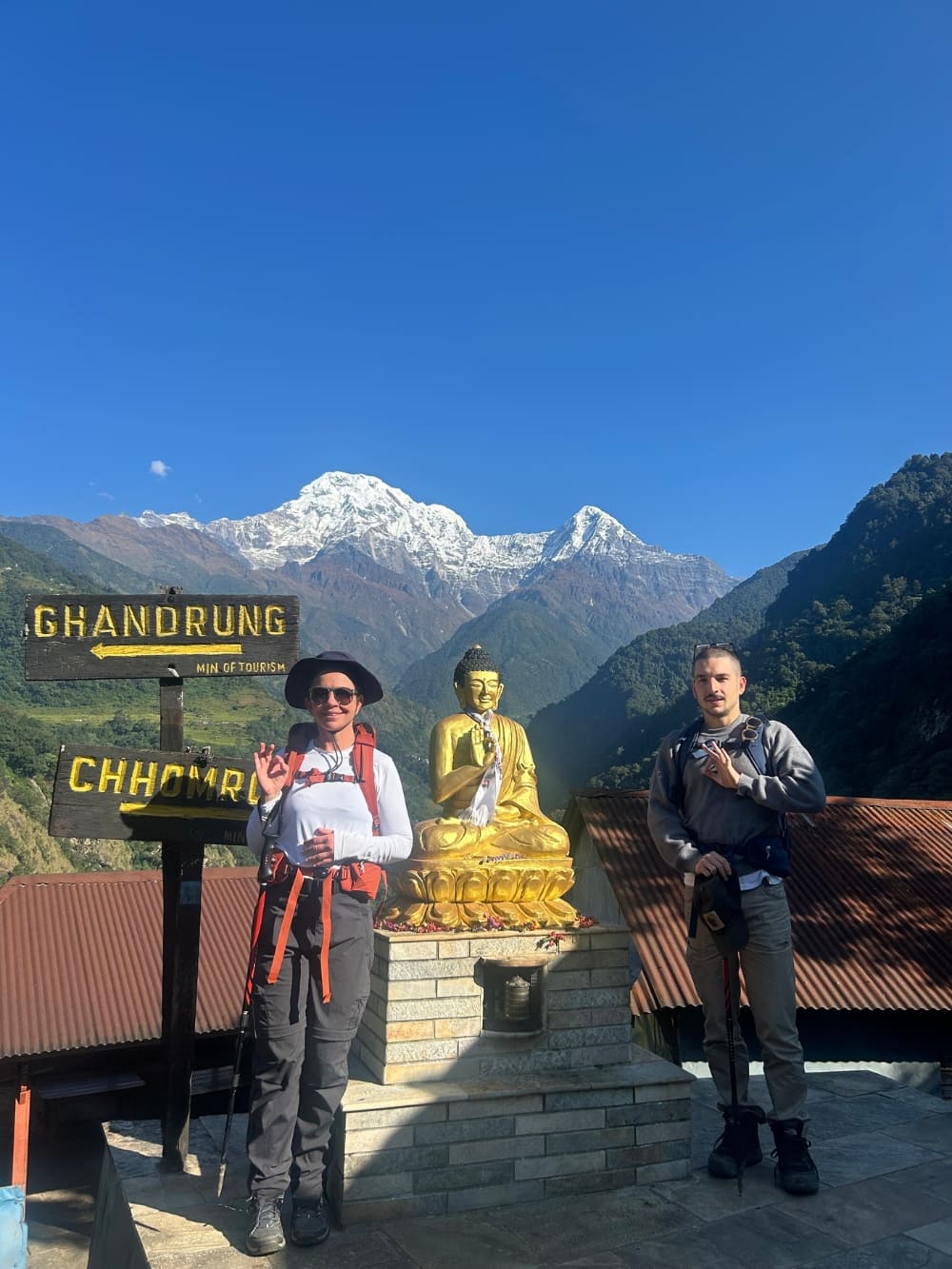
    Mila and Lorenzo beside a Buddha statue and trail signs during their sustainable trek in Nepal.
    .

    For Lorenzo, the journey was also a moment to acknowledge the foundation his mother built over the years, allowing him to become the man he currently is. “What I admire most is the way she raised me. Her believing in herself was essential. If she hadn’t made the choices she made the way she did, we probably wouldn’t be where we are today.” 

    In the end, Nepal was just the setting, but the true destination was the deep and mature connection between mother and son.
  • A Father and Daughter Expedition Through the Waters of Fernando de Noronha

    A Father and Daughter Expedition Through the Waters of Fernando de Noronha

    Meet Jean and Mailys, a French father and daughter who dove into the beauty of the crystal-clear seas of Fernando de Noronha.

    Some trips are taken to see the world, while others are meant to reconnect with those we love. For Jean Laprevotte (60), a Frenchman who has called São Paulo home for just over two years, the journey to Fernando de Noronha was the perfect chance to cross an iconic destination off his Brazil bucket list.

    But his motivation went beyond simple tourism. In early 2026, he and his daughter, Mailys (26), embarked on this adventure to celebrate a major milestone: her completion of a master’s degree in Marine Biology.

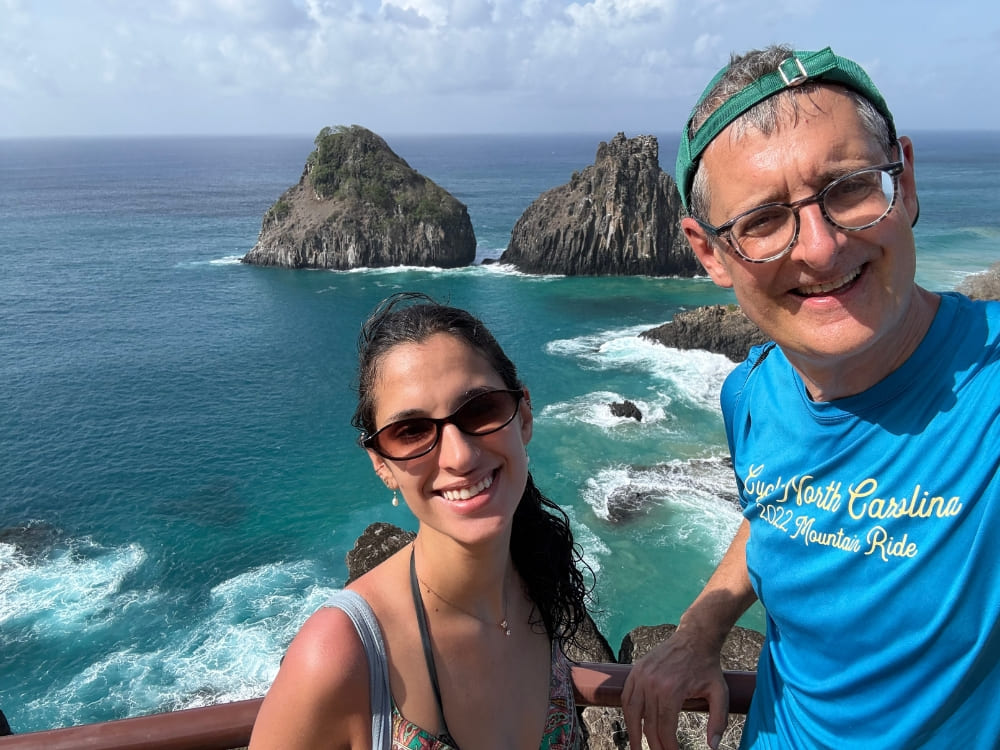
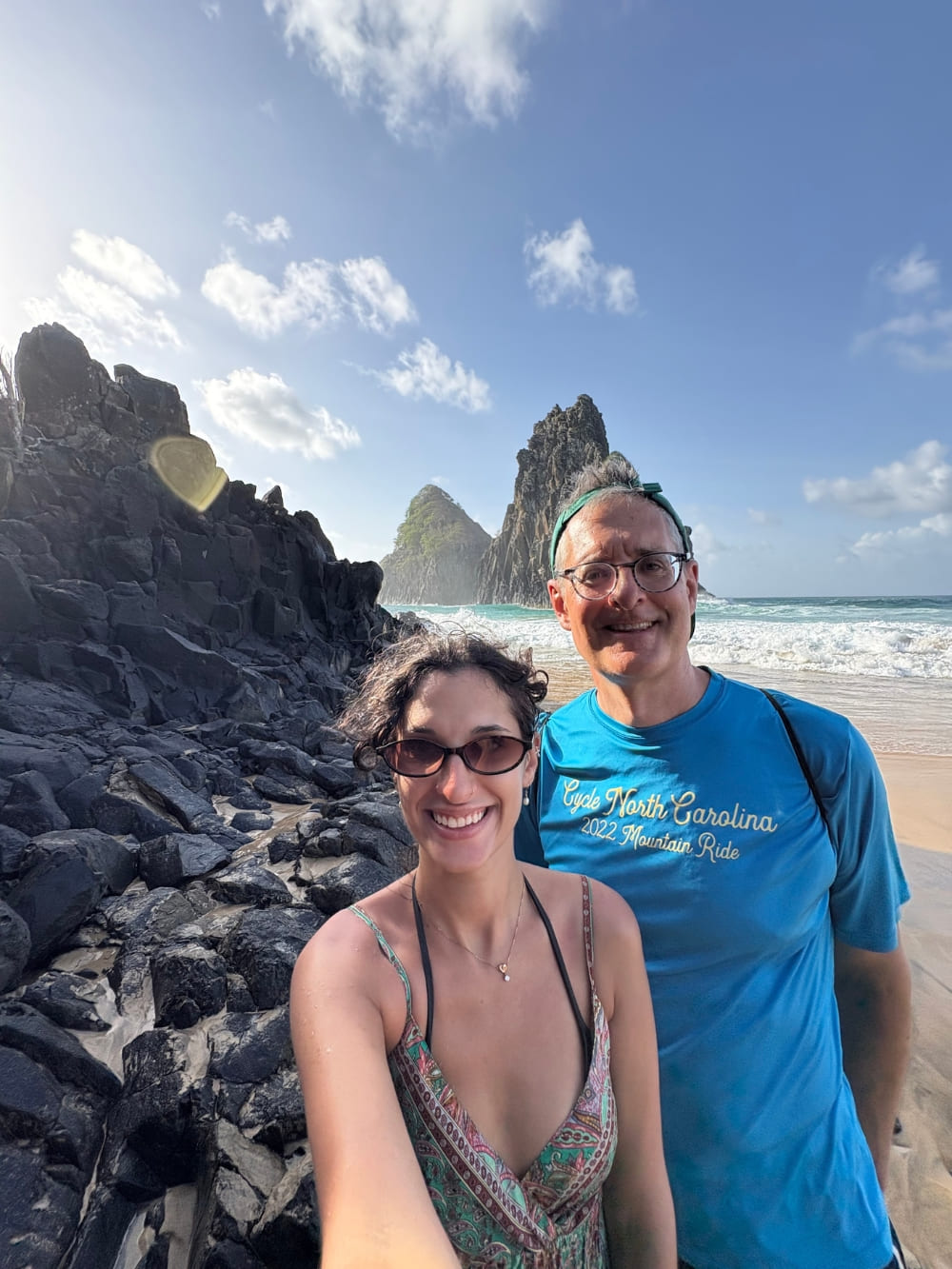
    Father and daughter taking a selfie on a rocky beach with the Morro Dois Irmãos rock formations and the ocean in the background.
    .

    To turn this celebration into a deep and authentic experience, Jean relied on the assistance of PlanetaEXO, an ecotourism platform specializing in trips to Fernando de Noronha, bridging the gap between the family’s wishes and the magic of the archipelago.

    The Magic of a Wild Island

    Upon arriving in Noronha, what first captivated Jean was the impressive state of preservation. “It is a place of wild beauty, very well preserved. What I found most incredible is that there are no buildings on the beachfront; it is nature that truly speaks there.“
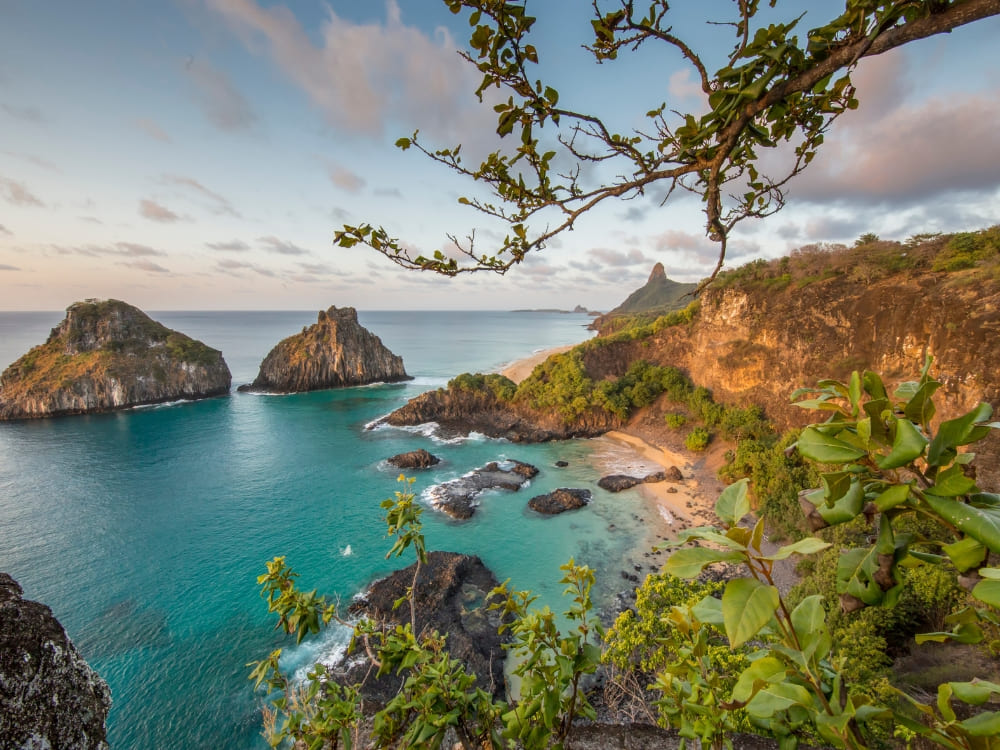
    Scenic coastal view of Fernando de Noronha featuring turquoise waters, a sandy cove, and the Morro Dois Irmãos rock formations framed by green vegetation.
    .
    Unlike other destinations, the scenery in Fernando de Noronha is dictated by the horizon. Without the distractions of the typical busy city routine, Jean and Mailys could dedicate themselves to what truly mattered: walking the trails and observing the local wildlife—from curious crabs to majestic birds crossing the clear, sunny sky.

    Diving Into Mailys’ World

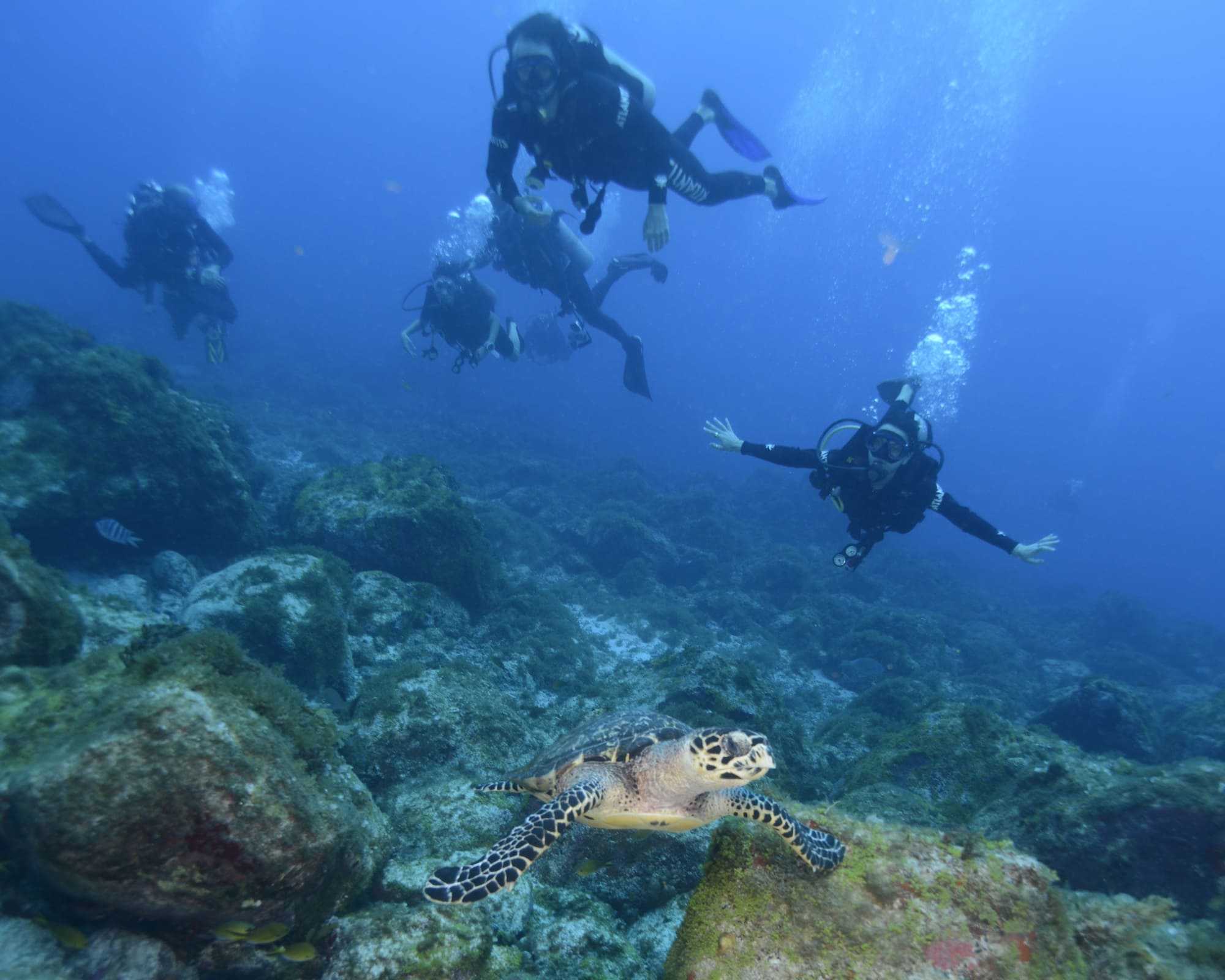
    Given Mailys’ specialization in Marine Biology and her focus on corals and reef fish, the father-daughter dynamic was reversed underwater. It was she who guided Jean through the rich biological diversity of the islands of Noronha.

    “For my daughter, who has already gone diving in Barbados, the Dominican Republic, and the Seychelles, Noronha was one of the most interesting places she has ever seen,” notes Jean.

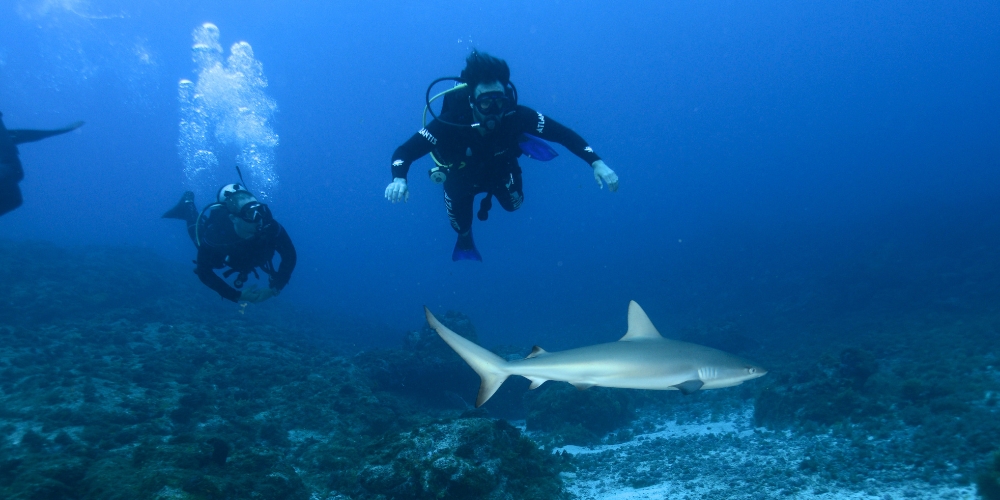
    Together, they explored the deep blue and encountered sharks, turtles, rays, and octopuses. For the father, seeing his daughter’s passion up close was the greatest gift. “The experience allowed for a shared journey and was very positive and relevant to my daughter’s profession. It was a moment of mutual discovery.“

    Two scuba divers exploring a rocky seabed while observing a reef shark swimming below them in the clear blue water.
    .

    👉 Read more: What is the best time to dive in Fernando de Noronha?

    Connections That Transcend Tourism

    The most striking element was not just what they saw, but how they lived those moments. One of the highlights was the direct contact with local conservation efforts.

    “Seeing my daughter talking and exchanging experiences with a biologist working on dolphin observation was something very special. It brought professional and human meaning to the trip,” said Jean, impressed by the receptivity of the island’s professionals and the knowledge exchange they had with Mailys.

    He returned to São Paulo with a positive perception of the preservation model adopted in Fernando de Noronha. “They take conservation seriously, limiting plastic and protecting species. It is an example that stays with you.”

    Father and daughter smiling for a selfie at a viewpoint overlooking the turquoise ocean and the iconic Morro Dois Irmãos rock formations.
    .

    👉 Read more: 10 fun facts about Fernando de Noronha

    The Legacy of the Experience

    More than just a diving trip, Jean and Mailys’ journey was an opportunity to celebrate achievements and strengthen bonds.

    Through PlanetaEXO’s curation, they returned home with renewed spirits and the certainty that the ocean will always be the place where they reunite—a perfect frame for a father’s pride and a marine biologist’s bright curiosity against the backdrop of the vast ocean.

  • Finding freedom in the wild: How a Dutch adventurer fell in love with Brazil

    Finding freedom in the wild: How a Dutch adventurer fell in love with Brazil

    Katharina Bongaertz is PlanetaEXO’s top traveler and has proven multiple times that adventure knows no gender or age

    In 2023, Katharina Bongaertz, a psychotherapist from the Netherlands, arrived in São Paulo during Carnival. She had originally planned to spend just one month in Brazil before continuing her five-month leave in Colombia and Peru.

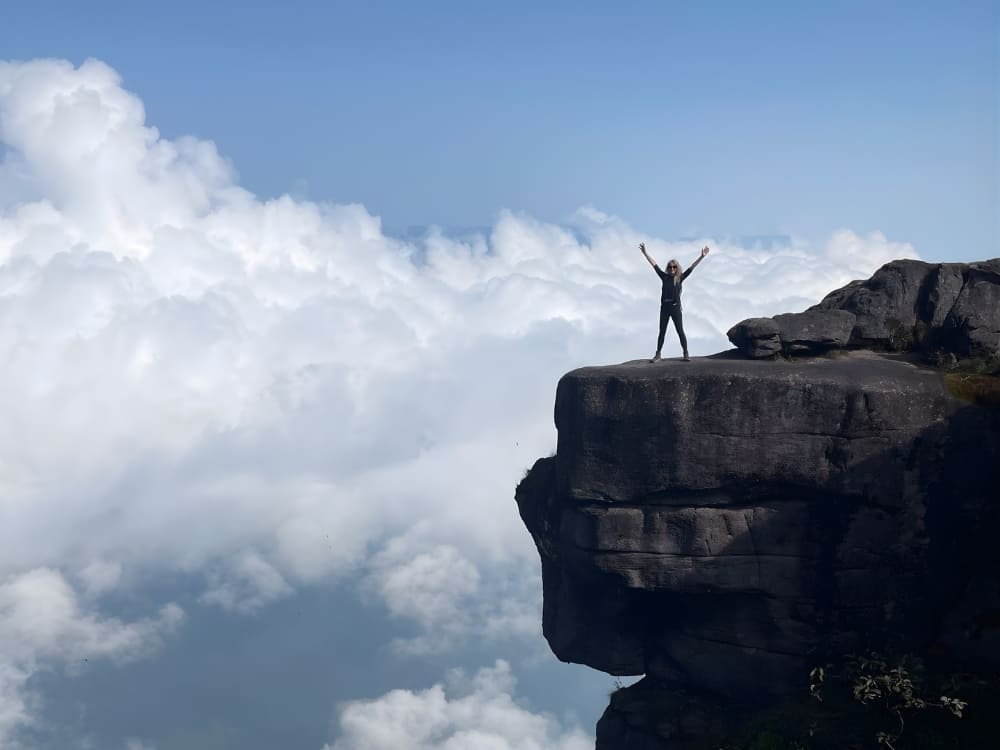
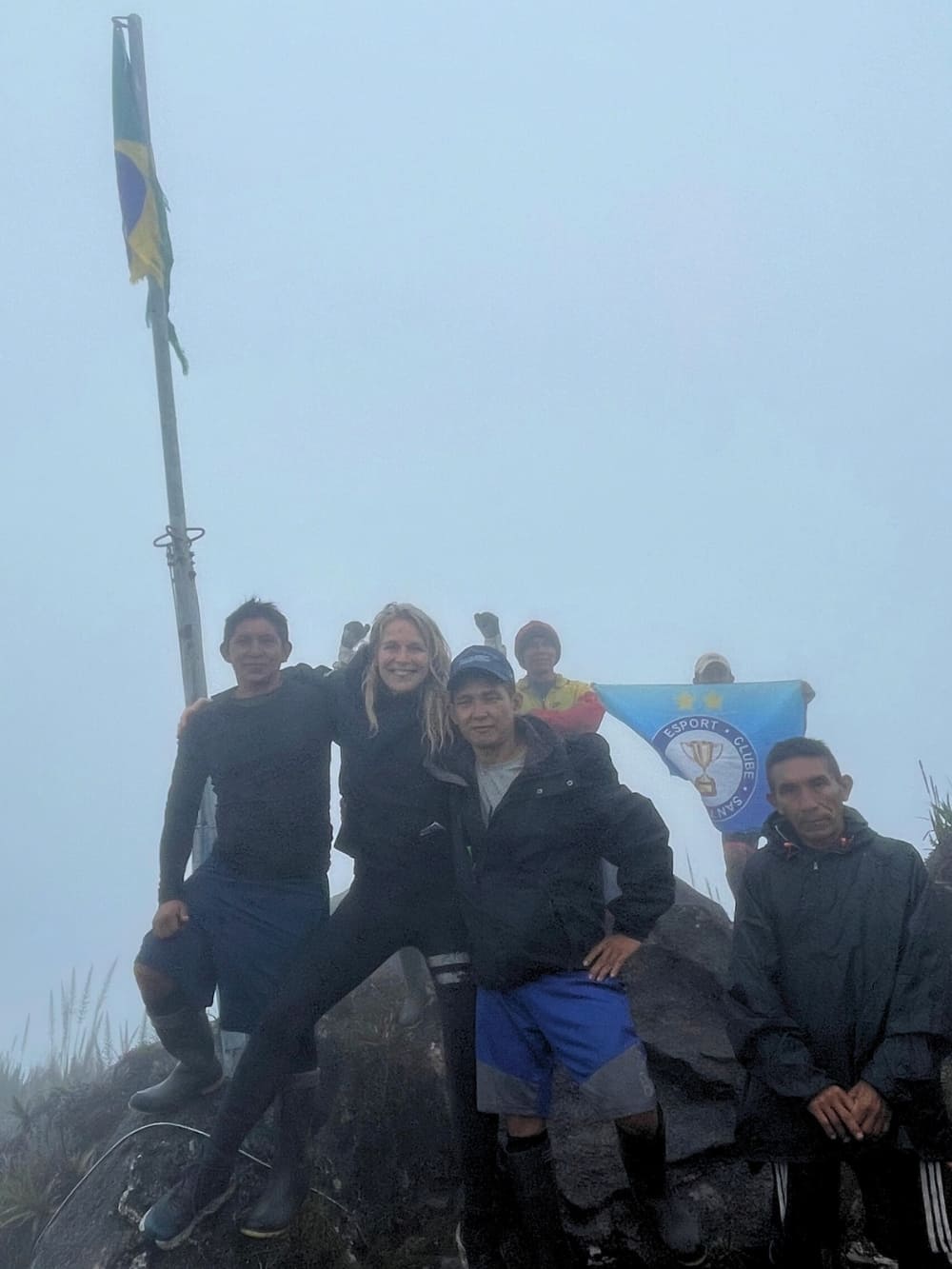
    Woman with raised arms on top of a large rocky cliff at Mount Roraima, celebrating surrounded by dense clouds.
    .

    However, the country’s vibrant culture and breathtaking landscapes completely captivated her. She decided to stay in Brazil for the remaining four months of her trip, sparking a deep love affair with Brazilian nature that has only grown stronger since then.

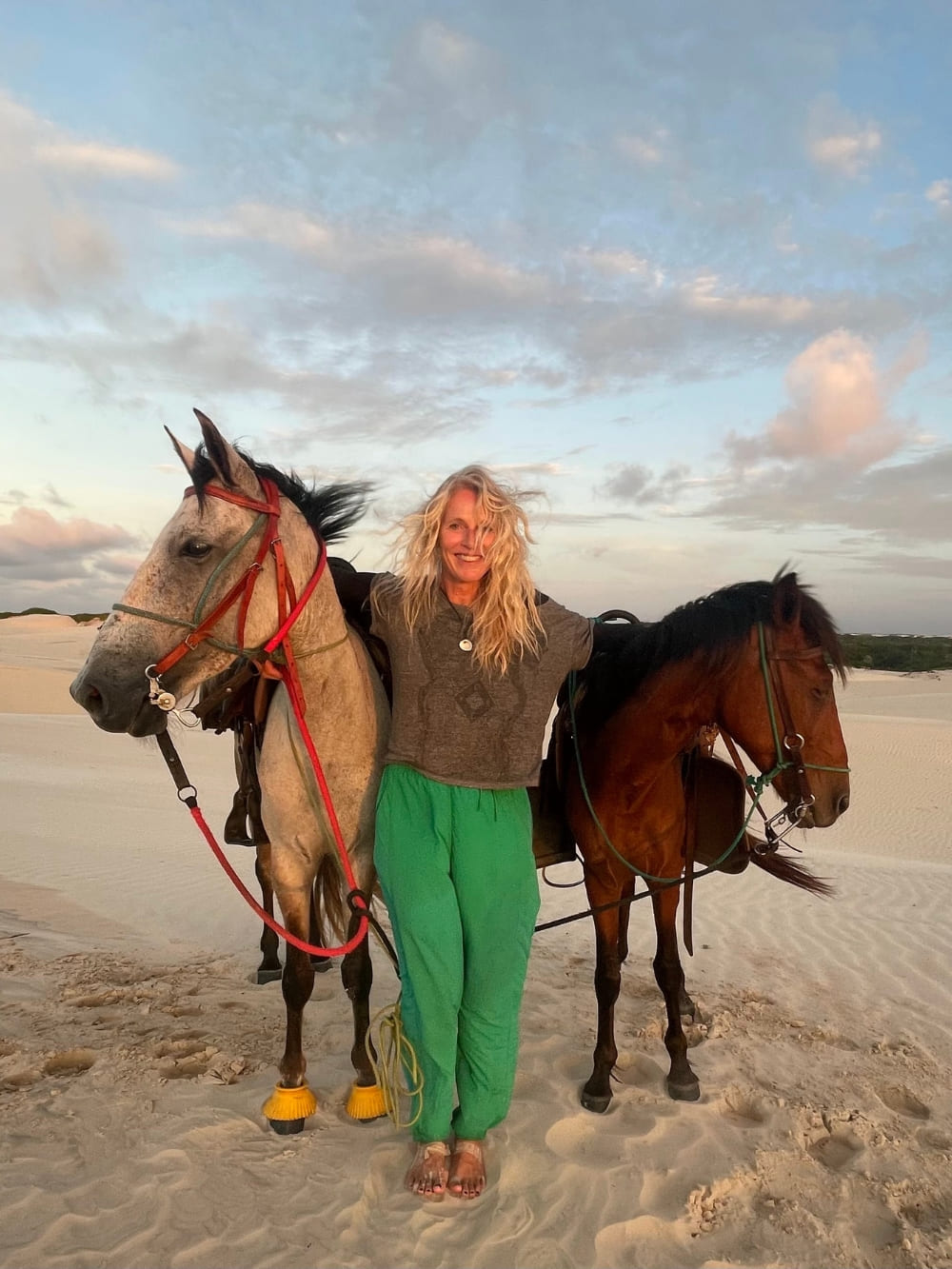
    Today, at 60 years old, Katharina has embarked on a fair amount of PlanetaEXO’s adventure tours in Brazil, officially becoming the platform’s most frequent traveler. From the towering plateaus of Monte Roraima to the mesmerizing dunes of Lençóis Maranhenses and the deep jungles of the Amazon, she has explored some of the country’s most remote and magnificent destinations.

    Connection with the Brazilian spirit 

    Katharina’s journey into ecotourism began when a cousin recommended she visit Chapada Diamantina, in the state of Bahia. Looking for a way to navigate this less-touristic region, she connected with Lucas Ribeiro from PlanetaEXO, a partnership that has now led to her upcoming seventh trip with the company—this time to the Pantanal to see jaguars!

    Beyond the landscapes, it is the spirit of the locals that keeps her coming back. “I think Brazilian people are really welcoming, kind, and warm,” Katharina shares. “I love the music, and they have, in a way, music in their soul. It has always been a part of all the travels.”

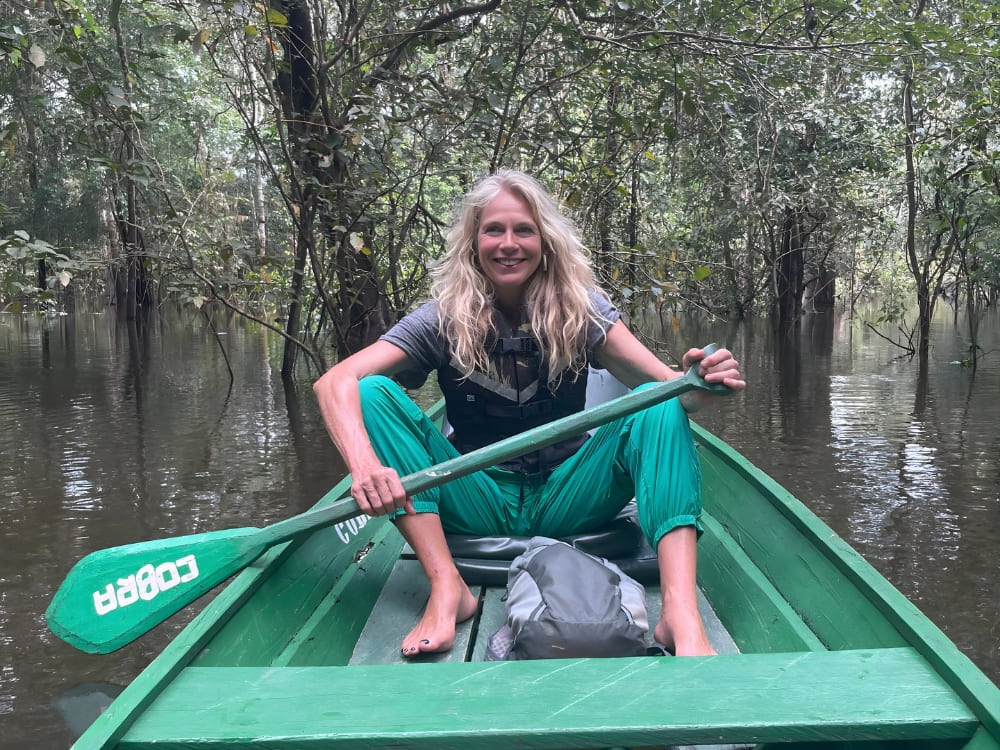
    Smiling blonde Katharina holding a paddle while navigating a green canoe through a flooded forest in the Amazon.
    .

    👉 Read more: Why Brazil’s remote outdoors are becoming a haven for foreign female travelers

    The empowering force of nature

    As a psychotherapist who spends her days in a city talking to patients, Katharina seeks out the wild to find contrast, freedom, and wisdom. She prefers vast, open environments without fences, where she can walk freely and take in the view from mountaintops or plateaus.

    “To be in beautiful wild nature, I feel it as something really special” she reflects. For Katharina, the magic lies in the quiet details. “Listening to nature, like the sounds of the birds, the animals, the trees… it’s something that gives a lot. It’s empowering, and I take it home with me every time.”

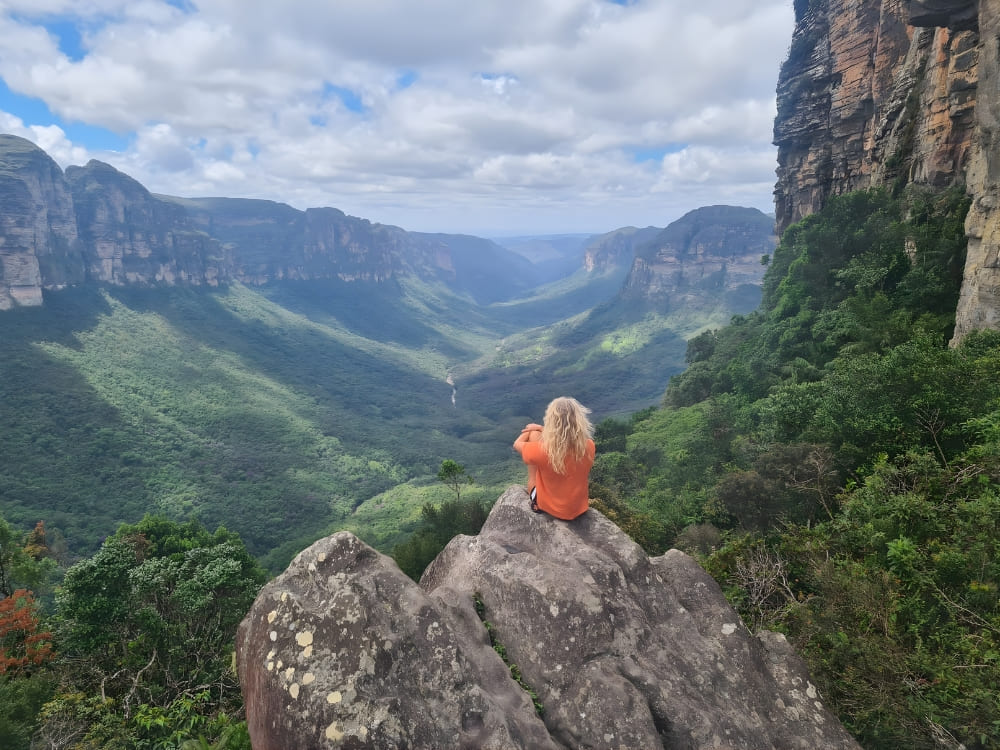
    Out of all her incredible adventures in destinations like Lençóis Maranhenses and Monte Roraima, Chapada Diamantina holds the most special place in her heart. “If I could, I’d go every year,” she says with a smile.

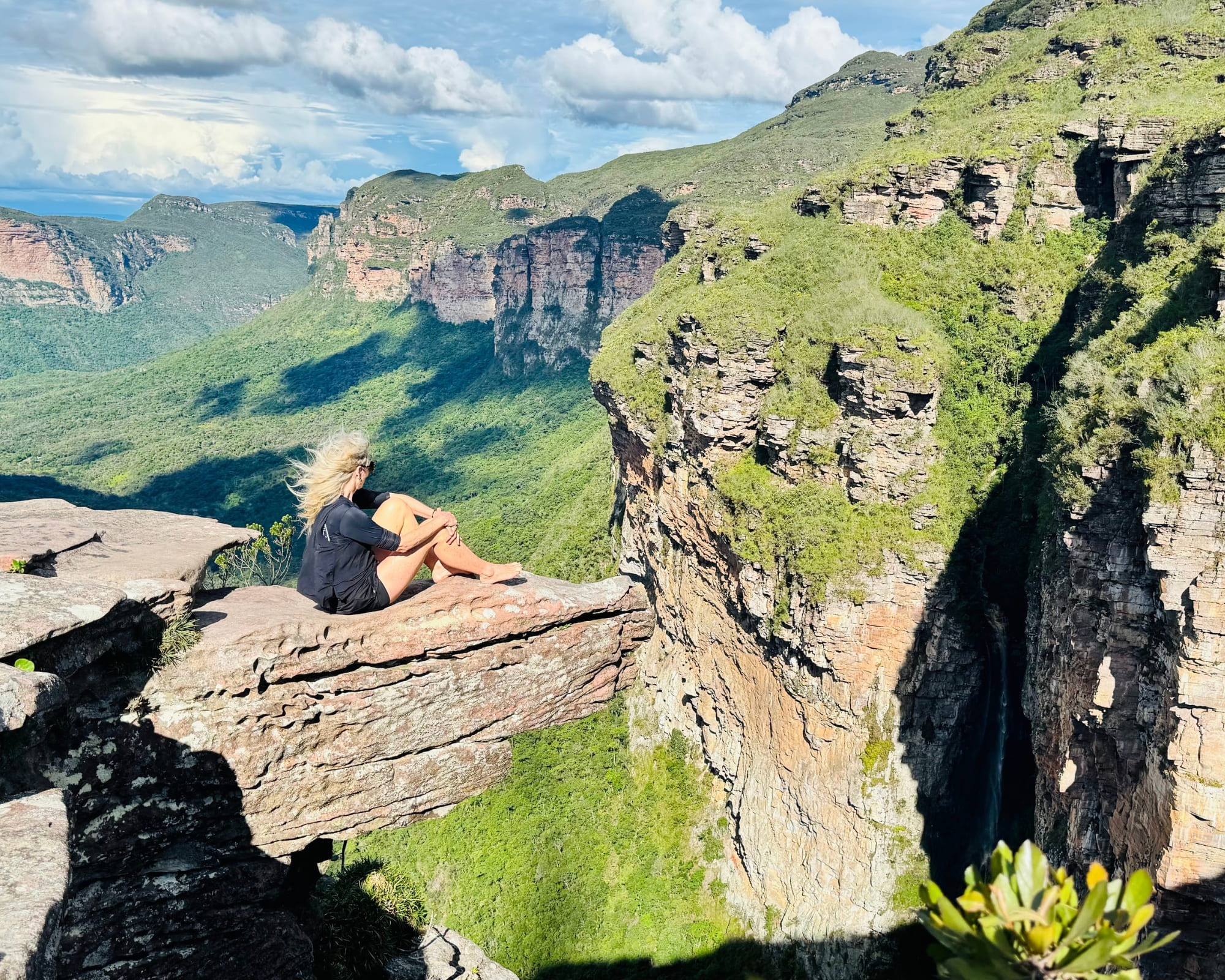
    Woman in an orange jacket sitting on a high rock, admiring the panoramic view of a vast green valley in Chapada Diamantina.
    .

    👉 Read more:

    No age limit for adventure

    Often mistaken for being much younger, Katharina is a living testament that ecotourism is not just for the youth. Having spent her 20s and 30s raising her three children and building a successful career, she feels that this current chapter of her life brings a newfound sense of liberty.

    “I think I’m much more adventurous now than I was back then,” she notes and actively encourages other mature women to step out of their comfort zones. “It’s important to challenge yourself to find new borders and pass them. And I mean borders on every level, like finding new horizons and exploring.”

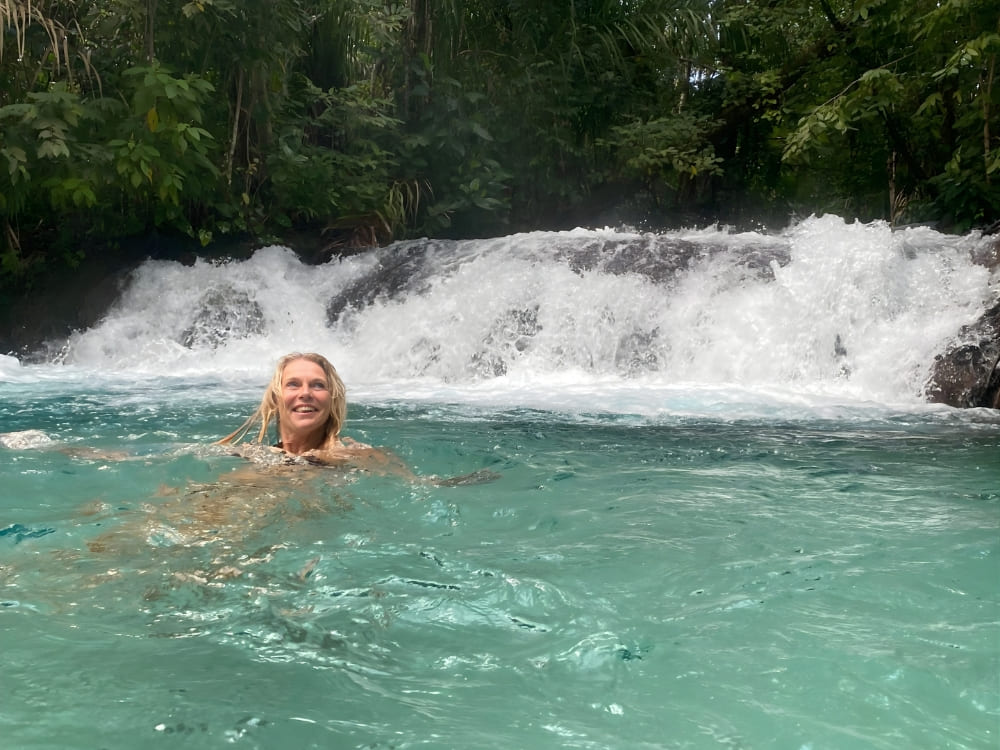
     Smiling woman swimming in crystal-clear blue waters with a large waterfall in the background in the Jalapão region.
    .

    👉 Read more: Women over 50 break stereotypes and prove that adventure knows no age

    While it is important to know your physical limits and find your own walking pace, Katharina proves that the rewards of conquering a tough trail or swimming under a massive waterfall in Jalapão, in the Northeast of Brazil, are absolutely worth it.

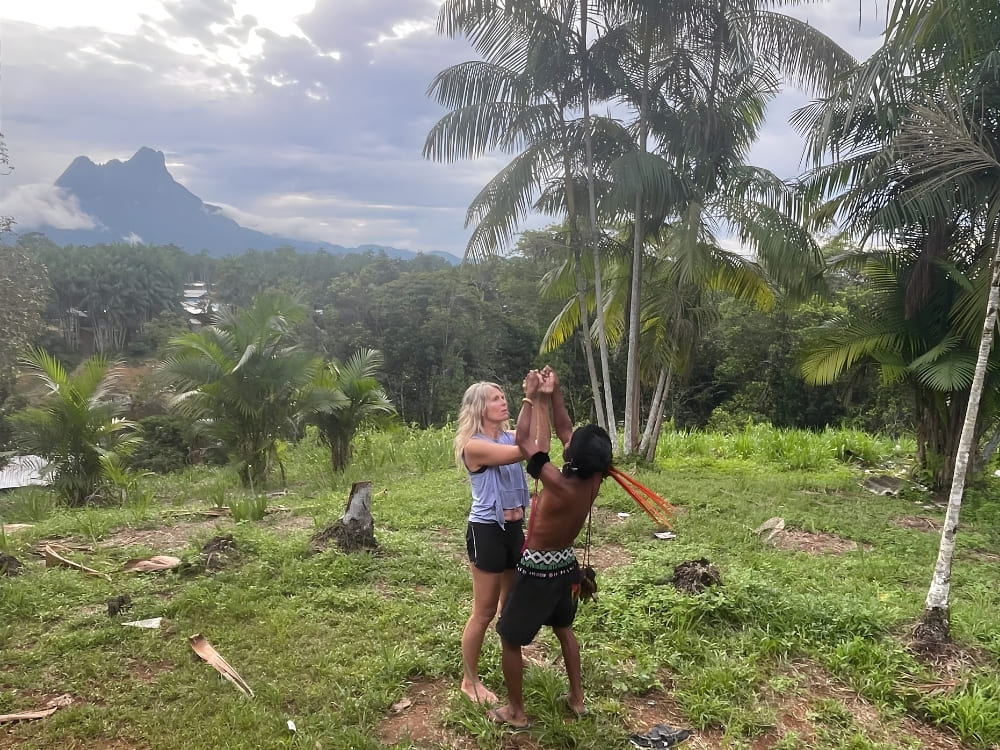
    One of her most remarkable adventures was the ascent of Pico da Neblina, Brazil’s highest peak, hidden in the northwest Amazon. “It was an incredible and deeply special experience, profoundly shaped by the connection with the Yanomami people,” she shares. “Trekking alongside about 30 indigenous guides who carried supplies up the mountain, I spent 10 days immersed in their daily routine, sleeping in hammocks along the way.”

     Katharina interacting in a relaxed way with a Yanomami indigenous guide in a green area, with Pico da Neblina in the background.
    .

    As Katharina prepares for her next adventure into the wilds of the Pantanal, her story serves as a beautiful reminder to us all: the world is vast, the wild is calling, and it is never too late to answer.

    👉 Read more: Women in ecotourism: female presence that makes things happen

    Traveling across Brazil’s wild nature with PlanetaEXO

    Katharina understands the power of connecting with nature and living life to the fullest. With PlanetaEXO, an ecotourism platform specializing in adventure tours in Brazil, she was able to explore multiple destinations safely, responsibly, and authentically.

    From bookings to transfers, our team provides everything you need for your trip while also supporting local communities and following guidelines to ensure environmental conservation. Contact us now!

  • Expanding horizons in the Amazon: A British writer’s journey of love and discovery

    Expanding horizons in the Amazon: A British writer’s journey of love and discovery

    Emma Phillips is a freelance writer from the UK who explored the rainforest with her Brazilian partner and uncovered a universe of wild nature and cultural diversity

    In December of last year, 30-year-old British freelance writer Emma Phillips lived a transformative experience. After meeting Jamille, a Brazilian academic from Belém do Pará, her world began to expand from the rolling hills of England to the depths of the Amazon Rainforest, creating a beautiful cross-cultural love story that was recently shared in an article for Condé Nast Traveller.

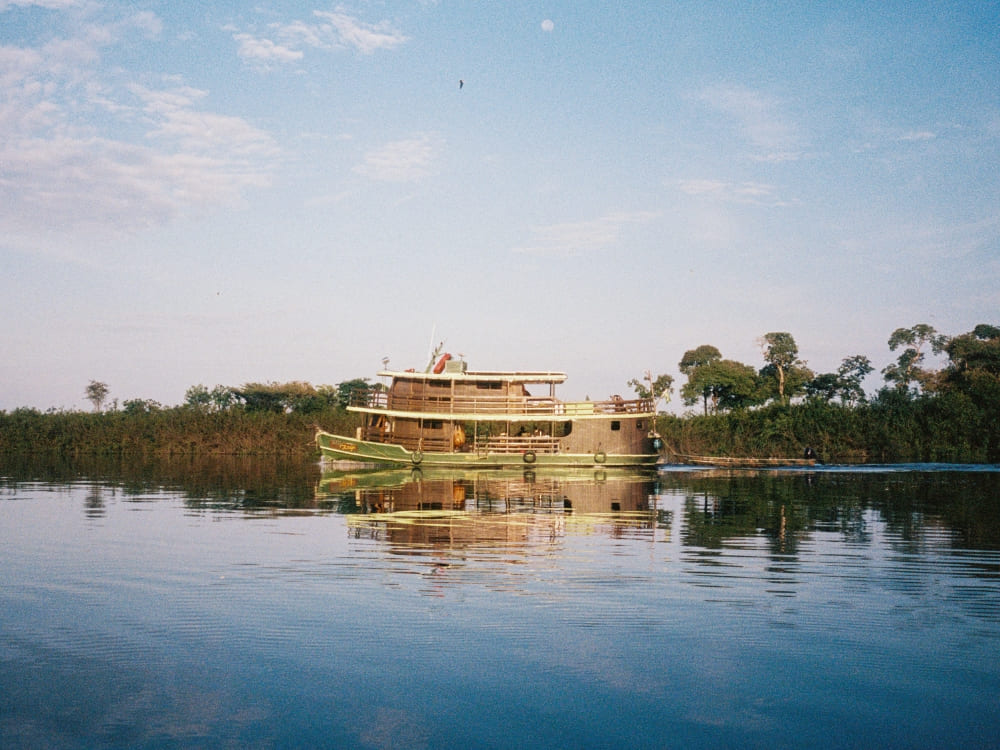
    Traditional river cruise boat navigating the calm waters of the Rio Negro, with green vegetation reflecting on the water.
    Photo: Emma Phillips

    “For Jamille, it was a chance to further explore areas of her own region that she didn’t know yet. For me, it allowed me to experience the place she comes from through a personal perspective. My world expanded” Emma shared in an interview for Women’s Month.

    Deep connection with local roots

    The trip went far beyond simply observing landscapes; the real difference was the immersion fostered by the local communities, especially educational programs. “It’s all about the people. I was very impressed by the project around the schools, the stunning architecture. Everything was so clever and beautiful,” she highlights.

    Accompanied by a tour guide who transformed the forest into a true classroom using the knowledge of his ancestors, the group experienced the most authentic side of the Amazon. “The entire boat crew and the guides were locals. Seeing tourism being used in an authentic and non-predatory way to improve the lives of communities and preserve the environment was an inspiration.”

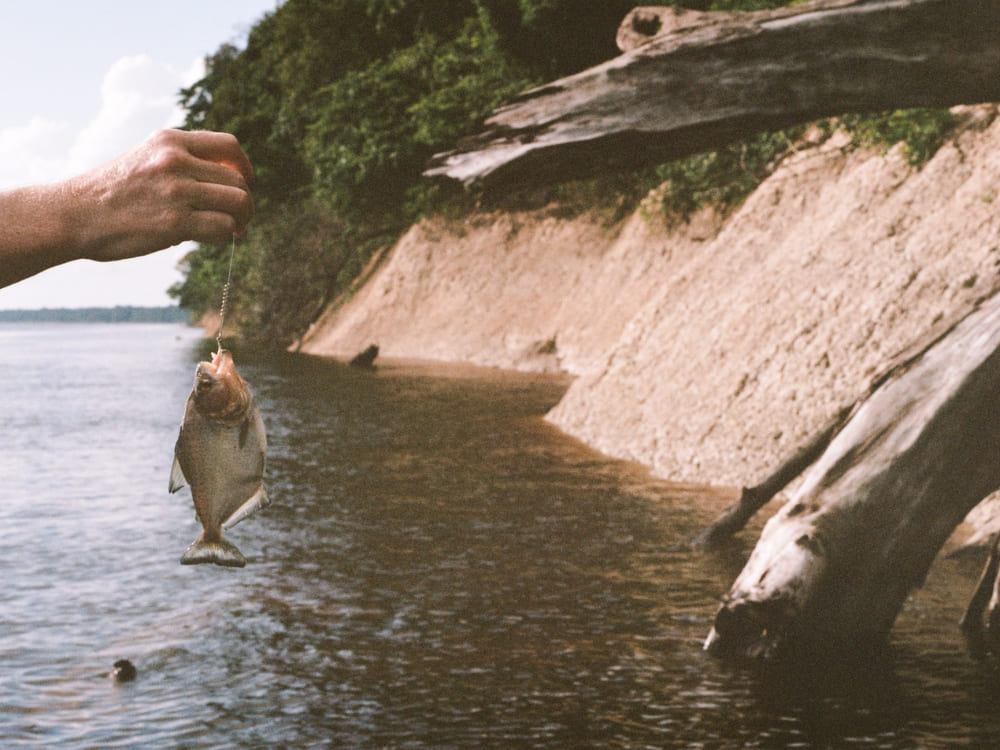
    Hand holding a freshly caught fish on a line over the dark waters of the river, with a sandy bank and logs in the background.
    Photo: Emma Phillips

    Despite the difference in realities, Emma knows this part of the world quite well. Having worked with Brazilian Indigenous leaders before, she has an understanding of the realities they face and the landscapes they navigate. “Working with their knowledge and cosmology is like unlearning everything that I’ve been taught,” she states, defining the experience as a way to understand the significance of cultural diversity.

    👉 Read more:

    The power of nature and human warmth

    Navigating the Rio Negro brought fascinating contrasts for the family. Emma describes the forest as “encompassing and intense,” while the river offered a sense of “enormous openness and tranquility”—with the great advantage that the acidic dark waters kept the mosquitoes away!

    During the expedition, they were graced by giant otters, caimans, different species of birds, river dolphins, and other Amazon animals. Nature also showed its magnitude when a severe storm on the last night reminded them of the forest’s power and the importance of the crew’s preparation.

    Traveling as a queer woman, Emma confesses there is always an internal anxiety about how her relationship will be received. However, the welcome on the cruise was notable. “At first, the crew tried to understand our dynamic—a British woman and an Amazonian woman together—but as soon as they understood, the atmosphere was one of total respect, and no one made us feel uncomfortable.”

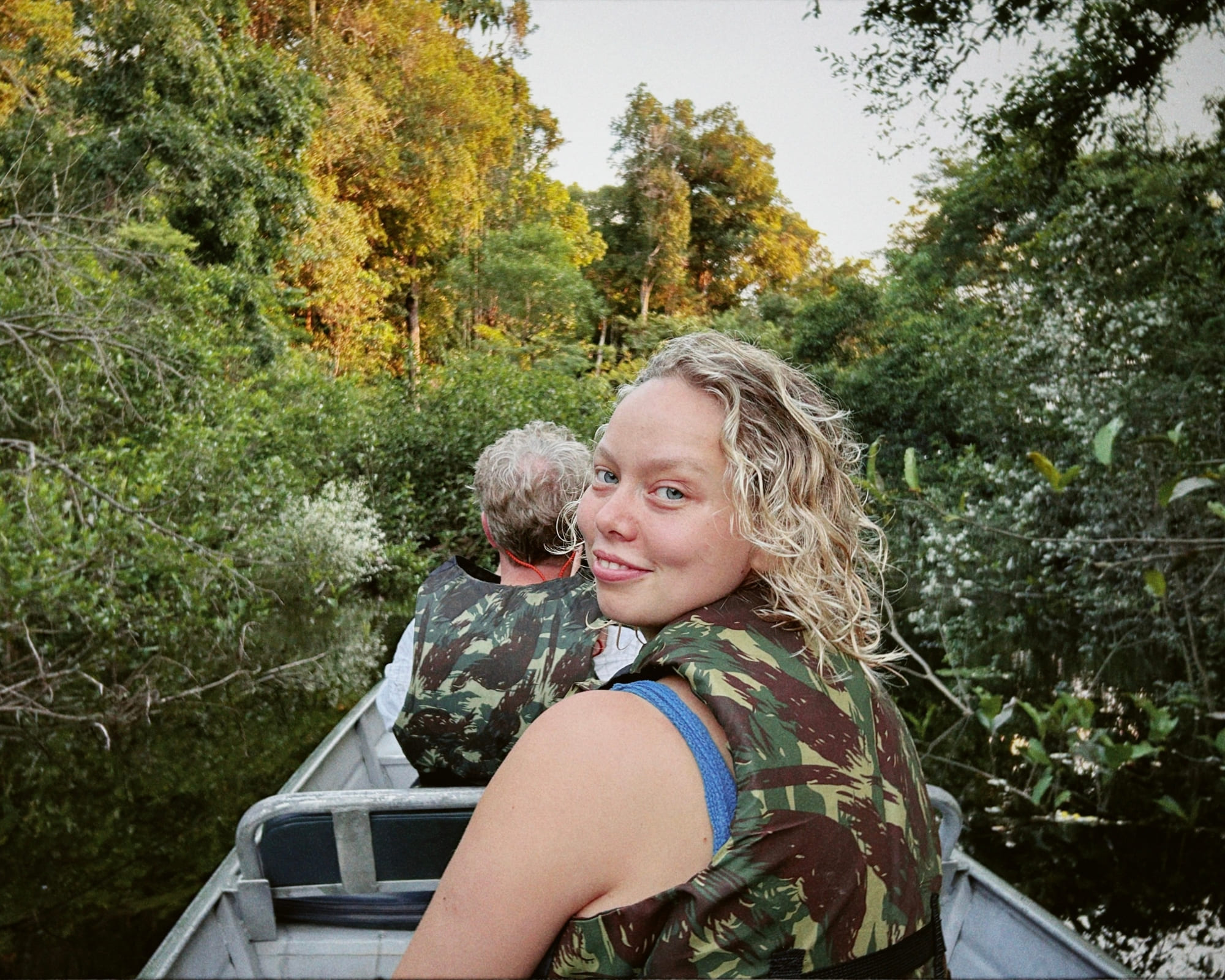
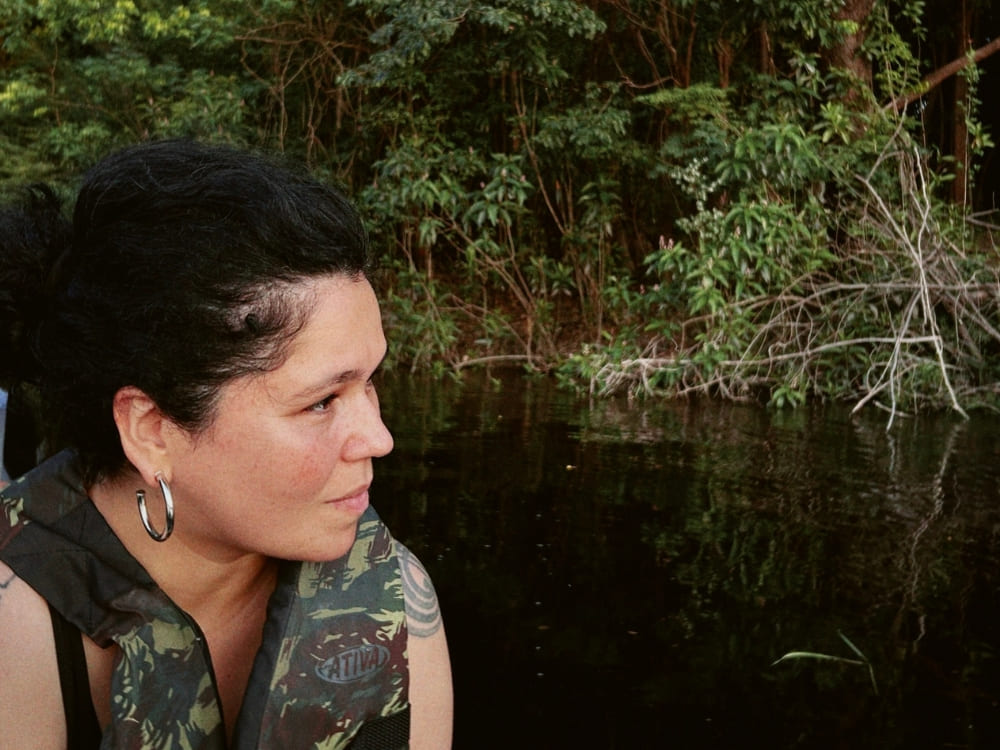
    A dark-haired woman wearing hoop earrings and a camouflage life vest sits in a small boat, looking thoughtfully at the lush riverbank vegetation
    Photo: Emma Phillips

    One of the most touching moments occurred in the boat’s kitchen. “One of the chefs shared that her own daughter was also queer. I think she was pleased to see our dynamic play out in front of her. It was lovely,” she recalls.

    👉 Read more:

    Travel that empowers (and an invitation)

    The journey through the Amazon united families from different continents and reinforced Emma’s belief in the transformative power of exploring the unknown. “Traveling allows us to witness other ways of existing in the world. I believe that travel empowers any woman, any person, as it provides experiences where you have to be constantly decisive, face fears, and assess risks.”

    For women who dream of exploring the immensity of the Amazon but still feel some hesitation, Emma’s advice is clear: focus on safety by traveling with support, along with a group or a trusted tour operator.

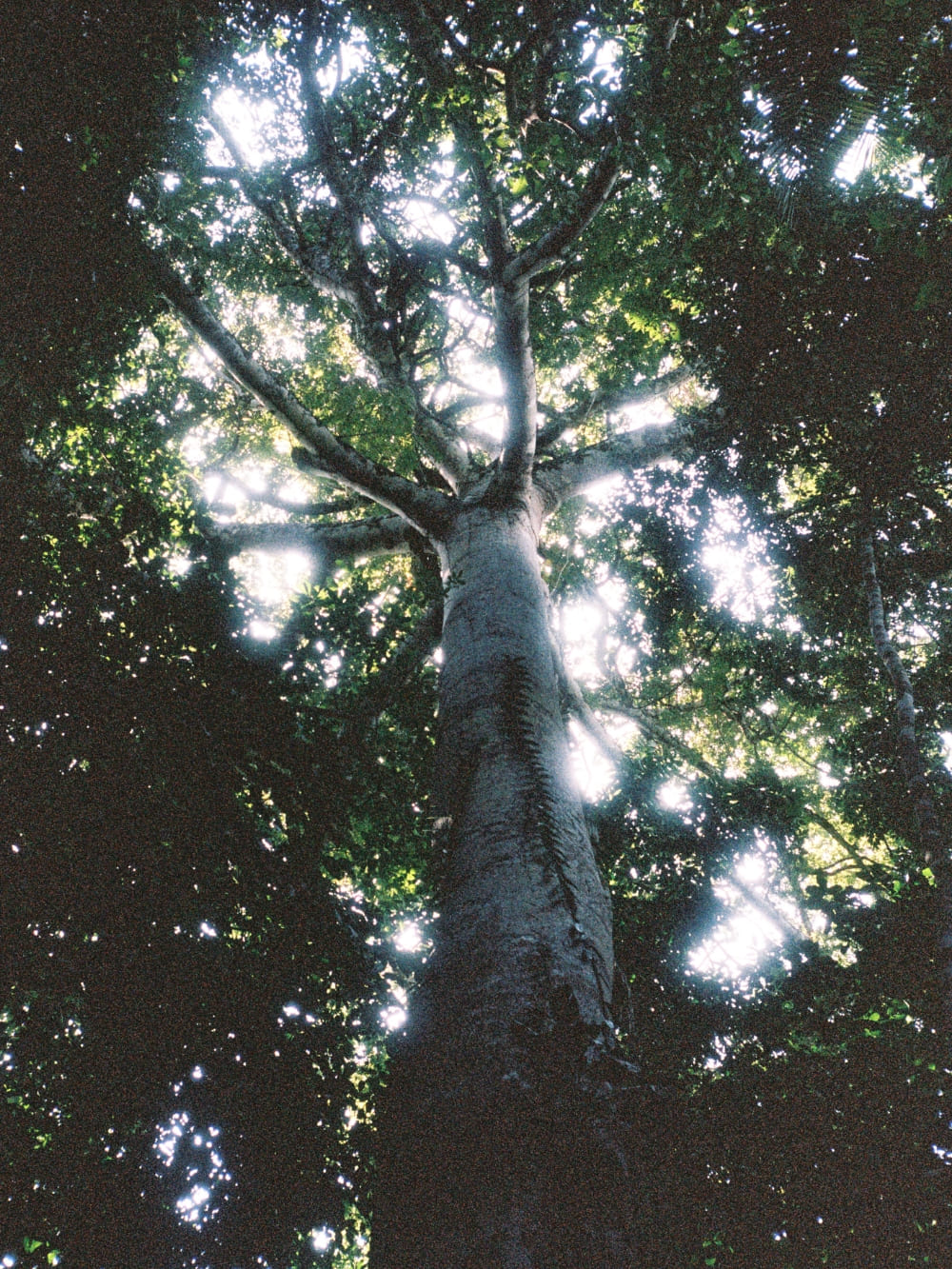
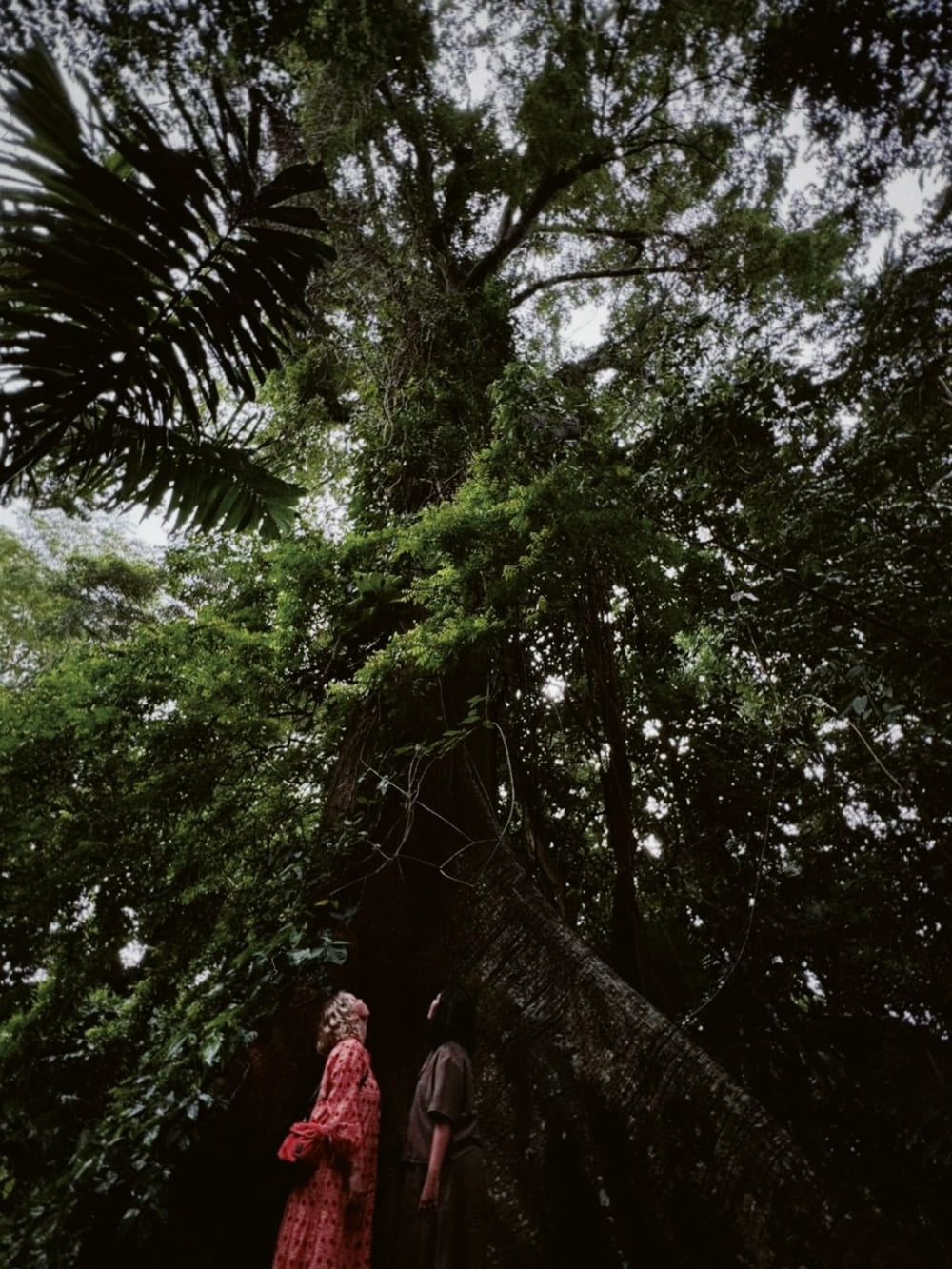
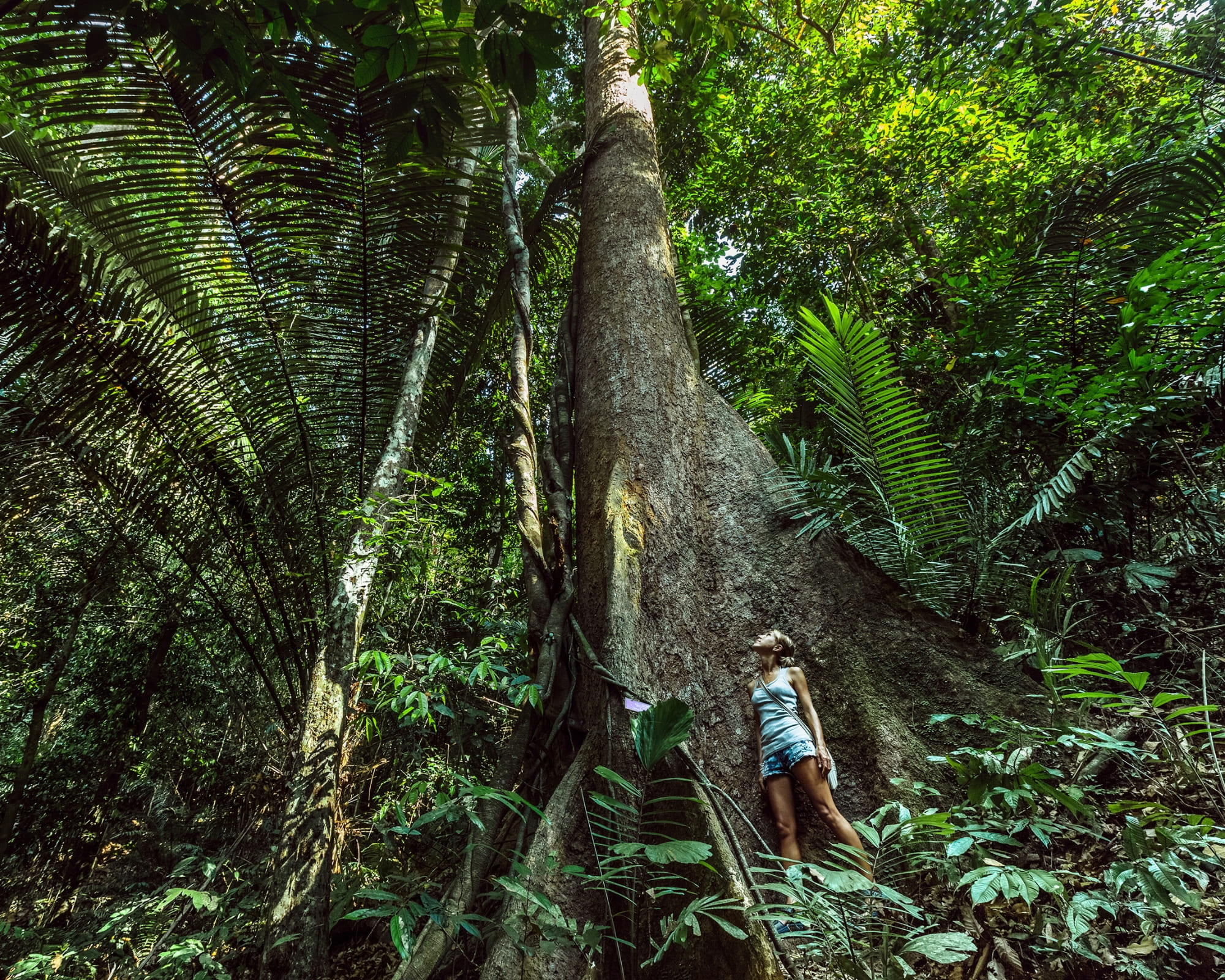
    Two women stand at the base of a massive Amazonian tree, looking up at the imposing trunk and thick green canopy towering above them.
    .

    👉 Read more: Why Brazil’s remote outdoors are becoming a haven for foreign female travelers

    Expanding horizons with PlanetaEXO

    Driven by love and a profound interest in nature and cultural diversity, Emma was able to expand her view of the world. That’s what traveling does—it gifts us with the beautiful knowledge that life knows no borders and that there is much to see out there.

    With PlanetaEXO, an ecotourism platform specializing in adventure tours in Brazil, this journey becomes even richer. By following guidelines that create a positive impact on the environment and local communities, we provide fulfilling, unforgettable experiences. Contact us now!

  • From New Zealand to the Lost World: a Solo Ecologist’s Trek Up Mount Roraima

    From New Zealand to the Lost World: a Solo Ecologist’s Trek Up Mount Roraima

    Olivia Bird is a young traveler who crossed the world to climb one of South America’s most impressive mountains

    Twenty-four-year-old Olivia Bird had spent her academic life in New Zealand studying alpine plant communities, but she was about to step into an entirely different world. Embarking on her first-ever solo trip to South America, her sights were set on Mount Roraima, a majestic tepui (table mountain) on the border of Brazil and Venezuela that inspired the classic 1912 novel The Lost World, by Sir Arthur Conan Doyle.

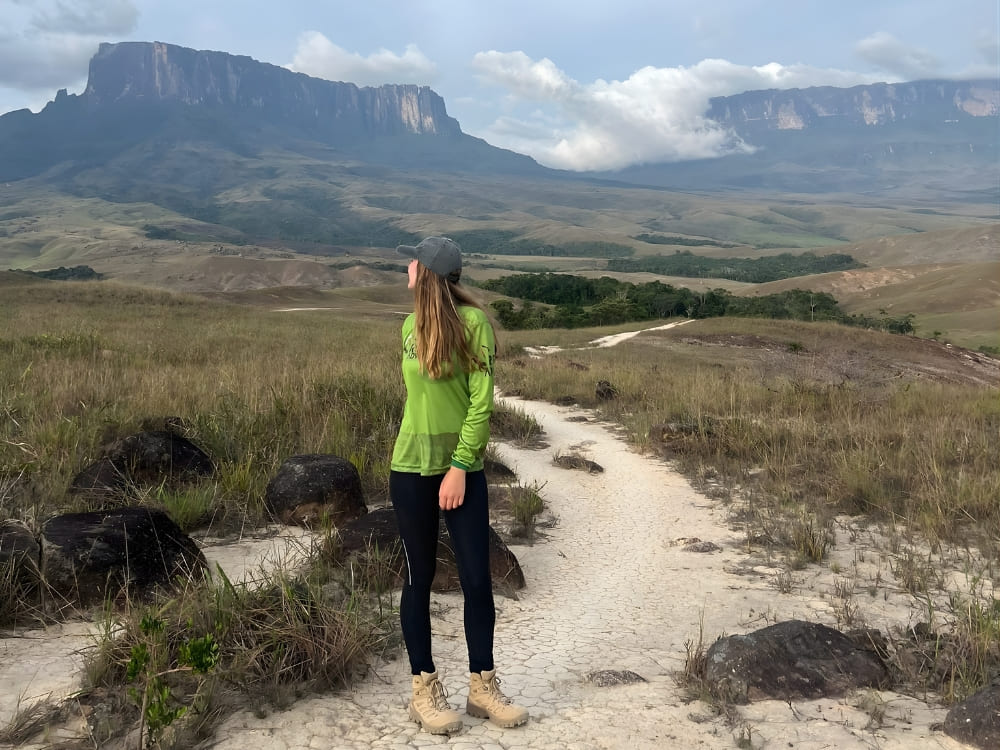
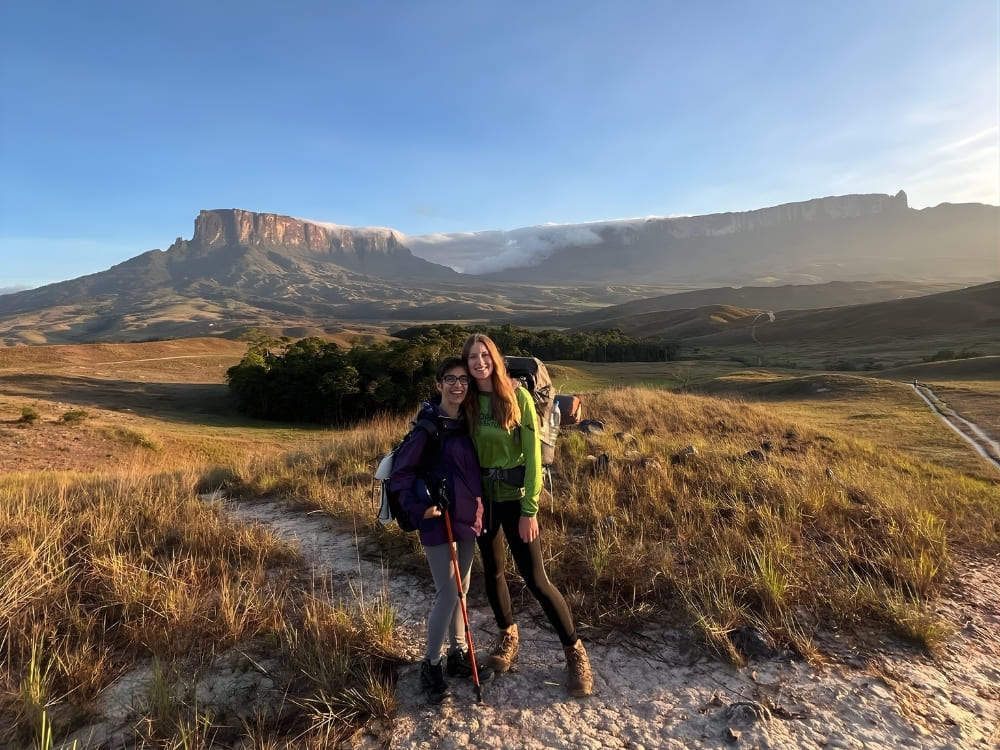
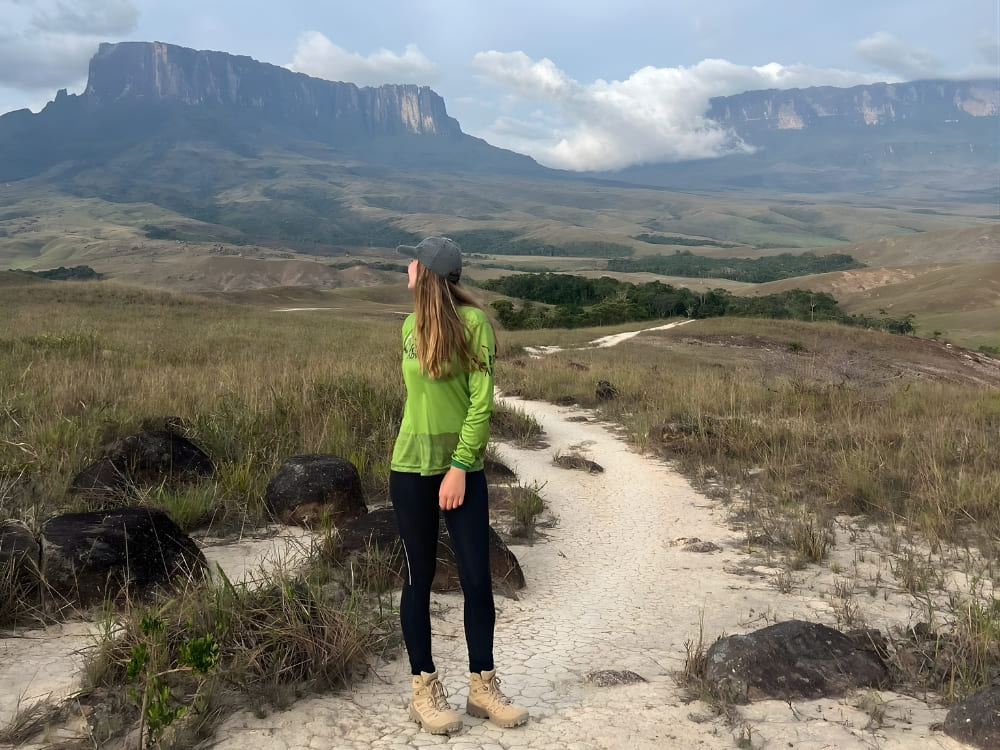
    A female ecologist stands on a sandy path looking toward the table mountain of Mount Roraima in the distance.
    .

    For an ecologist, the tepuis are a dream destination. “They are incredible sources of endemic biodiversity,” Olivia explains. “Because of their height and isolation, unique species have evolved completely cut off from the rest of the world. It’s a living laboratory.”

    Olivia entrusted PlanetaEXO, an ecotourism platform specializing in adventure tours in Brazil, to explore one of the country’s most remote regions. She also shared her inspiring story for Women’s Month. Check it out below!

    Overcoming the pre-trip nerves

    Before leaving, Olivia admitted to feeling the weight of her ambitious itinerary. “I was definitely nervous” she recalls. “The travel advisories regarding Venezuela had made me anxious. But PlanetaEXO and the local partner organized a video call before the trip. Speaking with them firsthand completely eased my fears. I knew I was in good hands.”

    After a grueling series of transits crossing the planet, she finally arrived in Boa Vista, capital of the state of Roraima. Upon meeting her tour group, Olivia faced her first real challenge: she was the only non-Brazilian on the trek and the only native English speaker.

    Two female hikers smile together on a grassy trail with the majestic Mount Roraima in the background.
    .

    “During the first few days, I was so worried that I was going to be an inconvenience to the social flow of the group, but I couldn’t have been more wrong” she says, highlighting the camaraderie and friendliness of other travelers that made sure she got all the support she needed.

    “I roomed with another solo female traveler from Brazil who immediately reassured me. The group was incredibly diverse, about half women, and they happily accommodated me by speaking English or taking the time to teach me Portuguese.”

    👉 Read more:

    The power of the mountain (and the people)

    As the trek up Mount Roraima began, Olivia was constantly struck by both the awe-inspiring environment and the resilience of the local team.

    “I was profoundly impressed by the indigenous porters, particularly the women” she marvels. “I watched women half my size, wearing nothing but flip-flops, effortlessly carry heavy supplies and literally pass us hikers struggling in our high-tech gear.”

    The team didn’t just carry the gear; they provided a phenomenal culinary experience. “They brilliantly catered to my vegan diet. I was served up some of the best food I had ever eaten, right there on the side of a mountain.”

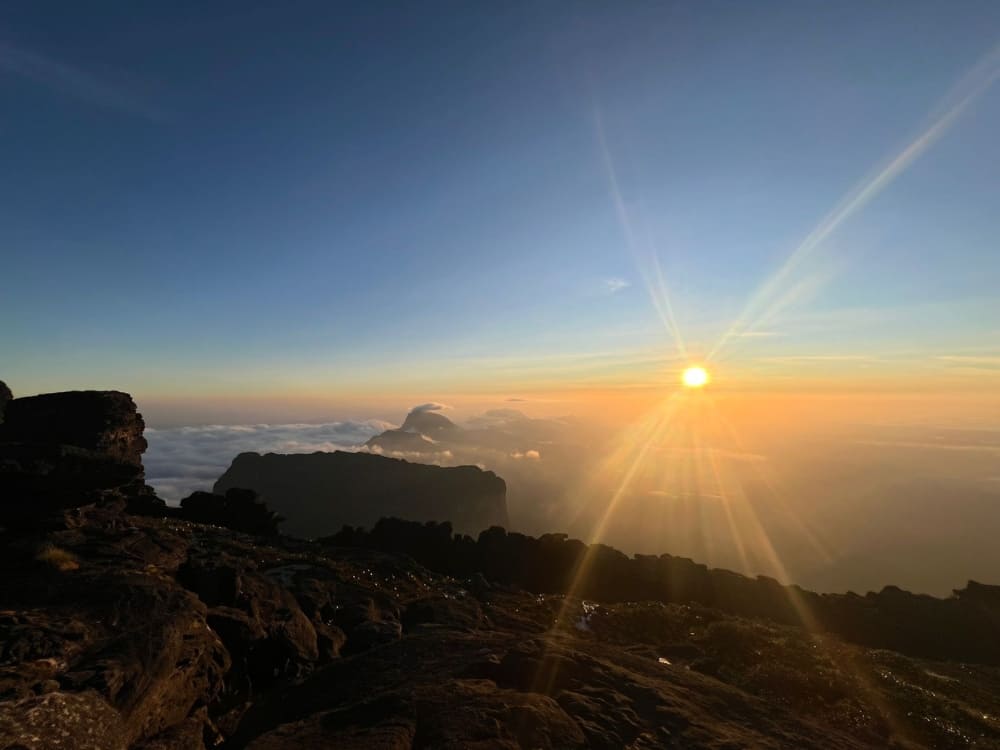
    The sun bursts with bright rays over a sea of white clouds and silhouetted table mountains, viewed from the rocky summit of Mount Roraima.
    .

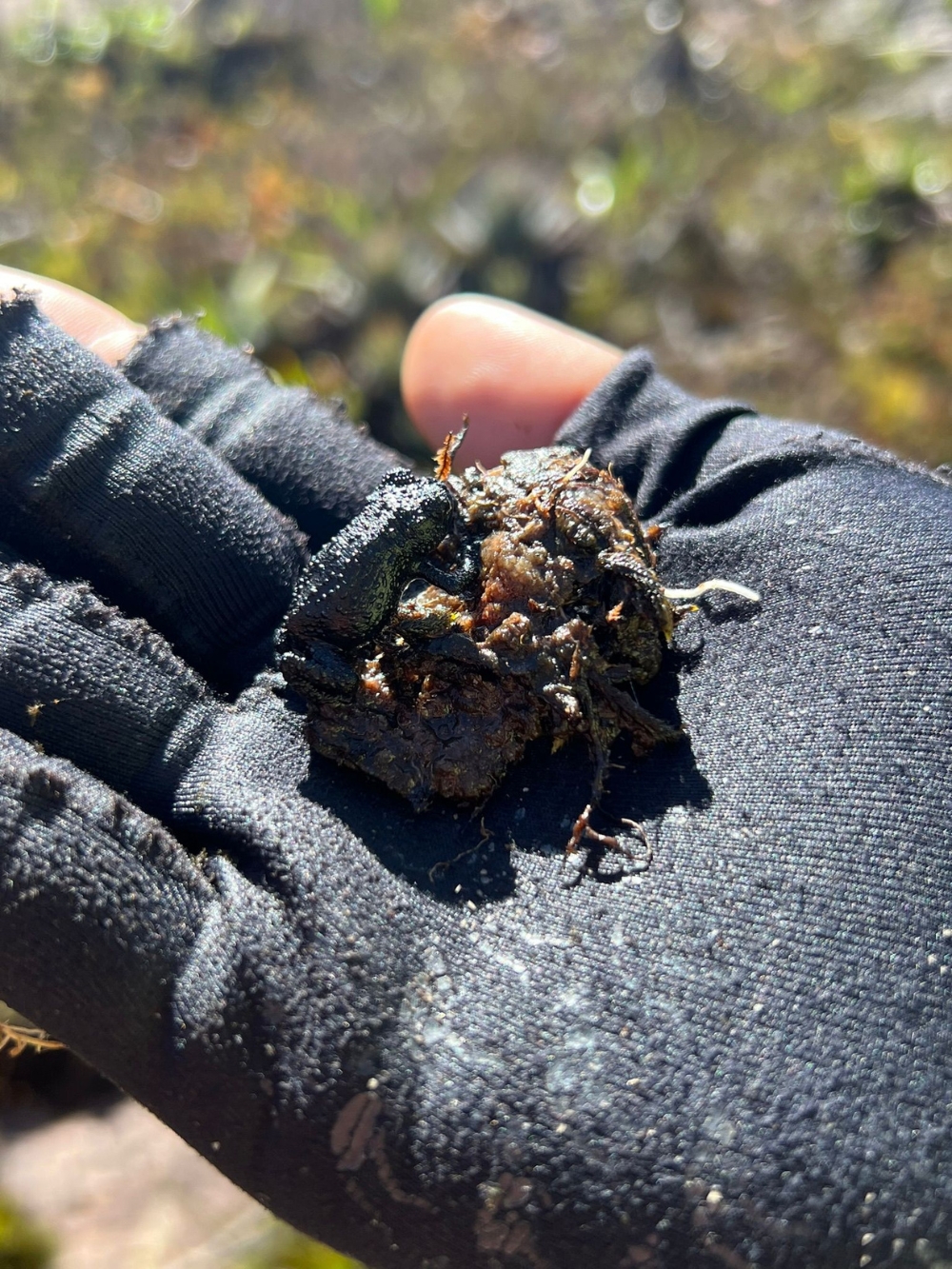
    Once at the top, the ecologist in Olivia came alive. She was particularly amazed by the tiny, thumbnail-sized endemic frogs that crawled through the spectacular Crystal Valley, where the rocky landscape suddenly transforms into a field of sparkling jewels.

    “Through it all, the guides fostered this deep reverence for the mountain” she says. “They emphasized a strict ‘do no harm’ philosophy to protect such a sacred and fragile environment. It changed how I viewed our impact on these spaces.”

    👉 Read more: Women in ecotourism: female presence that makes things happen

    Beyond the canopy

    Mount Roraima was only the beginning. Empowered by the climb, Olivia continued on a massive backpacking tour through Bolivia, Peru, Colombia, Ecuador, and Mexico. Her thirst for nature eventually led her to the Bolivian Amazon, where she experienced a heart-pounding moment in the pitch-black jungle.

    “I was standing right beside my guide with our flashlights off, just listening,” Olivia remembers. “Suddenly, we heard it—the growl of a jaguar, just meters away in the bushes. I was scared, but it was so cool.”

    Returning home to New Zealand, Olivia reflected on how the journey crossing the planet had changed her. Traveling gave her a new lens to examine the relationships between people and nature. More importantly, conquering the tepui and navigating foreign countries solo gave her a newfound sense of freedom and confidence.

    “If I had a message for other women, it would be that we’re lucky to live in a day and age where it’s accessible for women to travel alone.” Olivia says. “Just grab that opportunity and use it to see the world. It’ll benefit you as a person, and there will be other women that you meet along the way that are doing the same thing, so you don’t have to feel alone.”

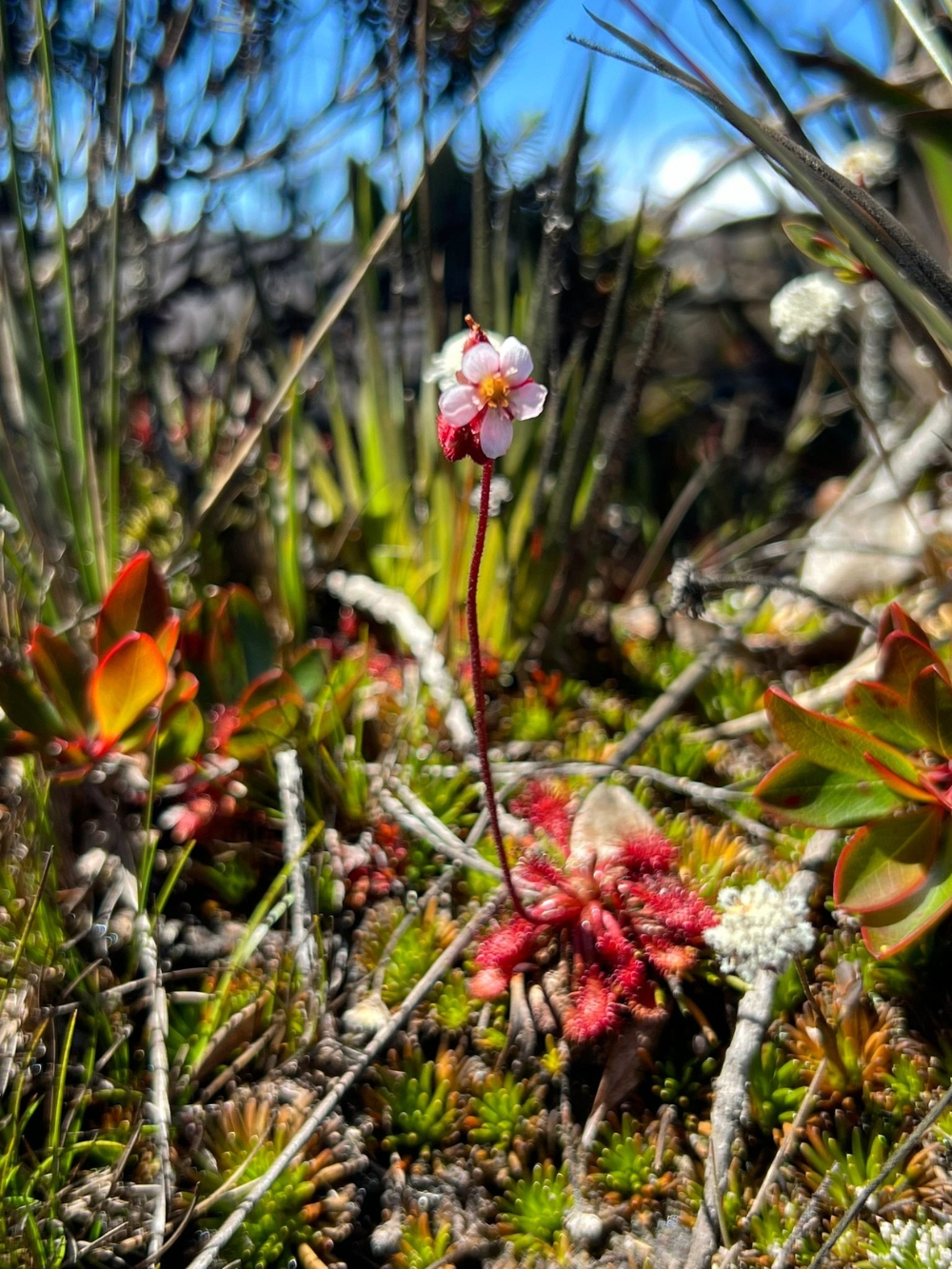
     A delicate pink and white flower with a red stem grows among low-lying green and reddish vegetation on Mount Roraima.
    .

    👉 Read more:

    Delving into the deepest parts of nature with PlanetaEXO

    Olivia was initially fearful of such a demanding journey, but she was also quickly reassured in terms of safety by PlanetaEXO and our local partners.

    As an ecotourism platform specializing in adventure tours in Brazil, we take care of every step of your vacation planning to make sure you have a safe, unforgettable experience while making a positive impact on the planet and local communities. Contact us now!

  • How one Brazilian Woman Conquered her Fears and Found Herself Into the Deep Jungle

    How one Brazilian Woman Conquered her Fears and Found Herself Into the Deep Jungle

    For Women’s Month, meet Mariana Sampaio, a young solo traveler who explored Vale do Pati and the Amazon Rainforest

    For Mariana Sampaio, a 26-year-old electrical engineer, “vacation” used to mean a simple break from the daily grind. But after a month spent traversing the rugged mountains of the Vale do Pati and the flooded forests of the Amazon, she returned with an entirely different definition: transformation.

    As a Brazilian woman traveling solo for the first time, Mariana wanted to see what she was made of while ensuring she felt supported. That’s why she turned to PlanetaEXO, an ecotourism platform specializing in adventure tours in Brazil, and trusted us to coordinate back-to-back trips that would span thousands of kilometers.

    From the high-altitude silence of Chapada Diamantina to the rhythmic pulse of the Amazon Rainforest, she found more than she was expecting. In celebration of Women’s Month, discover Mariana’s story below.

    Finding strength in the mountains

    The journey began in the heart of Bahia, at Vale do Pati, in Chapada Diamantina. For five days, Mariana disconnected from the digital world and pushed her physical limits further than she thought was possible.

    Climbing the iconic Morro do Castelo was a true test of endurance. “The physical part was challenging,” she admits. “When I went back home, I didn’t exercise for a few days. My knee… I couldn’t even stand up straight.”

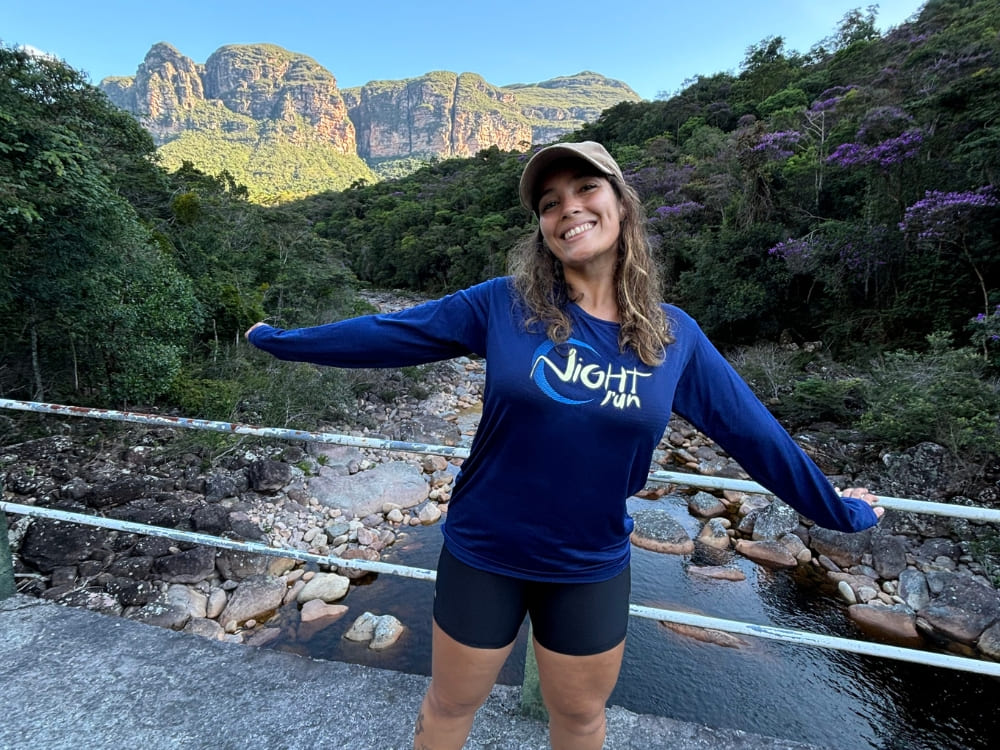
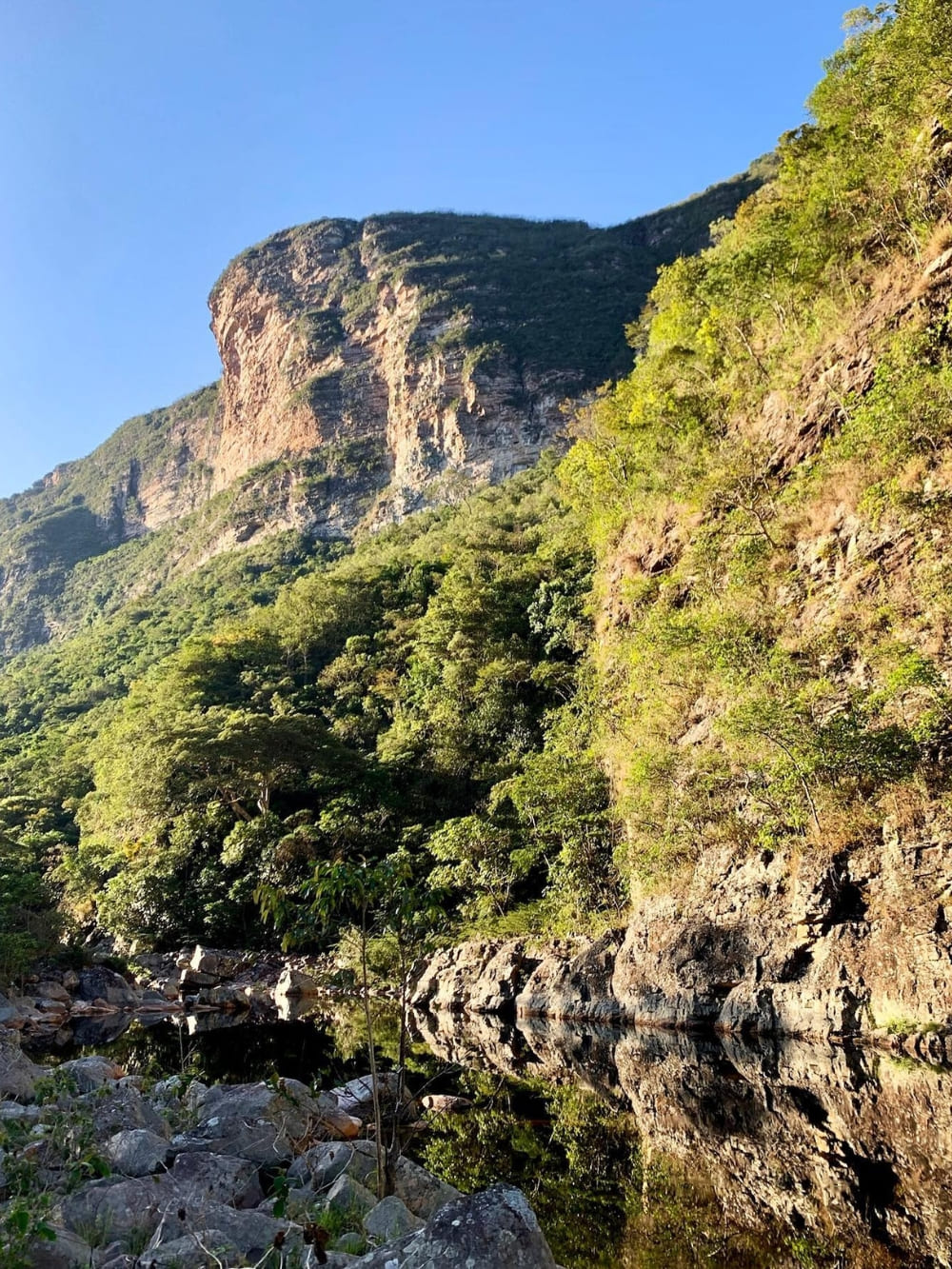
    A smiling Mariana stands with arms outstretched on a bridge over a rocky river with the rugged mountains of Vale do Pati in the background.
    .

    But in the middle of that physical struggle, she found a different kind of strength—human connection. Within her trekking group, she formed an unlikely, profound bond with a German couple, Mary and Piet.

    “It was as if it had to happen at that moment. I didn’t feel alone for a single second,” Mariana reflects, also recalling the connection with other travelers and tour guides. 

    👉 Read more: Why Brazil’s remote outdoors are becoming a haven for foreign female travelers

    Where culture meets the jungle

    As the mountain air gave way to the humid breath of the north, Mariana headed to a jungle lodge in the Amazon. If the mountains were about physical endurance, the jungle was about immersing herself in an entirely different reality.

    For her, the highlight wasn’t just the dense greenery or the diversity of Amazon animals—though she did photograph a small alligator and spot a giant snake—it was the people who call the river home. “What I liked most in the Amazon was the contact with the people… learning about their culture and how they live differently.” 

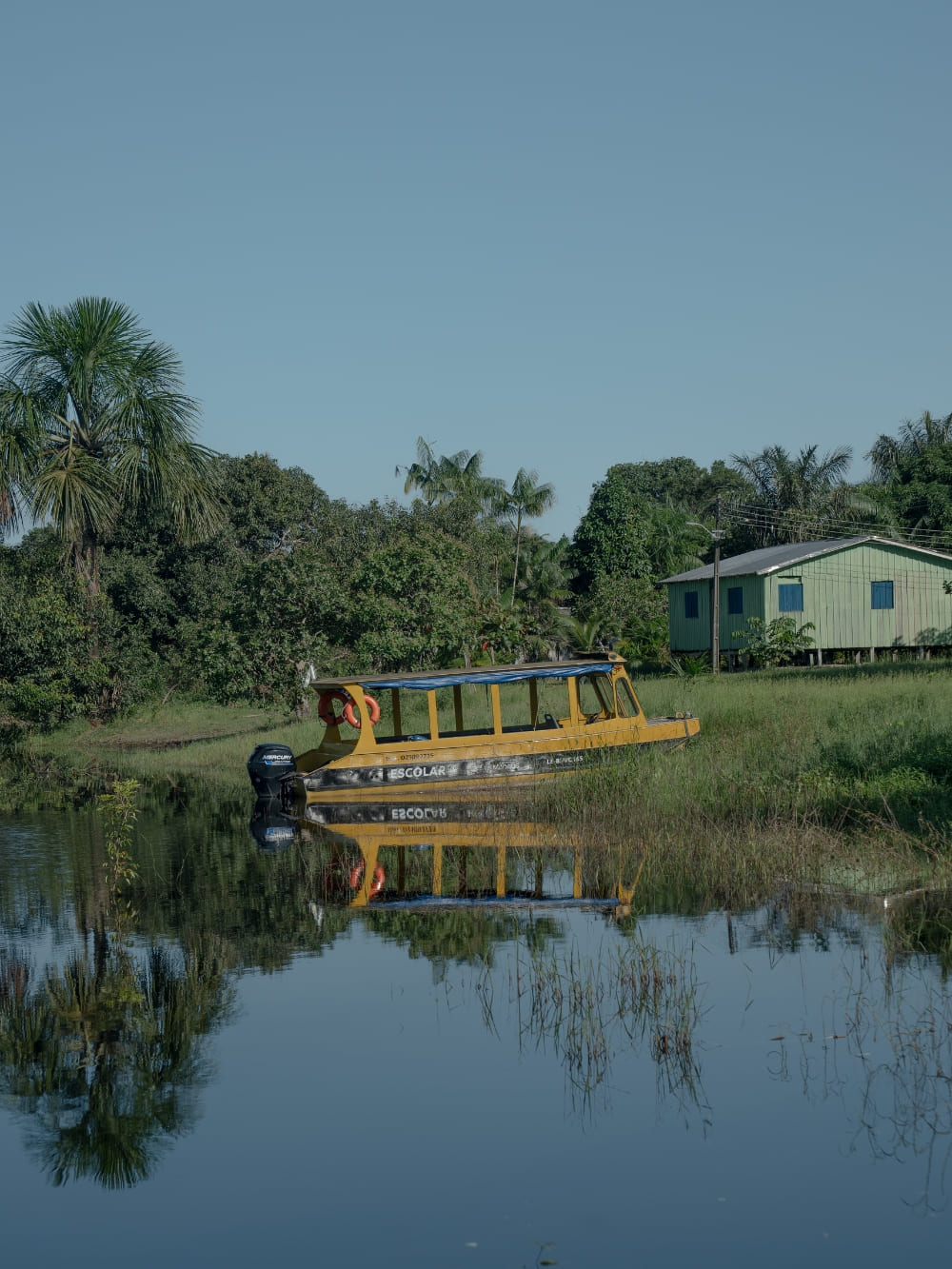
    She was fascinated by the daily rhythm of the river, particularly the sight of local children commuting to school by boat. There, she realized that she wasn’t just visiting a forest; she was witnessing a resilient way of life.

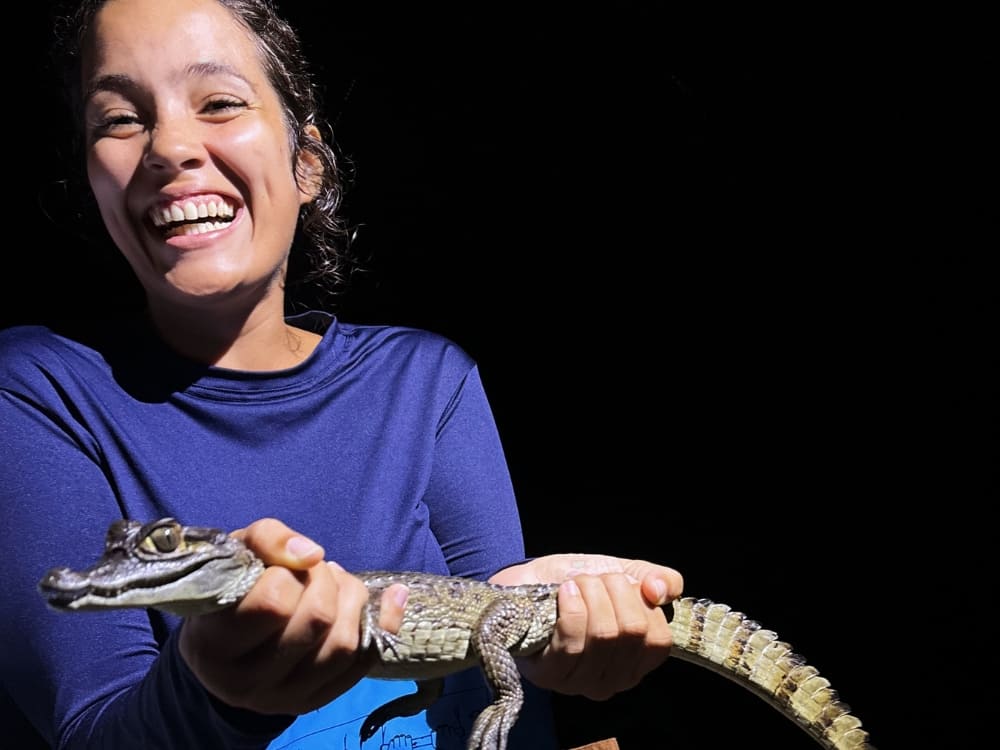
    Mariana smiles enthusiastically while safely holding a small alligator during a night excursion in the Amazon.
    .

    👉 Read more:

    Confronting the unexpected

    Despite all the good things, solo travel in the wild obviously brings moments that test your nerves.

    Deep in the forest, Mariana faced a moment of genuine terror when she was stung by a large wasp (marimbondo). “I thought, ‘Am I allergic?… I’m going to die here without the people I love,’” she recalls, now finding the situation funny.

    But this is where the expertise of her guide became her lifeline. He stayed calm, monitored her reaction, and stayed by her side until the pain subsided. It was a pivotal moment of self-discovery when she realized she could handle the unexpected because she had a support system that truly knew the land.

    👉 Read more: Ecotourism in Brazil boosts solo travel for women through planning and support networks

    The spark of empowerment

    Why take the risk of a solo adventure? For Mariana, the answer is simple: it’s the ultimate form of courage and self-confidence. She went into the trip as someone who was naturally more reserved, but she came back with a transformed sense of morale.

    “Traveling solo changed my view of the world because when you live in a society that sometimes doesn’t allow women to dream, this is like the first spark of empowerment,” Mariana reflects. “It’s a true conquest to be able to look back and say, ‘I did this, and I did it alone.’”

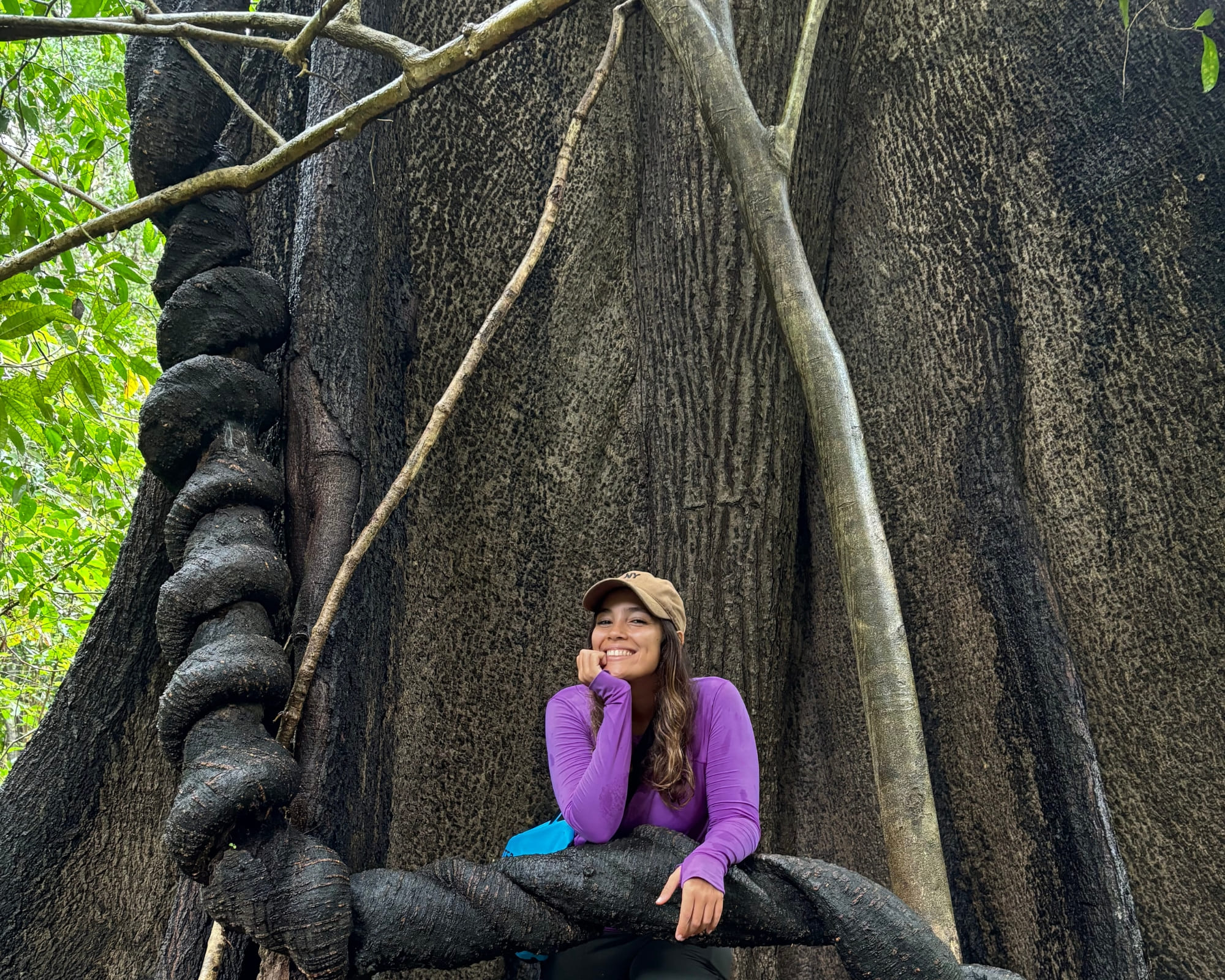
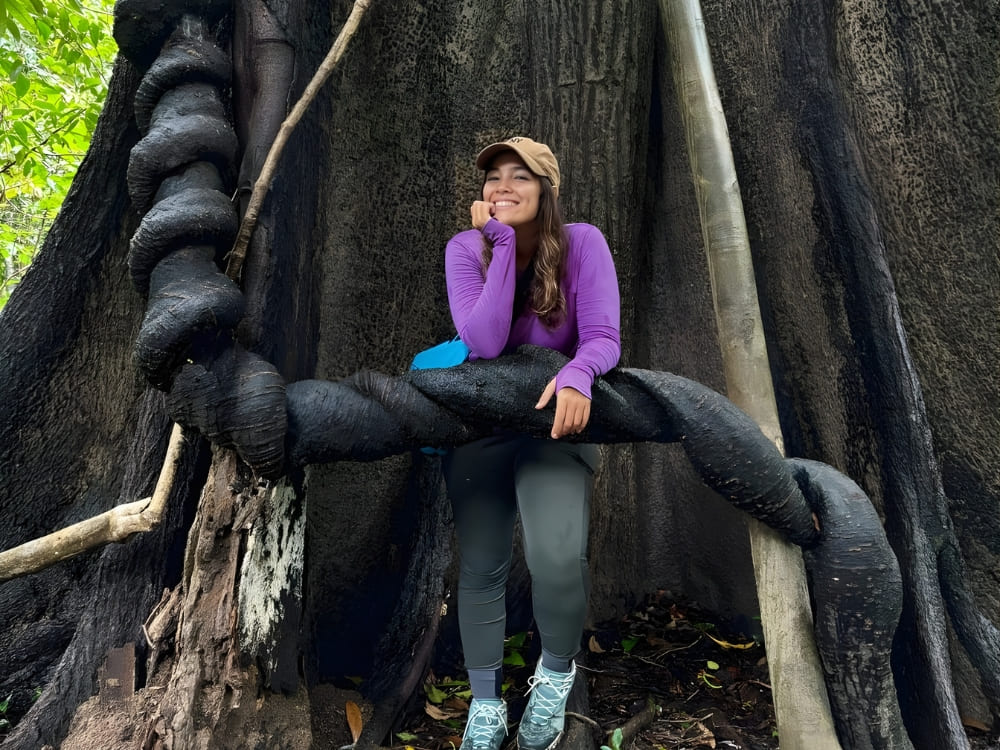
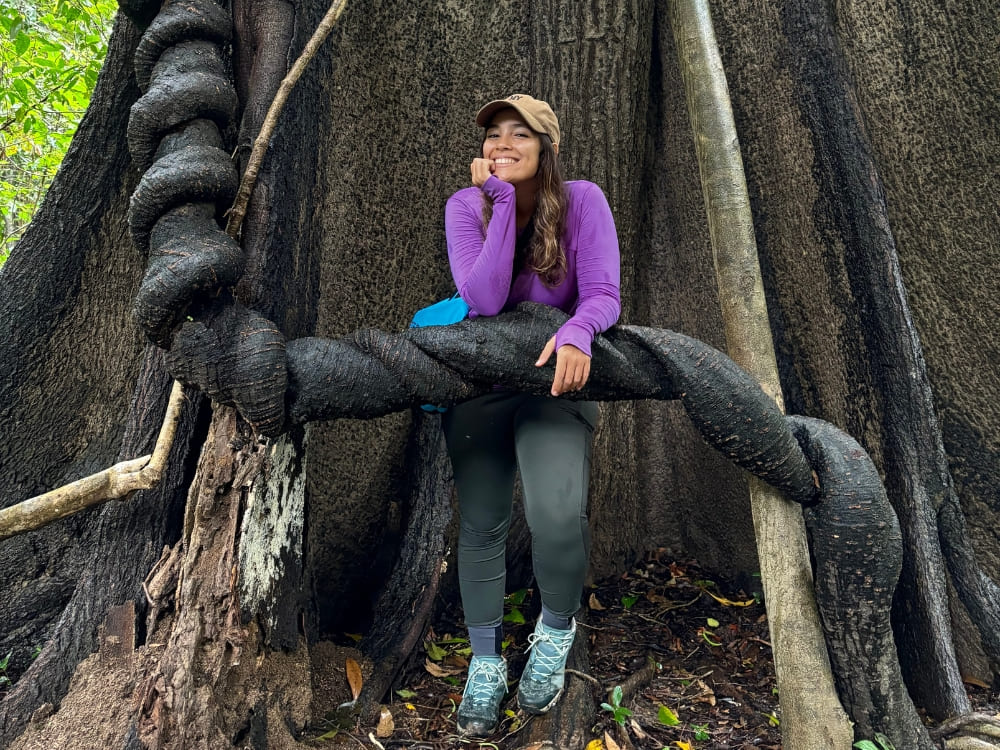
    Mariana rests on a giant twisted tree root while exploring the dense greenery of the Amazon jungle.
    .

    She encourages anyone hesitant about the “what-ifs” to look past the fears. “Life is only one… and today I know myself much more because I met other people.”

    Her journey is a reminder that the most beautiful view isn’t just at the top of a mountain or the edge of a river, but it’s the person you become when you decide to go anyway. “If I can do it, you can do it too,” she completes.

    👉 Read more: Women over 50 break stereotypes and prove that adventure knows no age

    Find your self-confidence through travel with PlanetaEXO

    Mariana overcame her fears and discovered a whole new side of herself by believing in her own capability. Deep in the wild Amazon or trekking across Vale do Pati’s trails, she got more than she bargained for.

    As an ecotourism platform specializing in adventure tours in Brazil, PlanetaEXO helps travelers from all over the world to explore nature in a responsible, fulfilling way. Prioritizing safety, comfort, environmental conservation, and the support of local communities, we work tirelessly to ensure authentic travel experiences. Contact us now!

  • From Seattle Rain to Brazilian Sun: Samantha’s Solo Journey Through the Amazon and Jalapão

    From Seattle Rain to Brazilian Sun: Samantha’s Solo Journey Through the Amazon and Jalapão

    Samantha Sage shares her experience of solo exploring through Brazil to inspire female travelers in honor of Women’s Month

    When the cold, rainy winter of Seattle became too much for Samantha Sage (@sage_gonewild), a 34-year-old tech consultant from the United States, she realized she wasn’t just looking for a vacation—she was looking for an adventure.

    With the freedom to work from anywhere, she packed her bags for a six-week solo trek across Brazil, a journey that would take her from the iconic beaches of Rio to the remote, almost mystical landscapes of the Amazon Rainforest and Jalapão.

    To explore these particular destinations, she trusted PlanetaEXO, an ecotourism platform specializing in adventure tours in Brazil, to ensure she had a safe, fulfilling trip. In honor of Women’s Month, we tell her story right below.

    Discovering the scale of the Amazon

    For Samantha, the Amazon was a revelation. While she had seen rainforests before, nothing prepared her for the sheer magnitude of the rivers. “You hear about the rivers in the Amazon being really big, but you don’t really conceptualize it until you’re there.”

    Staying at an Amazon jungle lodge, she enjoyed a uniquely intimate experience. As the only guest, she received personalized attention from guides who were born and raised in the region.

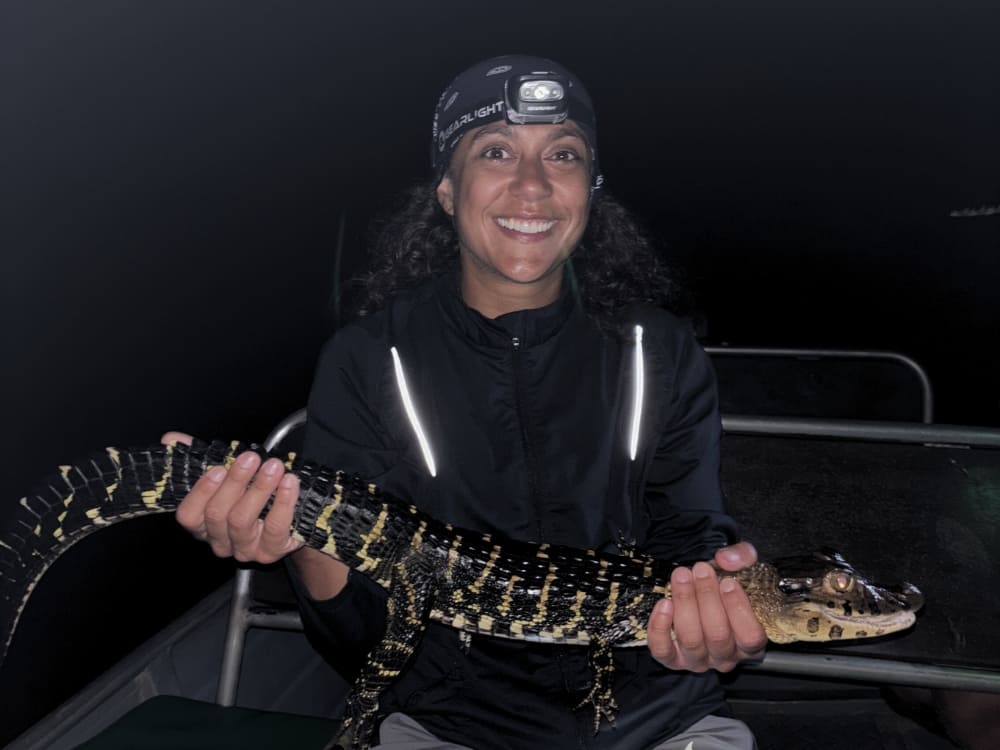
    Samantha Sage smiles while holding a small caiman during a guided nighttime ecotourism tour in the Brazilian Amazon.
    @sage_gonewild

    Her trip was filled with sightings of many Amazon animals, including a humorous moment when she mistook a sleek head in the water for something else.

    “I freaked out. My brain immediately thought it was an anaconda, but my guide looked at me like I was crazy, and he was like, ‘It’s an otter’” she laughs, saying how excited she was with the possibility of seeing the star of the Anaconda franchise in its natural habitat—though she was still happy to see the giant otter.

    👉 Read more:

    The spontaneous magic of Jalapão

    Samantha’s decision to visit Jalapão was sparked by a single, captivating photo of the Japanese Lagoon she saw online.

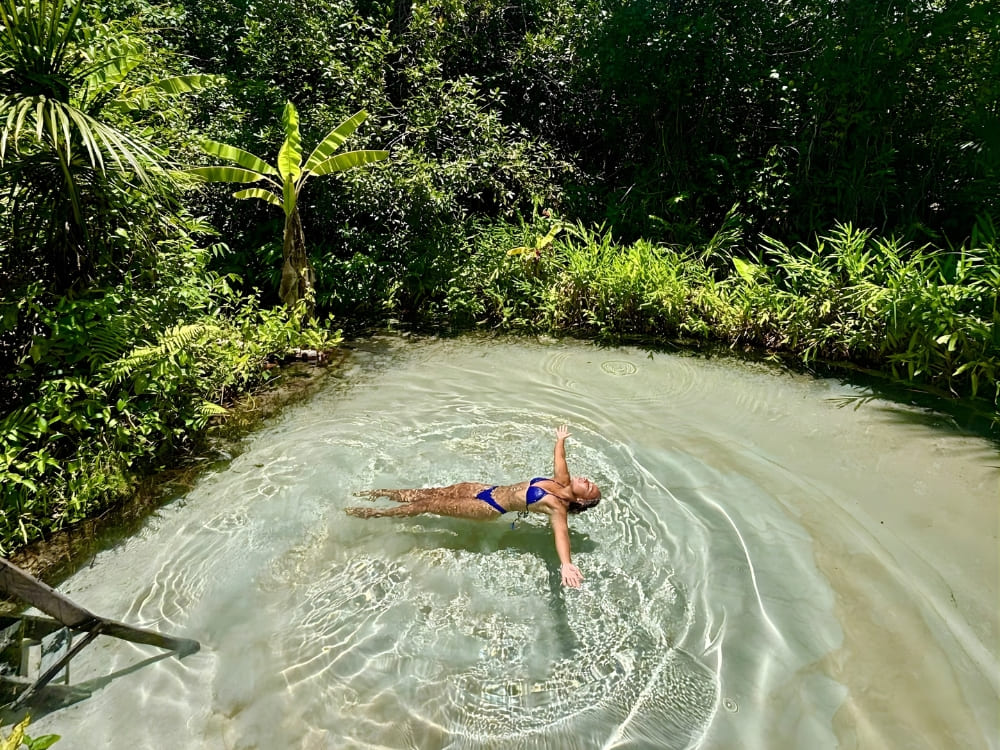
    Despite her admitted lack of planning, the impulsive choice paid off. She found herself mesmerized by the diversity of the scenery, from the golden dunes to the “fervedouros” (natural springs where the water’s pressure prevents you from sinking.)

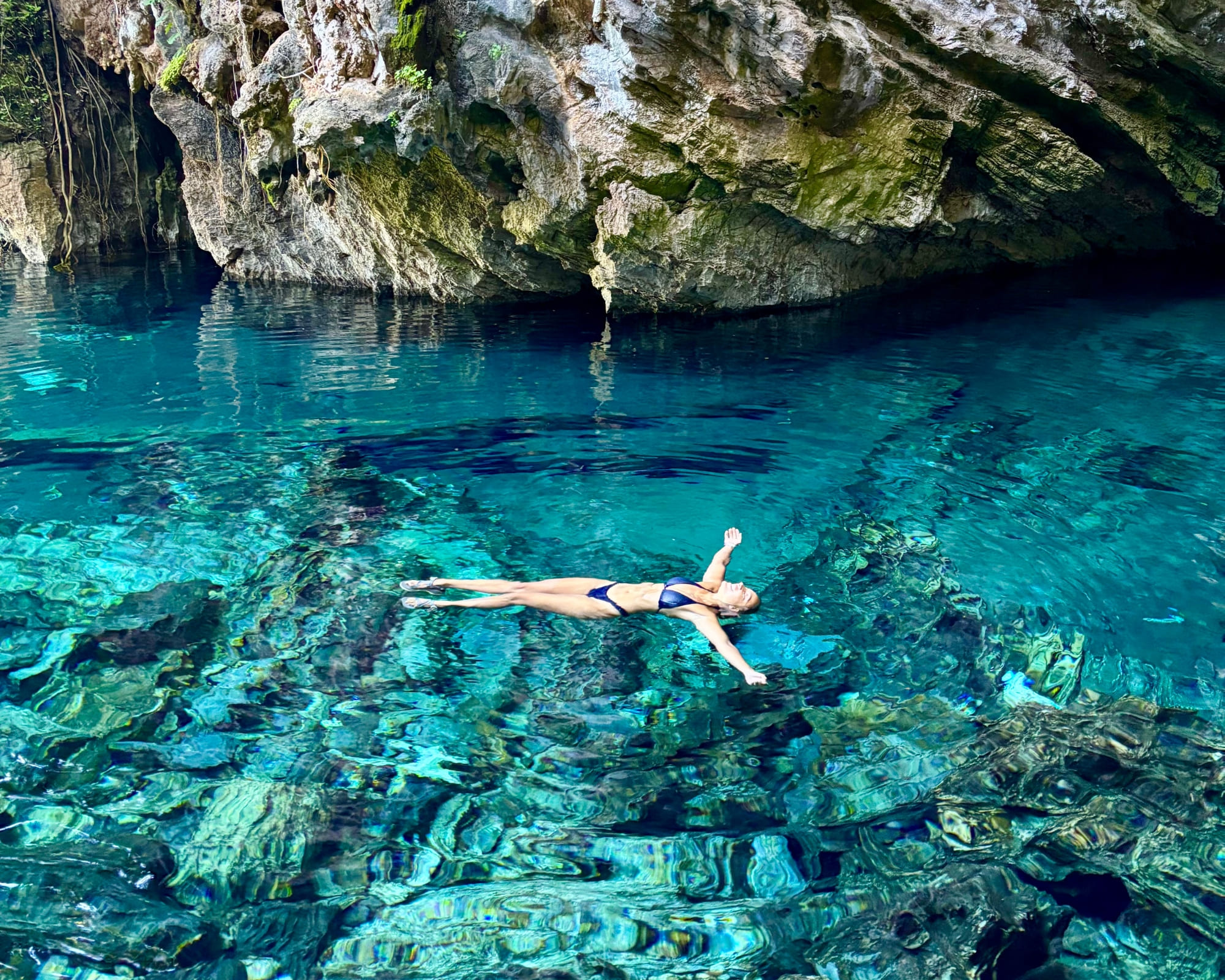
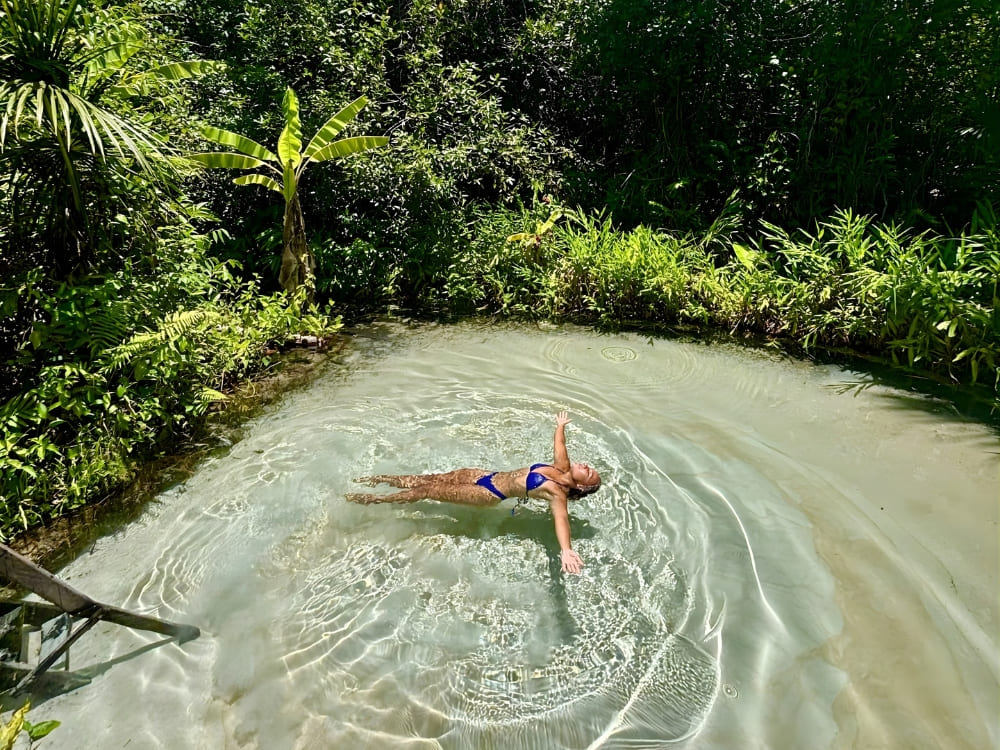
    Samantha Sage floats peacefully on her back in the crystal-clear waters of the Jalapão, Brazil.
    @sage_gonewild

    She credits much of the trip’s success to the professionals who guided her. “The guides can really make or break a trip,” she noted. “My guide was just amazing and made it so that the experience was even better than I expected.”

    👉 Read more: Women in ecotourism: female presence that makes things happen

    Empowerment through solo travel

    Beyond the stunning vistas, this trip was a deeply personal one. Samantha found that traveling solo in Brazil was important for her to grow into a stronger, more confident version of herself. “It really helped me overcome insecurities, like fostering comfort with my own unique personality” she explained.

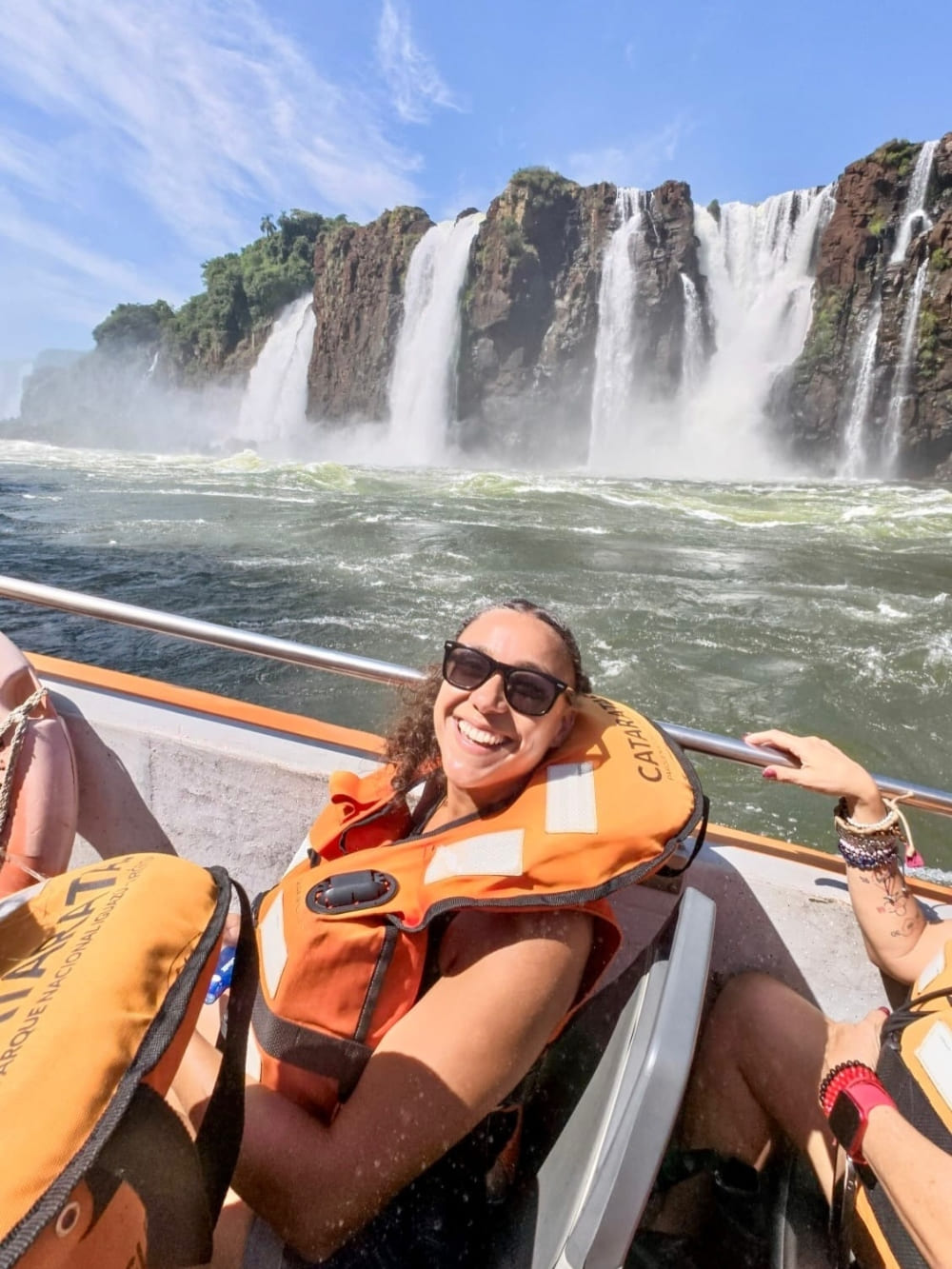
    Samantha Sage wears sunglasses and an orange life jacket while smiling on an adventure boat ride near massive cascading waterfalls in Brazil.
    @sage_gonewild

    Despite receiving cautionary advice from others before her departure, Samantha felt safe and welcomed by the “lively and patient” Brazilian people. She now encourages other women to take the leap and explore the world on their own terms. Her biggest piece of advice is to avoid overthinking; she believes that if you spend too much time dwelling on potential fears, you’ll never leave home.

    For Samantha, a bit of impulsivity, when balanced with safety, can be a wonderful thing. She urges future adventurers to stay flexible and be okay with plans changing, as some of her best experiences happened when things didn’t go according to script.

    👉 Read more:

    Booking your trip with PlanetaEXO

    Though Samantha is all for flexibility, PlanetaEXO helped her to structure a safe, enjoyable trip in two different destinations. After all, even spontaneity needs some organizing.

    We are an ecotourism platform specializing in adventure tours in Brazil that helps travelers from all over the world to plan their trips according to their preferences and needs. From booking accommodations to choosing the best itineraries, our team is ready to assist you with the vacation of your dreams. Contact us now!

  • Ecotourism in Brazil boosts solo travel for women through planning and support networks

    Ecotourism in Brazil boosts solo travel for women through planning and support networks

    From Roraima to Jalapão, six travelers from Brazil and around the world show how exploring nature alone can be a life-changing experience

    “The feeling can be a bit daunting, but it’s liberating. I know myself better because I allowed myself to meet other people,” said Mariana Sampaio (26), an electrical engineer from Bahia who traveled on her own to Chapada Diamantina and the Amazon. The initial fear existed, but facing it was precisely what turned the journey into a personal milestone.

    Smiling woman wearing a purple shirt, leaning against the thick, twisted roots of a giant tree in the middle of a lush green forest.
    .

    For many women, the idea of traveling alone raises concerns about loneliness and safety. However, a growing movement within national ecotourism has been showing—with planning, careful selection of itineraries, and the support of qualified professionals, it is possible to transform solo travel for women into a structured and welcoming experience.

    For Women’s Month, PlanetaEXO, an ecotourism platform specializing in adventure tours in Brazil, gathered the stories of six national and international travelers who chose to explore Brazilian nature on their own. Read more below!

    Traveling alone doesn’t mean being lonely

    One of the myths of traveling alone is loneliness. In practice, many women report the opposite, stating they became more open to making new connections.

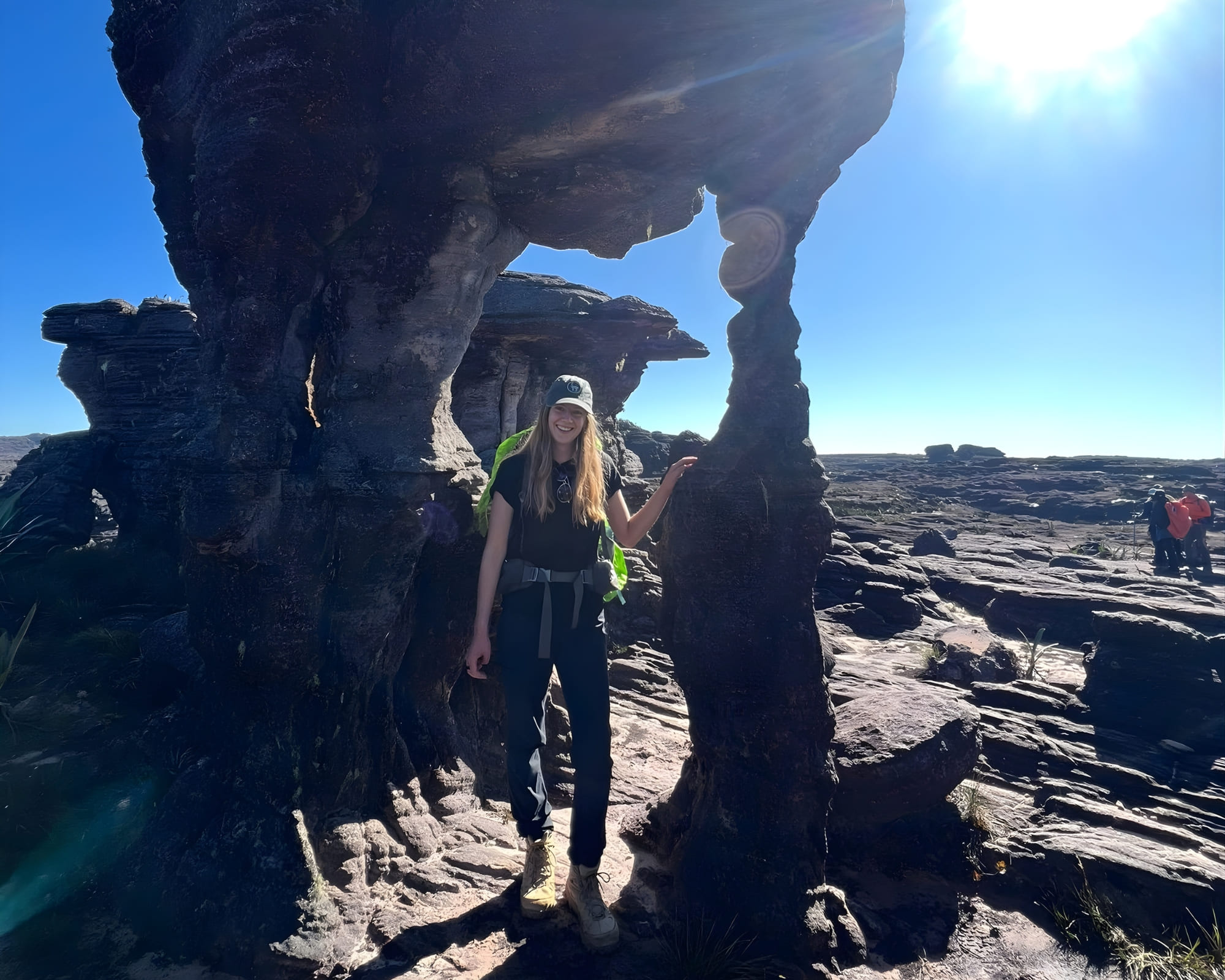
    When New Zealand ecologist Olivia Bird (24) decided to climb Mount Roraima, she feared she would be the only foreigner in the group. This fear quickly dissipated as she was welcomed by Brazilian female solo travelers and interacted with Indigenous women working on the expedition. “There are other women doing the same. You don’t need to feel alone,” she states.

    Besides Olivia, the travelers report how the experiences of hiking, camping, and cultural connection deep within Roraima help create bonds between visitors, guides, and local communities.

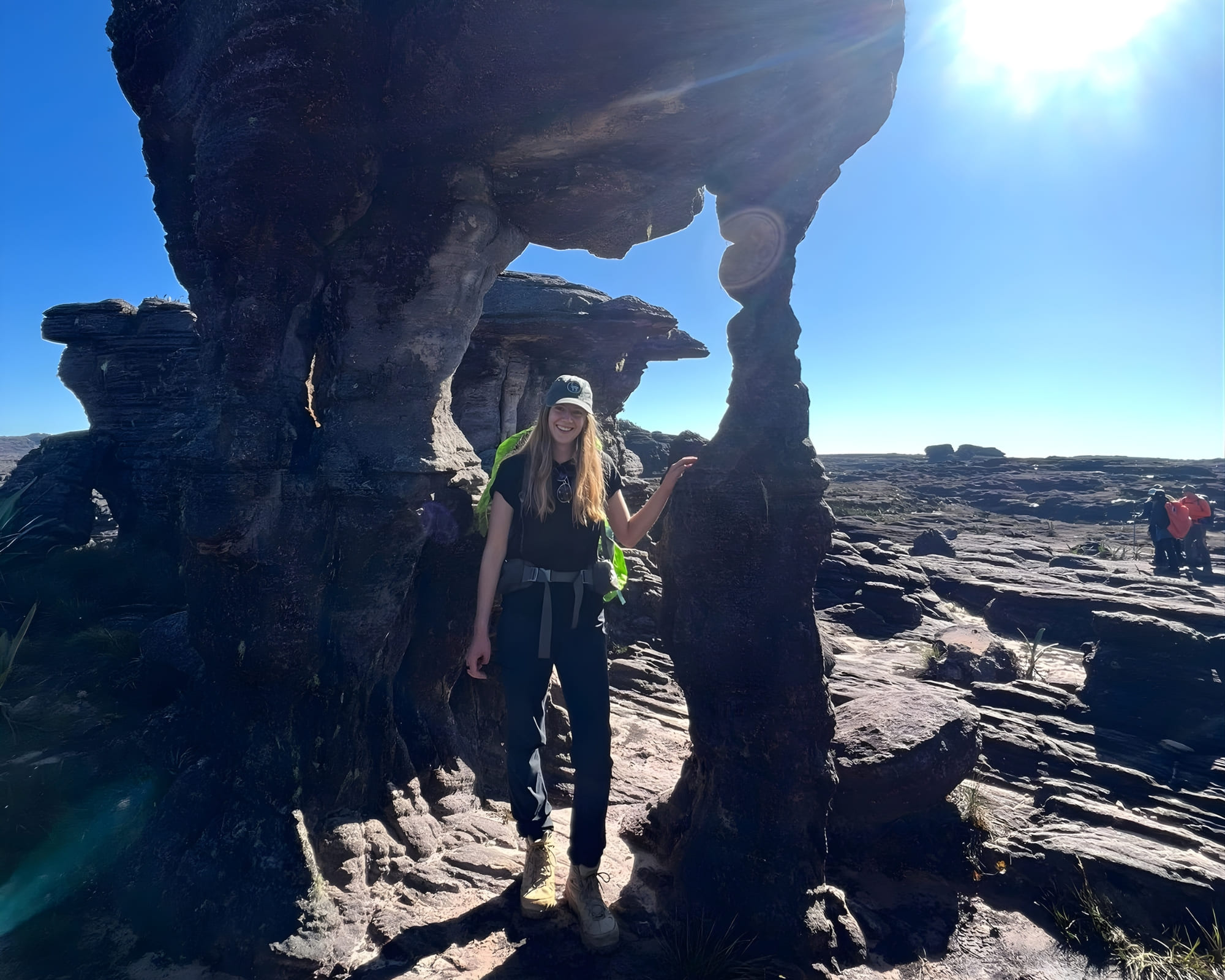
    Solo traveler Olivia Bird stands between ancient rock formations during her Mount Roraima trek in Brazil.

    👉 Read more: Why Brazil’s remote outdoors are becoming a haven for foreign female travelers

    Structure makes a difference for those concerned about safety

    The concern with safety in Brazil is real, but the reality of nature destinations is surprising. Biologist Kristina Wagner (44), from Germany, outlined a complete plan before exploring the Amazon and the Pantanal.

    “I felt safe the entire time. People were always trying to help me,” she reports. She also highlights that peace of mind came from the decision to travel with experienced operators and local guides who know the routes, protocols, and regional dynamics.

    This is also reinforced by Samantha Sage (34), from the US, who visited Jalapão and the Amazon. “The guides can really make or break the trip, and mine made all the difference. Besides that, traveling alone helped me have even more confidence in my own personality.”

    Woman floating on her back with her arms spread in crystal clear light blue waters, surrounded by tropical trees and dense green vegetation.
    .

    👉 Read more: Women in ecotourism: female presence that makes things happen

    Nature as a well-deserved break, with no age limits

    For marketing manager Andreia Yamasaki (35), from São Paulo, immersing herself in nature is a necessity for self-care and mental health amidst the stress of her daily routine. “It’s a breath of fresh air, and I won’t deprive myself from going somewhere I want just because I don’t have company,” she asserts.

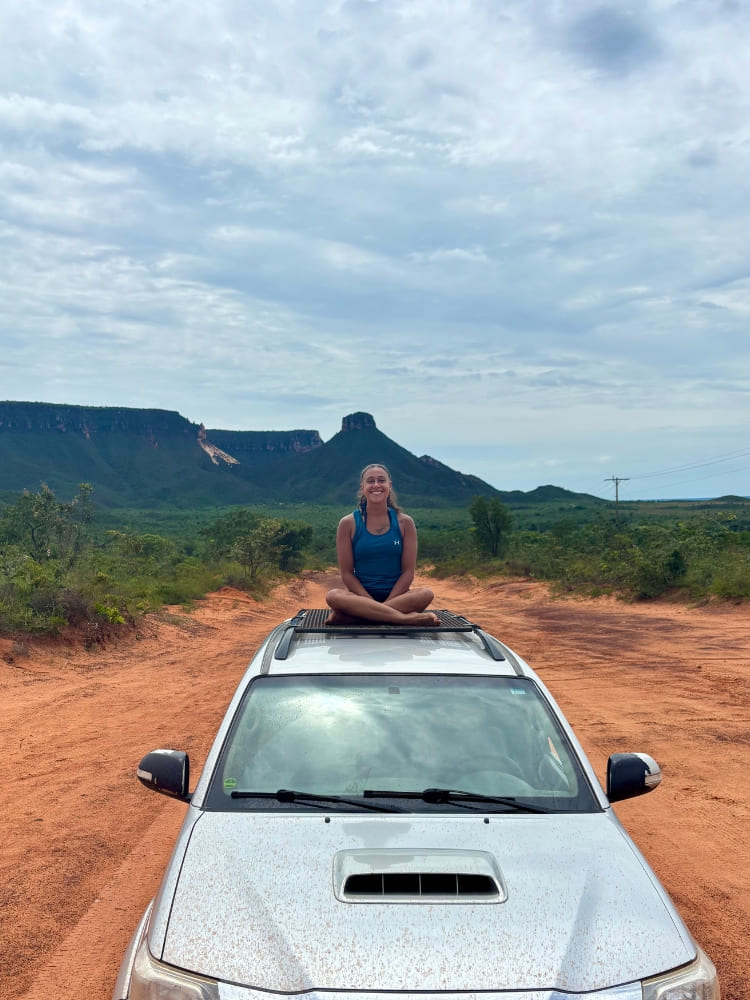
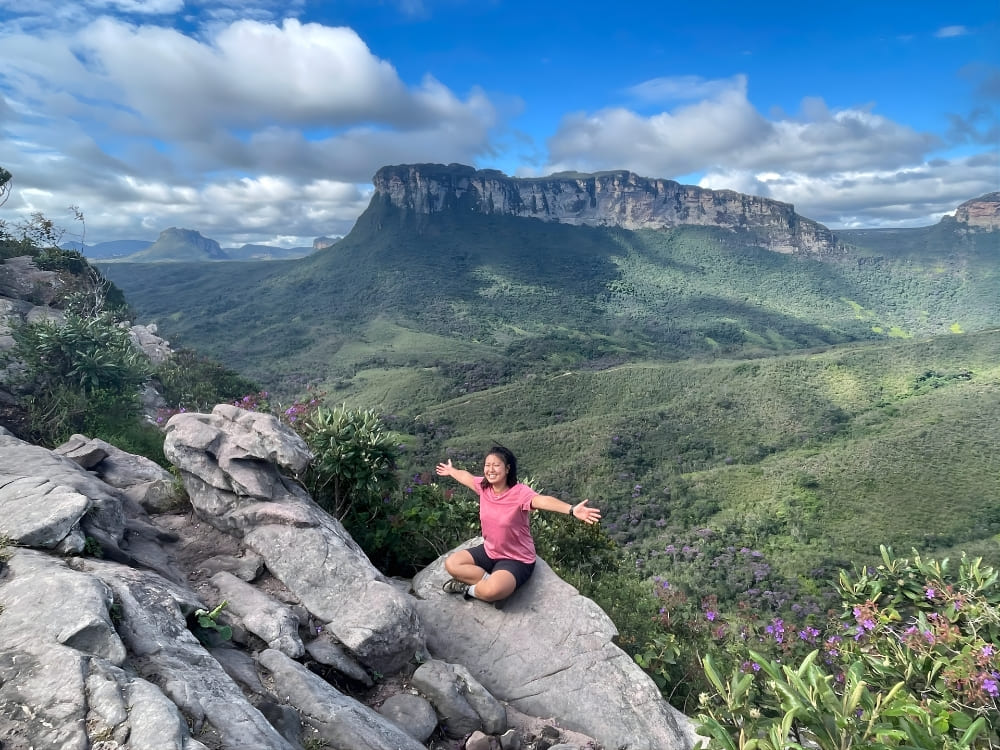
     Smiling woman sitting cross-legged with open arms on a rock, admiring a green valley with an imposing flat-topped mountain in the background.
    .

    The search for this break knows no age limit. Dutch psychotherapist Katharina Bongaertz (60) is PlanetaEXO’s most frequent traveler. After raising her children and building a successful career, she found a new chapter for her passion for traveling in Brazil. Alongside the Yanomami people, she climbed Pico da Neblina, the highest peak in the country. “It’s important to challenge yourself, find new borders on all levels, and pass them.”

    👉 Read more: Women over 50 break stereotypes and prove that adventure knows no age

    Advice from solo adventurers

    1. “The 10-Minute Rule” (Andreia): Allow yourself to complain for 10 minutes when facing an unforeseen event. After that, move forward and keep in mind that the unexpected is also part of the experience.
    2. Move on even if you’re afraid (Mariana): Fear is natural, but it cannot take over. What matters is knowing the difference between real fear and mental paralysis.
    3. Prioritize structure and local guides (Kristina and Olivia): Choosing operators committed to responsible tourism increases safety and strengthens the local economy. Trust qualified professionals.
    4. Be open to improvisation (Samantha): The unexpected is part of the experience and often becomes the best stories. Planning is important, but it shouldn’t be an obstacle to experiencing the extraordinary.

    👉 Read more: 5 adventure trips for women: safety, nature, and freedom

    Solo travel for women at PlanetaEXO

    Women traveling alone only worry about enjoying every second of their vacation when exploring nature with PlanetaEXO, an ecotourism platform specializing in adventure tours in Brazil.

    Working with the best local operators in different Brazilian destinations, we consider the preferences and needs of each traveler to guarantee their safety, comfort, and authentic experiences. Contact us now!

  • Why Brazil’s Remote Outdoors are Becoming a Haven for Foreign Female Travelers

    Why Brazil’s Remote Outdoors are Becoming a Haven for Foreign Female Travelers

    Trading fear for freedom, solo female adventurers are discovering deep human connection and breathtaking scale in nature destinations

    When planning a trip to South America’s largest country, the biggest hurdle many foreign women face isn’t the language barrier—it’s overcoming international misconceptions and alarming headlines about safety. Yet, those who push past this initial apprehension are rewarded with an entirely different reality once they step into Brazil’s natural wonders.

    Away from the big cities, a standard vacation quickly transforms into a deeply personal journey of human warmth and self-discovery. Immersed in the great outdoors, these adventurers are met with a welcoming spirit that travel guides simply can’t capture, creating experiences that fundamentally shift how they view the world.

    In honor of Women’s Month, PlanetaEXO, an ecotourism platform specializing in adventure tours in Brazil, gathered stories from foreign female travelers who ventured into some of the country’s most impressive natural scenarios to champion how women can and should occupy all spaces.

    Endless horizons: Freedom for international adventurers

    For foreign female travelers, the sheer scale of Brazil’s natural landscapes is awe-inspiring. From the United States, Samantha Sage (34), who traded Seattle’s rainy winter for a six-week deep dive into Brazil, felt it immediately.

    “You hear about the rivers in the Amazon being really big, but you don’t really conceptualize it until you’re there,” she says. She was also completely enchanted by the fervedouros, the crystal-clear natural springs of Jalapão (Tocantins).

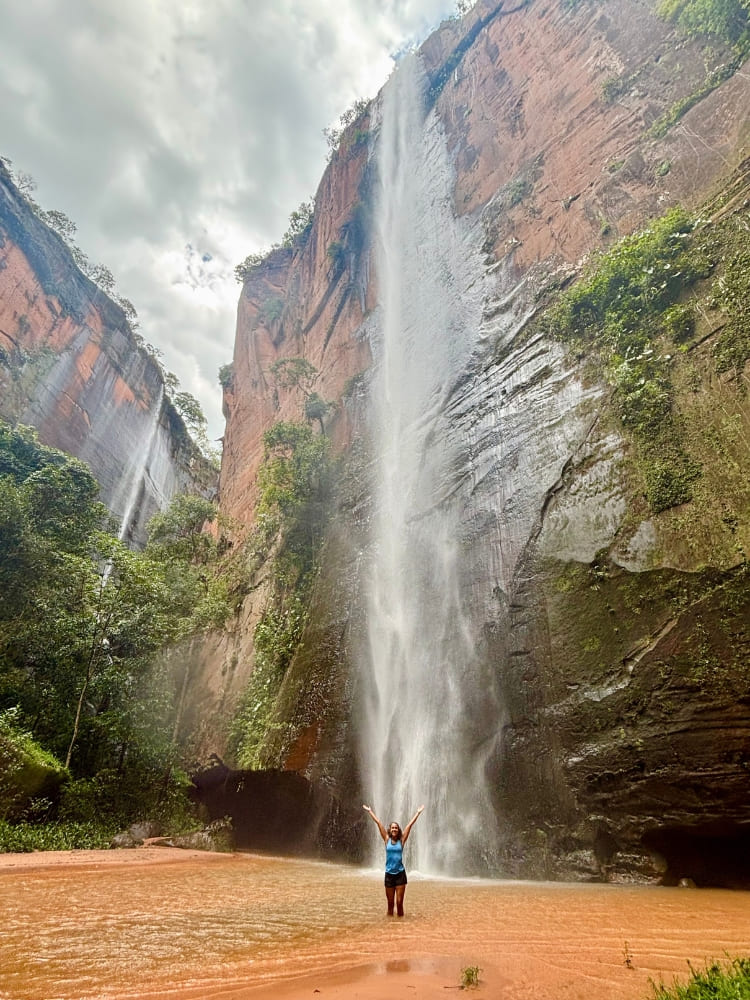
    Female traveler floating peacefully in the crystal-clear waters of a fervedouro natural spring in Jalapão, Brazil.
    @sage_gonewild

    British freelance writer Emma Phillips (30) found a similar sense of peace while navigating a five-day river cruise along the Rio Negro in the Amazon. She describes the river as offering a sense of “enormous openness and tranquility,” which contrasted beautifully with the intense and encompassing forest.

    Katharina Bongaertz (60), from the Netherlands, was similarly captivated by this greatness. She originally planned a one-month trip, but Brazil drew her in for five. Proving that adventure has no age limit, she hiked Pico da Neblina and explored Chapada Diamantina. “I prefer vast, open spaces without fences, where I can hike freely. It’s empowering, and I take that strength home with me every time,” she says.

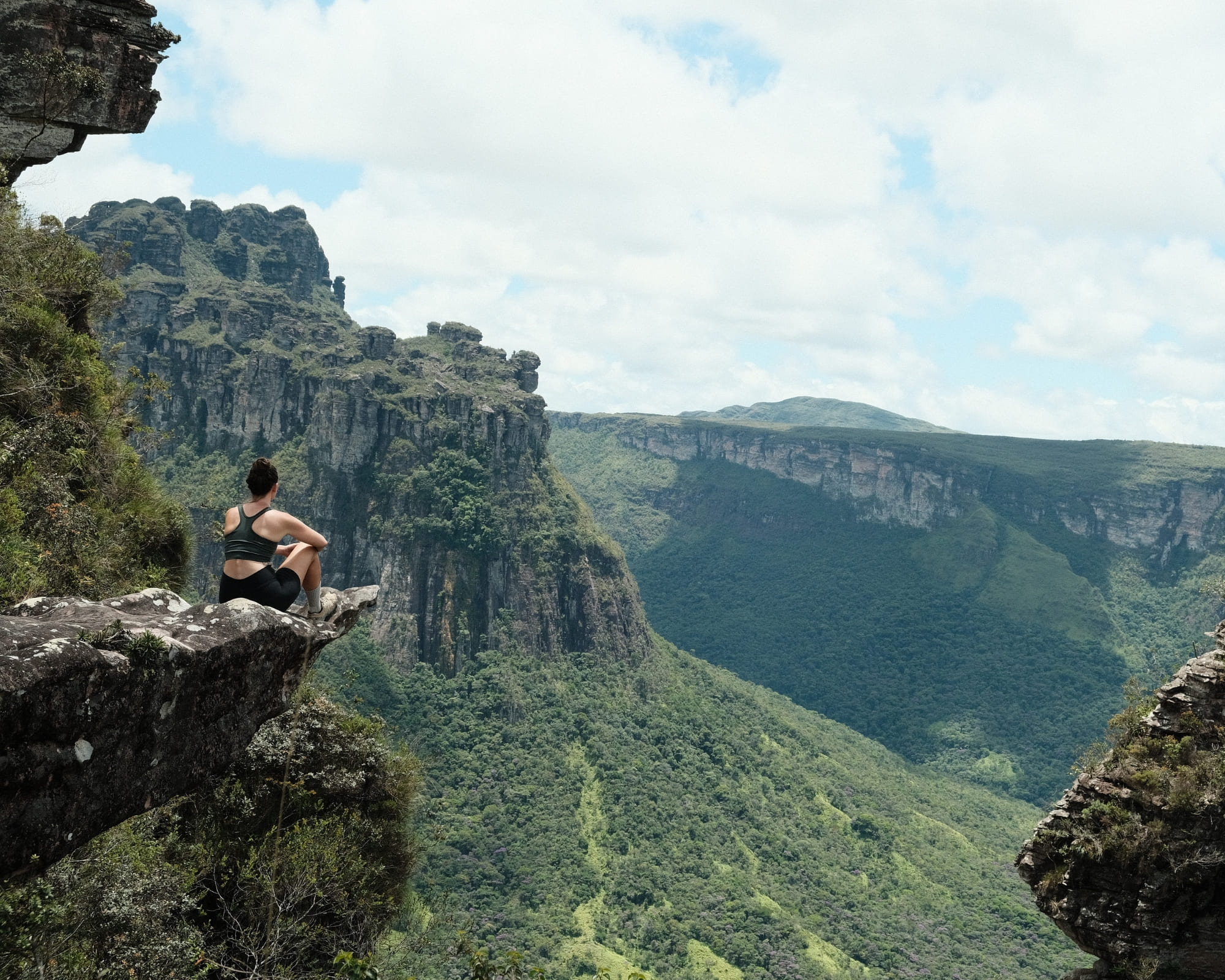
     Female adventurer sitting on a rock edge admiring the vast and open green landscapes of Chapada Diamantina.
    .

    👉 Read more: Women over 50 break stereotypes and prove that adventure knows no age

    Indigenous women and matriarchy

    While the wildlife and landscapes are stunning, it was the local women who left the deepest impact. Olivia Bird (24), an ecologist from New Zealand, traveled across the globe to see the natural wonders of Mount Roraima up close.

    Along the trek, she was blown away by the resilience of the Indigenous support team, particularly the women. “I saw women half my size, wearing flip-flops, effortlessly carrying heavy supplies and breezing past us hikers who were struggling despite our high-tech gear,” she recalls.

     Female ecotourist standing on a dirt hiking trail with the stunning natural wonder of Mount Roraima in the background.
    .

    In the Amazon Rainforest, German biologist Kristina Wagner (44) had a similar experience. While visiting a riverside community that farmed manioc, she was deeply moved to see women acting as the central figures of their community.

    “It was incredible to see families led by women. I saw the grandmother, the daughter, and the granddaughter, multiple generations all working together,” she noted, pointing out the stark contrast to family dynamics back in Germany, where relatives often live more separate lives.

    Emma also noted the profound impact of connecting with local roots. Accompanied by local guides who used the knowledge of their ancestors to turn the forest into a classroom, she saw how authentic, non-predatory tourism could uplift communities.

    “Seeing tourism being used in such a responsible approach to improving people’s lives and preserving the environment was an inspiration,” she states, defining the experience as a way to truly understand cultural diversity.

    👉 Read more: Women in ecotourism: female presence that makes things happen

    Brazilian hospitality for global guests

    It’s normal to feel some initial apprehension when traveling to unknown places, but the welcoming nature of the Brazilian people quickly tears down those walls.

    Olivia was nervous about being the only foreign female traveler in her Mount Roraima trekking group, but that fear didn’t last long. A Brazilian woman who was also traveling solo took her under her wing, and the entire group made a point to teach her some basic Portuguese.

    This warmth extends to all types of travelers. Emma, traveling as a queer woman alongside her Brazilian partner, Jamille, admits she felt an internal anxiety about how their relationship would be received. However, she was met with total respect.

    One of the most touching moments happened in the boat’s kitchen when a local chef shared that her own daughter was also queer. “I think she was pleased to see our dynamic play out in front of her. It was lovely,” Emma shares.

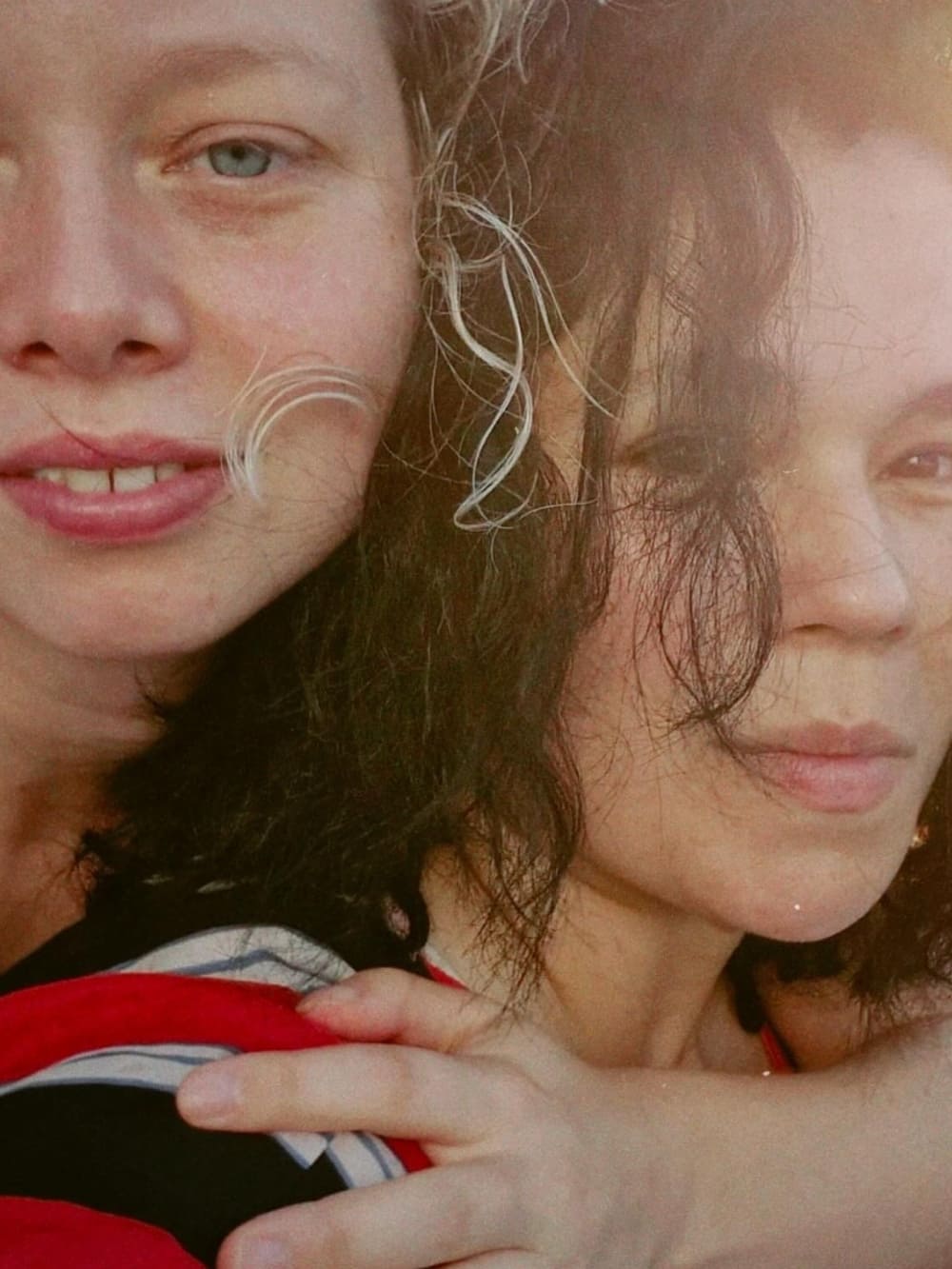
    British freelance writer Emma and her Brazilian partner Jamille smiling together during an Amazon river cruise.
    .

    👉 Read more: 5 adventure trips for women: safety, nature, and freedom

    Kristina, who was initially wary due to international misconceptions about Brazil, saw firsthand how local women look out for each other. “I felt safe the entire time. People were constantly going out of their way to help me,” she shares.

    On a bus to the Pantanal, when a man was aggressively trying to chat her up, a Brazilian passenger didn’t hesitate to step in and ask him to leave her alone. Quickly, her peace of mind was restored.

    Takeaways for the journey

    Brazil gave these women far more than just postcard-perfect memories. Based on their time exploring the country, they were able to bust common myths and share valuable advice for other foreign female travelers looking to explore the country.

    Emma (UK)
    “Traveling is an incredible way to explore cultural diversity, to always remember that there’s not just one way to live or to show up in this world. So why not go? Going with a group is how you can have support and make things easier.”

    Kristina (Germany)
    “Don’t be afraid to ask for help. Brazilians are incredibly friendly and welcoming, and they’re always ready to support you. Aside from preparing yourself for the sheer size of the Amazon rivers, take time to observe the strength of the local culture. You’ll be surprised and inspired to see women acting as powerful leaders and highly respected matriarchs in riverside communities.”

    Samantha (USA)
    “Don’t hesitate to travel to the countryside and nature destinations. They proved to be incredibly safe, which completely contradicts what you hear internationally. Also, make sure to add Brazilian bakeries to your itinerary—especially in São Paulo. They are an absolute must!”

    Katharina (Netherlands)
    “In ecotourism and nature destinations, you can truly relax and feel completely safe. In the big cities, the best approach is simply to use common sense. Use rideshare apps and avoid flashing expensive belongings. Other than that, keep an open heart and connect with the Brazilian people—they are kind, welcoming, and truly have music in their souls.”

     Solo female traveler standing with arms raised in victory on a high mountain cliff edge above the clouds in Brazil.
    .

    👉 Read more: Ecotourism in Brazil boosts solo travel for women through planning and support networks

    Traveling across Brazil with PlanetaEXO

    Over the years, PlanetaEXO has welcomed countless international tourists in Brazil, offering all the necessary support so they could explore nature in a safe, authentic, and responsible manner.

    As an ecotourism platform specializing in adventure tours in Brazil, we provide incredible opportunities for exploration that do not harm the environment and still support local communities. Contact us now!

  • Women in Ecotourism: the Female Presence that Makes the Sector Happen

    Women in Ecotourism: the Female Presence that Makes the Sector Happen

    From guides breaking stereotypes to community leaders transforming the local economy, meet the women in ecotourism driving authentic experiences across Brazil

    When it comes to exploring the most remote destinations in Brazil, the spotlight usually focuses on the lush landscapes or the courage of those who travel. However, there is a vital and invisible gear ensuring that immersion in nature is safe, welcoming, and sustainable.

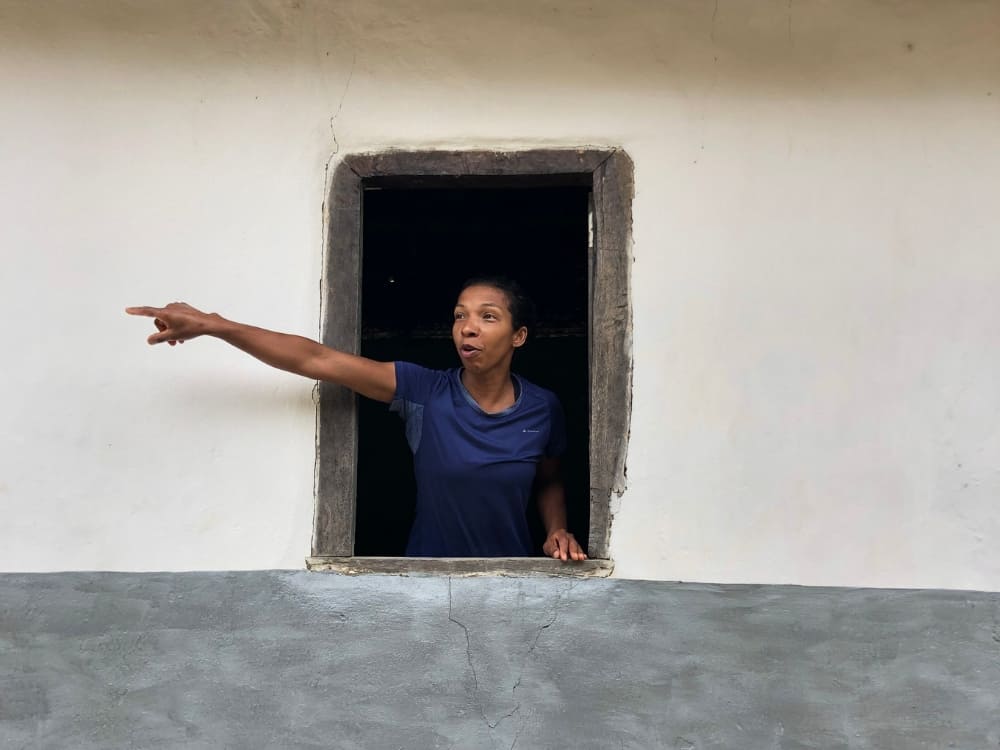
    Woman in a blue blouse pointing out the window of a rustic house, representing the female driving force on the front lines of nature travel in Brazil.
    .

    Today, women are the driving force behind the scenes and on the front lines of ecotourism, both in Brazil and around the world. Data from the United Nations World Tourism Organization reveals that 54% of the global tourism workforce is female—a presence that is also growing in the nature and adventure travel market.

    For Women’s Month, PlanetaEXO, a sustainable tourism platform specialized in adventure tours in Brazil, sheds light on the stories of professionals who prove how the participation of women in ecotourism is not just a matter of survival, but also of profound socioeconomic transformation.

    Overcoming prejudice and showing competence

    The line of work of nature guide still carries a strong male stereotype. In Jalapão (Tocantins), where the proportion is up to five women for about 300 male guides, Mychelle Leal (28) felt the prejudice firsthand when opening her own agency. The distrust usually came from colleagues themselves or tourists who questioned her driving skills or emergency response capabilities.

    Mychelle’s answer comes through her competence at work. She was the one who took the lead and helped a tourist stung by a scorpion during an expedition where the men didn’t know how to react. “Nowadays, I know how to stand up for myself. A woman needs to focus on the tourist and a job well done, rather than listening to those who just want to get in the way” she states.

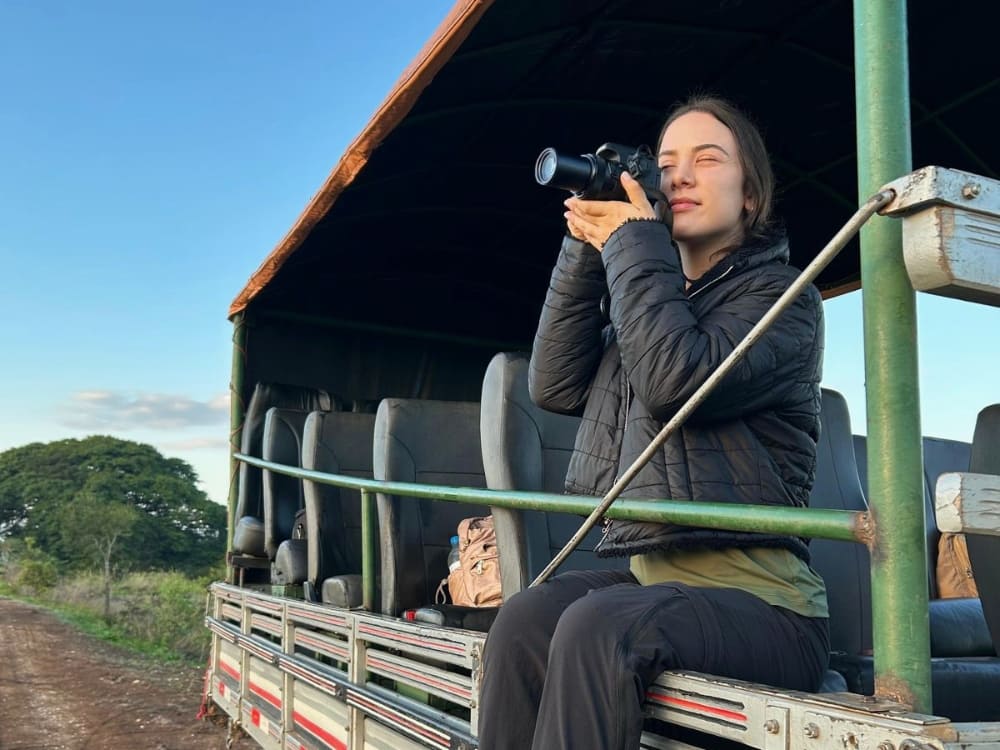
    In the Pantanal (Mato Grosso), biologist and guide Danielle Rocha (24) faced similar barriers. Although highly praised by clients, she frequently notices doubtful looks from male guides regarding her physical stature.

    “I don’t let that shake me. Gender doesn’t disqualify you from working with safety, logistics, and care. In fact, women are more sensitive to picking up if someone in the group isn’t feeling well” explains Danielle, who is also a wildlife photographer.

    Woman photographing nature from the back of a safari vehicle, illustrating the work of guides and wildlife photographers in ecotourism.
    .

    👉 Read more: Ecotourism in Brazil boosts solo travel for women through planning and support networks

    Female support and sisterhood in the field

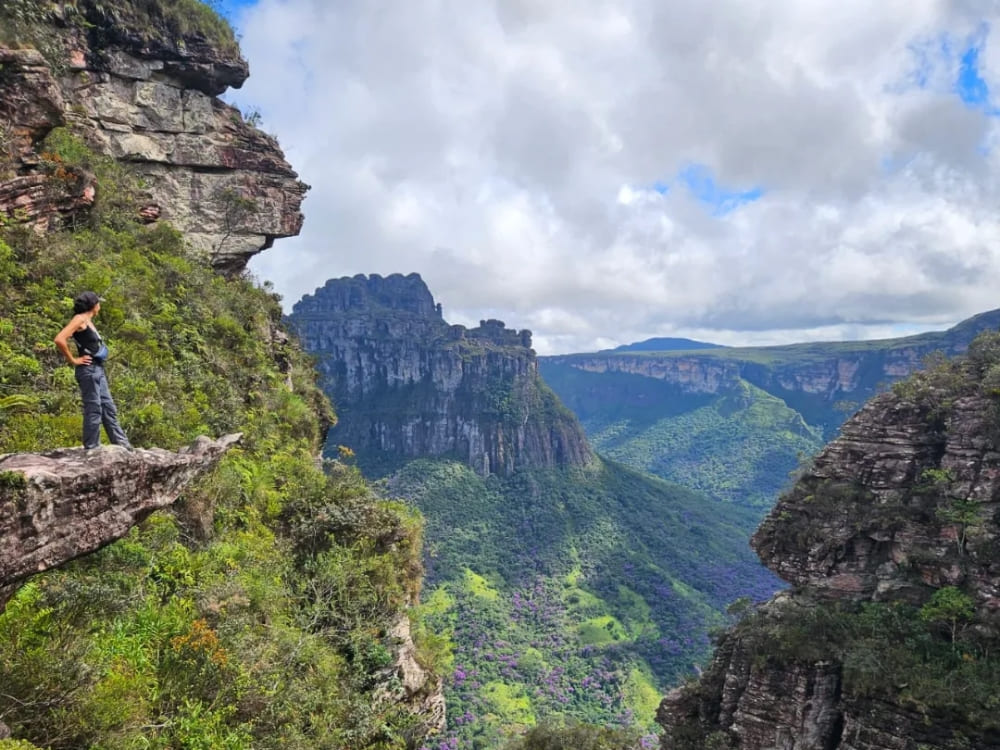
    The sensitivity mentioned by Danielle is what transforms the traveler’s experience. In the Vale do Pati, in Chapada Diamantina (Bahia), guide Rayssa Soares (32) reports the impact of leading all-female groups.

    Recently, she guided nine British women and tailored the experience to bring out the best in each one of them. “The welcoming is different. The travelers feel we are cut from the same cloth, sharing the same intimate challenges and pains. This creates an immediate bond of trust and comfort.”

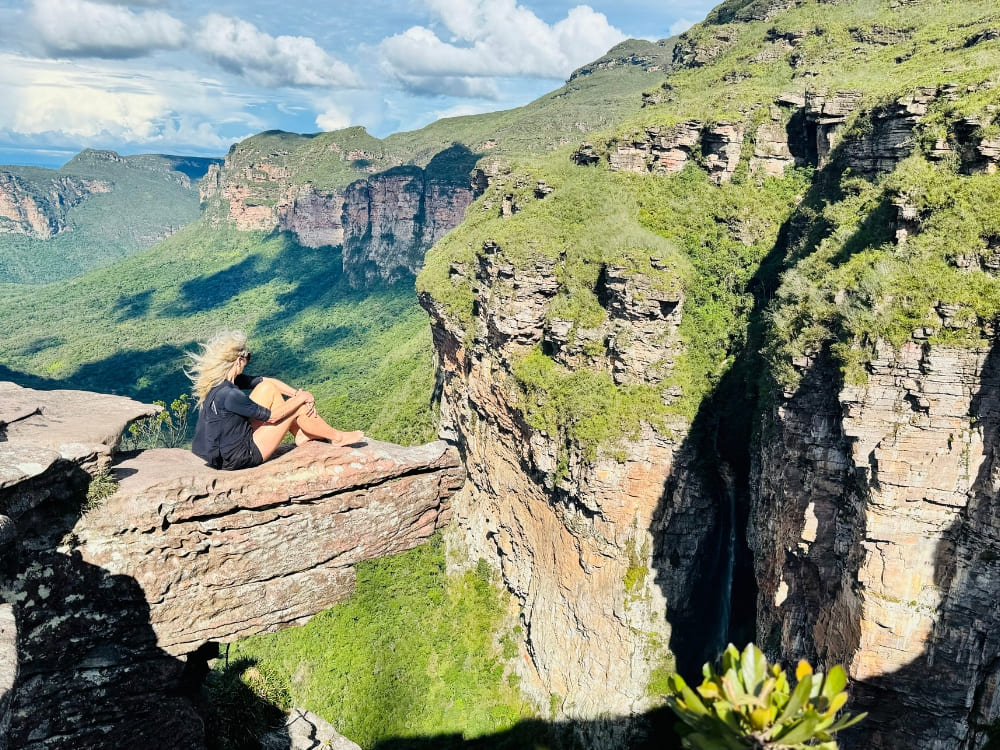
    Woman standing on the edge of a rocky cliff admiring mountains and valleys, symbolizing the authentic experiences guided by women in ecotourism.
    .

    👉 Read more: Why Brazil’s remote outdoors are becoming a haven for foreign female travelers

    Legacy and resilience of native hosts

    For those who think dedication is limited, the women in ecotourism who open the doors of their homes in the most isolated villages prove otherwise.

    In the Vale do Pati, Nara Oliveira (42) has taken on a historical legacy. Her family was the first to welcome tourists to the region, about 30 years ago, at the well-known “Casa do Seu Wilson” (Mister Wilson’s House). Today, she balances the non-stop routine of managing the rustic accommodation with raising her two-year-old daughter.

    “There are no Saturdays, Sundays, or holidays. We offer basic mountain survival, with restricted solar energy and no luxury” explains Nara. For her, tourism saved the community, which previously relied solely on agriculture and today prospers without deforestation. “The local economy has improved a lot, and the slash-and-burn farming has stopped.”

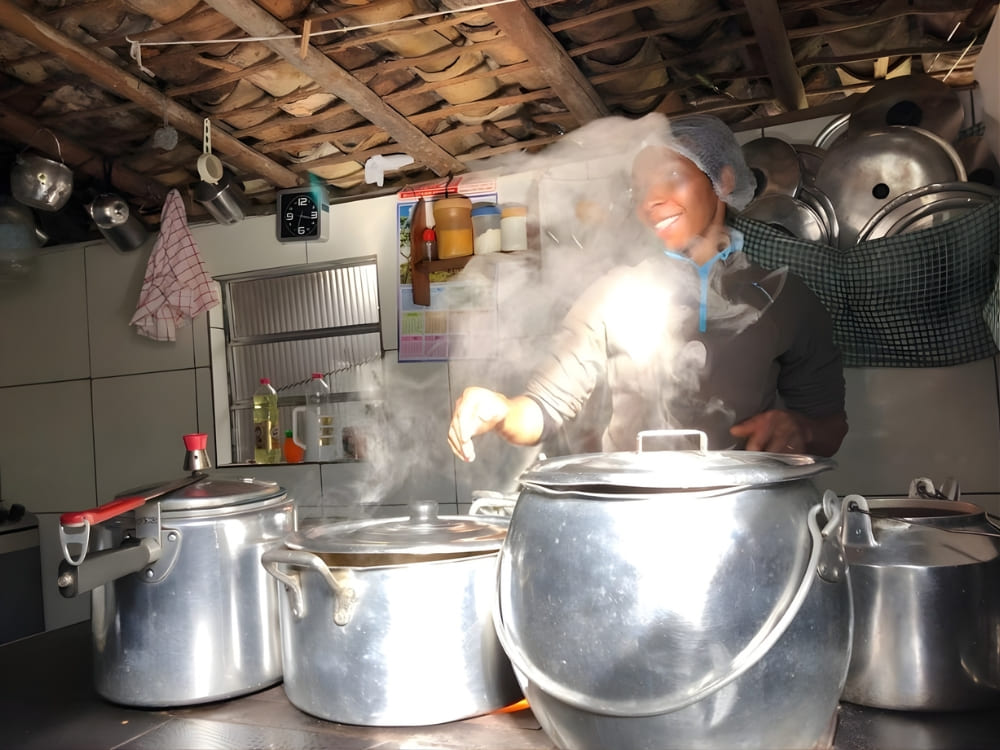
     Host cooking with large pots in a rustic kitchen with steam, highlighting the legacy of native women who open the doors of their homes.

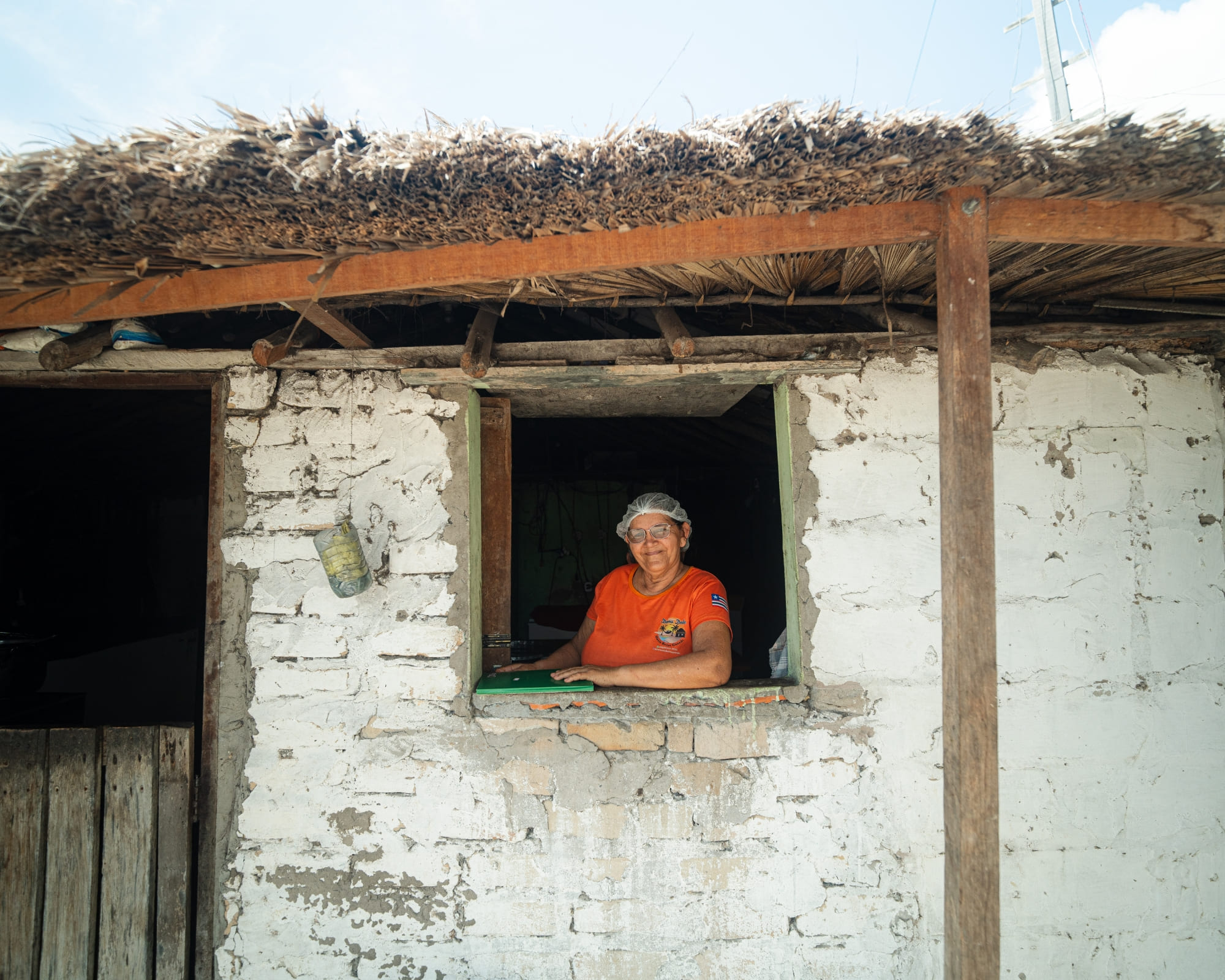
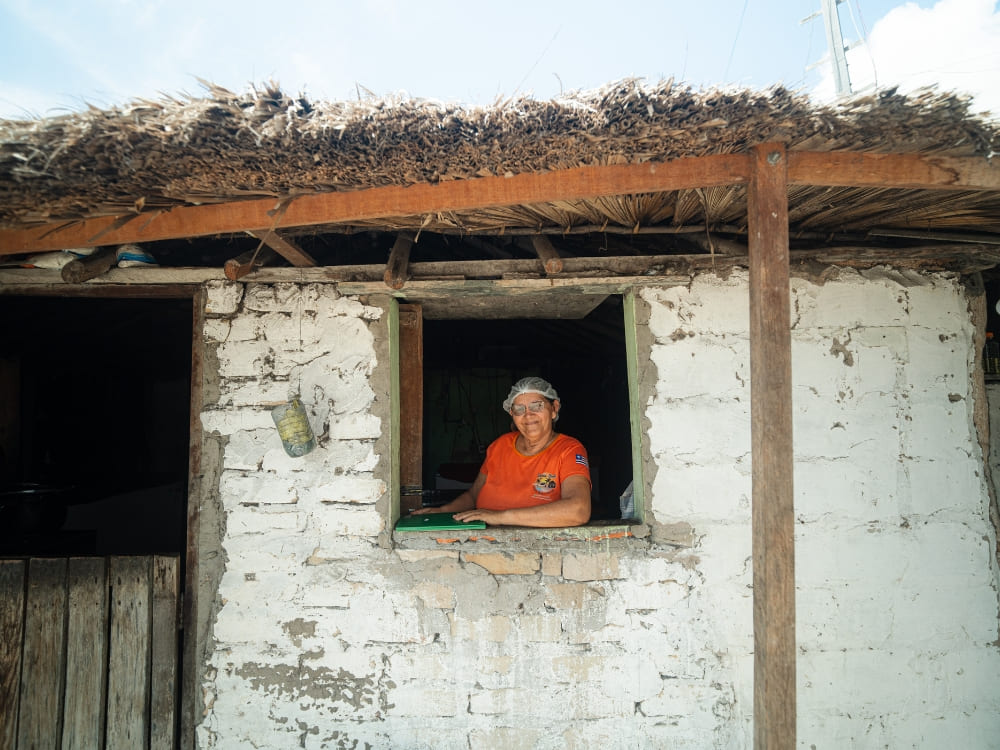
    The same sense of purpose is shared by Dona Dete (47), a host who works in the heart of the Lençóis Maranhenses (Maranhão). Before tourism, she carried heavy loads for hours on end to sell fish and support her five children. Today, she wakes up at 3 AM every day to prepare breakfast and welcome up to 70 tourists to her oasis. “Life was very difficult. Tourism is hard work, but I do it with all my love and care.”

    👉 Read more: 5 adventure trips for women: safety, nature, and freedom

    Financial independence and life changes

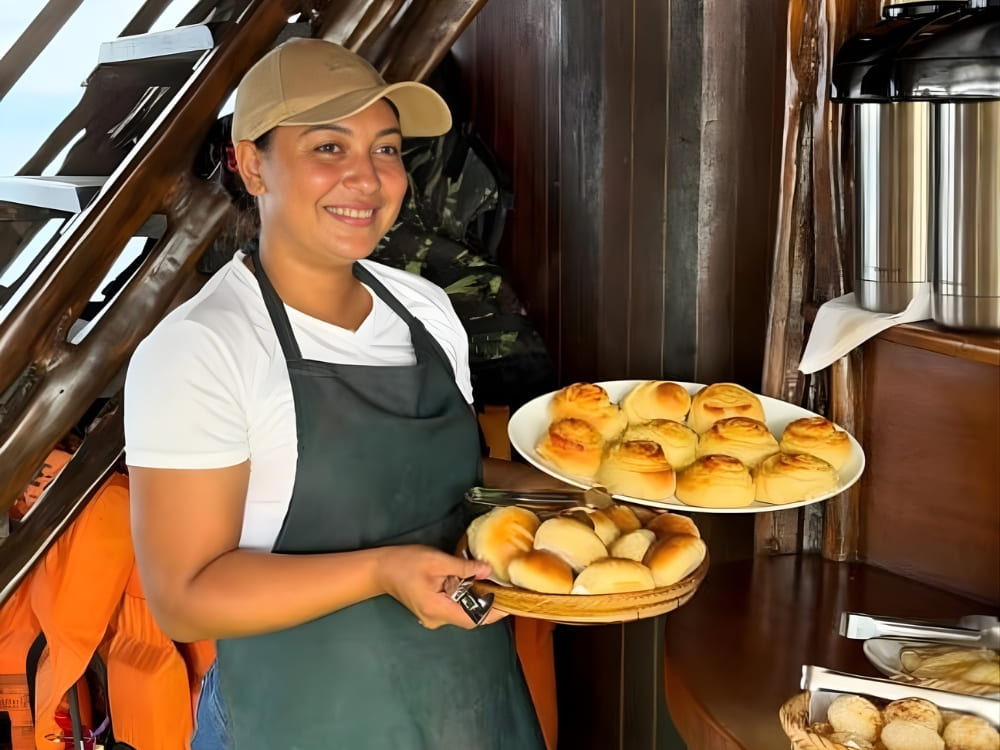
    More than breaking social barriers, ecotourism plays a fundamental role in female financial emancipation. In the Amazon, these activities changed the life of Keli Lima (29), a cook who works on the Katerre river cruise.

    She started as a chambermaid, embraced every opportunity to learn, and today runs the kitchen on the vessels. This made it possible to achieve a dream: owning her own home. “It used to be very difficult for young women. Tourism is the biggest income today. If I’m told to do something I don’t know, I learn and try it out. You have to be brave” she encourages.

    Woman in an apron holding plates with fresh bread on a vessel, representing the female financial independence achieved through tourism.
    .

    Also in the Amazon, Paula Gomes (32), assistant manager of Mirante do Gavião lodge in the municipality of Novo Airão, 200 km from Manaus, emphasizes that qualification is key. “Tourism moves all sectors. Women have been taking on roles and hierarchies that were previously only held by men. The starting point is to get qualified” she advises. With 12 years at the same company, she started in sales, graduated in management, and can also act as a guide.

    Advice from those who make tourism happen

    For women dreaming of working in ecotourism, these professionals leave important tips:

    • Get qualified and claim your space: don’t wait for the ideal scenario. Study, take courses, and be ready. Qualification opens doors.
    • Focus on the client, not the judgments: in male-dominated environments, the best shield is the quality of your work and the satisfaction of the groups you serve.
    • Leave your comfort zone: for those working in nature, the priority becomes the safety and well-being of everyone in the face of unpredictability.
    • Dive in headfirst: the experience requires dedication and living in the moment. Don’t let external factors or the lack of a traditional routine keep you from taking the lead in nature.
    Dona Dete, posing for a photo in a house in Lençóis Maranhenses
    Photo: Marcelo Bonifácio

    👉 Read more: Women over 50 break stereotypes and prove that adventure knows no age

    Women in ecotourism and PlanetaEXO: the perfect match

    PlanetaEXO, a sustainable tourism platform specialized in adventure tours in Brazil, works with several female professionals to create unforgettable experiences in the country’s most stunning nature destinations.

    By walking side by side with women in ecotourism, we contribute to the socioeconomic development of local communities to build healthier dynamics and, of course, provide incredible experiences for travelers from all over the world. Contact us now!