Blog

  • How to visit Vale do Pati, Chapada Diamantina – Travel Guide

    How to visit Vale do Pati, Chapada Diamantina – Travel Guide

    Learn everything you need to know to travel to Vale do Pati in Chapada Diamantina, including how to get there, the best time to visit, main activities, and more!

    Vale do Pati (or Pati Valley) is one of the most visited areas of the Chapada Diamantina National Park due to its extensive networks of trails across mountains, waterfalls, rivers, and caves. Considered one of the best treks in the world, this is a top destination for nature enthusiasts!

    The region is also home to families who open their doors to welcome visitors and offer them a place to spend the night. Authenticity and immersion in local culture are wonderful highlights of this accommodation form, but this is also a great way to support small communities and the park itself.

    A group of hikers trekking on a dirt trail across a green landscape towards a flat-topped mountain in Vale do Pati.
    Photo: Lucas Neves

    As an adventure travel platform specializing in Chapada Diamantina tours, PlanetaEXO knows Vale do Pati very well. To help with your vacation planning to this fantastic destination, we’ve put together a comprehensive guide with all the essential information. Check it out below!

    Table of contents:

    1. About Vale do Pati
    2. Where is Vale do Pati?
    3. How to get to Vale do Pati, Chapada Diamantina?
    4. When is the best time to visit Vale do Pati?
    5. What is the current weather in Vale do Pati?
    6. What to do in Vale do Pati?
    7. Where to stay in Vale do Pati?
    8. How long is the Vale do Pati trek?
    9. How hard is the Vale do Pati hike?
    10. Do I need a guide to visit Vale do Pati in Chapada Diamantina?
    11. How many days should I stay in Vale do Pati?
    12. How much does it cost to go to Vale do Pati?
    13. Is there cell service in Vale do Pati?
    14. What to pack for a Vale do Pati hike?

    About Vale do Pati

    Integrating the Chapada Diamantina National Park, Vale do Pati covers a total area of ​​12,300 hectares of semi-humid tropical ecosystems.

    Geologically, it originates from the Proterozoic era (about 1.6 billion years ago), when the sedimentary and metasedimentary rocks that today make up its waterfalls, caves, and mountains were formed.

    Considered one of the best destinations in the world for trekking, one of its distinctive characteristics is the accommodation of hikers in the homes of natives who live within the national park.

    At the peak of the coffee boom (mid-19th century), over 400 families inhabited the area, navigating the same pathways that tourists traverse today to transport harvested coffee. Following the decline of the coffee industry, the region nearly became deserted, but a new chapter began in 1985 when the valley was incorporated into the park. A few years later, locals started opening their doors for travelers—a tradition that lives on to this day.

    Where is Vale do Pati?

    In the heart of Bahia, Brazil, Vale do Pati is the Chapada Diamantina region formed by the course of the Pati River in the cities of Palmeiras, Andaraí, and Mucugê.

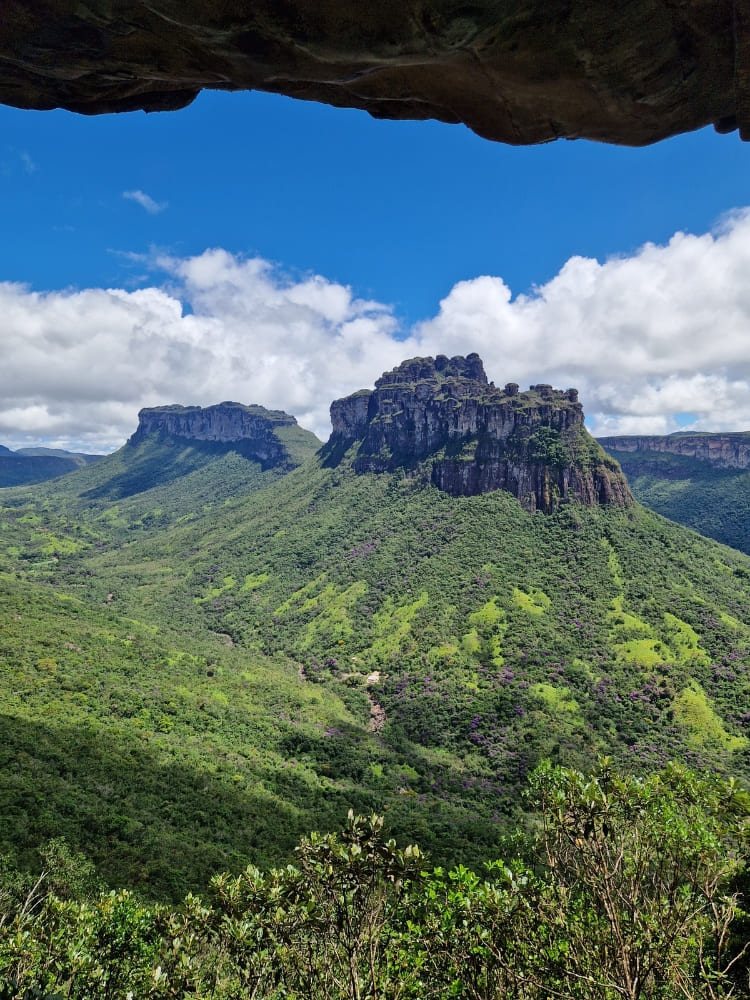
    Nestled among the landscapes of Serra do Sincorá, the area is renowned for its natural wonders, including Morro do Camelo, Morro do Pai Inácio, Morro do Castelo, Morrão, Fumaça Waterfall, Gerais do Vieira, and the Preto River.

    How to get to Vale do Pati, Chapada Diamantina?

    Vale do Pati is only accessed on foot, so the nearest towns are used as starting points for trekking routes throughout Chapada Diamantina.

    You can start your Vale do Pati trek at Beco do Guiné or Aleixo (located in the town of Guiné), Bomba (in Vale do Capão), and Ladeira do Império (in Andaraí). The decision depends on many factors, including your itinerary, available time, and the difficulty level of the trails.

    From Salvador (capital of Bahia), travelers head to one of the national park’s gateway cities—mostly Lençóis, but it’s also possible to head to Palmeiras, Vale do Capão, Guiné, Ibicoara, and Mucugê—to reach Chapada Diamantina. This journey can be made by bus or private transfer, arranged by PlanetaEXO.

     A green highway sign for the Chapada Diamantina Tourist Zone indicating distances to Palmeiras, Vale do Capão, and Guiné.
    .

    👉 Read more: How to Get to Chapada Diamantina National Park?

    When is the best time to visit Vale do Pati?

    You can visit Vale do Pati at any time of the year, but it’s important to understand that the region has two distinct seasons.

    During the dry season (May to September), visitors enjoy blue skies, cooler weather, and stable trails, with June and July being the coldest months. This period may feature less water in the waterfalls but provides great trekking conditions.

    The rainy season (October to April) brings more vibrant vegetation, fuller waterfalls, and the breathtaking sight of the trees blooming with purple flowers between February and April. While the rain typically occurs in the early morning and evening, trails may become muddy and fairly challenging.

    Despite the potential allure of visiting during a specific season, it’s important to consider the local microclimate, which can present unexpected weather conditions, such as rain during the dry season or sunshine amidst the rainy months. The impact of climate change has also made weather patterns less predictable.

    You should also consider the high season—including July, August, and national holidays—which sees increased activity in the park due to vacationers. 

    👉 Read more: When Is The Best Time To Visit Chapada Diamantina?

    What is the current weather in Vale do Pati?

    Take a look at how the weather is right now at Vale do Pati in Chapada Diamantina!

    What to do in Vale do Pati?

    When visiting Vale do Pati, adventurers are greeted with an array of stunning natural attractions and engaging activities, making it a highlight for nature lovers and trekking enthusiasts. Check out the main attractions below! 

    Mirante do Pati (Pati Viewpoint)

    Wonderful place to sit back, relax, and have a picnic break, Mirante do Pati offers beautiful views of the towering peaks of Morro do Castelo, Morro Branco, and Morro do Sobradinho rising up on the horizon.

     Two hikers sitting on a rock at Mirante do Pati, pointing towards the towering peaks of Morro do Castelo and Morro Branco.
    .

    Cachoeira dos Funis (Funis Waterfall)

    With a 30-meter-high drop and a natural pool at its base, the Funis Waterfall is the perfect place to relax, unwind, and cool off after a long hike.

    A woman sitting peacefully on a rock by the natural pool at the base of the 30-meter-high Funis Waterfall.
    .

    Morro do Castelo (Castle Hill)

    Morro do Castelo’s ascent involves a 1300-meter climb, marking it as one of the most challenging hikes in Vale do Pati. Once you reach the top, you will enter an 800-meter cave.

    Past the cave, you will be rewarded with two spectacular viewpoints that offer breathtaking views from 1,500 meters above the ground.

    Hikers standing on a rocky peak at Morro do Castelo, overlooking a vast, forested canyon in Chapada Diamantina.
    Photo: Alex Hubin

    Poço da Árvore (Tree Pool)

    Poço da Árvore is a serene natural pool and waterfall surrounded by lush vegetation, including impressive trees that provide shade and create a peaceful atmosphere.

    Down the riverbed, the meeting point of the Pati and Calixto rivers creates a gorgeous view of Morro do Castelo and the park’s canyons.

     Aerial view of the dark waters of Poço da Árvore, a serene natural pool surrounded by lush green vegetation.
    .

    Cachoeirão and more

    In a 300-meter-high canyon, Cachoeirão boasts a series of waterfalls during the rainy season. Besides the spectacular view, it’s also a great spot to rest and cool off after long hours of hiking.

    Vale do Pati has many more attractions to explore, like the stunning cascades of Calixto Waterfall, the hiking trails of Gerais do Rio Preto and Gerais do Vieira, and the beauty of Lajeado and Bananeiras waterfalls.

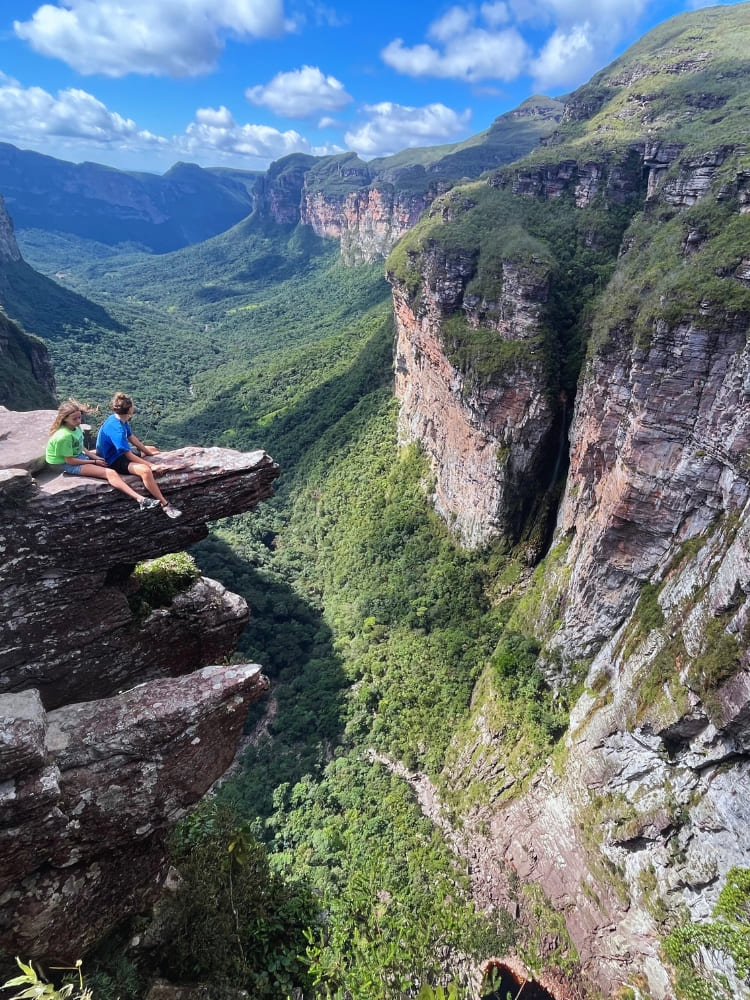
    Two people sitting on the edge of a dramatic 300-meter-high canyon cliff at Cachoeirão, admiring the steep rocky walls.
    .

    Where to stay in Vale do Pati?

    In Vale do Pati, you have the unique opportunity to stay with one of the local families who have transformed their homes into charming accommodations to welcome adventurers who explore Chapada Diamantina.

    Traditional white houses with tiled roofs nestled among the trees in the Pati Valley under a vibrant orange sunset sky.
    .

    The tradition of homestay hospitality began in 1997 when Wilson and Maria, a couple native to Vale do Pati, opened their home to the first backpackers. They offered home-cooked meals, a bed, and a shared bathroom, providing an alternative to typical wild camping.

    Over time, more families followed suit. This shift allowed them to sustain themselves economically while allowing tourists insights into the local history and culture.

    A local woman smiling as she cooks a traditional homemade meal using large aluminum pots over a stove.
    .

    Today, only a handful of families live in Vale do Pati, but they still follow the same pattern of accommodation: shared rooms and bathrooms, cold showers, homemade food, and the opportunity to meet incredible people.

    A shared homestay bedroom featuring wooden beds with sleeping bags and a rustic exposed tile and wood ceiling.
    .

    👉 Read more: Where to stay in Chapada Diamantina?

    Meals in Vale do Pati

    Despite the remote location, travelers eat very well in Vale do Pati. Lodging in the homes of locals includes full meals—fresh homemade food every day, from lunch to dinner. Typical Brazilian dishes are made with local ingredients of the highest quality.

    To ensure everyone has a full stomach, the cooks can accommodate visitors’ diets with vegetarian, vegan, or other dietary restrictions.

    Two hikers serving themselves fresh homemade food from various pots in a rustic homestay kitchen.
    Photo: Lucas Neves

    On hikes, guides can provide snacks for the entire group. You can enjoy a delicious picnic while admiring the beautiful views of the Chapada!

    A colorful picnic spread with fruits, snacks, and sandwiches laid out on a blanket beside a small cascading waterfall.
    .

    How long is the Vale do Pati trek?

    The mileage and duration of a hike through Vale do Paty depend on several factors, including itinerary, number of days allocated for the trek, starting point, choice of accommodation, and visits to specific attractions along the way.

    On average, hikers walk about 15 km per day, with variations of 8 km on short days and 22 km on longer days. A typical 3-day hike covers approximately 35 km, while travelers who opt for 4 or 5 days cover 52 and 59 km, respectively.

    Travelers on a tight schedule can start the trail from Guiné and walk 10 km to Vale do Pati. The distance from Vale do Capão and Andaraí is greater, reaching 22 km.

    Evidently, these distances are flexible and can be adjusted according to each person’s experience, skills, preferences, and needs. Either way, each route showcases its unique natural beauty, and the “best” path ultimately depends on what suits the trekker’s travel plans and conditions best.

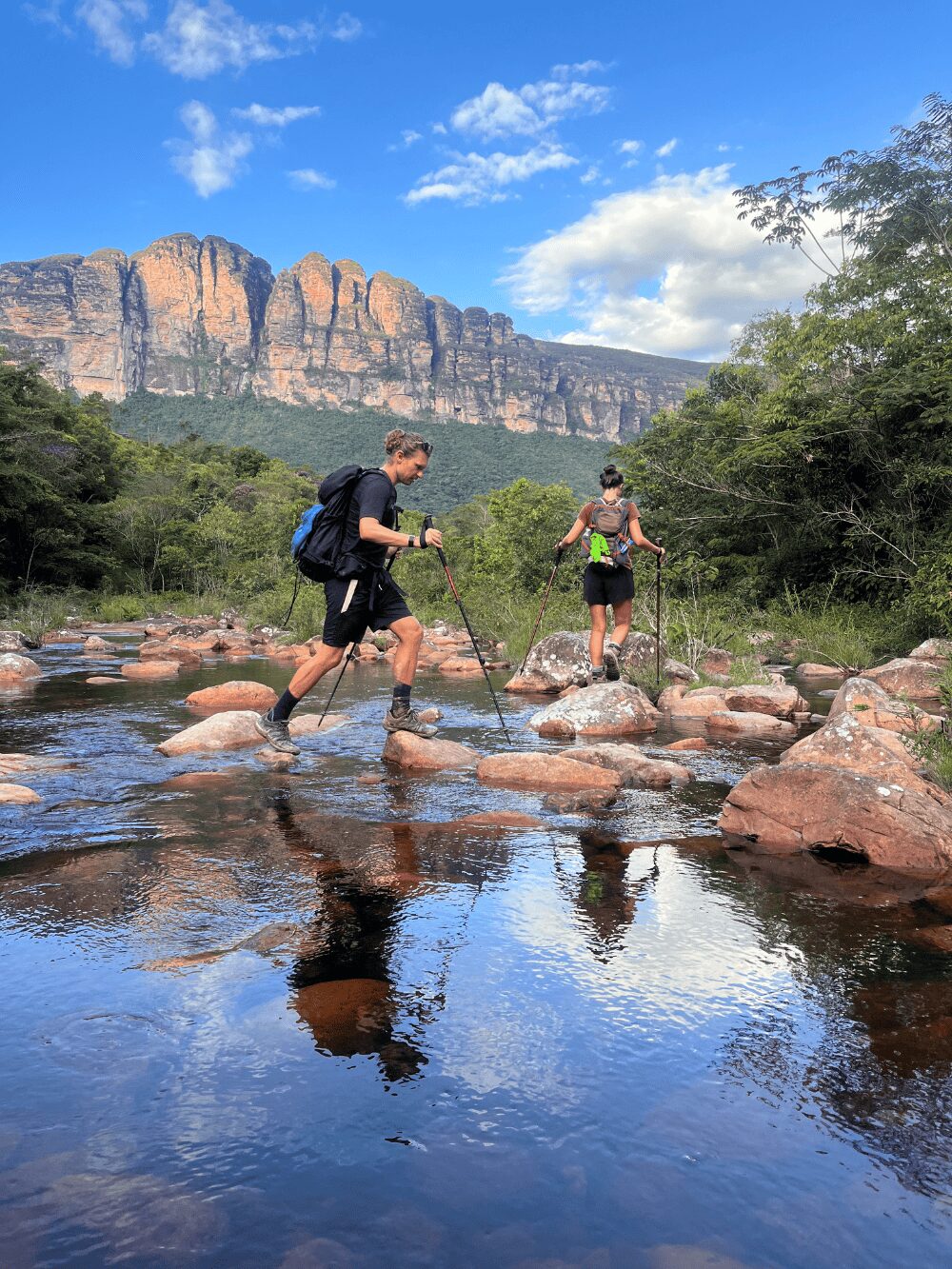
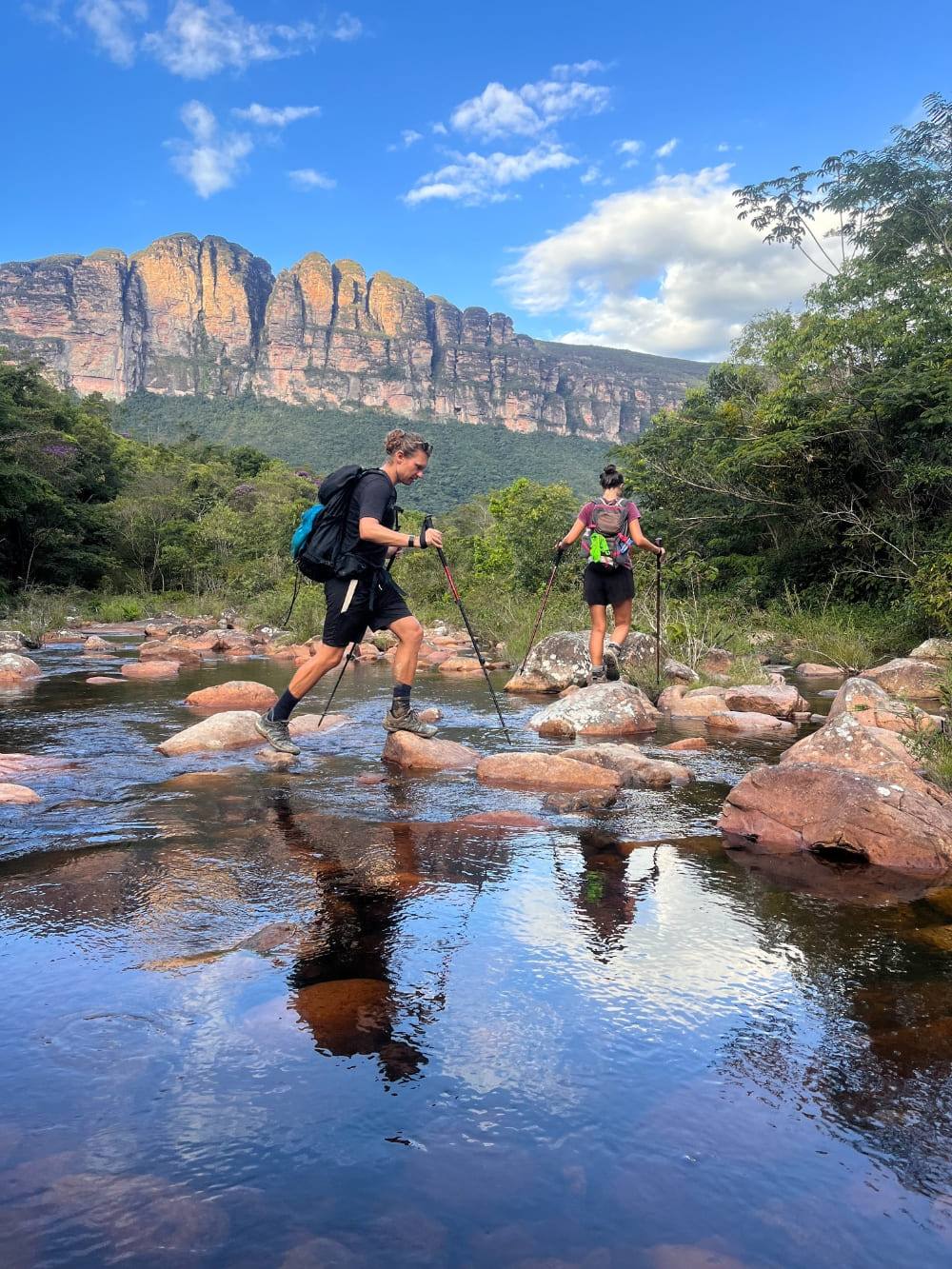
    Two hikers using trekking poles to cross a shallow, rocky river with a large mountain peak towering in the background.
    .

    How hard is the Vale do Pati hike?

    One of the reasons why Vale do Pati hikes are known worldwide is the variety of trails with different levels of difficulty, from the easiest to the most challenging.

    Though the beauty and diversity of the national park invite adventurers of all ages, it’s essential to consider the physical demands of trekking, especially on more difficult trails.

    Challenging trails reward the effort by crossing mountains, waterfalls, caves, and breathtaking landscapes, but they’re not recommended for children, the elderly, or people with less physical fitness. Pro tip: recognize your limits and find activities that correspond to them!

     A hiker standing on a rocky outcrop taking a photograph of the sprawling green valleys and flat-topped mountains.
    .

    Do I need a guide to visit Vale do Pati in Chapada Diamantina?

    Although Chapada Diamantina National Park is open to the public and does not require visitors to hire professionals to explore it, the presence of a guide in Vale do Pati and anywhere in the park is highly recommended for any hiker—especially those who are less experienced or less familiar with the region.

    Most of the guides in Vale do Pati live in the surrounding area, which makes them great experts on the complexities of the Chapada. In addition to ensuring a safe adventure, they can also share information about the local fauna, flora, and history to further enrich the experience.

    A local guide in a blue shirt and a hiker examining a trail map together while resting at a scenic valley viewpoint.
    .

    How many days should I stay in Vale do Pati?

    The duration of your Vale do Pati trek will depend on several factors, including your chosen route, available time, and fitness level. However, most itineraries typically range from 3 to 5 days.

    The most popular is the 3-day tour, which allows you to visit the Vale do Pati lookout, Funis Waterfall, Morro do Castelo, and Cachoeirão. 4 days include the Calixto Waterfall or Poço da Árvore and feature a more comfortable pace to fully appreciate Chapada’s beauty.

    If you have the time, choosing a 5-day trek is great for a deep dive into the national park, including visits to Funis Waterfall and Ladeira do Império.

    Silhouette of a hiker wearing a backpack standing at a dark cave entrance, looking out over the sunlit Pati Valley.
    .

    How much does it cost to go to Vale do Pati?

    Considering accommodation, services, and itineraries, Vale do Pati tours cost from R$ 2.100 (approximately US$ 420 and € 360) per person. Prices vary according to season, trip duration, etc.

    Check out the prices and other information below:

    TOUR HIGHLIGHTS HIKING DISTANCE STARTING PRICE*
    6-day Ultimate Chapada Diamantina Hike Hiking, Poço Encantado, Poço Azul, 3 days of trekking in Vale do Pati + Buracão and Fumacinha waterfalls. 63 km US$ 1,000
    3-day Vale do Pati Trek Hiking, Morro do Castelo, Cachoeirão and Funis waterfalls, accommodation with locals. 35 km US$ 410
    4-day Vale do Pati Trek Hiking, Morro do Castelo, waterfalls (Cachoeirão and Funis), accommodation at locals’ houses. 52 km US$ 545
    5-day Vale do Pati Crossing Trekking, Morro do Castelo, Cachoeirão and Funis waterfalls, Poço da Árvore, Ladeira do Império, Andaraí, accommodation with locals. 59 km US$ 585

    *Per person, based on double occupancy in group departures. Prices may vary depending on season and availability. Exchange rate as of April 9th, 2026; subject to change.

    Is there cell service in Vale do Pati?

    There’s no cell service or Wi-Fi available in Vale do Pati. The region relies solely on solar energy, which provides enough power to charge electronic devices and machine batteries—though it’s not uncommon for electricity to suffer from periods of instability.

    This is a great opportunity to disconnect from technology and immerse yourself in the natural beauty and peacefulness of Chapada Diamantina. Enjoy every second!

    A hiker in a blue jacket standing on a rock framed by trees, looking toward a flat-topped mountain in the distance.
    .

    What to pack for a Vale do Pati hike?

    When packing for Vale do Pati, it’s important to keep in mind the changing weather conditions and the nature of the trek. Remember: you’ll carry your backpack every day when hiking, so it’s important to only pack necessary items.

    Here’s our suggested list:

    • Light clothes, including UV-resistant long-sleeved shirts
    • Raincoat or waterproof jacket
    • Windbreaker and sweater
    • Swimwear
    • Hats/caps
    • Hiking boots/sneakers
    • Hiking socks
    • Flip-flops
    • Quick-drying towel
    • 20-40 liters backpack
    • Waterproof bag
    • Sunglasses
    • Sunscreen
    • Insect repellent
    • Reusable water bottle
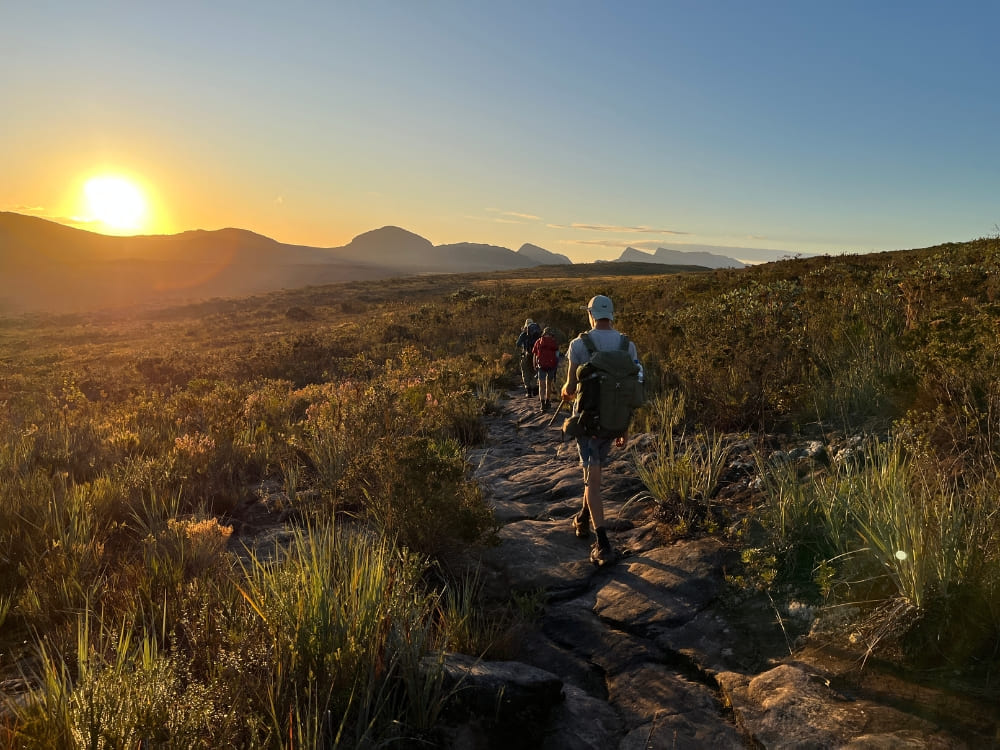
    A group of hikers walking away on a rocky trail surrounded by low vegetation under a bright golden sunset.
    .

    Don’t forget the usual travel essentials: documents, credit/debit cards, cash (Brazilian Real), medicine (for headaches, muscle tension, stomach bugs…), chargers, and portable chargers for electronic devices.

    Hiking in Chapada Diamantina, Bahia, with PlanetaEXO

    Vale do Pati is transformative for any nature lover. If you can’t wait to experience one of the most beautiful treks in the world, it’s time to book your trip with PlanetaEXO, an ecotourism platform specializing in Chapada Diamantina tours that works with the best local operators.

    Our team helps you with everything you need for an amazing vacation, including bookings, transfer options, tailor-made itineraries, and much more. Contact us now!

  • Top 7 Ecotourism Destinations in Brazil to Visit in 2025

    Top 7 Ecotourism Destinations in Brazil to Visit in 2025

    For those passionate about ecotourism, it’s essential to know that Brazil has a lot to offer in this area.

    Not surprisingly, the country was chosen by Forbes in 2023 as one of the top ecotourism destinations in the world. But what are the best places to visit in Brazil for ecotourism? To help you plan your next trip, we selected the Top 7 Ecotourism Destinations in Brazil. Check them out:

    1. Amazon (AM)

    Amazon - Top 7 Ecotourism Destinations in Brazil to Visit in 2024
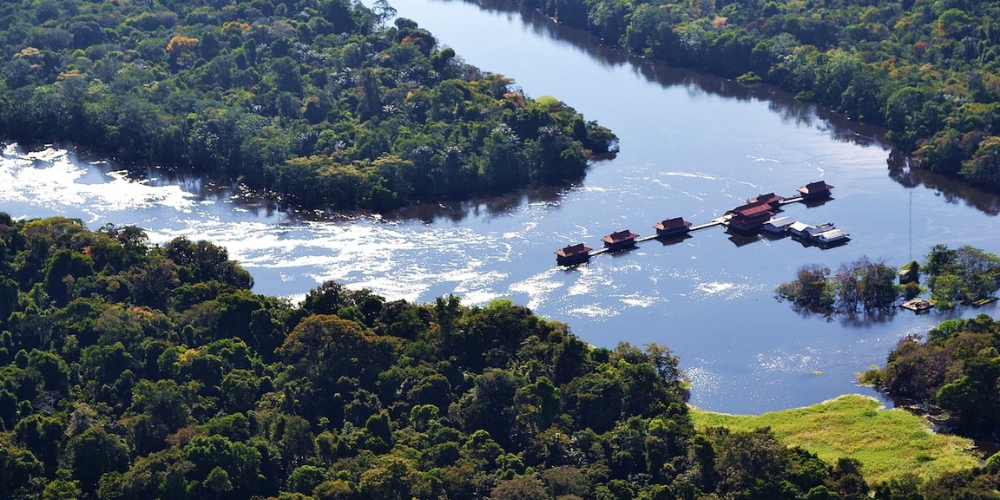
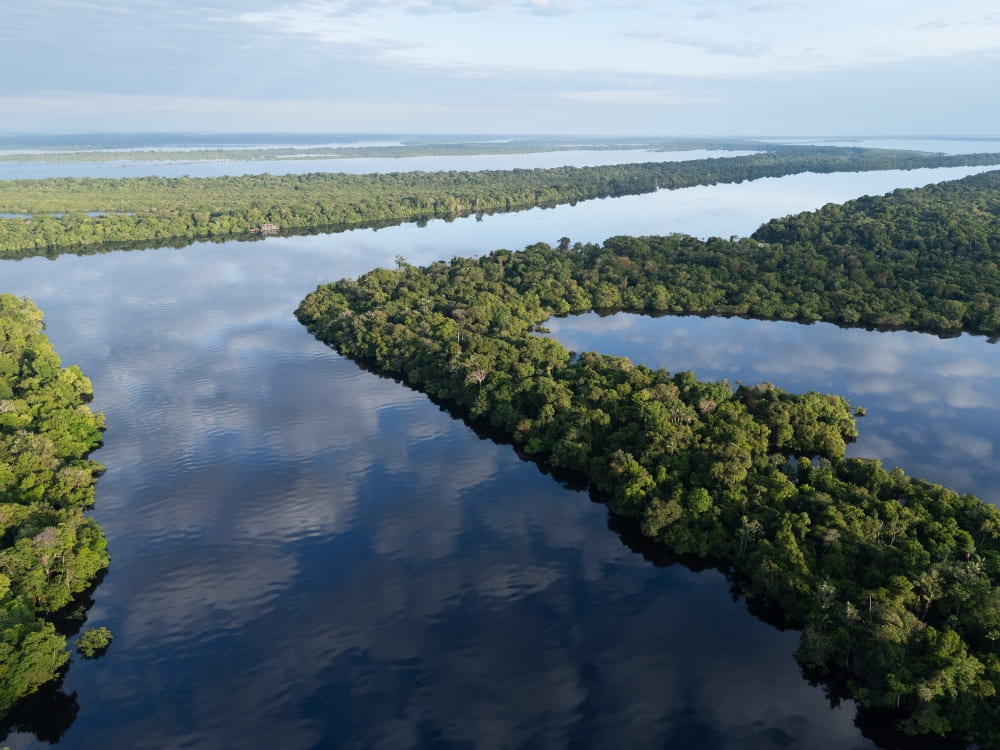
    Amazon Rainforest – Photo: MkExpedition @mkexpeditions

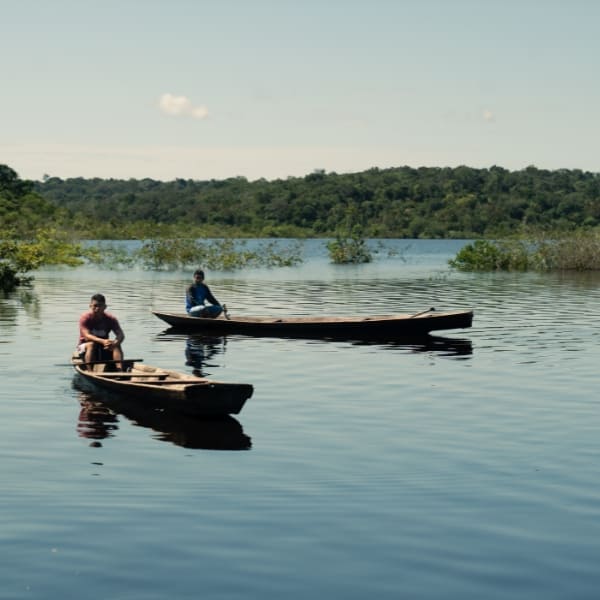
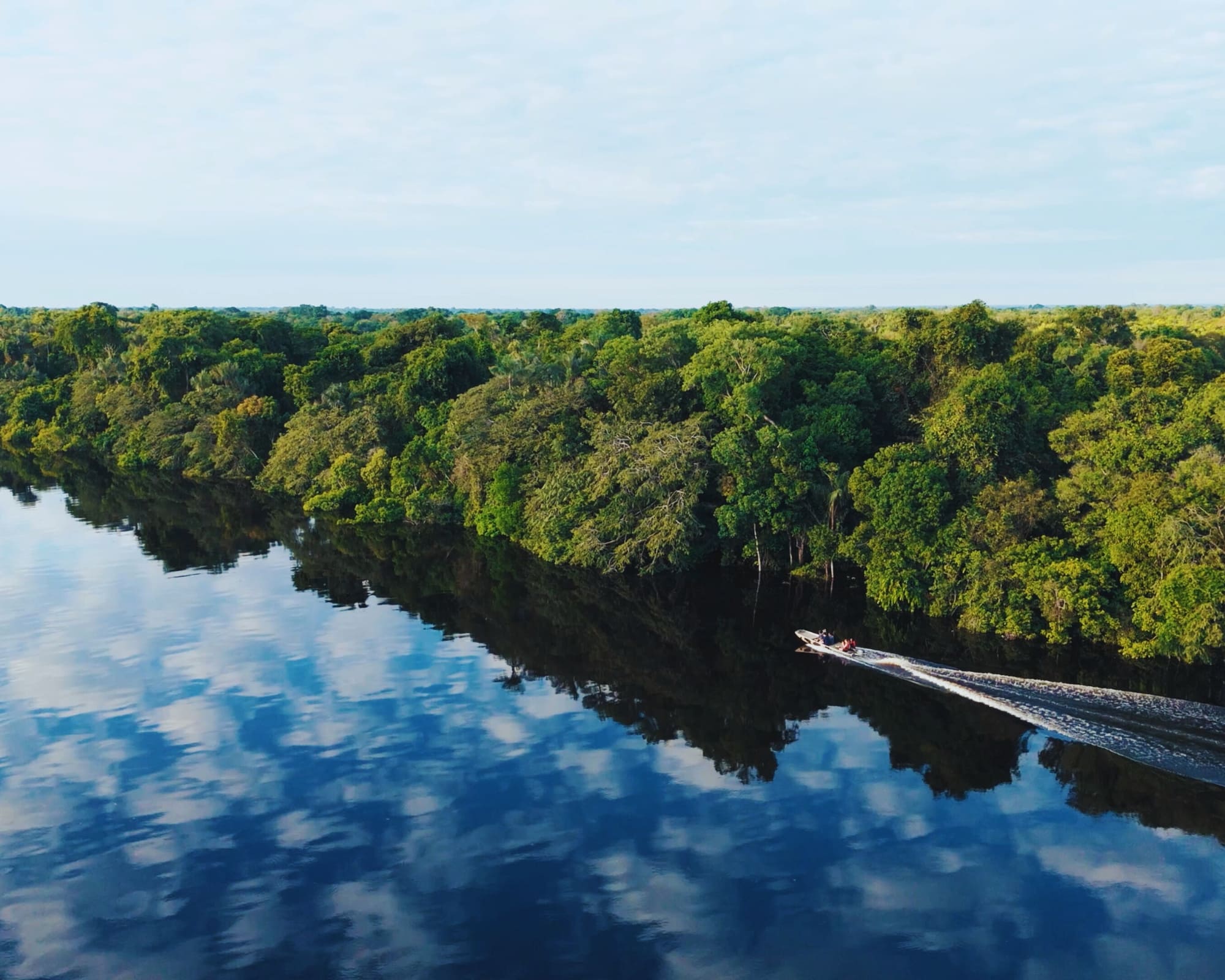
    The world’s largest rainforest is also one of the most fascinating destinations for ecotourism in Brazil. In the Amazon, you can stay in sustainable lodges, navigate rivers and streams, observe the abundant fauna and flora, and interact with riverside communities. A unique and unforgettable experience.

    Why visit?
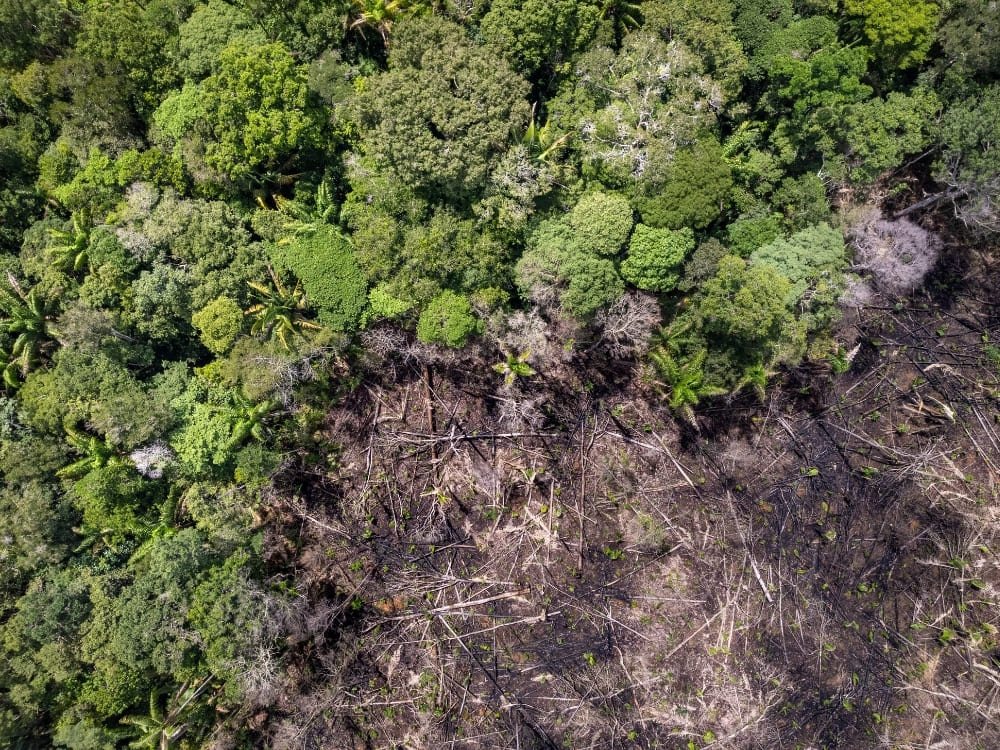
    The region plays a crucial role in combating deforestation, and ecotourism can be a powerful tool in raising environmental awareness, as well as helping to protect indigenous and riverside communities.

    2. Bonito (MS)

    Bonito - Top 7 Ecotourism Destinations in Brazil to Visit in 2024
    Bonito – Photo: Iago Bernardo @iagobernardo

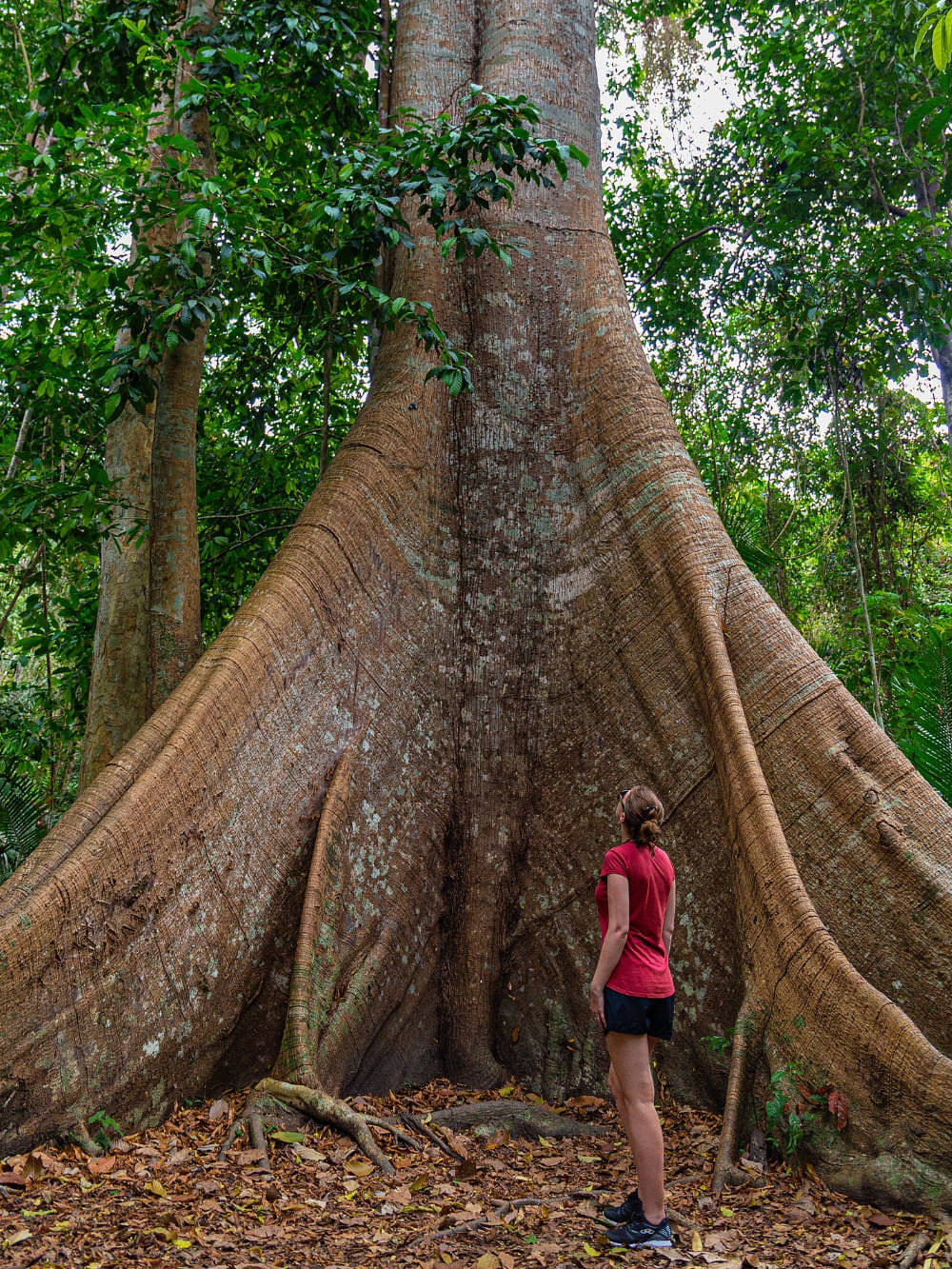
    Considered one of Brazil’s main ecotourism hubs, Bonito is a true paradise for those who enjoy diving in crystal-clear waters, observing aquatic fauna and flora, hiking, and admiring waterfalls. Additionally, Bonito has a strong environmental preservation policy, controlling the number of visitors and charging conservation fees.

    Why visit?
    At the forefront of Brazilian ecotourism, Bonito sets an example in the transition from traditional to sustainable tourism with an effective visitation control system, ensuring responsible and conscious tourism management.

    3. Vale do Pati, Chapada Diamantina (BA)

    Vale do Pati, Chapada Diamantina - Top 7 Ecotourism Destinations in Brazil to Visit in 2024
    Vale do Pati, Chapada Diamantina – Photo: Lucas Ribeiro

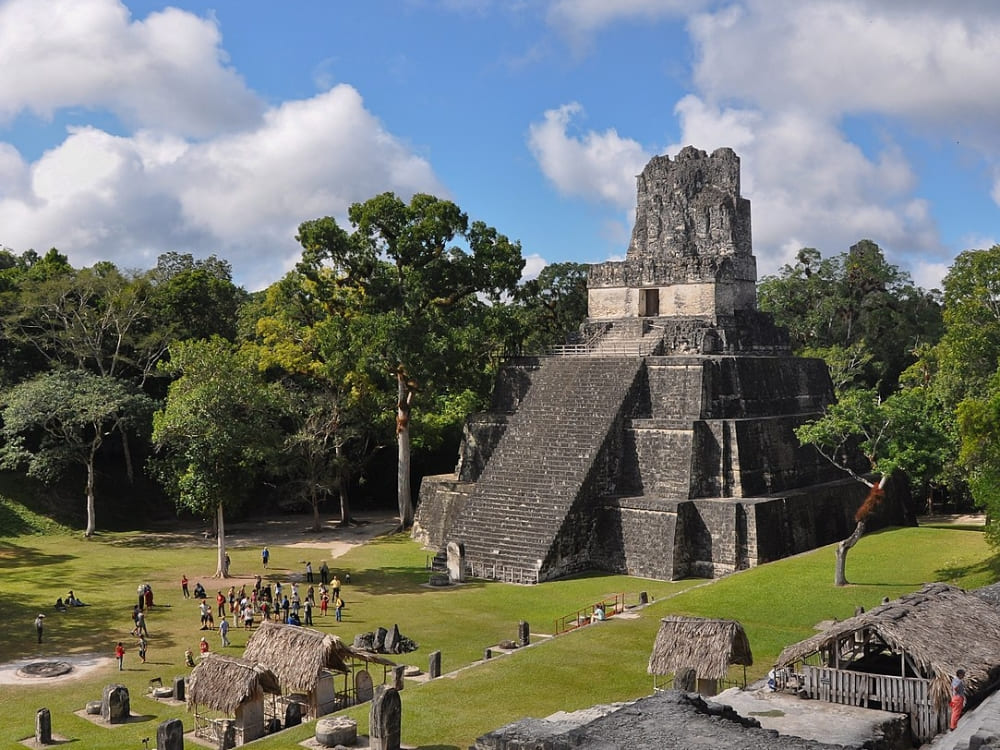
    Located in the Chapada Diamantina, Vale do Pati is one of Brazil’s natural treasures. It offers visitors the chance to see spectacular landscapes, hike trails revealing the region’s unique biodiversity, and have authentic interactions with the local community.

    Why visit?
    Ecotourism plays a crucial role in the local economy, with tourists staying and eating in residents’ homes, being the main source of income for the region. Additionally, the area adopts an exemplary sustainability model, with homes using 100% solar energy for operations.

    4. Pantanal (MT/MS)

    Pantanal - Top 7 Ecotourism Destinations in Brazil to Visit in 2024
    Pantanal – Photo: Bruno Henrique G Carvalho @bhc_bio

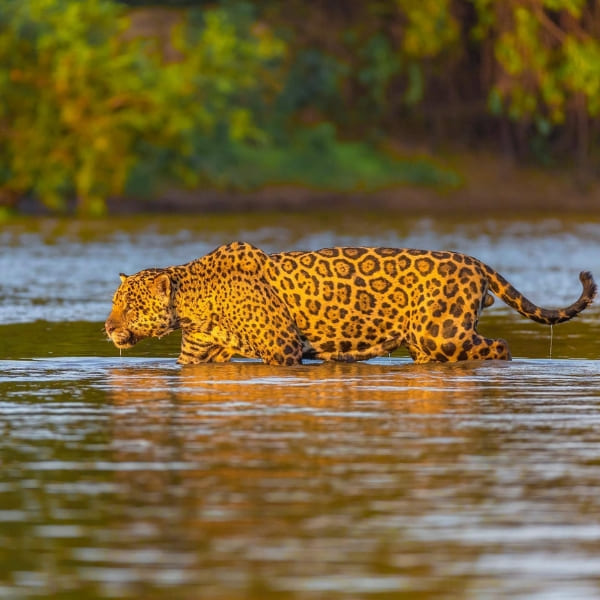
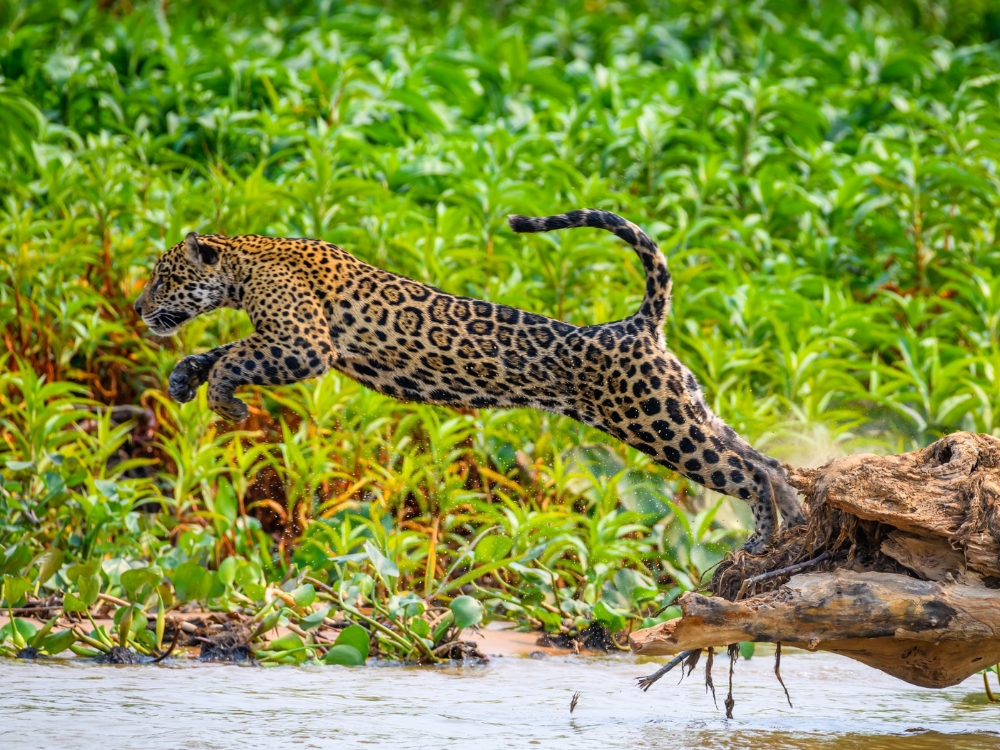
    The world’s largest wetland is an ecological sanctuary hosting one of the planet’s most extensive wildlife concentrations, making it one of the top ecotourism destinations in Brazil. In the Pantanal, you can go on photo safaris, observe animals like jaguars, caimans, and blue macaws, fish for piranhas, and witness Brazil’s most beautiful sunset.

    Why visit?
    The Pantanal has been central in conservation discussions in recent years. Only a combination of ecotourism and responsible agricultural practices can preserve Pantaneiro traditions and protect endangered species, like the jaguars.

    5. Fernando de Noronha (PE)

    Fernando de Noronha - Top 7 Ecotourism Destinations in Brazil to Visit in 2024
    Fernando de Noronha – Photo: Michele Roth @michele_roth_

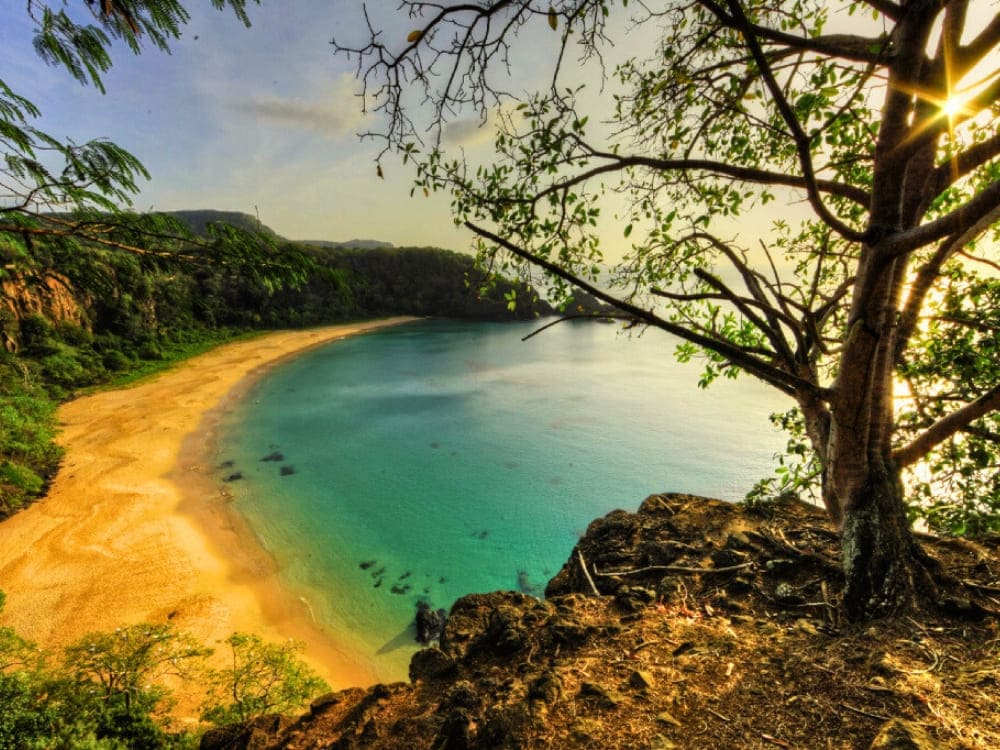
    The Fernando de Noronha archipelago, a UNESCO World Heritage Site, enchants visitors with its idyllic beaches and marine biodiversity. Adventure lovers can explore the crystal-clear waters and observe dolphins, turtles, sharks, and colorful fish up close. Fernando de Noronha is a must-visit destination for nature and beauty enthusiasts
    Why visit?
    The island promotes environmental education through wildlife observation, offering practical and interactive learning about environmental preservation.

    6. Jalapão (TO)

    Jalapão - Top 7 Ecotourism Destinations in Brazil to Visit in 2024
    Jalapão – Photo: Lucas Guerra @lucasguerra

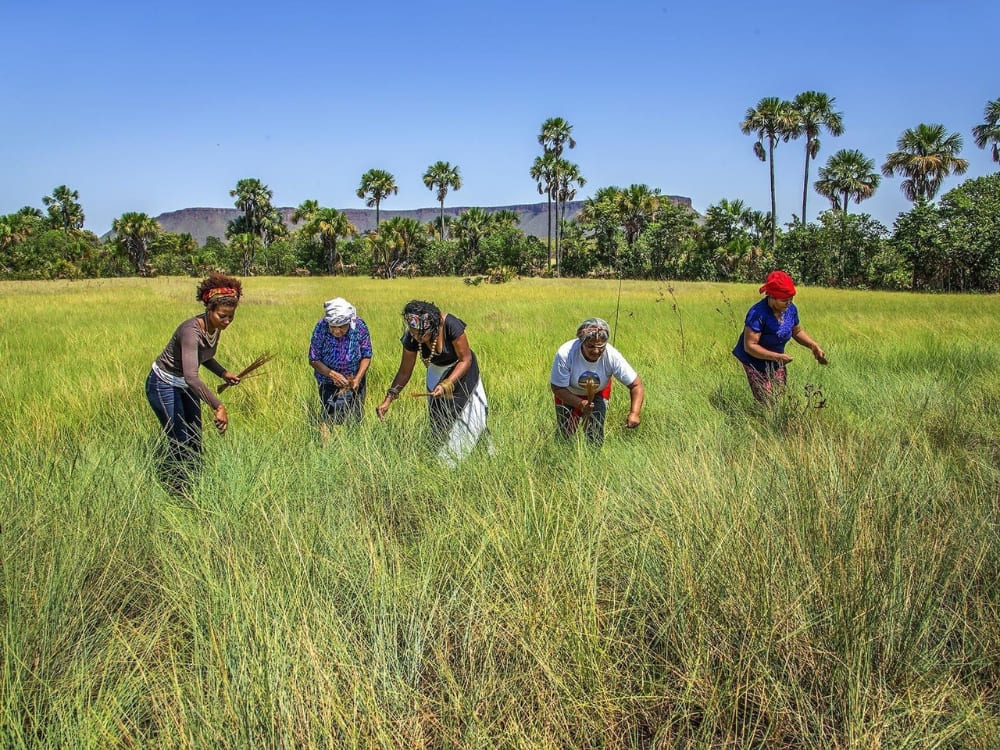
    One of Brazil’s wildest and most preserved destinations, Jalapão is a cerrado region impressing with its landscape diversity. There, you can venture through golden dunes, blue water springs, waterfalls, and rock formations. Jalapão is also known for its golden grass handicrafts, typical of the region.

    Why visit?
    With initiatives aimed at biodiversity conservation, the region has unique features like golden grass management and protection of endangered species like the diving duck.

    7. Lençóis Maranhenses (MA)

    Lençóis Maranhenses Top 7 Ecotourism Destinations in Brazil to Visit in 2024
    Lençóis Maranhenses – Photo: Cris Marques @raizesdomundo

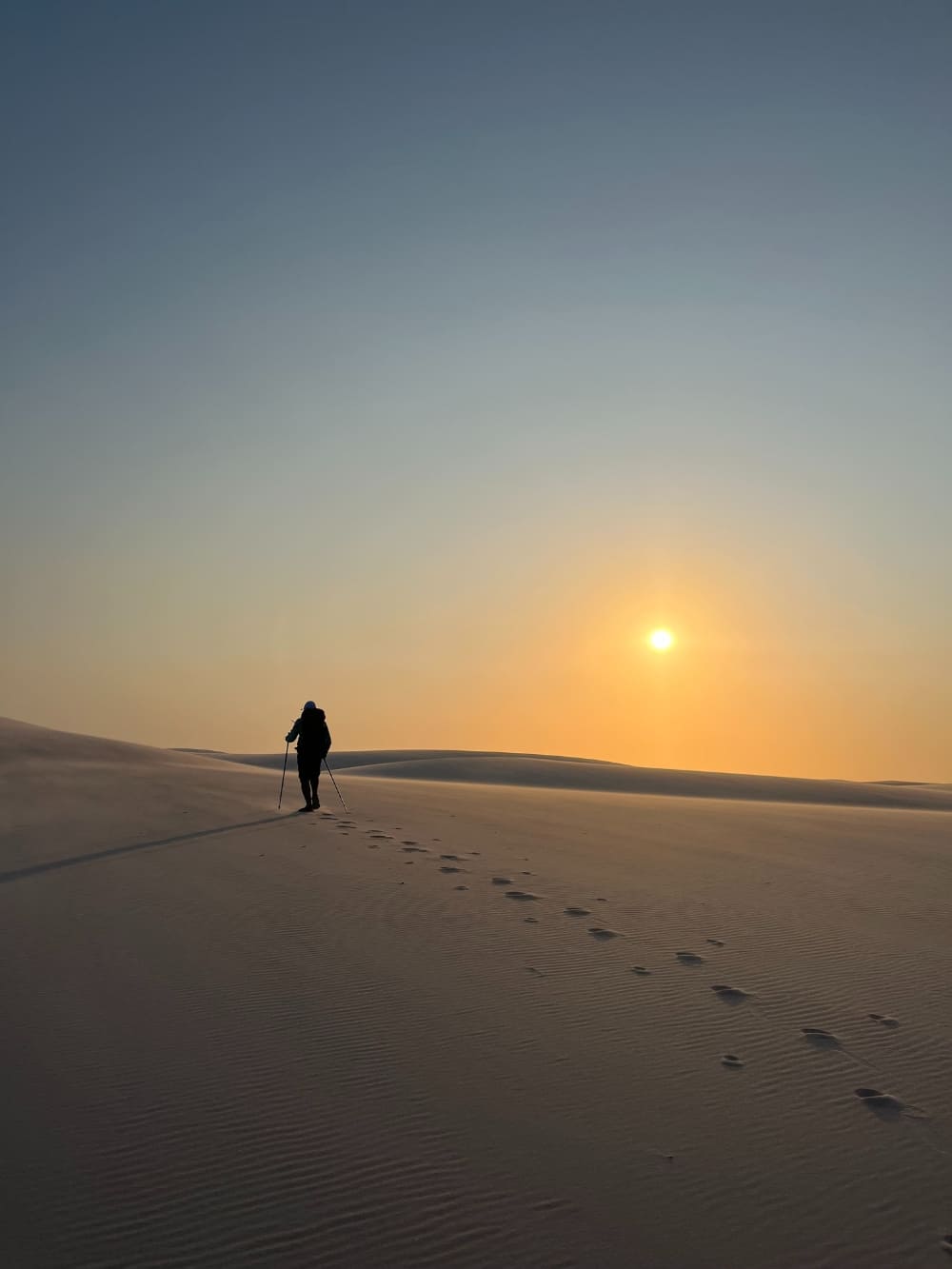
     One of Brazil’s most incredible destinations, the Lençóis Maranhenses National Park amazes visitors with its natural beauty and uniqueness. The park houses a rare ecosystem, consisting of white sand dunes stretching over 150,000 hectares, which turn into freshwater lagoons during the rainy season, creating a striking contrast.

    Why visit?
    It ensures tourism acts as an economic engine for local communities, improving their quality of life through increased income. It boosts local handicrafts, particularly products made from Buriti fiber, like bags and hats, making them meaningful souvenirs and supporting the artisan economy. Accredited guides by ICMBio to enter the park not only show the way but also protect and care for this special place.

    Download Free eBook

  • Guide Lucas Neves: A PlanetaEXO success story of sustainable travel in Chapada Diamantina

    Guide Lucas Neves: A PlanetaEXO success story of sustainable travel in Chapada Diamantina

    The Chapada Diamantina is one of the most coveted destinations in Brazil for nature lovers. With its majestic mountains, stunning waterfalls and rich biodiversity, the region is an adventurer’s paradise.
    However, exploring these natural wonders responsibly requires an experienced and conscientious guide. That’s where Lucas Neves comes in, an adventure tourism guide and PlanetaEXO partner who has dedicated his career to promoting sustainable tourism in the region.

    Who is Lucas Neves?
    At 28, Lucas is a native of Vale do Capão, in the Chapada Diamantina. He found in the profession of adventure tourism guide the opportunity to combine his passion for nature with the freedom of being self-employed. Lucas also works as a brigadier in the Vale do Capão Volunteer Brigade, fighting forest fires, rescuing injured people in remote areas and saving wild animals in urban areas. As Lucas puts it, “As well as being an opportunity to work with what I love (mountains, trails, adventure), in the local reality it’s a profession that allows me to be self-employed, having more freedom, which is something I value a lot.”

    Sustainable Tourism as a Mission
    For Lucas Neves, sustainable tourism is not just a slogan, but a life mission. “Through practices with minimal impact on the environment and passing on knowledge to visitors, this awareness multiplies,” says Lucas. He believes that sustainability begins with education and awareness. Before each hike, Lucas makes a point of introducing visitors to the unique environment of the Chapada Diamantina, explaining the practices that minimise human impact. During the hikes, he demonstrates these practices in action, showing the positive impact they have on the local environment, not only in the short term, but also in the medium and long term.Hikers crossing a rugged mountain trail among the peaks of Chapada Diamantina


    Lucas Neves at the Vale do Pati viewpoint, Chapada Diamatina

    Sustainable Practices in Action
    Lucas adopts a number of initiatives to promote sustainable tourism. He is involved in environmental education programmes in the local community, teaching younger generations about the importance of conservation. In addition, he makes a point of hiring the services of native locals and encourages tourists to buy local handicrafts and culinary products. These actions not only help the local economy but also encourage a form of tourism that respects and values the local culture and environment.

    The Traveller’s Experience
    For Lucas, the aim is to be the link between the client and nature. He customises each itinerary based on the traveller’s profile, taking into account factors such as physical fitness and climate. The focus is always on safety, but also on exceeding visitors’ expectations, allowing them to integrate and give themselves as much as possible to the purpose of the itinerary.

    Fantastic guide! We had a fantastic time with your guidance, Lucas. You really love nature and your work, and it shows!

    Ole, from Germany

    Traveller admiring the vast valley from a Vale do Pati lookout in Chapada Diamantina

    Lucas Neves and Ole

    The role of PlanetaEXO
    The partnership with PlanetaEXO amplifies these efforts. “The partnership with PlanetaEXO through the high frequency of work in partnership and the fair remuneration above what the market usually pays allows me to afford training to improve as a professional,” says Lucas. The company is committed to working with local guides and other stakeholders to contribute to the sustainable economic development of Chapada Diamantina communities. Learning English with the support and encouragement of PlanetaEXO has opened doors for Lucas, allowing him to interact with clients from other countries and enrich his world view.

    According to Lucas Ribeiro, founder of PlanetaEXO, Lucas Neves serves as an inspiring role model and comments: 

    From the very first days of PlanetaEXO, we realised in Lucas Neves not only a talented guide, but a professional whose values resonated deeply with our company's mission: the sustainable development of tourism and the strengthening of local communities. He became a source of inspiration for those entering or considering a career in sustainable tourism. Two years after the start of this fruitful collaboration, I can say with confidence that our mission has been fulfilled – and we're still only at the beginning. The partnership with Lucas Neves is a living testimony to the positive impact we can achieve when values, passion and professionalism align. We are excited about what the future holds and are confident that this partnership will continue to bear much fruit for the communities of Chapada Diamantina and the world of sustainable tourism as a whole.“

    Challenges and rewards
    Being a guide in an area as biodiverse and sensitive as the Chapada Diamantina is no easy task. Lucas points out that one of the biggest challenges is catering for audiences with extremely different profiles, while always keeping his mind focused and positive. However, he keeps up to date and informed through constant communication with other guides and members of the local community.

    Footprints of Change
    Lucas Neves is not just a guide; he is an ambassador for sustainable tourism and an advocate for the local community. His partnership with PlanetaEXO exemplifies how responsible tourism can be a force for good, benefiting both visitors and host communities. In a world that desperately needs more sustainability and environmental awareness, figures like Lucas are true beacons of hope.

  • Best Diving Spots in Fernando de Noronha

    Best Diving Spots in Fernando de Noronha

    Discover the wonders of Fernando de Noronha, a diver’s paradise offering diverse marine life, stunning dive sites, and a connection to nature!

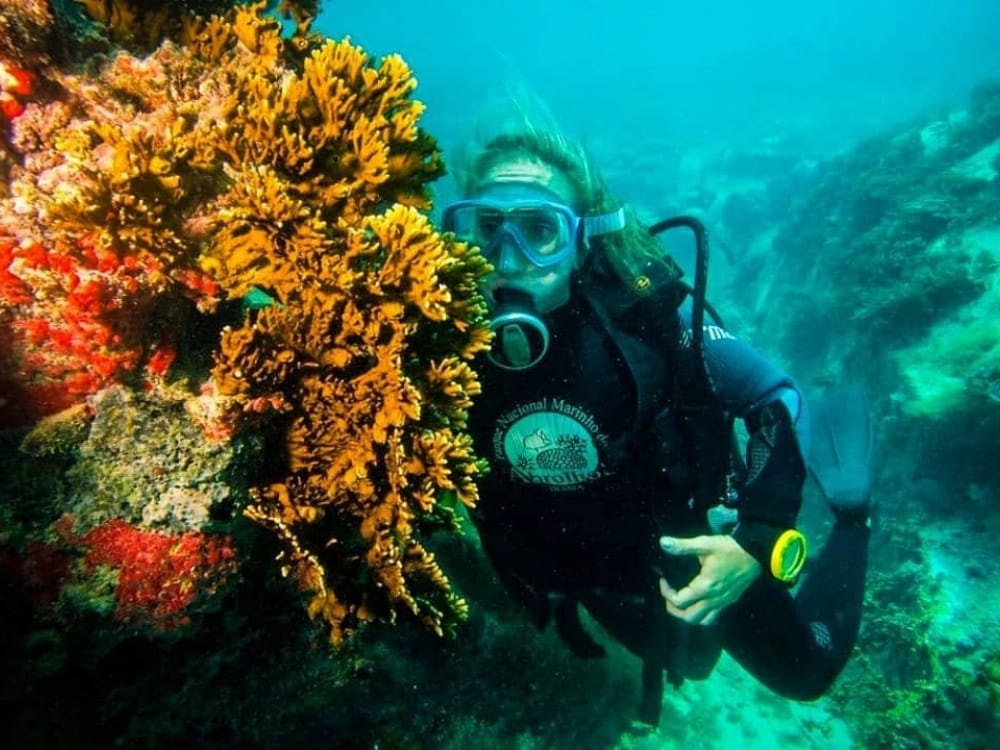
    Fernando de Noronha National Marine Park is one of the best places in the world for diving. Famous for its biodiversity and crystal-clear waters, this UNESCO World Heritage Site has something for divers of all skill levels, combining adventure with conservation.

    From coral reefs to shipwrecks and underwater caves, Fernando de Noronha is an ocean lover’s dream destination. Before you plan your trip, find out when is the best time to dive and take a look at our diving packages to make the most of your visit.

    Fernando de Noronha island

    One of the things that makes diving in Fernando de Noronha stand out is the archipelago’s dedication to sustainable tourism. With eco-friendly practices to ensure that the region stays beautiful for future generations, visitors are encouraged to respect marine ecosystems.

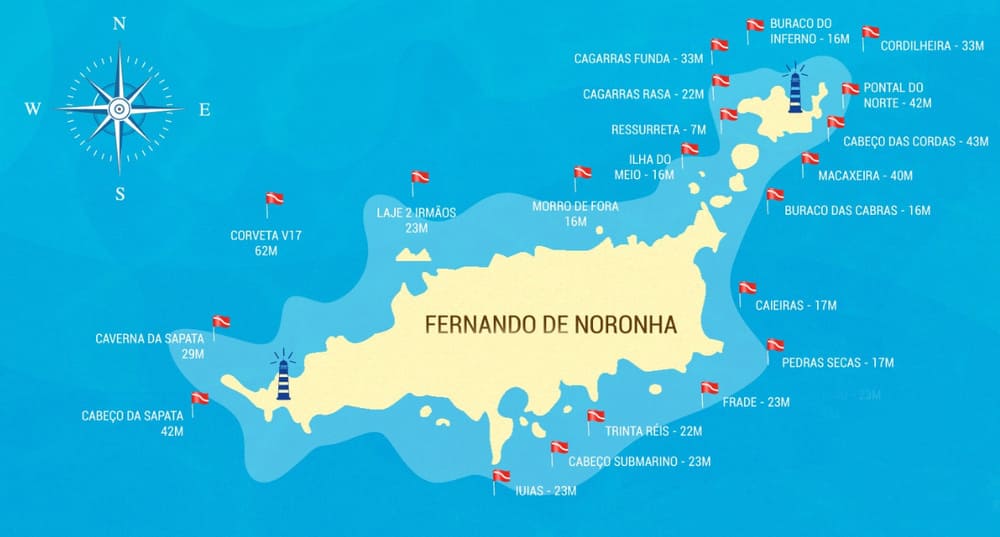
    Fernando de Noronha has over 20 world-class dive sites, so it’s great for both novice and experienced divers. You can explore coral gardens or navigate sunken shipwrecks at each site. Here’s a guide to the best diving spots in Fernando de Noronha, which will help you plan your adventure:

    👉 Planning your trip? Learn how to get to Fernando de Noronha with our complete guide

    Diving Spots in Fernando de Noronha


    Dive Spots in Fernando de Noronha

    Cabeço da Sapata (42m)

    This deep dive site features a natural coral reef amphitheater, challenging currents, and the chance to encounter large marine species like groupers and rays. The depth and underwater scenery make it a perfect spot for those looking to push their limits.

    Cabeço da Sapata
    Cabeço da Sapata. – Photo: Pamella Rech

    👉 Curious about Fernando de Noronha? Discover 10 interesting facts about this Brazilian island paradise.

    Ilha do Meio (16m)

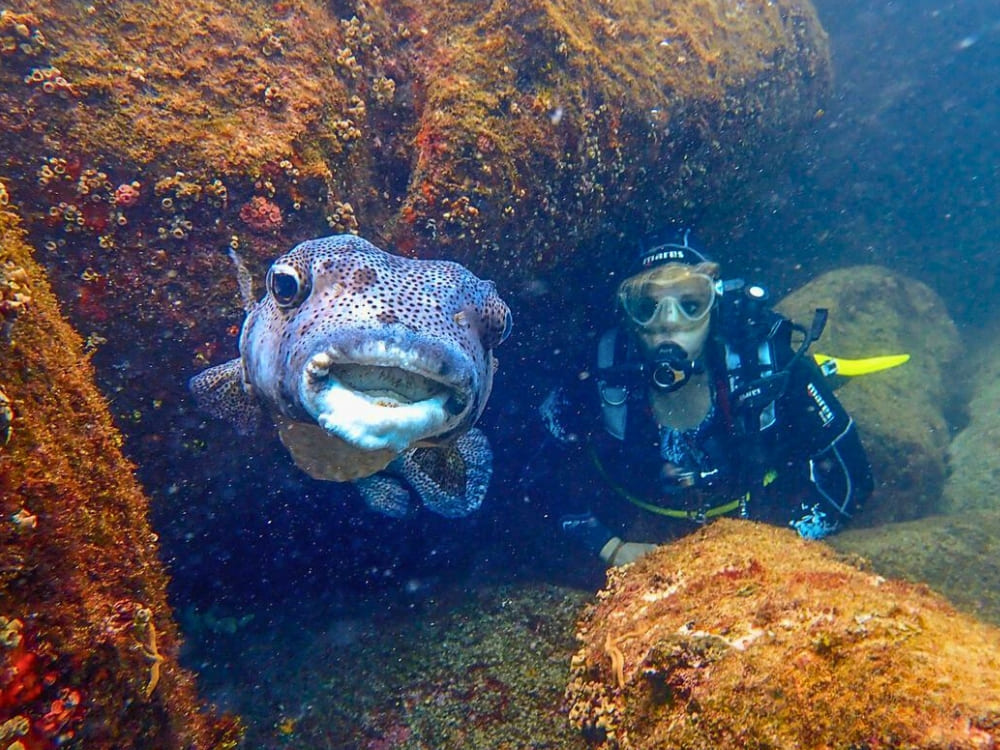
    Ilha do Meio is known for its calm waters and underwater views, making it a great spot for relaxed dives. The site has diverse marine life, from small reef fish to moray eels, which makes it a great place for underwater photographers.

    Ressurreta (7m)

    If you’re new to diving and want to ease into it, Ressurreta is the place for you. It’s a calm and shallow dive site with plenty of fish and small coral formations. It’s also great for snorkelers.

    Caverna da Sapata (29m)

    This naturally lit underwater cave is a diver’s dream, offering a captivating interplay of light and shadow. The cave’s geological formations and species of fish create an ever-changing spectacle that divers won’t forget. It’s perfect for those interested in exploring intricate underwater landscapes.

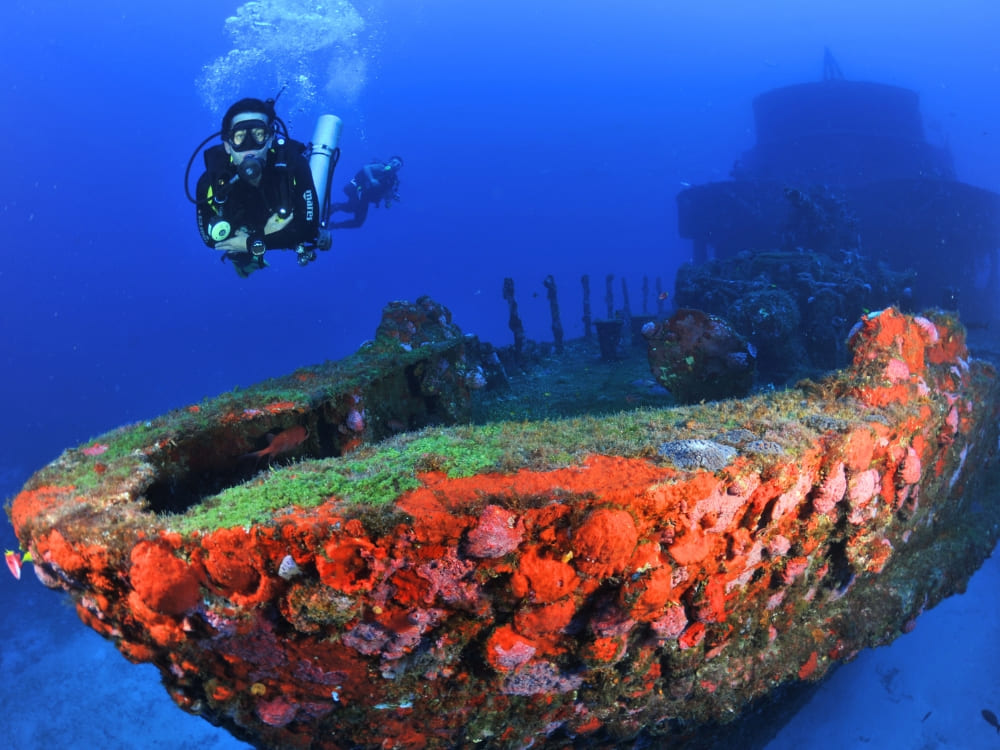
    Corveta V17 (62m)

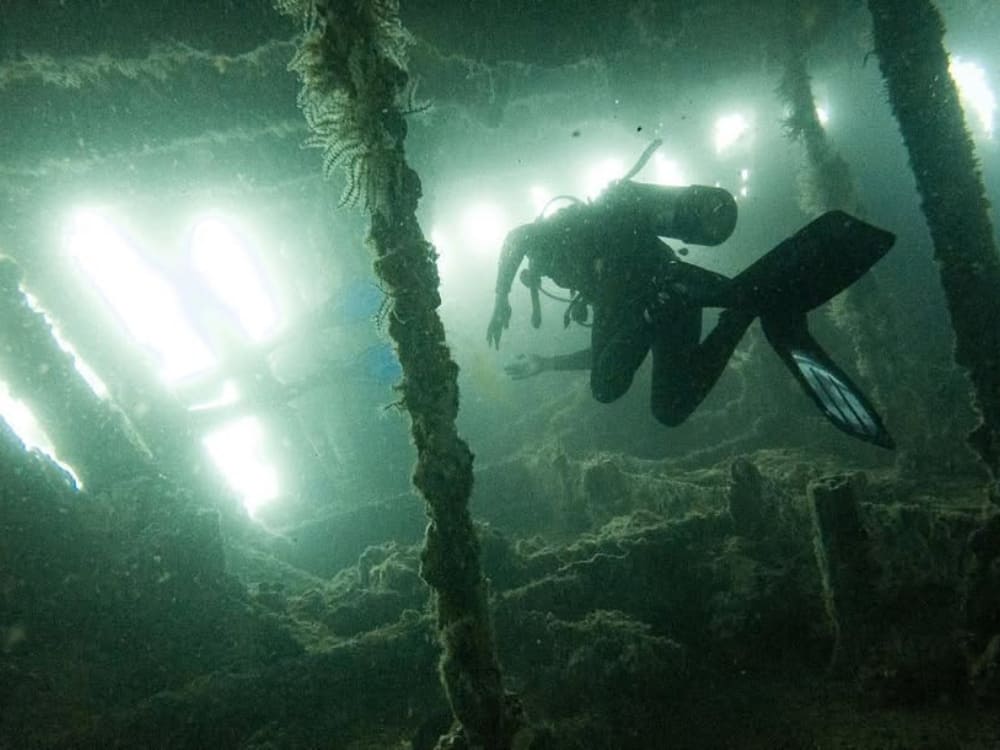
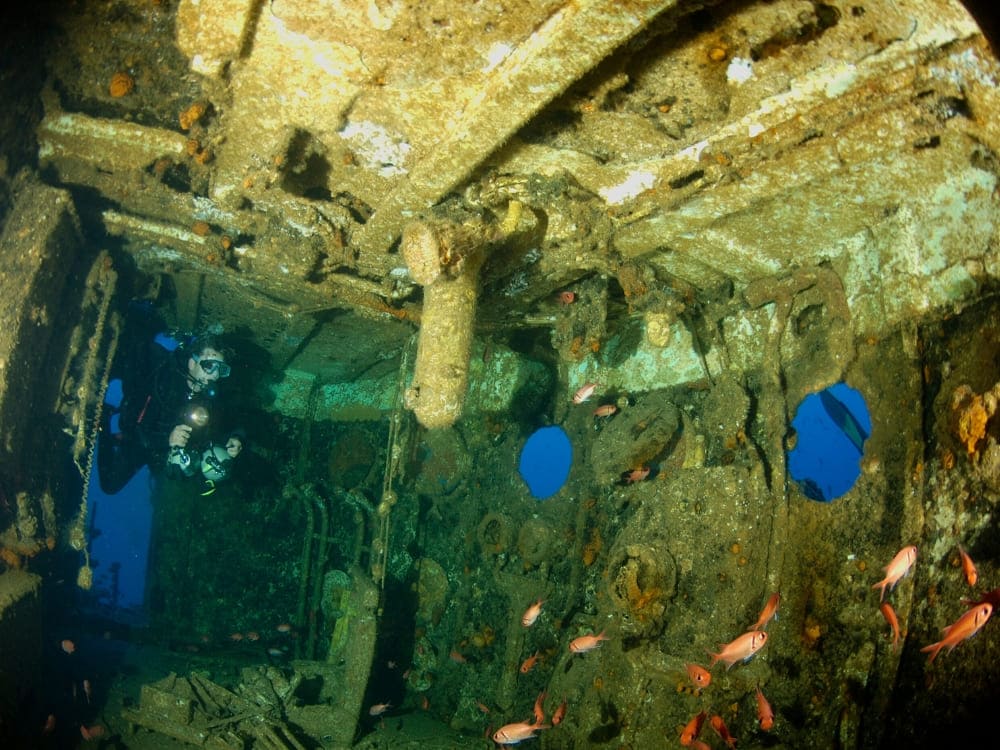
    This sunken warship is a must-go place to dive. Home to lots of marine life, you’ll find reef sharks, corals, and lots of fish there. It’s a challenging but impressive dive for experienced divers.

    Corveta V17 in Fernando de Noronha
    Corveta V17

    Laje 2 Irmãos (23m)

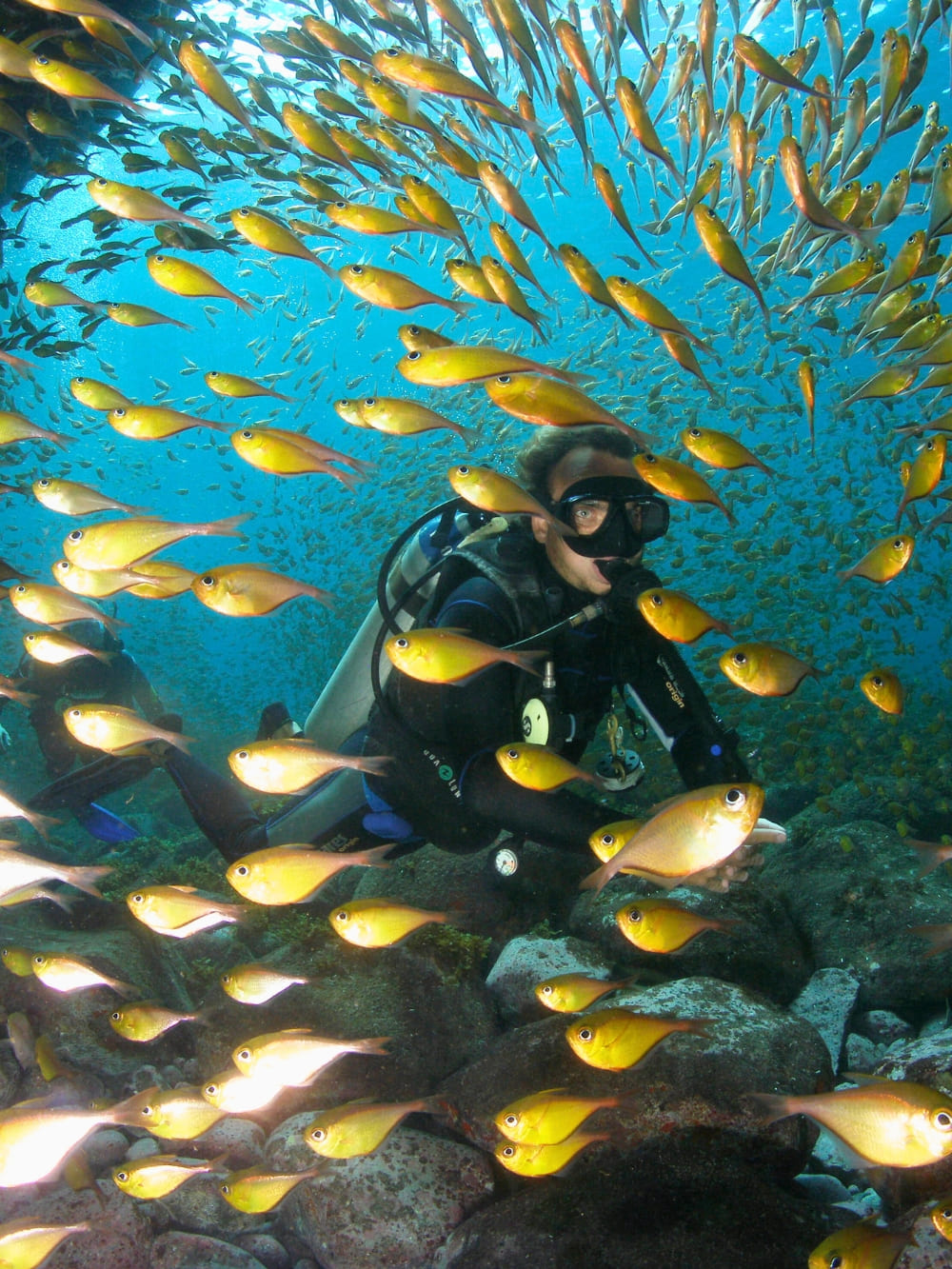
    Located near the iconic Dois Irmãos hill, this site offers stunning rock formations and marine biodiversity. Divers can encounter colorful schools of fish, playful dolphins, and sea turtles. Its moderate depth makes it accessible to both intermediate and advanced divers.

    Morro de Fora (16m)

    This shallow site is great for beginners and intermediate divers, with tropical fish and coral gardens. The vibrant marine life and calm conditions make it an excellent spot for those new to diving.

    Cagarras Rasa (22m)

    There’s a kaleidoscope of colors waiting for divers at this vibrant site. It’s got coral reefs and marine life, including angelfish and sea turtles. It’s a favorite for divers of all levels.

    Cagarras Funda (33m)

    This deeper dive site is perfect for advanced divers looking for a bit of adventure. With underwater cliffs and canyons, Cagarras Funda is home to rays and barracudas, offering a dynamic diving experience.

    Buraco do Inferno (16m)

    The name might sound a bit ominous, but this site is a maze of underwater crevices and caves. The geological formations provide a habitat for crustaceans and small reef fish, making it a peaceful place to explore.

    Cordilheira (33m)

    Cordilheira is known for its dramatic underwater landscapes, featuring steep drop-offs and towering cliffs. This site also offers rich biodiversity, from nudibranchs to pelagic species, making it a must-visit for advanced divers.

    Macaxeira (40m)

    This dive site is known for its intricate rock formations and vibrant coral gardens. It’s a great spot for experienced divers looking for an unforgettable underwater experience, as it’s home to rays, eels, and tropical fish.

    Buraco das Cabras (16m)

    A tranquil spot to observe small reef fish in a laid-back setting. Its shallow depth makes it ideal for beginners and those who want to take it easy on their dives.

    Caieiras (17m)

    Caieiras is known for its coral reefs and tropical fish, making it an easy place to navigate and perfect for intermediate divers. Its underwater environment makes for a memorable experience.

    Pedras Secas (17m)

    Pedras Secas is an underwater labyrinth of rock formations that’s perfect for divers who like exploring narrow passages and discovering hidden marine life.

    Frade (23m)

    This site is a popular spot for rays, turtles, and schools of fish. It’s an exciting dive for intermediate divers and offers a rewarding underwater experience.

    Trinta Réis (22m)

    Trinta Réis is a favorite for its atmosphere, scenery, and marine life. Divers often encounter a mix of small and large species, which makes for a well-rounded diving experience.

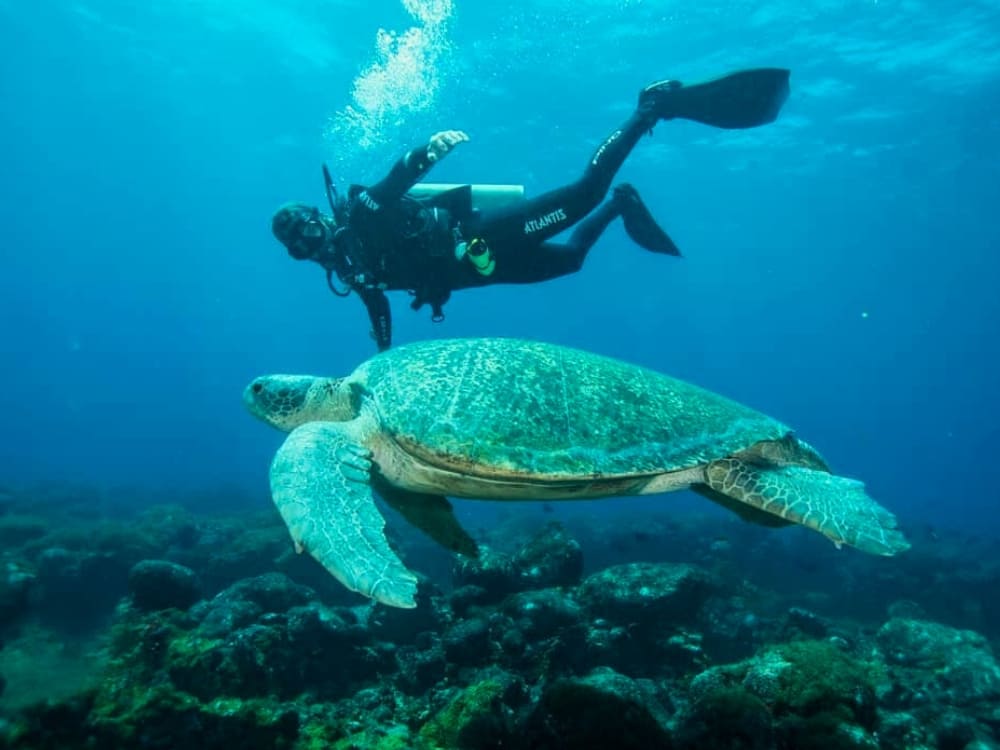
    Diver with a shark in Fernando de Noronha

    Cabeço Submarino (23m)

    If you’re into exploring geological wonders while observing diverse marine life, Cabeço Submarino is a great spot. It features unique rock formations and underwater landscapes.

    Iuias (23m)

    Iuias is a diver’s paradise. With a variety of marine life, it’s a favorite among underwater photographers and nature enthusiasts thanks to its biodiversity.

    Pontal do Norte (42m)

    Deep and challenging, Pontal do Nortes is home to diverse marine life, including schools of fish and the occasional shark. The depth and strong currents make it best suited for experienced divers looking for a rewarding adventure.

    Cabeço das Cordas (43m)

    If you’re looking for a great spot for diving, Cabeço das Cordas is a perfect choice. It offers amazing underwater views and marine life. The light on the coral formations is stunning, making it a great place for advanced divers to test their skills.

    Dive Into Fernando de Noronha’s Wonders

    Now that you know the best diving spots in Fernando de Noronha, it’s time to start planning your adventure. At PlanetaEXO, we’ve got packages that let you explore this underwater paradise responsibly and sustainably.

    Whether you’re a beginner looking for calm waters or an experienced diver looking for a deep-sea challenge, our trips are guided by local experts and are sure to be unforgettable. Dive into marine life, coral reefs, and underwater landscapes — book your Fernando de Noronha adventure today!

  • Vale do Pati trekking is for all ages?

    Vale do Pati trekking is for all ages?

    This was for sure the greatest adventure of our lives!

    Germano

    The weather was rainy and the forecast was for even more rain. The group of 7 friends from Paraíba considered giving up the trip, but the call for a new adventure spoke louder. And so, fearful but determined, they went to meet the PlanetaEXO team at the starting point for Vale do Pati, the city of Guiné.Adventurers gathering in the village of Guiné before starting the Vale do Pati trek

    Ana Karla, Roberto, Germano, Ana Claudia, Jória, Robertinho e Adriana.

    Introduced to Saulo and Gil, the guides who would lead them during the next 4 days trekking in Vale do Pati, the group felt the necessary security to surrender to this challenge. And with their walking sticks, they started the first 300 meters of elevation amid the rain, fog, mud and slippery rocks to reach the first stopping point and postcard of the Valley: the Mirante do Pati.

    With open hearts and already thrilled to see such greatness of nature, they were able to experience the first impression of the transformation that awaited them. Their knees were already complaining and tiredness was asking them to go back to the comfort of home, but they didn’t give up. The experience conceived by the group’s leader, Germano, 59, was just beginning… And this is a journey of winners! 

    Our Guides made the difference! Technique, patience, tranquility, always attentive and with encouragement!

    Ana Cláudia

    Already in the house of the native Mr. Wilson, the group were able to rest and be well received by the family who, during their stay, offered tasty and reinforced meals and the best of the comfort of their home, which, by the way, does not include a hot shower, nor wi-fi, but the necessary to wake up excited for the next day.

    The 5-hour walk to reach Cachoeirão from above was challenging, but the return trip would be even more challenging. This is a privilege for those who hike in the rain, the waterfalls are radiant! A shower and a snack renewed their spirits to face a return of heavy rain, slips and trust in each other and in the hands of their guides. It was almost nine o’clock when they returned to the house, exhausted but vibrant. “Open the beer session to celebrate” – said Germano.

    At this point in the trip, they were already feeling strong, confident and transformed. The days that followed were a celebration in the waterfalls and natural pools, with the taste of someone who has just discovered a little more about themselves. On the last day, the ‘grand finale’ of the challenges: going up the Rampa do Pati to leave. A mix of emotion and exhaustion, but the certainty of an unforgettable experience.

    Surely, a new way of traveling is now part of the lives of this brave group! And YES, Vale do Pati trekking is for all ages! 

    Welcome to our family, PlanetaEXO adventurers!

    Thank you for the experience that EXO has given us. A fraternal hug, in particular, to our guides Saulo and Gil, very efficient and attentive to us.

    Roberto

    “Thank you for the care, technical knowledge, and even more for the patience, power to stimulate and vibrate together! I congratulate you for the education and care given individually, the power to add, the mental and physical strength of Saulo and Gil. In addition to the affection and kindness, always gracing us with words, conversations and smiles!“

    Ana Karla

    Well done guys!

    View Map

    PlanetaEXO badge marking the completion of the Vale do Pati trekking adventure

    This adventure supports the local communities and sustainable travel at Chapada Diamantina, Brazil
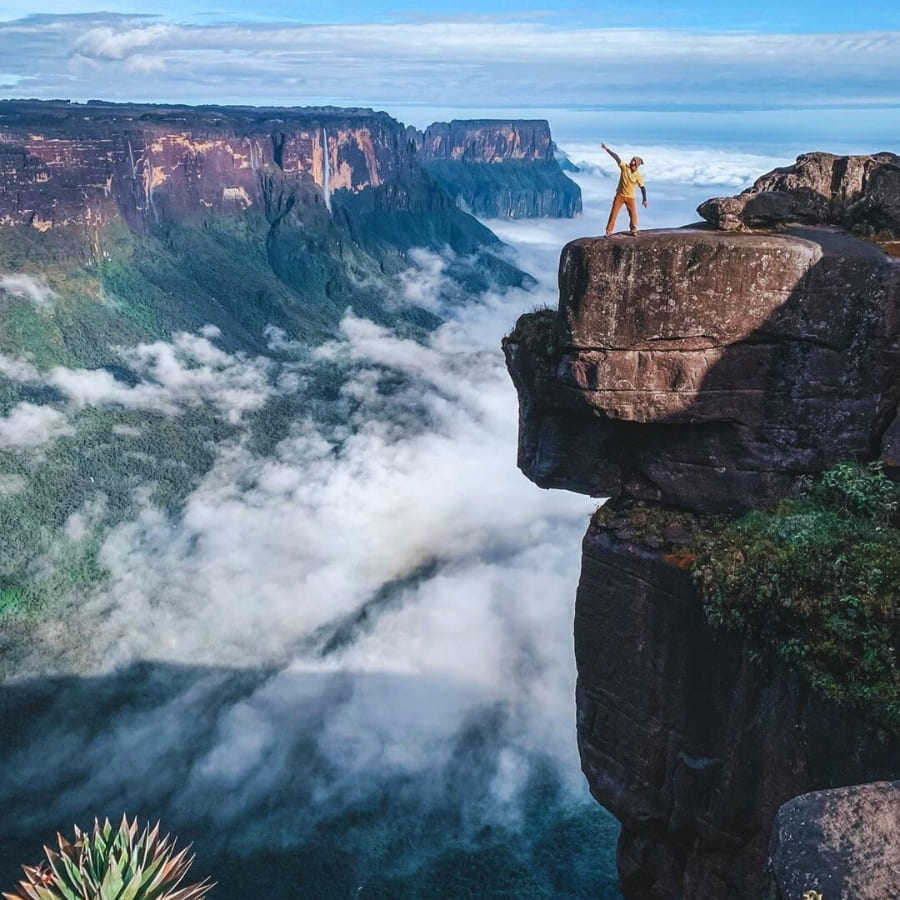
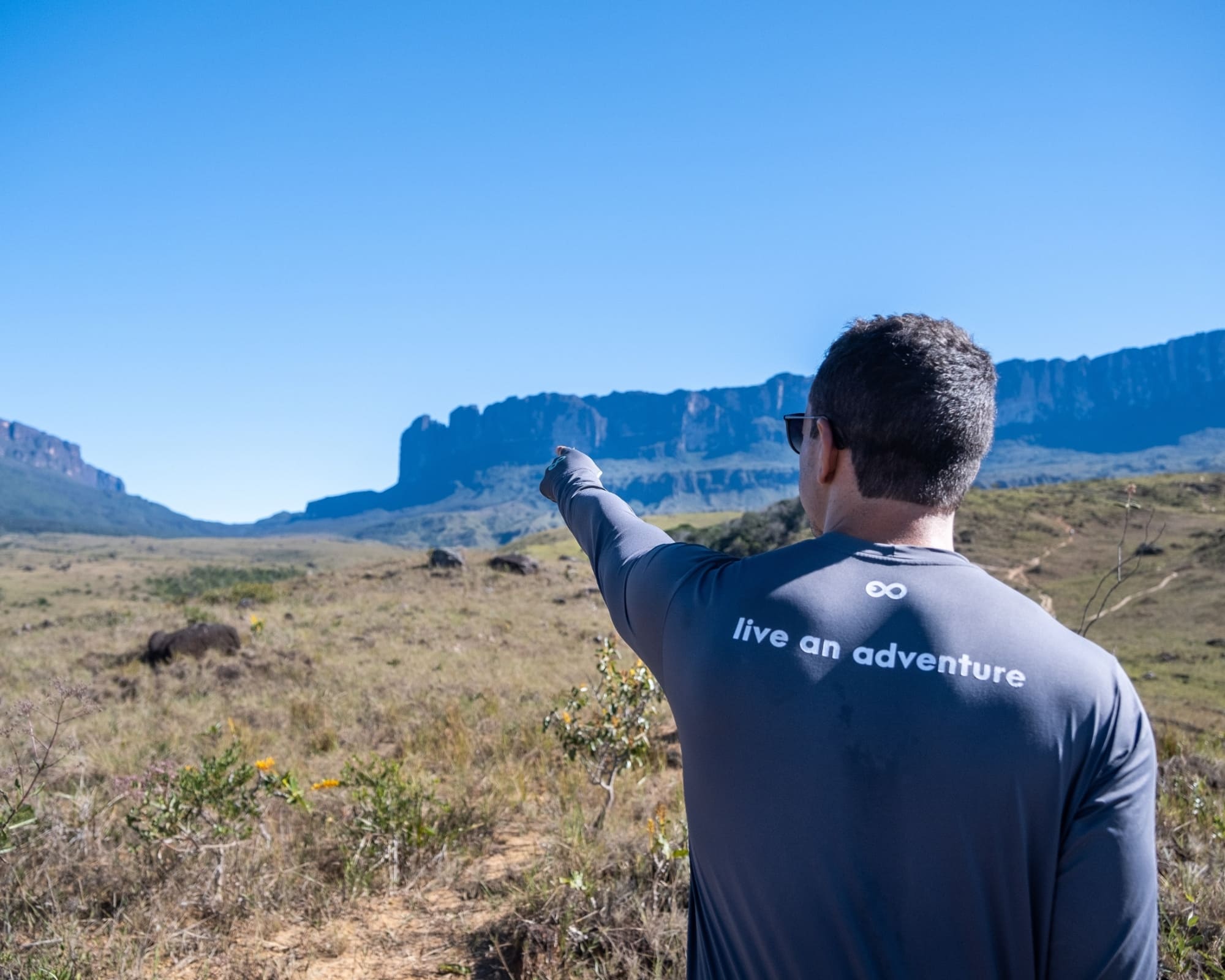
  • How much does it cost to climb Mount Roraima?

    How much does it cost to climb Mount Roraima?

    Are you interested in hiking to climb Mount Roraima but are wondering how much it costs? Join us as we guide you through all the important aspects to consider before embarking on your Mount Roraima adventure.

    We’ll help you make the most out of your trip while ensuring your safety every step of the way. Let’s dive into the details together, so you can fully enjoy this incredible journey to the oldest place on Earth.

    Mount Roraima hike

    How much does it cost to climb Mount Roraima?


    The cost of climbing Mount Roraima can vary depending on several factors, such as the duration of the trek the chosen route, and the services included in the tour. The PlanetaEXO offers authentic experiences with English-speakers local guides and all tours include roundtrip ground transportation from Boa Vista to the Indigenous Community of Paraitepuy; one-night accommodation in a double room in Santa Elena de Uairén; full meals during the trekking; shared camping equipment: double-shared tent, kitchen equipment, cookware, plates, cups, utensils; logistics staff; trail guide and first aid kit.

    The 8-day hike to Mount Roraima costs R$5.500,00 and starts on Santa Elena de Uairén throughout the Paraitepuy Indigenous Community. On this tour, you will spend 3 nights at the top and have an immersive experience in the natural wonders of Mount Roraima, with a special emphasis on discovering and enjoying the enchanting natural pools and jacuzzis along the way.

    Mount Roraima hike

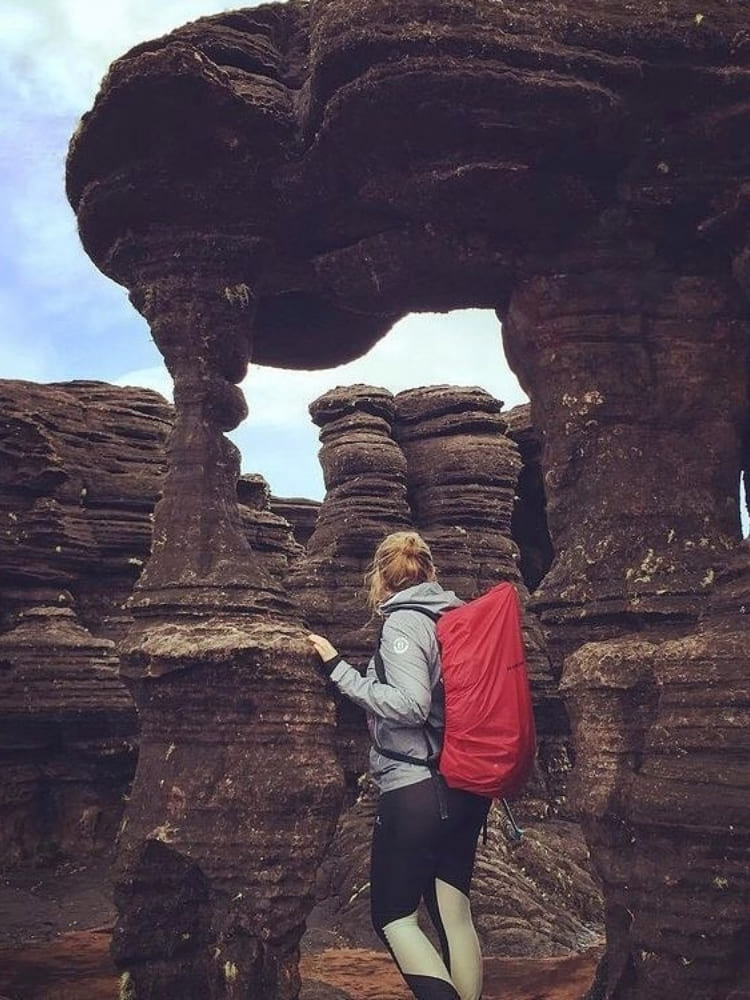
    Trekkers explore natural pools and rock formations atop Mount Roraima in Venezuela

    Hikers trek across the dramatic summit landscape of Mount Roraima in Venezuela

    The 10-day Makunaima Expedition hike costs R$6.200,00 and offers a captivating journey to the “Lost World” of Makunaima, showcasing the natural wonders of Mount Roraima and providing insights into the indigenous culture of the region. In this adventure, you will spend 5 nights on the top and have a remarkable opportunity to explore the mystical landscapes and embrace the rich heritage of this destination.

    climb Mount Roraima

    A trekker takes in the mystical rock formations on top of Mount Roraima

    How much does it cost to climb Mount Roraima?

    Do you still have any questions or lingering uncertainties regarding Mount Roraima? Explore our comprehensive guide, packed with valuable information and insider tips. 

    Join us as we guide you through all the important aspects to consider before embarking on your Mount Roraima adventure. We’ll help you make the most out of your trip while ensuring your safety every step of the way. Let’s dive into the details together, so you can fully enjoy this incredible journey to the oldest place on Earth. Come to climb Mount Roraima!


    Try one of our following Mount Roraima tours!

  • What to do in Jalapão?

    What to do in Jalapão?

    Dreaming of visiting one of the most marvelous places in Brazil? Here’s a list of what to do in Jalapão!

    Jalapão State Park is a conservation unit that holds some of Brazil’s most impressive scenarios. Situated in the state of Tocantins, in the North of the country, this is a must-see destination for nature and adventure lovers.

    Between golden dunes, gorgeous waterfalls, and several natural pools, the Jalapão tours offers incredible opportunities to have the experience of a lifetime.

    Curious to learn more about this paradise? See below a list of what to do in Jalapão!

    Jalapão dunes

    In the middle of the Cerrado, the dunes of Jalapão State Park are a golden streak of sandstone rocks that form the Mountain Range of Espírito Santo. From the very top, the view of the orangish sand living in the same space as the green vegetation – with plenty of buriti palm trees – can make anyone fall in love.

    In some spots, the sand is cut by water currents and even flowers, which creates a diverse and unique landscape, beautifully illuminated by the sun. Sunset watching in the dunes should be included on any visitor’s travel itinerary!

    While hiking across the dunes is allowed, climbing through the rock wall is prohibited. To avoid any problems, make sure to follow your guides instructions and the state park rules.

    👉 Did you know this region was once covered by the sea? Discover this and other fascinating curiosities in 10 facts about Jalapão

    When is the best time to visit Jalapão?
    Enjoy the stunning views and have fun sliding down the dunes.

    Jalapão fervedouros

    Always on the top of the lists of what to do in Jalapão, the fervedouros are, without a doubt, the stars of the show.

    Similar to natural pools or wells, these springs gush water from the underground and are surrounded by rich vegetation. The water pressure creates a boiling-like effect – that’s why the word fervedouro is so fitting; it translates to “boiler”.

    The water isn’t hot, but it’s that same underground pressure that prevents sinking. No matter how much you weigh, you’ll always float in a fervedouro!

    Jalapão has dozens of fervedouros worth visiting, including Fervedouro dos Buritis, Fervedouro Bela Vista, Fervedouro do Ceiça, Fervedouro do Alecrim, Fervedouro Buritizinho and Fervedouro Rio do Sono.

    jalapão state park tours
    Don’t miss the chance to visit the fervedouros!

    Jalapão waterfalls

    The waterfalls are as jaw-dropping as everything else in Jalapão. There are options for every type of traveler – from adventure junkies to families or couples looking for relaxation.

    Don’t miss the opportunity to visit:

    Cachoeira da Velha: the largest waterfall in Jalapão State Park, it has a powerful cascade of water that gushes non-stop to a 15-meter fall. Great for rafting.

    A powerful waterfall cascades down a 15-metre drop in Jalapão State Park, Brazil
    This impressive waterfall is one of the largest in the region, creating a powerful cascade that is truly awe-inspiring.

    Cachoeira Roncadeira: 70-meter fall surrounded by rock formations and different species of plants. Ideal for rappeling.

    Cachoeira Escorrega Macaco: 50 meters high waterfall, but the water volume is low. For contemplation only.

    jalapão state park tours
    Enjoy the thrill of sliding down natural rock slides and swimming in the refreshing pools of this beautiful waterfall. Photo: @vamostrilhar

    Cachoeira do Formiga: this waterfall isn’t big, but the natural pool that forms under it is absolutely incredible, perfect for swimming, taking pictures or simply contemplating its beauty.

    jalapão state park tours
    Dive into the emerald-green waters of Cachoeira do Formiga! Photo: @viagemnarelacao

    Cânion Encantado: formed by 70-meter tall rock walls, this canyon houses incredible waterfalls, like Cachoeira da Capivara, Cachoeira do Portal and Cachoeira dos Pelados.

    jalapão state park tours
    Prepare to be mesmerized as the cascading water gracefully flows down into the canyon!

    Hiking in Jalapão

    Hiking is an unmissable (and unavoidable) activity in Jalapão. To reach certain spots, like waterfalls or fervedouros, hiking is mandatory – whether the walk is light or a bit more demanding.

    If you’re a hiker to your core, and you love discovering new trails to explore nature, breathe the fresh air and exercise, Jalapão has amazing options:

    Boa Esperança Trail: connecting Fervedouro do Alecrim and the Boa Esperança village, this 9 km trail allows you to witness the wonders of nature across Cerrado vegetation and crystal-clear waters. Flood season (November to April) might alter hiking itineraries.

    Travessia da Velha: for expert hikers, it takes over 4.5 hours to complete it (12 km). The group stops for rafting before reaching the final destination, in Cachoeira da Velha. Hiking available only in the dry season (May to October).

    Serra do Espírito Santo Trail: hiking activities take place at night, which means there’s no natural light. Moderate difficulty, but the hike is steep (200-meter high). It takes over 2 hours to complete it.

    What to do in Jalapão State Park Brazil?
    Jalapão’s beauty and thrilling activities make it a must-visit.

    Pedra Furada

    If you’re seeking options on what to do in Jalapão, but want to step away from water-related activities just for a moment, visiting Pedra Furada is a must-have experience!

    This sandstone rock formation was naturally carved throughout thousands of years. Wind, rainfall, and other natural phenomena created Pedra Furada’s unique shape, with a hole right in the middle.

    It might not look like much, but when the afternoon falls, the sun perfectly aligns itself with the opening, creating a bright, golden ring. It’s breathtaking!

    jalapão state park tours
    Trek through the breathtaking landscapes to reach Pedra Furada.

    Lagoa do Japonês

    Lagoa do Japonês is a true oasis amidst the Cerrado. This movie-like place features shockingly crystal-blue waters, dense vegetation, and underground lagoons in ancient caves.

    While swimming, snorkeling or boat riding, you’ll spot and even interact with some friendly neighbors, like turtles, birds, and fish.

    Crystal-clear waters of Lagoa do Japonês inviting a swim in Jalapão, Tocantins
    Unrivalled natural beauty, with crystal-clear turquoise waters and stunning surroundings!

    👉 Do you love animals? Check the best wildlife tours in Brazil!

    Rio Novo rafting

    An integral part of every Jalapão itinerary, Rio Novo is one of Tocantins River tributaries, one of the few in the world that still have drinkable water.

    The river’s strong currents are perfect for adrenaline-filled activities like rafting. Specialized agencies provide everything you need, including inflatable rafts, life jackets, helmets, paddles and safety practices.

    After rafting, relax in Prainha do Rio Novo, a peaceful little beach on the riverbanks.

    jalapão state park tours
    Go rafting on Jalapão!

    Local communities (Quilimbola Mumbuca)

    The Quilombola Mumbuca community was the first group of people to arrive in Jalapão in the 19th century. The founding members were slaves who fled from the south of the state of Bahia to find a place where they could settle and live freely.

    Visiting and engaging with the locals are some of the most authentic ways of diving deep into the heart and soul of Jalapão. By learning their customs, history, and traditions, you’ll be able to help keep the Mumbuca culture alive and learn the very essence of this fascinating place.

    Now that you know what to do in Jalapão, shall we book your trip?

    Jalapão is one of the most beautiful places in Brazil. Whether you’re an adrenaline-driven person or just want to enjoy your vacation to relax, this destination will surely help you create unforgettable memories.

    PlanetaEXO connects you with the best experiences and professionals in the field, offering hassle-free travel planning and curated activities. Contact us and book your trip now!


    Read More:

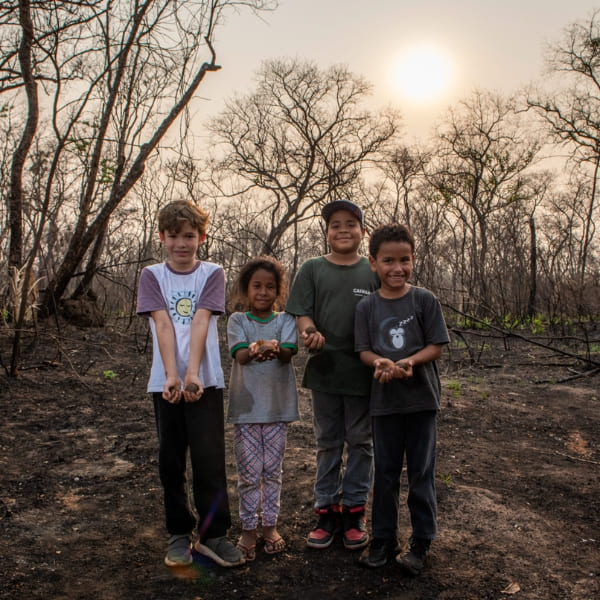
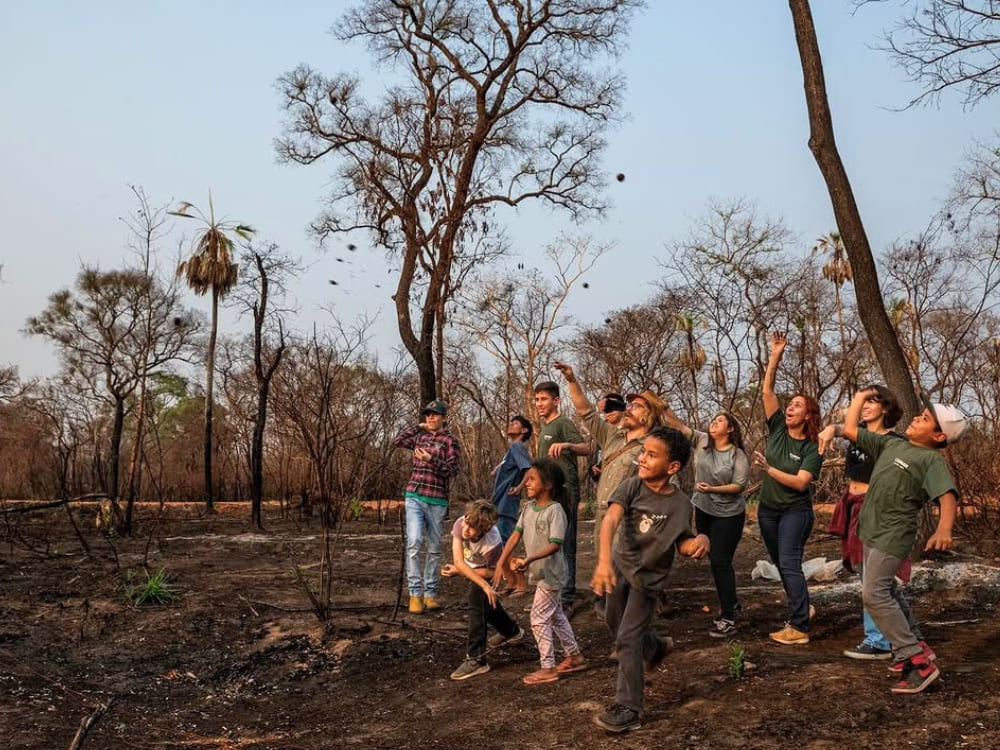
  • The Volunteer Firefighters of Chapada Diamantina

    The Volunteer Firefighters of Chapada Diamantina

    Long before tourism was a constant in Vale do Capão, in Chapada Diamantina, a group of local residents gathered to fight the increasingly frequent and mostly criminal fires that emerged in the region. With each fire, a new environmental disaster that would take years to recover. To protect the place where they lived, in 1997, the first group of volunteer firefighters was formed in Vale do Capão. They were the ones who, without the help of government or specialized equipment, climbed the mountains to put out the fire.Volunteer firefighters climbing the mountains of Vale do Capão in Chapada Diamantina

    Another criminal fire in Vale do Capão, 2021, Chapada Diamantina.

    From the 2000s onwards, the increase in the number of tourists on the trails gave this group one more reason to create the Associação de Visitantes do Vale do Capão (ACV-VC). A headquarters was installed at the entrance of the Cachoeira da Fumaça trail and the organizers spearheaded the promotion of sustainable ecotourism, welcoming visitors and offering guide services and information about the region.

    In addition to the great mission of encouraging environmental awareness for the sustainable development of the region, the association also provides civil defense services, rescuing the injured in remote areas, and they are still the main firefighters who work together with the other brigade teams volunteers from the cities of Chapada.

    Non-profit, ACV-VC members are not remunerated and rely on the support of the community and tourists to make cash donations. This financial investment is used to support the realization of courses and training for the associated guides; the purchase of fire-fighting and protection equipment; maintenance of trails; development of environmental education actions for the community; in addition to contributing to the structure of the headquarters.

    Do you want to collaborate with ACV-VC?

    To make cash donations
    Associação de Condutores de Visitantes do Vale do Capão
    PIX: 04.131.046/0001-09 (CNPJ)

    To make material donations, write to
    contato@acvvc.org

  • Chapada Diamantina Solo? Read Fernanda’s story

    Chapada Diamantina Solo? Read Fernanda’s story

    Fernanda is an adventure junkie and wants to travel the world, which is inspiring.

    But is it safe for women to travel alone? Of course, the choice of destination is the first step of the adventure. In Brazil, one of the most sought after destinations by adventurous women to travel is Chapada Diamantina.

    Fernanda’s challenge began long before the 3-day trek in Vale do Pati. Facing many difficulties to get to Chapada Diamantina, this determined young woman from southern Brazil, living in Guatemala, found a way to get there. After all, visiting the most beautiful trail in Brazil was at the top of her bucket list. She arrived at the starting point in Guiné, where she met her guide Lucas, who briefed her on the hike and checked her equipment before starting the adventure. Fernanda didn’t know it yet, but it would be 3 beautiful days with lots of sun and absurdly starry nights.

    The mountains and the landscape impressed Fernanda right away and excited her about the adventure of traveling solo in Chapada Diamantina that was about to begin. Walking through the Gerais do Rio Preto plateau she quickly reached the Vale do Pati Lookout and headed towards the Funis waterfall, the perfect time for a break, cooling off and enjoying a lactose-free picnic carefully prepared by her guide. Recharged, Fernanda continued the hike while enjoying a beautiful sunset. What a great way to end the first day!

    Waking up to the sound of birds is priceless! The adventure continued towards Morro do Castelo. This trail is considered one of the most beautiful and difficult in Vale do Pati, but not for Fernanda, who reached the top in about 1 hour – usually done in 2 hours. The ascent was quick for Fernanda, but she took the time to explore the caves and contemplate their 360° panoramic view. Guided by Lucas, Fernanda went to Poço da Árvore, another charming place where she enjoyed its natural pools and waterfalls surrounded by the valley’s canyons. Relaxed, Fernanda headed for the night’s stay, City Hall, where she felt at home, pampered as a member of Jailson and Maria’s family.

    After a hearty breakfast, it’s time to say goodbye to the host family and start the ascent through the Prefeitura’s slit. This trail can be difficult and is not for everyone, due to its rough and rocky terrain and which can be very slippery and dangerous during rainy days. After enjoying a unique view of Morro do Castelo, Fernanda head to Cachoeirão Waterfall lookout a breathtaking scenery 260m high. Out of this world!

    “Fernanda really walks fast and was very interested in the stories of the region, so we stayed longer at the last stop to synchronize the descent with the sunset”. So reported the guide Lucas, who was impressed by Fernanda’s excellent physical preparation. Being able to close the adventure with the sunset seen from above Aleixo in the Sincorá mountain range is priceless.Fernanda watching the sunset over the Sincorá mountain range in Chapada Diamantina

    Gosh! I am speechless to describe how crazy this track was! PlanetaEXO gave me a lot of support from the beginning to make everything work and was super helpful the whole time about any need I might have. And Lucas, my host, REALLY, I've never had a better host. Super sweet, very connected with all the history and biodiversity of the park, super attentive and flexible! We arrived 'early' at the end of the trail and still had the chance to chat and watch the last sunset in the Chapada, awesome!

    Fernanda Jung

    What a challenge guys ??

    View Map

    Undoubtedly, Fernanda does not regret all the efforts she made to travel solo in Chapada Diamantina and explore the Pati Valley! In 3 days she explored all the main attractions of this beautiful valley. After this wonderful experience, we look forward to joining her again on a new adventure in another paradise on our planet!


    Plant a tree badge marking PlanetaEXO support for sustainable tourism in Chapada Diamantina
    Esta aventura apoiou a comunidade local e o turismo sustentável na Chapada Diamantina, Bahia, Brasil