Blog

  • Where is the Best Place to See Jaguars in the Pantanal?

    Where is the Best Place to See Jaguars in the Pantanal?

    Jaguars are residents of multiple countries on the American continent, but the Pantanal in Brazil is the best place to spot them

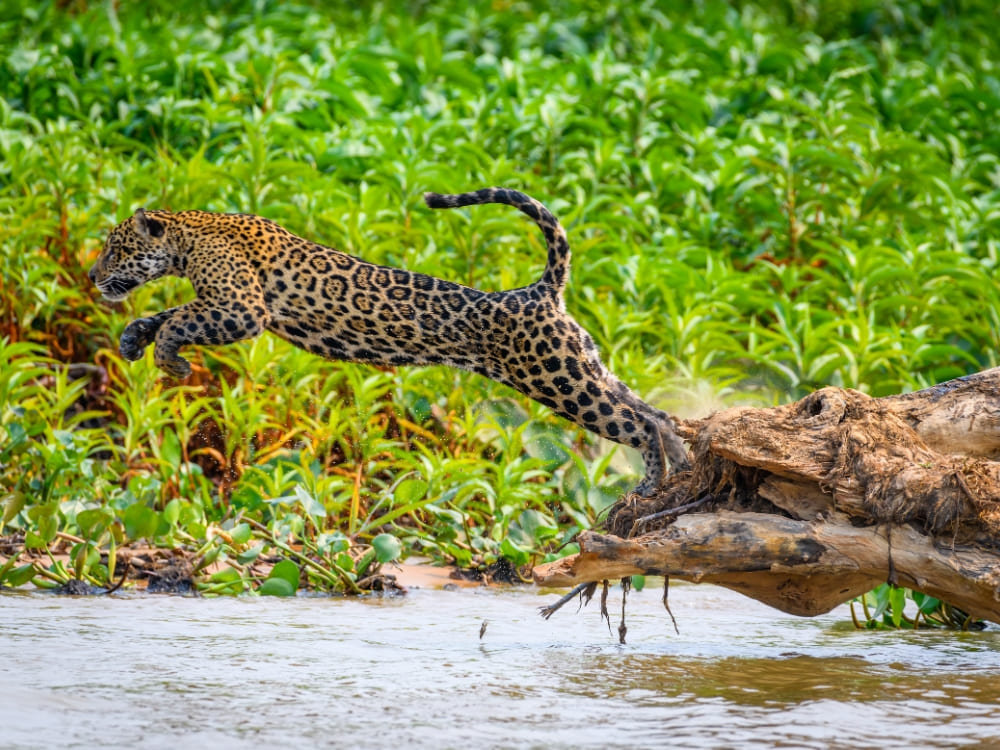
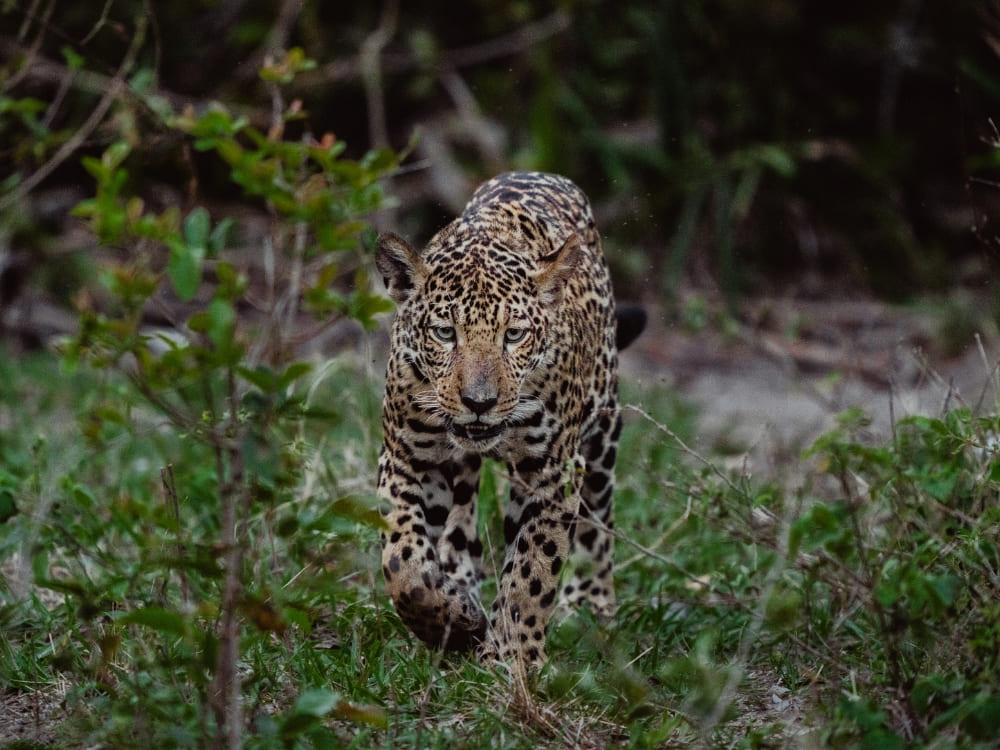
    Mysterious, stealthy, and the indisputable apex predator of South America, the jaguar is the third-largest feline in the world, considered by many to be the most beautiful among big cats, with its gorgeous yellow-orange fur, black rosettes, and penetrating gaze.

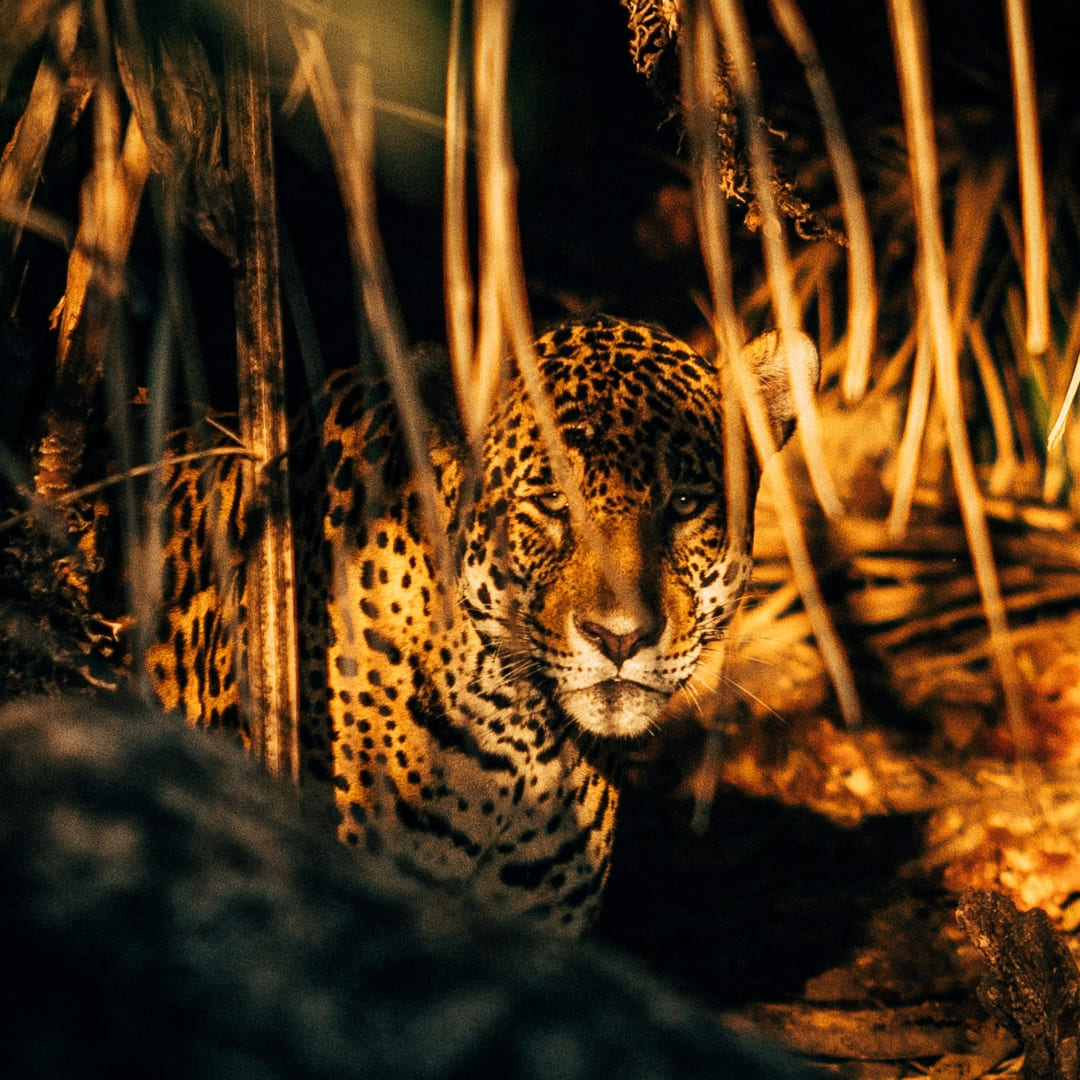
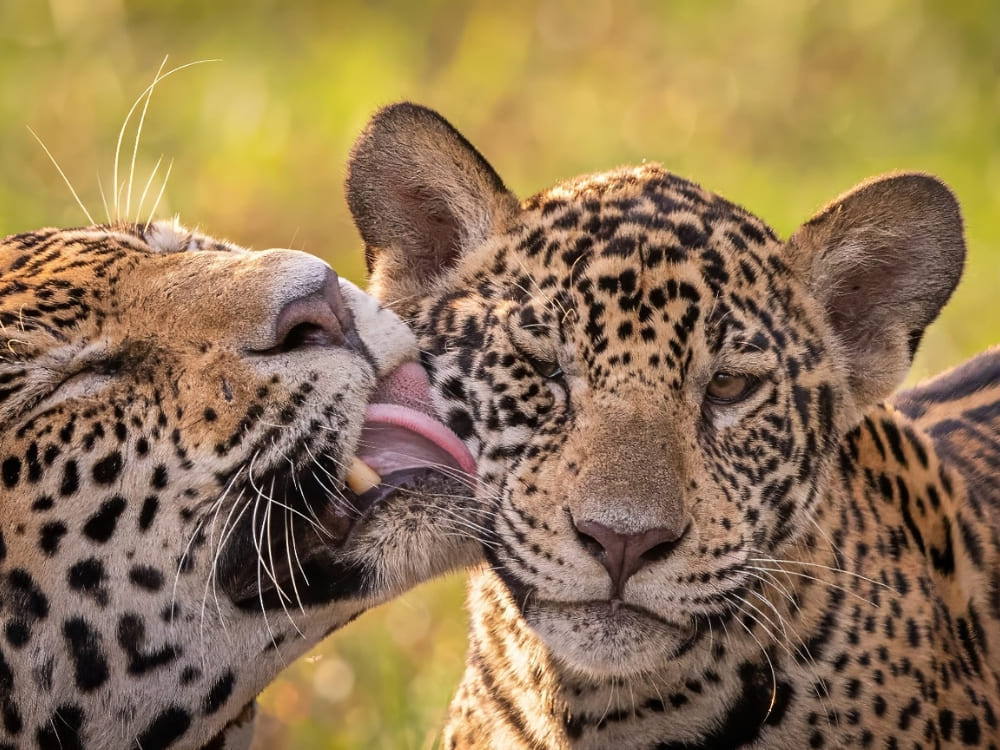
     A spotted jaguar sits among green vegetation in the Brazilian Pantanal biome.
    @thewildlifejunkie

    Spotting these gorgeous creatures in the wild is a dream come true for many animal lovers who travel all over the world and delve deep into jungles and wetlands to catch even a glimpse of them. The best place to see jaguars is in the Pantanal, but there are a few things to consider.

    As an ecotourism platform specializing in Pantanal tours in Brazil, PlanetaEXO has created a guide to help you understand everything you need to know to encounter jaguars in the wild—safely and responsibly. Check it out below!

    Are there jaguars in Brazil?

    Yes, there are jaguars in Brazil—the Pantanal is a Brazilian biome, after all! Out of all the individuals in the world (173,000, as stated by WWF), Brazil is the country with the largest population, with over 50% of the entire global amount.

    A jaguar swims across a dark river in the Pantanal at night.
    Photo: Matias Ternes

    Jaguars are also found in Peru, Colombia, Venezuela, Argentina, Guyana, Mexico, Costa Rica, Belize, and the southern US.

    👉 Read more: How to Get to the Pantanal, Brazil

    Where to see jaguars in Brazil?

    Jaguars are all over Brazil. According to the Chico Mendes Institute for Biodiversity Conservation, the Amazon Rainforest houses the largest amount in the country, followed by the Pantanal, the Cerrado, the Atlantic Forest, and the Caatinga.

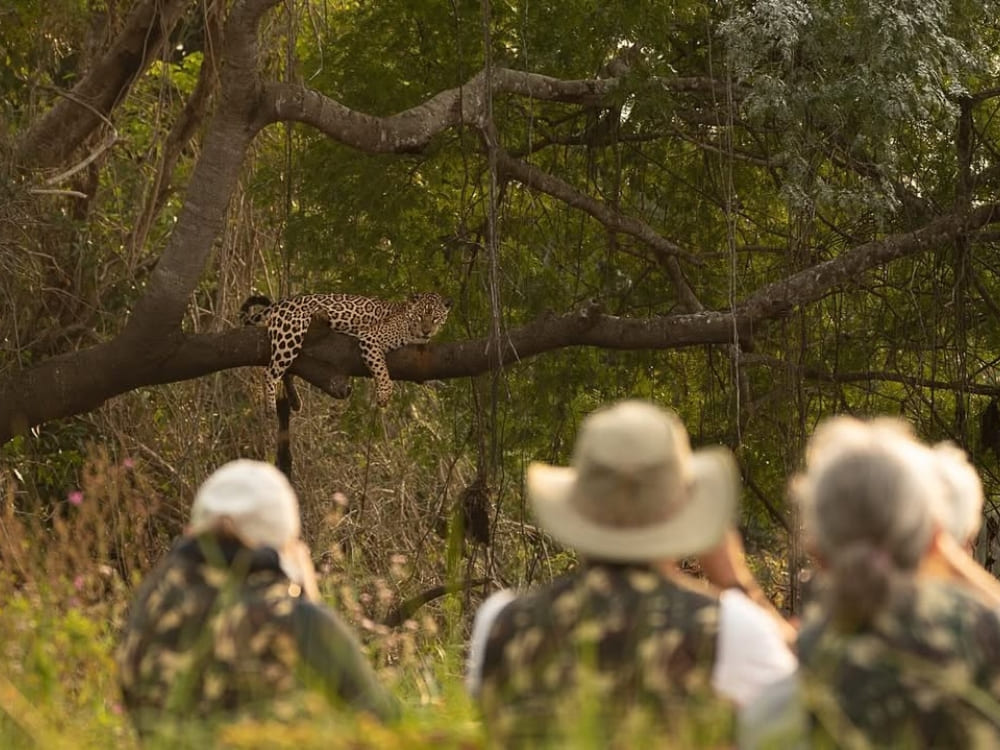
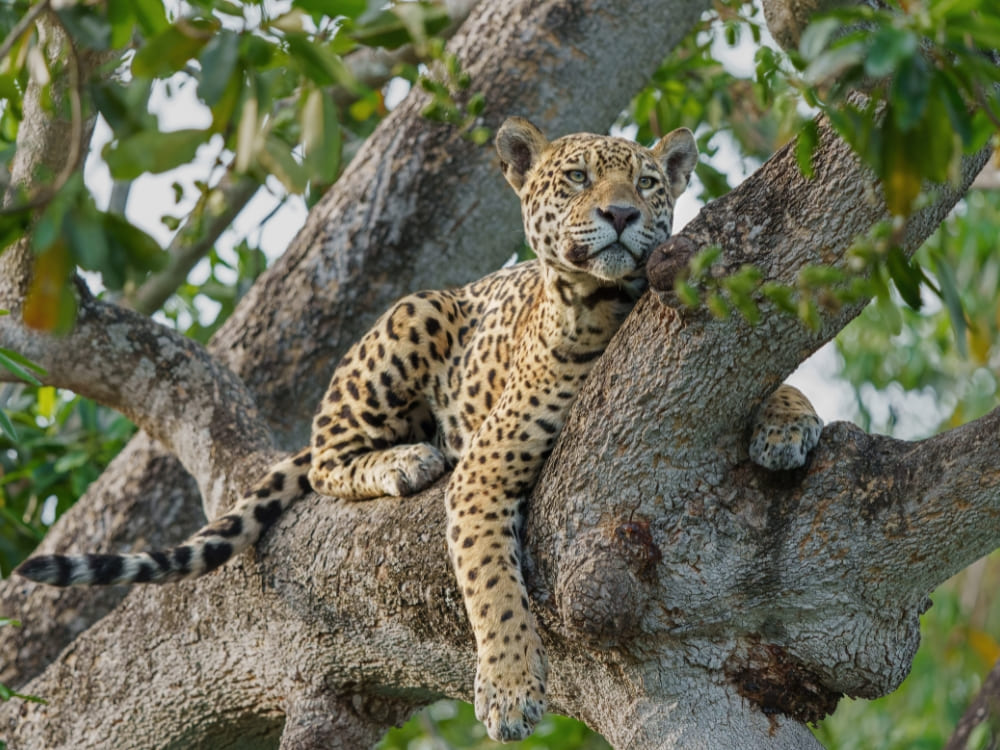
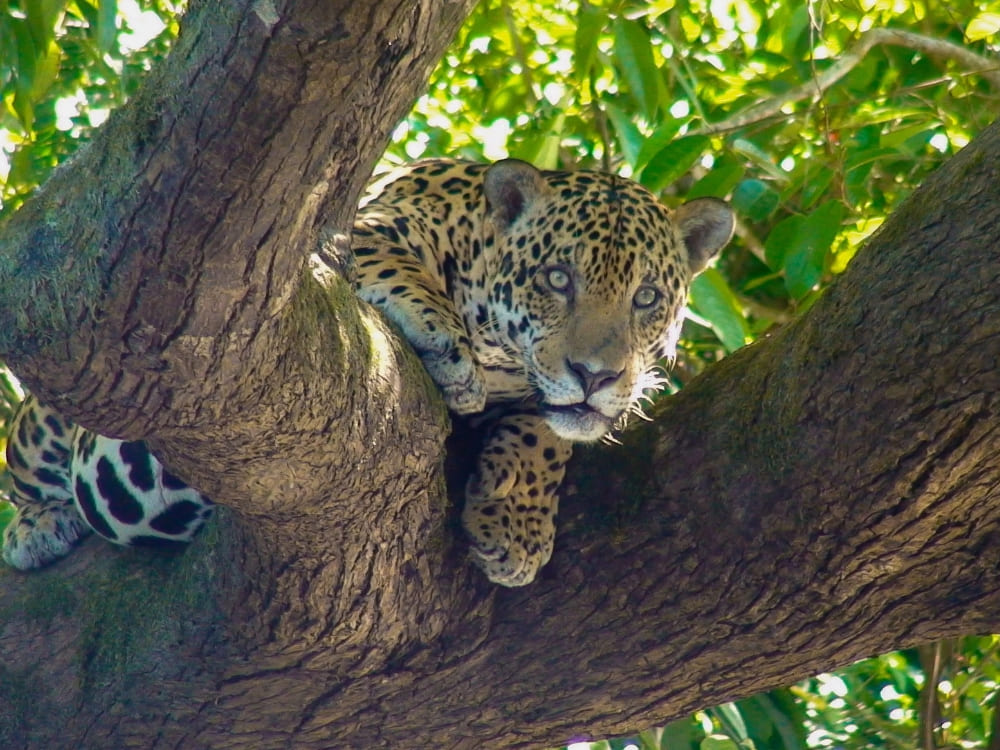
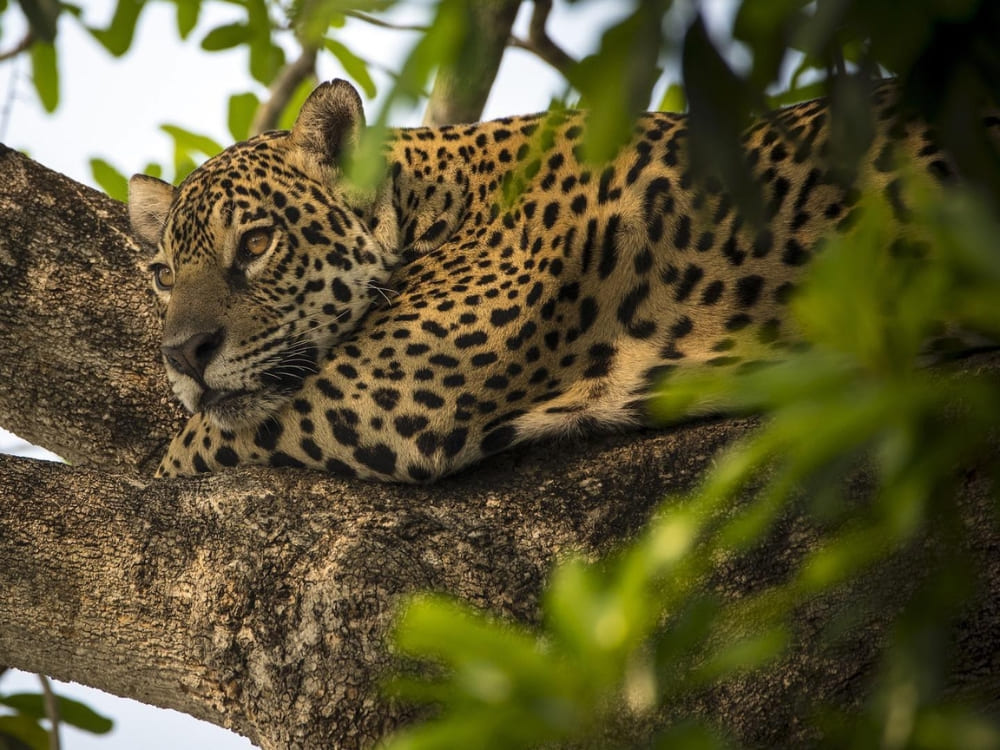
    A large Pantanal jaguar rests comfortably on a thick tree branch.

    Although there are more individuals in the Amazon, they’re not easy to spot due to the thick vegetation and staggering size of the biome. Therefore, the Pantanal is the best place to spot jaguars, where the concentration is higher and the open fields allow for more frequent sightings.

    And here’s a fun fact: Amazon jaguars are smaller than the ones from the Pantanal because hunting in the dense forest is harder than in the wetlands. Naturally, this affects their diets and growth pattern.

    👉 Read more: 15 Amazing Pantanal Animals and Wildlife

    What is the best place to see jaguars in the Pantanal?

    The northern side is the best place to see jaguars in the Pantanal, where the population density of animals is larger, but it’s also possible to spot them in the south. Learn more below.

    Jaguars in the Northern Pantanal

    The North Pantanal offers wonderful chances of spotting jaguars in the wild, particularly in Porto Jofre, located in the municipality of Poconé.

    The jaguars that reside in this reserve are used to the presence of humans, guaranteeing a 98% chance of spotting them. To give you an idea, in the last three years, all visitors have had the opportunity to spot jaguars at least once. Something else to keep in mind about the jaguars of the Southern Pantanal is that, because they are protected in the reserve and the tours are made by 4×4 vehicles, you can spot them during the safaris all year round!

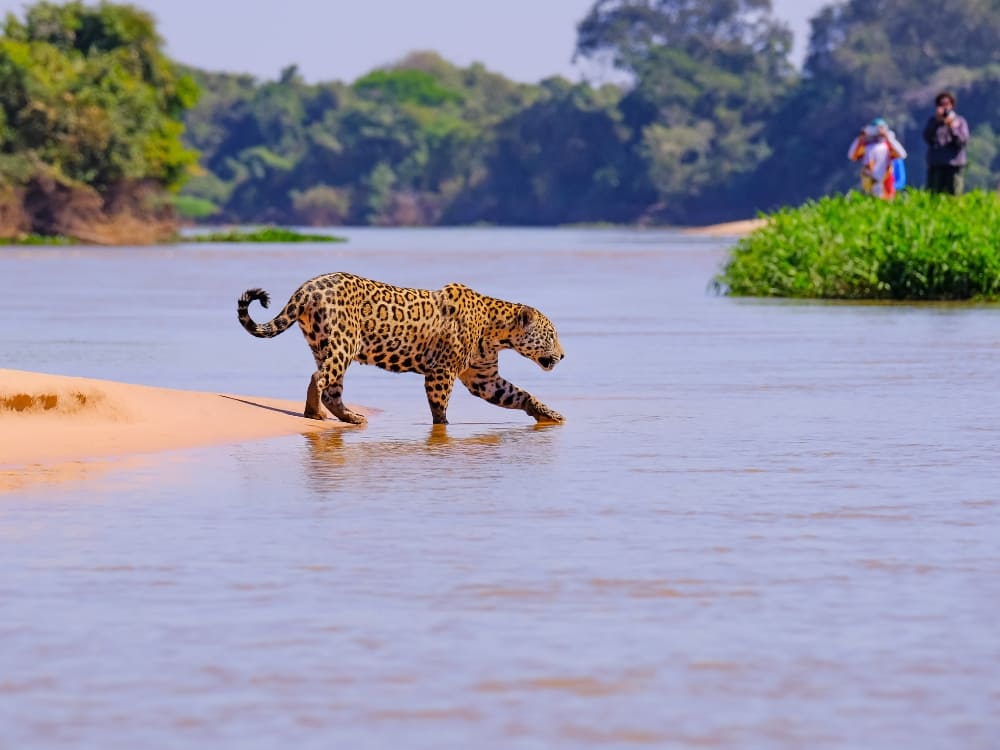
    A jaguar walks along the sandy bank of a river in the Pantanal, Brazil, as tourists in a distant boat observe and take photos.
    .

    This is considered the best place to see jaguars in the world for multiple reasons, such as high population density, open fields with good visibility, and a favorable ecosystem—including an abundance of prey, preserved areas, and large bodies of water.

    Porto Jofre is served by the Cuiabá, São Lourenço, Piriqui, and Paraguay rivers, which attract jaguars and make it easier for Pantanal safaris by boat.

    👉 Explore the adventure: Pantanal Jaguar Safari in Porto Jofre, Cuiabá

    Jaguars in the Southern Pantanal

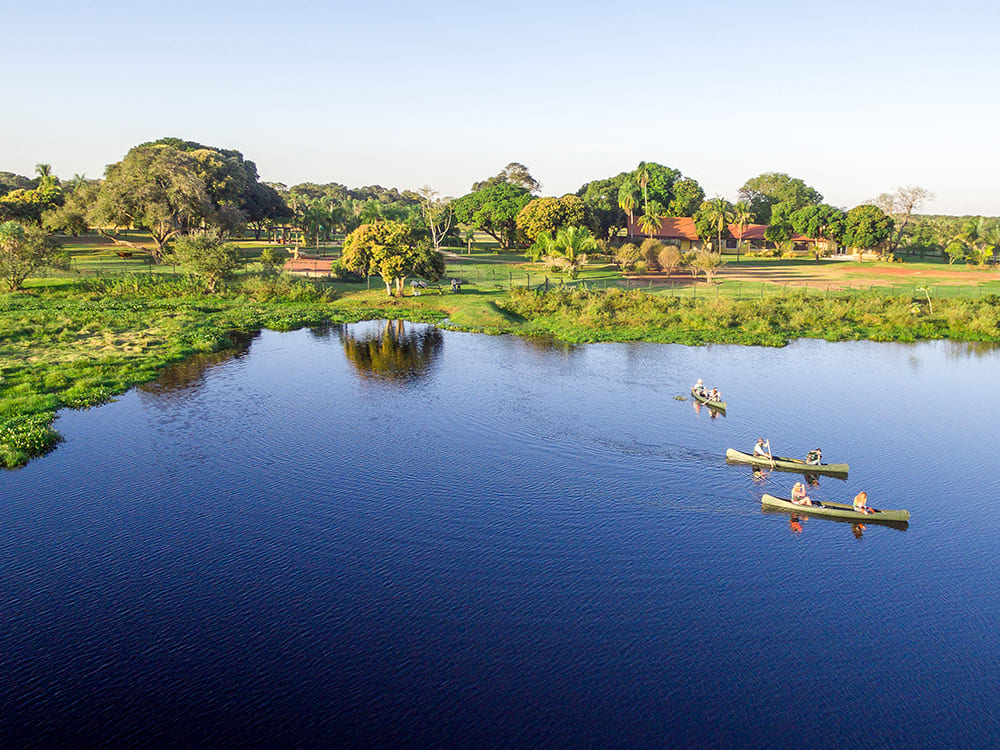
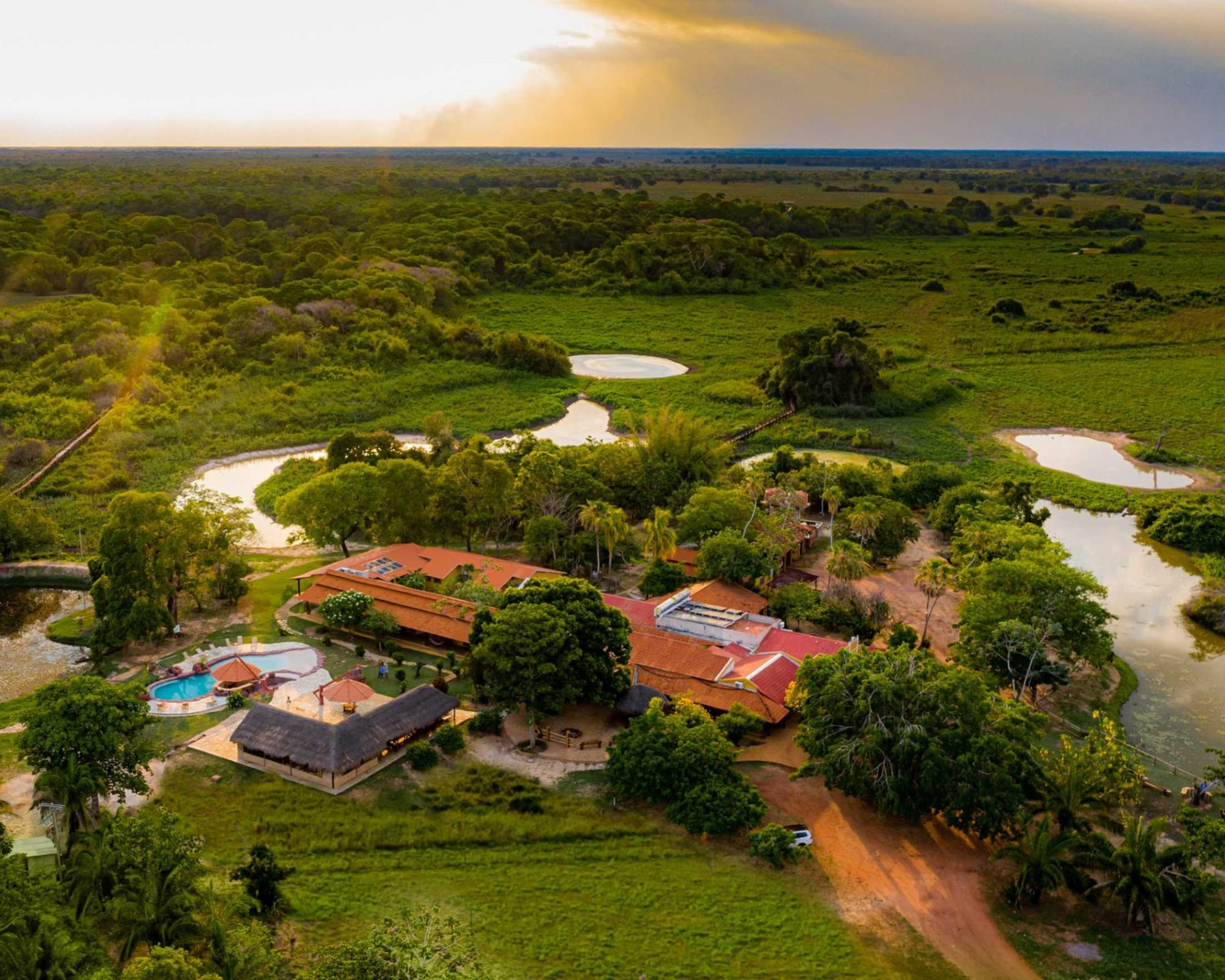
    Although the North steals the spotlight when it comes to spotting jaguars in Brazil, the Southern Pantanal isn’t left behind. In a 53,000-hectare area, Caiman, an ecological refuge situated in the town of Miranda, offers accommodation and wildlife-watching tours.

    Partnering with the Onçafari Project, Caiman’s guests can join land safaris where it’s possible to see jaguars. In fact, this is the only place in the South where these felines are often observed, with a 98% chance of spotting them.

    The efforts of both institutions help jaguars to get used to the presence of vehicles and humans—at a respectful distance, of course—allowing for frequent sightings without altering their natural behavior. Onçafari and Caiman also promote scientific research and animal reintroduction to nature to make sure the local wildlife is always well taken care of.

    👉 Read more: 5 Pantanal Conservation Projects Making a Real Impact

    Best time to visit the Pantanal for jaguars

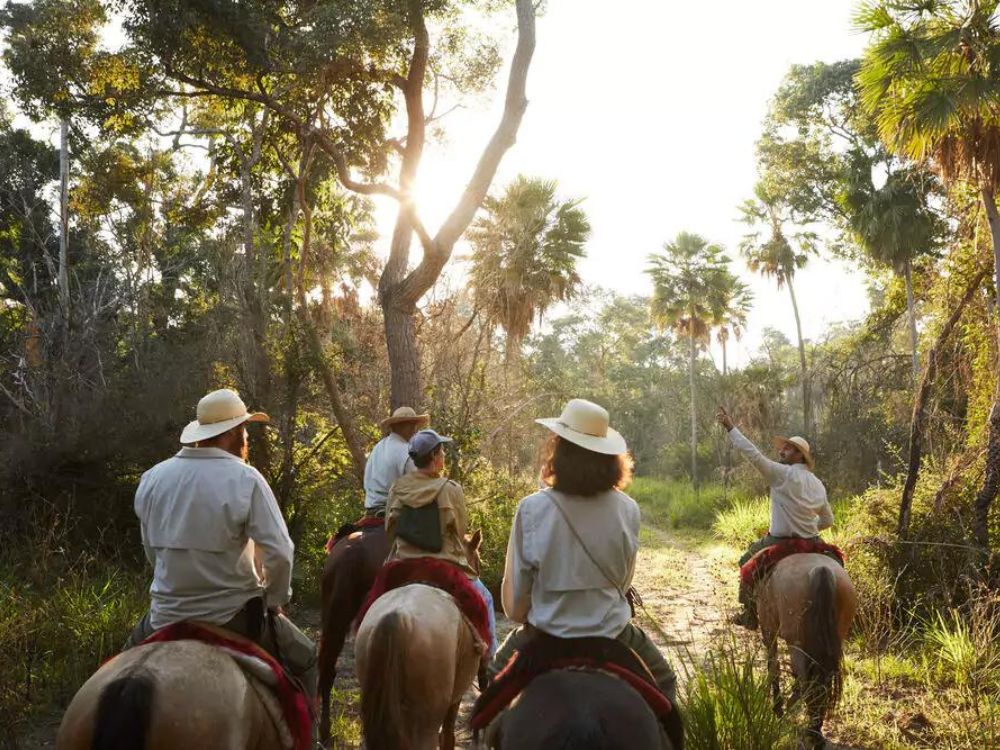
    Whether in the North or the South, the best time to visit the Pantanal for jaguars is during the intermediate and dry seasons (May to October), when the water level drops and animals tend to leave their hiding spots to roam around the riverbanks.

    Not only does this make seeing jaguars and other animals considerably easier, but the weather and water conditions are also adequate for safaris, boat rides, hiking, photography tours, and horseback riding.

    👉 Read more: When is the Best Time to Visit the Pantanal?

    How much does a Pantanal jaguar tour cost?

    The average cost of a Pantanal jaguar tour is R$ 14.865 (approximately US$ 2,830 and € 2.245). Prices vary according to accommodation category, season, trip duration, etc.

    Check out below PlanetaEXO’s jaguar tours in the North and the South Pantanal!

    TOUR HIGHLIGHTS DURATION STARTING PRICE*
    Pantanal Jaguar Safari in Porto Jofre, Cuiabá North Pantanal. Safari for jaguar and wildlife sightings, boat trips, night tours. 4 days US$ 2,625
    Pantanal Jaguar Photography Tour North Pantanal. Boat and land safaris to photograph jaguars and other animals (accompanied by guides with extensive knowledge in wildlife photography). 6 days US$ 3,670
    Pantanal Jaguar Budget Safari North Pantanal. Affordable trip, boat safaris to spot jaguars and other species, night tours, hiking, sunrise/sunset contemplation. 4 days US$ 1,845
    Luxury Jaguar Safari in the Pantanal South Pantanal. Land safaris for jaguars and local wildlife sightings, night tours, hiking, canoeing. 4 days US$ 3,180

    *Per person, based on double occupancy in group departures. Prices may vary depending on season and availability. Exchange rate as of May 9th, 2026; subject to change.

    Seeing jaguars in Brazil with PlanetaEXO

    Now that you know where the best place to see jaguars is the Pantanal, it’s time to start planning your vacation!

    PlanetaEXO, an ecotourism platform specializing in Pantanal tours, provides everything you need for an unforgettable trip, including comfortable accommodations, tailor-made itineraries and connection with the best local operators for an unforgettable trip. Contact us now!

  • How was Lençóis Maranhenses formed: understanding Brazil’s sand dunes and lagoons

    How was Lençóis Maranhenses formed: understanding Brazil’s sand dunes and lagoons

    Wind and rain play a fundamental role in the formation of the dunes and lagoons of Lençóis Maranhenses National Park

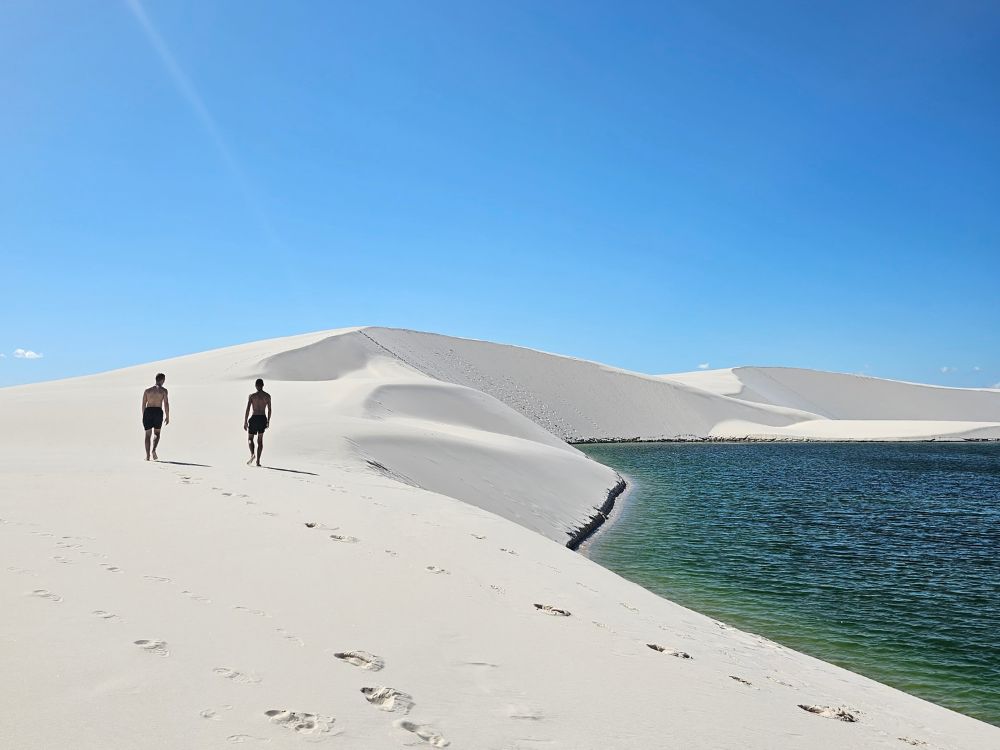
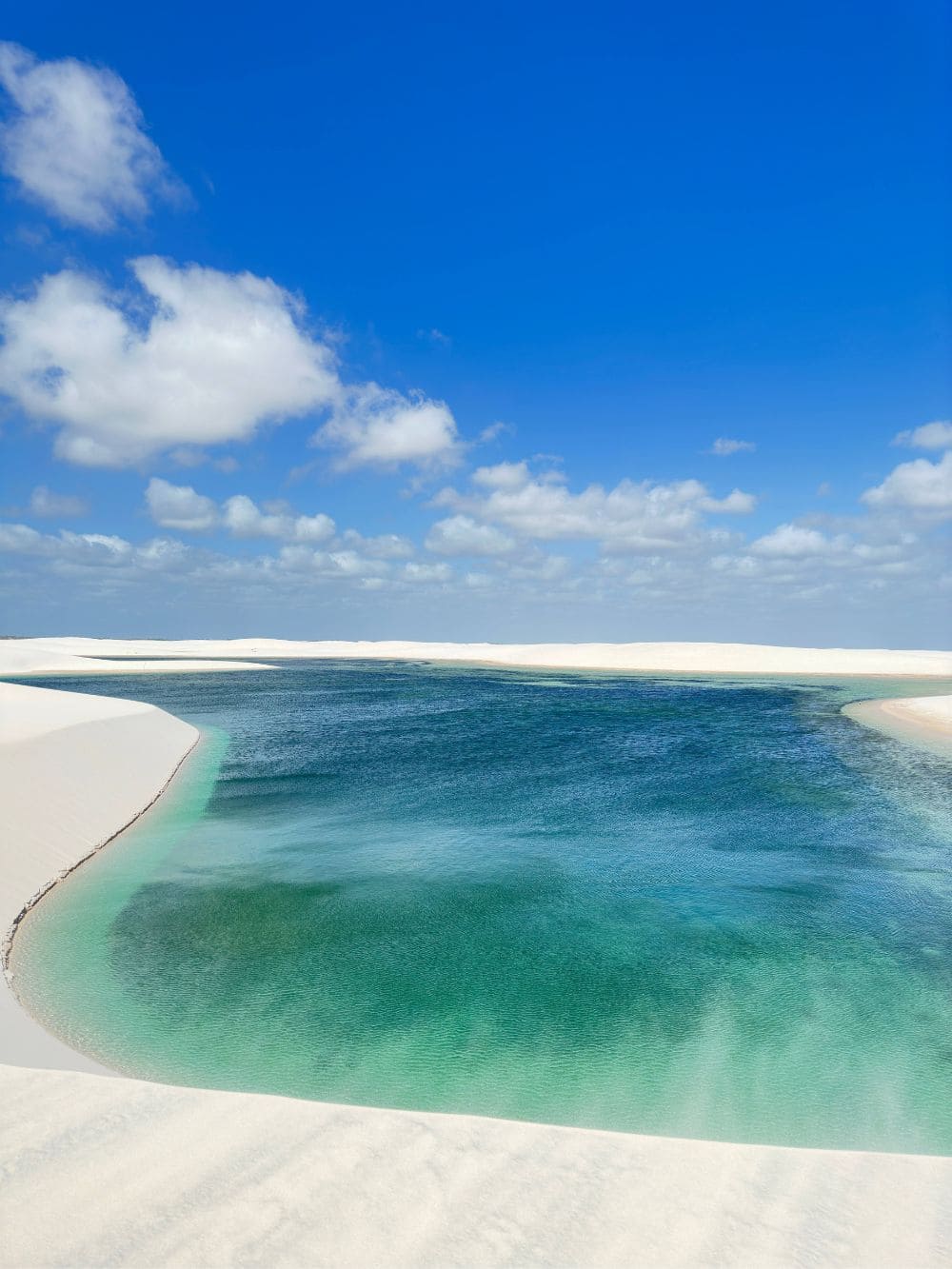
    Lençóis Maranhenses National Park is a natural wonder where sand dunes and lagoons are formed by a fascinating combination of wind and rain, which creates a unique landscape found nowhere else in the world.

    Aerial view of the white sand dunes and green rainwater lagoons in Lençóis Maranhenses National Park.
    .

    Considering the changing scenery according to season, it’s common to wonder how Lençóis Maranhenses was formed. Around two-thirds of the park are covered in flowing sand dunes that, from above, resemble bedsheets—hence the name in Portuguese, “Lençóis.” The beauty and rarity of the coexistence between a vast field of sand and thousands of lagoons earned the park UNESCO World Heritage status in 2024.

    Want to find out how this phenomenon occurs? Check out the complete guide created by PlanetaEXO, an ecotourism platform specializing in Lençóis Maranhenses tours.

    How are the dunes formed in Lençóis Maranhenses?

    Lençóis’ dunes are the result of aeolian erosion, a natural process where the wind shapes the Earth’s surface by removing, transporting, and abrading soil and rock particles—particularly in arid, coastal, or sparse-vegetation environments.

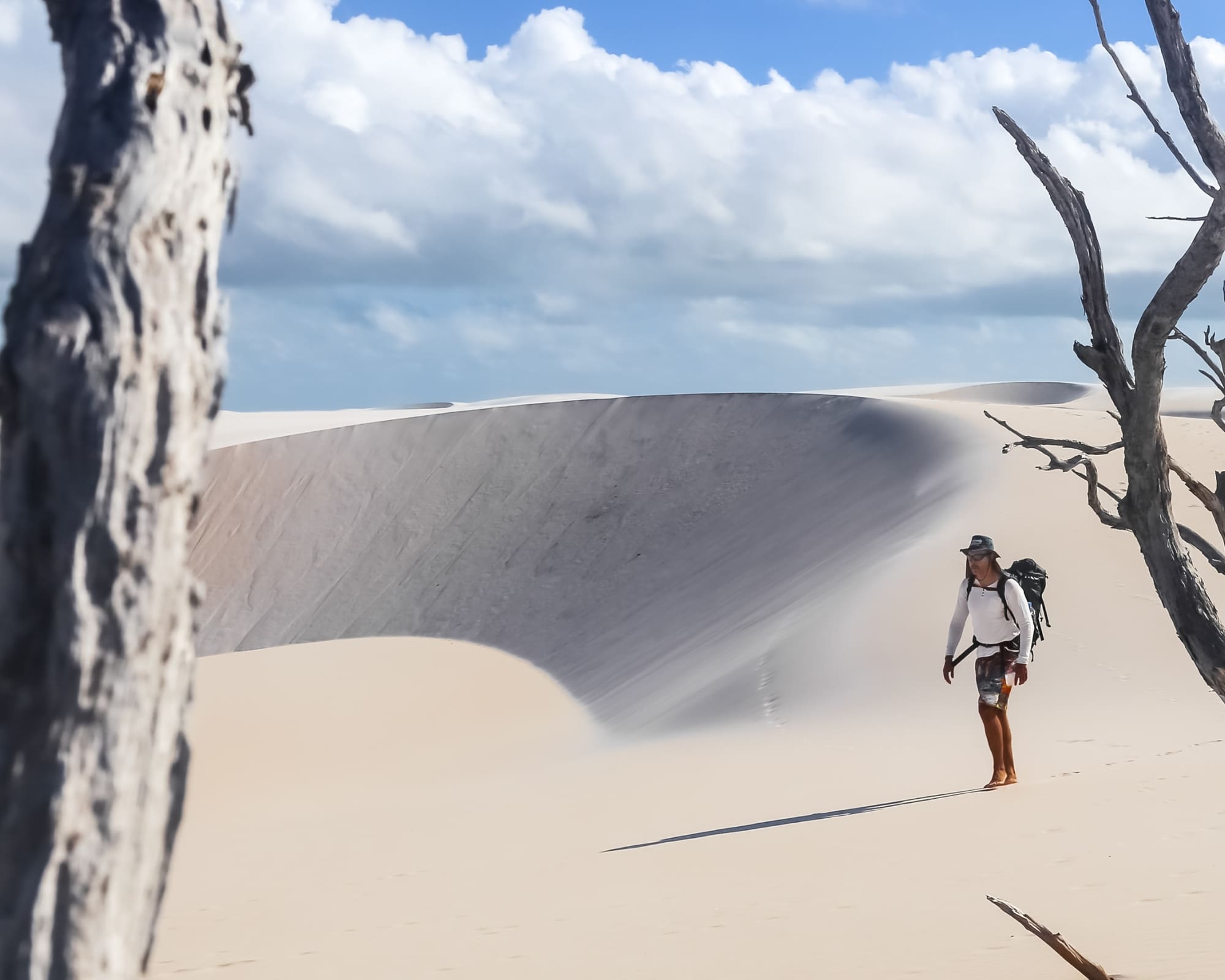
    A hiker explores the massive white sand dunes of Lençóis Maranhenses National Park, framed by dry tree branches.
    Photo: Ma Rabelo

    Powerful coastal winds from the Atlantic Ocean blow fine sand particles inland, where the region’s topography traps and accumulates them. Over time, this sand builds up into massive sandy hills that can reach up to 40 meters in height. Shaped by the constant movement of the wind, these dunes take on smooth, crescent-like forms and are in a state of perpetual motion, giving the landscape a dynamic and ever-changing character.

    Researchers believe that 10,000 years ago, the national park area was covered by the sea. As the ocean gradually receded, it first gave way to mangrove forests and eventually transformed into the vast dune fields we see today.

    Aerial view of the active white sand dunes and rainwater lagoons in Lençóis Maranhenses, stretching toward the horizon.
    .

    A significant portion of the sand in the park was brought by the Parnaíba River, which carries sediment towards the sea, while ocean currents push it back toward the shore. This ongoing interaction between river flow, tides, and ocean currents allowed the sand to accumulate, forming the unique ecosystem of Lençóis Maranhenses.

    Illustrative image showing how the dunes are formed in the Lençóis Maranhenses.Far from being static, the dunes are in constant motion. As the wind reshapes them regularly, they perform what locals poetically call the “dance of the dunes.” This phenomenon is especially visible during the dry season (July to December), when stronger winds and lower water levels in the lagoons make the movement even more noticeable.

    Active and inactive dunes of Lençóis Maranhenses, Brazil

    In Lençóis Maranhenses, not all dunes behave the same way. The presence or absence of vegetation is what determines whether a dune is active or inactive.

    Small houses surrounded by lush native vegetation and inactive sand dunes in Lençóis Maranhenses.
    .

    Some dunes are considered inactive, meaning they stay in place thanks to the surrounding vegetation. The native plants help to settle the sand, forming a natural cover that prevents the wind from moving the dune, making it more stable and fixed in place.

    On the other hand, active dunes are in constant movement due to the force of the wind, rainfall, and the absence of nearby vegetation, allowing the sand to “dance.”

    Can the dunes disappear?

    Researchers believe that the complete disappearance of Lençóis’ dunes is unlikely. However, some factors could significantly alter their formation and have serious environmental and social consequences.

    One of the main concerns is the unplanned installation of wind farms, as these structures can alter the wind patterns and directly affect the arrangement of the dunes. In addition, climate change plays a fundamental role, as it can change the behavior of rainfall and wind.

    👉 Read more: How to get to Lençóis Maranhenses?

    How are the lagoons formed in Lençóis Maranhenses?

    The beautiful, crystal-clear lagoons of Lençóis Maranhenses are formed by the significant amount of rainfall the region receives, reaching 2,000 millimeters a year, mainly between January and June.

    Top-down view of a person swimming in a crystal-clear rainwater lagoon in Lençóis Maranhenses, revealing the sandy bottom.
    .

    During the rainy season, the rain is quickly absorbed by the sand, which raises the water table above the ground and fills the temporary lagoons that lie between the dunes.

    But the true secret behind the formation and maintenance of the lagoons is attributed to the mixture of sand and clay found in the soil. Over time, this combination has developed characteristics similar to a sponge-like rock, allowing water to seep out slowly—thus prolonging the lifespan of the lagoons.

    Rainwater accumulates in the low areas between the dunes, forming thousands of crystalline pools that can reach depths of around one meter. Beloved lagoons such as Lagoa Azul and Lagoa Bonita offer a breathtaking view of this unique phenomenon, while the humidity in the air also prevents the dunes from shifting.

    Can the lagoons dry up?

    Brazil’s rainwater lagoons in Lençóis Maranhenses National Park begin to shrink between October and January. As the rain stops and the sun prevails, the water in the smaller lagoons evaporates completely, while the larger, deeper ones can retain it for longer.

     A group of tourists walks across a dry, brown lagoon bed surrounded by large white sand dunes during the dry season.
    Photo: Glauco de Souza Santos

    This seasonal change not only alters the visual landscape but also affects the climate. During the end of the second semester, the strongest winds return, causing the dunes to grow and move more quickly.

    While it would be fun for the lagoons to be full all year round, it’s essential for the ecosystem that they dry out periodically. Continuous water accumulation, combined with local vegetation and organic matter, would otherwise lead to excessive algae growth, making the water slimy and the lagoons unsuitable for swimming.

    👉 Read more: 10 Facts About the Lençóis Maranhenses

    Weather and seasonality: best time to visit the dunes and lagoons in Lençóis Maranhenses

    The best time to visit Lençóis Maranhenses is from May to September, when the rainy season has just ended and the lagoons are at their peak.

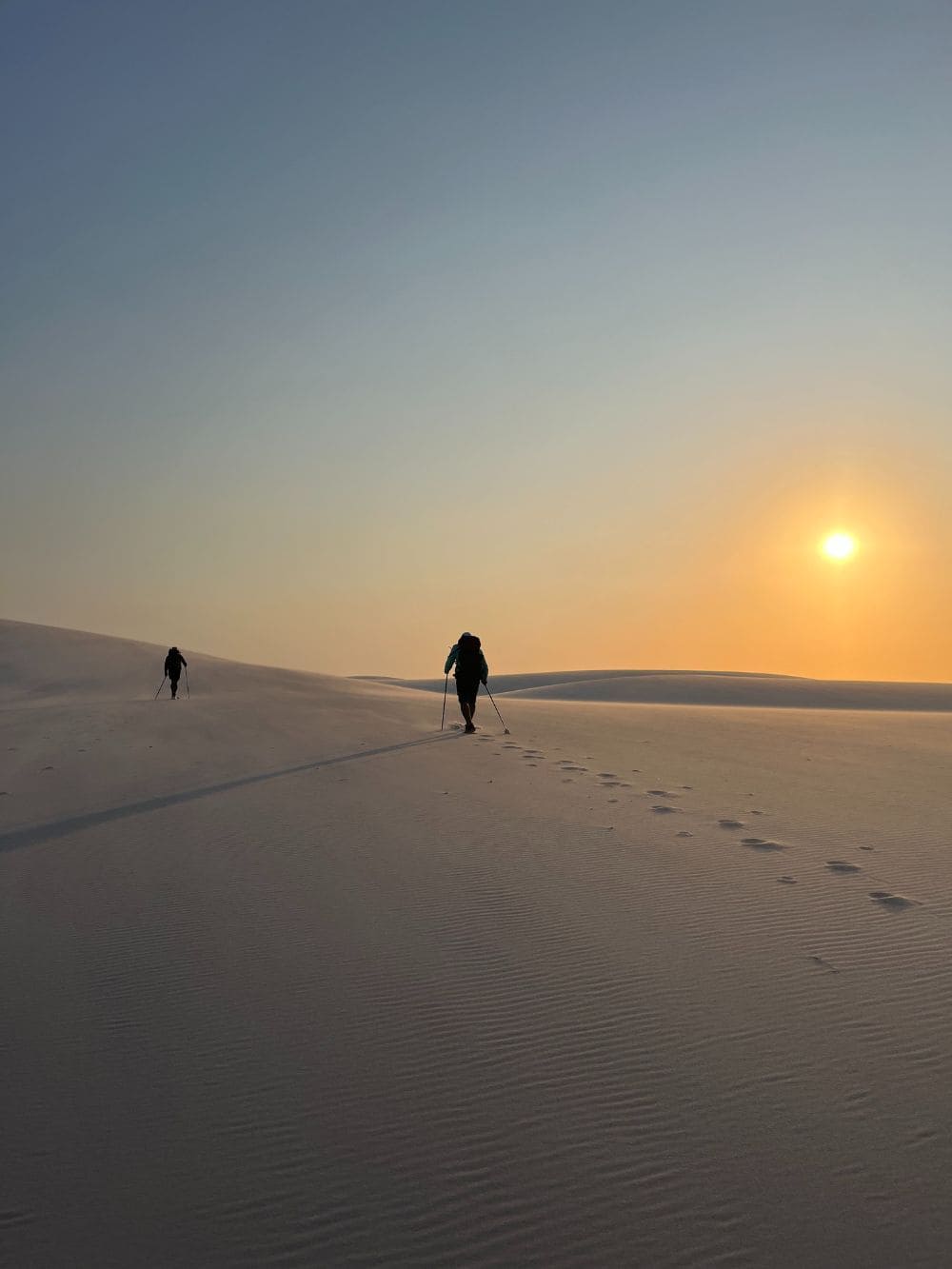
    Silhouette of a person sitting on a sand dune, watching a golden sunset over the lagoons of Lençóis Maranhenses.
    .

    The weather during this period is sunny, free of rain, and marked by pleasant temperatures, perfect for hiking across the park and taking a refreshing dip in the lagoons.

    Although the beginning of the dry season is considered the ideal time for visiting, each month offers a different kind of beauty. Whether it’s the vibrant lagoons of the rainy season or the giant dune formations of the dry period, Lençóis never ceases to amaze.

    👉 Read more: When is the best time to visit Lençóis Maranhenses?

    Visiting Lençóis Maranhenses’ dunes and lagoons with PlanetaEXO

    Now that you know how Lençóis Maranhenses was formed, it’s time to see its surreal beauty up close!

    PlanetaEXO is an ecotourism platform specializing in Lençóis Maranhenses tours. Working alongside the best local operators, our team helps you with hassle-free vacation planning, from bookings to tailor-made experiences. Contact us now!

  • What to Do in the Amazon Rainforest: Top Outdoor Activities in Brazil

    What to Do in the Amazon Rainforest: Top Outdoor Activities in Brazil

    Looking forward to seeing up close one of the most impressive natural wonders of the planet? Check out a curated list of the top activities in the Amazon, Brazil

    The possibilities of the Amazon in Brazil are as vast as its impressive expanse of nearly 5 million km². With options for solo travelers, couples, families, and adrenaline-loving adventurers, the world’s largest tropical forest is full of surprises.

    What to do in the Amazon Rainforest also depends on individual preferences and needs. Think about what kind of experience you would like to keep in your memory and heart: navigating majestic rivers, camping among the trees, combining comfort and nature in a jungle lodge…

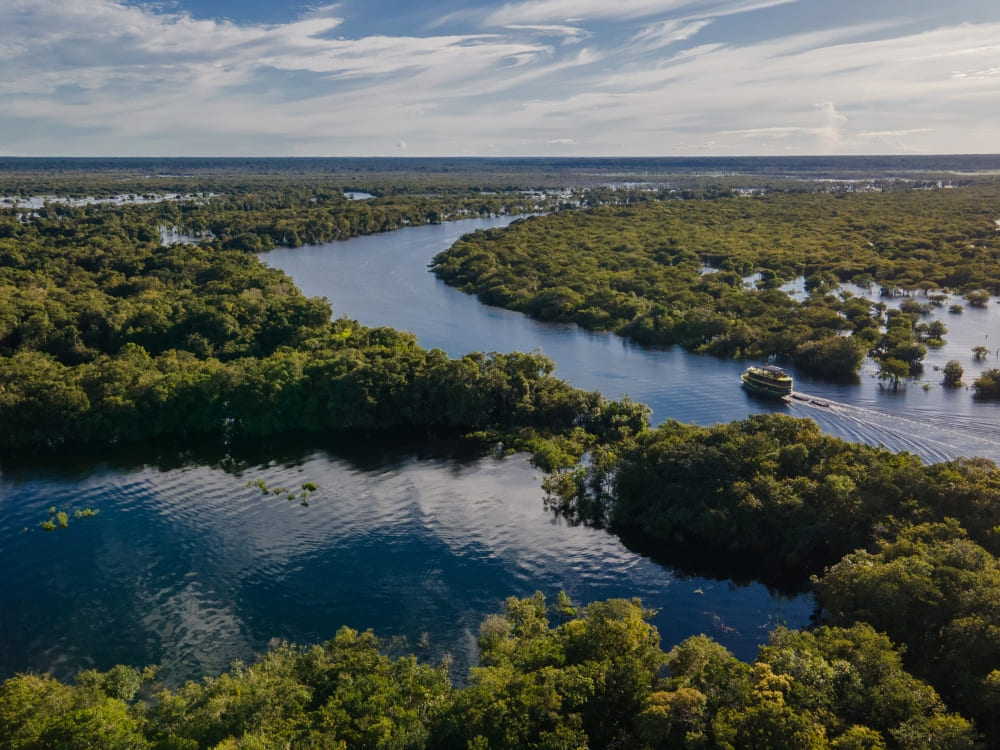
    A multi-level riverboat travels along a wide, calm dark river bordered by dense green rainforest islands reflecting the sky.
    Photo: Marcelo Bonifacio

    Whatever it may be, PlanetaEXO, an ecotourism platform specializing in Amazon Rainforest tours in Brazil, is well-acquainted with tailor-made itineraries in nature for every travel style. Check our suggestions right below!

    Amazon immersion in jungle lodges

    Do you want to experience what nature has to offer but still need some comfort to rest your bones after a day full of adventure? You can enjoy all the outdoor activities while staying in an Amazon jungle lodge!

    Comfortable Amazon jungle lodge with a thatched roof nestled in the tropical rainforest.
    Photo: Felipe Castellari

    Located amidst preserved areas in different zones of the forest, such as the Anavilhanas and Jaú National Parks, the accommodations have everything for a great stay: comfortable rooms, private bathrooms, common areas for leisure and relaxation, traditional food, and much more.

    Each lodge features its own team of qualified professionals to guide the activities, including hiking, fishing, boat tours, wildlife watching, night spotlighting, etc.

    👉 Read more: When is the Best Time to Visit the Amazon Rainforest in Brazil

    Amazon river cruises

    Did you know cruises can also take place in bodies of water besides the ocean? The boats for river cruises are smaller than your traditional ships, but that makes for an even better, more intimate experience.

    With fewer people aboard, you can focus on what truly matters—the trees, the animals, the soft breeze, and the indescribable feeling of sailing through the calm waters of the Amazonian rivers. 

    A green ecotourism riverboat with solar panels cruises down a dark river surrounded by lush Amazon rainforest.
    .

    In addition to excellent accommodation in elegant cabins equipped with everything you need for a comfortable trip—private bathrooms, king-size beds, air-conditioning, and a wide range of amenities—the cruises also include many activities in the Amazon Rainforest, such as hiking trails, canoeing in igapós (flooded forests), night spotlighting, visits to local communities, and much more.

    The best Amazon river cruises are multi-level vessels featuring elegant designs, various common areas, and highly qualified crews. They also follow strict safety and environmental protocols to ensure a responsible, hassle-free trip. 

    👉 Read more: What’s the Best Time of the Year for Amazon River Cruises in Brazil?

    Kayaking on Amazon rivers

    One of the top things to do in the Amazon, particularly in Presidente Figueiredo, is kayaking. Known as the Land of Waterfalls due to its hundreds of cataloged waterfalls, as well as rivers and natural pools, this is the perfect destination for travelers who love water-related itineraries.

     Aerial view of a group of tourists kayaking on a dark Amazonian river surrounded by dense green forest.
    .

    Kayak tours are great for both experienced and newbie kayakers. If you’ve done this before, then you get to do what you love in one of the most beautiful places in the world. First time? No biggie, the instructors will help you with everything you need, from how to put on your safety gear to the best paddling techniques!

    Keep in mind: kayaking can be quite demanding in terms of physicality—you’ll be in the water for 4–8 hours. Even those in great shape might get tired eventually, so the solution is requesting to be pulled by the support boats when your arms start feeling funny. This way, you can just relax and enjoy the ride!

    👉 Explore the adventure: 4-day Amazon Kayak Tour Brazil

    Meeting of Waters

    Surely one of the greatest landmarks of the Amazon Rainforest, the Meeting of Waters is a fascinating phenomenon where the Negro and Solimões rivers merge—but not quite.

    Aerial view of a riverboat navigating the Meeting of the Waters in the Amazon, showing the distinct dark and sandy rivers flowing side-by-side.
    Photo: Marcelo Bonifacio

    Doing justice to its name, the Negro River’s water is black, while Solimões’ is brown. They both meet but never blend together. There are three reasons for this: different temperatures, current speed, and the waters’ pH (acidity).

    Offering a breathtaking view all year-round, the Meeting of Waters can be seen in Manaus or during river cruises and boat rides. You can’t miss it!

    Read more: How to Get to the Amazon Rainforest in Brazil?

    Amazon jungle tours

    When it comes to what to do in the Amazon Rainforest in Brazil, of course jungle expeditions must be included.

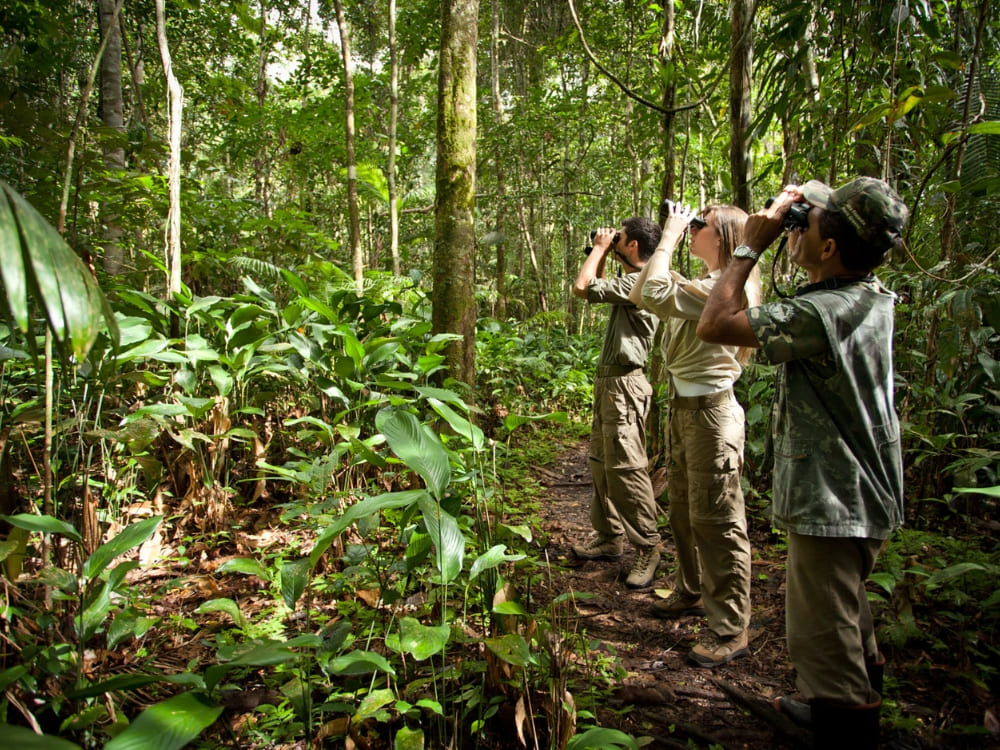
    Three tourists on an Amazon jungle tour using binoculars to observe wildlife among giant trees.
    Photo: Samuel Melim

    There are 80,000 species of plants all over the area, of which 40,000 have very important roles in sustaining local water cycles and even regulating the weather on a global scale. The forest is also home to many animals—427 mammals, 1300 birds, 378 reptiles, and 400 amphibians, according to the Amazon Conservation Association.

    So much natural richness must be appreciated, so get ready to hike in between the giant (and ancient) trees, breathe the purest fresh air on the planet, and observe the wildlife. Can you imagine spotting alligators, sloths, macaws, pink river dolphins, or other incredible Amazon animals? You just don’t see that every day.

    Expeditions may vary depending on how close to nature you want to be. If you love the idea of wild camping, survival tours are a great option, which allows you to sleep in a hammock in the middle of the jungle, safely secured from animals, mosquitoes, and the rain.

    Connecting with locals

    The Amazon Rainforest is not only rich in biodiversity but also in culture. In Amazonas alone, there are approximately 350 riverside communities and 259 indigenous groups in different parts of the state.

     Indigenous people from the Amazon playing traditional wind instruments during a cultural presentation.
    .

    Visiting the homes of local residents is one of the main things to do in the Amazon because it allows you to dive deep into the most crucial element of every destination: the people.

    Activities vary according to each community, but include immersive tours that make it possible to learn about the day-to-day life of natives when it comes to food, agriculture, crafts, festivities, etc.

    Group of smiling local children and a tourist interacting in front of a riverside community school building in the Amazon.
    .

    The experience can hold many surprises, but be sure of one thing: Brazilians are very friendly and will welcome you with open arms!

    Join the best activities in the Amazon with PlanetaEXO

    Now that you know what to do in the Amazon Rainforest, it’s time to plan your trip!

    PlanetaEXO is an ecotourism platform specializing in Amazon Rainforest tours in Brazil. By connecting you with the best local operators, we enrich your travel experience with tailor-made itineraries, wonderful accommodations, convenient transfer options, and much more. Contact us now!
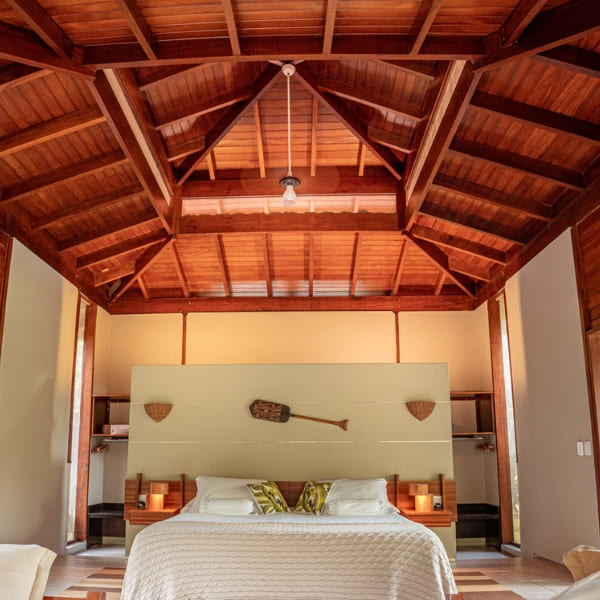
  • How many days should you stay in the Pantanal, Brazil?

    How many days should you stay in the Pantanal, Brazil?

    Planning your trip depends on several factors, such as logistics, seasons, and travel style

    To truly experience the wetlands, it’s recommended to stay at least 4 full days. But how many days you should stay in the Pantanal depends on your travel goals, whether you’re looking for wildlife safaris, family-friendly experiences, or slow-paced ecotourism.

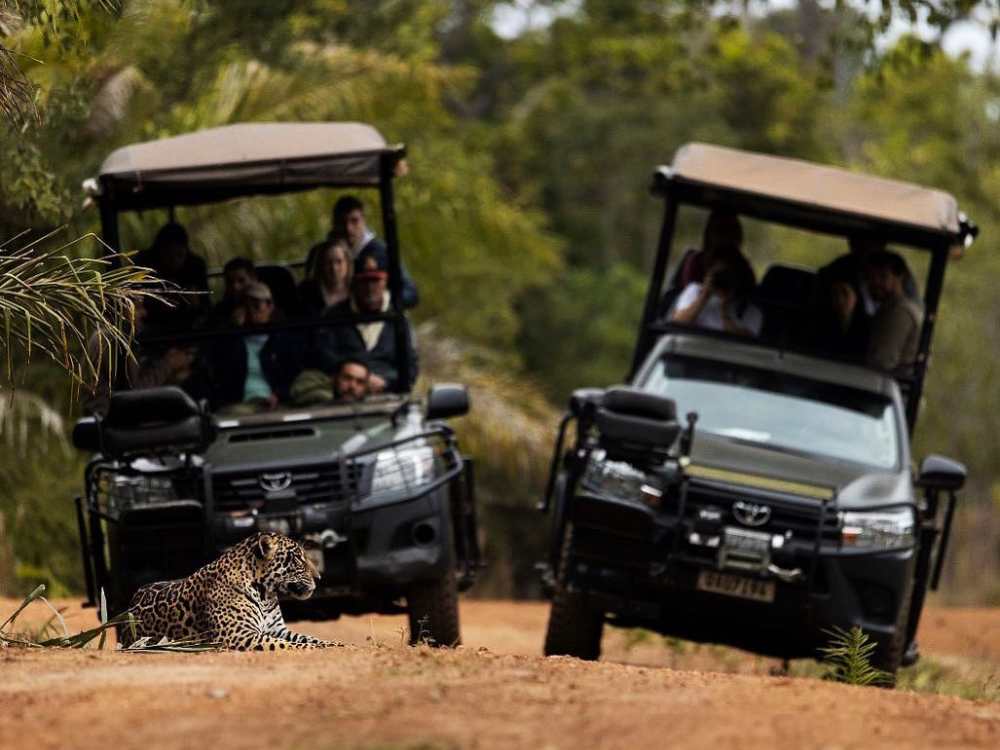
    Two safari vehicles with tourists closely observing a jaguar lying on a dirt road in the Pantanal.
    Photo: Edu Fragoso

    Besides the activities, it’s also important to think about logistics, as the biome is vast and located in a fairly remote region that can take a few hours to reach. When you’re traveling to nature destinations, every minute counts!

    To help with your decision-making, PlanetaEXO, an ecotourism platform specializing in Pantanal tours, has created a guide detailing everything you have to consider when planning your trip. Check it out below!

    What determines how long you should stay in the Pantanal?

    Before deciding how many days to spend in the Pantanal, a few practical factors should lead your planning:

    Logistics

    The Pantanal is remote, which means accessing its wild areas can be quite time-consuming. Most travelers arrive via Cuiabá (Mato Grosso) or Campo Grande (Mato Grosso do Sul), but reaching lodges, especially in the north, often requires long drives and even additional boat trips, depending on the location.

    From Cuiabá to Poconé—particularly in Porto Jofre, the best place for jaguar safaris—the drive takes approximately 2 hours. To reach the Southern Pantanal via Campo Grande, the journey to base cities Aquidauana and Corumbá can take 2–3 and 5–6 hours, respectively.

     Aerial view of a vast green Pantanal landscape showing a safari vehicle driving on a dirt road next to a river.
    Photo: Caiman

    Pro tip: When planning your visit to the Pantanal, always consider the transfer time (round trip). It’s also important to decide whether you want to explore the North, the South or both, as this will impact your itinerary.

    👉 Read more:

    Seasons and weather

    Like most nature destinations, the Pantanal offers different experiences according to the seasons. From May to October, the dry season brings better access and great wildlife viewing, especially of jaguars, capybaras, and caimans. This is also a good time for land activities, such as hiking and horseback riding.

    Tour guide observing a giant anteater on the plains during the dry season in the Pantanal.
    Photo: Felipe Castellari

    From November to April, the rainy season floods large portions of the plains, transforming the landscape into a vast wetland. This period is ideal for boat safaris and birdwatching, with thousands of migratory birds—though access to some lodges may become limited.

    Between seasons (April/May and October/November), you’ll find a mix of both worlds: accessible trails and diverse wildlife activity. Wonderful period to book your trip!

    Finally, don’t forget to pay attention to the Pantanal weather. Temperatures range from 25°C to 35°C year-round, but the northern side tends to be warmer and more humid.

    👉 Read more: When is the best time to visit the Pantanal?

    Travel style and goals

    Understanding your travel style and the experiences you’re looking for will surely help you decide how many days you should stay in the Pantanal.

    Those looking for in-depth wildlife observation, jaguar tracking, or nature photography can benefit from longer stays of at least 5 days in remote areas, where animals tend to roam around more freely.

    Group of tourists on a boat navigating the crystal-clear waters of a river surrounded by lush vegetation in Bonito.
    .

    5 days or more is also ideal for an adventure in Bonito, an ecotourism hub in Mato Grosso do Sul known for its jaw-dropping rivers, waterfalls, natural pools, and caves. Only 2 and a half hours away from the Southern Pantanal, it’s a wonderful destination for people able to extend their vacation or who wish to witness more of Brazil’s nature.

    For families, proximity and comfort are probably best, so staying in areas like Poconé can be a great option. 3 to 4-day trips offer a good balance of safaris and relaxation.

    👉 Explore the adventure: 5-Day Pantanal Bonito Tour in Brazil

    Best Pantanal tours in Brazil

    Not sure whether to explore the north, the south, or both? Understanding how many days you should spend in the Pantanal and comparing real tour options can help you decide.

    Here are some of PlanetaEXO’s Pantanal safaris you just can’t miss:

    TOUR HIGHLIGHTS DURATION STARTING PRICE*
    Budget Pantanal Tour South Pantanal. Affordable experience, wildlife watching, boat rides, canoeing, fishing, horseback riding, night tours. 4 days US$ 660
    Luxury Jaguar Safari in the Pantanal South Pantanal. High-end experience, wildlife watching (jaguar-focused), night tours, hiking, canoeing. 4 days US$ 3,230
    Pantanal Wildlife Tour from Cuiabá North Pantanal. Wildlife watching, photo safaris, night tours, boat trips, horseback riding, hiking. 4 days US$ 1,365
    Pantanal Jaguar Budget Safari North Pantanal. Affordable experience, wildlife watching (jaguar-focused), night tours, boat trips, hiking, sunrise/sunset contemplation. 4 days US$ 1,875
    Wild South Pantanal: Remote Wetland Adventure South Pantanal. Adventure in Nhecolândia (wildest area of the Pantanal), photo safari, horseback riding, canoeing, fishing, night tours, hiking, wildlife watching. 4 days US$ 2,280
    Pantanal Bonito Tour in Brazil Wildlife watching and night safaris (South Pantanal); cave exploring and snorkeling in natural pools (Bonito). 5 days US$ 1,405
    Pantanal Jaguar Photography Tour North Pantanal. Boat and land safaris to photograph jaguars and other animals (accompanied by guides with extensive knowledge in wildlife photography). 6 days US$ 3,730

    *Per person, based on double occupancy in group departures. Prices may vary depending on season and availability. Exchange rate as of March 10th, 2026; subject to change.

    Exploring the Pantanal with PlanetaEXO

    No matter how many days you decide to stay in the Pantanal, we are ready to help you plan the vacation of your dreams!

    PlanetaEXO is an ecotourism platform specializing in Pantanal tours. Working with the best local operators, our team is ready to lead you into an immersive adventure while making a positive impact on the environment and small communities. Contact us now!
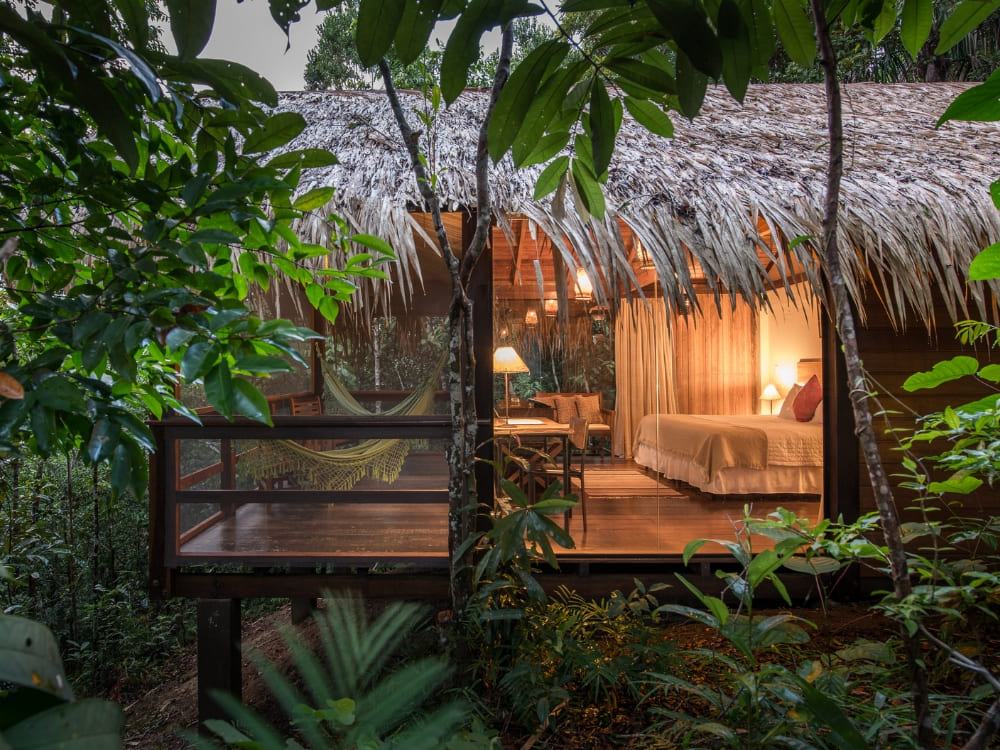
  • Jaú National Park: In the heart of the Amazon, Brazil

    Jaú National Park: In the heart of the Amazon, Brazil

    Discover Jaú National Park in Brazil, one of the largest protected areas of the Amazon, including its locations, history, culture, wildlife, and much more!

    Jaú National Park covers an impressive area of 2.27 million hectares in the middle of the Amazon Rainforest, protecting the entire basin of the Jaú River, a blackwater tributary of the Rio Negro

    As the fourth largest forest reserve in Brazil and the third largest park in the world with intact tropical rainforest, Jaú preserves flooded forests and rare ecosystems that shelter incredible biodiversity. Its dark rivers reflect the sky and forest like a mirror, creating ever-changing landscapes through the seasons.

    Aerial view of a riverboat navigating the Jaú River basin surrounded by the vast green Amazon Rainforest.
    .

    Curious to learn more about it? PlanetaEXO, an ecotourism platform specializing in Amazon Rainforest tours in Brazil, has put together a comprehensive guide about Jaú. Check it out below!

    The History of Jaú National Park

    Jaú was created in September 1980 to protect one of the largest blackwater river basins in the world. Its name comes from the jaú fish, a giant catfish species that inhabits these rivers.

    The park holds archaeological sites and ancient petroglyphs carved into rocks—evidence of human presence in the Amazon for thousands of years. These traces highlight the cultural importance of the area alongside its natural wealth.

    Today, it stands as a global symbol of Amazonian conservation, preserving ecosystems essential to biodiversity and climate balance while protecting valuable cultural heritage.

    Global Ecological Relevance

    Since 2000, Jaú National Park has been a UNESCO World Heritage Site as a core area of the Central Amazon Conservation Complex, which is formed by Jaú, Anavilhanas National Park, Amanã Sustainable Development Reserve, and Mamirauá Sustainable Development Reserve.

    It is also considered a biosphere reserve (an international designation by UNESCO for areas that balance the conservation of biodiversity with sustainable human development) and a Ramsar Site (a wetland designated to be of international importance under the Ramsar Convention, an intergovernmental environmental treaty signed in Iran in 1971).

    Where is Jaú National Park located?

    Jaú is located between the municipalities of Novo Airão and Barcelos, in Amazonas, in the north of Brazil. The park entrance is approximately 220 km from Manaus, the state capital.

    How to get to Jaú National Park?

    The starting point for any visit is Manaus, the main gateway of the Brazilian Amazon. From there, travelers join guided tours that take them directly to Novo Airão and the protected area of Jaú.

    From Manaus, you need to drive along highways AM-070 and AM-352 to Novo Airão (2–3 hours). Then, travelers must continue along the Rio Negro by speedboat or motorboat for another 1–2 hours.

    Due to the demanding route and the mandatory authorization to enter the park, it is recommended that travelers hire duly accredited tour operators to provide all transportation logistics, such as PlanetaEXO.

    The dense green Amazon forest reflecting like a perfect mirror on the calm, dark waters of the river.
    Photo: Dalia McGill

    👉 Read more: How to get to the Amazon Rainforest in Brazil

    Best Time to Visit Jaú National Park

    The Amazon Rainforest has two main seasons that shape every experience in the forest. Between March and August, rivers rise and form the igapós (flooded forests). Great time for canoeing across the flooded areas and wildlife watching!

    From September to February, the waters recede and sandy beaches appear along the Rio Negro and its tributaries. Trails become more accessible, allowing visitors to reach waterfalls and rocky formations such as those in the Carabinani River.

    Each season offers unique perspectives. Whether you prefer paddling among submerged forests or hiking to waterfalls and ancient caves, your choice depends on your travel style.

    Slender tree trunks emerging from the dark waters in the igapós, or flooded forests, of the Amazon.
    Photo: Meyriane de Mira Teixeira

    👉 Read more: Best time to visit the Amazon Rainforest

    Fauna, Flora and Protected Systems

    According to IPHAN (Brazil’s National Institute of Historical and Artistic Heritage), Jaú is home to around 400 types of plants, including species that only grow in flooded areas, such as macaricuia and mucucu do igapé. Throughout its territory, there are also açaí and Brazil nut trees.

    The animals in Jaú National Park are equally diverse. The park has the largest variety of electric fish in the world, which are part of the 263 species of fish officially cataloged in the region. Other notable animals are the Amazonian manatees, black caiman, harpy eagles, giant otters, pink river dolphins, jaguars, etc.

    As part of Ibama’s Parks and Reserves Project—an initiative that seeks to promote sustainable development plans led by the Brazilian Institute of Environment and Renewable Natural Resources—Jaú is the geographic center of the Amazon Ecological Corridor.

    Close-up of a pinkish electric fish swimming among green aquatic plants in the Amazon.
    Photo: Alex Zakletsky

    👉 Read more: Best Brazil Wildlife Tours and Destinations 

    Fun Facts About Jaú National Park

    Explore more fascinating details about Jaú National Park that illustrate why it is ranked among the Amazon’s most enchanting destinations:

    • Size: With 2.27 million hectares, Jaú is the largest national park in the Brazilian Amazon. To put it in perspective, it is larger than Wales, El Salvador, and Slovenia.
    • Exploration style: The only way to visit responsibly is through organized expeditions, mainly small-group cruises that ensure safety and sustainability.
    • Diversity of experiences: In a single trip, you can visit caves formed 700 million years ago, swim in blackwater rivers, join night safaris, and interact with riverside and indigenous families.

    What to Do in Jaú National Park

    Activities inside Jaú are always led by experienced guides and designed to respect conservation rules. Instead of mass tourism, visitors join small-group expeditions that highlight both nature and culture.

    One of the main activities is canoeing through blackwater rivers and igapós. Here, travelers may spot giant river otters, exotic birds, or even caiman during night excursions. Hiking trails are also part of the itineraries, offering the chance to walk under the forest and learn more about native plants and animals.

    Another unforgettable experience is visiting the Aturiá community. Guests interact with local families, taste seasonal fruits, and learn about daily life in the Amazon. Combined with refreshing swims in natural pools and waterfalls, these moments reveal just how diverse the forest is.

     A traveler paddles a small wooden canoe through a flooded blackwater river in the Amazon.
    Photo: Johan

    👉 Read more: Best Amazon Jungle Lodges in Brazil

    Katerre Expedition

    The Katerre Expeditions are the most complete way to explore Jaú and its surroundings. Operated on comfortable boats with rustic designs and three decks, these river cruises combine adventure with all-inclusive service.

    • 5-day Amazon River Cruise in Brazil: This journey takes travelers from Novo Airão through Anavilhanas National Park and deep into Jaú. Highlights include hikes to the Madadá Caves, canoe trips, wildlife observation, cultural exchanges with local communities, and nighttime canoe trips.
    • 7-day Amazon Cruise Trip in Brazil: Expanding the experience, it includes the Meeting of Waters in Manaus, visits to Velho Airão (a historic abandoned settlement), petroglyphs, and more days inside Jaú. Travelers enjoy birdwatching, cultural immersion in riverside villages, and forest hikes to giant kapok trees.

    Both options are small-group expeditions with a maximum of 16 passengers. As a result, each journey offers an intimate and authentic way to experience the park.

    A rustic, three-deck wooden riverboat cruises smoothly along a dark Amazonian river beneath a blue sky.
    .

    👉 Read more: Best Amazon River Cruises in Brazil

    Traveling to Jaú National Park with PlanetaEXO

    Choosing PlanetaEXO, an ecotourism platform specializing in Amazon Rainforest tours in Brazil, means traveling with purpose. Every expedition is organized in partnership with local operators, ensuring that the economic benefits stay in the community while respecting environmental standards. 

    The expeditions balance comfort and authenticity, with boats and lodges designed for immersive experiences and itineraries that highlight both nature and culture. By joining one of these journeys, you live the vacation of your dreams and directly support projects that protect wildlife and strengthen community-based tourism. Contact us now!
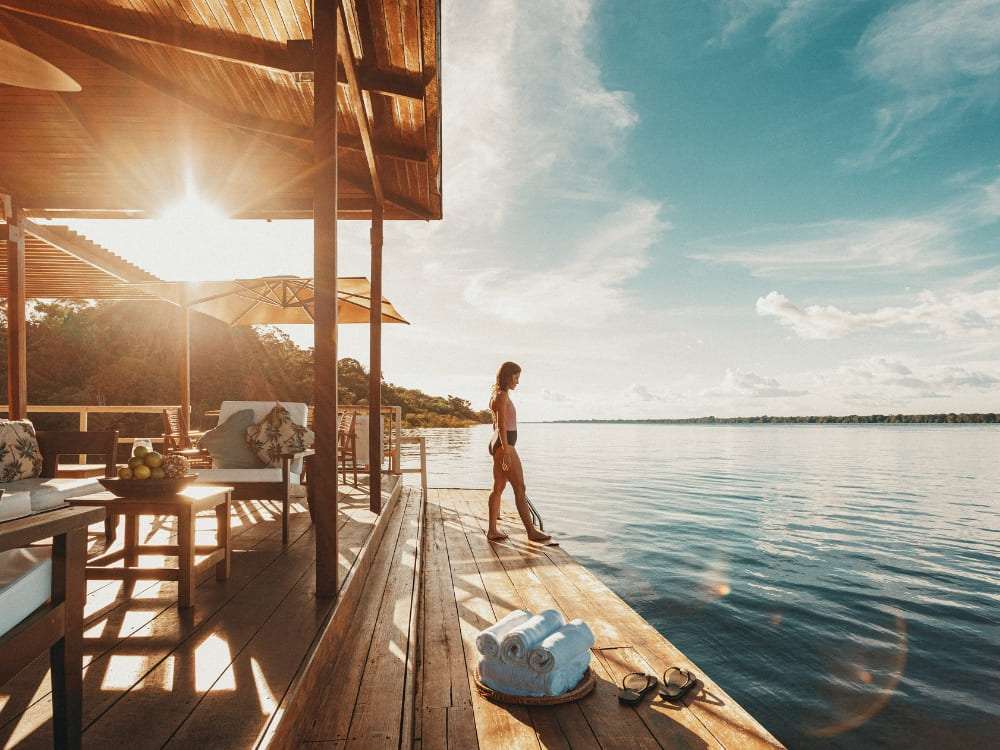
  • 5 Pantanal Conservation Projects Making a Real Impact

    5 Pantanal Conservation Projects Making a Real Impact

    Conservation projects in South America  make a real difference to ensure protection for the area’s rich biodiversity, including the Pantanal in Brazil

    The Pantanal is a vast floodplain covering around 210,000 km² of Brazilian territory. One of the most abundant ecosystems on the planets, it spans across the states of Mato Grosso and Mato Grosso do Sul. With over 4,000 cataloged species, it stands out as a vital sanctuary for South American wildlife.

    Yet, despite its richness, it faces increasing threats. Deforestation, agricultural expansion, uncontrolled fires, and the growing impact of climate change put immense pressure on this delicate biome. The good news is that there are numerous efforts to ensure its protection, such as environmental laws, sustainable travel, and Pantanal conservation projects.

    A firefighter equipped with a blower works to control flames during a vegetation fire in the Pantanal.
    @diego_baravelli

    PlanetaEXO, an ecotourism platform specializing in Pantanal tours, has selected 5 non-profits known for their impact and commitment to preserving natural habitats, promoting sustainable land use and continuous work to ensure that the wildlife thrives for many years to come. Learn more below!

    1. Onçafari Project

    Onçafari is one of the most important wildlife conservation efforts in South America. Its mission is to safeguard Brazil’s biodiversity by protecting natural areas and supporting the socioeconomic development of local communities.

    In the Pantanal, it focuses on raising awareness on importance of jaguars and promoting ecotourism as a sustainable income-generating alternative. Since 2011, the Onçafari Project has operated in partnership with Caiman, an ecological refuge situated in Miranda (MS). 

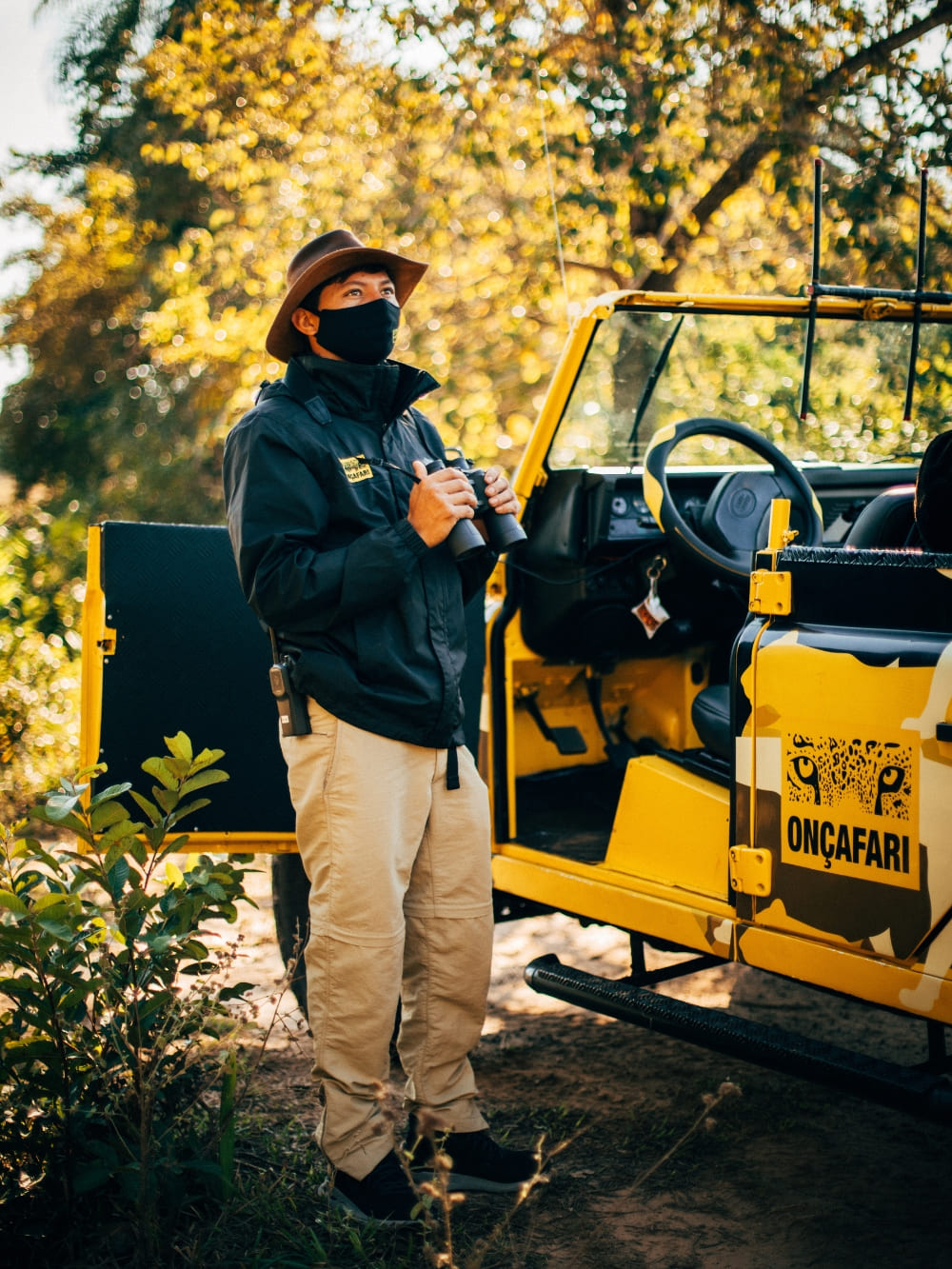
    An Onçafari project guide wearing a mask holds binoculars while standing next to a yellow Pantanal safari vehicle.
    Photo: Felipe Castellari

    Through ongoing work to familiarize the animals with humans and vehicles, guests at Caiman can enjoy privileged and safe sightings of jaguars and other species. While the North Pantanal is the best place to see jaguars, this is the only location in the South where they’re often observed.

    Ecotourism helps to boost conservation values and the local economy, but Onçafari also acts on scientific research, animal reintroduction to the wild, environmental education, social inclusion, and forest management.

    How to help the Onçafari Project

    Support Onçafari by visiting Caiman through responsible tourism, following their conservation activities, or making a donation

    👉 Read more: What is the best Pantanal safari in Brazil?


    2. SOS Pantanal

    Operating since 2009, SOS Pantanal plays a key role in protecting the biome’s biodiversity while promoting sustainable land use practices. The mission is clear: to preserve the ecological and cultural richness of the region, ensuring a balanced future for both nature and local communities.

    A woman from the SOS Pantanal project and a young local girl use an earth auger to plant a tree seedling together.
    Photo: SOS Pantanal Project

    The activities of this Pantanal conservation project are built around three pillars:

    1. Governance and water security
    2. Environmental protection and restoration
    3. Forest fire prevention and control

    By engaging with landowners, researchers, authorities, and local organizations, SOS Pantanal strengthens public policies, encourages sustainable production, and restores degraded areas. Environmental education and social engagement are also crucial aspects of their work, making conservation a shared responsibility across the region.

    How to help SOS Pantanal

    Raise awareness about sustainable practices, promote products from local producers, engage with the project’s official channels on social media, or make a donation.

    3. Jaguar Identification Project

    The Jaguar Identification Project is dedicated to the long-term study and conservation of jaguars in Brazil’s Pantanal by using non-invasive techniques like spot pattern recognition and camera traps.

    A large jaguar walks past a motion-activated camera trap strapped to a tree for the Jaguar Identification Project.
    Photo: Jaguar Identification Project

    The project builds a detailed database of identified individuals, helping researchers understand the animals’ behavior, territoriality, and preservation needs.

    Beyond studies, it promotes environmental education for residents and visitors, strengthening support for the biome’s protection and highlighting the role of the jaguar as a symbol of a healthy Pantanal.

    How to help the Jaguar Identification Project

    When visiting the Pantanal conservation areas, choose companies that support scientific research initiatives, share the Jaguar ID Project’s content to raise awareness, and donate or buy official merch.

    👉 Read more: When is the best time to visit the Pantanal?

    4. Blue Macaw Project

    The Blue Macaw Project is a powerful example of how science and community engagement can bring a species back from the brink of extinction.

    Biologist Neiva Guedes smiles while gently holding a blue hyacinth macaw outdoors.
    Photo: Blue Macaw Project

    Focused on the hyacinth macaw (Anodorhynchus hyacinthinus), the project was founded in 1990 by biologist Neiva Guedes. Its main activities include monitoring natural and artificial nests, tracking reproduction, and collecting data on other bird species, which include scarlet macaws, toucans, hawks, owls, and other Pantanal animals that share the same habitats.

    Thanks to the dedicated Pantanal biodiversity protection efforts, the hyacinth macaw population has grown significantly, improving its conservation status on the IUCN Red List from “endangered” to “vulnerable” in 2014.


    How to help the Blue Macaw Project

    Avoid and report illegal pet trade, help spread awareness about the protection of native species, sponsor a nest or a chick, buy official merch or make a donation. Learn more about how to support the Blue Macaw Project.

    5. Giant Otter Project

    The giant otter (Pteronura brasiliensis) is the largest mustelid in South America. This species lives in cohesive family groups throughout the rivers and lakes of the Pantanal, the Cerrado, and the Amazon. Despite its role in aquatic ecosystems, it’s classified as critically endangered due to habitat degradation, human conflict, and illegal hunting.

    Two giant otters rest closely together on a wooden log in their natural aquatic habitat.
    .

    Since 2019, the Giant Otter Project has been dedicated to safeguarding the species and its habitats through population monitoring, scientific research, environmental education, and the promotion of sustainable tourism.

    In 2024, the non-profit monitored over 190 km of Pantanal rivers and identified 82 otters in 13 family groups.

    A team of researchers carefully examines a giant otter on a blue medical table as part of a wildlife monitoring project.
    Photo: Giant Otter Project

    How to help the Giant Otter Project

    Choose responsible tourism companies, join educational activities on aquatic conservation, buy official merch or make a donation.

    👉 Read more: How to get to the Pantanal, Brazil

    Why do supporting Pantanal conservation projects and sustainable travel matter?

    Initiatives aimed at protecting wildlife and conservation areas in the Pantanal are imperative to maintaining the well-being of the biome.

    Through research, species cataloging, and educational programs, fauna and flora are protected and restored to ensure that the ecosystem has a chance to survive and thrive in the face of problems such as global warming and deforestation.

    Sustainable tourism is also fundamental, as it increases the public’s interest and knowledge about the importance of environmental preservation and boosts the local economy to benefit the financial health of families and small businesses.

    Responsible travel in the Pantanal with PlanetaEXO

    PlanetaEXO is an ecotourism platform specializing in Pantanal tours that works with the best local operators to ensure experiences that cause a positive impact on the environment, the local communities and, of course, the travelers.

    Besides following responsible tourism practices, we help plan your vacation according to your preferences and needs when it comes to comfort, immersion in nature and tailor-made itineraries. Contact us now!
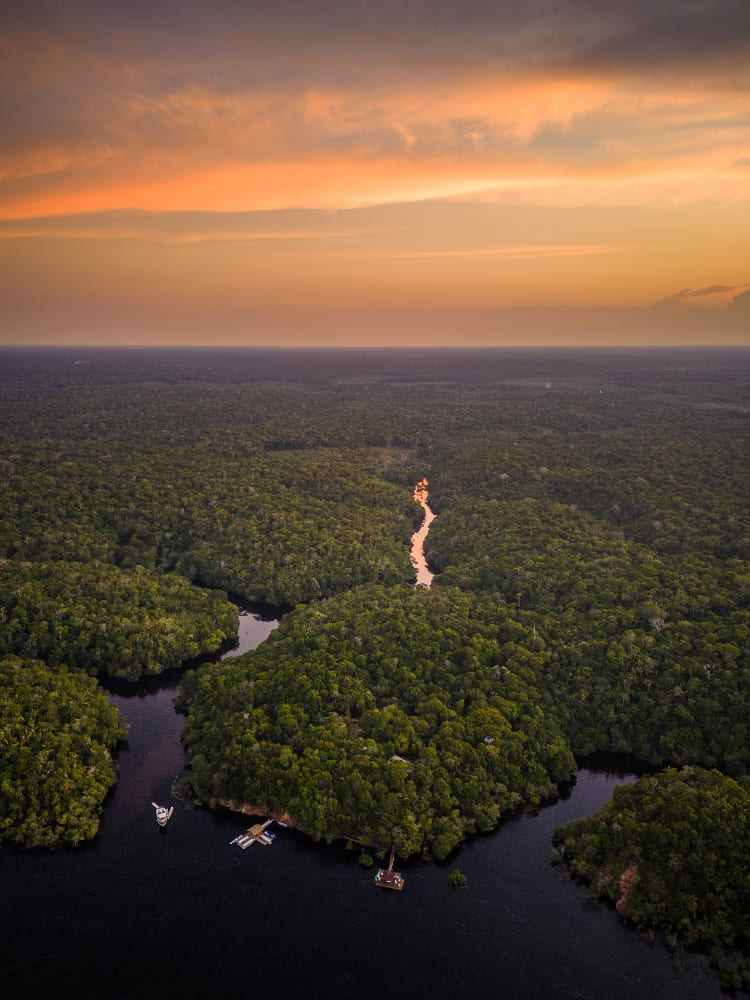
  • Anavilhanas National Park, the archipelago of the Amazon in Brazil

    Anavilhanas National Park, the archipelago of the Amazon in Brazil

    Learn everything you should know about the Anavilhanas in the Amazon Rainforest, including its history, how to get there, the best time to visit, what to do, and more!

    Anavilhanas National Park is home to the second largest river archipelago in the world. Located on the Rio Negro in the Amazon Rainforest, Brazil, it holds more than 400 islands and 60 lakes, with up to 60% of its area submerged during the wet season, transforming the landscape every year.

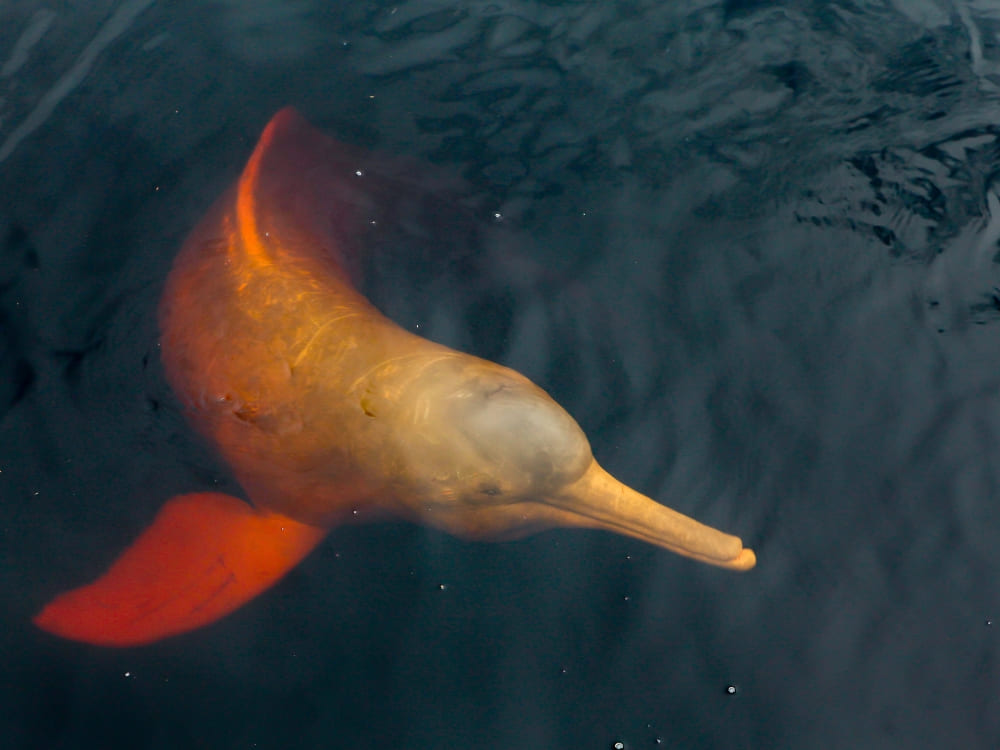
    A pink river dolphin swims near the surface of dark, calm water.

    The Anavilhanas archipelago safeguards unique ecosystems of várzea (a flat, fertile, and extensive terrain, usually located on the banks of Amazonian rivers) and igapó (flooded forest) while promoting sustainable tourism. This shift boosted the economy of the city of Novo Airão and made it the most visited national park in the Brazilian Amazon.

    To help you understand the national park, PlanetaEXO, an ecotourism platform specializing in Amazon Rainforest tours in Brazil, has put together a complete guide on where it is, how to visit, the best activities, and much more. Check it out below!

    The History of Anavilhanas National Park 

    The name Anavilhanas is believed to have originated from the Aneuene or Anauini River, which was once called Anaviana and later Anavilhena.

    An aerial view shows the dark waters of the Rio Negro cutting through the lush green canopy of the Amazon rainforest.
    Photo: João Paulo Krajewski

    Its origins trace back to 1981, when it was created as the Anavilhanas Ecological Station, a category aimed at scientific research and environmental education. However, this designation conflicted with the reality of the region, which was better suited for sustainable tourism. In 2008, ICMBio reclassified the area as a national park, expanding its boundaries to 350,000 hectares and opening it to responsible visitation.

    The change also helped curb illegal logging, which had previously been common in the Rio Negro basin, and gave local communities new opportunities through ecotourism. Today, most of Novo Airão’s population relies directly or indirectly on tourism, from guiding to crafts and hospitality.

    👉 Read more: Best places to visit in the Amazon, Brazil 

    Worldwide Recognitions

    Since 2000, the Anavilhanas archipelago has been part of the Central Amazon Conservation Complex, a UNESCO World Heritage Site that also includes Jaú National Park and the Mamirauá Reserve

    A vibrant sunset reflects over the complex network of islands and waters in the Anavilhanas archipelago.
    Photo: Felipe Castellari

    It is also recognized as a Ramsar Site, a wetland of global importance, designated by the Ramsar Convention—an international treaty signed in 1971 in Iran, aimed at the conservation and wise use of wetlands (swamps, mangroves, lagoons, etc.) with the participation of more than 160 countries.

    These recognitions ensure international visibility, long-term protection, and support for responsible tourism that benefits local communities while safeguarding biodiversity.

    How to Get to Anavilhanas National Park

    The main gateway to Anavilhanas is Manaus, the capital of Amazonas state. Eduardo Gomes International Airport (MAO) receives direct flights from Miami (MIA), Bogota (BOG), Panama City (PTY), and Curaçao (CUR), as well as numerous daily connections from São Paulo, Rio de Janeiro, Brasília, and other Brazilian cities.

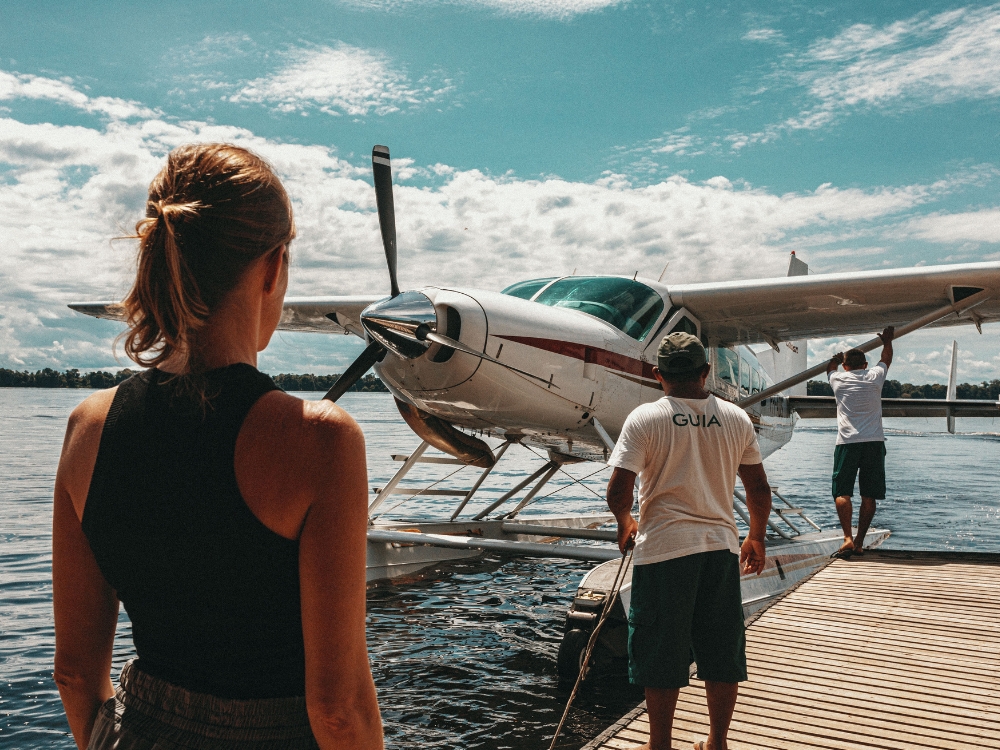
    A white and red hydroplane floats on the calm Rio Negro, offering a transport option to the Amazon.
    Photo: Felipe Castellari

    From Manaus, the most popular way to reach the park is by road to Novo Airão, a small riverside town located 180 km away. The drive takes around 2–3 hours along the AM-070 and AM-352 highways. 

    Visitors can also hire private shuttle services, rent a car, or even charter a hydroplane to land directly on the Rio Negro. Novo Airão is considered the main access point to Anavilhanas, with boats departing every day to explore the islands.

    Another option is arriving by river. Boat transfers from Manaus to Novo Airão take 8–12 hours and allow travelers to witness the famous Meeting of the Waters, where the dark Rio Negro and the muddy Solimões flow side by side without mixing.

    For those looking for a faster option, speedboats can make the same journey in around 3–4 hours, depending on river conditions. Many itineraries combine this journey with river cruises, which gives visitors a complete experience of the region.

    👉 Read more: How to get to the Amazon Rainforest in Brazil

    Best Time to Visit Anavilhanas National Park, Brazil

    The park is a year-round destination, but the experience changes dramatically with the seasons. In fact, this is a feature that makes Anavilhanas even more unique! 

    • Dry Season (September–February): White-sand beaches emerge across the islands, providing ideal conditions for swimming and birdwatching. Some species even nest in the sandbanks during this period. Trails through the flooded forests can be explored on foot.
    • Wet Season (March–August): Water levels rise up to 16 meters, flooding 60% of the park’s area. This is the time to explore the igapó by canoe and observe aquatic animals like giant river otters and river dolphins.
    • Transition Months: From October to December, prolonged droughts may reduce access to some areas, but conditions improve again by January.

    👉 Read more: Best time to visit the Amazon Rainforest

    Fauna, Flora, and the Protected Systems of Anavilhanas in the Amazon

    The biodiversity of Anavilhanas National Park is astonishing. The igapós flood seasonally, creating habitats for unique plants and wildlife. Visitors may spot giant macucu trees, orchids, and fruiting species like açaí and cupuaçu. Among the most emblematic Amazon animals are the pink river dolphin, giant river otters, sloths, howler monkeys, and black caimans. 

    Birdwatchers will be delighted with sightings of toucans, macaws, and even the majestic harpy eagle. In the rivers and lakes, more than 300 fish species thrive, including pirarucu, piranhas, and dourada.

    Scientific research in Anavilhanas is vital and already brings important discoveries. A recent INPA (National Institute of Amazonian Research) study found that ant communities on the islands differ from those on terra-firme (non-flooded forest), with seasonal flooding driving changes in species composition. Some ants adapt by moving to tree canopies, while others struggle to survive.

    All of this (and much more) reinforces the park’s role in protecting biodiversity and in advancing ecological knowledge.

    👉 Read more: Best Brazil Wildlife Tours and Destinations 

    Fun Facts About Anavilhanas

    Discover more fascinating facts about Anavilhanas that further highlight why the park is considered one of the most captivating places in the Amazon:

    • 3 Bocas (Three Mouths): one of the most scenic spots in the archipelago, where three channels meet, creating mirrored waters and lush vegetation.
    • The Madadá Caves are nearby: sandstone formations over 700 million years old, accessible by trails that start at the edge of the park.
    • No mosquitoes: thanks to the acidity of the Rio Negro, the area is far less affected by mosquitoes than most tropical regions.
    • Visitor numbers: Anavilhanas welcomes up to 40,000 visitors annually, making it the most visited national park in the Brazilian Amazon.
    • Around 60 lakes: in addition to the 400+ islands, the archipelago shelters dozens of lakes that sustain a wide variety of wildlife.

    What to Do in Anavilhanas National Park?

    A local guide rows a wooden canoe filled with tourists through the flooded waterways of Anavilhanas National Park
    Photo: Isadora Sá

    Anavilhanas offers a wide range of activities that change with the seasons:

    • Boat tours: through water channels and lakes, with chances to see pink river dolphins, caimans, and many bird species.
    • White-sand beaches: when the rivers shrink, many beaches appear. Perfect for swimming and relaxing in the dry season!
    • Igapós (flooded forests): ideal for canoe or kayak trips through waterways during the wet season.
    • Jungle hikes: see giant trees, orchids, and even prehistoric rock carvings by hiking in the forest when water levels drop.
    • Visit the ICMBio bases: visitors can stop at research and monitoring structures to learn about ongoing conservation measures and the protection of this fragile ecosystem. In the surrounding areas, during nighttime spotlights and near some ICMBio bases, large caimans also make occasional appearances.

    👉 Read more: Top things to do in the Amazon Rainforest in Brazil 

    Best Tours in the Anavilhanas Archipelago

    Some of the best experiences in the Amazon Rainforest take place in Anavilhanas National Park, Brazil. Discover the trips available on PlanetaEXO!

    Anavilhanas Jungle Lodge

    One of the best ways to experience the park is by staying at the Anavilhanas Jungle Lodge, an award-winning ecolodge located in Novo Airão. Blending comfort with sustainability, the lodge offers guided excursions such as piranha fishing, nocturnal wildlife tours, canoeing, and visits to local communities.

    A luxury thatched-roof bungalow with warm interior lighting sits nestled among lush green trees at the Anavilhanas Jungle Lodge.
    .

    Guests can also learn about scientific projects supported by the lodge, including biodiversity monitoring with researchers from INPA (National Institute for Amazonian Research) and innovative studies on fungi for “mycotourism,” which highlight the lesser-known but fascinating world of the Amazon’s fungi.

    With luxury bungalows overlooking the Rio Negro, a pool with panoramic views, and Amazon-inspired cuisine, the lodge is both a refuge and a hub for conservation.

    Amazon River Cruises

    Another great way to experience the park is on an Amazon river cruise in Brazil, departing from Manaus and sailing through the Rio Negro. Mixing adventure and comfort, the itinerary includes canoeing through igapós, piranha fishing, jungle hiking, and close encounters with pink river dolphins. 

     A multi-level traditional wooden river cruise boat navigates the reflective dark waters of the Amazon.
    .

    Travelers also visit Indigenous and riverside communities, explore hidden lagoons, and spot wildlife such as macaws, sloths, and pirarucu fish.

    On board, guests enjoy air-conditioned cabins, local cuisine, and leisure areas like a solarium and lounge, making the journey as enjoyable as the destination of Anavilhanas

    👉 Explore the adventure: 4-day and 7-day Amazon cruises in Brazil

    Mirante do Gavião

    Staying at the Mirante do Gavião is one of the best ways to discover Anavilhanas. From the its privileged location on the Rio Negro, guests set out on daily tours through the archipelago, whether hiking to the Madadá Caves, exploring flooded forests by canoe, or relaxing on the white-sand beaches during the dry season.

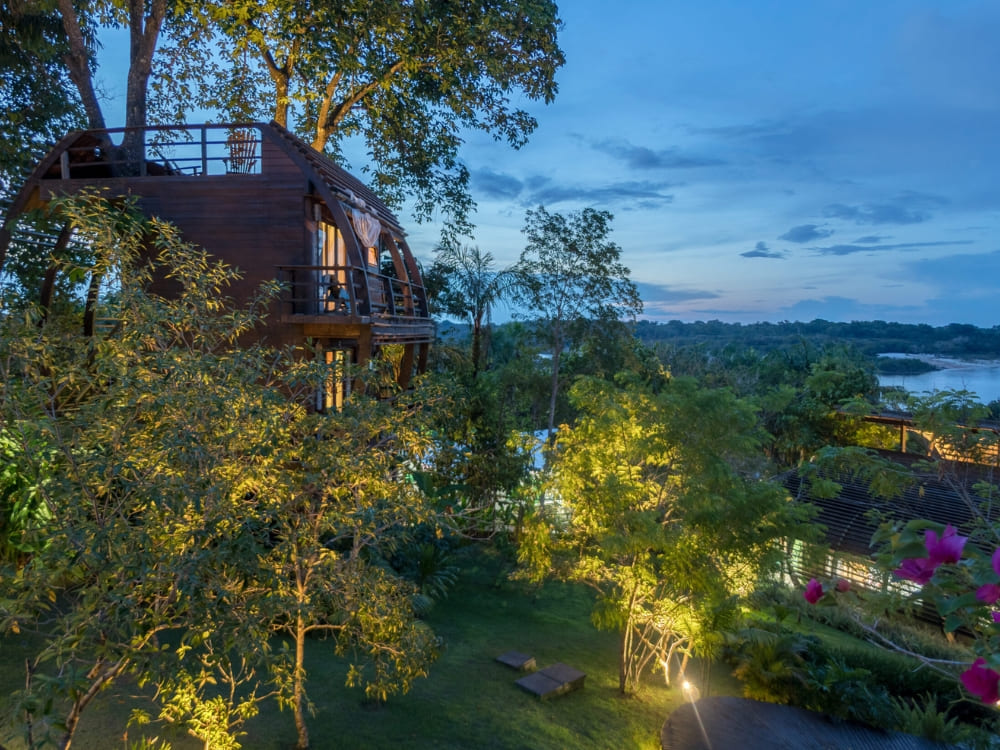
    The unique, boat-shaped wooden architecture of Mirante do Gavião lodge glows warmly at night in the forest.
    .

    The lodge also connects travelers with the local culture, including visits to riverside communities, craft centers, and conservation initiatives. At sunset, boat rides across the Rio Negro provide unforgettable views of the park’s islands, followed by nocturnal excursions to spot caimans and other animals.

    Between adventures, Mirante do Gavião offers comfort and exclusivity, making it the perfect base to combine relaxation with the best tours in the Anavilhanas National Park.

    👉 Read more: Best Amazon Jungle Lodges in Brazil

    Luxury Amazon Cruise

    The Luxury Amazon Cruise aboard the Zaltana is a 5-day journey through the Rio Negro and the Anavilhanas archipelago. Guests explore hidden lakes and igarapés (narrow water channels), hike to giant trees, try piranha fishing, and meet pink river dolphins while also visiting Indigenous and riverside communities.

    The Zaltana luxury riverboat floats calmly on the Rio Negro, offering high-end cruises through the Anavilhanas archipelago.
    Photo: Isadora Sá

    With 10 suite cabins, panoramic views, and Amazon-inspired cuisine, the Zaltana offers one of the most comfortable and exclusive ways to experience the rainforest.

    👉 Read more: Best Amazon River Cruises in Brazil

    Comparative price table for each Anavilhanas tour

    TOUR HIGHLIGHTS DURATION STARTING PRICE*
    Anavilhanas Jungle Lodge Luxury accommodation, visits to local communities, Madadá Caves, guided tours (canoeing, hiking, wildlife watching, night tours, etc.) 6 days US$ 3,330
    Amazon River Cruise Accommodation aboard (private ensuite cabins), Lake Janauari, visits to indigenous groups, guided tours (piranha fishing, hiking, canoeing, wildlife spotting, etc.) 4 days

    7 days

    US$ 2,605
    Mirante do Gavião High-end accommodation, Rio Negro, Madadá Caves, visits to riverside communities, guided tours (hiking, kayaking, wildlife watching, etc.) 4 days US$ 2,000
    Luxury Amazon Cruise Accommodation on a luxury riverboat, Meeting of Waters, Lake Janauari, visits to local communities, guided tours (wildlife watching, night spotting, hiking, piranha fishing, etc.). 5 days US$ 3,920

    *Per person, based on double occupancy in group departures. Prices may vary depending on season and availability. Exchange rate as of May 14th, 2026; subject to change.

    Traveling to Anavilhanas National Park, Brazil, with PlanetaEXO

    At PlanetaEXO, an ecotourism platform specializing in Amazon Rainforest tours in Brazil, the trips to Anavilhanas are designed to connect travelers with nature while supporting local communities and conservation projects. By booking with us, you ensure that your vacation contributes to keeping the Amazon forest standing.

    We help travelers find the perfect balance between leisure, adventure, and sustainability. Our difference lies in offering authentic experiences guided by the best local operators who know the forest better than anyone. Contact us now!
  • When is the best time to visit Chapada Diamantina?

    When is the best time to visit Chapada Diamantina?

    Chapada Diamantina National Park is versatile enough to offer incredible experiences year-round, but it’s important to understand the seasons and your own preferences

    The best time to visit Chapada Diamantina depends on what you’re looking for. If your goal is to see waterfalls at full force and the landscape at its greenest, aim for the rainy season from October to April. For easier trails and better conditions for long hikes, the dry season from May to September is ideal. 

    The timing of your visit can dramatically shape your experience, but no matter when you choose to go, Chapada Diamantina always delivers. Here’s a pro tip: make sure your timing matches your expectations—you’ll definitely be rewarded with a fulfilling, unforgettable travel experience!

    Panoramic view of a lush green valley and flat-topped mountains in Chapada Diamantina National Park at sunrise.
    .

    To help you understand the intricacies of the seasons, PlanetaEXO, an ecotourism platform specializing in Chapada Diamantina tours, has put together a comprehensive guide so you can plan the perfect trip. Check it out below!

    Rainy season (October to April): lush landscapes and powerful waterfalls

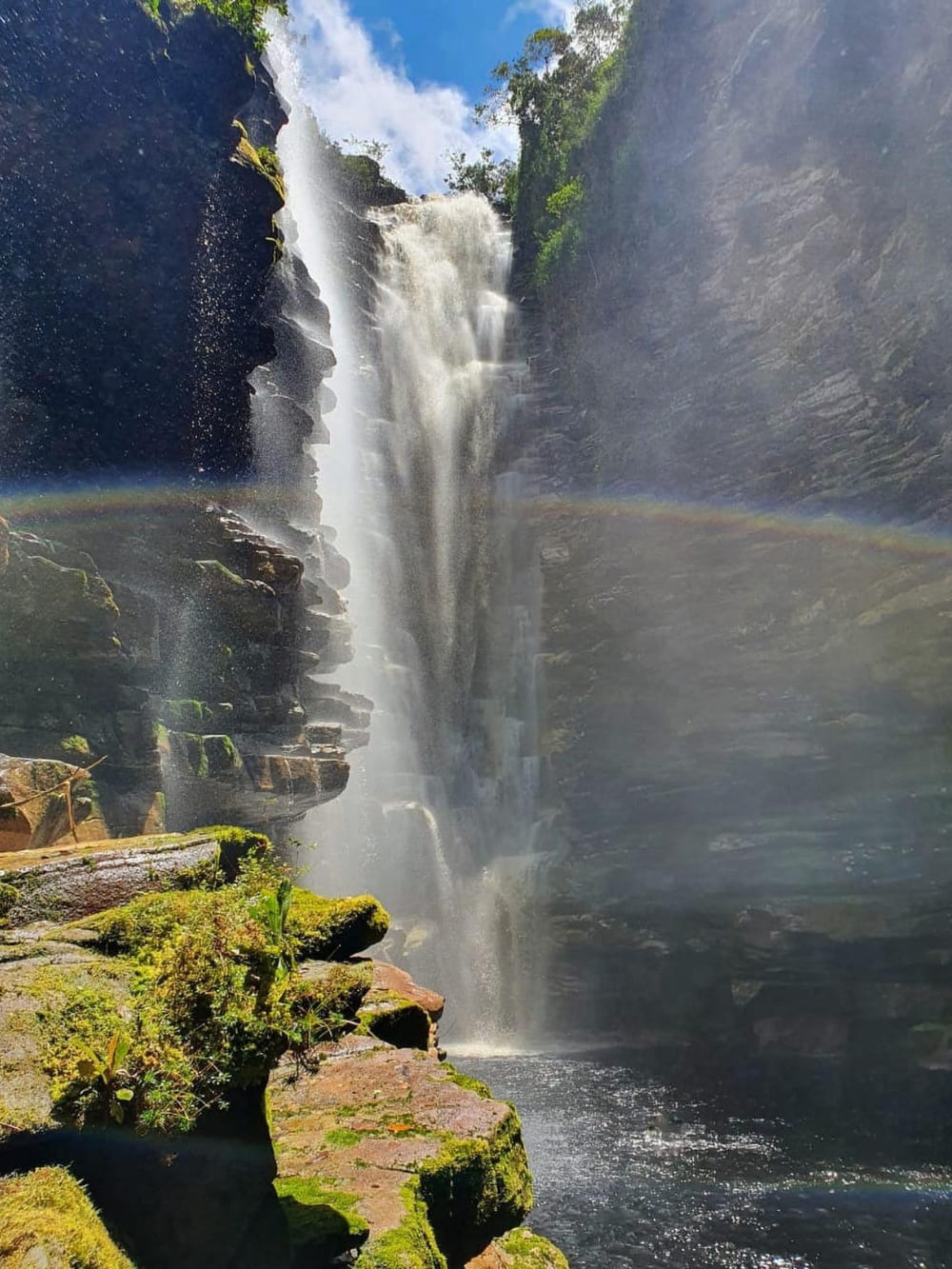
    If lush green landscapes, powerful waterfalls, and dramatic scenery appeal to you, then the rainy season, from October to April, might be the right time to visit Chapada Diamantina National Park.

    A hiker in a green jacket admires a towering waterfall inside a steep canyon during the rainy season in Chapada Diamantina.
    Photo: Lucas Ribeiro

    Despite the name, it doesn’t rain all day, every day. Rain tends to fall in short bursts rather than the entire day, often allowing for clear mornings and enough dry hours to enjoy hikes and outdoor activities without major disruptions.

    During this period, the region comes alive. The vegetation is at its most vibrant, and the waterfalls, like Cachoeira da Fumaça and Cachoeirão, are flowing at full force, offering an impressive spectacle framed by thick, green forest. It’s a great time for photographers and those seeking nature at its most intense.

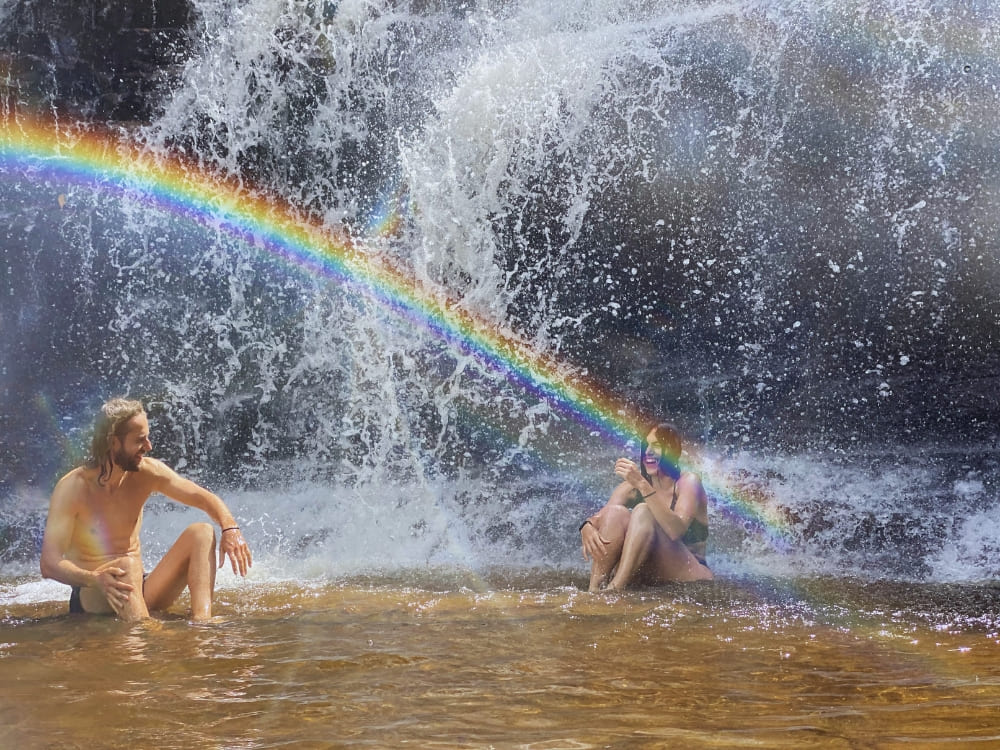
    Two people relax in the warm waters at the base of a powerful waterfall with a bright rainbow in Chapada Diamantina.
    .

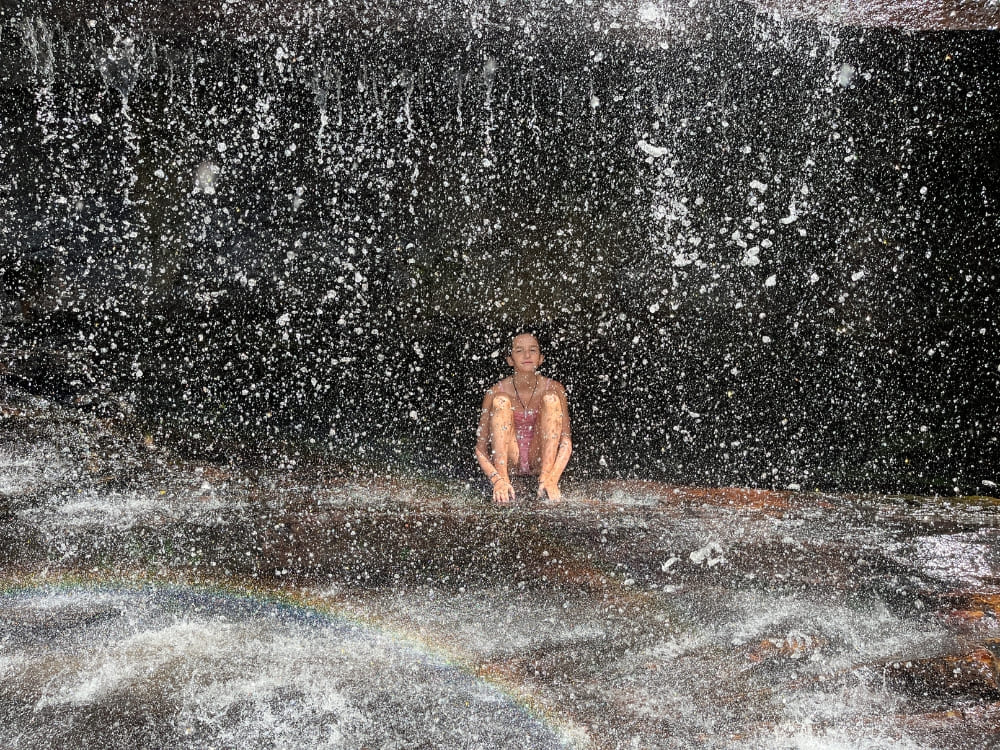
    The trails can get muddy and a bit more challenging, especially on steeper routes, so proper footwear is essential. Temperatures often rise above 30°C (86°F), making it a good time for swimming. The currents in some waterfalls may be stronger, but the water is warmer than during the winter.

    👉 Read more: How to Get to Chapada Diamantina National Park?

    Dry season (May to September): ideal for hikers and long treks

    For many trekkers, the dry season is considered the best time to visit Chapada Diamantina, especially if your main goal is to explore the park on foot. With little rainfall from May to October, trail conditions are safer and more comfortable. You’ll be able to access remote waterfalls like Fumacinha and Mixila without worrying about flooded riverbeds or slippery stones. 

    A group of hikers walks along a dirt trail surrounded by green mountains during the dry season in Chapada Diamantina National Park.
    Photo: Lucas Neves

    Temperatures are also milder during this period, with June and July being the coldest months, offering more pleasant conditions for long days of trekking. While the daytime is warm and sunny, the nights can drop to 10°C (50°F) in higher-altitude areas like Mucugê and Vale do Capão.

    Meanwhile, the waterfalls may lose some of their volume, but they remain scenic and refreshing—just be prepared for colder dips!

    Two hikers look down a steep cliff edge at a lush green valley while trekking the iconic Vale do Pati route.
    Photo: Lucas Neves

    The iconic Vale do Pati hike, one of the most celebrated in Brazil, is easier to complete during the dry season. Covering up to 25 km per day, this multi-day adventure demands stable weather and manageable trail conditions, both of which are more common during the drier months. 

    👉 Read more: Best Hikes in Brazil – From Rainforests to Mountain Peaks

    Best time to see the sun ray phenomenon at Poço Encantado and Poço Azul

    One of the most iconic experiences in Chapada Diamantina is seeing the rays of sunlight enter crystal-clear underground pools in two limestone caves, Poço Azul and Poço Encantado. This natural light show only occurs during specific months when the sun is at the right angle.

    A bright ray of sunlight illuminates the crystal-clear blue water inside the underground limestone cave of Poço Encantado.
    .

    In Poço Azul, the best time to see it is from February to October. In Poço Encantado this is best seen from April to September.

    When the conditions are right, the sun pierces through an opening in the cave ceiling, lighting up the water and revealing intense shades of blue. It’s a short-lived phenomenon each day, usually happening between late morning and early afternoon, so it’s well worth planning your trip around it.

    Couldn’t see the sun ray phenomenon? Don’t worry, Poço Azul and Poço Encantado remain beautiful and open for visits all year round!

    High and low seasons in Chapada Diamantina

    Understanding local travel patterns can also help you decide the best time to visit Chapada Diamantina:

    • High season: December to February (summer holidays) and July (winter break) are peak times for Brazilian tourism. Expect more people on the trails, higher accommodation prices, and limited availability.
    • Low season: March to June and August to November, outside public holidays, tend to be quieter. You’ll find better prices, more flexible availability, and fewer people on the most popular routes.

    If your priority is tranquility, solitude, and avoiding crowds, consider visiting during the shoulder months.

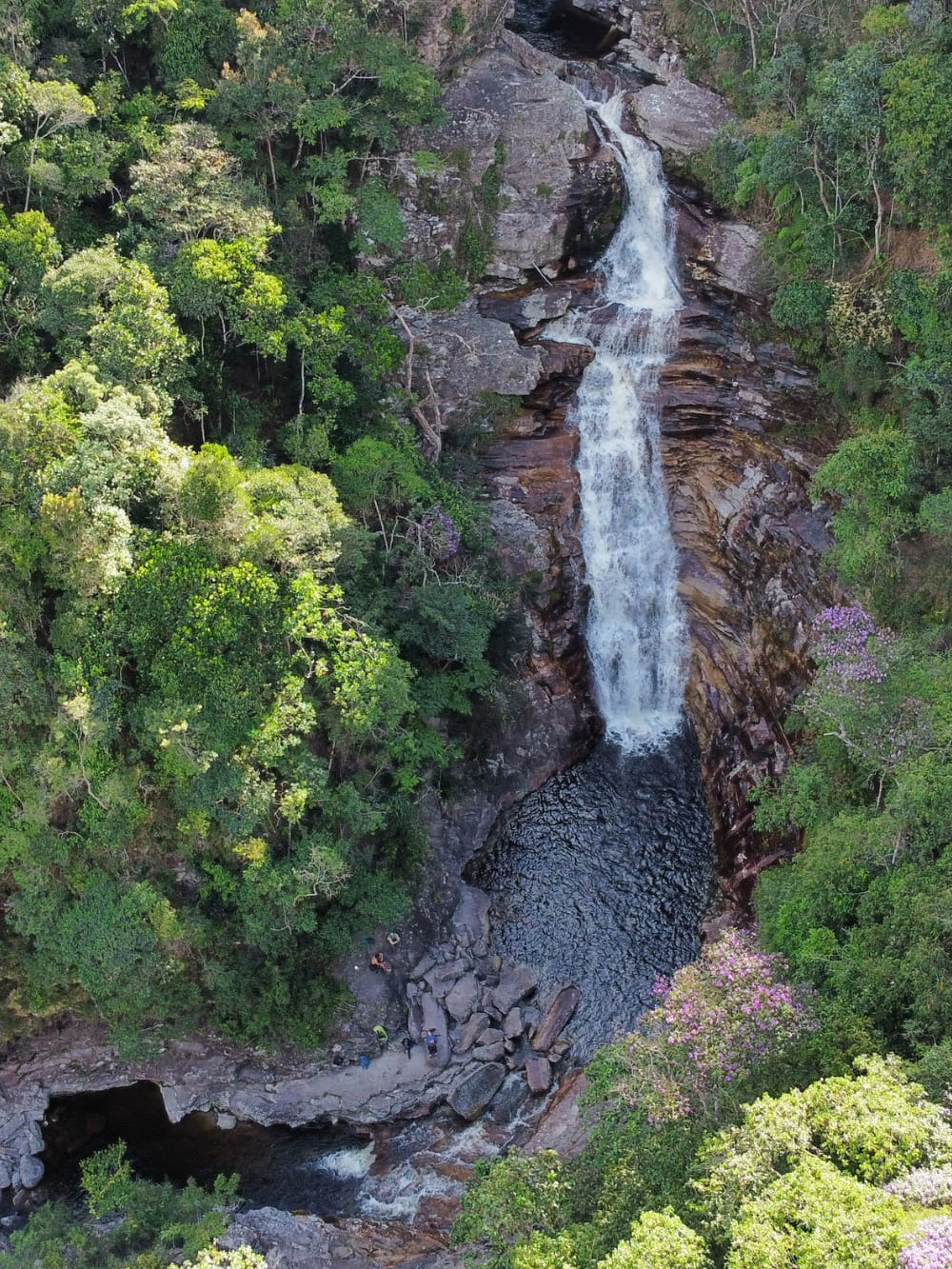
    A visitor swims in a dark pool beneath a cascading waterfall surrounded by towering layered rock formations in Chapada Diamantina.
    .

    What is the current weather in Chapada Diamantina?

    Take a look at how the weather is right now at the Chapada Diamantina National Park!

    Best tours in Chapada Diamantina

    Can’t wait to enjoy Chapada Diamantina’s wonders with thrilling multi-day treks? Check out PlanetaEXO’s tours!

    TOUR HIGHLIGHTS DURATION STARTING PRICE*
    Chapada Diamantina Tour  Waterfalls (Fumaça, Fumacinha, Riachinho, Mosquito), caves (Gruta Azul, Gruta Lapa Doce), Pai Inácio Hill, hiking, historic center of Lençóis. 3 days US$ 280
    Ultimate Chapada Diamantina Hike Hiking, Poço Encantado, Poço Azul, 3 days of trekking in Vale do Pati + Buracão and Fumacinha waterfalls. 6 days US$ 1,000
    Chapada Diamantina Trip Hiking, Vale do Capão, waterfalls (Fumaça, Buracão, Mosquito) Gruta Lapa Doce, Pai Inácio Hill, Poço Encantado, Poço Azul, historic center of Mucugê. 7 days US$ 630
    Vale do Pati Trek Chapada Diamantina Hiking, Morro do Castelo, Cachoeirão and Funis waterfalls, accommodation with locals. 3 days US$ 410
    Pati Valley Hike Chapada Diamantina Hiking, Morro do Castelo, waterfalls (Cachoeirão and Funis), accommodation at locals’ houses. 4 days US$ 545
    Chapada Diamantina Trek Vale do Pati Trekking, Morro do Castelo, Cachoeirão and Funis waterfalls, Poço da Árvore, Ladeira do Império, Andaraí, accommodation with locals. 5 days US$ 585

    *Per person, based on double occupancy in group departures. Prices may vary depending on season and availability. Exchange rate as of April 8th, 2026; subject to change.

    Traveling to Chapada Diamantina with PlanetaEXO

    It doesn’t matter in which season you want to visit Chapada Diamantina National Park; traveling with us is always the best choice!

    PlanetaEXO is an ecotourism platform specializing in Chapada Diamantina tours. By working with the finest local operators, we provide an immersive, hassle-free experience that includes bookings, tailor-made itineraries, and everything you need for an amazing vacation. Contact us now!
  • 10 Pantanal Travel Tips for an Unforgettable Trip

    10 Pantanal Travel Tips for an Unforgettable Trip

    Seasons, activities, safety tips, and health precautions. See our recommendations for a fantastic Pantanal safari!

    Traveling to any destination requires preparation, but some specifics are exclusive to the Pantanal due to its location, climate, activities, and overall attributes.

    Following certain Pantanal travel tips is crucial for visitors safety and enjoyment, but they’re also important for the well-being of locals and the ecosystem.

    As an ecotourism platform specializing in Pantanal tours that works with the best local operators, PlanetaEXO has created a guide to help you savor every single moment of your vacation. Check it out below!

    1) Time your trip strictly by season and the Pantanal weather

    The Pantanal is a primarily warm place, with temperatures up to 29°C (84°F), depending on the season (rainy, wet, intermediate, and dry).

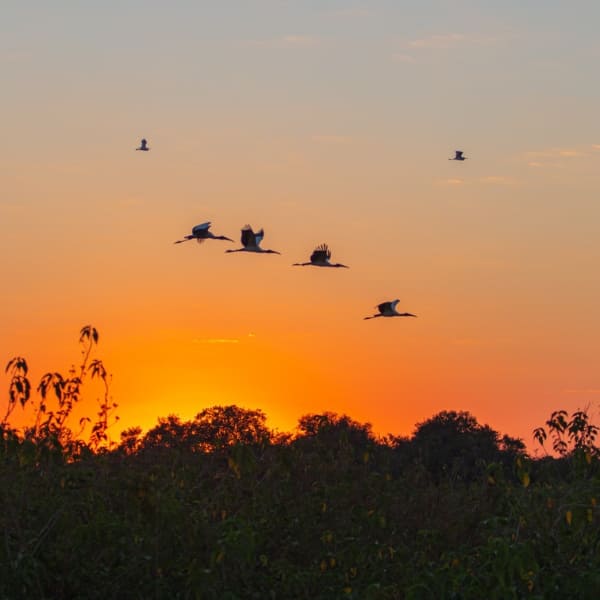
    Silhouette of a large tree and flying birds against a vibrant orange and yellow sky during a warm Pantanal sunset.
    .

    The biome is heavily influenced by climate. Higher or lower rainfall volumes cause drastic changes in the landscapes, altering the activity schedules for tourists. That’s why it’s so important to understand the Pantanal weather and seasons before booking your trip—so you know what to expect:

    • Dry season (July to October): Animals congregate around shrinking water holes, and vegetation is sparse, making spotting jaguars, anteaters, and caimans much easier.
    • Wet season (December to March): The landscape floods and becomes a lush green mirror. Beautiful for birdwatching and scenery, but many mammals disperse, mosquitoes are particularly abundant and agitated, and road access can be cut off.

    👉 Read more: When is the best time to visit the Pantanal?

    2) Choose the right region: North vs. South

    The Pantanal is so massive it’s divided into two sides: North and South. By understanding what each region has to offer, you can plan your trip more effectively.

    • North (via Cuiabá): Best for jaguars—the Transpantaneira Highway leads to Porto Jofre, where boat safaris offer the highest density of jaguar sightings in the world.
    • 👉 See our Pantanal jaguar tours

    • South (via Campo Grande): Best for variety and culture—it offers a mix of wildlife (anteaters, macaws, ocelots) and stronger “Pantaneiro” traditions. It’s also easier to combine with a trip to Bonito (famous for river snorkeling).
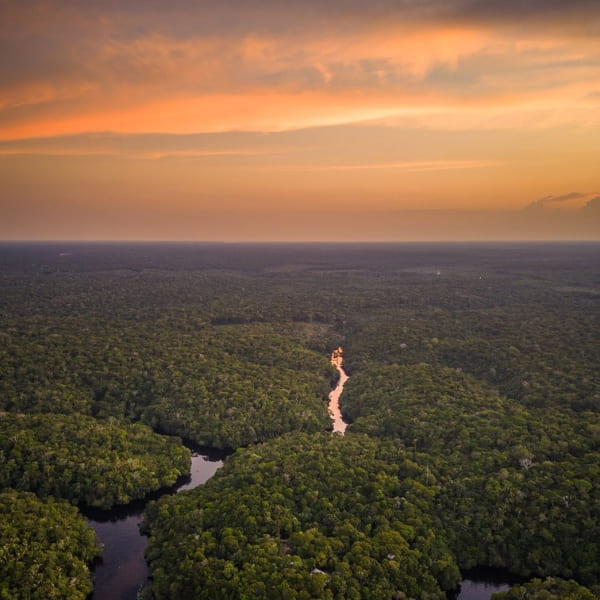
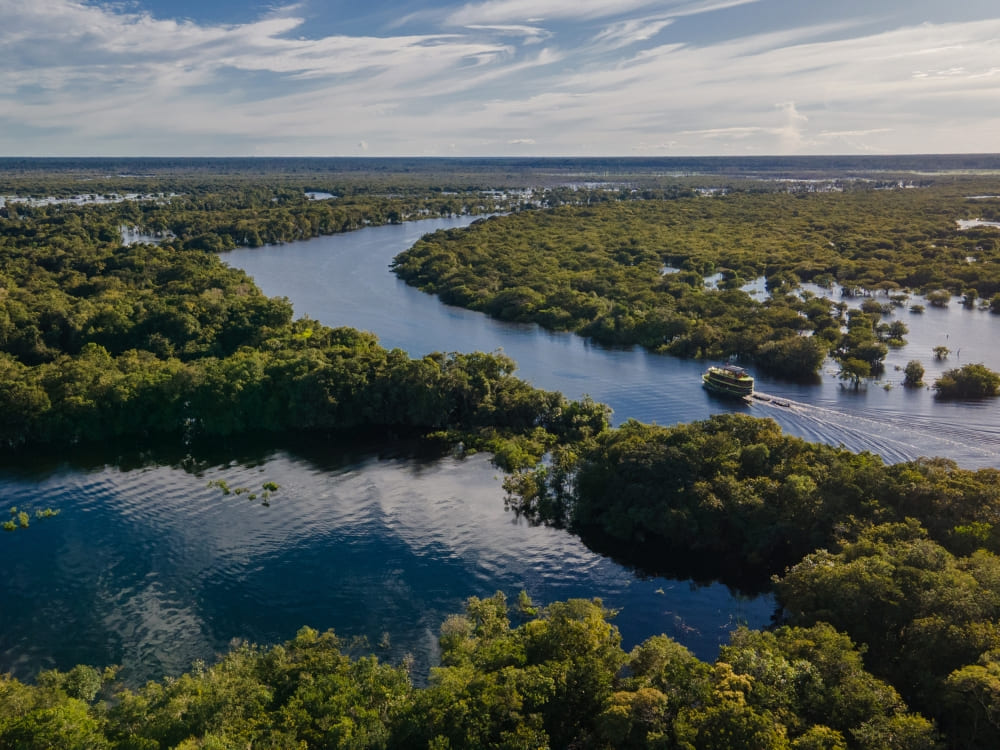
    Aerial view of a winding river flowing through the vast wetlands, reflecting the pink and orange evening sky.
    .

    👉 Read more:

    3) Pack smart to make the most of your safari

    Surely one of the most valuable Pantanal travel tips, packing smart is fundamental in any trip. If you bring too much, your bags will be heavy and difficult to move around. If you bring too little, your experience might be tarnished by some very uncomfortable situations. Always aim for balance and mind your own preferences and needs.

    Person wearing lightweight clothes and a backpack walks on a wooden boardwalk surrounded by tall vegetation.
    Photo: Layla Motta

    Not sure what to pack for the Pantanal? Here’s a list with a few suggestions on what to pack for your Pantanal tour:

    • Lightweight, breathable clothes: t-shirts, long-sleeved shirts, pants, shorts, windbreakers, khaki or natural-colored clothing for safaris, hats or caps, and swimwear.
    • Comfortable shoes: sneakers, flip-flops, sandals, hiking boots.
    • Equipment: flashlight, binoculars, personal reusable water bottle, cameras, and extra lenses (especially for photo safaris).
    • Essentials: documents, medication, sunscreen (SPF 30 or higher), insect repellent, sunglasses, power bank, chargers (phones, cameras, laptops, tablets).

    Most lodges accept credit/debit cards and other forms of digital payment, but it’s always a good idea to have some cash (Brazilian real) for food, drinks, souvenirs, and tipping your guide or hotel staff. 

    Universal power adapters are also very important, as power outlets vary according to location. Before plugging in your devices, please notice that the voltage in the Pantanal area is 127V.

    4) Health: vaccines, hydration, and insect repellent

    The Brazilian government doesn’t require foreign tourists to be vaccinated, but the Ministry of Health advises that visitors arrive in the country with a complete vaccination schedule for diphtheria, tetanus, polio, and measles.

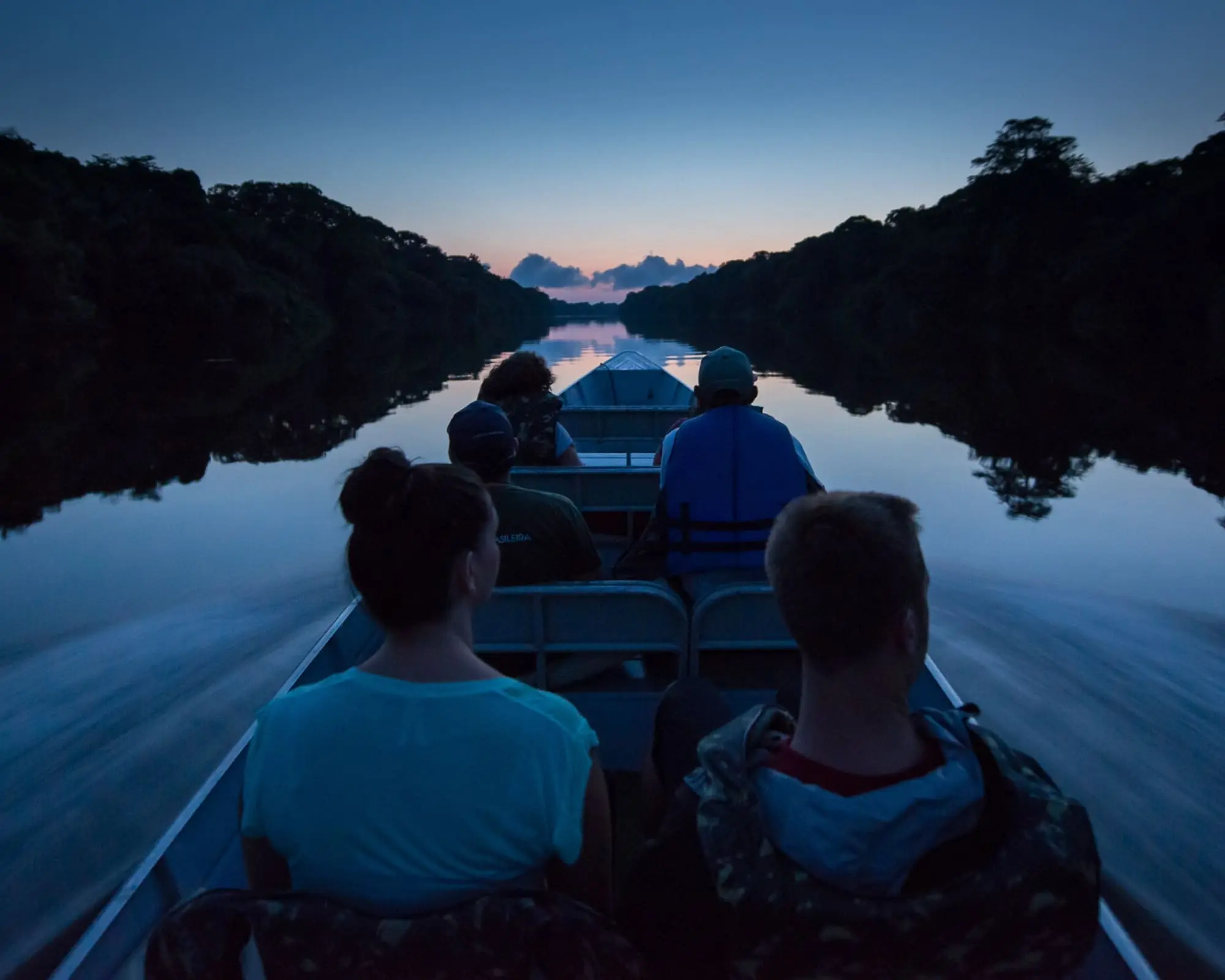
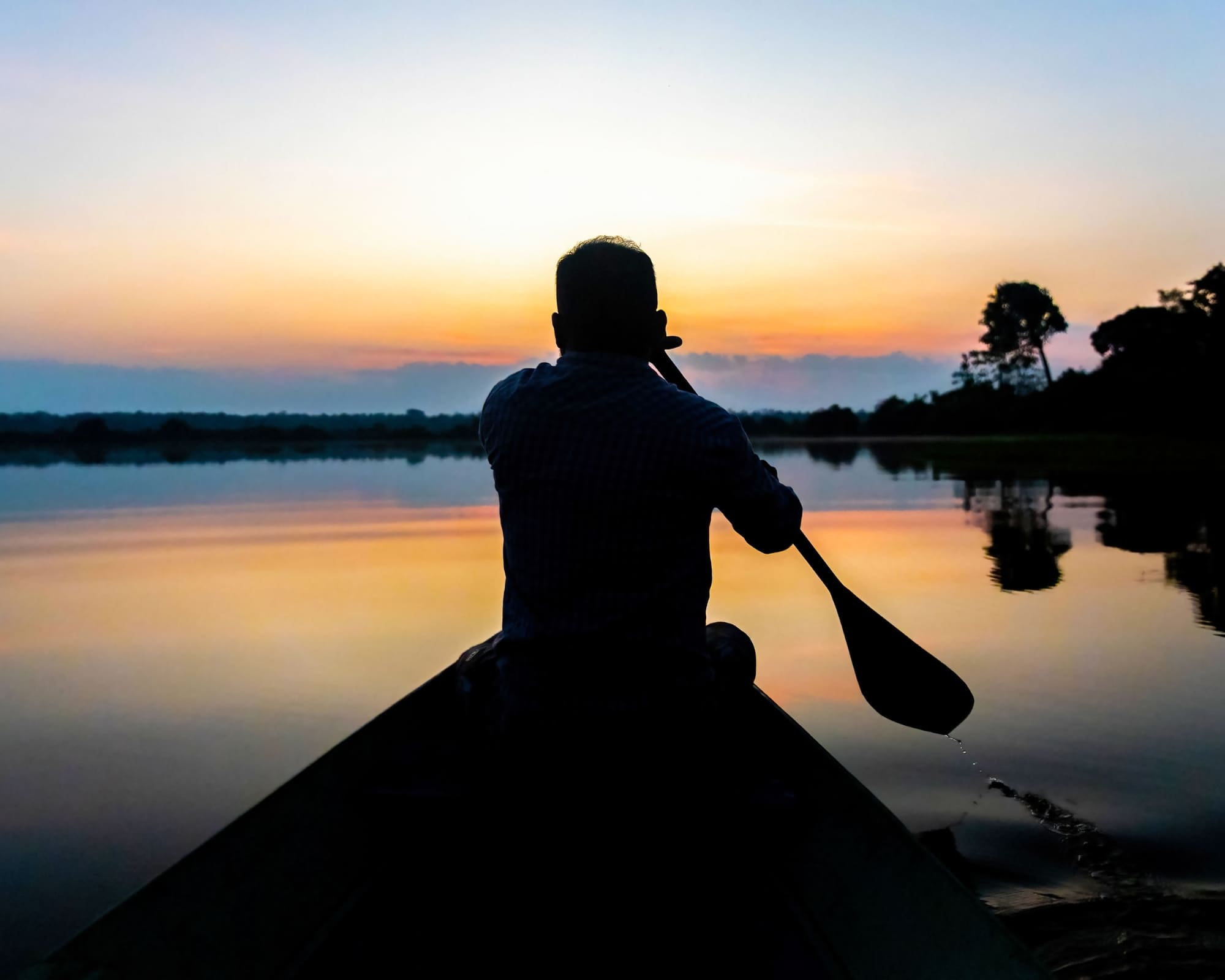
    Silhouette of a person paddling a canoe on the calm waters of a river during a peaceful sunset.
    Photo: Felipe Castellari

    For extra safety, getting shots for yellow fever and hepatitis A and B is also recommended. See more information in CDC Travelers’ Health (USA) and Vaccine for Travelers (Brazil).

    After arriving in the Pantanal, don’t forget about hydration. The weather is warm, and you will be doing some physical exertion on safaris and other outdoor activities. Always keep a water bottle nearby!

    Bring high-strength insect repellent (DEET or Icaridin) and apply it frequently to avoid itching, allergic reactions, and mosquitoes infected with diseases, such as dengue.

    5) Choose your adventure

    The abundance of the Pantanal is not limited to its natural wealth but also extends to the variety of activities it offers. Don’t know what to do in the Pantanal? Check it out:

    • Jaguar sightings
    • Wildlife watching
    • Night spotlighting
    • Pantanal safaris (boat or land)
    • Ecological walks
    • Horseback riding
    • Boat trips

    Each ecolodge offers these and other experiences that may vary depending on the region, travel package category, and season.

    A jaguar walks carefully through the shallow waters of a river while tourists observe from the riverbank during a Pantanal tour.
    .

    Guests also have the option to customize their own itineraries, though it’s necessary to check the conditions with the accommodations’ staff first.

    6) Pack your gear for Pantanal photo tours

    Photo tours are some of the most beloved experiences in the Pantanal. Drawn by the beauty of the biome and the impressively rich fauna and flora, professional and amateur photographers from different countries travel all the way to Mato Grosso and Mato Grosso do Sul.

    Many guides have extensive experience with wildlife photography. During safaris, not only do they point out the best places to find animals, but they also share techniques to capture the most stunning shots.

    Two blurred photographers in the foreground capture a giant anteater walking through low vegetation during a Pantanal photo tour.
    Photo: Felipe Castellari

    Even if you aren’t a pro photographer, a smartphone camera will likely disappoint you. Recommended equipment:

    • At least two cameras
    • Telephoto lens (35 to 200 mm and 500 to 600 mm range)
    • Polarizer filters
    • Tripod and/or monopod
    • Binoculars (invest in a high-quality pair, like the 8×42 model)

    👉 Explore the adventure: Pantanal Jaguar Photography Tour

    7) Be aware of the best moments for wildlife watching

    Following nature’s schedule is some of the most helpful Pantanal travel tips if you want to witness its wonders.

    Pantanal animals tend to leave their hiding places in the early morning or late afternoon to search for food, so be prepared to wake up bright and early or explore the biome when night falls!

    A giant anteater walks through green grass carrying its baby on its back, showcasing the diverse Pantanal fauna.
    Photo: Keith Ladzinski

    Remember to keep your distance and stay silent in the presence of wild animals, especially predators like jaguars, maned wolves, and caimans. This ensures longer encounters for a deeper appreciation of the Pantanal fauna and, of course, your safety.

    👉 Read more: Where is the best place to see jaguars in the Pantanal?

    8) Watch the road if you’re driving to the Pantanal

    Some travelers decide to take the road to the Pantanal to further enhance the experience. On the North side, you should travel along the Transpantaneira, while the Estrada Parque leads to the South. Both are dirt roads with wooden bridges that tend to get slippery, muddy, and flooded during the rainy season.

    Aerial view of a 4x4 vehicle driving along a long dirt road surrounded by dense trees and vegetation.
    Photo: Felipe Castellari

    The uneven ground requires 4×4 vehicles. Make sure to fill up your tank in base cities such as Cuiabá, Campo Grande, Poconé, and Miranda. The deeper you get into the wetlands, the rarer gas stations become.

    Finally, avoid driving at night. In addition to low visibility, many animals often cross the roads when the sun sets, which increases the risk of accidents.

    The overall recommendation is that only people who are familiar with the area should get behind the wheel. Booking a transfer service with local operators is the best alternative for your safety and convenience!

    9) Stay in accommodations that respect the environment

    Staying in accommodations that respect and care for the Pantanal is crucial for ecotourism. Fortunately, there are incredible ecolodges that implement responsible practices, like recycling, solar energy, rainwater harvesting, and supporting conservation projects.

    Aerial view of a person standing at the edge of a wooden deck over the water, surrounded by the green flooded areas of the biome.
    Photo: Matias Ternes

    These ecolodges also look out for the community by employing locals, empowering small businesses, and allowing the Pantaneiro culture to flourish.

    👉 Read more: Where to stay in the Pantanal?

    10) Listen to your tour guide

    Your tour guide is your guardian. These highly qualified professionals know the Pantanal like the back of their hands, including the best spots to watch animals, how to capture the perfect shot, and the overall behavior of the biome.

    Two tourists wearing backpacks on an ecological walk point up to observe the tree canopy in a sunlit forest.
    Photo: Felipe Castellari

    Following your guide’s instructions is important for your enjoyment, but also for everyone’s safety—yours, the animals’, and the environment’s.

    Booking with PlanetaEXO is the ultimate Pantanal travel tip

    PlanetaEXO is an ecotourism platform specialized in Pantanal tours that works with the best local operators. Our talented team is here to help with everything you need, from bookings to choosing tailor-made itineraries.

    Positive impact and your dream vacation in one single adventure. Contact us now!
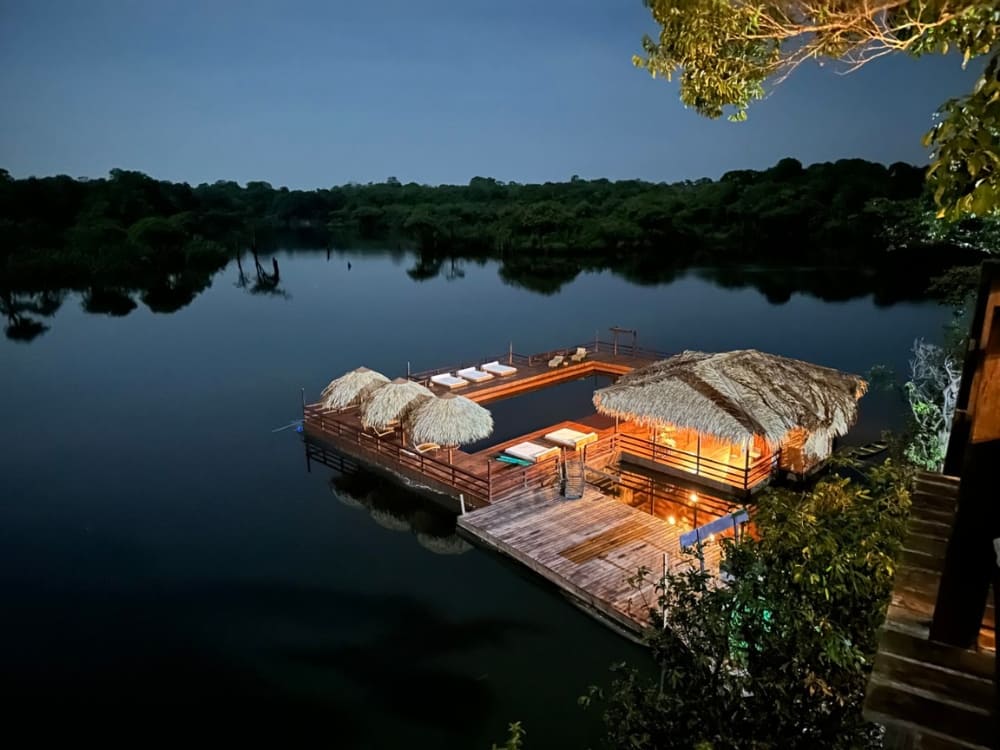
  • Ecotourism in the Amazon Rainforest: 7 Tours to Connect with Nature

    Ecotourism in the Amazon Rainforest: 7 Tours to Connect with Nature

    From jungle lodges to river cruises, see how ecotourism in Brazil thrives in these 7 incredible Amazon tours!

    Highlighted by The Wall Street Journal in 2024 as a nature destination worth visiting, ecotourism in the Amazon Rainforest is crucial for economic growth, for the financial health of local communities, and for environmental protection.

    Every year, tourists from all over the world travel to the Amazon and explore the wonders of one of the most fascinating places on Earth. By relying on the expertise of professionals who truly love and respect nature, it’s possible to experience a fantastic trip while supporting the environment

    As a platform that specializes in Amazon Rainforest tours in Brazil and works with the best local operators, PlanetaEXO has curated a list of 7 experiences you just can’t miss. Check it out below!
    1) Amazon Jungle Tour from Manaus

    Starting off strong with an affordable, yet amazing experience, this tour allows for a deep dive into the Amazon’s untouched beauty. The adventure starts on the way to the lodge — departing from Manaus, the Meeting of Waters and visits to local markets kick off the trip.

    The itinerary is packed with authentic activities: hiking, canoeing, piranha fishing, birdwatching, visiting local communities, and sunrise and sunset contemplation. 

    After a busy day, get some rest at the lodge in charming, cozy bungalows equipped with comfortable beds, private bathrooms and air-conditioning. In the common areas, eat your meals at the restaurant, get a drink at the bar or have fun with friends and family in the gaming room or the TV lounge. 

    Available in 3-day, 4-day, and 5-day tours. Learn more about this adventure.

    A traveler sits in a wooden canoe navigating the flooded forest during an Amazon rainforest tour, looking up at the lush green canopy while wearing a blue shirt that reads "live an adventure."
    Photo: Marcelo Bonifácio

    👉 Read more: How to get to the Amazon Rainforest in Brazil?

    2) Amazon cruise in Brazil

    Did you know you can go on cruises in the Amazon Rainforest? Beautiful vessels peacefully glide across the dark waters of the Negro River, granting a totally different Amazon tour experience.

    Besides enjoying a delightful stay, guests have the time of their lives with expeditions to Anavilhanas and Jaú National Park, exploring the Madadá Caves, hiking in the forest, relaxing on river beaches, wildlife watching and visiting indigenous groups.

    The 3-floor vessel can comfortably accommodate up to 16 guests in private ensuite cabins with air-conditioning and a lovely, rustic decor. Leisure areas include a solarium, a dining room, a living room and a bar.

    Available in 4-day, 5-day, and 7-day tours. Learn more about this adventure.

    An aerial view of a winding river cutting through lush green vegetation, highlighting the beauty of Amazon rainforest ecotourism.
    .

    👉 Read more: Best Amazon River Cruises in Brazil

    3) Exclusive tour in Avanilhanas National Park

    Mirante do Gavião is one of the highest-rated Amazon ecolodges, acclaimed for its gorgeous architecture and great location — facing the Negro River and Anavilhanas National Park.

    Activities like hiking, kayaking, stand-up paddling, night spotting, cave exploration, visiting riverside communities and boat rides are all part of the itinerary. Perfect for outdoorsy guests!
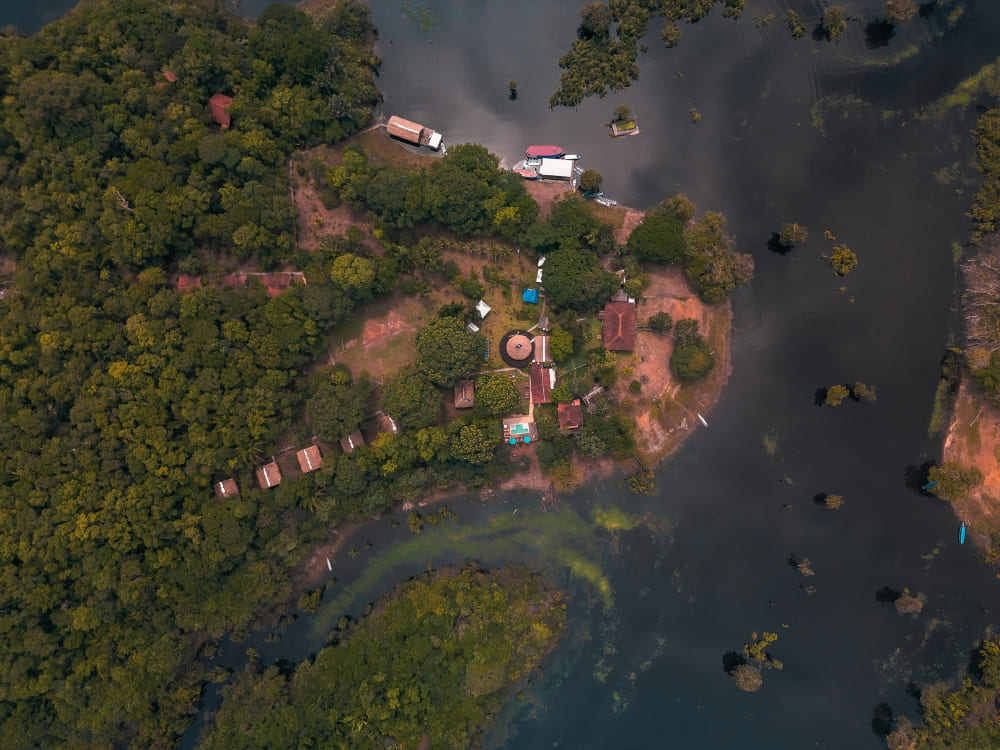
    This tour also proves that ecotourism in the Amazon can coexist with comfort. The lodge offers three categories of high-end accommodations, as well as a gaming room, a swimming pool, a fine dining restaurant and a barbecue area. 

    Available in 4-day and 5-day tours. Learn more about this adventure.

    The illuminated wooden architecture of Mirante do Gavião at night, one of the best Amazon lodges in Brazil located near Anavilhanas National Park.
    .

    4) Floating ecolodge in Mamirauá Reserve

    Departing from Tefé, you’ll enjoy an unforgettable experience in the Mamirauá Sustainable Development Reserve, where a floating ecolodge lies on the dark waters of the river, surrounded by lush green vegetation and infinite blue sky.

    This 5-day Amazon tour is packed with adventure, including night and photo safaris, piranha fishing, boat rides, canoeing, visiting local villages, and much more.

    Uakari Lodge is the only accommodation in Latin America featured in The New York Times’ list of floating hotels worth visiting worldwide. The publication highlights its infrastructure, immersive nature experiences, and the Community-Based Tourism (CBT) model, which benefits both the environment and local residents.

    The entire infrastructure of the lodge is built on stilts, which means guests relish in breathtaking views from the bungalows or the common areas (deck, restaurant, bar, video room and a library). Learn more about this adventure.

    The floating bungalows of Uakari Lodge sitting on the dark river waters, a unique destination for ecotourism in Brazil.
    .

    👉 Read more: When is the best time to visit the Amazon Rainforest in Brazil

    5) Luxury stay at Anavilhanas Jungle Lodge

    Another Amazon Rainforest tour in Anavilhanas National Park, Anavilhanas Jungle Lodge is located on the banks of the Negro River, granting extraordinary experiences in one of the most beautiful natural scenarios in the world.

    Custom itineraries offer great activities for everyone: guided hikes, canoing, night tours for wildlife watching, fishing, archery lessons, visiting riverside villages, boat rides, etc.

    Inspired by caboclo design, the twenty-four accommodations are equipped with air-conditioning, mini-fridges, TVs, Wi-Fi, and private bathrooms. Enjoy the lodge’s premium services at the restaurant, floating bar, swimming pools, cozy lounge, massage room and gym. Before your trip ends, make sure to get a souvenir at the gift shop!  Learn more about this adventure.
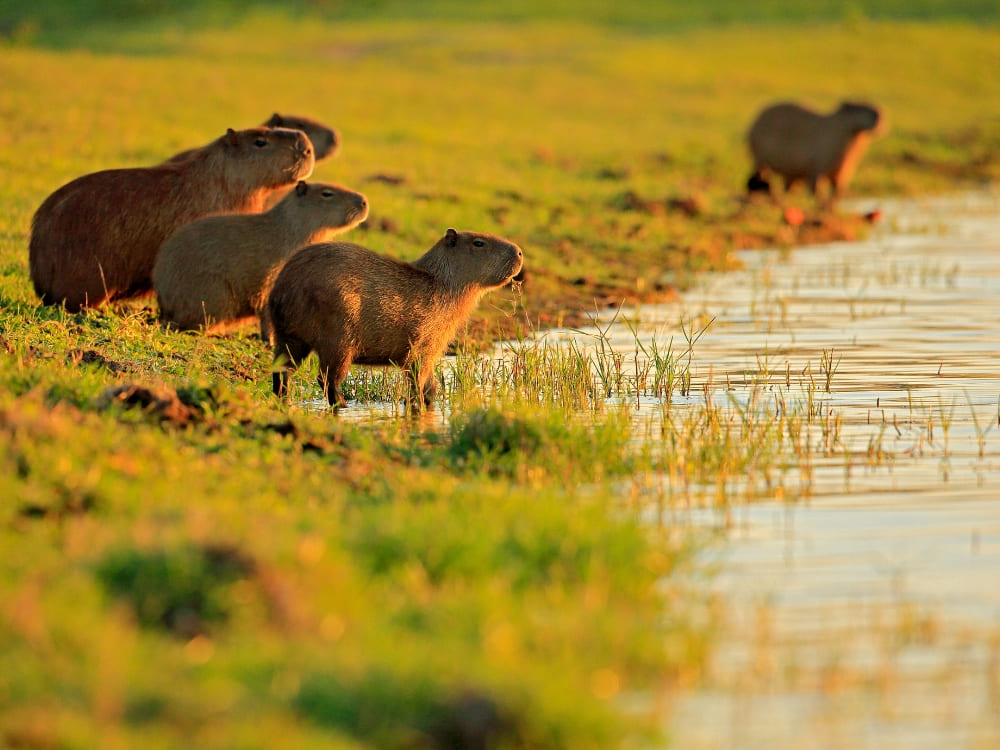
    A cozy, rustic interior of a wooden bungalow at an Amazon ecolodge featuring a comfortable living area and a view of the forest.
    Photo: Felipe Castellari

    6) Amazon tour in Mato Grosso

    This lodge stands out when it comes to ecotourism in the Amazon Rainforest due to its location. Unlike the other tours on this list, Cristalino is not located in the state of Amazonas, but in the northern region of Mato Grosso, by the south of the jungle, in a private natural reserve.

    The geography in itself is a tresure — bordering the Pantanal, it’s one of the best places in the Amazon for wildlife watching. Two biomes in one single experience!

    50-meter observation towers are perfect for birdwatching and admiring the view, but activities also include wildlife spotting, canoeing, hiking and boat rides in the Cristalino and Teles Pires rivers, etc.

    Bungalows and chalets equipped with comfy beds, sleeper sofas, private bathrooms, ceiling fans and Wi-Fi are the perfect accommodations to relax, but guests also love the entertainment areas — floating deck, restaurant, bar, reading room, and conference room. Learn more about this adventure.

    A view of the misty rainforest canopy at sunrise from a 50-meter observation tower, a highlight of Amazon rainforest tours in Mato Grosso.
    Photo: Andre Dib

    👉 Read more: Best Amazon Lodges in Brazil

    7) Luxury Amazon Cruise

    Looking for something more exclusive? Ecotourism in the Amazon reaches a whole new level with this luxury river cruise in Anavilhanas, the second-largest river archipelago in the world with over 400 islands!

    After departing from Manaus, you’ll witness the Meeting of Waters and the beauty of Lake Janauari. Throughout five days, you’ll visit local communities, hike in the jungle, fish for piranhas, go on boat rides and night tours, relax on river beaches and join a beautiful luau.

    The architecture of the sophisticated vessel is jaw-dropping, featuring a modern design in ten ensuite cabins with air-conditioning and floor-to-ceiling windows. You can also unwind at the bar or in the living room, grab a bite at the dining hall and admire the view from the sun deck. Learn more about this adventure.

    A sophisticated multi-story vessel reflects on the dark water, offering one of the best Amazon river cruises in Brazil.
    .

    Best Amazon Rainforest tours in Brazil

    With so many incredible options, it might be difficult to choose your Amazon tour in Brazil. See the table below to compare activities and prices: 

    TOUR HIGHLIGHTS DURATION STARTING PRICE*
    Brazilian Amazon Jungle Tour from Manaus Affordable stay, birdwatching, fishing, canoe trips, forest hikes, Meeting of Waters, visiting local markets. 3 days
    4 days
    5 days
    US$ 590 


    Mirante do Gavião, Anavilhanas National Park High-end stay facing Anavilhanas National Park, kayaking, hiking, boat rides and cave exploration. 4 days
    5 days
    US$ 1896 


    Anavilhanas Jungle Lodge Luxury stay at Anavilhanas, hiking, canoeing, wildlife watching, fishing, archery lessons, visiting local communities. 6 days US$ 3180 


    Floating ecolodge in Mamirauá Reserve Accommodation in a floating ecolodge, photo safaris, night tours, fishing, boat rides, visiting riverside villages. 5 days US$ 1135 


    Cristalino Jungle Lodge Private reserve in southern Amazon (Mato Grosso), sophisticated stay, birdwatching, canoeing, hiking, boat rides. 5 days US$ 3333 


    Amazon Cruise Onboard accommodation, expeditions to Anavilhanas and Jaú, cave exploration, hiking, river beaches, wildlife watching, visiting indigenous groups. 4 days
    5 days
    7 days
    US$ 2485 


    Luxury Amazon Cruise Luxury onboard accommodation, Meeting of Waters, Lake Janauari, jungle hiking, fishing, boat rides, night tours, river beaches, luau. 5 days US$ 3740 


    *Per person, based on double occupancy in group departures. Prices may vary depending on season and availability. Exchange rate as of February 4th, 2026; subject to change.

    Ecotourism in the Amazon as a solution to deforestation

    Although deforestation in the Amazon has dropped 11% from August 2024 to July 2025 due to heavy environmental inspection, the largest tropical rainforest in the world is still at risk. Wildfires and illegal logging and mining harms the ecosystem, increasing the temperature in 3 ºC and driving a strong rainfall decline across the southern Amazon basin.

    A traveler hikes through the dense green jungle, experiencing ecotourism in the Amazon firsthand.
    .

    In addition to government efforts, ecotourism is also an efficient solution for the preservation and recovery of the forest, thanks to sustainable practices, encouraging environmental awareness and empowering local communities to make a living without harming natural resources.

    Amazon ecolodges follow sustainable guidelines, like using solar energy, recycling, harvesting rainwater and partnering with environmental projects. Through custom itineraries, jungle hotels educate guests on the importance of preserving the forest and encourage them to become allies of nature even when they go back home.

    Lucas Ribeiro, founder of PlanetaEXO, describes ecotourism in the Amazon Rainforest. “By connecting travelers with authentic experiences that benefit local communities, we’re promoting a model of tourism that supports both people and the planet”.

    Watch “Tourism That Keeps the Amazon Alive”, a mini-doc produced by PlanetaEXO that showcases the importance of ecotourism:

    👉 Read more: Ecotourism in the Amazon Rainforest: A Solution to Deforestation

    Ecotourism in the Amazon Rainforest with PlanetaEXO

    PlanetaEXO is an ecotourism platform that specializes in Amazon Rainforest tours in Brazil. By working very closely with local operators, we handpick every experience and follow strict protocols to make sure we’re positively impacting our customers, partners and, of course, the environment.

    Our team is ready to help with everything you need for a perfect vacation. Contact us now!