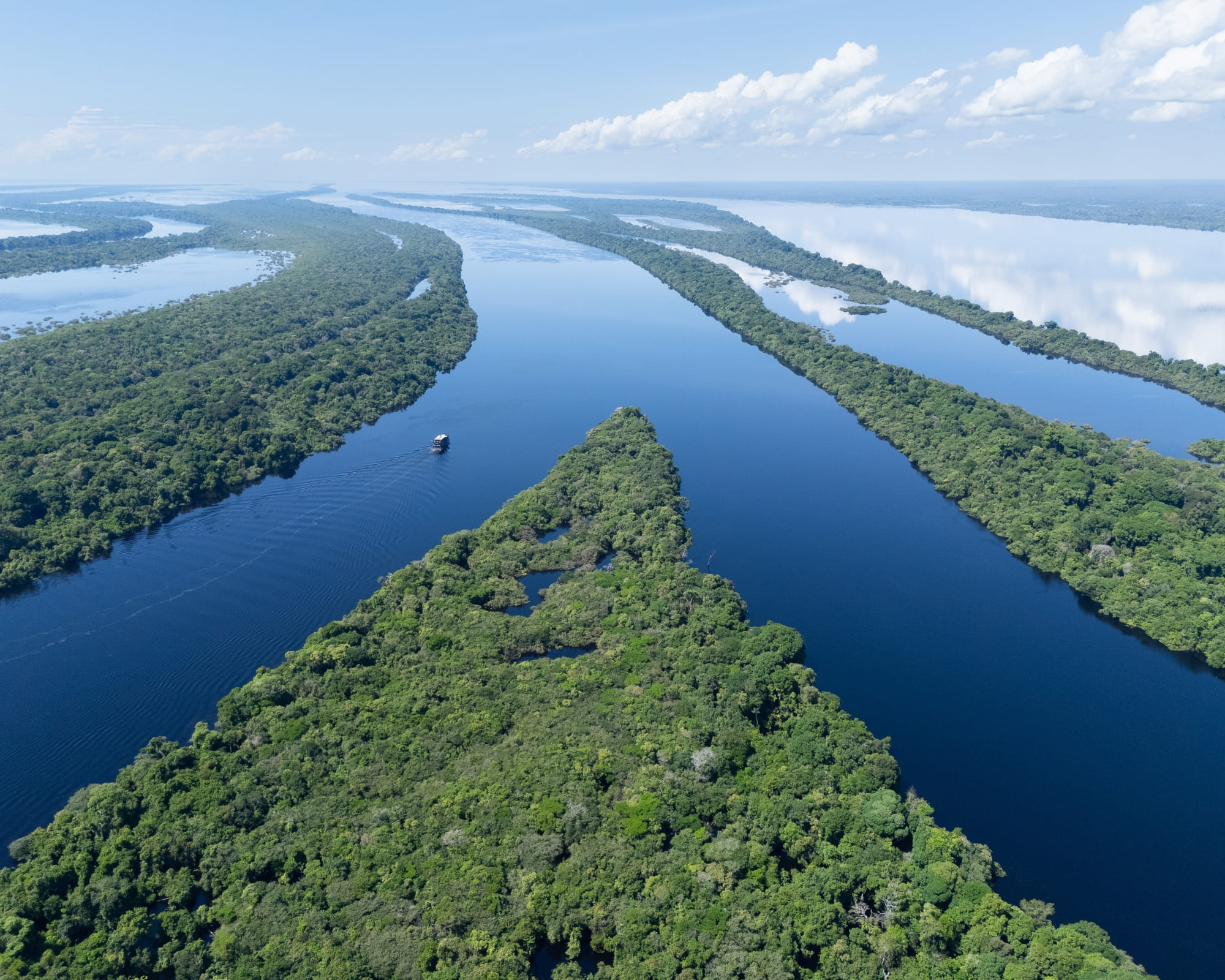
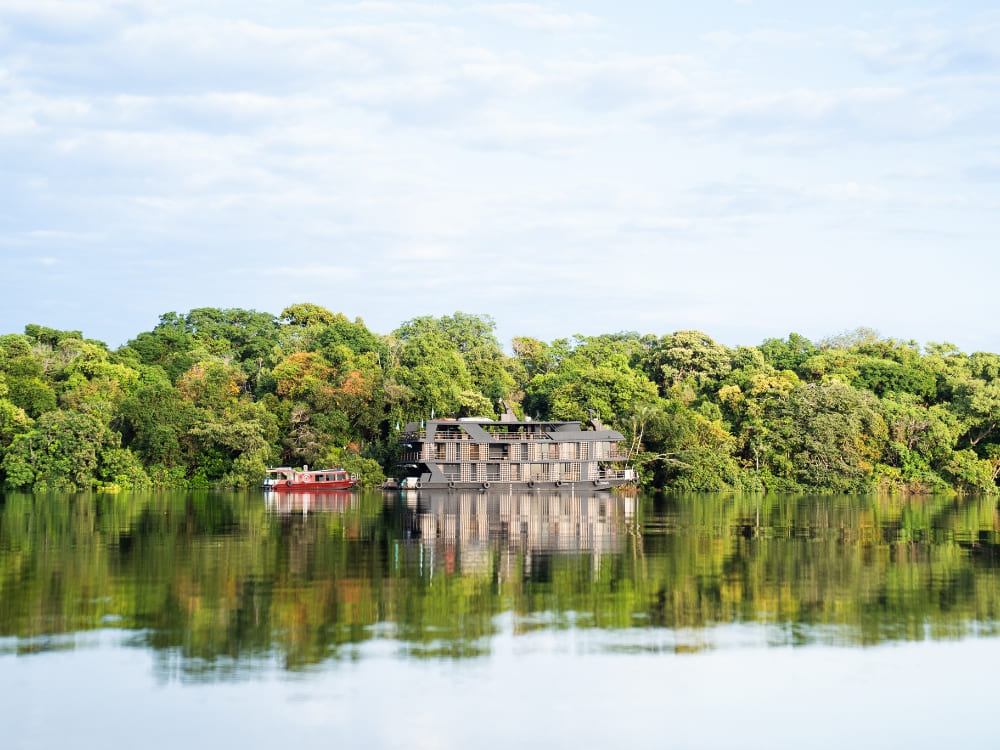
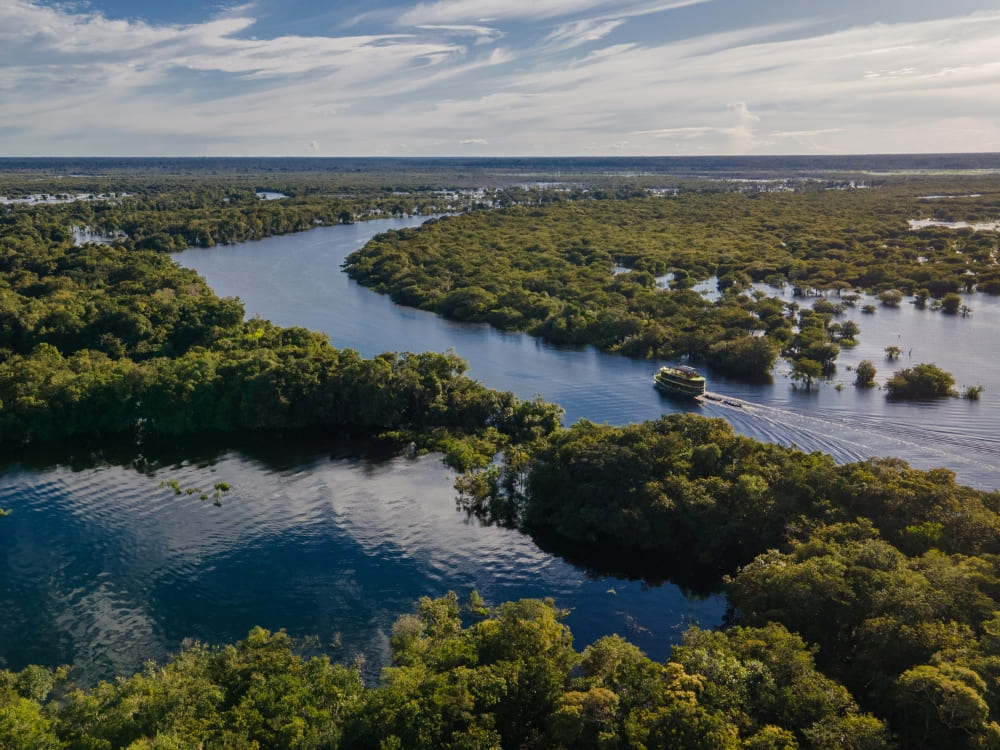
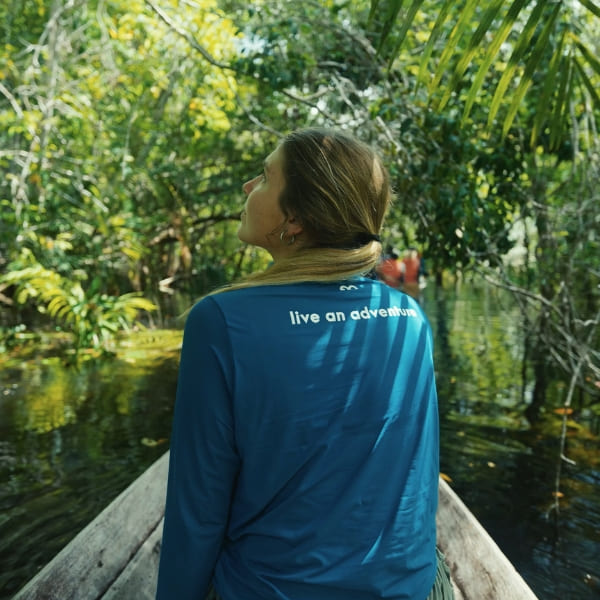
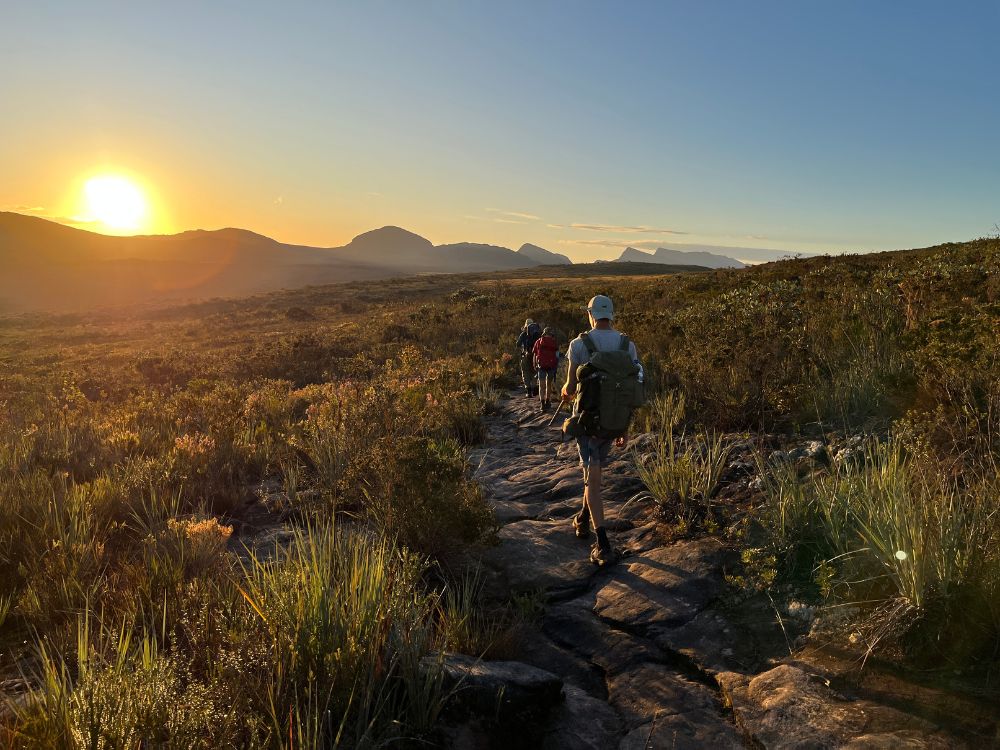
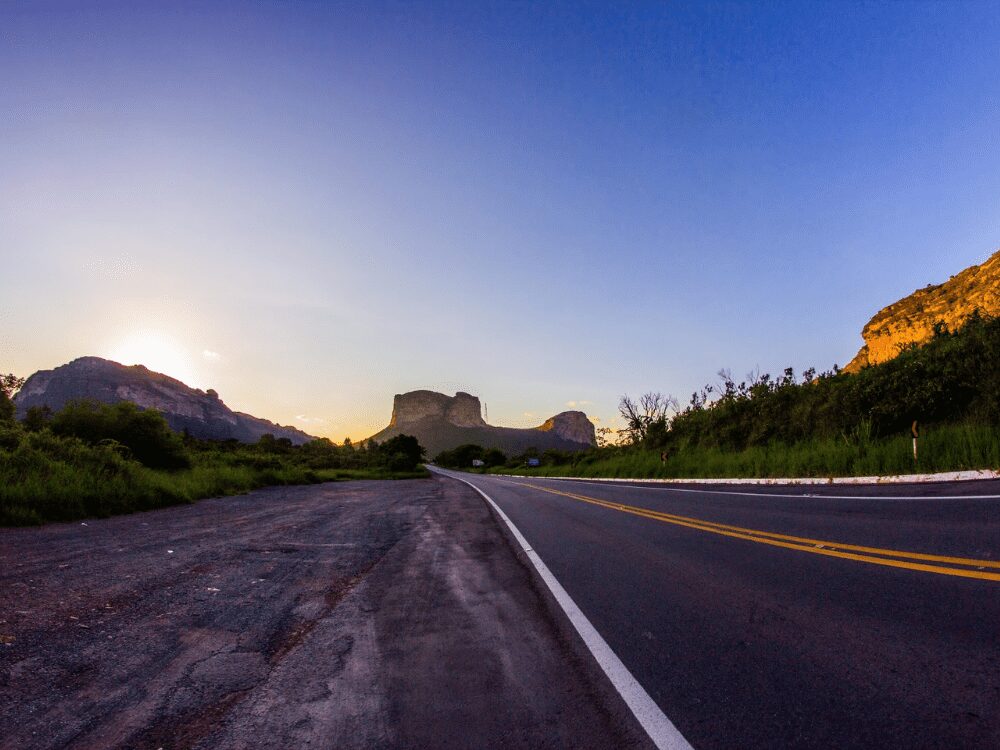
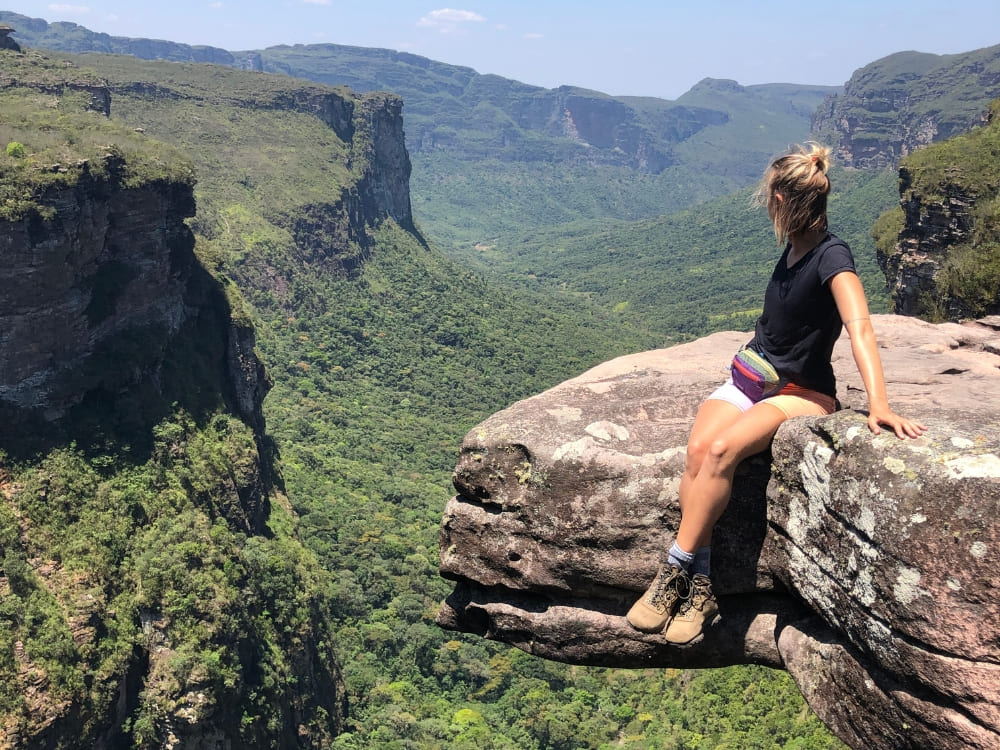
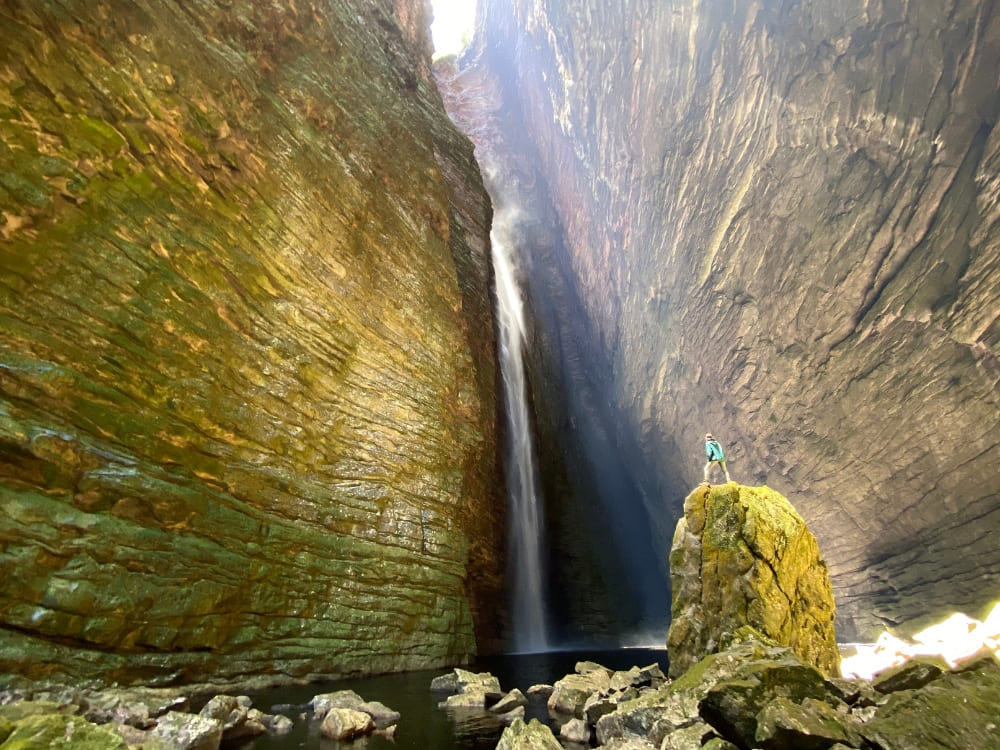
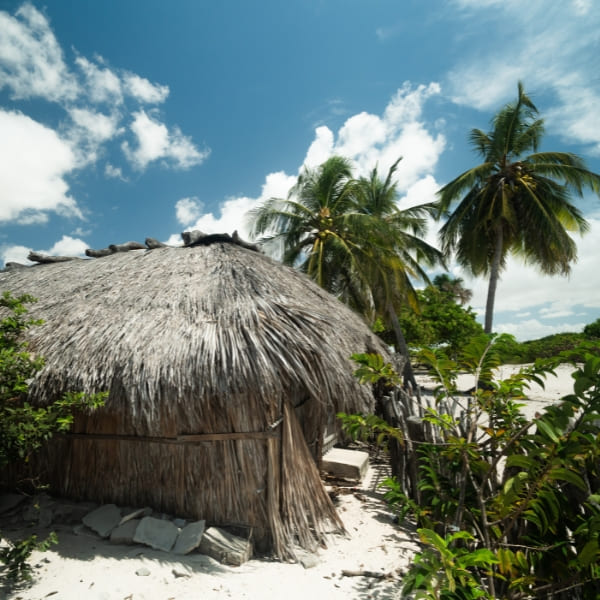
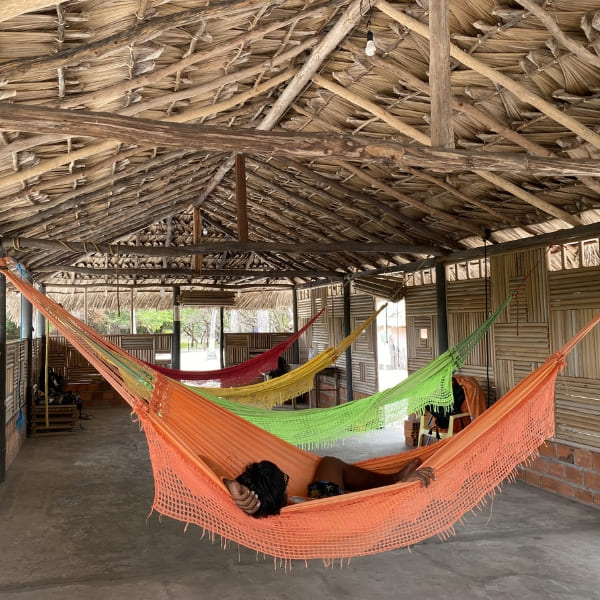
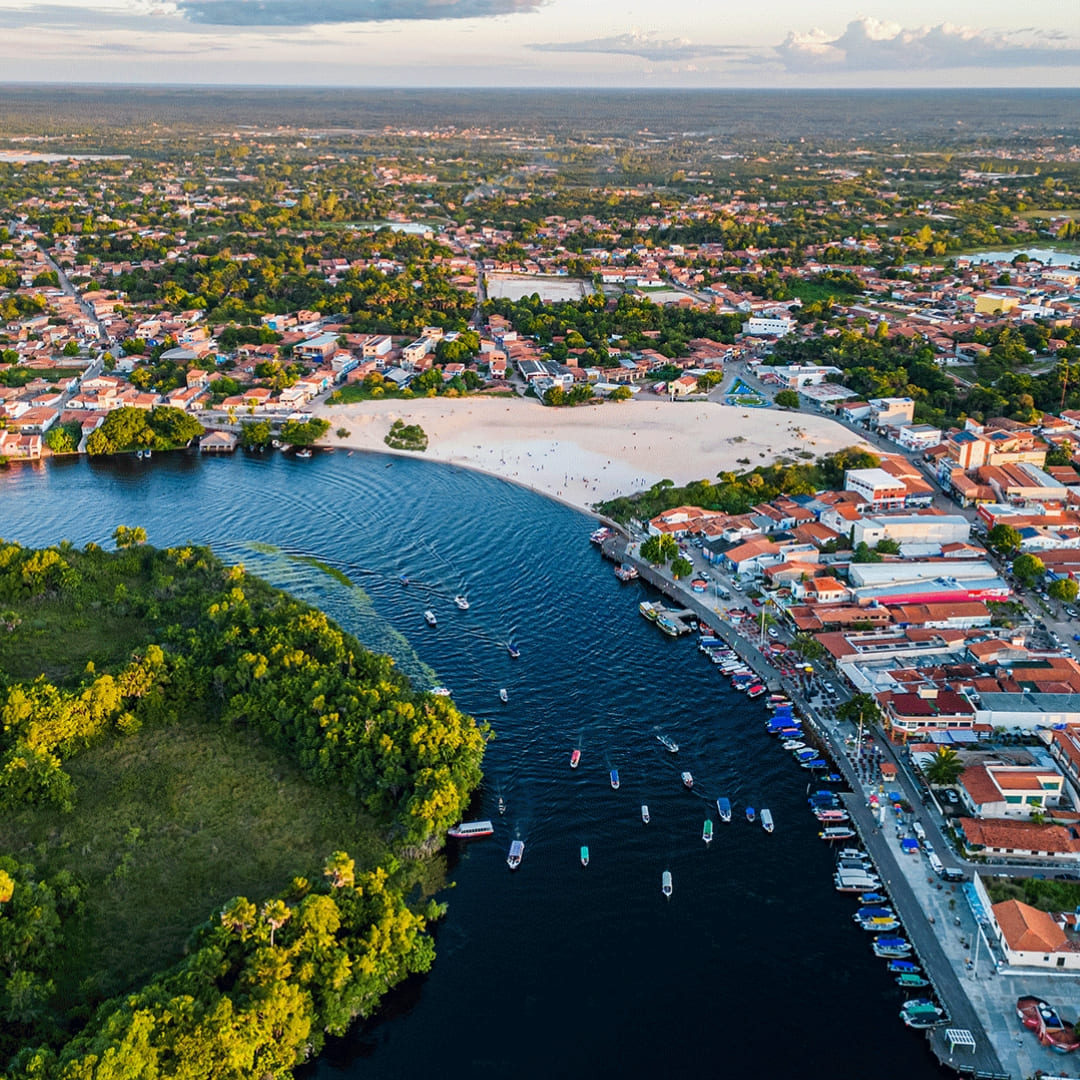
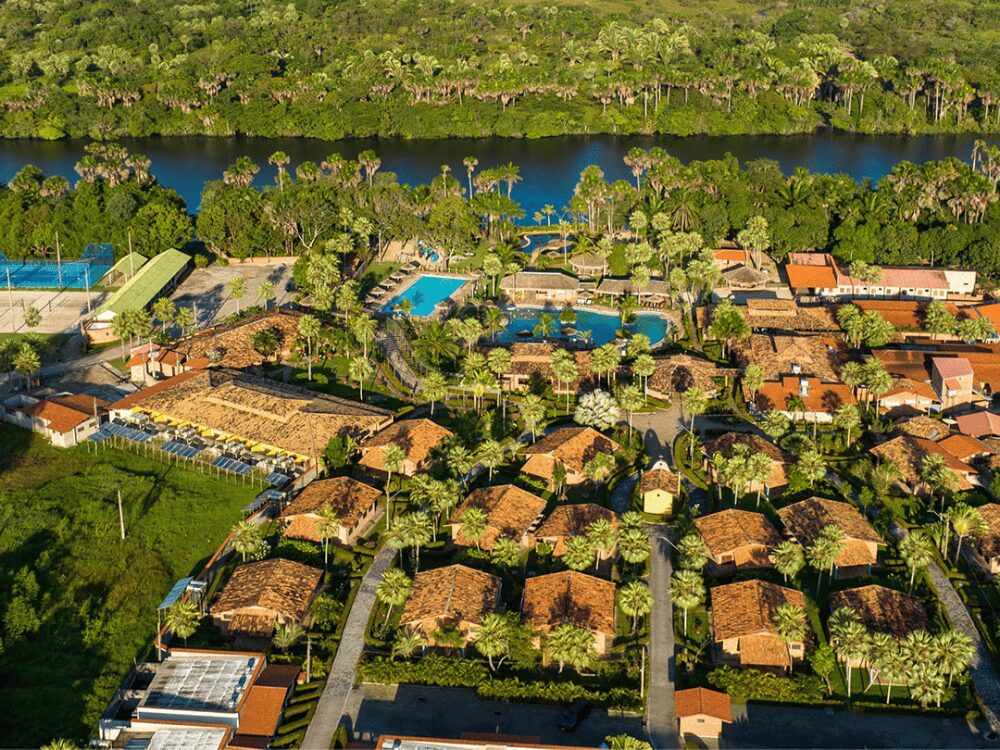
The activities of river cruises in the Amazon Rainforest differ depending on the season, making each trip totally remarkable
As ecotourism tours in the Amazon become even more comfortable and focused on exploring nature responsibly, river cruises are great for travelers looking for comfort, rich itineraries, eco-friendly practices, and one-of-a-kind experiences.
Considering the influence of the seasons on nature destinations, it’s common to wonder when is the best time of the year for Amazon river cruises in Brazil. Knowing this, in fact, is crucial for efficient vacation planning.
That’s why PlanetaEXO, an ecotourism platform specialized in Amazon Rainforest tours in Brazil, has created a guide to help you understand the proper time for your river cruise. See more below!
Best time of the year to go on Amazon cruises in Brazil
Amazon jungle cruises can be enjoyed all year long! Even during periods when rainfall is significantly lower, the forest is humid enough that the rivers are always full for boats to pass through. The experience only becomes unfeasible during periods of extreme drought, but situations like that are atypical.
During different seasons (wet and dry), cruises operate normally, but activities change to accommodate weather variations and flooding in some areas of the forest.
In other words, you’ll discover the wonders of the Amazon regardless of the season, though your itinerary will vary according to the time of year.
Amazon river cruises in Brazil: rainy season (December to May)
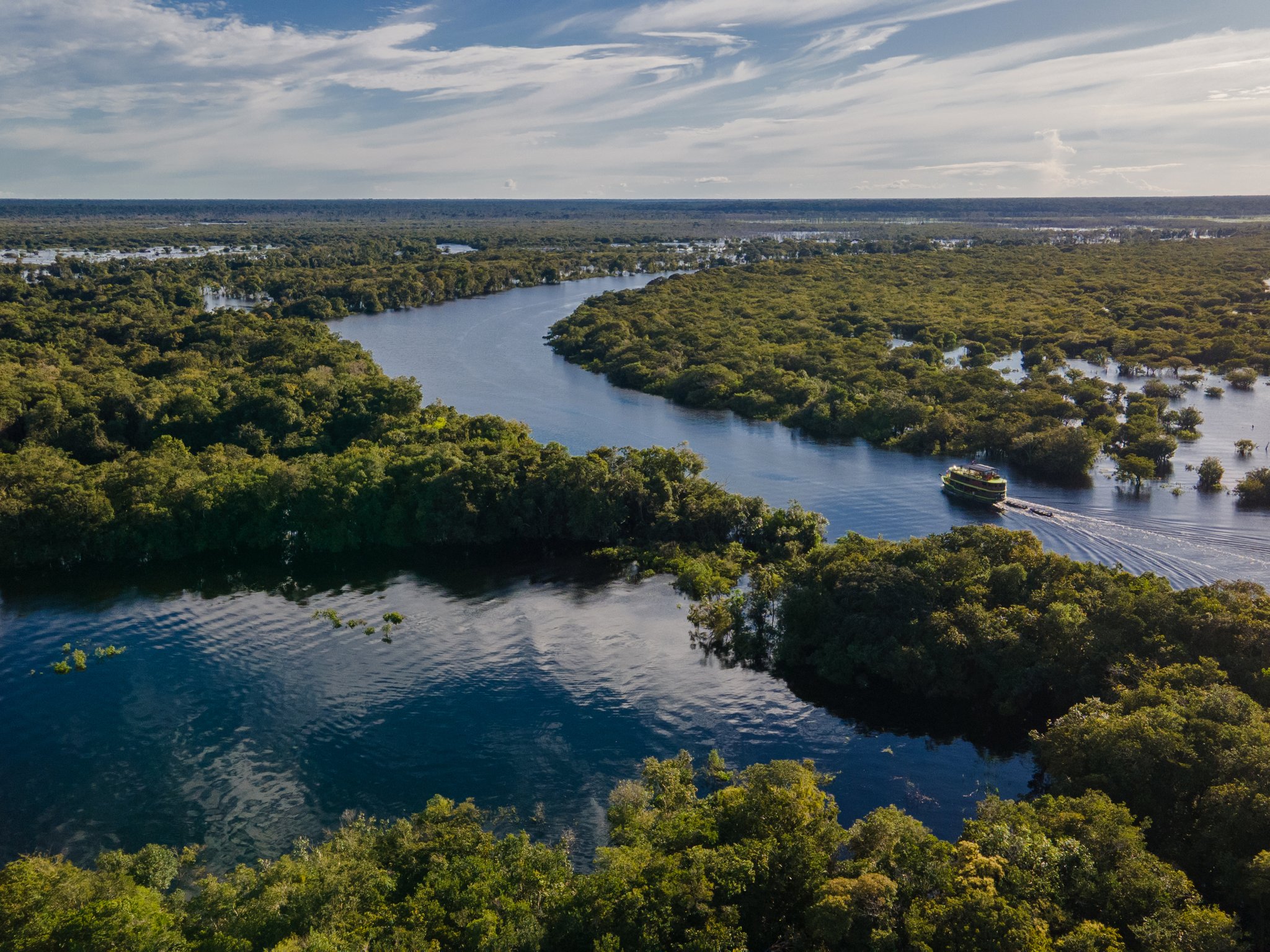
The rain is frequent and heavy in the wet season. As the rivers get higher, the Amazon Basin starts to flood and some parts of the forest become submerged — that’s what locals call igapós.
For that reason, passengers leave the vessels and enjoy specific activities, such as:
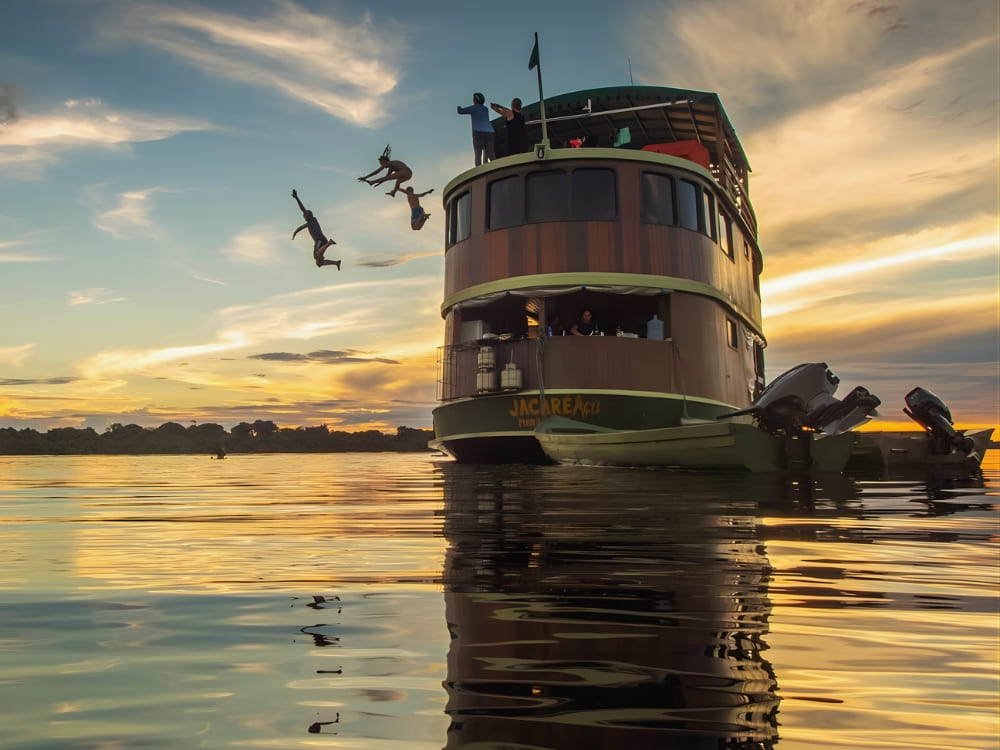
Canoeing and swimming through treetops in igapós
Boat trips and other water-related activities in Anavilhanas National Park, Alter do Chão and the Mamirauá Reserve
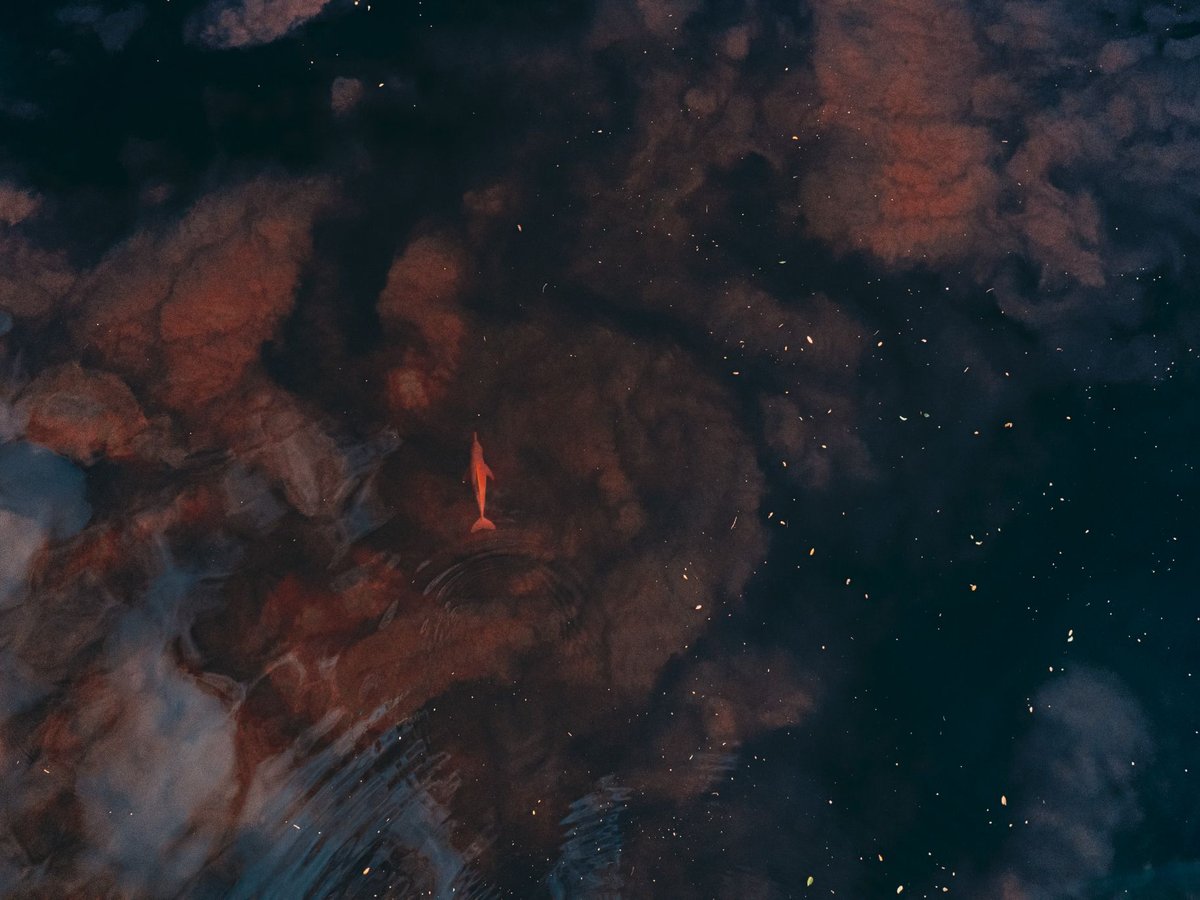
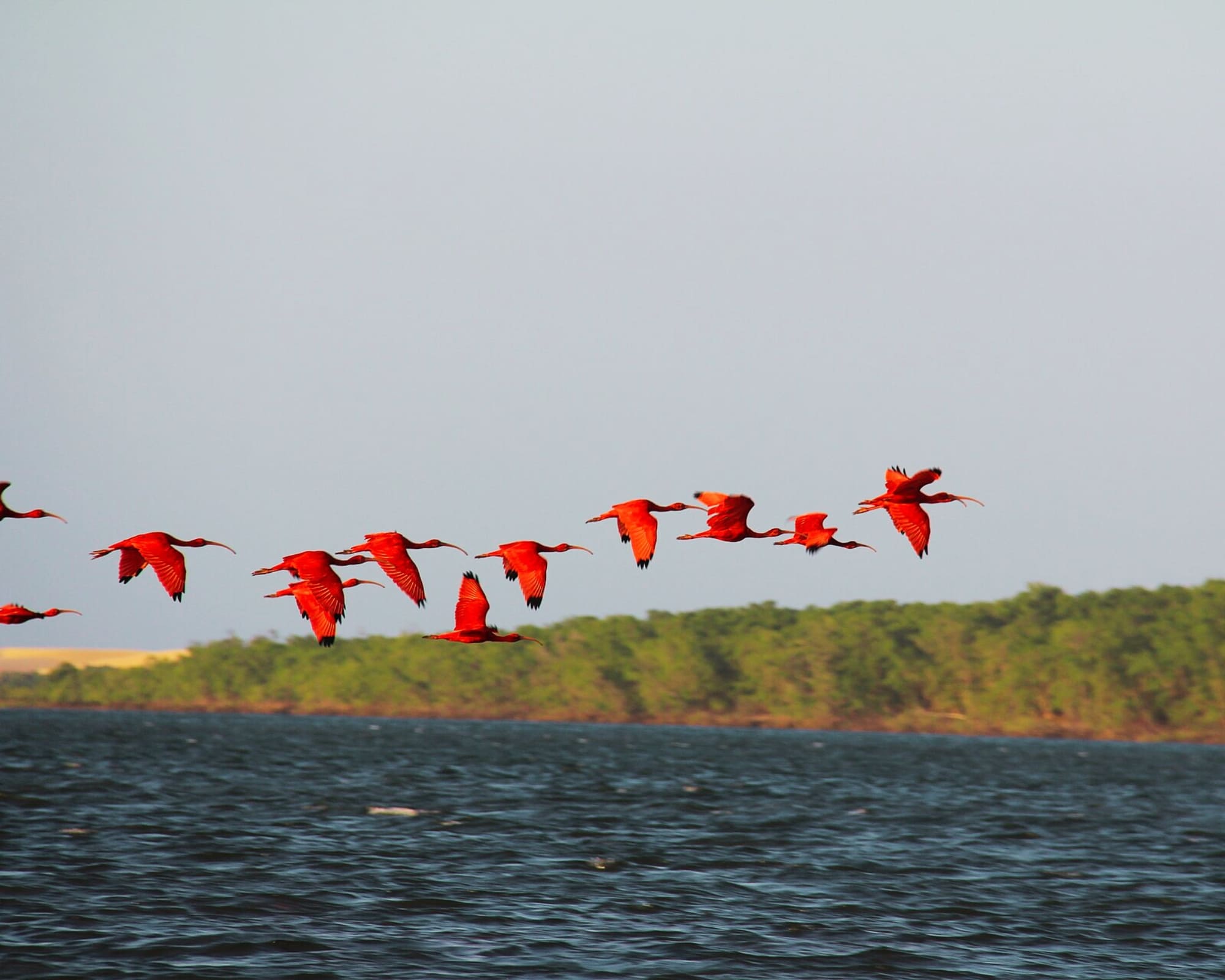
Wildlife watching — mostly Amazon pink dolphins, birds and mammals that usually climb trees to avoid the water
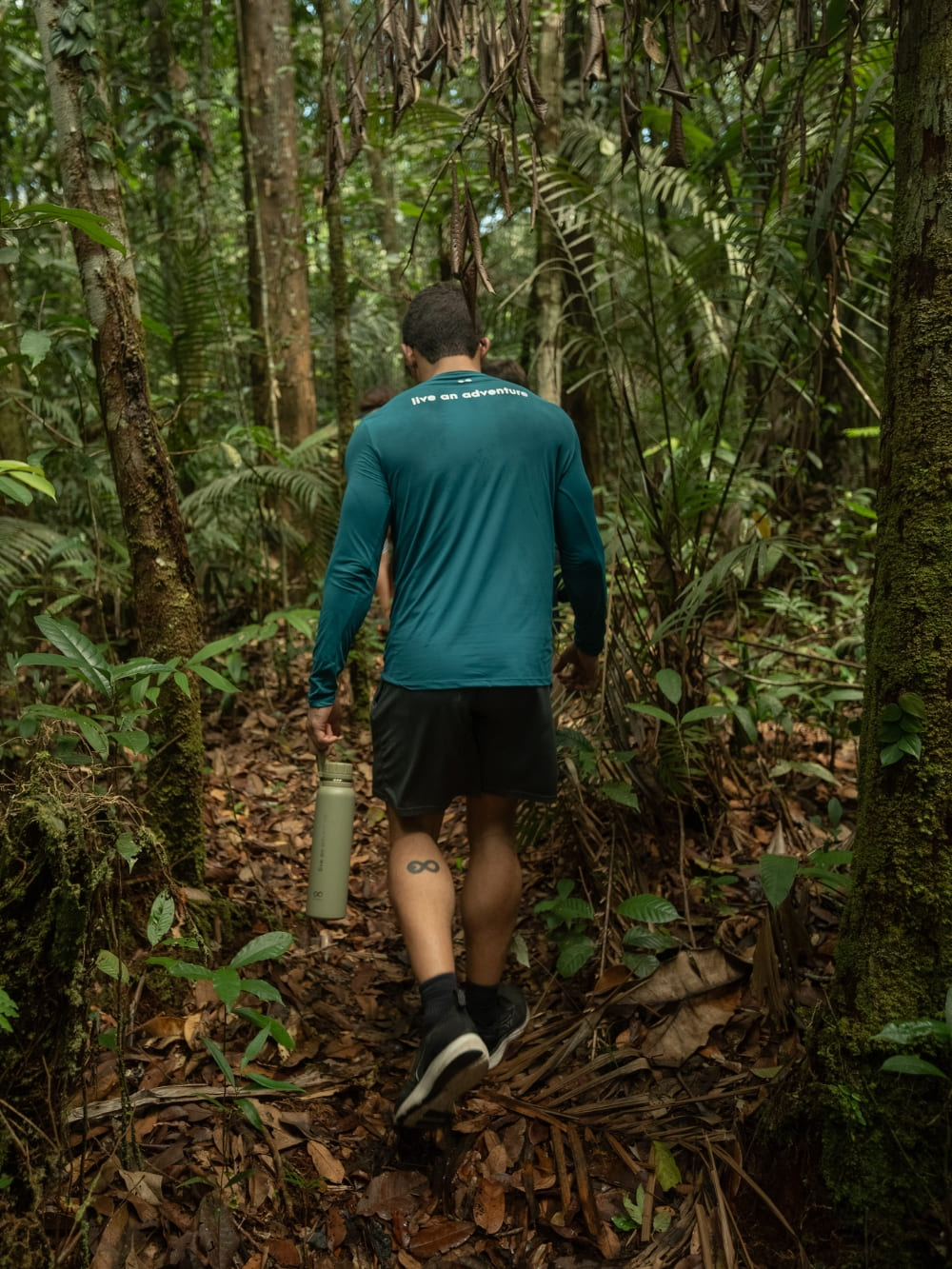
Equipment: flashlight, raincoat, microfiber towel, personal reusable water bottle
.
Join PlanetaEXO on the best Amazon river tours
As an expert in Amazon Rainforest tours in Brazil, PlanetaEXO works with the most esteemed local operators to provide wonderful travel experiences in the largest rainforest on Earth, always following community-based and sustainable tourism practices.
Experience comfort and immersion in nature with our multiple-day luxury Amazon cruises and turn your dream vacation into reality. Contact us now!
From flexible necks to ancient legends, discover what makes the largest freshwater dolphin in the world one of the Amazon’s most surprising creatures
The Amazon pink river dolphin (Inia geoffrensis) is one of the most distinctive mammals of South America. Found across six countries in the Amazon and Orinoco basins, the species has been studied for over two decades by researchers at the Mamirauá Reserve in Brazil, who individually identified more than 650 animals over a 25-year period.
Its biology is remarkable: an unfused neck that turns 180 degrees, a diet covering more than 53 fish species, a long curved beak with molar-like teeth, and a body that shifts from grey at birth to bright pink in adulthood. The species has been classified as endangered on the IUCN Red List since 2018, with populations declining roughly 50% over 75 years.
Want to know what makes this animal so unique? PlanetaEXO, an ecotourism platform specializing in Amazon Rainforest tours in Brazil, has put together a list of 10 fascinating facts about the Amazon pink river dolphin. Check it out below!
1) Found in All Countries of the Amazon Basin
The Amazon pink dolphin inhabits the rivers of six South American countries: Bolivia, Brazil, Colombia, Ecuador, Peru, and Venezuela—a freshwater range covering approximately 7 million km², according to the Animal Diversity Web (University of Michigan).
The species lives in the Orinoco and Amazon river basins, including major tributaries like the Solimões, Negro, Madeira, Tocantins, Araguaia, and Putumayo. The species is also entirely freshwater, as they never enter salt water and are found thousands of kilometers from the sea.
But where do pink river dolphins live? They occupy main river channels in the dry season and move into the flooded forest (várzea) during the wet season, when water levels rise up to 10–12 meters and submerge vast areas of the rainforest.
Amazon waters are murky year-round, so the dolphin relies on biosonar rather than vision, emitting a high frequency that clicks through an organ on its forehead called the melon, which acts as an acoustic lens to focus sound.
According to One Earth, the species can produce 30 to 80 clicks per second when locating prey, and the echoes return through the dolphin’s lower jawbone to the inner ear.
A 2017 study published in ScienceDirect found that echolocation click parameters (peak frequency, bandwidth, and inter-click interval) differ significantly across dolphin populations in the Orinoco, Madeira, Xingu, and Araguaia basins, suggesting different evolutionary lineages.
River dolphins use shorter-range, lower-amplitude clicks than their marine cousins, an adaptation to shallow waters with high acoustic clutter from submerged vegetation.
3) The Largest Freshwater Dolphins in the World
Amazon pink river dolphin males can reach 2.55 meters in length and 207 kg (averaging 2.32 m and 154 kg), while females are smaller, up to 2.18 m and 154 kg. This makes the boto the largest of all river dolphins worldwide, beating the Ganges, Indus, Yangtze, and La Plata species.
It is also one of the most sexually dimorphic cetaceans, with males being 16% longer and 55% heavier than females. Interestingly, it is also one of the rare river dolphin species where males are larger than females—in other species, females are usually the bigger sex. Researchers Martin and da Silva, in their 2006 study published in Marine Mammal Science, linked this dimorphism to male-male competition and territorial fighting.
4) Color Changes with Age, Temperature, and Even Mood
Why are Amazon river dolphins pink? It’s a combination of several factors. They are actually born grey and gradually turn pink as their skin becomes thinner and translucent, allowing the blood capillaries near the surface to show through.
The color is also linked to thermoregulation, scarring from social fights, water chemistry (especially iron content), and water temperature. Adult males tend to be significantly pinker than females as a result of aggressive male-to-male combat, which causes scarring that adds to the pink hue over time.
Like a human face flushing red, their skin can also temporarily turn bright pink when the animal is excited, exerting itself, or in social interaction. Some adults are nearly white, others almost entirely pink, and no two individuals look the same.
In Portuguese-speaking Brazil, the Amazon river dolphin is called boto-cor-de-rosa, boto-vermelho, boto-rosa, boto-malhado, or simply boto.
Among indigenous communities, the Tupi name uauiará (or uiara) refers to the dolphin as a kind of “water being” or protector of women—a sacred figure long before European colonization arrived.
The Tikuna people of the Colombia-Brazil-Peru border region call the pink dolphin omacha, which is also the name of the Colombian foundation founded by biologist Fernando Trujillo (National Geographic Explorer of the Year).
In Spanish-speaking countries, the dolphin is most commonly known as bufeo, bufeo colorado, tonina, or delfín rosado. In Peru, Colombia, and Ecuador, bufeo colorado is the standard local term; in the Orinoco region of Venezuela, tonina prevails.
Each name reflects a different cultural lens. Portuguese settlers chose boto (likely from the late Latin buttis, “rounded vessel,” referring to the dolphin’s bulbous head), while indigenous names emphasize the boto’s spiritual and mythological role rather than its physical appearance.
6) The Legend of the Boto is One of the Most Famous Brazilian Myths
One of the most fascinating facts about Amazon pink river dolphins is actually a popular myth. In Brazilian folklore, the boto cor-de-rosa is one of the most enduring legends of the Amazon, a story of indigenous origin that has been passed down for centuries.
According to the tradition, on the nights of the Festas Juninas(Brazil’s traditional June festivities), the dolphin emerges from the river transformed into a tall, charming young man dressed in white and wearing a hat, which hides the blowhole that does not disappear during the transformation. He then seduces a young woman from the village, dances with her, and disappears back into the river by dawn—sometimes leaving her pregnant.
The legend has historically been used in the Amazon to explain pregnancies of unknown paternity, and it has also been featured in Brazilian media, including the 1987 film “Ele, o Boto,” the soap opera “A Força do Querer” (2017), and the Netflix series “Cidade Invisível” (2021).
The Amazon pink dolphin has the largest brain among all freshwater dolphin species, and several tourism and conservation sources cite that its brain capacity is up to 40% larger than a human’s (a figure popularized in conservation outreach).
The more rigorous scientific picture: dolphins as a group have one of the highest encephalization quotients (EQ) among non-human animals, second only to humans, according to Marino et al. (2004) and Montgomery et al. (2013).
In practice, that intelligence translates into clear behaviors: complex acoustic communication using both echolocation clicks and whistles, object play (they have been observed carrying sticks, branches, and turtles), problem-solving, and curiosity around boats and swimmers.
Studies suggest that male botos may also engage in a form of social display by carrying objects in their mouths during courtship—a behavior so far described in no other cetacean.
8) Underwater Gymnasts (with Anatomy to Match)
Unlike marine dolphins, the Amazon river dolphins have unfused cervical vertebrae (the seven neck bones are not welded together), which allows them to turn their heads up to 180 degrees, according to Whale and Dolphin Conservation.
This flexibility is essential for navigating the flooded forest of the Amazon, where submerged tree trunks, roots, and branches block straight-line swimming. The species also lacks a typical dorsal fin, replaced by a low dorsal ridge that helps it weave through dense vegetation.
Pink river dolphins can swim forward with one flipper while paddling backward with the other, turning with surgical precision around obstacles. They are also frequently observed swimming upside down, possibly to see the river bottom better through their small eyes.
Cruising speed is between 8 and 13 km/h, with bursts of up to 24 km/h—slower than ocean dolphins, but compensated by extreme maneuverability among trees and roots.
9) One of the Most Varied Carnivorous Diets of Any Toothed Whale
So, what do pink river dolphins eat? The boto has one of the widest-ranging diets among all toothed whales, feeding on up to 53 different species of fish, including croakers, catfish, tetras, piranhas, and characins. The species also consumes river turtles, freshwater crabs, aquatic frogs, and freshwater mollusks.
Its narrow jaw contains 25 to 28 pairs of teeth, divided between sharp conical teeth at the front (for catching prey) and molar-like teeth at the back—a feature unique among dolphins, allowing the boto to crush hard prey like turtle shells and armored catfish.
This dietary flexibility is critical: during the wet season, fish disperse into the flooded forest, and it hunts alone in vast submerged territories; during the dry season, prey concentrates in main channels and confluences, where up to 35 dolphins have been observed cooperatively herding fish.
10) Friendly with Humans, Yet Solitary by Nature
Despite their famously curious and playful personality around boats, swimmers, and children, pink river dolphins are largely solitary animals. They are mostly often spotted alone or in small groups of 2 to 4 individuals, usually a mother with her calf. This is very different from ocean dolphins, which can travel in pods of dozens or even thousands.
Researchers believe this solitary lifestyle is linked to two factors: the boto has no significant natural predators once adult (only caimans, jaguars, and anacondas occasionally take young animals), and the structure of the flooded forest favors individual hunting over coordinated pod attacks.
Larger aggregations of up to 35 dolphins only form temporarily at river confluences when prey concentrates seasonally. Their curiosity with humans is well documented in the Cuyabeno Wildlife Reserve (Ecuador) and the Mamirauá Reserve (Brazil), where botos have been filmed approaching kayakers, leaping near boats, and interacting with local children.
Visiting the Amazon and meeting pink river dolphins with PlanetaEXO
Now that you know the most fascinating Amazon pink river dolphin facts, it’s time to see this incredible animal up close. The boto can be spotted year-round in several Brazilian Amazon destinations, especially around Manaus, the Rio Negro, the Anavilhanas archipelago, and the Mamirauá Sustainable Development Reserve.
PlanetaEXO is an ecotourism platform specializing in Amazon Rainforest tours in Brazil, working alongside the best local operators in the region. From jungle lodges deep in the rainforest to wildlife-focused river cruises, our team is here to help you plan a hassle-free trip.Contact us now!
Planning your trip depends on several factors, such as logistics, weather, and travel style
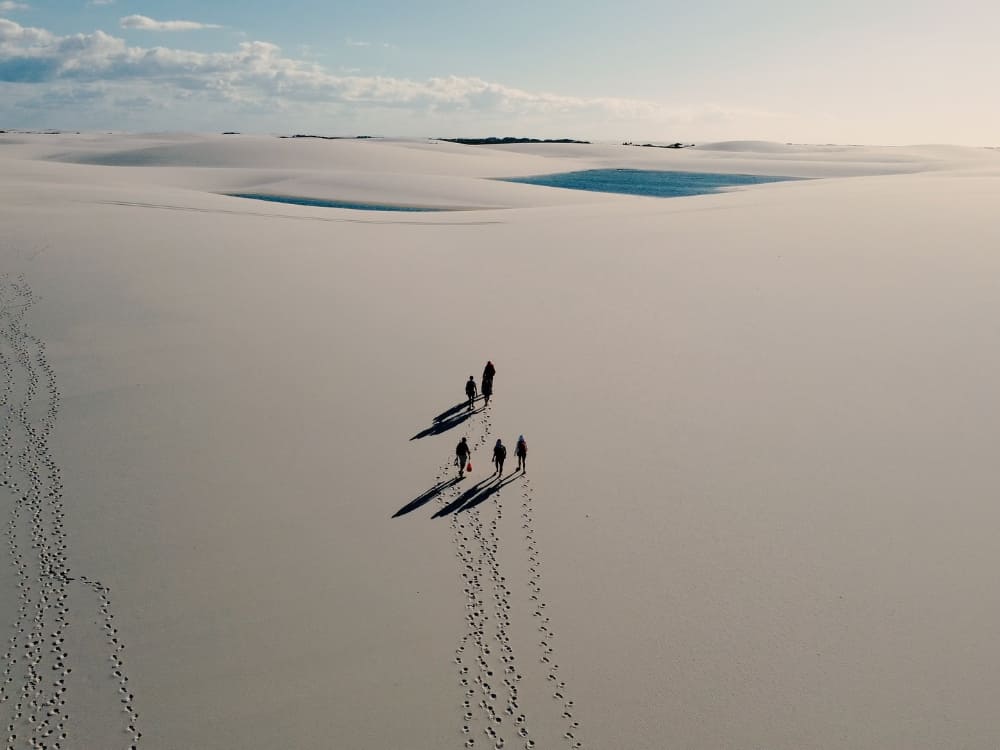
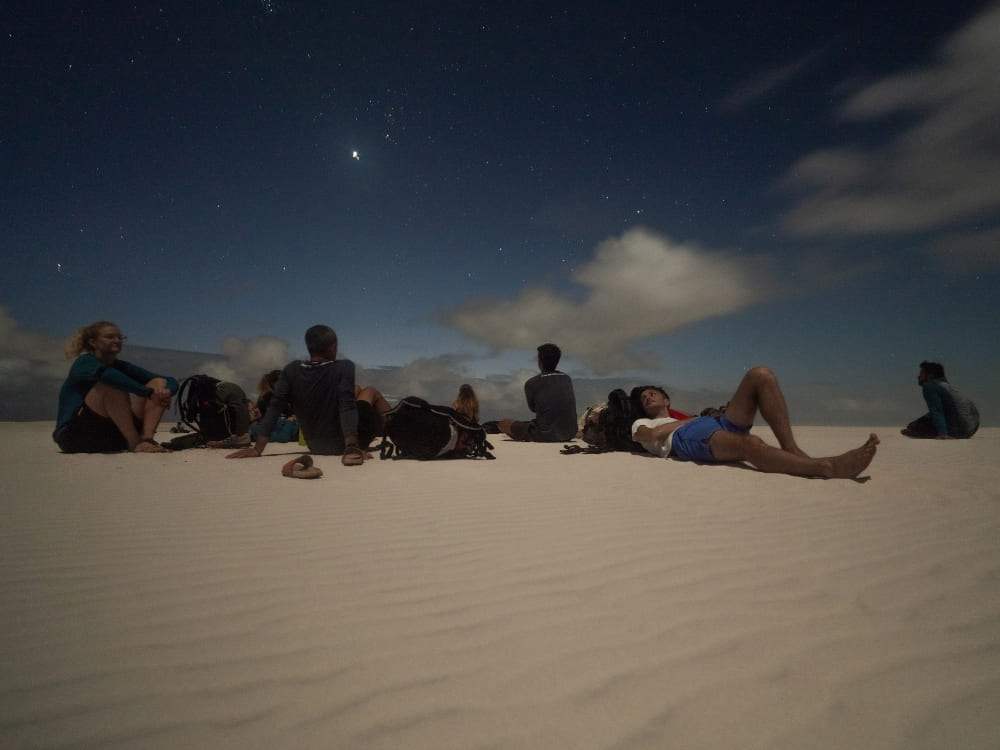
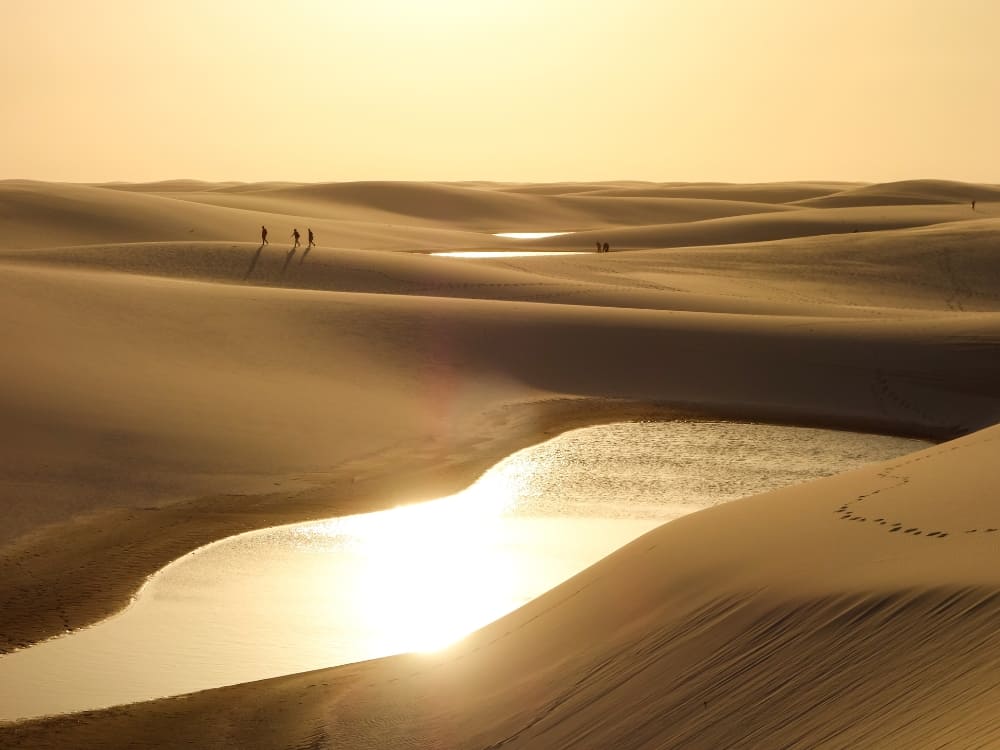
The Lençóis Maranhenses National Park covers a massive area of 155,000 ha, which means you need at least 3 full days to truly experience the paradisiac atmosphere—though there are options for quick 2-day treks in selected areas across the sand dunes.
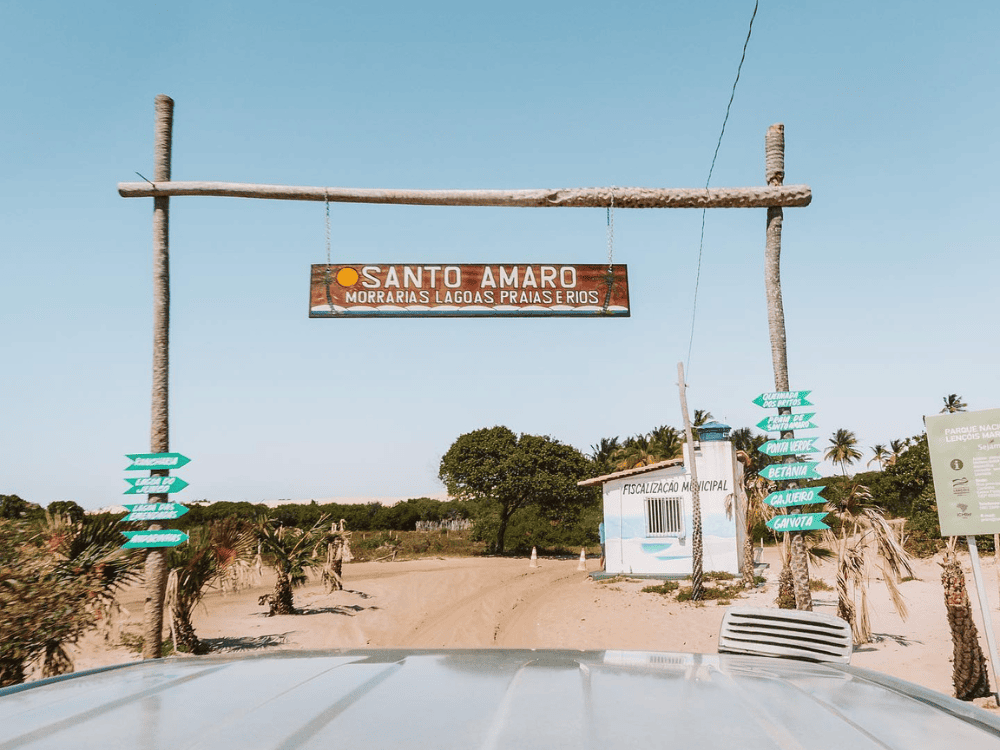
Logistics also plays a huge part when it comes to travel planning, as this is a remote location that requires long journeys to reach the base cities (Barreirinhas, Atins, and Santo Amaro). Seasons, weather, and each traveler’s pace should also be considered when deciding how many days you should stay in Lençóis Maranhenses.
.
Need a hand with your trip? PlanetaEXO is an ecotourism platform specializing in Lençóis Maranhenses tours that knows everything about trips to Brazil’s wet desert. Check it out below!
What determines how many days you should stay in Lençóis Maranhenses?
Logistics
In northeastern Maranhão, Lençóis Maranhenses is located in a remote area. After arriving in the capital São Luís, it takes 4-5 hours by road to reach one of the base towns: Barreirinhas, Atins, and Santo Amaro.
The main transportation options are buses, private cars, or shared vans, but it’s also possible to reach Barreirinhas by chartered plane or by boat to Atins (departing from Barreirinhas).
The transfer to your destination must be considered in your planning, as a significant part of the trip is spent on the Lençóis-São Luís route.
The weather in Lençóis Maranhenses dictates the experiences—some seasons may be better enjoyed than others, depending on what you are looking for.
The rainy season begins in February and extends until April, causing downpours that form new lagoons and fill up existing ones. The rain doesn’t stop tourists from visiting, but it can make walks through the dunes a bit more complicated.
The rain stops when the dry season (May to September) begins, presenting conditions most people prefer: full lagoons scattered across the sand dunes, warm weather, and a refreshing breeze. This is the period when the park is busiest, marking the high season.
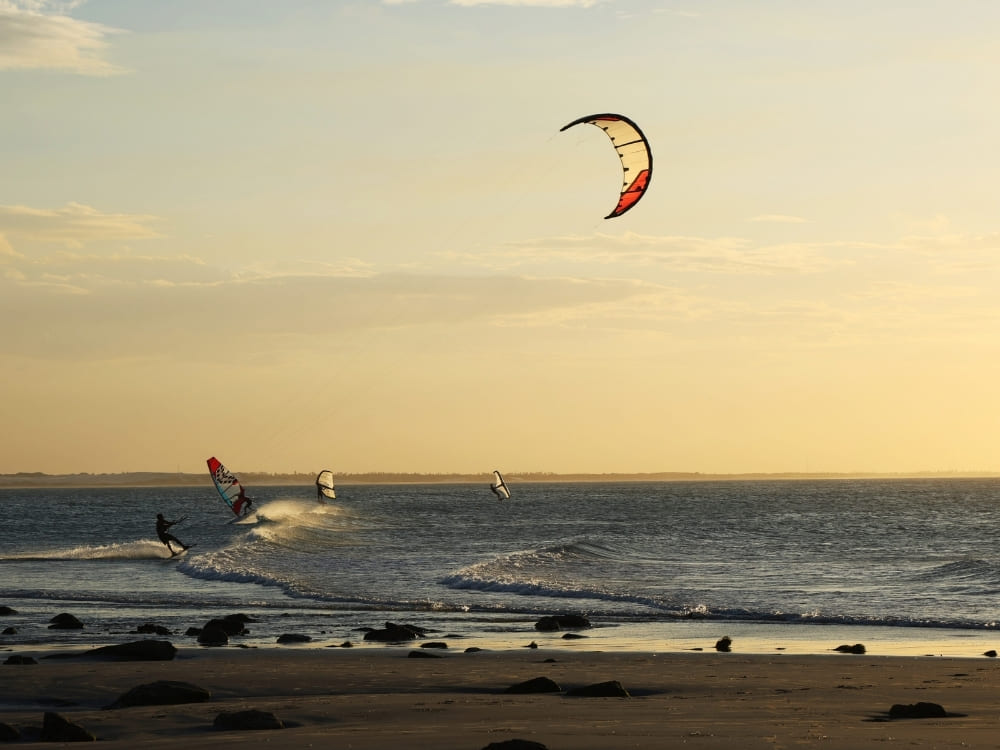
From October onwards, the lagoons begin to dry up. Until January, the national park has more sand than water, but it’s still possible to venture out with trekking, boat trips on the Preguiças River, and kitesurfing on Atins Beach.
Don’t forget: before deciding how many days you should spend in Lençóis Maranhenses, check the weather forecast for the desired period.
How many days you need also depends on when you come. With the lagoons full, from June to September, two days already give you the postcard. In the dry months the water is scattered and you need more time, and more walking, to reach what is left.
Period
Lagoon level
What to expect
January – May
Filling
The rain runs through the sand and starts filling the hollows between the dunes
June – September
Full
The window when the park becomes the postcard. It is when almost everyone goes
October – December
Drying out
The lagoons evaporate and a white desert is left. Fewer people, another landscape
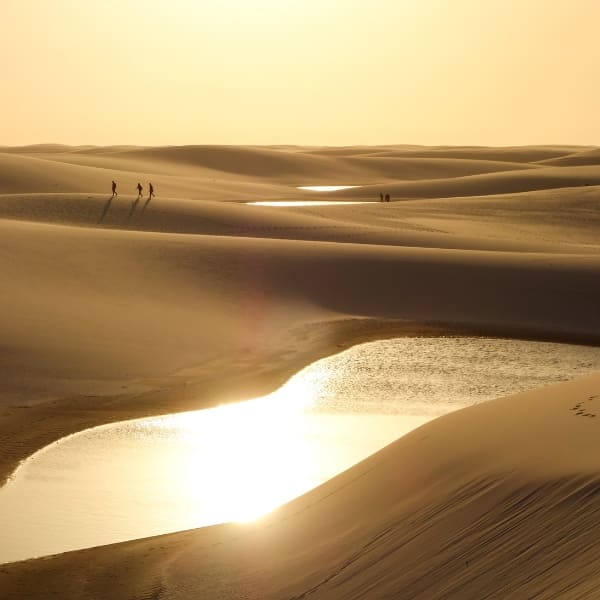
The vastness of the white dunes, the calmness of the crystal-clear lagoons, and the endless blue of the sky contribute to the peaceful atmosphere of the national park, perfect for those seeking rest and disconnection from the tensions of day-to-day life.
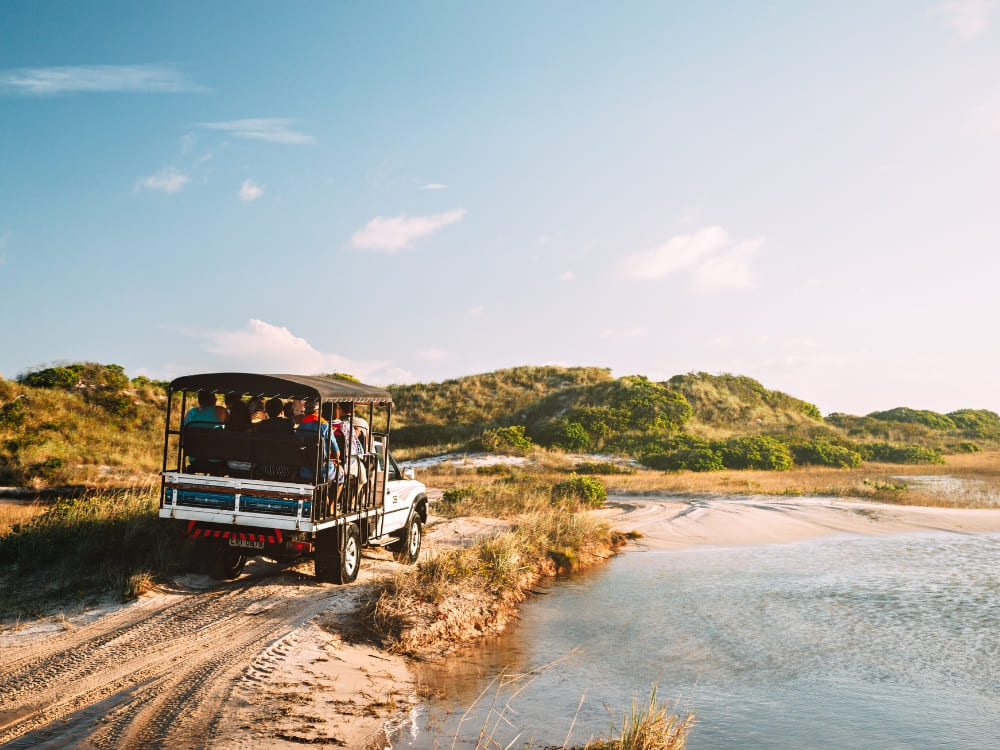
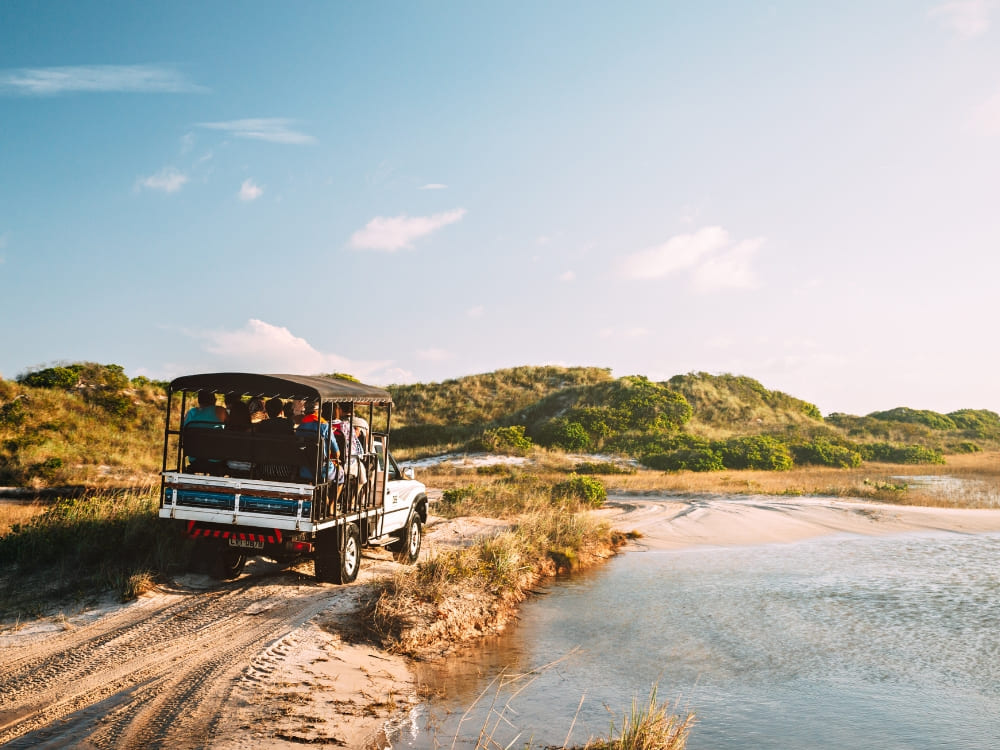
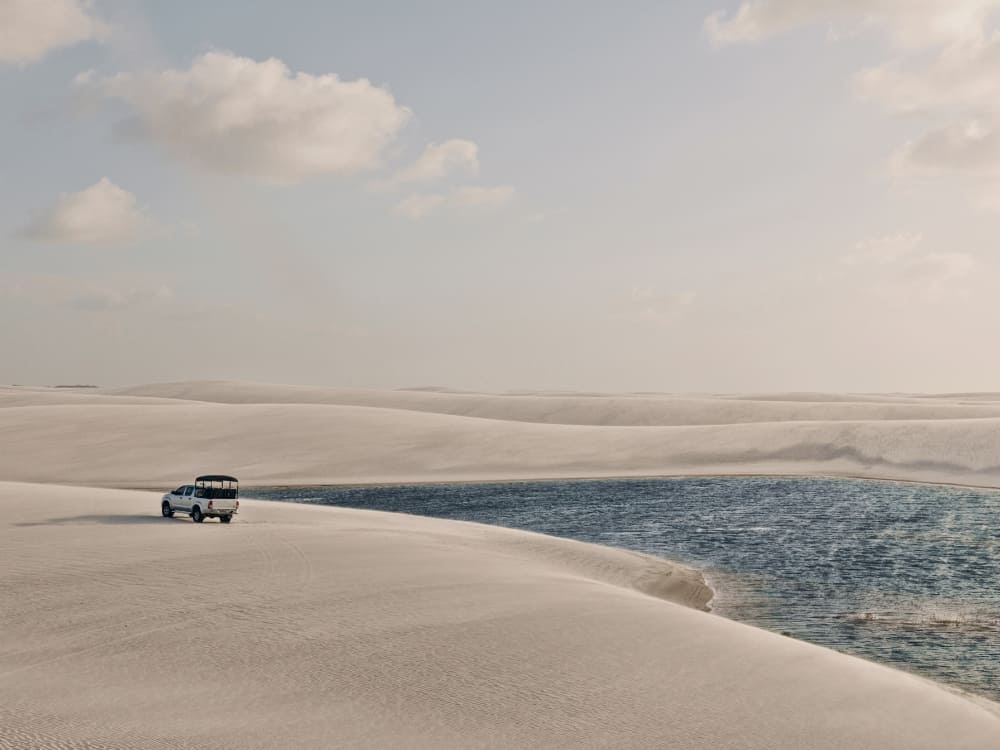
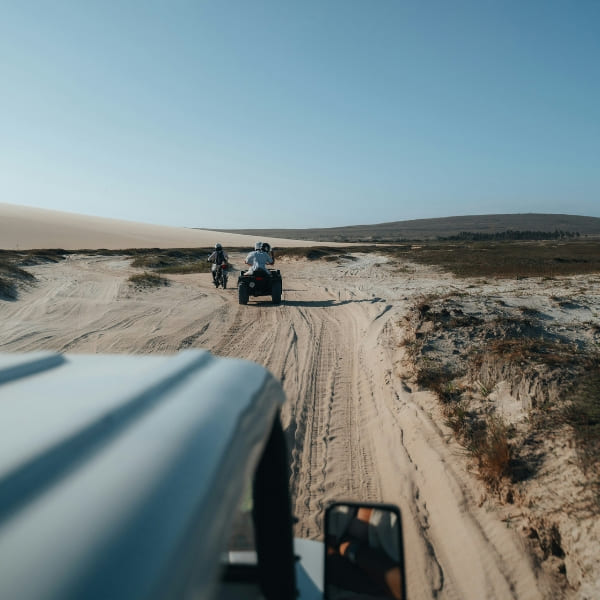
However, there are also opportunities for adventure, such as 4×4 rides, trekking across the park—and spending the night in locals’ houses—boiacross, and kitesurfing.
The extent of the trip depends on the availability and style of each traveler, but Lençóis Maranhenses is versatile enough for all scenarios and paces, from quick 2-day experiences walking through the main points of the park to multi-day trips that even cover other states.
.
2 to 3-day trip: the essential
Even on a tighter schedule, it’s perfectly possible to experience the magic of Lençóis Maranhenses simply by choosing the pace of your adventure.
If you’re looking for something more relaxed, the 2-day trek from Atins (easy level) is perfect: a lighter hike through the stunning dunes and lagoons, starting and ending in the charming village. Are you an adventurous spirit and physically fit? Then you should check the 2-day desert trek (difficult level), which requires more effort but rewards you with a deep immersion and an unforgettable overnight stay in the Baixa Grande oasis.
With 3 days available, the range of experiences opens up even more. You can opt for the 3-day trek (moderate level), walking among dunes and visiting two different oases, with an overnight stay in the homes of local families. If you prefer comfort, the 3-day tour from Santo Amaro (easy level) allows you to explore the most pristine lagoons in 4×4 vehicles, based in a very peaceful village.
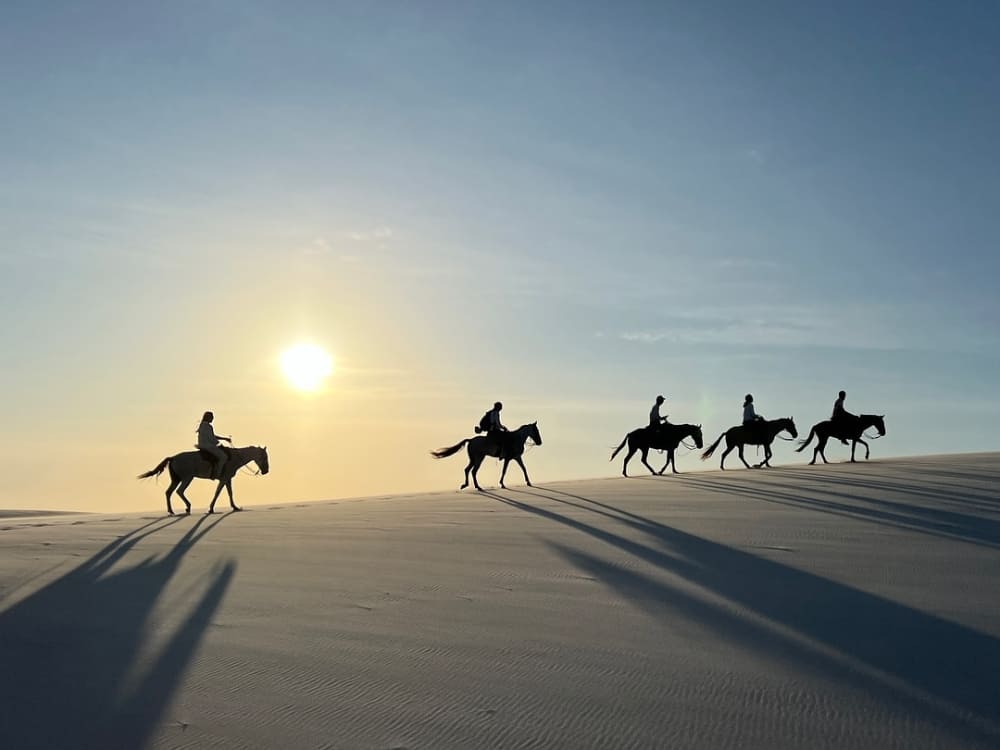
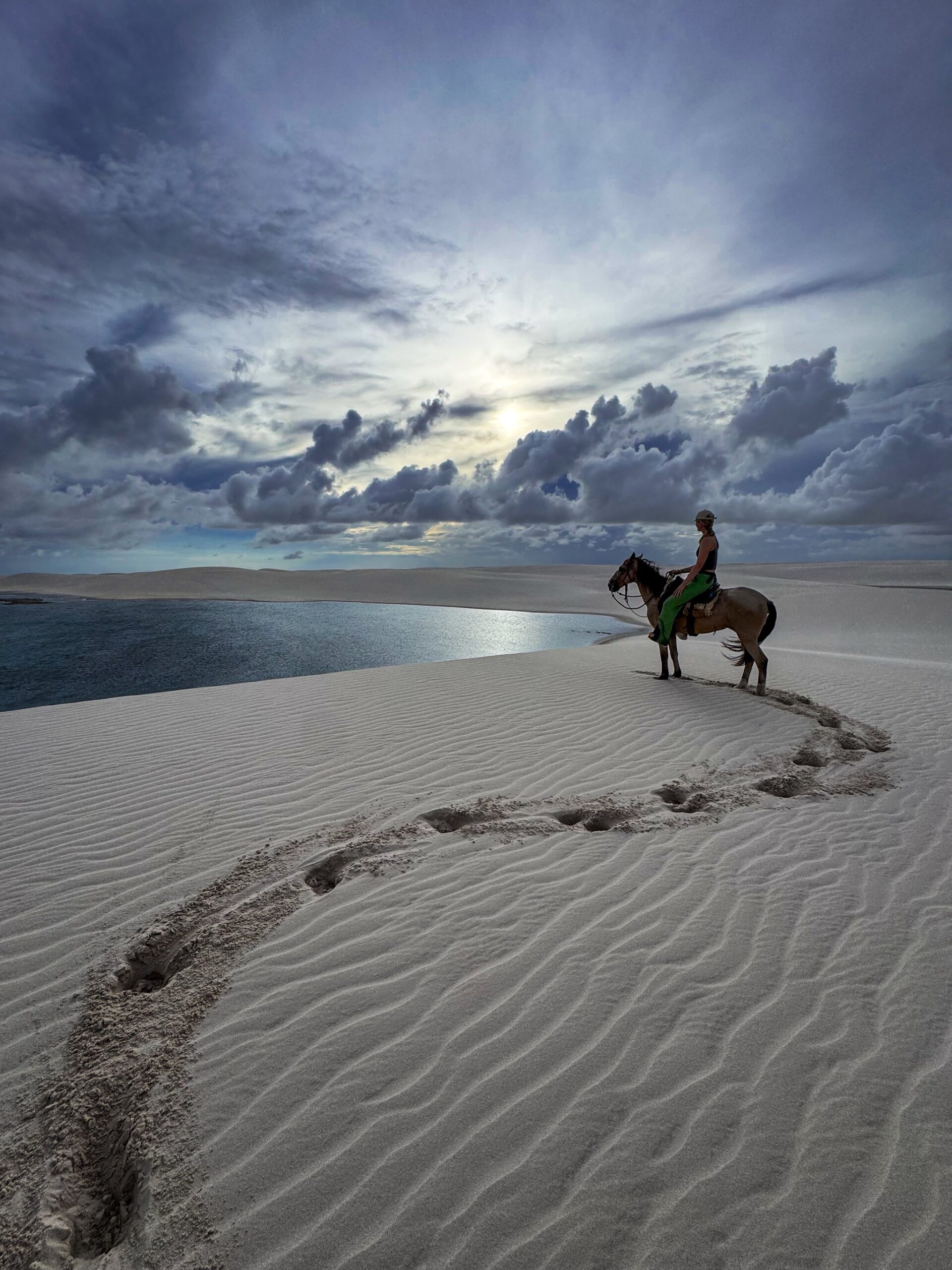
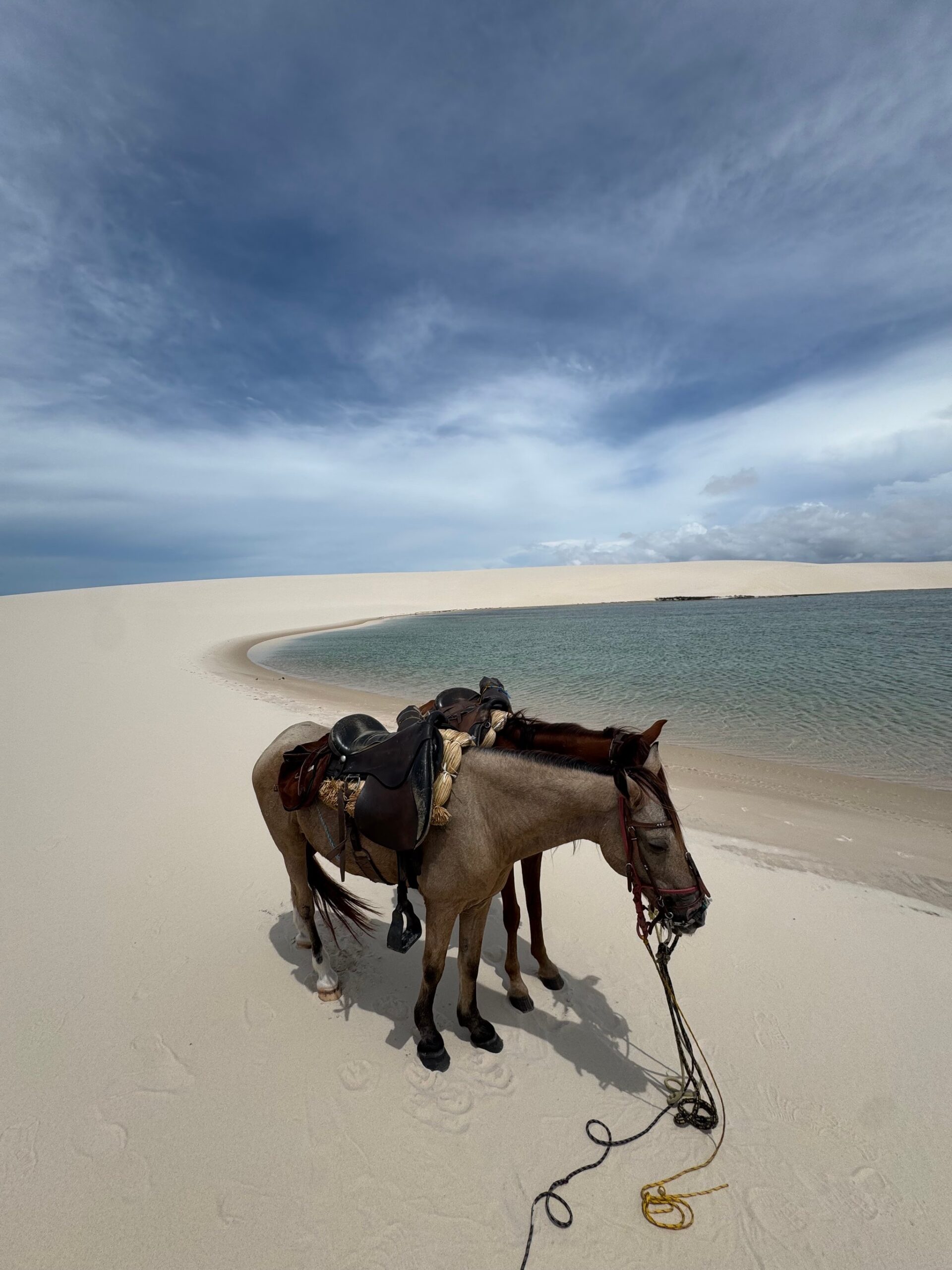
And for a truly unique experience, you can cross the white sand desert on our 3-day horseback riding expedition, an easy-level adventure that will create memories to last a lifetime!
.
4 to 5-day trip: digging deeper
For those with a little more time, investing 4 to 5 days is the best way to disconnect and get into the rhythm of nature.
The 4-day tour from Atins is ideal for those who want to enjoy the rainwater lagoons during the day and enjoy the rustic and welcoming atmosphere of the village at night without much physical effort.
If hiking is your thing, the 4 and 5-day treks (moderate level) are the classic crossings. On these itineraries, you experience the ultimate immersion: entire days hiking through surreal landscapes, swimming in exclusive lagoons, and having rich contact with the culture of the local communities that live in the oases within the park.
Photo: Marcelo Bonifacio
6-day trip: the full experience
Six days open doors to the most complete and spectacular trips in the Brazilian Northeast, both easy-level and focused on comfort and contemplation.
The Lençóis Maranhenses Full Itinerary takes you to explore the three main bases of the region: Barreirinhas, Santo Amaro, and Atins. You will take boat trips, visit the most famous dunes, and have a 360º view of the park without having to do long walks.
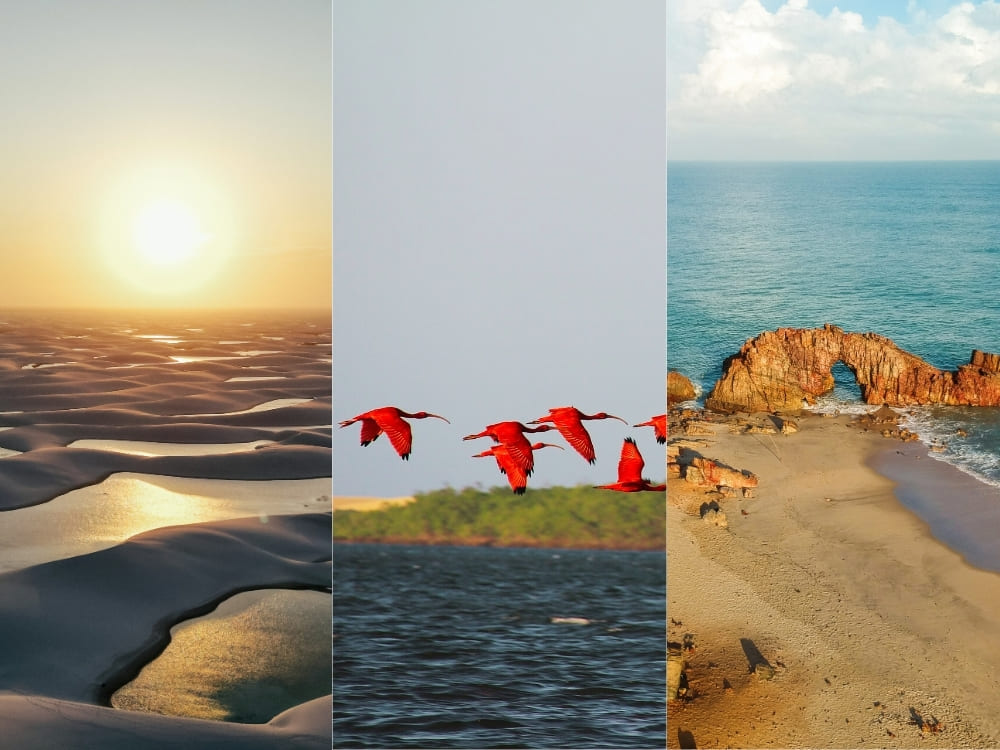
The famous Route of Emotions is an epic interstate trip. It allows you to start your journey exploring Lençóis Maranhenses, pass through the incredible beauties of the Parnaíba Delta in Piauí and end the trip relaxing on the paradisiacal beaches of Jericoacoara, in Ceará.
.
Your vacation in Lençóis Maranhenses with PlanetaEXO
If you’re still not sure of how many days you should spend in Lençóis Maranhenses, we are here to help!
PlanetaEXO is an ecotourism platform specializing in Lençóis Maranhenses tours, from tailor-made itineraries to bookings and transfer options. Our team works with the best local operators to make sure you’ll experience a vacation you’ll never forget. Contact us now!
See how to get to Chapada Diamantina from Salvador, Rio de Janeiro, and São Paulo
Chapada Diamantina National Park is located in the northeastern part of Brazil, within the state of Bahia. The most common and convenient way to access the park is via Salvador, situated approximately 420 km away.
.
Salvador International Airport (SSA) provides extensive direct flights from various Brazilian cities, as well as international destinations. However, the closest airport is Lençóis Coronel Horácio de Matos Airport (LEC), 22 km away from the national park—though flight options are fairly limited.
To help with your vacation planning, PlanetaEXO, an adventure travel platform specializing in Chapada Diamantina tours, has put together several transportation options. Check them out below!
From Salvador to Chapada Diamantina
.
As stated before, the easiest way to get to Chapada Diamantina is from Salvador, Bahia’s capital. Travelers usually reach the national park through Lençóis, one of Chapada’s base cities—the main gateway with the best infrastructure, including accommodations, bars, restaurants, etc.
Please notice: Flight and bus schedules may change unexpectedly at the discretion of their operators. Please check the official channels for details on each transportation option.
By plane
Salvador Airport (SSA) is served by major Brazilian cities, including São Paulo (GRU, VCP, and CGH), Rio de Janeiro, Recife (REC), Belo Horizonte (CNF), and Brasília (BSB). International tourists can fly straight to Salvador from Buenos Aires (EZE/AEP), Panama City (PTY), Lisbon (LIS), Madrid (MAD), and Paris (CDG).
Another option is flying to Lençóis Airport(LEC). Azul Airlines offers flights once a week, on Sundays, departing from Salvador at 11:45 AM and arriving in Lençóis at 12:55 PM.
By bus
Despite the option to get to Chapada Diamantina via Lençóis Airport, most people take a bus from Salvador. There are three daily departures at 8 AM, 1 AM, and 11 PM from Salvador Bus Station (Terminal Rodoviário de Salvador). The buses make stops in Feira de Santana and Itaberaba.
Known for their cleanliness and comfort, these buses are equipped with air conditioning and toilets. The trip takes about 6 hours, with ticket prices starting at US$ 20. Buy your tickets at Expresso Guanabara (for those with a CPF number) or BusBud (for foreigners). For the return journey to Salvador, buses depart from Lençóis at 9 AM, 1:45 PM, and 10:50 PM.
By car
The typical route uses BR-324 and BR-242 highways, covering 420 km in about 6 hours. Car rentals are available at Salvador Airport.
By private transfer
For added comfort and flexibility, private transfers are available. See the prices below:
Car (4 seats): US$ 390
Van (15 seats): US$ 585
If you are booking your Chapada Diamantina tour with PlanetaEXO, our team can assist you in booking private transfers to the locations. Send us a message!
From Minas Gerais to Chapada Diamantina
As of June 2026, air travel to Chapada Diamantina has become easier for those in southeastern Brazil. Azul Airlines’ newest route offers a direct flight between Belo Horizonte/Confins-Tancredo Neves International Airport (CNF) in Minas Gerais and Lençóis Airport (LEC) in Bahia.
Currently, the flight operates only once a week, on Thursdays, departing at 8:35 AM. Arrival in Bahia takes place around 11:00 AM.
Remember: flight schedules are subject to change without notice. For accurate and up-to-date information, please verify flight details through the airline’s official channels.
How to get to Chapada Diamantina from Rio or São Paulo?
From Rio de Janeiro and São Paulo—two of Brazil’s largest cities—you can reach Chapada Diamantina, in Bahia, by flying to Salvador or taking a long-distance bus trip to Feira de Santana.
.
By plane
From Rio’s Galeão (GIG) or São Paulo’s Congonhas (CGH), Viracopos (VCP), or Guarulhos (GRU), you can get to Salvador in over 2 hours. This option offers a quicker and more direct way to start your adventure in the national park.
From Salvador, fly to Lençóis Airport on Sundays, take the bus to Lençóis at the Salvador Bus Station, or hire a private shuttle service (arranged by PlanetaEXO).
By bus
This bus trip from Rio de Janeiro or São Pauloto Feira de Santana can exceed 30 hours, but it’s more budget-friendly, with fares starting at US$ 88. Get your tickets at Busbud.
Once you arrive, continue your journey to Lençóis, taking the same bus as described above from Salvador.
How to get to other small towns in Chapada Diamantina?
Other than Lençóis, Chapada Diamantina is surrounded by several small towns that can serve as gateways to the national park.
.
Palmeiras
Palmeiras is a small town that you have to pass through to get to Guiné and Vale do Capão. From Salvador, you can take the same Expresso Guanabarabus as you would to Lençóis, but you should continue one stop further. This journey lasts almost 8 hours.
Alternatively, you can drive 450 km, which typically takes about 6.5 hours. From Lençóis, a bus ride to Palmeiras takes about an hour, covering approximately 53 km.
Vale do Capão
Located in the Palmeiras municipality, this peaceful village is a hotspot for hikers. From Salvador, take a bus to Palmeiras and then a 40-minute shared van ride to Vale do Capão, which is about 72 km from Lençóis. Taxis are also available.
Guiné
Known for being the starting point for the Vale do Pati trek, Guiné is only accessible by car or private shuttle services, as public transport is not available. The distance from Lençóis to Guiné is approximately 85km, typically involving some driving on rough and unpaved roads.
Home to the Cachoeira do Buracão and Fumacinha waterfalls, Ibicoara can be accessed from Salvador by a 9-hour bus ride on Fridays or by a 7-hour drive (459 km).
The nearest airport is Vitória da Conquista (VDC), with car rentals available for the 219 km journey to Ibicoara, located 225 km away from Lençois.
Mucugê
Buses from Salvador to Mucugê depart daily at 7 AM and 7 PM. The journey takes up to 8.5 hours, depending on the itinerary.
Driving from Salvador covers 450 km in approximately 6.5 hours. The nearest major airport is Vitória da Conquista (VDC), offering rental car services for the 260 km drive. Mucugê is approximately 147 km away from Lençóis.
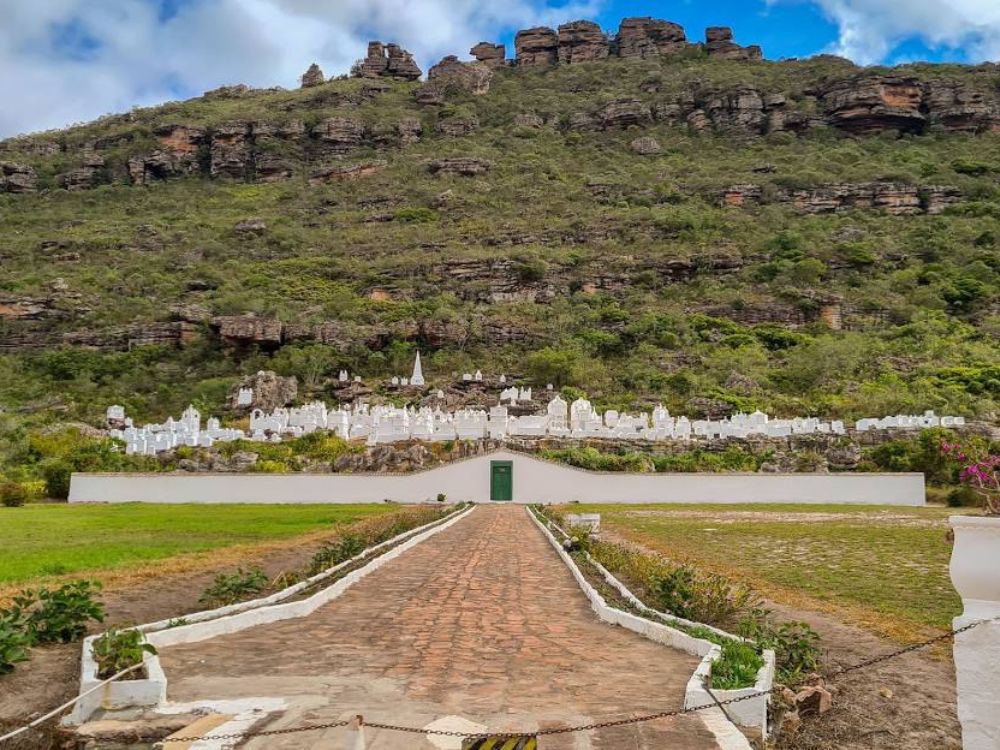
Byzantine Cemetery of Mucugê
Exploring Chapada Diamantina National Park with PlanetaEXO
Now that you know how to get to Chapada Diamantina, it’s time to plan your vacation with us!
At PlanetaEXO, an ecotourism platform specializing in Chapada Diamantina tours, we help you find the best transportation options to the national park, as well as provide accommodation, tailor-made itineraries, and everything else you need for an incredible trip. Contact us now!
Seasons, locations, safety tips, and health precautions. See our recommendations for an unforgettable travel experience in Brazil’s Lençóis Maranhenses National Park!
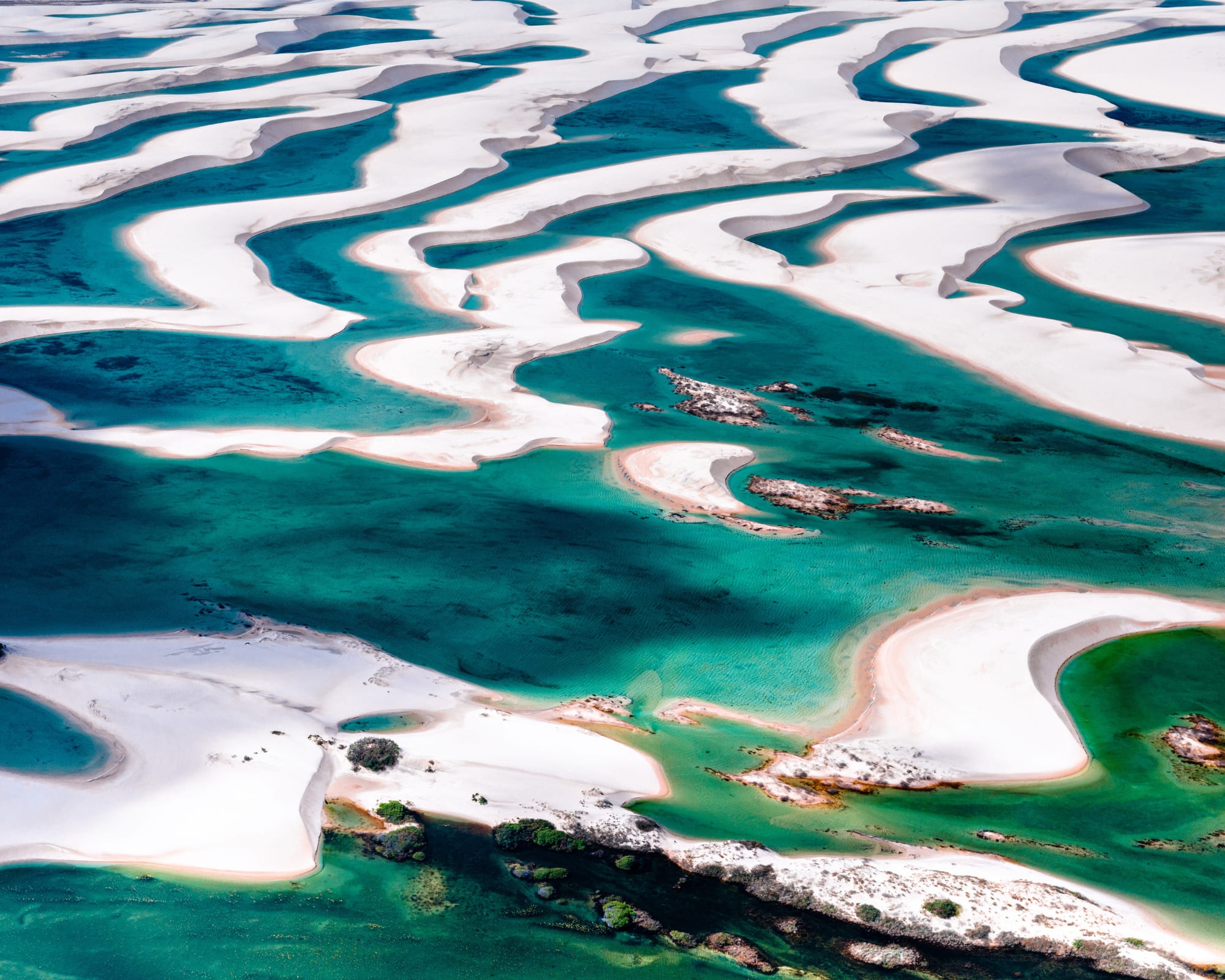
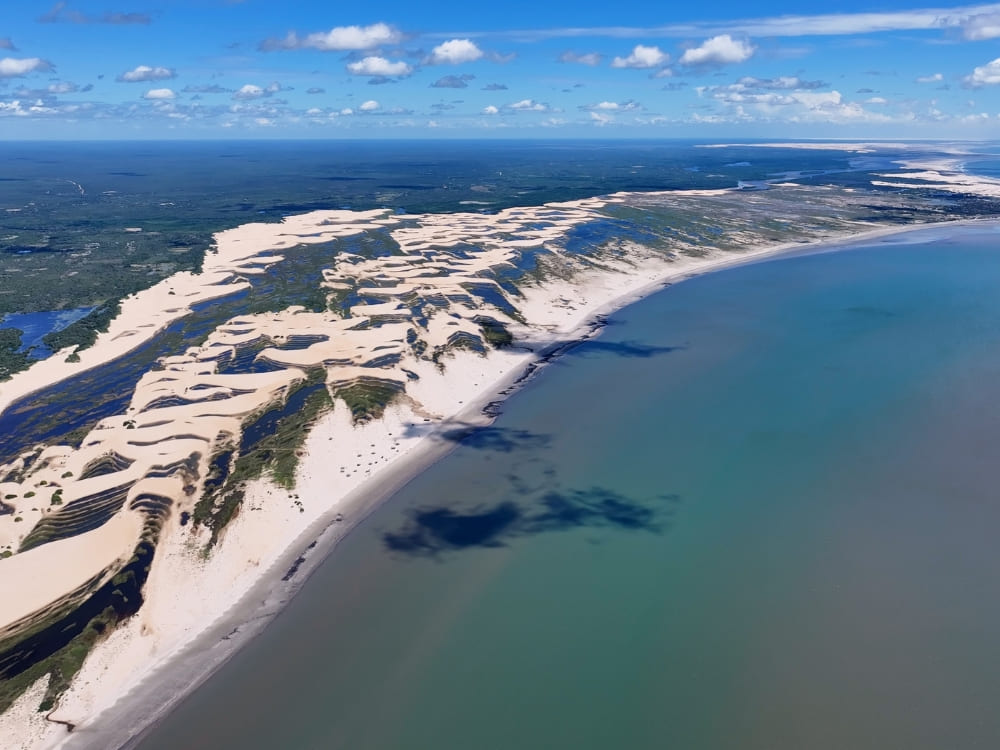
Located in northeast Brazil, Lençóis Maranhenses National Park is a destination sought after by adventurers from all over the planet. Recognized as a UNESCO World Heritage Site, this natural wonder is famous for its vast, giant white sand dunes and crystal-clear freshwater lagoons.
But don’t let its otherworldly beauty fool you—exploring this fantastic place requires thoughtful planning to make the most of your time, energy, and budget. Considering elements like location, weather, and activities, following some Lençóis Maranhenses travel tips can help to make your vacation even more memorable.
That’s why PlanetaEXO, an ecotourism platform specialized in Lençóis Maranhenses tours, has put together 10 essential recommendations for a wonderful experience in one of the most beautiful places in Brazil. Check them out below!
1. Pick your base city: Barreirinhas, Atins, or Santo Amaro
The choice of base cities can shape your entire experience, so analyzing the options and choosing the one that makes the most sense for your travel style is the first tip to thoroughly enjoy Lençóis Maranhenses.
Photo: Gabriel Boieras
Barreirinhas is the most popular hub, with solid infrastructure and easy access. Atins is a peaceful fishing village, harder to reach, but offering rustic charm and great conditions for kitesurfers. Meanwhile, Santo Amaro has the closest access to the national park and beautiful lagoons, but restaurants, bars, and other services are rather scarce.
Besides considering the different atmospheres and logistics of each base, it’s also possible to combine more than one city throughout a single trip. This way, you can experience each side of Lençóis!
2. Time it right: when the lagoons are at their best
The weather is ideal for those looking to explore ecotourism in Brazil. The best time to visit Lençóis Maranhenses is between May and September, when the lagoons are full from seasonal rains and the sky is usually clear with no rain. This window offers the most spectacular views and the best overall conditions for hiking and swimming.
From February to April, the heavy rainfall might disrupt travel plans, while the period between November and January causes the lagoons to shrink or disappear completely.
Lençóis offers great experiences all year round, but the itineraries vary according to the seasons. Make sure to check the weather forecast and plan your trip according to your preferences!
3. Health tips: vaccination and fighting the heat
Foreign tourists are not required to get vaccinated, but Brazil’s Ministry of Health recommends that visitors from other countries be protected against diphtheria, tetanus, polio, and measles.
.
Additionally, as a precaution, it is advisable to get vaccinated against yellow fever and hepatitis A and B—even though there is no imminent risk of these diseases within national territory.
The heat is also something to consider, as Lençóis Maranhenses is located in one of the hottest regions in the entire country. To protect yourself against the intense sun and high temperatures, always apply sunscreen, wear a cap/hat when exploring the sand dunes, and stay well-hydrated at all times.
One of the best Lençóis Maranhenses travel tips is to trust the locals for a truly immersive, fulfilling experience.
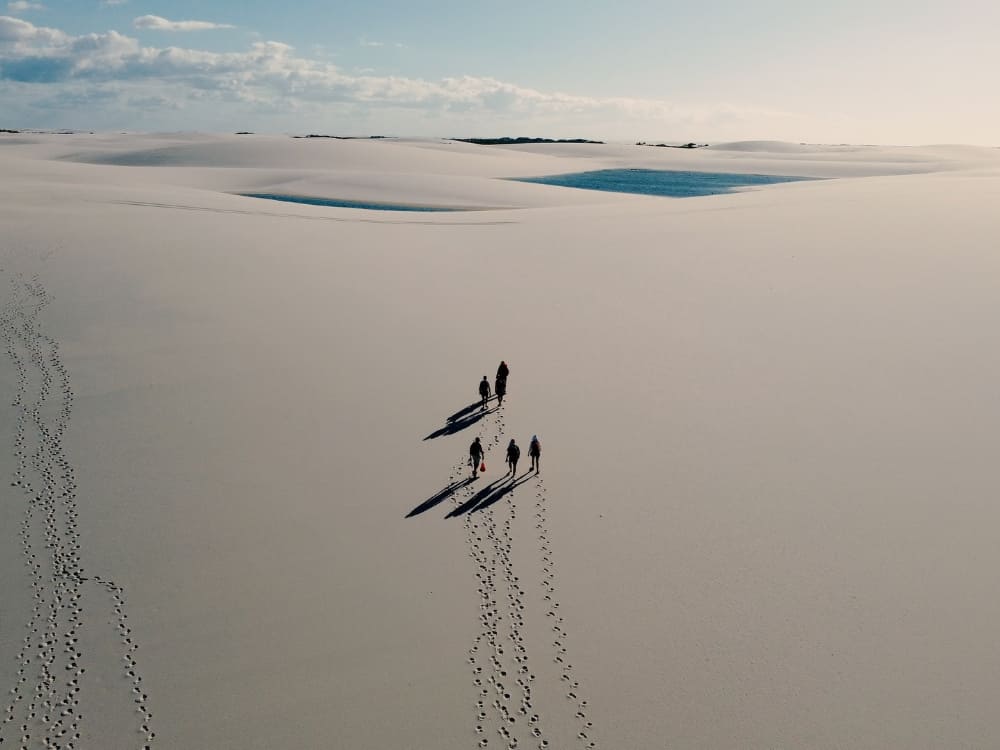
Lençóis is a protected area with no marked trails. As the dunes stretch endlessly, it’s easy to lose your sense of direction. Tour guides know the safest and most scenic routes, how to avoid getting lost, and can tailor your experience to your interests. Remember: never venture into the national park without a qualified professional.
Photo: Marcelo Bonifacio
Local residents also play an important role in the stay experience, as many travelers making the dune crossing, which can last several days, spend the night in the homes of locals within the park.
The accommodations are simple, yet clean and comfortable—ideal for resting a weary body after a long day of trekking. This is also a wonderful way to meet new people and connect with Brazilian and Maranhense culture.
5. Lençóis Maranhenses treks are demanding (be prepared!)
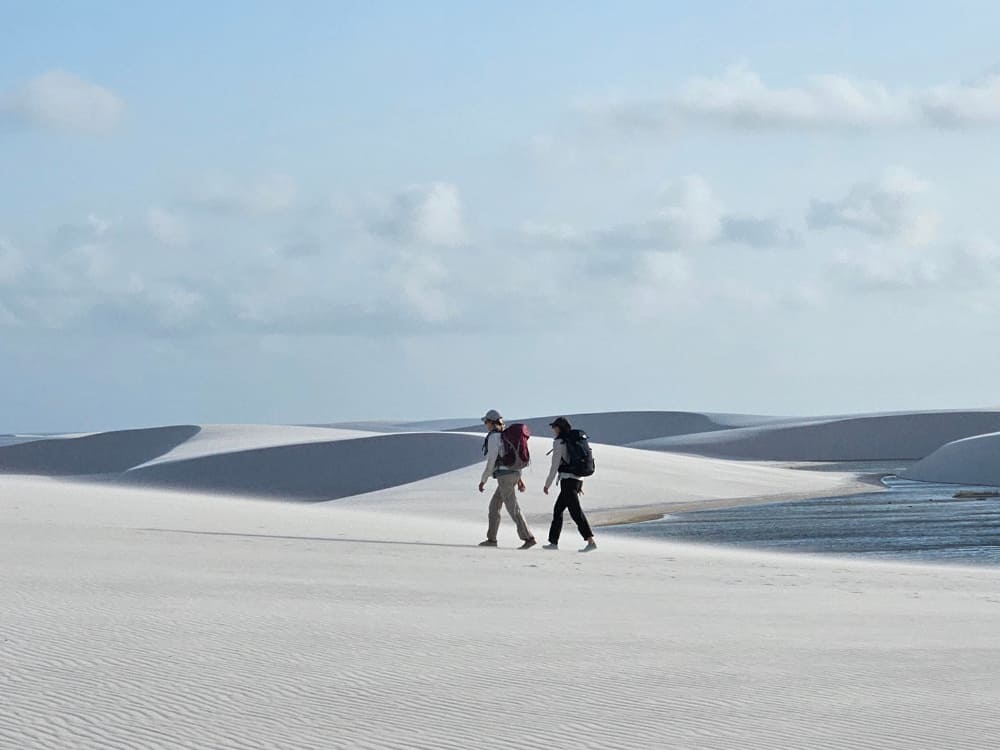
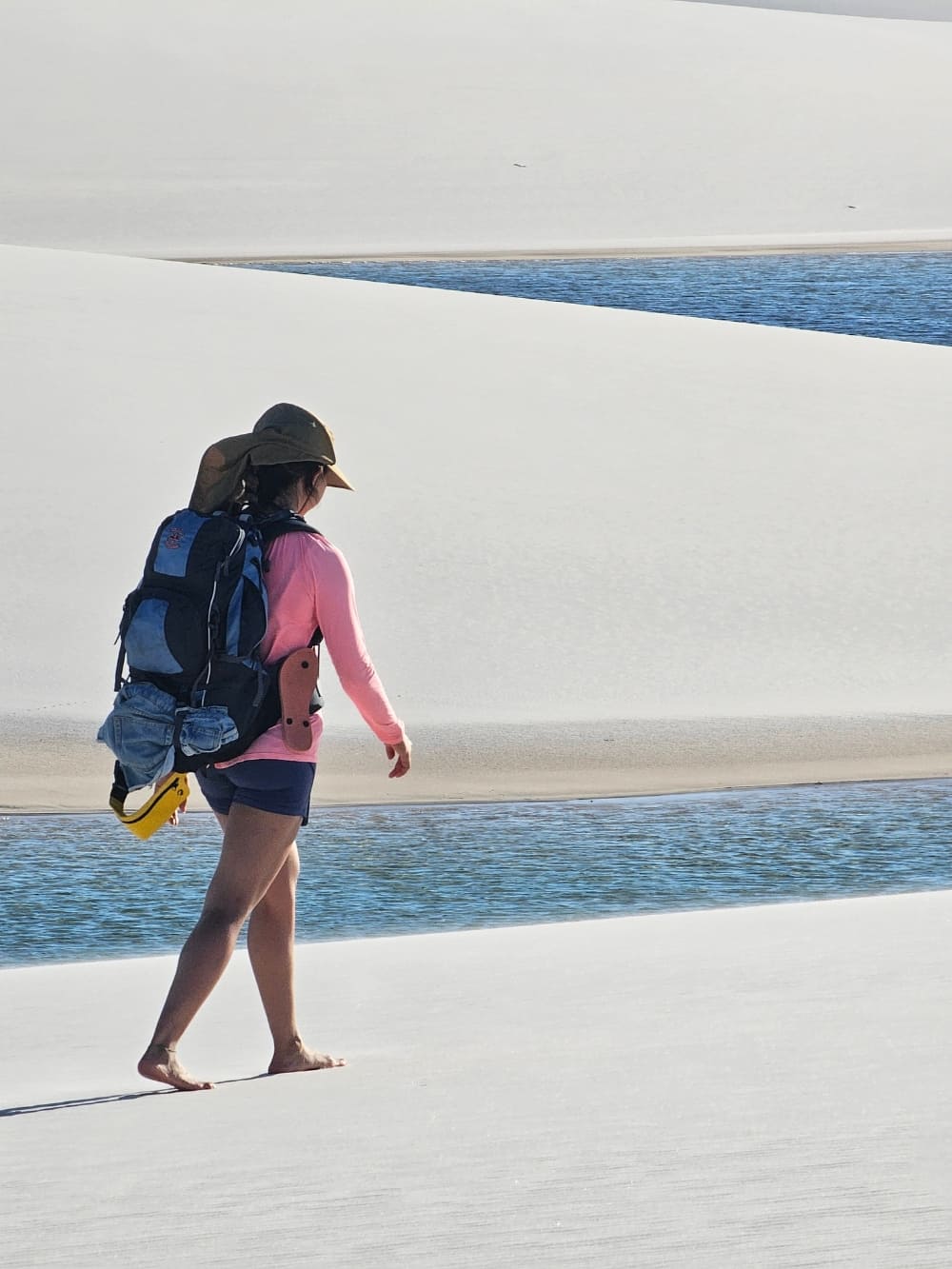
Expect a workout. The sand is uneven and the dunes are tall, so the ground slips out from under your feet as you walk.
.
Under the hot sun, physical exertion becomes even greater. To avoid stressful situations, exhaustion, and other health issues, dress in light, airy clothes, drink plenty of water, and don’t rush. And while most people enjoy walking barefoot, hiking sandals work just fine!
All this effort and dedication are worth it: you will be rewarded with landscapes that seem out of this world and indescribable experiences to carry with you for the rest of your life!
6. Pack smart
Pack smart, light, and functional. Comfortable, appropriate items for physical activities and warm weather are indispensable:
Swimwear
UV-resistant clothing
T-shirts
Shorts
Flip-flops
Sandals or light hiking shoes
Socks
Hats or caps
Towels
Sunglasses
Reusable water bottle (at least 1.5L)
Eco-friendly sunscreen (non-toxic to aquatic life; SPF 30 or higher)
And, as with any other trip, don’t forget the essentials: documents, insect repellent, medication, a power bank, and chargers (phones, cameras, laptops, and tablets).
Bring your own cash (Brazilian real), as ATMs are scarce (especially in Atins and Santo Amaro), and connectivity for debit/credit cards is limited.
7. Don’t underestimate transfer times
Lençóis Maranhenses National Park is located in a remote area. From the capital of Maranhão, São Luís, to the base cities, the drive takes between 4 and 5 hours.
.
When planning your vacation, map out the round-trip transfer to ensure you enjoy every single second and to avoid any problems with your schedules—like missing a flight, for example.
Your trip should last at least 3 days, but it obviously depends on your availability and the type of experiences you’re looking for.
This is a more intense experience than the day tours, but far more rewarding. You’ll hike through remote parts of Lençóis Maranhenses that most visitors never see, sleep in locals’ homes or campsites, and enjoy simple, home-cooked meals.
.
In the afternoons, after the hikes, you’ll have a few quiet hours to relax and recharge. It’s the perfect moment to disconnect, take a nap, or simply admire the breathtaking beauty that surrounds you.
9. Bring your own snacks and drinks on the tours
Lençóis tours typically only stop during lunchtime, and there are no restaurants or diners inside the national park. If you plan to spend several hours (or even days) in Lençóis Maranhenses, it’s important to bring your own food and water.
Opt for light, non-perishable snacks such as crackers, nuts, protein/fruit bars, etc. Use reusable containers and keep the packaging in your backpack to dispose of it once you return to the city. Never litter in the dunes or lagoons.
10. Download Google Translate for offline use
Don’t expect English everywhere; most locals only speak Portuguese.
Downloading Google Translate (or other translation apps) before arriving and setting up the Portuguese language pack for offline use is highly recommended. This will help with everything you might need, from ordering food to asking for directions.
.
Take the opportunity to learn a few basic words in Portuguese, like “bom dia” (good morning) and “obrigado” (thank you). Small gestures like these show kindness, openness, and appreciation for the people and the place you’re visiting!
Visit Lençóis Maranhenses with PlanetaEXO
Now that you know 10 essential travel tips for Lençóis Maranhenses visitors should follow, it’s time to start planning your trip!
PlanetaEXO, an ecotourism platform specializing in Lençóis Maranhenses tours, works with the best local partners to turn your dream vacation into reality. Our team is ready to help you with bookings, transfer options, and tailor-made itineraries for a fantastic experience. Contact us now!
Learn everything you need to know to travel to Brazil’s Chapada Diamantina, including how to get there, the best time to visit, main activities, and more!
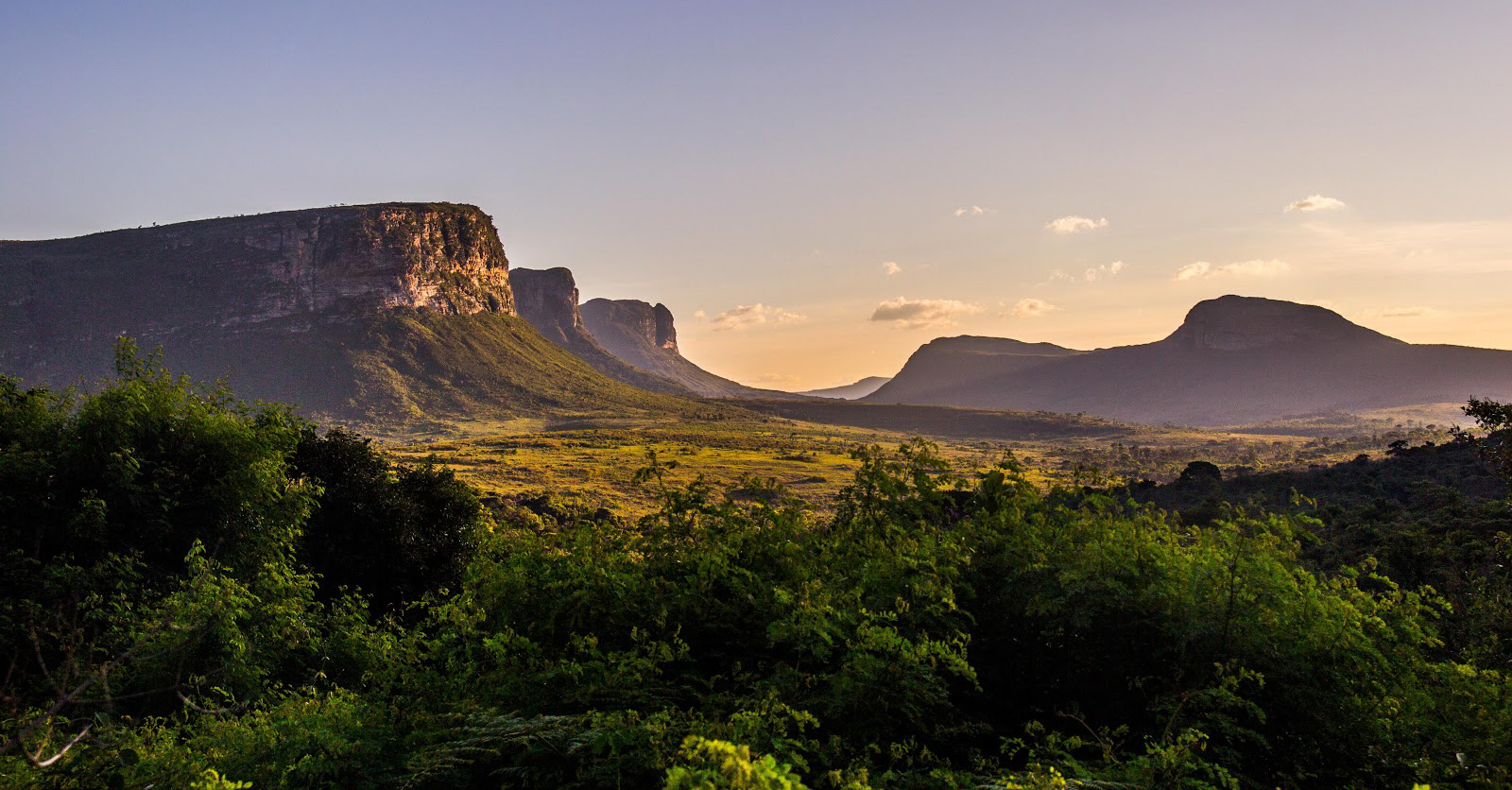
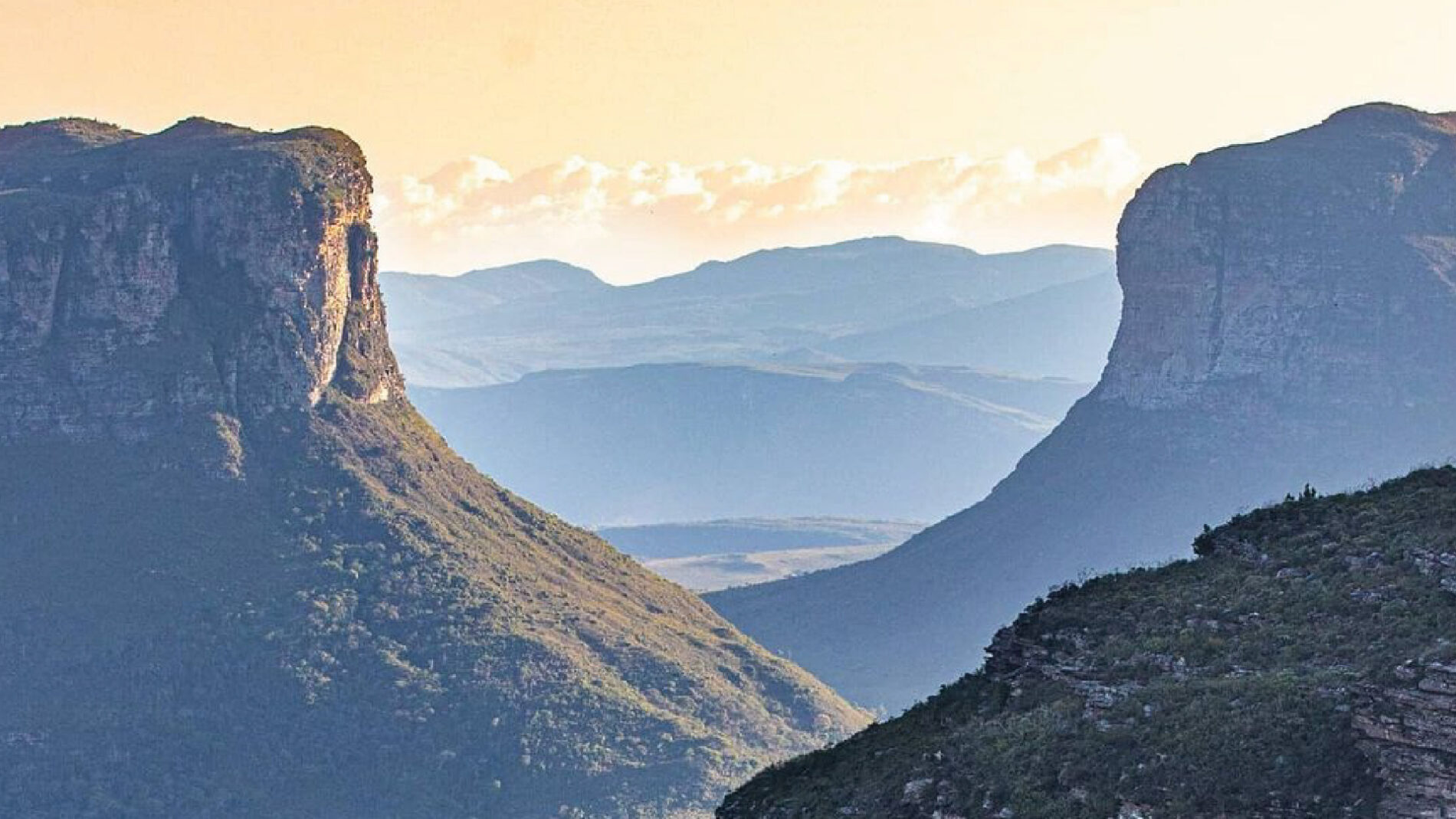
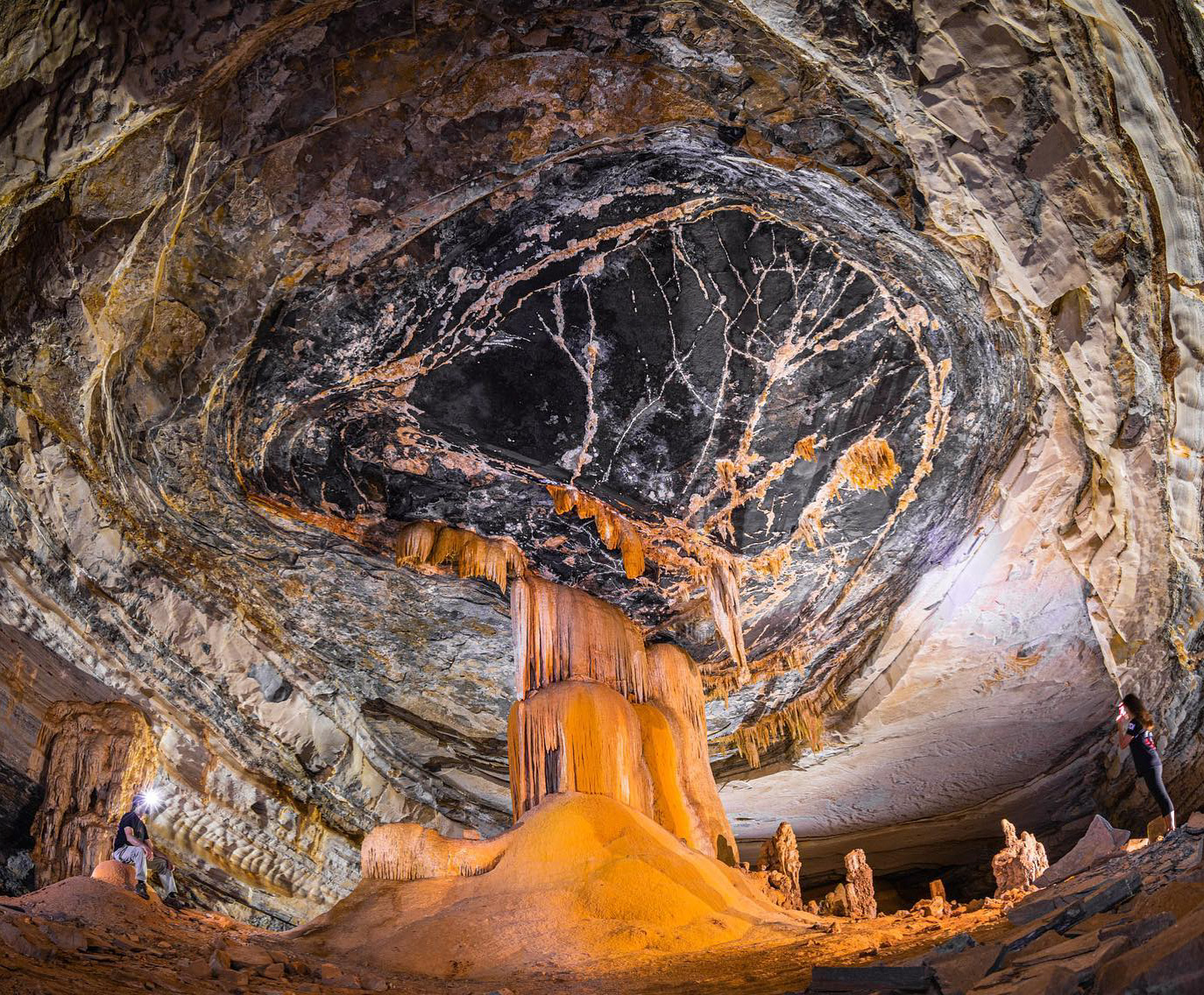
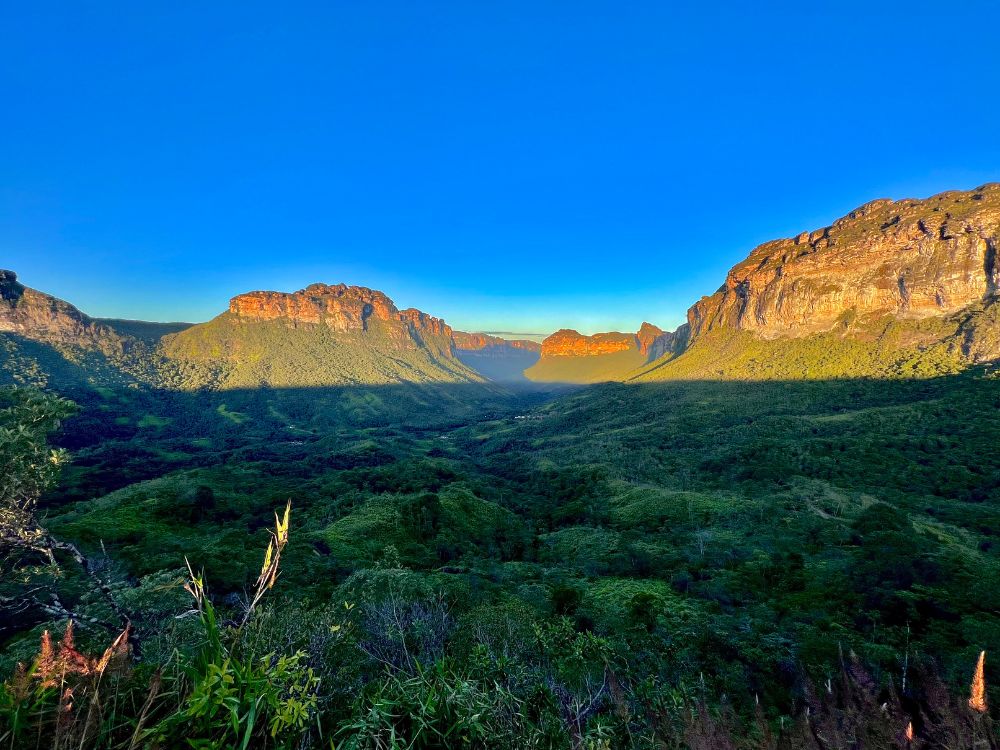
Chapada Diamantina National Park, in Brazil, is a conservation unit that protects a massive areaof stunning natural landscapes formed by waterfalls, caves, canyons, mountains, and rich fauna and flora.
Considered one of the best places in the world for ecotourism activities—especially trekking—Chapada Diamantina is the most well-known national park among Brazilians, according to research by the Semeia Institute. Among foreigners, it’s the sixth most sought-after Brazilian destination, reaching more than 11,500 online searches in 2024 alone, according to data from the Brazilian Tourist Board.
PlanetaEXO, an ecotourism platform specializing in Chapada Diamantina tours, not only knows this fantastic destination intimately, but we’ve also taken countless adventurers from all over the world to explore it. To help even more travelers immerse themselves in this universe of natural beauty, we’ve put together a complete travel guide with all the essential information. See below!
In northeastern Brazil, the Chapada Diamantina National Park is located approximately 420 km away from Salvador, the capital of the state of Bahia. Its area of over 1,521 km² is distributed among the municipalities of Lençóis, Mucugê, Ibicoara, Andaraí, Itaetê, and Palmeiras.
With the highest elevation above 500 meters, Chapada Diamantina is also an integral part of the Serra do Sincorá. Extending across 80 kilometers, this mountain range significantly contributes to the landscape and the biodiversity of the park.
Like the other seventy national parks scattered throughout Brazil, Chapada Diamantina protects natural resources—including fauna, flora, bodies of water, rock formations, and archaeological sites—and opposes the negative effects of industrialization on ecosystems.
Spanning the Caatinga, Cerrado, and Atlantic Forest biomes, its biodiversity blends rocky fields, riparian forests, and seasonal forests, proving just how important this natural richness actually is for the country’s ecological balance, as well as presenting great possibilities for sustainable tourism.
.
Although not the best place in Brazil for wildlife observation—this title belongs to the Pantanal—the fauna of Chapada Diamantina is very rich, especially the birds. There are more than 370 different species, including the chaco eagle, white-browed guan, vinaceous-breasted amazon, and the endemic hooded visorbearer.
The flora is also abundant. With over a hundred types of flowers, they can be seen in shrubs, rocky fields, and among the rocks. There are also cacti, begonias, low palm trees, and about 440 endemic plant species throughout the park.
Chapada Diamantina’s history
Nearly 2 billion years ago, the Chapada Diamantina National Park in Brazil was covered by the waters of the Espinhaço Sea. Over time, the ecosystem changed, going through glacial periods, deserts, and new floods.
Slowly, the soil became fertile, and vegetation grew, turning into the ideal home for large reptiles, dinosaurs, and now-extinct mammals such as the giant sloth, whose remains have been found in the well-known Poço Azul in 2005.
.
Rock paintings found in Lençóis indicate that the first humans inhabited the region about 13,000 years ago, while various indigenous groups (Papayá, Maracá, Aimoré, Topins, etc.) also called Chapada home.
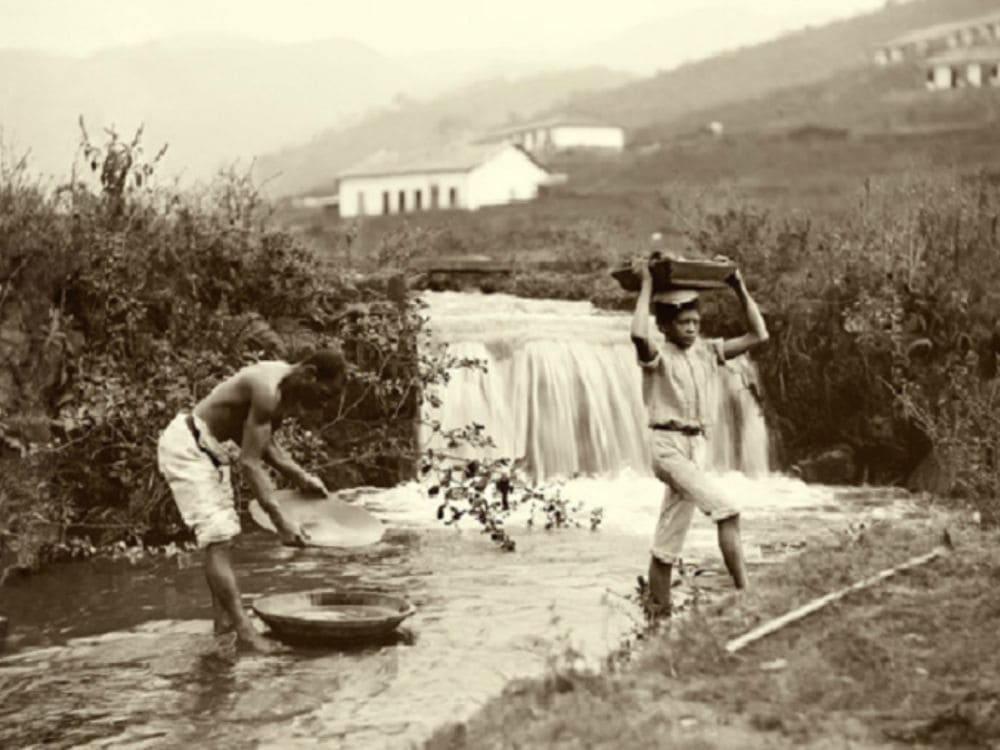
In the 16th century, explorers from other Brazilian states began to explore the natural resources of Bahia. At the end of the 17th century, the first diamonds were discovered in the Cumbucas River, in Mucugê. This triggered a great era of diamond extraction—hence the name “Diamantina”—making mining the main economic activity for a long time.
Eventually, mining cooled down until it was completely banned in 1996. The national park was created in 1985 with the aim of preserving the region’s biodiversity, something that would not have been possible if the miners had continued their work.
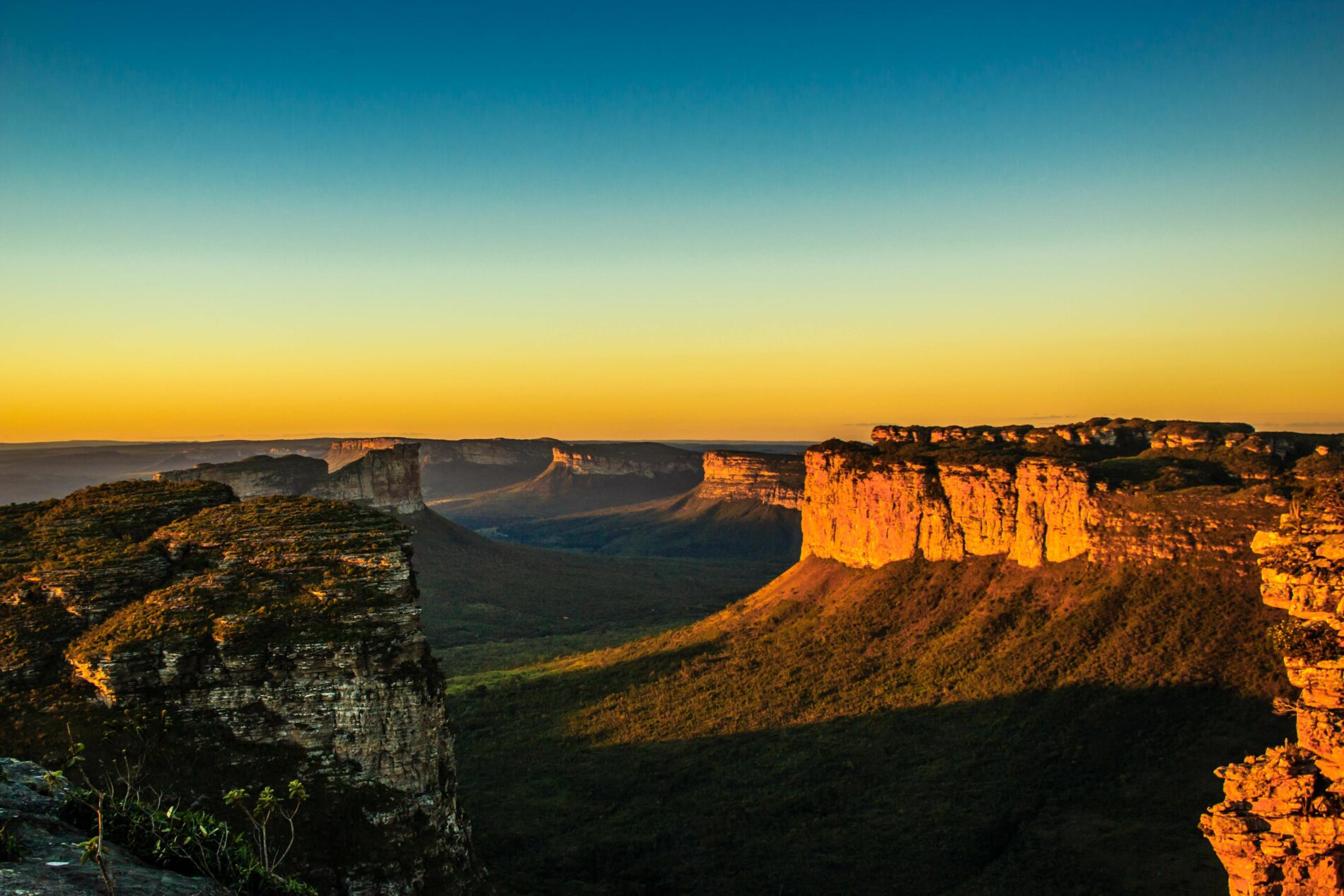
Today, Chapada Diamantina serves as a center for adventure and eco-tourism, drawing thousands of visitors to experience some of its famous unique attractions like the Morro do Pai Inácio, Poço Azul, Cachoeira da Fumaça, and Vale do Pati.
How to get to Chapada Diamantina National Park, Brazil?
The easiest route to get to Chapada Diamantina is from Salvador (SSA), which is served by flights from São Paulo, Recife, Belo Horizonte, and Brasília. International visitors can get to Bahia’s capital departing from Buenos Aires, Lisbon, Madrid, Paris, and Panama City.
.
From Salvador, it takes a little over an hour to fly to Lençóis (LEC), considered by many as the main gateway to the national park. By car or bus, it takes 6–7 hours to reach Lençóis, Mucugê, or Palmeiras.
When is the best time to visit Chapada Diamantina?
Chapada Diamantina can be visited all year round, but your experience will vary depending on the season.
.
The dry months (May to September) offer clear skies and ideal conditions for hiking, while the rainy season (October to April) brings lush green landscapes and powerful waterfalls. Each with its own charm, so it really is a matter of personal preference.
Brazil’s Chapada Diamantina offers a great variety of attractions that cater to adventure seekers and nature enthusiasts alike. Here’s a breakdown of the main activities within the park:
Hiking and trekking
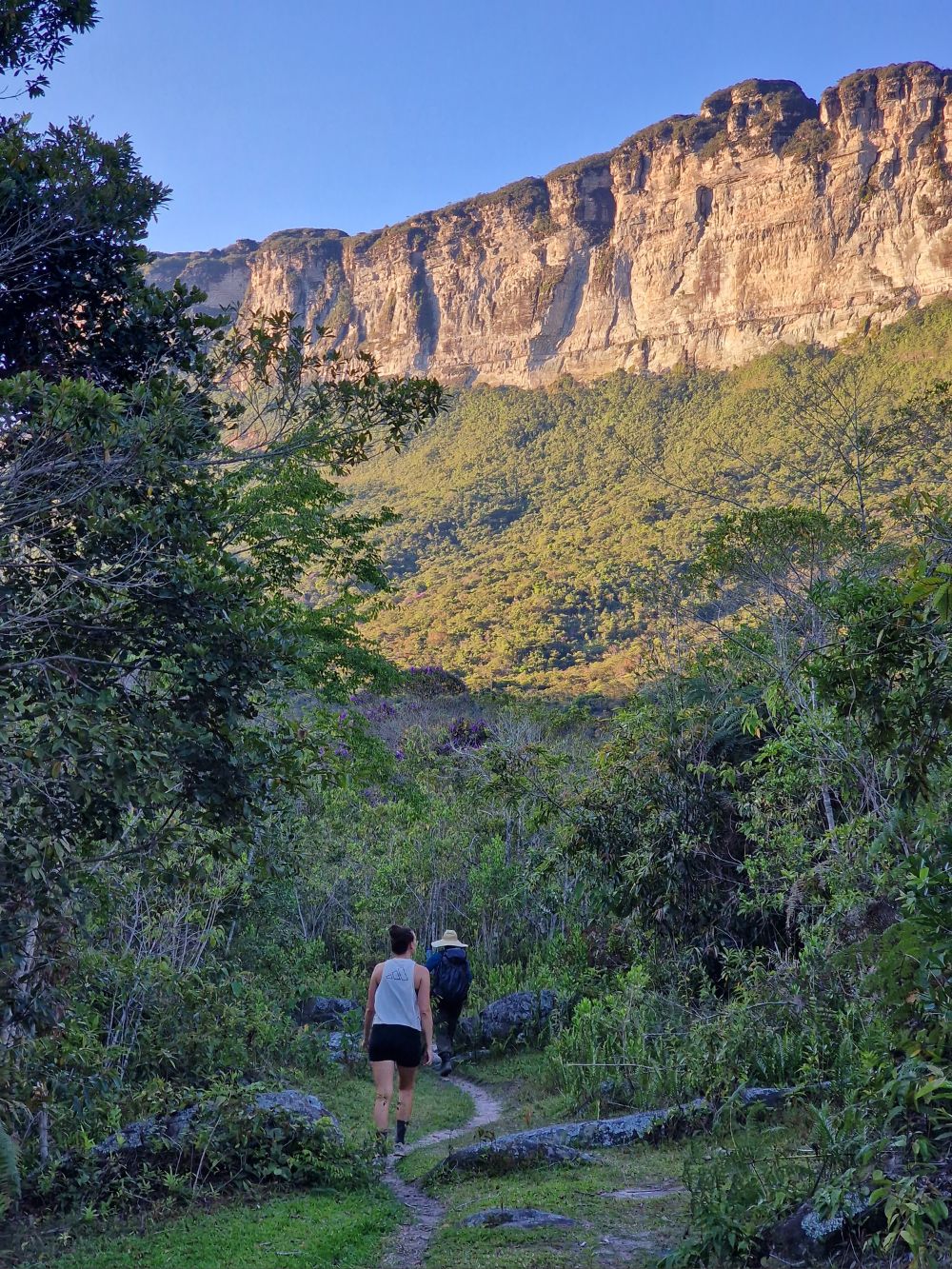
Chapada Diamantina hikes attract thousands of visitors every year. Vale do Pati, in particular, has some of the greatest trekking routes not only in Brazil but on the planet due to its beauty and challenging trails.
This area is noted for its vast plateaus and steep valleys, providing spectacular views and a truly immersive experience in nature. Hiking tours usually pass by Chapada’s most beloved attractions, like Morro do Pai Inácio and Fumaça Waterfall.
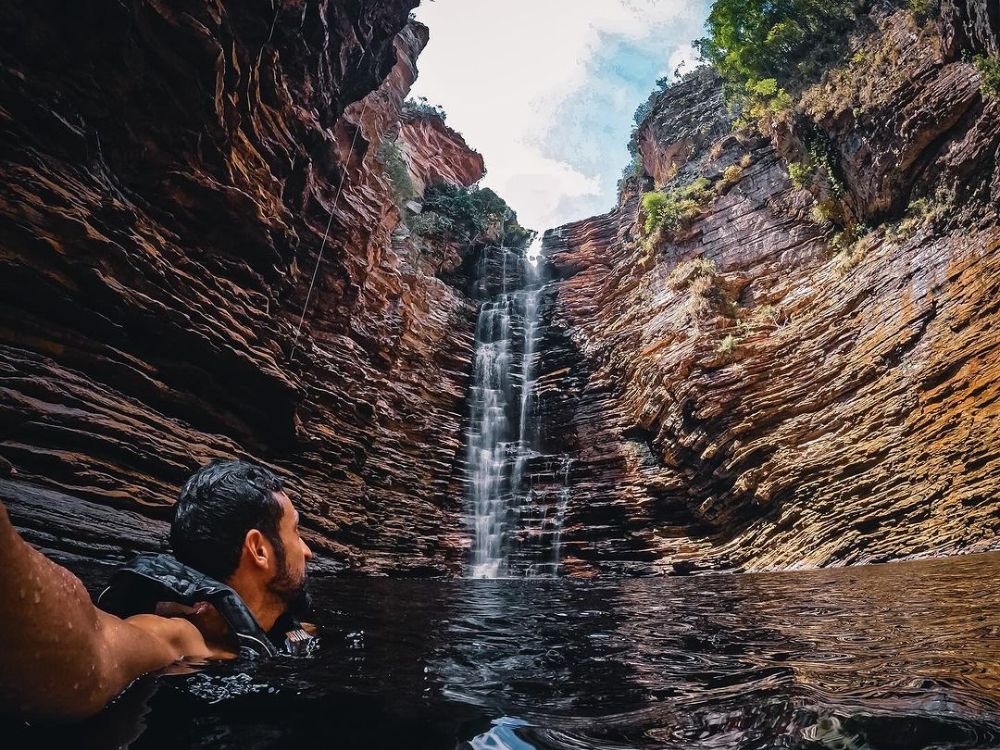
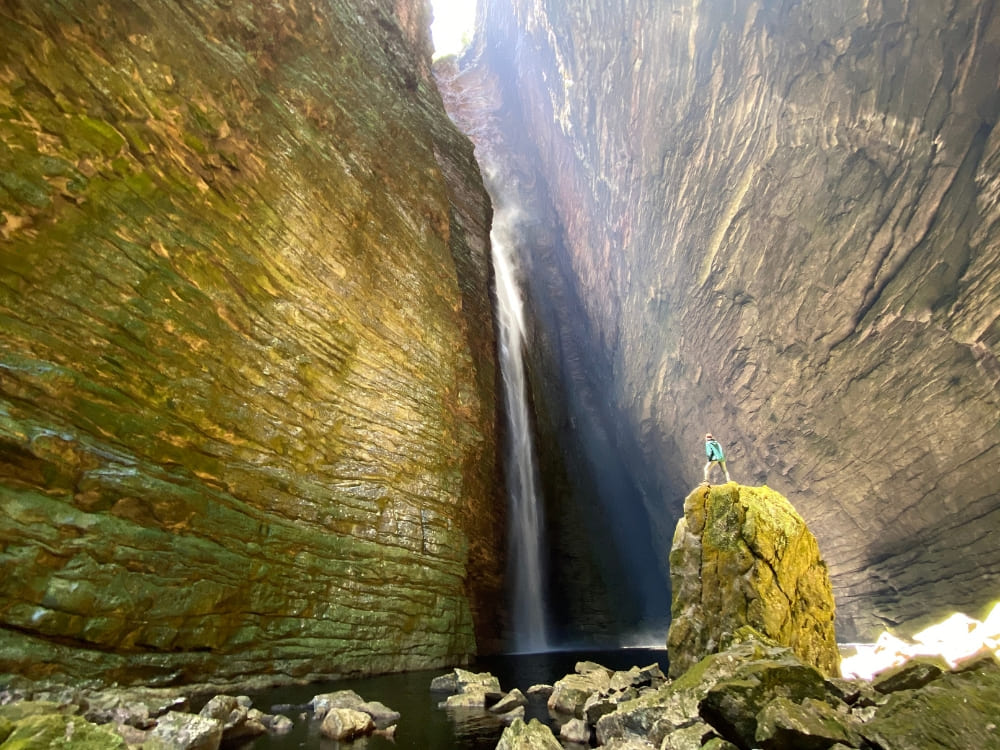
Chapada Diamantina National Park has approximately 300 officially cataloged waterfalls. The most well-known is Fumaça, one of the tallest in Brazil, measuring nearly 340 meters in height.
Photo: Lucas Ribeiro
Other waterfalls worth visiting to cool off during treks are Fumacinha, Buracão, Mixila, and Sossego.
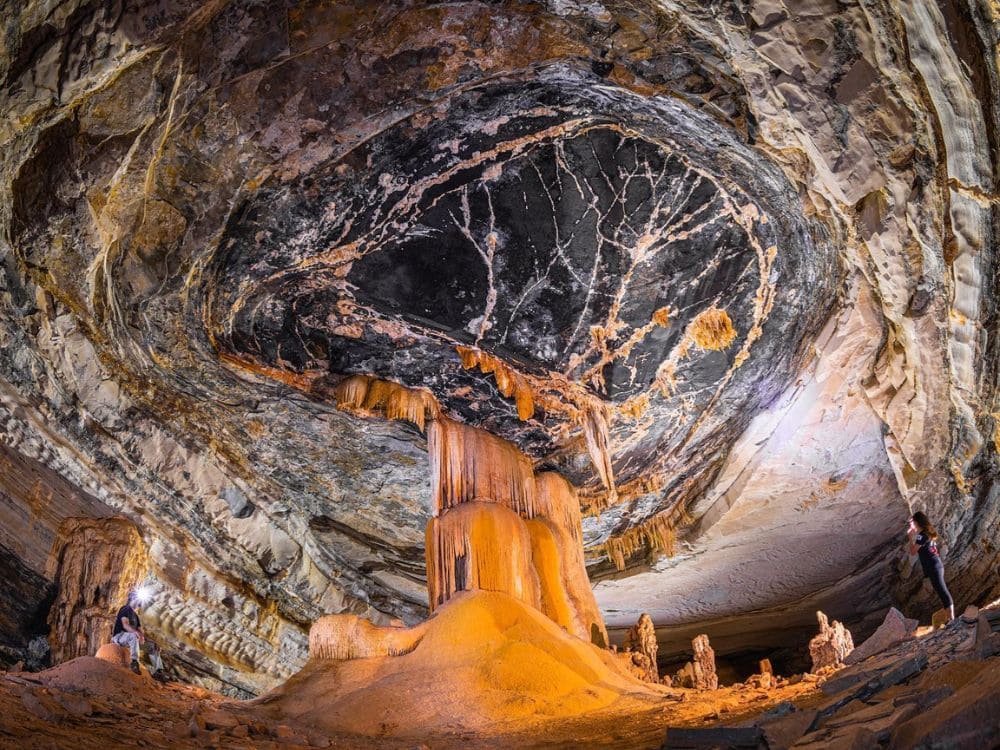
The caves scattered around the park offer a unique underground experience. Gruta da Lapa Doce is one of the most noticeable, where visitors can explore an 850-meter path lined with impressive limestone formations and delve into the geological past of the region.
.
Close by is Gruta da Fumaça, famous for its stalactite-filled ceiling and fairly easy access. Other caves worth visiting are Gruta Azul, Gruta do Pratinha, and Gruta da Torrinha.
Natural pools
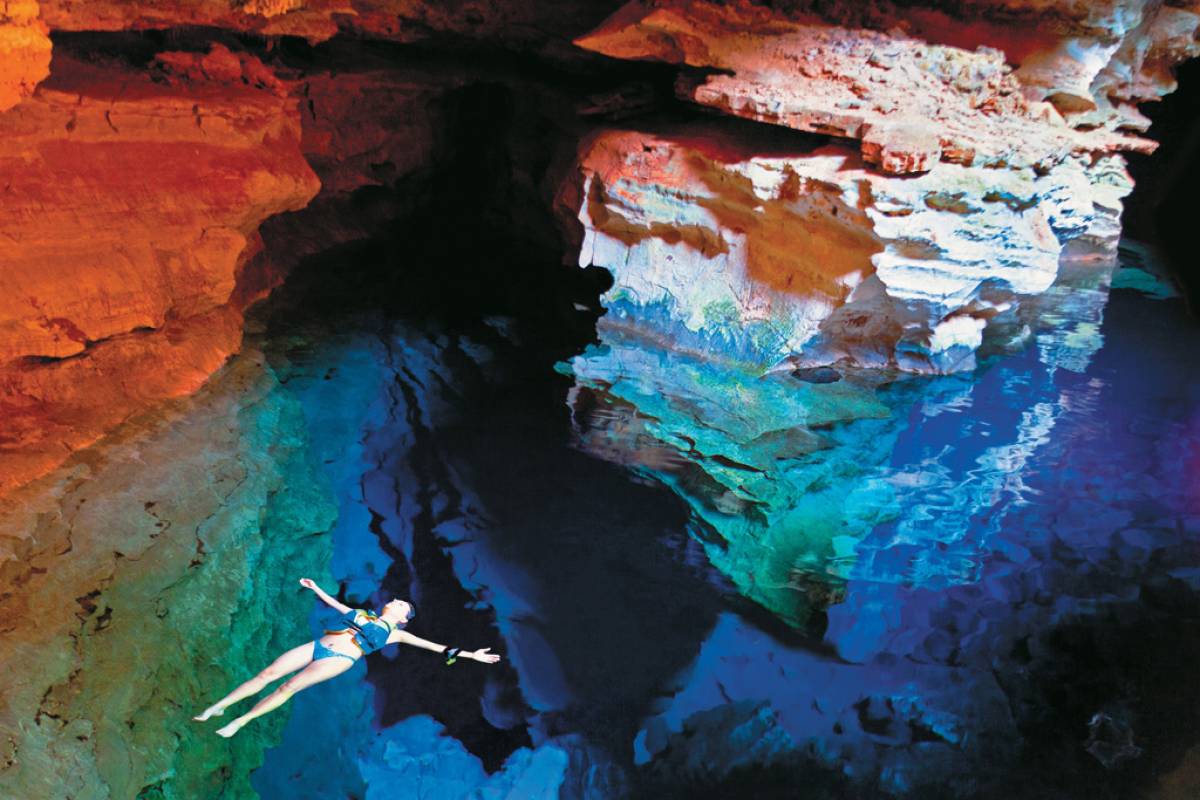
Poço Encantado offers an escape with its crystal-clear waters sourced from a non-renewable aquifer, providing a place for quiet reflection rather than swimming. Nearby, Poço Azul invites visitors to swim and enjoy its breathtaking beauty up close.
.
During the day, the darkness of both caves is broken by sunlight escaping through openings in the rocks, illuminating the water with a beautiful, bright blue hue.
Culture
The cultural heritage of Chapada Diamantina is as extensive as its natural resources. In the base towns, there is a strong influence from traditional communities in the cultural vein of the region, including African, indigenous, riverside, mining, and quilombola (Afro-Brazilian) communities.
Many of these groups lead activities open to the public, such as regional festivals, visits to villages, and immersive tours. Cultural diversity is also observed in various aspects of daily life, such as architecture, cuisine, and handicrafts.
Visitors can also explore the geological and archaeological richness of the Chapada by visiting the Sincorá Museum and the Serra das Paridas archaeological site—both located in Lençóis.
How many days should I stay in Chapada Diamantina National Park?
It all depends on your travel style and priorities. If you’re on a tight schedule, a 3-day trip is enough for a first introduction to the park’s iconic spots like Morro do Pai Inácio, Cachoeira da Fumaça, or Poço Azul. It’s a compact but rewarding way to experience some of the region’s landscapes and natural highlights without rushing too much.
@Rasmus Soeby
For travelers with more time and a bit more flexibility, staying 5 to 7 days (or even longer) will allow for a much deeper connection with the park. With extra days, you can venture into remote areas like Vale do Pati, explore hidden waterfalls, and balance physically demanding trails with moments of relaxation in the surrounding towns.
Given the size of the park and the long distances between attractions, it’s worth planning your itinerary carefully to minimize time spent on the road and maximize your time on the trails.
Chapada Diamantina is a broad area dotted with diverse towns, each offering unique accommodation options to suit various tastes and preferences. From charming bed & breakfasts and authentic homestays to traditional hotels, there is an alternative for everyone.
Lençóis
Lençóis is a favored starting point for many travelers due to its easy access and great infrastructure. This historic town is alive with activities, offering numerous Chapada Diamantina tours that explore the natural and cultural highlights of the area.
Mucugê
Mucugê is a quieter, more reflective atmosphere with beautifully preserved colonial architecture and peaceful cemeteries, providing a serene retreat after a busy day of exploration.
Palmeiras
Palmeiras is the gateway to the stunning Vale do Capão, renowned for its lush landscapes and extensive hiking trails. It’s ideal for those looking for a closer connection to nature.
Andaraí
Andaraí is located along the banks of the Paraguaçu River. Steeped in natural beauty, it offers easy access to a variety of trails, waterfalls, and historical sites, making it a versatile choice for accommodation.
Igatu
For those who prefer smaller, more intimate settings, this historic village is the perfect choice. Known as “Stone Village” and “Bahia’s Machu Picchu,”Igatu enchants everyone with its 19th-century stone ruins and calm ambiance, offering a peaceful retreat for people who love nature and history.
Ibicoara
Ibicoara is a paradise for avid hikers and nature lovers. This less-crowded town is an excellent base for exploring some of the park’s most magnificent waterfalls, including the breathtaking Fumacinha.
Homestay
For adventurers seeking a truly immersive trip, the Vale do Pati trek is unmatched. Since this is a multi-day experience, spending the night within the national park borders is the only option for accommodation.
.
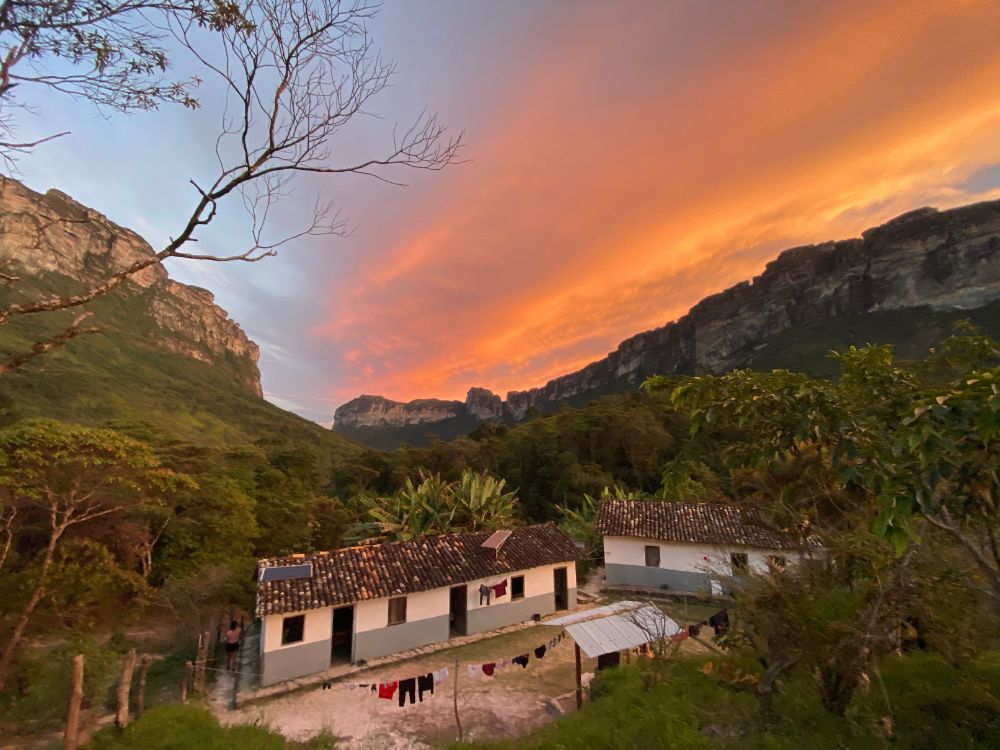
Only a handful of families live in the area, which makes the stay even more authentic and intimate. The houses are modest but still cozy, providing everything trekkers need for a good rest, including beds, blankets, bathrooms, and hot meals.
This type of accommodation enhances the experience and causes a positive impact on the local communities who rely on ecotourism to make a living.
Yes, you absolutely need a guide in Chapada Diamantina. In addition to being massive, the national park has numerous areas that are difficult to navigate and can be potentially dangerous for those unfamiliar with it. The lack of cell phone and internet service also complicates things, making calls for help very difficult in emergency situations.
.
The guides are locals, which means they know every trail, waterfall, and cave intimately. These professionals help groups stay on track, keep them safe, and gain a deeper understanding of Chapada’s secrets by sharing their knowledge of its ecosystem and culture.
What should I pack for a Chapada Diamantina hike?
If you’re traveling to Chapada Diamantina National Park in Brazil, be sure to bring the following items:
Light clothes, including UV-resistant long-sleeved shirts
Windbreaker and sweater
Raincoat and/or waterproof jacket
Quick-drying towel
Hiking shoes
Socks
Flip-flops
Swimwear
Hats/caps
Sunglasses
Sunscreen
Insect repellent
Reusable water bottle
Waterproof bag
.
Don’t forget the usual travel essentials: documents, credit/debit cards, cash (Brazilian Real), medicine (for headaches, muscle tension, stomach bugs…), chargers, and portable chargers for cellphones, laptops, tablets, and cameras.
Best Chapada Diamantina tours
Can’t wait to live the adventure of a lifetime in an unforgettable Chapada Diamantina hike? Check out PlanetaEXO’s tours!
*Per person, based on double occupancy in group departures. Prices may vary depending on season and availability. Exchange rate as of April 2nd, 2026; subject to change.
Explore Chapada Diamantina National Park with PlanetaEXO
PlanetaEXO is an ecotourism platform specializing in Chapada Diamantina tours. By working alongside the best local operators, our team turns your dream vacation into reality!
From bookings to tailor-made itineraries, we work every day to ensure unforgettable travel experiences and sustainable practices that benefit both the environment and local communities. Contact us now!
Discover accommodation options in Lençóis Maranhenses, from homestays to hotels in Barreirinhas, Santo Amaro, and Atins
Lençóis Maranhenses National Park is a natural marvel. In a massive area covered by impressively white sand dunes, blue rainwater lagoons, and untouched vegetation, it’s not uncommon for people to describe it as an otherworldly place.
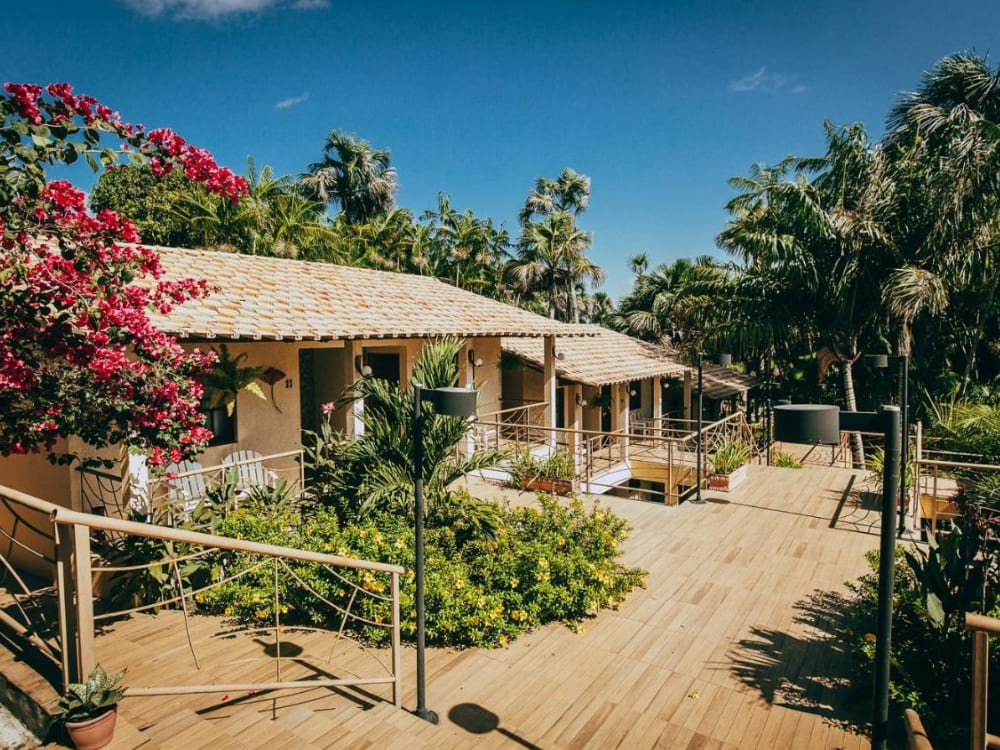
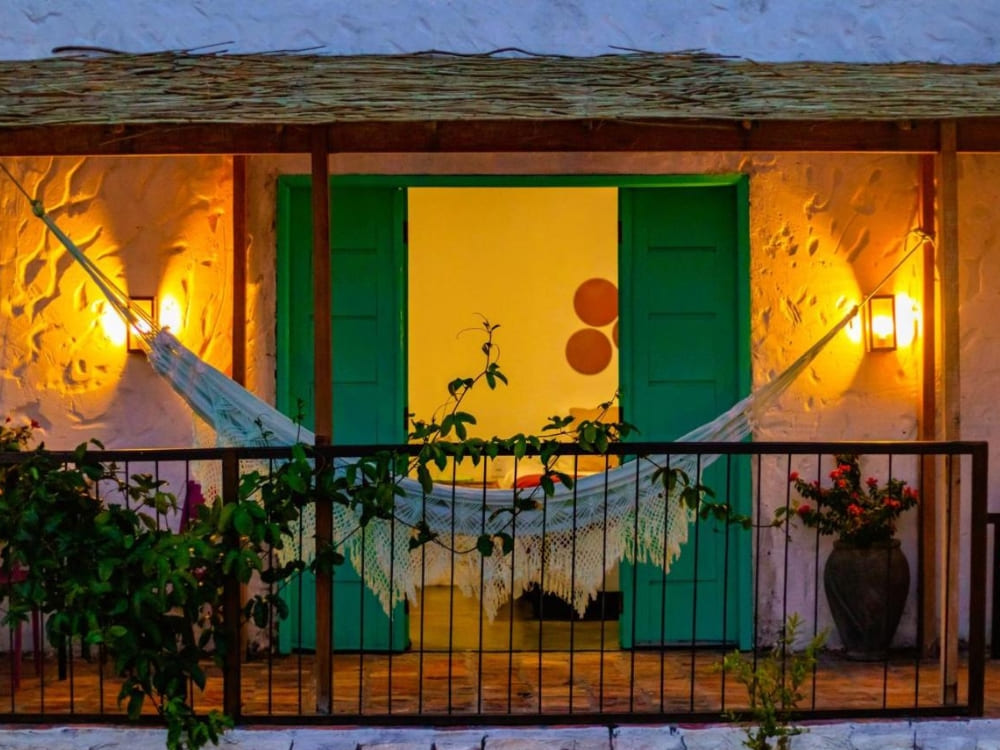
Mirroring the general atmosphere of the national park, accommodation options are characterized by a peaceful and considerably rustic nature. Whether in small inns, hotels offering premium services, or homestays with local residents, the choices for where to stay in Lençóis Maranhenses are all marked by the placid, lovely charm of the dunes.
PlanetaEXO, an ecotourism platform specializing in Lençóis Maranhenses tours, has helped countless travelers from all over the world to book the best accommodations in this fantastic destination. Read more below!
Accommodation in the sand dunes
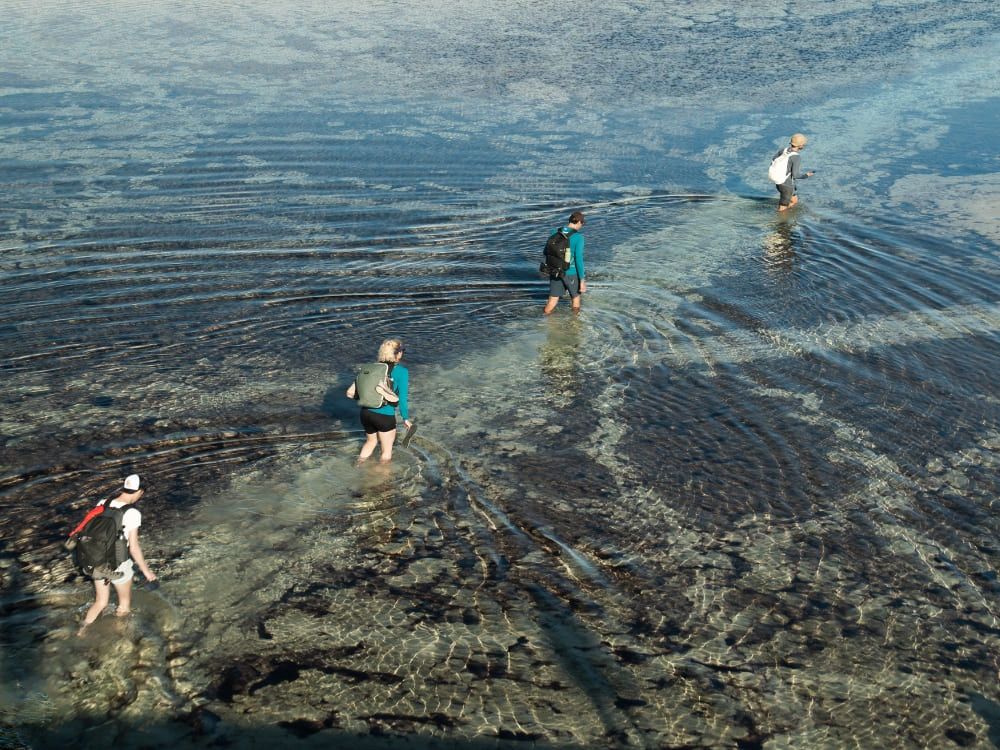
One of the most authentic ways to experience Lençóis Maranhenses is to traverse it on foot. The trek takes several days, allowing travelers to discover the more secluded parts of the dunes and visit less-crowded lagoons.
.
On an adventure like this, visitors spend the night inside the national park. Residents of small villages, such as Queimada dos Britos and Baixa Grande, welcome guests into their own homes, offering both shelter and food.
The accommodations are simple, yet cozy and clean. After an intense but rewarding day of trekking through one of Brazil’s most beautiful landscapes, you can rest in hammocks, take a shower, and recharge with a hot meal.
Beyond just providing a place to stay, this is also a wonderful opportunity to meet new people, immerse yourself in the local culture of Lençóis, and experience famous Brazilian hospitality firsthand.
Where to stay in Barreirinhas?
.
Out of all the base cities, Barreirinhas is the main gateway for the national park. With the best infrastructure of the area and a more lively vibe, most hotels in Lençóis Maranhenses are located here.
This is the perfect place for travelers looking for balance between nature and convenience due to the easy access to the sand dunes and the various transportation options, as well as restaurants, bars, markets, pharmacies, ATMs, etc.
One of the only resorts in Lençóis Maranhenses, Porto Preguiças is a high-end resort with a privileged view of the Preguiças River, one of Maranhão’s main rivers. Great for families with children, the air-conditioned rooms have excellent beds, cable TV, a mini fridge, and private bathrooms.
Amenities include swimming pools, a garden, a restaurant, a bar, a breakfast buffet, free parking, room service, and airport transfer.
Also situated on the banks of the Preguiças River, Gran Lençóis Flat is a 4-star hotel recommended for every type of traveler. In the common areas, guests can enjoy a swimming pool, sauna, spa, gym, entertainment room, conference room, and playroom (for children). The restaurant serves typical Brazilian food and international dishes.
The apartments include single or double beds, TV, air-conditioning, fresh towels, free amenities, and Wi-Fi.
Address: Estrada de São Domingos, s/n – Povoado Boa Vista
A bit simpler than the previous hotels, Portal do Sol Lençóis Pousada still offers a great stay experience, ideal for guests looking for cost efficiency. Rest in spacious rooms with air-conditioning, mini-fridges, TVs, private bathrooms, and high-speed Wi-Fi connection.
Take a swim in the pool to cool off and enjoy a delicious breakfast buffet with a beautiful view of the inn’s lake.
4 km away from downtown Barreirinhas, Boa Vista is a charming inn that will make you feel right at home. Apartments include queen-size beds, air-conditioning, TVs, Wi-Fi, and private bathrooms.
In the social areas, take a relaxing walk in the garden, swim in the pool, or rest on a hammock. At mealtimes, the talented team of cooks serves incredible local dishes at the restaurant.
Wondering where to stay in Lençóis Maranhenses on a lower budget? Pousada D’Areia, located on the main street of Barreirinhas, might be the right place for you!
With easy access to the dunes and the Preguiças River, recharge your energy in lovely air-conditioned rooms with private bathrooms. Includes an amazing all-you-can-eat breakfast made with local, fresh ingredients.
Address: Av. Joaquim Soeiro de Carvalho, 888 – Centro
The apartments in Pousada Sítio Parque dos Lençóis are equipped with comfy beds, air-conditioning, free Wi-Fi, and private balconies and bathrooms.
Guests can also enjoy a swimming pool, a gorgeous garden, a shared lounge, and a breakfast buffet every morning.
Address: Rua Boa Vista, 600 – Bairro da Cebola
Price range: $$
Where to stay in Santo Amaro?
Santo Amaro is the town with the quickest access to the national park, distinguished by having some of the largest and most beautiful lagoons.
.
Small and peaceful, it offers less infrastructure than Barreirinhas yet provides excellent immersive experiences and a variety of inns and hotels in Lençóis Maranhenses National Park.
Quintal das Areias is a highly rated accommodation in Santo Amaro, famous for its gorgeous decor—carefully thought out to represent Maranhão’s essence.
Each chalet includes air-conditioning, queen or king-size beds, a bathroom with premium amenities, a private closet, Wi-Fi, and a beautiful view of the garden. Can’t wait to taste Brazil’s typical flavors? Grab a bite at the restaurant or have a drink at the bar!
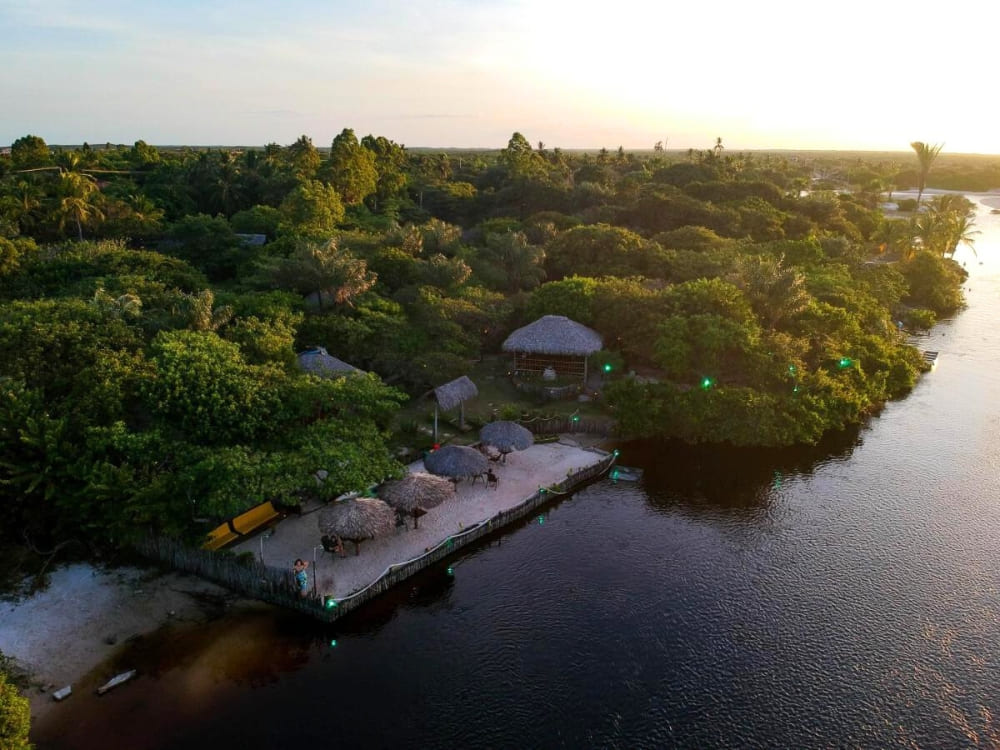
This camping-style accommodation is perfect for people who want closer contact with nature without giving up comfort. Surrounded by a lake and lush vegetation, Ciamat Camp offers special facilities for water sports, a beautiful garden, a private beach area, and activities like fishing and canoeing.
Every air-conditioned room is equipped with double or single beds, private bathrooms, and rustic decor. In the morning, fill your belly with an incredible breakfast (including vegetarian and Italian menus).
Blending design, comfort, originality, and a sophisticated simplicity, OIÁ Casa Lençóis features spacious accommodations—from house suites to bungalows—equipped with king-size beds, air-conditioning, private bathrooms, and exclusive amenities.
The hotel also offers privileged access to the most beautiful lagoons, elegant decor, haute cuisine, and a lovely rural atmosphere.
Vila do Junco provides a nature-immersive stay experience due to its location amidst green vegetation, well-kept gardens, and rustic, wooden facilities. The rooms are beautiful bungalows with spacious beds, private bathrooms, closets, and ceiling fans or air conditioning.
After a long day in Lençóis Maranhenses, relax on the deck by the pool, take a nap on a hammock, and eat delicious Brazilian or Italian food (also with vegetarian, vegan, and lactose-free options).
It’s not unusual to find Vila Capininga Ecopousada fully booked due to the beauty of its facilities, high-quality services, and fair prices.
Enjoy air-conditioned rooms, double or queen-size beds, work desks, free amenities, private bathrooms, flat-screen TVs, internet connection, hammocks, charming social areas, and delicious homemade food.
Address: Vila Povoado Arredores – Rua da Fazenda, 01 – Malhadinha
Giro das Dunas is a cozy inn over 500 meters away from downtown Santo Amaro. The apartments include single or double beds, TVs, private bathrooms, and balconies with a lovely view of the pool.
It also includes a sun deck, a shared lounge, a garden, free Wi-Fi, a restaurant, and car rental service.
Address: Rua das Flores, 143
Price range: $$
Where to stay in Atins?
With a population of only 1,500 inhabitants, Atins is a small village located in a fairly isolated share of Lençóis Maranhenses National Park, in Barreirinhas, by the mouth of the Preguiças River and the Atlantic Ocean. Aside from the lagoons, Atins Beach is also a fantastic spot to visit—especially for kitesurfers.
@lubritofotografia
The only way to get to Atins is by four-wheel drive or boat, but the picturesque charm, the kind-hearted people, and the jaw-dropping landscapes are worth the effort.
Where to stay in Lençóis Maranhenses when you’re looking for a 5-star accommodation with beautiful facilities and exclusive services? La Ferme De Georges is a luxury inn based on high-end experiences and sustainable practices.
Built with eco-friendly materials, the chalets are spacious and elegant, all of them featuring comfortable beds, air conditioning, mini fridges, private bathrooms, and premium amenities.
In the common areas, guests can relax and have fun in the swimming pool, sun deck, volleyball court, entertainment lounge, or bar. Specialized in Brazilian food, the restaurant uses fresh ingredients harvested in La Ferme de George’s own farm.
Rated by previous guests as an excellent resort, Muita Paz is located by the sea on a private beach and surrounded by hundreds of coconut trees.
The ocean view chalets are beautifully decorated and equipped with king or queen-size beds, air-conditioning or ceiling fans, work desks, mini fridges, and private bathrooms.
A wonderful fine dining restaurant, spa, kitesurfing lessons, and exclusive activities in Lençóis Maranhenses guarantee an unforgettable stay.
Anacardier is an adult-only hotel with luxury suites and bungalows, a swimming pool, a well-kept garden, a fine dining restaurant, and an open-air terrace facing a beautiful view of the national park.
The sophisticated accommodations are perfectly balanced with the bucolic charm of Lençóis, creating an experience of pure relaxation and connection with the dunes.
Great for families and couples, Vila Aty Lodge is a six-minute walk away from Atins Beach. Common areas include a swimming pool, a garden, a vegetable garden, an entertainment area for children, a bar, and a restaurant.
The air-conditioned suites have single and double beds, TVs, toiletries, closets, and bathrooms. Some units also feature private balconies.
Seven minutes away from Praia do Atins, this beautiful accommodation offers chalets for families and suites for couples. All of them are equipped with comfy beds, TVs, air-conditioning, and private bathrooms.
Charme Atins is known in the area for its great activities, such as sunset contemplation in privileged locations and breakfast or lunch right in the dunes.
Three minutes away from Atins Beach and right at the village’s main street, Rancharia Charme Beach is as charming as its name suggests.
Besides the great rooms ideal for families and couples, some of this accommodation’s highlights include beautiful natural views, a swimming pool, a beach tennis court, and a sushi bar.
Respectively 200 and 400 meters away from Atins Beach and Lençóis Maranhenses National Park, Pousada Jurará offers apartments with double or single beds, air-conditioning, mini fridges, toiletries, and private bathrooms.
It also includes a restaurant, a bar, a breakfast buffet, kite surfing lessons, and free Wi-Fi.
Address: Rua Principal, s/n – Atins
Price range: $$
Visiting Lençóis Maranhenses with PlanetaEXO
Now that you know where to stay in Lençóis Maranhenses, shall we start planning your vacation?
PlanetaEXO, an ecotourism platform specializing in Lençóis Maranhenses tours, takes care of everything for you—from bookings to transfers and tailor-made itineraries. When you travel with us, all you have to do is enjoy the moment. Contact us now!
Curious about Chapada Diamantina in Brazil? From its creation to unmissable natural wonders, learn everything about the national park!
Chapada Diamantina, in Brazil, is an ecotourism destination that attracts adventure lovers from all over the world to explore its stunning natural beauty, including mountains, caves, waterfalls, fantastic trails, and the national park.
The first fact about the Chapada Diamantina National Park is that its importance has been well-known since its creation in 1985, when a conservation unit was established to protect the Serra do Sincorá, a mountain range located in the heart of the Bahia state.
.
Do you want to know more about your next vacation spot? PlanetaEXO, an ecotourism platform specializing in Chapada Diamantina tours, has put together 10 facts about this fantastic place. Check them out below!
1. An Arizona Man in Brazil
It may seem unusual, but an American from Arizona played a key role in the creation of the Chapada Diamantina National Park. In 1977, biologist Roy Funch traveled to Brazil as part of the Peace Corps, a United States federal agency that sends Americans to work on projects in developing countries.
Reprodução: Rede Globo
He worked on the management of national parks alongside other specialists through the Brazilian Institute for Forestry Development (IBDF), now the Chico Mendes Institute for Biodiversity Conservation (ICMBio). The group worked in Brasília, but one day they traveled to Bahia with the intention of trekking—an uncommon practice in Brazil at the time—in Chapada Diamantina.
Roy was enchanted by the place, but he was also impressed by the presence of mining. Although the practice was already in decline in the late 1970s, it was still strong enough to damage the ecosystem. Around the same time, he moved permanently to the Chapada region and began working as a guide. Meanwhile, he translated scientific articles, earned a living with handicrafts, trained other guides, and wrote books about the area.
Seeing Chapada’s potential to conserve natural resources and revitalize the mining community, Roy had the idea of creating a trail connecting the city of Lençóis to Vale do Capão and began campaigning for the creation of a national park. In 1979, he sent a letter to Brazilian authorities with the proposal and reactivated contacts he had made over the years with people that could help him achieve his goal.
In September 1985, the Chapada Diamantina National Park was founded. Roy Funch was the first director, holding the position for six years. Soon after, he officially became a Brazilian citizen. To this day, he lives in Lençóis, very close to the park.
2. Larger Than Some Countries
The Chapada Diamantina National Park in Brazil spans around 1,521 km² (152,000 hectares). The area is so massive it’s bigger than some small countries and administrative regions, including the Faroe Islands (1,393 km²), Hong Kong (1,114 km²), Singapore (745 km²), Malta (315 km²), and the Maldives (300 km²).
.
3. The World’s Largest Black Diamond
In the 18th and 19th centuries, Chapada Diamantina was the strongest diamond mining area on Earth. In 1895, over a hundred years before mining was completely banned (1996), the world’s largest black diamond was found, weighing 3,167 carats.
.
Named The Sérgio—in honor of the miner who found it, Sérgio Borges de Oliveira—the stone was sold for several thousand dollars to a British diamond merchant, who arranged for replicas and sent them to London.
The original Sérgio was broken into pieces and sold for industrial use. In 2024, the Mineralogy Museum of Paris sent a replica to Brazil.
4. Once Covered by Sea
Another fascinating fact about Chapada Diamantina National Park is that nearly 2 billion years ago, the region was covered by the Espinhaço Sea.
.
Over time, the landscapes changed drastically due to climate change and the tectonic plates’ movement, which left deep cracks and depressions that currently make up its complex geology.
Vale do Pati, located within the Chapada Diamantina National Park, won the award of best trekking destination in Brazil from the Ministry of Tourism in 2010.
In addition to the length of the trek (more than 70 km), the location was also recognized for its beauty, which features waterfalls, caves, and native flora and fauna.
6. Hundreds of Waterfalls
With over 300 officially cataloged waterfalls, a refreshing dip amidst the breathtaking landscapes of Chapada is a great reward for hikers who traverse long kilometers of trekking through uneven terrain and mountains.
Photo: Lucas Ribeiro
It’s impossible to see them all in a single trip, but you can’t miss visiting the most iconic ones: Fumaça, Fumacinha, Buracão, Cachoeirão, Funil, Buracão, and Mosquito.
The city of Iraquara, which is part of the Chapada Diamantina complex, is home to nearly one hundred caves, including some of the most famous in the region, such as the Gruta do Lapa Doce, Gruta do Pratinha, Gruta do Torrinha, and Gruta Azul.
.
In other cities, it’s also worth visiting the Poço Azul (Nova Redenção), Poço Encantado (Itaetê), Gruta do Lapão (Lençóis), and Gruta da Paixão (Andaraí).
8. Home to Various Species of Animals and Plants
Brazil’s Chapada Diamantina features a high biodiversity that blends fauna and flora from the Cerrado, Caatinga, and Atlantic Forest biomes.
.
When it comes to animals, the birds stand out, including crested caracaras, potoos, and the endemic hooded visorbearer. In the mammals family, it’s possible to find lesser anteaters, black-tufted marmosets, and, more rarely, pumas.
The flora is just as rich, especially regarding the variety of orchids, bromeliads, and cacti. During trekking, it’s not hard to find colorful flowers adorning the low-lying vegetation.
If you’re looking for total disconnection from the intensity of city life, then Chapada Diamanatina is the perfect destination for you, as cell service in the park is spotty at best and totally non-existent most of the time.
.
Not only is this great for a digital detox, but it also allows you to truly immerse yourself in the experience and realize that nature is much more fulfilling than endless scrolling.
10. Tour Guides Are Your Best Friends
Tour guides are essential if you want to learn more about the history and cultural facts about the Chapada Diamantina National Park.
.
These qualified professionals are also essential for your safety, as they know the region like the back of their hand and are aware of all the potential dangers that could jeopardize your trip.
When traveling to Chapada Diamantina, always follow your guide’s instructions!
Deep dive into Chapada Diamantina National Park, Brazil, with PlanetaEXO
See how fascinating Chapada is? To experience all these wonders firsthand, start planning your trip!
PlanetaEXO is an ecotourism platform specializing in Chapada Diamantina tours. From bookings to accommodations and tailor-made itineraries, we partner with the best local operators to guarantee sustainable travel and an unforgettable vacation for our clients. Contact us now!
One traveler, four weeks, and a horseback crossing of Brazil’s most surreal desert—told in her own words
Some of the best trips are the ones you never planned. Patricia George, 31, a physiotherapist from Germany, was supposed to be surfing in Bali. A week before departure, her flights—routed over Abu Dhabi—were canceled because of the war. She wanted somewhere warm with good waves; a friend from São Paulo told her to go to Brazil, and that was that. It was her first time in the country and her first time in South America—solo for four weeks.
She started in São Paulo, surfed for 5 days in Ubatuba, then worked her way through Paraty, Rio de Janeiro, and Ilha Grande before flying north to Lençóis Maranhenses National Park—a 155,000-hectare stretch of white dunes and rainwater lagoons in the state of Maranhão, recognized as a national park by ICMBio. Of every place she saw in Brazil, this was her favorite. “It was really, really impressive,” she said. “Nothing like I've ever seen before.”
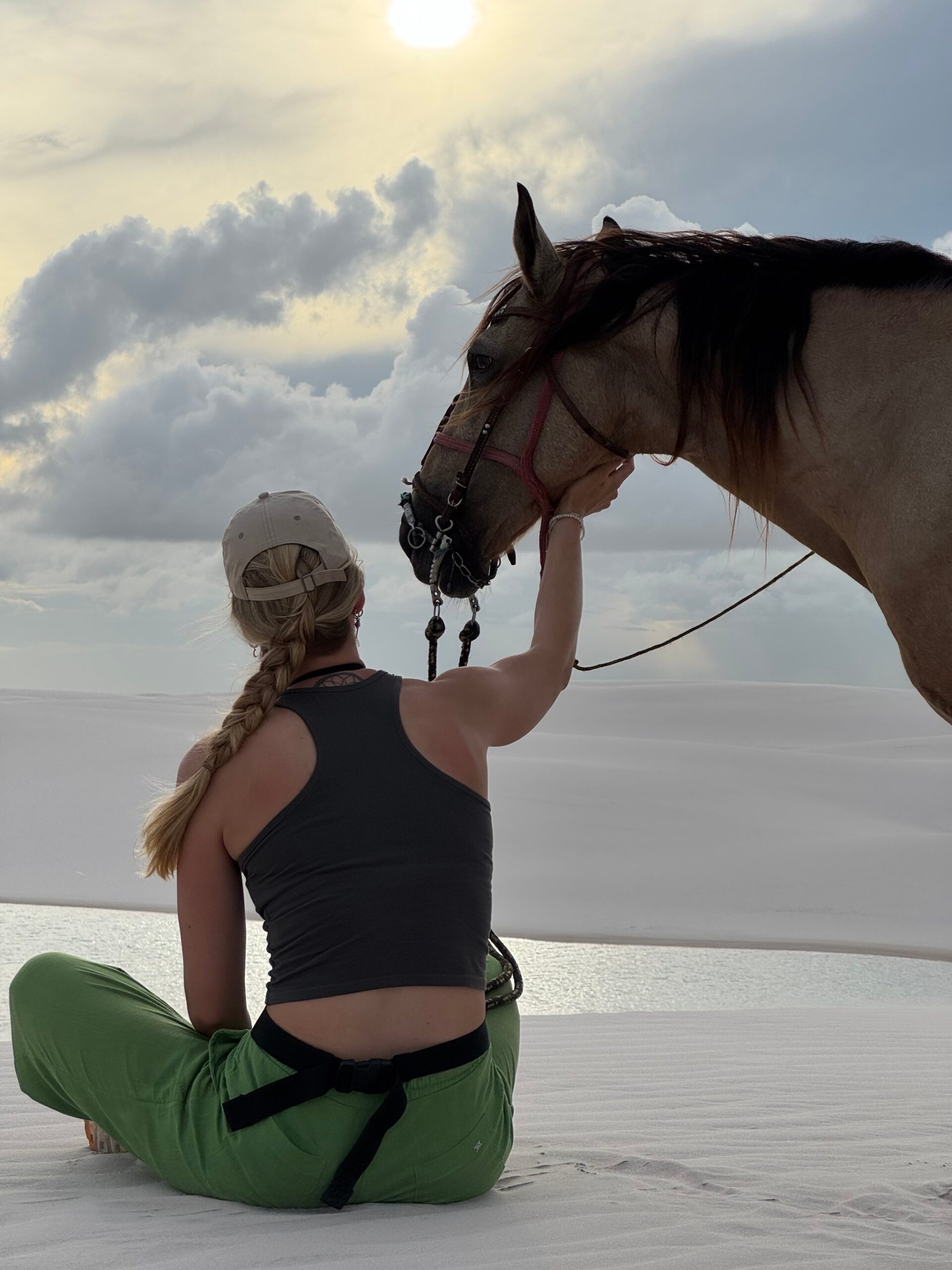
Patricia ventured through the dunes and lagoons on horseback, an experience organized and led by PlanetaEXO’s team and local partners. Now, we share her story to show you what a horseback crossing of Lençóis Maranhenses really feels like. Check it out below!
A rider since age 10 (but never on sand)
Patricia didn’t pick the horseback crossing as a novelty. She’s been riding since she was a child, so the saddle was familiar territory. The terrain was not. “I've been riding since I was 10,” she shared, “but riding on the sand is very different.”
Crossing the dunes is nothing like circling a field at home: the ground shifts, the horse works harder, and the route runs for hours between lagoons rather than around a fenced ring.
For an experienced rider, that contrast is exactly the point; the skill carries over, but the setting turns a familiar activity into something new.
Riding on sand is very different — but the bond is the same.
What stayed with Patricia most was the remoteness. The group was out on the horses all day, far from cell phone reception, with nothing pulling at her attention.
“We were out on the horses all day long, and you just had the time to think,” she reflected. “You don’t have that a lot in your normal day.” In a park where the rainwater lagoons sit between dunes that reach as high as 40 meters, the landscape does the talking. There’s no playlist, no notifications—just sand, water, and the pace of the horse.
That kind of disconnection is part of why the horseback riding in Lençóis Maranhenses lands so differently from a typical day trip. You don’t just visit the dunes, but you connect with nature and live inside them for a few days.
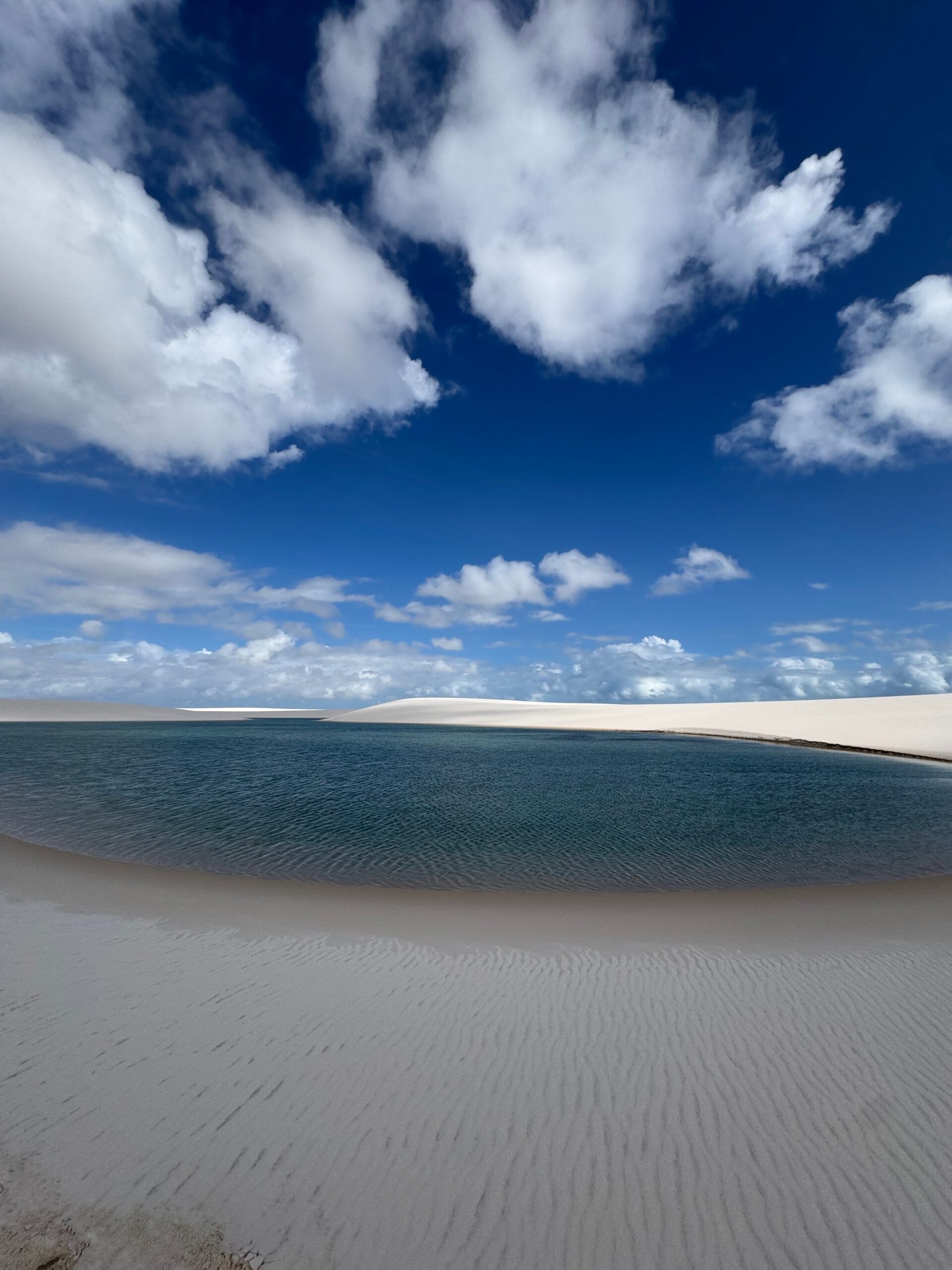
Rainwater lagoons sit between dunes up to 40 meters high.
In a place with no roads, no signs, and no signal, the guide is everything. Patricia’s left a strong impression.
“I was very impressed by my guide, by how he could read the landscape and knew exactly where to go,” she remembered. “Without my phone or Google Maps, I would have been totally lost.”
He had been doing the route for years and knew everyone along the way, which gave the whole trip the feel of a small, working community rather than a tourist circuit. As we told Patricia, a guide can make or break a trip, and in a place like Lençóis, they’re truly essential.
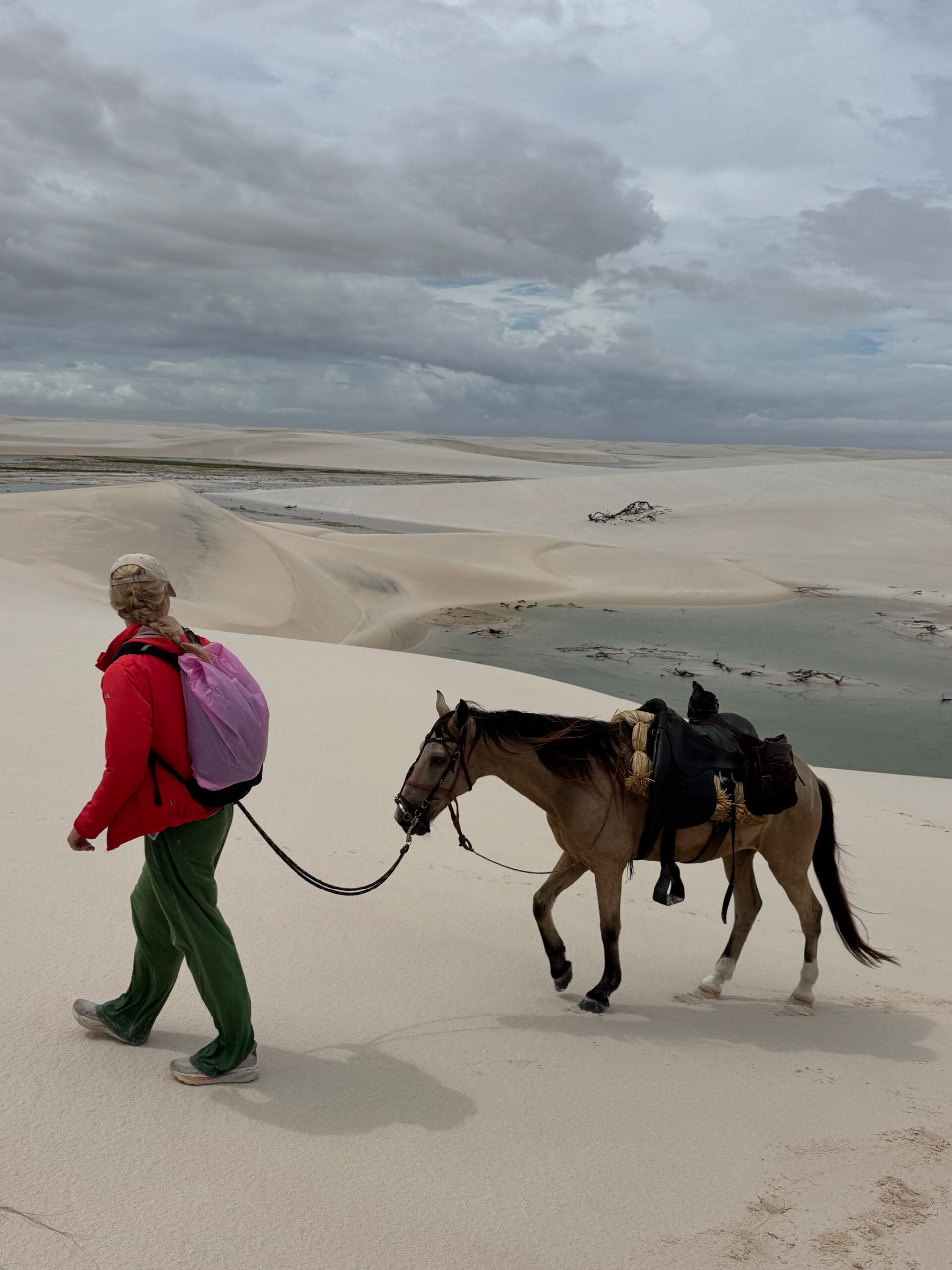
With no roads or signposts, the guide reads the landscape.
Traveling solo as a woman
Before leaving, Patricia heard the usual concern. “People said, ‘Are you sure you want to go? Brazil isn’t the safest place, especially for a woman.’” Despite the warnings, her experience ran the other way.
“I honestly always felt safe in those four weeks,” she said. Because the trip was so spontaneous, she arrived without rigid expectations and stayed open to whatever came. That mindset paid off, especially when considering how every booking was last-minute—she made the best of all of it.
That’s not to say every night was easy. On the first one, she stayed in a large open-area lodge and noticed she was the only woman there apart from the host. Patricia felt a bit scared, but since no one bothered her, she felt comfortable fast.
The second night was less unnerving and more absurd: her house sat elevated off the ground behind a fence meant to keep animals out, but the pigs were too strong, broke through, and held a noisy turf war underneath the floorboards all night. The situation was definitely a rush, though everything turned out fine in the end.
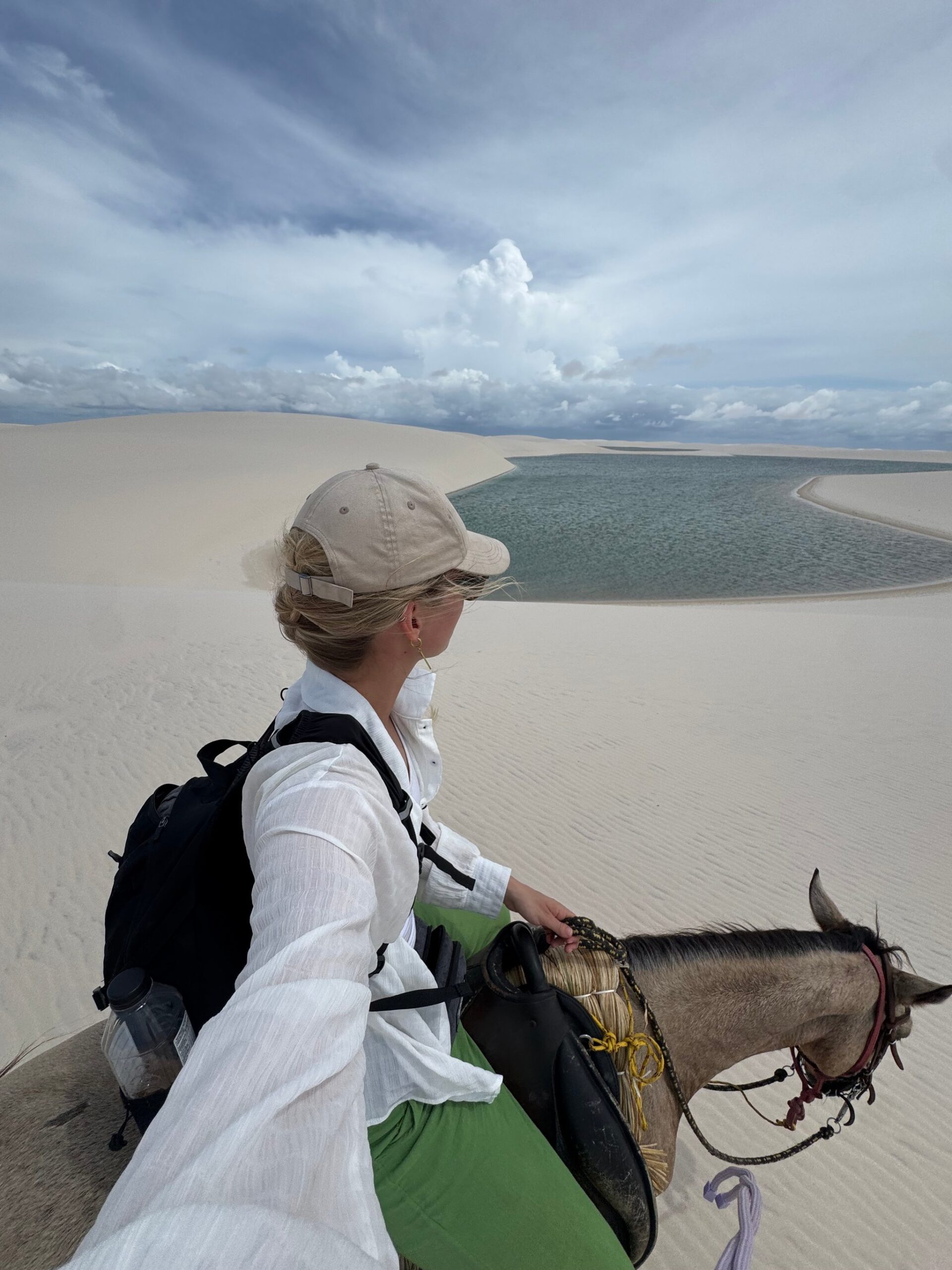
Days in the saddle across a roadless desert of sand and water.
Traveling without Portuguese had a cost. Locals were warm, but the language gap kept conversations short. “It was friendly but distant,” Patricia confessed, and if she comes back, learning some Portuguese is at the top of her list so she can actually ask questions and connect.
Even at a distance, one thing landed clearly. “The people seem like they’re actually living life,” she told us, describing how the locals were always present in what they were doing, far less hectic than the countries she’d visited before.
Low season meant her crossing was just her and the guide, but the lodges still brought company: she met two French travelers doing the same route on foot and played cards with them in the evenings.
Low season: just one rider, a guide, and the horses.
Patricia knew going in that the accommodation would be basic. She wouldn’t have it any other way. “I knew it would be simple, but I think that’s what makes the trip authentic. Any kind of luxury would just feel out of place.”
In a setting this raw, comfort isn’t the selling point, but honesty surely is. The reward was personal: the trip, she said, “made me more confident,” which is no small thing for a first long solo journey across an unfamiliar continent.
Patricia's next dream: jungle lodges and river cruises in the Amazon.
Ride Lençóis Maranhenses with PlanetaEXO
Now that you’ve seen Patricia’s crossing through her own eyes, you know what the dunes ask of you—and what they give back: days in the saddle, total disconnection, and a guide who knows the sand by heart.
PlanetaEXO is an ecotourism platform specializing in Lençóis Maranhenses tours. Working alongside experienced local guides and operators, we handle the logistics so you can focus on the ride, from your first booking to an unforgettable crossing of one of Brazil’s most surreal landscapes. Contact us now!
Map, how many days you need, and how to travel the route that connects Lençóis Maranhenses (MA), Delta do Parnaíba (PI), and Jericoacoara (CE)
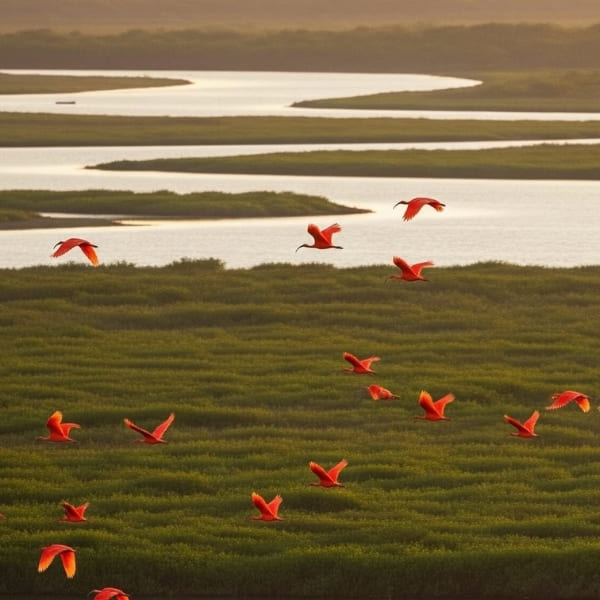
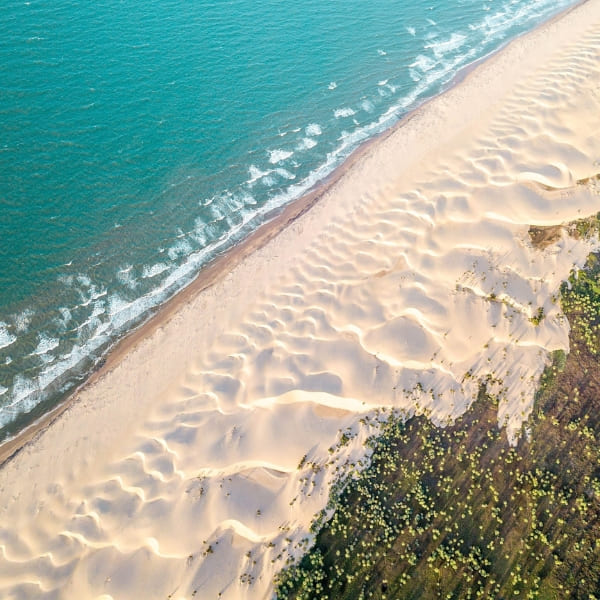
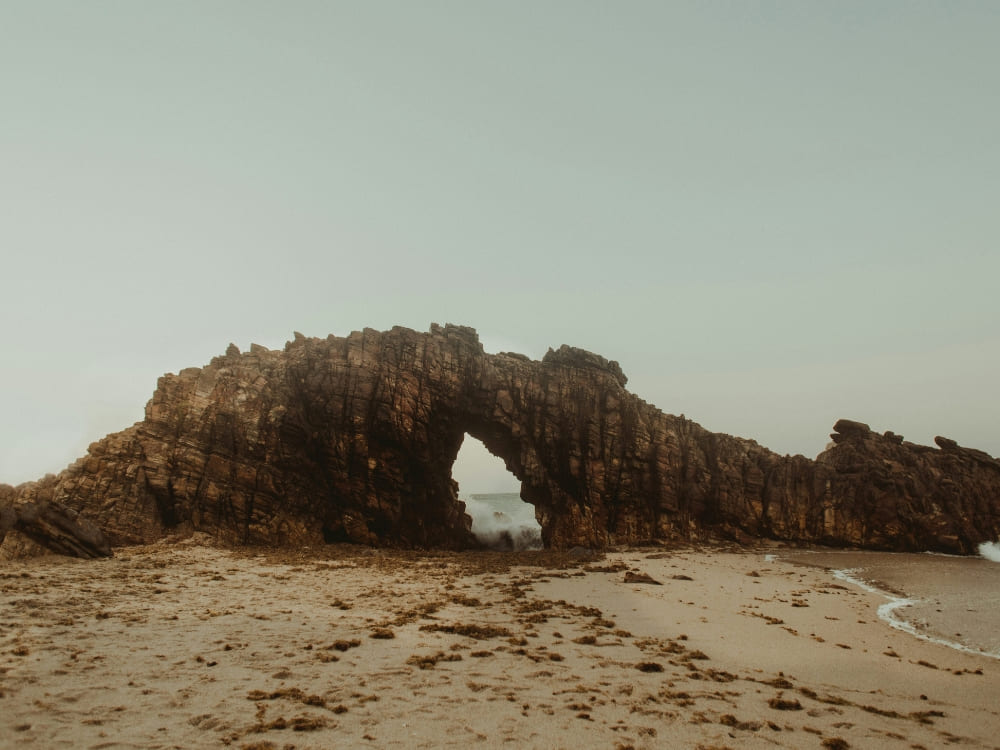
The Route of Emotions is the tourist itinerary that links three of the most sought-after destinations in northeastern Brazil: Lençóis Maranhenses (MA), Delta do Parnaíba (PI), and Jericoacoara (CE). It spans hundreds of kilometers across 14 municipalities and 3 states in a single trip, featuring sweeping dunes, rainwater lagoons, dense mangroves, and pristine beaches.
In 2024 alone, the route welcomed 496,705 visitors registered via digital vouchers, generating an estimated R$ 83.1 million. In July of that same year, the Lençóis Maranhenses National Park was declared a UNESCO World Heritage Site — the 24th Brazilian site to make the list.
Want to know how to organize this trip? PlanetaEXO, an ecotourism platform specializing in Route of Emotions tours, has prepared a complete guide with everything you need to know for a smooth, unforgettable experience. Check it out below!
What is the Route of Emotions and why does it exist?
The Route of Emotions is the official name of the tourist itinerary that connects the northeastern coast of Brazil (Maranhão, Piauí, and Ceará) across 14 municipalities spread over roughly 900 km of coastline.
The project was launched in 2005 by Sebrae Nacional (Sebrae (Brazilian Micro and Small Business Support Service) is a private, non-profit organization established to foster entrepreneurship and the development of small businesses in Brazil.) in partnership with the Ministry of Tourism (MTur) and state-level branches. The goal was to structure regional tourism by integrating three spectacular destinations that, until then, were largely visited in isolation.
According to Sebrae, the itinerary has injected over R$ 670 million into the local economy since 2009. By December 2025, it celebrated 20 years of tourism success, economic growth, and international recognition.
Map of the Route of Emotions
The Route of Emotions map crosses 14 municipalities across three states, hugging the coastline the entire way. The order in which you visit depends on your starting point — São Luís (MA) and Fortaleza (CE) are the two main gateways. At PlanetaEXO, the adventure typically begins in Maranhão.
Piauí (4 cities): Ilha Grande, Parnaíba, Luís Correia, and Cajueiro da Praia (Barra Grande).
Ceará (5 cities): Chaval, Barroquinha, Camocim, Jijoca de Jericoacoara, and Cruz.
The route’s three main hubs are Barreirinhas (gateway to Lençóis), Parnaíba (gateway to the Delta), and Jijoca de Jericoacoara (gateway to the Ceará park). The remaining municipalities serve as scenic crossing points, alternative bases, or technical stops between the major landmarks.
How to get there and logistics between destinations
By air
The two main airports servicing the Route of Emotions are São Luís (SLZ) in Maranhão and Fortaleza (FOR) in Ceará — most itineraries start at one and end at the other to avoid backtracking. You can also fly directly into Parnaíba (PHB), Piauí, and Jericoacoara (JJD), Ceará.
Beyond commercial flights, Azul Conecta (Azul’s regional charter branch) operates a nine-passenger Cessna Caravan connecting Fortaleza, Jericoacoara, Parnaíba, Barreirinhas, and São Luís about three times a week.
While each stretch takes 3 to 6 hours by road, these scenic flights take an average of 45 minutes to 1 hour. It’s the fastest — though most expensive — way to cover the route.
By road
This is the most common way to travel between the destinations. While some adventurers choose to rent a car and drive themselves, the vast majority of tourists rely on transfer services (shared or private). This seamless logistics approach is built into PlanetaEXO’s Route of Emotions itineraries.
Distances per segment:
São Luís → Barreirinhas: 260 km / 4–5 hours by transfer.
Barreirinhas → Tutóia: ~100 km / ~3h, passing through Paulino Neves.
Tutóia → Parnaíba: 120 km, usually involving a boat crossing through the Pequenos Lençóis.
Parnaíba → Jericoacoara: ~270 km / 5–6h, passing through Camocim.
What is the best time to do the Route of Emotions?
The best time to do the Route of Emotions is between late June and early September, when the lagoons in Lençóis Maranhenses are brimming with water and the climate across all three regions is drier.
.
Practical calendar:
January to May: Rainy season. The lagoons begin to form and fill up progressively. Road access to certain areas may be temporarily affected.
June to August: The peak season for full lagoons. This is high season, so be sure to book your accommodation 3 to 4 months in advance.
September: The lagoons still hold a good amount of water, but you’ll find fewer crowds and better prices.
October to December: In Lençóis, the lagoons shrink significantly, and some dry out completely. However, this is when Jericoacoara experiences the best winds of the year for kitesurfing and windsurfing, with consistent gusts from July through January.
Average temperatures hover between 25 °C and 32 °C (77 °F to 89 °F) year-round across all three destinations. The main variables are simply the water levels in the dunes and the wind intensity in Jeri.
What to expect from each part: Lençóis, Delta do Parnaíba, and Jericoacoara
Lençóis Maranhenses, Maranhão
Spanning 1,550 km², the Lençóis Maranhenses National Park is globally famous for its sweeping white sand dunes and thousands of crystal-clear lagoons formed purely by rainwater.
.
Surrounded by the base towns of Barreirinhas, Santo Amaro, and Atins, the primary activities include hiking or taking 4×4 tours through the dunes, swimming in the lagoons (Lagoa Azul, Bonita, Gaivota, Betânia, etc.), cruising down the Preguiças River, and visiting local villages (Mandacaru, Vassouras) and Atins Beach.
Delta do Parnaíba, Piauí and Maranhão
The Delta do Parnaíba is the mouth of the Parnaíba River, nestled between the states of Piauí and Maranhão. It is the only open-sea delta in the Americas and the 3rd largest in the world, covering around 2,700 km² across more than 70 islands.
.
The classic tour sets off from Parnaíba (PI) via speedboat or catamaran, navigating the five river branches — Igaraçu, Canárias, Caju, Melancieiras, and Tutoia — until reaching Porto dos Tatus, the beating heart of the route. Once there, highlights include exploring the Morro do Meio dunes and visiting the Canárias Islands and Pontal Beach.
The flocking of the scarlet ibises (Revoada dos Guarás) is absolutely unmissable. In the late afternoon, speedboats depart from Porto dos Tatus toward islands wrapped in dunes and mangroves. From the water, you can watch hundreds of vibrant scarlet ibises returning to roost, painting the sky red with their feathers. It’s an unforgettable sight.
Jericoacoara, Ceará
Before you even arrive at the Jericoacoara National Park (88.8 km²), the route treats you to other jaw-dropping spots in Ceará, including the Coreaú River, Ilha do Amor (Island of Love), and the raw beaches of Tatajuba and Guriú.
Photo: Jonathan Borba
Once in Jeri, a few experiences are practically mandatory: lounging at the iconic beaches (Lagoa do Paraíso, Preá, Principal, Barrinha), visiting Pedra Furada and the Buraco Azul, tearing across the sand in a buggy, and enjoying the laid-back nightlife in the sandy streets of Vila de Jericoacoara.
How many days are ideal to do the Route of Emotions?
Trip duration depends entirely on your pace and interests, but generally, the Route of Emotions takes between 6 and 13 days. Naturally, the longer you stay, the deeper and more immersive the adventure becomes.
6 days: 2 days per destination + travel/arrival days. (A fast-paced highlights reel).
10 days: 3 days per destination + extra time to explore Atins, Barra Grande, or Camocim.
12 days or more: The sweet spot. Enough time to comfortably hike the Lagoa Bonita Circuit, watch the sunset in Mandacaru, and tackle the eastern route of Jericoacoara without feeling rushed.
Route of Emotions Packages
Travel with PlanetaEXO to discover some of Brazil’s most beautiful landscapes along the Route of Emotions!
Lençóis Maranhenses (dunes, lagoons, Preguiças River, Atins Beach, and villages of Vassouras and Mandacaru); Delta do Parnaíba (Parnaíba, Porto dos Tatus, Morro do Meio, flocking of the scarlet ibises); Jericoacoara (Principal, Preá and Lagoa Paraíso beaches, Lagoa Azul, Buraco Azul, Pedra Furada, sand buggy).
Lençóis Maranhenses (dunes, lagoons, Mirar das Estrelas, Preguiças River, Ponta do Mangue, Canto do Atins); Delta do Parnaíba (flocking of the scarlet ibises, Barra Grande, Camocim); Jericoacoara (Principal, Preá and Lagoa Paraíso beaches, Lagoa Azul, Buraco Azul, Pedra Furada, sand buggy).
Lençóis Maranhenses (dunes, lagoons, Santo Amaro, Ponta Verde, Barreirinhas, Mirar das Estrelas, Preguiças River, Canto do Atins, villages of Vassouras and Mandacaru); Delta do Parnaíba (flocking of the scarlet ibises, Barra Grande, Camocim); Jericoacoara (Principal, Preá and Lagoa Paraíso beaches, Lagoa Azul, Buraco Azul, Pedra Furada, sand buggy).
US$ 2,590
*Per person, based on double occupancy in group departures. Prices may vary depending on the season and availability. Exchange rate as of May 21, 2026; subject to change.
Accommodation on the Route of Emotions itinerary
Photo: Porto Preguiça Resort
The accommodation experience is as dynamic as the trip itself, transitioning across three different states and vibes. Check out PlanetaEXO’s top hotel and pousada recommendations for Lençóis Maranhenses, Delta do Parnaíba, and Jericoacoara!
Embark on the PlanetaEXO Route of Emotions itinerary
Now that you know what the Route of Emotions is, have mapped out the geography, and figured out the best time and logistics, there’s only one thing left to do: lock in your dates and start packing!
PlanetaEXO is a premier ecotourism platform offering seamlessRoute of Emotions toursand specializing in fully-guided Lençóis Maranhenses tours. We work exclusively with accredited local operators in each destination, ensuring authorized transfers, certified expert guides, and hand-picked, comfortable accommodations. Contact us today!